
Champagne is the shade I pull when a bride tells me white makes her look tired. It runs from pale beige to a richer gold, and that warm base does something white never can: it throws embroidery and layered lace into relief, so the detail you paid for actually shows. Designers now cut it in almost every fabric and silhouette, from fitted beaded gowns to full satin ball skirts. Before you fall for one, look at it by a window and again under indoor bulbs, then check how the neckline, waist and skirt sit on your own proportions. The 25 looks below each come with the fitting notes I’d give you in the salon.
Ordering a Champagne Gown When the Sample Is Ivory
Most salons only carry one color of each sample, so the dress you try on may be ivory while the one you order arrives in champagne. That gap catches a lot of brides out. Every designer names its shades differently, and one label’s champagne can be another’s almond, nude or latte, with a noticeably different undertone.
Here’s how I handle it with brides:
- Ask for a fabric swatch of the exact color, in the main fabric and the lining, and look at it against your skin in daylight.
- If the gown is ivory lace over a colored lining, ask to see the lining shade on its own. It does most of the work.
- Order any extras, such as detachable sleeves, a cape or an overskirt, at the same time as the dress so they come from the same dye lot.
- Ask whether the color can be adjusted. Some designers offer a lighter or deeper lining; others don’t, and it’s better to know before you sign.
When the gown arrives, check it at your first fitting under a window before any alterations start. If the shade is wrong, that’s the moment to raise it, not after the hem has been cut.
1. Champagne Lace A-Line Wedding Dress
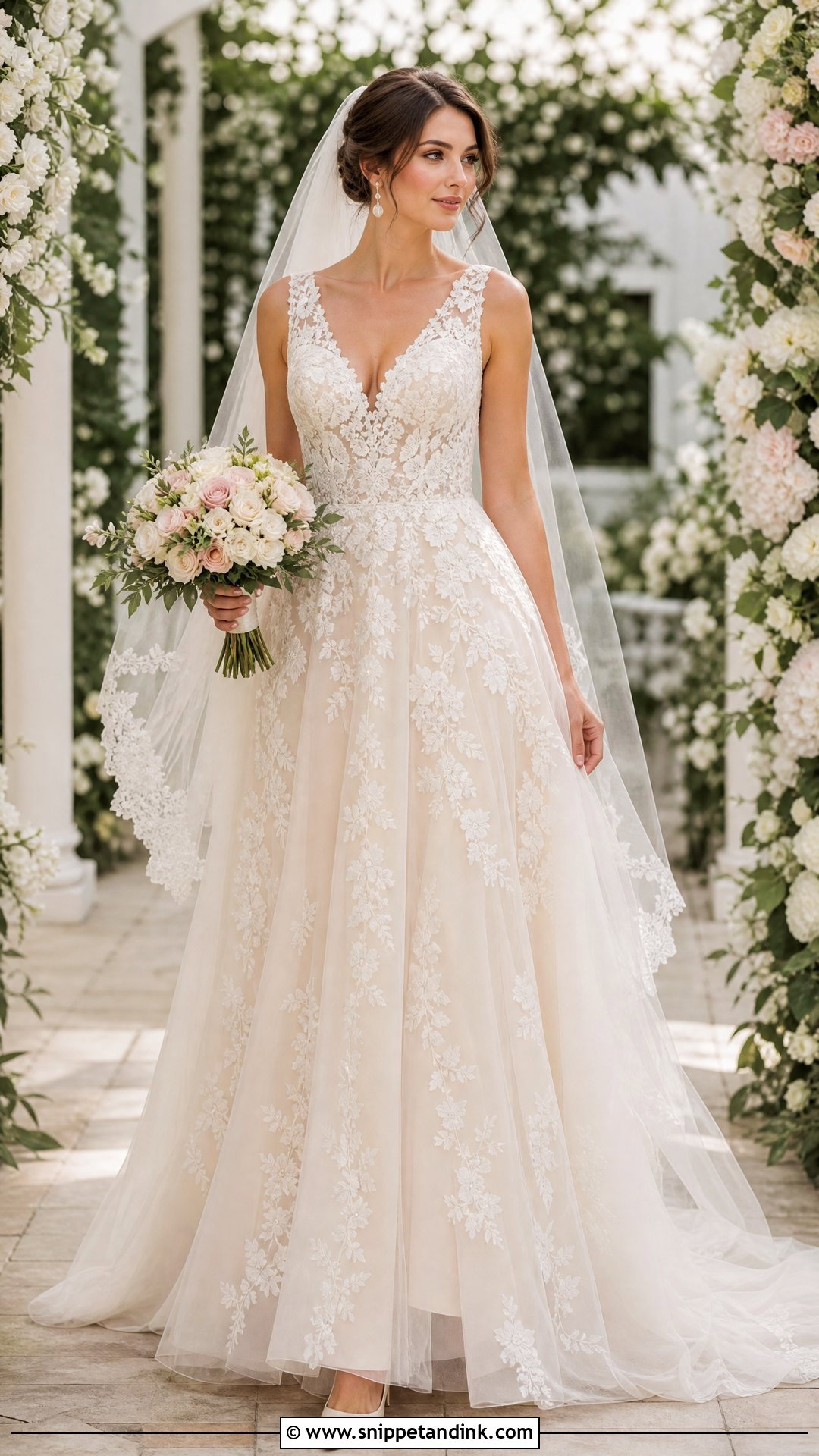
This is the dress I see bought most often in champagne, and for good reason. A fitted lace bodice, a natural waist and a skirt that widens gently will move with you all day without fighting you on stairs or in a car. When the lace is ivory over a champagne lining, you get a quiet contrast that makes each flower readable. I’d keep the accessories light: a fingertip veil, pearl drops, pointed ivory pumps and a loose chignon so the neckline stays clear. Cream flowers with pale greenery sit next to it without looking matched. Ask the salon about adding cap sleeves, straps or an illusion neckline; lace bodices take those changes well because the seams hide under the pattern.
2. Champagne Satin Ball Gown Wedding Dress
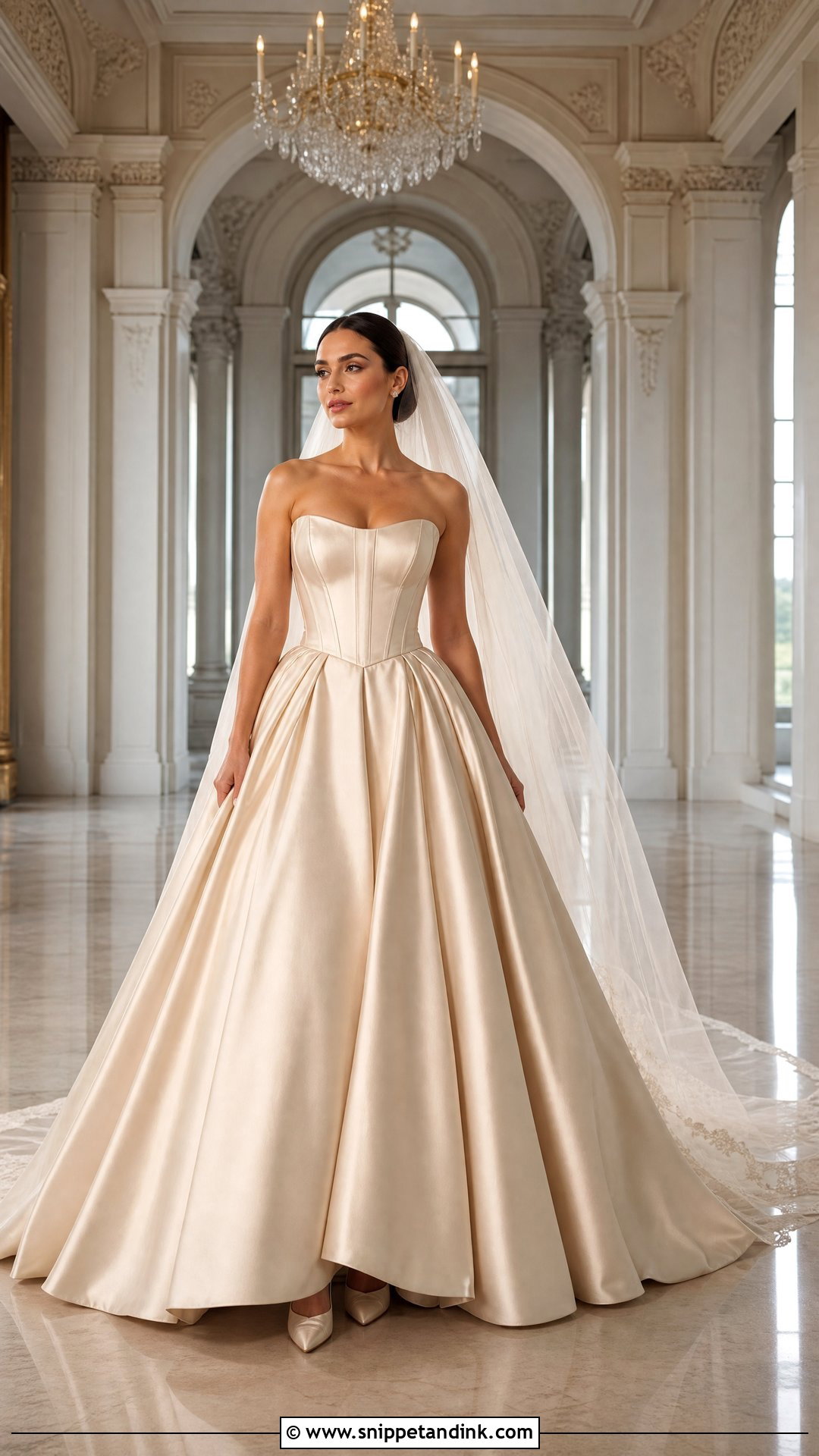
Satin in a full ball skirt doesn’t need decoration. The drama comes from the pleats and the internal structure, so that’s where I look first: a well-built gown has a boned bodice and often a waist stay that carries the skirt’s weight off your hips. A basque or slightly dropped waist lengthens the torso and gives all that volume a clear starting point. Satin reflects so much light that its color can shift between the salon and the photos, so I always ask brides to look at phone pictures of it before ordering. Wear it with a cathedral veil, crystal studs, closed-toe satin heels and a smooth low bun. Ballrooms and historic hotels give it room.
3. Champagne Beaded Mermaid Wedding Dress
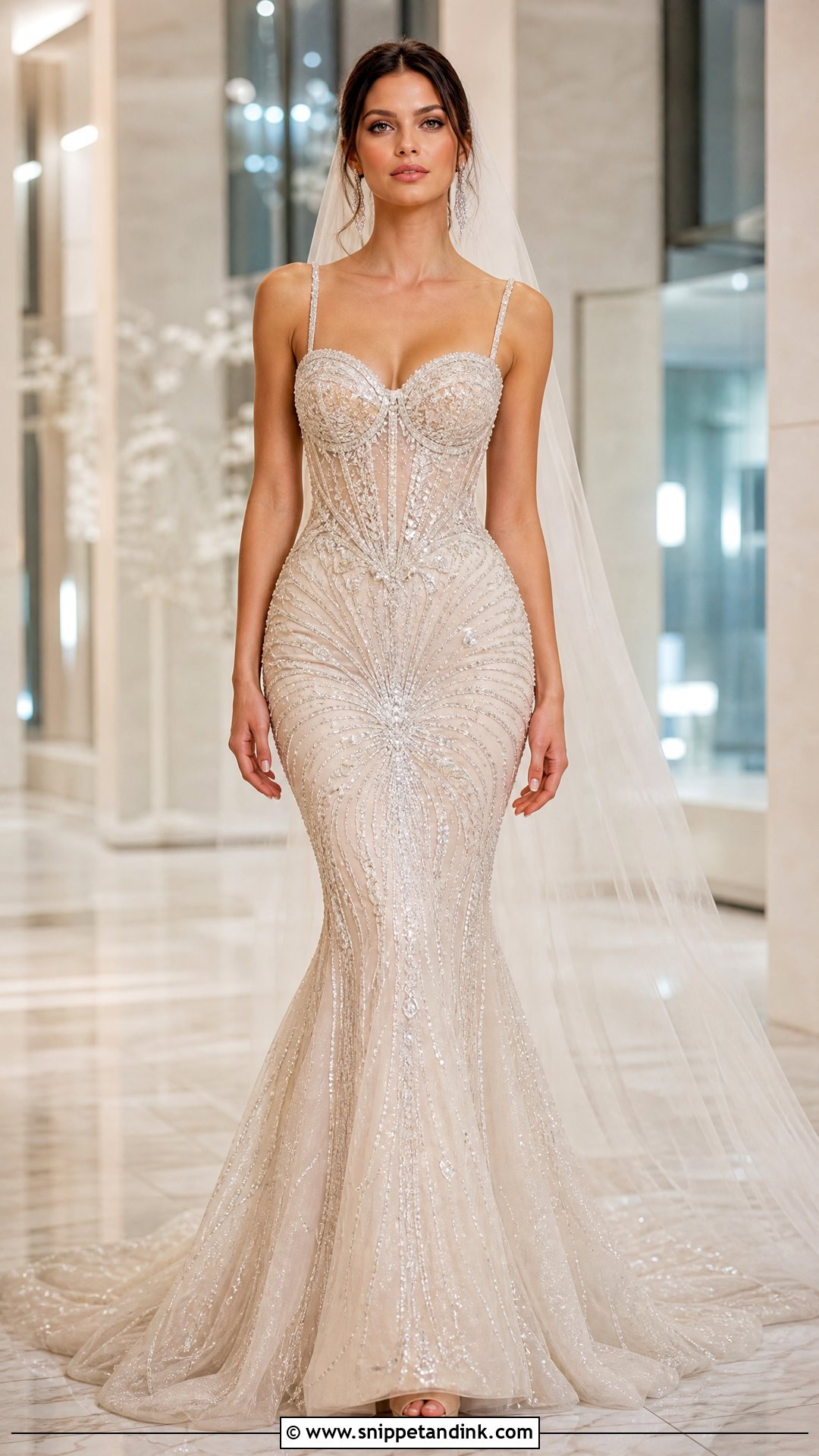
Beading on a mermaid gown is about placement more than quantity. I look for crystals and embroidery that run in vertical or curved lines, because they pull the eye up and down the body and make the fitted section look longer. The bodice has to grip through the waist and hips before the flare opens near the knee, which means every fitting is about millimetres. Platform heels in a neutral tone give height without the strain of a stiletto in a tight skirt. A sleek ponytail or side-parted waves suits the polish, and a simple veil keeps it from tipping into costume. Carry a compact bouquet so you’re not hiding the bodice you chose it for.
4. Champagne Long Sleeve Wedding Dress
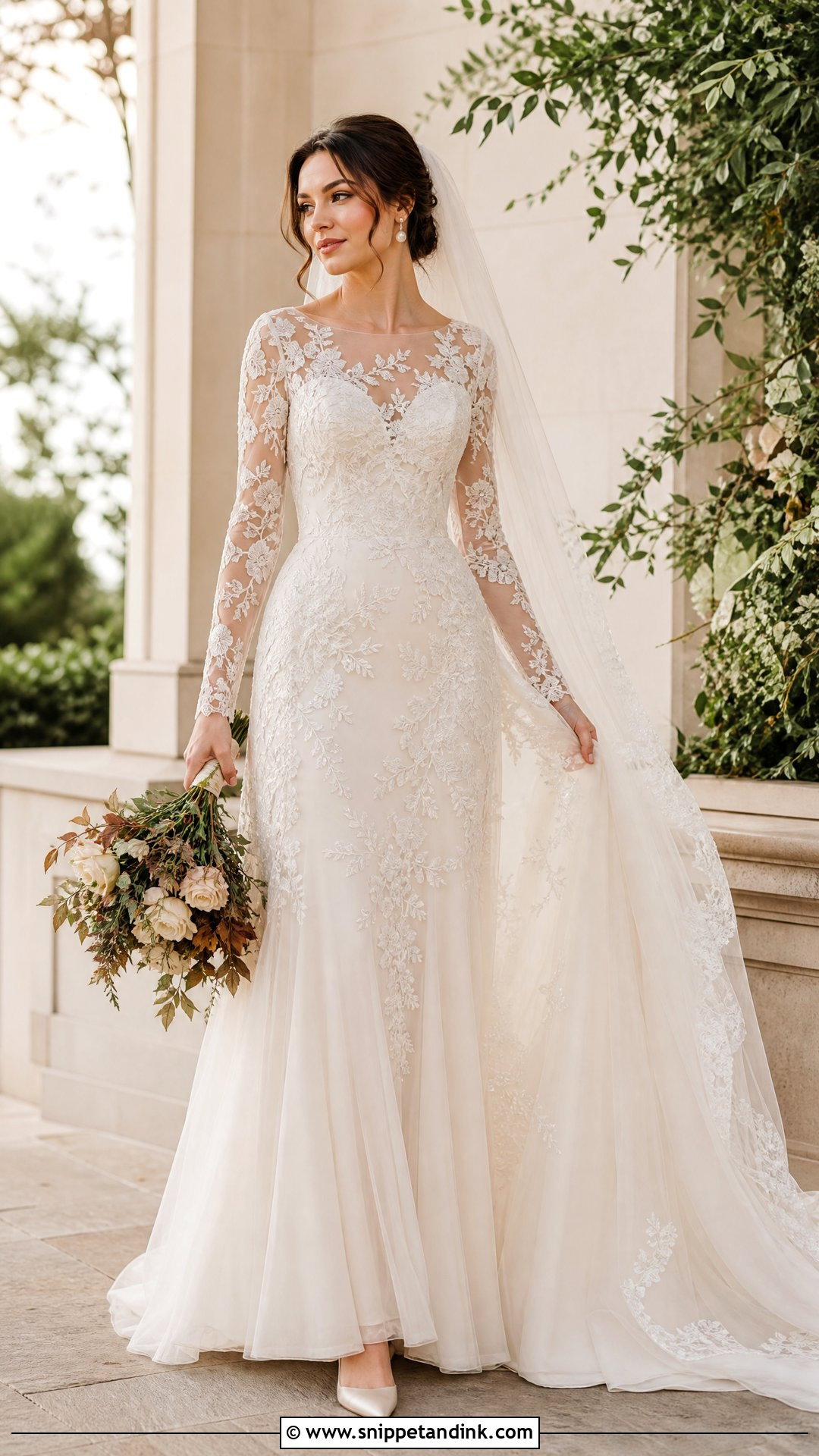
Cool-weather weddings are where long sleeves earn their place. Sheer lace sleeves read soft and show a little skin through the pattern; lined crepe or satin looks cleaner and more covered. The thing I test hardest is arm movement. Have the bride reach forward and up, because a sleeve set into a tight armhole pulls the whole bodice when she hugs someone. A low textured bun, pearl earrings and a chapel-length veil anchored under the hair work well, and pointed pumps or ankle straps sit neatly under the hem. If the cuffs are detailed, skip the bracelet. A bouquet of cream flowers and muted seasonal greenery fits a fall or winter date.
5. Champagne Off The Shoulder Wedding Dress
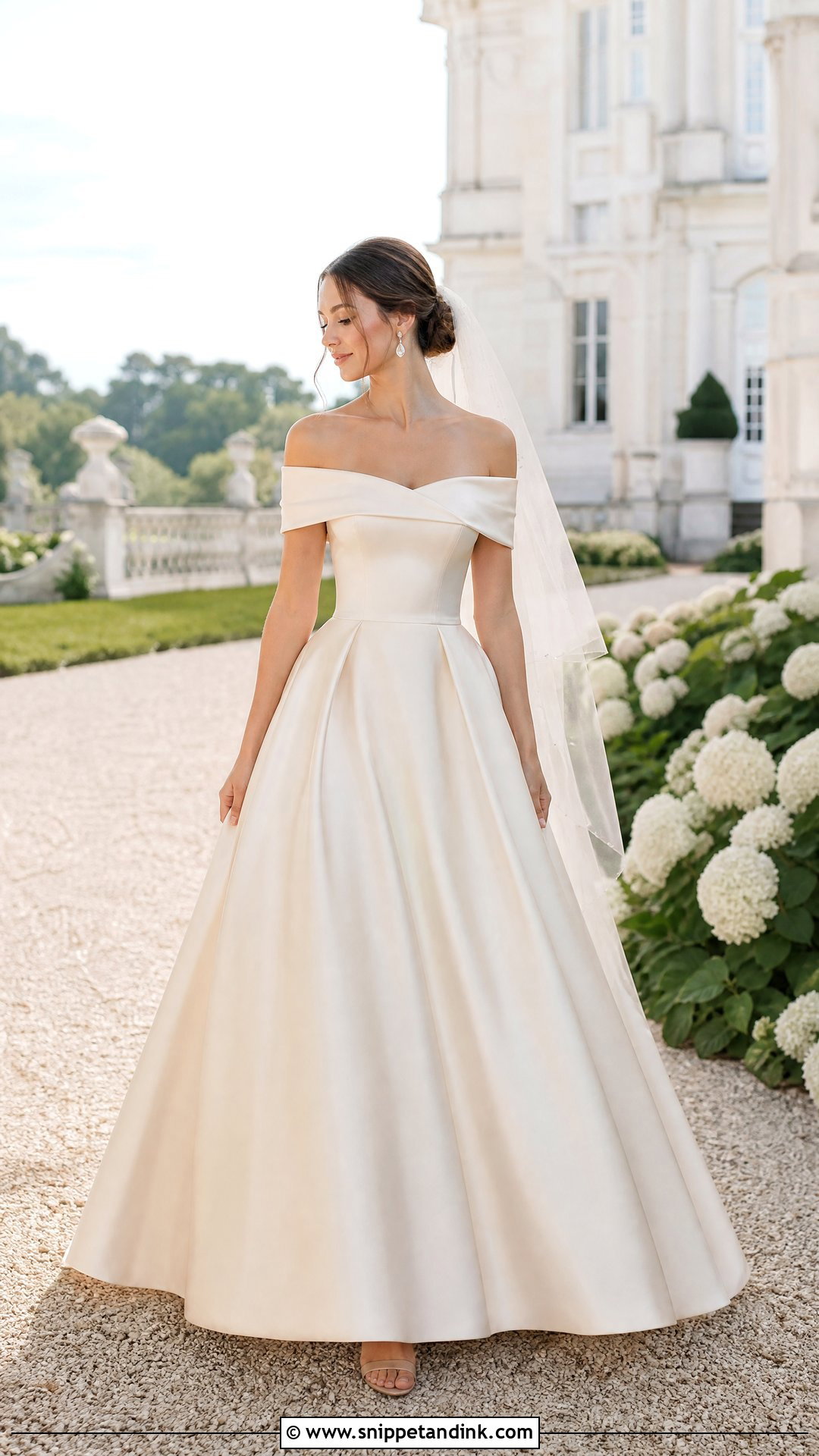
An off-the-shoulder neckline frames the collarbone softly, and in champagne it warms the skin around the face. A folded satin band looks minimal; lace or appliqué sleeves add decoration. The question I ask at every fitting is whether the band holds when the bride lifts her arms. If it slides, the bodice needs more internal support, usually a firmer band or extra boning, before anything else is touched. Keep the neckline clear with no necklace or a short pendant, wear drop earrings and a low bun, and place the veil at the back of the head. Detachable off-the-shoulder sleeves give extra coverage if your ceremony asks for it.
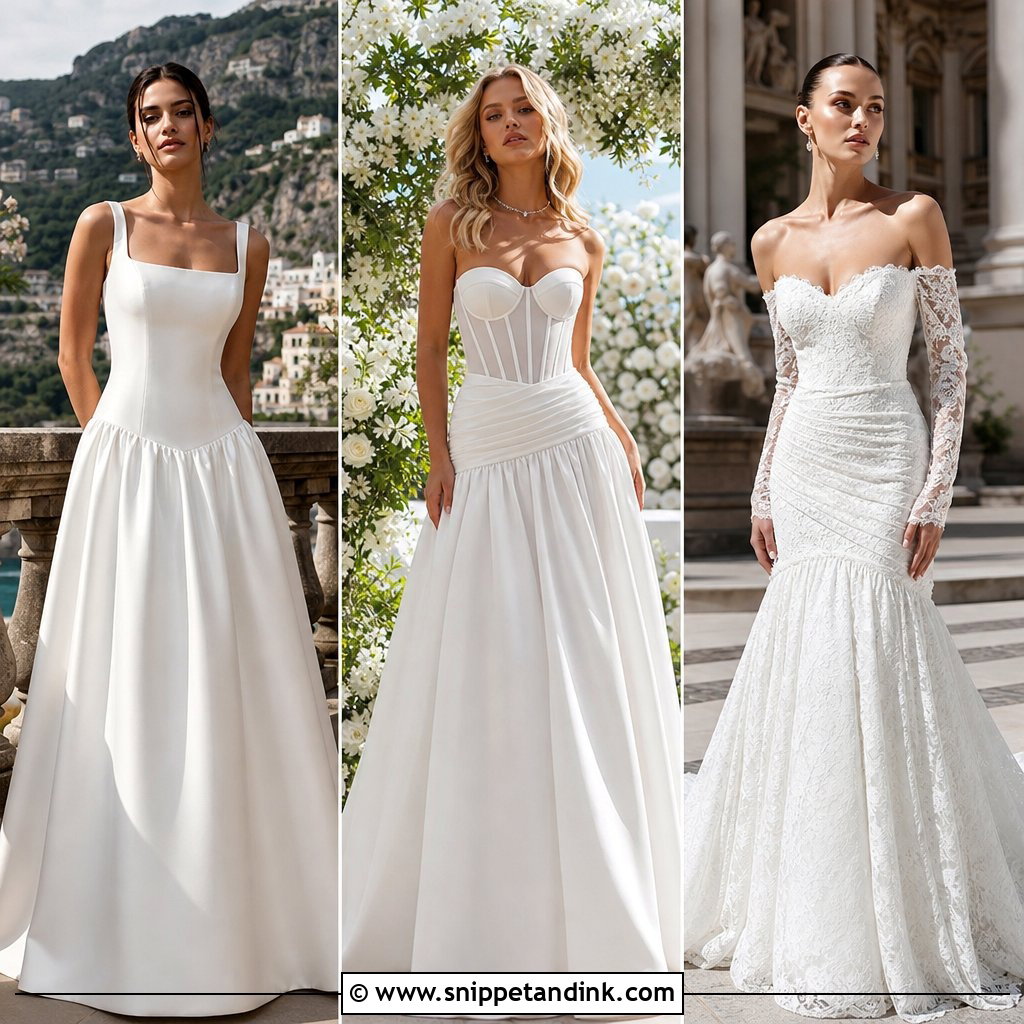
6. Champagne Strapless Corset Wedding Dress
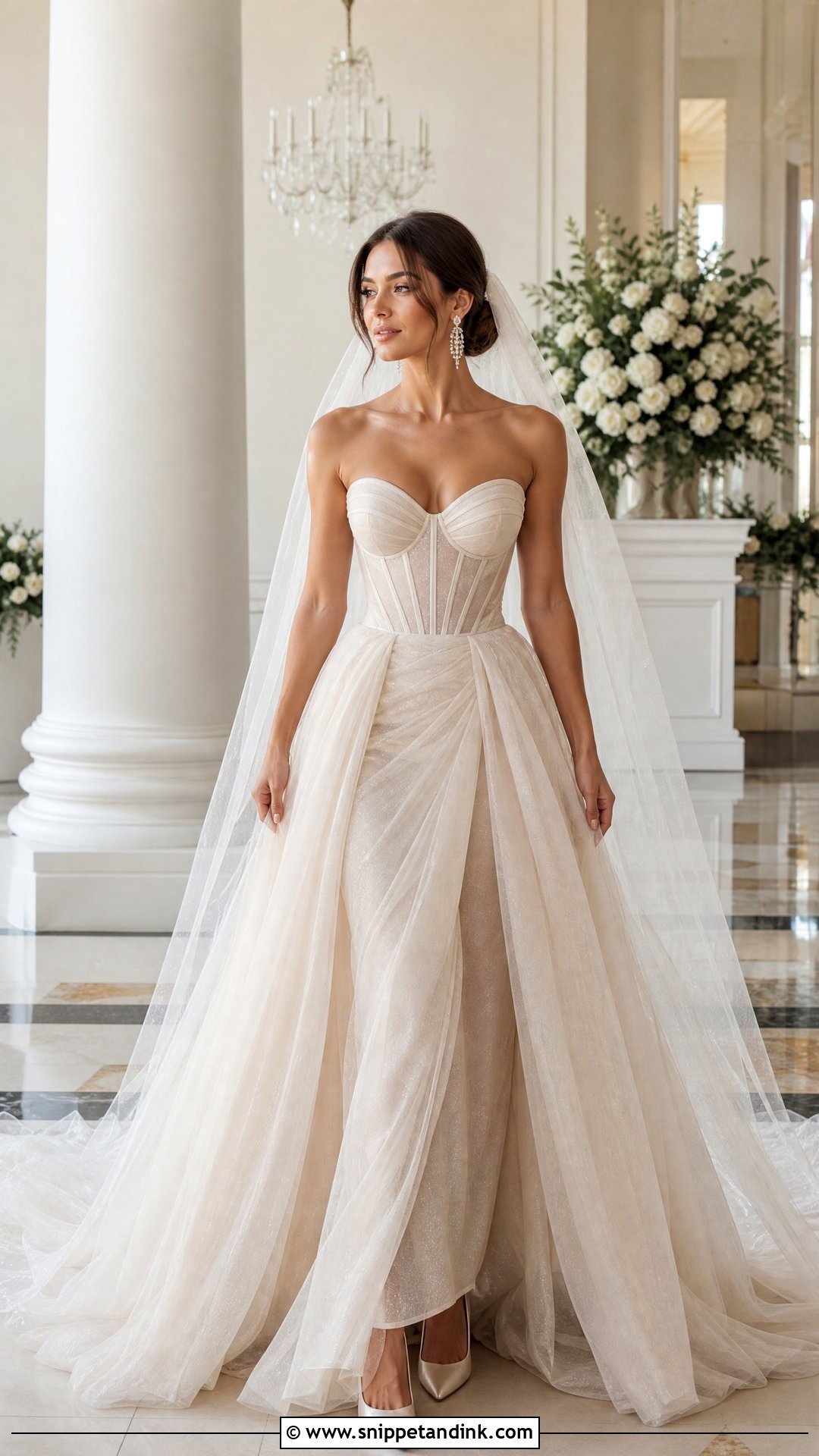
Visible corsetry and a glowing champagne fabric make a strong pairing, but a strapless corset has to be built well to work through ten hours. I check for proper boning, cups that sit flush and a neckline, straight or sweetheart, that doesn’t gape when the bride bends. Lace-up backs give the most room to adjust; zipped backs need precise alterations. A sheer cathedral veil, statement earrings and pointed satin heels suit it, with an updo so the hair doesn’t cover the bodice seams. For the reception, a light wrap or detachable gloves changes the look without a second dress.
7. Champagne Square Neck Wedding Dress
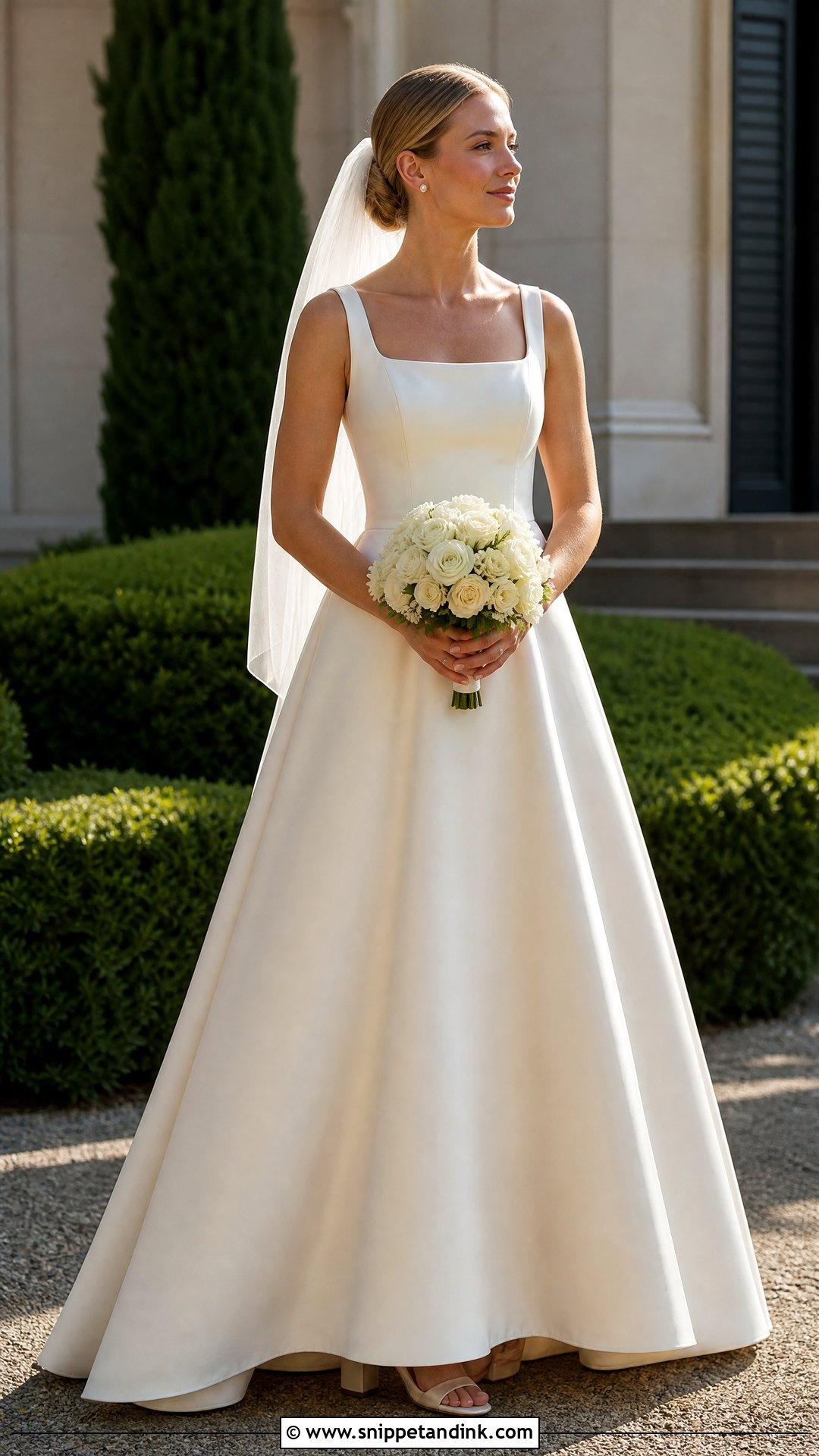
A square neckline frames the collarbone in a clean, angular line, and it’s one of the most comfortable necklines I fit because the straps actually hold the dress up. Wide straps, short sleeves or long fitted sleeves all pair with it. Satin or crepe keeps it minimal; lace adds texture. Pearl studs, a smooth bun and a veil with a raw or narrow edge keep it simple. Low block heels help at outdoor ceremonies. I’d carry a compact bouquet with rounded flowers to soften all those straight lines. It pairs most naturally with A-line and column skirts.
8. Champagne V Neck Wedding Dress
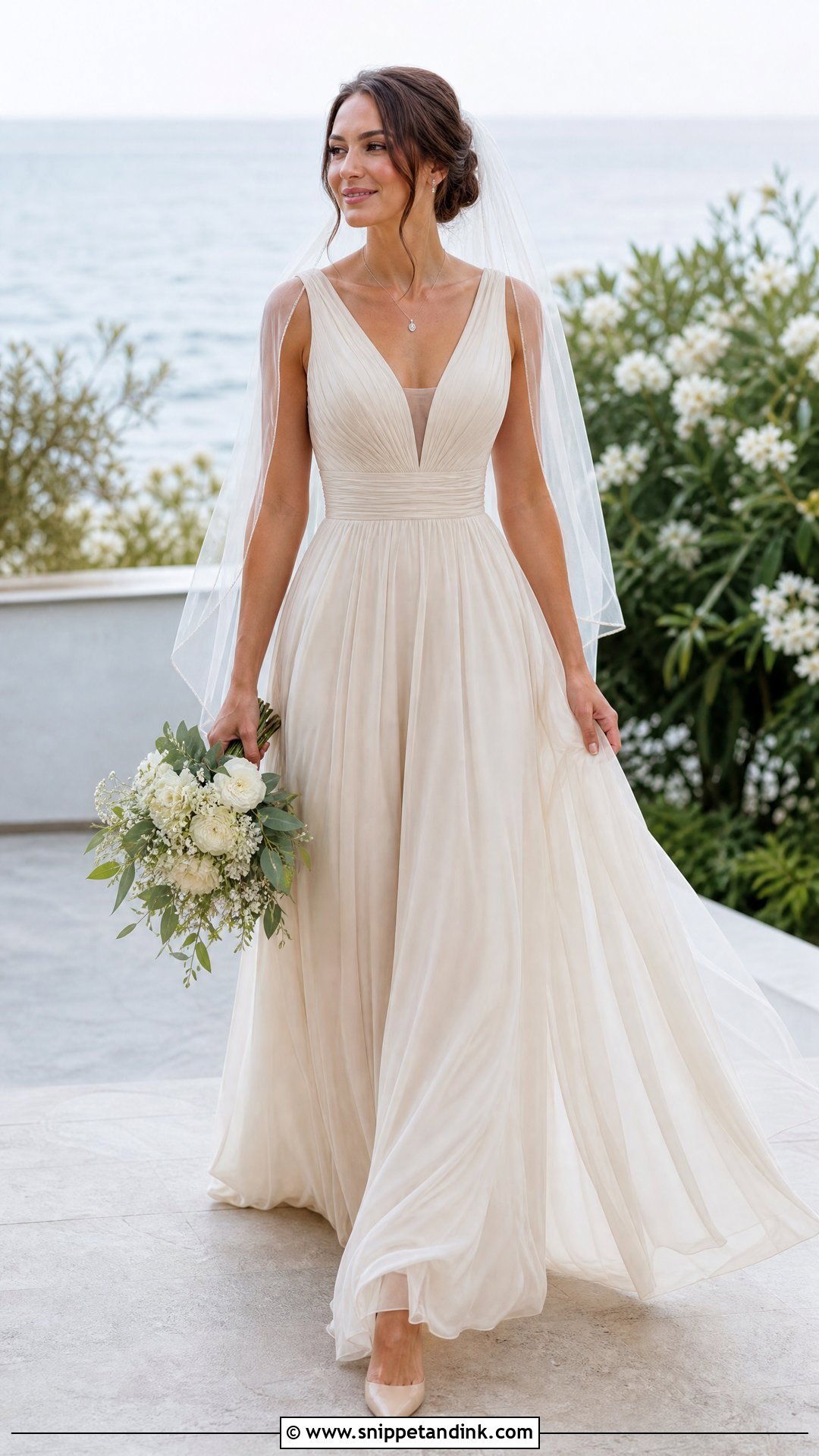
A V neck lengthens the upper body, and the depth is entirely adjustable. Illusion mesh filling a deeper V gives the look of a plunge with real security underneath. On a fuller bust I always steer toward wider straps, because thin ones cut into the shoulder and let the V spread by evening. Chiffon or tulle skirts make it move; satin gives the same neckline a sharper, more formal line. A fine pendant, small earrings, soft waves pinned back, pointed heels and a fingertip veil finish it. Have the neckline depth tailored rather than left as it came off the rack, since half an inch makes a real difference.
9. Champagne High Neck Wedding Dress
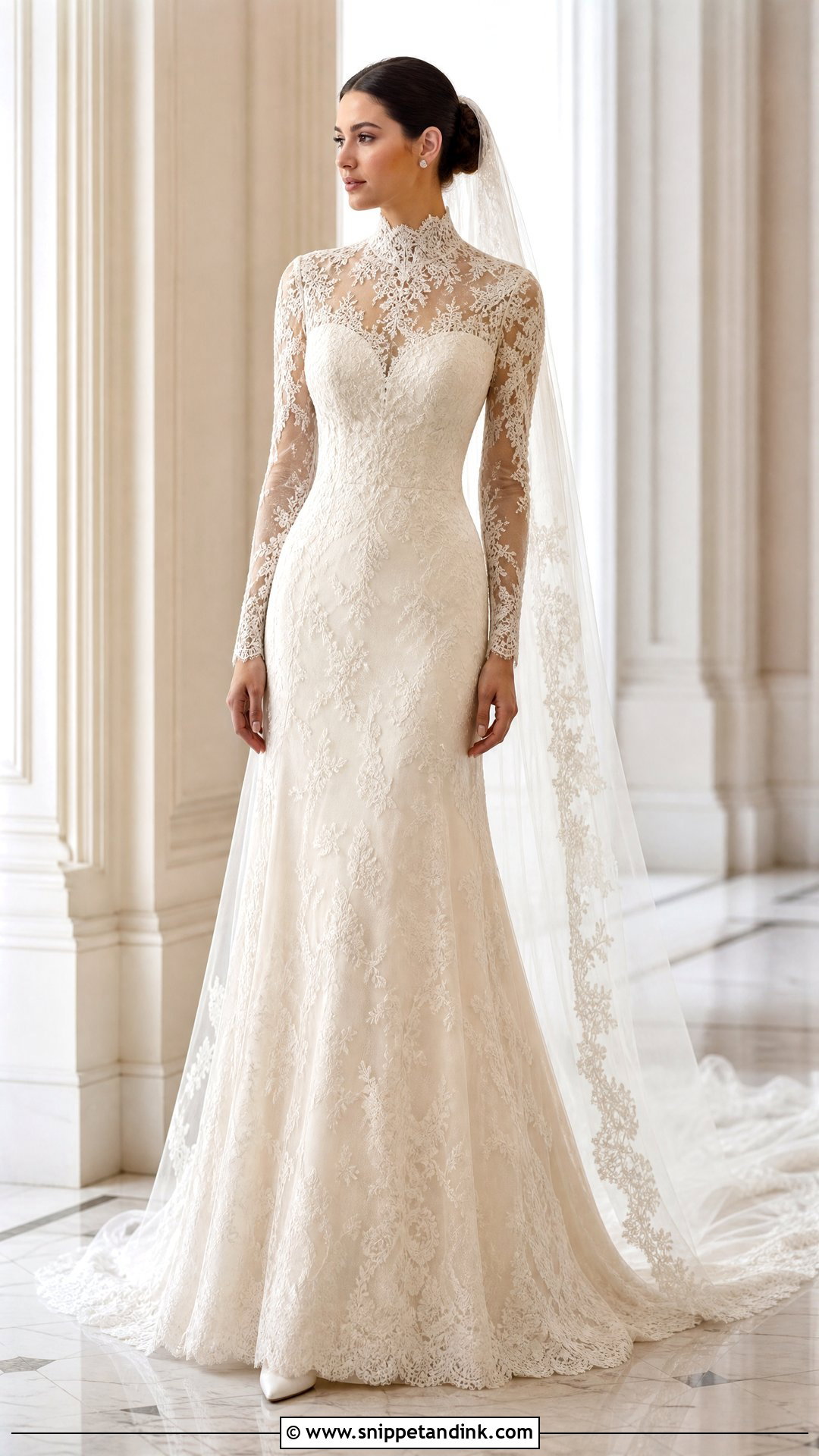
A champagne high neck wedding dress moves all the attention to the face and shoulders. Illusion tulle with lace appliqués feels delicate, while a solid satin or crepe collar looks modern and sculptural. Balance a covered bodice with a fitted skirt, an open back or a light A-line. I’d skip the necklace entirely and go for refined studs, a sleek bun, a cathedral veil and closed-toe heels. Keep the veil plain if the collar is beaded. Test the collar sitting down, too: high necks that are fine standing can press against the throat when you lean forward to eat.
10. Champagne Gold Wedding Dress
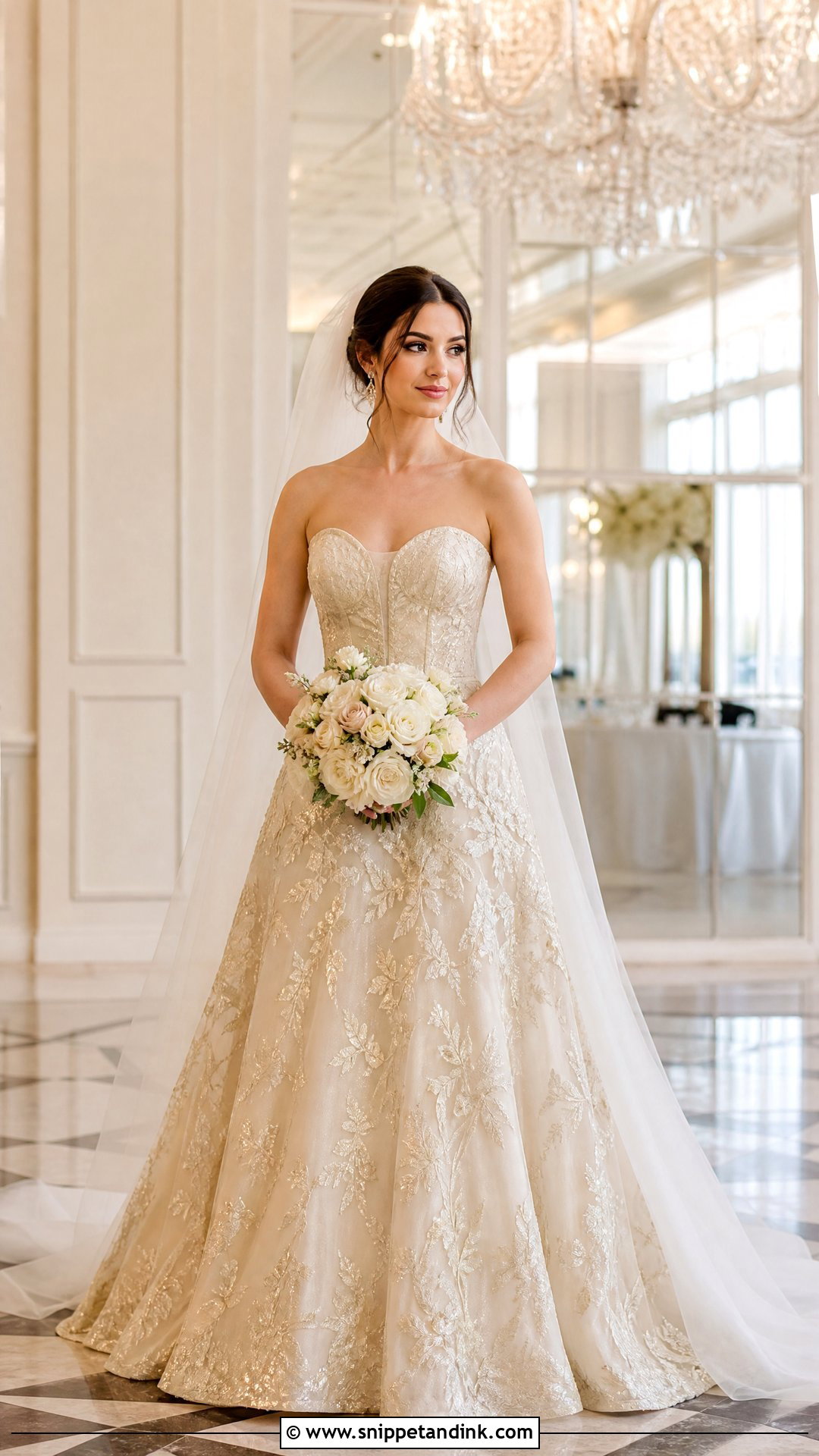
Champagne gold is the bold end of this color family, and the trick is choosing one source of shine. Metallic embroidery, golden thread or a warm satin finish each deepens the color; put two together and the gown starts to look busy. If the dress is embroidered, pair it with a plain veil, understated earrings and smooth neutral heels. A structured updo and warm, softly glowing makeup suit the palette. Ivory flowers give gentle contrast, and a few muted green accents stop the bouquet from disappearing into the dress. I’d photograph the gown before finalizing makeup tones, because gold fabric bounces color onto the skin.
11. Blush Champagne Wedding Dress
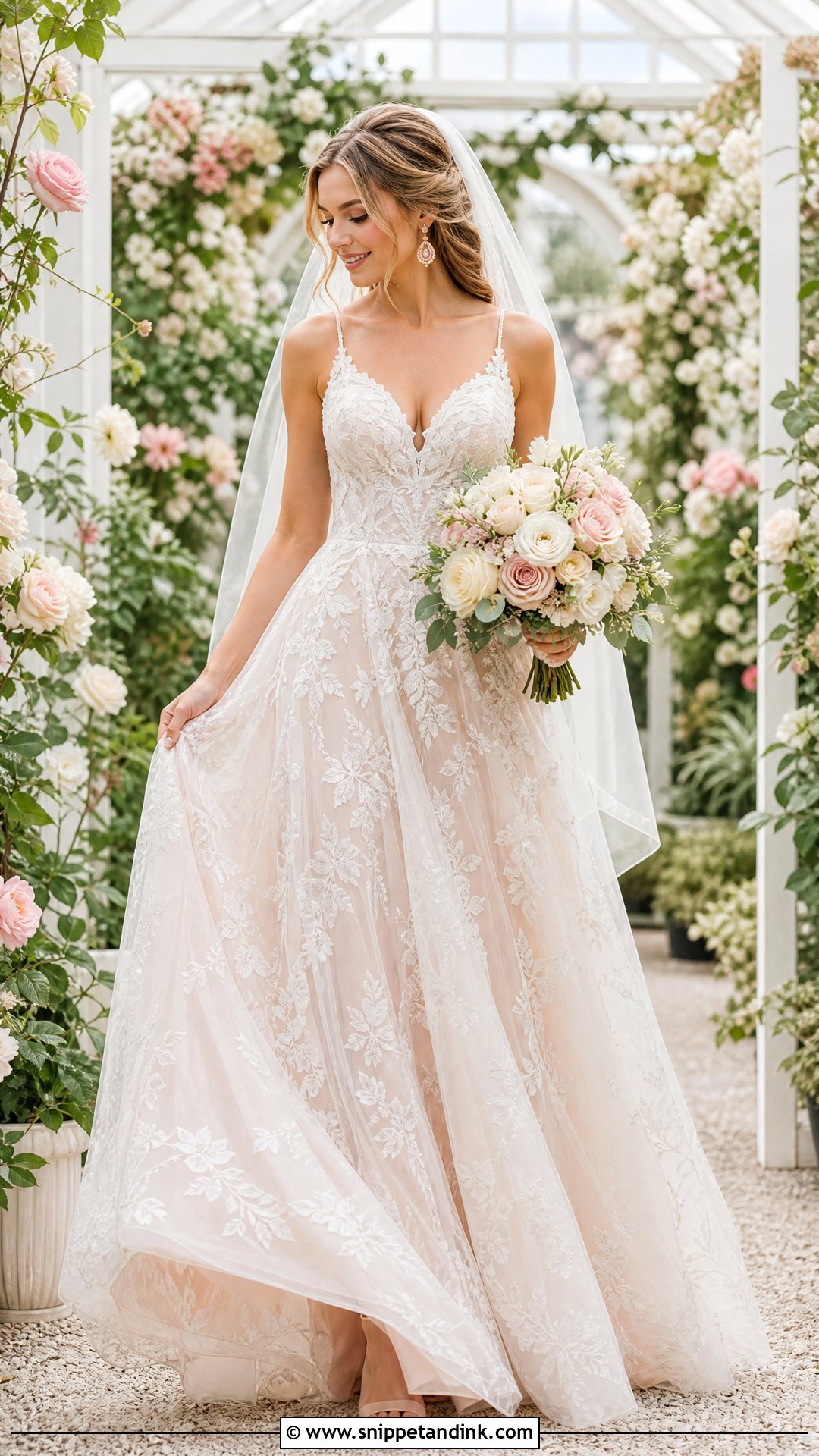
Blush champagne mixes warm beige with a hint of pink, and it’s the version I suggest to brides who want color without anyone mistaking the dress for a bridesmaid’s. Lace overlays work especially well because ivory embroidery stays visible against the tinted lining. Nude heels, rose-toned earrings and an ivory veil keep it bridal; a pink veil pushes the whole outfit too far. Soft waves or a loose bun suit the mood. Cream, pale pink and muted peach flowers coordinate without matching exactly. Blush shifts more than other champagne shades under warm bulbs, so look at swatches in several kinds of light before you order.
12. Vintage Champagne Wedding Dress
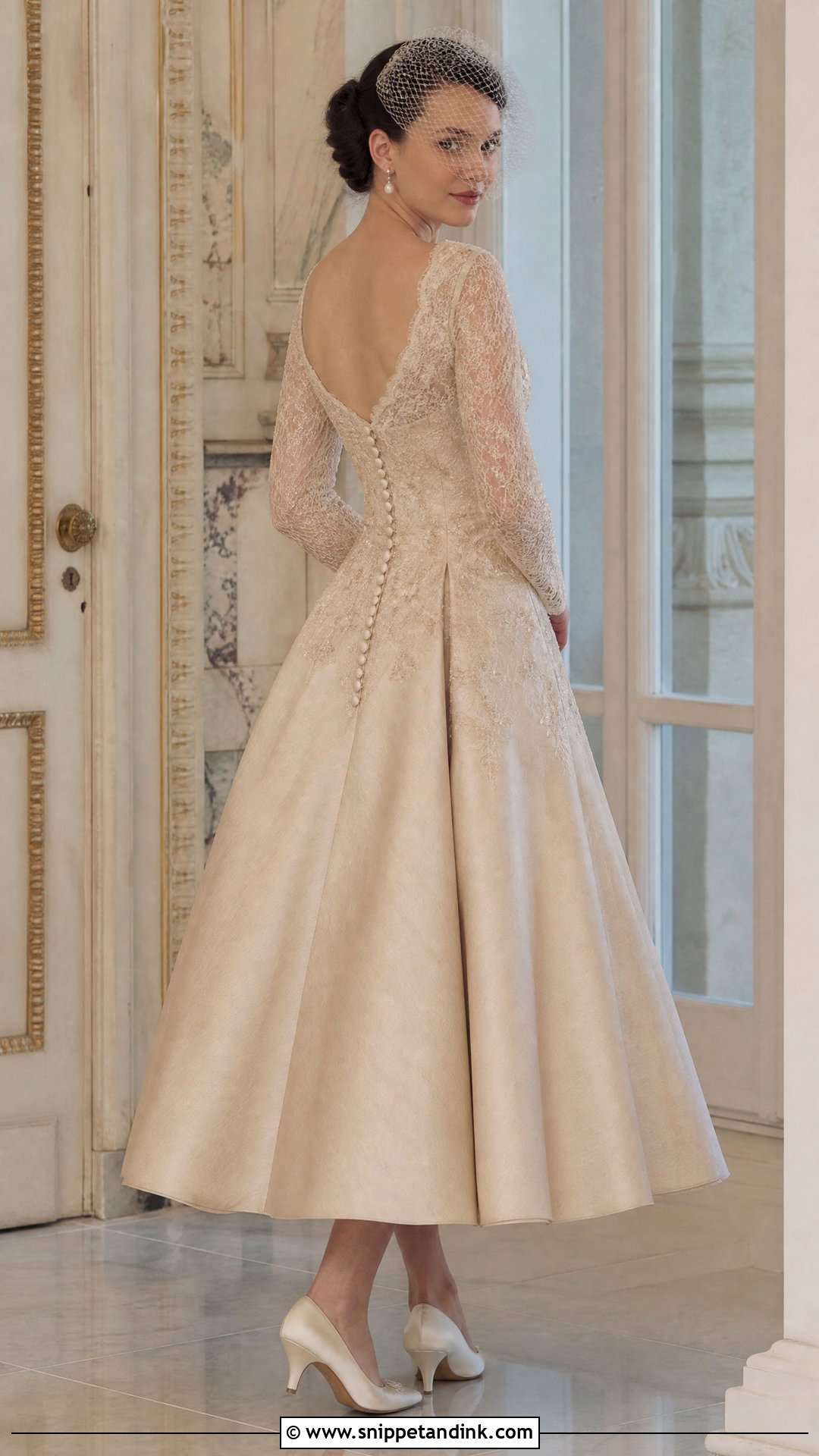
Real vintage gowns and vintage-inspired ones share one feature that makes them sit so well in champagne: old lace and silk mellow toward this exact tone with age. Bias-cut sheaths, long-sleeved lace and softly structured A-lines feel period-right without an oversized skirt. Pick a single historical influence and let the rest stay simple. A birdcage veil, pearl earrings and low closed-toe pumps carry it; finger waves, a rolled updo or brushed-out curls push it further. An antique-style brooch pinned to the bouquet wrap is the kind of detail I love here. Historic venues and old-world interiors suit it best.
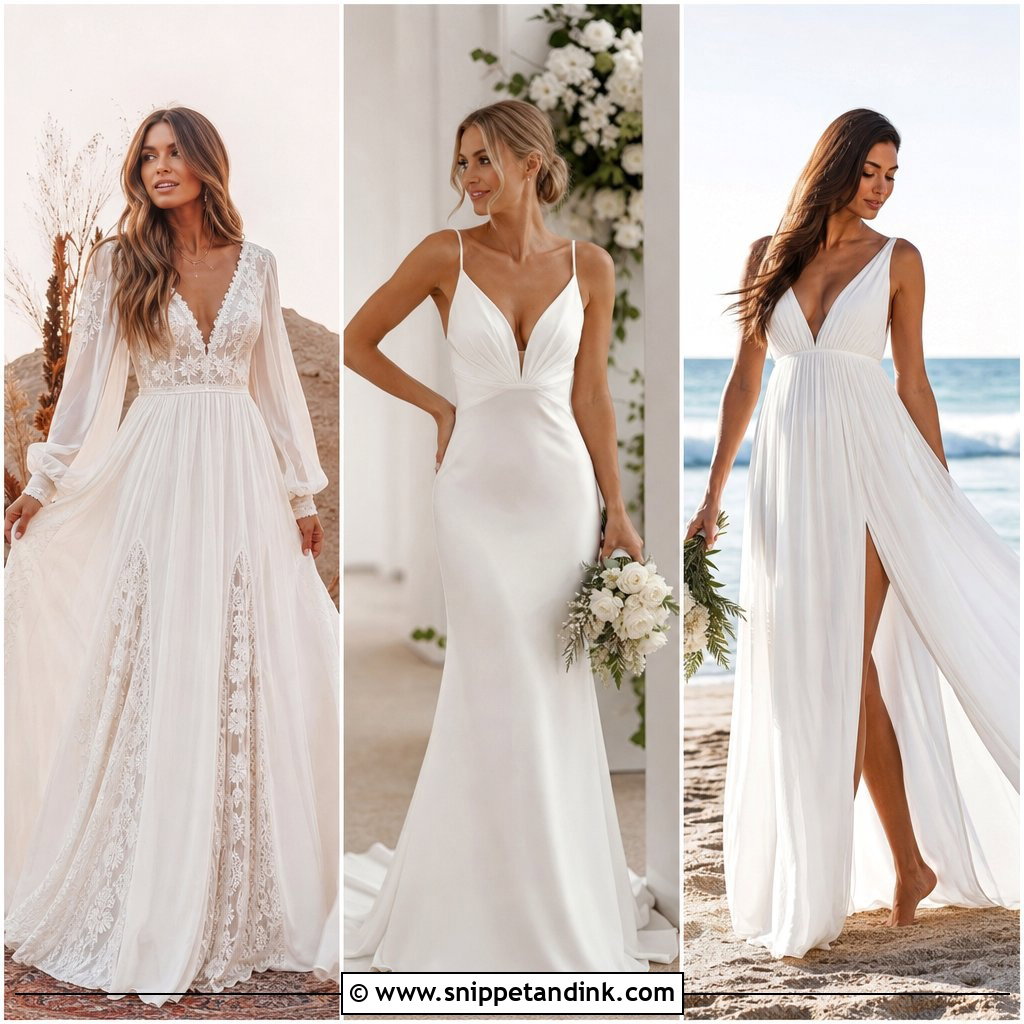
13. Boho Champagne Wedding Dress
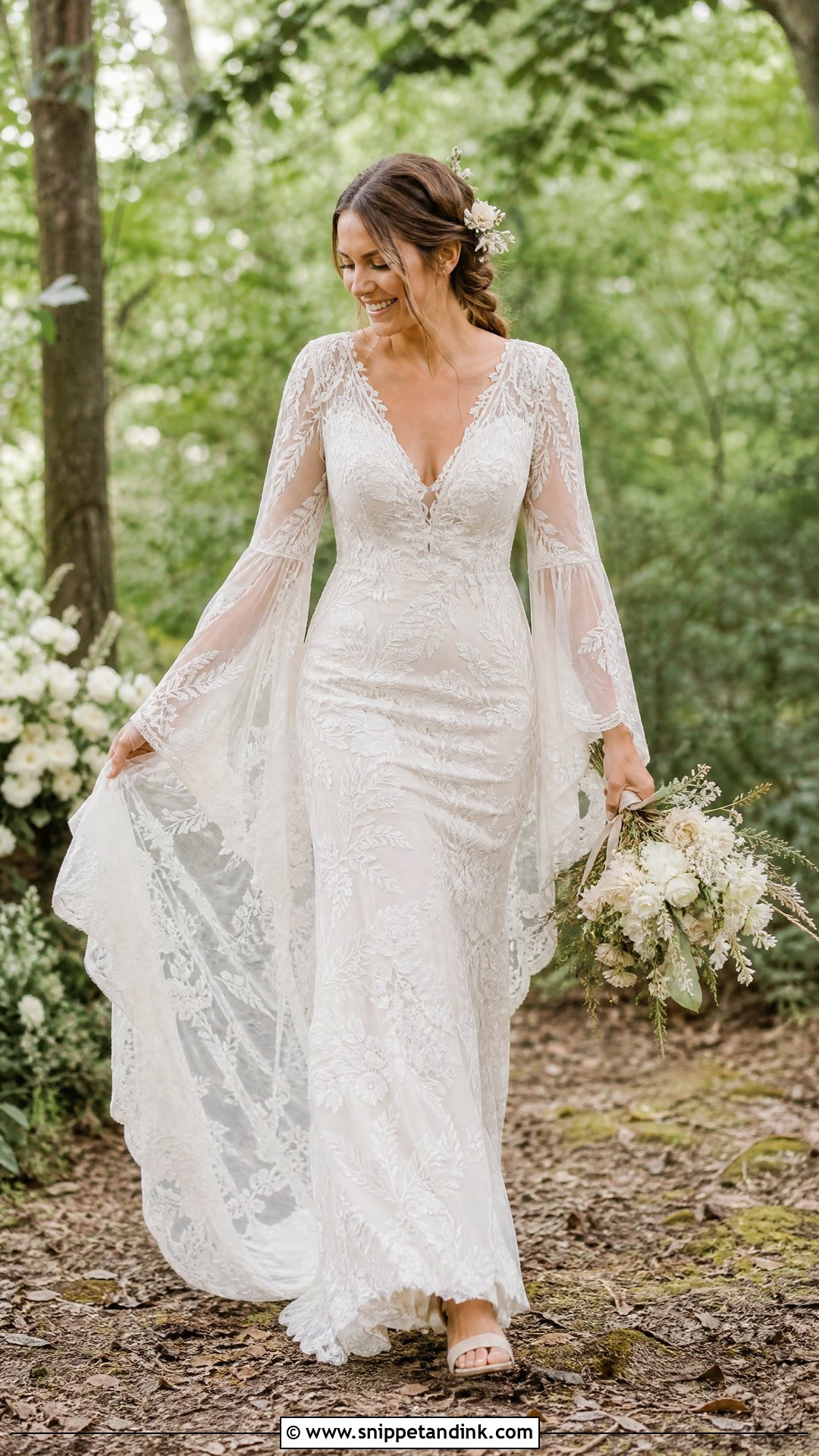
I’d build this one from the inside out. A fitted lining under a loose embroidered overlay gives shape without stiffness, and it means the dress still looks intentional when the wind catches it. Bell sleeves, subtle fringe or botanical lace each add character, but choose one or two, not all three. A low braided hairstyle with small floral pins holds up outdoors far better than loose curls. Block-heel sandals, a simple veil or light cape and an unstructured bouquet of cream flowers and greenery finish it. Have the hem set while wearing your exact wedding shoes, because delicate lace catches on rough ground and a hem even slightly too long will fray by evening.
14. Champagne Beach Wedding Dress
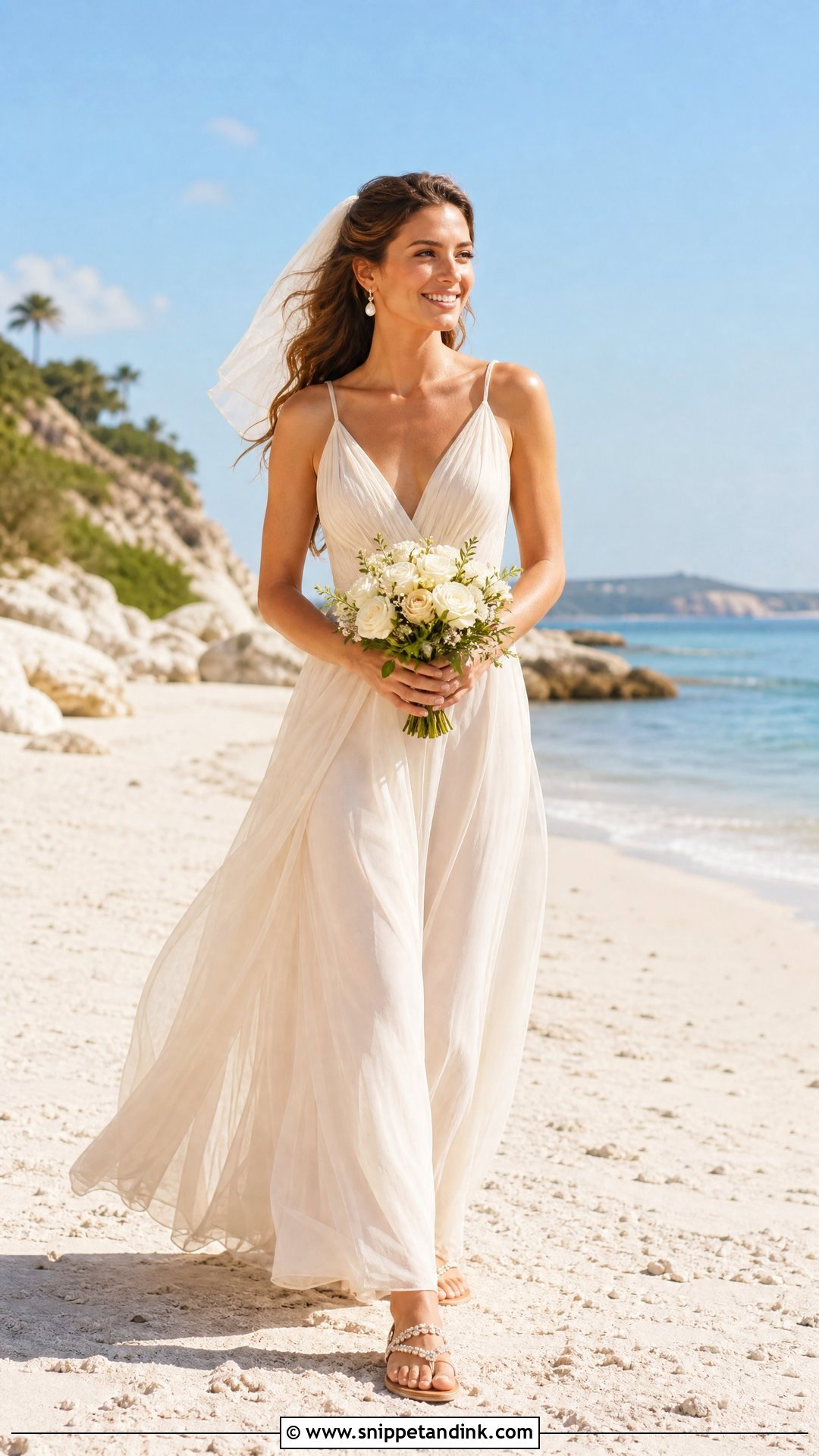
Wind is the first thing I plan for with a champagne beach wedding dress. Chiffon, light tulle, soft crepe and fluid satin all breathe, but every extra layer becomes a sail on the shore. A sheath or gentle A-line with minimal layers and a short train is easiest to manage. Wear flat embellished sandals, pearl drops and a loose updo pinned firmly enough to survive a sea breeze. A short veil or detachable shoulder drape is easier than a cathedral length that wraps itself around you. Keep the bouquet compact and its stems tightly wrapped. Champagne looks warm against sand, but make sure there’s still enough contrast between dress and beach in photos, and avoid fragile hems that snag on shells or collect sand.


15. Champagne Floral Appliqué Wedding Dress
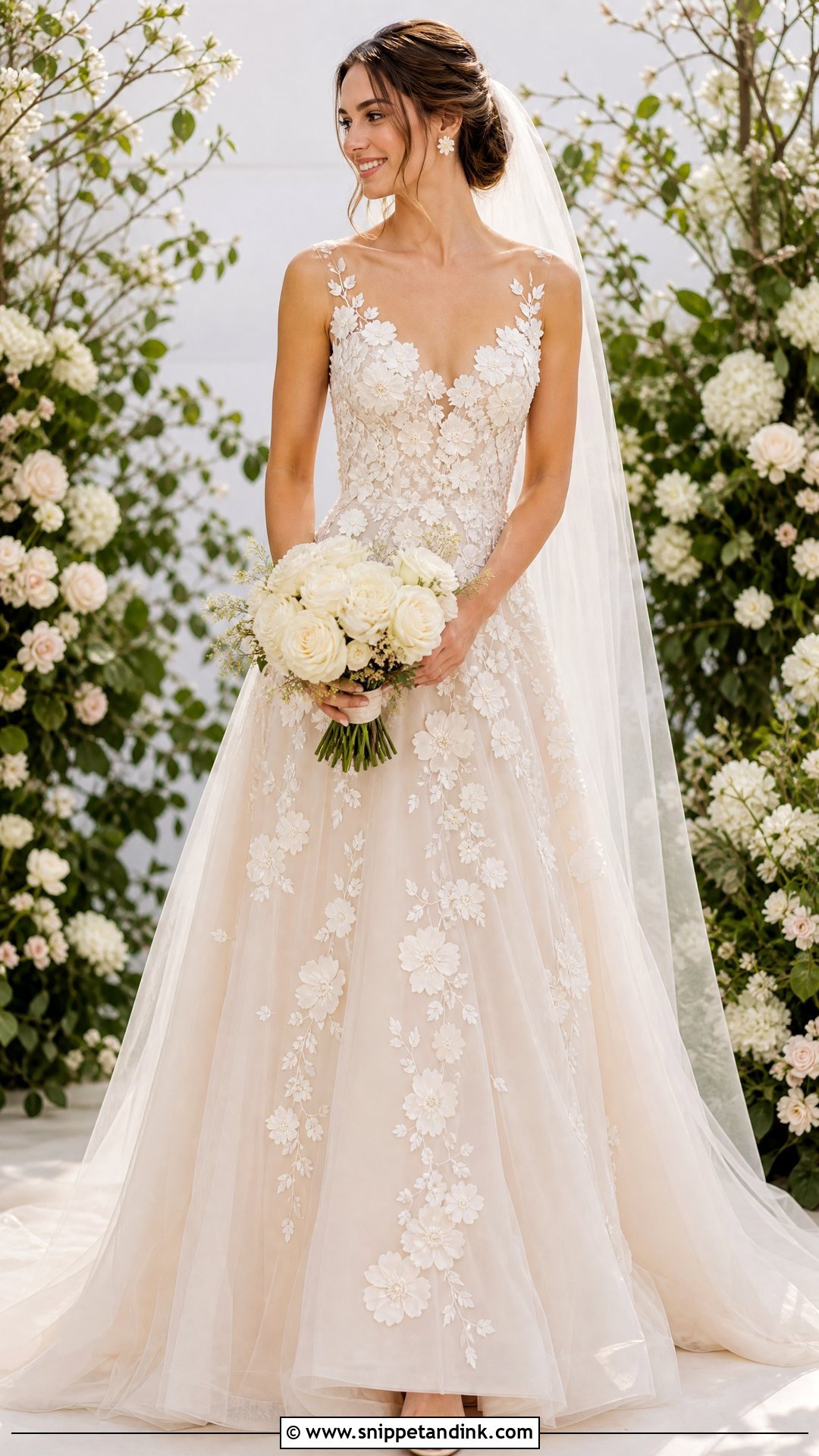
Dimensional flowers on a warm underlayer stay visible from the back row, which is the whole point of appliqués. The arrangement I like best is dense around the bodice, then scattering out across the skirt. With that much detail on the dress, everything else should be plain: a plain veil, small floral earrings and neutral heels. In the hair, one or two understated pins in a low bun rather than a big decorative crown. Carry a bouquet with fewer flower varieties so it doesn’t argue with the gown. Garden and spring ceremonies are the natural setting, though heavier floral embroidery holds its own indoors at any time of year.
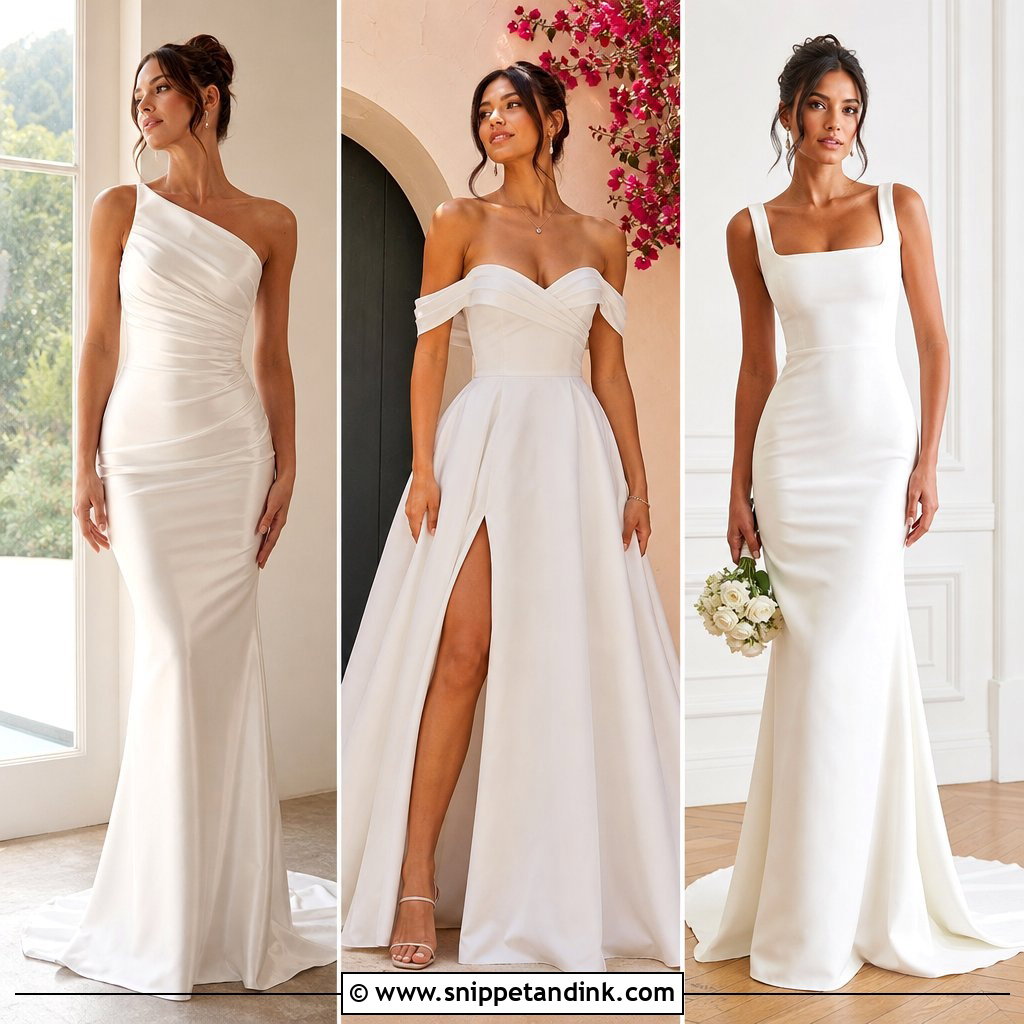
16. Champagne Minimalist Satin Wedding Dress
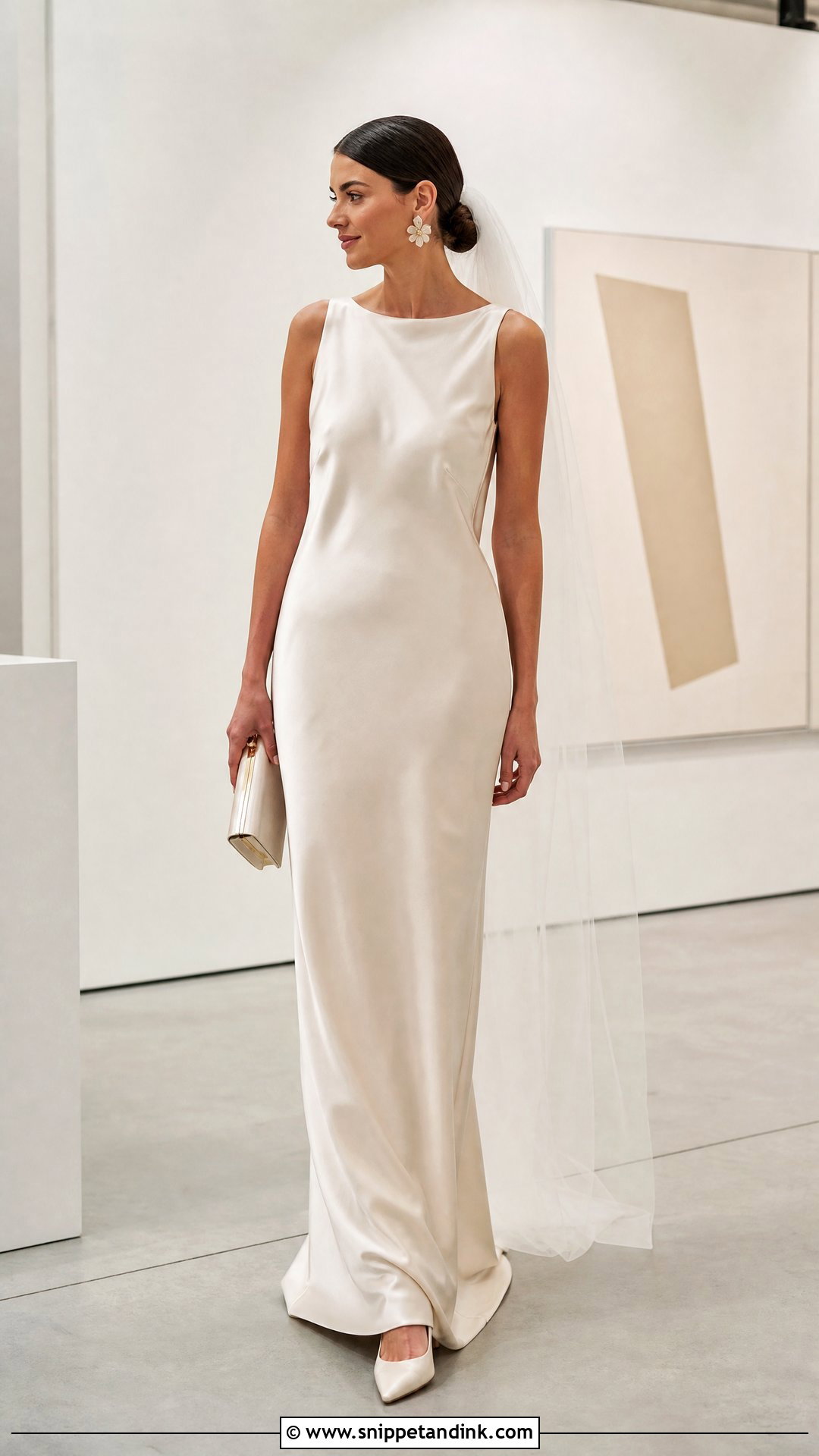
Minimal satin is the hardest dress on this list to get right, because with no lace or beading the fit is all anyone sees. A column, sheath or softly flared shape needs exact tailoring through the bust, waist, hips and hem, and I’d budget an extra fitting for it. Satin also shows undergarment lines, so choose your underwear before alterations begin, especially if the back is low. Sculptural earrings, pointed pumps, a simple veil and a sleek bun or polished waves suit its restraint. A structured clutch holds reception essentials. Contemporary venues, city weddings and art spaces give it the backdrop it needs.
17. Plus Size Champagne Wedding Dress
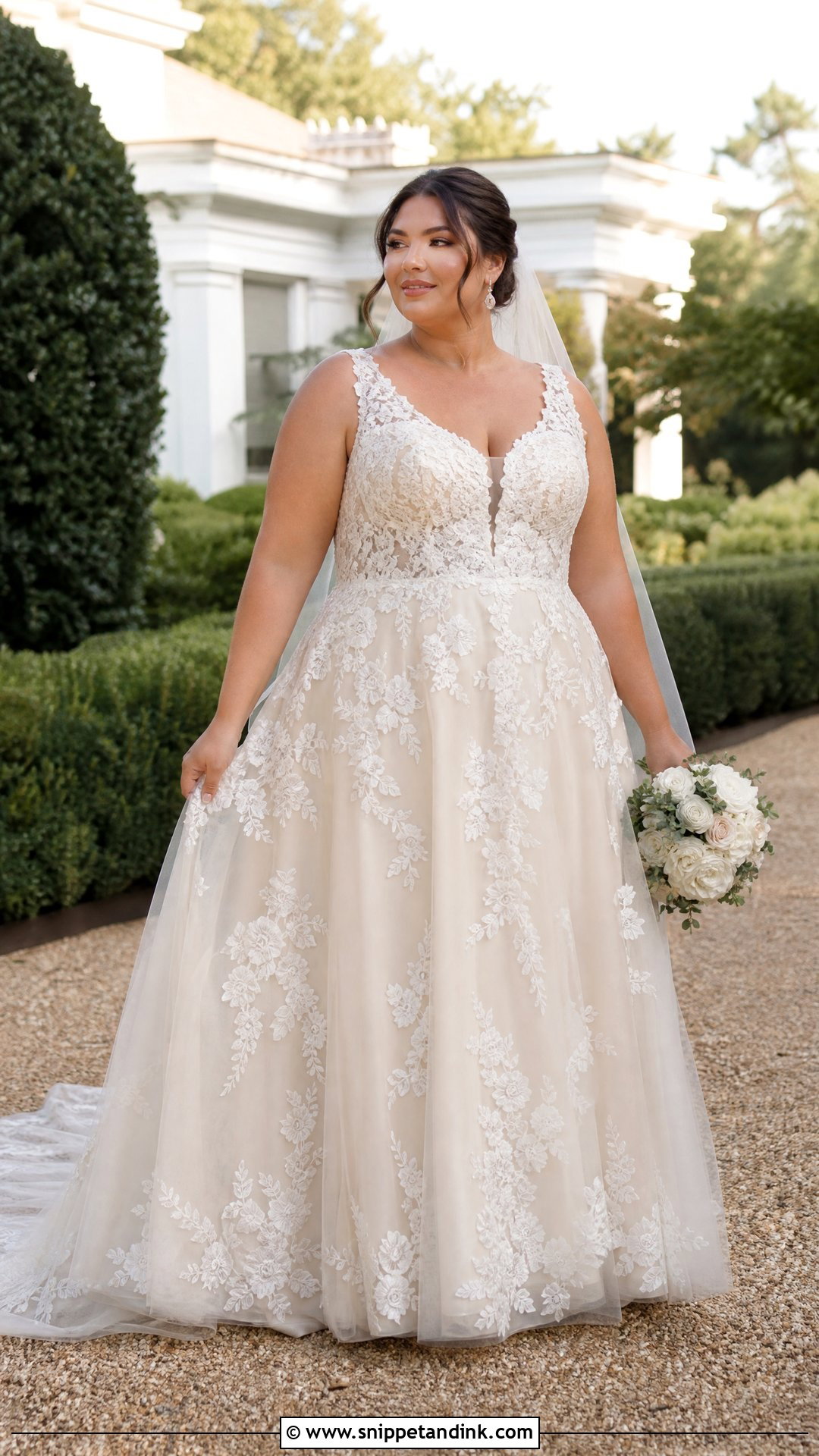
Construction comes before silhouette for me in a plus size gown. Internal boning, wider straps, built-in cups and a defined waist are what let a dress hold its shape at hour eight. A-line skirts move easily; fit-and-flare creates a sculpted line. The right choice is the one that feels secure on you, not the one someone else calls flattering. Supportive block heels, balanced earrings and a veil that matches the gown’s level of detail keep it cohesive, and an updo or side-swept style shows off embellished straps. At fittings, sit, walk, hug and lift your arms. Champagne linings also give ivory lace good contrast in full-length photos.
18. Petite Champagne Wedding Dress
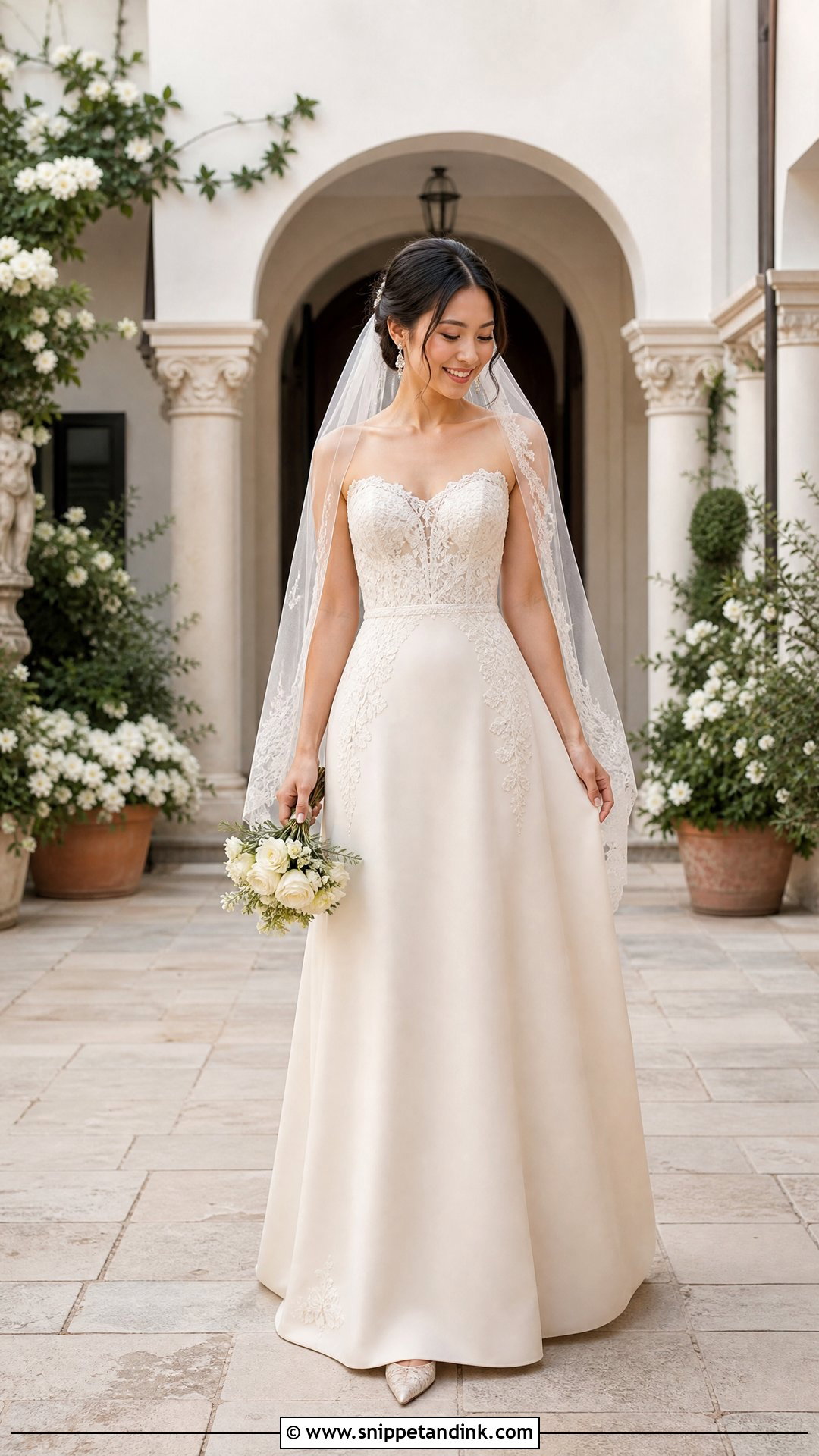
With a petite champagne wedding dress, scale is everything. The waist, neckline and skirt all need to be proportioned to your frame, so I look for a clean A-line, sheath or fit-and-flare without a lot of excess fabric. Vertical seams, narrow lace patterns and uninterrupted skirt lines keep the eye moving upward. Pointed heels, delicate earrings and a fingertip veil (not an extra-wide one) suit the scale, and a high bun adds a little height. Don’t leave alterations to the final weeks: shortening a petite gown can cut into lace borders or appliqués that then have to be moved by hand. A smaller bouquet keeps the dress visible.
19. Champagne Tea Length Wedding Dress
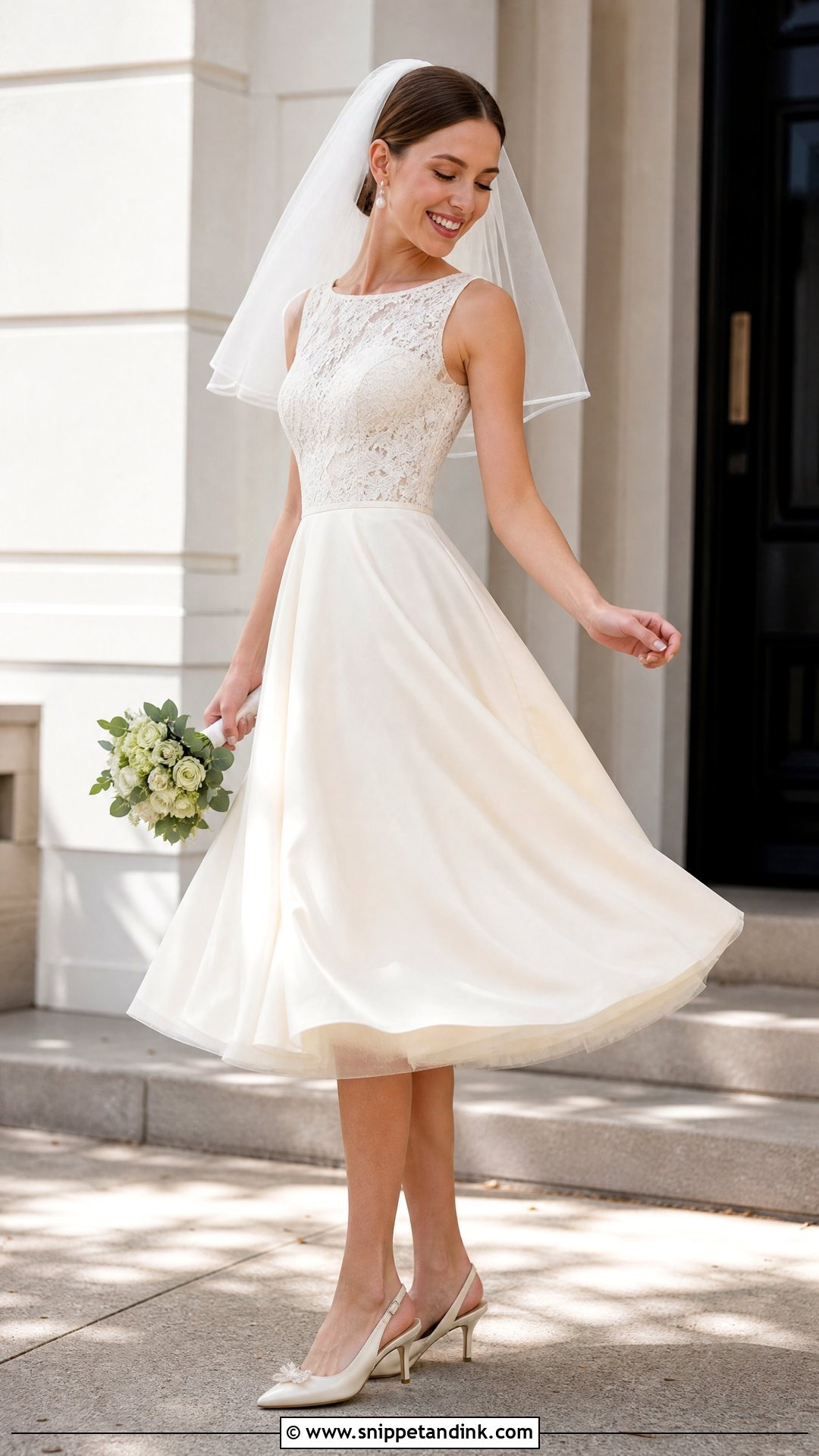
A tea-length hem falls between knee and ankle, so your shoes suddenly matter as much as the dress. Pointed pumps, embellished slingbacks or polished block heels all suit it. A fitted bodice with an A-line skirt gives classic structure; soft tulle feels lighter and swingier. I’d add pearl earrings, short gloves if you like them, and a birdcage or shoulder-length veil. A neat bun or softly curled bob balances the shorter proportions. Courthouse ceremonies and daytime parties suit it well. Have the hem pinned while you stand in your wedding shoes, because an inch higher or lower changes where the eye lands on your leg.
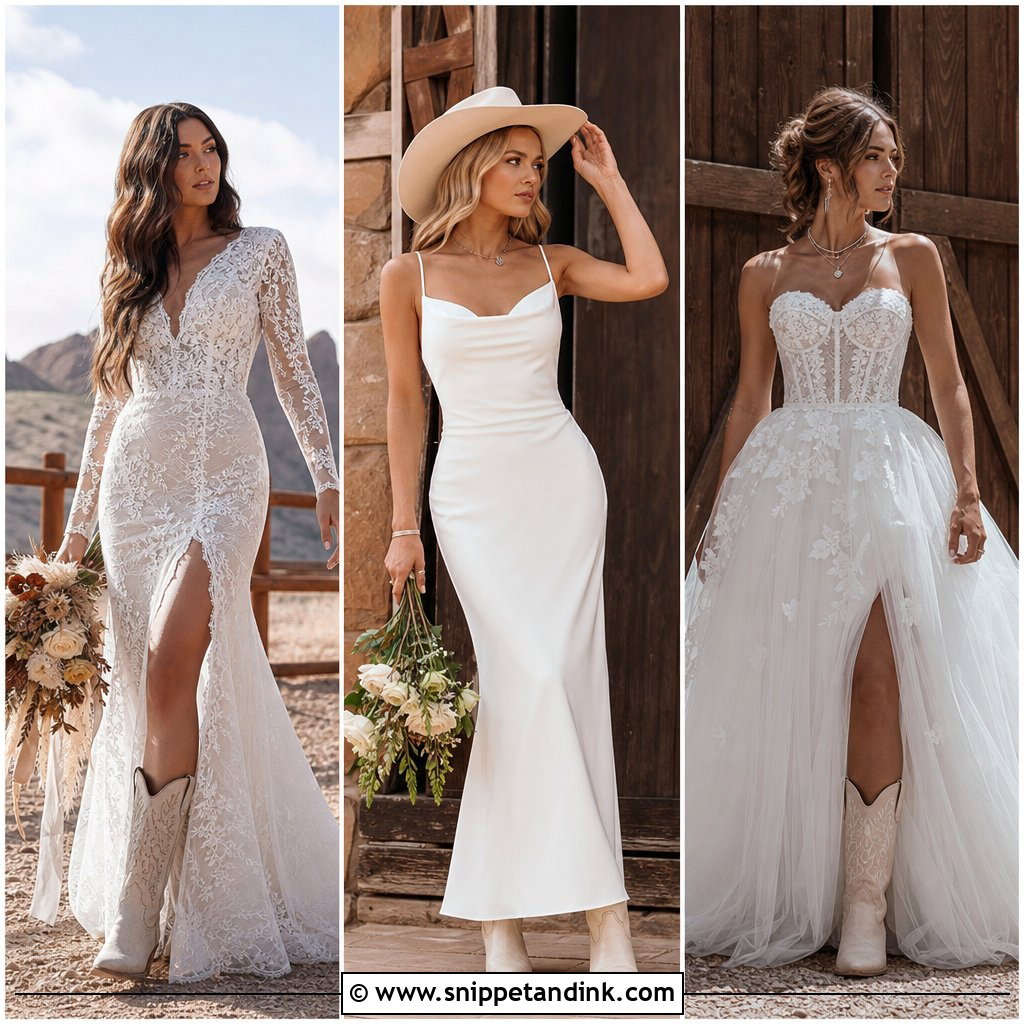

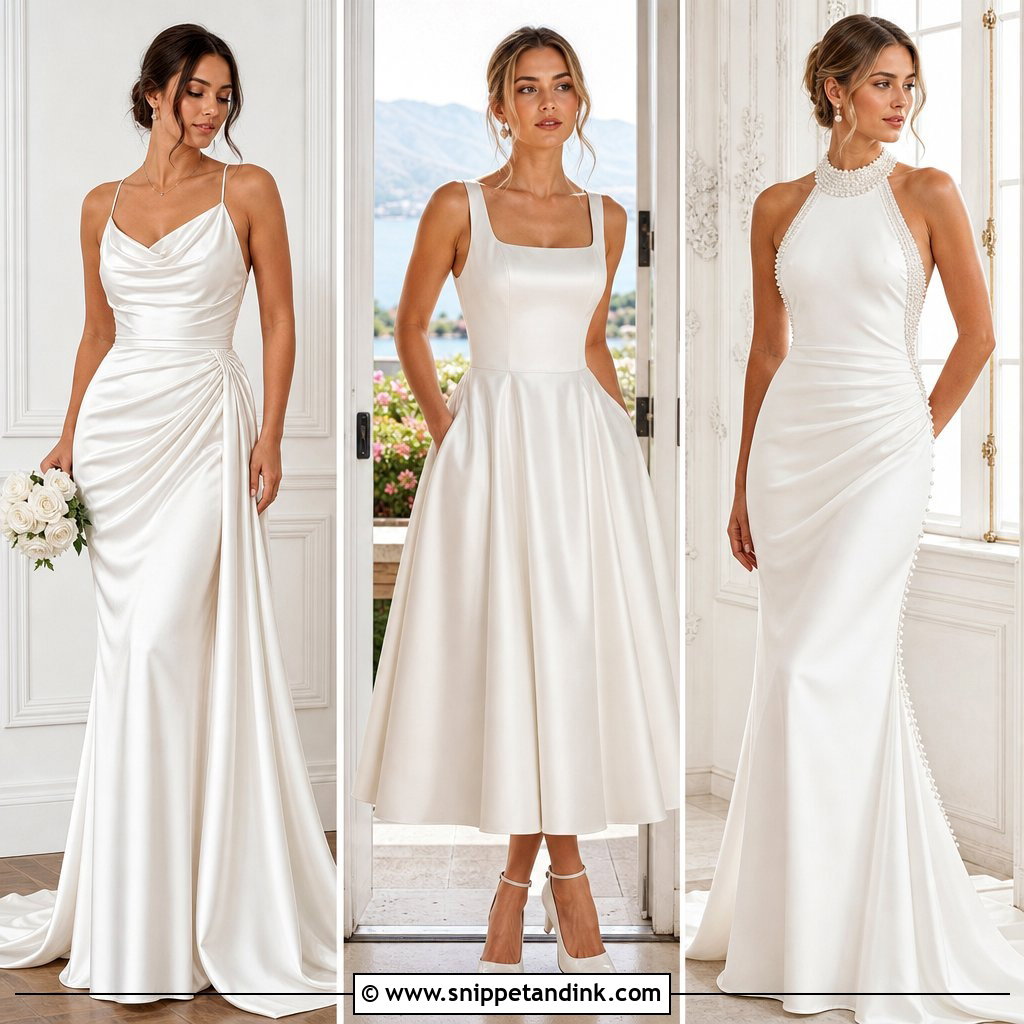
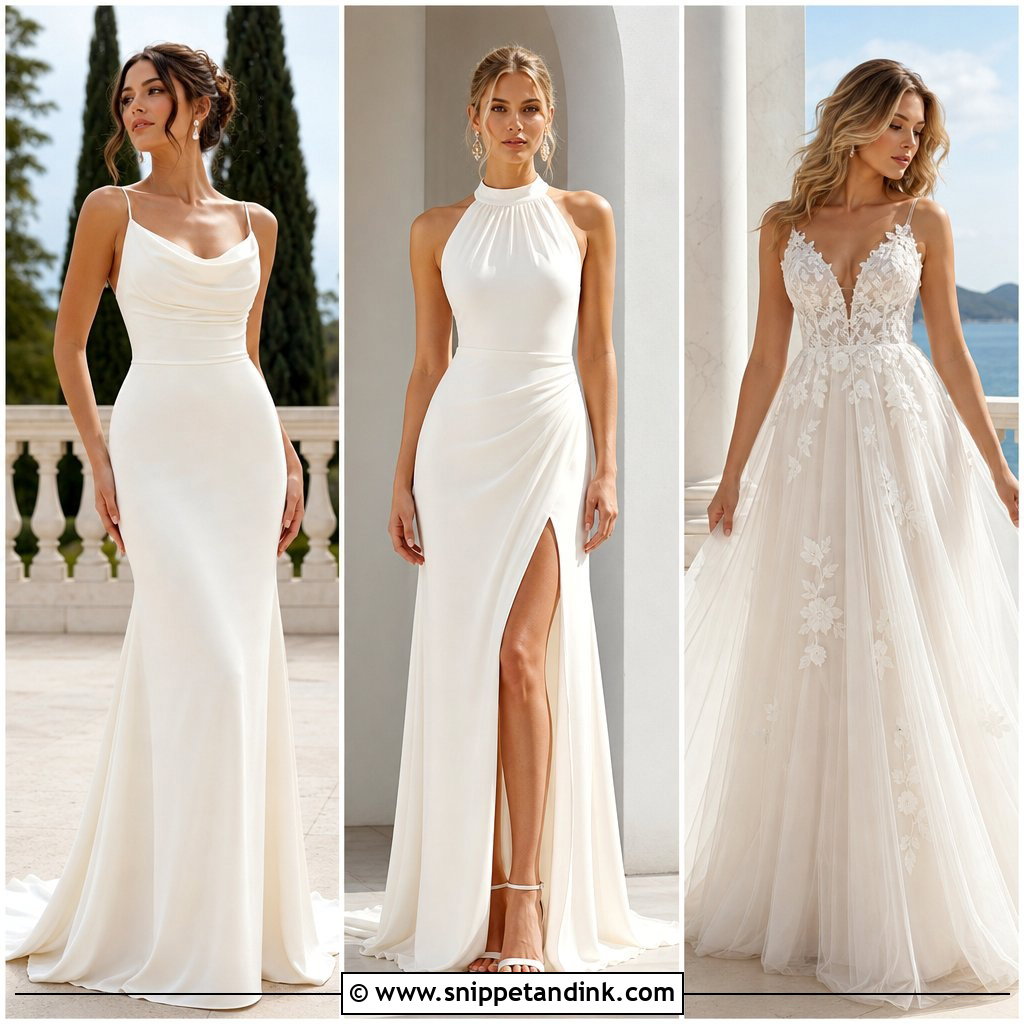
20. Champagne Short Wedding Dress
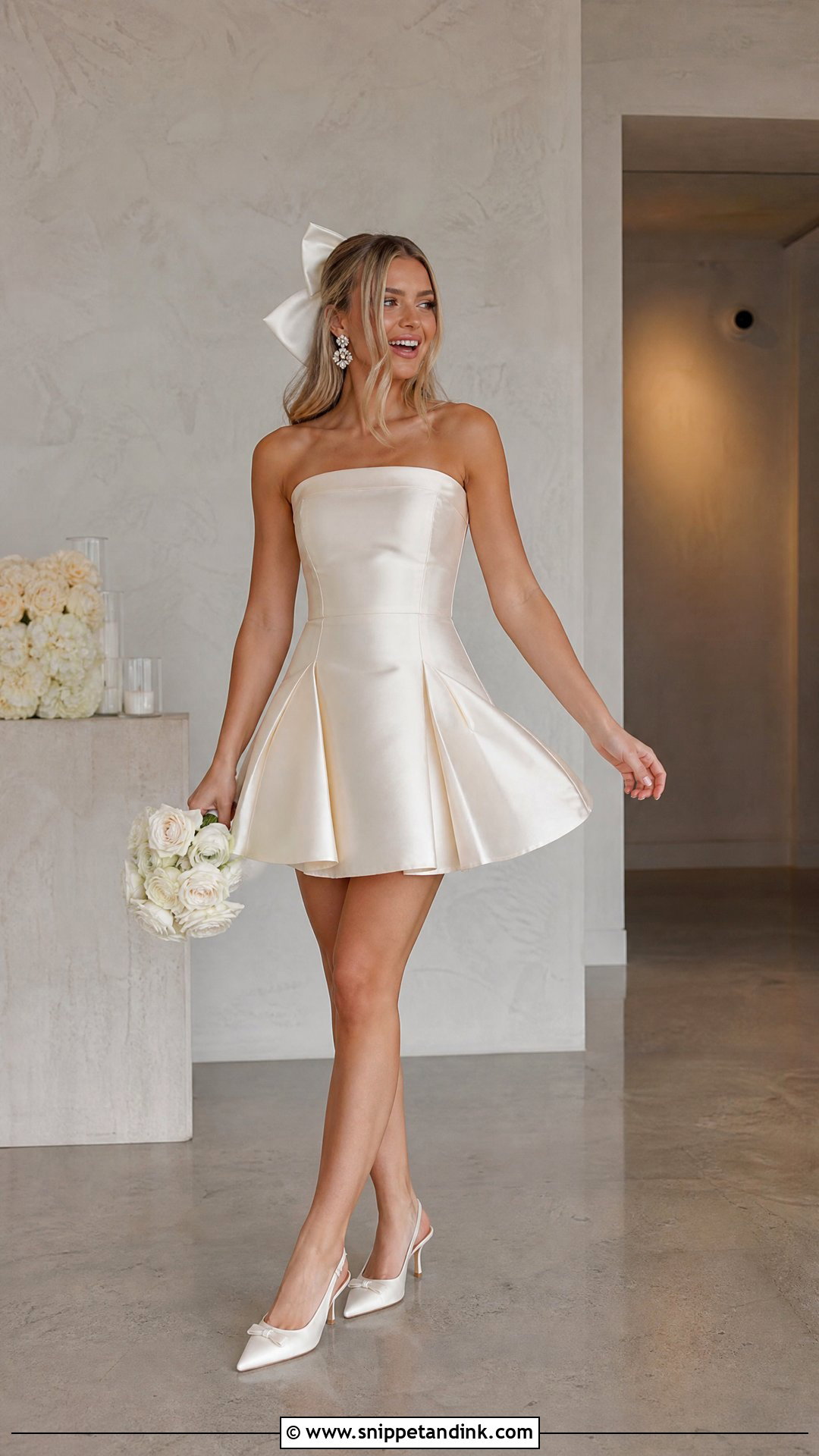
Short dresses are easy to get wrong because they can look like party wear. What makes one read as bridal is fabric quality, sharp tailoring and accessories chosen as a set. A structured mini with a clean neckline, a lace shift or a playful fit-and-flare all work for civil ceremonies or as a second look. Slingback heels, statement earrings and a short veil or oversized bow finish it, and a compact bouquet keeps the proportions balanced. If the hem is very short, I’d ask for built-in shorts or a secure lining so you can dance without worrying. Champagne satin, embellished tulle and brocade all photograph well when fitted properly.
21. Champagne Wedding Dress With Detachable Overskirt
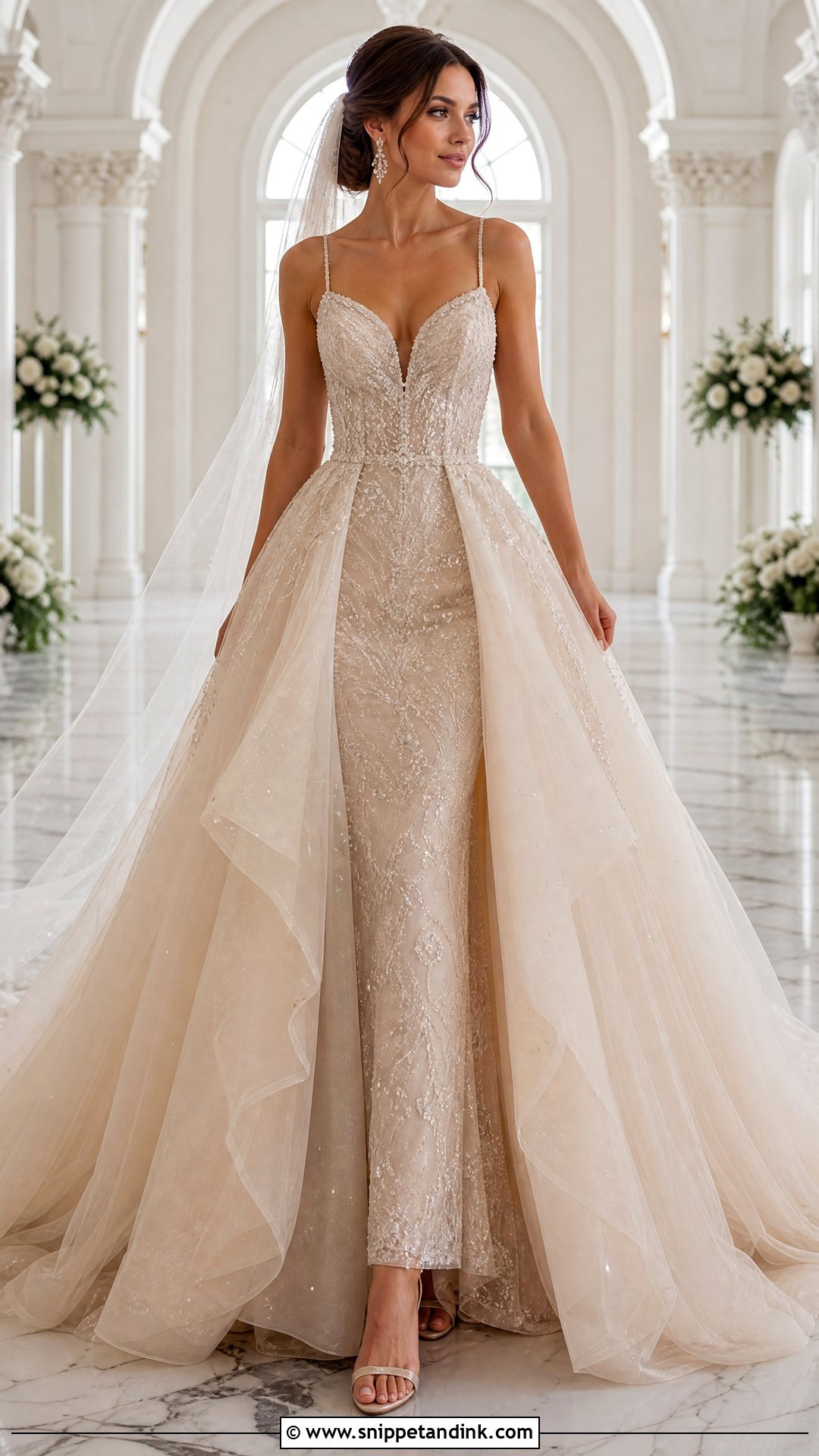
Two silhouettes, one dress: a fitted sheath, column or mermaid base with a full tulle or satin overskirt for the ceremony. The join is the part I inspect most closely. It should sit flat at the waist, invisible from both front and back, usually fastened with hooks or snaps hidden under a belt or seam. Wear a long veil, drop earrings and elegant heels for the ceremony, then switch to a shorter veil or a hair piece once the overskirt comes off. The base dress has to look finished on its own. A slightly lighter overskirt gives champagne a nice tonal depth. Practice removing it with whoever will help you, since a quick change at the reception takes rehearsal.
22. Champagne Wedding Dress With Cape
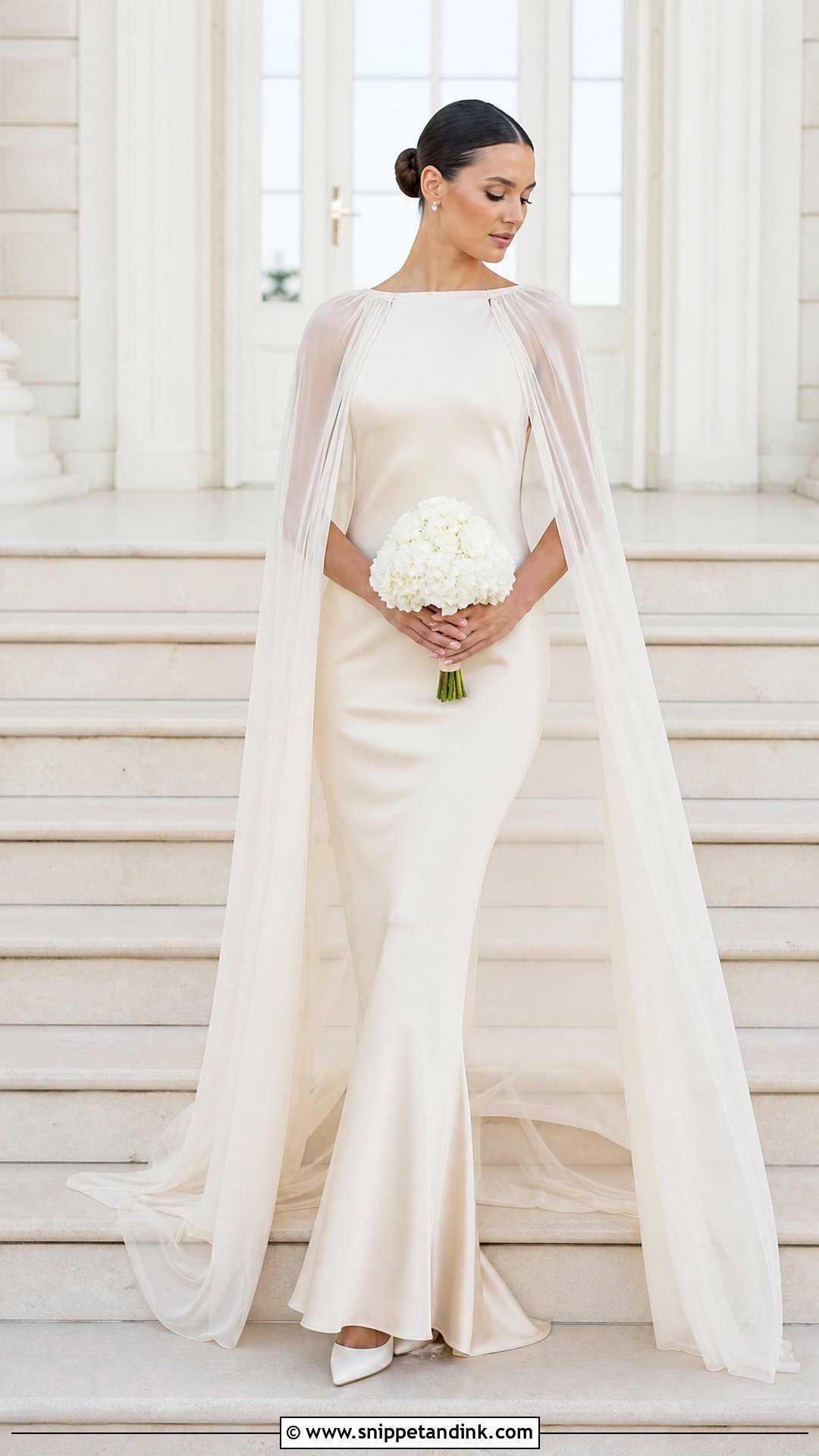
A cape gives you movement and coverage while leaving the gown itself on show. Sheer tulle feels soft, lace adds texture, and a structured shoulder cape looks modern. Keep the bodice underneath clean so the layers don’t compete. Sleek hair, small earrings and pointed heels suit it; I’d skip a traditional veil unless it’s short and very simple. Check how the cape attaches before you buy, because some fasten at the neck and can’t come off without disturbing the hair. A floor-length cape looks striking on the aisle, while a shorter capelet is more practical in cooler weather and doesn’t drag through the reception.
23. Champagne Wedding Dress With Detachable Sleeves
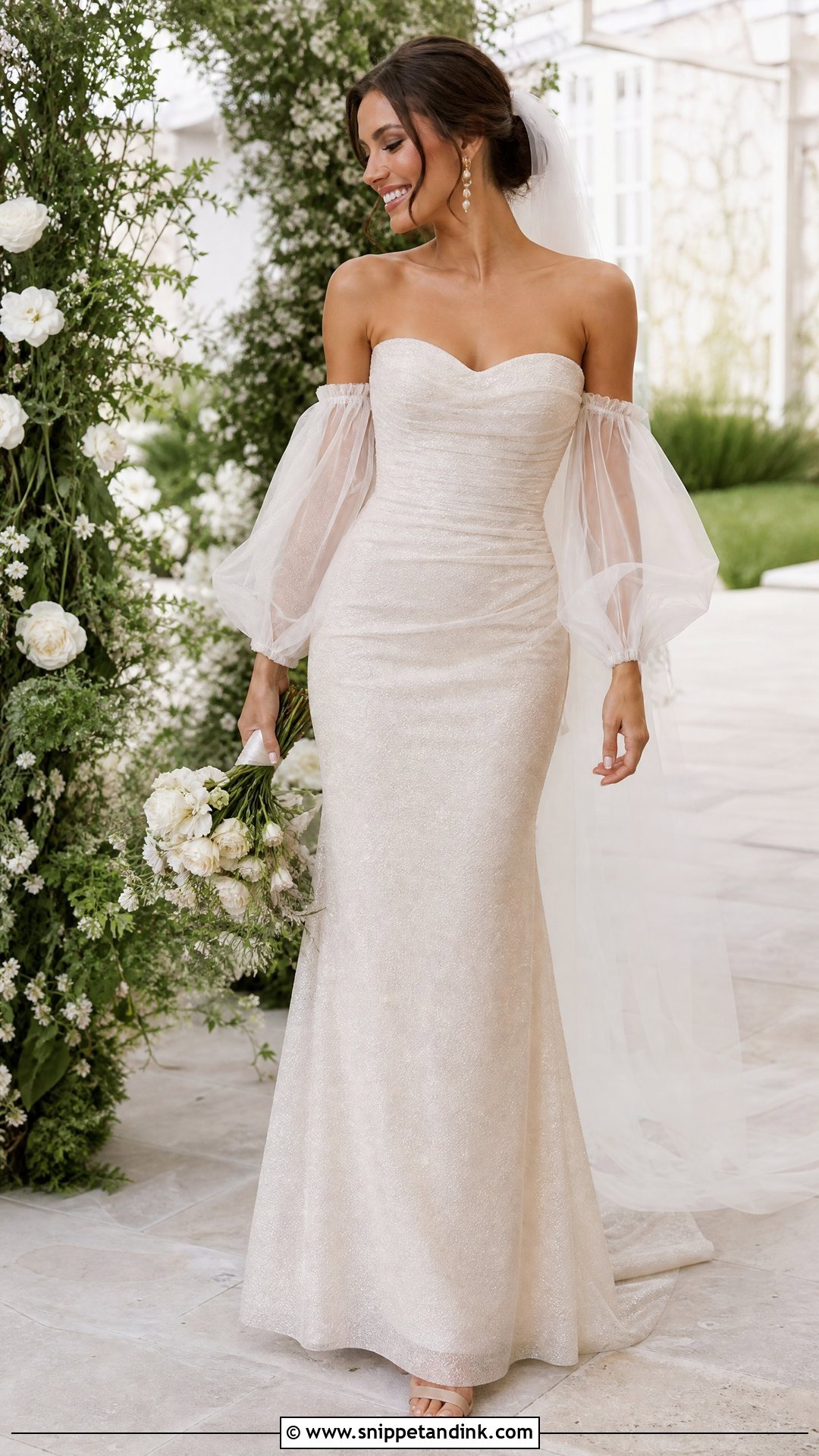
Detachable sleeves are the most practical answer I know for a ceremony that needs coverage followed by a hot dance floor. Start with a strapless or sleeveless fitted gown and add lace, tulle or satin sleeves for the vows. Off-the-shoulder draped sleeves feel romantic; fitted long ones feel formal. Ask the salon to show you exactly how they attach and who will remove them, and practise once yourself. A low bun, drop earrings, neutral heels and a simple veil suit both versions. Insist the sleeves are cut from the same dye lot as the bodice, because even a small shade difference in champagne becomes obvious under bright reception lights and flash.
24. Champagne Low Back Wedding Dress
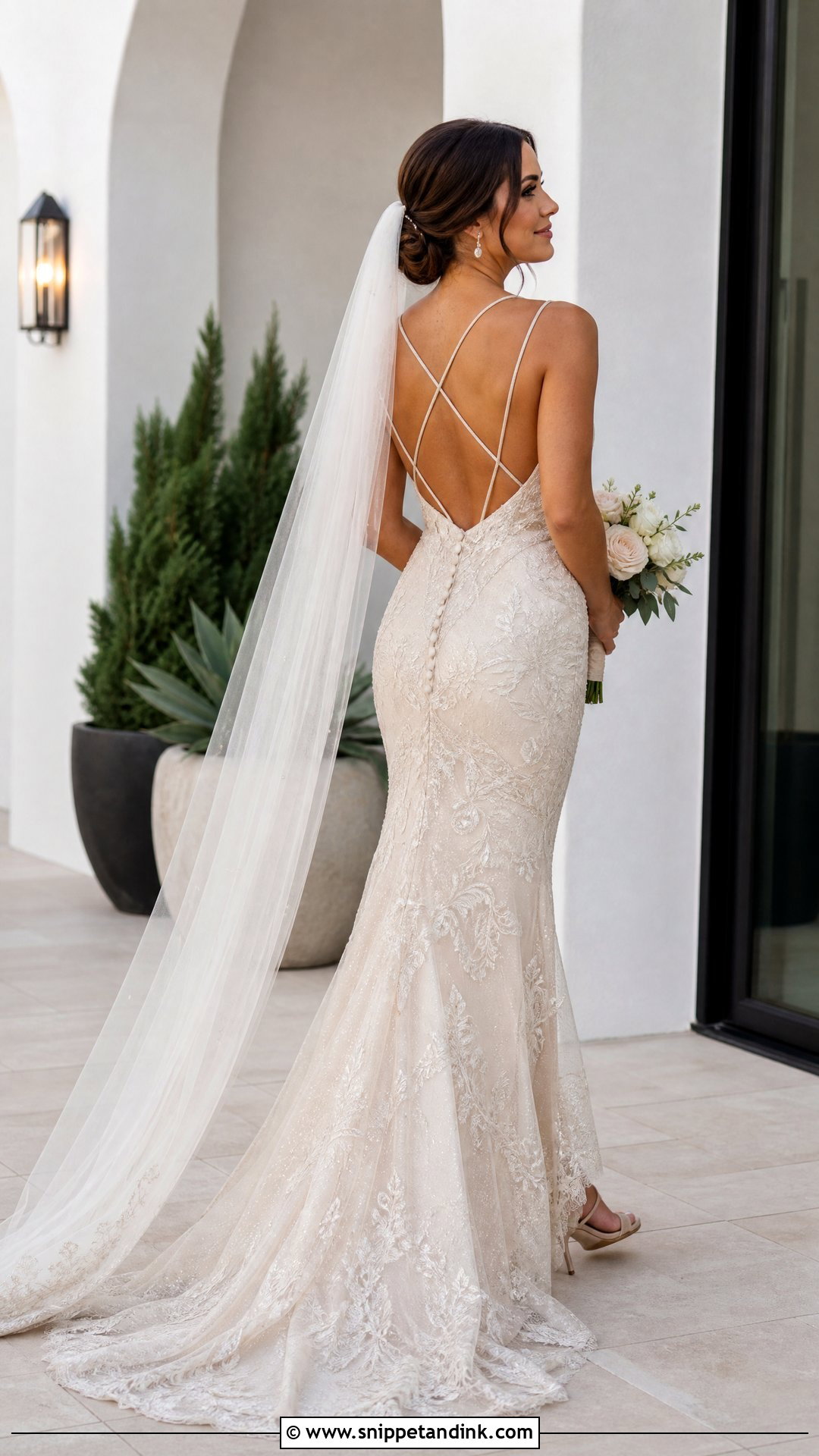
A low back is the reveal of the ceremony, since guests spend most of it looking at you from behind. Illusion tulle, crossed straps, covered buttons or a draped back can all give support while staying open. Bring up foundation garments at the very first fitting: deep backs usually need built-in cups or a low-back solution sewn in, and that changes how the rest is altered. An updo or side-swept waves keeps the back visible, with the veil anchored below the hair. A long back necklace can work on a minimal gown but competes with lace or beading. Practice sitting and walking to confirm the straps stay put.


25. Modest Champagne Wedding Dress
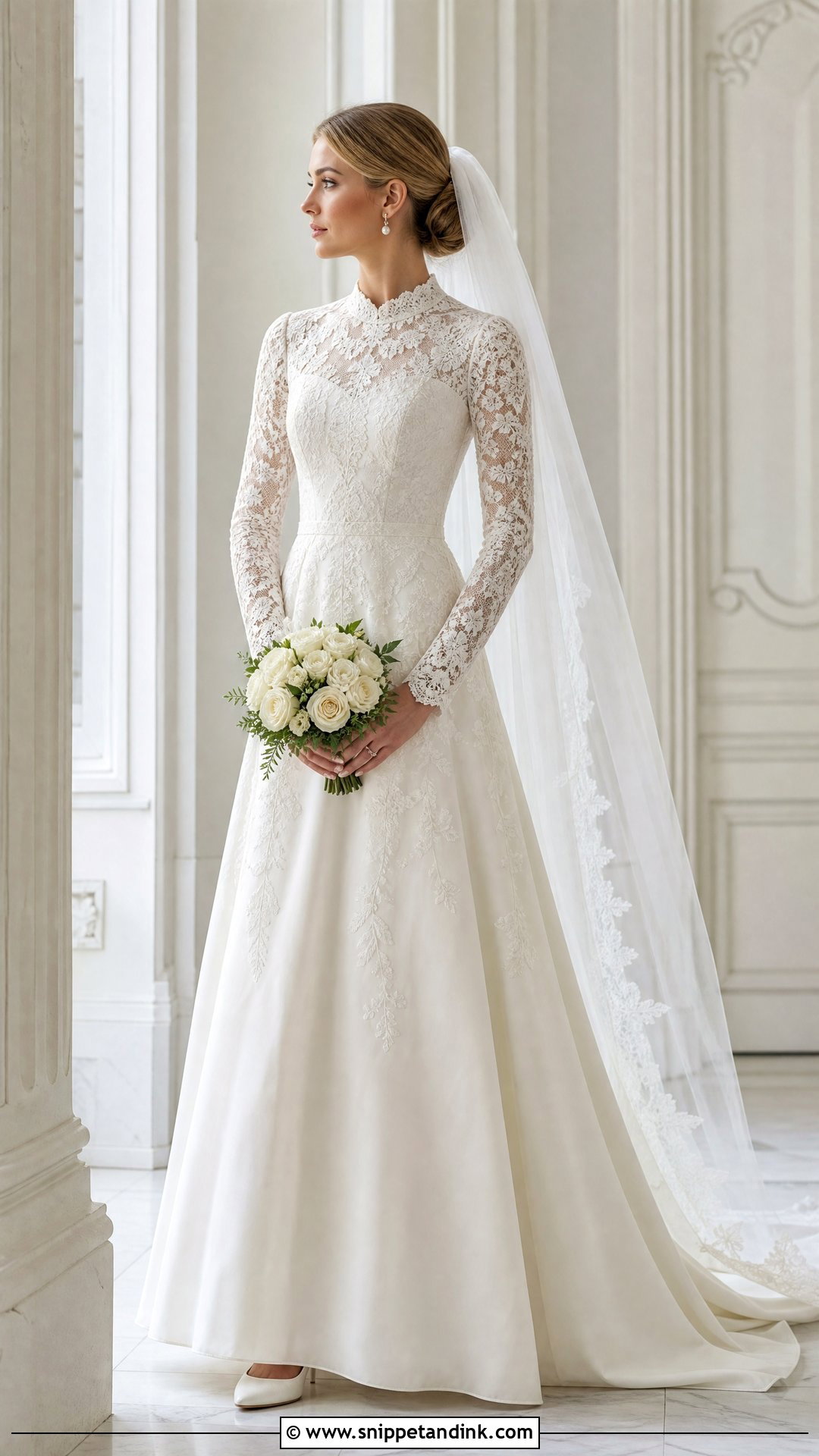
Coverage doesn’t have to mean weight. A higher neckline, full back, longer sleeves and a well-lined bodice can be cut from light lace, chiffon, crepe or satin and still move easily. An A-line skirt gives classic balance; a softly fitted column reads contemporary. I check modest gowns for breathability, since a fully lined bodice with long sleeves gets warm fast at a summer ceremony. Pearl earrings, closed-toe heels, a chapel-length veil and a polished low bun keep it refined. Skip extra jewelry if the sleeves or collar are intricate. Champagne under ivory embroidery helps that detail show without adding any bulk.
Your Fitting Calendar, Counted Back From the Date
Made-to-order gowns often take somewhere between four and eight months to arrive, and timelines vary a lot by designer, so I tell brides to start shopping roughly ten to twelve months out. That leaves room for a delay without panic.
- Around eight to twelve weeks before: first fitting. Bring your wedding shoes and the underwear you’ll actually wear, because both change the hem and the fit of the bodice.
- Four to six weeks before: second fitting. Larger changes like taking in a corset or moving appliqués are checked here.
- One to two weeks before: final fitting. Sit, walk, climb a step, lift your arms and test the bustle. Bring the person who will help you dress and bustle on the day.
- Collection: have the gown steamed by the shop and carry it home flat or hanging in a breathable bag, never folded in a car boot.
Champagne fabrics add one extra step. If any piece of the outfit is ordered separately, like a veil or reception dress, bring your swatch to every appointment. Matching by memory almost never works with a shade this subtle.
Where a Warm-Toned Gown Pays Off Most
The right champagne gown pairs an undertone that suits your skin with a silhouette, construction and accessories that suit the day. Compare lace, satin, tulle, chiffon and beading in daylight and indoor light. Pay attention to support, movement, hem length and how the dress looks from the back and side, not only the front. Let the accessories support the warm color instead of fighting it. Minimal sheath or dramatic ball gown, my honest view is that good alterations make more difference than the dress you start with. Use these ideas as a starting point, then pick the gown you can sit, dance and breathe in.
You'll Like These Ideas:







Leave a Reply