
Most brides walk into their first appointment with a screenshot of a trend and walk out in something they never expected to try. Bridal racks right now are full of basque waists, drop waists, dimensional lace, soft draping and pieces that detach, so there’s plenty to react to. What I care about more than the trend is whether a gown suits your proportions, your venue and the way you move from the vows to the last song. Below are twenty current shapes, each styled with the veil, shoes, jewelry, hair and flowers I’d pair with it, and the fitting checks I’d run before you commit.
Ordering a Trend-Led Gown Early Enough to Alter It
Most of the dresses below are made to order, not taken off the rack. Production alone commonly runs several months, and structured shapes like corsets, basque waists and mermaids need more alteration time than a simple slip. That is why I nudge brides to order roughly eight to ten months before the wedding where they can. Timelines vary by designer, and rush fees exist, but they shrink your options for fabric and fit.
Count backward from the date like this:
- Shop and order early enough that the gown can arrive with two to three months to spare.
- Book the first alteration appointment as soon as it arrives, with the shoes and underwear you’ll wear on the day.
- Plan two or three fittings. Corsets and fitted silhouettes usually need the most.
- Keep the last fitting within a few weeks of the wedding so any changes in your body are caught.
- Collect the dress pressed, with the bustle shown to whoever will tie it.
If you’re ordering online or from a sample sale, budget extra alteration time anyway. A dress bought in the wrong size needs far more work than a dress that was cut close.
1. Basque Waist Ball Gown Wedding Dress
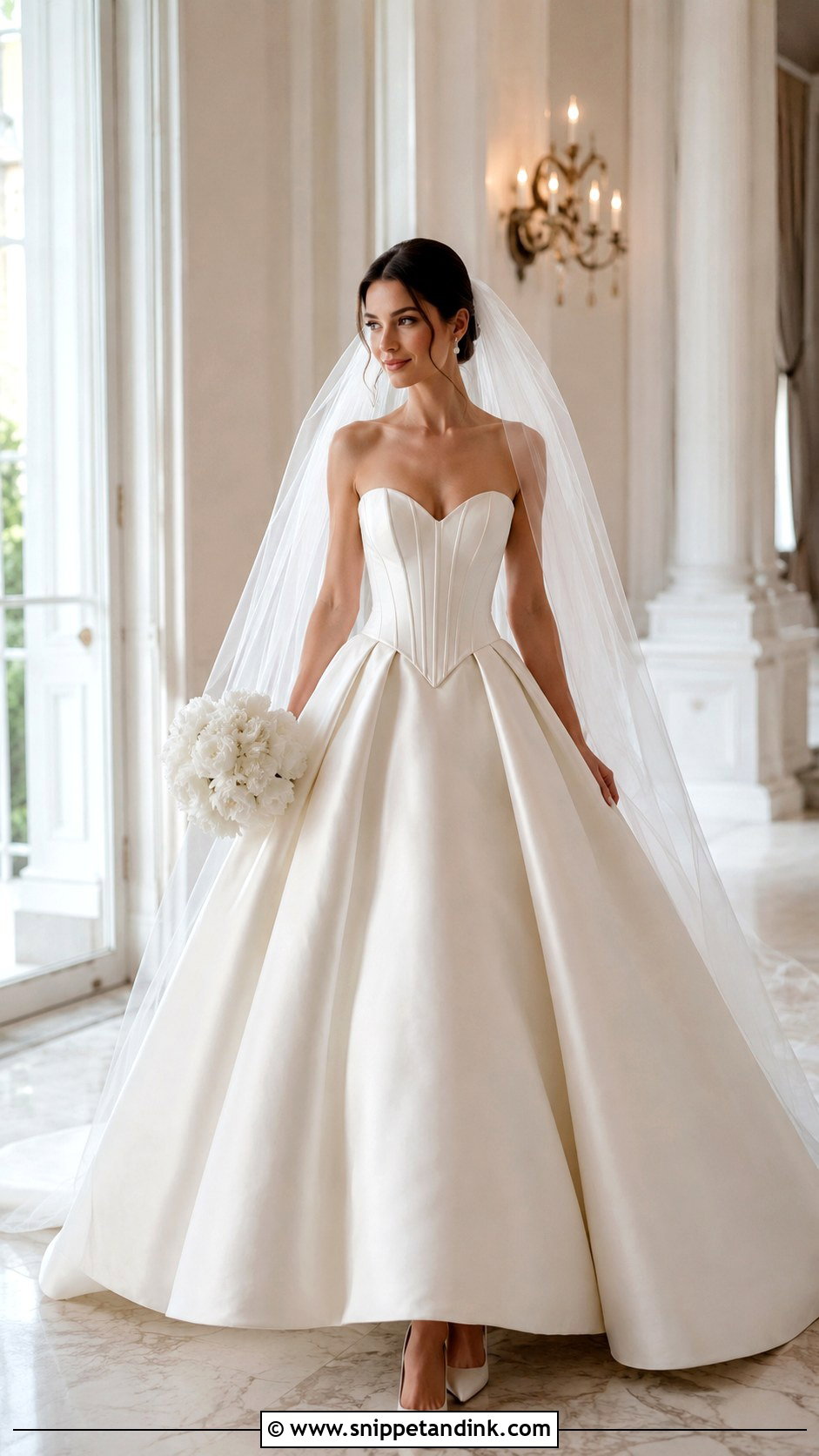
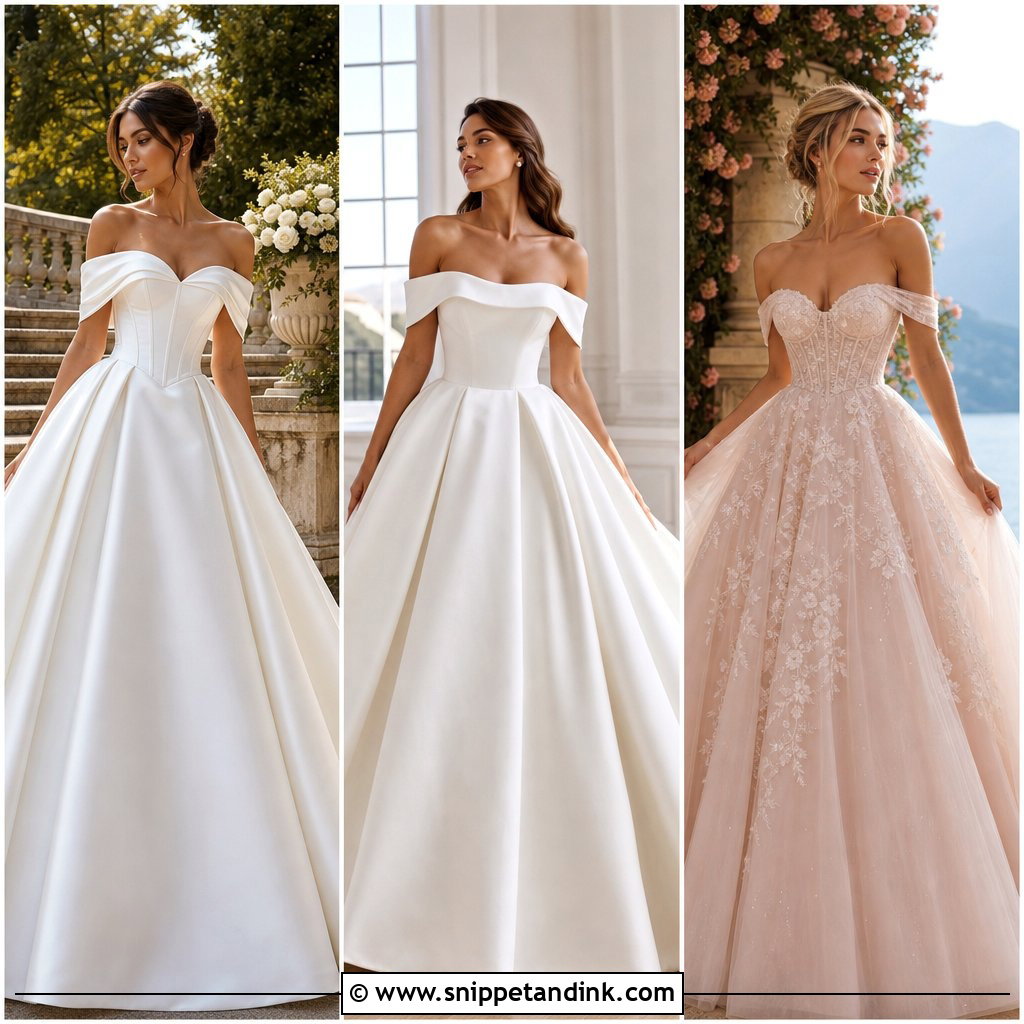
A Basque waist ball gown drops into a V below the natural waist, which lengthens the torso before the skirt opens out. It’s one of the most requested silhouettes in bridal right now, and it holds its point best in structured satin, mikado or layered tulle. Placement of that point is everything. On a shorter torso I raise it so the skirt doesn’t seem to start at the hips; a taller bride can take a deeper V. A sweetheart corset reads romantic, a straight neckline cleaner. Add a cathedral veil, pointed satin pumps, pearl drops and a compact bouquet, and insist on proper boning so the waist supports you without pinching.
2. Drop Waist Satin Wedding Dress
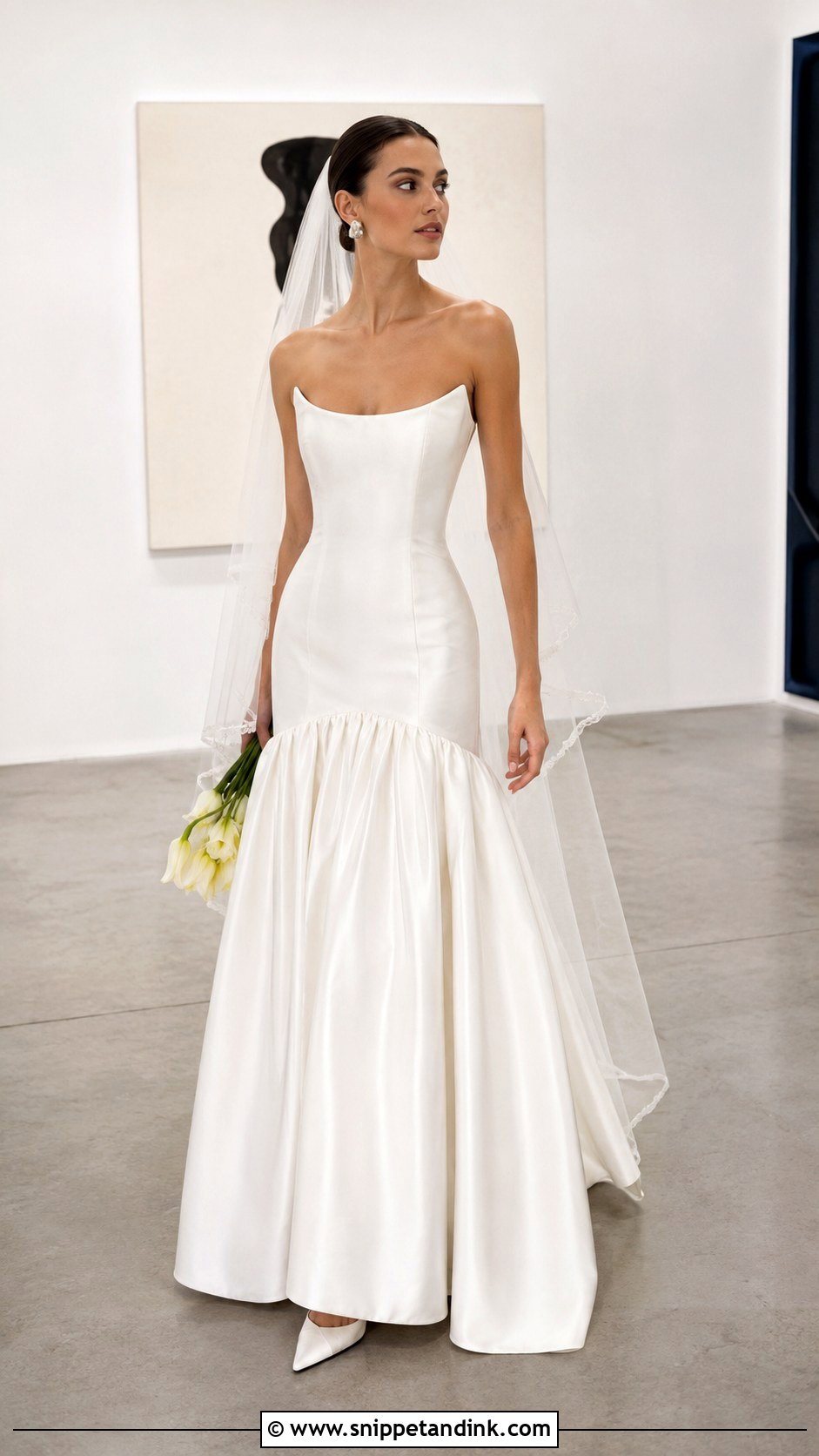
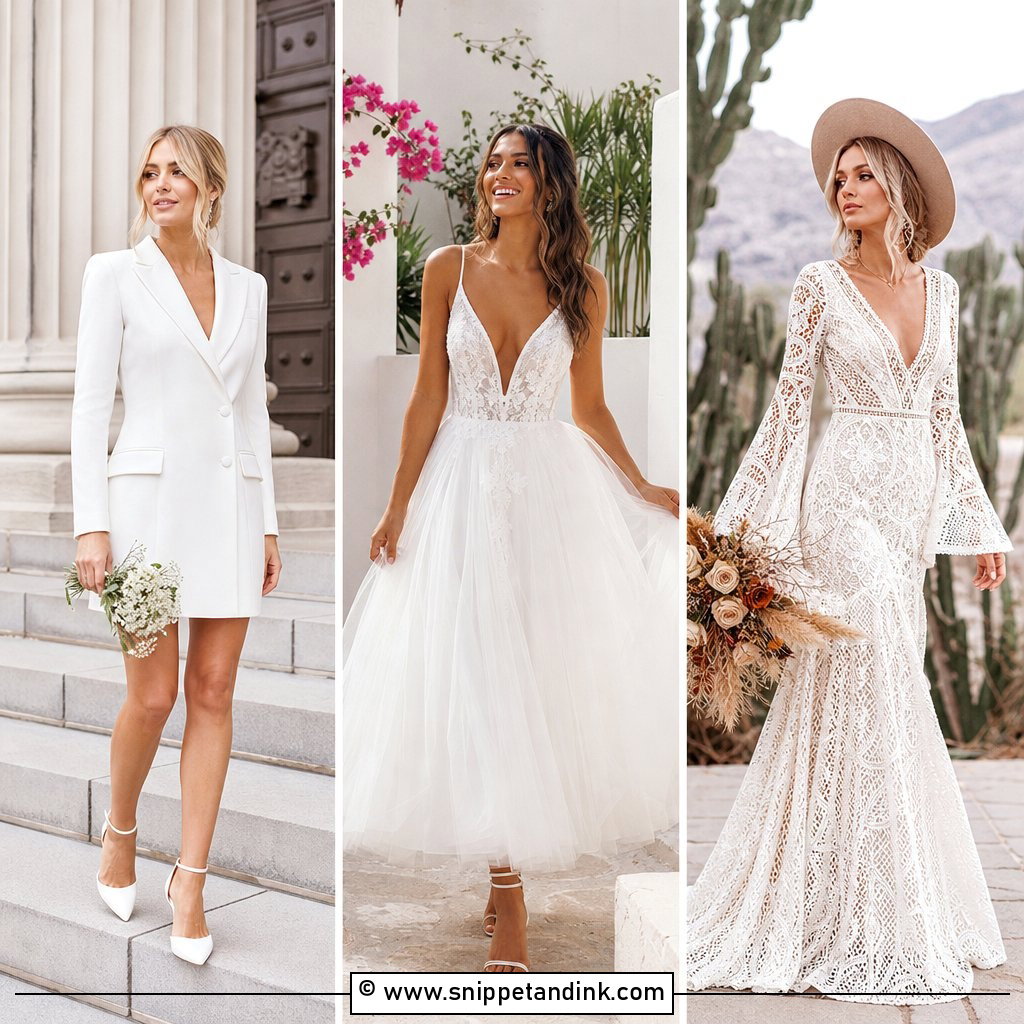
Smooth satin and a drop waist make a quietly fashion-led pairing. The bodice runs past the natural waist toward the hips before meeting a gathered or pleated skirt, so the body looks longer. That extended bodice is also the catch: it digs in when you sit unless it’s matched to your exact torso length. Sit, walk and dance in the sample, and ask whether the internal structure can be shortened. A strapless scoop neckline, a sheer fingertip veil, sculptural earrings, ivory pumps and a sleek low bun keep it clean. Lightweight satin breathes better at a warm venue; mikado gives more architectural volume.
3. Corset Lace Wedding Dress
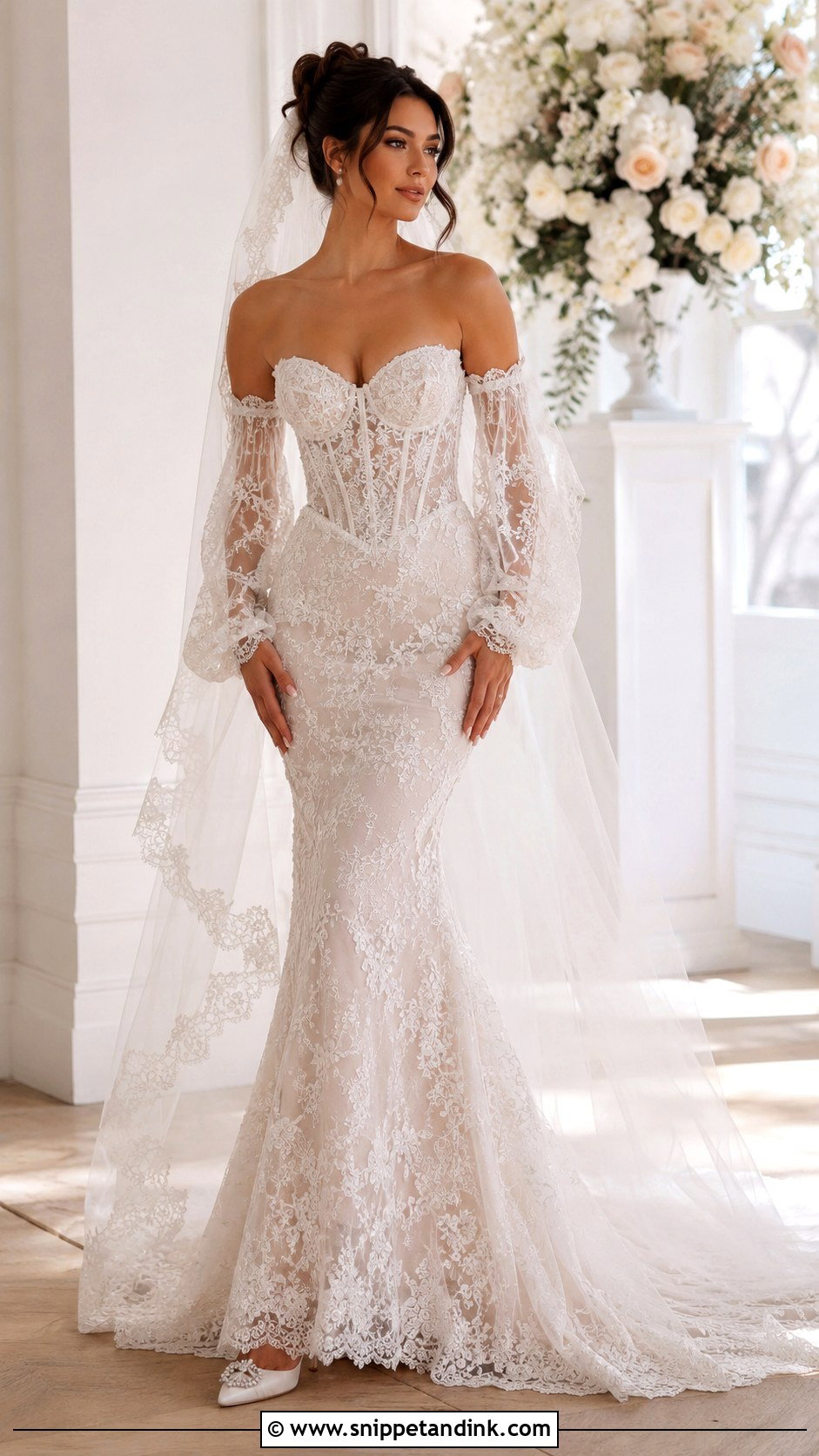
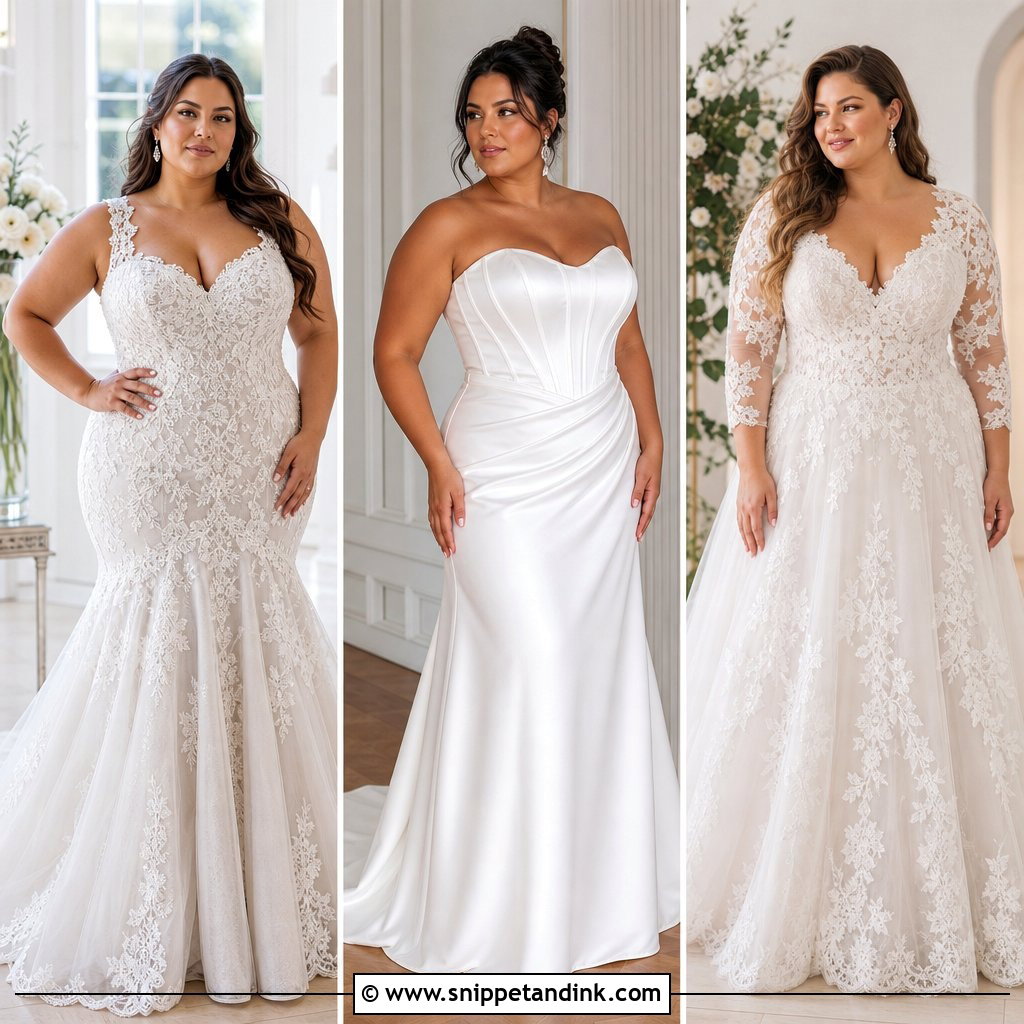
Lace laid over a corset bodice gets its drama from the contrast: fragile surface, firm structure underneath. I look for appliqués placed so they carry the eye smoothly across the seam where bodice meets skirt, and a soft trumpet hem that gives glamour without ball gown width. If there are sheer panels, ask for lining matched to your skin, because a mismatched nude panel shows in every close-up. A lace-edged veil, pearl studs, pointed ivory heels and white flowers finish it. Detachable lace sleeves add coverage. At each fitting, bend, sit and raise your arms so you know the cups and boning stay put.
4. Off Shoulder Mermaid Wedding Dress
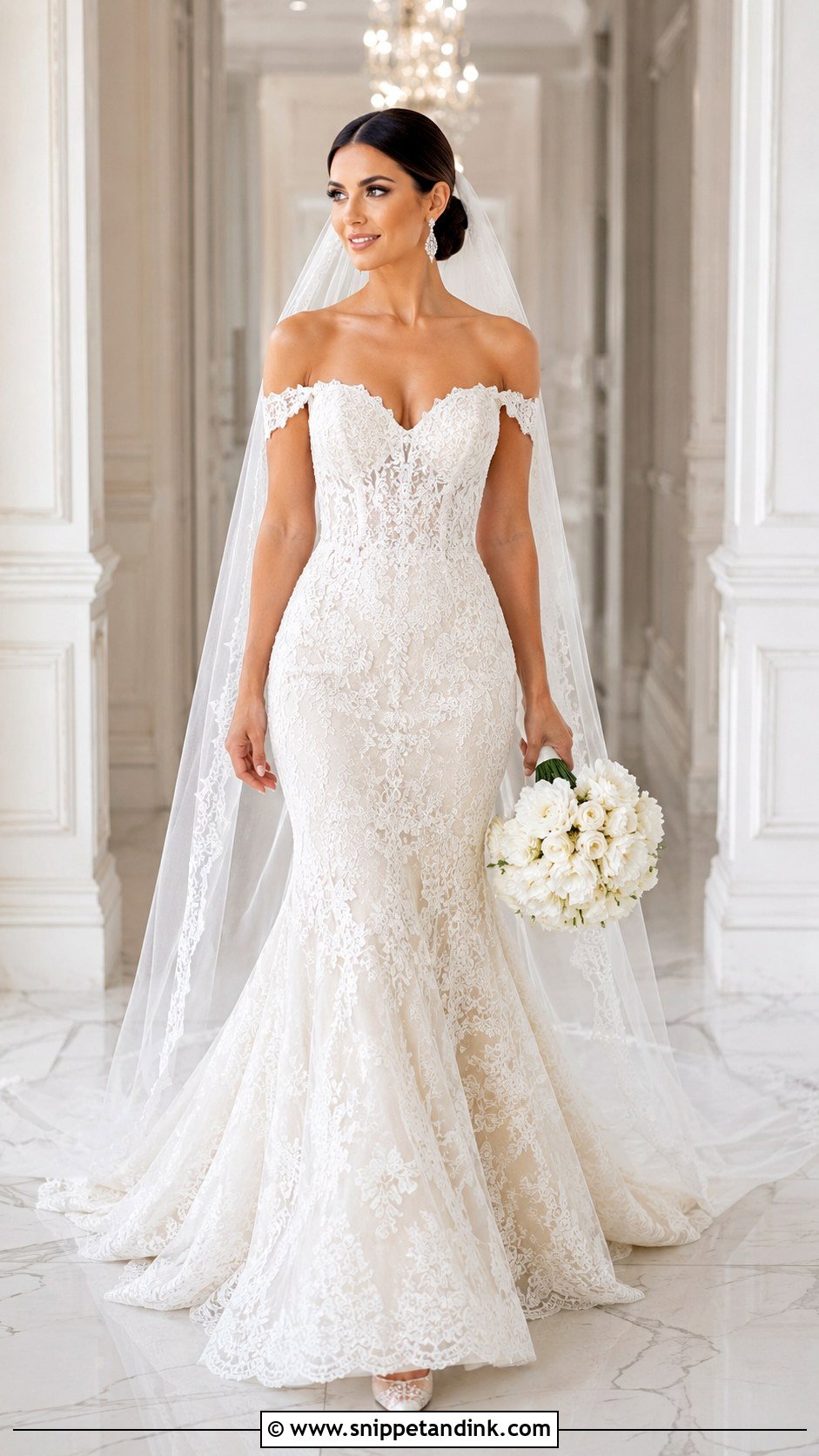
Off-the-shoulder and mermaid together make a bold outline, since the neckline, waist and hips are all on display. Crepe looks smooth and modern; embroidered lace adds texture. Where the skirt flares matters more than brides expect. Set it too low and you’ll shuffle down the aisle, so I ask for a flare at or just above the knee for anyone who wants to walk normally. Pair with a chapel veil, crystal drops, a polished updo and pointed heels, and leave the necklace off if the neckline carries draping. A firm bustle and some discreet inner support make the fit far easier to wear for hours.
5. Minimalist Silk Slip Wedding Dress
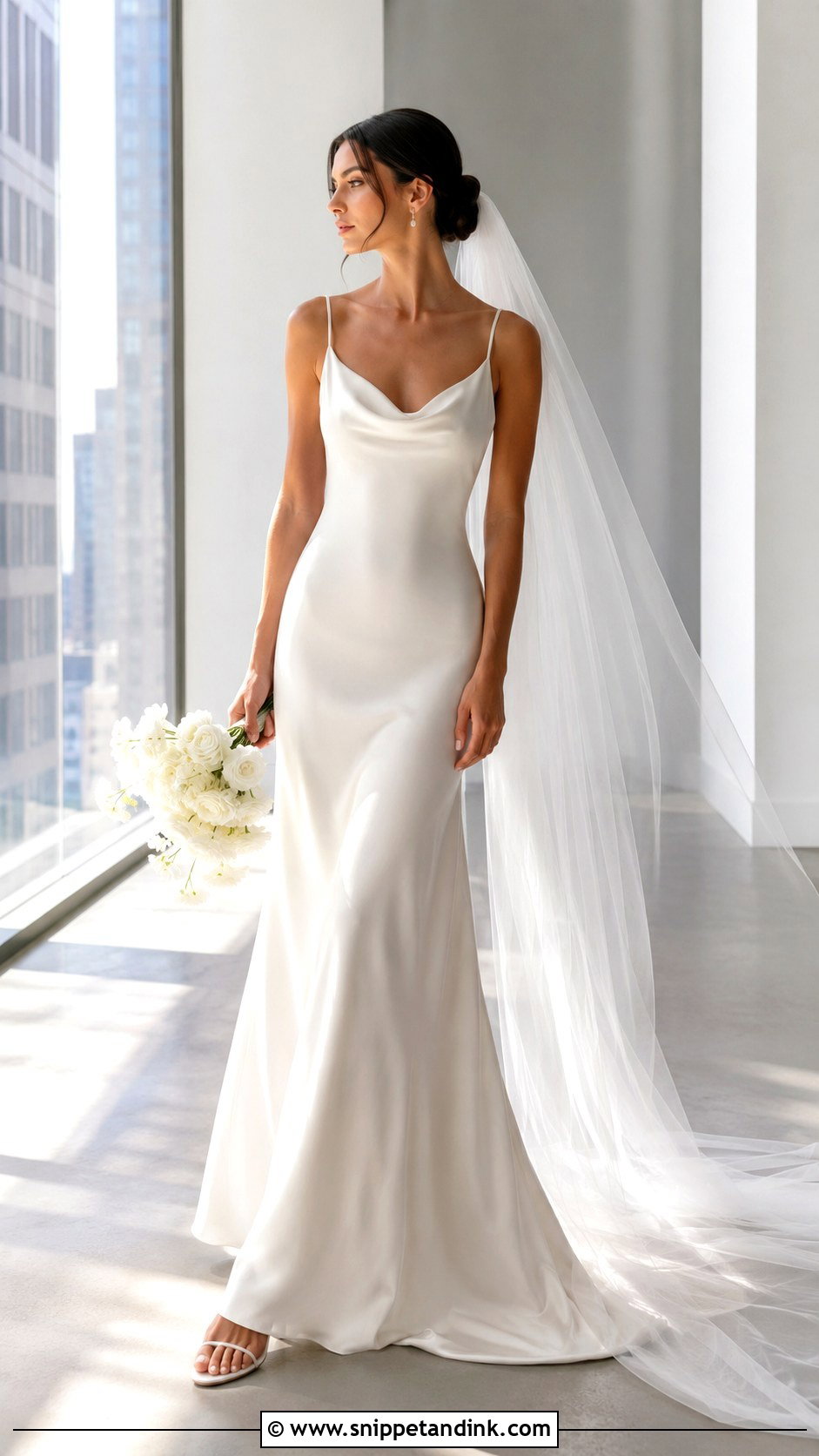
Soft silk and a fluid bias cut give a slip dress its understated, moving quality. It suits modern venues and small weddings, and brides who’d rather not wear structure at all. Pick the neckline by the support you need: a cowl hides very little, a square neck allows a little more construction. Bias silk shows seams and underwear lines, so I bring several foundation options to the fitting and test each one under daylight. Delicate slingbacks, small crystal earrings and a sheer floor-length veil suit it. For a cold day, a tailored ivory coat keeps the line far better than a bulky shawl.
6. Long Sleeve Lace Wedding Dress
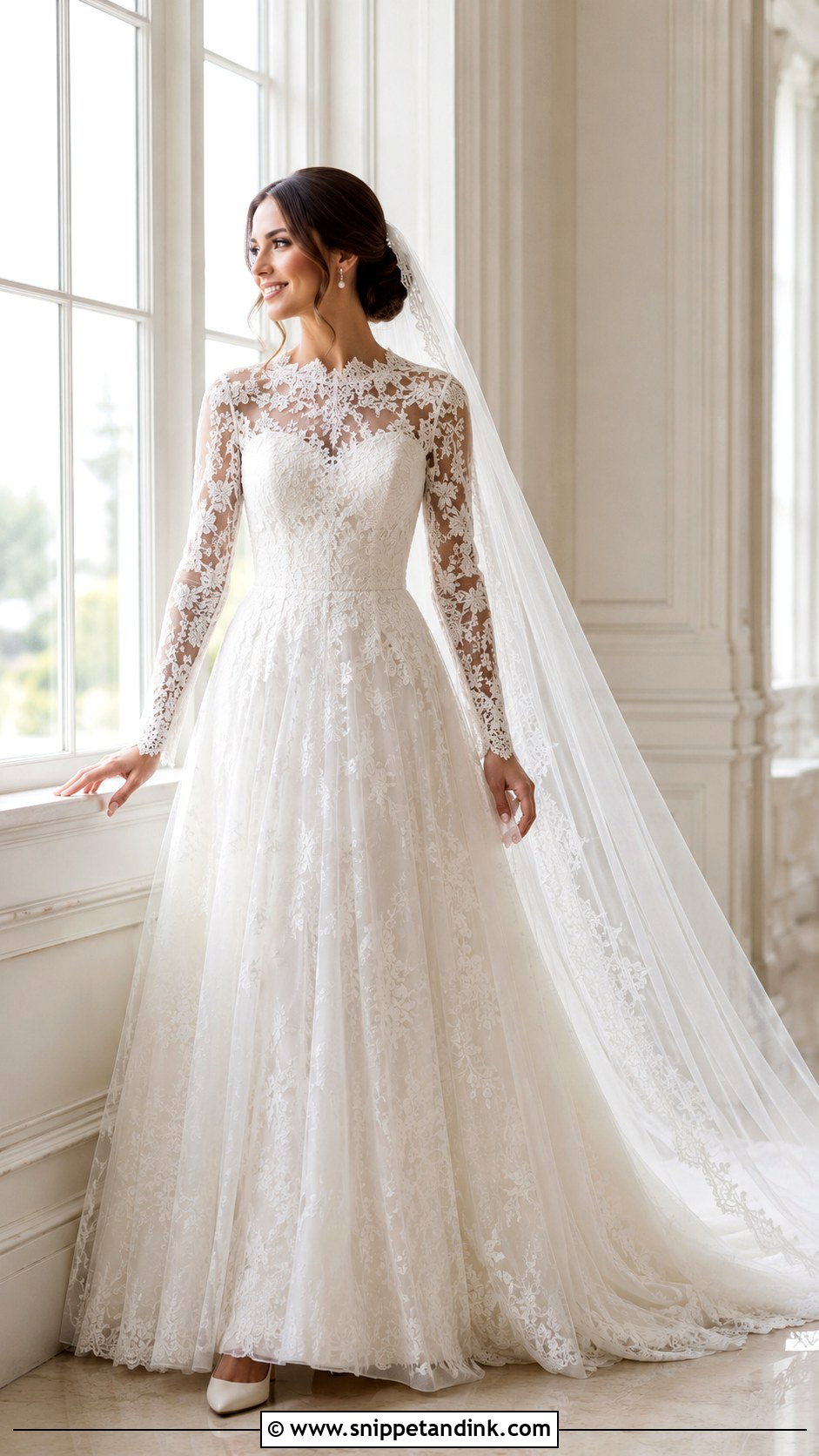
Long lace sleeves give coverage without weight when they’re done as sheer illusion with appliqués placed to look scattered rather than stuck on. Lined sleeves read more traditional. An A-line skirt is easiest to move in; a fitted one looks sharper. A mantilla-inspired veil, pearl earrings, closed-toe pumps and a low chignon complete it, but match the lace motifs on the veil to the dress or the two will fight. In summer heat, Chantilly is far lighter than a beaded lace. The elbow is where sleeves fail: bend your arm at the fitting and make sure the fabric doesn’t pull across your back.
7. Square Neck A-Line Wedding Dress
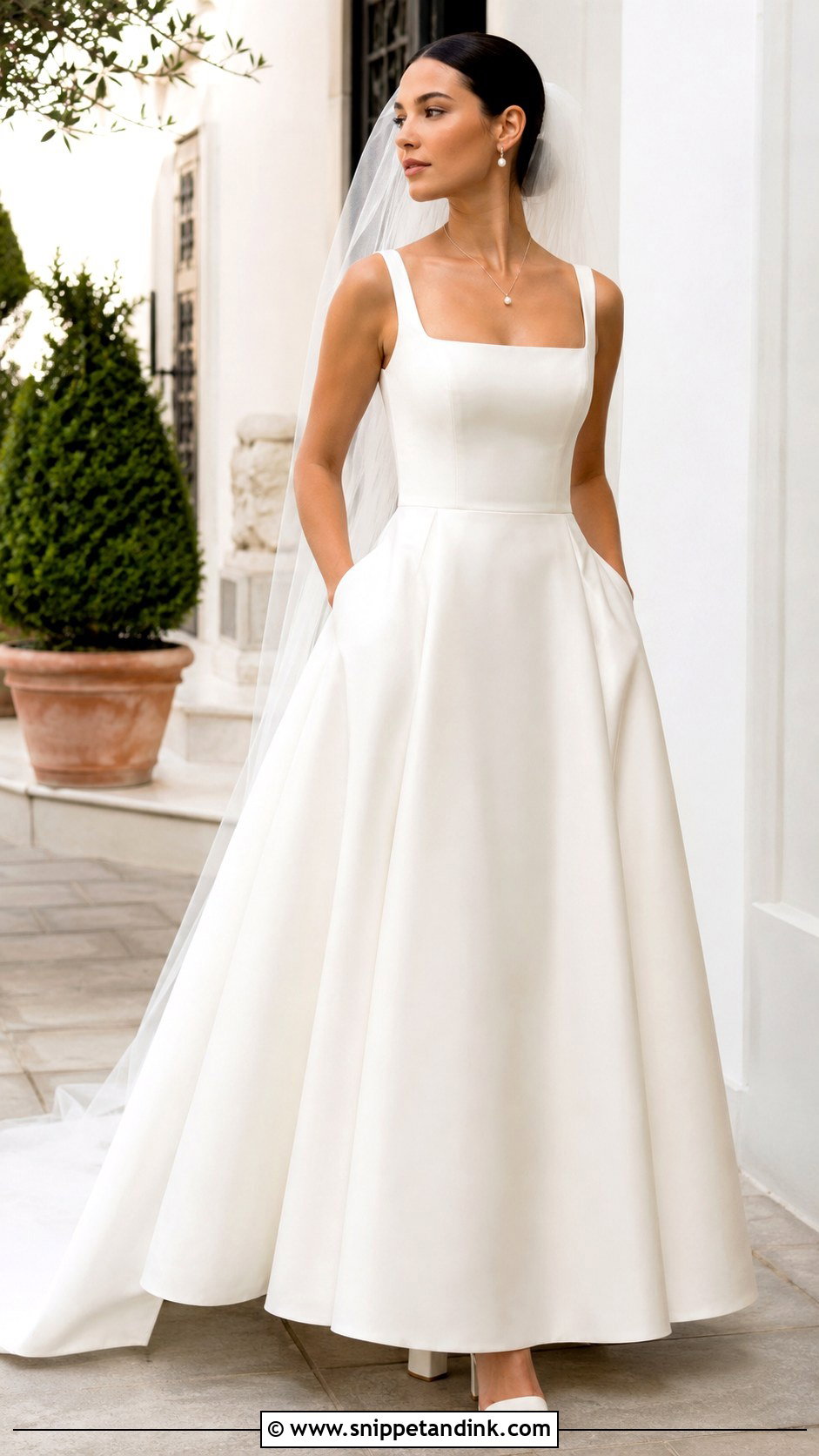
A square neck on an A-line is one of the easiest shapes to wear well. It frames the collarbone, gives the skirt room to move, and the wider straps let most brides wear a regular or convertible bra. Matte crepe looks minimal, satin has a soft sheen, floral jacquard adds pattern. A short pendant works at this neckline, along with pearl earrings, a medium veil and block-heel pumps for lawns. A structured top-handle bag can hold essentials before the ceremony and pass to an attendant. If the skirt has enough volume, ask for hidden pockets; having somewhere to tuck a lip balm is a small thing brides rarely regret.
8. Halter Neck Column Wedding Dress
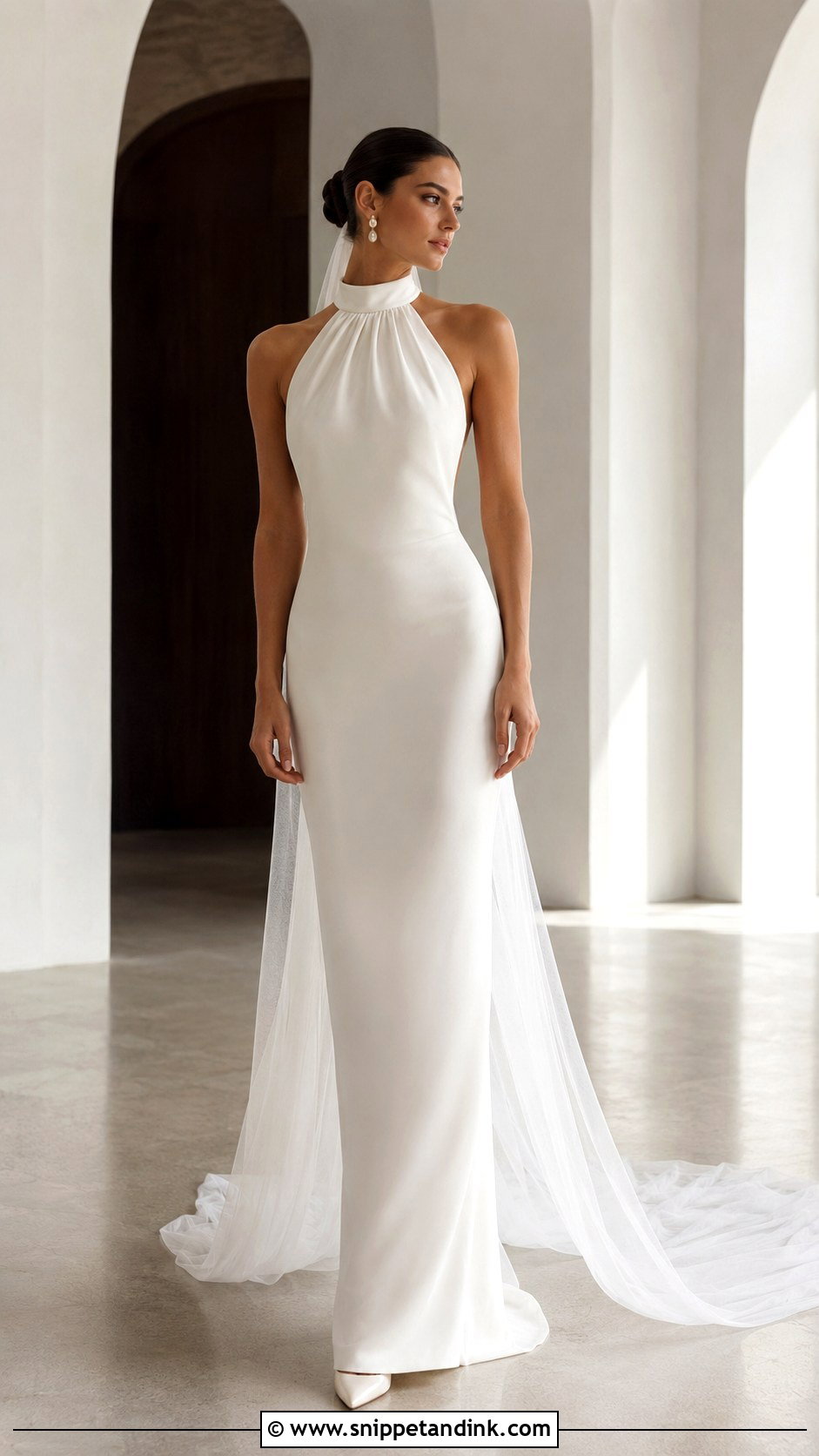
A halter column draws a long, uninterrupted line and puts the shoulders on show. Crepe, satin or silk with almost no decoration looks most polished. A gathered halter is gentler on the neck than a stiff high one. Statement earrings, a smooth bun, pointed pumps and a simple trailing veil tucked under the hair are all it needs. Leave out the necklace. Two practical checks: if the back is open, ask about built-in cups, and walk the length of the room, because a narrow column needs some stretch or a back slit to let you take a normal stride. For outdoor ceremonies, its controlled shape is far easier to manage in wind than a full skirt.
9. Floral Appliqué Wedding Dress
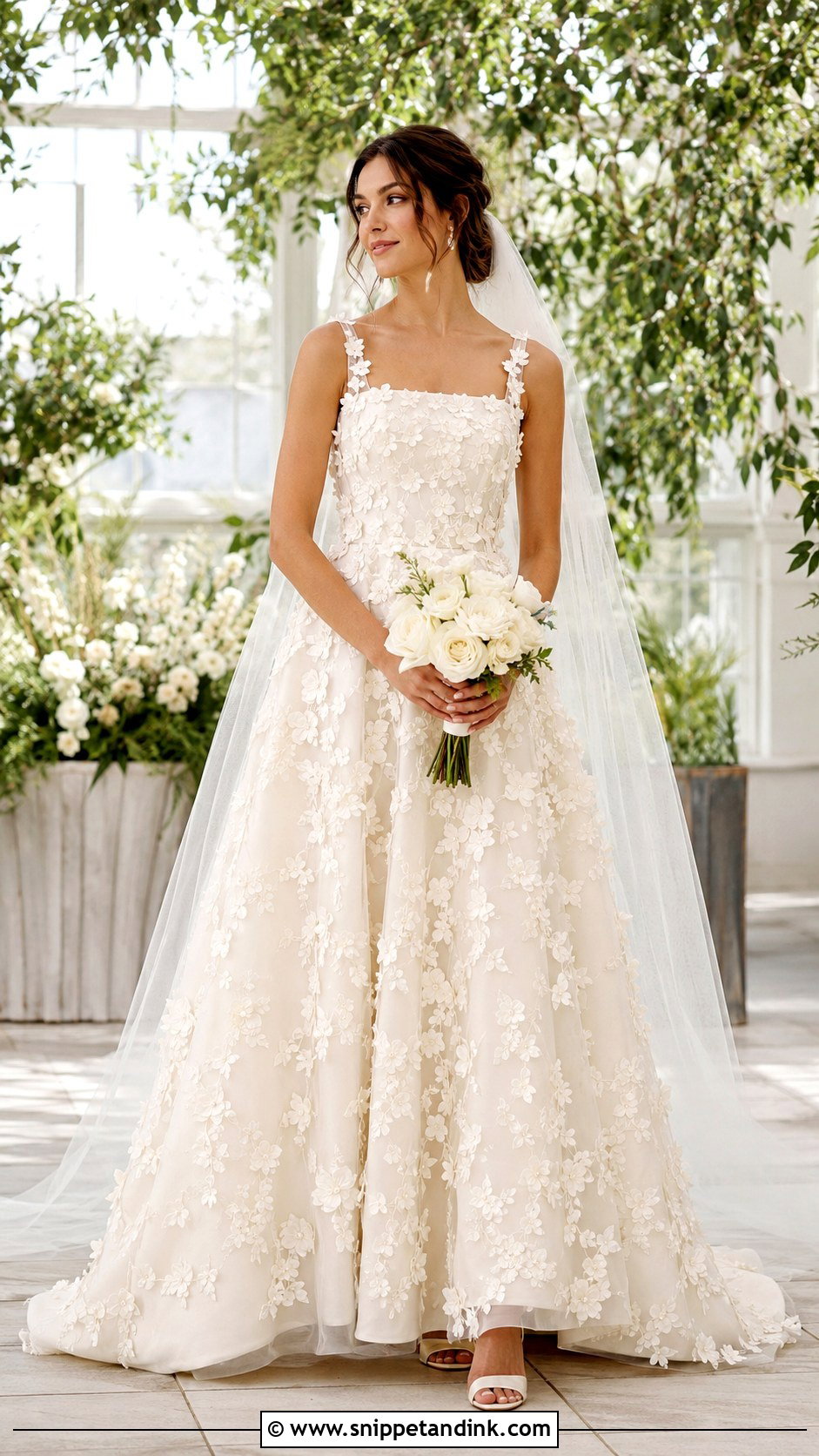
Raised floral appliqués give a dress depth without leaning on sparkle. They can cover the whole gown or gather at the neckline, waist and train. A softly structured A-line keeps them romantic; on a heavy skirt they can start to look like upholstery. A plain tulle veil, delicate earrings, ivory sandals and a loose updo with one small floral pin are enough, with a simple bouquet. Big flowers photograph boldly, small motifs read subtler from a distance. I check placement from every angle at fittings, especially at the inner arm, where a stiff appliqué rubs the skin raw by evening.
10. Pearl Beaded Wedding Dress
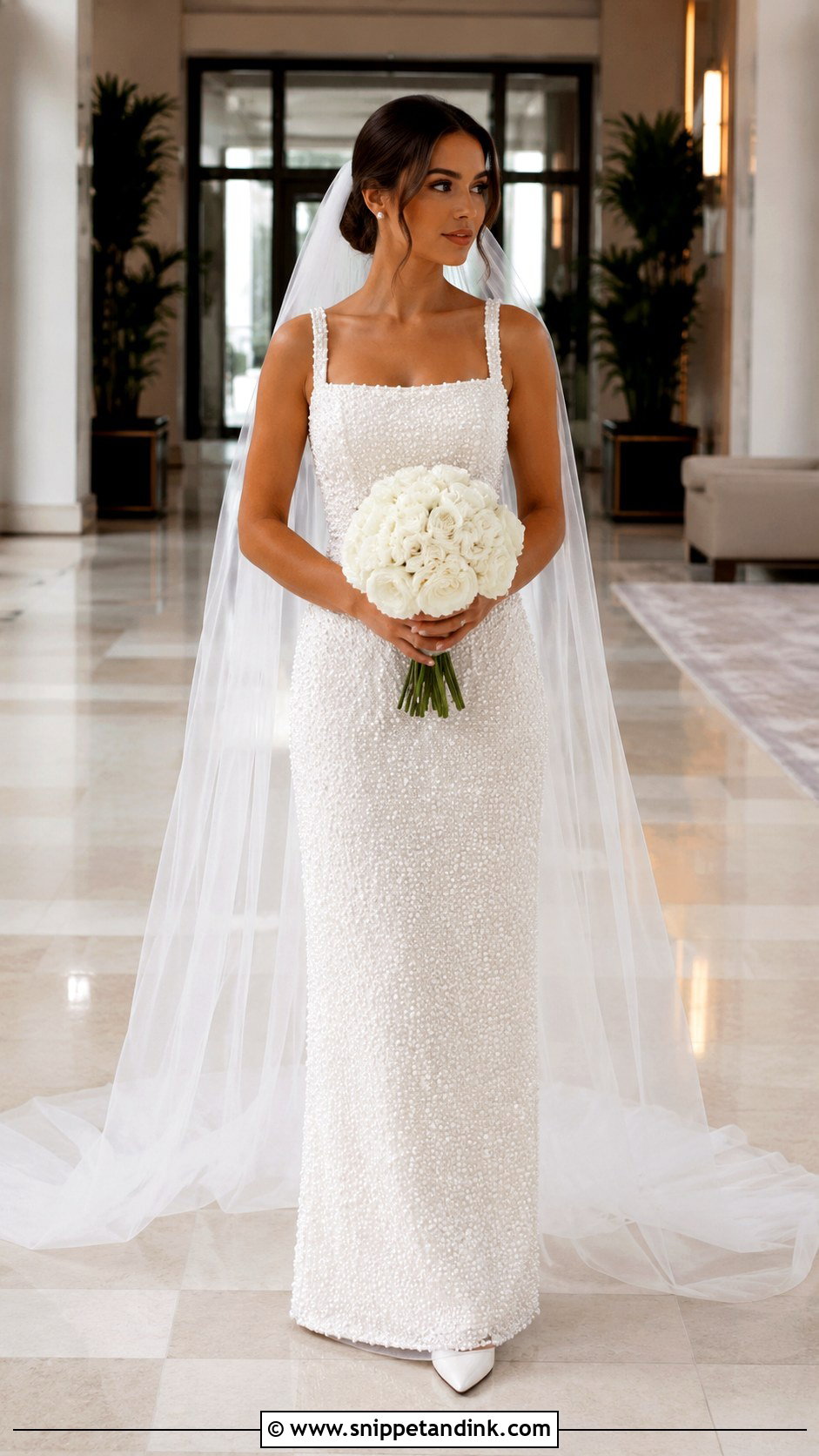
Pearl beading glows rather than glitters, so it looks soft under both daylight and indoor light. Scattered pearls on a column read contemporary; a pearl-trimmed ball gown reads traditional. Weight is the thing to check before you commit. Beading spread over a skirt and train adds real heft, and I’d ask for reinforced straps or an internal waist stay to carry it. Pearl studs, satin heels, a clean tulle veil and a structured bouquet are plenty, since repeating pearls everywhere gets busy. Ask the seamstress to secure any loose beads during alterations, and store the dress flat or supported the way your salon suggests.
11. Ruffled Organza Wedding Dress
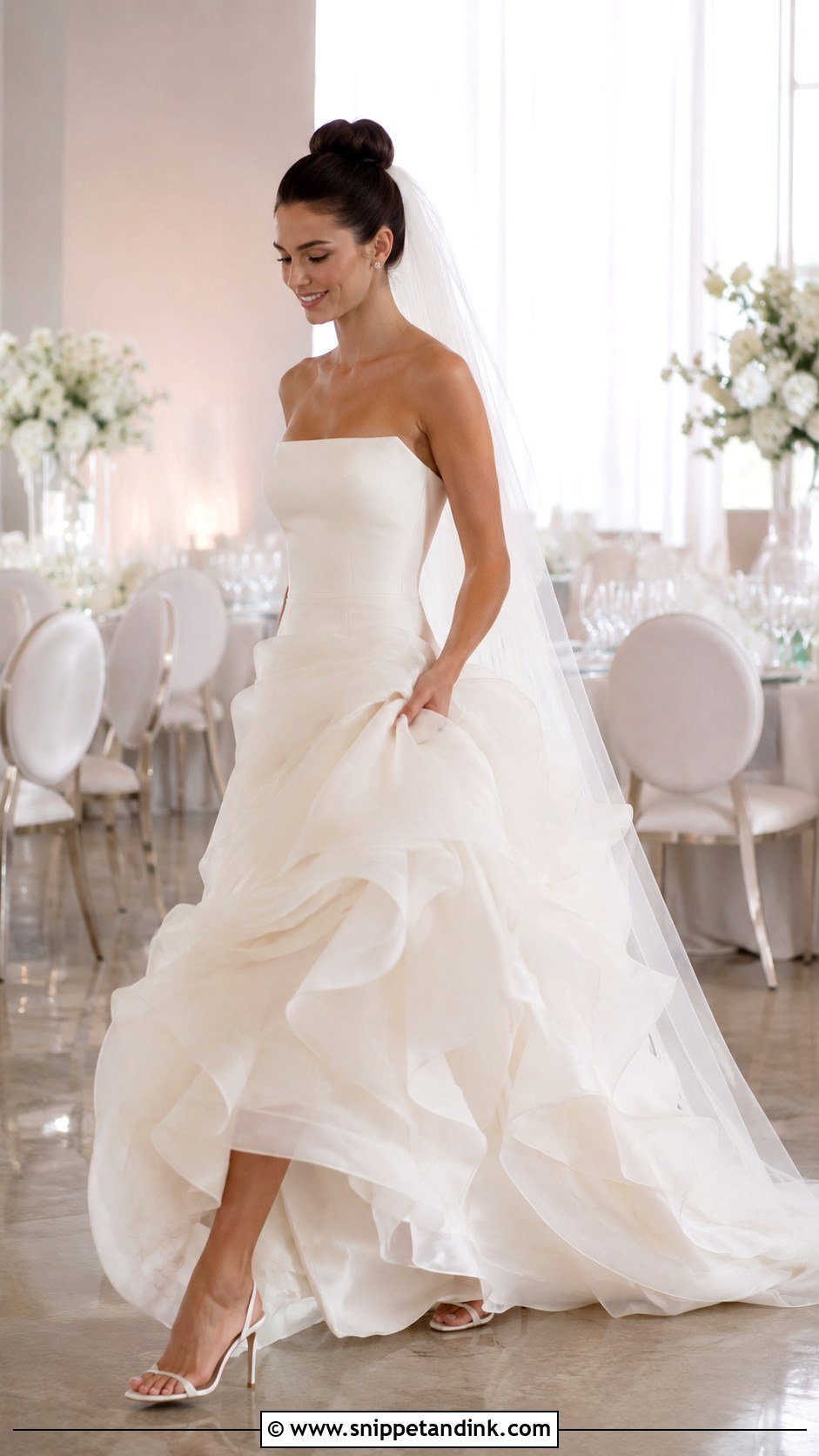
Organza is crisp, so ruffles cut from it stand away from the body and float instead of collapsing. A fitted bodice with tiers that get fuller below the hips keeps the shape balanced, and a straight strapless neckline stops the top half competing. If many tiers feel like too much, one asymmetrical ruffle gives controlled drama. Simple studs, slim ivory heels, a plain fingertip veil and a high bun suit it. Watch the edges: organza that isn’t finished properly scratches the arms and legs. The bustle also has to lift every tier, otherwise the bottom layer drags and catches heels on the dance floor.
12. One Shoulder Draped Wedding Dress
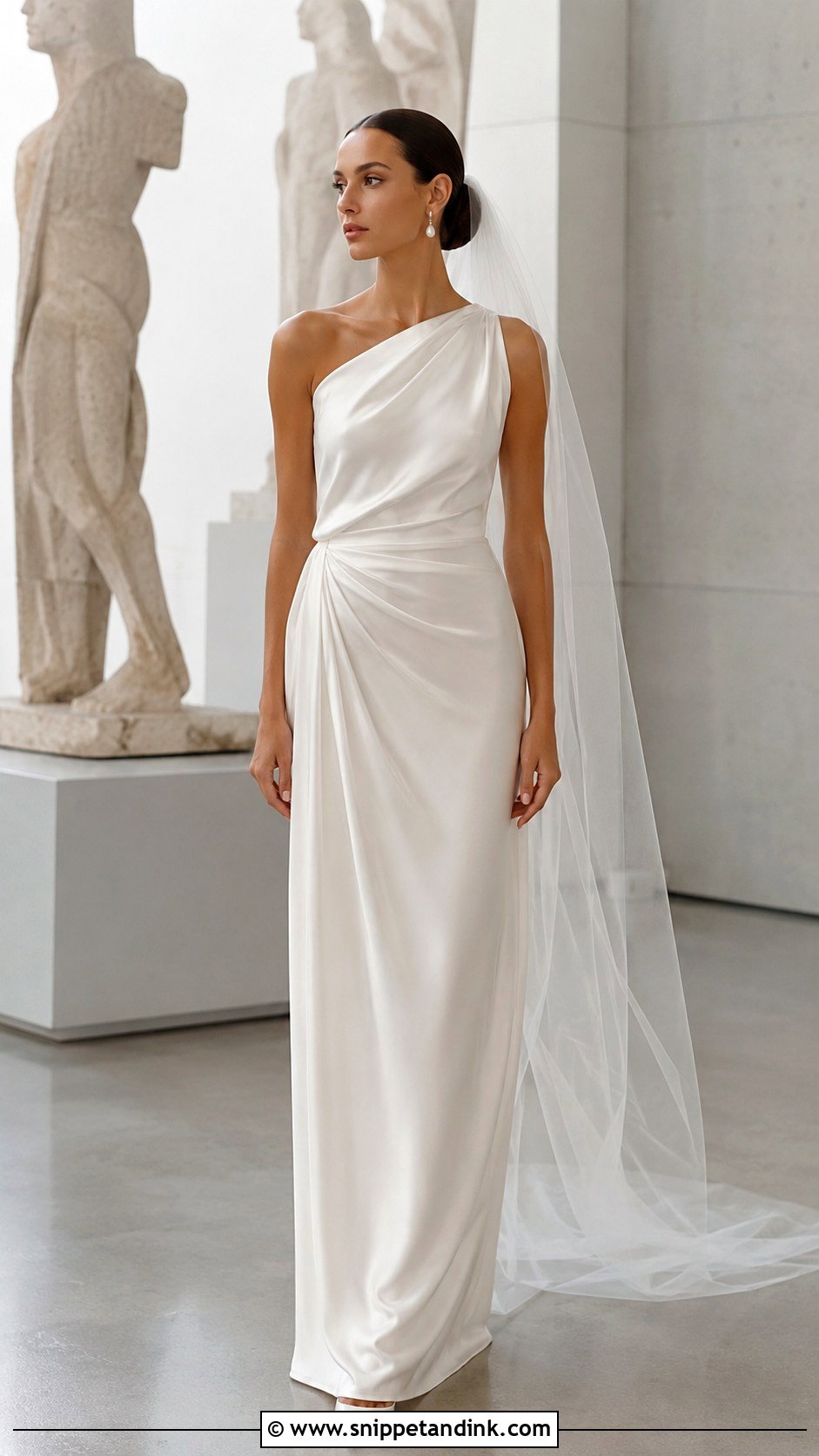
Draping is the decoration here, so the folds have to lie flat. When they don’t, a one-shoulder bodice looks lumpy from the side. Soft satin, crepe or silk folded across the bodice and waist gives definition and movement, carried down into a column or modified A-line skirt. A sleek bun, one statement earring or a pair of small drops, pointed heels and a veil set low behind the hair keep it clean, with no necklace. Since one shoulder takes much of the weight, I’d add a waist stay inside so the dress stays anchored through dancing instead of slowly sliding toward the bare side.
13. High Neck Modest Wedding Dress
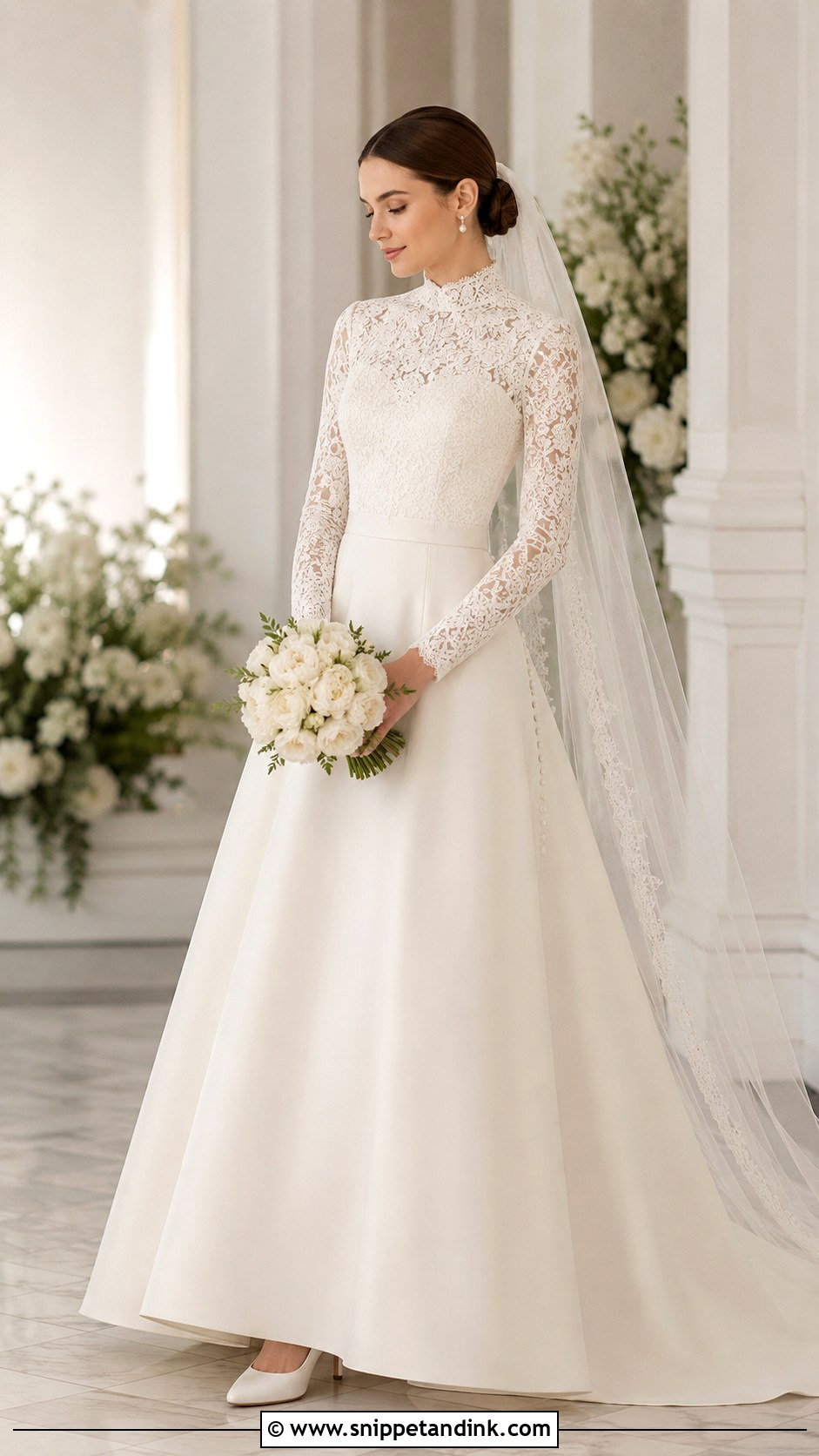
A high neck gives full coverage and still feels fresh when the bodice is well cut. Fitted lace or crepe with long sleeves, a defined waist and an easy A-line skirt is the classic version. An illusion neckline looks lighter; opaque fabric looks sleeker. Pearl earrings, closed-toe heels, a low bun and a veil set under the hair are enough, and an ornate necklace only fights the collar. Covered buttons down the back or a longer train add drama. The test I always do is ask the bride to turn her head fully left and right. If the collar rubs, it needs easing before the day, not after an hour of hugging guests.
14. Short Reception Wedding Dress
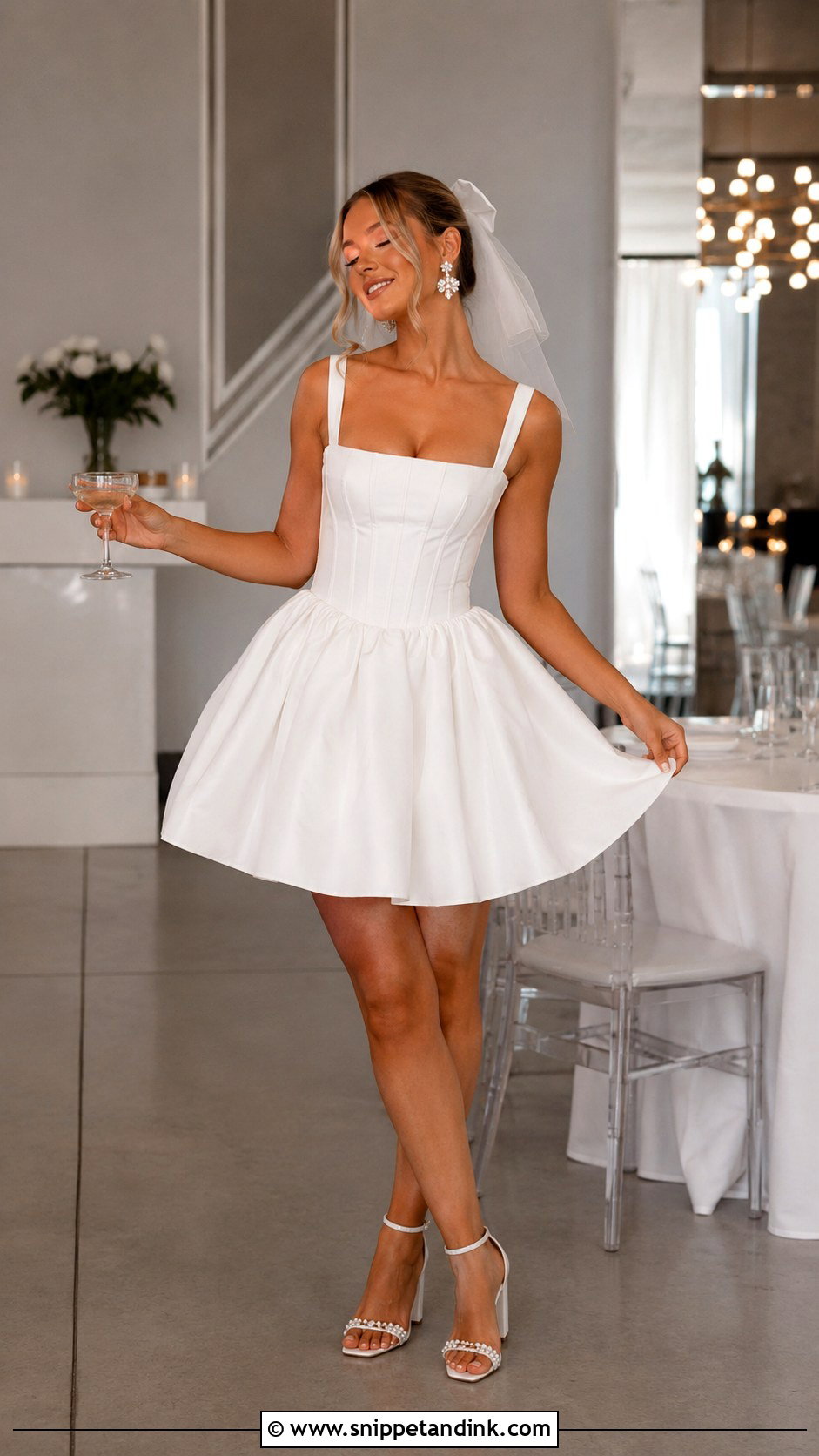
A short reception dress gives the night a second chapter and frees your legs for dancing. A structured mini with a corset bodice, clean square neckline and full skirt keeps it bridal. Block heels or embellished flats, small statement earrings and a short veil or hair bow suit it. Check the length from every angle: sit, climb a step, bend to hug a short relative. Built-in shorts or a smooth lining add confidence. I like to repeat one detail from the ceremony gown, maybe lace, pearl trim or covered buttons, so the two outfits look like they belong to the same bride.
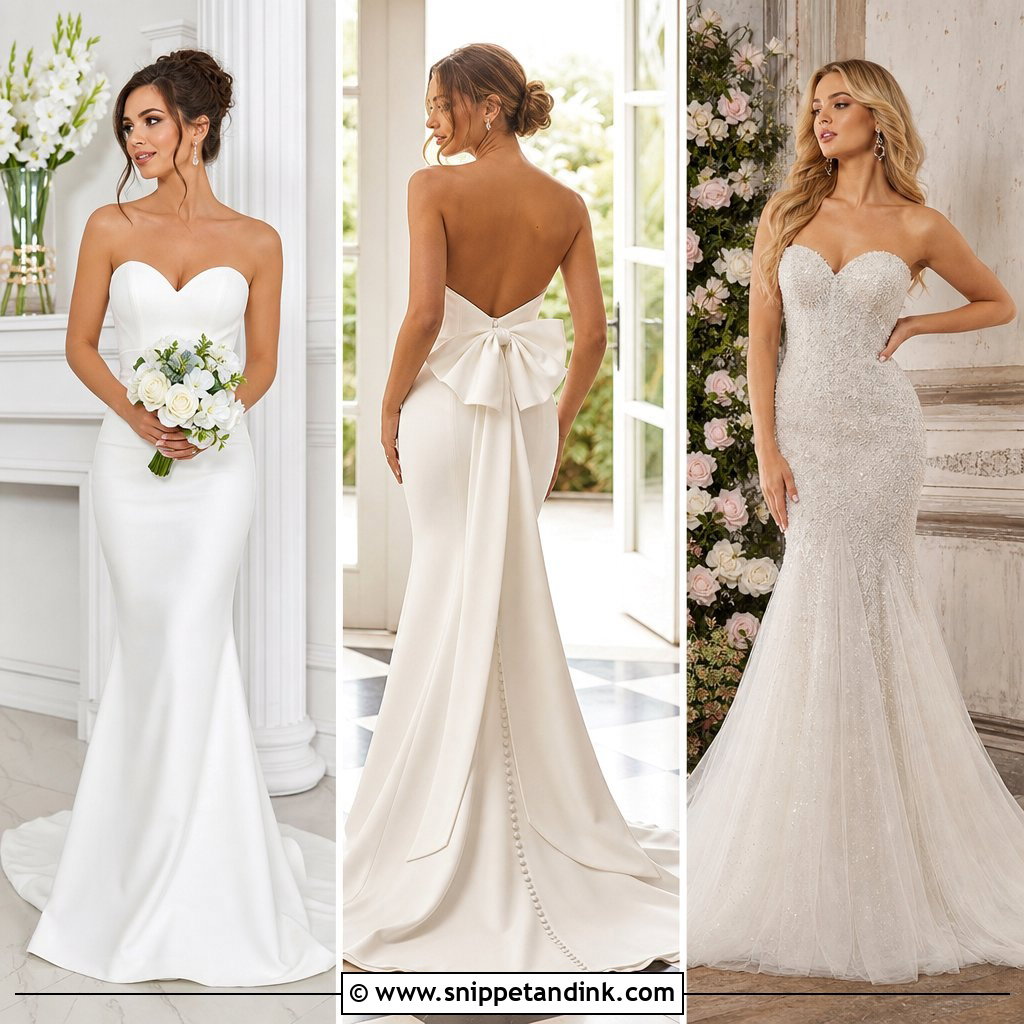
15. Tea Length Wedding Dress
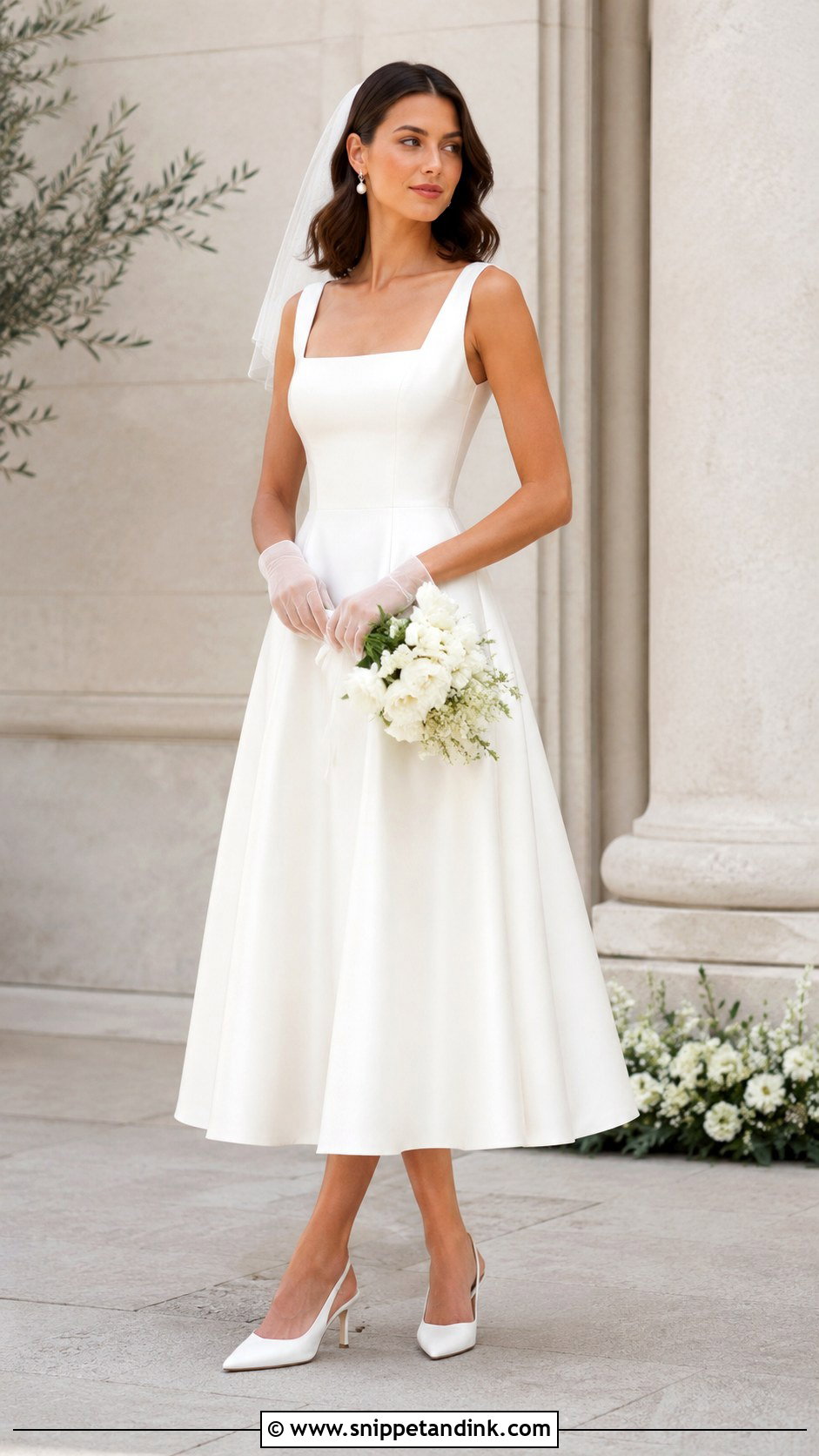
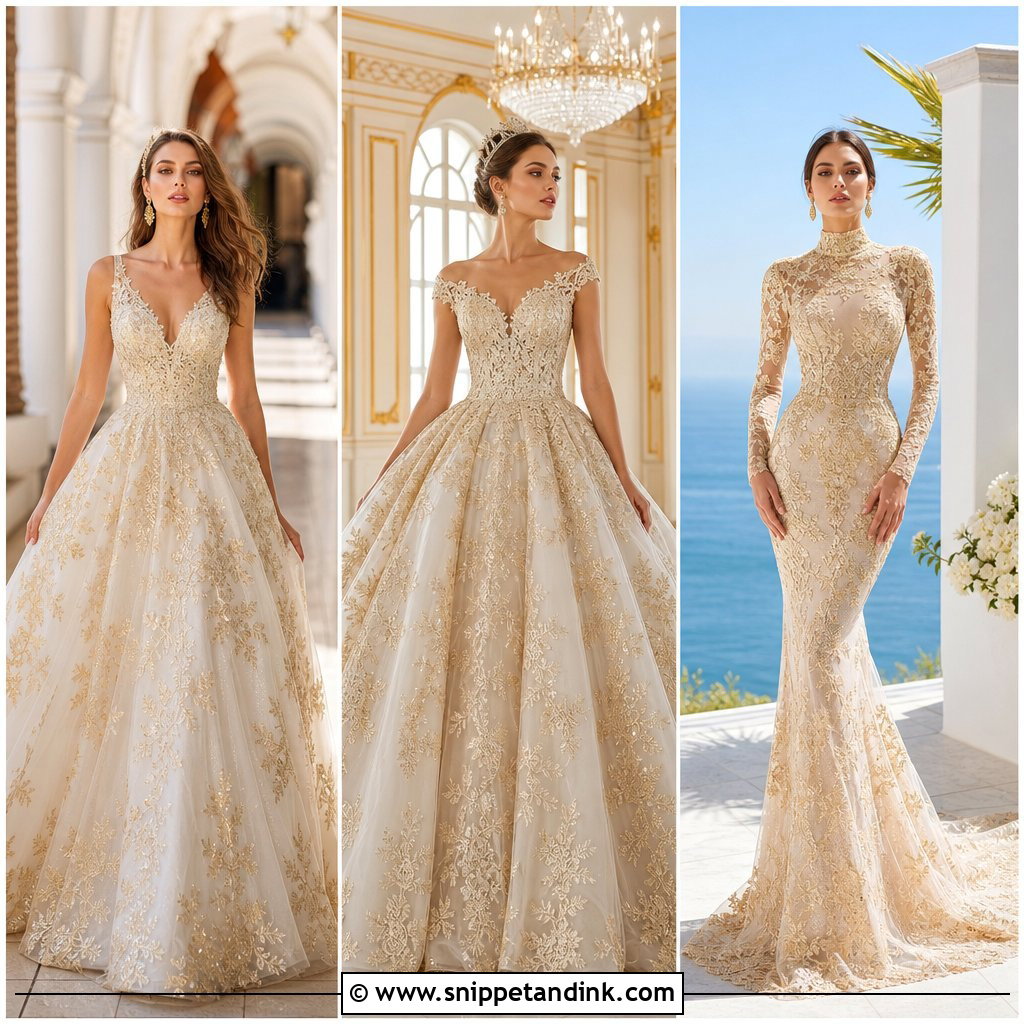
Tea length lands between knee and ankle, so the shoes become half the outfit. A fitted bodice with a softly flared skirt suits courthouses, gardens and relaxed receptions. Pointed pumps, slingbacks or neat block heels in ivory or a quiet accent color work, with pearl earrings, short gloves and a shoulder-length veil. The hem should finish at the narrowest part of the lower leg; ending mid-calf at the widest point shortens the whole figure. Petite brides often look better a touch shorter. A light petticoat gives the skirt shape, but too much tips it into costume, so try it with and without.
16. Detachable Overskirt Wedding Dress
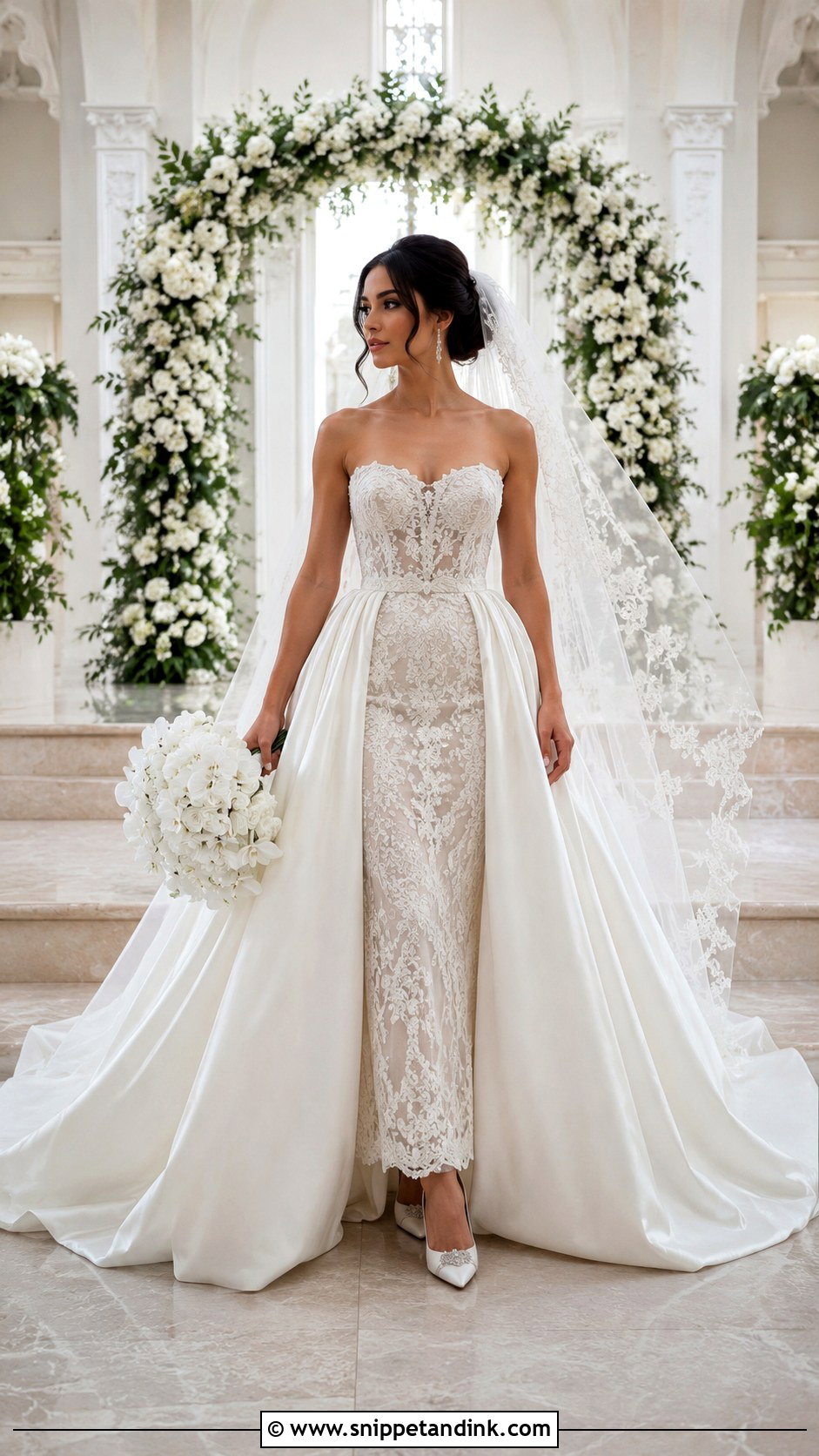
A gown with a detachable overskirt gives you two finished looks without a full change. A fitted crepe, satin or lace dress sits under a full tulle or mikado overskirt for the ceremony, then the outer layer comes off for dancing. Wear a long veil, drop earrings and pointed heels first, then switch to smaller earrings or add a hair piece for the reception. The waistbands of both pieces must line up exactly, or a bulge shows once the overskirt is gone. I ask the seamstress to demonstrate the removal and name one attendant who has practiced it.
17. Cape Sleeve Wedding Dress
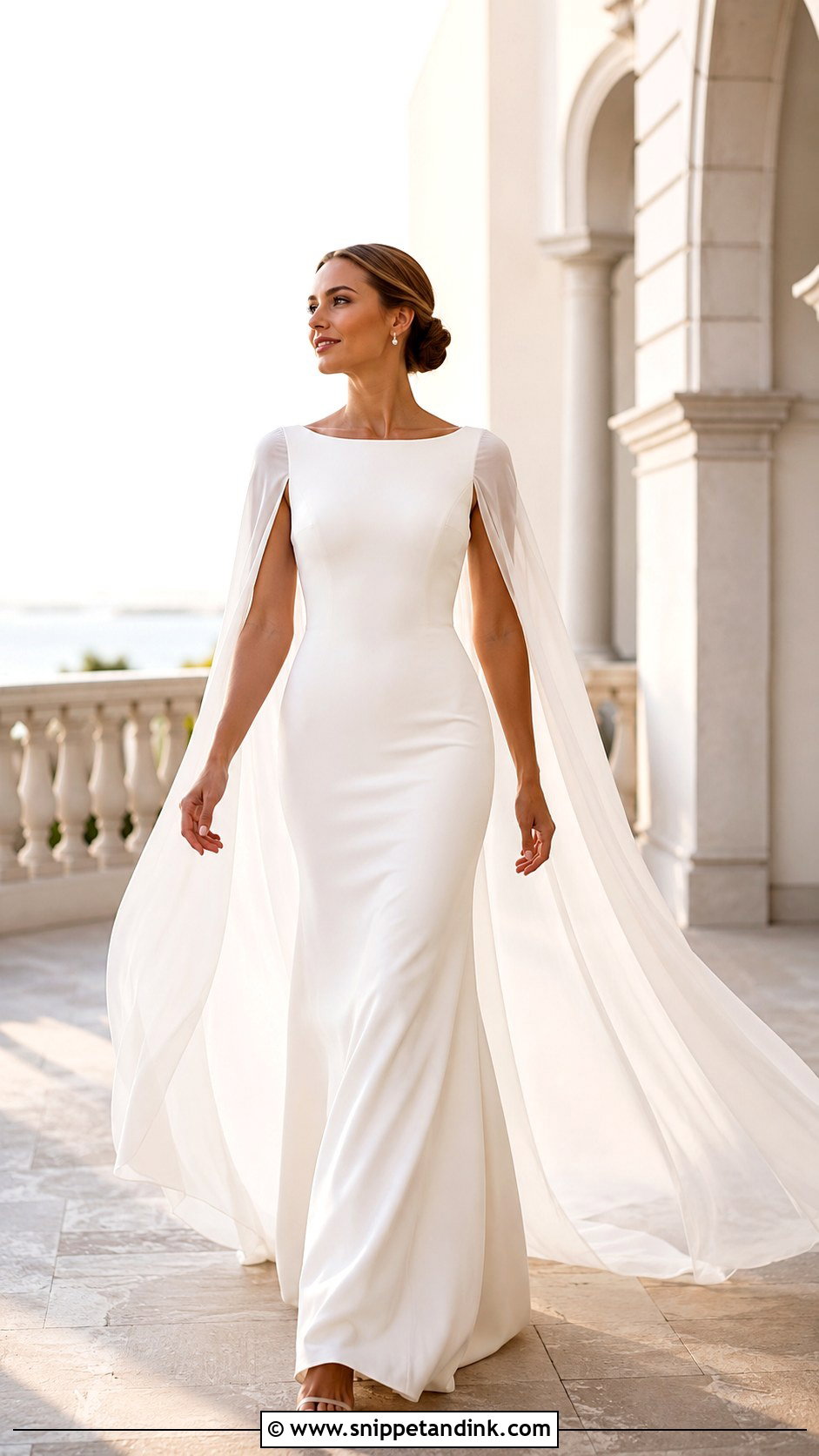
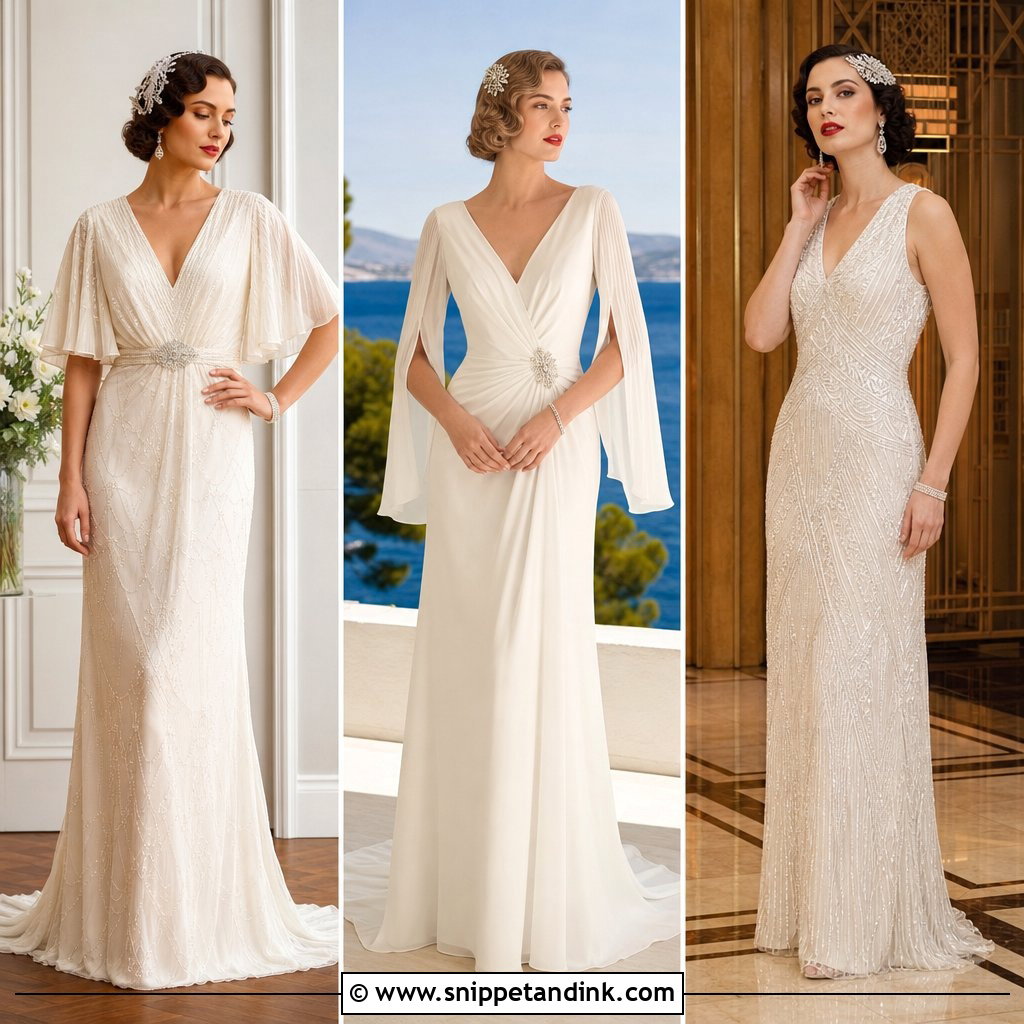
Cape sleeves move around the shoulders and arms as you walk, and they can stand in for a veil altogether. Chiffon floats; lace or embellished tulle gives stronger detail. A fitted crepe column underneath keeps the silhouette balanced. Sleek heels, small earrings and a polished low bun are enough. If you want a veil as well, keep it simpler and shorter than the cape so the layers don’t compete. Detachable capes come off for the reception. At the fitting I take brides outside if I can, because a breeze shows straight away whether the fabric catches on bracelets, bouquet stems or chair backs.
18. Backless Cowl Neck Wedding Dress
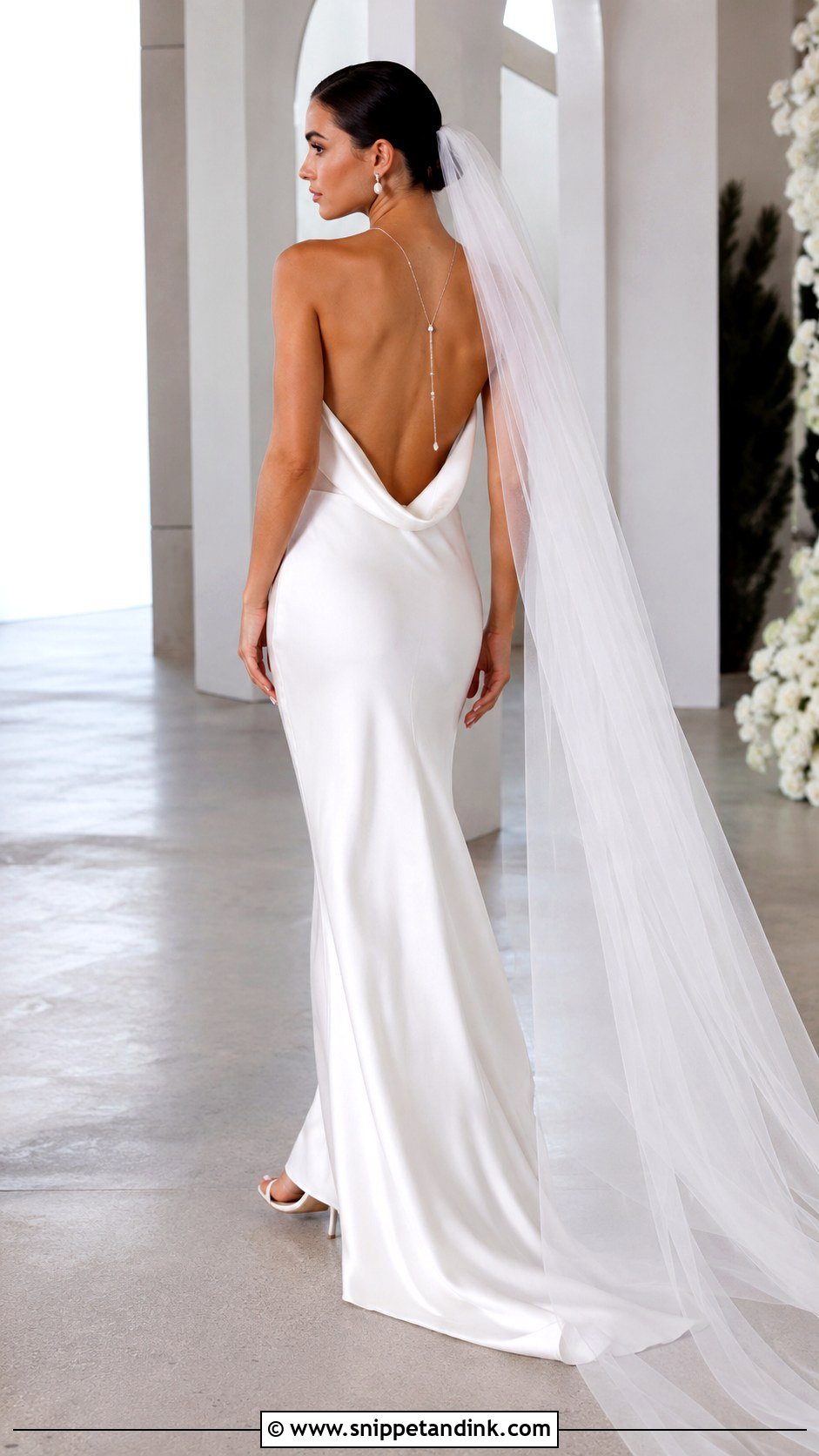
A backless cowl-neck wedding dress drapes softly at the front and reveals everything behind. Silk or satin falls into a cowl naturally and catches light without beading. A narrow A-line or bias skirt, delicate drop earrings, slingbacks and a low veil under a bun complete it, and a back necklace can follow the open line. Support is the real question. I look for built-in cups or side panels, and I have the bride bend forward to see whether the cowl gapes. Fashion tape helps, but a dress that only stays up with tape isn’t fitted properly. A removable sheer cape covers the back for a stricter ceremony.
19. Blush Tulle Wedding Dress
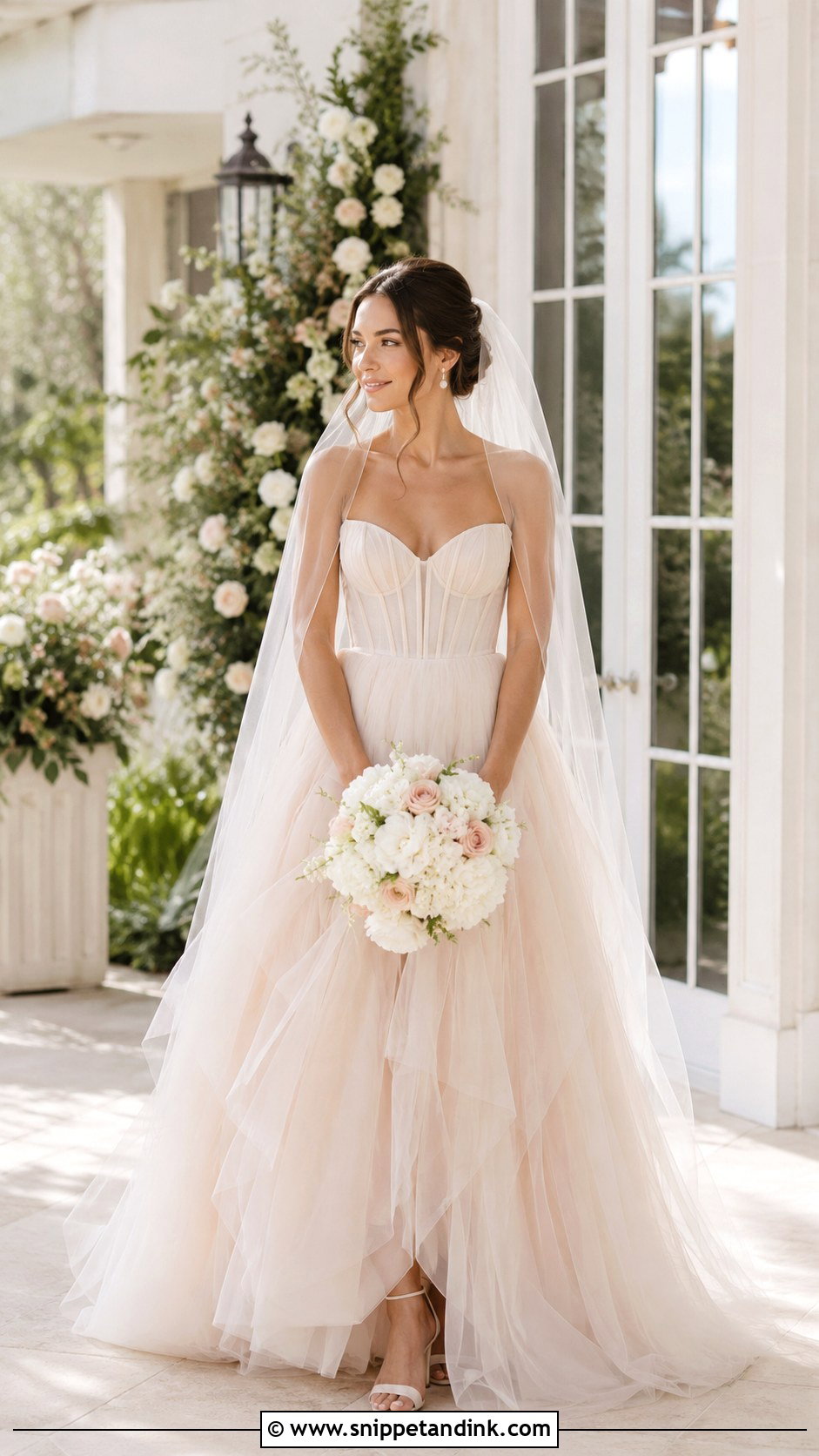
Blush tulle gives color while staying clearly bridal, because the pink usually comes from a pale lining under ivory layers rather than dyed fabric. Pale rose, champagne-blush and barely-there pink all behave differently against skin, so your undertone decides more than the name of the shade. A fitted corset and layered A-line make it feel intentional. Ivory heels, pearl or rose-gold earrings, a sheer ivory veil and white flowers with restrained pink accents suit it. Blush can look almost white in strong sun and quite pink indoors, so ask for swatches and hold them beside your actual veil and shoes before choosing accessories.
20. Bow Back Satin Wedding Dress
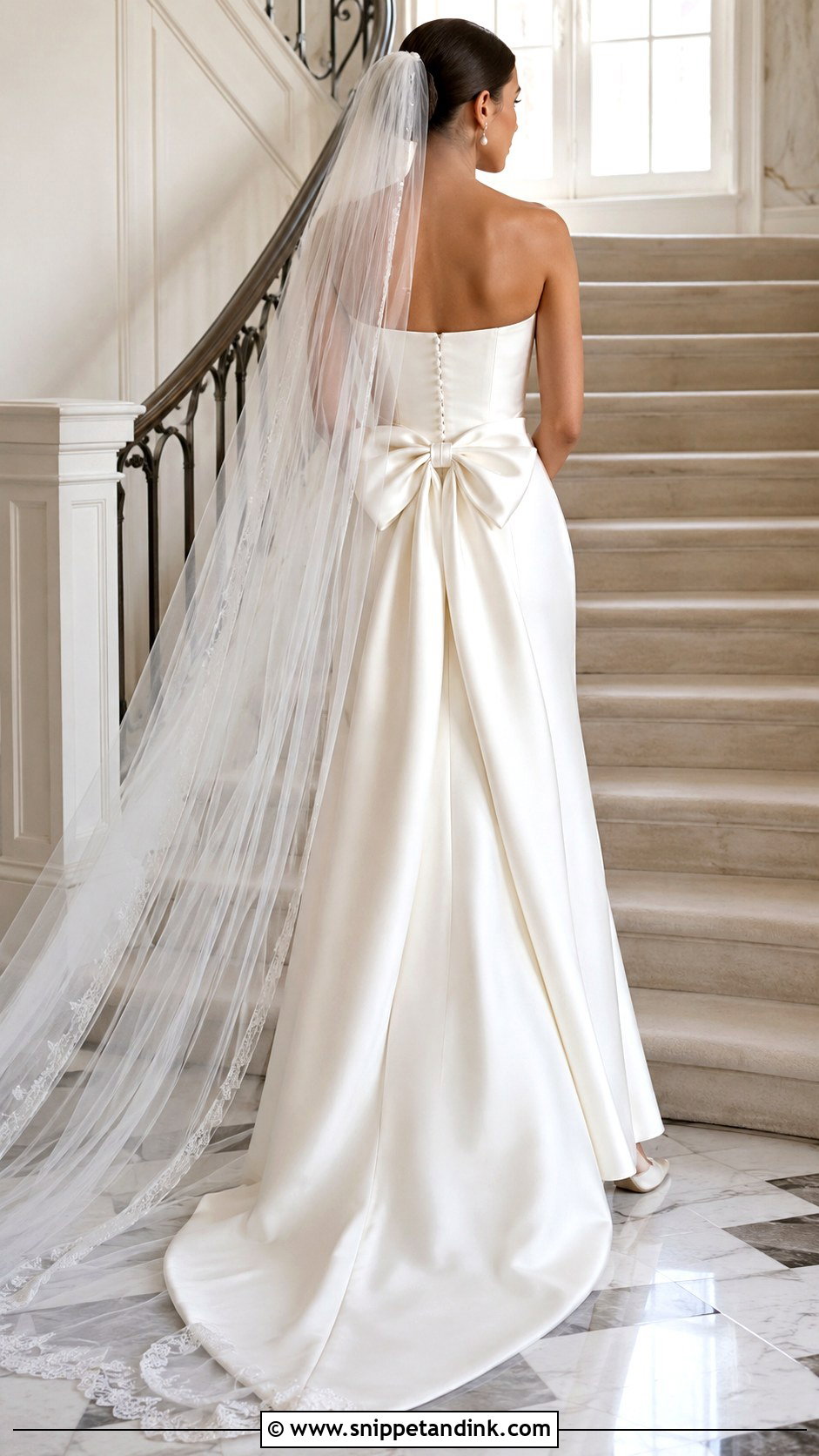
From the front this is a clean satin gown; from behind, a structured bow sits above the train and gives you a memorable exit. A fitted A-line or column with a straight neckline and defined waist carries it best. Pearl earrings, pointed satin pumps and a plain cathedral veil keep the rest simple. The bow has to be in proportion: small loops for minimal dresses, a large sculptural bow only on firm satin or mikado that won’t sag. It should be attached without dragging the back of the dress down. Make it detachable if it’s bulky when seated, and ask your photographer for a few back-facing portraits before it comes off.
Trend Details That Date First, and Shapes That Last
Every era of wedding photos has its giveaway. When brides worry about looking dated later, I separate the silhouette from the surface. Clean shapes tend to age well: an A-line, a column, a square or straight neckline, a well-cut slip. The details that most often mark a year are the fashionable extras layered on top, such as very specific sleeve shapes, oversized bows and a particular kind of beading.
That doesn’t mean you should avoid trends. It means putting the trend in pieces you can remove. A detachable bow, cape or overskirt lets you enjoy the moment in your ceremony photos while the dress underneath stays classic. A basque waist is a little different, because it’s built into the gown. It has history going back centuries, which tends to help it read as considered rather than fleeting.
One more honest test: if you’d still pick the dress with all its trend features stripped away, you’re buying the dress. If the trend is the only reason you like it, I’d try a few more on.
A Dress You Can Sit, Hug and Dance In
A wedding gown has two jobs: look right in photos and stay comfortable through every unposed moment. Lace, satin, corsetry, draping, soft color and detachable pieces all have a place, and the list above is a starting point for comparing them. Bring your reference images, but try at least one shape you’d never pick from a photo. Sit, walk, turn and lift your arms in everything. Good alterations can fix support, proportion, sleeve movement and hem length. Then add only the accessories that strengthen the dress, and the gown you love on the hanger becomes a complete look on you.
You'll Like These Ideas:




Leave a Reply