
A Maharashtrian wedding wardrobe is built on silk, contrast and jewelry that carries meaning, and the drape decides more than the color does. Below are complete looks for brides, bridesmaids, relatives and guests, from the morning rituals to the reception. The Nauvari saree is still the signature, and Paithani silk, with its zari borders and peacock or lotus pallus, is the textile most families reach for. The nath, mundavalya, green bangles, Kolhapuri saaj and crescent bindi are what make an outfit read as Maharashtrian at a glance. When I style a client for these weddings, I ask about the function and her role before we touch a single saree, because a bride’s ceremony look and a cousin’s sangeet look follow different rules.
Nine Yards or Six: Deciding on the Drape
The first question I ask a client is not about color. It is whether she wants the Nauvari, and who is going to drape it. The nine-yard drape is wrapped without a petticoat and tucked at the back in the kashta style, which is why women could ride and work in it. That same tuck is what lets a bride sit cross-legged through the rituals, but only if it is pulled tight by someone who knows how.
- Traditional Nauvari, hand draped: the most authentic and the most secure once done well. Book a draper and allow about 30 to 45 minutes, plus time for jewelry afterward.
- Stitched or pre-draped Nauvari: the same silhouette in a few minutes. It suits bridesmaids, guests and anyone changing outfits between functions, but the length is fixed, so fit it with your shoes on.
- Six-yard drape in Paithani or Shalu: easier to walk and dance in, and the pallu shows off the weave better. Most guests and many reception brides choose this.
Whatever you pick, wear it once at home for an hour before the wedding. Sit on the floor, climb a step, lift your arms as if you were placing a garland. Loose pleats and gaping blouses always show up in that hour rather than at the fitting.
Which Jewelry Belongs to the Bride Alone
Guests sometimes ask me whether they can wear the full Maharashtrian set. Most of it, yes. A thushi, jhumkas, a small nath and a crescent bindi are worn widely and nobody will think twice. A few pieces carry ritual meaning, though, and a respectful guest leaves them to the couple.
- The mundavalya, the strings of pearls or flowers tied across the forehead, is worn by the bride and groom during the ceremony. Guests shouldn’t wear one.
- Full stacks of green glass bangles are part of the bride’s look and are traditionally linked to married women. A few green bangles mixed with gold are fine for a guest; a forearm full of them reads bridal.
- A large statement nath paired with layered necklaces and a heavy Paithani can look like a second bride in photos. Scale down one of the three.
If you are unsure, ask the bride’s family. Nobody minds the question, and they usually appreciate that you asked.
1. Green Paithani Nauvari Saree Outfit
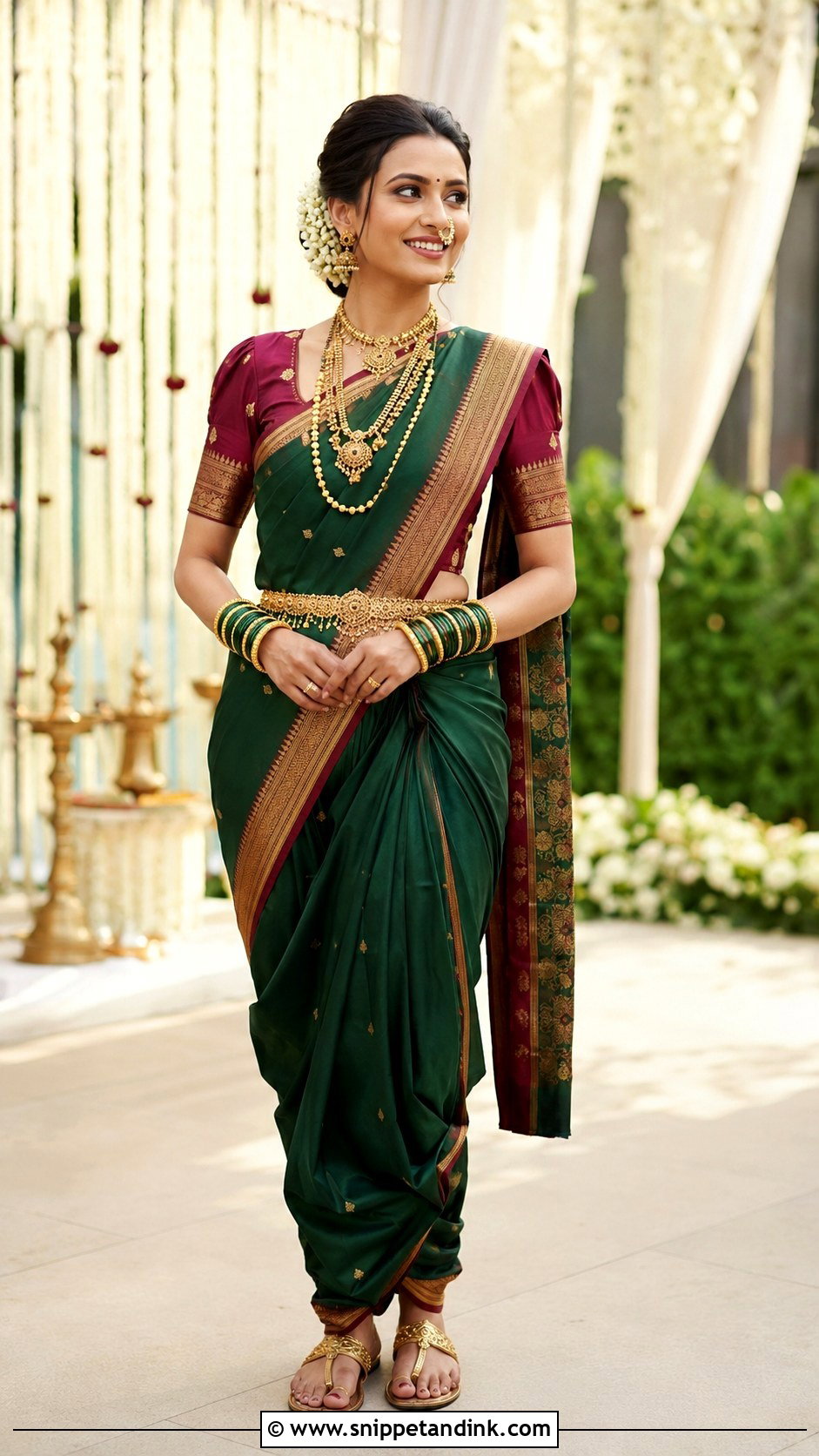
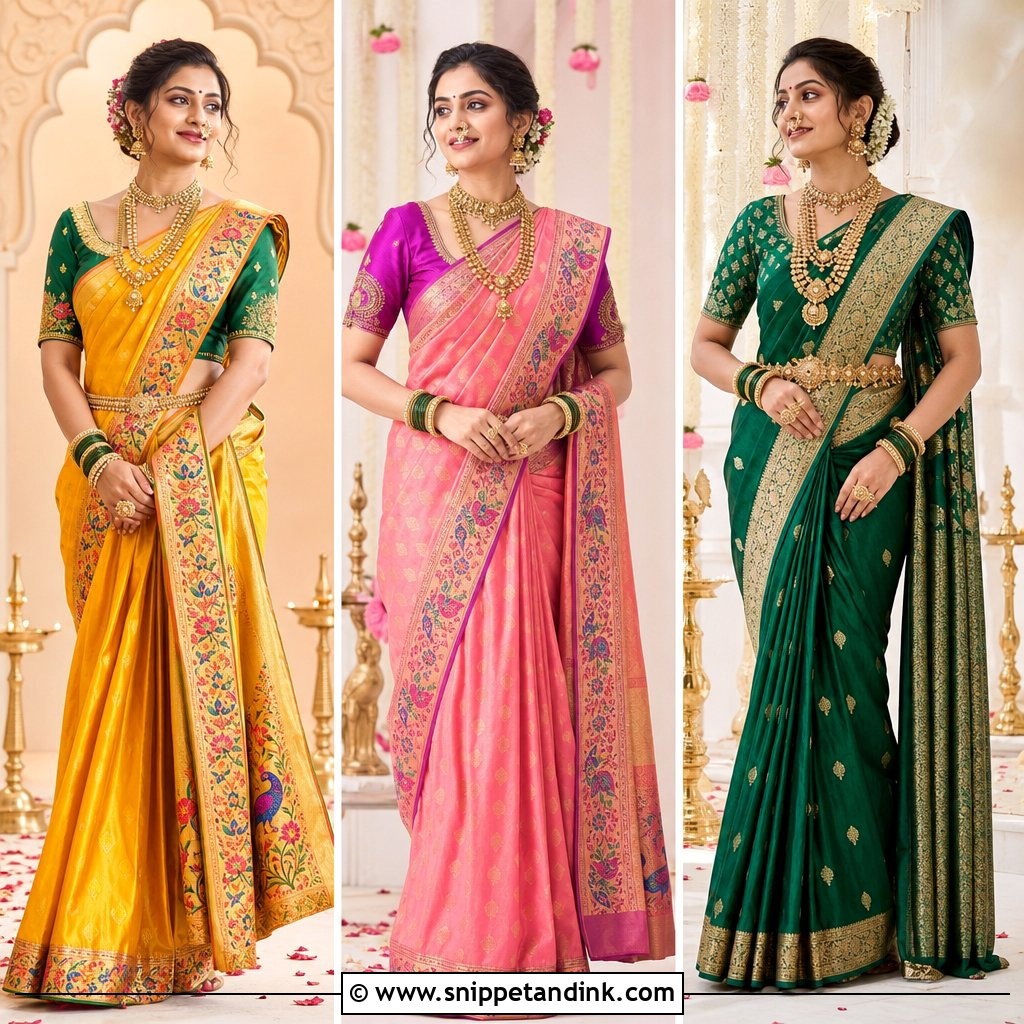
This is the look most people picture first, and for good reason. Bottle green or emerald Paithani with a broad gold border and a peacock pallu, worn against a maroon or magenta blouse, gives the strongest contrast in the whole tradition. Add the nath, Kolhapuri saaj, layered gold chains, green glass bangles and a kamarbandh, then a center-parted bun wrapped in jasmine. The mundavalya and crescent bindi go on for the rituals. A nine-yard drape is not something to attempt yourself on the morning: a good draper needs about half an hour, and the kashta tuck at the back has to be tight enough to survive sitting cross-legged through the ceremony. Gold Kolhapuri sandals finish it without a heel to wobble on.
2. Yellow Nauvari Saree With Green Blouse
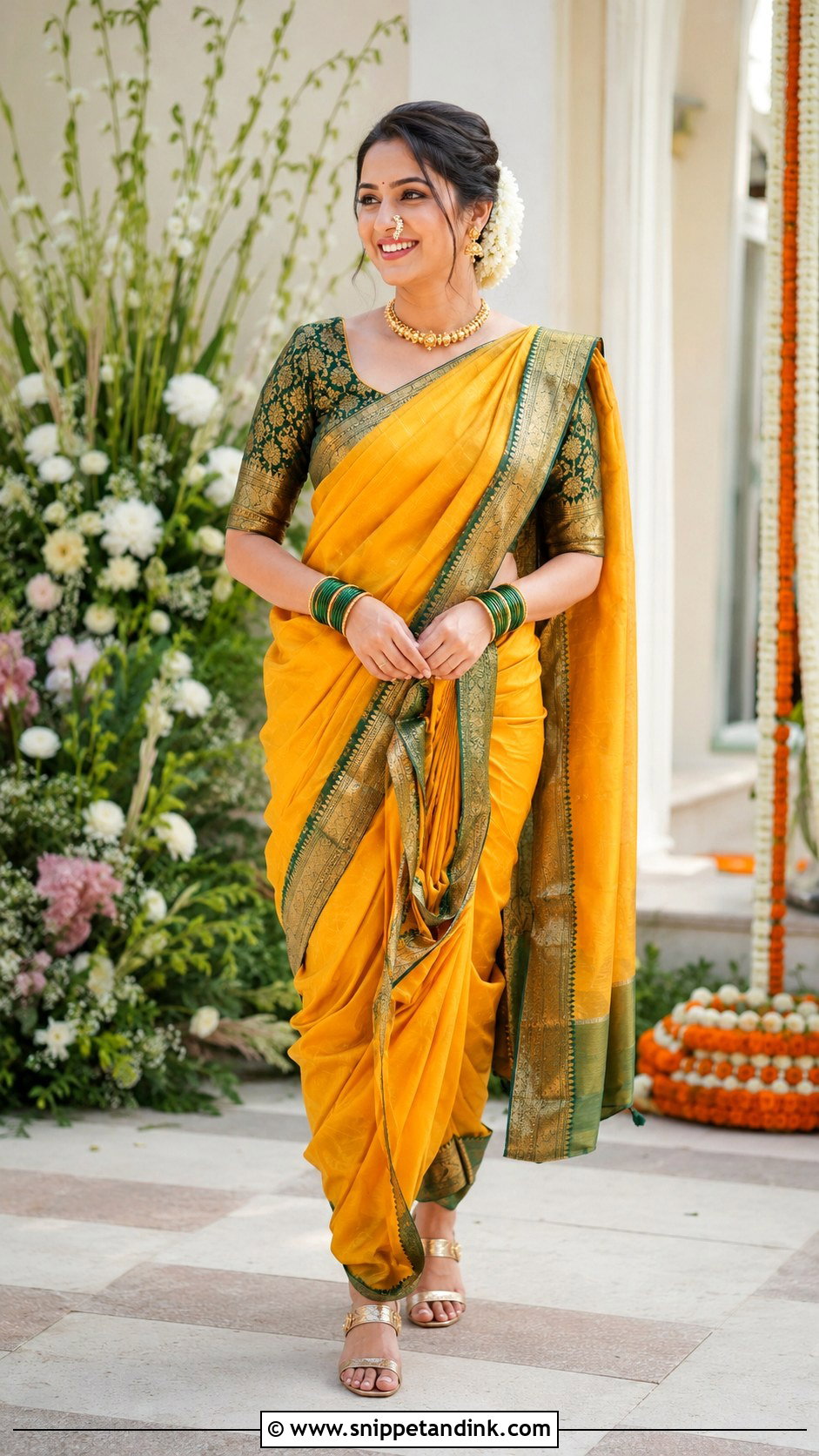
Mango yellow against green is the combination I suggest most often for a morning ceremony or Haldi, since daylight makes the yellow glow instead of going flat. Look for a green-and-gold border so the blouse ties in rather than fighting it. Keep the blouse to a short-sleeved brocade; long heavy sleeves in May heat are miserable by noon. The pearl nath, a gold thushi, green bangles and small jhumkas are plenty here. A jasmine-trimmed bun or braid suits the color, and on the face I’d keep things fresh with soft eyes and a muted red lip. Low metallic sandals, because Haldi floors get slippery.
3. Red Paithani Saree With Green Blouse
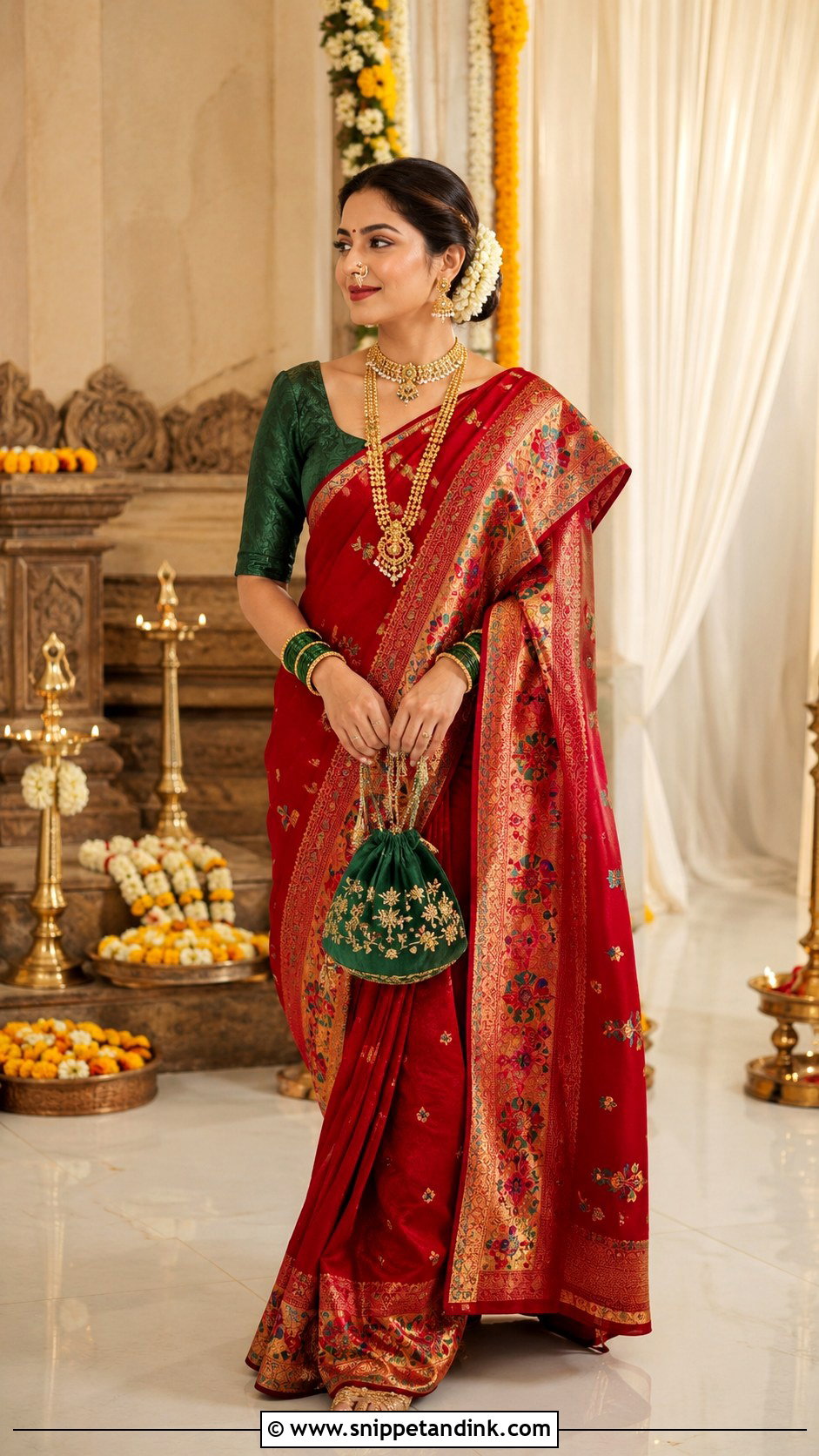
Deep red Paithani with a dark green raw-silk blouse is formal enough for the main ceremony and far easier to manage in a six-yard drape than a Nauvari. Elbow-length sleeves suit this pairing; they frame the green bangles instead of competing with them. Layer the thushi, a long mohan mala, a statement nath and matching earrings, and keep the bun structured so the jewelry stays visible from every angle. One thing I check on red Paithani is the dye: deep reds on new silk can bleed onto a light blouse lining if you sweat, so test a damp white cloth against the pallu before the day. Brides can add a contrasting Paithani shela; guests should skip it or carry a light stole. Embroidered gold sandals and a small green potli complete it.
4. Purple Nauvari Saree With Orange Shela
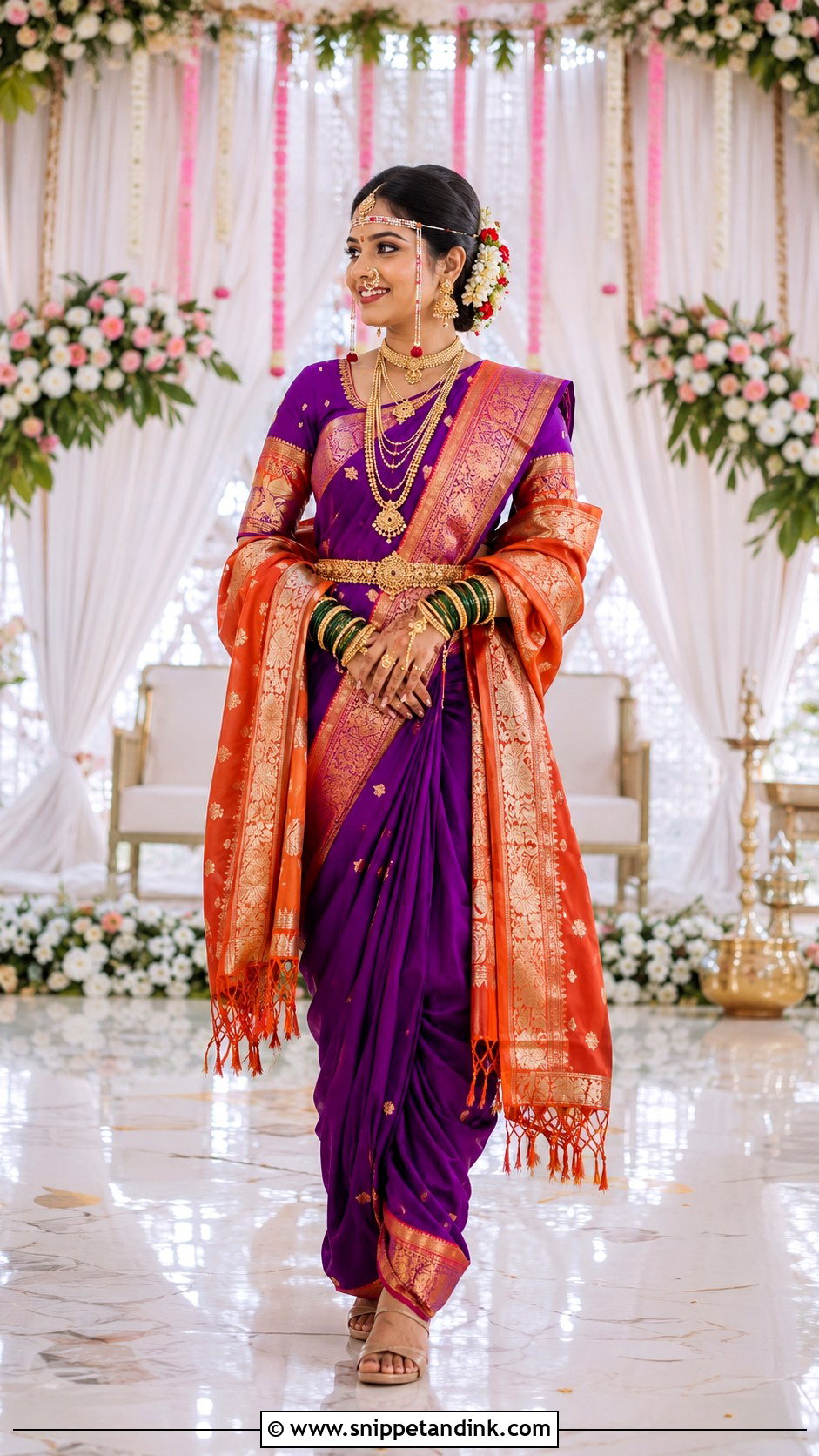
Purple and orange is a brave pairing, and it works only when the saree stays quiet. Pick aubergine or royal purple with restrained gold motifs, so the orange shela over the shoulder becomes the focus. A matching purple blouse with orange piping links the two colors without a third shade sneaking in. Finish with the gold nath, layered necklaces, pearl mundavalya, green bangles and a slim kamarbandh, and tuck white flowers around a low bun. Makeup should step back: neutral eyes and a berry lip. Choose block heels for this one. A nine-yard drape plus a shela is a lot of fabric to walk in, and a stable heel keeps the pleats from catching underfoot during the pheras.
5. White Nauvari Saree With Red Border
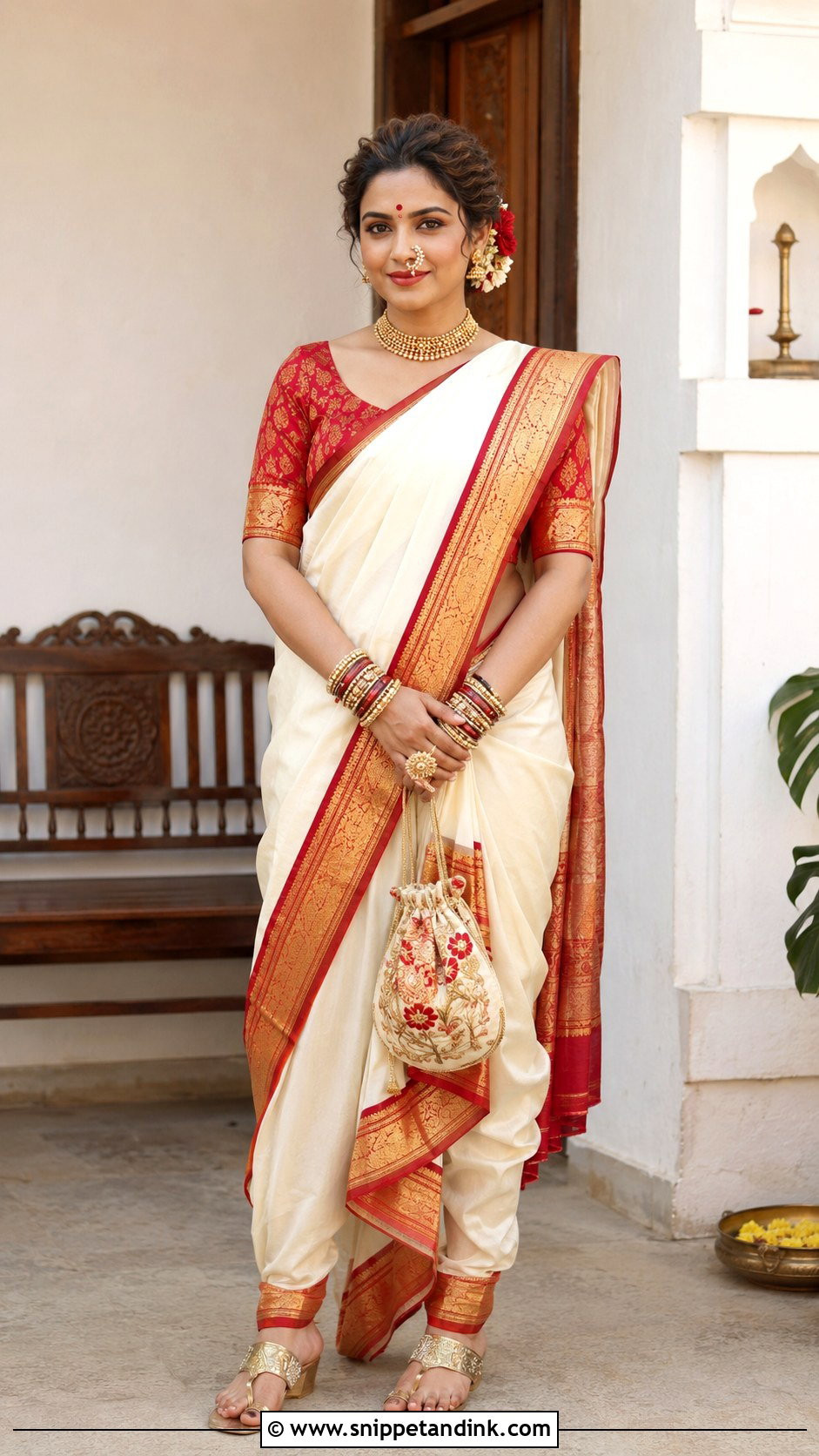
Off-white silk edged in red and gold is the most restrained bridal option here, and also the hardest to keep clean. Pair it with a fitted red brocade blouse and a daytime ceremony. I always warn brides choosing a white Nauvari that turmeric, kumkum and haldi water will find it, so plan to change before any ritual involving color, or accept a few marks as part of the story. Build the jewelry from a pearl-and-gold nath, a close thushi, longer chains, red and green bangles and a simple waist belt. A red bindi and lined eyes give the face definition against the pale fabric. A red or saffron shela adds ceremony for the bride; gold sandals and a small potli match the blouse.
6. Pink Paithani Saree With Purple Blouse
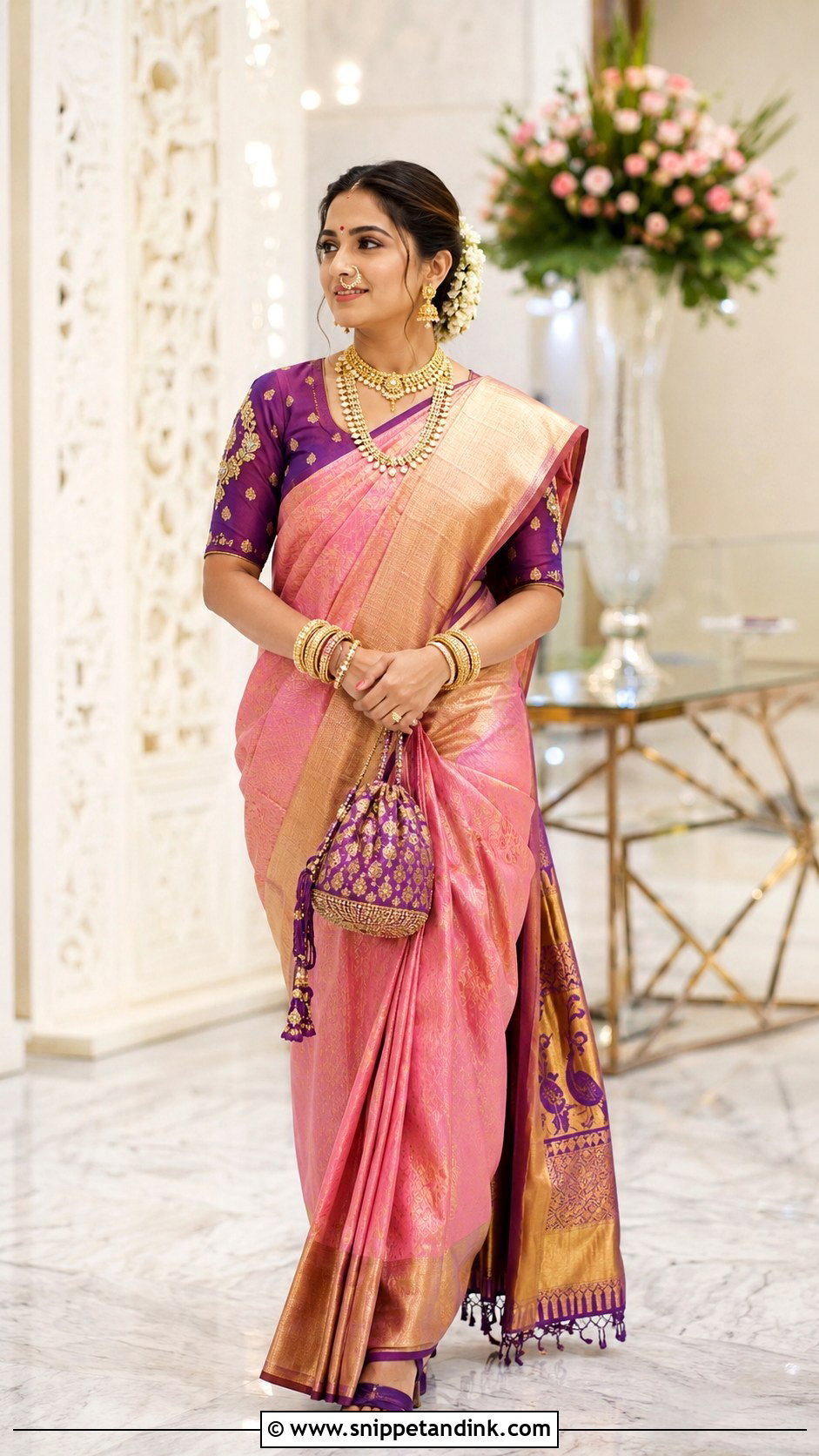
Pink Paithani is the shade I see most at the Sakharpuda and engagement, and the depth you pick should follow the clock: rose or lotus pink for a morning function, fuchsia once the lights go on. A purple blouse makes the gold border stand out and gives a palette that is distinctly Maharashtrian. Pin the front pleats crisp and leave the pallu open on display. A pearl nath, gold choker, long necklace and medium jhumkas are enough; a braided bun with white flowers keeps it neat. Pink-toned makeup, a small crescent bindi and defined brows finish the face, with purple or gold heels and a structured potli.
7. Blue Paithani Saree With Magenta Blouse
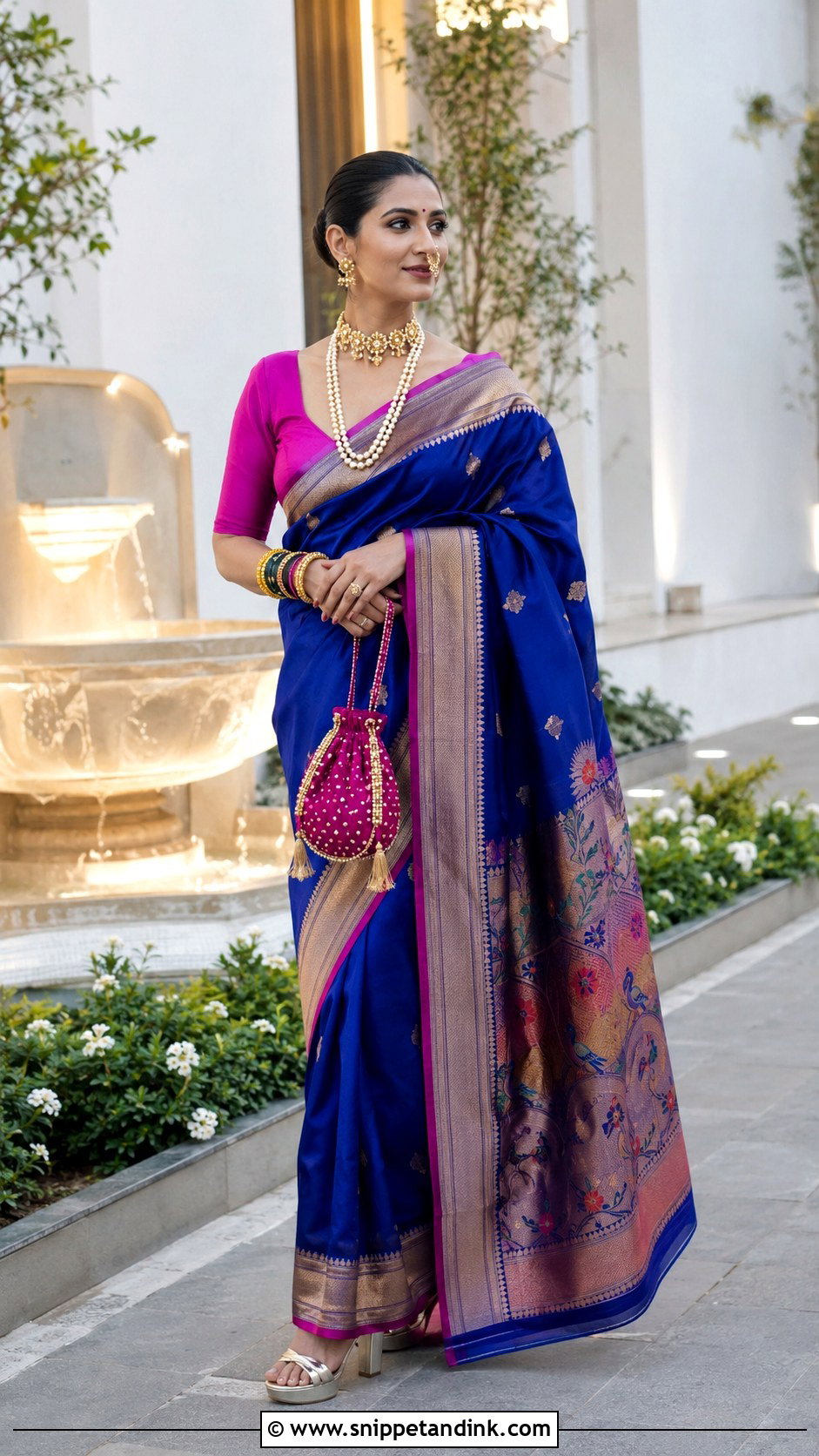
Royal blue with magenta is an evening pairing. Under warm reception lighting the blue deepens and the magenta keeps the face from looking dull, while in harsh noon sun the same combination can look loud. Choose a blue Paithani with a gold border and multicolored peacock motifs, and a magenta raw-silk blouse with elbow sleeves and a little zari. Keep the drape clean so the woven pallu stays readable. Thushi, layered pearls, nath and matching bangles go on, with a sleek bun or a decorated braid. Soft gold eyeshadow and a berry lip balance it. Guests wearing this should drop a layer or two of jewelry, so nobody mistakes them for the bride in the family photos.
8. Orange Silk Saree With Green Blouse
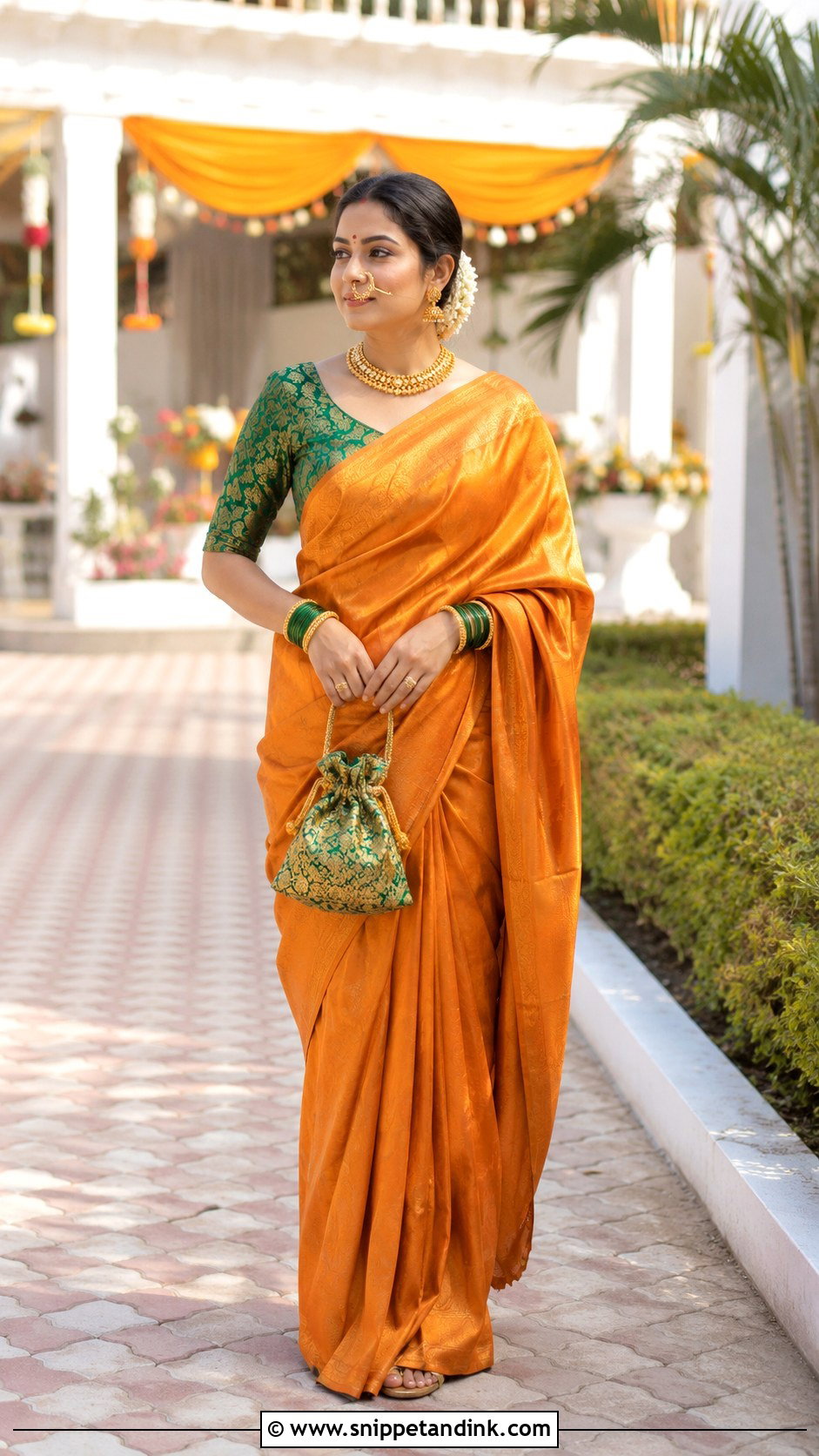
Saffron, marigold or burnt orange silk belongs to a bright daytime wedding. A dark green brocade blouse grounds the color, which matters because orange alone washes out deeper and very fair skin tones in strong sun. You can wear it in a Maharashtrian-inspired six-yard drape for comfort or go Nauvari for the full traditional finish. Keep the jewelry light: a thushi, small nath, jhumkas, green glass bangles and a slim kamarbandh. A center-parted bun circled with jasmine suits it, along with warm neutral makeup and a brick-red lip. Green velvet sandals or low gold heels and a brocade bag that echoes the blouse close the look.
9. Maharashtrian Shalu Saree Outfit
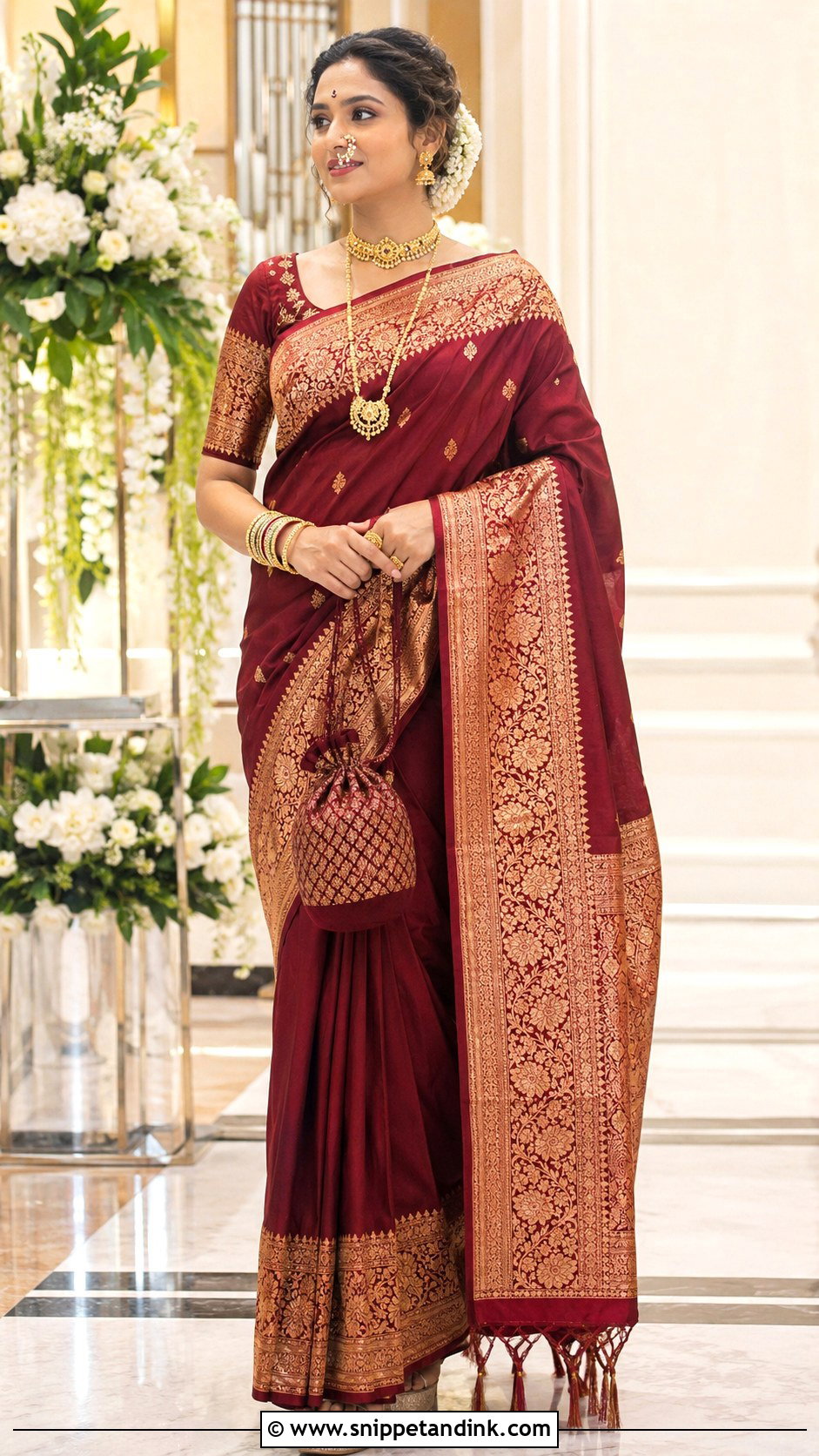
A Shalu is heavier and shinier than most sarees in this list, so the risk is overdressing it. Look for maroon, purple, pink or green silk with an ornate gold pallu, and take one color from the weave for a fitted brocade blouse with minimal embellishment. A six-yard drape lets the pallu fall cleanly and keeps the weight manageable over a long day. Brides can stack the nath, choker, long necklace and bangles; guests are better with one statement necklace and simpler earrings. When I dress someone in a heavy Shalu, I add an extra pin at the shoulder, because the pallu weight slowly drags the drape backward over a few hours. A floral bun, crescent bindi, gold platform sandals and a silk potli complete it.
10. Paithani Lehenga With Silk Blouse
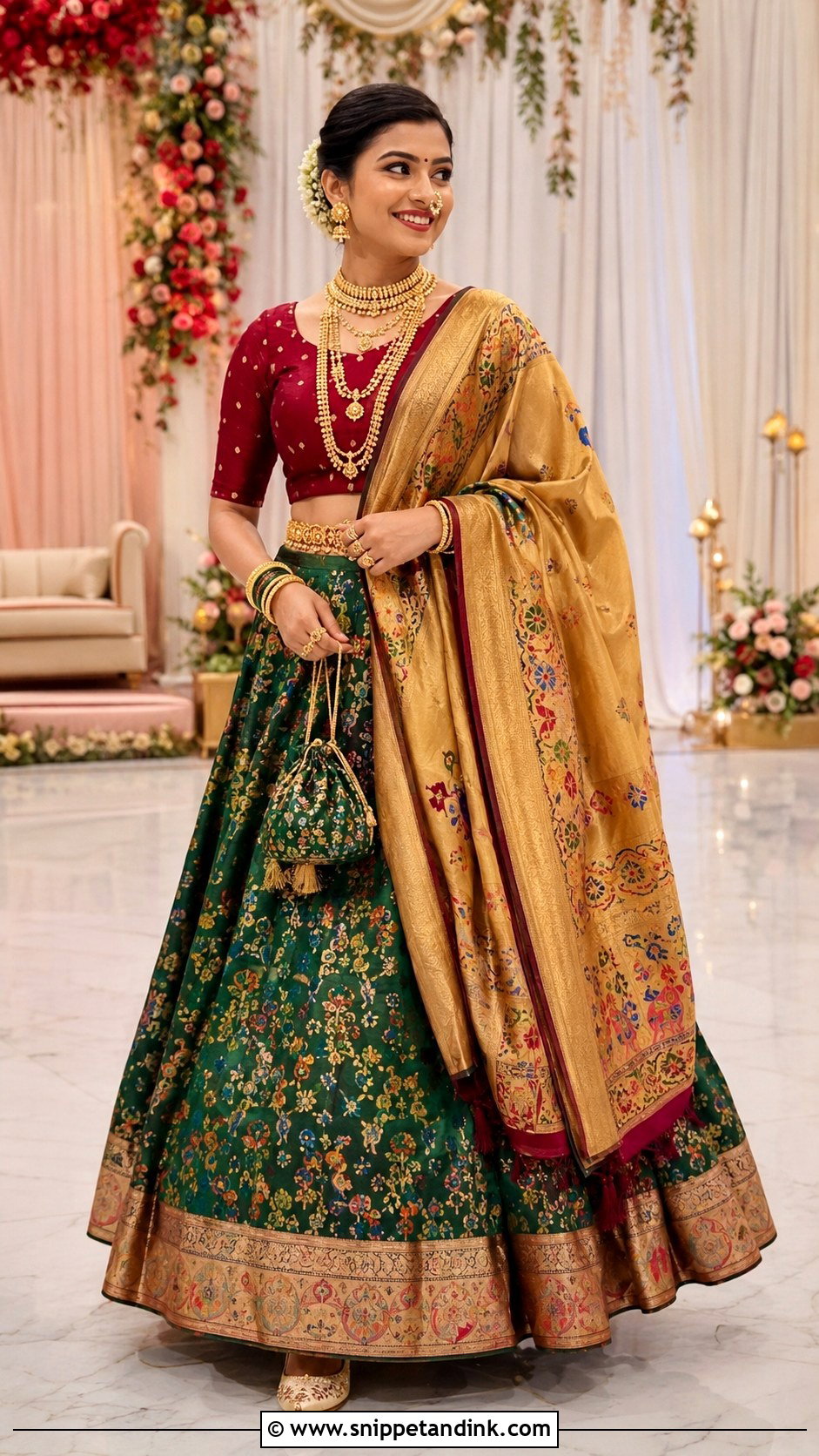
Would you rather move in a lehenga and still wear Maharashtrian textiles? A full Paithani silk skirt with a gold border and woven motifs does that. Pair it with a plain fitted blouse in maroon, green, purple or pink, then drape a light Paithani or organza dupatta from one shoulder and pin it at the waist. Paithani is a stiff silk, so ask your tailor for cancan or a light lining rather than a heavy one; the skirt already holds its own shape. The thushi, layered necklaces, nath and kamarbandh tie the modern cut back to tradition. A low floral bun or a long braid with gold accents, embroidered block heels and a matching potli finish it for a sangeet, reception or multicultural wedding.
11. Red Bridal Lehenga With Maharashtrian Jewelry
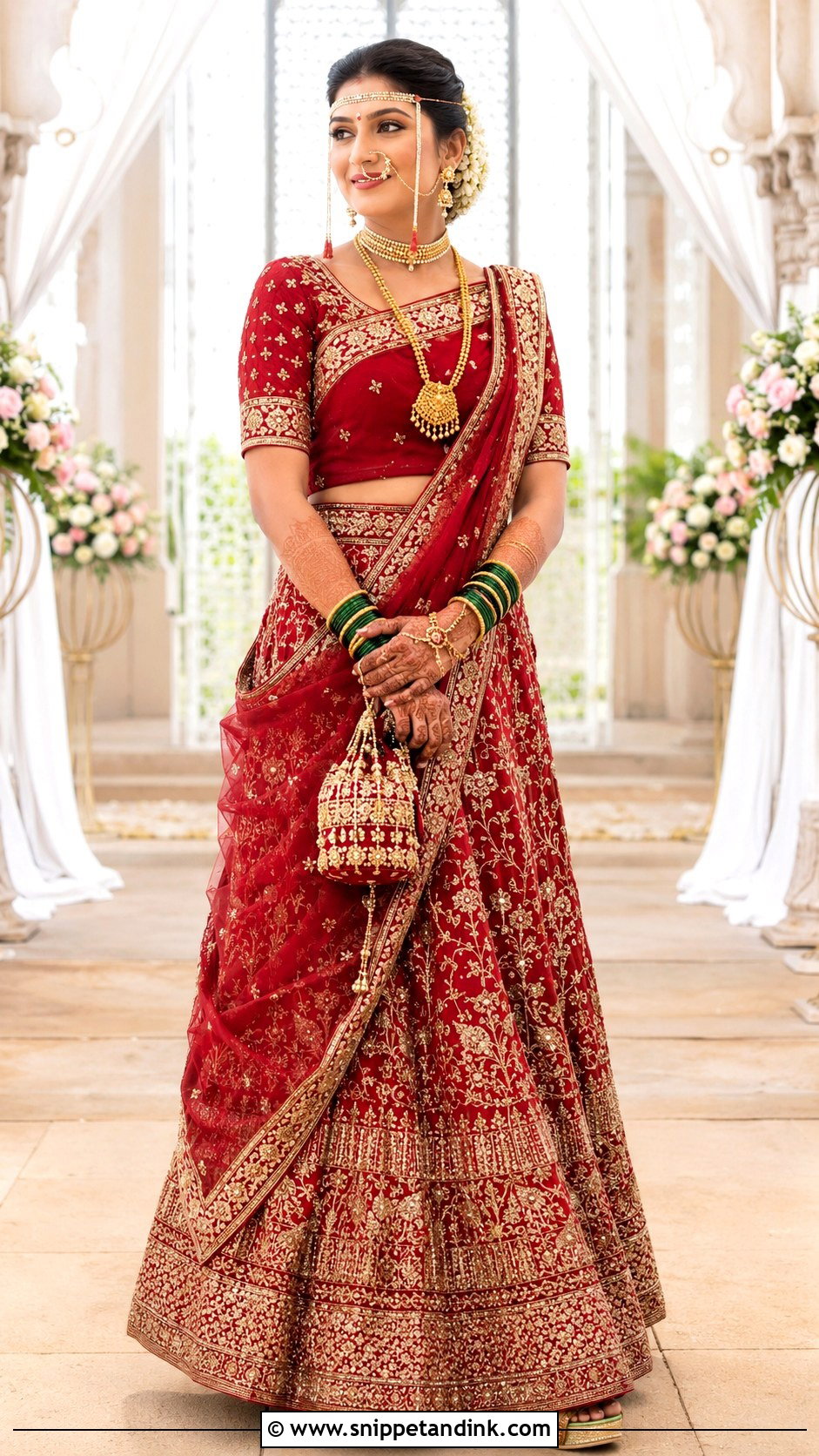
A red lehenga reads Maharashtrian when the details do the work. Choose a red or deep maroon skirt with gold embroidery, a matching blouse and a lighter dupatta, worn over the head for the ceremony and across one shoulder for the reception. Then add the nath, crescent bindi, green glass bangles, a gold thushi, a long mohan mala and the pearl mundavalya where the rituals call for it. A smooth center-parted bun with jasmine frames all of that jewelry neatly. Heavy lehengas pull at the waist after a few hours, so I always have the waistband checked while seated, not only standing. Gold platform heels and a small structured bag keep it practical for a bride blending Maharashtrian and North Indian traditions.
12. Pre-Draped Nauvari Saree Outfit
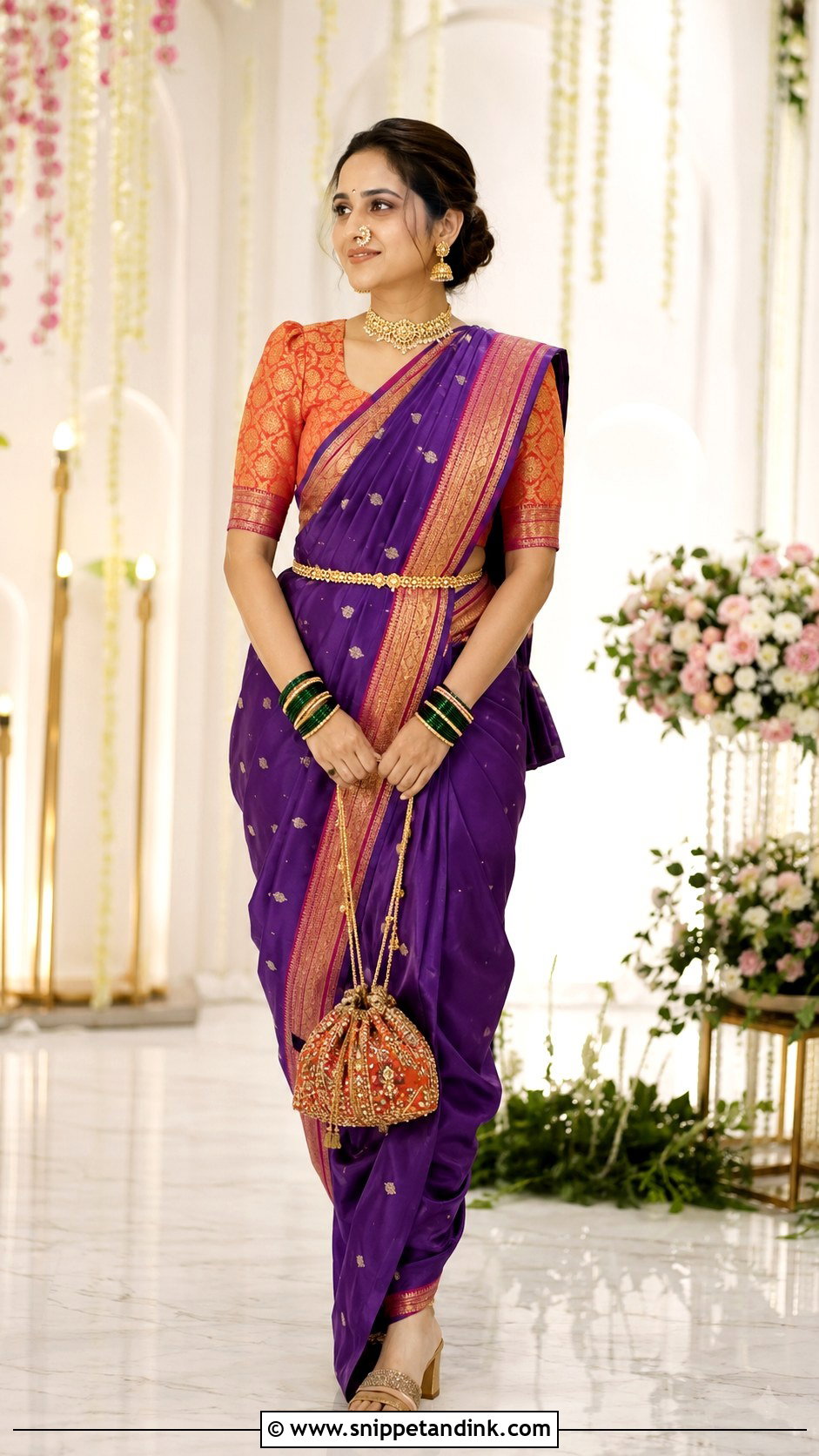
Stitched Nauvaris have earned their place. You get the nine-yard silhouette in a few minutes, which is a relief for bridesmaids, guests trying the drape for the first time, or anyone changing between several functions in one day. Pick jewel-toned silk with a contrasting brocade blouse. At the fitting, sit down and walk a few steps: the stitched pleats should lie flat, and the hem has to clear your shoes, since you can’t adjust length on the day the way a draper can. A small nath, thushi, jhumkas, green bangles and a simple waist belt are enough, with a braided ponytail or low bun. Cushioned gold sandals and a compact potli. If the border and pallu are already heavily woven, hold back on extra accessories.
13. Narayan Peth Saree Wedding Outfit
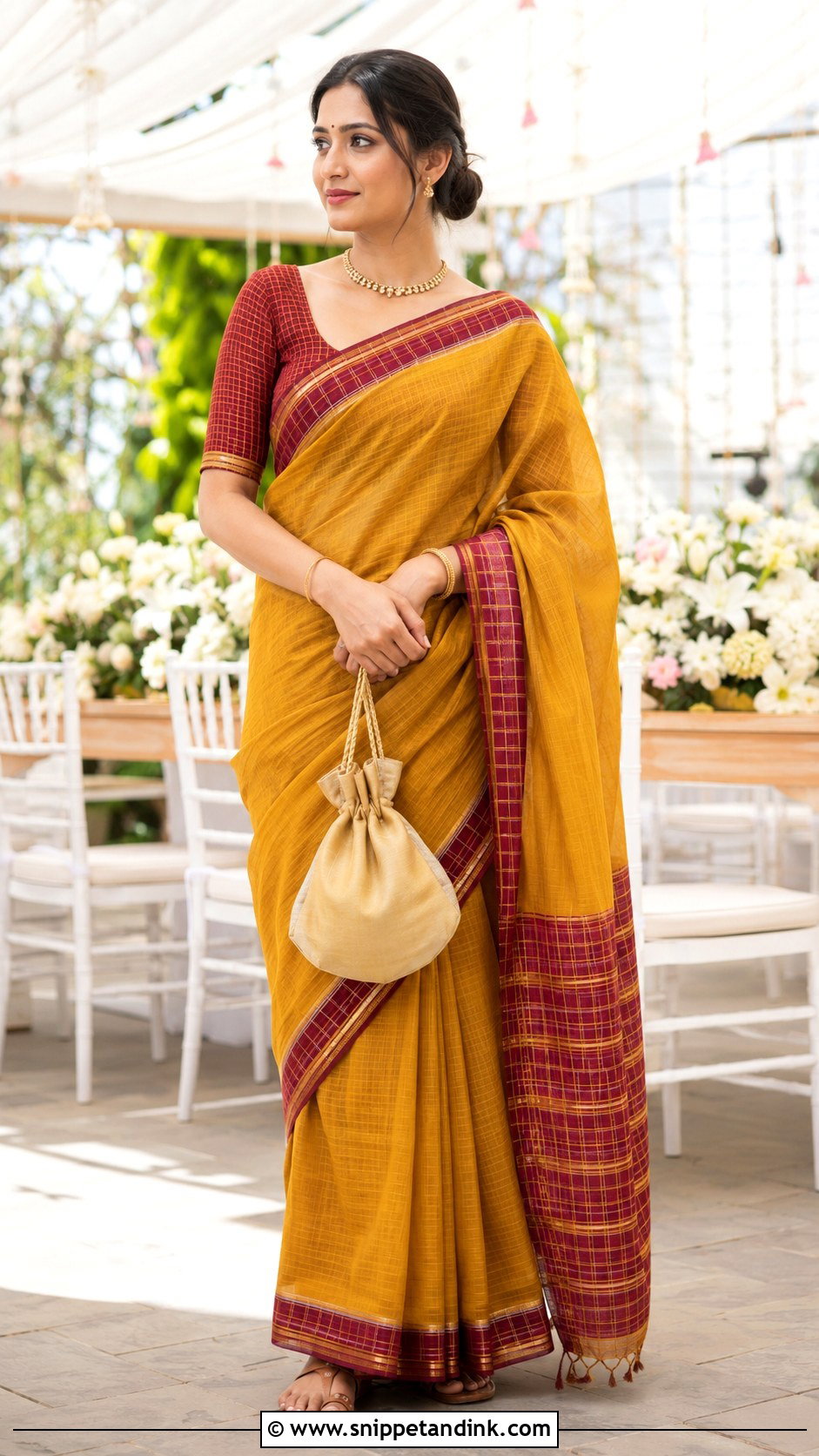
Narayan Peth is my usual suggestion for a guest who wants something light and unmistakably Maharashtrian. These cotton-silk sarees come in mustard, green, maroon, blue or purple with a contrasting checked border, and the trick is to match the blouse to the border rather than the body. A plain six-yard drape suits a morning ceremony, a small family function or a hot venue, because the cotton content breathes in a way pure silk won’t. Add a short thushi, small gold earrings, slim bangles and, if you like, a petite nath. A low bun, side braid or shoulder-length waves all work, with a small bindi. Kolhapuri sandals and a plain silk potli keep you comfortable and leave the richer silks to the bride.
14. Silk Saree With Khun Blouse
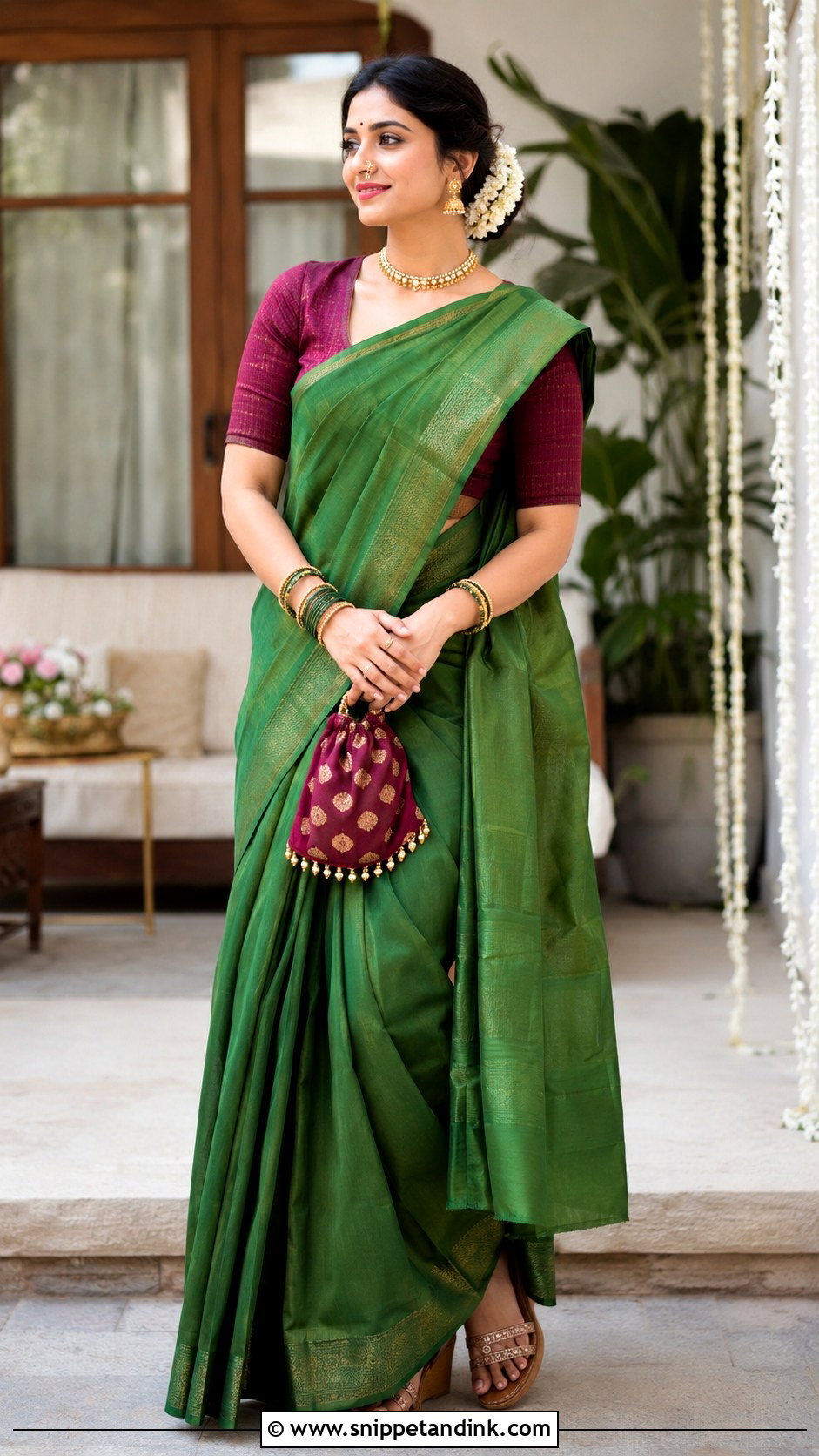
Khun is a small-patterned woven fabric from Karnataka and Maharashtra, and as a blouse it can carry a plain silk saree to a wedding on its own. Start with a solid or lightly bordered saree in mustard, rust, green, magenta or cream, and pair it with a contrasting Khun blouse with short or elbow sleeves. The weave gives texture without embroidery, which also means it is light and doesn’t scratch the way heavy zari blouses can. Style a classic six-yard drape and pin the pallu so it stays put when you bend to touch elders’ feet. A thushi, small nath, jhumkas and mixed gold-and-glass bangles go well, with a jasmine-trimmed bun. Kolhapuri wedges or metallic sandals and a matching potli suit sisters of the bride, guests and small pre-wedding ceremonies.
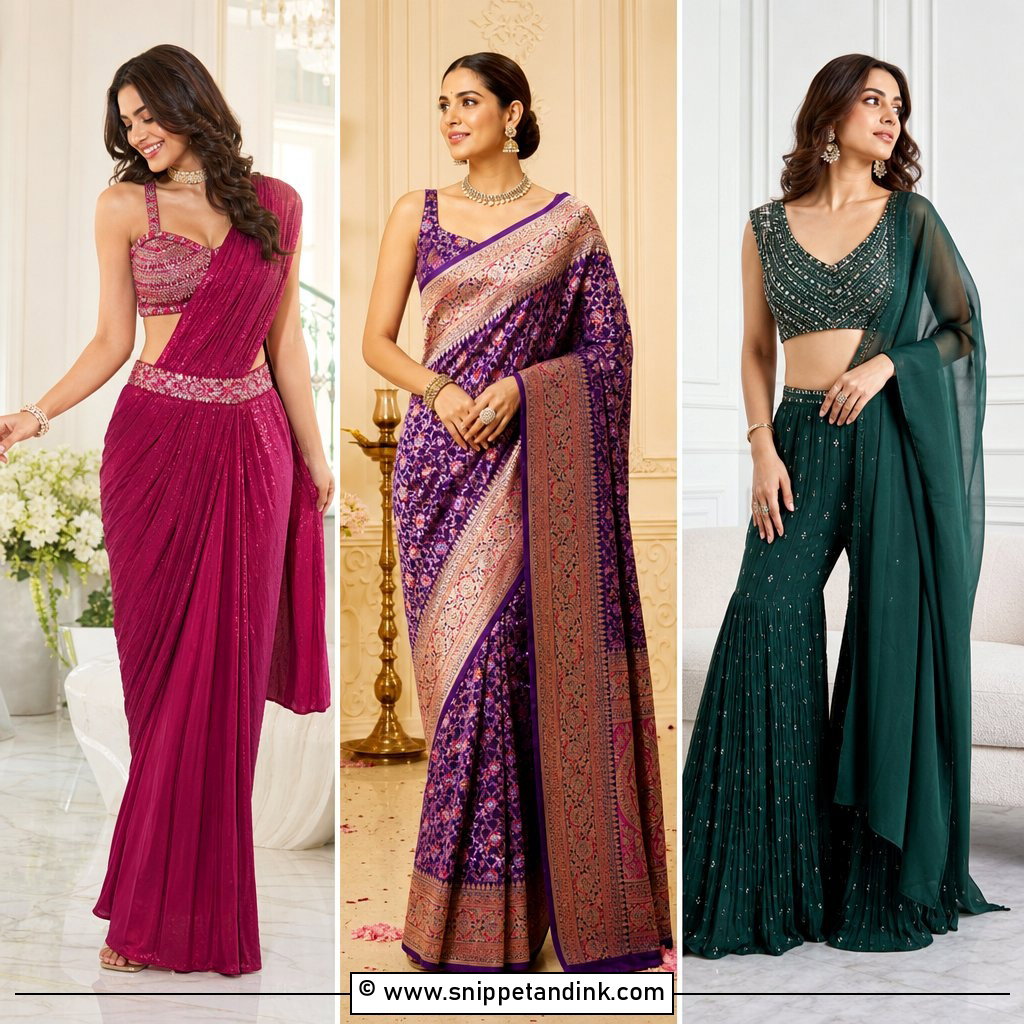
15. Banarasi Saree With Maharashtrian Jewelry
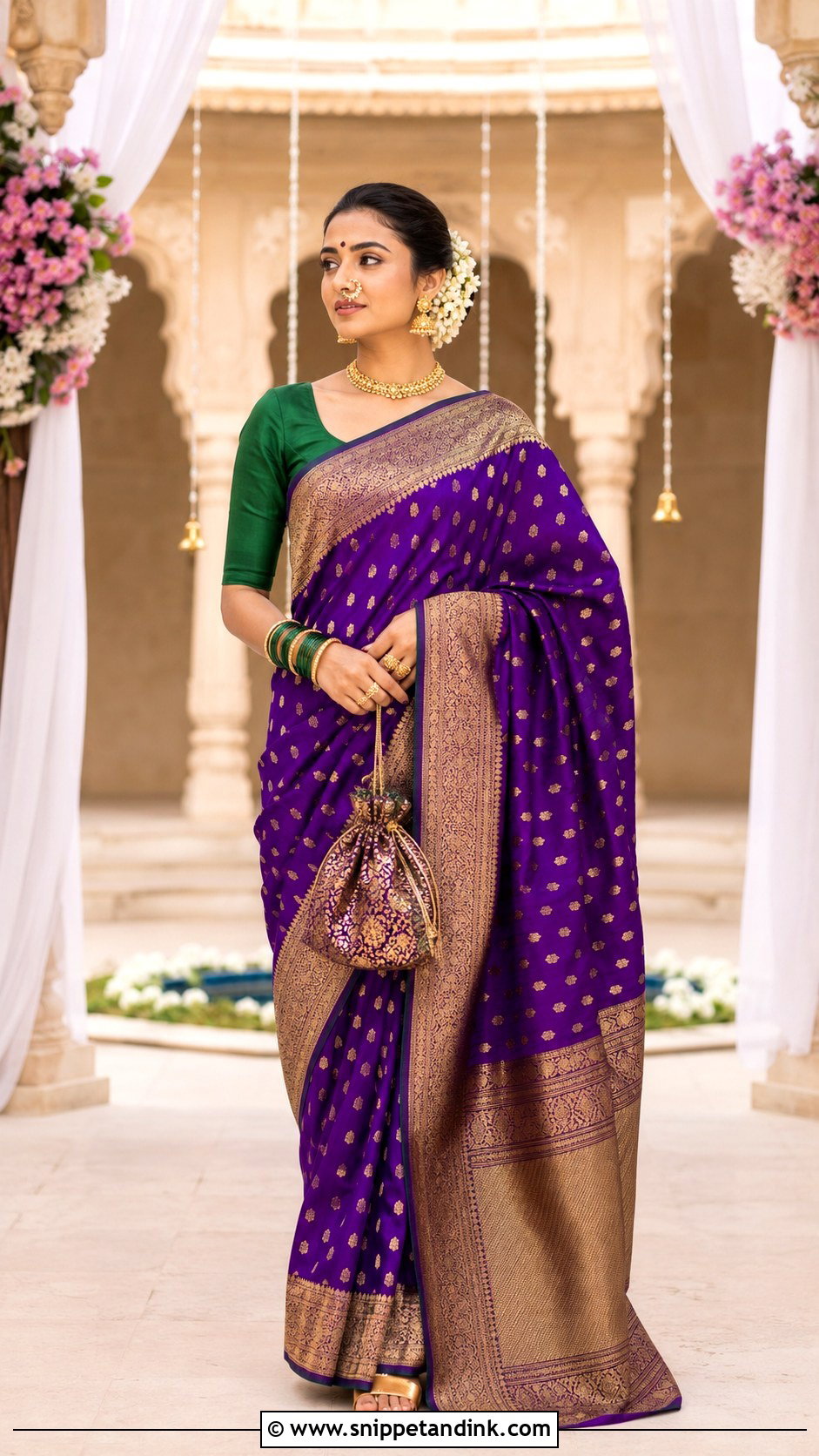
Plenty of guests own a Banarasi already, and it can sit comfortably at a Maharashtrian wedding when the styling is regional. Purple, red, green or navy silk with gold butis and an ornate border pairs best with a plain raw-silk blouse, since the weave is busy enough. Keep the six-yard drape structured and the pallu open. The nath, gold thushi, green bangles, crescent bindi and jhumkas bring in the local character, and a middle-parted bun with jasmine finishes it. One honest caution: a Banarasi is heavier and stiffer than most Paithanis, so if you’ll be standing at a long ceremony, pin the pleats securely at the waist. Gold block heels and a simple brocade potli complete a respectful look.
16. Silk Anarkali With Maharashtrian Jewelry
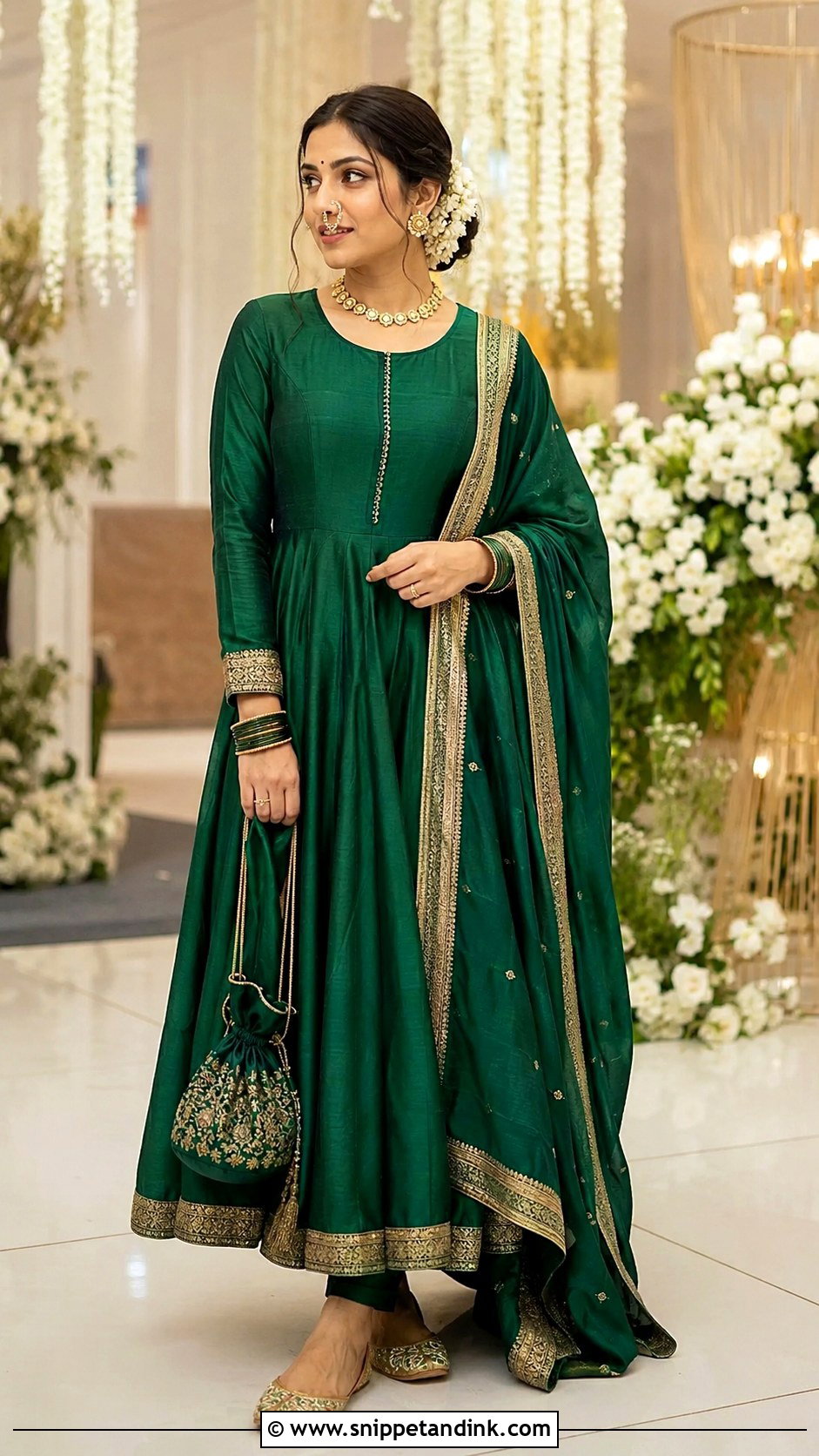
Not everyone wants to manage a saree for eight hours, and an ankle-length silk Anarkali gives full coverage with easy movement. Choose emerald, purple, saffron or deep pink with a fitted bodice and a controlled flare; a very full flare looks bridal and gets in the way at a crowded mandap. Drape the gold-bordered dupatta over one shoulder instead of wrapping it around you. A small nath, thushi, gold earrings, green bangles and a crescent bindi bring the Maharashtrian character, with a low bun and a few fresh flowers. Pointed embroidered flats or low block heels and a potli matched to the dupatta border suit guests and younger relatives who prefer a dress shape.
17. Sharara Set With Paithani Dupatta
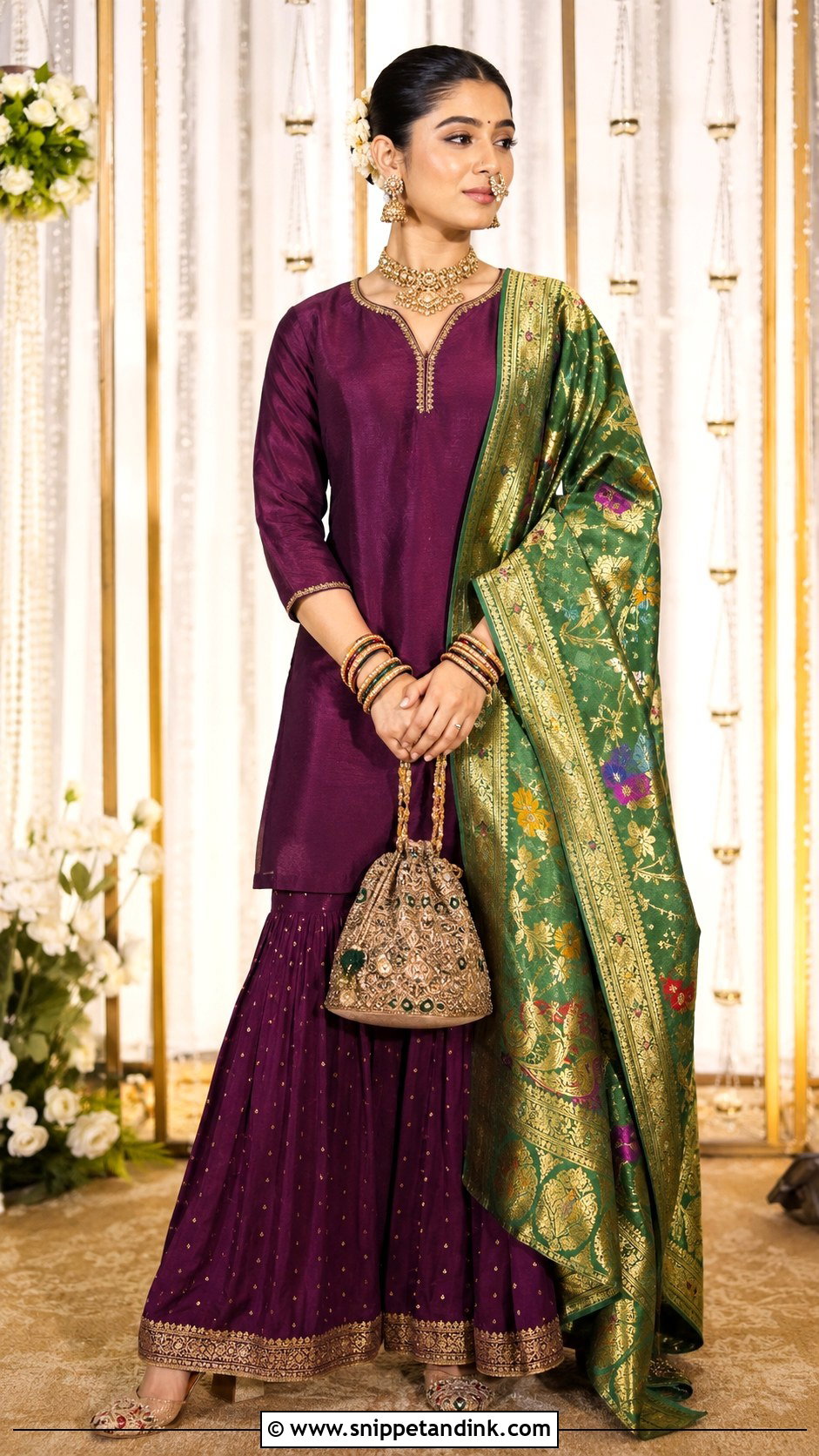
A solid silk sharara set under a Paithani dupatta is a fusion I like for the sangeet, engagement or reception. Choose an emerald, plum, maroon or navy kurta with matching wide-leg pants, and keep the base plain so the peacock motifs and gold border of the dupatta carry the outfit. Drape it over one shoulder and let the other end fall behind the arm. A real Paithani dupatta has weight, so a brooch pin on the blouse shoulder stops it sliding every time you dance. Add a gold choker, small nath, jhumkas and stacked bangles, with a sleek ponytail or low bun. Embroidered block heels and a structured potli finish an outfit you can move freely in.
18. Saree Gown With Maharashtrian Accessories
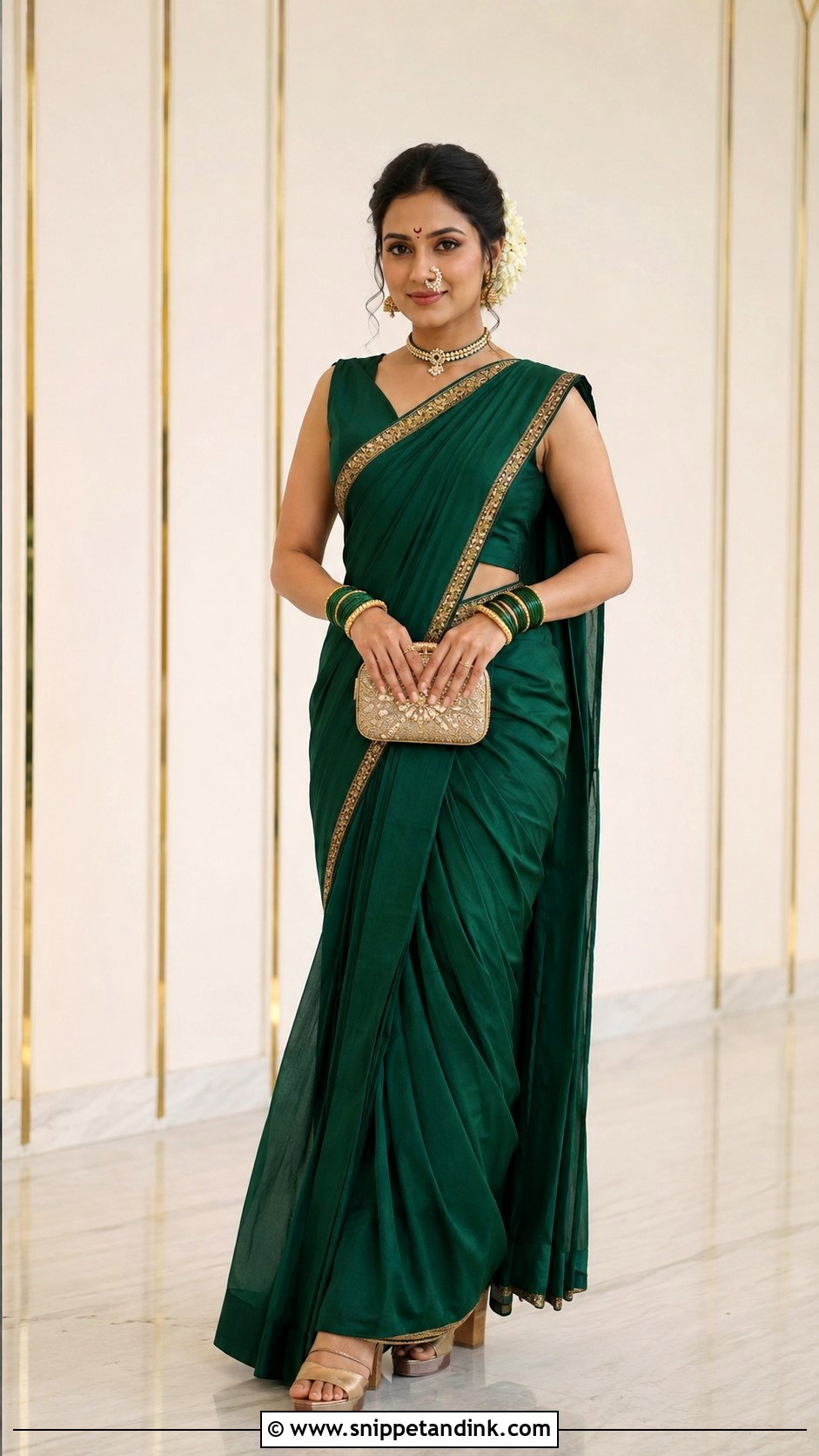
A saree gown is the easiest outfit on this list to pack and the quickest to get into, which is why I suggest it for guests flying in for the wedding. Choose green, burgundy, purple or blue with stitched pleats and a gold-bordered shoulder drape, fitted at the waist without pulling when you sit. Ready-made gowns often need the drape tacked down at the shoulder; check it before you travel, not in the hotel room. Add a pearl nath, thushi, green bangles, crescent bindi and gold earrings. A floral bun suits a formal ceremony and sleek waves suit a reception. Metallic block heels and a small embroidered clutch will last the evening.
19. Pastel Paithani Reception Outfit
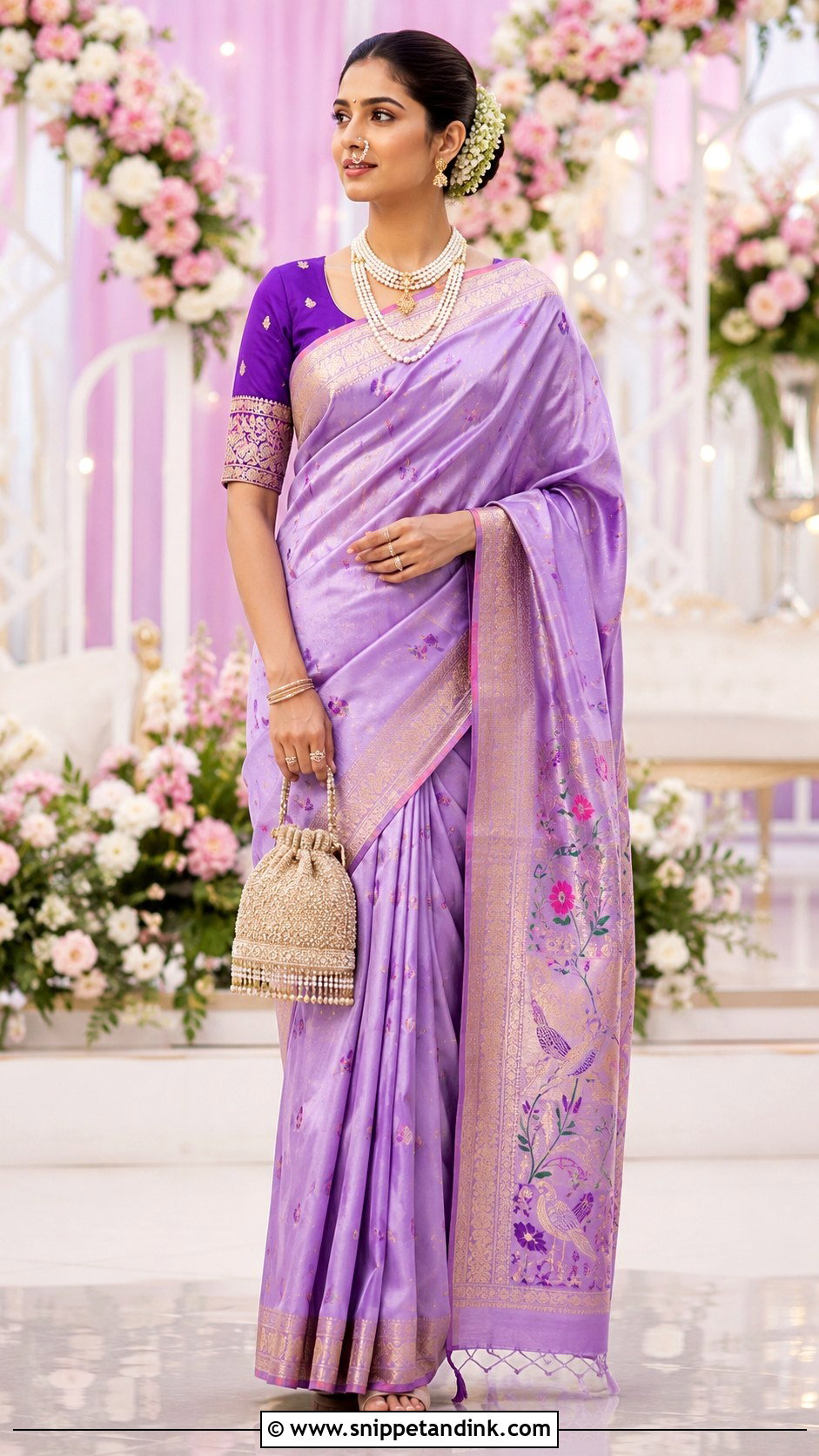
Pastel Paithani in lavender, powder blue, blush, mint or pale yellow is a softer reception choice, and the gold border looks almost luminous on these lighter grounds. Take a deeper shade from the pallu for a fitted blouse so the outfit doesn’t fade into the backdrop in photos. A clean six-yard drape keeps the pallu visible. Pearls suit pastels better than heavy gold: a pearl-detailed nath, a layered pearl necklace, delicate earrings and fewer bangles. A low textured bun with white flowers, luminous makeup, defined eyeliner and a rose lip complete the face. Gold or neutral heels and a beaded potli work equally well for a bride and for close family.
20. Cotton Silk Saree Wedding Guest Outfit
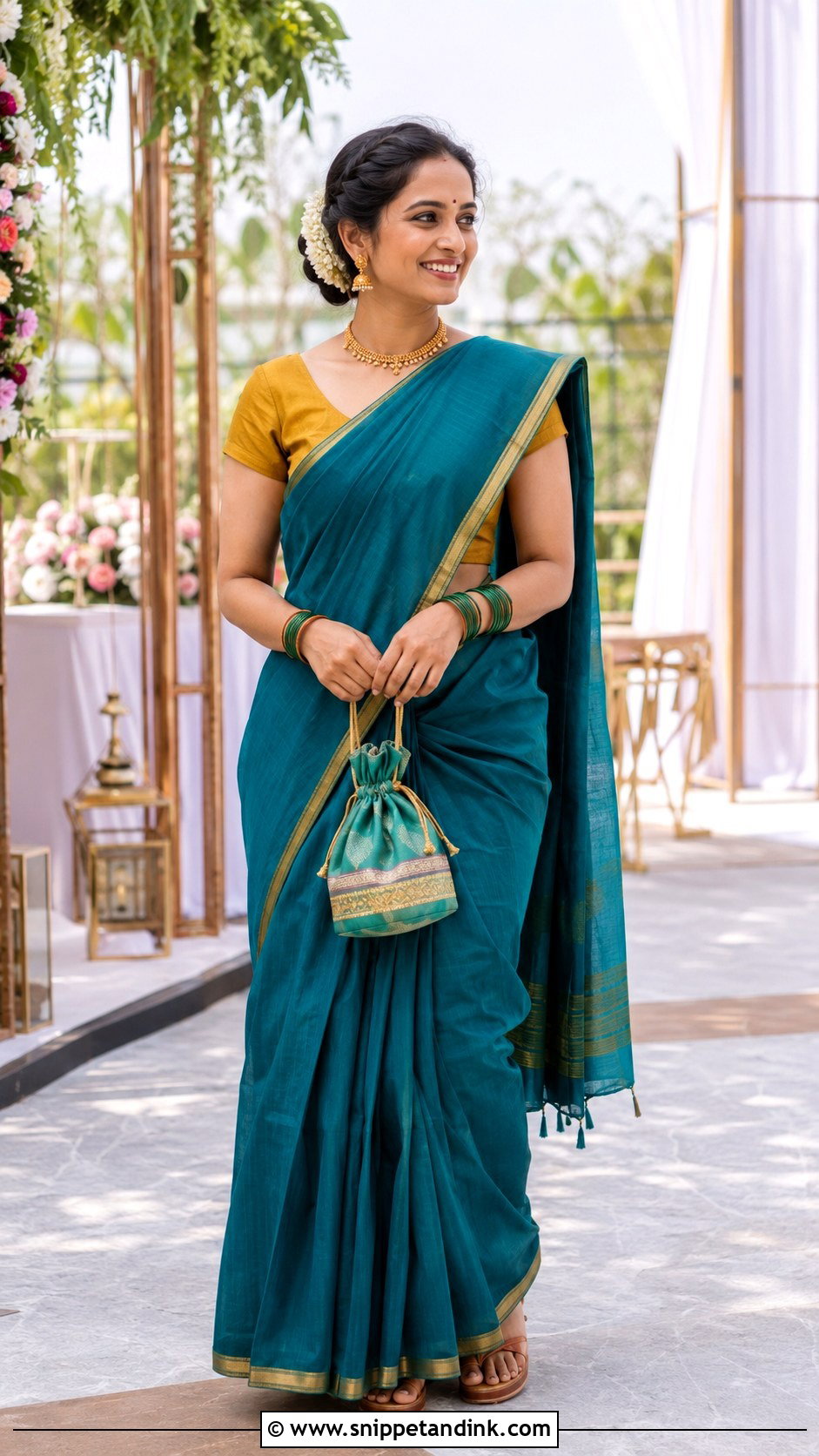
For a hot daytime wedding, cotton silk is the kindest fabric you can wear. Pick teal, mustard, coral or violet with a narrow gold border and a contrasting short-sleeved blouse, and pin a neat six-yard drape so you can move freely. Cotton silk creases more than pure silk, so steam it the night before and fold the pleats in the morning instead of ironing them flat. Keep the jewelry light: a small thushi, studs or jhumkas, a few green bangles and a petite nath if you like. A braided bun or a sleek low ponytail with a simple bindi, Kolhapuri sandals and a fabric potli are all a guest needs to look thoughtful without the weight of bridal silk.
Caring for a Paithani After the Wedding
A real Paithani is often passed down, and zari is the part that fails first if it is stored badly. Here is what I tell every client who takes one home.
- Air it on a hanger in the shade for a day before putting it away, so sweat and flower moisture dry out.
- Dry clean only, and point out any turmeric or kumkum marks so the cleaner treats them before they set.
- Wrap it in plain muslin or soft cotton. Plastic traps moisture and dulls the metal thread.
- Refold it along different lines every few months. Zari cracks when it sits on the same crease for years.
- Spray perfume on your skin, never on the saree. Alcohol and oils tarnish zari and stain silk.
Stored this way, a good Paithani can be worn by the next bride in the family and still look the way it did on your wedding morning.
Matching the Drape to Your Role at a Maharashtrian Wedding
The right Maharashtrian wedding outfit is the one that respects the tradition and still lets you sit, walk and eat through a long day. Nauvari and Paithani carry the bridal looks; Shalu, lehengas, Anarkalis, shararas and cotton silk give guests room to choose. Let your role set the jewelry: brides wear the mundavalya, layered necklaces and a statement nath, while guests do better with fewer pieces. Before you settle on anything, sit down in it, check every pin and make sure the blouse lets you lift your arms.
You'll Like These Ideas:



Leave a Reply