
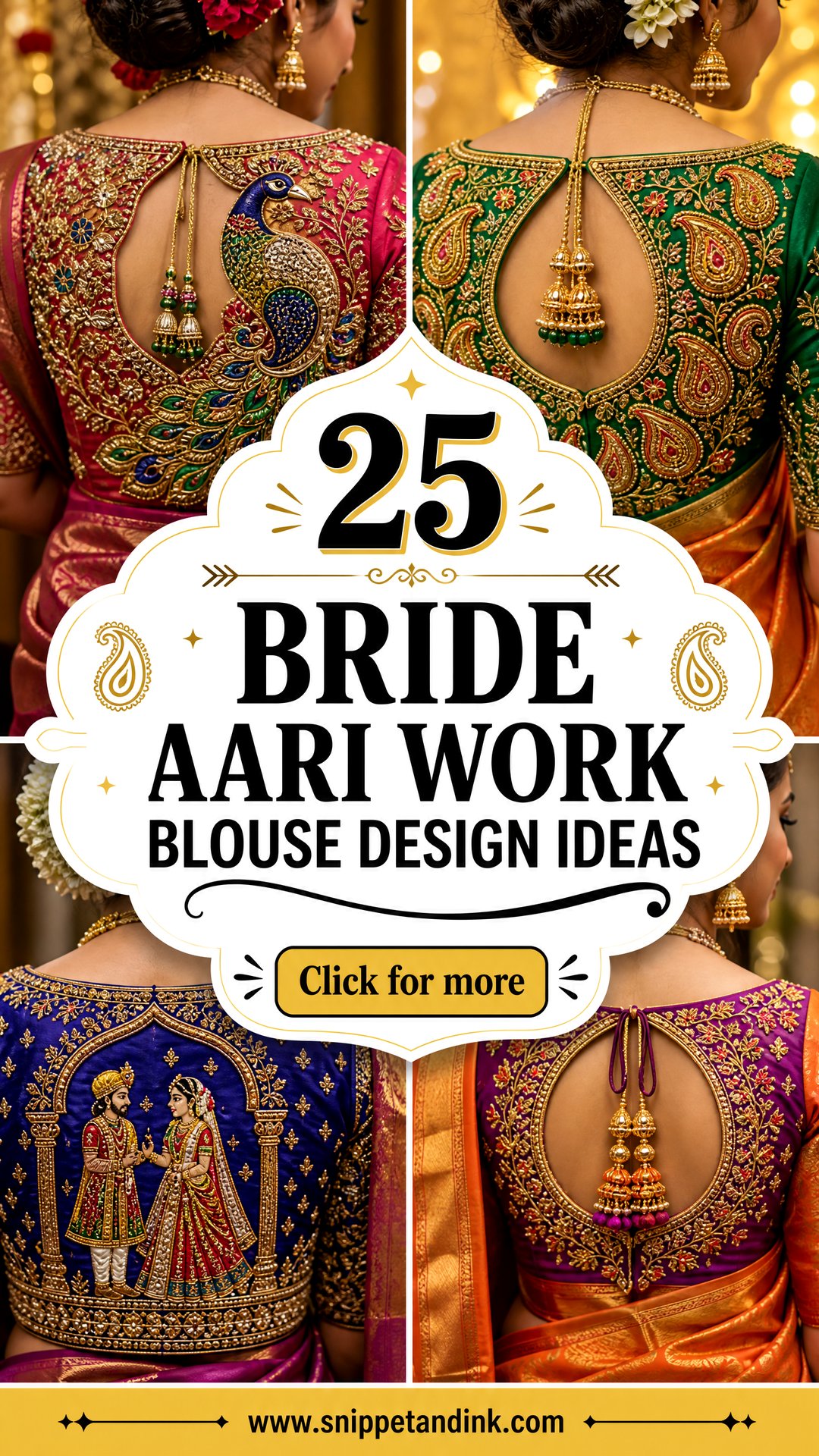
A bridal blouse with Aari embroidery is often the piece I spend longest planning with a bride, longer than the saree itself. Aari work, also called maggam work in many bridal boutiques, is done with a fine hooked needle on fabric stretched over a frame, which is why it can carry zari, beads, stones, sequins, mirrors and cutwork in such close detail. The right blouse can lift a plain silk saree, and a well-placed one calms down a very heavy one. Below are 25 designs, from peacock sleeves and temple borders to royal couple backs, with notes on where each one works and where it gets uncomfortable.
Why Your Measurements Have to Be Final Before the Needle Starts
Aari work is usually done on the cut blouse panels before they’re stitched together. The artisan marks the outline of each piece, traces the design onto it, stretches it on a wooden frame and works the chain stitch with the hooked needle from the top. That order matters to you in two ways.
First, the embroidery is placed to your measurements. If you lose or gain weight noticeably after the work is done, the tailor can only adjust within the plain margin at the seams, and moving a motif means unpicking it. Give final measurements, or a blouse that fits you well, and tell the tailor if you’re planning a fitness push before the wedding.
Second, it takes time. A light border blouse can be done in days, but a heavily worked bridal back with figures or zardosi can take a couple of weeks of hand work on its own, and boutiques get crowded in wedding season. I’d place the order around two months ahead and plan at least one trial once the embroidery is finished.
Notes to give the artisan
- Leave the side seams, underarm and inner elbow plain or flat, so nothing hard presses into skin.
- Keep about a finger’s width of unworked fabric along every seam line for future alterations.
- Say whether you want hooks at the front, a back zip or dori ties; heavy back designs sit better with front hooks.
- Confirm the lining fabric and whether you want cups or padding built in.
1. Bridal Peacock Aari Work Blouse Design
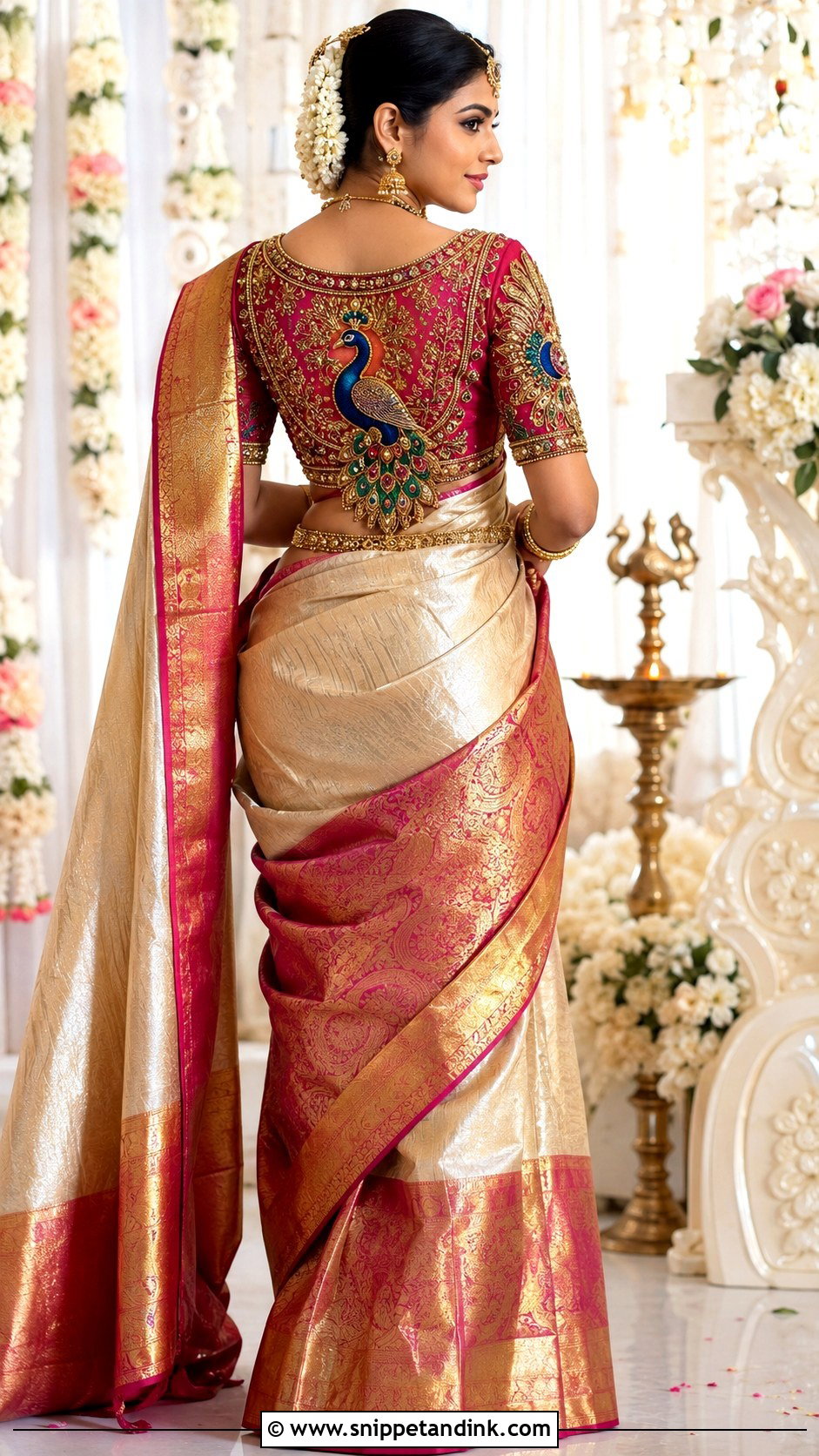
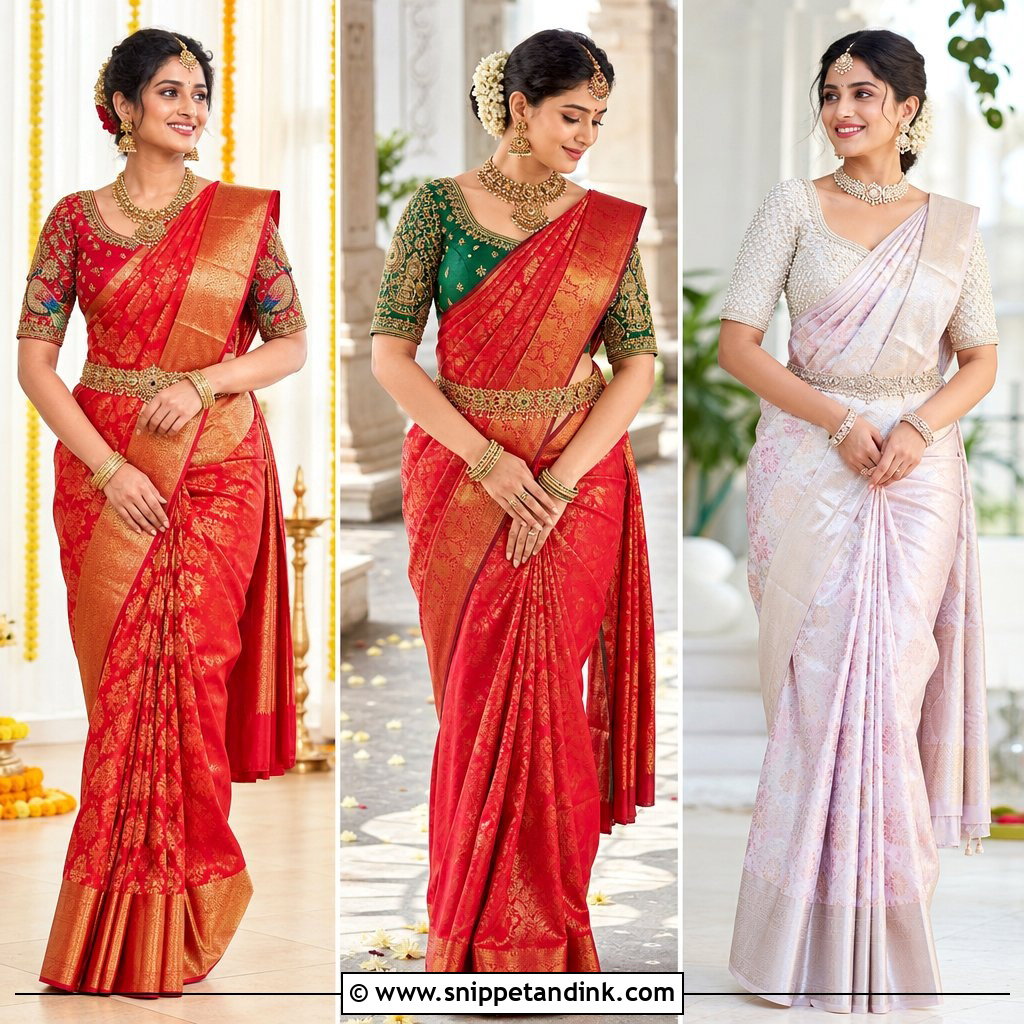
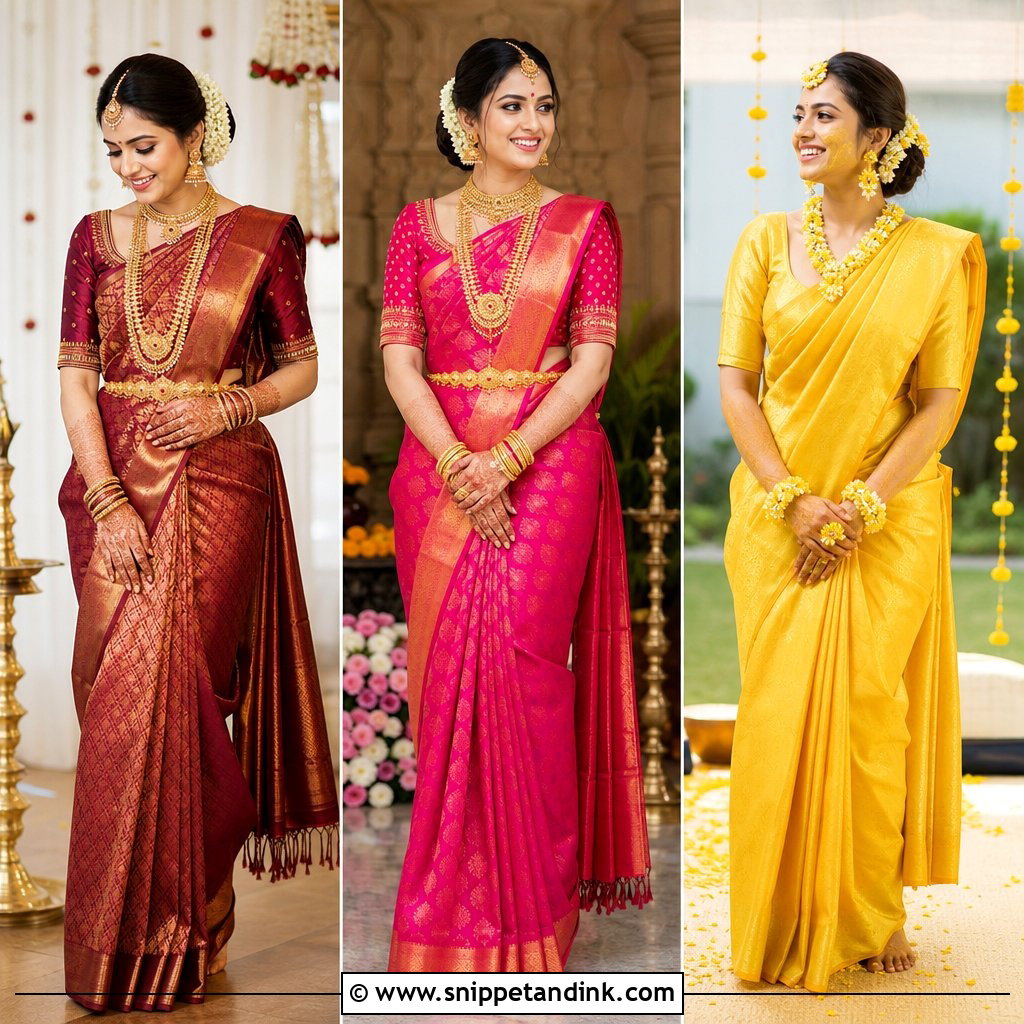
Peacocks are the motif I’m asked for most with South Indian silk sarees in red, green, royal blue or magenta. The feathers suit an elbow sleeve or a back neck, and they read best when the body is outlined in zari and the eyes picked out in coloured silk thread with a few stones. Match the blouse to the saree border, or go for a clear contrast; halfway shades look like a mistake. With a Kanjeevaram, temple jewellery and a waist belt, keep the front neckline modest so the necklace doesn’t sit on top of the embroidery and hide it.
2. Bridal Lotus Aari Work Blouse Design
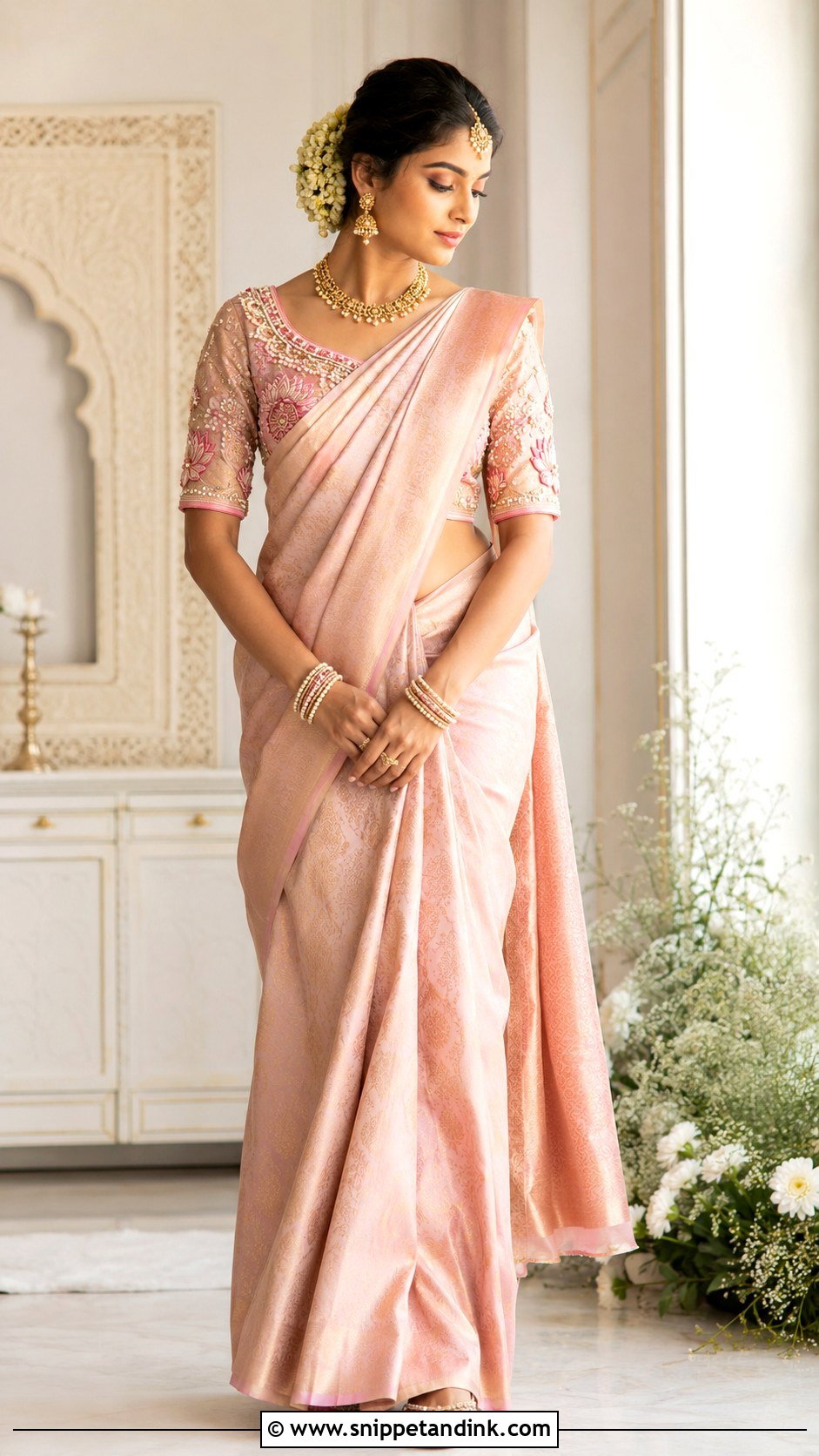
Lotus motifs are gentler than peacocks, and they suit pastel silk, cream and gold, or a peach lehenga. They can run along a sleeve border, frame the back neck or be scattered as small buttas. If you’re worried about weight, ask for threadwork with pearl beads and a few sequins rather than stones; a lightly worked lotus blouse is noticeably cooler to wear through a long muhurtham. Pearl jewellery and jasmine in the hair keep the softer mood.
3. Bridal Elephant Aari Work Blouse Design
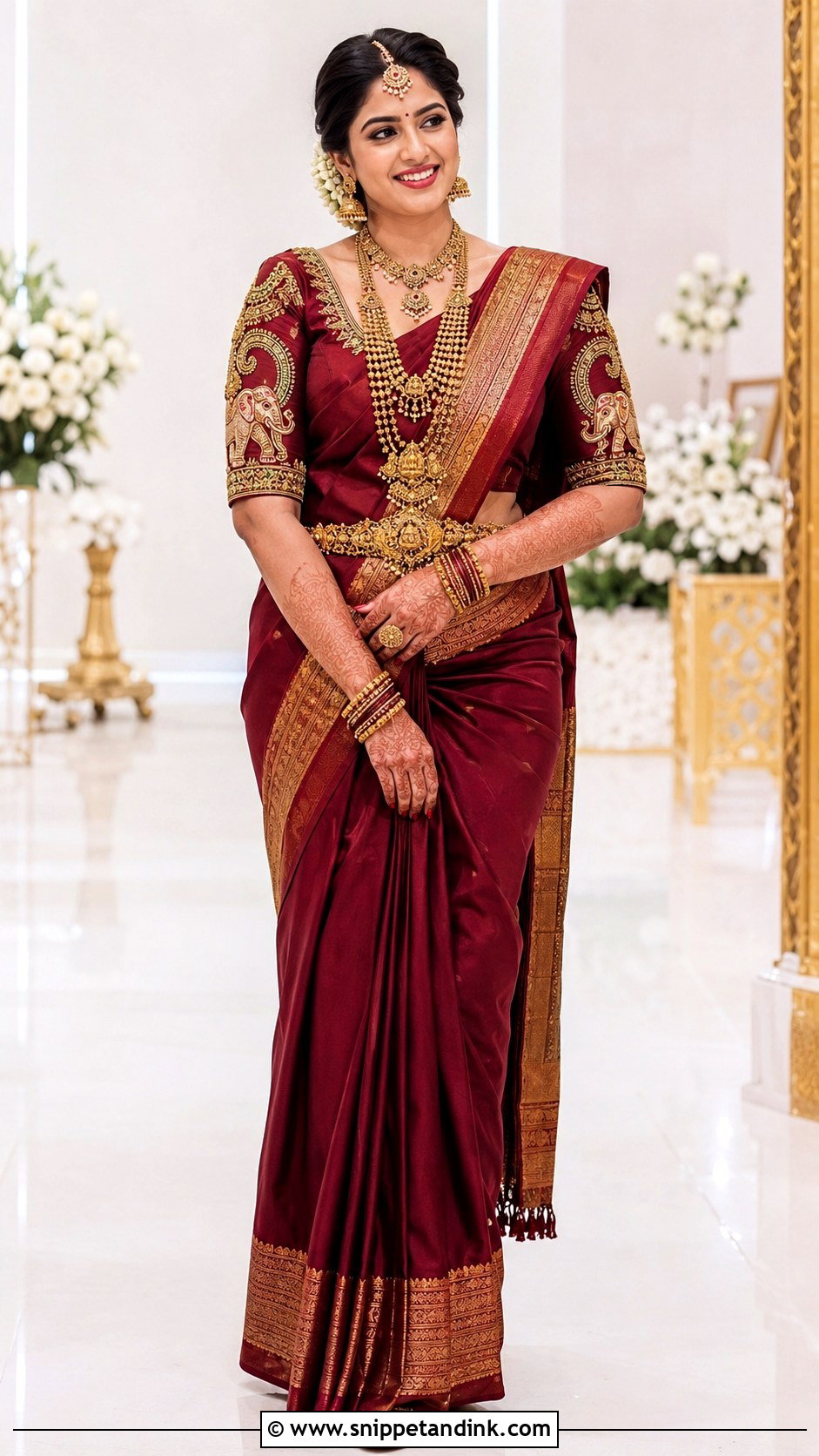
A bridal elephant Aari work blouse has a ceremonial, almost royal feel. Elephants need space, so I place them on the sleeves, often between a temple border and small vines, rather than squeezing them onto a front neckline. Gold zari with antique beads looks rich against maroon, mustard, bottle green or deep purple silk. If your saree has a broad border, keep the front plain and let the sleeves carry the motif, because two busy areas meeting at the shoulder fight each other.
4. Bridal Temple Border Aari Work Blouse Design
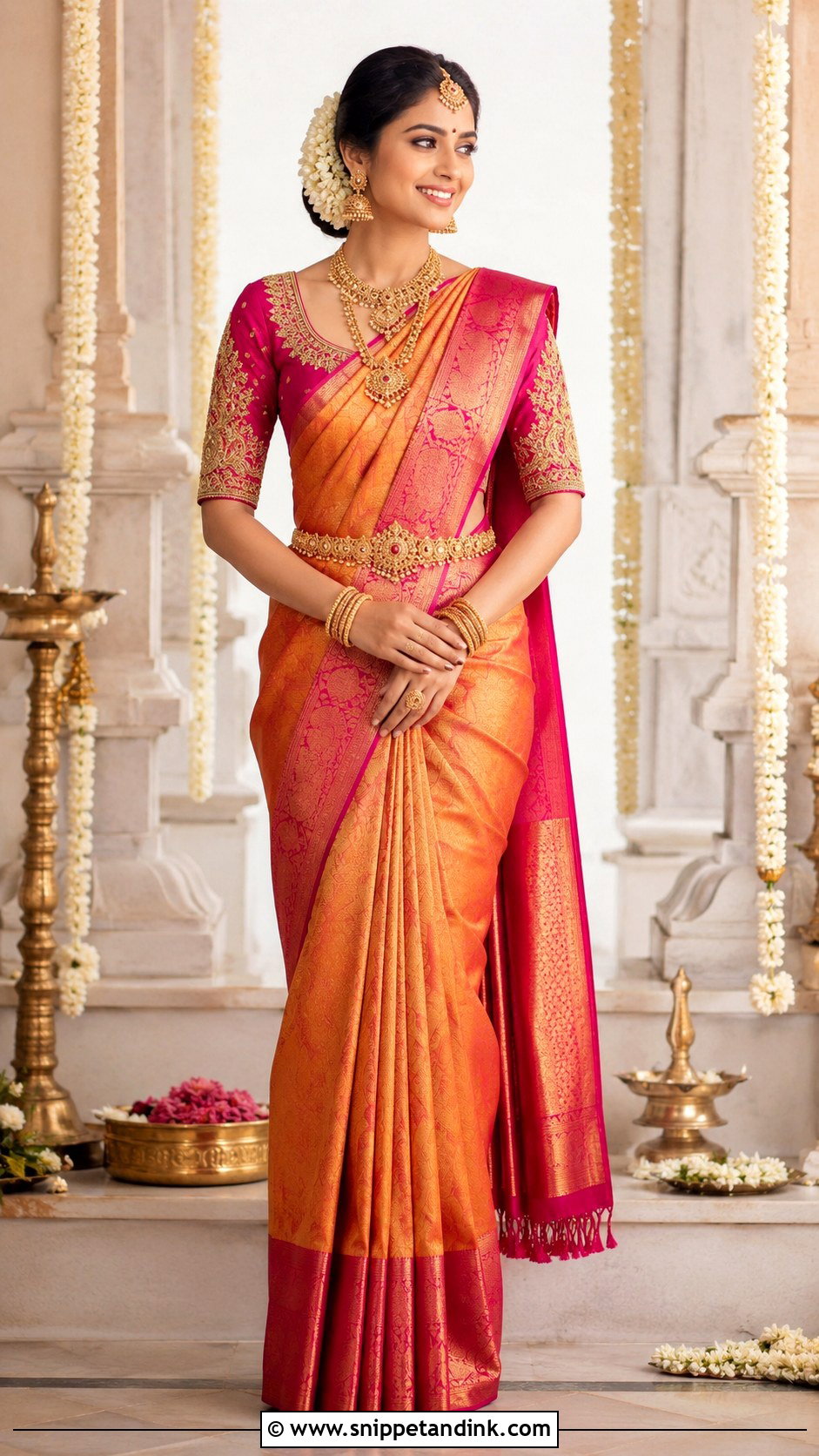
The temple border is geometric, which makes it one of the tidiest frames you can put on a blouse. It can run along the sleeve edge, the back neck and the waist hem. Gold zari is the usual pick, but antique thread with red beads adds depth on a dull-gold saree. The thing I check with a temple border is that the artisan matches the pattern repeat at the side seams; a broken triangle at the waist is very visible when the bride stands sideways for photos. Pair it with temple jewellery, jhumkas and a braided hairstyle.
5. Bridal Zardosi Aari Work Blouse Design
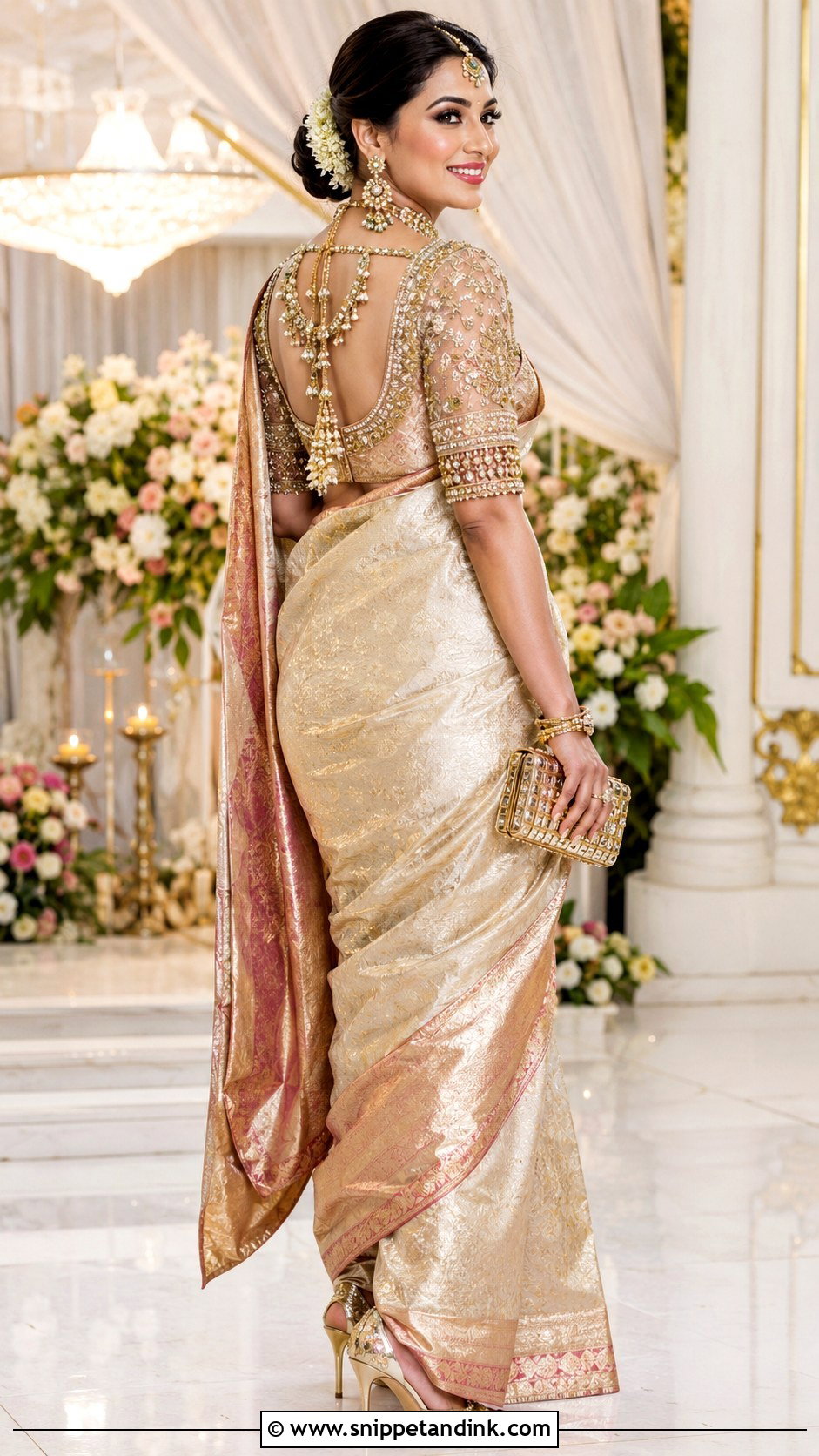
Zardosi brings raised metallic work, coiled wire and heavy beads onto the Aari base, and it’s the richest finish here. It needs a fabric that can hold it, so raw silk, velvet or brocade, with a firm lining. If your saree is simple, put zardosi on the sleeves, neckline and back. If the saree is already heavy, limit it to the borders. Zardosi is stiff, so I’d keep it away from the underarm and the inner elbow, where it rubs during hours of rituals. Kundan or layered gold jewellery is enough with this; it needs little else.
6. Bridal Mirror Aari Work Blouse Design
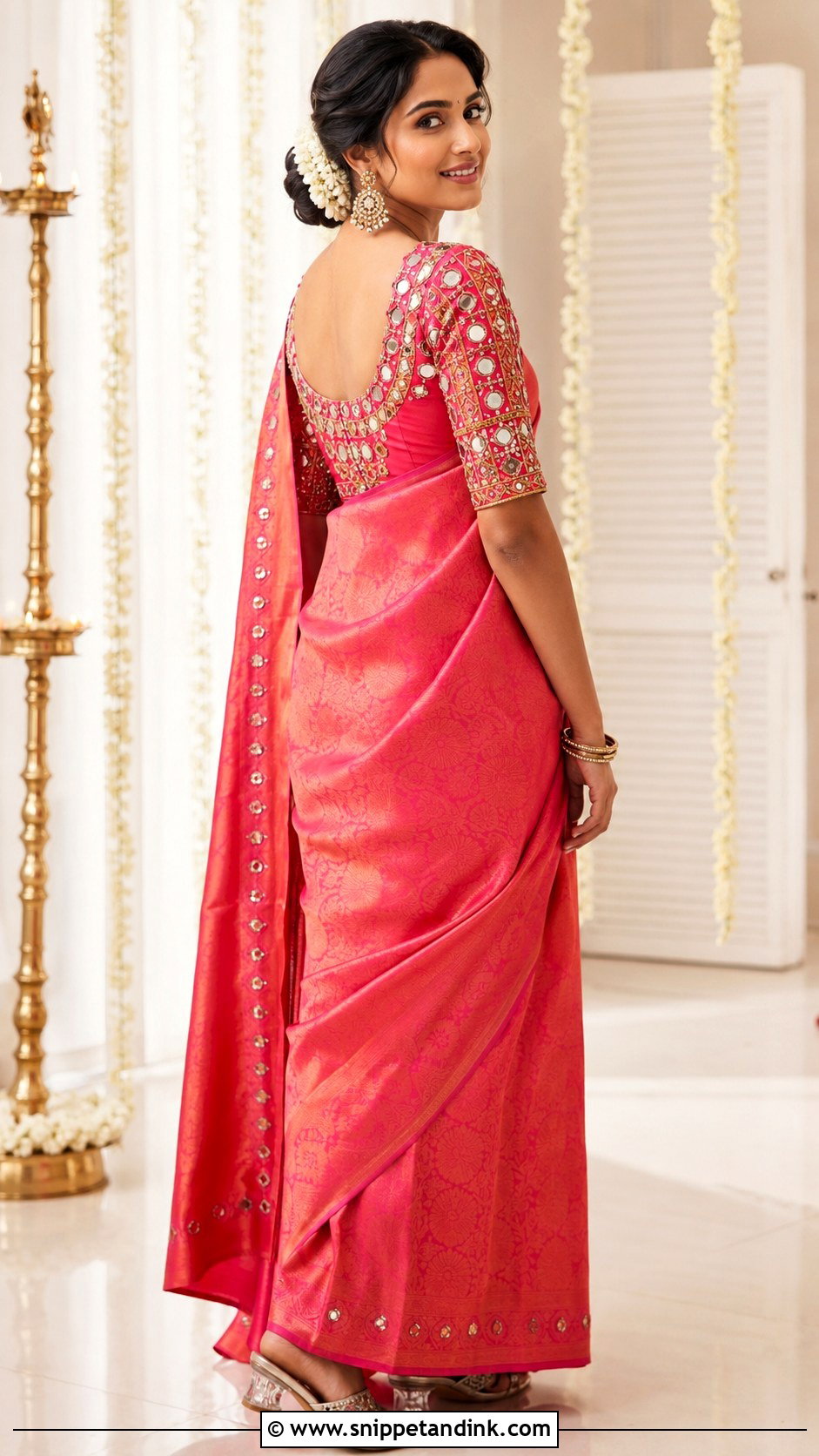
Mirror work gives shine without much weight. Small round, square or teardrop mirrors framed in threadwork and sequins catch the light every time you move. I tend to suggest this for the mehndi, sangeet or an engagement rather than the main ceremony, since it reads playful. It suits georgette and lighter silk in pink, yellow, teal or orange. Keep mirrors a little away from seams; when the tailor stitches the panels together, a mirror sitting right on the seam line either breaks or forces a bulky join.
7. Bridal Stone Aari Work Blouse Design
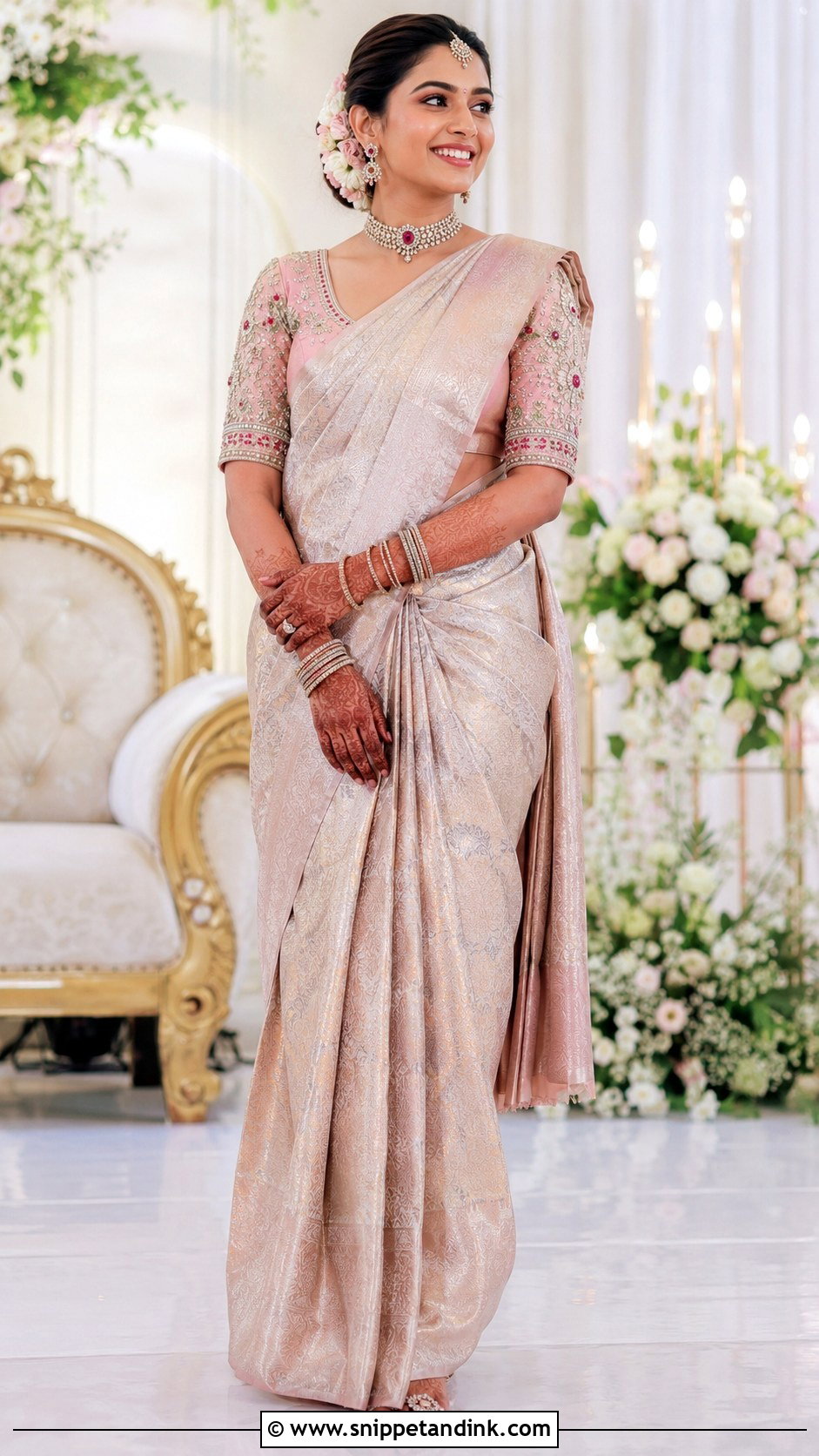
Stones give a polished, glamorous finish, and colour changes the mood: clear stones for a reception, red, green and gold for the ceremony. They can sit around floral motifs, peacock feathers, sleeve borders or the back neck. Where I’m strict is placement. Large stones under the arm or along a fitted shoulder seam press into the skin within an hour, so ask for flat sequins or thread in those zones. Pair the blouse with a silk or designer saree, a decorated bun and footwear that picks up the same stone colour.
8. Bridal Pearl Aari Work Blouse Design
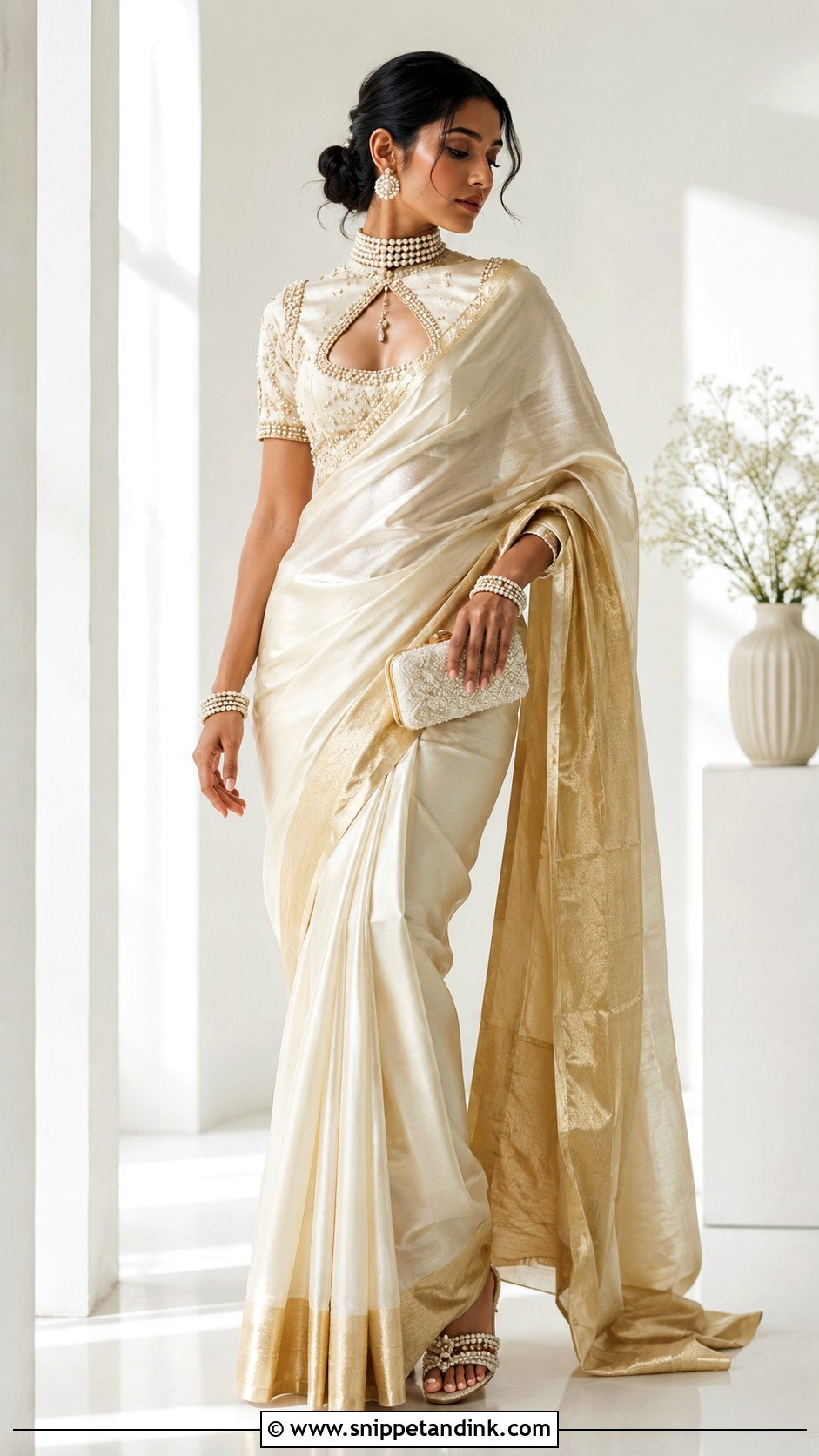
A pearl Aari work blouse suits a bride who prefers a quiet glow to glitter. Pearls trace the neckline, sleeve border, floral vines or a back cutout, and they look at home with ivory, blush, pastel green, lavender, champagne and gold sarees. Ask whether the pearls are glass or plastic; good glass pearls hold their lustre after dry cleaning, while cheaper coated ones can peel. A deep U back, a boat neck or elbow sleeves all work, and a pearl choker ties it together for close-up photos.
9. Bridal Floral Aari Work Blouse Design
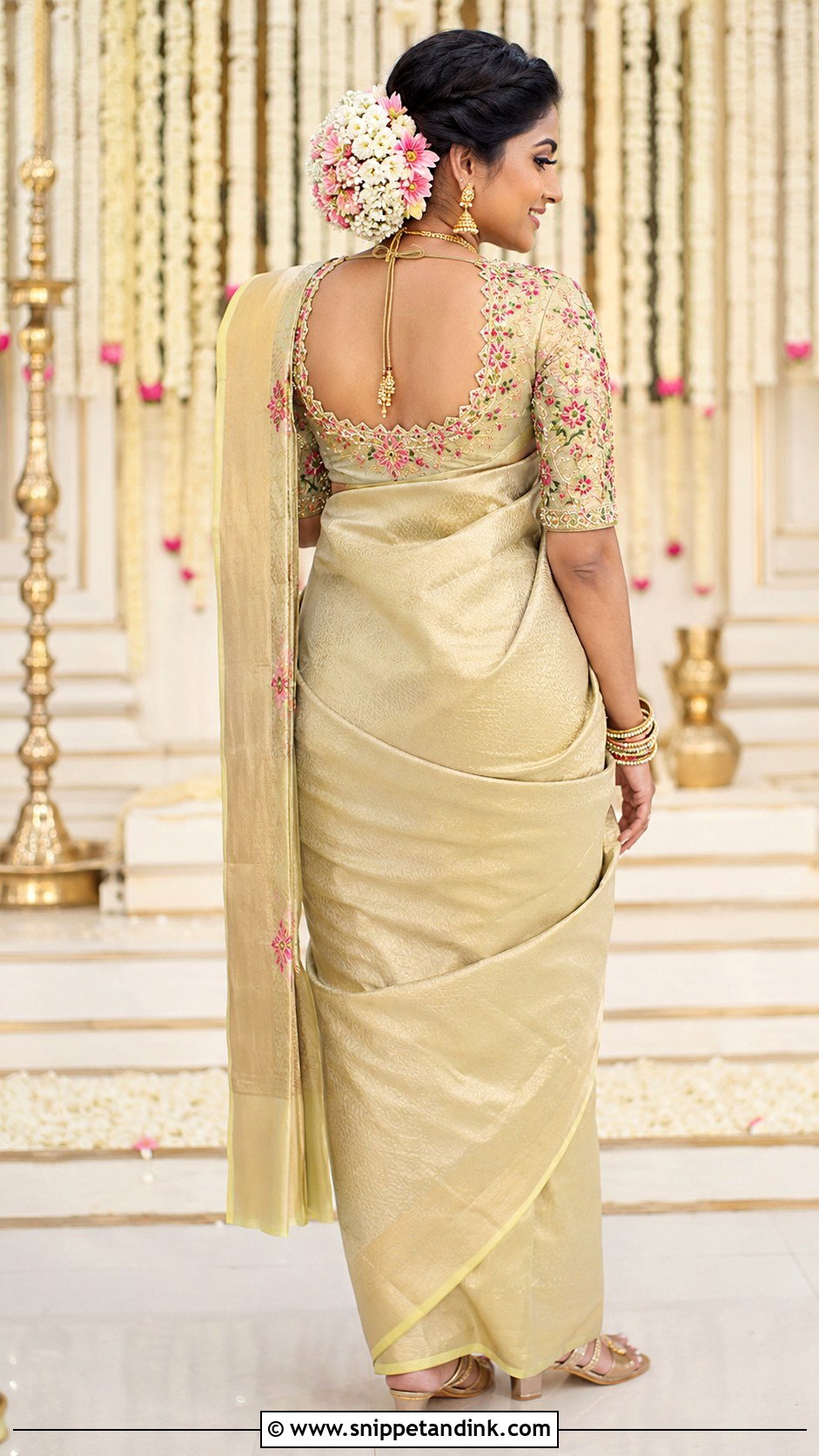
Florals are the easiest Aari design to make your own. You can have tiny scattered flowers, heavy sleeve blooms, vine borders or one large flower on the back, coloured to the saree border or your jewellery stones. Density decides the mood: sparse thread flowers feel fresh, while closely packed ones look grand. Threadwork petals with pearl centres and a few sequins are a good middle ground. Bring the saree to the design meeting so the artisan can match thread colours in person, not from a phone photo.
10. Bridal Mango Motif Aari Work Blouse Design
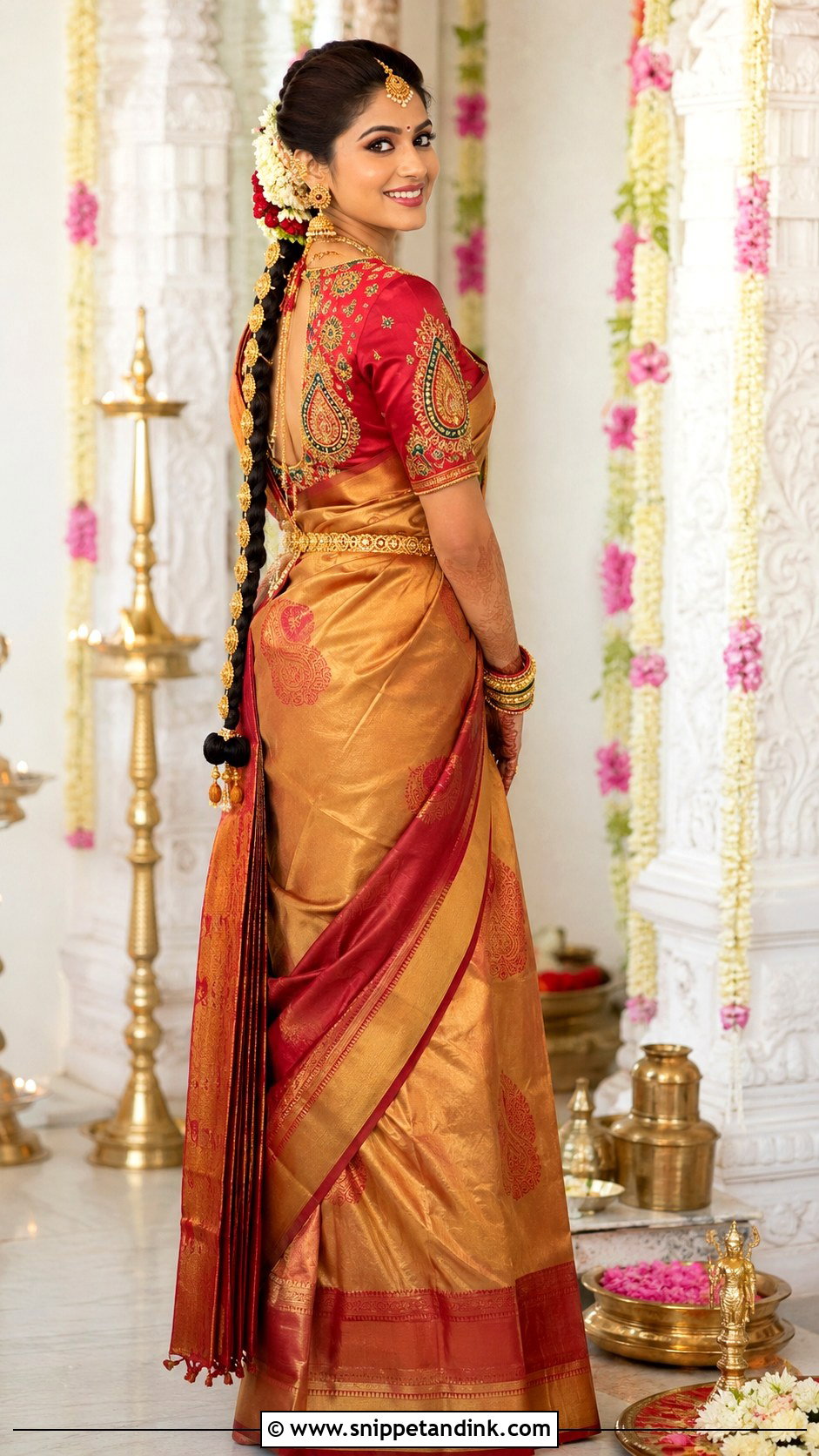
The mango motif, or paisley, is about as traditional as Aari work gets. A large paisley can fill the back, trail down a sleeve or run as a border around the neck. Gold zari with red thread and green beads is the classic combination for Kanjeevaram and Banarasi silk. For something a little more current, I suggest smaller paisleys spaced evenly across the blouse; one huge motif can dominate and make a petite bride’s back look wider than it is. Temple jewellery, glass bangles and a long braid finish it.
11. Bridal Royal Couple Aari Work Blouse Design
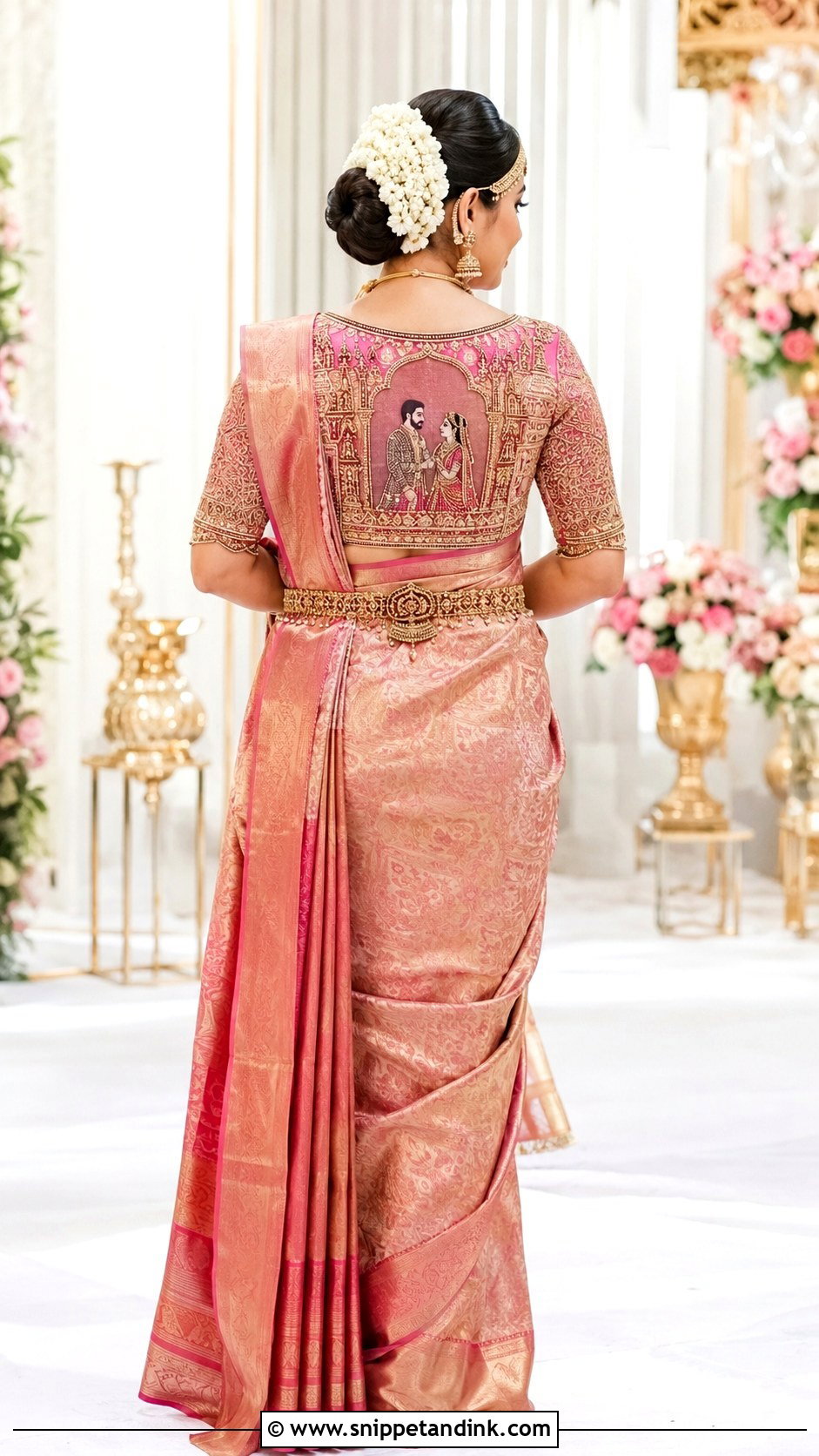
Royal couple designs tell a story: a bride and groom, a palace scene or a wedding procession, usually across the back. They need a broad canvas, so a boat back, wide back panel or deep U works, while a narrow keyhole back doesn’t. Faces are the hardest part to embroider, so ask to see the artisan’s previous figure work before committing. Keep the sleeves to small borders or vines. Remember the pallu and your hair can hide the back, so plan a bun and a drape that leave it on view for the back portraits.
12. Bridal Radha Krishna Aari Work Blouse Design
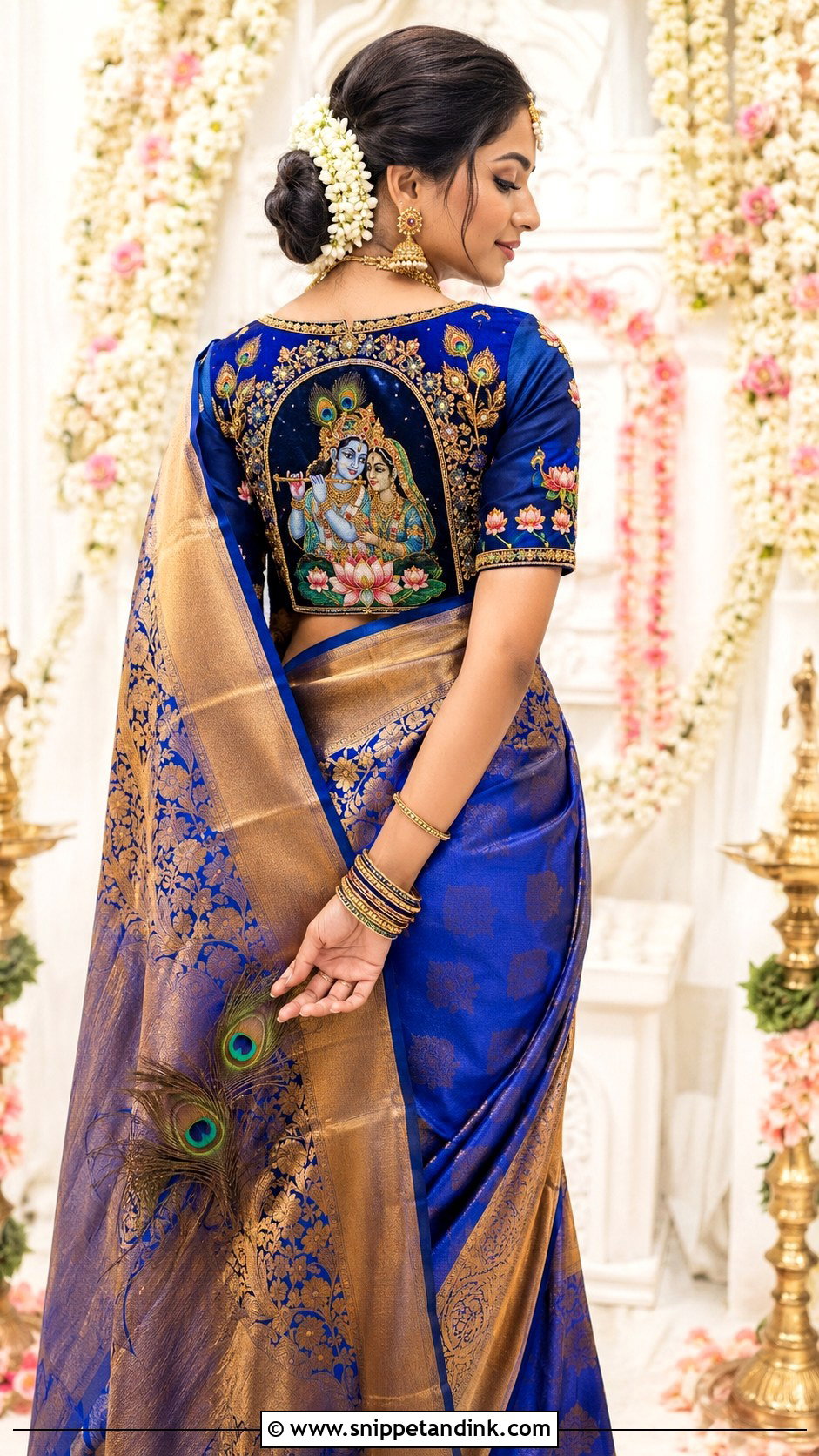
Radha Krishna backs bring a devotional note to the ceremony blouse. The figures are usually worked in fine thread with zari outlines, a few beads and small stones, and the scene can be framed with lotus, flute, peacock feather or temple border details. Red, green, blue, gold and maroon silk all suit it. Keep the front neckline simple. One practical note: the figures are hand-drawn onto the fabric first, so approve the sketch before the needle work starts, because changing a face afterwards means unpicking hours of stitching.
13. Bridal Full Sleeve Aari Work Blouse Design
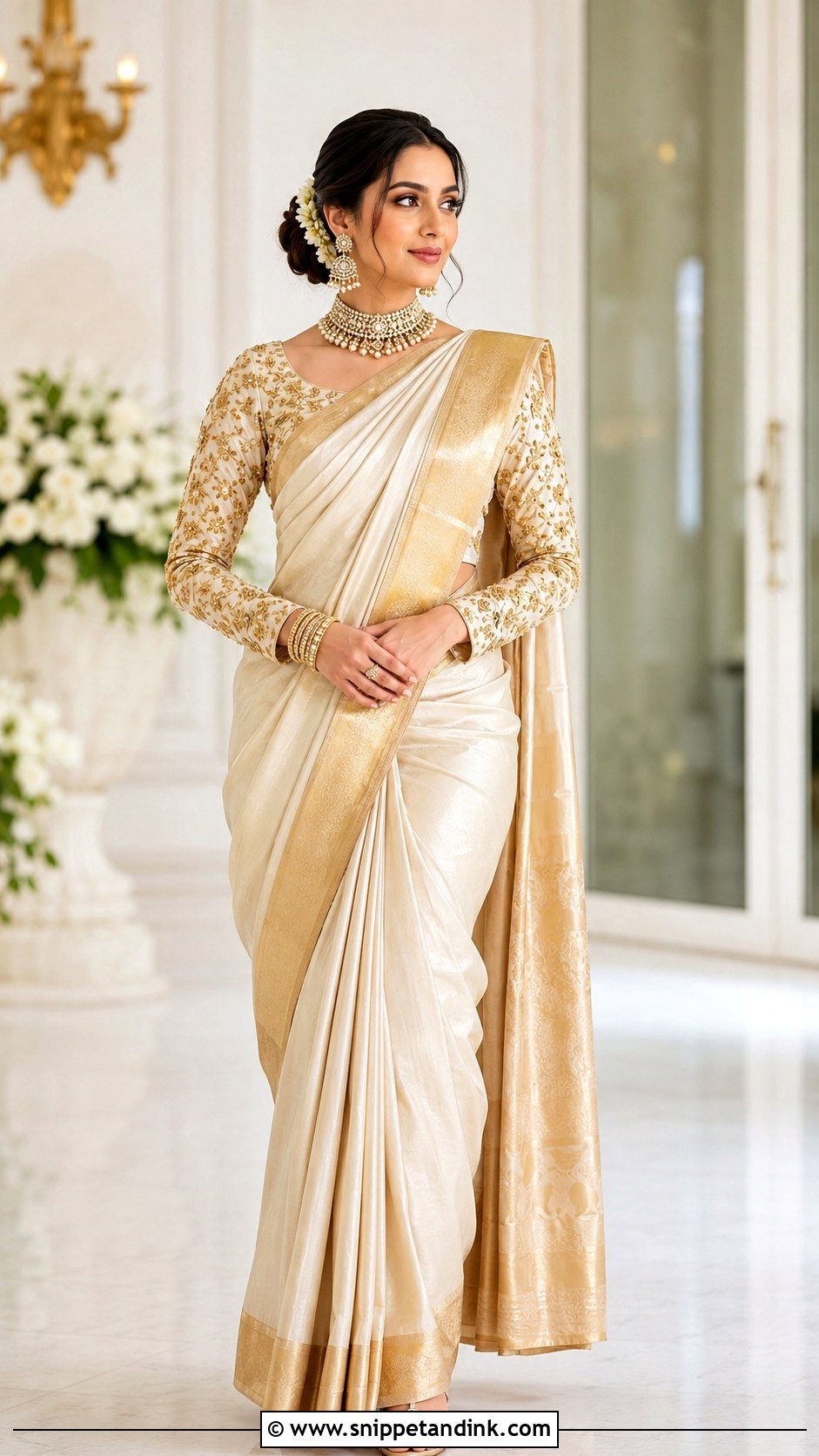
Full sleeves give coverage and a lot of embroidery space, with vines, paisley trails, peacock feathers or temple borders running from shoulder to wrist. They’re visible in nearly every ritual photo, because your arms are always in shot holding flowers, rice or the kalash. Heavily worked full sleeves are warm and stiff, so I ask for a little extra ease through the forearm and keep the body of the blouse light. A choker and statement earrings balance the covered arms.
14. Bridal Elbow Sleeve Aari Work Blouse Design
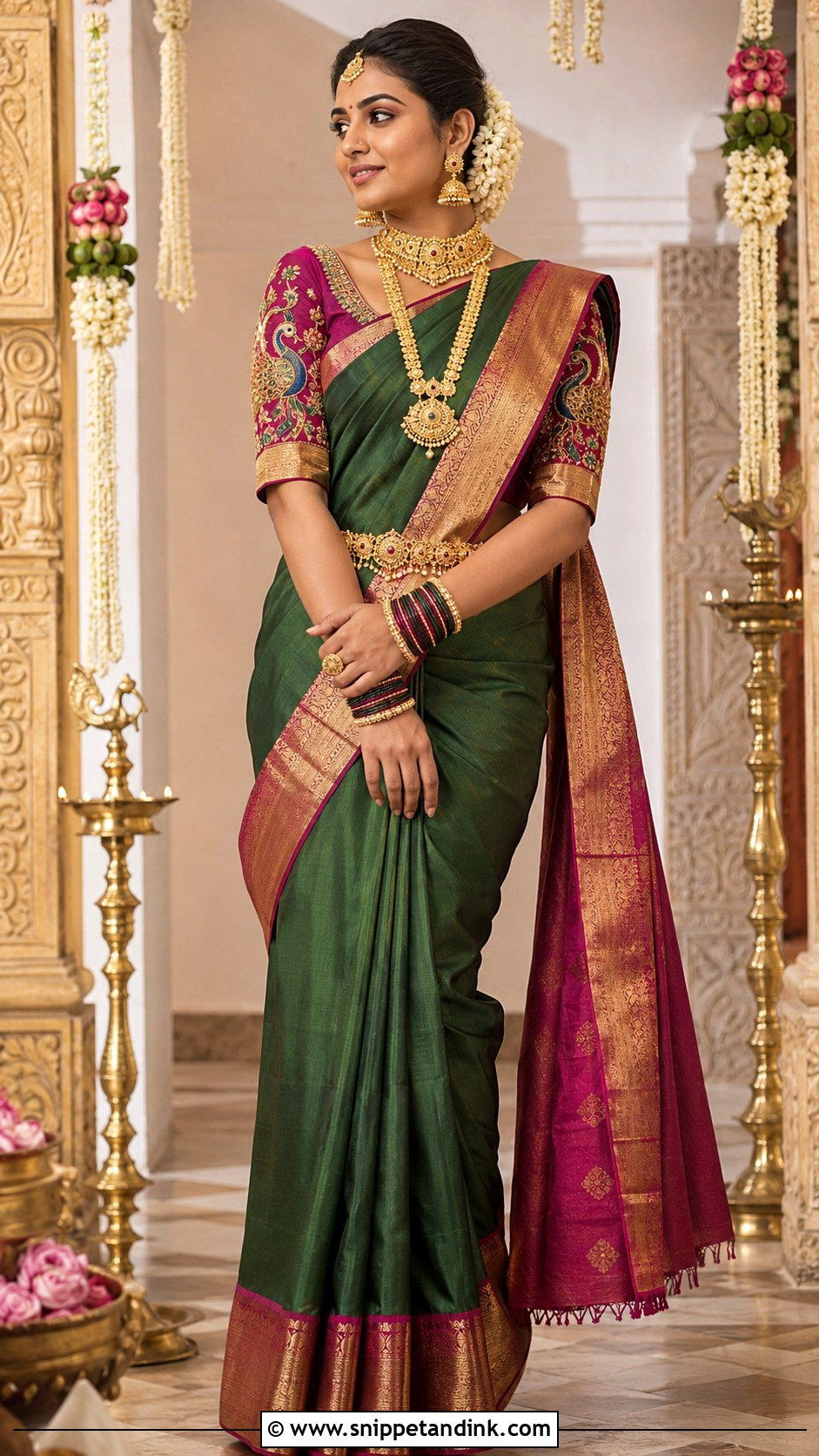
Elbow sleeves are my default suggestion when a bride isn’t sure. They give room for a proper border of peacocks, florals, stones or mangoes at the sleeve end without the heat of a full sleeve, and they suit most arm shapes. If the saree has a bold border, repeat its colours in the sleeve embroidery. Check that the sleeve hem sits just above the elbow crease, not on it; worked fabric on the crease bunches every time you bend your arm. Stacked bangles and a temple necklace complete it.

15. Bridal Puff Sleeve Aari Work Blouse Design
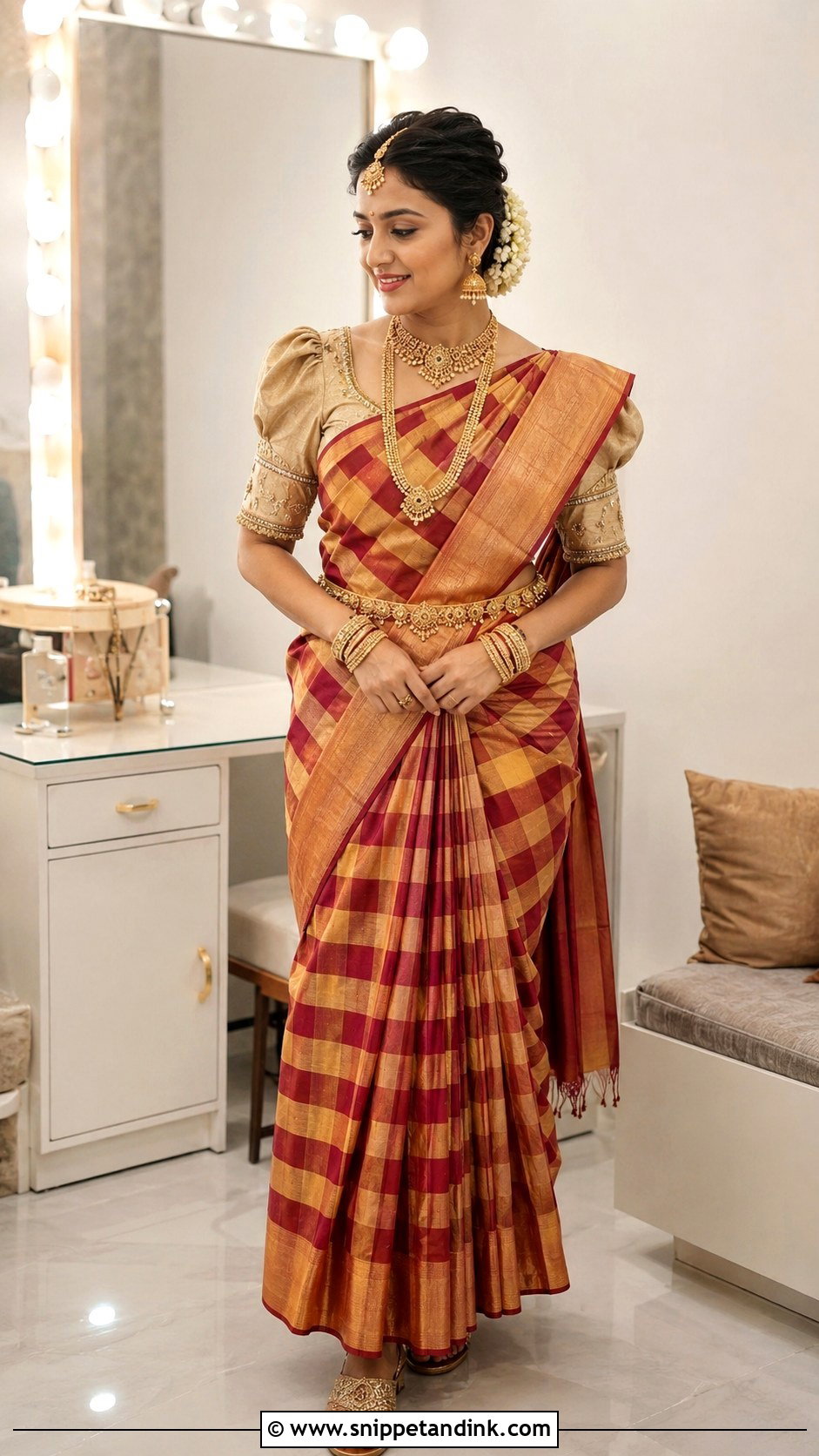
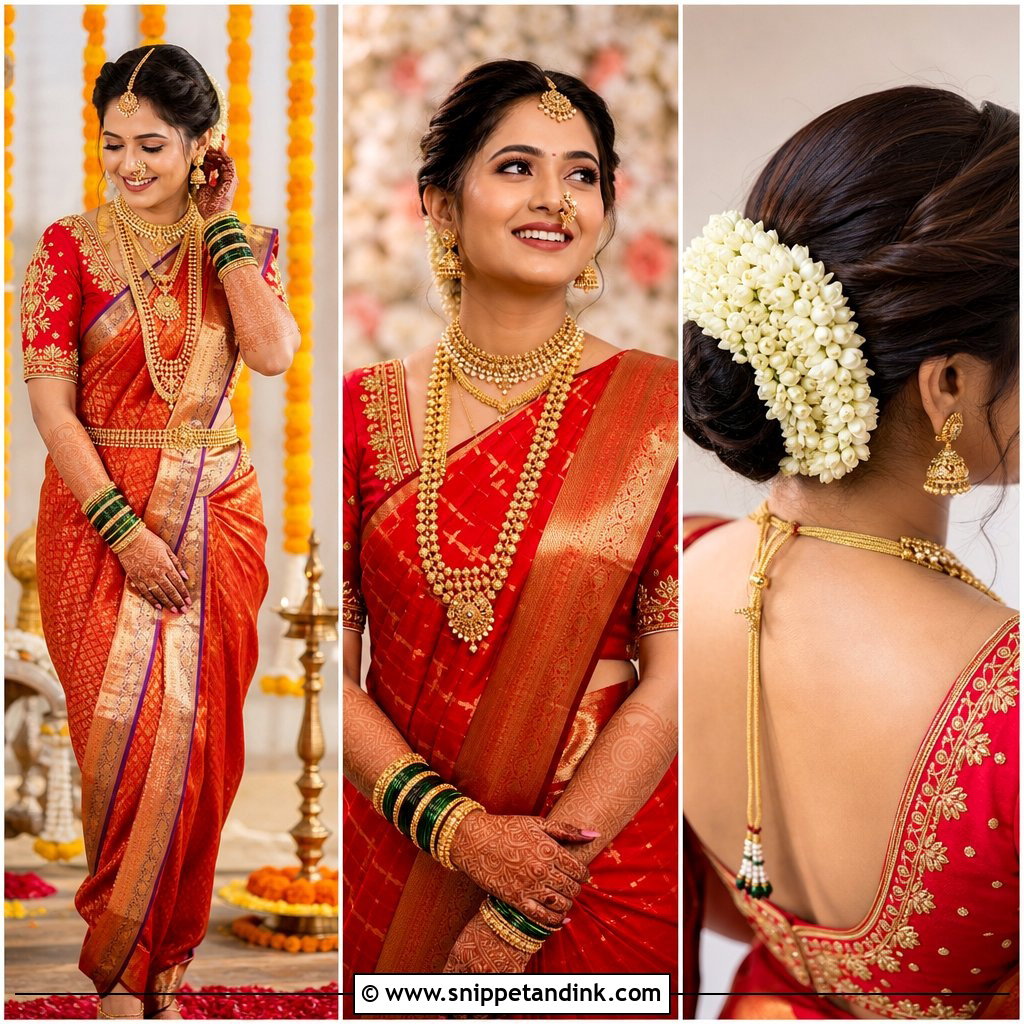
Puff sleeves bring a vintage line to a silk saree. Put the Aari work on the sleeve band, neckline and back rather than on the puff itself, since embroidery weighs the gathers down and the puff collapses. Small pearls, beads and zari outlines are enough. Keep the puff modest; a large one fights with the pallu on the left shoulder. It pairs well with checked or contrast-border sarees, gold jewellery and flowers in the hair.
16. Bridal Cutwork Aari Work Blouse Design
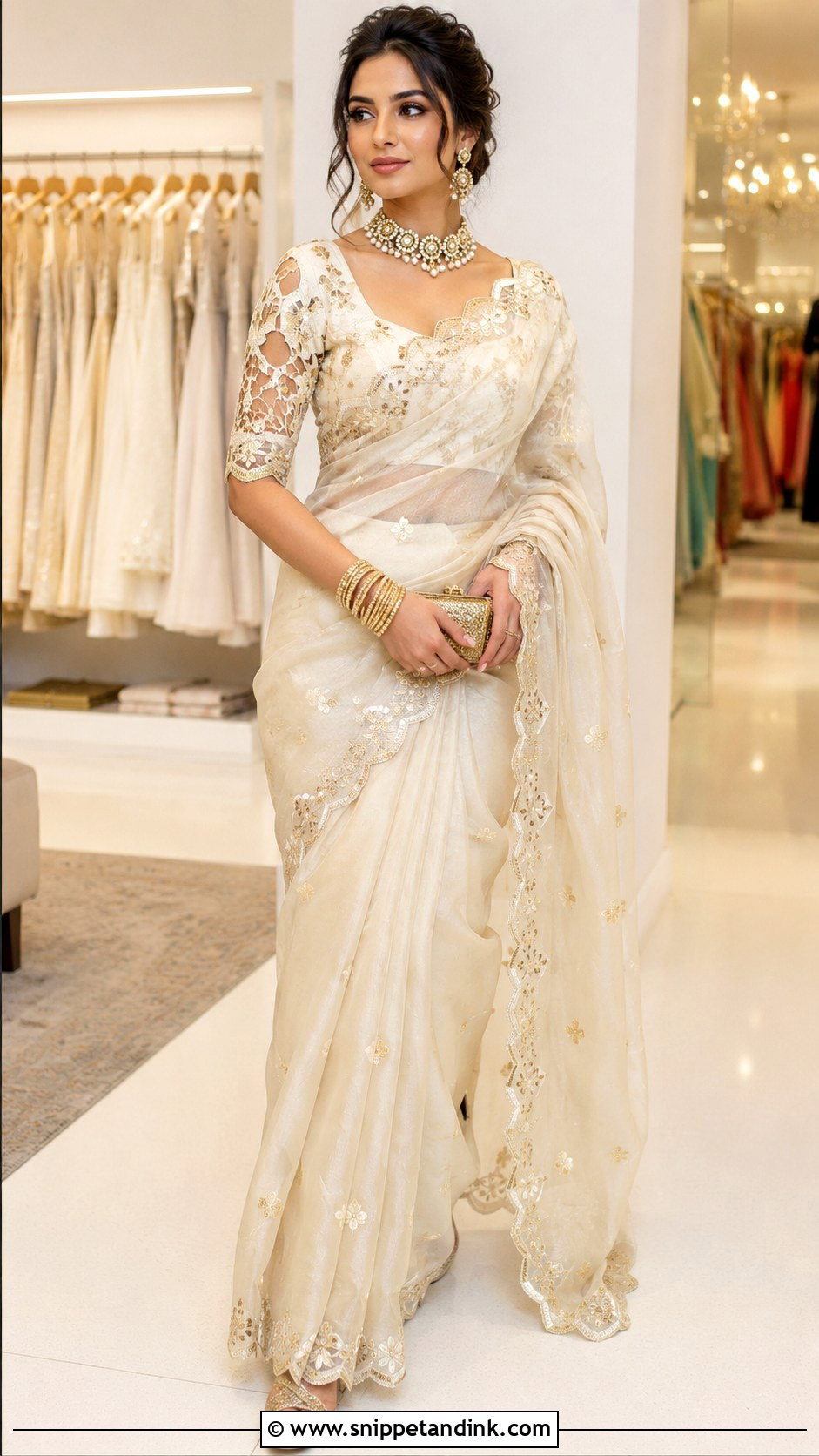
Cutwork gives a lace-like effect: parts of the fabric are cut away inside an embroidered outline. It usually sits along the sleeve edges, back neckline or shoulders, and it looks lovely on silk, organza and tissue. Because the fabric is weakened where it’s cut, ask for a firm lining and dense stitching around every opening, or the edges fray after the first wear. Floral, leaf and scalloped cutwork are the common choices. If the blouse is detailed, keep the jewellery lighter.
17. Bridal Net Sleeve Aari Work Blouse Design
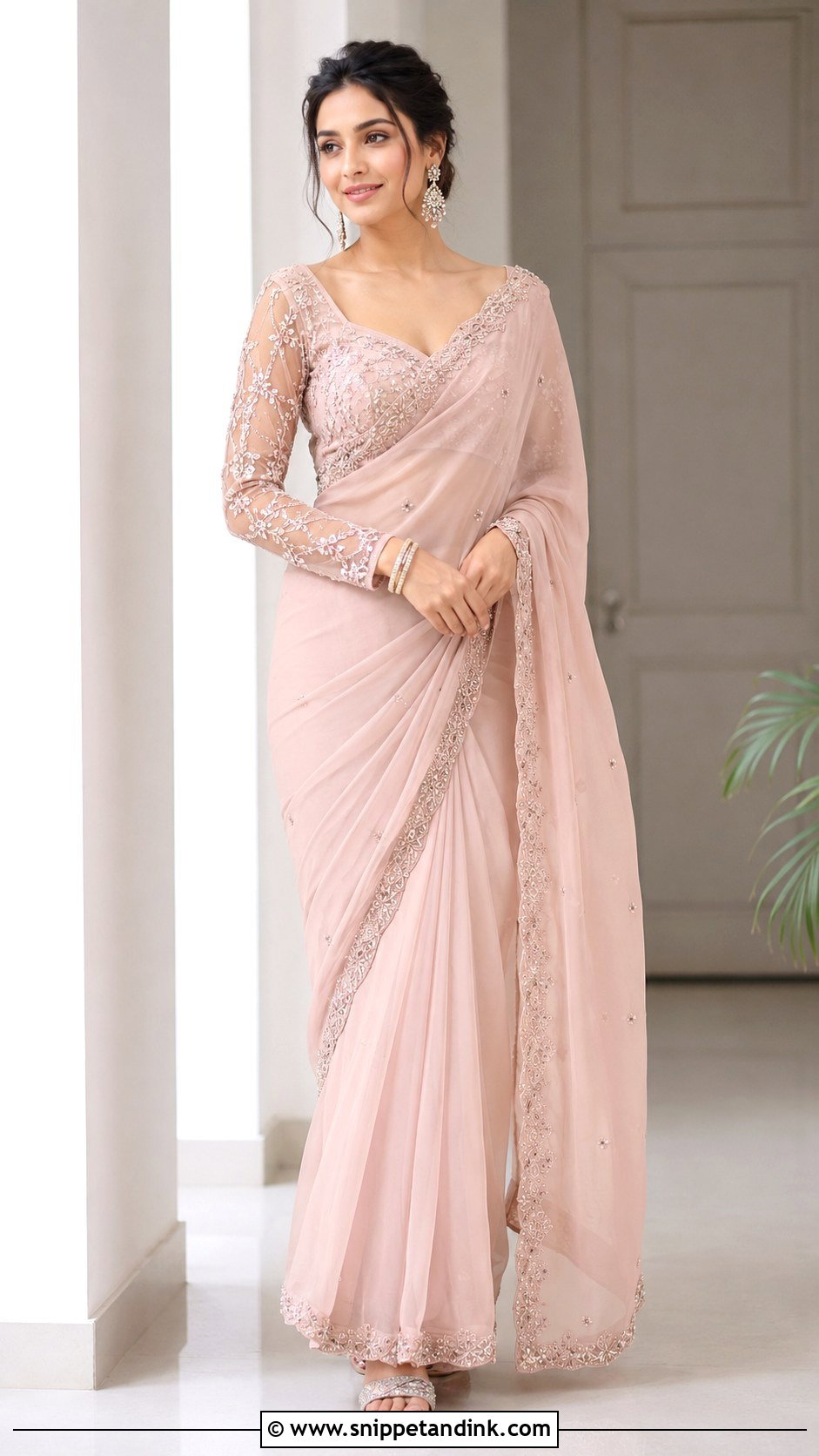
Net sleeves look modern and feel cooler. Aari work on net needs a stabilising backing during embroidery, which is removed or trimmed afterwards, so ask how your artisan handles it; poorly supported net puckers around heavy stones. Use skin-tone lining where you want coverage. Small buttas, floral vines and a border suit the sheer base. I like this for the reception or engagement with a silk or georgette saree, crystal earrings and embellished heels. Keep the neckline secure so the sheer sleeves stay the only focus.
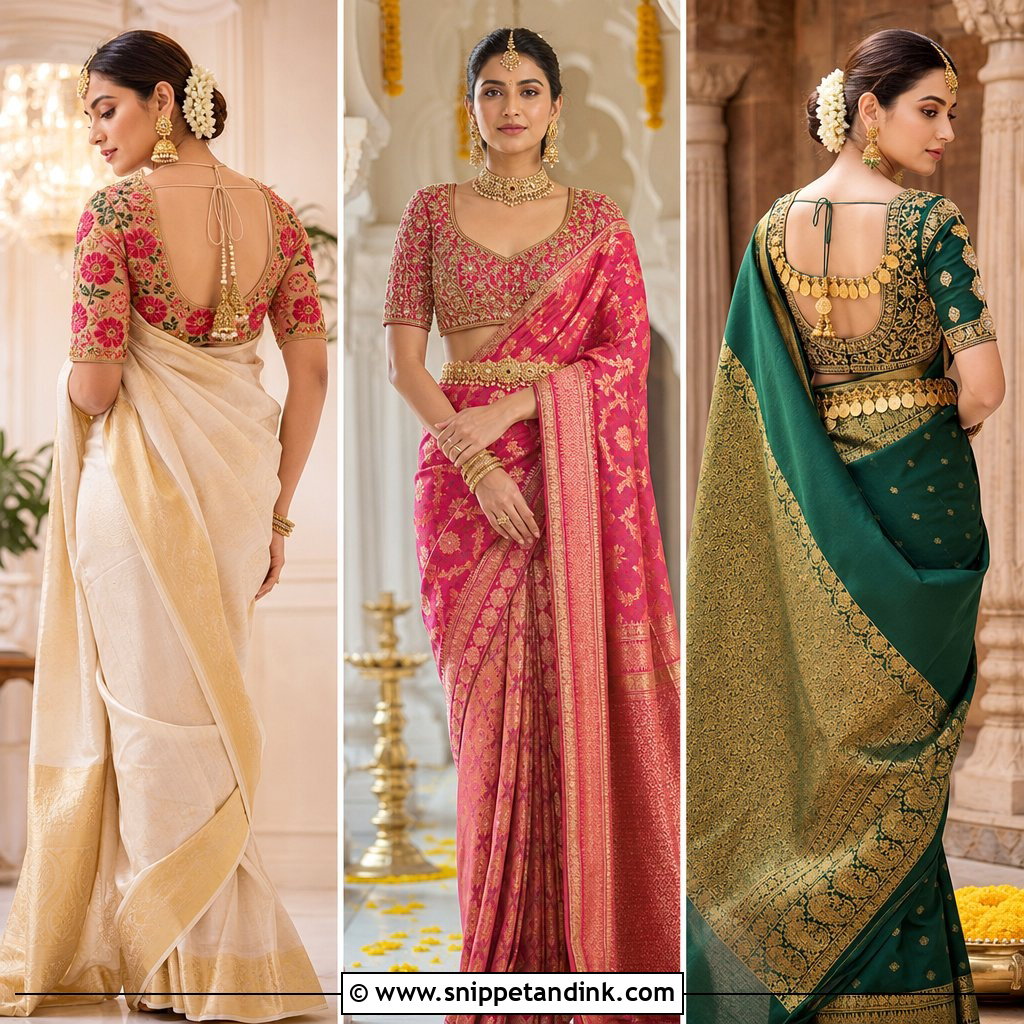
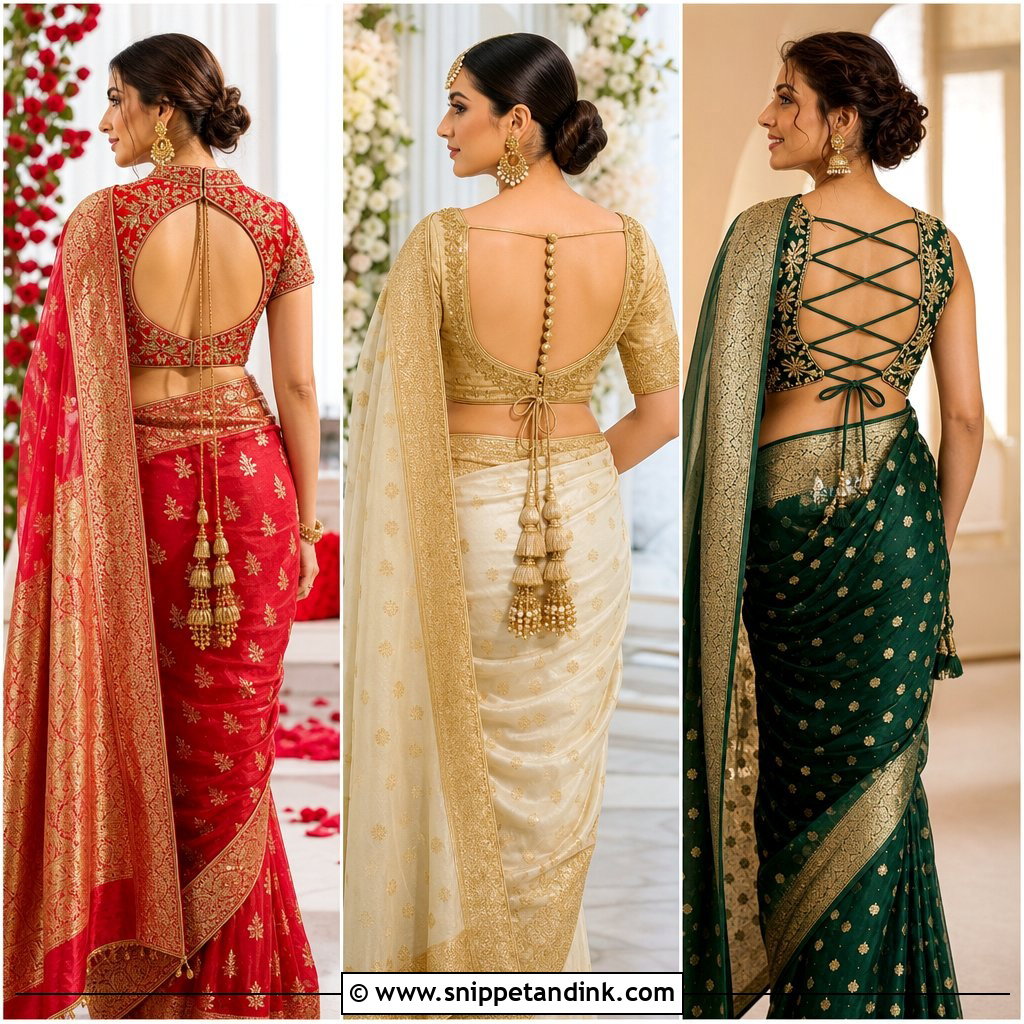
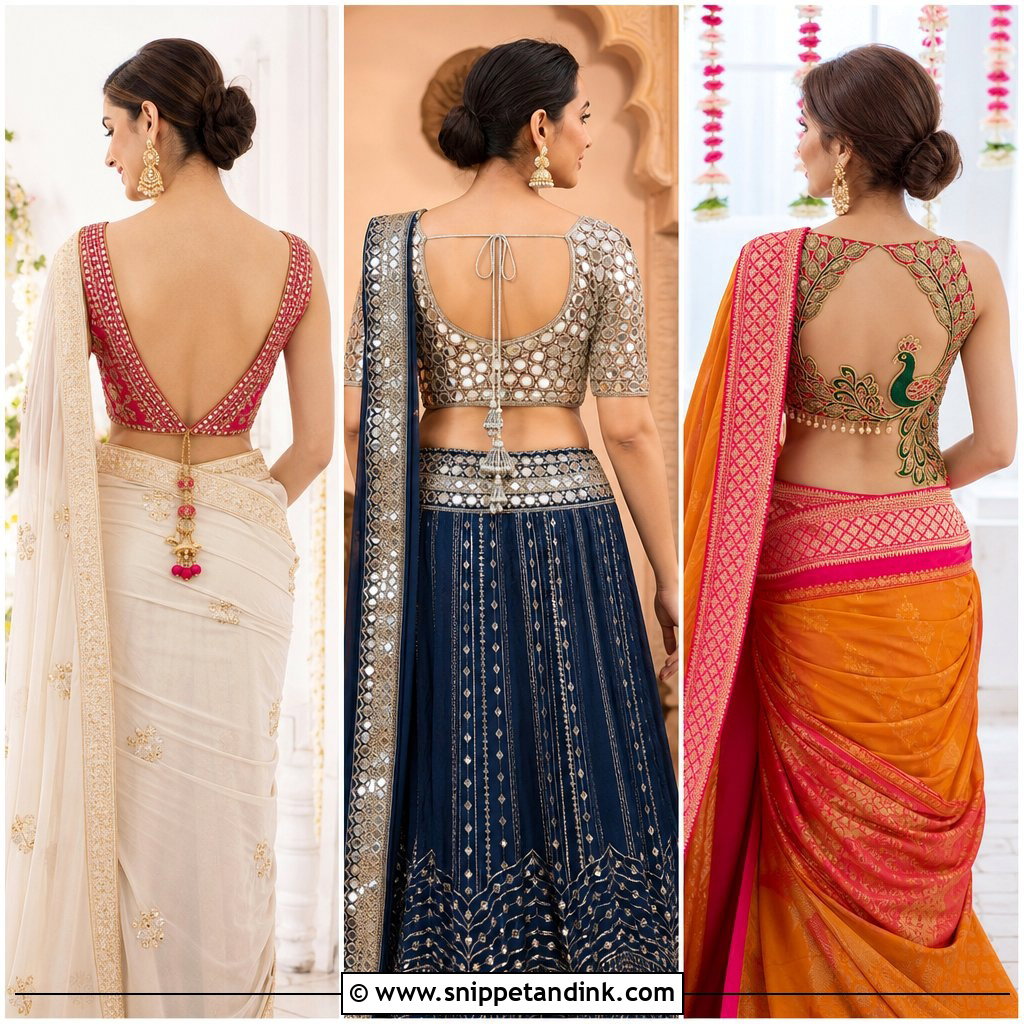
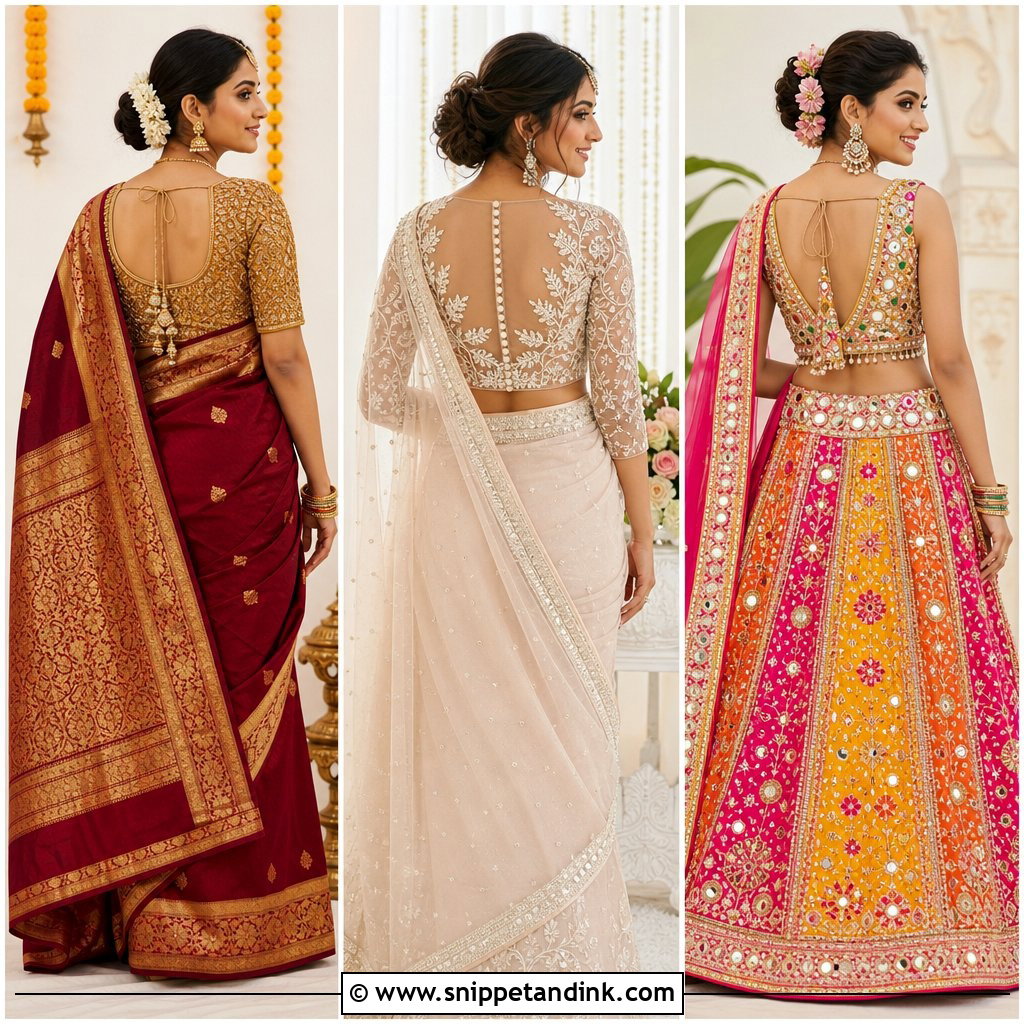
18. Bridal Back Neck Aari Work Blouse Design
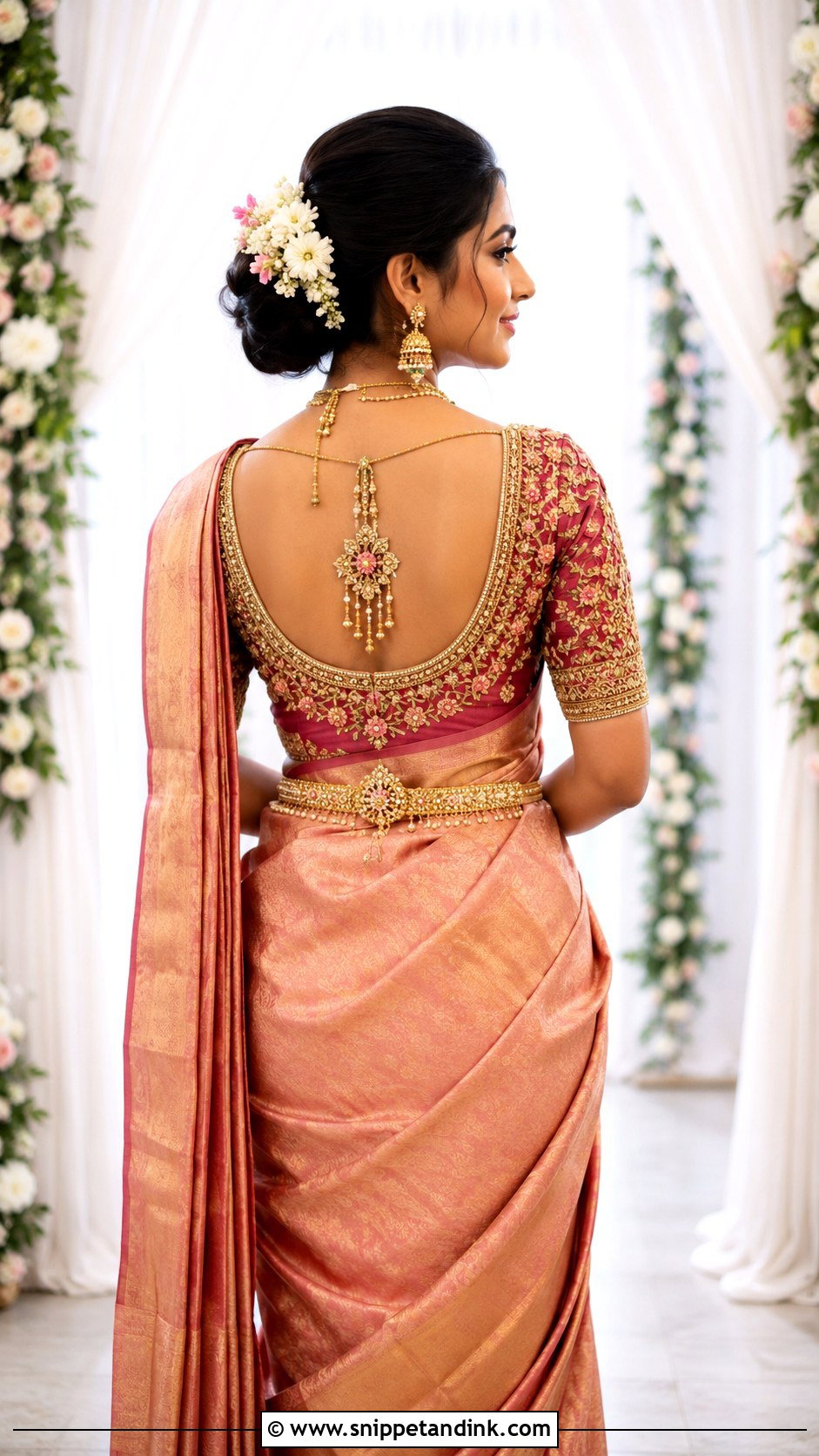
In bridal portraits the back of the blouse often gets more attention than the front, so it deserves real planning. Deep U, round, square, keyhole and boat back necks all suit Aari work, with borders, tassels, beads, vines or a central motif. It pays off most with a light pallu, which leaves the back visible. Before you commit to depth, think about the jewellery: a long back chain or a heavy bun will cover part of the design. Get the depth secure enough to sit through long ceremonies without adjusting.
19. Bridal Boat Neck Aari Work Blouse Design
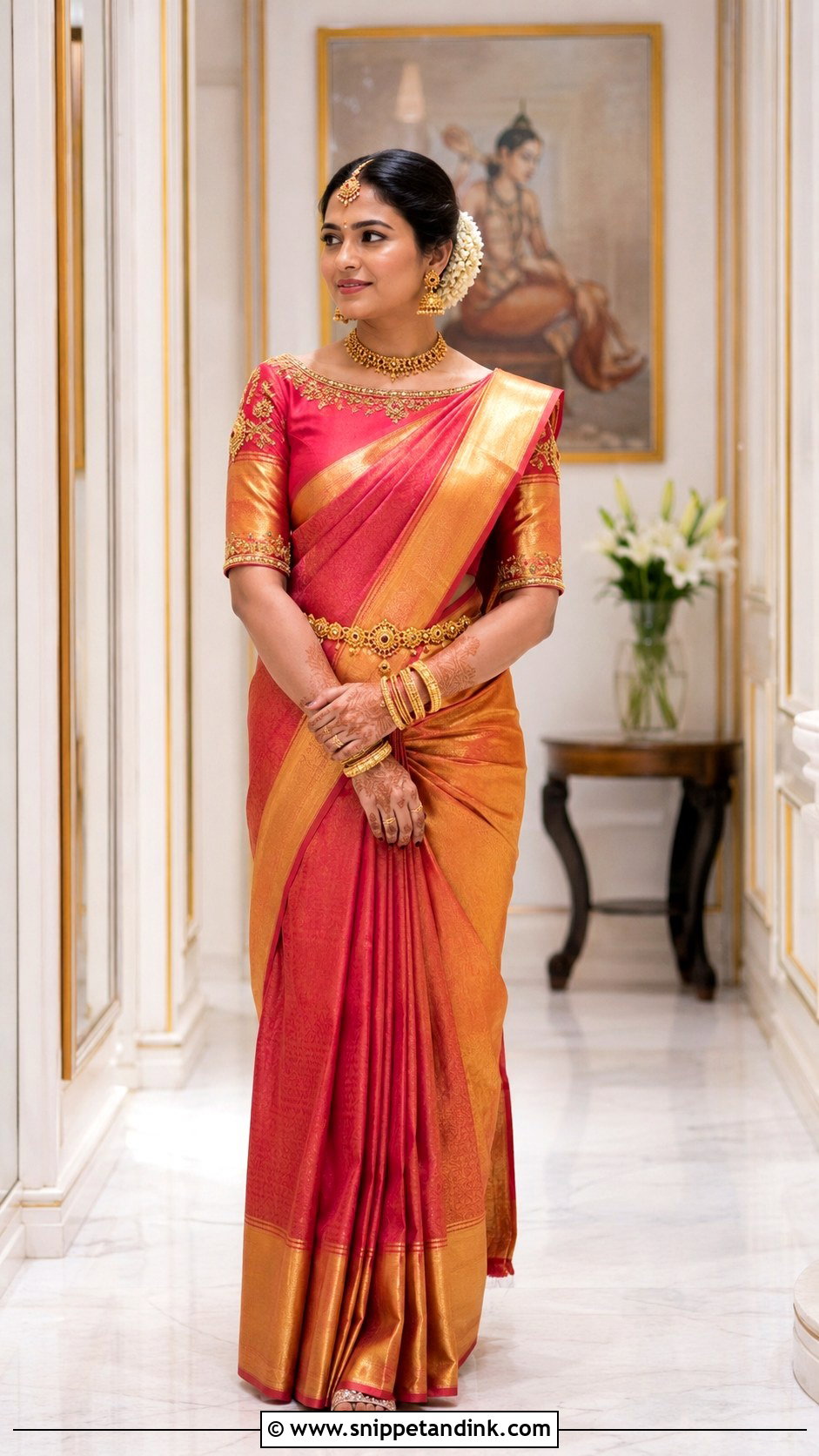
Boat necks give a clean, high line and space for embroidery around the collarbone and shoulders. They’re my pick when a bride has a heavy necklace, because the jewellery sits on plain fabric instead of fighting embroidery underneath it. Gold zari borders, small floral lines or a few stones are enough. Boat necks can slip off the shoulder if cut too wide, so ask for a narrow inner strap or a bra-strap holder at the shoulder. Temple jewellery and a neat bun suit it.

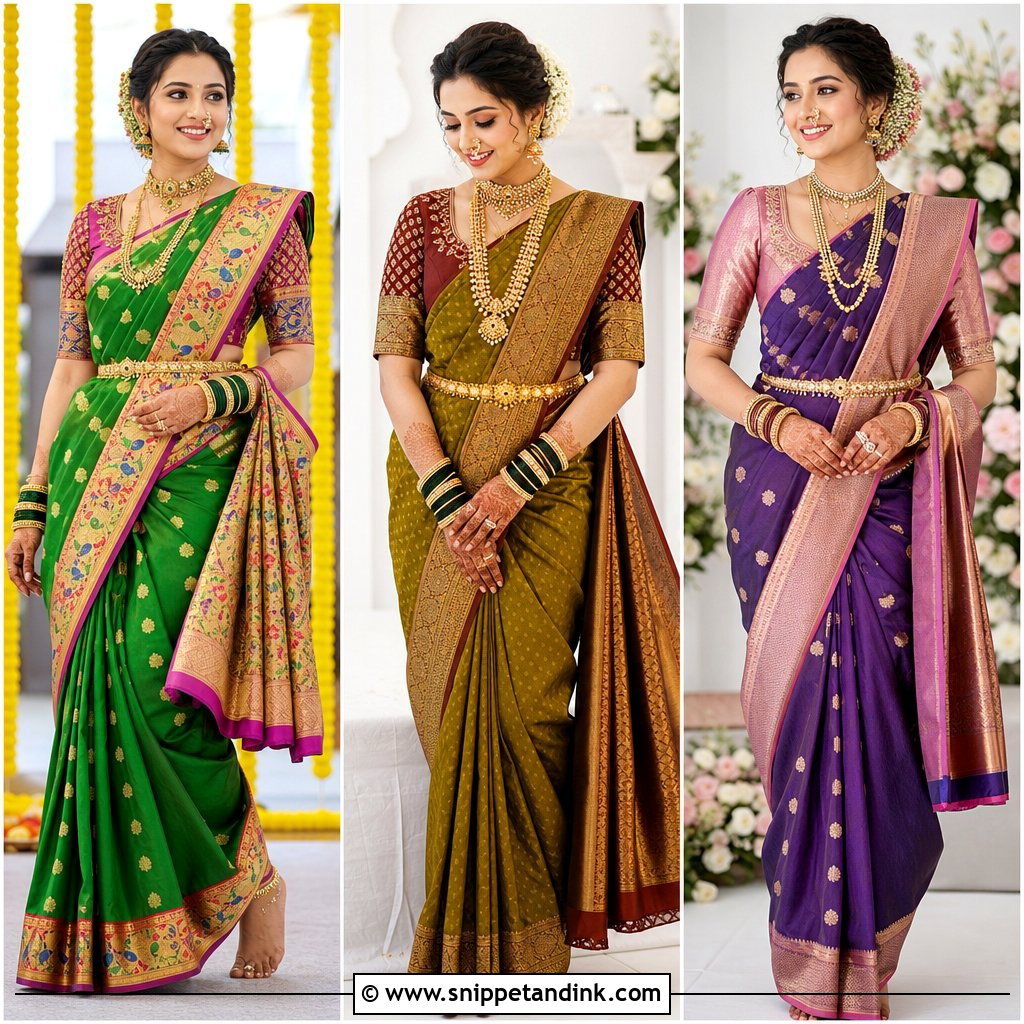
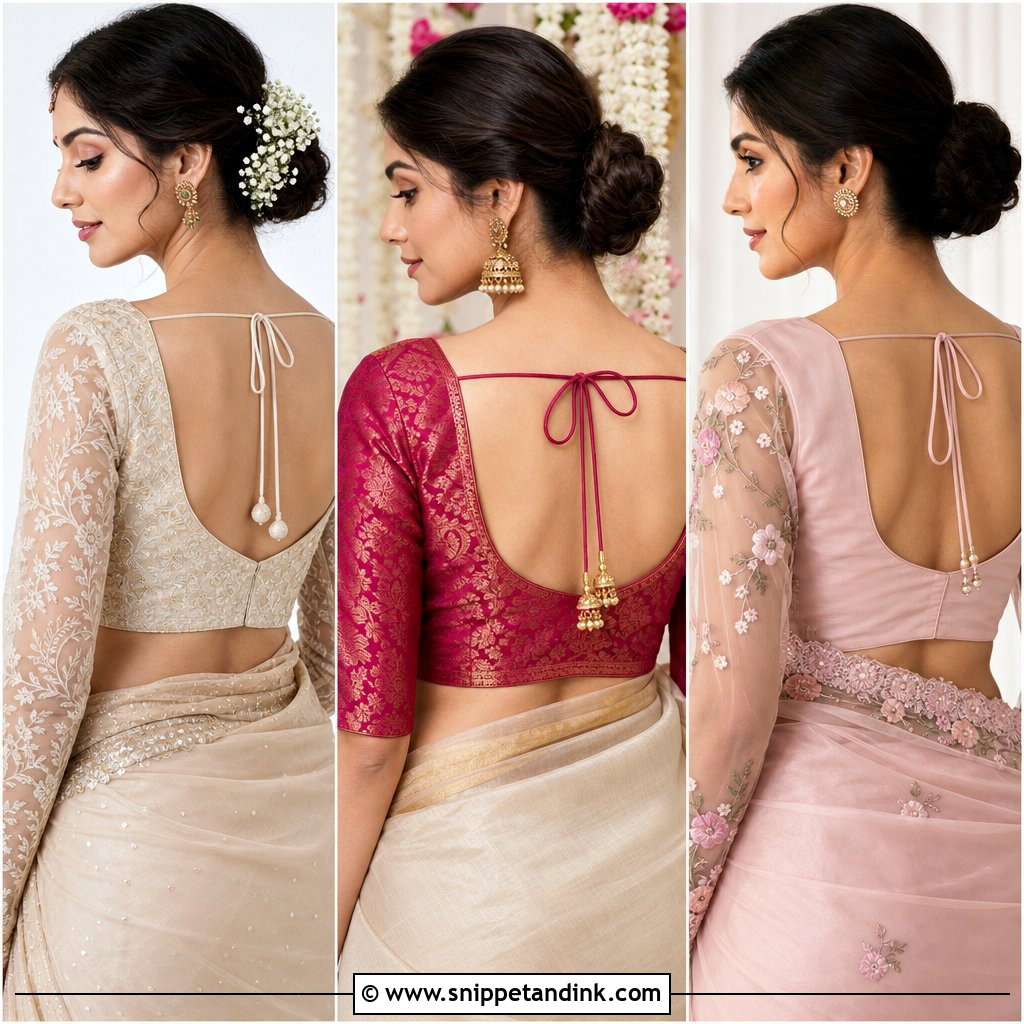
20. Bridal Deep U Neck Aari Work Blouse Design
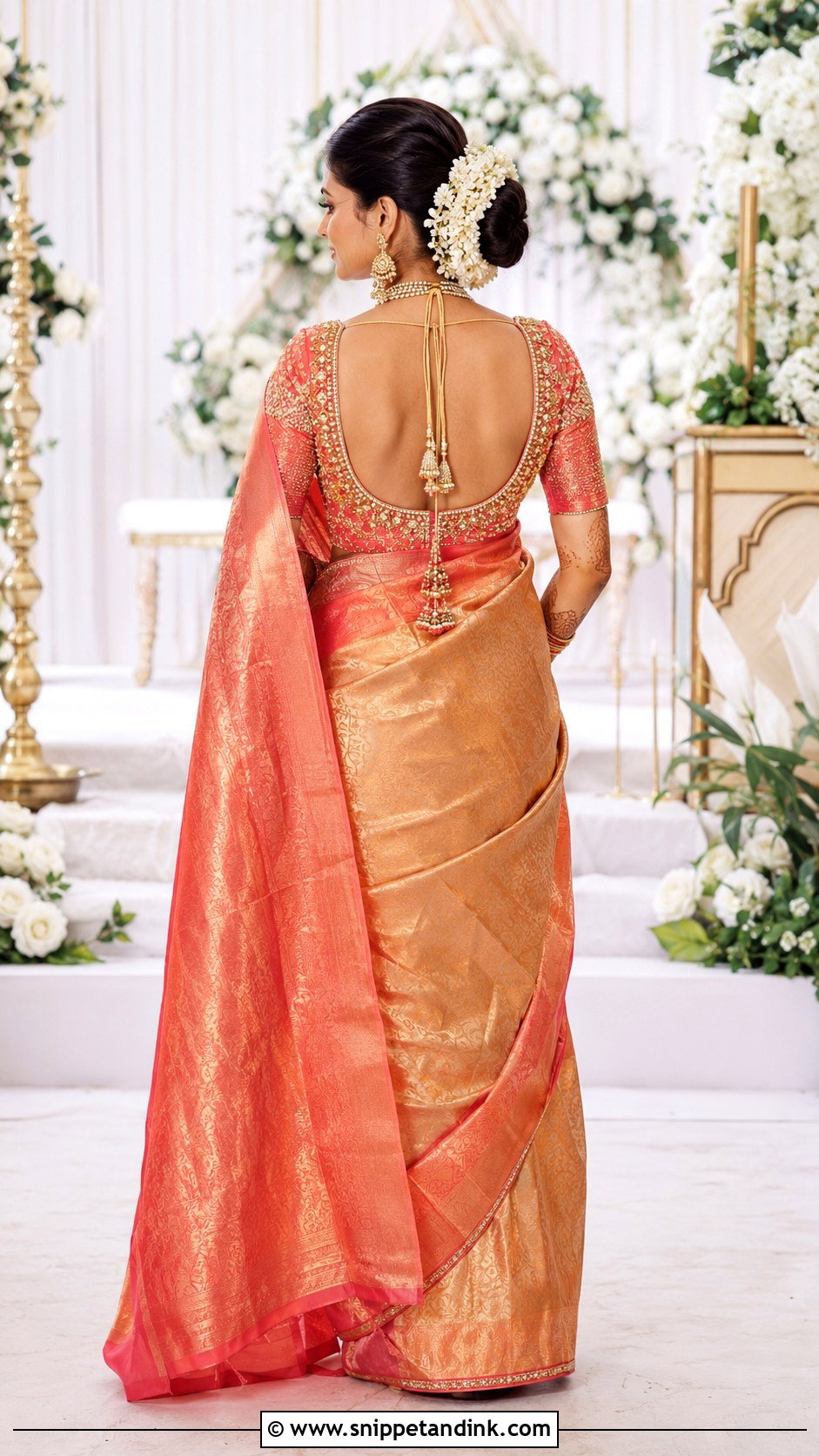
A deep U back is the classic bridal shape. The curve can be outlined in zari, pearls, stones or small flowers, then finished with dori ties, tassels or bead hangings. Drape the pallu so the back details stay visible. A deep U needs a well-fitted blouse to hold the saree drape properly; if the back gapes when you lean forward, the tailor needs to take in the shoulder, not the side seams. Layered necklaces, jhumkas and a flower bun go well with it.
21. Bridal Keyhole Aari Work Blouse Design
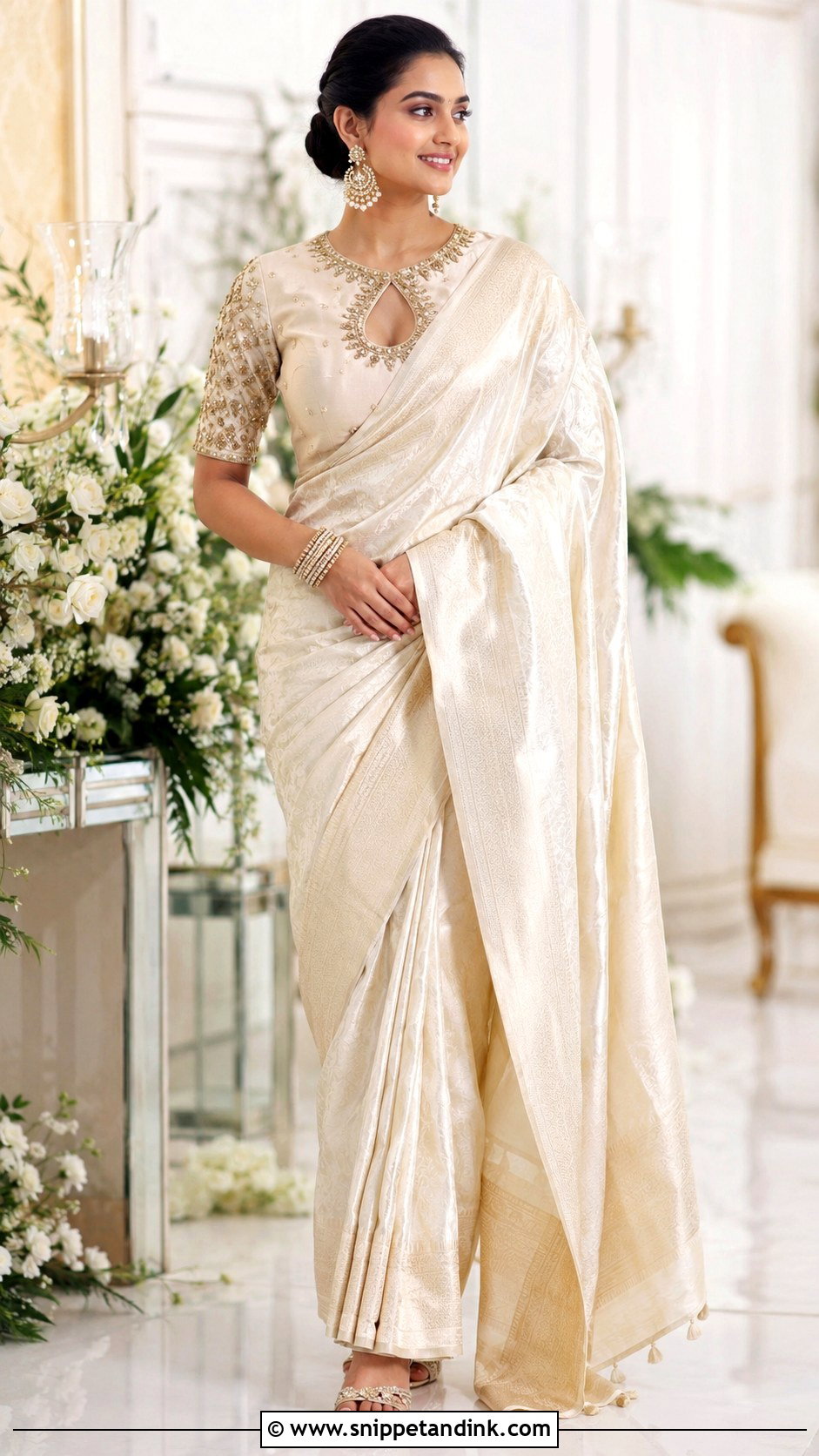
A keyhole adds one small modern detail. It can sit at the front or back, framed with florals, paisley trails or a temple-style border in beads, pearls or stones. Keep neckline jewellery minimal so the cutout stays visible. I keep keyholes small on a ceremony blouse; you’ll be bending, sitting and standing through rituals, and a large opening shifts. A covered button and loop at the top keeps it closed.
22. Bridal Contrast Color Aari Work Blouse Design
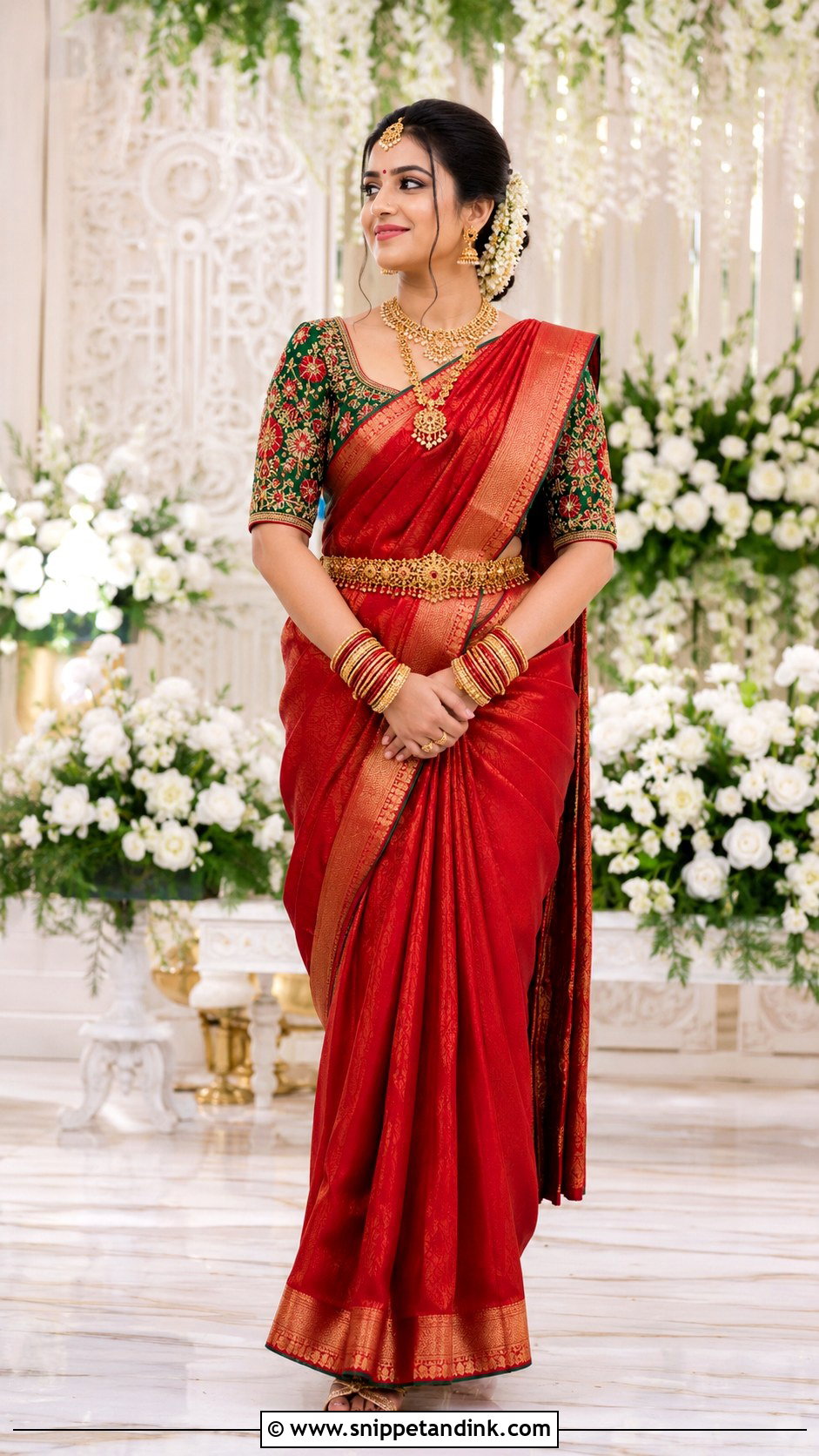
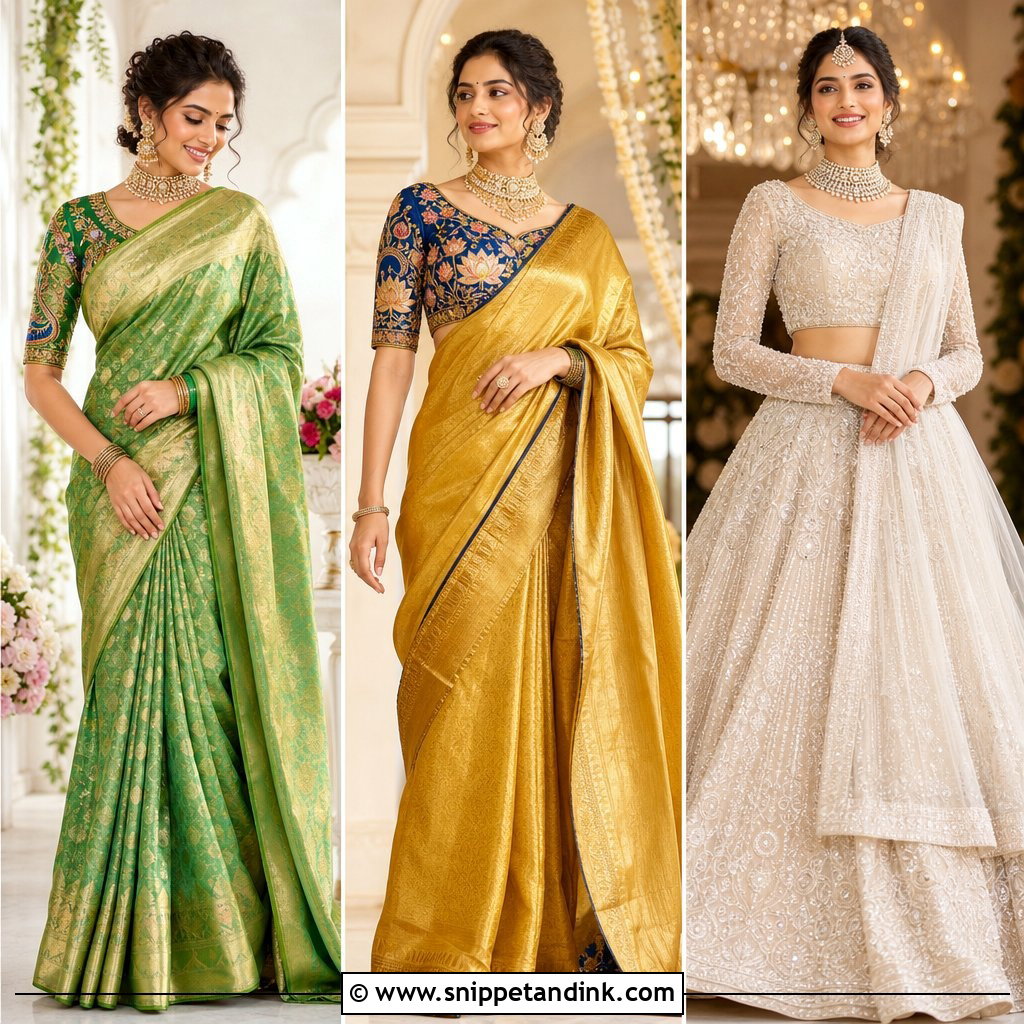
A contrast blouse changes the whole mood of a saree: red with green, gold with maroon, pink with royal blue. The Aari work is what connects the two colours. Use thread, beads or zari that pick up the saree’s border, so the blouse looks planned. I always look at contrast fabric against the saree in daylight before ordering, since many reds and greens shift under warm wedding lights. Coordinated bangles and a matching hair accessory help tie it together.
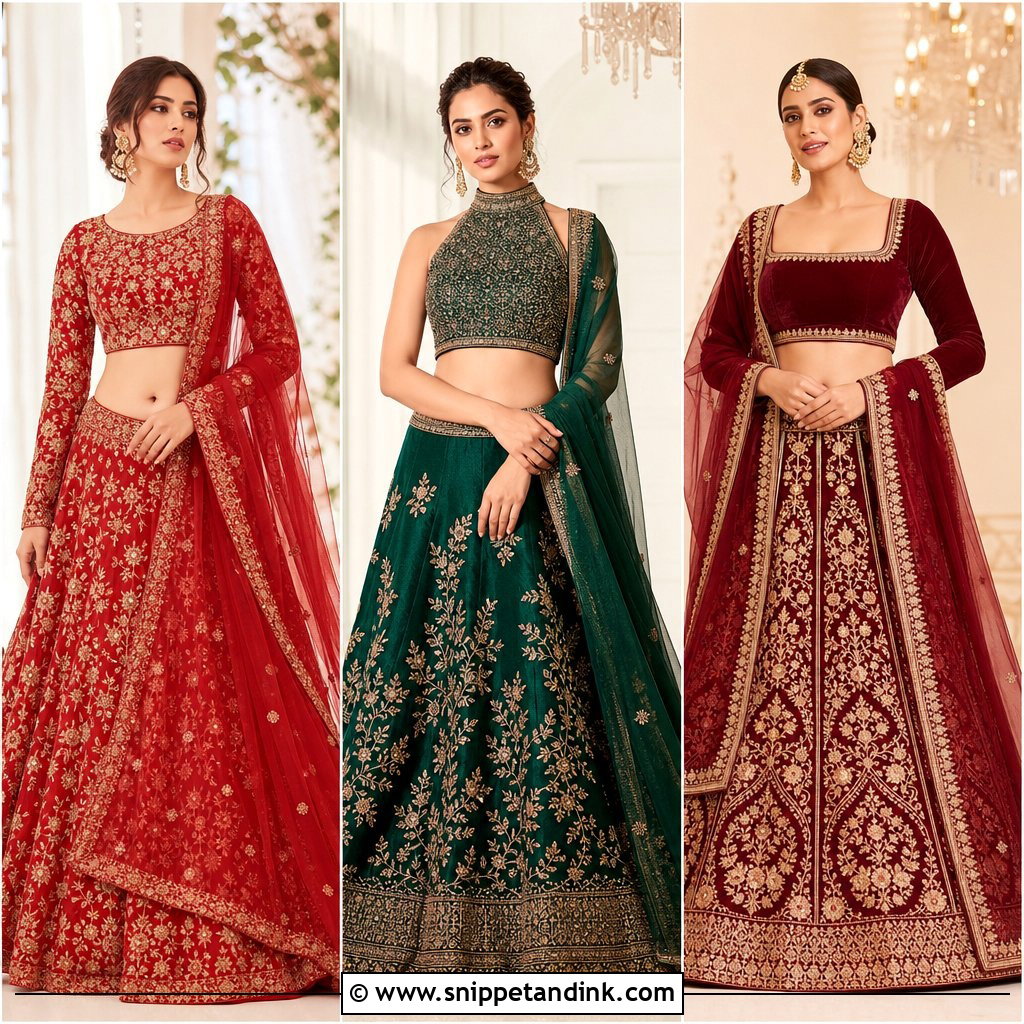
23. Bridal Velvet Aari Work Blouse Design
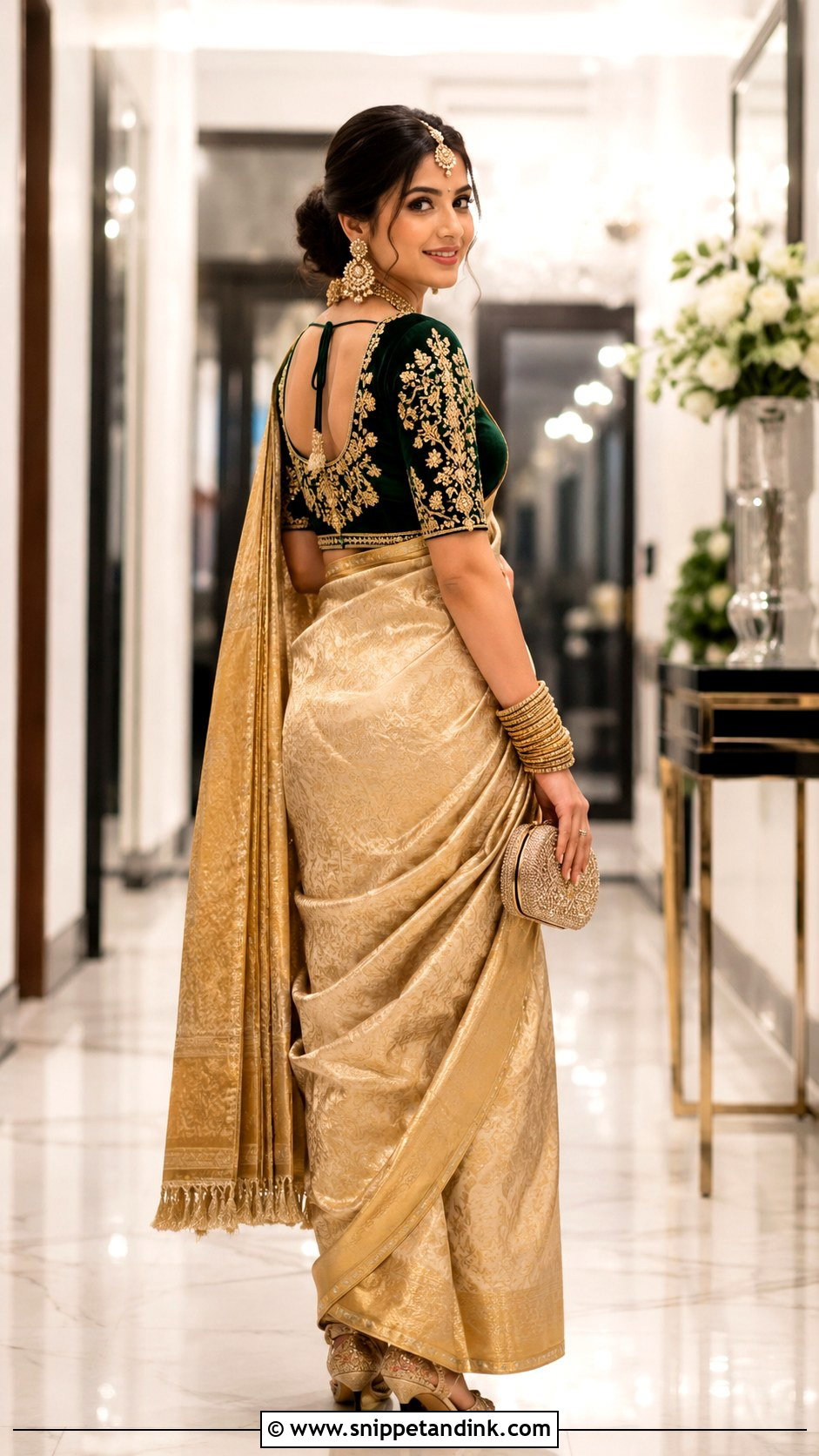
Velvet makes Aari work look more raised, because the pile pushes up around the stitching. Deep maroon, emerald, navy, plum and royal blue look rich with gold or antique work. It’s a winter, evening or reception fabric; in summer heat a velvet blouse becomes uncomfortable within an hour. Because velvet is already heavy, keep the work to sleeve borders, back neck and shoulders. Velvet also marks if pressed flat, so steam it rather than ironing. Kundan or gold jewellery and a structured clutch suit it.
24. Bridal Minimal Aari Work Blouse Design
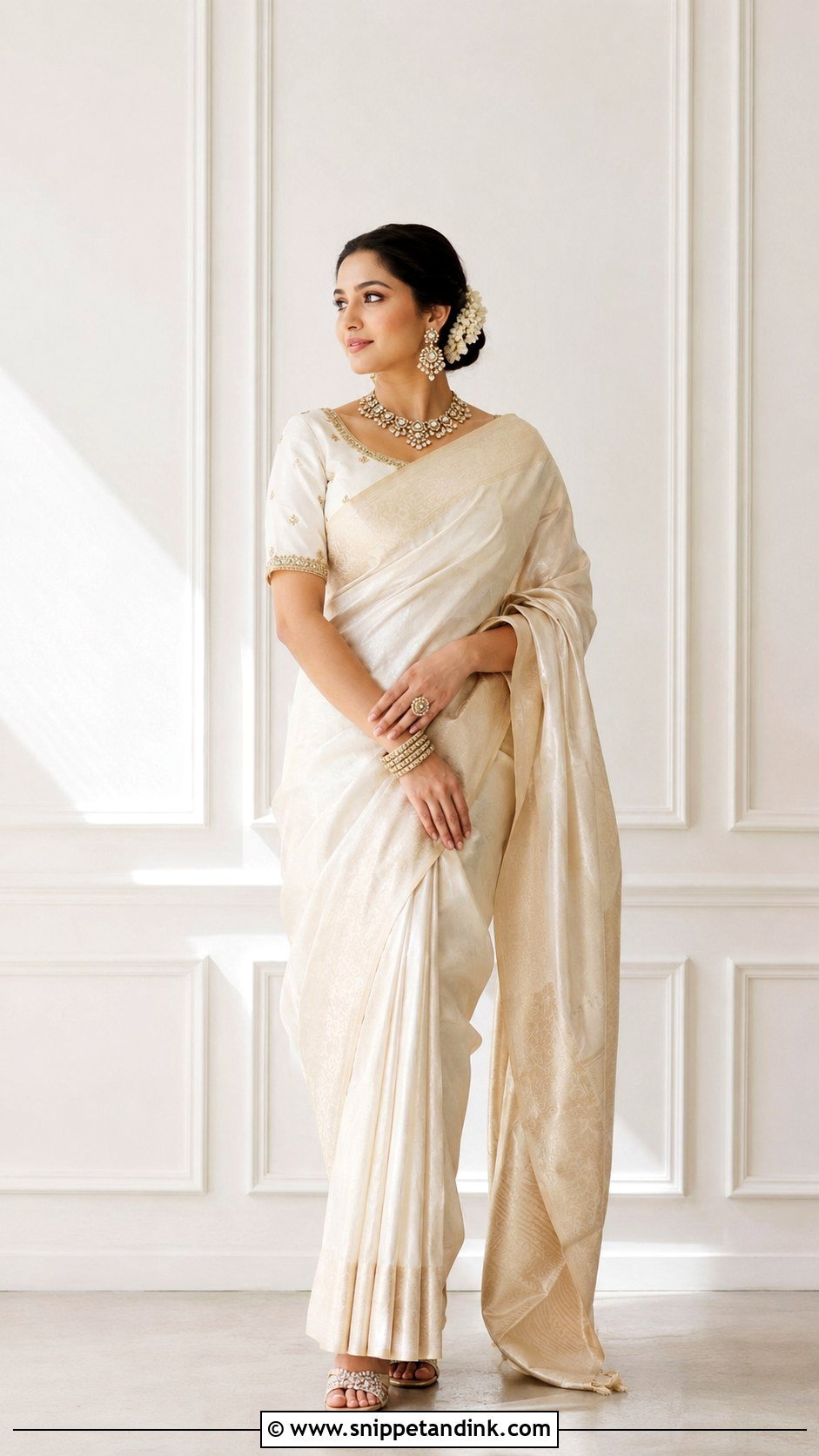
Not every bride wants a heavy blouse. Fine borders, small buttas, sleeve-edge work or a neat neckline can be enough, especially under a rich, bright saree. A lighter blouse breathes better through long events and is far easier to rewear with festive sarees afterward. With minimal work, every stitch shows, so I check the evenness of the chain stitch closely; it is the first thing that gives away a rushed job.
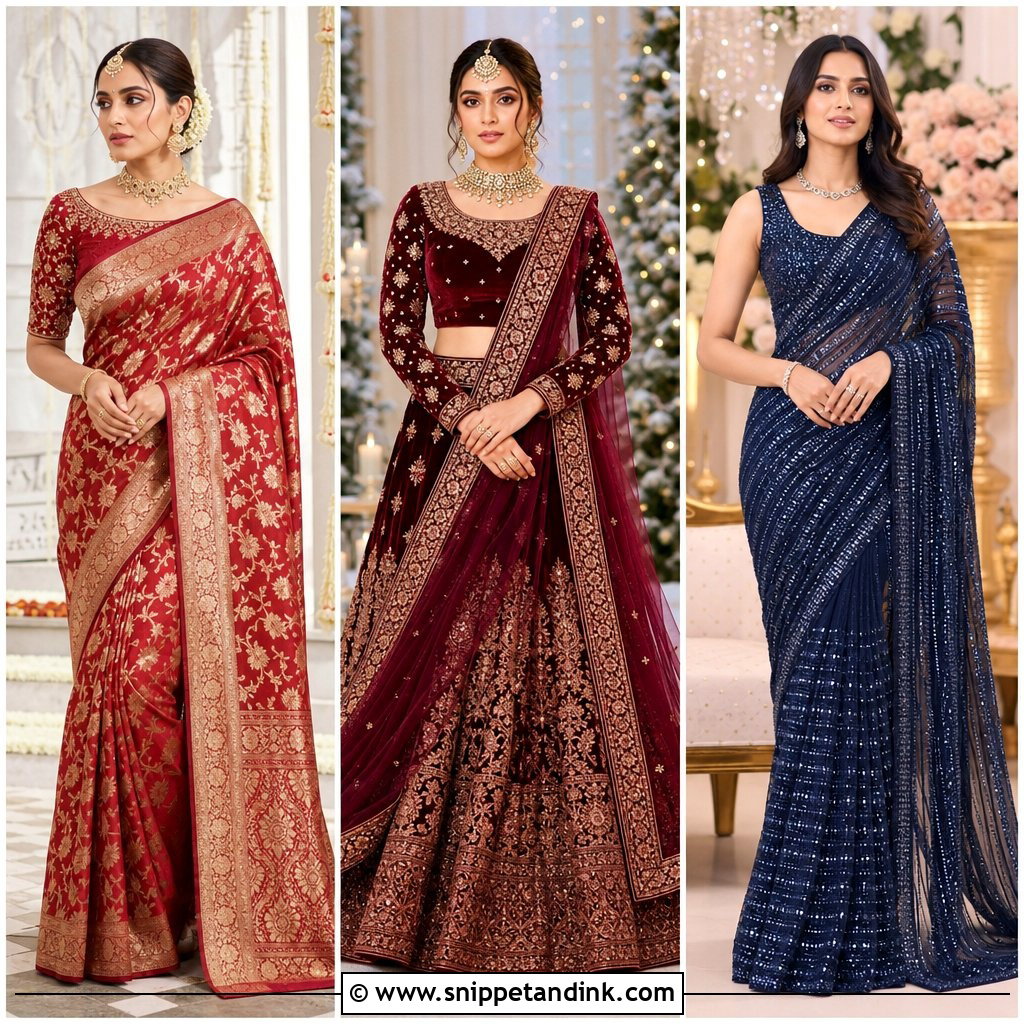
25. Bridal Heavy Aari Work Blouse Design
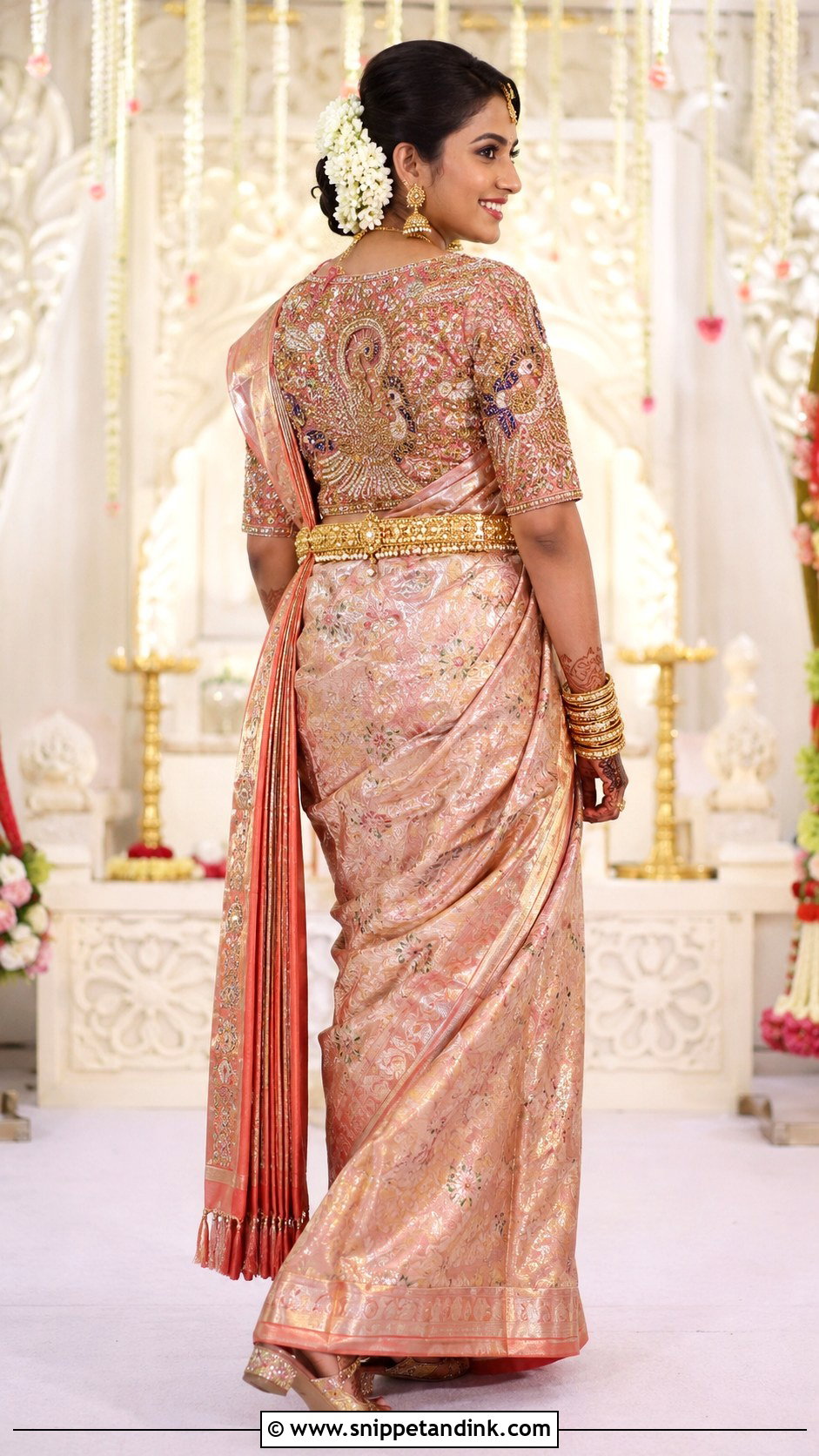
A heavy Aari work blouse can combine peacocks, vines, zardosi, stones, pearls, sequins, cutwork and temple borders in one layout. That only works with a tight colour plan; without one it turns muddy. The base has to carry the weight, so raw silk, bridal silk, brocade or velvet, with a strong lining. A heavy blouse pulls on the shoulder seams, so fitting matters more than with any other design here, and I ask for a final trial after all the work is done, not just at the stitching stage.
Zari Tarnishes: Looking After the Blouse Once the Wedding Is Over
Metallic zari darkens when it meets moisture, sweat and perfume, and stones can loosen if the blouse is crushed. A little care in the first week keeps it wearable for years.
- Air it inside out for a day after the wedding, away from direct sun, to let sweat dry.
- Spray perfume before dressing and let it dry, never straight onto the embroidery.
- Send it for dry cleaning with a cleaner who handles bridal work; don’t hand-wash heavy Aari.
- Fold it with plain muslin or soft cotton between the layers, embroidery facing inward, rather than hanging it, since heavy work stretches the shoulders on a hanger.
- Keep it out of plastic, which traps damp, and refold it along different lines every few months so the creases don’t crack the zari.
If a stone or bead falls off on the day, keep it. Most boutiques can stitch it back on later, and they’re often supplied with a small packet of spares if you ask at pickup.
The Blouse You’ll Wear Through Every Ritual
A bridal blouse isn’t just about how much embroidery you can fit on it. Comfort, fabric strength, colour, neckline, sleeve length and how it sits with your jewellery and drape matter just as much. Peacock, lotus, temple, zardosi, mirror, pearl and floral designs each set a different mood. Think about the ceremony, the camera angles and how many hours you’ll be in it before finalising. A well-planned Aari blouse outlasts the wedding itself, and many brides end up keeping it for years.
You'll Like These Ideas:





Leave a Reply