
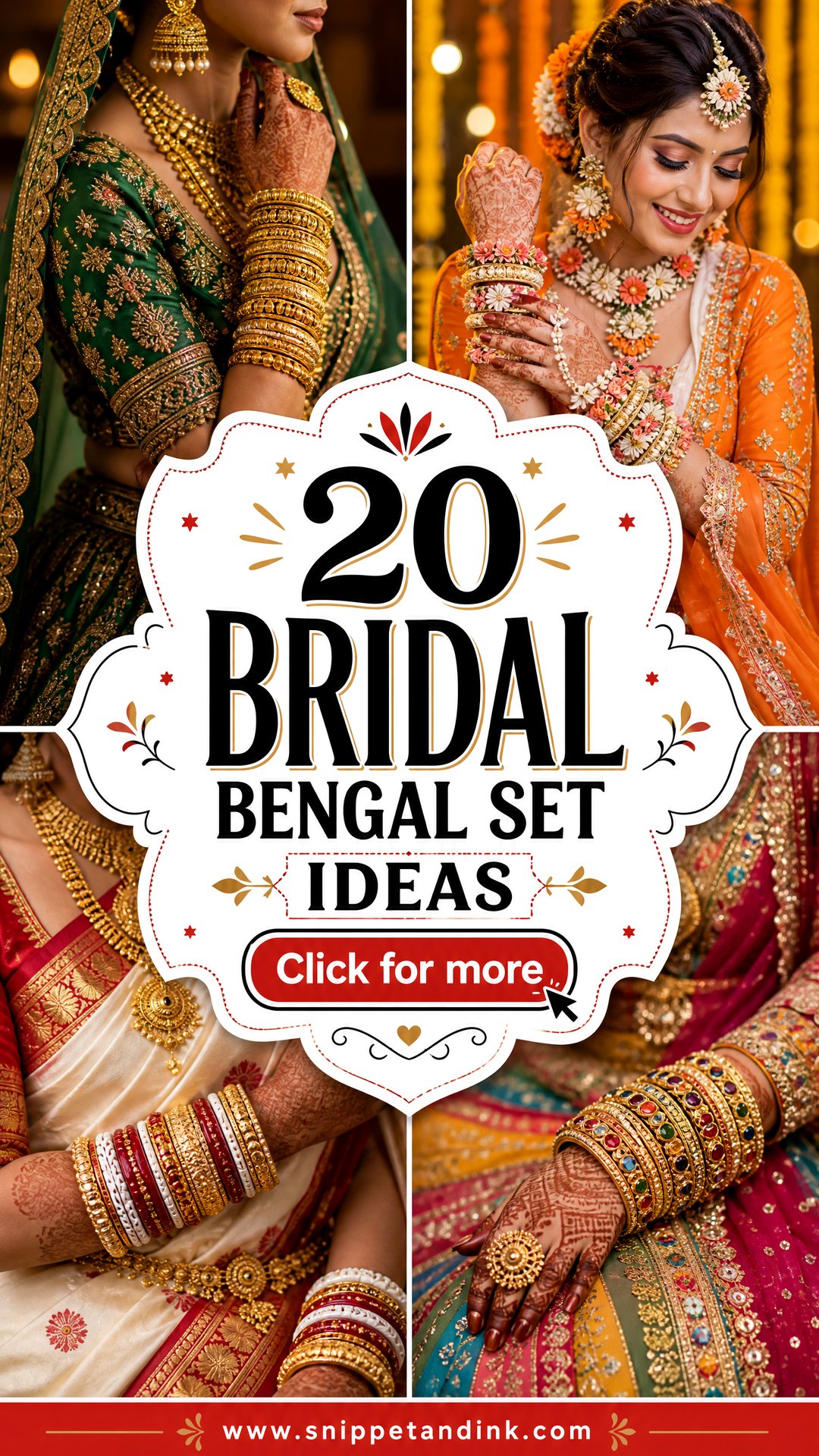
A bridal bangle stack sits right where everyone looks: on the hands that hold the garland, sign the register and get photographed with the ring. Below are twenty bangle sets, each styled as a full outfit, from classic red-and-gold stacks and pearl mixes to kundan kadas, glass bangles and the Bengali shakha-pola pairing. When I build a stack for a bride, I start from the embroidery on her outfit, because the metal in the threadwork tells me whether yellow gold, antique gold, rose gold or silver will look like it belongs. From there it’s a matter of picking one or two colors from the fabric to repeat on the wrist, and keeping the rest of the jewelry in the same family.
Measure Across the Knuckles Before Ordering Any Bangle
Most sizing mistakes I see come from measuring the wrist. A closed bangle never has to fit the wrist; it has to pass over the widest part of the hand. To measure, tuck your thumb into your palm as if you were sliding a bangle on, wrap a soft tape or a piece of thread around the widest point across the knuckles, and note the length. A jeweler can convert that to a size.
Bangle sizes in India are usually written as 2.4, 2.6, 2.8 and so on. The figure after the point counts sixteenths of an inch of inner diameter, so a 2.6 is two and six sixteenths of an inch across, slightly larger than a 2.4. Glass and lac bangles have no give at all, so if you fall between sizes, go up. Metal bangles are less forgiving than they look once you add sweat and a little swelling from the heat.
- Openable kadas with a screw or hinge can be fitted to the wrist itself, which suits slim wrists with wide hands.
- Glass bangles go on more easily with a little soap or a thin plastic bag over the hand; ask someone to help rather than forcing them.
- Weight adds up. Ten kundan kadas per arm can feel fine at a fitting and painful after five hours, so wear the full stack around the house for an evening before the wedding.
- Order early. Custom kundan, temple and meenakari sets often take several weeks to make, and resizing can add more.
1. Red Lehenga With Gold Bridal Bangle Set
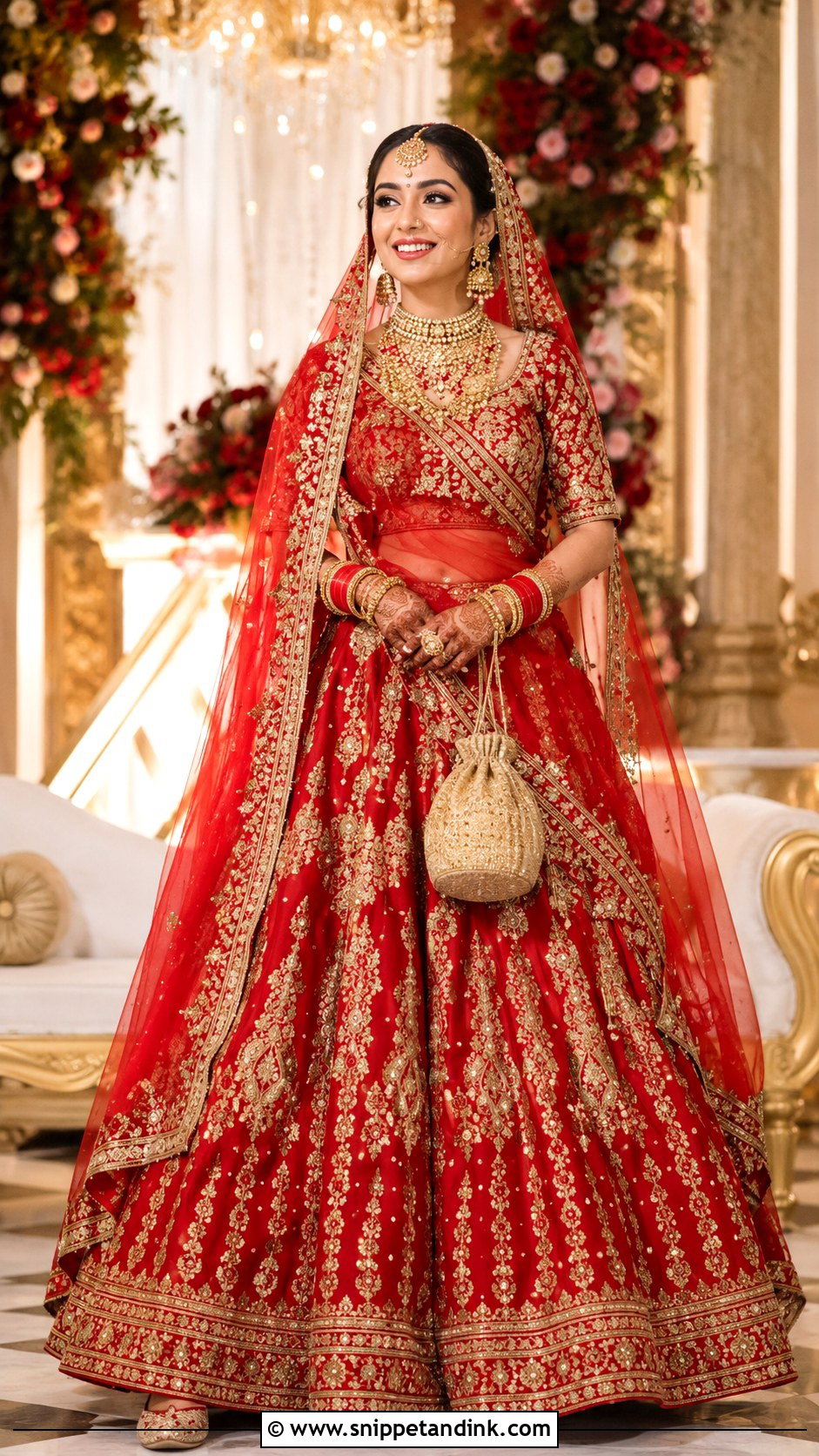
Few combinations read as bridal as quickly as a red lehenga and gold bangle stack. Pair a lehenga with zari, zardozi or tonal embroidery with slim gold bangles, kundan kadas and a few red glass bangles. I put the widest kadas at each end of the stack; they act as bookends and stop the thinner bangles from sliding into a jumble when you move your hands. A gold choker, a long necklace, jhumkas, an embroidered red dupatta, gold juttis and a small potli complete the look. If the lehenga is heavy with work, choose plainer bangles, otherwise the wrist detail disappears into the embroidery in photographs.
2. Ivory Lehenga With Pearl Bridal Bangle Set
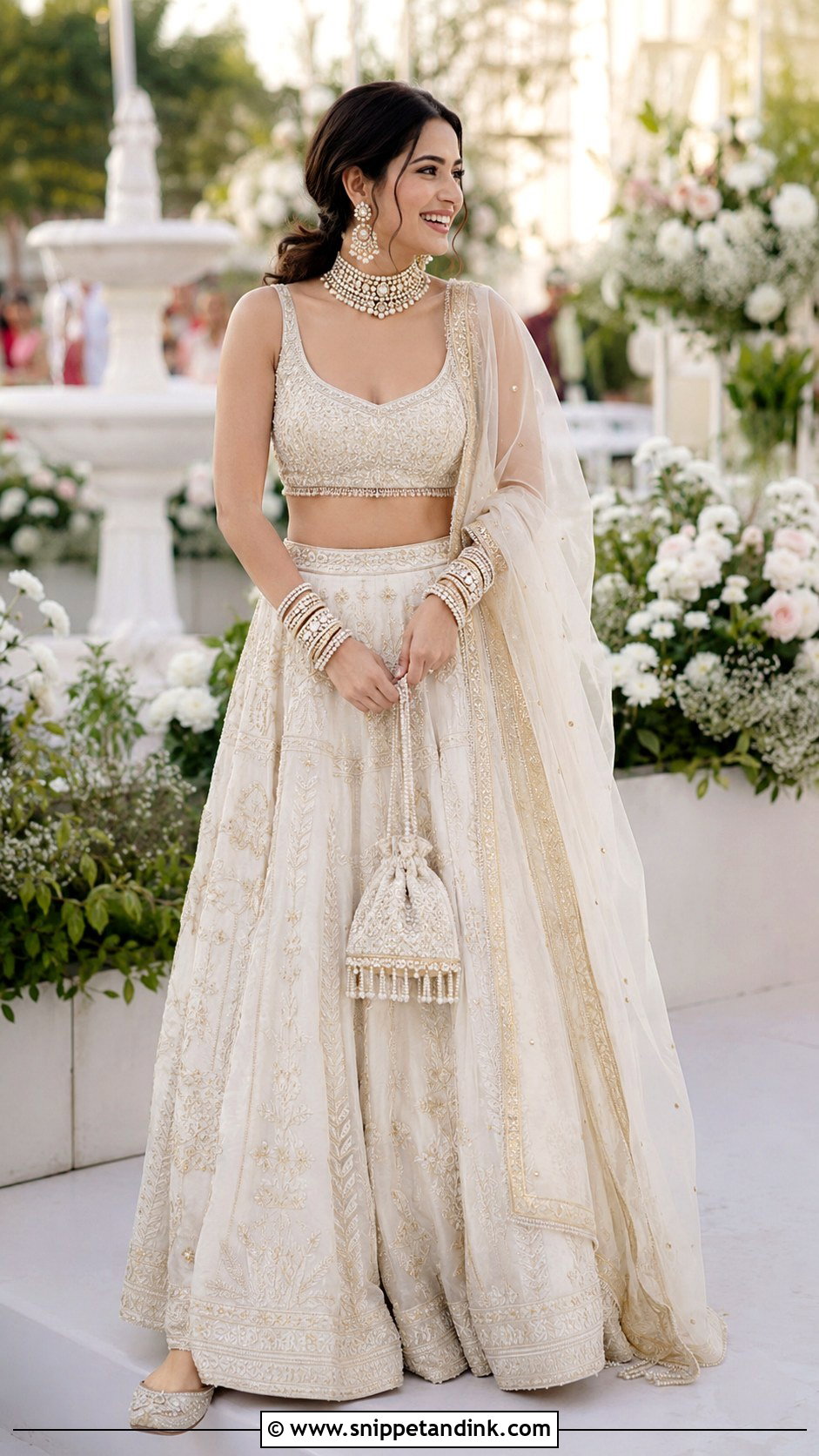
Pearls look warmer against ivory than they do against bright white, which is why an ivory or cream lehenga with light gold embroidery suits a pearl stack so well. Mix slim pearl bangles with two kundan kadas and narrow gold spacers. A pearl choker, matching drops and a small maang tikka carry the theme up to the face, and ivory juttis with a pearl-trimmed potli finish it. Keep the dupatta sheer with a narrow gold border. One practical note: strung or glued pearl bangles don’t like perfume and hairspray, so I always tell brides to put them on after the last spritz of scent, not before. It’s a quieter look that suits a daytime or garden ceremony.
3. Maroon Velvet Lehenga With Antique Gold Bangles
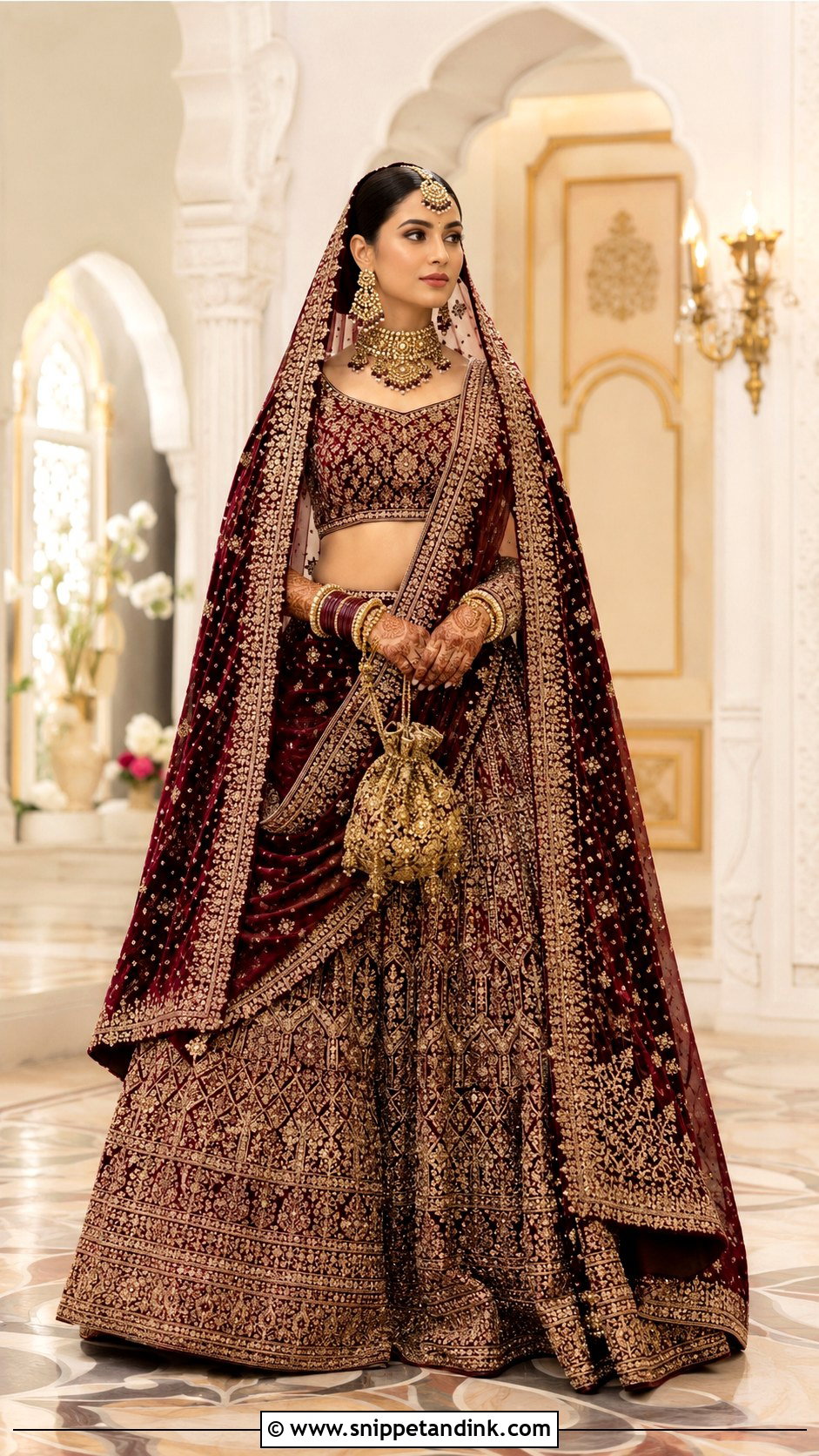
Velvet absorbs light, and bright polished gold against maroon velvet can look almost harsh in photographs. Antique-finish gold sits into the fabric instead. Build a structured stack of carved kadas, slim antique bangles and a few maroon glass pieces, then add an antique gold choker, statement earrings and a medium maang tikka. A maroon dupatta over the head gives the classic ceremony silhouette, and embroidered velvet juttis with a gold potli finish it. Don’t cover the whole forearm here. Velvet sleeves are already heavy, and a full stack on top makes the arms feel weighed down by the end of the pheras.
4. Blush Pink Lehenga With Rose Gold Bangle Set
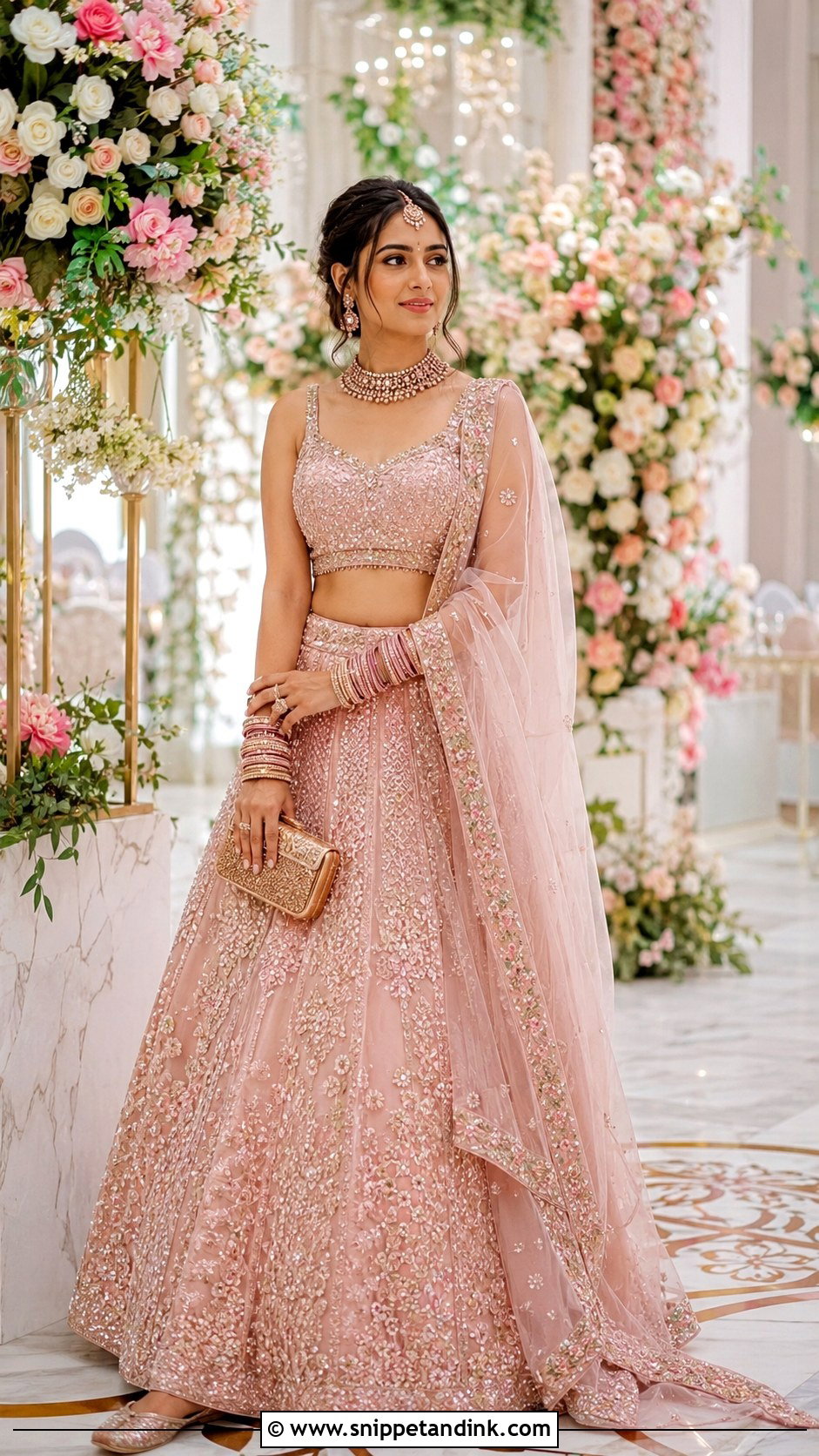
Rose gold is the hardest metal to match, because finishes range from almost copper to a pale pink, and two pieces from different makers rarely look the same side by side. That’s the main thing I check with a blush lehenga: hold every piece together in daylight before you commit. Pair a pink lehenga with silver, champagne or rose-toned embroidery with crystal bangles, rose gold kadas and narrow blush enamel pieces; clear stone spacers add sparkle without another color. A rose gold choker, matching earrings and a fine maang tikka continue the palette. Wear the dupatta over one shoulder so the wrists stay visible, and skip bright yellow gold accents entirely.
5. Green Lehenga With Temple Gold Bridal Bangles
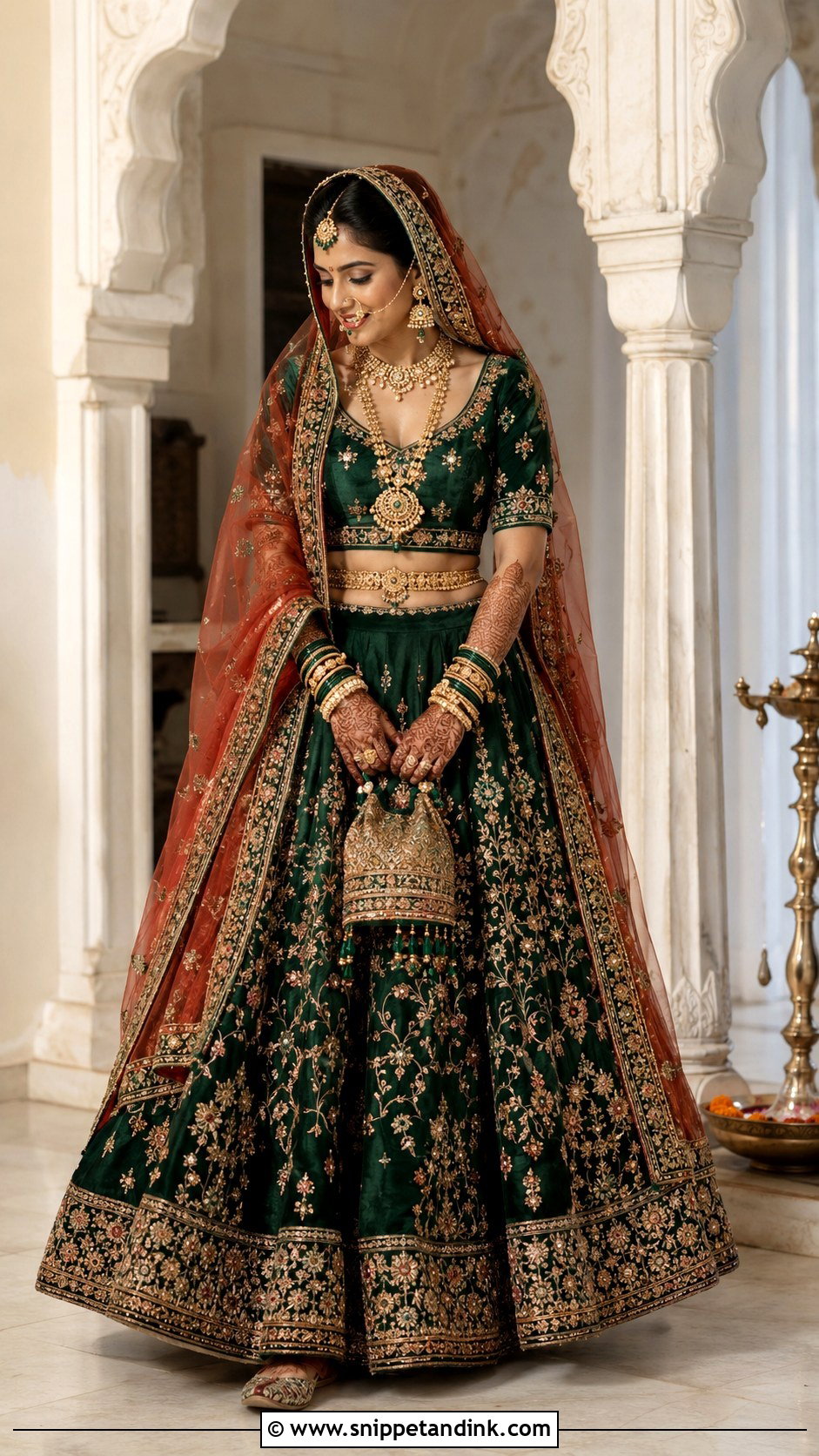
Temple jewelry, with its carved deity and floral motifs, was made to sit against strong colors, and emerald, bottle or forest green lehengas are an ideal backdrop. Build the stack with carved gold kadas, slim textured bangles and a few green glass bangles in the middle. Add a temple necklace, matching earrings and, if the lehenga shape suits it, a gold waist belt. A red or rust dupatta brings in a classic bridal accent. I keep the stones to red and green only, as traditional temple pieces do; a stray blue or pink stone breaks the heritage look. Gold juttis or embroidered flats will see you through a long ceremony.
6. Pastel Blue Lehenga With Silver Crystal Bangles
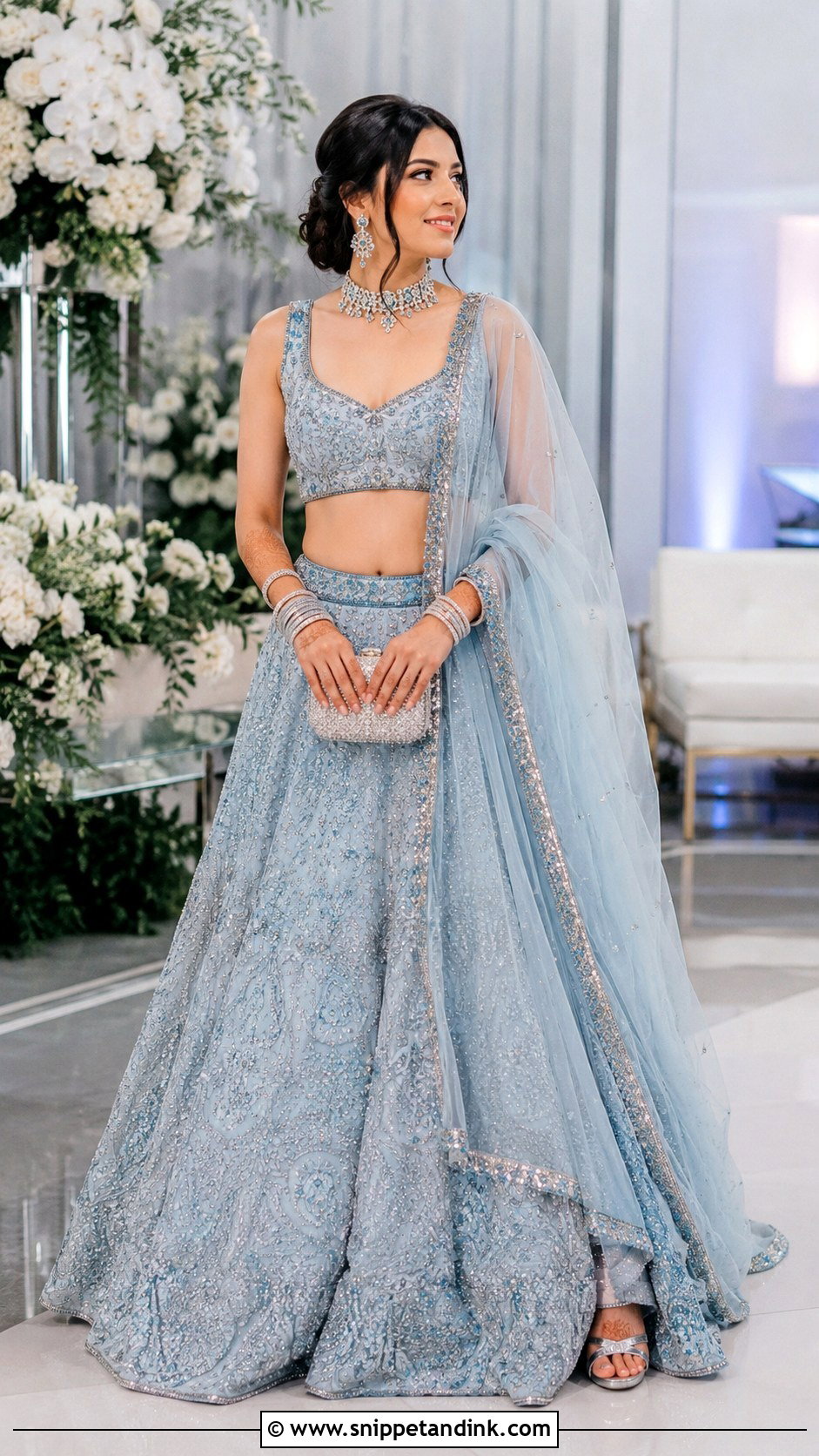
Pale blue can wash out in photographs, so this stack needs a little more definition than you’d expect. Pair a powder or icy blue lehenga with silver thread, sequin or crystal work with slim silver bangles, clear crystal spacers and two statement kadas set with pale blue stones; those wider kadas are what give the wrist an outline on camera. A diamond-style choker, drop earrings and a simple forehead piece keep the palette cool. Add a sheer blue dupatta with a silver border, metallic heels and a crystal clutch. Silver-tone fashion jewelry tarnishes faster than gold-tone in humid weather, so keep it sealed in a bag until the day.
7. Orange Mehndi Outfit With Floral Bangle Set
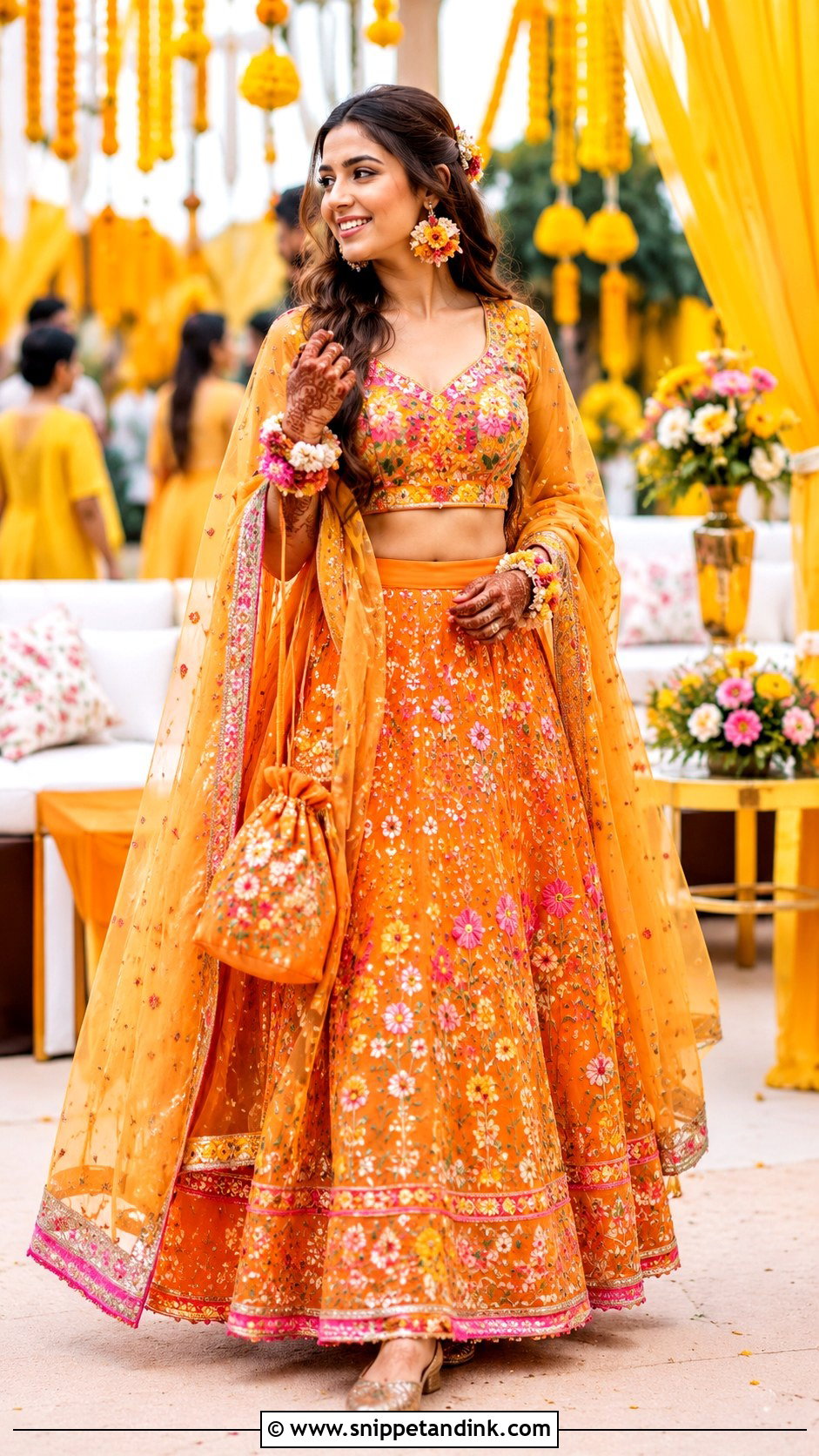
Floral bangles belong at a mehndi, where the mood is light and nobody expects heirloom gold. Wear an orange lehenga, sharara or skirt set with colorful threadwork that lets you move, then build the stack from silk-thread bangles, light gold spacers and floral bracelets in orange, pink or yellow. I usually suggest good artificial flowers rather than fresh ones: real blooms wilt in a few hours of heat and can leave sap on the skin right where the henna is drying. Small floral earrings, a light maang tikka, an embroidered potli and flat juttis finish it. Pin the dupatta back from your wrists. Remember the artist needs your hands free, so wear the bangles before or after the application, not during.
8. Yellow Haldi Outfit With Silk Thread Bangles
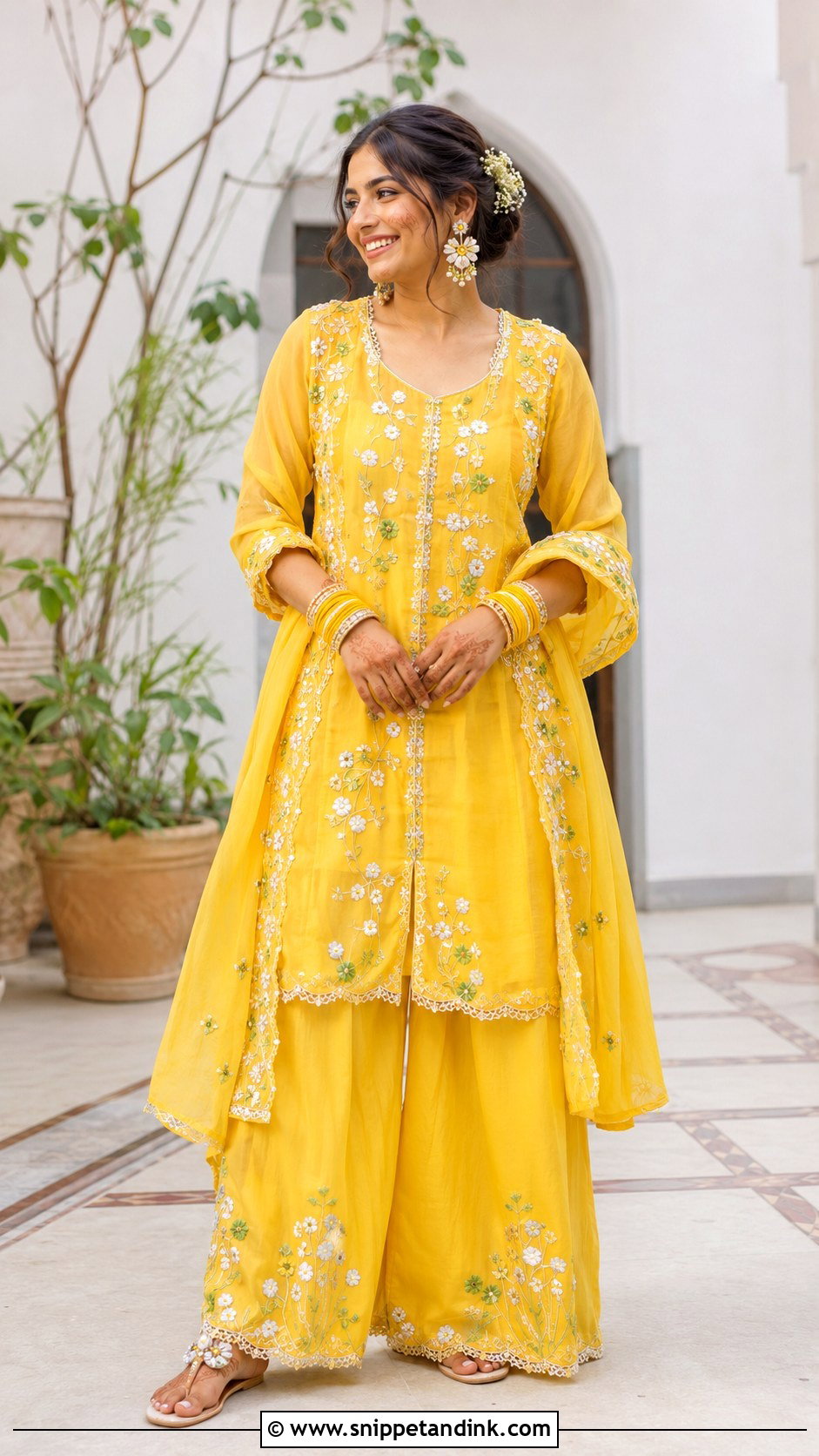
Haldi paste stains, so treat everything you wear to it as something that may come home yellow. A simple yellow lehenga, palazzo set or anarkali in breathable fabric pairs well with silk-thread bangles in yellow, white and green, with one wider decorative bangle in the middle of each stack. Keep the rest light: floral earrings, a small necklace, a delicate hair accessory and washable flats. Pin the dupatta short or neatly so it stays off your wrists. Leave gemstones and plated pieces at home. Turmeric and oil get into stone settings and are very hard to clean out, while silk thread is cheap enough not to matter.
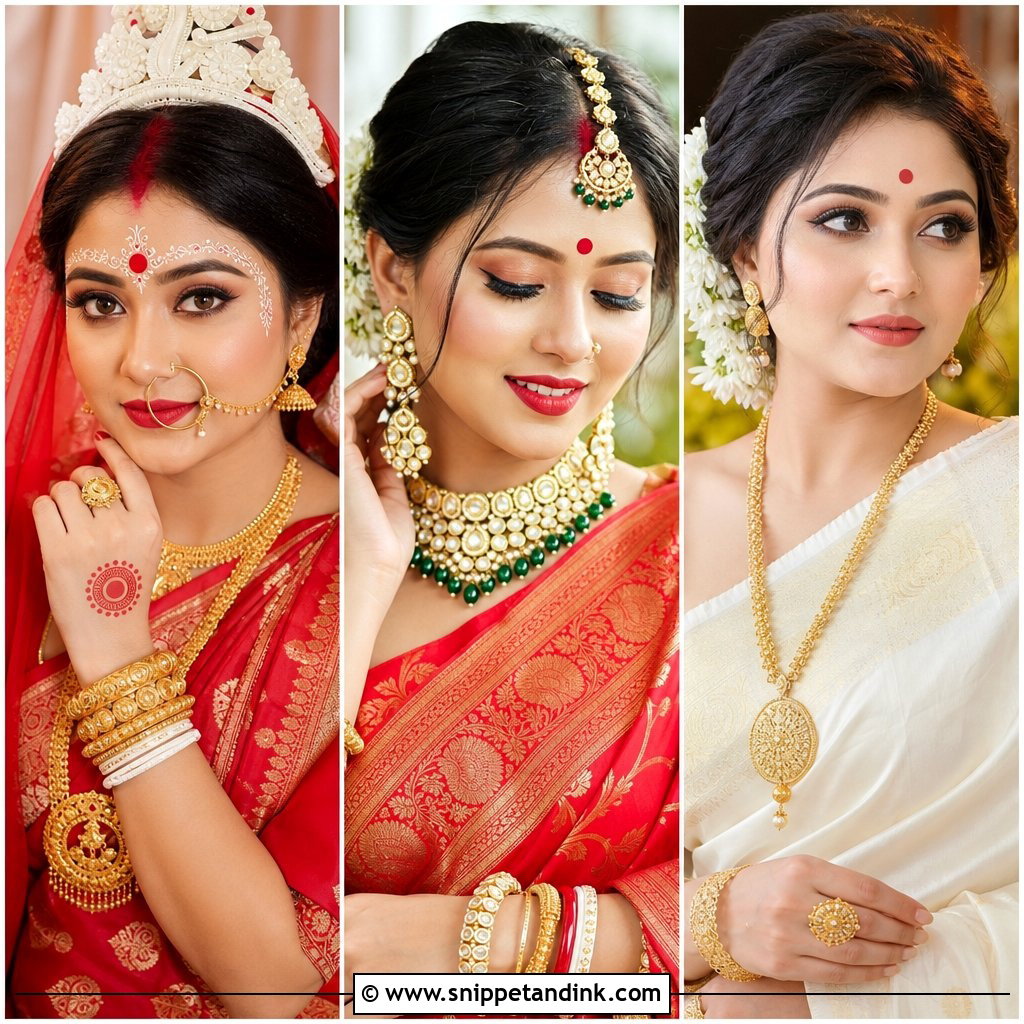
9. Red Banarasi Saree With Shakha Pola Bangles
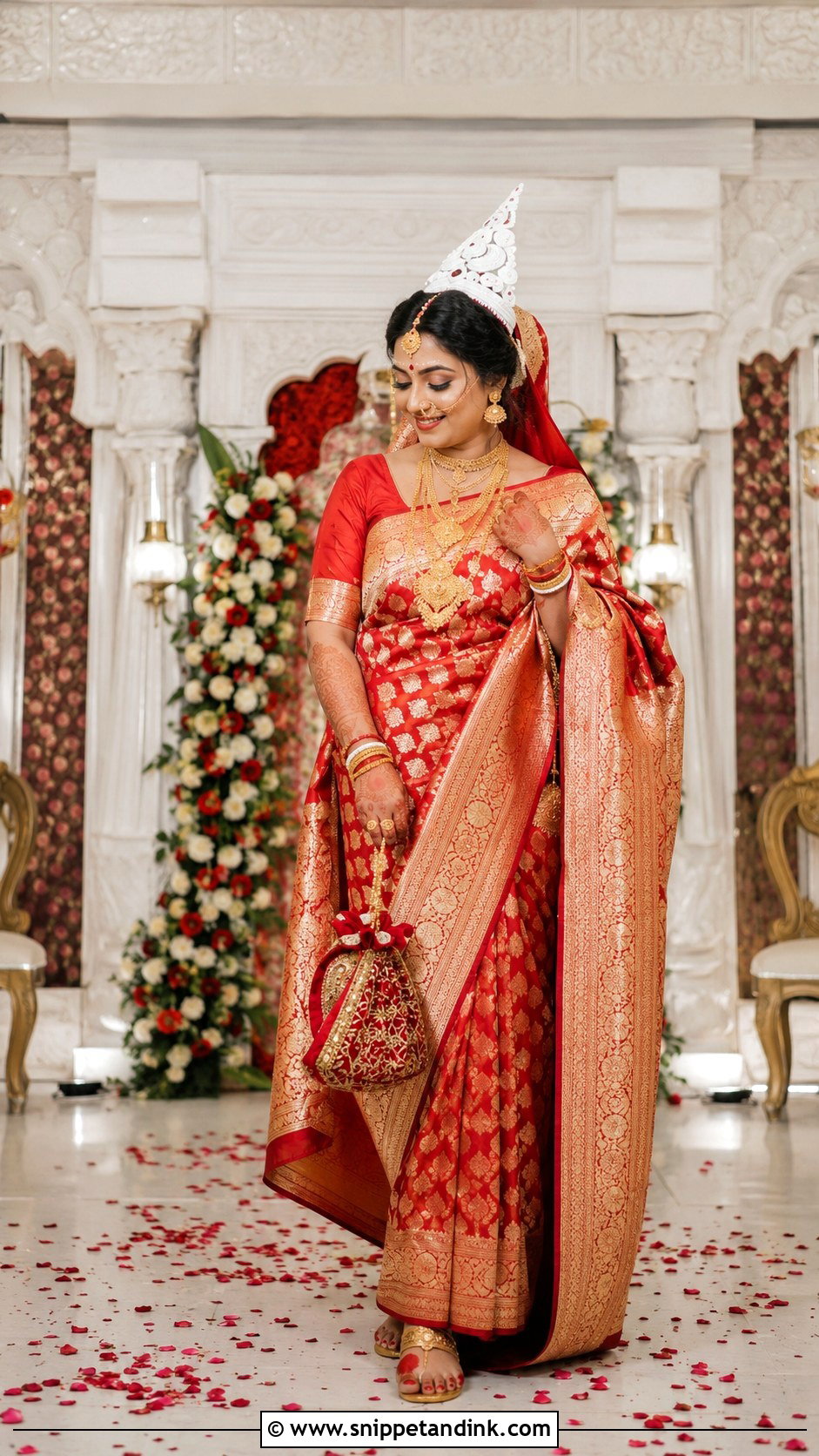
A red Banarasi saree with shakha-pola gives a deeply traditional Bengali bridal appearance. Shakha are the white bangles carved from conch shell, pola the red ones traditionally made of coral or lac, and they’re often worn with the loha, an iron bangle commonly covered in gold. Conch shell is brittle, so I warn brides that a hard knock on a door frame can crack it; buy a spare pair if your family’s custom allows. Wear the saree with a fitted red blouse, layered gold necklaces, jhumkas and the traditional forehead design, with a white mukut and a neat bun. Alta on the hands and feet suits the ritual, and plain gold sandals stay out of the way. Keep extra bangles to a minimum so the red-and-white pair remains the focus.
10. White And Red Saree With Bengali Bridal Bangles
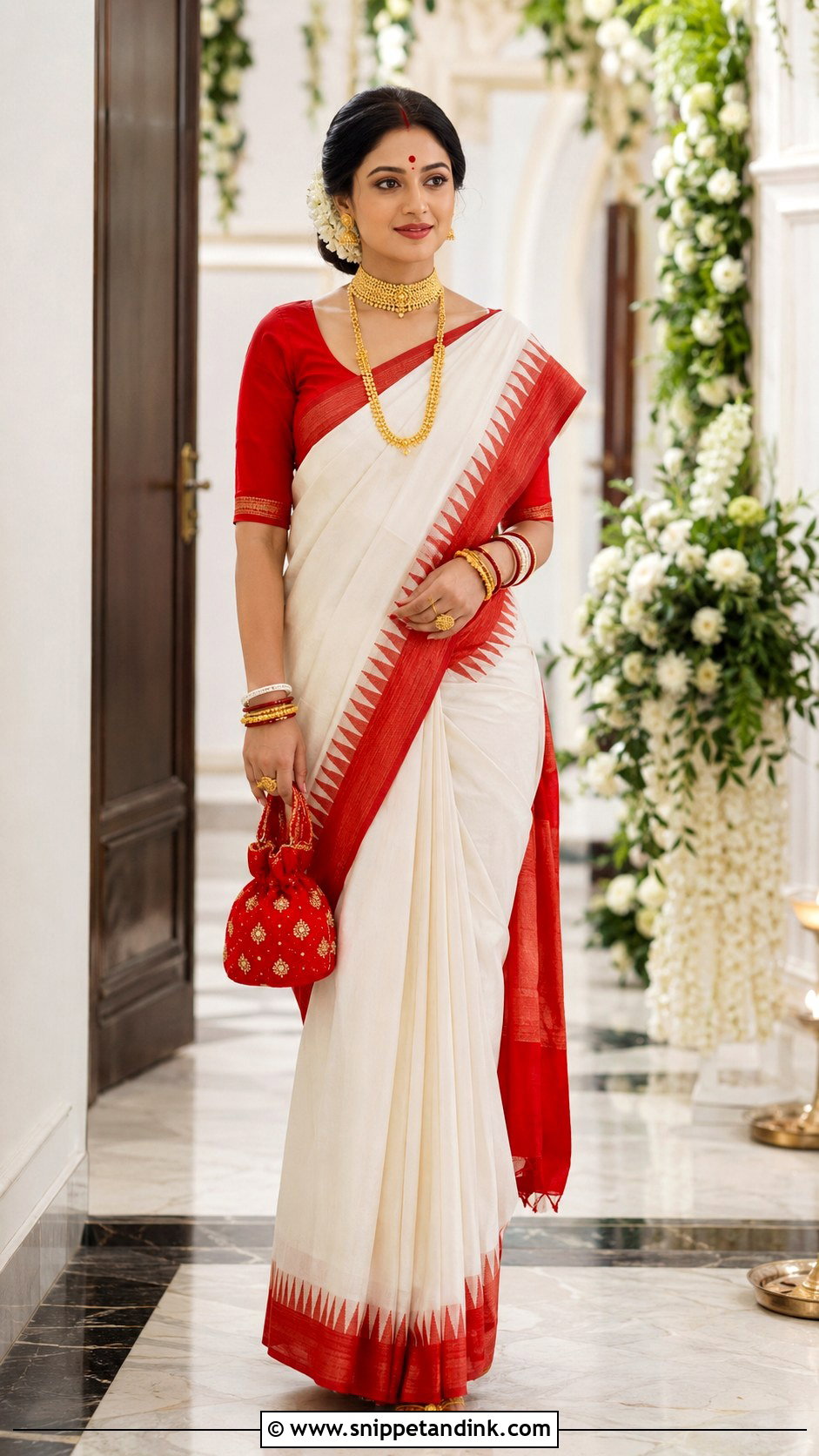
A white or off-white saree with a broad red border and a red blouse gives a crisp, graphic Bengali look. Build the wrists around shakha-pola, adding slim gold bangles only if you want more fullness. A gold choker, a longer chain, ornate earrings and a small nose ring complete the jewelry, with a center-parted bun dressed in white flowers. Red or gold sandals and a compact embroidered potli finish it. Because the palette is just red, white and gold, each symbolic piece stays visible. The thing I watch for is mixing gold tones: a bright new chain next to an older, mellow family piece can look mismatched against white, so lay them out together first.
11. Champagne Saree With Diamond Bridal Bangles
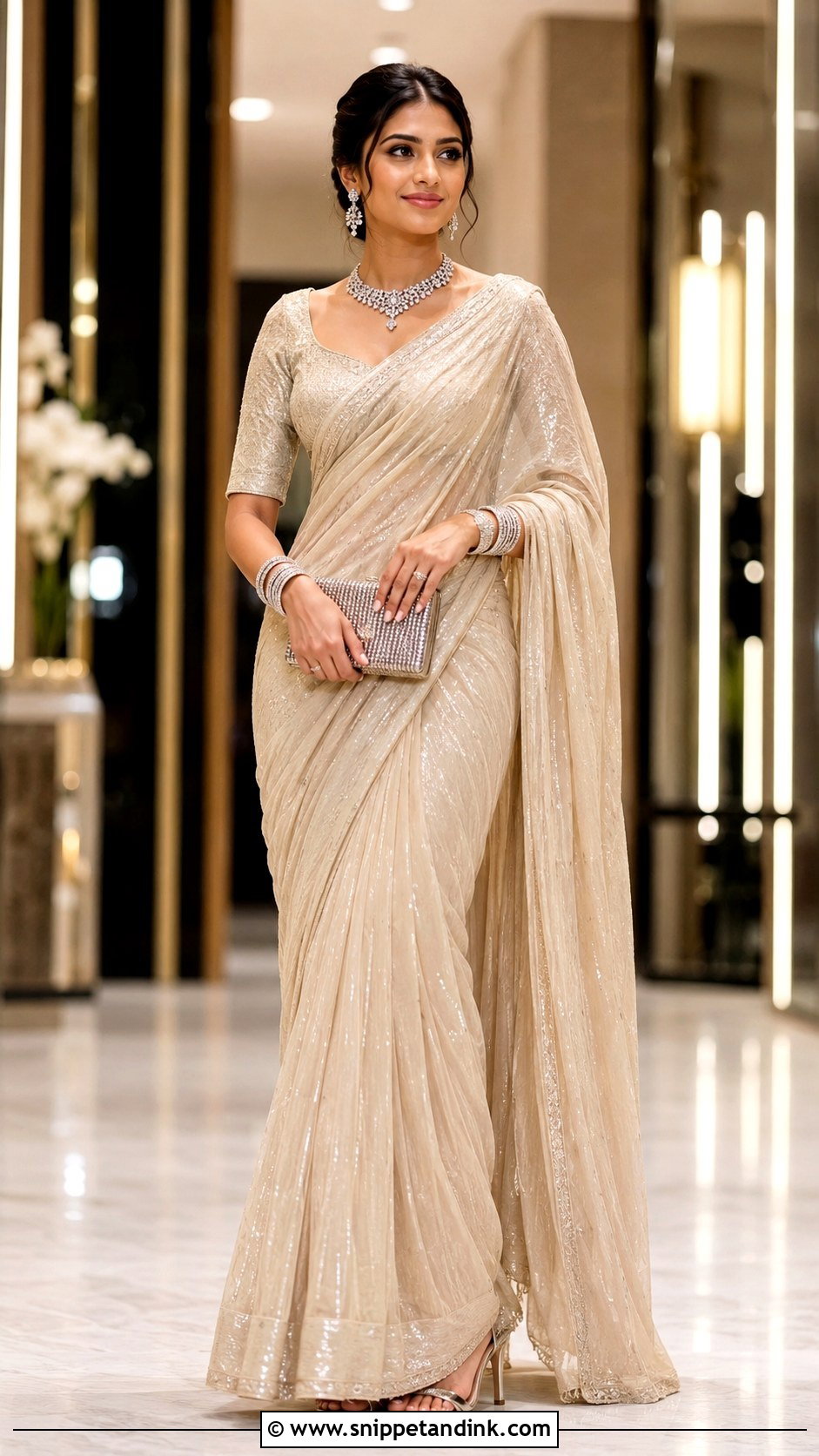
For a reception, a champagne saree with diamond-style bangles is about light, and too many sparkle sources fight each other. Choose a draped, pre-stitched or lightweight sequined saree with a blouse in the same neutral. Stack slim crystal bangles between two stone-set kadas for a symmetrical finish, then add a diamond-style necklace, matching earrings and a small cocktail ring. My rule here is one stone shape throughout: round with round, or baguette with baguette. Mixed cuts look busy against a sequined saree. Metallic heels and a silver or champagne clutch keep it cohesive, and smooth waves or a low bun suit the evening mood.
12. Purple Lehenga With Kundan Bridal Bangle Set
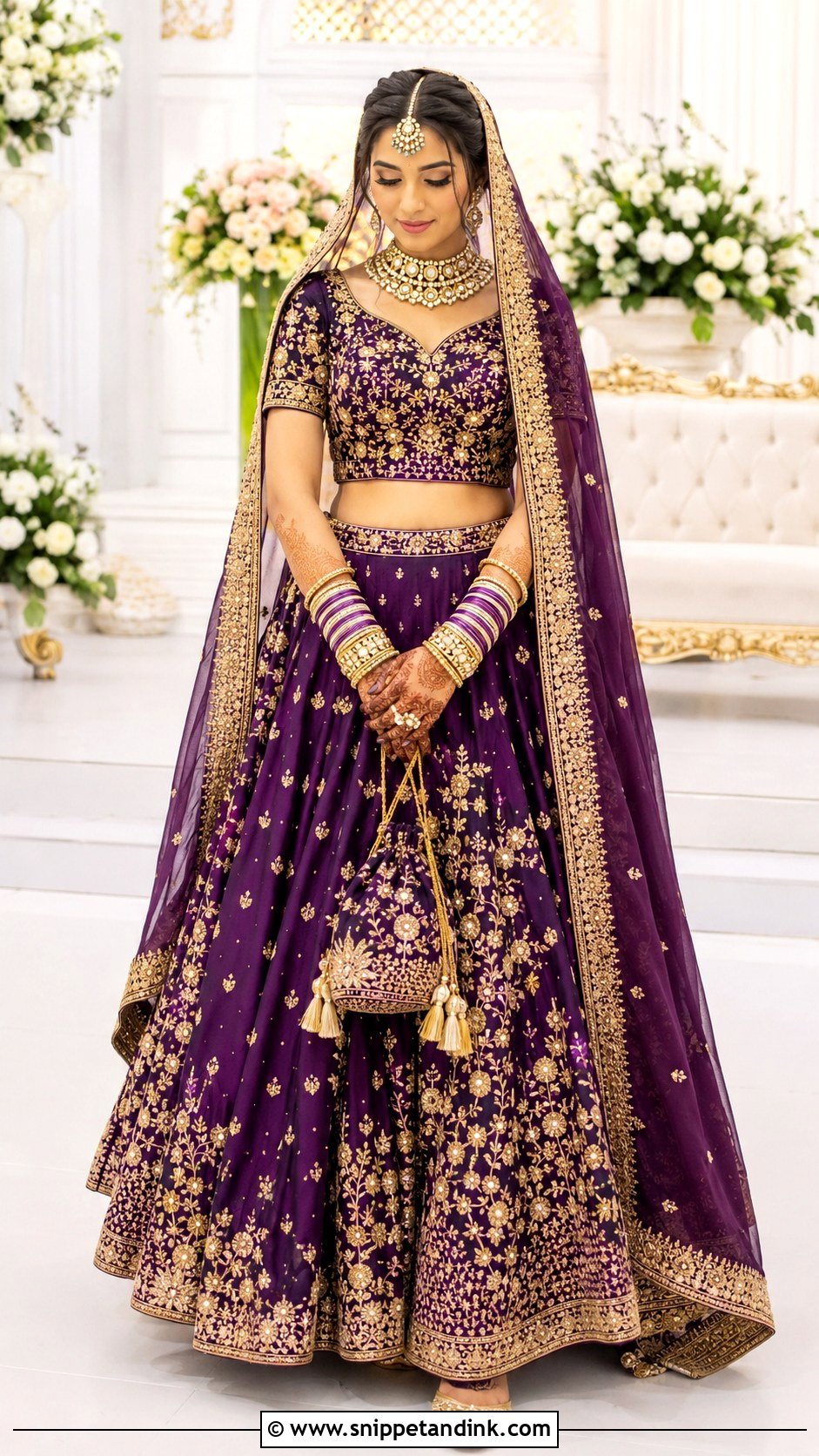
Purple keeps all the impact of red but feels less expected. A plum, grape or deep violet lehenga with gold embroidery pairs well with kundan kadas, purple glass bangles and narrow gold separators. Small green or pearl touches add contrast if used sparingly. Add a kundan choker, medium earrings and a coordinating maang tikka, with a purple dupatta bordered in gold, gold juttis and an embroidered potli. If the blouse sleeves are heavily worked, I shorten the stack so the two don’t clash where they meet. Glass bangles in deep purple vary a lot between batches, so buy the full set from one seller at the same time.
13. Teal Sharara With Meenakari Bangle Set
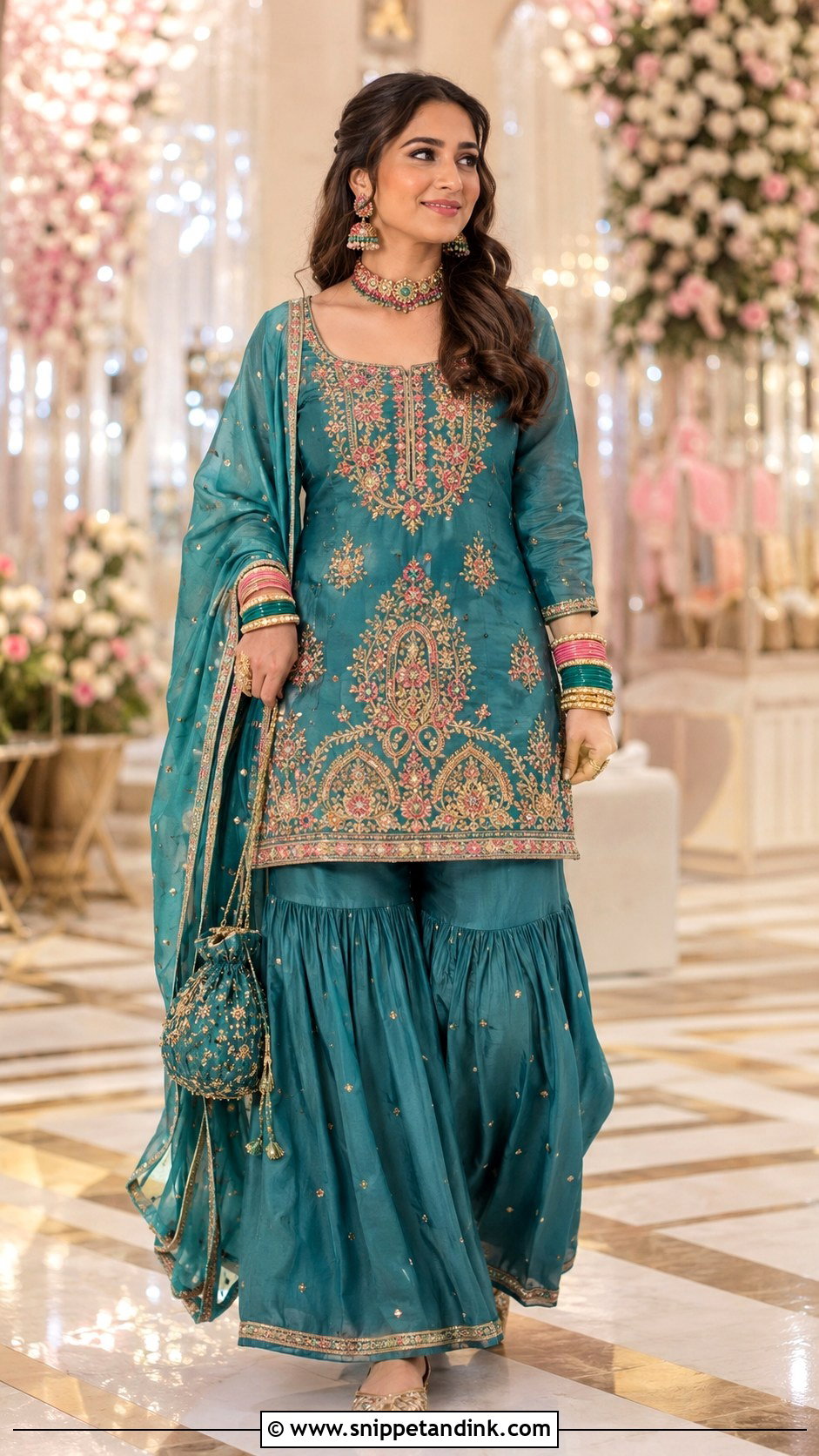
Meenakari is enamel fired onto metal, and its painted colors make it easy to pick up the exact teal of a sharara. Choose bangles with teal, gold, pink and ivory work, put one painted kada in the center and surround it with slim gold and teal bangles. Wear a short embellished kurta and a light dupatta pinned over one shoulder, then add meenakari earrings and a compact choker. Gold juttis and a small teal potli finish it. Enamel chips if bangles knock together hard, which happens a lot during sangeet dancing, so I’d keep the stack loose enough to move without clattering and store each piece separately afterwards.
14. Peach Anarkali With Pearl Kundan Bangles
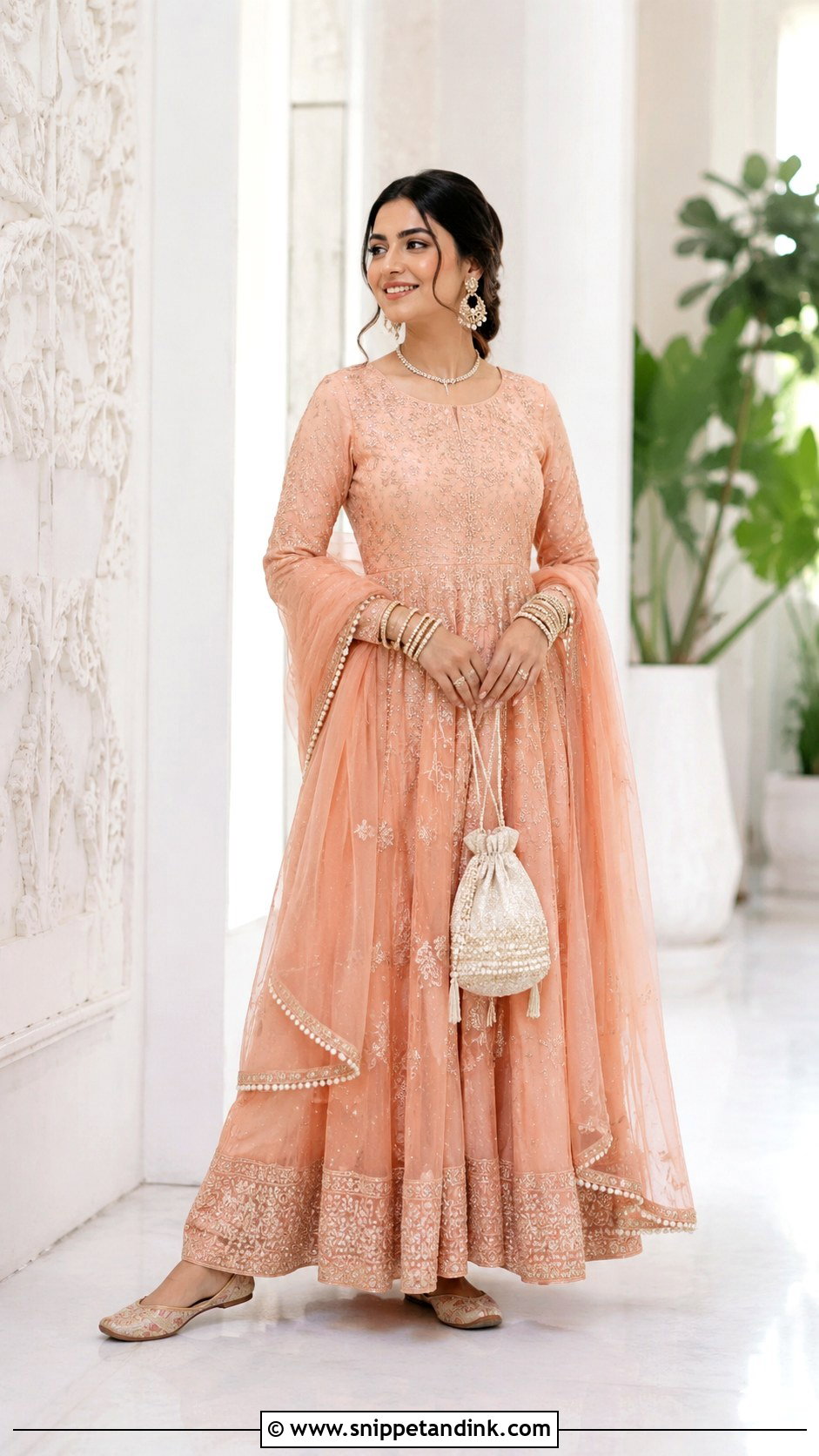
A flowing peach anarkali calls for a medium stack, not a full one. Pick a floor-length design with ivory embroidery, soft gold borders or fine floral motifs, and build the wrist from pearl bangles, slim kundan pieces and two wider ivory kadas. That’s enough detail to look bridal without fighting the movement of the skirt. A pearl-edged dupatta, kundan earrings and a light necklace complete it, with peach juttis and a small ivory potli. A low bun or soft waves with a pearl hair accessory suits it. I like this pairing for an engagement or a daytime family function, where very heavy jewelry can look out of place.


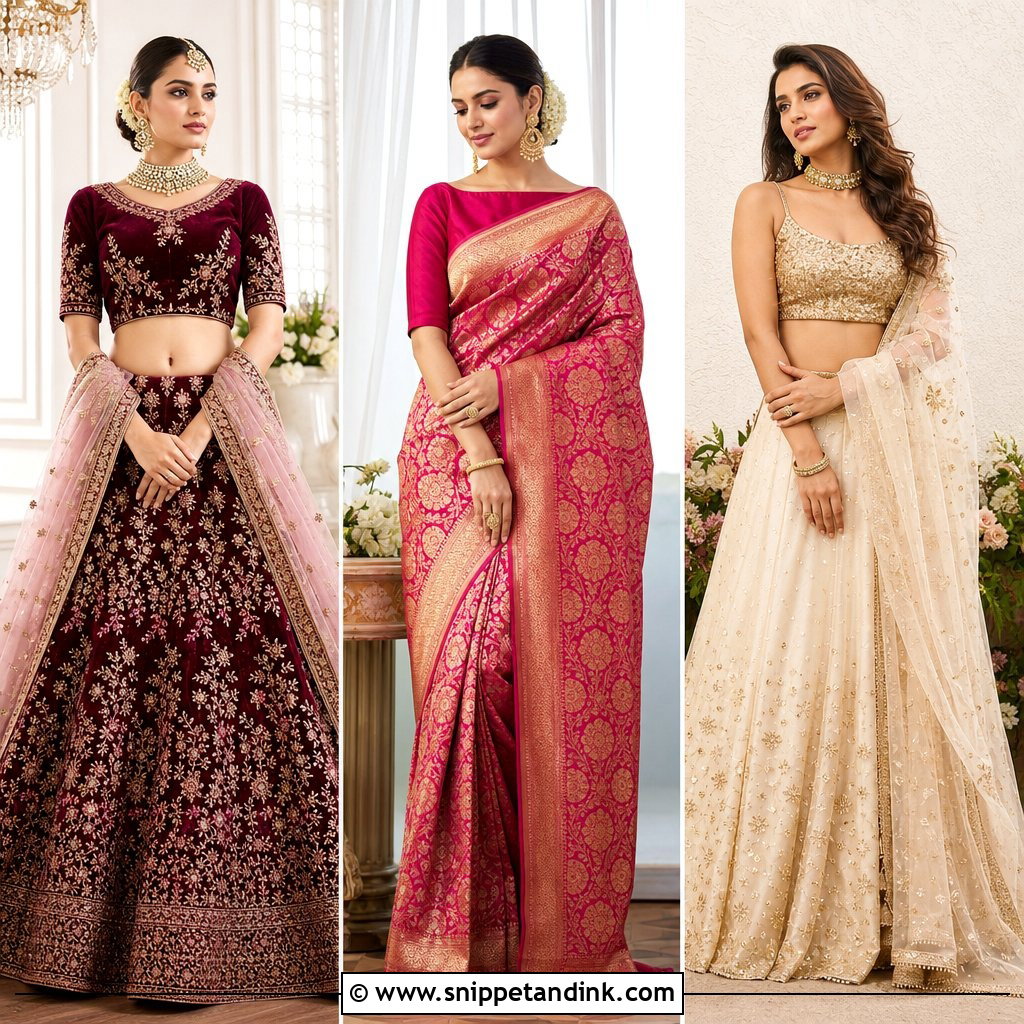
15. Magenta Lehenga With Mirror Work Bangles
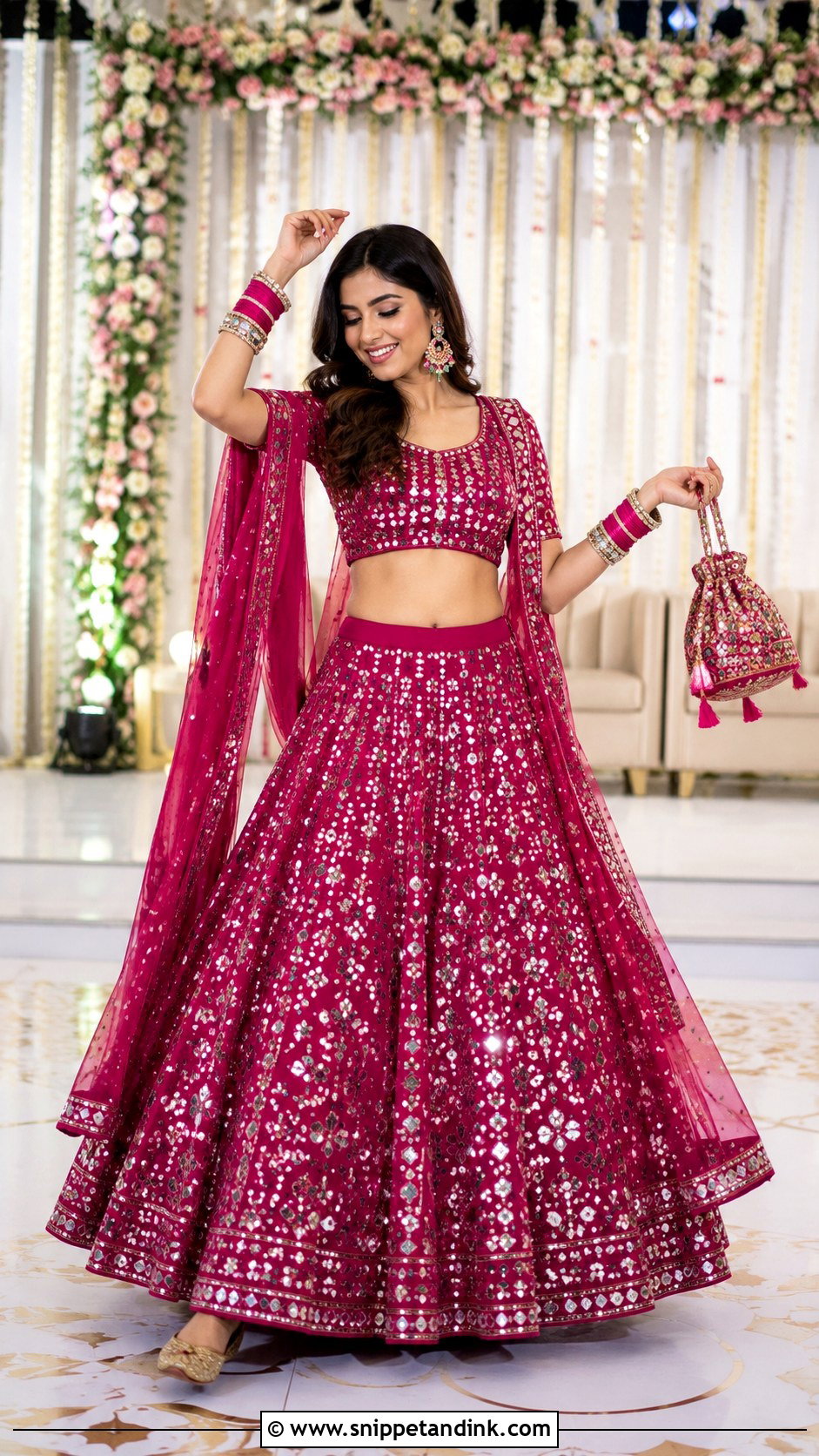
Mirror-work bangles throw light around every time you move, which suits a magenta lehenga with reflective embroidery, colorful threadwork or an orange border. Mix mirrored kadas with slim magenta bangles and small gold spacers, and arrange them in a pattern rather than at random. A mirror-work choker or colorful earrings can link the jewelry to the outfit, but not both if the blouse is already heavily worked. Add a light dupatta, gold juttis and an embroidered potli. This outfit is ideal for a sangeet, where it catches the stage lights. Before buying, run a finger along each mirror edge; a rough or loose glass edge can catch chiffon or scratch your wrist during dancing.
16. Royal Blue Lehenga With Zircon Bridal Bangles
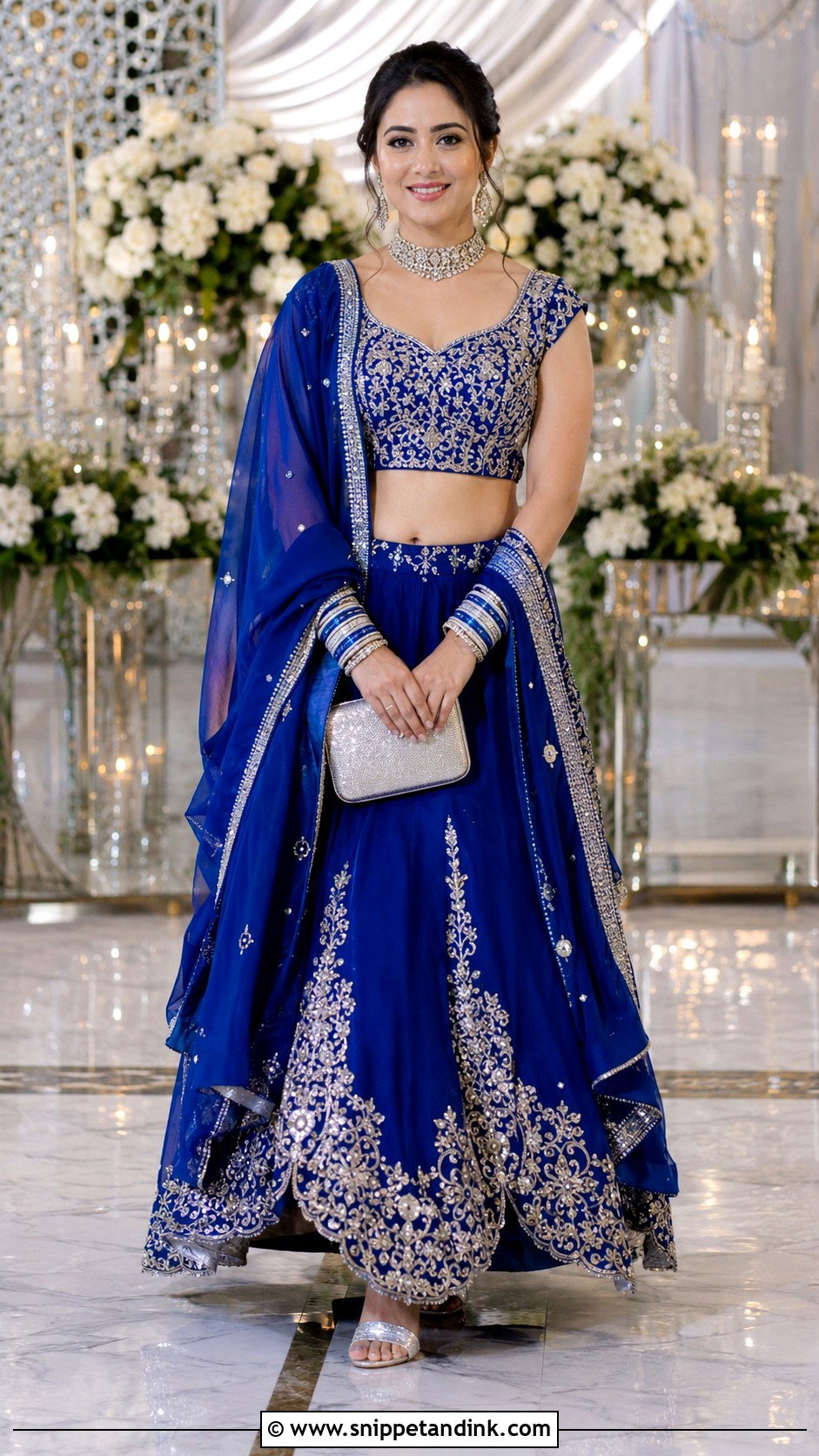
Royal blue is deep enough to make zircon read as real sparkle at an evening reception. Choose a blue lehenga with silver embroidery or scattered crystals, then combine slim zircon bangles with two wide statement kadas and a few royal blue enamel pieces through the middle. A crystal choker, matching earrings and a simple hand chain complete the jewelry, with silver heels and a structured metallic clutch. Drape the dupatta so the stack and blouse stay visible. Keep makeup and accessories in a cool palette; one warm gold piece will stand out for the wrong reasons. Zircon scratches less easily than glass, which makes it a sensible choice if you’ll wear it again.
17. Bridal Gown With Minimal Gold Bangle Set
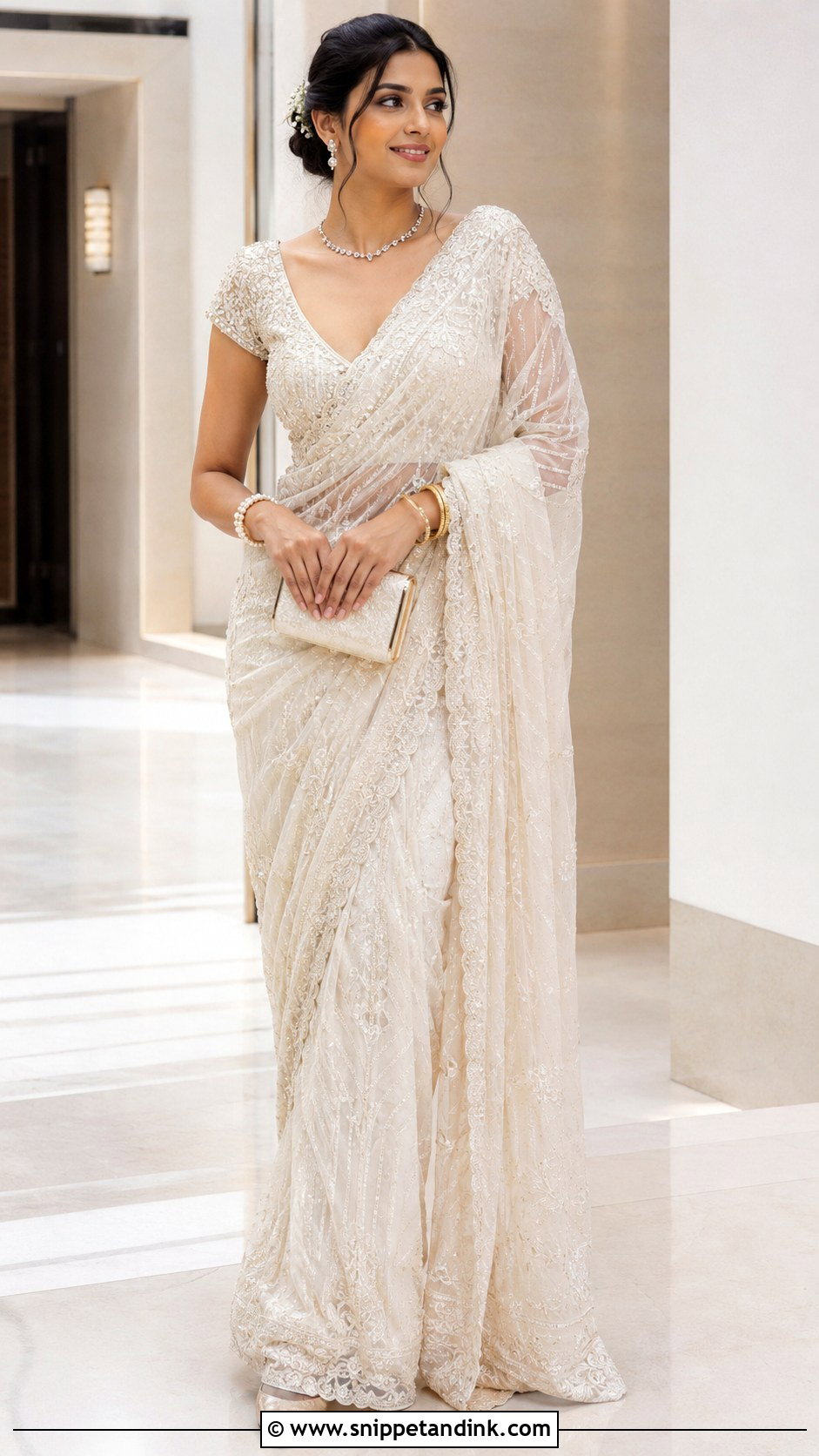
Indian bangles can work with a bridal gown, provided you treat them as an accent rather than a stack. With an ivory, champagne or pale gold gown with a clean neckline, wear two slim gold bangles, one pearl kada and a fine bracelet on each wrist. That respects the line of the dress while adding a clear cultural detail. Pearl drops, a fine necklace and understated hair jewelry complete it, with pointed metallic heels and a structured clutch. With long lace sleeves, I’d reduce it to one kada per wrist, since bangle edges snag delicate lace. It suits a reception, a civil ceremony or a multicultural celebration that blends Western and South Asian fashion.
18. Bridal Pantsuit With Statement Kadas
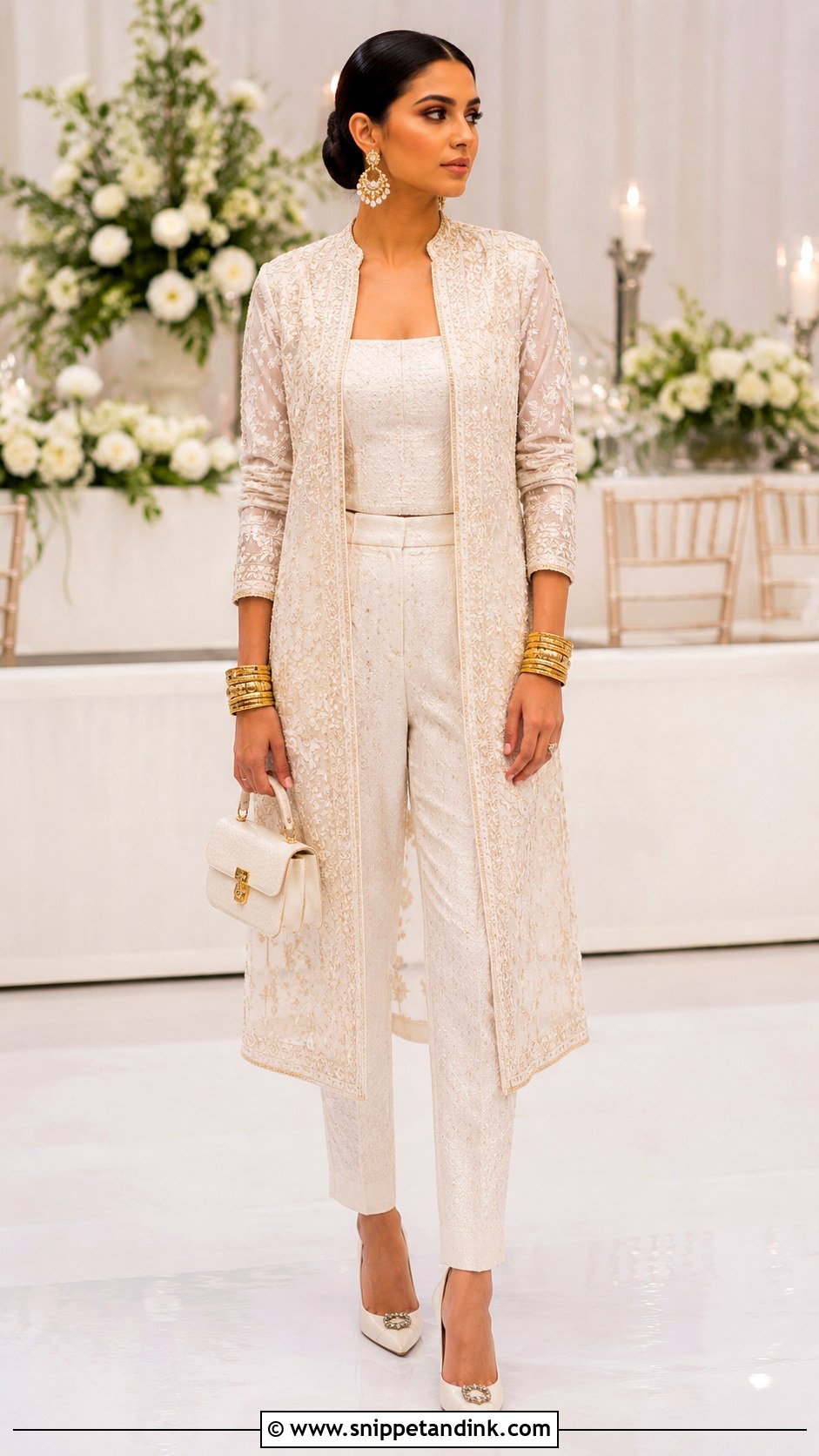
A pantsuit and bangles share one problem: the blazer cuff. Bangles push the sleeve up or catch on the lining, so the stack has to be shorter than usual. Wear an ivory or jewel-toned suit with a fitted blouse or camisole under a long embroidered blazer, then add one carved kada and a few slim metal bangles per wrist. Ask your tailor to finish the sleeve just above the wrist bone so the kada shows. Pointed heels, a structured mini bag and statement earrings keep the silhouette sharp, and a sleek ponytail or low bun suits it better than ornate hair jewelry. Gold kadas go with warm ivory and emerald; silver or crystal with white and blue tailoring.
19. Pink Banarasi Saree With Ruby Emerald Bangles
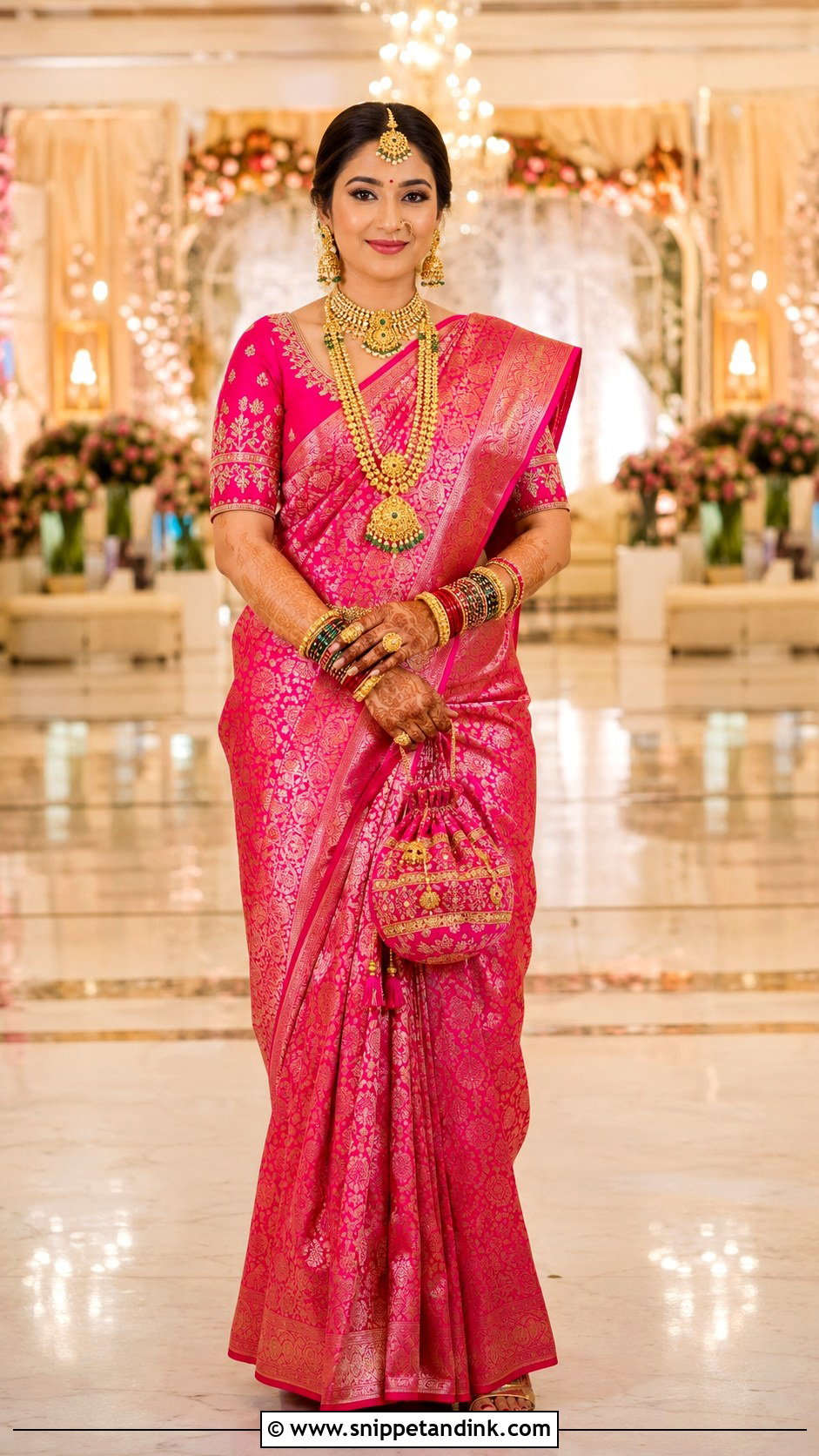
Rani pink or fuchsia Banarasi with woven gold motifs is bright enough to carry colored stones without looking busy. Wear the saree with a fitted matching blouse, then arrange slim gold bangles around two kadas set with red and green stones. That limited contrast adds depth and links naturally to traditional bridal jewelry. A gold choker, a long necklace, jhumkas and a small maang tikka in the same colors complete it, with gold sandals and a pink embroidered potli. Drape the pallu to frame the jewelry rather than cover it. If the stones are glass or paste, keep them out of long direct sun before the wedding; some colors fade or cloud over time.
20. Multicolor Lehenga With Navratna Bangle Set
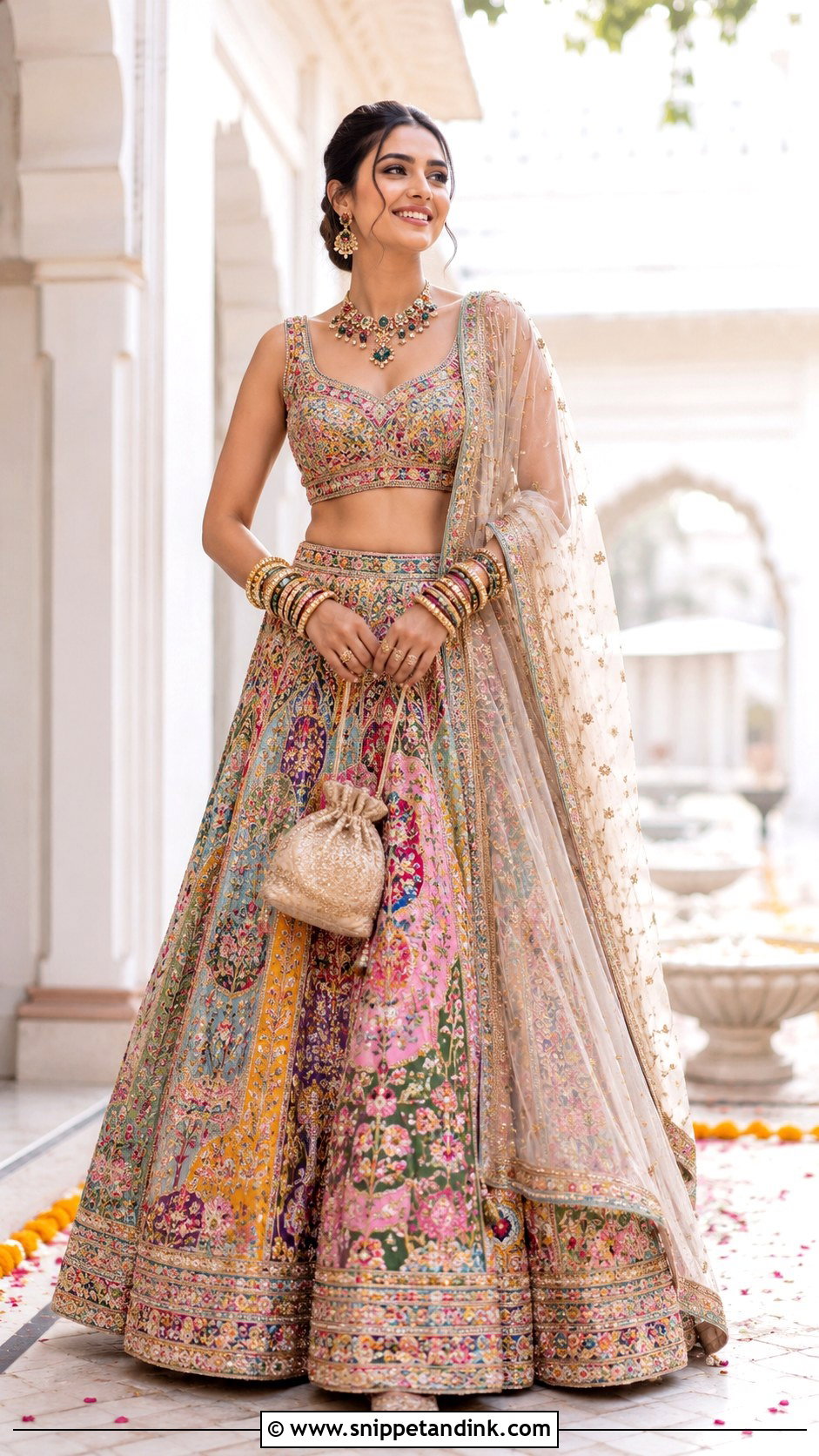
Navratna means nine gems, traditionally set together for luck, and with a multicolored lehenga you don’t need every bangle to match. Choose an outfit with a controlled mix of pink, green, blue, orange and gold embroidery, anchor each wrist with two gold kadas, then add slim stone-colored bangles only in shades already in the lehenga. I keep both wrists symmetrical; with this many colors, uneven stacks look accidental. Wear a navratna necklace or earrings, never oversized versions of both. Gold juttis, a neutral dupatta and a simple potli give the bright pieces room. It suits a sangeet, mehndi or colorful daytime wedding.
How Glass, Lac, Kundan and Plated Gold Hold Up Over a Wedding Week
A wedding with mehndi, haldi, sangeet, ceremony and reception puts more wear on bangles than a year of normal use. Each material needs slightly different handling, and almost all of it comes down to moisture, knocks and storage.
Glass and lac
Glass bangles chip on edges you didn’t notice you were touching, such as car doors, table corners and other people’s bangles during hugs. Buy a few extra in each color so a broken one can be replaced on the day. Lac softens with heat, so don’t leave lac bangles in a hot car or near lamps.
Kundan, polki and stone-set pieces
Many kundan and fashion kadas have stones set in lac or adhesive, and water loosens both. Take them off before washing your hands or applying lotion, and wipe them with a dry, soft cloth at the end of each night. If a stone feels loose, I’d stop wearing that piece until it’s reset rather than risk losing the stone halfway through the pheras.
Plated and imitation gold
Plating wears away where bangles rub against each other and against skin. Put perfume, hairspray and sanitizer on before the jewelry, and keep each set in its own zip bag with the air pressed out between events. That slows tarnish and stops harder stones from scratching softer metal.
In many Bengali families the shakha and pola are put on the bride on the wedding morning, and many married women continue to wear them daily. If that’s your custom, ask your family how they like a cracked shakha to be replaced. It’s better to have that conversation now than in the middle of the celebrations.
Let the Embroidery Decide the Metal on Your Wrists
Bangles are easiest to choose once the outfit is fixed. Match the main metal to the embroidery on your lehenga or saree, then repeat one or two of its colors on the wrist. Wide kadas give structure; slim bangles add movement and fullness. Pearl, kundan, crystal, meenakari, gold and silk thread each suit different ceremonies and budgets. Before the wedding, check the size, the weight and how the stack sits with your sleeves, because bangles should feel secure without stopping you from using your hands. Shakha-pola, a heavy gold stack or a pair of minimal kadas all look right when they’re coordinated with care.
You'll Like These Ideas:



Leave a Reply