
A crown asks more of the hairstyle under it than any other bridal accessory. It has weight, it has a rigid band, and it needs something to grip, which is why the work is never just placing a tiara on top of finished hair. When I plan a crown look, I start with where the band will sit, what its combs or loops will anchor into, and whether a veil has to share that same spot. The styles below run from a smooth nape bun to a full crown braid, and for each one I’ve noted what keeps the crown in place and who the style suits less well.
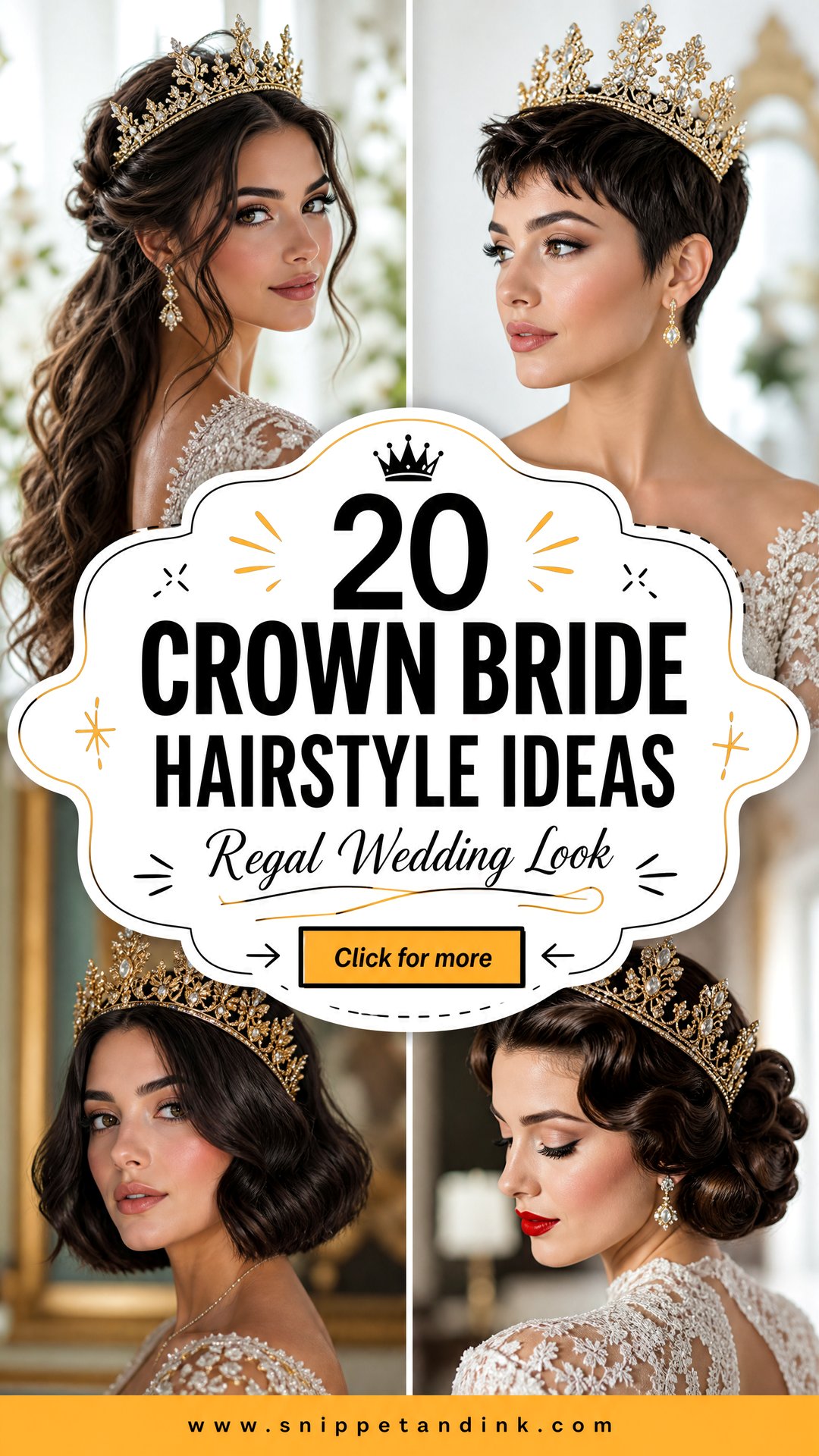
How a Crown Actually Stays on Your Head
Most bridal crowns and tiaras use one of two attachment systems: small combs on the band, or loops at each end. Combs need something dense to bite into, so I either tease the hair directly under the band or make a flat twist or small braid for them to slide through. Loops get bobby pins threaded through and crossed into an X over a teased base. The X matters. A single pin pushed straight through a loop will work its way out by the reception.
Weight and the two sore spots behind the ears
Crowns vary a lot in weight. Most bridal pieces are light enough to forget about, but a tall crystal or metal crown presses on the same two points behind the ears all day. If it feels heavy in the shop, it will feel heavier by the evening. Ask your stylist to spread pins along the band rather than only at the ends, and wear it around the house for an hour before your trial.
Checks I make before a bride buys
- Hold the crown where it will sit and see that the ends reach behind the ears, not just to the temples.
- If your head is wider or your hair very thick, look for a bendable band; rigid ones can’t be shaped to fit.
- Turn it over and check for rough solder or prongs that will snag hair or veil tulle.
- Match the metal tone to your earrings and ring, not only to the dress.
1. Crown Bride Low Bun
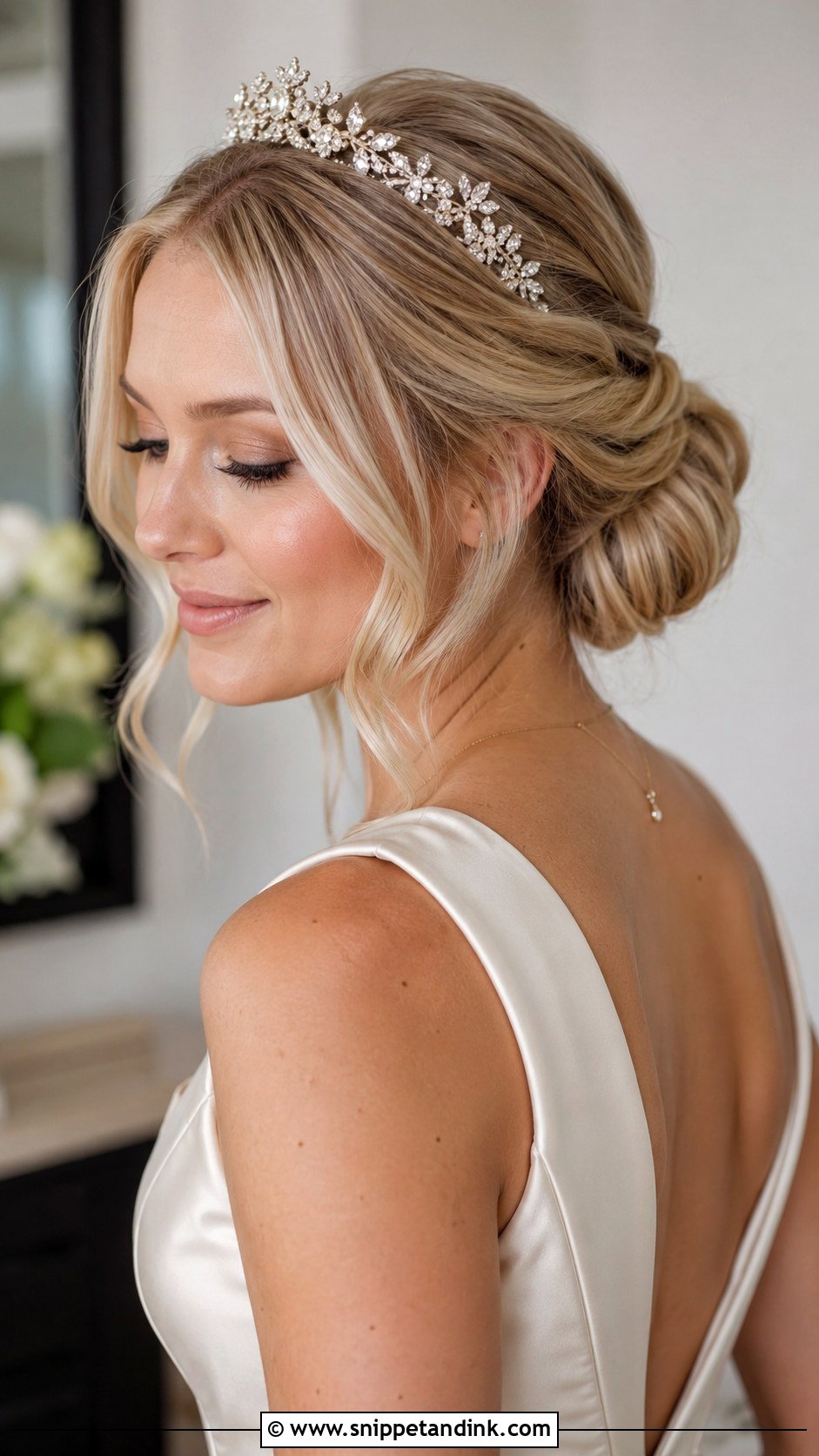
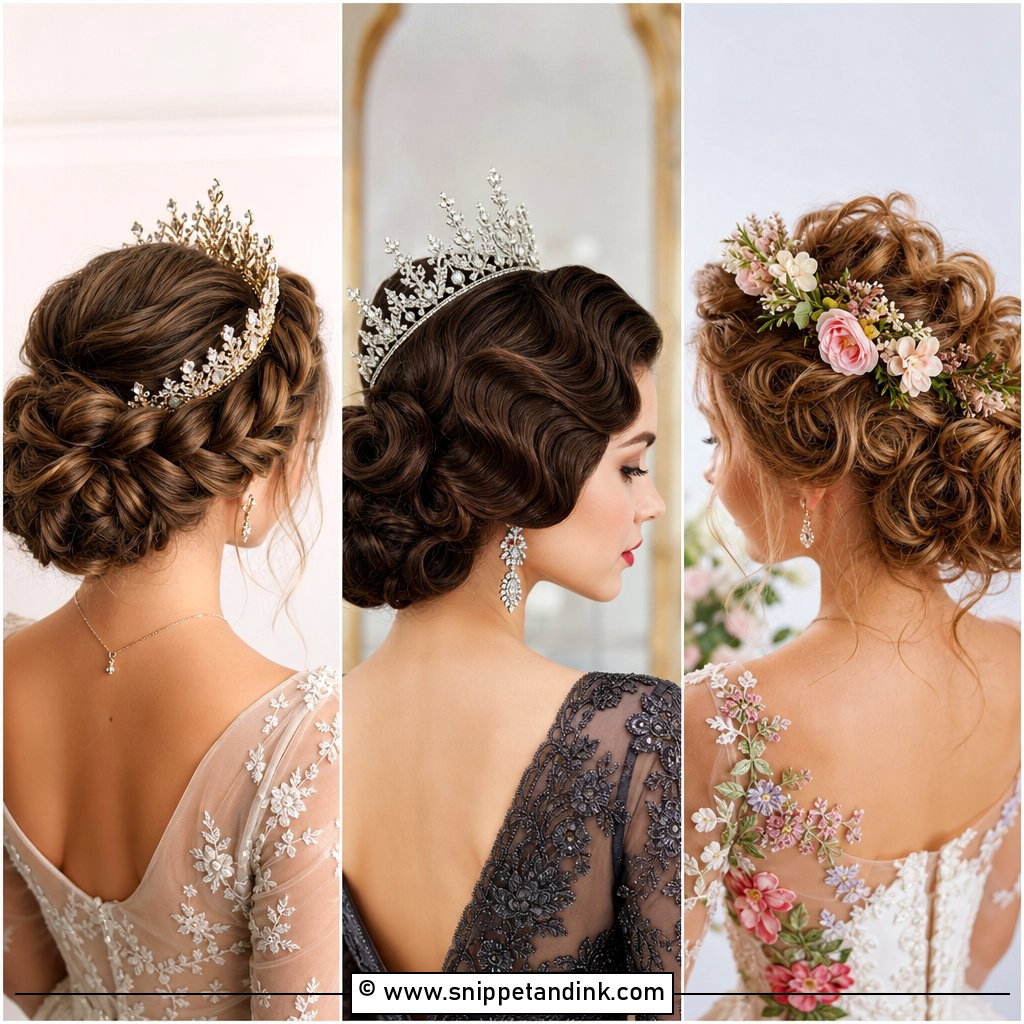
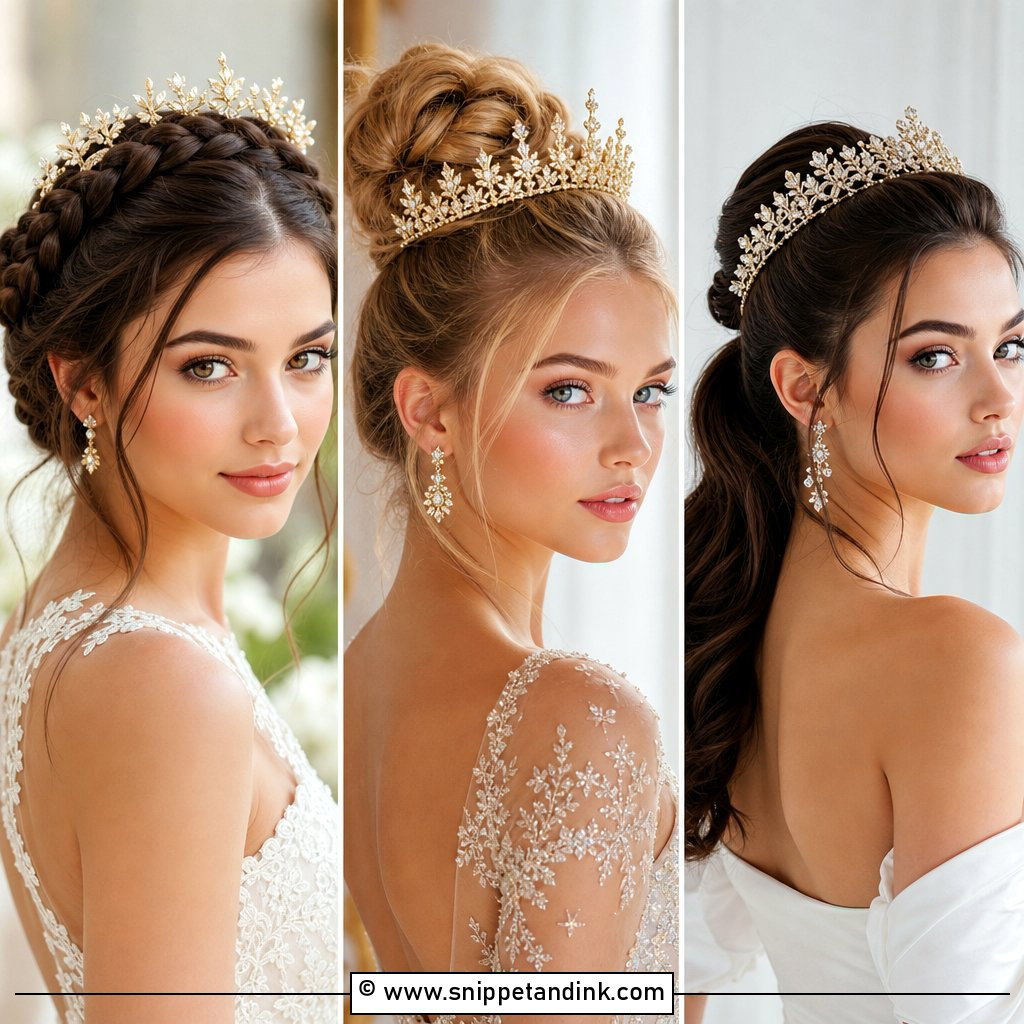
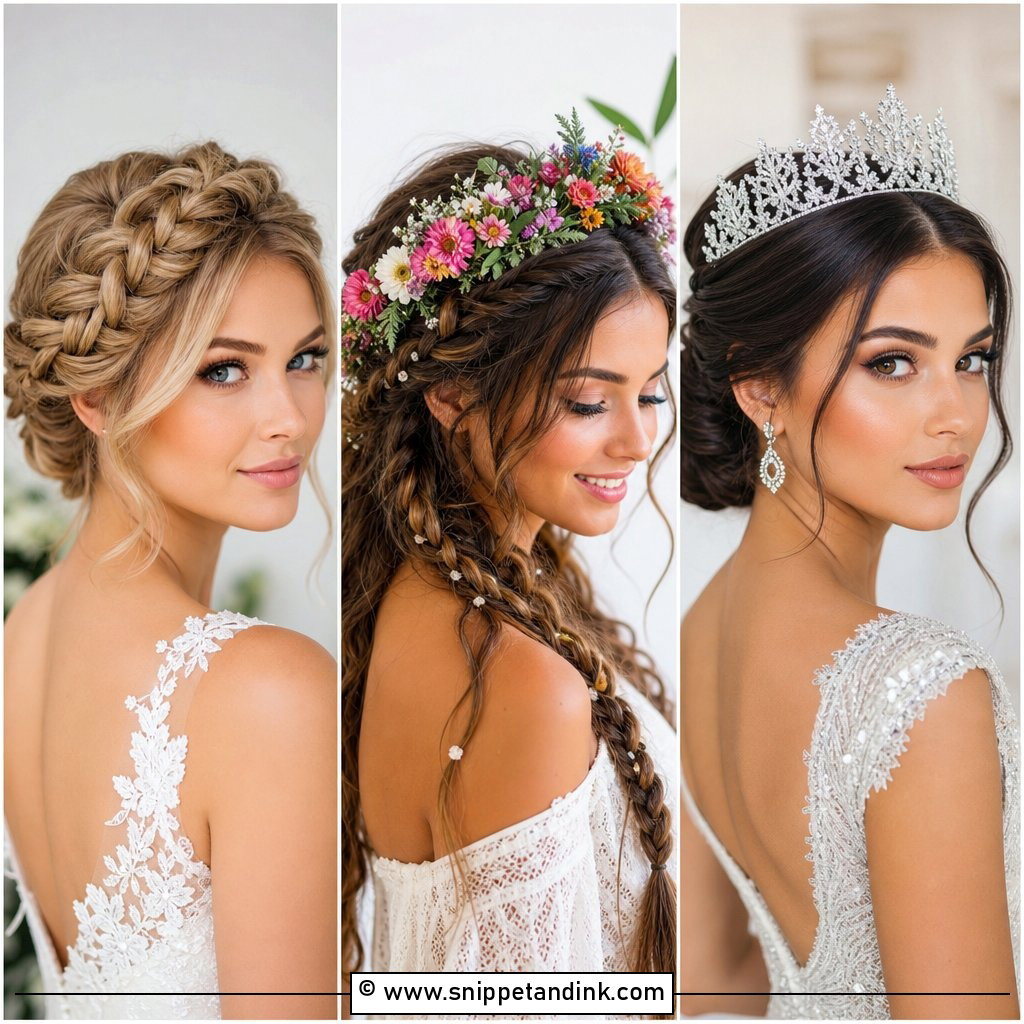
This is the style I reach for most often when a bride is nervous about her crown moving. The bun sits at the nape, so the weight of the hair pulls down and back while the crown sits forward, and the two never fight for the same pins. I build a small teased cushion behind the hairline before smoothing the top over it; without that, the band presses the hair flat and looks stuck on rather than worn. It suits strapless gowns, square necklines and lace sleeves, and it keeps its shape through a long day because nothing is loose enough to drop.
2. Crown Bride Half Up Half Down Hair
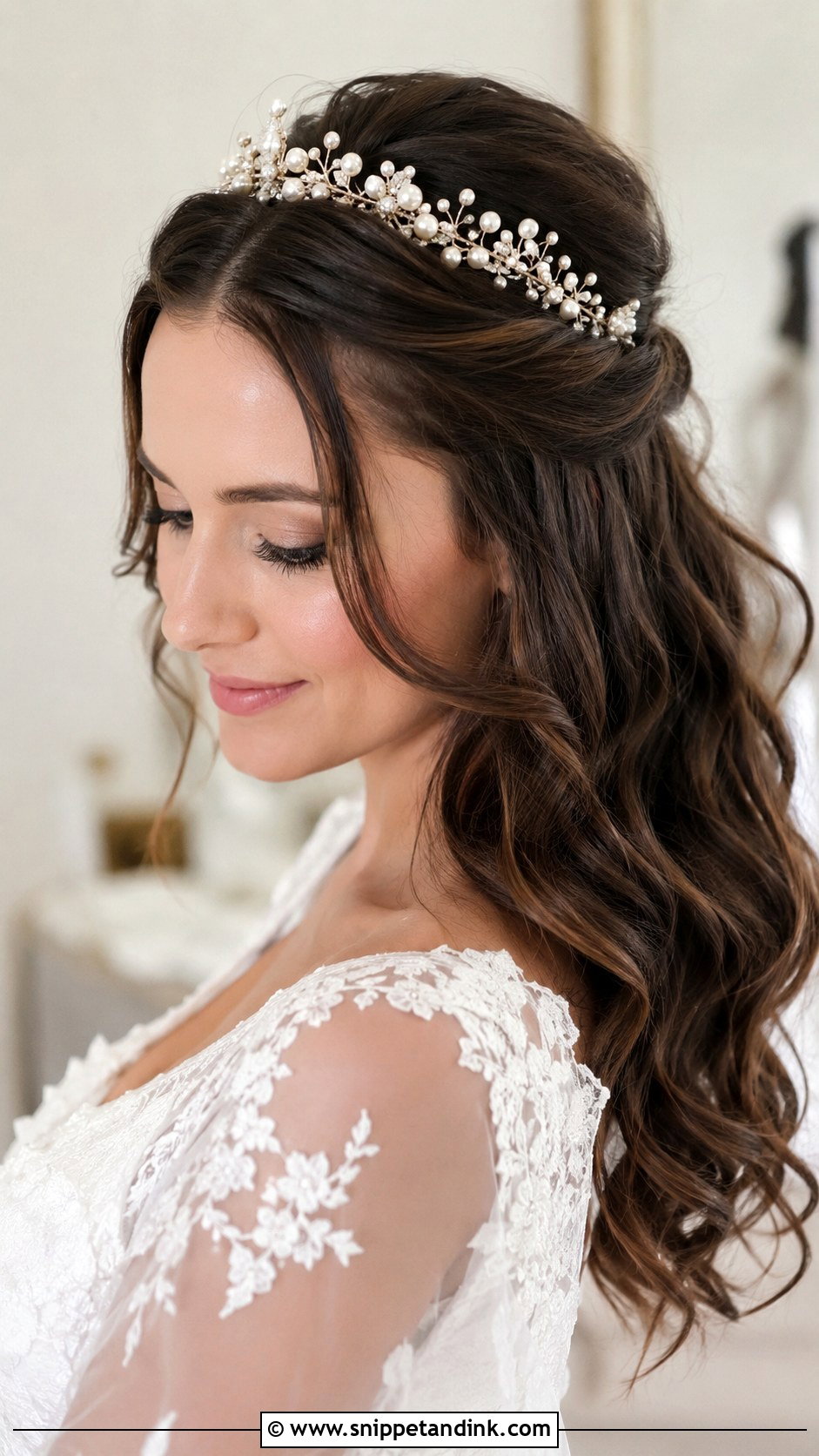
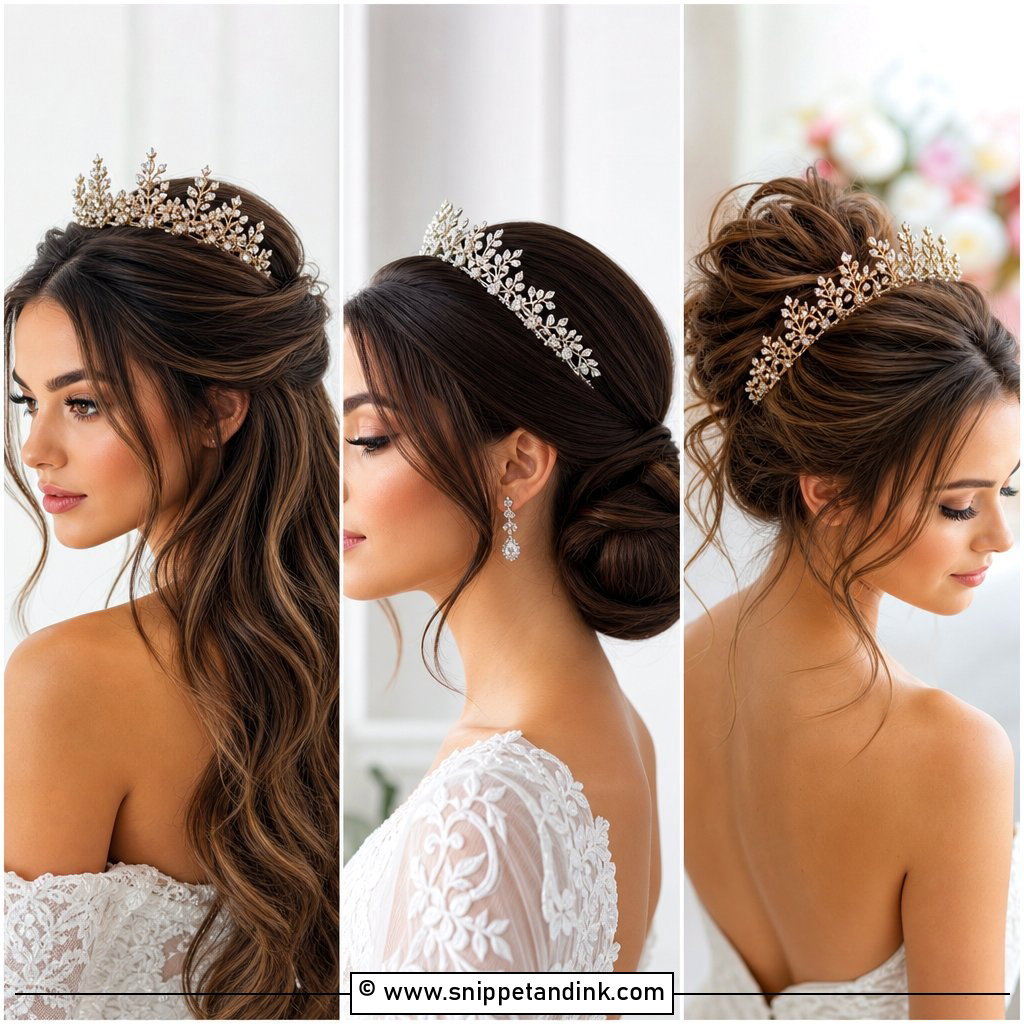
Half-up is a compromise in the good sense: loose lengths for movement, and a pinned top section that gives the crown something solid to bite into. I usually twist or braid that top section flat and run the crown’s combs straight through it, which is far more secure than pushing them into loose hair. One honest caveat: if your hair is very fine and slippery, the loose part will lose its curl faster than an updo would, so plan a touch-up before the reception. Pearl crowns and slim crystal tiaras sit nicely here. Anything heavy tends to drag the twist backward over the evening.
3. Crown Bride Hollywood Waves
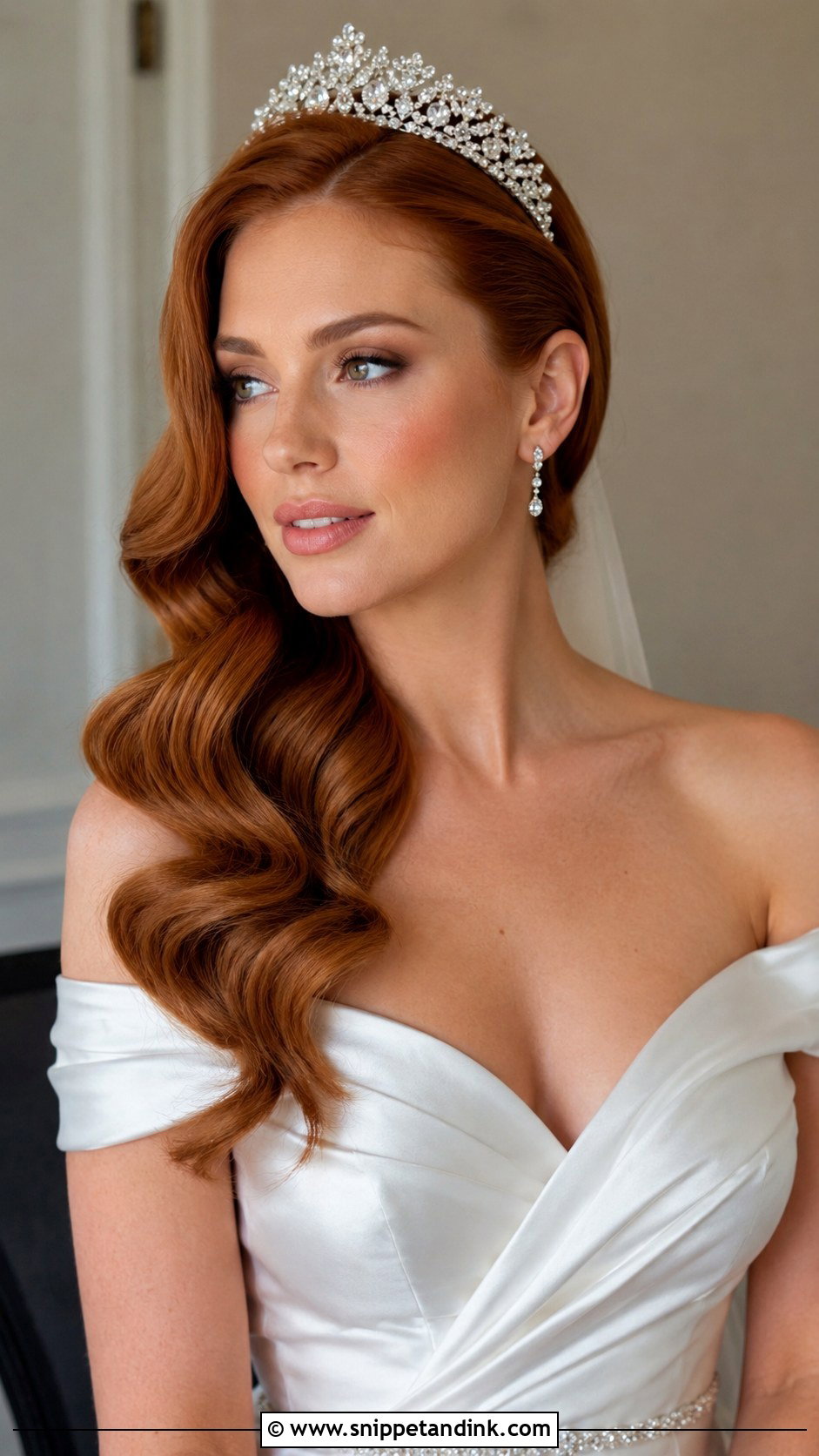
Hollywood waves are a set, not a curl. I roll the hair in the same direction from a deep side part, let it cool completely, then brush it out into one continuous ribbon of wave, and that brushing is what separates the real thing from a head of separate ringlets. Because the pattern sweeps across the front, I place the crown slightly back from the hairline so the band doesn’t interrupt the first S-shape. Satin gowns, off-the-shoulder necklines and evening ceremonies are its natural home. Humidity is the enemy: a glossy wave that drops by cocktail hour looks tired, so I finish with a firm setting spray and only a whisper of shine mist.
4. Crown Bride Loose Waves
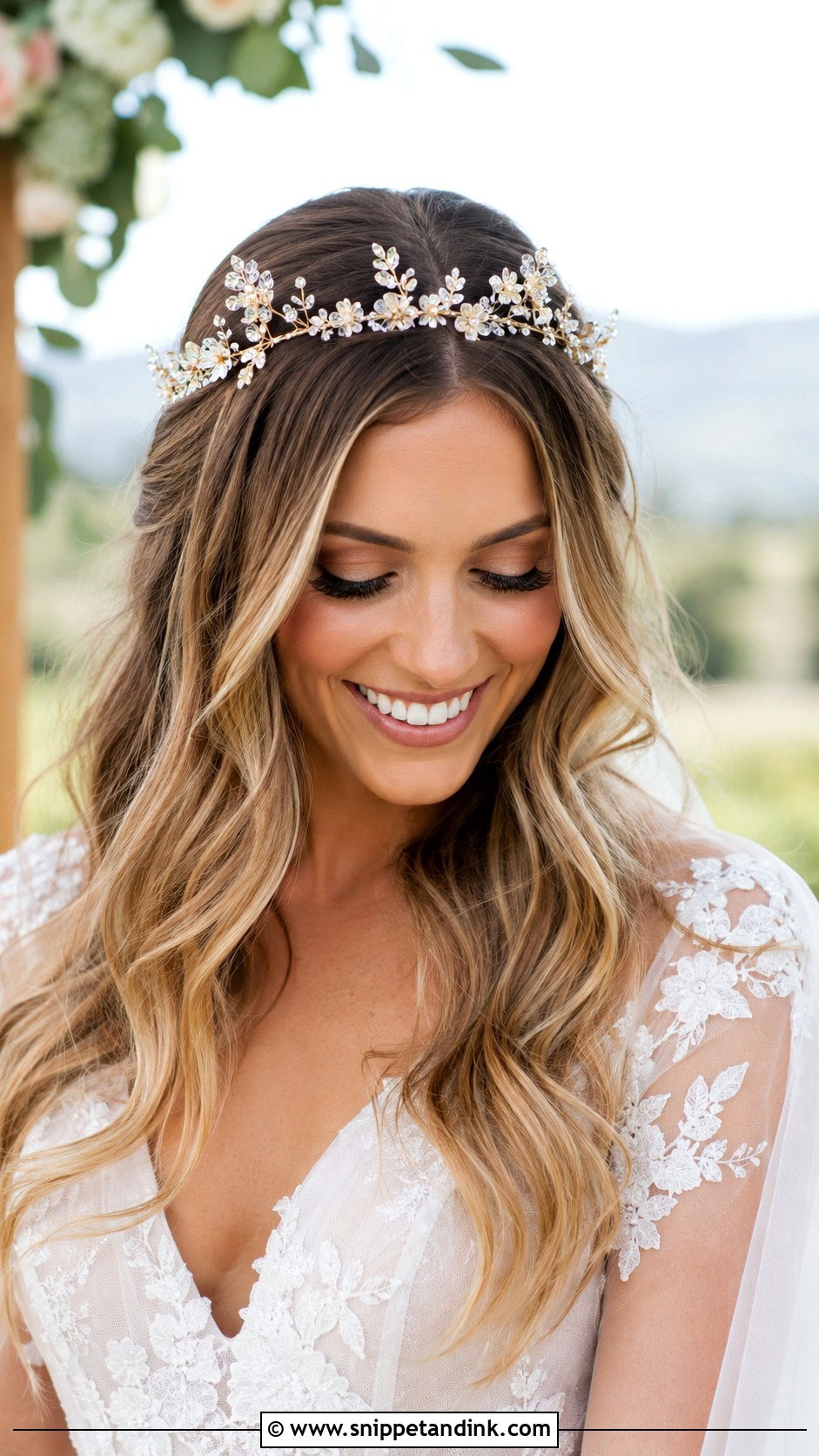
Wearing your hair down under a crown is very doable, but the top has to stay smooth. I start the waves around the cheekbone or collarbone, depending on length, and keep the crown area almost straight so the band lies flat. A light tease underneath at the roots gives the combs grip. Small crowns, floral crowns and fine tiaras sit best on loose texture; a tall, heavy piece will slide backward on hair that isn’t pinned up anywhere. Garden and beach venues suit it, and I finish with a flexible spray so the hair still moves when someone touches it.
5. Crown Bride Messy Bun
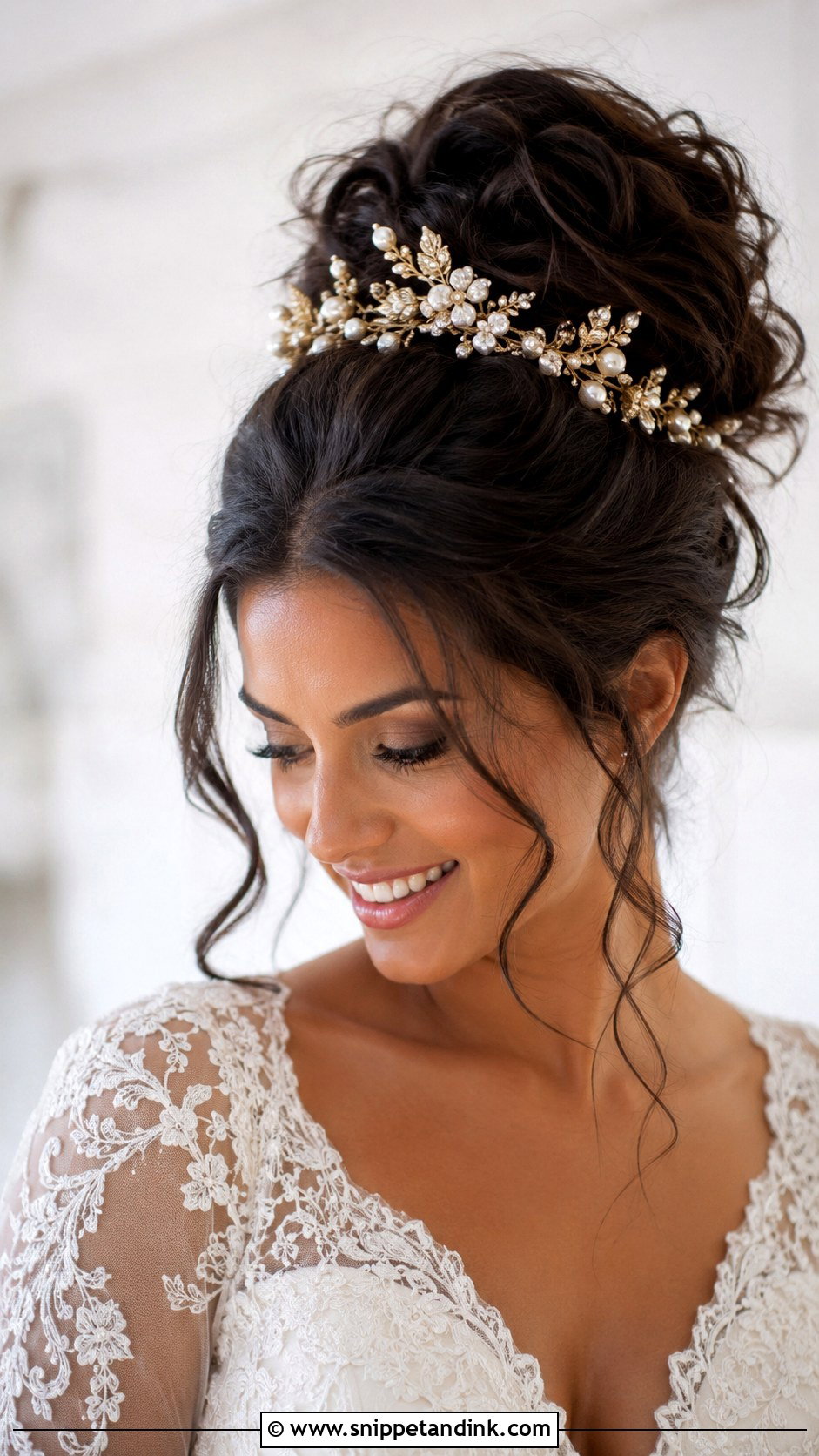
A wedding messy bun is anything but messy behind the scenes. I pin it in sections, pull out a few airy pieces on purpose, and keep the width in check, because a bun that spreads too wide swallows the crown and you lose the outline of both. The band should sit above the texture where you can see it, not buried in it. Floral, gold and pearl crowns all suit this softer finish, and an outdoor wedding forgives a bit of movement in the hair.
6. Crown Bride Sleek Bun
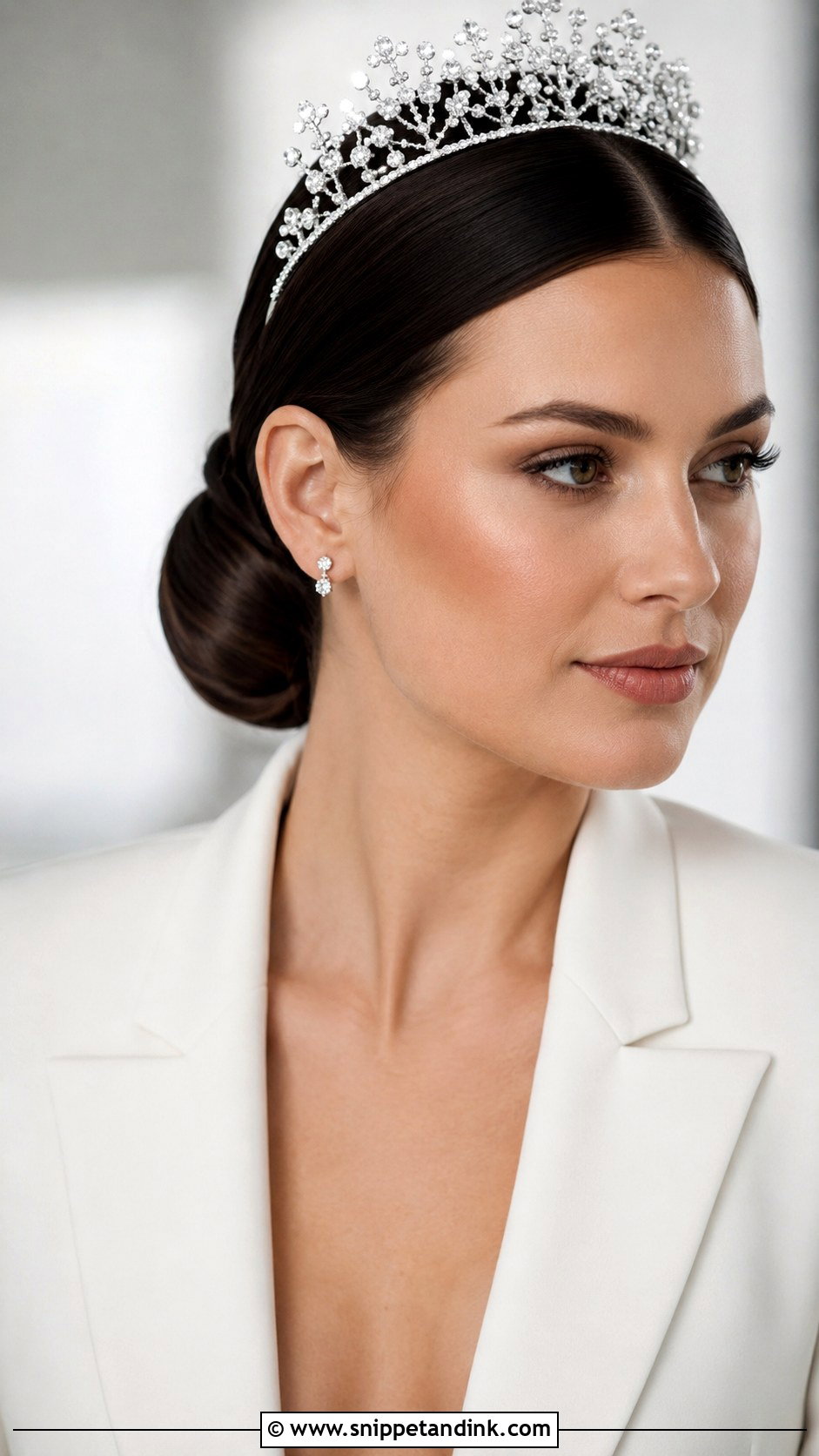
Sleek hair hides nothing. Every bump in the part, every flyaway at the temple and every pin that catches the light will show next to a crystal crown, so this is the style where I spend the most time on prep: a clean part, a smoothing cream, and a bun secured with pins that match the hair color. A slim crystal crown or a modern metal tiara keeps the line clean, and the whole look puts the attention on earrings and bone structure, which suits high-neck gowns, structured dresses and bridal suits. If your hairline has a lot of baby hairs or a strong cowlick, mention it at the trial so your stylist can plan around it.
7. Crown Bride Chignon
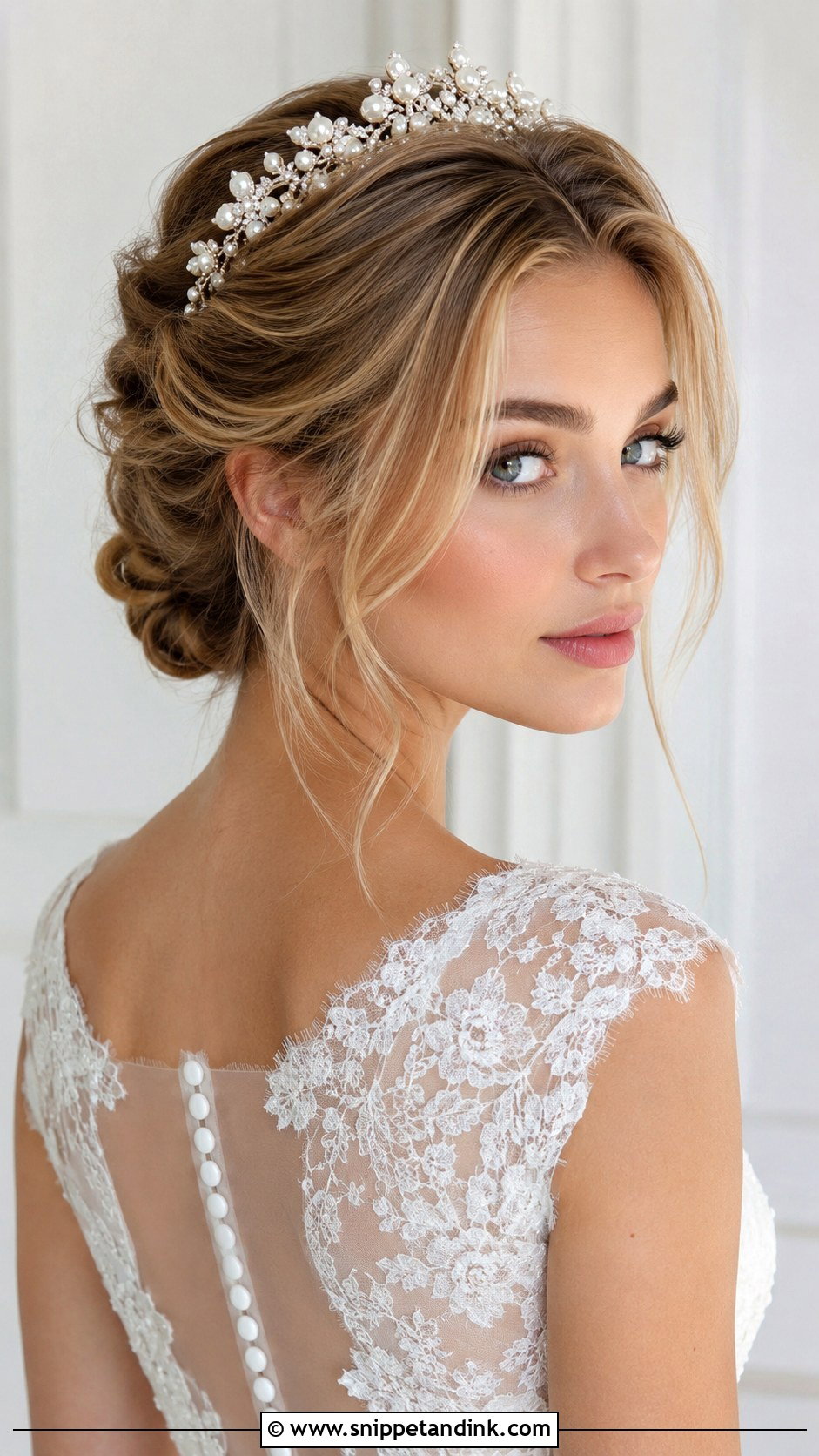
The difference between a chignon and a plain bun is the back. A chignon has a rolled, tucked, or softly twisted shape that gives guests something to look at during the vows, and that structure is also why it holds accessories so well. I place the crown near the top of the head and let the chignon anchor everything lower down, so the load is split between two points. Traditional ceremonies and gowns with detailed backs are where it shines. Leave a few fine strands at the temples if you want it softer, but keep them tucked if your hair frizzes easily, since loose pieces are the first thing humidity finds.
8. Crown Bride Braided Updo
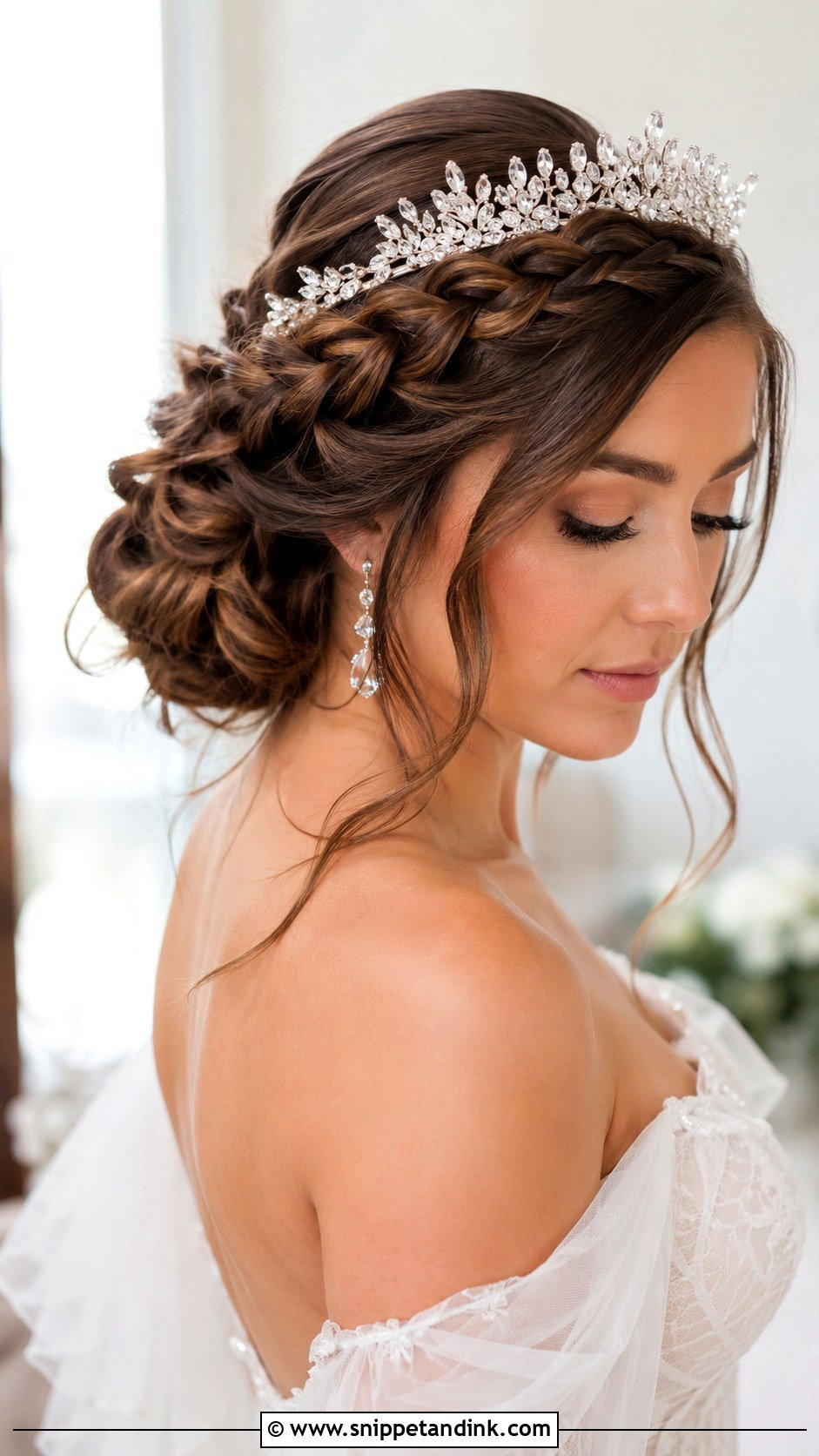
Braids are hidden scaffolding. Woven into a bun or run along the sides, they create firm channels that crown combs and pins lock into. On thick hair the braids absorb bulk that would otherwise make an updo heavy; on fine hair I pancake them, gently pulling the loops wider, so they read fuller in photos. Keep the plaits soft rather than tight, for the look and for your scalp, because a tight braid plus a crown band is a reliable way to have a headache by the speeches. Pearl and small floral crowns echo the woven texture well at rustic and outdoor venues.
9. Crown Bride Crown Braid
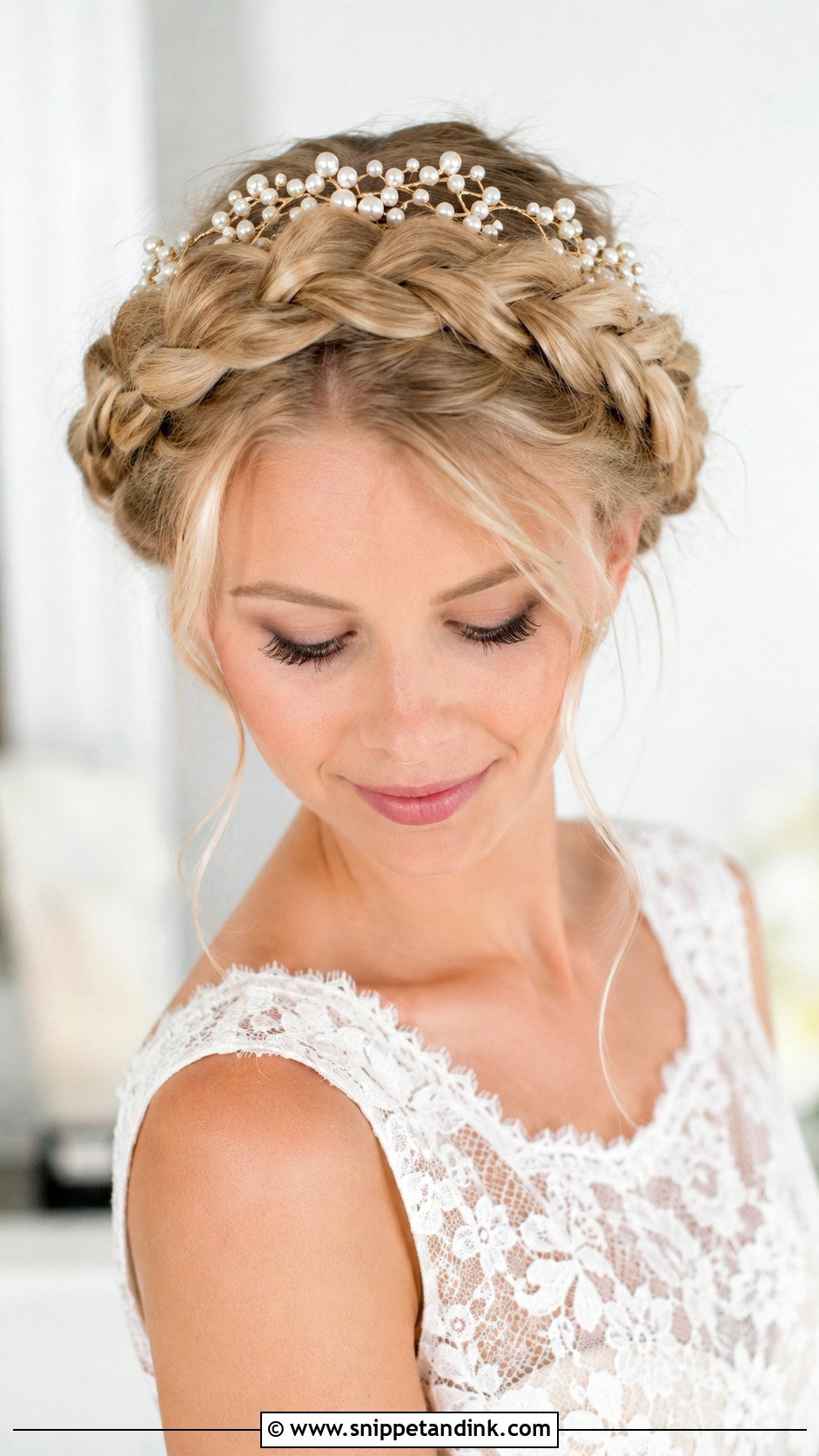
A crown braid already draws a halo around the head, so whatever goes on top should be modest: a thin floral band or a fine tiara rather than anything tall. The braid wraps fully or partly around and lifts every strand off the neck, which makes it one of my first suggestions for hot weather. Pinned properly, with pins crossed into an X under the braid, it barely moves all night. The trap is tightness. A crown braid pulled too neat starts to look like a costume, so I loosen the edges by hand and leave a couple of strands near the face. Lace dresses and bohemian gowns suit it best.
10. Crown Bride Curly Updo
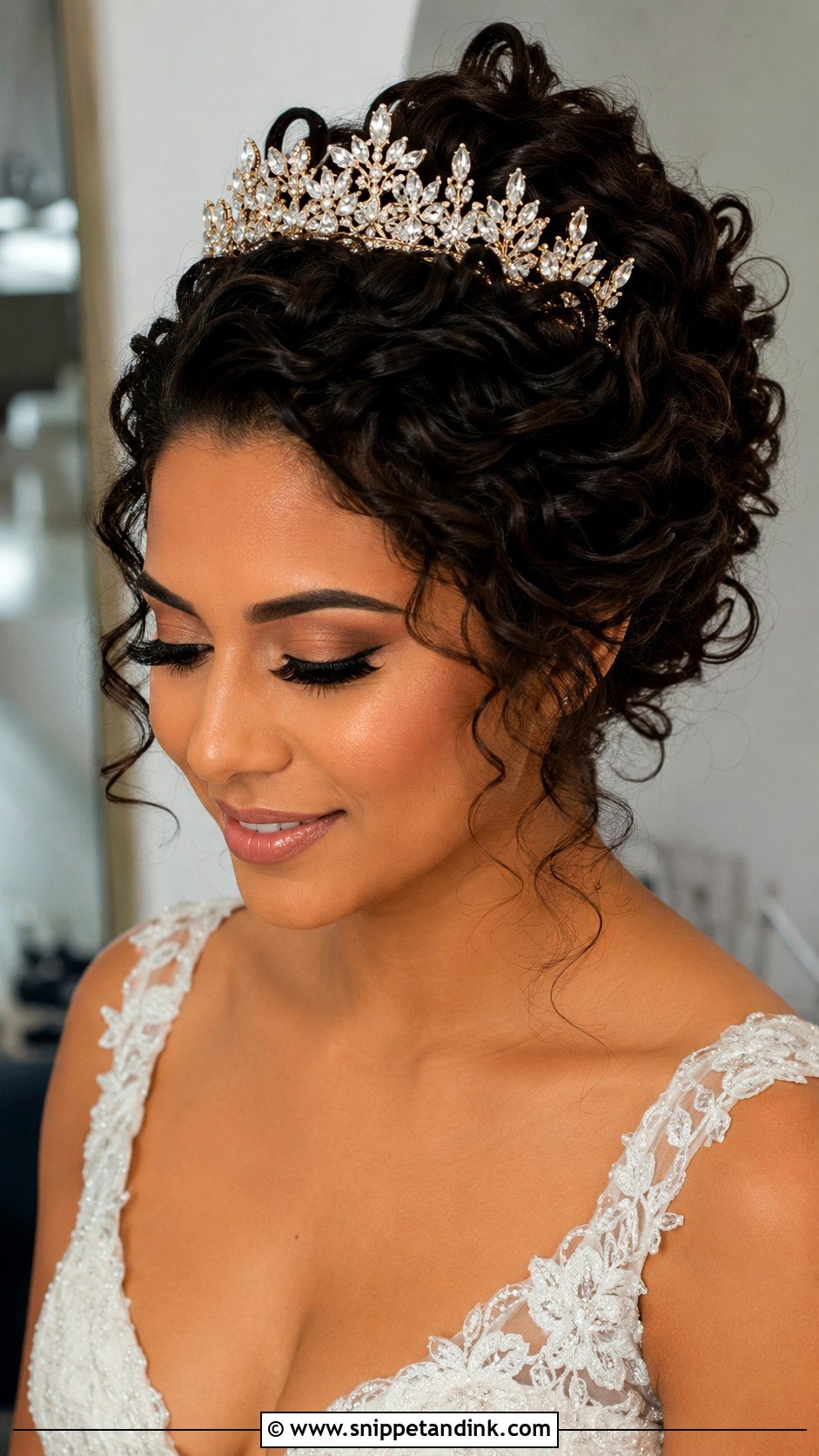
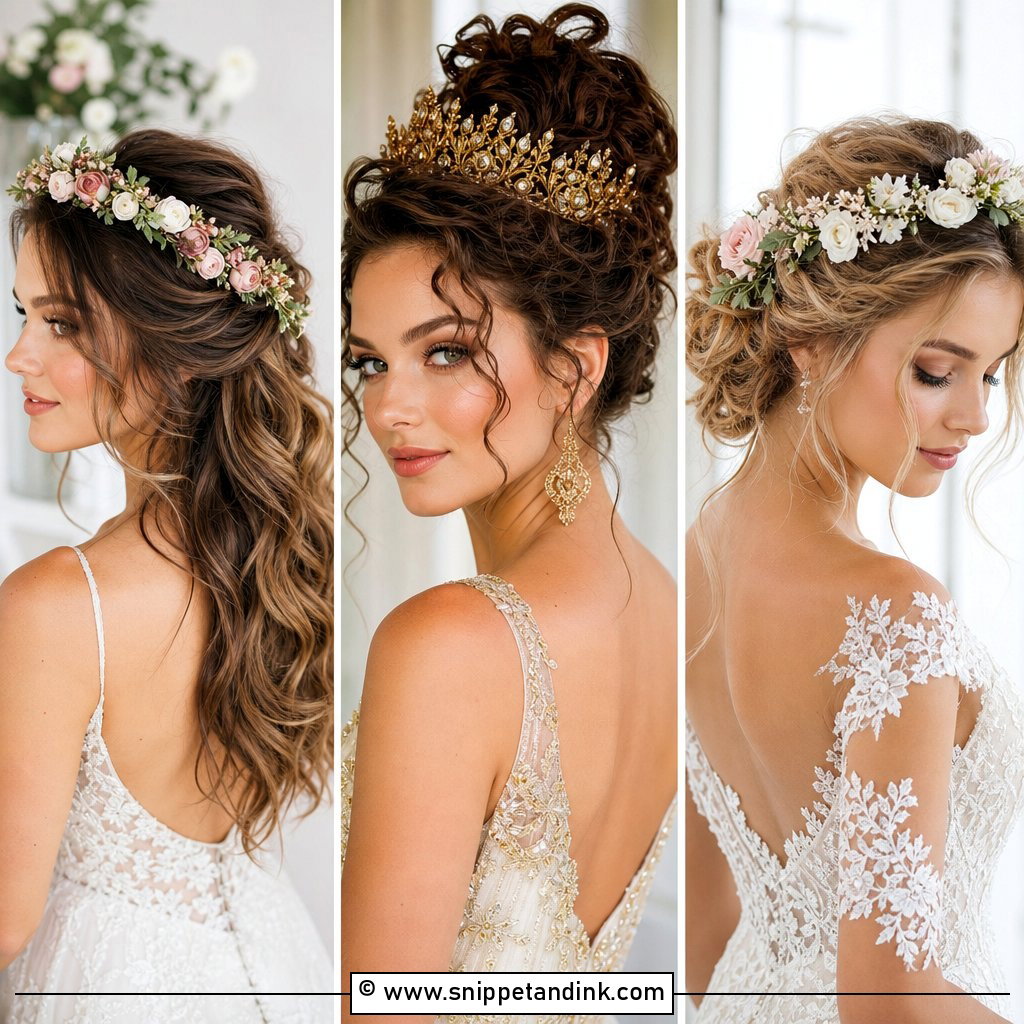
Curls give a crown natural lift. The catch is that the band can crush them if it’s pushed down hard, so I place the crown slightly forward or let it rest in the top layer of curls, then check from the side that they still spring up around it. Curl products go on damp hair before any pinning, which keeps the pattern defined instead of letting it frizz under the pins. Pearl and gold pieces both read well against curl texture, as long as the curls stay visible and full around the band.
11. Crown Bride Natural Hair Updo
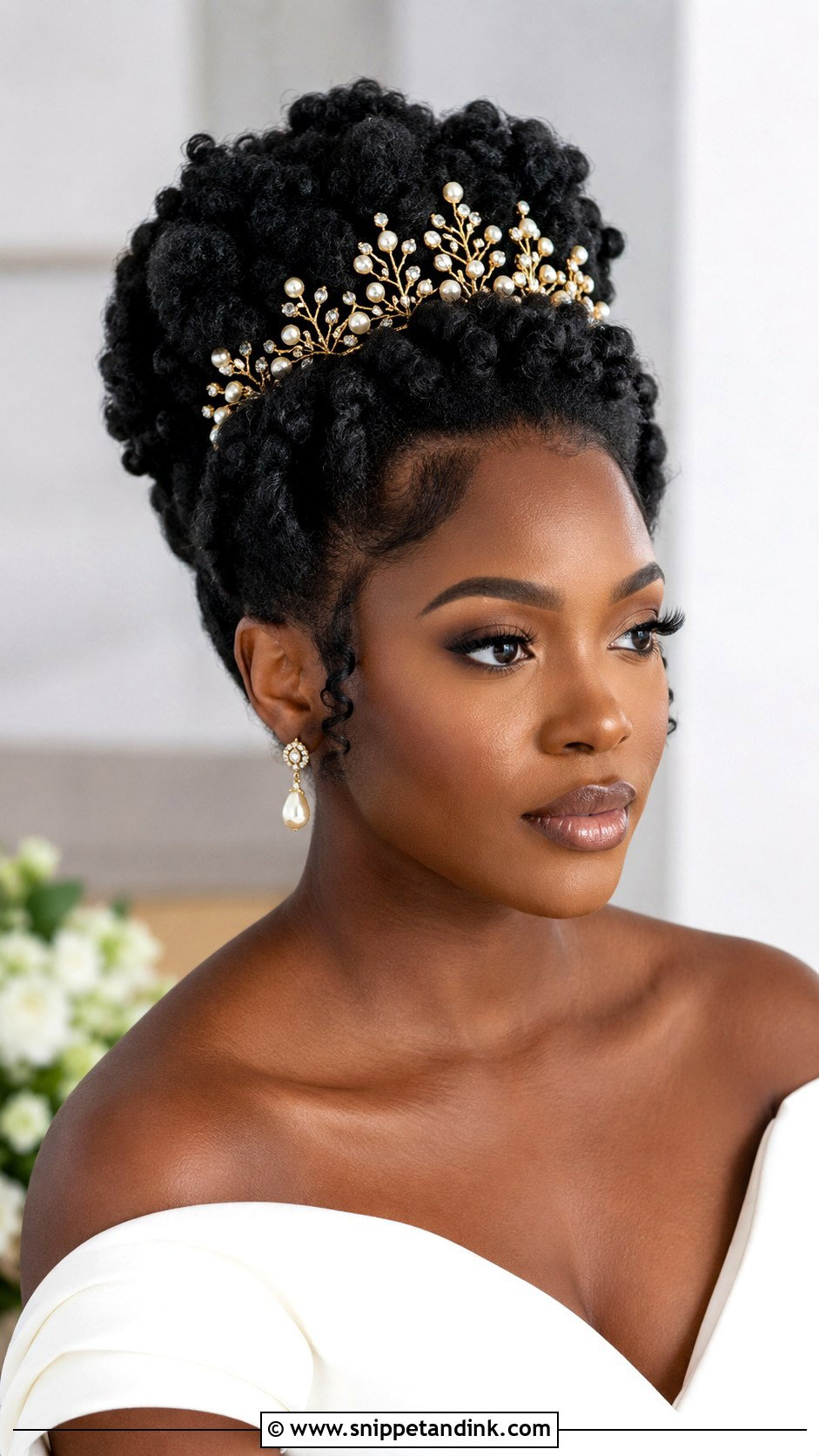
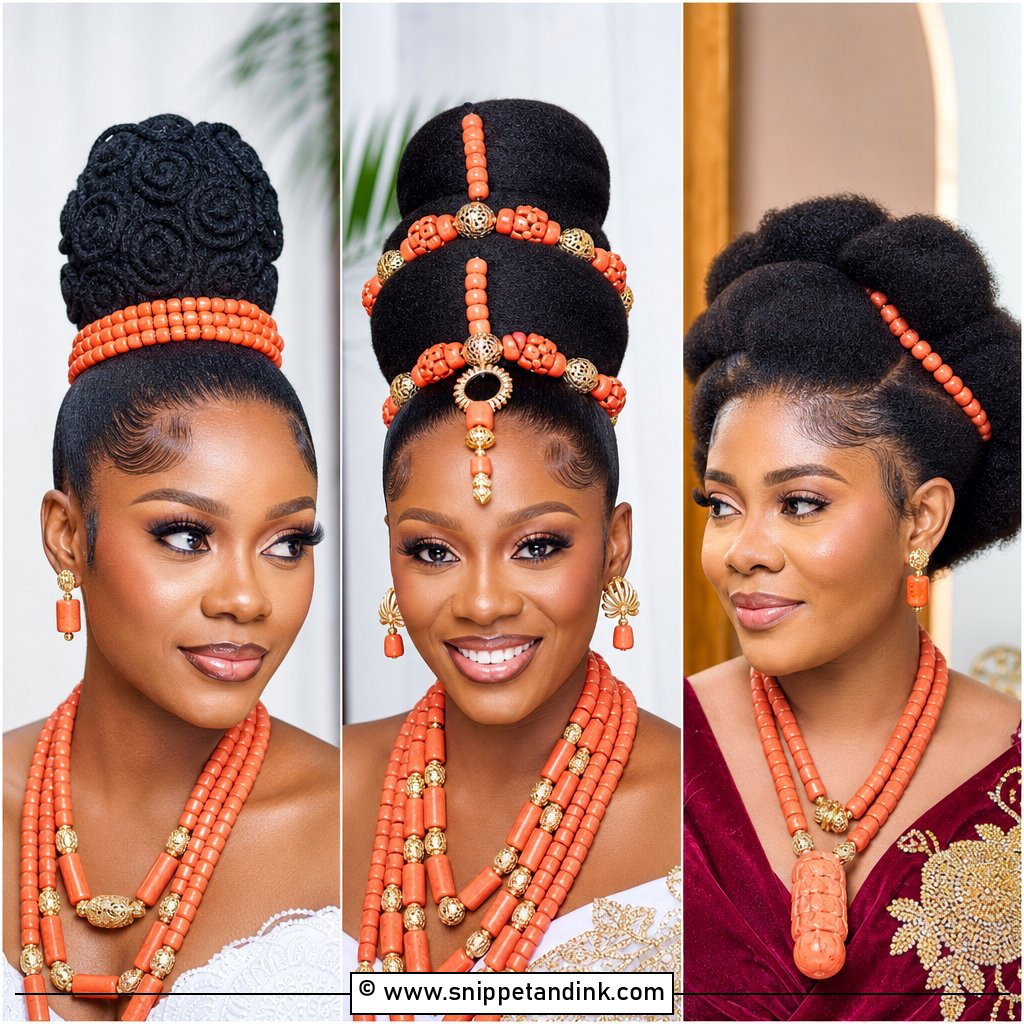
Coils, twists and stretched natural hair give a crown one of the strongest bases there is. A high puff, a sculpted bun or a pinned roll keeps its shape, and the crown sits on that shape rather than sinking into it. Comfort comes first when I choose the piece, because a stiff band pressing on textured hair for hours gets sore, so I look for crowns with flexible combs or end loops I can pin into the style. Moisture the day before, gentle edge control and well-placed pins do most of the work. Statement earrings and open necklines pair well with it, and nothing about the look requires hiding natural texture.
12. Crown Bride Long Hair Curls
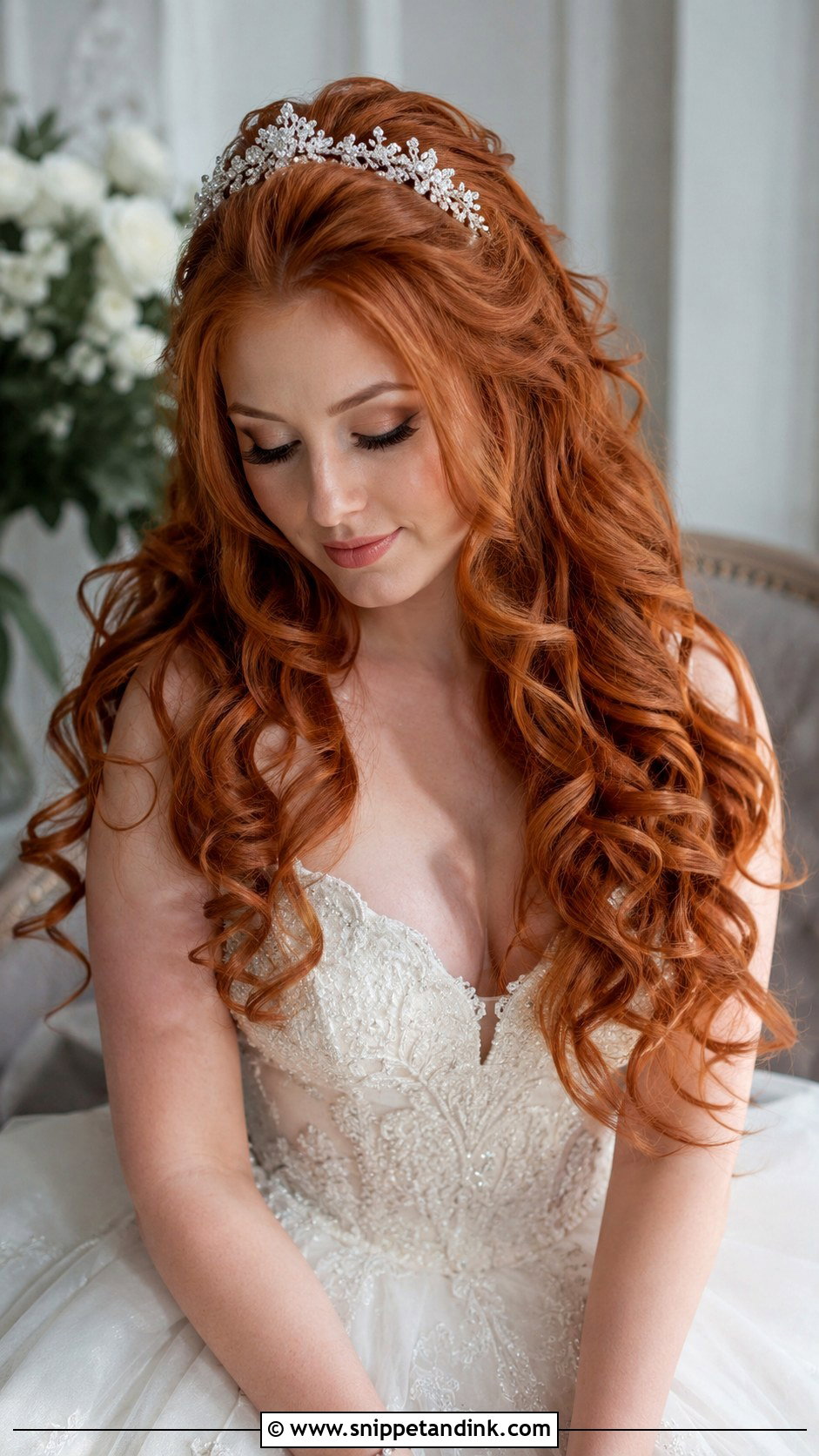
Long curls give a crown the most dramatic frame of anything here, but length is heavy, and heavy curls drop. Layered hair helps because the curls stack instead of collapsing into one another. My method is small sections, heat protectant first, and letting every curl cool fully before I brush anything; brushing warm curls is the most common reason they fall flat by the first dance. Place the crown just behind the hairline or a little farther back for a classic outline. This is the style I’d match to ball gowns and formal venues.
13. Crown Bride Short Hair
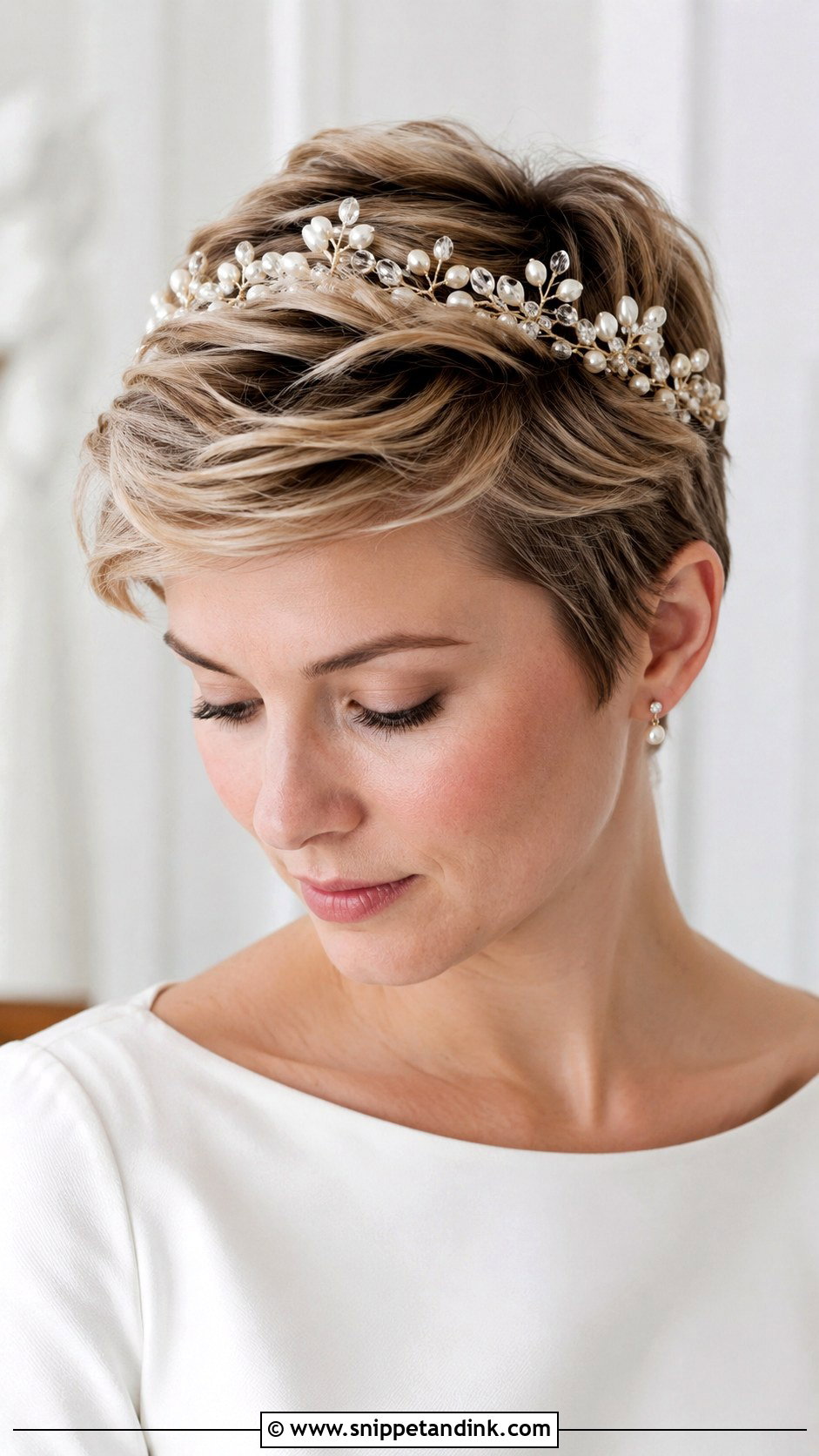
Short hair and a crown get along better than most brides expect. Pixies, bobs, and cropped cuts just need a different anchoring plan, because there isn’t much length to pin into. On a pixie I work a little paste into the top so the combs have something to hold, then sweep the front smooth. On a bob I’ll tuck the sides or put a gentle bend through the ends. Scale matters more than anything: a slim tiara or pearl band suits a short cut, while a tall crown looks top-heavy. Very short hair may need a crown with end loops so it can be held with small pins instead of combs.
14. Crown Bride Bob Hair
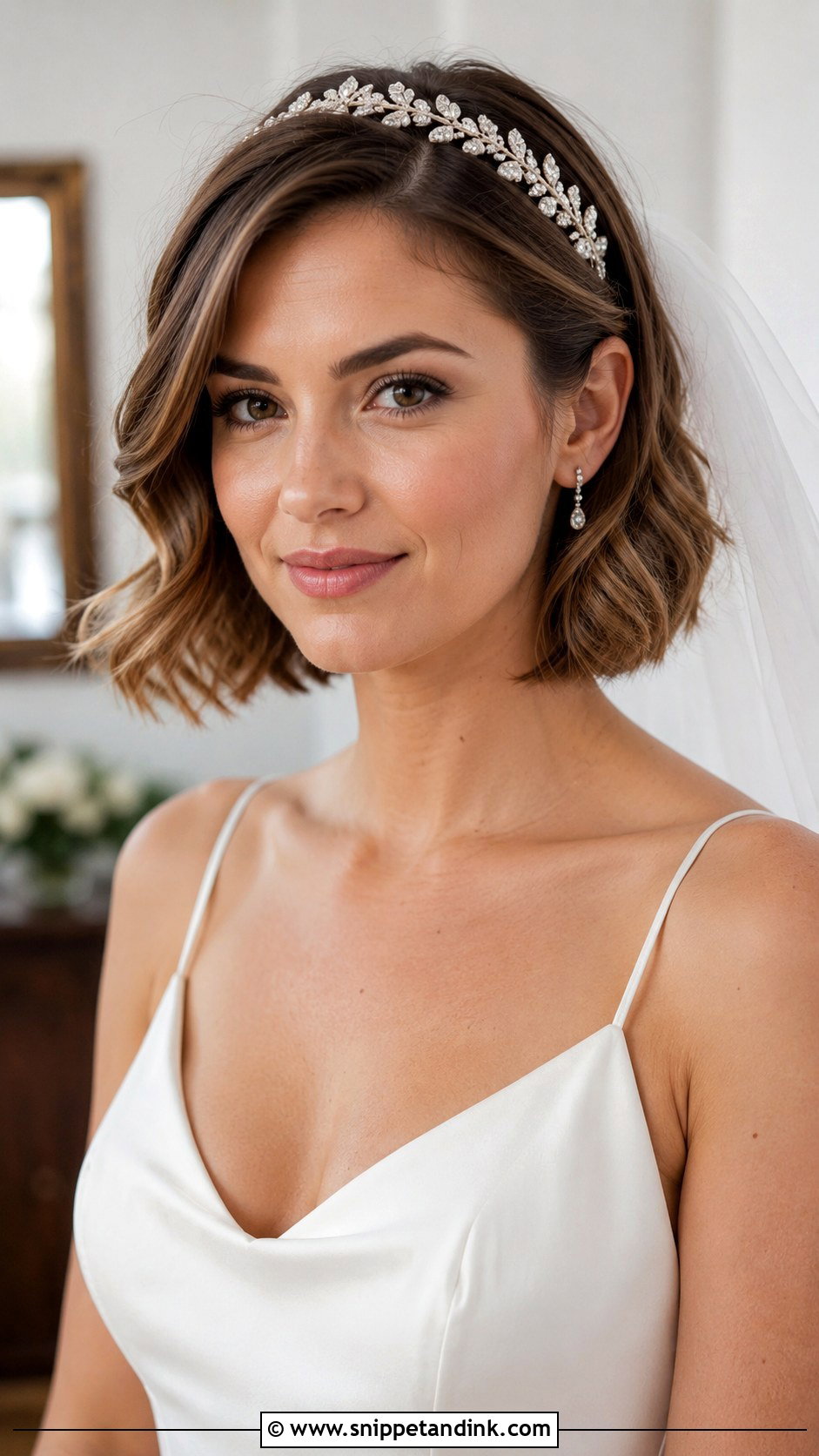
A bob is easy to make your own, sleek, waved, tucked behind one ear or lifted at the root. With a chin-length bob I keep the crown light, since a heavy piece slides on hair that can’t be pinned underneath. A longer bob that brushes the shoulders can take soft waves for balance. A side part reads more glamorous; a center part feels more current. Get your trim a week or two before the wedding so the ends have settled but still look crisp.
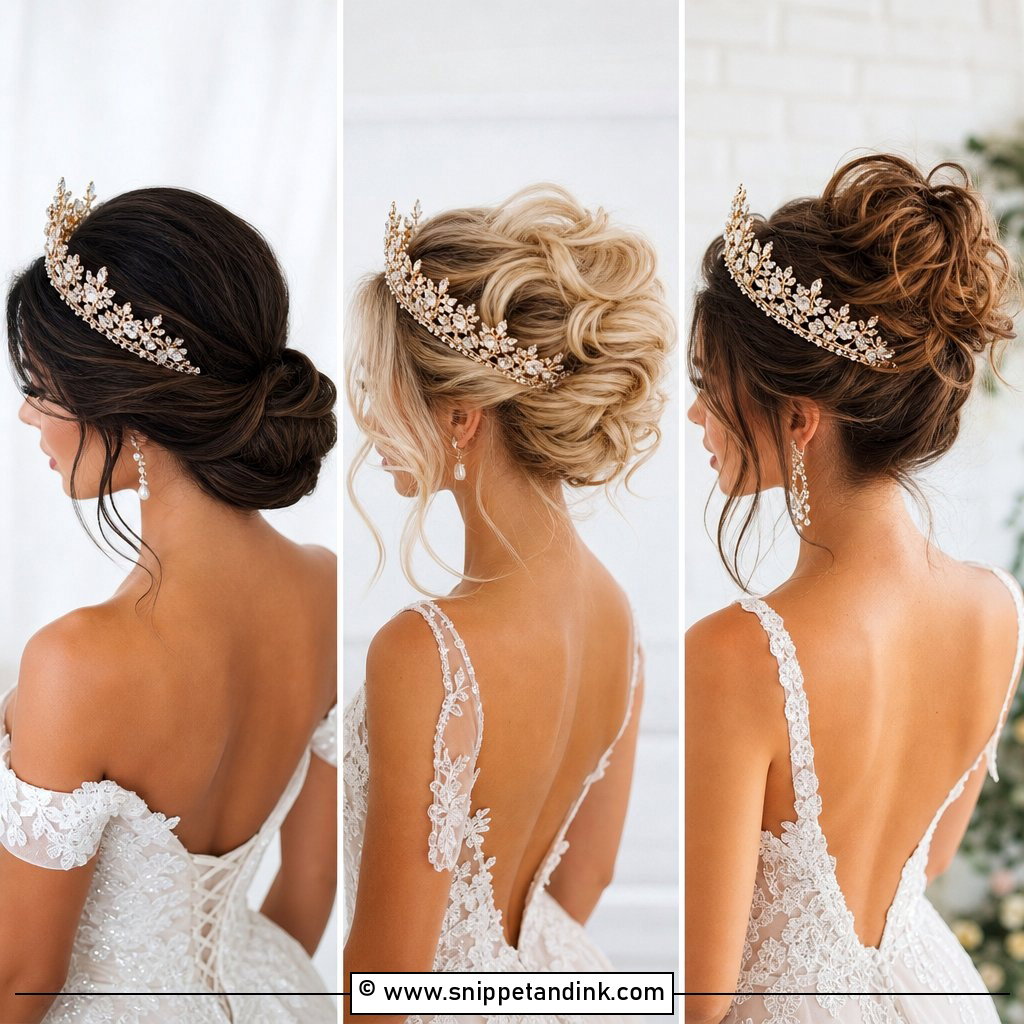
15. Crown Bride High Bun
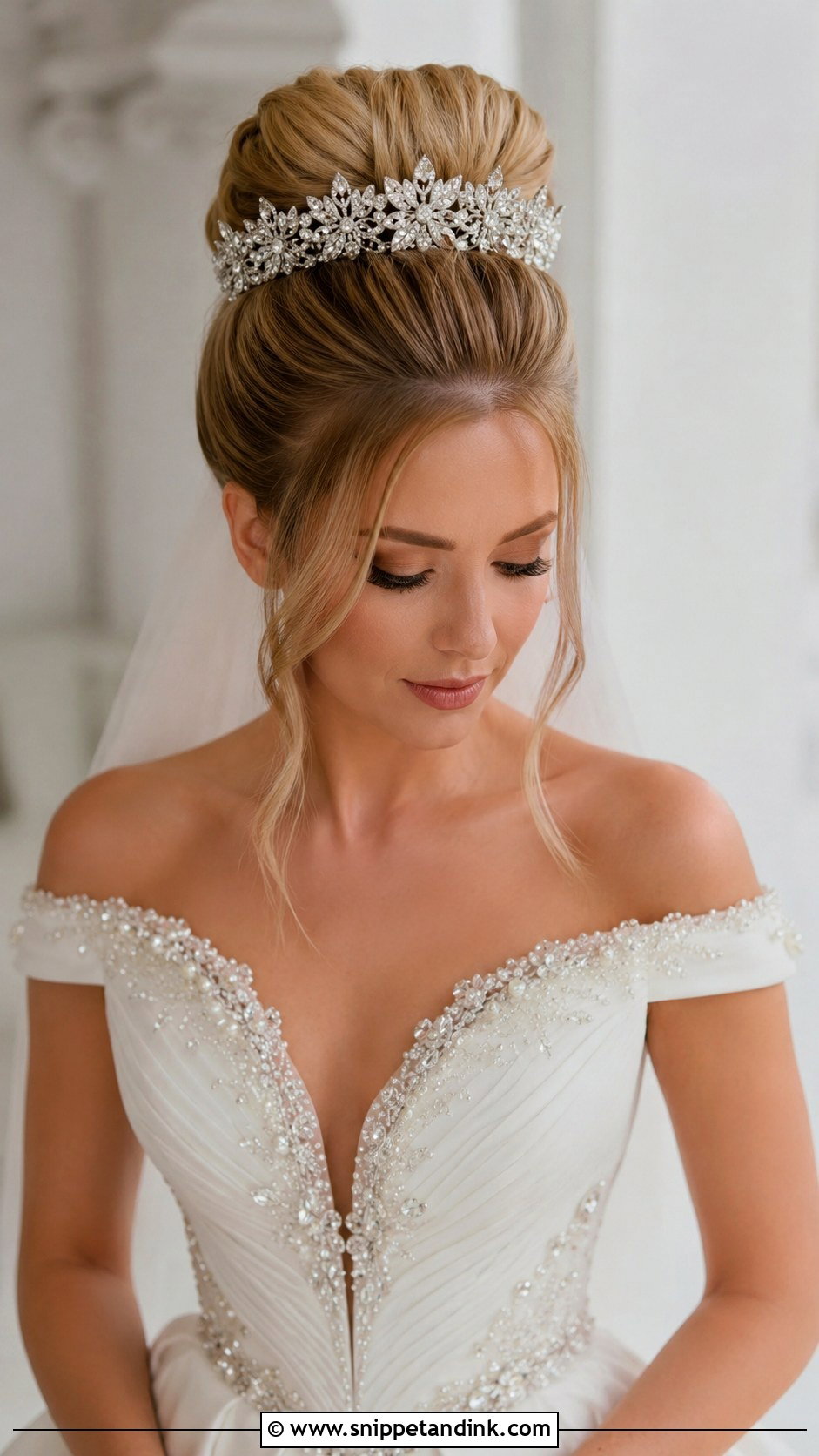
The high bun is the princess silhouette, and it lengthens the neck more than any other style on this list. It also keeps hair completely off the shoulders, which matters when a neckline has beading or a sleeve detail you don’t want covered. The design question is height. If the bun towers over the crown, the two compete, so I usually set the bun slightly back and let the crown sit in front near the hairline. Look at it from the side in the trial mirror, not just from the front. Pins carry a lot of load in a high bun, and on heavy hair I’ll build it around padding to take the strain off.
16. Crown Bride Side Swept Hair
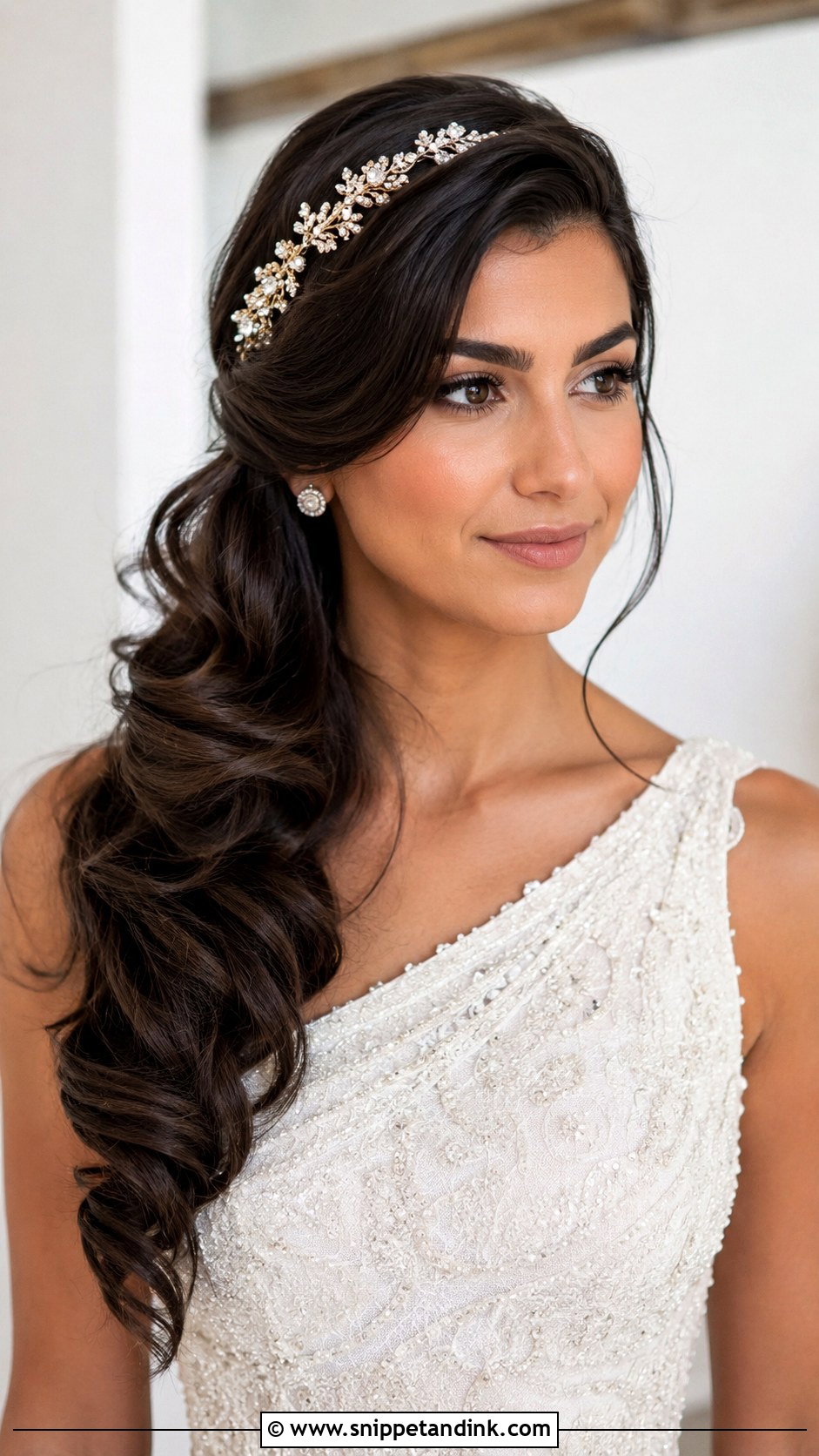
Sweeping everything over one shoulder opens up one side of the face and neck, which makes it a natural partner for one-shoulder gowns and sweetheart necklines. The crown sits above the part or a little back, and a piece with detail on one side can echo the direction of the hair. The swept side is the weak point, since hugs and wind push it back toward the middle. I pin it from underneath with a row of hidden pins along the back of the head so it stays put through portraits and dancing.
17. Crown Bride Ponytail
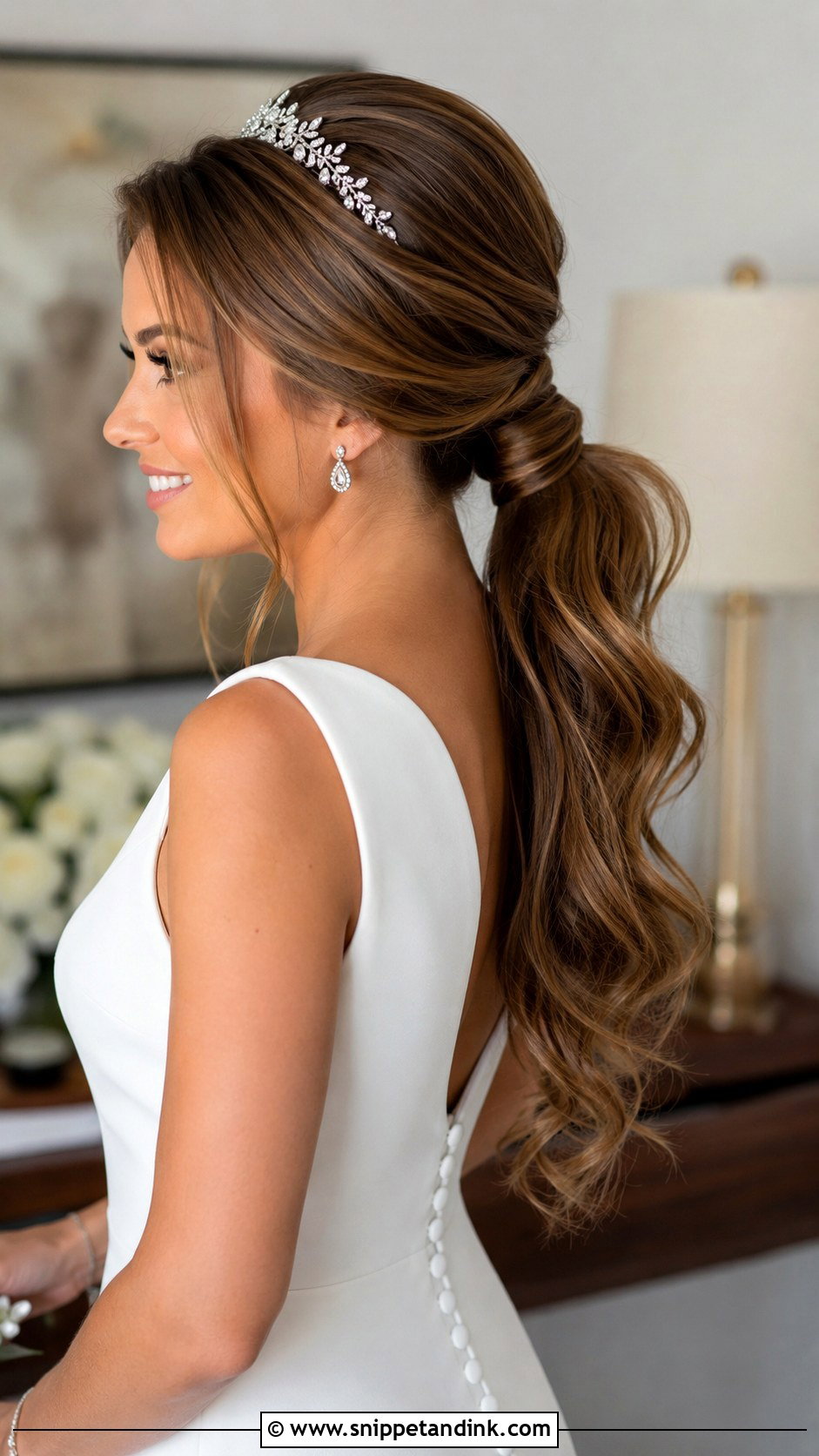
For dancing, nothing here is more comfortable than a ponytail, and with a wrapped base and some wave through the length it looks surprisingly bridal. High, mid or low all work, but it has to be full; a thin pony under a big crown looks unbalanced. Clip-in extensions can add density if the texture is blended. I hide the elastic under a wrapped strand and set the crown above. If you get tension headaches, wear a test pony for a few hours before the wedding, because a high pony and a crown band press on the same part of the scalp.
18. Crown Bride Veil Hairstyle
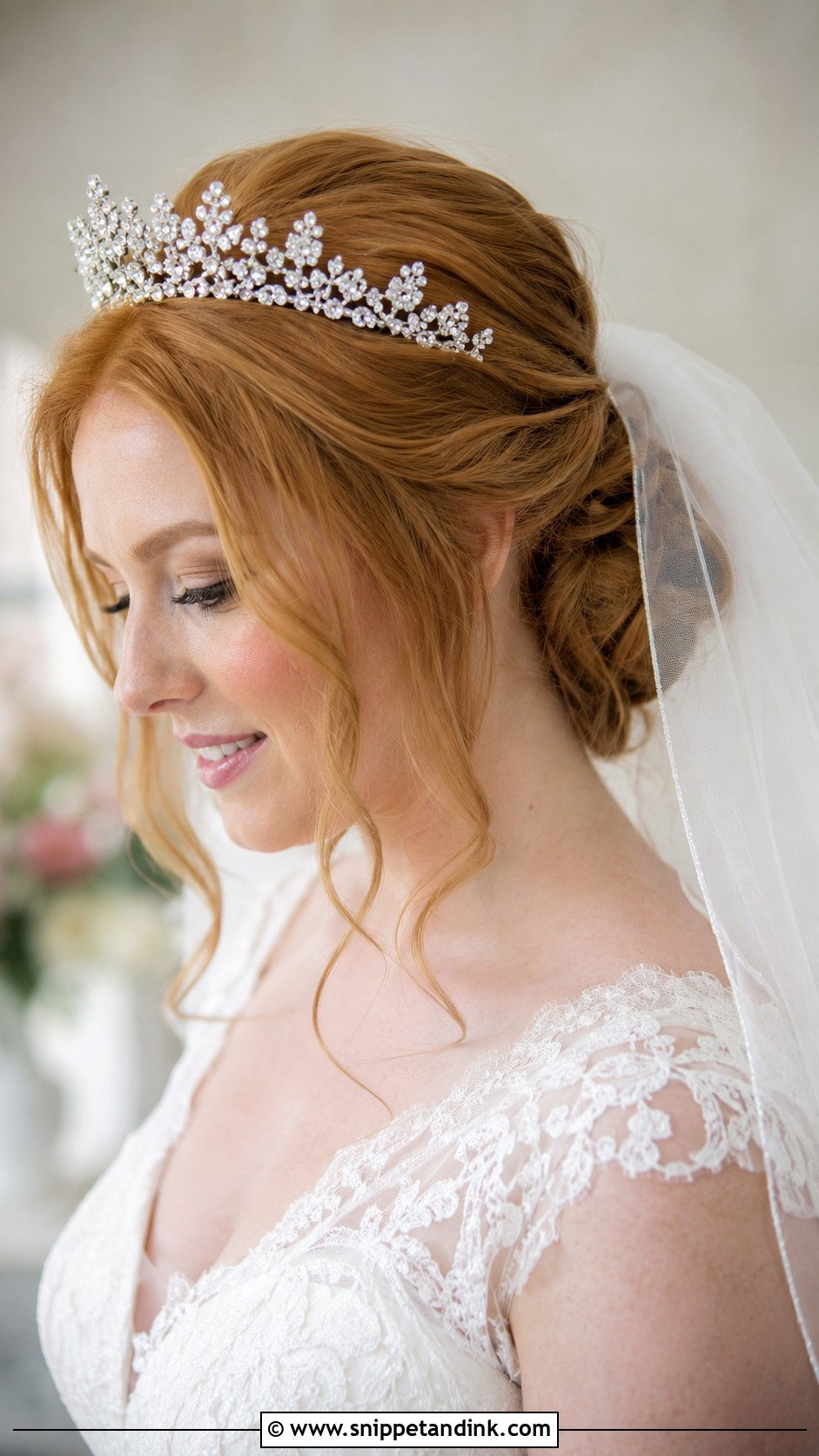
Crown plus veil is where most of my trial time goes. The usual setup puts the crown in front with the veil comb tucked behind it, or drops the veil lower into a bun or chignon so the two never share pins. Low buns, half-up hair, soft waves and classic updos all handle it. Bring both pieces to your trial so we can test the combined weight and practice taking the veil out. If it comes off after the ceremony, the crown has to look finished on its own, without a gap or a cluster of exposed pins where the comb used to be.
19. Crown Bride Floral Crown Hair
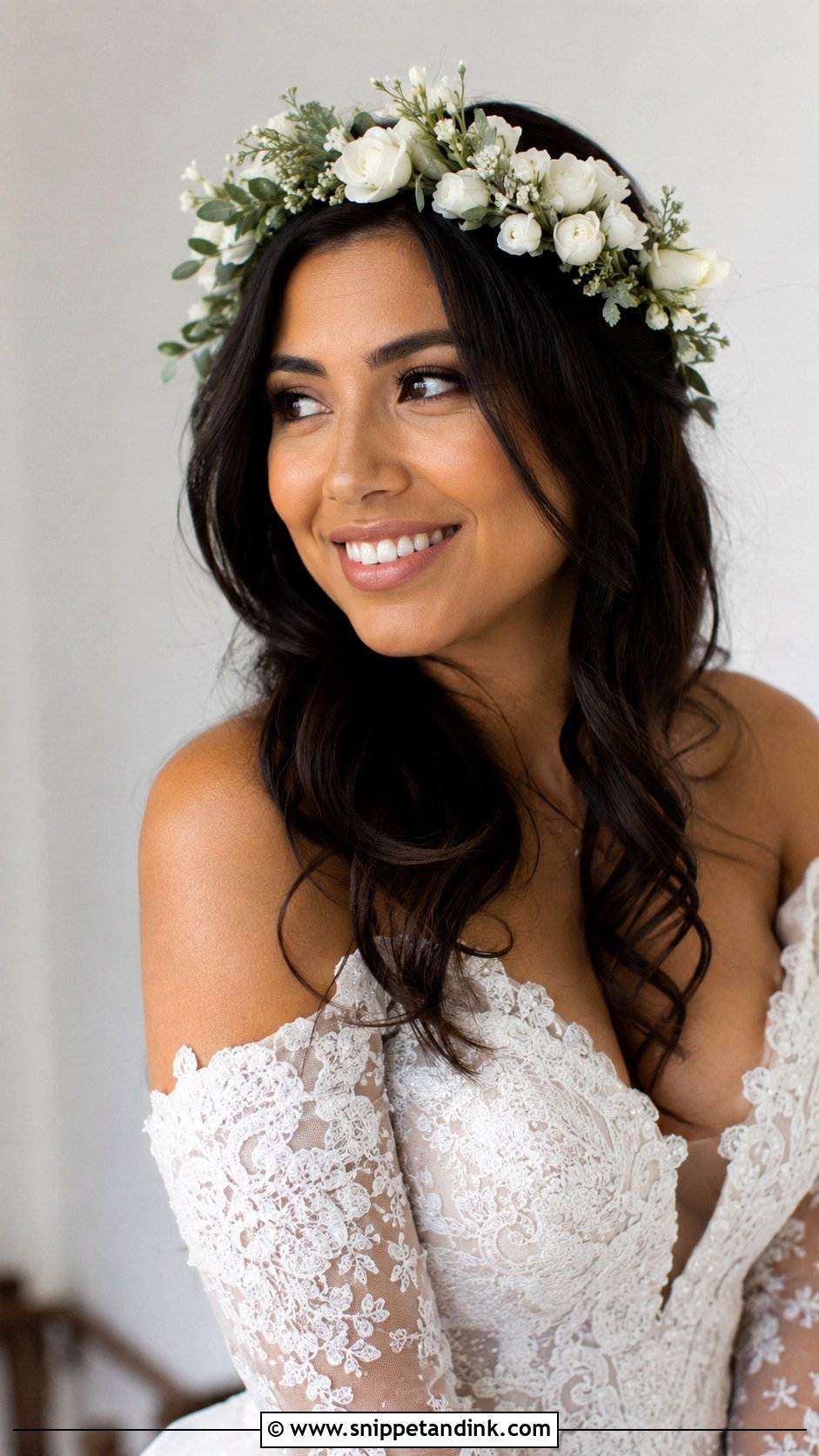
Floral crowns follow the same scale rule as metal ones: larger blooms with fuller waves or a textured updo, tiny flowers with fine braids and soft buns. For fresh flowers, ask your florist for varieties that cope with heat and handling, and have the crown delivered close to the start of hair, kept cool until it goes on. Soft white blooms such as gardenias bruise and brown quickly, so they’re a risky pick for an outdoor summer ceremony. Garden, woodland and spring weddings are its natural setting.


20. Crown Bride Vintage Hair
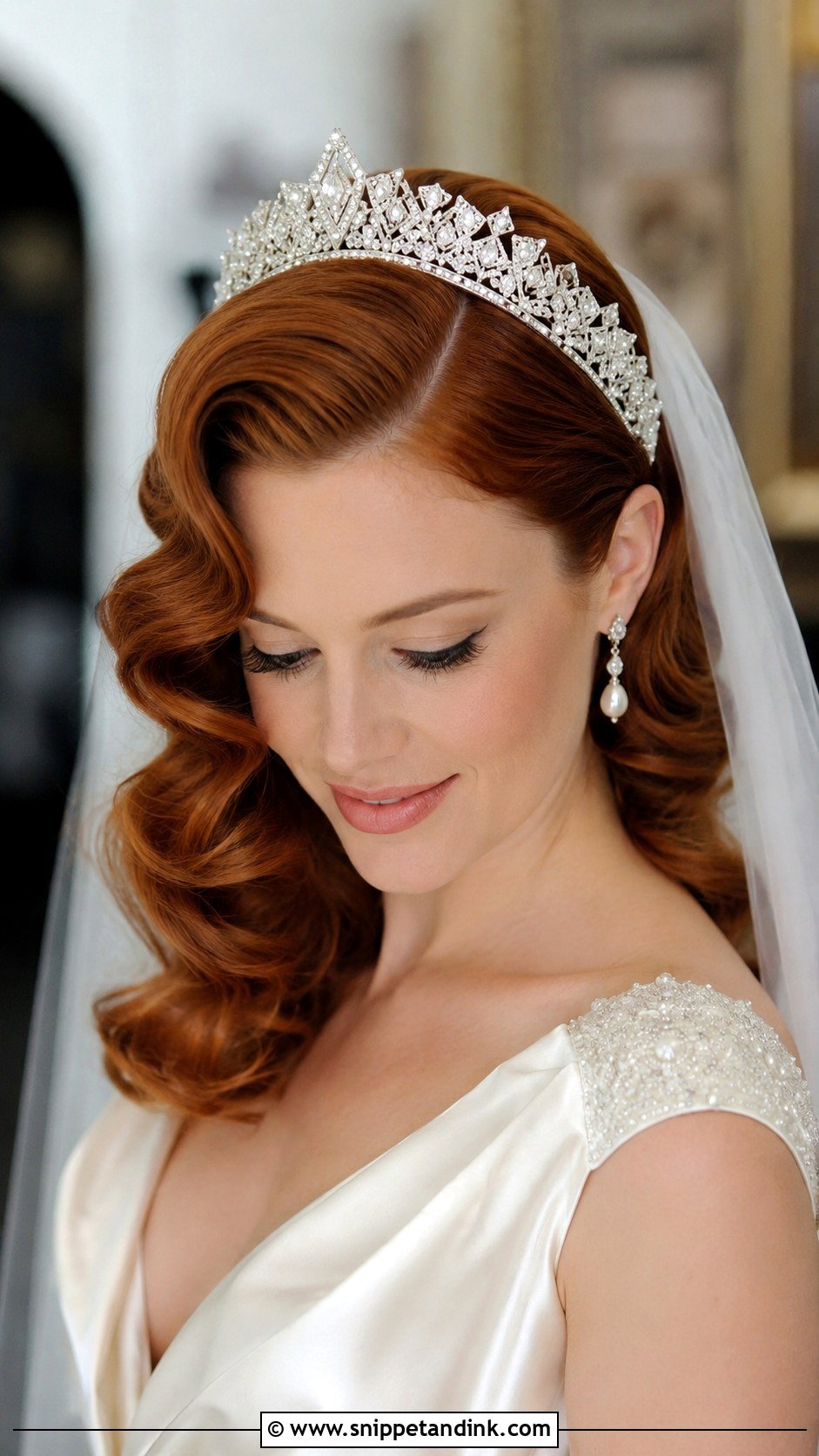
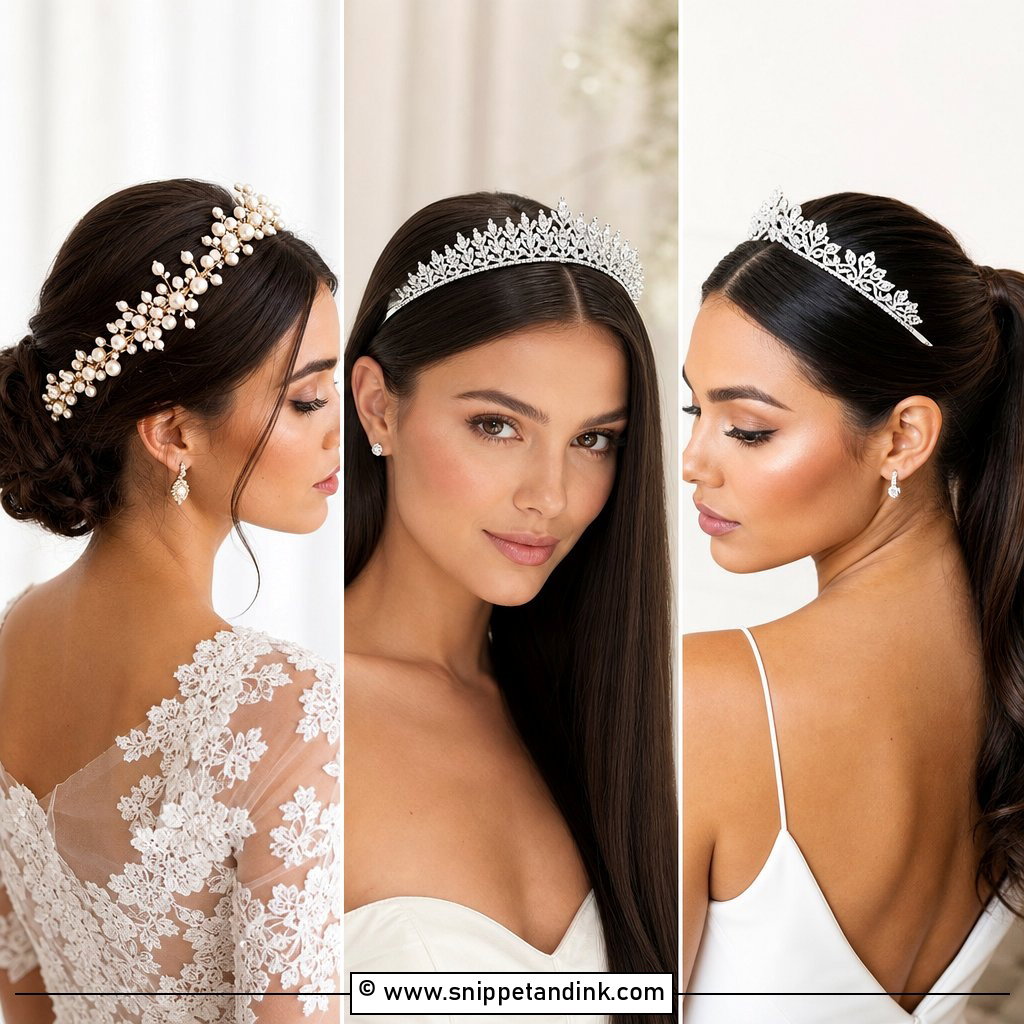
Vintage bridal hair depends on control. Finger waves, brushed-out curls, rolled updos and a polished side part all need every wave placed on purpose, and I set them with more product than a modern style would get so the shape survives the day. Match the crown to the era you love: an Art Deco tiara for a 1920s mood, or a pearl crown for something softer. Lace or satin gowns, a red lip and a historic venue finish the story.
Second-Day Hair Grips a Crown Better Than Fresh Hair
Freshly washed hair is slippery, and slippery hair lets a crown slide. For most hair types I ask brides to wash the day before, keep conditioner off the roots, and arrive with hair completely dry. Very fine or oily hair may need a morning wash, in which case I’ll add texture spray or dry shampoo before teasing. Curly and natural hair should follow whatever wash routine makes that texture behave best, with moisture the night before rather than the morning of.
Skip new products and color appointments in the last week. A fresh gloss can leave hair so silky that pins won’t hold.
Taking the Crown Off After Photos Without Pulling Hair
Plenty of brides swap the crown for something lighter once the portraits are done. That’s easy when it was planned and painful when it wasn’t. Ask your stylist to show a bridesmaid where every pin is, because a professionally pinned crown can take a while to find by touch. Take pins out from the ends of the band toward the middle, then lift the crown straight up rather than dragging it back.
The hair underneath will have a band-shaped dent. A quick finger-fluff and a little dry shampoo at the root hide most of it, and textured styles such as the half-up or messy bun hide it far better than sleek hair does. If you’ve chosen a sleek look, plan to keep the crown on all night.
Wear the Actual Crown for an Hour Before You Commit
Whichever style you lean toward, the real decision gets made at the trial, with the actual crown on your head. Keep it on for at least an hour. Check whether it pinches behind the ears, how it looks from the side and back in photos, and how it lives alongside your veil, earrings and neckline. A crown that feels fine at minute five can feel very different at hour six, and testing is the only way to know. If something rubs, your stylist can move the combs or add padding long before the wedding morning.
You'll Like These Ideas:



Leave a Reply