
Sangjit hair has one job most bridal hair doesn’t: it has to work with a high mandarin collar. The collar of a cheongsam or qipao covers the neck, so anything that drops onto it will crush, frizz or push the collar out of shape over a long afternoon of greeting family and receiving gift trays. That’s why so many of the looks I do for this ceremony sit at the nape or higher. A red cheongsam or a champagne-gold qipao will steer you toward the right hairdo more than any trend will. Below are twenty options, with notes on how each one actually behaves with that collar and through a day of photos.
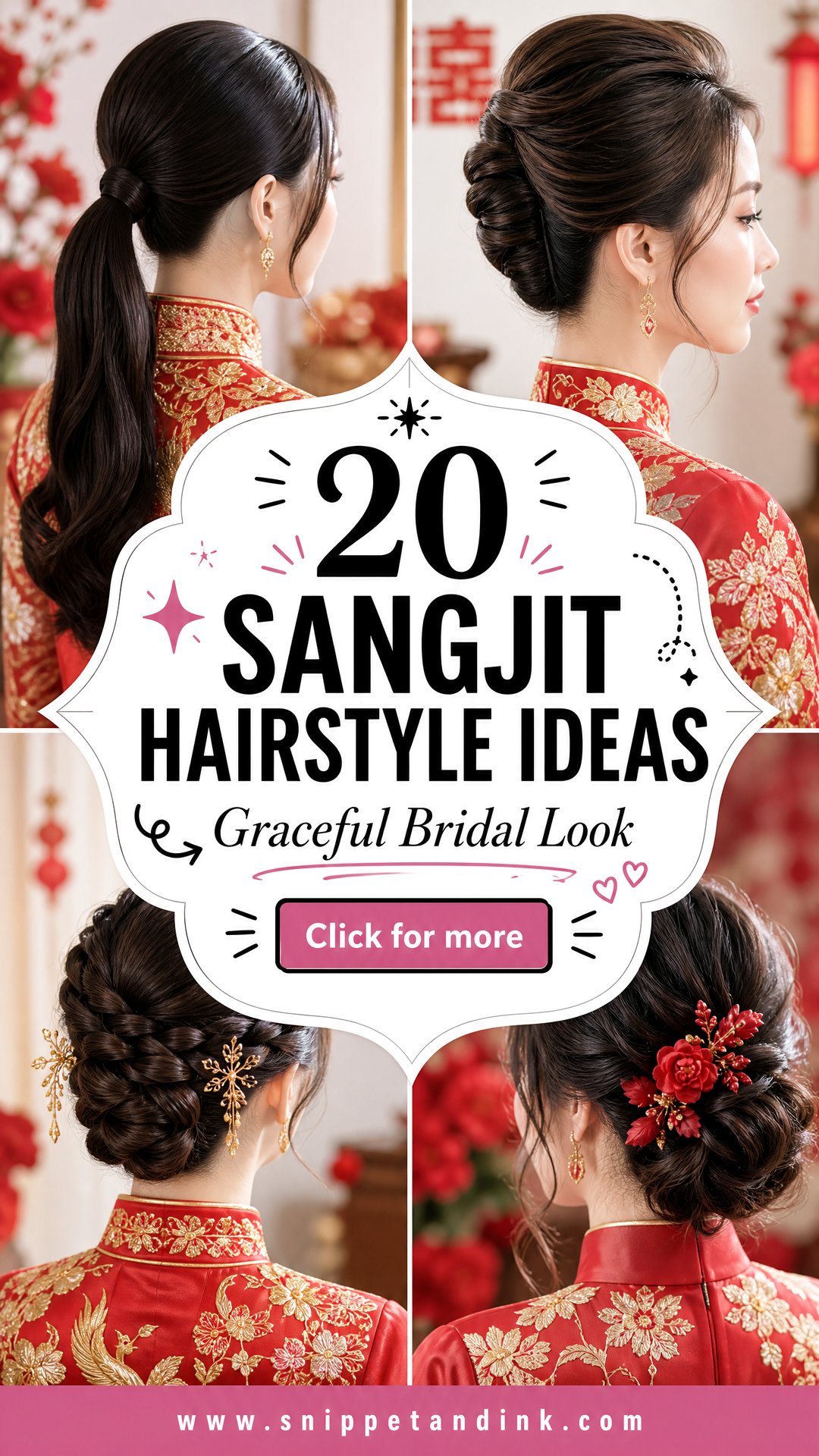
How Collar Height Decides Where Your Hair Sits
At a trial for Sangjit, the first thing I ask is to see the dress on, because the collar decides more than the hair does. A cheongsam collar can be anything from a low stand to a tall band that reaches almost to the jaw.
- Tall, stiff collar: hair at the crown or high nape. Buns, top knots, French twists and finger waves keep the fabric clear.
- Medium collar: low buns and chignons work, placed just above the collar line so they don’t press on it when you look down.
- Soft or open collar: half-up styles and swept waves become practical, as long as the lengths fall behind the shoulders.
Bring the dress to your trial or at least a photo taken from the side. If you’ll change outfits during the day, from a cheongsam into a kebaya or dress for the evening dinner, tell your stylist early so the first style can be adapted for the second without starting over.
1. Twisted Low Bun With Gold Hairpins
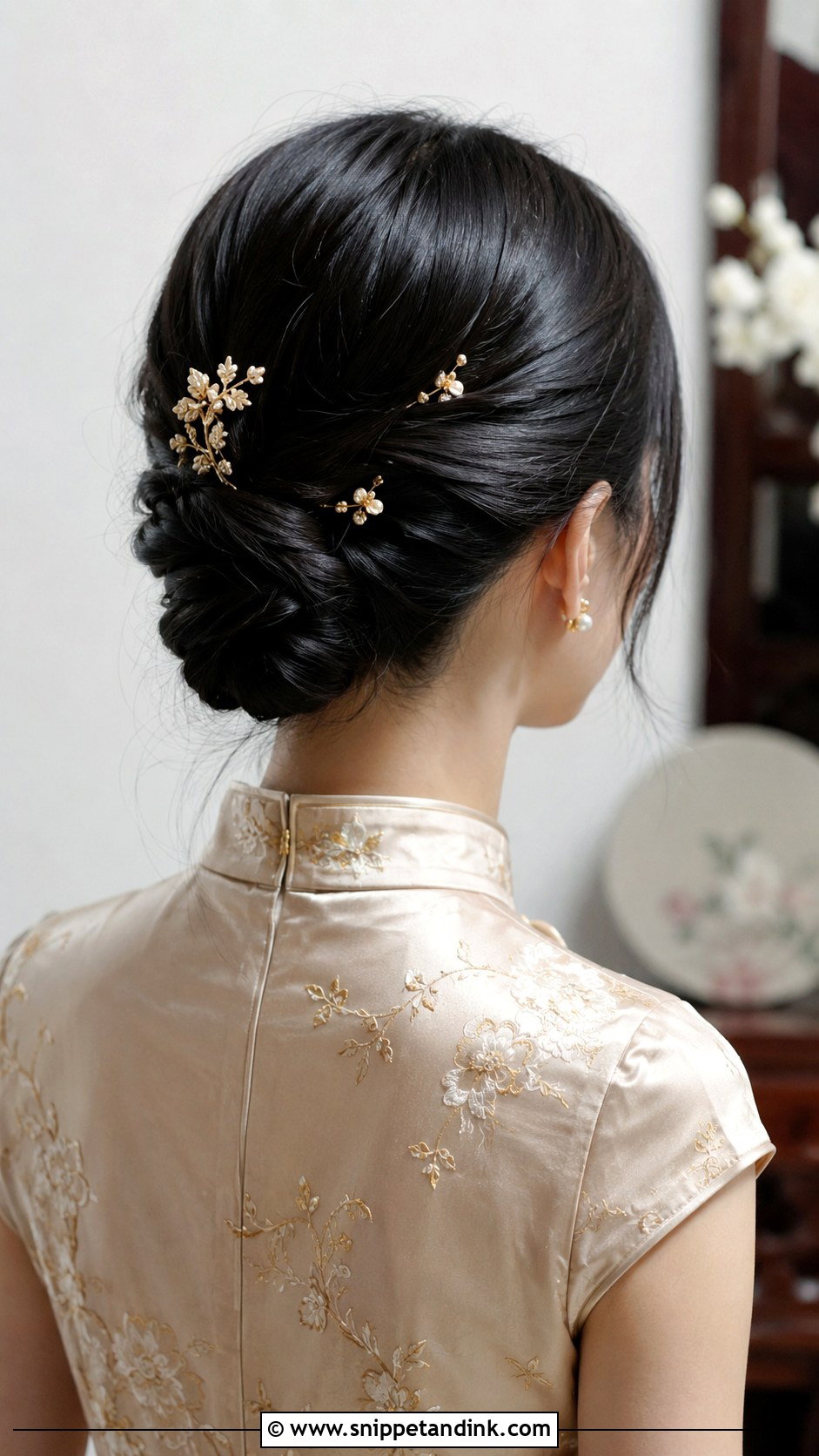
Twisting the hair before it’s coiled gives a low bun a quiet ridge of texture without loosening it. I place it just above the collar line, so when you turn your head the bun clears the fabric instead of resting on it. Traditional tusuk konde pins go in last, pushed in at an angle toward the center so their weight is carried by the bun and not the outer hair. Gold pins pick up the warmth of a champagne-gold cheongsam nicely. For a first-time client nervous about a long day, this is the style I recommend most.
2. Half-Up Waves With Floral Accents
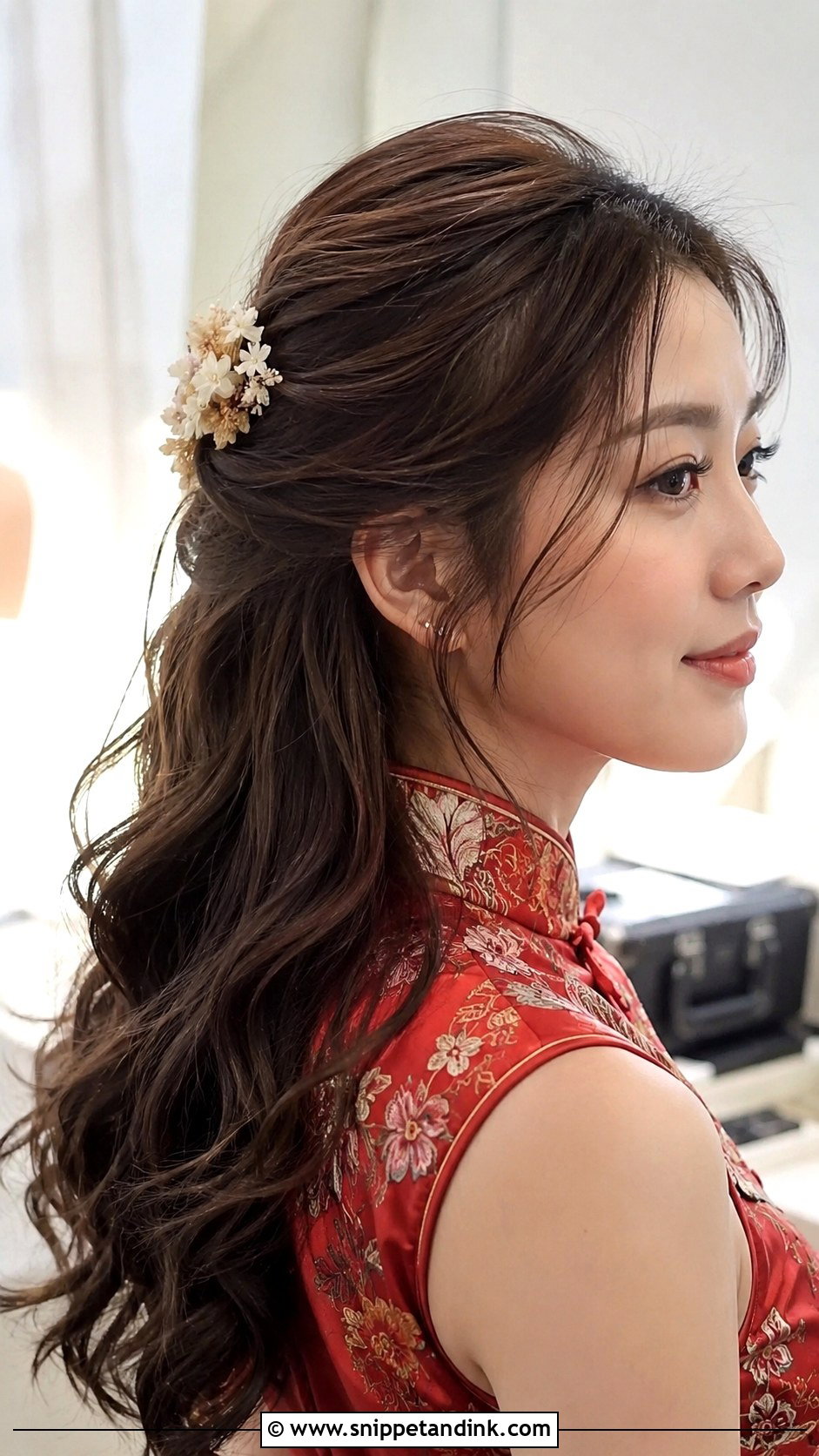
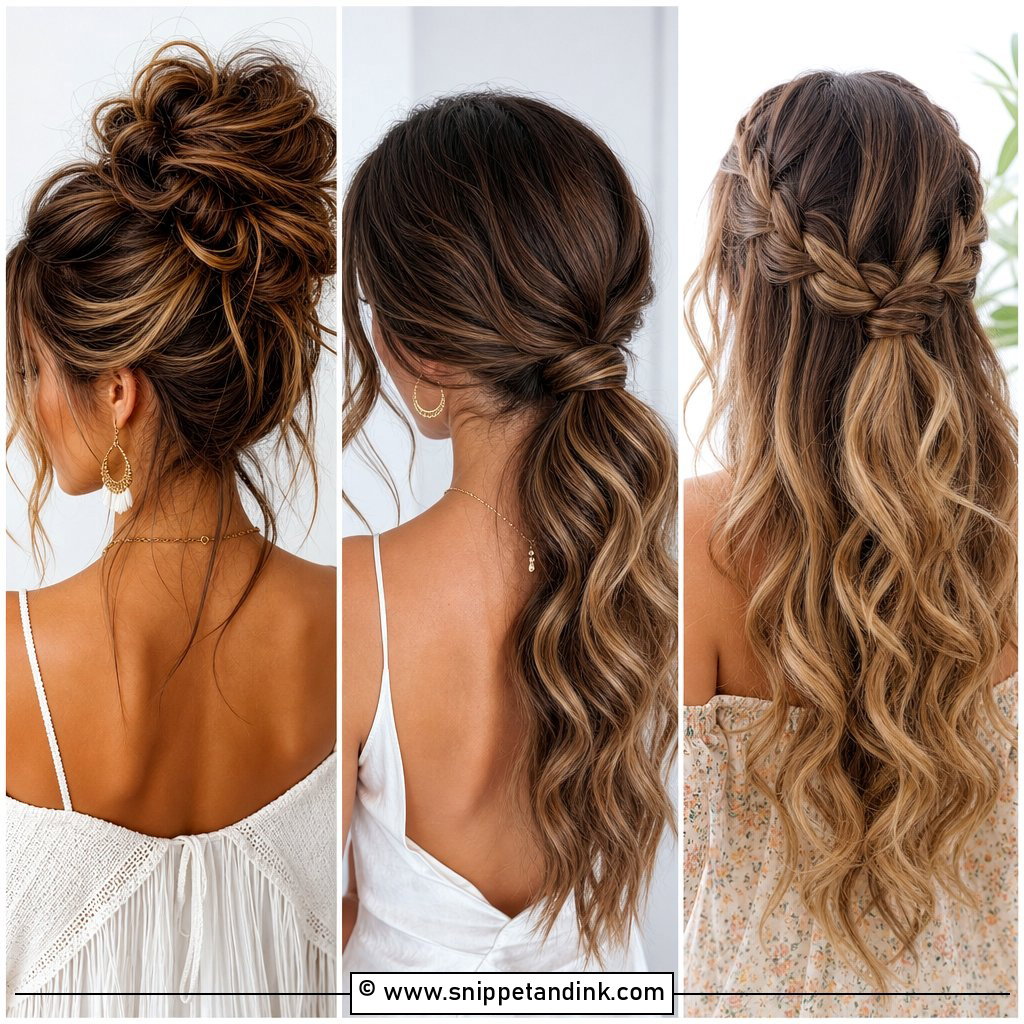
Half-up waves are popular, and I’m honest with brides about the catch: the loose lengths will sit on a high collar. With a mandarin neckline the waves need to fall behind the shoulders, not over them, or they tangle on the frog closures. I pin the top section with crossed bobby pins and set small florals or pearl pins over the join. It’s softer than an updo and suits medium to long hair, especially with a red cheongsam that has a lower, softer collar.
3. Sleek Low Chignon Bun
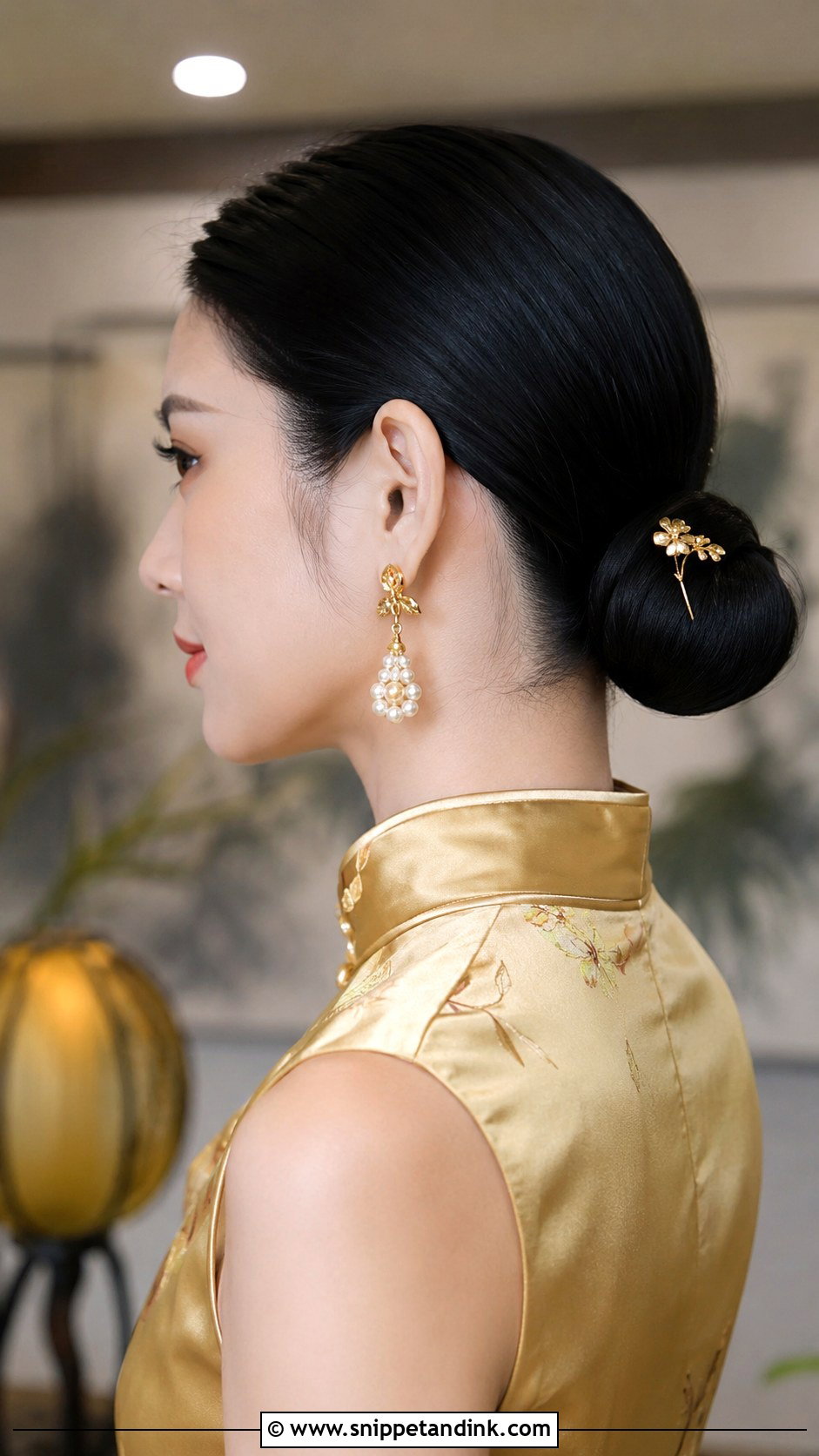
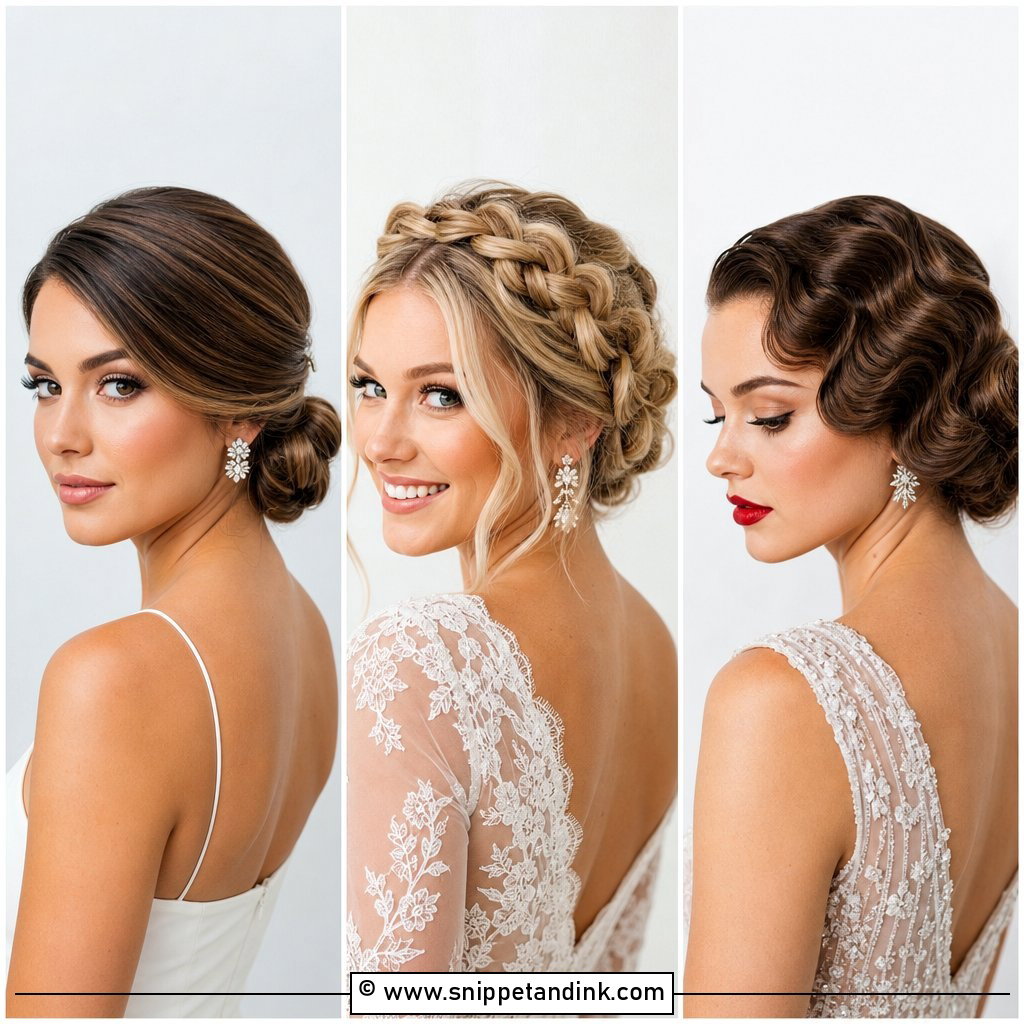
Clean and close to the neck, a chignon keeps the whole silhouette uninterrupted from earring to collar. I smooth the hair with a fine comb and a little cream, then roll and pin it so it sits compact. It holds for hours. Statement earrings work best here, since nothing in the hair competes. One gold pin or a single flower is plenty; more than that starts to look busy against the structured collar.
4. Classic High Bun With Tusuk Konde
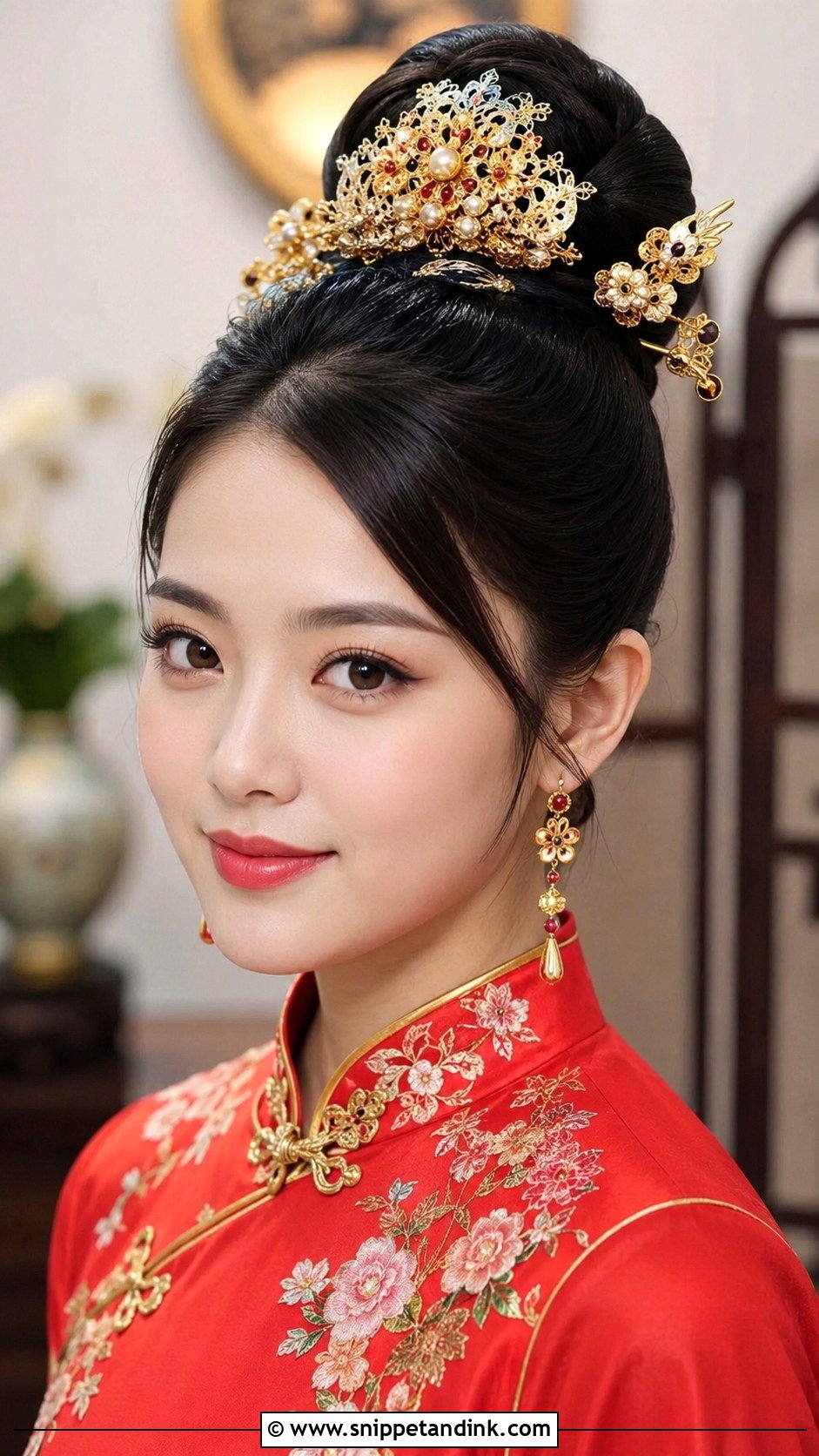
Set at the crown, a high bun honors traditional Chinese ceremony styling and gives the most formal outline of anything on this list. It also lifts every bit of hair off the collar. Tusuk konde Cina, the ornamental pins worn for Sangjit, look their best here because the bun is high enough to show them from the front. A high bun needs a firm base, so I make a tight ponytail first and often use a padding to keep it round. Smooth sides matter; even a small bump shows when the bun is this visible. Brides who want the look to feel ceremonial and rooted in family tradition tend to choose this one.
5. Soft Curls Half-Up Half-Down
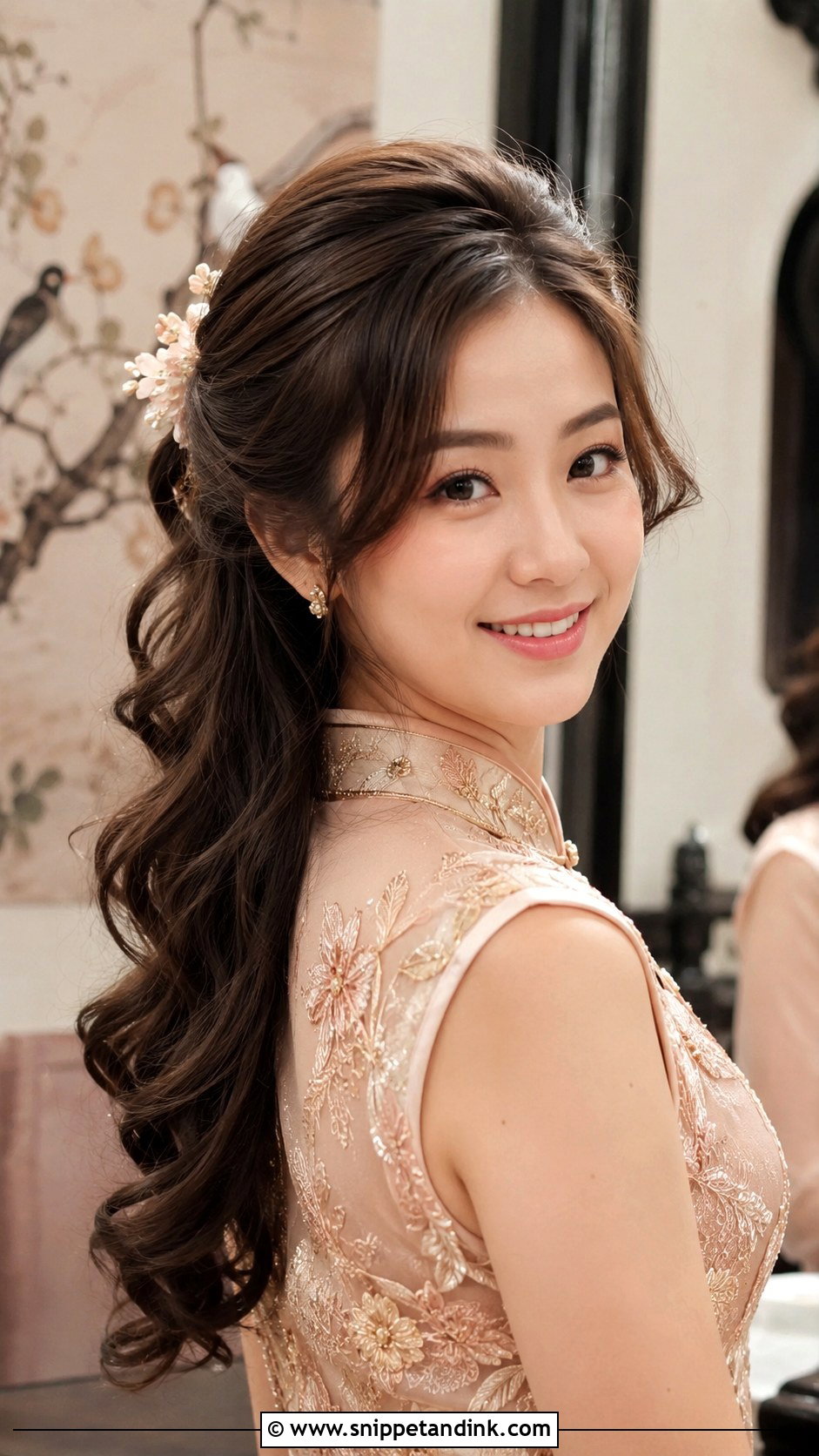
Soft curls half-up feel young and light, and they suit brides who don’t want anything formal. Because curls will sit on and rub against a high collar, I spray the ends lightly and keep the curls a little looser than I would with a strapless dress. Pin the top back with crossed pins under a delicate hairpin or small flower. In daylight, which is when most Sangjit ceremonies happen, curls show their shape well. If your hair drops curls within an hour, choose an updo instead.
6. Braided Low Bun
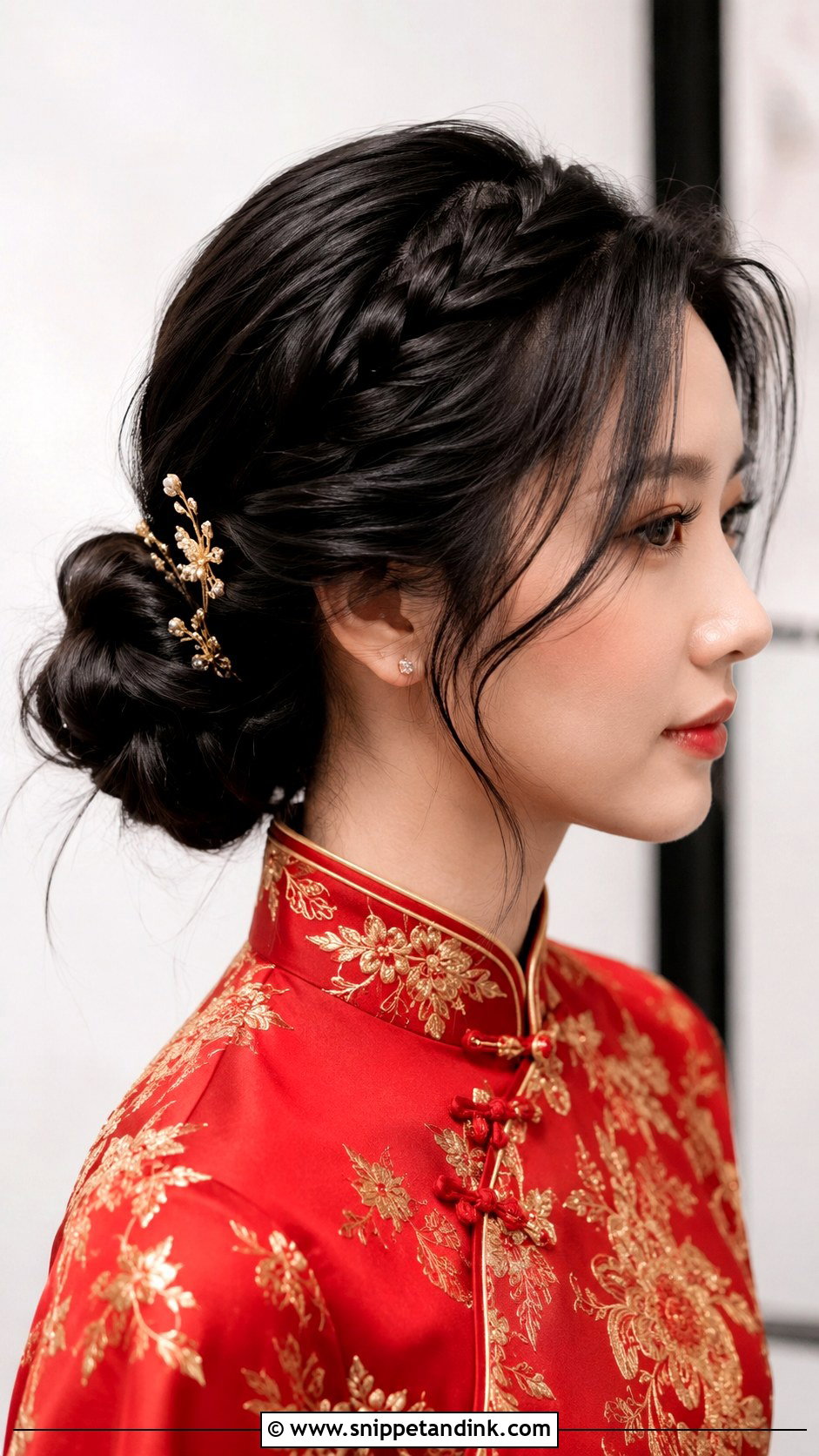
Braids feeding into a low bun give texture that reads from across the room while keeping everything secure. I braid with firm tension, pin the bun, and only then gently pull the braid edges for width. A few loose face-framing strands soften it. Gold pins tie it to the ceremony’s warm palette. It’s a good middle ground if a plain bun feels too simple but you still want the collar completely clear.
7. Side-Swept Hollywood Waves
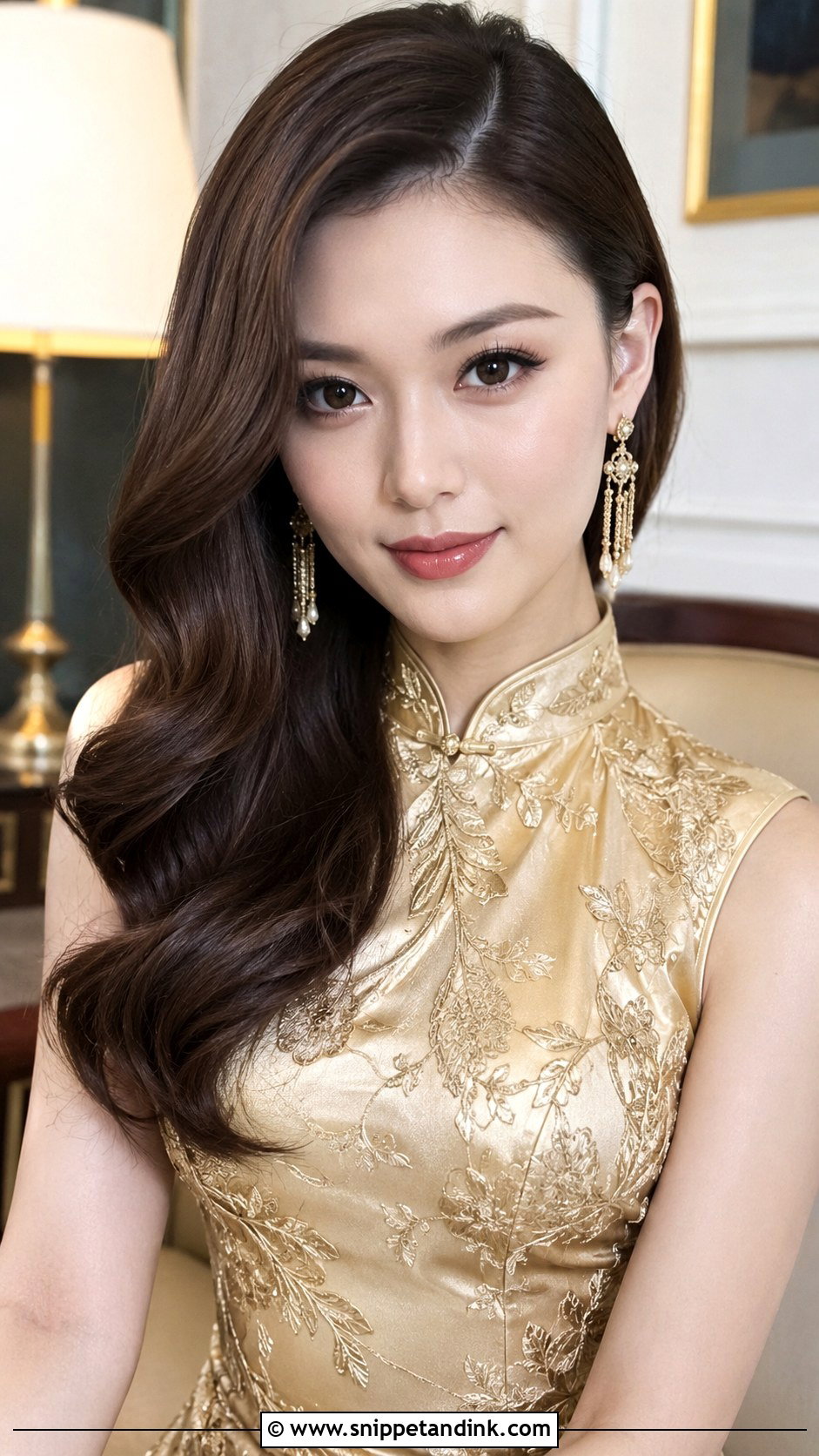
Hollywood waves swept to one shoulder look luxurious, though with a cheongsam they need care: the waves rest on the collar on one side. I set the waves, brush them into shape, then pin them behind the ear on the sweep side so the weight stays off the fabric. A deep side part frames the face. This is best with a softer collar or a sleeveless qipao, and it pairs well with statement earrings on the bare side.
8. Sleek Low Ponytail
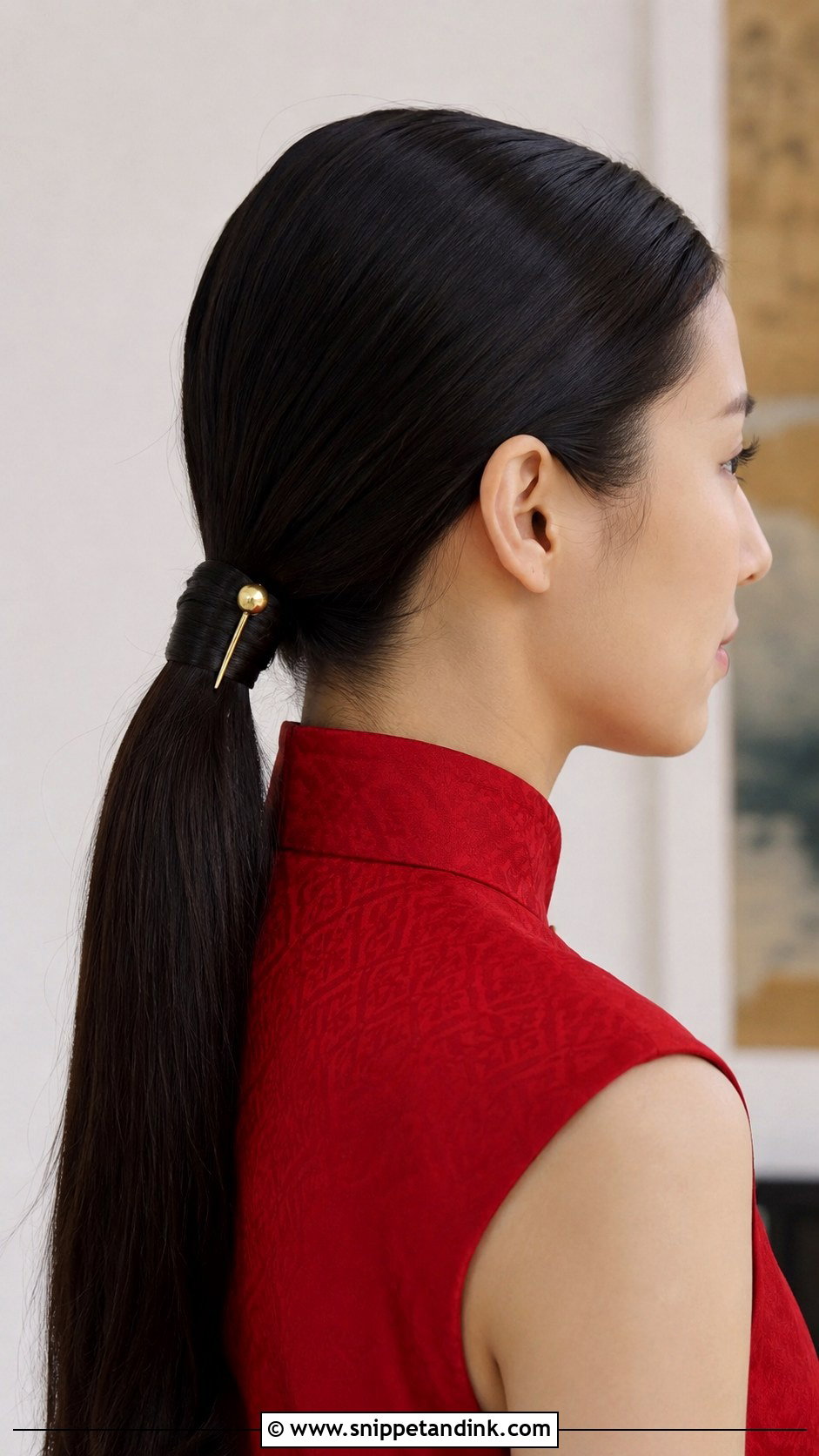
A low ponytail is easy to underrate. Tied at the nape and wrapped with a strand of hair round the elastic, it’s clean and quick, and it stays comfortable through warm weather. The issue with a mandarin collar is that the tail rubs against the back of it, which can frizz the hair by evening. I smooth the length with a little serum and keep it sleek. A decorative gold pin or small floral clip gives a ceremonial touch.
9. Vintage Finger Waves
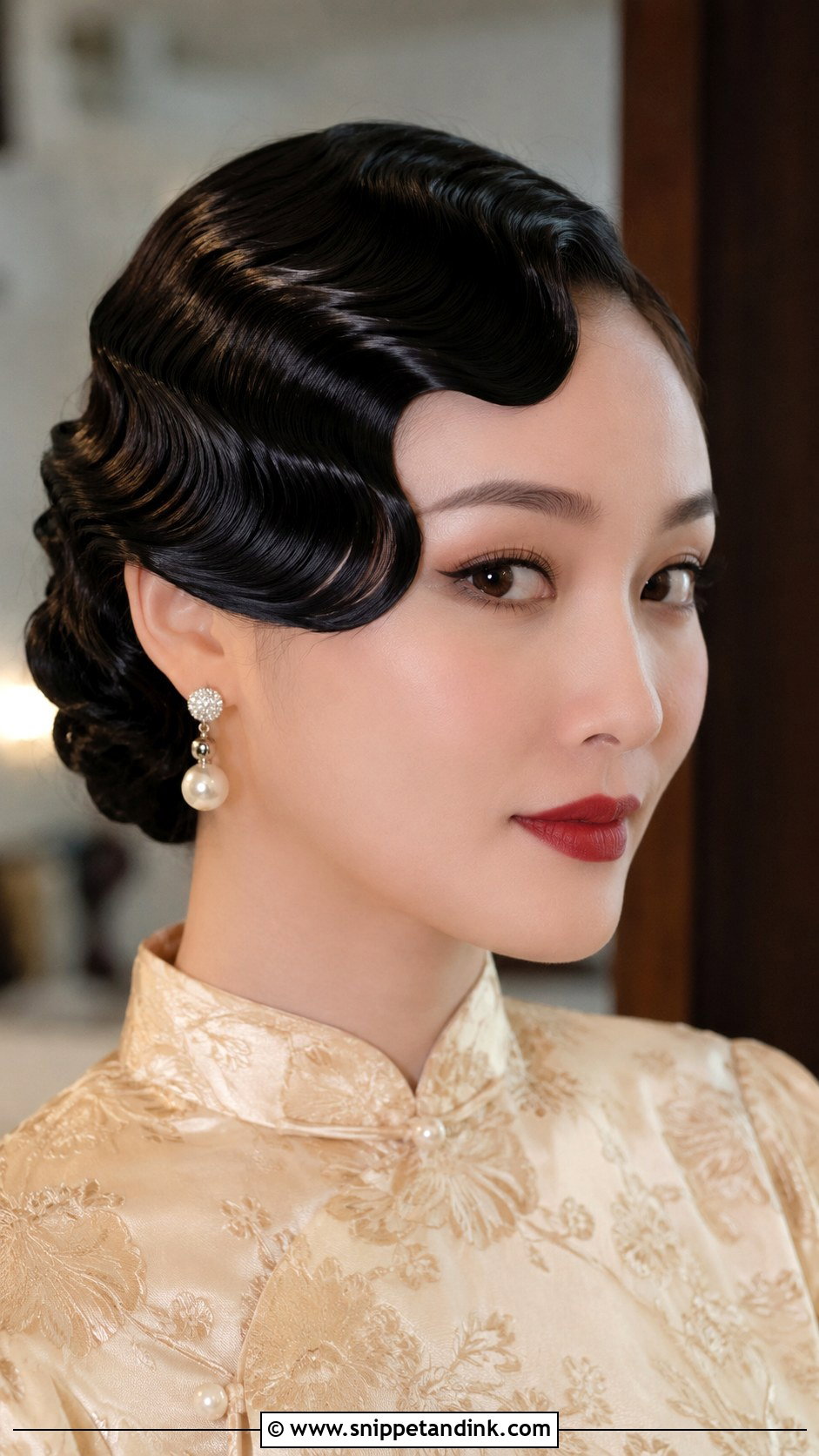
Sculpted finger waves hug the head in tight S-shapes, which keeps all the drama above the collar where it belongs. Shorter hair carries them on its own; longer hair needs the waves at the front and a low bun behind. Getting crisp waves takes a setting lotion and patience, so book an experienced stylist rather than trying this at home. Paired with a structured cheongsam and statement earrings, it’s the most distinctive look here.
10. Loose Romantic Updo
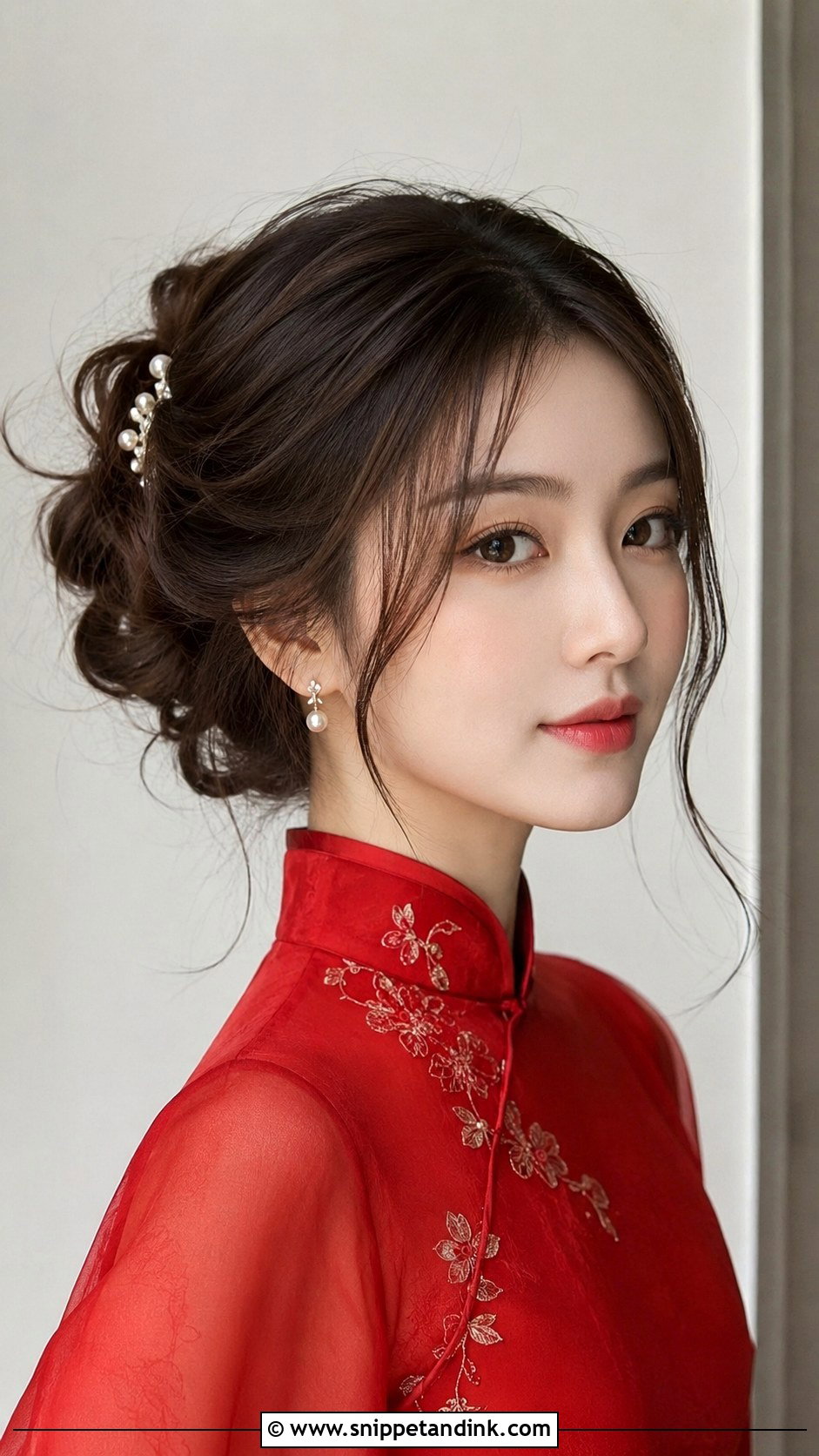
Loose updos rely on texture, so I prep with a texturizing spray and curl everything first. Then the hair is gathered and pinned in sections, with a few soft tendrils pulled out around the face. It looks undone but is anchored with more pins than a sleek bun. Floral pins or pearls dress it up. With flowing cheongsam fabrics and in candid photos, it has a warmth that a polished bun doesn’t.
11. Top Knot Bun With Hairpins
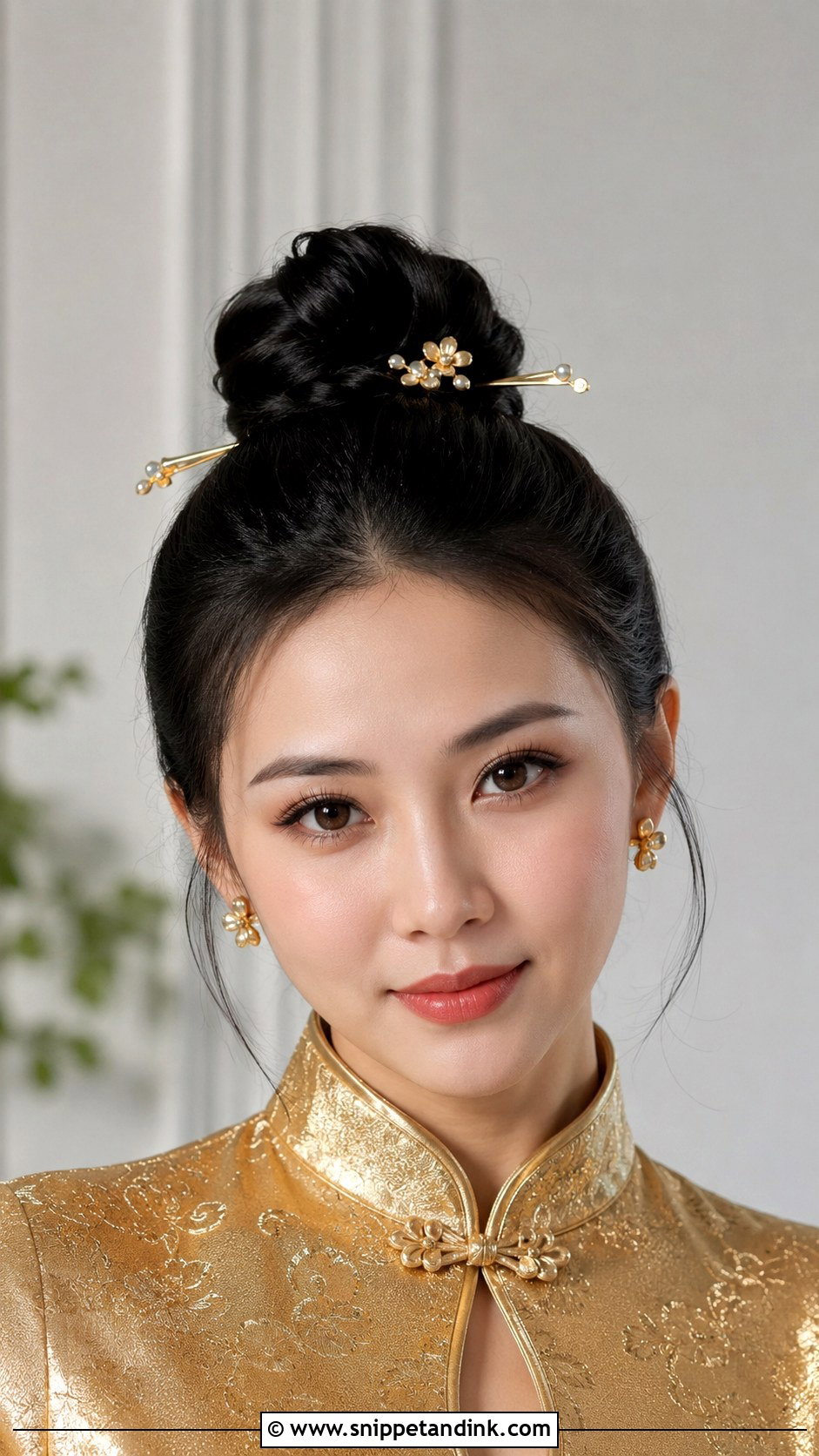
A top knot keeps every strand off the face and collar and lengthens the neck. It’s modern, and some families may find it less traditional, so it’s worth asking your mother’s opinion. I tie the base tightly at the crown and wrap the knot around it, then pin through the base in a few places. Delicate gold pins or a jeweled accent match it to the cheongsam. Smooth flyaways at the nape, since the high collar sits right beneath them.
12. Bubble Ponytail
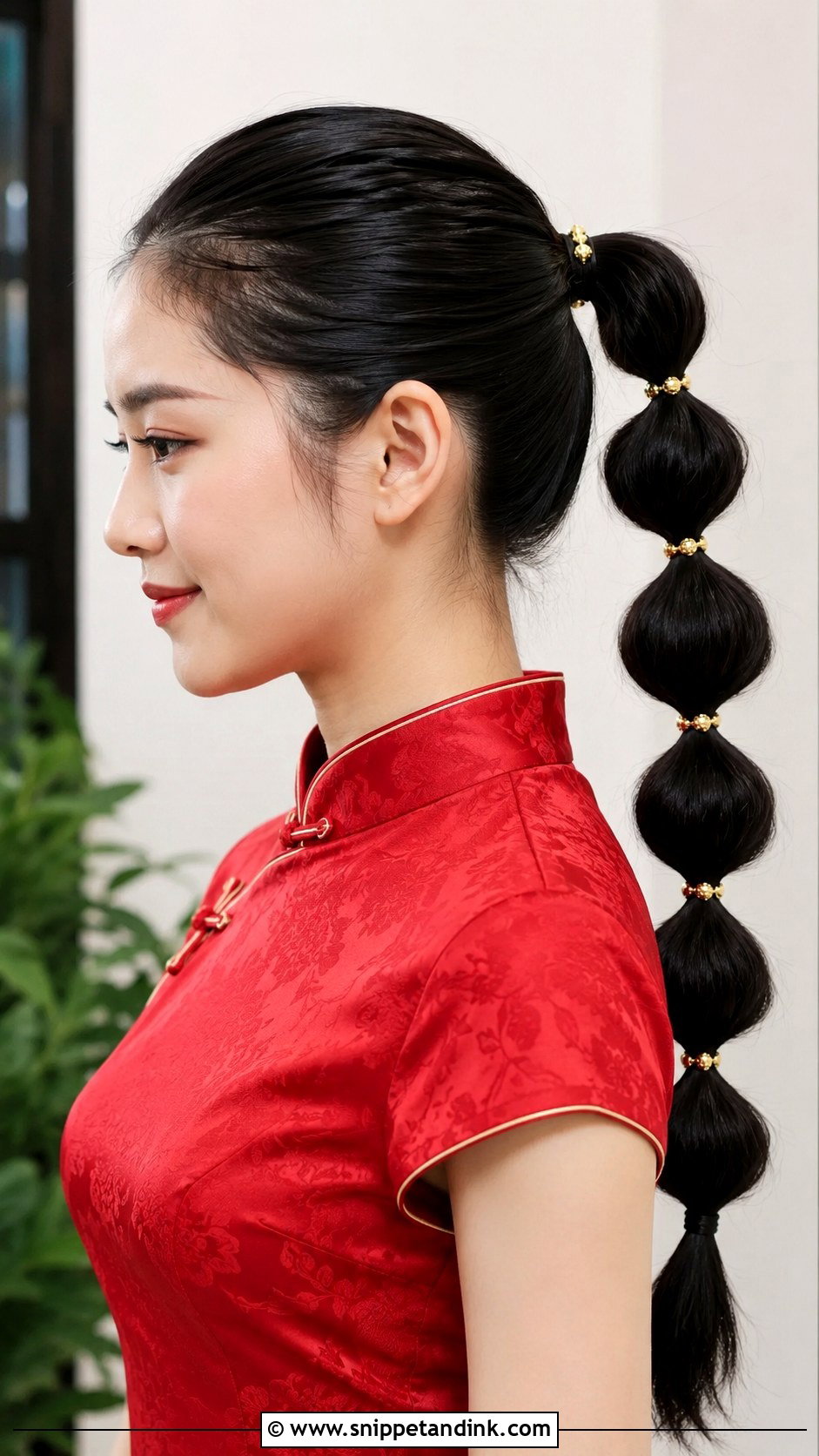
A bubble ponytail is tied at intervals down its length with small clear elastics, and each section is loosened into a rounded shape. It’s playful, and it keeps hair off the shoulders on a warm day. The elastics need to be evenly spaced or the bubbles look lopsided in photos. Smoothed neatly with small gold pins, it can look polished with a sleek cheongsam. Brides who like contemporary styling enjoy it; for a very traditional family, I’d pick something quieter.
13. French Twist Updo
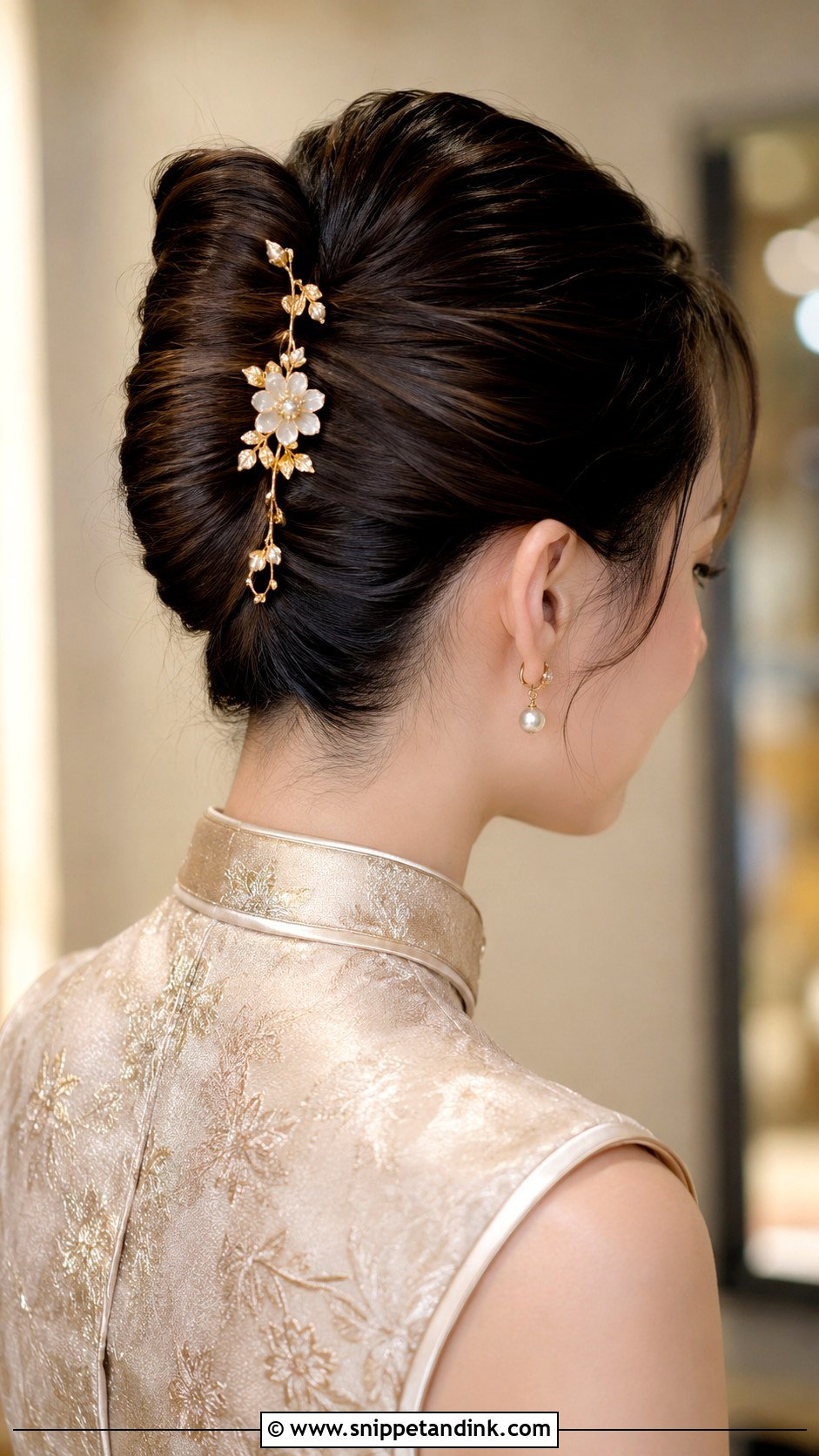
The French twist sweeps hair to one side and rolls it into a vertical fold, pinned along the seam. It’s one of the most secure updos I do, because the pins hide inside the roll and grip from both sides. The neckline stays completely clear, which shows off the cheongsam collar. A few gold pins or a small floral piece along the seam finish it. It holds all day without fuss.
14. Wavy Half-Up With Pearl Pins
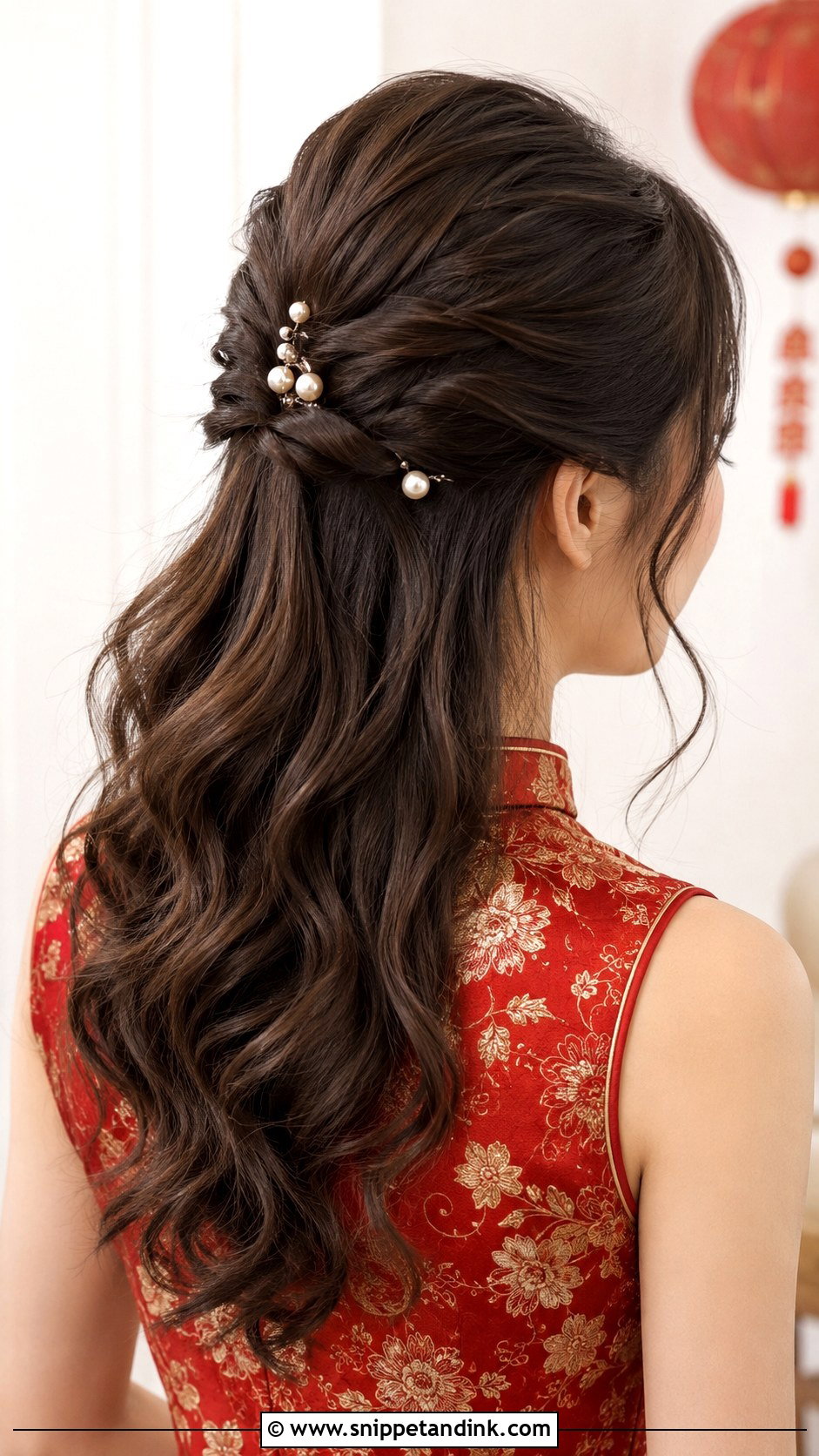
Pearl pins scattered through a half-up section catch the light gently and suit both red and gold cheongsams. The waves below keep it soft. I push pearl pins in at different angles so they look scattered rather than lined up in a row. As with any half-down style, keep the lengths behind the shoulders so they don’t snag on the collar. For a little shimmer without anything heavy, these pearl-adorned waves are a quiet, classic option.
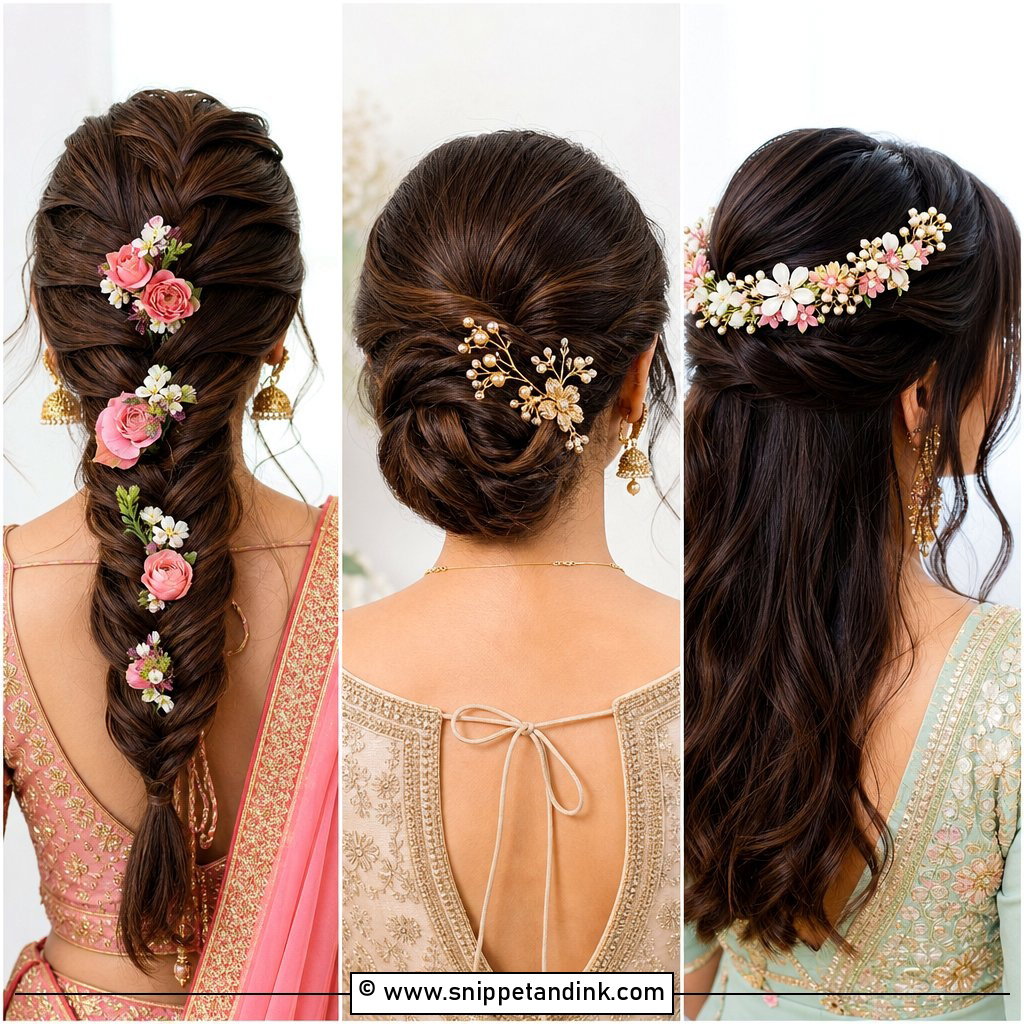
15. Low Bun With Baby’s Breath
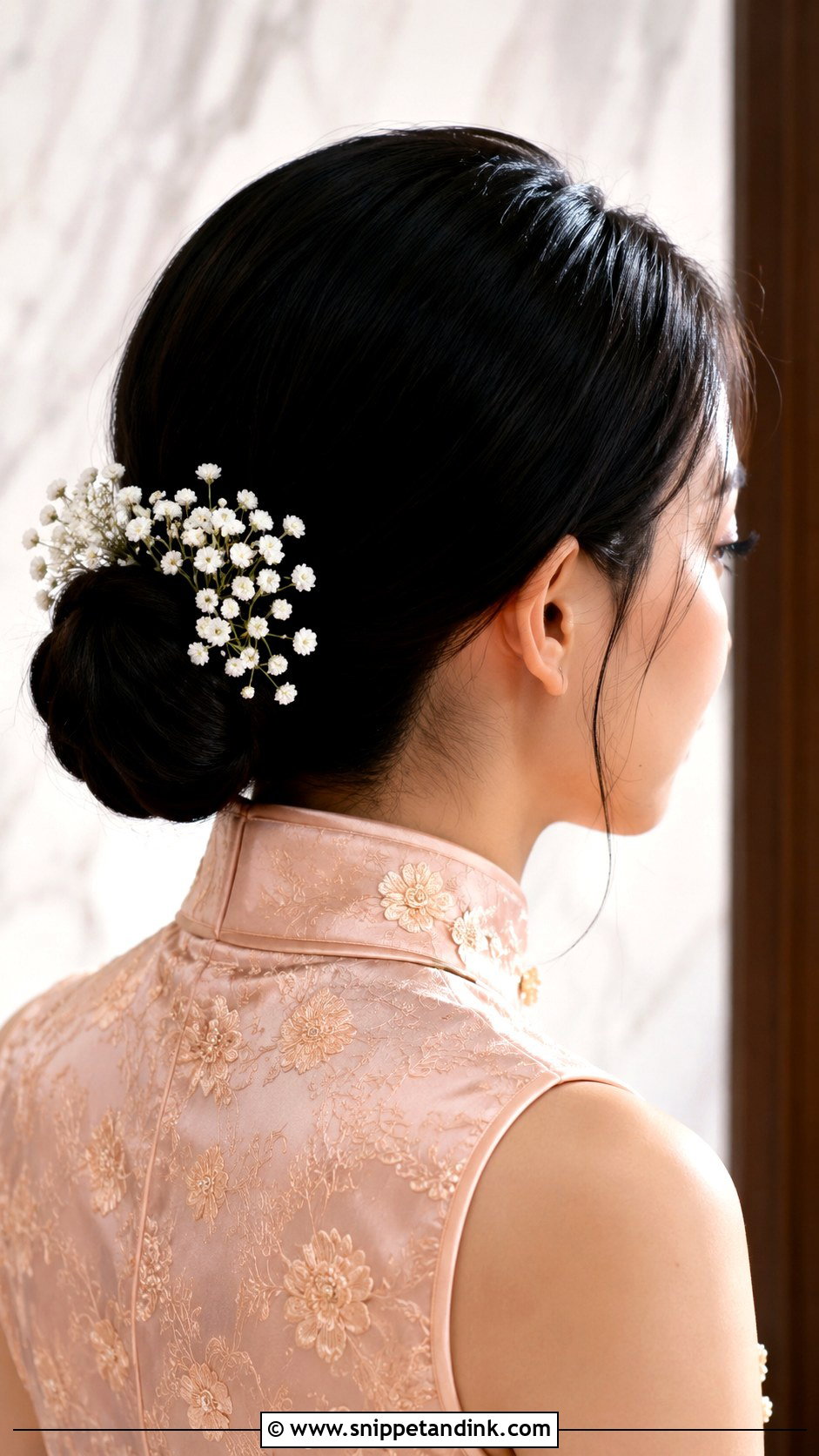
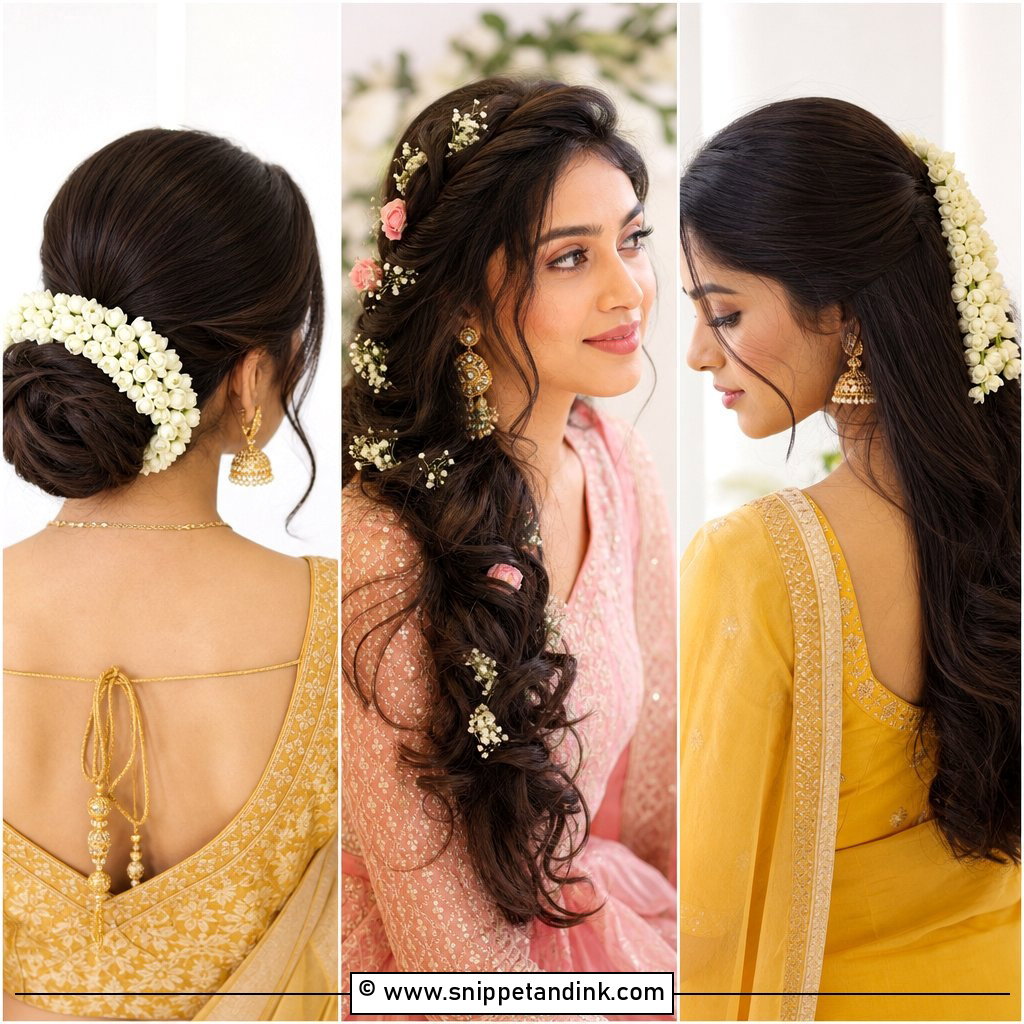
A low bun decorated with baby’s breath feels fresh and light. The tiny white sprigs get tucked around the bun with their stems cut short and pushed in at an angle, so they lock into the hair. Baby’s breath holds up out of water for a good while, though I’d still keep it cool until styling. The low placement sits comfortably above a high collar. In daylight the white flowers read crisply against dark hair.
16. Slicked-Back Bun
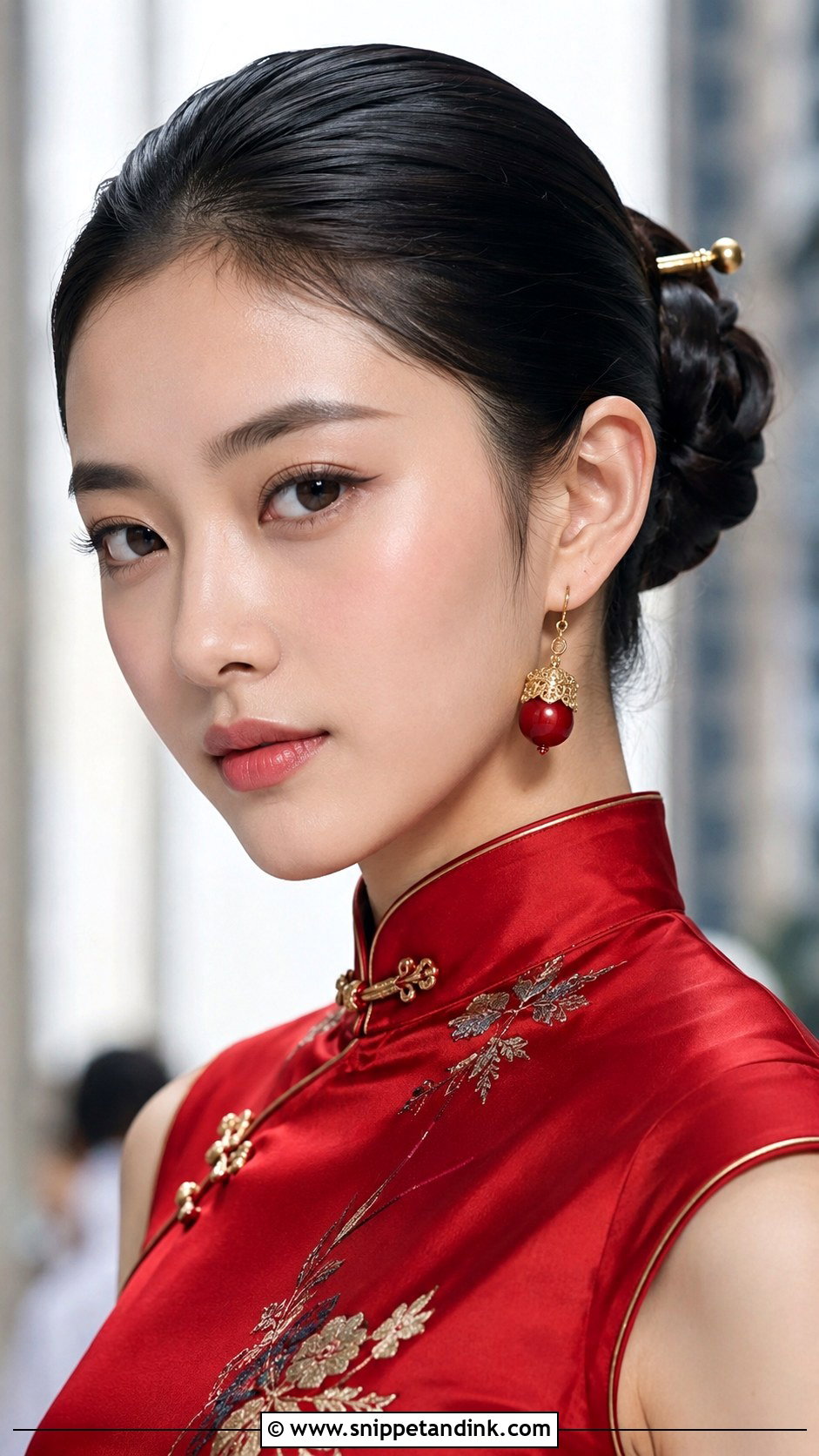
Slicked back and glossy, this bun is about clean lines. I use a strong-hold gel at the hairline and a boar-bristle brush to get it flat, then pin the bun tightly. It stays put for the whole day. All attention goes to the face, the earrings and the collar, which suits editorial-minded brides. One gold pin is enough. It’s less forgiving on a hairline with cowlicks or very fine baby hair.
17. Curled Side Bun
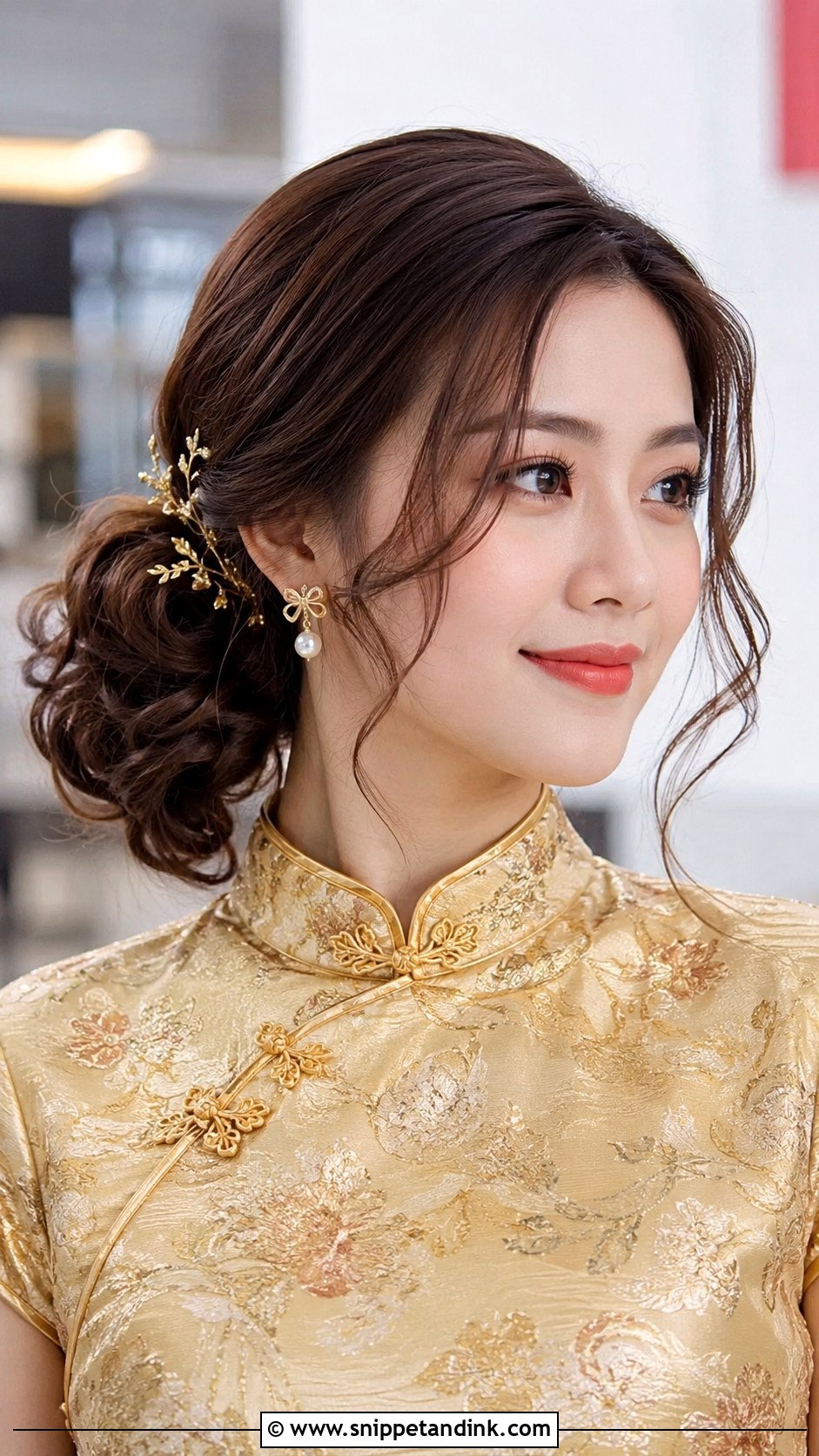
Curling first and gathering into a bun placed off to one side gives an asymmetrical shape that softens a structured collar. Keep it above the collar line, since a side bun placed too low rubs against the fabric. Gold pins or a small floral accent finish it. The curled texture stops it from looking stiff, which is welcome on a long day of family photos.
18. Double Bun With Gold Accents
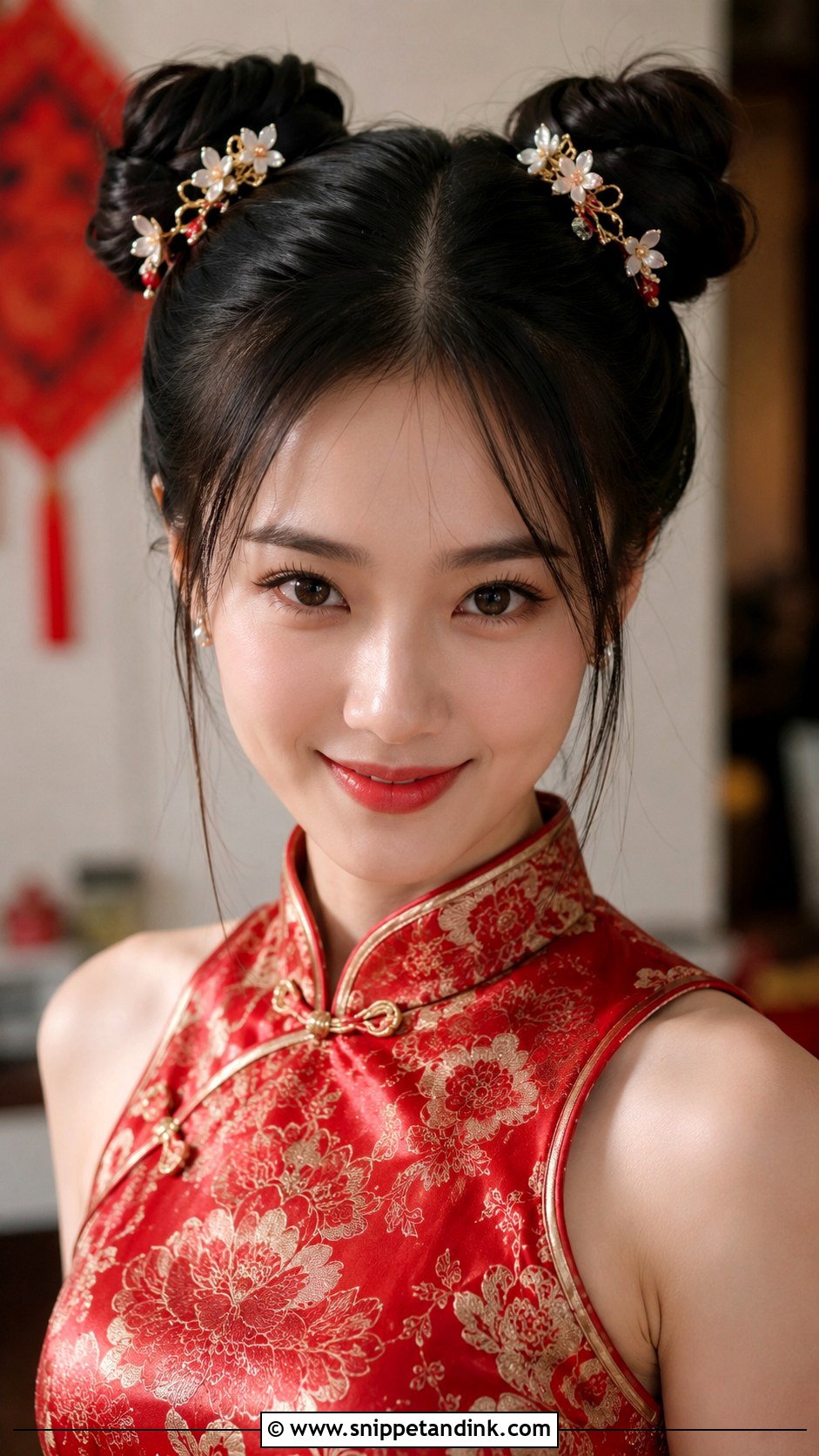
Two small buns placed symmetrically at the crown nod to traditional Chinese hairstyles while feeling young and fresh. Symmetry is everything: I part the hair exactly down the center and check the bun placement in a mirror from the front and back. Small gold accents or floral pins on each keep it ceremonial. It suits younger brides and those with medium to long hair, and it keeps everything off the collar.
19. Twisted Crown Updo
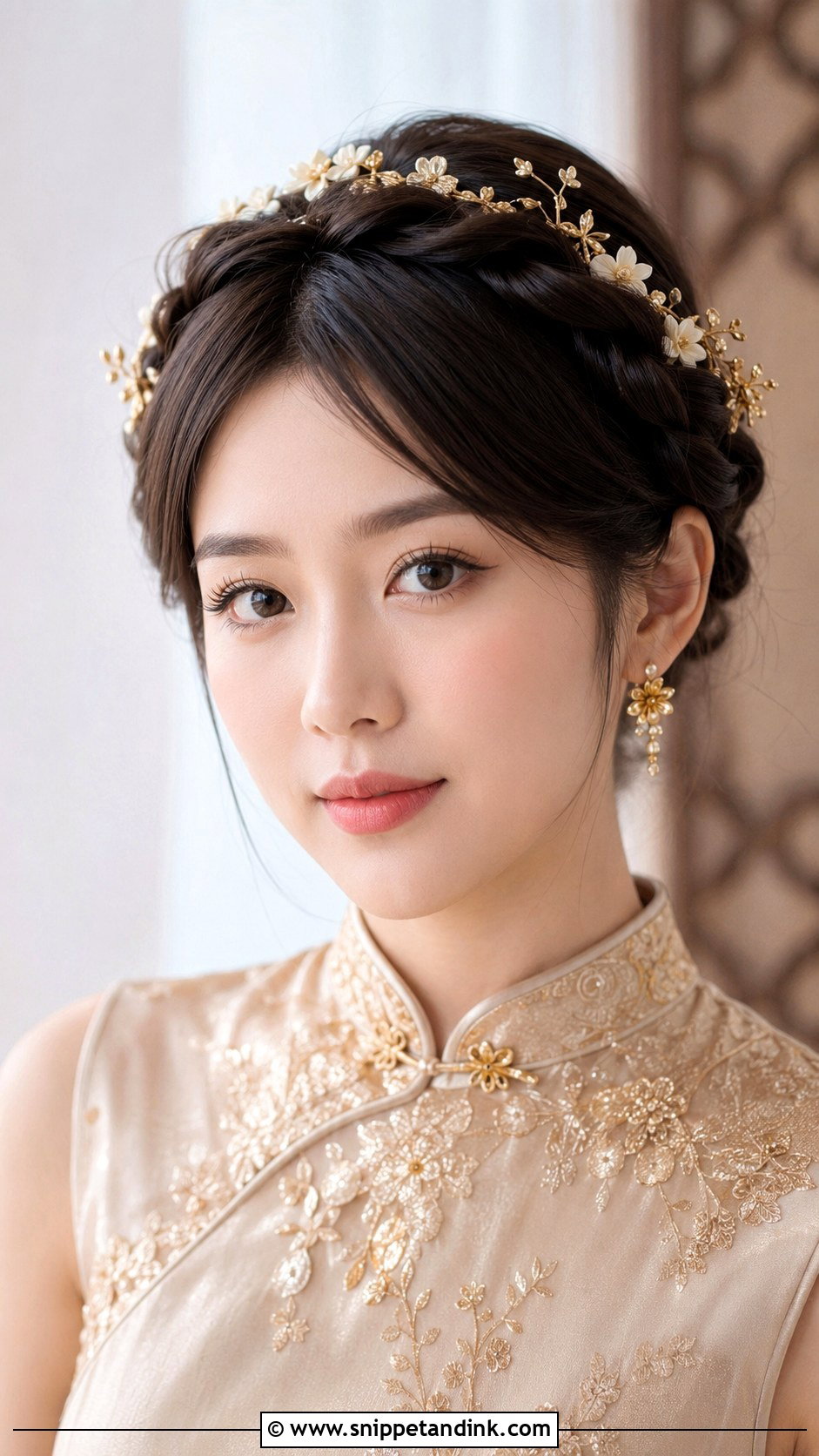
Twisted sections wrapped around the head give a halo shape that’s secure and comfortable for a long day. I twist each section in the same direction and pin along the twist line so it doesn’t unwind. Gold pins or small flowers along the crown add a ceremonial touch. It pairs well with a high mandarin collar because nothing hangs down. Medium to long hair works; short layers tend to escape the twists by afternoon.
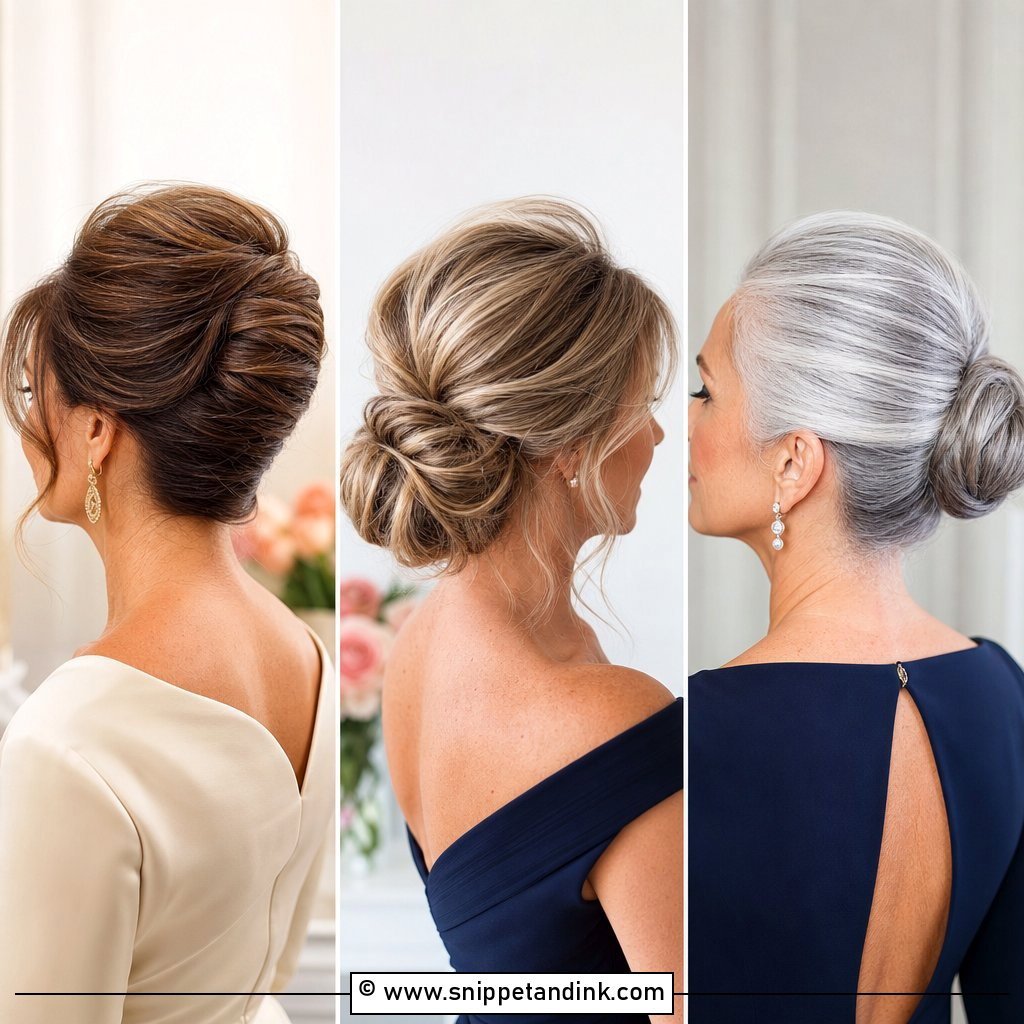
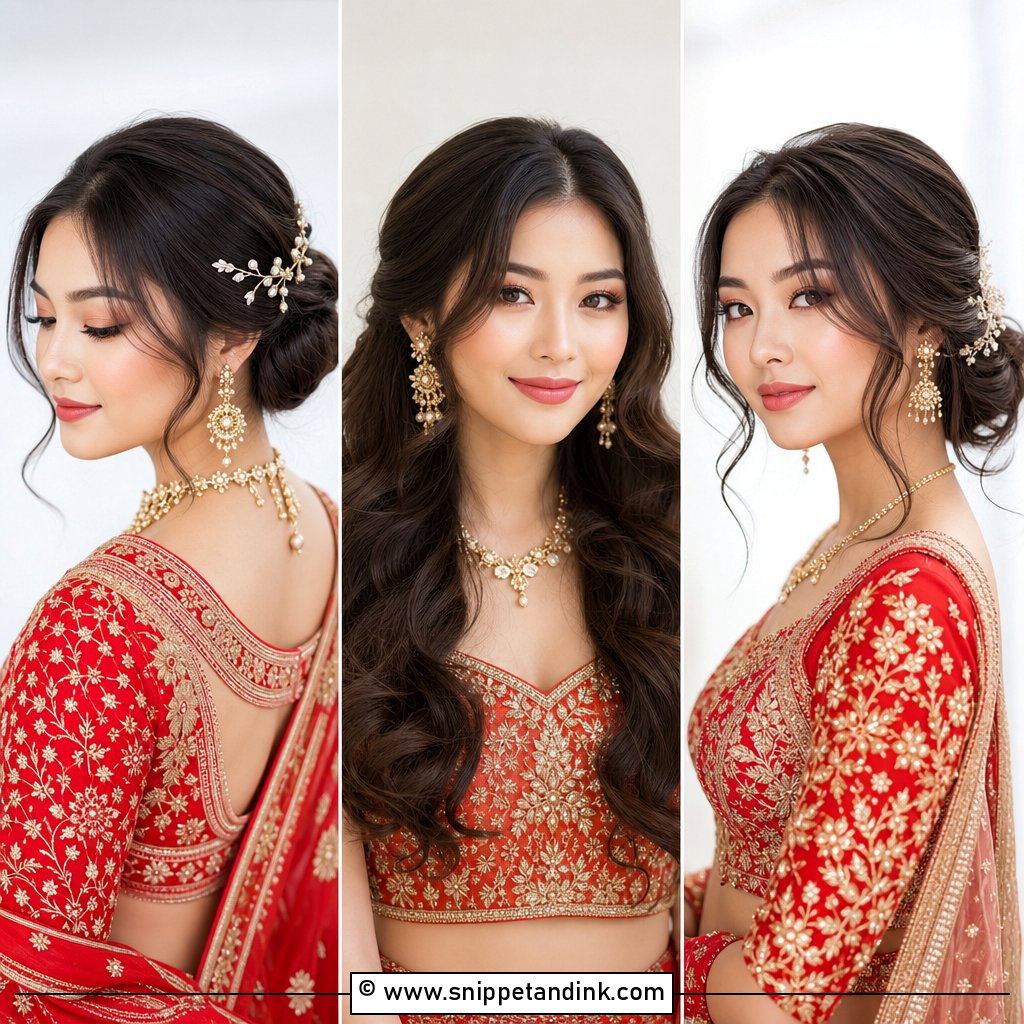
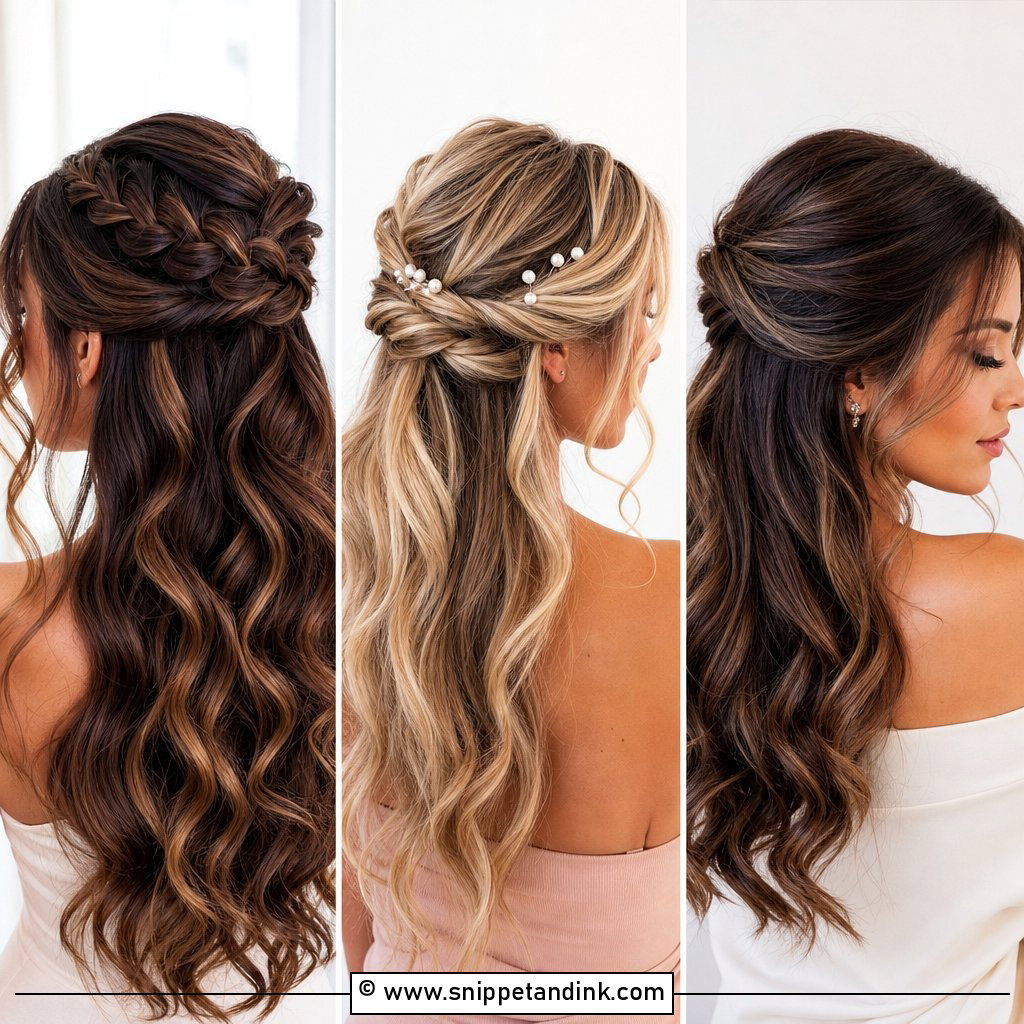
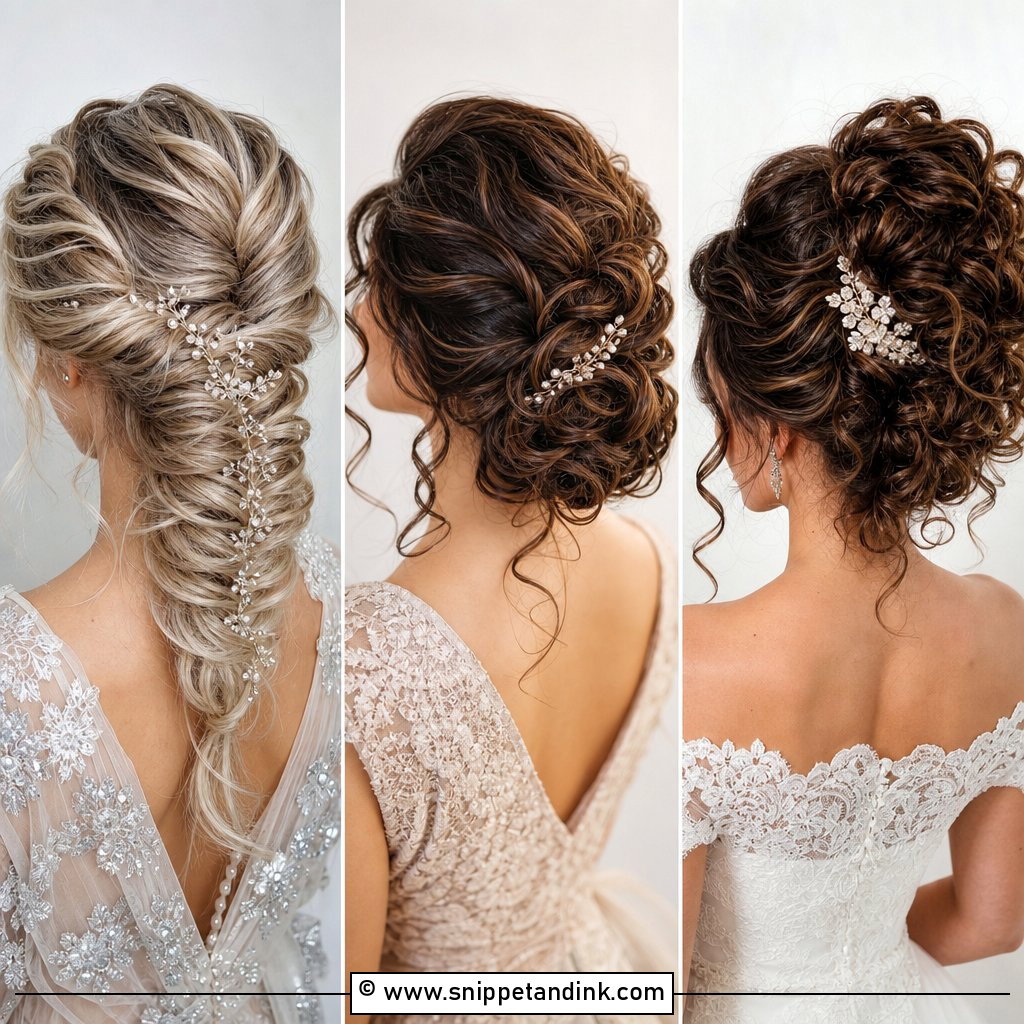
20. Wavy Low Bun With Red Florals
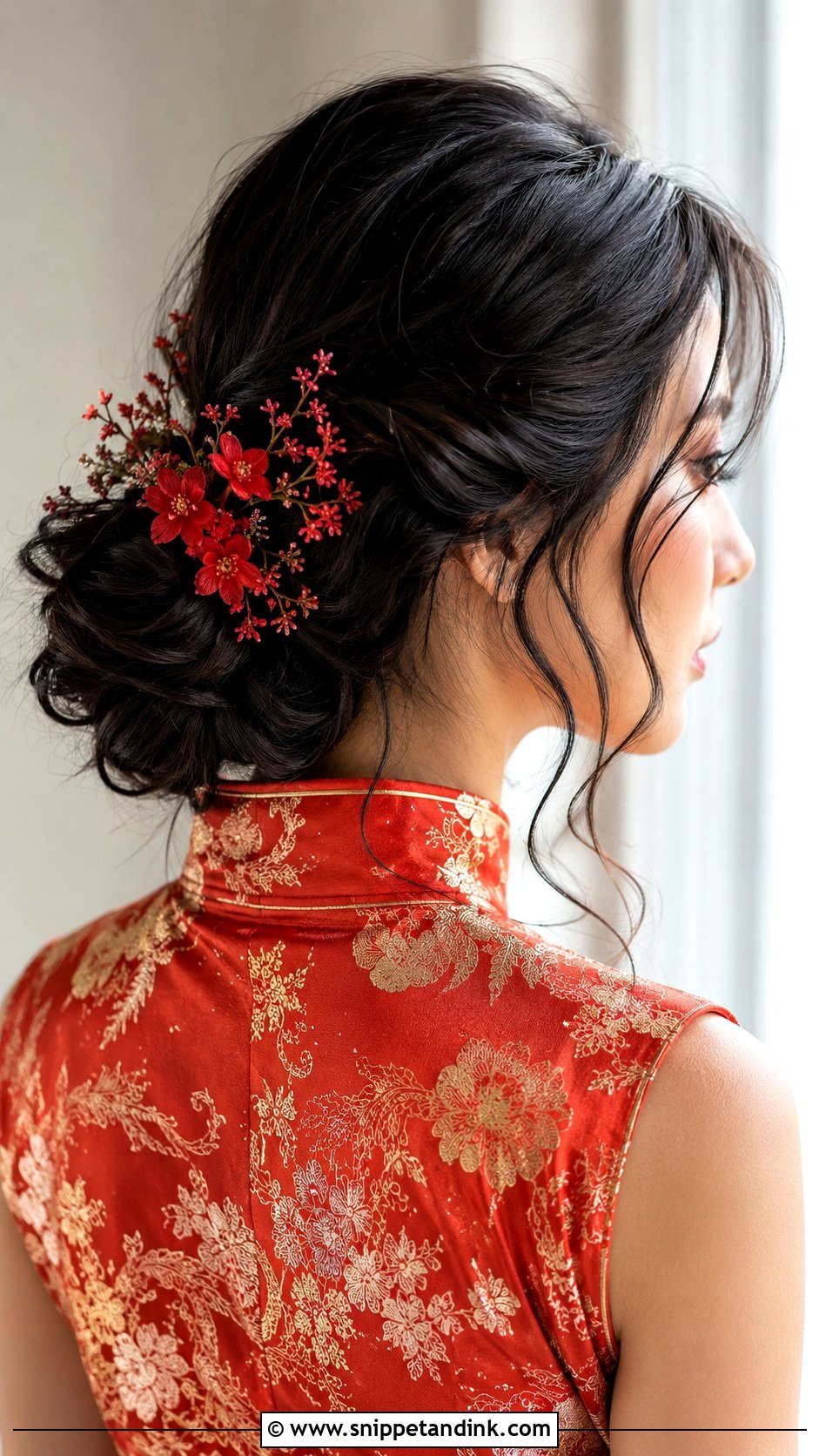
Red florals tucked into a wavy low bun echo the color of good fortune that runs through the ceremony. The waves give the bun soft volume. Choose sturdy red blooms, such as spray roses, which survive several hours out of water better than delicate petals. I pin the flowers last and at the top edge of the bun, where they’re seen from the front. With a red or gold cheongsam, the whole look feels joyful and cohesive.
Securing Tusuk Konde So They Stay Put
Traditional ornamental pins are often heavier than they look, and a long pin pushed only into the surface of a bun will lean forward and fall out by midday. I build every bun meant to carry tusuk konde with a firm core, using a tight ponytail base and sometimes a padding, so the pins have something solid to bite into.
Each pin goes in at a shallow angle, aimed toward the center of the bun, then gets a hidden bobby pin crossed under it as a backup. If a pin is family heirloom jewelry, I place it where it’s least likely to catch when you hug relatives. Ask your stylist to show you how to reseat a pin, so a cousin can fix one in the bathroom without taking the whole style apart.
Daylight at Home Is a Different Brief
Most Sangjit ceremonies take place during the day at the bride’s family home, which means window light, air conditioning and family members close by with phone cameras. Daylight shows every flyaway and every shiny pin, so I use matte pins in your hair color and a light finishing spray instead of a heavy shine product. Air conditioning dries hair and builds static; a tiny drop of oil on the palms, smoothed over the surface, settles it. Stay close to a mirror before each formal photo, because hair that looked neat at nine o’clock can loosen by the time the gift trays are exchanged.
Let the Collar Make the Final Call
Start with the cheongsam and its collar, then let the hairstyle follow. A high collar asks for hair that sits at or above the nape; a softer neckline gives you room for waves. Add the gold pins or flowers that mean something to your family, and try the style once before the day with the dress on. That one trial will show you whether the collar and the hair get along.
You'll Like These Ideas:


Leave a Reply