
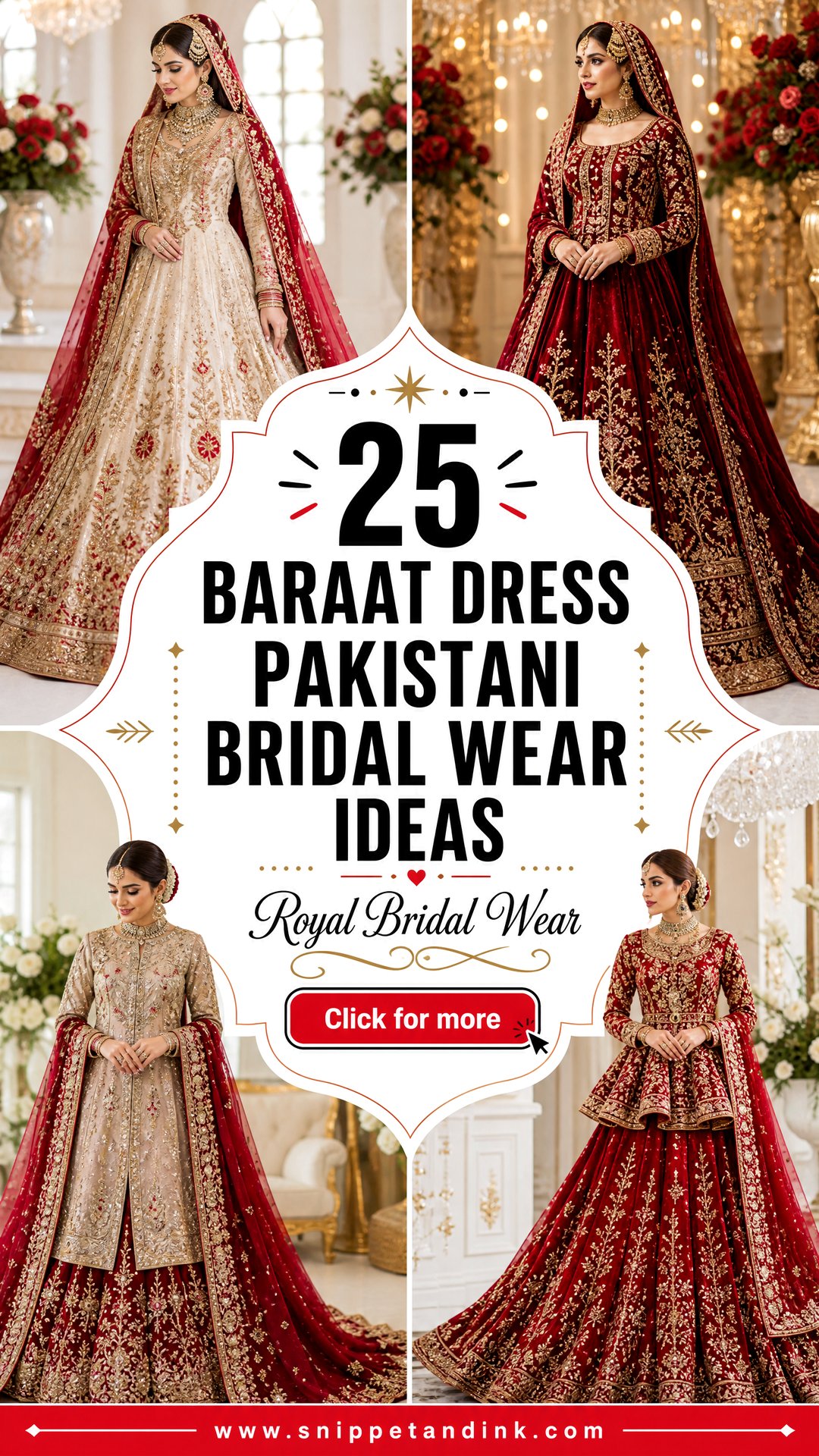
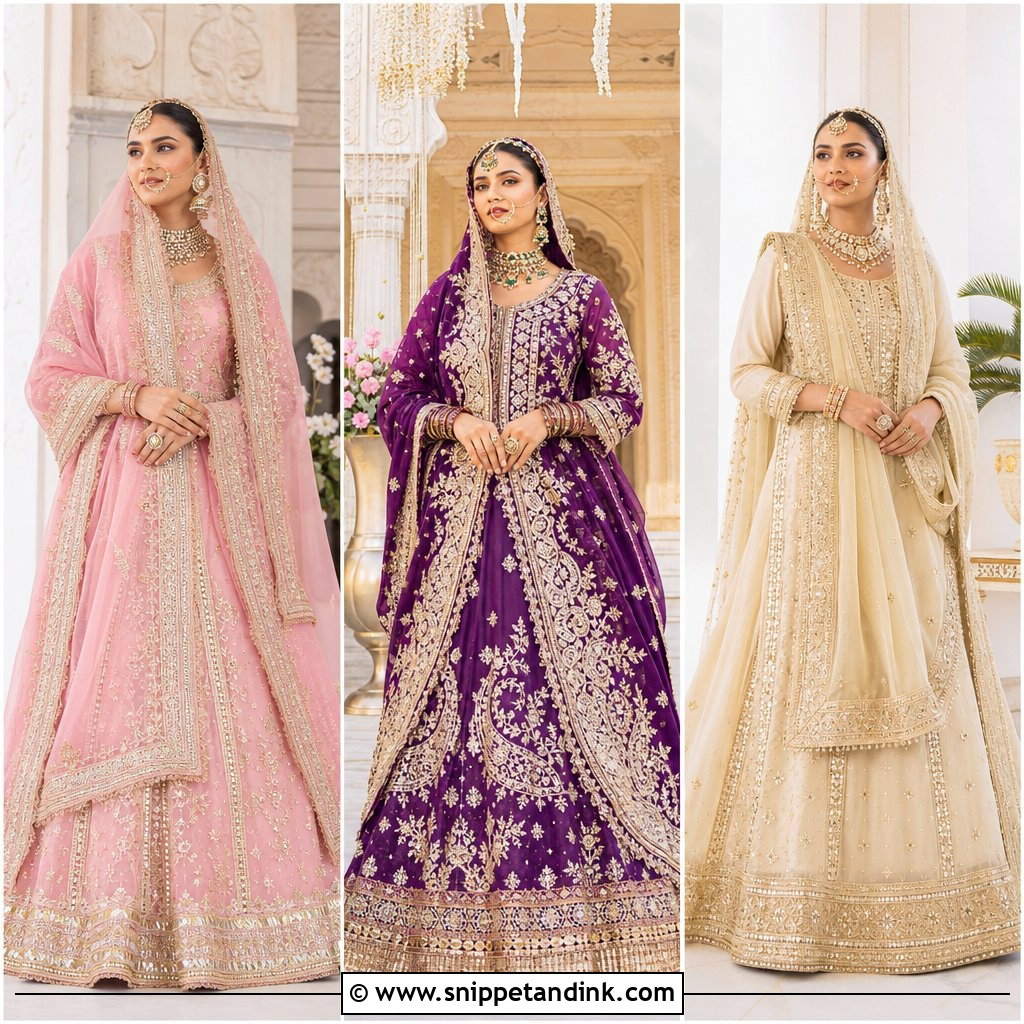
The Baraat is the day the whole family photographs, and the bride wears the heaviest, most worked outfit of the entire wedding for hours on a stage. That changes how I style it. The joda has to look grand from the back of a hall, frame the face under a dupatta, and still let her sit, stand, greet and eat without fighting her clothes. Classic red still leads, but maroon, rust, gold, ivory, blush and emerald all appear on Baraat stages now, in shapes from farshi ghararas to pishwas gowns and velvet lehengas. Below are traditional, modern and modest options, each with what I watch for when a bride tries it on.
Ordering a Joda Months Before the Wedding
Heavy hand embroidery like zardozi, dabka and tilla is slow work, and most designers need several months to make a Baraat joda, often longer in the peak wedding season. I’d start conversations with a designer around six months out, and earlier if you want custom colours or embroidery.
- Approve the fabric and colour swatch in daylight before anything is cut.
- Ask to see an embroidery sample or a photo of the motif in progress.
- Have a first fitting with the basic shape before the heavy work goes on, since a fully embroidered blouse is hard to alter.
- Do the final fitting with the shoes and undergarments you’ll actually wear.
- Try the full outfit on with dupatta and jewelry a few weeks before the wedding, so there’s still time to fix anything.
Ask what the outfit will weigh, too. A heavily worked lehenga with a can-can underneath can be surprisingly heavy, and you’ll be wearing it for several hours.
1. Red Baraat Lehenga Choli
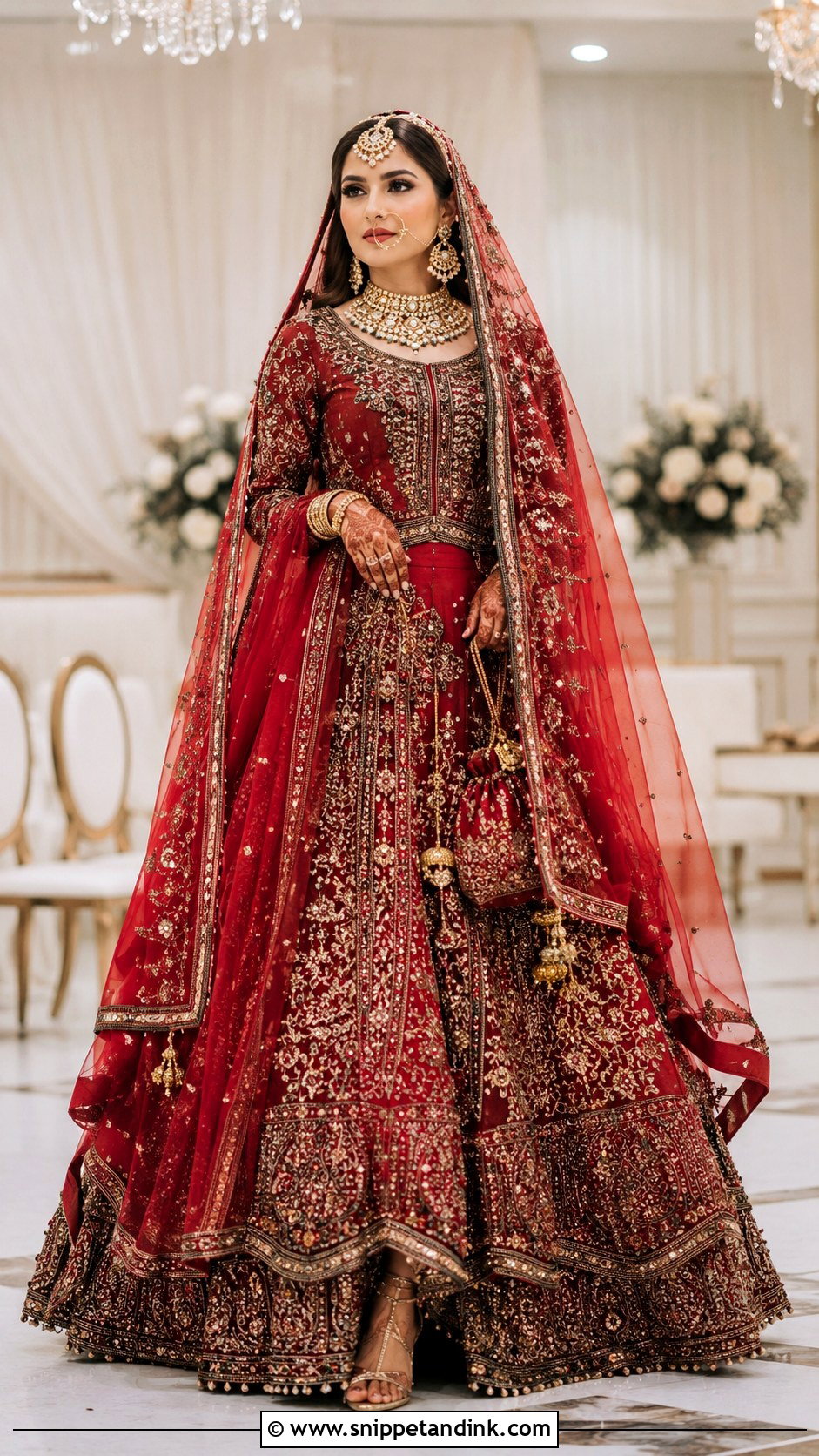
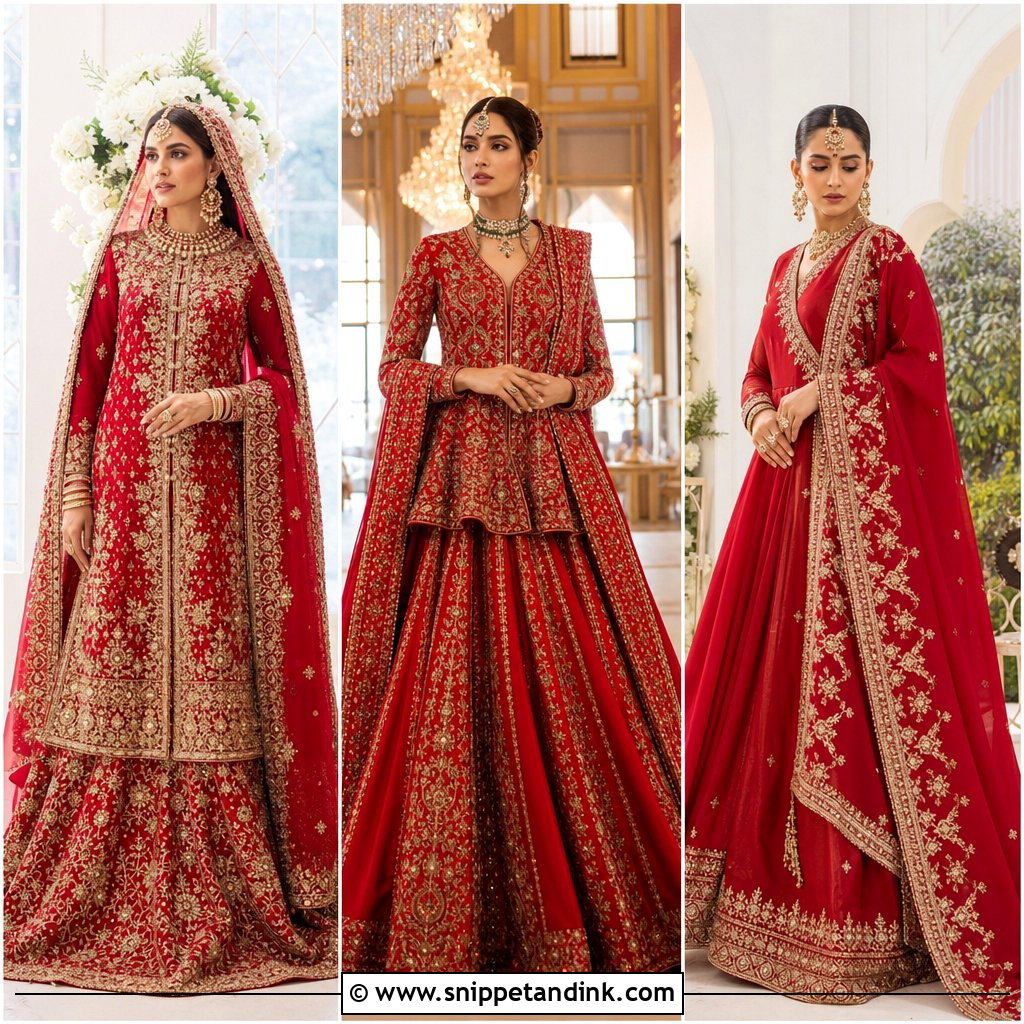
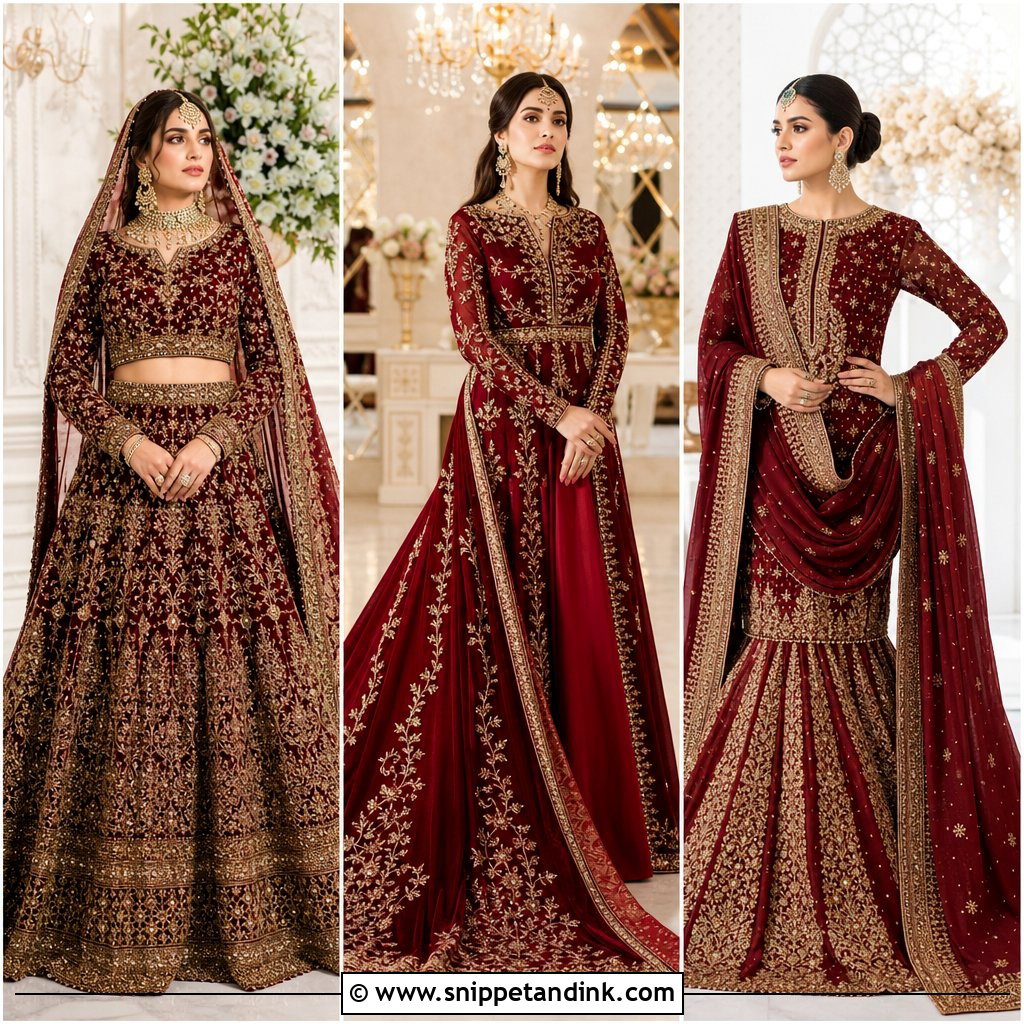
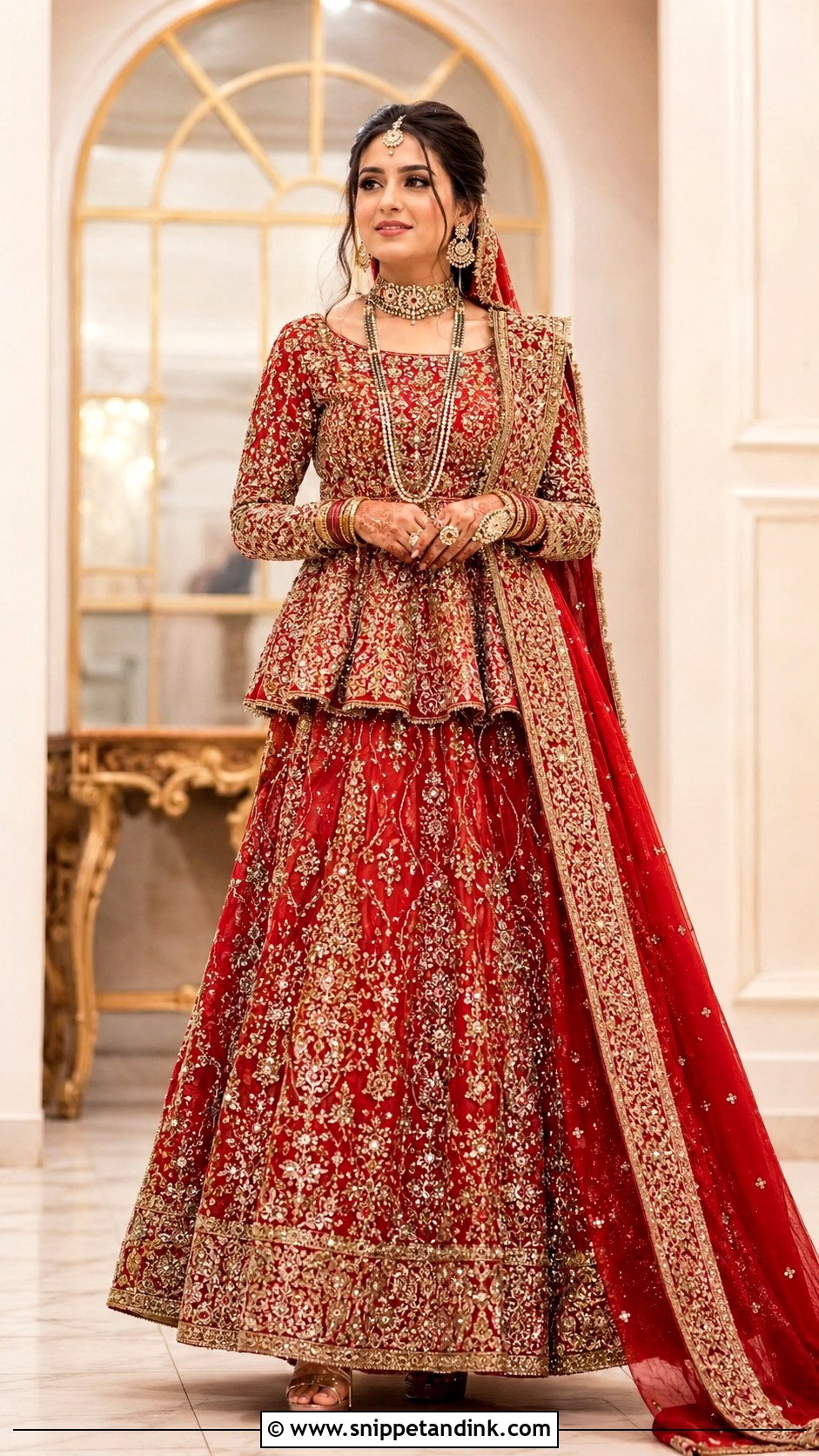
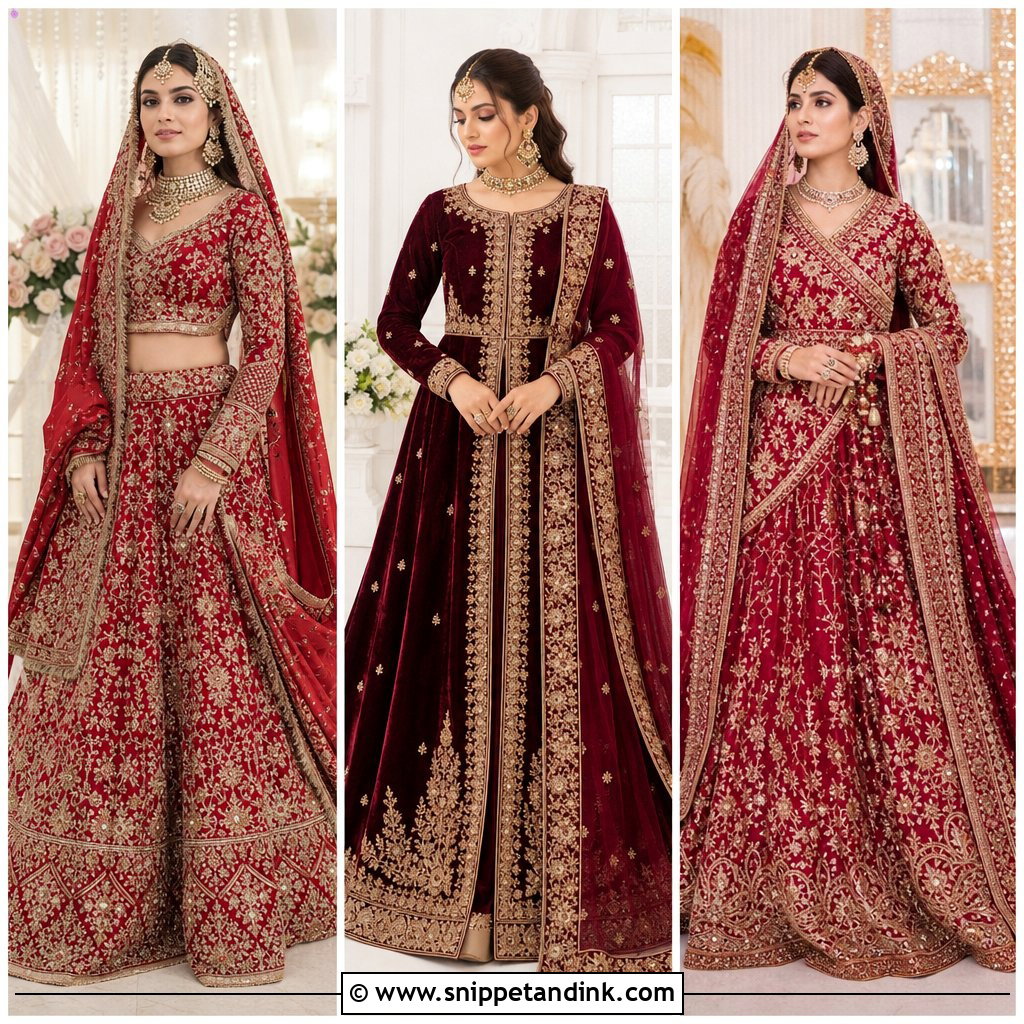
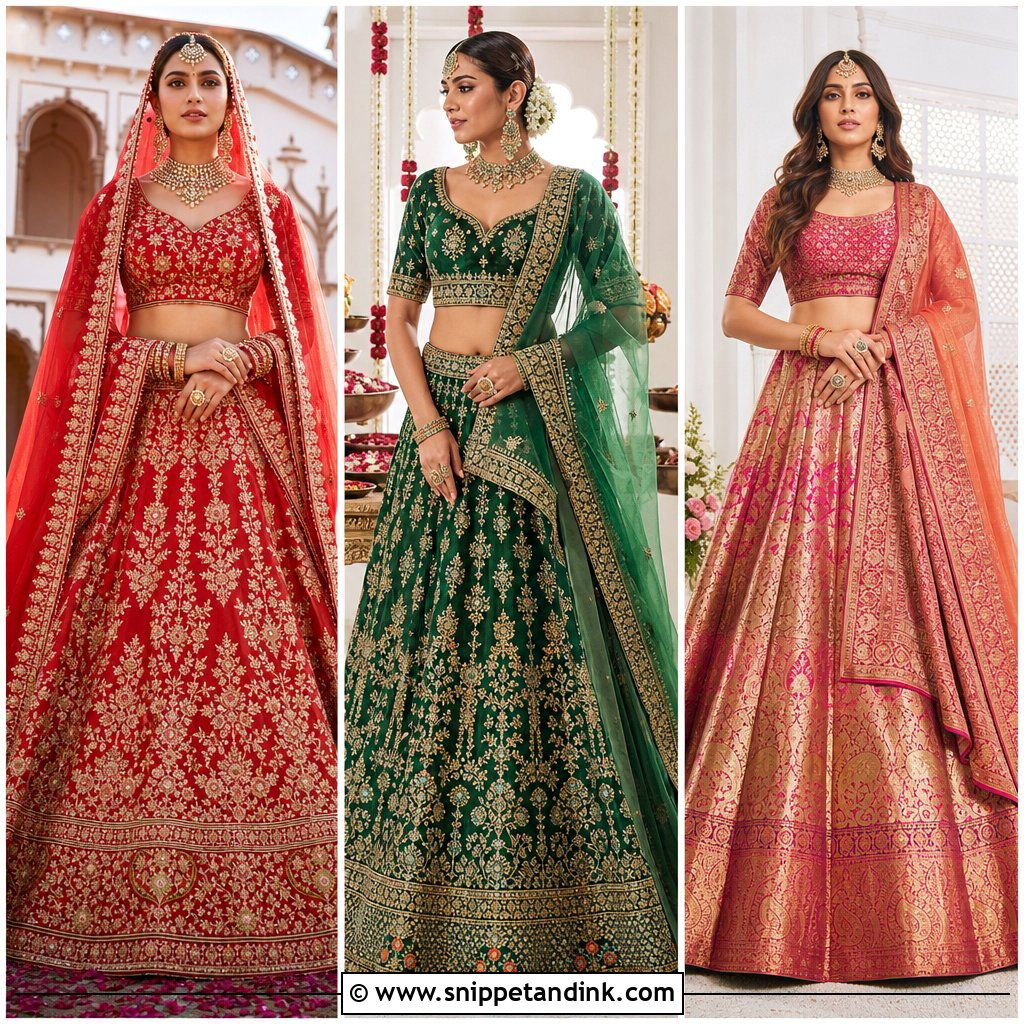
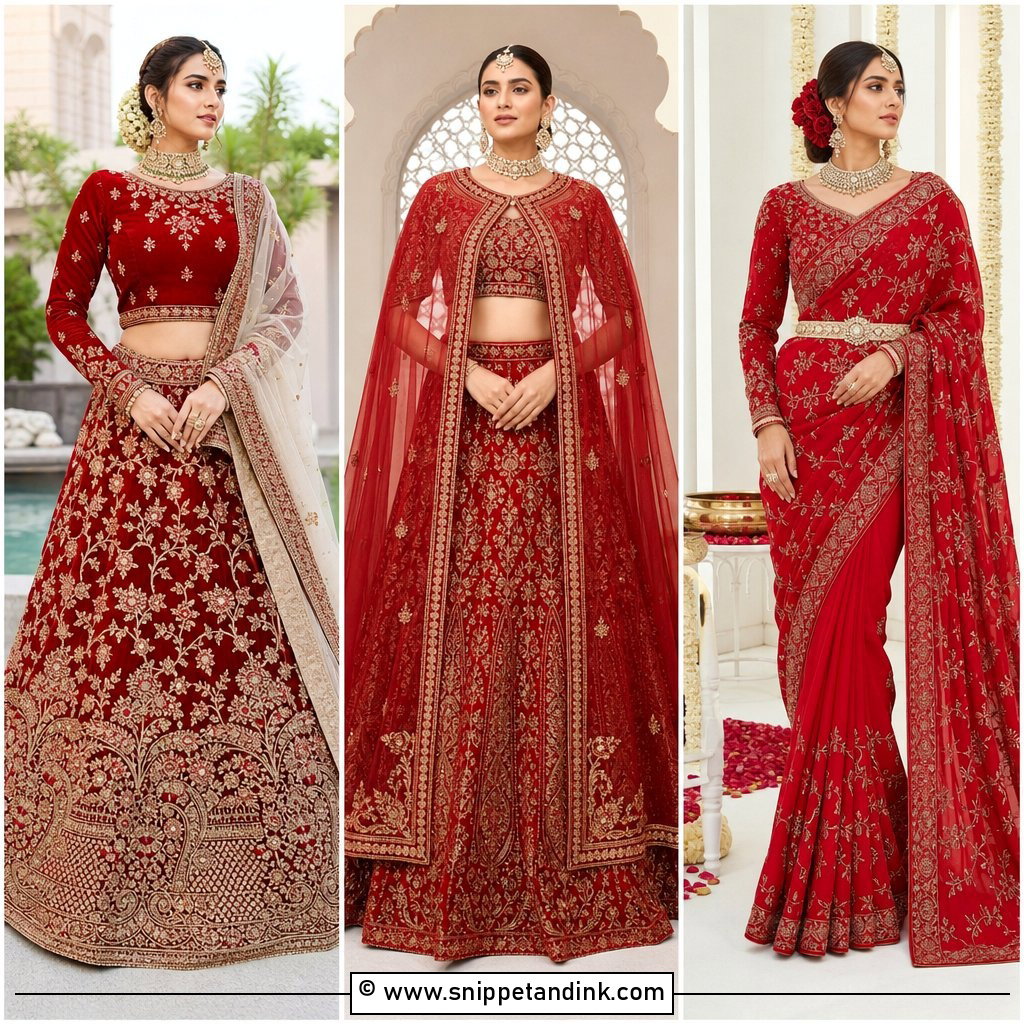
Red is still the colour most families picture, and a deep red lehenga with zardozi, dabka, tilla, sequins and resham reads unmistakably as bridal. The heavier the embroidery, the more structure the choli needs, otherwise the weight of the dupatta pulls the neckline sideways by mid-evening. A longer blouse or a second dupatta over the shoulders adds coverage. Gold jewelry suits classic red best: a matha patti, jhumkas, a choker and layered necklace, bangles, and embroidered khussas or heels. Keep the makeup soft glam so the face doesn’t disappear under all that red.
2. Maroon Baraat Lehenga
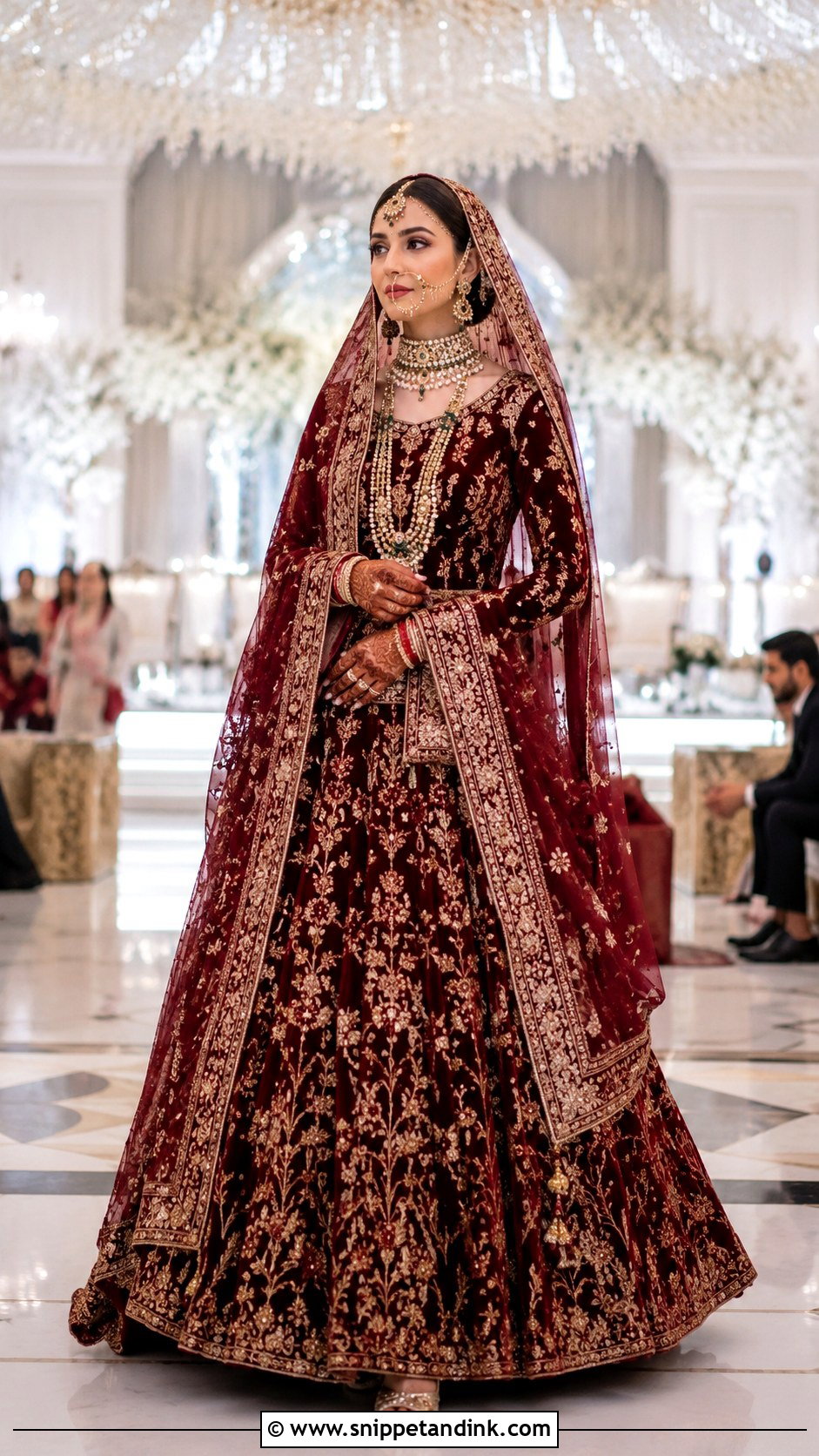
Maroon gives a bride the depth of red with a little more maturity. Velvet, raw silk and jamawar all make it look richer under hall lighting. Antique gold embroidery, paisleys, floral borders and a wide hem create a royal finish. On maroon, a tea pink or dull gold dupatta softens everything; a matching dupatta keeps it classic. Kundan jewelry, a statement nath and a neat bun under the dupatta complete the look. It holds colour well in evening photographs, where bright red can sometimes flare orange under warm lights.
3. Gold Baraat Lehenga
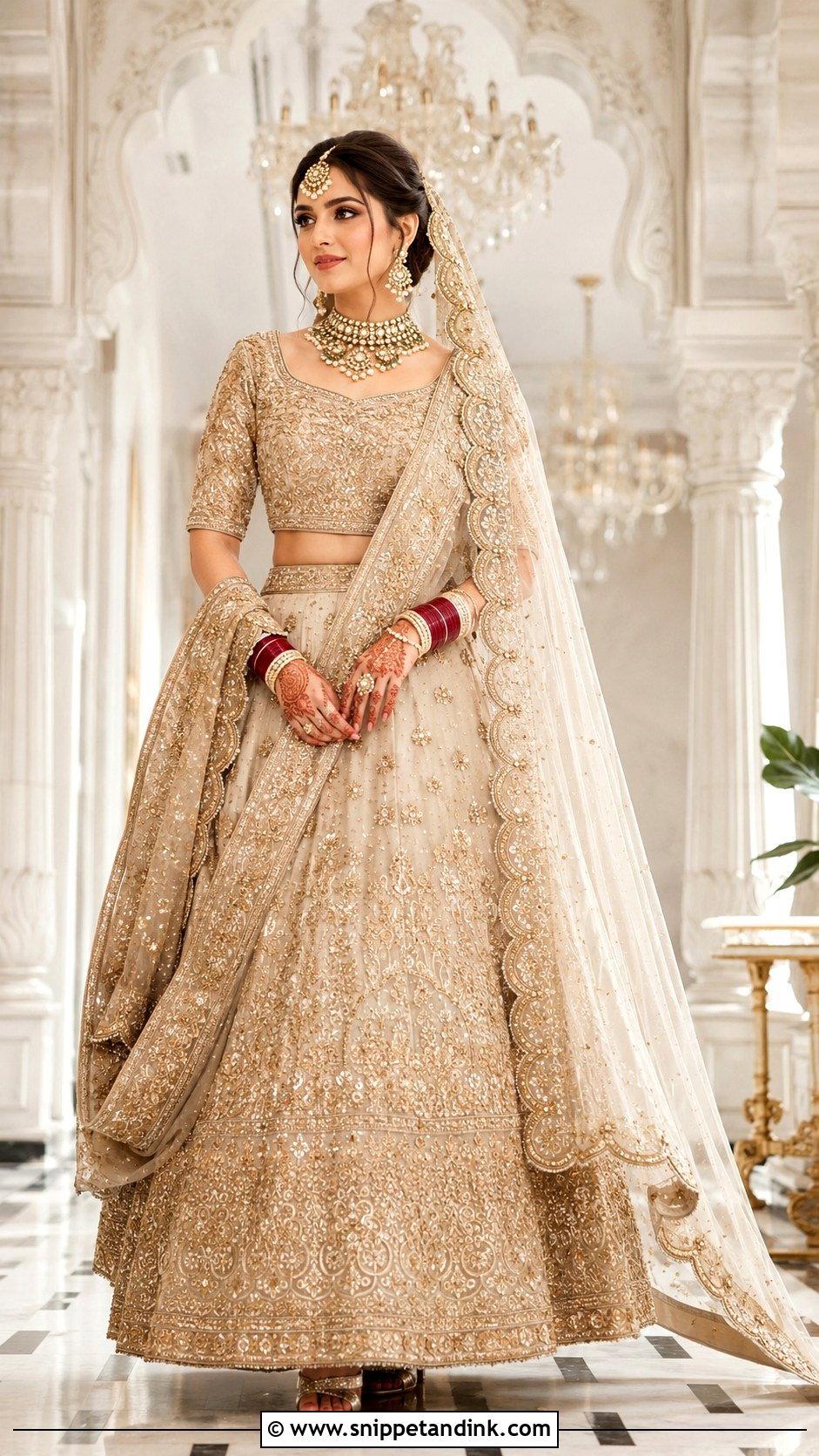
Flat yellow gold can look brassy under flash, so for a gold lehenga I steer brides toward champagne, antique or dull gold, which look expensive in person and in photos. Heavy threadwork, crystals, pearls and dabka make it shine. A matching blouse and a sheer dupatta with a scalloped border keep it light. Gold on gold can wash out warmer skin tones, which is why I add red somewhere near the face, in the dupatta border, the bangles or the lip. Kundan sets, gold heels and a structured potli finish it.
4. Ivory And Red Baraat Lehenga
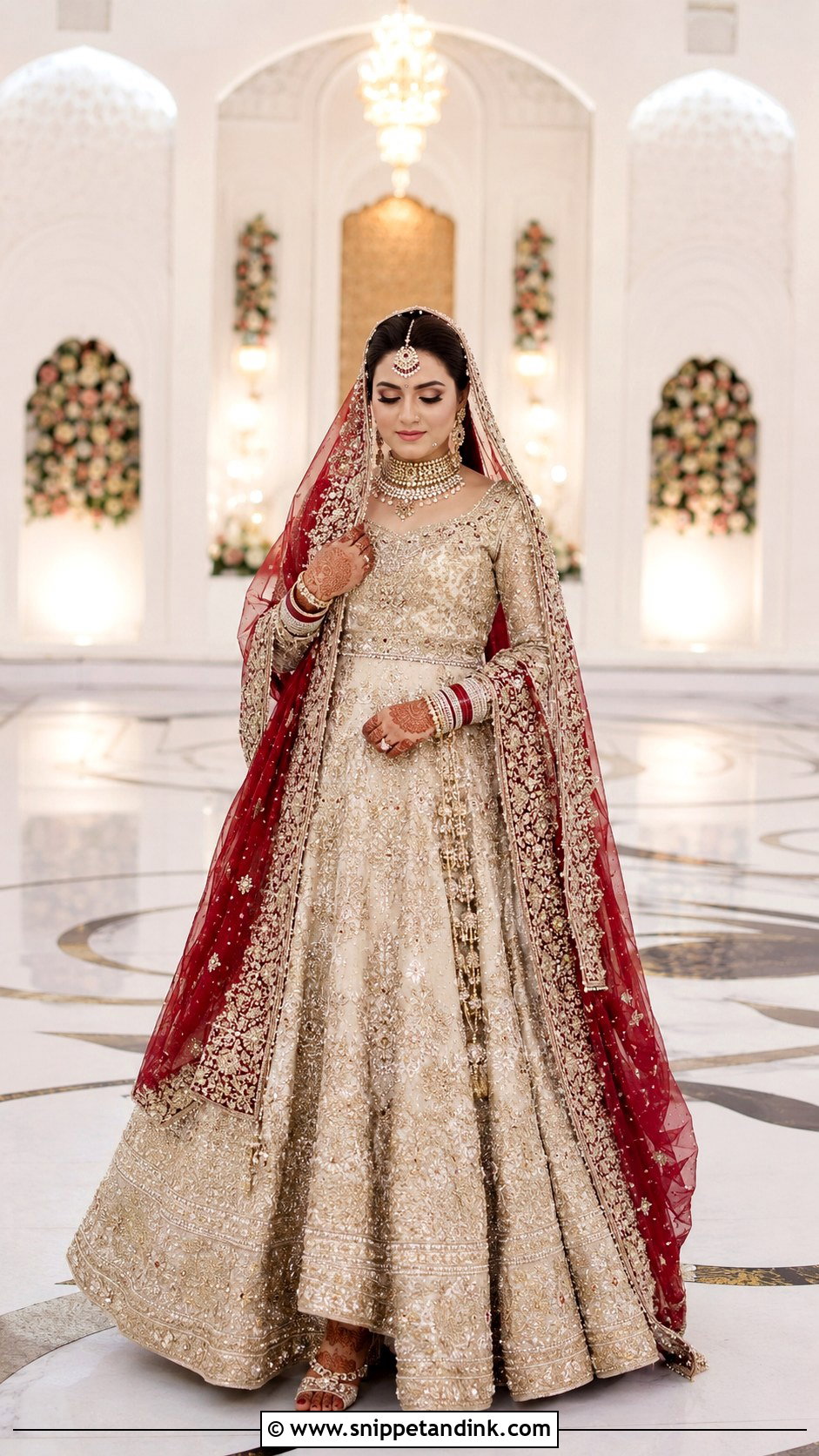
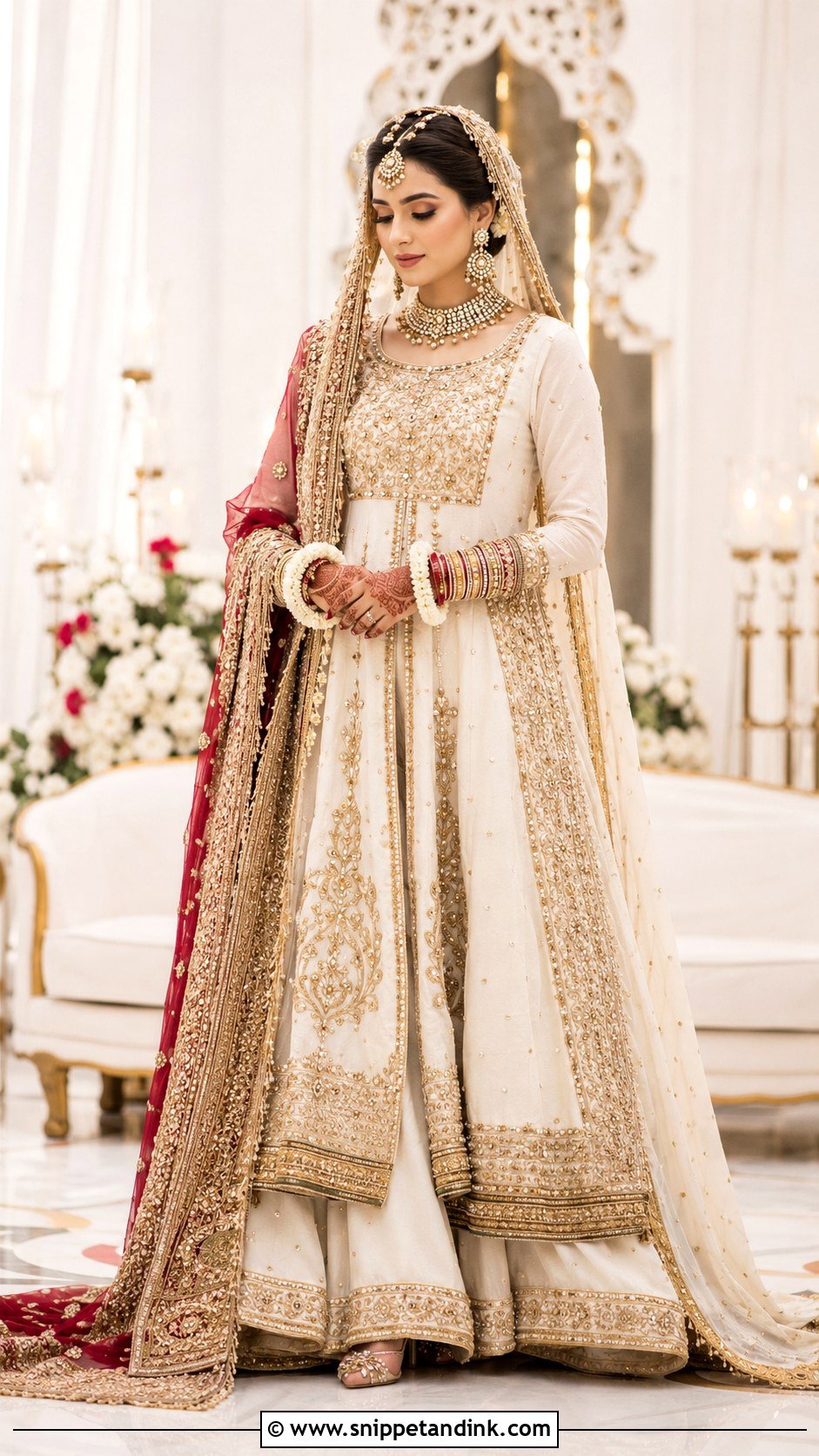
An ivory base with red borders or a red dupatta gives a softer colour story while still reading as Baraat. The ivory shows off the embroidery clearly, and the red over the head keeps it traditional. The risk with ivory is staining: mehndi, kajal and food all show, so I’d keep a white stain stick in the clutch and ask the bride not to touch the skirt with freshly hennaed hands. A flared lehenga with gold handwork, a fitted blouse, pearl and kundan jewelry, and a red or rose lip finish it.
5. Rust Baraat Lehenga
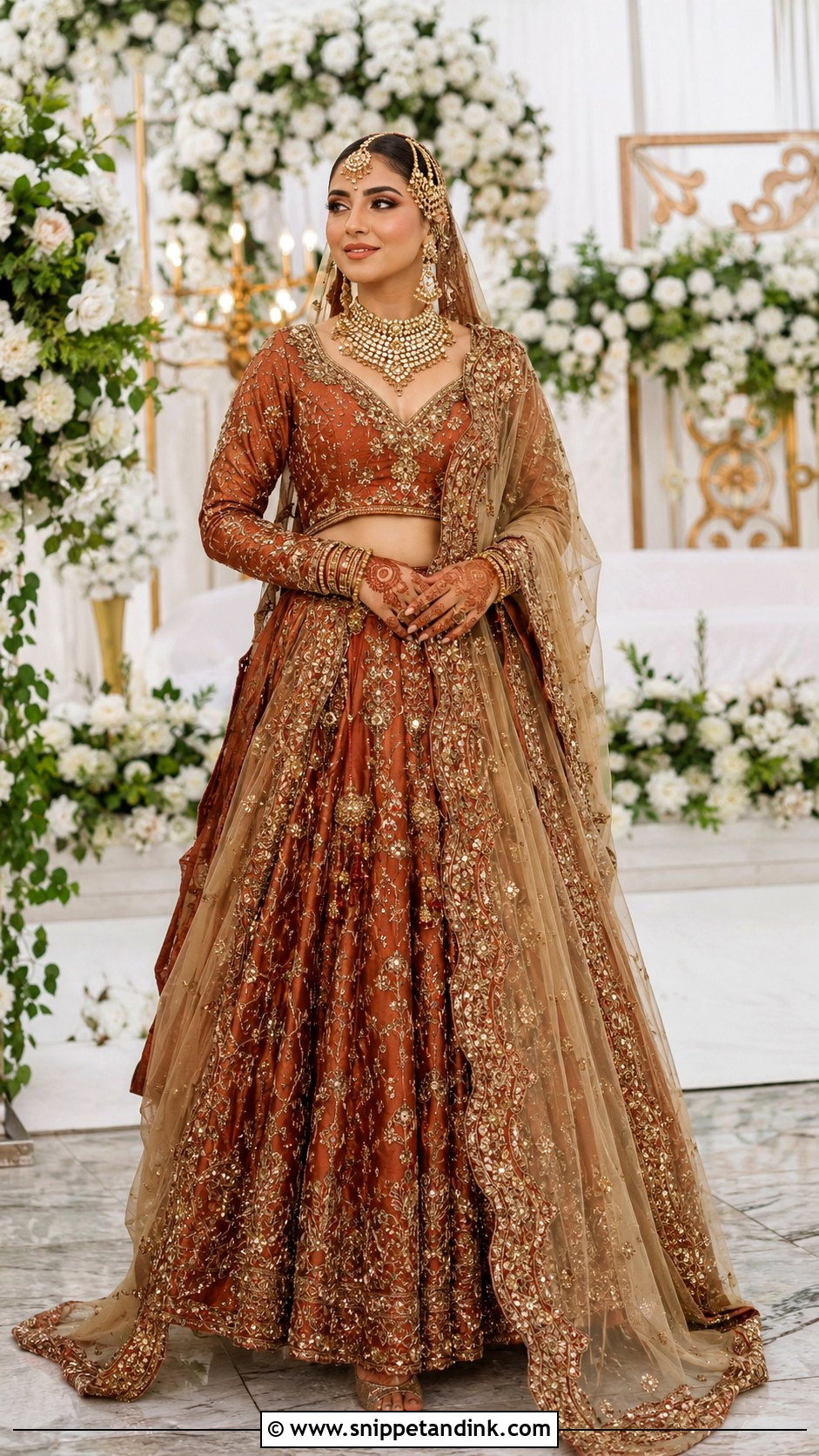
Rust sits between orange, red and brown, so it’s festive without being the expected choice. A rust Baraat lehenga looks rich in raw silk, velvet, tissue or organza with antique gold work. Traditional jaal, vines, paisleys and Mughal borders keep it rooted. Match the dupatta or contrast it with beige, gold or deep red. Rust is warm, so it flatters olive and wheatish skin, and it photographs well in daylight too. Polki jewelry, bronze-toned makeup and embellished heels suit it for autumn and winter weddings.
6. Red Gharara Baraat Dress
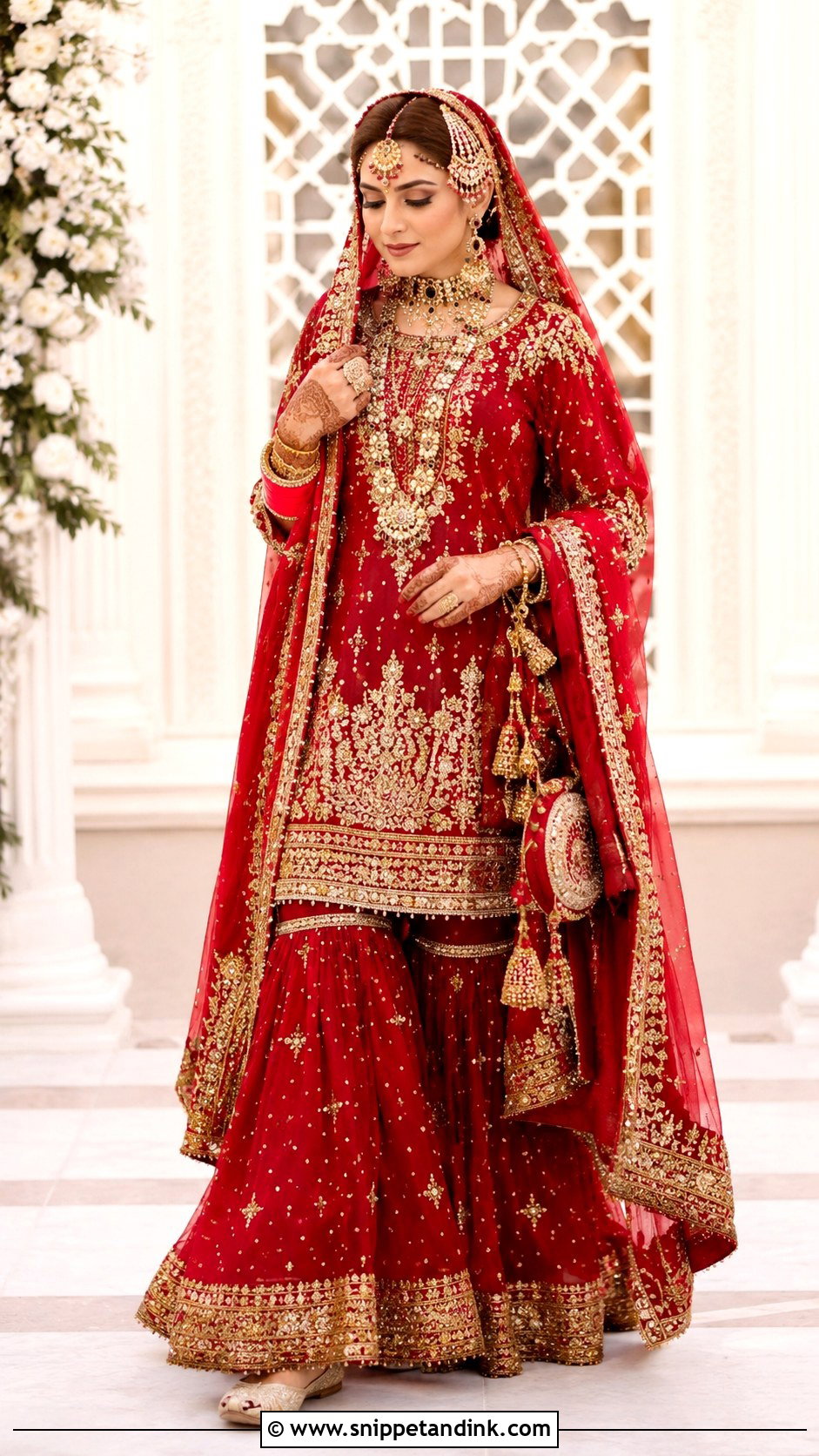
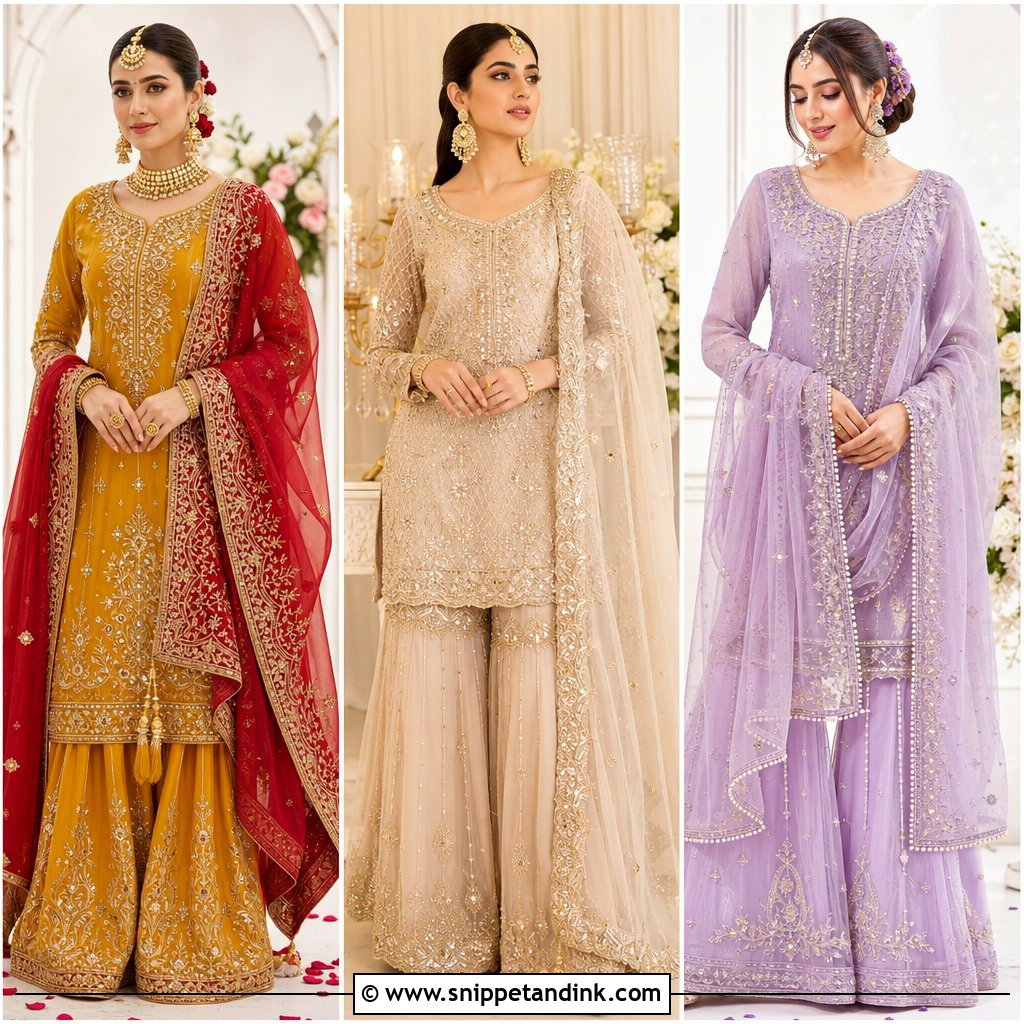
The gharara is fitted to the knee, gathered at a band, then flares wide below, which gives a very different shape from a lehenga. Pair it with a short or mid-length kameez covered in dabka, gota, zardozi and threadwork. The band at the knee is where comfort lives or dies: if it’s too tight you can’t sit cross-legged on the stage or step up onto it easily. Check it at the fitting. A long, heavily bordered dupatta balances the flare. A jhoomar, matha patti, bangles and khussas recall the old family wedding albums.
7. Maroon Gharara Baraat Dress
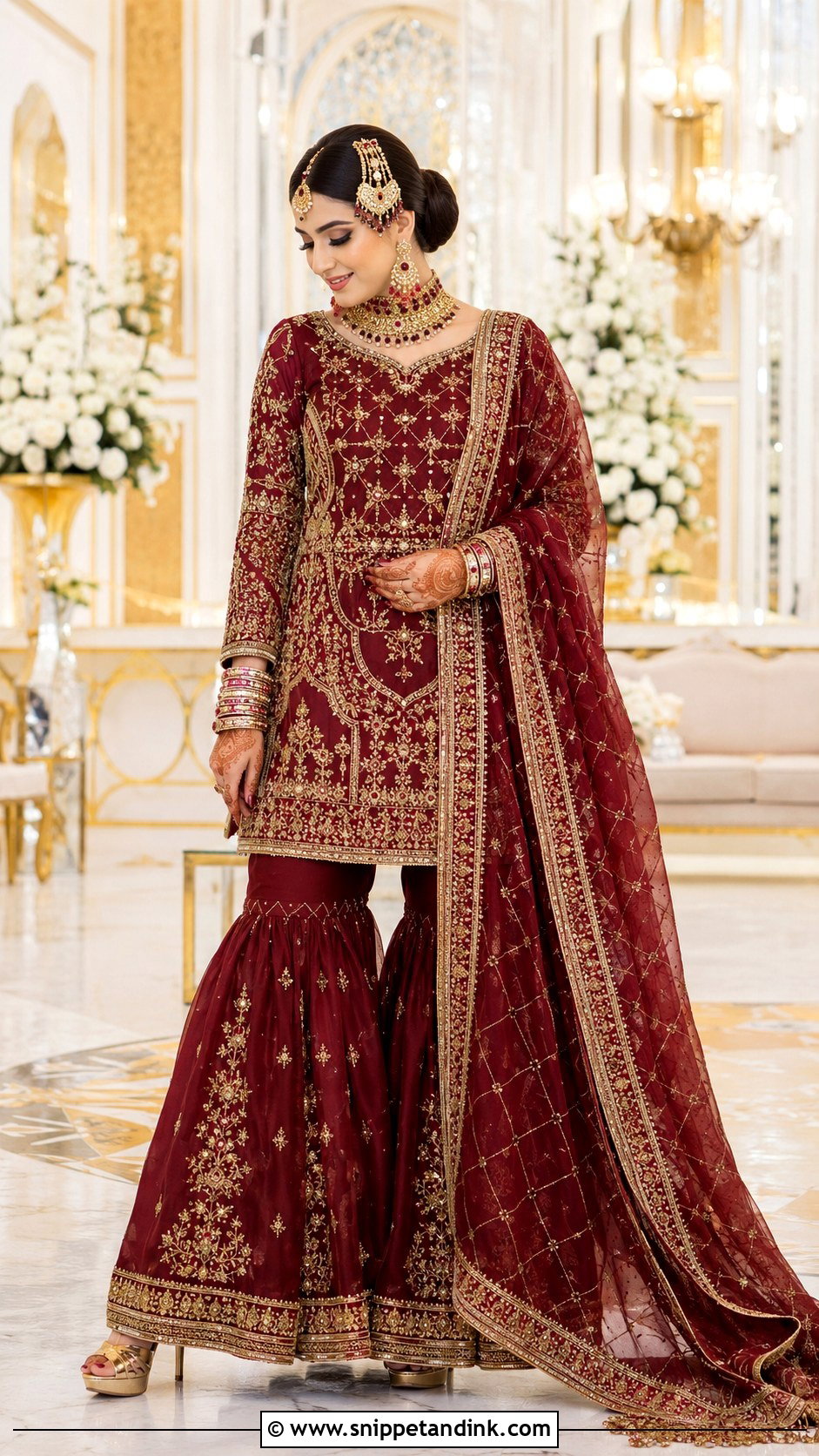
Dark maroon with gold or copper embroidery gives a gharara real presence. A short kameez with heavy borders shows off the flare. The pallu and corner motifs of the dupatta matter as much as the outfit, because they’re what frames the face in portraits. Antique jewelry suits this palette: a choker, long haar, jhumkas and a side jhoomar. Soft smoky eyes and a defined lip complete it. It’s a strong option for a bride who wants volume without the weight of a full lehenga skirt.
8. Red Sharara Baraat Dress
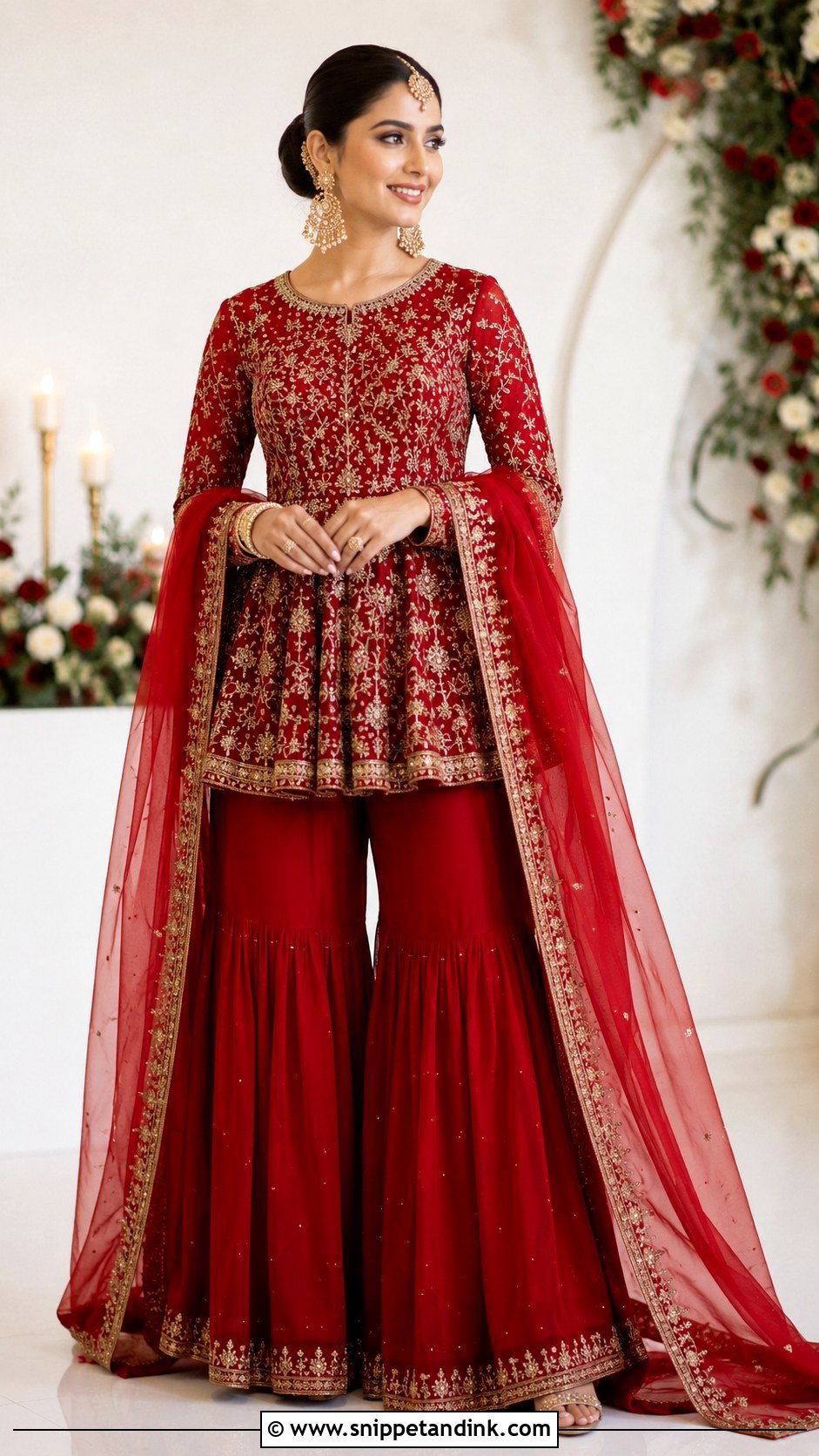
A sharara flares from the waist rather than the knee, so it moves softly and is easier to walk and sit in than a gharara. That makes it the most practical choice on this list for a long Baraat. Balance it with a heavily embroidered short shirt or a peplum top. A sheer red dupatta with gold borders keeps it traditional. Wide sharara legs can catch on heel straps, so I’d go for khussas or closed sandals. Add a matha patti, statement earrings and stacked bangles.
9. Farshi Gharara Baraat Dress
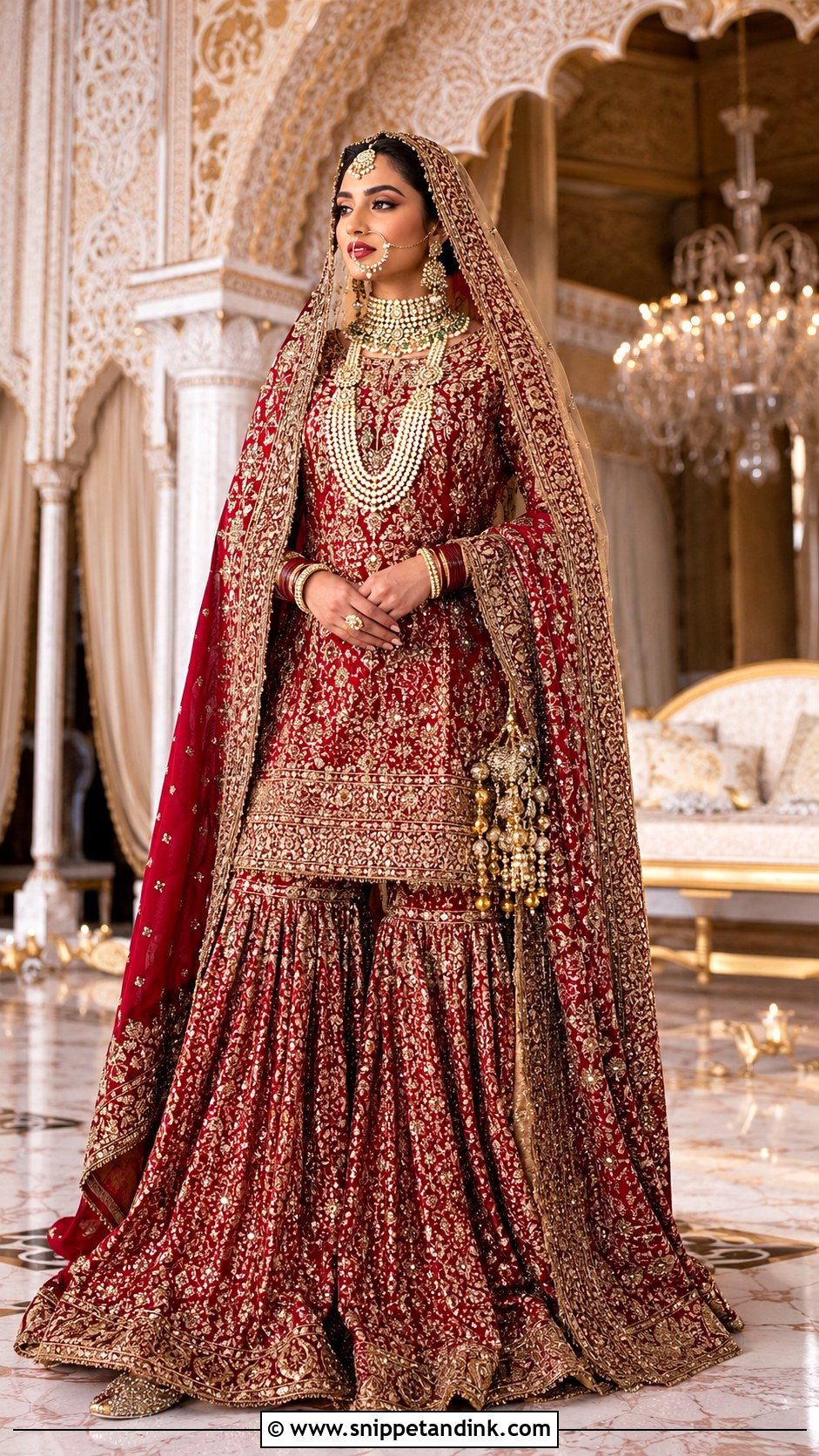
A farshi gharara Baraat dress has a flare so wide it trails along the floor, which is why it looks so regal in portraits and entries. It needs weighty fabric like jamawar, tissue, velvet or raw silk to hold the shape. Walking is the challenge: the farshi pools around the feet, so someone usually needs to help lift it on stairs and onto the stage. Keep the kameez short and hand-embroidered and the dupatta heavily bordered. Classic kundan and a neat bun let the silhouette lead.
10. Pishwas Baraat Dress
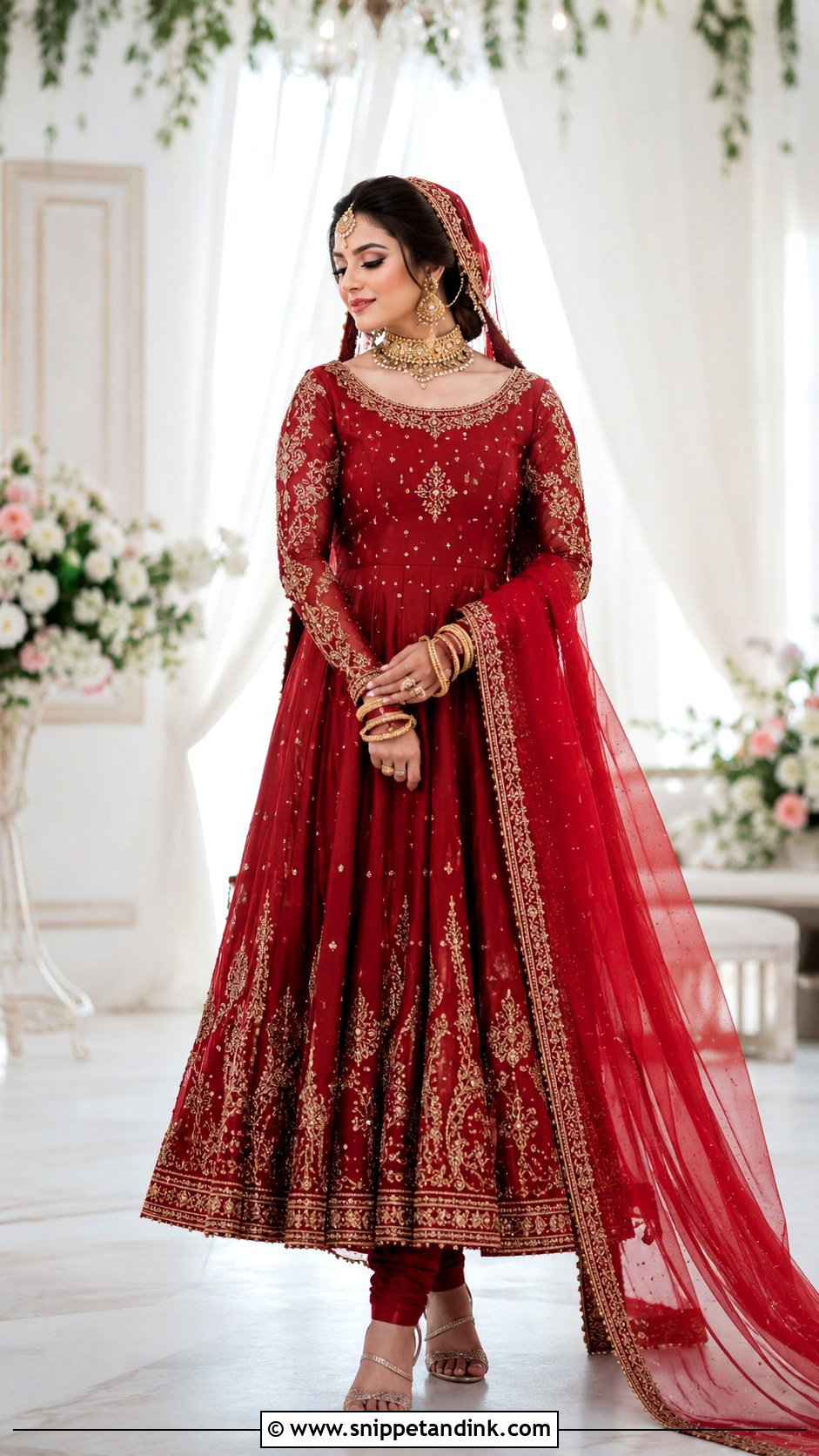
The pishwas is a long, flared frock with a fitted bodice, and in tissue, organza, net or silk it moves gracefully when you walk. Red, maroon, gold and ivory are the classic Baraat colours for it. Embroidery around the neck, sleeves, waist and hem defines the shape. Underneath, churidar keeps it slim, while a lehenga adds volume; I’d decide based on how much fullness you want in photos and how much weight you can carry. A heavy-bordered dupatta, jhumkas, a tikka and delicate heels complete it.
11. Red Maxi Baraat Dress
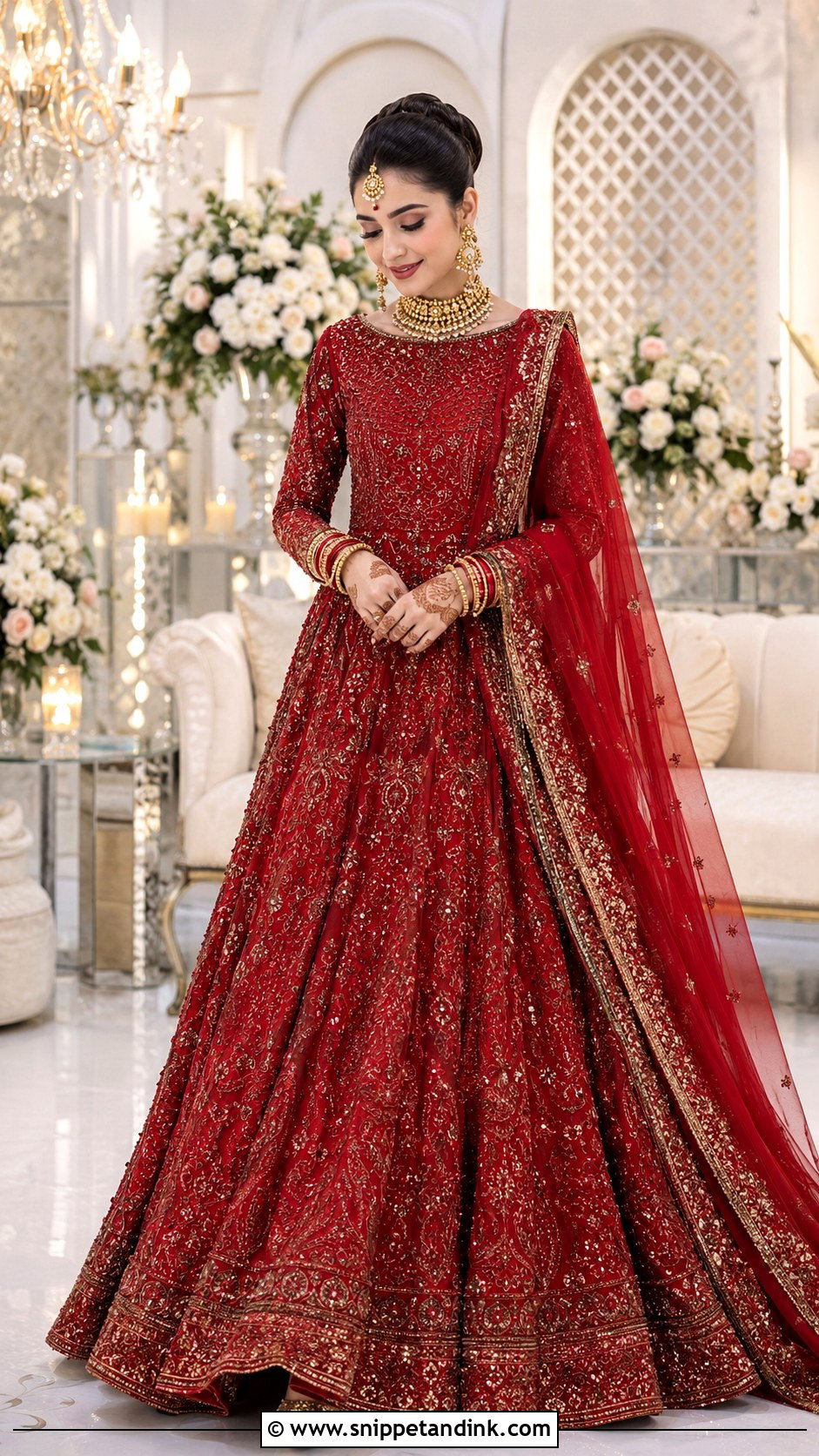
A red maxi gives a gown-like shape with Pakistani embroidery, and it’s the easiest outfit here to move in. A fitted bodice, full sleeves and a flared hem balance it. I’d put the heaviest work on the front, sleeves and border and keep the back lighter, because the back is what you sit on for hours. A red or gold dupatta keeps it traditional. Kundan jewelry, a sleek bun and embellished heels finish it, and it gives full coverage without needing a second dupatta.
12. Maroon Velvet Baraat Dress
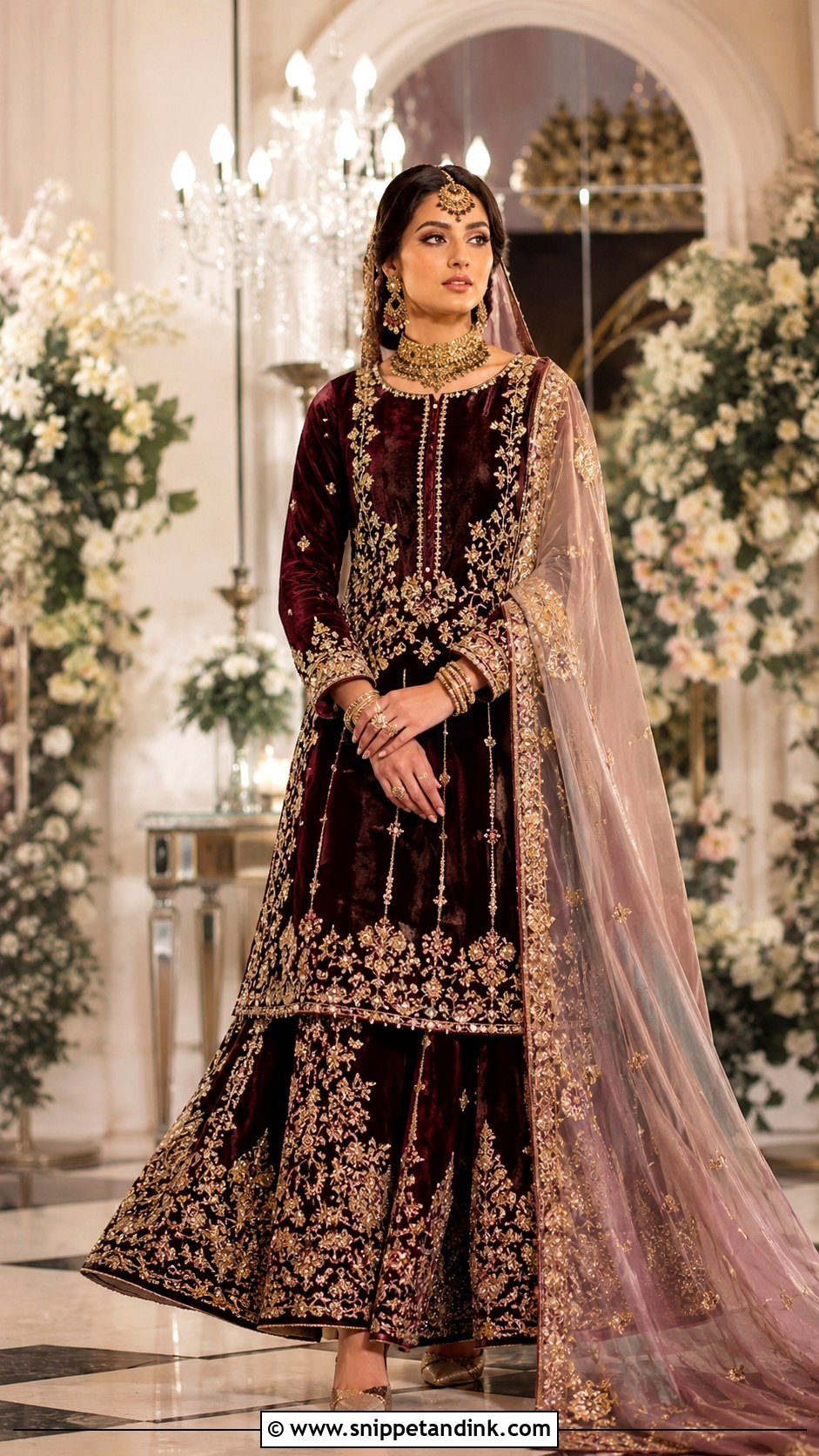
Velvet is the winter Baraat fabric. It absorbs light, so even simple embroidery looks rich against it, and it keeps you warm in an outdoor marquee in December. A velvet lehenga, gharara or long shirt with antique gold work looks royal. The trade-off is weight and heat: velvet is heavy and gets warm quickly indoors, so I always pair it with a lighter organza or net dupatta. Polki, kundan or gold all suit maroon velvet. Keep the makeup smooth, because velvet’s texture already does a lot.
13. Red Velvet Lehenga Baraat Dress
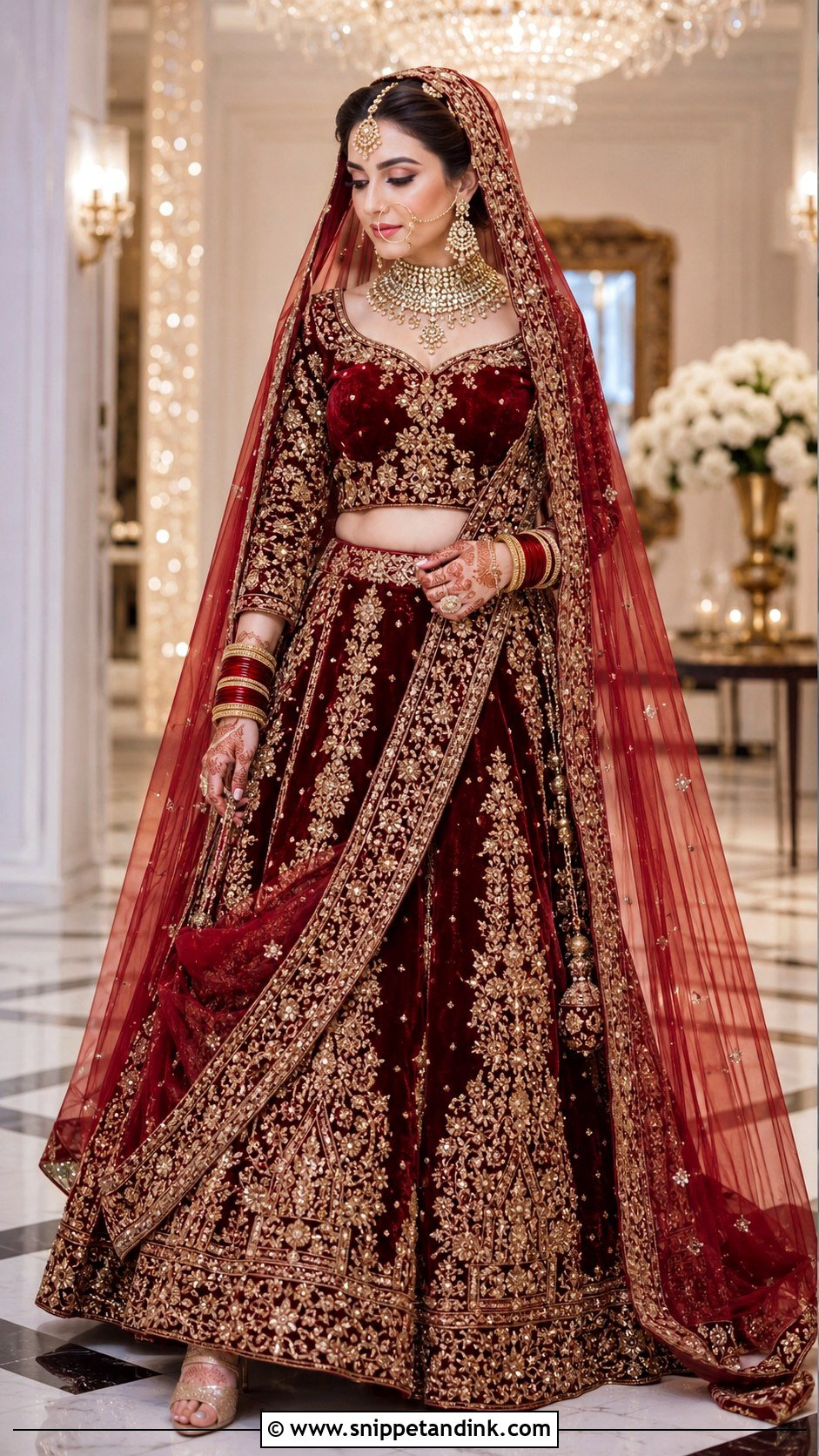
Velvet deepens red, which is why a red velvet lehenga looks so rich in person. Gold zardozi, dabka, sequins and a broad embroidered border suit it. A matching velvet blouse keeps it coordinated; a sheer dupatta lightens it. One dupatta keeps it simpler, two make it more royal. Velvet marks easily if it’s crushed, so it should be hung or laid flat until you dress, never folded tightly in a bag. A choker, long necklace, nath and bangles complete it for cooler weather and indoor halls.
14. Red And Gold Baraat Dress
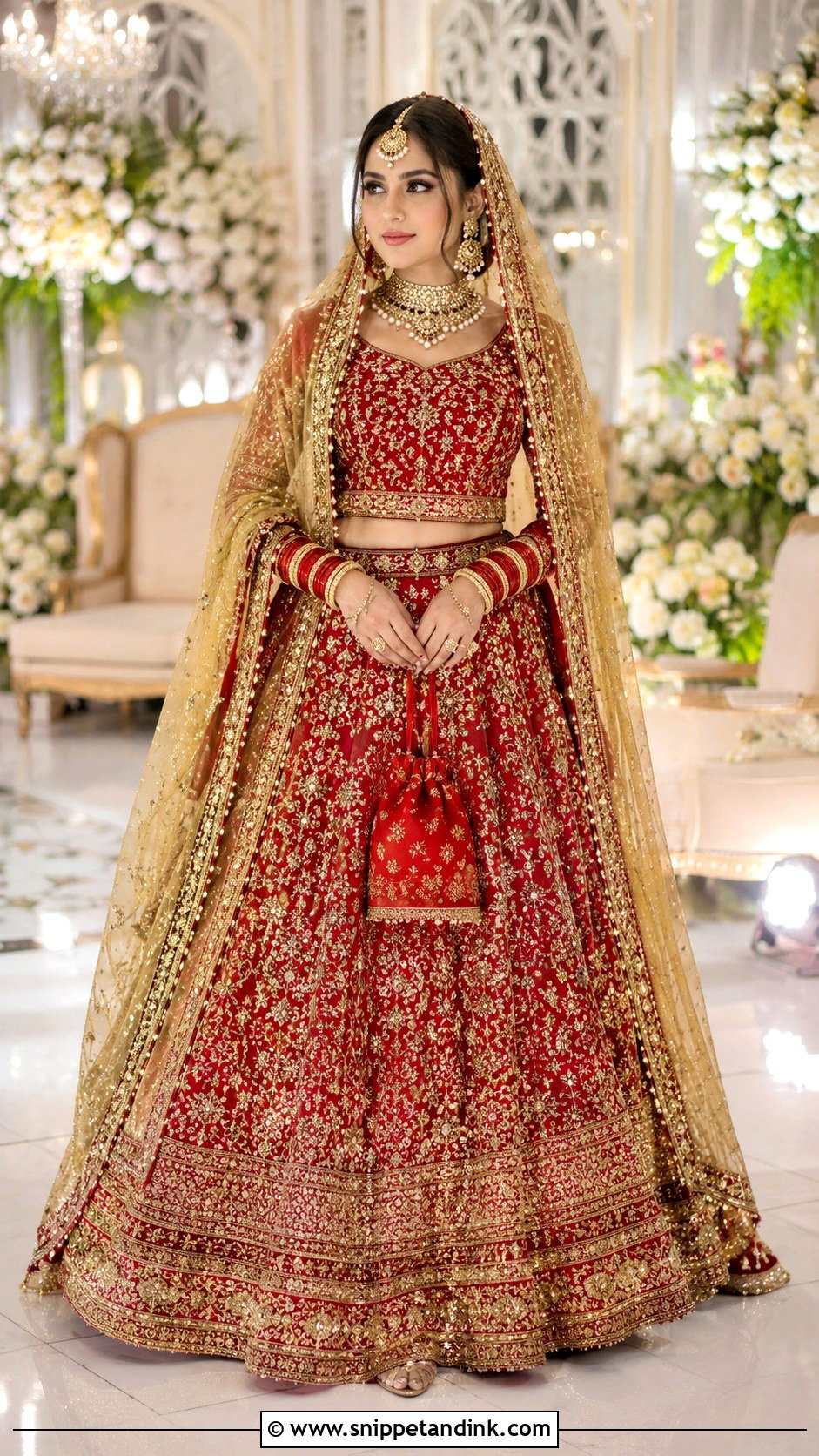
A red and gold Baraat dress is the combination most families will expect, and it works in a lehenga, gharara, sharara, pishwas or maxi. The skill is in proportion. Pick one dominant colour and let the other appear through borders, motifs and accessories. Red with heavy gold work reads traditional; gold with red accents feels a little more modern. Kundan jewelry, red bangles, a gold potli and embroidered heels finish it. It’s a safe choice in the best sense.

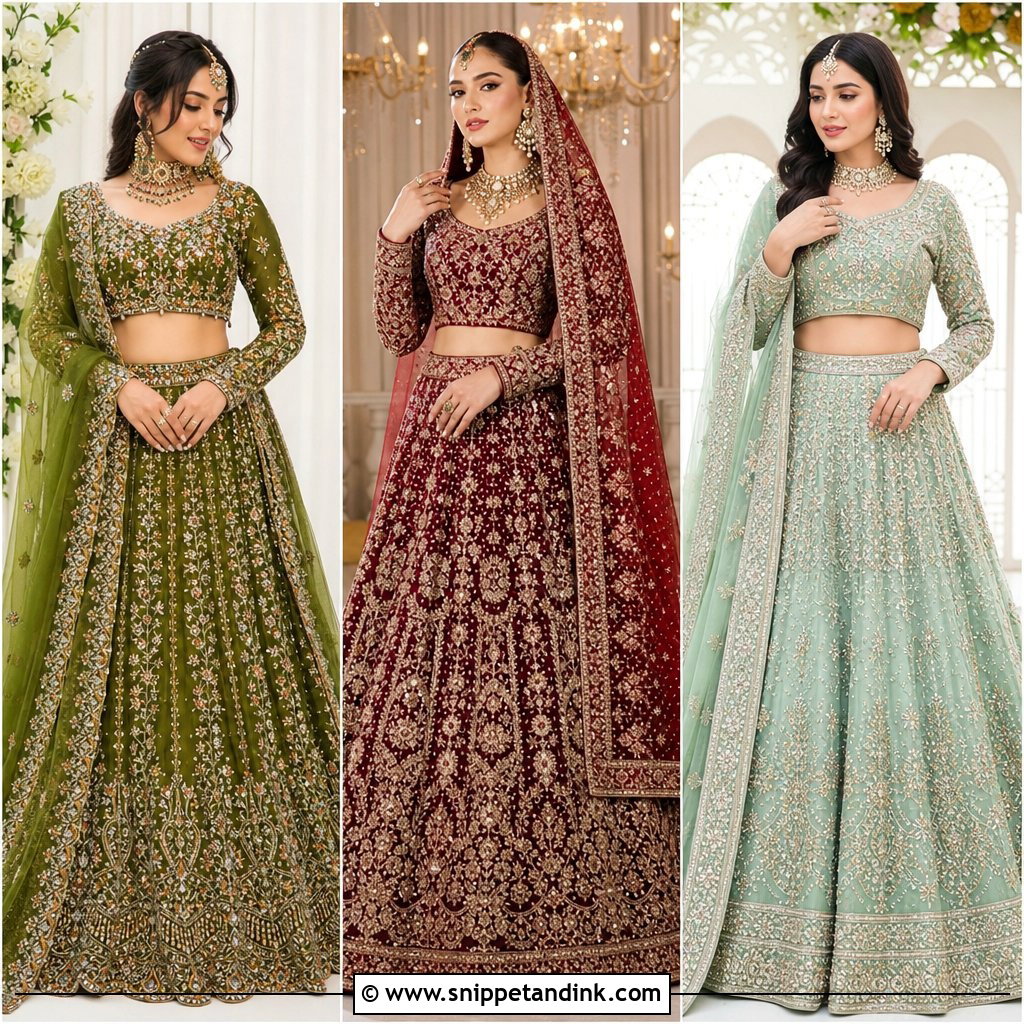
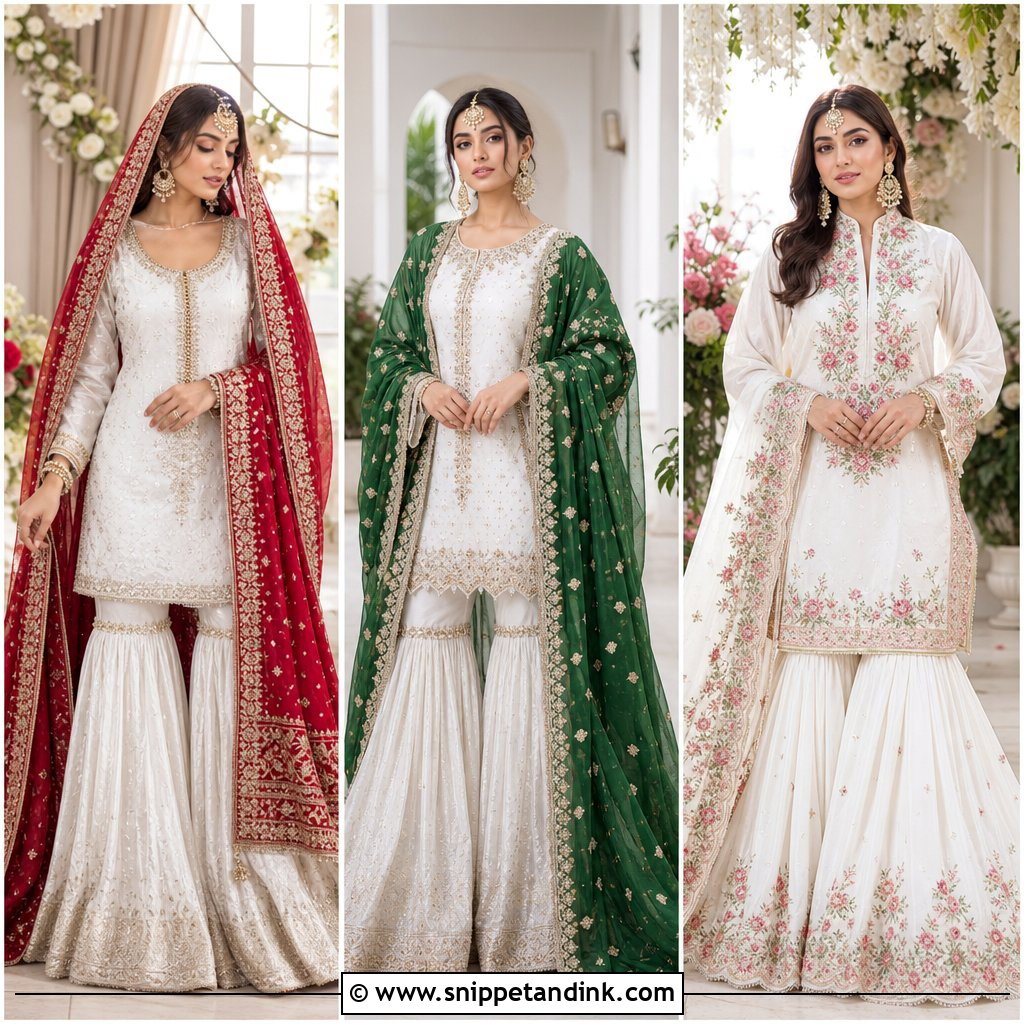
15. Pink Baraat Lehenga
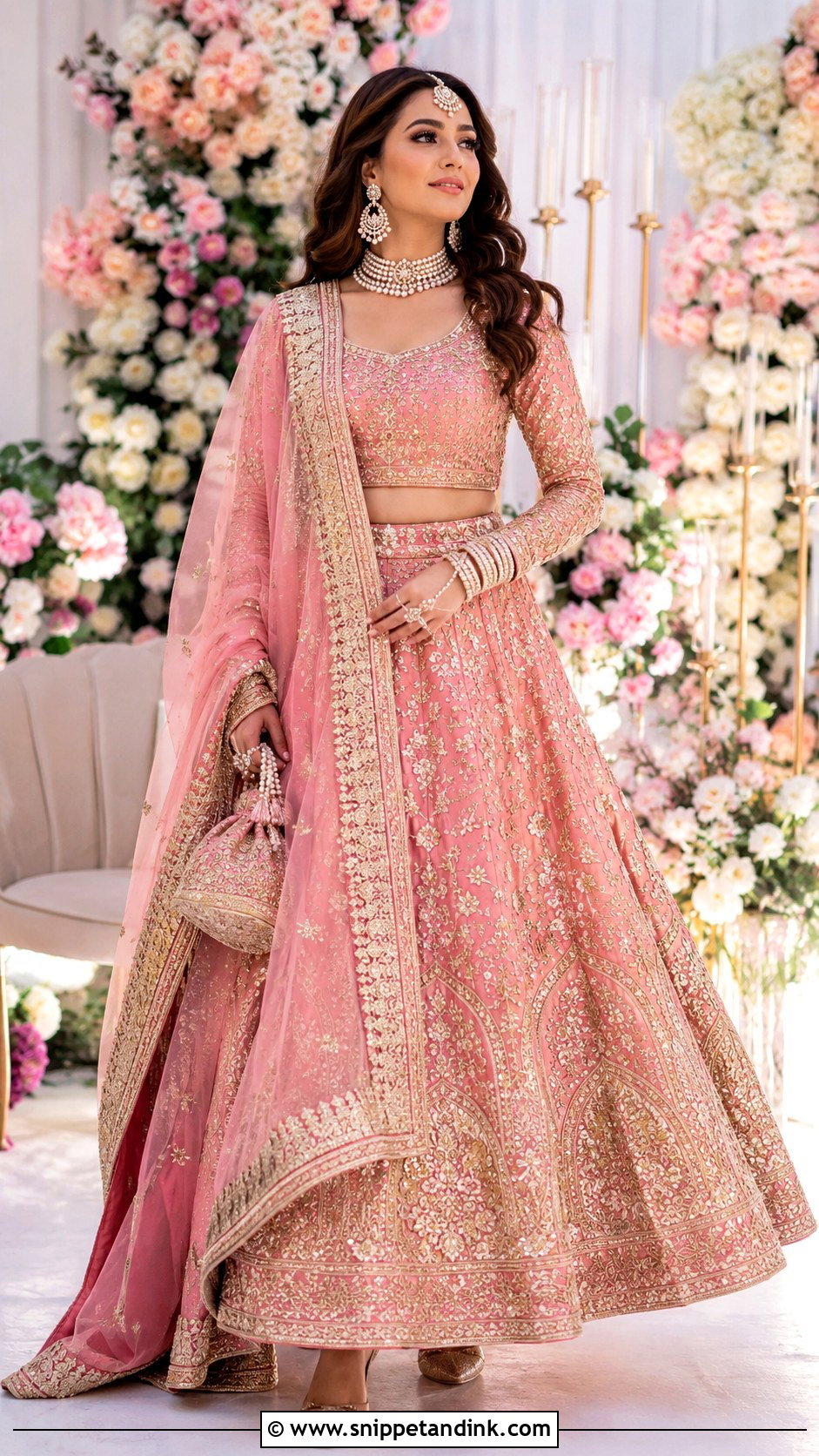
Pink can work for Baraat as long as it’s deep enough. Rose, rani and dusty pink hold their own; very pale pastels tend to read as walima. Gold, silver or antique embroidery makes it bridal. A matching blouse and a dupatta with heavy borders give it structure. Red bangles or a red lip add a traditional touch. Choose jewelry by the shade: diamond or pearl for cooler pinks, kundan for warmer ones.
16. Rani Pink Baraat Dress
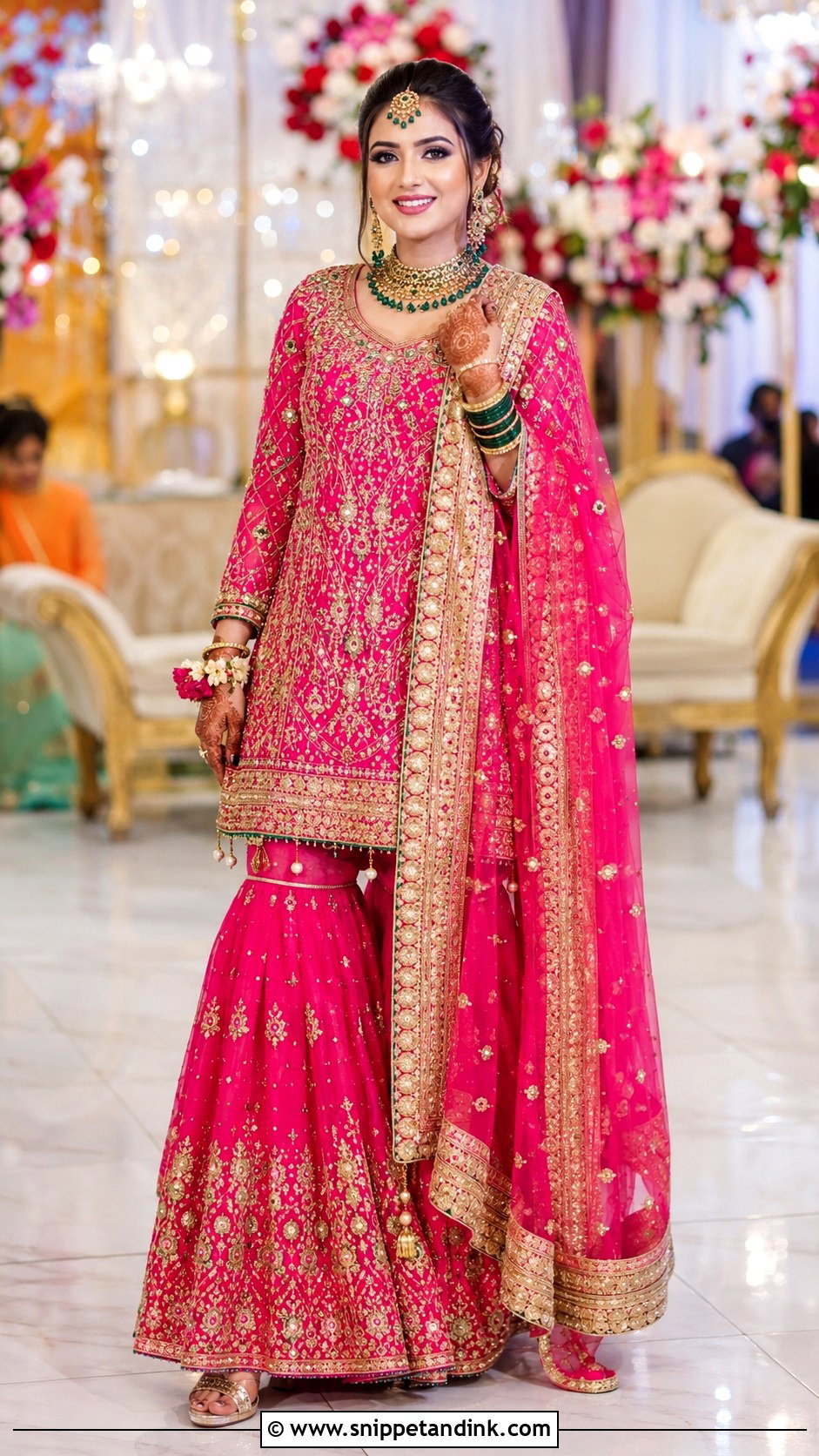
Rani pink is vivid and joyful and very South Asian in feel. It suits lehengas, shararas and ghararas with gold or antique embroidery. A rani pink shirt, a heavily worked bottom and a detailed dupatta make it complete. Emerald or gold jewelry gives contrast; kundan keeps it classic. The colour is strong enough that heavy makeup competes with it, so I’d use soft rose tones on the face and let the dress be the bright part.
17. Blush Baraat Lehenga
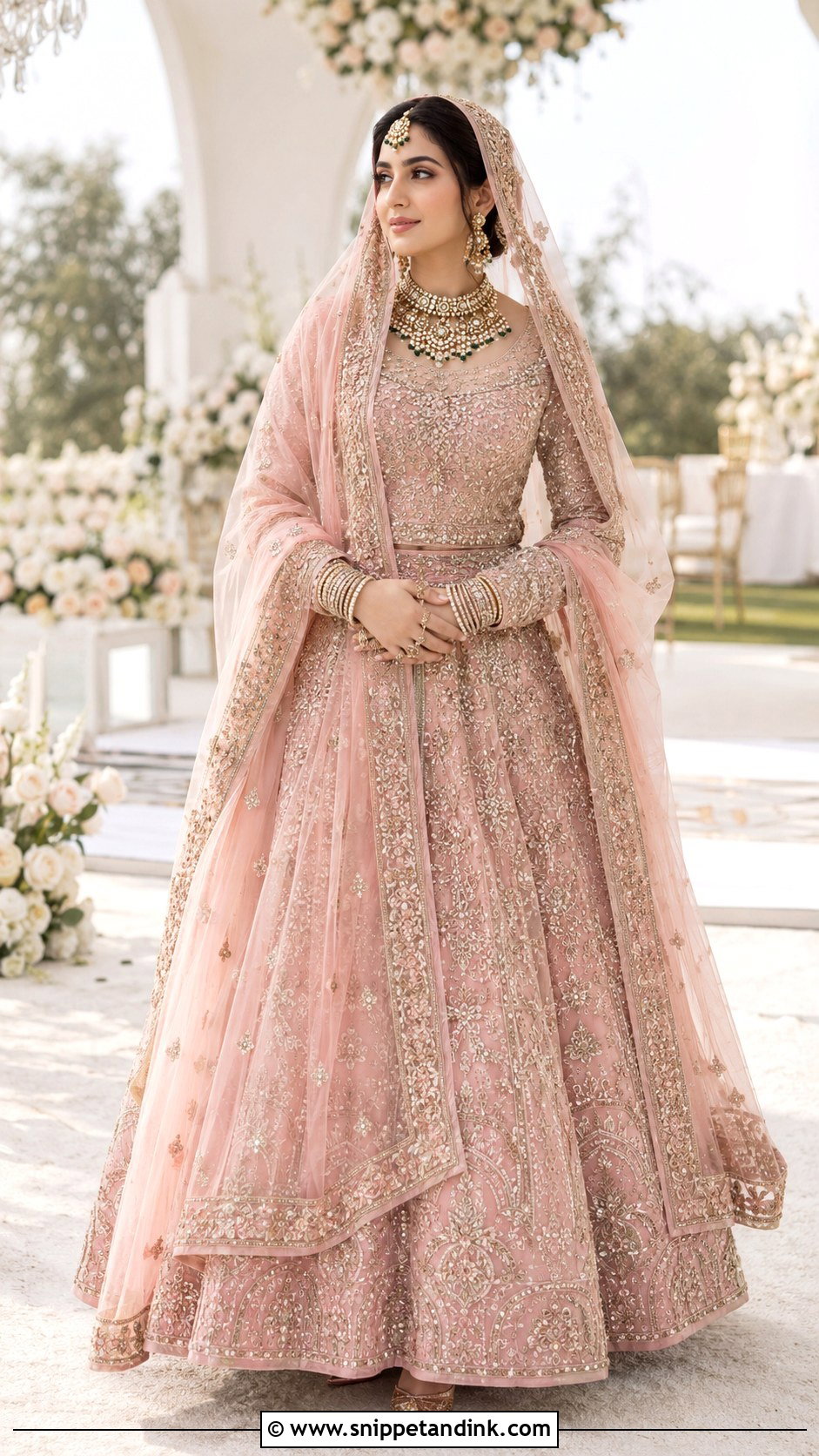
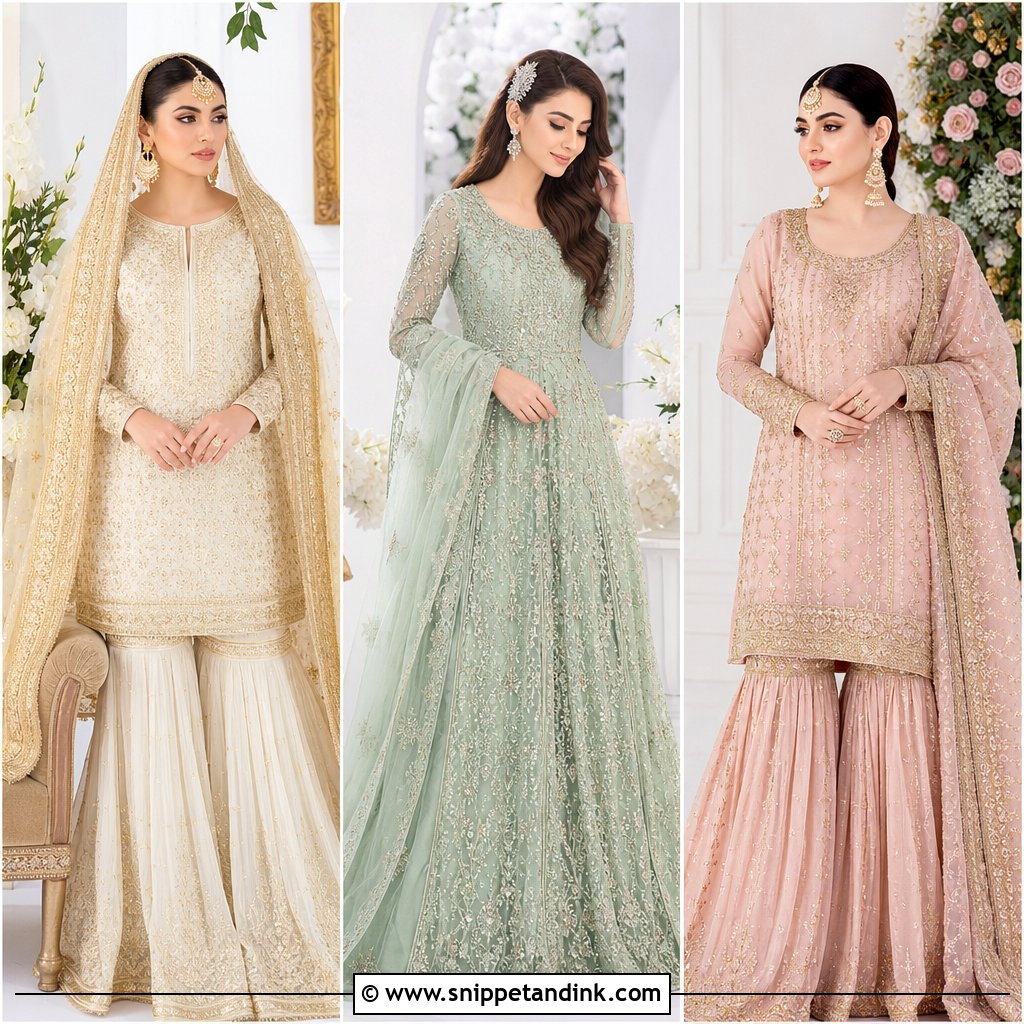
Blush is soft, so the embroidery has to be strong or the outfit looks underdressed on a Baraat stage. Rich borders, a dramatic dupatta and champagne gold, silver, pearl or crystal work all add weight. A full lehenga with a long blouse or modest choli balances the shape. A second dupatta across the shoulder adds presence. Blush photographs best in daylight; under very warm evening lights it can look beige, so it suits daytime and outdoor Baraats.
18. Emerald Green Baraat Dress
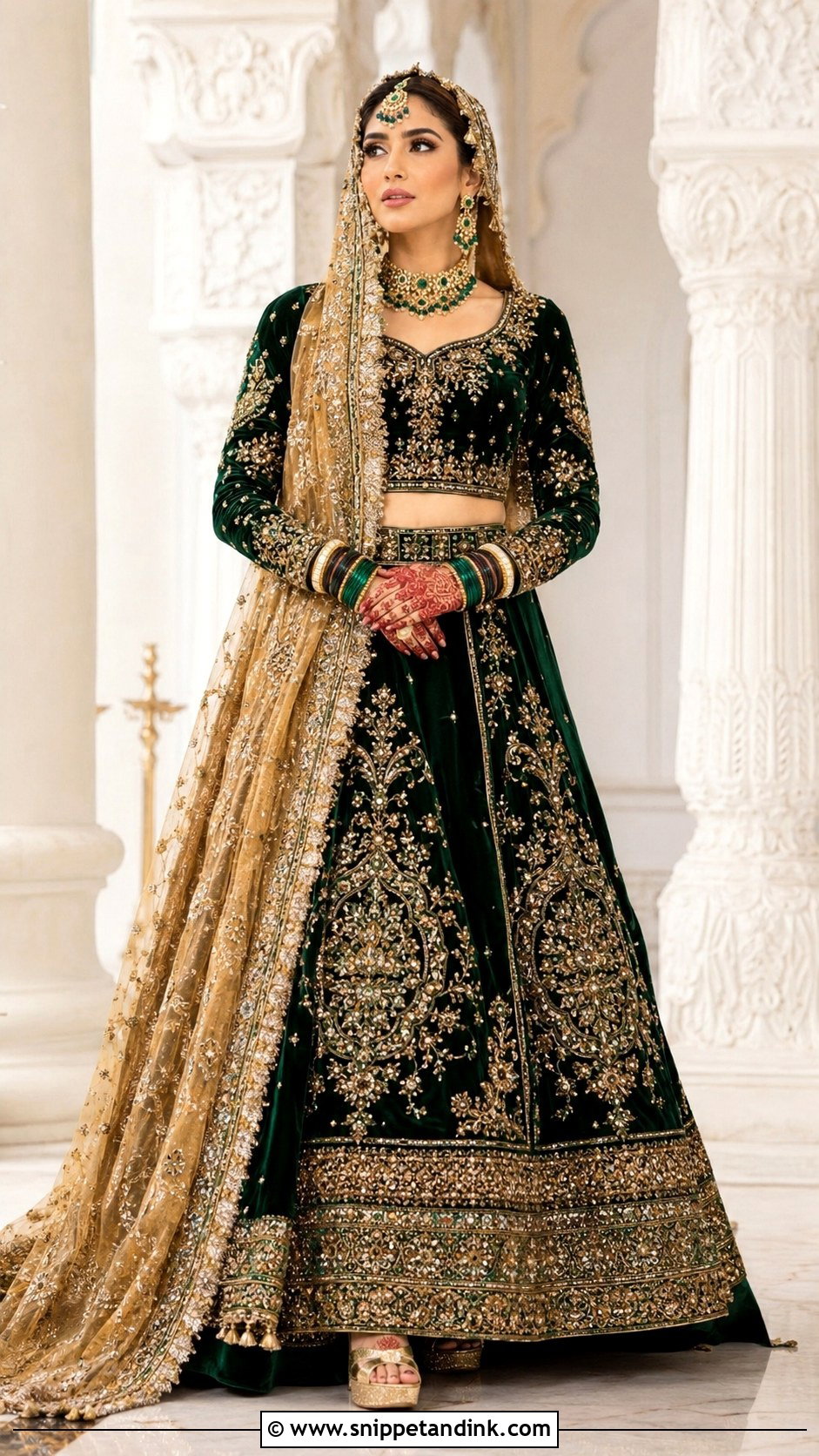
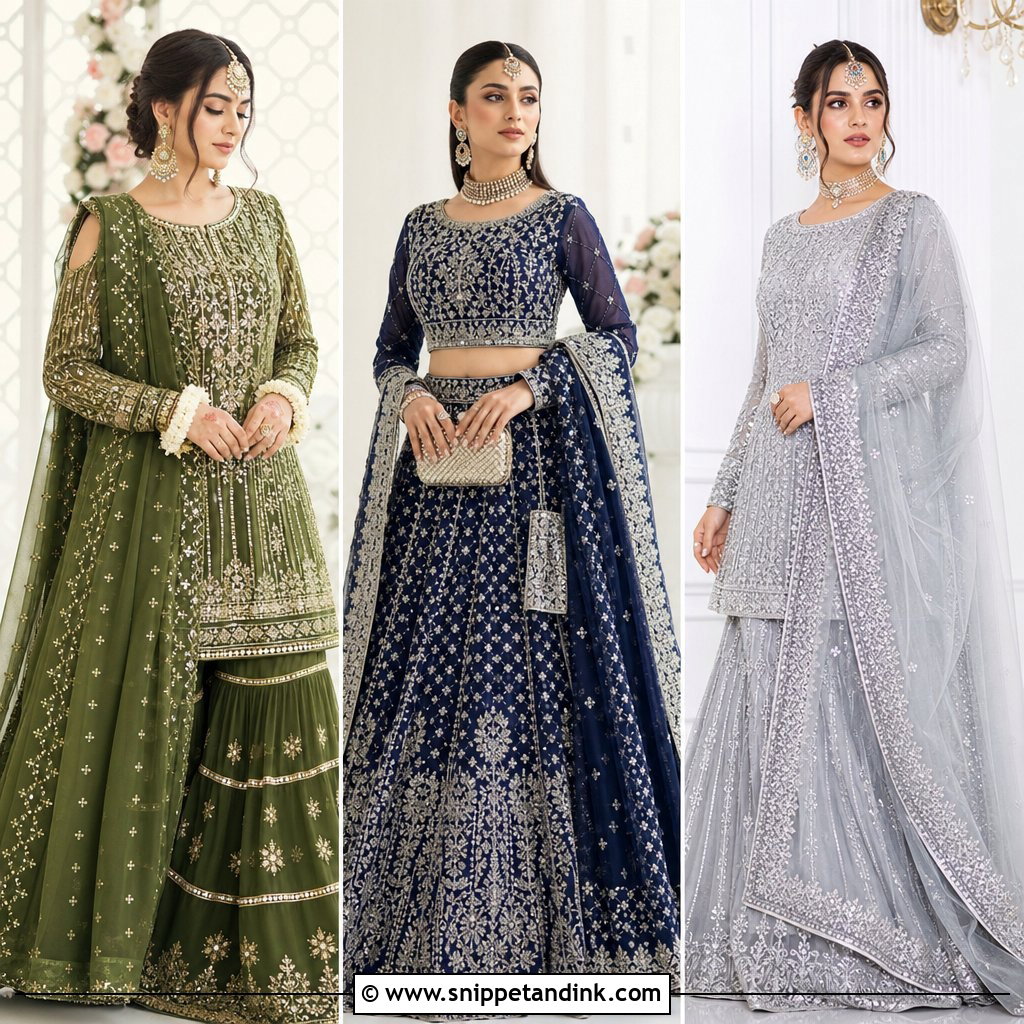
An emerald green Baraat dress is unexpected but still appropriate for Pakistani bridal wear, and it looks rich with antique gold, dull gold or copper embroidery. A lehenga, gharara or long pishwas gives the most regal shape. A matching dupatta looks modern; a gold, red or maroon one brings it back to tradition. Kundan with green stones ties it together. Emerald is unforgiving with cool-toned makeup, so keep it warm, with defined eyes and a soft lip.
19. Deep Blue Baraat Lehenga
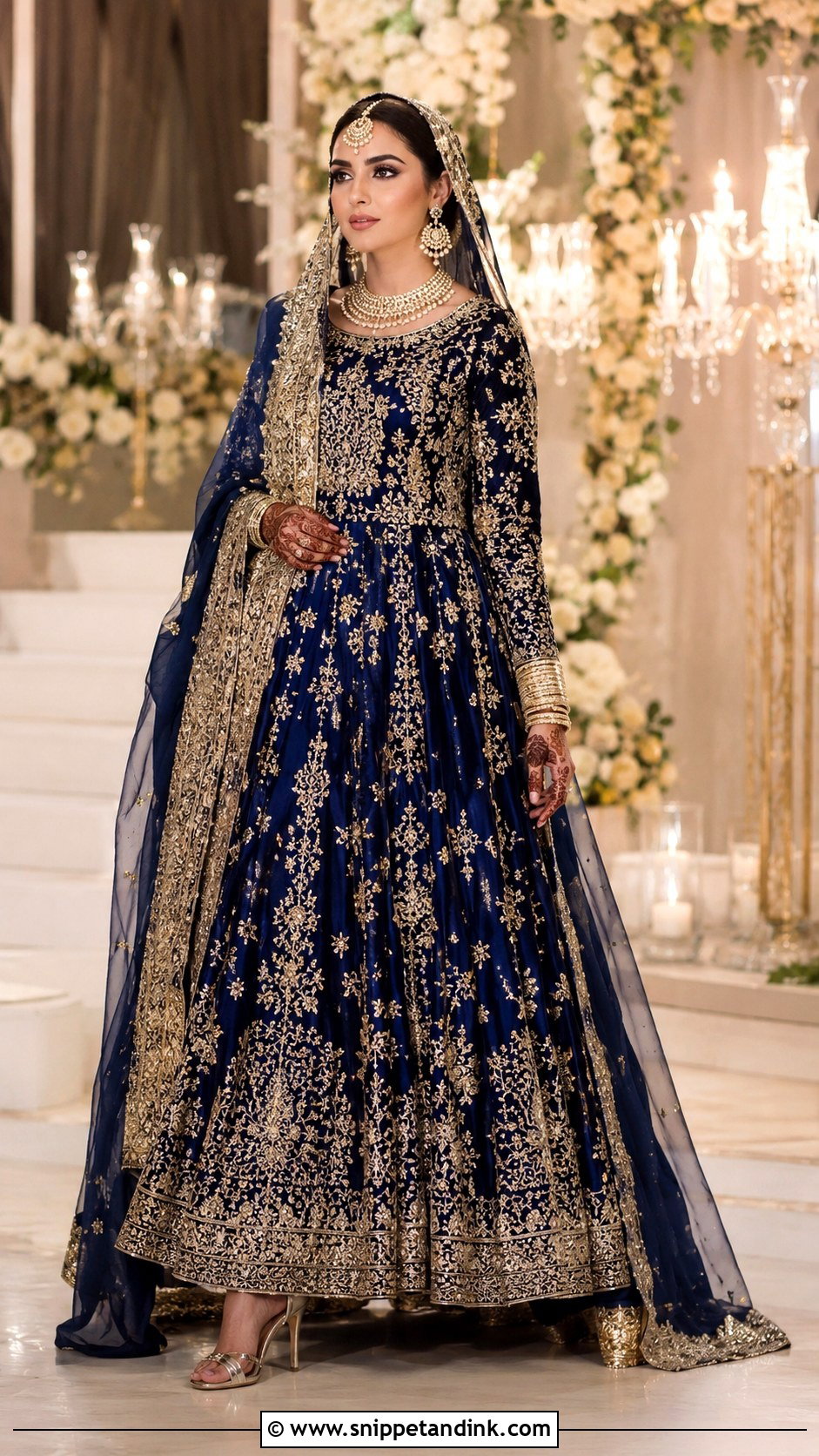
Navy, midnight and royal blue are formal enough for the main day when they carry heavy gold or silver embroidery. A long blouse and embroidered dupatta make it modest and graceful. A gold or red dupatta adds traditional bridal colour. Match jewelry to the embroidery: kundan or pearls with gold work, silver-toned with silver work. Blue reads very dark under dim hall lighting, so ask your photographer about light and keep the embroidery bright enough to show.
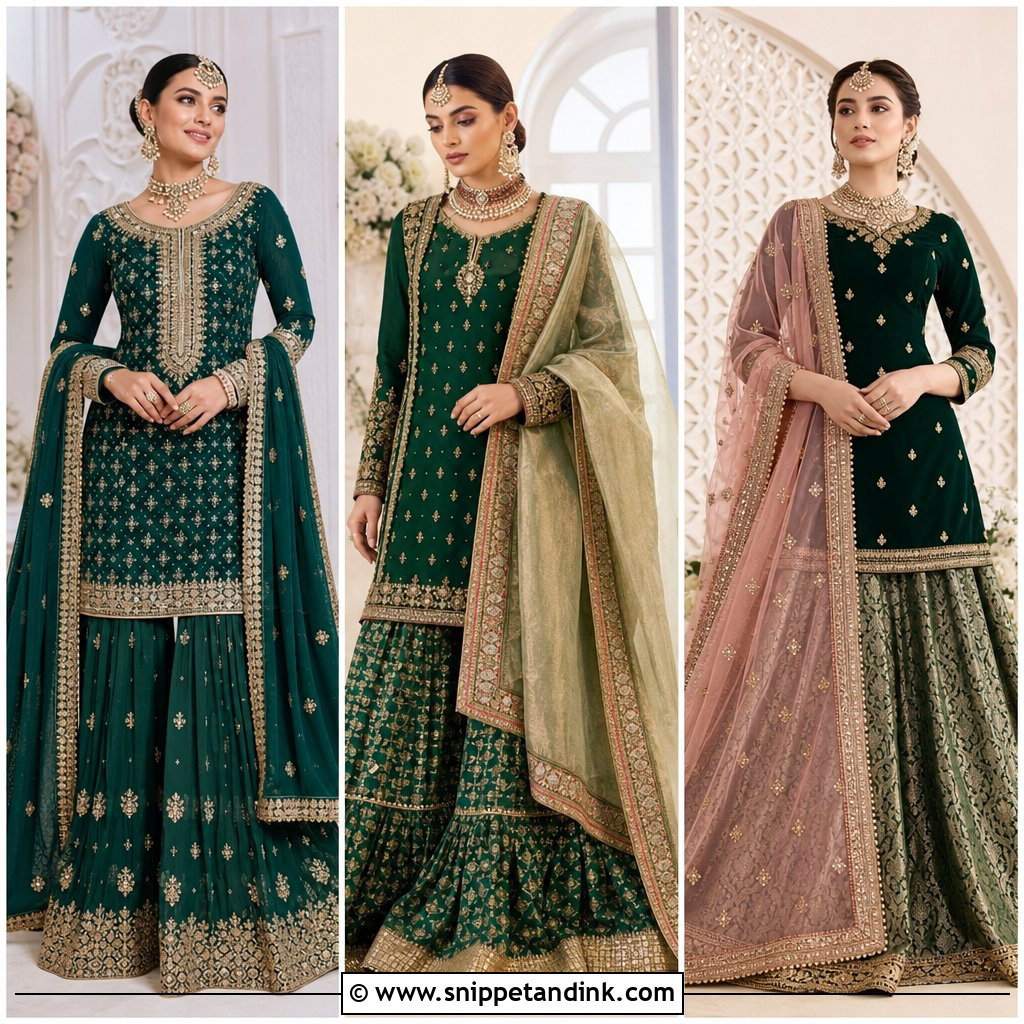


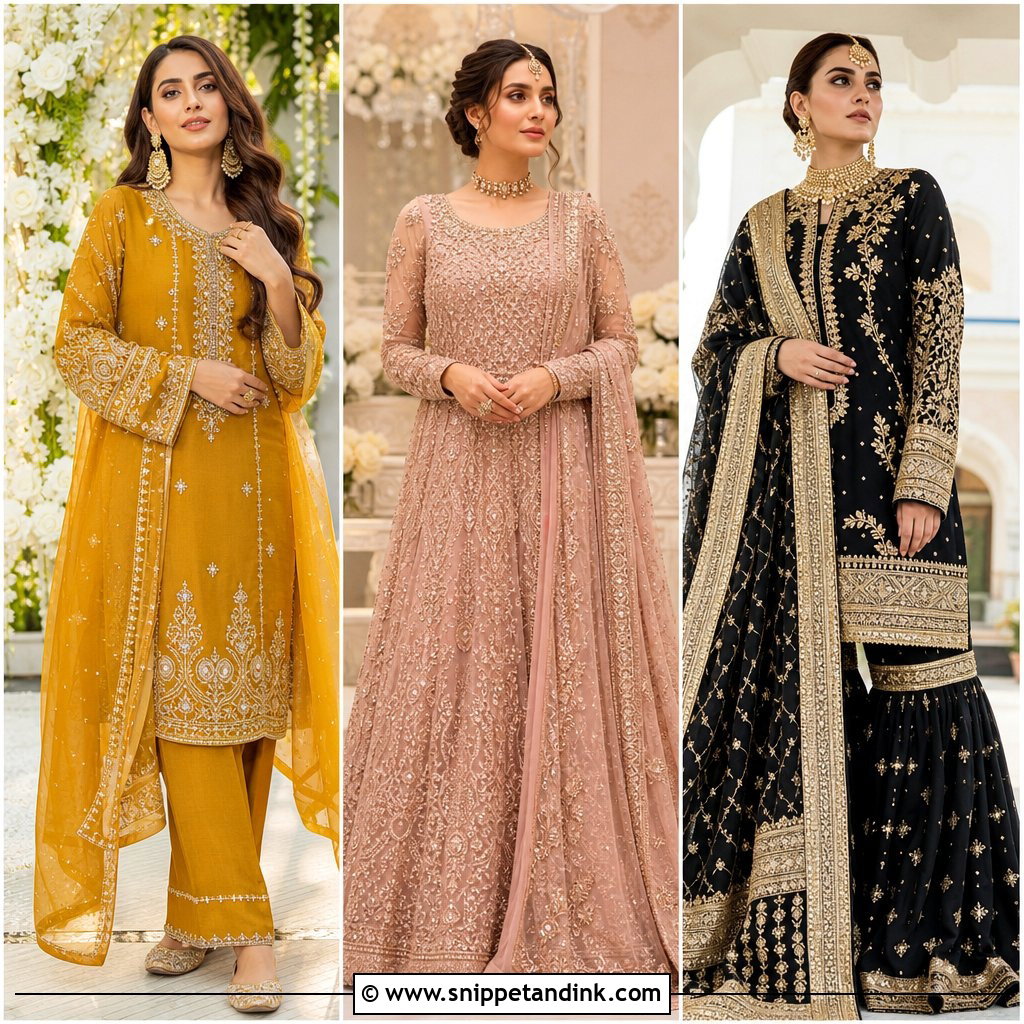
20. Black And Gold Baraat Dress
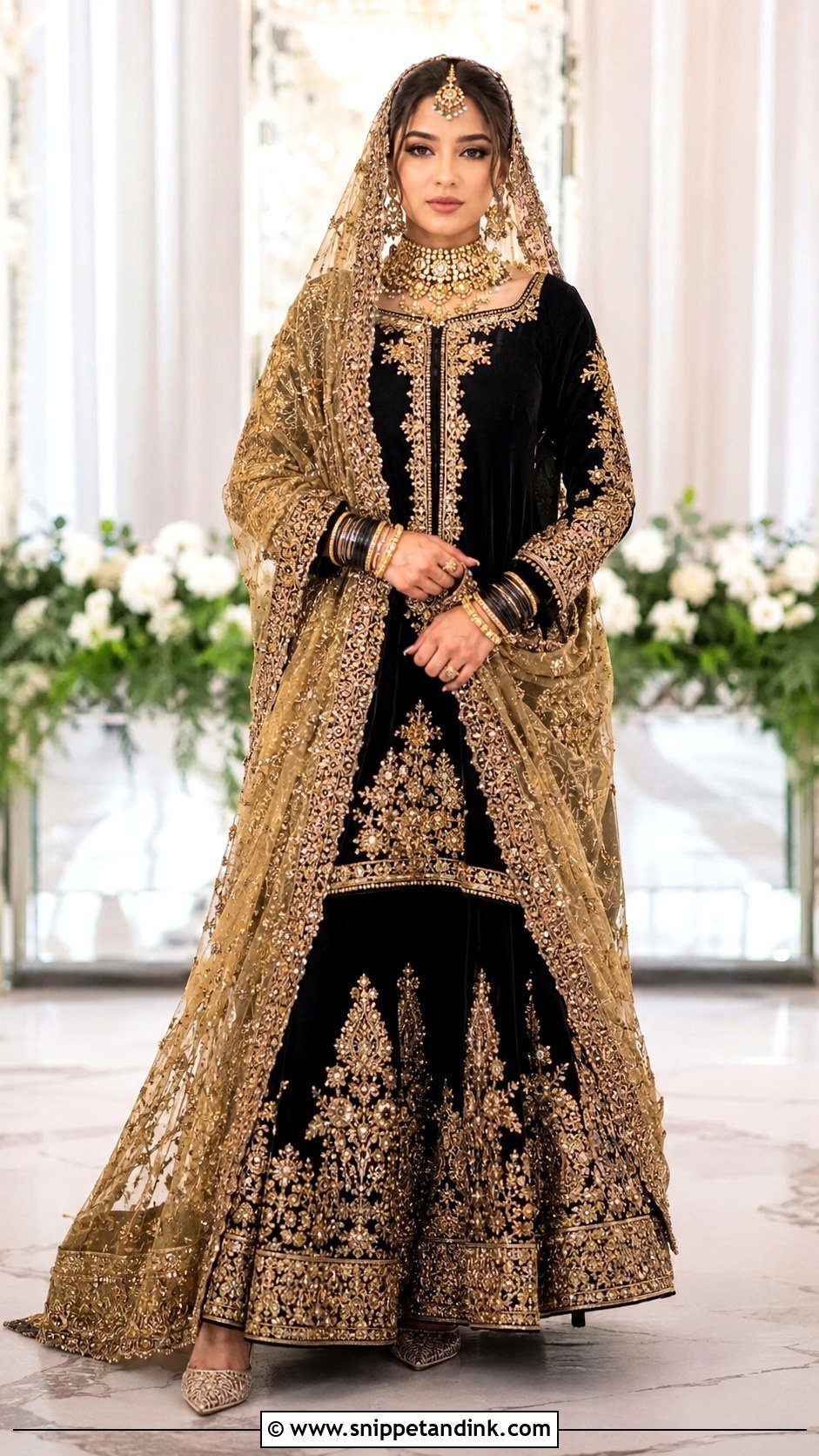
Black and gold is a fashion-forward choice, and I’ll be honest that black isn’t welcomed for a Baraat in every family, so talk to yours first. With rich gold embroidery and bridal jewelry it can look very elegant. A black velvet lehenga, long shirt or gharara makes a dramatic evening look. A gold or deep red dupatta over the head softens it and brings it back to bridal. Heavy kundan, gold bangles and a statement nath keep the focus bridal, and glowing skin with defined eyes completes it.
21. White And Gold Baraat Dress
White and gold can look serene and regal, but white on its own feels minimal, so the embroidery has to be rich and clearly visible. Choose ivory-white rather than stark white, which can look grey on camera. Gold zardozi, pearls, sequins and threadwork give the glow. It works in a lehenga, pishwas, maxi or gharara. A red or maroon dupatta adds traditional colour. Kundan, pearl accents and soft glam makeup finish a look that’s luxurious without being loud.
22. Pastel Baraat Lehenga
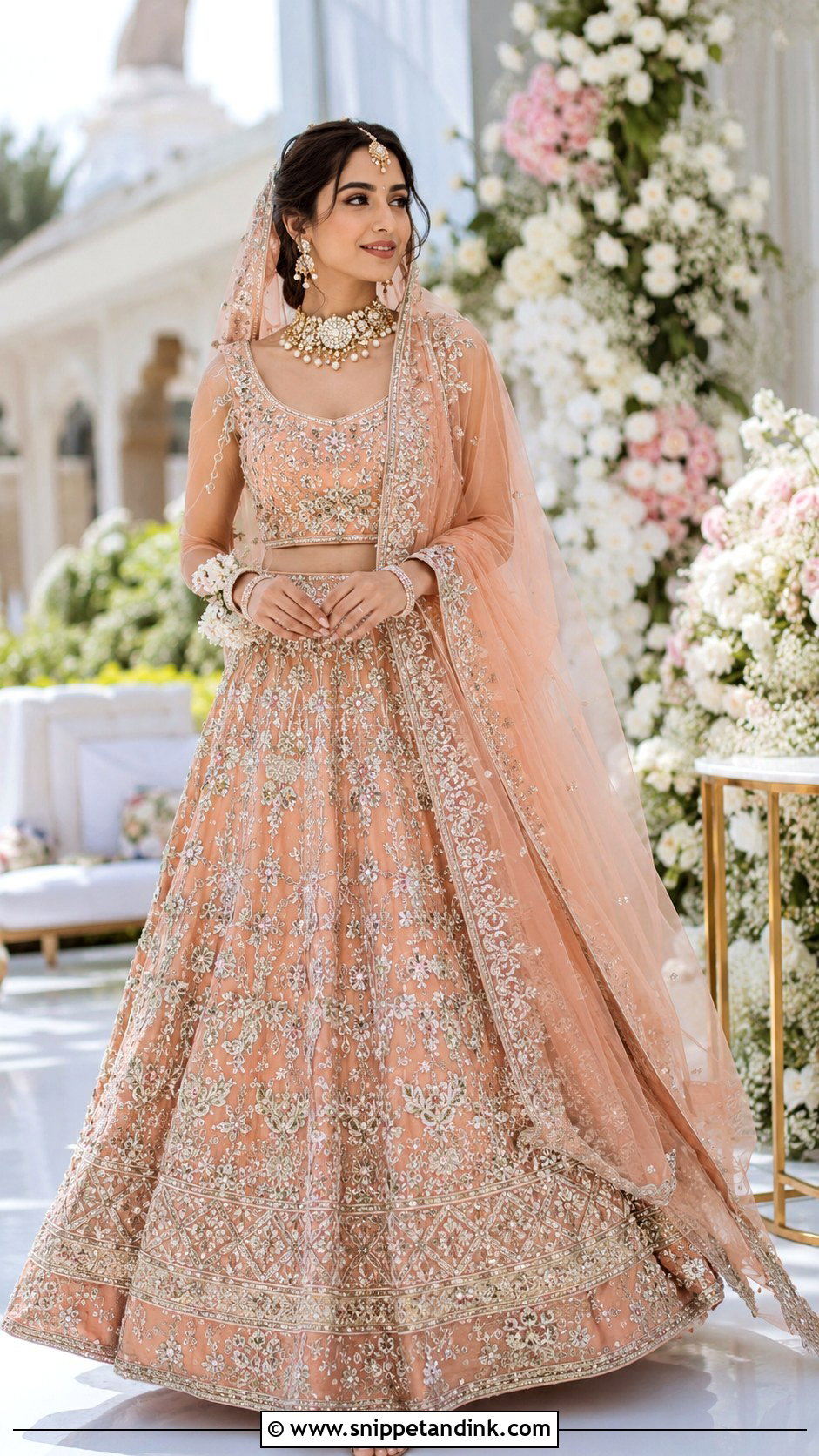
Pastels are the newest Baraat colours: peach, mint, powder blue, lilac and pale pink. The risk is looking too plain for the main day, so the handwork, dupatta and jewelry all need to be strong. Gold embroidery warms a pastel; silver cools it. Pearls and crystals soften it. Pastels photograph best in daylight and can look washed out under orange evening lights, so I’d keep them for daytime and outdoor events. A polished bun, a delicate tikka, layered necklaces and embellished heels complete it.
23. Double Dupatta Baraat Dress
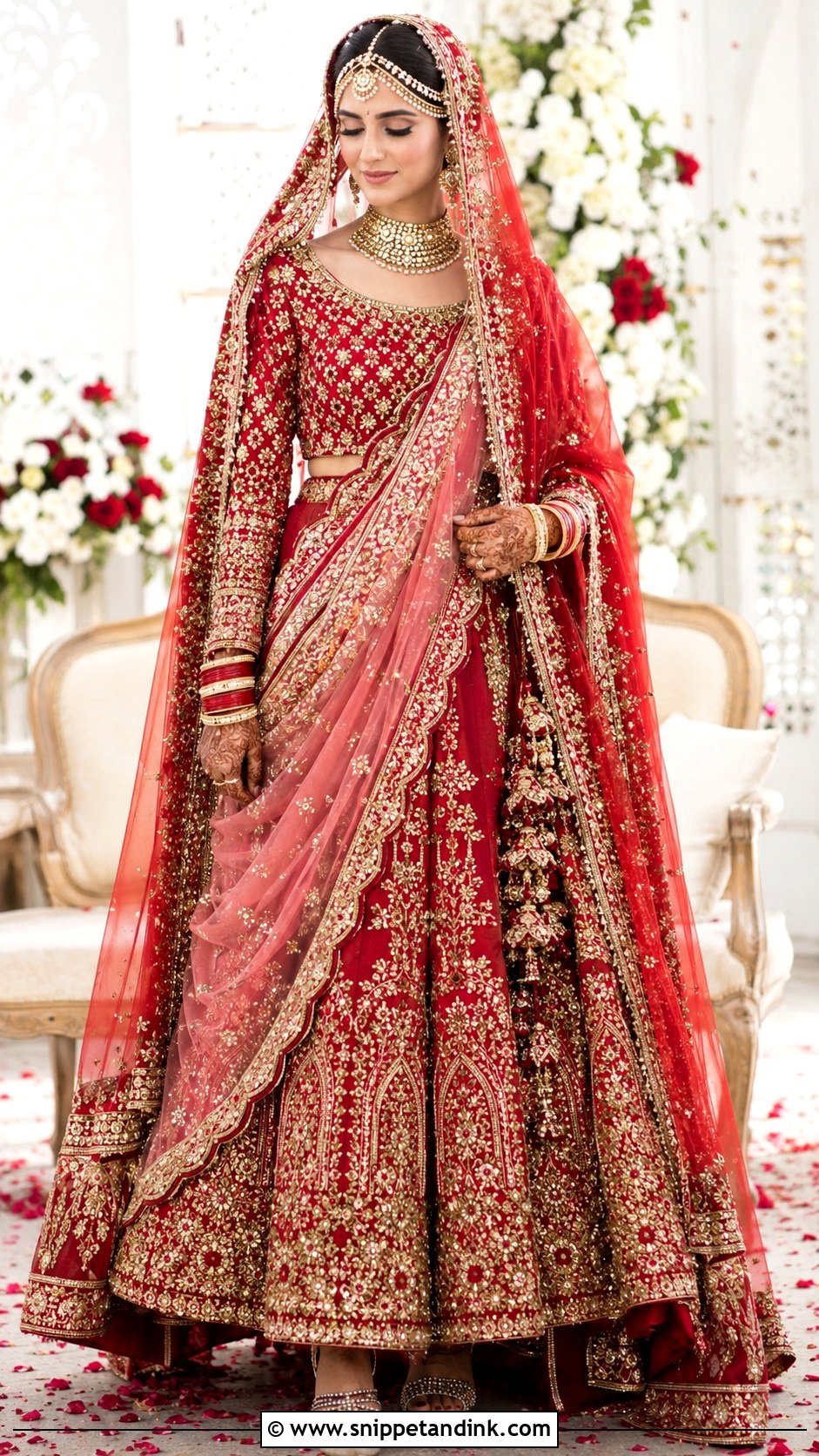
Two dupattas make a bridal outfit look more formal and finished. One goes over the head; the other drapes across the shoulder or around the arms. Use a heavier, bordered dupatta on the head for structure and a lighter one on the shoulders for movement. Both need pinning carefully: I set the head dupatta with small U-pins into the bun and hidden safety pins at the shoulder so it doesn’t slide when the bride turns. It works with lehengas, ghararas and shararas and gives modest coverage without hiding the outfit.
24. Long Shirt Lehenga Baraat Dress
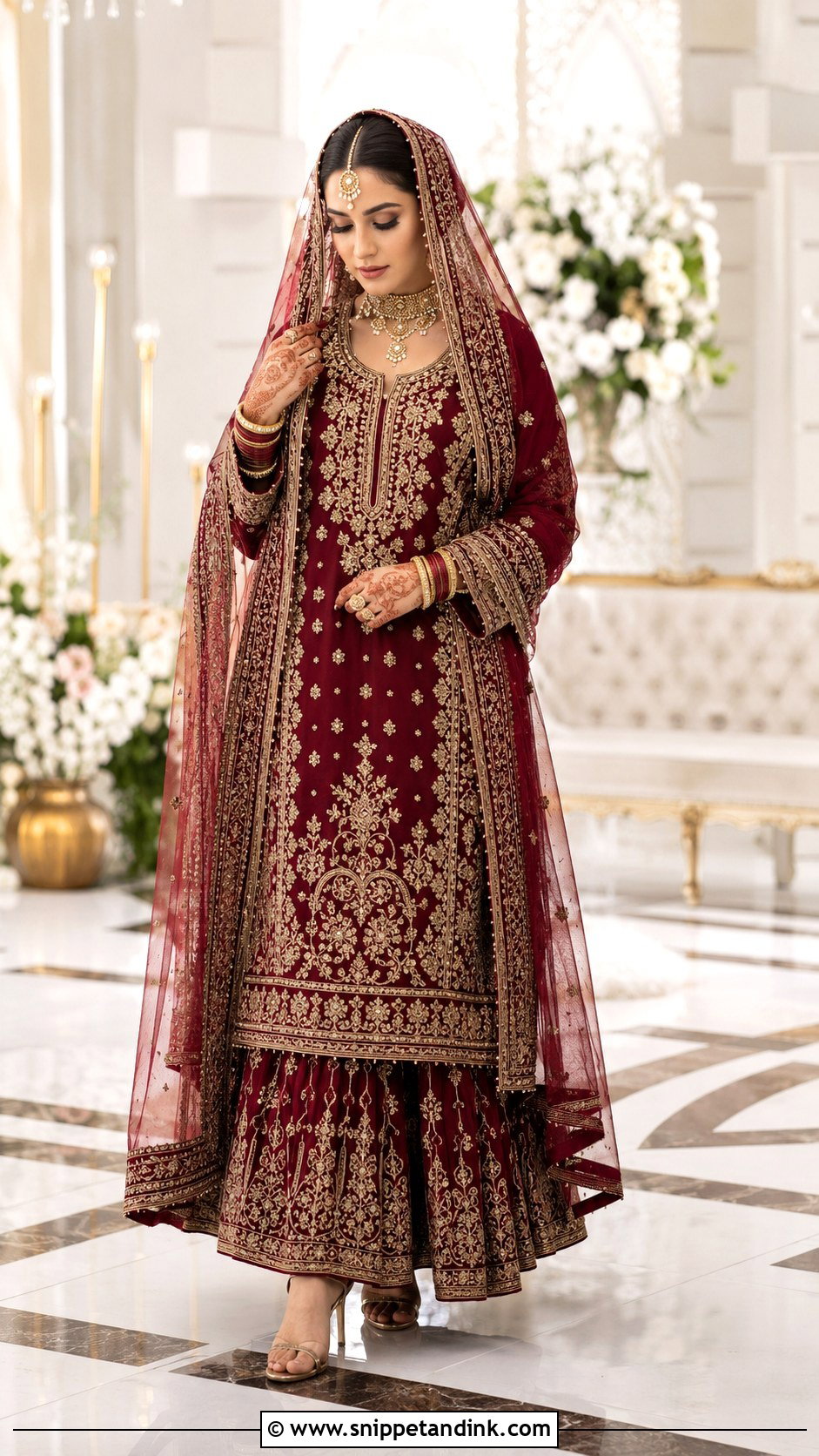
The long kameez over a lehenga is a signature Pakistani bridal shape. It gives more coverage than a short choli, and the lehenga underneath adds movement. Heavy front embroidery, detailed sleeves and a wide hem border suit it. Red, maroon, ivory, rust and gold are all strong Baraat colours. Check the side slits at the fitting: if they’re cut too high, they open when you sit on the stage. A sheer dupatta over the head, kundan or polki jewelry, a neat bun and embellished heels complete it.

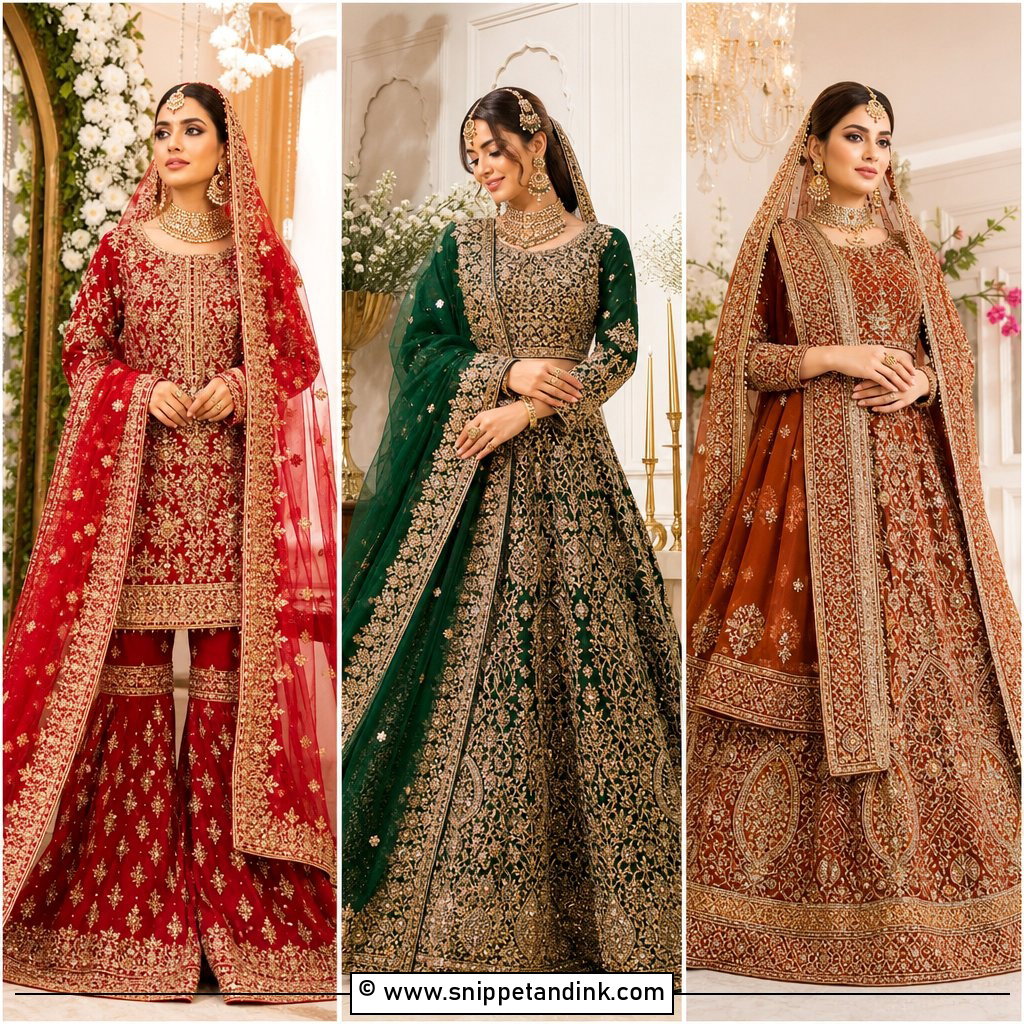
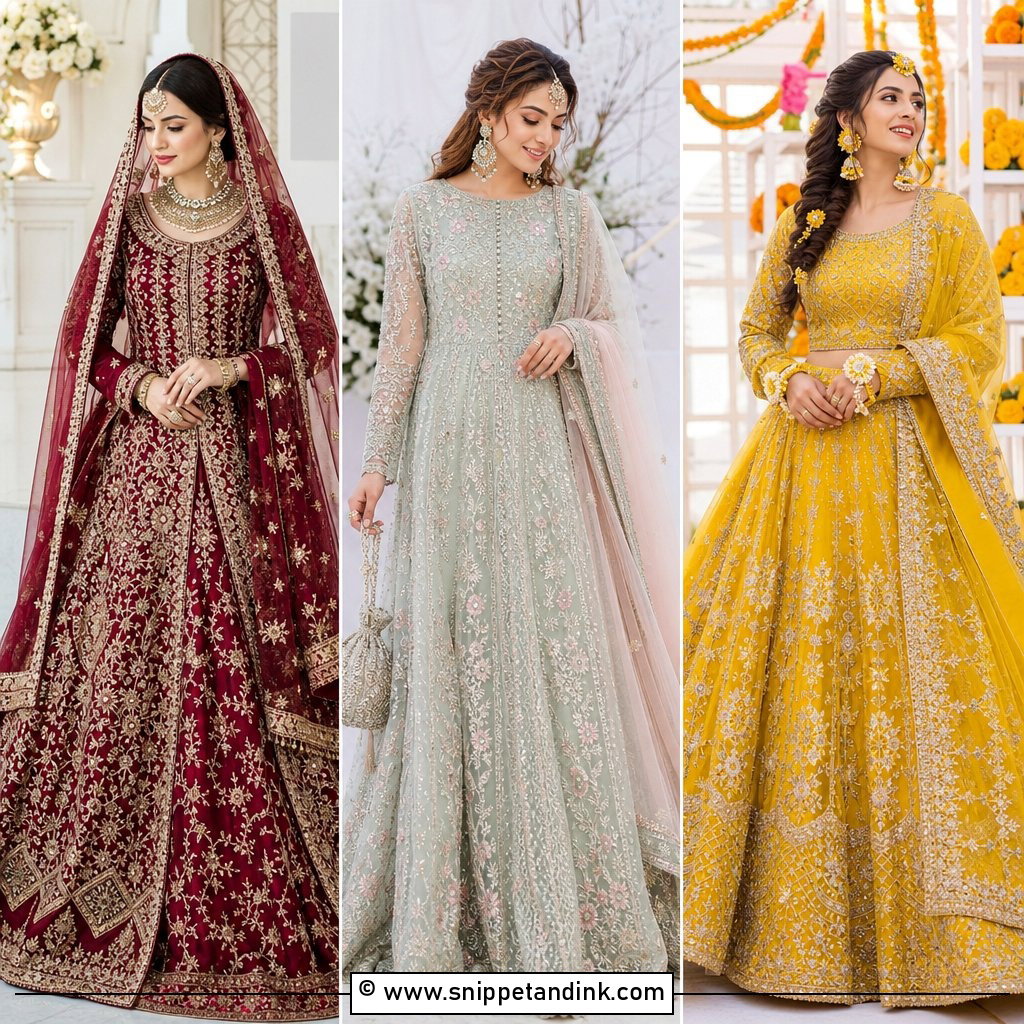
25. Peplum Lehenga Baraat Dress
A peplum top defines the waist and adds shape, and with a flared lehenga it looks modern while staying bridal. It’s flattering on many body types because it gives structure without being revealing. Red, maroon, gold, blush or emerald with detailed bodice and hem embroidery all work. The peplum should end at the hip bone; any lower and it cuts the leg line. A heavy-bordered dupatta, a choker, long necklace, statement earrings and bangles finish a youthful, polished look.
How Heavy Is Too Heavy for a Long Baraat?
A Baraat can run five or six hours from getting ready to rukhsati, and most of it is spent sitting on a stage, standing for photos and greeting guests. An outfit that feels fine for ten minutes in a fitting room can be exhausting by the end.
At the fitting, sit on a low seat for a few minutes, stand up without help, and walk up a step. If the skirt pulls at the waist or the blouse digs in, ask for a wider waistband, padded straps or a lighter can-can. A belt or waist hook that carries part of the lehenga’s weight helps. Khussas are kinder than heels under a long lehenga, since nobody sees your feet anyway.
Eat something before you dress, and ask a cousin or friend to stay close for the dupatta, the bathroom and the photo poses. It makes a huge difference.
Storing Zardozi Work After the Wedding
Metallic embroidery tarnishes when it’s exposed to moisture and air, and heavy outfits stretch out of shape on a hanger. Take the outfit to a dry cleaner who handles bridal embroidery, then wrap each piece in clean muslin or white cotton, never plastic, which traps damp. Store it flat in a box with a few silica gel packets, and refold along different lines every few months so the creases don’t wear into the fabric.
The Dupatta Frames Every Baraat Look
A Baraat outfit has to balance tradition, comfort, family expectations and your own taste. Some brides feel most themselves in classic red, others in a maroon gharara, pastel pishwas, velvet maxi or emerald. Look at the whole picture: silhouette, dupatta drape, embroidery, jewelry, shoes, hair and makeup. The outfit should look grand in photographs and still let you enjoy the evening and the rukhsati that follows.
You'll Like These Ideas:







Leave a Reply