
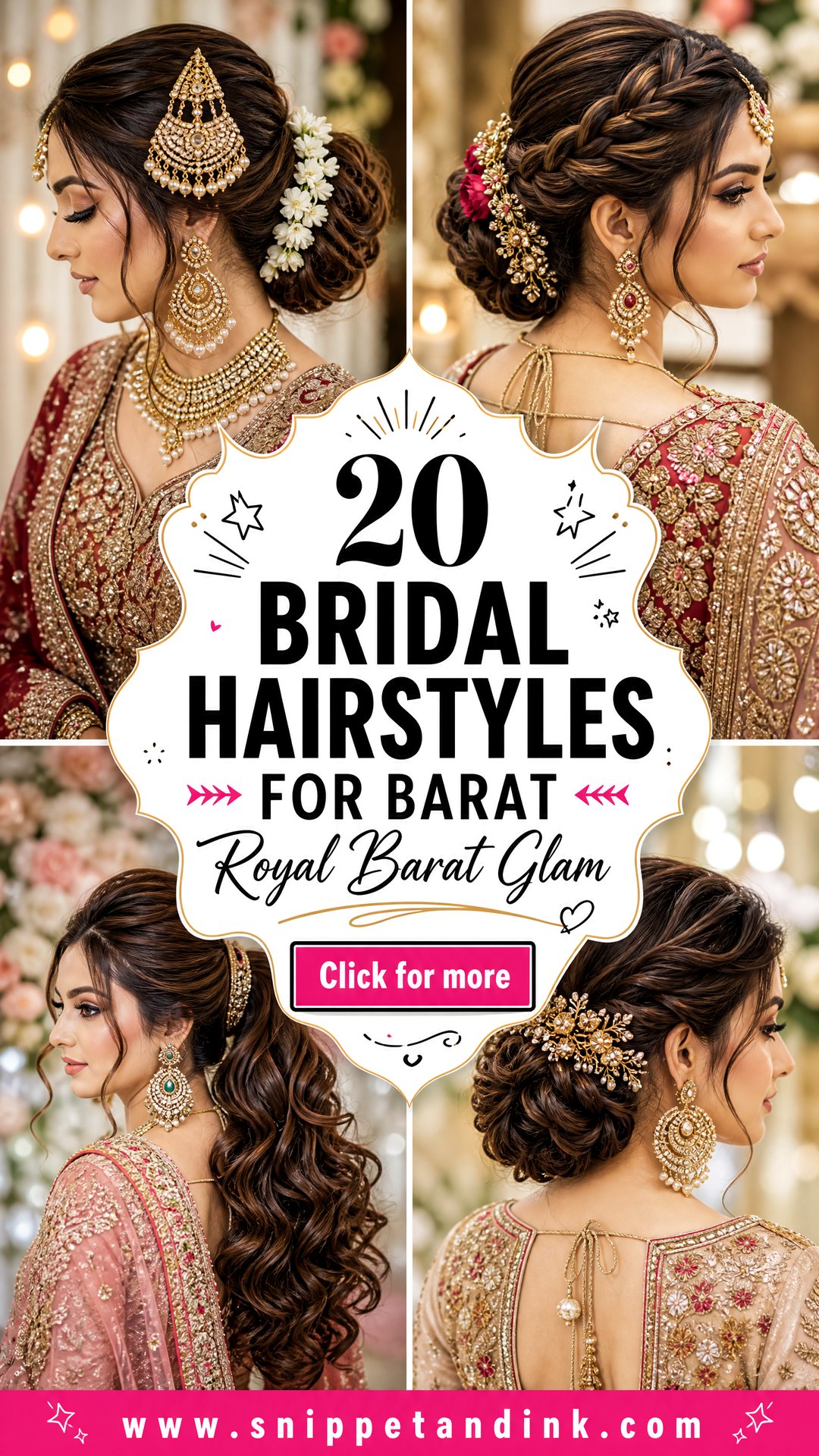
Barat hair carries more than any other wedding look I style. The lehenga or gharara is usually at its heaviest, the jewelry at its most formal, and the dupatta has to be pinned so it stays put through the entrance, the stage, the photos and the rukhsati. So the first question I ask isn’t which style you like; it’s how heavy your dupatta is. The best bridal hairstyles for Barat hold a tikka, matha patti, jhumar, dupatta pins and sometimes fresh flowers without pulling or slipping. Below are 20 looks, from buns to open curls and braids, with what each one can realistically support.
Hair First, Then Jewelry, Then the Dupatta
Barat getting-ready runs in a fixed order, and changing it causes most of the problems I’m called to fix. The hair is finished and sprayed first. Then the jewelry: tikka at the parting, matha patti chains or jhumar hooked into the base. The dupatta goes on last, pinned over the jewelry, never underneath it.
- Bring the actual dupatta to the trial. I need to feel its weight and see where the heavy border sits before I decide on a base.
- Decide in advance who is setting the dupatta. Usually it’s the hair or makeup artist; a relative doing it after the artist leaves often undoes the jewelry placement.
- Allow at least twenty to thirty minutes just for dupatta setting with a heavy fabric. It needs pins at several points, not just at the crown.
- Keep the outfit on while the dupatta is set. Pinned with the bride in a dressing gown, it never sits right once the lehenga goes on.
Once the dupatta is pinned, try sitting down, turning your head and standing up again before anyone leaves the room. Anything that shifts then will shift on stage too.
1. Barat Bridal Low Bun
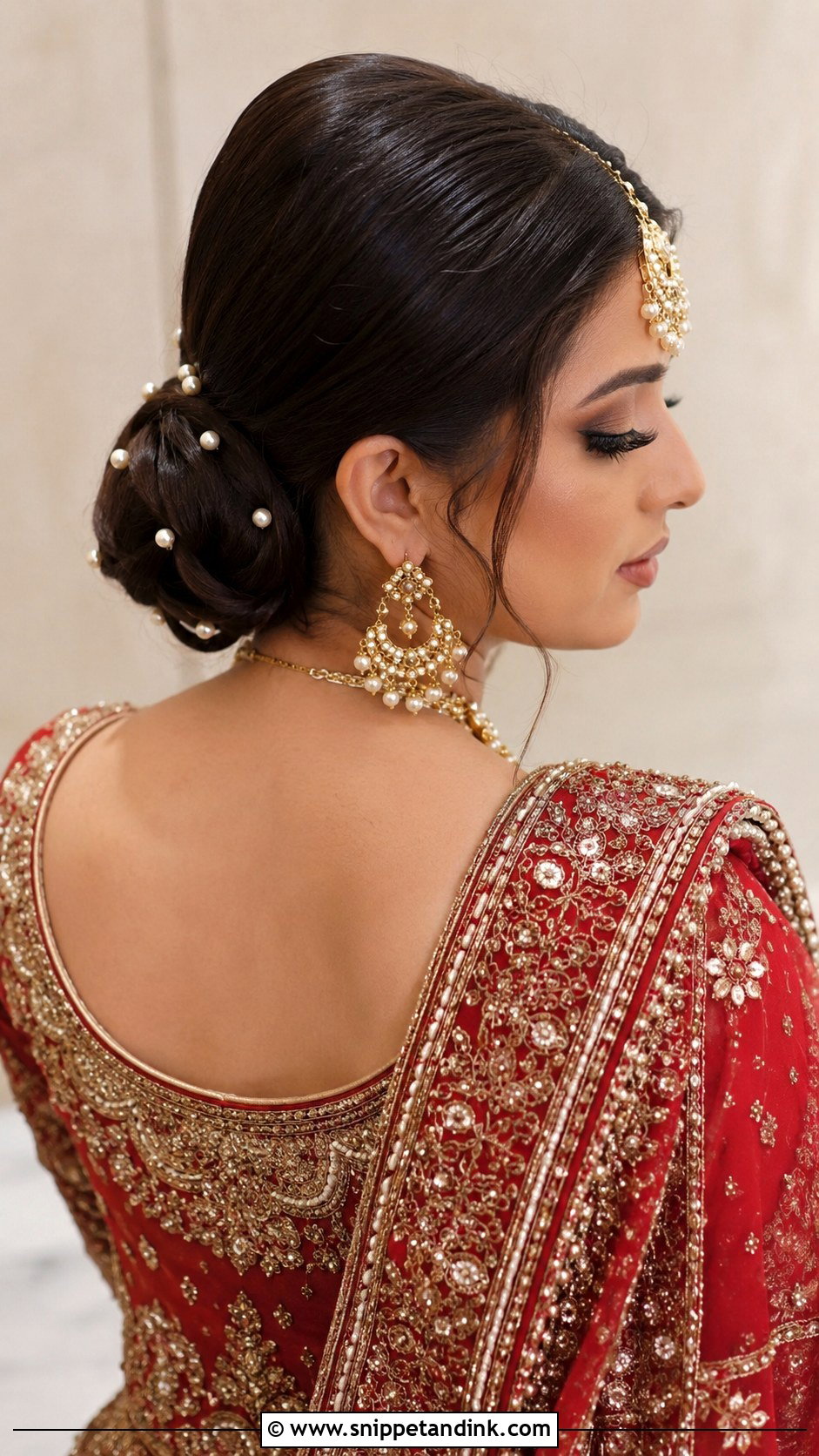
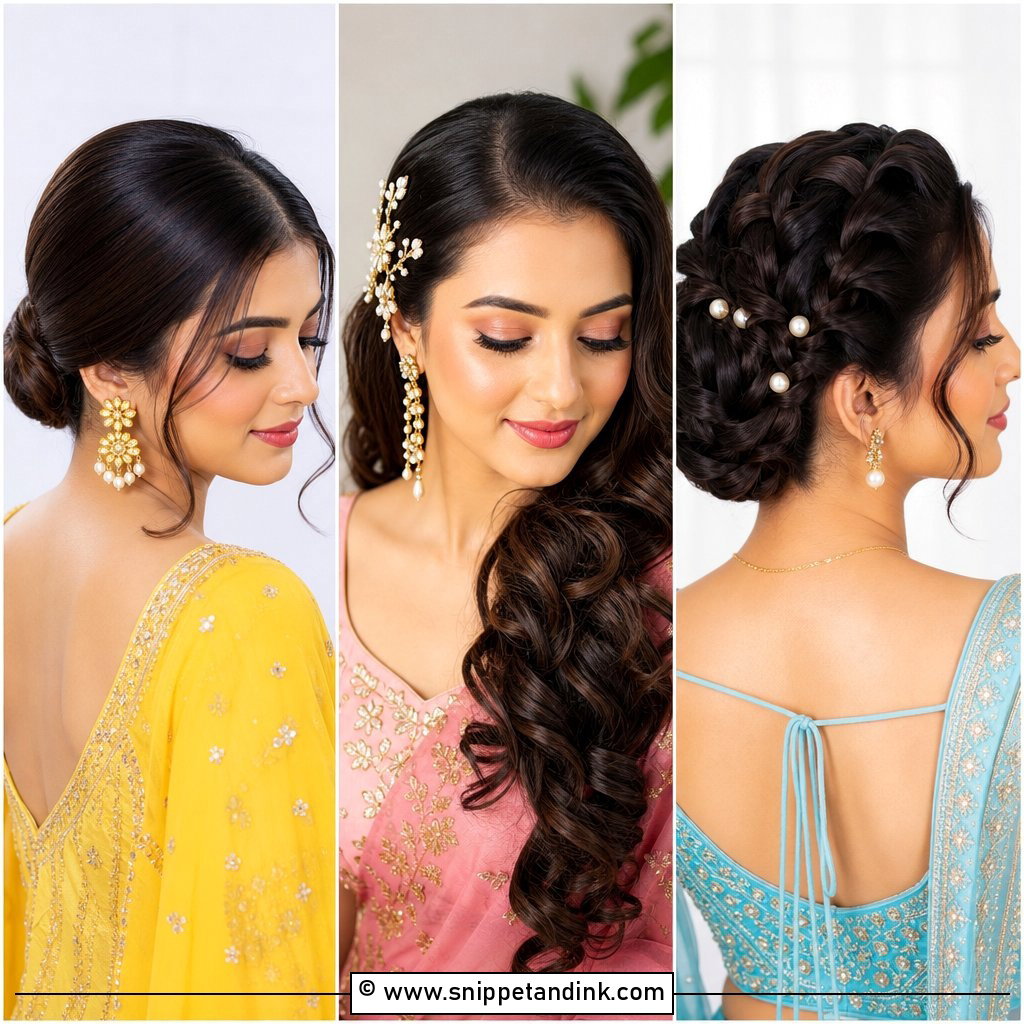
For a heavy lehenga, gharara or sharara, I trust a Barat bridal low bun more than anything else. Sitting near the nape, it gives the dupatta a solid base without adding height under the fabric. A center part, tikka, matha patti or side jhumar all sit comfortably with it, and the bun can be smooth, twisted or textured. The weight sits low and balanced, which matters over a long evening. Pearl pins, roses or a gajra around the bun finish it; I place them after the dupatta is set so nothing gets crushed.
2. Barat Bridal High Bun
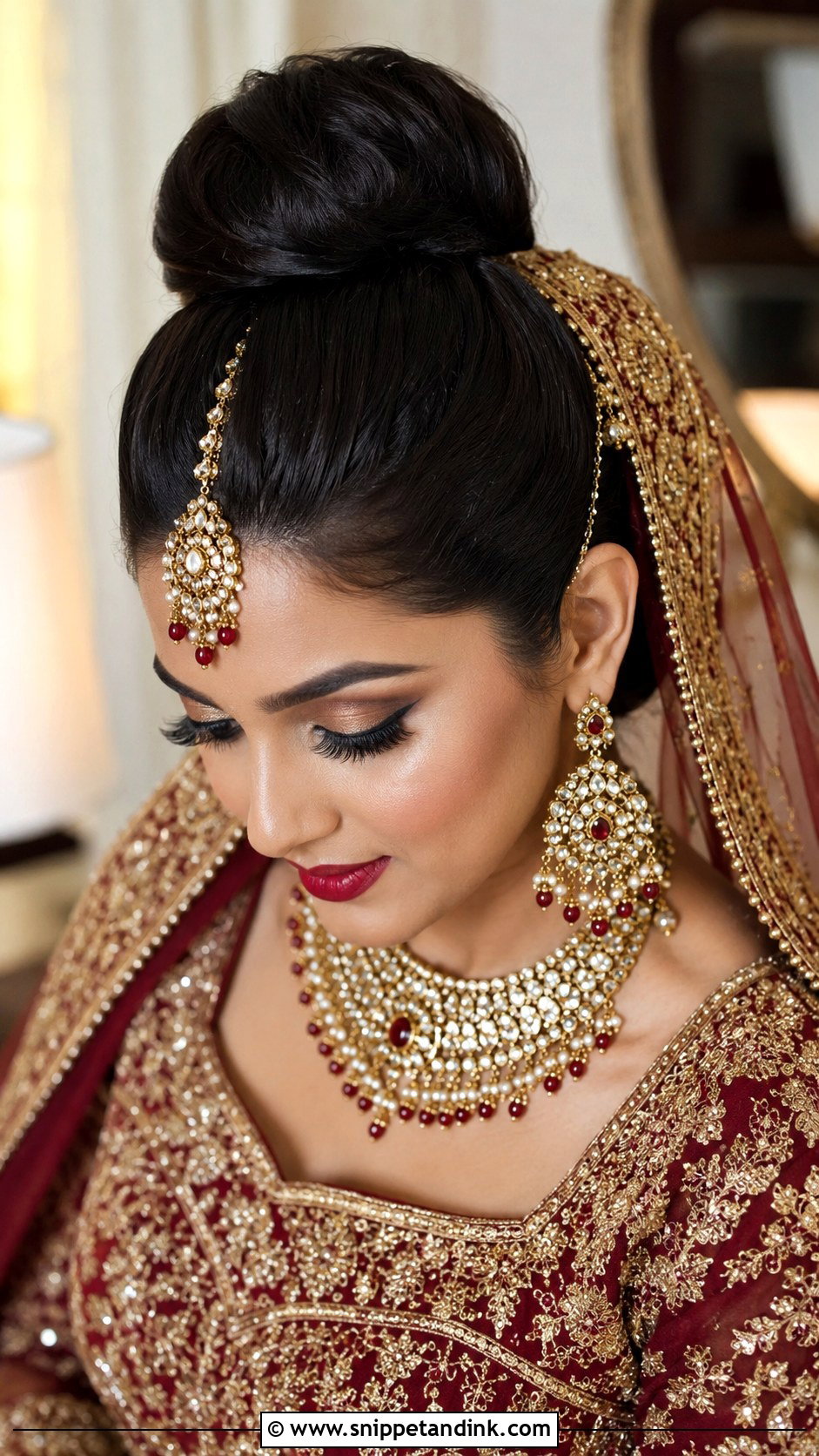
When the dupatta needs to sit higher on the head, a high bun gives it that lift. The height also lengthens the neck, which helps when a choker or rani haar is sitting close to the throat. The bun should be full and softly rounded rather than tight. Under a heavy dupatta, a flat, tight bun gets pressed down and the fabric slides off it. A clean center part keeps the tikka straight, and a few soft front pieces stop the look feeling severe.
3. Barat Bridal Middle Part Bun
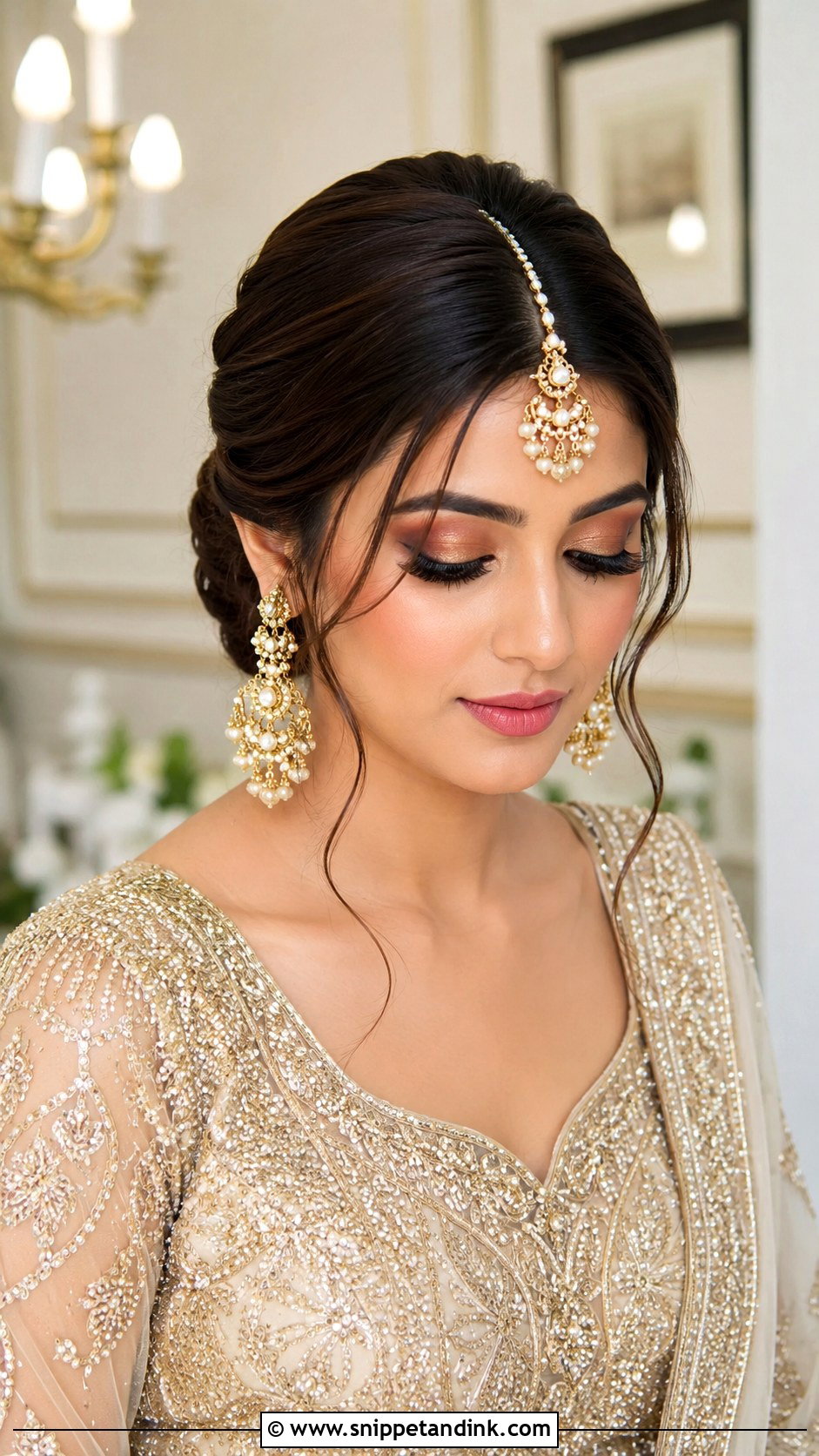
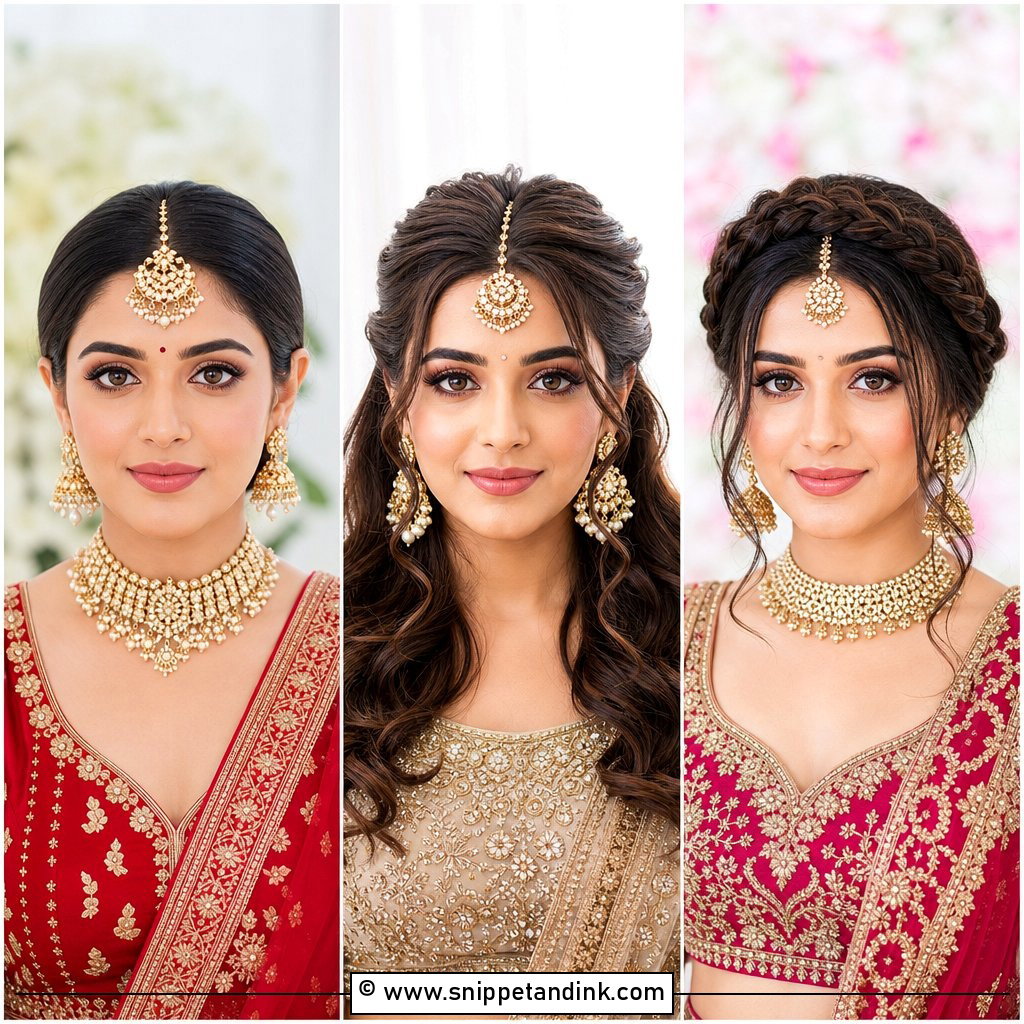
Symmetry is the whole point of a middle part. A clean center line gives a maang tikka or matha patti an exact path, so the jewelry stays centered in front-facing photos. The bun sits low or a little above the nape, depending on where the dupatta goes. I draw the part with a tail comb from the hairline all the way back to the crown; a part that wanders even slightly shows as a crooked tikka. Sleek fronts feel formal, soft crown volume gentler.
4. Barat Bridal Bun With Matha Patti
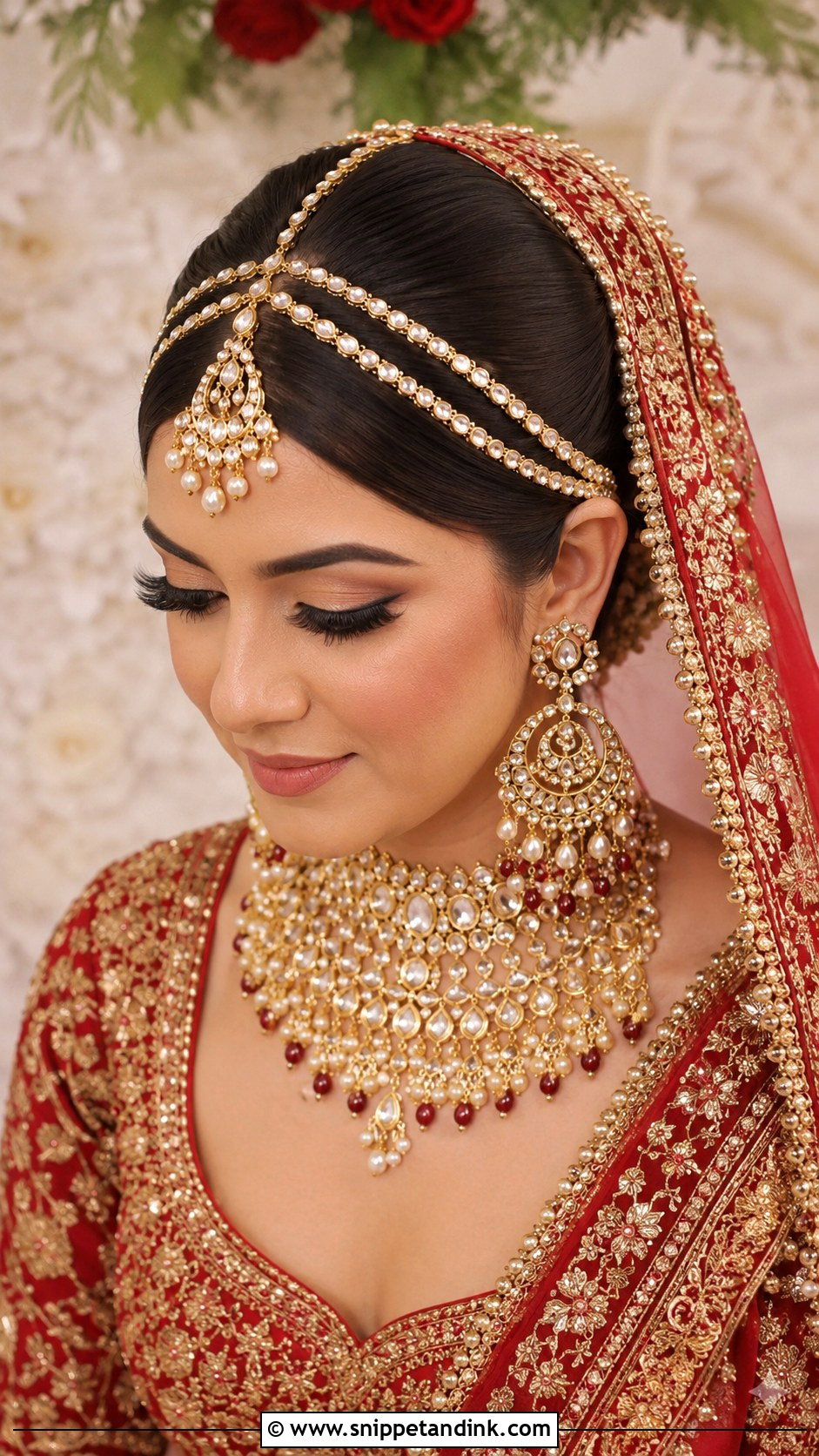
A matha patti needs a flat, smooth front to sit evenly, so I avoid volume at the hairline on this style. The side chains run back and get pinned into the hair just above the ears, then hooked into a firm base near the bun. That base is what keeps the chains from sliding forward as the night goes on. The bun can be partly covered by the dupatta or left visible. It sits well with bold eye makeup, a nath and layered necklaces.
5. Barat Bridal Bun With Jhumar
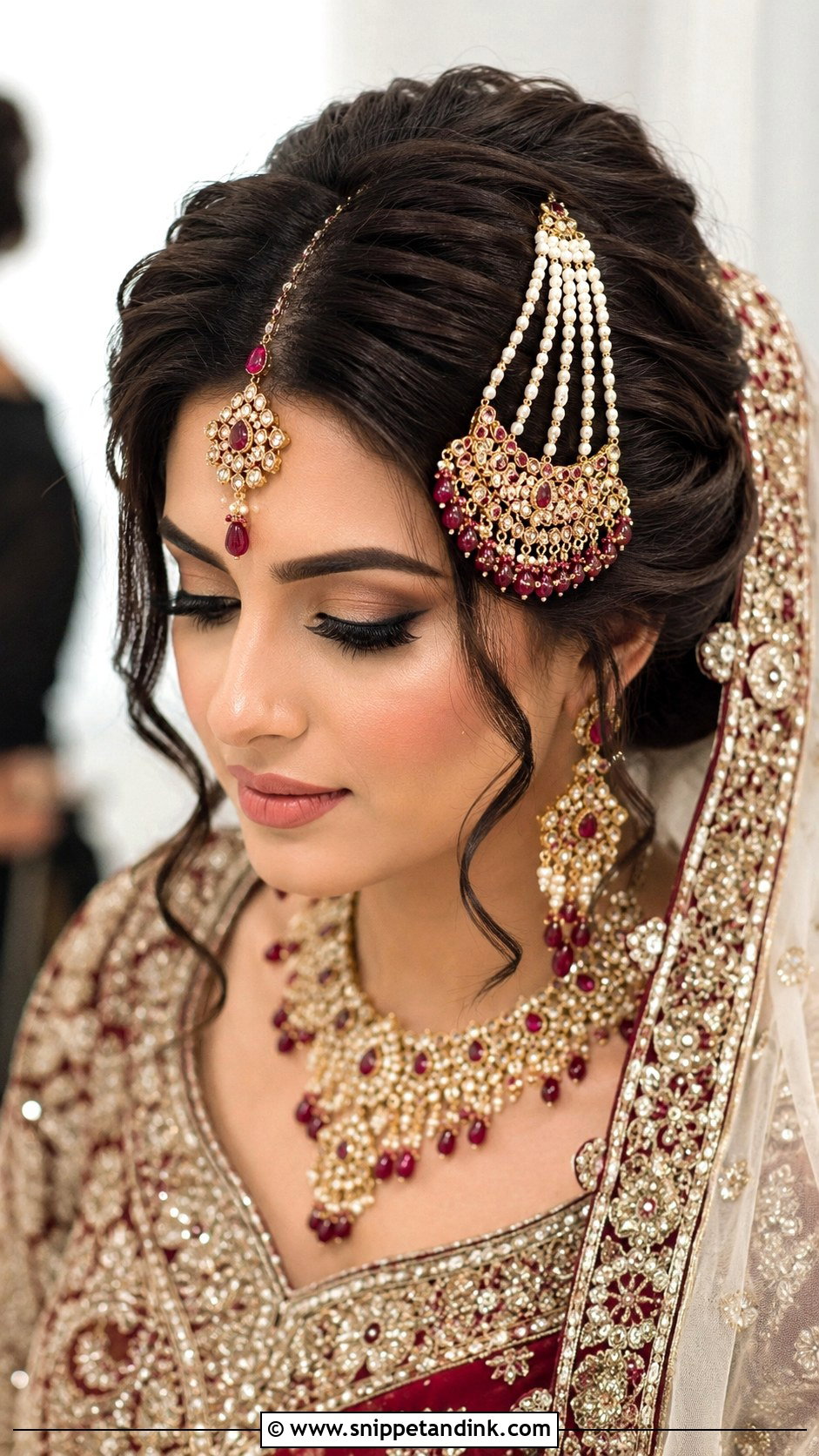
Pakistani and North Indian brides often wear a jhumar on one side, and a bun with jhumar gives it a place to hook in at the back. A center part with smooth sides keeps the asymmetry intentional rather than lopsided. Place the jhumar above the temple; too low and it swings into the cheek and catches on earrings. The dupatta can drape over the crown or be pinned further back, as long as it doesn’t cover the jhumar’s top edge.
6. Barat Bridal Gajra Bun
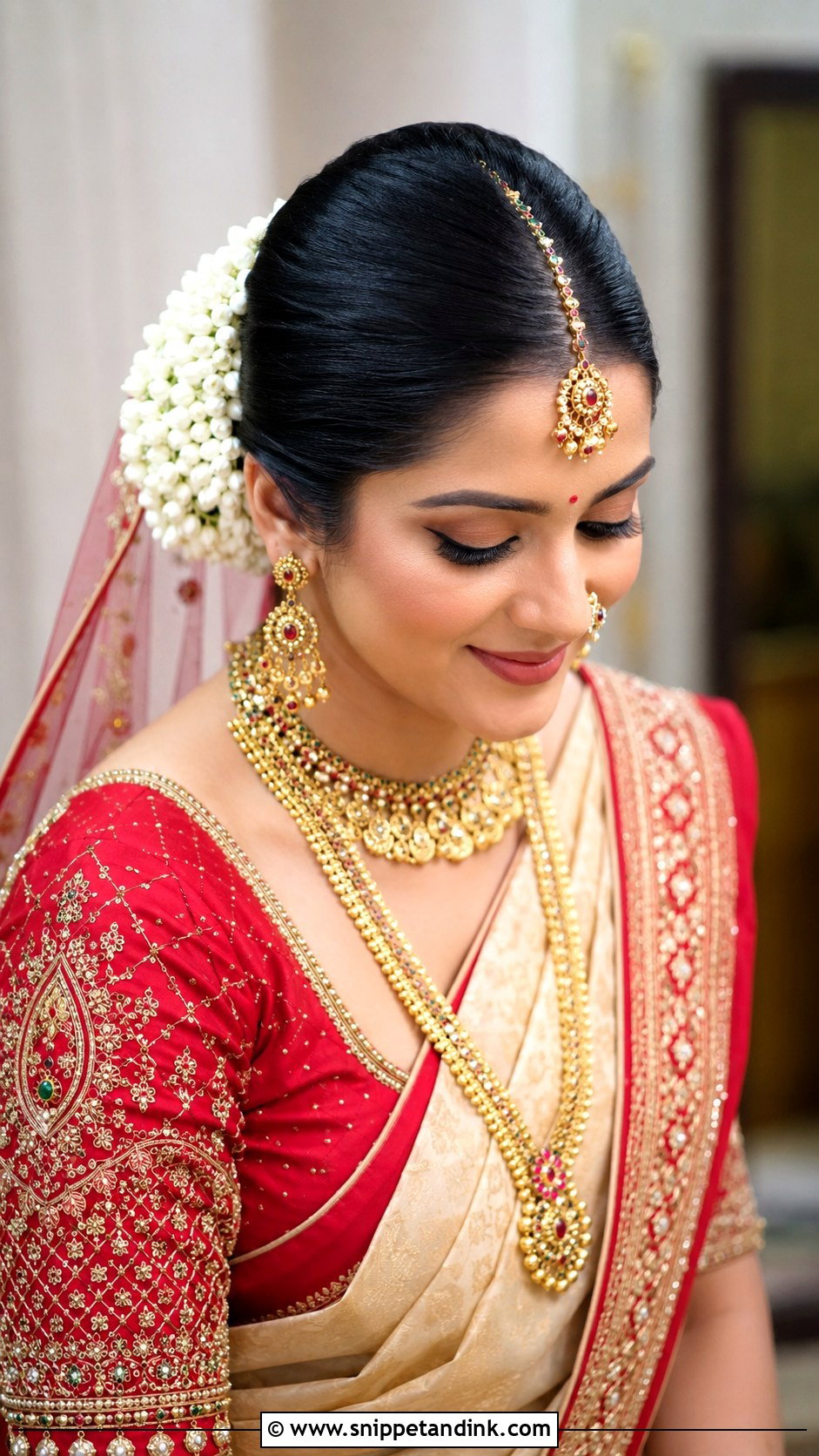
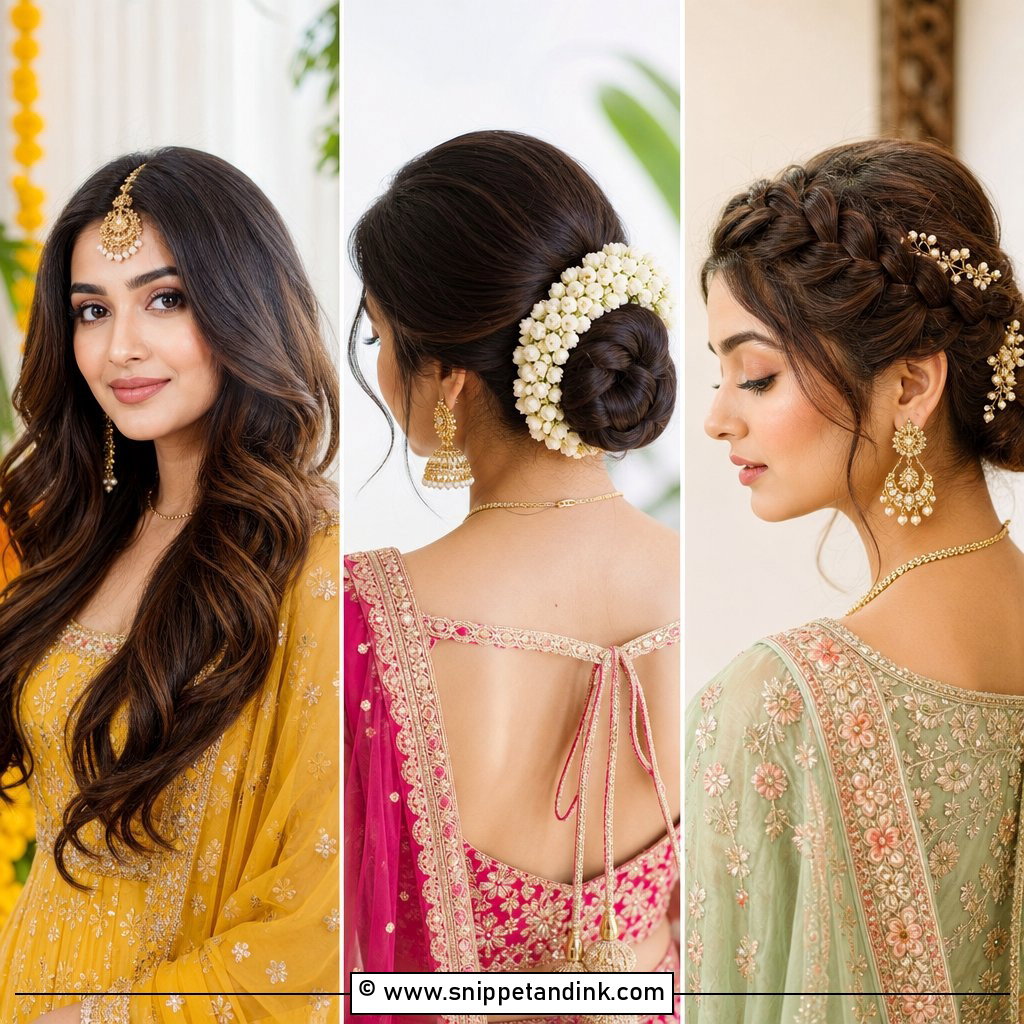
Jasmine has a scent nothing else matches, but it’s the most delicate thing on a Barat look. A gajra bun, usually low or mid, is wrapped with jasmine, roses or small white flowers, and it suits red, ivory, gold and deep green outfits equally. Keep the gajra neat and close to the bun if a dupatta goes over it, otherwise the fabric bulges. I keep gajras wrapped in a damp cloth in the fridge until the last moment; jasmine buds open and start browning a few hours after they come out.
7. Barat Bridal Twisted Bun
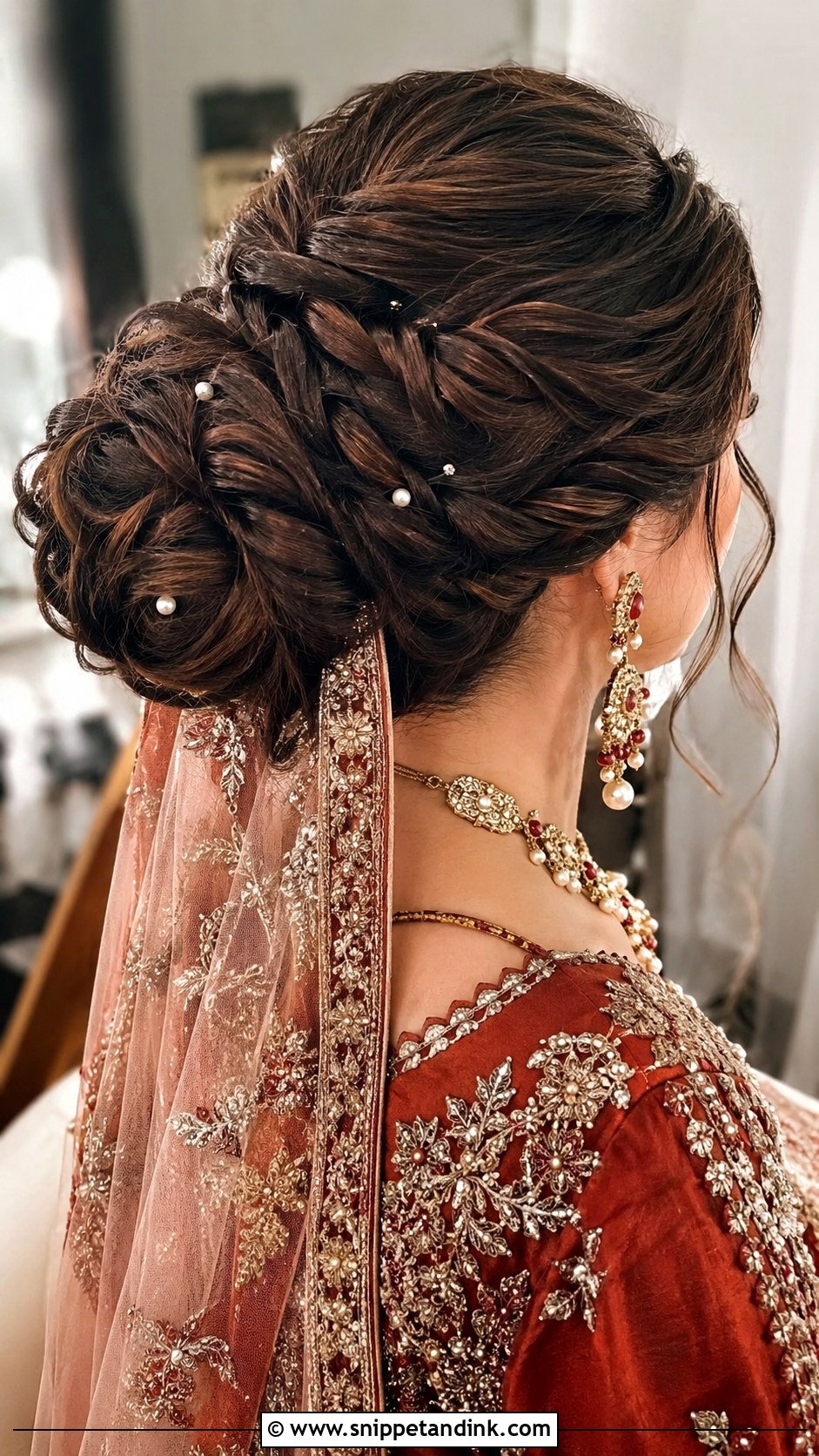
Stage shots and walking shots show the back of your head more than you’d expect, and a twisted bun gives those photos something to look at. Hair is twisted into sections, then pinned into a bun, with texture and movement visible from behind. The twists can be polished or loose. Pearl pins, small crystals or a light floral border add detail. With a dupatta, I keep the pins for the fabric in the solid center of the bun, not in the twists, which can loosen under the pull.
8. Barat Bridal Braided Bun
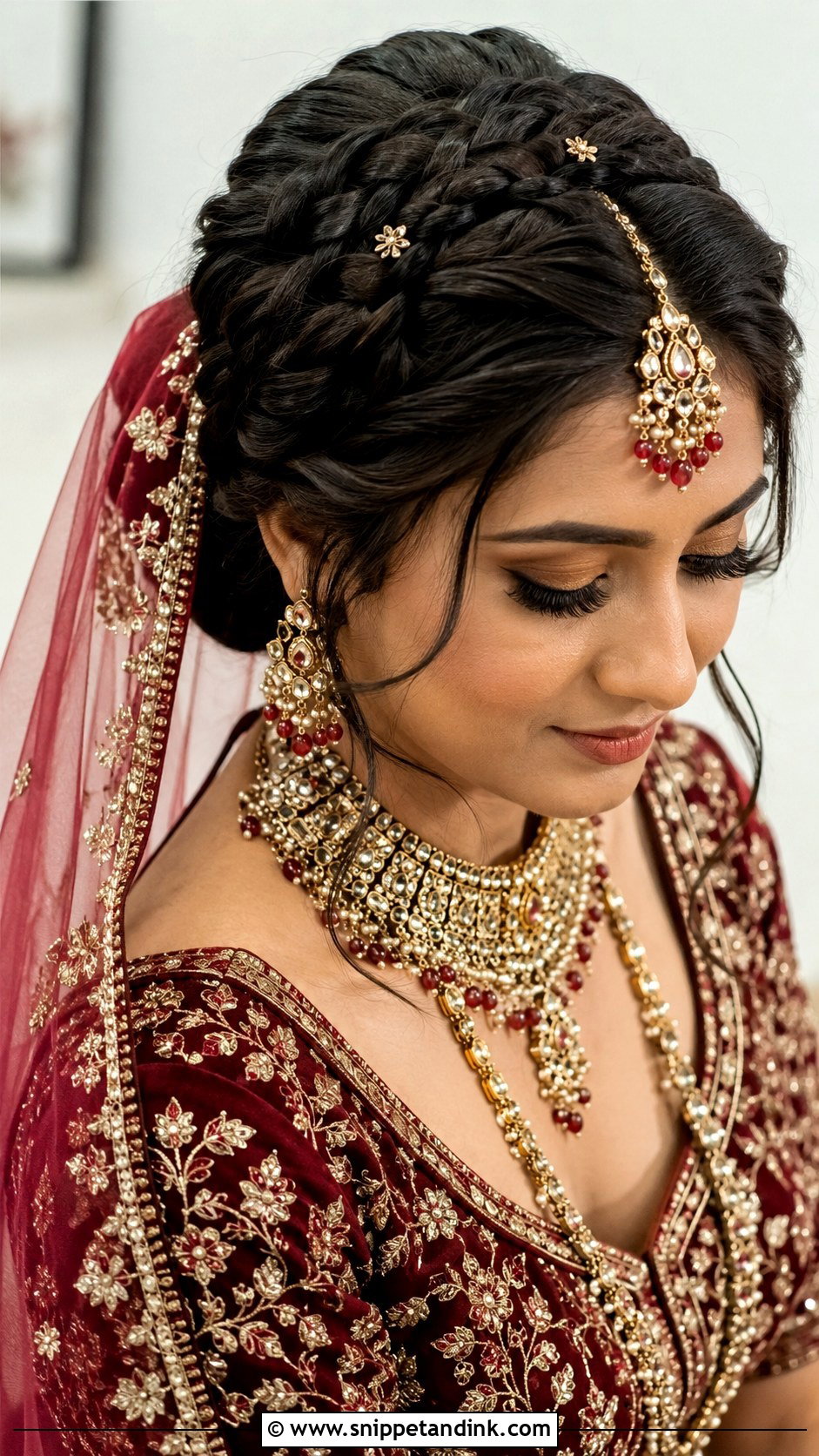
A braid laced through a bun gives the dupatta pins dozens of places to hide, which makes a Barat bridal braided bun one of the most practical styles for a heavily jeweled look. The braid can wrap around the bun, cross through the crown or sit at the back as an accent. It’s a good choice with extensions, since the braid adds shape and thickness and hides the clip-in tracks. Matha patti, jhumar and dupatta setting all work with it.
9. Barat Bridal Side Bun
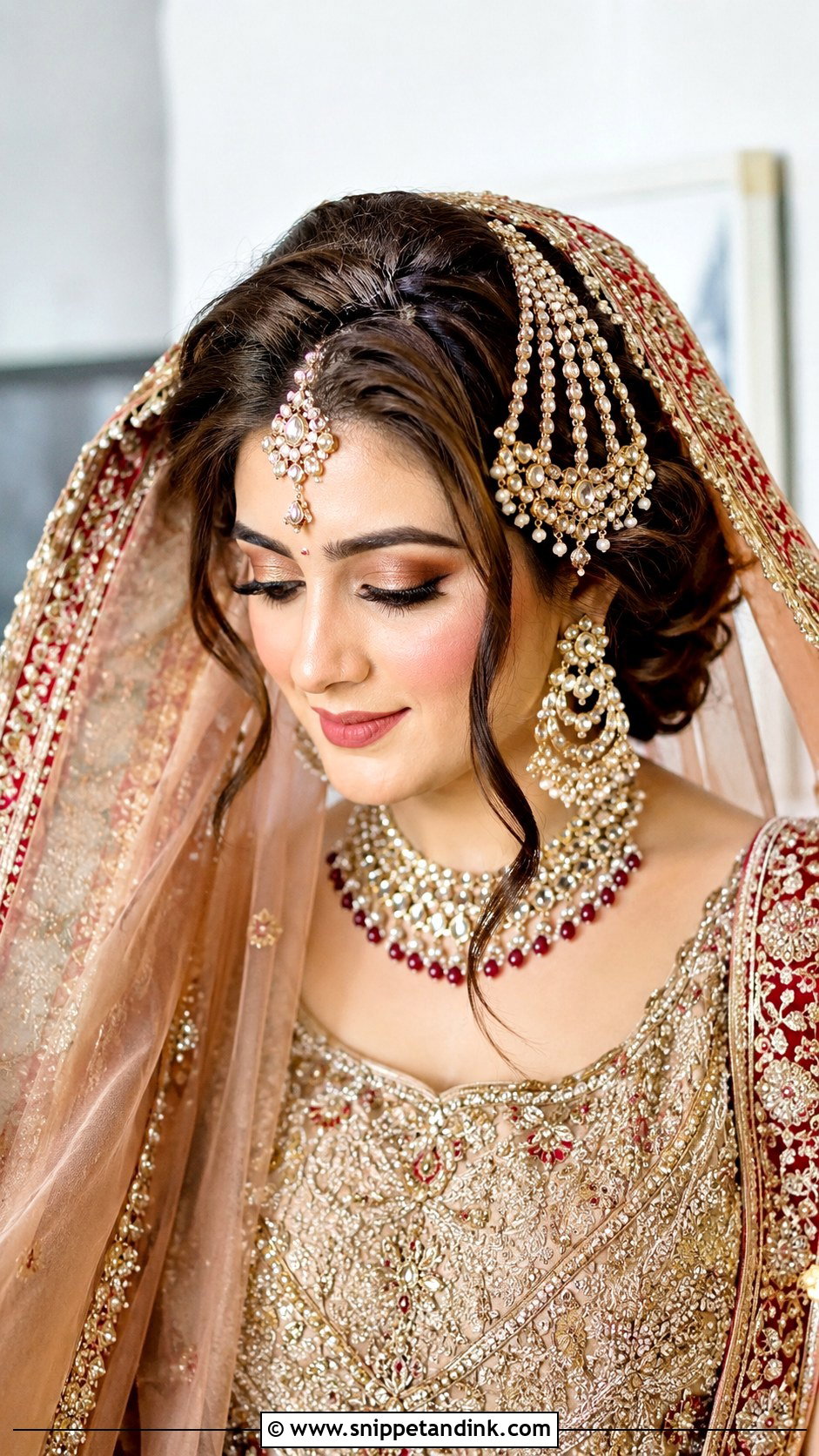
Placed slightly to one side, a bun shows up in front-facing and close-up portraits. It suits a side jhumar, side dupatta draping or a blouse neckline that needs balance. Keep it from creeping too far forward, where it competes with earrings and the jhumar. Loose waves or twisted sections around it add texture. On the jhumar side, I’d keep the bun lower, so the two pieces of detail don’t stack up on the same spot.
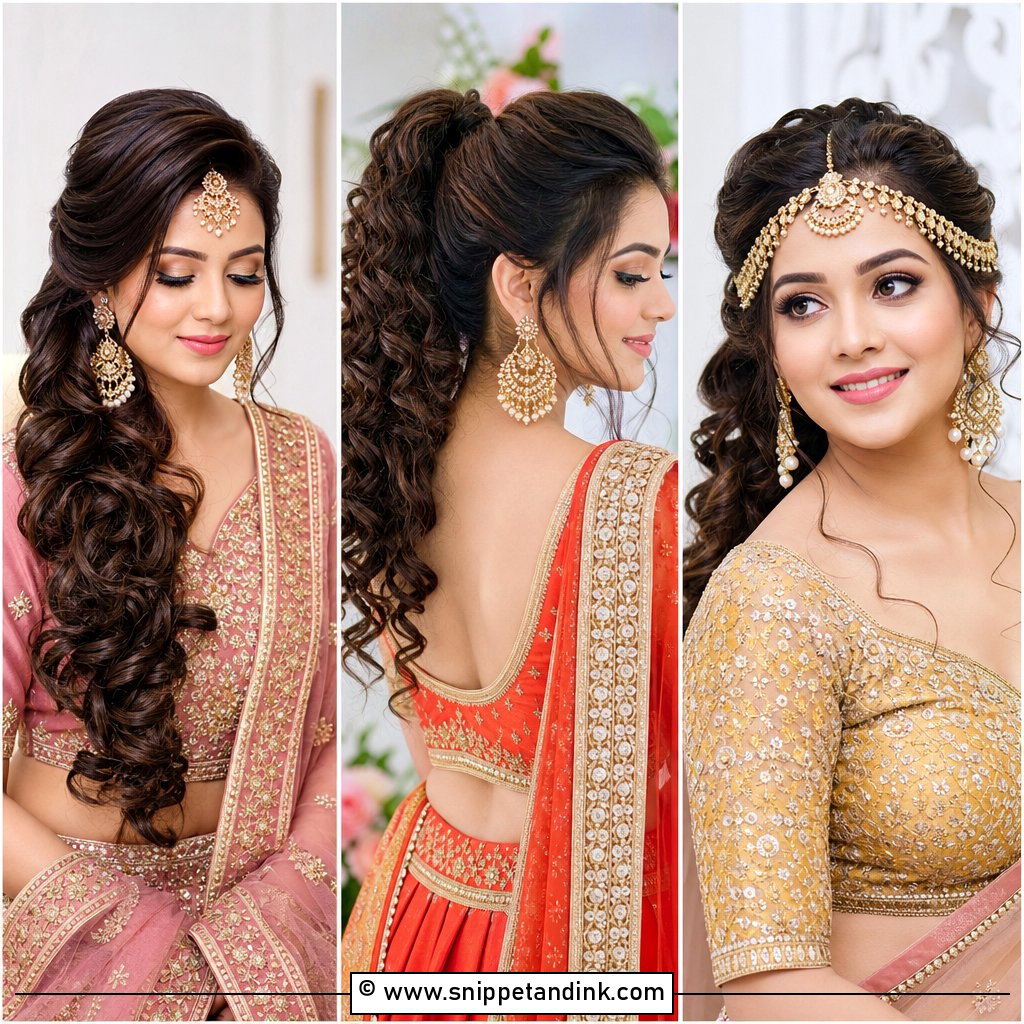
10. Barat Bridal Open Curls
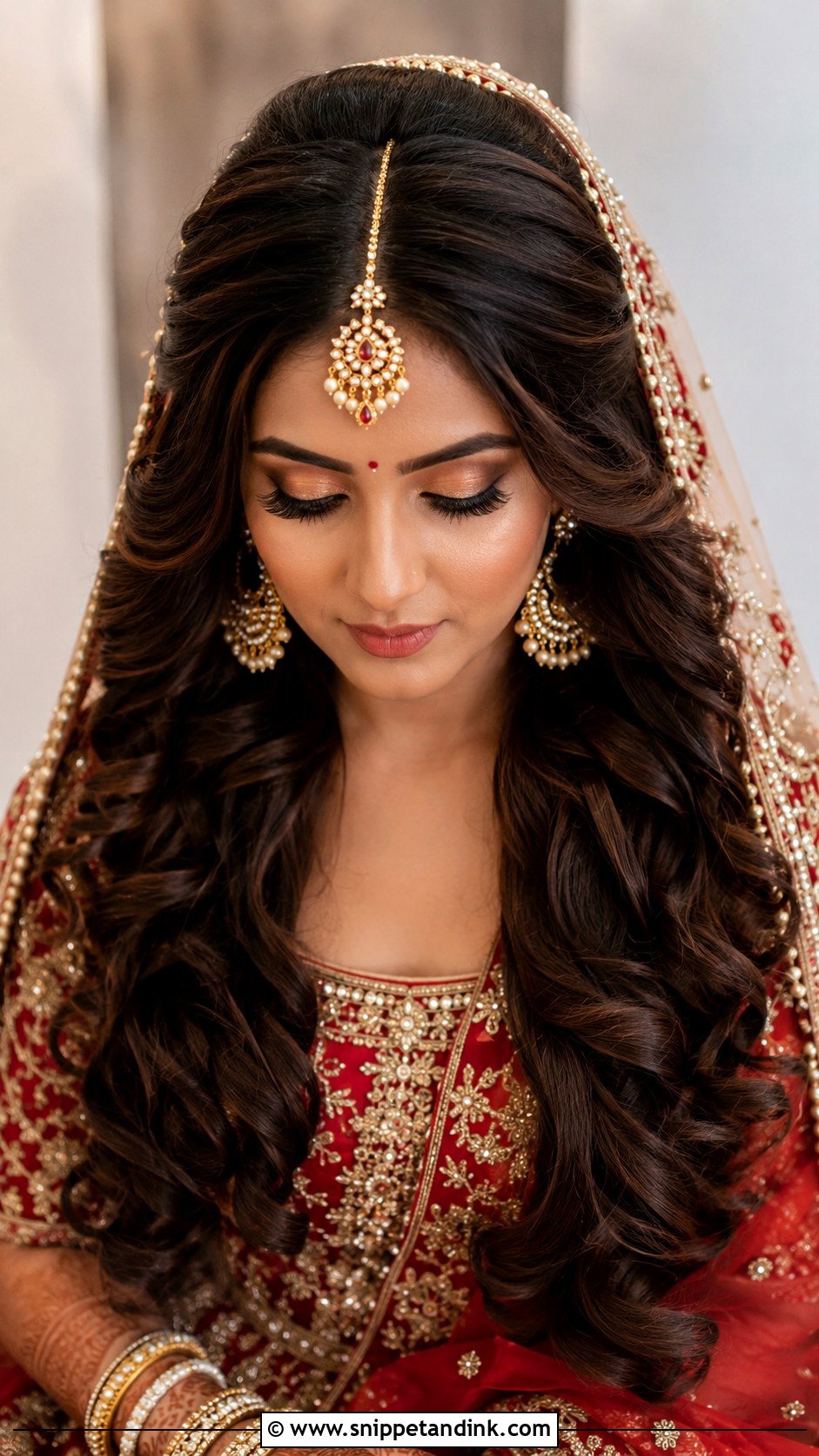
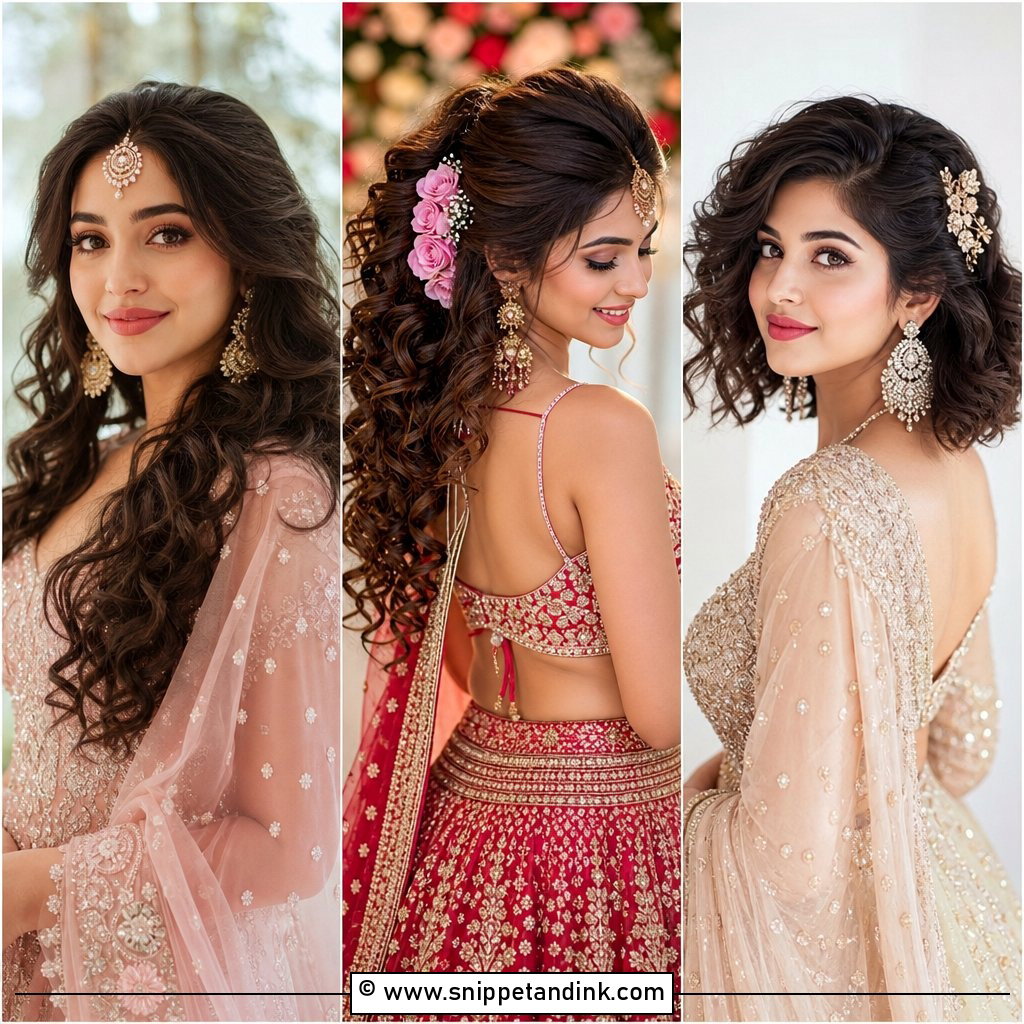
Open curls are glamorous, but they’re the style I’m most cautious about for a Barat. They need to be structured to last a long event: set with rollers, sprayed, and smoothed into glossy curls rather than frizzy texture. A center part and tikka keep them bridal, and a pinned crown section underneath is essential if any dupatta is involved. I’d only recommend this with a lighter dupatta set further back; a heavy one simply flattens and drags open hair.
11. Barat Bridal Hollywood Waves
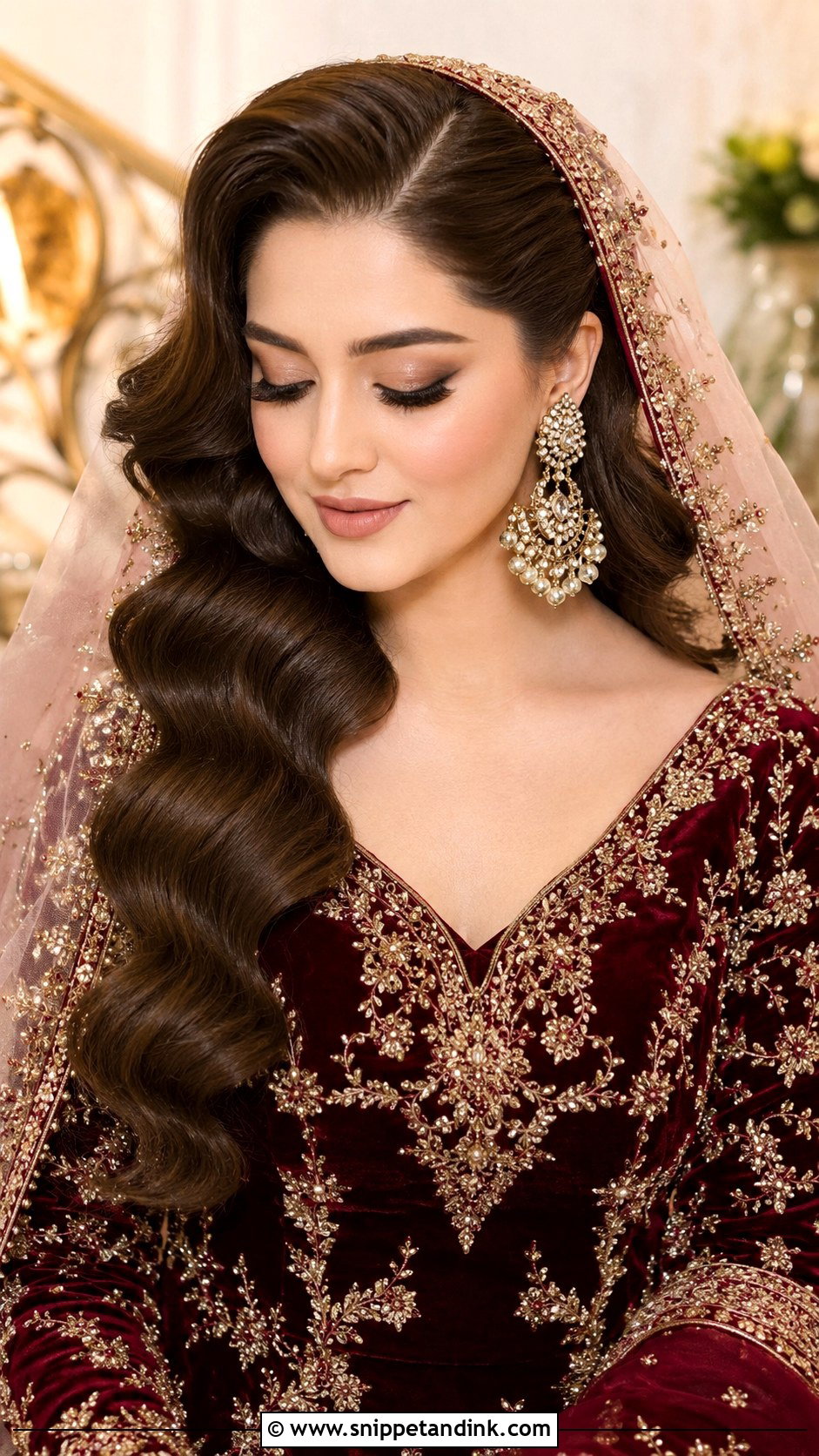
Hollywood waves fall in a single direction, so they look sleek and luxurious with formal outfits. A deep side part is dramatic; a center part keeps tikka placement traditional. Because Barat events run long, the waves need a strong setting spray and careful pinning at the crown wherever a dupatta sits. I’d pair them with a lighter veil, statement earrings and a clean neckline, as a heavy necklace and waves over the shoulders tend to tangle.
12. Barat Bridal Half Up Hairstyle
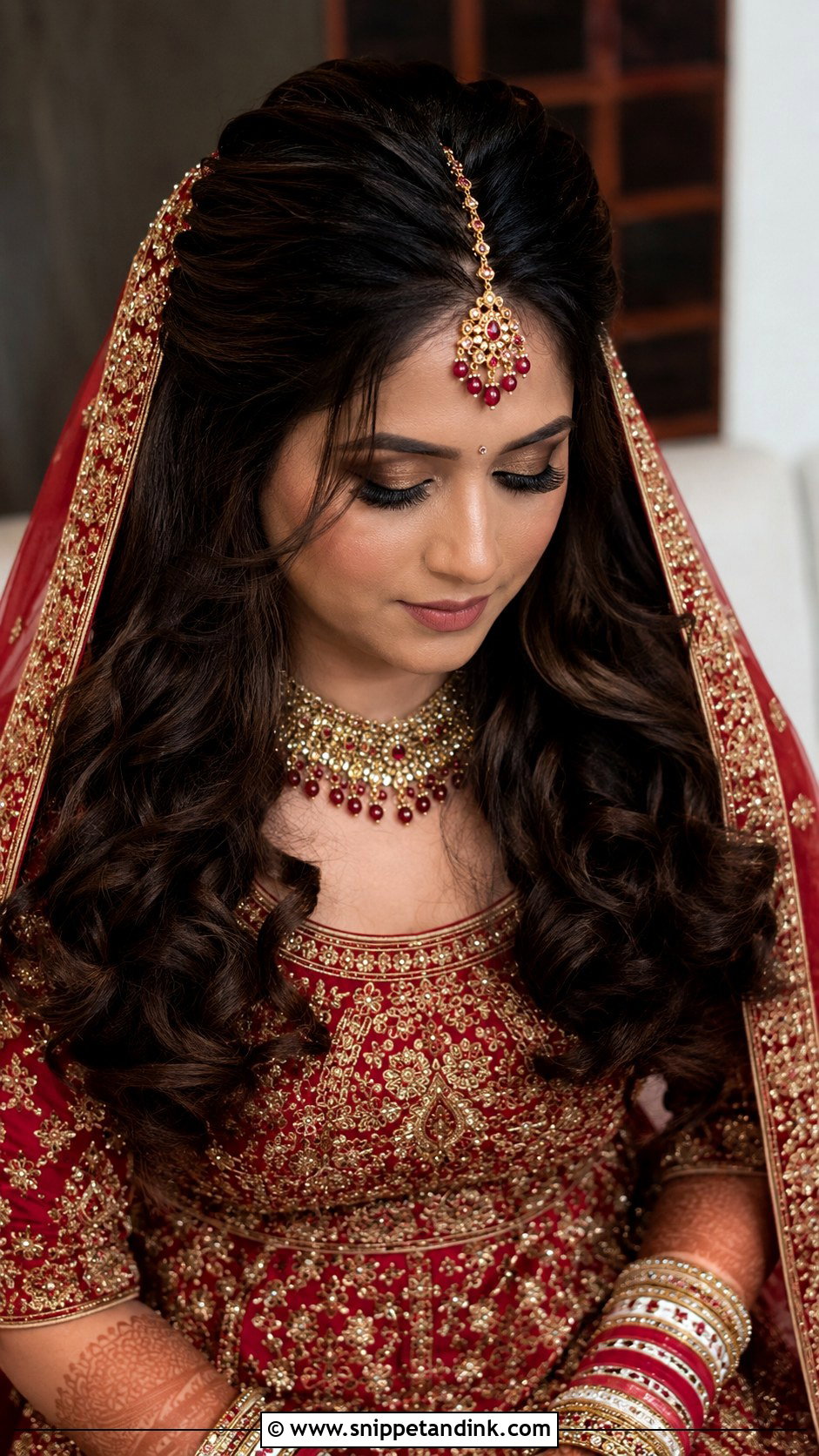
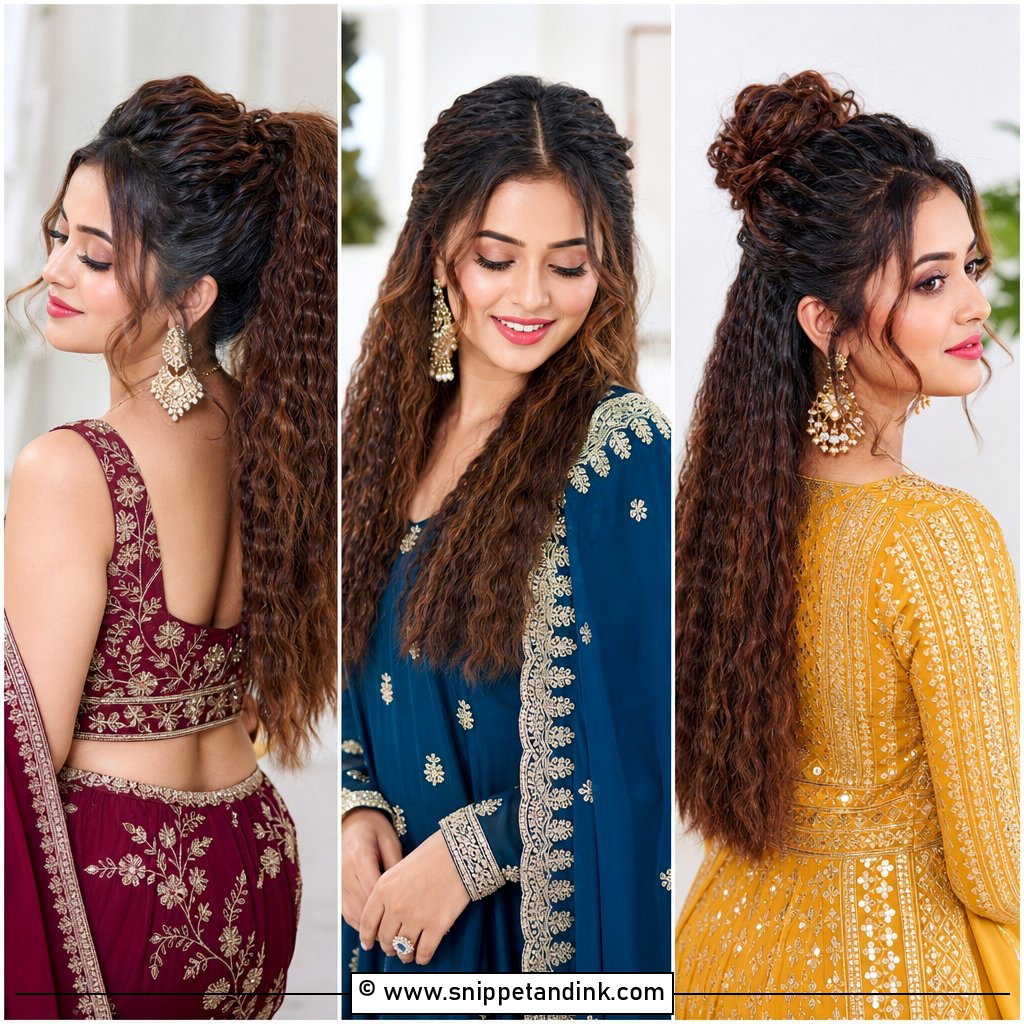
Half up gives the look of open hair with the security of a pinned section. The crown is lifted and secured; the rest falls in curls or waves. That top section can hide twists, braids or a small hidden bun, which becomes the base for the tikka, dupatta pins or hair jewelry. It suits lehengas and shararas and medium to long hair. The hidden bun is the part brides never see, and it’s the reason the style survives the evening.
13. Barat Bridal Half Up Curls
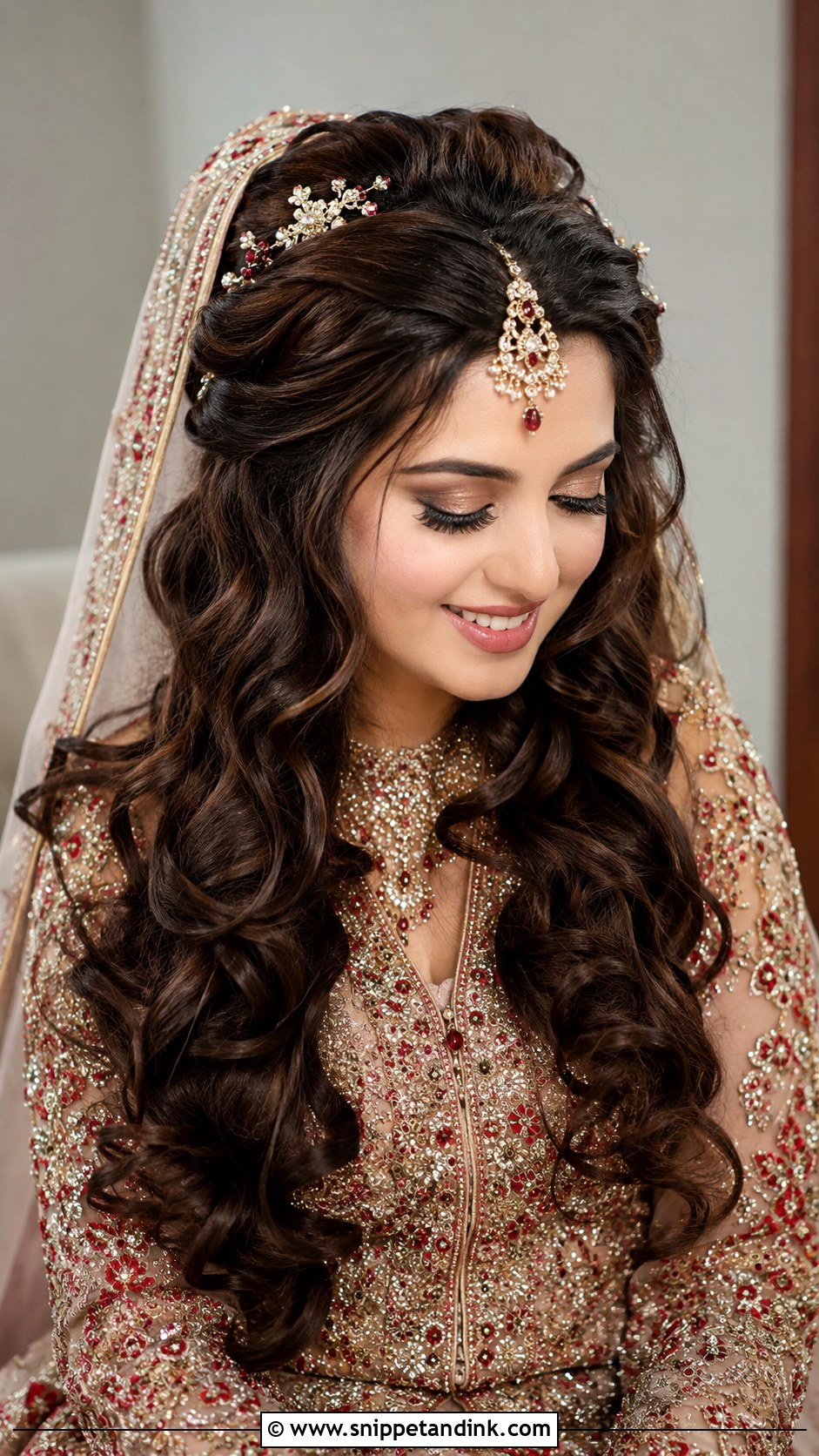
Curls spilling over the shoulders feel soft, but a half-up curl look still needs the front and crown pinned firmly to hold the jewelry. It works especially well when the dupatta sits toward the back, so the length shows underneath. A little crown volume stops it photographing flat. I brush curls gently with fingers rather than a brush so they stay defined, and I keep the curls behind the shoulders on the side where heavy earrings hang.
14. Barat Bridal Long Braid
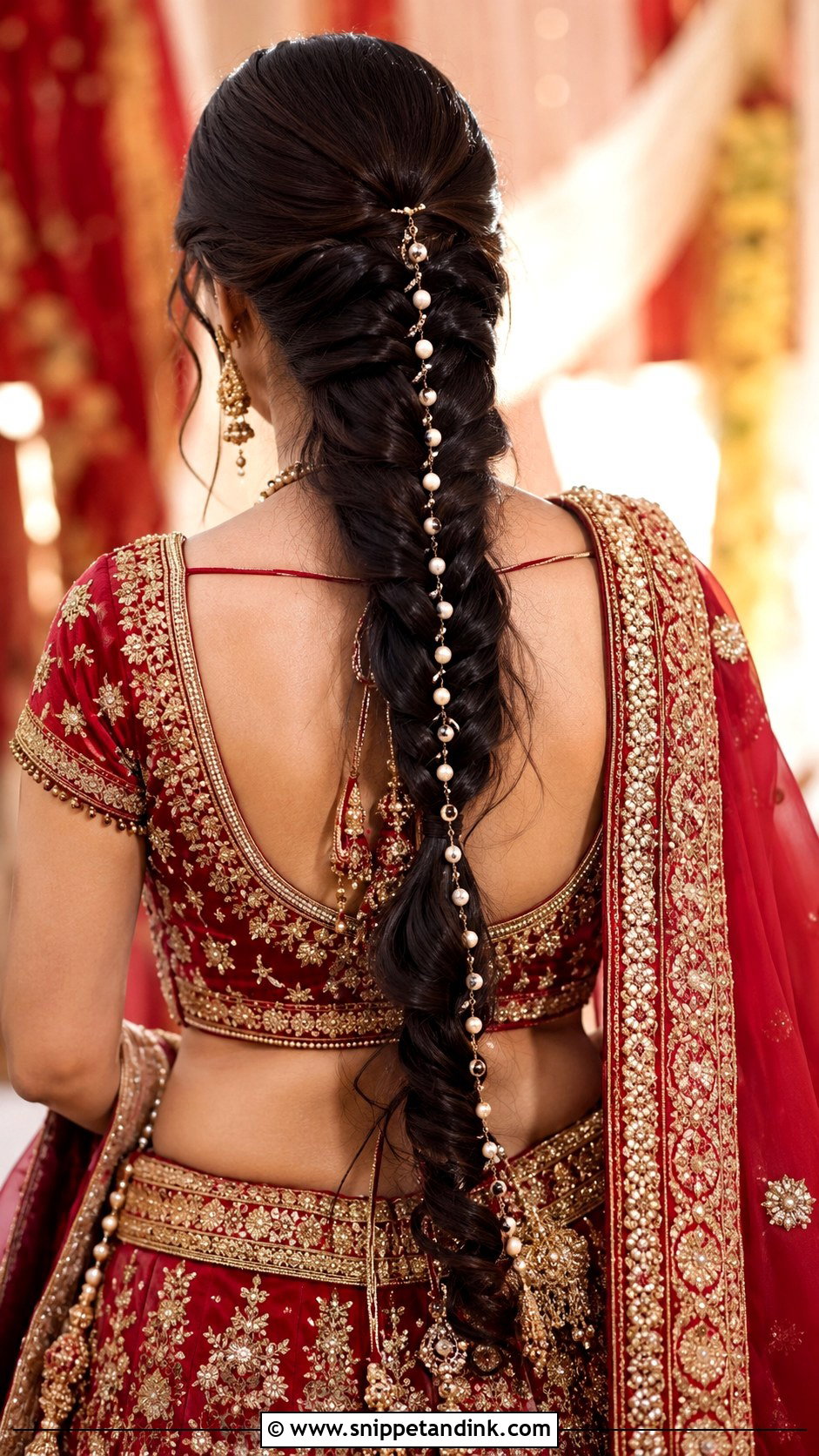
A long braid down the back or over one shoulder is a classic Barat choice, decorated with pearls, small flowers, gold pins or hair chains. It stays controlled under a heavily embroidered dupatta, because a braid doesn’t tangle in zari and stonework the way loose hair does. A center part and tikka make it formal. Extensions add length and fullness; I match them to your hair color in daylight, since a shade that looks right indoors can look off in outdoor photos.
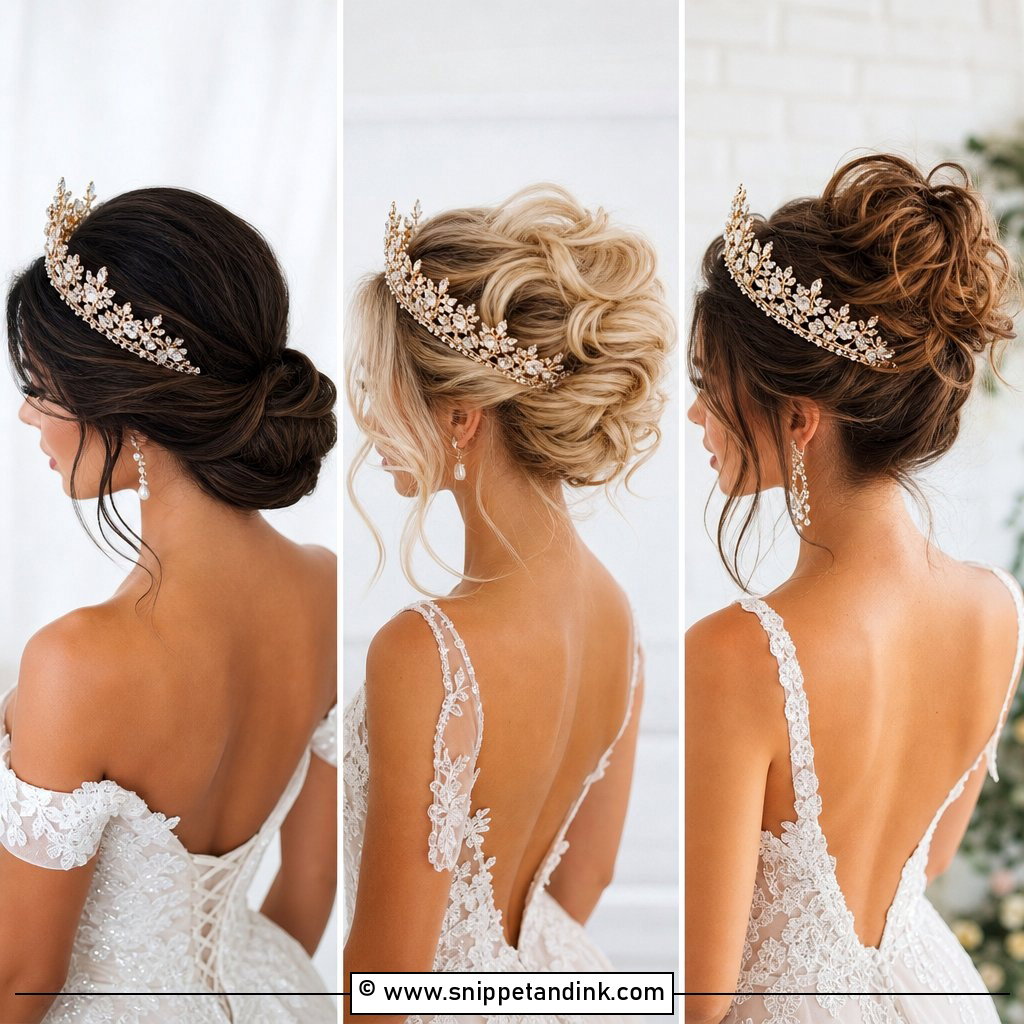
15. Barat Bridal Fishtail Braid
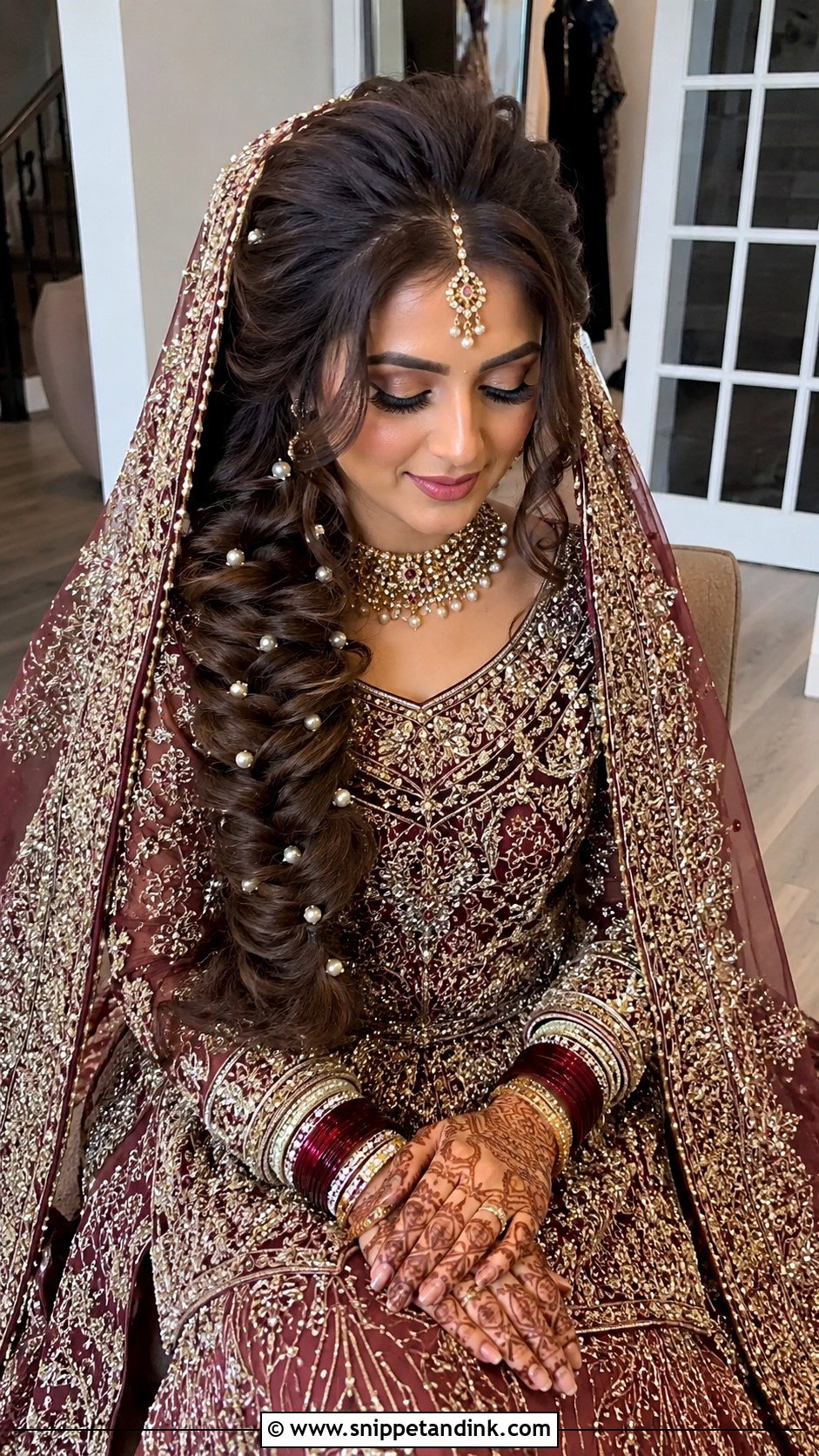
Softer-looking than a standard braid, a fishtail still holds up for a formal event. I loosen it after it’s tied to create width, then secure it with hidden pins and strong spray. Small pearls, baby’s breath or gold accessories slip into its tight weave easily. It’s a less common choice, which some brides want. A centered tikka, soft front volume and a dupatta pinned behind the crown keep the look balanced.
16. Barat Bridal Side Braid
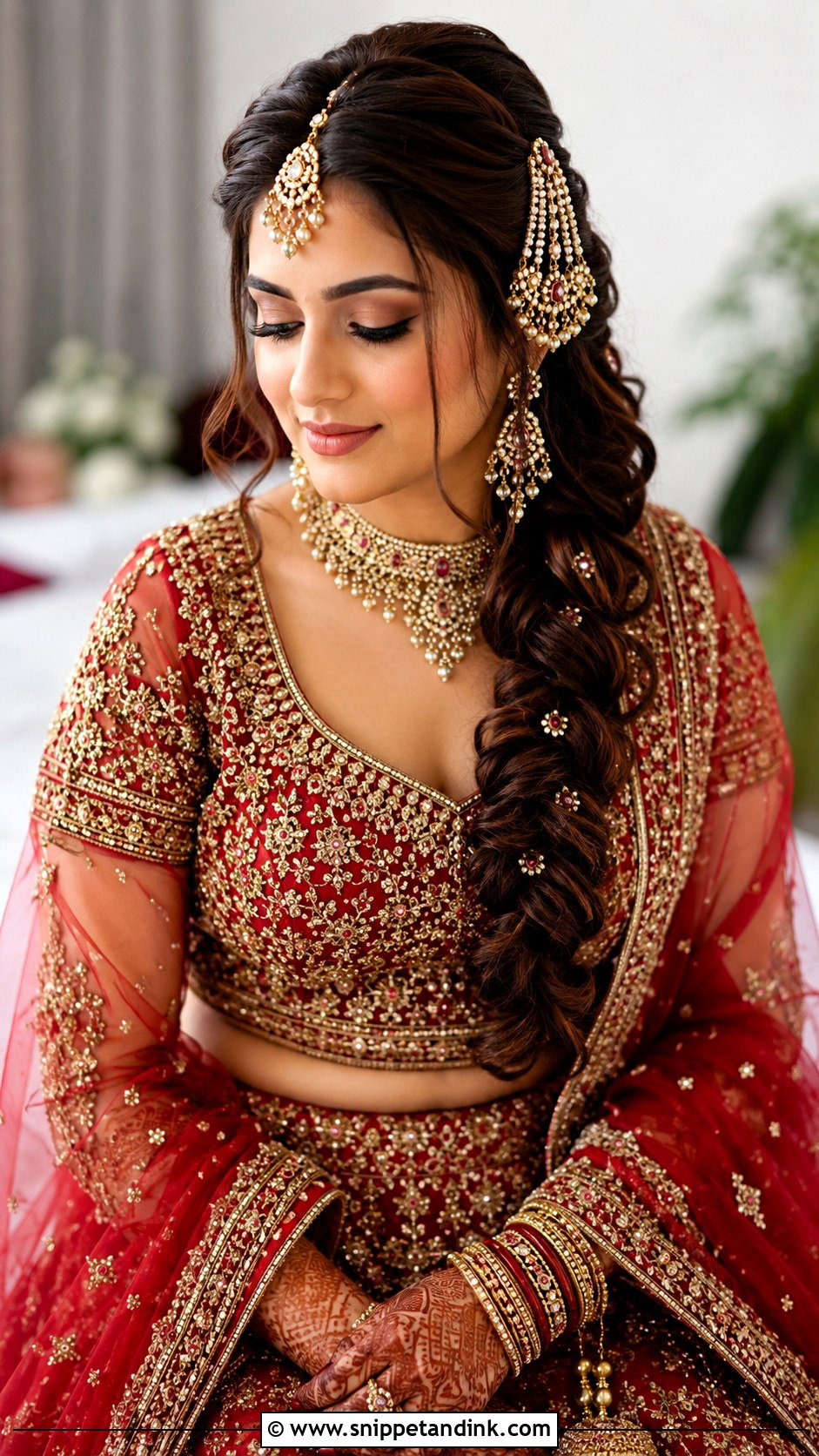
Front-facing photos and stage portraits favor a side braid, since it rests over one shoulder where everyone can see it. Loose three-strand, fishtail or textured with curled ends all work. Side jhumar and a dupatta pinned toward the back pair well with it. Keep the crown smooth or slightly lifted. The braid sits against the blouse all evening, so I avoid pins with sharp ends along it that might snag embroidered fabric.
17. Barat Bridal Sleek Ponytail
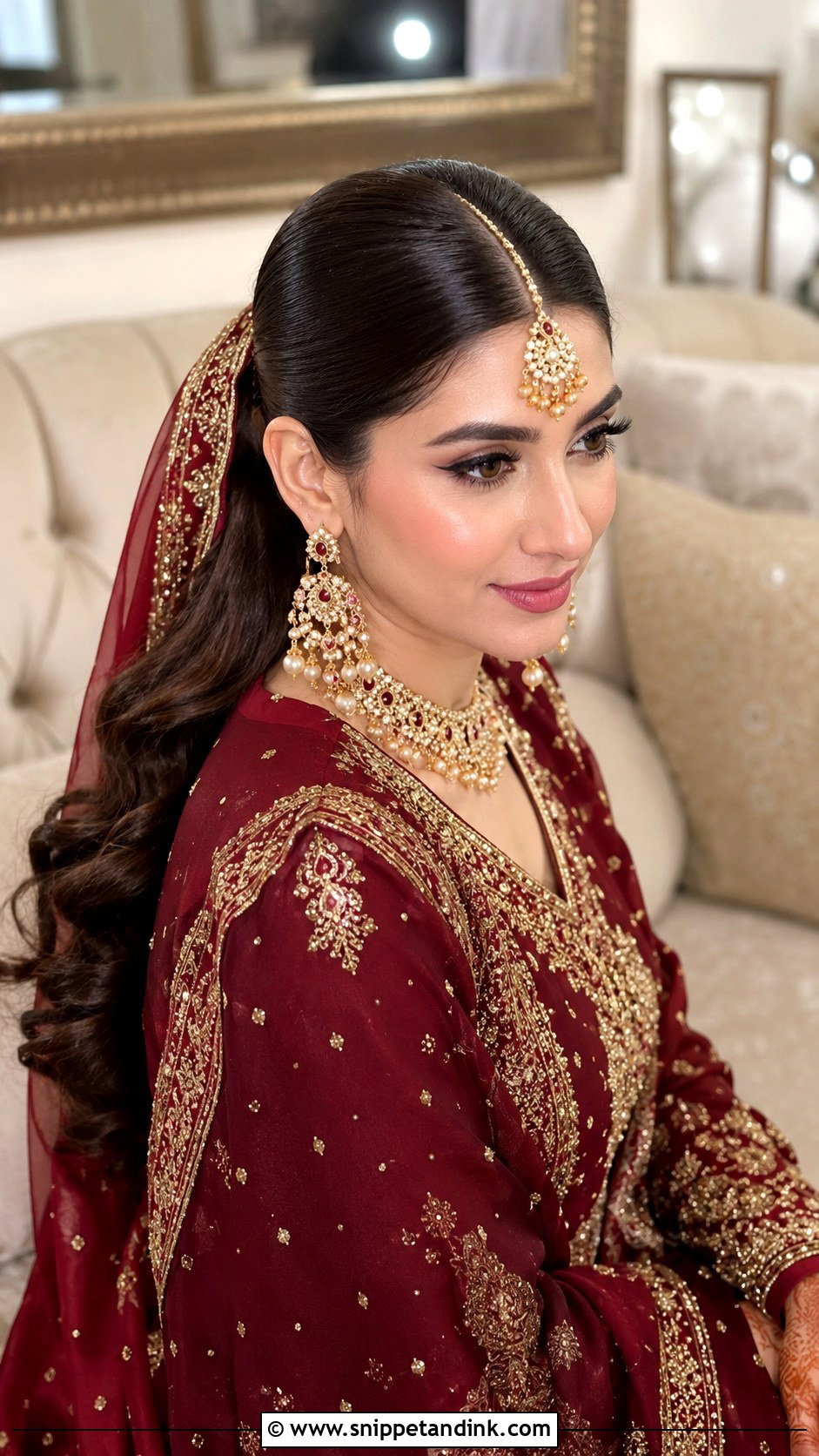
Fashion-forward brides sometimes choose a sleek ponytail, and it works if the details are right. The crown is smooth, the parting sharp, and the length curled or waved. A low ponytail makes dupatta placement easier; a mid one gives more lift. Wrap a section around the base to hide the elastic and add pearl pins. A sleek crown has very little grip, so the dupatta needs pins anchored into the ponytail’s base, not into the smooth sides.
18. Barat Bridal Voluminous Ponytail
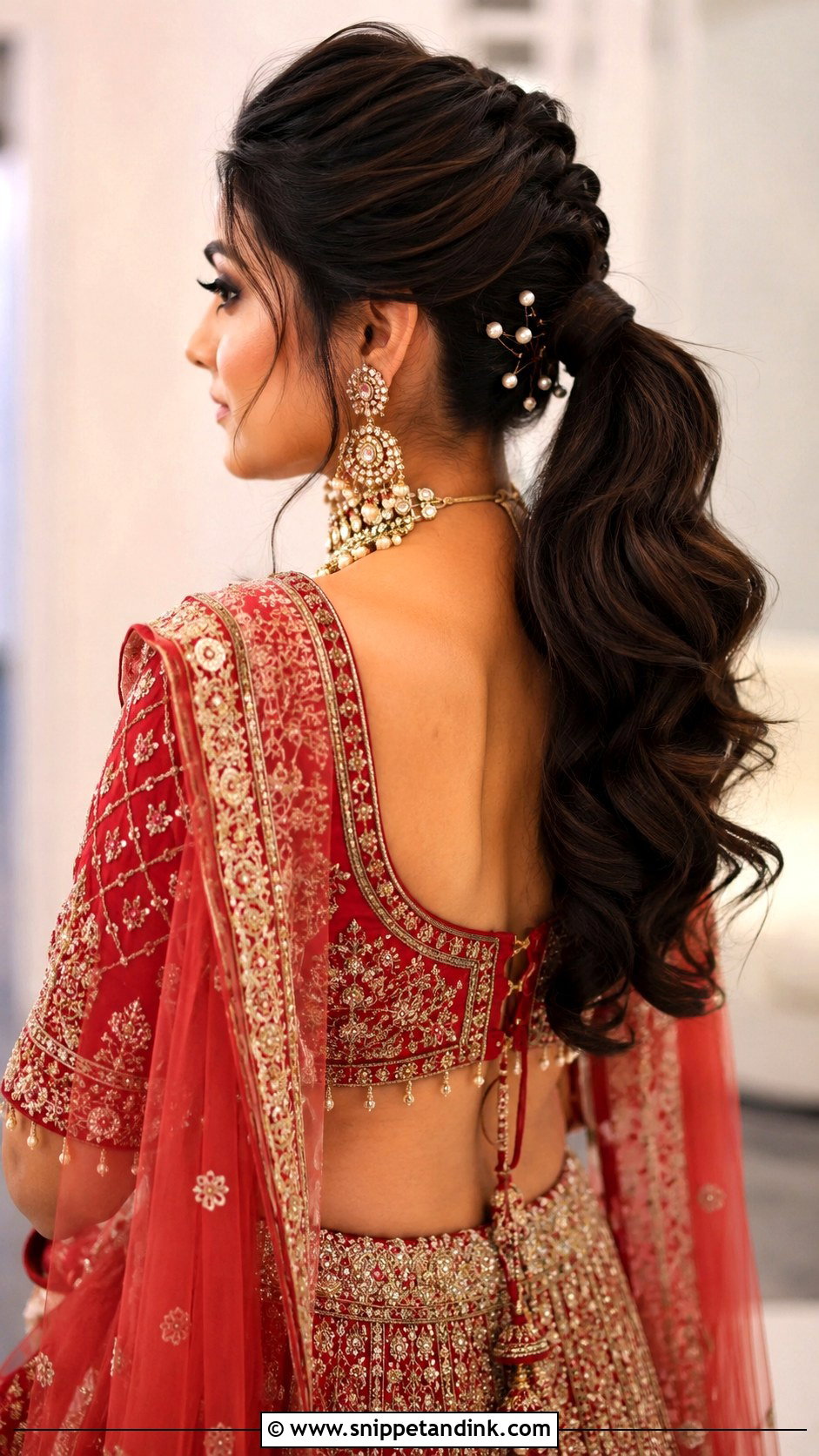
Drama without a bun’s weight is what a voluminous ponytail offers. The crown is lifted, the ponytail bouncy, the ends curled, and long hair or extensions become part of the look. A dupatta set further back keeps the pony visible. The front can be center parted for tikka or swept back. Volume at the crown tends to flatten under a dupatta, so I backcomb and spray the base well before any fabric goes on.
19. Barat Bridal Short Hair Bun
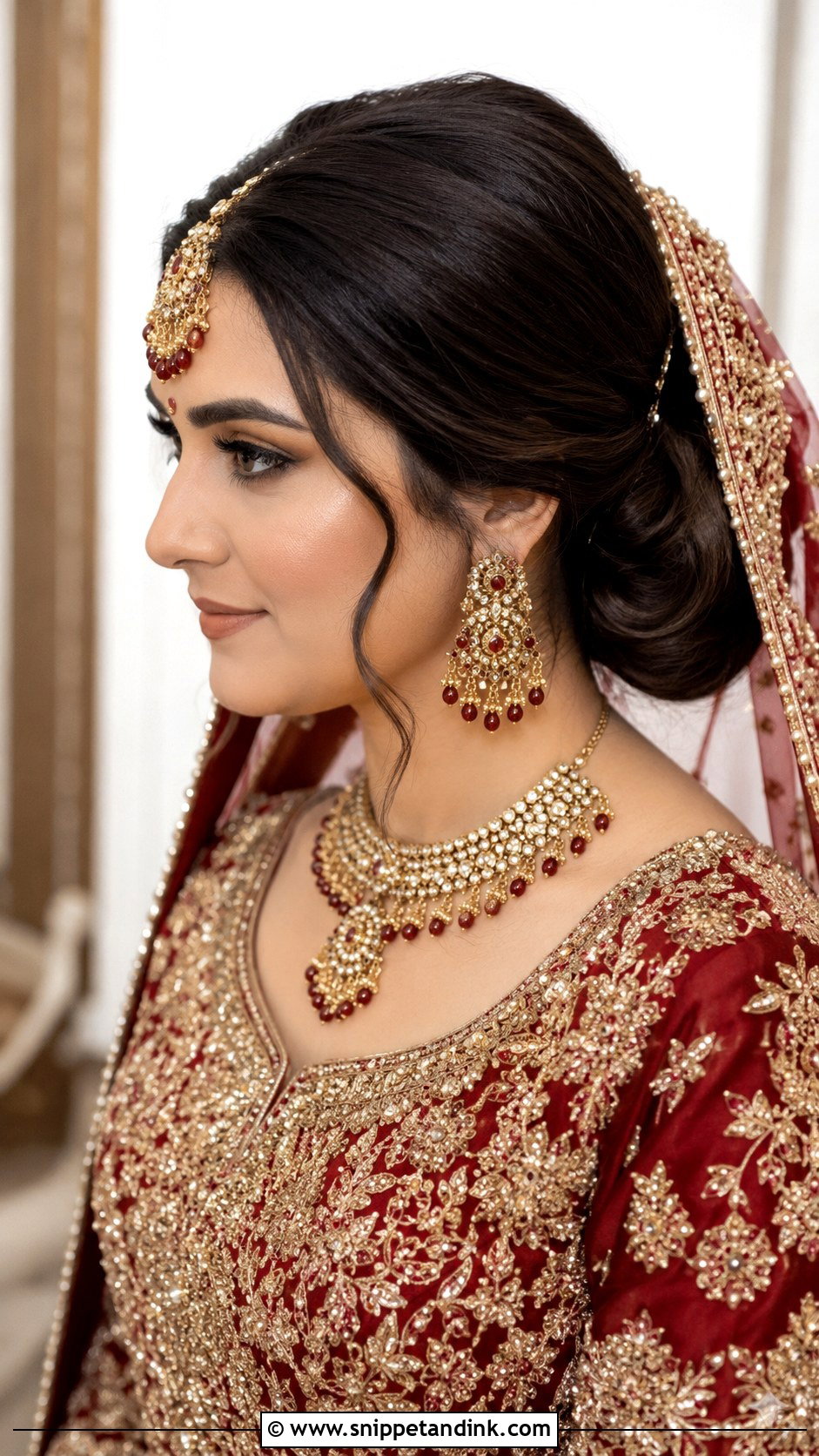
Shoulder-length hair can absolutely carry a full Barat bun. I build a hidden base with padding or a donut, sometimes with clip-in extensions, then smooth or twist the natural hair over it so nothing artificial shows. That base is what holds the jewelry and dupatta. A center part, tikka and soft side pieces complete the look. Tell your stylist the length in advance so she brings padding in your color.
20. Barat Bridal Dupatta Hairstyle
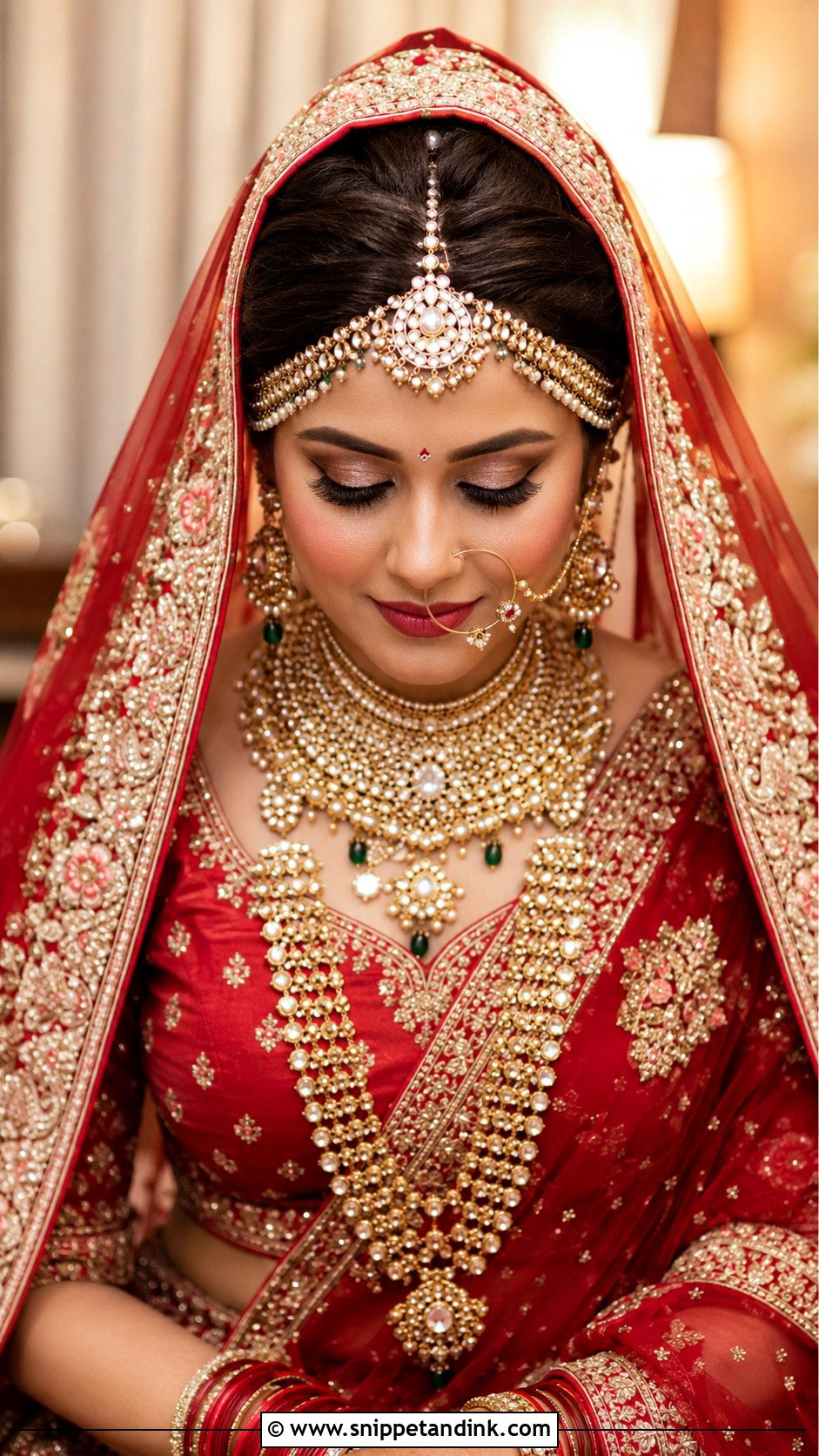
Every Barat hairstyle is really a dupatta hairstyle, because the fabric’s weight and placement decide what’s possible. A bun, half-up curls or a braid all need a strong base for pins. Heavy dupattas belong with buns or half-up looks for grip; lighter ones can sit back on open curls or waves. The front stays clean for the tikka, matha patti or jhumar, and the crown needs enough support not to flatten. Secure hair, visible jewelry and a graceful shape are the three things to check at the trial.
Heat, Gajra and a Five-Hour Function
Barat venues get hot. Stage lights, a crowded hall and a heavy outfit raise the temperature around the head more than brides expect, and curls drop first. Ask for a stronger setting spray on open styles and keep a small pouch with spare U-pins, bobby pins and a mini hairspray with a sister or cousin. If the gajra starts browning, remove it; a clean bun looks far better than wilted jasmine in the rukhsati photos.
Undoing It All After the Rukhsati
A Barat hairstyle can hold a surprising number of pins, and pulling it apart in a rush at midnight hurts and breaks hair. Take off the dupatta and jewelry first, then remove pins slowly, section by section, feeling for each one rather than tugging hair loose.
Work a little hair oil or conditioner into the backcombed areas before brushing, and start detangling from the ends upward. If the reception or walima is the next day, sleep with the hair loosely braided so the scalp can rest and the next stylist has hair to work with.
Is Your Dupatta Deciding the Hairstyle? It Should
Start with the weight you’ll be carrying. A low bun gives security, a high bun adds height, open curls suit a light dupatta, and braids bring traditional detail. If your dupatta is heavy, build on a strong base; if your jewelry is bold, keep the front neat. Do a full trial with the actual dupatta, jewelry and blouse, and wear it for an hour. If it still feels comfortable then, it will look right in the photos.
You'll Like These Ideas:





Leave a Reply