
A cake built around duck season can be personal without tipping into novelty, and the line between the two is mostly about restraint. The ideas below lean on marsh grass, mallard colours, wood texture, cattails, a touch of camo and the occasional decoy, rather than a cake shaped like a shotgun shell. They suit barn weddings, lakeside receptions, autumn dates and groom’s cake tables. I’ve added notes from the baking side on what each design costs in time, weight and risk, so you can decide which details are worth it.
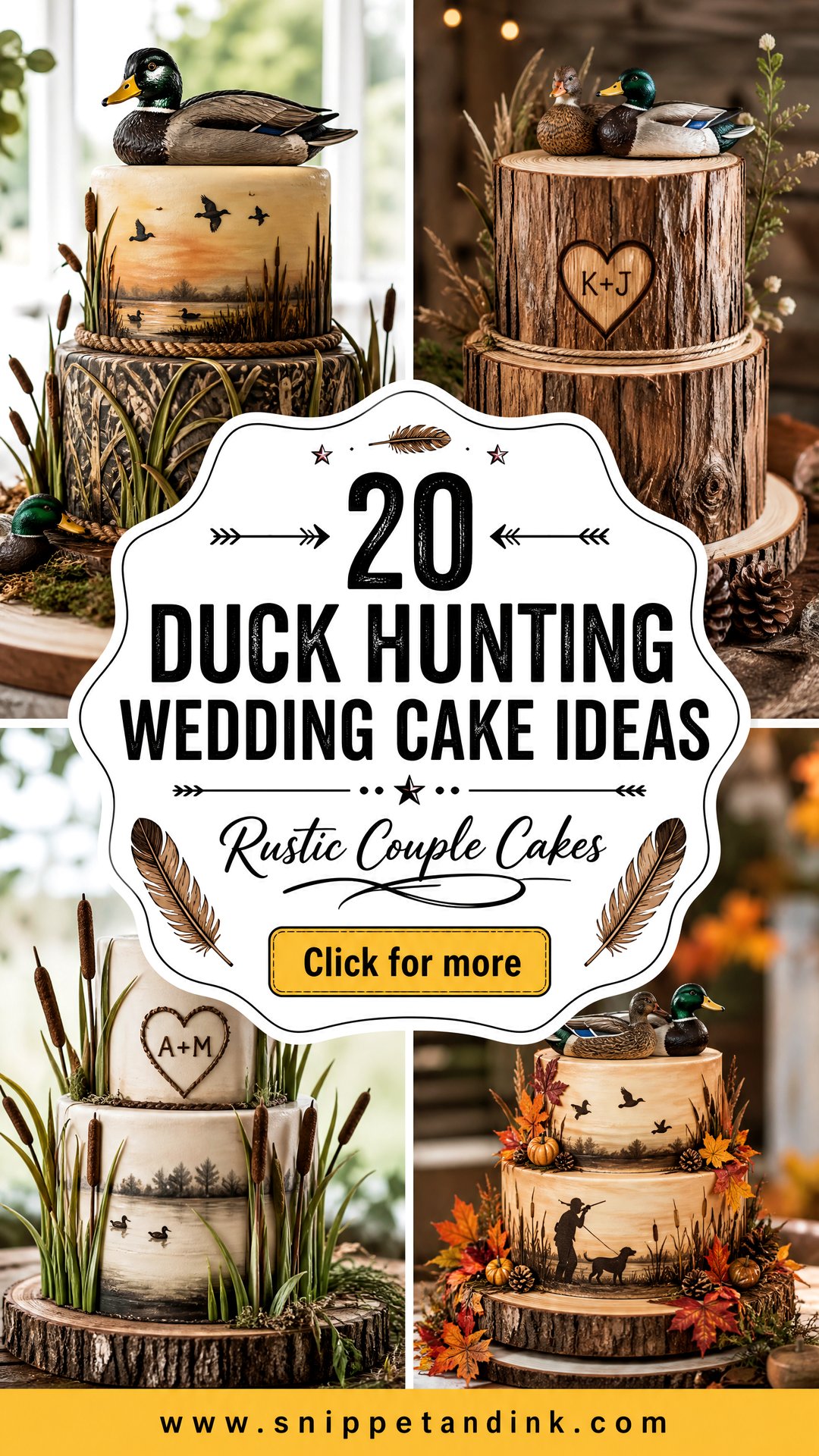
Decoys, Feathers and Dog Photos Worth Bringing to the Tasting
Hunting cakes go wrong when the brief is vague. ‘Duck theme’ can mean anything from a cartoon duckling to a hand-painted drake, and I’d rather see what you mean than guess. The most useful things a couple can bring to a consultation:
- A photo of a decoy you actually own or like. Carved decoys vary a lot in style, and copying a real one makes the topper personal.
- A feather or a close photo of one, if you want painted mallard colours. Matching that iridescent green from memory rarely works.
- Your venue and the time the cake will be set up. A barn in September and a heated lodge in December need different icing choices.
- Your guest count, including whether the groom’s cake is meant to be served or just displayed.
Timing matters more with this theme than with a plain floral cake. Sculpted decoys, dogs and sugar feathers are made by hand in advance and need drying time, so I’d book several months ahead for a design with modelled figures, and earlier still for autumn Saturdays, which fill quickly for rustic weddings.
1. Duck Decoy Wedding Cake
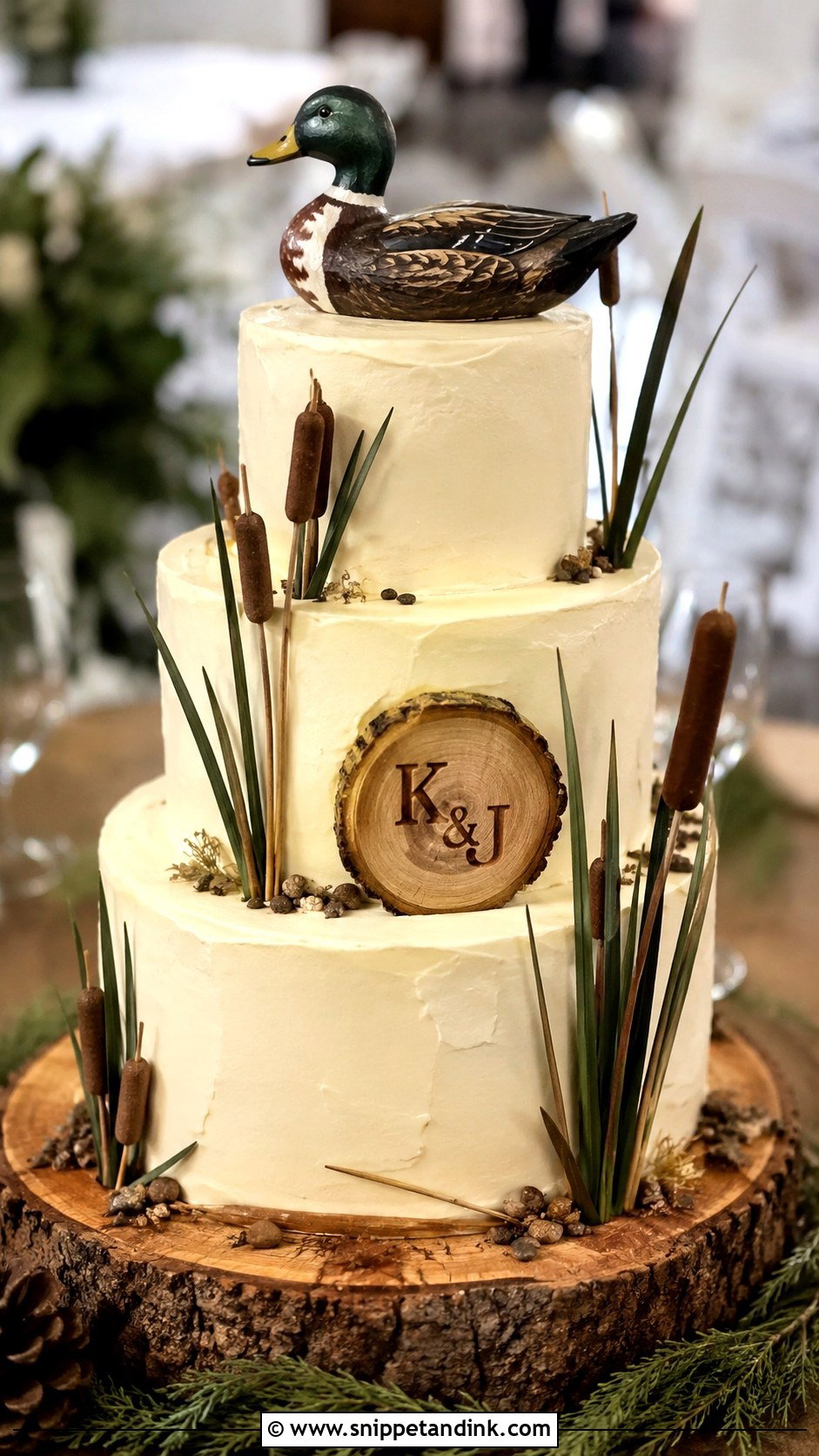
Start here if you want the theme obvious but the cake calm. Two or three clean tiers in ivory, tan or soft sage, topped with a fondant or modelling-chocolate decoy with simple painted feathers. I make decoy toppers days ahead so they can dry firm; a fresh one slumps on a soft buttercream top. A small wooden initials sign, a few cattails and a gentle ripple piped around the base finish the marsh scene. It sits happily beside a traditional cake as the groom’s cake or carries a small rustic reception on its own.
2. Camo Wedding Cake
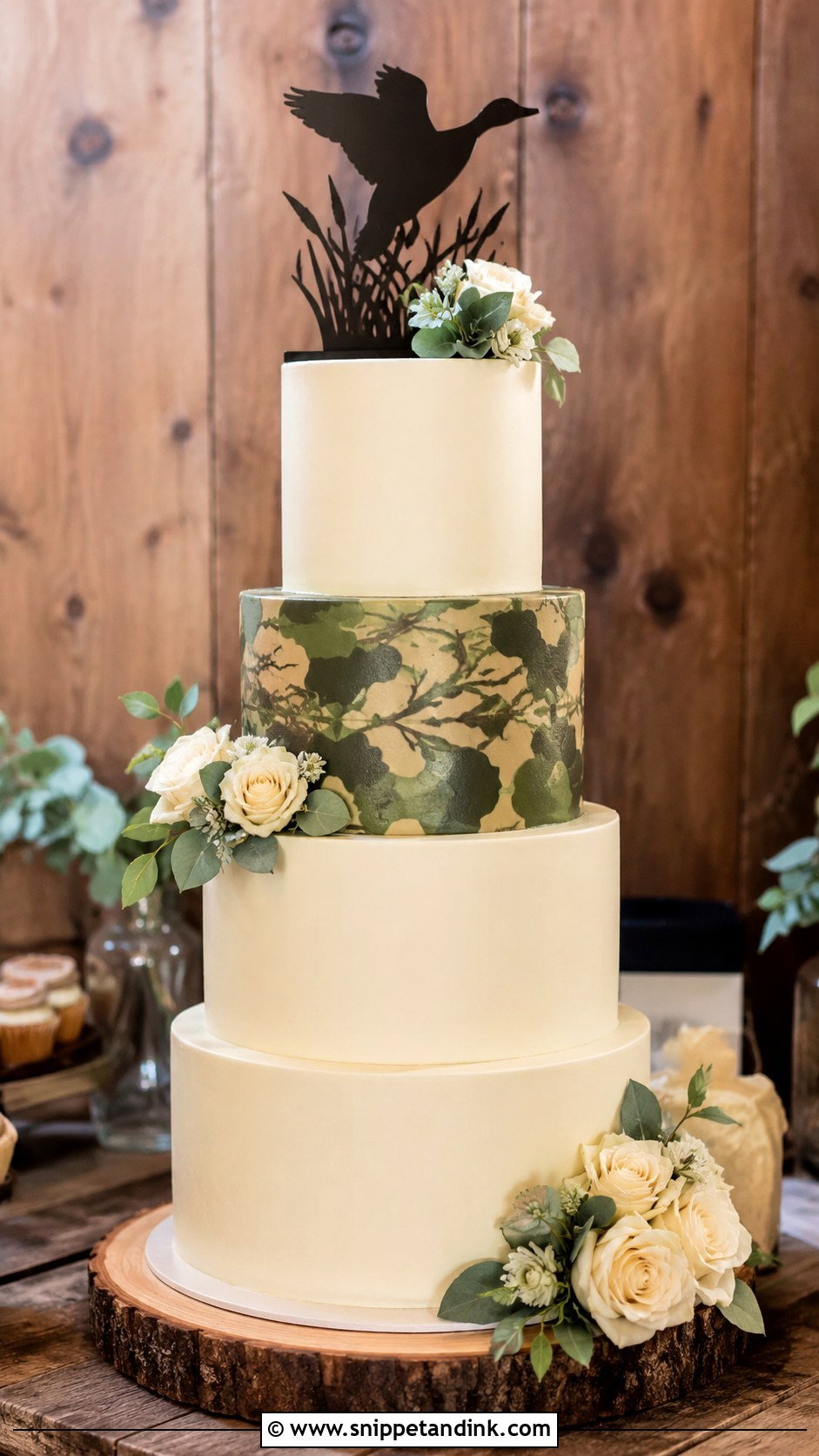
Camo gets classy when it’s a band, not a blanket. A camo wedding cake looks most polished with ivory buttercream tiers and one camo band at the bottom, or camo fondant on the middle tier only. Keep the colours earthy: moss, bark brown, tan and a soft black. Here’s the baking catch: deep greens and browns take a lot of gel colour, and heavily coloured icing can taste bitter and stain teeth. I build browns from a chocolate base and keep the darkest shades to thin fondant pieces. White roses or baby’s breath soften it if you want a bridal finish.
3. Mallard Duck Wedding Cake
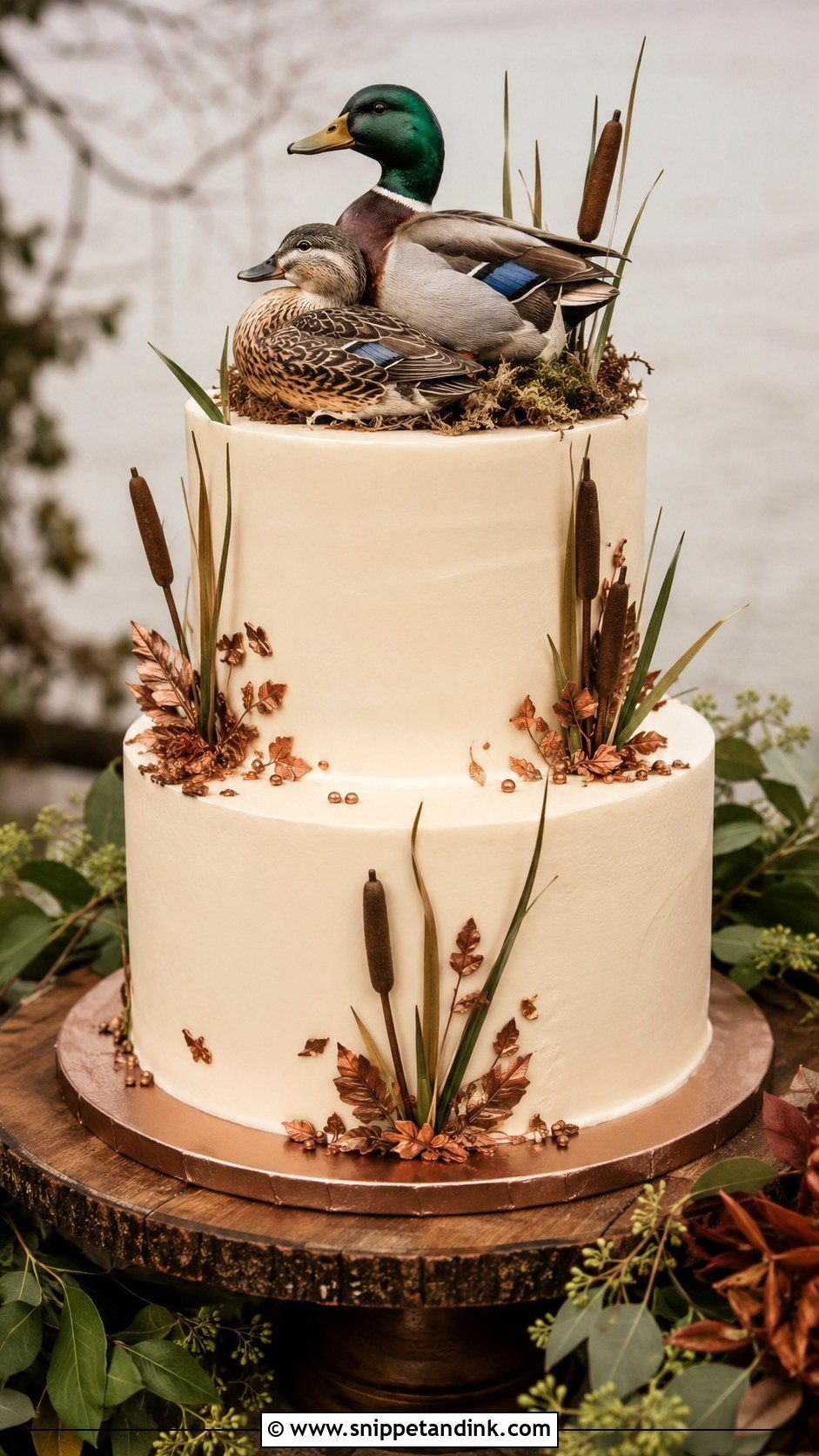
The mallard hands you a palette: green head, warm brown chest, white neck ring and that flash of blue on the wing. Keep the cake itself neutral and let those colours sit in one place, either hand-painted feathers on a smooth ivory tier or a sculpted mallard on top. Painting on buttercream needs a crusting buttercream or a chilled fondant surface; on soft icing the brush drags. The green-and-copper scheme sits naturally with autumn flowers and amber tones.
4. Duck Blind Wedding Cake
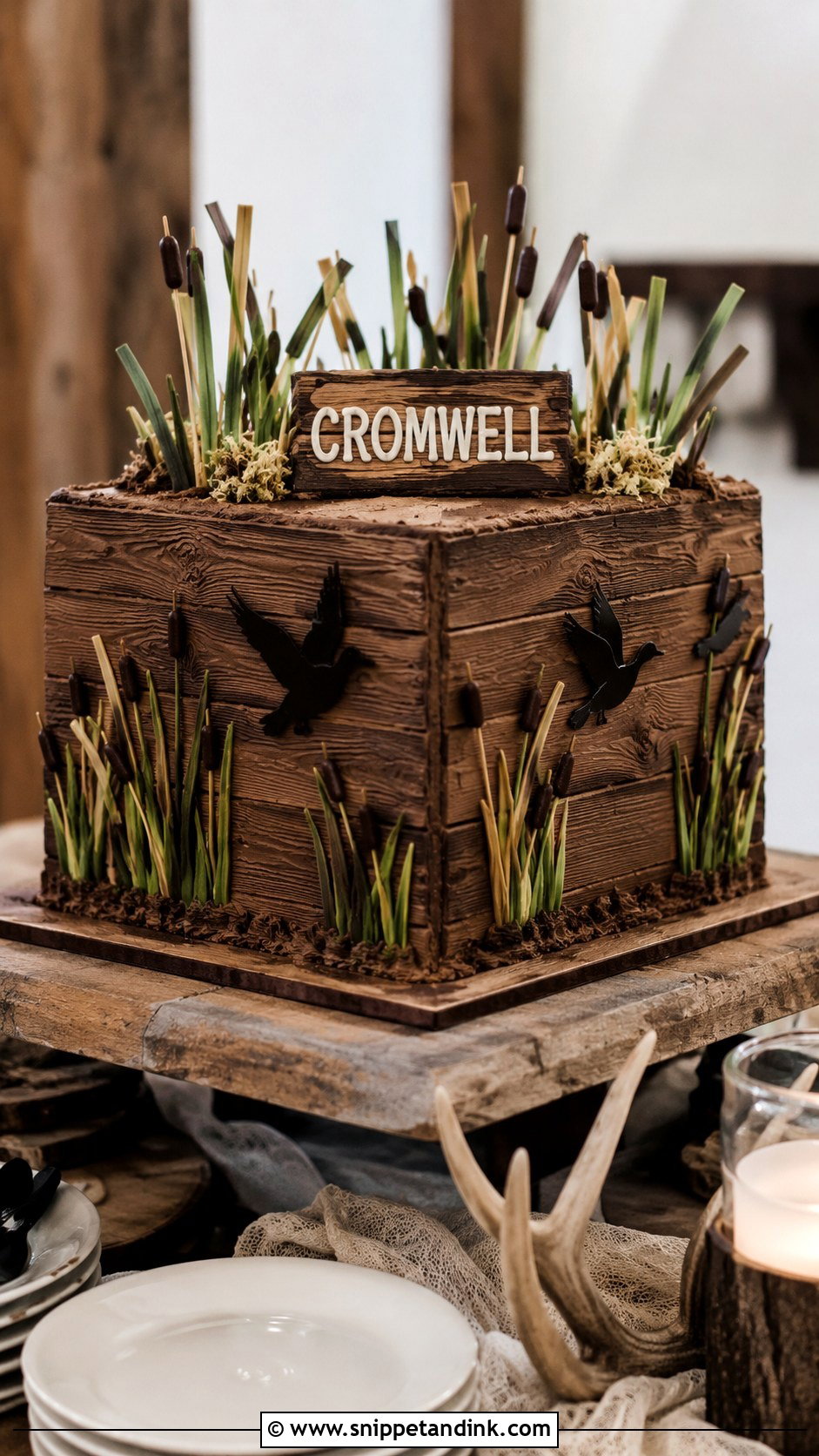
Don’t make the blind literal. A square or barrel-shaped cake with wood-plank texture on the sides, edible grass and cattails tufting over the top edge, and a few small duck silhouettes says ‘duck blind’ clearly enough. Chocolate, spice or vanilla with brown buttercream suits it. Plank texture is pressed or combed into chilled buttercream, and it shows every fingerprint, so this is a cake I want delivered and set, not moved around the venue twice. A family-name sign and a wood slice stand finish it.
5. Marsh Wedding Cake
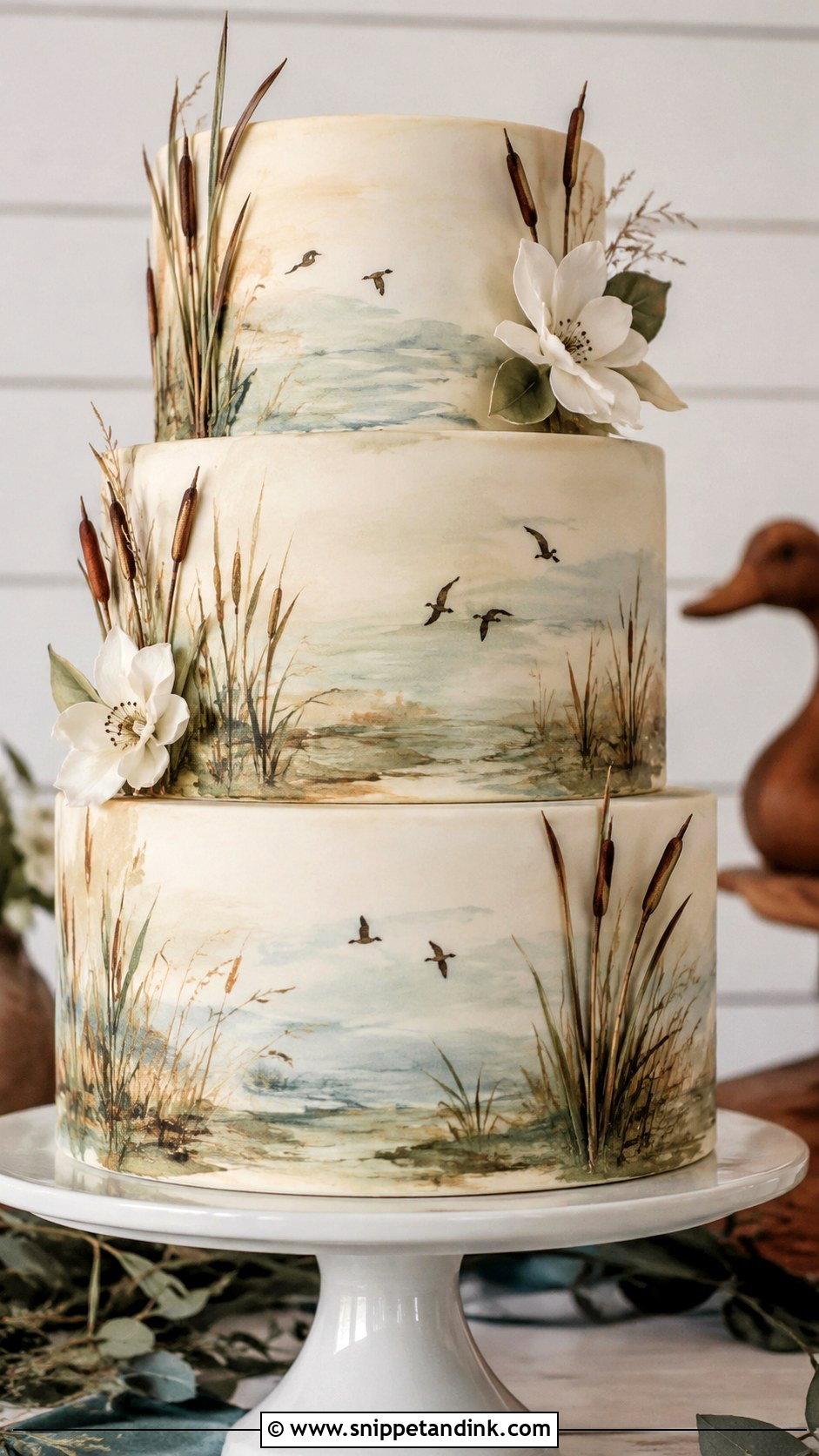
This one is all surface. Watercolour buttercream in soft green, muddy brown and pale blue carries the whole mood, with piped reeds, cattails and small flying ducks around the tiers, and no big topper needed. A pale blue band reads as water and textured tan frosting as shoreline. Watercolour icing is done by smearing colours onto a chilled crumb coat and scraping smooth, and it softens fast in a warm room, so it suits cooler outdoor dates best. A few ivory flowers keep it from reading as a landscape painting.
6. Wood Grain Wedding Cake
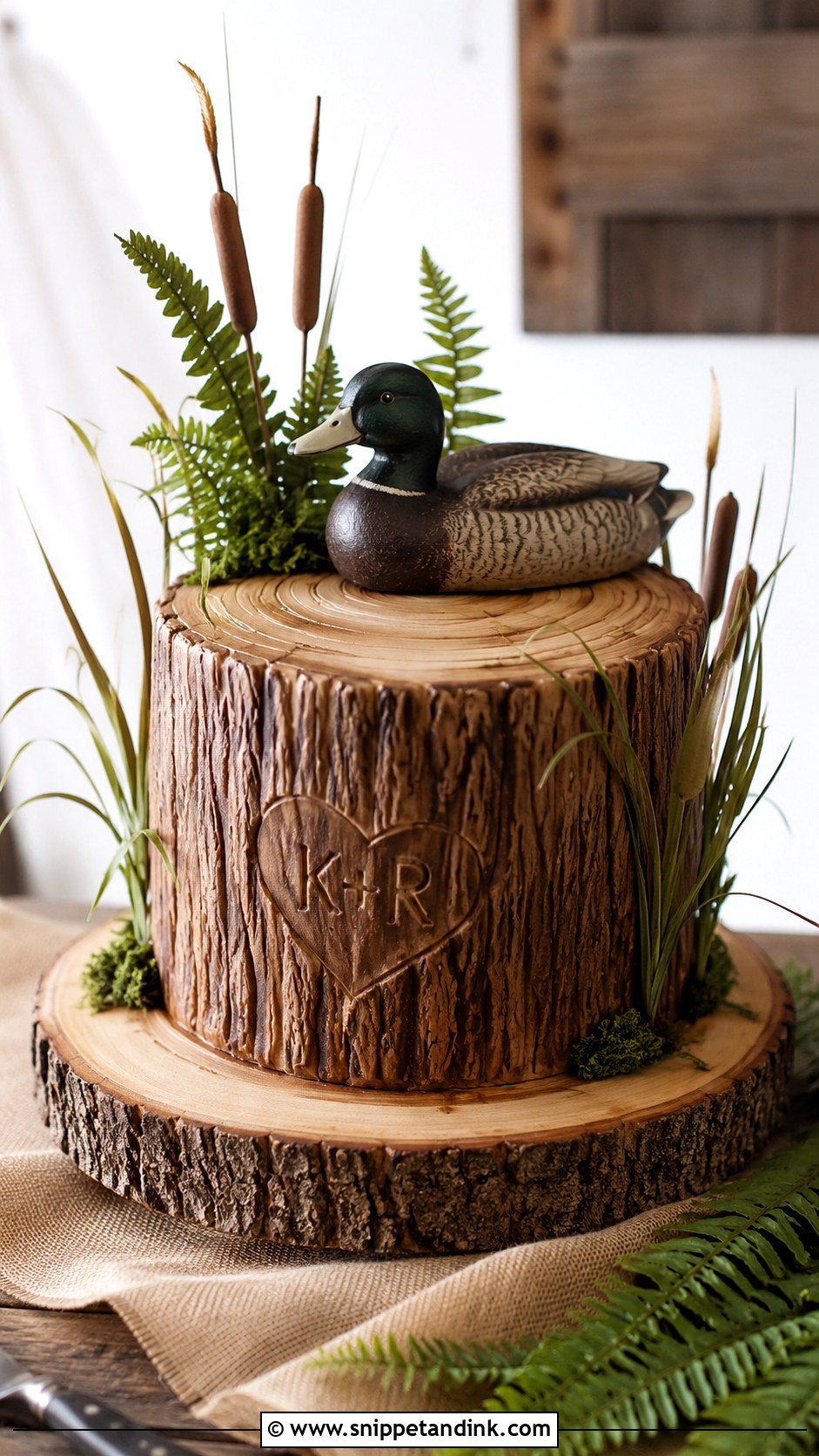
A wood grain wedding cake suggests cabin, blind or dock without spelling any of them out. Brown buttercream or fondant textured as bark or cut timber, with initials ‘carved’ into the front tier, then cattails, fern leaves and a small decoy for the hunting link. Warm flavours sit naturally under it: chocolate, maple, spice or carrot. I find wood texture is the easiest hunting theme to get past a partner who isn’t sure about the idea; it reads as rustic first and hunting second.
7. Cattail Wedding Cake
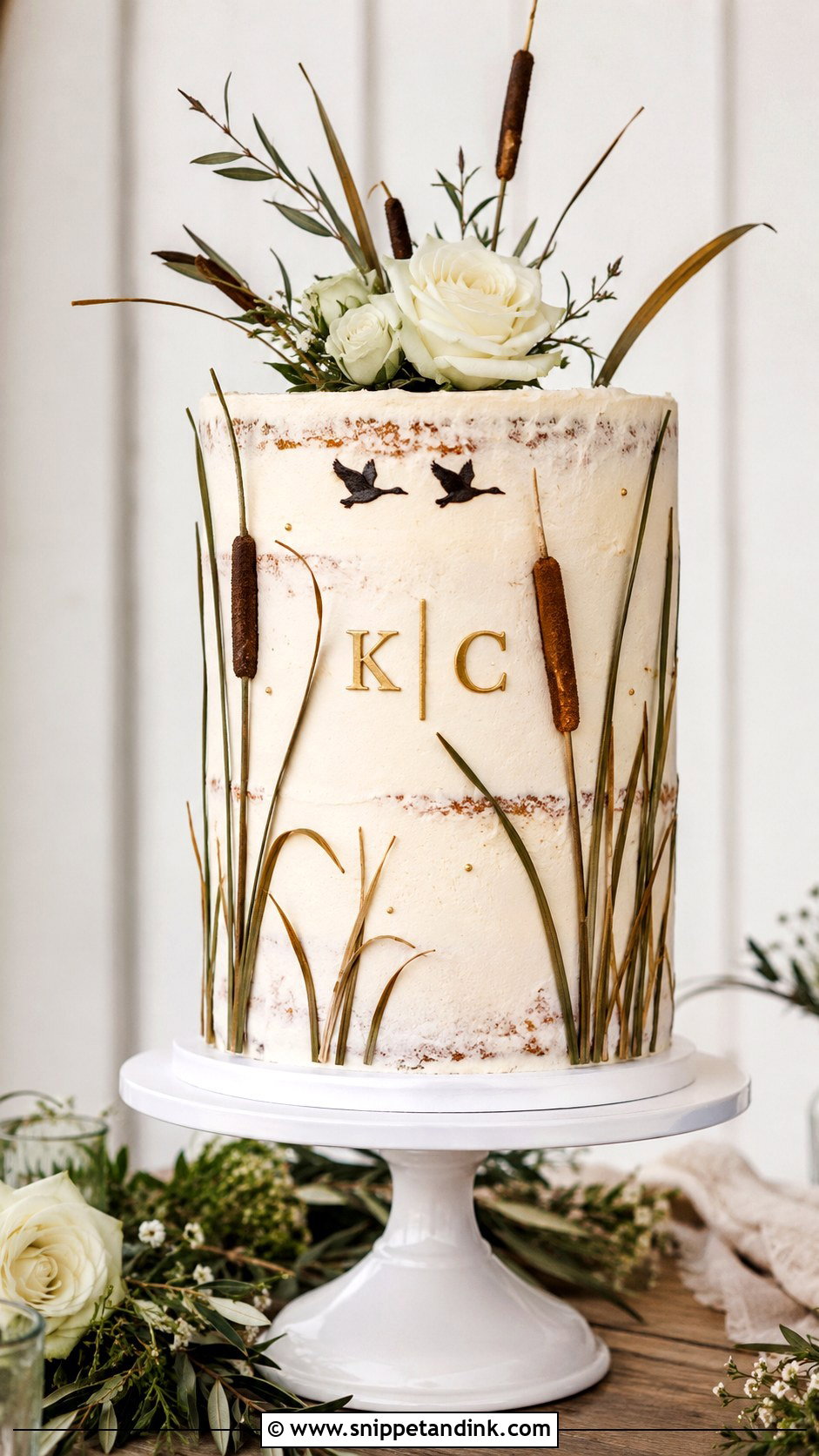
Cattails are my favourite way to do this theme quietly. Keep the tiers ivory and let tall sugar or chocolate cattails rise from the side or back, with thin green reeds and tan grasses at their base and maybe two tiny duck silhouettes. On a semi-naked cake the look is relaxed; on smooth buttercream with gold initials it turns formal. Semi-naked cakes dry out faster once set up, so I don’t recommend them if the cake will sit out for hours before cutting.
8. Duck Hunting Groom Cake
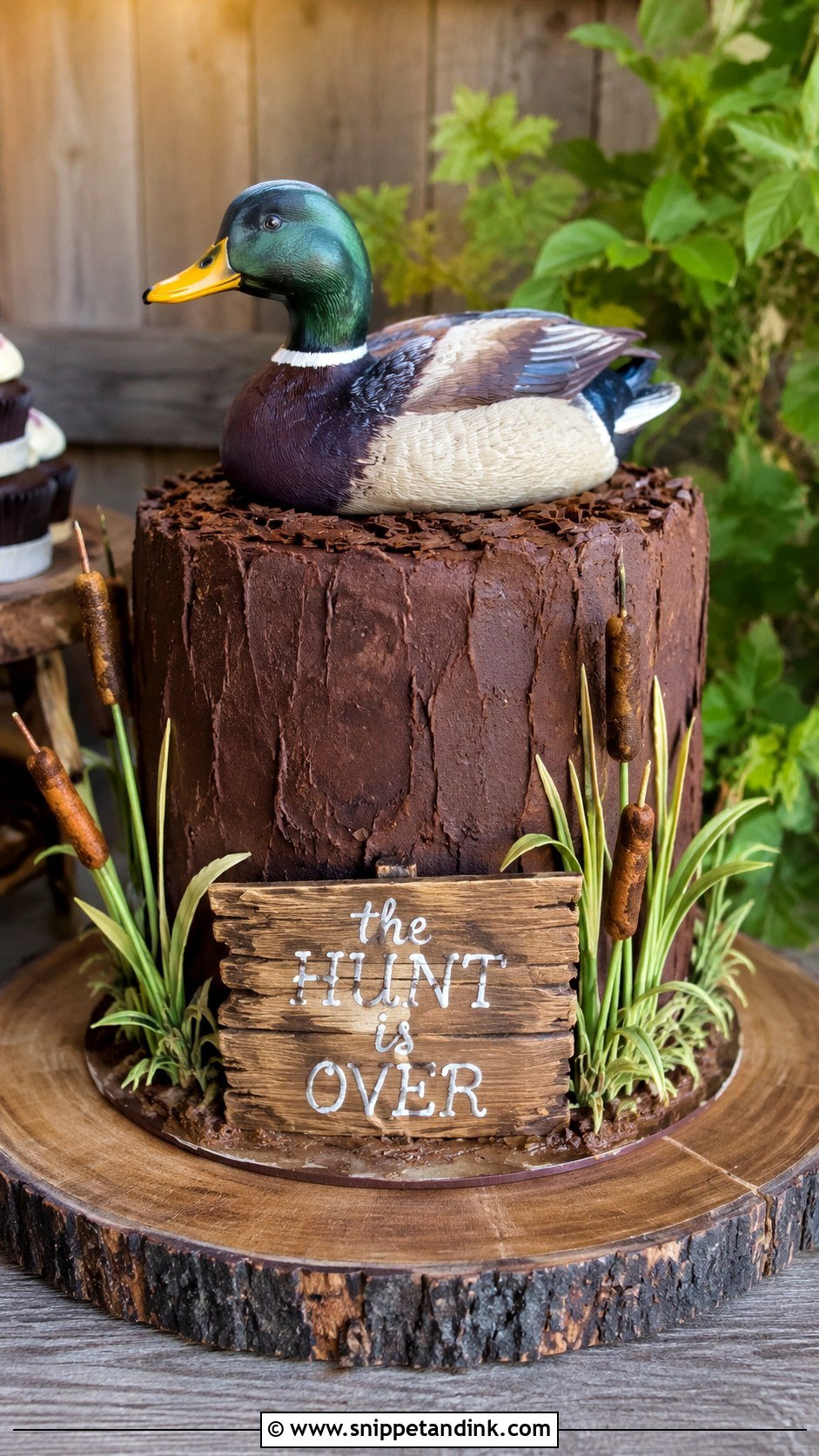
Groom’s cakes are where the theme can be louder, because the main cake stays classic. A single round, square or stump-shaped cake in chocolate buttercream with wood texture, a fondant decoy, edible reeds and a small “the hunt is over” sign is plenty. Resist adding everything at once; three or four elements look intentional, eight look cluttered. They’re a tradition at many Southern weddings and work well at a rehearsal dinner too, which spares the reception table.
9. The Hunt Is Over Wedding Cake
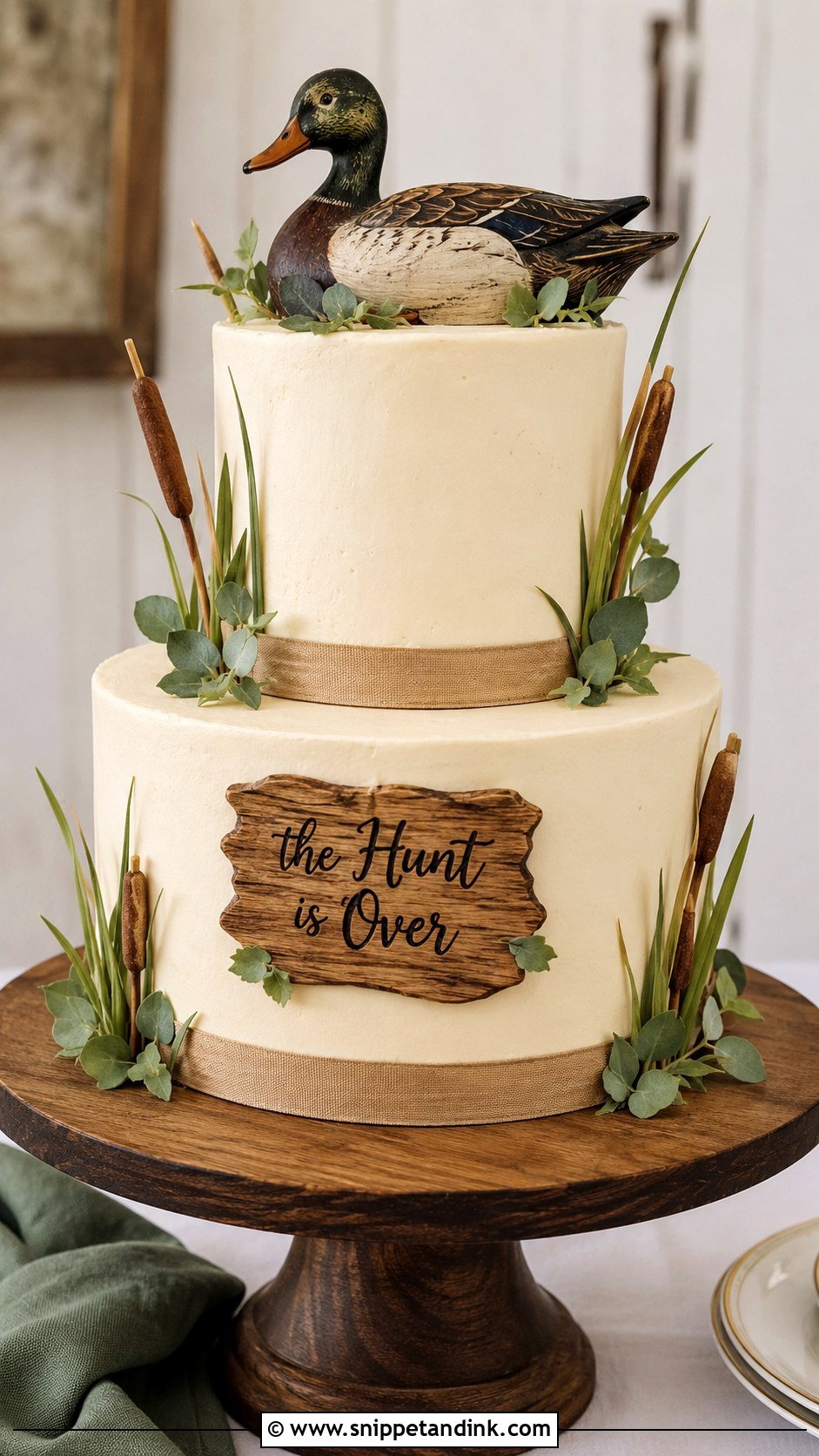
The phrase is the design, so give it a clean surface. I letter “the hunt is over” onto a small fondant plaque made to look like wood, or have it cut as a topper, then pair it with a simple decoy, a few cattails and an ivory or caramel palette. Fondant plaques should be made several days early so they hold their shape upright. It reads as a fun groom’s cake that doesn’t shout, and guests get the joke from across the room.
10. Duck Silhouette Wedding Cake
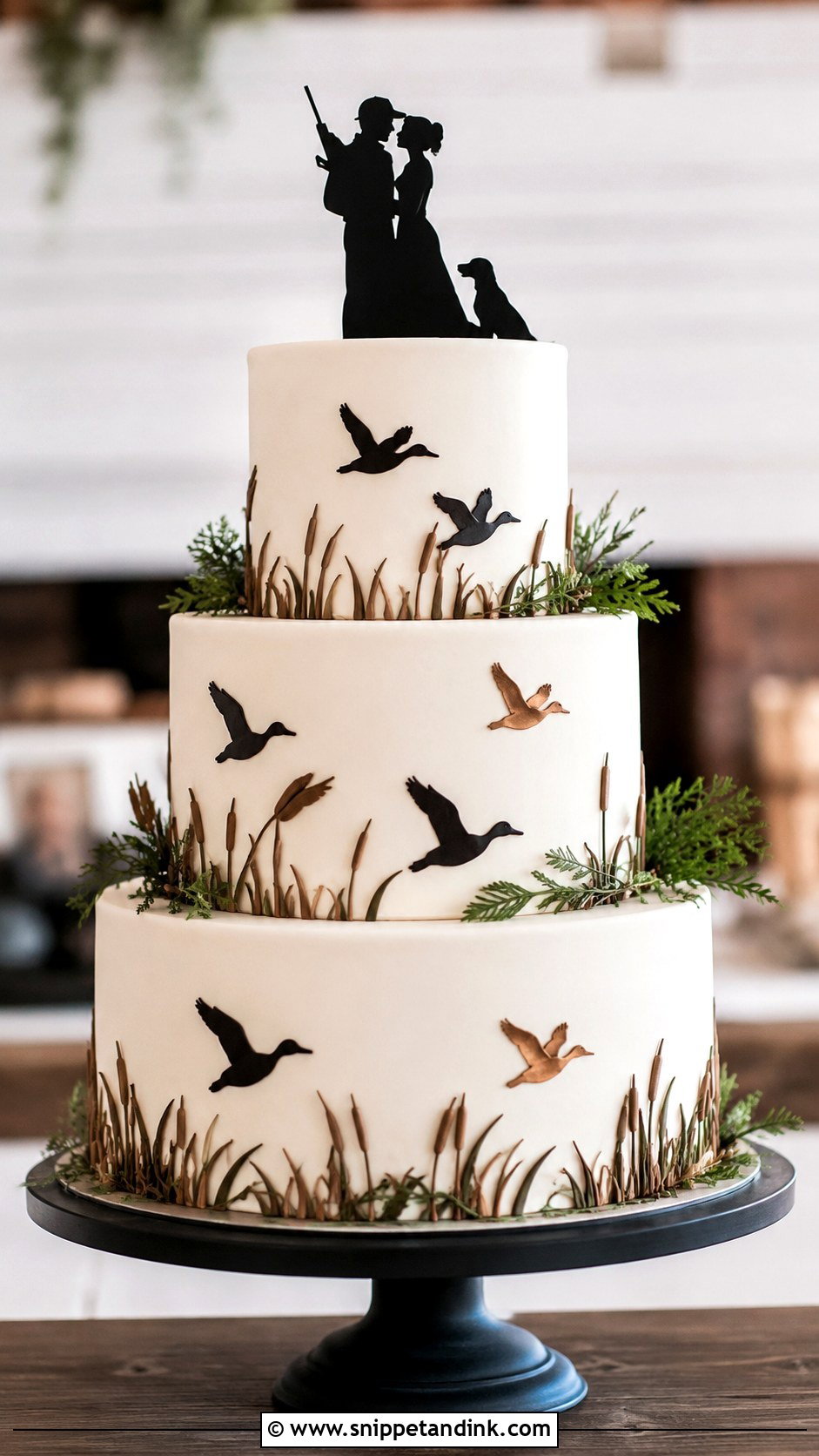
Silhouettes are the cheapest way into this theme and the easiest to get right. Flying ducks cut from black fondant or chocolate run around the upper tier or stand above it on wire, over smooth ivory frosting. Black is crisp; bronze, gold or deep green is softer. Thin cutouts need a day to firm up before they’ll stand without curling. A marsh-grass border at the base ties it back to the water, and it sits well on a black metal stand with eucalyptus.
11. Rustic Duck Wedding Cake
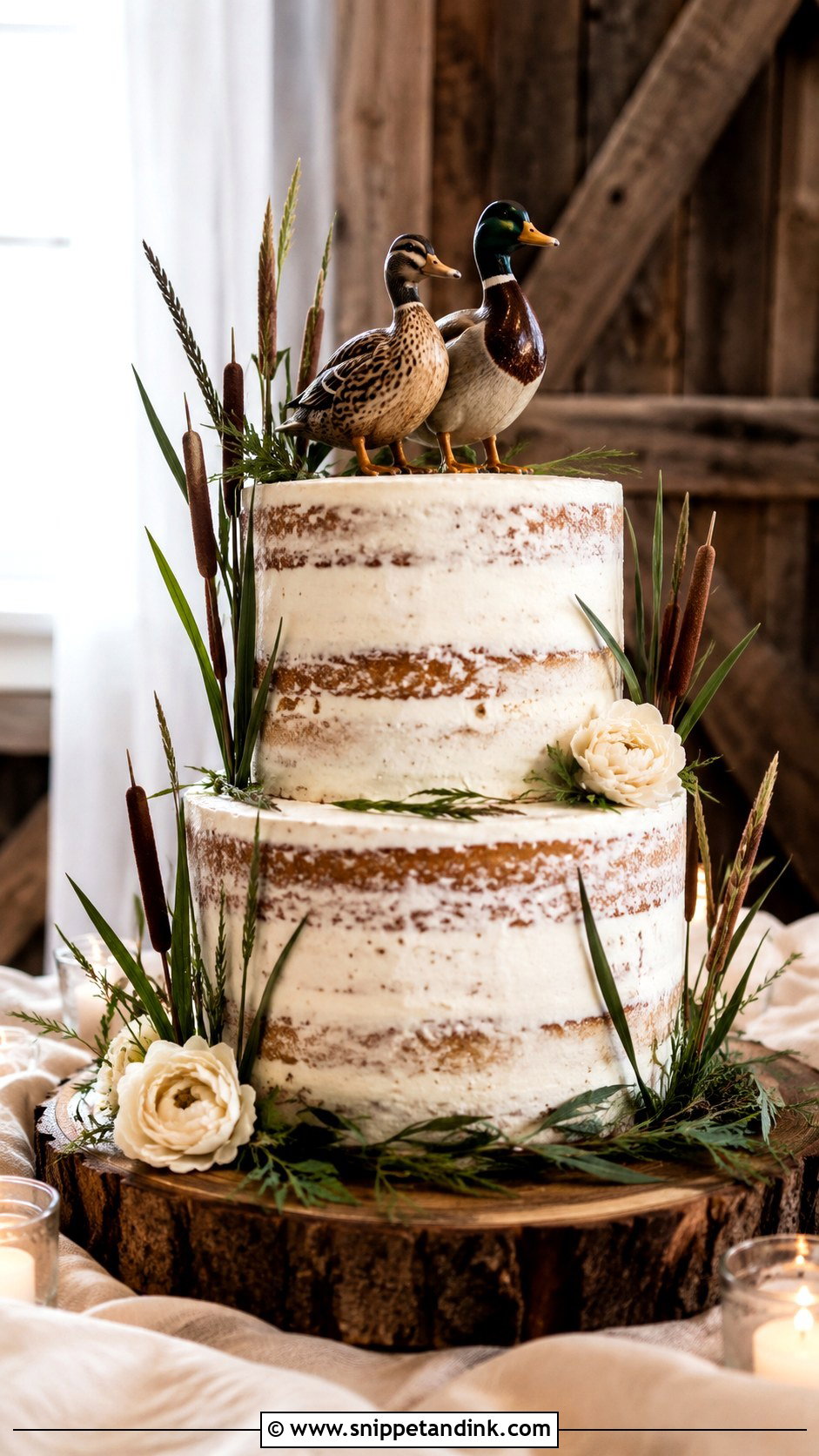
Rustic here means semi-naked buttercream, rough wood textures, loose greenery and one tasteful duck on top. Vanilla bean, chocolate, spice or maple, chosen by season. Cattails and reeds around the base replace bright decoration so the whole cake stays in earth tones. I always tell couples that greenery touching a cake should be food-safe or kept off the icing with a barrier, because plenty of popular foliage isn’t meant to sit against food. A wood slice stand, linen and candles make the display.
12. Waterfowl Wedding Cake
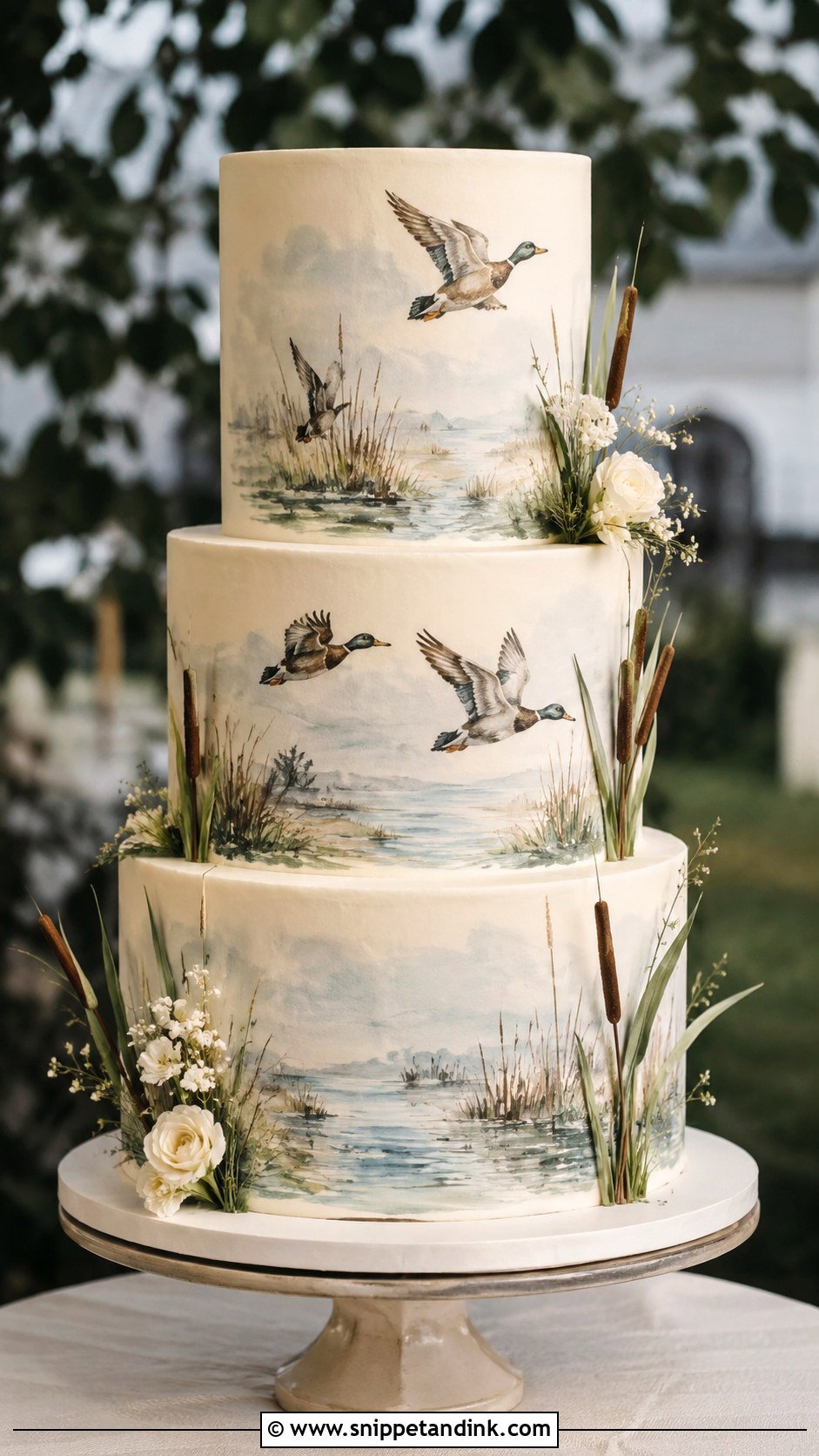
A scene of wetland rather than a single bird gives a waterfowl cake a calmer, more grown-up feel. Watercolour buttercream in blue, sage, ivory and tan, with reeds, cattails and small birds in flight rising from the lower tier toward the top. Three tiers give the flock room to move. This is the cake I’d suggest when one of you loves hunting and the other mostly loves the marsh at dawn; it pleases both and works as the main wedding cake.
13. Mossy Oak Wedding Cake
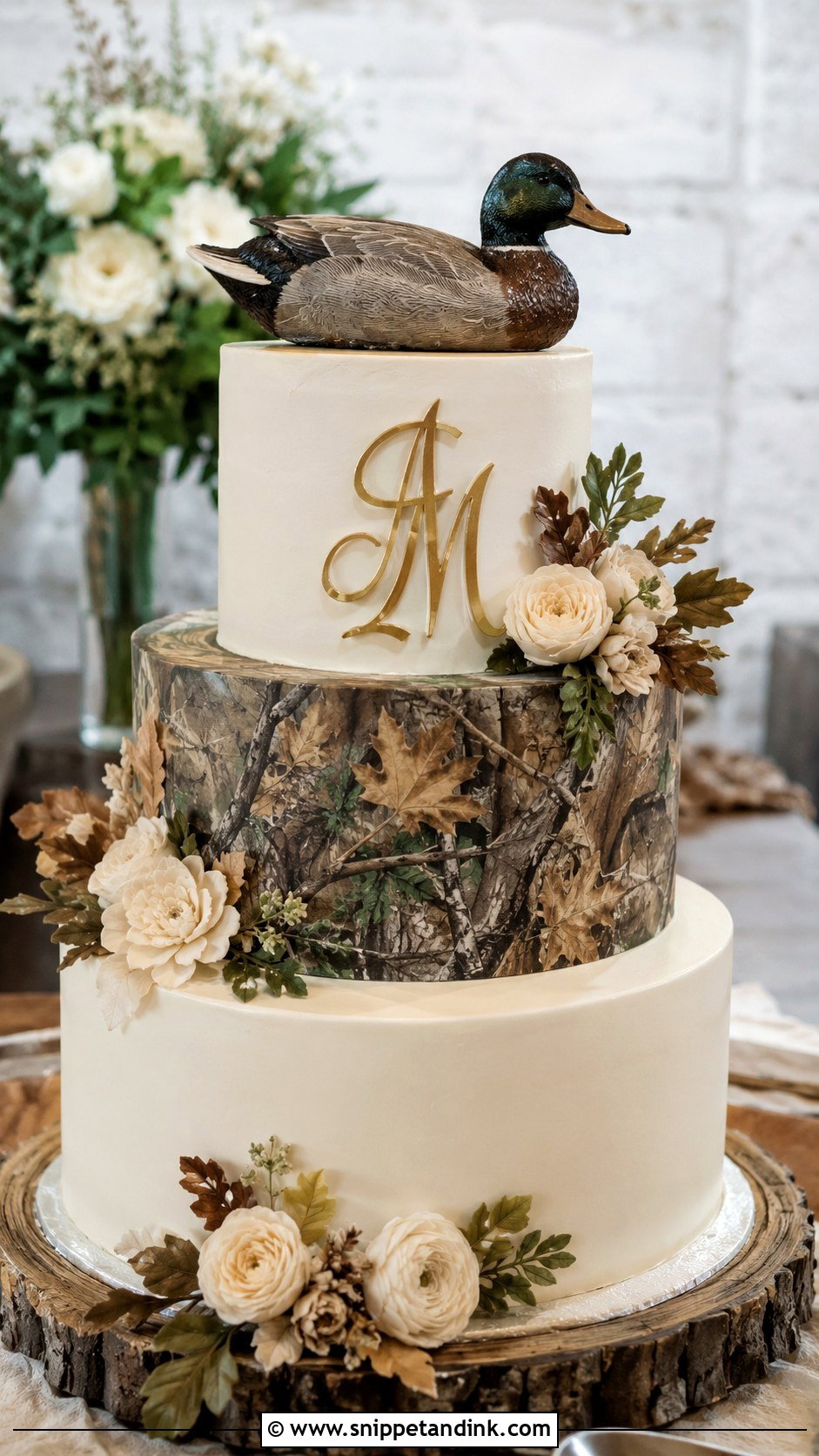
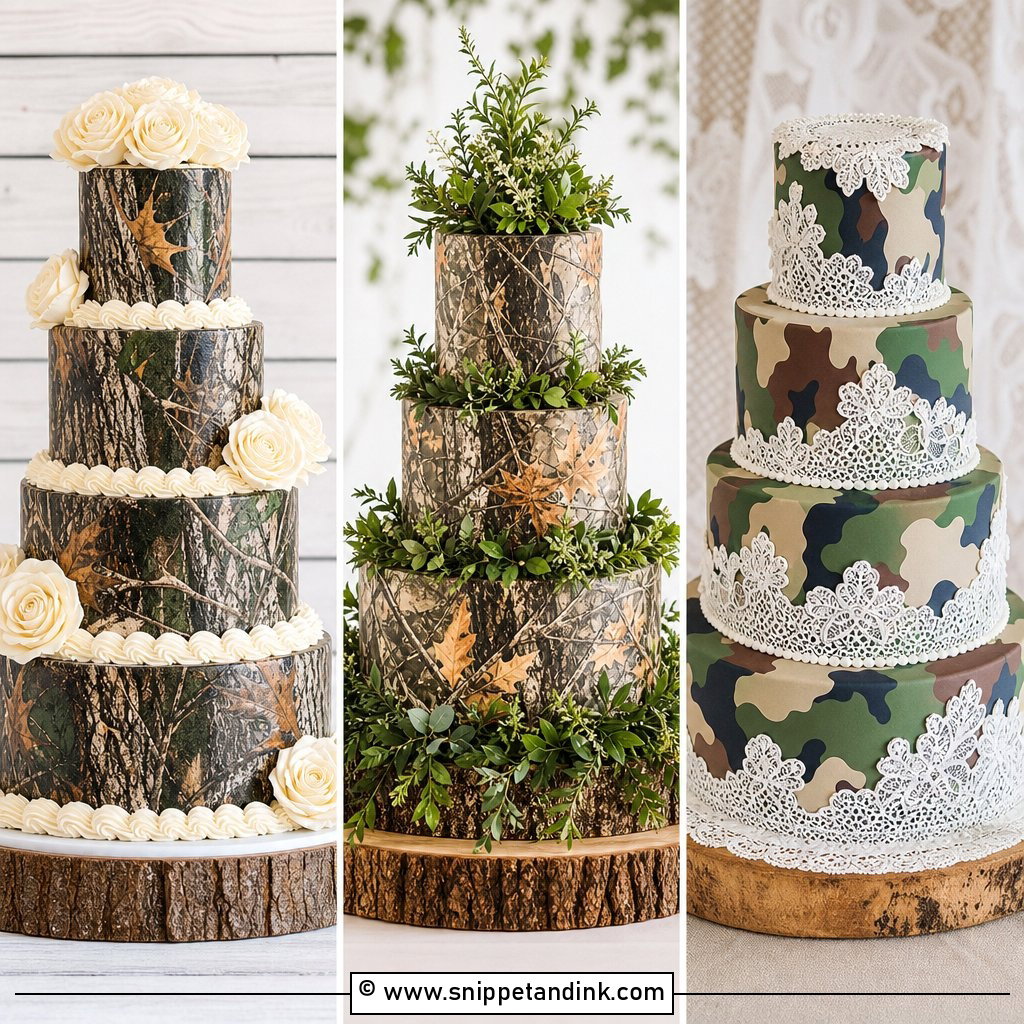
Commercial camo patterns are trademarked prints, and I can’t reproduce one exactly, but I can hand-build the same nature-inspired mottling in deep green, bark brown, tan and grey. Keep it to one tier and leave the rest ivory or chocolate. Leaves, wood texture and a decoy make the reference clear. Cream flowers and a simple gold monogram pull it back toward wedding territory for couples who want their outdoor life represented without the cake looking like a tailgate.
14. Lake Wedding Cake With Ducks
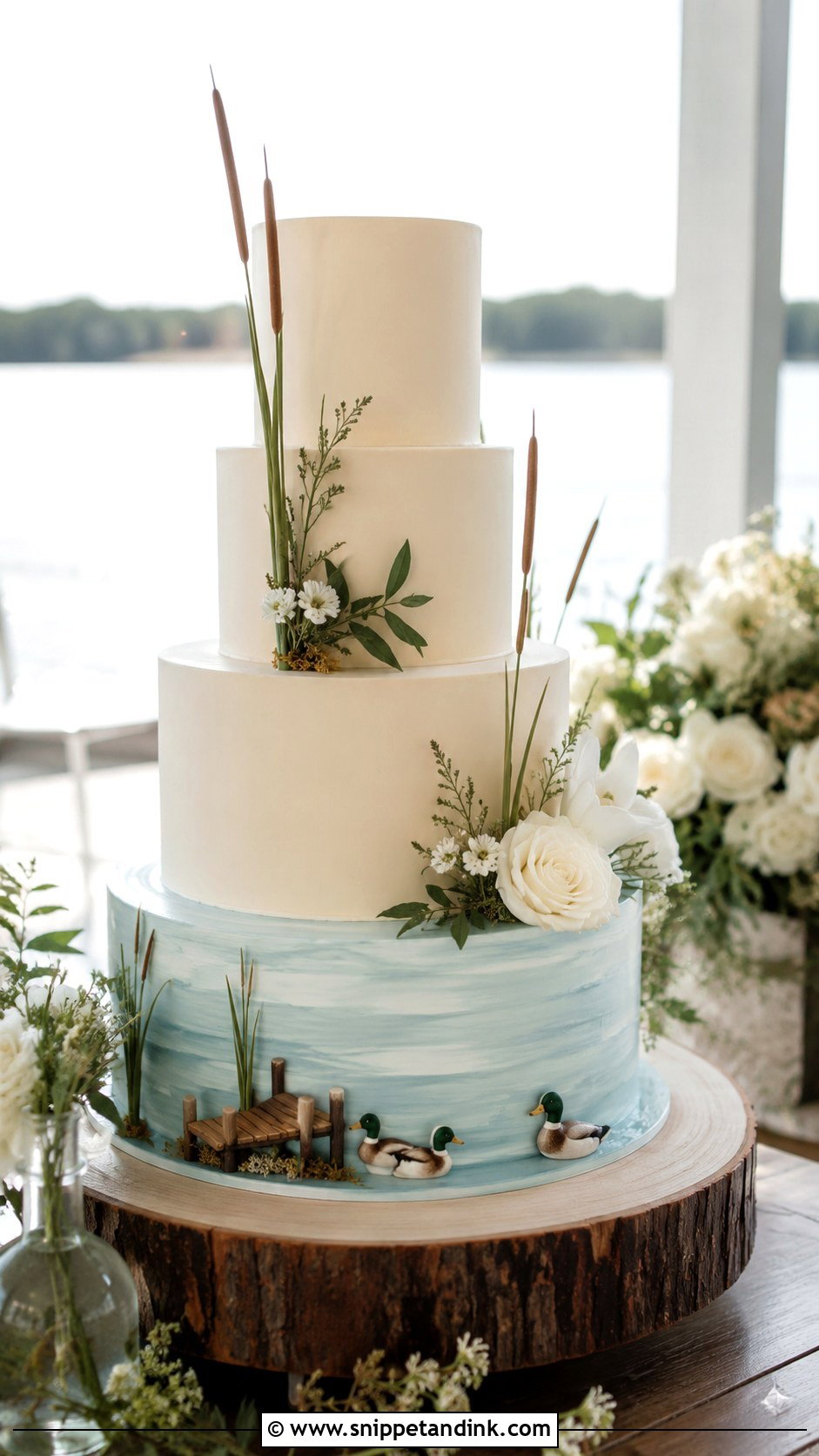
For a waterfront venue, a band of pale blue buttercream or fondant around one tier becomes the lake, with tiny decoys, reeds and a little wooden dock at the base. Upper tiers stay ivory and simple so the scene doesn’t take over. A dock in modelling chocolate is sturdier than fondant in humid air near water. Fresh greenery and white flowers make it bridal, and it suits spring through early autumn at a lake, pond, cabin or lodge.

15. Tree Stump Wedding Cake
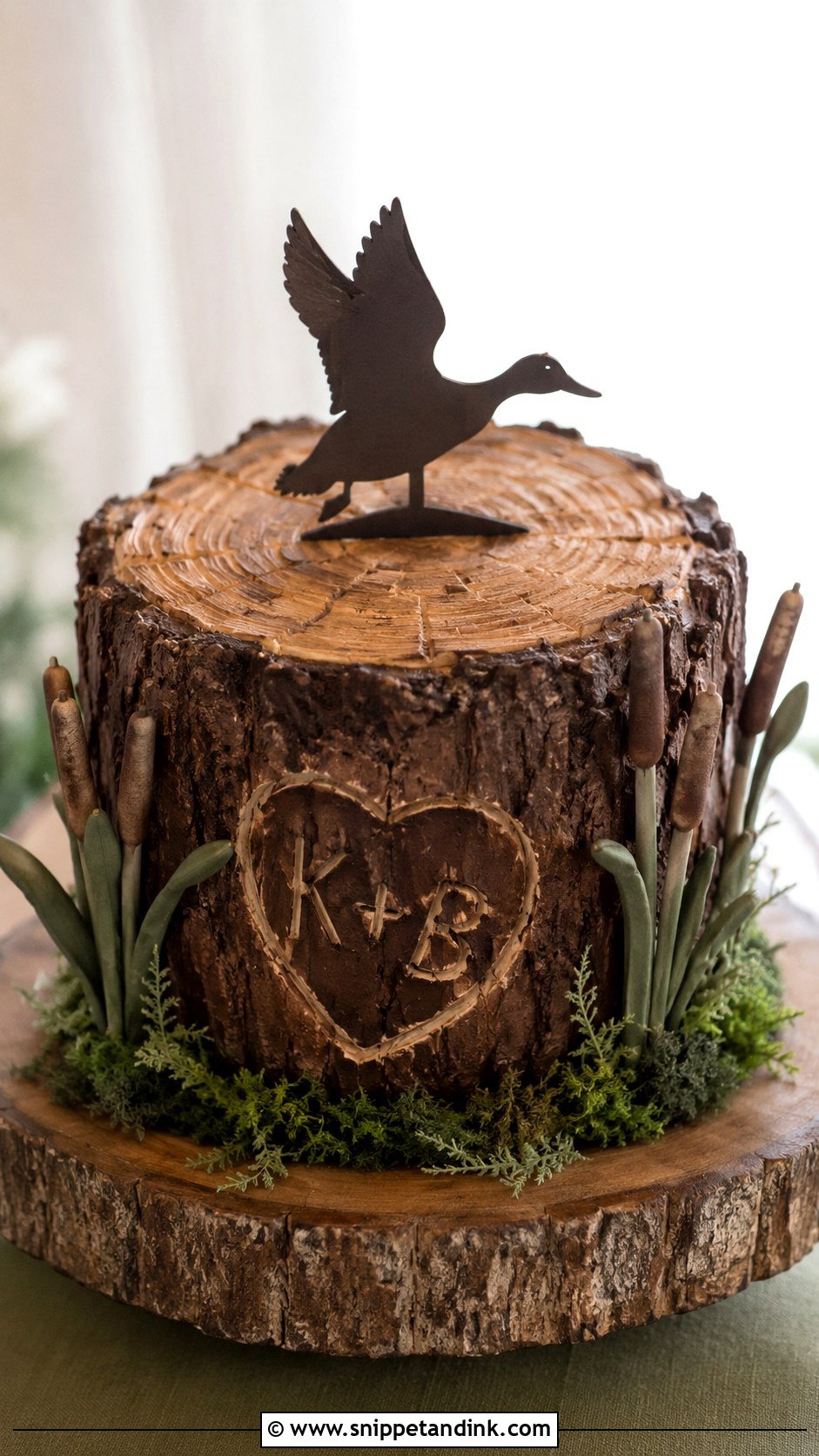
A tree stump wedding cake is the most forgiving design on this list, because bark texture hides small imperfections. Round chocolate cake, bark-textured buttercream outside, a top that looks like cut rings, carved-style initials and a date, and a decoy or pair of mallard silhouettes on top. It’s practical too: as one large groom’s cake or a smaller accent cake, it suits carrot, spice, chocolate or maple. Bark texture is also quick, which keeps the cost down compared with sculpted work.
16. Duck Dog Wedding Cake
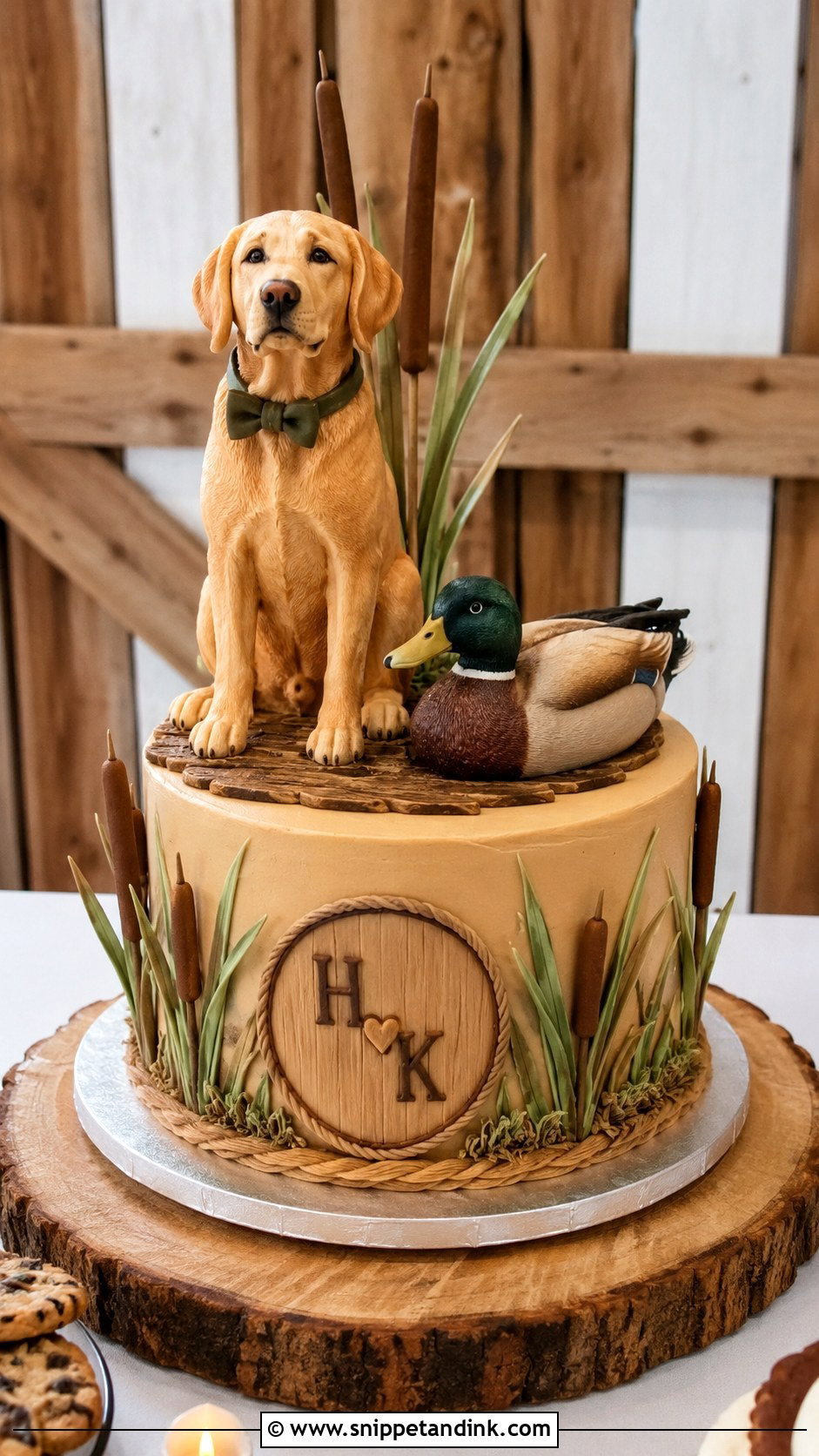
Couples love including their retriever or hunting dog, and the cake should keep the moment sweet: the dog sitting beside a decoy, wearing a small bow or collar tag, on a rustic buttercream tier with cattails and reeds at the base. Bring clear photos of your actual dog from a few angles, because coat colour and ear shape are what make a sculpted figure recognisable. A sculpted dog takes real hours, so it needs booking well ahead. It fits the groom’s cake table or a dessert spread.
17. Duck Feather Wedding Cake
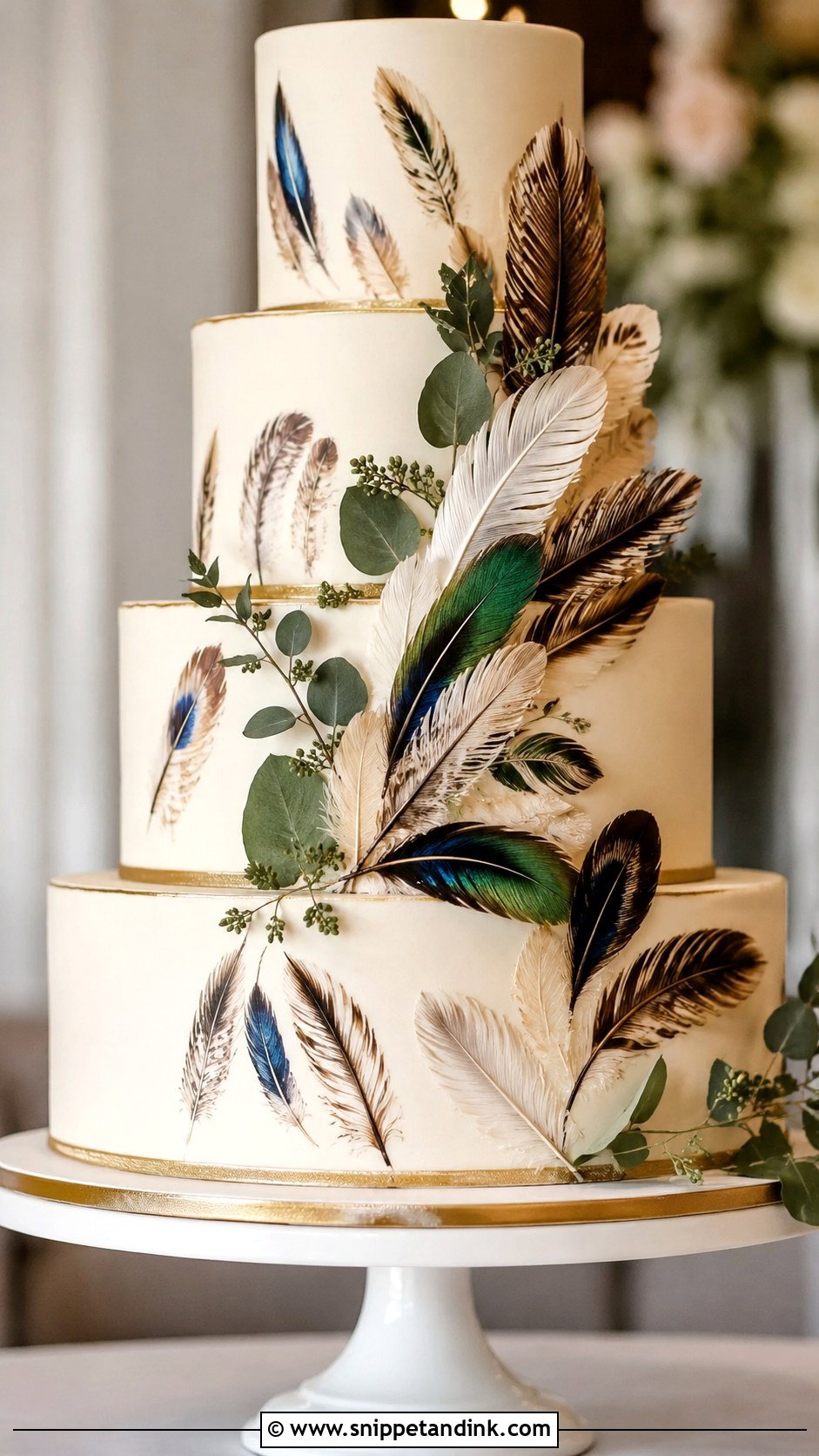
For a formal wedding, this is the subtlest version. No sculpted ducks or camo, just hand-painted mallard-style feathers on ivory buttercream in soft brown, cream, green and blue, with a few sugar feathers cascading down one side. Sugar feathers are fragile and shatter in transit, so I attach them at the venue. Simple greenery or a gold trim line finishes it. Of all twenty, it’s the one I’d choose as the main cake for an upscale reception.
18. Duck Pond Wedding Cake
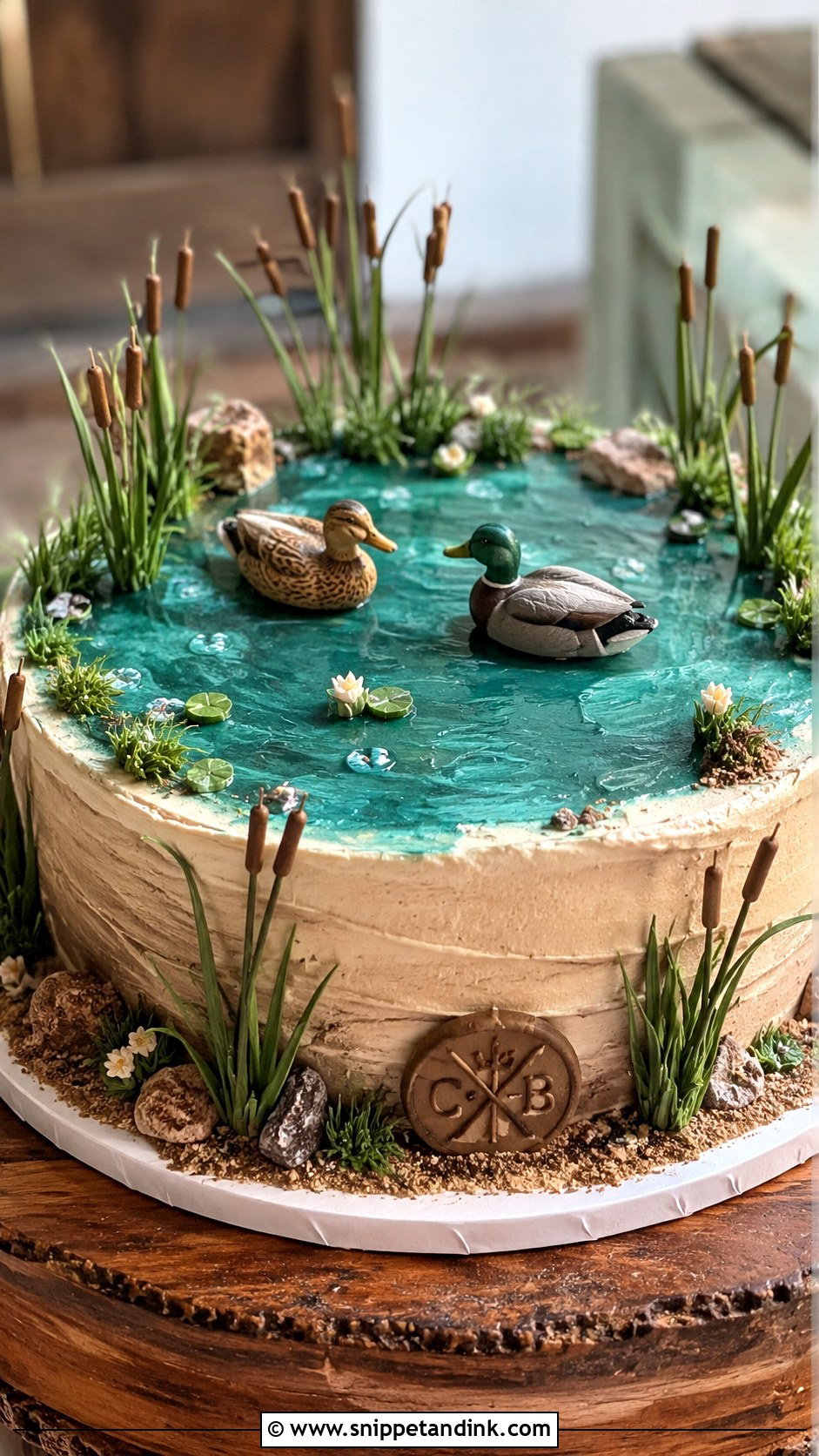
A pond scene is charming until the colours get too bright, then it looks like a child’s birthday cake. Use blue-green frosting on the top tier as water, with reeds, cattails, lily pads and small decoys, and tan or brown texture on the sides as a bank. Muted colours keep it adult. A small wedding topper or initials plaque connects it to the day. It’s a natural fit for a groom’s cake table at an outdoor reception.
19. Country Duck Wedding Cake
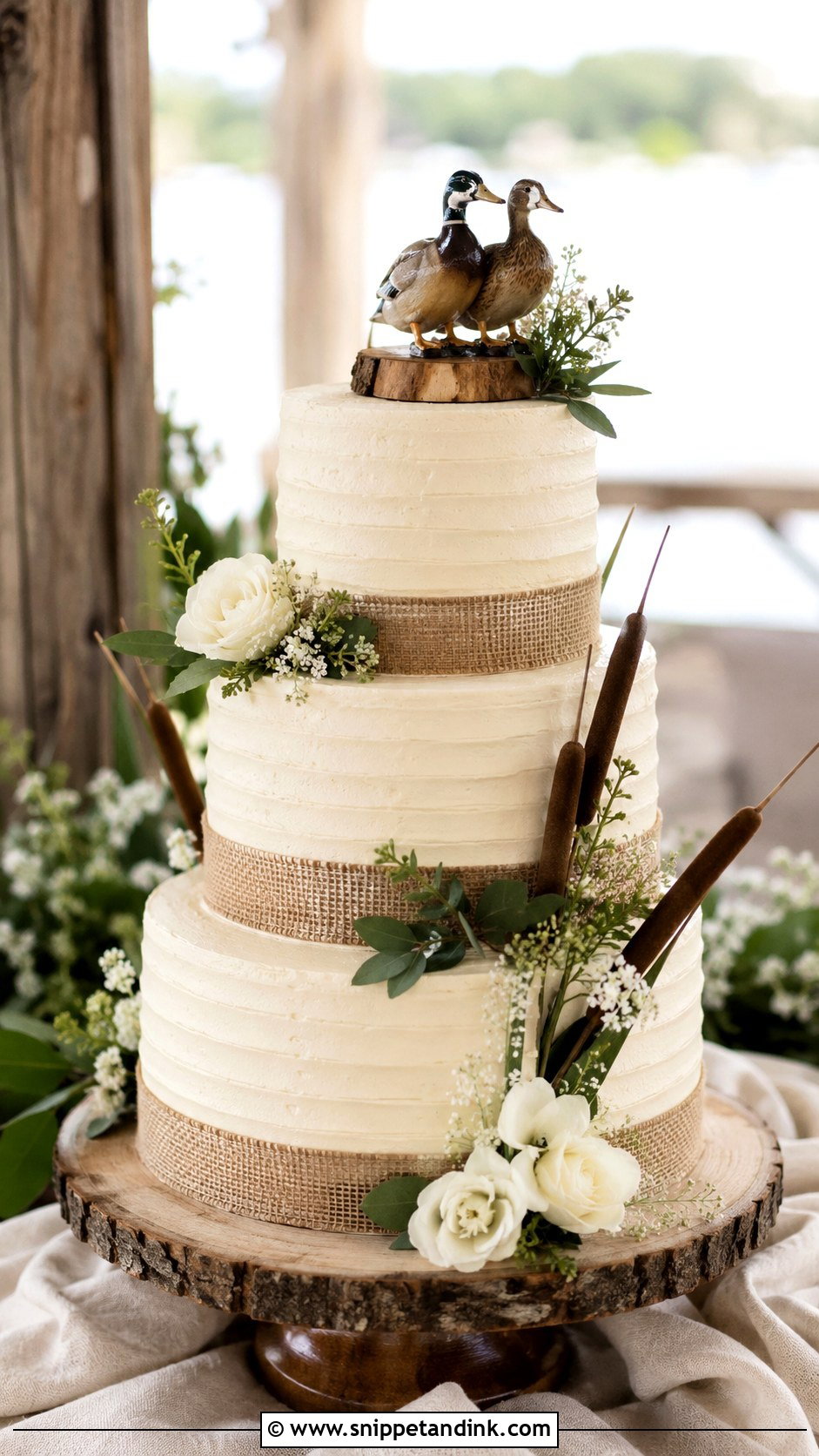
This is the compromise cake. Ivory or warm beige buttercream tiers with burlap-style ribbon, greenery, wood accents, one small duck on top and cattails at the base. White flowers keep it soft. Real burlap shouldn’t touch icing directly; I back it with parchment or use a sugar version. It adapts to sage and cream or chocolate and copper, and it suits couples where one partner loves the theme and the other wants something closer to a classic wedding cake.
20. Fall Duck Hunting Wedding Cake
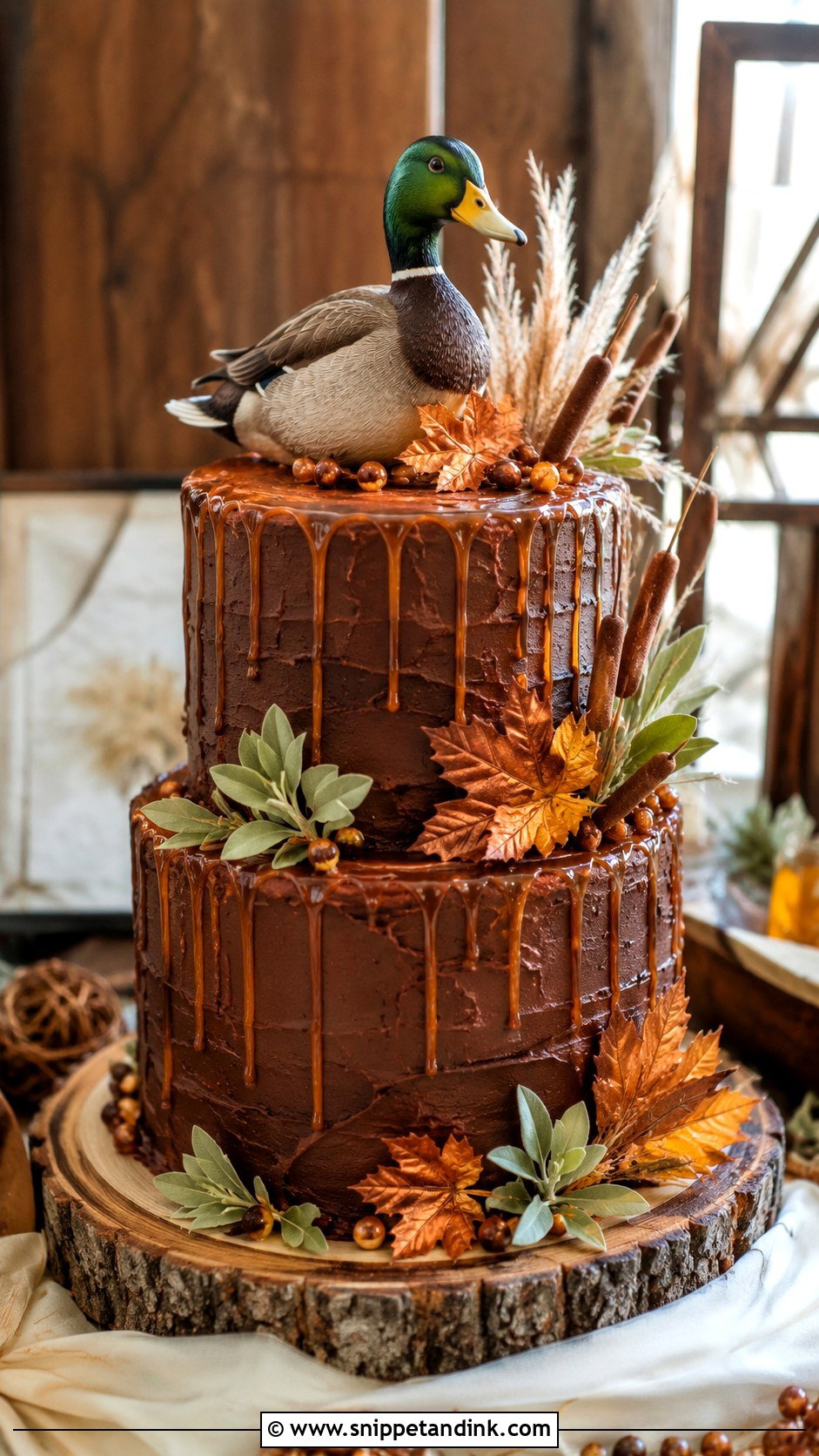
A fall duck hunting wedding cake can go deeper and warmer than any other season allows: chocolate buttercream, a caramel drip, copper leaves, cattails and a mallard on top, with sage and amber accents. A caramel or ganache drip needs a well-chilled cake and the right pouring temperature, or it runs straight to the board. Spice, pumpkin, maple or chocolate suit the look. October and November barn and lodge weddings are its natural home, with a wood slice stand, plaid linen and dried grasses.
Barn Heat, Lodge Fires and a Three-Tier Cake
Most of these designs end up at rustic venues, and rustic venues are hard on cakes. Barns can get warm and humid on a late-summer evening, while lodges with a roaring fireplace or heaters create hot spots. Here’s how I plan around it.
Pick the icing for the room, not the photo
Buttercream starts to soften in a warm room, and textures like bark and wood grain slump first. In a hot barn I lean toward ganache under the buttercream, or fondant over ganache, which holds sculpted details better. Fondant has its own quirk: moved from a cold fridge into warm, humid air, it can sweat beads of moisture. I let it come up to room temperature in its box before setting it out.
Toppers add weight
A solid decoy or dog figure can be surprisingly heavy, so tiers under it need proper internal supports, and a tall topper is safer lightly secured with a hidden rod. Keep the cake table away from windows with afternoon sun and away from the fireplace, and ask the venue to keep it out of the path of guests until the cutting.
A Single Decoy Usually Says Enough
A hunting cake works when the couple’s story and the wedding still share the table. You don’t need camo on every tier. One decoy, the mallard palette, a cattail border, a marsh scene or a wood texture can carry it. For a formal reception, start ivory and add small outdoor details; for a groom’s cake, go rustic with chocolate, stump texture and a playful topper. Bring your venue details and your real photos to the tasting, and let the baker tell you which details will survive the room.
You'll Like These Ideas:










Leave a Reply