
Greenery is the decoration I’m asked about most for barn weddings, garden receptions and woodland venues, and it’s also the one that needs the most care. Leaves make a plain buttercream cake look finished for very little cost, but plenty of the greenery florists love is not safe to put near food. The rustic designs I make most often lean on semi-naked or palette-knife buttercream, olive, ferns, herbs and the odd wood-slice stand, with ivory and sage as the base and blush, berries or dried grasses as the accent. Here are 25 ideas, along with what each one needs from your baker and florist.

Which Leaves Are Actually Safe Near a Wedding Cake
Florist greenery is grown to look good in a vase, not to be eaten. A lot of it is sprayed, and some popular varieties are mildly toxic. So before I design a greenery cake, I sort the leaves into three groups.
- Can touch the frosting: culinary herbs such as rosemary, thyme, bay and mint, plus olive and citrus leaves, as long as they’re unsprayed or organically grown.
- Can go on the cake if wrapped: roses, ranunculus and most florist foliage. Stems are taped and pushed into a food-safe pick or straw so nothing enters the sponge.
- Display only, never on the cake: eucalyptus, ivy, boxwood, hydrangea, baby’s breath and lily of the valley. These go on the stand or table, or I make them in sugar or wafer paper.
If you want a specific leaf and it’s in the last group, ask for a sugar or wafer-paper version. Done well, guests won’t spot the difference from a few feet away.
1. Semi Naked Greenery Wedding Cake

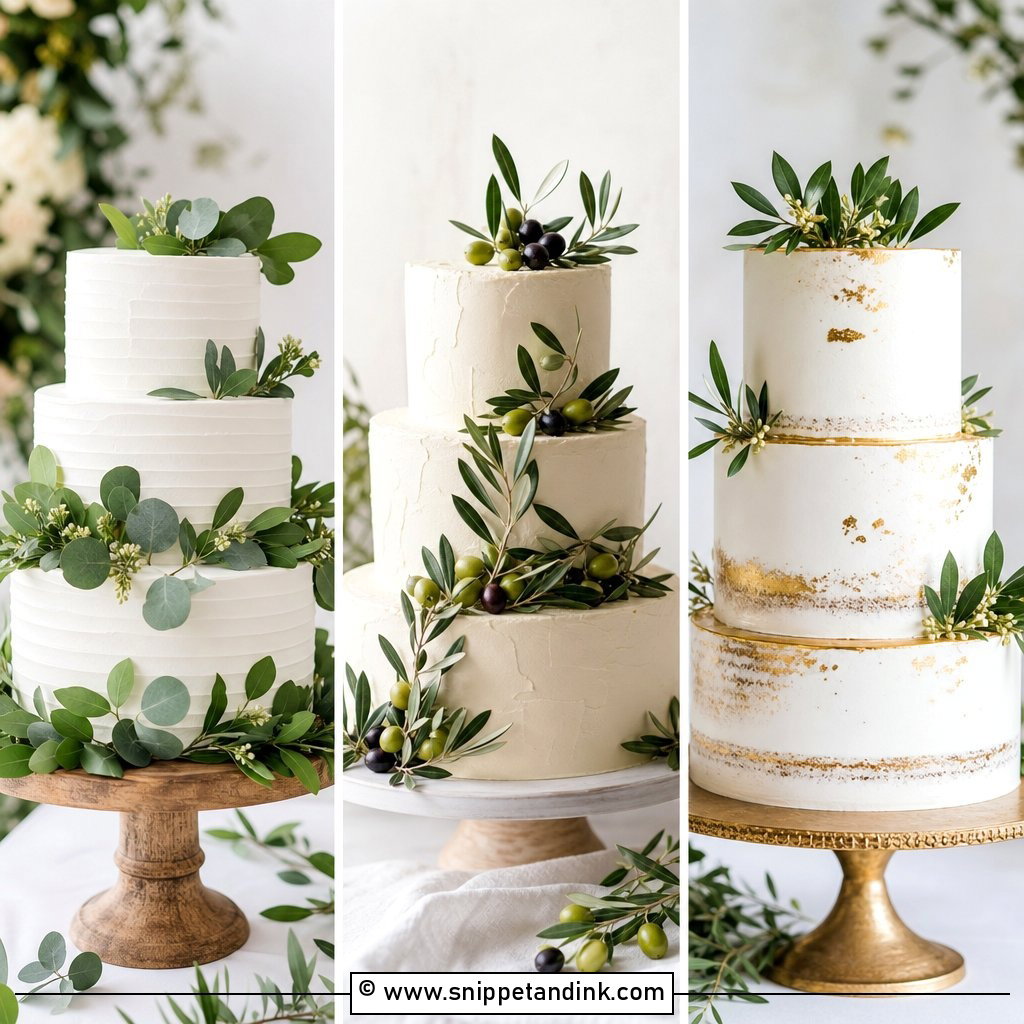
A semi naked greenery wedding cake has a thin scrape of buttercream so the sponge shows through at the edges. The trick is making that look deliberate and not unfinished: I crumb coat, chill, then scrape back evenly so every tier has the same amount of sponge showing. Greenery goes in small clusters rather than across every tier. Rosemary sprigs, olive leaves or sugar ferns at the base and between tiers are all I’d use. A wood stand and plain linen do the rest.
2. Eucalyptus Wedding Cake

Eucalyptus gives that dusty sage color with round, coin-like leaves that trail nicely down a tier. It’s also one I won’t push into a cake. Eucalyptus contains oils that aren’t meant to be eaten, so I either make the leaves from wafer paper or sugar, or I wrap real stems and keep them on the cake board, never in the sponge. Two or three tiers of smooth ivory buttercream give the trail room to fall. Cream roses or a few berries soften it.
3. Olive Branch Wedding Cake

Olive branches are one of my favorite real greenery options because the leaves are slim, hardy and don’t wilt quickly. Their gray-green reads beautifully against white or beige frosting. I wrap them loosely around a tier like a wreath and let the ends break the line. Textured buttercream gives them something to sit against. You can leave it as olive alone or add a few white flowers, and a stone or ceramic stand suits the Mediterranean feel.
4. Fern Wedding Cake

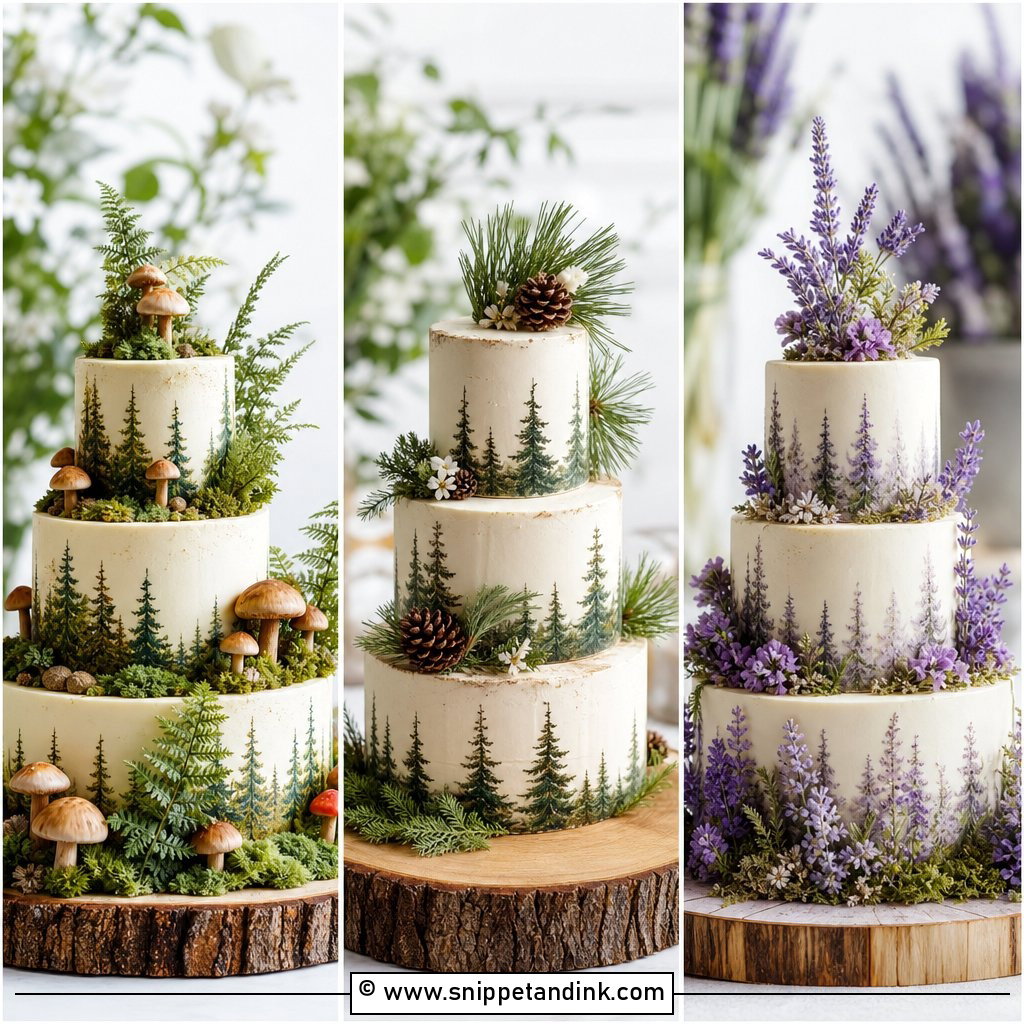
Ferns make even a plain cake look detailed. Most decorative ferns aren’t food-safe, though, so for a cake I use sugar ferns for dimension or press wafer-paper fern shapes flat against buttercream. Deeper green fronds over pale ivory give the best contrast. Moss and larger real ferns can dress the cake stand and table, as long as they don’t touch the frosting. It suits forest and woodland settings in particular.
5. Greenery Drip Wedding Cake

A drip gives a rustic cake a more modern edge. I use white chocolate ganache, sometimes tinted sage, or a salted caramel drip, piped onto a well-chilled cake so it stops halfway down instead of pooling at the base. A slightly uneven drip looks more handmade. Greenery goes along the top edge or down one side to balance the sweetness of the look. Caramel drips soften in warm barns, so I’d use ganache for a summer outdoor wedding.
6. Buttercream Greenery Wedding Cake

A buttercream greenery wedding cake covers a lot of ground, so the texture is the real decision. Smooth buttercream looks crisp and formal; ridged or hand-spread finishes feel more relaxed. Greenery can sit at the base, circle the middle tier or cascade down one side. Ivory with sage leaves is the quietest version; darker herbs or white blooms add contrast. Swiss meringue buttercream holds up better than American buttercream in warm rooms, which matters at an outdoor reception.
7. Textured Greenery Wedding Cake

Texture does half the decorating. I pull ridges with a comb scraper, swipe with a palette knife or finish with a rough plaster effect before any leaves go on. Once the frosting is busy, the greenery needs to be calm: a couple of olive clusters or a trailing vine is enough. Too many leaves on heavy texture looks cluttered from a distance. A wooden table and neutral flowers complete it.
8. White Rose Greenery Wedding Cake

White roses are the easiest way to make a greenery cake look bridal. I arrange them in small clusters between tiers or a loose cascade down one side, with mixed leaf shapes, olive beside tiny ferns, so the green doesn’t read as one flat block. A semi-naked or lightly textured finish keeps it rustic. Roses from a florist are usually treated, so every stem is wrapped and sits in a pick.
9. Blush Flower Greenery Wedding Cake

Blush flowers warm up a mostly green cake without breaking the rustic mood. I use blush roses, sugar ranunculus or pale pink blossoms beside sage, olive and fern. Keep the cake itself ivory or cream so the flowers carry the color. Smooth buttercream makes it read modern, semi-naked makes it relaxed. Pale pink petals bruise easily, so they go on at the venue, not in the kitchen.
10. Wildflower Greenery Wedding Cake

A wildflower greenery wedding cake should look gathered rather than arranged. Tiny blooms, herbs and fine leaves are scattered in a loose pattern with no attempt at symmetry. Plain buttercream gives them room. Soft yellow, lavender or blush can join in, but the greenery stays the main feature. Many real wildflowers aren’t food-safe, so I mix edible blooms like violas and chamomile with sugar flowers for the rest.
11. Pressed Greenery Wedding Cake

Pressed greenery is applied flat, almost like a botanical print. I use edible pressed herbs or wafer-paper leaves attached with a thin brush of piping gel. It needs a smooth surface, either fondant or very well chilled buttercream, otherwise the leaves wrinkle. Keep the palette simple: ivory and soft green. Pressed herbs darken a little over a few hours, so I add them the day of the wedding.
12. Greenery Wedding Cake With Wood Stand

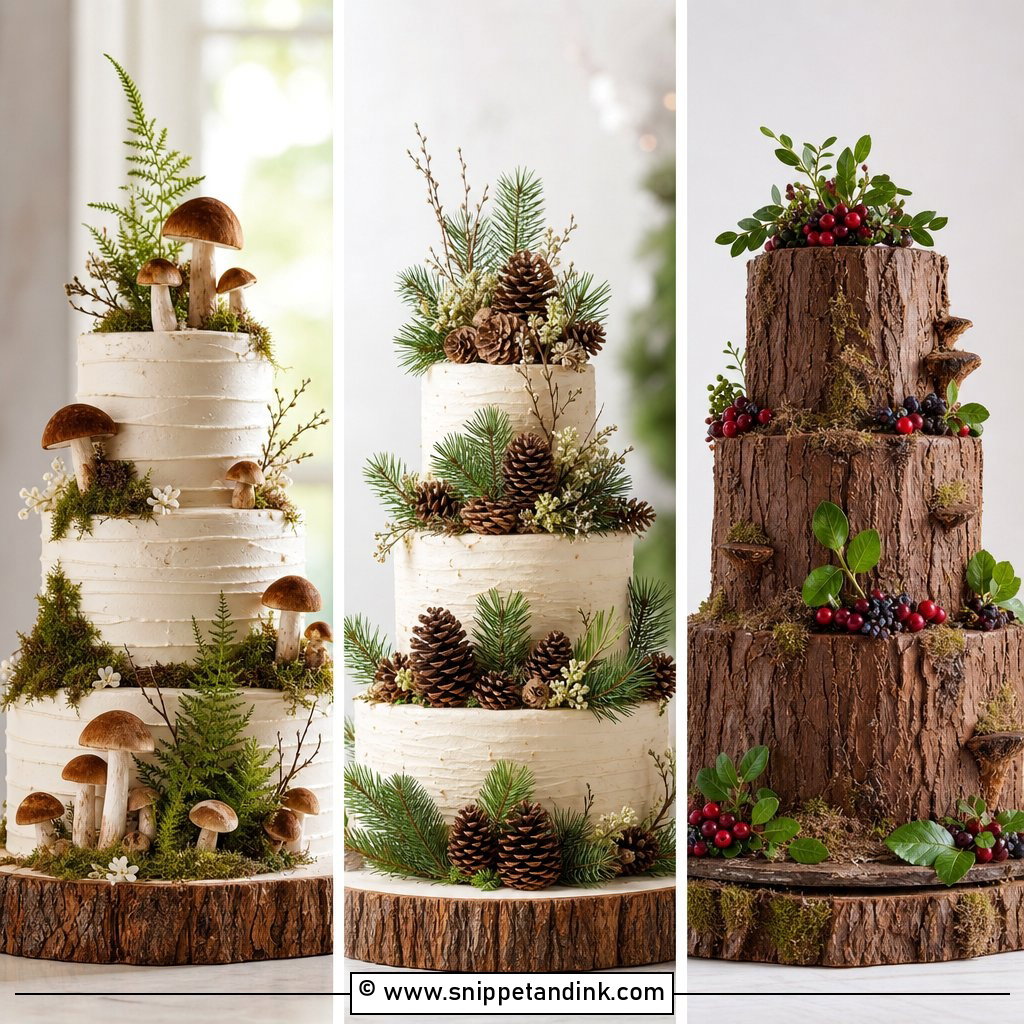
A wood stand makes even a white buttercream cake look rustic because the display becomes part of the design. A wood slice needs to be sealed with a food-safe finish and topped with a cake board, since raw wood can shed bark and splinters. Greenery goes around the base with a smaller cluster on top for balance. Keep the table plain, with a few leaves, candles and linen.
13. Single Tier Greenery Wedding Cake

A single tier greenery wedding cake suits elopements and small weddings, or couples serving other desserts. With only one tier, the shape has to carry it: a tall round cake, around six inches high, gives room for texture and a small floral accent. Greenery goes at the bottom edge with a small cluster on top. Smooth or semi-naked both work. It shows that one well-finished tier can look complete.
14. Two Tier Greenery Wedding Cake

Two tiers give a classic wedding height without getting oversized, which suits medium weddings. I sometimes make the top tier slightly taller than usual for a more modern profile. Greenery connects the tiers, either as a small cascade or a wreath around the lower one. Ivory buttercream keeps it soft. Leaf-only feels cleaner; white flowers make it more romantic.
15. Three Tier Greenery Wedding Cake

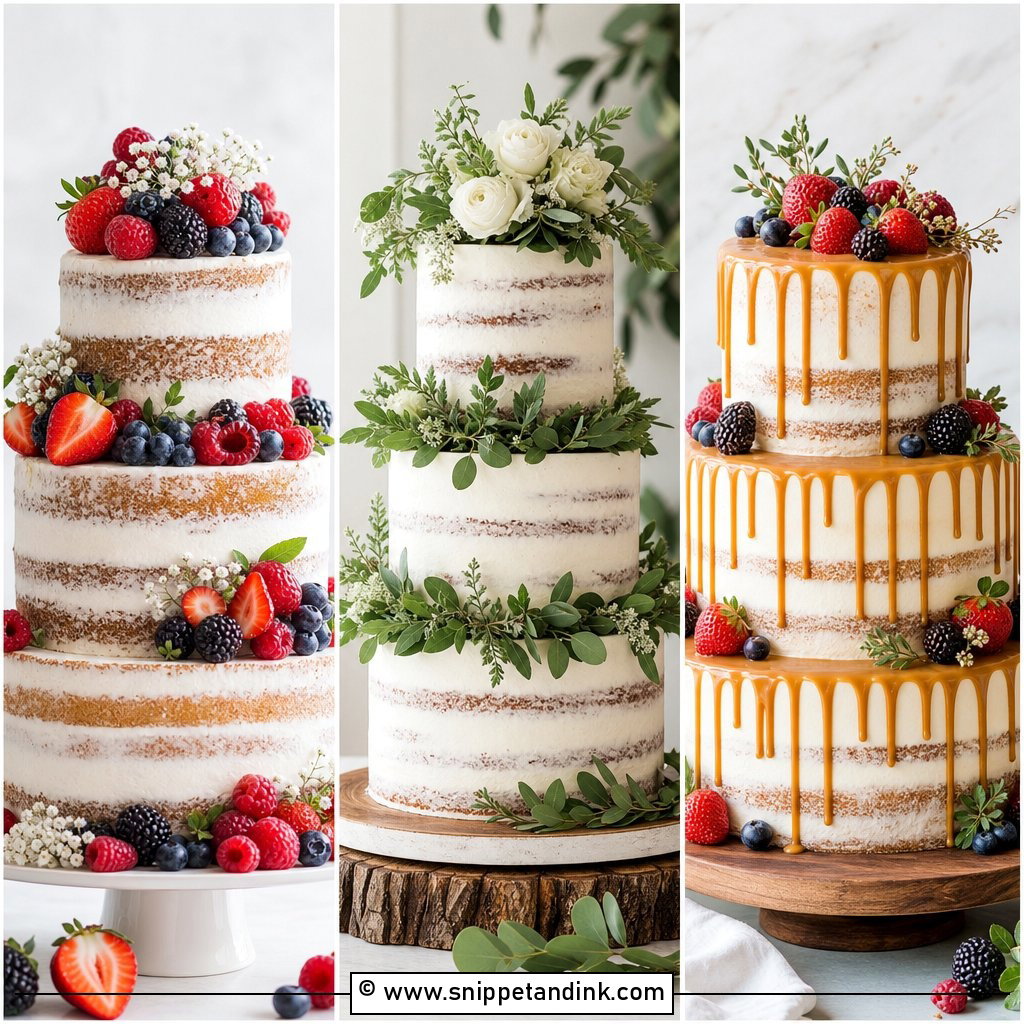
Three tiers give space for a proper cascade that leads the eye from top to bottom. A cascade looks best when it starts off-center on the top tier and finishes on the opposite side of the bottom one, rather than running in a straight line. Smooth or semi-naked buttercream both work. Keep flower colors soft so the greenery remains the focus. It needs dowels in the lower tiers to carry the weight, especially in buttercream.
16. Square Greenery Wedding Cake

Square tiers take a rustic style somewhere unexpected. The sharp corners need fondant or a very well set buttercream, and they show any wobble, so this design asks for more precision than a round cake. Greenery softens the edges: along one side, around the base or as a diagonal cascade. Olive branches and small white flowers keep it simple. Square tiers also give more servings than round tiers of the same width.
17. Greenery Wedding Cake With Gold Accents

Gold on a rustic cake should be small. I paint thin edges, press a few flakes of gold leaf near the greenery, or let a gold cake stand carry the metallic instead. Ivory buttercream, sage leaves and white flowers sit comfortably with it. It suits evening receptions in refined barns. Keep the rest of the table neutral so the gold looks planned rather than added.
18. Greenery Wedding Cake With Burlap

Burlap works best in very small doses. A narrow strip around one tier adds texture; more than that starts to look like a craft project. Burlap is not food-safe and sheds fibers, so I always line it with a strip of parchment or ribbon so it never touches the frosting. Pair it with clean buttercream, white flowers and soft greenery. A semi-naked finish suits it well.
19. Greenery Wedding Cake With Baby’s Breath

Baby’s breath fills gaps between leaves with tiny white blossoms. It’s lovely on a cake visually, but it is mildly toxic, so I wrap stems tightly or use sugar versions for anything touching the frosting. A small cascade or a ring between tiers is enough. It suits spring and summer weddings and stays crisp in photos against ivory frosting. Fresh baby’s breath can wilt in a hot room, so I’d buy extra stems.
20. Greenery Wedding Cake With Succulents

Succulents bring chunky shapes and muted green tones that add depth beside softer leaves. Real succulents are heavy and often sold in soil, so I use sugar succulents instead. They pair with smooth white buttercream, olive branches and small white flowers. An asymmetric arrangement looks most natural. It’s a good choice for desert or modern rustic decor, especially on a stone stand.
21. Greenery Wedding Cake With Herbs

Herbs are the greenery I’m happiest putting on a cake, because rosemary, thyme, mint and bay are culinary and safe as long as they’re unsprayed. I use small sprigs rather than bunches. They pair well with lemon, vanilla or olive oil sponge, so the decoration hints at the flavor. Textured buttercream keeps it rustic. Mint wilts fastest, so it goes on last; rosemary will hold for the whole reception.
22. Greenery Wedding Cake With Berries

Berries add color and look natural beside semi-naked buttercream. Blueberries, blackberries and raspberries sit between greenery clusters. I rinse them, dry them thoroughly, and add them as late as possible, because damp berries bleed onto ivory frosting. Too many berries make the cake look like a picnic dessert, so I keep them in small groups. Late spring through early autumn is the best season for them.
23. Greenery Wedding Cake With Dried Flowers

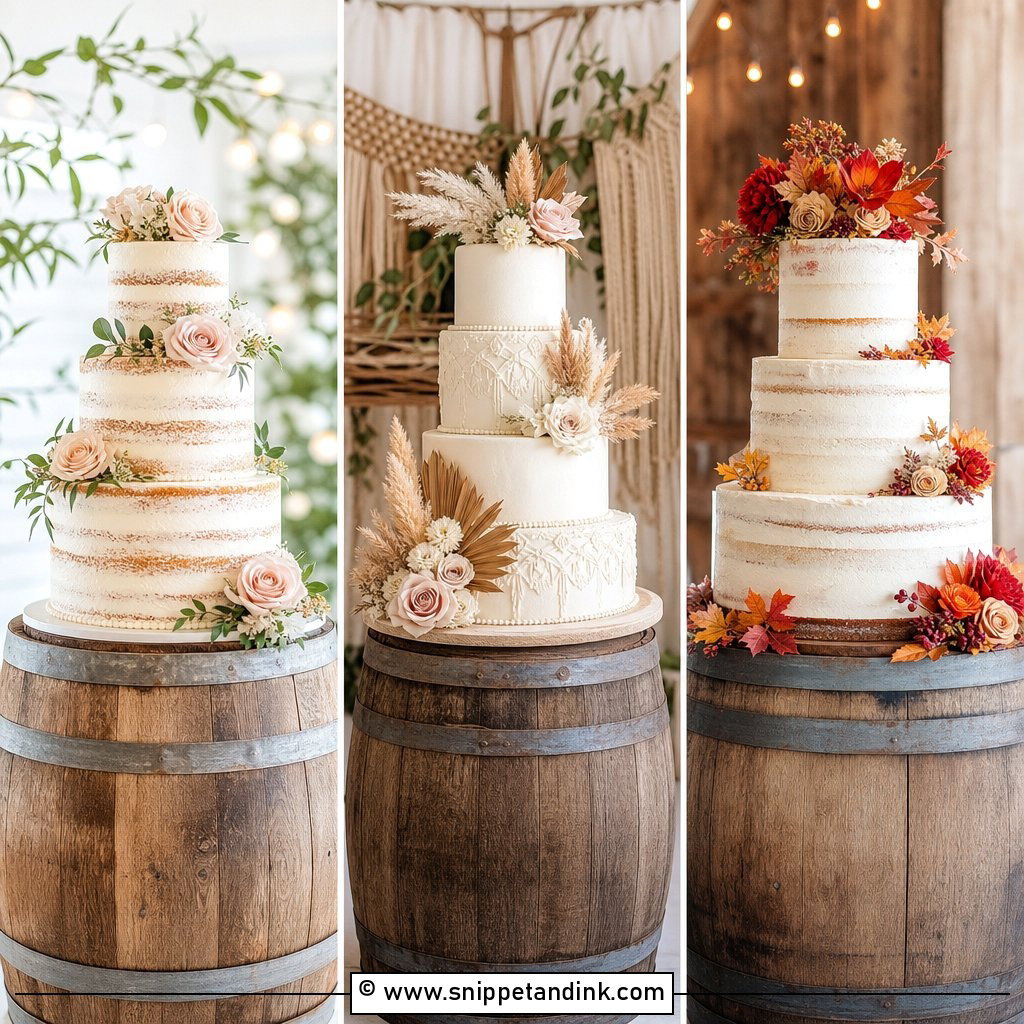
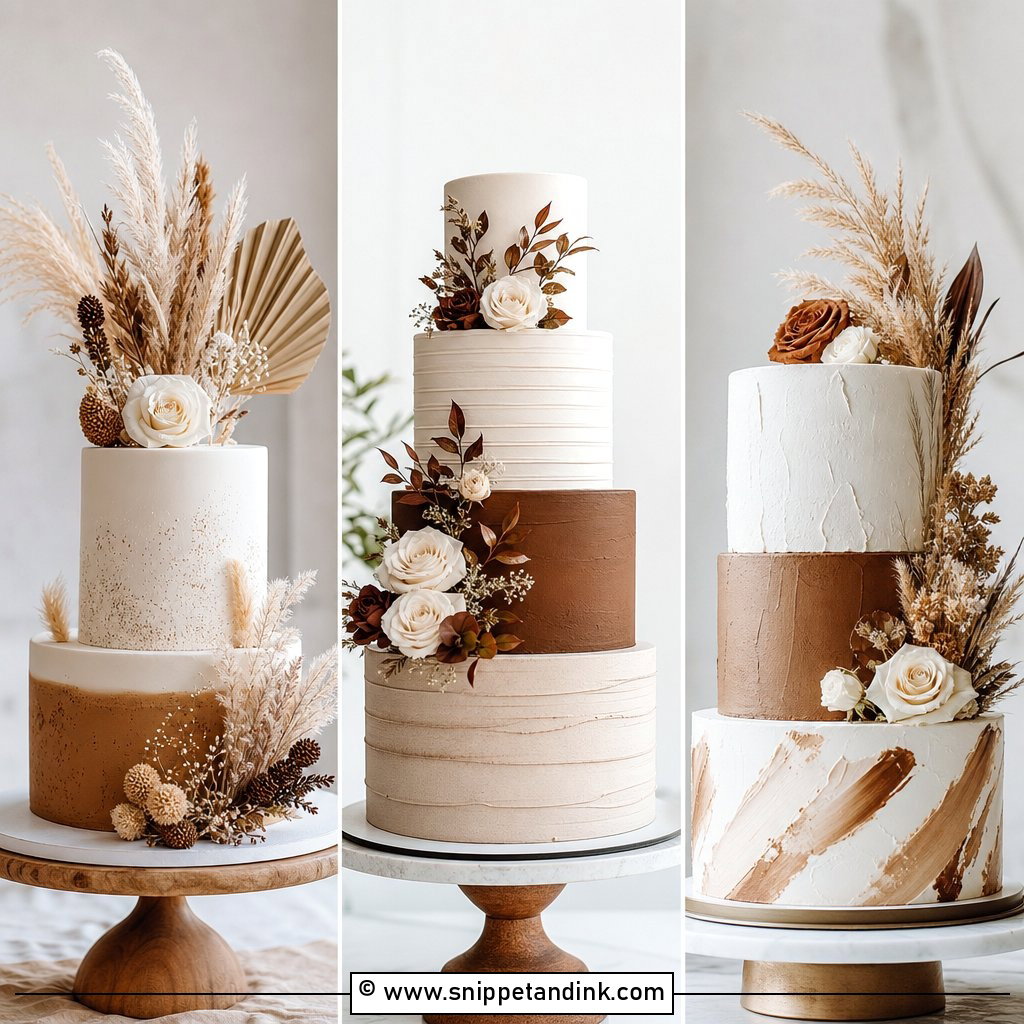
Dried flowers give greenery a boho, earthy feel. Dried grasses, small neutral blooms and muted leaves work well together in ivory, beige, sage and tan. I place them in clean clusters rather than everywhere. Dried pieces are often treated or dyed, so they need a barrier, a small pick or wrap, between them and the frosting. A tall two- or three-tier cake gives the arrangement room. They don’t wilt, which helps at outdoor receptions.
24. Greenery Wedding Cake With Ruffles

Ruffles add movement, and I limit them to one tier so the cake stays balanced. Buttercream ruffles are piped with a petal tip in overlapping rows; they are soft and do slump in heat, so the cake should be kept cool until it goes out. A small greenery cascade connects the ruffled tier to the plain ones. Ivory and sage are the safest pairing, with pale blush flowers for warmth.
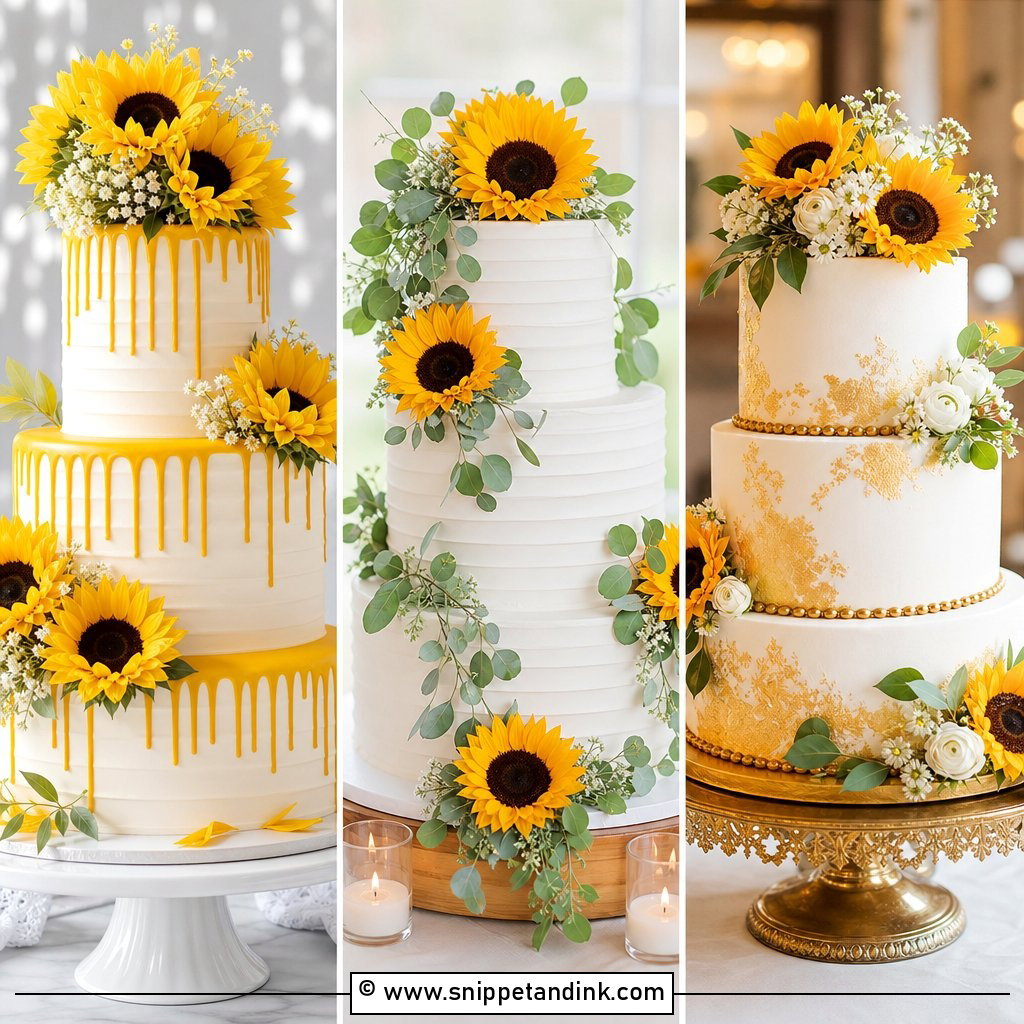
25. Greenery Wedding Cake With Cupcakes

A small two-tier cake surrounded by cupcakes is practical for relaxed receptions. Cupcakes are quicker to serve than slicing a large cake. Use the same buttercream color and greenery across everything so it looks like one display. Cupcakes can have a tiny leaf, a frosting swirl or a mini white flower. Keep the main cake slightly taller so you still have a cake to cut. I’d plan a cupcake per guest plus a few extra.
Who Dresses the Cake on the Day, and When
Greenery cakes fall into a gap between two suppliers. The baker delivers the cake; the florist has the leaves. If nobody agrees who puts them on, the cake can sit bare on the table while both assume the other is handling it.
I ask couples to settle it at the booking stage. Either the florist sends a box of prepared, washed stems to my kitchen, or the florist meets me at the venue during setup. Fresh leaves should go on within an hour or two of the reception starting, since herbs and soft foliage wilt quickly in a warm room. Hardy greenery like olive or rosemary can go on a little earlier.
Semi-Naked Cakes Dry Out Faster Than You’d Expect
Rustic cakes often mean semi-naked buttercream, and that thin coat leaves the sponge exposed to air. In a warm barn or outdoor tent, the edges can start to dry within a few hours. Brushing the sponge with syrup during baking helps, and so does keeping the cake boxed until just before guests arrive.
- Schedule the cutting earlier in the evening for summer outdoor receptions.
- Keep the cake table in shade and away from heaters.
- Cover the cake with a cloche or cake dome if insects are likely; open barn doors invite wasps.
Let the Leaves Support the Cake, Not Hide It
Rustic greenery cakes can go simple, boho or elegant depending on the frosting, leaves and display. The one rule I’d keep is balance: the leaves should frame the cake, not cover it. Match the finish to the venue, from semi-naked buttercream in a barn to smooth fondant for a more formal garden. And talk to your baker and florist together about which greenery is safe to use, especially with real stems.
You'll Like These Ideas:


Leave a Reply