
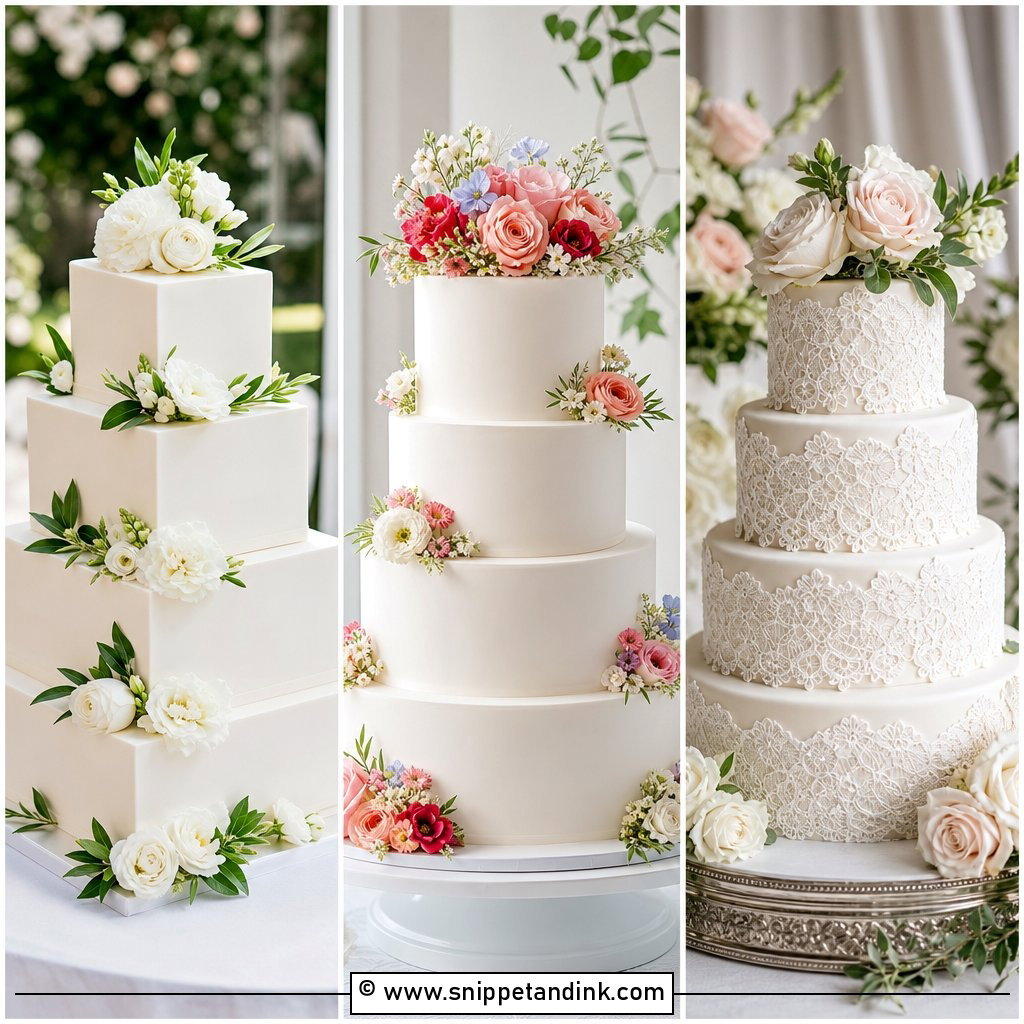
Piped icing is back on wedding cake tables, and I couldn’t be happier about it, because piping is the part of my job where you can actually see the hours. Couples are asking again for Lambeth piping, shell borders, buttercream swags and vintage overpiping, the layered style where each line sits on the last to build relief. The same techniques can look quiet on a church-hall cake or grand in a ballroom, depending on how heavily they’re stacked. Below are twenty piped designs I’d happily make, with notes on what each one asks of the icing, the baker and your venue.
Royal Icing or Buttercream Decides Half the Design
Before we talk about patterns, I always settle the icing, because it decides which patterns are even possible. Royal icing is sugar beaten with egg white or meringue powder, and it dries rock hard. That’s what lets a drop string hang in mid-air or a lace line stay razor thin. Buttercream never fully sets, so it gives you softer, rounder piping that tastes better but moves when it gets warm.
A quick way to decide
- Fine stringwork, lace or tiny scrolls: royal icing, usually over fondant.
- Shells, rosettes, ruffles and swags with a relaxed look: buttercream works well.
- An outdoor summer reception: firmer crusting buttercream or royal icing details, and a shaded cake table.
- Bright white wanted: royal icing or fondant, since butter tints everything slightly ivory.
Plenty of my cakes mix the two, with a buttercream or fondant coat and royal icing piped on top. If a baker only works in one medium, that’s fine, but make sure the designs you’re saving match what they actually pipe.
1. White Lambeth Wedding Cake
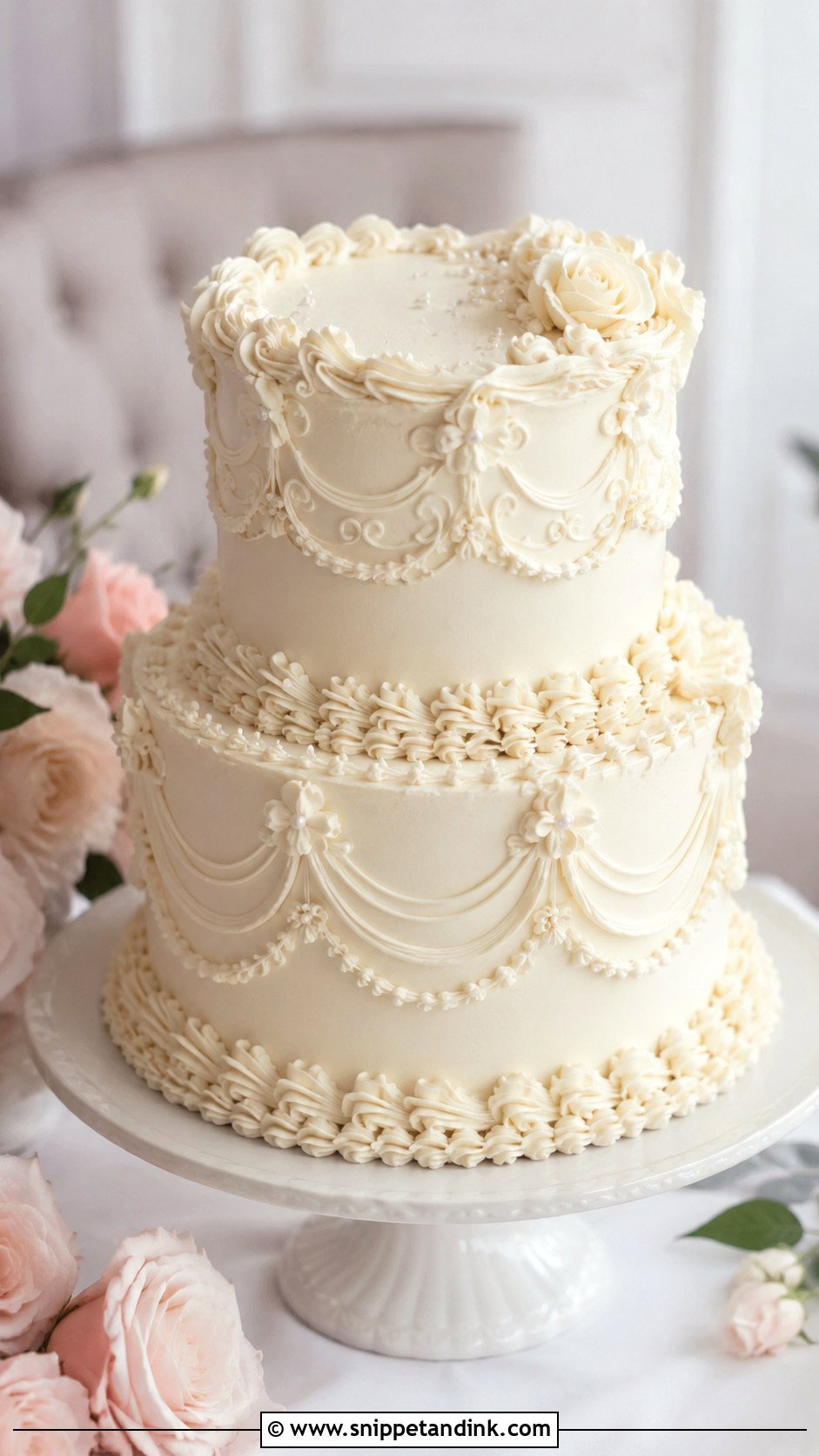
Lambeth is the style most people picture when they hear “piped cake”: borders built in layers, swags hanging beneath them, shells and scrolls stacked so every tier throws its own shadow. Keeping it all white matters more than it sounds, because the depth comes from shadow and colour flattens it. I’d plan two to four tiers and give each a slightly different border so the eye travels upward. What separates a good Lambeth from a messy one is the base coat. Any bump under the piping gets exaggerated by the overpiping, so I spend nearly as long smoothing as I do piping.
2. Royal Icing Wedding Cake
Royal icing is the traditional medium for a reason: it dries hard, so a scroll or a drop string holds exactly the shape it was piped in. It’s my first choice for fine lace, tiny pearls and sharp shells, and it sits best on a fondant-covered cake or a firm iced surface rather than soft buttercream. The trade-off is humidity. Royal icing softens in damp air and dislikes the fridge, so I ask where the cake will stand before I promise delicate stringwork. I usually keep the upper tiers lighter and let the bottom tier carry the fullest border, which stops a formal cake looking top-heavy.
3. Buttercream Piping Wedding Cake
Buttercream piping is softer at the edges, and that’s its charm. Shells, rosettes, rope and swags all keep a slightly rounded, hand-made look that suits a garden or barn reception better than crisp royal icing. The catch is temperature. Once a room warms up, meringue buttercreams begin to slump, so a summer cake outdoors needs shade and a late setup. Pure white is also harder than people expect, since butter is naturally yellow; ivory, champagne or pale blue come out more even and look richer in person.
4. Vintage Shell Border Wedding Cake
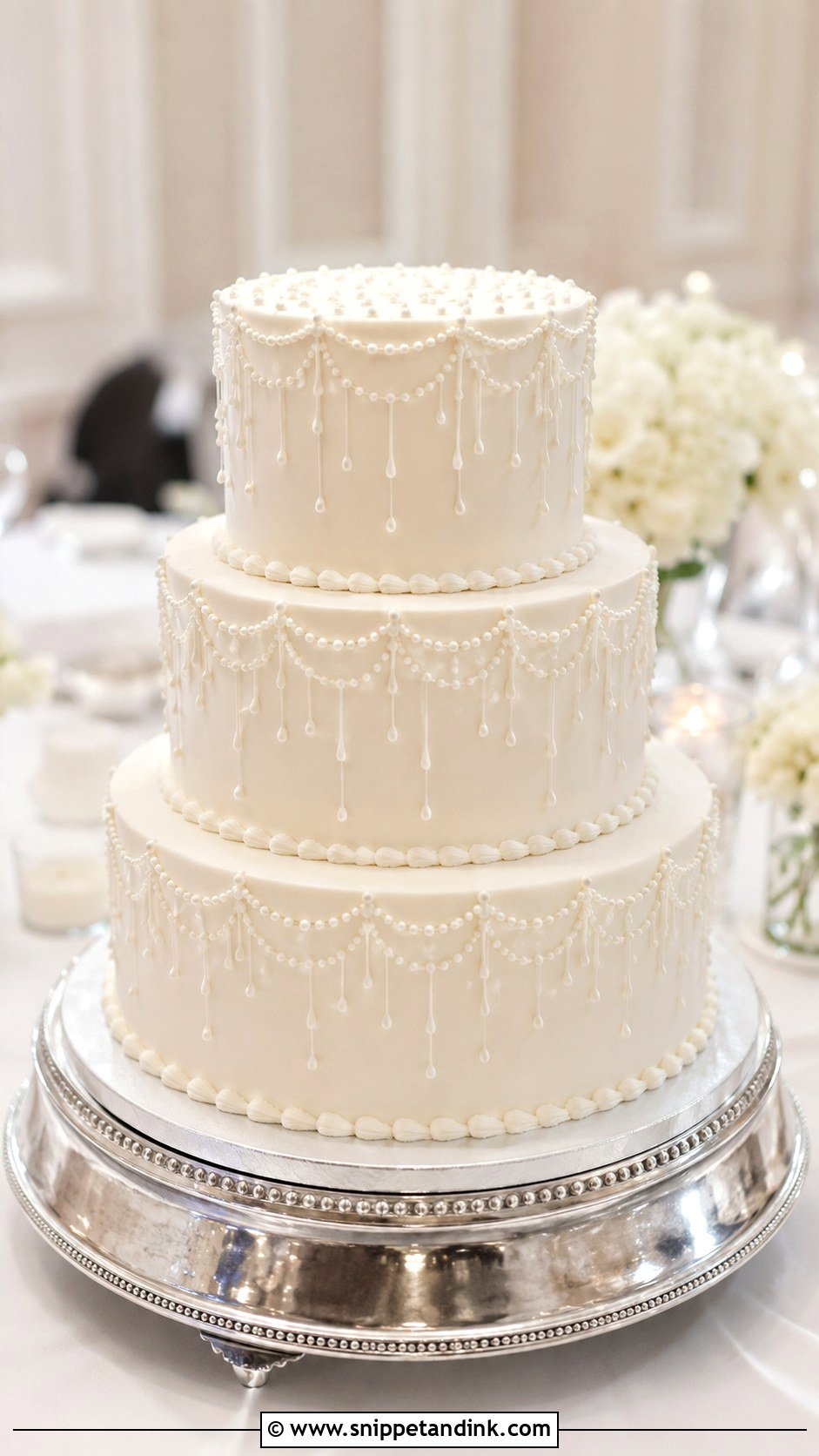
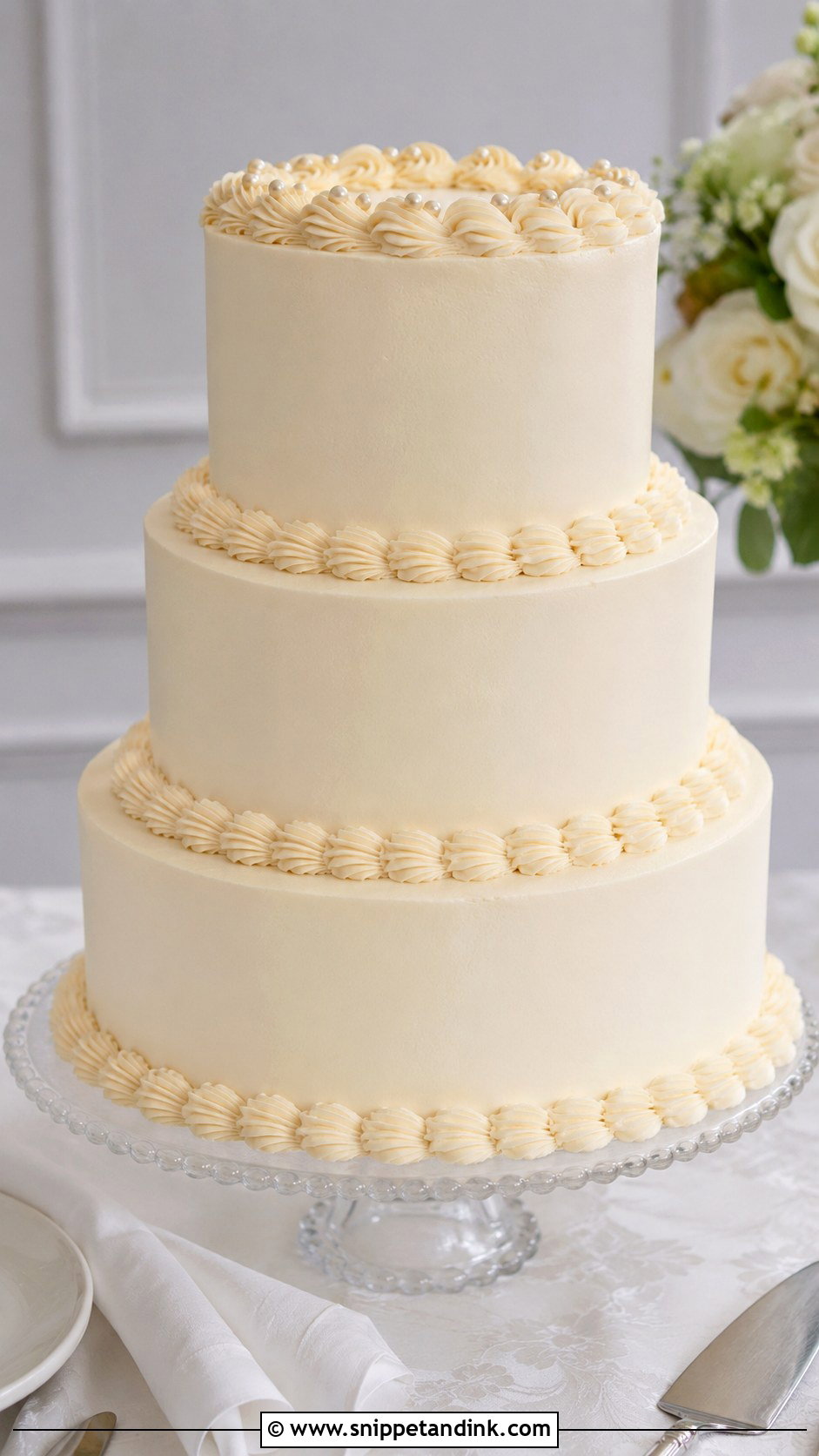
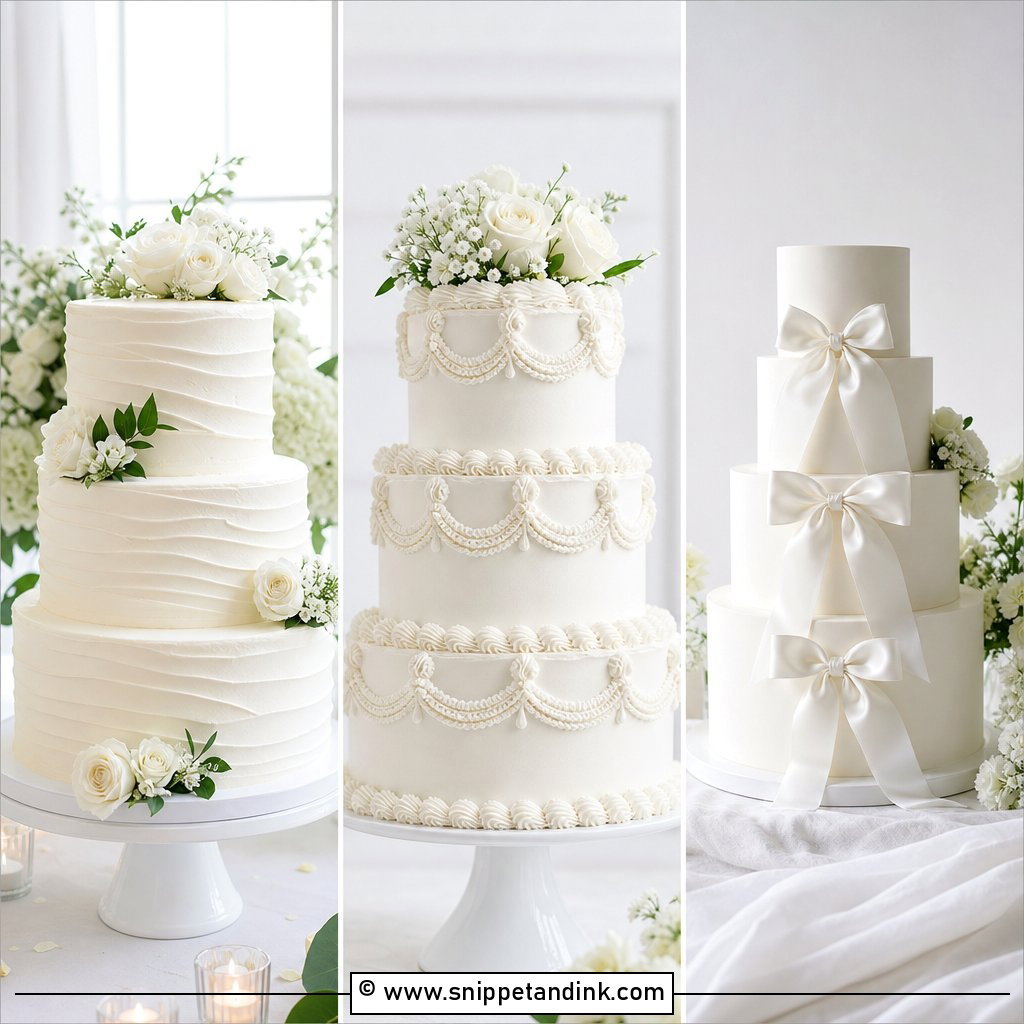
Shells are the quiet workhorse of piping. One steady squeeze-and-release with a star tip gives a border that frames the top rim, bottom edge and tier seams without taking over. I suggest shells to couples who like the traditional look but find full Lambeth too busy. On ivory buttercream, slightly raised shells catch a little shadow, and that’s plenty. Add pearls or a few small flowers and stop there.
5. Piped Pearl Wedding Cake
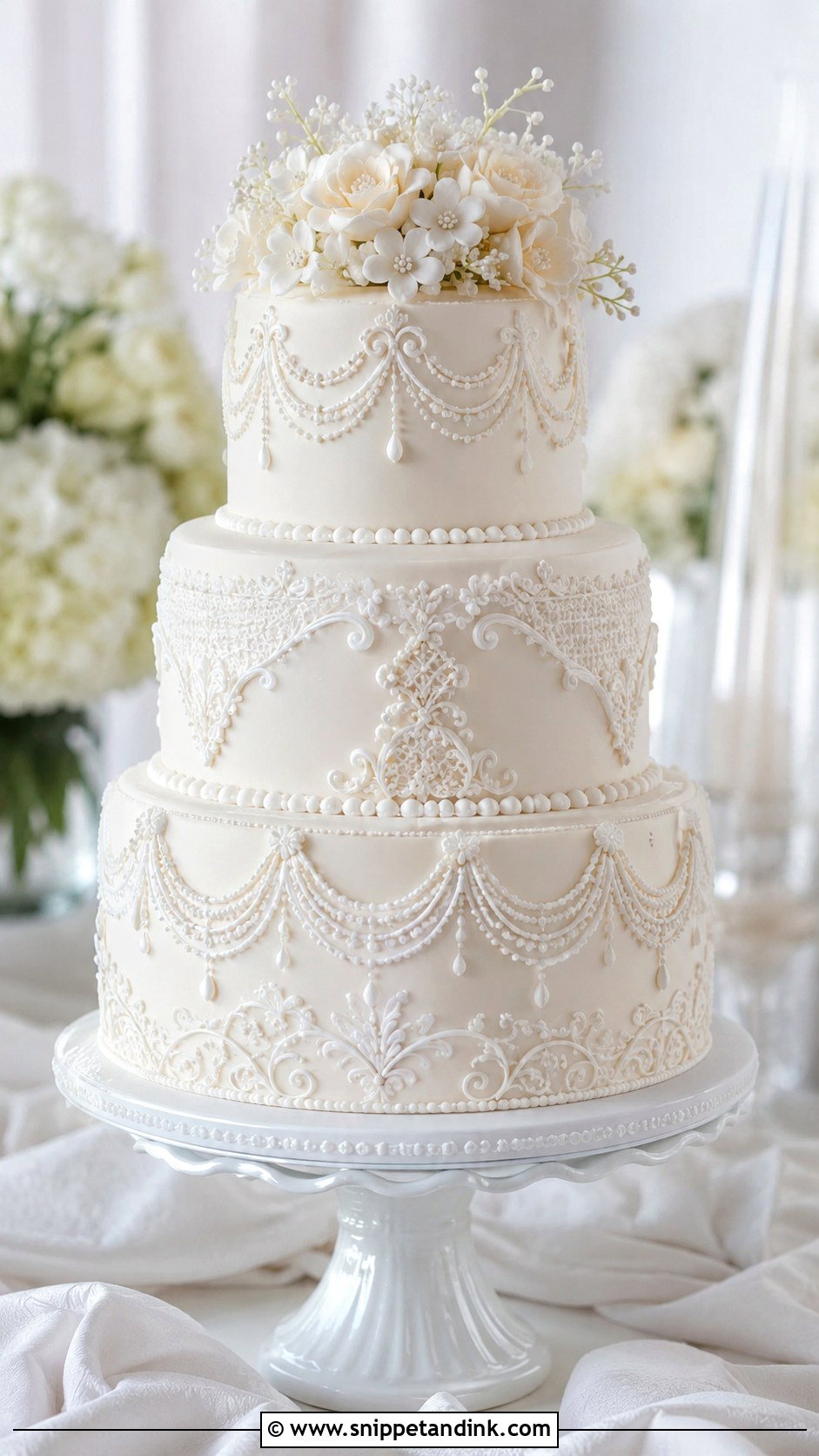
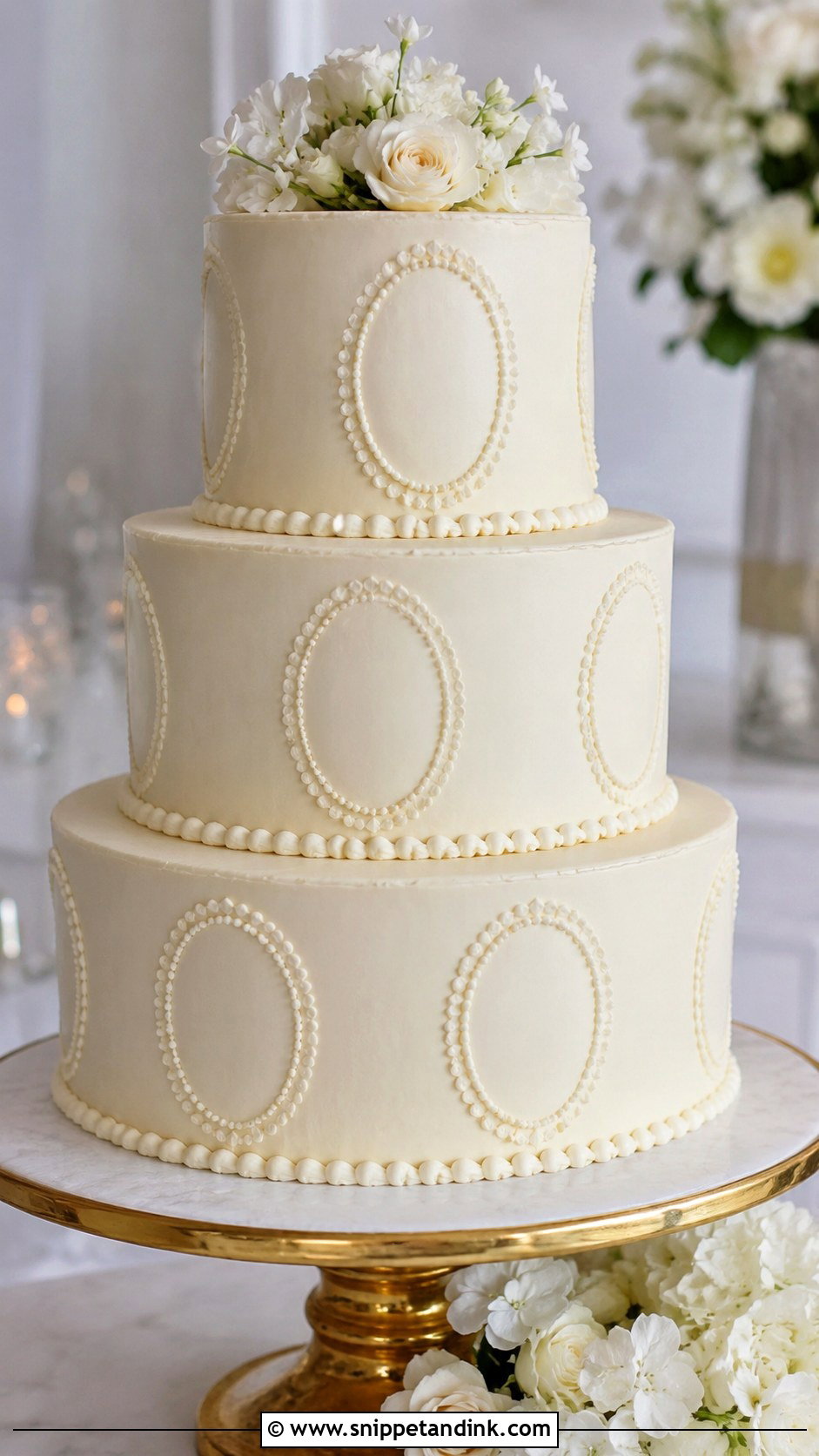
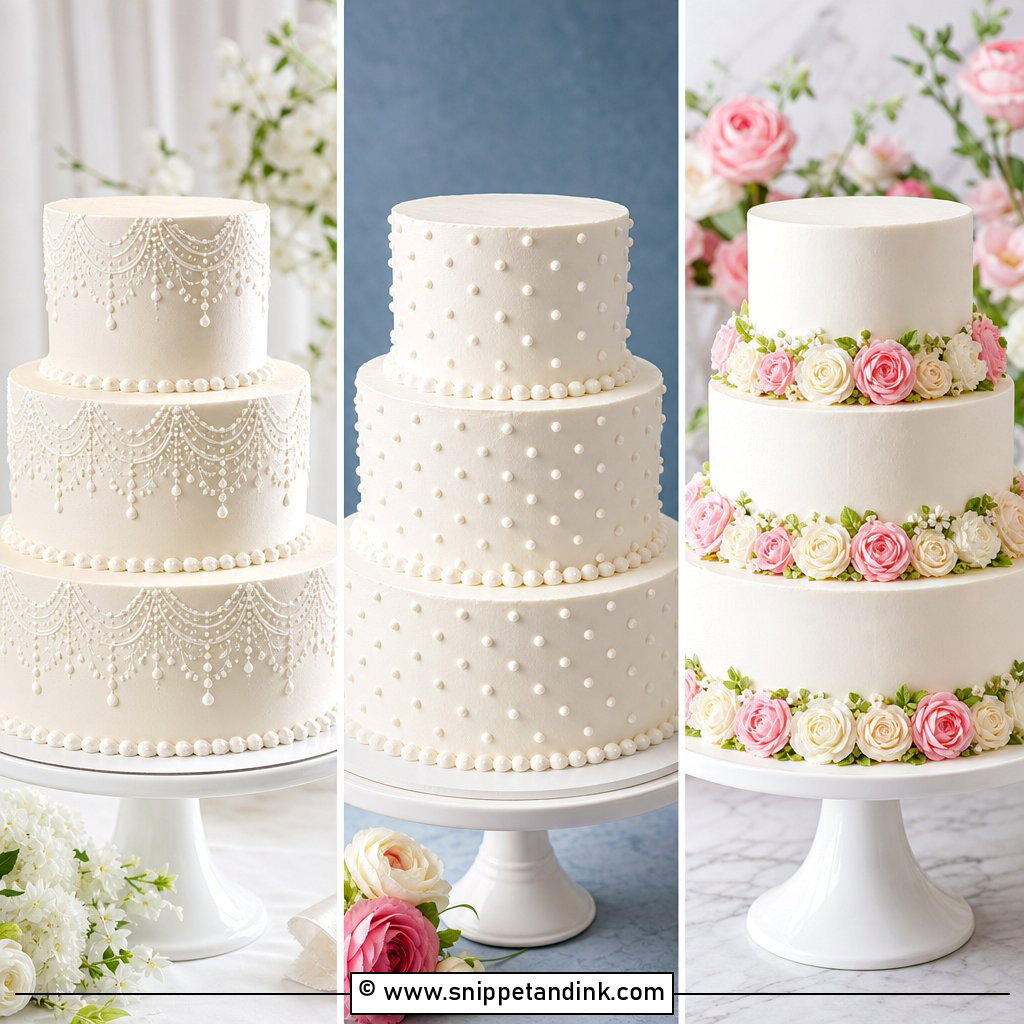
A piped pearl wedding cake is detail built entirely from dots, which sounds easy until you try to pipe two hundred of them the same size. Pearls can outline tiers, frame panels, hang as garlands or sit between shells. If the dress has beading, I match the pearl size to it, because matching scale looks far more deliberate than matching colour. Champagne-tinted pearls on white read softly on camera. And if the cake starts looking plain, a single scroll line at the top edge fixes it better than more dots.
6. Piped Lace Wedding Cake
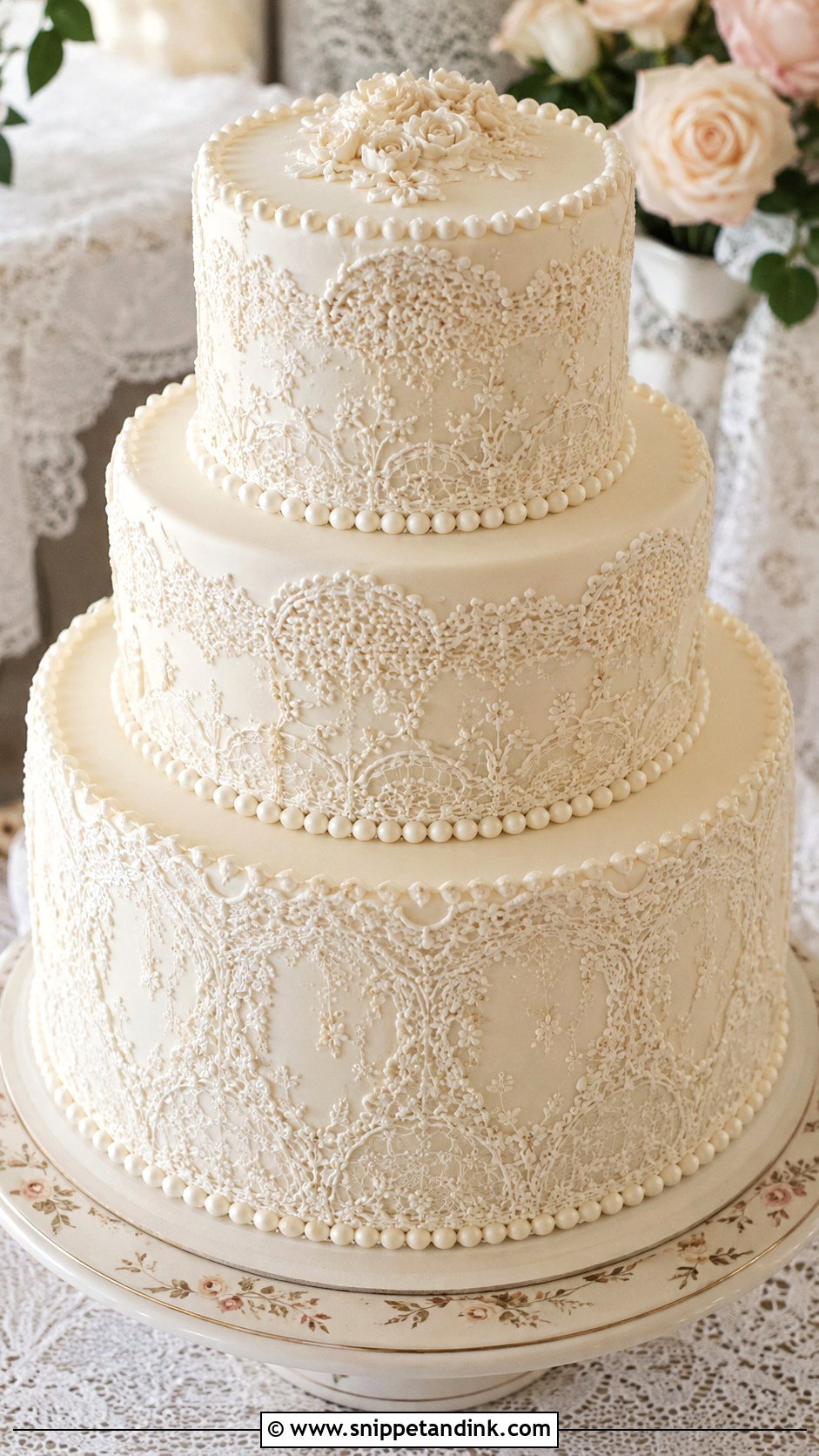
I like piped lace most when the gown or veil already has a lace pattern, because I can borrow a motif straight from the fabric. Bring a close-up photo, or a scrap from your alterations fitting, to the tasting. Fine loops, scallops and netting need a very smooth base, so this belongs on fondant or a well-chilled buttercream. White on ivory is the classic pairing, though a hint of blush makes thin lines easier to see from across the room. Keep the top tier simple; lace on every surface turns into noise.
7. Scrollwork Wedding Cake
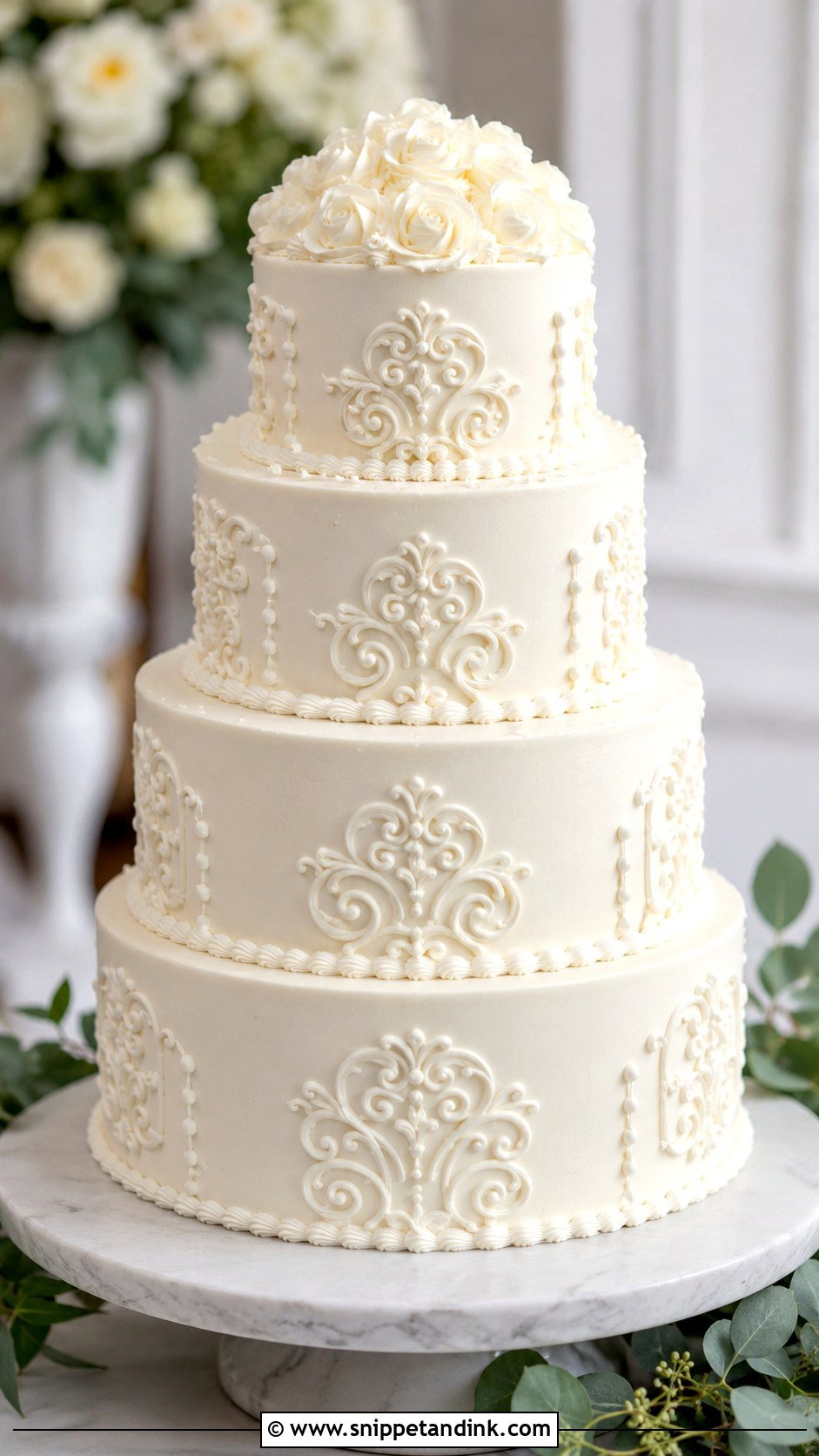
Scrolls are how I fill the height of a tall cake without leaning on big flowers. Thin royal icing lines look airy, while raised buttercream scrolls feel heavier and more baroque. The part couples never see is the planning. I mark the repeats on each tier before piping so the pattern closes neatly at the back, because a cake gets photographed from more angles than you’d guess. A few pearl dots at the scroll ends finish it.
8. Piped Floral Wedding Cake
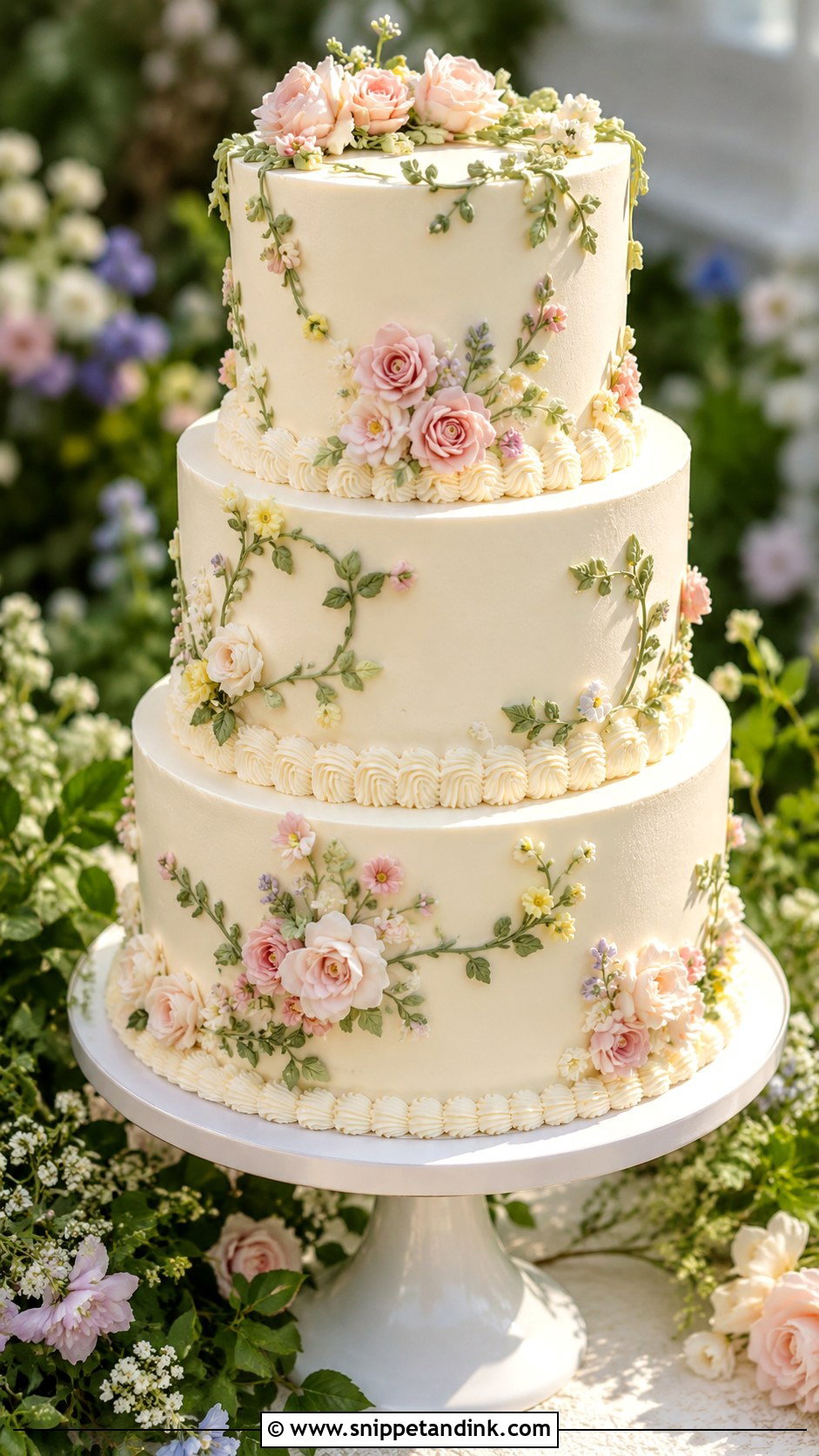
Piped flowers are the fully edible answer to fresh stems, and you never have to worry about which blooms are safe against the icing. Roses, blossoms, vines and buds can go straight onto the tiers, clustered between borders for a formal cake or scattered loosely for a softer one. I vary the flower sizes on purpose, since identical blooms in a row look stamped. Sage leaves with ivory or blush flowers work in any season, not just spring.
9. Piped Rose Wedding Cake
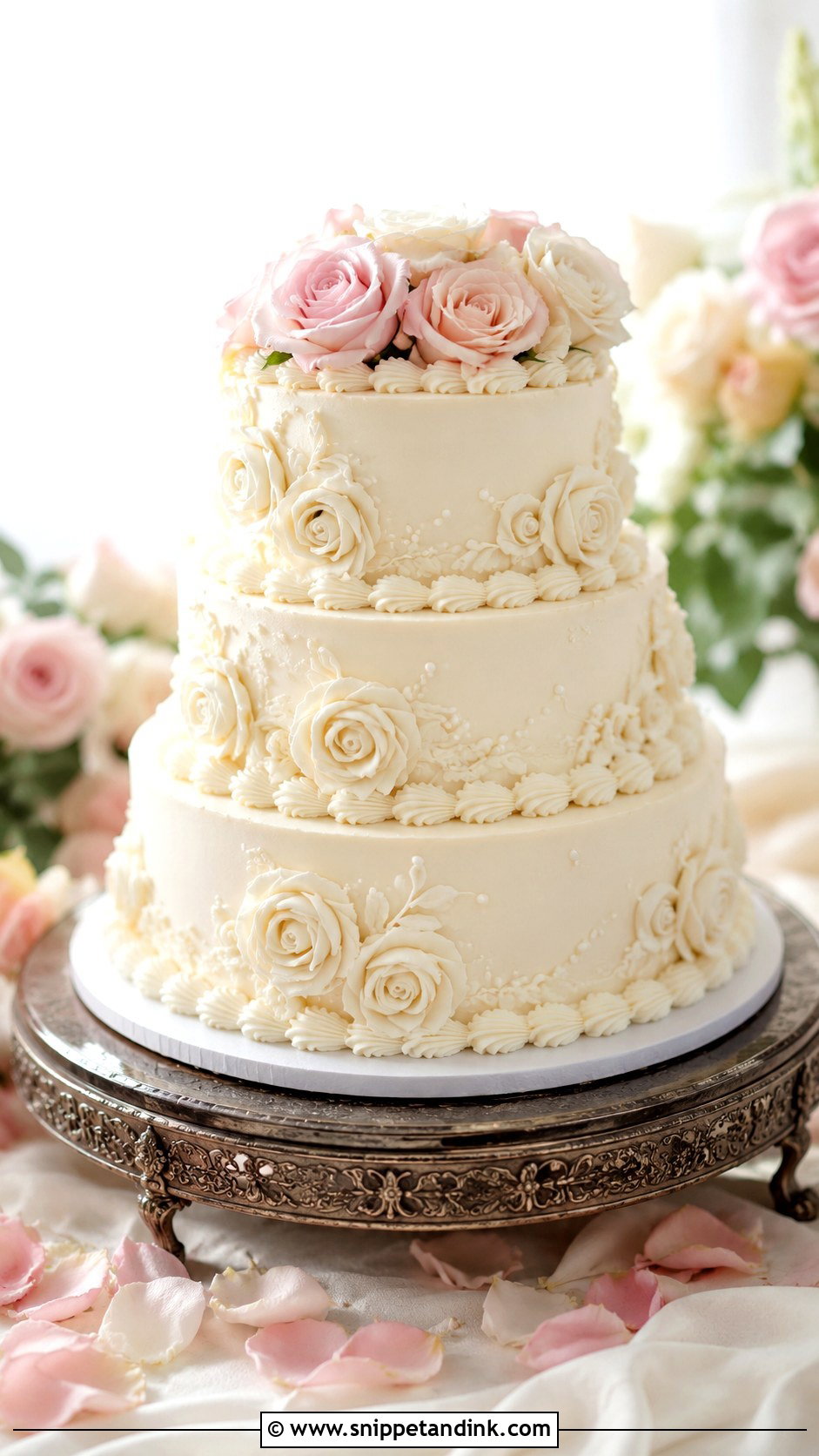
Buttercream roses are built petal by petal on a flower nail, and the size you pick changes the whole cake. Small buds tucked along the tier edges stay traditional; full rosettes in a ring feel more retro, which some couples love. For the classic version I’d go ivory on ivory with shells and pearl dots. If you want contrast, tint the roses dusty pink and keep the base pale. Restraint matters here. Once roses cover more than about a third of a tier, the piping around them disappears.
10. Drop String Wedding Cake
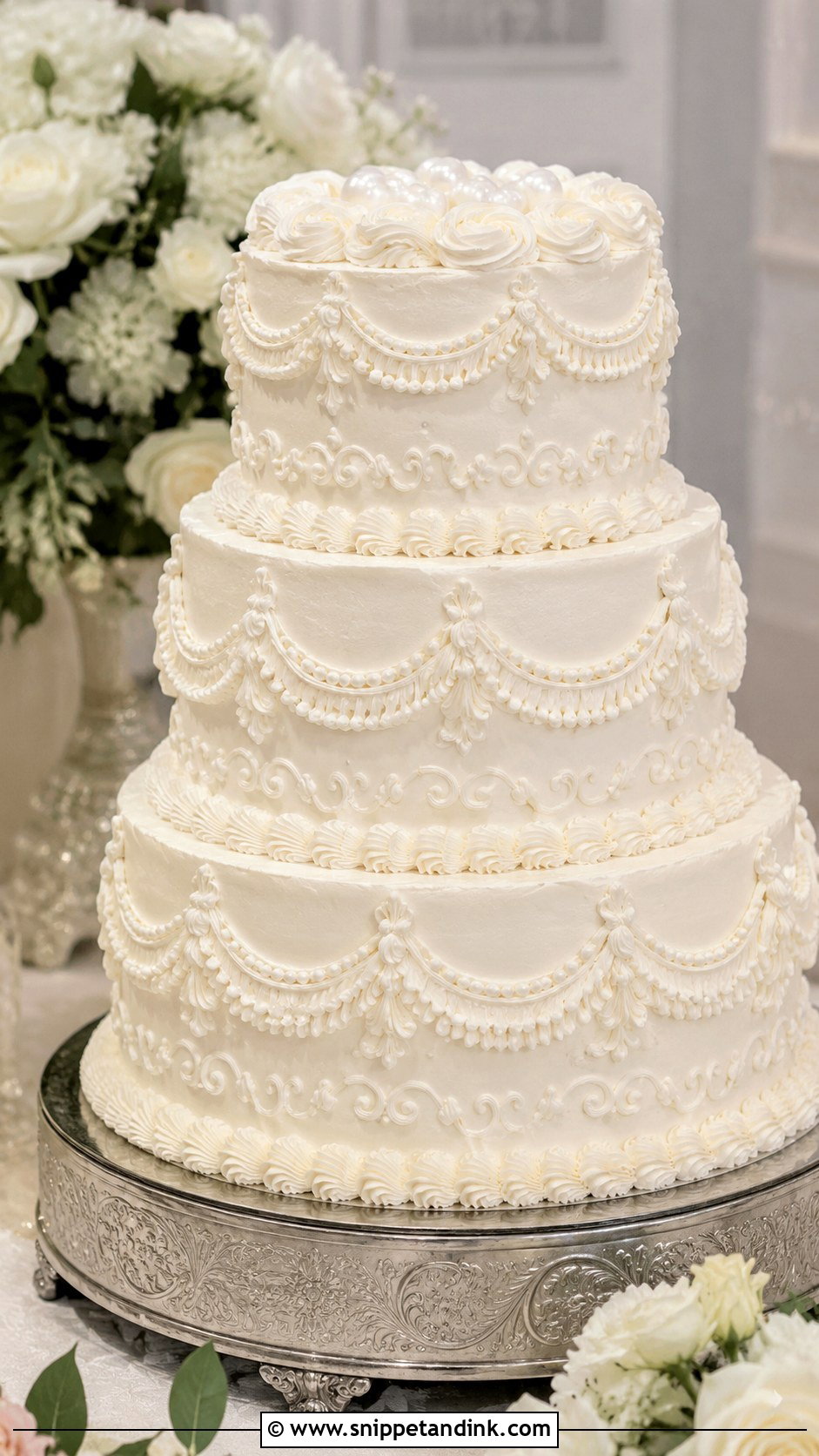
Drop strings are the technique I’d least like to rush. A thin line of royal icing is drawn away from the tier and left to fall into a curve under its own weight, then attached again, over and over around the cake. It takes steady hands, exactly the right icing consistency and a cake that isn’t moving. A skilled baker can pipe softer buttercream strings, but they won’t hang as finely. Because a sharp knock can snap royal icing strings, ask your baker how they transport these cakes and whether they finish them at the venue.
11. Piped Garland Wedding Cake
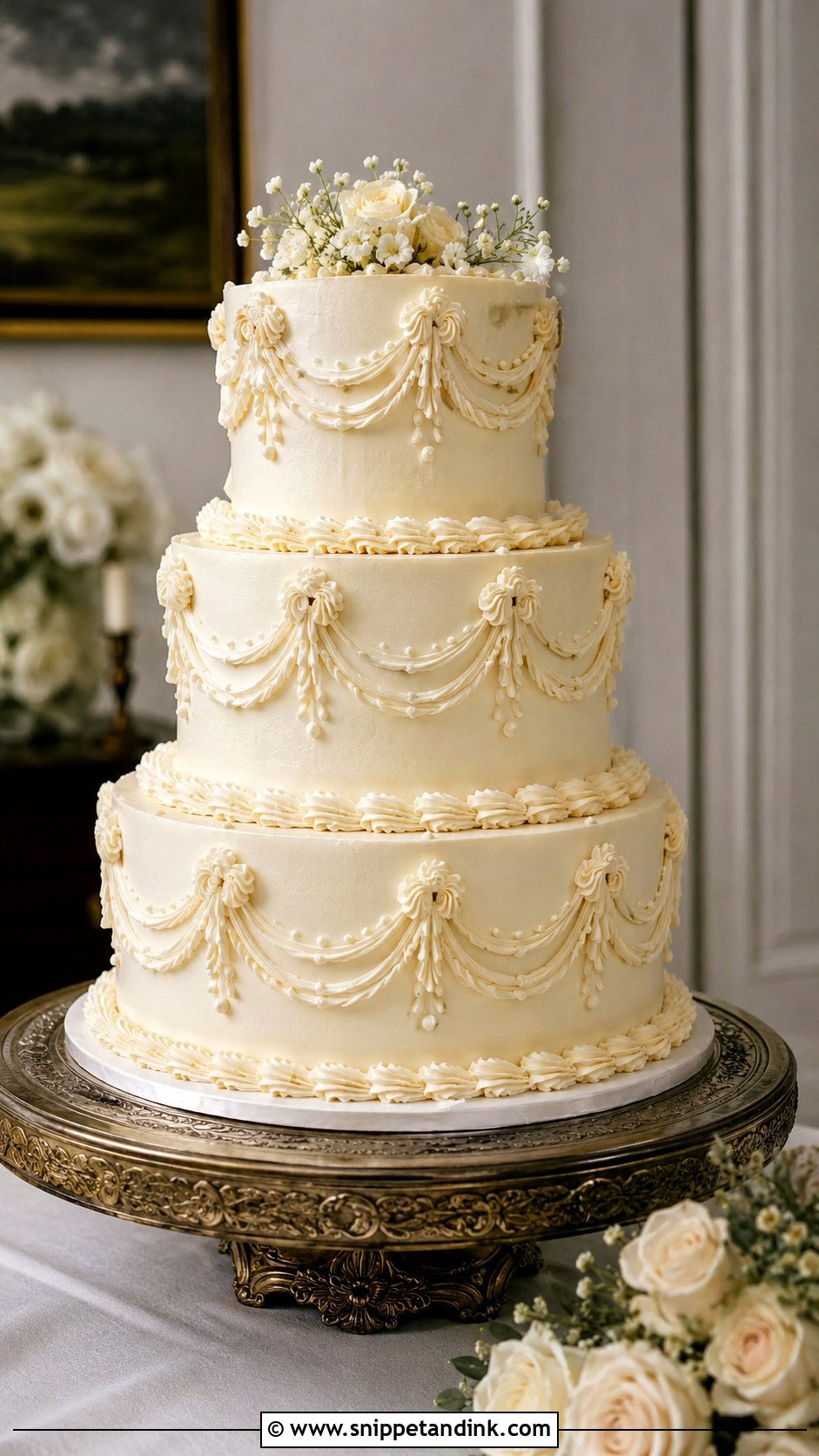
Garlands are swags that mimic draped fabric, and they give a formal cake some movement. They can hang around each tier, link piped rosettes or frame small oval panels. I divide each tier with light marks before piping so every swag drops to the same depth; uneven swags are the first thing guests notice. They suit a tall cake with smooth sides and a narrow palette. Finish the base with shells and a pearl line so the curves have something straight to rest against.
12. Basketweave Wedding Cake
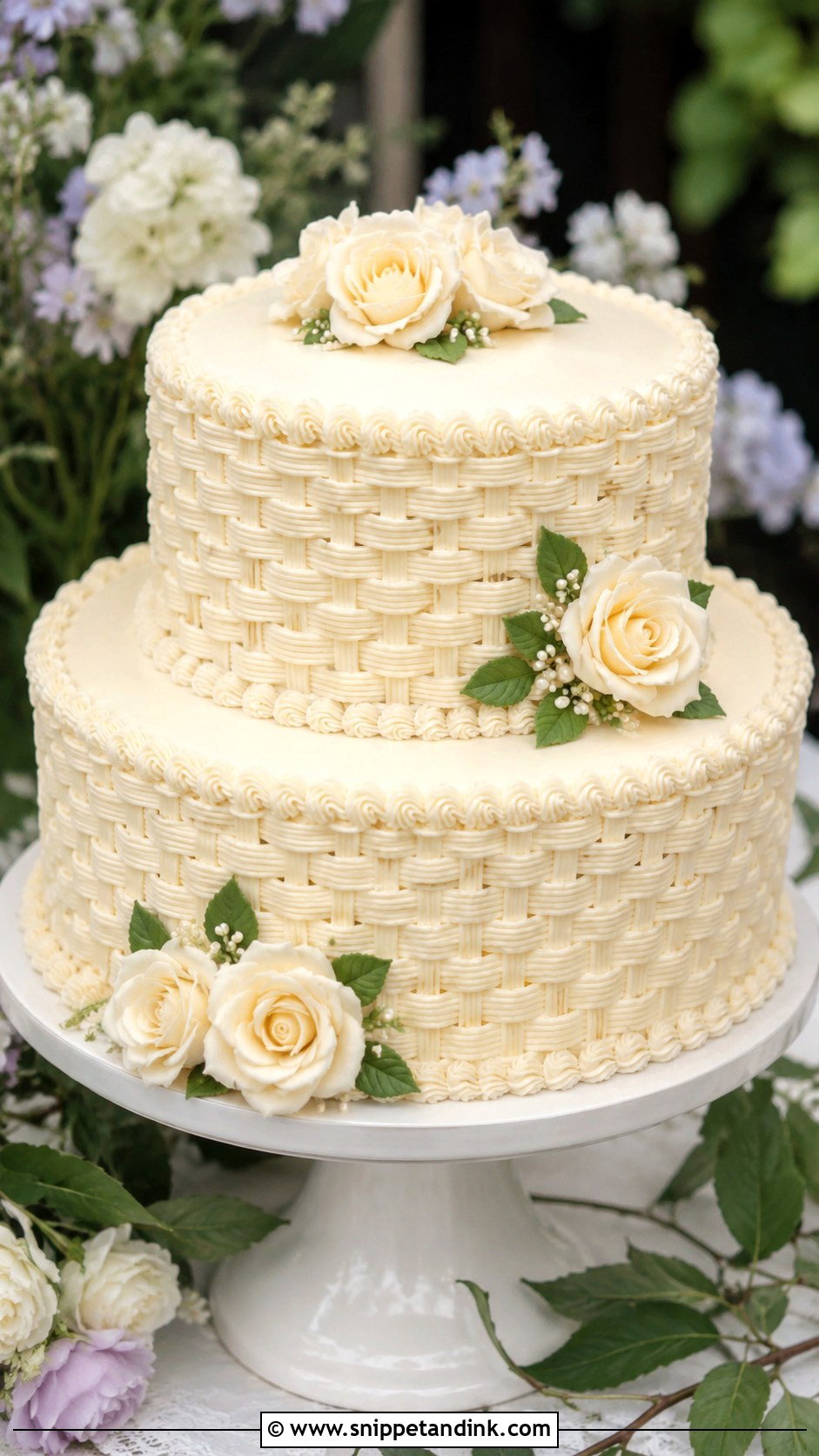
Basketweave is piped in alternating vertical and horizontal strokes with a ridged basketweave tip, and it gives a garden or spring reception cake a genuine woven texture. It reads warmer in ivory buttercream and sharper in white royal icing. I rarely weave every tier. One or two woven tiers between smooth ones keeps the cake from looking like a picnic hamper, and piped roses or a small sugar flower spray on top suit it naturally.
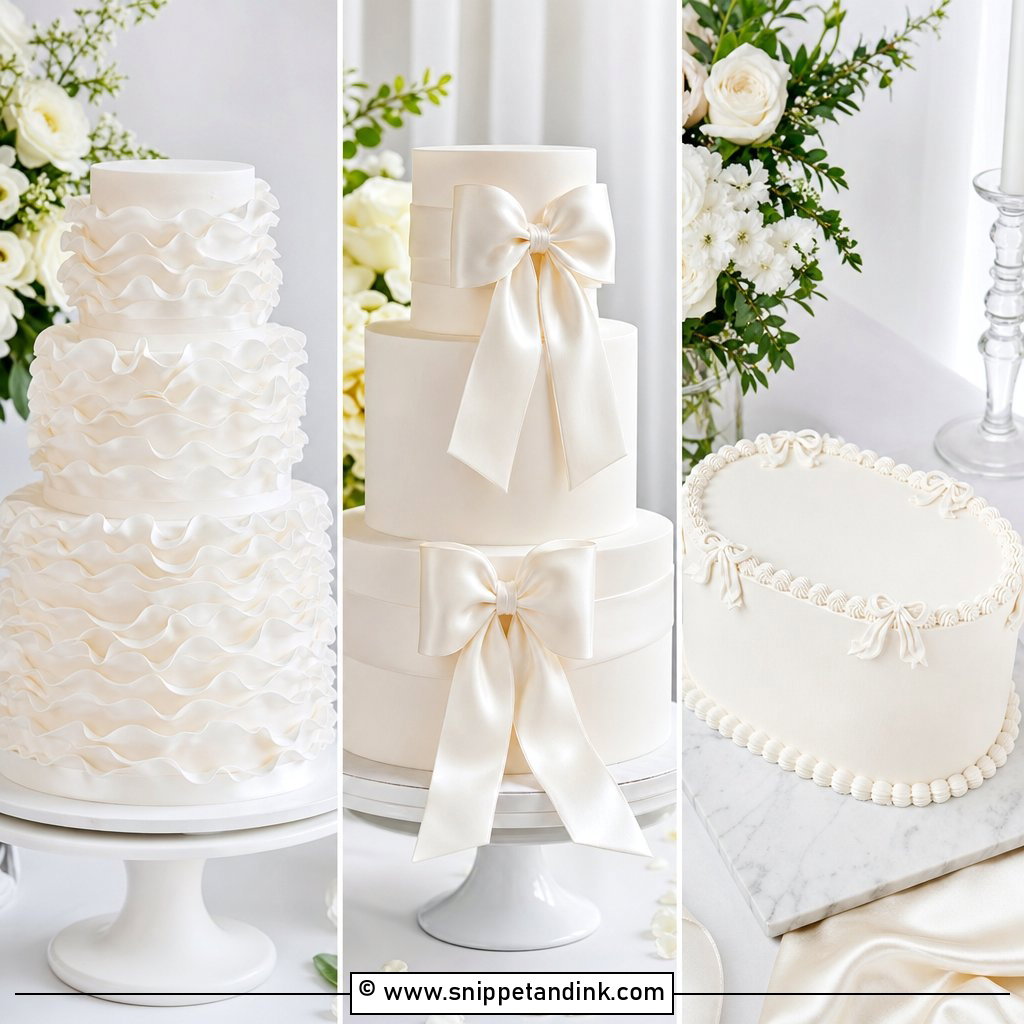
13. Piped Ruffle Wedding Cake
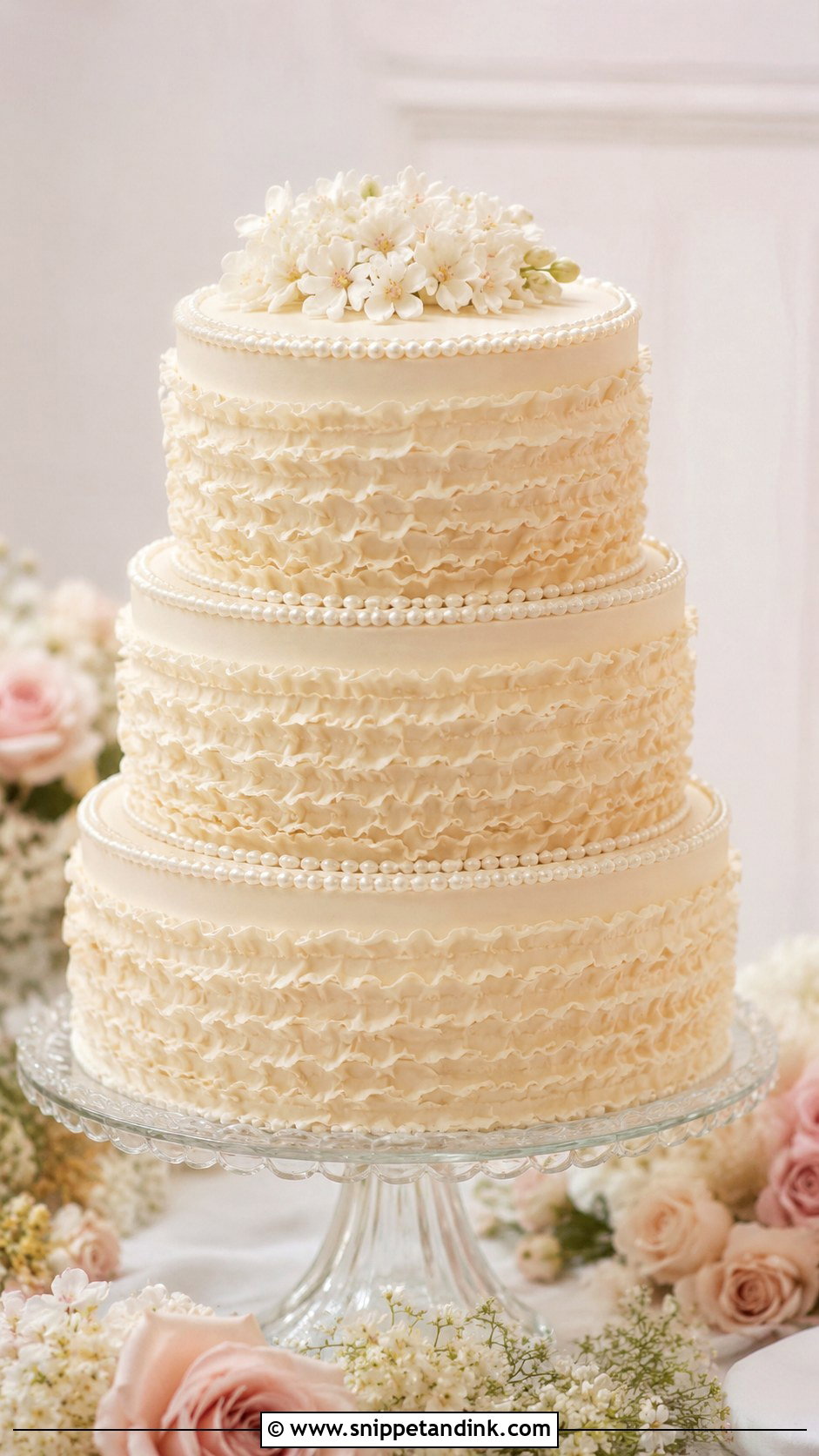
A piped ruffle wedding cake uses a petal tip held at an angle, so each ruffle folds over as it goes on. Buttercream is the right medium; royal icing ruffles look stiff. Rows around every tier feel soft, a single ruffle at the base feels tailored, and vertical ruffle panels are the most formal of the three. Ruffles carry a lot of buttercream, which matters in a warm room and when the cake is being sliced. A fine pearl line or a little scrollwork between rows gives them structure.
14. Heart Lambeth Wedding Cake
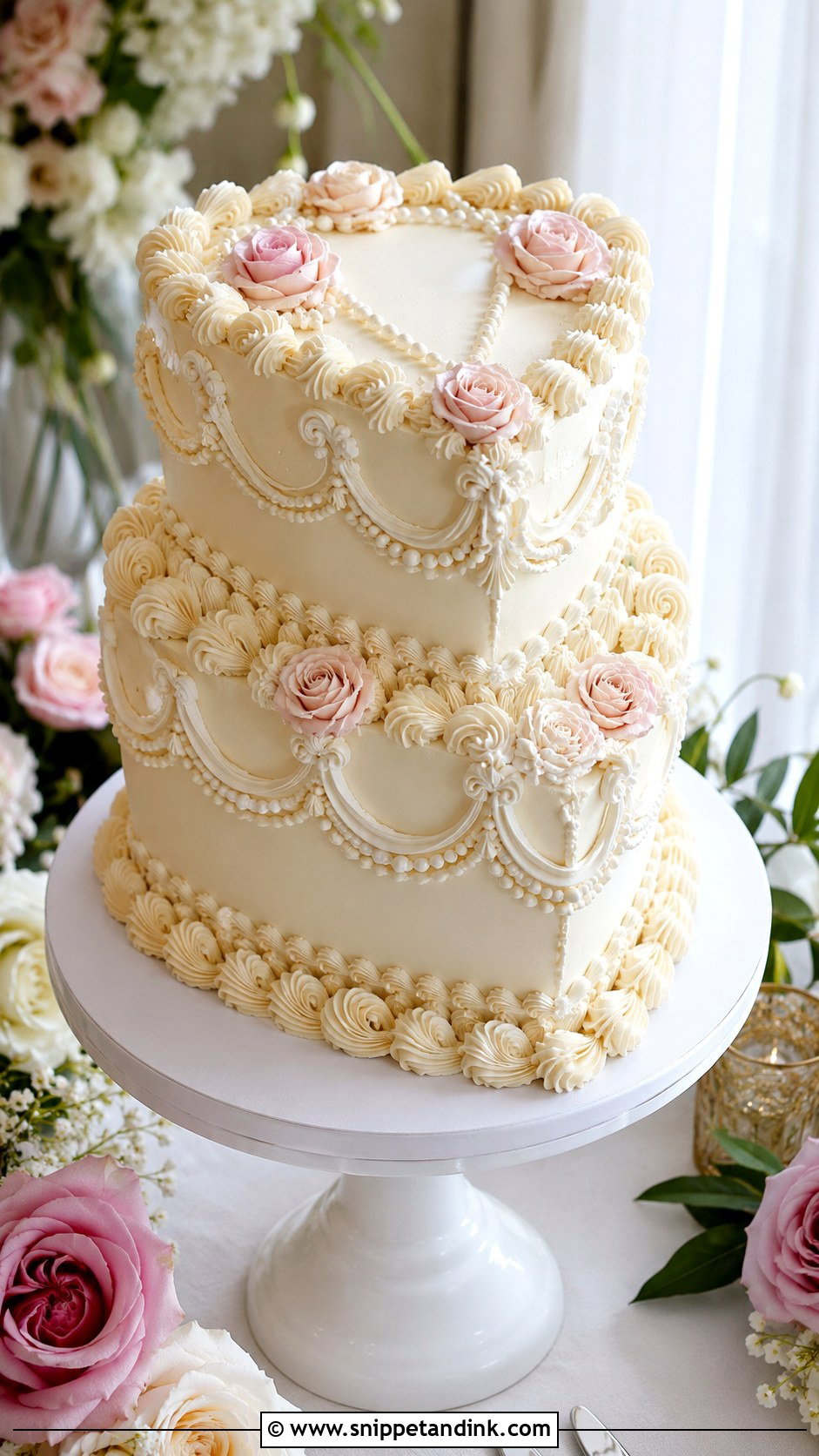
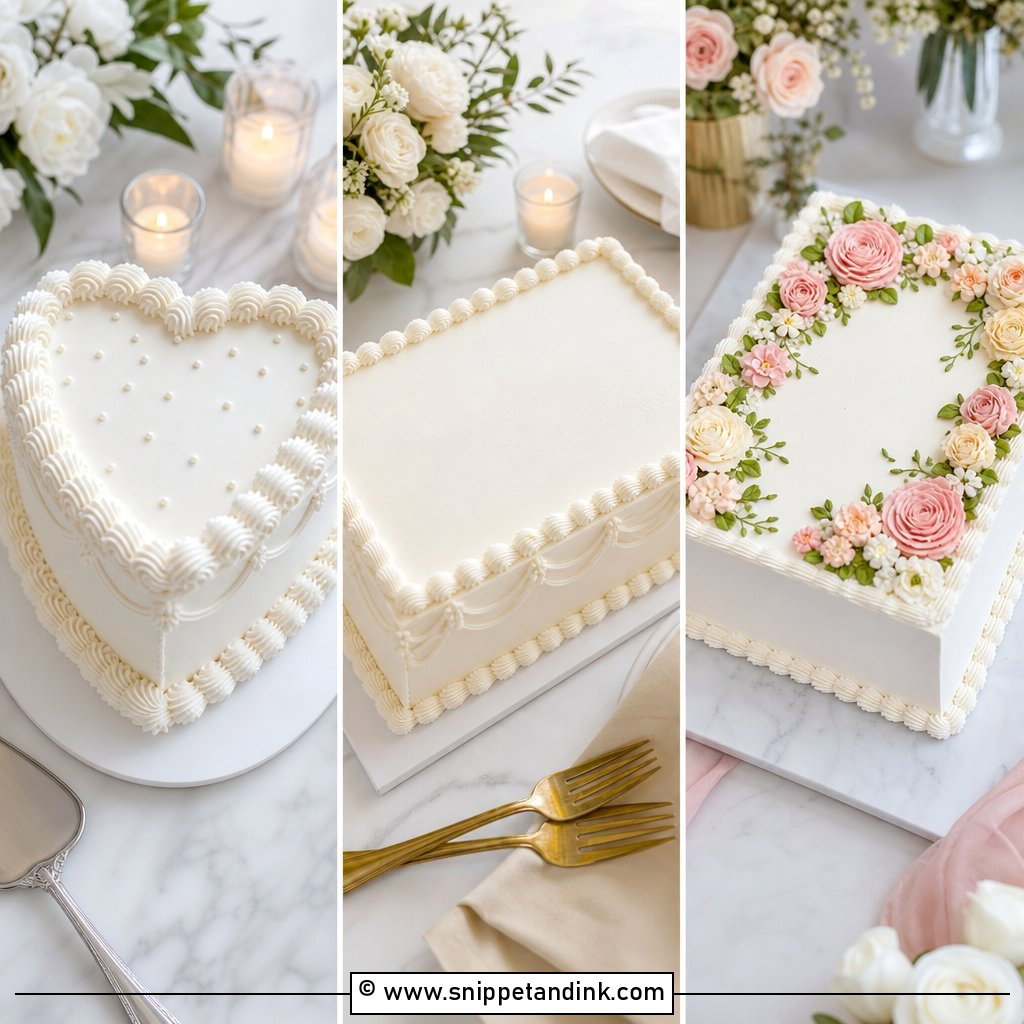
Heart-shaped Lambeth cakes have become a favourite for elopements and sweetheart tables, often as a single tier. The shape is playful, and the layered shells, swags and rosettes keep it bridal. From my side, the tricky parts are the point and the dip of the heart, where borders must turn sharply without kinking. One or two heart tiers won’t feed a big guest list, so for larger weddings I pair it with a kitchen-cut cake served from the back. Ivory with blush piping is my usual suggestion.
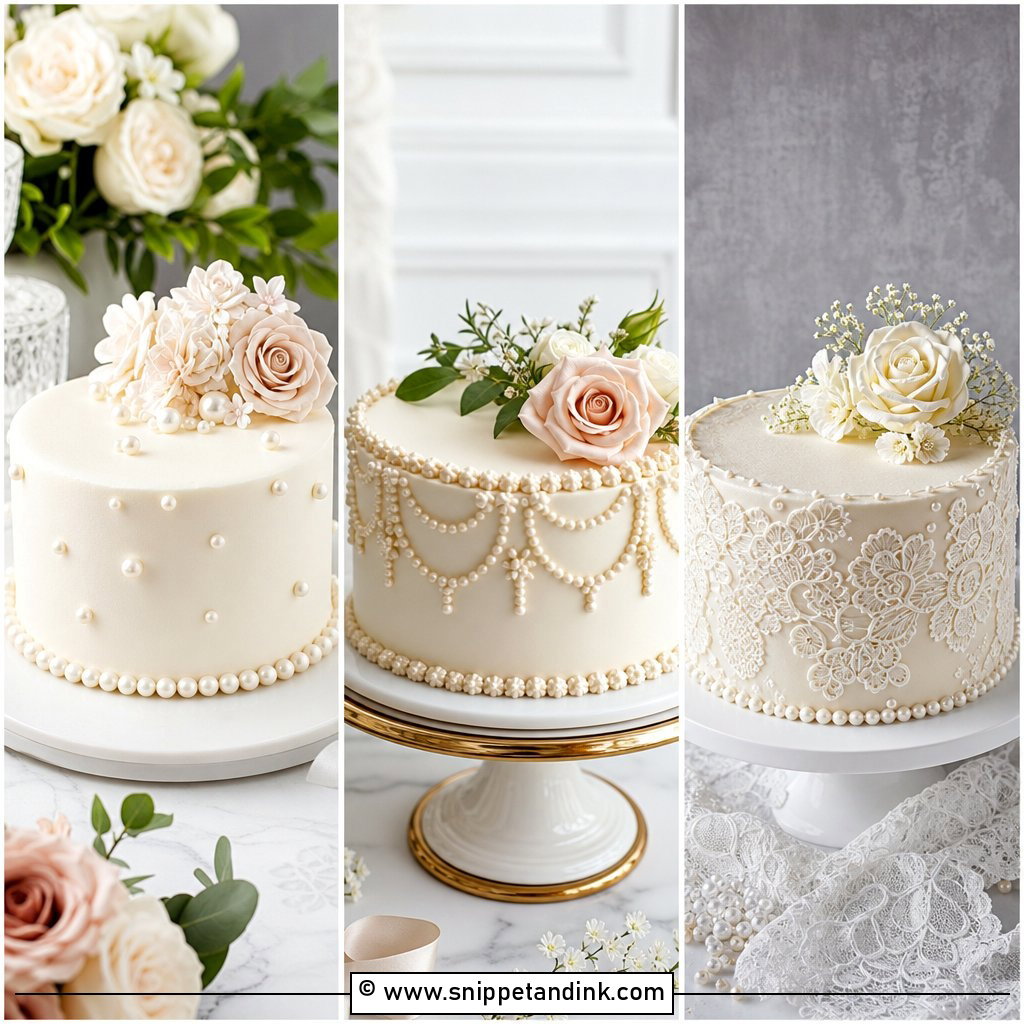

15. Tall Tier Piping Wedding Cake
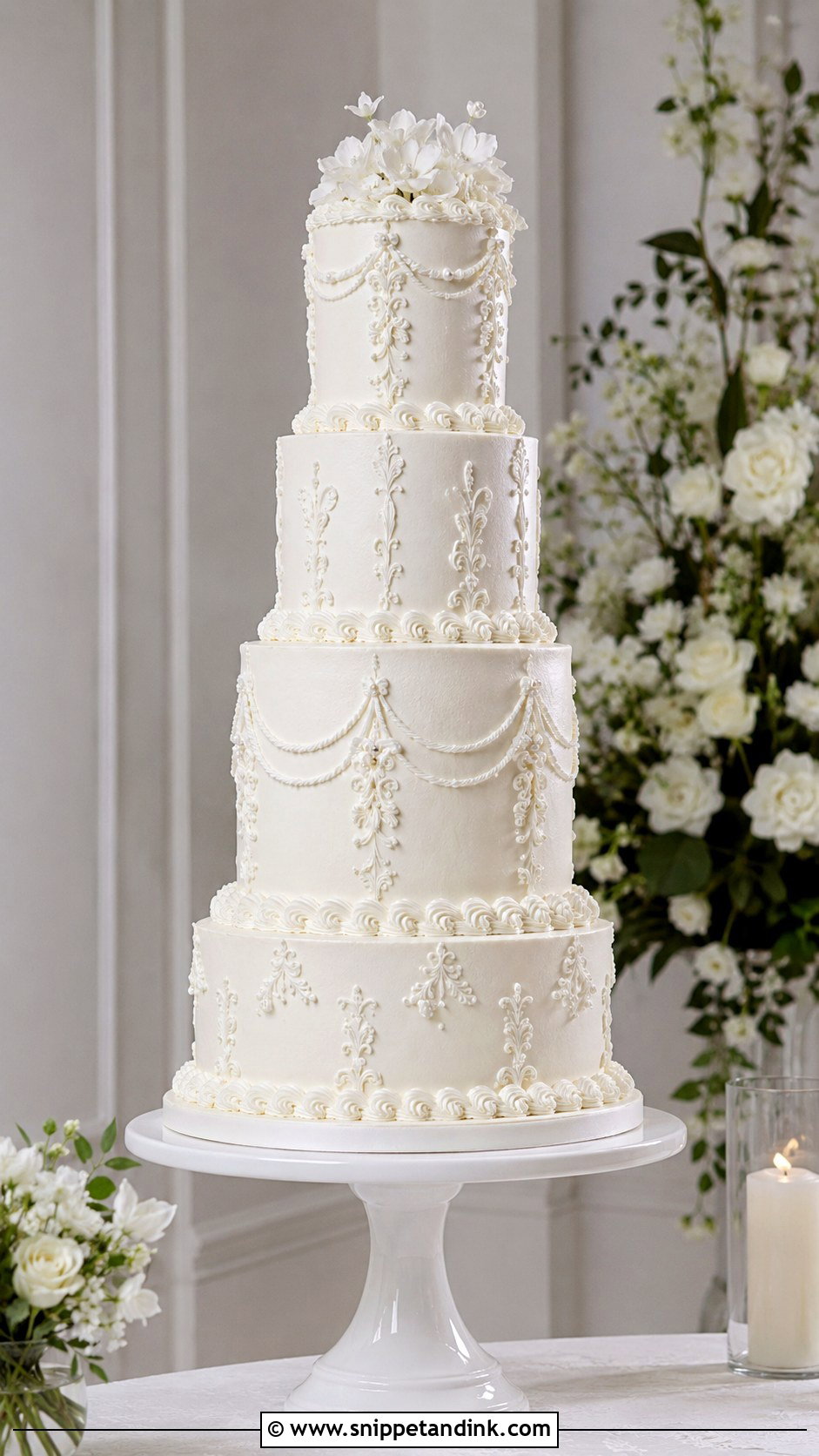
Extra-tall tiers give me room for long vertical scrolls, deep garlands and lace panels without stacking five tiers. A double-height tier needs its own internal supports and a board partway up, so check that your baker builds them that way. Design-wise, I’d pipe heavily on one or two tiers and leave the rest smooth so the cake can breathe. Height also catches side light, which means every raised line throws a shadow in the photographs.
16. Oval Piping Wedding Cake
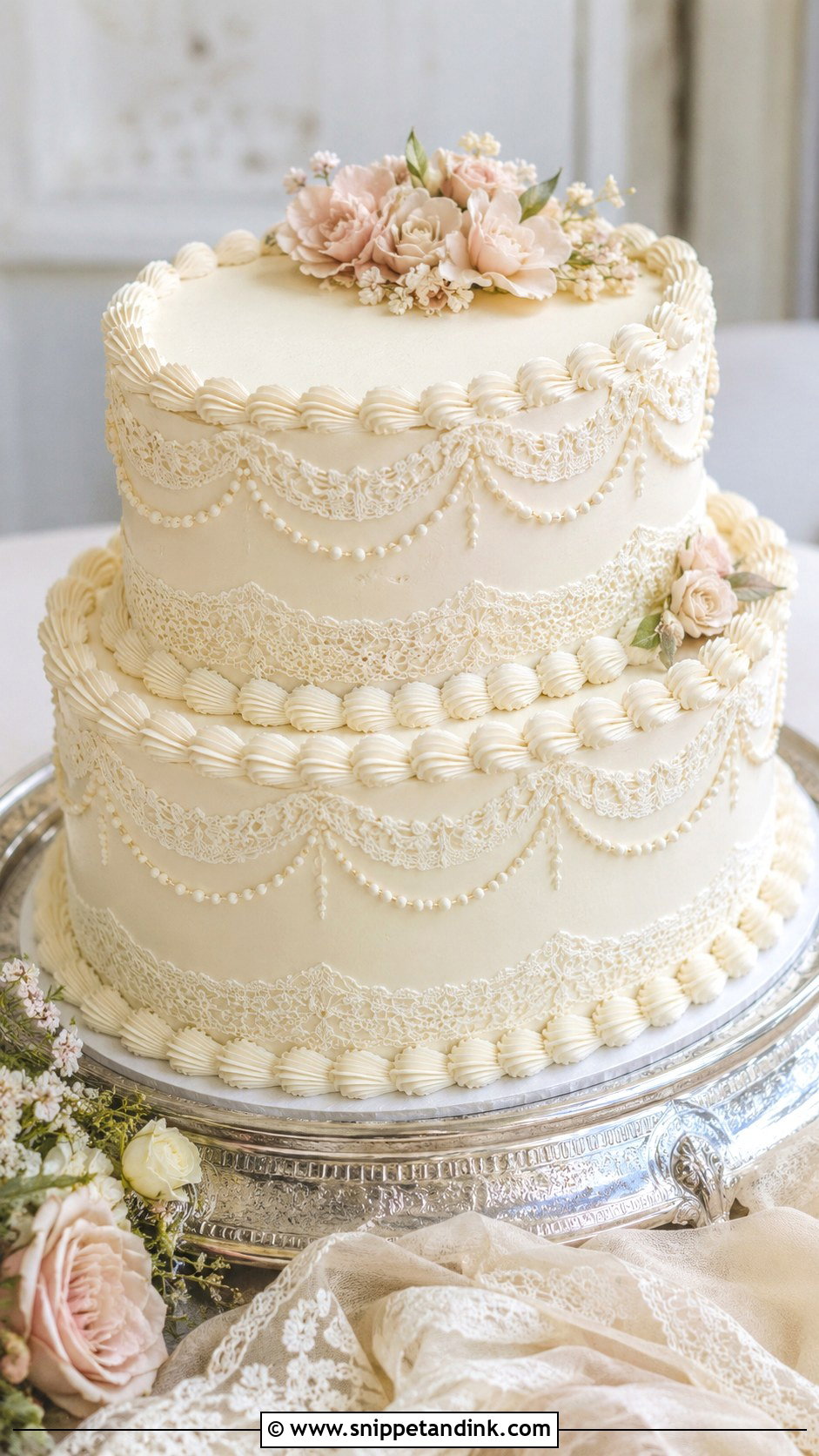
Oval tiers are an underused shape. Scrolls and garlands flow around them more gently than on a round, and the long side gives a natural front for a monogram or a lace panel. They take more planning on my end, because the piping spacing has to change as the curve tightens at each end. Ovals sit well at formal luncheons and vintage-styled receptions. Keep the colour light so the shape stays the talking point, with a touch of blush at most.
17. Square Piping Wedding Cake
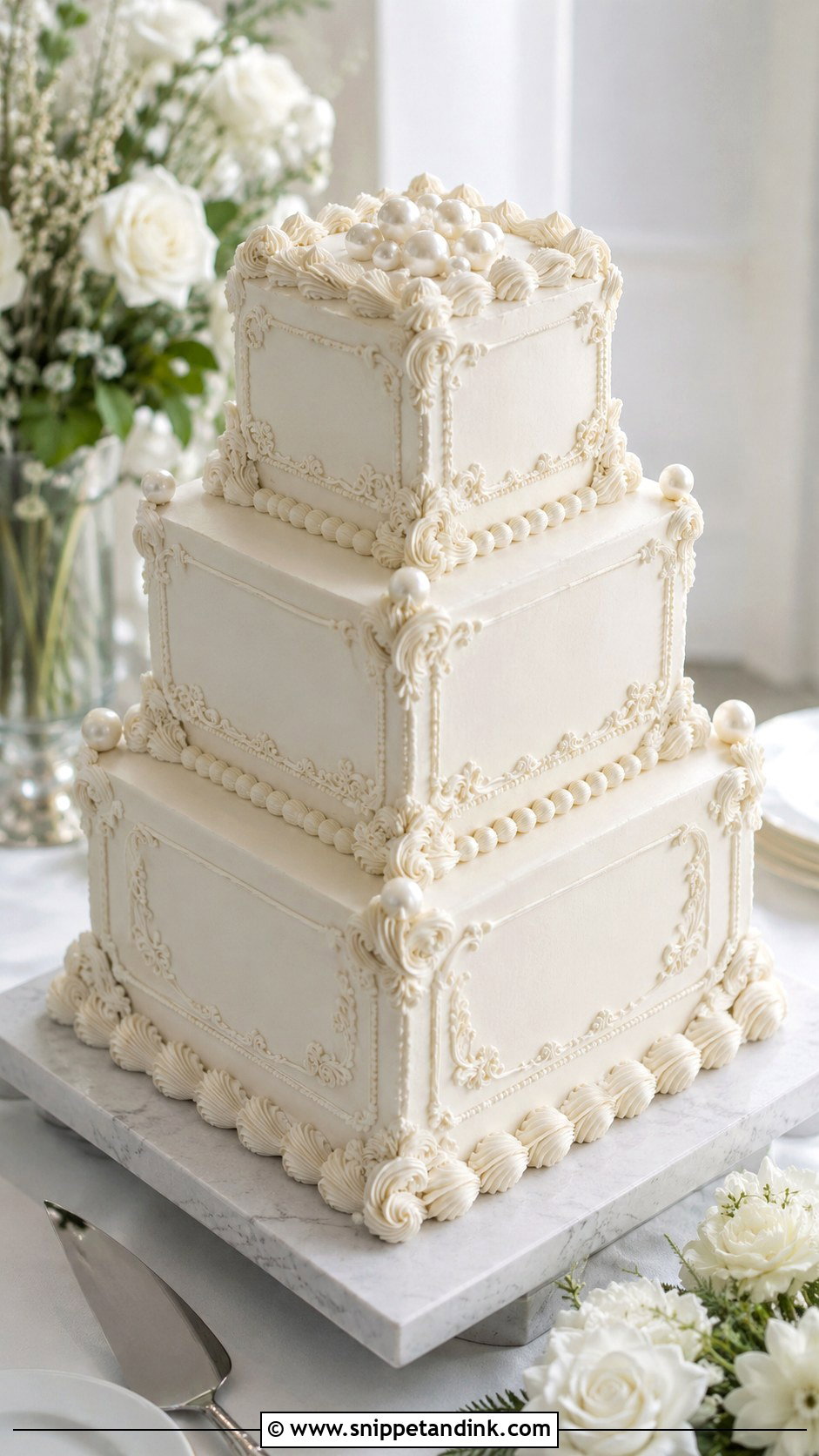
Square tiers give piping clean frames to work inside. The corners carry scroll clusters, piped rosettes, pearl dots and shells, and the flat sides are ideal for lace panels. The honest drawback is that sharp corners are harder to ice and show every flaw, particularly in buttercream, so I often soften them with rounded piping or small flowers. A square cake looks tailored at a formal wedding, and it cuts into very even portions.
18. Piped Monogram Wedding Cake
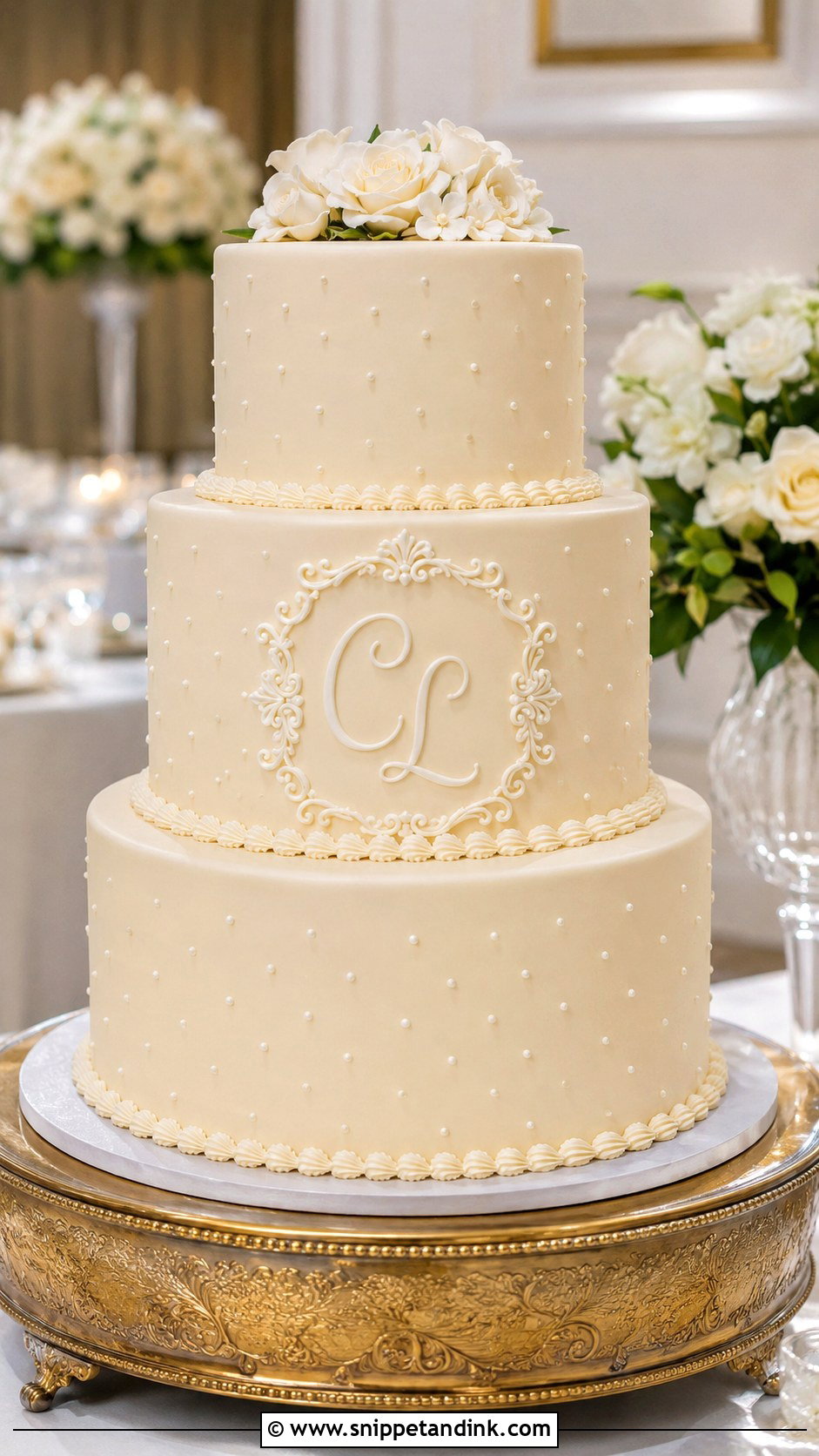
A monogram is the most personal piping detail and also the easiest to get wrong. Initials piped too large overpower the tier, while script that’s too thin vanishes a few feet away. I sketch the letters at actual size before I pipe, usually on the front of the second tier, framed by scrollwork or set inside an oval lace panel. Champagne or soft gold icing helps the letters read against white. Confirm the order of the initials with your baker in writing; it’s surprisingly easy to mix up.
19. Piped Bow Wedding Cake
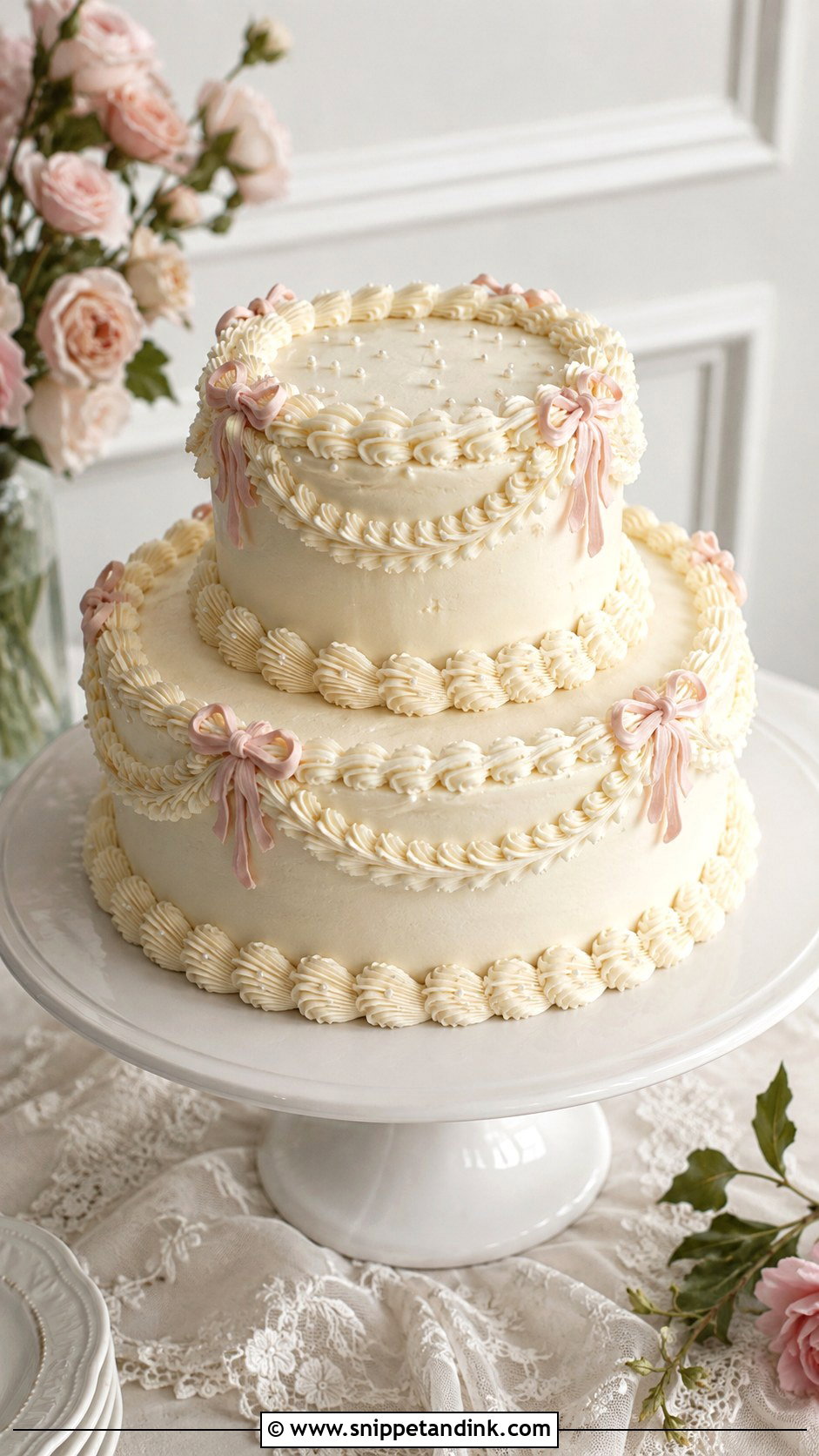
Piped bows give you the look of ribbon with no fabric touching the cake. They can sit between garlands, at the tier seams or as small accents. Real ribbon needs a barrier behind it or the butter in the icing stains it, so piped bows sidestep that problem entirely. I keep them small and use them sparingly, tied into the swag pattern rather than floating on their own. Pale blush bows on ivory are as far as I’d push the colour.
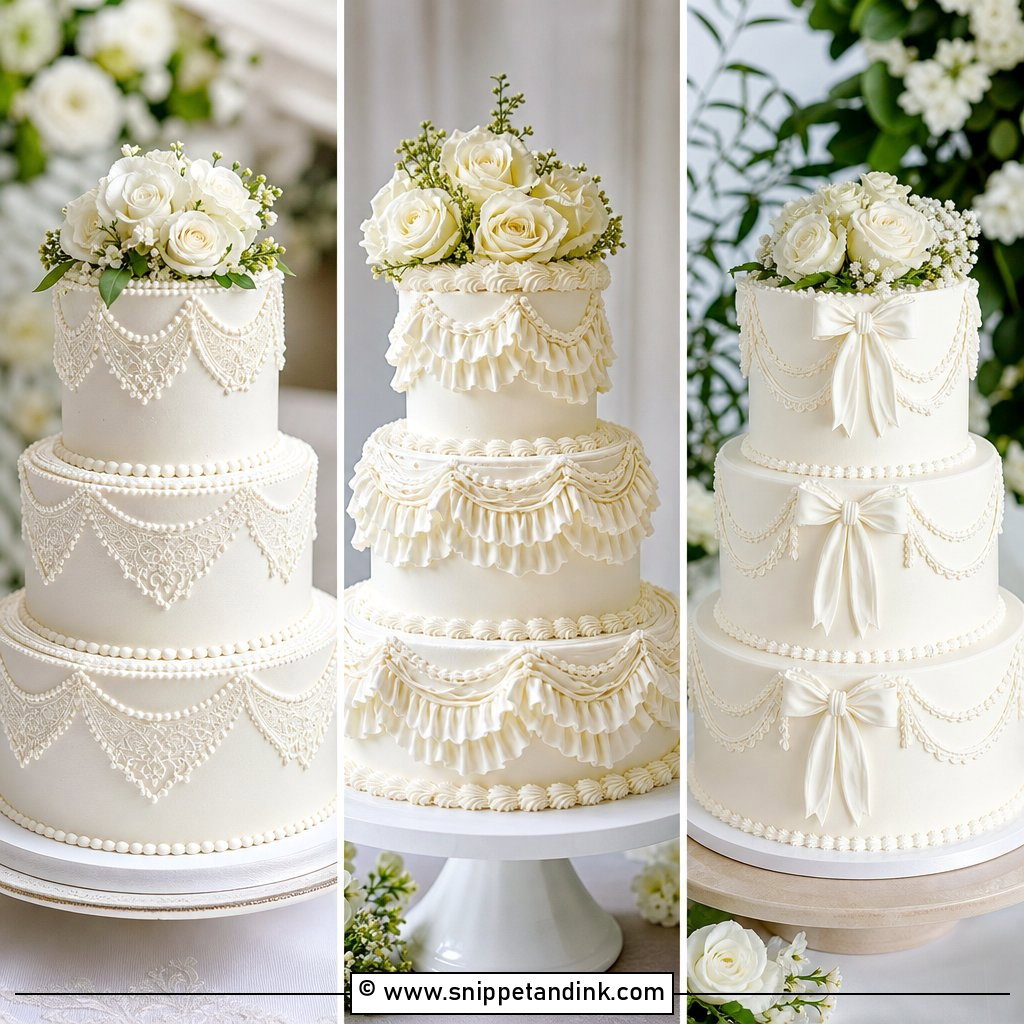
20. Piped Column Wedding Cake
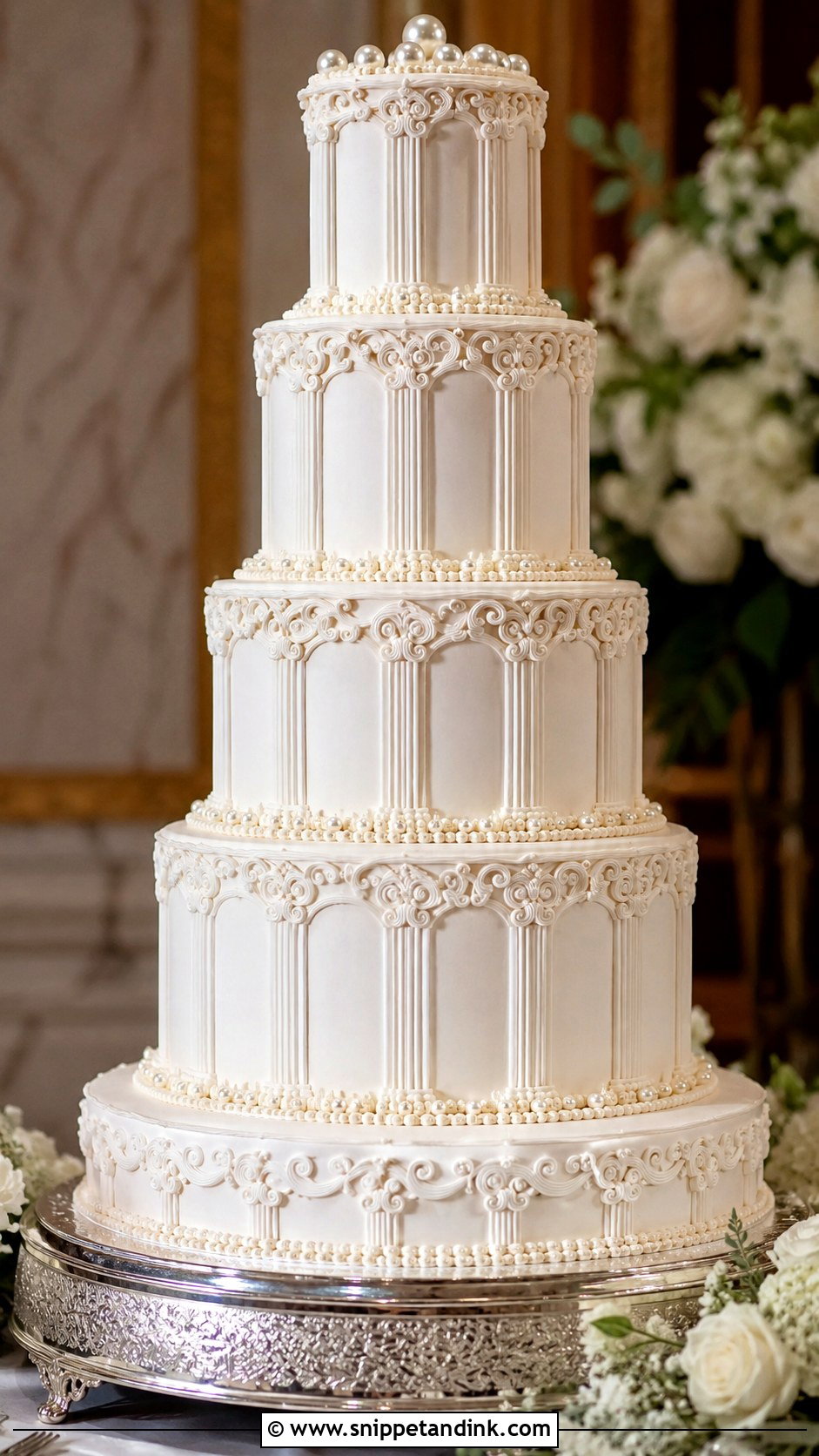
Column piping turns the tiers into a little architecture: vertical lines, arches, panels and raised borders that bring a formal structure to traditional cake decorating. It needs height, so I only suggest it for tall cakes. Royal icing keeps the columns crisp; buttercream rounds them off. Vertical lines are unforgiving, too. If a tier sits even slightly off level, the columns show it, which is why this design belongs on a solid table indoors at a ballroom or historic venue.
Why Heavy Piping Costs More and Needs an Early Date
Piped cakes are priced in hours as much as in servings. A plain three-tier cake and a Lambeth cake of the same size use similar ingredients, but the Lambeth can take a full day or more of piping, and it can’t be hurried because each layer of overpiping has to firm before the next goes on. Expect a noticeable jump in price for heavy detail, though how much varies widely between bakers and regions.
That time also limits how many piped cakes a baker can take on in one weekend, so the ones known for this work fill their summer Saturdays early. Ask to see close-up photos of their piping, not just full-cake shots, because borders that wobble or pearls that vary in size show up immediately when you zoom in. If the budget is tight, keep full overpiping on one statement tier and give the rest simple shells.
Getting Fine Piping Through Heat, Damp and a Car Ride
Most damage to piped cakes happens between my kitchen and your cake table. Royal icing hates moisture, buttercream hates heat, and every piped detail dislikes being jolted. These are the questions I’d want any couple to ask about the day itself:
- Will the tiers travel separately and be stacked and finished at the venue? For stringwork and tall cakes, they should.
- Where exactly will the cake stand? Keep it away from windows in direct sun, heaters, the dance floor and a marquee wall that gets warm by afternoon.
- How long before serving will it be set up? A buttercream cake outdoors in summer should go out as late as the timeline allows.
- Who repairs it if a border cracks in transit? Good bakers bring piping bags and spare icing for exactly this.
One more thing couples rarely think about: a cake that comes out of a cold van into a warm, humid room can collect condensation. It dries back off in time, but fine royal icing work can soften in the meantime, so I let the cake settle before anyone touches it.
Where Piped Icing Earns Its Place on Your Table
Piping is where icing turns into craft, and every style here, from Lambeth swags and royal icing lace to shells, ruffles and drop strings, carries some of that history. Your venue and season will narrow the list quickly, and so will how much hand work you want on each tier. If one design keeps pulling you back, bring the photo and your venue details to a tasting, and ask your baker to tell you honestly what that room will do to the icing.
You'll Like These Ideas:








Leave a Reply