
Chocolate wedding cakes are the orders I enjoy most, because the flavor and the finish can come from the same ingredient. Two tiers is the size I suggest for smaller guest lists and dessert tables: tall enough to read as a wedding cake, small enough that the decoration stays the focus. Below are twenty ways I’d dress a two-tier chocolate cake, from glossy ganache and fresh flowers to piping, gold leaf, fruit and marbling, with notes on how each one behaves once it leaves my kitchen.

How Far Two Chocolate Tiers Really Stretch
The first question I ask is the guest count, because two tiers covers a wider range than most people expect. A 6 inch tier on an 8 inch tier usually cuts to around three dozen wedding-size slices. Step up to 8 and 10 inches and you’re closer to sixty. Taller tiers, with four layers of sponge instead of three, add servings without changing the footprint.
Chocolate cake is rich, and I find guests rarely eat a full slice after dinner, so I don’t size up for big appetites. If your list is larger than the cake, a plain kitchen cake of the same flavor, cut out of sight, is a cheaper fix than a third tier.
- 6 and 8 inch: roughly 35 to 40 wedding portions
- 8 and 10 inch: roughly 55 to 65 portions
- Extra-tall tiers: add about a third more servings per tier
- Every two-tier cake still needs dowels in the lower tier and a board under the top one, even though it looks light
Which chocolate covering for which room
My rule of thumb: dark ganache for summer, outdoor or long displays; buttercream only for cooled indoor rooms; fondant over ganache for marbling, lace or sharp geometric work. Tell your baker where the cake will stand and for how long before you settle on a finish.
1. 2 Tier Chocolate Ganache Wedding Cake

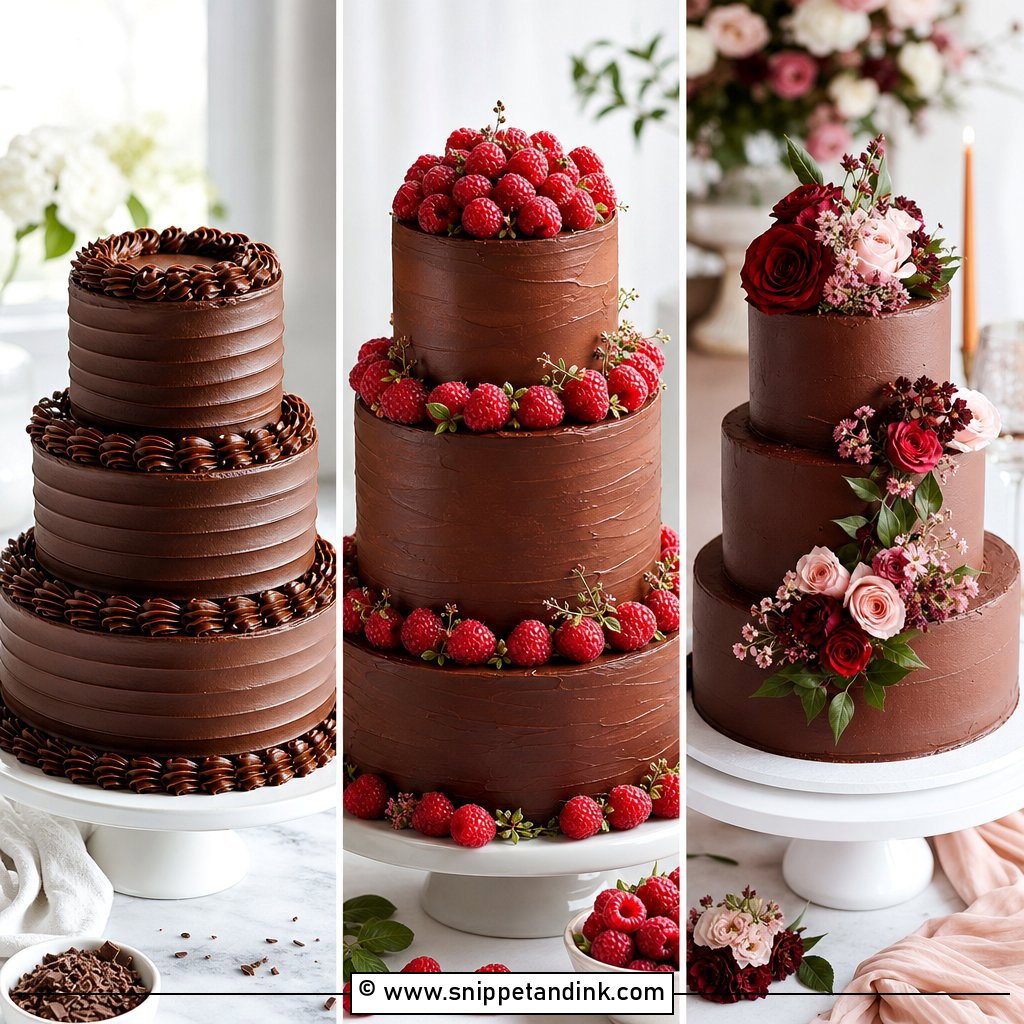
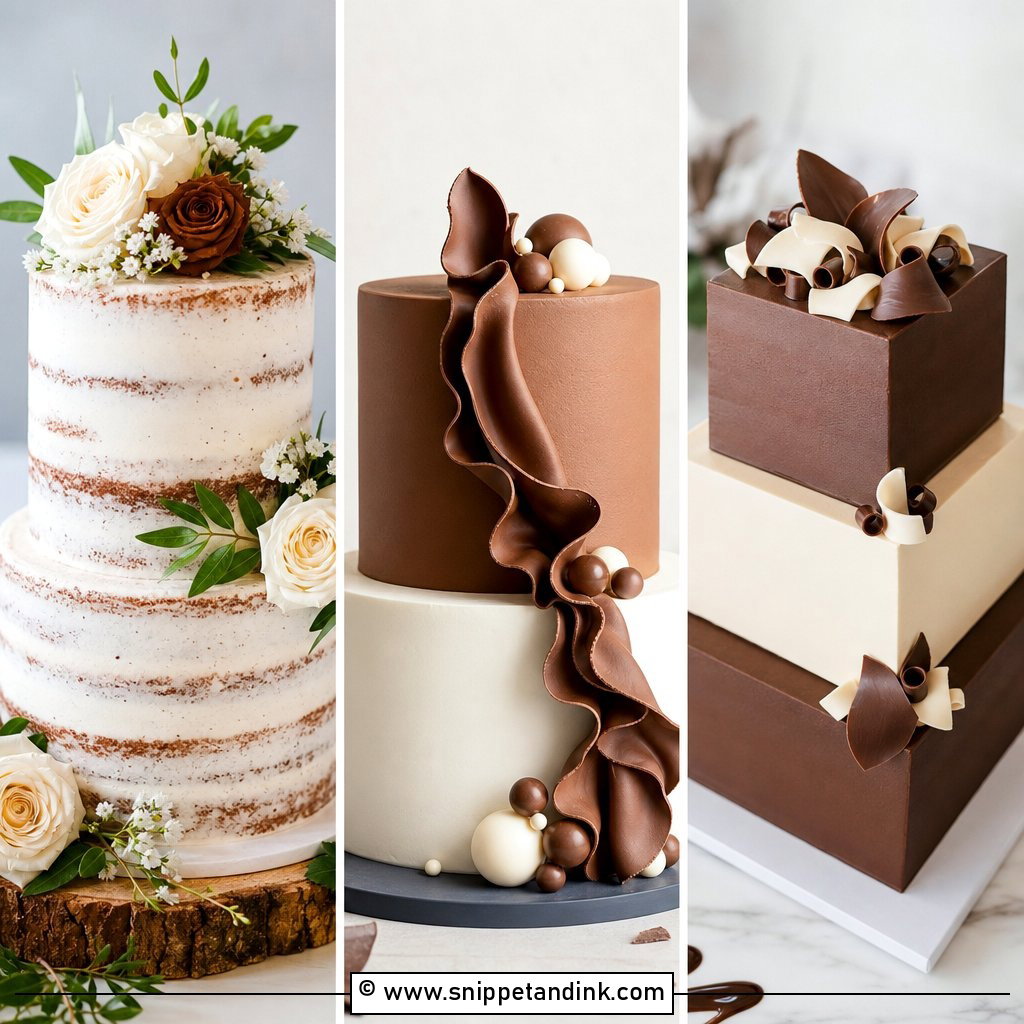
Ganache is my default covering for chocolate, and the reason is structural as much as visual. A firm dark ganache sets almost like a shell, which gives me crisp top edges and a surface that copes with a warm room far better than buttercream does. I keep the decoration to one placement, usually where the tiers meet, so the shine does the work. Ivory roses, a little greenery or a few flecks of gold leaf are enough against that deep cocoa color.
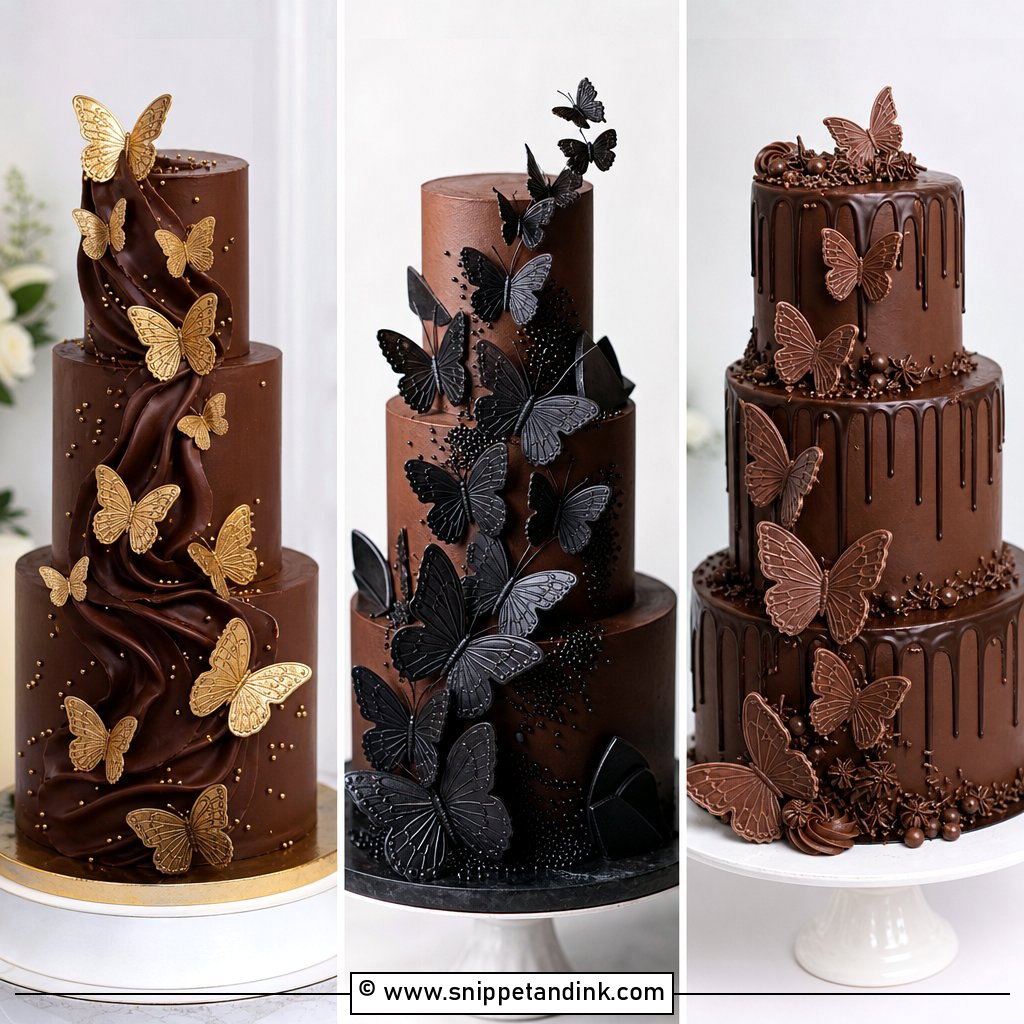
2. 2 Tier Chocolate Drip Wedding Cake

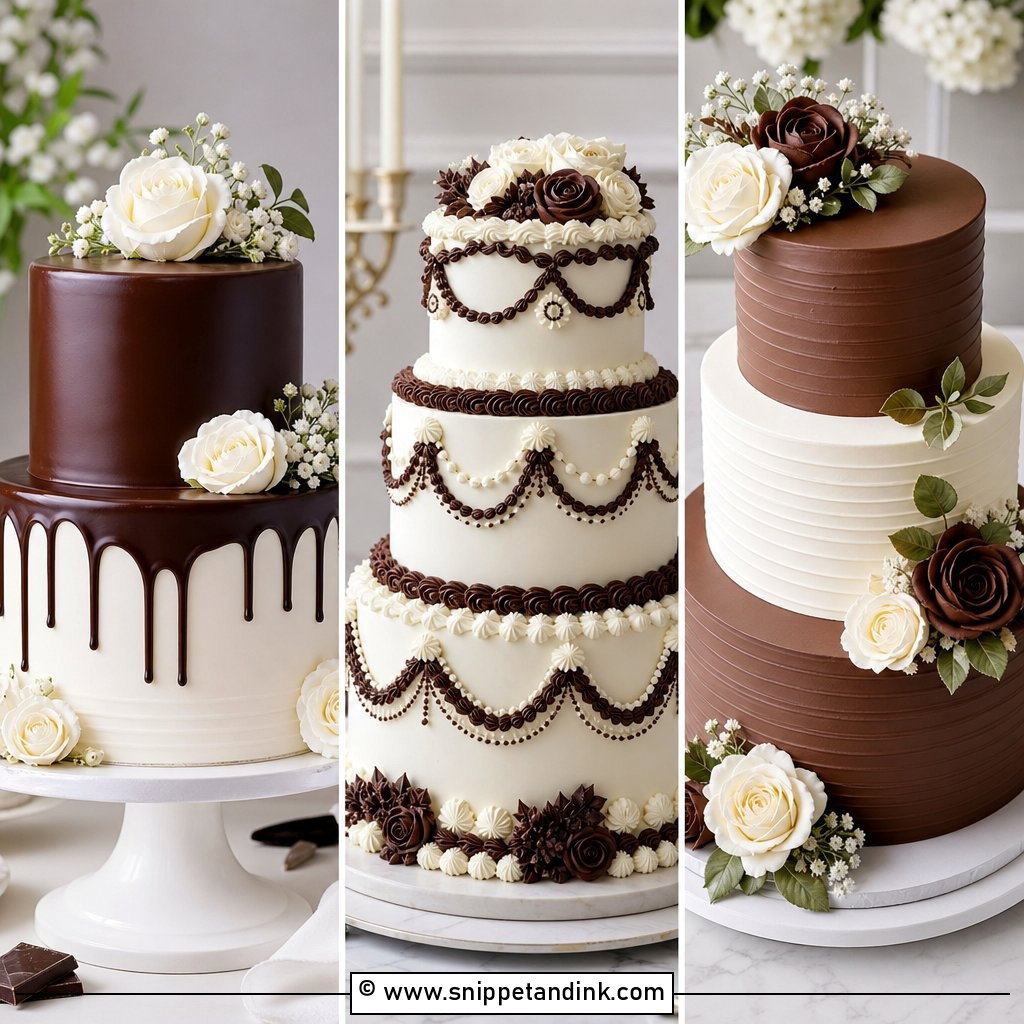
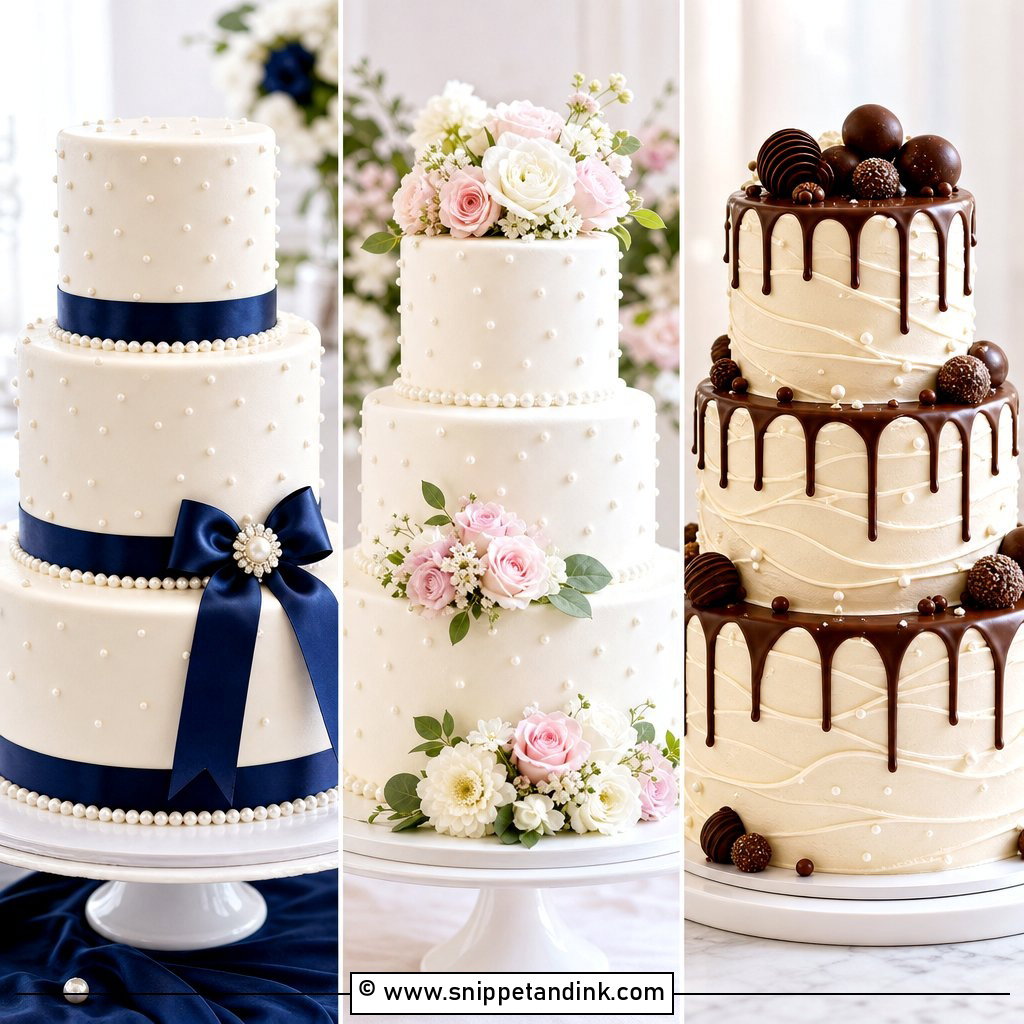
Drips look casual but they’re the fussiest finish on this list. I pour the drip when the ganache has cooled to just above body temperature; too warm and it races to the board, too cool and it sits in stubby blobs. I always test one drip on the back of the cake before committing to the front. Dark, milk, white or caramel all work, and I’d crown the top tier with macarons, curls or berries clustered to one side rather than spread evenly. It suits a barn or garden reception where a perfectly sharp cake would feel stiff.
3. 2 Tier Chocolate Buttercream Wedding Cake

Chocolate buttercream gives a softer, friendlier cake than fondant, and it’s what most guests secretly hope to taste. The color depends entirely on the cocoa and how much butter is in the recipe, so it can land anywhere from pale mocha to near black. My caution is heat: a meringue-based buttercream starts to slump in a warm marquee, so I’d only choose it for an indoor, cooled venue. Smooth sides read modern; a palette-knife texture reads handmade. Ivory flowers and a white stand keep the brown from looking heavy.
4. 2 Tier Chocolate Wedding Cake With Fresh Flowers

Flowers against dark chocolate frosting give the strongest contrast you can get on a cake. I place them in a crescent that starts on the top tier and falls to the lower one, or I keep a single cluster sitting in the gap between tiers. Every stem gets wrapped and pushed into a flower pick so no sap or cut end touches the frosting, and I check the variety is safe near food before anything goes on. Roses, ranunculus and spray orchids hold up well; very soft petals like peonies can bruise and brown within a few hours.
5. 2 Tier Chocolate Wedding Cake With Gold Leaf

Edible gold leaf is so thin it clings to anything slightly tacky, which is why I apply it to chilled ganache or fondant rather than soft buttercream. It sits brilliantly on dark ganache and mocha frosting. I tear it into small pieces with a dry brush instead of covering whole tiers; patchy gold looks deliberate, full coverage often looks like foil. A vertical trail makes a short two-tier cake feel taller. White roses or a few blackberries finish it for a candlelit, black-tie room.
6. 2 Tier Chocolate Wedding Cake With Berries

Fruit is the decoration I add last, often at the venue. Cut strawberries weep juice into frosting within an hour or two, so I use them whole, and raspberries and blueberries need to be completely dry before they go near ganache. I group berries in tight clusters rather than scattering them, then add a few mint leaves or a dusting of powdered sugar right before the cake goes out. Fruit brings a sharp, fresh note that cuts through rich chocolate, which is why I like it for summer brunches and outdoor receptions.
7. 2 Tier Chocolate Semi Naked Wedding Cake

A semi naked chocolate wedding cake shows the sponge through a thin scraped coat, so the bake itself has to be flawless and well soaked. Exposed crumb dries out faster than a fully covered cake, which is why I brush every layer with syrup and assemble as close to the wedding as I can. Figs, berries or greenery are all it needs; heavy decoration fights the rustic texture. A light dusting of cocoa finishes it for a vineyard or woodland setting.
8. 2 Tier Chocolate Marble Wedding Cake

Marbling is done by twisting colored fondant together before rolling, and no two cakes come out the same, which I’d warn you about before you fall for one photo. Brown, ivory, beige and a vein of gold make a warm palette that sits well in a gallery or loft venue. If fondant isn’t your thing, marbled buttercream gives a softer, watercolor version. Because the pattern already moves, I hold the extras to a couple of sugar flowers or a single chocolate sail.
9. 2 Tier Chocolate Vintage Wedding Cake

Vintage piping is slow, careful work, and on chocolate it shows every wobble because the dark color catches the light on each ridge. Scalloped borders, shells, pearl dots and swags look charming in mocha or with an ivory buttercream contrast. I pipe these on a cake that’s been chilled firm, so the base coat doesn’t drag under the bag. Cherries or tiny roses on top suit a lace-and-candles dessert table.
10. 2 Tier Chocolate Wedding Cake With White Roses

White roses on chocolate are the contrast couples ask me for most. I set them in a diagonal line, starting on top, touching the tier gap and finishing near the base, so the eye travels down the cake. For a formal room I leave the roses alone. Adding baby’s breath or loose greenery softens it toward a garden feel, though it also makes the cake look busier in photographs.
11. 2 Tier Chocolate Wedding Cake With Chocolate Shards

Shards are made by spreading tempered chocolate thin and snapping it once set; untempered chocolate goes dull and bends in a warm room, so tempering matters here. On ganache they look like they belong, because the decoration is the flavor. I arrange them as a crown around the top tier or as a run down one side, then soften the sharp edges with a few berries. Dark shards are bold; marbled ones look more modern.
12. 2 Tier Chocolate Wedding Cake With Caramel Drip

Caramel drip warms up a dark chocolate cake and fits a fall wedding or a rustic venue. Caramel stays runnier than ganache, so it keeps creeping in a hot room; I make it thicker than I would for a dessert sauce and pipe the drips rather than pour them. Truffles, toffee pieces or figs on top, and a few flakes of sea salt, hint at the flavor inside.
13. 2 Tier Chocolate Wedding Cake With Sugar Flowers

Sugar flowers are the answer when fresh blooms aren’t safe or available, or when the venue will be warm. They’re built petal by petal from gum paste, dried for days and wired, so they need ordering well ahead, and they can be kept afterward as a memento. Ivory, blush or champagne petals stand out against chocolate. I put the largest bloom in the tier gap and trail smaller ones down a single side so the cake doesn’t look crowded.
14. 2 Tier Chocolate Wedding Cake With Pearl Piping

Pearl piping is the quiet option: small buttercream dots around each tier’s base, or a dotted pattern up the sides. It adds detail without needing extra color. The trick is consistency, so I pipe every pearl with the same pressure and release, otherwise a two-tier cake shows uneven rows right at eye level. Pair it with a small white spray on top, or combine it with scallops and rosettes for a vintage look.
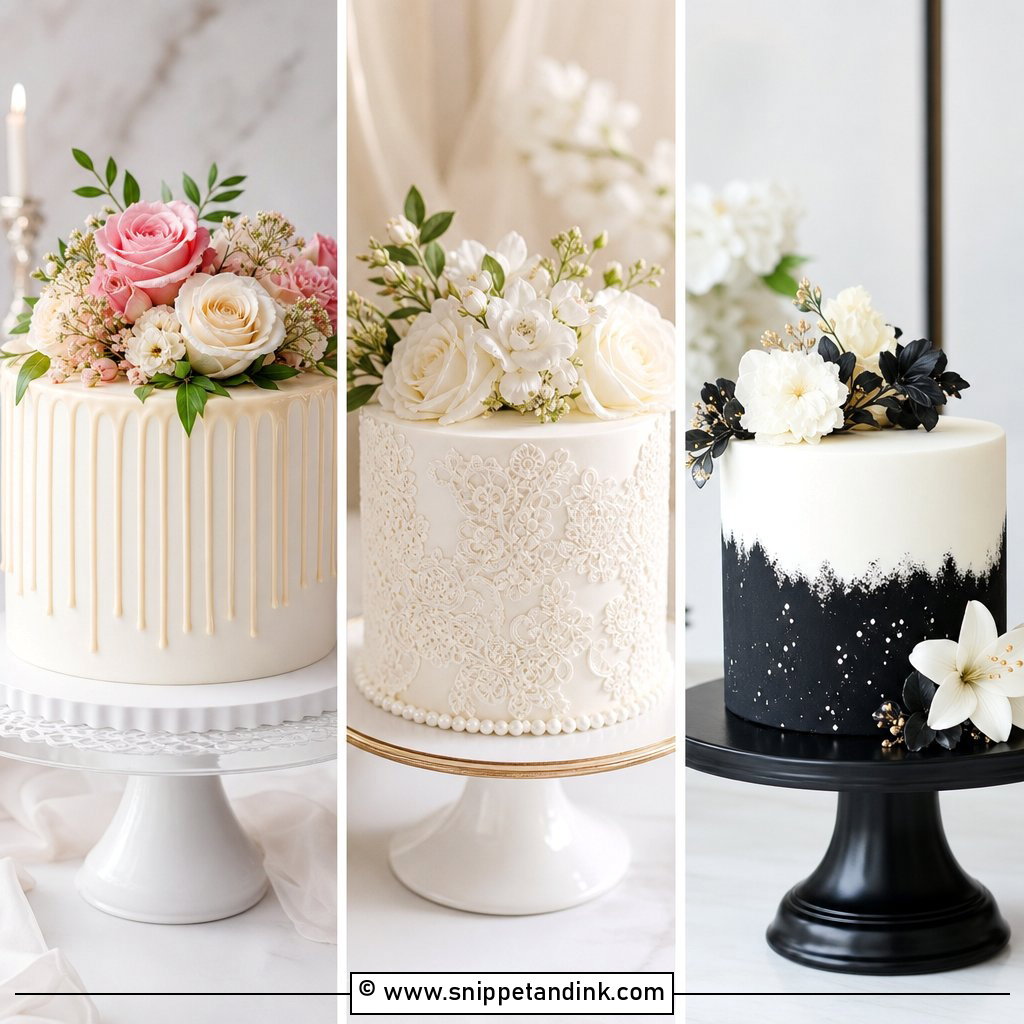
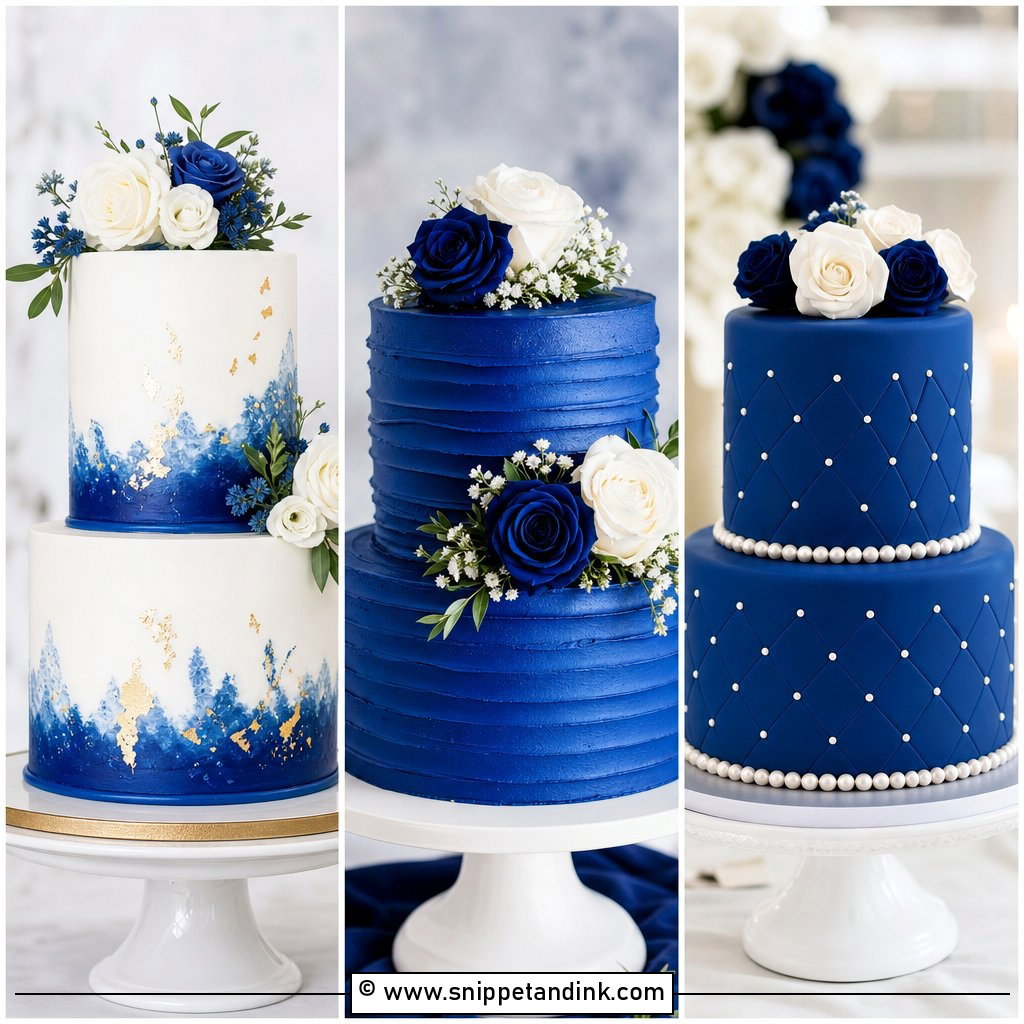
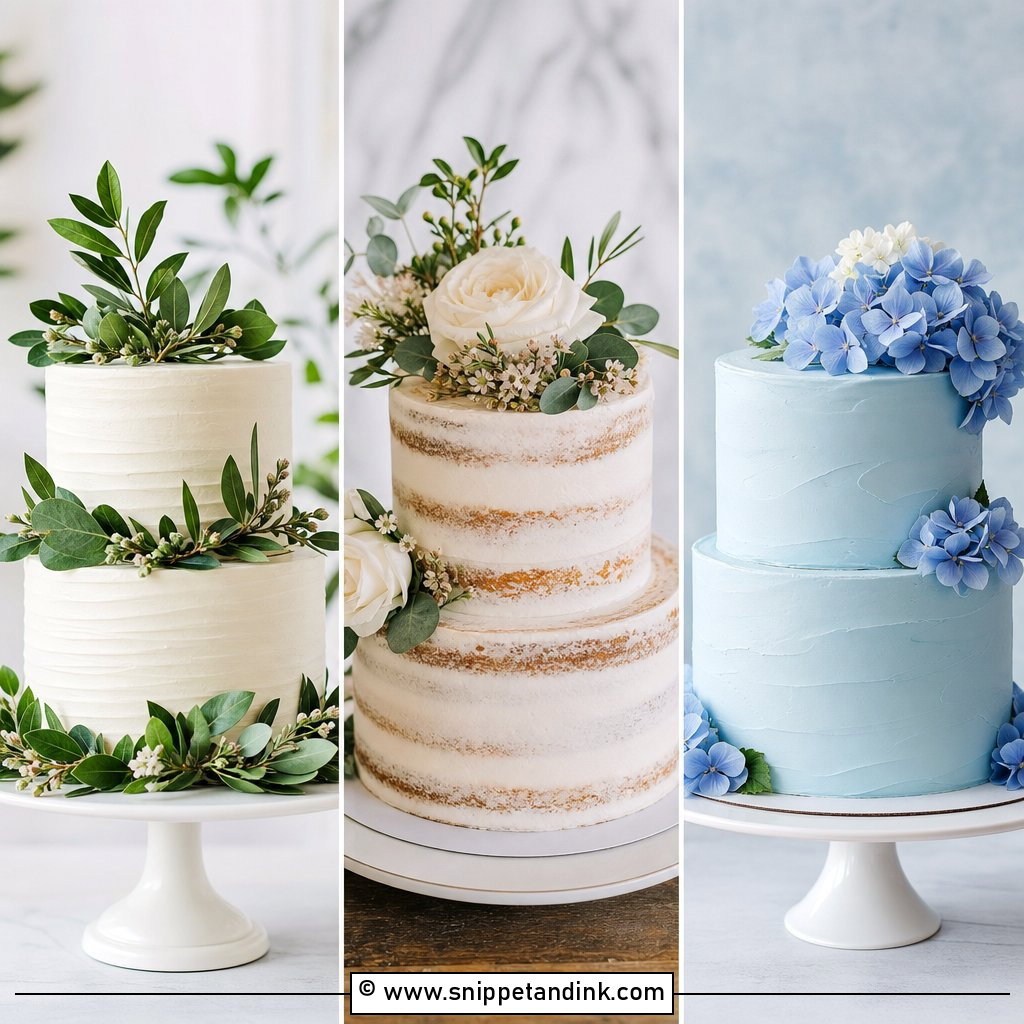
15. 2 Tier Chocolate Wedding Cake With Macarons

Macarons add shape and a dash of color in your palette, from blush to taupe to lavender. Their shells soften once they sit against moist frosting or in a humid fridge, so I attach them on the day, not the night before. I like them in a diagonal cascade alongside a drip, or as a ring around the base. They suit modern weddings and bakery-style dessert tables.
16. 2 Tier Chocolate Wedding Cake With Edible Lace

Edible lace is set in a silicone mat and peeled off in sheets, and it’s at its best on a dark base where every hole in the pattern reads clearly. I wrap one tier, or use a band between smooth sections, and I’ll often copy a motif from the dress lace if the bride shares a photo. Humidity is its weakness: lace can go tacky and sag, so I keep it away from fridges and apply it last.
17. 2 Tier Chocolate Wedding Cake With Chocolate Roses

Chocolate roses can be modeled from modeling chocolate, curled or molded, and they keep every bit of decoration edible. I work them with cool hands because modeling chocolate softens fast and takes fingerprints. Clusters on both tiers look sculptural. Dark roses are dramatic, milk roses are warmer, white ones give contrast, and cocoa-dusted leaves add depth without bringing in another color.
18. 2 Tier Chocolate Wedding Cake With Mocha Frosting

Mocha frosting is chocolate buttercream with coffee folded in, and it gives a lighter, warmer brown than ganache. I find it flatters neutral palettes and warm indoor lighting more than very dark finishes do. Espresso beans, curls or a scrap of gold leaf decorate it without fuss. Ask your baker how strong the coffee note will be; some couples love it, others want only a hint.
19. 2 Tier Chocolate Wedding Cake With Blackberries

Blackberries bring a moody purple-black that sits naturally against dark chocolate ganache. Their juice stains, so I place them on ganache rather than pale buttercream and add them close to serving. Clusters with figs, herbs and ivory flowers look seasonal for late summer and fall. A semi-naked finish makes it rustic, smooth ganache makes it formal.
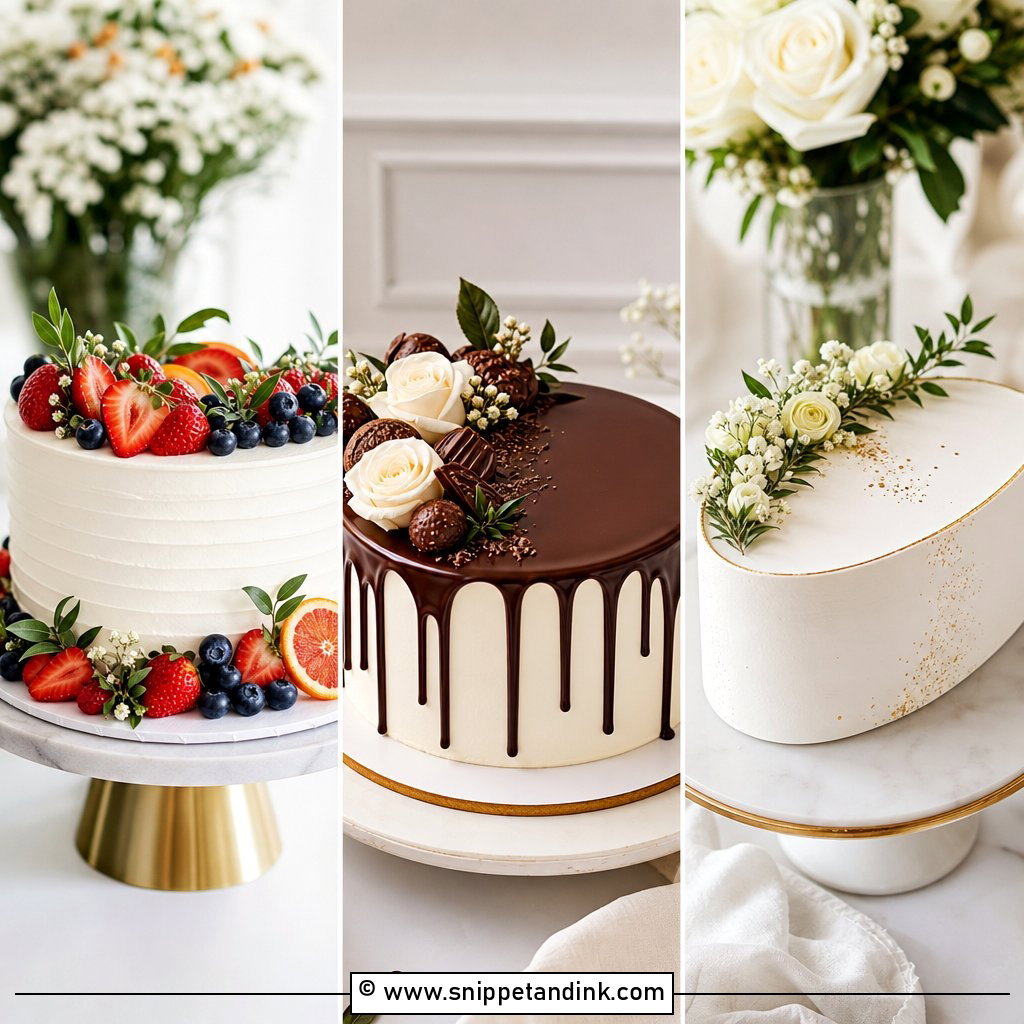
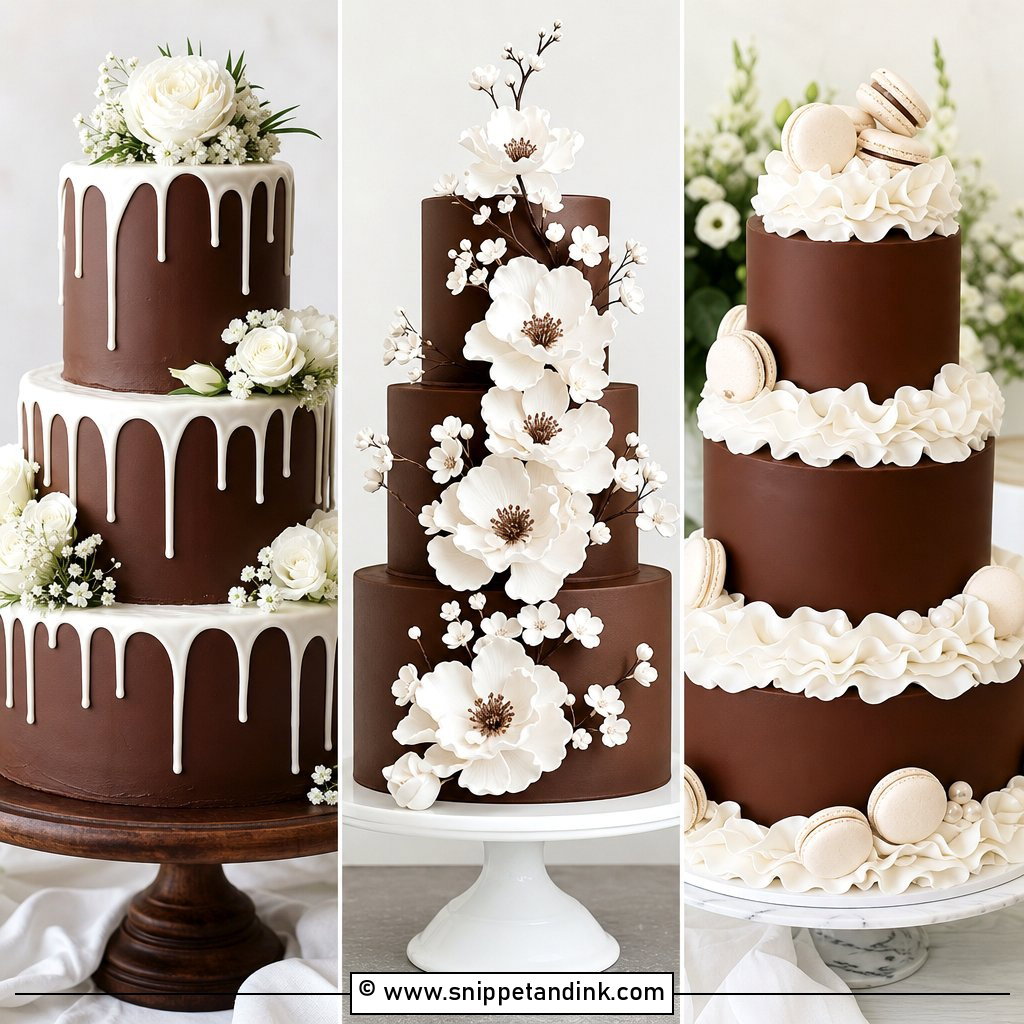
20. 2 Tier Chocolate Wedding Cake With White Chocolate Drip

White chocolate drip is harder to get right than dark, because white chocolate needs a thicker ratio to set and can look grey if it’s overheated. Once it’s right, it’s a bright, clean contrast over dark buttercream or ganache. I keep the drip even and add white flowers, pearls or curls. Blush flowers bring a little romance without losing the neutral feel.
Chocolate Melts, Sweats and Blooms, So Plan the Day Around It
A chocolate cake that left my kitchen looking perfect can still struggle at the venue, and nearly always for the same three reasons. Knowing them helps you plan the delivery and the display spot.
Heat
Direct sun, a table next to the band’s lights or a spot by the kitchen door will soften buttercream and send drips sliding. I ask for the cake table in shade, away from heaters and windows, and I’d rather set it up an hour before it’s needed than three.
Condensation
Moving a chilled cake straight into a warm, humid room makes droplets form on the surface. On chocolate that leaves pale streaks and can make gold leaf and lace slip. I let the cake come up to room temperature in its box so the moisture settles on the cardboard, not the cake.
Bloom
Shards or roses made from chocolate that wasn’t tempered properly turn dull and streaky as they sit. A good designer tempers decorative chocolate for exactly this reason, so ask how the decorations are made.
For timing, I’d book a decorated chocolate cake three to six months ahead, longer in peak season, and confirm sugar flowers earlier still because they take days to dry. Fresh fruit, macarons and flowers go on at the venue, so build twenty minutes of setup time into the schedule.
Letting the Chocolate Lead the Design
Start with the covering, because it decides how the cake behaves: ganache for sharp edges and warm rooms, buttercream for softness and flavor, fondant for marbling. Then add one main decoration and give it room, whether that’s flowers, gold leaf, fruit, lace or shards. Bring your venue details and guest count to the tasting and I’ll tell you honestly which of these will still look right when the cake is cut.
You'll Like These Ideas:


Leave a Reply