
A chocolate wedding cake is rarely the shy option. Deep cocoa sits strongly against white flowers, gold stands, ivory linen and candlelight, and it can be dressed sleek, rustic or formal enough for a black-tie ballroom. Most of my chocolate couples choose it for the taste first and then worry it will look heavy, which it doesn’t have to. The finish does most of the work: ganache, buttercream, white chocolate, berries, gold, fresh blooms or sculpted detail. Here are twenty chocolate cake designs for a wedding dessert table, with what I’d tell you about each one across the counter.
Sizing a Chocolate Cake That Shares the Table With Other Sweets
When a chocolate cake sits on a full dessert table, I don’t size it the way I would a cake that’s the only sweet in the room. Guests drift toward macarons and cookies, and a rich chocolate slice is filling, so people eat less of it.
My starting point is the guest count, then I adjust. A dense fudge or ganache cake can be cut in slim slices. A light sponge with mousse needs a normal portion. If the dessert table is generous, many couples choose to size the cake for a bit fewer than the full guest list, but I’d never go so lean that the late eaters miss out.
Guests Who Don’t Eat Chocolate
There’s always someone. I often make one tier vanilla or lemon, and I note which tier is which on the caterer’s cutting sheet. Nut-free and gluten-free tiers need to be planned with the baker from the start, since a shared kitchen can’t promise anything is free of traces.
A Smaller Display Cake With a Kitchen Cake Behind It
For large weddings, a two- or three-tier display cake plus a plain sheet cake of the same flavour in the kitchen keeps the table elegant and the serving quick. Guests get the same chocolate either way.
1. Chocolate Ganache Wedding Cake
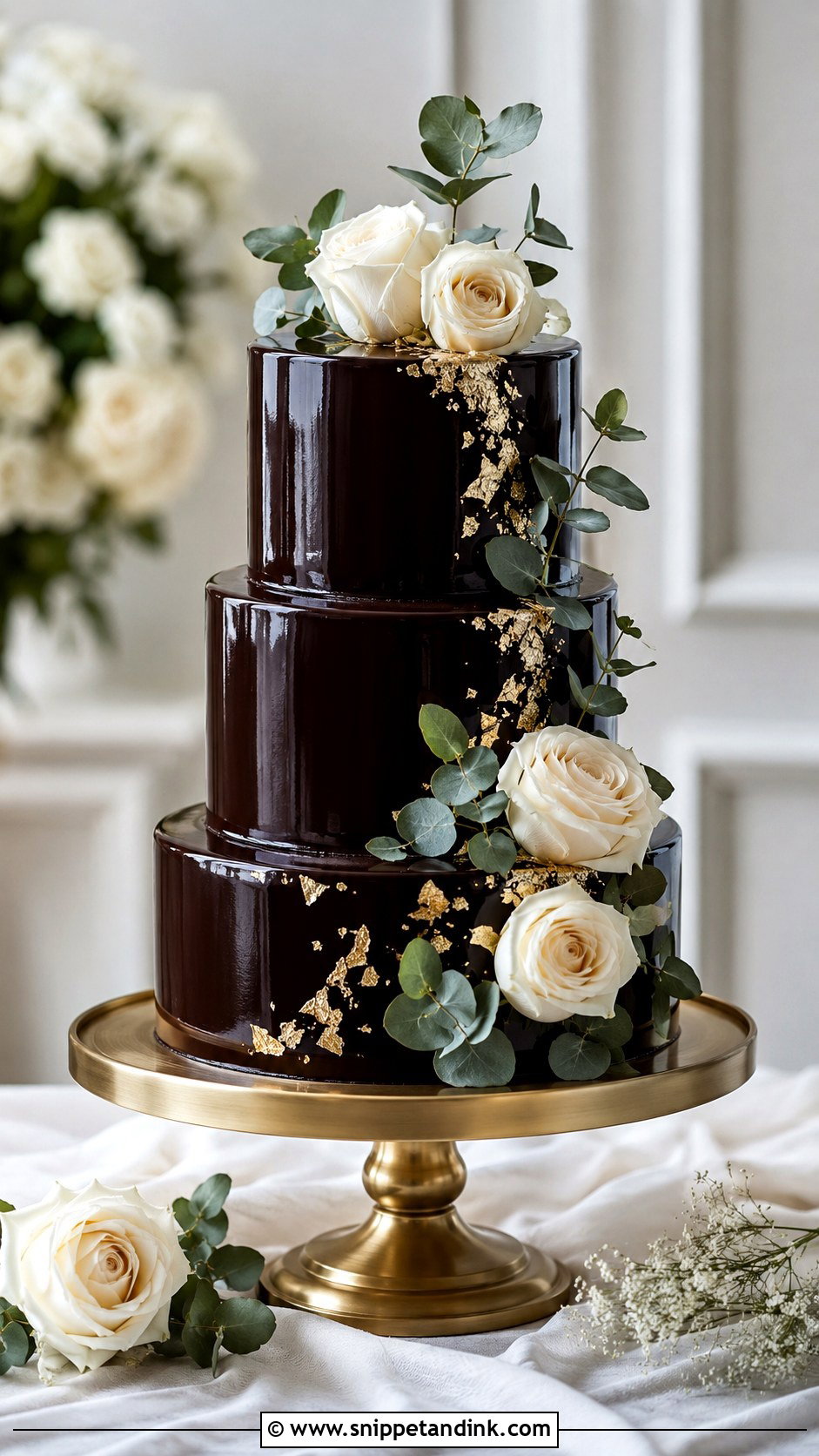
Ganache is the finish I trust most for a chocolate cake. It sets firmer than buttercream, takes a sharp edge and keeps its shine, which is why it suits two, three or four tiers with clean sides. I make it with a high proportion of dark chocolate to cream so it holds structure under stacked tiers, and I let it firm overnight before smoothing. Ivory roses, a little greenery and a plain gold stand are all the decoration it needs. Each slice gets a thin band of that ganache on the outside, so the flavour carries right to the edge.
2. Chocolate Drip Wedding Cake
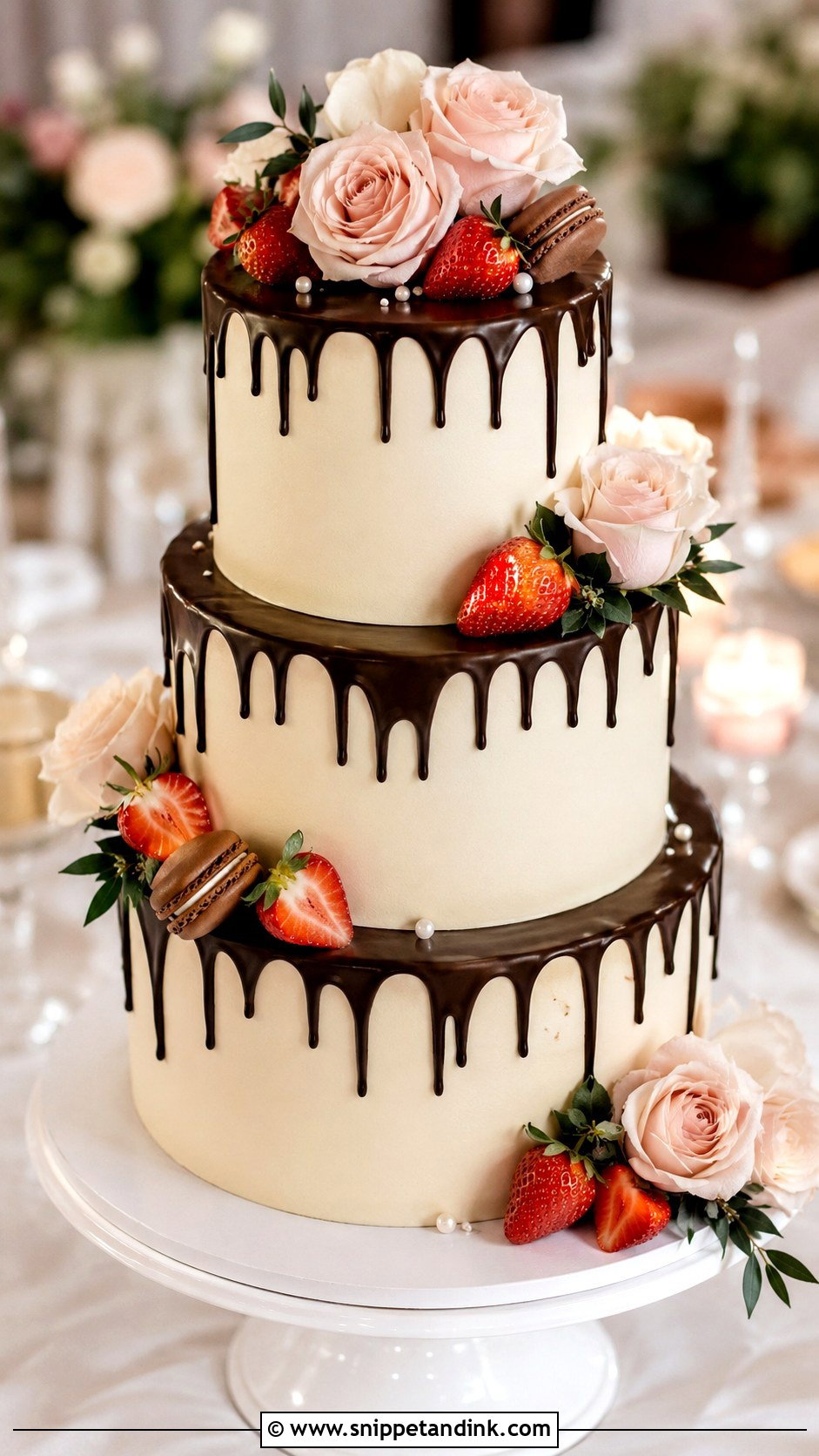
The difference between a wedding drip and a birthday drip is control. I chill the tiers until the buttercream or ganache is cold and firm, then test the drip on the back of the cake first: if it runs to the board, it’s too warm, and if it stops after a centimetre, it’s too cool. Strawberries, macarons, truffles or fresh flowers can sit on top. I keep the toppings to one area so the drip stays the main thing, often with a slim gold topper or a single floral cluster. Garden or evening, the colours around it decide the mood.
3. Chocolate Naked Wedding Cake
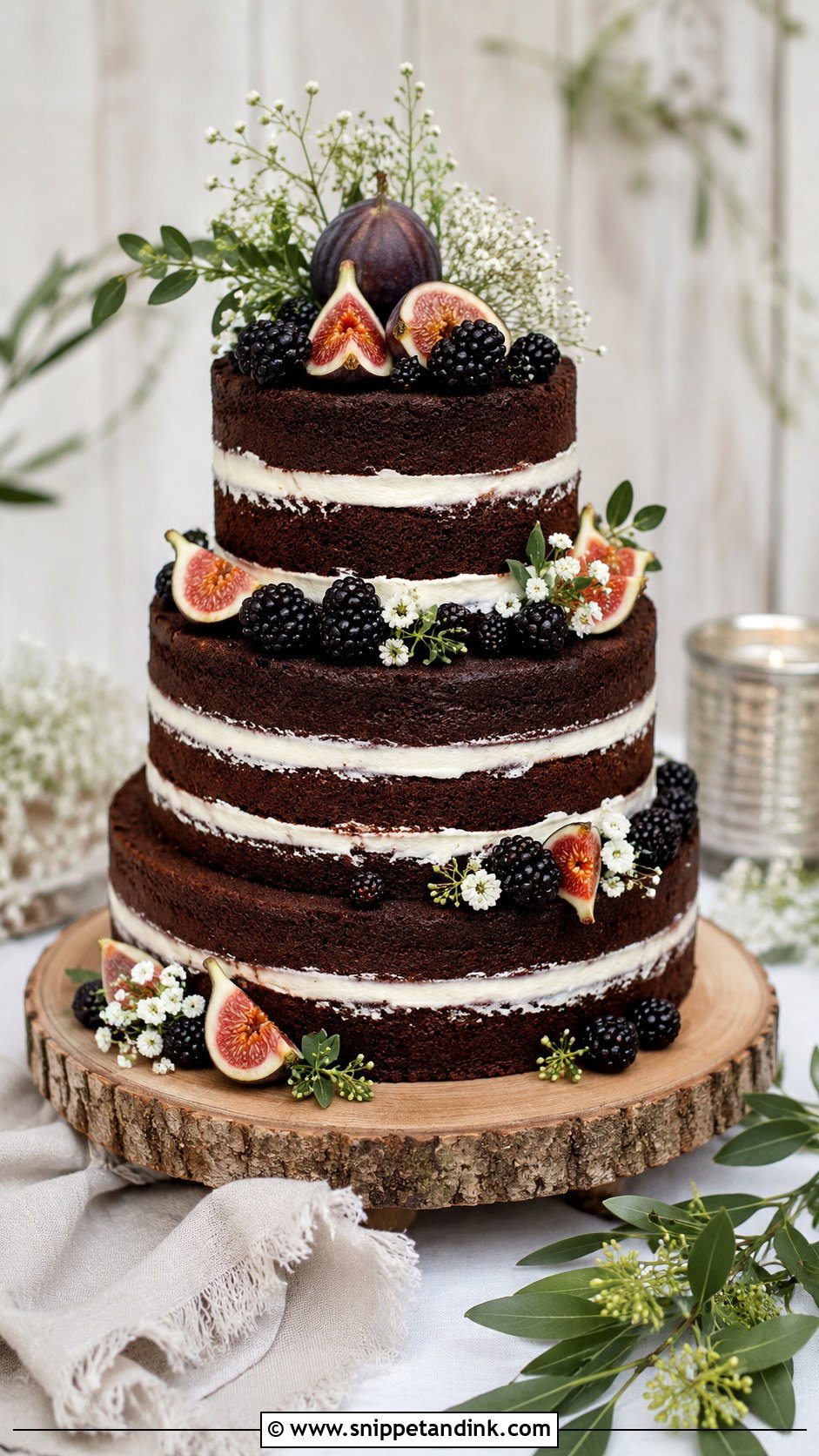
Naked cakes show every layer, so there’s nowhere to hide an uneven bake. I level each sponge, fill with soft buttercream or whipped ganache to the same depth and stack carefully, because the even stripes are what make it look finished rather than half-done. Fresh berries, small flowers, figs or greenery go on top. It suits barns, backyards and outdoor ceremonies. The honest downside is that bare sponge dries out in open air, so I finish a naked cake as close to the event as I can and keep it covered until it’s set out.
4. Chocolate Semi Naked Wedding Cake
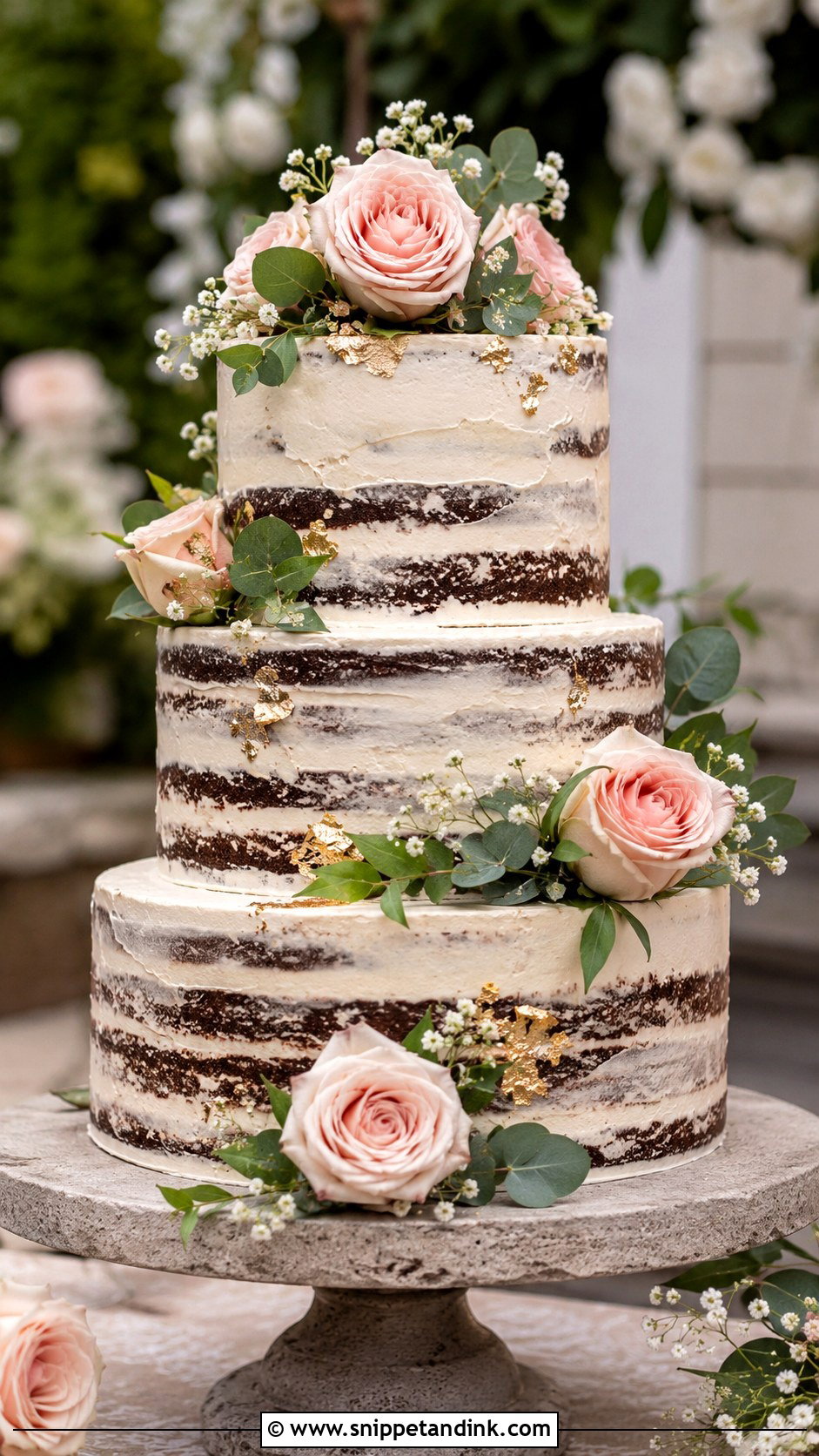
Semi-naked is my compromise for couples who like the rustic look but worry about dryness. A thin scrape of buttercream softens the dark sponge and protects it, while still letting the layers show through. White roses, blush flowers, eucalyptus or gold leaf all sit well against it. The toppings change easily with the season: berries for summer, dried florals for fall or simple greenery any time of year. Eucalyptus is one I wrap and keep off the frosting itself, since it isn’t meant to touch food.
5. Chocolate Gold Wedding Cake
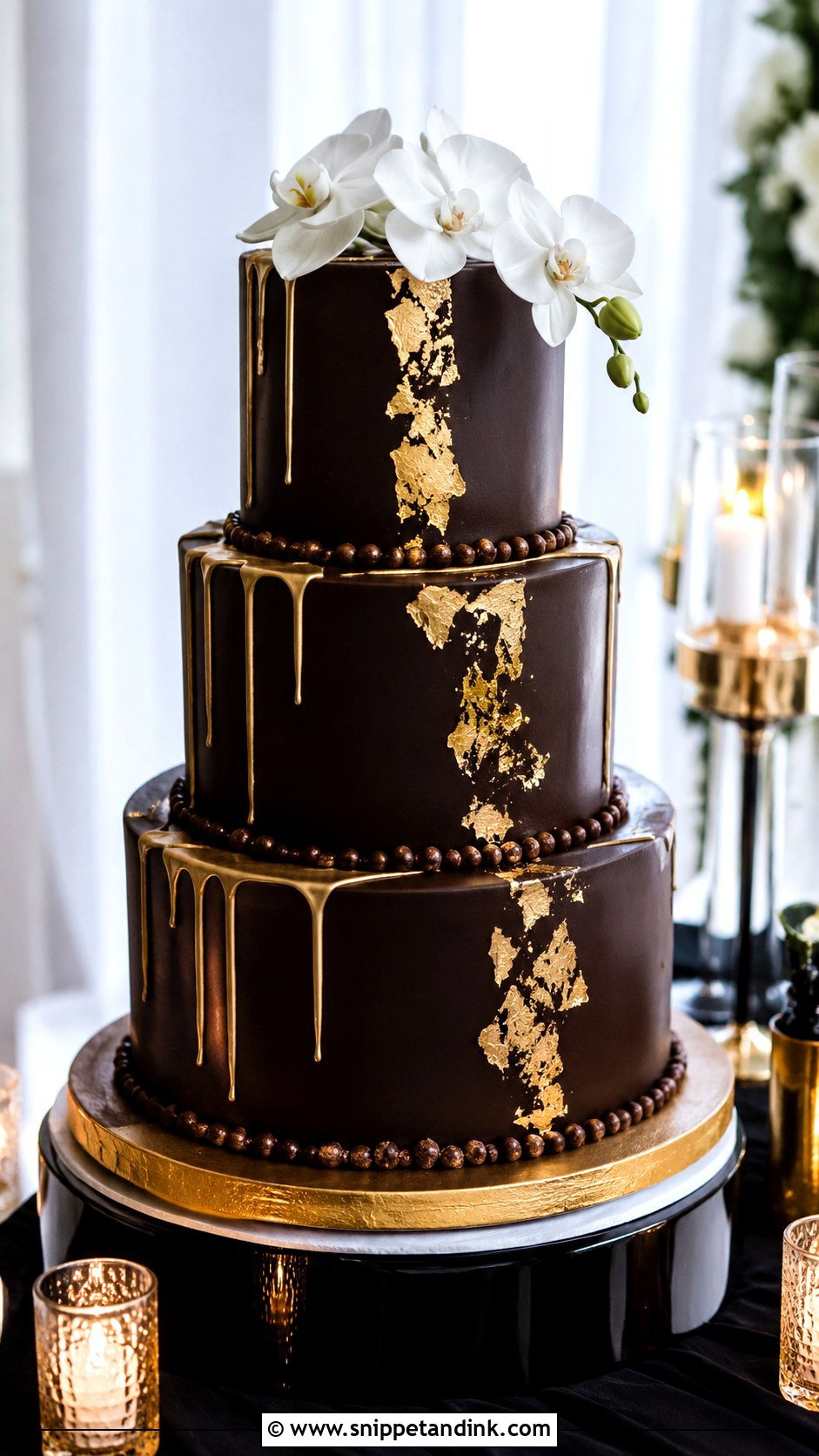
Gold works on chocolate with very little effort. Dark cocoa is a strong base, and gold leaf, a gold drip or painted edges bring in the formal finish. I keep the shape plain: smooth ganache, sharp tiers and a few fresh flowers. Gold leaf sticks best to a slightly tacky surface, so I apply it before the ganache sets fully. Gold pearls or a metallic topper are fine in small amounts. Too much shine starts to compete with the chocolate, especially under a ballroom’s evening lighting.
6. Chocolate Floral Wedding Cake
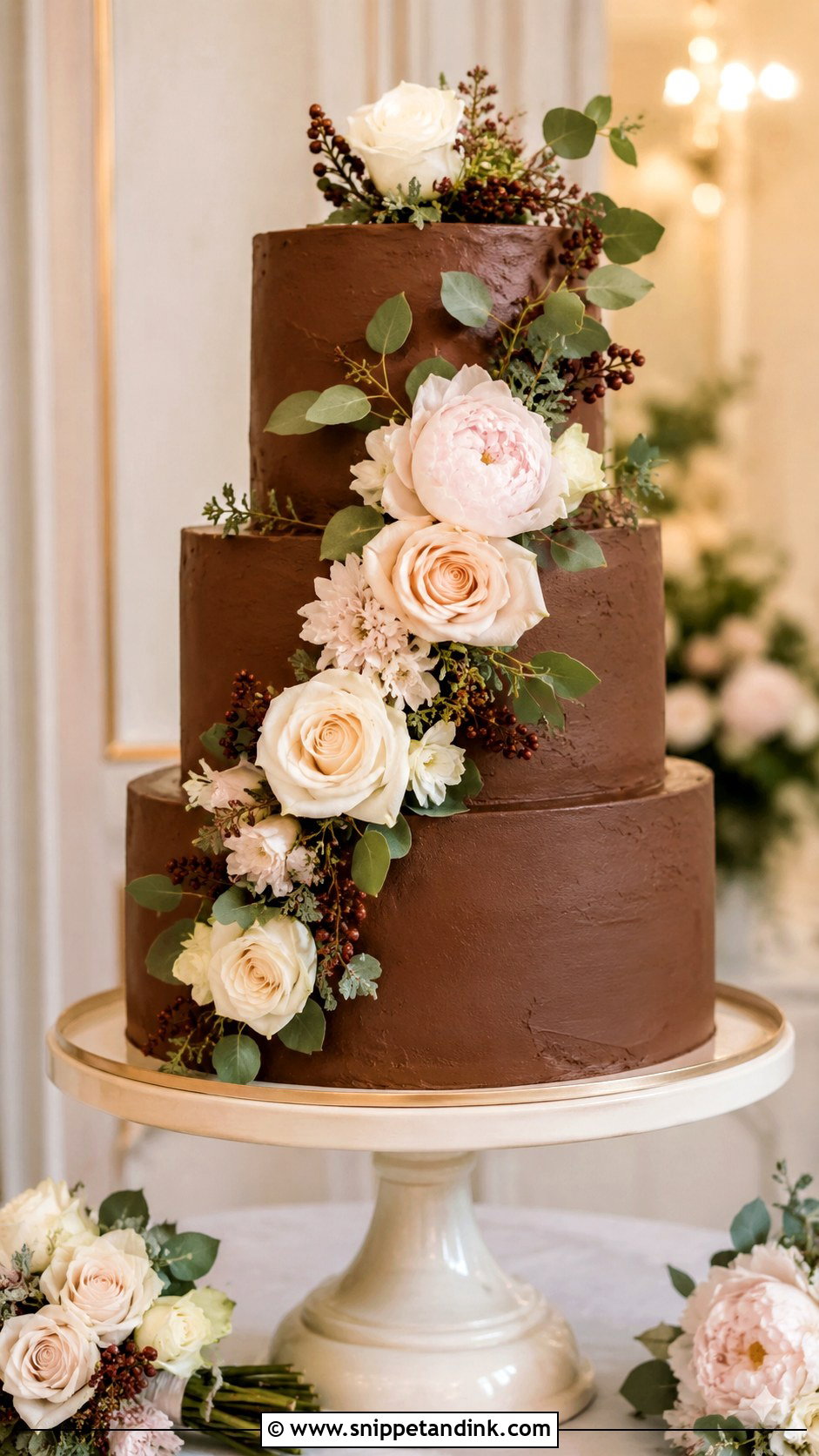
Flowers are the quickest way I know to make a dark cake look romantic, and they link it to the ceremony arrangements. White roses keep it classic, blush peonies are softer and deep red blooms add drama. For a garden wedding I use loose greenery and small seasonal flowers on each tier; for a formal one, tight clusters. The frosting can be smooth, textured or semi-naked. I ask the florist which stems are safe near food and wrap every one before it goes into the cake, since many popular wedding flowers shouldn’t touch what guests eat.
7. Chocolate Raspberry Wedding Cake
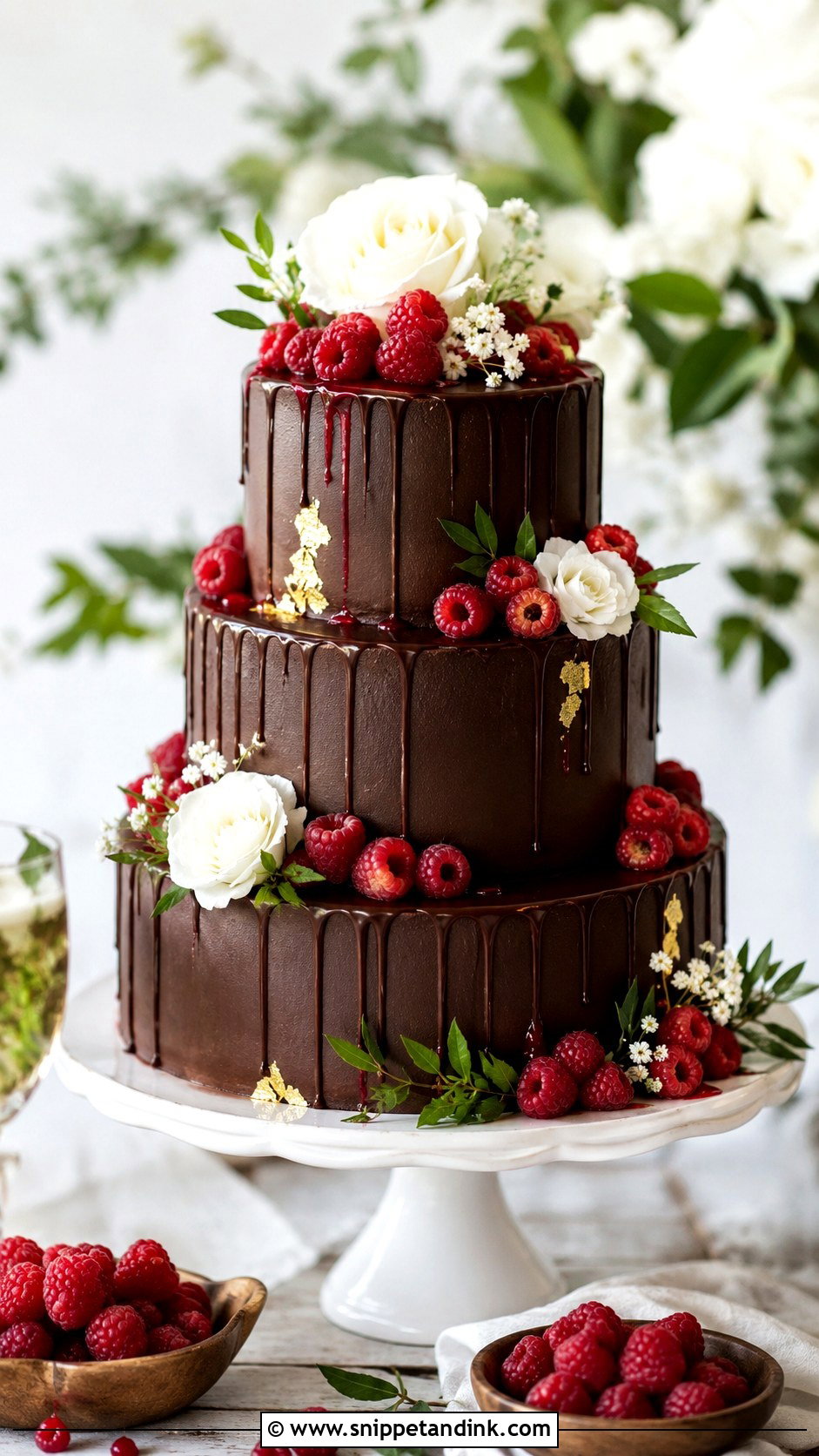
Raspberry is my favourite partner for dark chocolate, as its sharpness stops a rich cake tasting flat. The colour works too: deep red against cocoa needs almost no extra decoration. I use raspberry filling between layers, raspberry buttercream or fresh berries on top and around the tiers, and for a formal version a smooth ganache with a thin raspberry drip and small white flowers. Fresh raspberries are fragile and bleed onto pale frosting, so I add them at the venue and keep them on the chocolate parts of the cake.
8. Chocolate Strawberry Wedding Cake
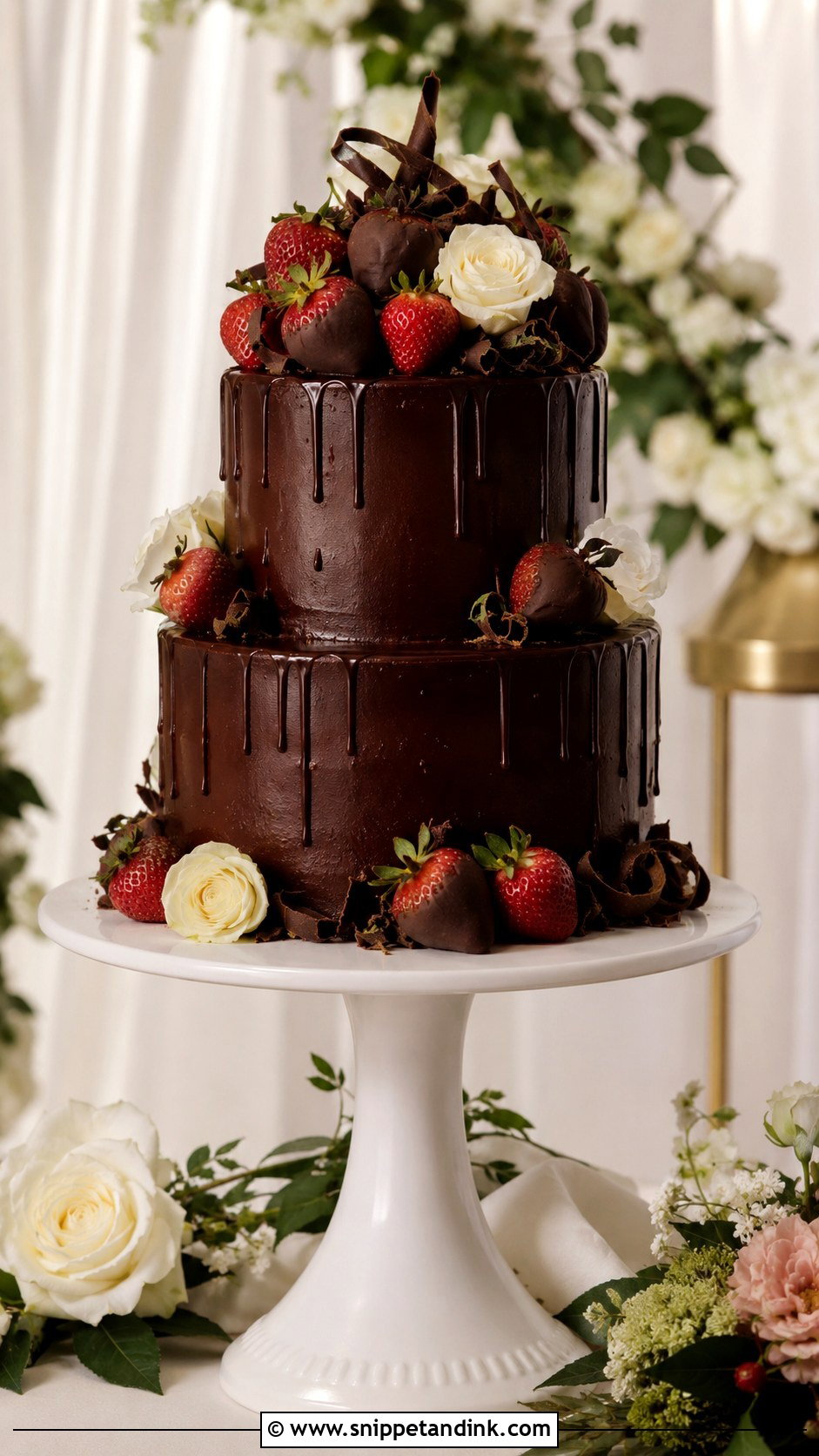
Strawberries and chocolate are familiar, which is exactly why guests reach for this one. Fresh strawberries can crown the top tier, sit between floral clusters or be dipped in chocolate for a neater finish. Dark ganache makes the red stand out; chocolate sponge with ivory buttercream and a chocolate drip gives a softer look. Dipped strawberries only last a few hours before the fruit starts to weep under the shell, so I dip them on the day. On a tall white or gold stand, it reads formal enough for an evening reception.
9. Chocolate Orange Wedding Cake
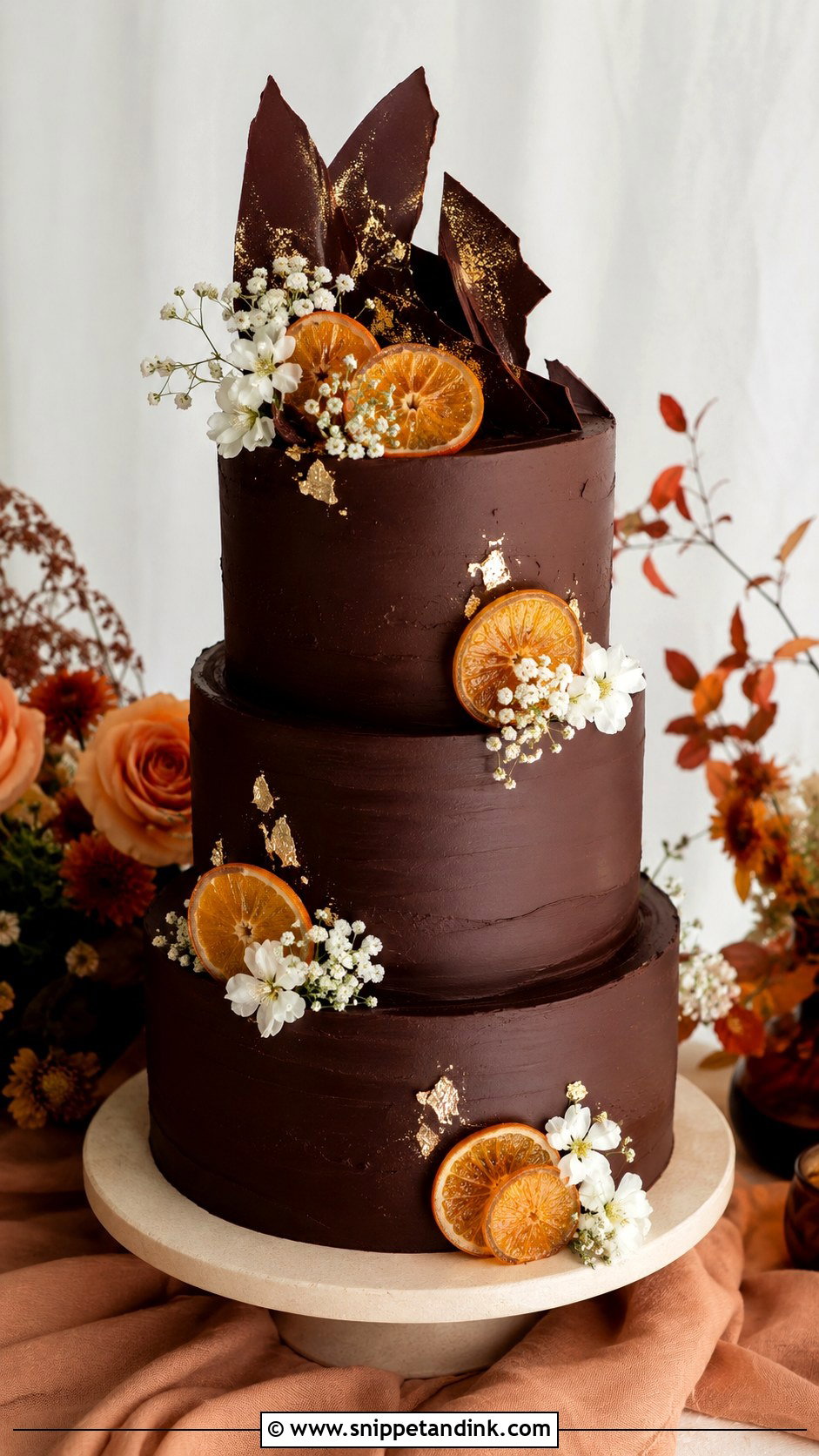
A chocolate orange wedding cake is for the couple who wants something a little different without risking the crowd. Orange zest in the sponge or ganache lifts the chocolate, and candied orange slices, small white flowers and touches of gold leaf decorate it. I candy my own slices slowly so they stay translucent and don’t go bitter at the rind. It suits autumn weddings and modern dessert tables. I place the slices sparingly so the smooth chocolate is still what you notice.
10. Chocolate Mousse Wedding Cake
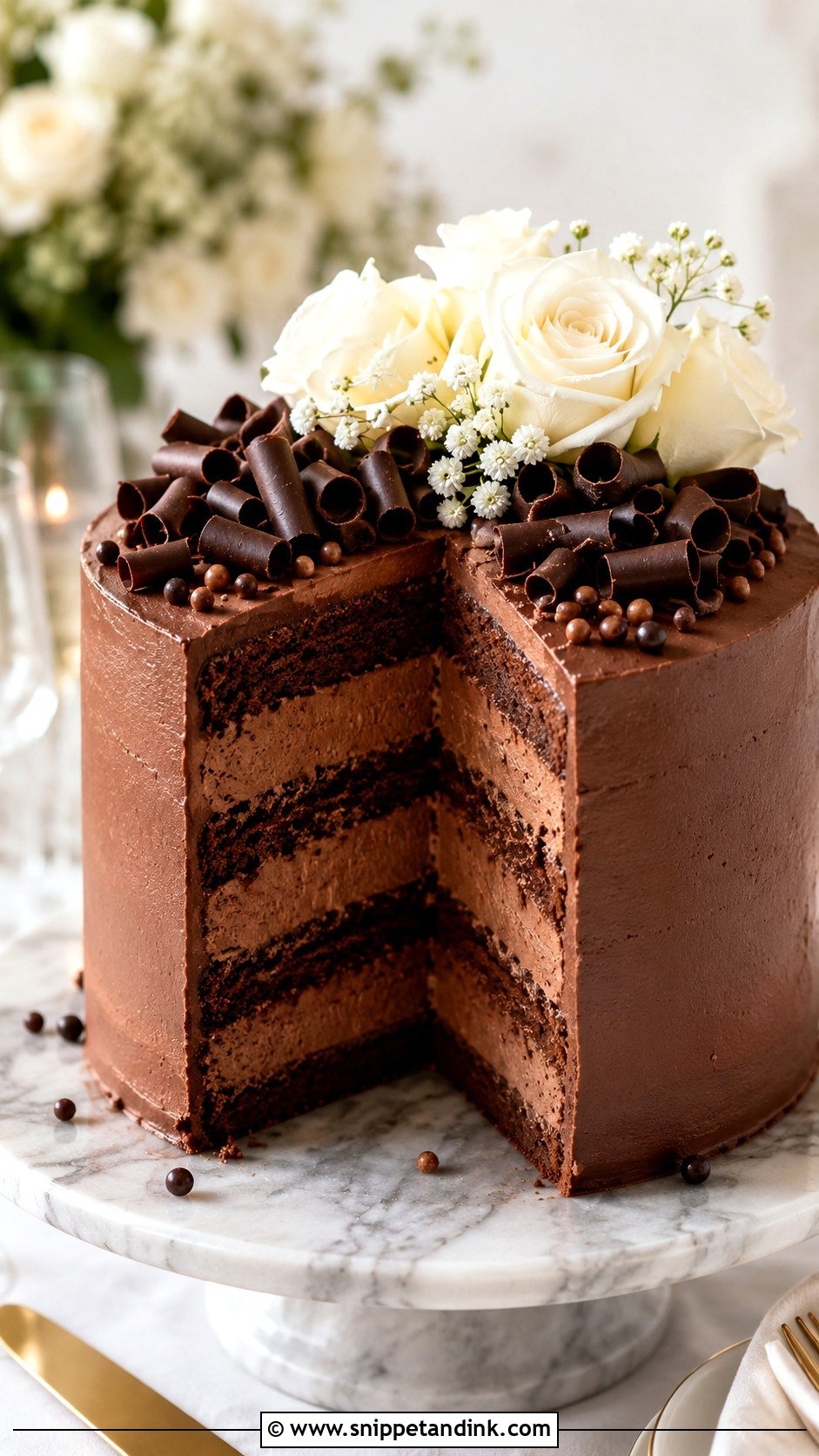
Mousse gives a lighter slice than fudge cake, but it’s also the most fragile filling I work with. It needs a firm outer coat of chocolate buttercream or ganache to hold it in, and every tier needs proper support dowels because mousse can’t carry weight. Chocolate curls, edible pearls, fresh flowers or a clean ganache drip finish it. Mousse cakes have to stay chilled, so I tell couples to plan for it to come out of the fridge close to serving, not to sit on display through dinner on a warm day.
11. Chocolate Fudge Wedding Cake
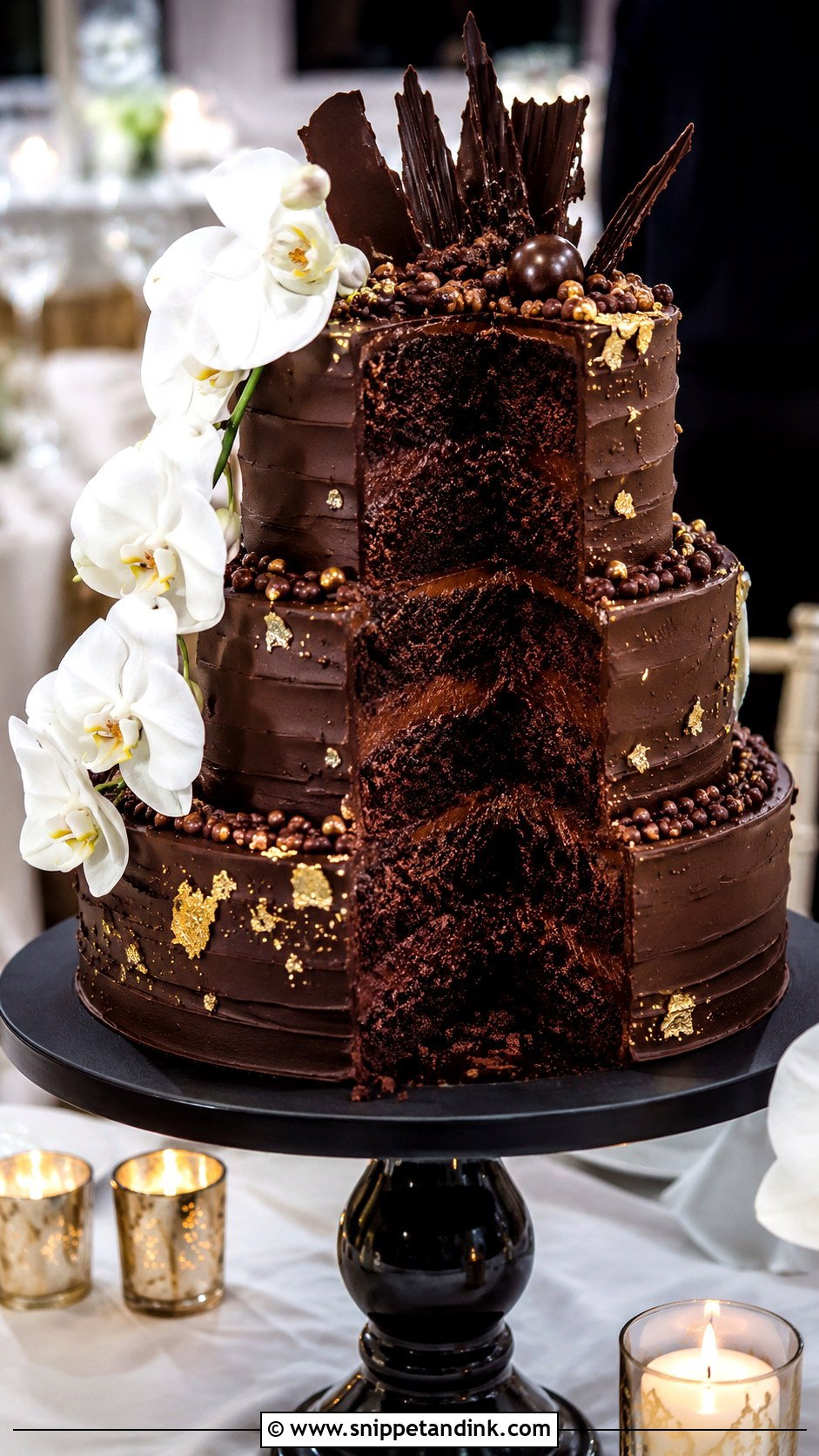
Fudge cake is for couples who want their dessert to be the indulgent moment of the night. Thick layers, smooth fudge frosting and a dark finish make it look generous. Because it can read heavy, I balance it with white orchids, gold leaf or a clean tiered outline; a three-tier version with sharp edges looks surprisingly modern. For a cosier wedding, textured frosting and fresh berries suit it better. Fudge cake is dense and very rich, so slices can be cut smaller than usual, which helps if your budget is set by servings.
12. Chocolate Buttercream Wedding Cake
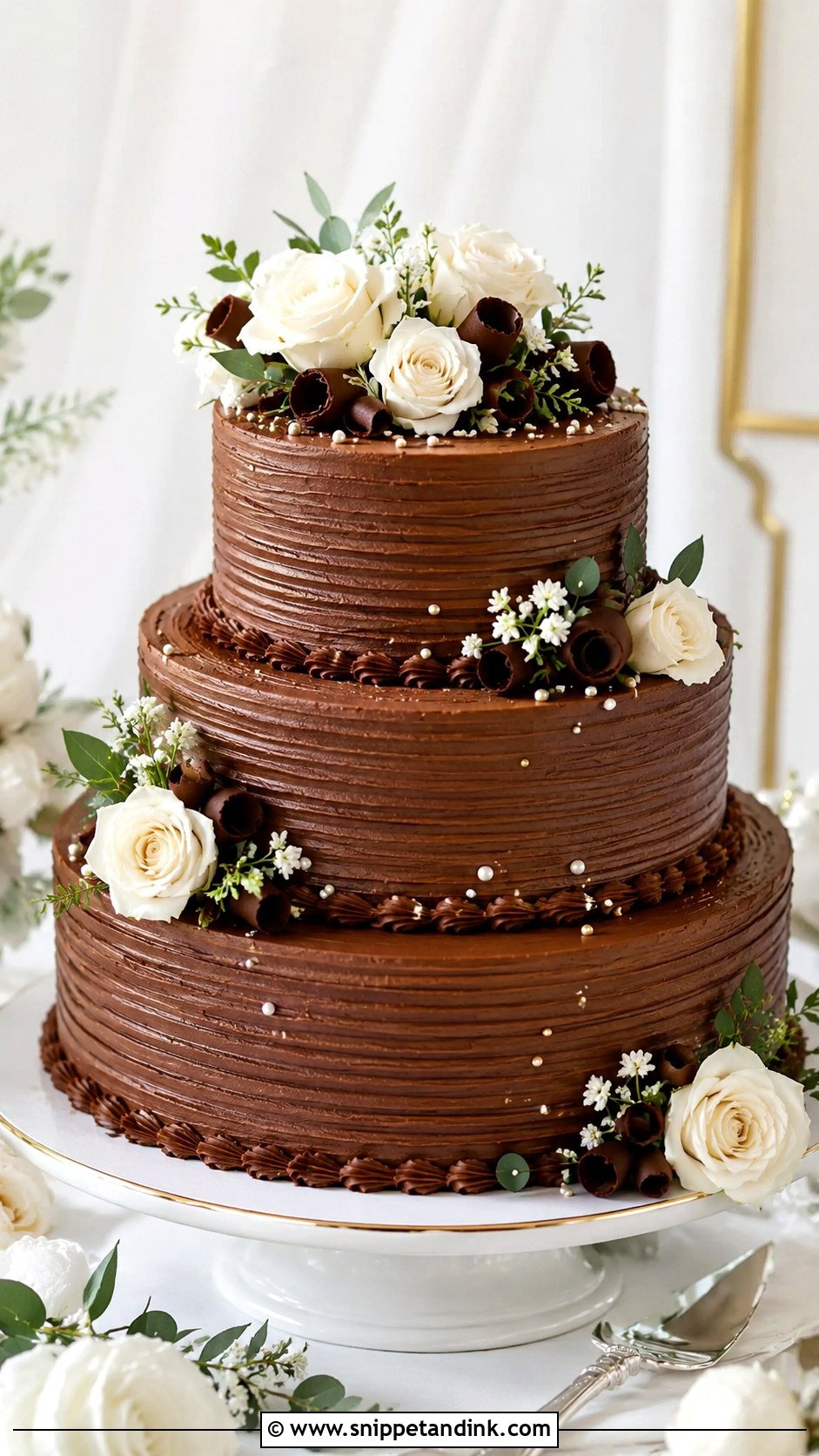
Buttercream is softer than ganache and much more flexible. I can smooth it, pipe it, ruffle it or texture it, and each finish suits a different wedding: smooth with fresh flowers, piped for a traditional look, textured for something relaxed. The flavour is the one most guests already love. Its weakness is heat, as most buttercreams soften well before ganache does, so I’d want to know the room temperature before I’d promise sharp edges. One main decoration, such as ivory roses, chocolate curls or a small drip, keeps it looking deliberate.
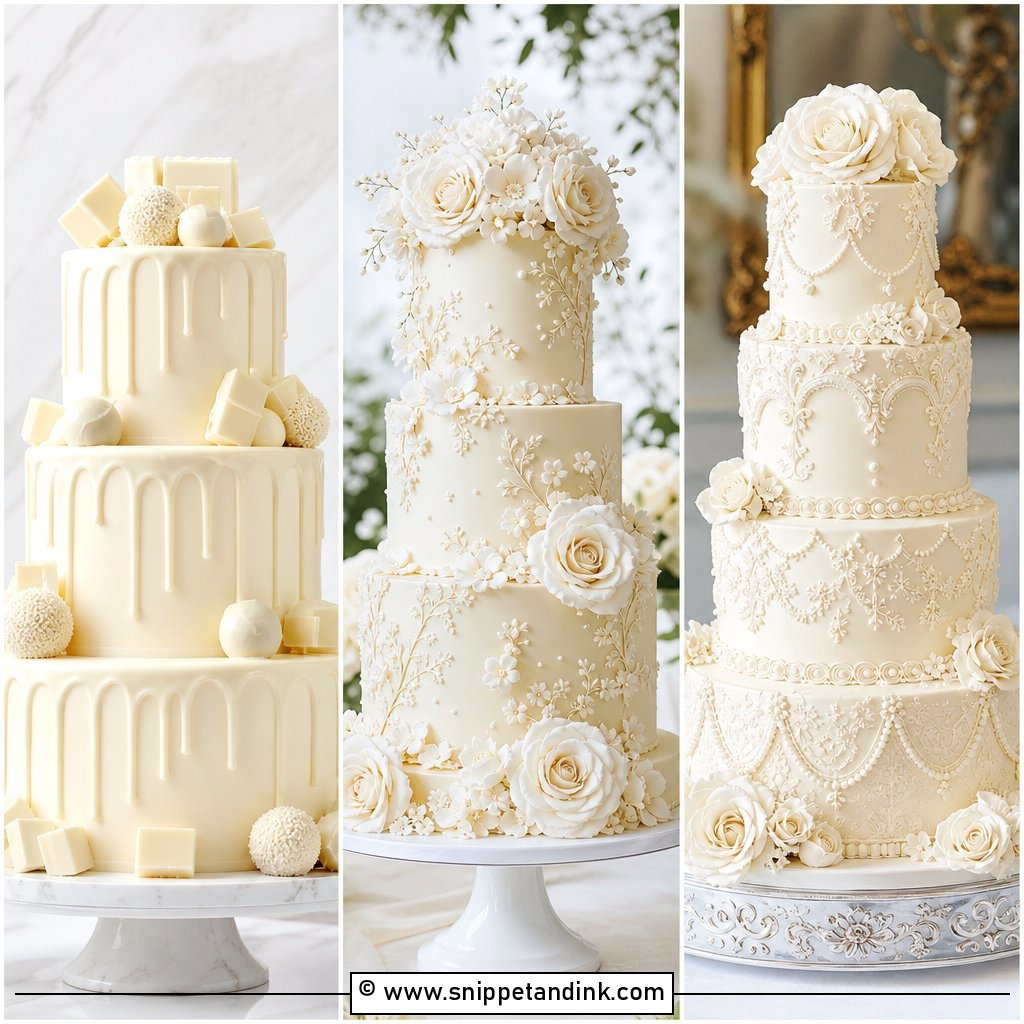
13. White Chocolate Wedding Cake
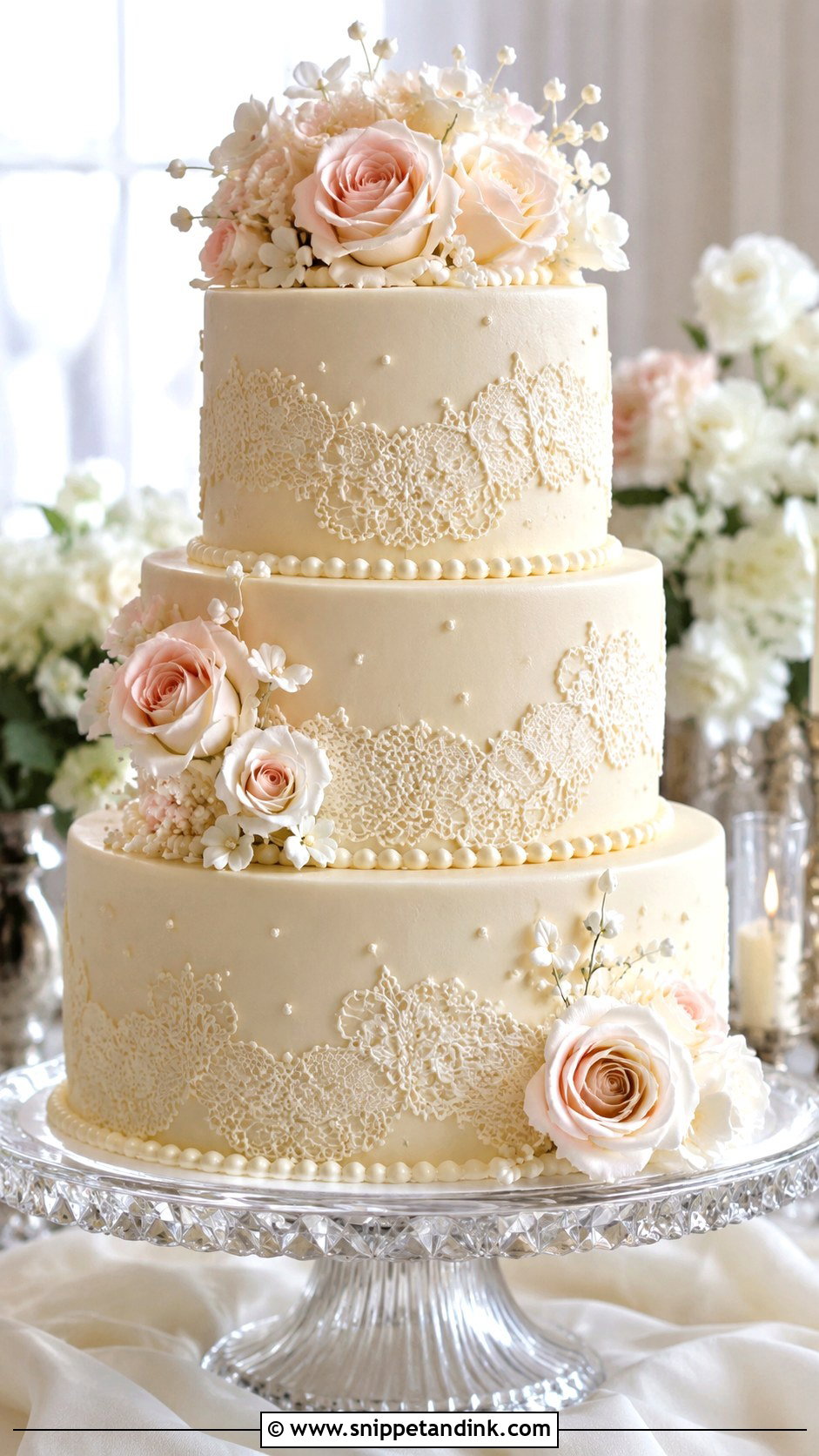
White chocolate lets a cake look bridal and still taste of chocolate. White chocolate ganache gives a smooth ivory surface for pearls, sugar flowers, lace patterns or fresh blooms. It’s softer than dark chocolate ganache and needs more chocolate in the mix to set firm, which I account for when I plan a tall cake. Subtle gold adds warmth, or pale blush flowers add colour. Because white chocolate is already sweet and rich, I pair the sponge with something sharp inside, such as raspberry or passion fruit.
14. Dark Chocolate Wedding Cake
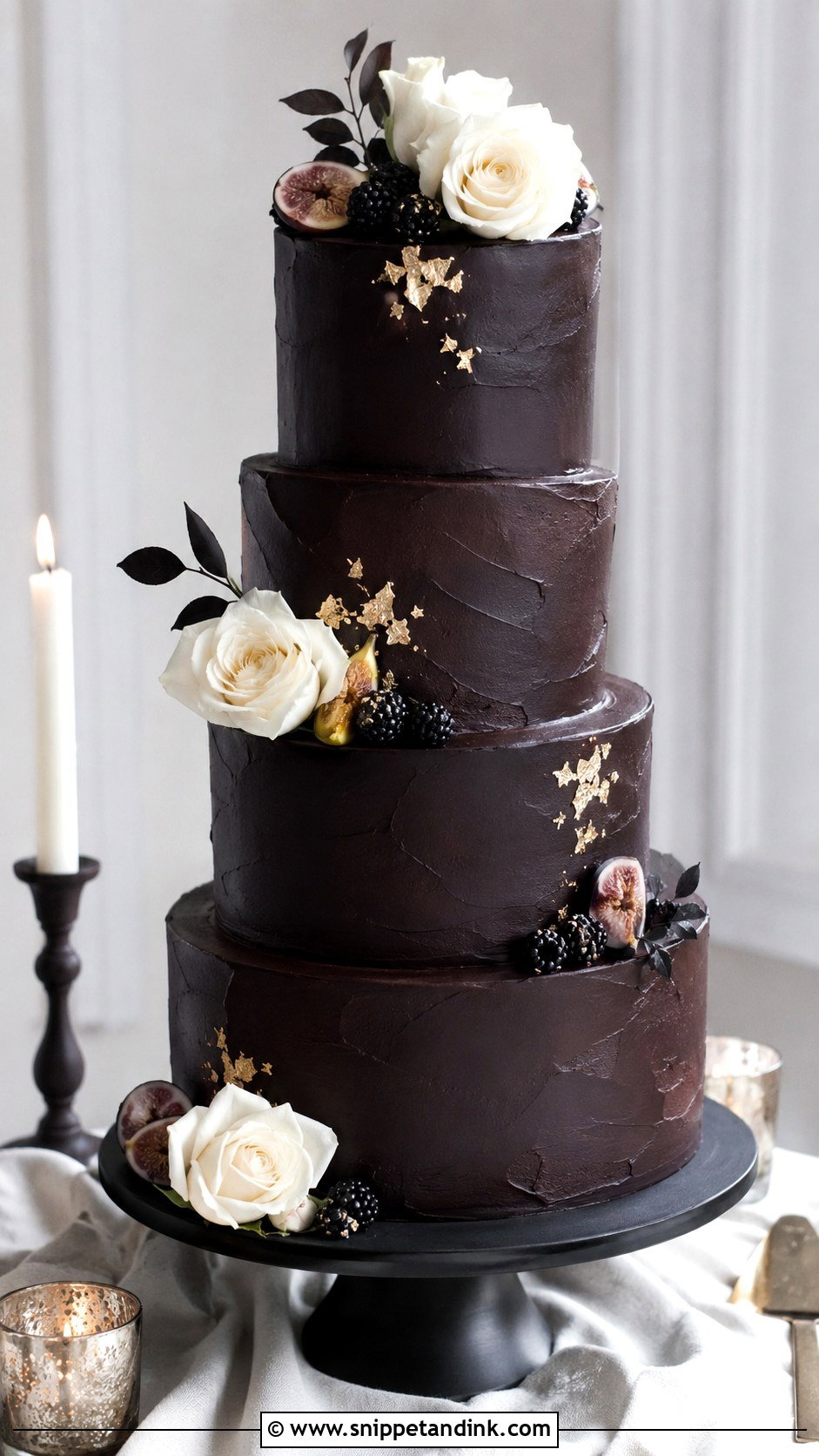
Dark chocolate gives a cake instant drama, especially against ivory flowers or a black-and-white palette. Tall tiers, smooth ganache and very little decoration show it off best. For a moody table, I’d add deep red flowers, blackberries or dark figs; for something more classic, white roses and greenery. The flavour is strong, so I suggest balancing it inside with vanilla buttercream, raspberry filling or espresso ganache. Very dark cakes also show every fingerprint and scuff, so I handle and box them more carefully than lighter ones.
15. Chocolate Geode Wedding Cake
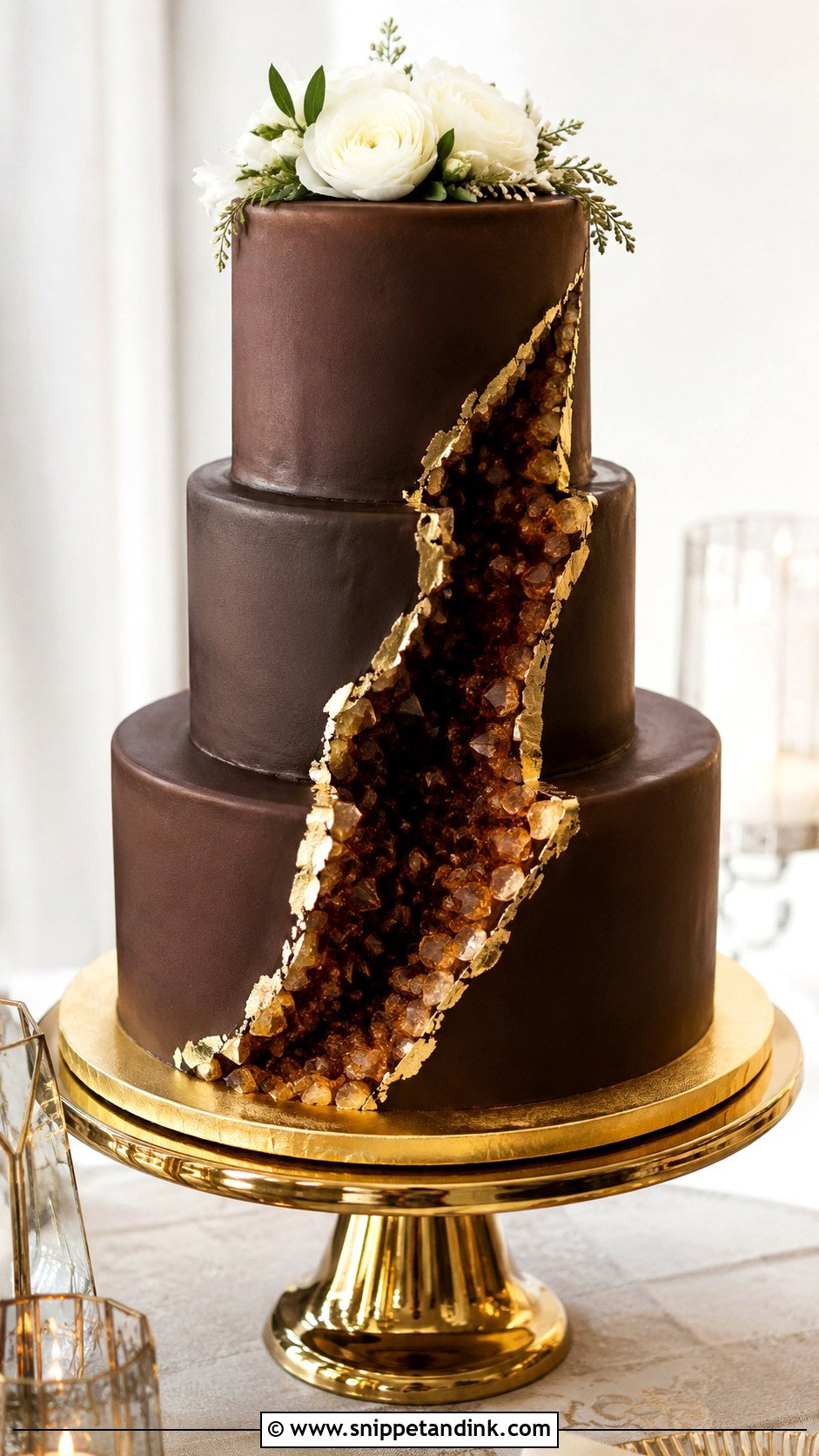
A geode cake is carved: I cut a section out of one side and fill it with sugar crystals so it looks like a split gemstone. On dark ganache the crystals look dramatic. Clear, amber, gold or soft blush crystals keep it suitable for a wedding. The rest of the cake stays smooth so the geode is the one focal point. Rock-sugar or isomalt crystals are hard to bite, so I tell couples to have the caterer cut around them when serving. It suits modern venues and couples after something artistic.
16. Chocolate Marble Wedding Cake
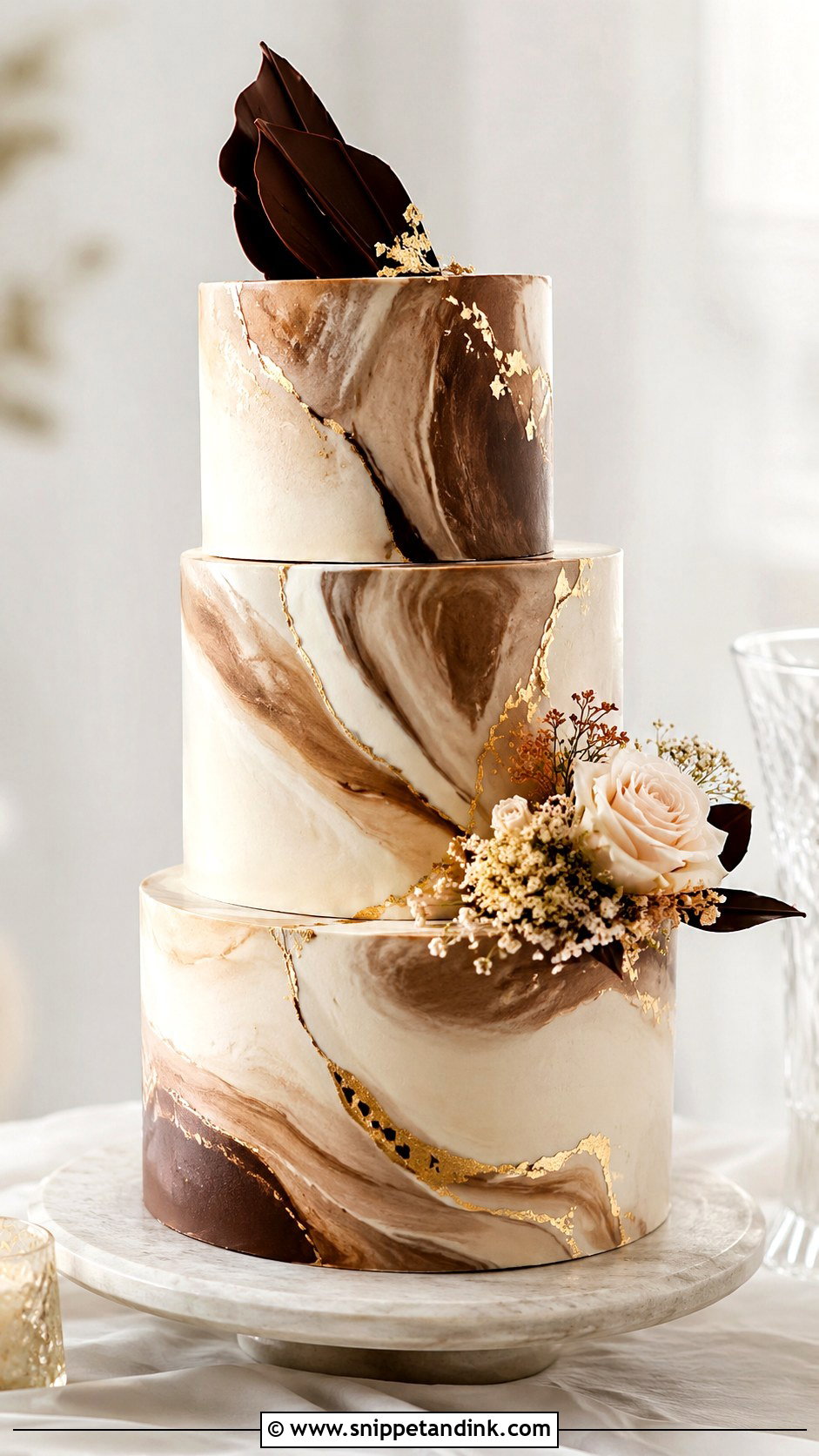
A chocolate marble wedding cake brings the look of natural stone, swirling chocolate brown, ivory, beige and gold. I get the cleanest veining on fondant or white chocolate ganache, though painted buttercream works too. The tiers stay plain so the pattern doesn’t look crowded, with one floral cluster, a few touches of gold leaf or a thin drip at most. For a minimalist wedding, it gives the table something to look at without a pile of toppings.
17. Chocolate Black And White Wedding Cake
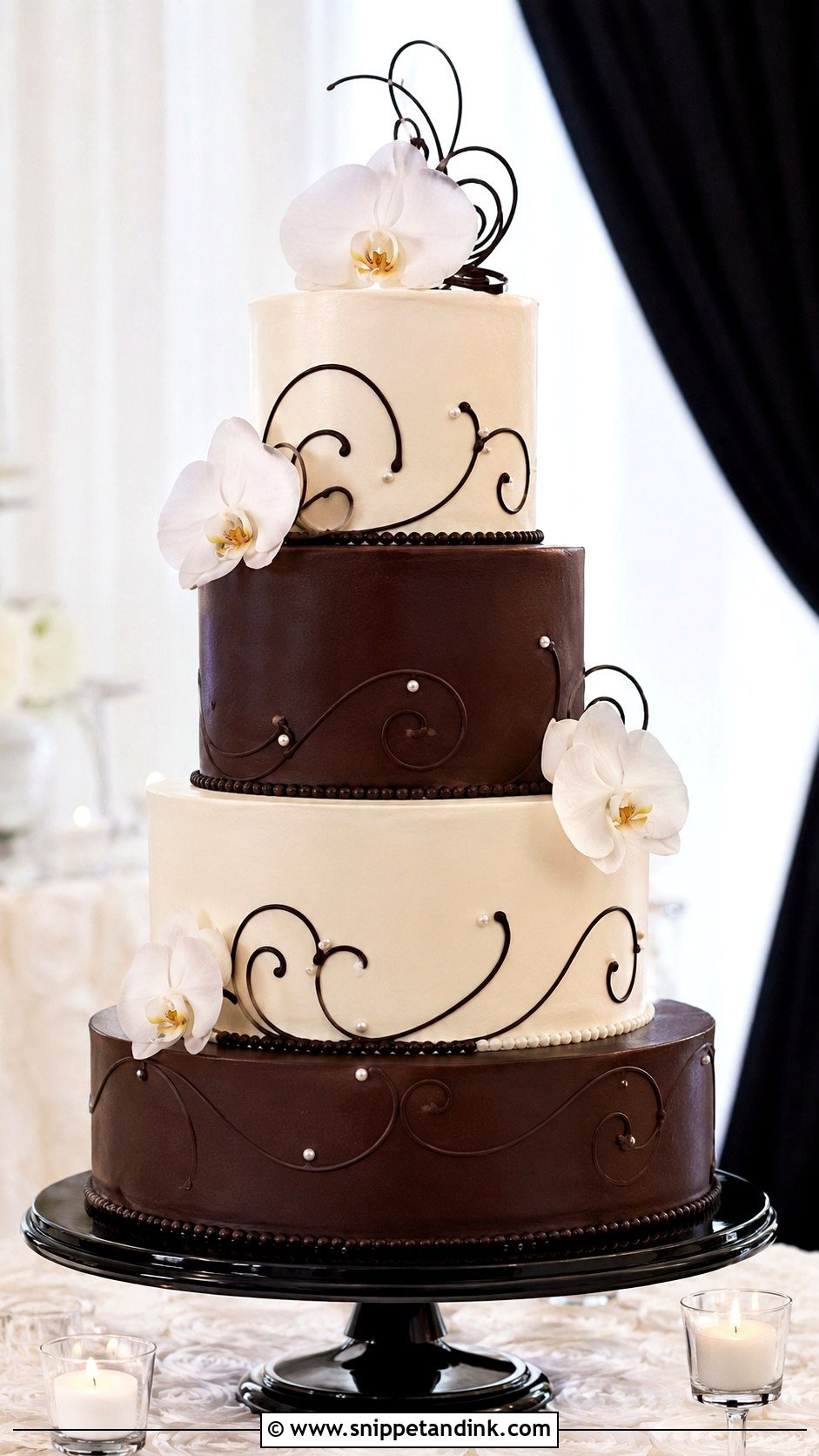
Black and white contrast can come from dark tiers with white flowers, ivory tiers with chocolate piping or alternating tiers of each. It’s a natural partner for black-tie weddings, with smooth surfaces and sharp edges. White orchids, pearls or a thin white chocolate drip soften the dark tiers. I do this one in ganache rather than buttercream, as alternating colours make every dent and smudge obvious, and ganache holds a crisper line. Against black linen, white flowers and candlelight, it holds the room without being loud.
18. Chocolate Boho Wedding Cake
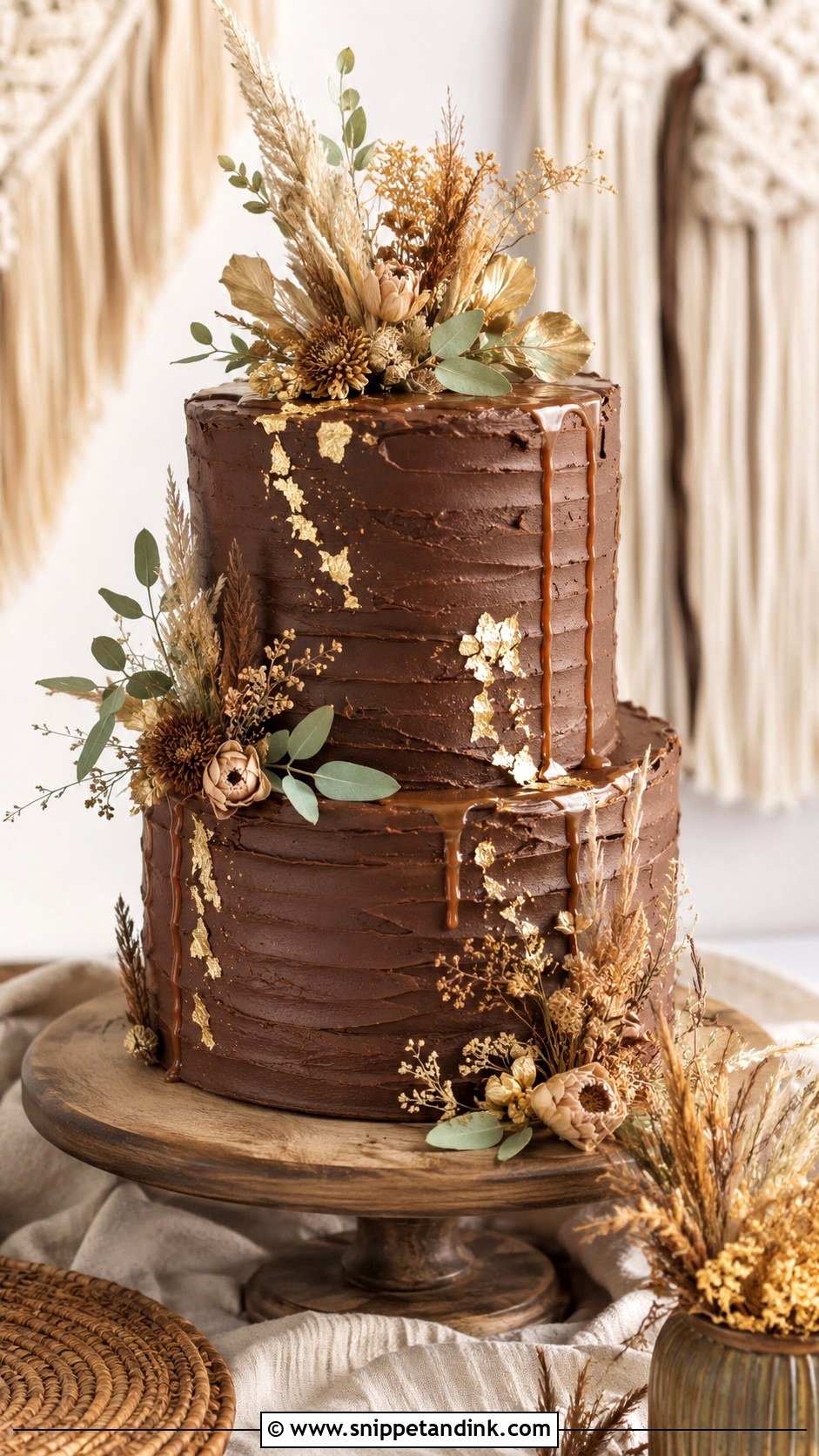
Boho chocolate cakes lean on texture: chocolate buttercream with visible spatula marks, semi-naked sides, dried flowers, pampas grass and soft neutral tones. Cream, tan, blush, rust and muted greenery suit it better than bright colours. Pampas sheds, so I trim and lightly spray it before it goes near the cake, and I keep it on a separate pick rather than in the frosting. A wooden stand or stone table finishes it, and a caramel drip or gold leaf adds warmth.
19. Chocolate Square Wedding Cake
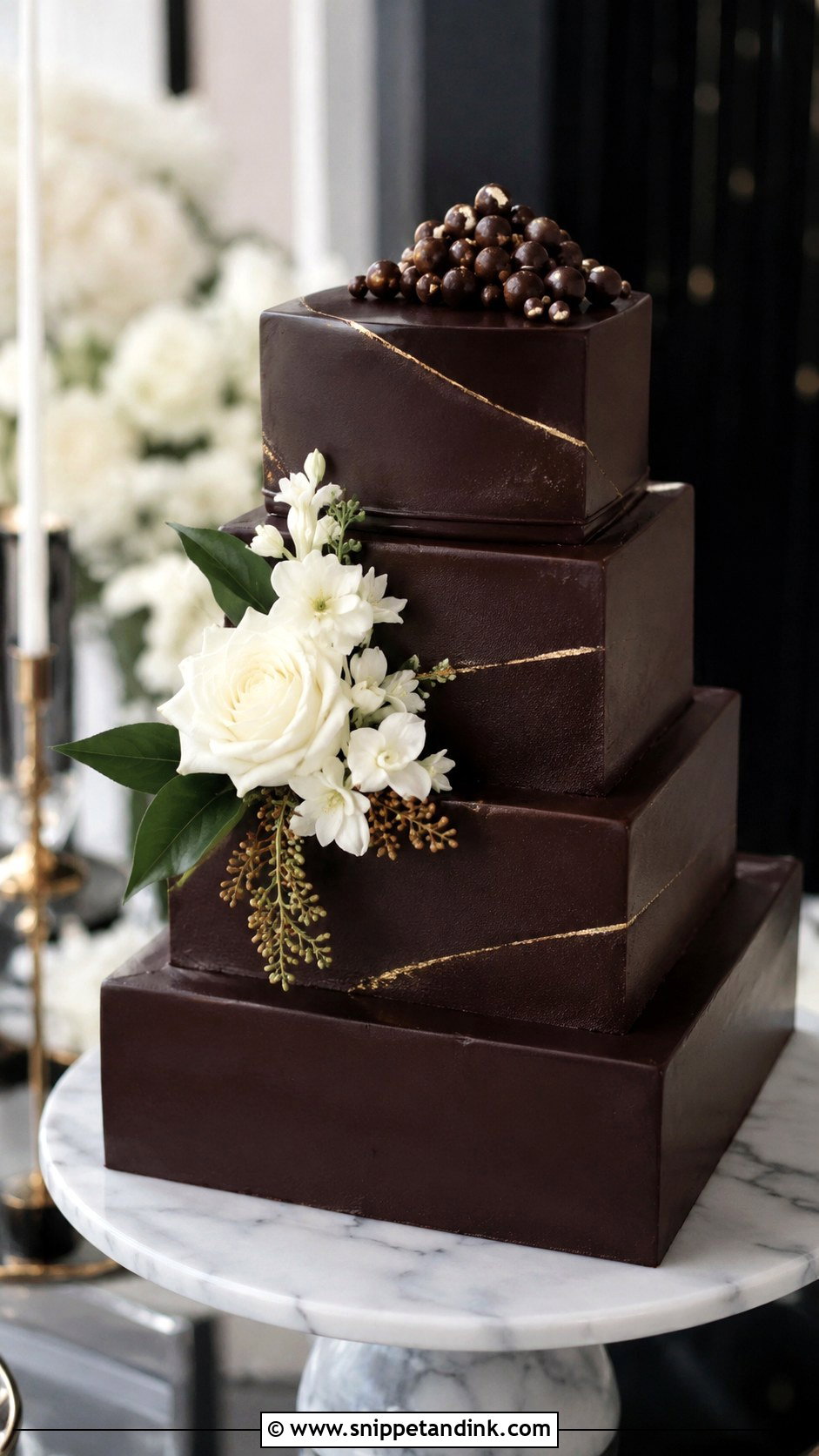
Square tiers look architectural, and they’re harder to make than round ones. Every corner has to be sharp, and buttercream struggles to hold a crisp corner, so I almost always finish square cakes in ganache or fondant. Smooth dark ganache, minimal decoration, a single floral arrangement on one corner or a clean gold line round each tier is enough. Square cakes are easier to cut into even portions, which caterers appreciate. They suit city venues and modern weddings.
20. Chocolate Cupcake Wedding Cake
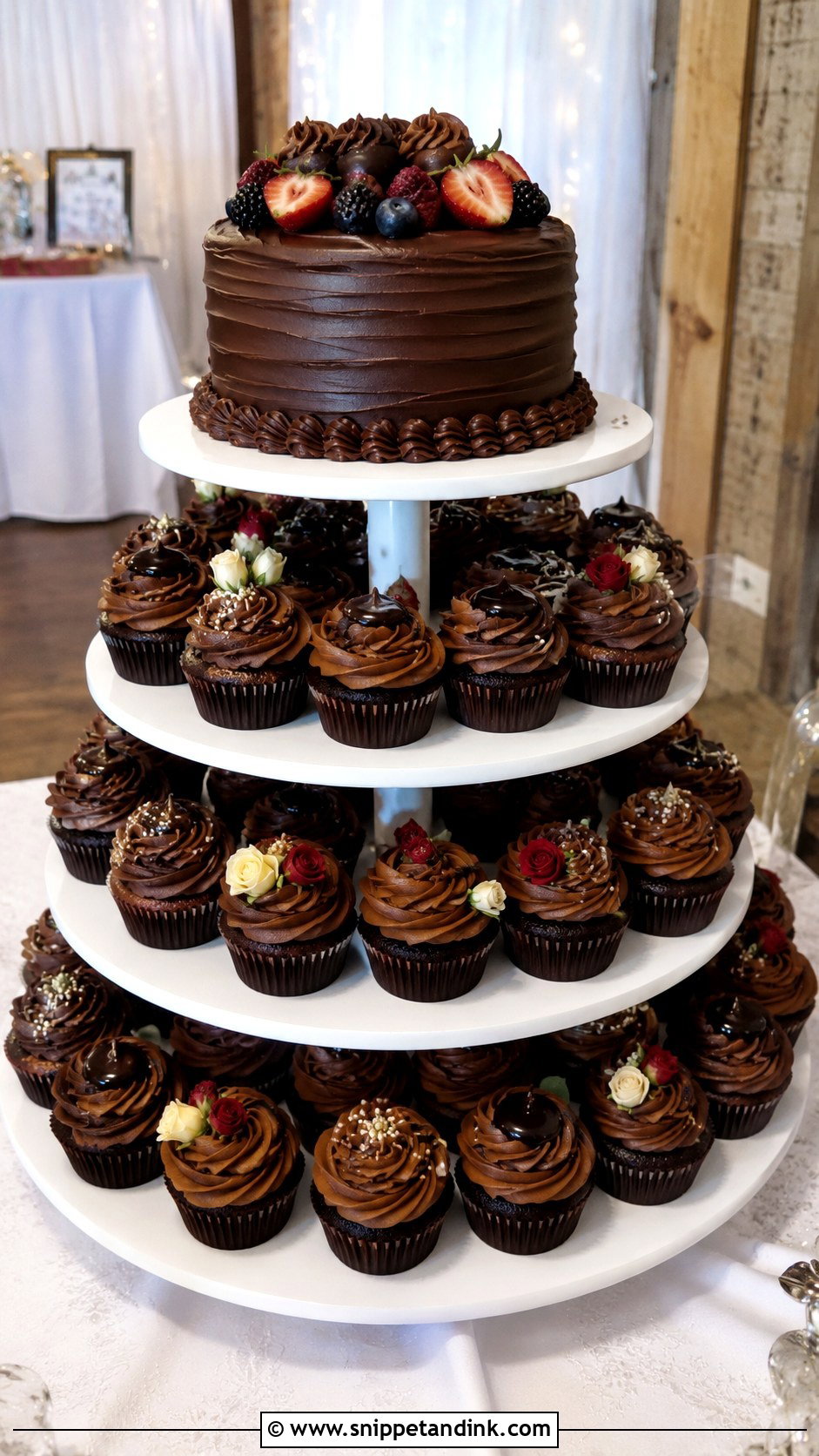
A cupcake tower is the serving-friendly version: chocolate cupcakes on a tiered stand with a small cutting cake on top. It suits casual weddings, outdoor receptions and dessert tables with several sweets. Tops can be chocolate buttercream swirls, ganache centres, berries or tiny floral toppers. I coordinate the liners and frosting colours so it reads as one design. Cupcakes dry out faster than a whole cake, so they’re baked as close to the day as possible.
Will a Dark Cake Disappear in a Candlelit Room?
It can. Dark brown absorbs light, and at an evening reception a ganache cake against a dark wall can look like a silhouette in photographs. I plan placement with the couple as carefully as the design.
- Put the cake in front of something pale: a light wall, ivory linen or a backdrop of white flowers.
- Ask your venue or planner for a soft light angled onto the table. Uplighting from behind makes a dark cake look flat.
- Keep candles a hand’s width away from the tiers. Their heat softens ganache and chocolate decorations on the near side first.
- Set the cake up away from radiators, windows and the dance floor, which gets surprisingly warm.
- Cut the cake before the room gets hot and dim, if the timeline allows. Early cutting also helps the caterer serve it with dessert rather than late in the night.
If the venue is warm, I’d steer you toward a ganache finish and away from mousse fillings, which need to stay cold. That one decision saves more chocolate cakes than anything else I do.
Ganache, Buttercream or Bare Sponge on Your Table
Chocolate cakes can be modern, rustic or dramatic, and that range is why I enjoy designing them. A smooth ganache cake looks polished, while a semi naked cake feels natural and warm. Gold brings glamour, berries add colour and flowers soften even the darkest tier. When you sit down with your baker, bring your venue, season, colours and how the cake will be served, and let those decide the finish. The flavour should be what people remember.
You'll Like These Ideas:





Leave a Reply