
Royal blue is one of the hardest colors I mix, and one of the most rewarding once it’s right. On two tiers it gives a dessert table real presence without the scale of a towering cake, which suits courthouse weddings, backyard parties and smaller ballroom dinners alike. It sits comfortably next to white, ivory, silver, gold and pearls. Here are twenty ways I’d finish a two-tier cake in royal blue, with the practical catches I’d mention at a consultation.
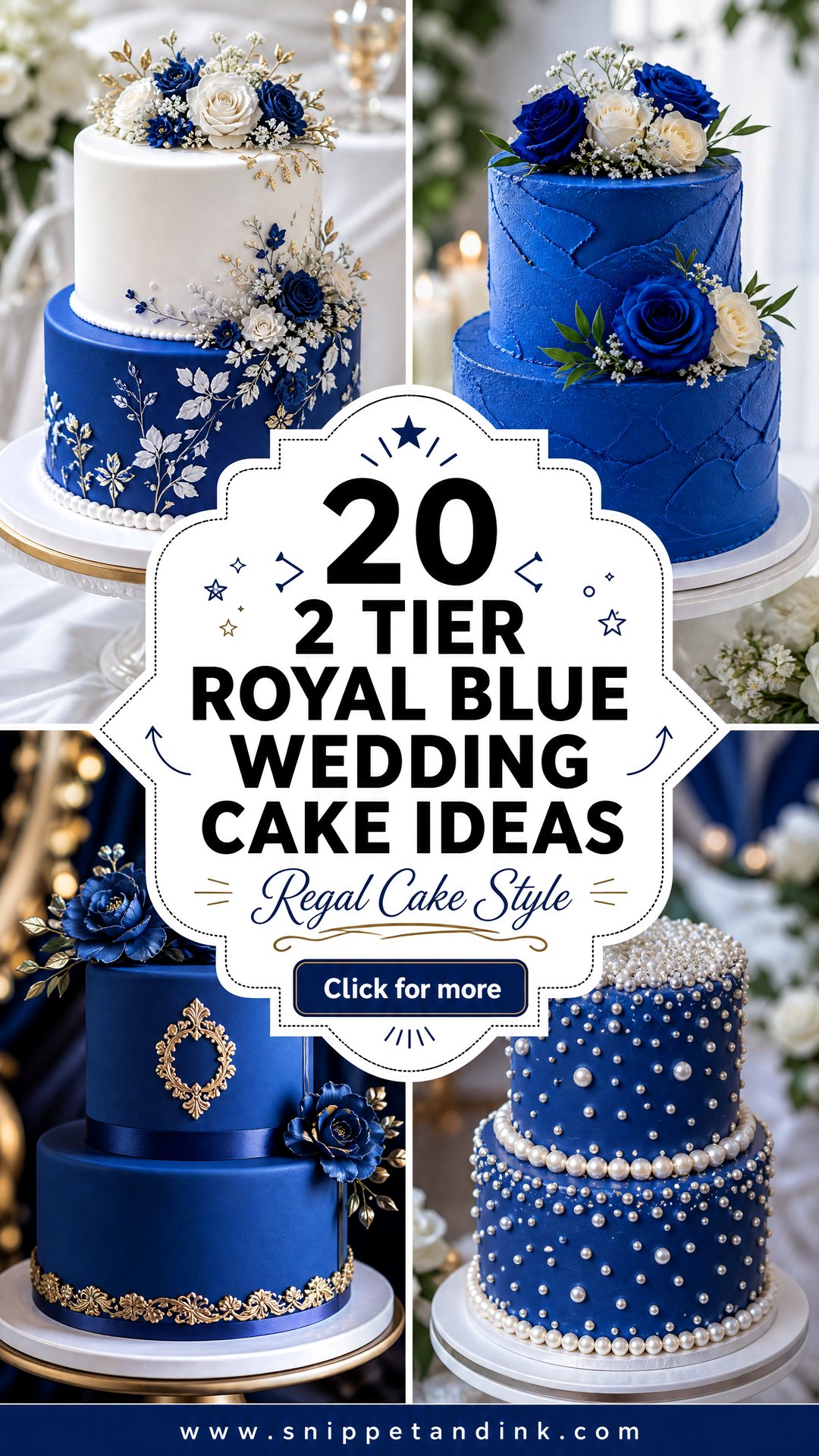
Mixing Royal Blue That Doesn’t Drift Toward Teal or Purple
When a couple brings me a royal blue swatch, I treat it as a target, not a promise, because blue is the color that moves most between bowl, cake and camera. These are the steps I follow and what I’d ask any baker you’re considering.
- Send a physical swatch: a bridesmaid fabric sample or a ribbon, not a screen photo, since every phone shows blue differently.
- For buttercream, ask whether they whiten the base first. Yellow butter turns blue slightly green unless it’s corrected.
- Mix the color a day ahead. Gel color keeps deepening for several hours, so a shade that looks right at once ends up too dark.
- Prefer pre-colored fondant for full blue tiers. It gives an even shade and doesn’t need a huge amount of color worked in.
- Ask to see the shade on a sample board in daylight before the cake is made.
I also tell couples that deep blue on its own looks flat; a little white, silver or gold on the cake is what makes the color look rich rather than heavy.
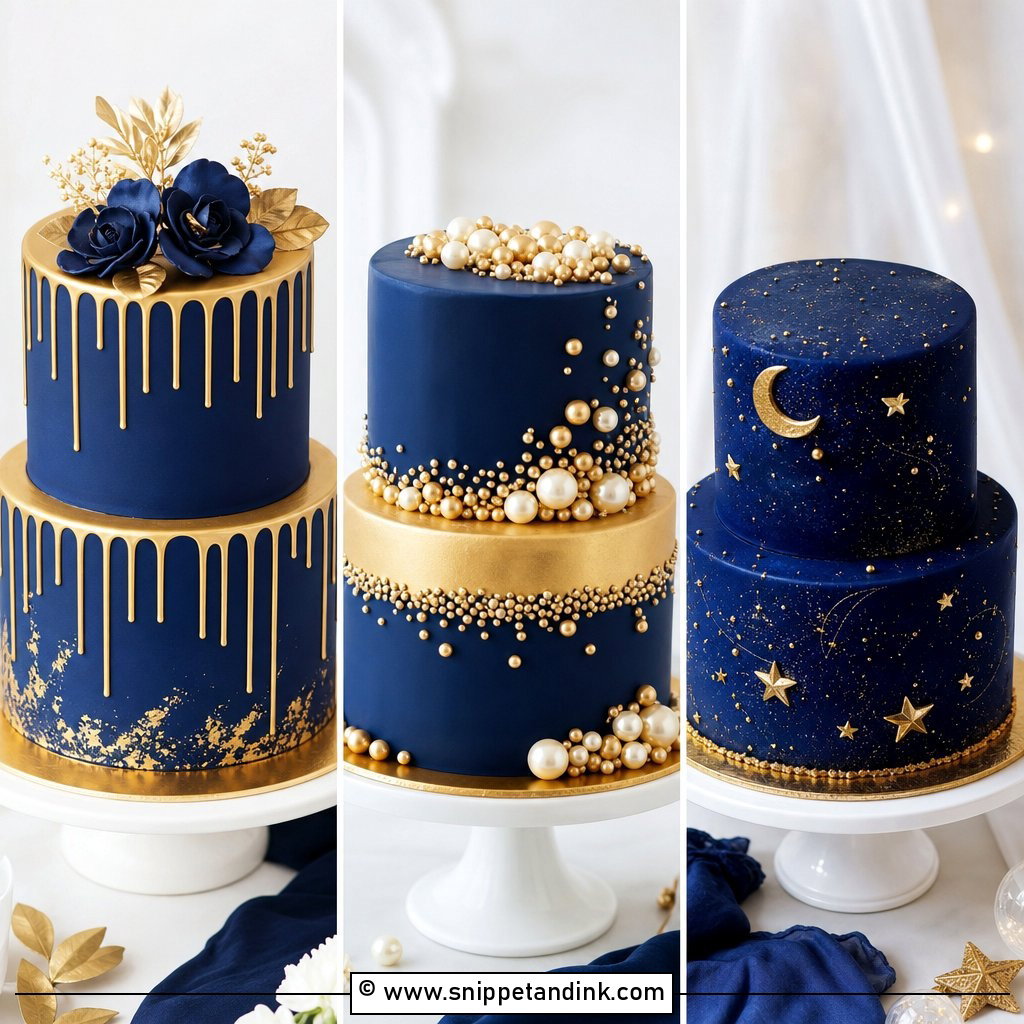
1. 2 Tier Royal Blue And Gold Wedding Cake
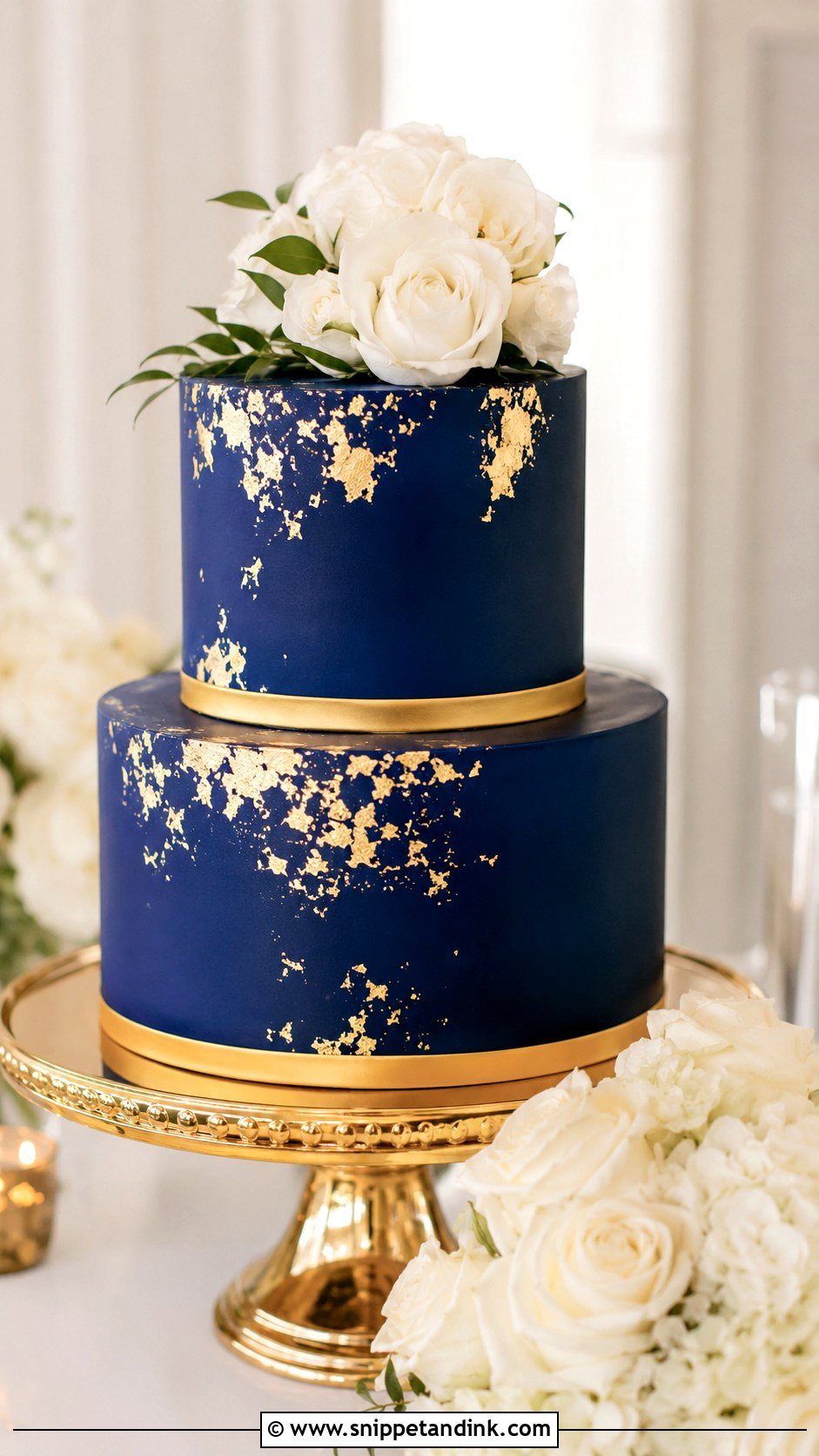
Blue and gold is the pairing I’m asked for most, partly because it matches so much reception decor. I cover both tiers in pre-colored royal blue fondant, which gives a far more even shade than coloring it myself, then brush the edges or a thin band with edible gold paint. Inside, a pale sponge like vanilla, almond or white chocolate keeps the cut slice bright against all that color. A few white roses or orchids stop the cake from going dark and heavy. Here’s my go-to example of a royal blue and gold wedding cake done with restraint.
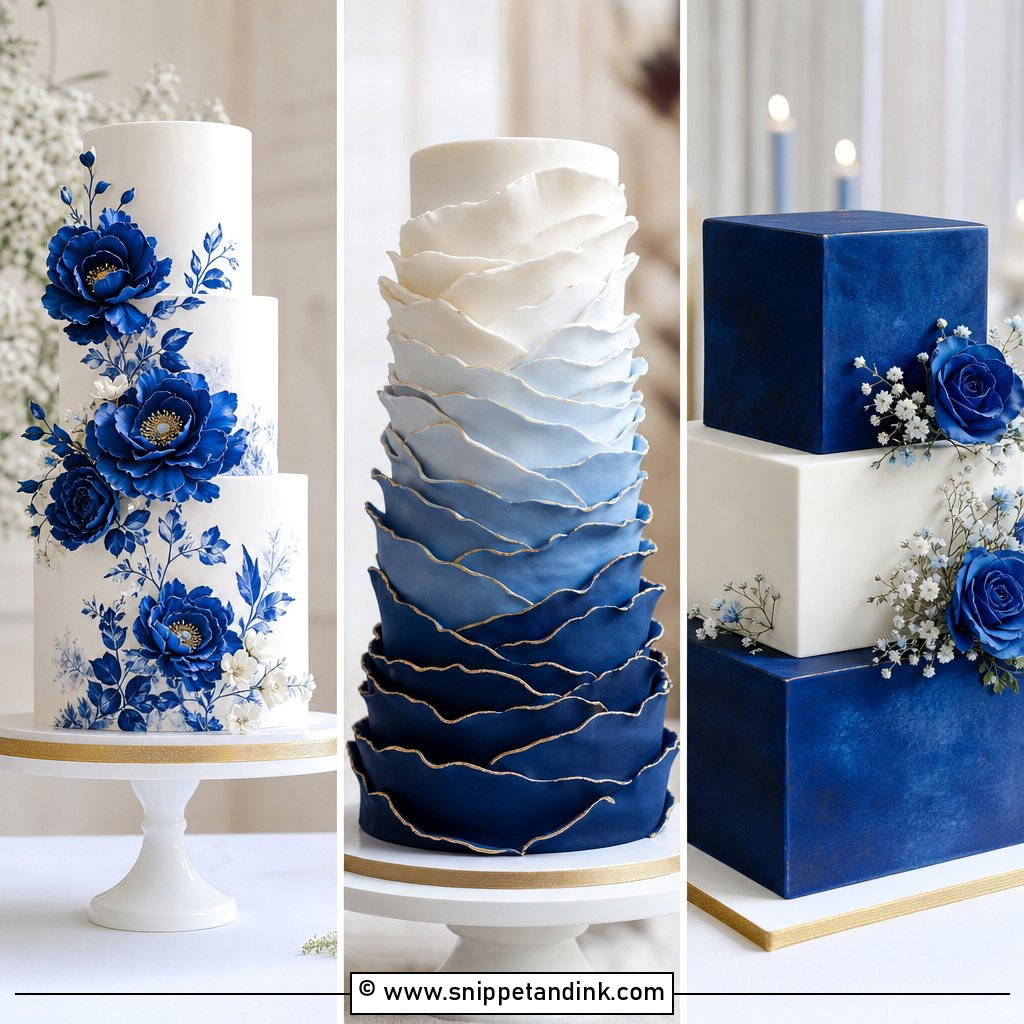
2. 2 Tier Royal Blue And White Wedding Cake
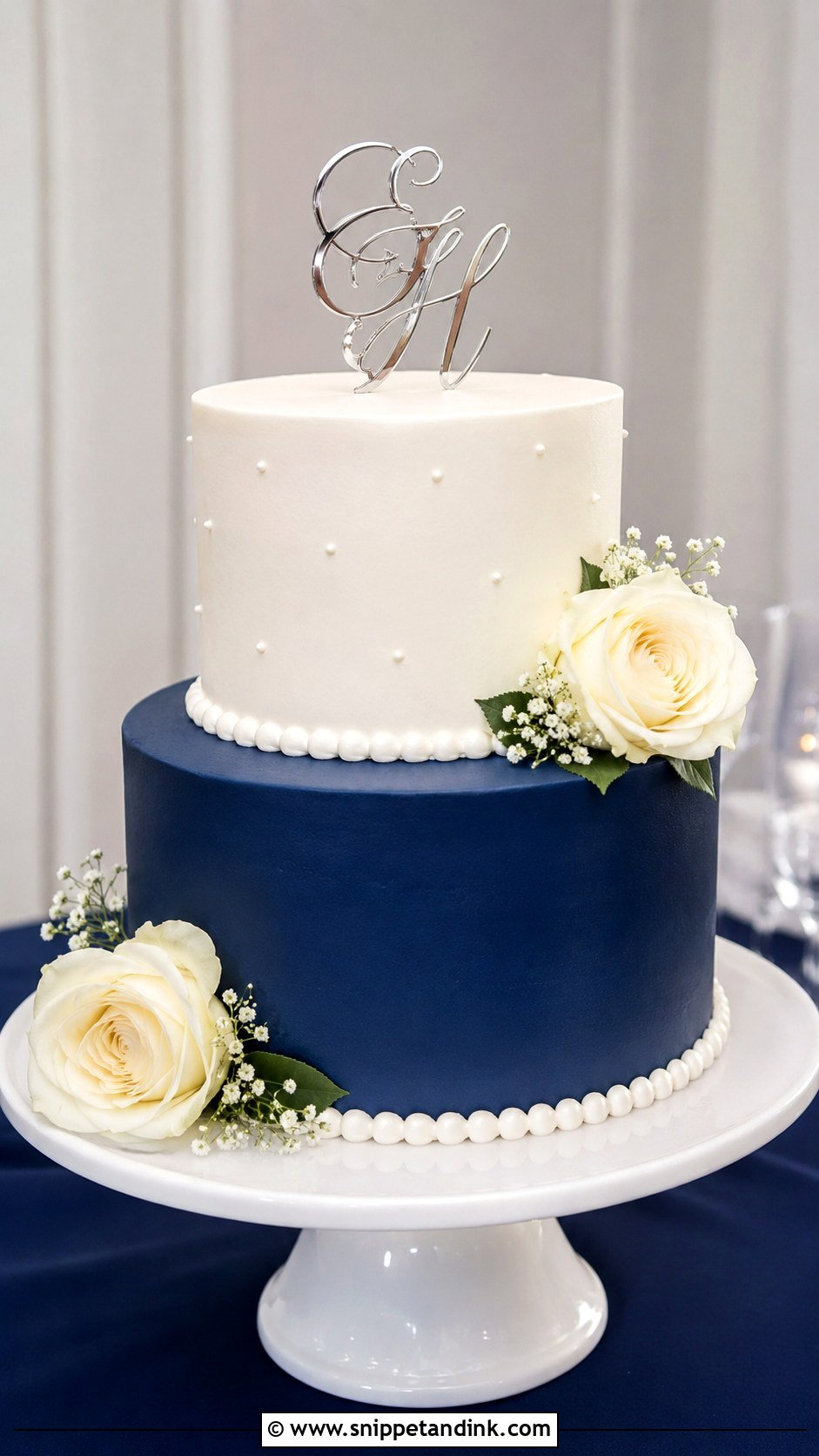
Splitting the colors is the easiest way to bring in a strong blue and still have a traditional-looking cake. I usually put the blue on the bottom tier; a dark base looks grounded, while a dark top tier can look like it’s floating. The white top tier carries delicate piping or a few pearls. Fondant panels in blue over white buttercream are another route. Keep the topper silver and small.
3. 2 Tier Royal Blue Marble Wedding Cake
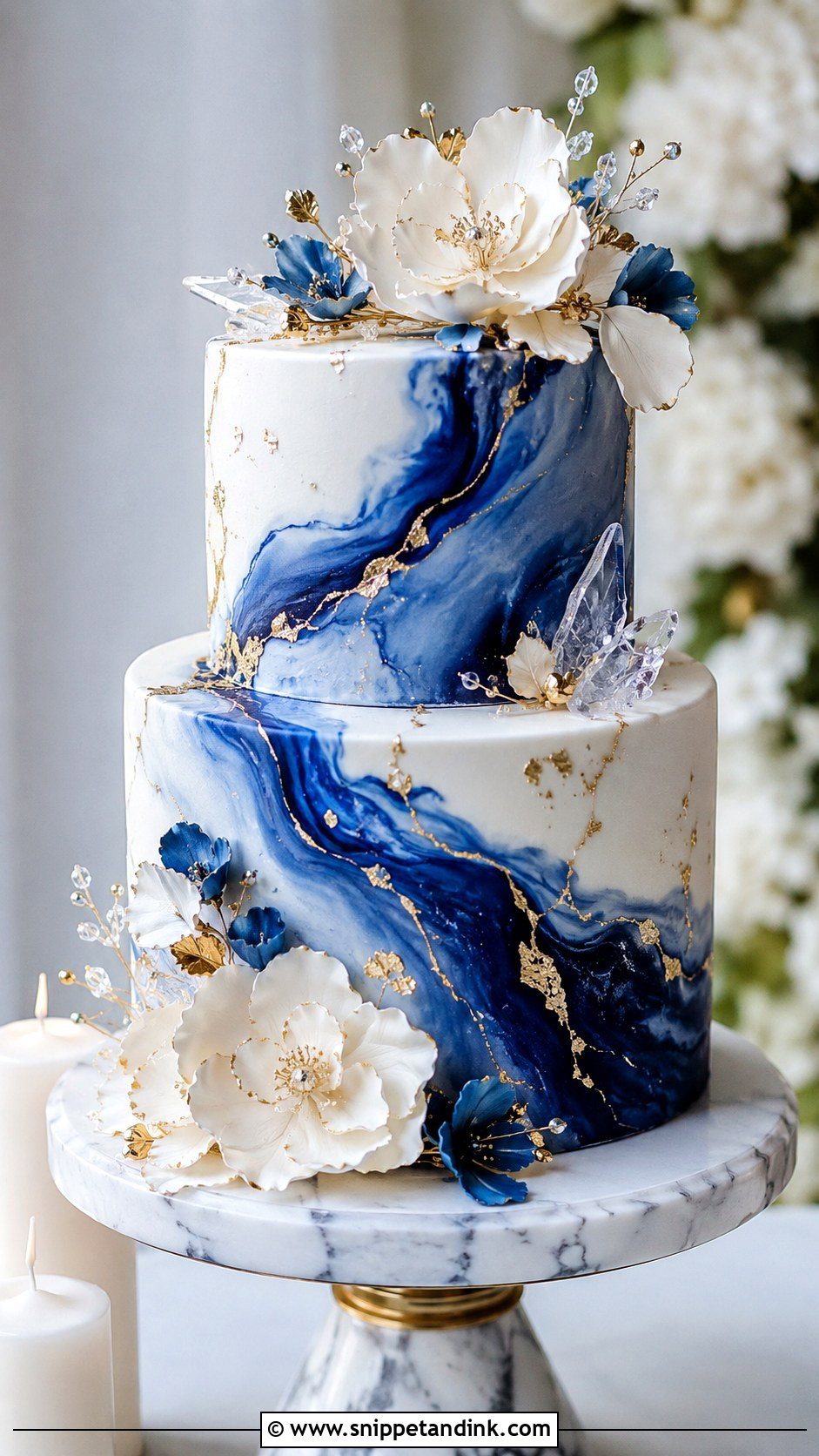
Marbling works by folding blue fondant through white before rolling, and the pattern only shows itself once it’s on the cake, so ask your designer for a sample swatch first. A royal blue marble wedding cake reads best on a mostly white base with streaks of blue and a fine gold vein painted along a few of them. I’d leave decoration to a sugar flower or two, because the marble is already busy. It sits well in a winter reception or a modern indoor venue.
4. 2 Tier Royal Blue Drip Wedding Cake
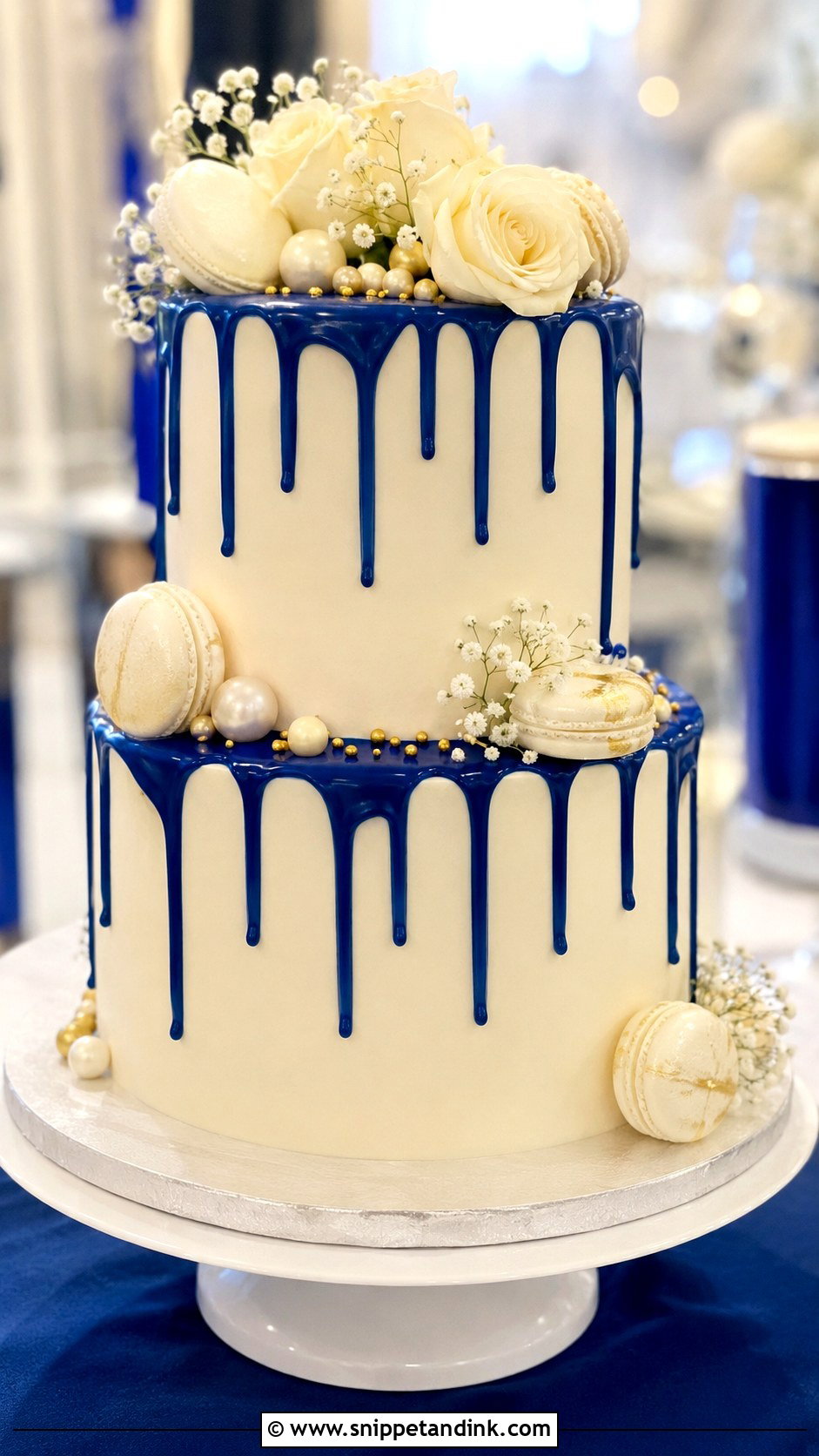
For a royal blue drip cake, I tint white chocolate ganache rather than dark, because white chocolate takes color cleanly. Strongly colored ganache needs oil-based color; a water-based gel can make it seize and turn grainy. A royal blue drip over white or pale blue buttercream is the classic version, and a gold drip over royal blue frosting is the dramatic one. Macarons or sugar pearls on top, kept to one side, finish it.
5. 2 Tier Royal Blue Buttercream Wedding Cake
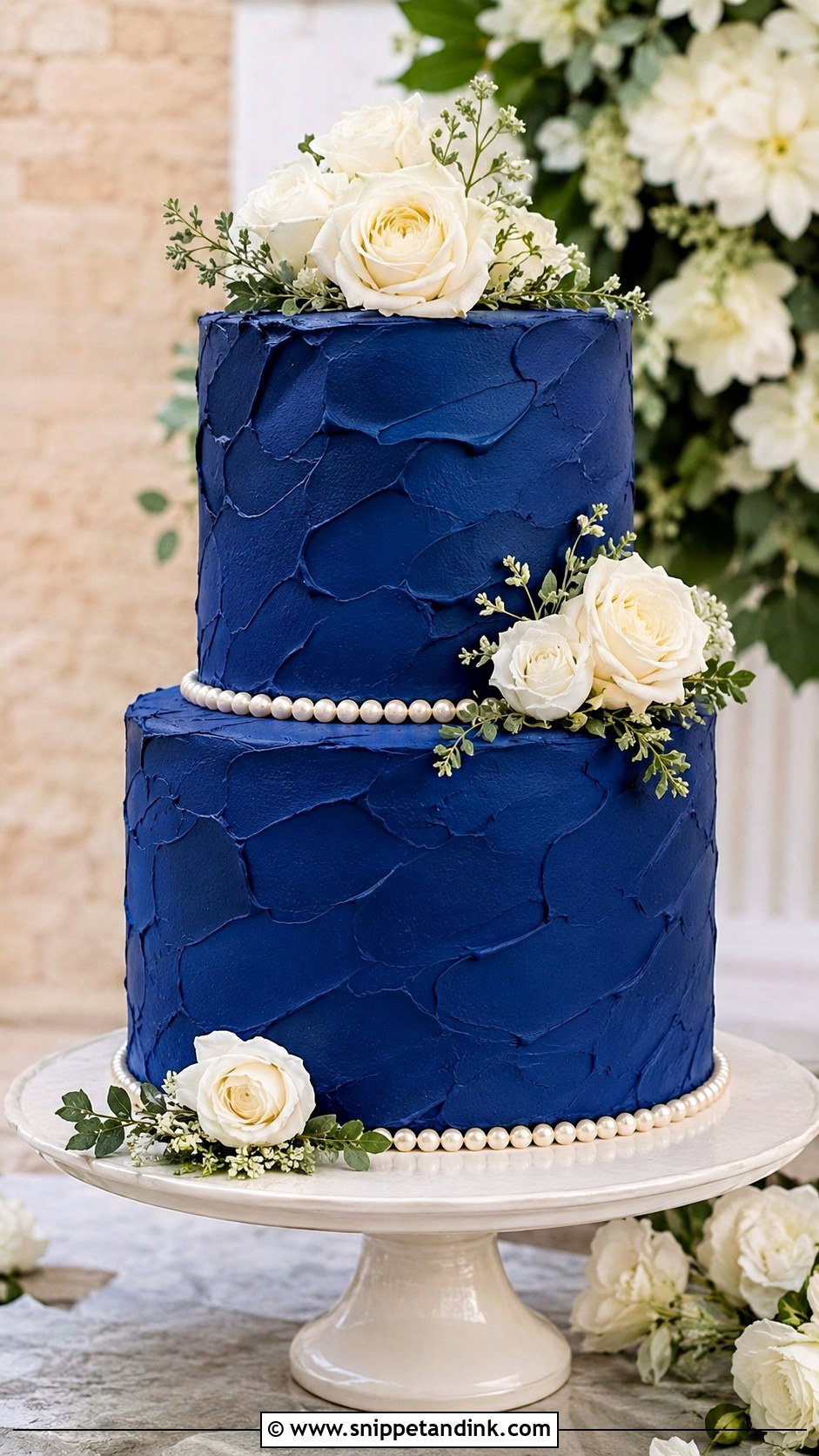
Royal blue buttercream is where most cakes go wrong, because butter is yellow and yellow pushes blue toward teal. I start from a whitened base and add a touch of violet to cancel the warmth, then let it rest overnight since the shade deepens as it sits. The result is softer and more textured than fondant, with smooth sides or gentle horizontal strokes. Using the blue on one tier only keeps it lighter for a garden or church reception. Vanilla, lemon or almond sponge keeps the flavor familiar.
6. 2 Tier Royal Blue Fondant Wedding Cake
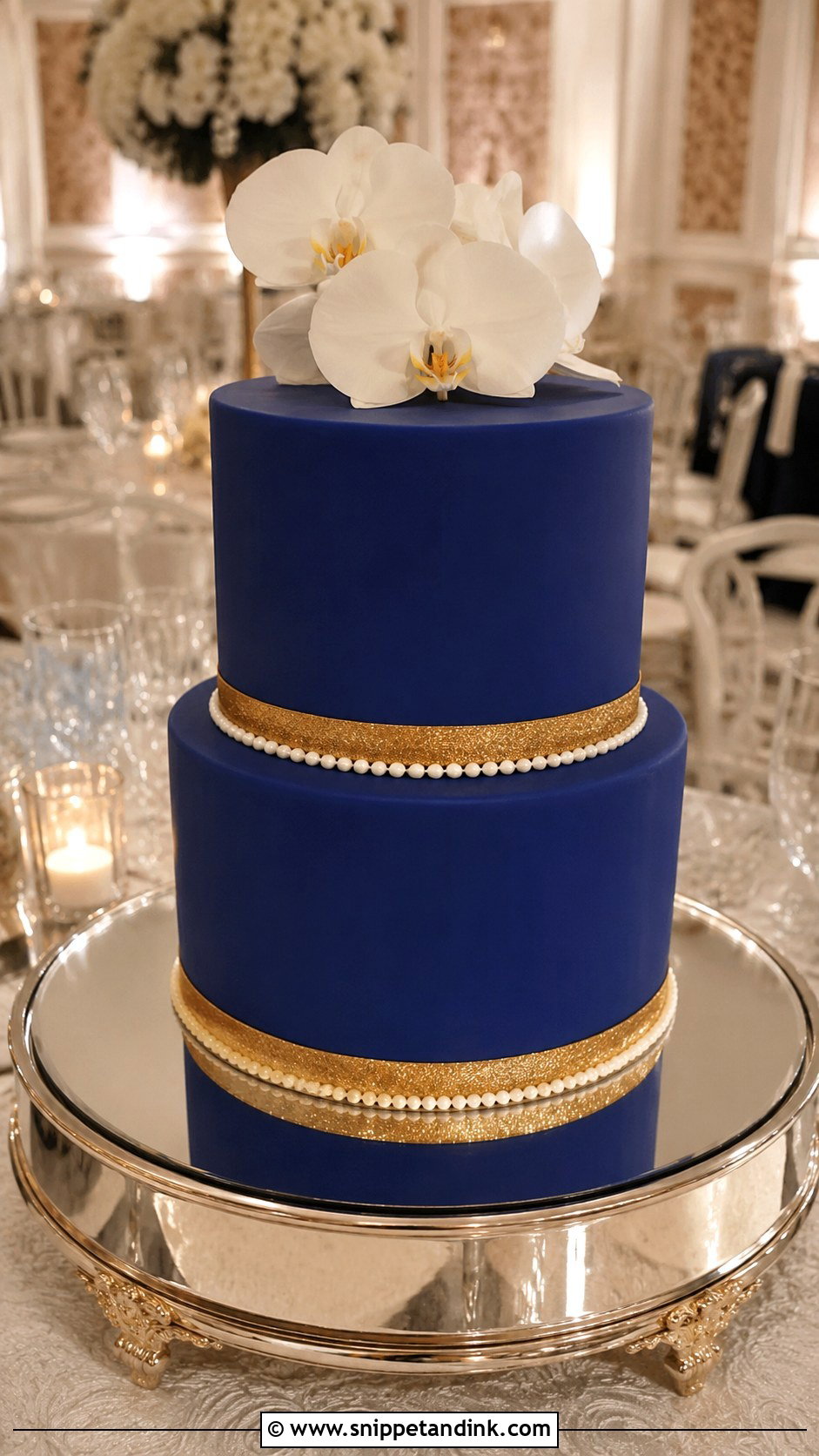
Fondant is the most reliable way to get a solid, sharp royal blue. It gives crisp edges and flat color, which suits ballroom weddings and blue-and-gold palettes. I’d add a thin gold trim, pearl borders, an impression pattern or a monogram. One honest warning: dark fondant shows every speck of cornstarch and every fingerprint, so it takes extra care to finish cleanly.
7. 2 Tier Royal Blue Floral Wedding Cake
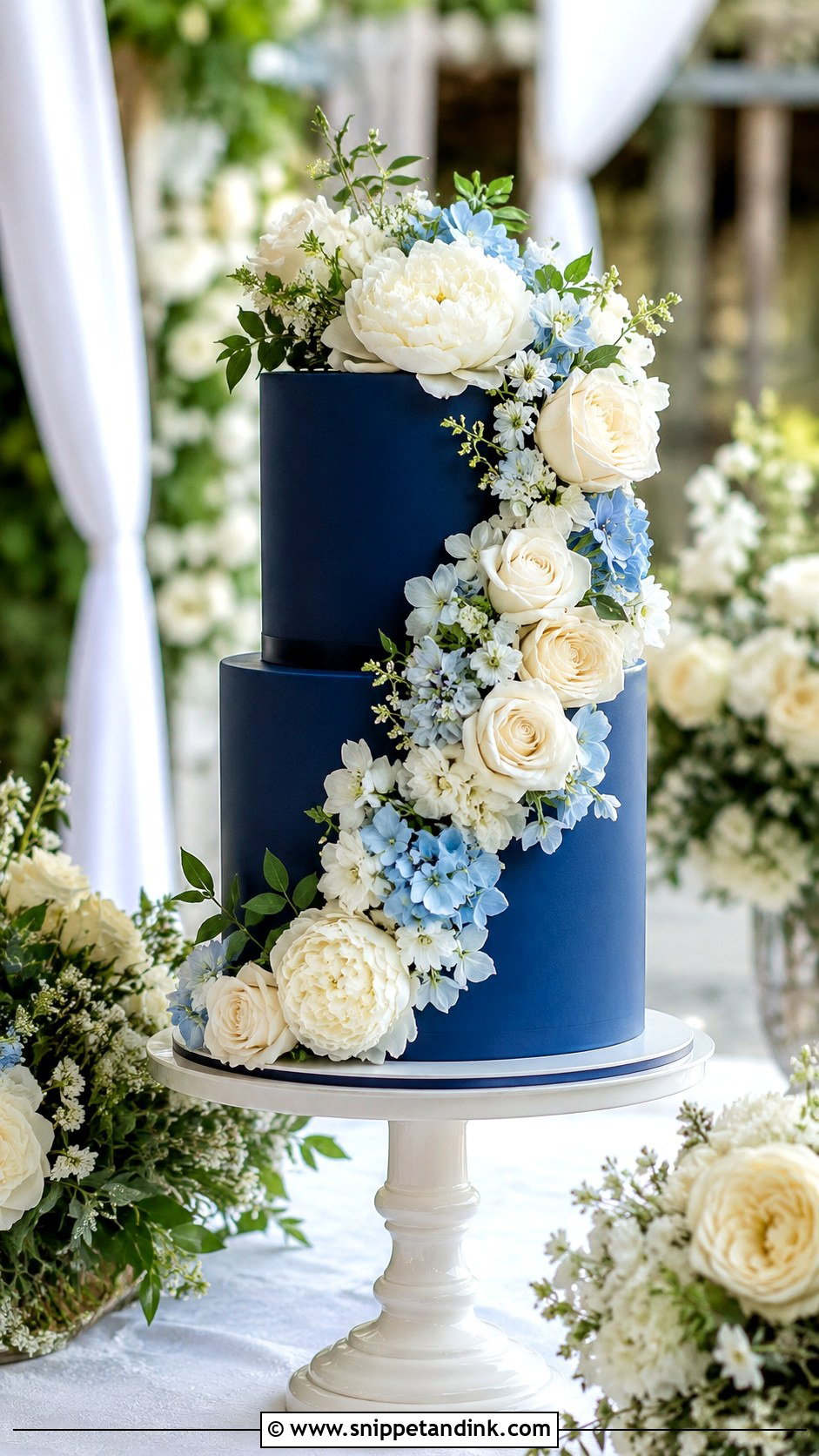
Fresh flowers soften the strongest blue. White roses, ivory peonies and small blush blooms give contrast, set on smooth royal blue fondant or across a white-and-blue pair of tiers. I arrange them on a diagonal, top edge down to the lower tier, so they frame the cake rather than hide it. Blue hydrangeas look right with this palette, but they aren’t food-safe, so I’d only use them on a separate display or swap them for sugar versions on the cake itself.
8. 2 Tier Royal Blue Rose Wedding Cake
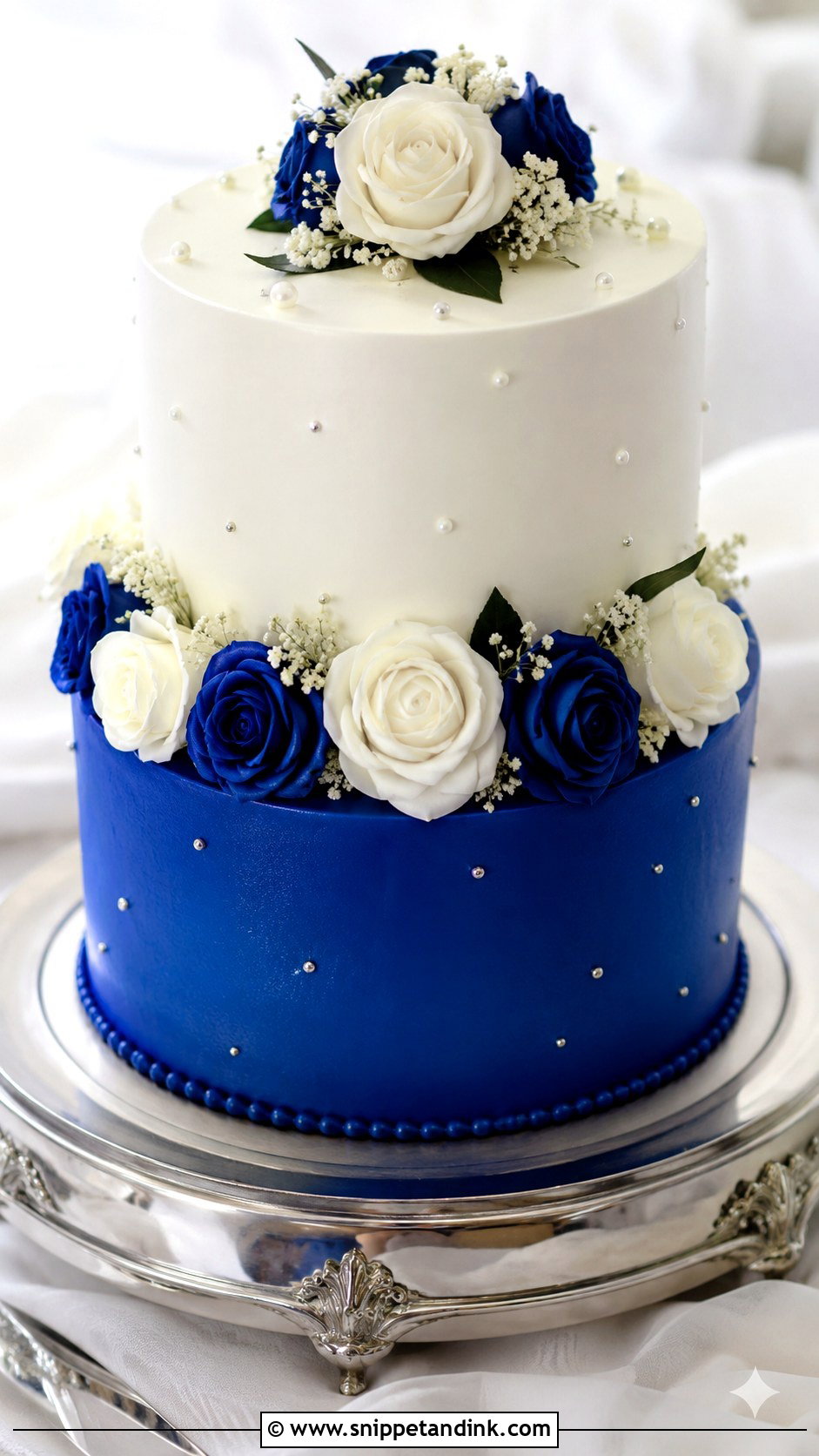
Roses can be real, sugar or piped, and each behaves differently on blue. Piped buttercream roses are the softest look but they can wilt in a warm room; sugar roses stay put all day. White roses read clean and bridal, blue ones make a monochrome cake. I like royal blue on the lower tier and white on top, with roses sitting in the tier gap and on top, finished with pearl dots or a thin gold ribbon.
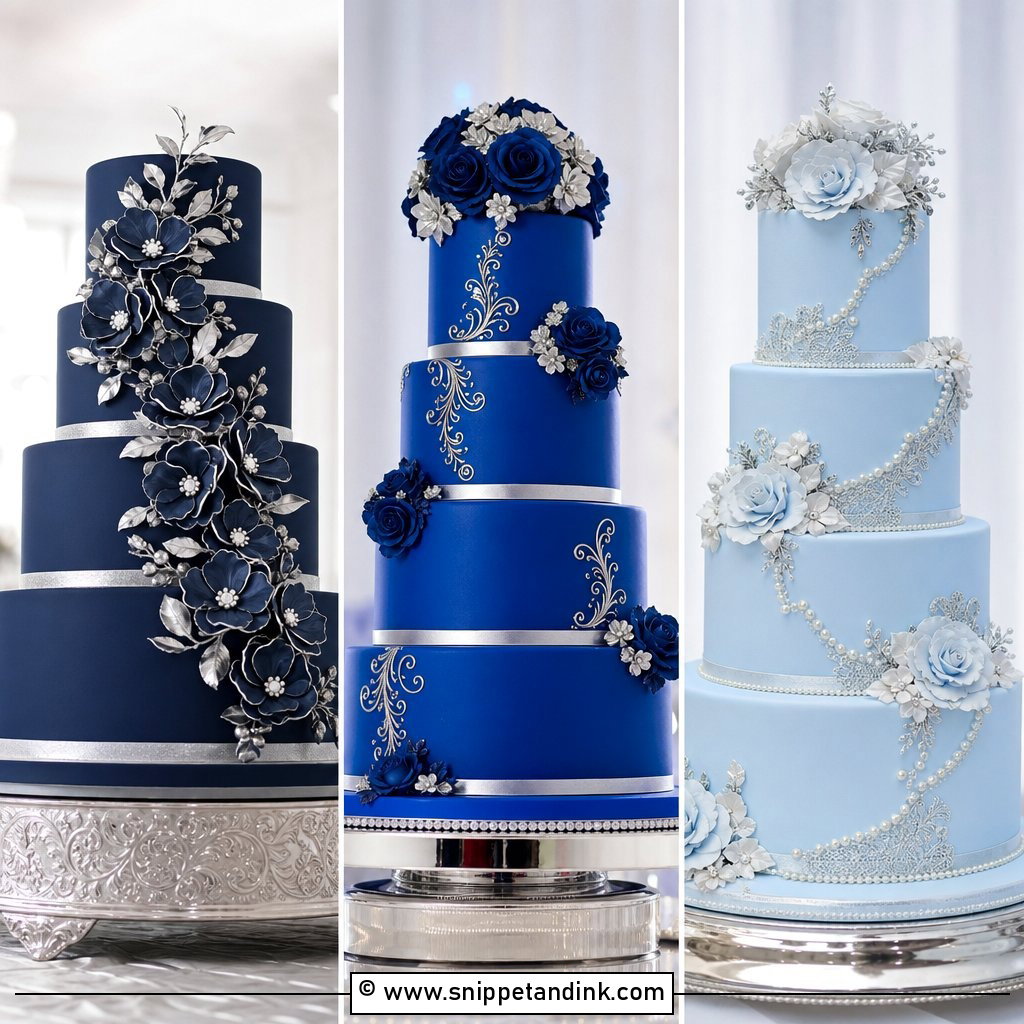
9. 2 Tier Royal Blue Silver Wedding Cake
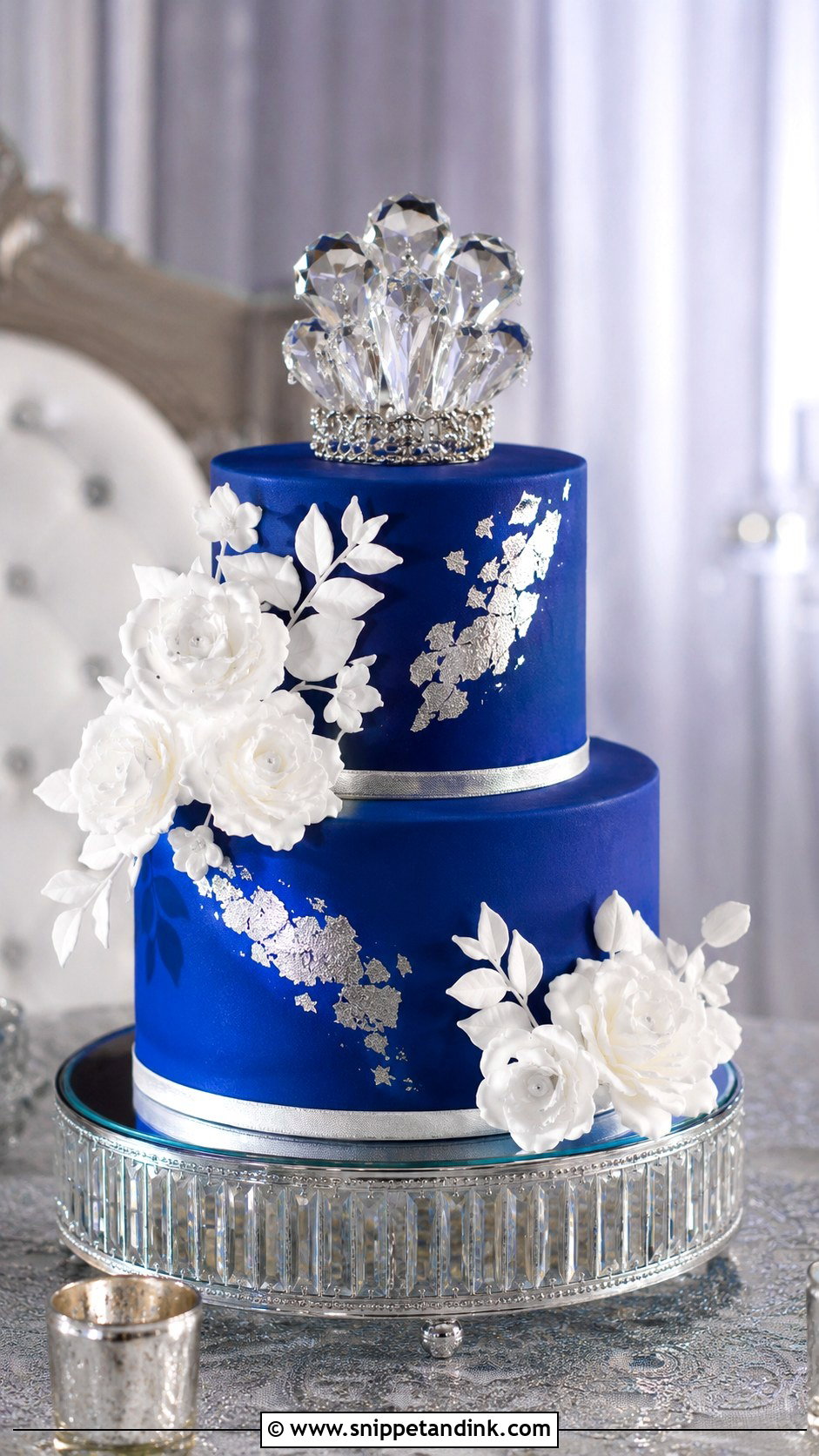
Silver keeps royal blue cool and crisp, which suits evening and winter receptions with glass, mirrors or crystal on the tables. Silver leaf, ribbon, metallic piping or a silver topper all work over fondant or buttercream. I always add some white, usually sugar flowers, because silver and royal blue together can look almost black in a dim room. Keep the lines clean so the metallic detail doesn’t turn fussy.
10. 2 Tier Royal Blue Pearl Wedding Cake
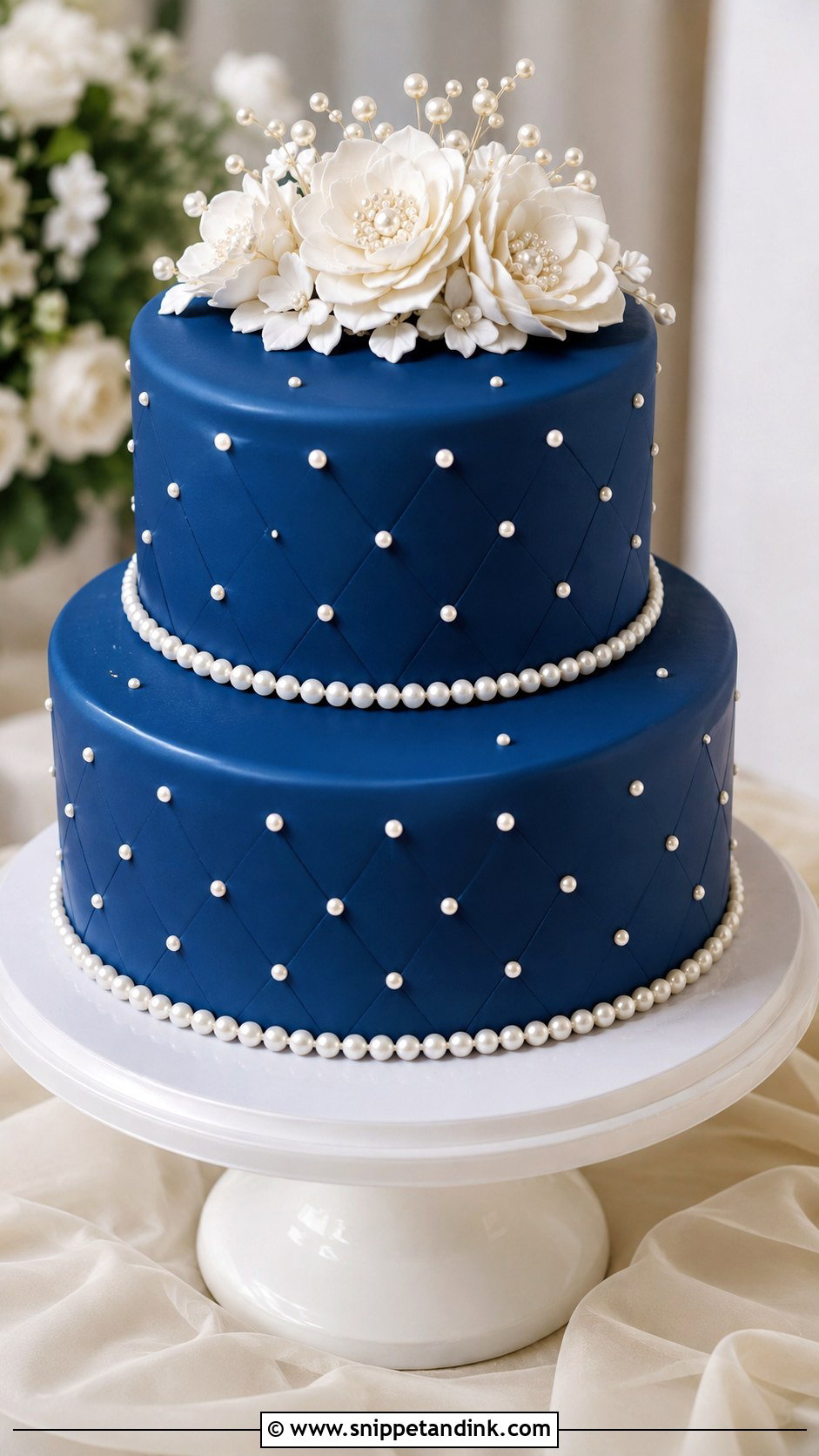
Pearls are the gentlest way to dress a bold base. Pearl borders, scattered sugar pearls, pearl-dust fondant or tiny piped dots all work, and they show best against smooth fondant with nothing else competing. Royal blue on both tiers is dramatic; a blue lower tier and ivory upper tier softens it. A white flower or a small pearl topper is all it needs.
11. 2 Tier Royal Blue Ombre Wedding Cake
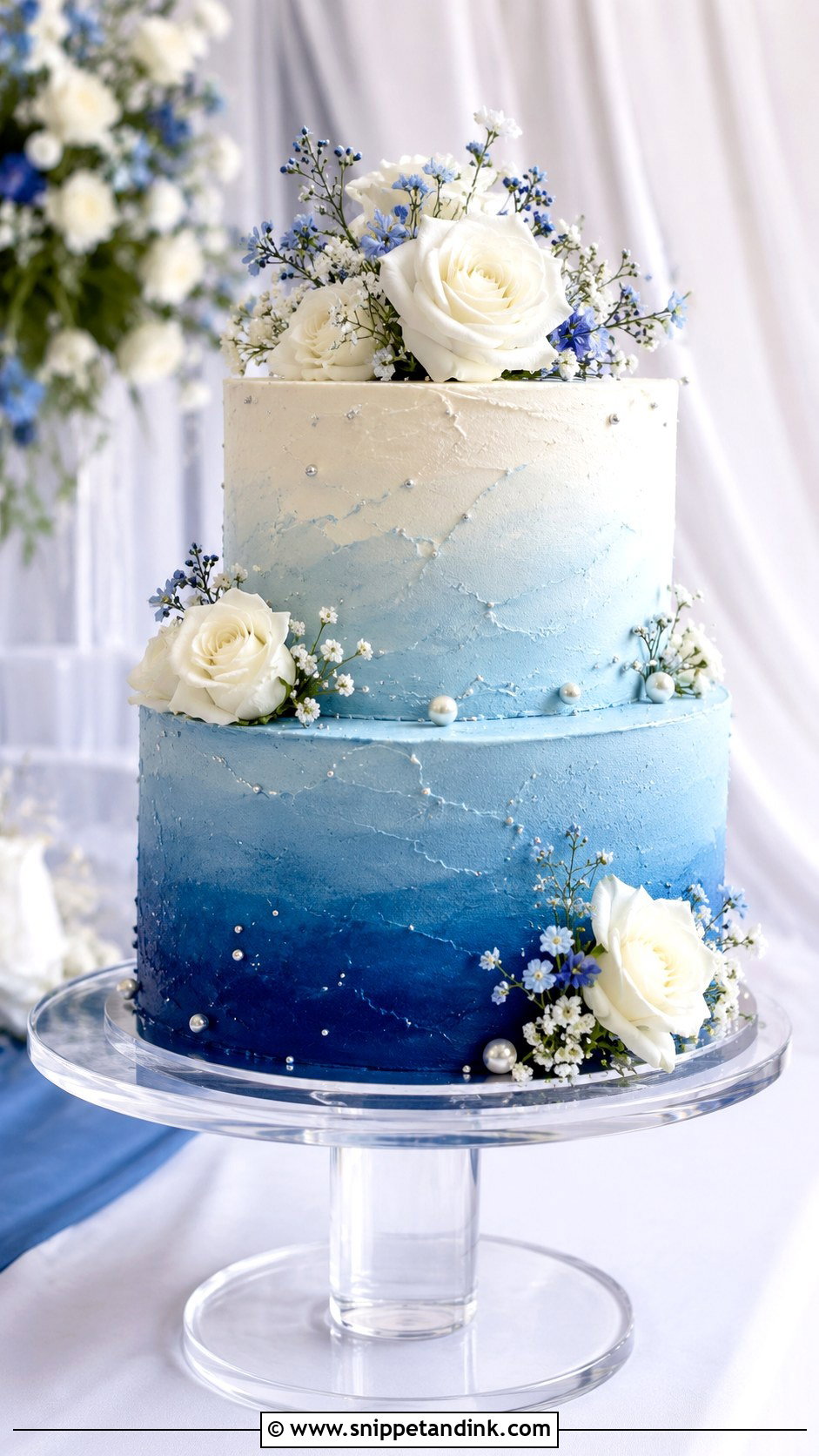
Ombre lets royal blue fade to pale blue or white as it rises, so the bottom of the cake holds the depth and the top stays airy. Buttercream blends this best. I mix three or four separate shades and blend the joins with a scraper; trying to get a gradient from one bowl never looks even. Minimal decoration suits it, which is why it works well by the sea or in spring.
12. 2 Tier Royal Blue Ruffle Wedding Cake
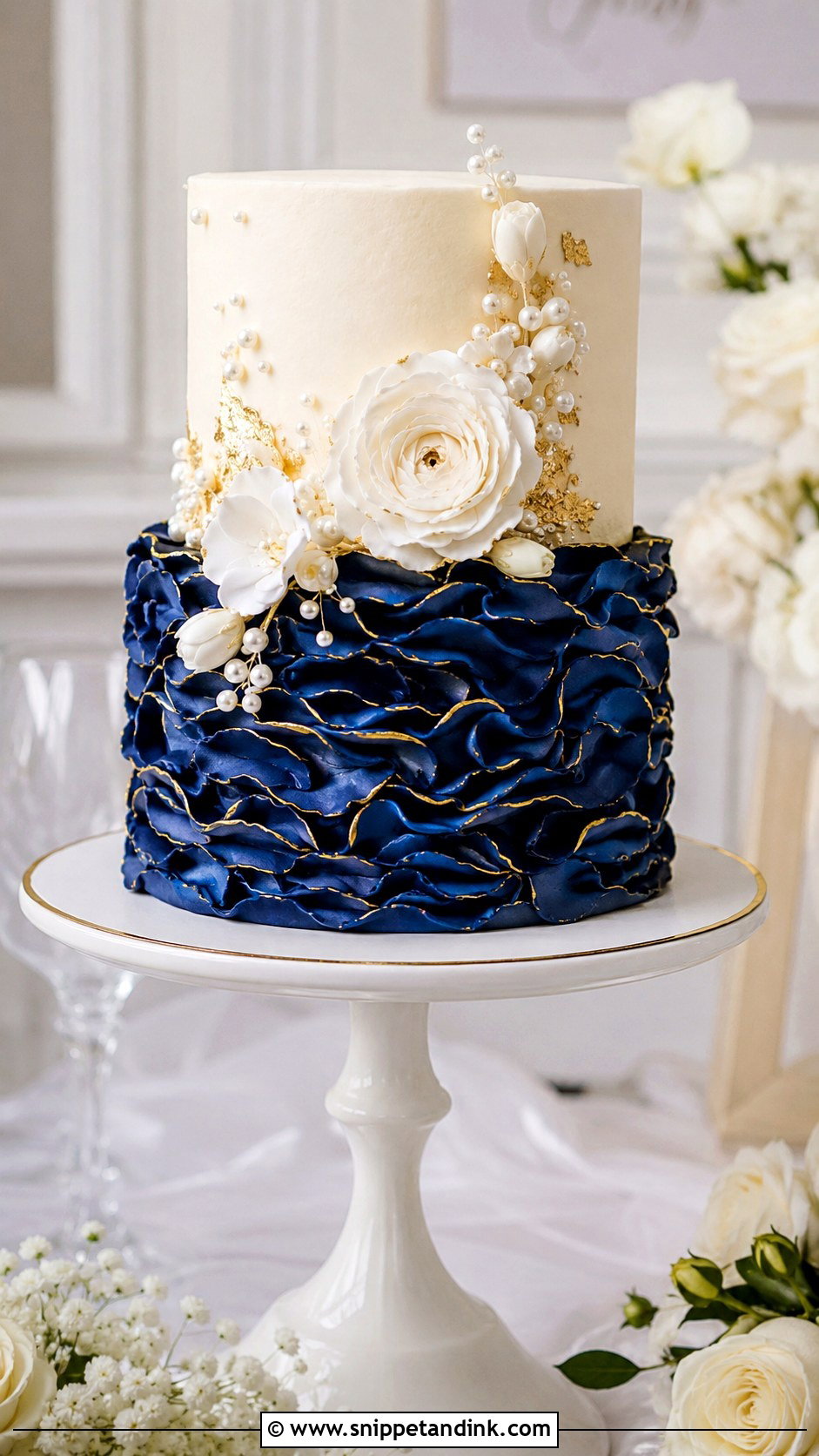
Ruffles add movement, but fondant ruffles are heavy, and a fully ruffled lower tier needs careful support to stop the sides from sagging over a long reception. I keep the top tier smooth for balance. Buttercream ruffles are lighter and more textured. Royal blue ruffles look dramatic on their own, so I’d only add white flowers or a fine gold edge.
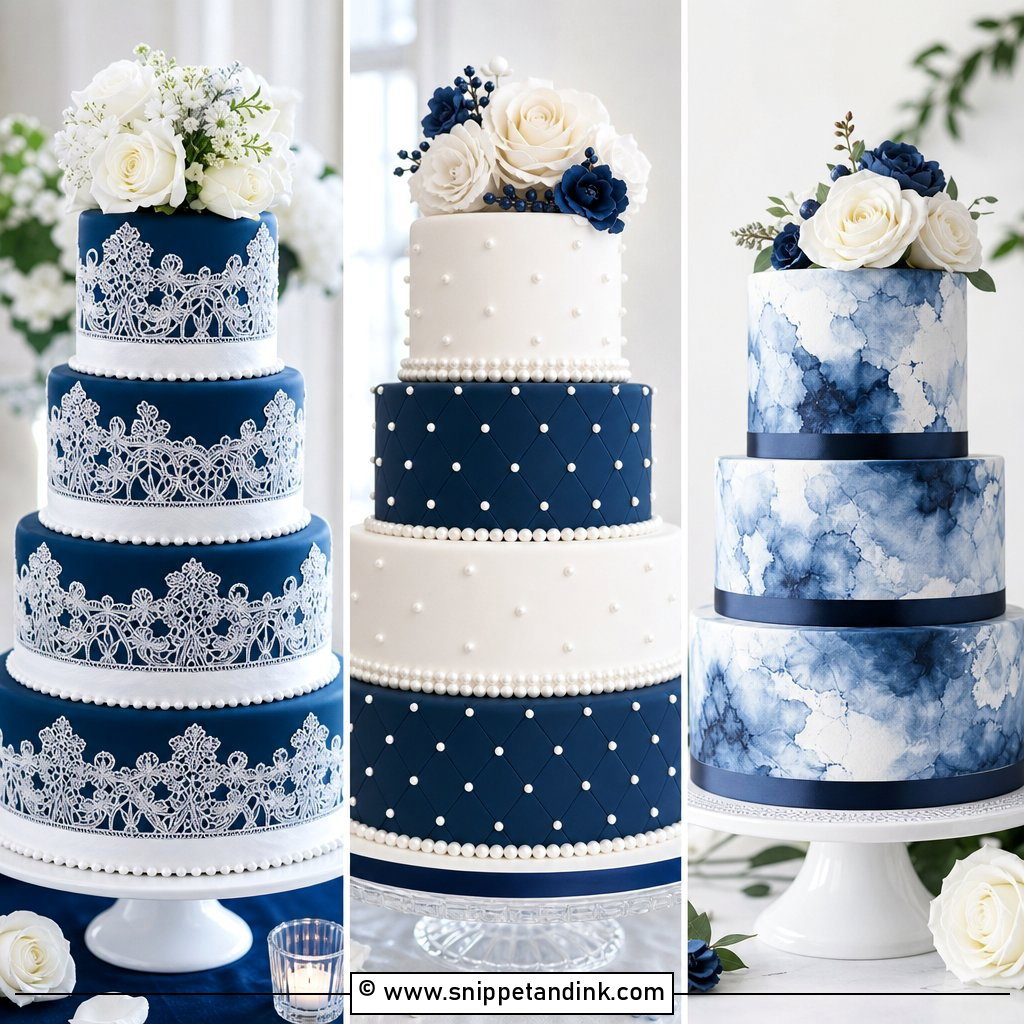
13. 2 Tier Royal Blue Lace Wedding Cake
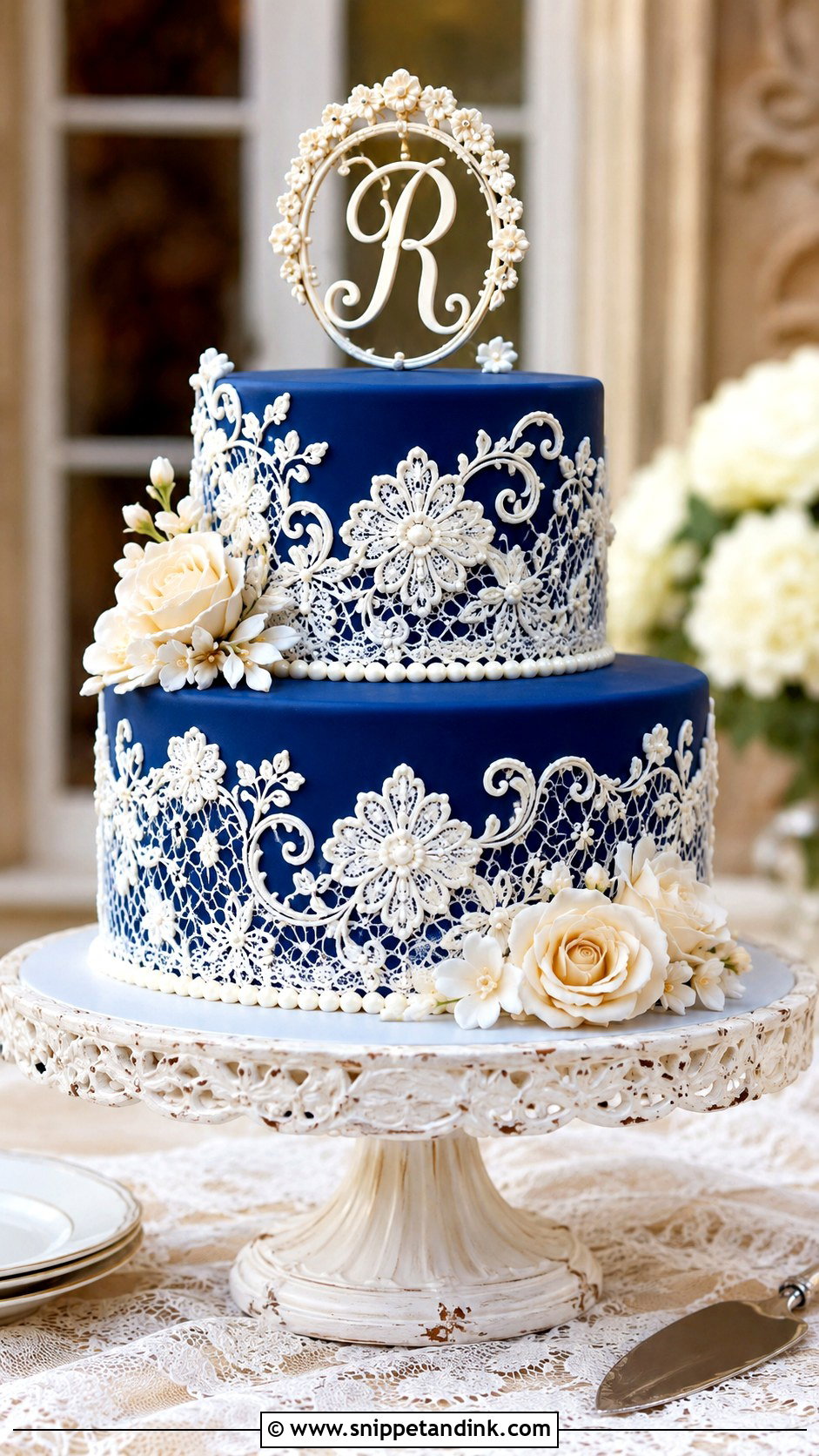
Lace on royal blue is easy to read because the contrast is so strong. A royal blue lace wedding cake can carry white lace piping over a blue base, or blue lace over an ivory tier. I space the pattern evenly and mark guide points before piping, since a crooked repeat is obvious at eye level. Pearl borders or a monogram topper suit a church wedding or a vintage-inspired reception.
14. 2 Tier Royal Blue Geode Wedding Cake
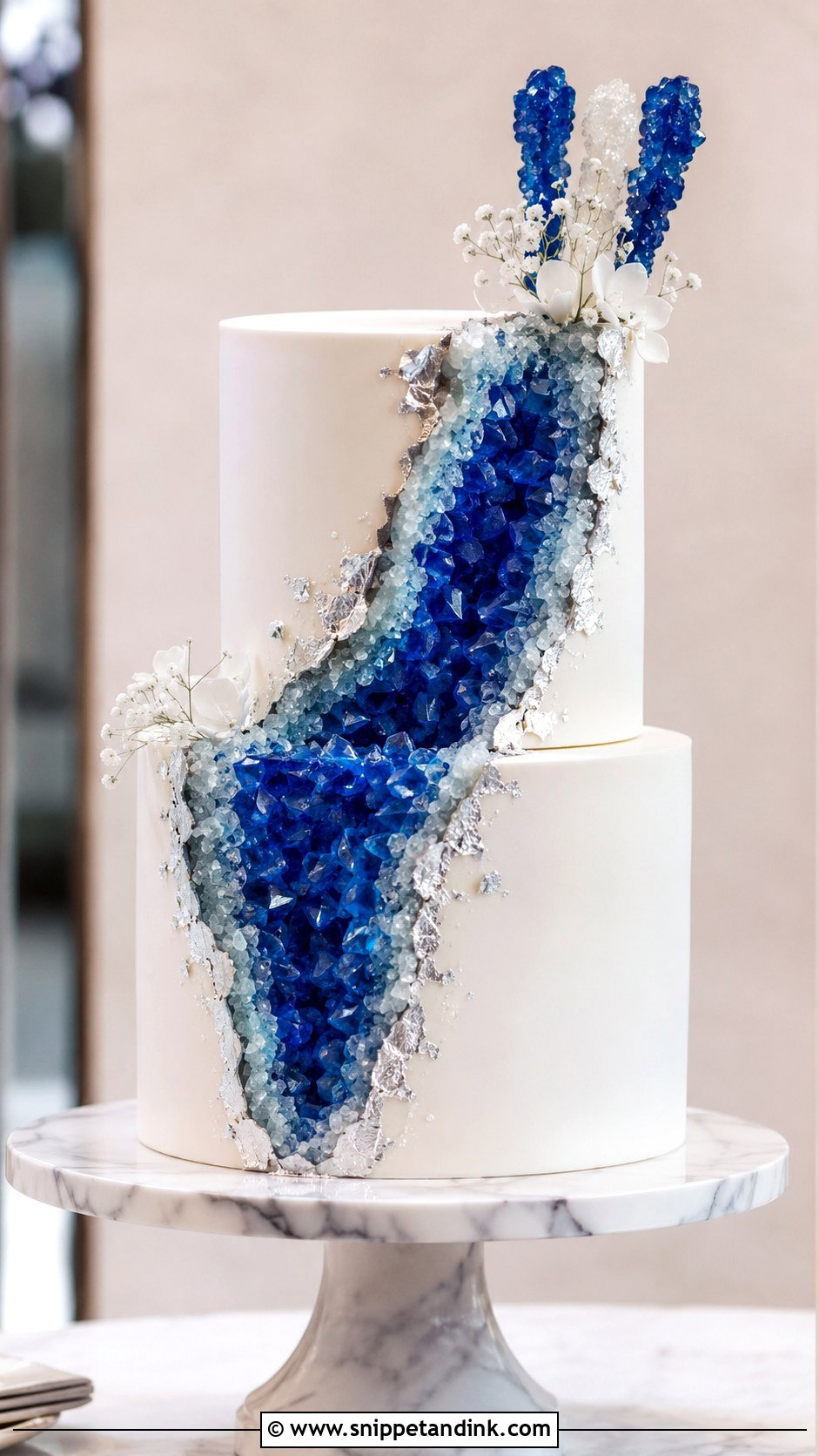
A geode is cut into the side of the cake and filled with sugar crystals or rock candy, often with a painted silver or gold rim. Clear isomalt crystals can turn cloudy in humid air, so I add them as late as I can. Everything around the cutout stays smooth so the geode is the one feature. White with blue crystals looks clean, a blue base looks dramatic. It’s one of the most structural designs here, so it costs more in time than it looks.
15. 2 Tier Royal Blue Velvet Wedding Cake
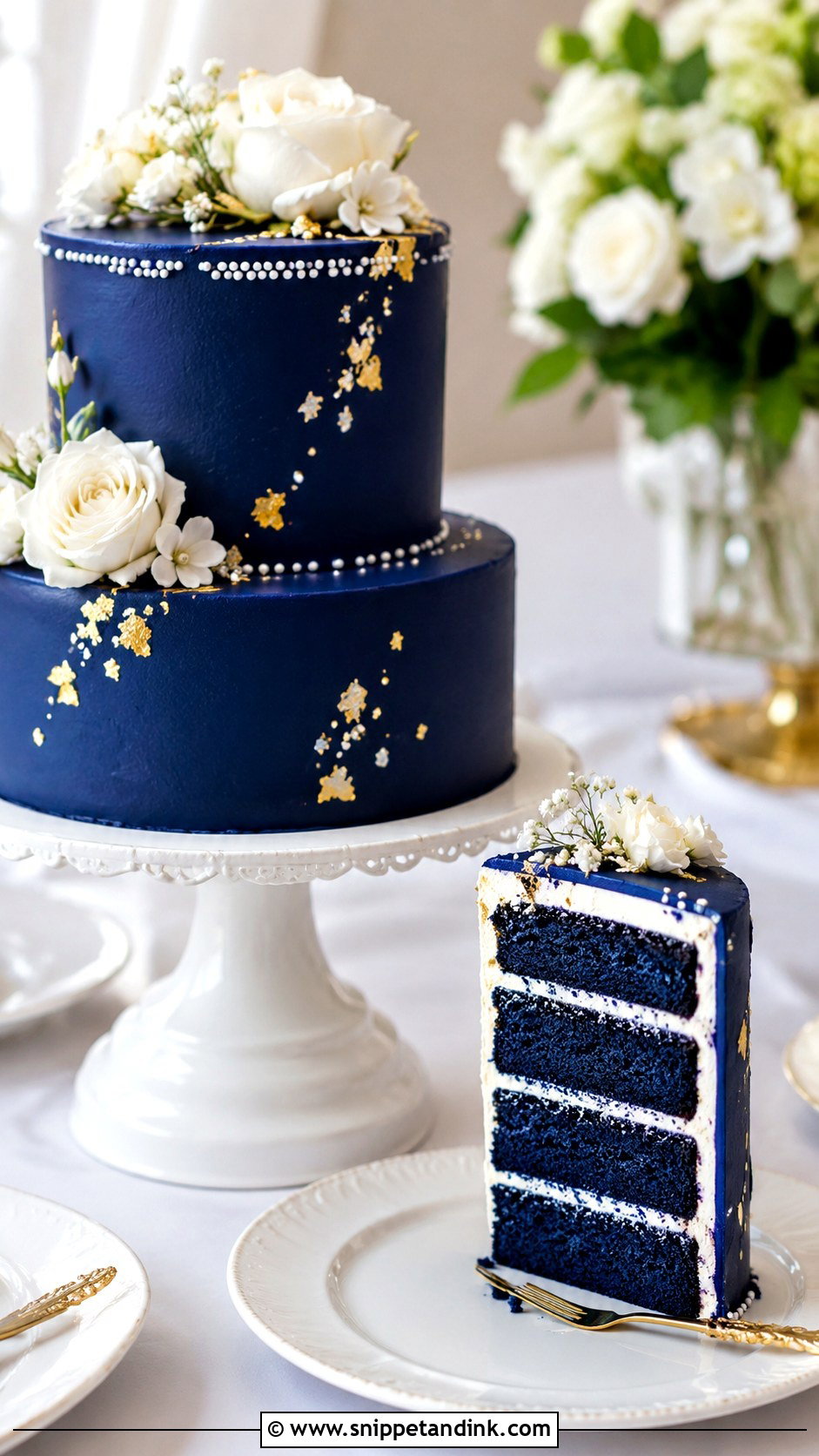
Blue velvet is a velvet sponge tinted blue and layered with cream cheese frosting, so the outside color is echoed when the cake is cut. Cream cheese frosting is soft and needs chilling, so this is a cake I’d plan for a cool indoor venue rather than a long outdoor display. Outside I use smooth royal blue buttercream or fondant with white flowers, and gold leaf or pearls for a more formal touch. Guests enjoy the reveal at the cutting.
16. 2 Tier Royal Blue Watercolor Wedding Cake
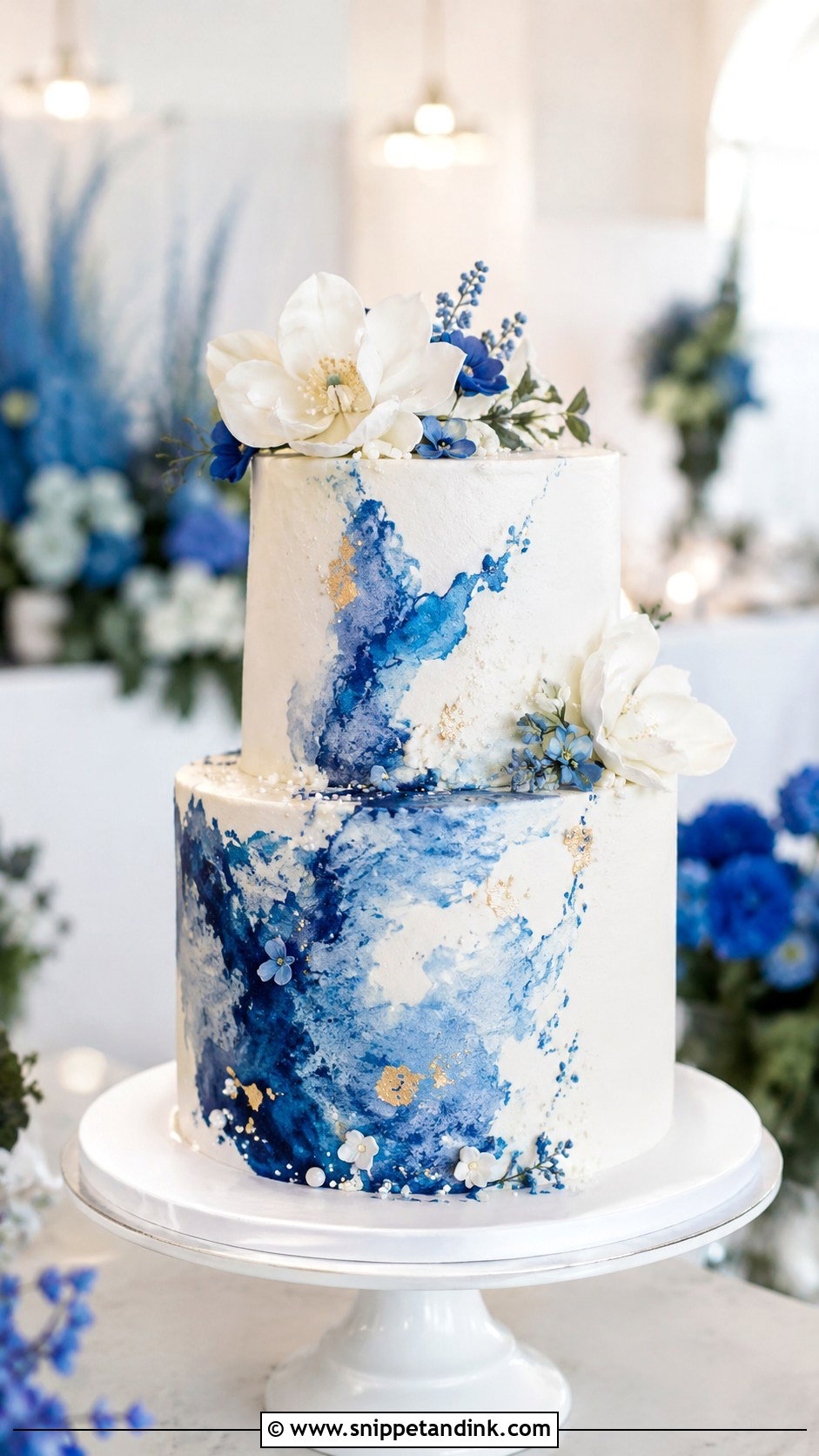
A watercolor finish is painted on a white buttercream or fondant base, either with diluted color or with tinted buttercream swept on with a palette knife. A royal blue watercolor wedding cake looks best when navy and pale blue are layered in with the royal blue for depth. White flowers, tiny pearls or gold flecks keep it light. It sits halfway between a classic cake and an art piece, which suits a gallery venue or a relaxed loft reception.
17. 2 Tier Royal Blue Sequin Wedding Cake
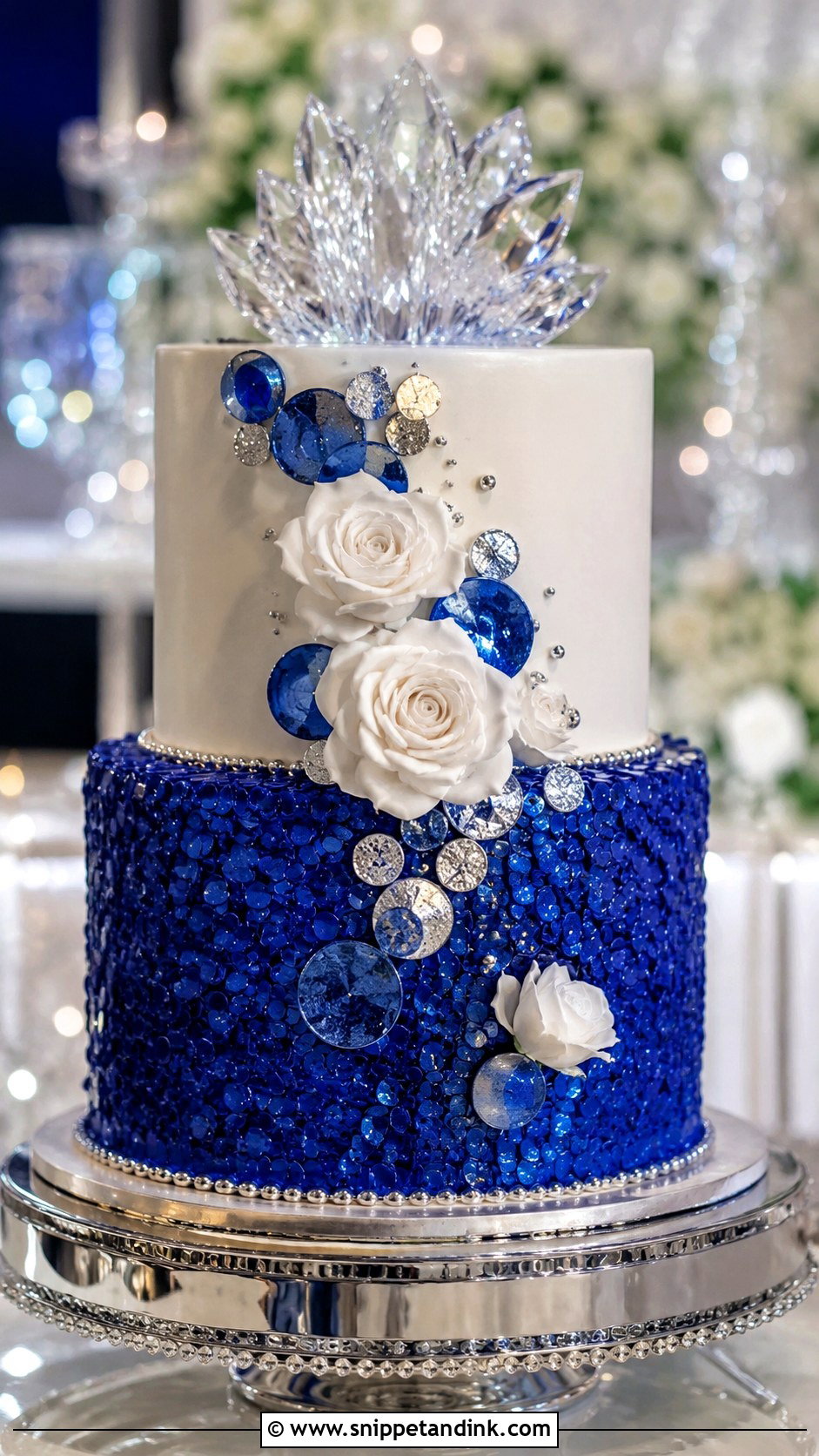
Edible sequins are made from gelatin or wafer paper and pressed on one by one, which makes a sequin tier slow work and something to discuss early. I cover one tier and leave the other smooth so the sparkle has somewhere to stop. Silver or gold accents follow your palette, and white flowers stop it reading like a party cake. Humidity can curl gelatin sequins, so this one needs a dry, cool room.
18. 2 Tier Royal Blue Square Wedding Cake
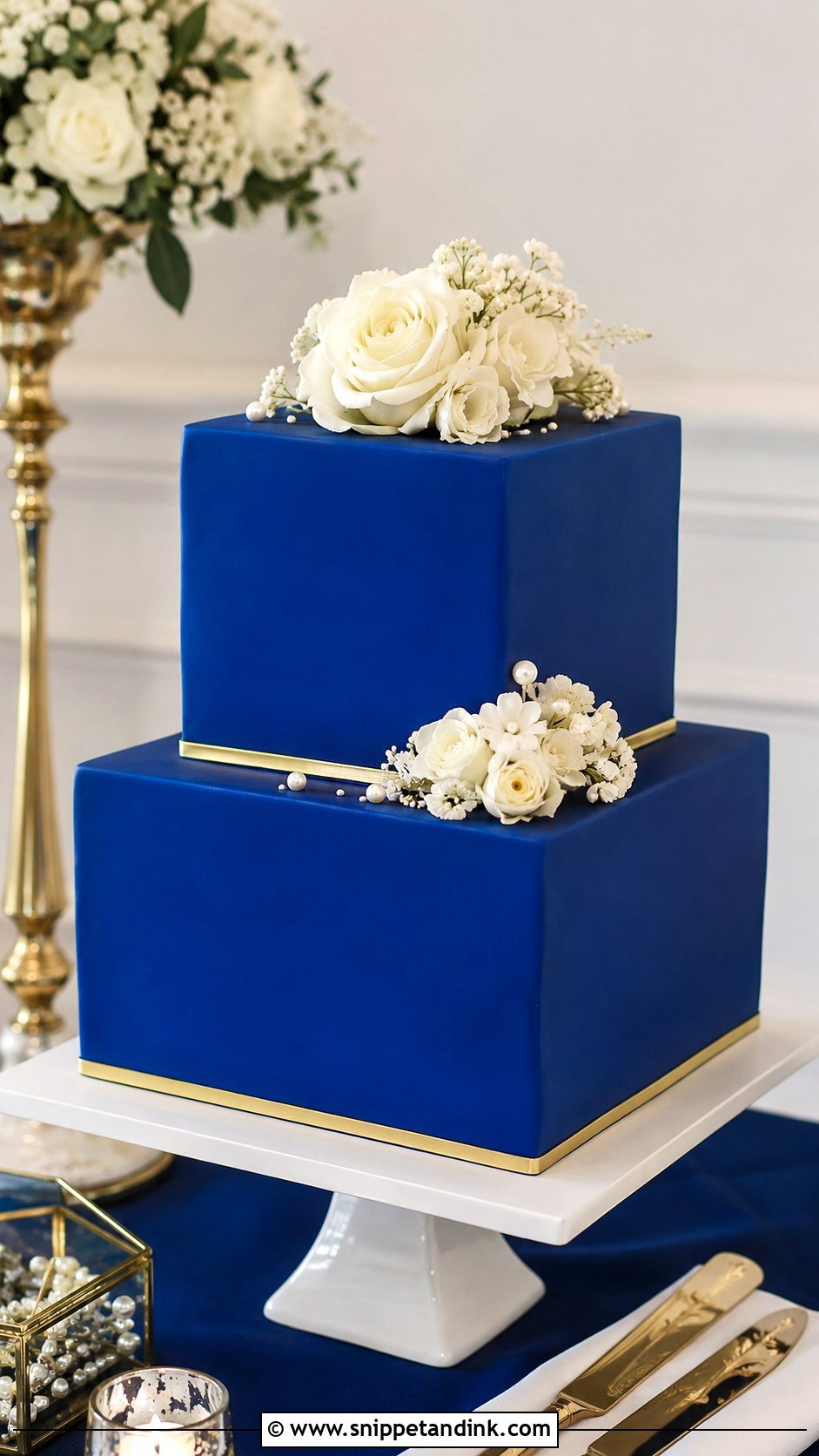
Square tiers look structured and modern, though they’re harder to ice than rounds because every corner has to be sharp. They do cut more neatly and give a few more servings than a round of the same width. Thin gold borders, white floral clusters or geometric piping suit the shape. A white top over a blue base is strong; all-blue is bolder still.
19. 2 Tier Royal Blue Minimalist Wedding Cake
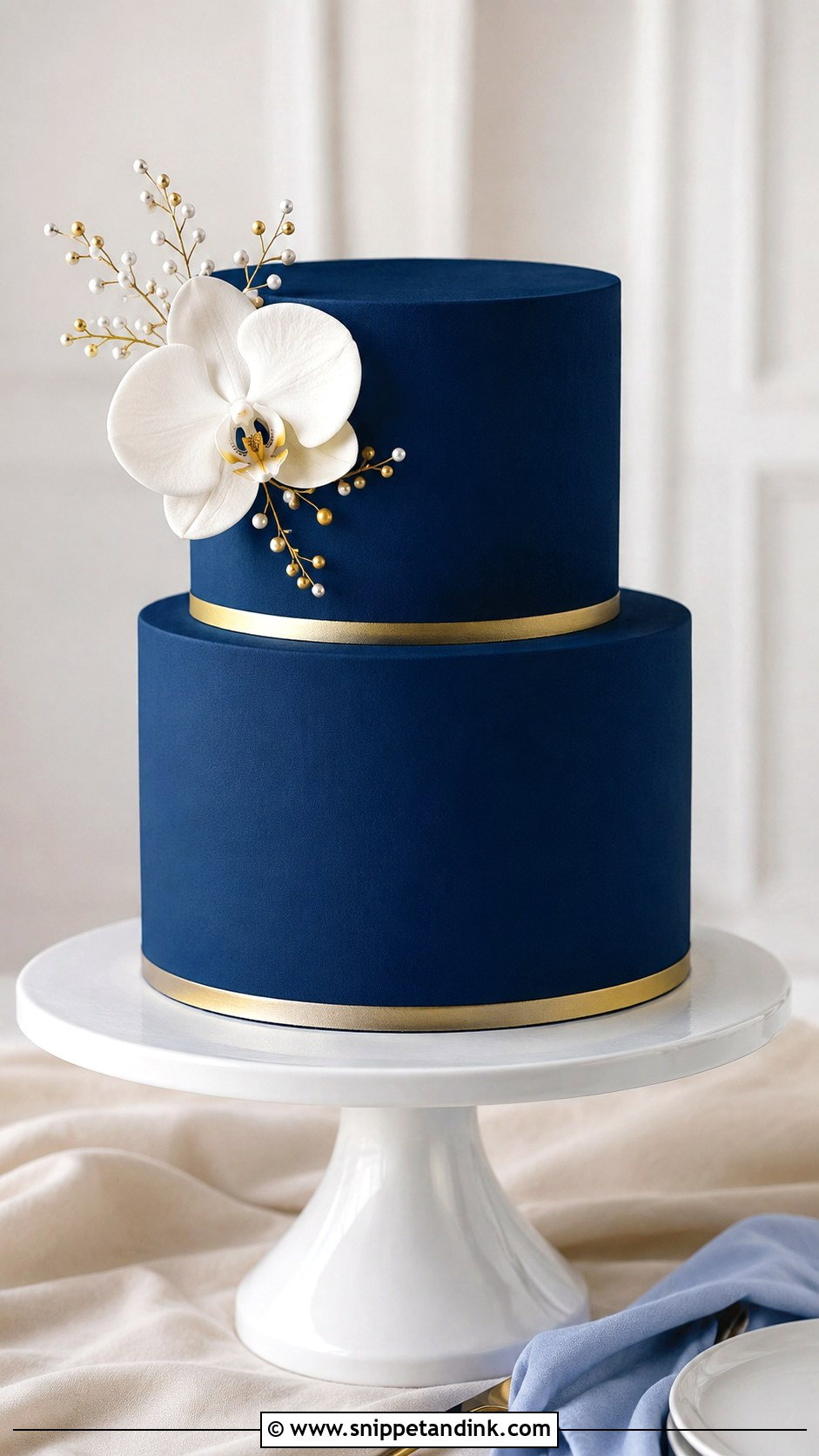
Minimal cakes rely completely on finish, so any flaw shows. A royal blue minimalist wedding cake needs even color, perfectly smooth sides and sharp edges before anything else. Then one white flower, a small pearl cluster or a single gold line per tier. I find this the easiest style to place on a small dessert table because it reads clearly from across the room.

20. 2 Tier Royal Blue Crown Wedding Cake
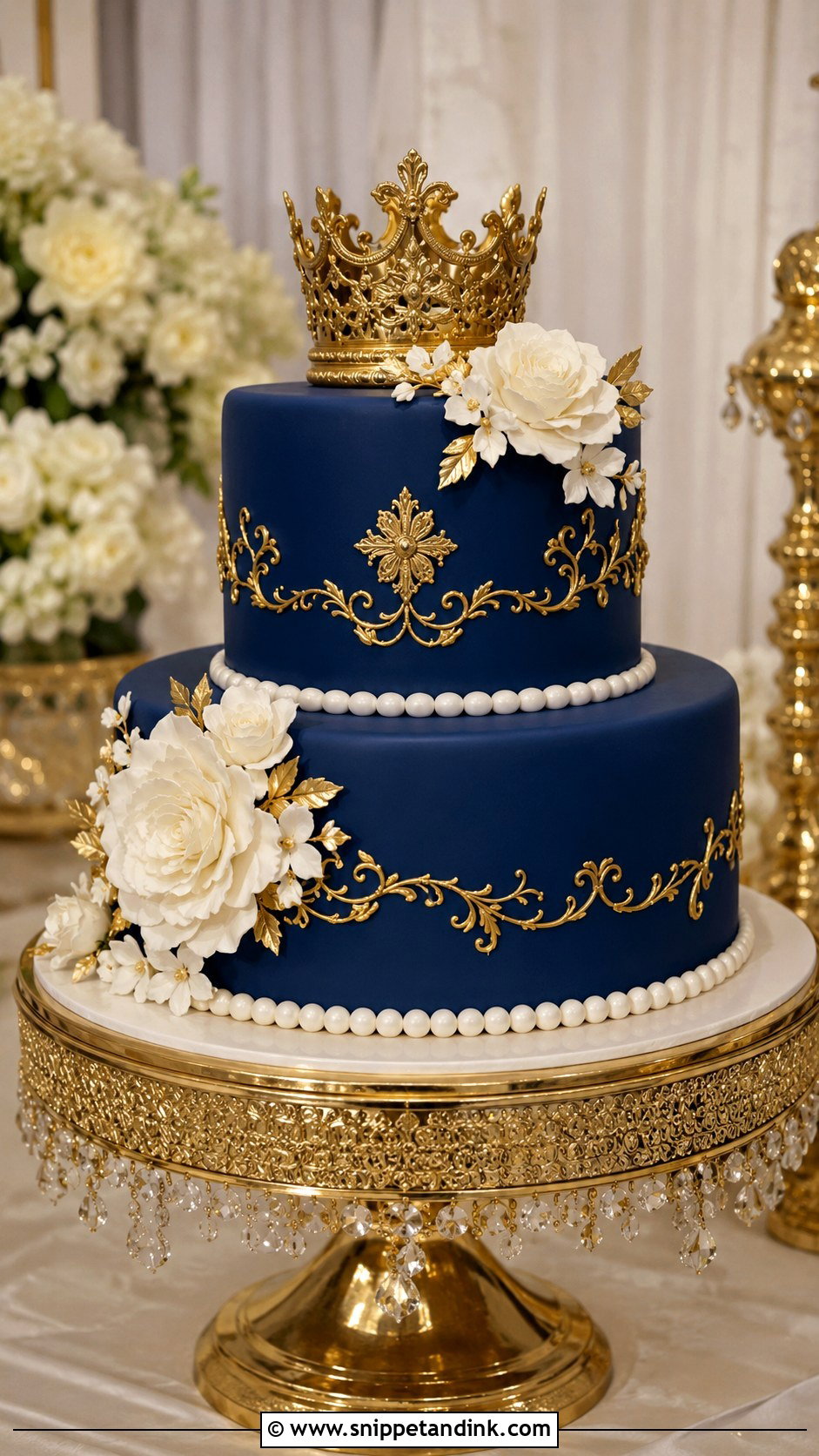
A crown design suits a ballroom or a blue-and-gold theme. Smooth royal blue fondant on both tiers, gold trim, pearl borders and a small crown topper, with gold scroll piping if you want more formality. I keep the crown modest in size; a large topper is heavy, needs a dowel, and quickly looks like a costume prop rather than part of the cake.
Blue Teeth, Stained Tablecloths and Other Things Nobody Warns You About
Very dark colored buttercream takes a lot of coloring, and that coloring transfers to tongues, lips and white napkins. It wears off quickly, but it’s not ideal on a bride in white about to be photographed. My fix is to keep the darkest blue on the outer surface only, a thin coat over a pale crumb coat, or to use fondant, which guests can peel away.
Strong coloring can also leave a faint bitter note in buttercream. Starting from a well-whitened base means I need less color, which helps the taste.
How royal blue reads under reception lighting
Warm, yellow-toned room lighting makes royal blue look closer to navy, and in a dim evening room it can look nearly black in photos. Bright daylight shows its true color. Talk to your photographer about where the cake will stand, and if it’s going somewhere dark, a soft spotlight or nearby candles keep the blue reading as blue. Blues and purples can also fade if they sit in strong sunlight for hours, so I’d keep the table out of direct sun.
Gold, Silver or Pearls Against the Blue?
The metal you pair with royal blue sets the mood: gold makes it warm, silver keeps it cool, pearls and white flowers soften it. Then the covering decides the finish, buttercream for texture and fondant for sharp, even color. Bring a photo of your linens and flowers to the tasting, and tell me how the room will be lit, because that will affect how this blue looks more than anything I do in the kitchen.
You'll Like These Ideas:


Leave a Reply