
Two tiers is the size I suggest most often for smaller weddings. From across a room it still reads as a wedding cake, yet you aren’t left boxing up half of it at midnight. It also makes a sensible cutting cake when the real dessert is a table of cupcakes or cookies, since it only has to cover the cut, the photos and the head table. Buttercream texture, pearls, vintage piping and fresh fruit are all turning up on two-tier cakes right now, and the smaller canvas suits them. Here are twenty designs, each with the thing I’d check before baking it.
How Many Slices Two Tiers Really Give You
Wedding portions are smaller than party slices: a finger of cake about an inch wide and two inches long, cut from a tall tier. That is what bakers’ serving charts are built on, so the numbers below assume standard tiers around four inches high. Charts differ a little from baker to baker, so treat these as a starting point.
- 6 inch on top of 8 inch: about 35 portions
- 6 inch on top of 10 inch: about 50, with a wide ledge between the tiers
- 8 inch on top of 10 inch: about 60
- 10 inch on top of 12 inch: about 90
If your guest list runs past what two tiers will cover, you don’t need a third tier. I’d size the display cake for the cutting and the photos, then add an iced kitchen cake in the same flavor that stays in the back and gets sliced by the catering team. It costs less per portion because it needs no finishing work.
Going taller instead of wider
Extended tiers, around six inches high instead of four, add servings and make two tiers look far grander without taking up more table. They need extra internal supports and a confident cutter, but on a small cake table they’re often the better answer than a bigger bottom tier.
The step between tiers
A two-inch step, such as 6 on 8, looks neat and stacked. A four-inch step leaves a ledge wide enough for a ring of flowers, fruit or pearls at the join, which is worth knowing if your chosen design has decoration sitting between the tiers.
1. Simple 2 Layer Wedding Cake
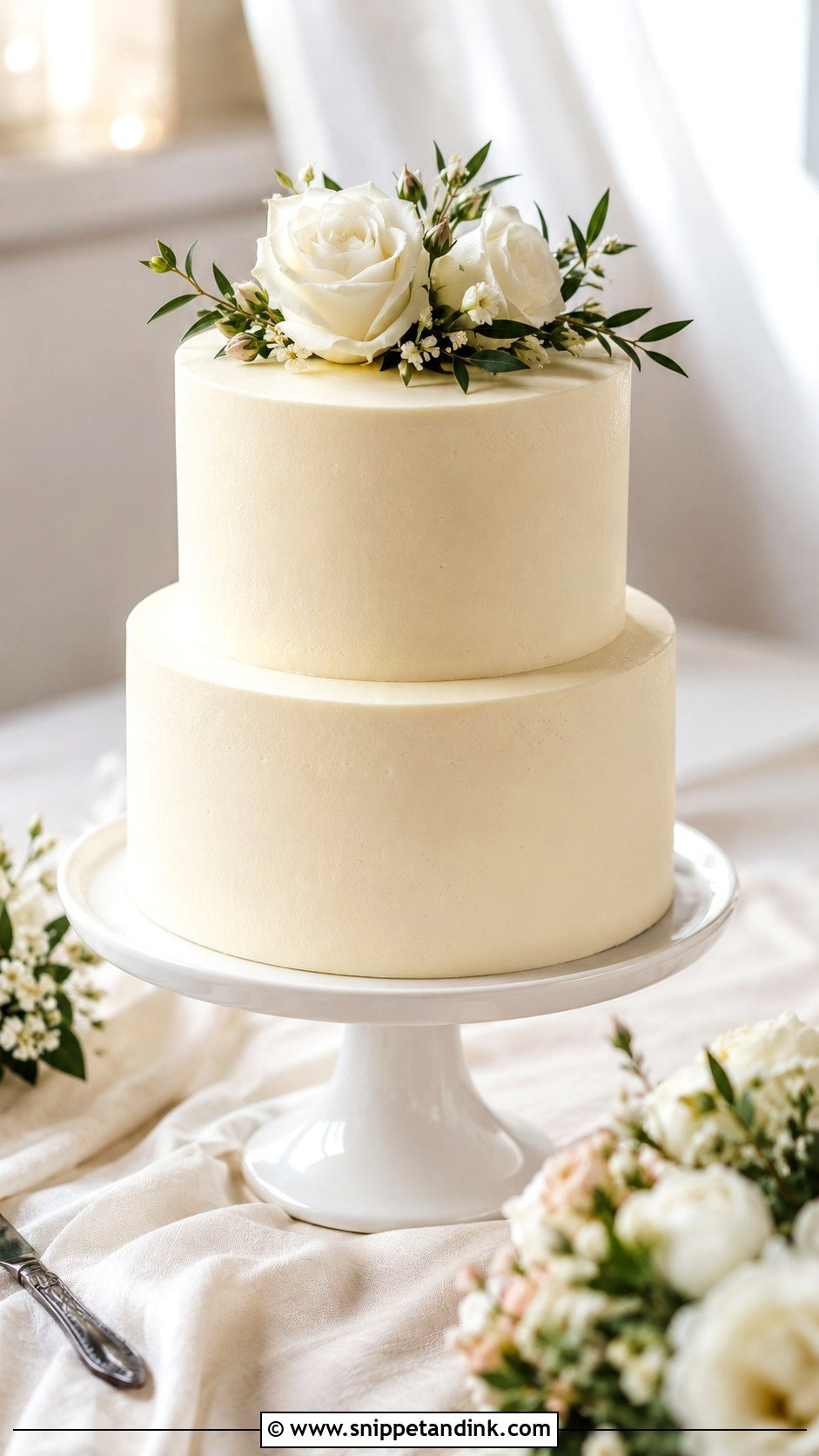
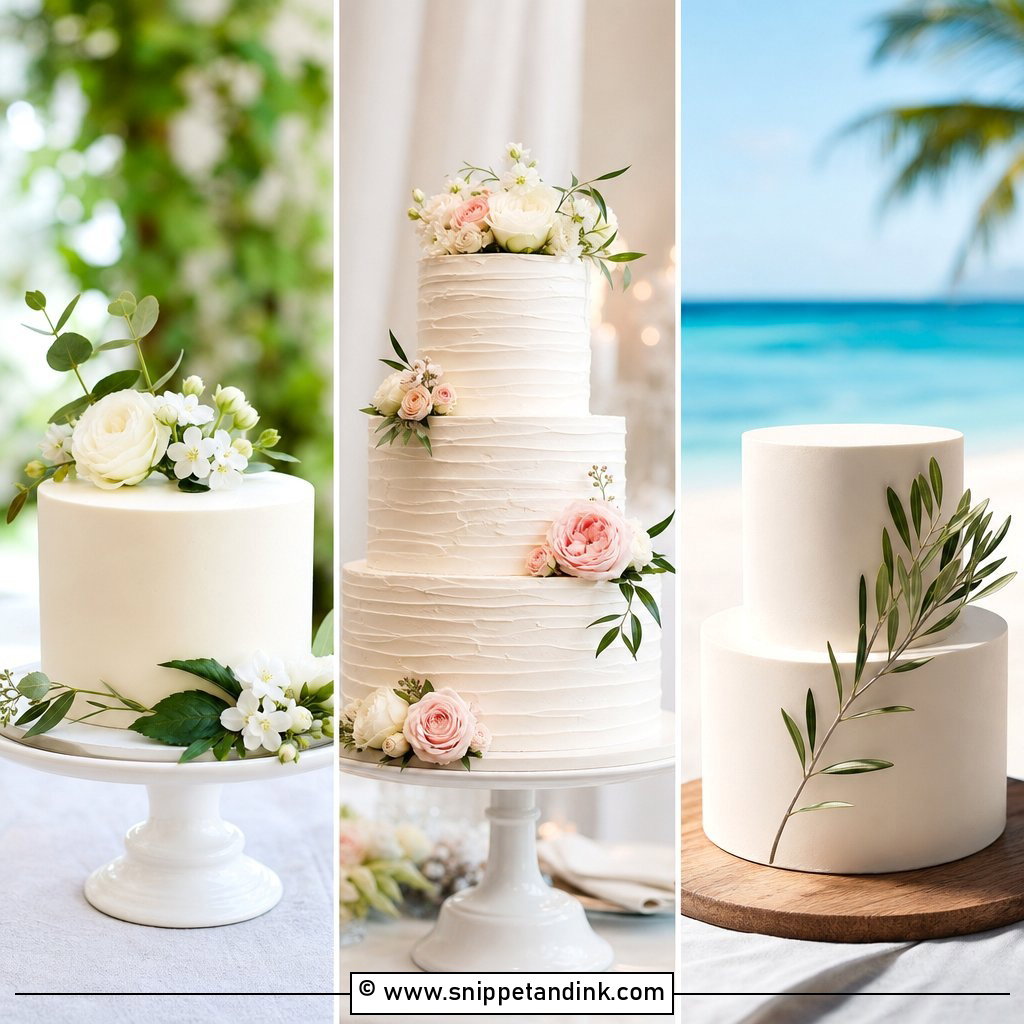
Plain ivory buttercream is the hardest finish to fake. With nothing on the cake to pull the eye away, every bulge from a settling filling and every soft corner shows, so I chill each tier and give it a second smoothing pass before it’s stacked. Ask for a warm off-white rather than bright white: butter is naturally yellow, and pushing it to pure white takes a drop of violet colouring that can turn faintly grey when overdone. One small floral cluster on the side or top is enough. That leaves the flavor, vanilla bean or lemon or champagne, to do the talking.
2. Buttercream 2 Layer Wedding Cake
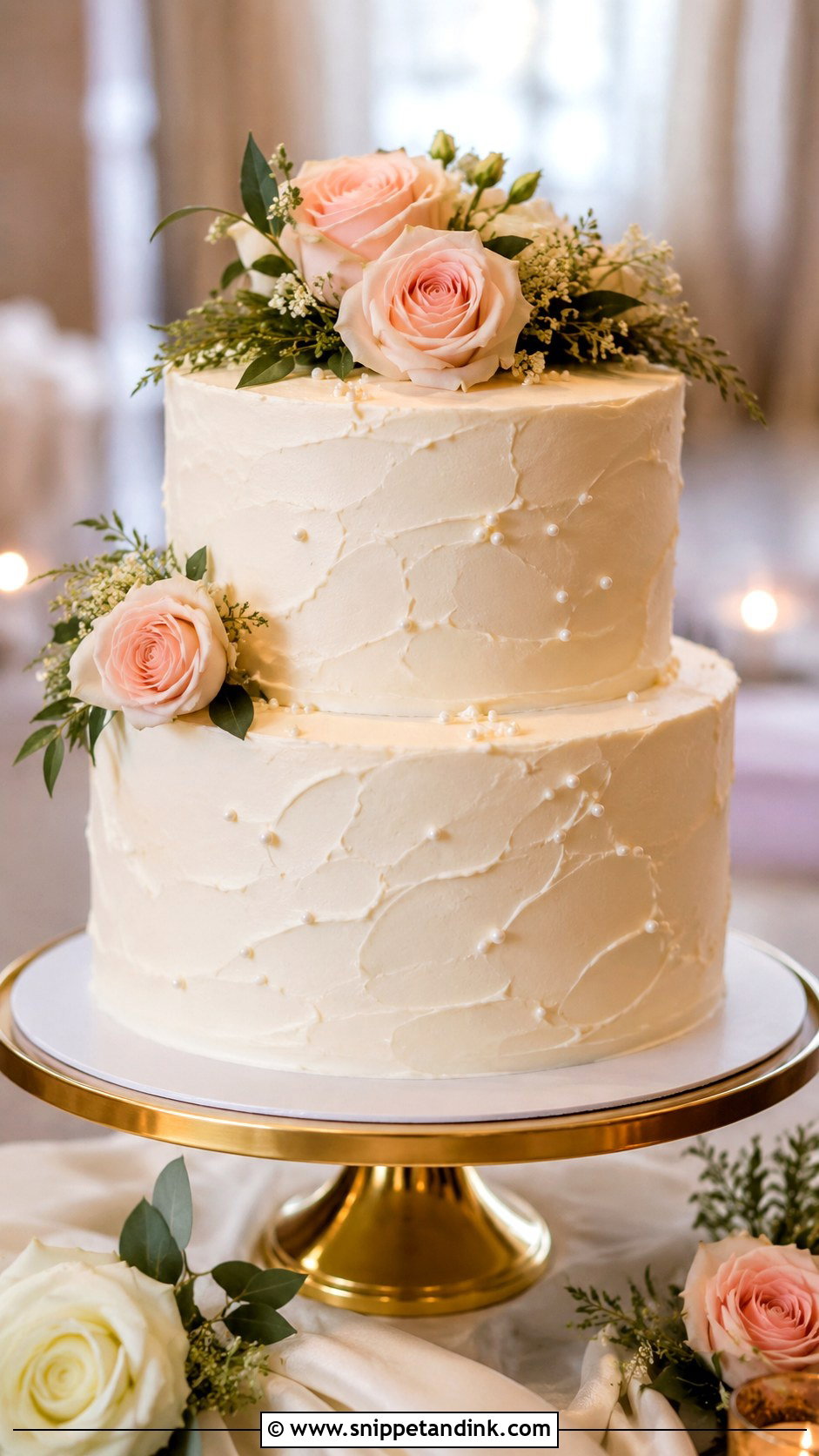
Buttercream is my default for two tiers because it cuts cleanly and tastes better than anything rolled over the top of it. A smooth finish looks polished. A light palette-knife texture looks handmade and hides small dents, which matters when a cake has to travel. The matte surface sits well next to flowers, pearls and fruit. In summer I’d pair lemon sponge with vanilla buttercream, and in cooler months almond, spice, or caramel cake feels cozier. Tell your baker if the room will be warm, because a crusting buttercream holds its edges in heat far better than a silky meringue one.
3. Semi Naked 2 Layer Wedding Cake
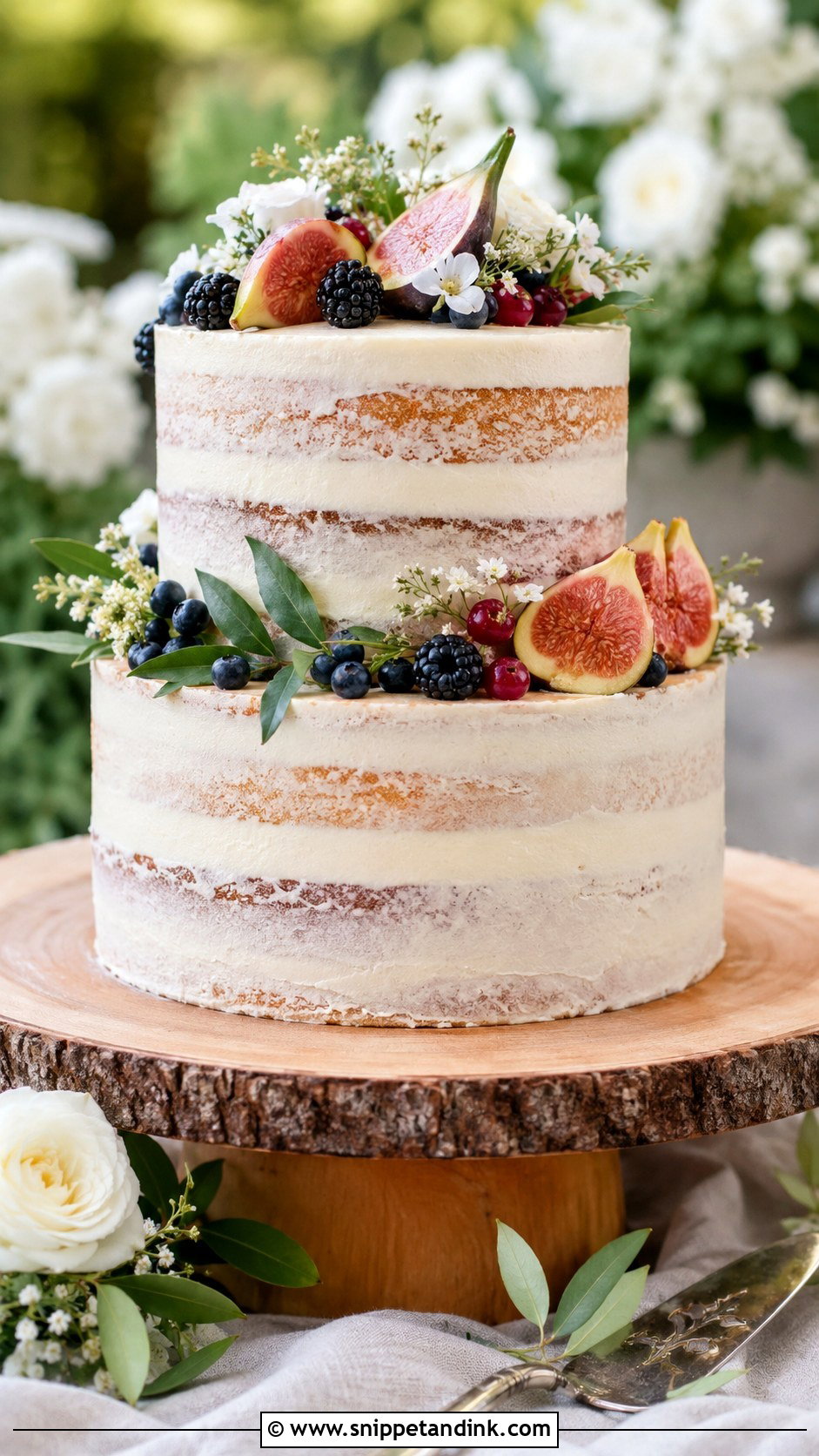
With a scraped coat this thin, the sponge is the decoration. Red velvet, chocolate and carrot give real contrast against white frosting, while a pale vanilla can end up looking unfinished rather than rustic. The trade-off is moisture: exposed sponge dries faster than a fully covered tier, so I assemble these as close to the day as possible and keep them wrapped until delivery. Berries, figs and a little greenery make the bare patches look deliberate. Guests who find full frosting too sweet usually prefer this one, and it sits naturally on a wood or stone stand at a barn or vineyard reception.
4. Floral 2 Layer Wedding Cake
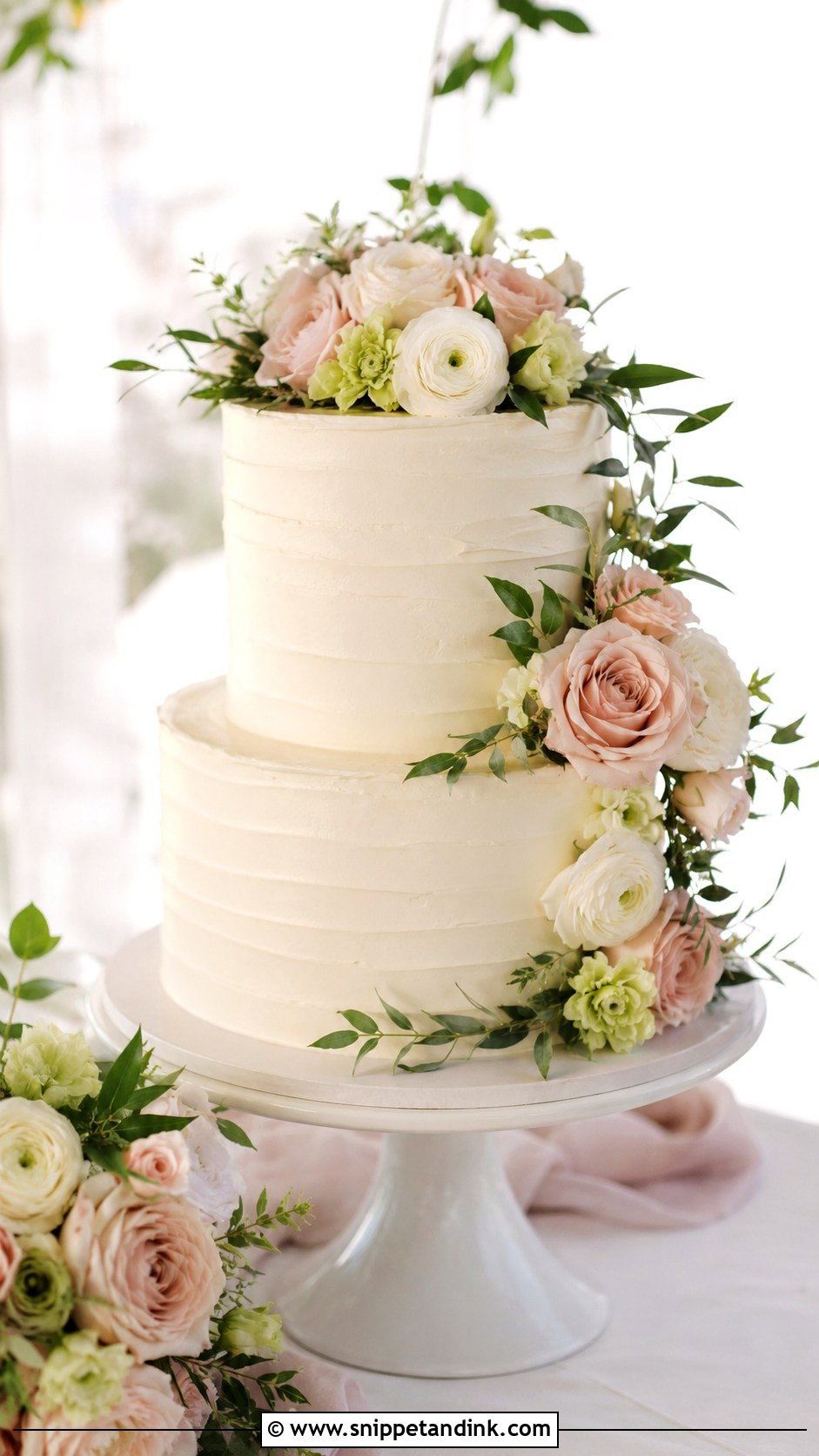
I have one rule with fresh flowers on cake: no stem touches the sponge. Every stem gets wrapped in floral tape and pushed into a straw or pick, because florist flowers are often sprayed, and some, like hydrangea and lily of the valley, shouldn’t be near food at all. Roses, ranunculus, orchids and lisianthus cope with a few hours out of water. A cascade down one side looks modern; a cluster on top feels traditional. Matching the bouquet ties it together. Walk all the way round before you approve it, since a cascade that looks balanced from the front is often lopsided from the side.
5. Pearl 2 Layer Wedding Cake
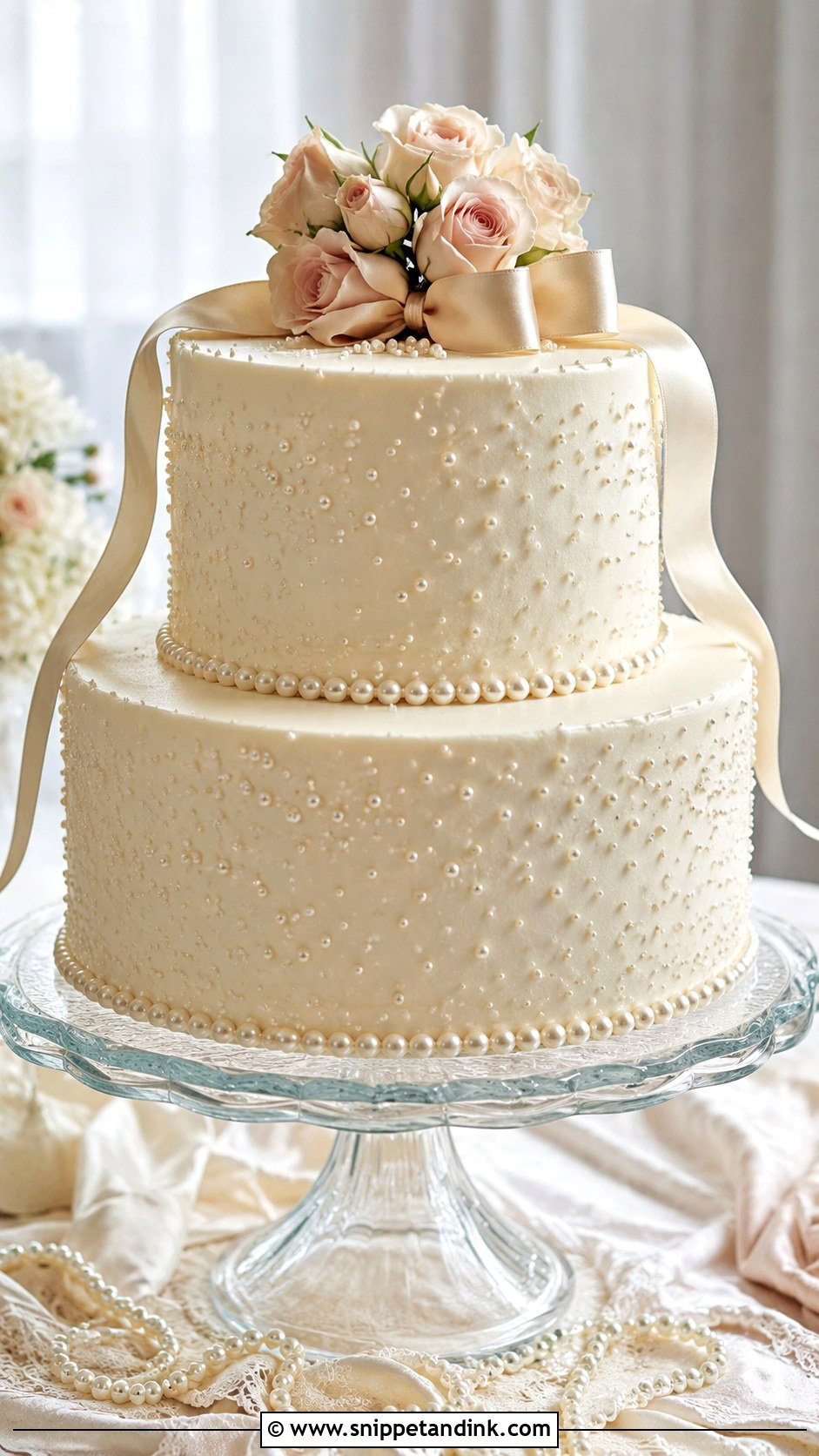
Sugar pearls go on one at a time with tweezers and a dot of buttercream, so a loose scatter is quicker work than precise rows. Rows look formal and want crisp edges underneath; a scatter forgives a softer finish. Against ivory frosting with champagne tones or blush flowers, they pick up pearl earrings or a pearl-edged veil if you’re wearing one. Vanilla almond and white chocolate raspberry keep the flavor as soft as the look. One practical point: hard dragées are rough on teeth, so on the side that gets cut I often use pearls moulded from fondant, which bite easily.
6. Vintage 2 Layer Wedding Cake
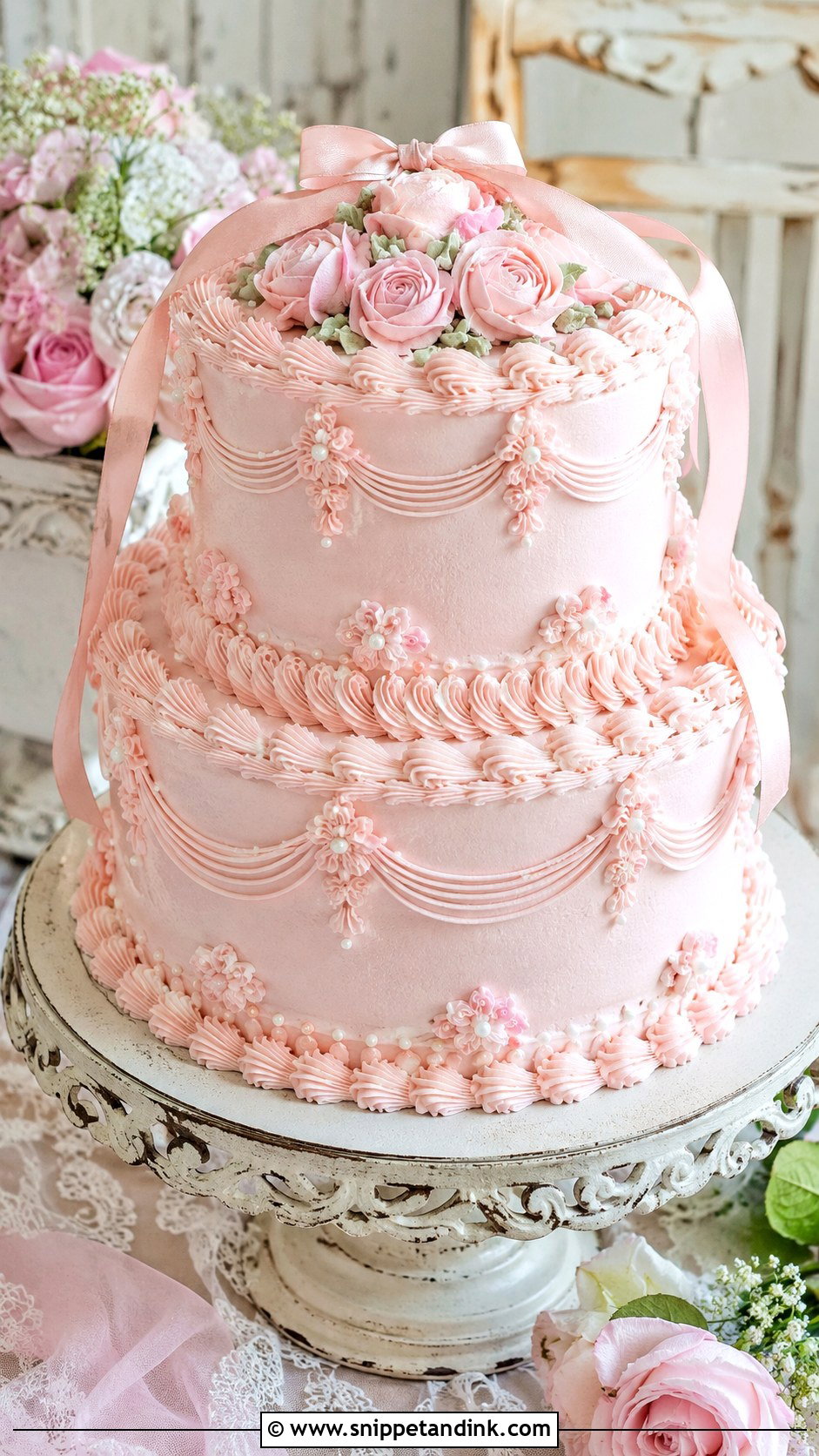
Lambeth piping is back, and two tiers is the right scale for it, because every overpiped layer takes time and the hours multiply on a large cake. Shell borders, swags, tiny rosettes and piped dots read well in ivory, pale pink, butter yellow or soft blue. The piping buttercream has to be stiffer than the coating underneath, or the swags start to droop in a warm room. You can add cherries for a playful reception cake or keep it bridal with pearls and a few small flowers. Strawberry or almond sponge suits the retro mood, and a cut-glass stand finishes it.
7. Modern 2 Layer Wedding Cake
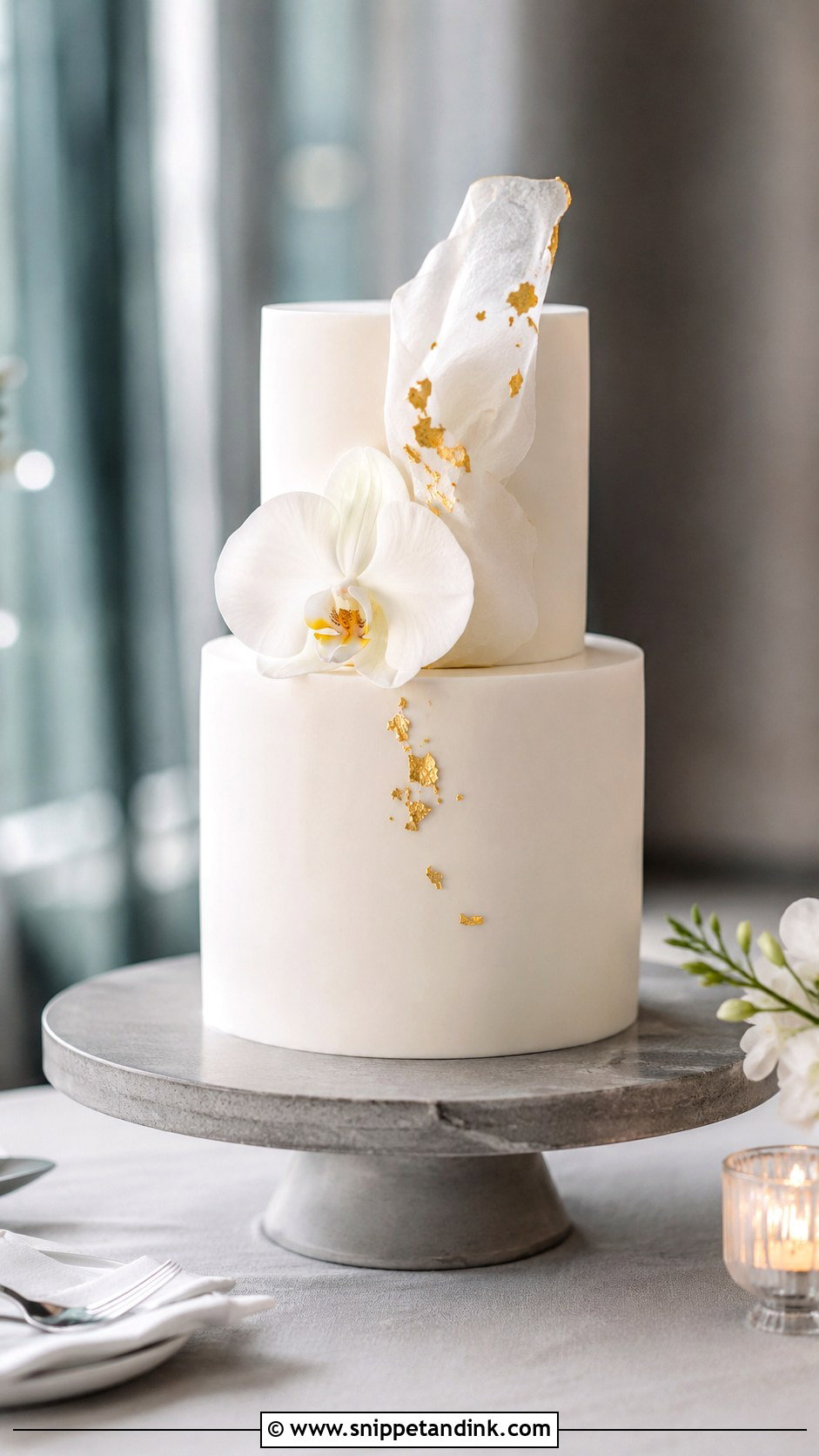
Modern designs live or die on their edges. Sharp buttercream corners need a cake chilled firm and finished with a warmed scraper, and fondant gives the crispest line of all if you don’t mind its texture. Then pick one detail, perhaps a single orchid, a curved wafer paper sail or a strip of gold leaf, and leave everything else empty. Wafer paper softens and wilts in humidity, so I wouldn’t use it at a damp summer venue. Loft and gallery spaces suit this cake best, with espresso or pistachio inside.
8. Rustic 2 Layer Wedding Cake
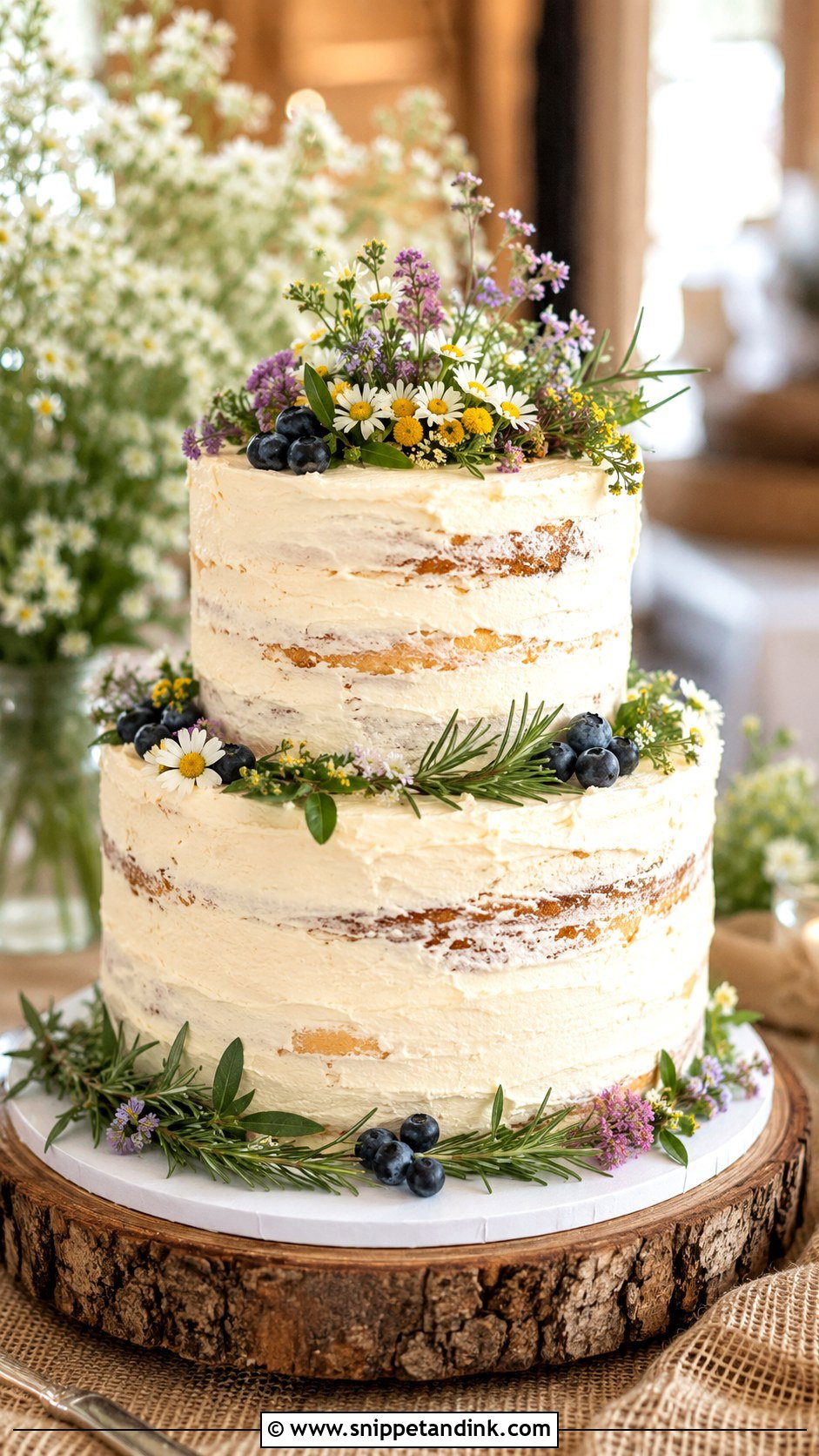
Rustic should look relaxed, but the cake underneath still needs straight sides and a level top; otherwise it simply looks wonky. Textured buttercream with soft edges carries the style, finished with greenery, berries, dried citrus or a few wildflowers. When the table is all wood and linen, I’ll often tint the frosting a light caramel, since stark white can look out of place there. Carrot, spice and honey cake all fit. Keep the floral arrangement loose and to one side so the cake doesn’t look crowned.
9. Gold 2 Layer Wedding Cake
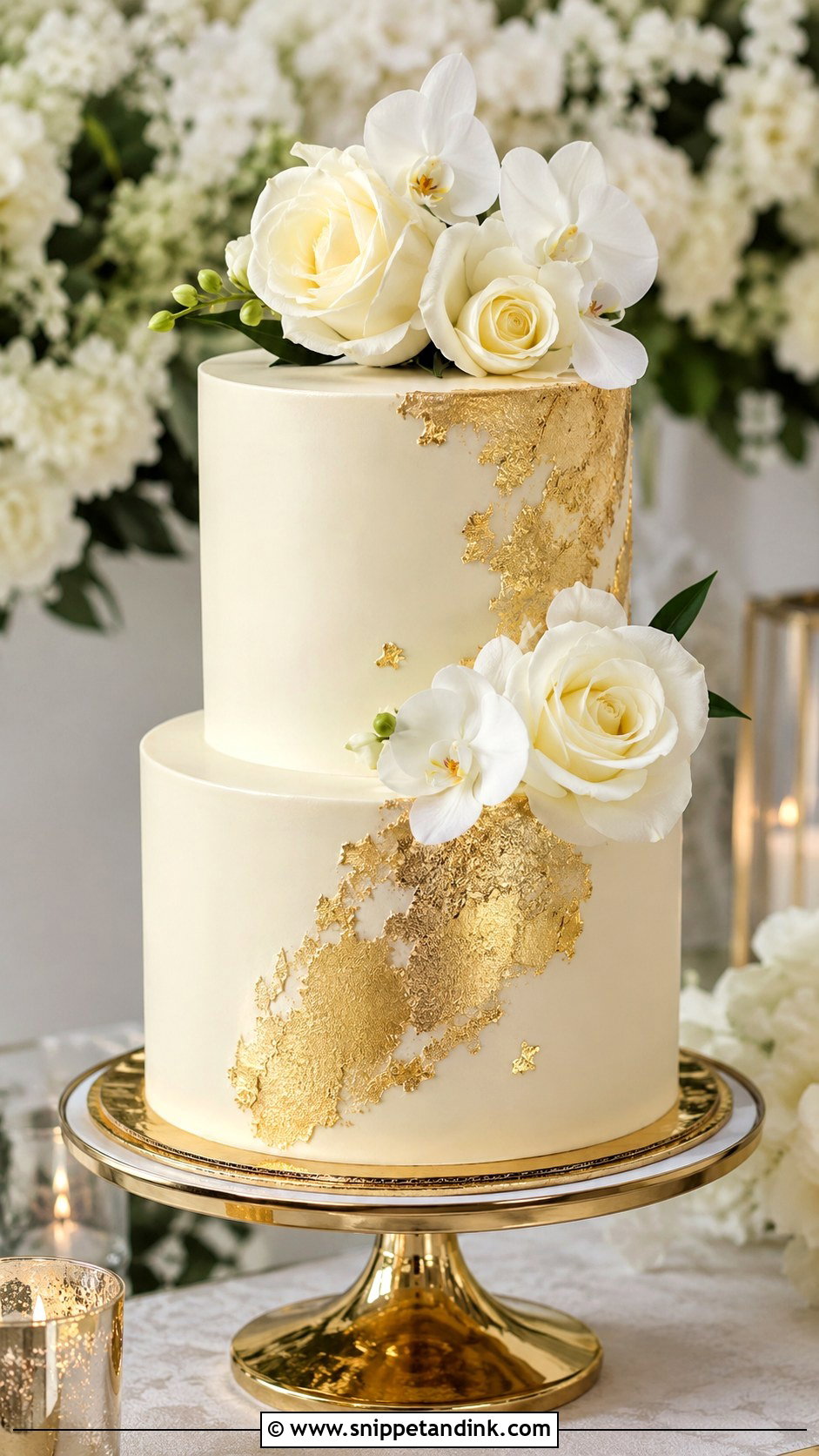
Gold is easy to overdo. A patch of leaf, a few thin metallic brushstrokes or a slim gold ribbon is plenty on two tiers. Edible gold leaf is laid on with a dry brush and sticks best to chilled fondant or a crusted buttercream; on soft frosting it creases. Read labels as well, because some lustre dusts are sold as non-toxic decoration rather than edible, and those shouldn’t go on anything guests will eat. Ivory, marble, blush and dark ganache all carry gold well. Salted caramel or champagne sponge matches the richness, and the shine reads best under evening lighting.
10. Greenery 2 Layer Wedding Cake
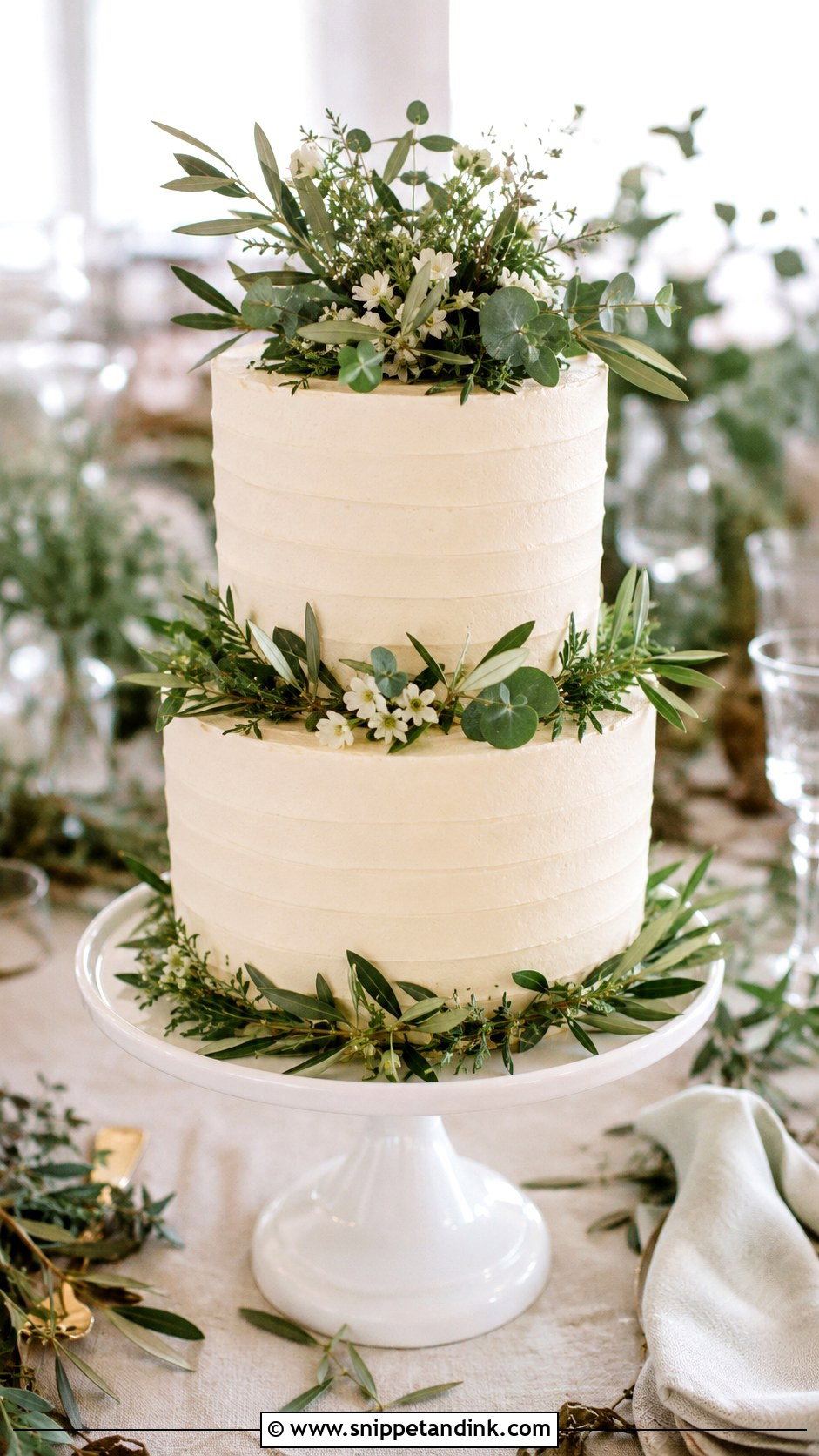
Not every leaf that photographs well belongs on food. Eucalyptus is the one I’m asked for most, and I keep it off the frosting entirely: it goes on the stand around the base, while rosemary, bay or olive sprigs are what actually touch the cake. The cake itself stays plain, smooth ivory or lightly textured buttercream, so the leaves have something to sit against. Add a few white blooms for softness, or keep it all green for a botanical look in a greenhouse or garden venue. Lemon and pistachio sponge echo the fresh herbs.
11. Minimalist 2 Layer Wedding Cake
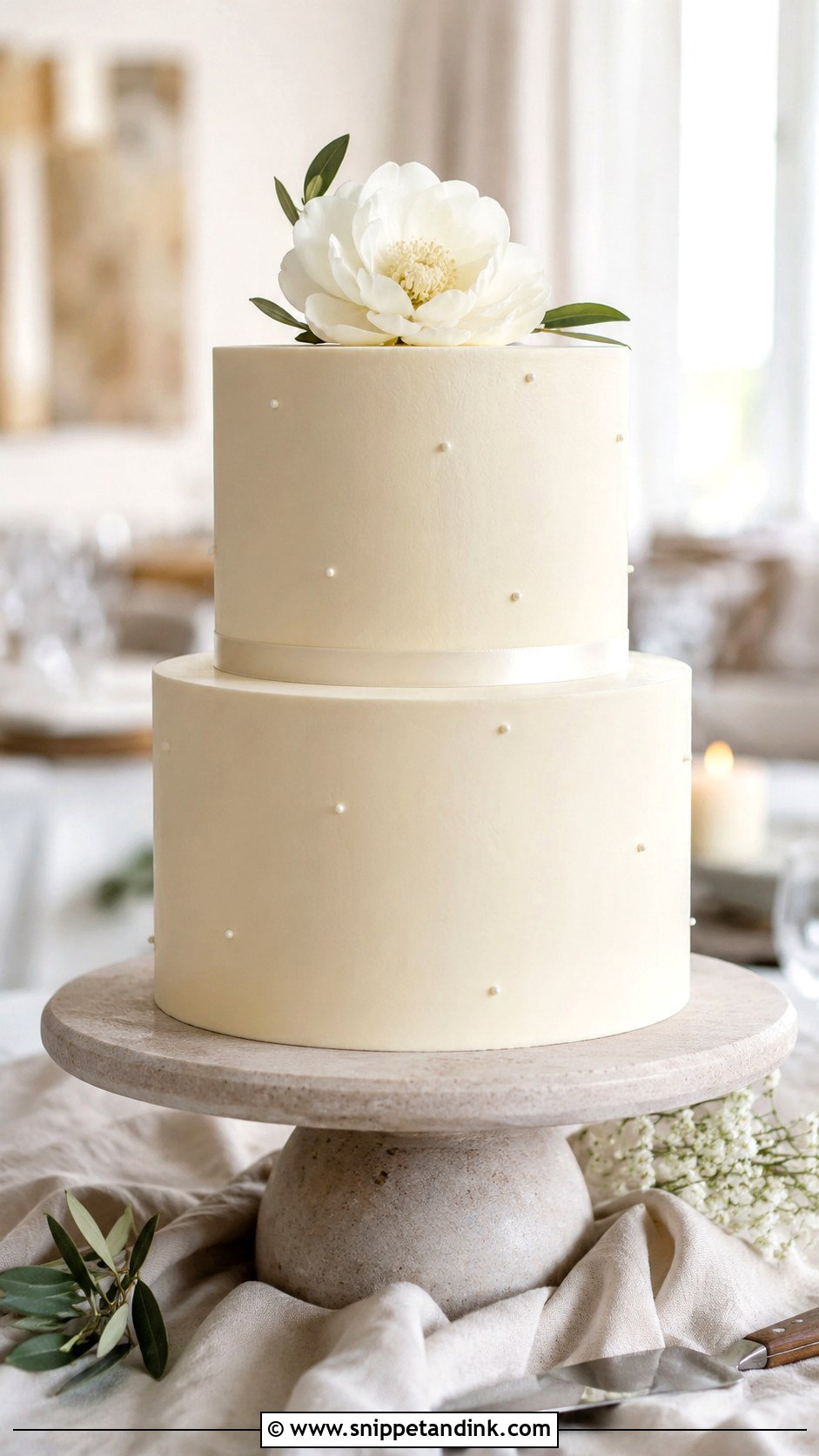
A minimalist cake hides nothing, so this is where I’d rather you spend on the baker’s finishing skill than on decoration. The edges need to be crisp and the tiers stacked dead centre. Then one detail: a single white bloom, a silk ribbon, a line of pearl dots, or plain fondant with no topper at all. Keep the palette quiet, ivory or stone or the palest blush. Because the outside asks so little, the flavor carries the cake, and vanilla bean, chocolate or lemon raspberry will please the most guests at a courthouse reception or small dinner.
12. Boho 2 Layer Wedding Cake
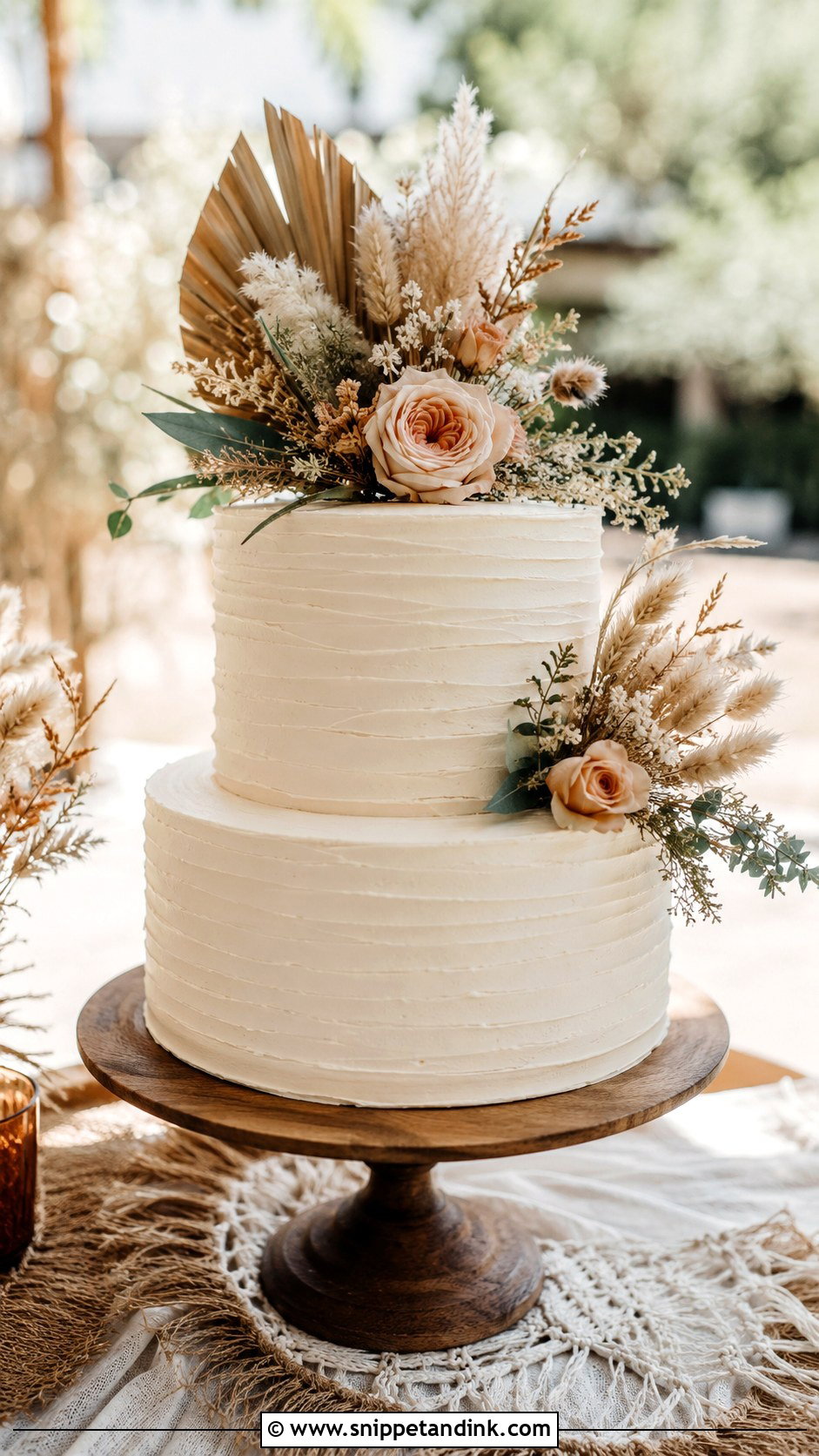
Dried stems don’t wilt, which makes them practical on a cake that sits out all evening. The catch is shedding: dried flowers, pampas grass and bunny tails all drop fluff onto frosting, so I shake them out well and set them on picks rather than pressing them against the cake. Keep the arrangement light so the dried pieces don’t swamp two small tiers. Sand, terracotta and sage suit the style, over a semi naked or roughly textured finish. Honey, chai or carrot sponge fits the earthy feel, and a wooden stand with candles around the base completes it.
13. Beach 2 Layer Wedding Cake
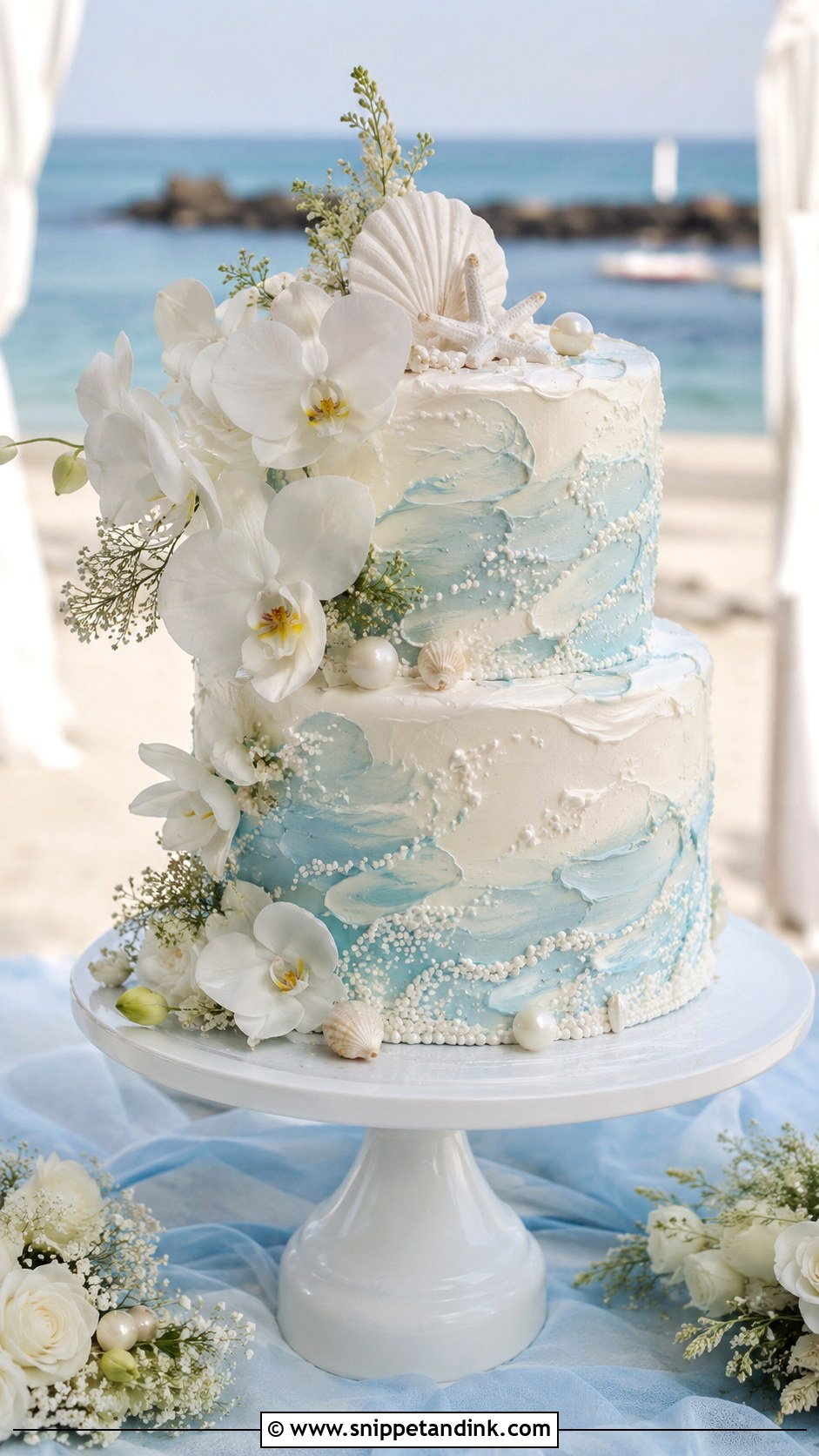
Heat is the real brief for a beach cake. Buttercream softens fast in direct sun, so the cake should sit in shade and come out as late as possible, and if it will be outdoors at all, ask your baker about a more heat-stable frosting. Visually, keep the coast subtle: soft white with a pale blue watercolor wash, gentle texture and a few edible pearls. A spray of tropical flowers, white orchids or small sugar shells can nod to a destination wedding without turning it into a theme cake. Coconut, lime or passion fruit sponge belongs here.
14. Pink 2 Layer Wedding Cake
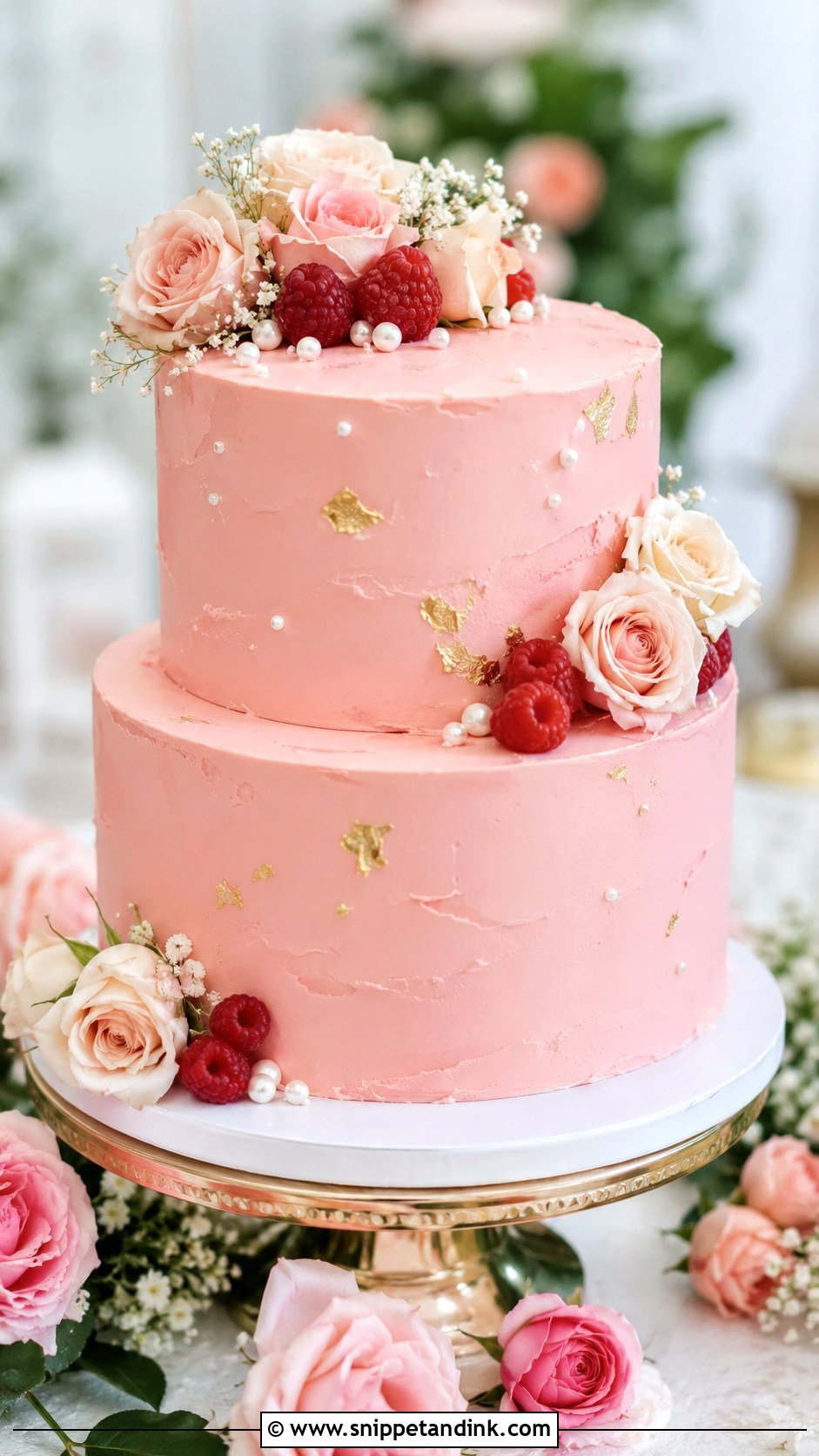
Pink is the color I mix most carefully. Buttercream tinted under kitchen light can look different under warm reception bulbs, and pinks fade if a cake sits near a sunny window for long. Blush suits a classic wedding; deeper rose or mauve sits better with a modern floral palette. You can tint the buttercream itself, paint a watercolor wash, or keep the frosting white and let pink flowers bring the color. Balance it with ivory blooms or a touch of gold. Strawberry, raspberry or rose sponge carries the color inside, and a white stand lets the pink read clearly.
15. Blue 2 Layer Wedding Cake
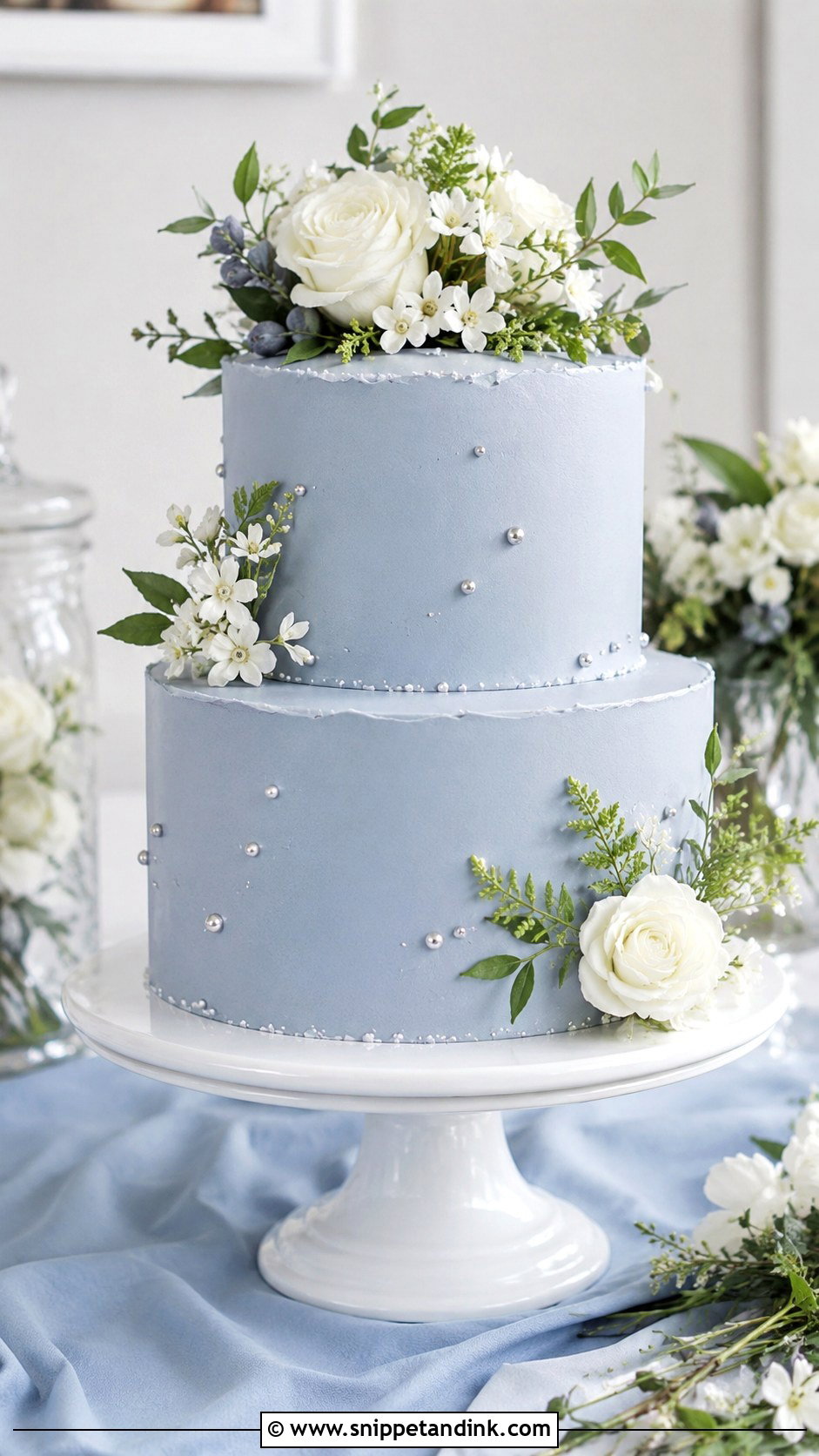
Blue needs a light hand. Because butter is yellow underneath, a pale blue gel pushed too far can drift toward teal, so I build the color slowly and check it in daylight. Dusty and powder blues are the safest shades. White flowers, silver pearls or a little greenery keep it clean, and it sits nicely with coastal or winter palettes or as your something blue. Vanilla, blueberry lemon and white chocolate sponge suit the gentle color. One floral cluster on smooth buttercream is plenty.
16. Black And White 2 Layer Wedding Cake
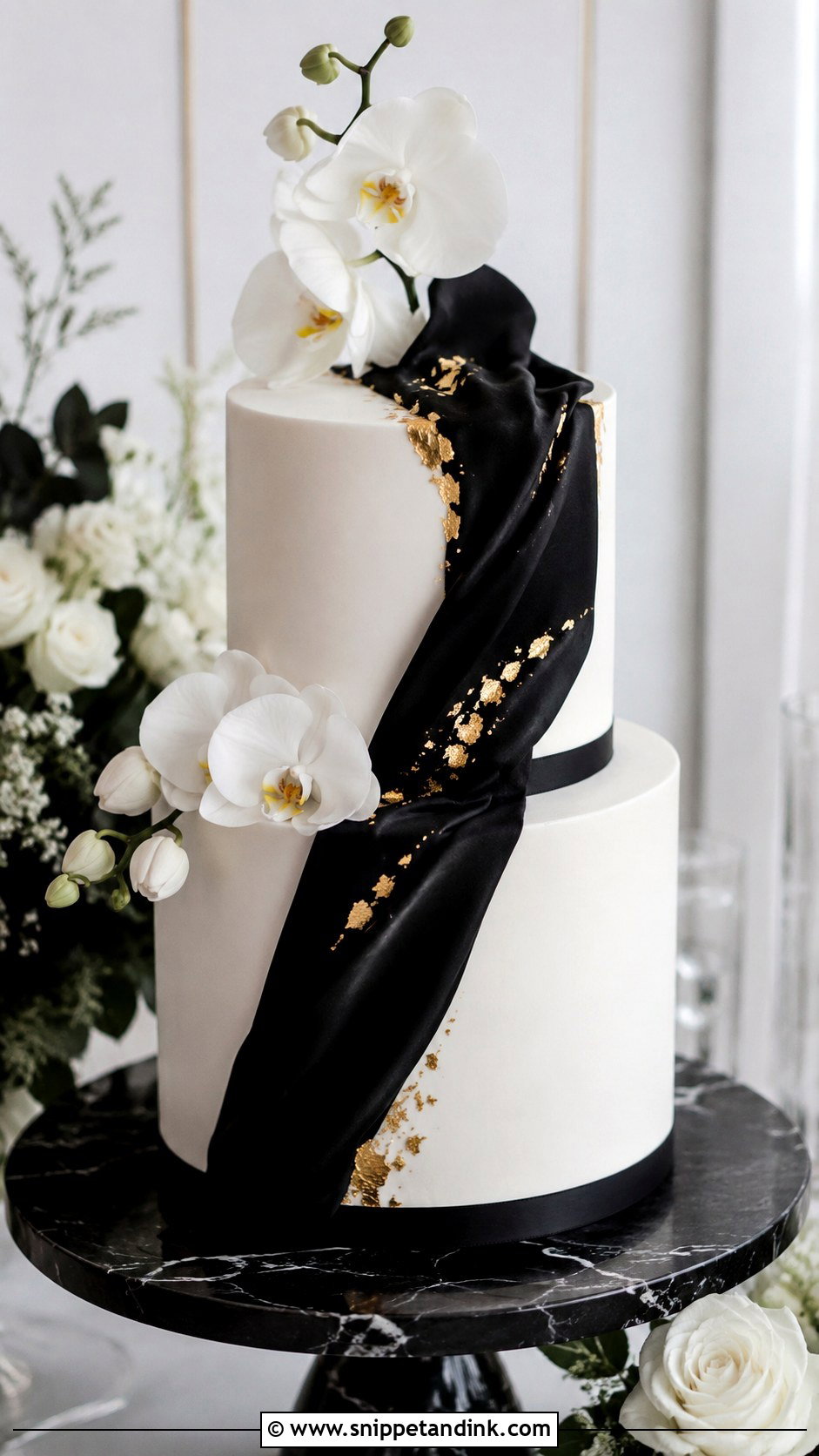
Black frosting is the part to plan for. Getting buttercream truly black takes a lot of colouring, which can taste bitter and leave guests with grey teeth, so I prefer black fondant accents, hand-painted details, black ribbon, or a dark tier made with black cocoa. White roses, orchids or a little gold then soften the contrast. It belongs at evening and black-tie receptions. Chocolate, espresso or cookies and cream sponge fits the palette. On a cake this small, two strong details is the limit; a third makes it look crowded.
17. Fruit 2 Layer Wedding Cake
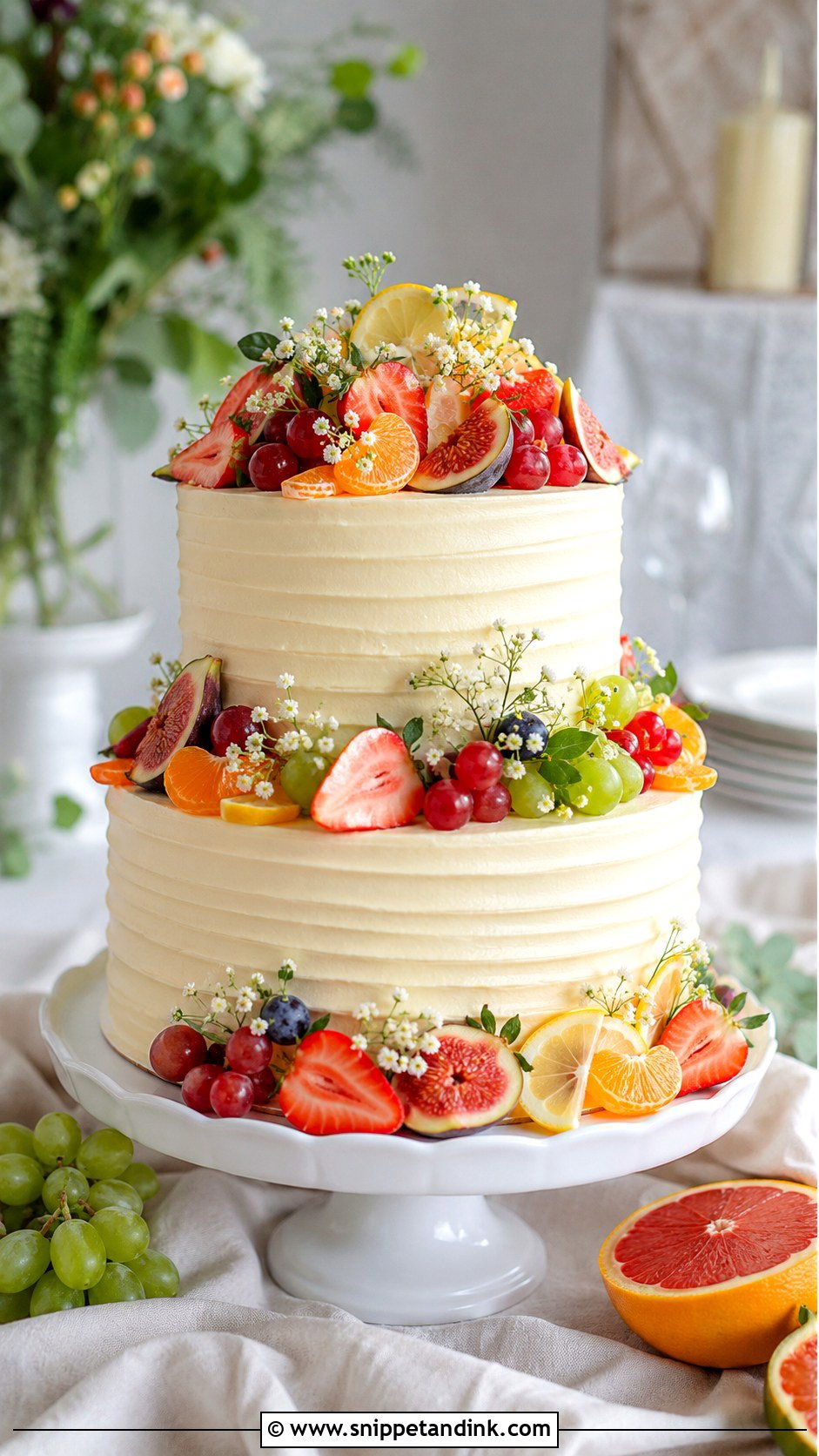
Fresh fruit is always the last thing I add. Cut fruit weeps juice into frosting, so berries and figs go on whole, as close to serving as I can manage, with a thin glaze to stop them dulling. Seasonal fruit looks and tastes better, so peaches and cherries in summer, figs and grapes into autumn. It sits best on semi naked or whipped buttercream. Lemon blueberry, almond peach and chocolate cherry are pairings I come back to. A few herbs or small flowers make it look finished at a brunch or garden reception.
18. Chocolate 2 Layer Wedding Cake
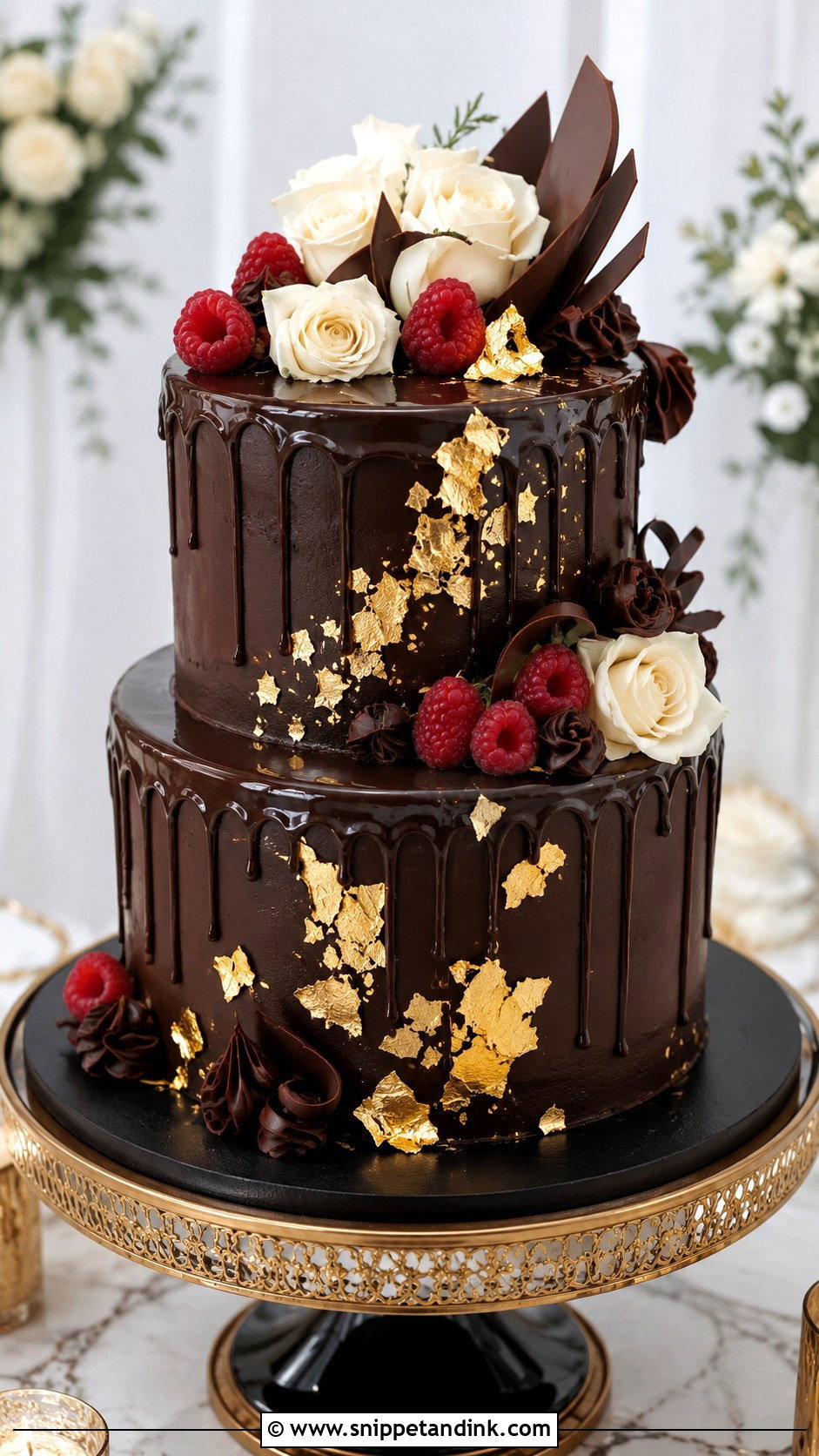
A chocolate 2 layer wedding cake can be the formal option, not the casual one. Dark ganache sets firmer than buttercream and gives the sharpest edges I can get without fondant, which also makes it the steadier choice in a warm room. Chocolate buttercream is softer to eat and to look at. Fresh flowers, gold leaf, berries or white chocolate curls make it read as wedding cake rather than birthday cake. Raspberry, mocha and salted caramel fillings please most guests. Set it on a black, gold or marble stand so the deep brown has something to sit against.
19. Marbled 2 Layer Wedding Cake
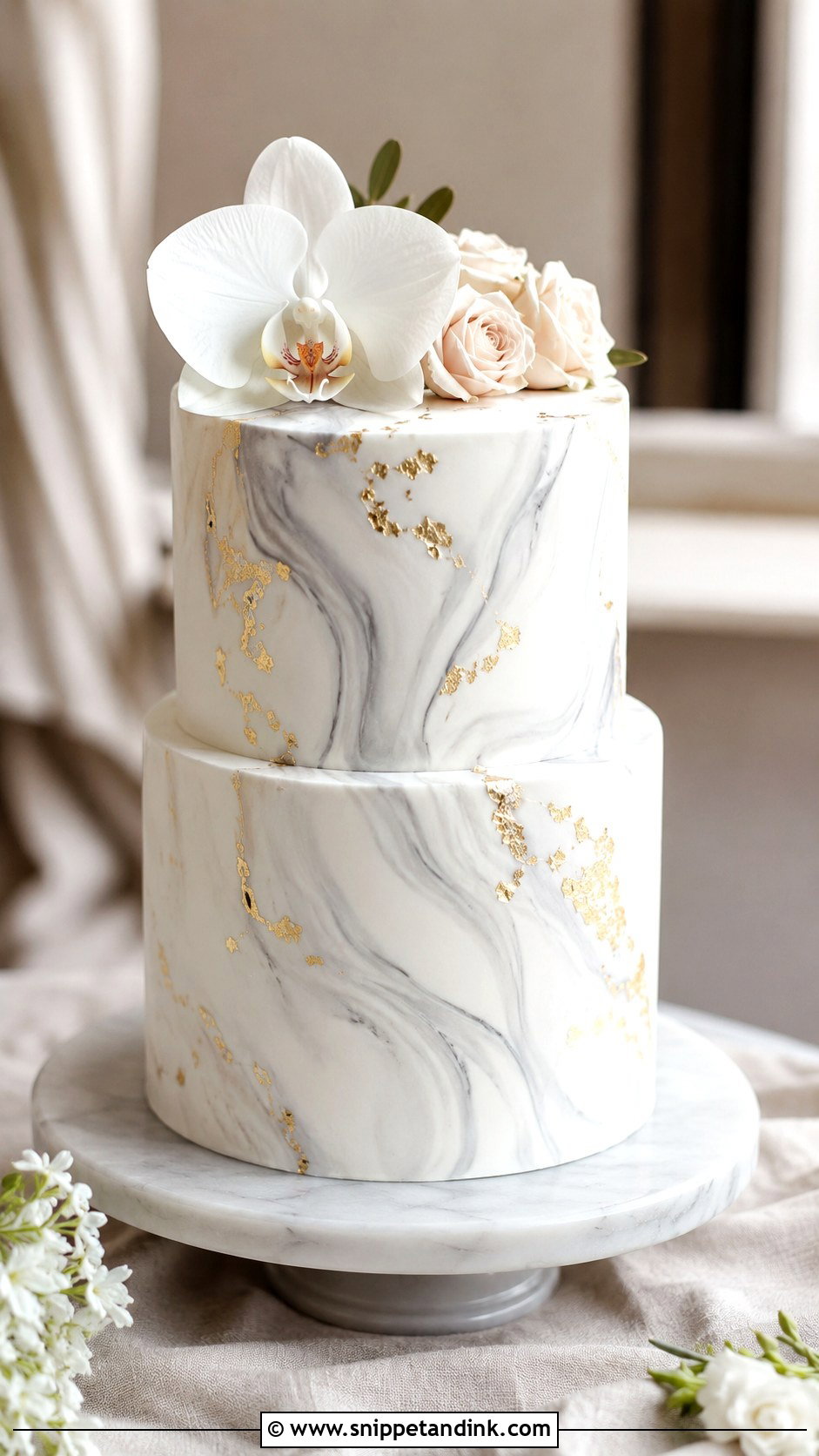
Marbling is made by folding colours through fondant before rolling, or by streaking buttercream as it’s scraped. Either way no two cakes come out the same, so I’d rather show you a test piece than promise a match to a photo. White with grey, blush, taupe or soft blue works. Gold leaf along the veins picks out the movement, and one orchid or a small cluster of roses is all the flowers it wants. Ask for soft veining rather than hard lines if you’d like it romantic. Vanilla, almond or champagne sponge sits well behind the polished outside at a hotel or city venue.




20. Pressed Flower 2 Layer Wedding Cake
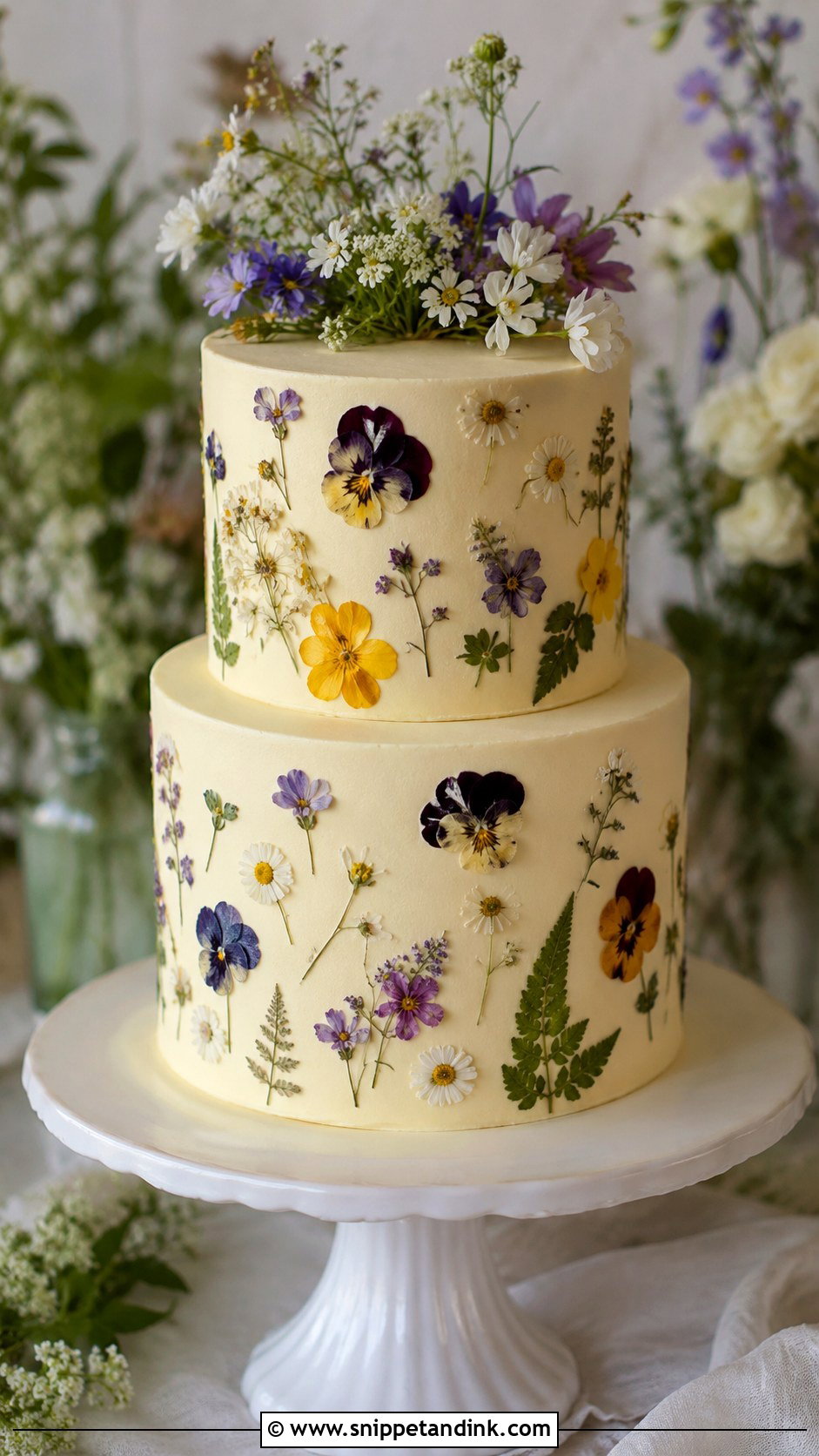
Pressed flowers need a week or more of pressing before they go anywhere near a cake, so this design can’t be a last-minute decision. I lay them onto chilled buttercream with a thin brush of piping gel. Use only flowers grown to be eaten, such as violas, pansies, cornflowers and calendula; florist stems are not grown for food. Keep the base ivory or pale cream so the colors stay visible. Lemon, lavender, honey or almond cake matches the garden feel. A plain stand and simple table styling keep it from looking crowded.
Delivery Day and the Hours After It
Two tiers have one big advantage over taller cakes: they can usually travel already stacked. The bottom tier carries dowels or thick straws that support a board under the top tier, and for a long drive I add a central dowel through both. A chilled cake is firmer and far less likely to shift on the road.
If you’re collecting it yourself
- Cool the car before the cake goes in, and keep the air running the whole way.
- Put the box flat in the footwell or boot, never on a seat, which tilts.
- Drive as though there’s a full glass of water on the dashboard: slow corners, gentle braking.
- Carry it by the base board, with both hands underneath, not by the box sides.
Where it sits at the venue
Once set up, a buttercream cake is happy at room temperature for several hours, but not beside a sunny window, a heater, the band’s lights or a cluster of candles. Fresh flowers and cut fruit go on at the venue, not before. Ask your coordinator to keep the cake table out of the main walkway too, because a bumped table is the most common way a cake gets damaged after delivery.
Saving the top tier
If you want to keep the top tier for your first anniversary, tell your caterer before the night so nobody slices it. Chill it until firm, wrap it tightly in several layers of cling film and foil, and freeze it. Buttercream and ganache cakes keep their texture best; fresh fruit and whipped cream fillings do not freeze well, so choose the filling of that tier with this in mind.
A Small Cake Shows Every Decision
With only two tiers, there is nowhere for a weak detail to hide. The frosting finish, the place the flowers sit and even the stand all get looked at closely. Start from your guest count and venue, then the season, and only then the look. Bring photos of the two or three designs here that you keep coming back to, and ask your baker plainly which will hold up at your venue on your date. A good one will tell you honestly if the answer is none of them, and suggest the version that will.
You'll Like These Ideas:







Leave a Reply