
A one-tier wedding cake isn’t a compromise; on a single tier, every decision shows. There’s no stacking to distract from an uneven edge or a muddy colour, so the finish, the flavour and the stand all carry more weight. I make a lot of these for small weddings, elopements, courthouse ceremonies and backyard receptions, often with a kitchen cake behind the scenes to feed everyone. Here are twenty-five directions for a single tier, each with the practical details I’d talk through with you before baking it.
Will One Tier Feed Your Guest List?
This is the question I ask first, because it decides everything else. Wedding portions are cut smaller than party slices, roughly finger-width strips, and a standard tier is about four inches tall. Cut that way, a single round serves approximately:
- 6-inch: around 12 wedding portions
- 8-inch: around 24
- 10-inch: around 38
- 12-inch: around 56
Bakers’ charts vary a little, and party-size slices roughly halve those numbers. If your guest list is larger than one display tier can serve, a plain kitchen cake in the same flavour, cut out of sight, is the usual answer and costs far less than decorated tiers.
Going taller instead of wider
A double-height tier, about six to eight inches tall, gives height without stacking. It’s really two cakes on top of each other, so it needs a cake board and dowels in the middle; without them, the bottom layers compress and the sides bulge. Ask your baker how they support it.
1. 1 Tier Wedding Cake With Fresh Flowers
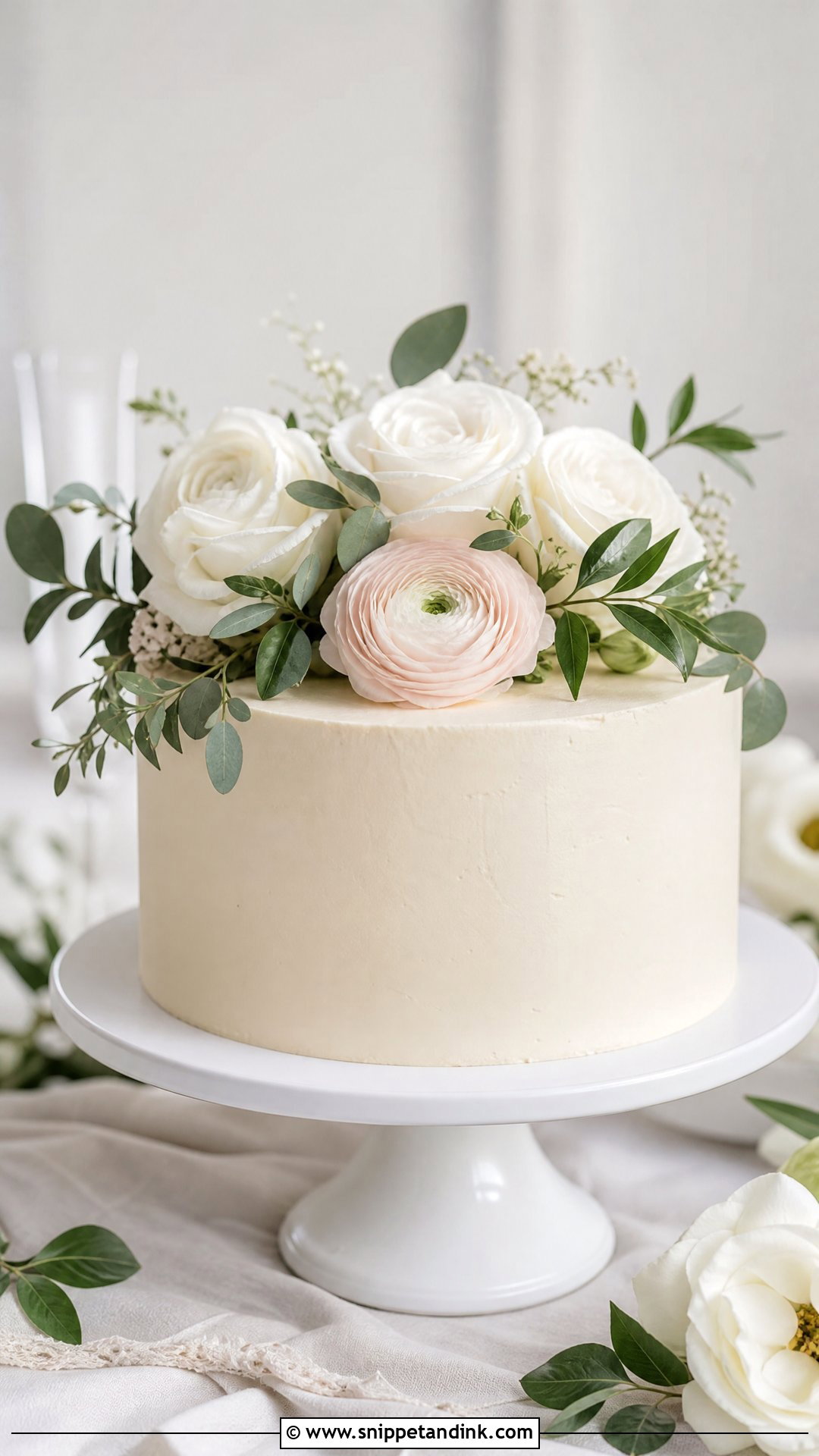
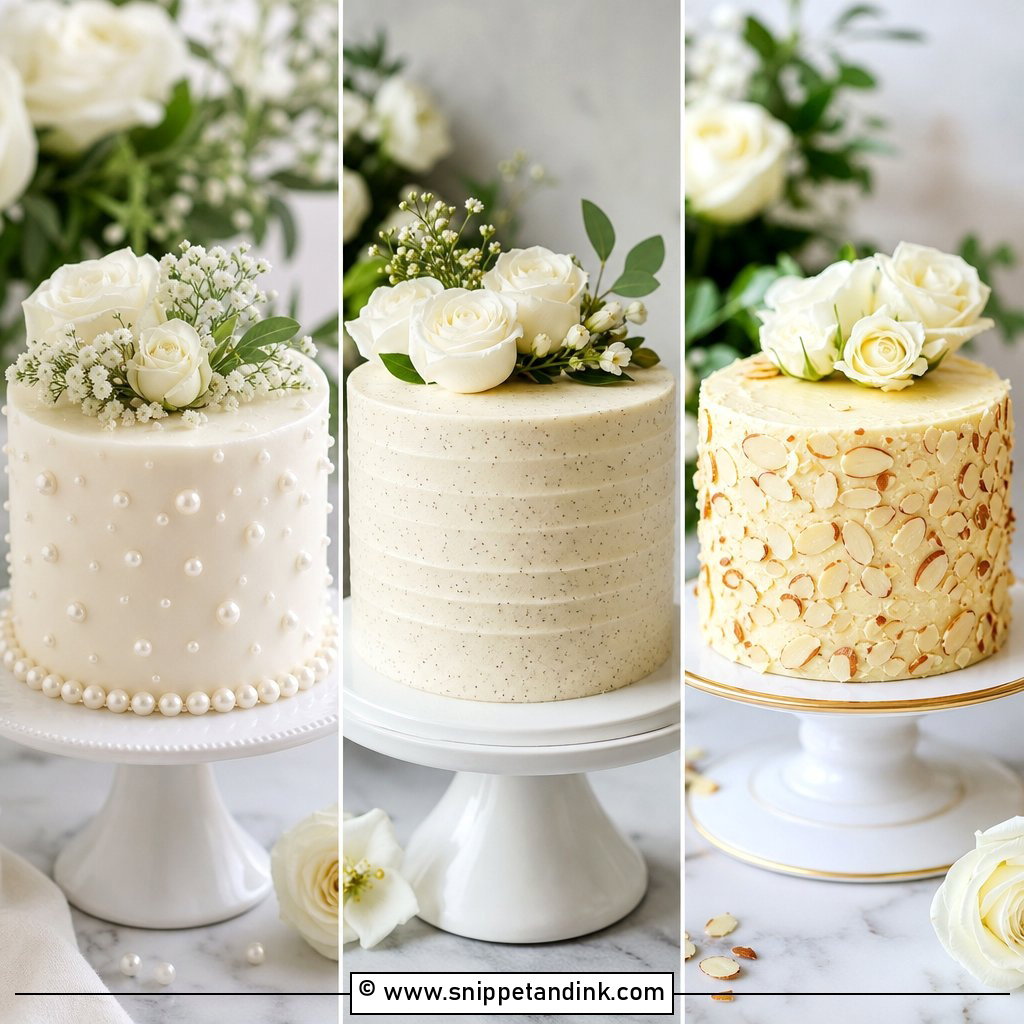
Fresh flowers are the quickest way to make one tier look finished, and the mistake is using too many. I put them in one focused cluster on a smooth ivory buttercream or fondant cake and leave the rest bare. Roses, ranunculus, peonies and orchids all suit it. The flowers have to be safe: stems wrapped in floral tape or set in a food-safe pick, and nothing sprayed with pesticide or florist dye. I ask the florist to set aside unwired blooms for the cake rather than pulling them from table arrangements on the day. A white pedestal, a wooden stand or a vintage plate all suit it.
2. 1 Tier Wedding Cake With Buttercream Texture
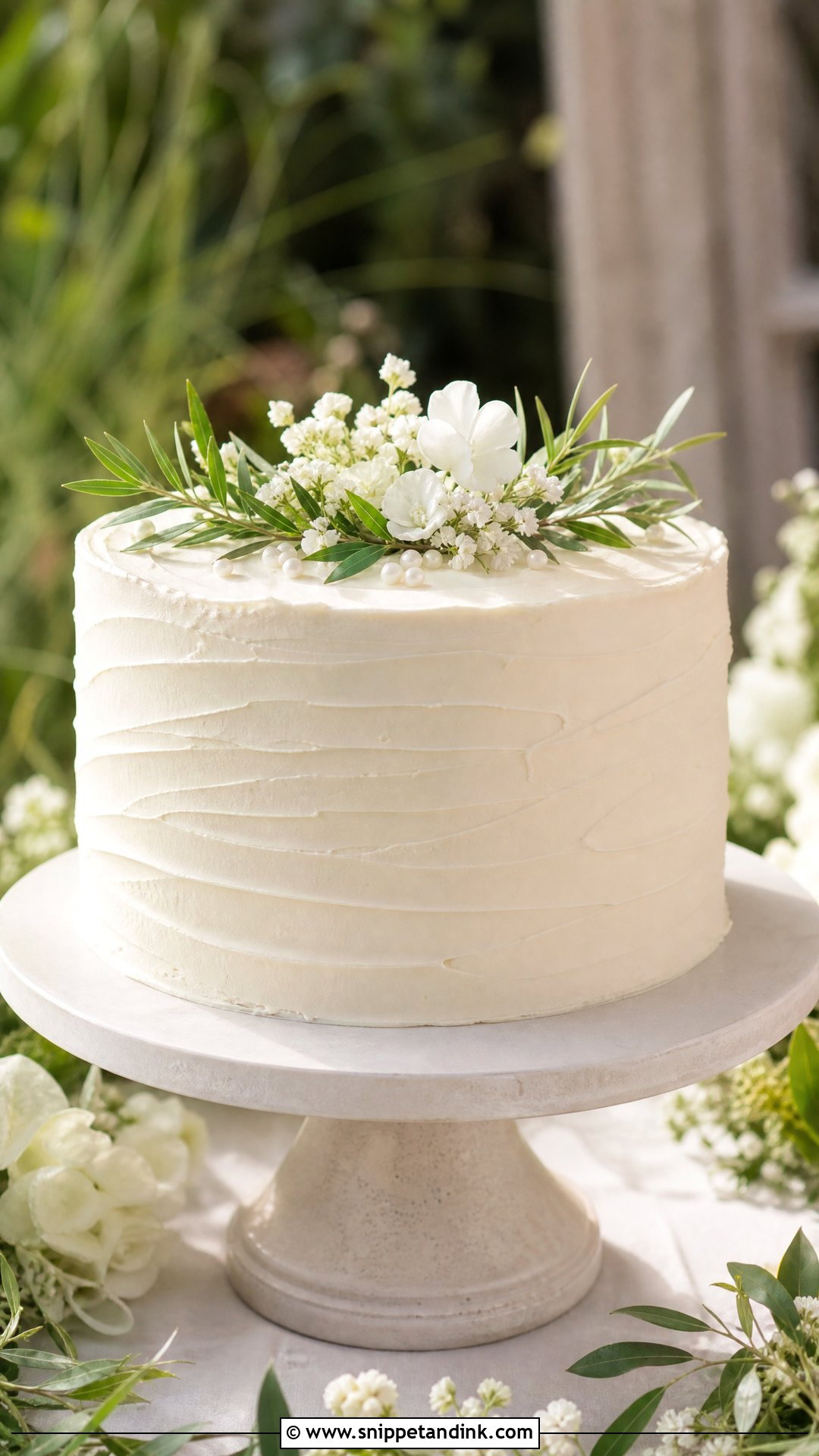
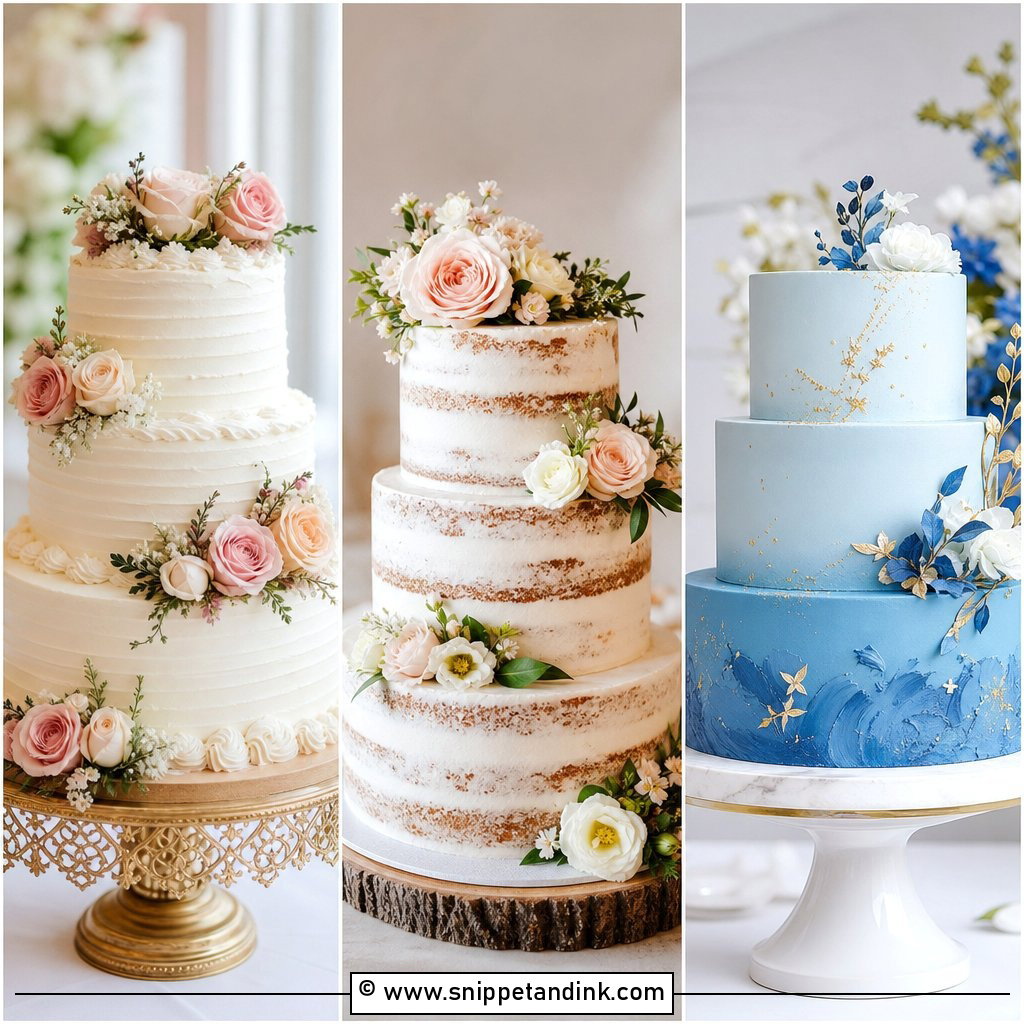
Textured buttercream is forgiving, which is part of its appeal. Spatula strokes, vertical ridges, waves or soft swirls catch side light and look handmade on purpose. I keep the colour in ivory, cream, pale blush or warm white so the texture does the talking, with only a few flowers, pearls or a sprig of greenery. Be aware that texture is still buttercream: at an outdoor or barn reception in summer, the ridges soften first, so I’d keep it in the shade and bring it out close to cutting.
3. 1 Tier Wedding Cake With Vintage Piping
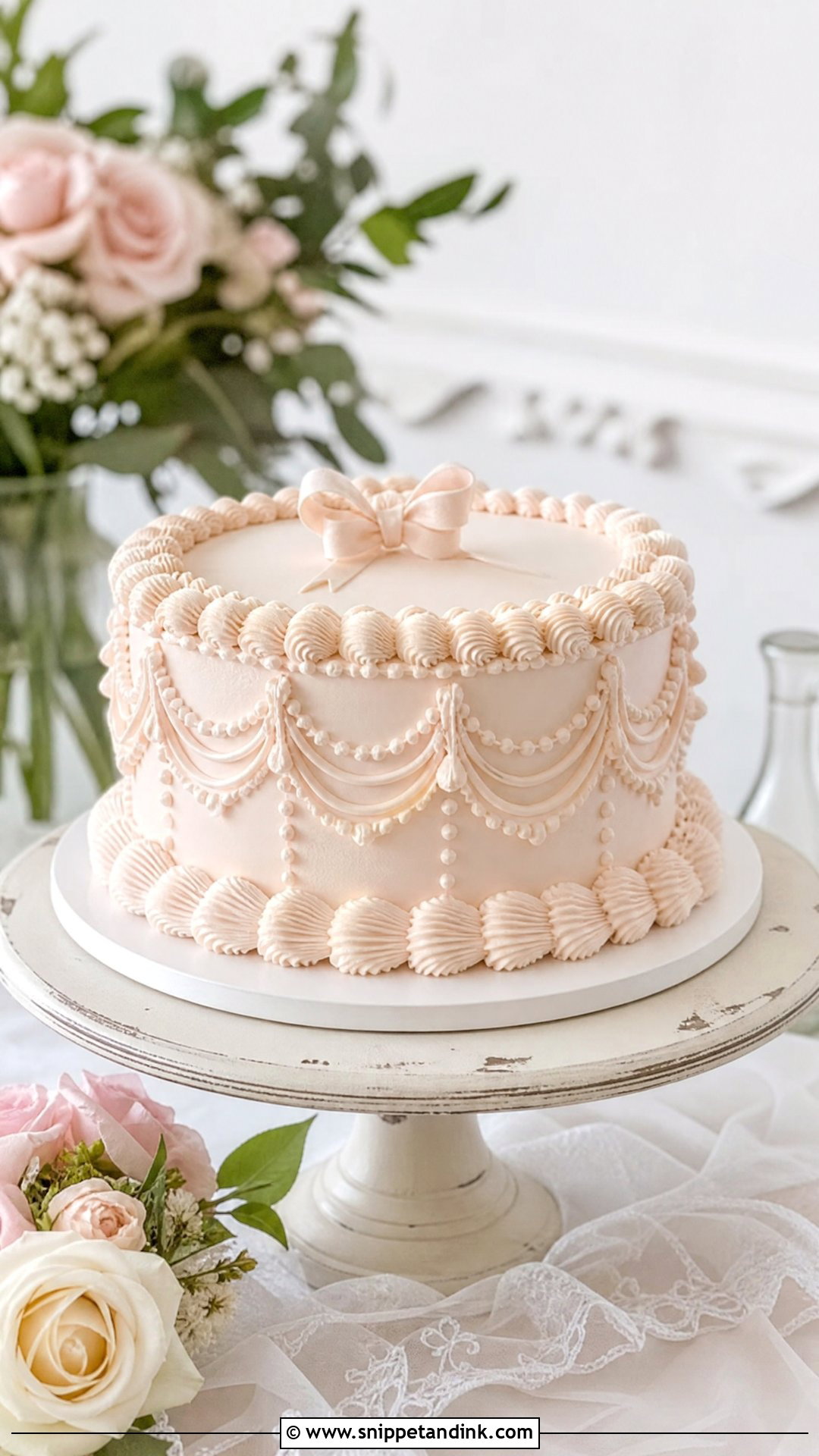
Shell borders, scrolls, pearl dots, swags and small ruffles at the top and bottom edges give a single tier real structure. I pipe these in a firmer buttercream than I’d use for spreading, otherwise the shells lose their ridges within an hour in a warm room. All white is classic; blush, sage, pale blue or butter yellow accents make it sweeter, and a small bow, edible pearls or piped cherries add a playful note. It suits courthouse weddings, tea-party receptions and indoor venues with a bit of nostalgia.
4. 1 Tier Wedding Cake With Pearls
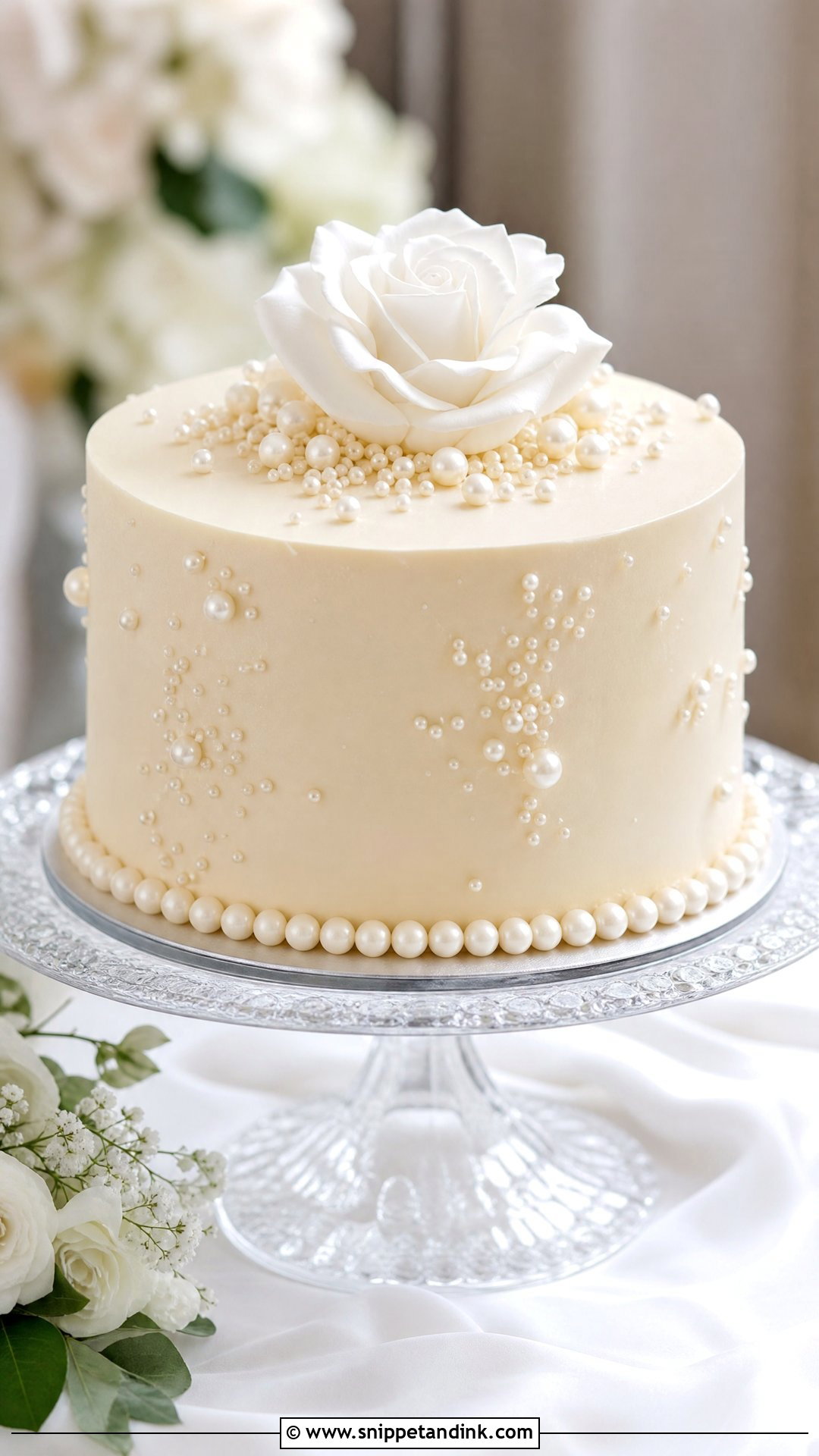
Edible pearls look most like jewellery when they’re arranged with intent: lined round the base, set in clusters, or scattered lightly across smooth buttercream. On ivory, white, blush or champagne frosting they glow; on bright white they look crisp and modern. Formal weddings can take satin ribbon or a single sugar flower beside them; a softer reception suits baby’s breath or white roses. Sugar pearls are hard, so I warn couples to watch for them when slicing and eating, and I keep them off the area you’ll cut.
5. 1 Tier Wedding Cake With Gold Leaf
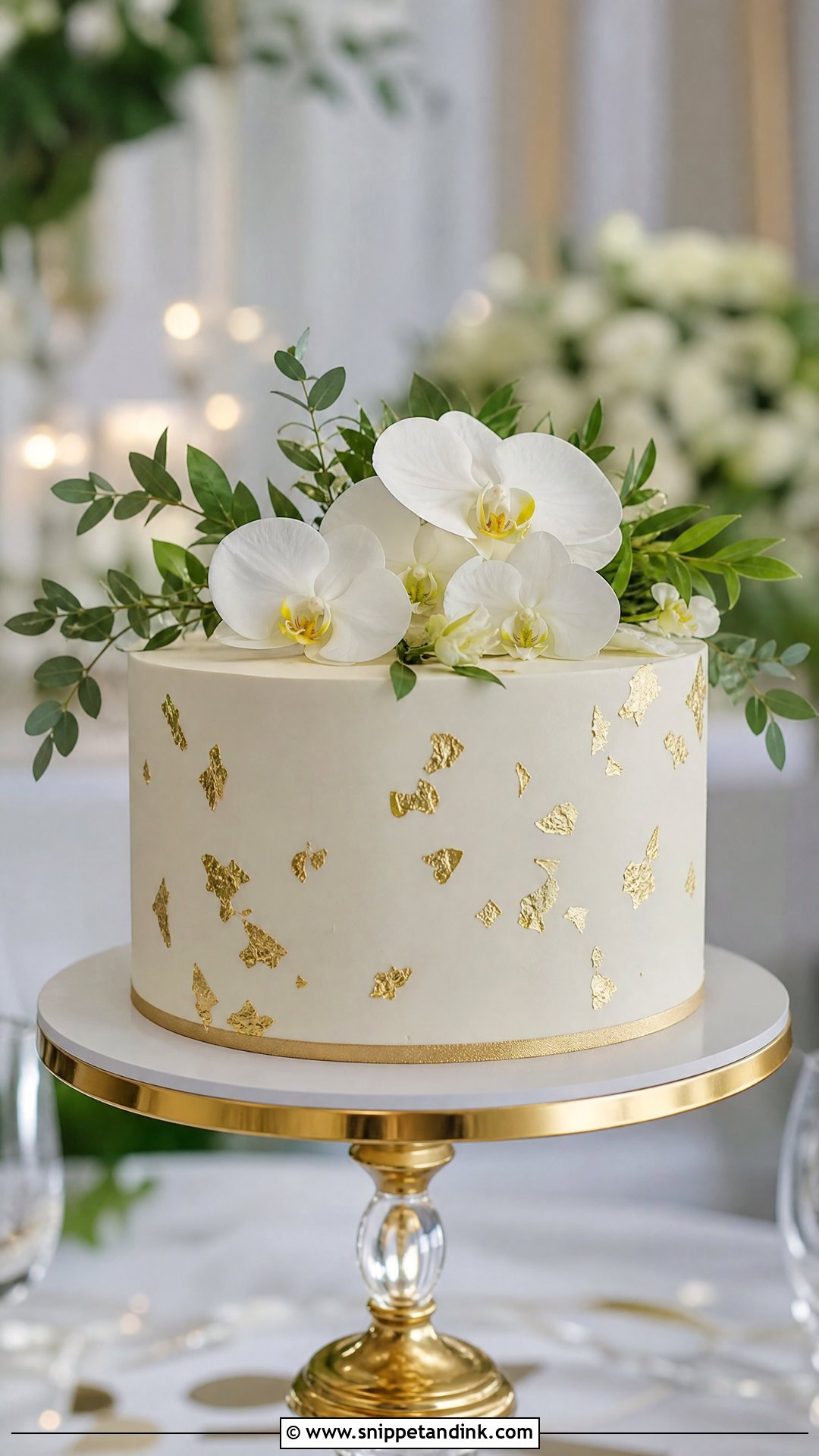
Gold leaf works in small torn pieces, not sheets. A few flakes along one side, near the top edge or around a flower cluster catch the light; a fully gilded tier often looks flat and brassy in photos. It’s fragile and clings to anything dry, so I apply it with a soft brush onto a slightly tacky surface such as fondant, ganache or chilled buttercream. Make sure the leaf is sold as edible. White roses, orchids, figs or simple greenery give it contrast, and it suits evening and ballroom receptions.
6. 1 Tier Wedding Cake With Fresh Fruit
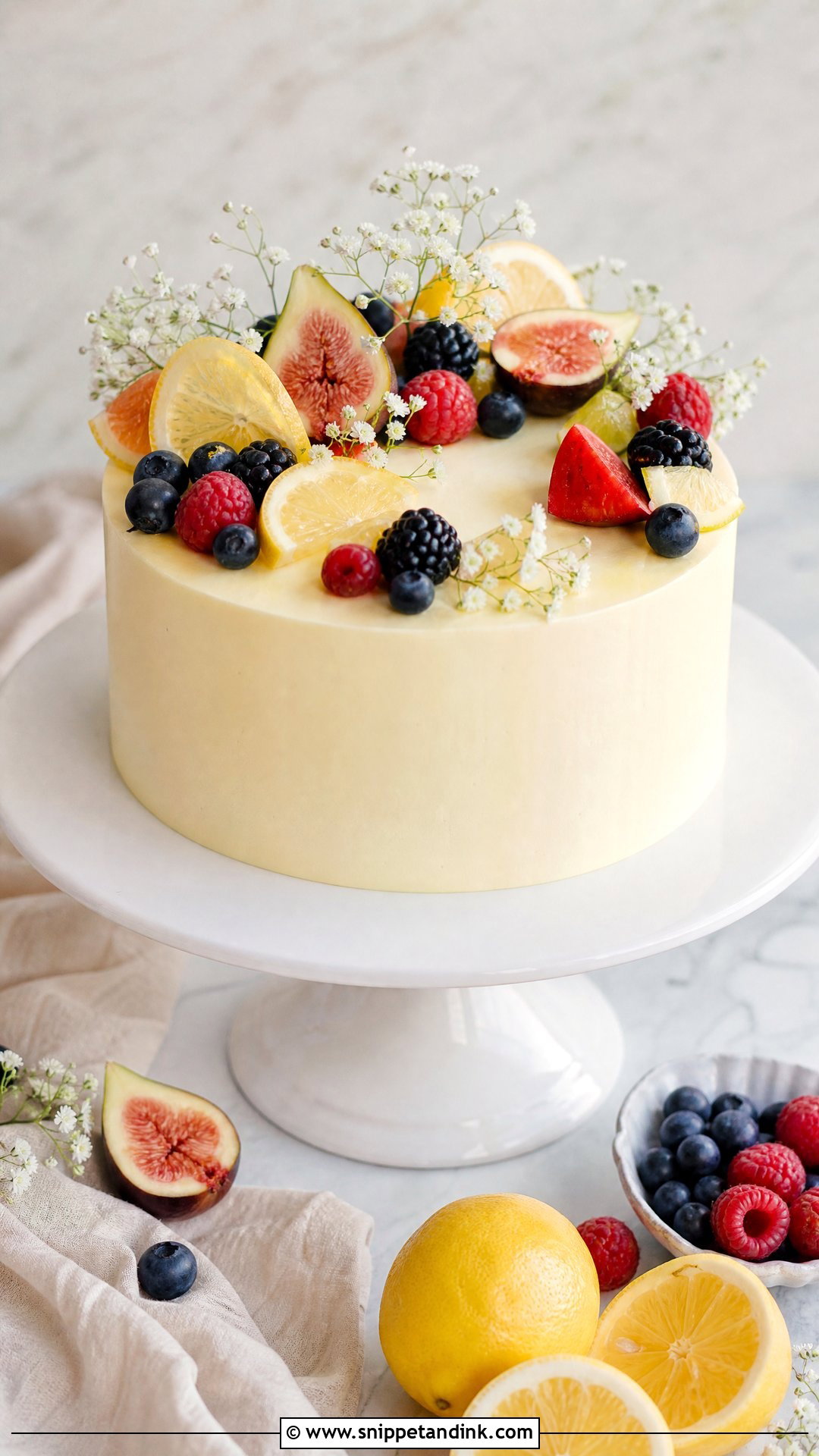
Fruit needs an arrangement, not a scatter. I place it as a crescent across the top, a cascade down one side, or a neat ring at the base. Berries, figs, grapes, citrus and cherries all look good, and flavours like vanilla, almond, lemon, honey or olive oil cake carry them. The practical problem is moisture: cut fruit weeps onto frosting, so I use whole berries and halved figs where I can, glaze cut surfaces lightly and add the fruit last. Light berries suit spring and summer; figs and blackberries read richer for autumn.
7. 1 Tier Wedding Cake With Dried Flowers
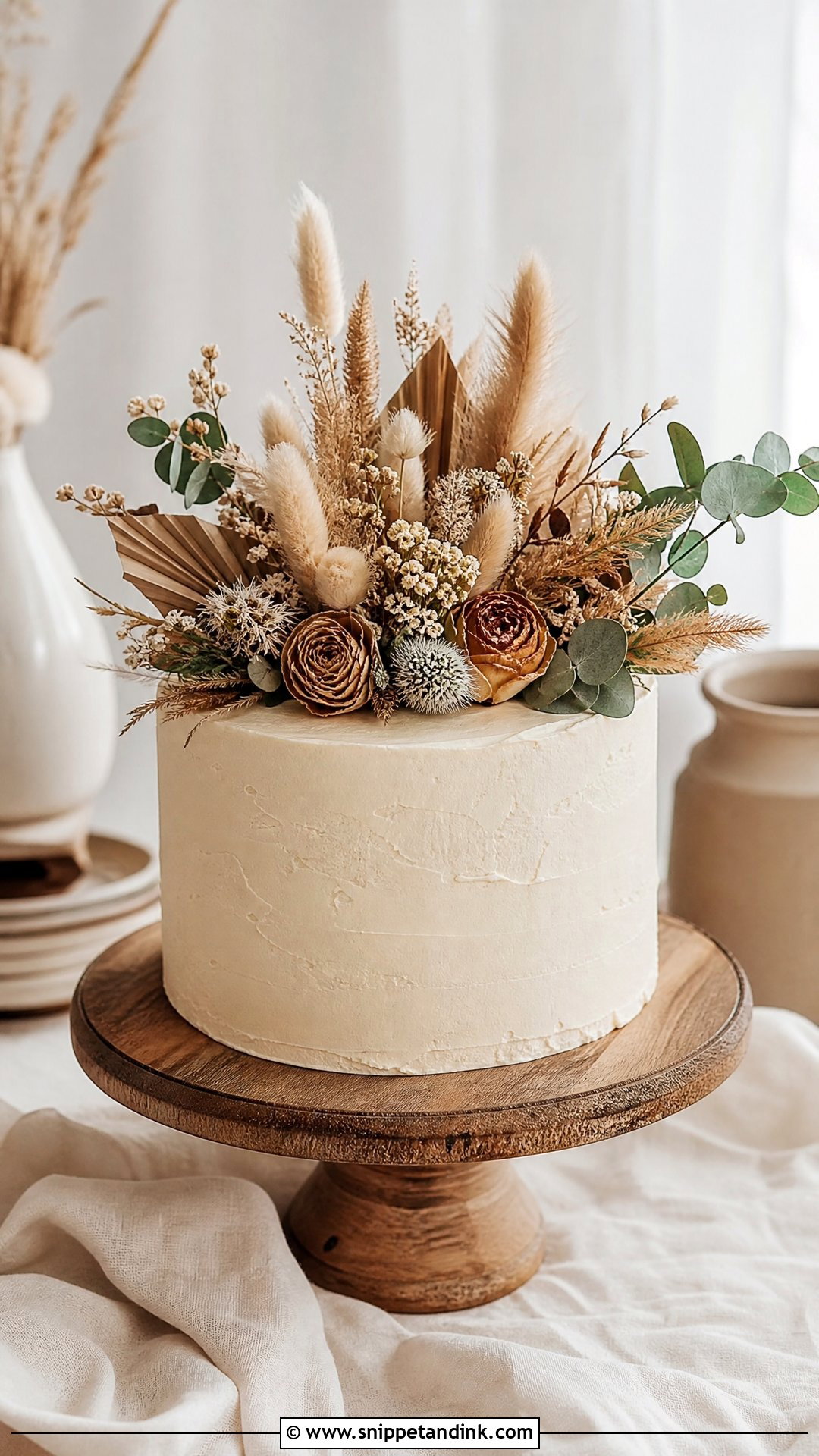
Dried flowers give texture without colour, which is why they suit boho and rustic weddings. Pampas, dried roses, bunny tails, strawflowers and preserved greenery sit well on smooth or lightly textured buttercream in ivory, beige, sand or pale blush. I keep the arrangement low and airy. Dried materials aren’t food, so they go on a barrier such as a small disc of parchment or into a pick, and pampas in particular sheds, so it shouldn’t sit over the area you’ll serve.
8. 1 Tier Wedding Cake With Pressed Flowers
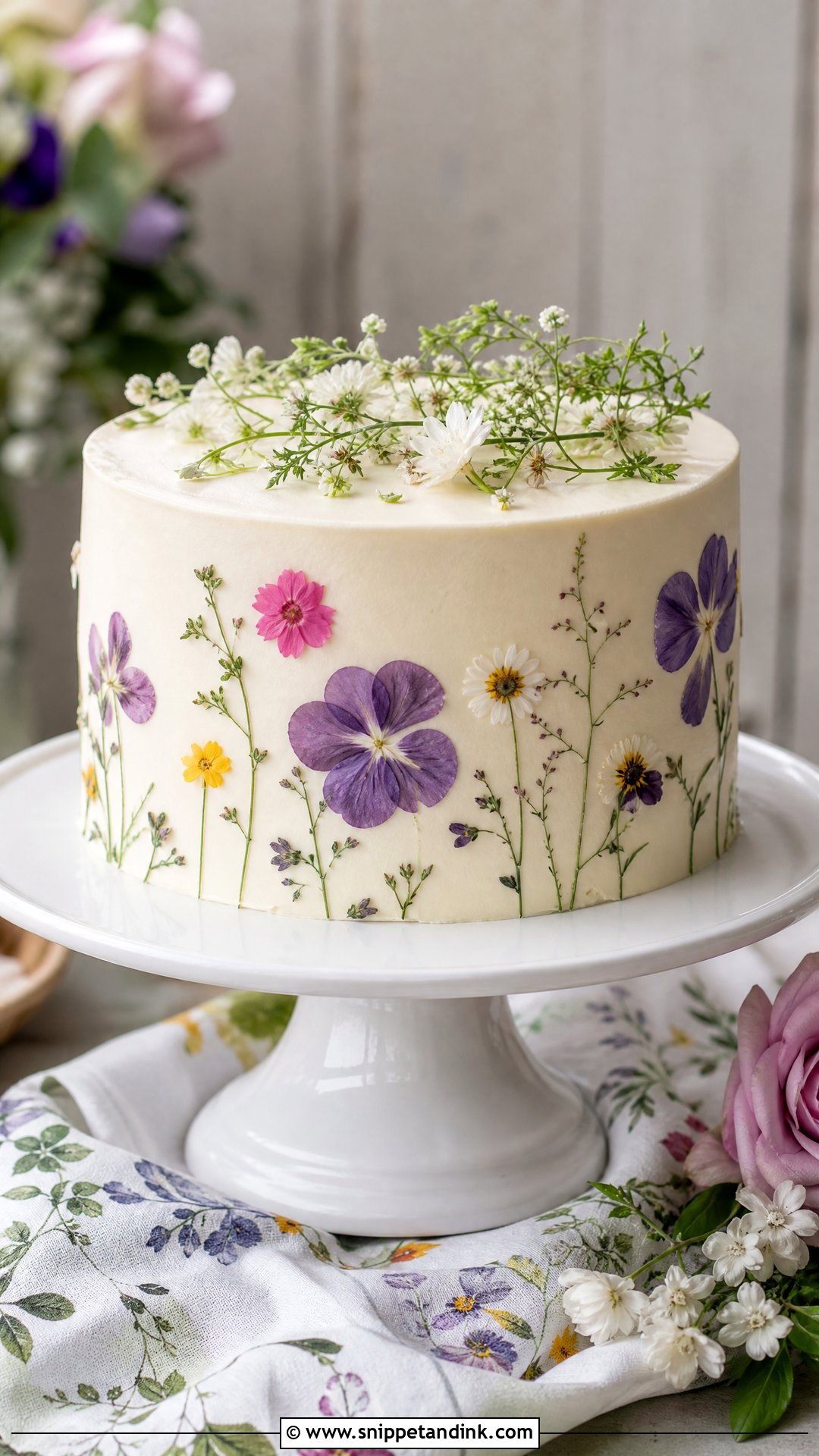
Pressed flowers sit flat against smooth buttercream or fondant and look almost painted. Small, thin edible blooms and petals in lavender, yellow, blush, blue and white press best; thick petals stay lumpy. You can cover the whole tier lightly or keep them to one side. Pressed petals fade and can darken if they sit on damp buttercream for too long, so I apply them on the day and prefer fondant if the cake will be out for hours at a garden party.
9. 1 Tier Wedding Cake With Minimal Topper
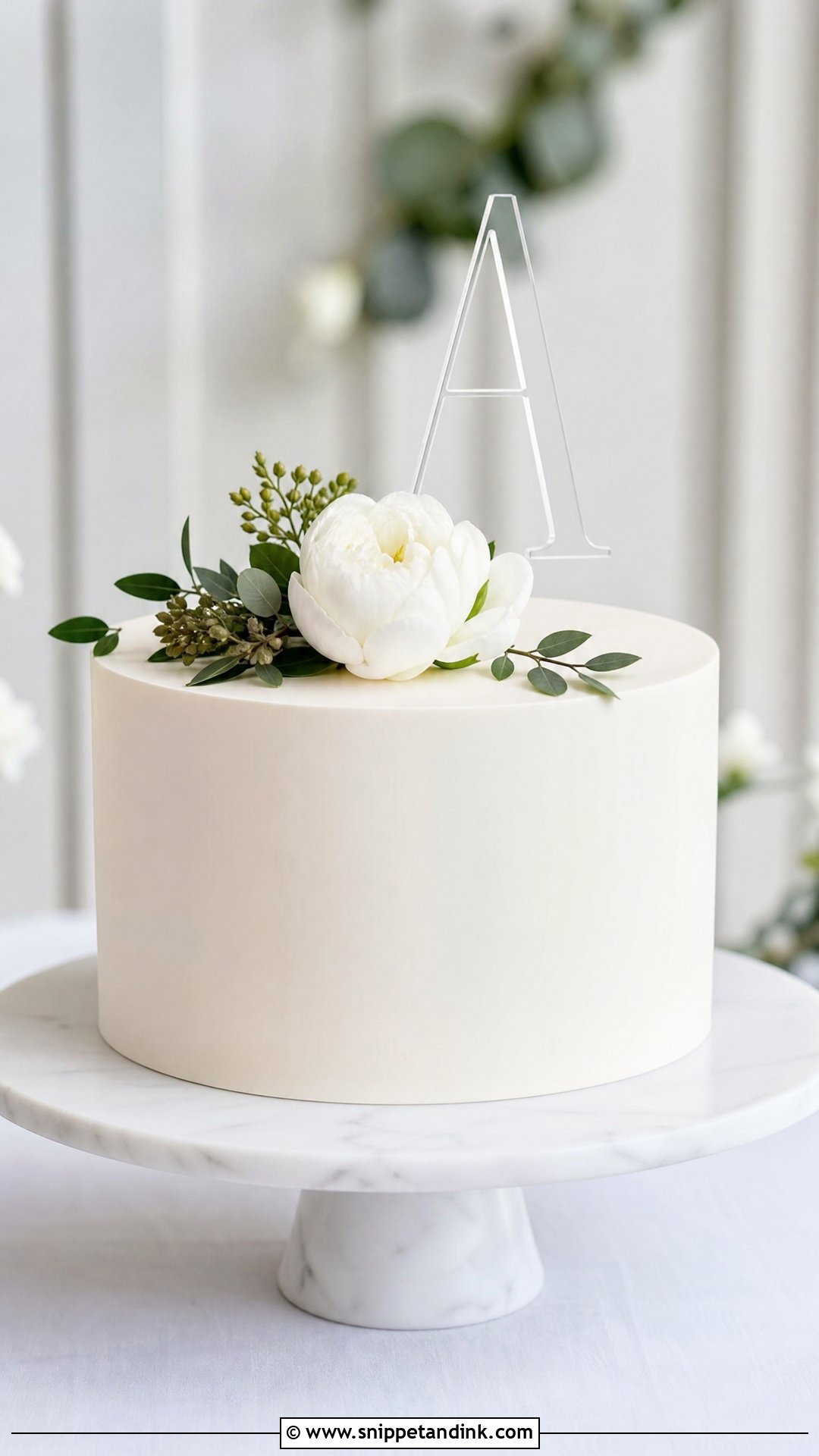
A minimal topper finishes a single tier without clutter: an initial, a thin acrylic word, one bloom, a tiny bow. Keep the cake underneath simple, with smooth buttercream, sharp edges and one quiet detail. Measure the topper against the cake before the day; a topper sized for a three-tier cake looks enormous on an 8-inch round. When the venue already has strong florals, this restraint lets the cake sit in the room instead of fighting it.
10. 1 Tier Wedding Cake With Ribbon
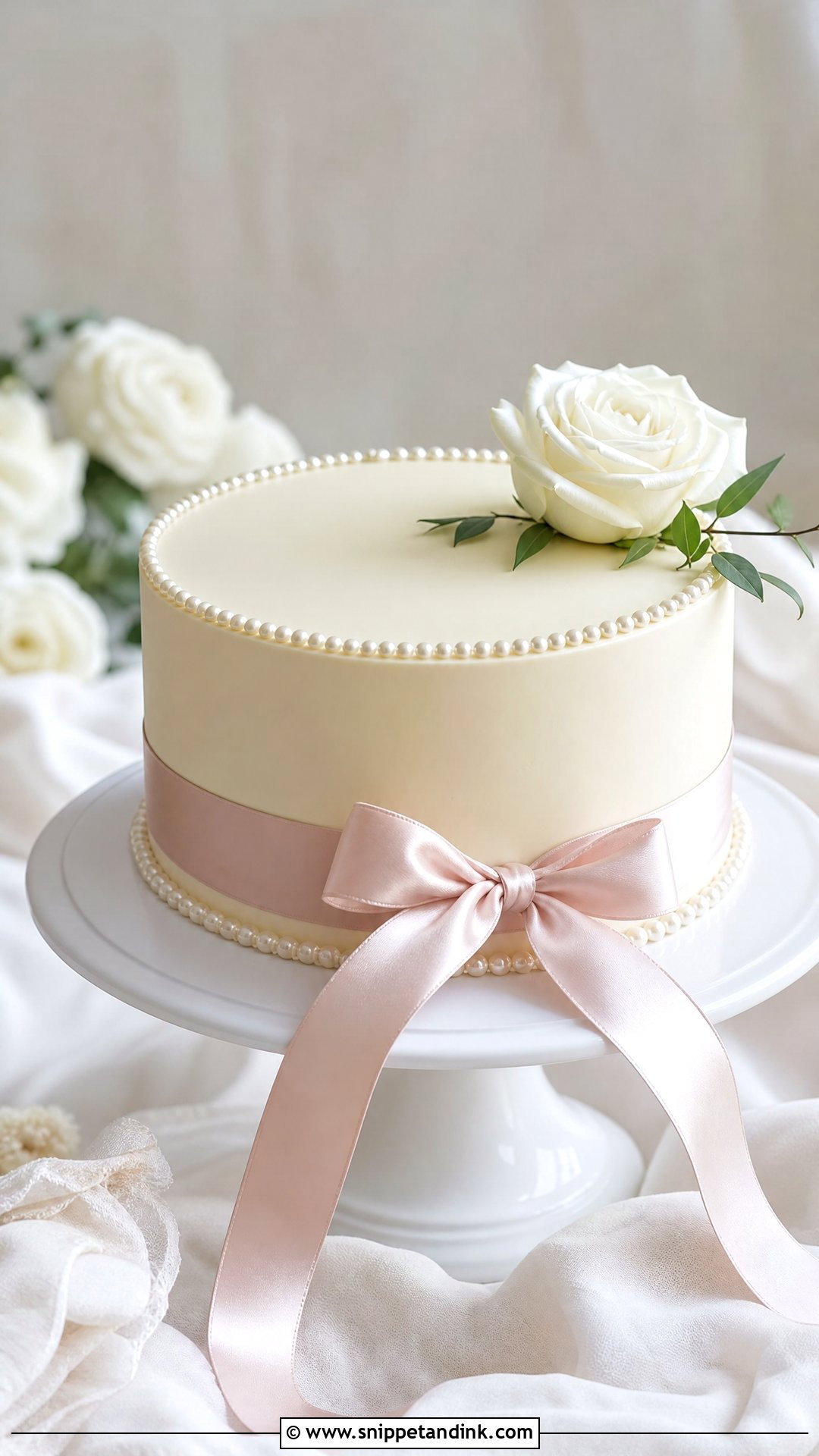
Ribbon is the easiest way to bring the wedding palette onto the cake. Satin, velvet, silk or chiffon at the base, tied in a soft bow or layered with a pearl border. Ivory cake with black, blush, sage, dusty blue or taupe ribbon looks sharp. Butter in buttercream will seep into fabric and leave grease spots, so I back the ribbon with a thin strip of fondant or food-safe tape, or use it on a fondant cake. One flower and a clean stand finish it.
11. 1 Tier Wedding Cake With Sugar Flowers
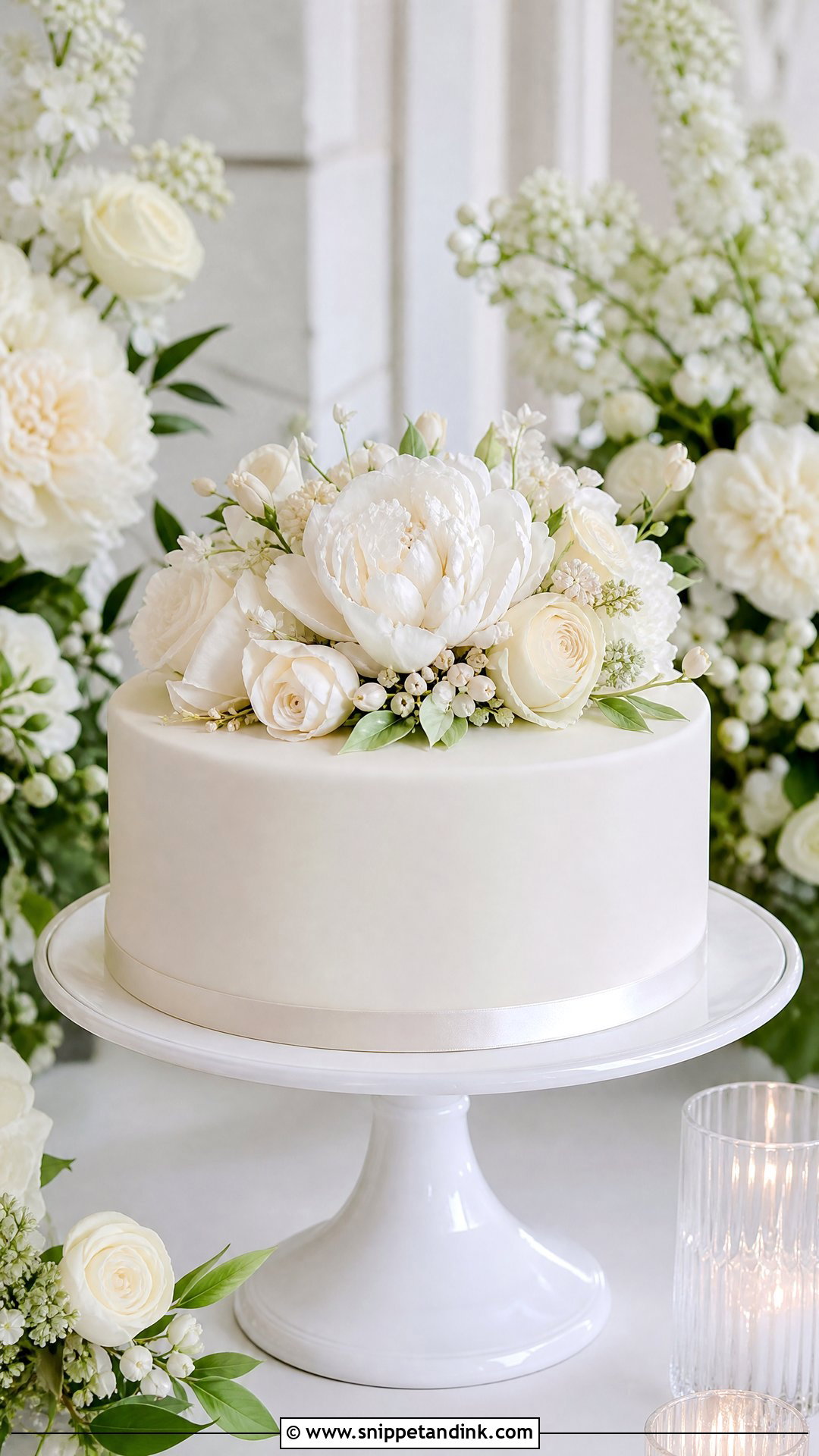
Sugar flowers last through a whole reception and can be made to any colour: roses, orchids, peonies, sweet peas, even a match for the bouquet or the invitation art. One oversized flower on top reads modern; a small cluster down one side feels more romantic. Each petal is shaped and dried individually, so a detailed sugar flower takes real time and is priced accordingly, and it needs ordering well ahead. Fondant gives the cleanest background. Many couples keep the flowers afterwards in a box away from humidity.
12. 1 Tier Wedding Cake With Ganache Drip
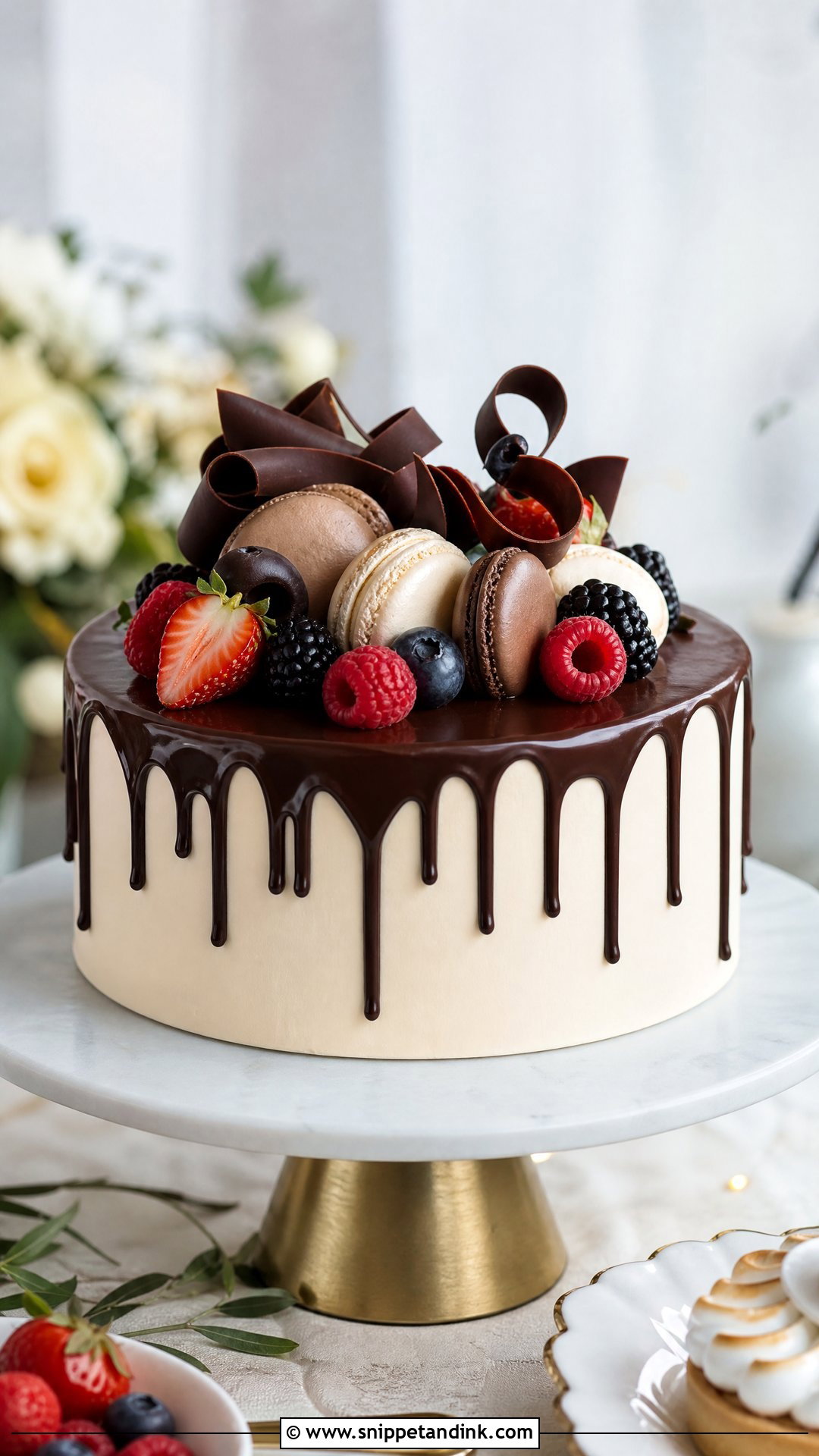
A ganache drip is a cake for people who care about flavour. White chocolate ganache keeps it bridal; dark gives contrast. The drip should vary in length round the edge but stay controlled, which depends on the ganache being the right temperature and the cake being cold. Berries, macarons, chocolate curls or flowers on top, over a chocolate, vanilla, mocha or raspberry sponge. White chocolate ganache tints ivory rather than pure white, which surprises some couples, so I show a sample first.
13. 1 Tier Wedding Cake With Lambeth Piping
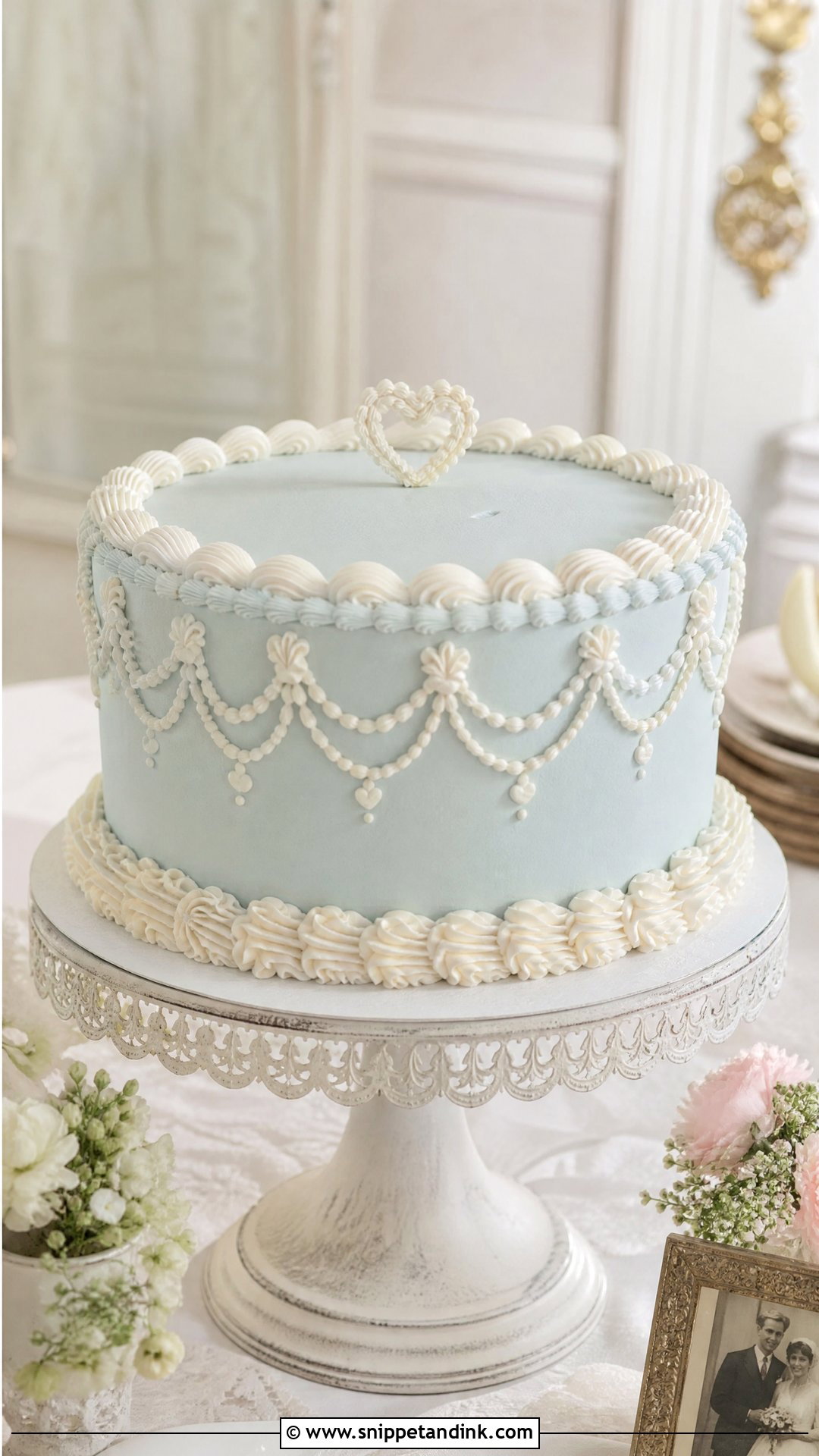
Lambeth piping is maximalist: layered borders, overpiped scrolls, ruffles, shells and swags built up in rows until the whole cake is texture. It takes time and a steady hand, so expect it to cost more than its size suggests. White-on-white is classic, while blush, blue, pistachio or soft yellow gives it a sweet retro look. Piped hearts, edible pearls or a short message on top finish it. At an intimate wedding this one gives the cake table a strong personality.
14. 1 Tier Wedding Cake With Square Shape
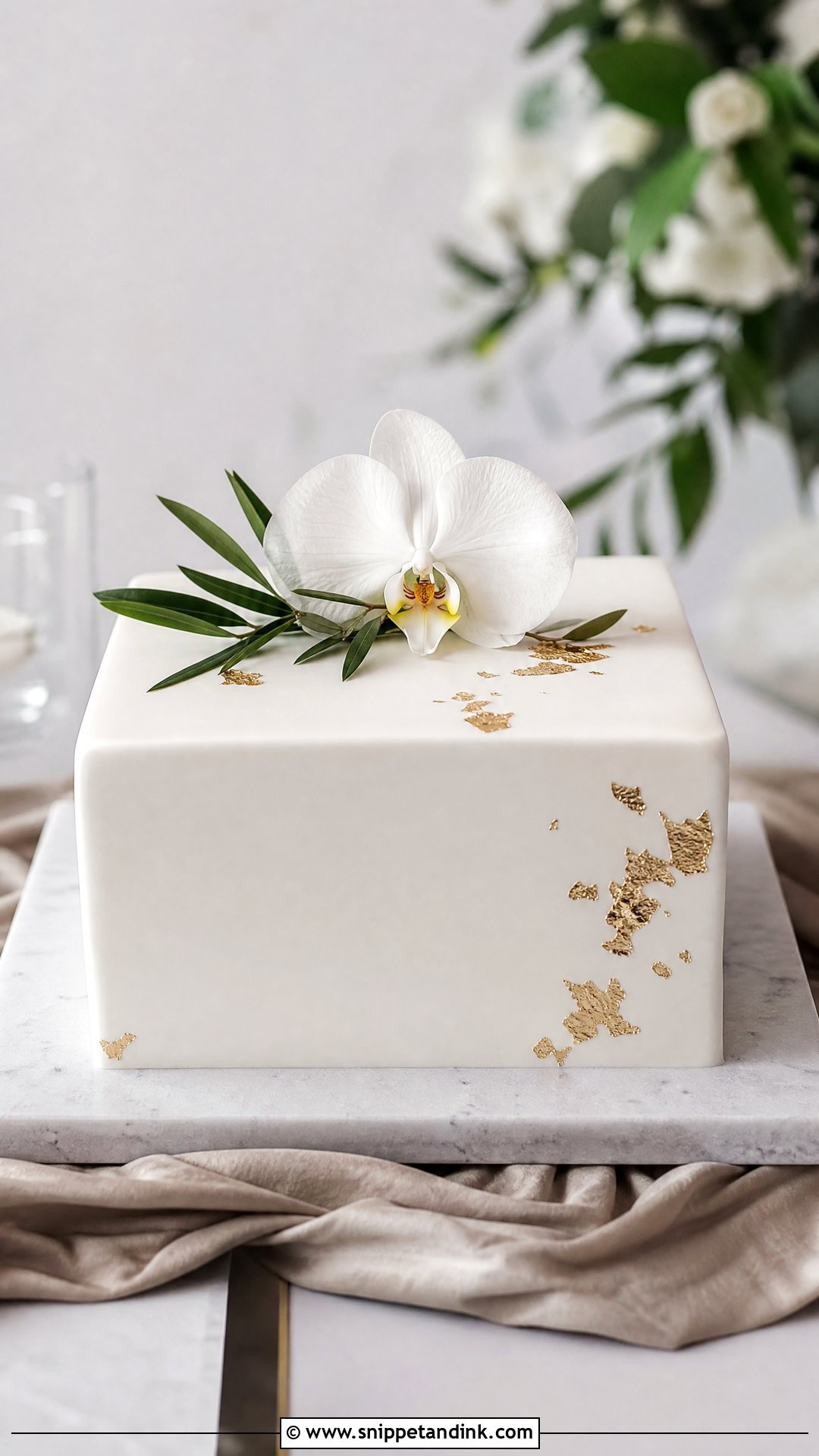
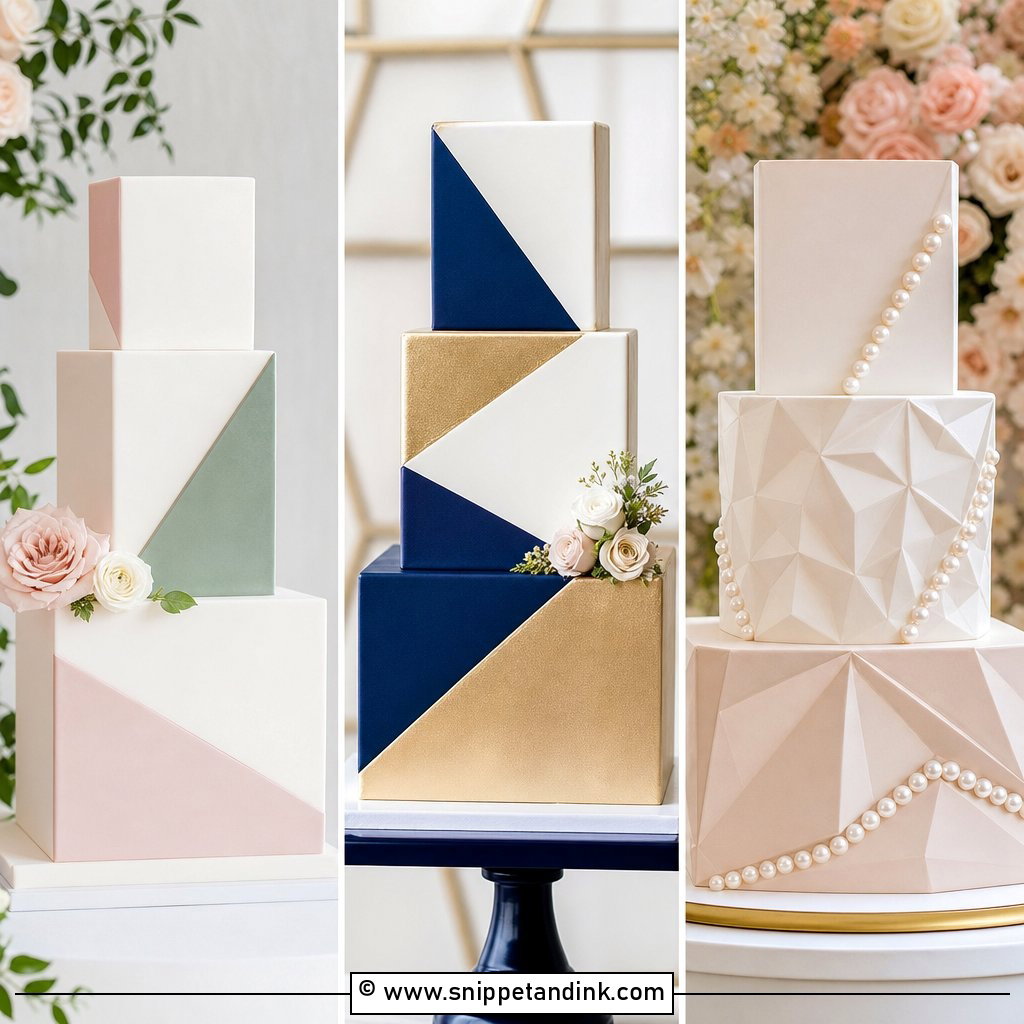
Square cakes look crisp and modern, but sharp corners are the hardest thing to frost cleanly in buttercream; fondant or ganache-under-fondant gives the sharpest result. The flat top gives you more room for decoration. Keep it plain with one floral accent, or add geometric piping, pearls, gold leaf or a ribbon. Serving is easy too, since a square cuts into a neat grid. A slab stand or mirrored base suits city receptions and gallery venues.

15. 1 Tier Wedding Cake With Heart Shape
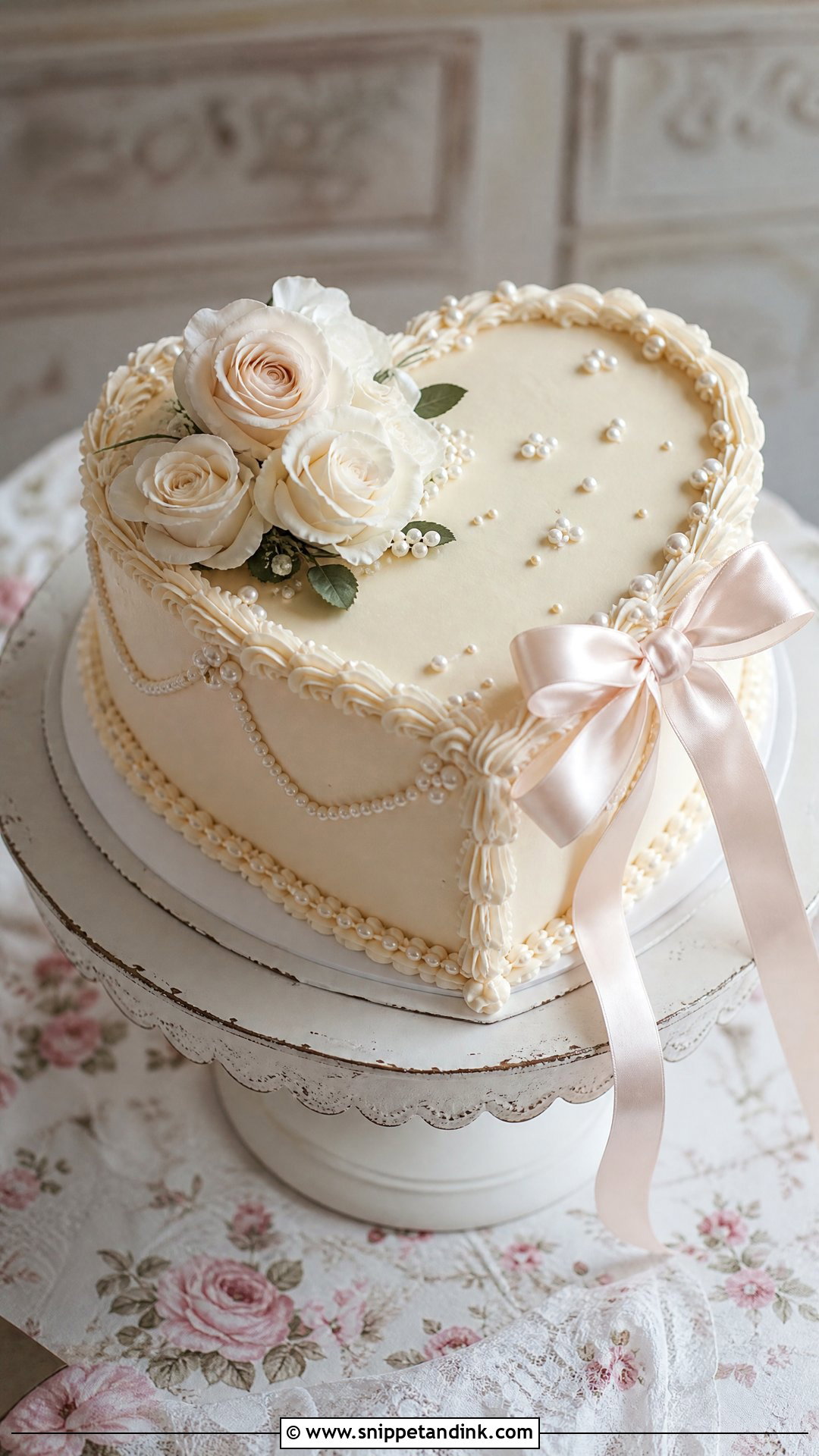
A heart-shaped one-tier wedding cake can be sweetly vintage with piped borders and bows, or modern with a smooth finish and one floral accent. Ivory buttercream with pearl piping and a satin bow keeps it bridal; glossy cherries, red roses or a piped message make it bolder. The point and the two curves are the hardest areas to frost evenly, so it’s worth asking your baker to show a photo of a heart they’ve actually made. It suits elopements and courthouse ceremonies where the cutting is personal.
16. 1 Tier Wedding Cake With Oval Shape
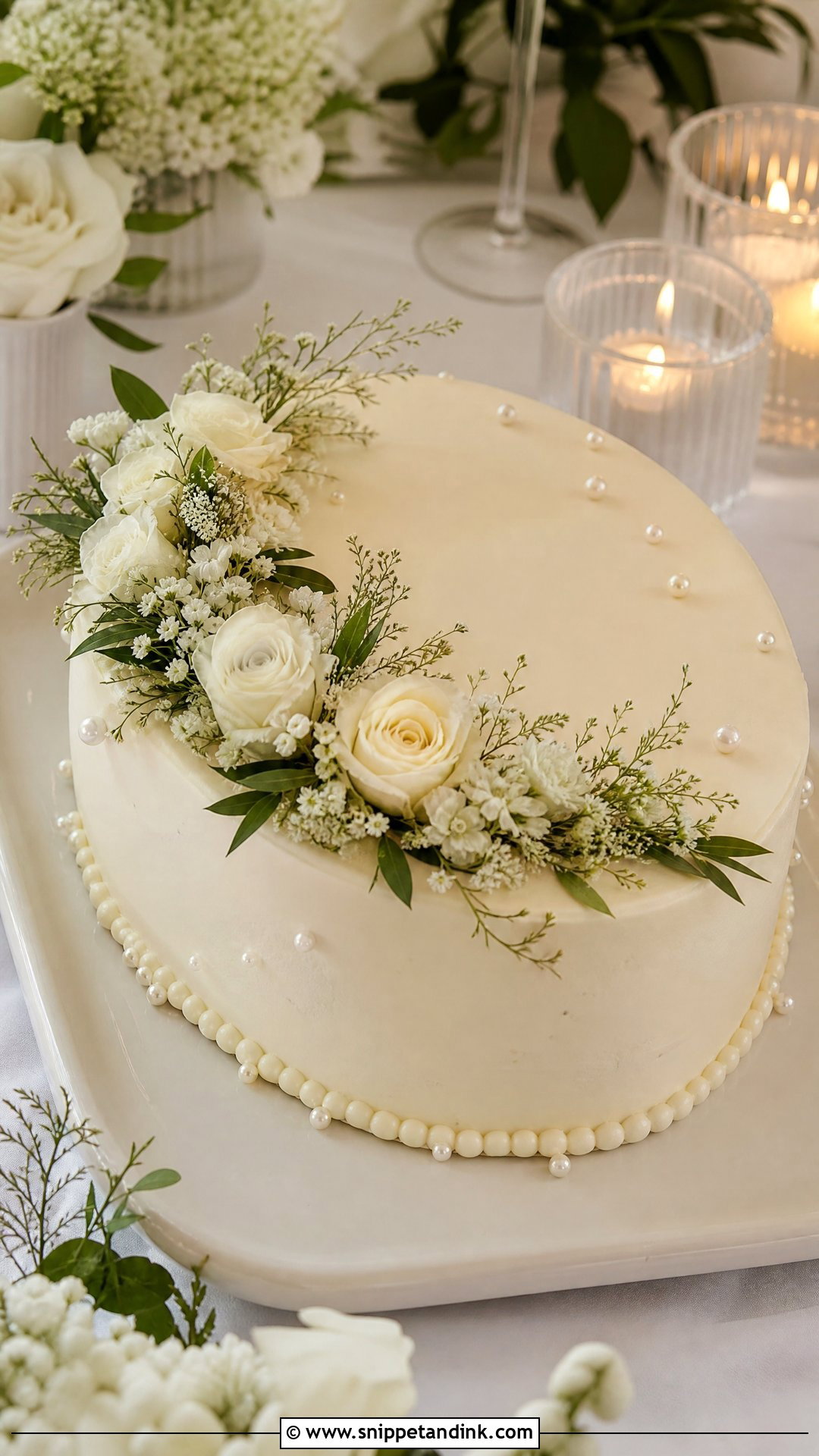
An oval sits between round and square: softer than one, more unusual than the other. Its long top gives room for a floral crescent, fruit or a short message. Smooth ivory buttercream with a crescent of flowers feels classic; piped borders give a bakery charm. I like it on a long table with candles and low arrangements, where its shape echoes the table. Oval pans are less common, so not every baker offers it; ask early.
17. 1 Tier Wedding Cake With Sheet Cake Style
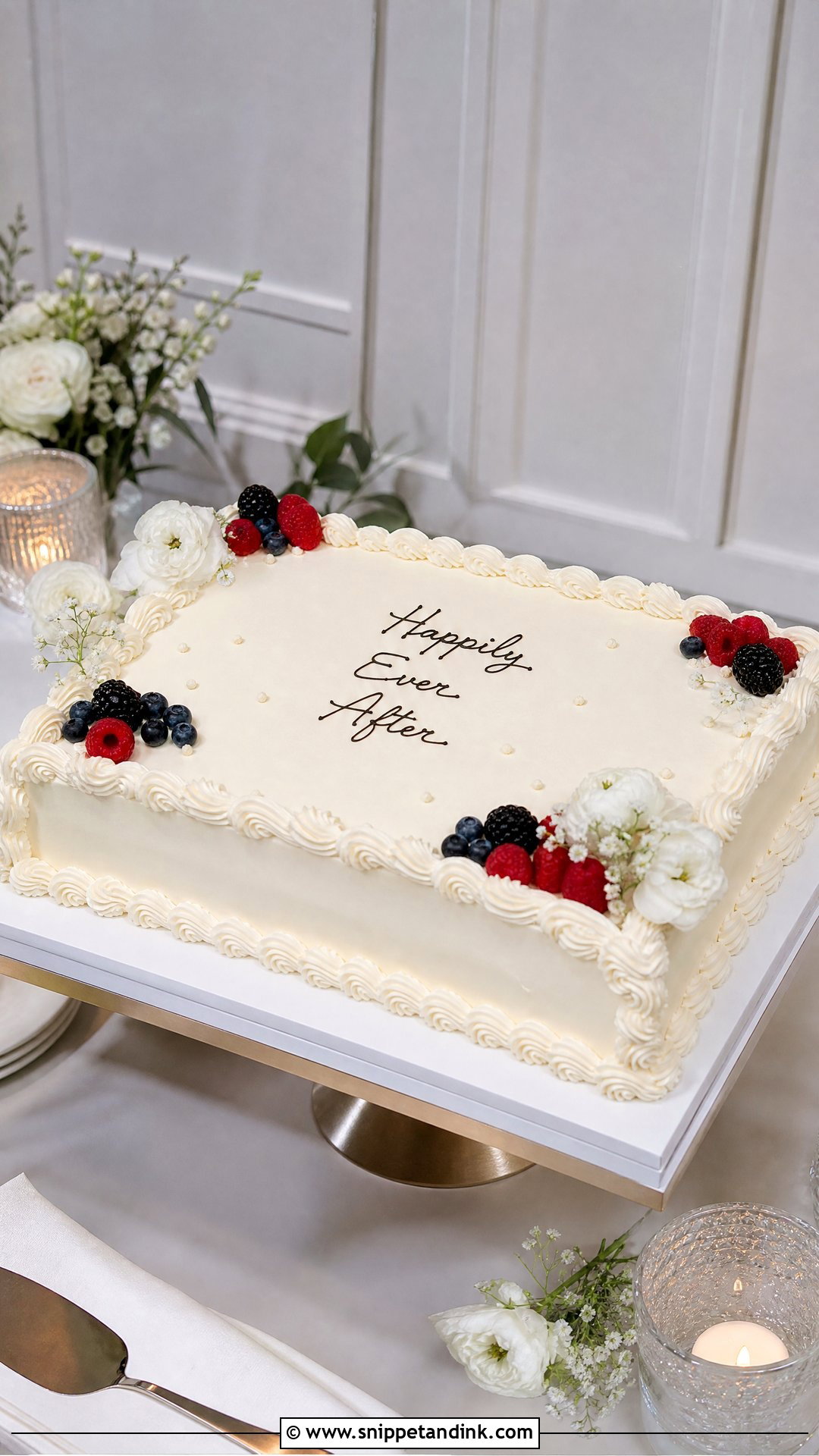
A one-tier sheet-style wedding cake is the most practical cake on this list. A rectangle down the centre of a dessert table, or raised on a platter, decorated with piping, fruit, flowers or lettering, feeds far more guests than a round of the same height and cuts quickly into even pieces. It’s the answer when your guest count is large but you want one layer on show. Buttercream flowers and vintage borders suit it particularly well.
18. 1 Tier Wedding Cake With Marble Finish
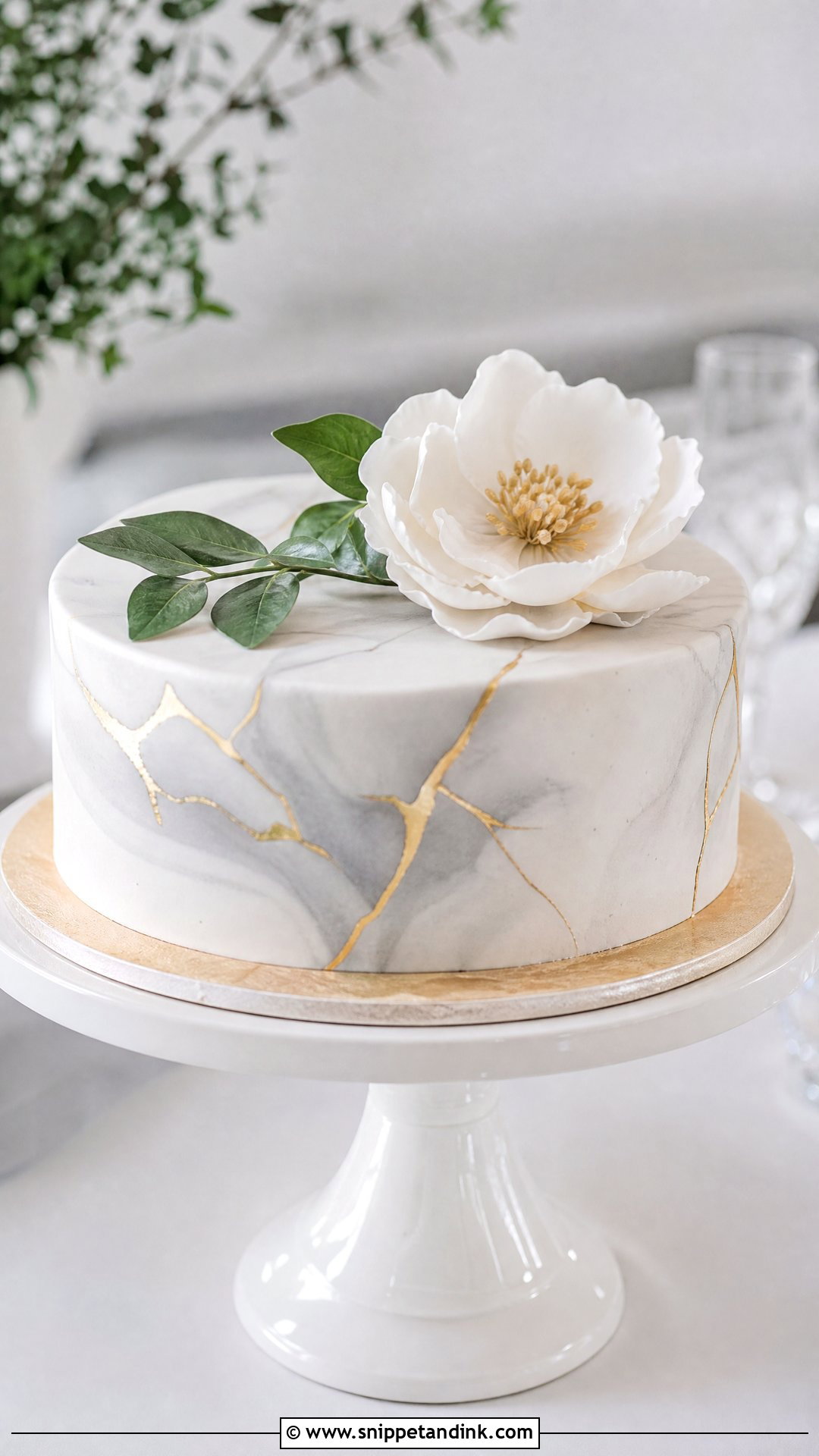
Marble is cleanest in fondant, where the veining is kneaded or painted in and stays sharp; buttercream marble is softer and more watercolour-like. Grey, blush, beige, blue or gold-veined, matched to your palette. I keep everything else minimal, one sugar flower, a little gold leaf or a sprig of greenery, so the surface stays the focus. If you dislike the taste or texture of fondant, ask about a thin layer over ganache, which most guests peel off anyway.
19. 1 Tier Wedding Cake With Watercolor Buttercream
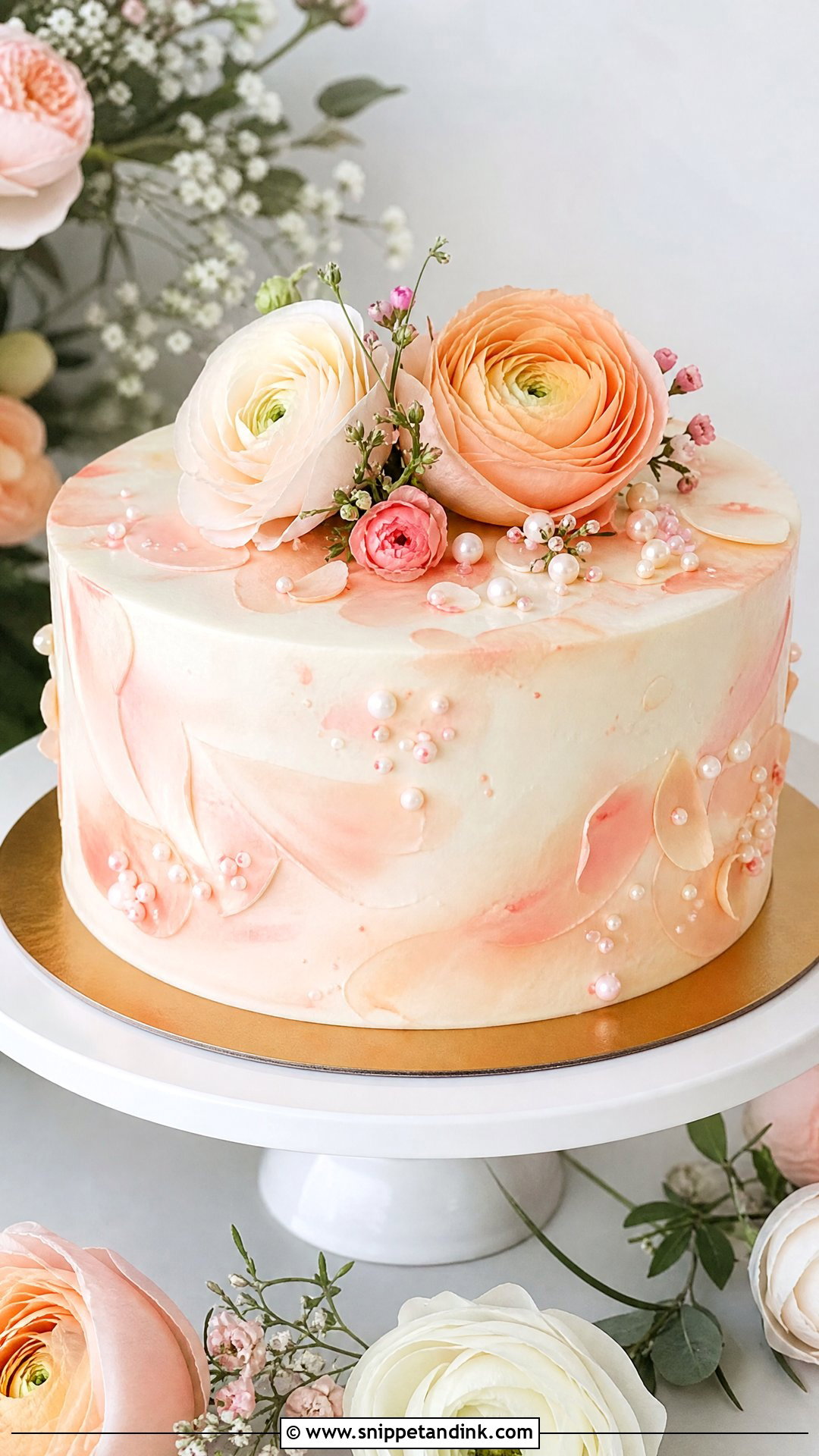
Watercolour buttercream is blended in soft washes over an ivory base with a palette knife, in blush, peach, lavender, sage or blue. I match the colours to the flowers, bridesmaid dresses or stationery, and bring a swatch to the tasting so we can compare under daylight. A few blooms or delicate piping finish it without hiding the colour work. Keep the washes pale; the colour deepens slightly as buttercream sits, and strong shades start to look like a children’s cake.




20. 1 Tier Wedding Cake With Ruffle Frosting
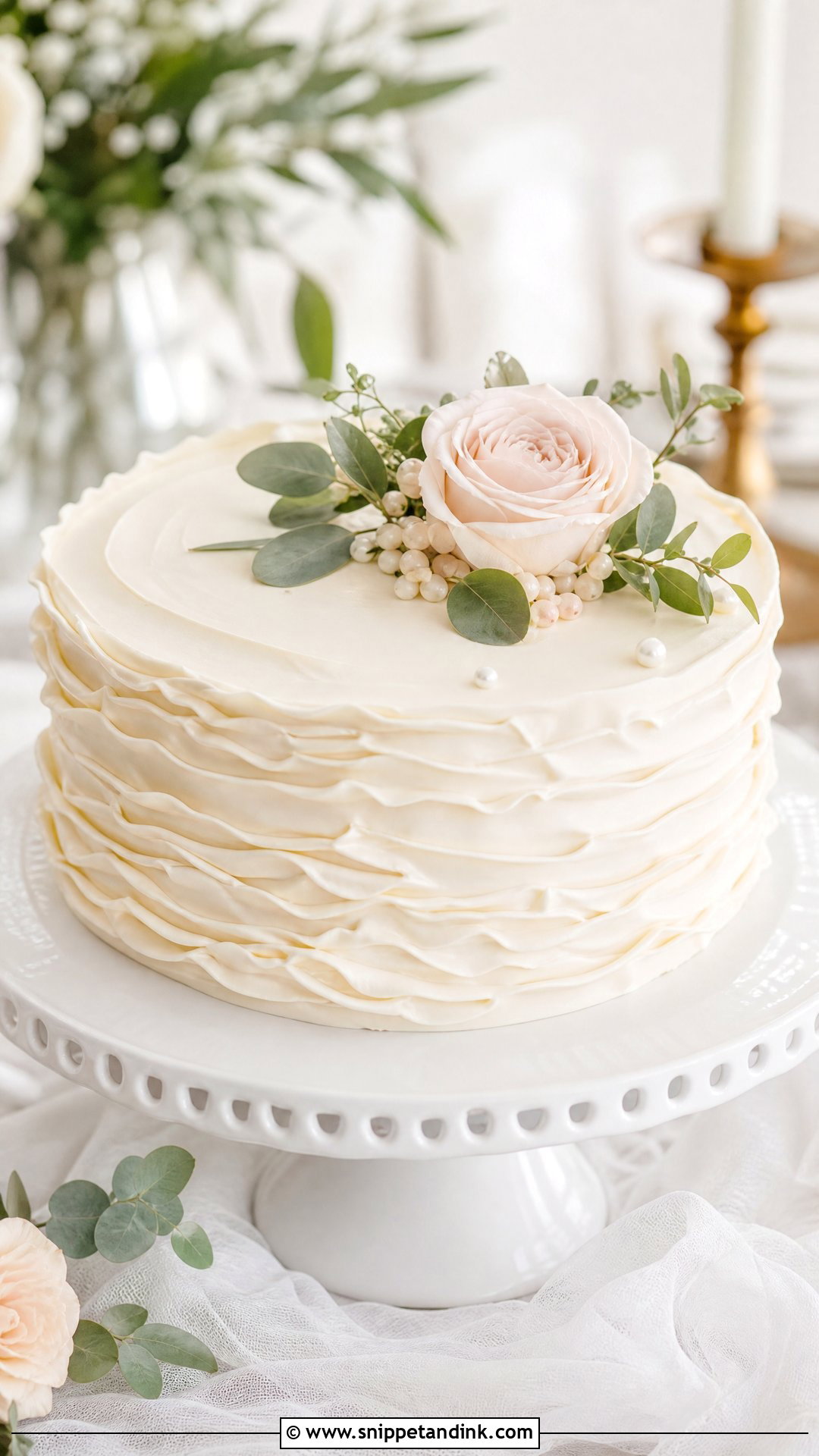
Ruffles can run vertically, wrap the tier in waves or frame one section. Buttercream ruffles feel soft and airy; fondant ruffles look sculptural and formal and hold up better in heat. Ivory, blush, pale blue or soft peach all suit it. Since the ruffles are already busy, one flower, a few pearls or a simple topper is plenty. This is a lot of piping for one tier, so it reads as detailed without needing height.
21. 1 Tier Wedding Cake With Black And White
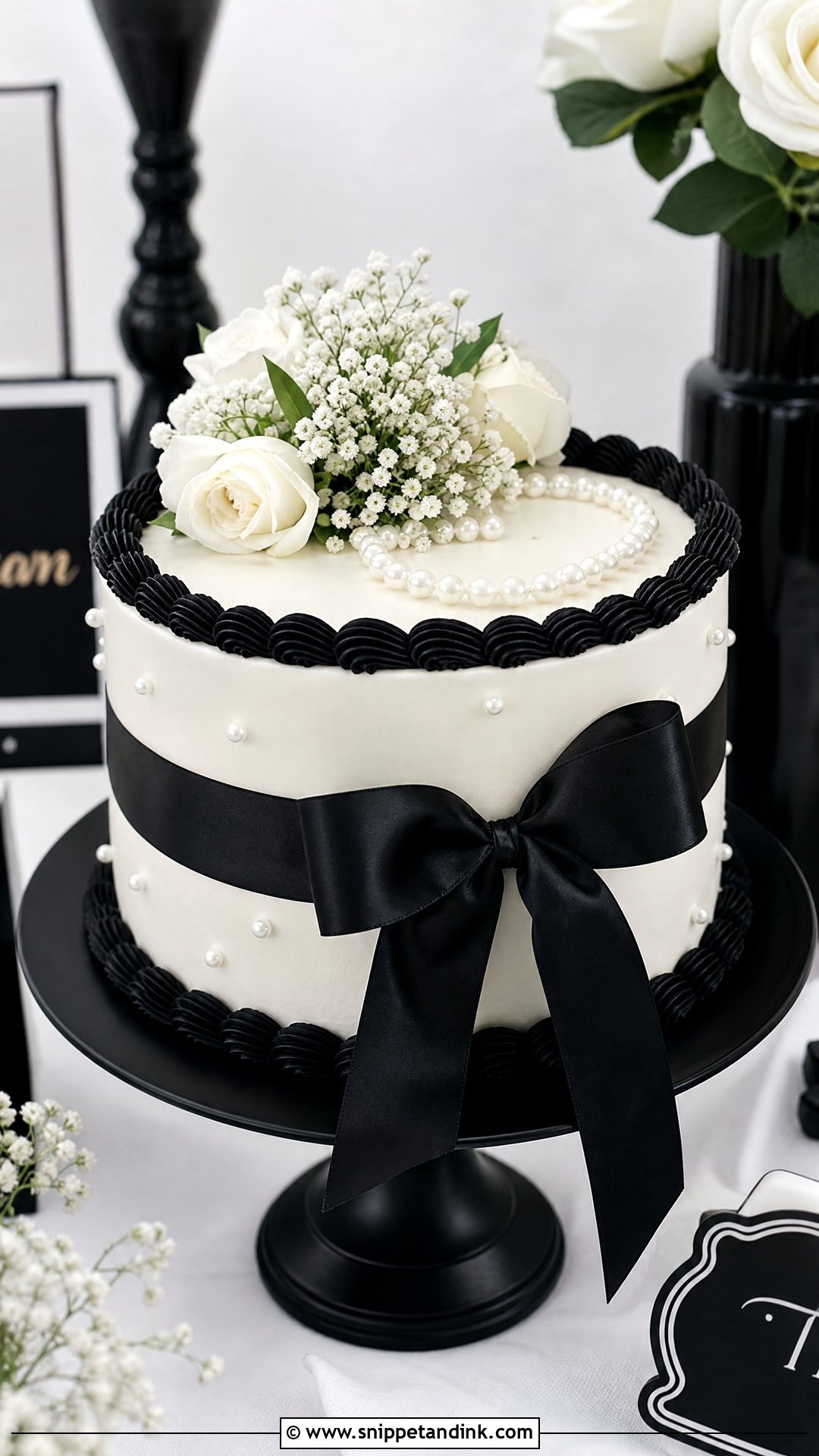
Black and white needs restraint to stay bridal. Smooth white buttercream with one black satin bow and a few white flowers is my favourite version; a black cake with white piping is the dramatic option for an evening reception. True black frosting needs heavy colouring and can taste bitter and stain mouths, so I usually use black only on ribbon, piping or a fondant covering. It suits modern venues and formal dining rooms.
22. 1 Tier Wedding Cake With Blush Pink
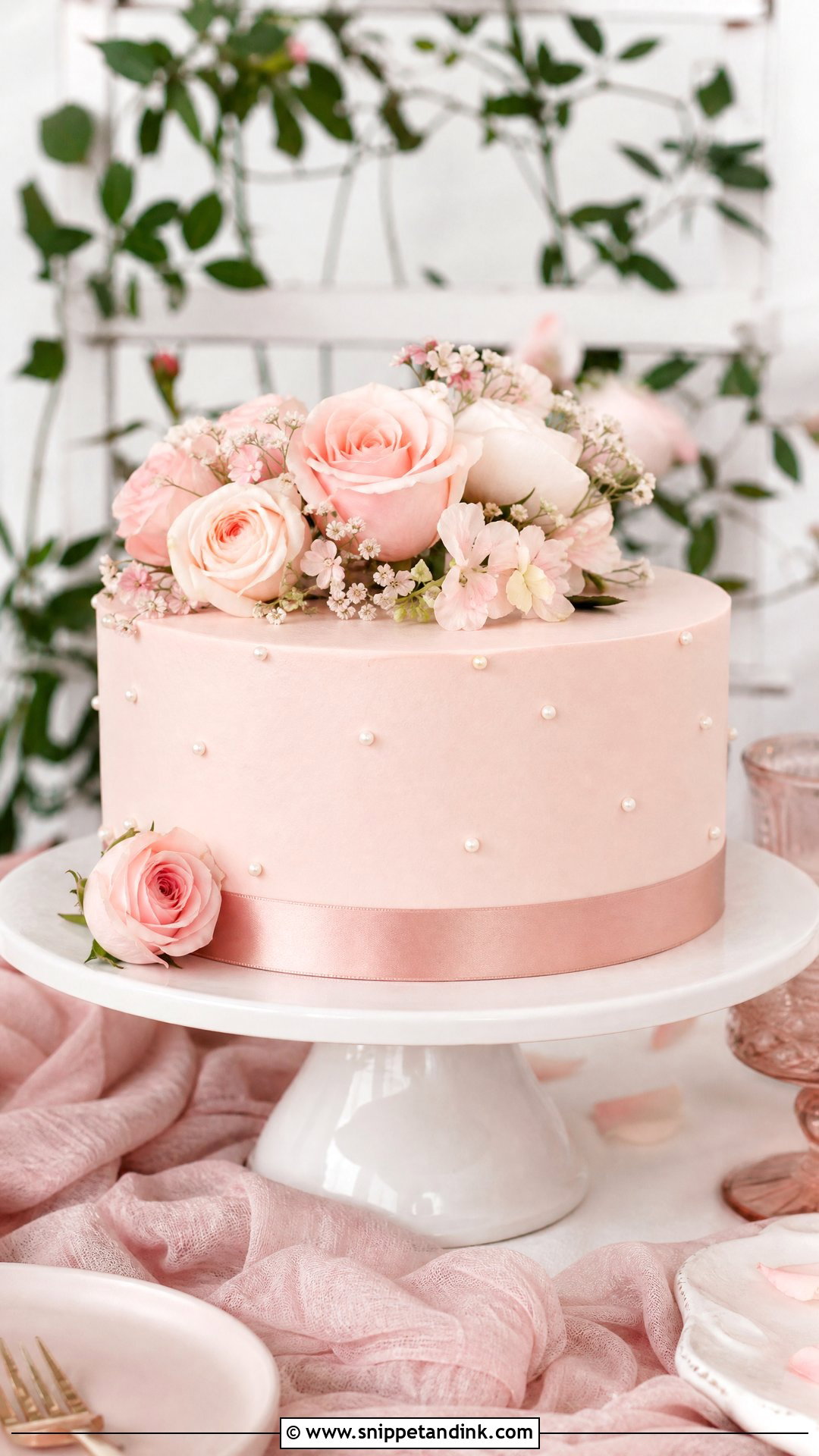
Blush is one of the easiest colours to fit into a wedding palette, beside ivory, rose gold, sage, mauve, cream or peach. You can do the whole tier blush, an ombre, or white with blush flowers. Buttercream keeps it soft; fondant looks more polished. Pearls, sugar roses, fresh ranunculus or a satin ribbon add texture. Blush can look peach under warm lighting, so I test the shade under the venue’s light colour if I can, or show a photo in candlelight at the tasting.
23. 1 Tier Wedding Cake With Sage Green
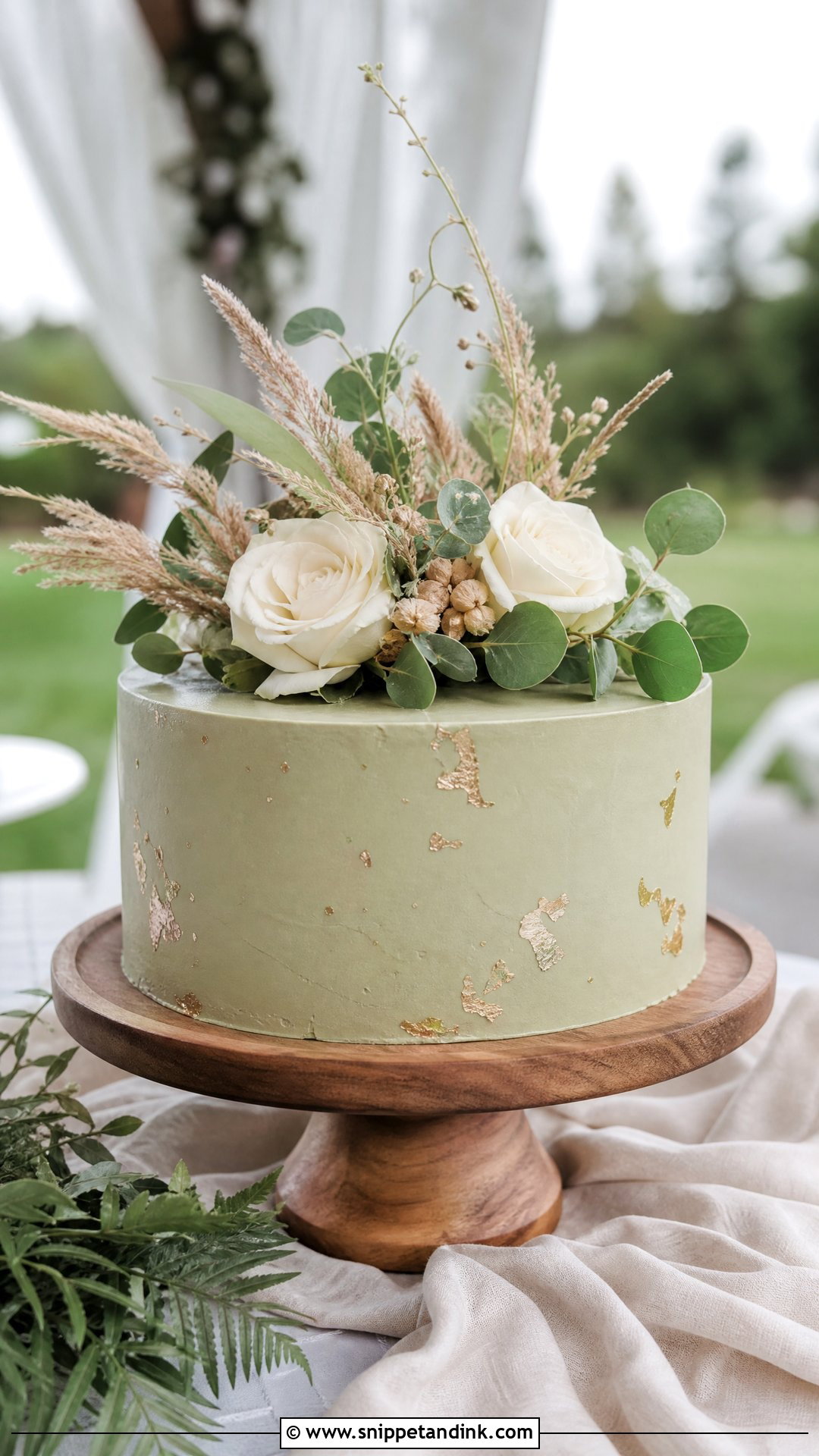
Sage feels calm and earthy and sits well with ivory flowers, dried grasses, gold leaf, white roses, eucalyptus and linen. Use it as the full frosting, a painted accent or a ribbon around an ivory cake. Green buttercream can lean minty or olive depending on the butter base, so I mix it with a touch of grey or brown to keep it dusty. Vanilla, almond, lemon, pistachio and olive oil sponge suit the colour, and it’s at home at greenhouse and outdoor receptions.
24. 1 Tier Wedding Cake With Lemon Flavor
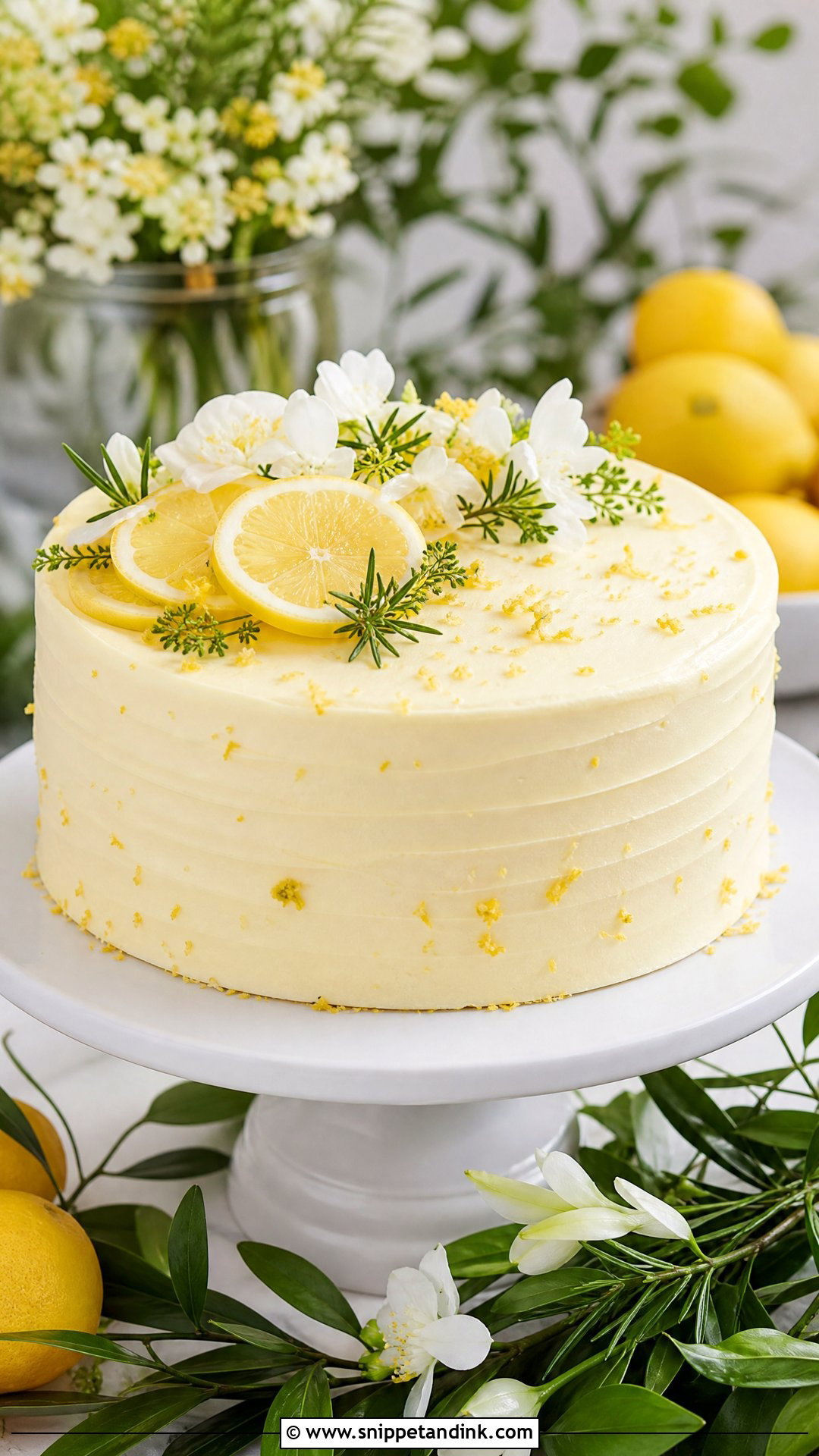
Lemon is what I’d suggest for a warm-weather wedding. Lemon sponge with curd, vanilla buttercream outside, finished with thin lemon slices, white flowers or herb sprigs. I pipe a buttercream dam inside each layer so the curd stays put. Keep the yellow pale against ivory. It feels lighter after dinner than chocolate or spice, and guests notice. A white stand with greenery suits garden, brunch and coastal weddings.
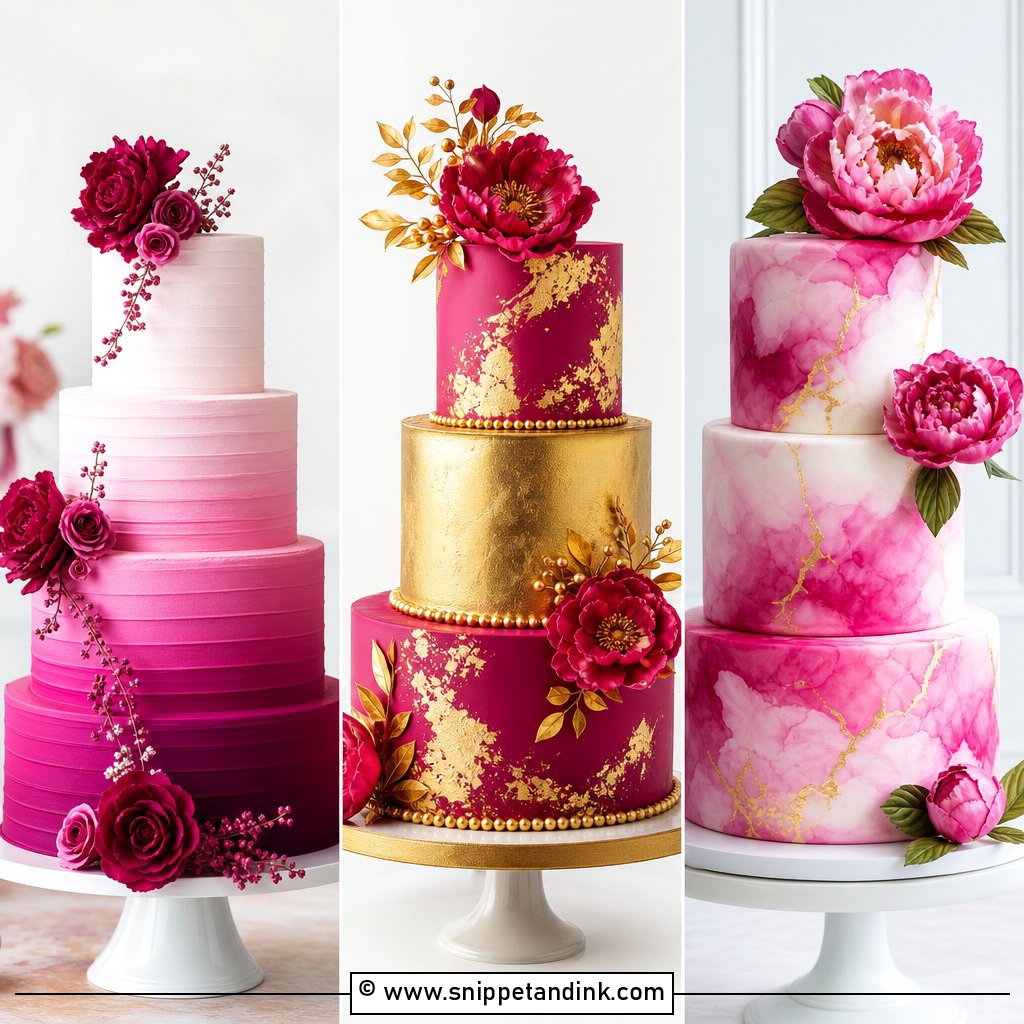

25. 1 Tier Wedding Cake With Chocolate Flavor
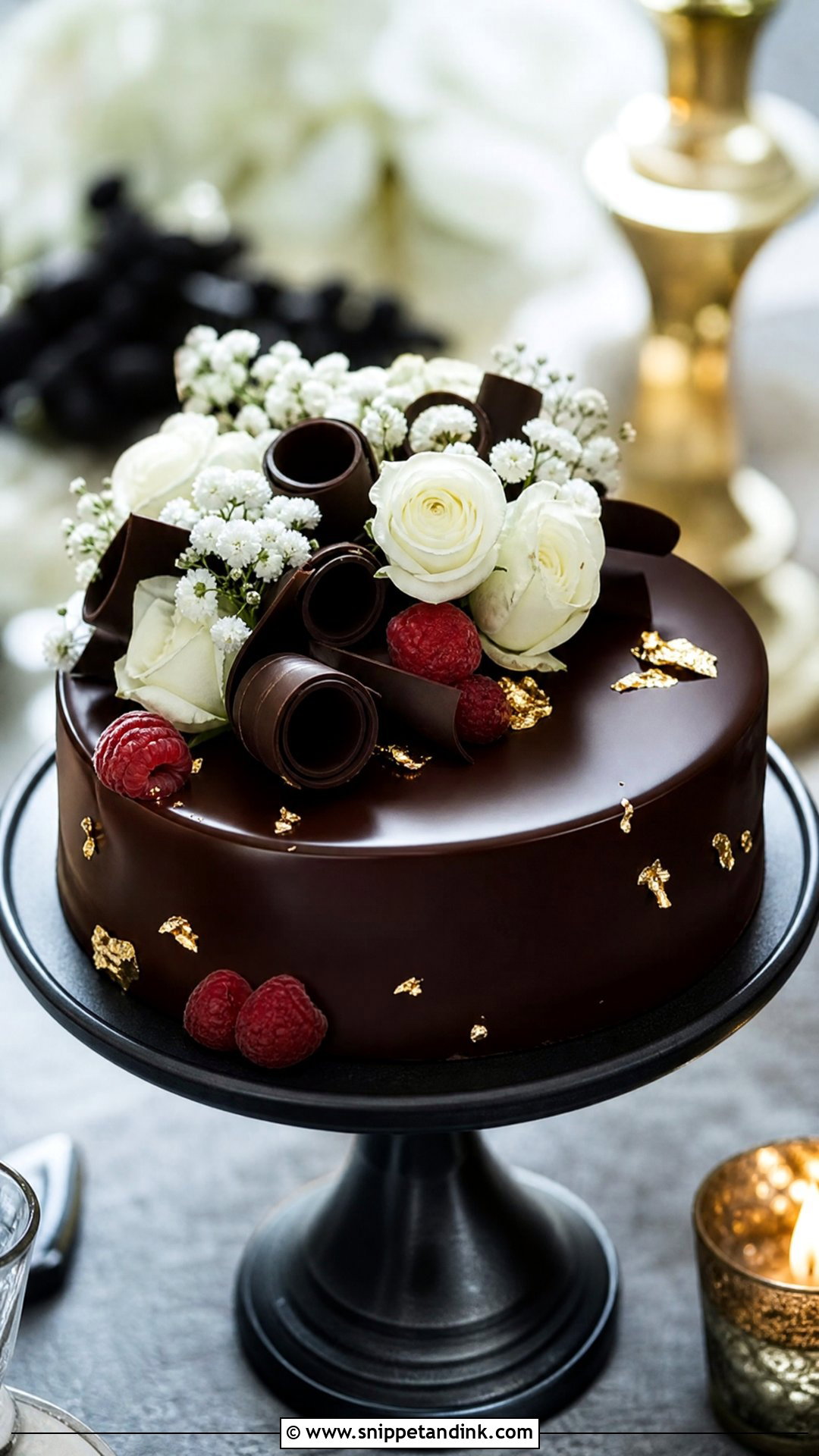
A chocolate one-tier wedding cake can still look bridal. Dark chocolate sponge under smooth ganache, cocoa buttercream or a glossy drip, then white flowers, berries, gold leaf, pearls or a clean ribbon to lift it. Fillings like espresso, raspberry, salted caramel, hazelnut or vanilla give depth. Ganache holds sharper edges than buttercream and copes better with a warm room, which is another reason I reach for it at autumn and evening receptions.
A Short Cake on a Long Reception Table
One tier can look lost on a big reception table. I raise it on a stand, usually four to eight inches high, so the top sits roughly at the height of a seated guest’s eye line, and give it its own small table or a clear end of the dessert table. A plain wall or greenery behind it makes cutting photos cleaner than a busy room.
Scale the stand to the cake: the base plate should be an inch or two wider than the cake all round. Bigger, and the cake looks like it’s sinking; smaller, and you have nowhere to rest the knife.
Heat, Sun and Buttercream at Outdoor Receptions
Buttercream softens noticeably in a warm room and fails quickly in direct sun. If your reception is outside in summer, I’d plan for the cake to stay in a cool, shaded spot until shortly before cutting, and choose ganache or fondant over a ganache coat if it must sit out for longer.
- Agree a delivery time close to the reception, not first thing in the morning.
- Ask the venue for a fridge or a cool room big enough for the box.
- Avoid whipped cream and meringue-based finishes outdoors in heat.
- Keep fresh fruit and flowers off until set-up, so nothing wilts or weeps before guests arrive.
One Tier, Decided in the Right Order
A single tier isn’t a reduced version of a tall cake; it’s its own design. Start with guest count and the room, then shape, then finish, then flavour, and leave the decoration until last. Flowers bring romance, piping brings nostalgia, fruit feels natural, smooth finishes feel modern, and heart, oval, square or sheet shapes make a single tier look made for you. Get those decisions in order and one tier can hold the whole cake table.
You'll Like These Ideas:









Leave a Reply