
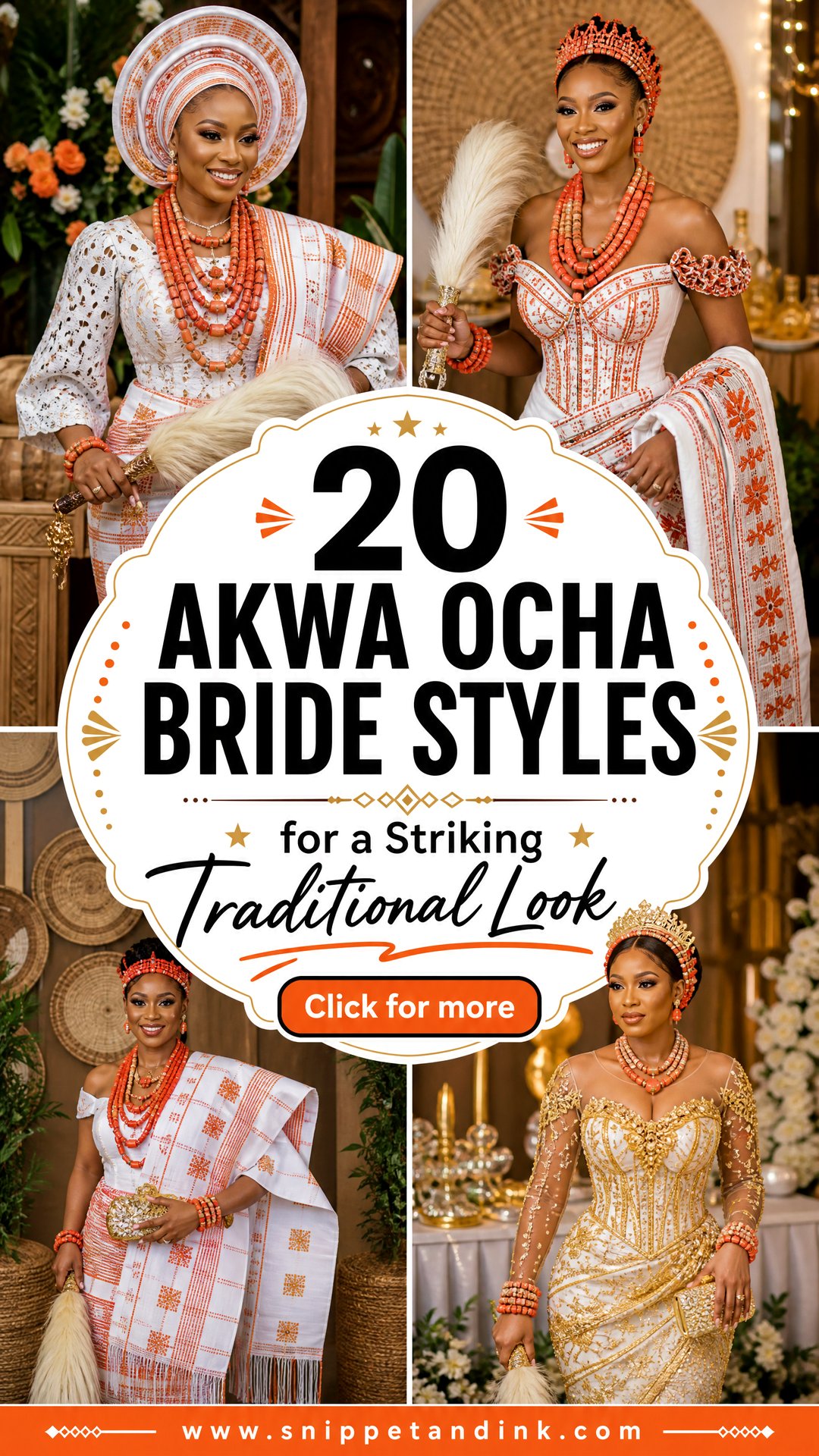
Akwa Ocha, the white handwoven cloth of the Anioma people of Delta State, Nigeria, is what many brides from the area choose for their traditional wedding celebration. It’s woven by women on an upright loom, mostly white with stylized motifs and bands of color worked into it. Traditionally a bride ties it around the chest; today the same cloth is also cut into wrapper sets, fitted gowns, corset blouses and outfits with detachable trains. Coral beads, a woven headpiece and a hand fan complete it. Customs and motifs differ between families and towns, so I always tell brides to ask an older relative or a weaver what a pattern means before it’s cut. Below are twenty complete looks to take to your tailor.
Buying the Cloth Itself, Before Any Tailor Touches It
Akwa Ocha is woven by hand, often by women fitting the work around farming, trade and family, so a bridal quantity isn’t something to buy in a hurry. Order from a weaver or a trusted seller as early as you can and tell them it’s for a bride. If you want particular motifs or colored bands, say so at the start, because those are woven in, not added later.
- Get the yardage from your tailor before you buy. A wrapper set, a gown with a flare and a gown with a detachable train need very different amounts.
- Buy extra for a matching headpiece, fan trim or covered buttons. A second batch rarely matches the first exactly.
- Hold the cloth up to the light. An even weave without thin patches cuts and sews cleanly.
- Note which way the motifs face, so the tailor knows which edge is the top.
Ask your family whether there’s a piece already in the house. Plenty of brides wear cloth that belonged to a mother or grandmother, sometimes as the shoulder cloth over a new outfit.
1. Traditional Akwa Ocha Wrapper And Blouse
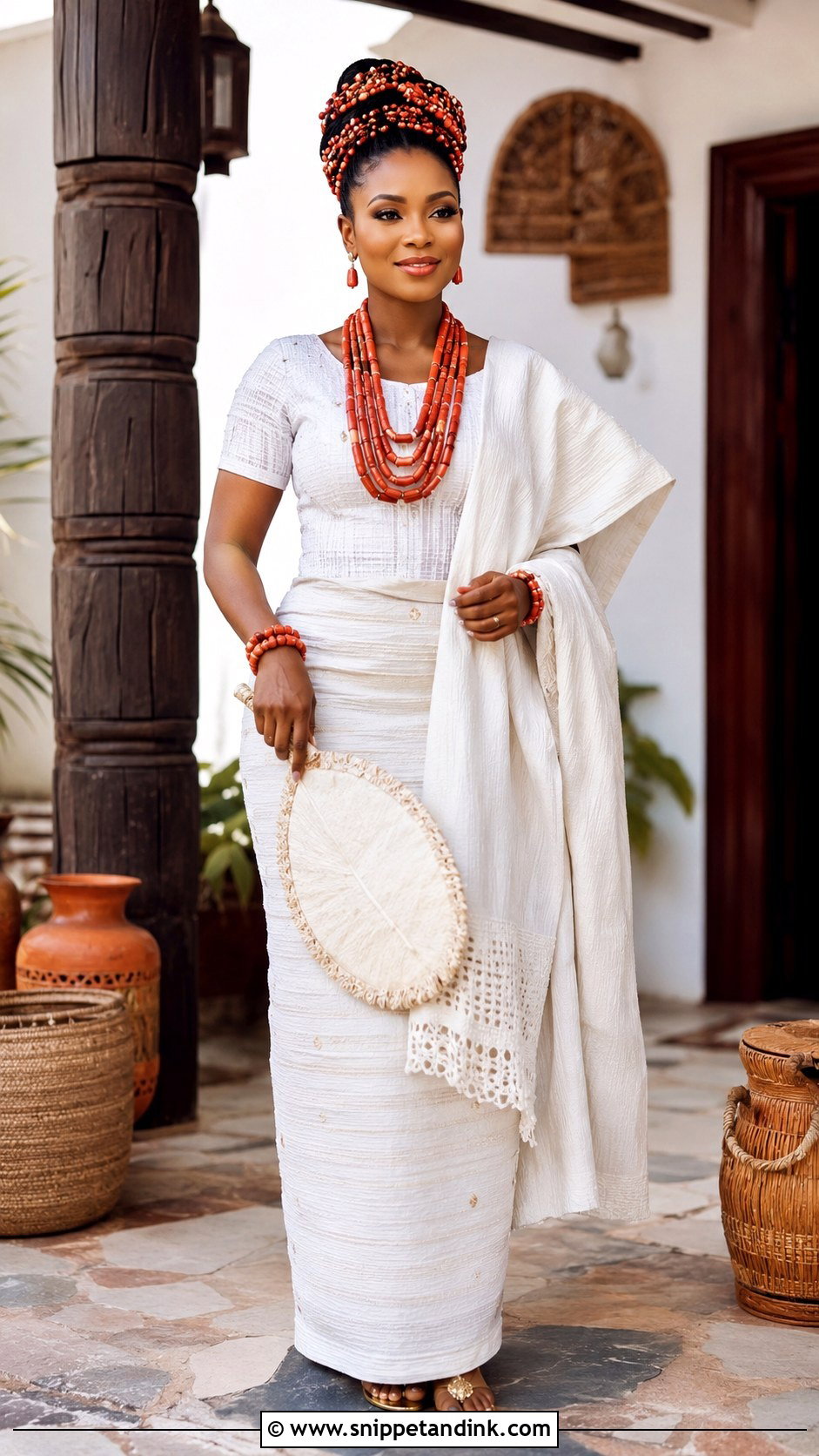
The wrapper and blouse is the look the cloth was made for, and it lets the weave stay in charge. Keep the blouse plain, with a modest round neck, short sleeves and almost no embellishment. Handwoven cotton is thicker than mill cloth, so the knot at the waist builds bulk quickly; I tie it slightly to one side and tuck the end flat so it doesn’t push out the front. A shoulder cloth adds ceremonial weight. Layered coral necklaces, matching bracelets, simple earrings and a beaded hair arrangement stand out against the white without hiding the motifs. Low metallic sandals make the dancing easier.
2. Off Shoulder Akwa Ocha Bridal Gown
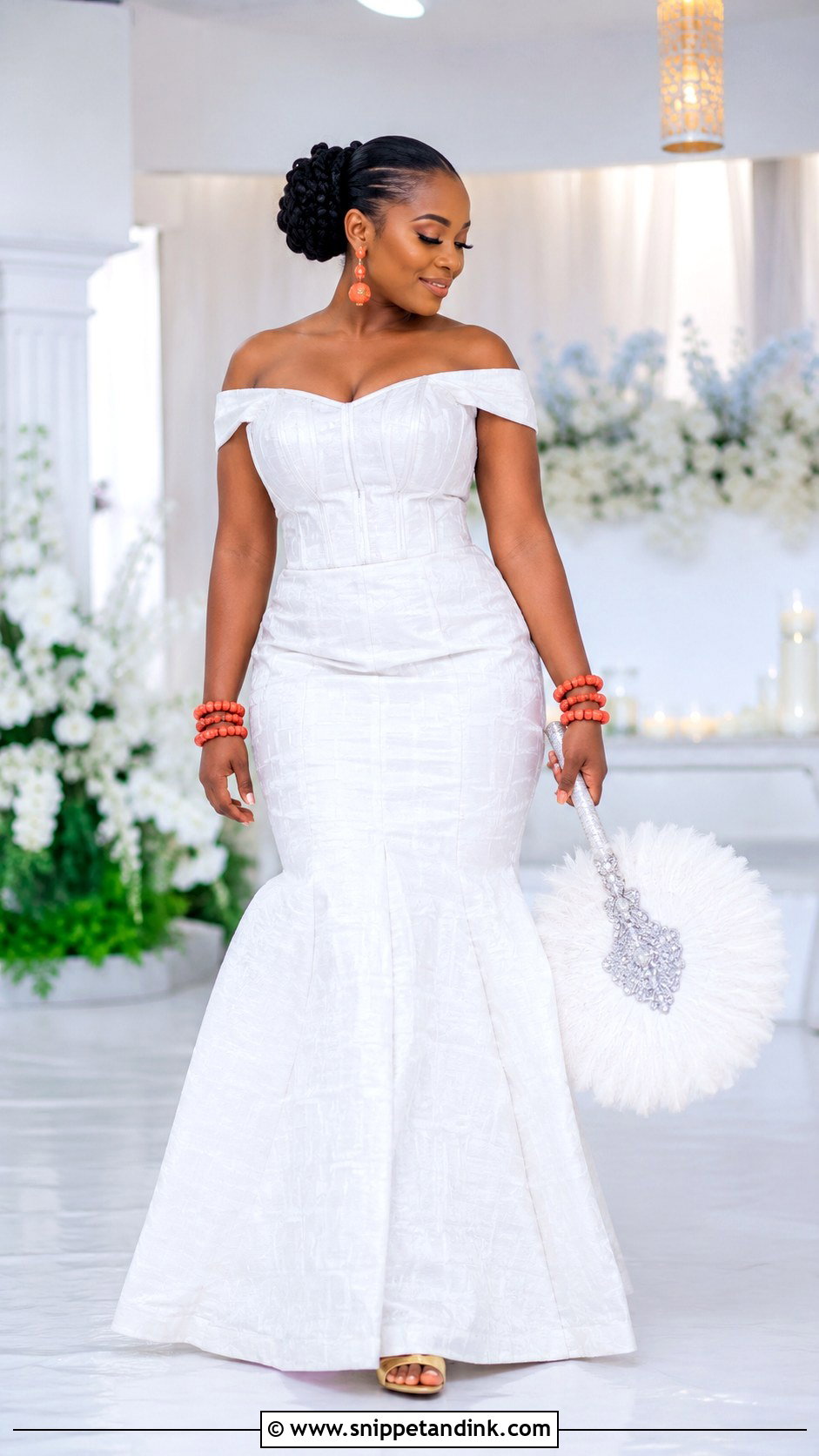
An off-shoulder neckline modernizes the cloth, but handwoven fabric has no stretch, so it can’t grip the body on its own. The holding has to come from a structured inner bodice with boning, otherwise you’ll be hitching it up all afternoon. A fitted waist and gently flared skirt leave room to move. Place the motifs deliberately at the neckline, waist and lower skirt rather than everywhere. Coral drops, stacked bracelets, a compact beaded fan and a low braided updo finish it, with white or gold heels.
3. Strapless Akwa Ocha Mermaid Gown
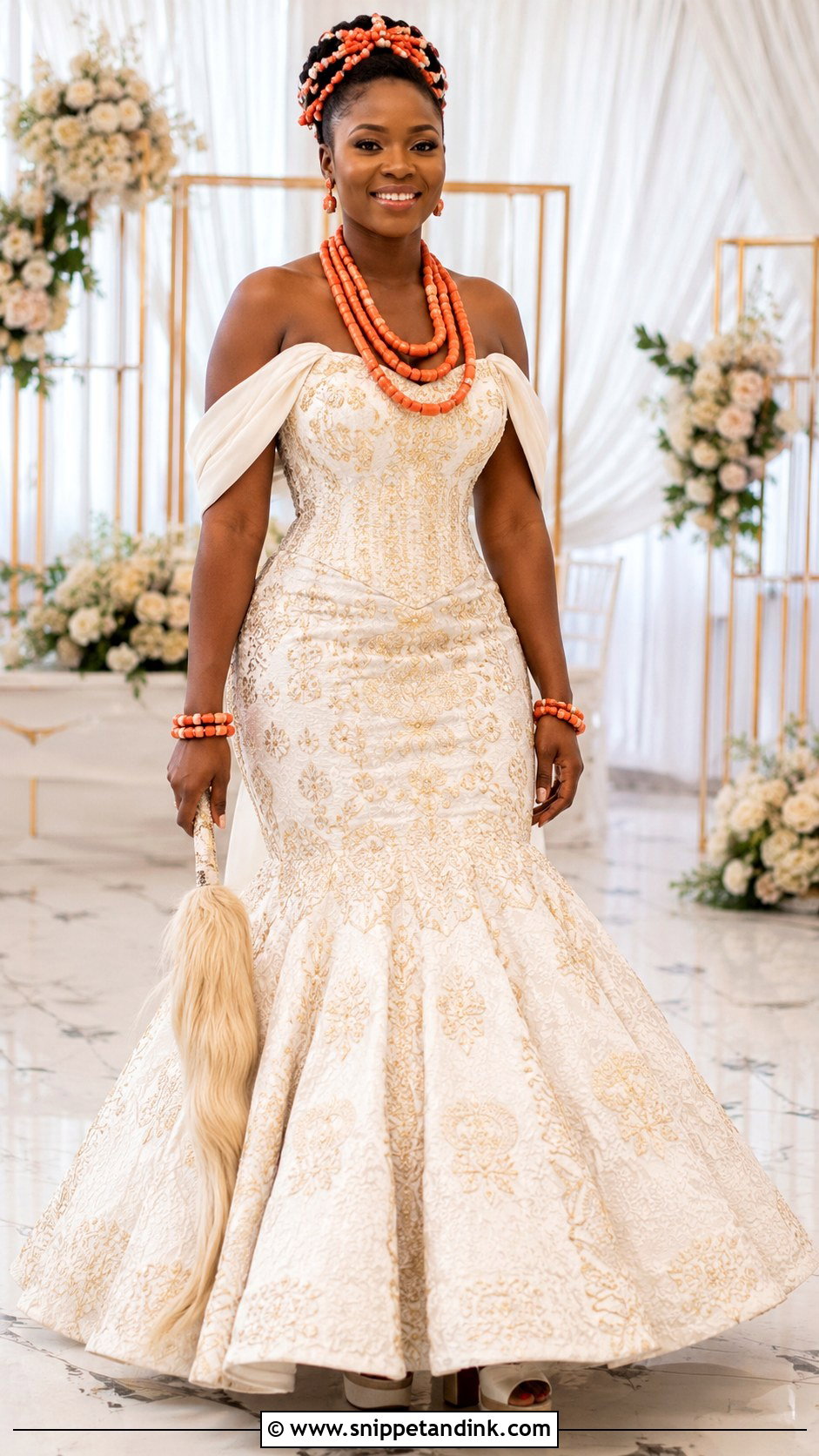
For a dramatic entrance, a strapless mermaid is the hardest shape to cut from handwoven cloth. The body needs boning and a shaped bust so you aren’t adjusting it, and the flare below the hips is where the larger motifs show best. Because the cloth has more body than crepe, the flare tends to stand away rather than fall, so I ask tailors to add an extra panel or godet so it opens cleanly. A removable shoulder cloth gives coverage for the formal rites and comes off for portraits and dancing. A bold coral necklace, studs, beaded bracelets and a sleek bun with small coral accents, plus platform heels under the skirt for height with stability.
4. One Shoulder Akwa Ocha Bridal Gown
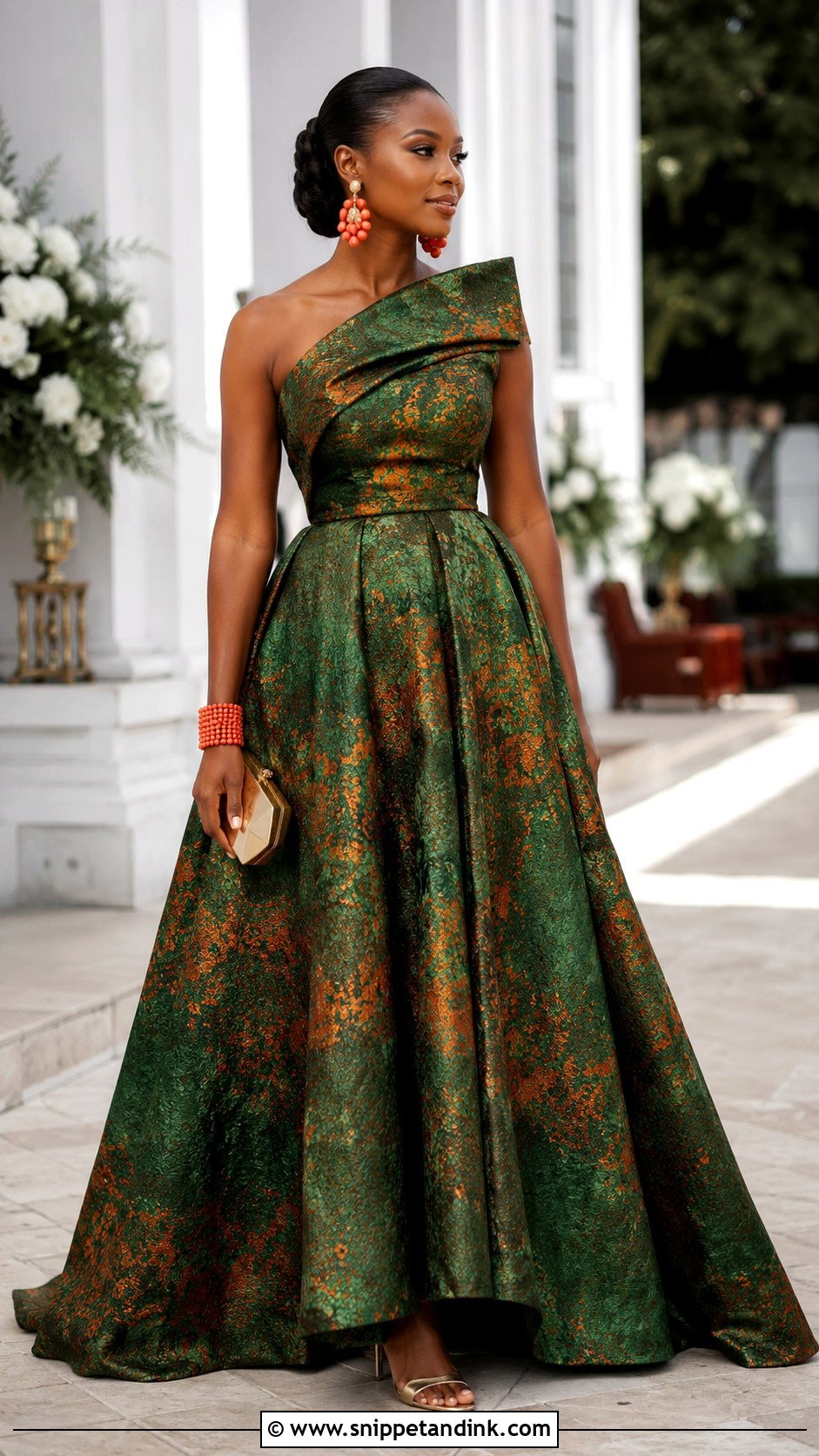
One shoulder gives the outfit interest without fuss. The covered side can carry a structured band, a folded detail or a short drape while the other stays clean. Pair it with a defined waist and an A-line skirt, which matters at the wine-carrying ceremony when you’re walking through the crowd with a cup looking for your husband. An uneven neckline already draws the eye, so go light at the throat: small coral strands or none, with statement earrings instead. A beaded cuff, a metallic clutch and low gold heels. Sweep your hair away from the covered shoulder to show the line.
5. Akwa Ocha Corset Blouse And Wrapper
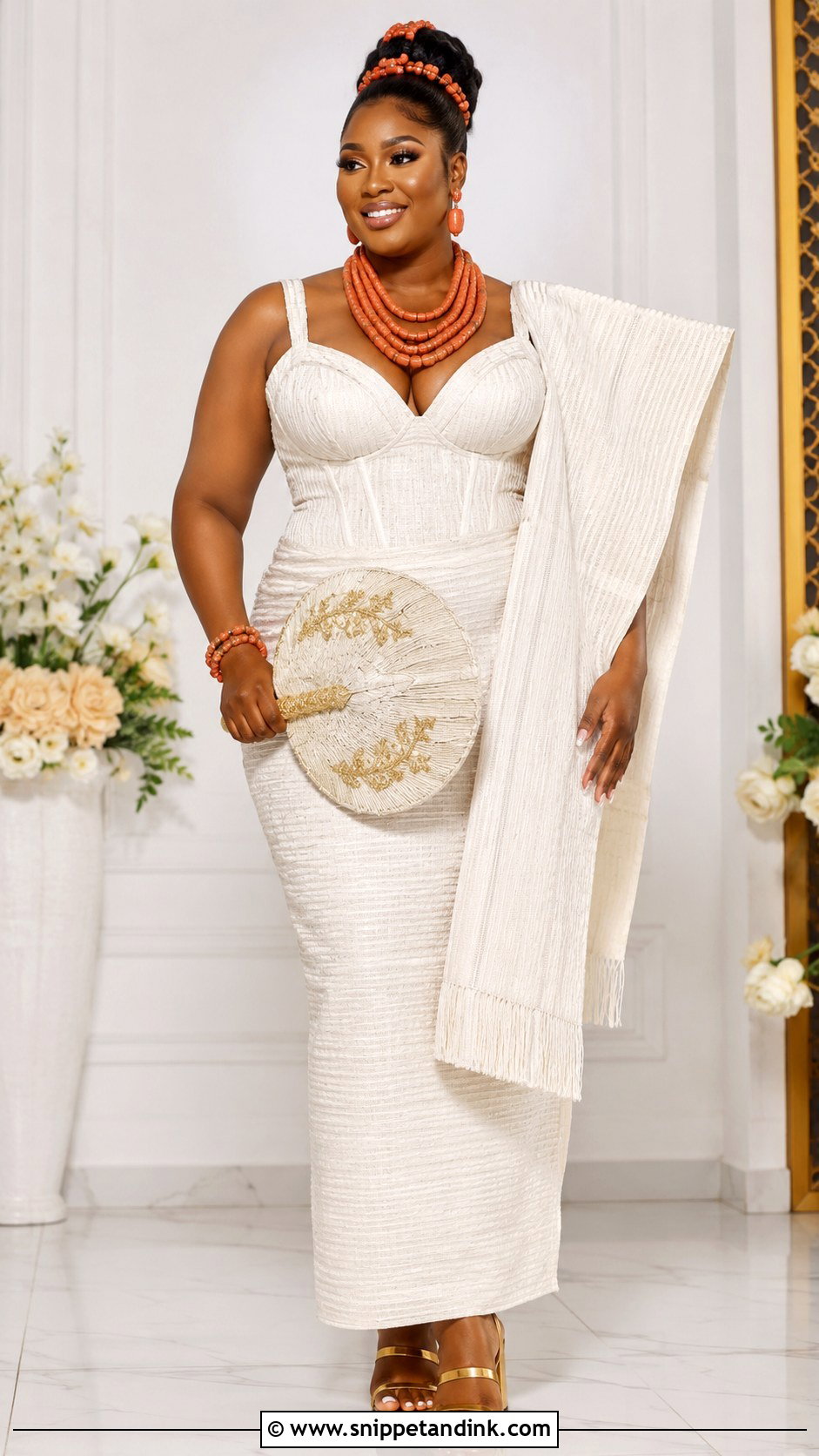
A corset blouse gives the blouse-and-wrapper pairing real structure. It needs supportive cups, secure boning and either wide straps or detachable sleeves, and it should end in a gentle V or a short basque that lies flat over the wrapper. A corset made from handwoven cloth is stiff, so the lining matters; soft cotton against the skin stops the weave rubbing over a long day. Tie the floor-length wrapper firmly enough for walking and sitting, and add a narrow second wrapper or sash for layering. Coral choker, longer strands, a fan, a low beaded bun and block-heel sandals. If you can’t take a full breath sitting down, it’s too tight.
6. Akwa Ocha Peplum Blouse And Wrapper
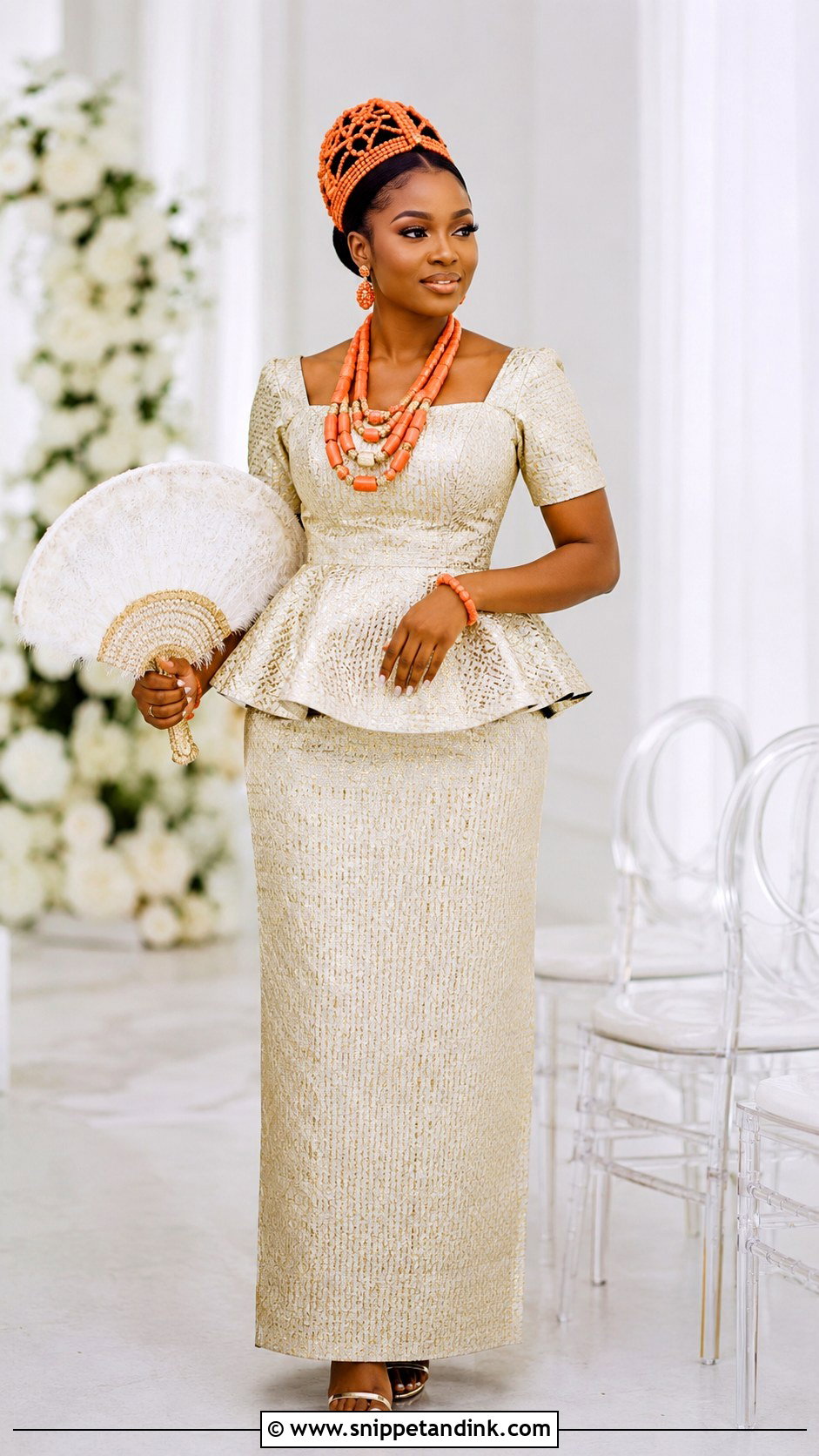
A peplum blouse defines the waist and covers the midsection, which is why so many brides feel at ease in it. Above the waist, a square neckline, short fitted sleeves and light beadwork that follows the woven pattern. Below, the peplum falls over a straight or lightly gathered wrapper. Keep it narrow. Thick handwoven cloth flares out further than you’d expect, and a wide peplum turns into a shelf over the wrapper. Coral earrings, layered necklaces, a woven headpiece and a small white fan, with gold block heels or dressy flats depending on the ground.
7. Akwa Ocha High Neck Bridal Gown
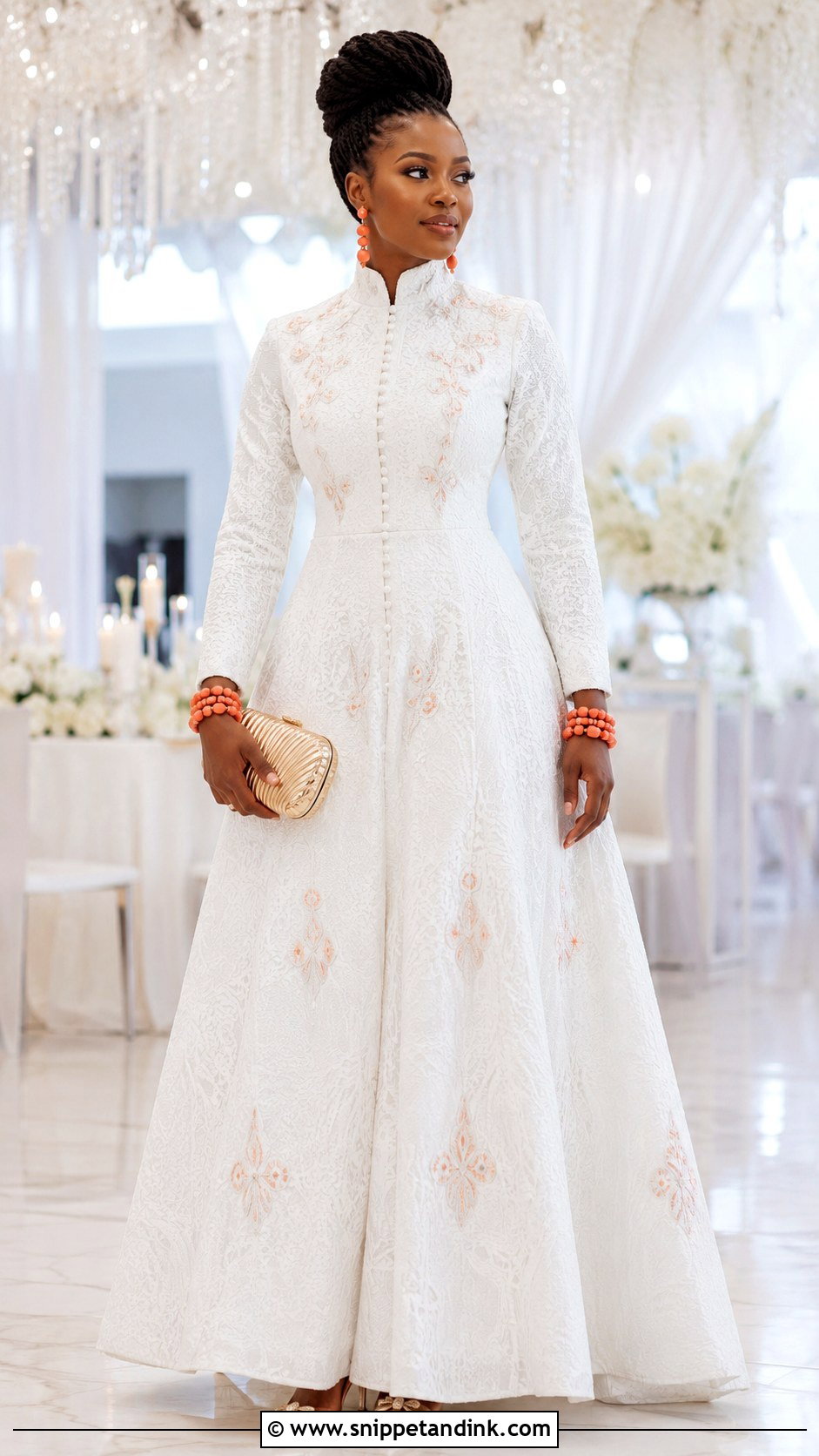
A high neck suits the bride who wants more coverage. A standing collar, a sheer upper panel or a lined neckline all work, and long seams through the torso stop the top from looking heavy over an A-line or trumpet skirt. Thick cloth around the throat gets hot, so for an outdoor afternoon ceremony I’d choose a sheer yoke over a full collar of Akwa Ocha. Skip necklaces entirely; coral earrings, stacked bracelets and a statement ring are enough. A high braided bun or wrapped updo keeps the neckline visible, with pointed gold heels and a small clutch.
8. Akwa Ocha Cape Sleeve Bridal Gown
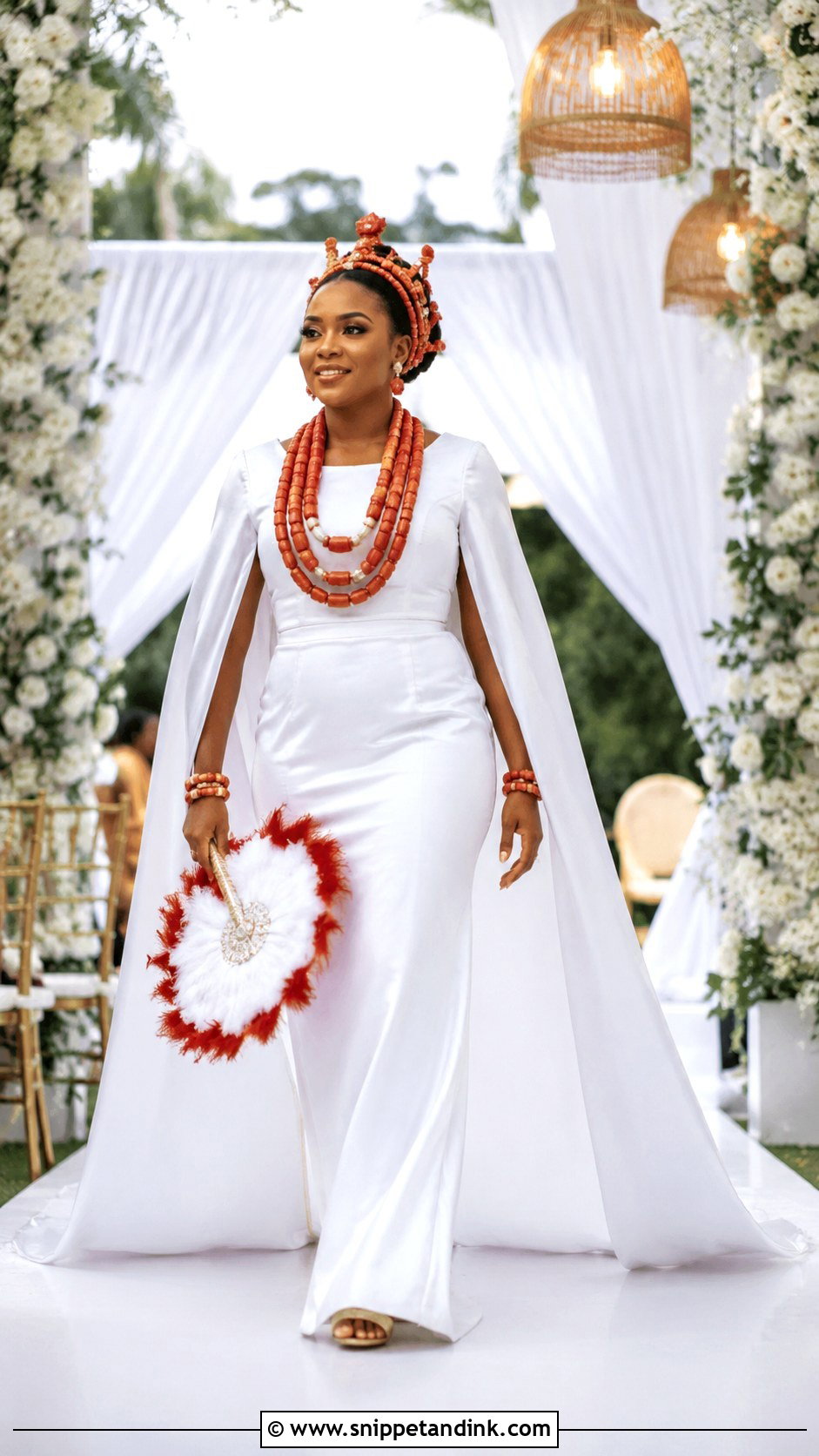
Cape sleeves move as you walk and greet guests. They can fall from shoulder to elbow or run longer down the back. Keep the bodice simple so the sleeves look deliberate, and balance them with a straight, trumpet or gentle A-line skirt. A cape in handwoven cloth is much heavier than chiffon, so I often suggest cutting it from a matching sheer with an Akwa Ocha border. A coral headpiece, a medium bead necklace, bracelets and a white hand fan trimmed in red, with gold sandals. Test the cape with the jewelry on before the day, because cape edges catch on bracelets and chair backs.
9. Akwa Ocha Puff Sleeve Bridal Gown
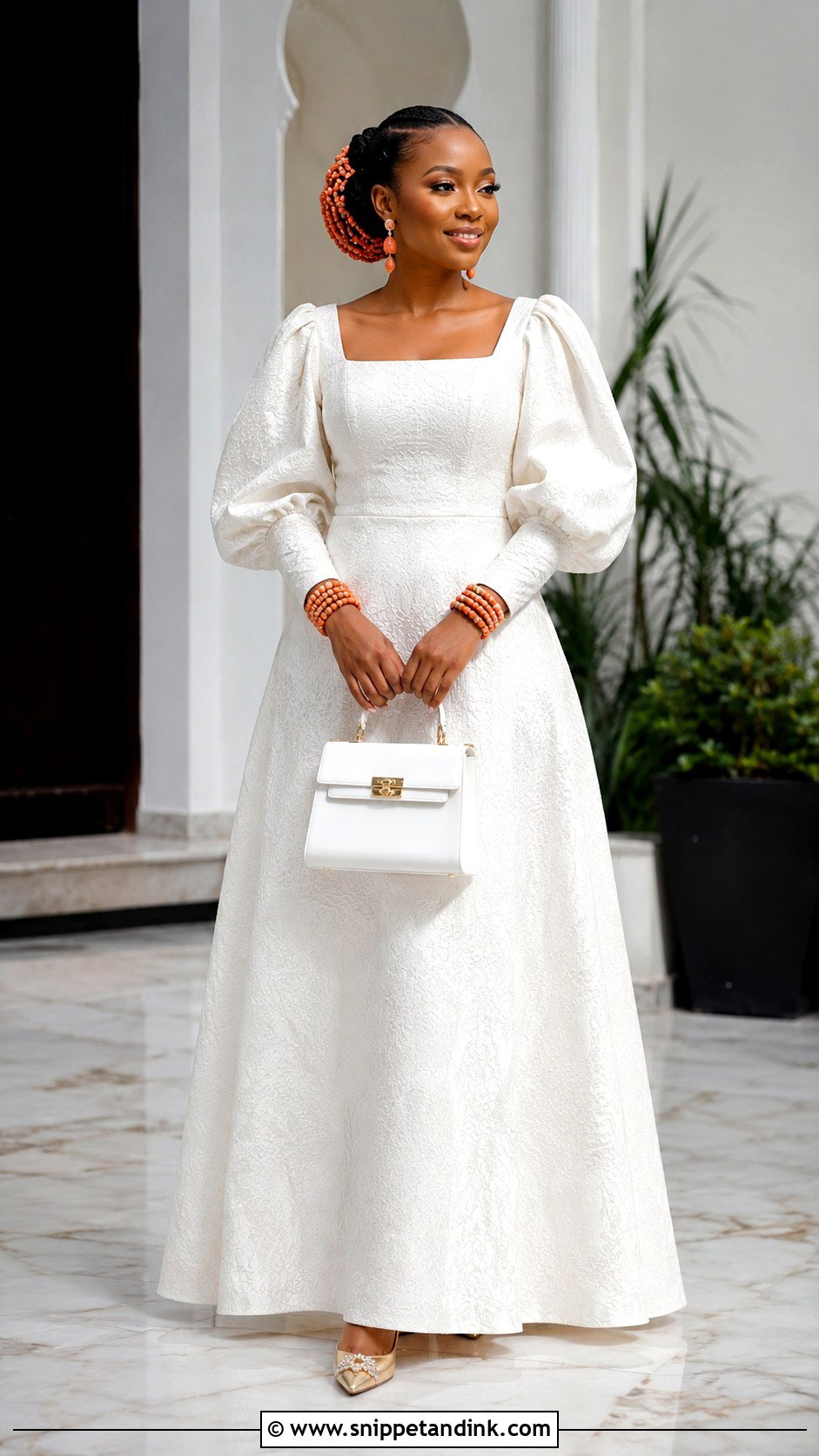
Puff sleeves frame the face and shoulders. Stick to a medium sleeve that tapers into a fitted cuff or ends above the elbow, with a square neckline, a defined bodice and a clean A-line skirt. Handwoven cotton holds a puff on its own, which means you can skip the stiff netting inside that tends to scratch. Large sleeves already make their point, so keep beadwork to the neckline or cuffs. A low coral-beaded hairstyle, delicate earrings, stacked bangles and a structured mini bag, with closed-toe heels or embellished sandals.
10. Akwa Ocha Long Sleeve Bridal Gown
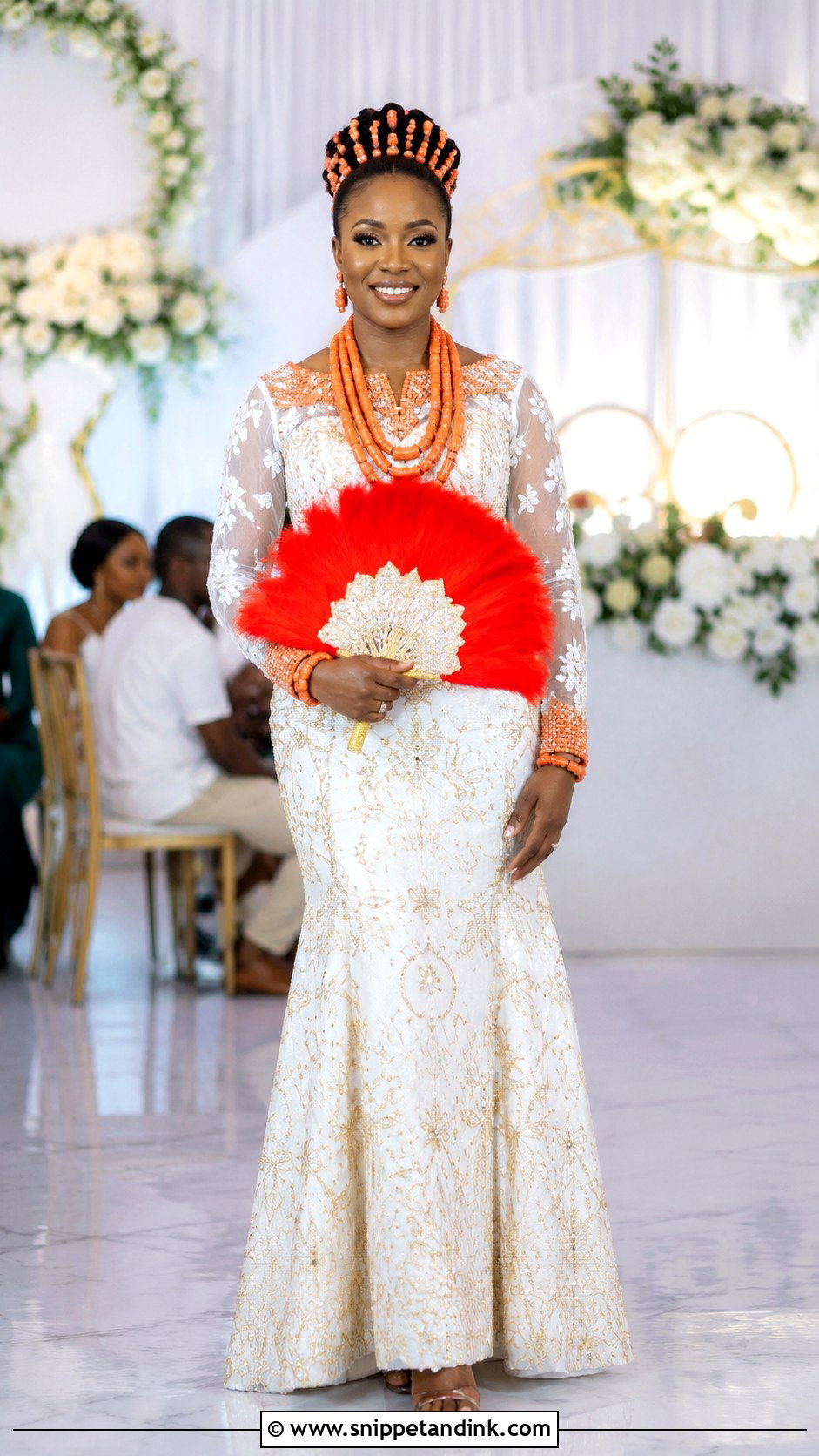
Long sleeves suit an indoor ceremony or cooler weather. Cut them entirely from Akwa Ocha, or combine the cloth with a breathable sheer in a matching white. Coral buttons at the cuffs or gold edging at the neckline personalize it. The fit detail I care about most is ease at the elbow and shoulder: you’ll be lifting the cup, hugging relatives and dancing, and handwoven cloth doesn’t give. Layered coral, earrings, a beaded hairpiece and metallic heels. A red fan adds contrast and gives your hands something to do in portraits.
11. Akwa Ocha Asymmetrical Wrapper Outfit
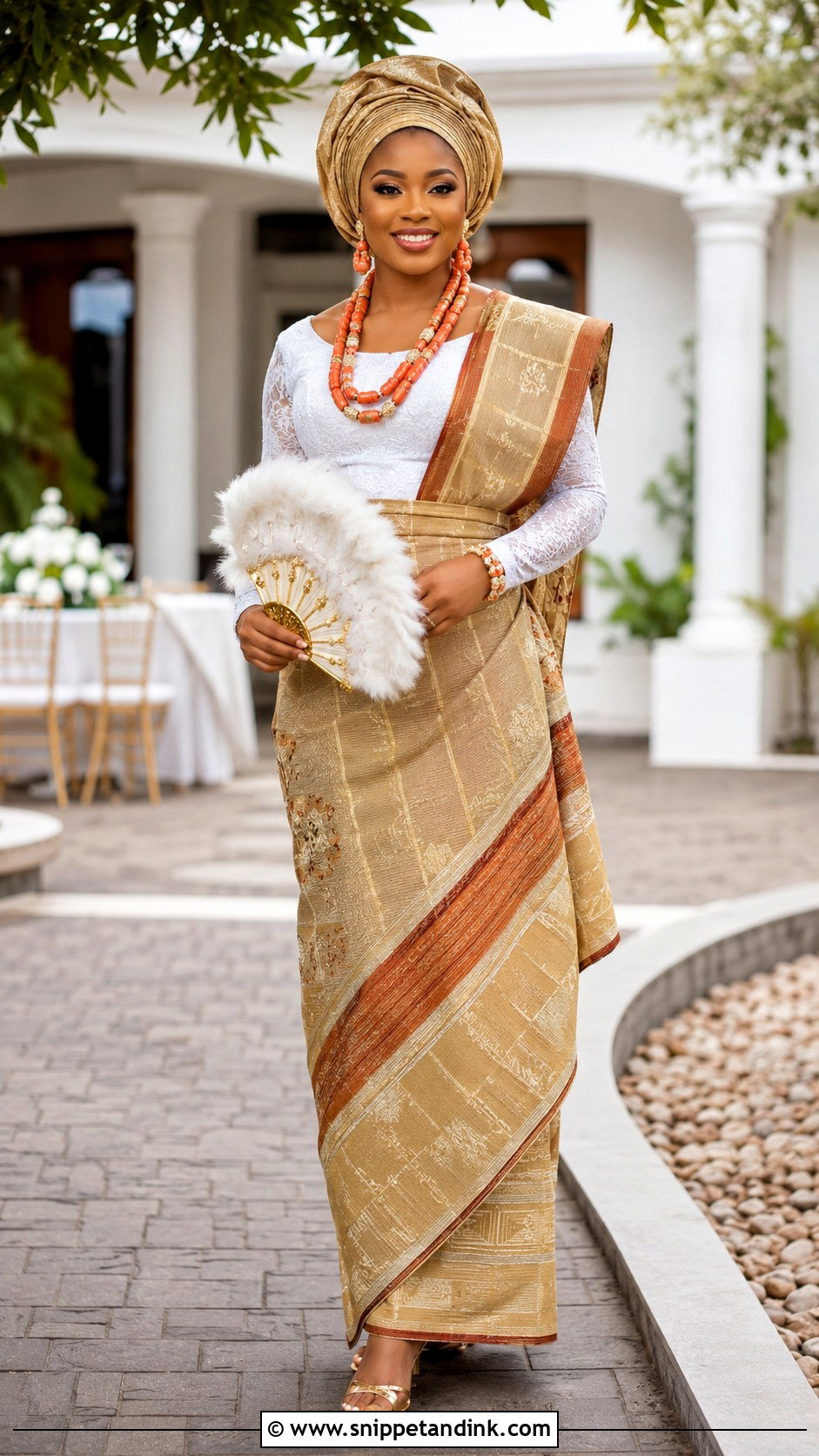
An asymmetrical wrapper makes a two-piece distinctive without changing the cloth. Fold it diagonally across the waist, gather it to one side or add a controlled front drape, and keep the blouse plain so the drape leads. Then check the motifs. Many have a clear top and bottom, and a diagonal fold can turn them sideways or upside down, which a relative will spot immediately. Hidden hooks keep the drape in place through the dancing. Coral, a neatly wrapped headpiece, a fan and gold sandals, plus a shoulder sash for the ceremony if you want another layer.
12. Akwa Ocha Double Wrapper Outfit
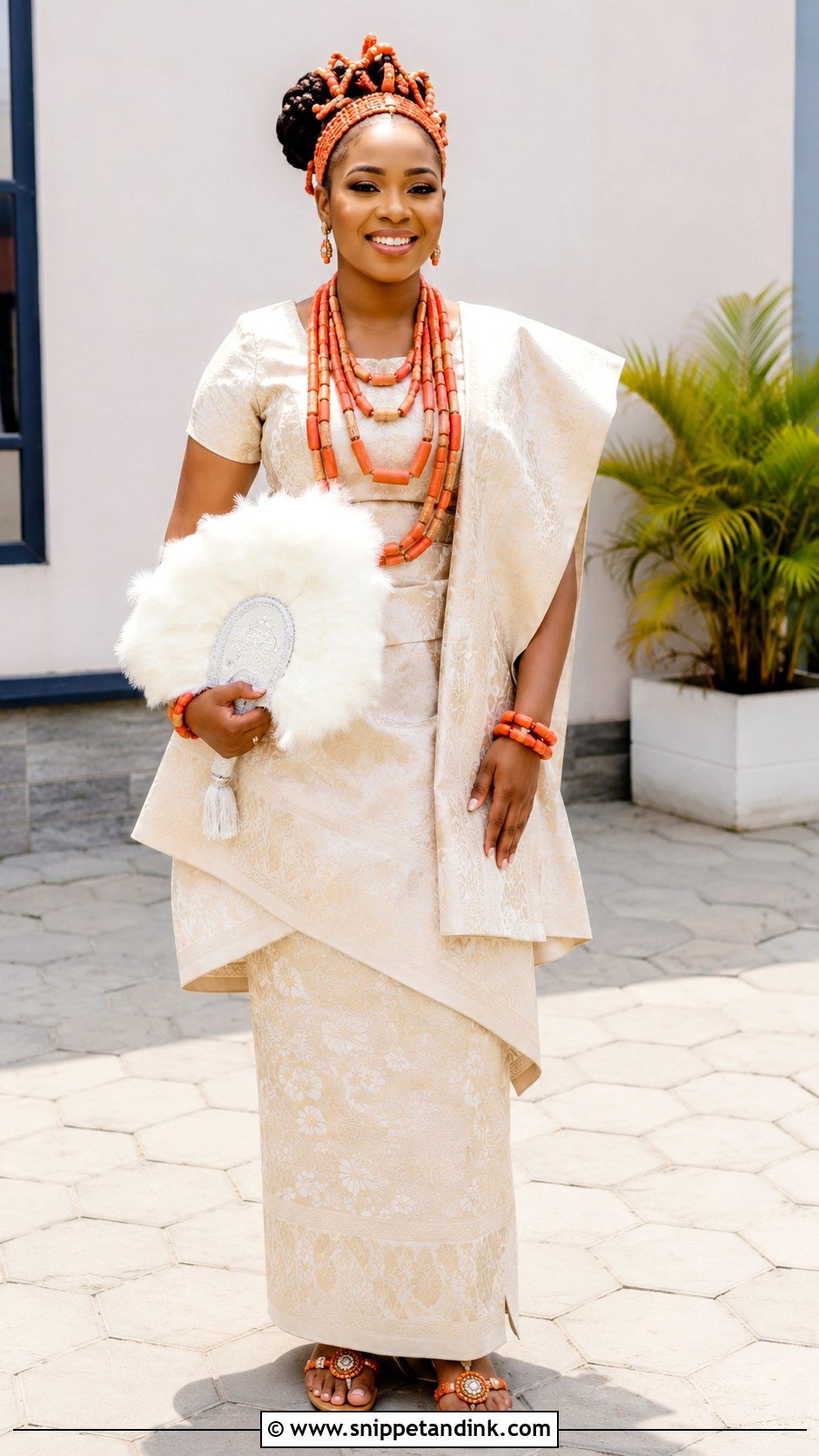
The double wrapper builds layers and presence. Tie a long base wrapper at the natural waist, then a shorter second one over it, arranged so both borders show. A fitted short-sleeve blouse keeps the top streamlined. Two layers of handwoven cotton are warm and heavy around the hips, so flat embellished sandals make more sense than heels for this one. Layer coral necklaces in different lengths with earrings, bracelets and a beaded hairstyle, and carry a white or red fan. Have an experienced dresser tie the wrappers, then recheck them before you move between indoor and outdoor parts of the day.
13. Akwa Ocha Beaded Bodice Gown
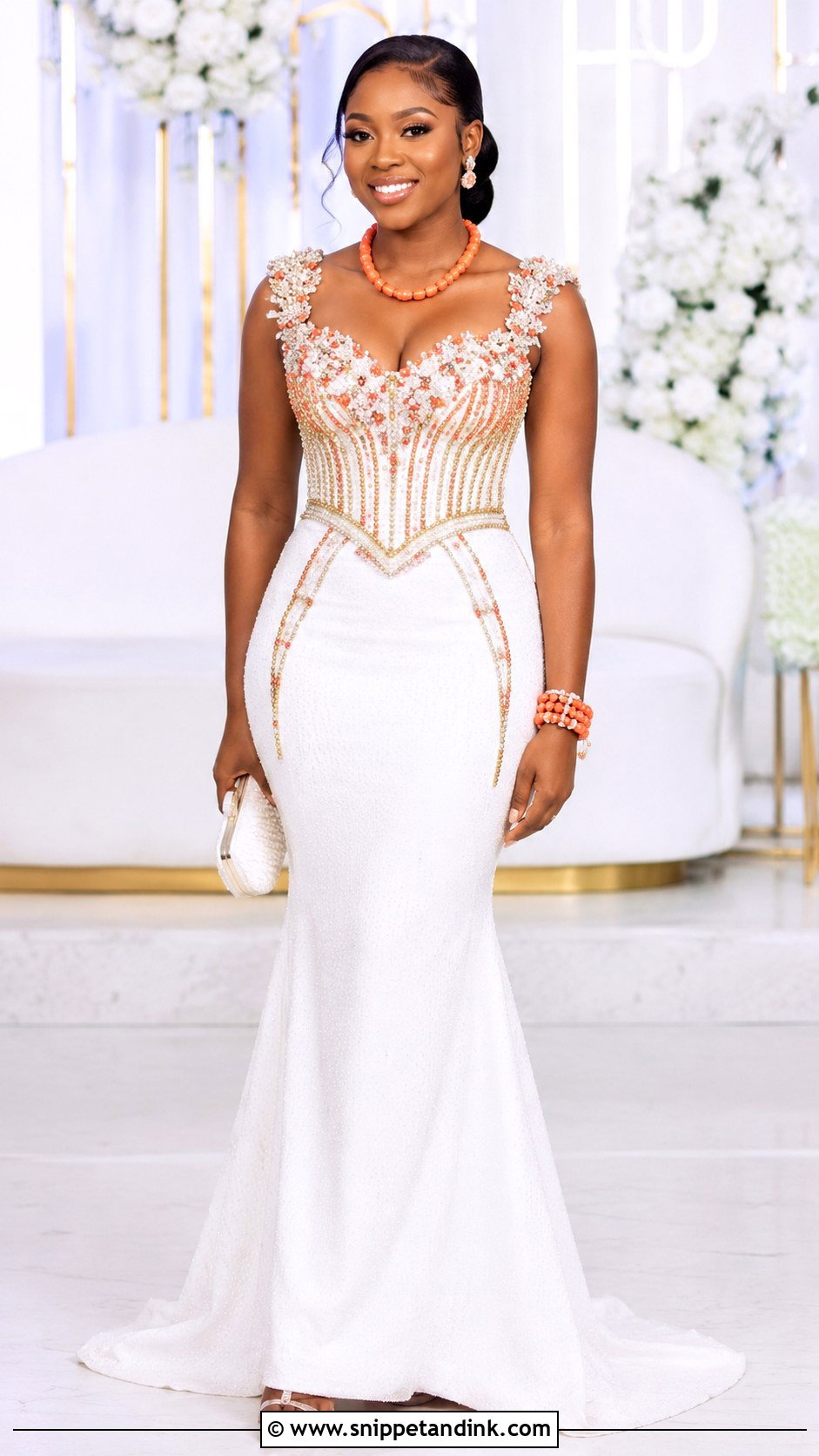
Beading the bodice adds sparkle while the lower gown stays plain. Coral, pearl, crystal or gold-tone beads at the neckline and waist can follow the lines of the weave. Don’t cover the whole bodice, though. Dense beading on handwoven cloth pulls at the threads and puckers the fabric, especially across the bust. A smooth trumpet or A-line skirt, smaller earrings and one coral necklace keep it calm, with a sleek updo, a beaded cuff, a white clutch and metallic heels. Close-up portraits show the contrast between the texture and the beads best.
14. Akwa Ocha Red Coral Bead Outfit
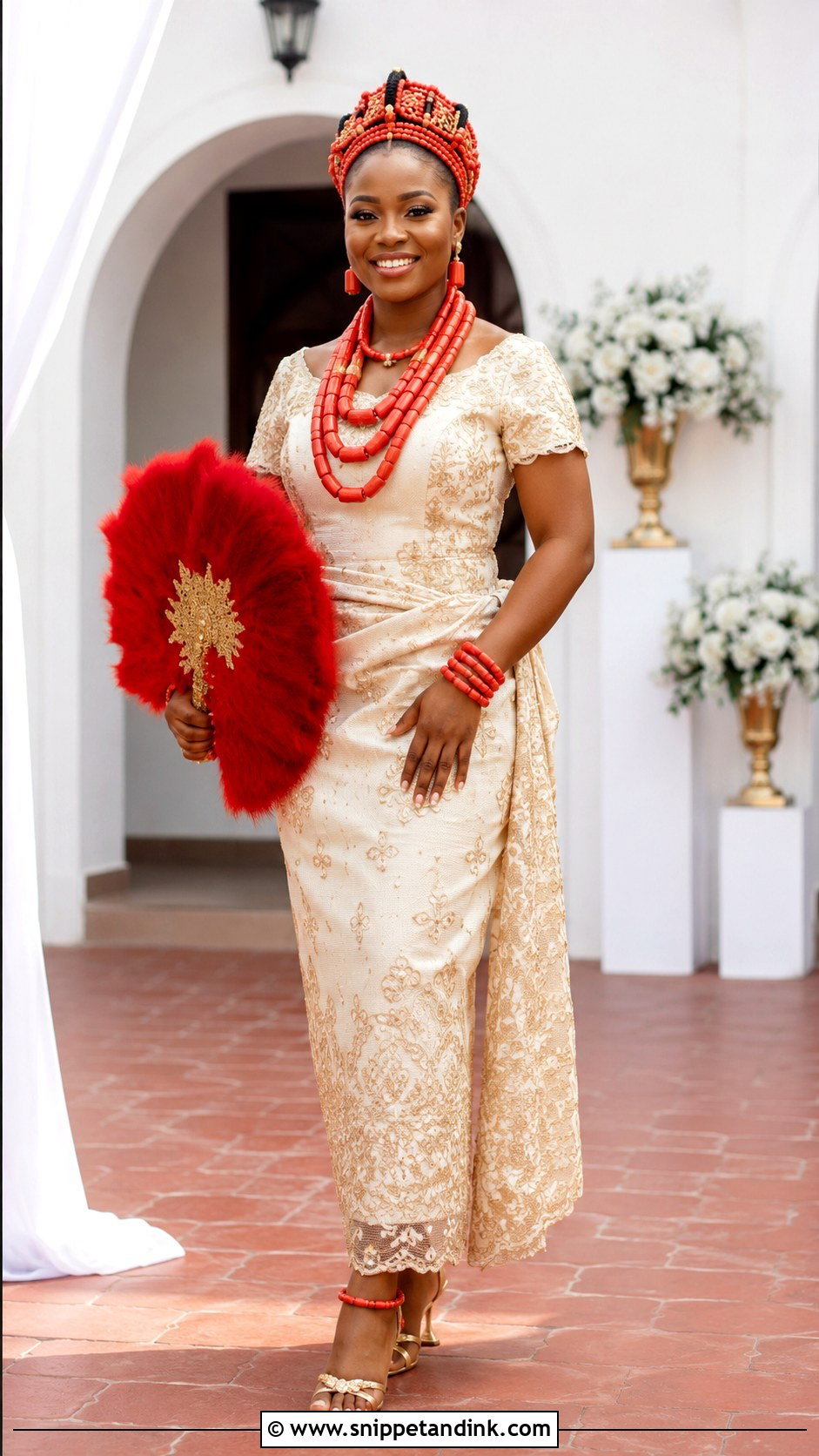
Red coral on white cloth is the pairing most people picture with this outfit. Build it on a fitted blouse and floor-length wrapper, then bring in coral through necklaces, a headpiece, bracelets, earrings and carefully placed hair ornaments. Choose one focal point. A substantial necklace suits a plain neckline, while an elaborate headpiece wants fewer strands at the neck. Coral beads are heavy, and a large headpiece starts to pull by evening, so have it anchored into braids rather than balanced on loose hair. A red fan and neutral gold sandals; a red lip or soft neutrals, as you prefer.



15. Akwa Ocha Gold Embellished Gown
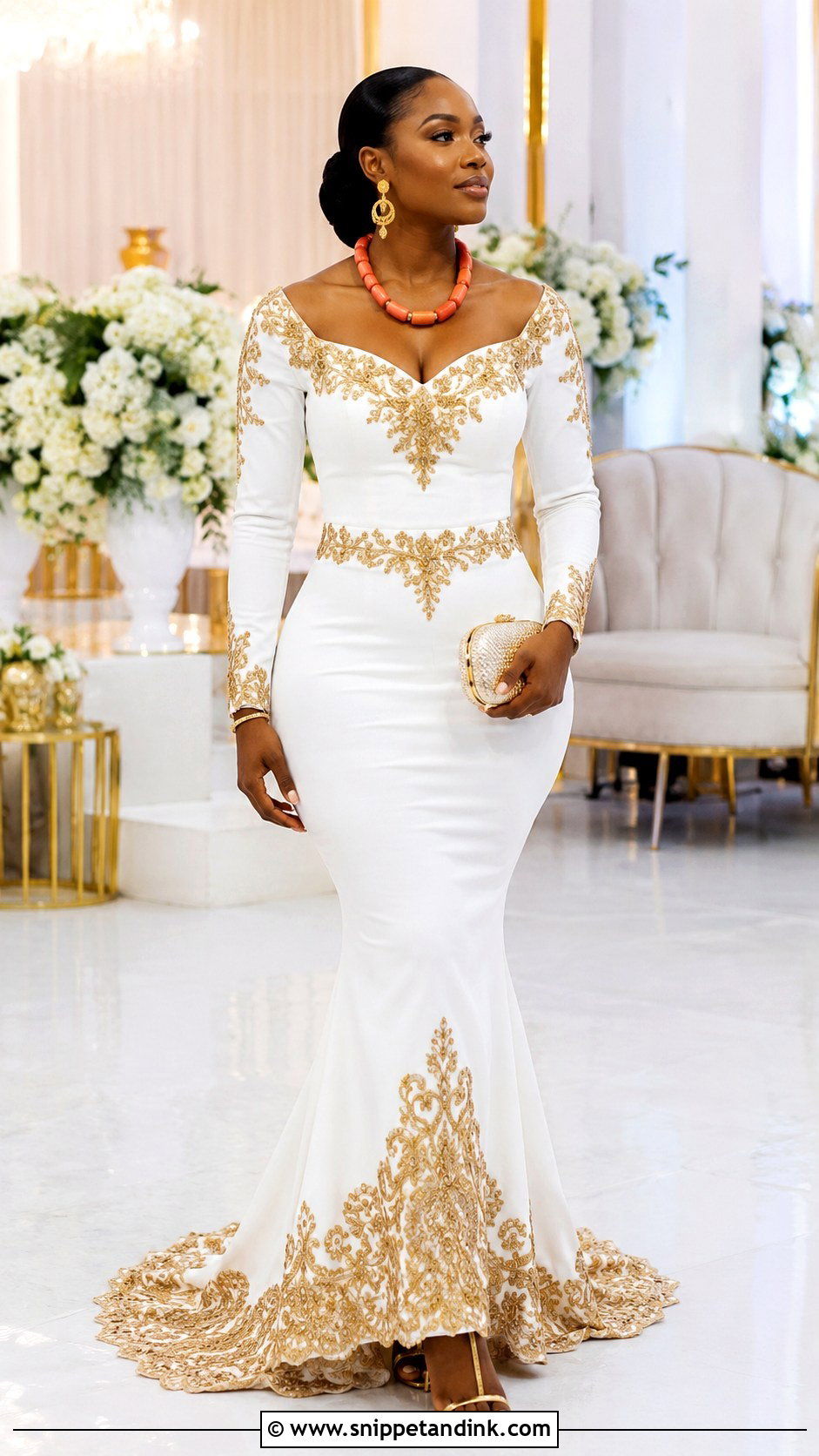
Gold warms the white cloth. Use metallic embroidery, piping, appliqué or beads sparingly at the neckline, waist, sleeves and hem of a fitted gown with a flared lower skirt. Before anything is stitched, I lay the trim on the cut panels and step back, because it’s easy to cover a meaningful motif without noticing until it’s too late to unpick. Gold drop earrings, a slim bracelet, metallic heels and a structured clutch. With this much gold, one coral necklace or a small hair accent is plenty, and a smooth low bun keeps it uncluttered.
16. Short Akwa Ocha Maiden Outfit
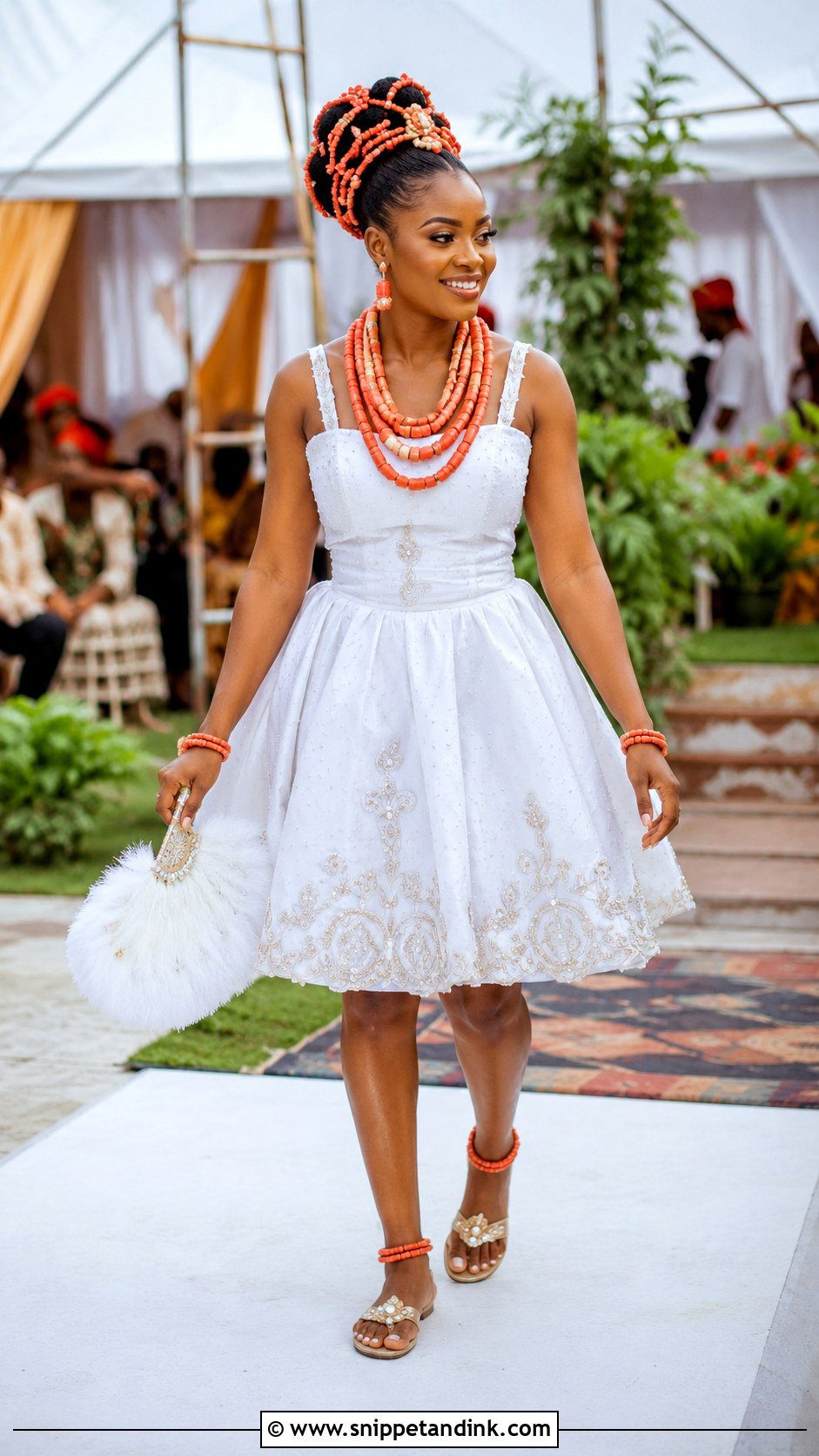
A short maiden-style outfit works as an entrance look before you change into the main ceremony outfit. Think a fitted knee-length or mid-thigh dress with secure straps and a modestly flared skirt, or a short wrapper over a structured blouse, depending on what your family considers right. Coral at the neck, wrists, ankles and hair completes the youthful look. Wear flats or low block heels, since this outfit usually means dancing, and carry a small fan. Length is the conversation to have early. Expectations differ between Anioma communities, and it’s far easier to agree before cutting than after.
17. Akwa Ocha Two Piece Skirt Set
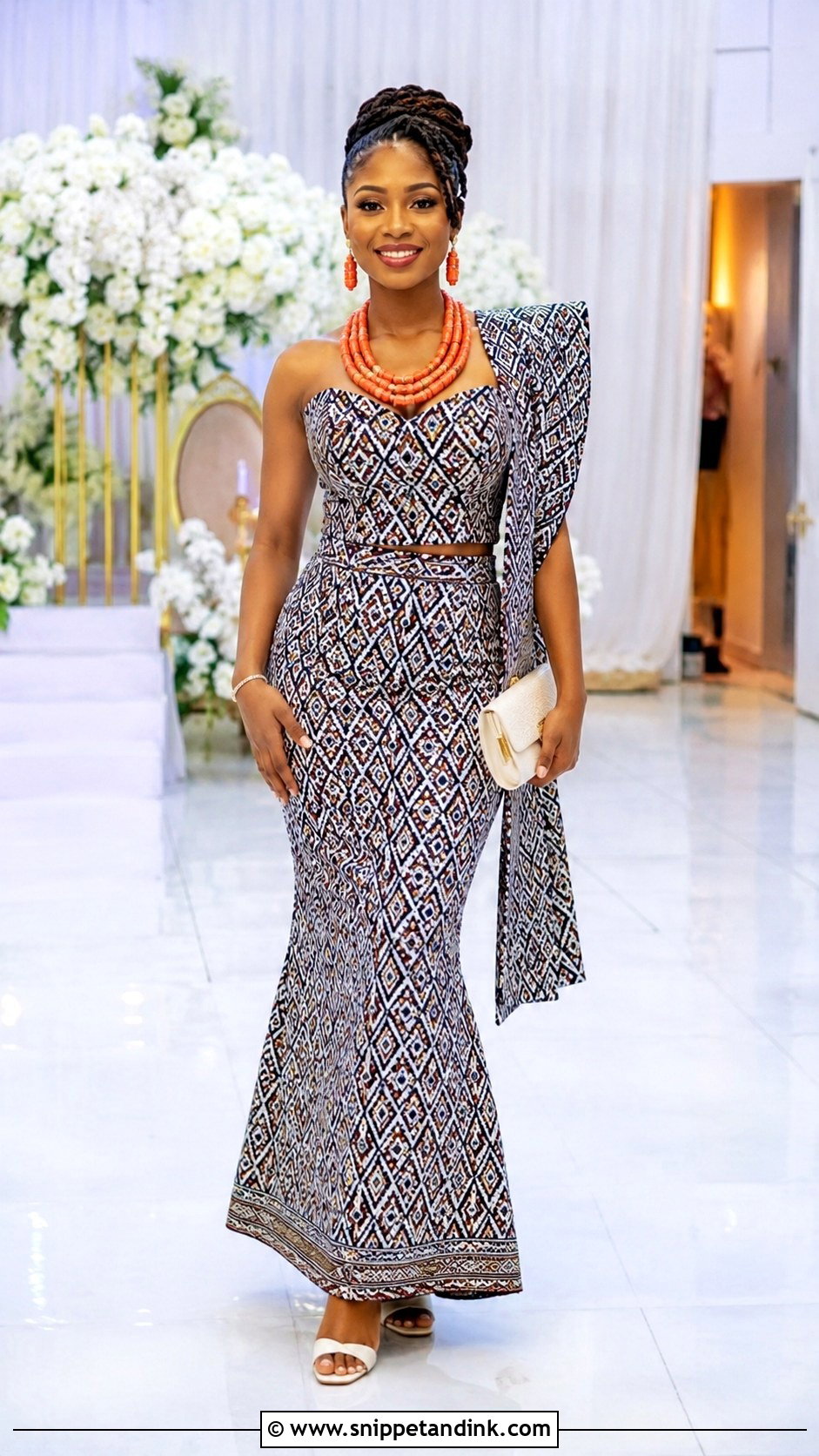
A two-piece skirt set feels contemporary while keeping the cloth recognizable. The top can be cropped slightly or cut to meet the waistband, so you decide how much shows, over a high-waisted floor-length skirt shaped through the hips with a small flare. The tricky part is the waist seam, where the motifs on top and skirt meet. Ask the tailor to cut both pieces from neighboring sections of the same length so the pattern lines up. A coral necklace, earrings, a braided updo and a slim gold bracelet, a detachable sash or light cape if you want more coverage, then a white clutch and block heels.
18. Akwa Ocha Bridal Jumpsuit
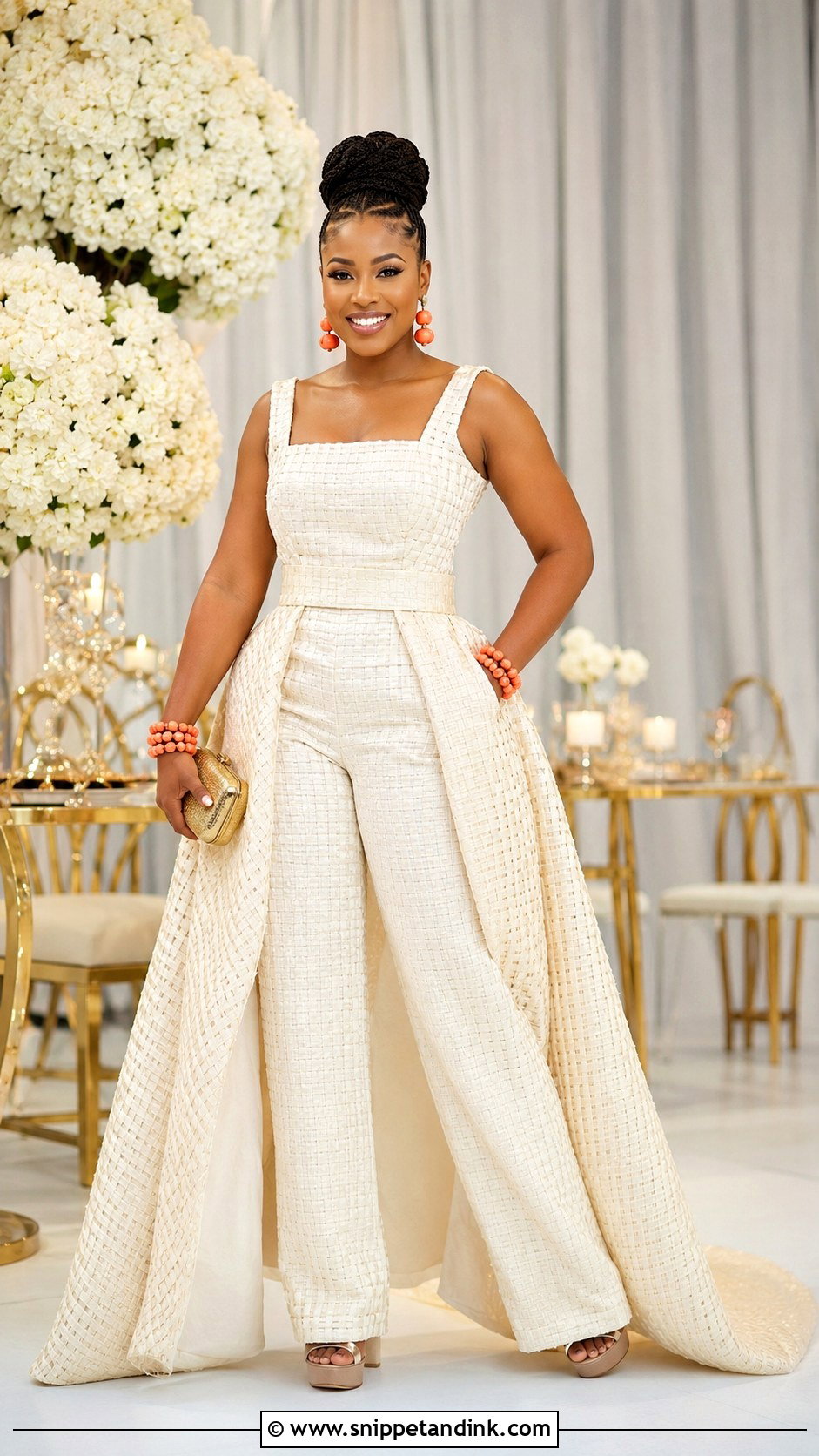
A tailored jumpsuit suits a reception entrance, a portrait session or a later change. A square or off-shoulder bodice over wide-leg trousers moves almost like a skirt, and a detachable Akwa Ocha overskirt or drape brings back the ceremonial look when needed. Define the waist with a woven band or a slim gold belt. Have the trouser hem set while you’re wearing the platform heels, so the legs fall straight to the floor. Coral earrings, stacked bracelets, a clutch and a high braided bun. It’s a modern take, so check with family which part of the day it suits.
19. Akwa Ocha Detachable Train Gown
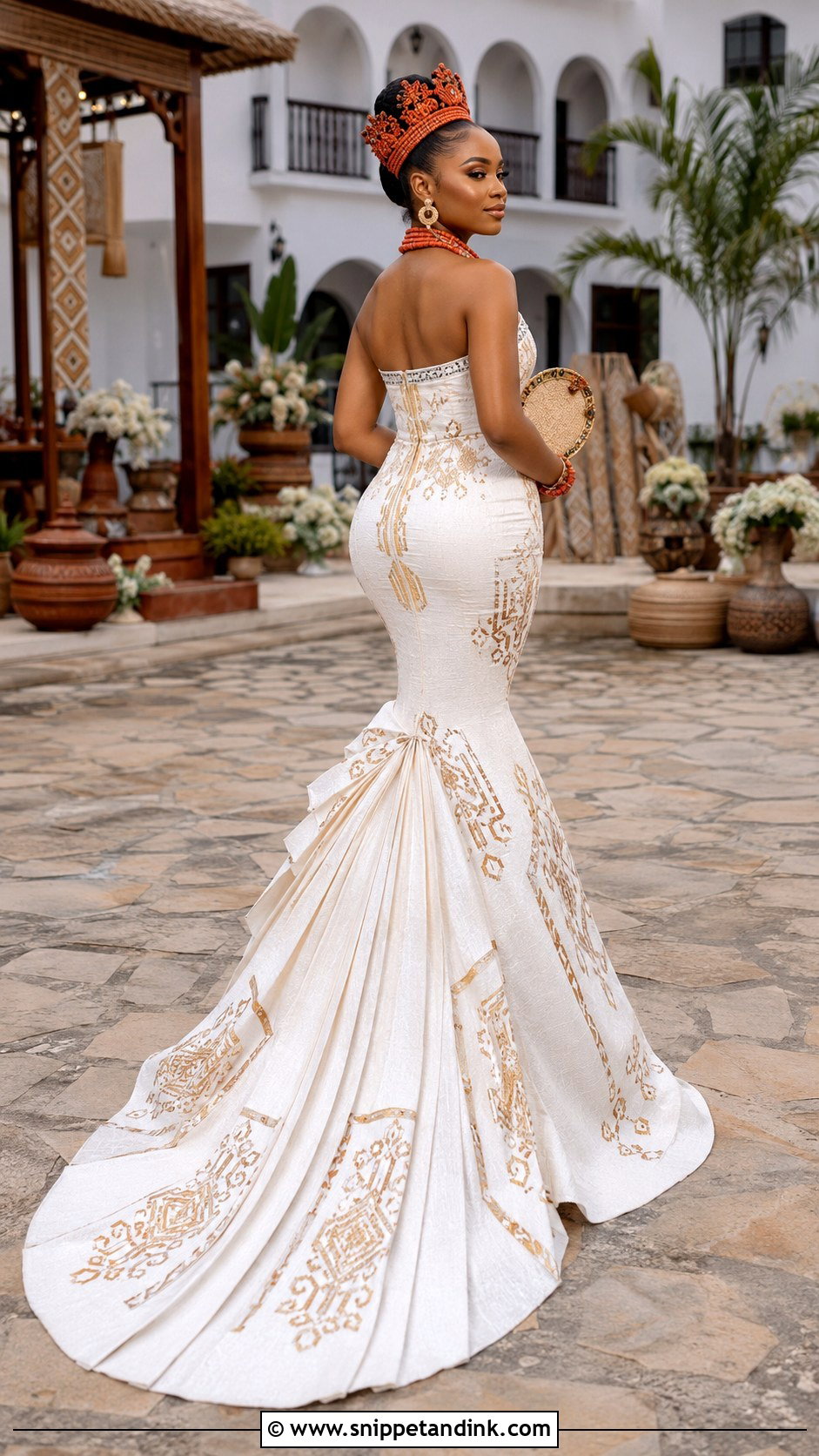
A detachable train gives you the entrance without dragging fabric all day. Start with a column, trumpet or mermaid gown built from carefully aligned panels, and attach the train at the waist with concealed hooks, snaps or a decorative belt that comes off after the formal photos. Pleat it softly or cut it as a clean circle, depending on how heavy the cloth is. Show the person who’ll remove it exactly how, and drag the train across the actual venue floor beforehand; rough concrete and grass both mark white handwoven cotton. A coral necklace, a headpiece, gold earrings, platform sandals and a fan.
20. Akwa Ocha Bridal Gown With Overskirt
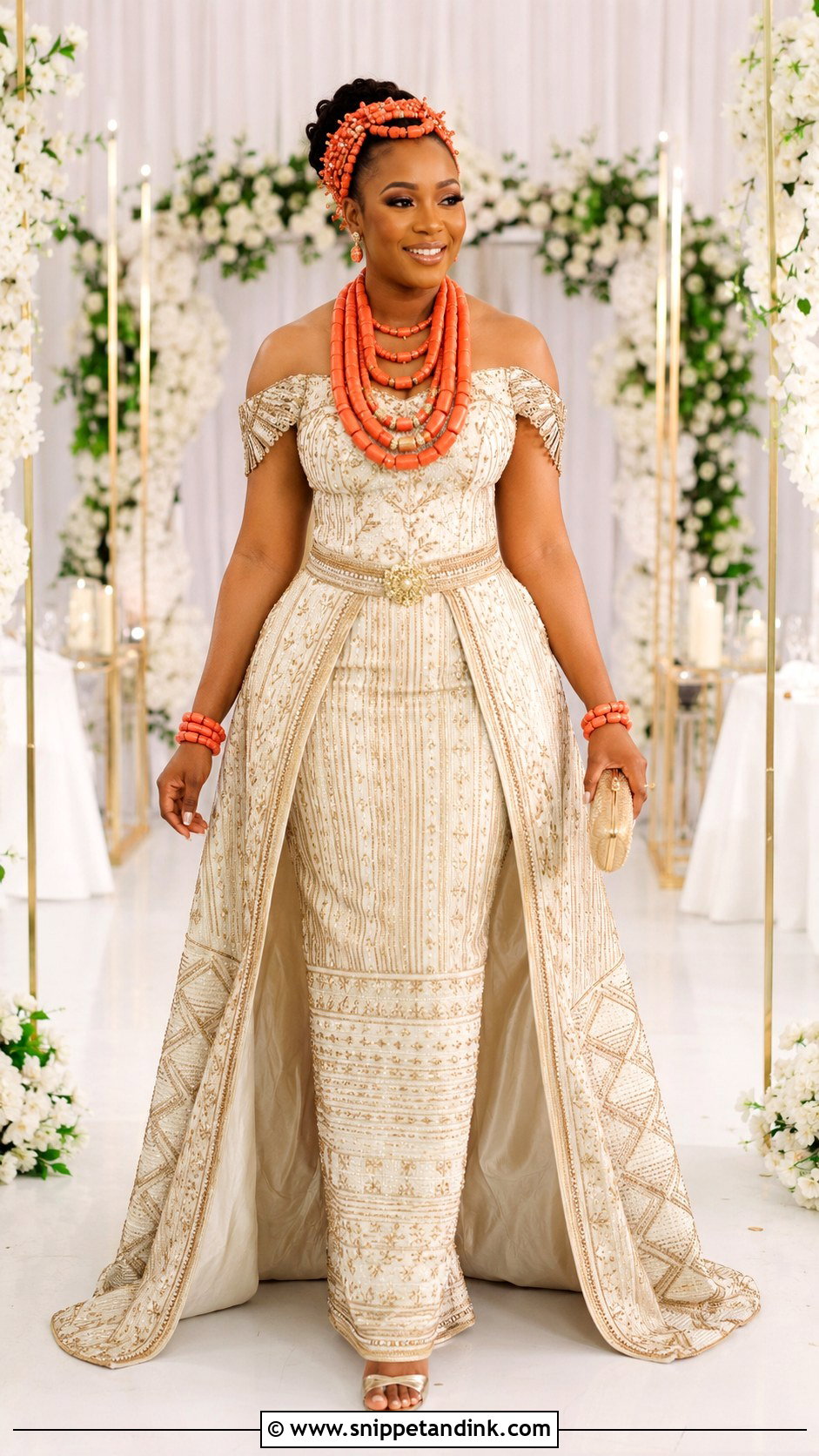
A removable overskirt gives you two looks from one outfit. Underneath, a fitted gown with a straight or slightly flared hem; over it, a full skirt that fastens at the natural waist and opens at the front. Wear it for the entrance and portraits, then take it off to dance. Keep embellishment to the waistband, neckline and overskirt border. Once the overskirt comes off, the gown has to stand alone, so the motifs on both pieces should run in the same direction. Coral, a woven or beaded headpiece, a gold clutch and stable heels.
Cutting Handwoven Cloth Without Losing the Motifs
Tailors used to machine-made fabric need to slow down with Akwa Ocha. The cloth comes in the width the loom allows, it has more body than mill cotton, and the woven motifs can’t be moved once the panels are cut.
What I ask the tailor to do first
- Wash or steam a small offcut to see whether it shrinks, before the main pieces are cut.
- Lay every pattern piece on the cloth at once and photograph the layout so the family can see where the motifs land.
- Line all fitted pieces in soft cotton so the weave doesn’t rub the skin.
- Finish the raw edges inside, because handwoven cloth frays faster than most people expect.
White Cloth on a Long Outdoor Afternoon
Traditional ceremonies often run for hours, partly outdoors, with palm wine passing hands and dust rising from the dancing. A white handwoven outfit shows all of it. Pack a small kit with stain wipes, white chalk for scuffs, safety pins and blotting papers, and hand it to a sister or friend who stays close.
Afterwards, take any stains to a cleaner who handles handwoven and heirloom textiles instead of scrubbing them at home. Store the cloth rolled or loosely folded in a cotton bag, out of the light, since white cotton yellows in plastic or sunlight. Many families keep the bride’s cloth for the next generation, so it’s worth the extra care.
Heritage Cloth, Cut and Worn With Care
Start from the ceremony, your family’s customs and what the cloth means to them, then decide between wrappers, a structured blouse, a fitted gown or an overskirt. Authentic cloth and skilled cutting should drive the decision. Coral, headpieces, fans and metal accents add to the outfit, but they shouldn’t cover the motifs. Ask for secure fastenings, a soft lining and shoes you can dance in. Work with relatives, weavers and tailors who understand Anioma bridal dress; between them, they’ll turn an idea into an outfit that feels like you and like home.
You'll Like These Ideas:



Leave a Reply