
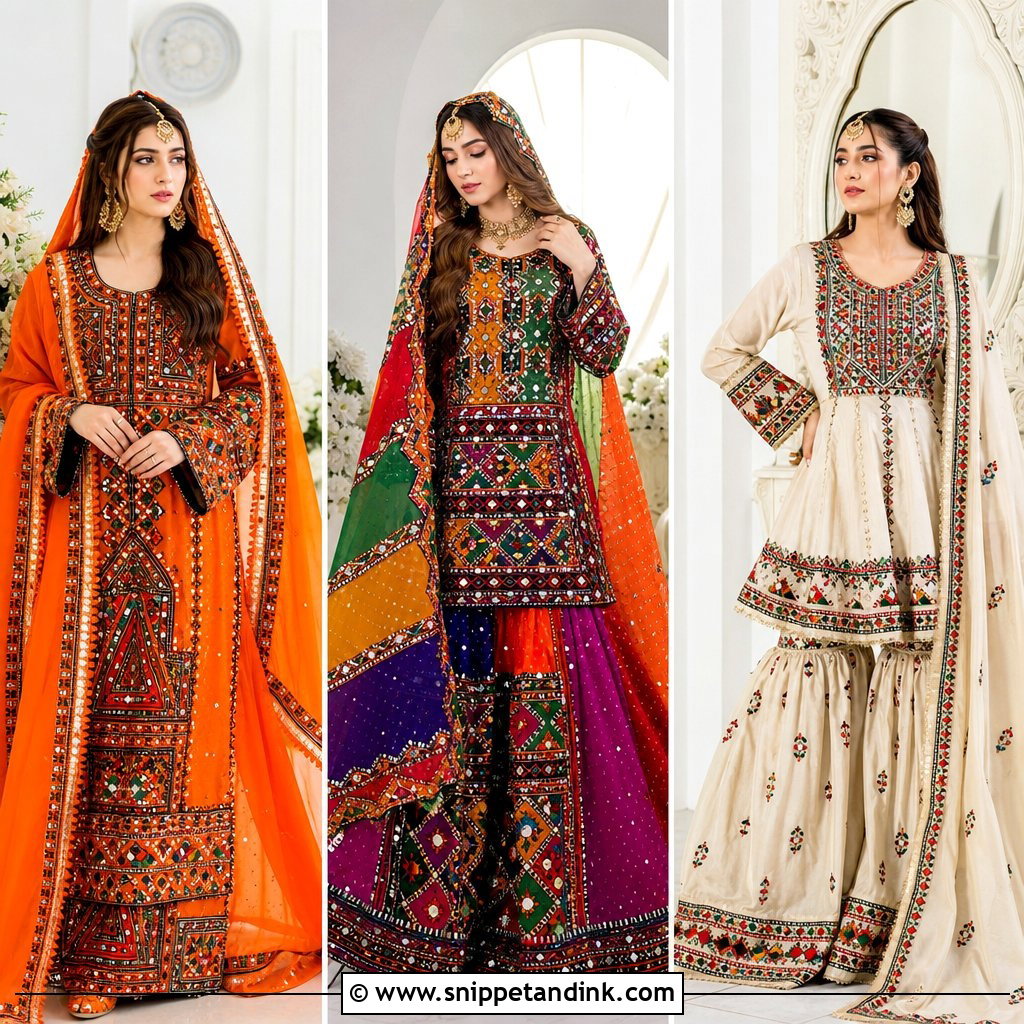
Balochi wedding clothing carries identity in its stitches: color, geometry and handwork that families recognize at a glance. A classic outfit is a long, loose shirt, the pashk, with wide trousers, an embroidered front panel, detailed cuffs and a coordinating headscarf or dupatta. Red is still the meaningful bridal choice, though black, green, blue, ivory, pink and purple can be just as striking. Fine threadwork, geometric motifs, metallic accents, beads and tiny mirrors are where the personality comes in. My advice before anything else is to buy artisan embroidery whenever you can and leave real time for both the handwork and the tailoring. The twenty outfits below cover bridal pashk silhouettes, modern gowns, jewel tones, mirror work and lighter looks for the wider celebrations.
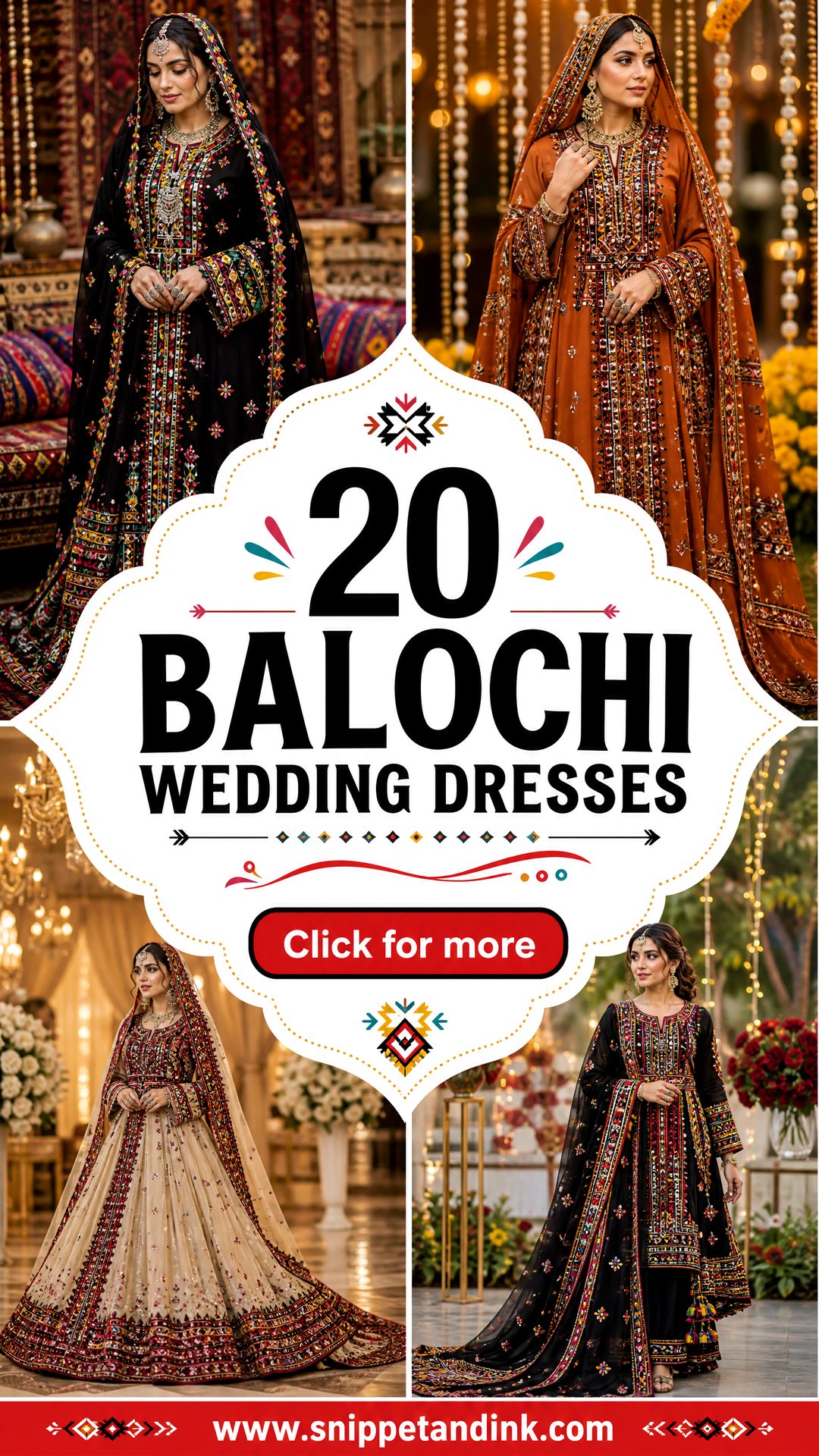
How Loose Should a Pashk Be?
The generous cut is part of the dress’s character, but loose and baggy aren’t the same thing. These are the measurements I take for a bride, and why each one matters for the embroidery.
- Shoulder seam: it should sit on the shoulder point, not slide down the arm. A dropped seam drags the embroidered neckline sideways and pulls the chest panel off-center.
- Chest ease: enough room that the front panel hangs flat when you sit. If it pulls into folds across the bust, the geometric motifs bend and lose their straight lines.
- Sleeve length: measure with your bangles on. Sleeves ending at the wrist bone leave the bangles visible, while longer sleeves bunch over them and hide the cuff embroidery.
- Shirt length: check it in the shoes you’ll actually wear. An ankle-length pashk that brushes the floor picks up dust along its hem border by the end of the first function.
- Trouser ankle: wide enough to step easily, but finished snugly enough that the hem doesn’t drag.
Bring everything, shoes, bangles and dupatta, to the fitting. A heavy dupatta pulls the neckline back on the shoulders, and that’s far easier to allow for before the final stitching than after.
1. Traditional Red Balochi Wedding Dress
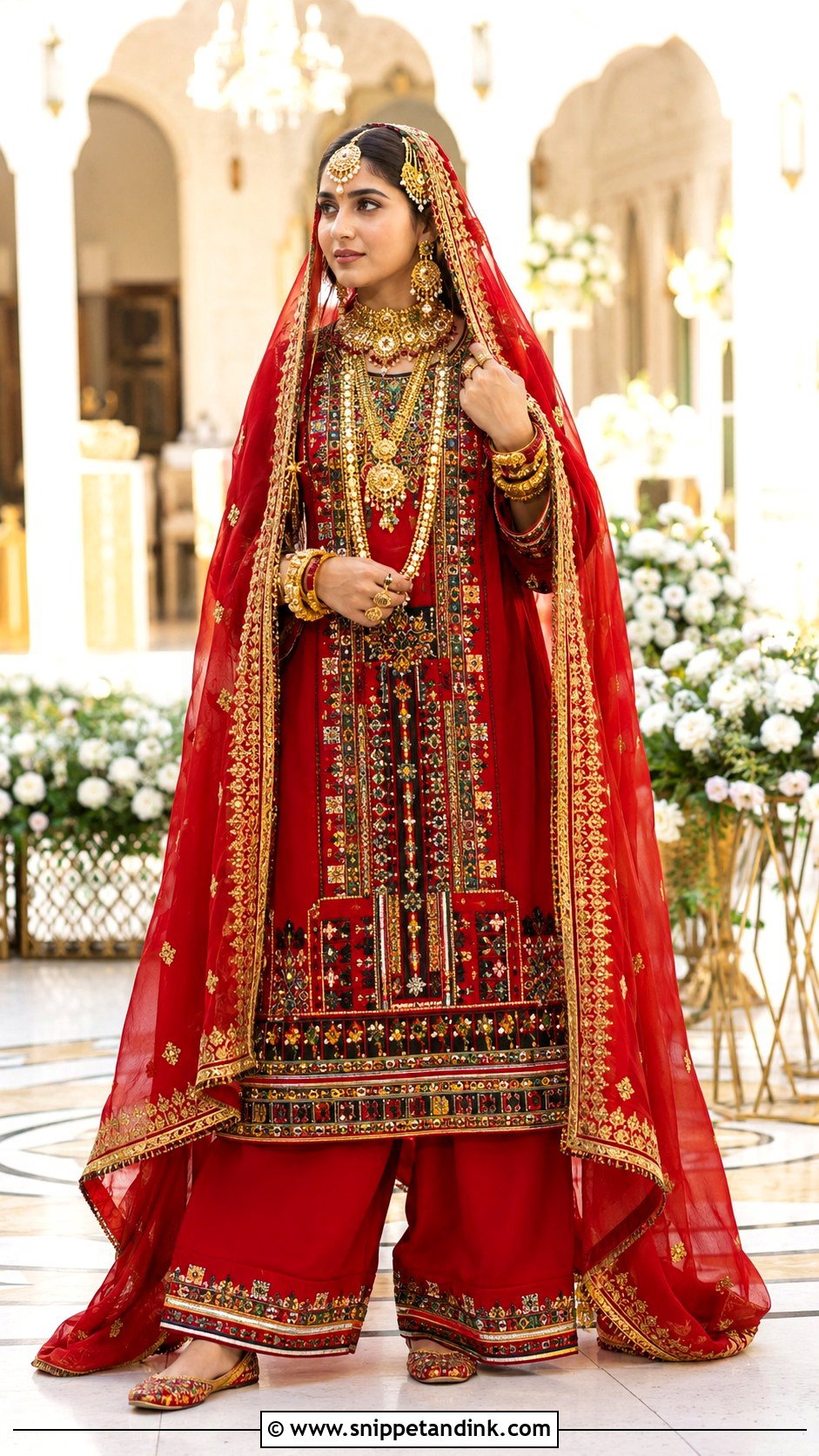
Red belongs to the main ceremony, and it reads from the back of any hall. Choose a long pashk with dense geometric embroidery across the neckline, chest panel, sleeves and hem; gold, green, white and black thread all contrast well against it. Wide matching trousers and a lightweight red dupatta with embroidered borders complete the base, with gold-toned jewelry, stacked bangles, statement earrings and embellished flats on top. Resist having it fitted closely. The loose cut is part of the dress, and taking it in distorts the embroidered panels so the geometry no longer sits straight.
2. Maroon and Gold Balochi Wedding Dress
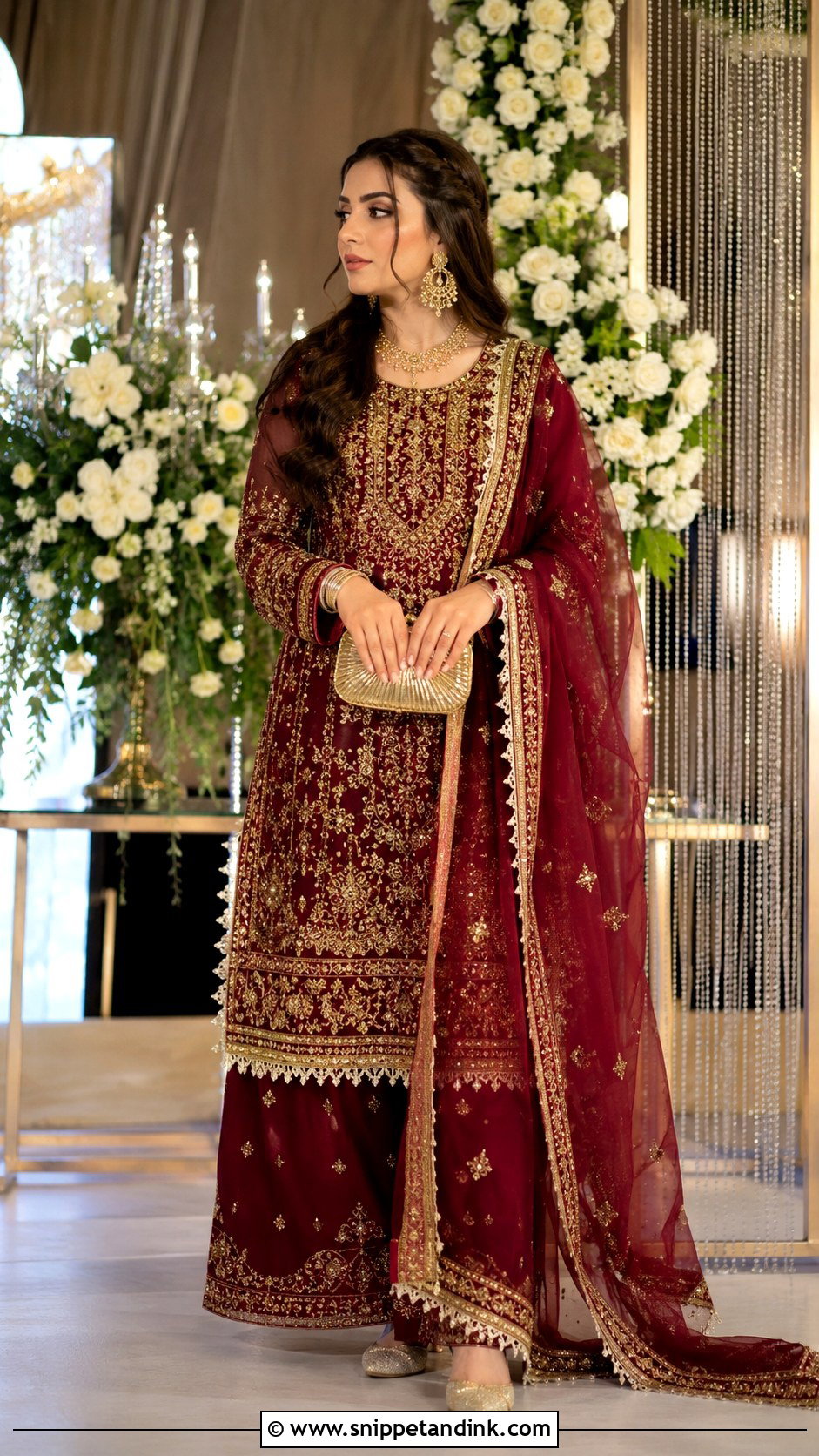
Here’s a tip I give every bride wearing heavy embroidery: keep the work a little away from the armhole seams. Dense hand stitching stiffens fabric, and stiff fabric at the shoulder means you can’t lift your arms comfortably. That matters on a floor-length maroon shirt with gold thread, small beads and placed mirror accents. Concentrate the embroidered panel on the bodice and the rest of the garment stays light. Wide maroon trousers, a sheer dupatta with a broad gold border, pointed embroidered flats, a structured gold clutch, layered necklaces and a traditional forehead ornament complete it. Maroon is especially flattering at evening events and in cooler months.
3. Black Multicolor Balochi Wedding Dress
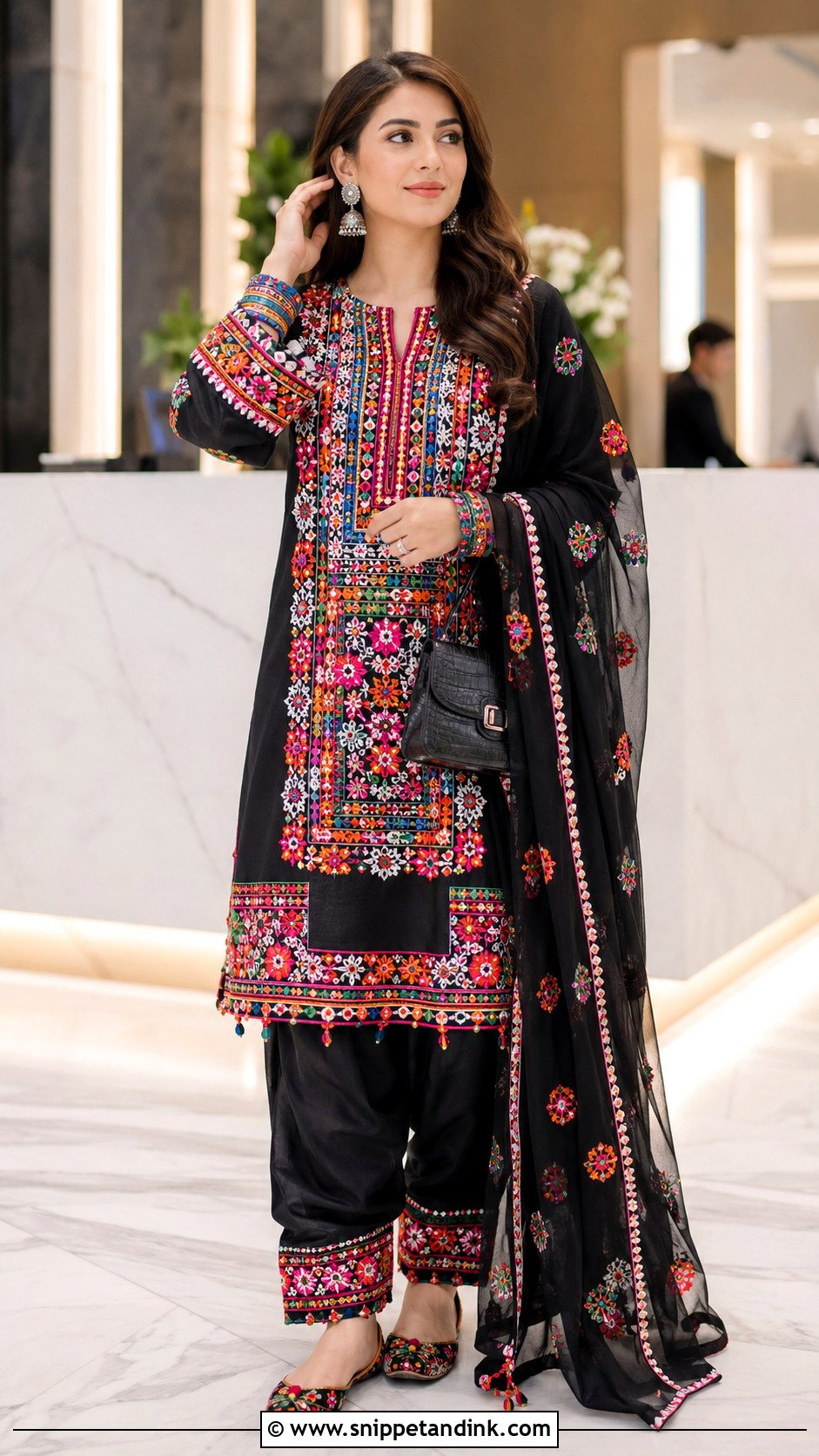
On black, every thread color shows at full strength. A loose black shirt with pink, orange, green, blue and white threadwork around the neckline, front pocket panel, cuffs and lower border needs very little else: matching black trousers with small embroidered ankle details and a black chiffon dupatta with multicolor edging. Silver earrings, colorful bangles, a compact black bag and comfortable embellished flats finish it. For makeup, pick one focus, a bright lip or defined eyes, because the embroidery already brings five colors up toward the face. Receptions and evening functions suit it.
4. Royal Blue and Red Balochi Wedding Dress
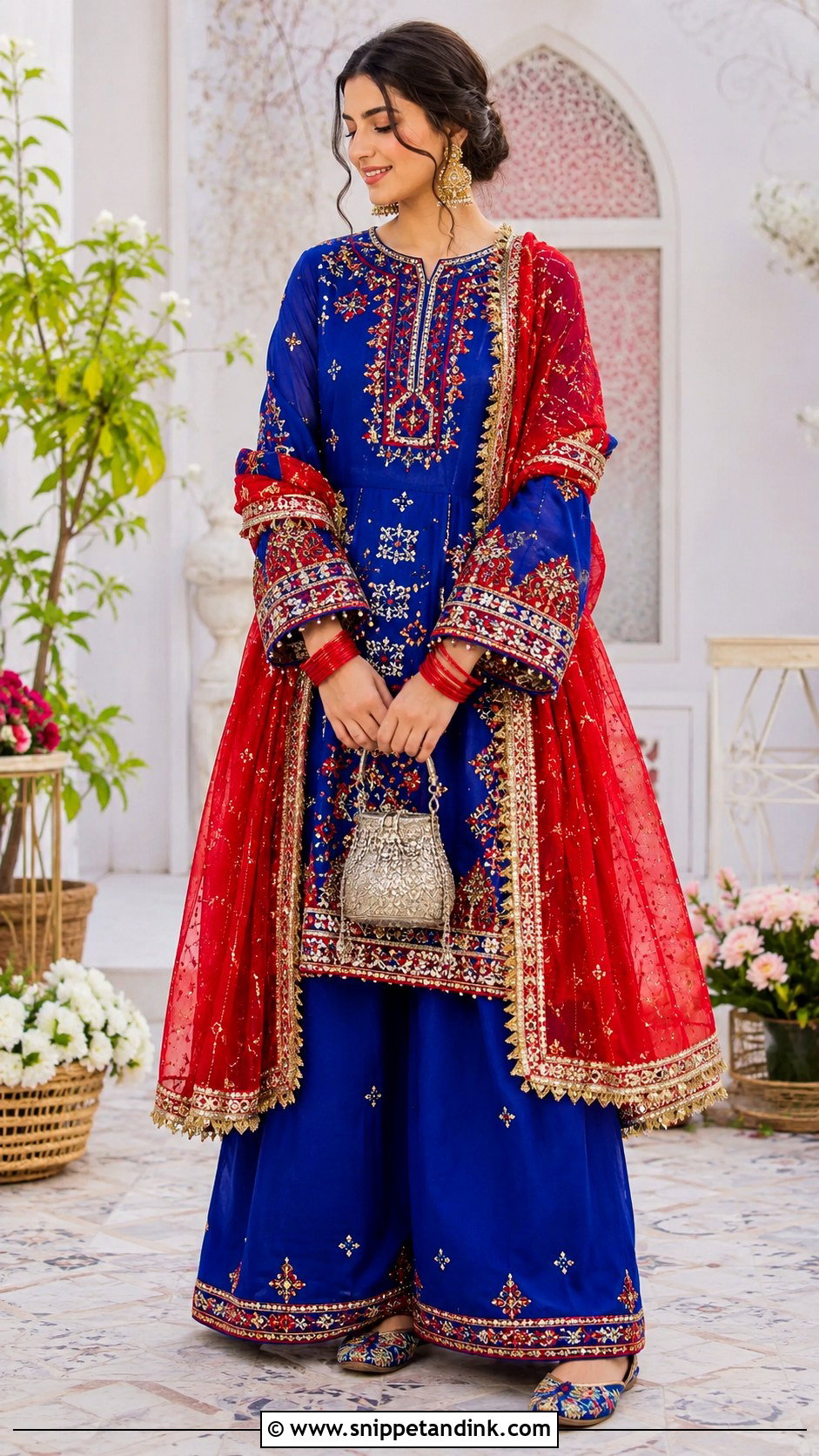
Blue and red only work when something connects them. Red embroidered cuffs and a red front panel on a royal blue long shirt do exactly that, alongside red, gold and white geometric needlework. Pair blue wide-leg trousers with a red dupatta trimmed in gold or scattered with embroidered motifs, then gold jhumkas, red bangles, a small metallic bag and blue or gold flats. I keep the jewelry to the face and wrists. A heavy necklace lying across an embroidered neckline hides the very work you commissioned. In photographs, the clear contrast separates every piece of the outfit cleanly.
5. Emerald Green Balochi Wedding Dress
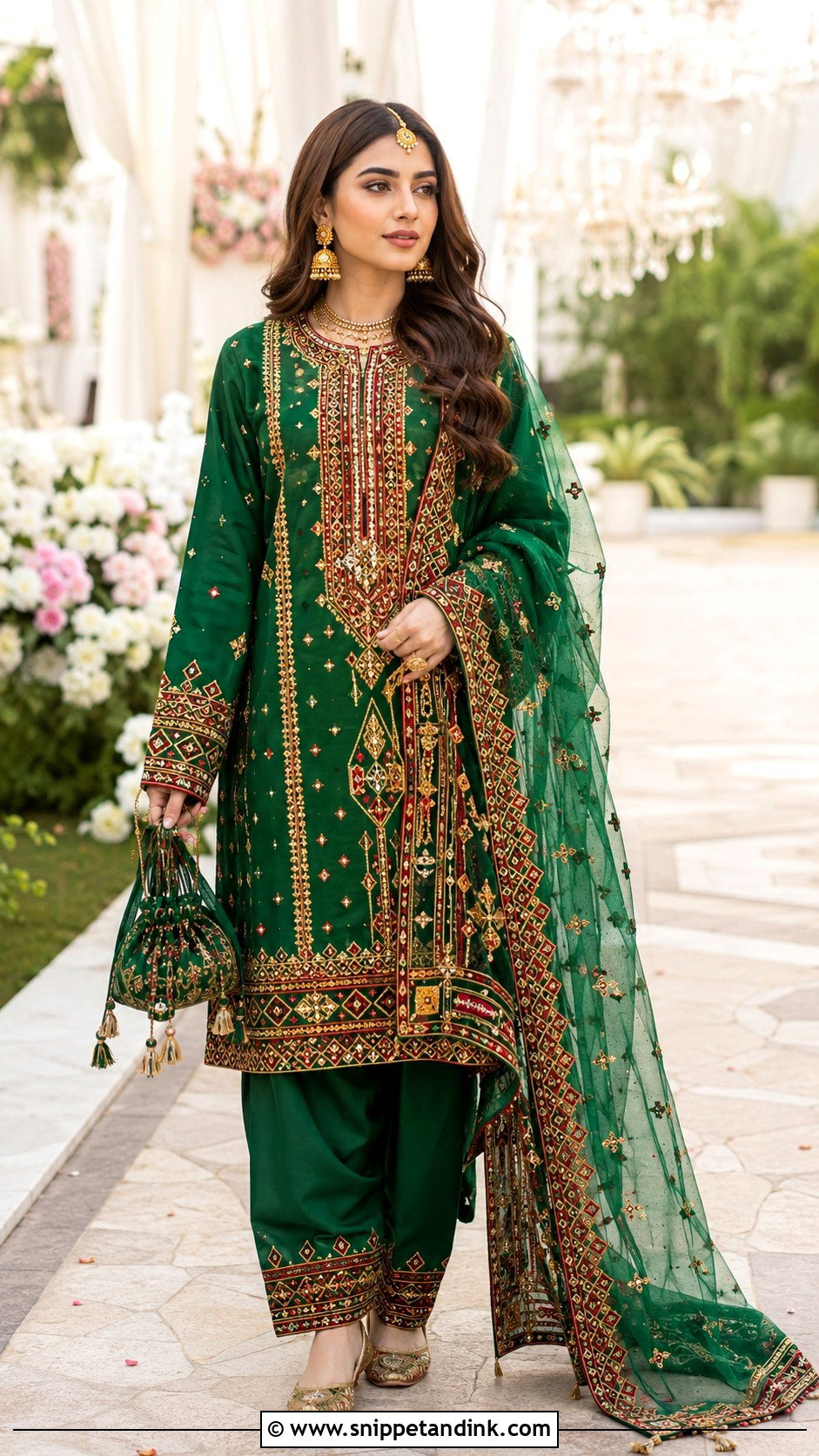
Emerald gives heavy embroidery a deep, rich ground. Choose a long green shirt with gold, rust, red and cream threadwork across the front panel and sleeves, with wide green trousers keeping the traditional shape. Over dense fabric, an organza or chiffon dupatta adds a lighter layer, and one with a narrow embroidered edge in the shirt’s colors ties everything together. Gold drop earrings, a coordinated necklace, a potli bag and low embellished shoes finish it for day or evening. Don’t let anyone talk you into a nipped waist. The straight, relaxed cut lets the embroidery and the movement of the cloth do the work.
6. Ivory Multicolor Balochi Wedding Dress
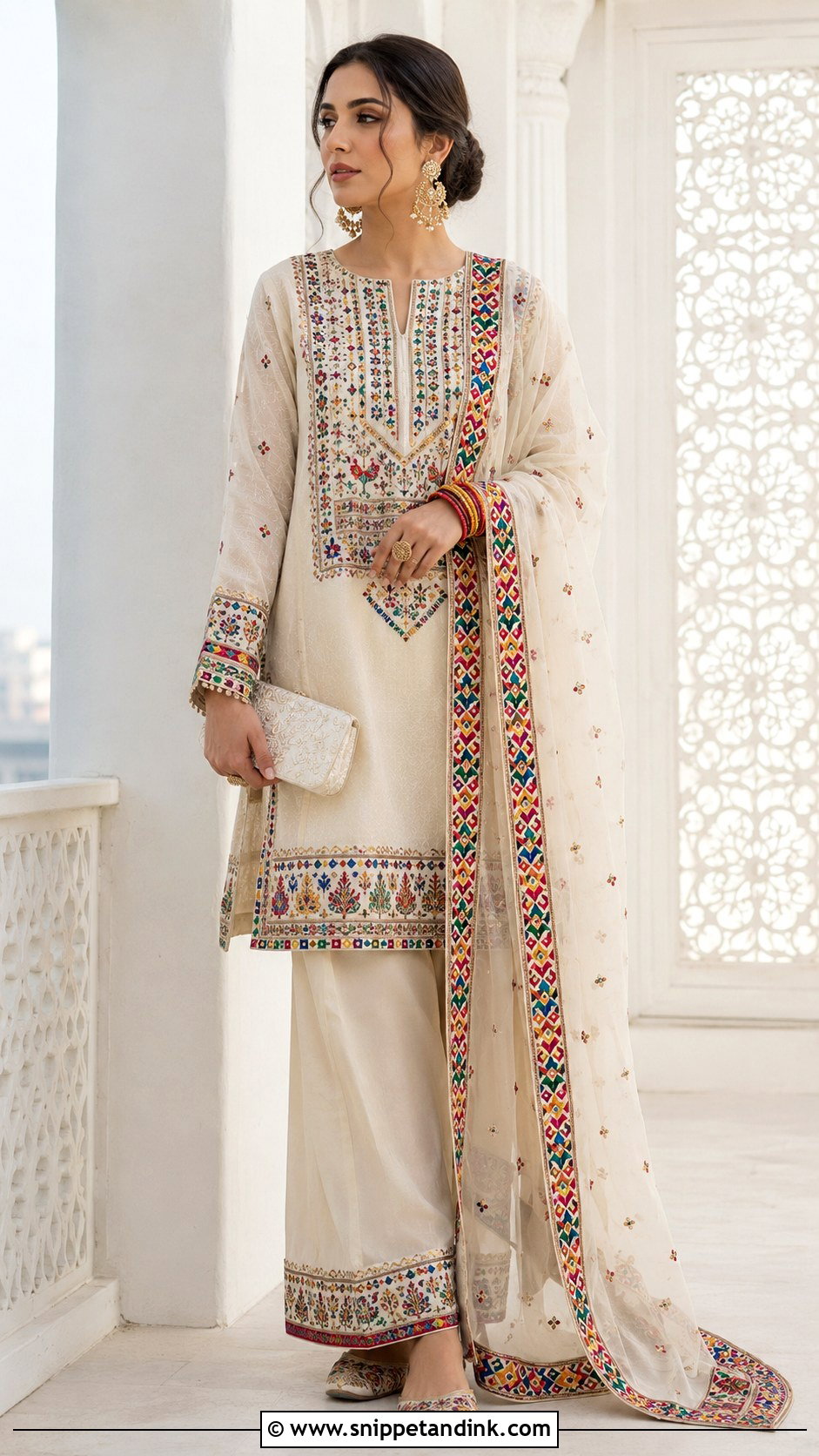
Can ivory still feel vivid? With colorful Balochi needlework, it can. Red, blue, orange, green and black geometric patterns on an ivory long shirt look best concentrated at the chest panel, neckline, cuffs and hem, so the background stays clean. Flowing ivory trousers, a matching sheer dupatta with a multicolor border, gold-toned earrings, bright bangles, an ivory clutch and embroidered flats complete it. My non-negotiable on ivory is a smooth matching lining. Without one, the fabric turns see-through in bright daylight or under a photographer’s lights, and the lining must not stiffen the drape. Daytime weddings suit this palette.
7. Blush Pink Balochi Wedding Dress
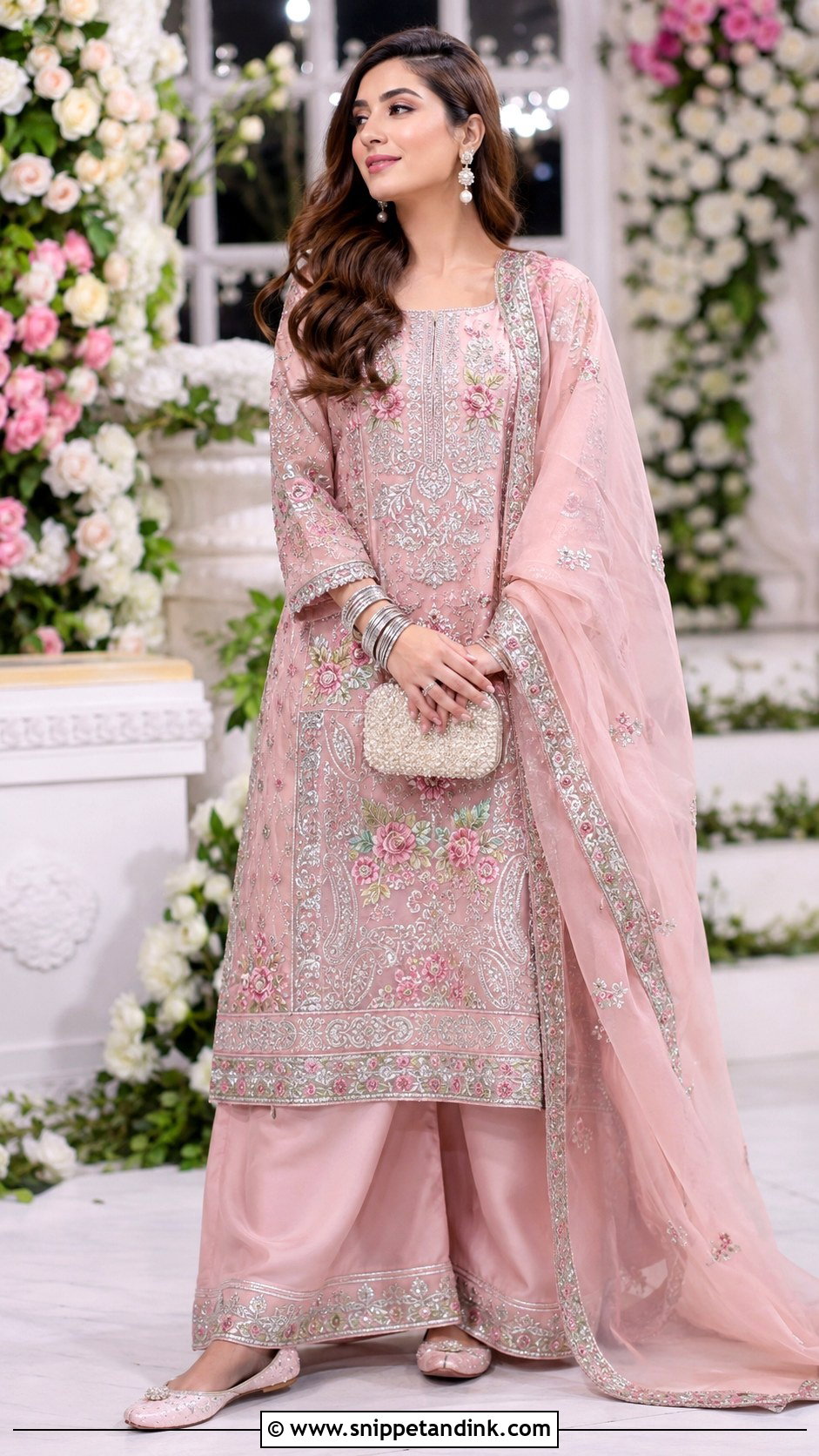
Blush is the quietest setting for traditional embroidery. Silver, white, deep rose and muted green thread on a long pink shirt, with small mirrors around the neckline, adds sparkle without overpowering the color. Wide pink trousers and a light dupatta with embroidered corners and a narrow silver edge go with it, then pearl earrings, silver bangles, a beaded clutch and pale pink flats. A morning ceremony, engagement or reception all suit it. Keep the tailoring relaxed but exact: shoulder seams sitting on the shoulder point, sleeves ending at the wrist bone so the bangles show. Tonal makeup and a soft braid keep it cohesive.
8. Purple Mirror Work Balochi Wedding Dress
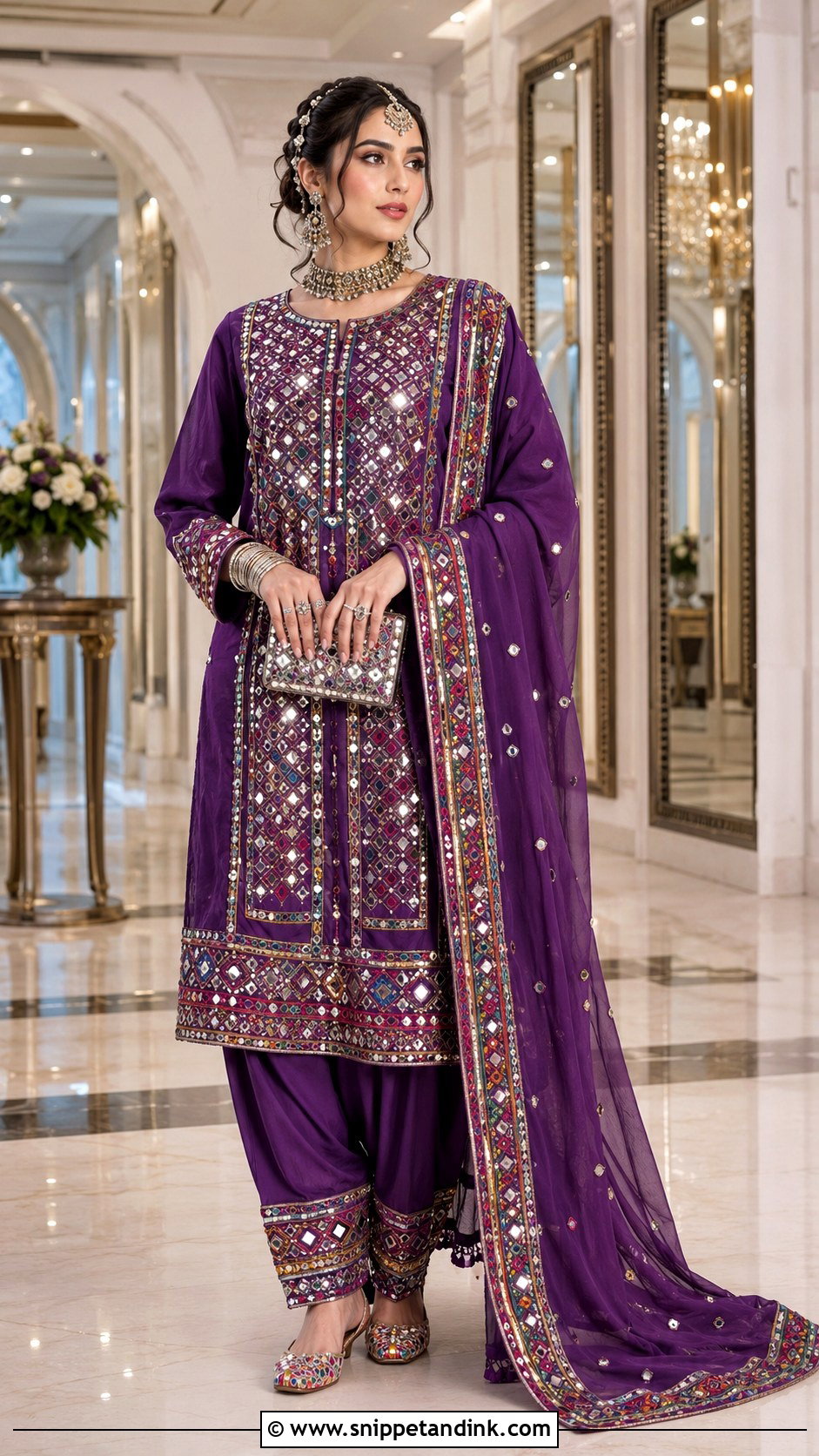
Mirrors add real weight, and that’s the main thing to plan for here. A full-length purple shirt with small mirrors secured inside geometric motifs across the front, sleeves and lower border looks lively with pink, orange, turquoise and white thread, but covering every section makes the garment heavy and stiff. Place the mirrors strategically and you keep the shine while still walking and sitting comfortably. Add matching loose trousers, a purple dupatta with a restrained mirror-work border, silver jewelry, a mirrored clutch, stacked bangles and closed-toe embroidered flats. Evening events under clear indoor lighting show the mirrors at their best.
9. Rust Orange Balochi Wedding Dress
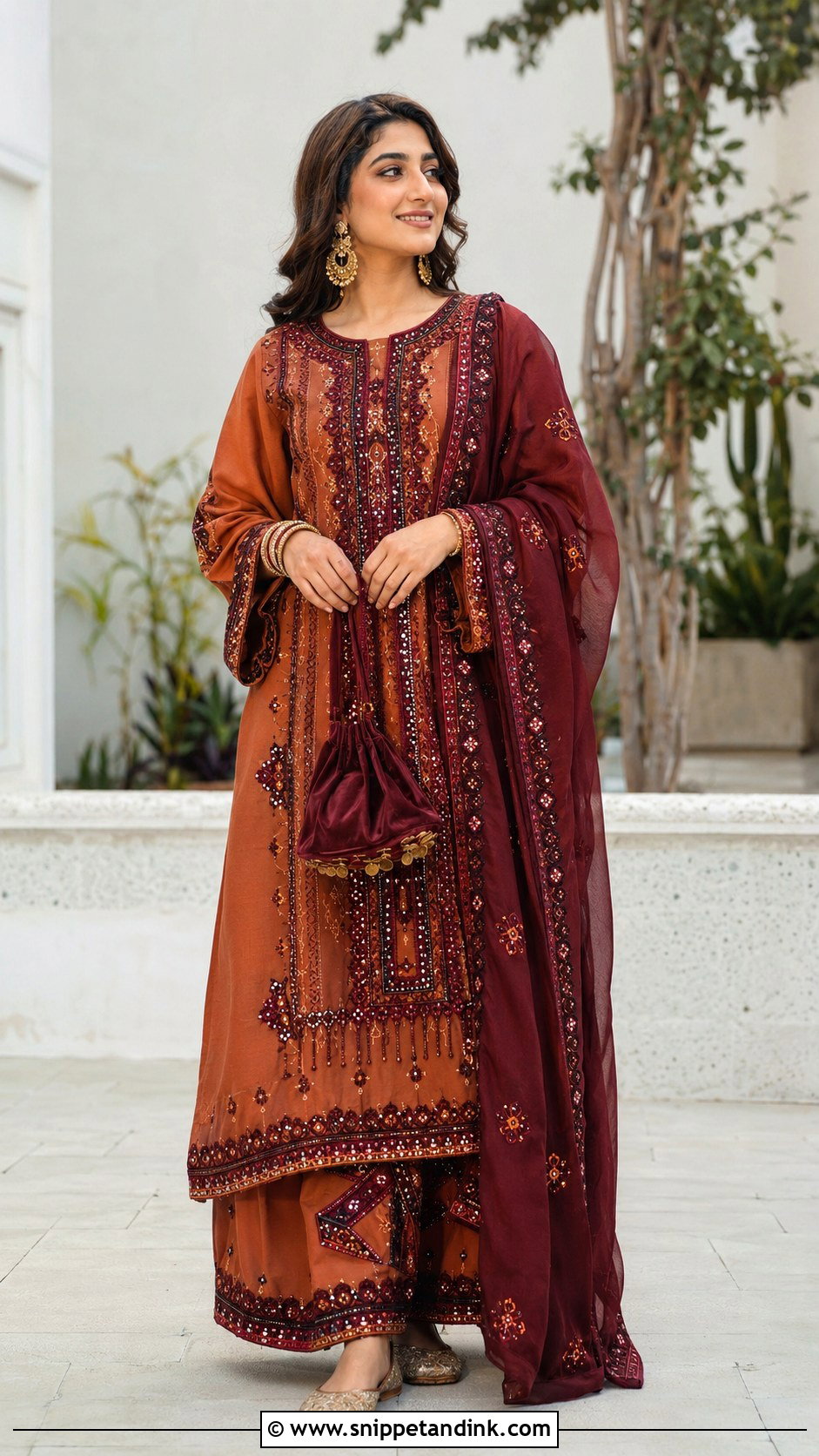
Rust orange is festive without imitating bridal red. A long rust shirt with burgundy, gold, green and cream embroidery, detailed cuffs and a rectangular front panel draws the eye straight to the craftsmanship. Matching wide trousers keep the color unbroken, and a burgundy dupatta adds depth. Antique-gold earrings, a short necklace, traditional bangles, a burgundy bag and metallic flats complete it. For outdoor daytime functions or autumn weddings, I’d choose breathable cotton-silk or a light silk blend, firm enough to carry the embroidery but soft enough to move.
10. Turquoise Balochi Wedding Dress
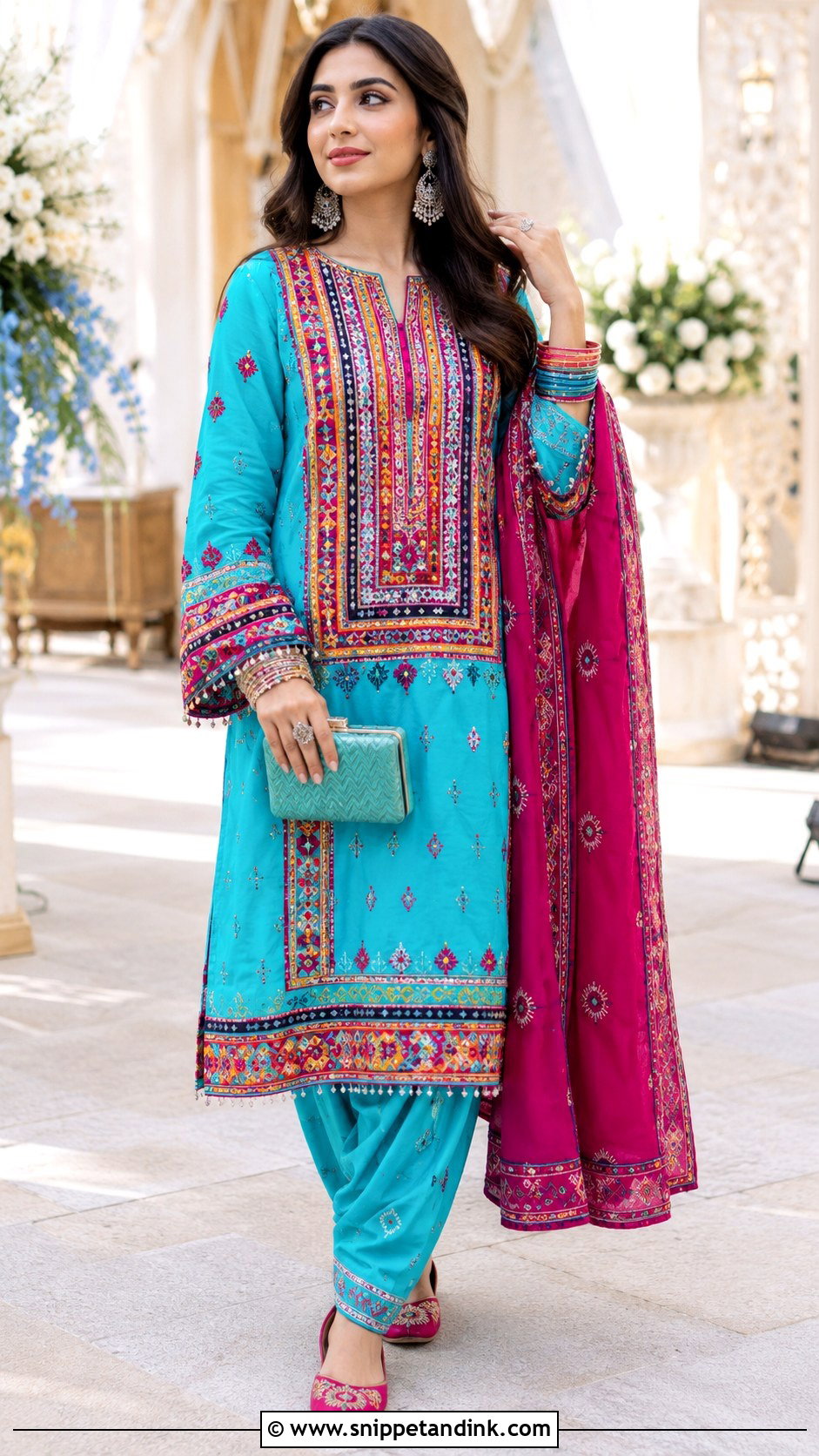
Turquoise brings freshness to a colorful wedding wardrobe, and it pairs naturally with its opposite on the color wheel. A turquoise pashk with magenta, orange, yellow, navy and white embroidery in balanced geometric rows, loose turquoise trousers and a magenta dupatta with a turquoise border gives the outfit definition. Silver statement earrings, multicolor bangles, a turquoise clutch and magenta embroidered flats carry both colors from head to toe. Bright, open daytime settings suit it. My accessory rule here: repeat two or three colors already in the needlework, then stop.
11. Red Balochi Pashk With Wide Trousers
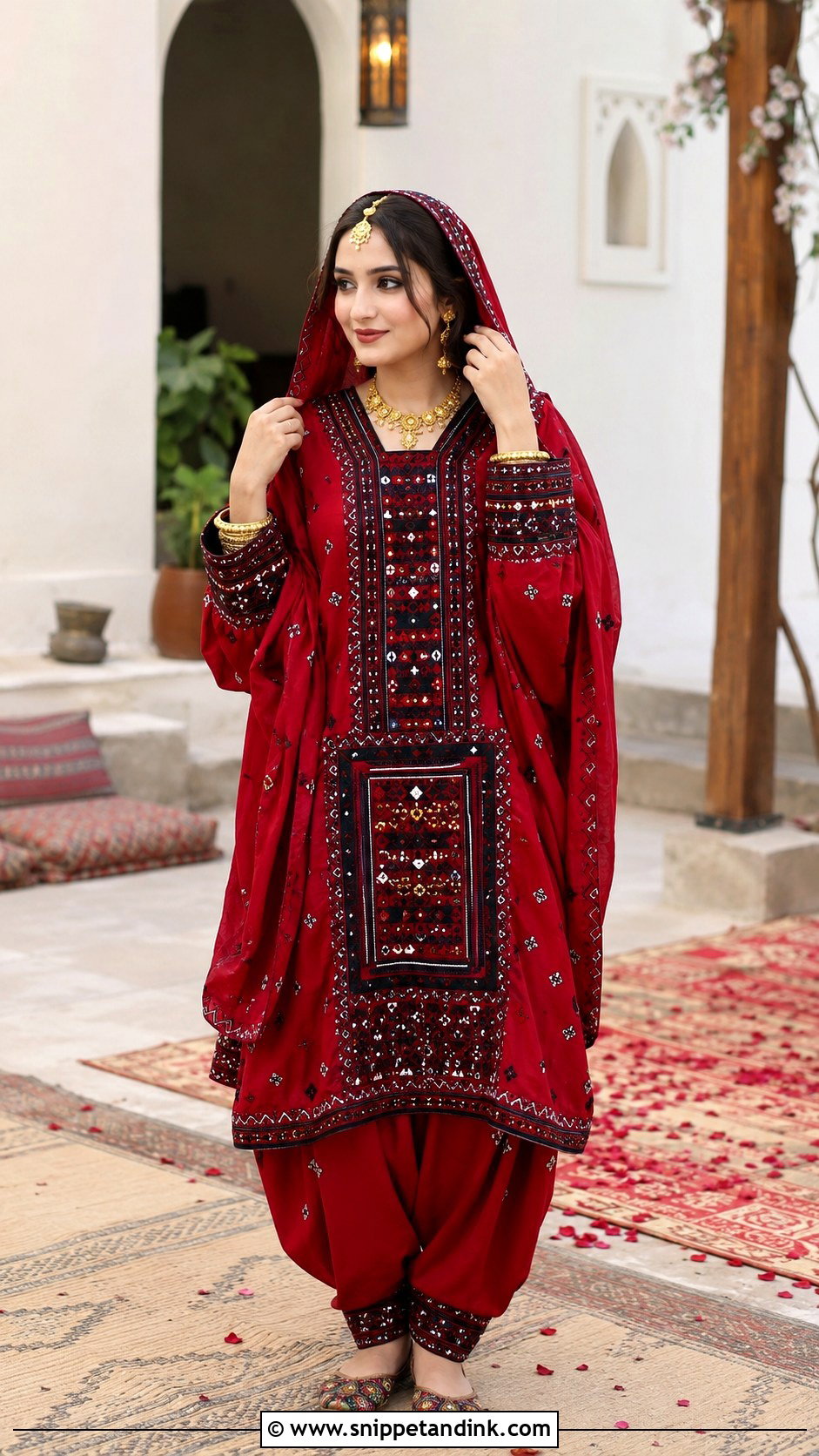
The pashk with very wide trousers is the traditional shape at its most comfortable, and getting its proportions right is a measuring job. A red ankle-length pashk with a generous body, long sleeves and an embroidered front pocket panel, with gold and multicolor work continuing along the neckline and cuffs, sits over red trousers that are wide through the leg and narrow slightly at the ankle. The shirt stays the centerpiece. A long red headscarf or dupatta with embroidered edges, gold jewelry, stacked bangles and handcrafted flats complete it. Loose should look intentional, not oversized, so I’d work with an artisan or tailor who knows traditional proportions, embroidery placement and finishing.
12. Floor-Length Balochi Bridal Gown
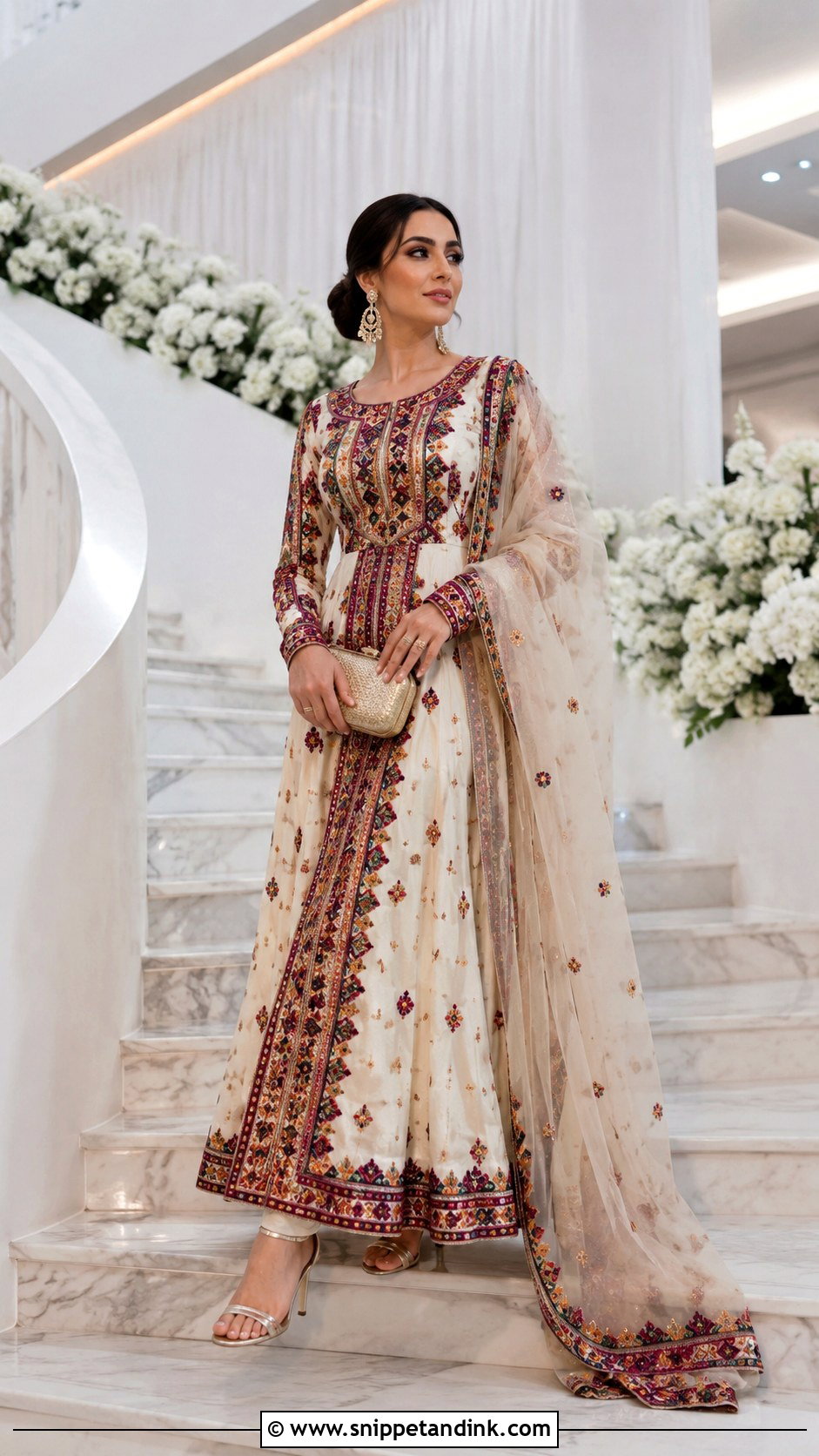
Turning Balochi embroidery into a gown works when the needlework is drawn for the gown from the start. Choose a structured but comfortable fitted bodice, gently flared skirt and long sleeves, with colorful geometric embroidery at the neckline and bodice and smaller motifs continuing down the skirt so it feels connected. A sheer matching dupatta, metallic heels, drop earrings and a compact bag finish it. Please don’t cut old embroidered panels to fit a gown pattern without expert help; commission new work to the gown’s measurements instead. A front hem lifted slightly off the floor makes walking easier while keeping the full-length line.
13. Balochi Embroidered Lehenga Wedding Dress
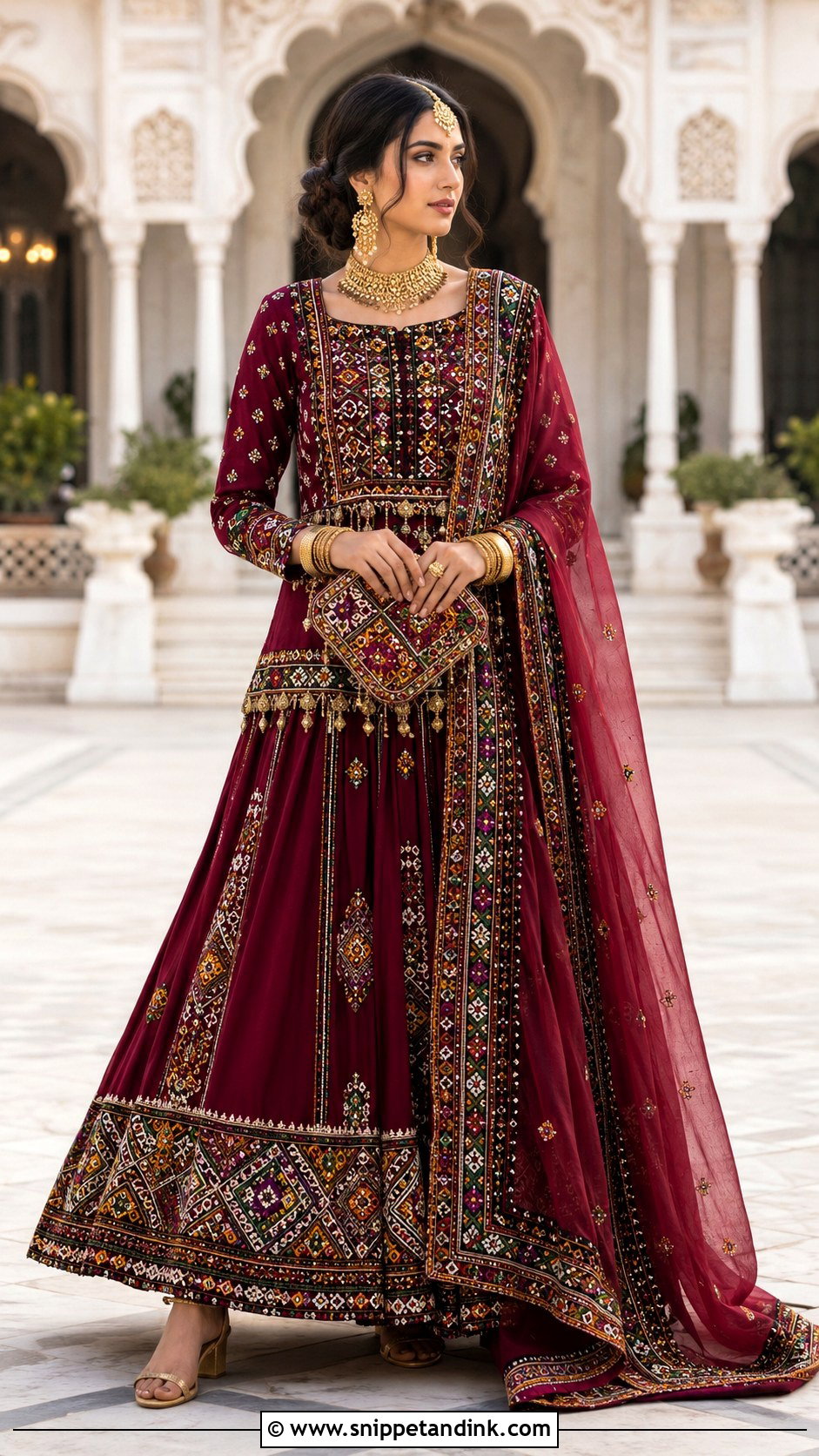
A Balochi embroidered lehenga is a fusion piece, and the blouse is where it stays Balochi. Keep the heaviest work on the blouse neckline, central panel and sleeves, long or hip-length, then repeat selected motifs as geometric borders near the skirt hem. Red, maroon, emerald or navy all make a strong base. Drape a coordinating dupatta over the head or one shoulder depending on the function. Gold jewelry, an embroidered clutch, stacked bangles and low block heels finish it. With so much volume in the skirt, keep the blouse shape clean. Repeating colors and motifs between pieces is what makes the fusion feel considered and respectful.
14. Balochi Sharara Wedding Dress
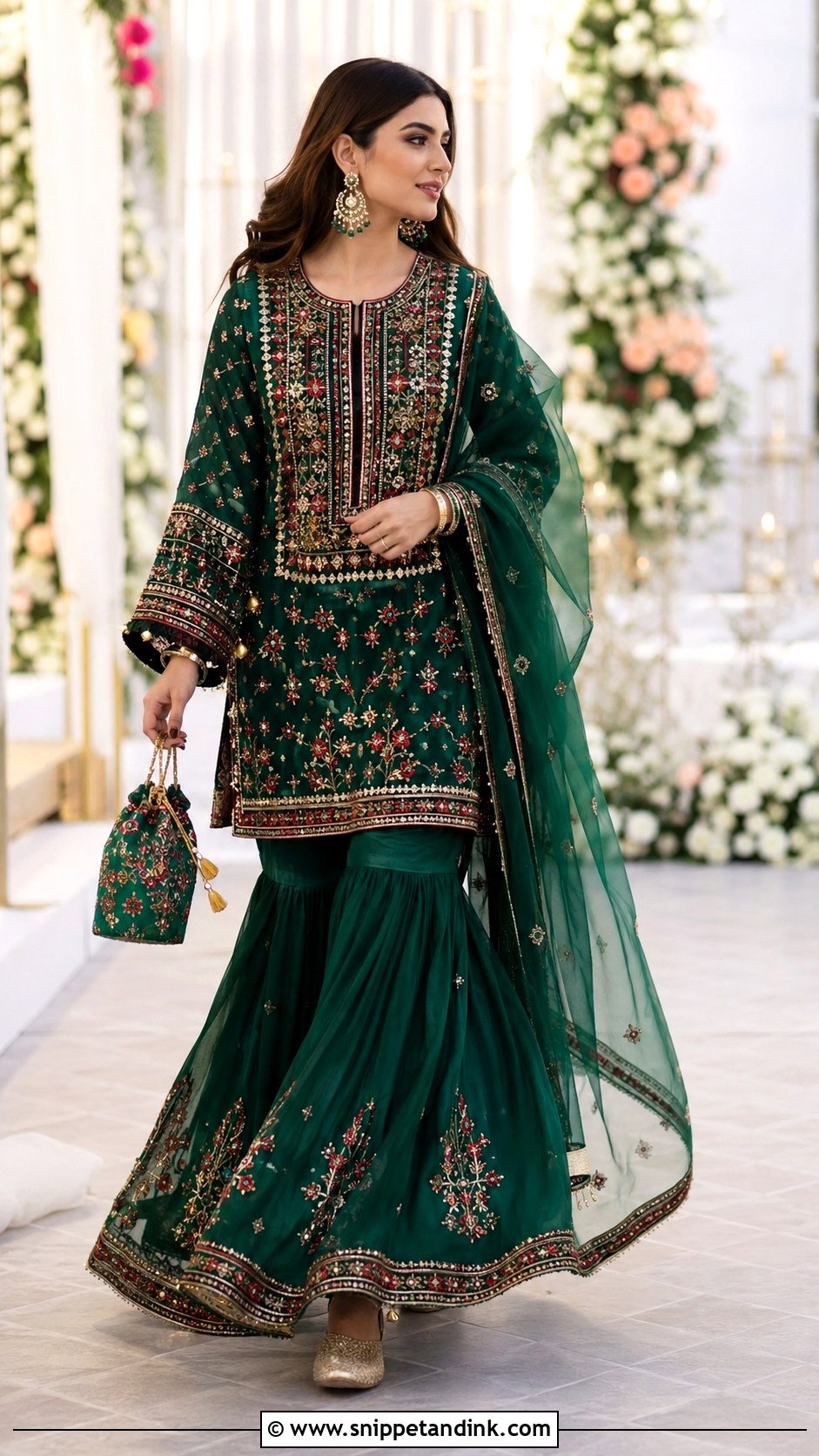
A sharara silhouette gives traditional embroidery a kind of movement that straight trousers can’t. Start with a knee-length Balochi shirt with dense threadwork across the chest, sleeves and lower edge, then dramatically flared sharara trousers with smaller borders at the knees and hems. A chiffon dupatta with matching trim softens the structure. Strong palettes include emerald with gold, maroon with rust, and navy with pink. Statement earrings, bangles, a potli bag and low heels hidden under the flare complete it. The shirt and sharara must share clear colors or motifs, or they look like two garments that only met on the day.
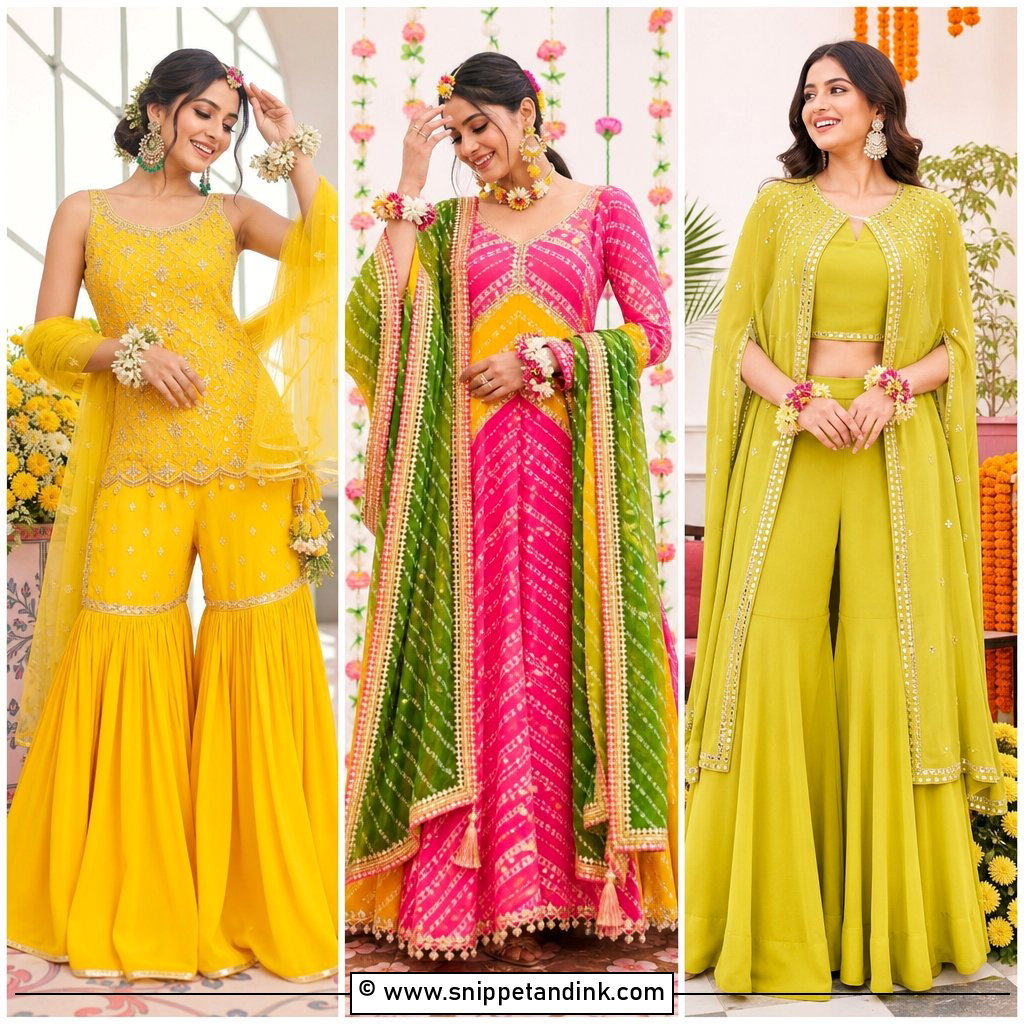
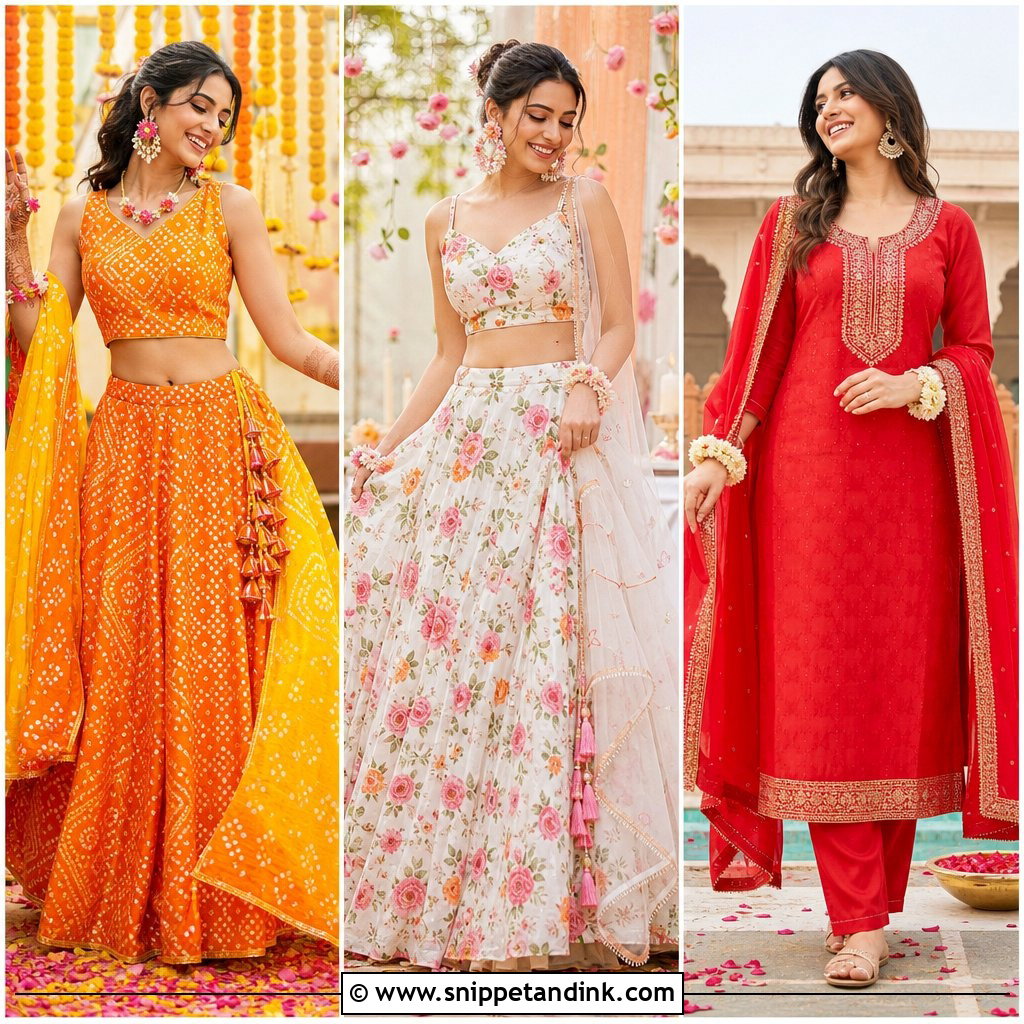
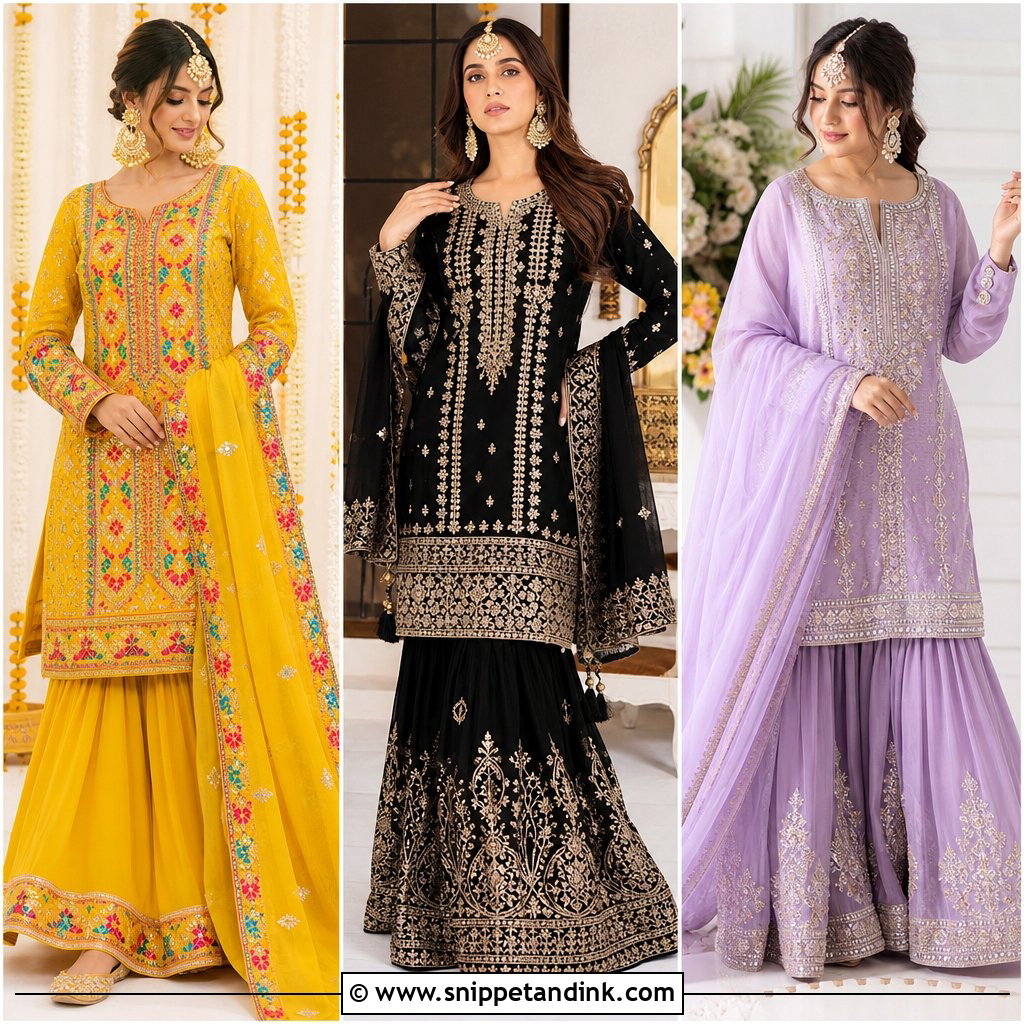
15. Balochi Peplum and Skirt Wedding Dress
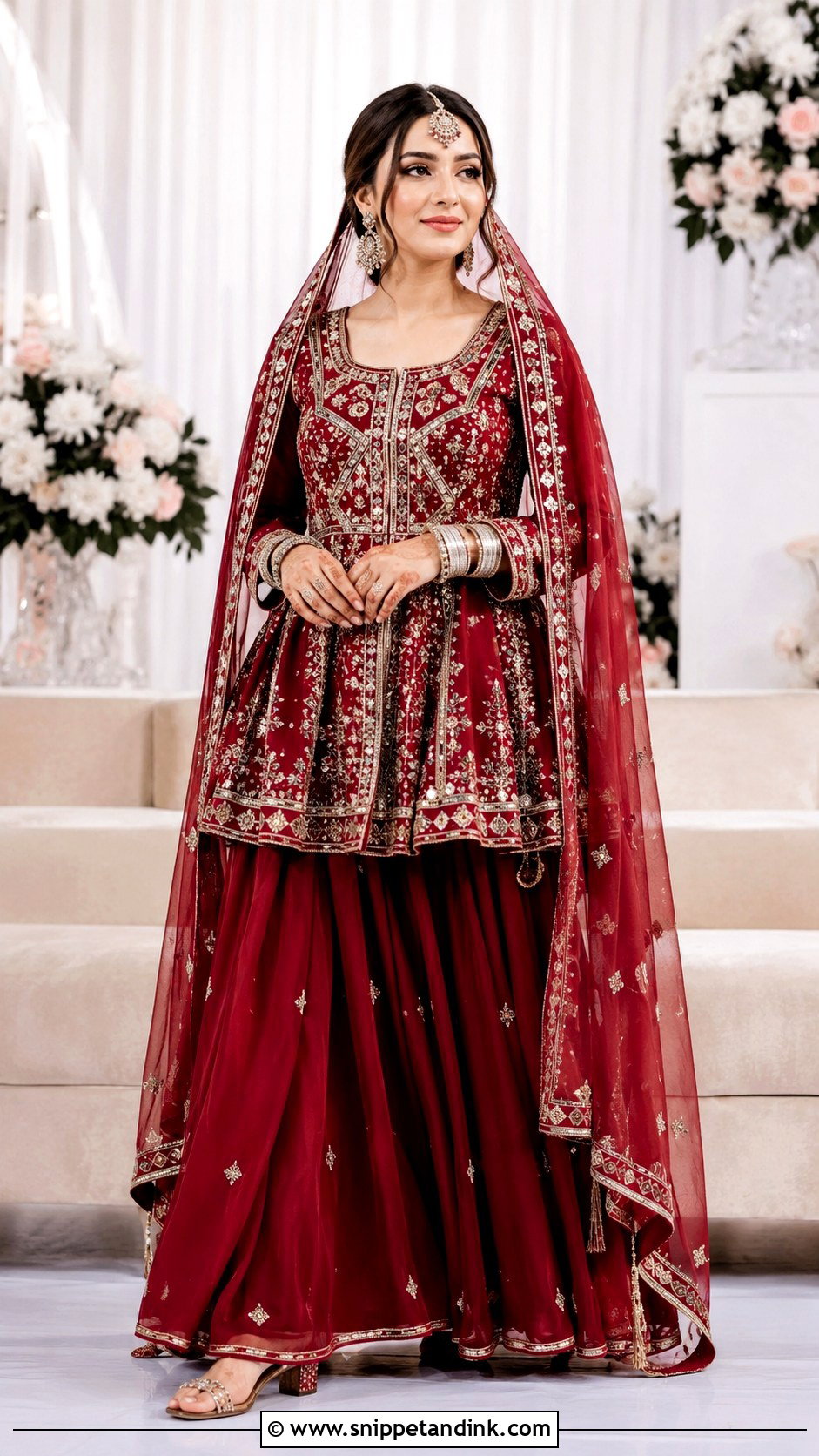
Peplums are all about where the flare ends. Set it at the widest part of the hips and it adds width; end it a little above or below and it shapes the waist instead. A fitted peplum with Balochi embroidery at the neckline, waist, sleeves and flared hem balances best over a plain or lightly worked skirt falling smoothly from the waist. Deep red over maroon feels bridal, while ivory with multicolor thread makes a daytime option. Add a sheer dupatta, traditional earrings, a forehead ornament, bangles and comfortable block heels. Leave open space between embroidered areas so each geometric motif still reads on such a shaped silhouette.
16. Velvet Balochi Winter Wedding Dress
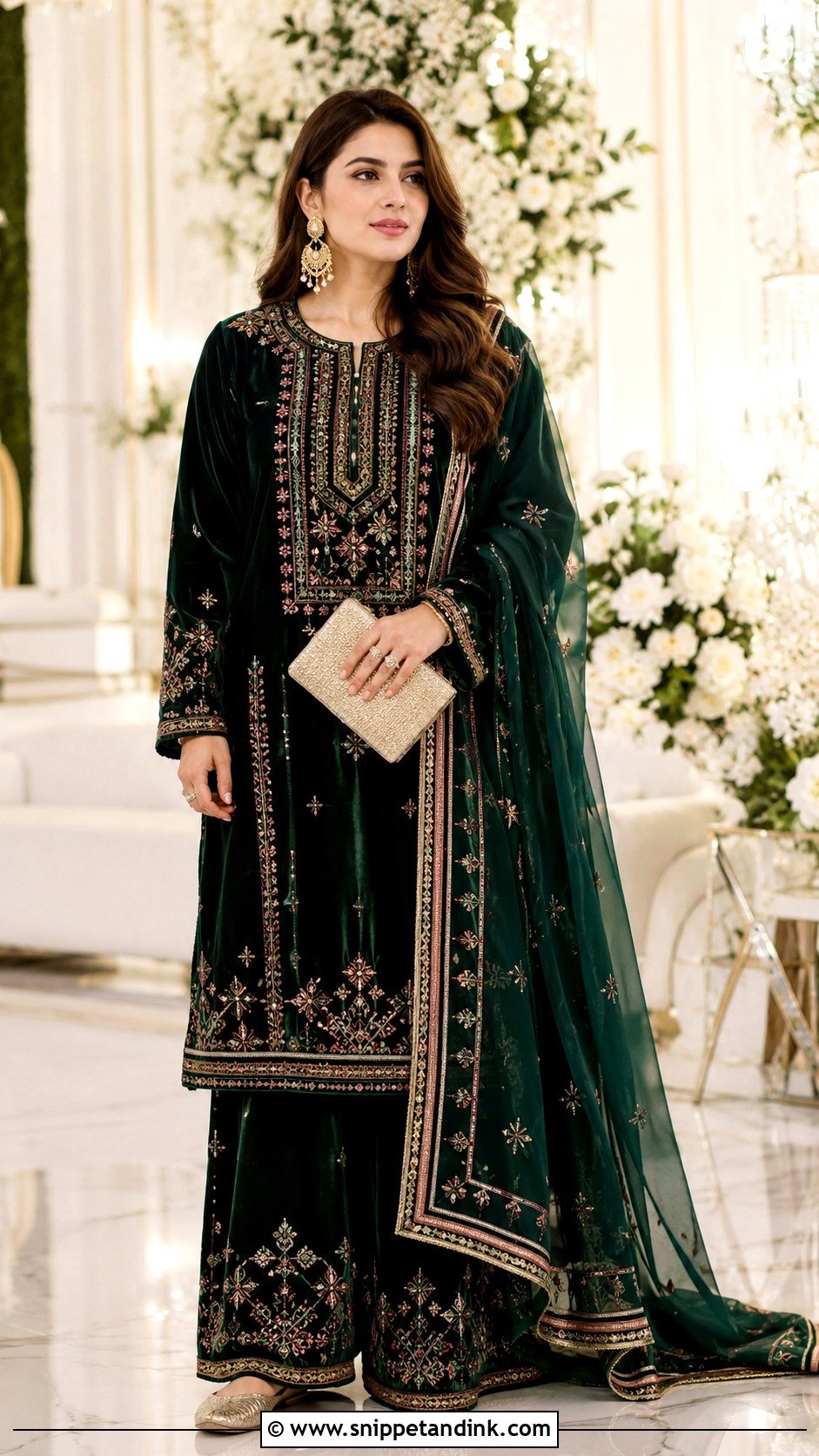
Velvet suits winter weddings, but its pile makes fine embroidery harder to read, so I keep the thread mostly gold or silver with restrained color accents at the neckline, front panel, cuffs and hem. Burgundy, bottle green, navy and black all work. Velvet already looks rich and doesn’t need embroidery everywhere. Pair the long shirt with wide trousers in a lighter coordinating fabric so the outfit isn’t bulky, then a chiffon dupatta, metallic flats, statement earrings and a structured clutch. Check for smooth lining around embroidered areas. One more thing: velvet marks wherever it’s pressed, so travel with the shirt on a padded hanger rather than folded in a case.
17. Chiffon Balochi Wedding Dress With Dupatta
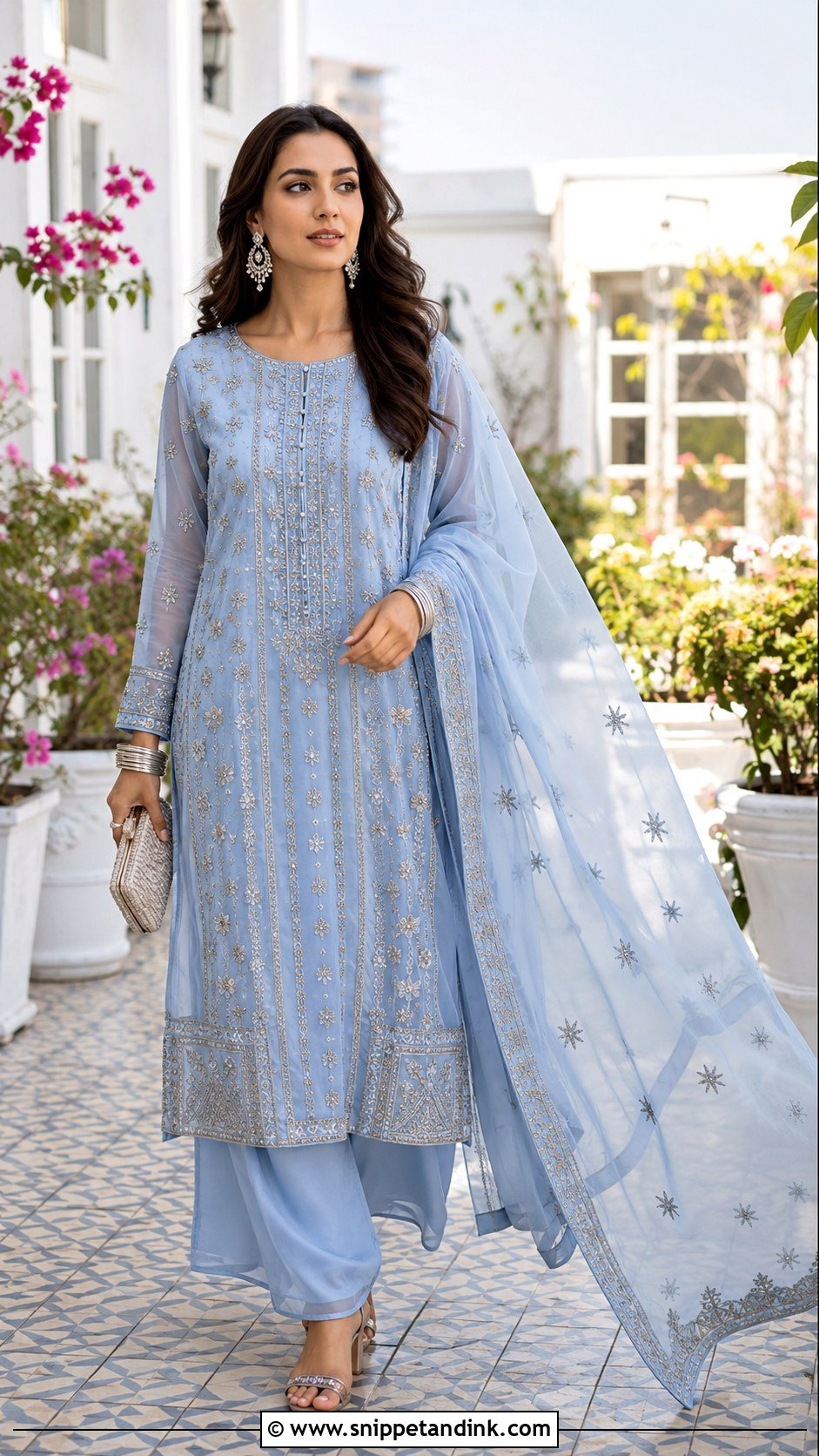
Chiffon can’t hold dense embroidery on its own; the needlework needs a stable backing panel underneath, and that’s what I check first on a chiffon Balochi outfit. With the work concentrated on a reinforced front panel, neckline, cuffs and hem, the shirt stays light and keeps its shape. Pair it with flowing trousers in crepe or a silk blend for coverage, and a matching chiffon dupatta with an embroidered border. Dusty pink, powder blue, mint and ivory suit daytime; maroon or navy suit evening. Delicate earrings, bangles, a small clutch and low heels finish it, and the shirt should be properly lined.
18. Silk Balochi Wedding Dress
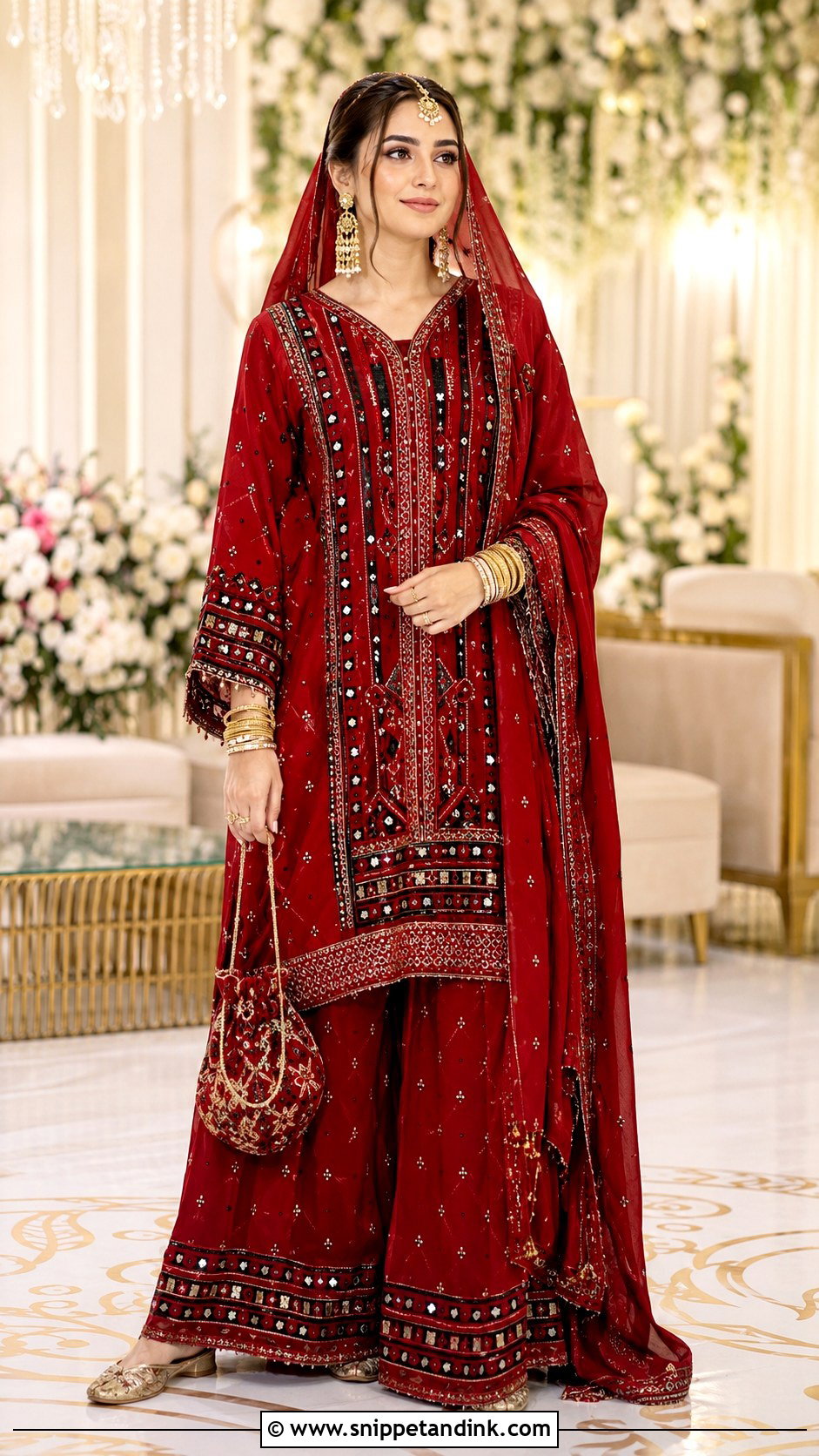
Silk gives geometric embroidery a smooth, luminous ground. Pick a long silk Balochi shirt in ruby, emerald, royal blue or deep plum with handwork across the bodice and sleeves, wide matching trousers and a sheer dupatta to calm the shine. Gold-toned earrings, layered bangles, a compact embroidered bag and flat or low shoes complete it. Under strong indoor lights, a matte silk blend usually photographs better than very glossy silk, which can flare white in flash. Ask for soft lining beneath heavily stitched panels so the reverse doesn’t rub. Planned this way, it’s formal enough for the main event and still comfortable.
19. Pastel Balochi Wedding Dress
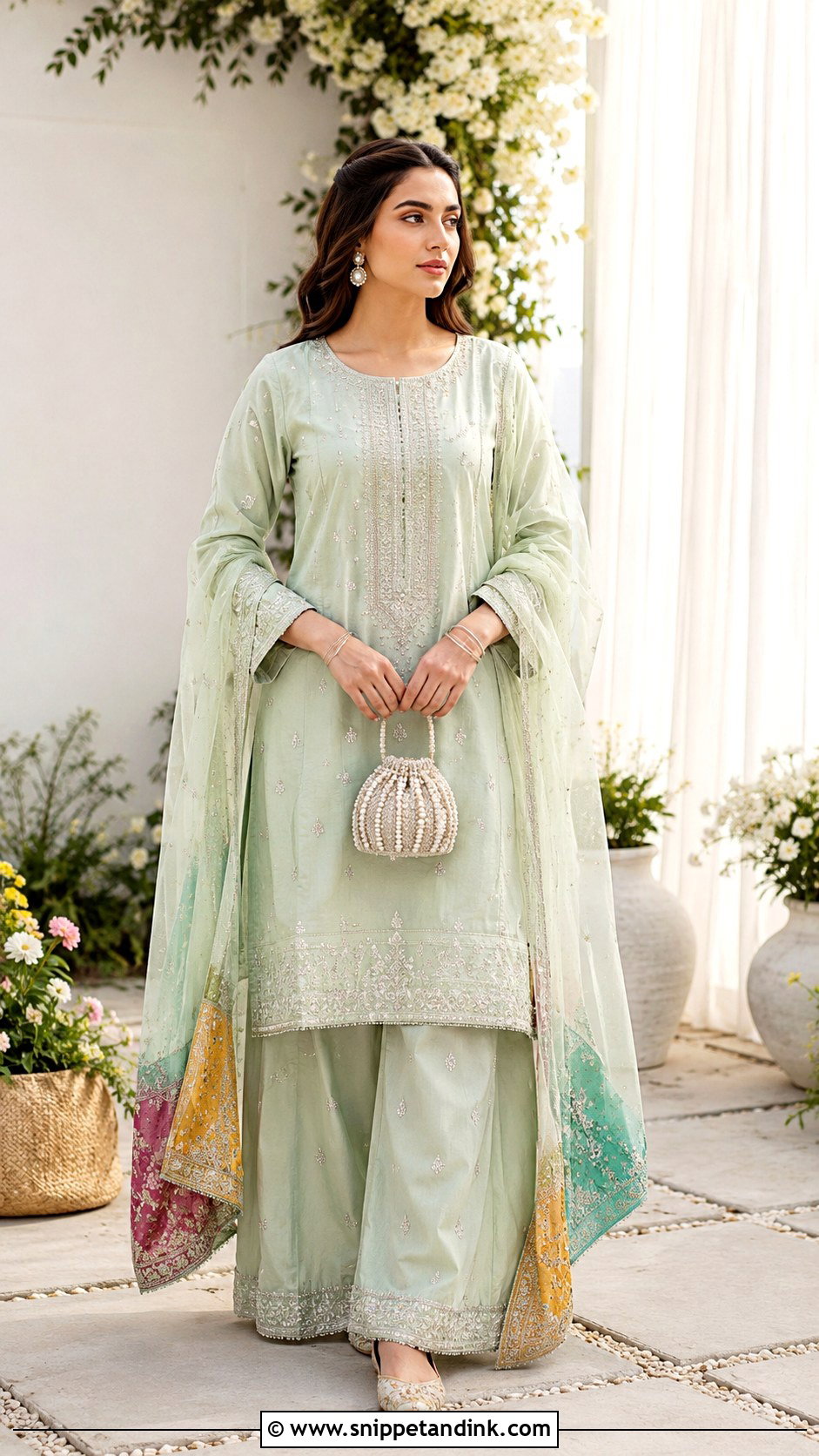
Pastels need one deeper color to stay alive. Pale mint, soft lilac, powder blue or peach with brighter multicolor needlework at the neckline, front panel, cuffs and hem gives a gentle daytime look, and a single accent such as magenta or emerald stops it washing out in photos. Coordinating wide trousers, a sheer dupatta with small embroidered corners, pearl or silver earrings, slim bangles, a beaded bag and light flats complete it. Pastel fabric shows every stitch and lining seam through it, so inspect the construction closely and insist on an opaque base under the embroidered layer.

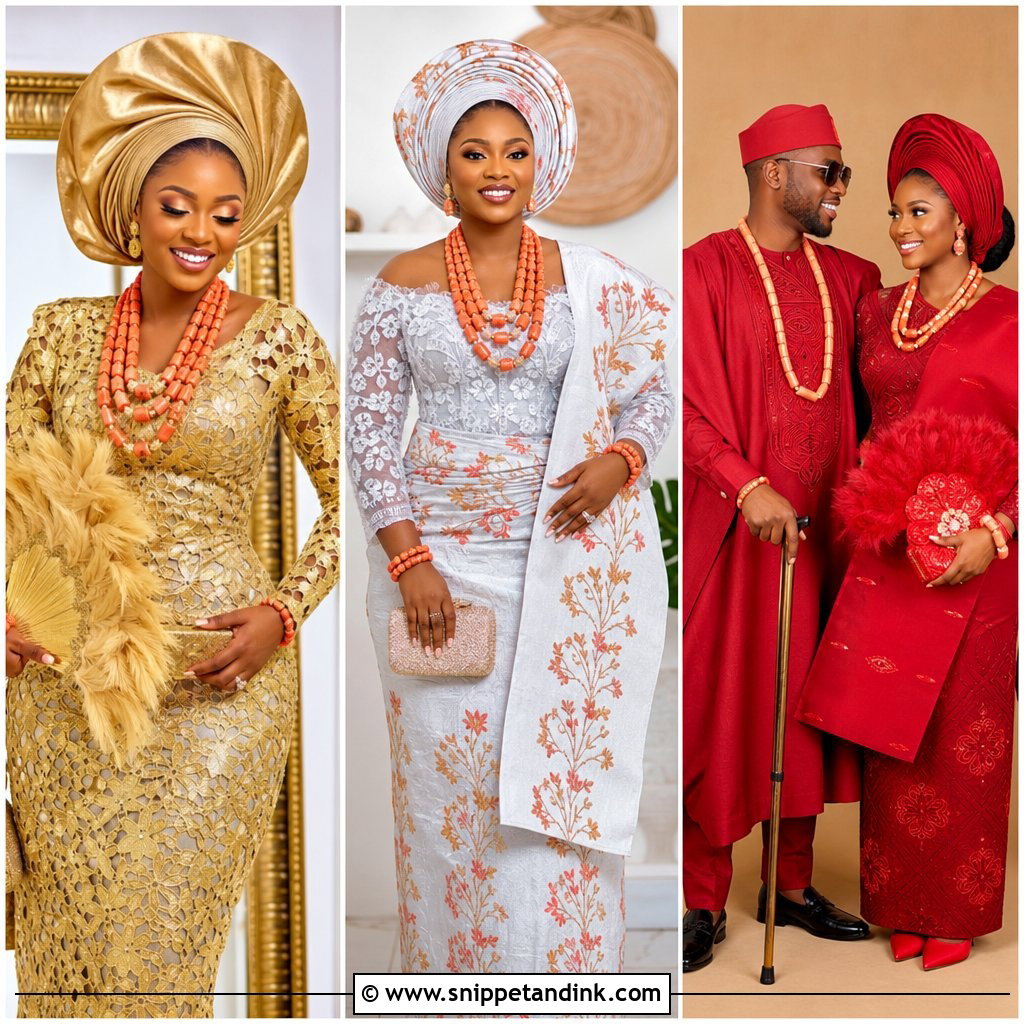

20. Modern Balochi Reception Wedding Dress
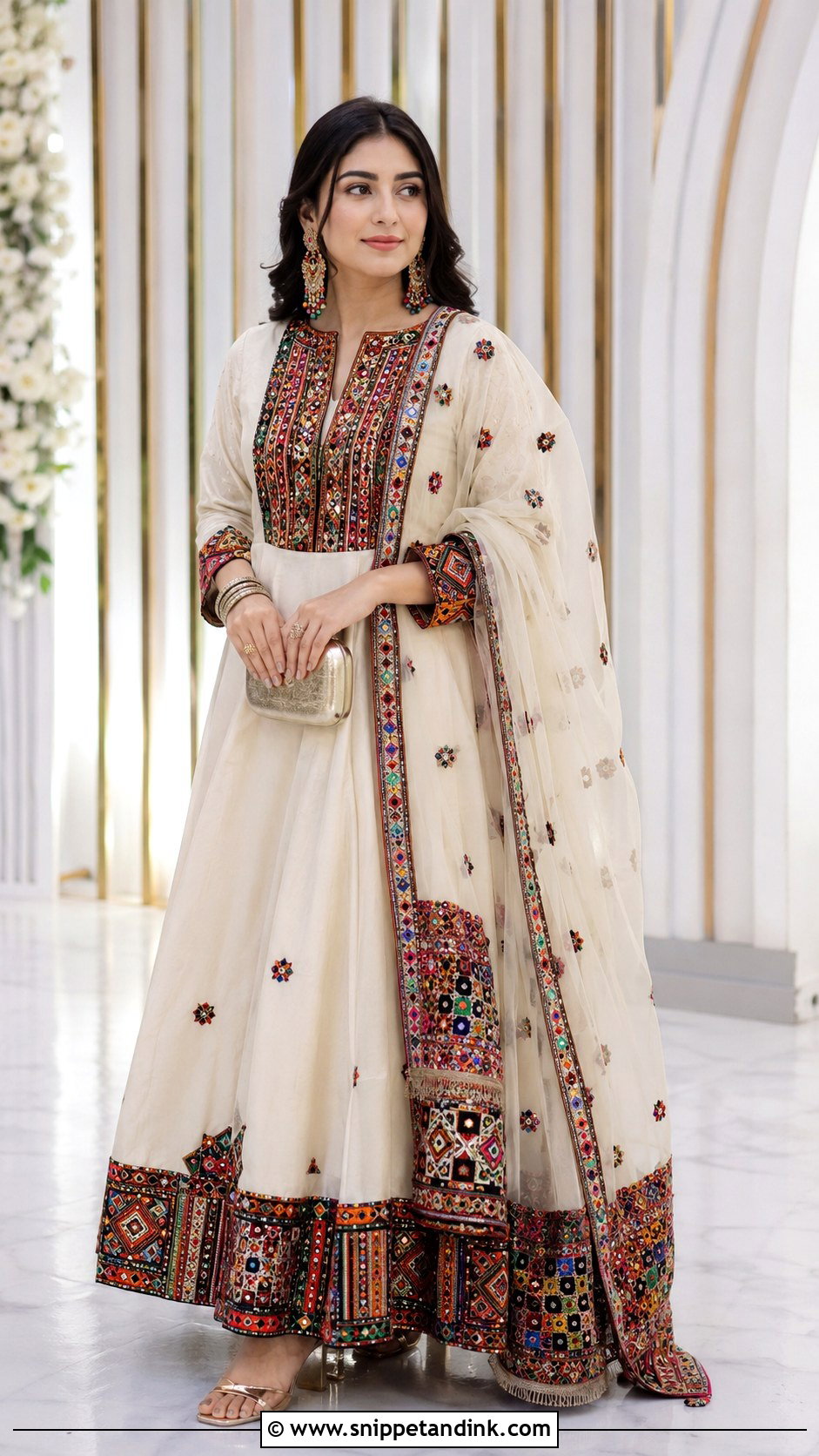
A reception outfit can be cleaner than the ceremony dress and still carry Balochi craftsmanship. Choose a column gown, flared dress or long straight shirt with a clean neckline and carefully placed embroidered panels. Black with jewel-tone threadwork is dramatic; ivory with gold and multicolor motifs is lighter. Keep the back or skirt mostly plain so the bodice leads. A coordinating dupatta or embroidered shawl, sculptural earrings, a polished clutch and low metallic heels work, plus one traditional jewelry piece for the cultural link. When you commission, work with knowledgeable artisans and credit them. The result should feel personal and respectful, never like a costume pieced together from decorative bits.
Which Base Fabric Can Carry Dense Embroidery?
The base fabric has to hold the embroidery, breathe in the season you’re marrying in and photograph well. This is roughly how I sort it with brides.
- Cotton-silk and light silk blends: the all-rounders, firm enough for heavy work and breathable for daytime and warm-weather functions.
- Pure silk: luminous, but glossy versions flare in flash and show water marks, so it’s better for evening and best kept away from spilled drinks.
- Velvet: warm and rich for winter. It’s heavy before a single stitch goes on, so keep the embroidery restrained and the trousers lighter.
- Chiffon and georgette: light and soft, but they need a stabilizing backing under every embroidered area or the stitches pucker.
- Organza: crisp and translucent, more useful for the dupatta than for the shirt itself.
Giving a Mother’s Embroidered Panels a Second Wedding
Many brides want to wear embroidery their mother or grandmother wore. It’s possible, but older panels need care before they’re reused. I start with the threads: faded or brittle silk snaps as soon as it’s restitched, and older dyes can bleed if the panel gets damp, so a small damp-cloth test on the back tells you a lot.
Ask an experienced artisan to unpick the panel from the old garment along its seam lines rather than cutting through the embroidery. The panel can then be backed with fresh fabric and set into a new shirt cut to your measurements, with any lost stitches repaired in a closely matched thread. Expect the new shirt to be designed around the panel, not the other way round. Old panels have fixed sizes, and the new dress has to follow them.
Let the Embroidery Lead, Then Tailor Around It
Classic red pashk outfits, pastel gowns and modern reception looks all show the same thing: this craftsmanship adapts to almost any silhouette and palette. The strongest outfits keep the embroidery visible, the proportions comfortable and the accessories tied to colors already in the garment. Mirror work and metallic thread make a grand effect, while lighter geometric needlework suits a quieter celebration. Accurate measurements, supportive fabric, good lining and skilled tailoring matter most where the embroidery is dense. Commission handwork directly from experienced Balochi artisans when you can; it supports the makers and gives the dress more meaning. For more bride-focused styling, there’s a separate collection of 20 Balochi Wedding Dresses worth comparing.
You'll Like These Ideas:





Leave a Reply