
A Nigerian traditional wedding is often the bigger, louder, more colourful of a couple’s celebrations, and the outfits carry real weight in it. Yoruba aso oke, Igbo George, Hausa veils, Edo coral, Efik onyonyo gowns, Tiv black-and-white cloth: each one tells the families who you are and where you come from. When I dress a bride for one of these days, the first conversation is never about colour. It’s about whose ceremony it is, what the elders expect, and how many hours she’ll be dancing. What follows covers outfits for brides, grooms and guests across many of Nigeria’s cultures, with what I’ve learned about wearing each.
One Outfit or Three? Mapping the Changes Before You Shop
Many brides I dress wear two or three outfits at a traditional wedding: one for the entrance and the formal rites, one for the reception and dancing, sometimes a third for an intertribal union. Deciding this before buying fabric saves money and stress.
- Write down each part of the day and how long it lasts. The heaviest outfit goes to the shortest segment.
- Ask both families which rites need specific dress. Some expect a particular fabric or bead set for the main ceremony.
- Plan where you’ll change and who helps you. A gele and coral set takes time to remove and redo, so budget at least thirty minutes per change.
- Keep shoes, makeup touch-ups and a spare head tie in one labelled bag per outfit.
If budget is tight, I’d rather see one excellent outfit than three rushed ones. A well-cut blouse and wrapper with a change of gele can look like a whole new outfit.
1. Yoruba Aso Oke Traditional Marriage Attire
Aso oke is hand-woven, stiff and proud, and a Yoruba aso oke traditional marriage attire is built from several pieces: iro wrapper, buba blouse, gele headtie and the ipele over the shoulder. The groom answers with agbada, buba, sokoto and fila. Because aso oke has body, the gele holds sharp pleats that softer fabrics can’t. The catch is heat. A full aso oke set over a lace buba is warm, so I make sure the buba underneath is lightweight and the ipele can come off for dancing.
2. Igbo George Wrapper Traditional Marriage Attire
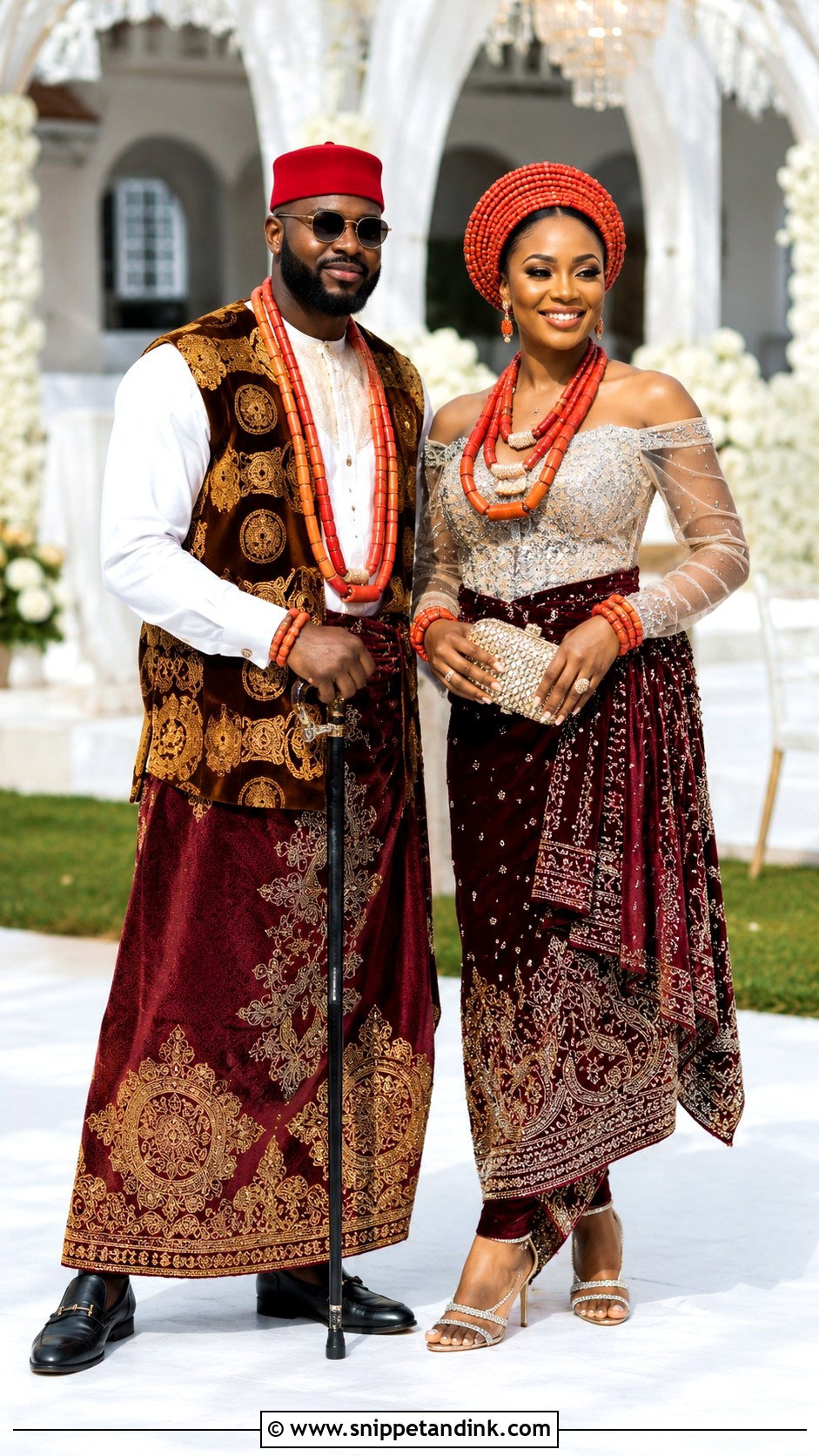
Double George wrappers over a beaded blouse, coral at the neck and wrists, and a headpiece: that is the classic Igbo bride. Red, gold, white and orange are the usual colours. For the wine-carrying ceremony, when the bride searches the crowd for her groom with a cup of palm wine, she needs to walk and kneel freely, so I tie the wrappers firmly at the waist and keep the heel low. The groom’s isiagu top, red cap and coral beads mirror her. A blouse with a properly fitted bust stops heavy beads from dragging the neckline down.
3. Hausa Traditional Marriage Attire With Veil
Modesty shapes the Hausa bride’s look, and the result is graceful. She usually wears a long gown in lace, brocade, velvet or embroidered fabric, with a matching veil, jewellery, decorated shoes and lalle henna on her hands and feet. The groom wears a babban riga over an inner kaftan with cap and leather shoes. Soft colours like blush, mint and silver suit it. My concern at fittings is the veil: it should frame the face without being pinned so tight that it pulls the gele or hair forward by evening.
4. Edo Coral Bead Traditional Marriage Attire
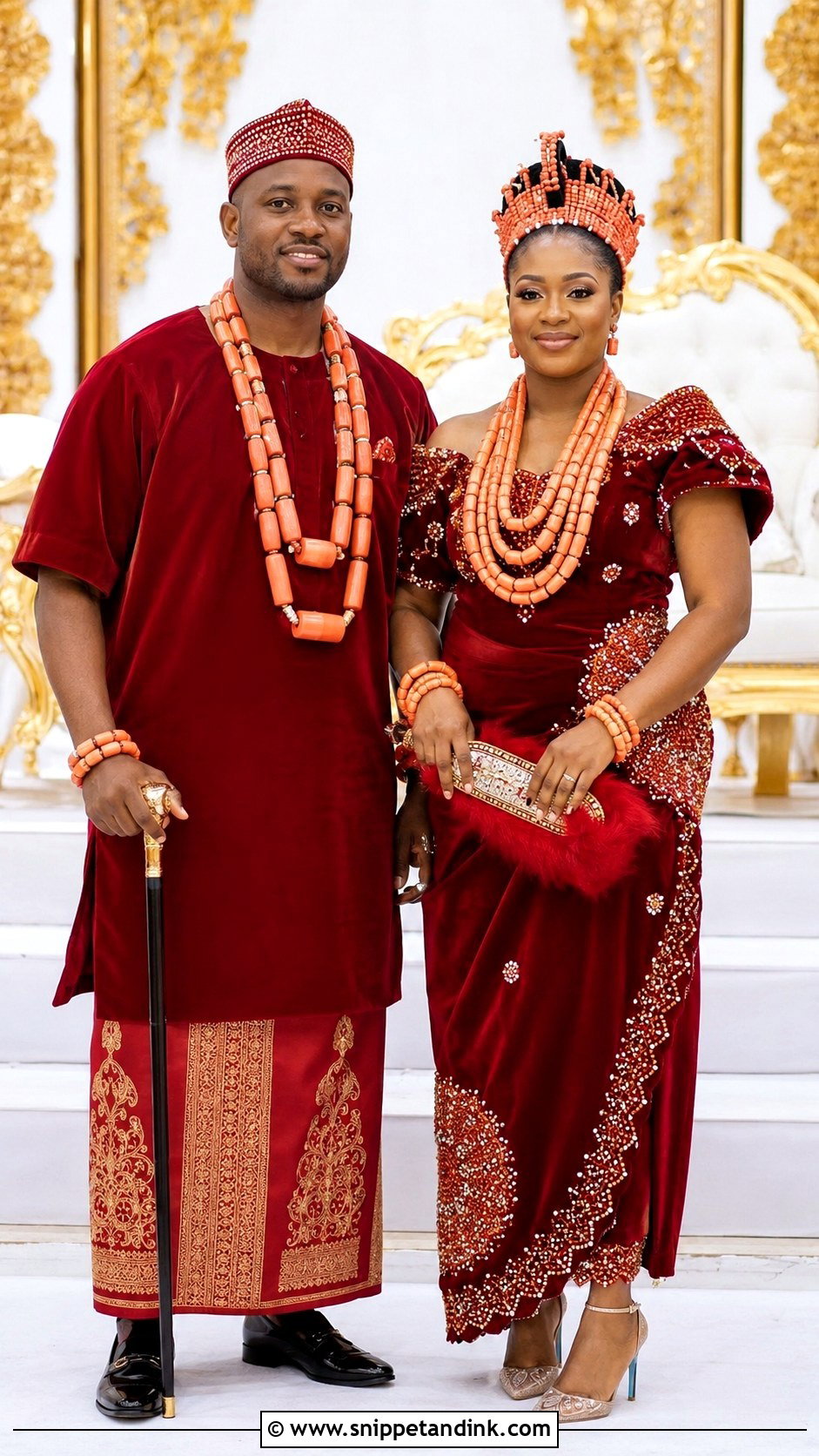
Edo coral styling has real presence, and the beads do the talking. The bride’s coral crown, layered necklaces, wrist beads and earrings sit over a velvet wrapper or gown, traditionally in red, wine or gold. Real coral is heavy. I’ve watched brides start rubbing their necks within an hour, so we try the full set on at the fitting for at least twenty minutes and secure the crown to a firm base hairstyle. Keep the fabric plain and well cut; it’s a stage for the beads.
5. Efik Traditional Marriage Attire With Onyonyo
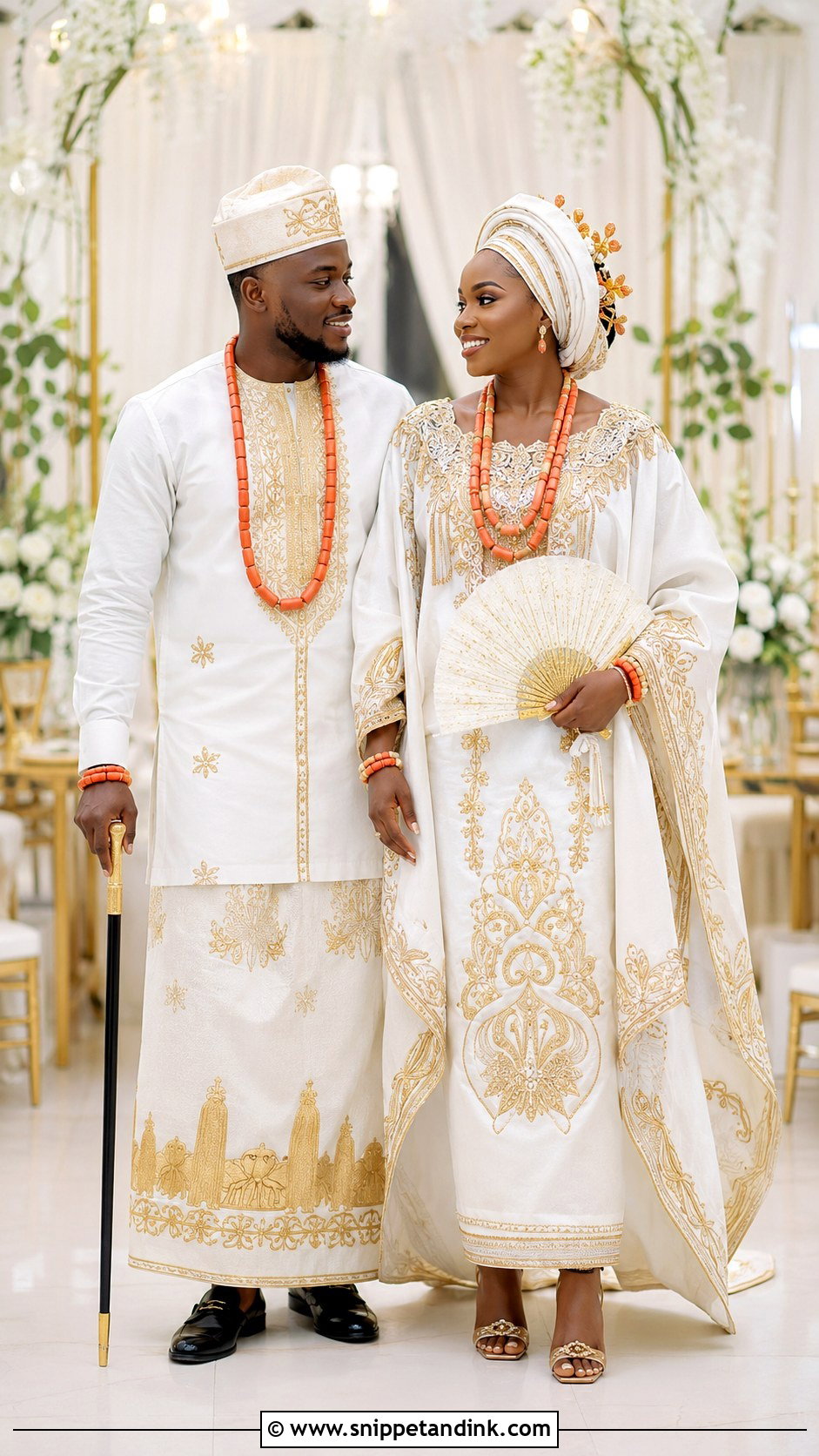
The Efik onyonyo is a gown with a fitted bodice that flares out below, often with a dramatic neckline or sleeves. Coral beads, a raised decorated hairstyle or headpiece, and a hand fan complete it. The groom wears a long shirt and wrapper with cap and beads in her colours. With so much shape in the dress, I keep accessories coordinated and modest. Check that the flare clears the floor in your chosen shoes, because the gown swings when you dance.
6. Tiv Black And White Traditional Marriage Attire
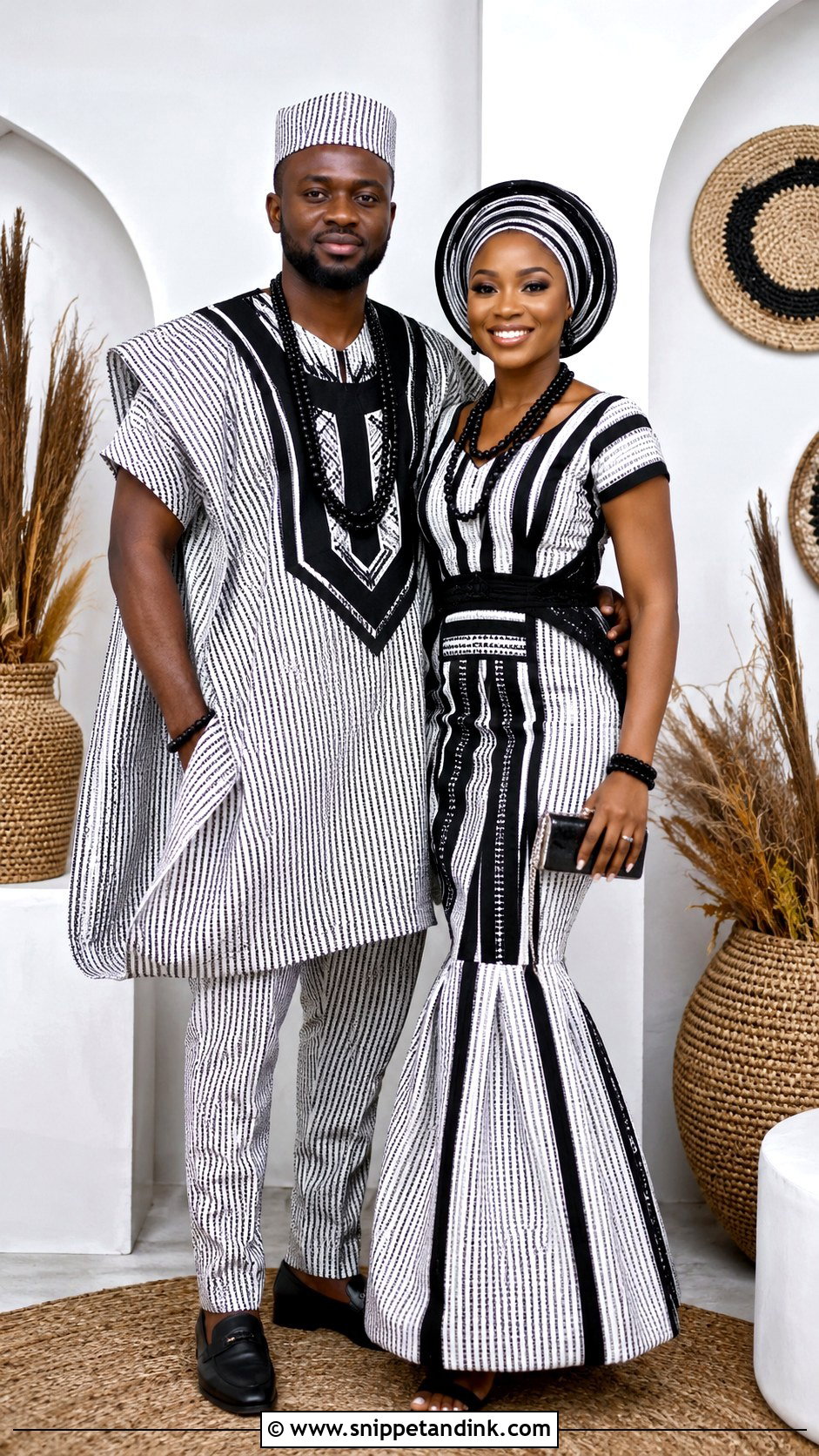
The striped A’nger cloth is how the Tiv announce themselves, and Tiv black and white outfits read clearly even across a big hall. The bride might wear it as a fitted gown, a wrapper set, a peplum top with skirt or a two-piece. The groom matches in a top with trousers and cap. Stripes are unforgiving at seams, so I ask the tailor to line them up at the side seams and centre back. Keep accents to one colour: red coral, silver or plain black.
7. Ijaw Traditional Marriage Attire With Coral Beads
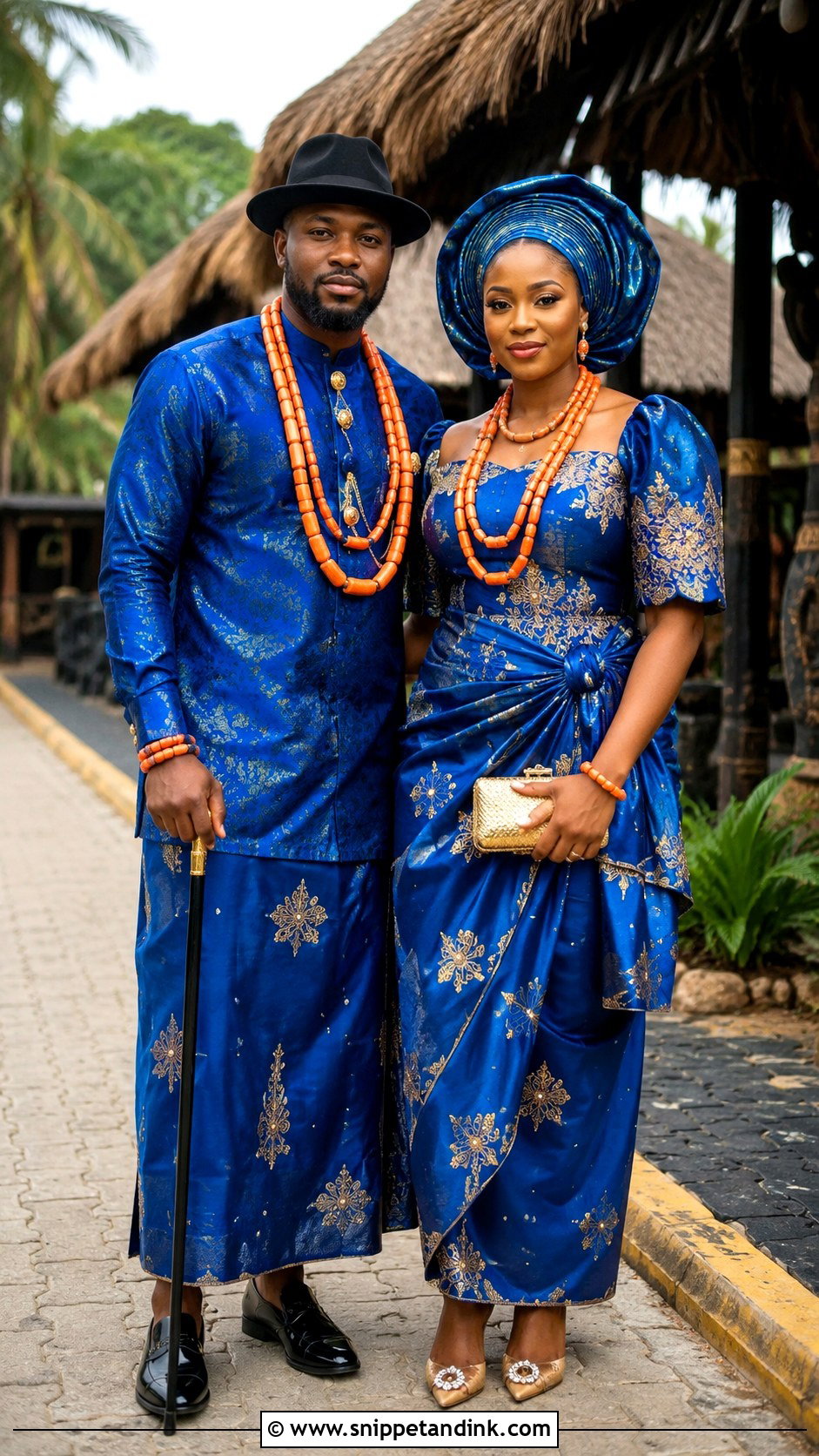
Ijaw brides usually wear a rich blouse over a tied wrapper in velvet, lace or George, with layered coral and a head tie. The groom’s look is distinctive: a long etibo shirt worn over a wrapper, with a hat, beads and often a walking stick. Red, gold, purple, royal blue and white are common. A wrapper this heavy needs tying by someone who does it often, so it sits flat across the hips and doesn’t loosen during the dancing.
8. Urhobo Traditional Marriage Attire With Wrapper
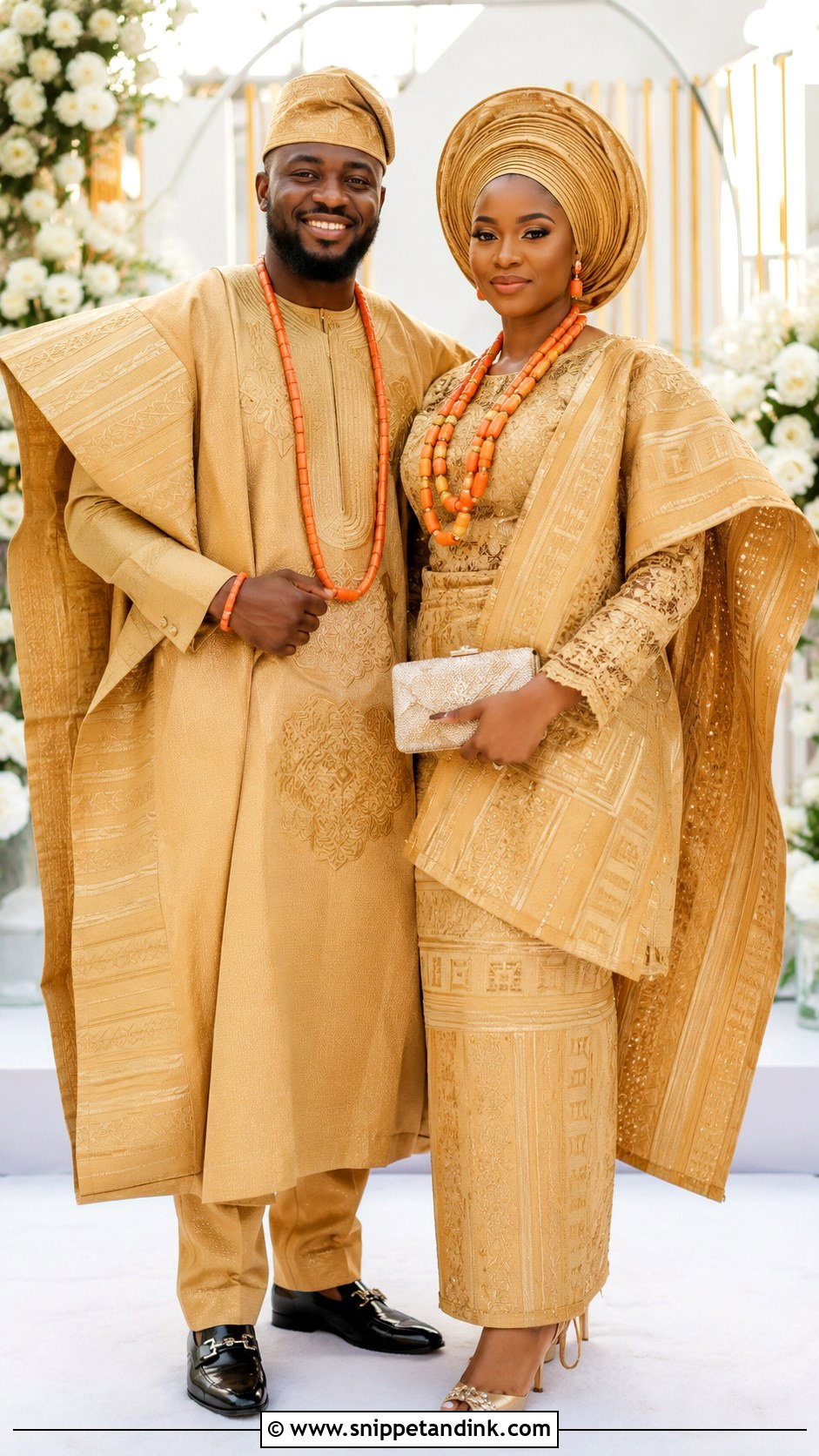
An Urhobo traditional marriage attire leans bright and proud, with a lace or velvet blouse over a double wrapper, coral beads and a gele or cultural headpiece. The groom wears a matching wrapper with shirt, hat and beads. Orange, red, gold, purple and teal hold their colour outdoors. The blouse can be off-shoulder, peplum or long-sleeved; I’d skip off-shoulder if your coral set is heavy, since the necklace needs a neckline to rest on.
9. Kalabari Traditional Marriage Attire With Beads
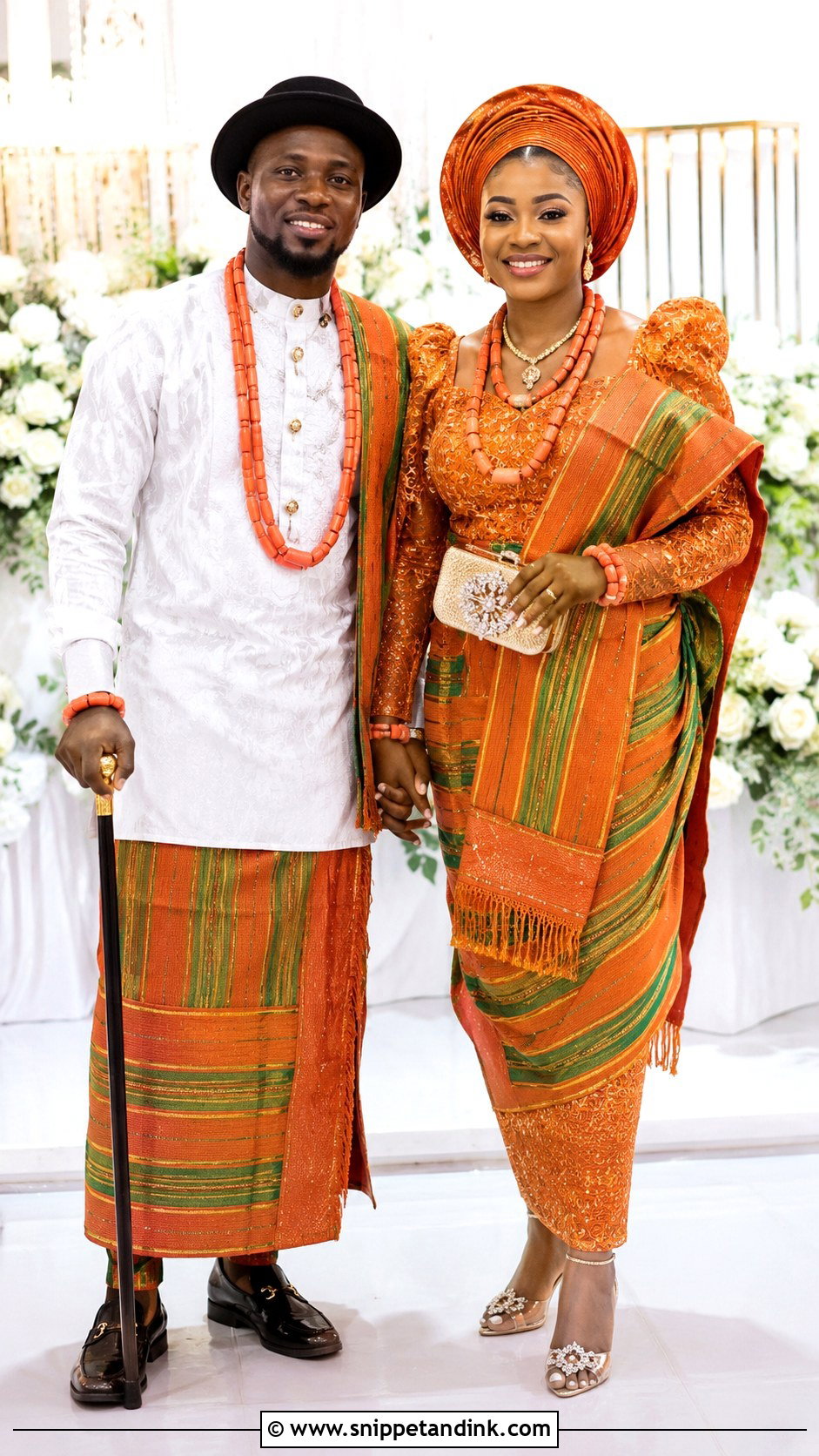
Kalabari brides pair a detailed blouse with a wrapper, layered coral and a head tie; some choose metallic fabrics, others lace or velvet, and madras-style injiri cloth carries strong local meaning. The groom wears a traditional shirt, wrapper, hat and beads. Here’s the styling mistake I see most: piling on necklaces until the blouse vanishes. Arrange the coral to follow the neckline, so both the beads and the blouse design stay visible.
10. Fulani Traditional Marriage Attire With Head Wrap
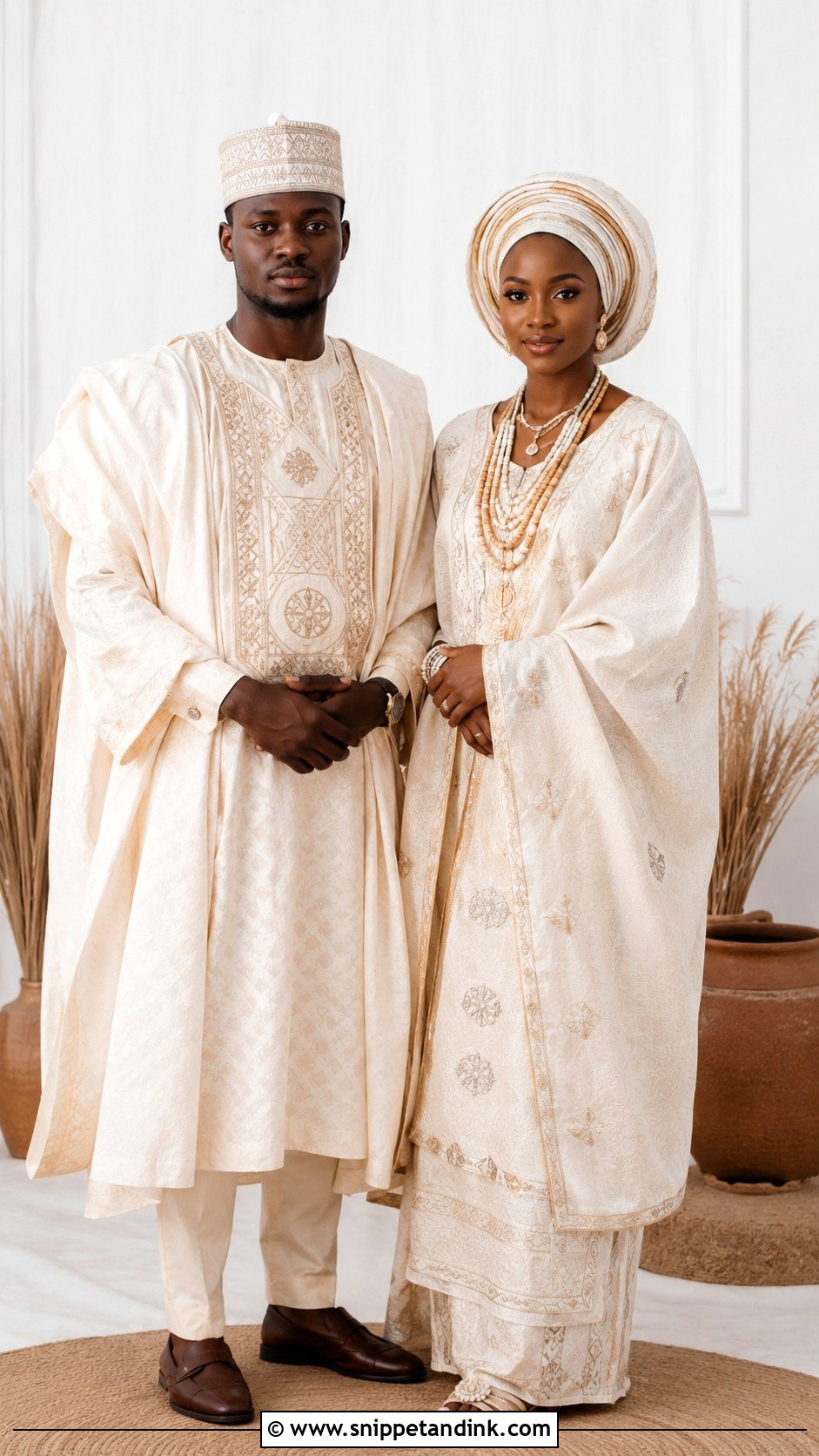
Fulani bridal dress is graceful and modest: a flowing embroidered dress or wrapper set, a soft head wrap, delicate jewellery and sandals. Some looks add layered necklaces and light embellishment at the neckline. The groom wears an embroidered kaftan, trousers and cap. Earth tones, cream, brown and soft green feel right. Fabric weight matters most. Too light and it clings in photos; too stiff and it fights the drape. A medium cotton-silk or soft brocade usually lands in between.
11. Kanuri Traditional Marriage Attire With Embroidery
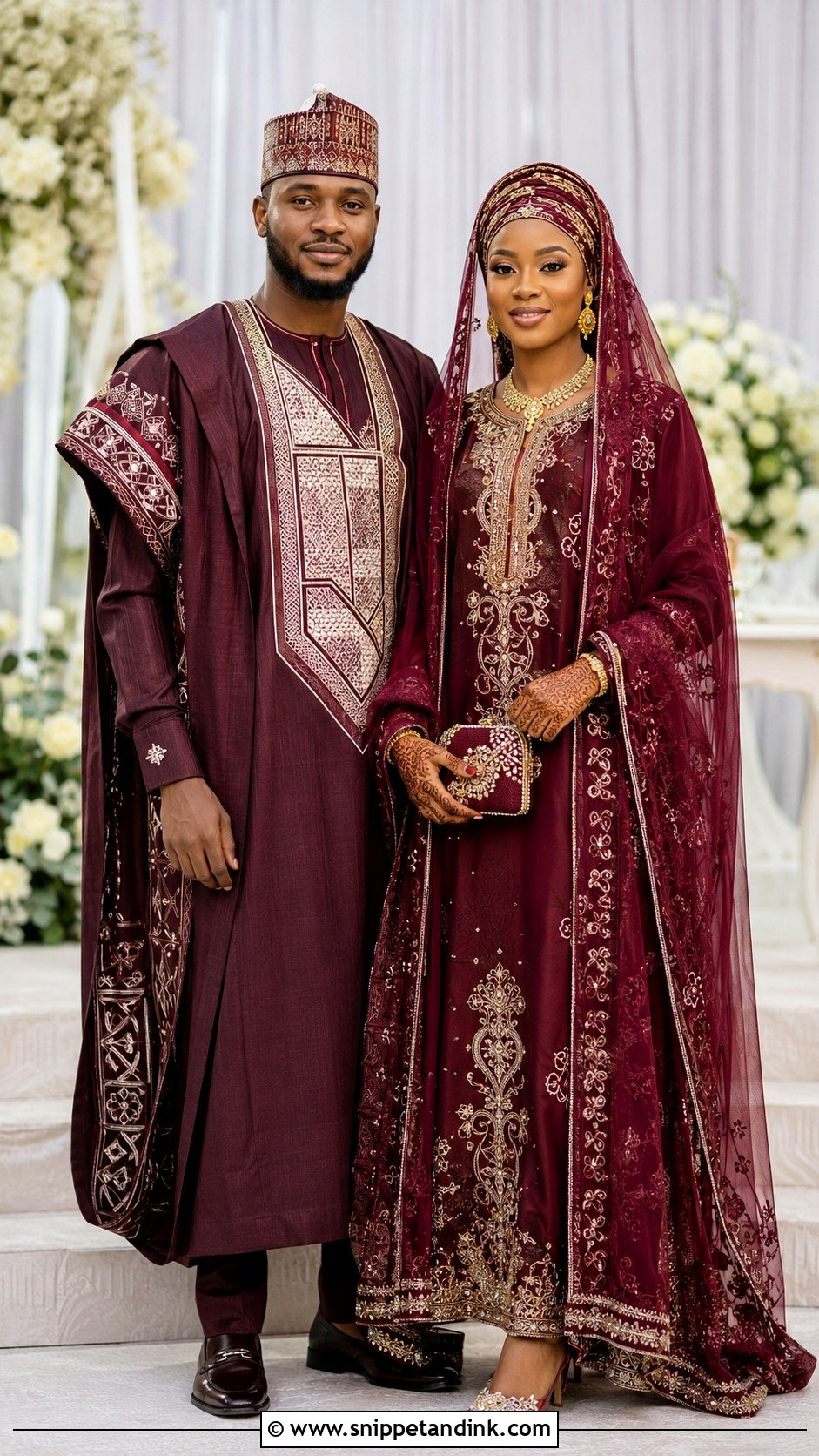
Kanuri brides lean on embroidery rather than volume. A long embroidered gown with a veil or head wrap, jewellery and decorated shoes; the groom in a detailed kaftan or babban riga with cap. With this much stitching, colour choice needs care: cream, navy, maroon or soft blue let the thread show. I drape the veil loosely over the shoulders so it doesn’t hide the embroidery at the neckline. It’s dignified dressing for couples who prefer restraint.
12. Nupe Traditional Marriage Attire With Lace
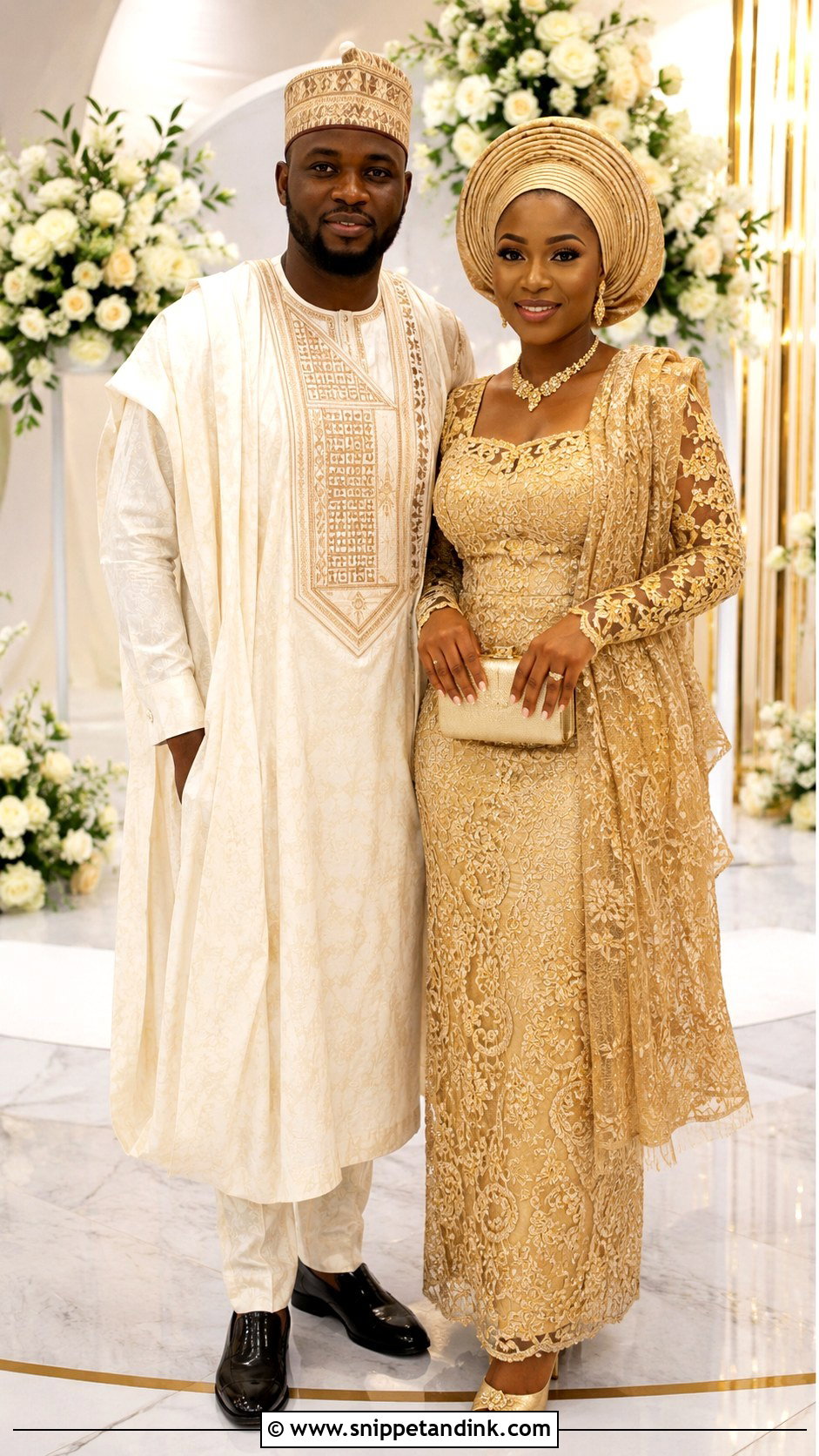
Nupe brides often go for lace, either as a gown or a blouse-and-wrapper set with a matching head wrap. The groom wears an embroidered kaftan and cap in a coordinating shade. Soft gold, dusty pink, teal or lavender lace all suit it. Lace quality varies enormously, so feel it before you buy: a heavy, densely corded lace hangs well, while thin lace creases and looks tired by evening. A structured sleeve and a neat neckline do a lot here.
13. Idoma Traditional Marriage Attire With Red And Black Fabric
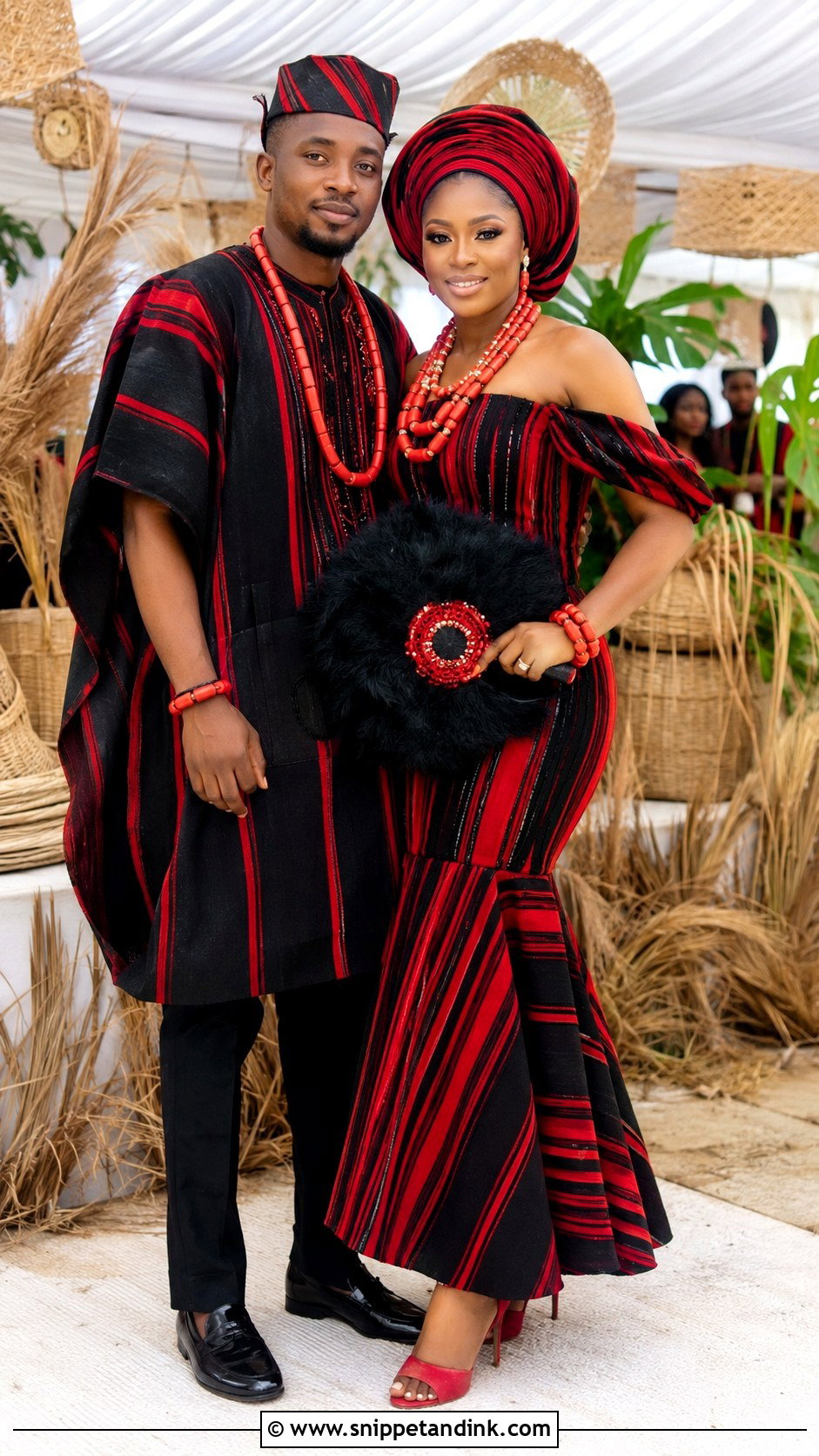
Red and black stripes are the Idoma signature, and nobody in the room will mistake them. The bride wears them as a fitted gown, wrapper set or skirt and blouse with beads and a head wrap; the groom in a matching top, trousers and cap. The contrast is already strong, so gold or coral accessories are the only addition I’d make. As with any striped cloth, a good tailor matters more than the price of the fabric.
14. Ibibio Traditional Marriage Attire With Wrapper And Blouse
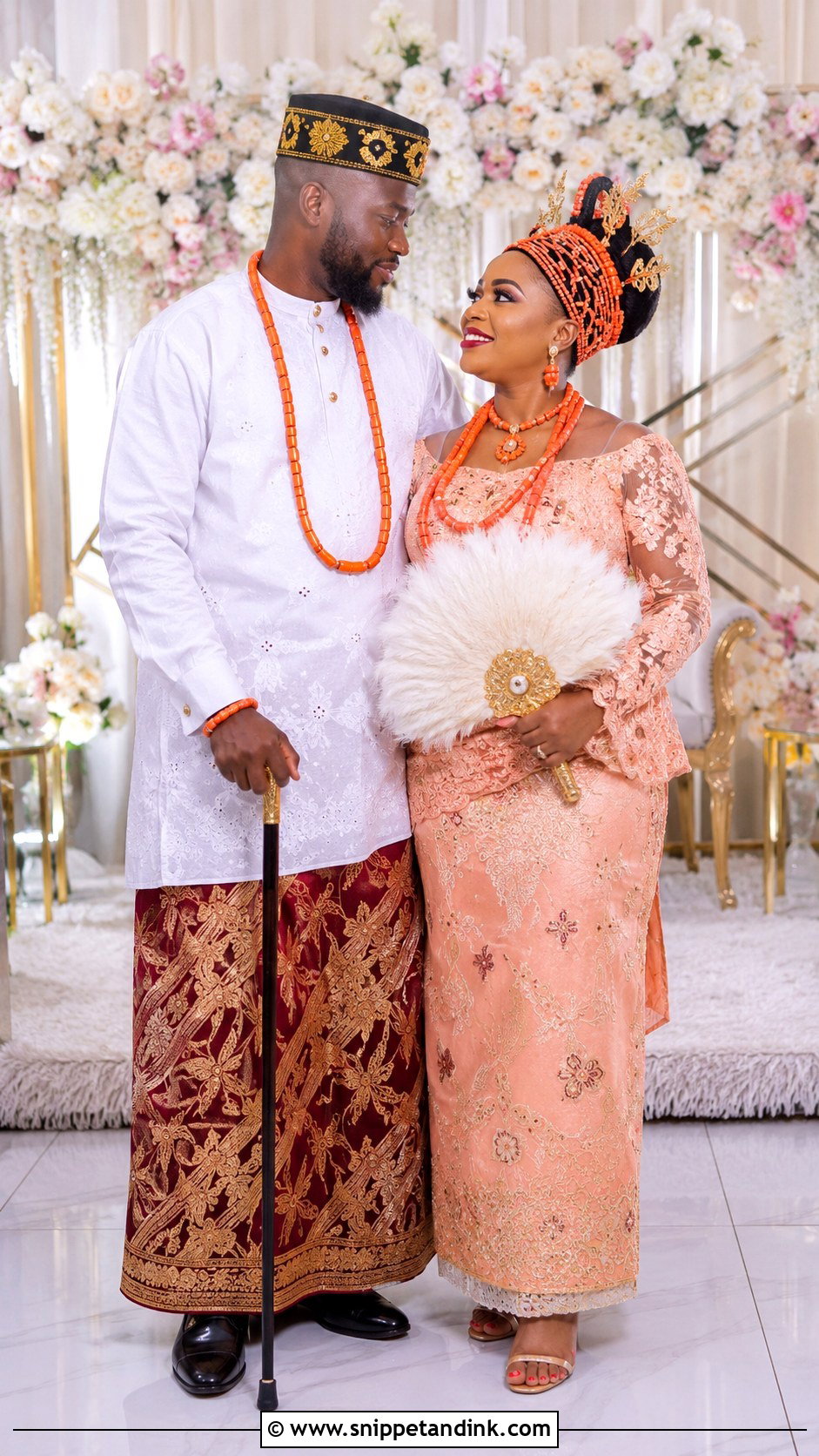
Ibibio brides typically pair a detailed blouse with a wrapper, coral beads and a decorated hairstyle or headpiece, in lace, George, velvet or brocade. The groom wears a traditional shirt, wrapper, cap and beads. I fit the blouse first, then tie the wrapper over it, because a wrapper tied before the blouse is adjusted always ends up crooked. A hand fan is a nice last touch and gives nervous hands something to do in photos.
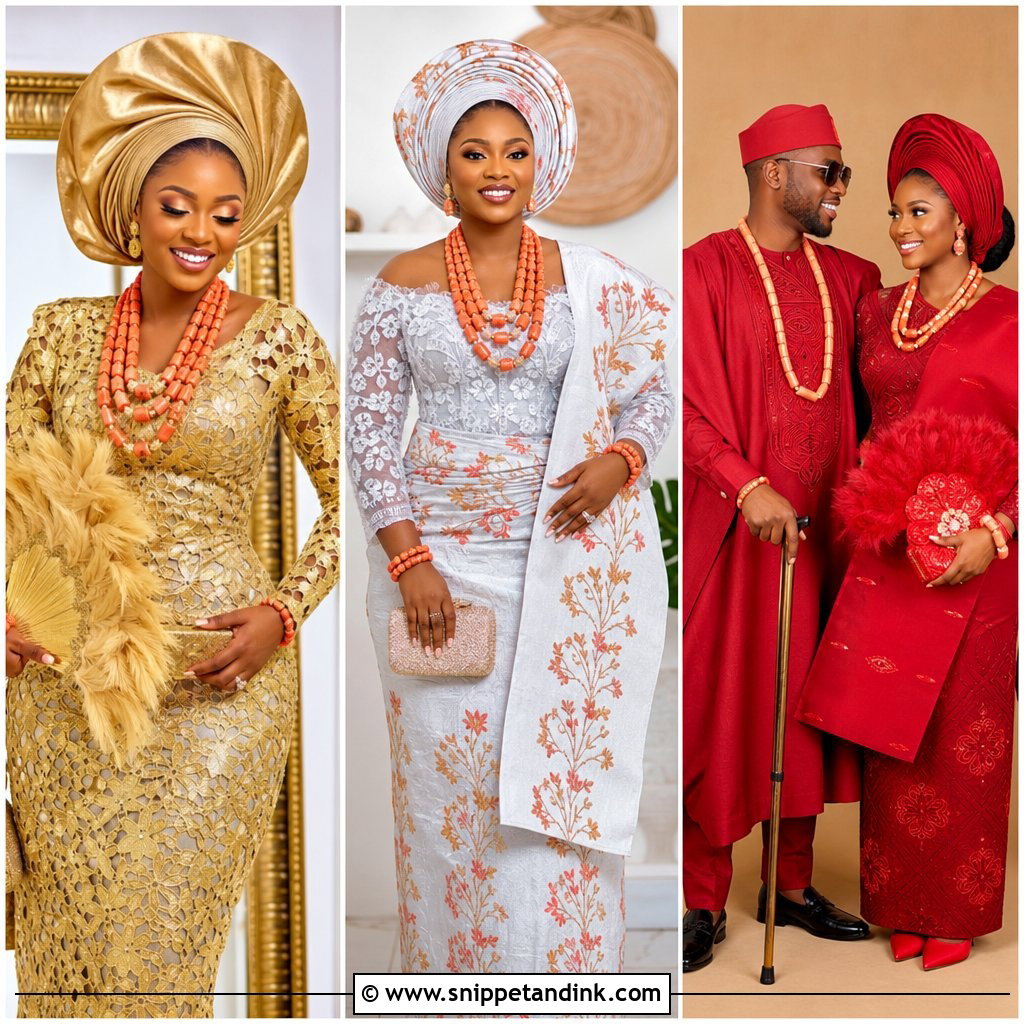


15. Akwa Ibom Traditional Marriage Attire With Flowing Gown
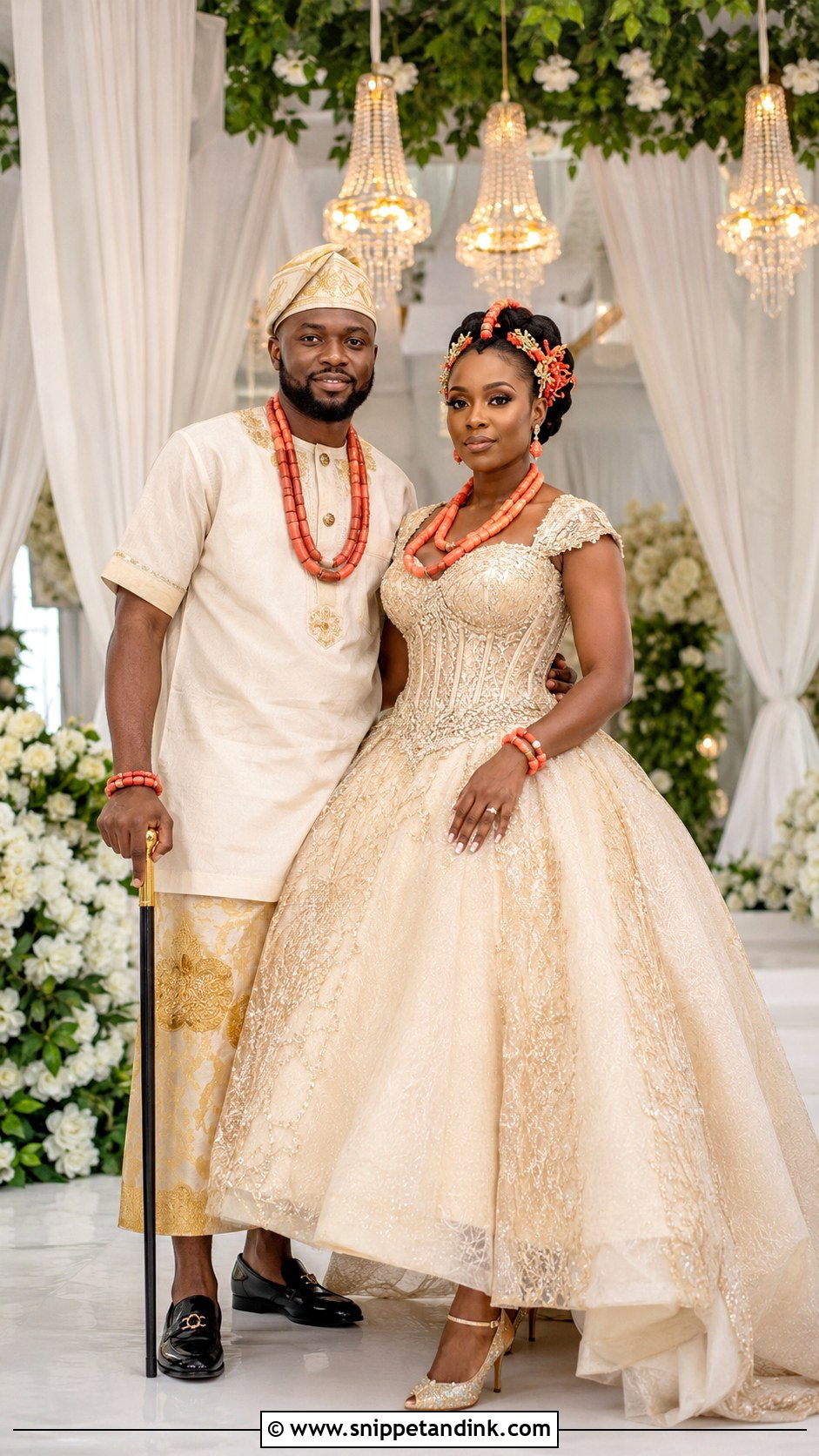
The onyonyo-inspired gown is the heart of an Akwa Ibom traditional marriage attire: full skirt, fitted bodice, beads and a decorated hairstyle. The groom coordinates in shirt and wrapper with hat and beads. White, gold, coral and green are favourites. Watch the volume of the skirt against the size of the venue; in a packed hall a very full gown gets stepped on. Keep the details clean so the outline is what people remember.
16. Igbo Isiagu Traditional Marriage Attire For Couples
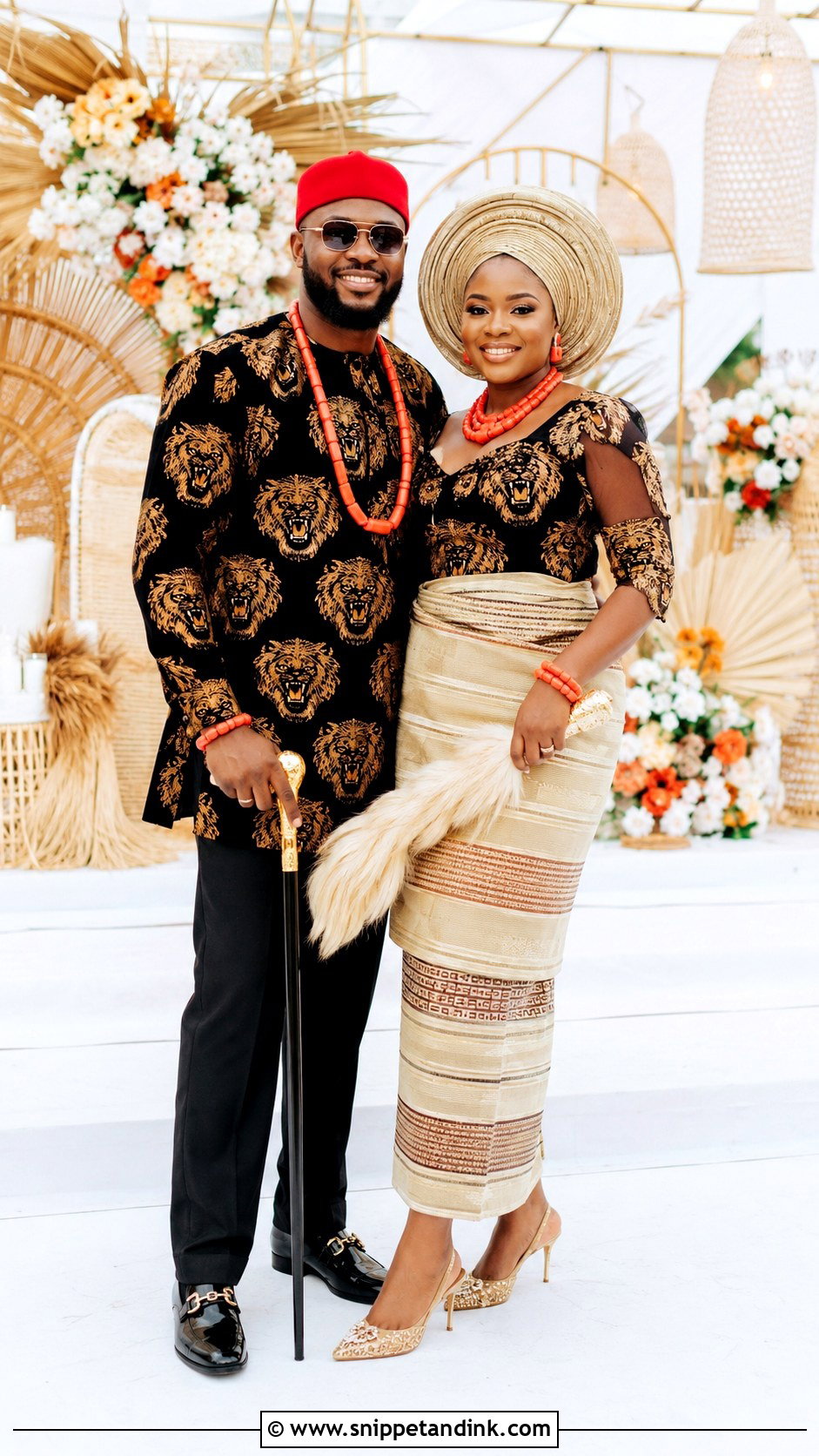
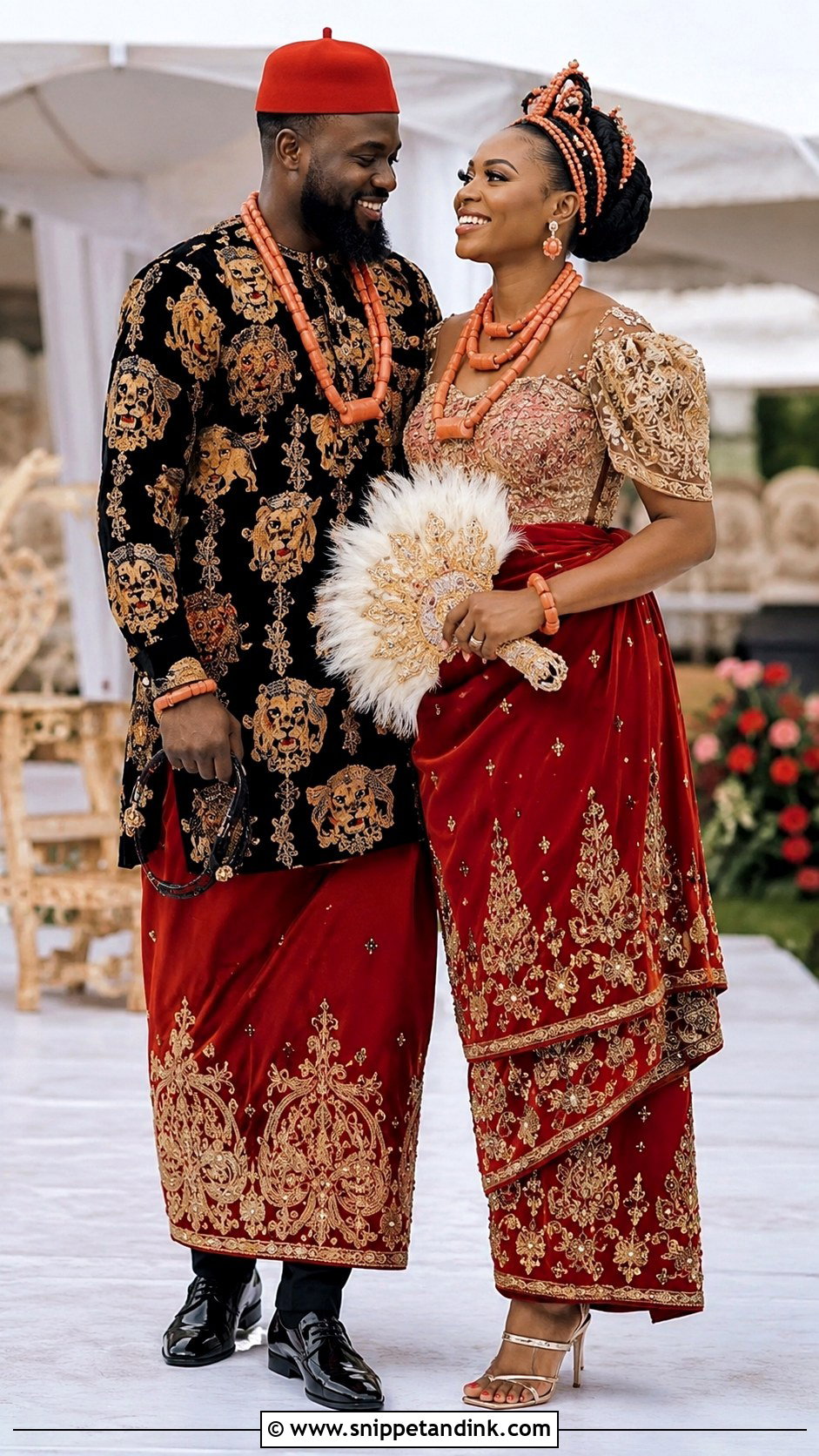
The isiagu top, with its lion-head print, is a mark of honour for Igbo men, and an Igbo isiagu traditional marriage attire for couples pairs it with a red cap and coral. The bride can echo the print in her blouse with a George wrapper and head tie. I suggest letting the groom wear the full print while the bride uses it as an accent, so the pair coordinate without looking like uniforms. Black, red, burgundy and gold are the colours I reach for.
17. Yoruba Lace And Gele Traditional Marriage Attire
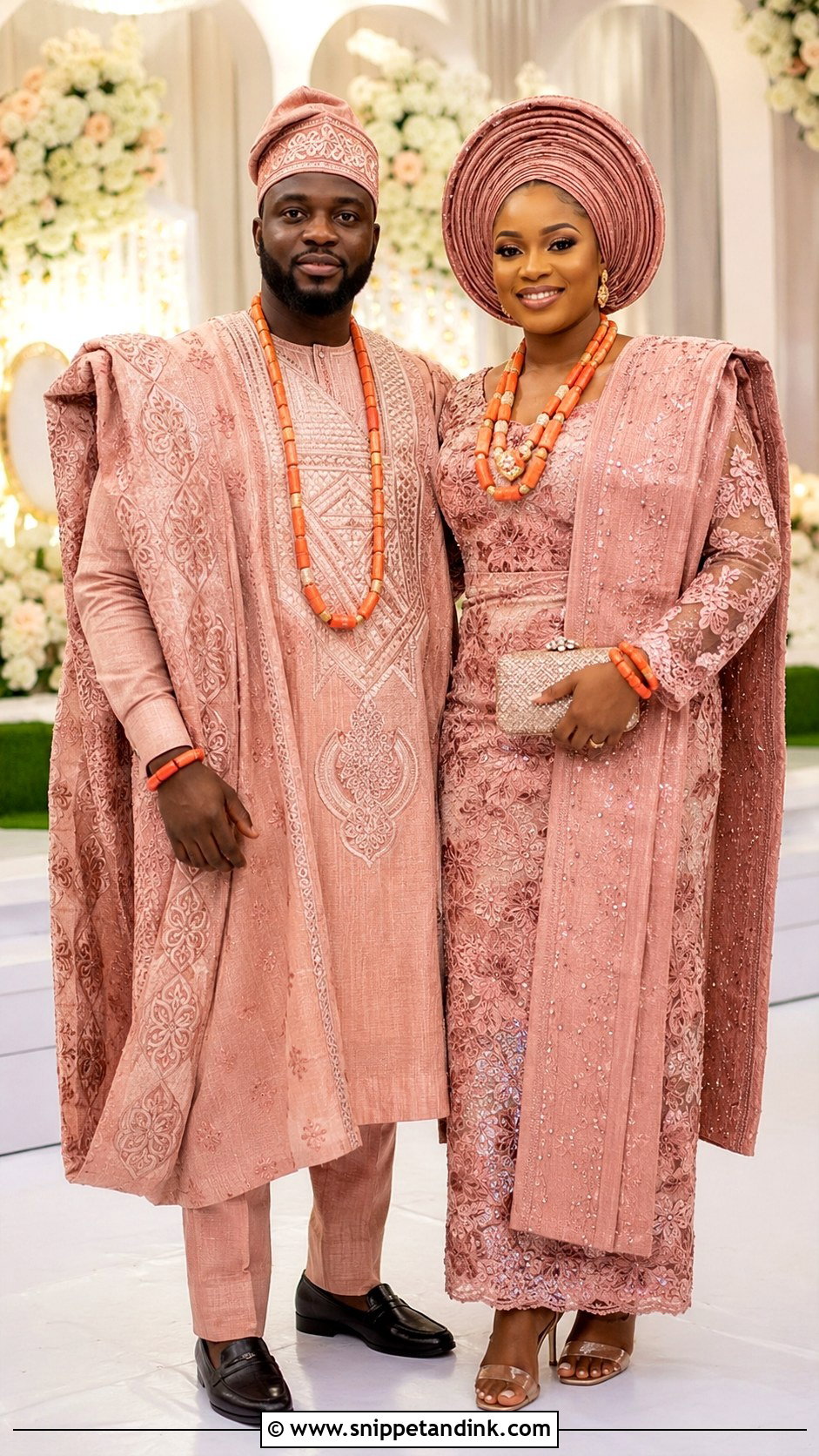
Lace iro and buba is a softer alternative to full aso oke, and many Yoruba brides wear it for a second outfit. A lace gown also works. The gele stays as the cultural anchor, often in aso oke for structure, with beads, a clutch and heels. The groom matches in agbada or an embroidered kaftan. Dusty rose, champagne and emerald are graceful choices. Ask your gele tyer to scale the headtie to your height and the neckline: an oversized gele on a petite bride with a high neck can swallow her.
18. Igbo Red Traditional Marriage Attire
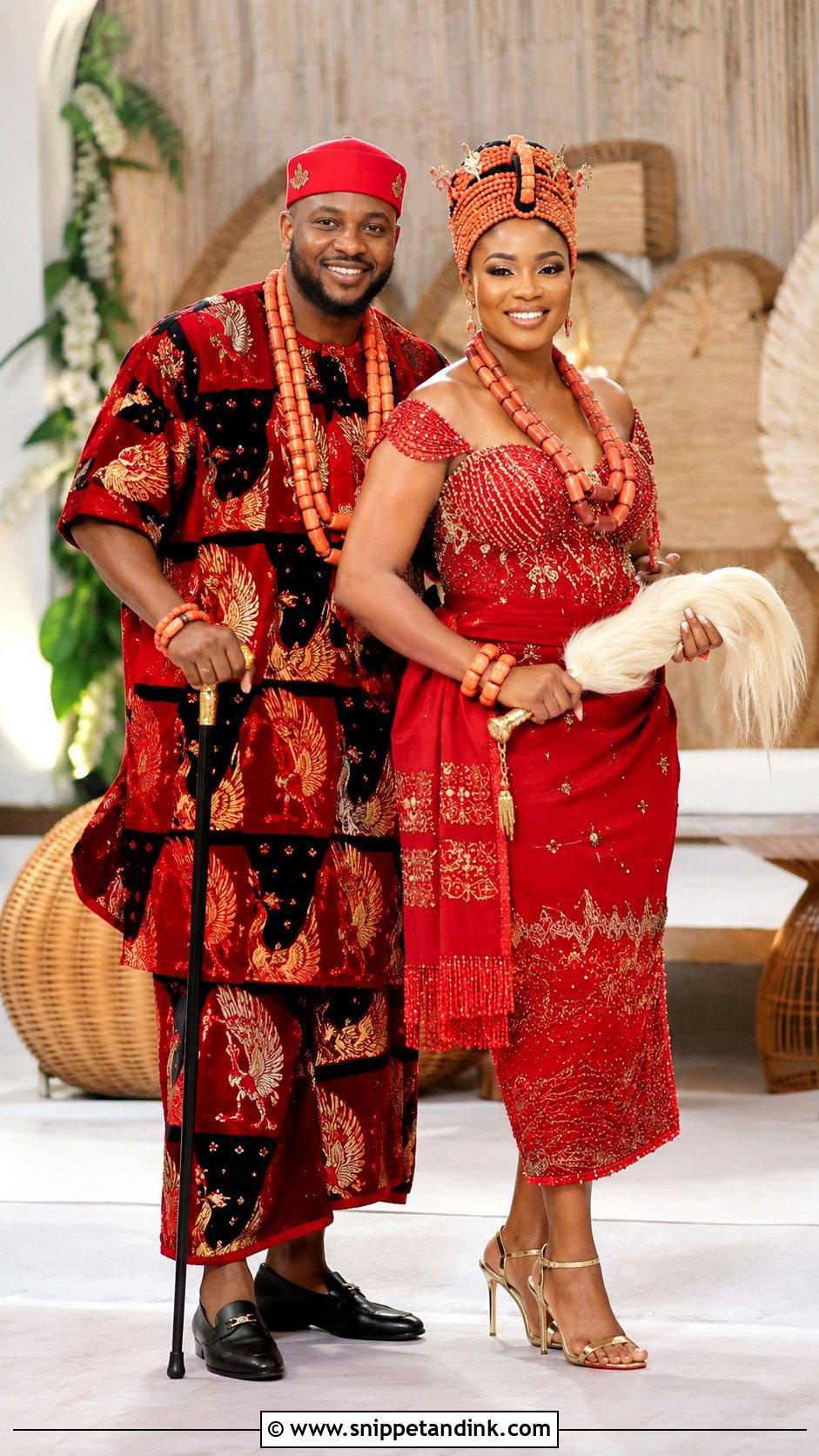
Red is the colour of celebration in an Igbo wedding, and a red beaded blouse over George wrappers makes an entrance. The groom wears a red or black isiagu with cap and coral. Too much red from head to toe flattens in photos, so I break it with gold, ivory or black accents. Red dye can also bleed onto pale skin or an ivory slip in a hot room, so wash-test cheaper fabric before the tailor cuts it.
19. Edo Velvet Traditional Marriage Attire
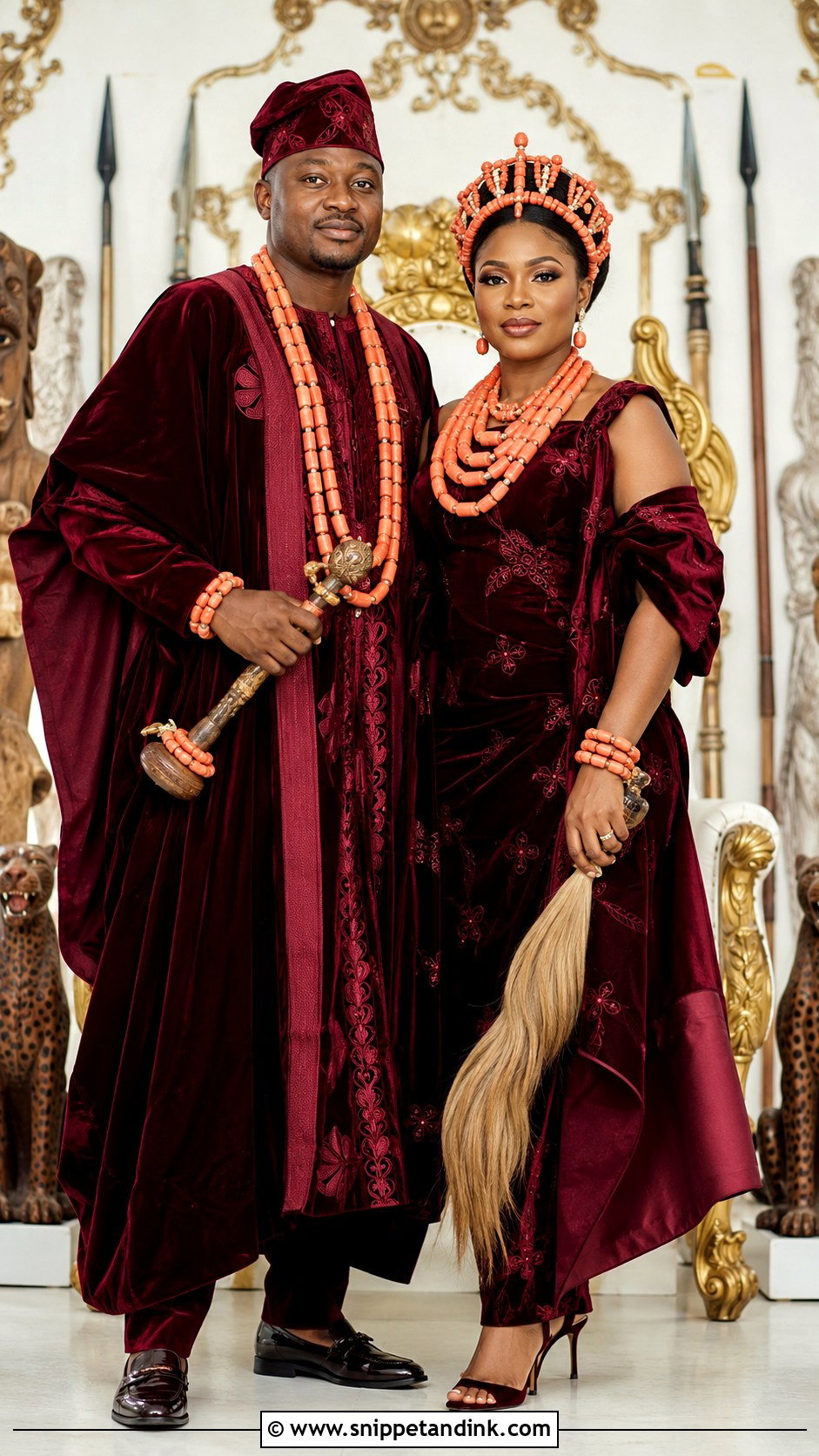
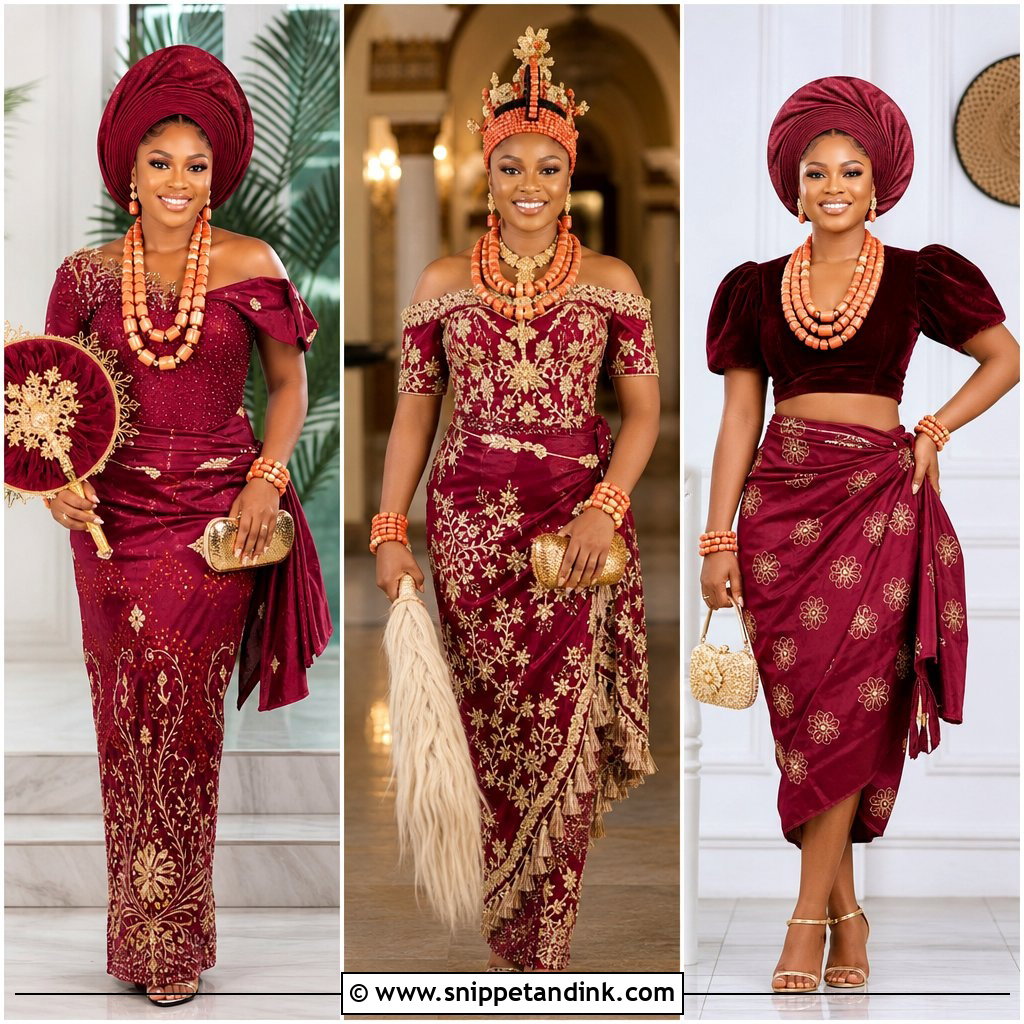
Velvet makes Edo bridal wear feel even more royal, especially under the coral crown and layered necklaces. Deep red, wine, purple, emerald or navy velvet all carry it. Velvet shows every pucker and seam, so the tailoring has to be smooth, and it’s warm. I recommend it for evening or air-conditioned venues. The crown must be anchored to a solid hairstyle; coral moves when you dance.
20. Yoruba Gold Traditional Marriage Attire
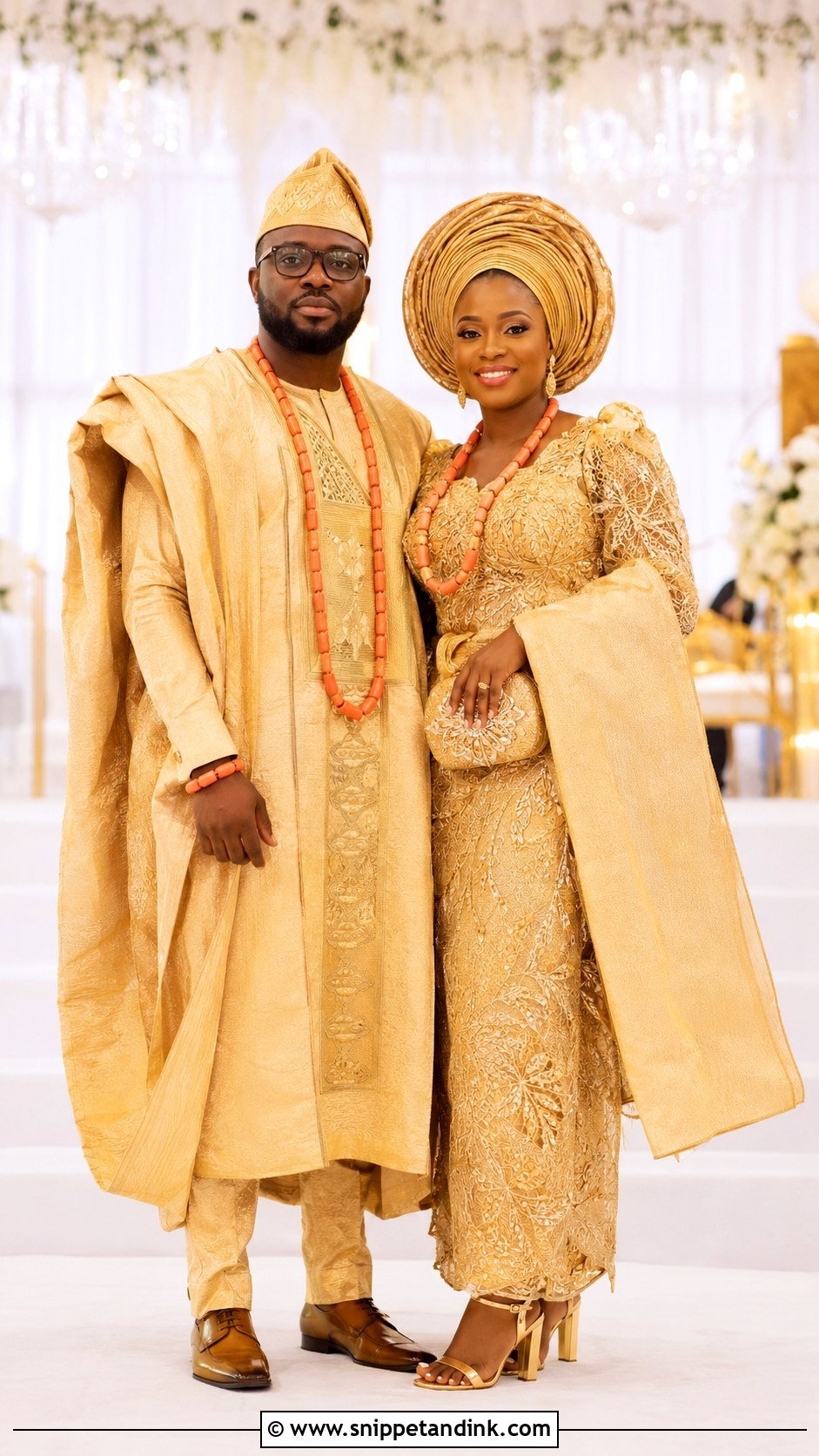
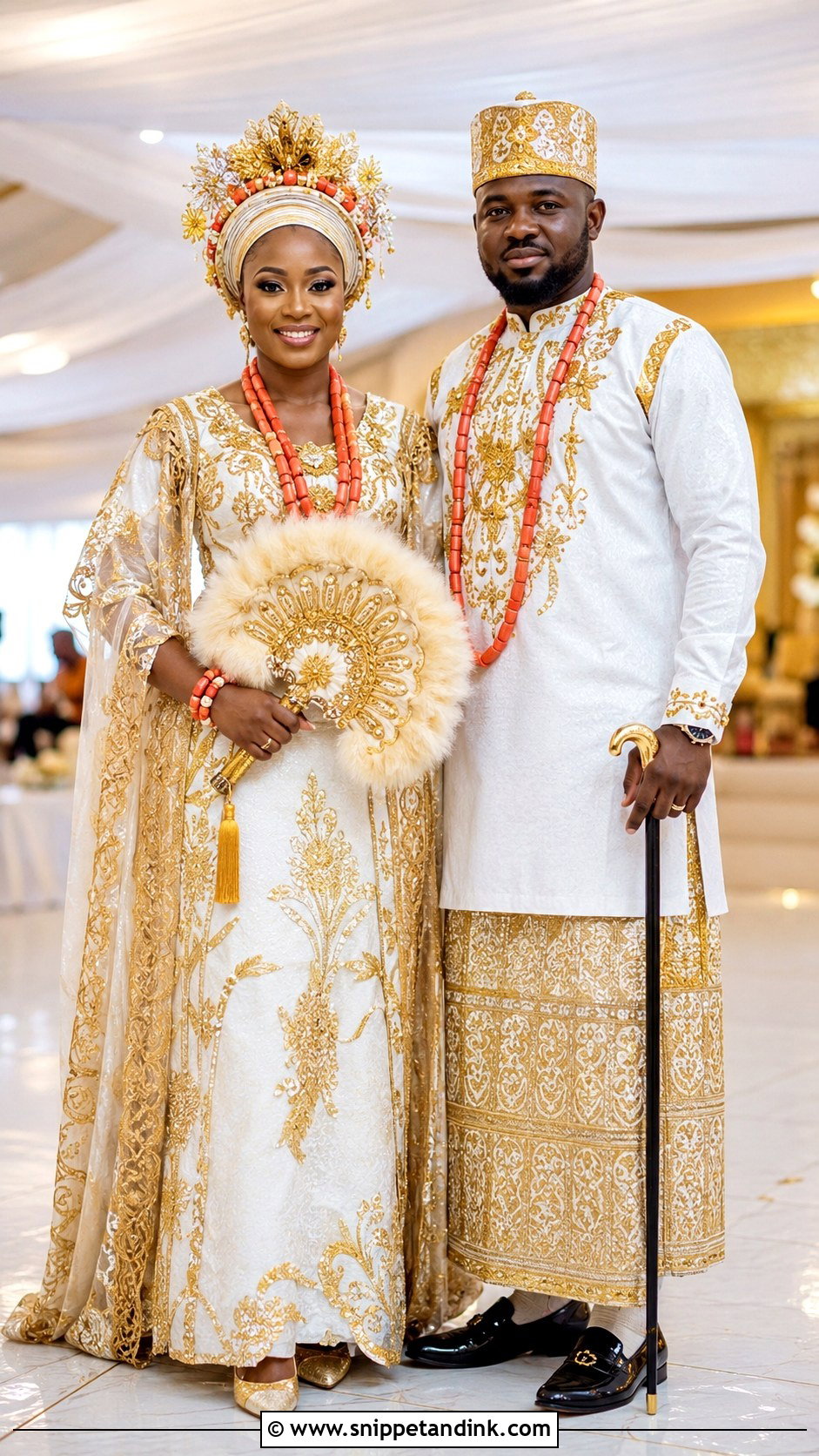
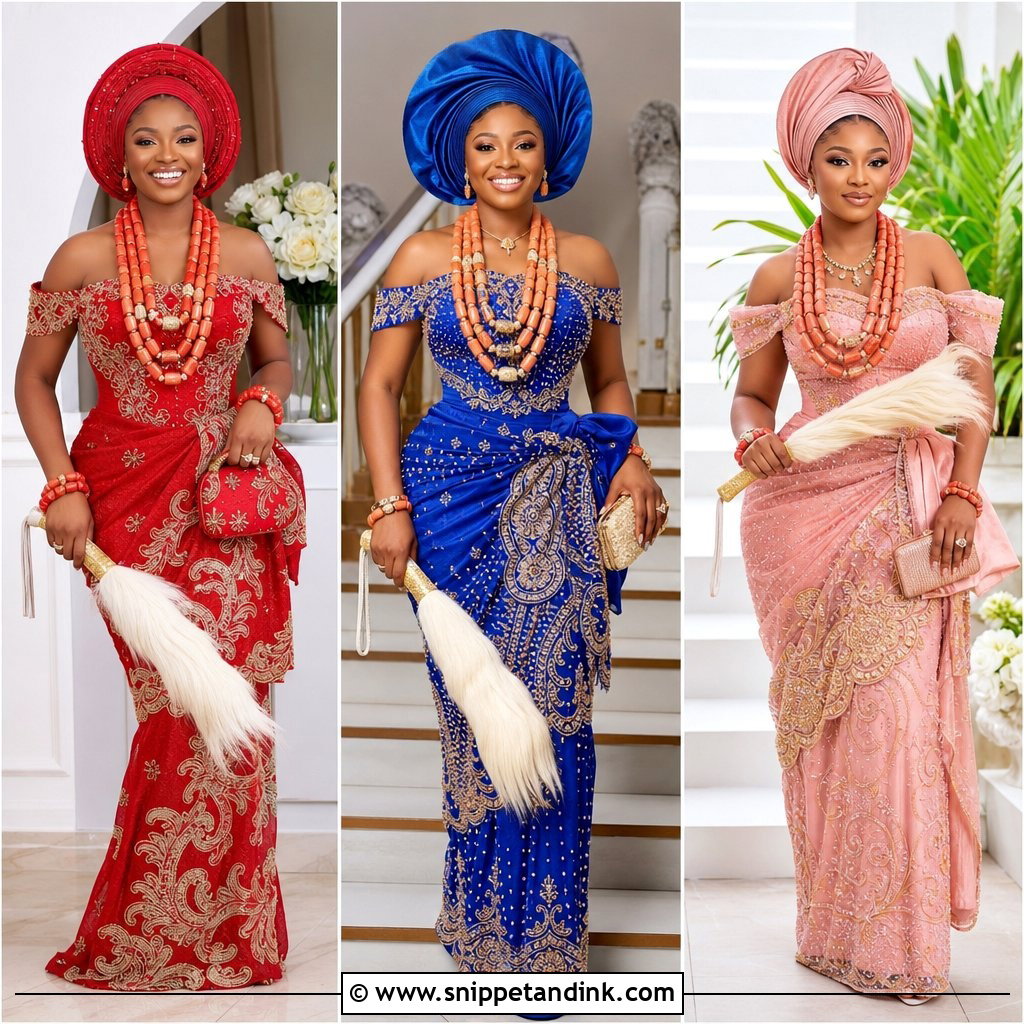
Gold aso oke or lace gives a Yoruba couple a regal glow: iro, buba, gele, ipele and metallic heels for her, a gold agbada with sokoto and fila for him. Gold needs little help from other colours, though ivory, brown or wine accents add depth. Metallic fabric reflects light, which is great in candlelit halls but harsh under direct midday sun, so think about your ceremony time. Soft glam makeup keeps the face from competing with the shine.
21. Hausa Lace Gown Traditional Marriage Attire
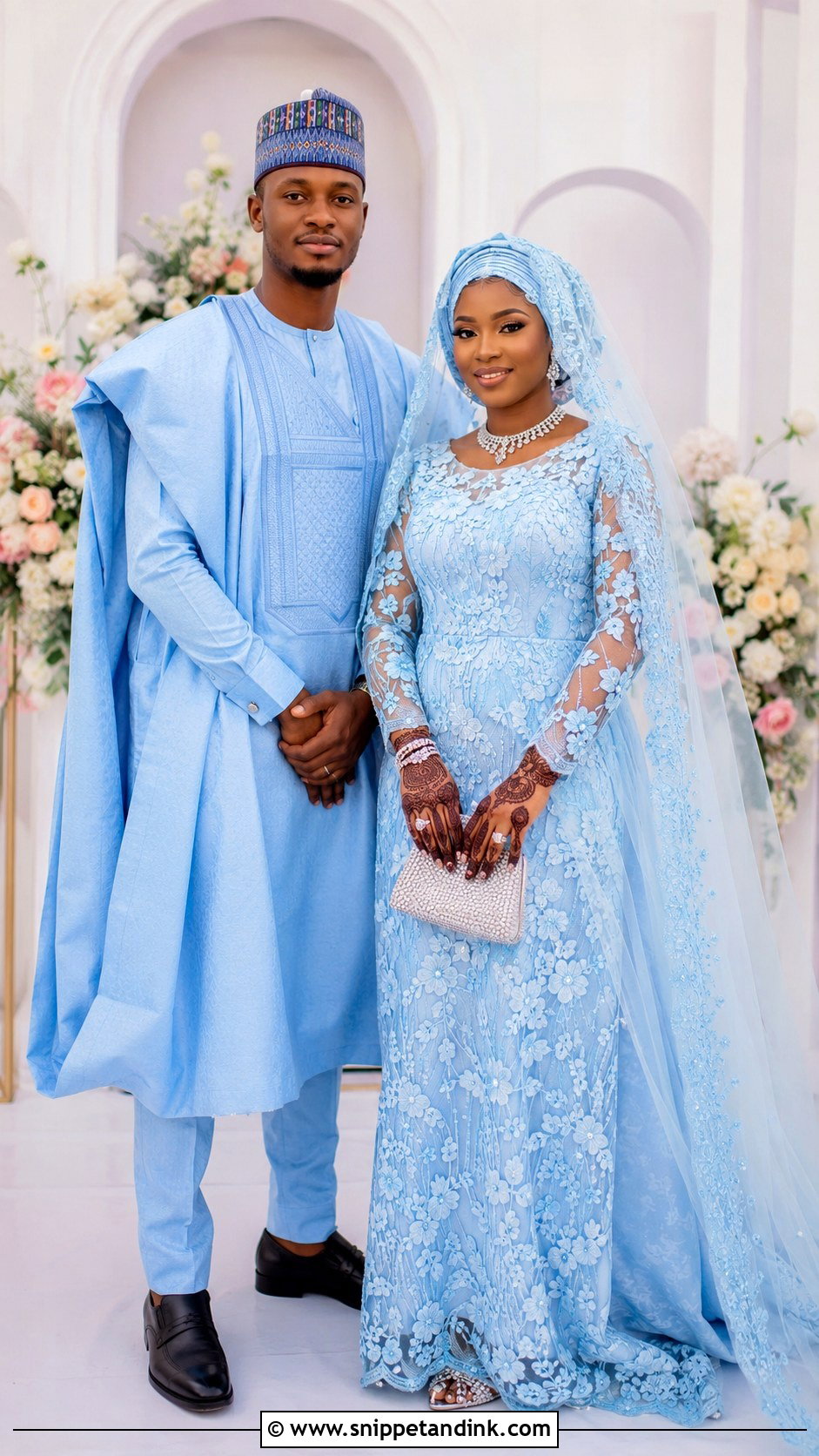
A long lace gown with a matching veil and decorated hands is the gentler version of the Hausa bridal look. The groom coordinates in babban riga or kaftan. Pastels suit it, though emerald and navy also hold up. Many Hausa celebrations have several events across a few days, so I plan which gown goes to which event and pick the lightest one for the longest. The gown should move with you rather than grip.
22. Efik Two Piece Traditional Marriage Attire
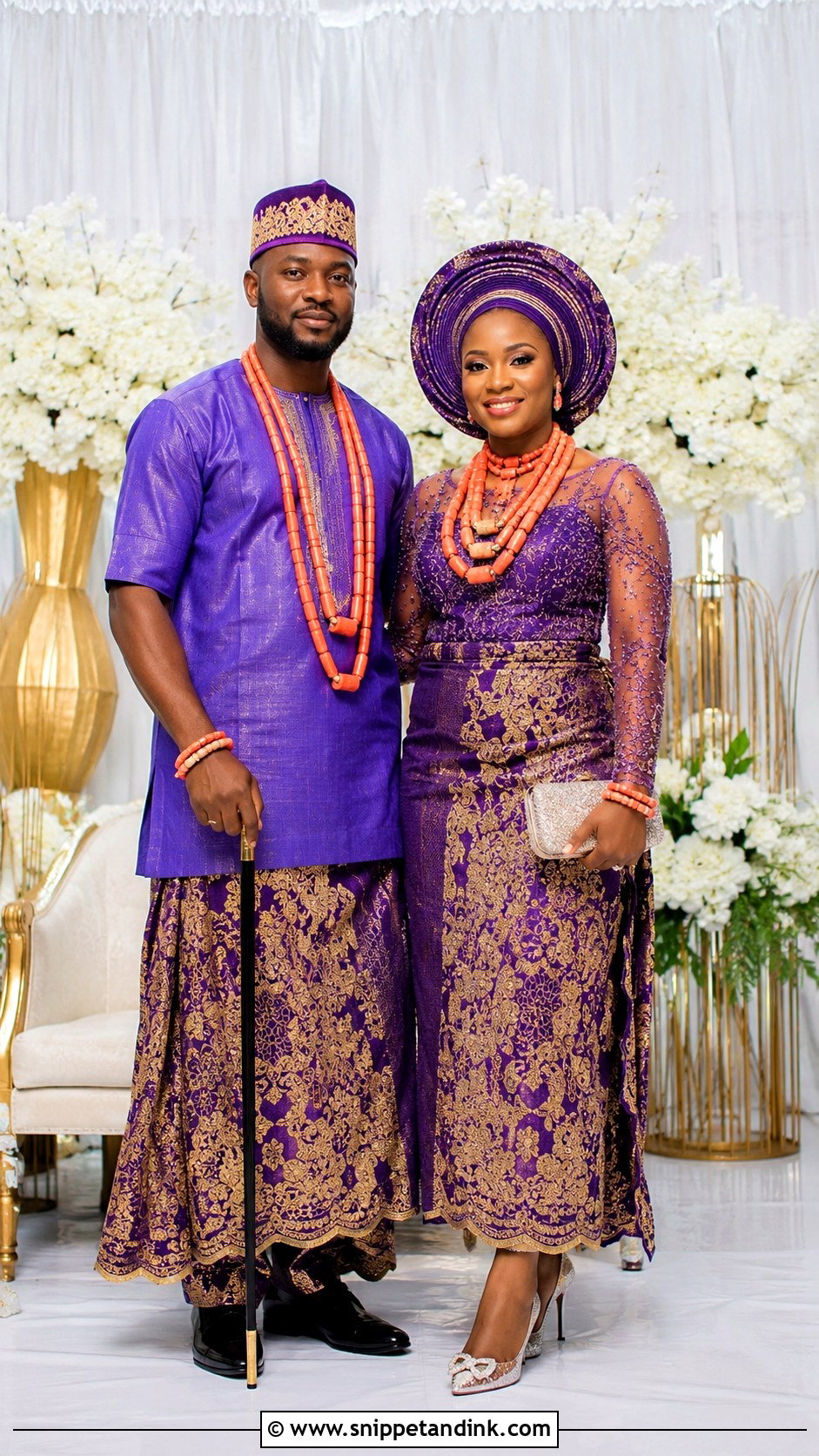
The Efik two-piece pairs a fitted blouse with a wrapper or full skirt, coral beads, a styled headpiece and a hand fan. The groom wears shirt, wrapper and cap in the same colour story. I suggest this to brides who loved the onyonyo silhouette but wanted to dance. A separate top and skirt let you lift your arms without the whole gown riding up, and the skirt can be let out on the day if needed.
23. Delta Traditional Marriage Attire With George Wrapper
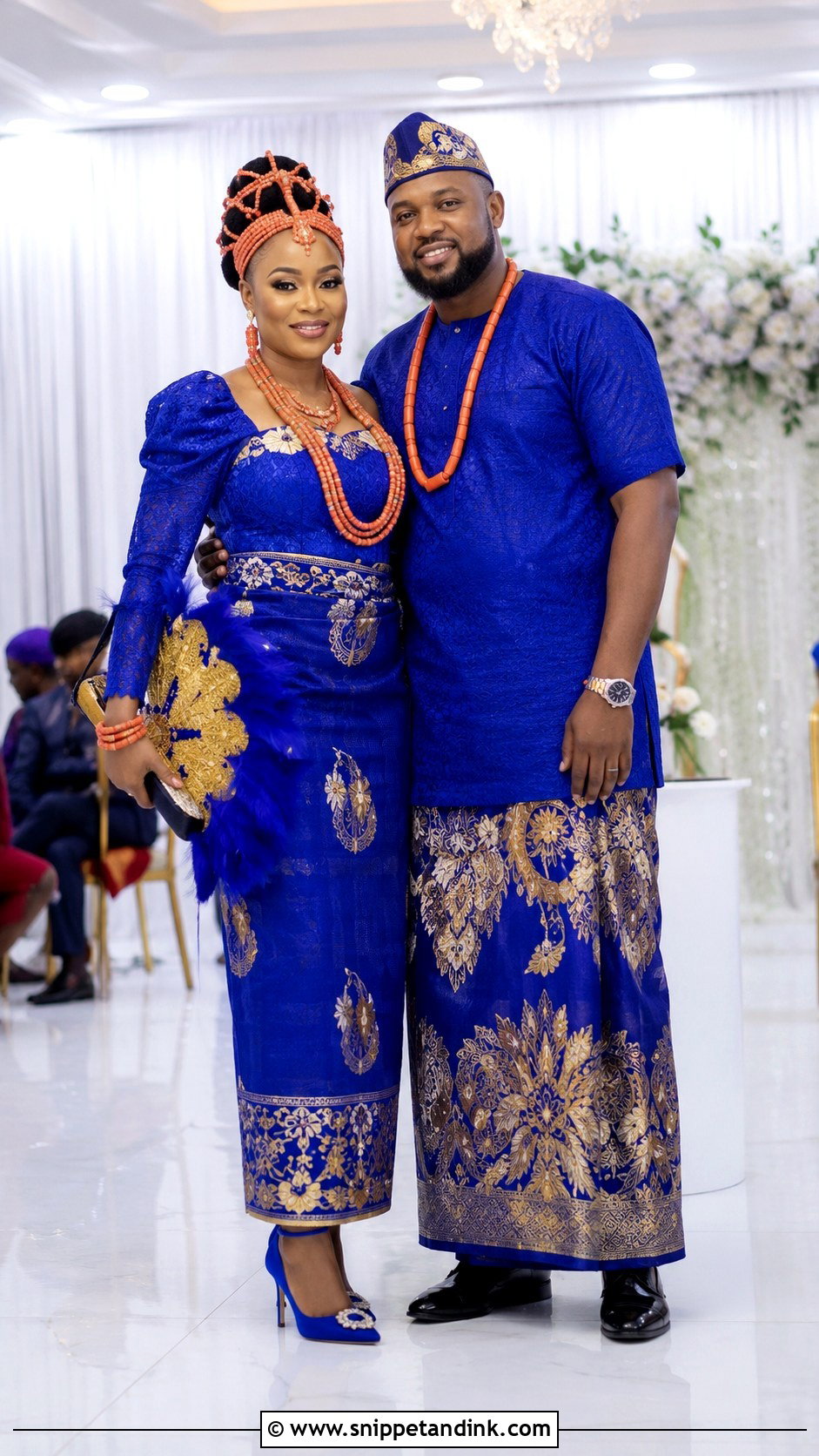
Delta brides often build their look on a George wrapper with a lace or beaded blouse, coral beads, a head tie and a clutch; the groom matches with shirt, wrapper or trousers and cap. Gold, red, purple and teal are common. George is heavy cloth, and a wrapper tied badly slides down the hips by the second hour. Pick one focus for jewellery, either a bold necklace or statement earrings, and keep the other quiet.
24. Aso Ebi Traditional Marriage Guest Attire
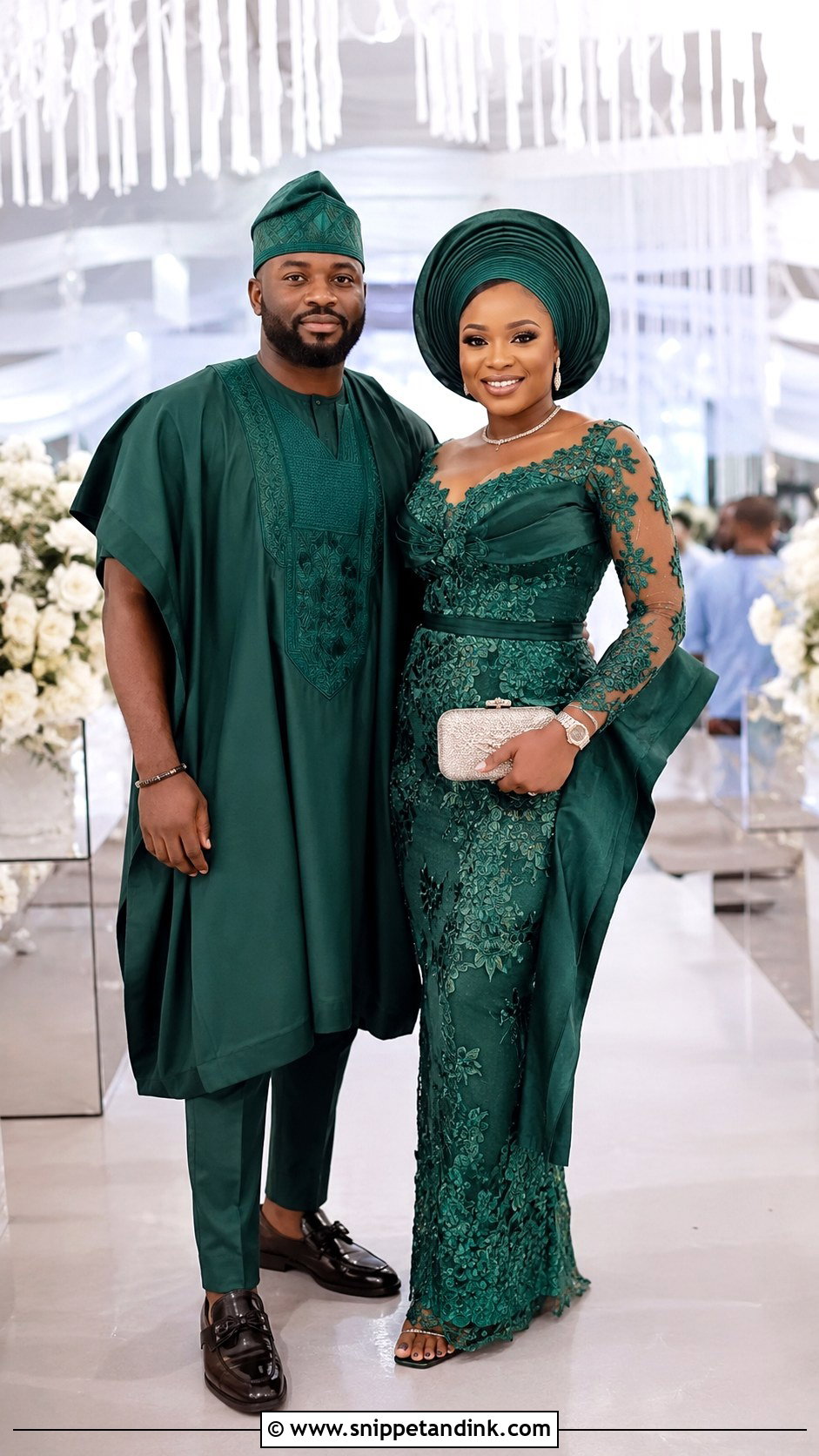
The point of an aso ebi traditional marriage guest attire is showing which side of the family you belong to, without upstaging the couple. Women usually wear the chosen fabric as a lace gown, skirt and blouse or wrapper set with a gele; men wear agbada, kaftan or senator styles in the agreed colour. Heavily embellished fabric needs simple accessories. Plain fabric can take a structured gele or bolder jewellery. Get your fabric to your tailor early, because every guest at the wedding is doing the same.


25. Intertribal Traditional Marriage Attire
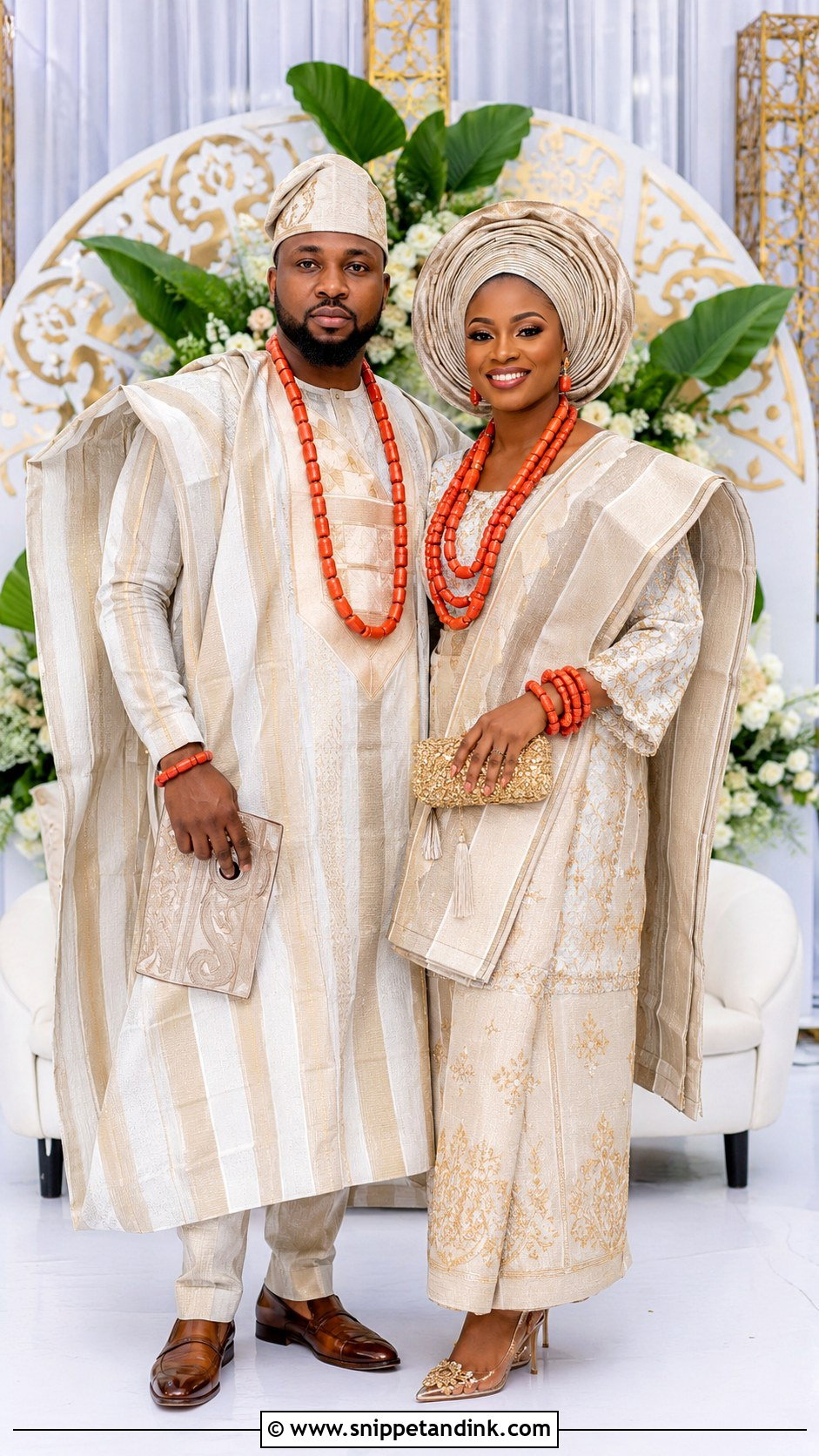
When two families from different cultures marry, the couple often wear more than one outfit, starting with the bride’s tradition and changing into the groom’s later. A bride might begin in Edo coral, then change into Yoruba aso oke, Igbo George or Hausa lace. The groom ties each look together through colour, cap or beads. What I insist on is accuracy. Ask an elder from each side how the outfit should be worn, because getting the gele tie or the bead placement wrong reads as costume, and families notice.
Coral, Velvet and Aso Oke Under a Hot Canopy
Nigerian traditional weddings are often held outdoors or in packed halls, and the most prized materials are also the warmest. Aso oke is hand-woven and dense, velvet traps heat, and real coral sits heavy on the neck. None of that means avoiding them; it means planning around them.
Tailor timelines
Good tailors fill up early in wedding season, and aso ebi fabric often reaches guests months before the date. Give your tailor the fabric with time for at least two fittings and a final one about a week before, once your weight has settled. Bring the actual shoes and beads to the fittings.
On the day
- Book the gele tyer for the morning and have her teach a bridesmaid how to re-tuck it.
- Line velvet and heavy lace bodices with breathable cotton so sweat doesn’t mark the outside.
- Wear a slip under light lace; flash photography makes thin lace more see-through than it looks in a mirror.
- Carry blotting papers and a hand fan, and take the coral off between segments to rest your neck.
Dressing for Both Families With Respect
Traditional wedding clothes in Nigeria carry family history and ethnic pride along with personal style. Edo coral, Yoruba aso oke, Igbo George, Hausa lace and Tiv stripes all deserve to be worn correctly and comfortably. Focus on fit first, then fabric quality, then colour balance, then accessories. Try everything on together before the day, including the beads and the gele, and dance a little in the fitting room. If it still feels good after that, you’re ready.
You'll Like These Ideas:




Leave a Reply