
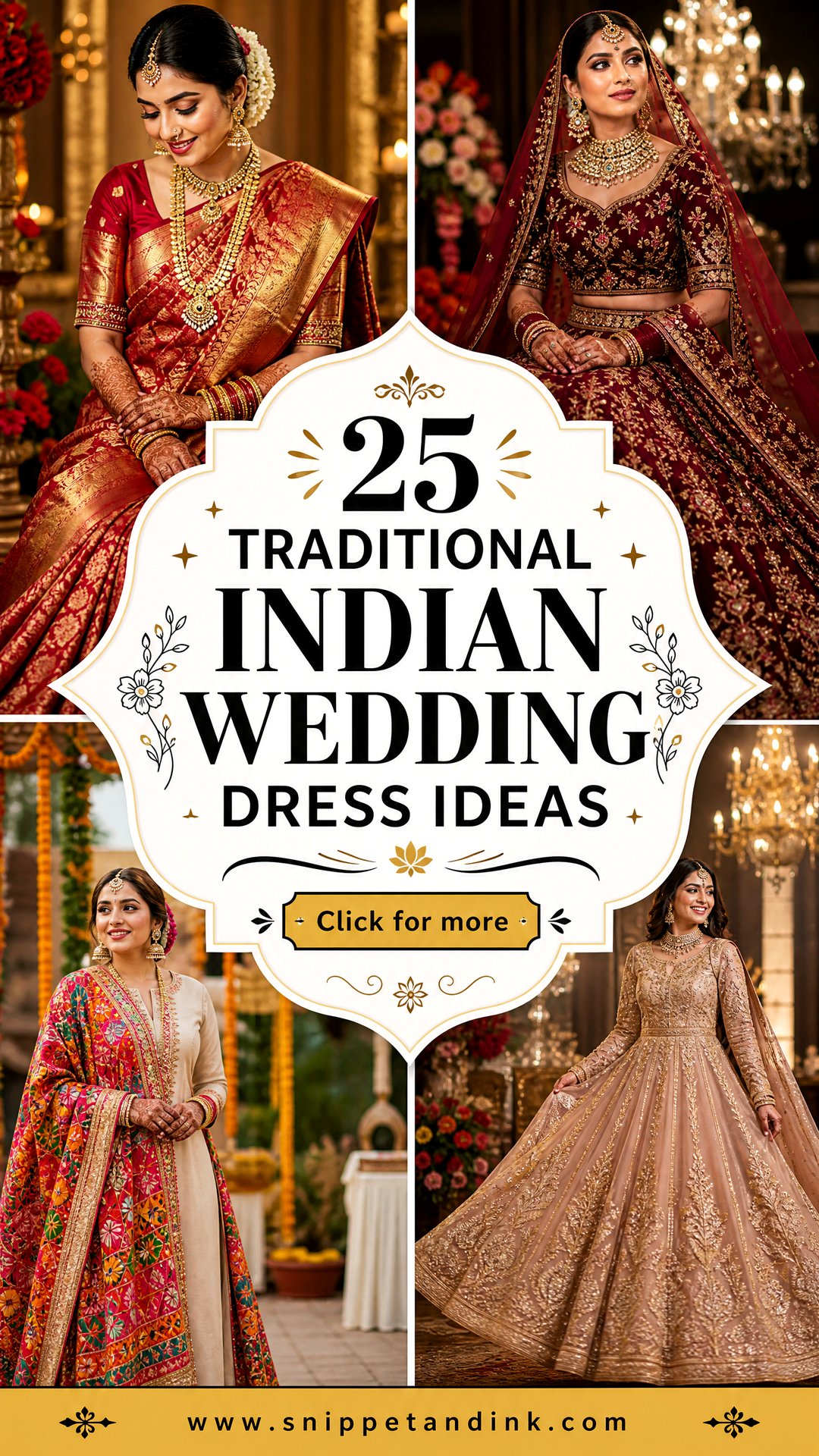
Red silk, gold zari, a dupatta over the head: that’s the picture most people carry of an Indian bride, and it’s still a fine place to start. The outfits that work best, though, are chosen around the ceremony, the family’s customs, the season and how much you’ll be moving, sitting and greeting. Rich silks, zardozi, gota patti, mirror work and temple jewelry aren’t going anywhere, while lighter dupattas, pastels and pre-draped shapes make traditional dressing kinder to the wearer. I spend as much time with clients on embroidery and fabric weight as on color, and the notes below reflect that. Here are 25 complete looks, head to toe.
Reading the Embroidery Before You Pay for It
Most of the cost in an Indian wedding outfit sits in the surface work, so it helps to know what you’re looking at. These are the techniques you’ll meet most often in the looks below:
- Zardozi: metallic thread and wire couched onto fabric in raised patterns. Rich and heavy, and the reason bridal skirts weigh what they do.
- Dabka: tightly coiled metal wire cut and stitched on, giving a springy, textured shine.
- Gota patti: metallic ribbon cut and appliqued, much lighter than zardozi.
- Resham: silk or silky thread embroidery, soft and flexible, with no metal at all.
- Mirror work: small glass or metal discs held in place by a ring of stitches.
To judge handwork, I turn the fabric over. Hand embroidery shows knots, jumps and small irregularities on the back. Machine work looks perfectly even and is often backed with a stiff stabilizer. Machine embroidery isn’t bad, and it keeps prices down, but it shouldn’t be sold at handwork prices. Also ask whether metallic work uses real metal thread or a synthetic, because real metal can tarnish while synthetic usually won’t.
Wearing Green or Ivory When the Family Expects Red
More brides now come to me wanting emerald, ivory, pink or pastel for the main ceremony. It can work well, but the conversation with family usually matters more than the lehenga. In many communities red carries ritual meaning, and an elder may care about it deeply even if they say little at first.
A compromise that often keeps everyone happy is to bring red in through one piece: a red dupatta over the head, red bangles, or a red border on an ivory saree. Another is to save the non-red outfit for the reception and wear red for the ritual itself. Whatever you choose, look at the color in daylight and under warm indoor light, because pastels and ivory change more between the two than deep reds do.
1. Red Bridal Lehenga Wedding Dress
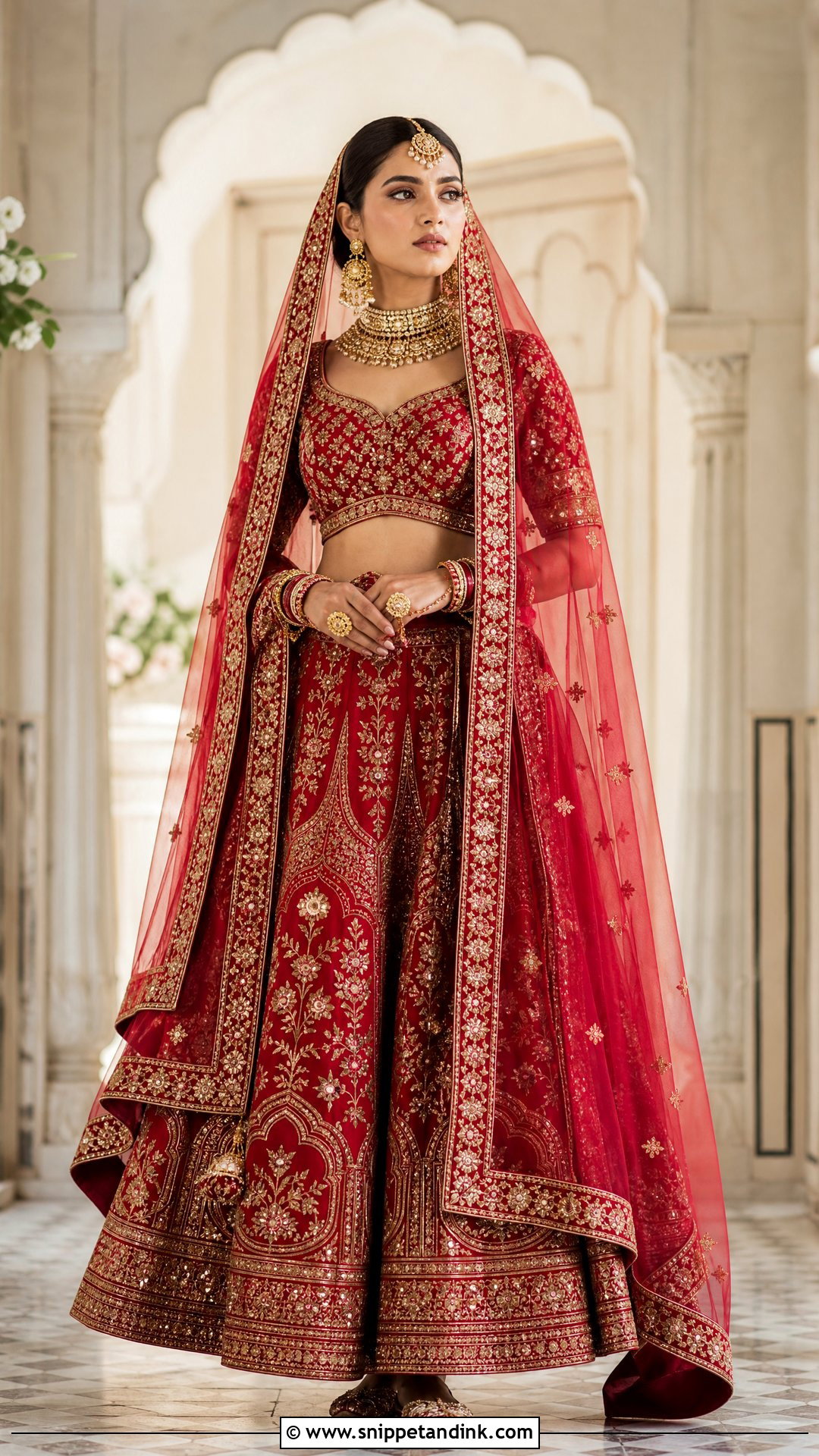
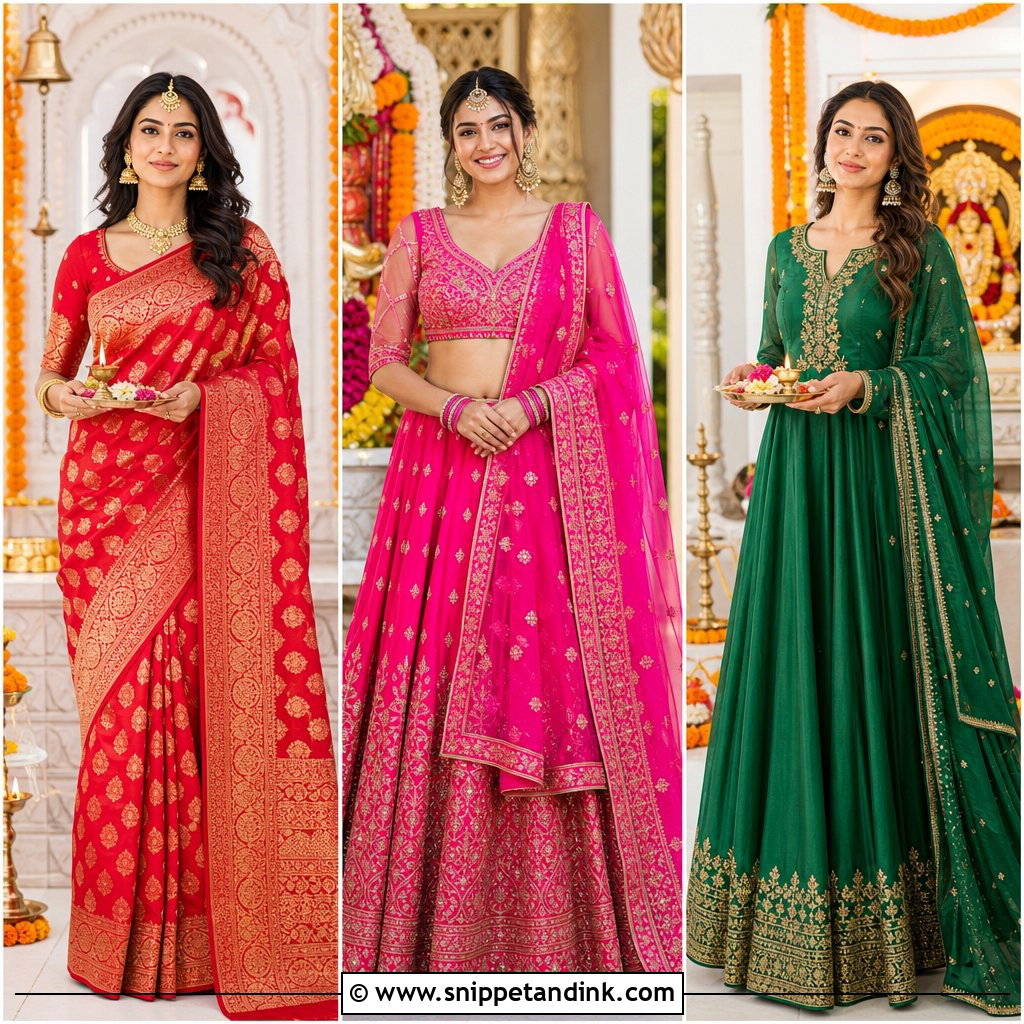
Dabka, the coiled-wire embroidery on many red bridal lehengas, catches light like nothing else and weighs more than it looks. It’s a big reason so many brides end the night with sore hips. Silk, velvet or raw silk carries it best, alongside zardozi, gota or thread work. Pair the skirt with a fitted choli, a heavily bordered dupatta over the head and, for drama, a lighter second dupatta across the shoulder. My fix for the weight is structural: a wide, lined waistband with a hook-and-bar closure, so the skirt is supported at the waist instead of dragging. Gold jhumkas, a choker, a maang tikka and embroidered juttis finish it.
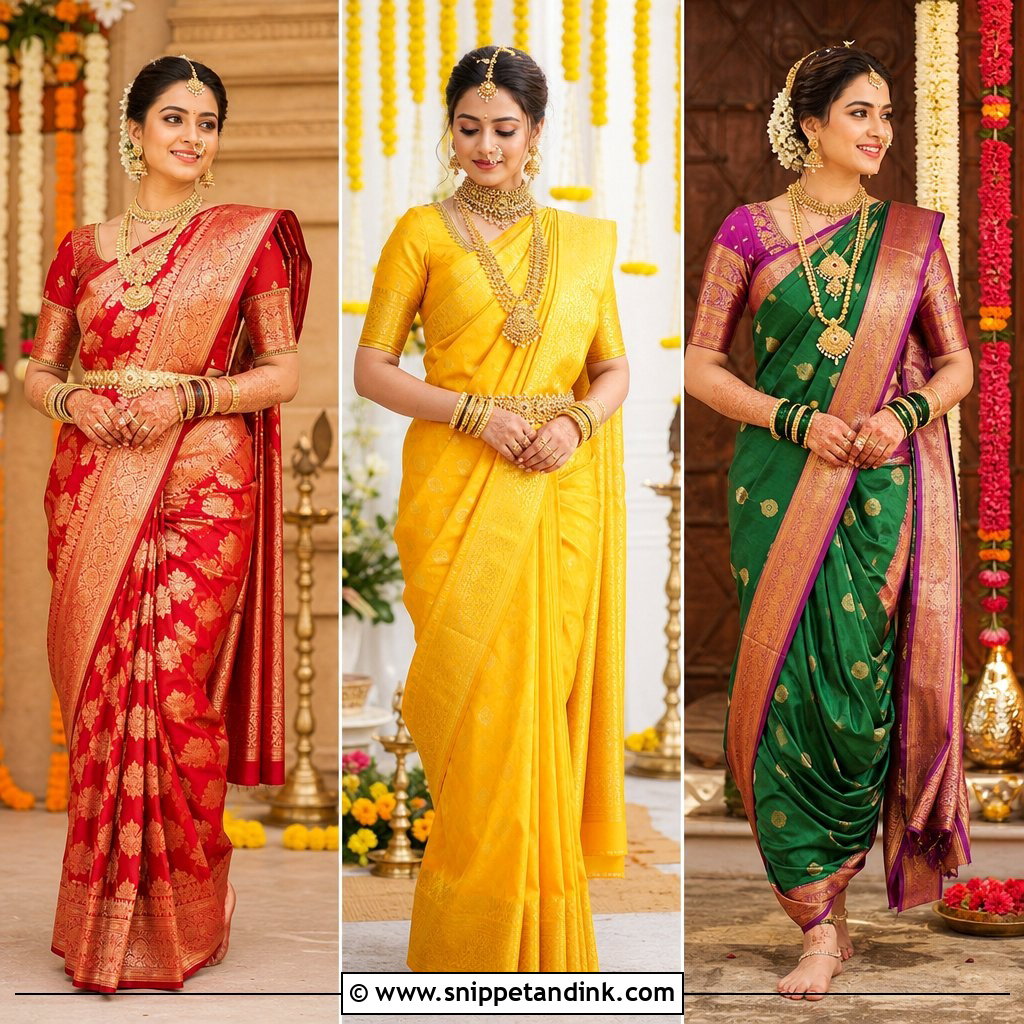
2. Kanjeevaram Saree Wedding Dress
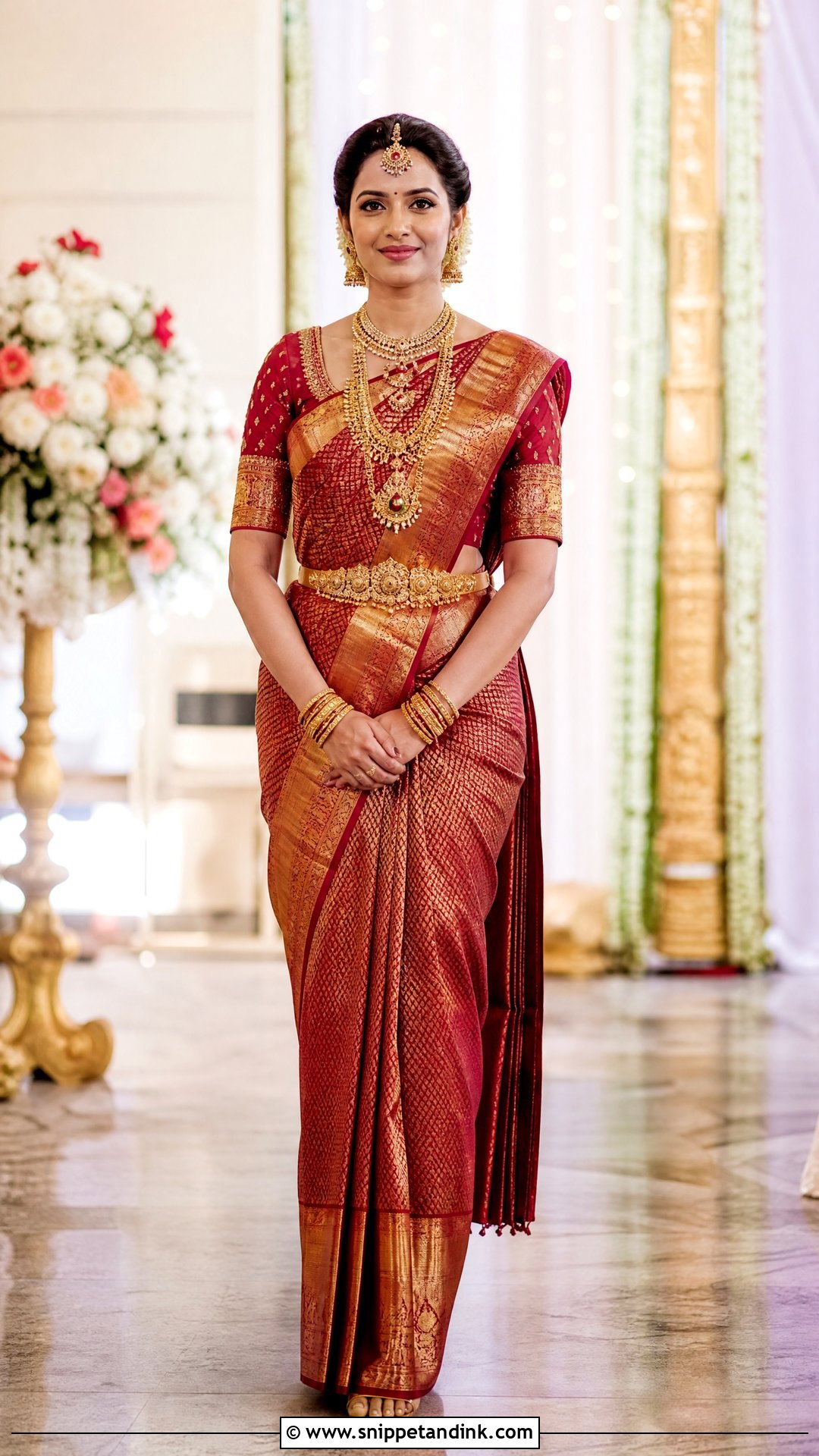
A Kanjeevaram silk saree gets its shine from tightly woven silk and zari, and it holds that luster in any light. Deep red, maroon, mustard and royal purple with a broad zari border read ceremonial. Style it with a contrast blouse, temple jewelry, layered gold necklaces, a waist belt and jasmine. A new Kanjeevaram is stiff, so I ask brides to wear it at home for an hour before the wedding; the silk relaxes a little and the wearer learns how it moves. Gold sandals sit well under the pleats.
3. Banarasi Silk Saree Wedding Dress
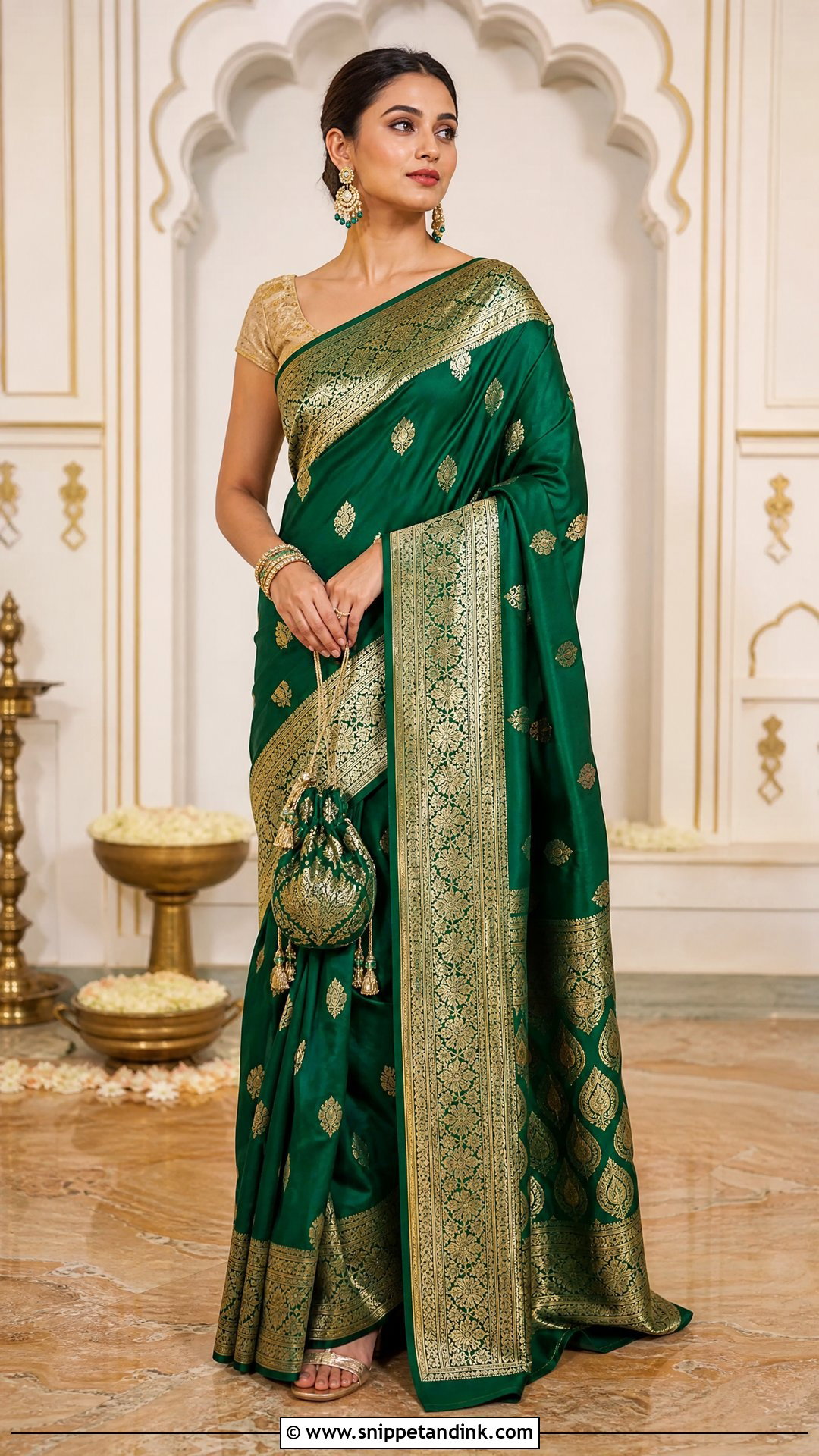
Before buying a Banarasi, look closely at the motifs. Handwoven pieces usually show small irregularities in the pattern, while powerloom versions look mechanically even. Both can look good, but the price should reflect which one you’re getting. The brocade texture and rich pallu suit a ceremony, reception or formal family function, in ruby, emerald, wine or navy. A contrast blouse changes the mood completely. When the saree itself is heavy, I keep the blouse simple and structured. A potli, kadas, statement earrings and neat sandals finish it.
4. Pastel Lehenga Wedding Dress
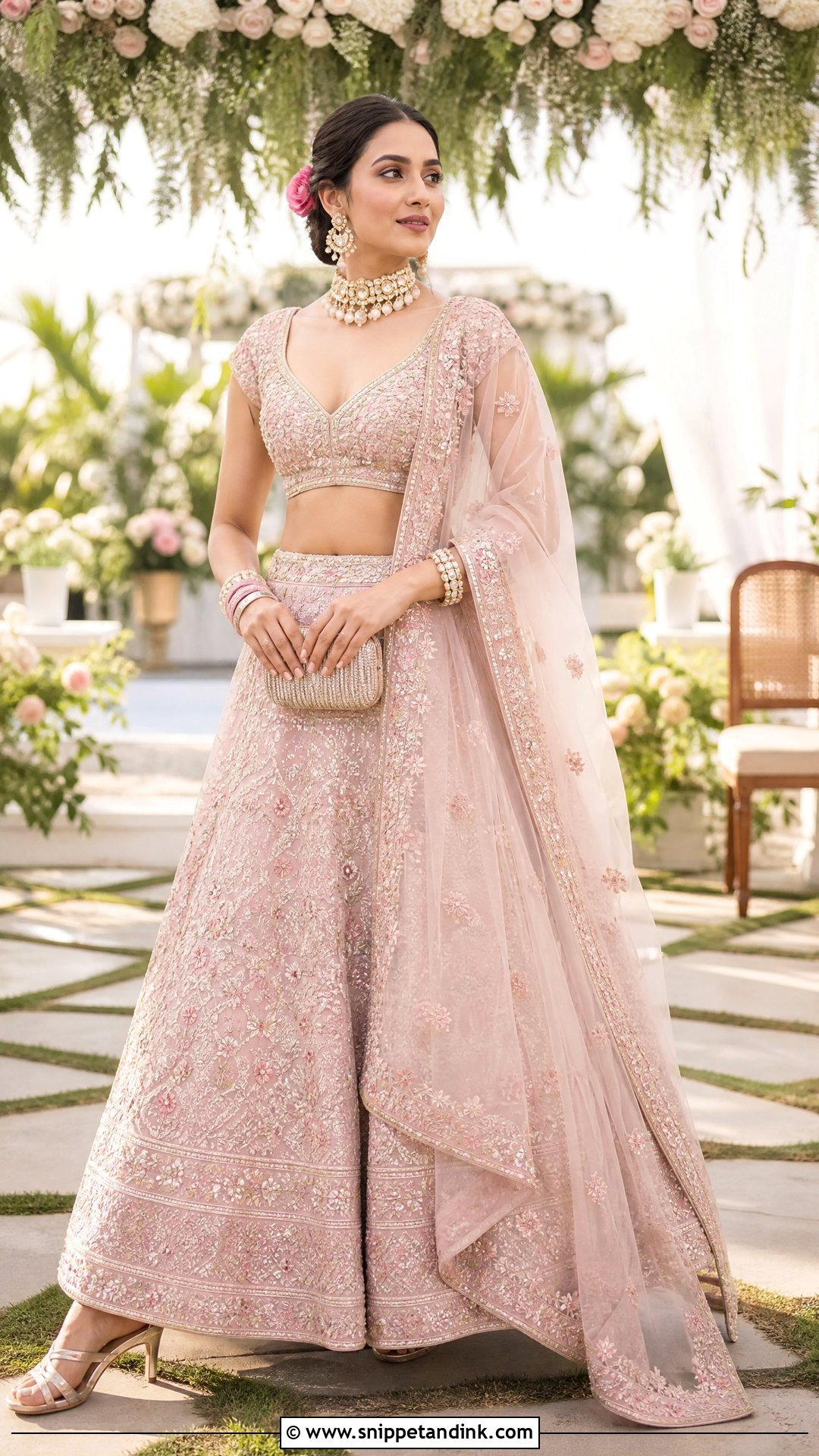
Pastel lehengas suit daytime weddings, engagements and outdoor events, in blush, mint, sage or butter yellow. The risk is looking underdressed, so I want the embroidery to carry some light: pearl, sequin, mirror or a touch of zari. Butter yellow and mint can look sallow on some skin tones in shade, so try the color outdoors before you order. A matching blouse, sheer dupatta, kundan jewelry and metallic sandals complete it. For a sister of the bride or a bridesmaid group, it’s an easy fit.
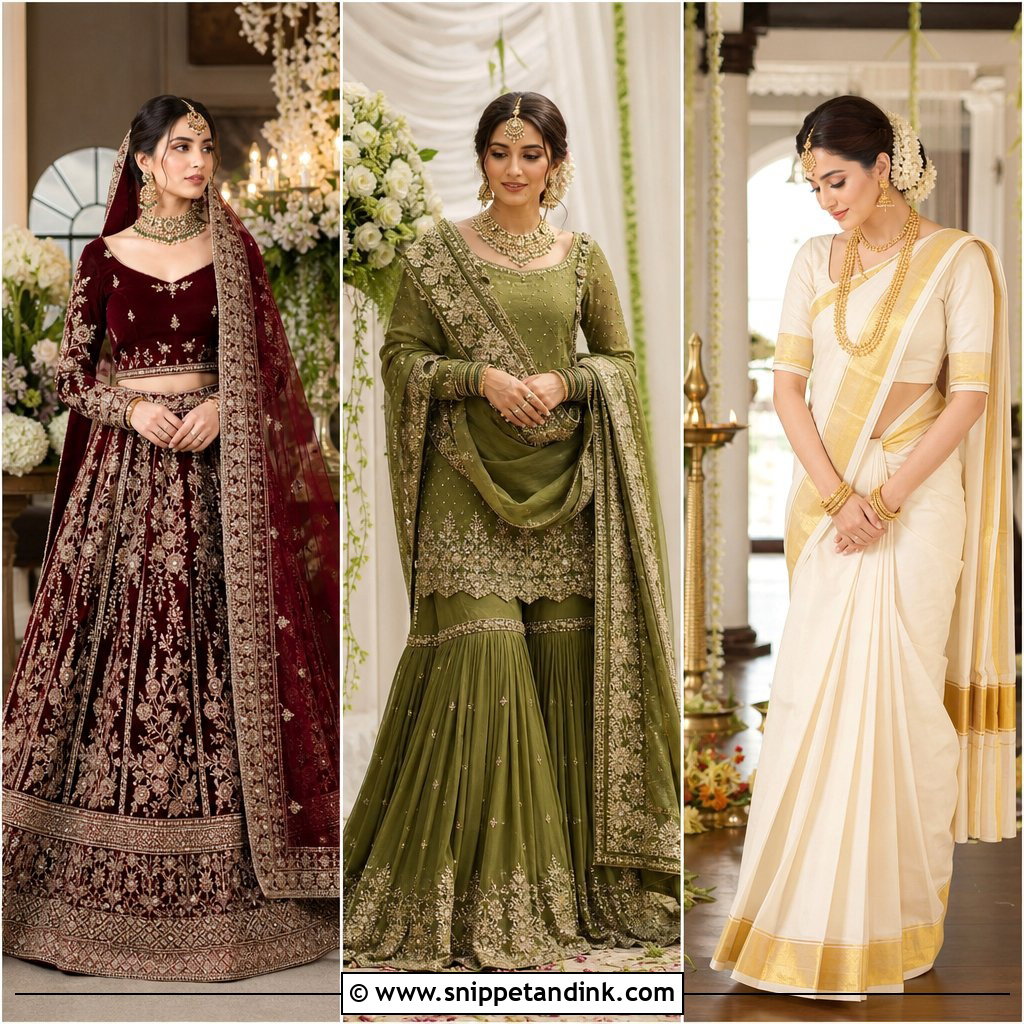
5. Sharara Suit Wedding Dress
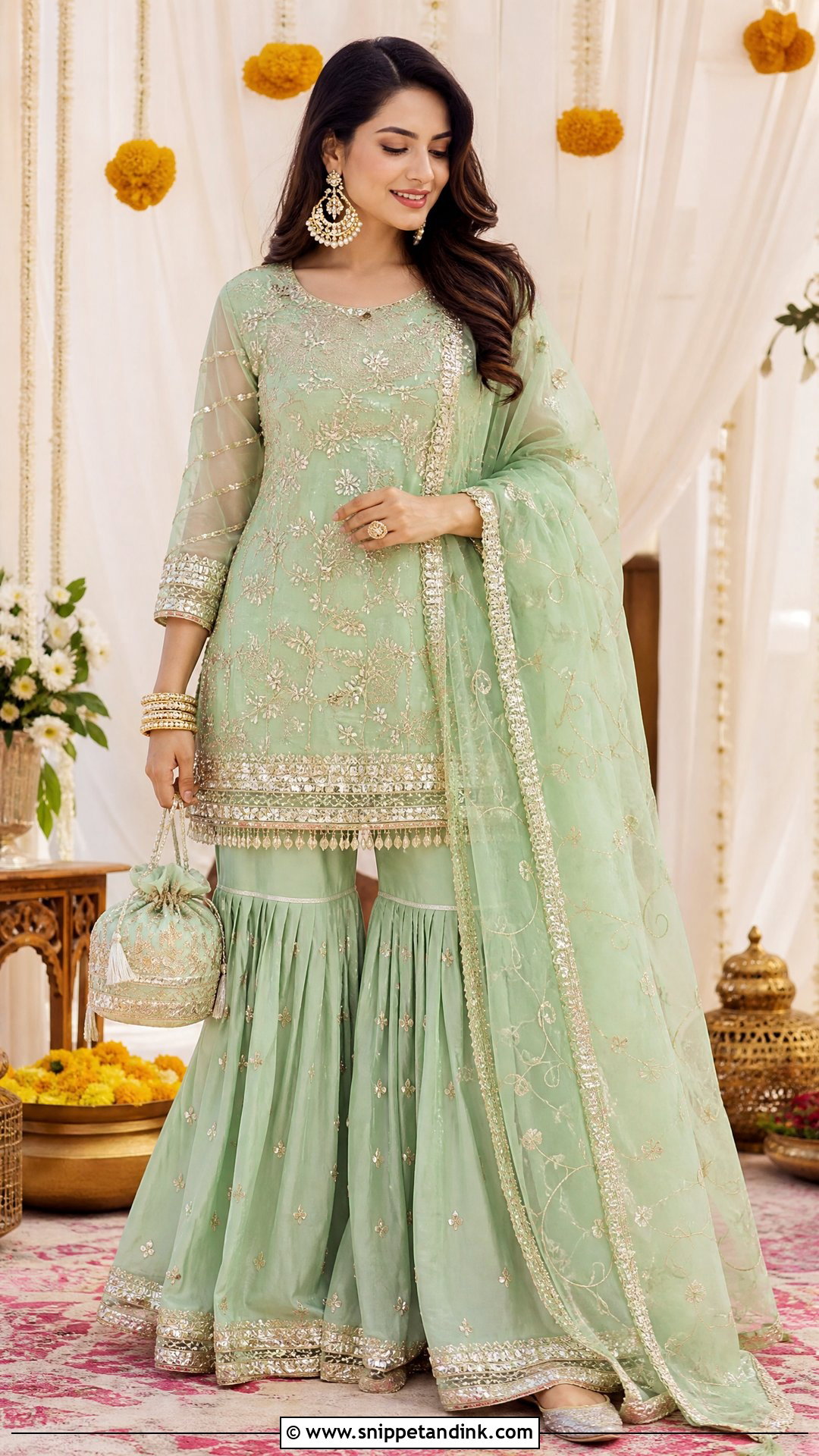
Everything about a sharara is built for movement: a short or mid-length kurti, wide flared pants and a dupatta. Mehndi, sangeet, nikah and daytime functions all suit it, with chikankari, gota patti, zari or mirror work. Proportion is the rule I follow. If the pants are very full, the kurti should be fitted through the waist, because a loose kurti over a big flare adds width everywhere. Juttis, chandbali earrings, bangles and a potli finish it.
6. Anarkali Suit Wedding Dress
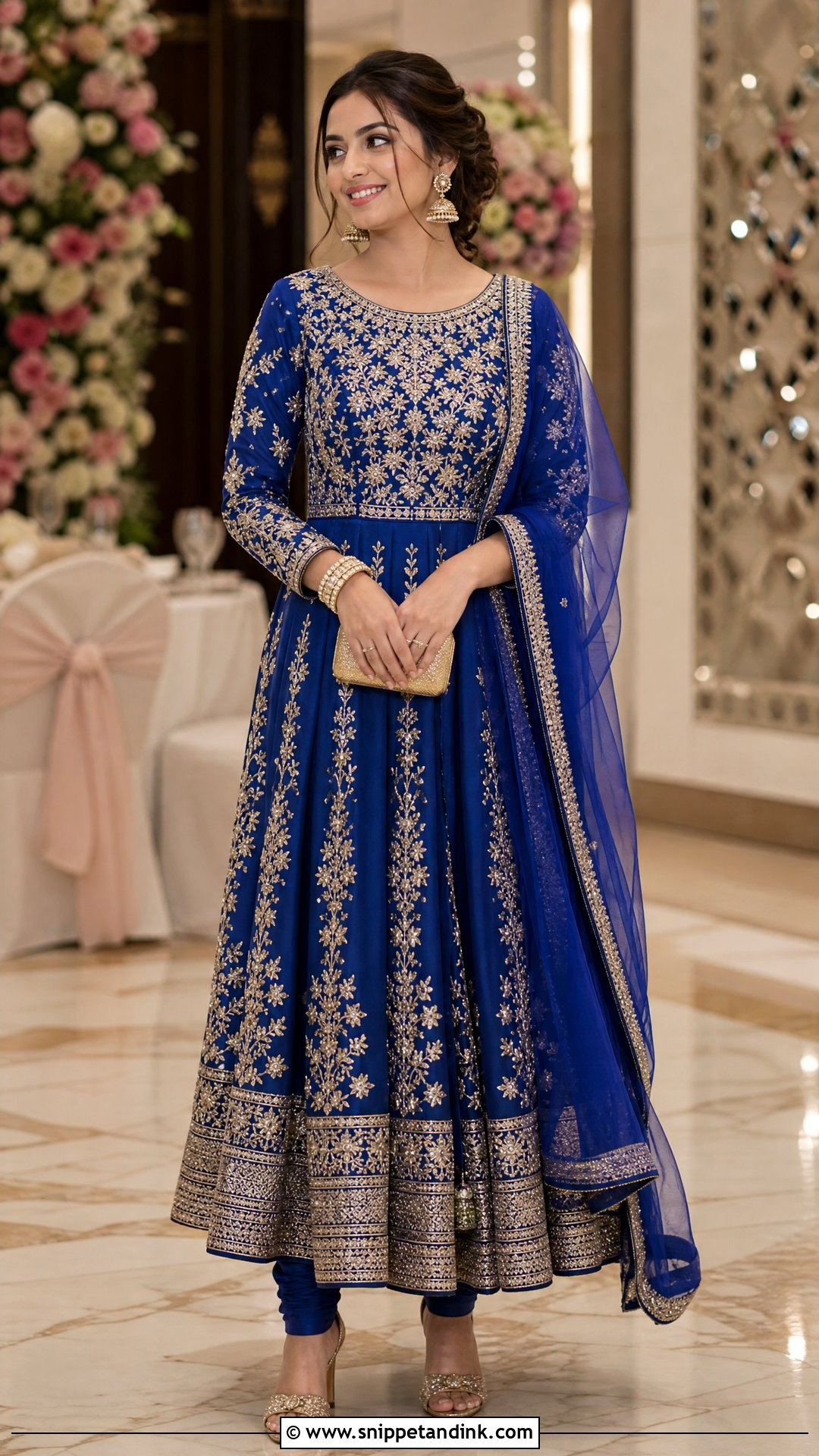
For a dress-like line with Indian detail, the floor-length Anarkali is the answer. Embroidery, churidar pants and a dupatta make it complete. Silk and brocade suit formal evenings, georgette and net feel lighter, and yellows suit daytime. The bodice is where I spend the fitting time, since it carries the whole skirt. It should sit snugly under the bust without pulling at the side seams when you raise your arms. Jhumkas, a small bindi, bangles and embellished heels finish it.
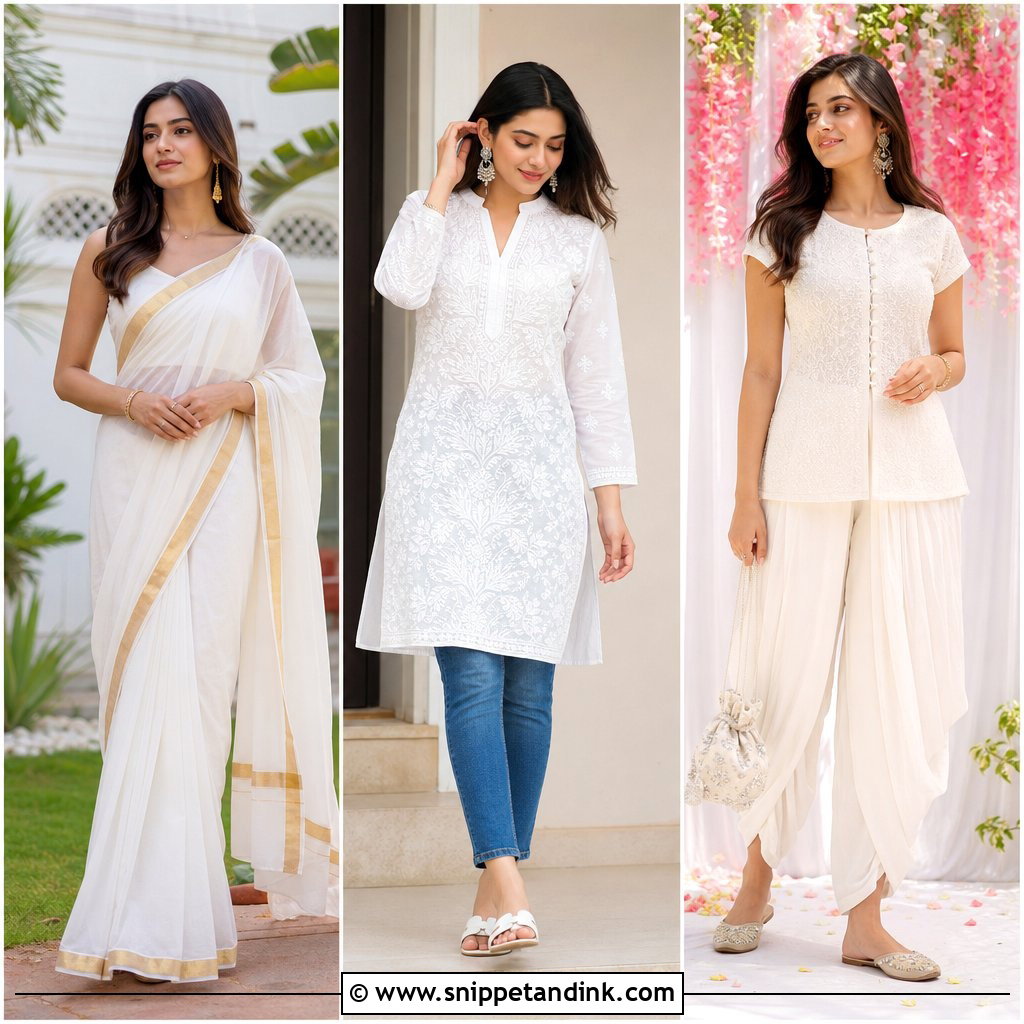
7. Chikankari Lehenga Wedding Dress
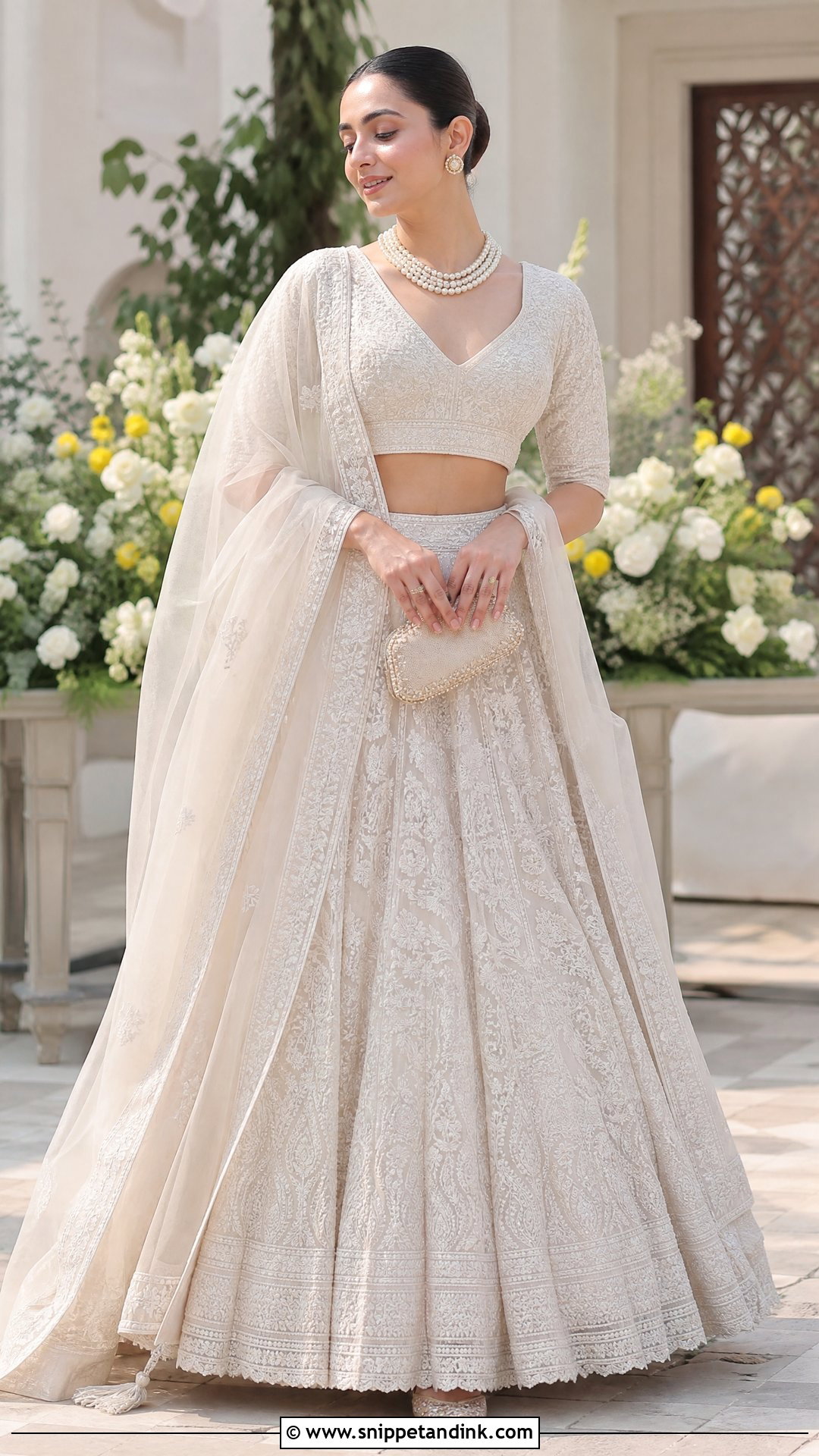
Good chikankari shows that it was done by hand. The stitches are slightly irregular and the shadow work looks soft rather than printed. Ivory, blush, mint and lavender suit daytime events, often lifted with mukaish or sequins. Keep the blouse matching and the dupatta light so the needlework stays the focus. As a guest in ivory or off-white, check with the family first, since some treat white as unsuitable for a celebration. Pearl jewelry, kundan studs and embroidered juttis finish it.
8. Mirror Work Lehenga Wedding Dress
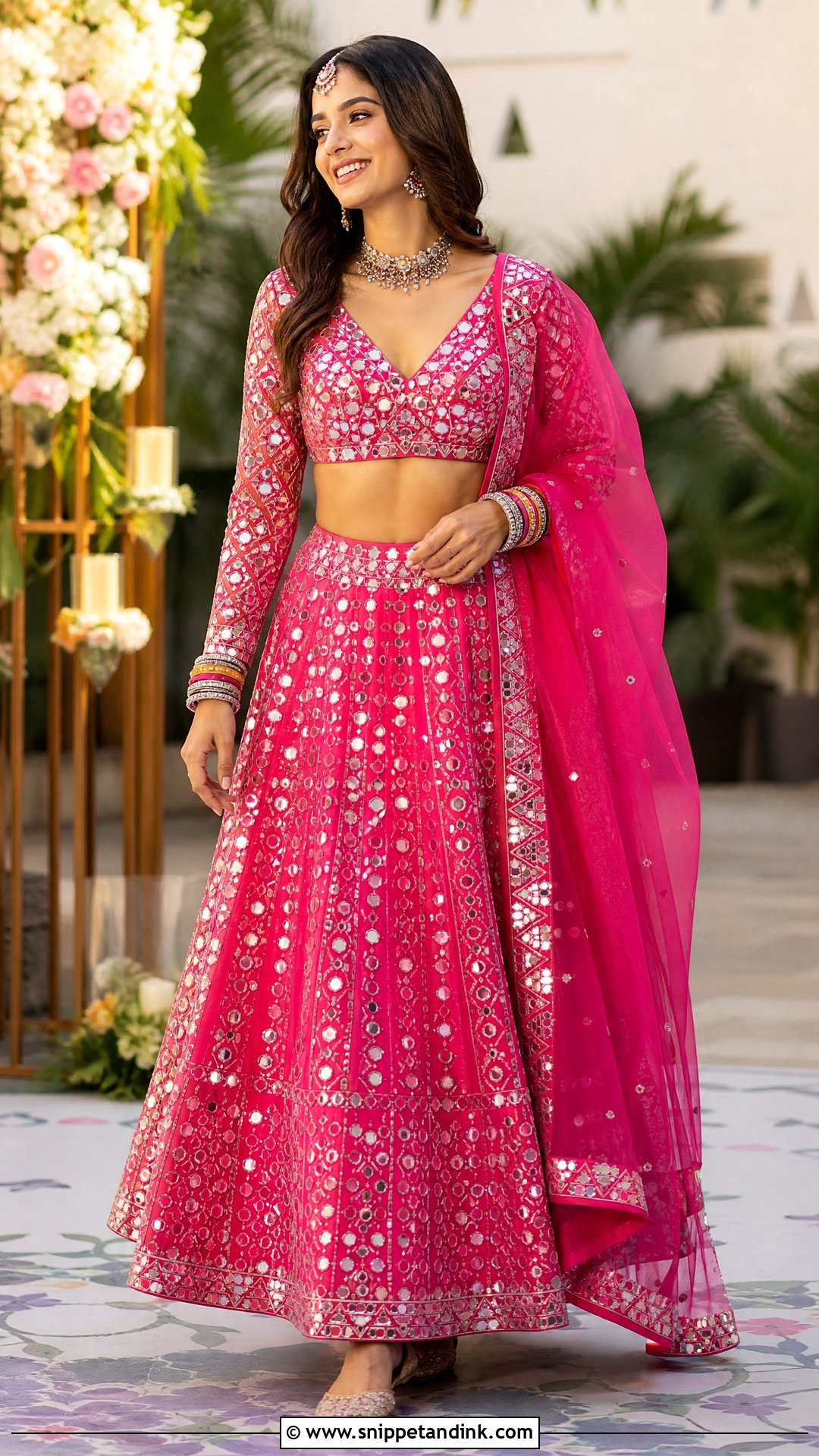
Mirror work comes from the folk embroidery of western India, and it belongs at mehndi, sangeet and garba nights. Fuchsia, turquoise, orange and yellow feel joyful. Pair the lehenga with a fitted blouse, a light dupatta, silver jewelry and colorful bangles. Real glass mirrors add weight, especially along the hem, which actually helps the skirt swing when you dance. I’d pick juttis or block heels over stilettos, since you’ll be on your feet for hours.
9. Gota Patti Lehenga Wedding Dress
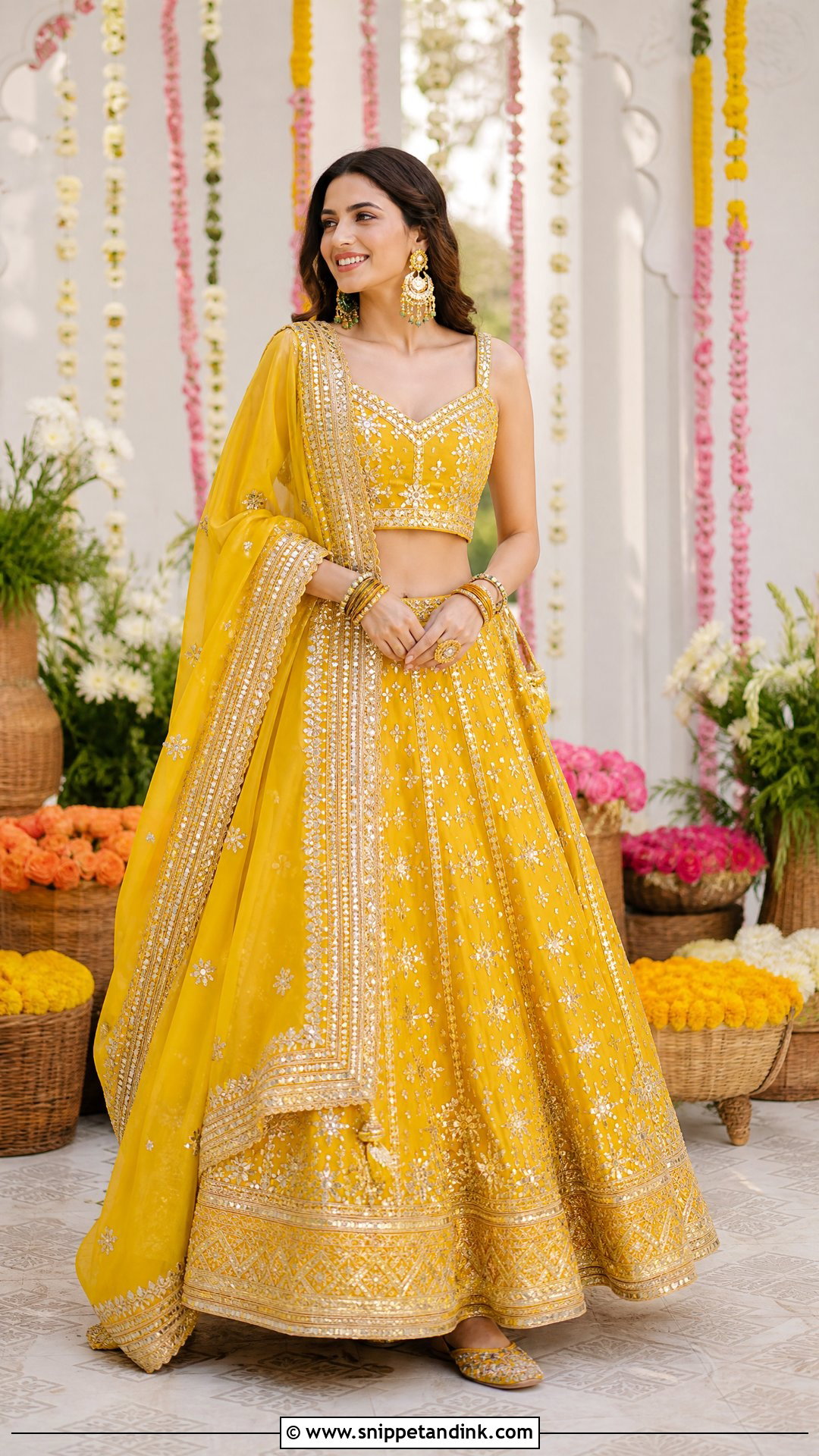
Gota patti is ribbon work: strips of woven metallic ribbon cut into shapes and stitched onto the fabric, a Rajasthani craft that reads bright and festive. It sits well on georgette, silk, chiffon or organza in yellow, rani pink, green or orange. A gota patti lehenga pairs well with a short blouse, a bordered dupatta, kundan jewelry and embellished juttis. Much of today’s gota is synthetic and won’t tarnish, but older metal gota will, so ask which you’re buying. It’s far lighter than dense zardozi, which is why I like it for haldi, mehndi and daytime ceremonies.
10. Velvet Lehenga Wedding Dress
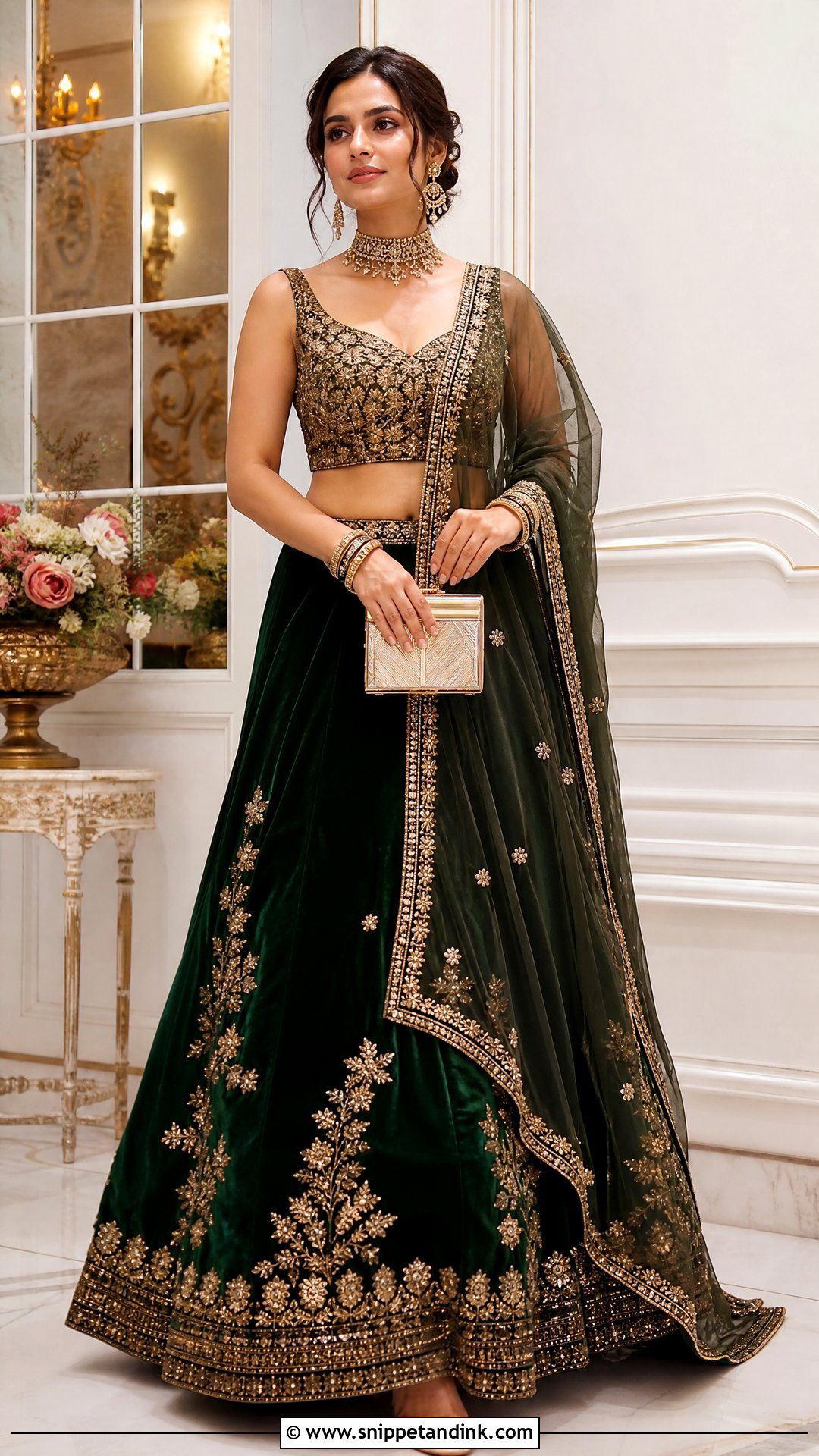
Velvet gives a lehenga weight and depth that suits winter ceremonies and evening receptions. Maroon, emerald, navy and plum glow with gold embroidery. Wear a velvet skirt with a silk or brocade blouse for contrast, or a full velvet set for drama, and add a sheer dupatta to soften it. Velvet has a nap, the direction the pile lies, and a good tailor cuts every panel the same way; otherwise the skirt shows patches of light and dark in photos. I check this on the hanger before the first fitting. Polki jewelry and a statement choker suit it.
11. Organza Saree Wedding Dress
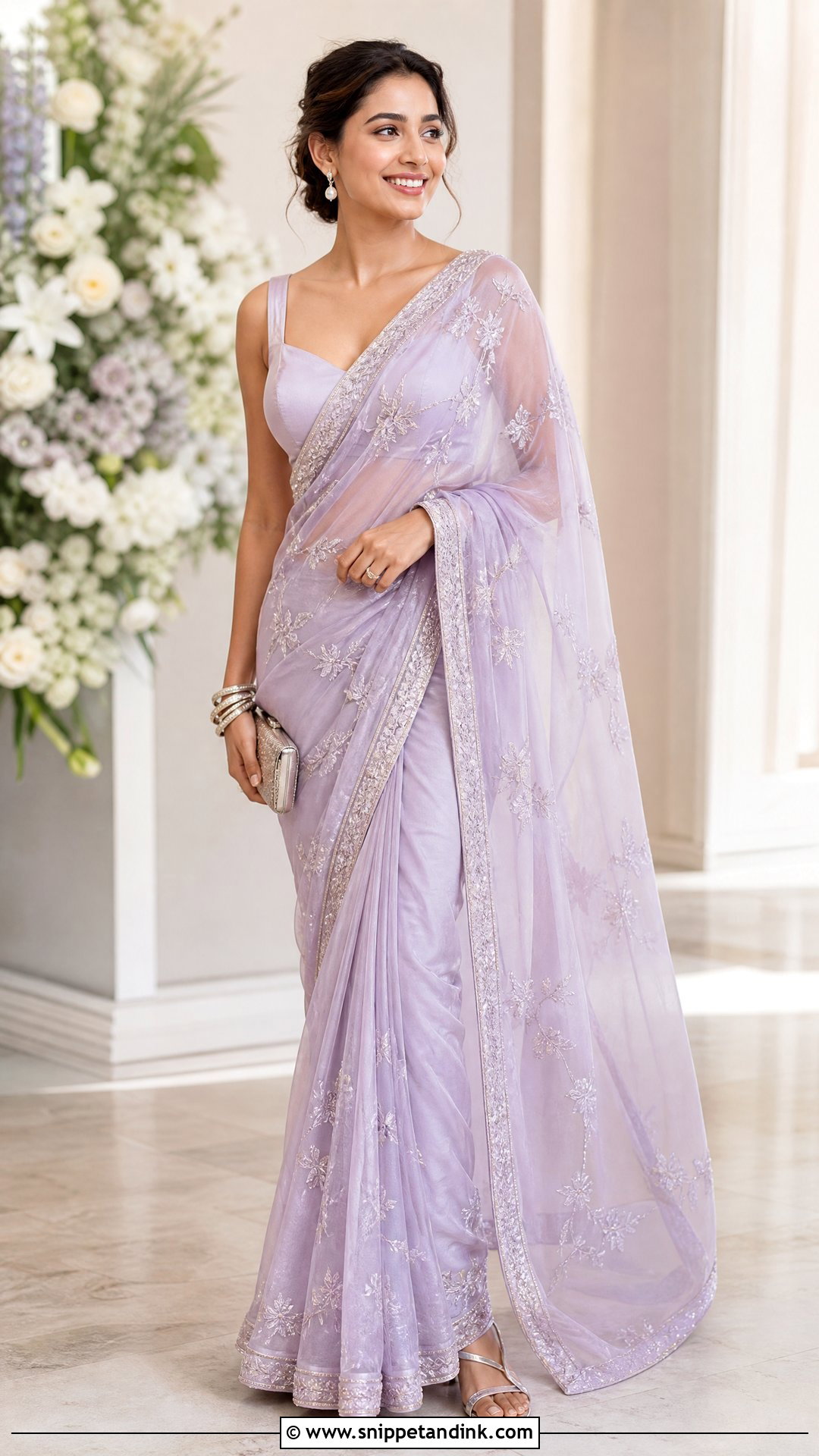
Light, crisp and slightly sheer, an organza saree floats away from the body instead of clinging. Engagements, receptions and daytime weddings suit it, with floral embroidery, zari borders or pearl details. Organza is springy, so the pleats fan out unless they’re pinned firmly at the waist; a slim belt helps if you want more structure. Pair it with a structured blouse, pearl or kundan jewelry and metallic heels. I’d keep it away from windy outdoor evenings, where it billows like a sail.
12. Silk Salwar Kameez Wedding Dress
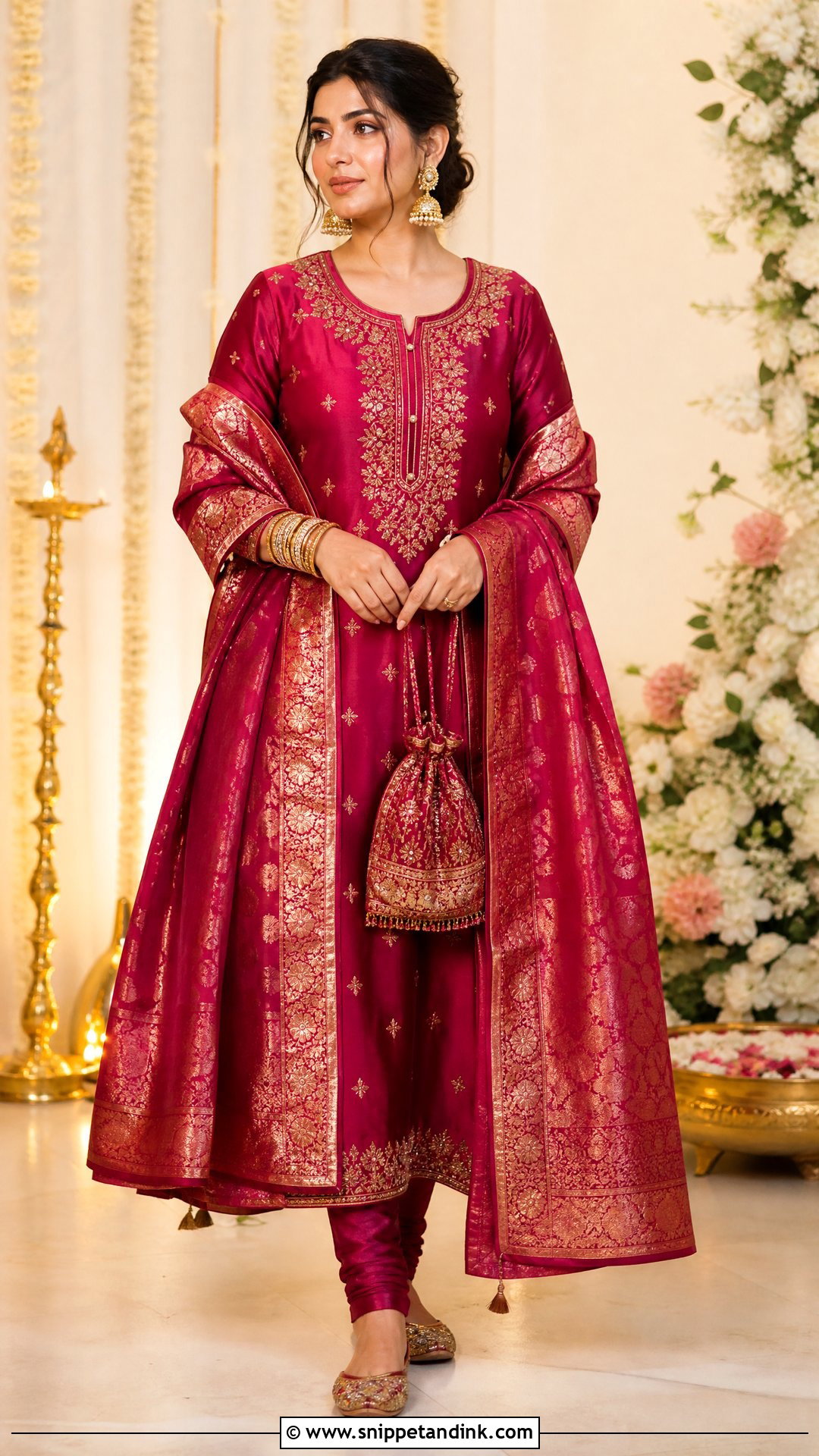
Comfort and coverage are why so many relatives choose a silk salwar kameez, and the dupatta is what makes it formal. A plain suit with a phulkari, Banarasi or zari dupatta reads wedding-appropriate instantly. Deep pink, royal blue and mustard feel festive. I tell clients to put the budget into the dupatta and the tailoring rather than heavy kameez embroidery, since the dupatta frames the face in every photo. Jhumkas, bangles, a potli and embroidered juttis finish it.
13. Phulkari Dupatta Suit Wedding Dress
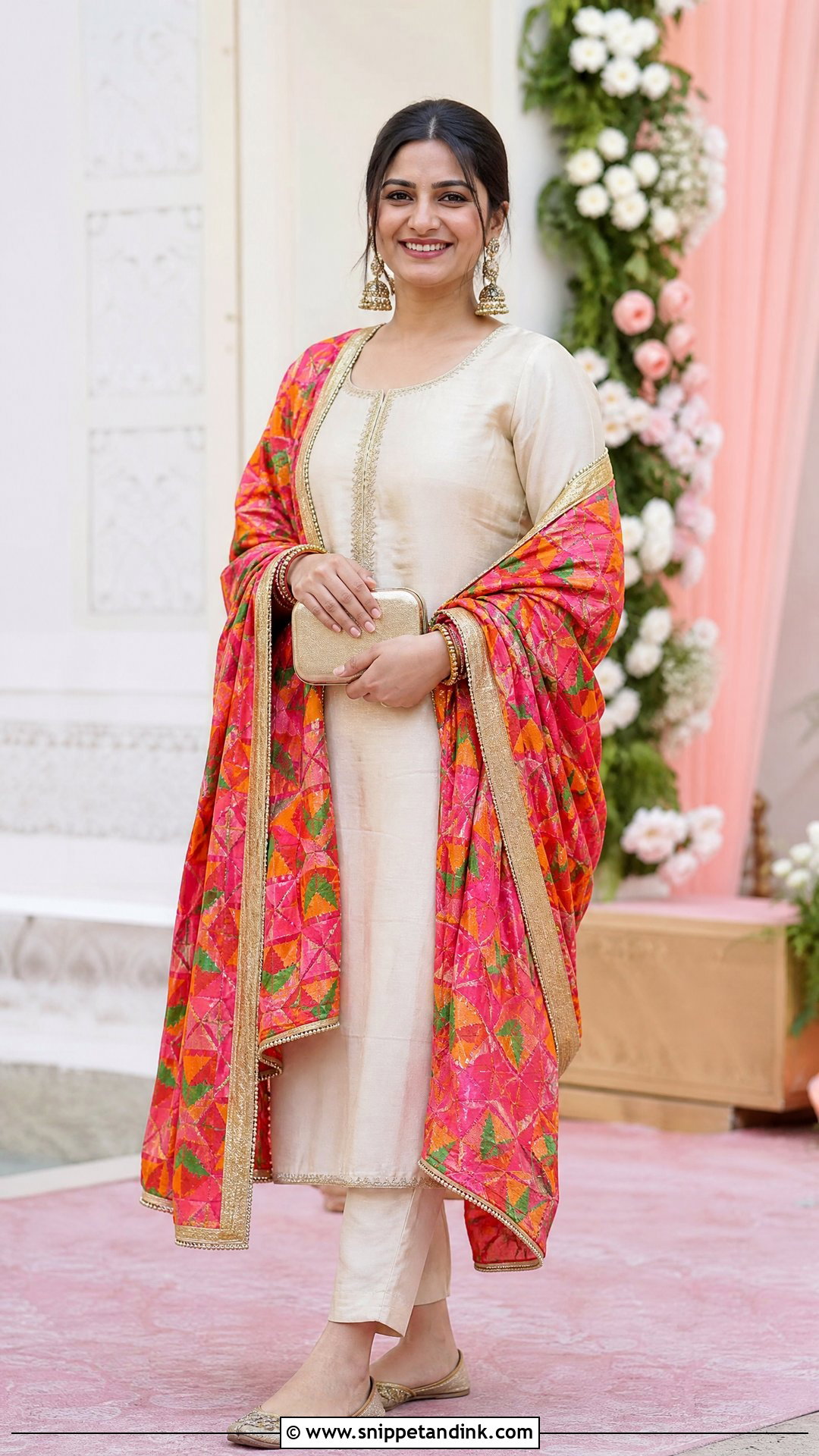
Phulkari is worked in darning stitches from the back of the cloth, which is why the colors look so dense and glossy on the front. Let that dupatta carry the look over a plain or lightly worked silk, cotton-silk or georgette suit. Hot pink, orange and mustard are festive. With a busy dupatta, keep the suit clean and fitted. Juttis, chunky earrings and bangles finish it. Mehndi, haldi and family lunches suit it best.
14. Mekhela Chador Wedding Dress
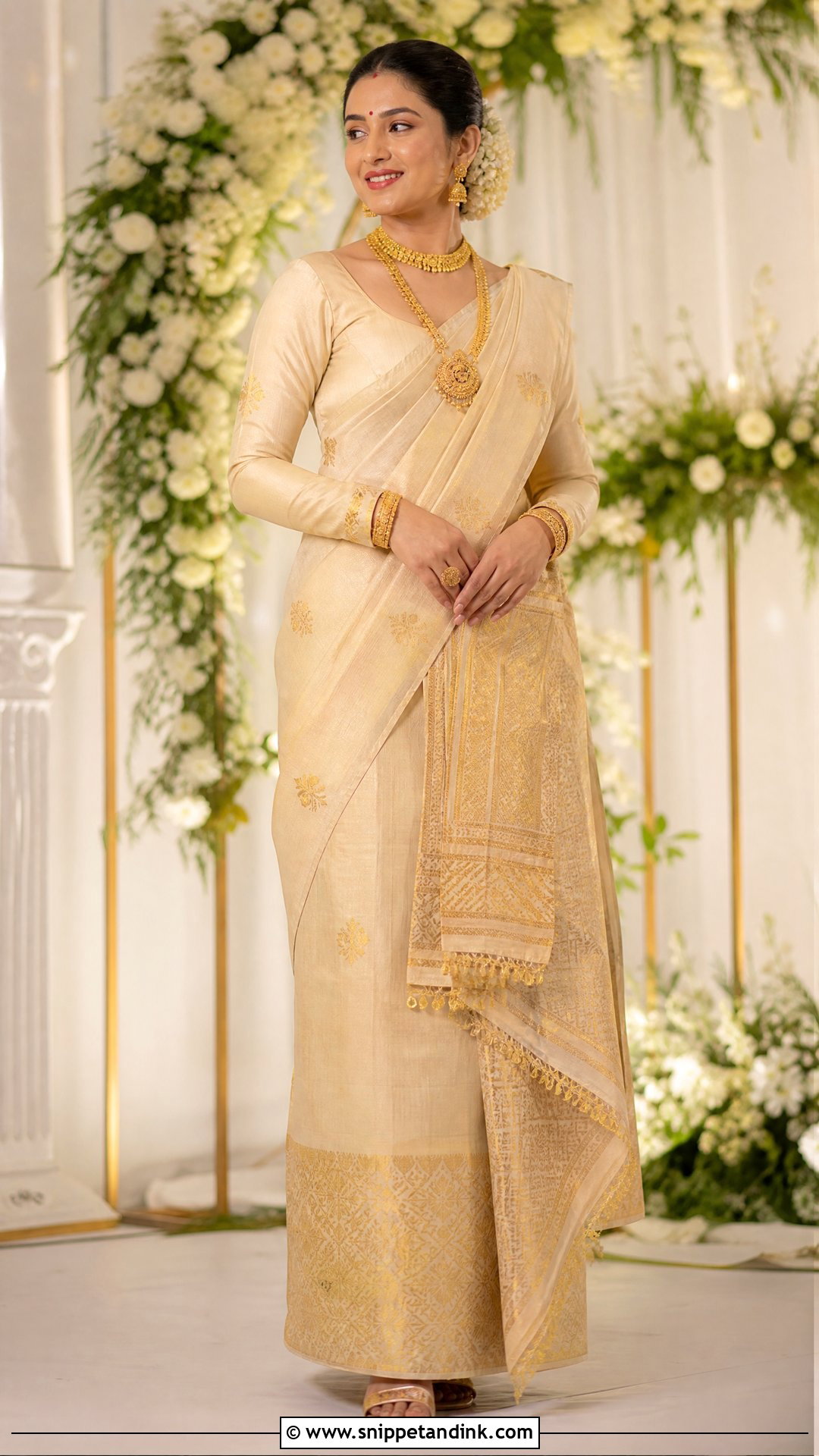
A mekhela chador brings a traditional Assamese-inspired wedding look that’s clearly distinct from a saree: a lower drape, an upper wrap and a blouse. Muga silk has a natural golden sheen that’s prized for weddings, and pat and eri silk are used too. Cream and gold or red and gold with woven motifs feel ceremonial. Gold jewelry, a neat bun, a bindi and simple sandals finish it. I’d always book someone who drapes mekhela regularly, because clean folds are what make it look right.

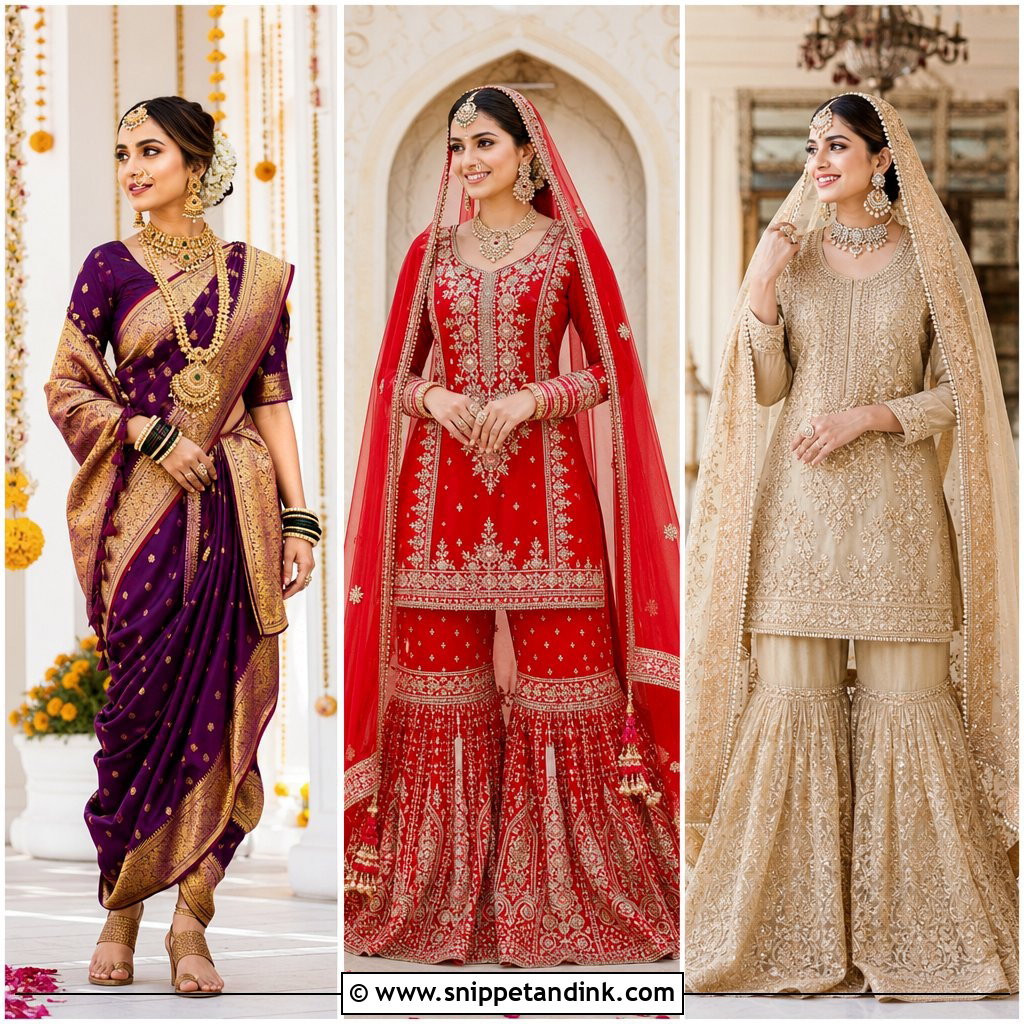
15. Paithani Saree Wedding Dress
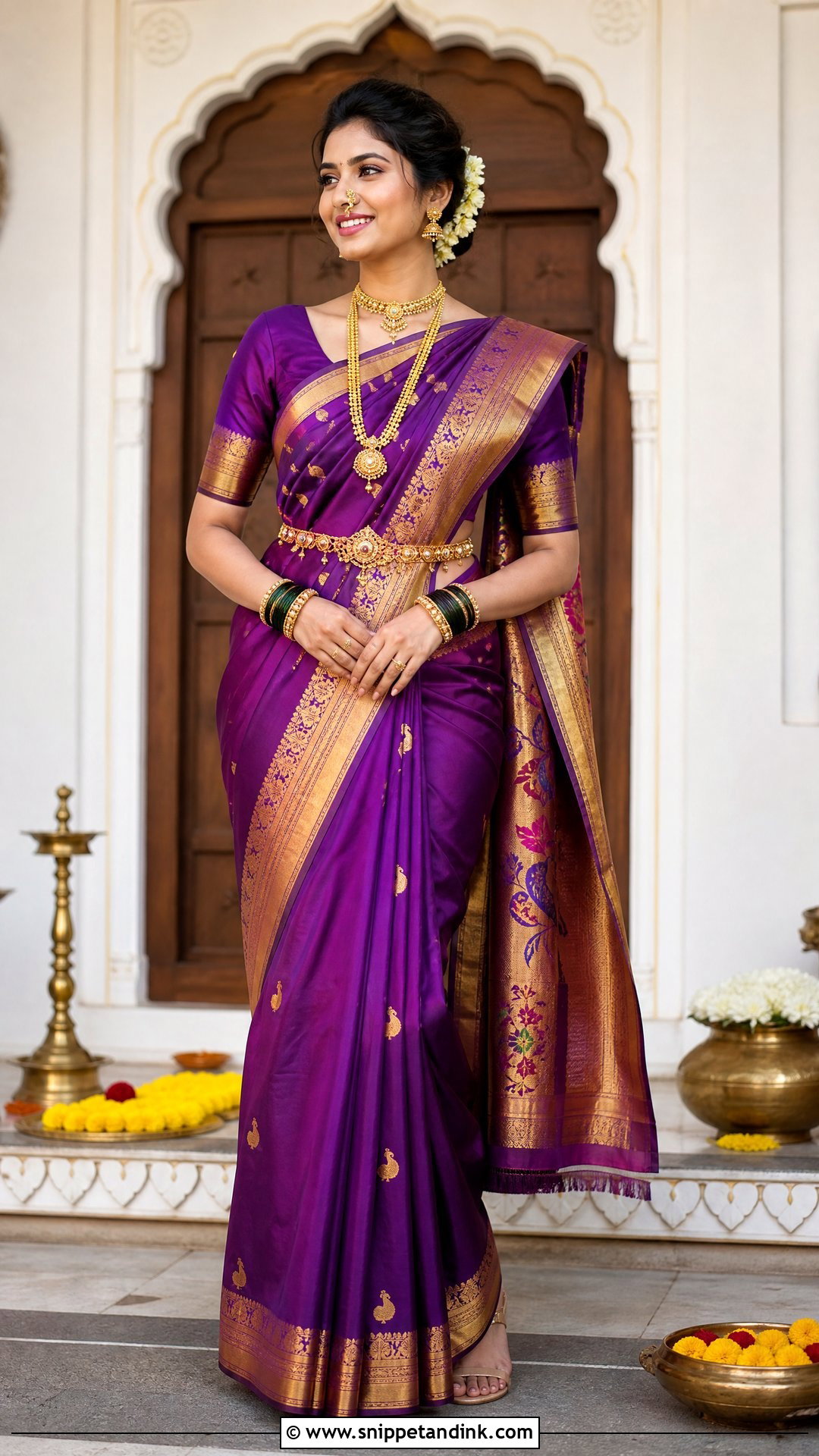
A Paithani saree creates a traditional Maharashtrian wedding look through its silk body, peacock motifs and vivid pallu. Purple, green and magenta look striking with gold zari. Real Paithani has its pallu motifs interlocked by hand on the loom, so they look the same on both sides, which is a quick check worth doing before you buy. Style it with a fitted blouse, gold jewelry, green glass bangles and a nath if you like. Drape the pallu neatly so the border and motifs show.
16. Bandhani Lehenga Wedding Dress
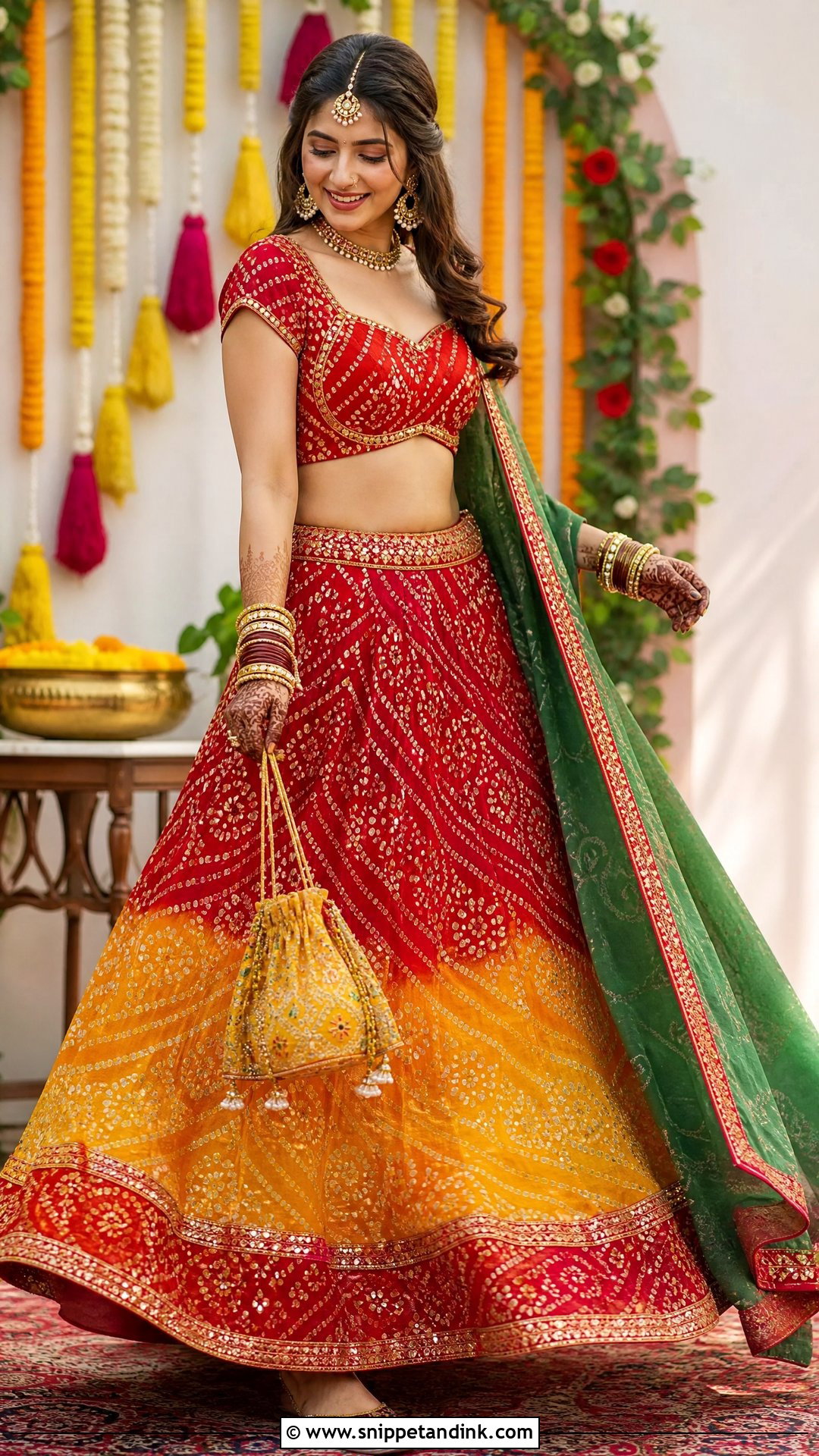
Bandhani comes from Gujarat and Rajasthan, and a lehenga in it feels cheerful and handmade. Red, yellow and green look best, often with mirror work, gota borders or zari. Busy dots need a calm partner, so I pair a heavily patterned skirt with a plainer choli and let a contrast dupatta frame it. Oxidized or kundan jewelry, bangles and juttis complete it for mehndi, haldi, garba or a daytime function. Wash it separately the first time, because bright Bandhani dyes can bleed.
17. Chaniya Choli Wedding Dress
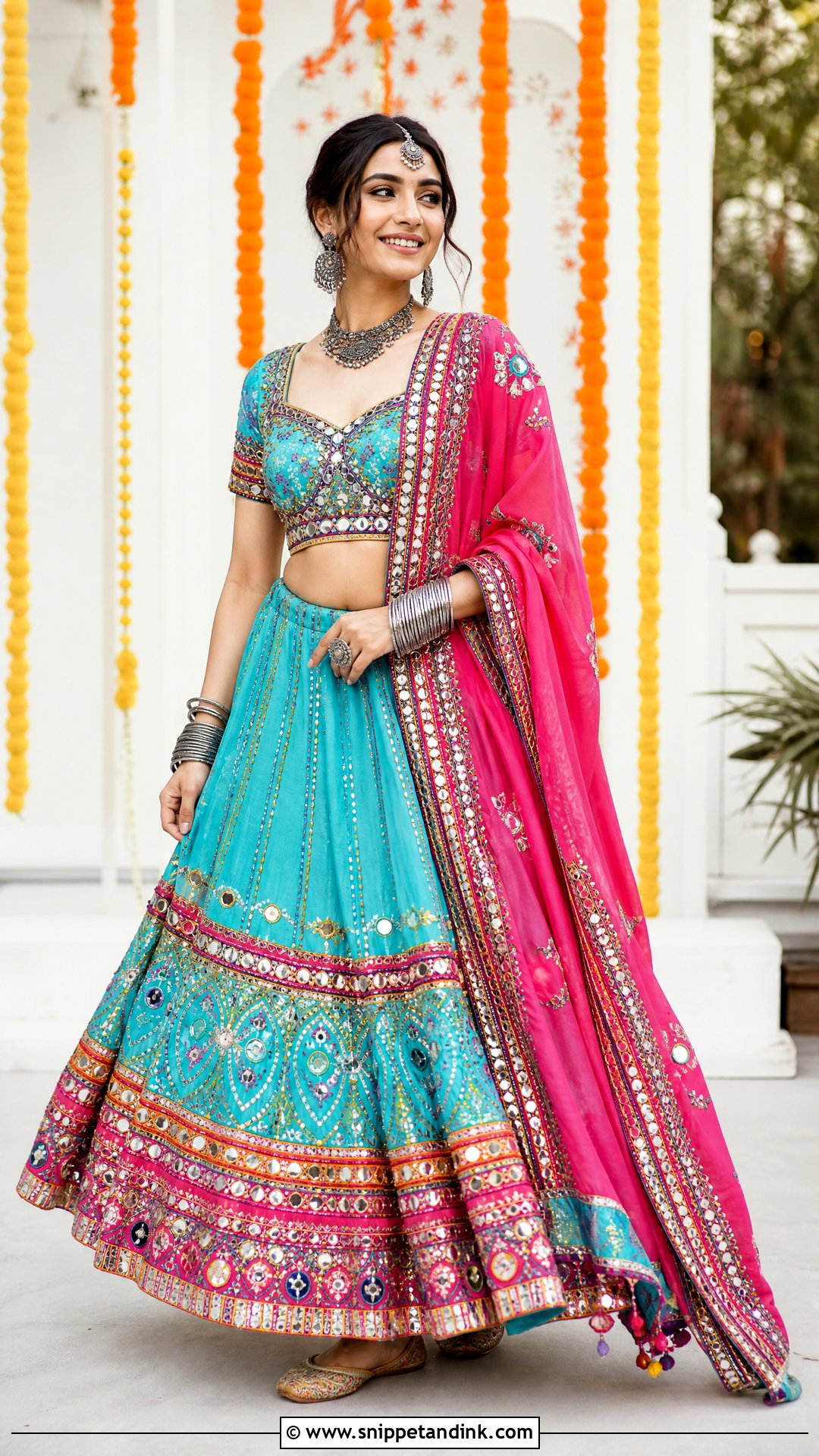
A chaniya choli is made for garba: a widely flared skirt, a blouse and a dupatta, often decorated with mirror work, shells or colorful borders. Red, orange and turquoise feel joyful. A good chaniya uses many panels, so it opens into a full circle when you spin. If the skirt is heavily mirrored, I add a cotton lining, since the backs of the stitches scratch the legs over hours of dancing. Pin the dupatta firmly. Oxidized jewelry, bangles, a potli and juttis finish it.
18. Pre Draped Saree Wedding Dress
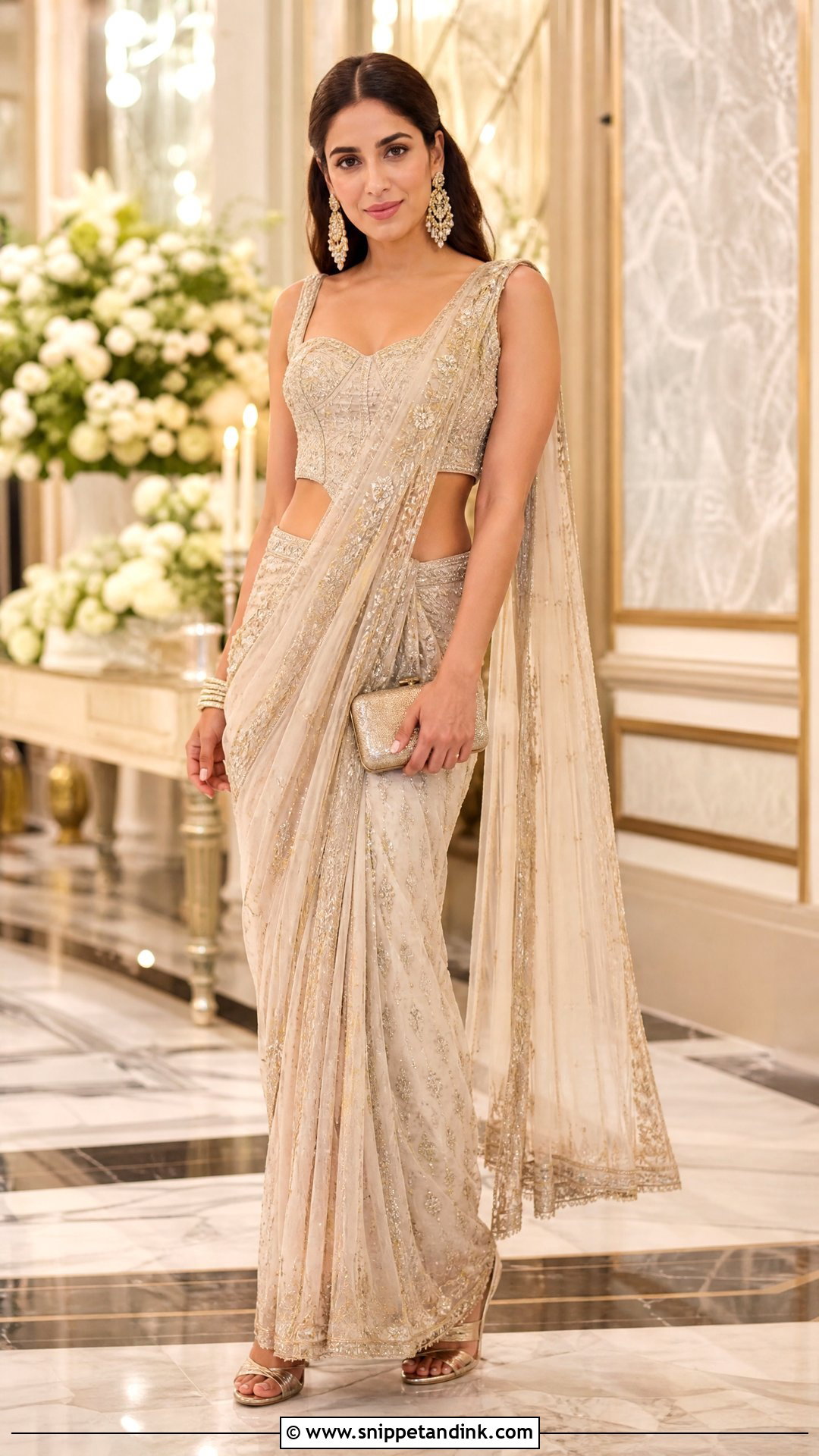
Pre-draped sarees come fully or partly stitched, so the pleats and pallu hold through long events. Silk, georgette, crepe and organza with zari, sequins or embroidered borders suit weddings. Fit is the catch nobody mentions. A pre-stitched saree is sized at the waist like a skirt, so if you’re between sizes, size up and have it taken in, because you can’t let out a stitched pleat line. Pair it with a structured blouse, statement earrings and heels for a reception or engagement.
19. Lehenga Saree Wedding Dress
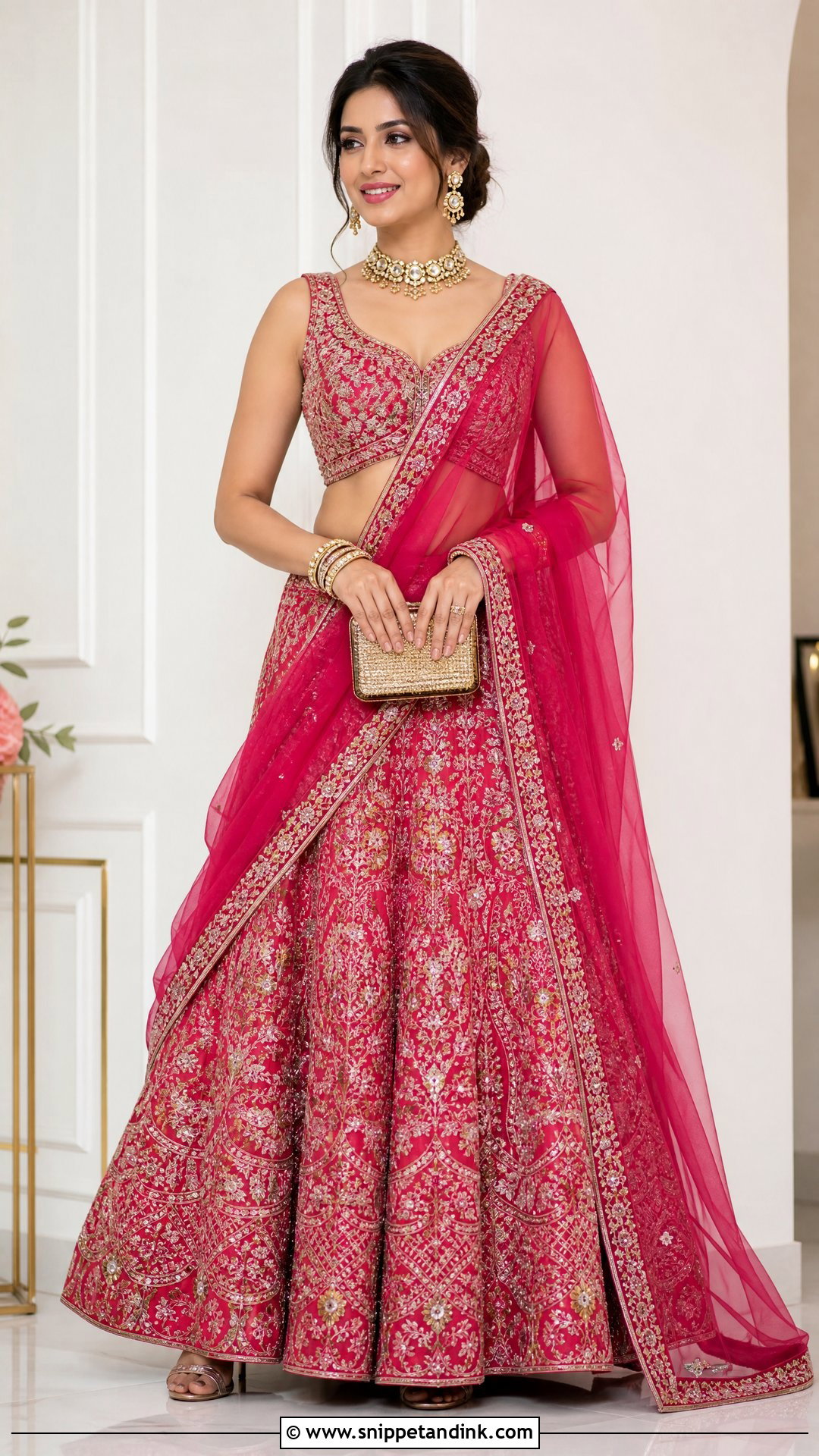
A lehenga saree gives you a saree’s drape with a lehenga’s fullness, and nobody has to pleat anything. The embroidered skirt pairs with a matching blouse and a dupatta that wraps like a pallu, either attached or styled. Gold, red, emerald and champagne all work. I tuck the pallu end into the skirt waistband and pin it at the shoulder, which keeps the diagonal line intact when you turn. Kundan jewelry, heels and a sleek clutch finish it for a reception or sangeet.

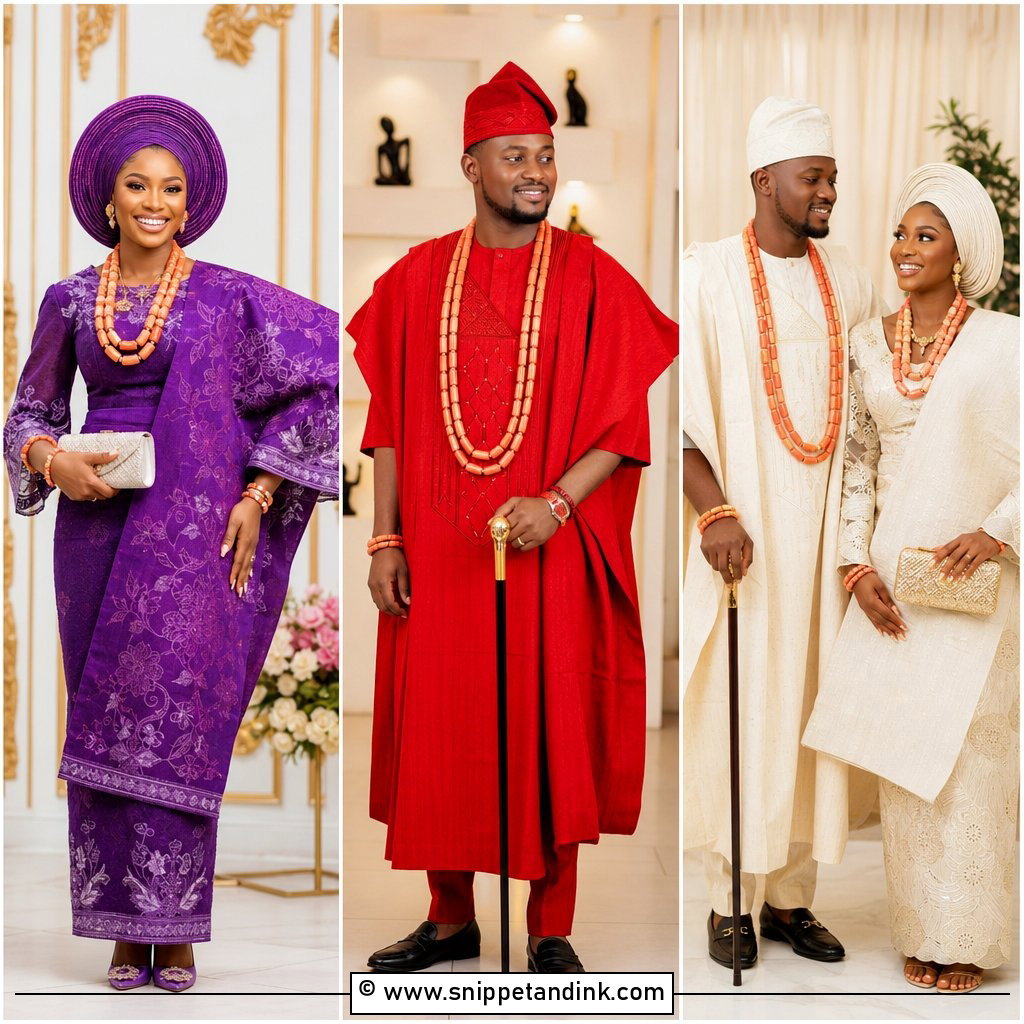
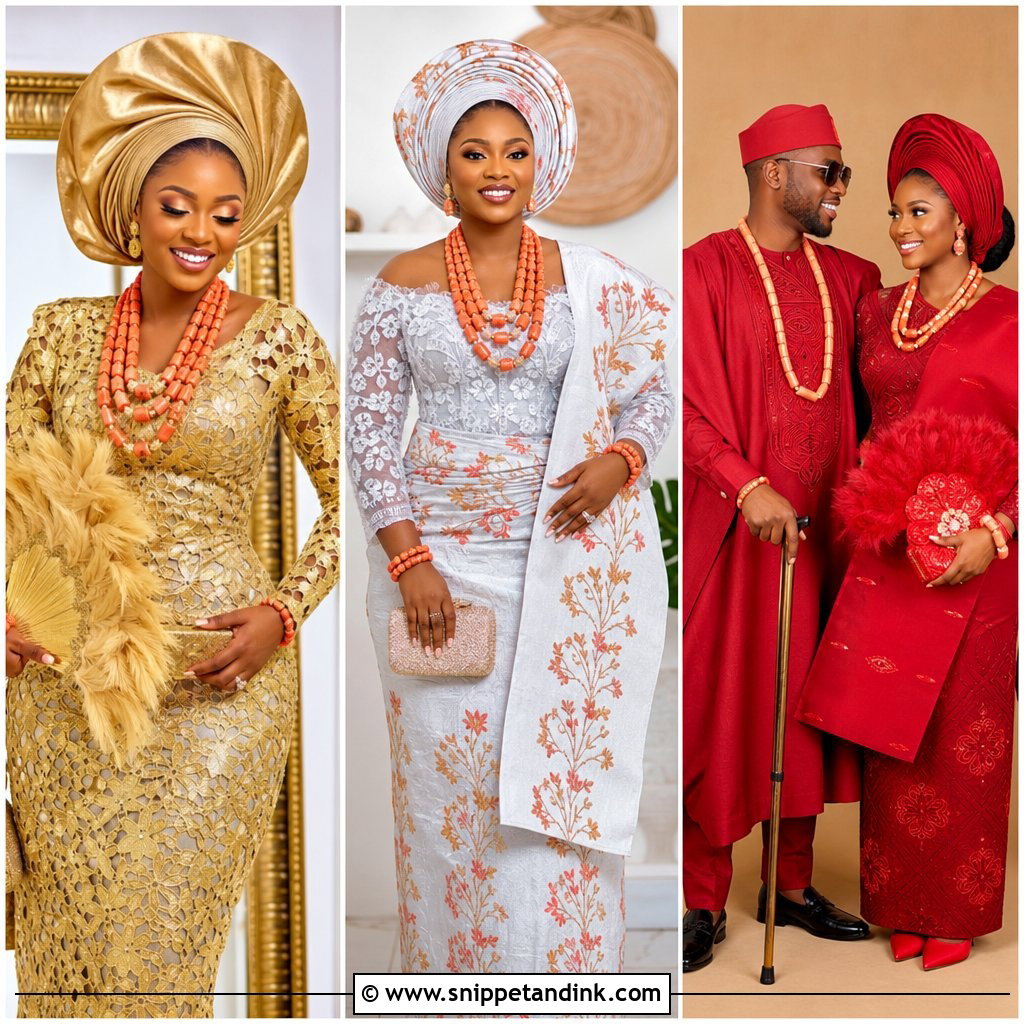
20. Floor Length Gown Anarkali Wedding Dress
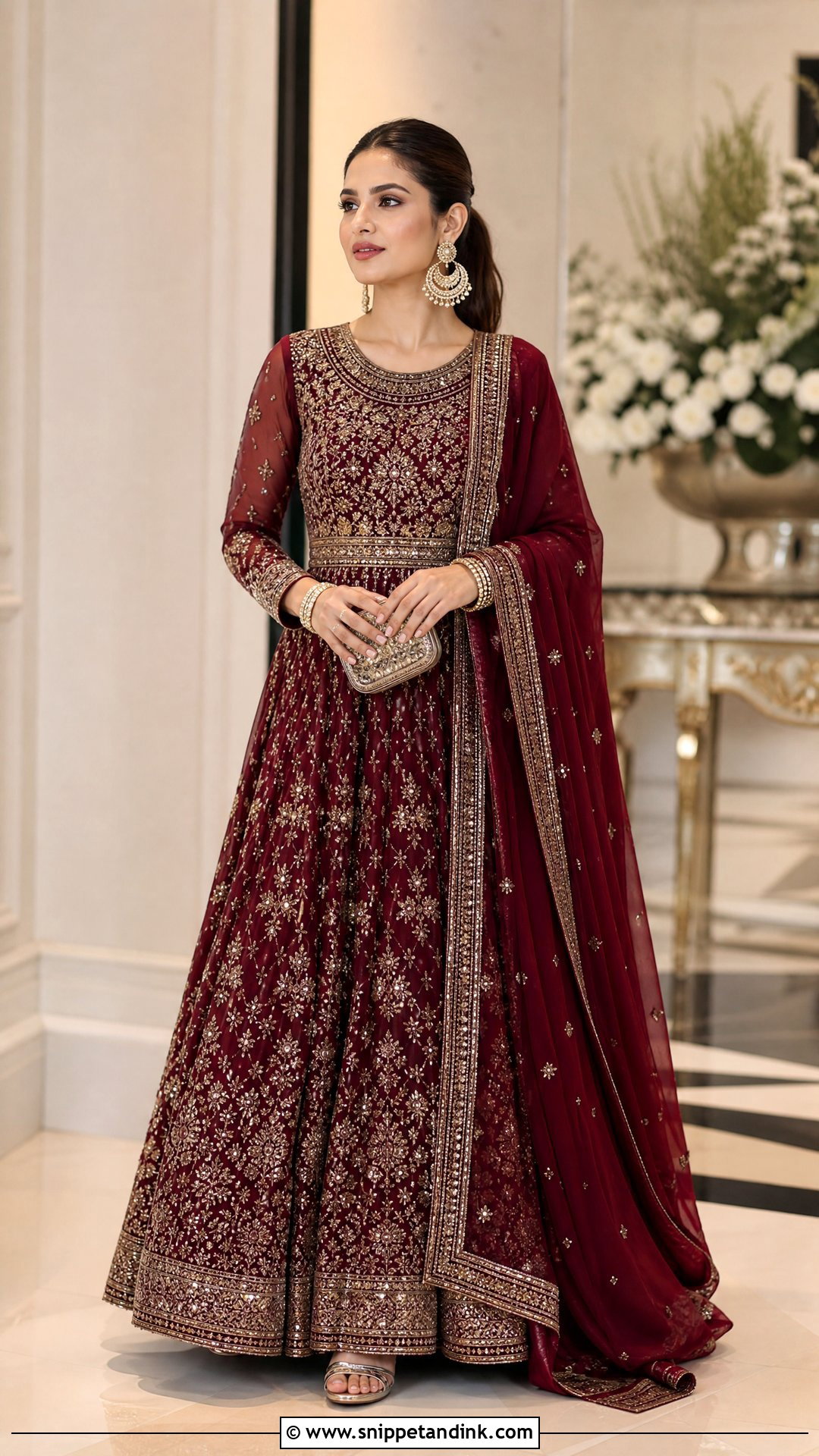
From across the room a gown Anarkali reads as a gown, and up close as Indian dress, which makes it a reliable reception and engagement choice. A fitted bodice, flared skirt and dupatta keep it traditional. Silk and brocade give volume; net and georgette fall closer. Hem length needs care. I set it just above the floor in your shoes, because a gown Anarkali that touches the ground catches on every step. Chandbalis, a bracelet stack and embellished heels finish it.
21. Ivory Gold Lehenga Wedding Dress
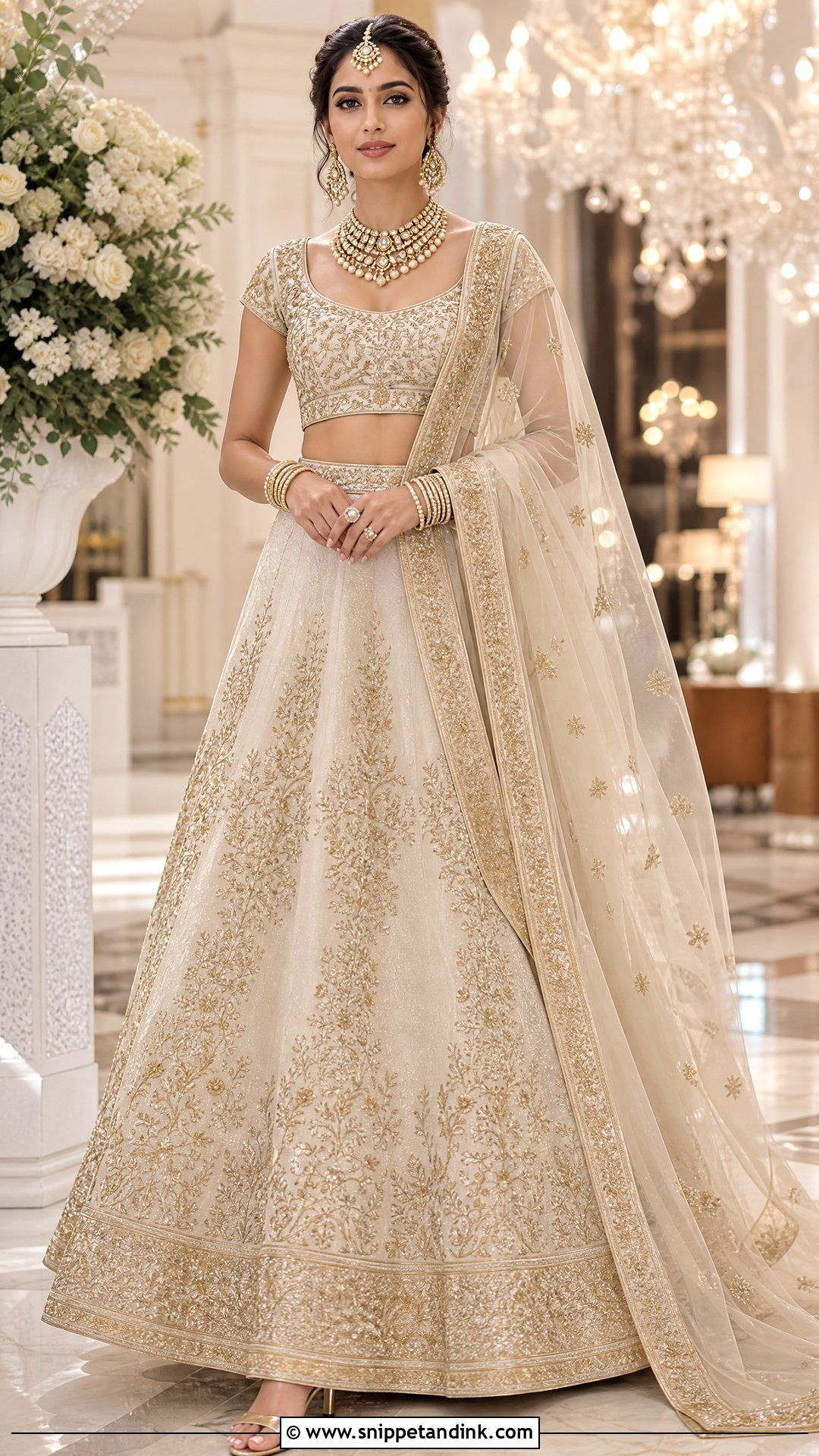
Ivory and gold is the soft alternative to red for brides, and a classic at receptions and engagements. Silk, tissue, brocade and organza take gold zari, resham or zardozi well. Tissue is woven with metallic threads, so it glows under lights without any embroidery at all. Layered kundan jewelry, pearl details and gold bangles suit it, with a sheer bordered dupatta. Ivory shows every mark, so I drape a scarf over the neckline while the bride dresses to keep foundation off it. Guests should check it doesn’t overlap the bride’s palette.
22. Green Bridal Lehenga Wedding Dress
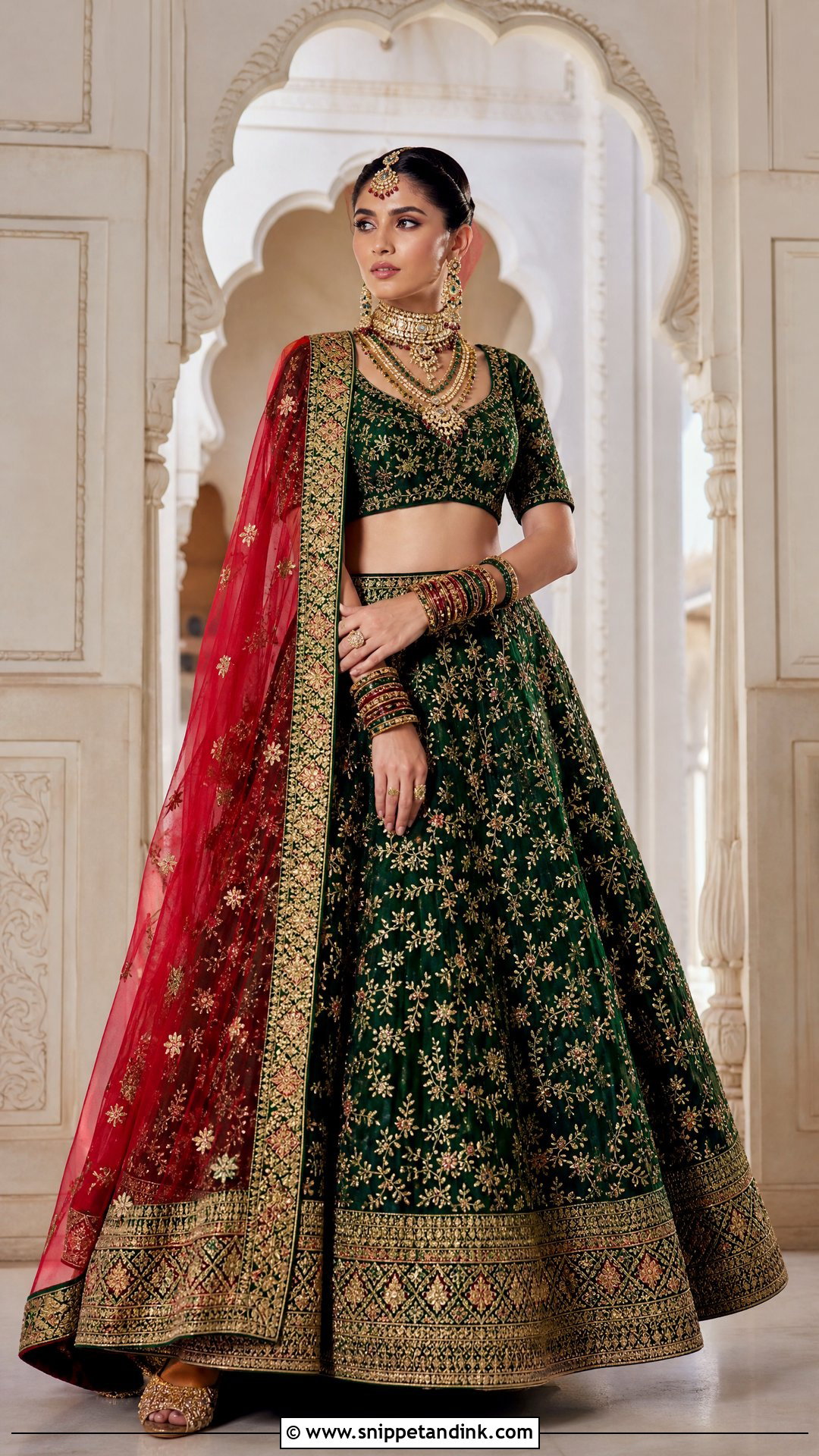
Emerald, bottle green and mehndi green have become real bridal options, paired with gold, antique or polki-style embroidery. A red or gold dupatta brings tradition back in through contrast. Green is tricky on camera: deep emerald holds its color, while olive can turn muddy under yellow indoor lighting. If you can, take a test photo under the venue’s lights. Add bangles, a maang tikka and embroidered juttis, and keep the makeup warm.
23. Rajasthani Poshak Wedding Dress
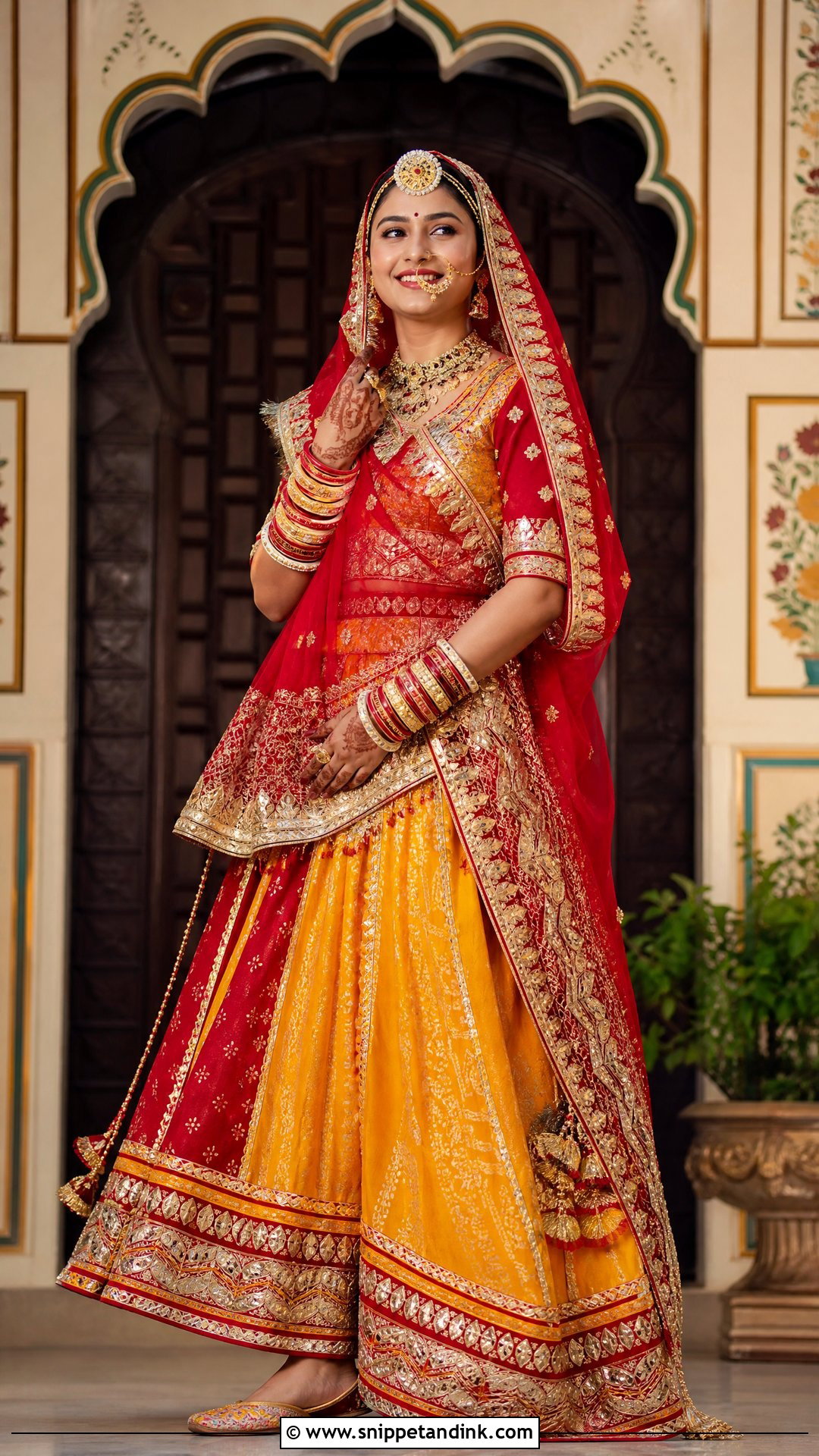
The Rajasthani poshak combines a kurti, kanchli, ghagra and odhni, usually in red, yellow, orange or pink with gota patti and zari. The borla, a rounded Rajasthani maang tikka, is the traditional headpiece, and it only sits straight when the hair is parted precisely and its chain is pinned firmly into the bun or braid behind. Choose an odhni with a strong border and drape it neatly over the head. Kundan jewelry, bangles and embellished juttis complete it. For families where regional dressing matters, it carries deep meaning.
24. Kashmiri Embroidered Suit Wedding Dress
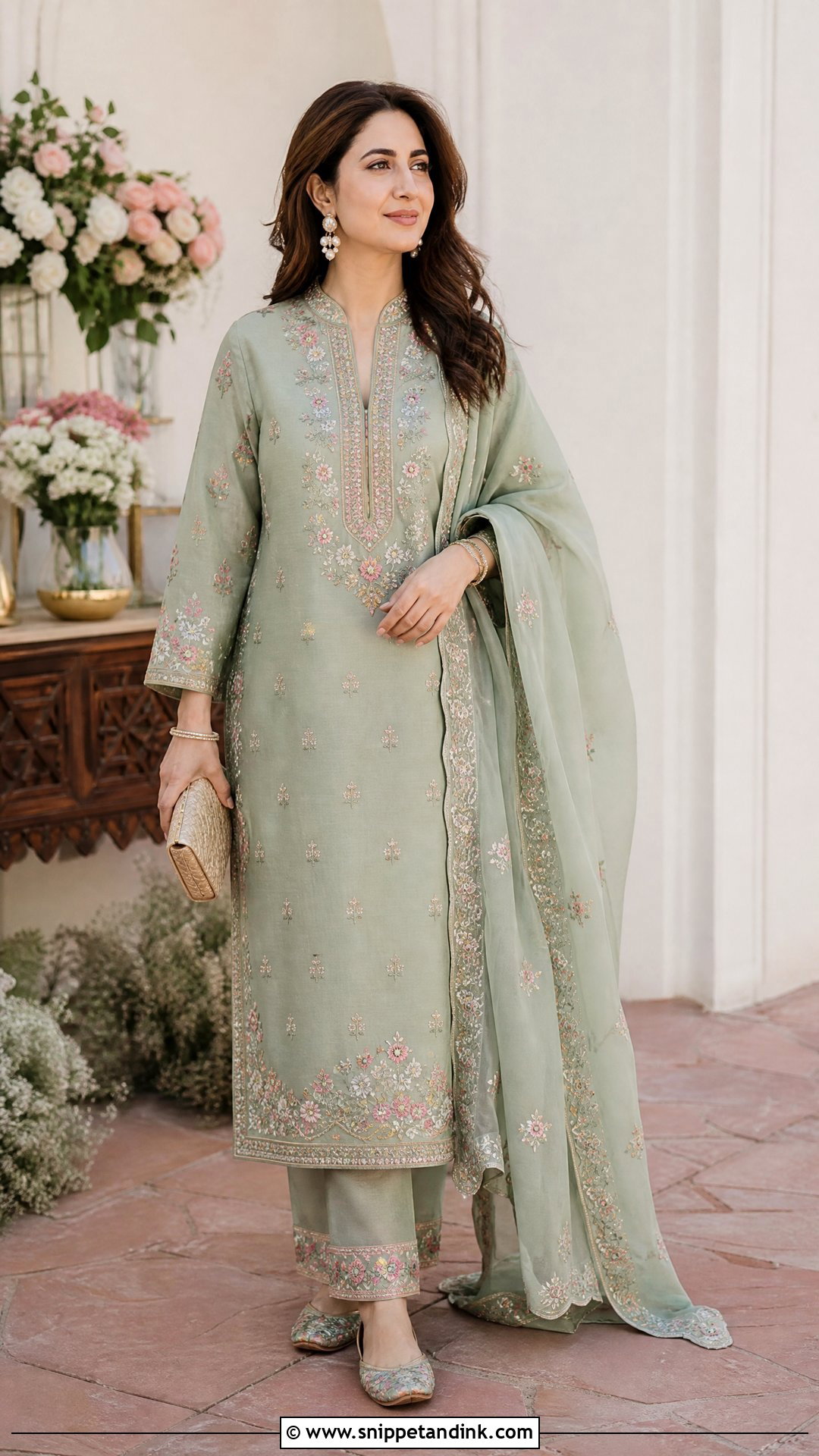
Kashmiri embroidery, especially aari work done with a hooked needle, forms a fine chain stitch that’s much lighter than zari. That’s why a Kashmiri suit looks rich without feeling heavy. A long kurta or pheran-inspired cut with straight pants and a matching dupatta suits family ceremonies and daytime events. Ivory, sage, blush and maroon all work. Pearl earrings, embroidered juttis and simple bangles keep the focus on the needlework. It’s a comfortable choice for relatives who want cultural detail.

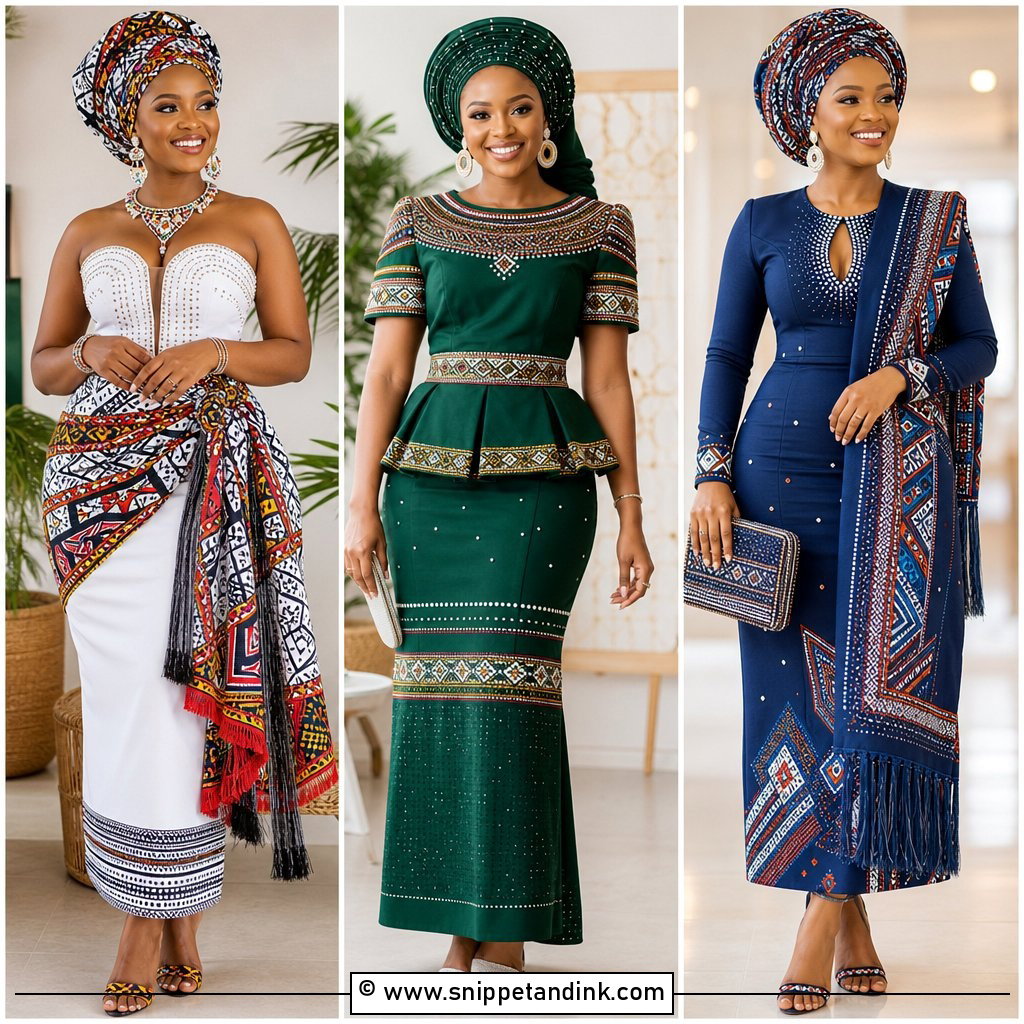
25. South Indian Half Saree Wedding Dress
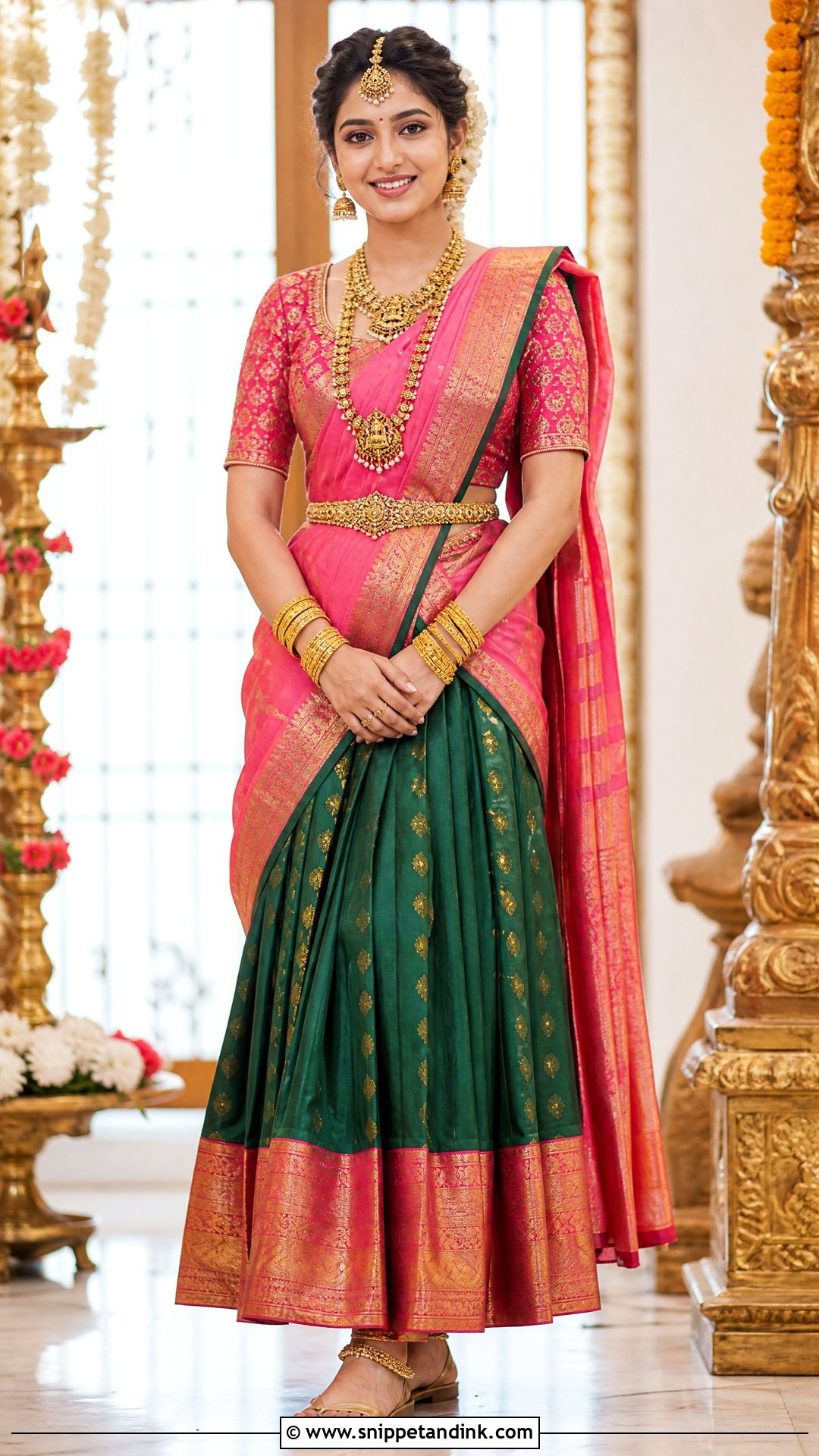
Pattu pavadai and langa voni are South Indian traditions often worn by girls and young women, so a half saree suits younger bridesmaids, sisters and guests. It’s a silk skirt, blouse and dupatta-style drape with zari borders, in pink, green, yellow or purple. Temple jewelry, anklets, jasmine and sandals finish it. I like a contrast blouse and dupatta here, because they make each girl read clearly in group photos. The drape needs a firm tuck at the waistband so it doesn’t slip during rituals.
Rewearing the Lehenga Long After the Wedding
A bridal lehenga is often the most expensive garment a woman owns, and most get worn once. That’s a pity, because many pieces can be restyled. When I help a bride choose, I ask whether the separates work on their own: a skirt that pairs with a plain silk blouse, a dupatta that looks right over a simple suit, a blouse that suits a different saree.
- Wear the skirt with a contrast crop top or jacket for a cousin’s sangeet.
- Pair the heavy dupatta with a plain Anarkali or salwar suit for festivals.
- Have the blouse altered slightly so it works with a saree you already own.
- Keep the jewelry neutral enough to pair with future outfits.
If you plan to rewear pieces, tell your tailor before cutting, so seam allowances are left wide enough to adjust the fit later.
What Really Makes a Traditional Outfit Work
Fit, ease and respect for the ceremony matter as much as embroidery. A bride may choose a red lehenga, a Kanjeevaram or a green embroidered lehenga, while guests can lean into sharara suits, Anarkalis, silk sarees or regional handloom. Think about fabric weight, footwear, weather and how much you’ll move. Ask good questions about the embroidery and the weave, so you know what you’re paying for and how to look after it. A look that feels festive and personal comes from those choices, not from the most expensive piece on the rack.
You'll Like These Ideas:









Leave a Reply