
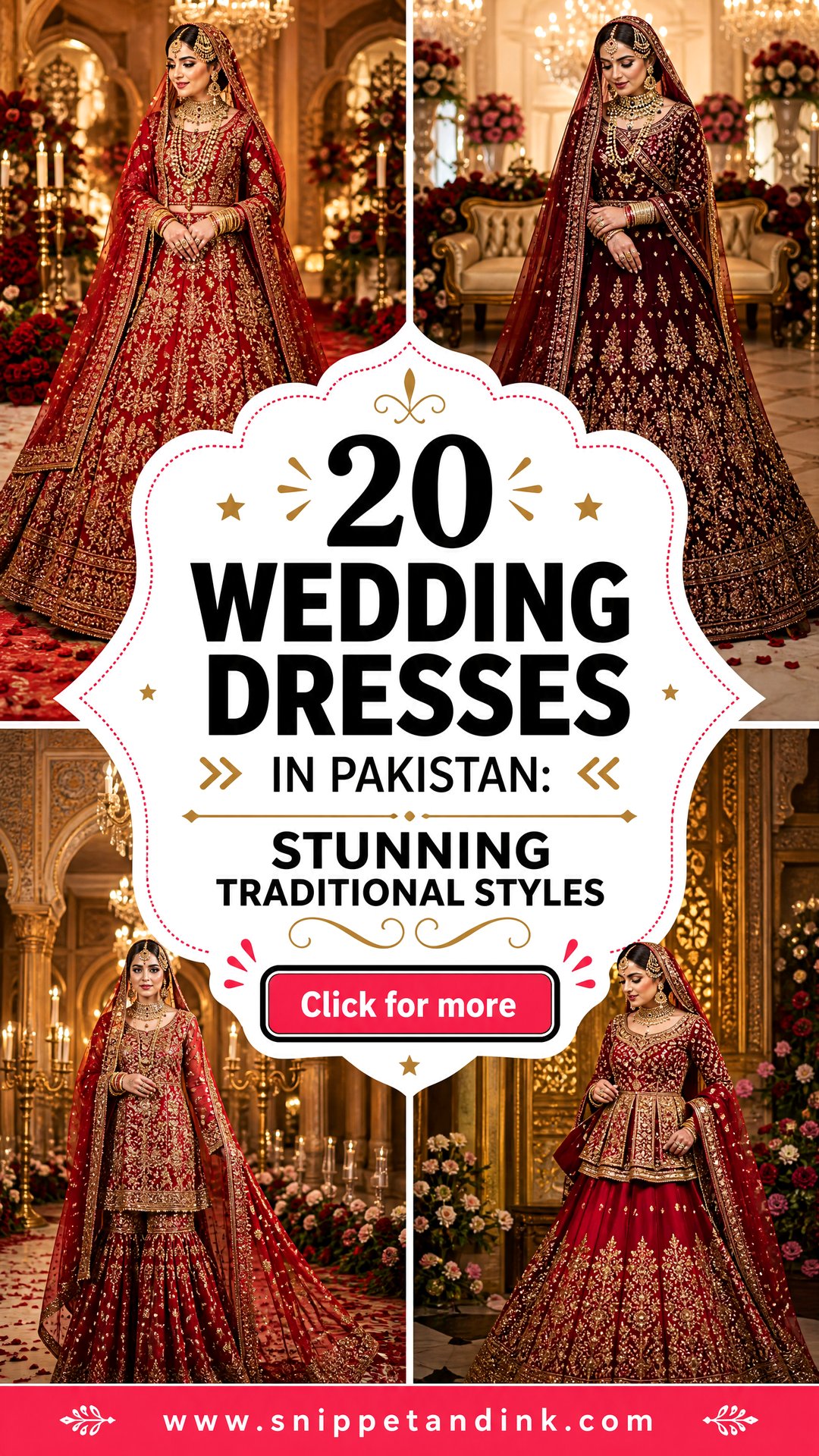
Pakistani bridal fashion is really several wardrobes at once, because a bride may dress for a Mayun, a Mehndi, the Nikah, the Baraat and the Walima, each with its own mood. Red lehengas still anchor the main day, but ivory, pastels, maxis, shararas and ghararas now share the rest of the week. What makes each piece is the handwork: zardozi, dabka, tilla, gota, sequins and pearls. Below I’ve gone through twenty looks with notes on fabric weight, dupatta setting, jewelry and proportion, plus the details I check at a fitting so the outfit is wearable for hours, not only for the stage photographs.
Planning Four or Five Functions as One Wardrobe
When I plan a Pakistani bride’s outfits, I look at the whole week together before choosing any single piece. That stops two functions from looking the same in the album and keeps the heaviest outfit for the night it belongs to.
- Mayun and Mehndi: bright colours, lighter fabrics, mirror work and gota. You’ll be dancing, sitting on the floor and wearing fresh henna, so movement and washability come first.
- Nikah: often the quietest look, in ivory, pastels or soft gold, with a dupatta that covers the head comfortably for the ceremony.
- Baraat: the heaviest work and deepest colour, usually red or maroon. Plan your jewelry around this outfit first.
- Walima: lighter again, in pastels, champagne or silver, often a maxi or gown that’s easier to wear while greeting a long line of guests.
I also try to keep jewelry shared between at least two events, for example antique gold for Baraat and Mehndi, and silver or diamond-look pieces for Nikah and Walima. It saves money and makes coordinating each look far simpler.
1. Pakistani Red Bridal Lehenga
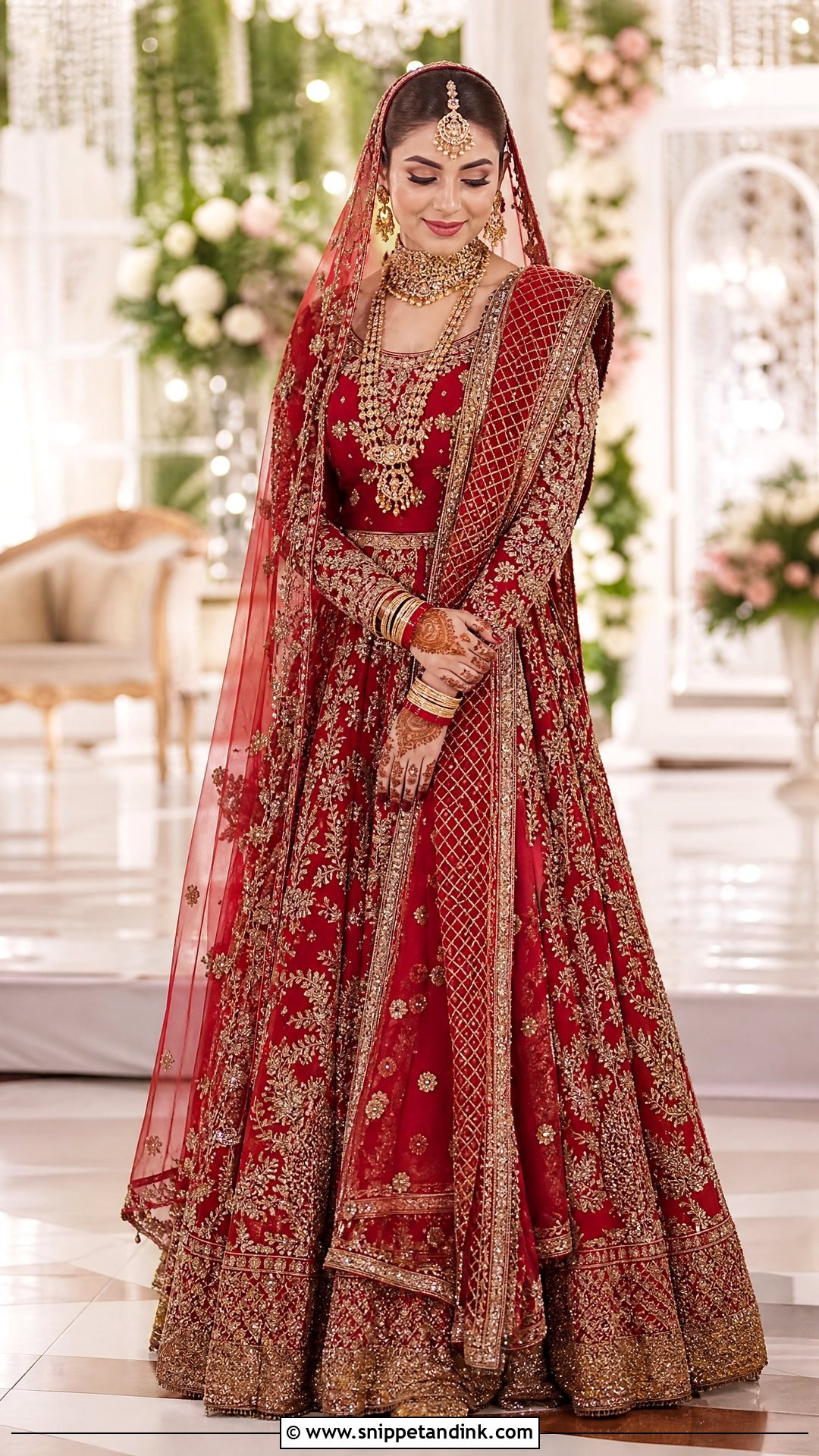
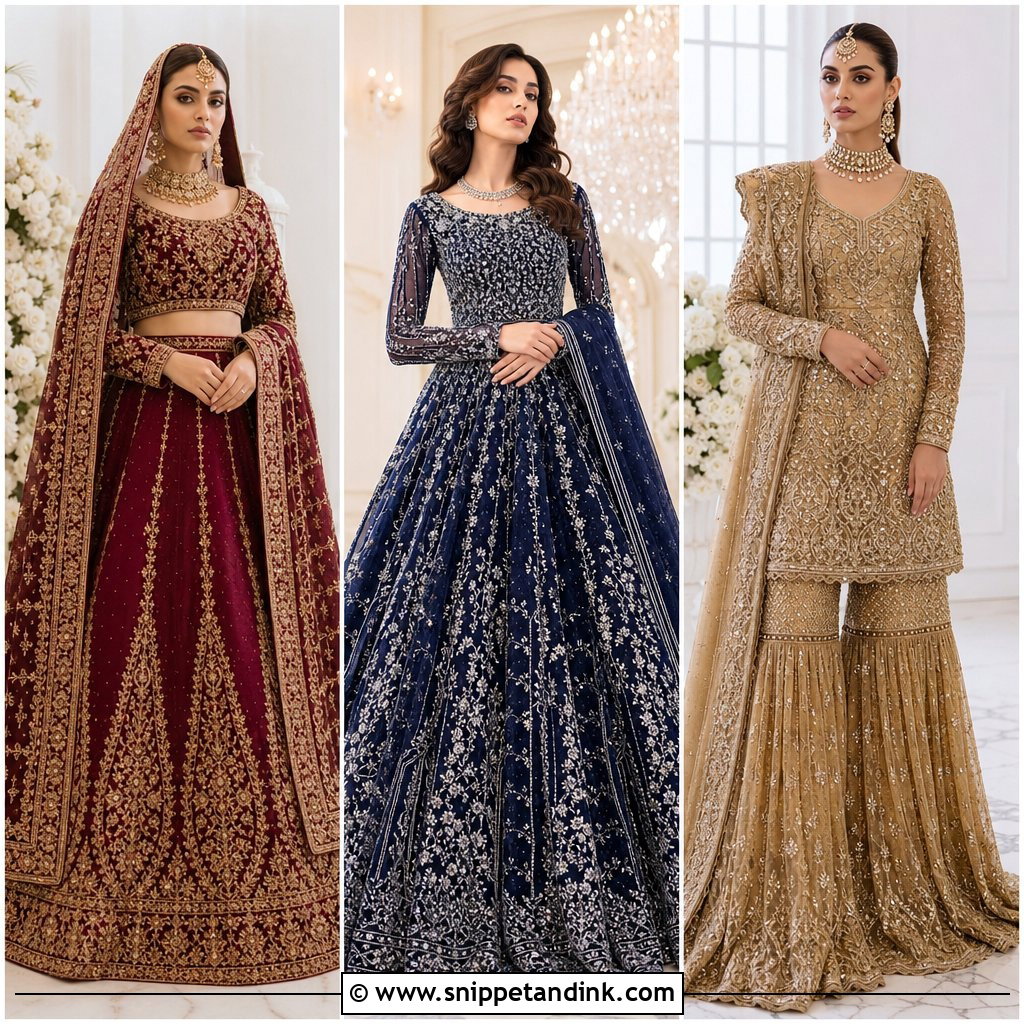
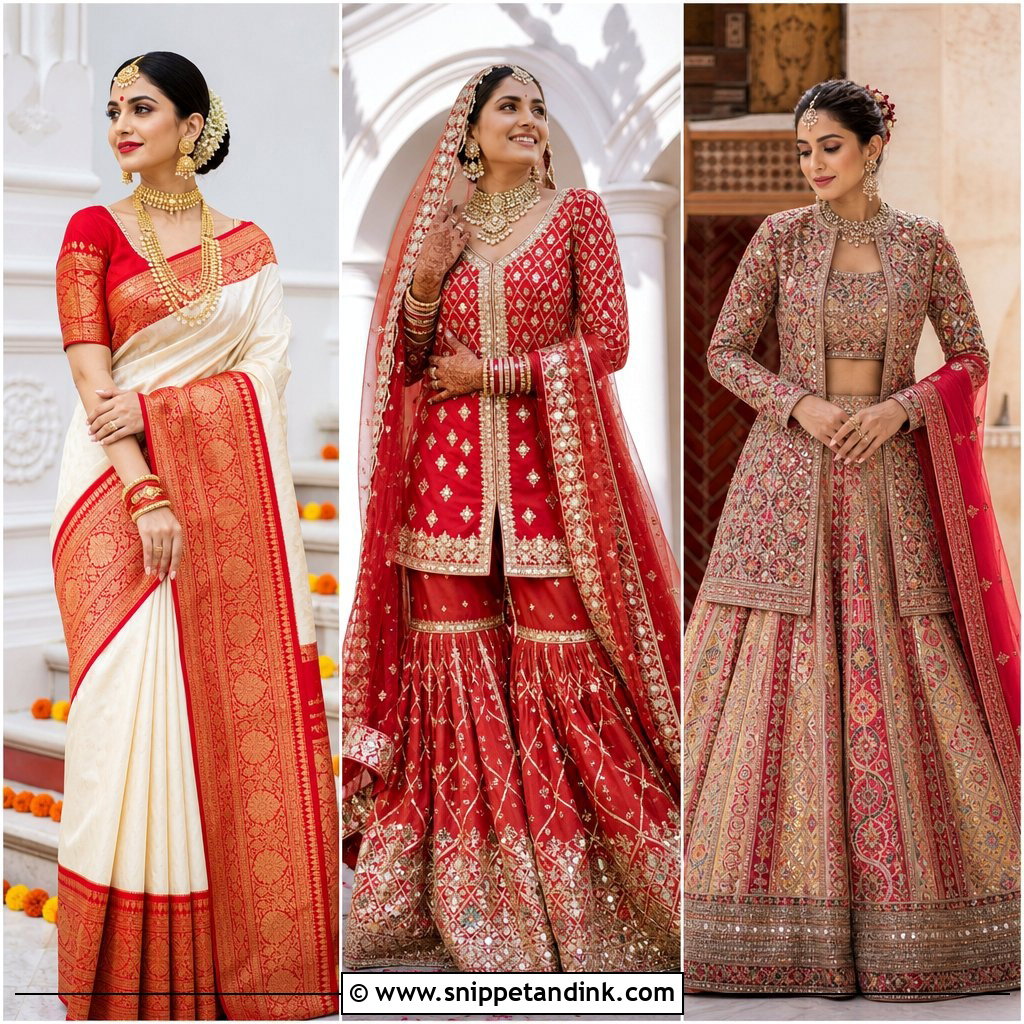
Red for the Baraat is still the outfit most families picture, and raw silk or velvet carries the weight of real zardozi, dabka, nakshi and tilla without sagging. A fitted blouse, the skirt and a scalloped dupatta make the classic three pieces; a waist-length embroidered shirt replaces the blouse for fuller coverage. I usually set the lighter dupatta over the head and a second across one shoulder. The thing I watch on a red lehenga is the weight at the waistband. Heavy borders pull it down over a long evening, so I ask for a wide, firm waistband and a hook-and-bar rather than only a drawstring. Gold jhumkas, a maang tikka and layered necklaces, with defined eyes and a muted lip.
2. Pakistani Maroon Bridal Lehenga
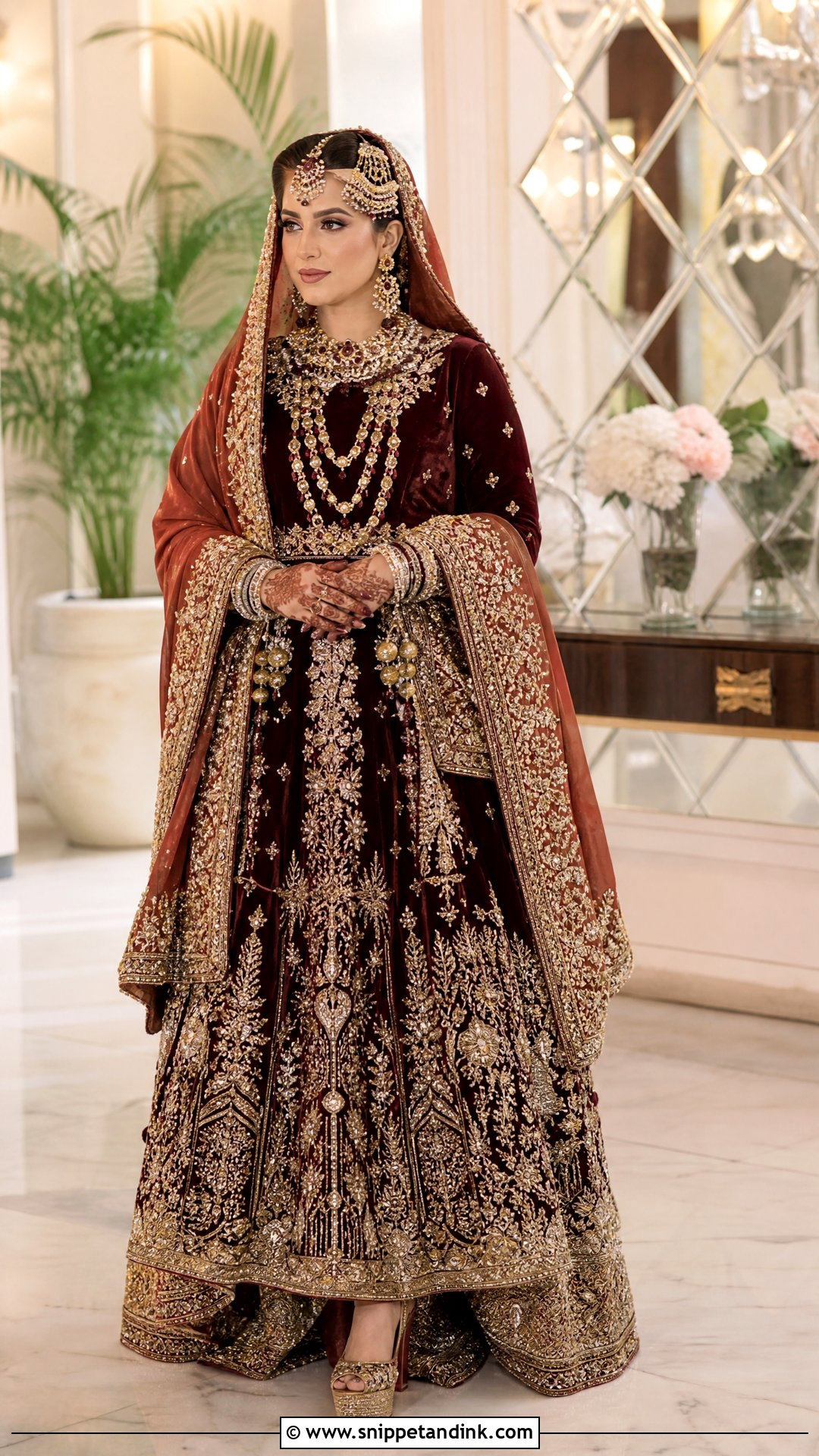
Maroon is softer than bright red under hall lighting, and it suits evening Baraats and winter weddings. A panelled velvet or jamawar lehenga with antique gold work looks rich without shouting. Pair it with a structured blouse or short shirt with a modest neckline and fitted sleeves. A rust, muted pink or maroon net dupatta over the head, with an embroidered shawl on the arms, adds depth. Hide comfortable platform khussas under the skirt. One request worth making to the tailor: keep the embroidery lighter near the waist. Dense work there digs in every time you sit on the stage.
3. Pakistani Ivory Nikah Dress
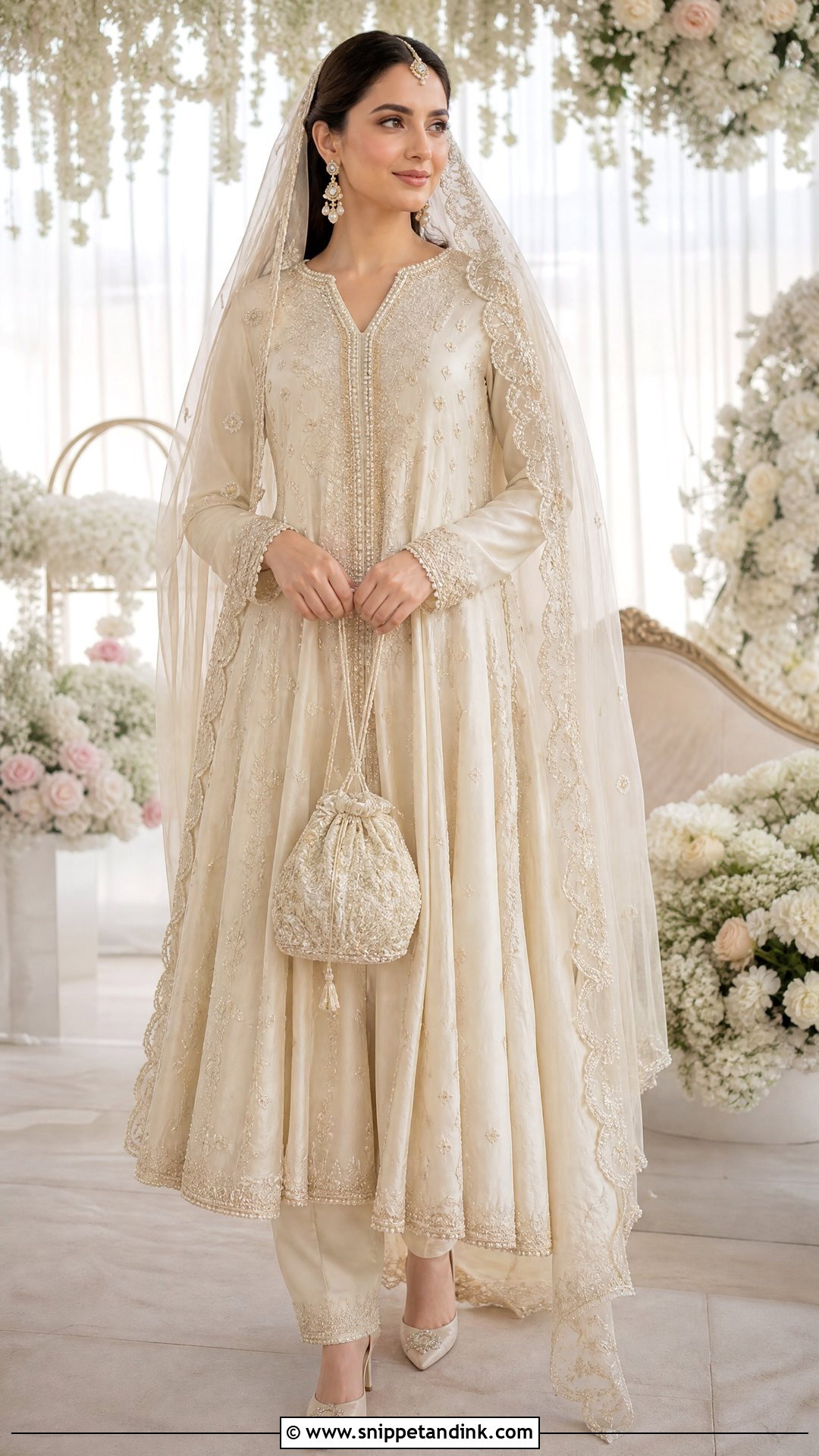
Ivory for a daytime Nikah feels calm and modern. A floor-length pishwas with a fitted bodice and a controlled flare moves well without looking heavy. Pearl, silver or pale gold embroidery around the neckline, sleeves and hem is enough. Straight silk trousers underneath give coverage and structure. The dupatta here does a lot of work, so I’d choose sheer organza with a fine border and pin it at both shoulders before the ceremony starts. Light colours show every mark, so keep a stain pen and a clean handkerchief nearby when mehndi or food is around.
4. Pakistani White Gharara Dress
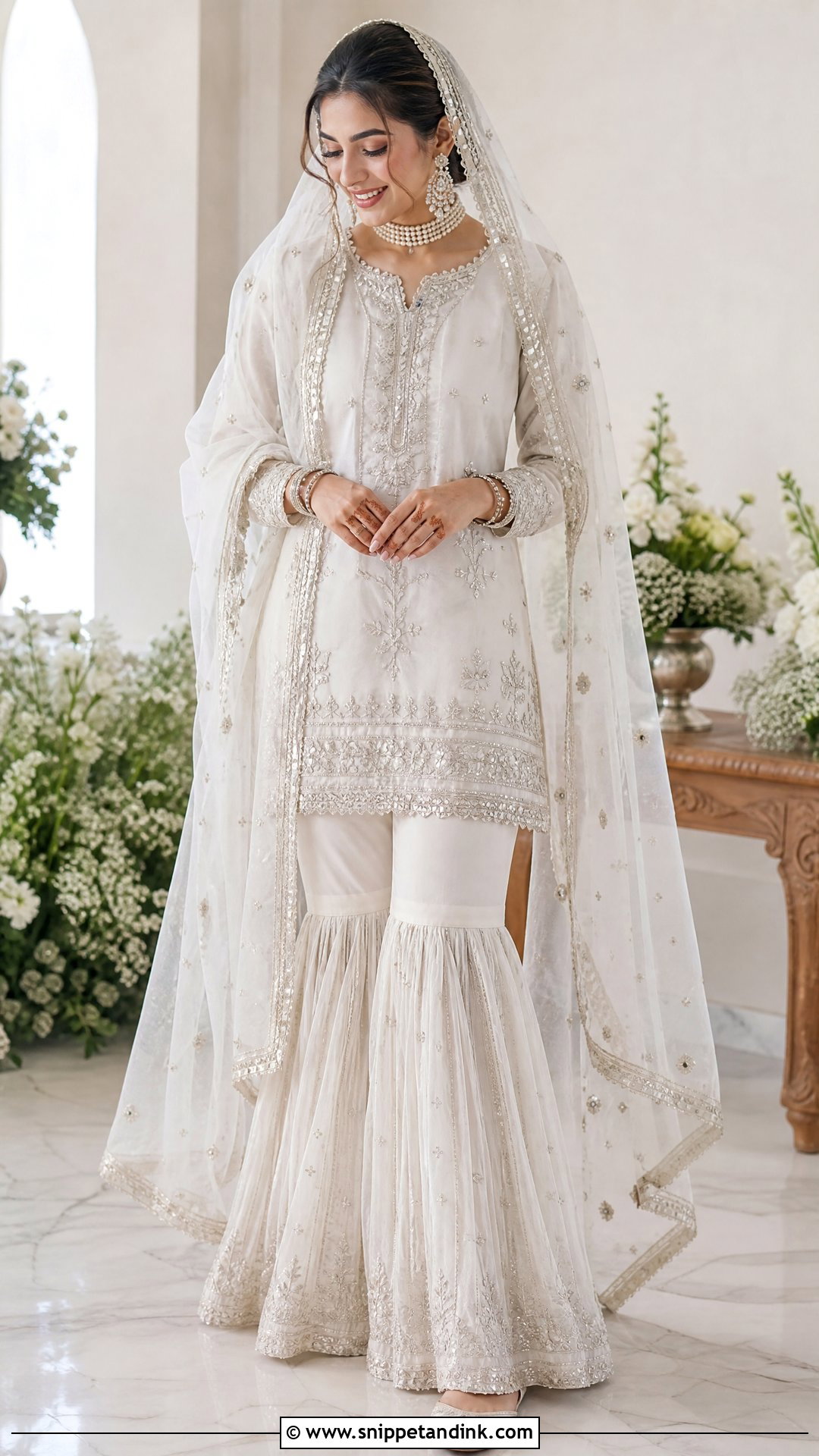
A white gharara set suits a small Nikah and is easier to walk in than most heavy bridal skirts. The pieces are a short embroidered kurti, gharara pants fitted to the knee and flaring below, and a light dupatta. Silk, tissue or jamawar holds the gharara’s shape best. Silver threadwork, pearls and a little sequin work keep it bridal. The proportion point I always check: the kurti must finish above the knee band, or it hides the very thing that makes a gharara a gharara. Pearl chandbalis and white khussas finish it.
5. Pakistani Pastel Pink Bridal Maxi
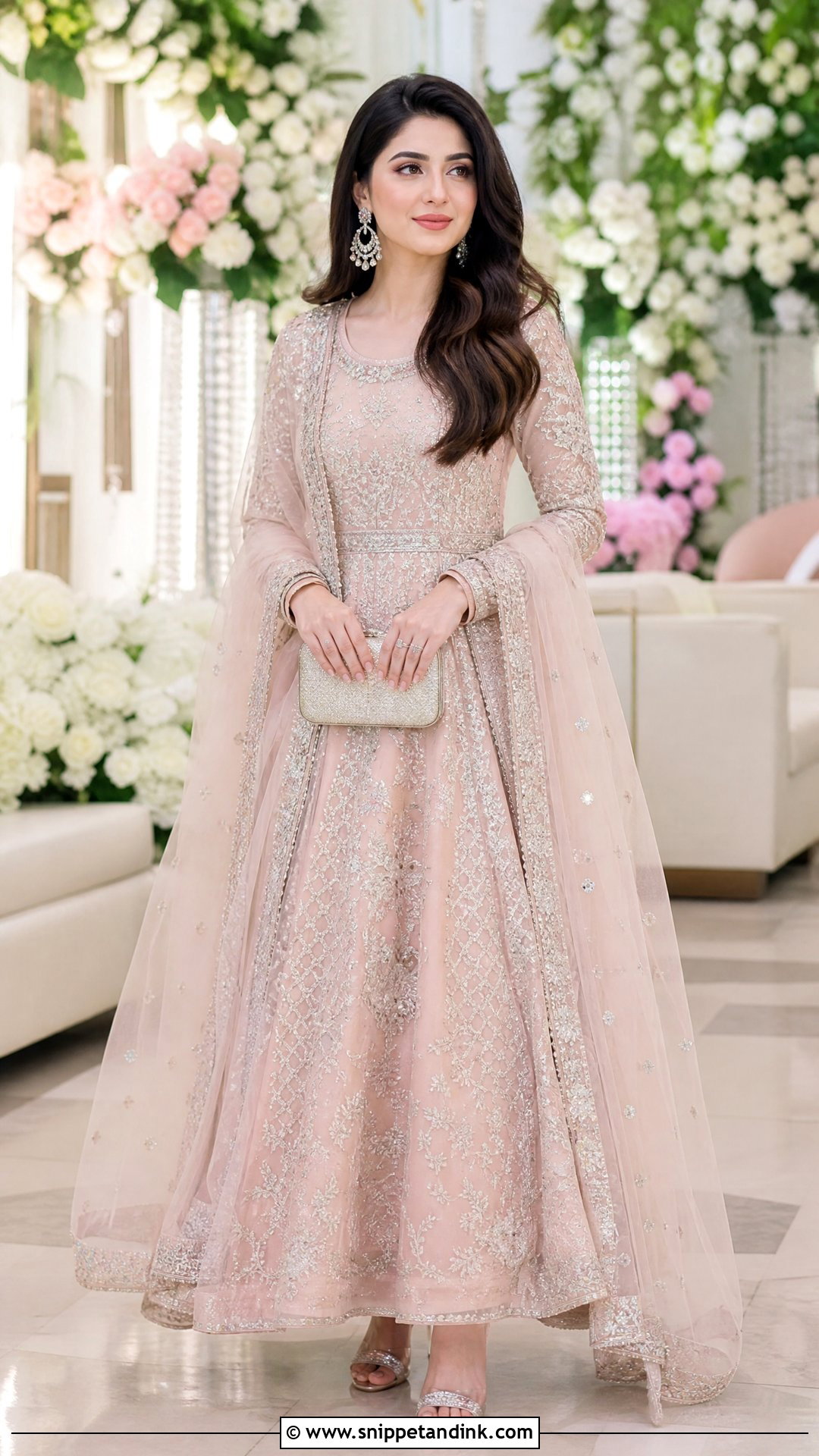
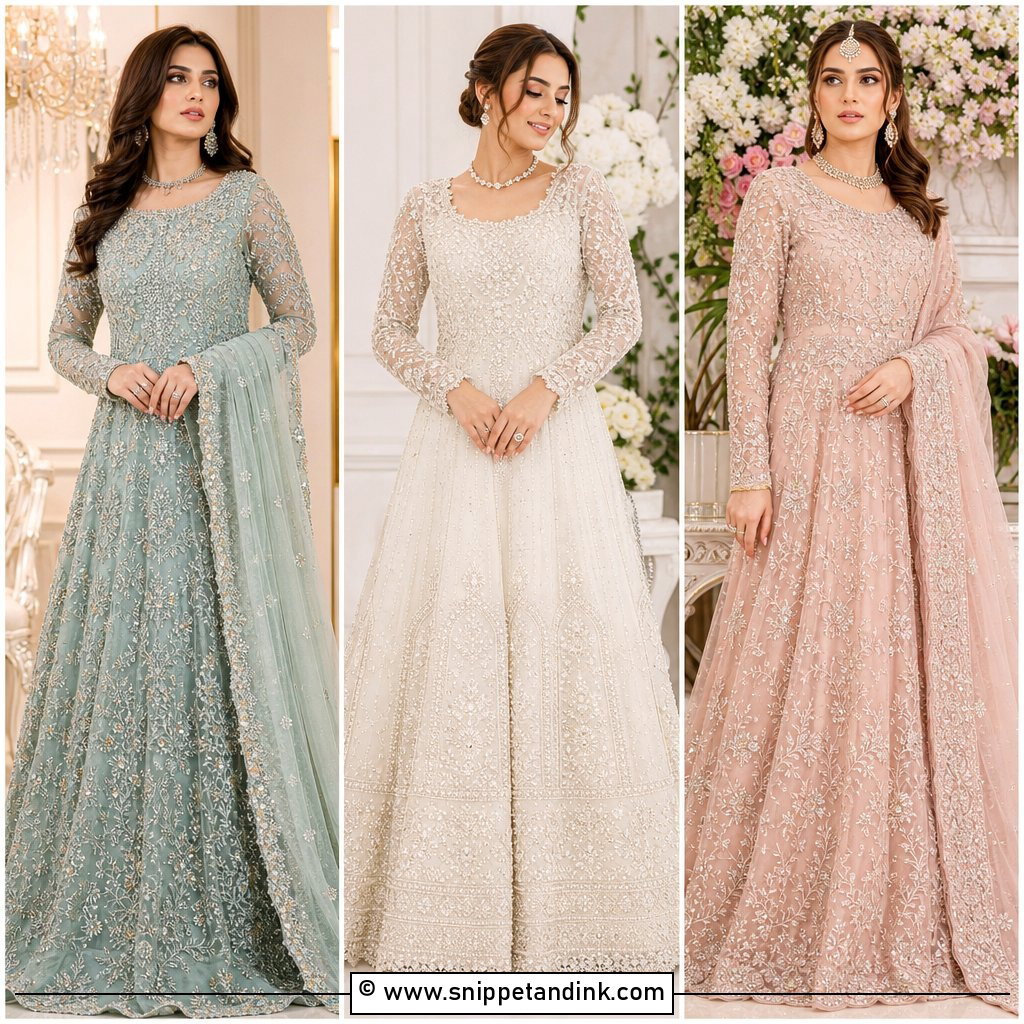
Pastel pink sits naturally at a Walima. A floor-length maxi with a defined waist, fitted sleeves and enough flare to move works well. Silver zari, crystals, pearls and tonal threadwork keep it light. A blush organza dupatta with a narrow edge gives coverage without hiding the dress. If you’d like to look taller, ask for vertical lines of embroidery and a slightly raised waist. I’d also keep the skirt work light, because a densely worked maxi gets heavy and hot by the end of a reception. Maxis and pastels are now a common alternative to a structured lehenga for this event.
6. Pakistani Champagne Walima Gown
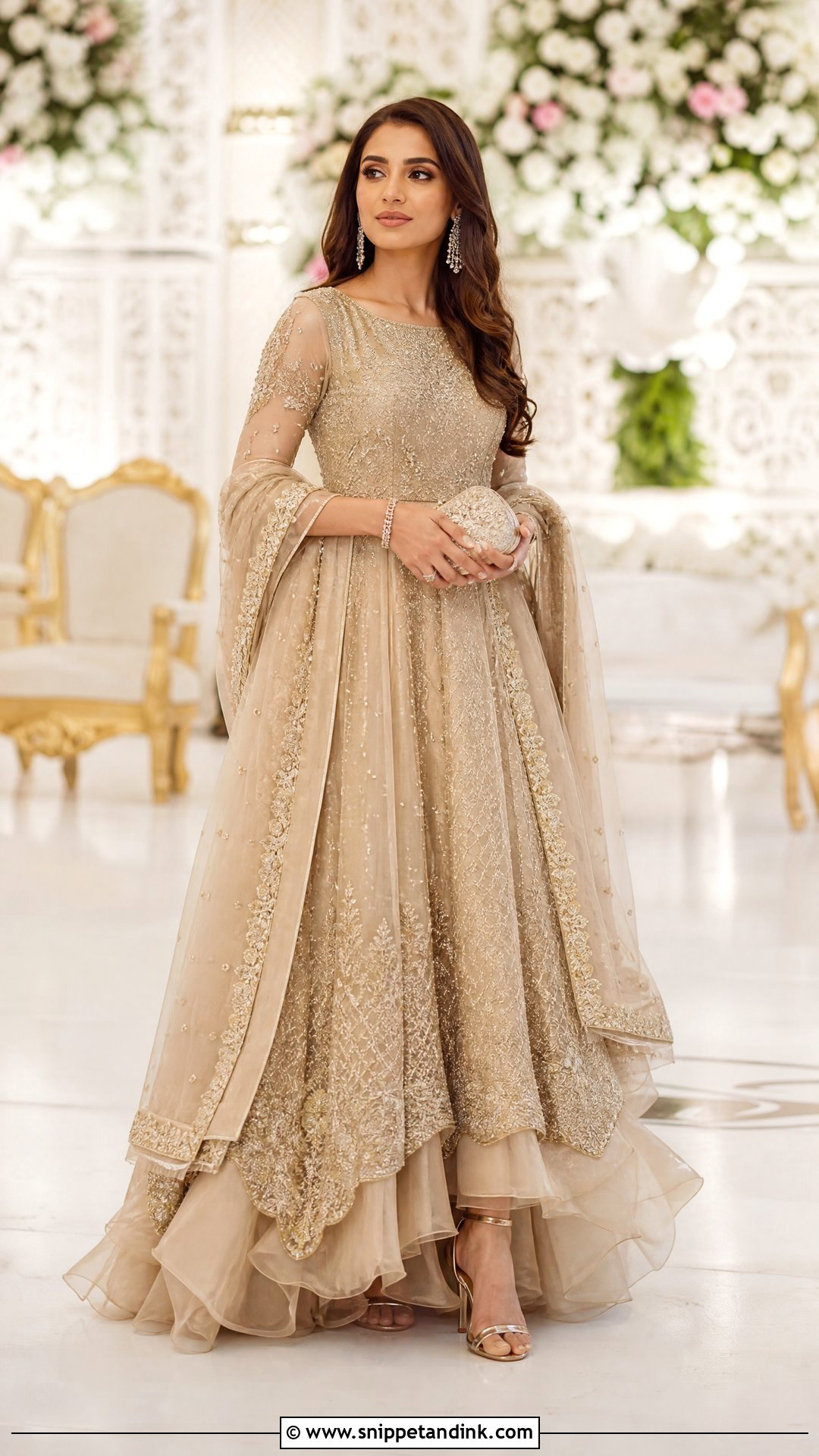
Champagne has a gentle glow that suits a Walima, especially in a long silk, organza or soft net gown with a fitted top and layered skirt. The embroidery should follow the dress panels rather than cover every inch, which keeps it lighter to wear and cleaner in photos. A matching dupatta with scattered motifs can sit over one arm or across both shoulders. With a heavily worked neckline I skip the necklace and let earrings do the job. Metallic heels and a crystal clutch suit the modern shape.
7. Pakistani Green Mehndi Lehenga
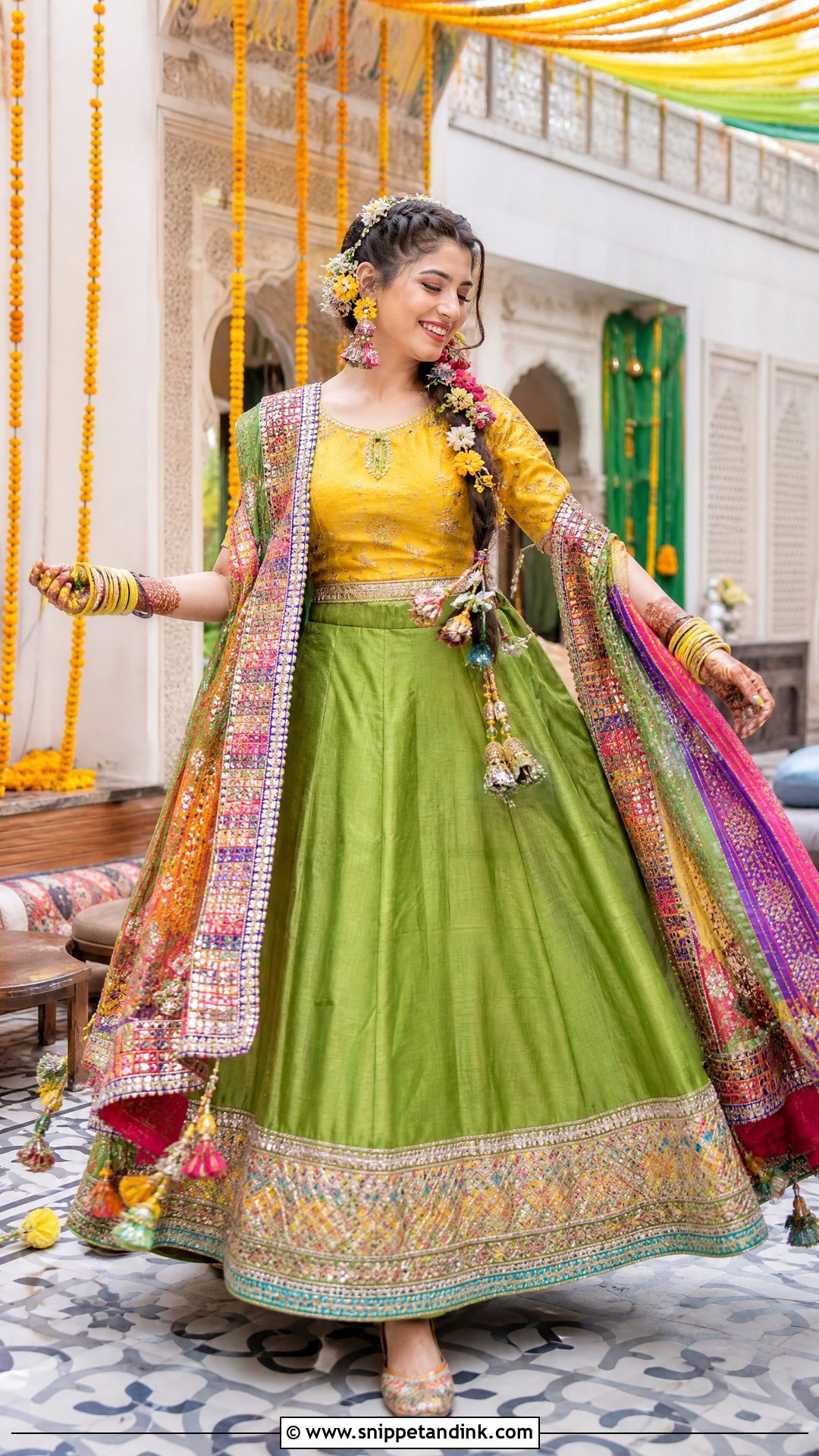
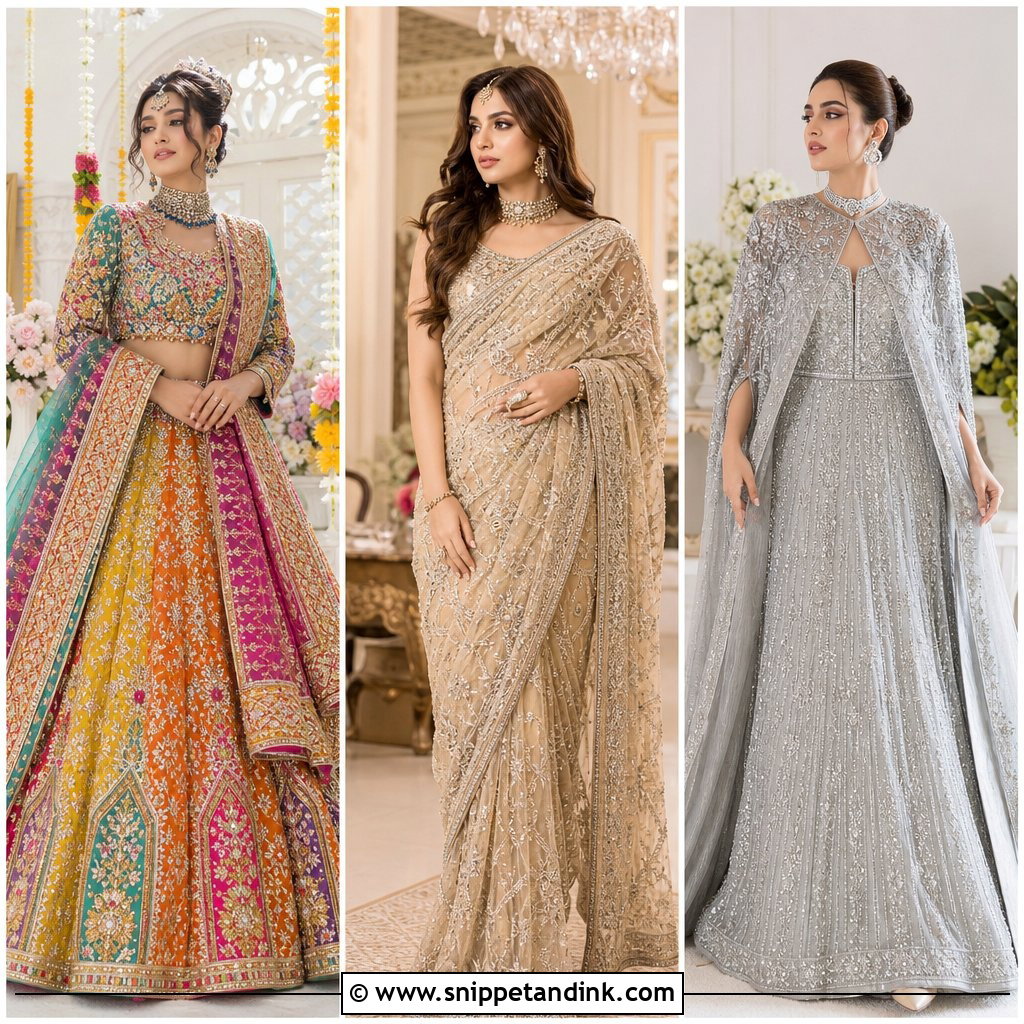
Green is the colour I see most at Mehndi functions, and it should feel festive, not formal. A lightweight raw silk lehenga with mirror work, gota or colourful thread borders is easier to dance in than anything with heavy zardozi. Pair it with a yellow, pink or green blouse. Wear the tasselled dupatta across one shoulder so your hands stay free for henna. Fresh henna stains fabric, so keep sleeves short or three-quarter and let the paste dry before you pick up the skirt. When the embroidery has many colours, I repeat only two in the jewelry and bangles.
8. Pakistani Yellow Sharara Dress
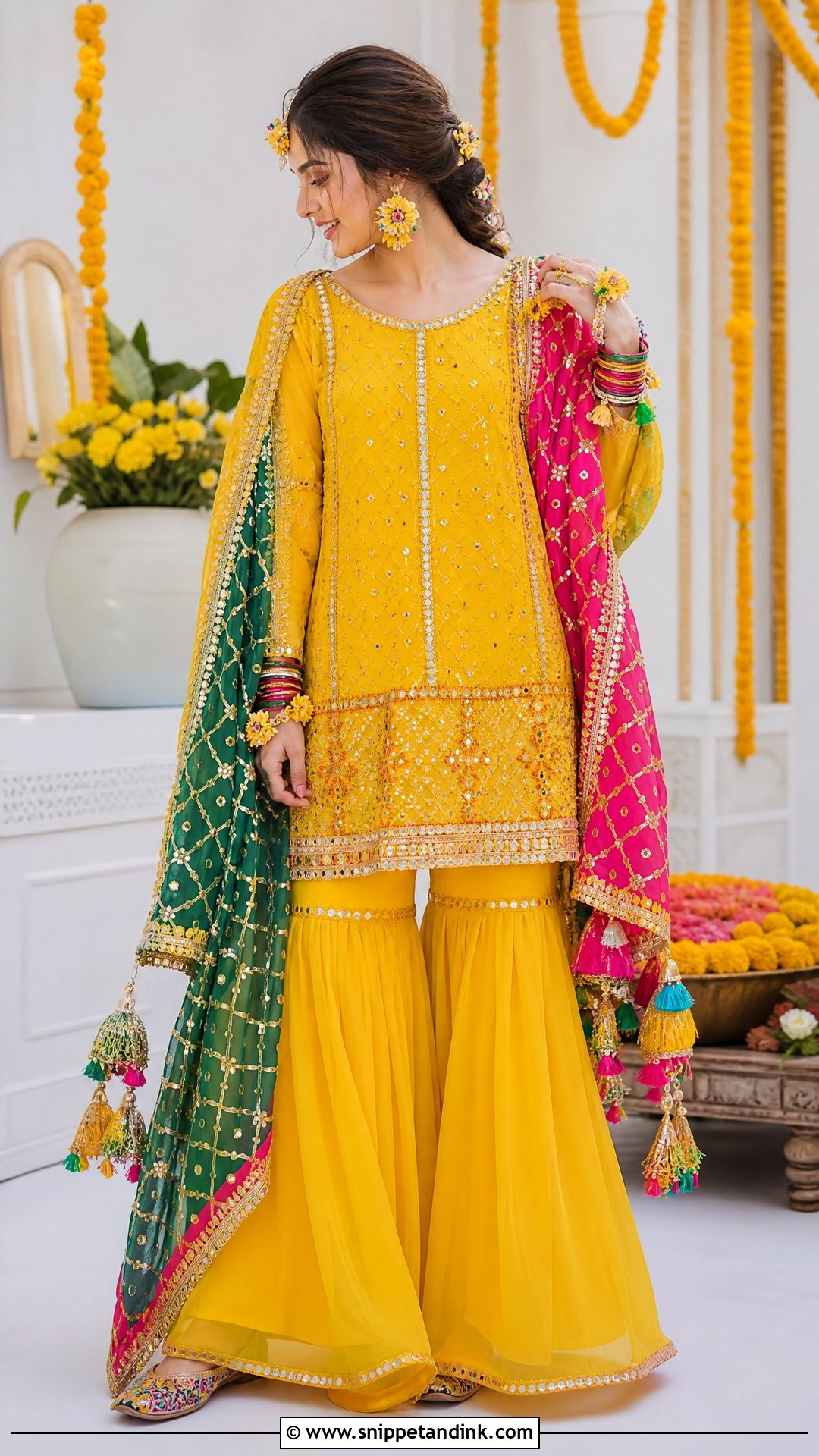
Yellow suits a Mayun or Mehndi, and a sharara dress lets you move freely for the dancing. A short kurti with gota, mirror details or floral embroidery sits over wide sharara pants in chiffon, silk or crushed fabric. A green, orange or pink dupatta with tassels adds contrast. The kurti length matters for proportion: around the upper thigh shows the sharara’s flare, while a longer kurti swallows it. Flat khussas, floral earrings and a loose braid keep the mood relaxed. Shararas have come back strongly for functions where you need both tradition and room to move.
9. Pakistani Farshi Gharara Dress
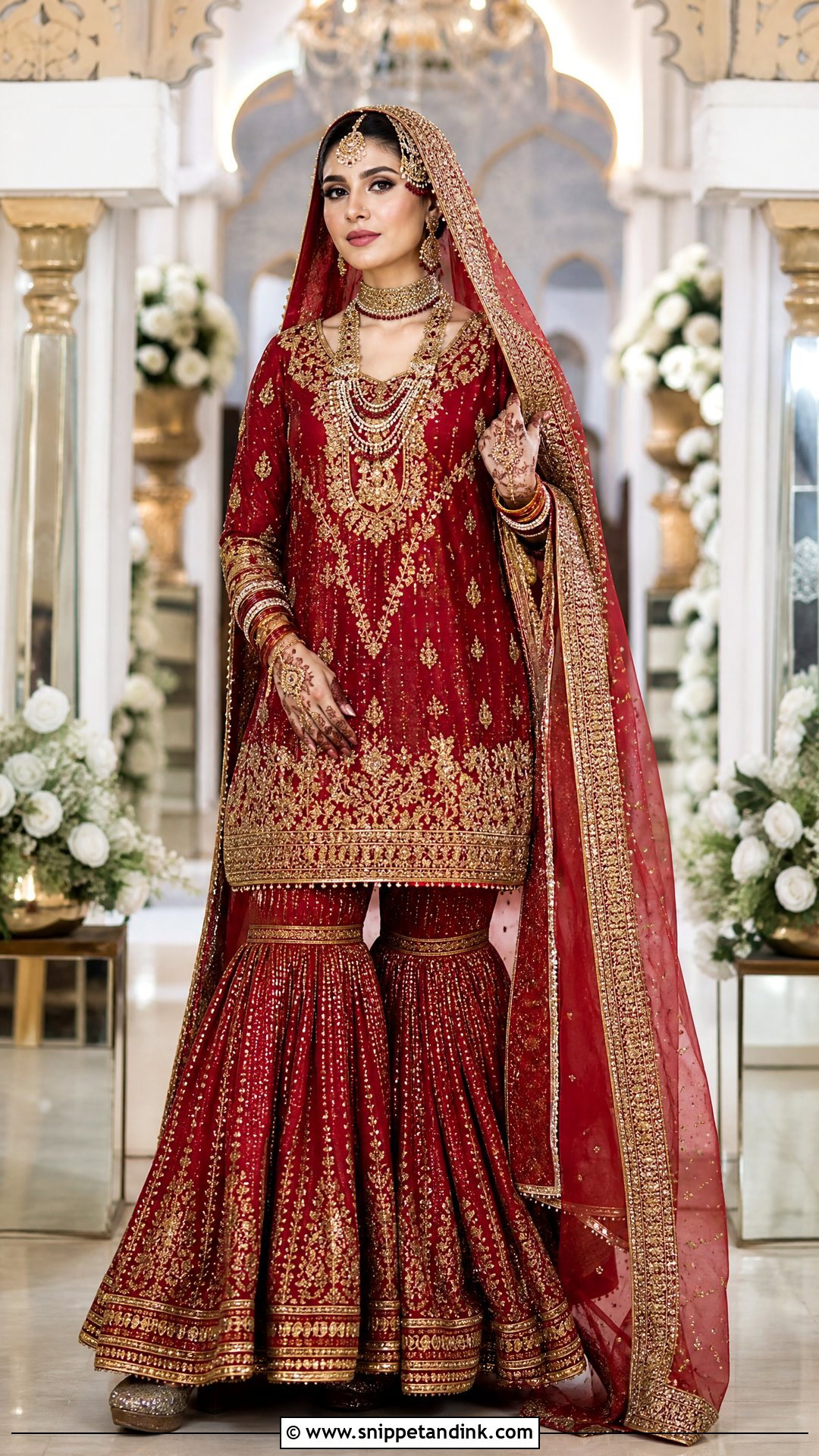
A farshi gharara has real drama: fitted through the upper leg, banded at the knee and then pooling in a long flared hem on the floor. Pair a gold, red or deep green gharara with a short, heavily worked kurti so the lower part stays visible. A long tissue or organza dupatta draped over the head and falling behind the shoulders completes it. Walking in a farshi takes practice. I ask brides to try steps and a stage entrance at the final fitting, and to have the trailing length cut to their height and the venue floor. It suits a formal indoor Nikah or Baraat far better than an outdoor lawn.
10. Pakistani Bridal Sharara With Long Shirt
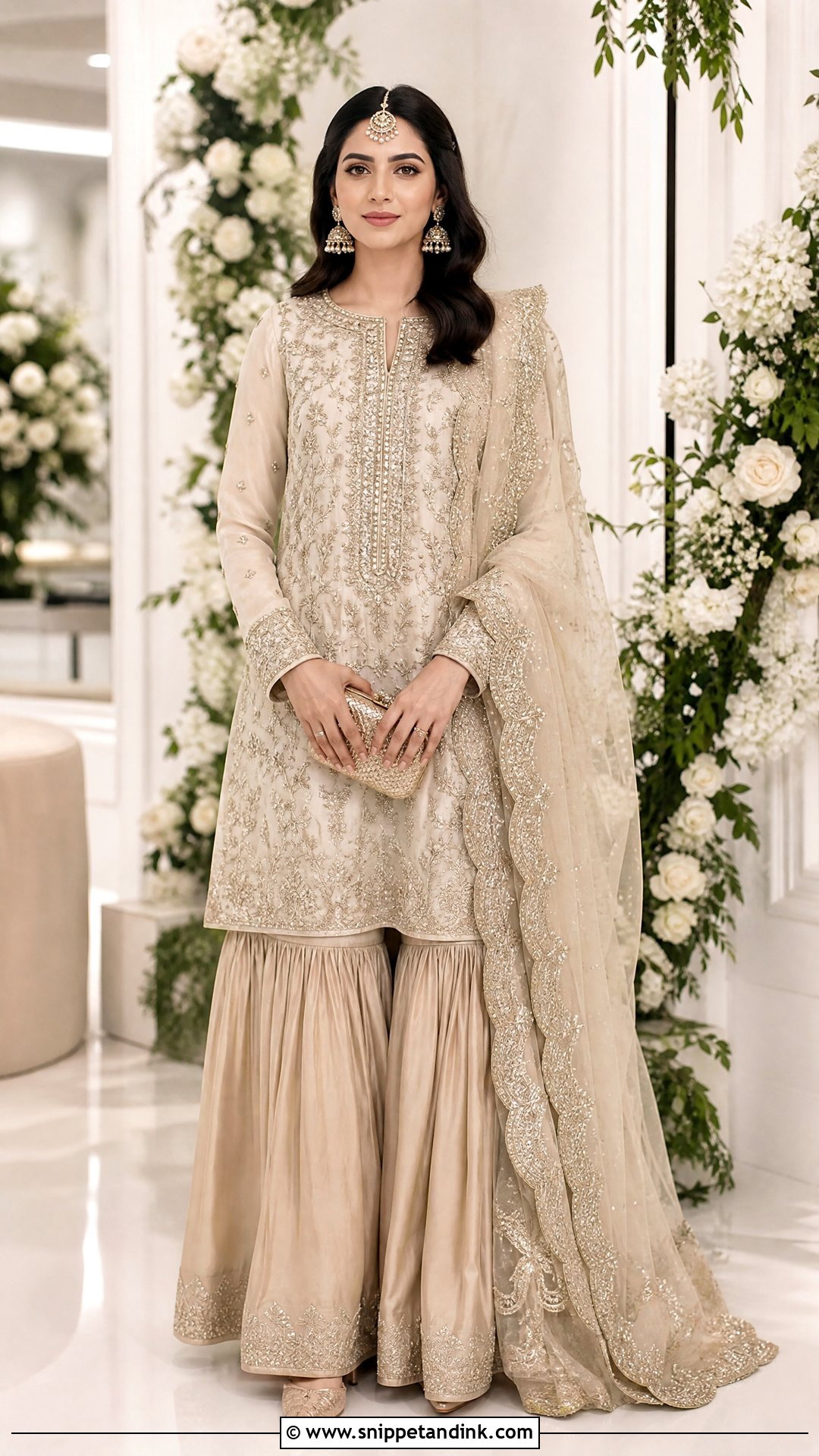
A knee-length shirt over wide sharara pants gives more coverage than a short kurti and a long, elegant line. A straight or lightly flared shirt in silk, chiffon or jamawar works, with matching embroidery at the neckline, cuffs, shirt hem and trouser border to tie the pieces together. A net dupatta with a scalloped edge finishes it. For petite brides, I add side slits to the shirt so it doesn’t look heavy. Taller brides can carry a longer shirt with vertical motifs and a fuller sharara. It suits a Nikah, engagement or smaller reception.
11. Pakistani Gold Bridal Pishwas
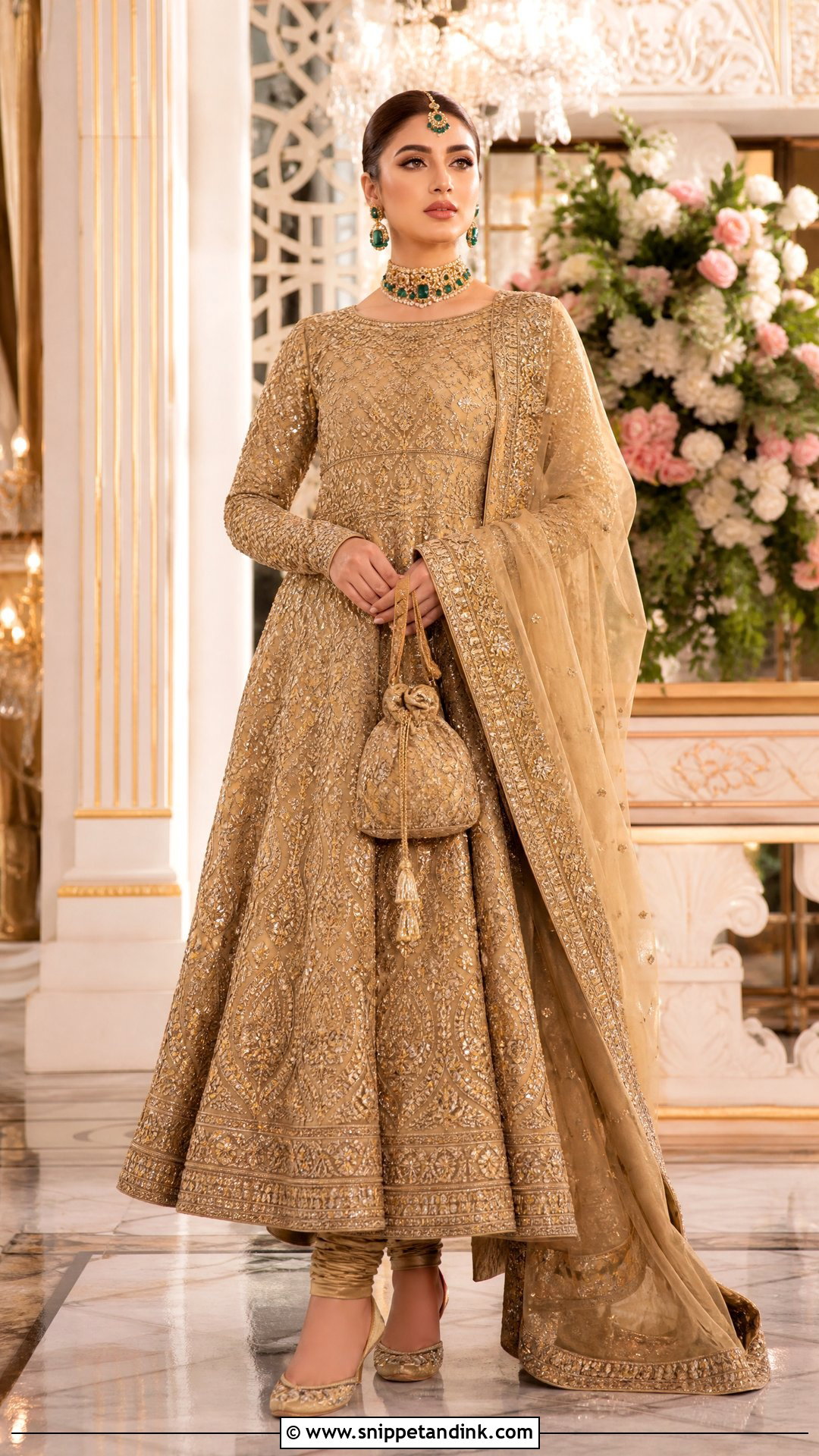
A gold pishwas swings beautifully when you walk because of its wide circular skirt. I’d choose a muted antique gold over a bright metallic, then bring in bronze, champagne or maroon embroidery for depth. Churidar trousers go underneath and a sheer dupatta with a worked border on top. Emerald earrings and a traditional choker give contrast. With a very full flare, ask for lighter fabric in the inner layers. Otherwise the skirt gets heavy and stiff at the waist instead of falling in soft folds.
12. Pakistani Angrakha Bridal Dress
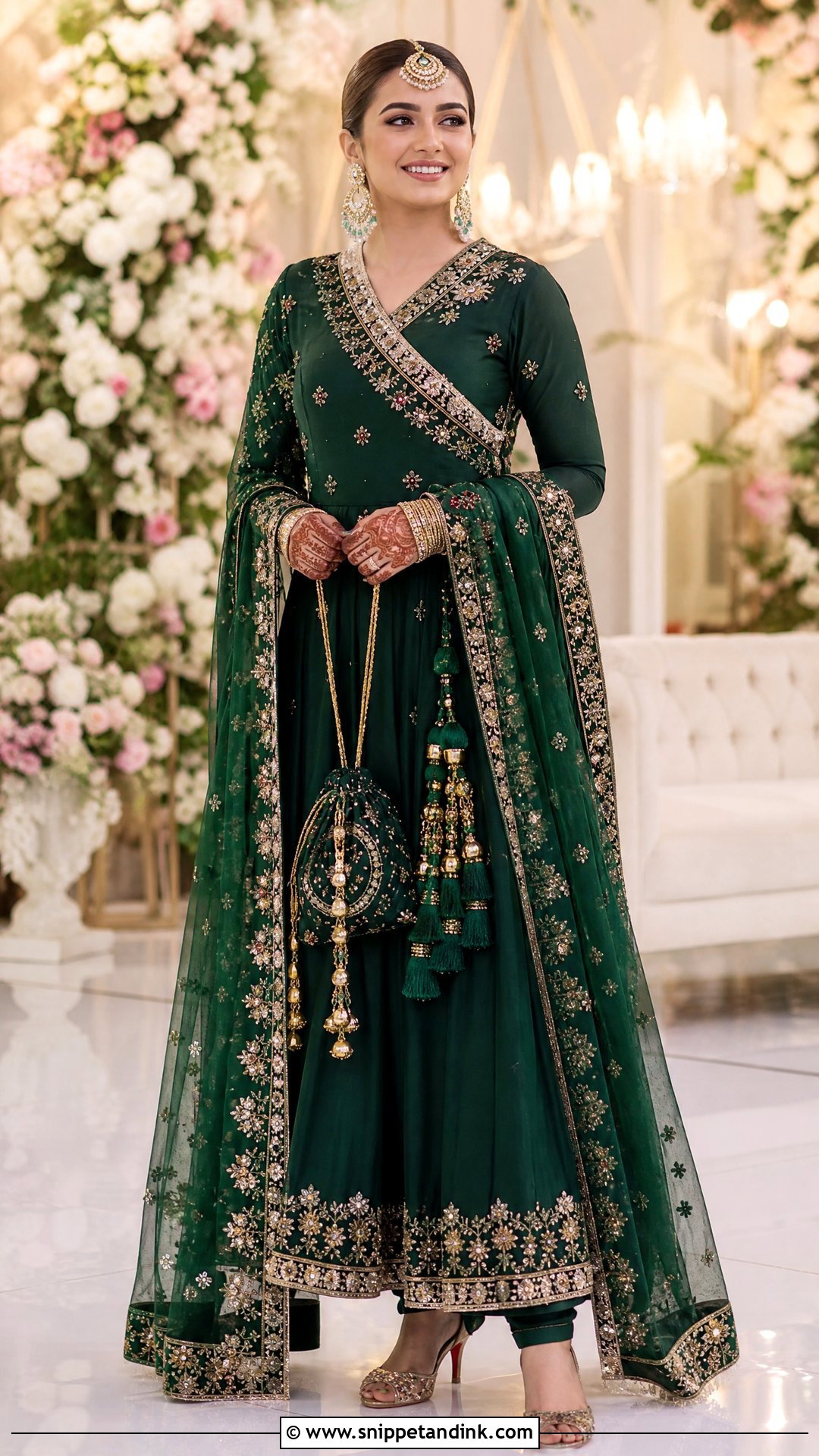
The crossover neckline of an angrakha gives a distinctive shape. A floor-length angrakha in raw silk, chiffon or organza looks best with borders that follow the overlapping bodice, and tassels at the side waist draw attention to the tie. Churidar trousers and a coordinating dupatta complete it. Emerald, plum, rust or deep blue suit evening events; ivory and blush suit daytime. The fit of the shoulder and the position of the waist tie make or break this style. If the tie sits too low, the crossover gapes when you sit.
13. Pakistani Bridal Saree
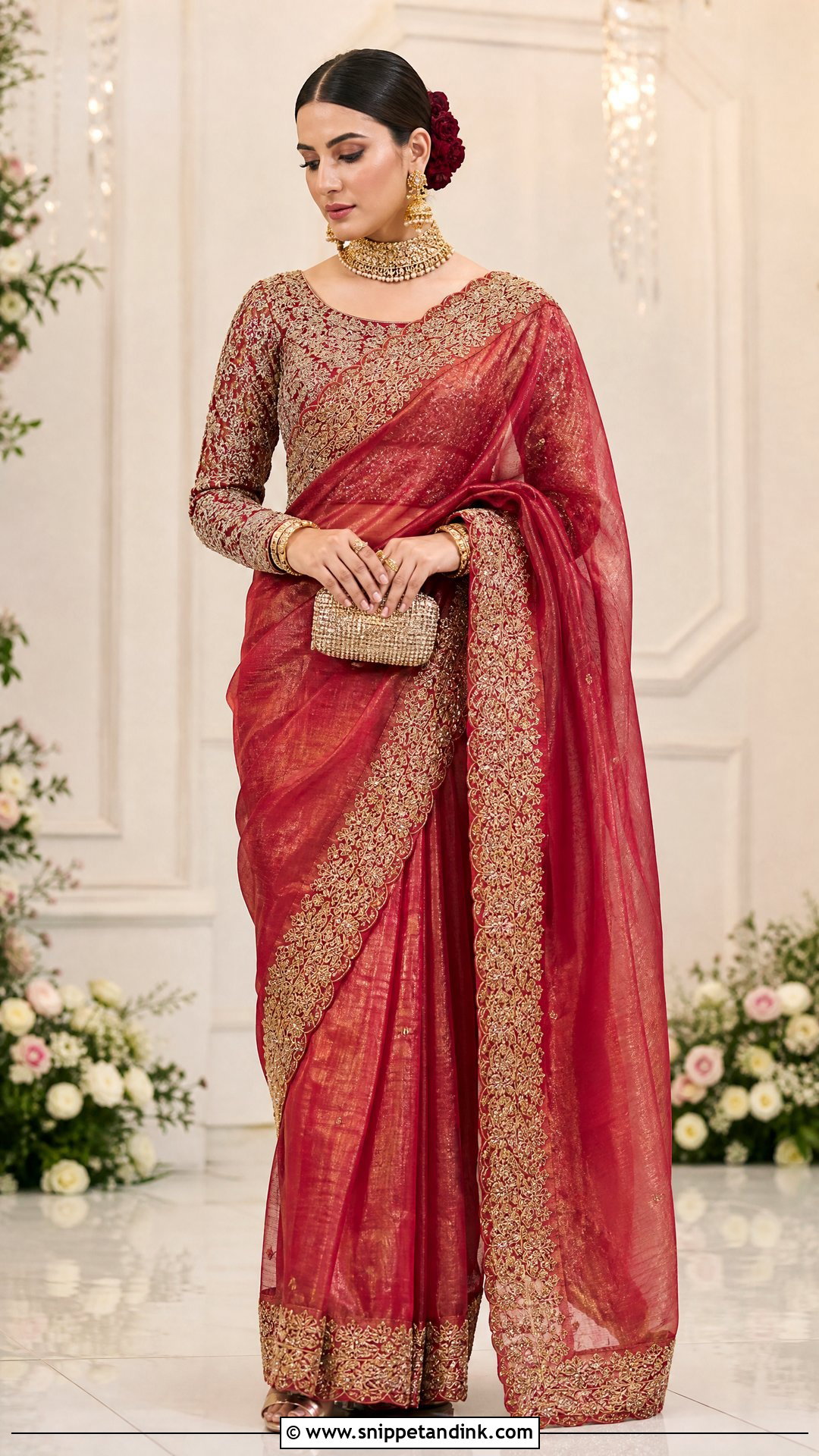
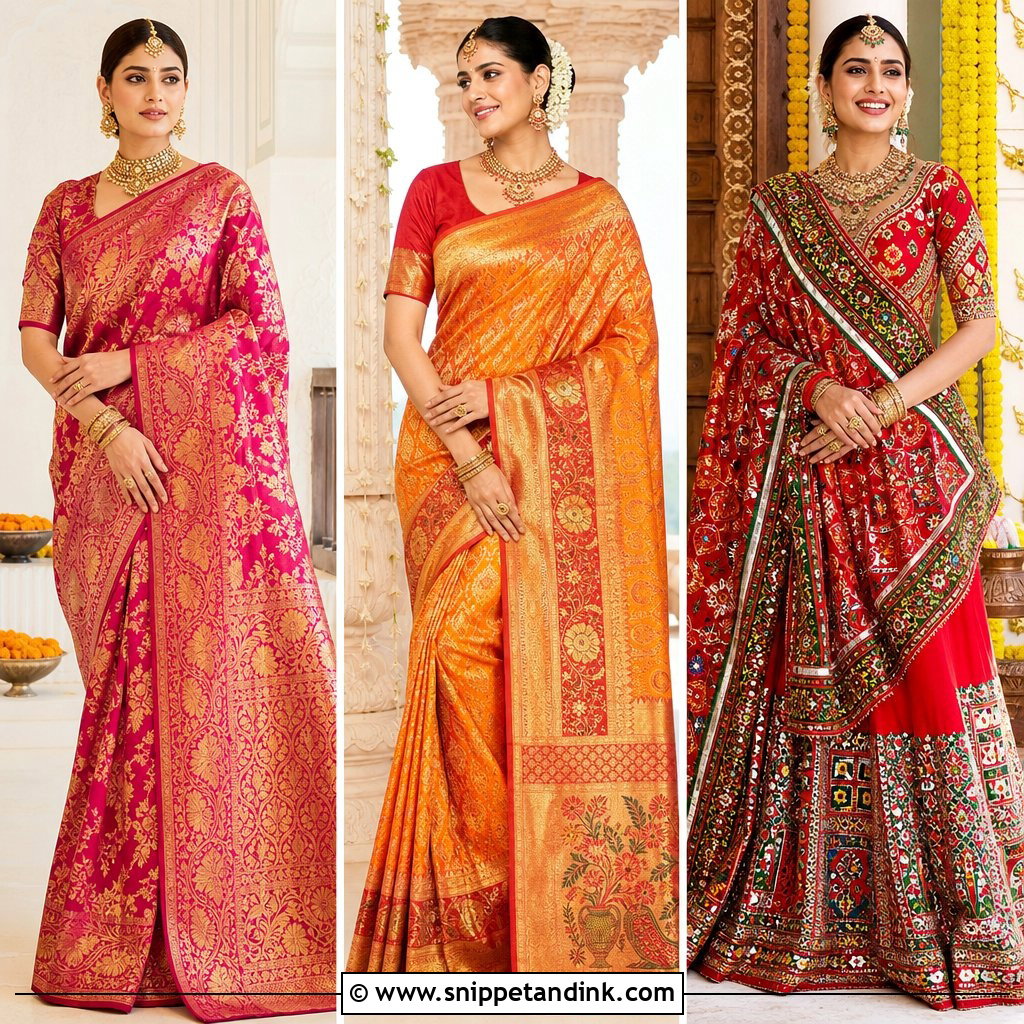
A saree is a sleeker choice than a full lehenga or pishwas. Tissue, silk, organza or net with a substantial embroidered border holds its shape in photographs. Pair it with a fitted blouse with full sleeves, a modest neckline or a longer hem for more coverage. Neat pleats and a well-pinned pallu are what keep a saree manageable through a long ceremony, so I’d have whoever drapes it use several small safety pins at the shoulder and the pleats. Red and gold suit the main wedding; silver, champagne and pastels suit the Walima. You can also restyle a saree for family weddings later.
14. Pakistani Banarasi Bridal Lehenga
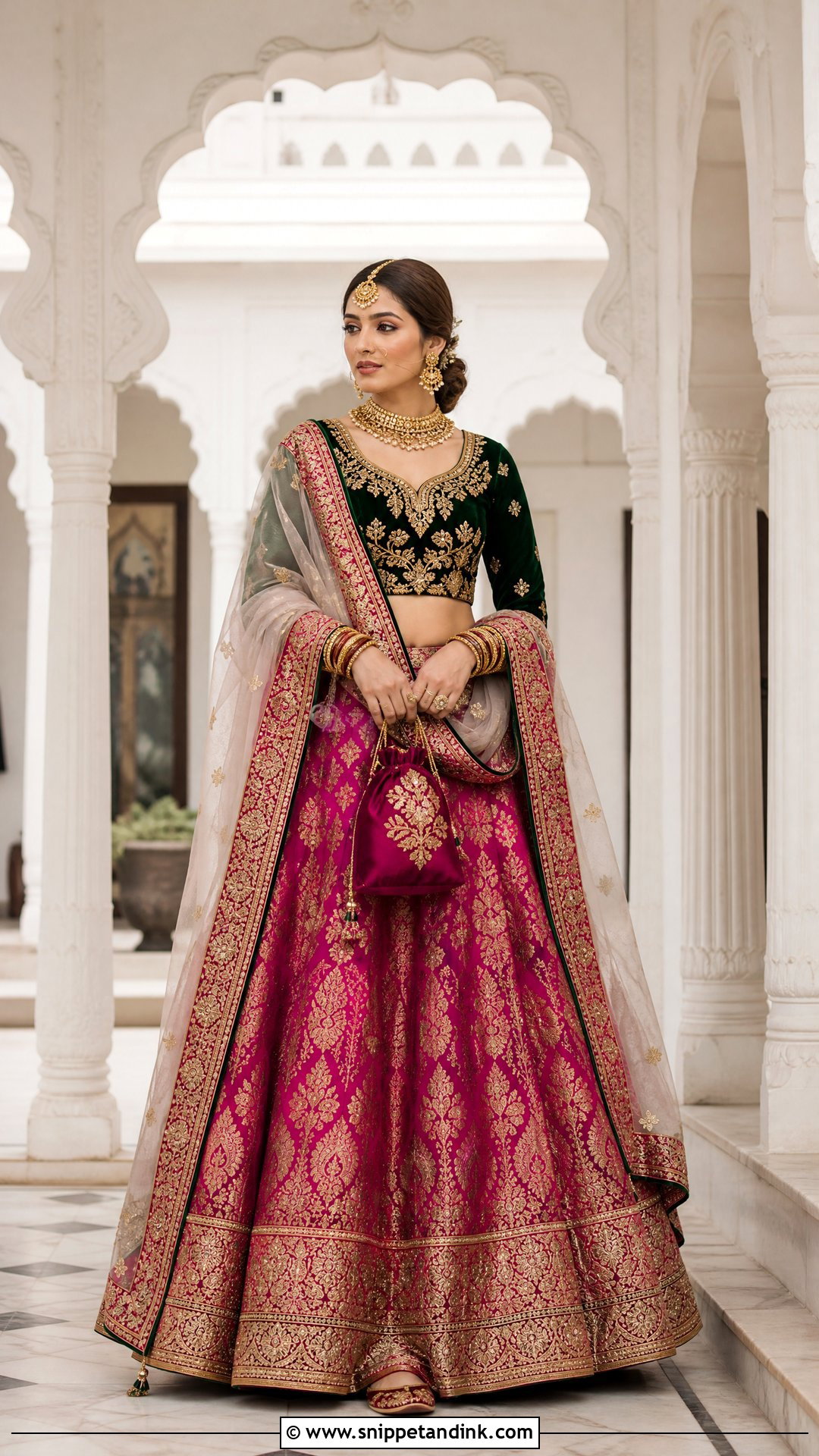
Banarasi weave looks rich without dense embroidery, because the pattern is in the fabric itself. Choose a woven skirt in red, magenta, green or gold and pair it with a plain velvet or raw silk blouse, adding handwork only at the neckline and sleeves to connect the two. A contrasting organza dupatta with a Banarasi border lightens the top half. Woven textiles already carry strong pattern, so I’d resist adding more unrelated embellishment. The skirt can later be worn with a simpler blouse at other family events, which makes it good value.
15. Pakistani Velvet Bridal Dress
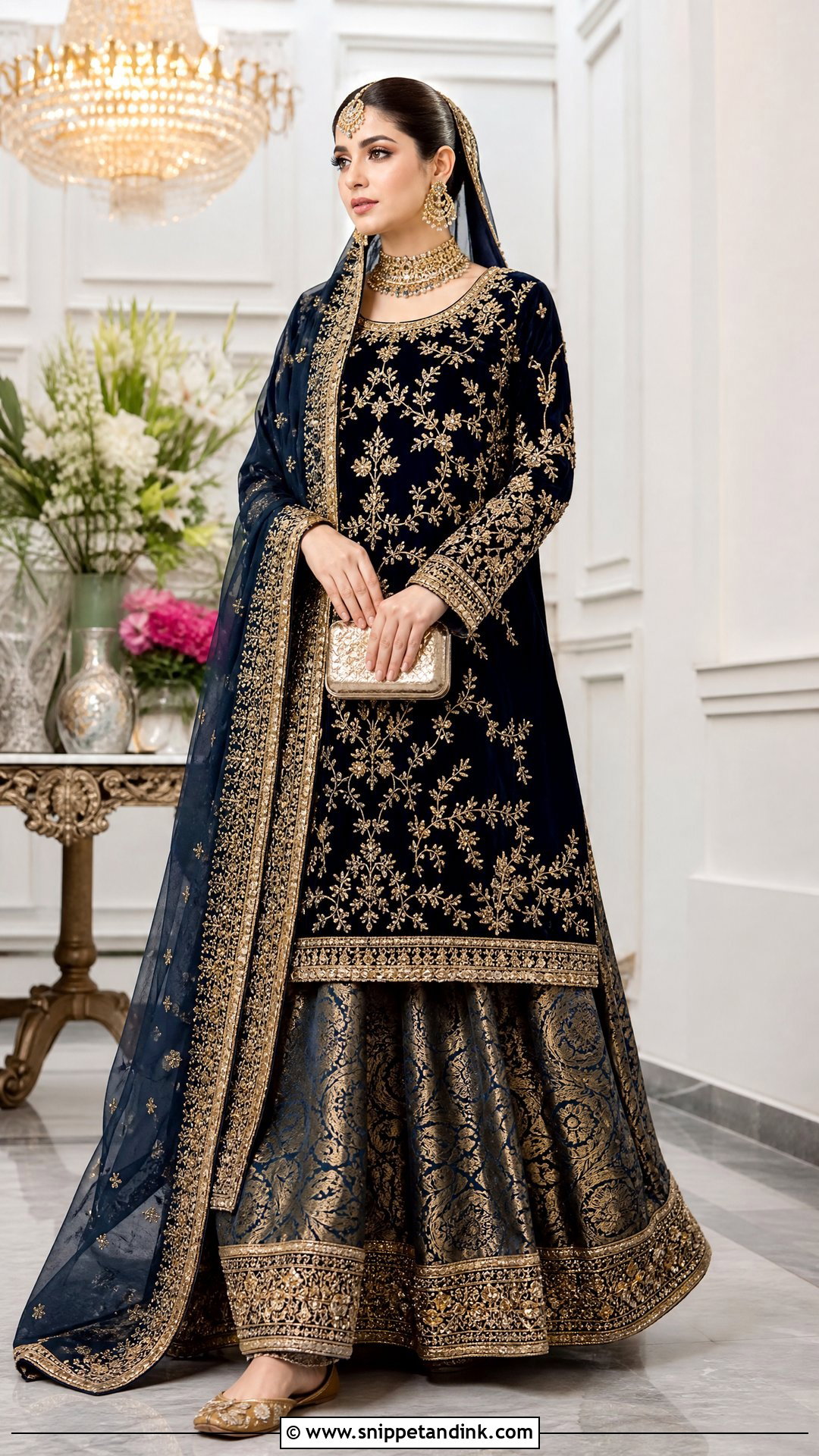
Velvet belongs to winter weddings. A long velvet shirt in maroon, emerald, navy or deep red pairs with a jamawar lehenga or wide silk trousers. Keep the zardozi and tilla to the neckline, cuffs, side slits and hem rather than covering the whole shirt, because velvet is already heavy. For the same reason, avoid extra lining and very heavy jewelry. The fitting check I insist on is the arms: lift them, hug someone, raise a plate. Velvet has little give, and a tight armhole makes greeting guests miserable.
16. Pakistani Peplum Lehenga Dress
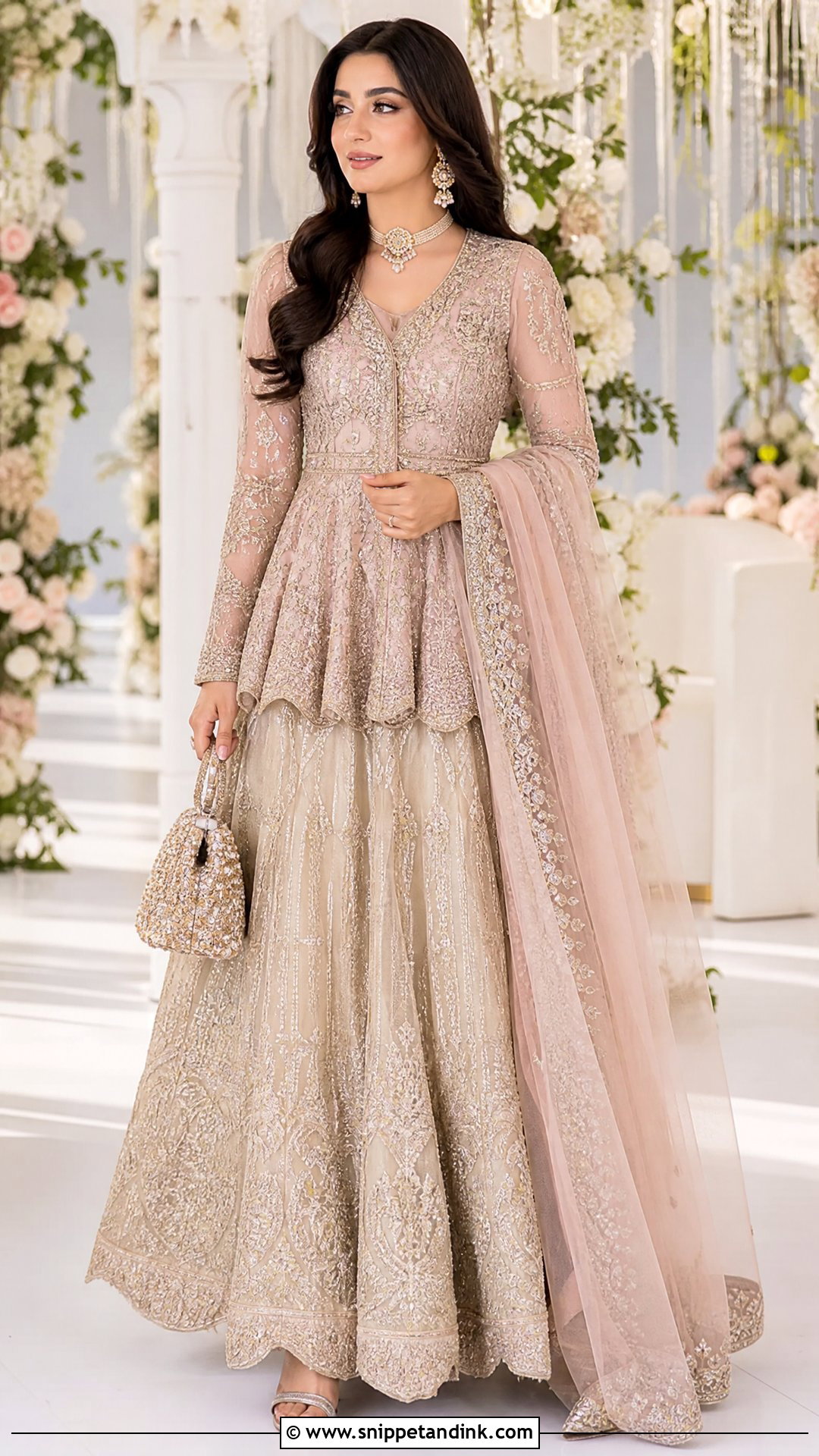
A peplum top gives a lehenga a defined waist and a modern outline. A structured peplum ending near the upper hip over a flowing lehenga in the same colour family works best, with embroidery balanced between bodice and skirt border so neither looks separate. A soft net dupatta can sit on one shoulder or over the head. Shorter brides should keep the peplum compact with little flare. Taller brides can carry a longer, more dramatic one with a skirt cut in clean vertical panels. It suits engagements, Mehndi and modern Walimas.
17. Pakistani Long Shirt With Lehenga
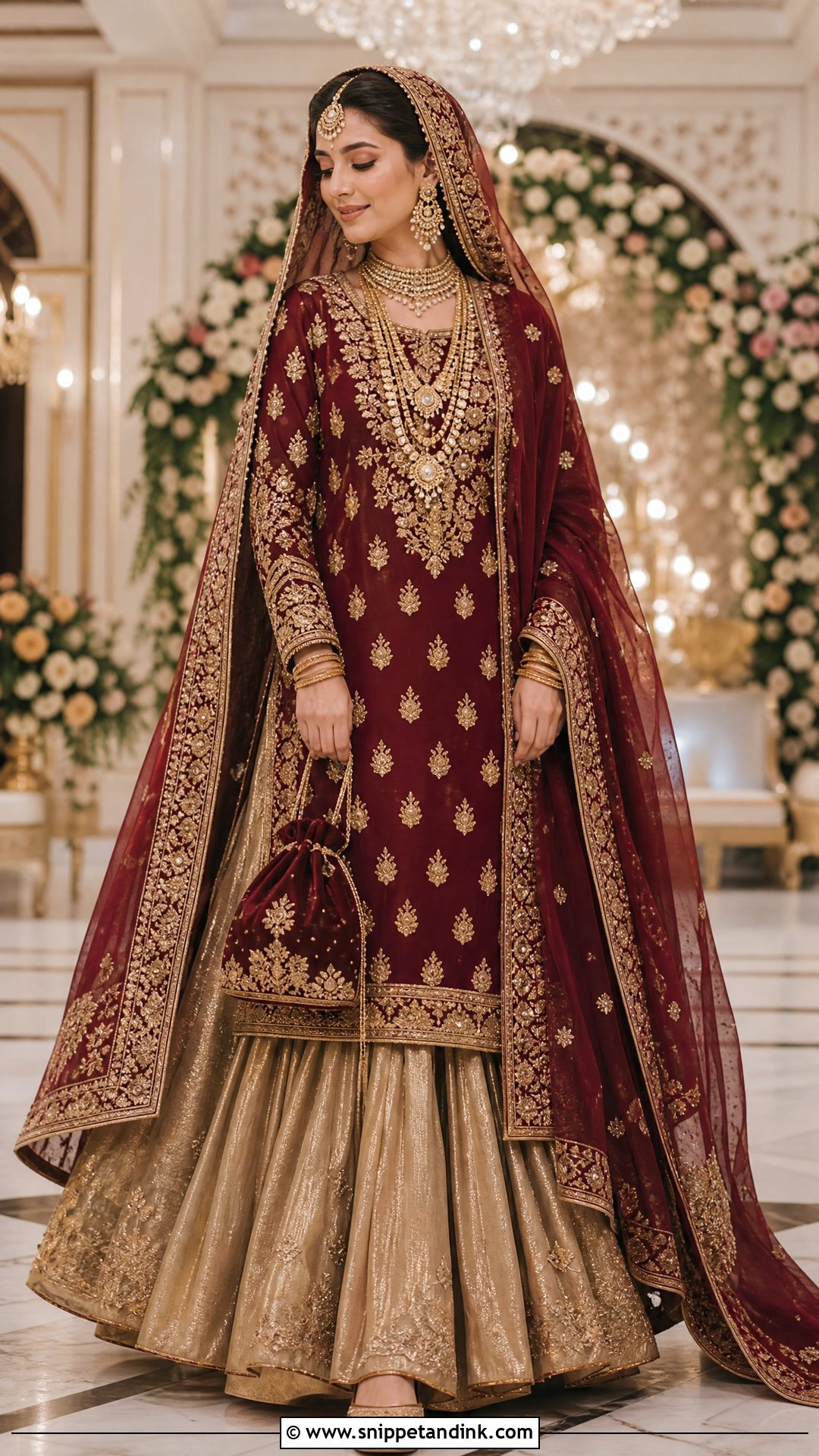
A long shirt worn over a lehenga gives coverage and a traditional, structured line. A straight shirt with side slits lets the skirt show as you walk. Raw silk or velvet on top with a lightly flared jamawar, tissue or organza lehenga is a good pairing. Put the heaviest embroidery at the neckline, sleeves and front opening, then echo a smaller border at the skirt hem. I always ask for a slight difference in texture or tone between shirt and lehenga; if they’re identical, the two layers merge into one block in photos. It suits a Baraat or a formal Nikah.
18. Pakistani Mirror Work Bridal Dress
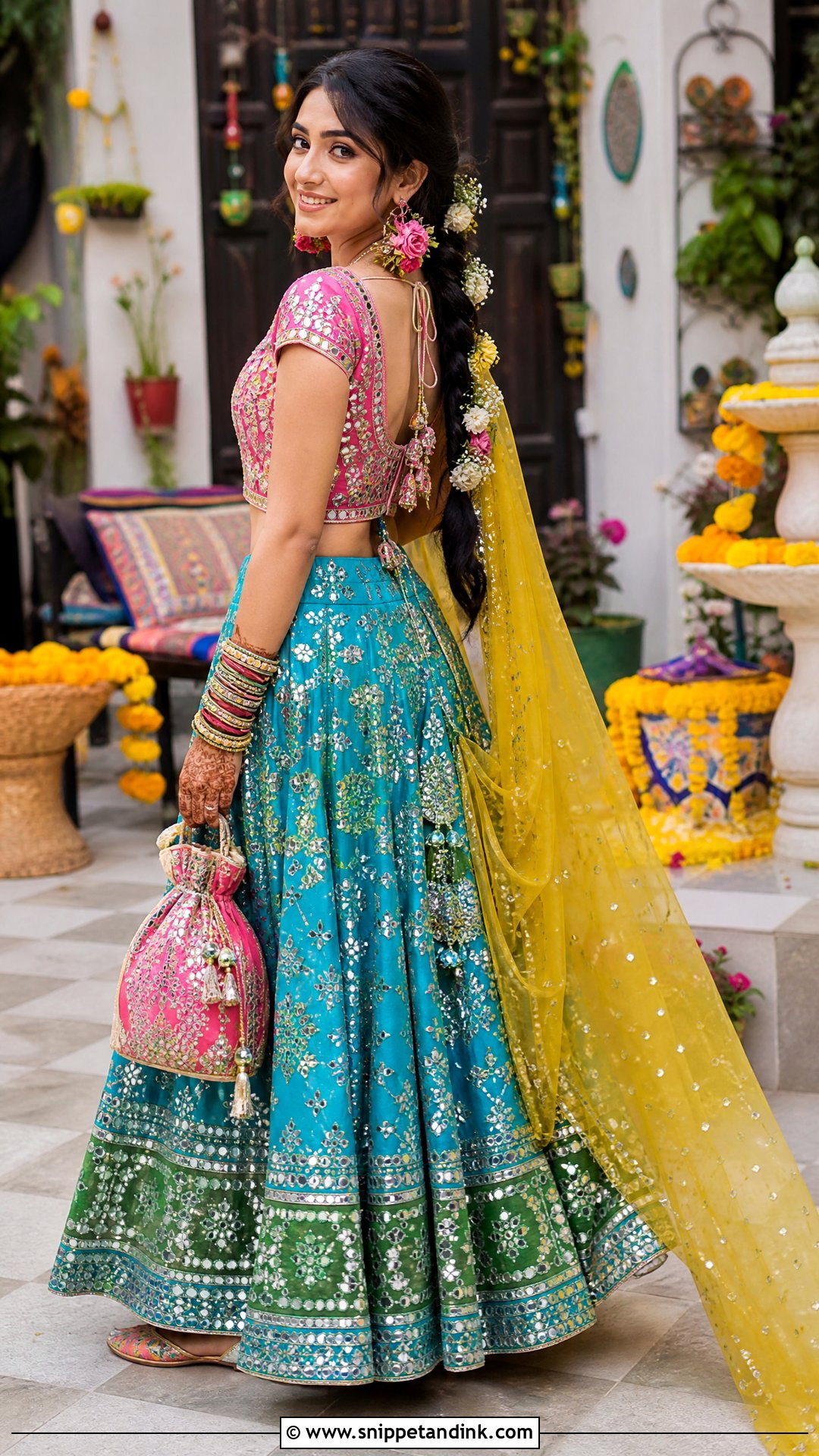
Mirror work makes a festive bridal outfit for Mehndi and daytime functions. A colourful lehenga or sharara set with small, firmly stitched mirrors among thread embroidery catches every light. A cropped blouse or short kurti and a light chiffon dupatta keep it moving. Stay with a coordinated set of colours like green, yellow, pink, orange and turquoise. Because the mirrors reflect so much, I’d avoid very shiny jewelry and glitter makeup. Check the mirror edges before the event; a loose or sharp one will snag the dupatta all evening.
19. Pakistani Powder Blue Walima Dress
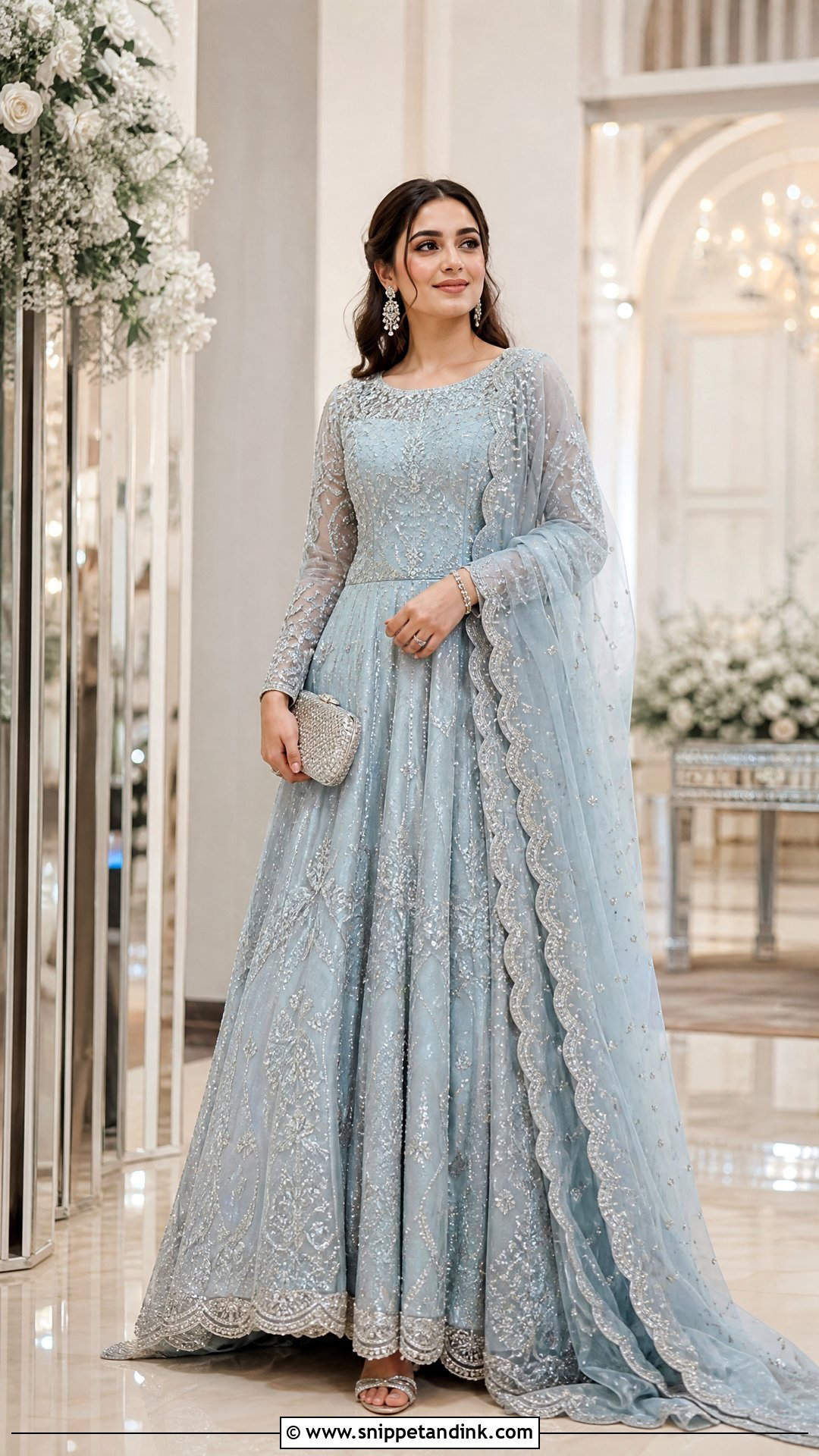
Powder blue is cool and calm, and it suits a Walima in a bright hall or a daytime garden. A floor-length maxi, pishwas or flared gown with silver threadwork, pearls and crystals works well. A structured bodice gives shape and a layered skirt keeps it fluid. A matching organza dupatta with a scalloped edge can sit over one arm. Pale blue can wash out some complexions, so I suggest bringing in pale gold through the embroidery for warmth, and a slightly deeper lip and soft pink blush so your face doesn’t blend into the fabric.
20. Pakistani Double Dupatta Bridal Lehenga
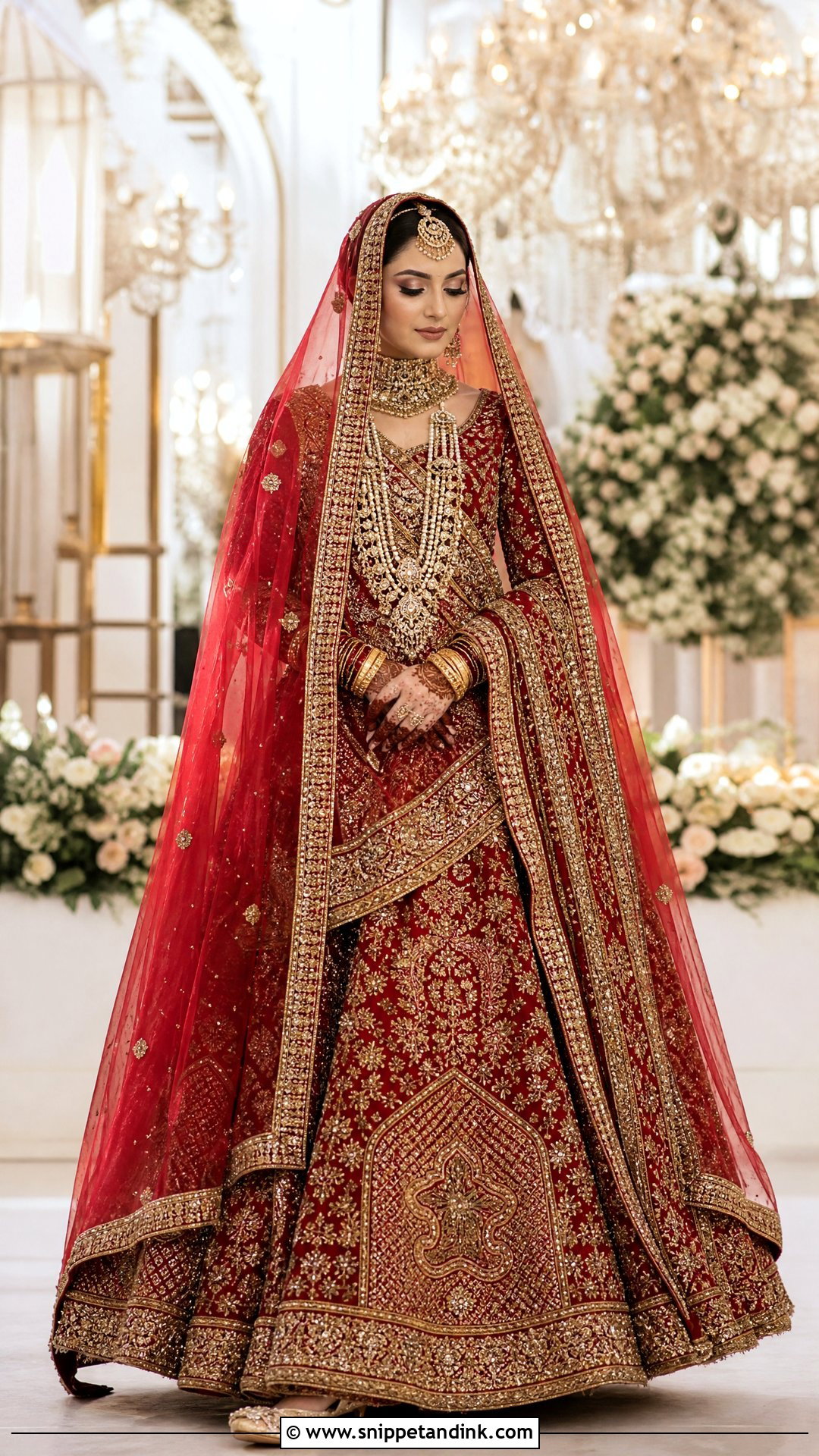
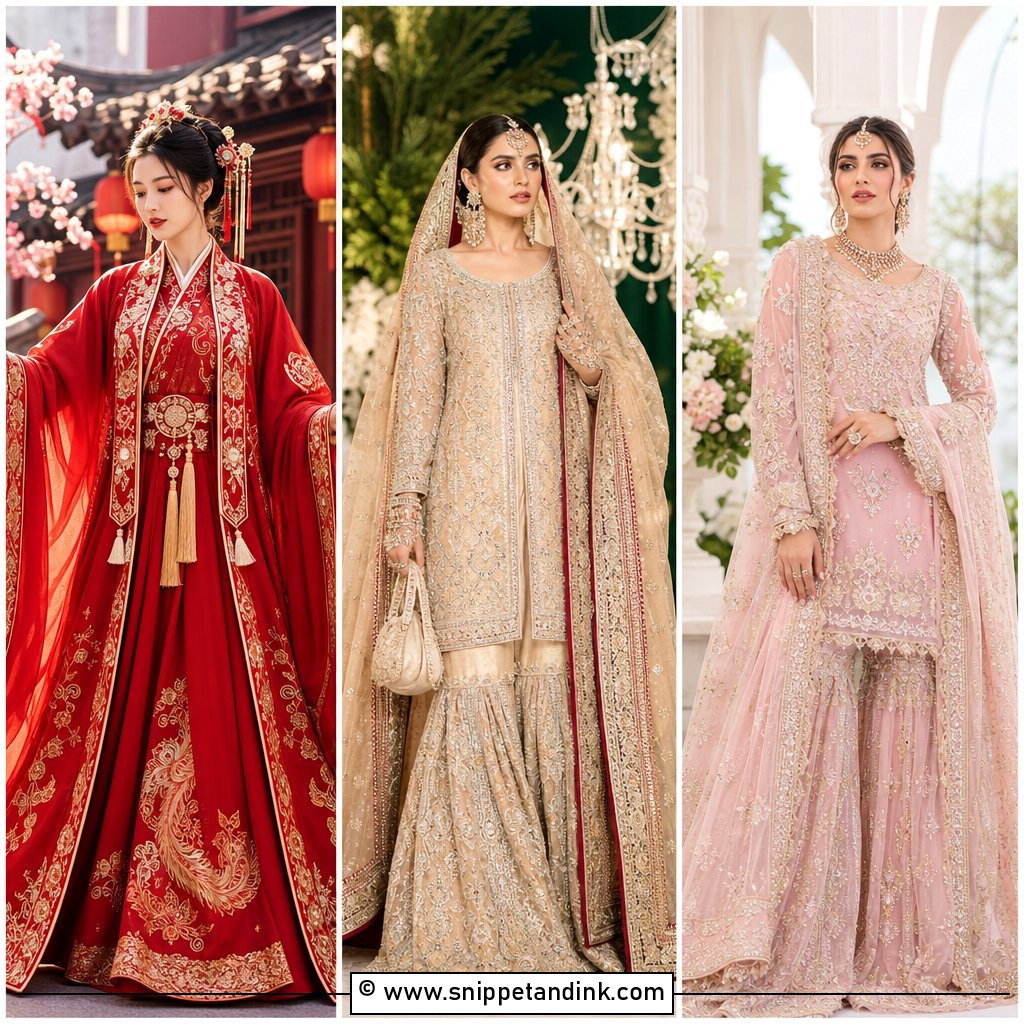
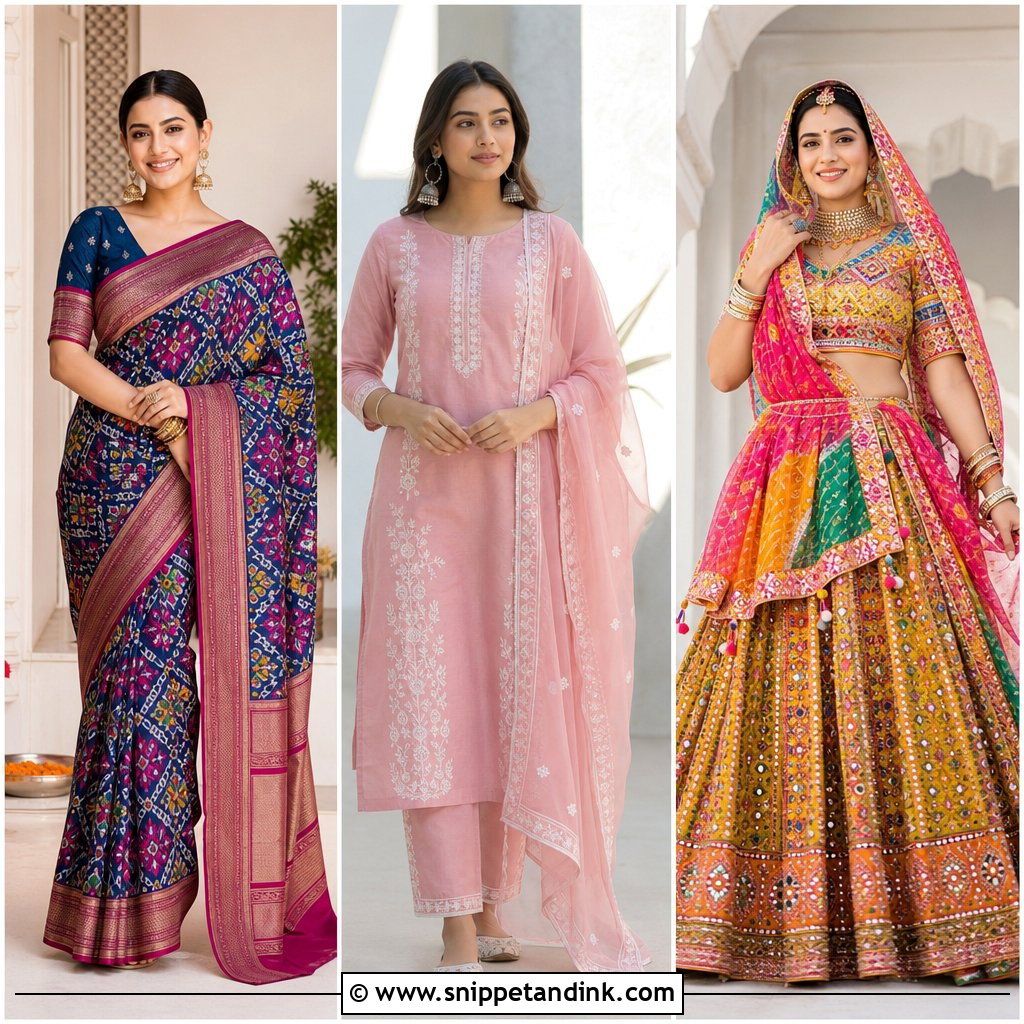
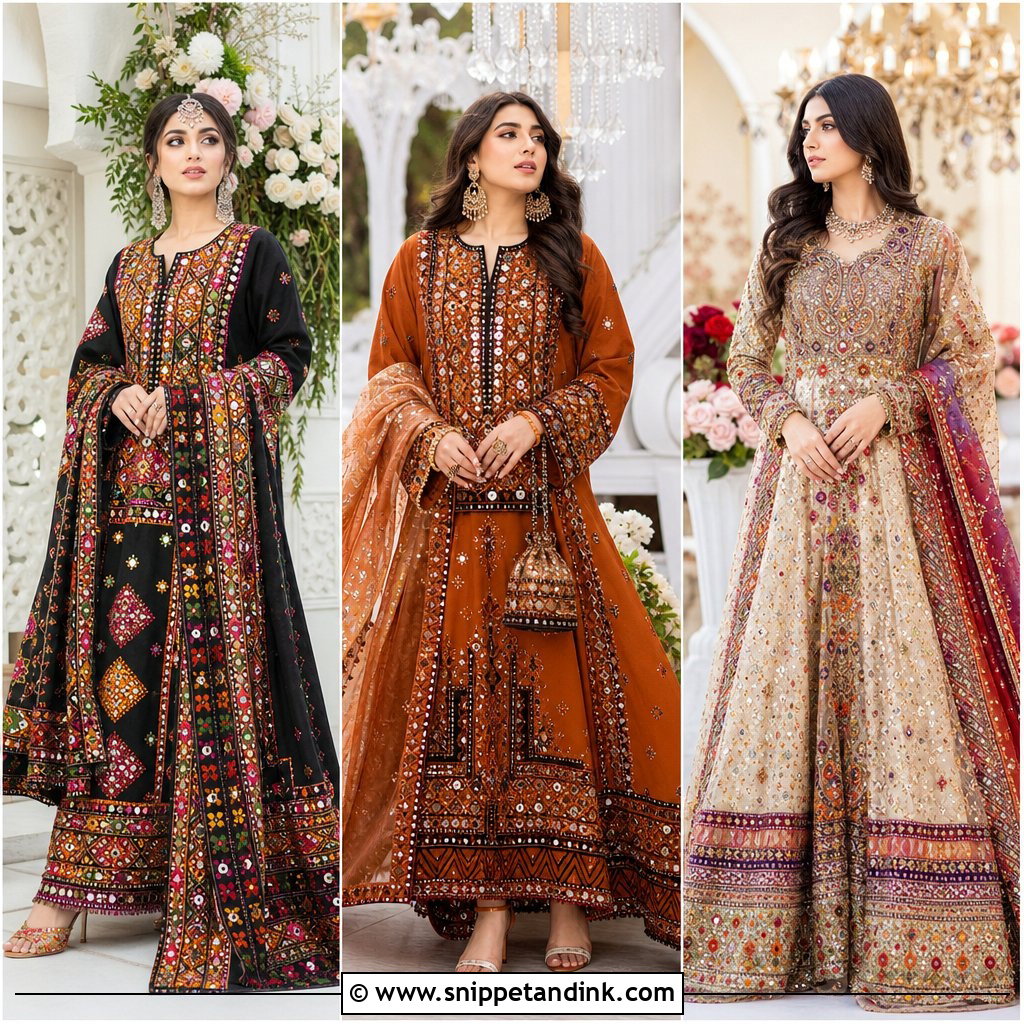
Two dupattas give the main wedding a layered, ceremonial finish. Start with a red, maroon, pink or gold lehenga and embroidered blouse. The lighter net dupatta goes over the head, with its border framing the face but not hiding the tikka or earrings. The heavier one drapes diagonally across the body or over one shoulder. Ask for hidden loops or small pins so both stay put while walking. The two should coordinate without matching. A sheer head dupatta and a richer shoulder one usually balance best, leaving the embroidery and jewelry visible.
Handwork Takes Months: Ordering, Weight and the Trial
Hand-embroidered bridal wear is slow to make. Zardozi, dabka and tilla are stitched by hand, and a heavily worked Baraat outfit can take several months from order to delivery, longer in the busy winter season. Ready-made and lighter function wear is quicker, but I’d still plan well ahead.
- Order the Baraat outfit first, ideally around six months ahead, and confirm the delivery date in writing.
- Ask how much the finished lehenga will weigh. Heavy borders and velvet add up, and you’ll be standing, sitting and walking in it for hours.
- Book at least one trial fitting with your actual shoes, so the hem is cut to the right height.
- Bring the jewelry to the trial if you can, especially the tikka and jhumar, to see how the head dupatta sits around them.
- Leave two or three weeks after delivery for alterations and for the dupatta edges to be finished.
Storing Zardozi Once the Week Is Over
Metallic thread tarnishes when it meets damp, plastic and perfume. After the wedding, let the outfit air for a day, then fold it in clean white muslin or cotton rather than a plastic bag. Put tissue paper between folds of heavy embroidery so the metal threads don’t press and crush each other. Every few months, refold it along different lines, because permanent creases eventually break the fabric under the work. Keep it away from direct sun, and never spray perfume onto embroidered areas while you’re wearing it.
Which Outfit Belongs to Which Day?
Pakistani wedding wear covers a lot of ground, from red Baraat lehengas to ivory ghararas for a Nikah, mirror-work shararas for Mehndi and pastel maxis for the Walima. Match each outfit to its event, the venue and the weather, then think about fabric weight, heel height, dupatta setting and jewelry before the final fittings. I’d always choose a piece that feels like you over one that follows every trend of the season. Good tailoring and restrained styling are what make a traditional outfit comfortable enough to enjoy.
You'll Like These Ideas:


Leave a Reply