
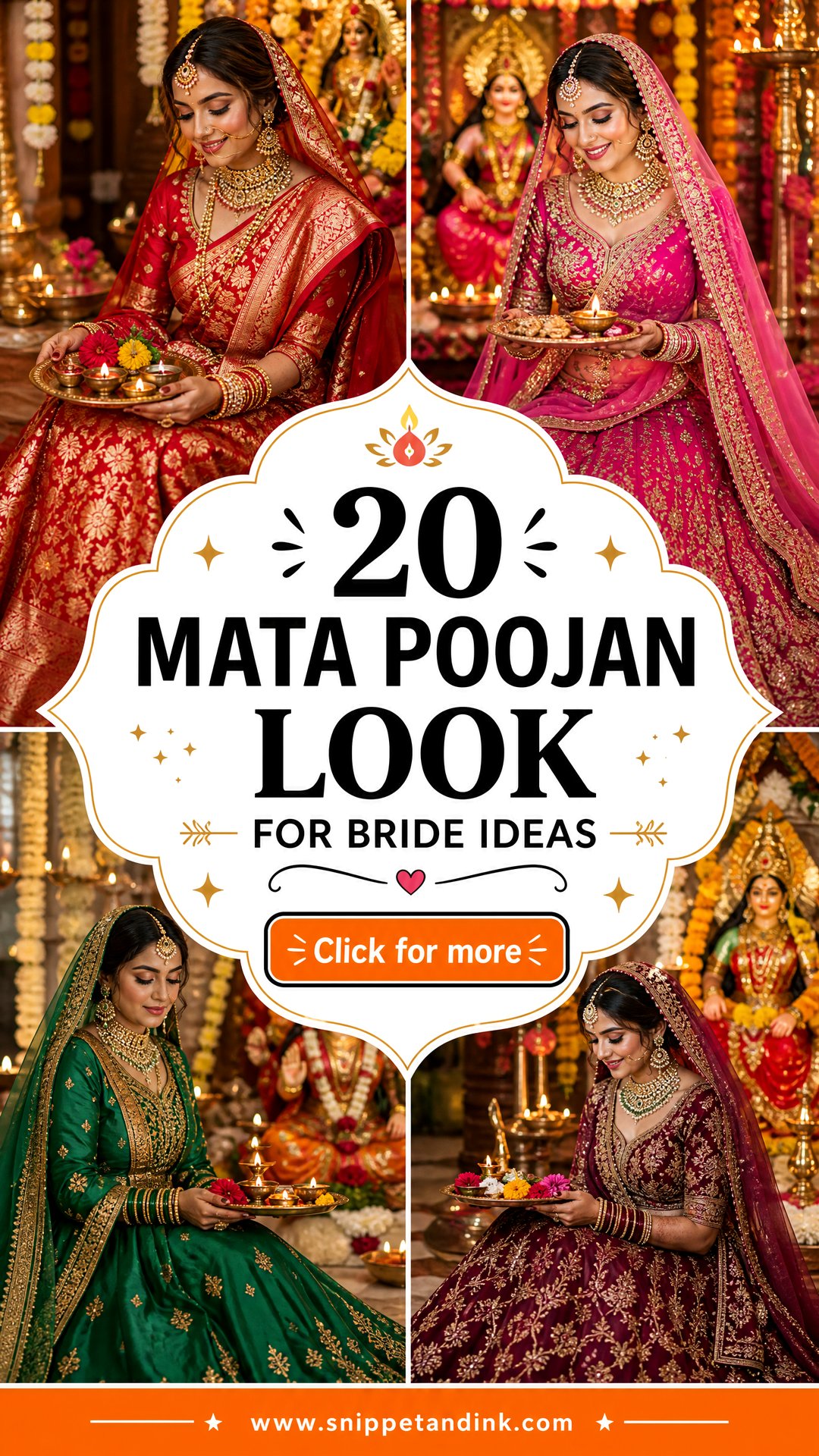
Mata Poojan is a prayer, not a party, and I dress brides for it differently from the sangeet or the wedding itself. You’ll sit for a long time, bend for blessings, accept offerings with both hands and often keep your head covered, so the outfit has to be festive and respectful while staying out of your way. Reds, yellows, pinks and greens are the usual choices, with ivory and pastels for families comfortable with softer shades. Sarees, lehengas, Anarkalis, shararas and regional dress all work when the embroidery is manageable and the dupatta is secure. Below are twenty complete looks; check each against your own family’s customs before you fall for one.
Dressing for a Morning on the Floor Beside an Open Flame
Two things shape every Mata Poojan outfit I plan: you’ll likely sit on the floor for a long stretch, and there will be lit diyas, incense and sometimes a havan right in front of you. That rules out more fabrics than any style choice.
Fabric near the fire
Synthetic net, georgette and organza can scorch or melt quickly if a sleeve or dupatta edge touches a flame, while cotton and silk tend to char more slowly. Whatever you wear, keep loose dupatta ends pinned back, choose sleeves that end above the wrist bone or fit closely, and ask someone to watch the dupatta when you lean forward to offer something.
Sitting for an hour
Sit cross-legged on the floor at your trial and stay there for ten minutes. Saree pleats should fan rather than pull at the waist; a lehenga should be wide enough to fold under you; churidar shouldn’t cut behind the knee. A soft blouse lining and a flat waistband are far more comfortable than heavy can-can or a tight drawstring.
1. Red Banarasi Saree Mata Poojan Look
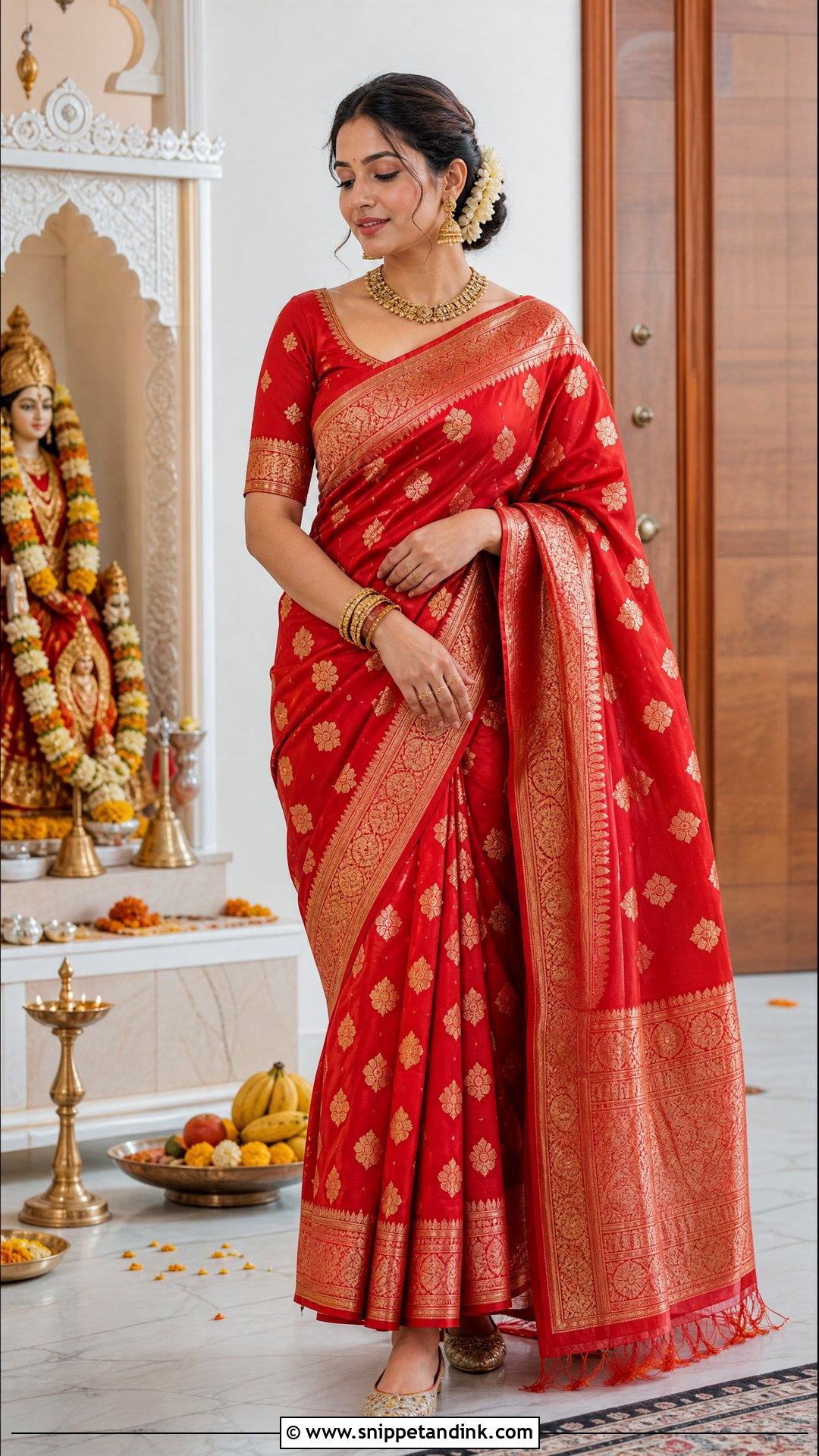
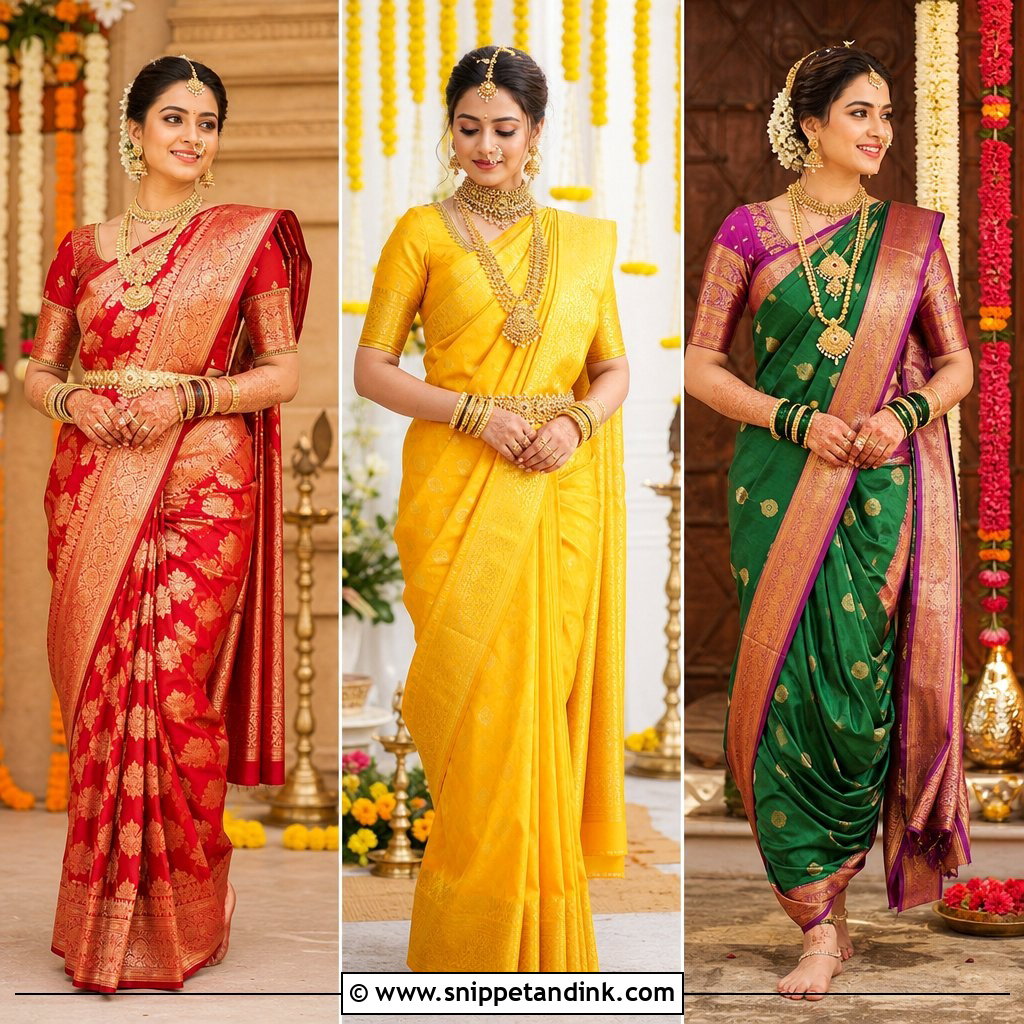
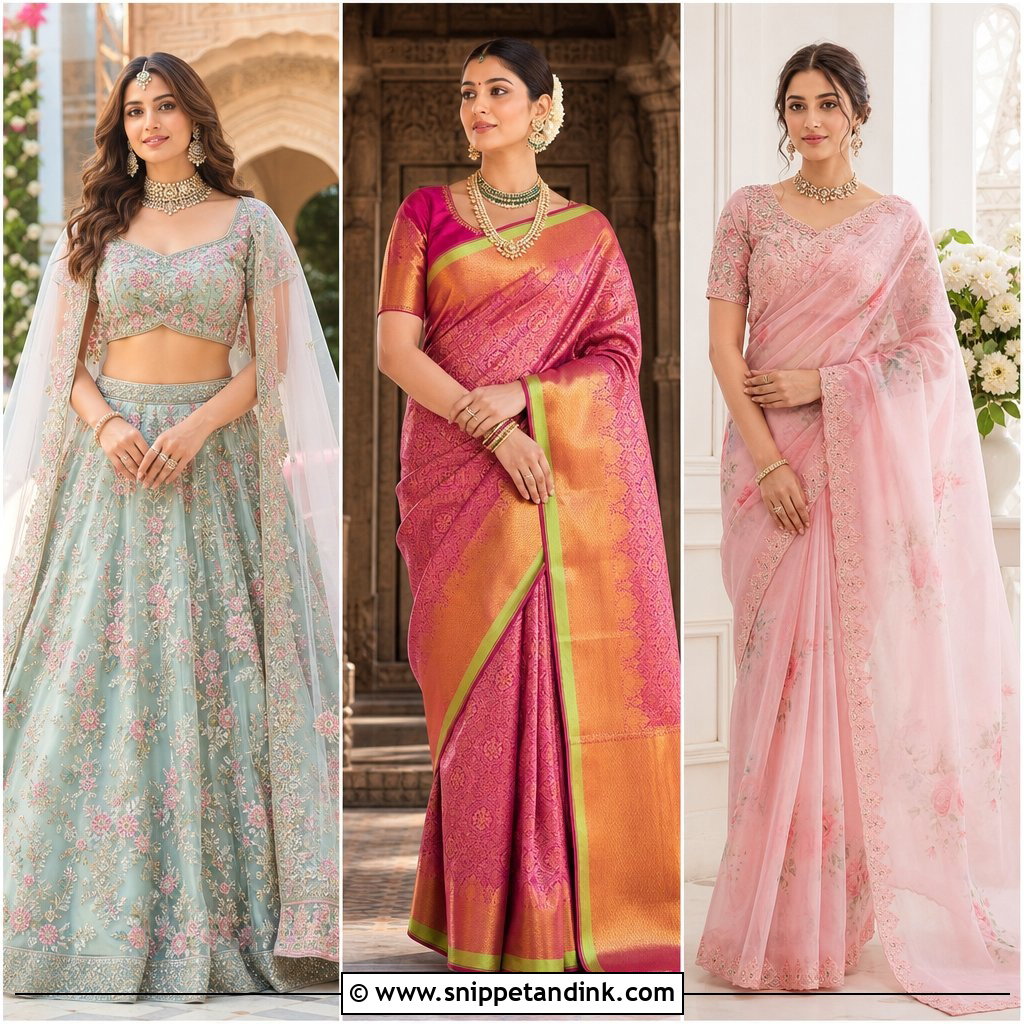
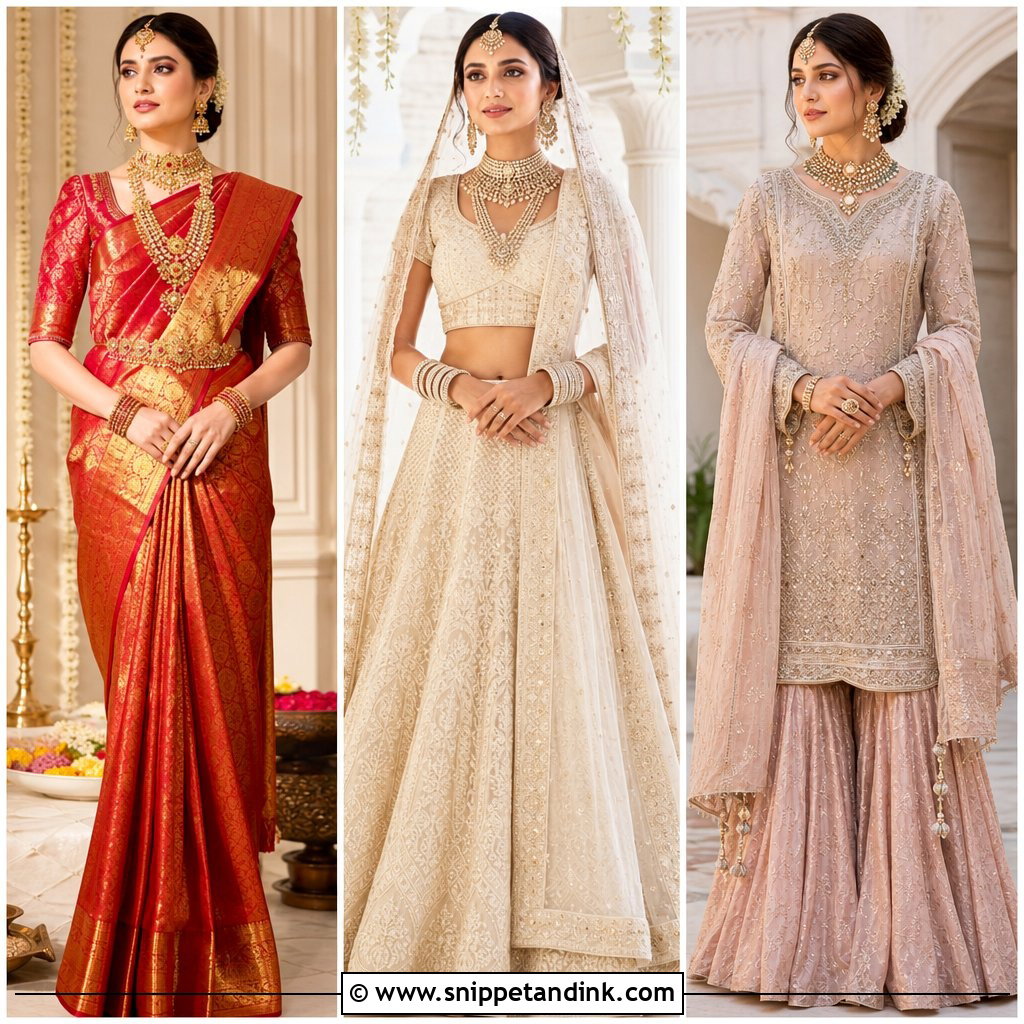
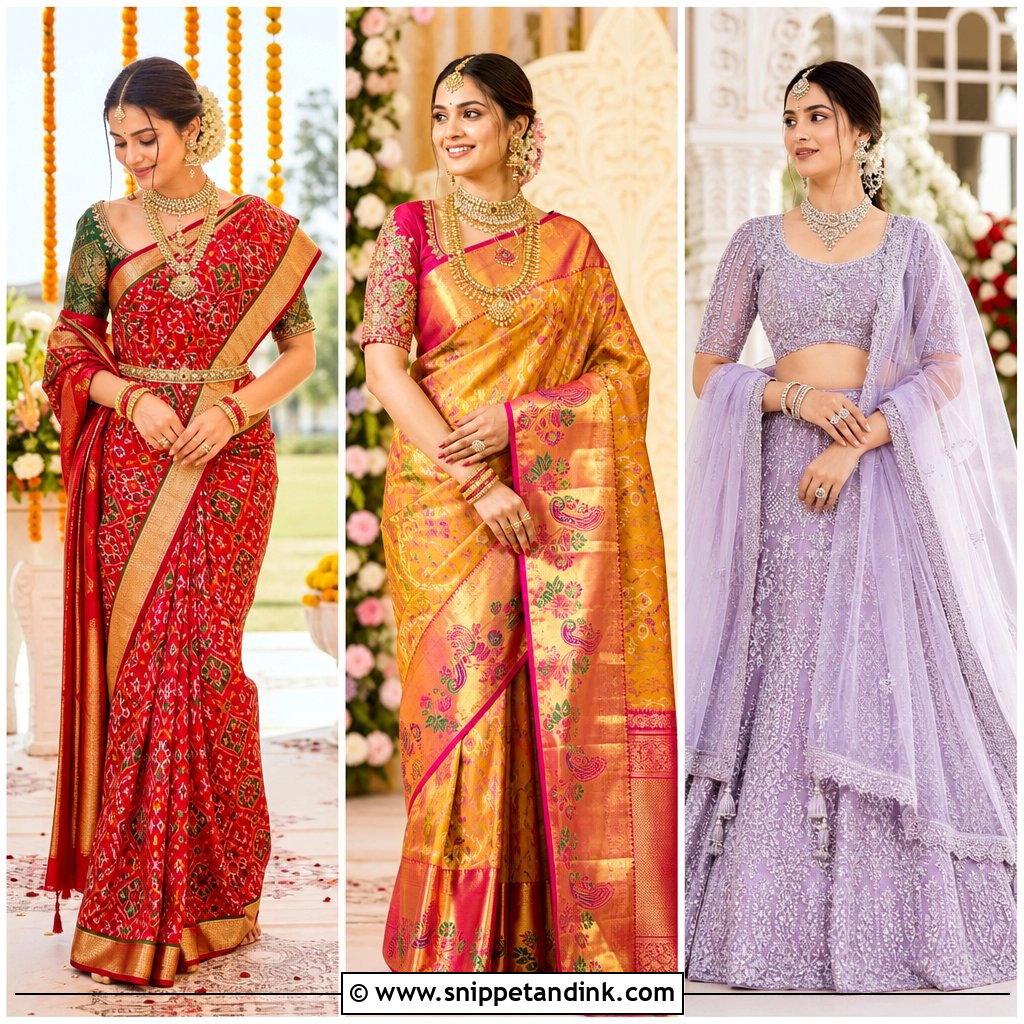
A red Banarasi saree honors tradition without the weight of a wedding lehenga. I’d pick one with fine gold zari motifs rather than a fully woven body, since the heavier ones are stiff when you sit cross-legged. An elbow-sleeve blouse keeps your arms covered and away from the diya. Pleat the pallu neatly and pin it at the shoulder so it stays put through the rituals. A medium gold necklace, jhumkas, red bangles and a small maang tikka are enough, with a center-parted low bun and fresh flowers. Gold juttis, soft gold eyeshadow, defined liner, a red bindi and a muted red lip suit daylight.
2. Yellow Anarkali Mata Poojan Look
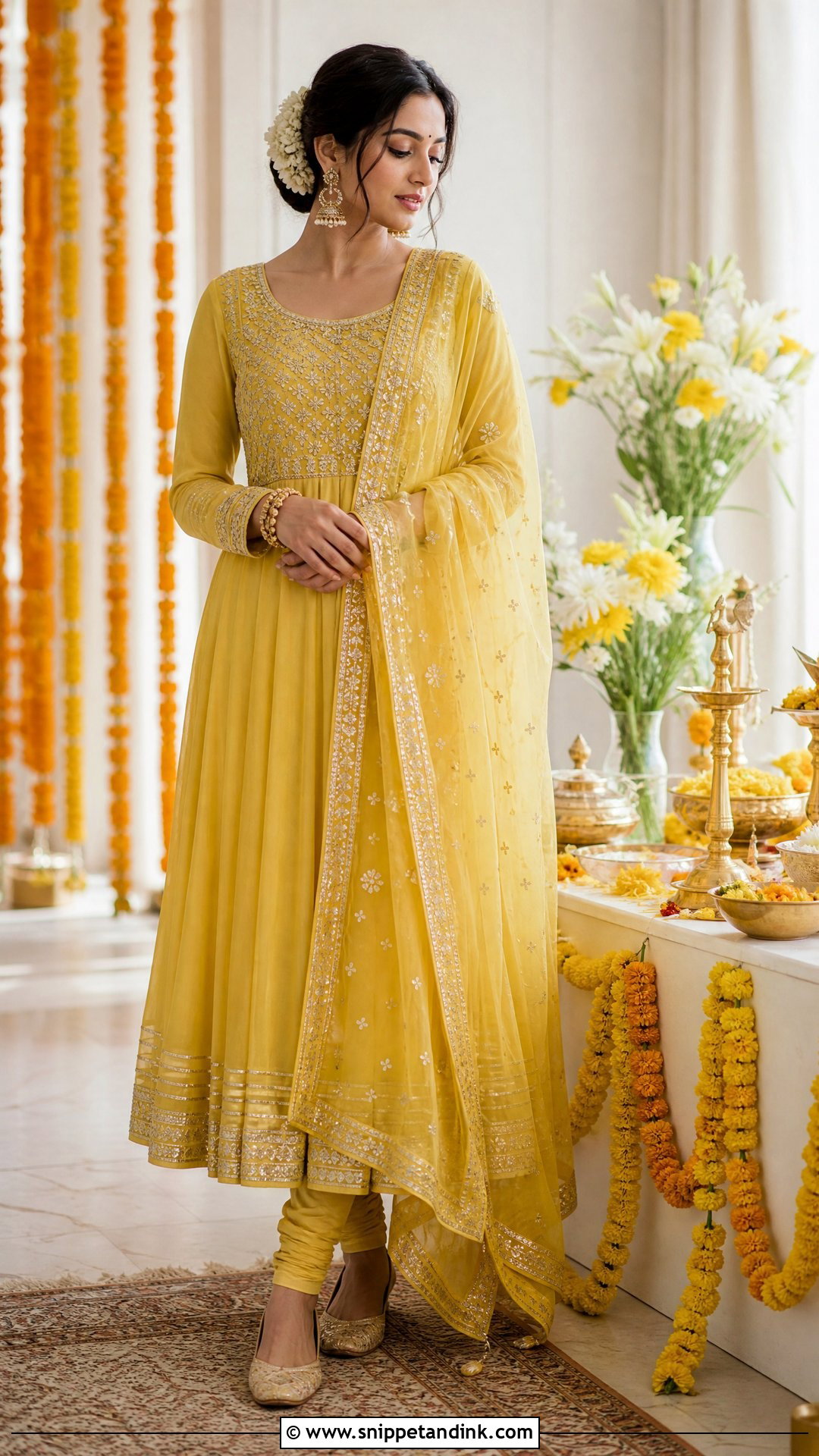
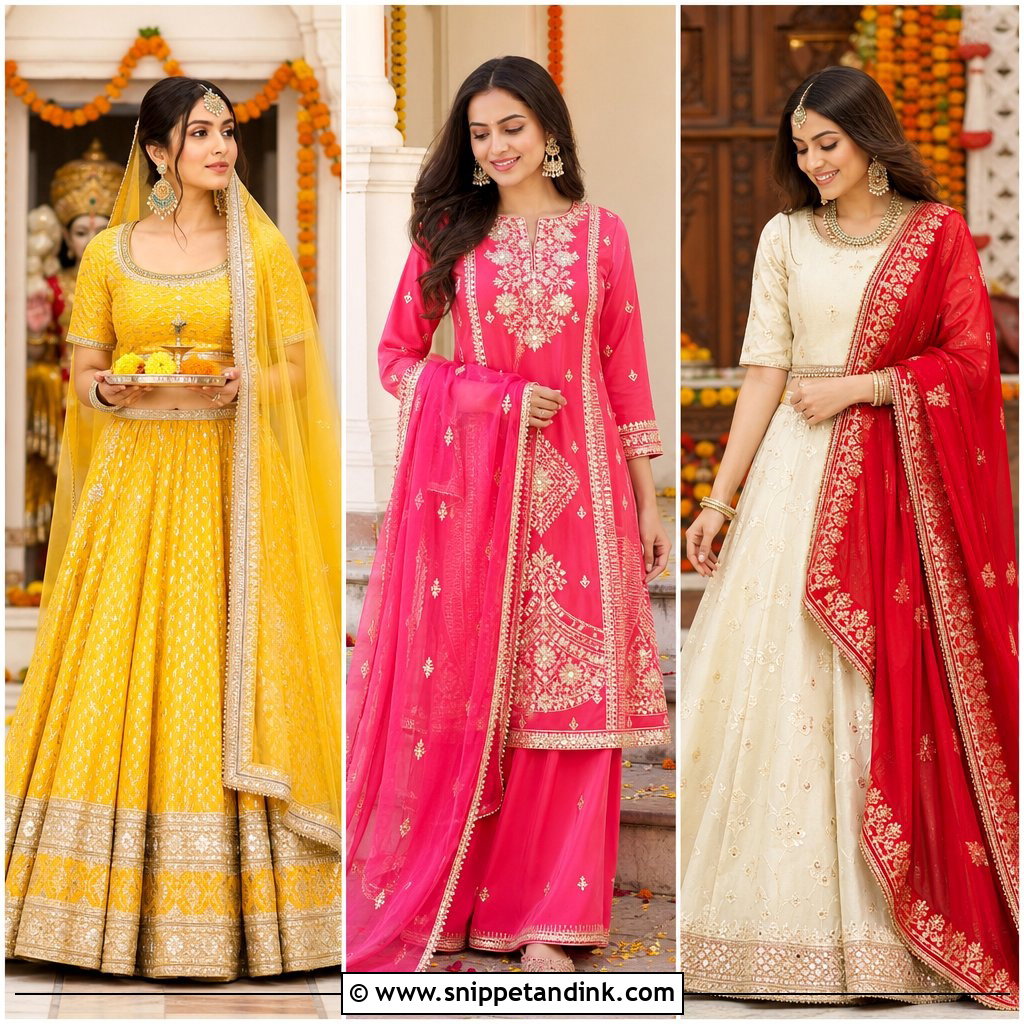
Yellow looks cheerful in morning light and works for this ceremony in most families. A floor-length Anarkali with a fitted bodice, flowing skirt and fine gota patti is my choice for brides who’ve never managed a saree, since there’s nothing to unpin. Wear it with churidar and an embroidered organza dupatta over one shoulder. Gold jhumkas, slim bangles and a light choker keep the weight down, and embellished juttis let you move around the prayer space. A soft braided or low bun suits the flare. Peach blush, brown-gold eyes and a rose lip finish it. If you’ll cover your head, choose a long dupatta light enough to stay on without dragging the hair back.
3. Pink Sharara Mata Poojan Look
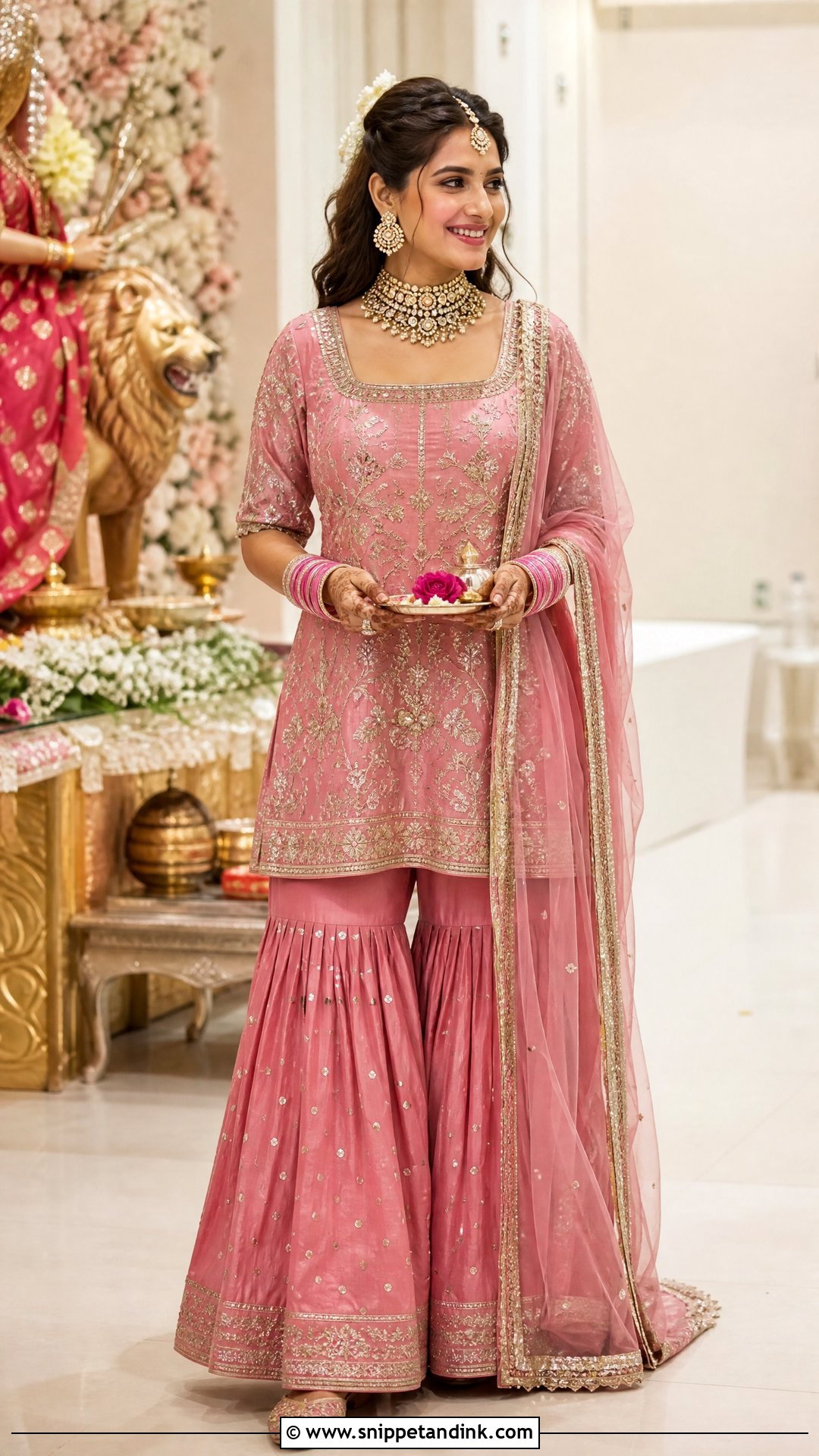
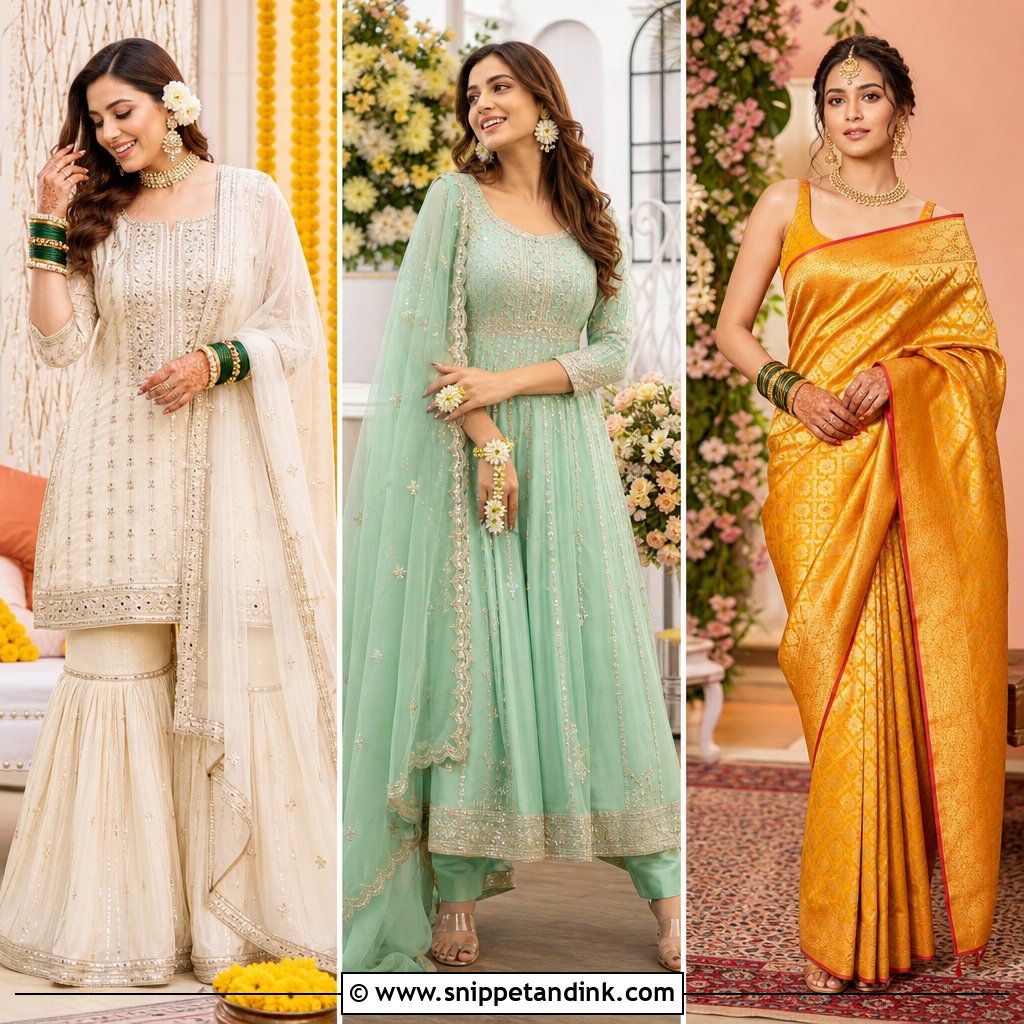
Shararas are the most comfortable choice for sitting on the floor, because the wide legs fold under you without pulling. Pair a short embroidered kurta with a modest neckline, flared sharara pants and a light dupatta edged in gold lace. Rose, rani and dusty pink all work; rani reads brighter in a dim room. Kundan earrings, a delicate necklace, matching bangles and embroidered juttis finish it. Drape the dupatta across the front or pin it over the head if the rituals call for it. Half-up curls keep the face clear, with rosy makeup and a pink nude lip.
4. Green Bandhani Lehenga Mata Poojan Look
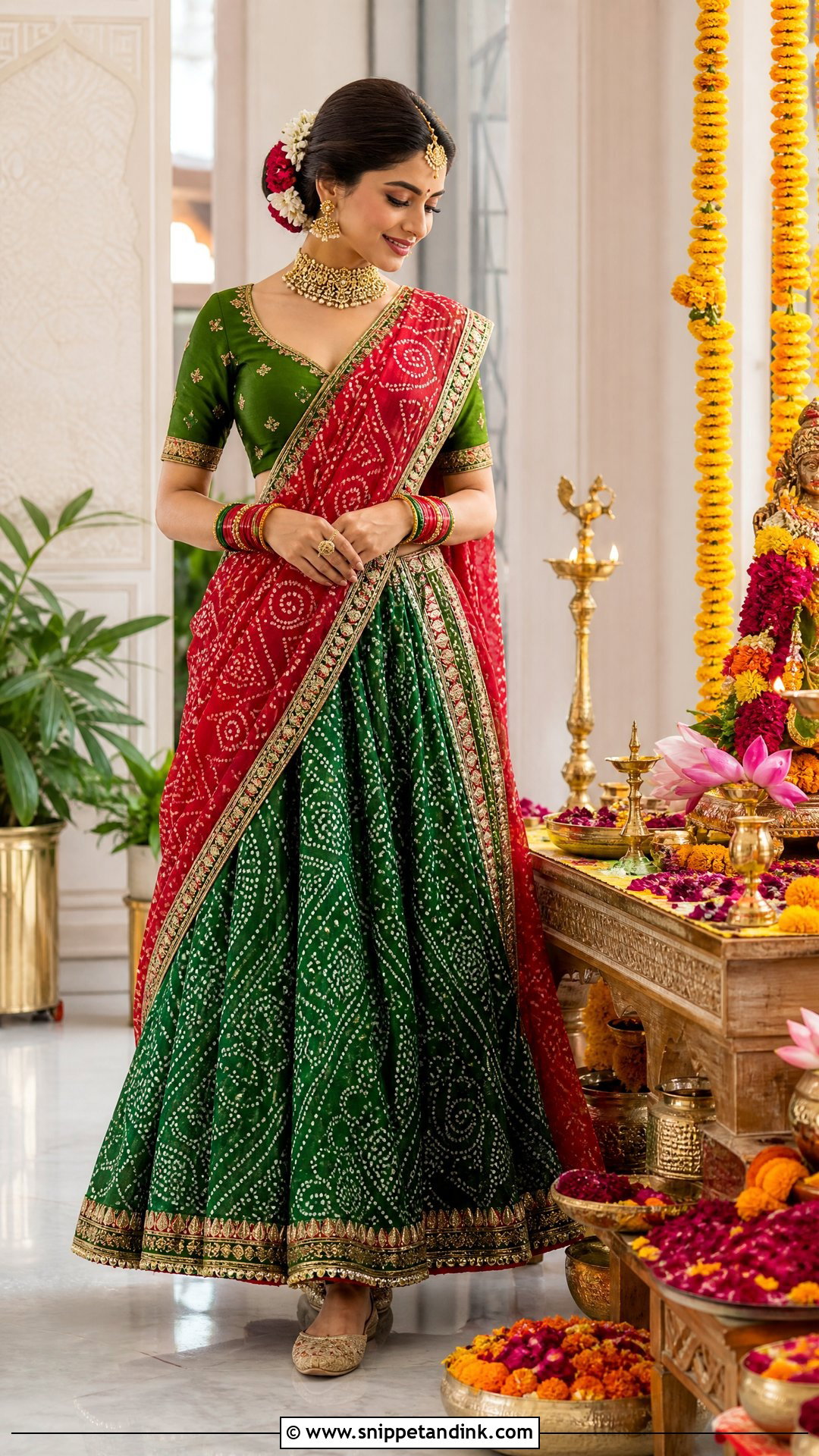
Bandhani carries a lot of meaning in Gujarati and Rajasthani families, and a green Bandhani lehenga feels festive without repeating your wedding outfit. Look for a light skirt with the traditional tie-dye dots, a plain silk blouse and a red or pink Bandhani dupatta for contrast. Real Bandhani can bleed if it gets wet, so keep it well clear of water offerings and don’t spritz setting spray near it. A gold choker, earrings, colorful bangles and a small bindi suit it, with mojaris or padded juttis. A polished low bun, kohl-lined eyes and a berry-pink lip complete it. Pin the dupatta firmly so it holds through the blessings.
5. Orange Silk Saree Mata Poojan Look
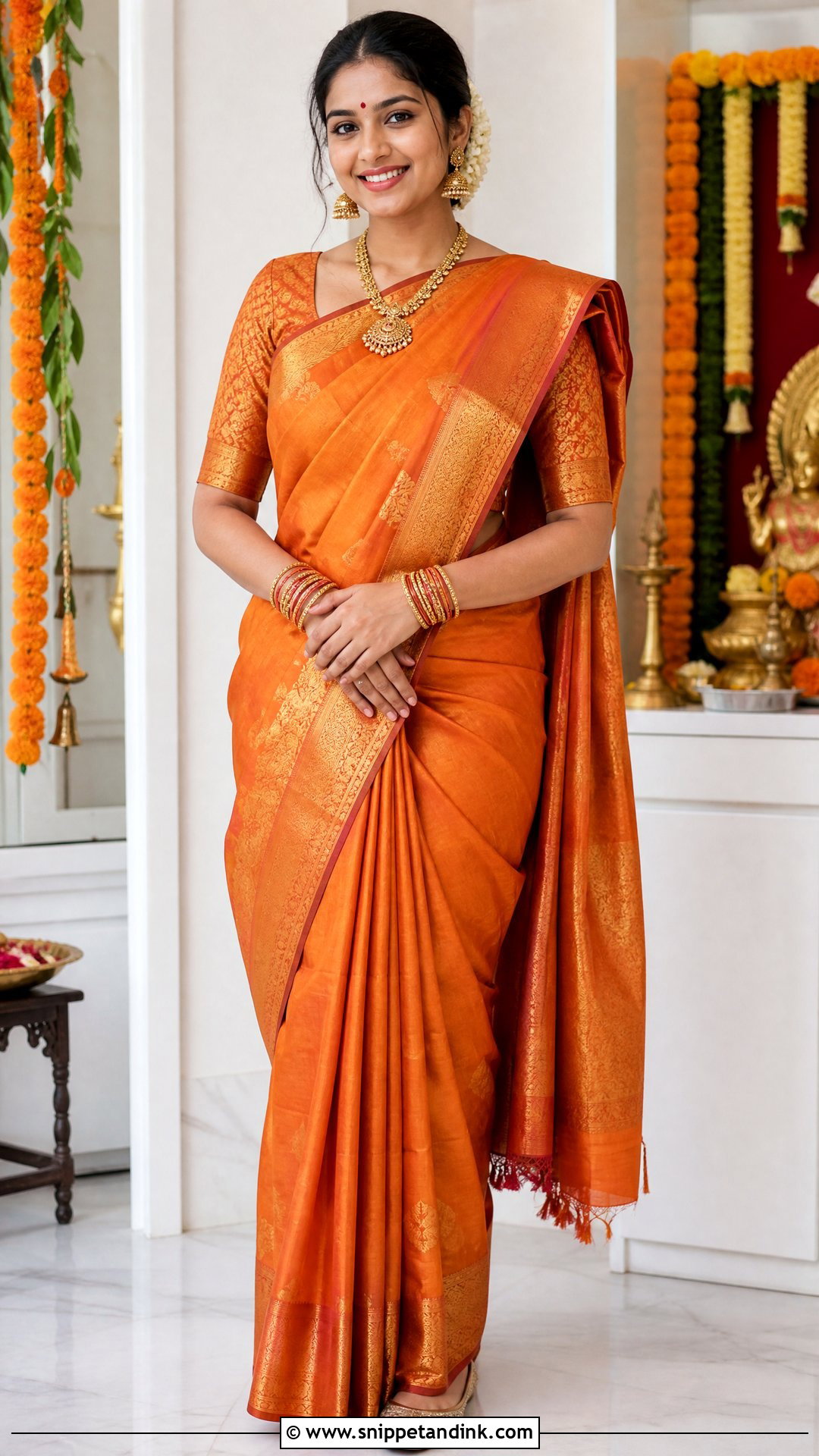
Orange in saffron, marigold or burnt orange glows in a prayer room. Choose an orange silk saree with a gold woven border and a matching brocade blouse. A front-pleated drape pinned at the shoulder and waist stays manageable through the whole ceremony. Pure silk shows water spots, so I ask the family to keep a cloth nearby when the aarti water goes round. A short temple-style necklace, gold earrings, stacked bangles and flat metallic juttis suit it, with a center-parted bun and jasmine. Warm blush, bronze eyes and a terracotta lip finish the look. If the weave is rich, stick to one jewelry set.
6. Maroon Velvet Suit Mata Poojan Look
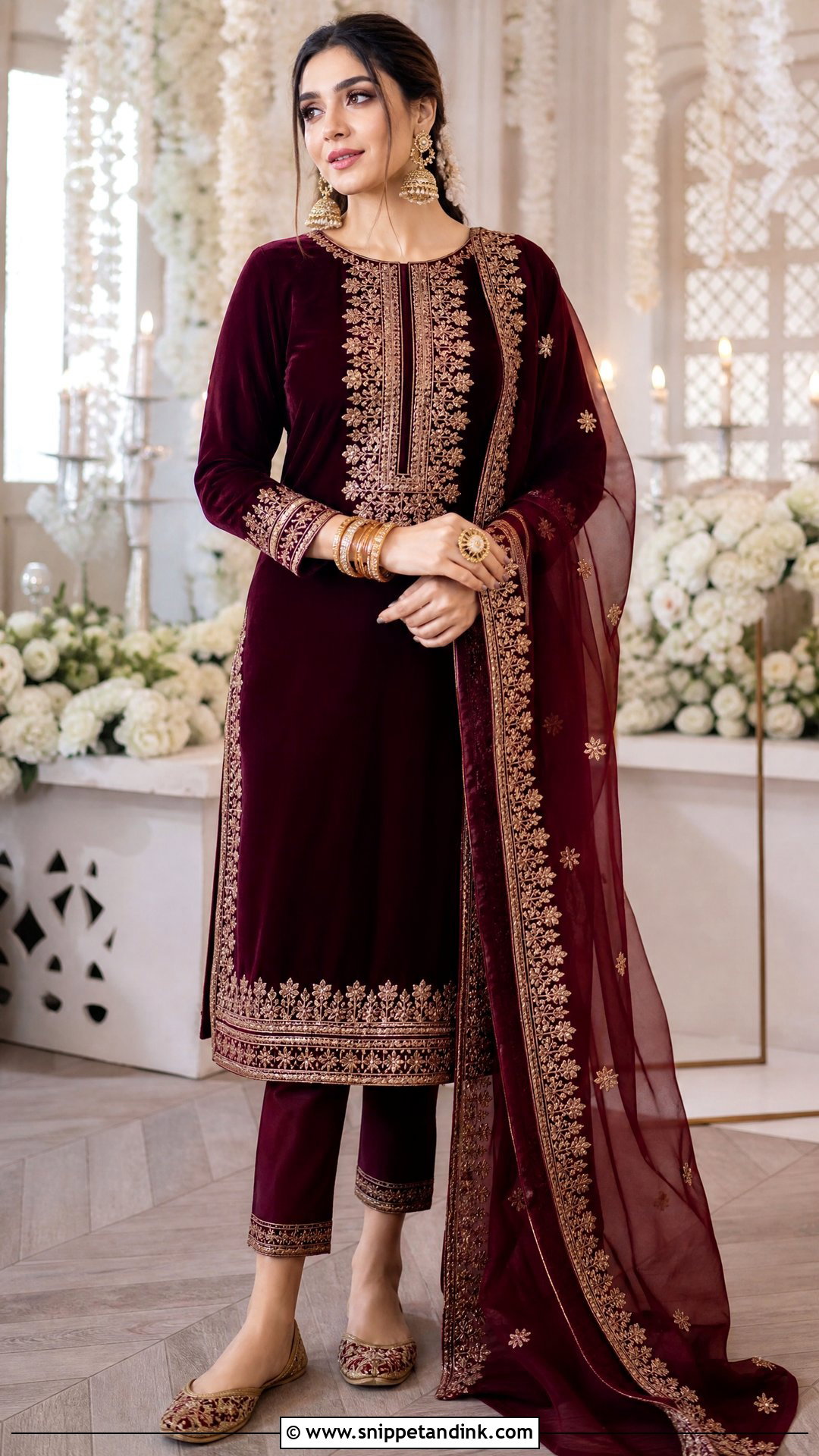
Velvet is my choice for a winter evening ceremony, when cold floors and drafty halls are the real problem. A straight maroon kurta with restrained zari at the neck, cuffs and hem, worn with slim pants or churidar, keeps you warm. Velvet is heavy, so balance it with a net or organza dupatta. Antique gold earrings, a statement ring, slim bangles and embroidered juttis suit it, with a low bun or a smooth side braid. Matte makeup, brown liner, warm blush and a deep rose lip work better than very dark shades. Pin the dupatta at both shoulders if you’ll be moving a lot. Velvet marks easily under pressure, so stand up and smooth it before the photos.
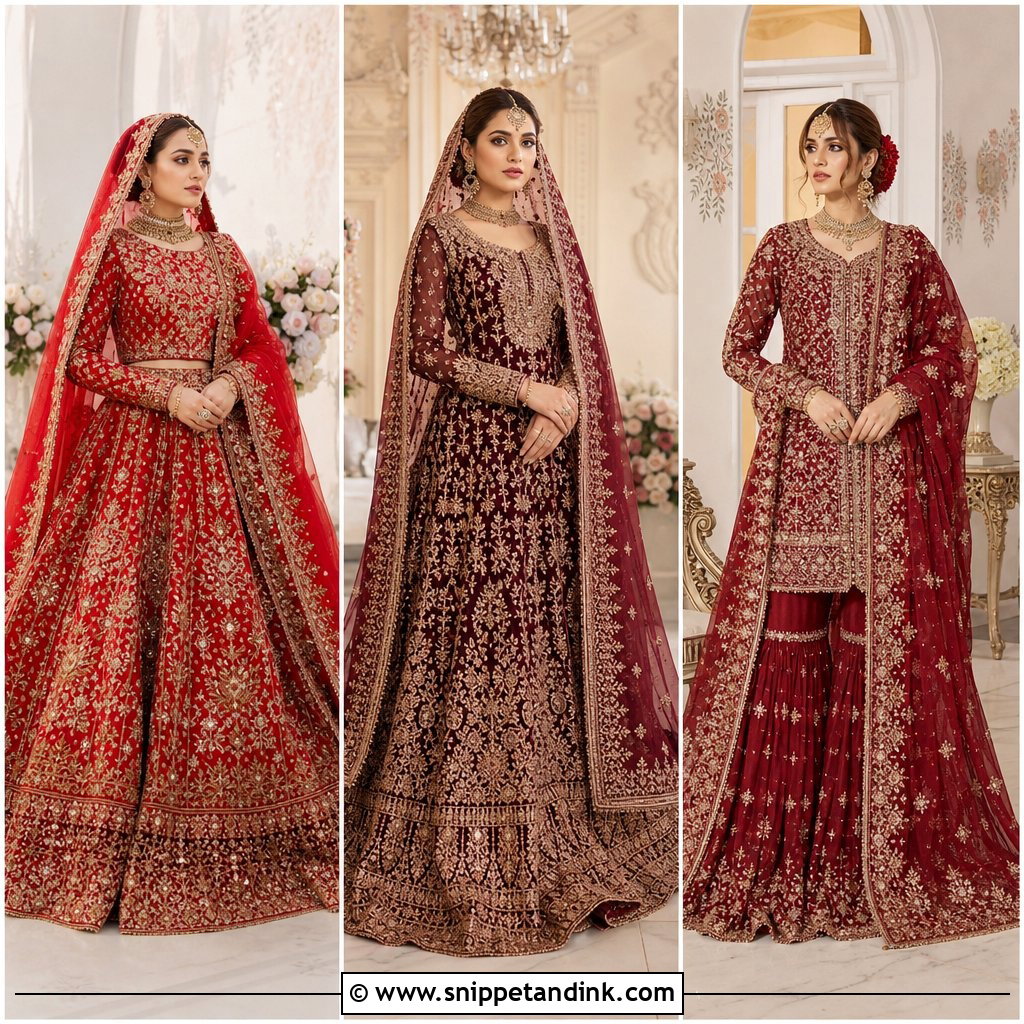
7. Red Gharara Mata Poojan Look
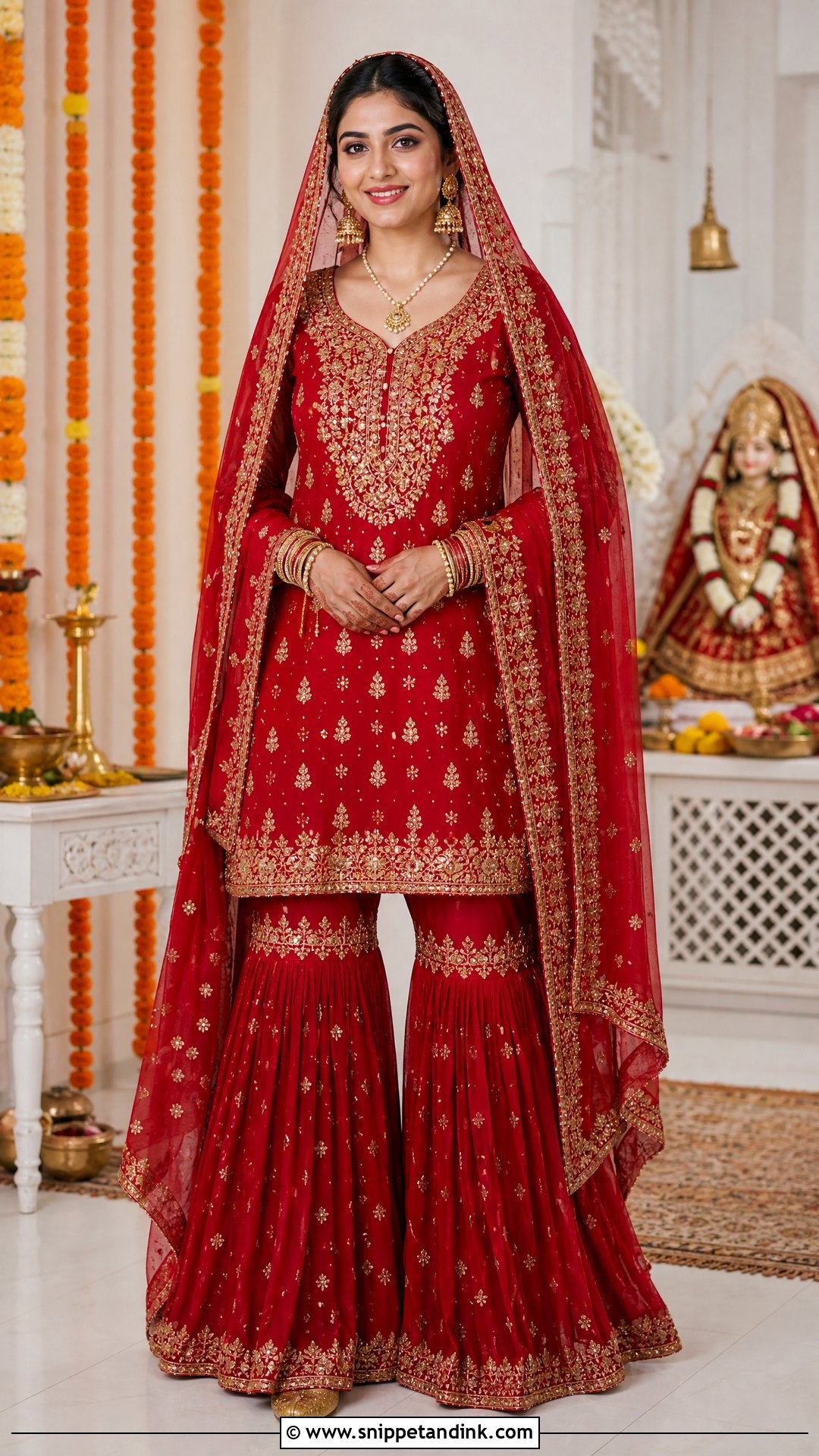
A traditional red gharara moves well and looks festive. Unlike a sharara, the gharara gathers at the knee before flaring, so check that the knee joint lets you sit cross-legged. Pair a knee-length kurta with gota, zari or thread-embroidered gharara pants and a matching dupatta with a light border that won’t pull on your hair when draped over it. Kundan jhumkas, a small pendant, matching bangles and gold juttis finish it, with a sleek center-parted bun. Gold-brown lids, kohl and a classic red lip complete it. Have the hem set properly: the flare should brush the floor, never trail behind you.
8. Ivory Chikankari Lehenga Mata Poojan Look
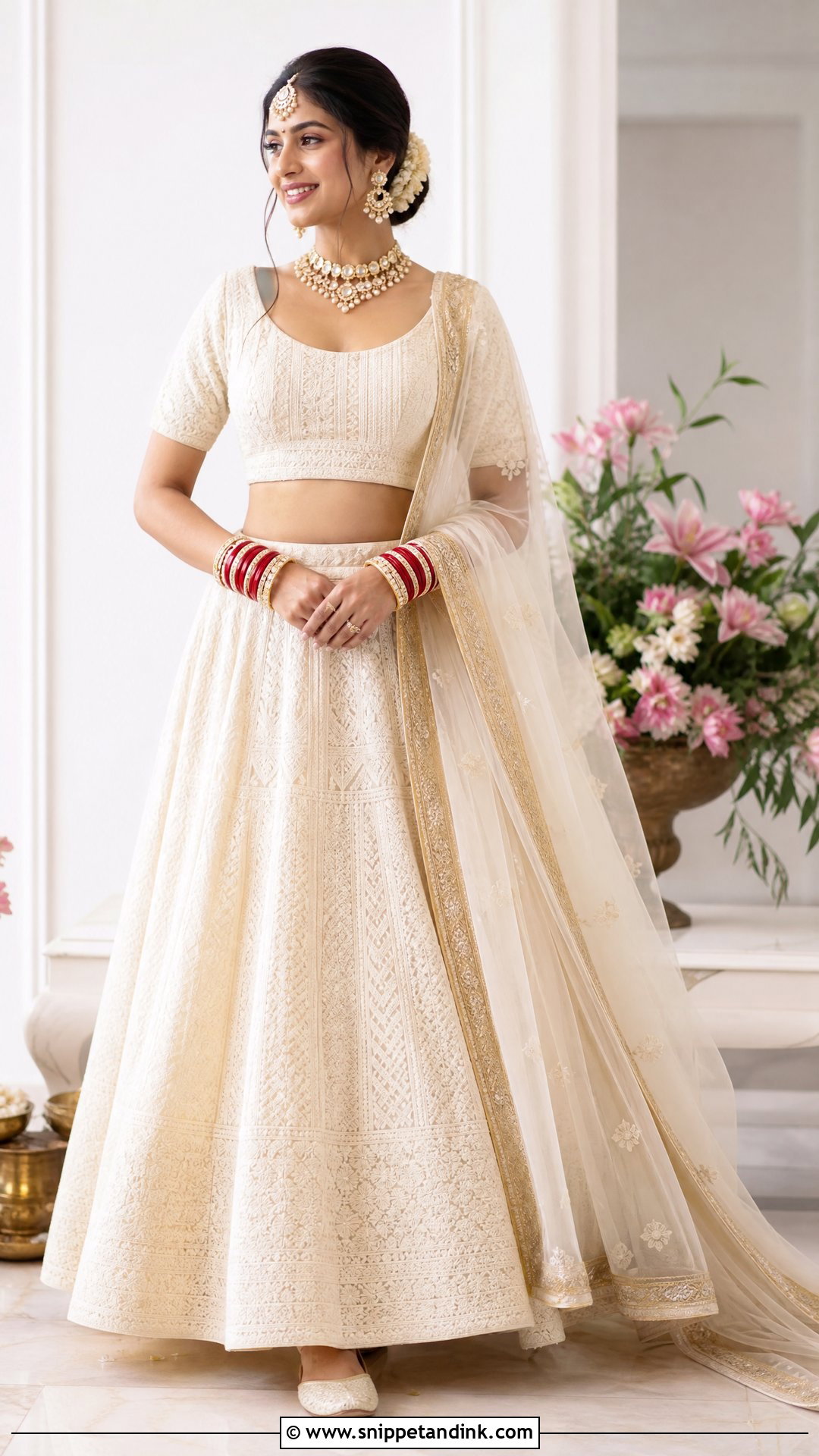
Chikankari is the hand-embroidered whitework of Lucknow, and an ivory Chikankari lehenga gives a morning ceremony a calm, quiet look. Choose tonal embroidery, a modest blouse and a sheer dupatta with a narrow gold border. Bring color in through a red, green or pink blouse lining, bangles or a potli bag. Pearl and kundan jewelry suit the texture. Cream juttis and a flower-trimmed low bun keep it light, with luminous skin, champagne eyes, pink blush and a rose lip. Ivory and white mean different things in different communities, and some families avoid them for auspicious ceremonies, so ask before you order.
9. Rani Pink Lehenga Mata Poojan Look
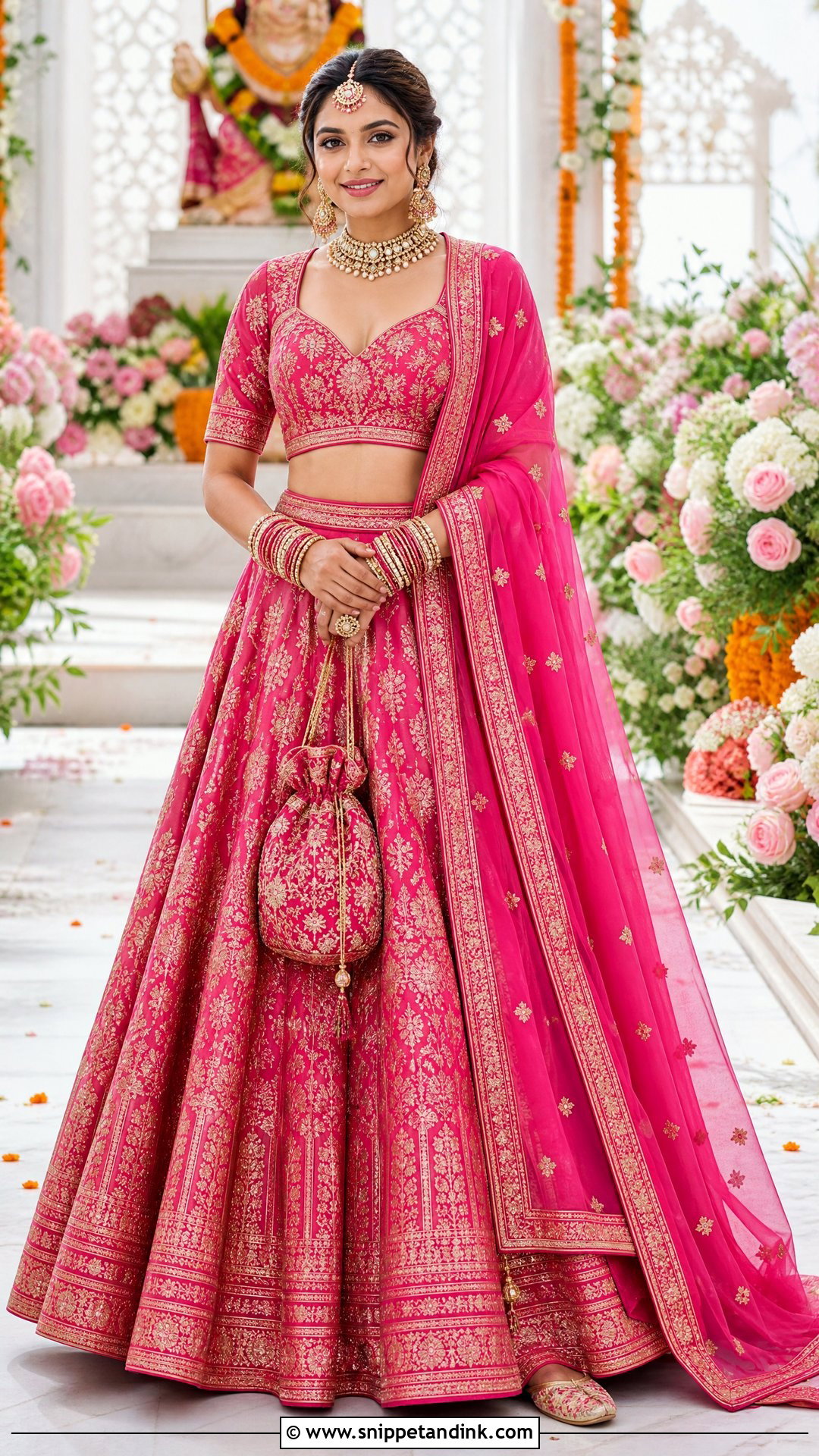
Rani pink stands out against marigold garlands without clashing. Choose a light lehenga with small gold motifs, a structured short-sleeve blouse and a matching dupatta with a neat embroidered edge. Keep jewelry to one kundan choker, medium jhumkas, a tiny maang tikka and pink and gold bangles. Padded juttis and a small potli for essentials are useful. A curled ponytail or low textured bun looks polished but relaxed, with rose-gold eyes, pink blush and a mauve-pink lip. Pin the dupatta at the shoulder and wrist, or drape it over the head as the ceremony requires. It stays bridal while being far lighter than the wedding outfit.
10. Red Phulkari Suit Mata Poojan Look
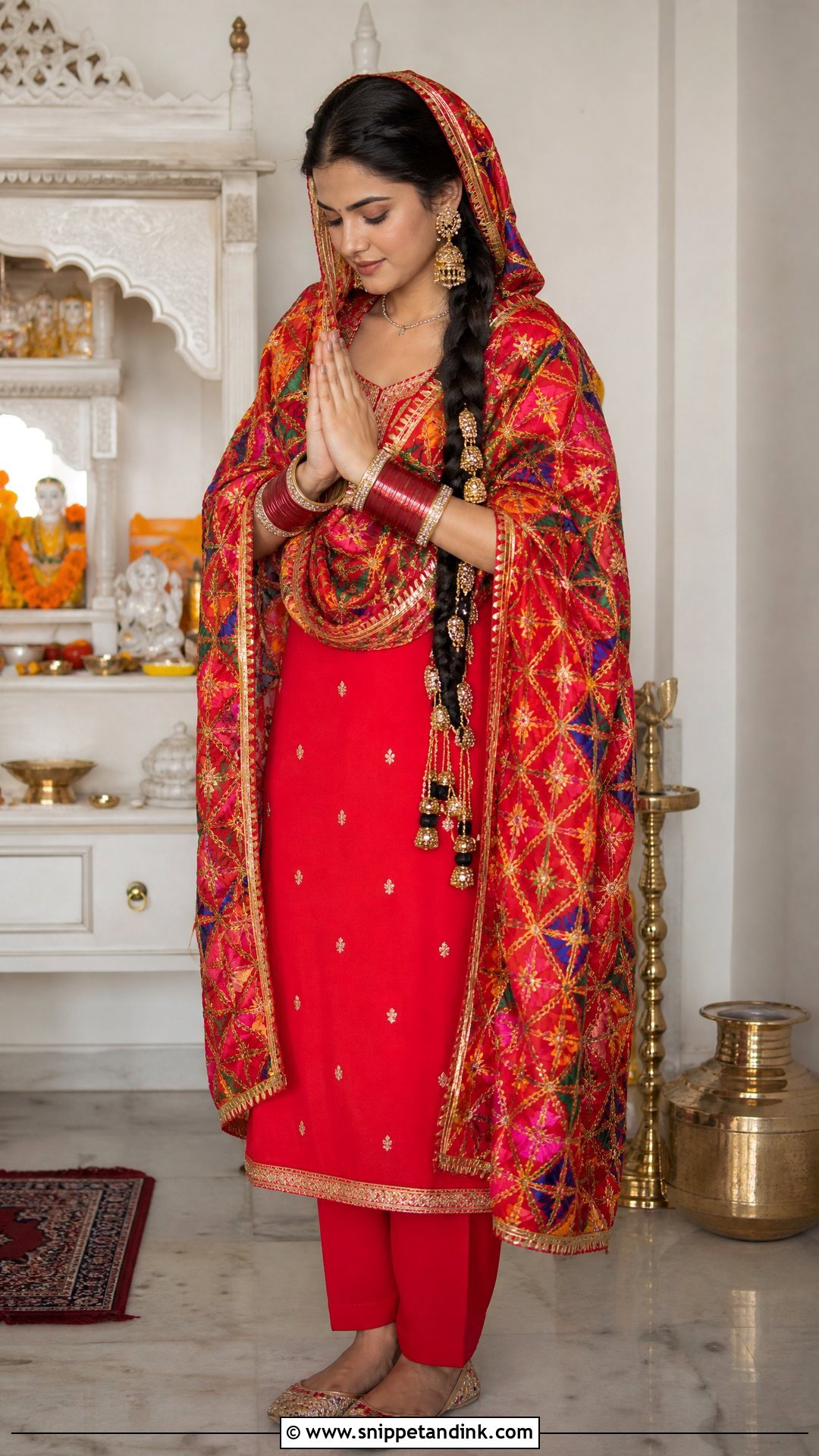
Phulkari is the bright floss-silk embroidery of Punjab, and a Phulkari dupatta is the centerpiece of this look. Keep the kurta and straight pants simple in red or deep pink so the dupatta does the work, and drape it across both shoulders or over the head with the motifs facing out. Gold jhumkas, a light necklace, glass bangles and Punjabi juttis suit it. A paranda braid gives a regional finish; a low bun is quieter. Heavily worked Phulkari can be weighty on the head, so try wearing it for half an hour before the day and use small, discreet pins at the crown rather than one large one.
11. Purple Brocade Lehenga Mata Poojan Look
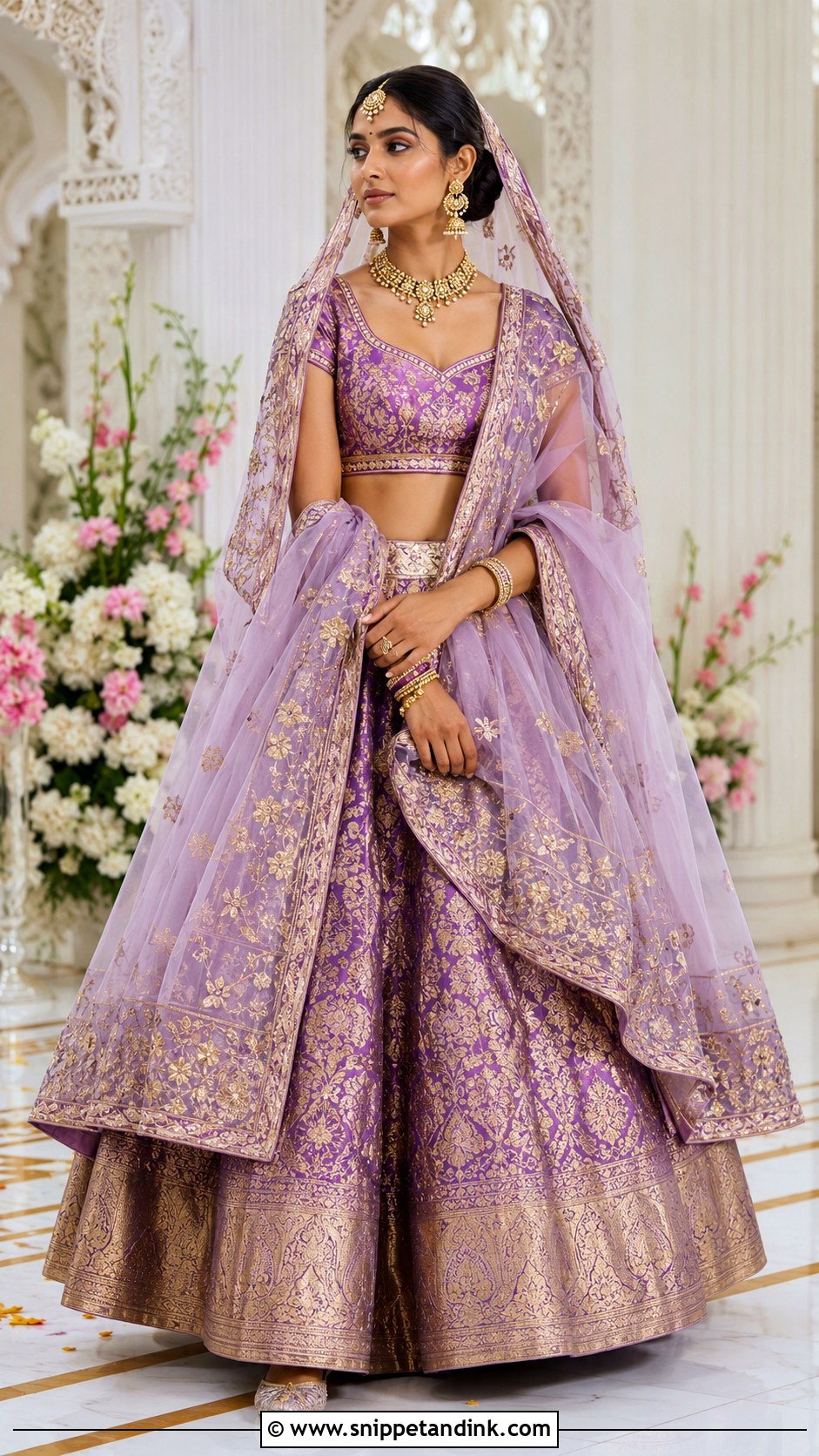
Deep purple is rich enough for a bridal ceremony without being red. A brocade lehenga with woven gold, a matching blouse and a soft pink or lavender dupatta give enough contrast, and the lighter dupatta can go over the head for prayer. Antique gold earrings, a short necklace, slim bangles and metallic juttis suit it, with a smooth center-parted bun. Muted gold eyeshadow, plum liner, berry blush and a rose-plum lip finish it. Brocade is stiff and heavy, so a full brocade skirt fights you when you sit on the floor. I’d choose a lighter flare with a soft lining instead.
12. Peach Organza Saree Mata Poojan Look
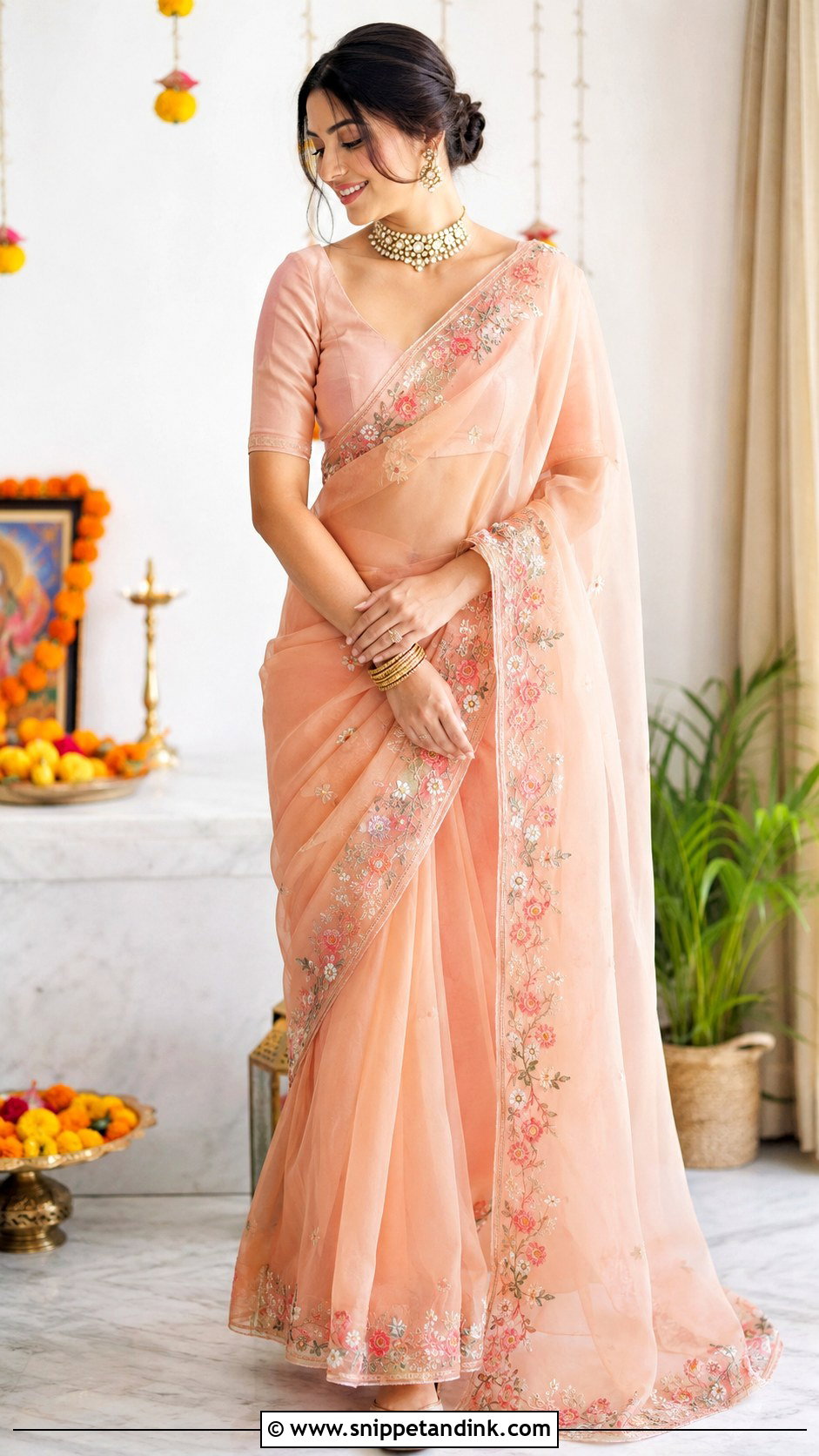
Organza is airy and crisp, which is lovely in a small home ceremony and difficult to control. It springs out rather than falling, so the pleats need careful pressing and a few discreet pins. Choose a peach organza saree with small floral embroidery or a fine gold border and a fitted silk blouse for structure. Pearl-kundan earrings, a slim choker, gold bangles and neutral juttis suit it, with a neat low bun or controlled half-up waves. Peach blush, champagne shimmer, brown liner and a coral-pink lip keep the palette soft. If the pallu will cover your head, practice: slippery organza slides back during prayers unless pinned into the bun.
13. Red And Yellow Lehenga Mata Poojan Look
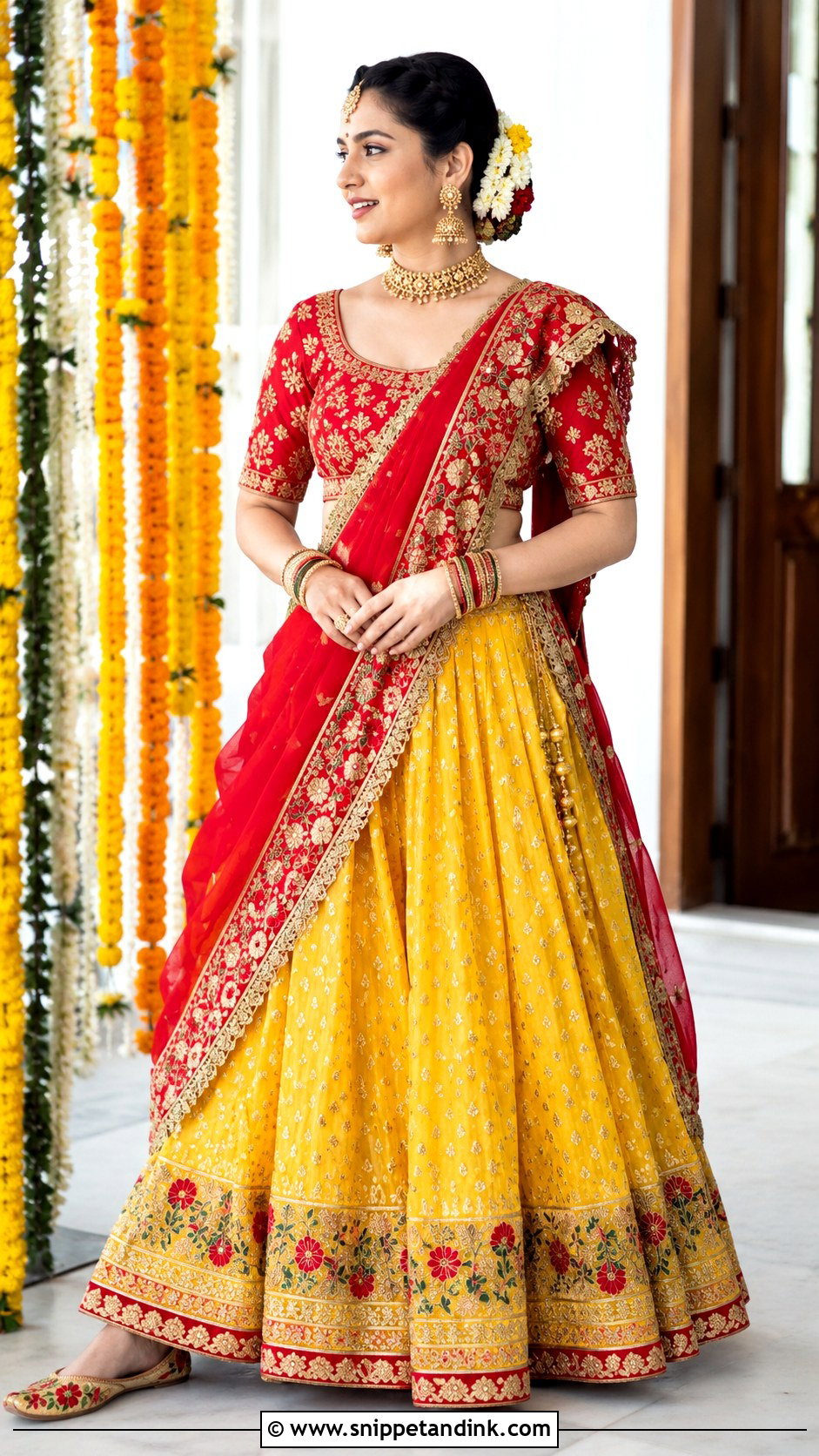
Red and yellow is a classic pairing for a prayer ceremony. Wear a yellow lehenga with a red embroidered blouse and red dupatta, or flip it for a stronger bridal effect. Keep the embroidery style the same on all three pieces; mismatched work is what makes color blocking look accidental. Gold jhumkas, a medium choker, red and yellow bangles and embellished juttis suit it, with a braided bun and small flowers. Warm gold eyes, a defined bindi, peach-red blush and a red lip connect the colors. Pin the dupatta along the shoulder and hairline so both hands stay free for offerings.
14. Green Silk Anarkali Mata Poojan Look
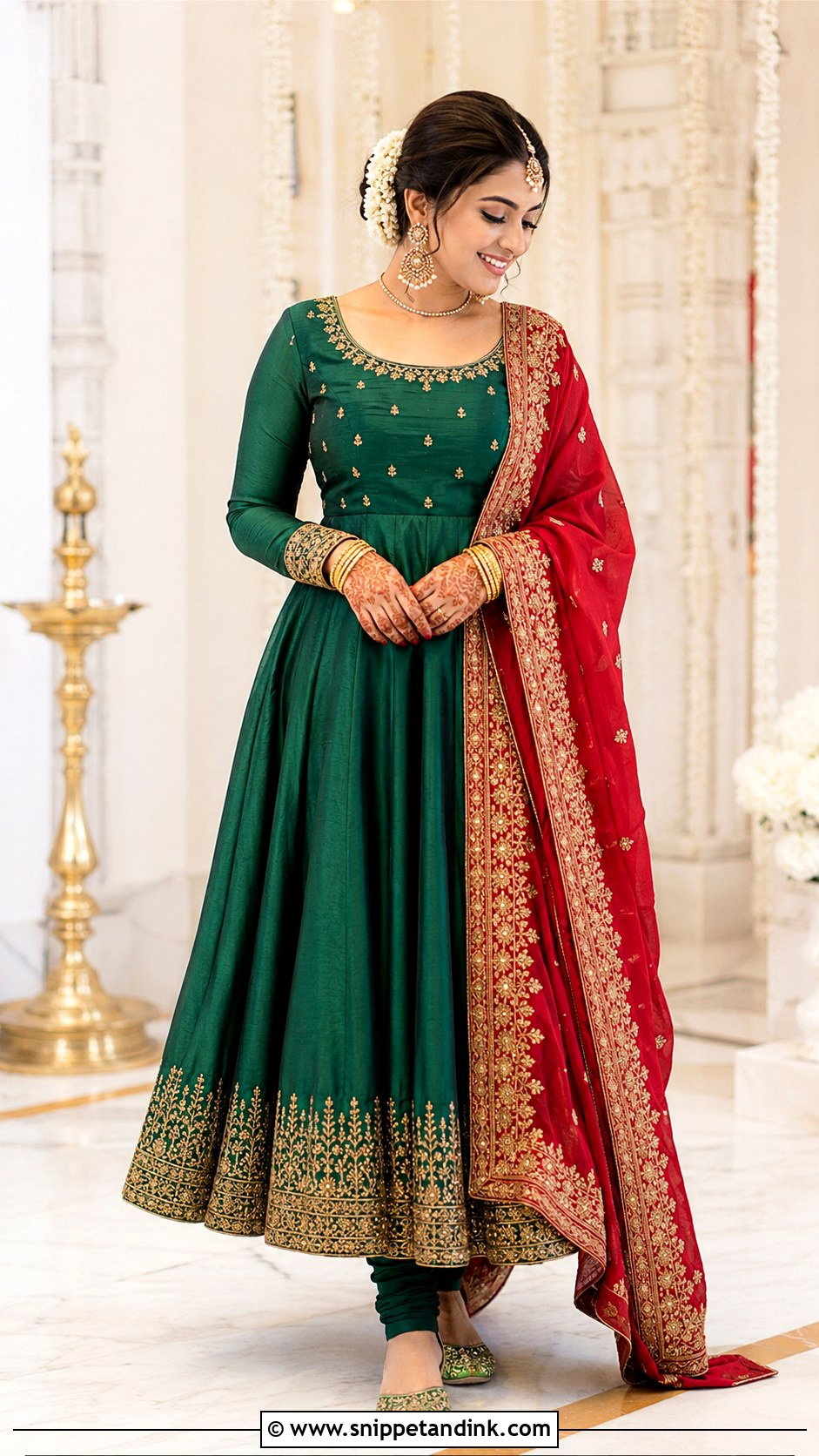
A bottle green or emerald silk Anarkali looks refined without a heavy lehenga. Choose an ankle-length cut with gold embroidery at the neckline, waist and hem, fitted churidar and a red, pink or gold dupatta for contrast. Kundan earrings, a slim necklace, gold bangles and matching juttis finish it, with white flowers in a center-parted bun. Bronze eyes, peach blush and a brick-red lip suit the deep green. Sit down in it at the trial: an Anarkali with too little flare rides up and bunches when you sit cross-legged. A modest neckline matters too, since you’ll bend forward for blessings.

15. Mustard Sharara Mata Poojan Look
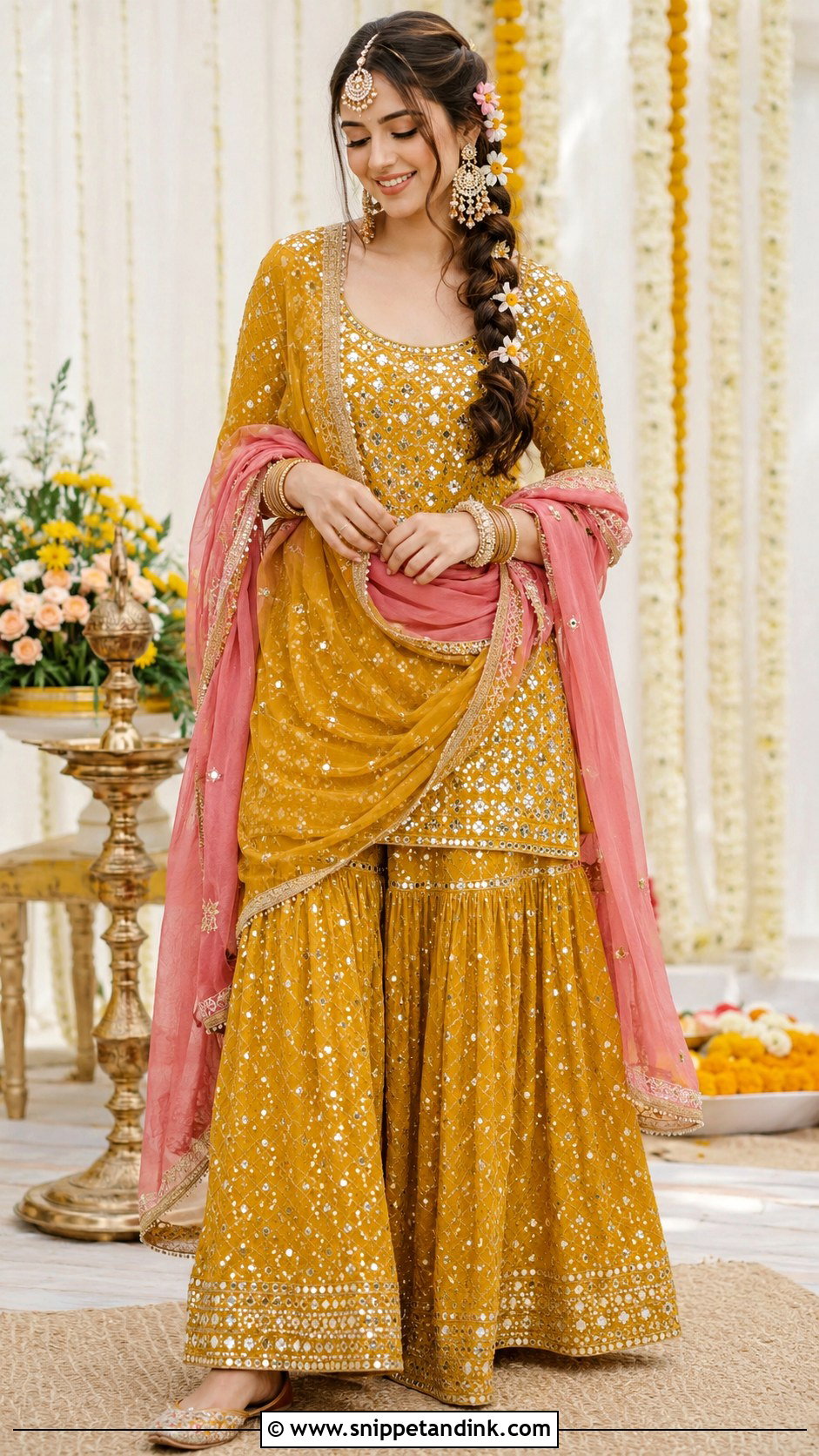
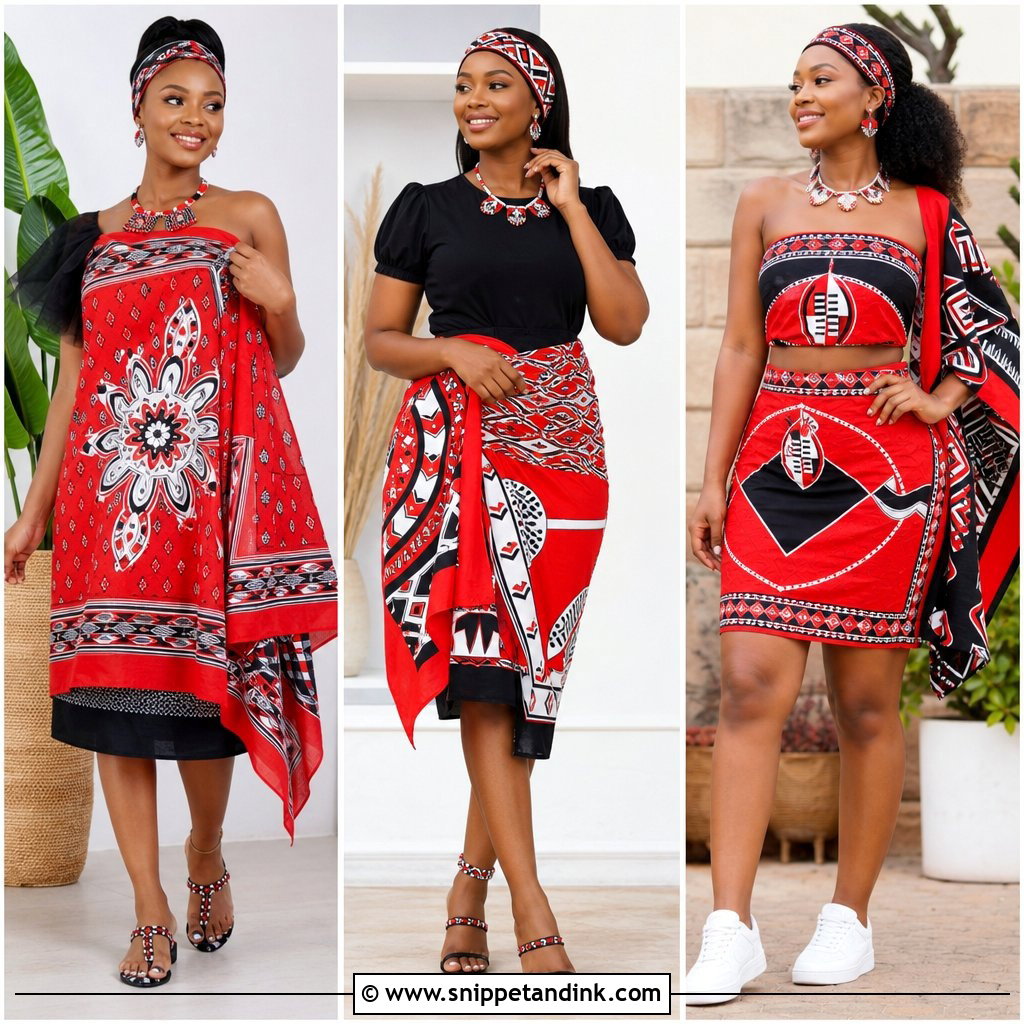
Mustard is softer than marigold and still festive. Wear a short mustard kurta with mirror or gota work, wide sharara pants and a contrasting pink dupatta to lift the color. Oxidized gold or kundan earrings, stacked bangles, a delicate maang tikka and embroidered flats suit it, and a loose low braid with flowers feels relaxed and ceremonial. Warm matte makeup, brown kohl, apricot blush and a muted berry lip finish it. Mirror work catches the diya light nicely, but small mirrors can scratch fine fabric, so keep heavy pieces off the hems. It works best for a daytime ceremony at home or in a small hall.
16. Wine Embroidered Lehenga Mata Poojan Look
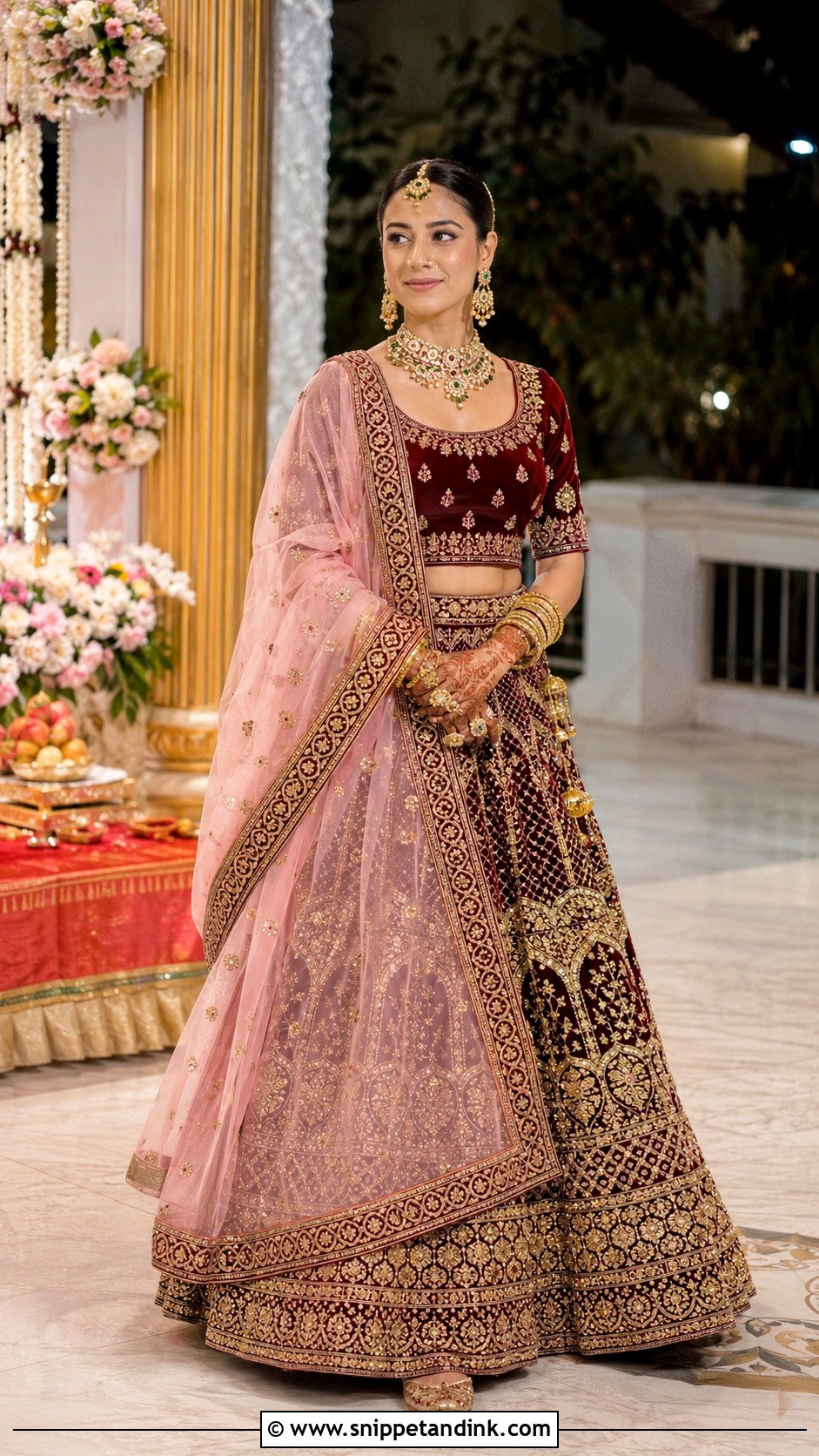
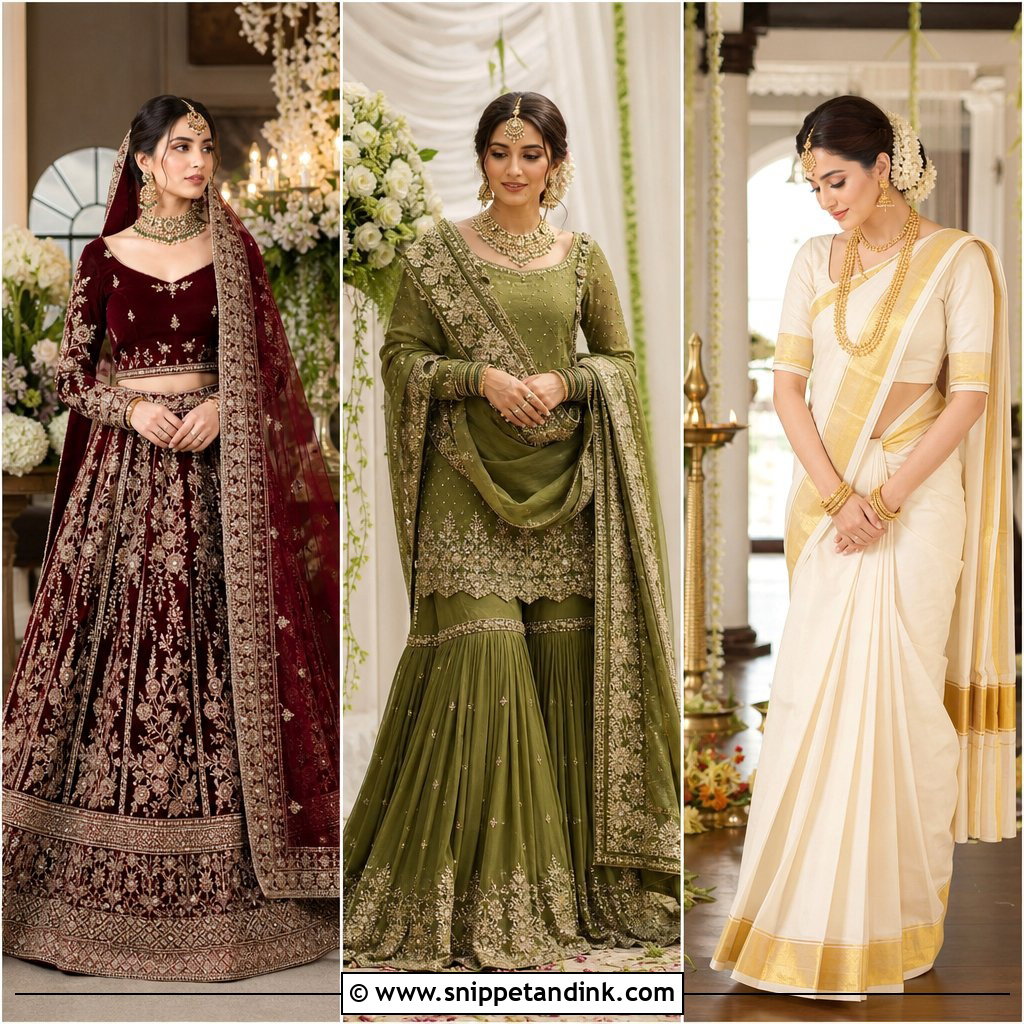
Wine is deep enough for an evening gathering and less expected than red. Choose a light lehenga with antique gold embroidery, a modest matching blouse and a dusty pink or beige dupatta, which softens the dark base and brightens the face. Polki earrings, a medium-length necklace, matching bangles and antique gold juttis suit it, with a sleek center-parted bun. Soft bronze eyes, warm blush and a rose-brown lip complement it. Dense embroidery over the whole skirt adds weight fast; work concentrated on the border and blouse gives sparkle and still lets you sit and walk comfortably.
17. Pastel Blue Suit Mata Poojan Look
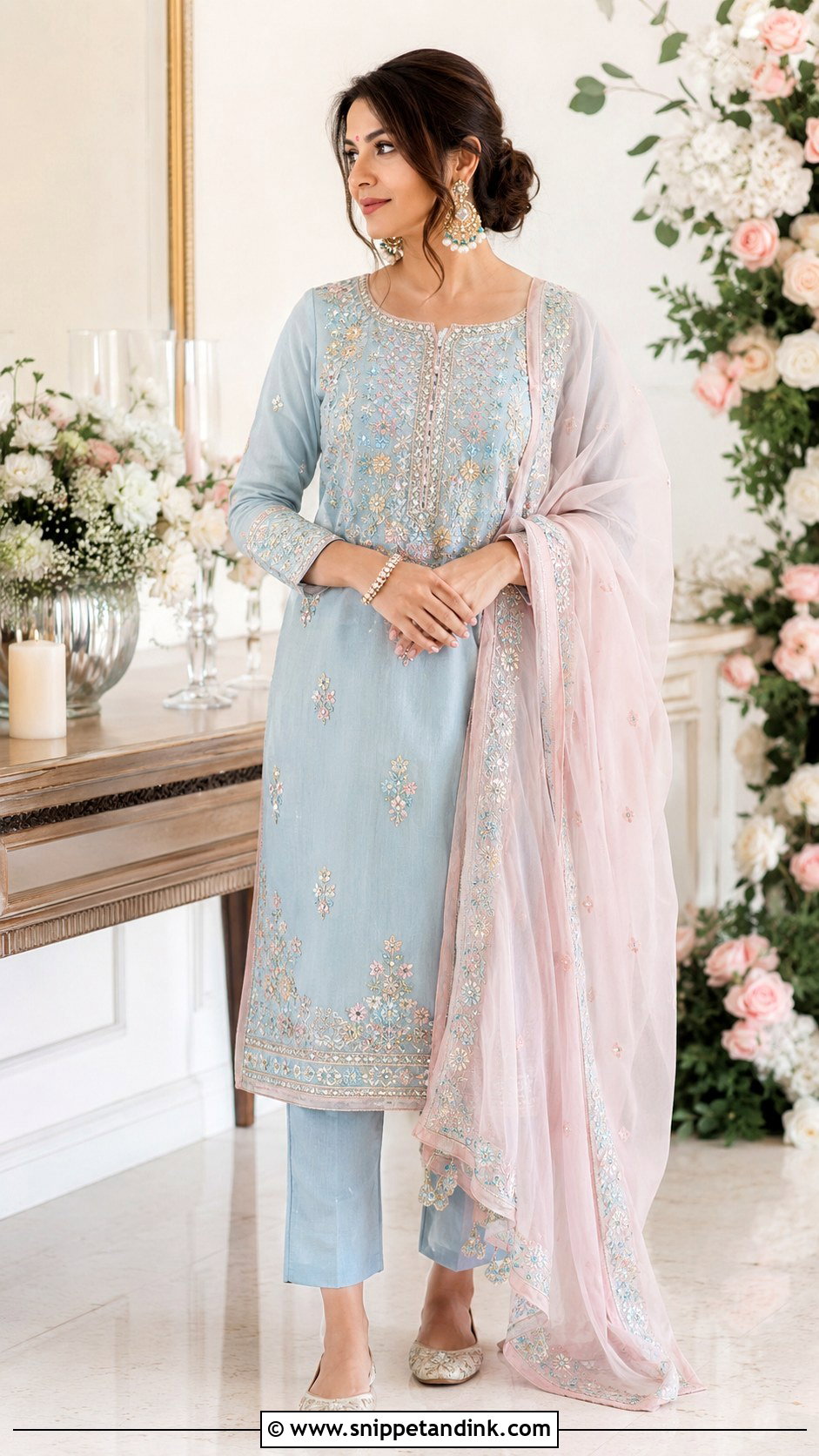
Pastel blue is calm and modern, and a soft choice for brides who dislike strong color. Choose an embroidered straight kurta with matching pants and a blush or ivory dupatta, with fine threadwork, pearls or subtle sequins. Pearl-kundan earrings, a delicate bracelet stack, a small ring and pale juttis keep it light, with soft waves pinned back or a low textured bun. Keep makeup fresh with silver-champagne eyeshadow, pink blush, defined lashes and a rosy nude lip. Blue isn’t customary in every family, so I usually add a red or pink accent through the dupatta, bindi, bangles or potli.
18. Coral Silk Lehenga Mata Poojan Look
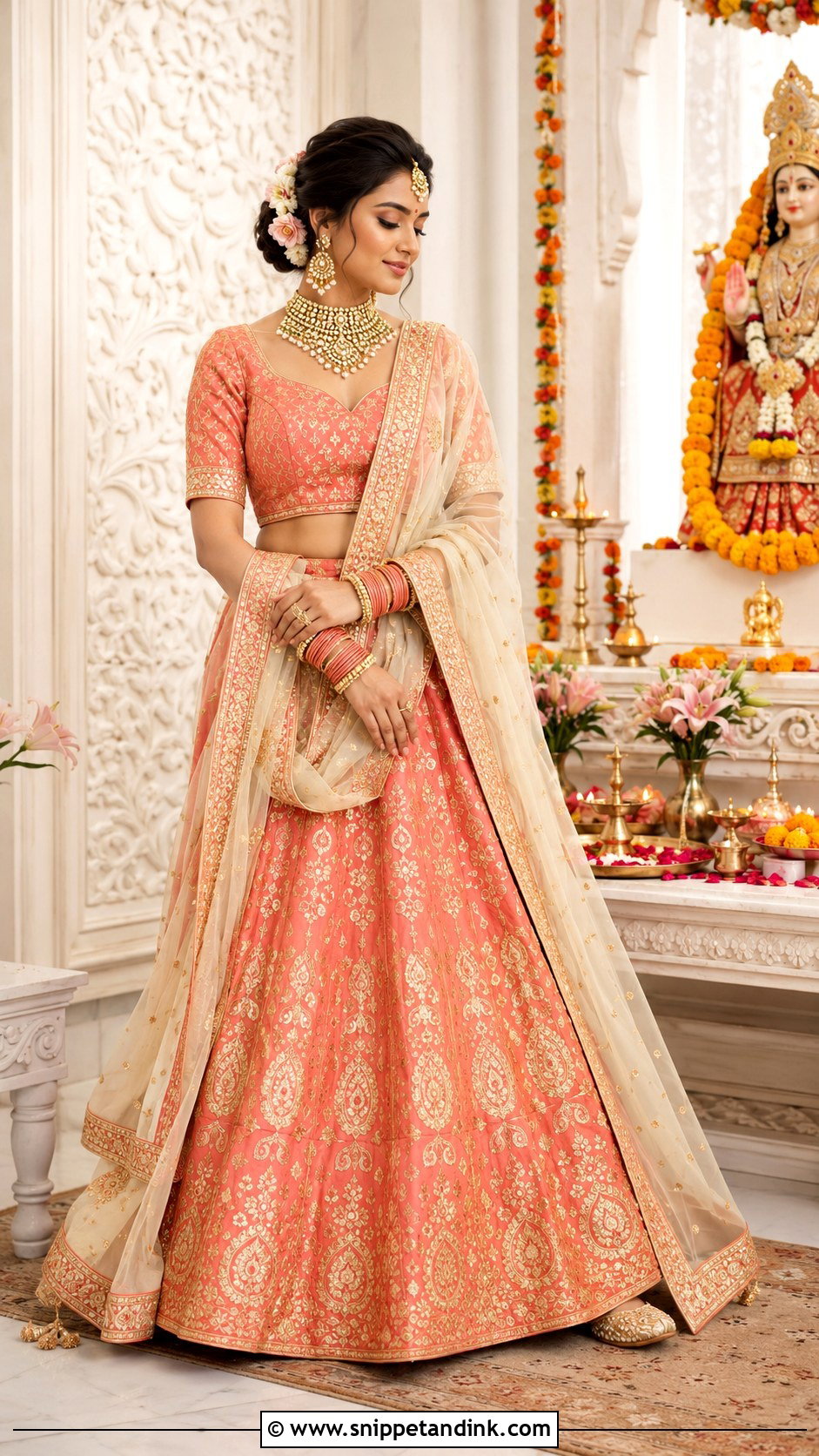
Coral is bright and kind to most skin tones, and it’s easy to keep distinct from the deeper wedding colors. Choose a coral silk lehenga with small gold motifs, a matching blouse and an ivory or pale gold dupatta. A kundan choker, earrings, coral bangles and gold juttis finish it, with a smooth low bun and tiny white flowers. Peach-gold eyes, coral blush and a rose-coral lip coordinate the makeup. You’ll lift your arms many times during the rituals, so I check the blouse sleeves and armholes most carefully here; a tight armhole pulls the whole blouse up. A properly fitted waistband keeps the skirt from twisting.
19. Rajputi Poshak Mata Poojan Look
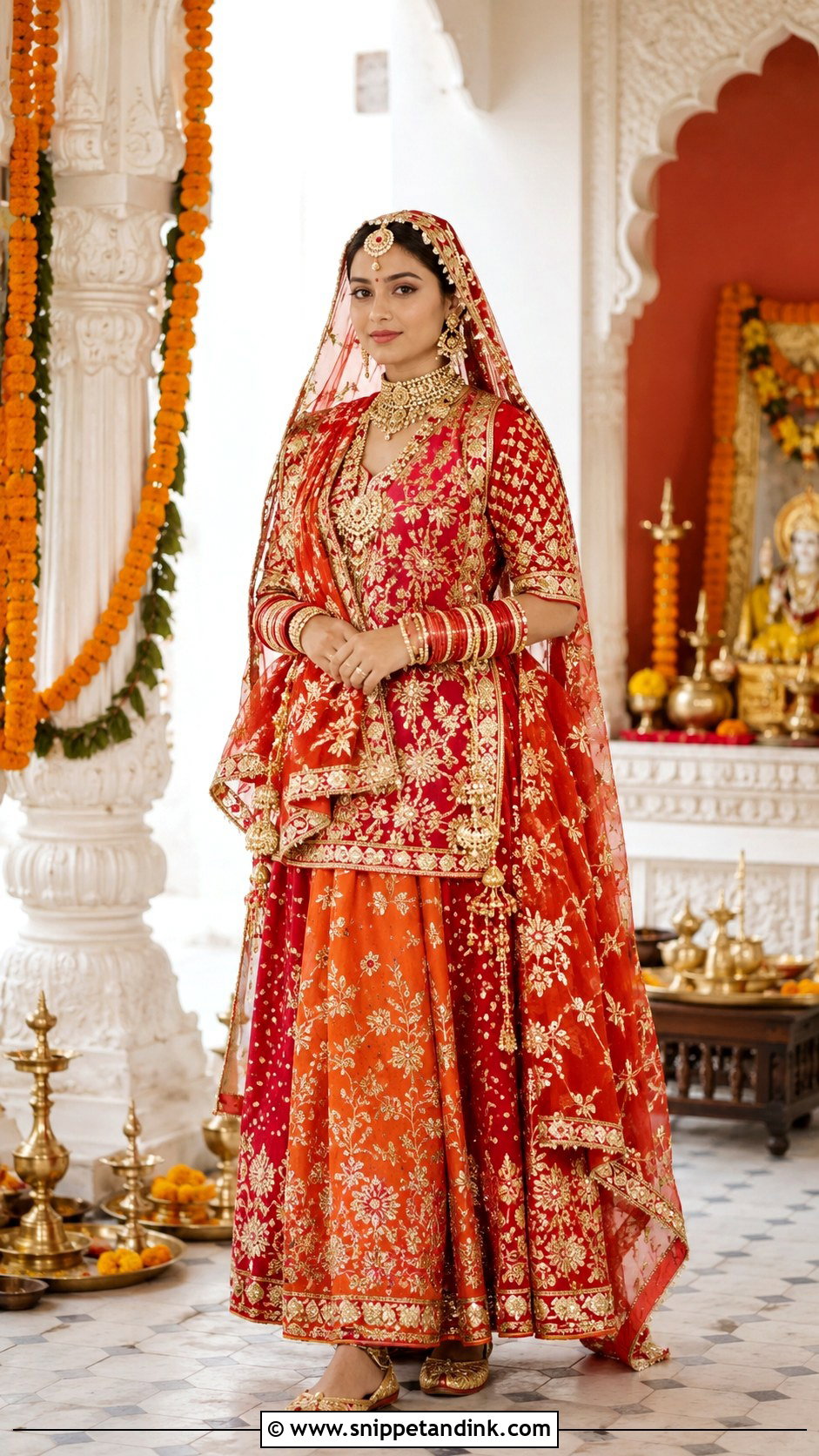
A Rajputi poshak brings Rajasthani heritage into the ceremony. Choose red, orange, pink or green with gota patti and a lightweight odhani. The full set is the kanchli, kurti, ghagra and odhani, and each layer needs its own fitting. Borla, gold earrings, bangles and mojaris can complete it, depending on family custom. If the fabric is busy, keep jewelry balanced. A smooth bun or braid under the odhani gives the pins something to grip. Warm gold makeup, kohl, a red bindi and a soft red lip suit it. Practice the odhani drape with whoever will help you dress.
20. Heirloom Saree Mata Poojan Look
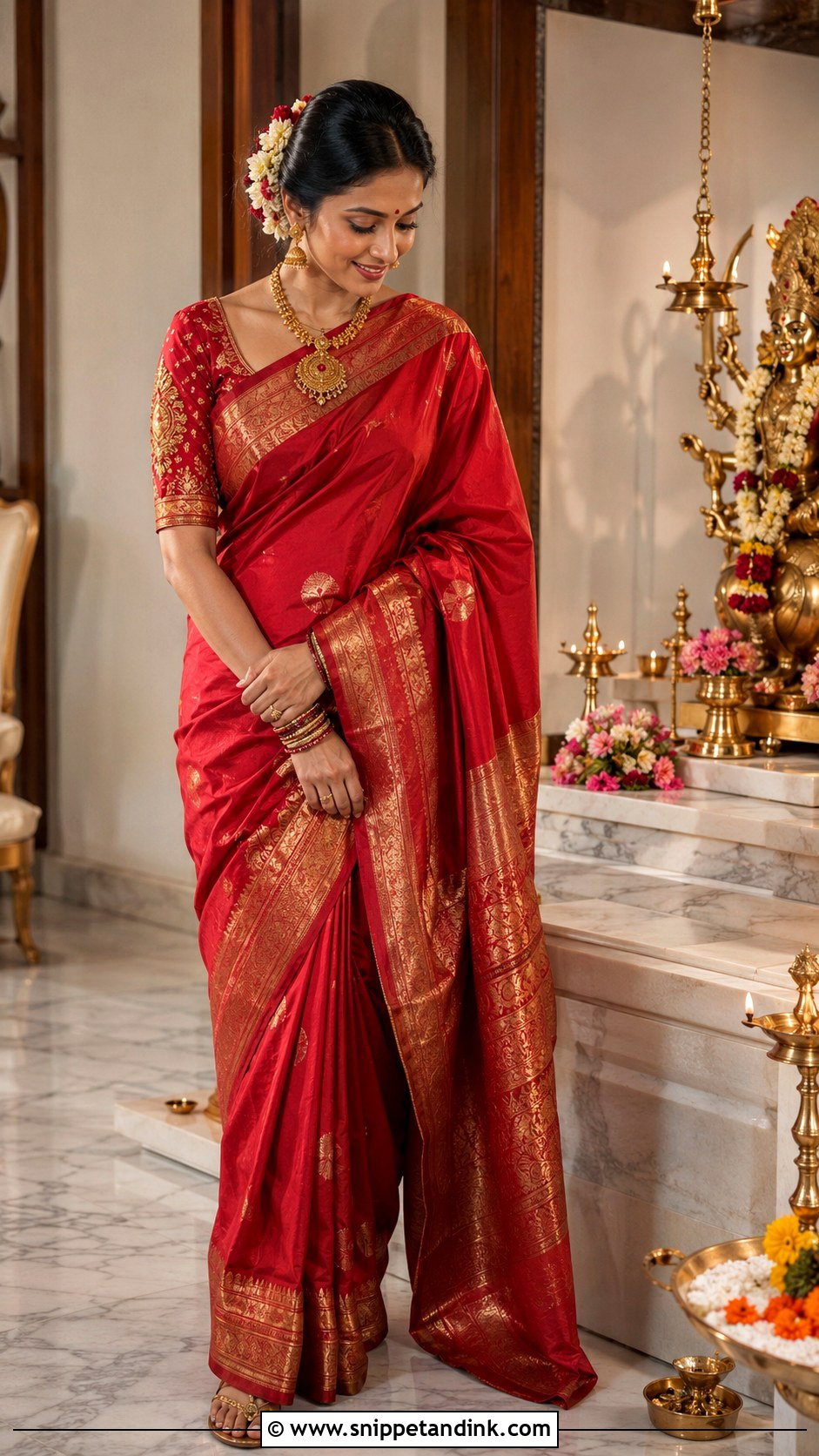
Wearing your mother’s or grandmother’s saree ties the ceremony to your family in a way nothing new can. Refresh it with a well-fitted brocade or embroidered blouse, and choose jewelry that suits its original border and motifs. Gold jhumkas, a traditional necklace, family bangles and comfortable juttis or flats complete it, with a classic bun and flowers or a neat braid. Keep makeup polished with defined eyes, natural blush, a bindi and a lip matching the saree’s main color. Older silk weakens along fold lines, so have it checked and pressed by a specialist first. Use small safety pins at the pleats; heavy brooches can tear or mark old fabric.
A Head Covering That Stays Put Through Every Bow
Many families expect the bride’s head to be covered for at least part of the prayers, and a dupatta that slides back every time you bow looks untidy and becomes a distraction. I build the hairstyle around the covering instead of adding it at the end.
- Make a firm low bun or braid at the nape; a high bun lifts the dupatta and makes it slip.
- Place two U-pins or small bobby pins on either side of the crown where the dupatta will sit, then pin the fabric through them, not just into loose hair.
- Fold the front edge of a slippery dupatta under by a finger width before pinning, so the pin has two layers to grip.
- Pin the back corner to the blouse at the shoulder so the weight doesn’t drag the front off your head.
If your mehndi is still fresh
When Mata Poojan falls close to the mehndi, the stain may still be developing and paste may still be on your hands. Dress before the paste goes on if you can, choose bangles that slide on without force, and let someone else handle every pin and hook.
Let the Family Custom Lead, Then Add Your Own Touch
The right outfit lets a bride feel respectful, comfortable and herself during the prayers. Sarees and regional dress carry tradition, while Anarkalis, shararas, ghararas and light lehengas are just as graceful. Think about the time of day, the season, the venue, your family’s customs and how much you’ll move. Secure draping, comfortable shoes, manageable embroidery and balanced jewelry matter most during long rituals. Ask an elder what the family expects, then choose the colors and details that mean something to you.
You'll Like These Ideas:



Leave a Reply