
The 2024 gowns I dressed brides in were more sculpted than anything in years. Drop waists, exposed corsetry, dimensional flowers, oversized bows and convertible layers all asked for more fitting time, while plain satin columns stayed popular with brides who wanted the cut to speak. Black accents, statement sleeves and reworked lace turned up too. None of it matters if the dress pinches by the second hour, so for each of the twenty styles below I’ve noted how I’d accessorise it and what I check at the fitting before I sign it off.
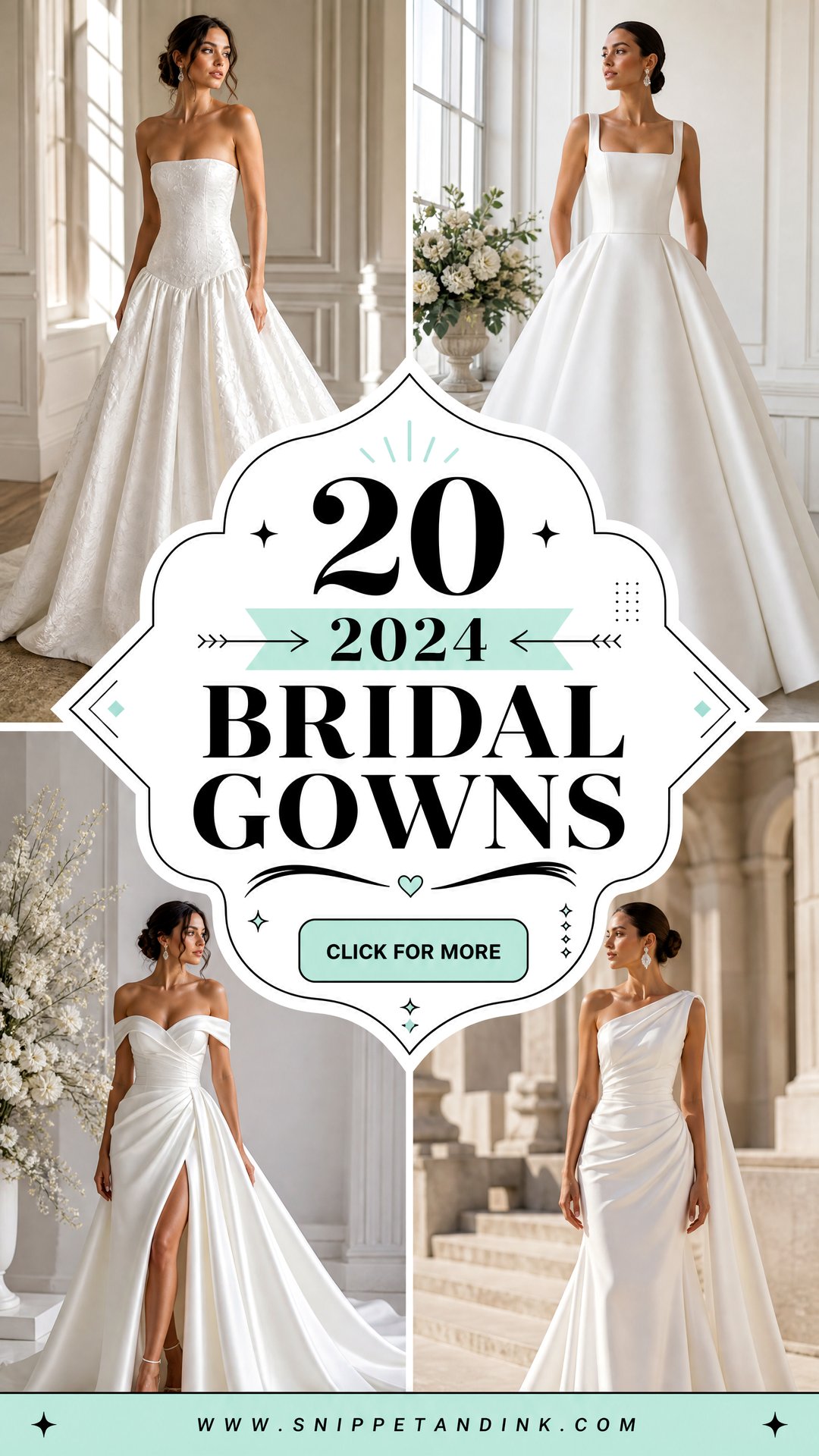
How Early Should You Order a Sculpted Gown Like These?
Structured 2024 shapes take longer than a simple slip dress, and brides often underestimate the calendar. Most made-to-order bridal gowns arrive somewhere between four and eight months after ordering, depending on the designer and the season. Corsetry, hand-applied flowers and heavy pearl work sit at the longer end.
Then alterations need their own window. I plan for two to three fittings spread over roughly eight to twelve weeks, with the last one about two weeks before the wedding so there’s room for one more small fix. Counting backwards, that usually means shopping around ten to twelve months out if you have your heart set on a boned bodice or an appliquéd train.
Short on time? Buying off the rack or a sample gown is the honest answer. Samples have been tried on many times, so look closely at hems, zips and underarm areas, and budget for cleaning. A good shop will tell you plainly whether a rush order is realistic; if they hedge, assume it isn’t.
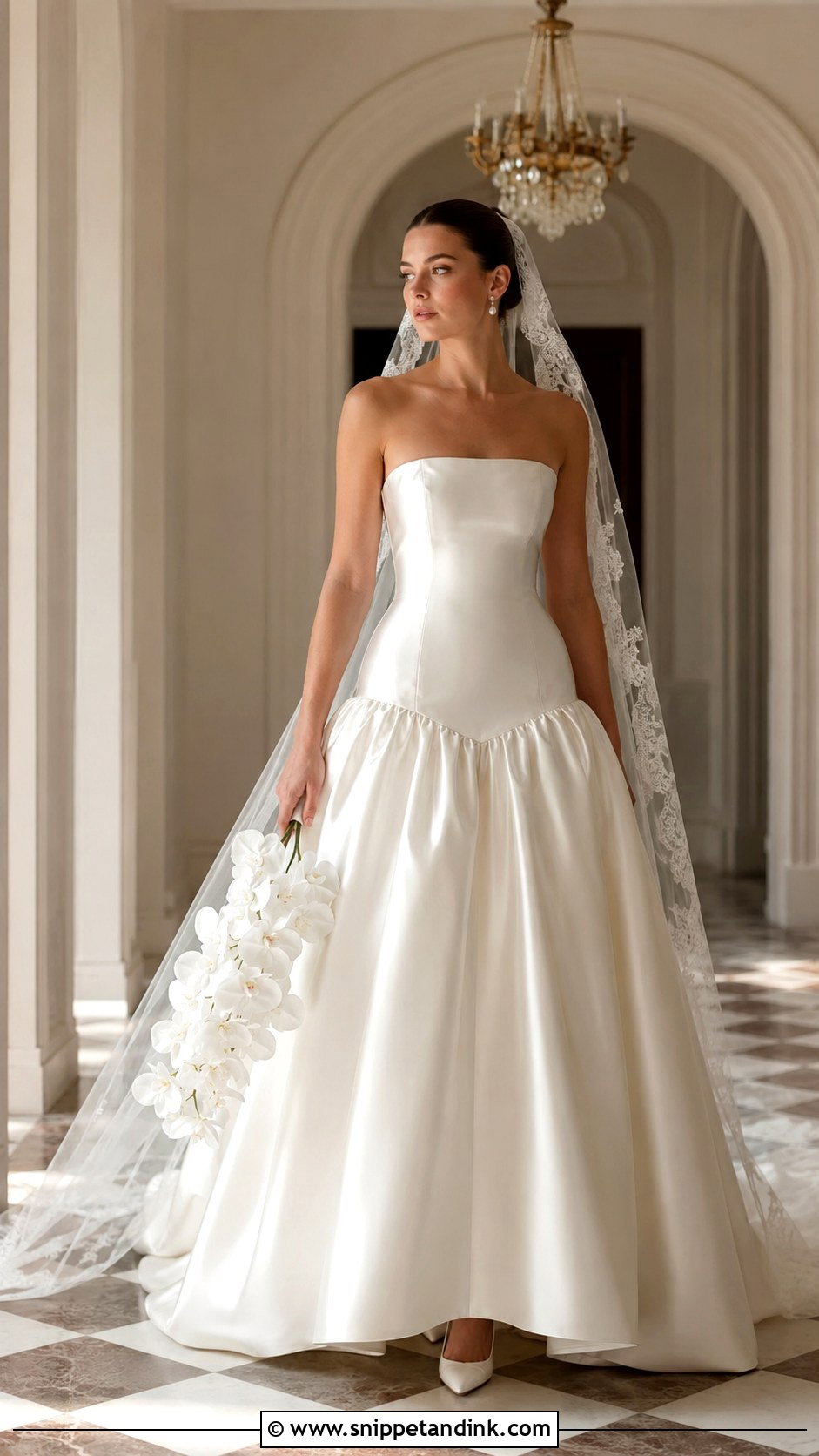
1. Drop Waist Bridal Gown
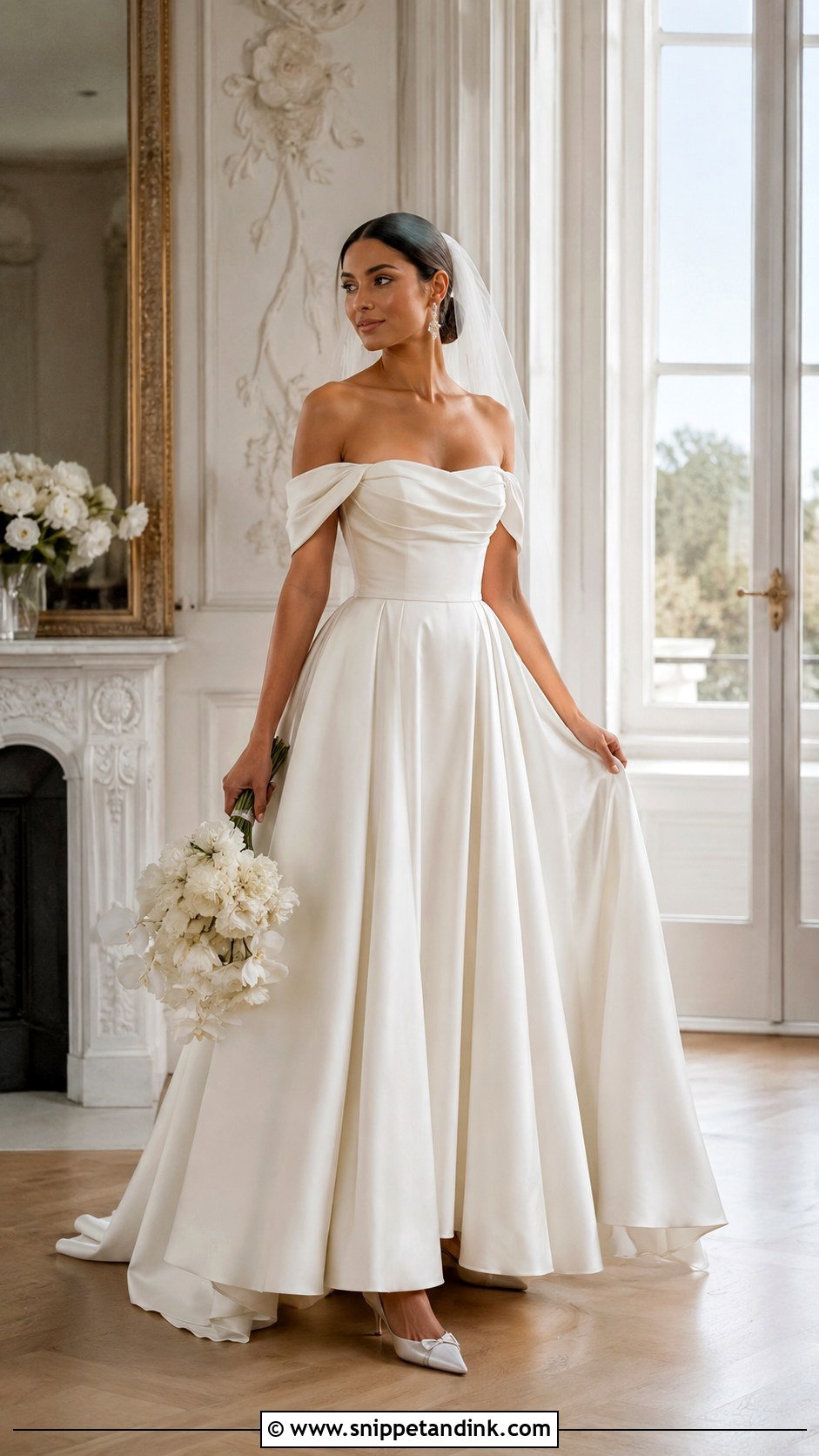
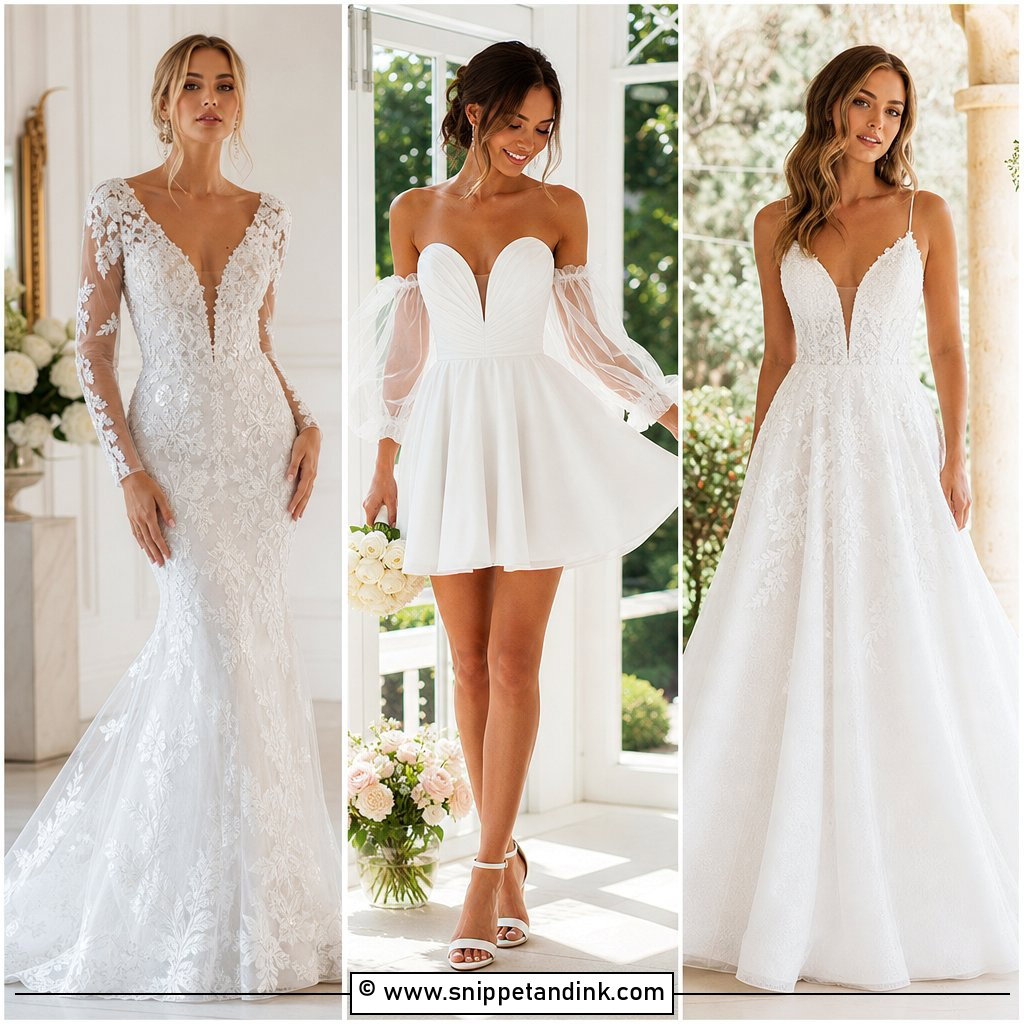
A drop waist runs the bodice long and lets the skirt open around the hips, which gives a lovely lean line on a tall bride and can cut a petite one in half. For shorter frames I suggest a seam only slightly below the natural waist. Structured satin, silk mikado or soft tulle all work; a strapless bodice with light internal corsetry stops the long section wrinkling when you sit. Add a cathedral veil, pointed ivory pumps, pearl drops and a compact bouquet with trailing greenery. At the fitting I have brides sit, walk and climb three steps, because a drop waist that’s too snug at the hip rides up the moment you move.
2. Basque Waist Ball Gown
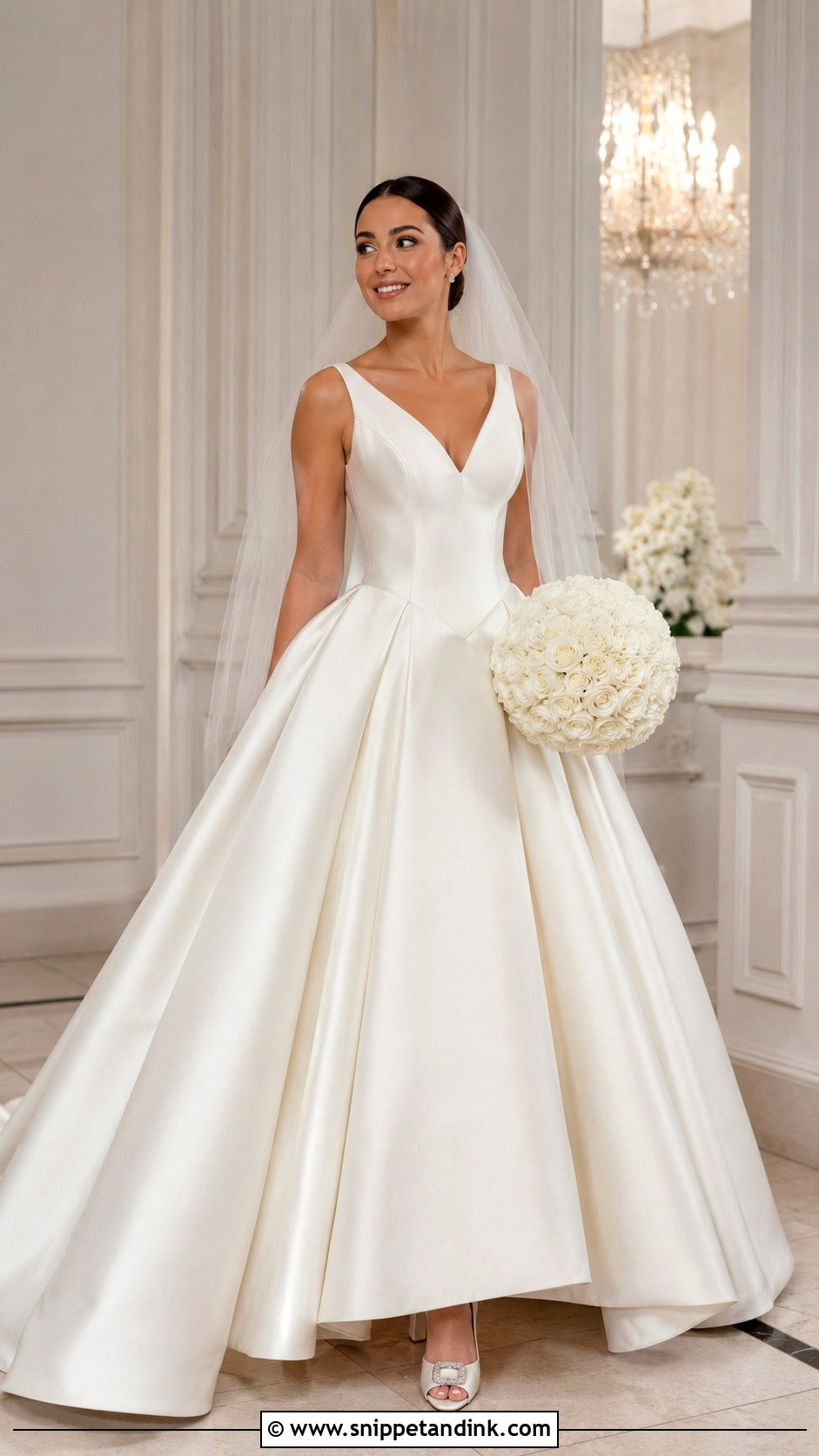
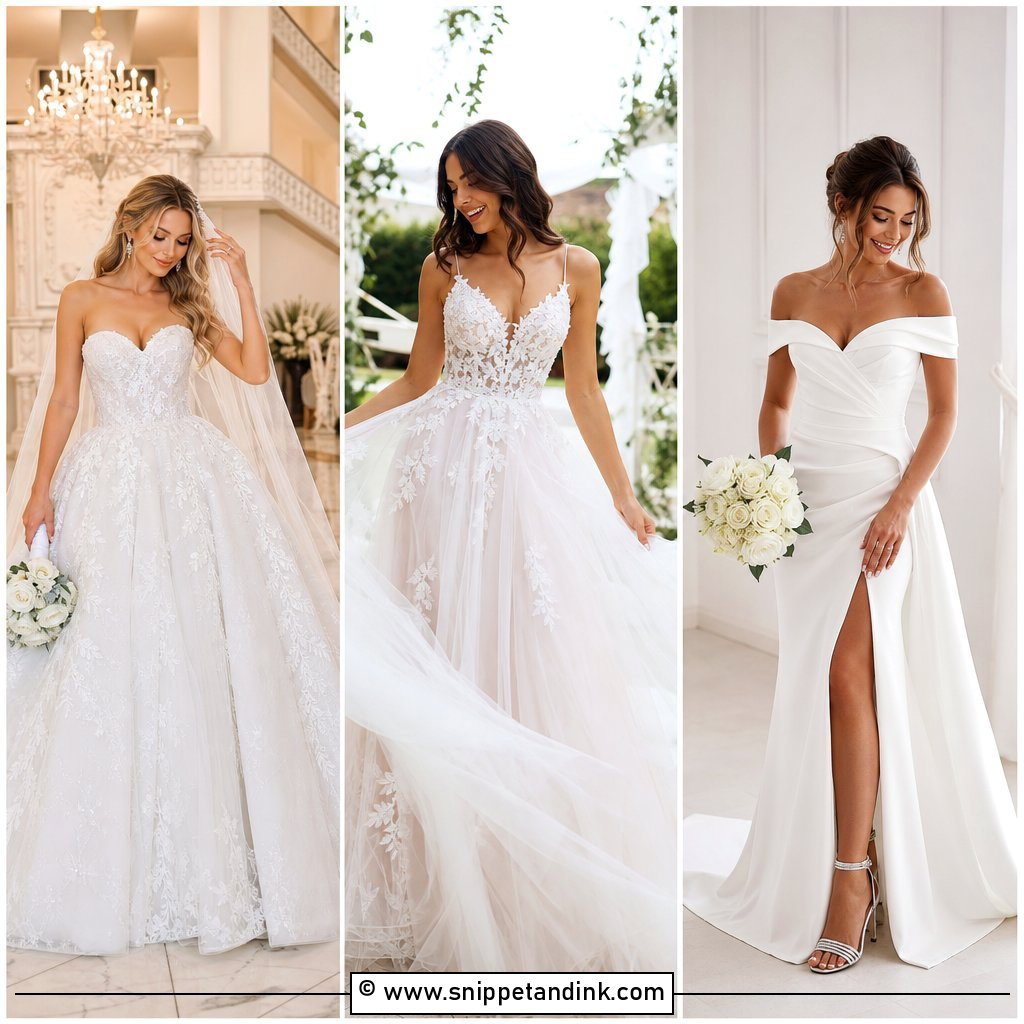
A basque waist ball gown dips into a V at the centre front, pulling the eye down before the skirt widens. Mikado holds that point crisply; layered tulle softens it. The V must land exactly at your centre, and it’s surprisingly easy for alterations to nudge it off by a centimetre, so I check it standing in front of a mirror with your arms relaxed. Satin block heels give stability under the volume. A fingertip veil, crystal studs and a low chignon keep the bodice visible, and a simple rounded bouquet avoids adding bulk. Ballrooms and estates suit it best.
3. Corset Bridal Gown
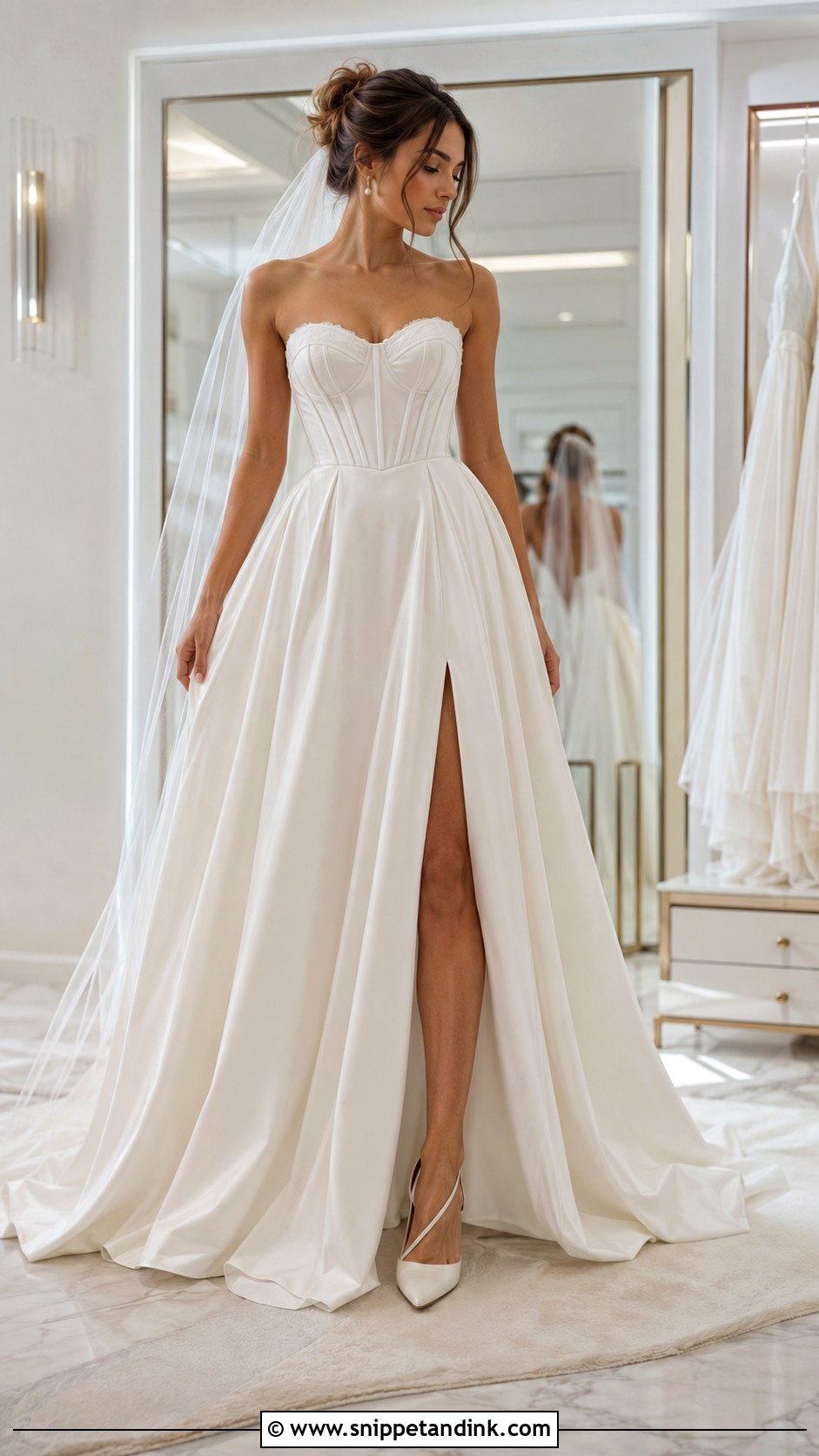
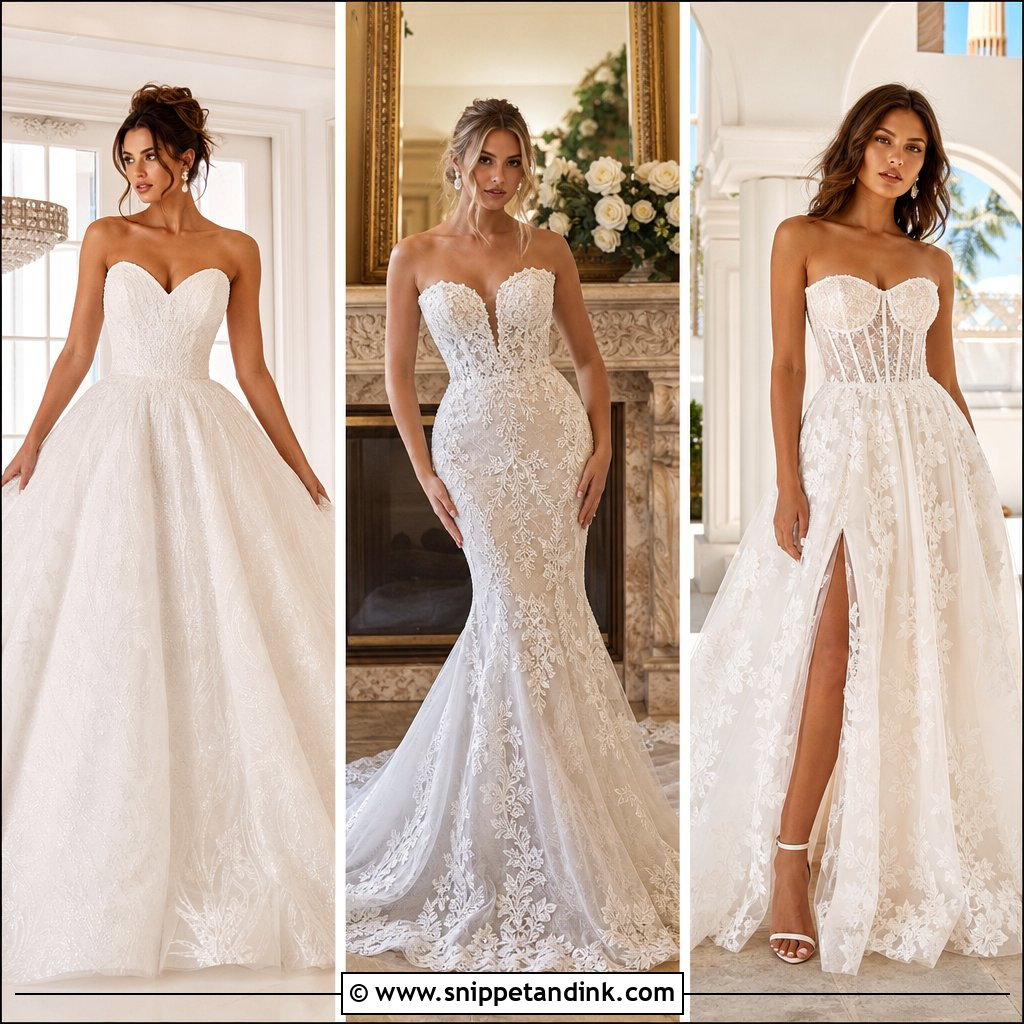
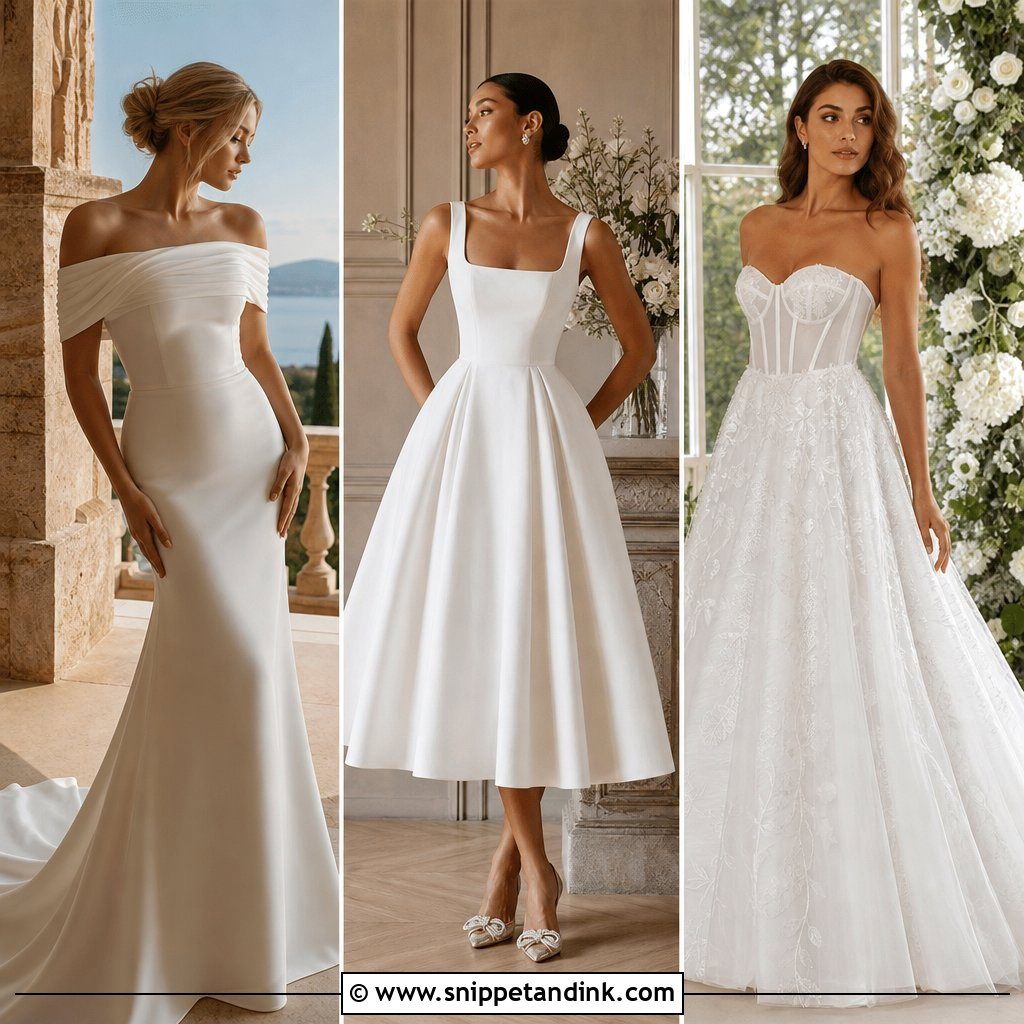
Exposed boning is the whole point of a corset gown, and good boning bends with you. I ask brides to take three deep breaths and sit down in it before final alterations. If the bones dig in under the ribs, the channels need shortening; if the top edge lifts, it needs taking in. Look for supportive cups, smooth lining and lace or satin panels placed so the bones line up symmetrically. An A-line skirt balances the structure. I finish it simply. Pointed slingback heels, a sheer chapel veil, small pearl earrings and a loose updo are plenty. If any section is sheer, wear underwear matched to the lining and check it by a window.
4. Floral Applique Bridal Gown
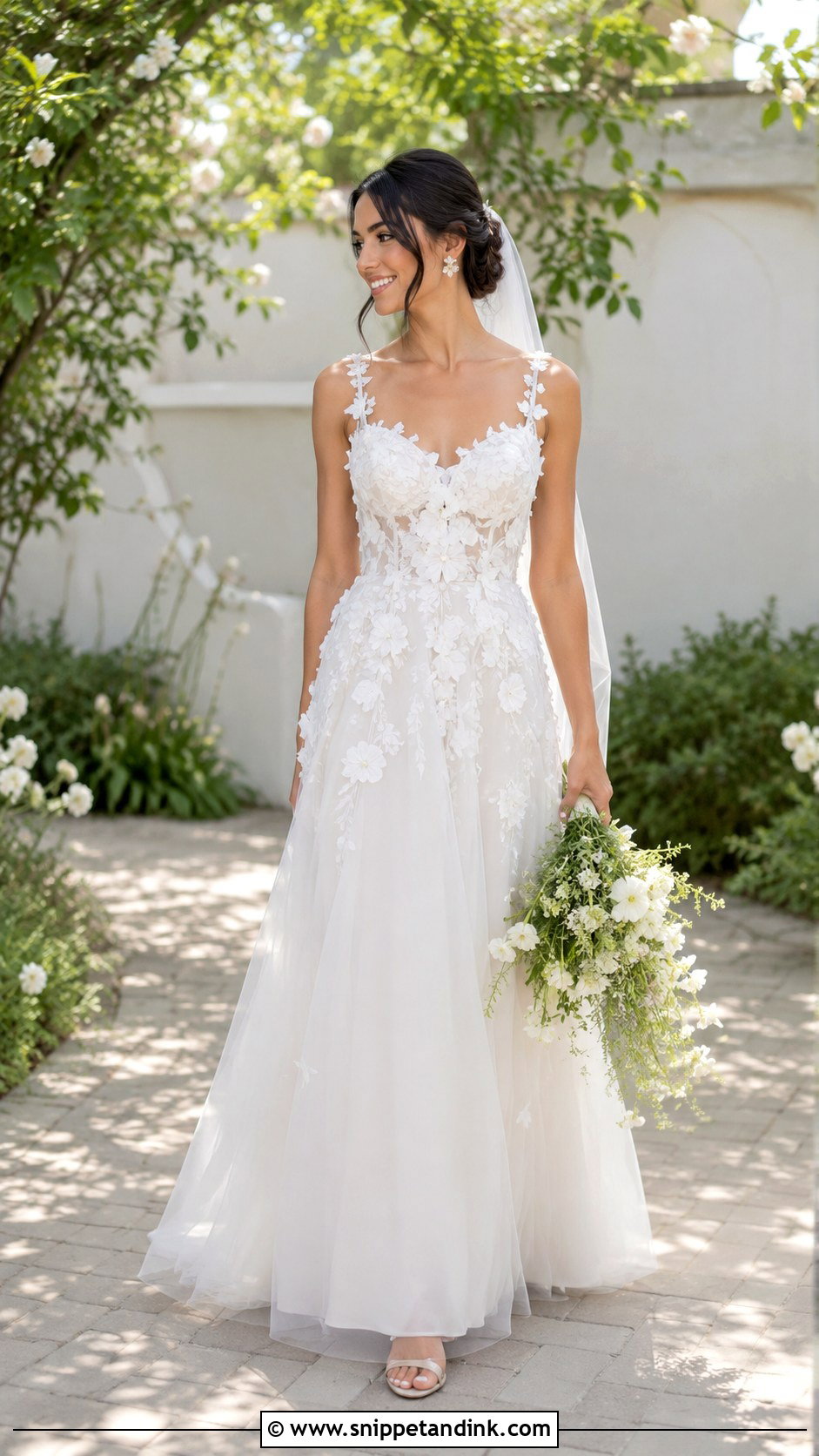
Floral appliqués can cover the whole gown or gather along the bodice, waist and train. For outdoor ceremonies I steer brides toward organza flowers on airy tulle; heavy satin petals add real weight by evening. Tone-on-tone blooms read as texture, contrasting thread reads as decoration, and the quieter version tends to age better. The problem area is the hip, where petals crush every time you sit, so look at the dress seated before you buy. I tack any loose petal down at the final fitting. Simple ivory sandals, floral earrings, a clean-edged veil and a loosely gathered bouquet in muted colours complete it.
5. Bow Back Bridal Gown
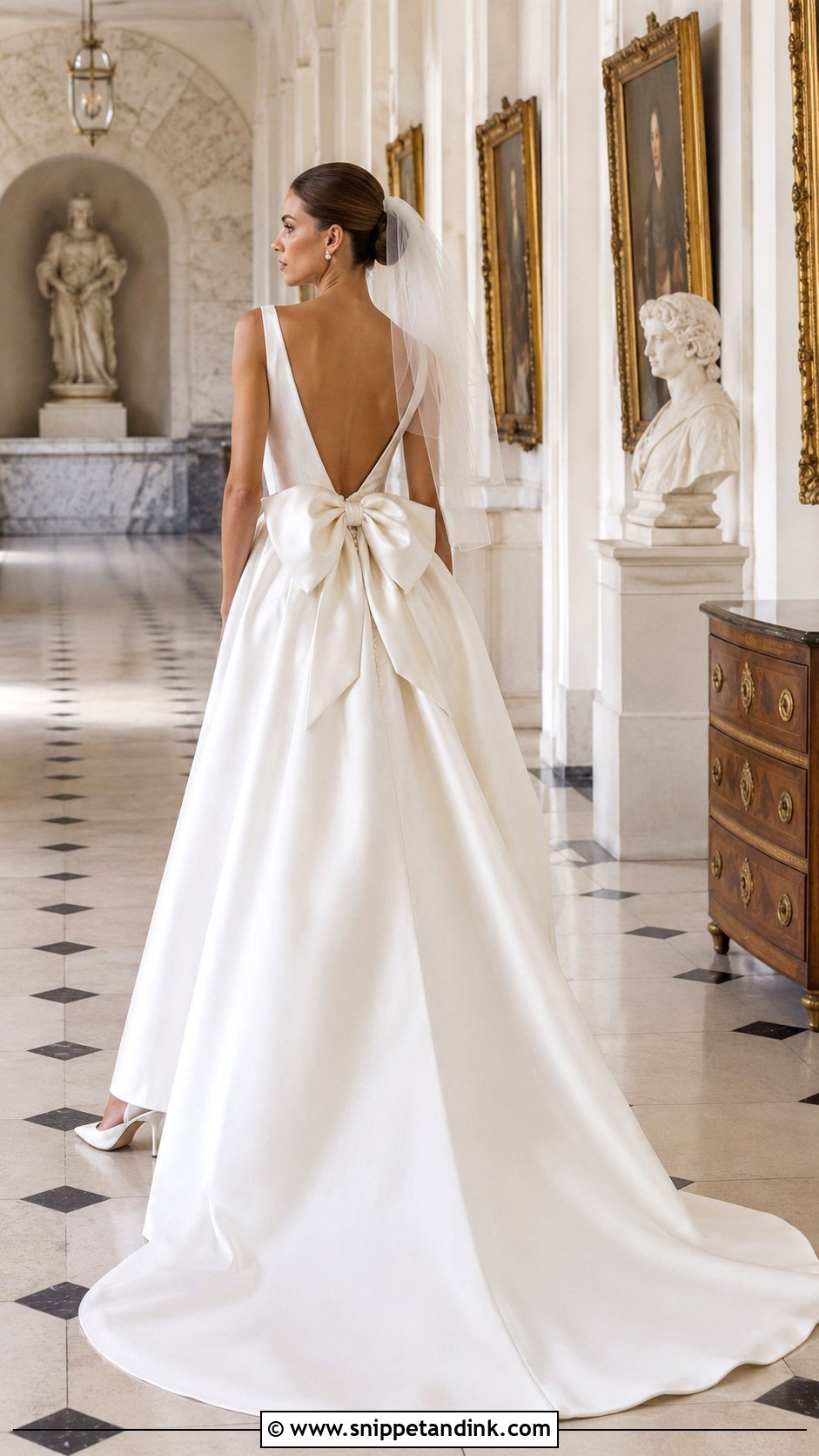
A bow back gives the guests something to look at during the vows. The bow can sit at the waist, across the shoulders or just above the train, and it only holds its loops in satin or mikado; in softer fabric it droops within an hour. Keep the front clean: a plain neckline, pearl studs, pointed pumps and a sleek bun. A short veil or a cathedral veil you’ll remove after the ceremony avoids burying the bow. My first question to the shop is always whether the bow detaches, because a big one is awkward on a chair. Steam it from inside the loops on the morning, never pressed flat.
6. Minimalist Satin Bridal Gown
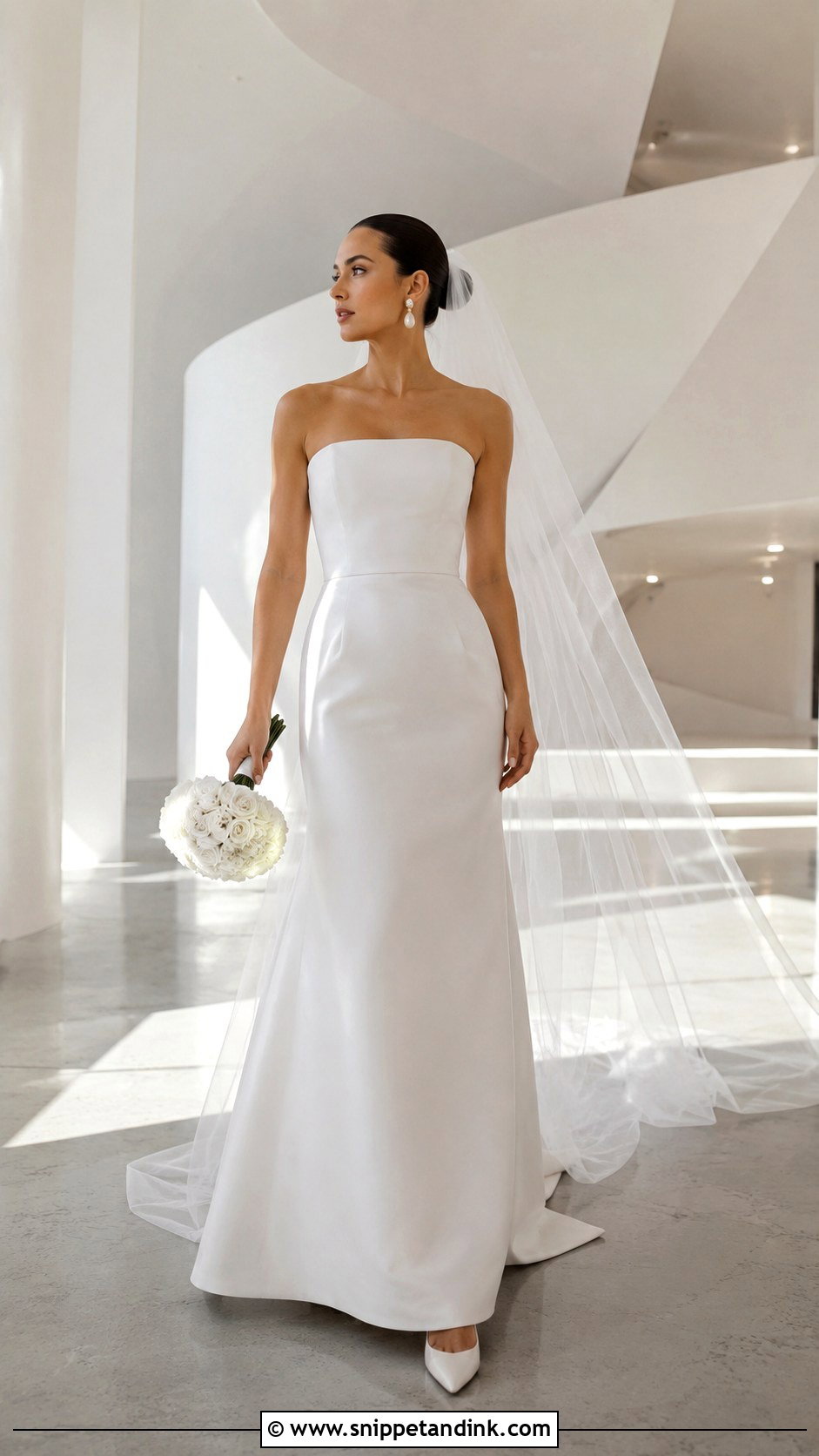
Plain satin is the least forgiving fabric I work with. It reflects light, so every pucker, seam allowance and underwear edge shows, especially in flash photos. A straight neckline, fitted waist and gently flared skirt rely entirely on tailoring. I check the gown in daylight and under indoor lights before approving alterations, and I ask the bride to bring the exact underwear she’ll wear. Sculptural pearl earrings, satin pumps and a long sheer veil add interest, with a polished bun or a softly waved bob. A compact white bouquet and a structured clutch take it smoothly into the reception.
7. Square Neck Bridal Gown
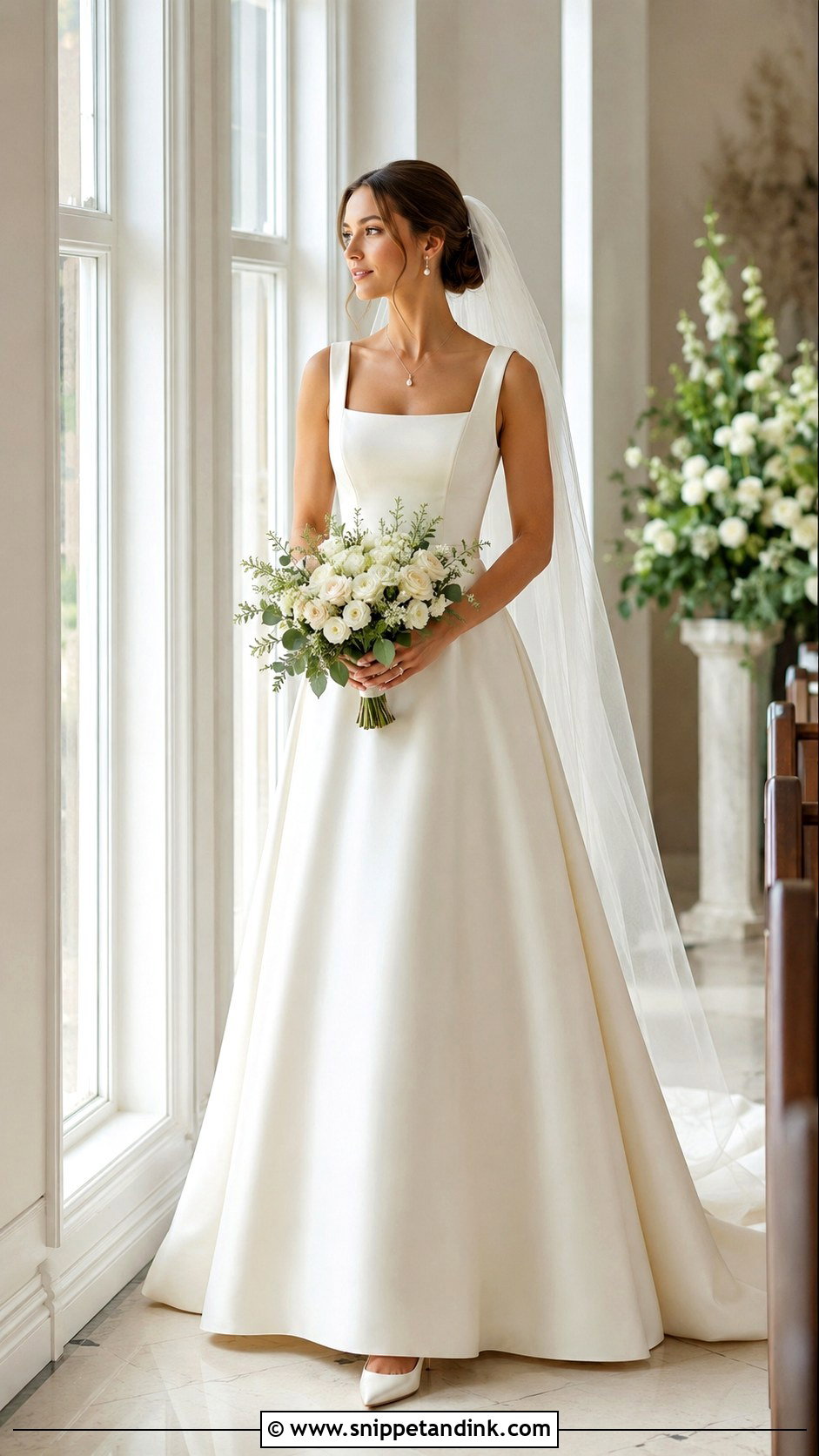
Square necklines frame the collarbones and suit almost every bust size, but they gap easily. During alterations I check that the straps lie flat and the corners of the square don’t fold forward when you lean. Wide straps, fitted sleeves or a sleeveless bodice all work, and an A-line skirt keeps it easy to move in. A fine pendant that drops below the neckline edge, pearl drops and closed-toe heels are enough. Avoid a choker or collar necklace that sits on the square edge and crowds it. A chapel veil anchored under a low bun keeps the line visible.
8. Off The Shoulder Bridal Gown
Off-the-shoulder gowns limit how high you can lift your arms, full stop. I make brides hug me, pretend to dance and raise a hand to wave at the fitting, and if the band cuts in, we look at removable straps or a more flexible drape. Satin bands look crisp and formal; lace sleeves softer. An upswept style, crystal drops and a simple veil at the back of the head keep the shoulders clear. Pointed kitten heels give height under a full skirt without aching feet. A bouquet with gentle curves echoes the neckline.
9. Statement Sleeve Bridal Gown
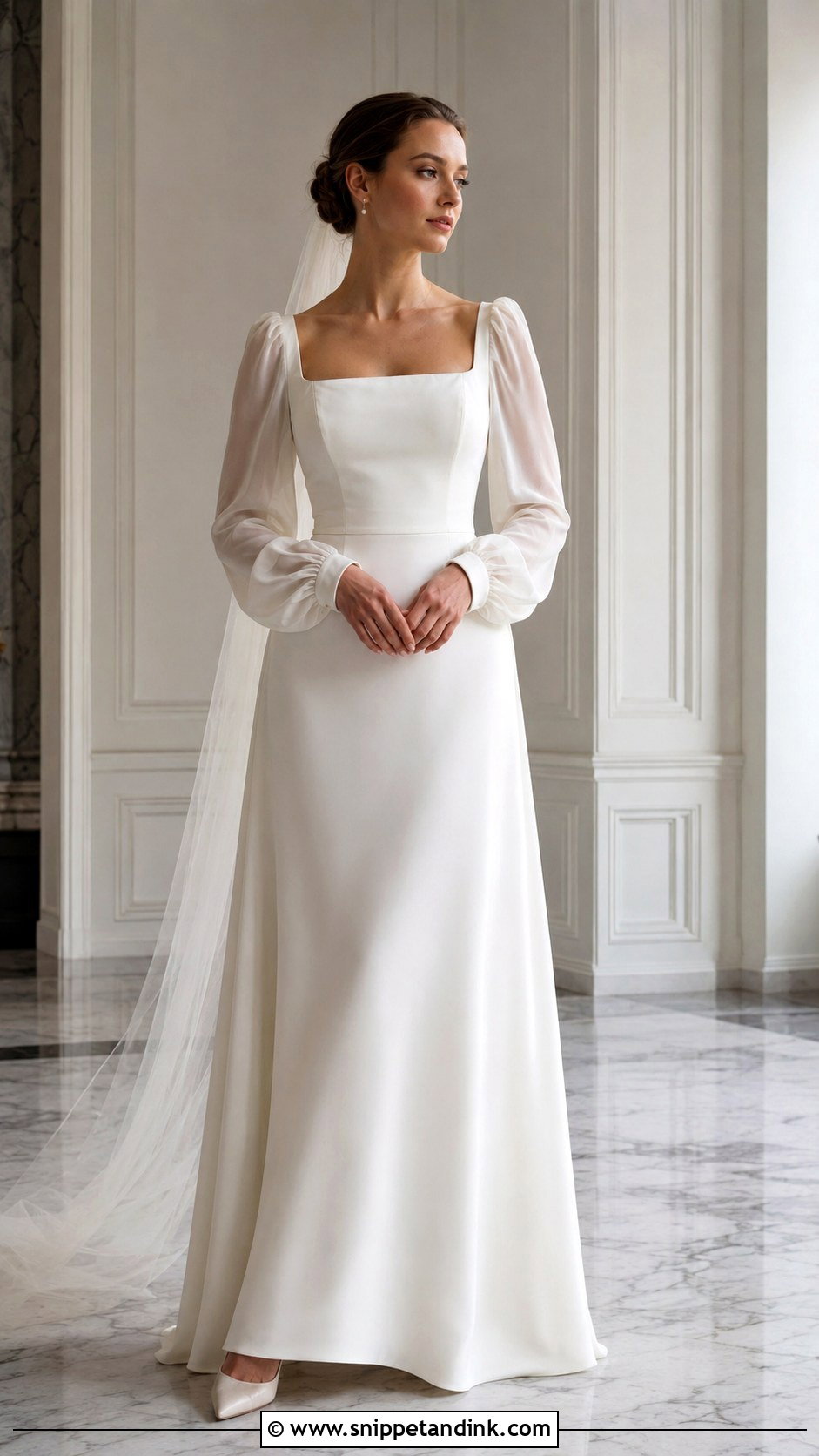
Big sleeves change how a gown moves more than any other detail. Sheer bishop sleeves feel light; structured puffs create a fashion silhouette that needs a streamlined or soft A-line skirt underneath to stay balanced. I have brides bend their elbows and roll their shoulders before alterations, because a sleeve that twists at the elbow will do it in every photo. For warm weather, mesh, organza or light lace breathe far better than satin. Small earrings, a low bun and plain pumps keep the focus on the arms. Removable sleeves let you change the look later, and a simple tulle veil can come off after the ceremony.
10. Floral Lace Bridal Gown
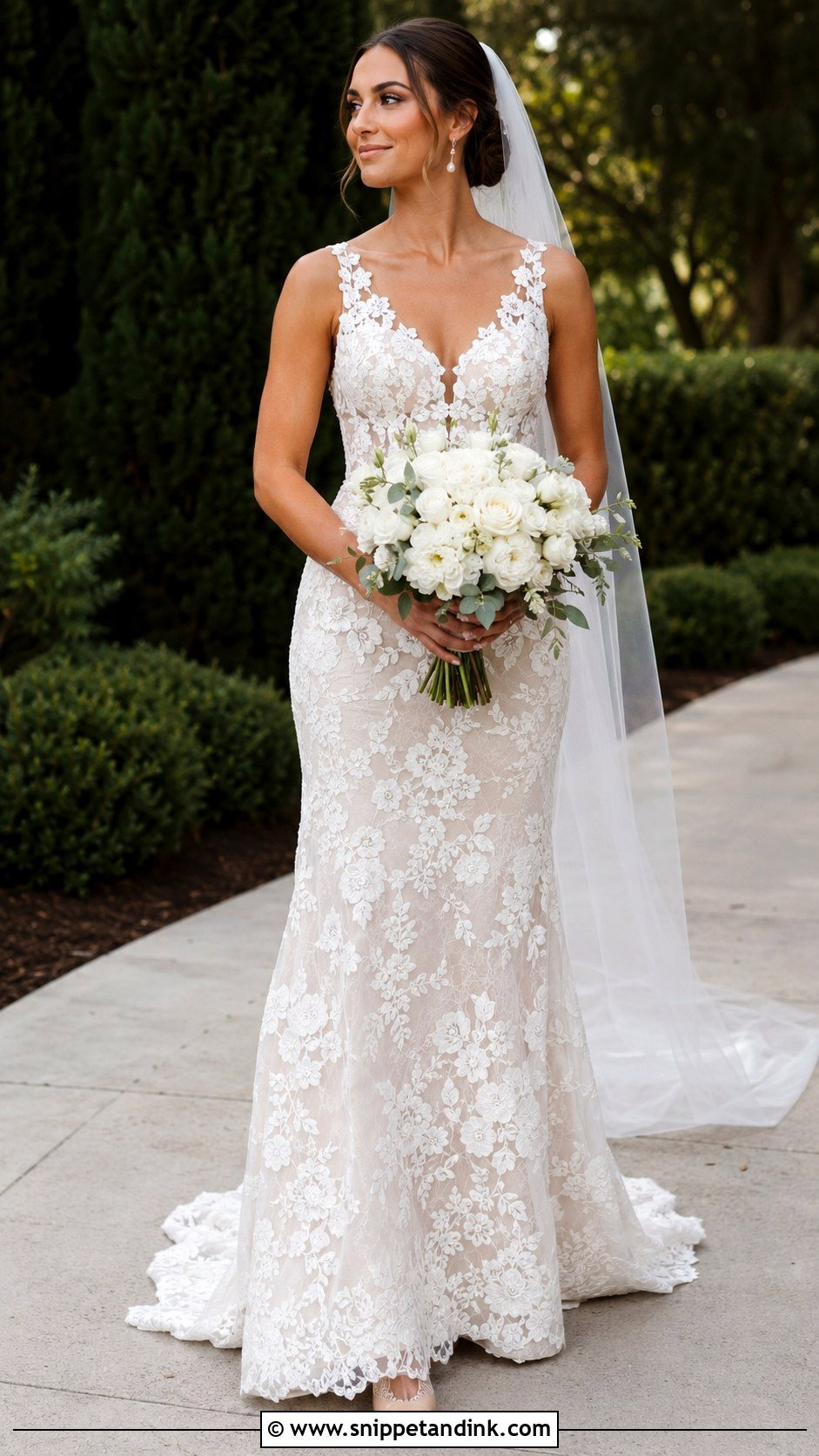
Lace scale changes the mood completely. Large motifs feel contemporary and read clearly from the back of the room; small ones look softer and more vintage. A fitted bodice with an A-line or sheath skirt works for either. I keep accessories plain here, nude-lined heels, pearl earrings and a veil edged in plain tulle, because lace on lace gets busy fast. Lining colour decides how much the pattern shows: skin-toned lining makes it float, ivory lining gives stronger contrast. On grass or rough paths, lace trains snag, so ask for a bustle that lifts it properly for the reception.
11. Pearl Embellished Bridal Gown
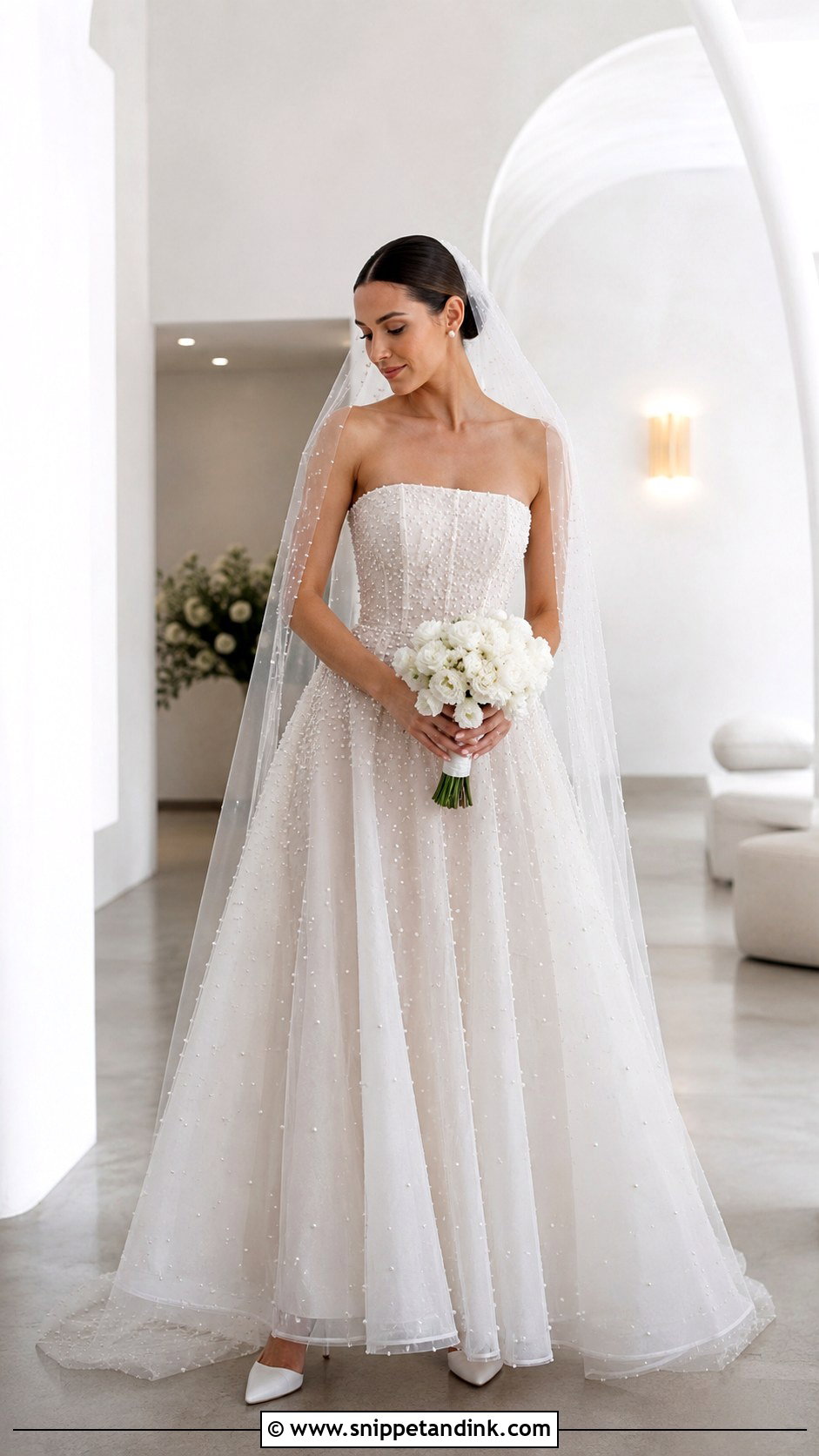
Pearls give a soft glow where crystals give sharp sparkle. Scattered across tulle they look delicate; concentrated beading can mark the neckline or waist. The thing nobody warns brides about is the underarm, where beads rub and catch on the veil, so I run my hand along there before buying. Plain satin heels, small pearl studs, a clean fingertip veil and a sleek hairstyle are all it needs. Skip multiple pearl strands; the gown is already wearing them. Put a few matching spare beads and clear thread in your emergency kit. Soft white flowers finish it.
12. Sheer Illusion Bridal Gown
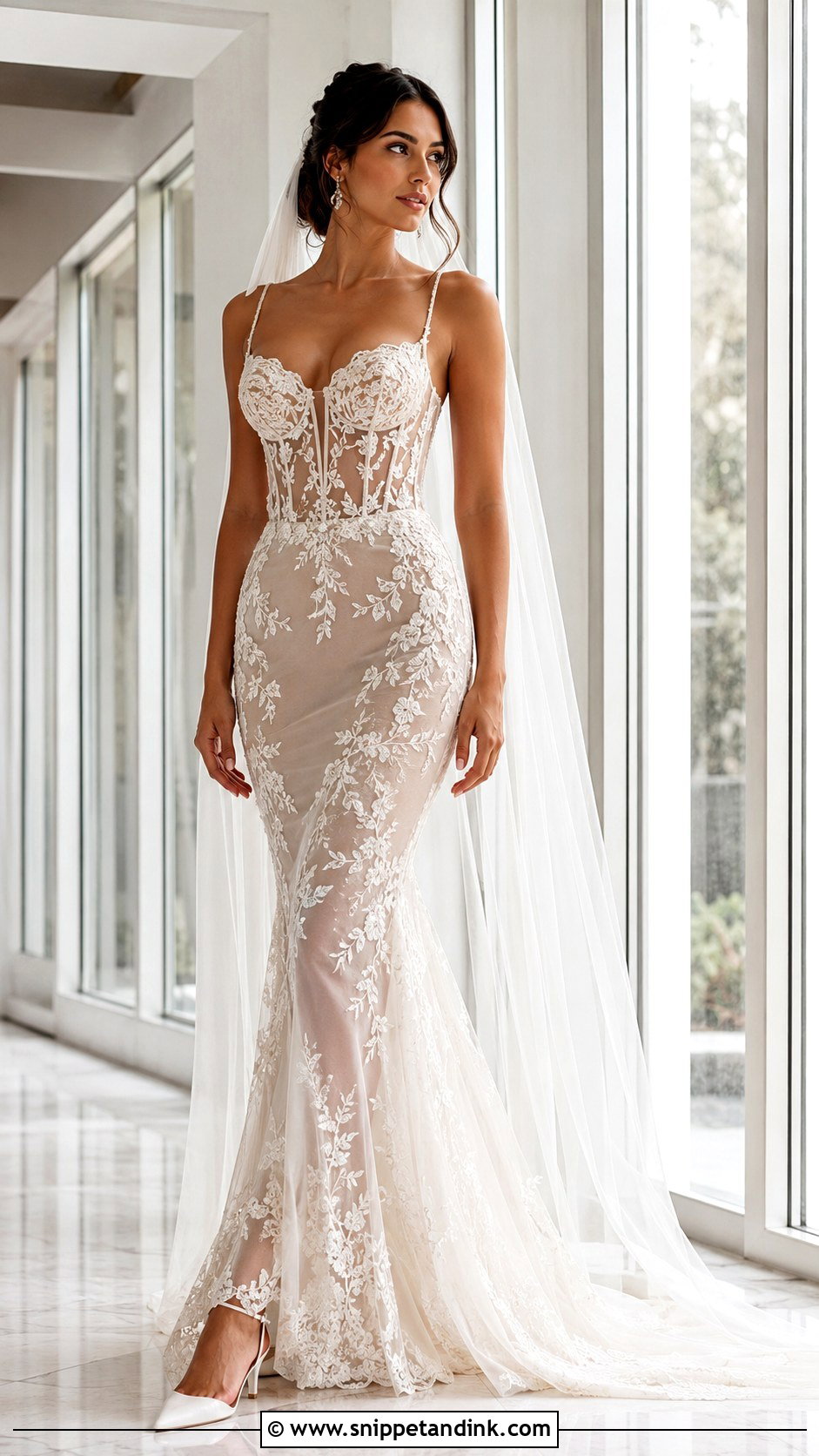
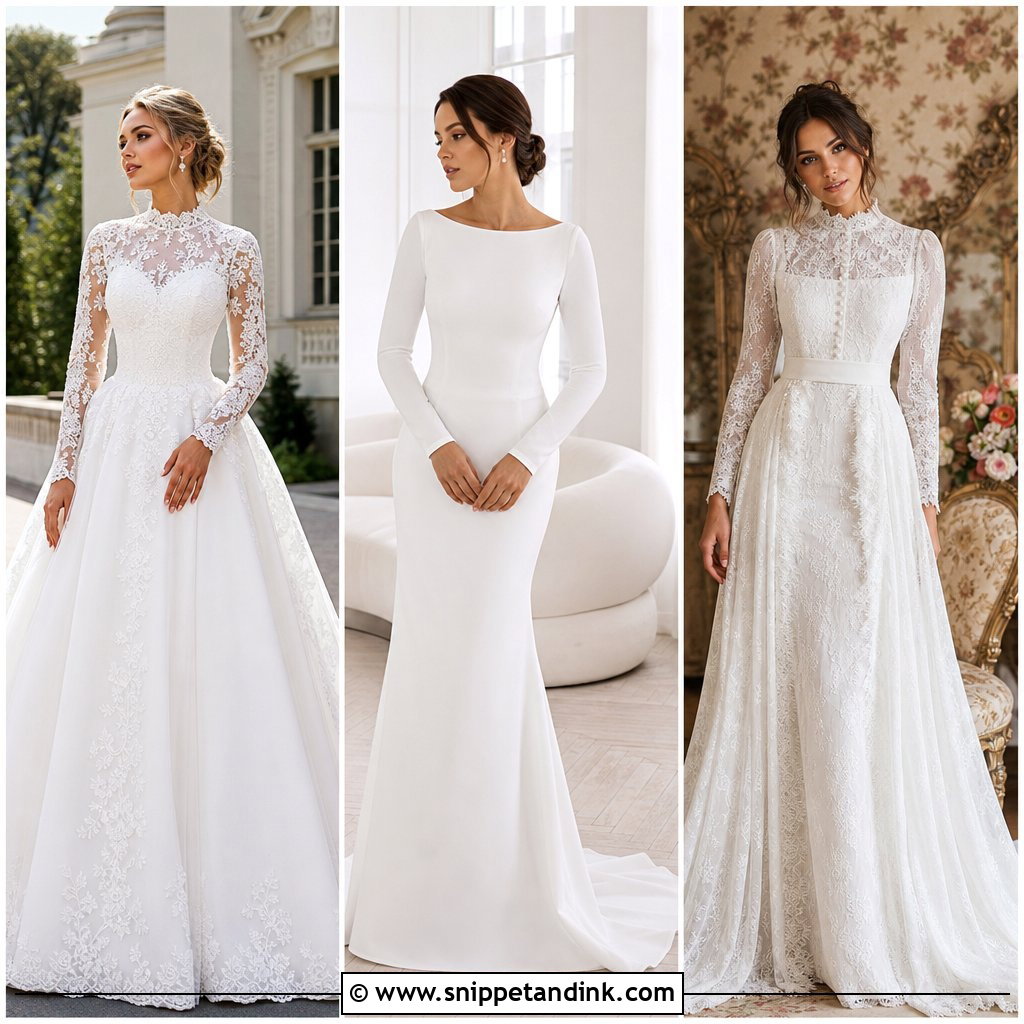
The most wearable sheer gowns hide a lot of engineering behind the transparent mesh: a firm lining, placed embroidery and structured panels doing the support work. An illusion neckline, lace-covered bodice and flowing skirt keep it balanced. I always view these by a window and then under bright indoor lights, because flash photography can make some meshes almost vanish and reveal more than you expected. Underwear must match the lining, not your skin. A good tailor can move appliqués to add coverage without spoiling the effect. Slingback heels, delicate earrings, a plain chapel veil and soft makeup suit its light construction.
13. High Neck Bridal Gown
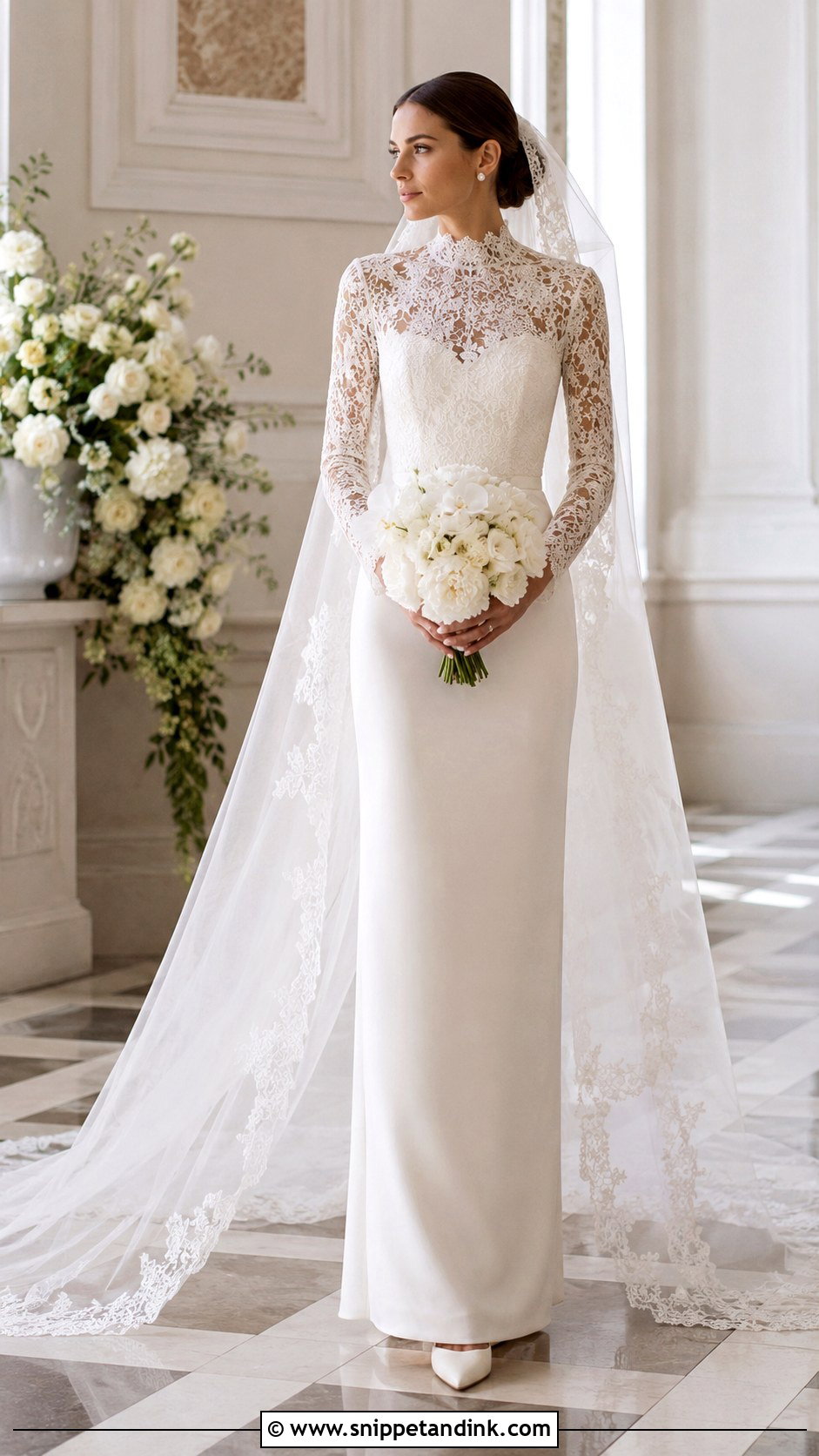
High necks draw every eye to your face, which is why I keep jewellery to studs. Lace collars feel romantic; plain crepe or satin feels cleaner. A column skirt makes it sleek, an A-line makes it easier to move in. Watch the collar for two things: it should lie flat without rubbing when you turn your head, and buttons or embroidery at the back can catch the veil every time you move. A low bun, cathedral veil and pointed pumps complete a formal version. It’s a good answer for cooler months or a ceremony that asks for coverage without heavy sleeves.
14. Asymmetrical Neckline Bridal Gown
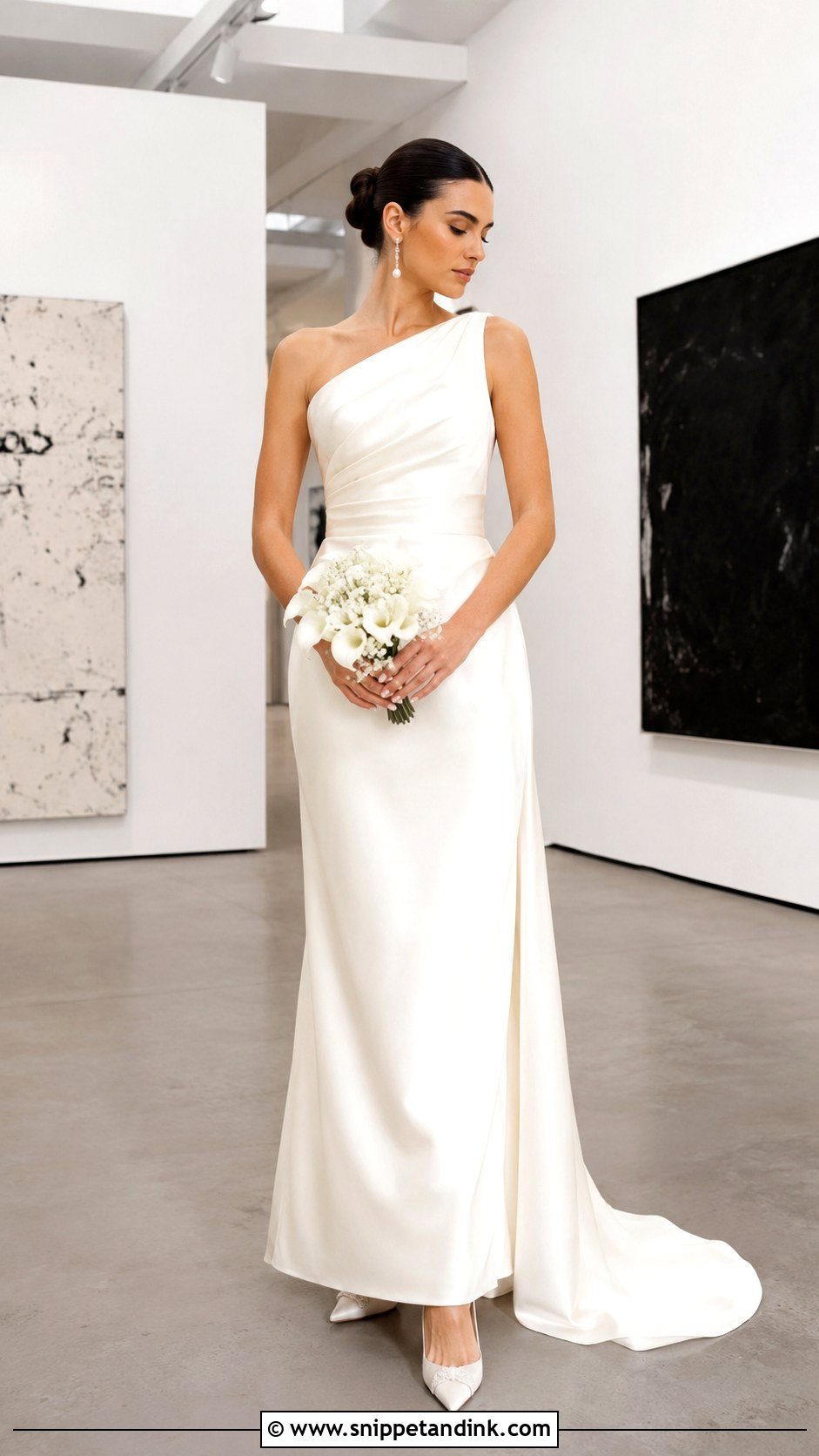
One-shoulder satin looks sharp with a column or softly flared skirt, and it’s the asymmetry that makes it modern. Because only one strap carries the bodice, internal support matters more than usual; I check for boning and a grip waistband, then have the bride raise both arms to see if it shifts. Sweep an updo toward the bare shoulder to balance the line. One statement earring or a pair of simple drops both work, depending on how busy the neckline is. Pointed heels, a compact bouquet and, if you want one, a plain veil placed so it doesn’t cover the shoulder detail.


15. Bridal Gown With Leg Slit
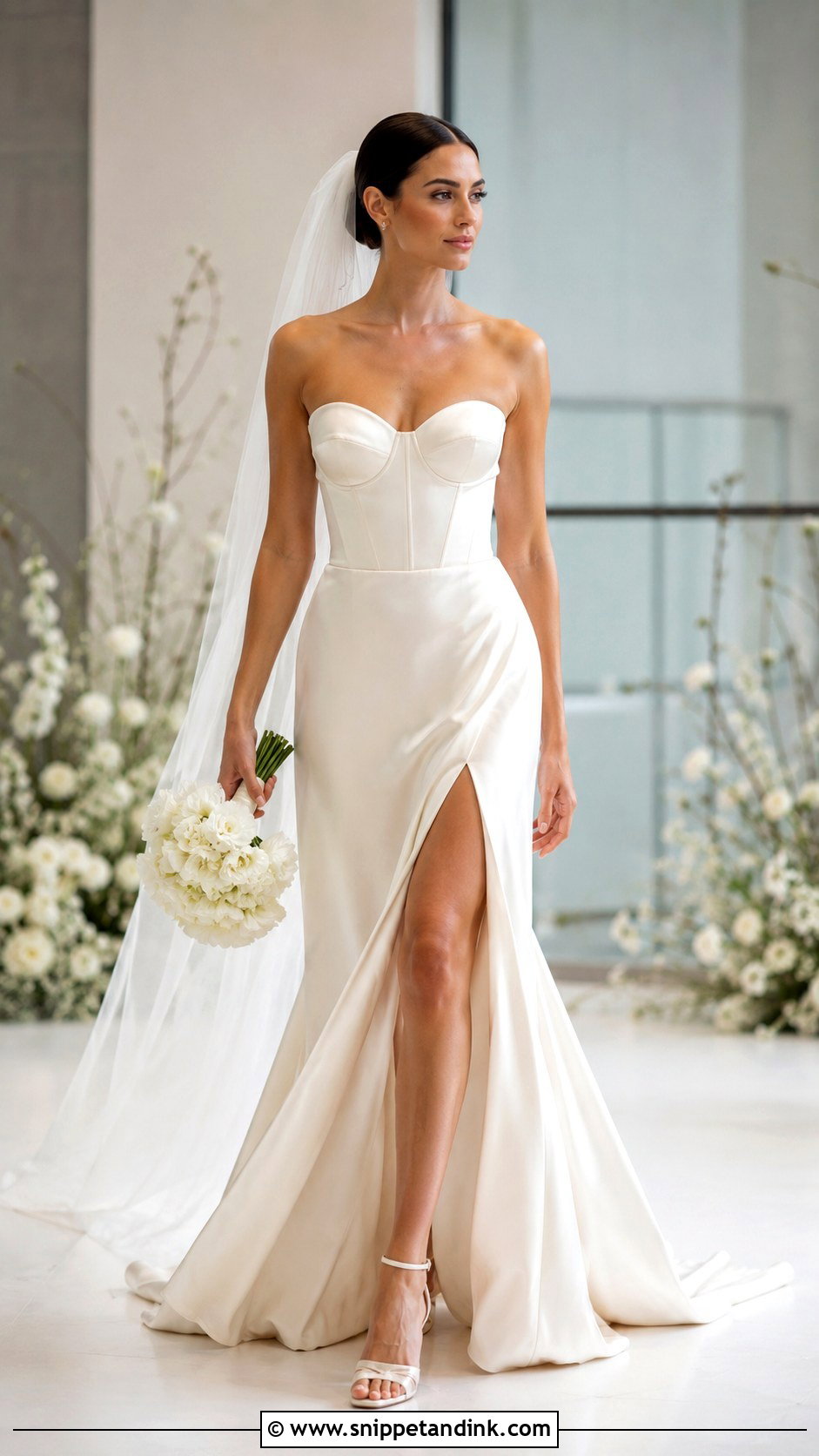
A leg slit makes a long gown easier to walk in and lighter to look at. It can hide under an overlapping skirt or sit higher for more drama. A structured bodice over fluid crepe or satin keeps the shape balanced. During alterations I have brides walk, sit and step up onto a platform, because a slit that’s perfect standing can open far higher on a step. Fashion tape or a concealed modesty panel is worth adding for windy outdoor venues. Your shoes will show, so choose polished pointed pumps or delicate ankle straps, and keep the rest quiet with a plain veil, small earrings and a slim bouquet.
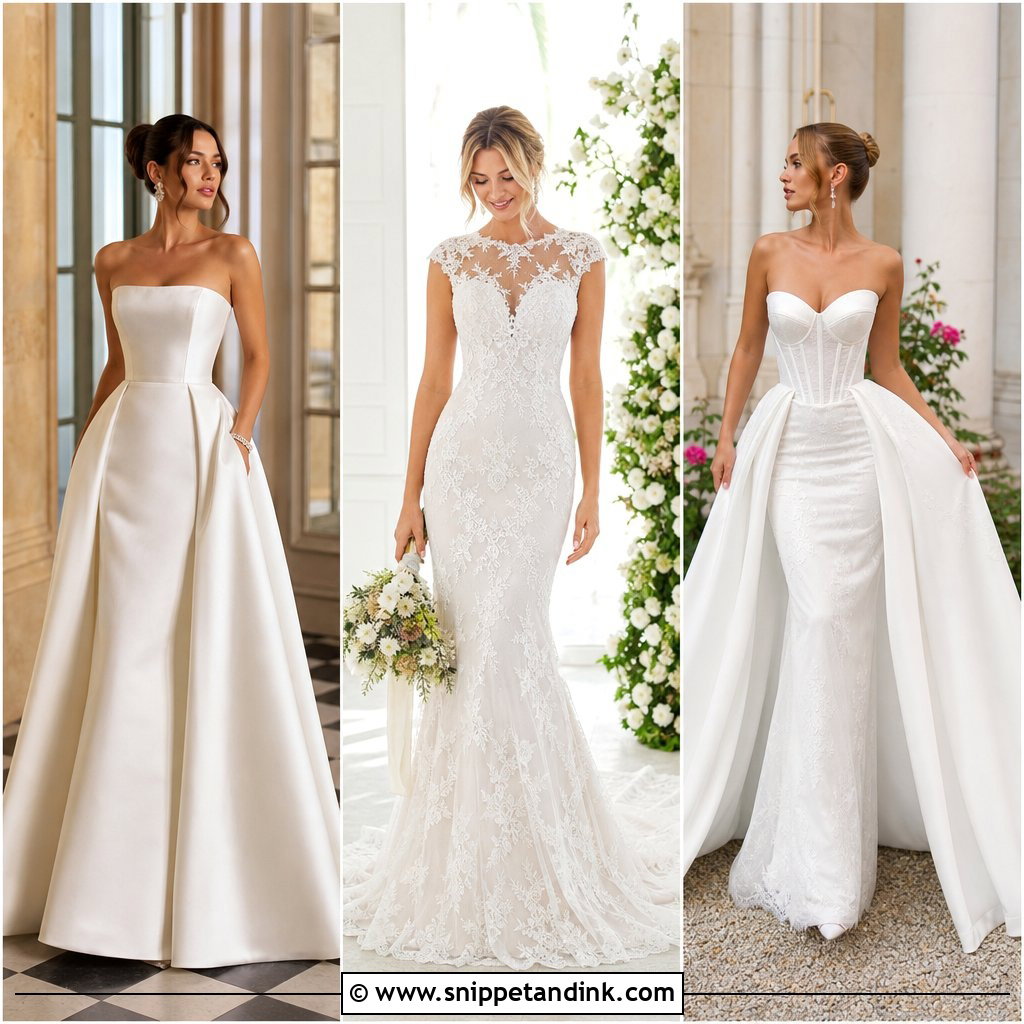
16. Convertible Overskirt Bridal Gown
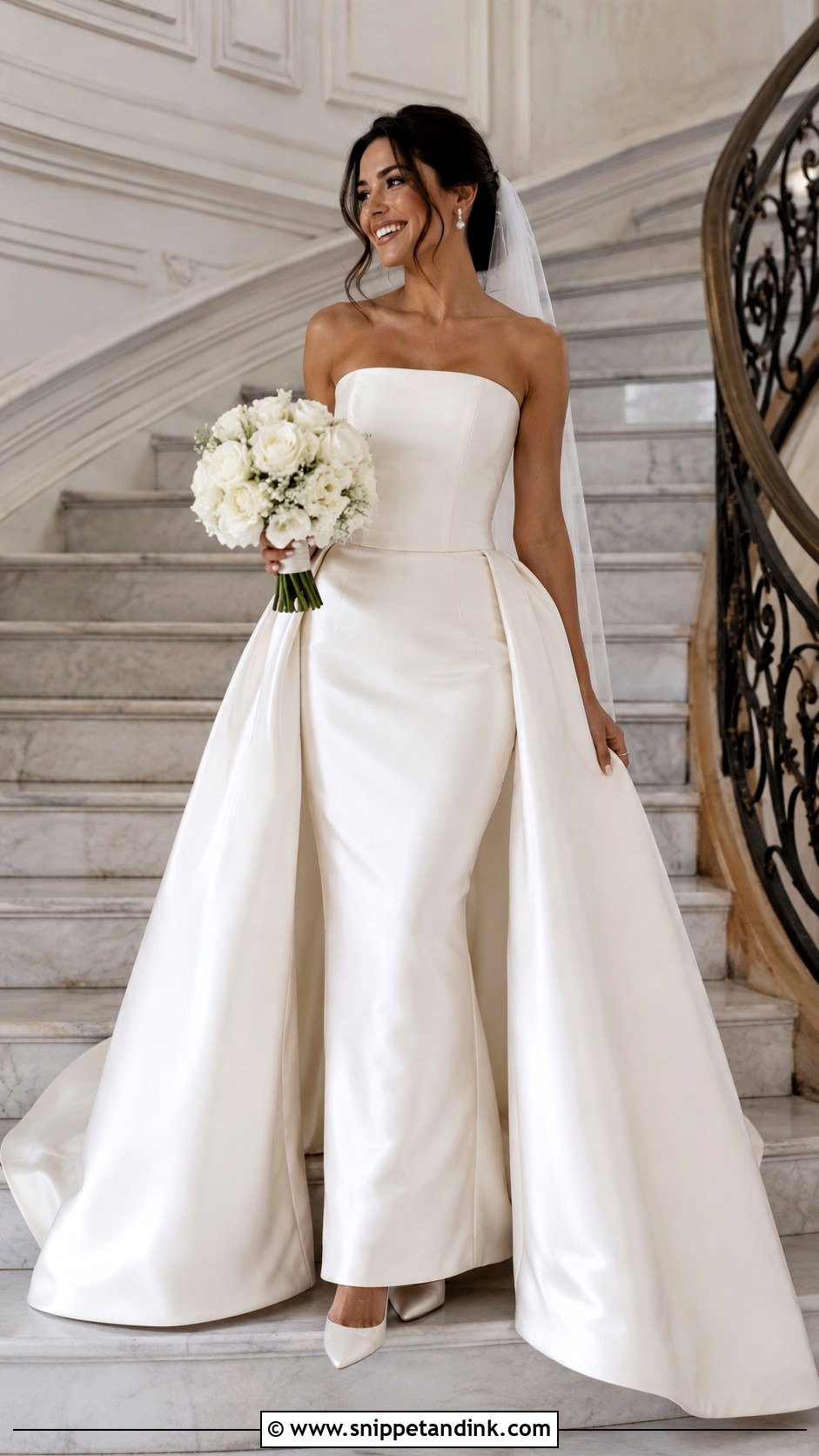
A convertible overskirt means you walk in with ceremony volume and dance in a fitted sheath or column. The join at the waist is where cheap versions give themselves away, with gaps, bulky hooks and uneven fabric. Practise taking it off with whoever will help you, twice, before the day. The gown underneath may still need its own bustle. Comfortable heels, medium earrings and a veil that also comes off easily keep the accessories flexible. It saves buying a separate reception dress and gives you two different sets of pictures.
17. Two Piece Bridal Gown
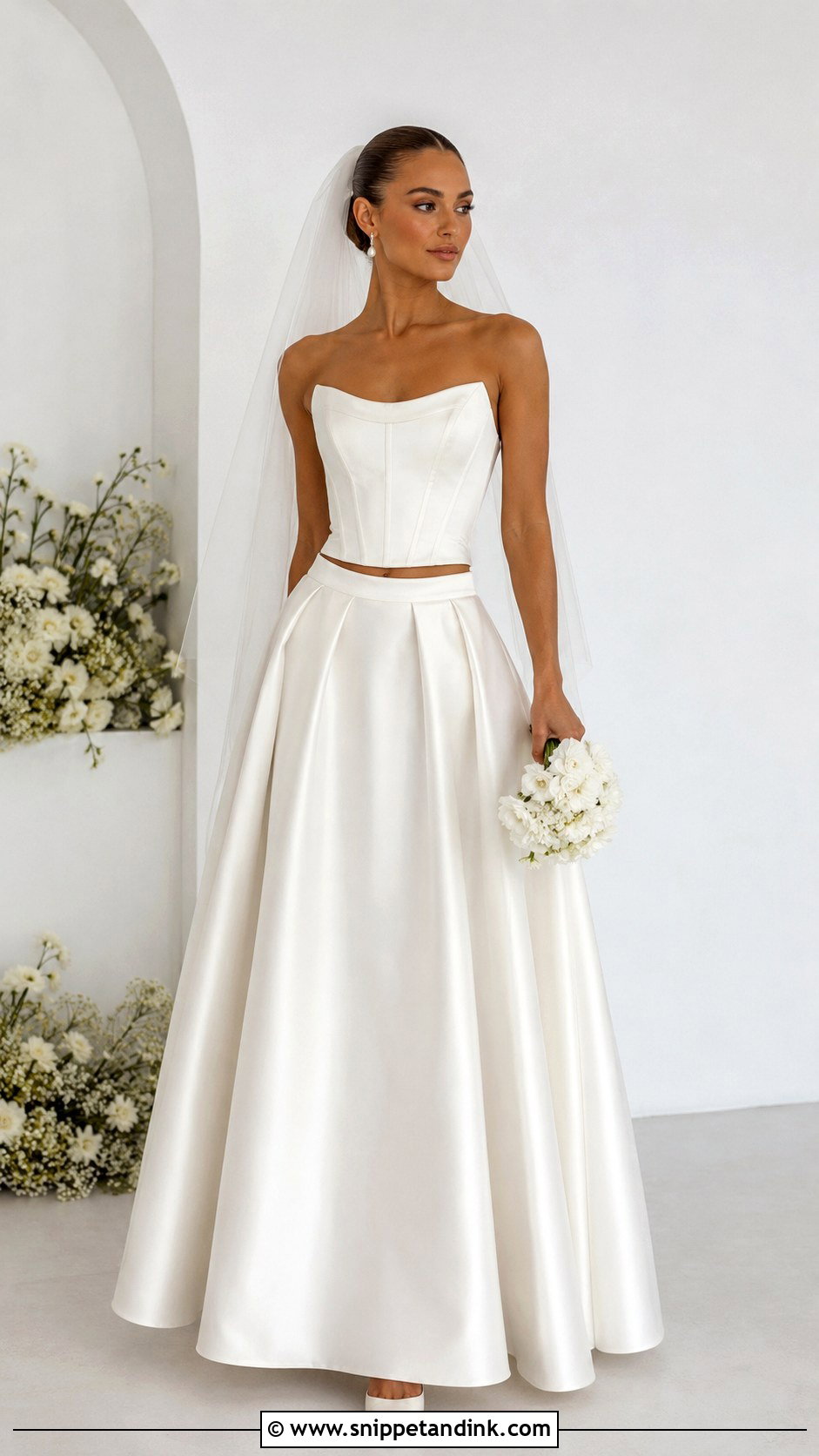
Two pieces give you options. A structured corset top with a full satin skirt looks formal; a lace top with a crepe skirt feels softer. The pieces should meet cleanly at the waist so it looks deliberate from the side as well as the front. My warning is colour: two ivories from different fabrics can look identical in the shop and clash in daylight, so I compare them outdoors before ordering. Secure closures stop either half shifting. Check how much midriff shows when you sit. Pointed heels, pearl earrings and a light veil suit it, and swapping just the top for the reception is an easy outfit change.
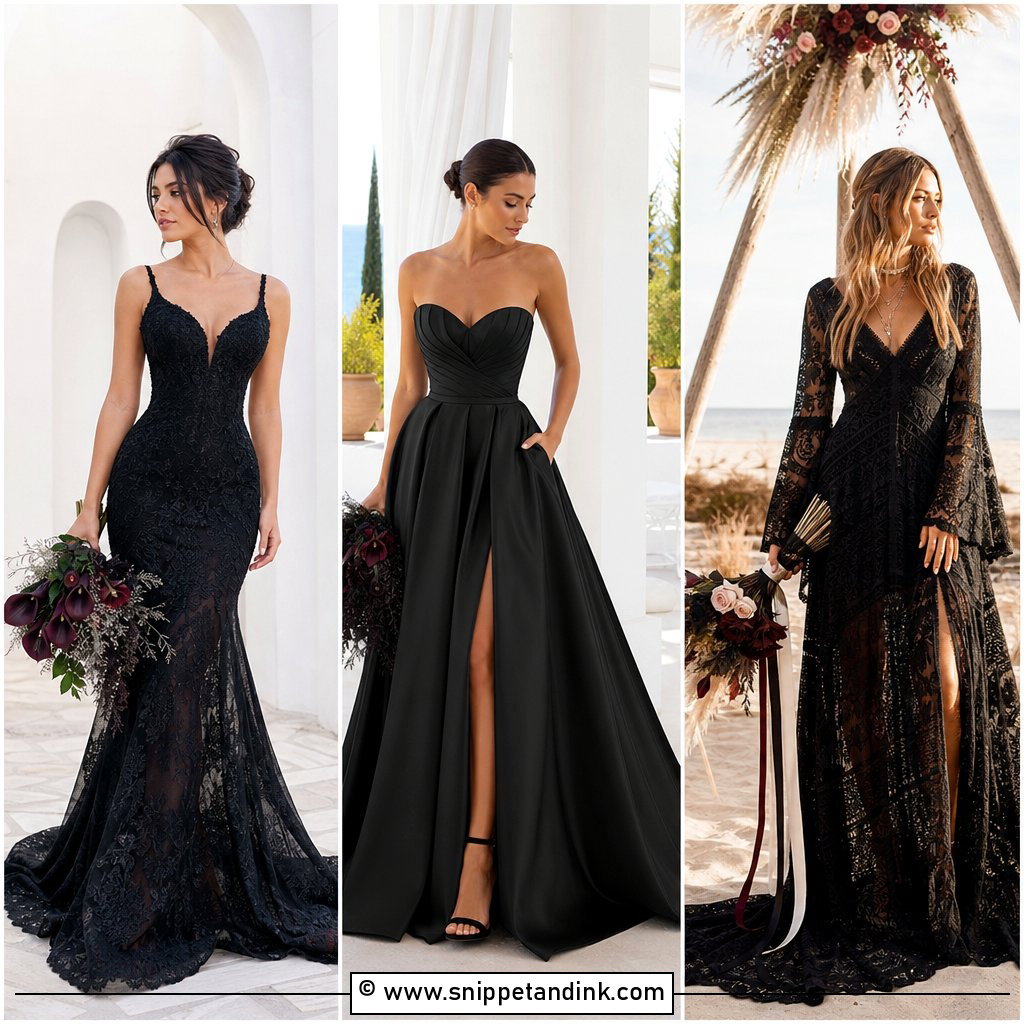
18. Black Accent Bridal Gown
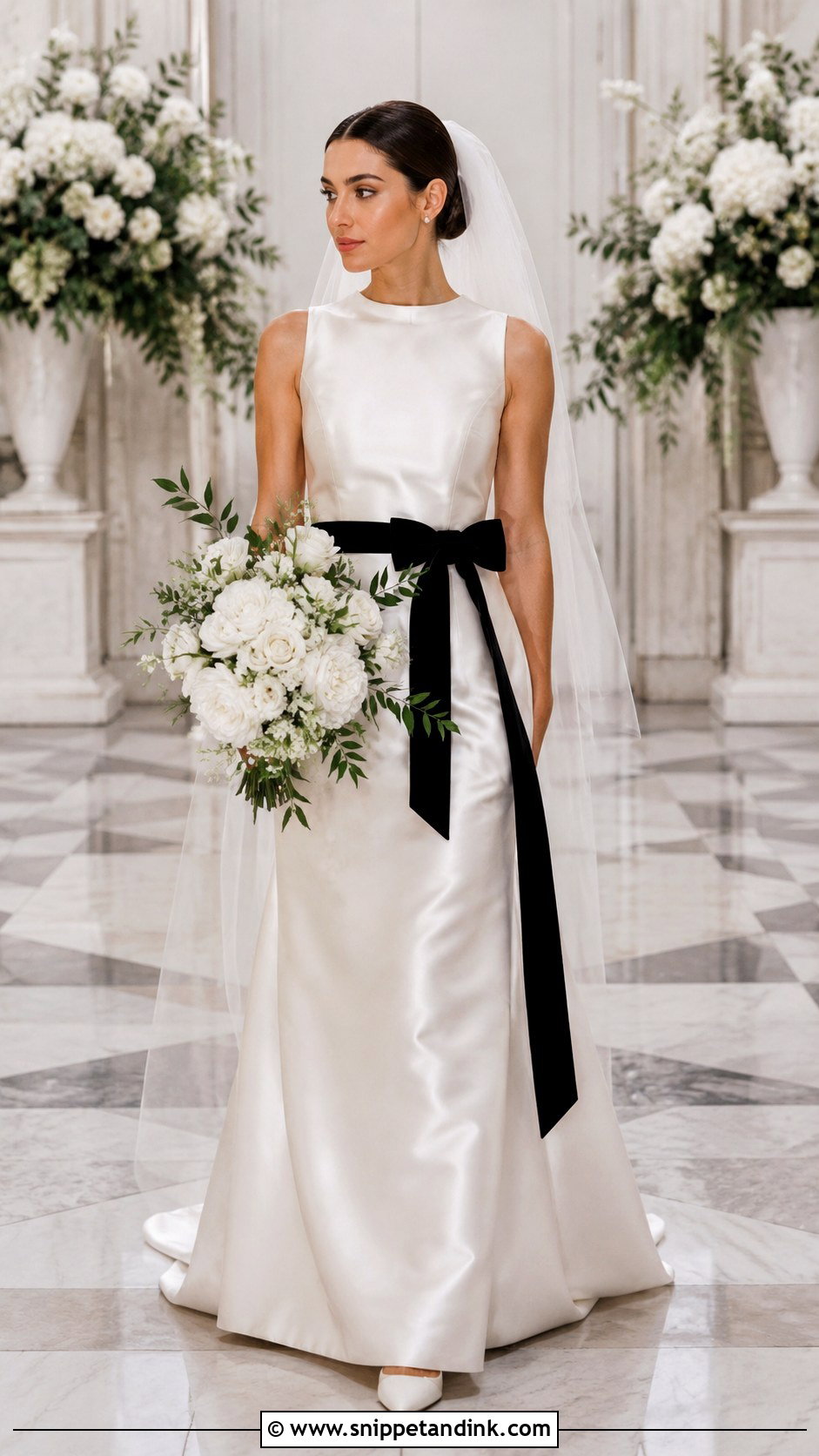
Black on an ivory gown is a strong move, so I use it once or twice, never everywhere. A narrow velvet belt, an embroidered bow, black floral appliqués or fine ribbon trim can each define the silhouette. Repeat it in one other place, a hair ribbon perhaps, and leave everything else ivory: pumps, earrings, a plain veil. A bouquet of white flowers with deep green foliage supports the contrast without making it feel themed. If you’re tempted by a black-edged veil, look at it against the gown from across the room first. The contrast should frame you, not dominate.
19. Blush Bridal Gown
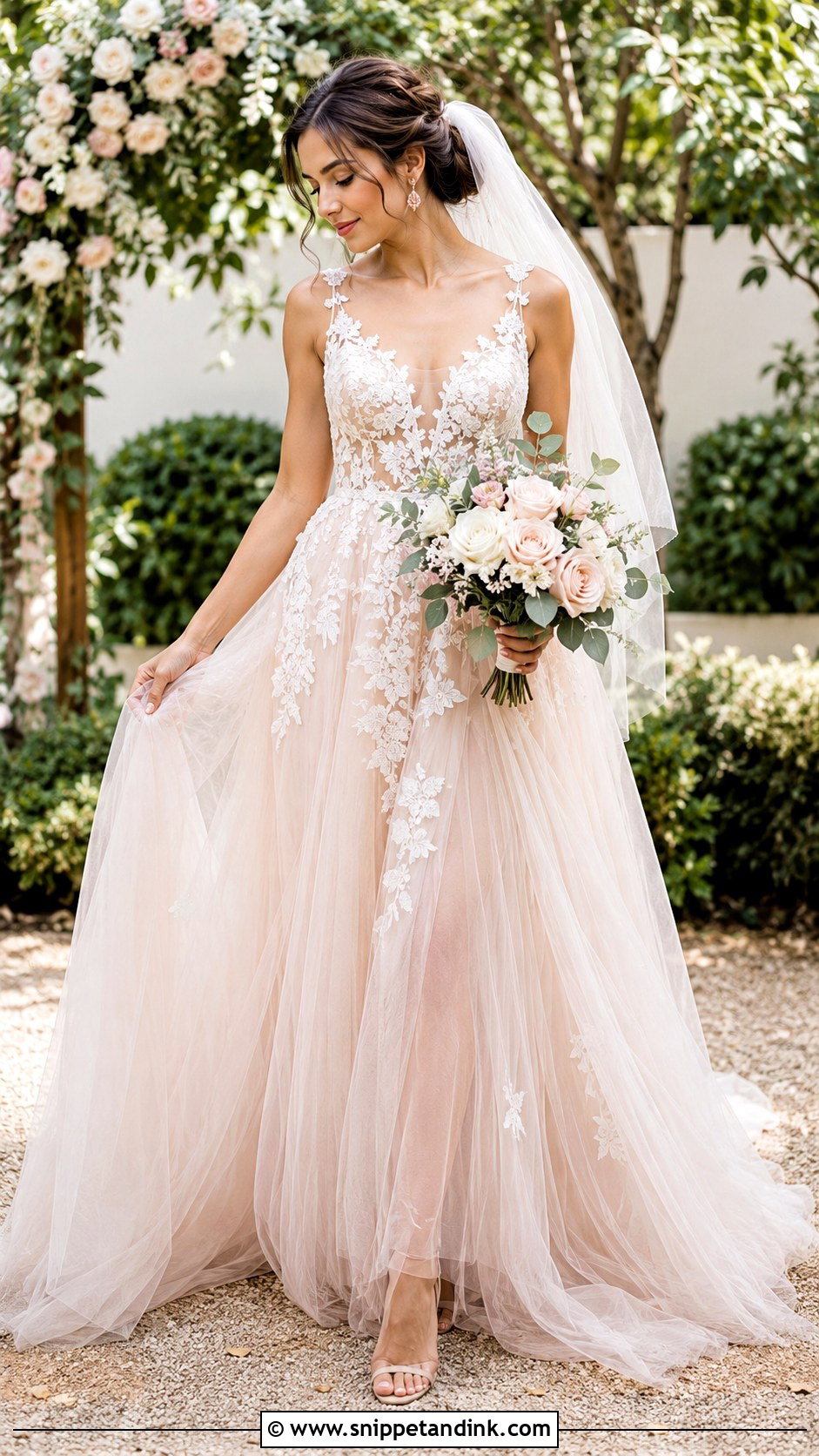
Blush can live in a soft lining under ivory lace or run through the whole gown in layered tulle. Lighting changes it a lot, so I look at swatches indoors, outdoors and next to the bridesmaid colours. Cool undertones usually suit a pink-based blush; warmer skin often glows in peach or champagne. Champagne heels, rose-toned earrings and a sheer ivory veil keep the palette gentle, with a bouquet of cream, pale pink and muted greenery. Ask your makeup artist to complement the dress rather than match it, or everything melts together in photos.
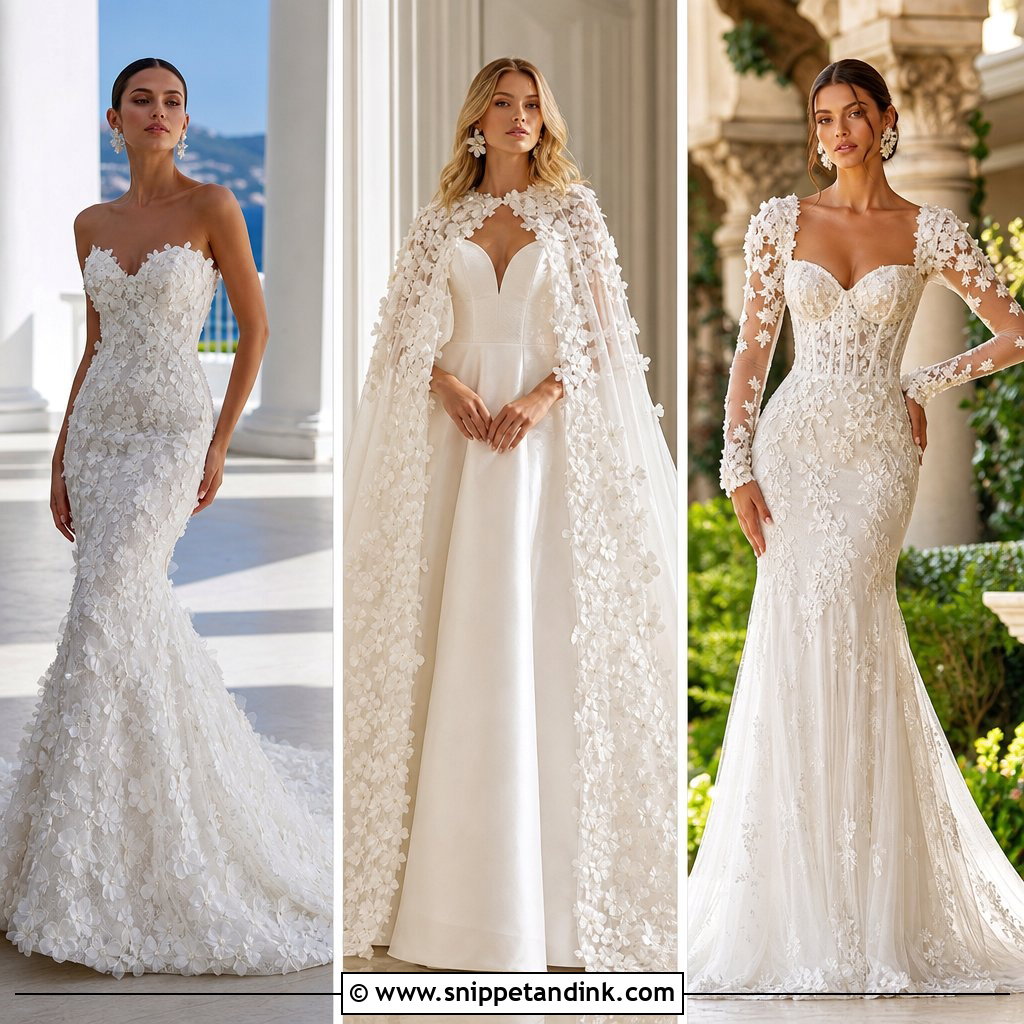
20. Cape Bridal Gown
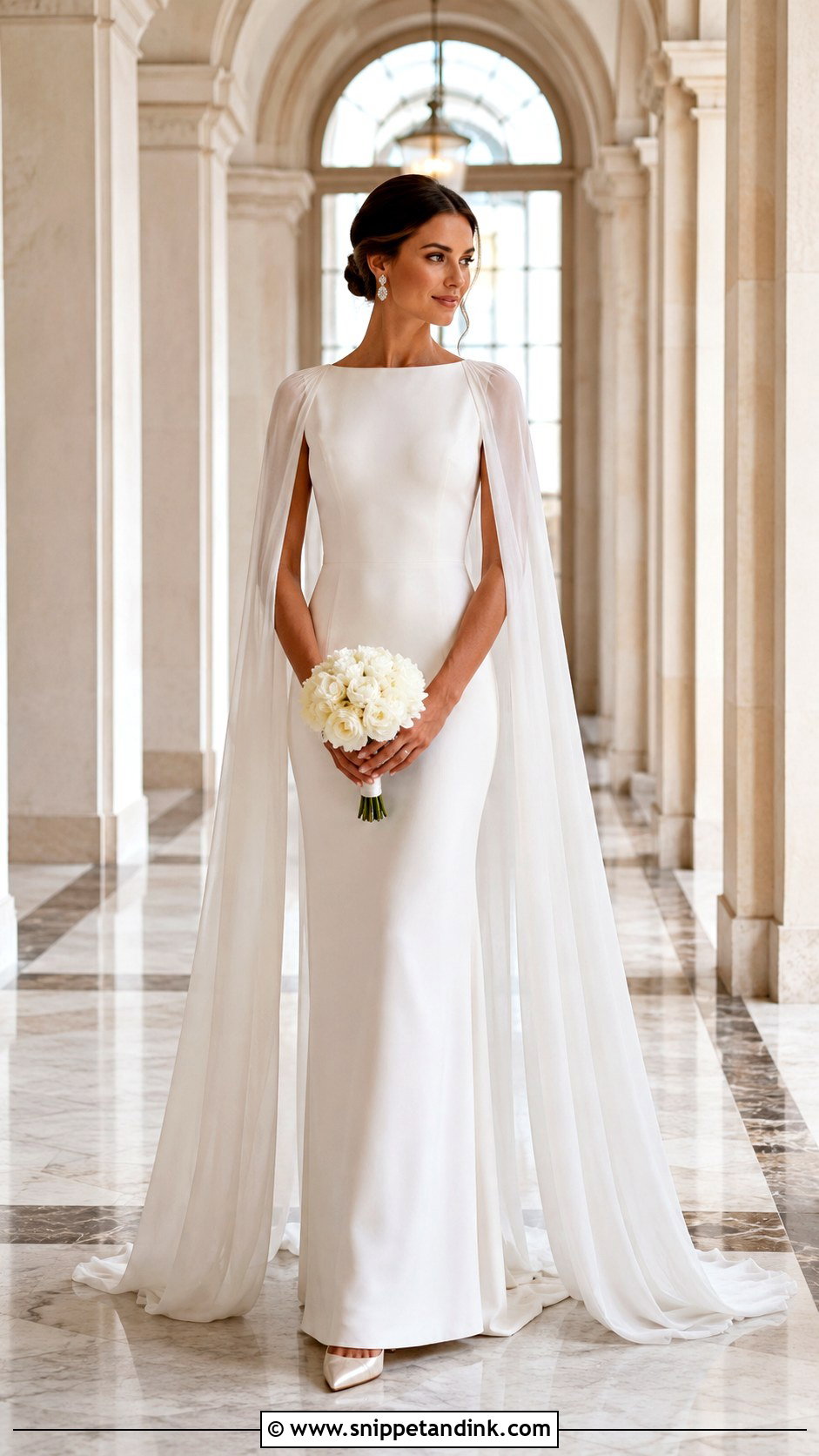
A cape gives you the drama of a veil with a cleaner line from shoulder to floor. It can attach at the neckline, shoulders or back, in plain tulle, chiffon or embroidered lace. Pair it with a fitted column or a simple A-line so the cape stays visible. Please don’t add an equally elaborate veil on top; the two layers tangle and hide the dress. I make brides practise walking and turning, since a long cape catches under your heel on a quick pivot. Sleek pumps, refined earrings and an updo finish it, and if the cape detaches, you get a second look for the reception.
Wedding-Morning Fixes I Make Most With These Styles
Most dress emergencies are small, and nearly all of them come from the features that made these gowns popular. Here is what I actually reach for in my kit.
Satin creased in the car
Hang the gown up as soon as you arrive and steam from the inside of the skirt, keeping the nozzle moving. Never iron satin directly; it leaves a shine you can’t remove.
A flattened bow or crushed petals
Steam lightly, then reshape with your fingers while the fabric is warm. A little tissue tucked inside each bow loop for an hour helps it hold.
Corset laces that loosen
Lace-up backs relax as the fabric warms to your body. I re-tighten from the middle outward about an hour after the bride is dressed, then tuck the ends in neatly.
A popped pearl or loose appliqué
Keep a needle threaded with clear thread, safety pins and a few spare beads in a small pouch. A loose bead is a two-minute stitch; ignoring it usually means losing the three around it.
Comfortable at Midnight, or Only in the Mirror?
The question I ask every bride in a fitting room is simple: will you still be comfortable at midnight? Every silhouette here, minimalist satin, floral lace, corsetry or a convertible overskirt, can be the right one, but only if it suits your venue, the weather, the ground you’ll walk on and how much you plan to dance. Bring your real shoes and underwear to every fitting. Sit, walk and lift your arms in the gown before anything is cut. Let the accessories support the dress rather than compete with it, and trust a good tailor to do the rest.
You'll Like These Ideas:








Leave a Reply