
Most Armenian brides I dress today wear white, and many of them still want something on the dress that their grandmother would recognise. That’s where taraz comes in. The traditional costume varied a great deal by region, and Western Armenian dress in particular was known for dense gold and silver embroidery. Modern designers rework it through silk, tulle, ornamental borders, belts and statement sleeves. Below are twenty dresses, from a full red taraz-inspired gown to a plain column with one embroidered belt, styled head to toe. The right level of heritage is whatever feels true to your family, not the maximum you can fit on the fabric.
How Much Taraz Do You Want on the Dress?
Before a bride looks at any of the dresses below, I ask her to place herself on a simple scale. It saves weeks of appointments, because a full heritage gown and a white gown with one embroidered belt are completely different projects with different makers and timelines.
- A quiet reference: one handmade belt, an embroidered veil border or a motif inside the hem.
- A visible accent: embroidered cuffs, neckline and waistband on a modern white gown.
- A heritage layer: a taraz-inspired coat, apron panel or overskirt worn for the church and removed later.
- A full interpretation: a coloured or velvet gown built around regional embroidery and ornament.
Then ask the older women in the family what they remember. A grandmother’s photograph, a surviving belt or a piece of needlework often gives a more honest starting point than any pattern book, and it tells the designer which region to draw from.
1. Traditional Red Armenian Taraz Wedding Dress
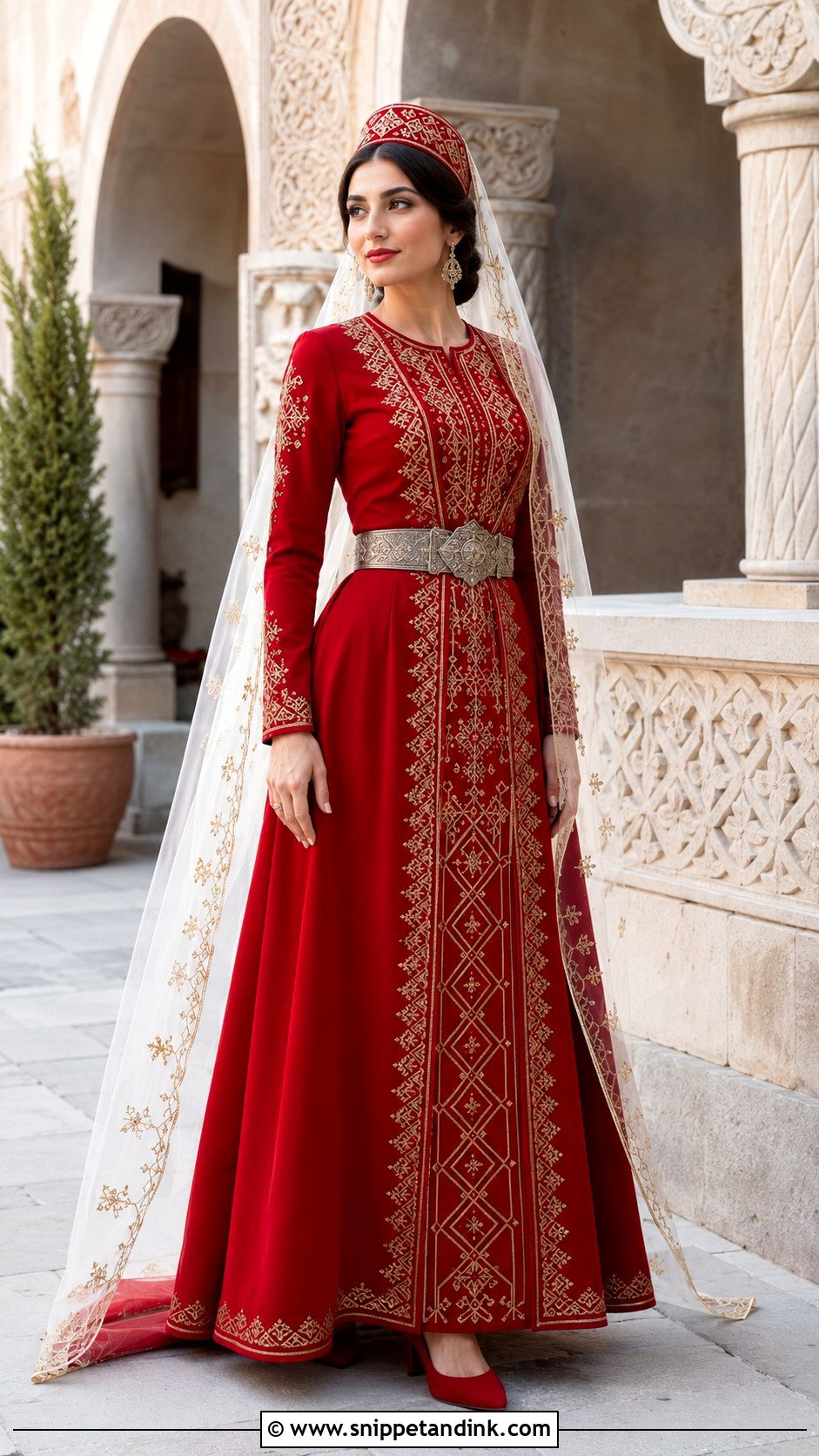
Red is the boldest way to wear heritage, and on a floor-length gown with a fitted bodice, long sleeves and an embroidered front panel it looks ceremonial rather than theatrical. Gold trim with geometric and botanical motifs adds richness. A decorated metal belt, low red heels, fine earrings and a sheer veil on an embroidered headpiece complete it. Traditional taraz was a whole ensemble, and its fabric, colour, cut and ornament could say where the wearer came from. That’s exactly why I’d look at family photographs or work with an experienced Armenian designer before copying any one regional pattern.
2. White Armenian Taraz Wedding Dress
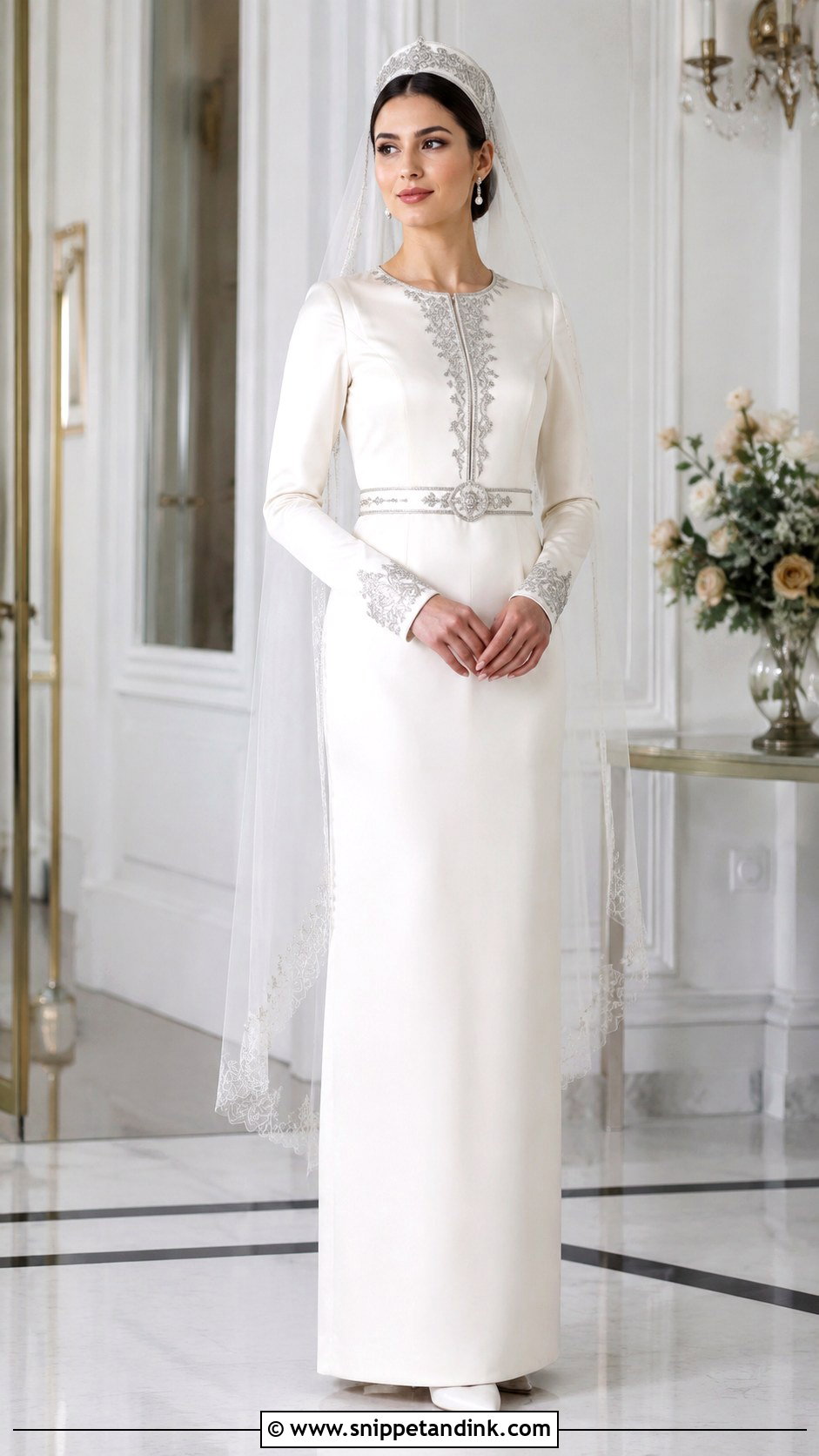
White taraz-inspired dresses are softer and easier to wear in church. An ivory or bright white gown with a fitted waist, straight skirt and long embroidered sleeves takes silver thread at the neckline, cuffs, bodice and hem. A slim silver belt gives shape and nods to the decorative belts of the full ensemble. White pointed shoes, pearl drops and a light veil under a small embroidered headpiece keep it monochrome. Silver thread on white looks faint in a shop and strong in photographs, so I always check a sample under a camera before the embroidery is approved.
3. Armenian Embroidered Ball Gown Wedding Dress
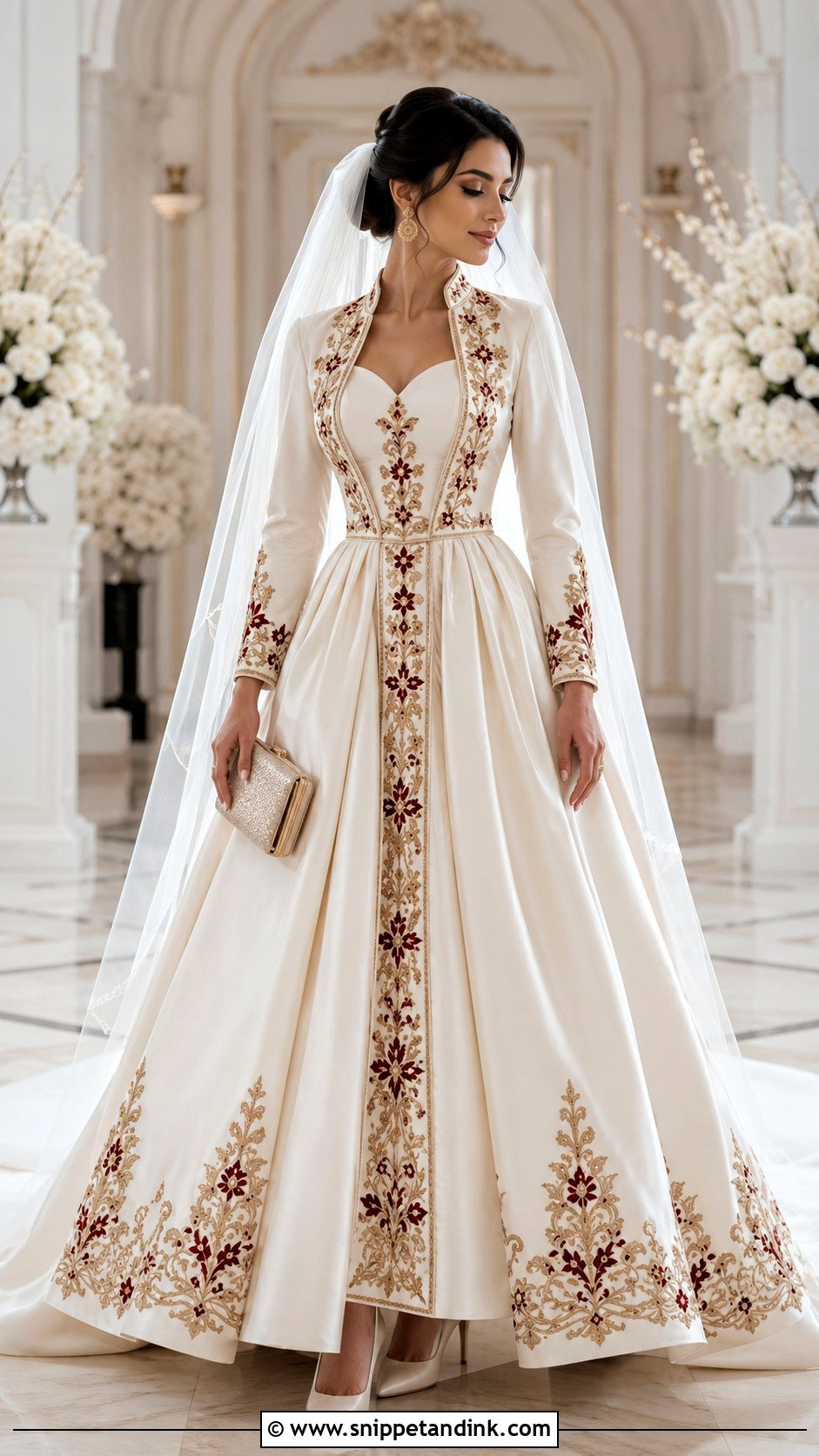
A ball gown gives you grandeur, and embroidery gives it meaning. A structured white bodice over a full satin or Mikado skirt can carry Armenian-inspired work at the neckline, waist and lower skirt, with gold and deep red thread standing out against ivory. Diamonds, triangles and botanical forms all appear in traditional ornament, so they’re a sound starting point for a custom design. I’d keep the embroidery framing the dress rather than covering it. Heavy thread on a full skirt adds real weight, and a hem band of metallic embroidery also drags on stone floors. Closed satin heels, a cathedral veil, small gold earrings and a clean updo finish it.
4. Armenian Velvet Long Sleeve Wedding Dress
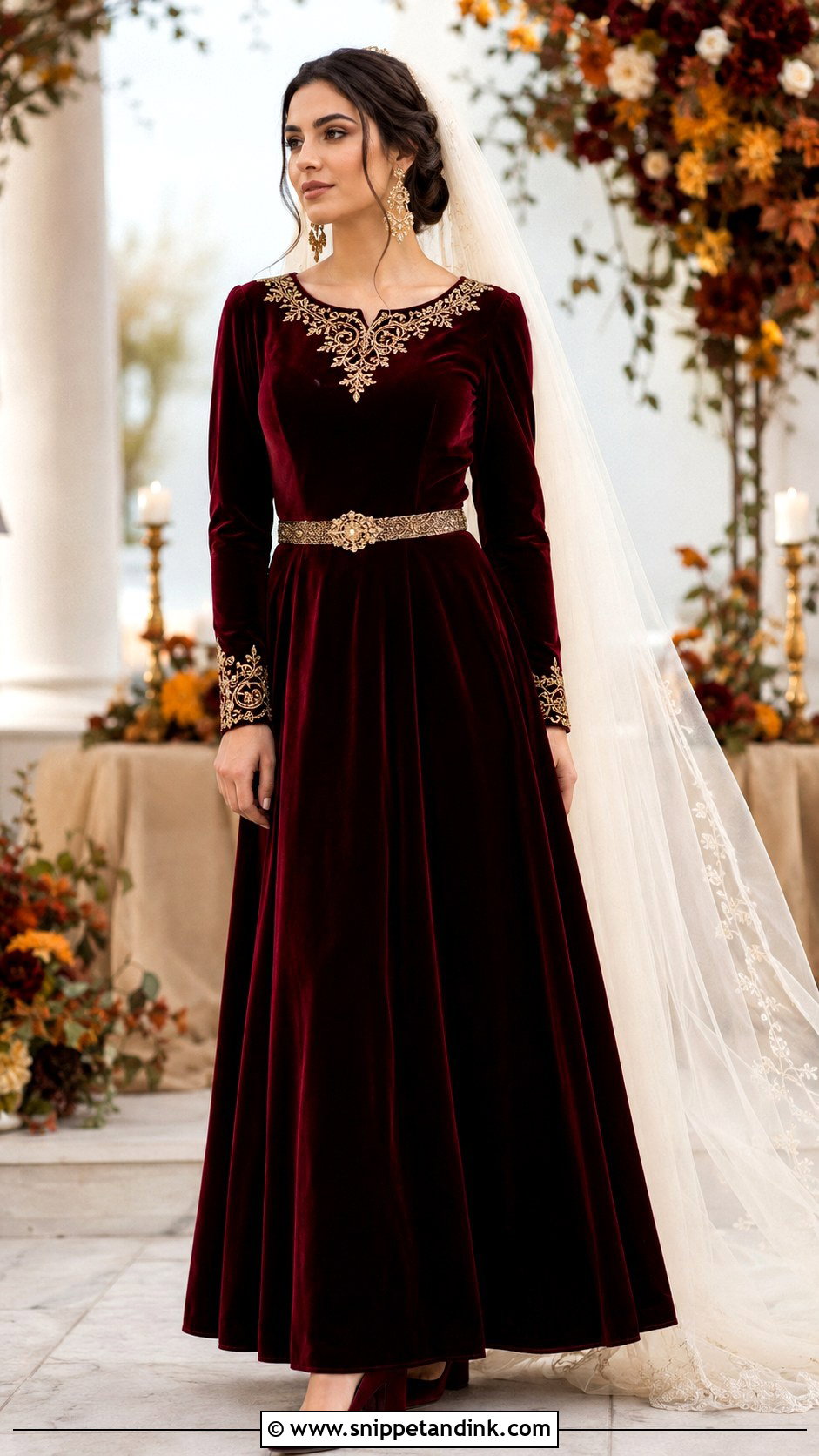
Velvet suits an autumn or winter wedding and has a regal weight. A fitted burgundy or deep red velvet gown with long sleeves, a defined waist and a gently flared skirt takes gold embroidery at the cuffs, neckline and centre front very well. Traditional outer garments were sometimes made in velvet or similarly substantial cloth, so the reference is a fair one. Velvet is warm, though. In a heated hall I’d choose a lighter silk velvet over a heavy cotton one. A metallic belt or embroidered sash, burgundy block heels, gold drops and a sheer ivory veil complete it.
5. Gold Embroidered Armenian Wedding Dress
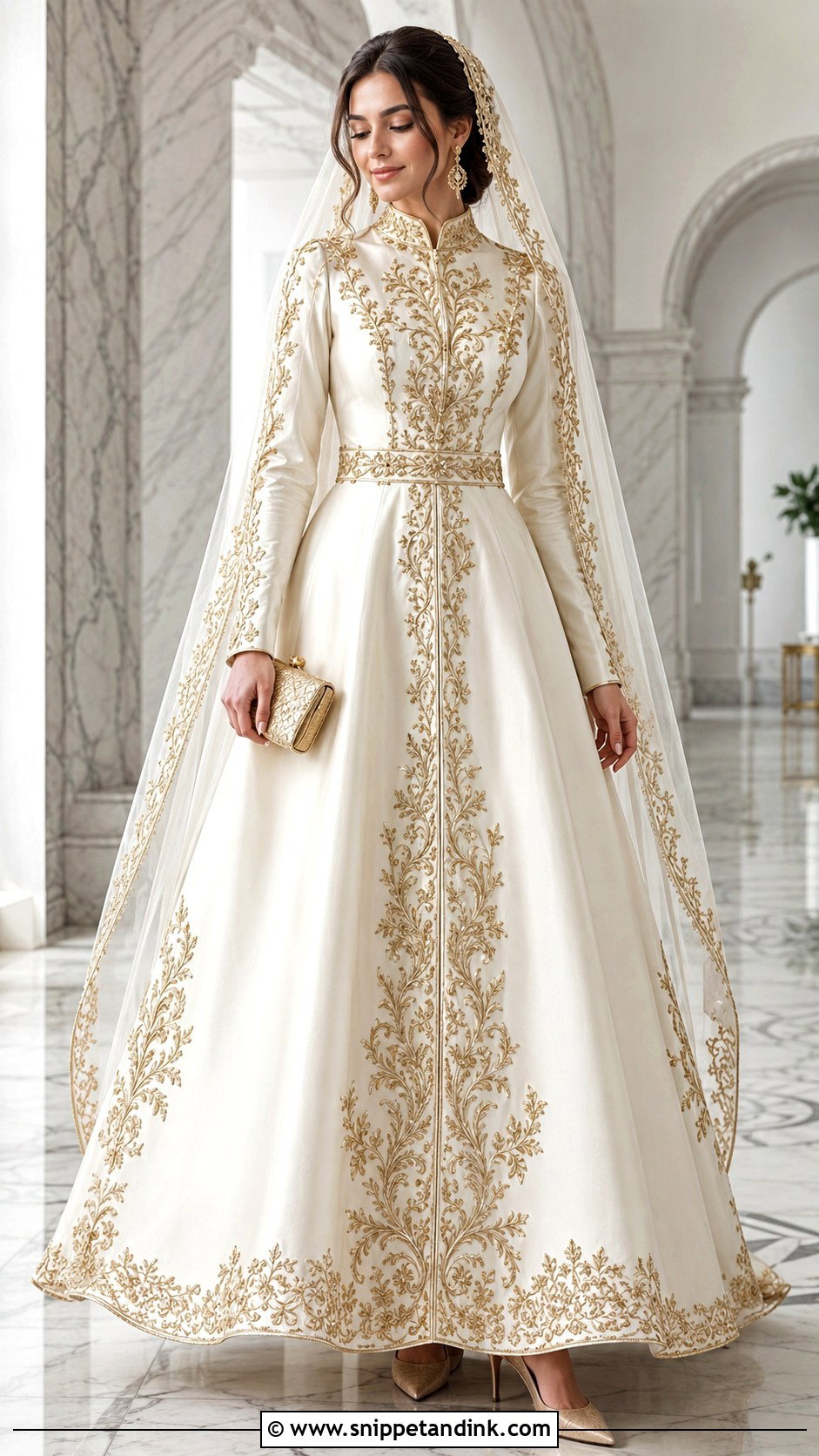
Gold embroidery on a simple ivory gown is the most direct nod to Western Armenian taraz. An A-line in silk, crepe or satin takes symmetrical gold patterns across the bodice, cuffs, waist and train, with a narrow gold border on the veil tying it all together. Champagne heels, a small gold clutch and quiet earrings let the thread lead. The common mistake I see is mixed golds. Yellow-gold jewelry next to antique-gold thread looks off in photographs, so match the metal tone to the embroidery. A pattern based on your own family’s region makes it personal.
6. Armenian Pomegranate Wedding Dress
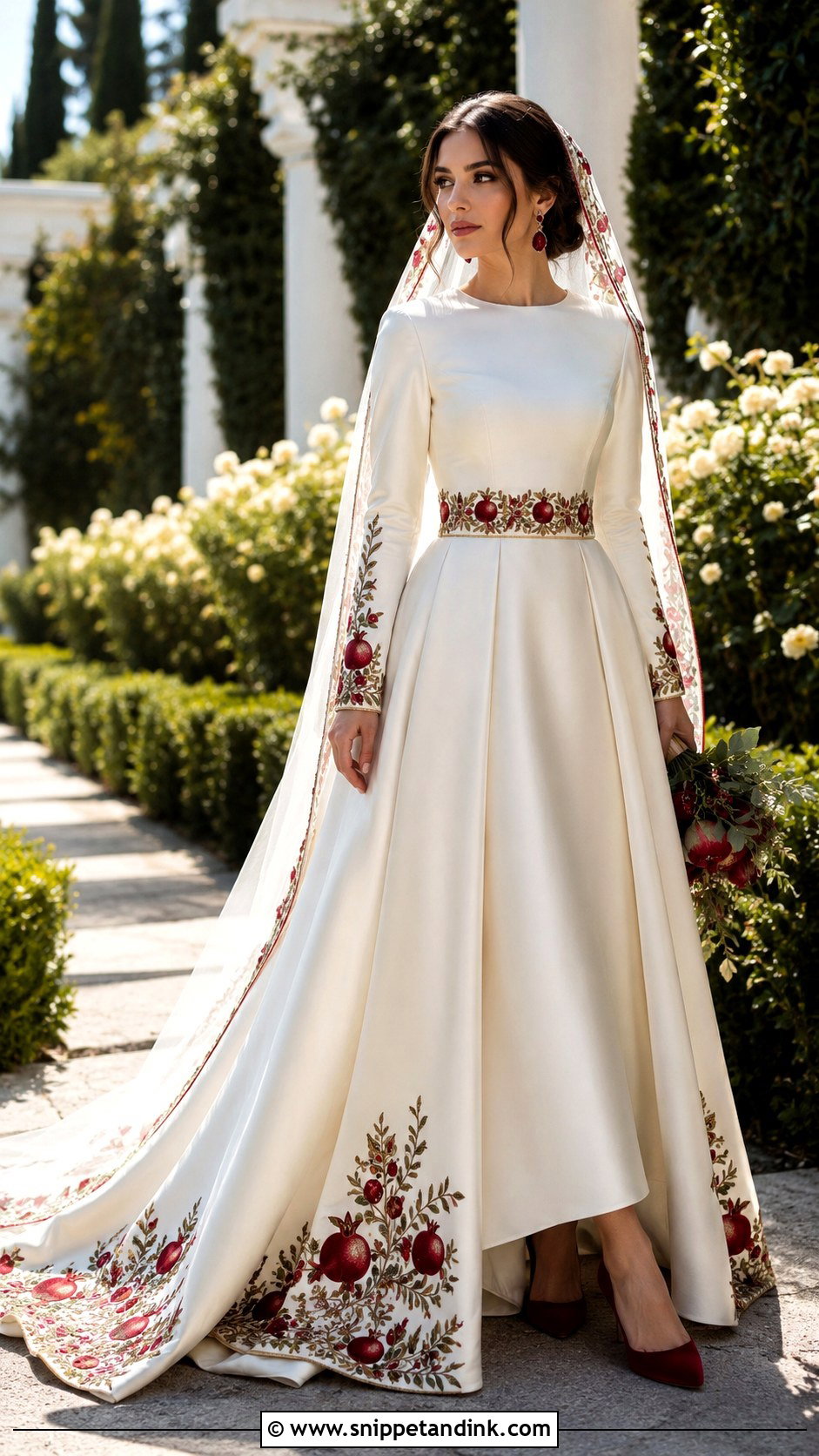
The pomegranate is one of the most recognisable Armenian symbols, and it’s easy to overdo. Small embroidered branches around the waist, cuffs and train of an ivory A-line, in deep red, muted green and antique gold, keep it refined. Leave the bodice clean. Red velvet heels, garnet earrings and an ivory veil with a narrow red edge pick up the colour, and a matching embroidered belt joins bodice and skirt. I ask designers for an original drawing rather than an oversized stock motif repeated everywhere, because a few well-placed branches read as heritage and dozens read as print.
7. Armenian Tree Of Life Wedding Dress
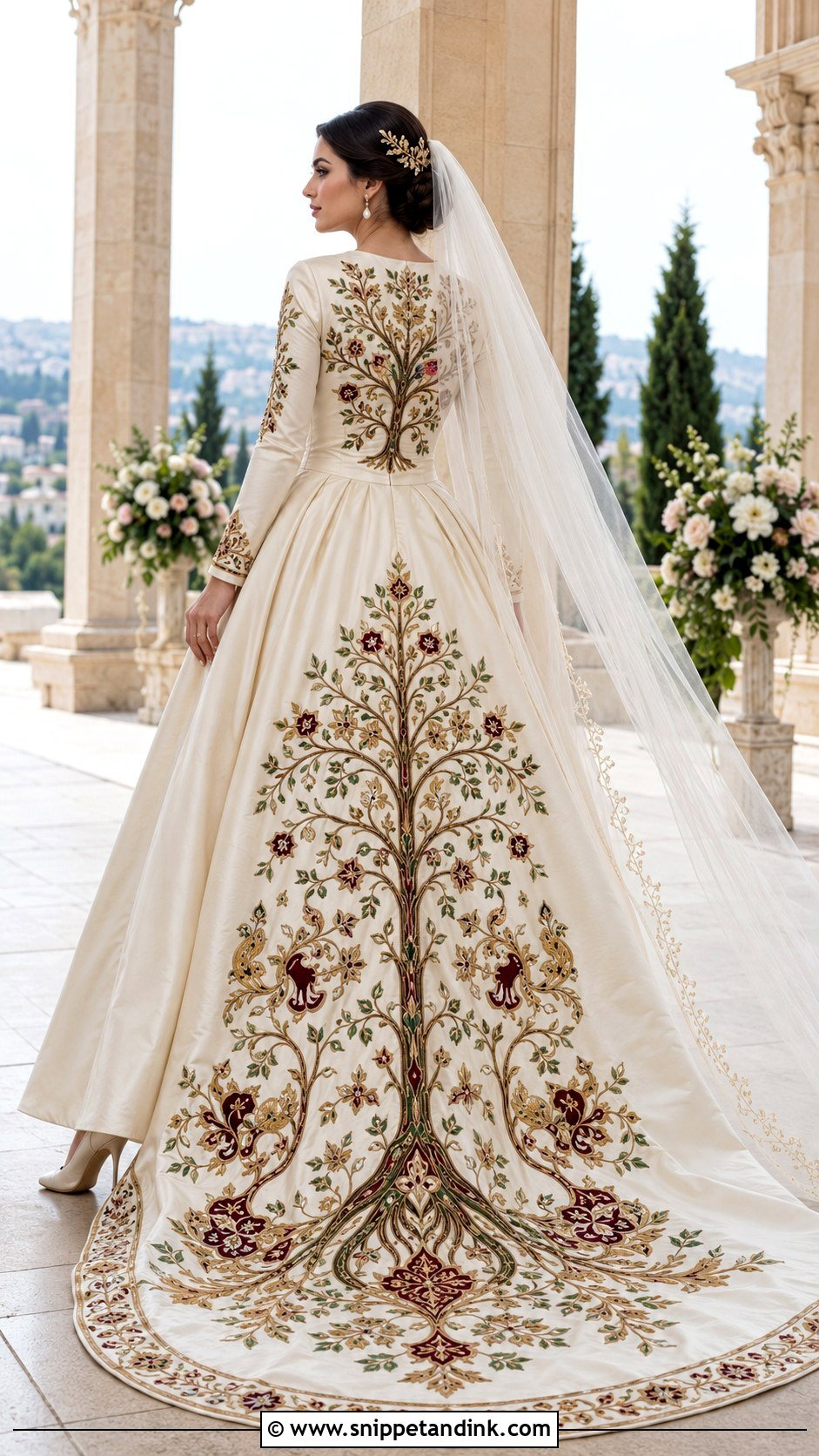
A tree-of-life motif makes a symbolic centrepiece. A clean ivory ball gown gives it room; I’d place the main design on the back of the bodice or along the train, where guests see it during the ceremony, and repeat small branches at the cuffs. Gold, burgundy and soft green thread make a calm palette. Botanical designs appear in traditional Armenian dress, and tree-of-life ornament was used on historic head coverings too. Meanings differ between regions, so develop the artwork with an artisan who knows them. Ivory pumps, a long plain veil, gold hairpins and small pearls finish it.
8. Armenian Geometric Embroidery Wedding Dress
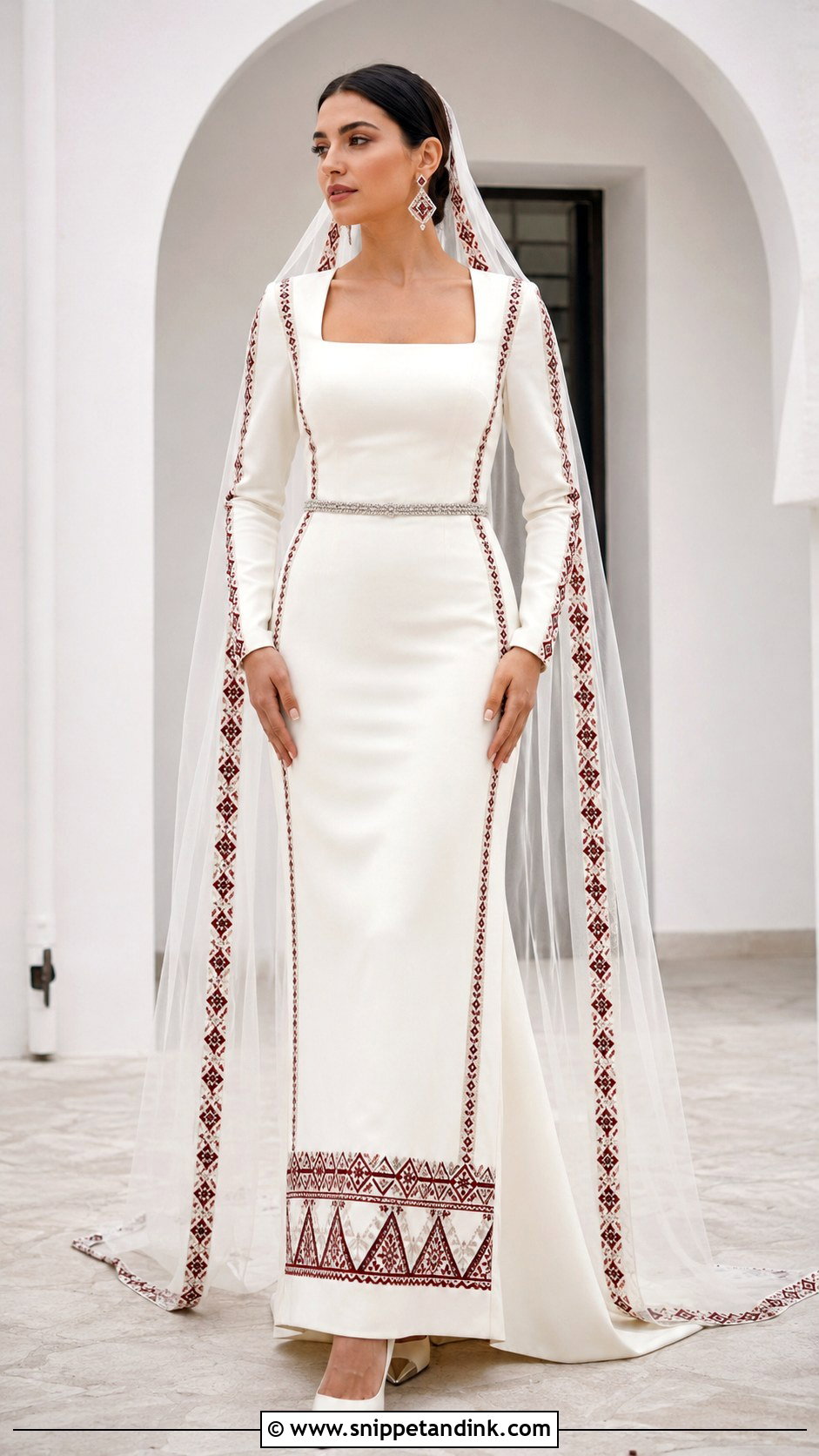
Geometric embroidery suits a bride who likes clean lines. A crepe column or soft flare with long sleeves and a square neck takes repeating diamonds, triangles or stepped patterns along the cuffs, neckline, waistband and veil edge. Burgundy embroidery contrasts strongly on ivory; silver is quieter. These shapes have deep roots in Armenian ornament. The spacing is what keeps them modern. Tight, continuous bands look like a costume, so I ask for a little more space between repeats than the traditional versions use. Pointed ivory heels, a slim metal belt, geometric drops and a low bun or smooth braid finish it.
9. Armenian Wedding Dress With Detachable Taraz Coat
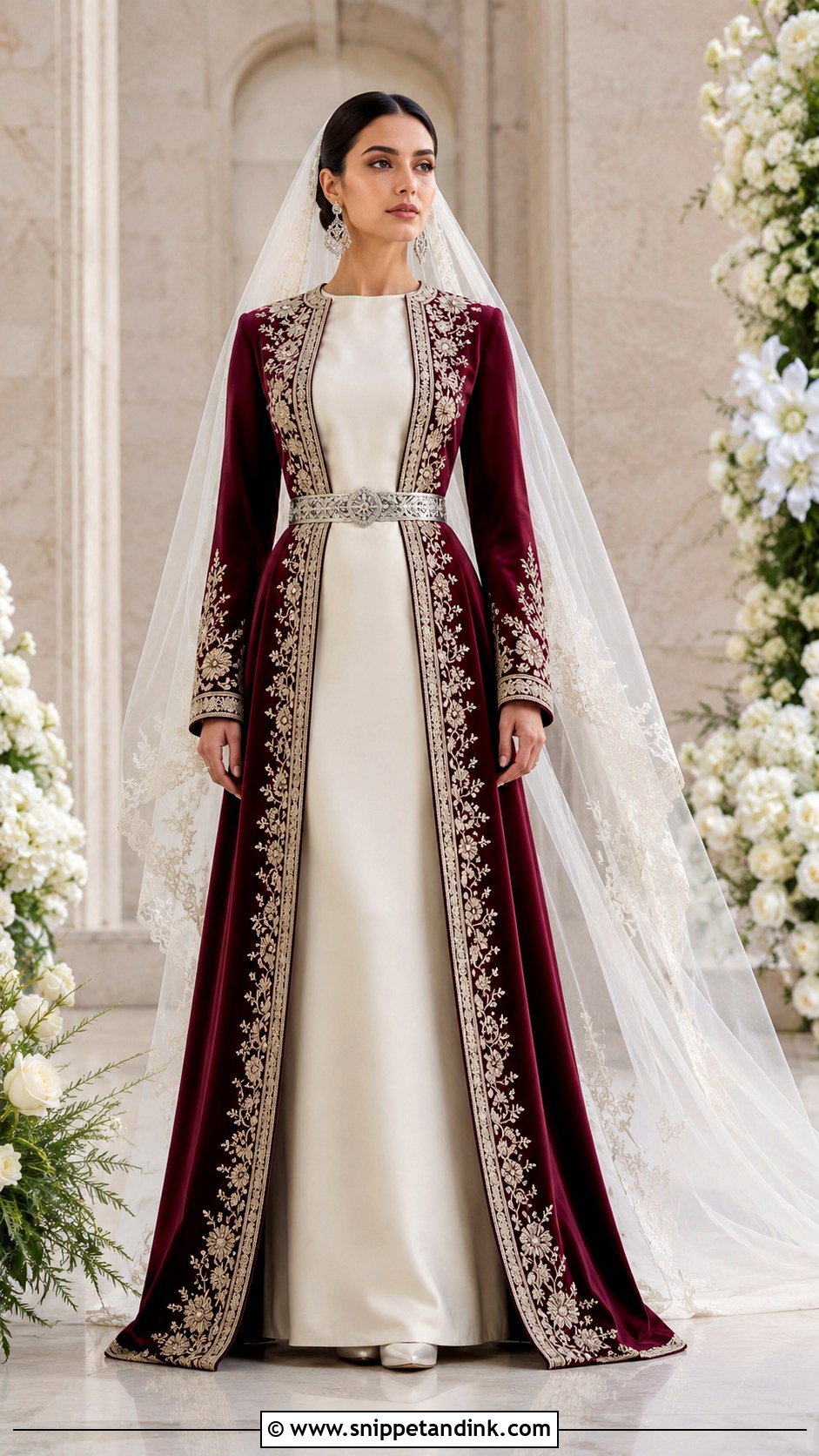
A detachable taraz-inspired coat gives you two outfits. A plain ivory column underneath and a long open-front coat in silk brocade, velvet or structured satin over it, embroidered along the neckline, front edges, cuffs and hem, makes a strong ceremony look. Add a slim metal belt, closed heels, statement earrings and a long veil, then take off the coat and veil for the reception. A brocade coat is heavy and warm, so check the armholes are cut generously enough to lift your arms. It’s a good route if you want visible heritage for the church but not all night.
10. Armenian Cape Sleeve Wedding Dress
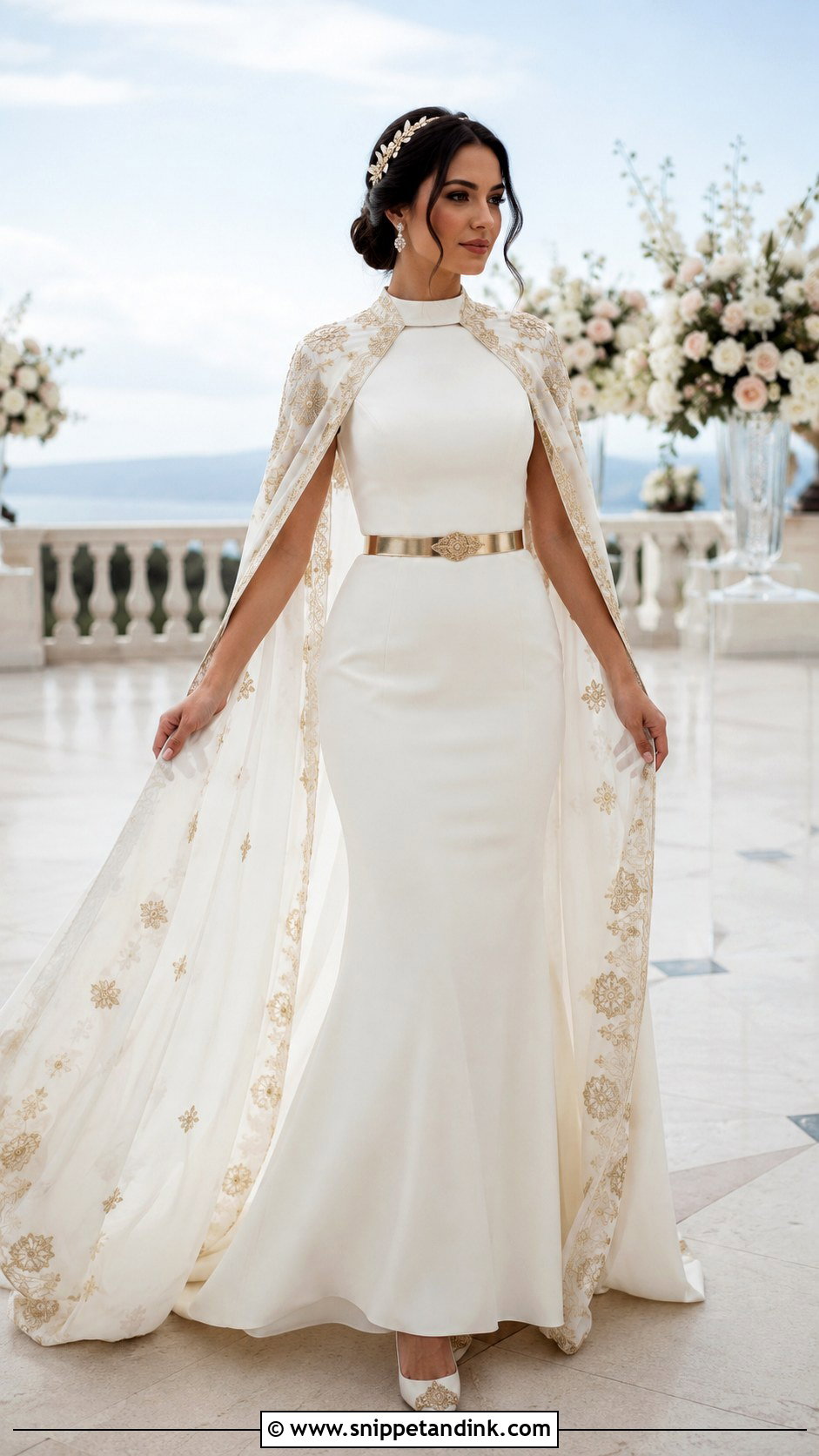
Cape sleeves add movement and a ceremonial feel. An ivory fitted gown with a high neck and cape panels from the shoulders looks best with a narrow Armenian-inspired border on the cape edges, since the pattern shows as the fabric moves. Lightweight crepe or chiffon keeps the panels comfortable. If they reach the floor, hidden wrist loops let you carry them. Pointed heels, a metal belt, pearl earrings and a small embroidered hairpiece instead of a veil keep the back visible, with a low bun. I’d skip the long veil here. Veil and cape together tangle when you turn.
11. Armenian High Neck Wedding Dress
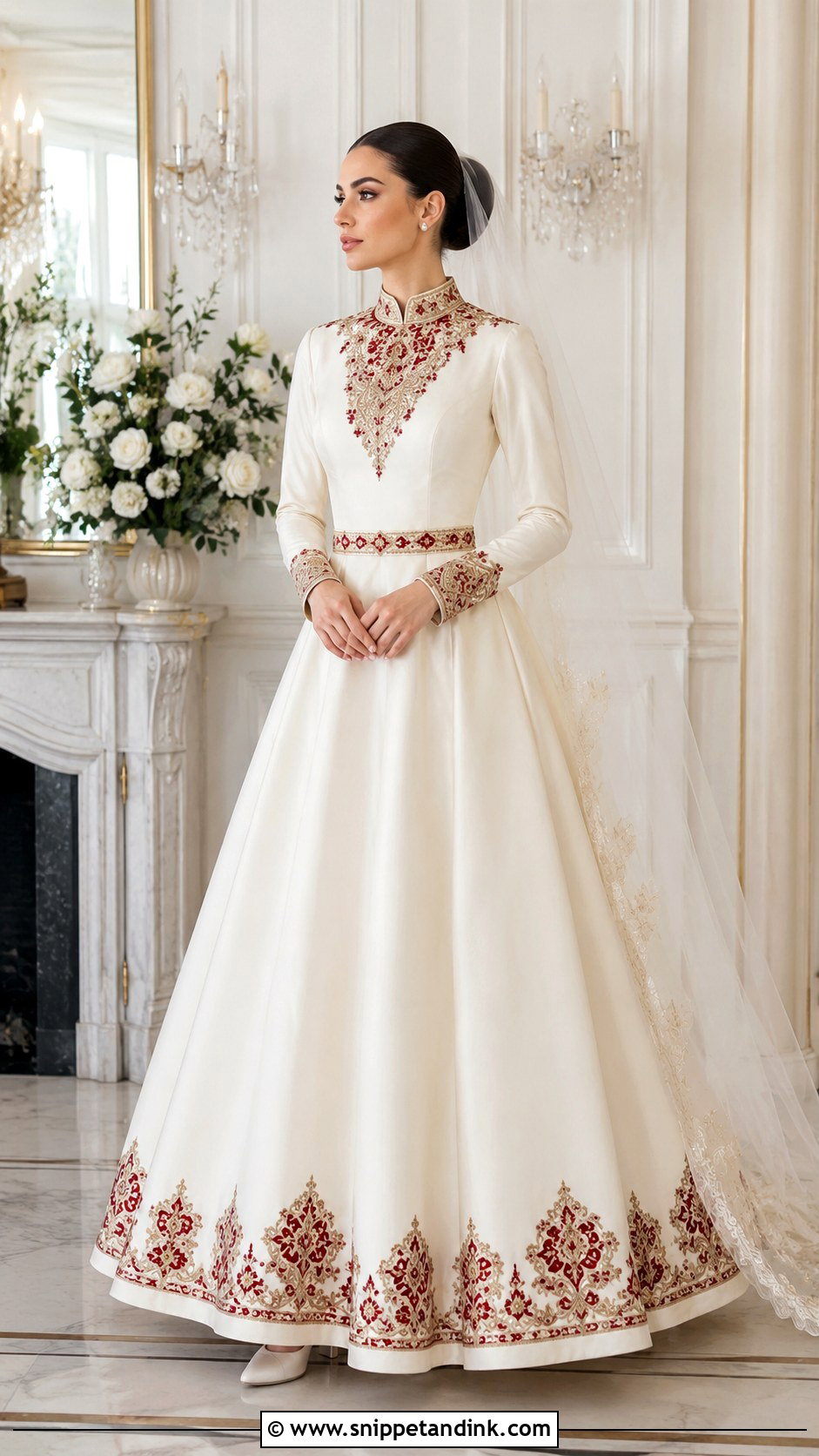
A high neck frames the face and gives embroidery a natural place to sit. A long-sleeved gown with a fitted bodice and A-line skirt can have gold or red stitching around the collar, repeated at the cuffs and hem. A sheer upper panel softens the coverage. In cold weather I’d choose heavier satin or silk faille; crepe works year-round. The collar has to let you turn your head and look down at your vows without the stitching scratching the neck, so ask for a soft lining behind any metallic thread. Ivory block heels, a narrow embroidered belt, pearl studs and a long veil under a smooth bun finish it. Keep makeup fresh and jewelry minimal.
12. Armenian Square Neck Wedding Dress
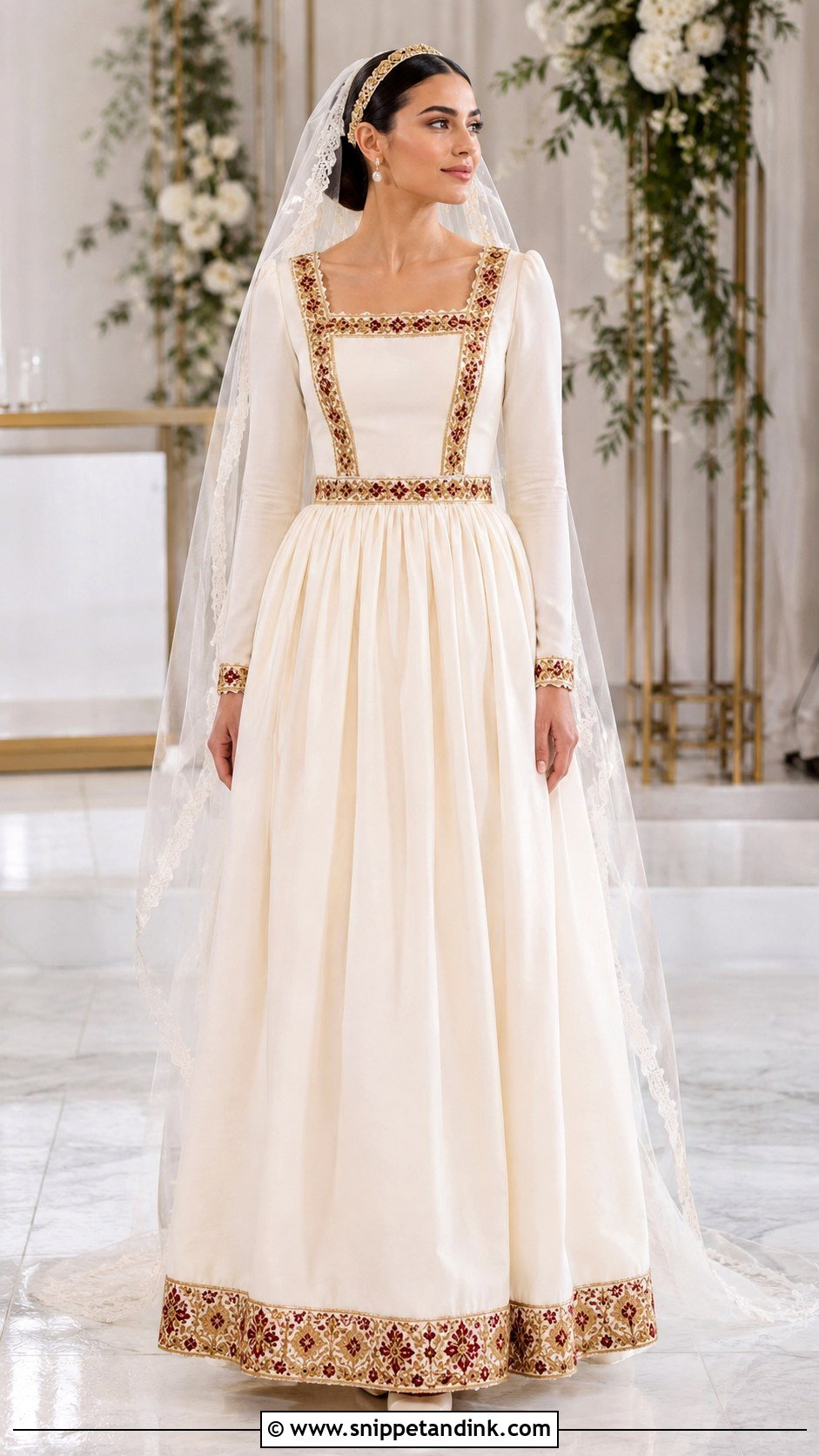
A square neck gives a modern base for Armenian detail. A structured ivory bodice, long fitted sleeves and a softly gathered skirt take a narrow embroidered border at the neckline, cuffs and waistband. Deep red and antique gold look traditional; white-on-white is subtle. Ivory pumps, a gold headband, small drops and a fingertip veil suit it, and a low braided bun leaves the shoulder line clean. My rule here is three or four embroidered zones at most. Spread pattern across the whole skirt and the square neck loses its sharpness.
13. Armenian Bell Sleeve Wedding Dress
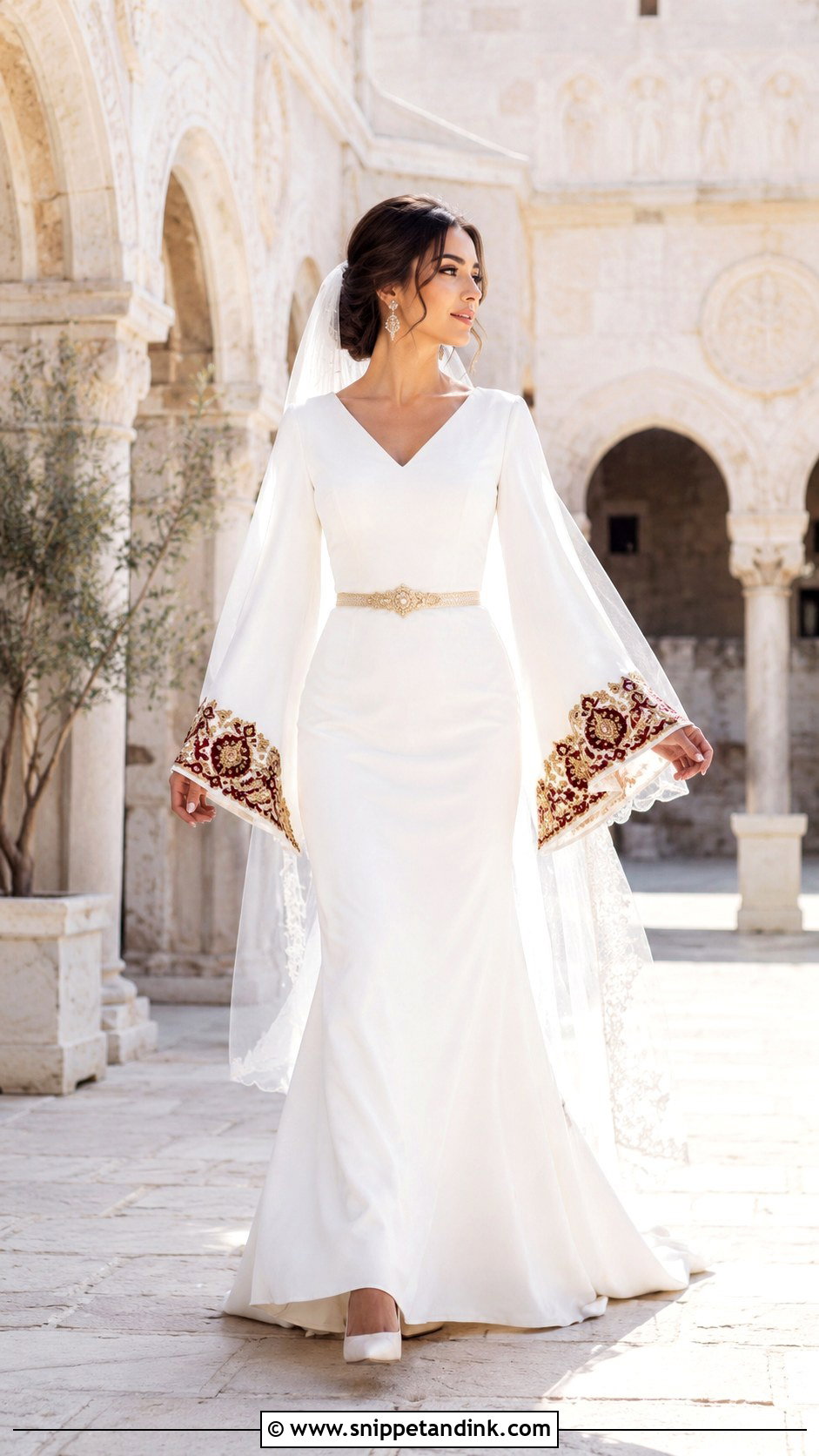
Bell sleeves bring movement and give embroidery a wide surface at the opening. A fitted ivory crepe gown with a modest V-neck and gentle flare can carry burgundy, gold or silver panels at the sleeve ends, waist and train. Keep the bodice smooth. The sleeves are drama enough. Closed heels, a narrow metal belt, fine earrings and a light chapel veil complete it. A bell sleeve dips into food and catches on chair backs, so I set the length to end just past the wrist and add a hidden loop inside each cuff for dancing.
14. Armenian Mermaid Wedding Dress
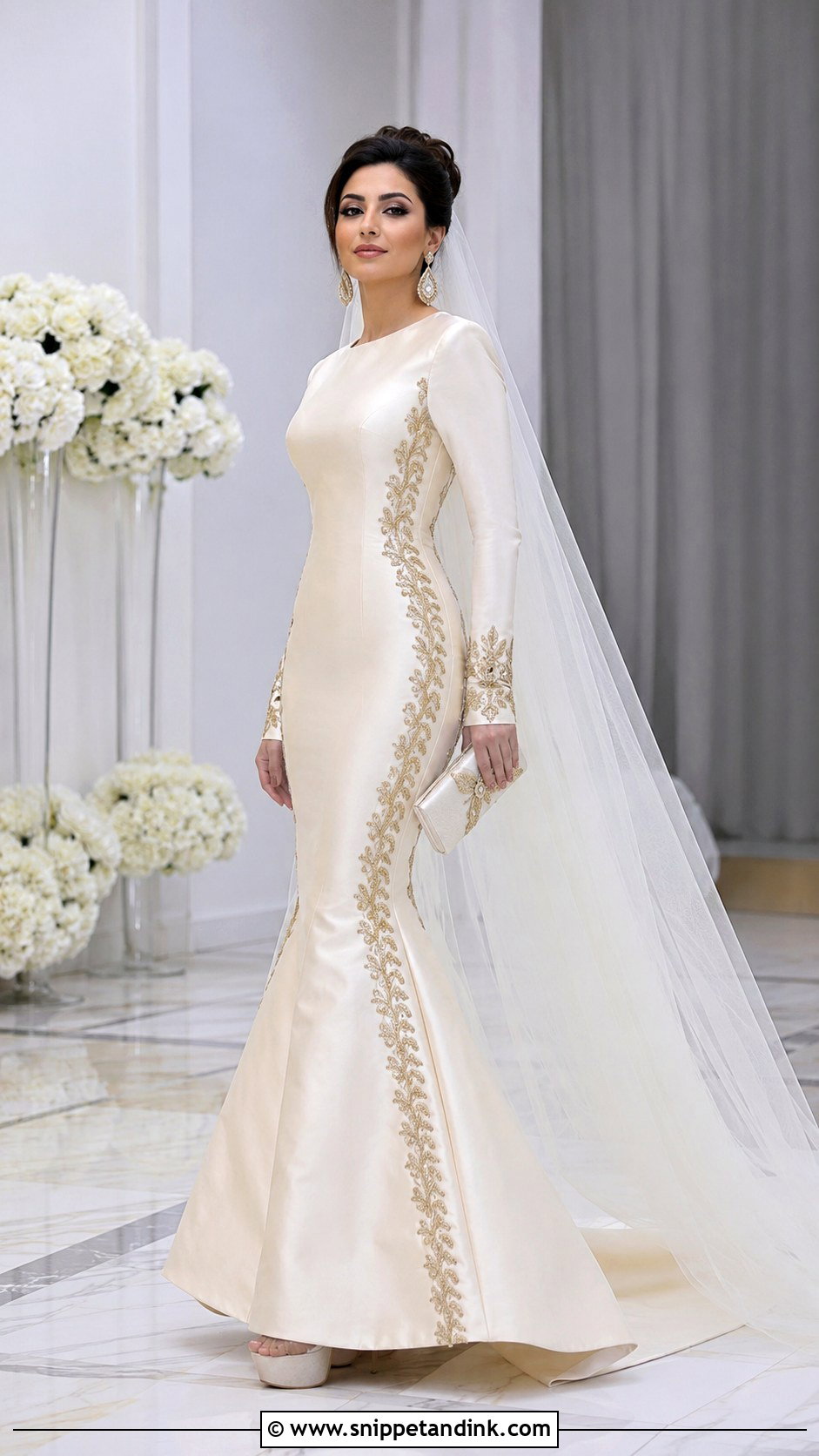
A mermaid gives Armenian detail a sleek base. An ivory gown fitted through the hips that flares below the knee looks longer with embroidery running down the side seams or the centre back. A gold-edged neckline and matching cuffs finish the decoration without breaking the fitted shape. Stretch crepe or a supportive satin keeps it comfortable for sitting and dancing. If your church expects more coverage, detachable embroidered sleeves or a removable overskirt solve it for the ceremony. Ivory platforms, a structured clutch, drops and a long plain veil suit it, with lifted, polished hair.



15. Armenian Minimalist Column Wedding Dress
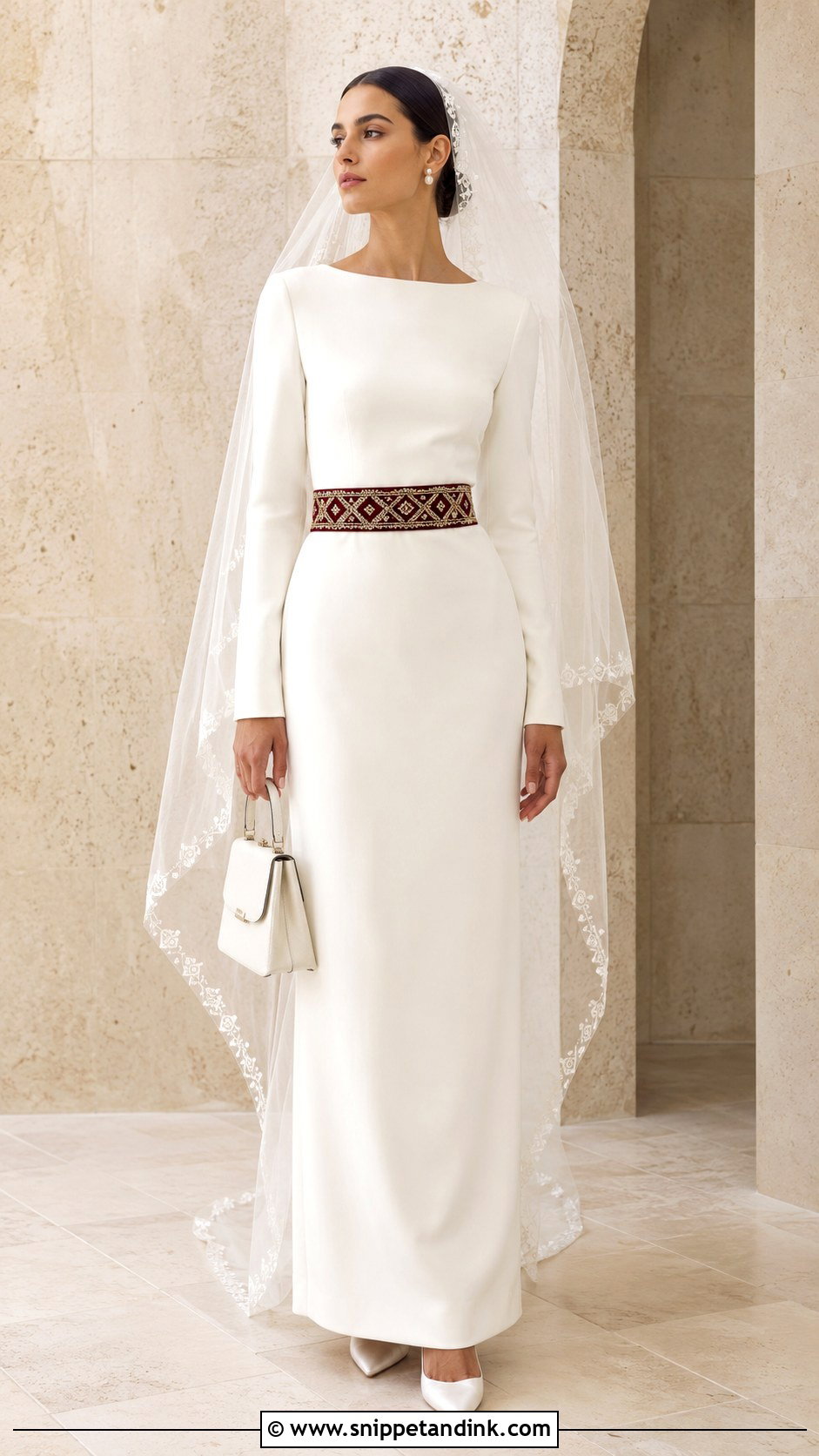
Heritage doesn’t need dense ornament. A minimalist column in ivory silk or crepe with a clean neckline, long sleeves and a straight skirt can carry its Armenian reference in one handmade embroidered belt, geometric or botanical. Because the dress is so plain, the belt becomes the focus, and it’s a piece you can keep or pass on. Pointed satin heels, pearl earrings, a structured ivory bag and a sheer veil with a matching narrow border complete it. Pick thread colours that link to the wedding palette, such as antique gold, muted red or soft silver.
16. Armenian Lace Ball Gown Wedding Dress
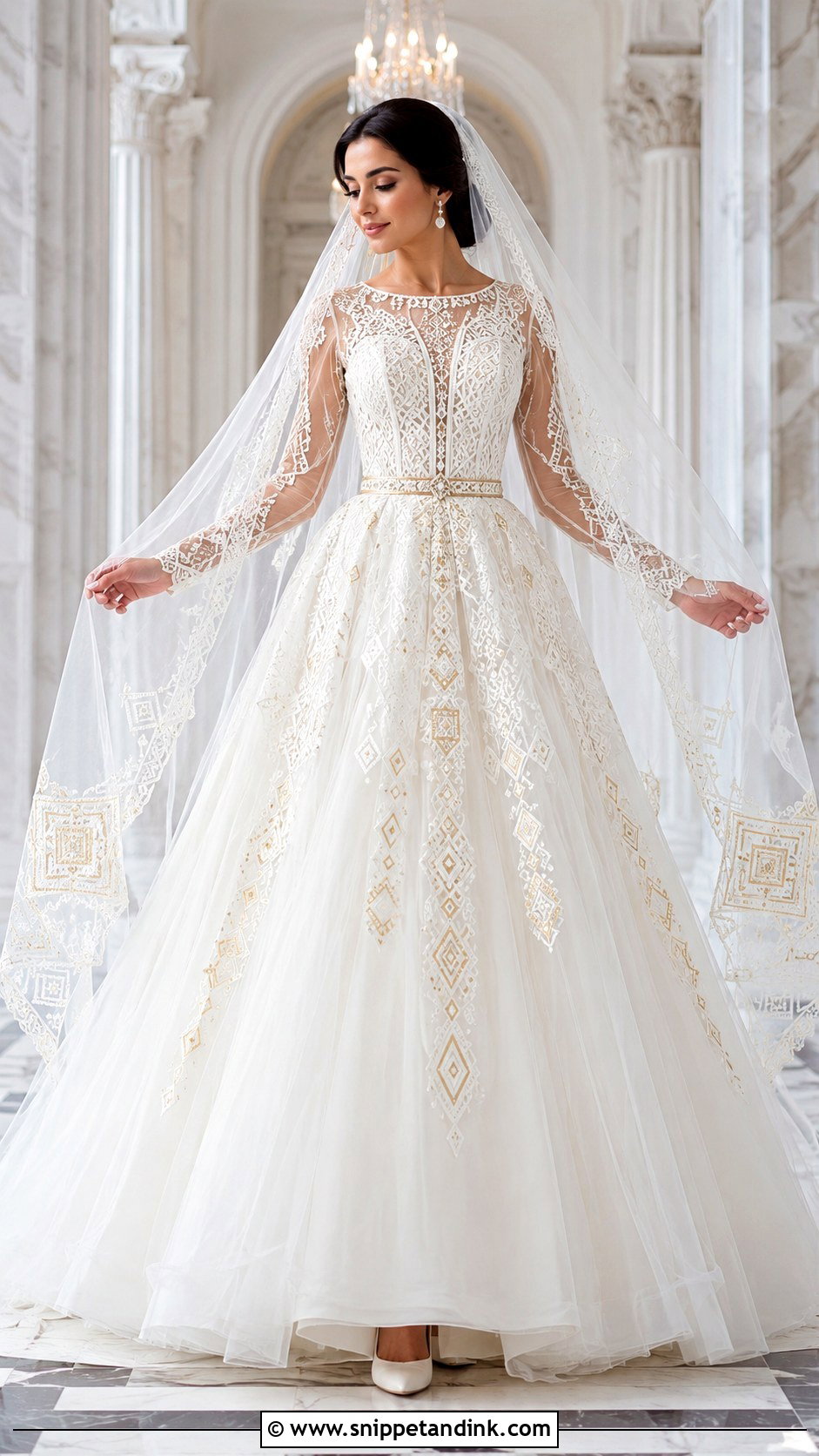
Lace ball gowns are familiar bridal romance, and custom lace makes room for Armenian personalisation. A fitted long-sleeve bodice over a full tulle or organza skirt can use custom lace or embroidered appliqués to form geometric borders and botanical patterns at the neckline, cuffs, waist and train. White-on-white is quiet; gold thread defines more. Ivory heels, pearl drops, a narrow belt and a cathedral veil with matching corner motifs suit it. Dense appliqué on every skirt layer weighs the tulle down and kills its float, so keep the heavy work near the top. A good underskirt, wrist loops and a bustle make the train manageable.
17. Armenian Silk A-Line Wedding Dress
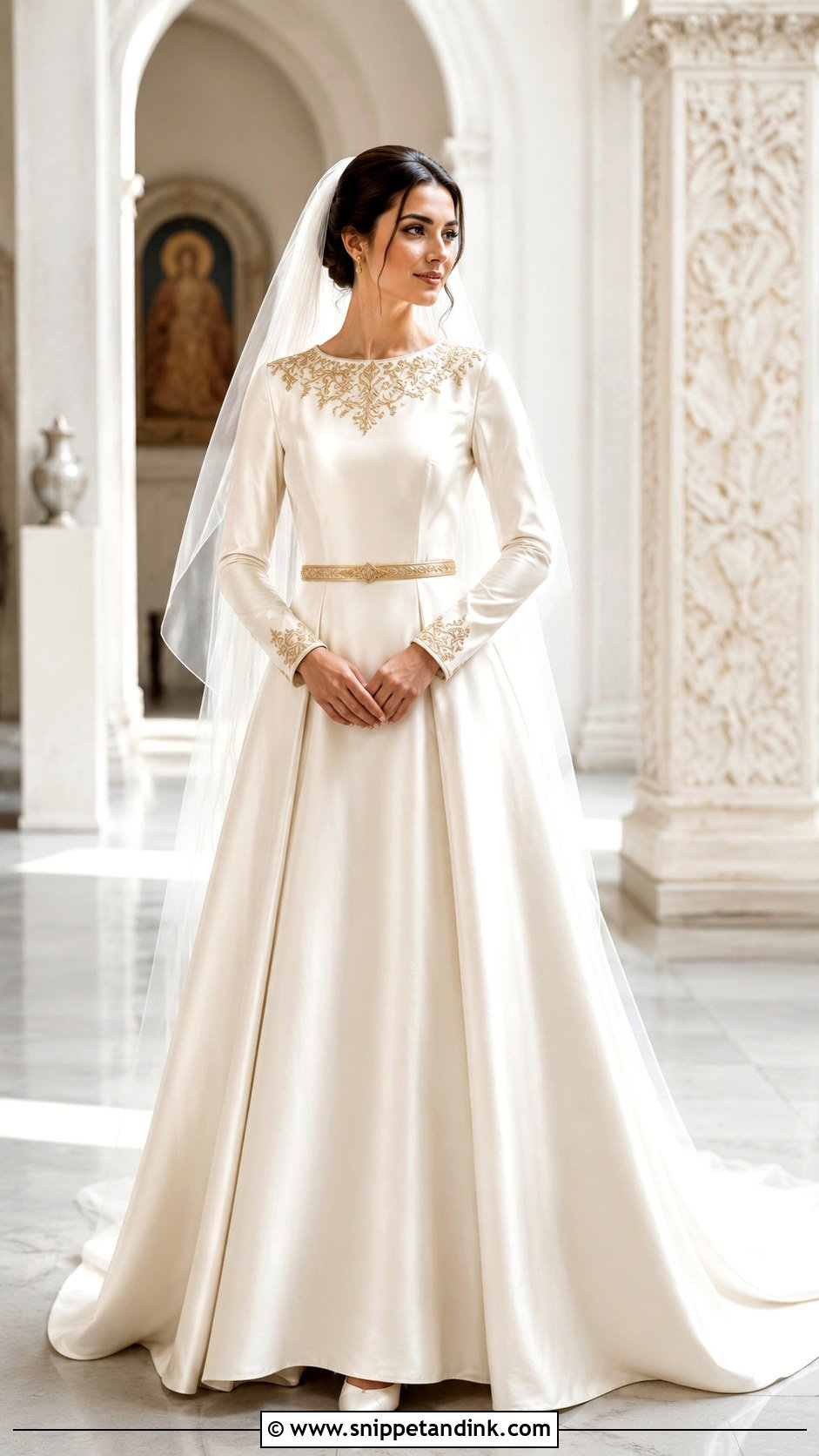
Silk shows embroidery, cut and colour with real clarity in photographs. An A-line with a fitted bodice, long sleeves and a sweeping skirt takes a narrow ornamental band at the neckline and cuffs and a larger panel at the waist or back. Ivory with antique gold looks classic; burgundy accents add contrast. Silk-covered heels, a simple gold belt, small earrings and a plain long veil finish it. Silk puckers around heavy stitching if it’s not supported, so I always ask for a full lining and a stabiliser behind the embroidered areas.
18. Armenian Wedding Dress With Embroidered Apron Panel
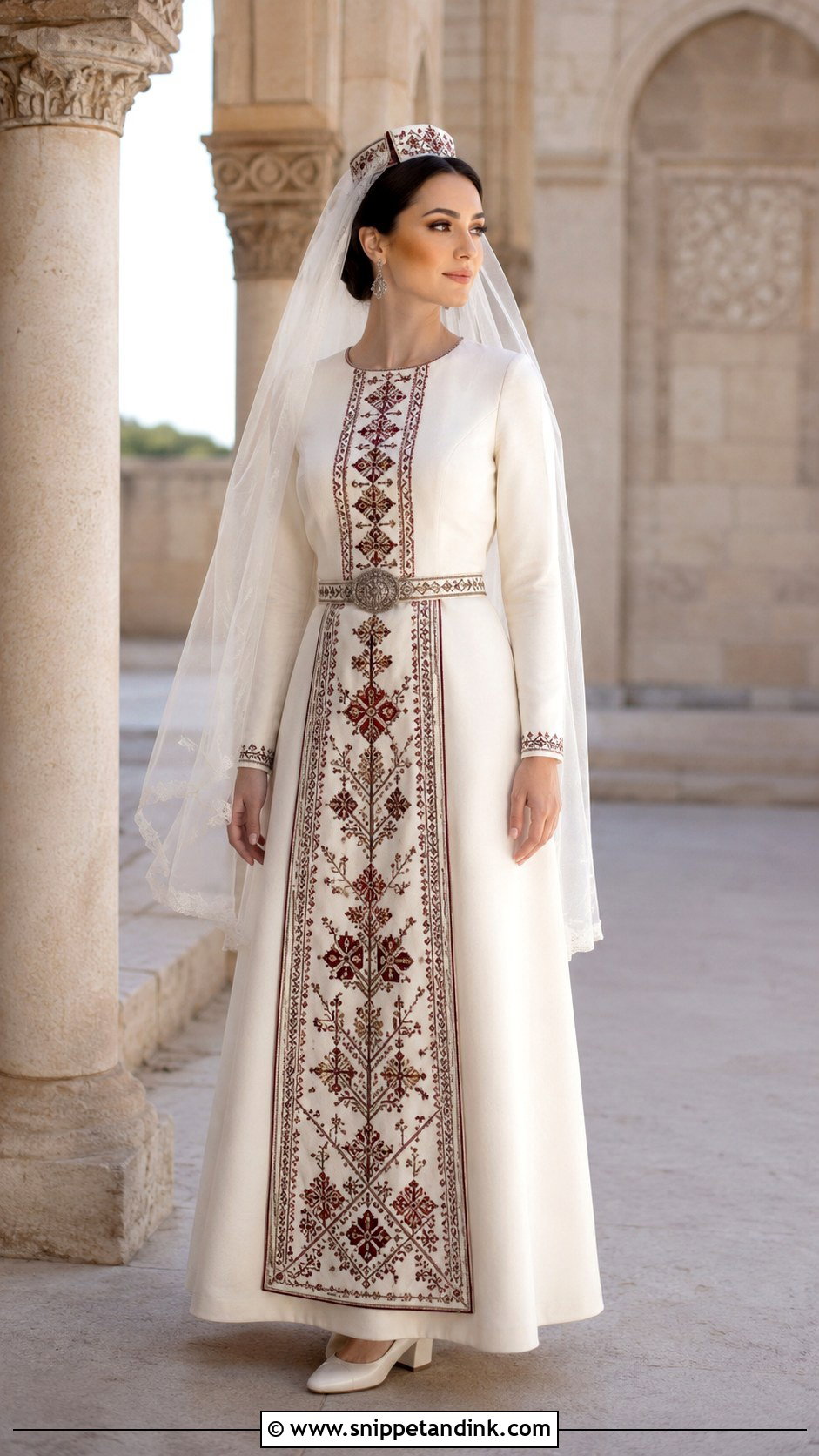
An embroidered apron panel gives a dress a strong taraz look. Aprons, belts, head coverings and jewelry were all important parts of regional Armenian ensembles. Over a simple long-sleeve ivory gown, a removable decorative panel on the front of the skirt, held with a matching belt, looks part of the design rather than added on. Geometric borders, botanical motifs or family colours all work in the embroidery. Low block heels, metal earrings and a sheer veil on a small headpiece suit it. The panel comes off after the ceremony, which leaves a lighter dress for dancing.
19. Western Armenian Inspired Wedding Dress
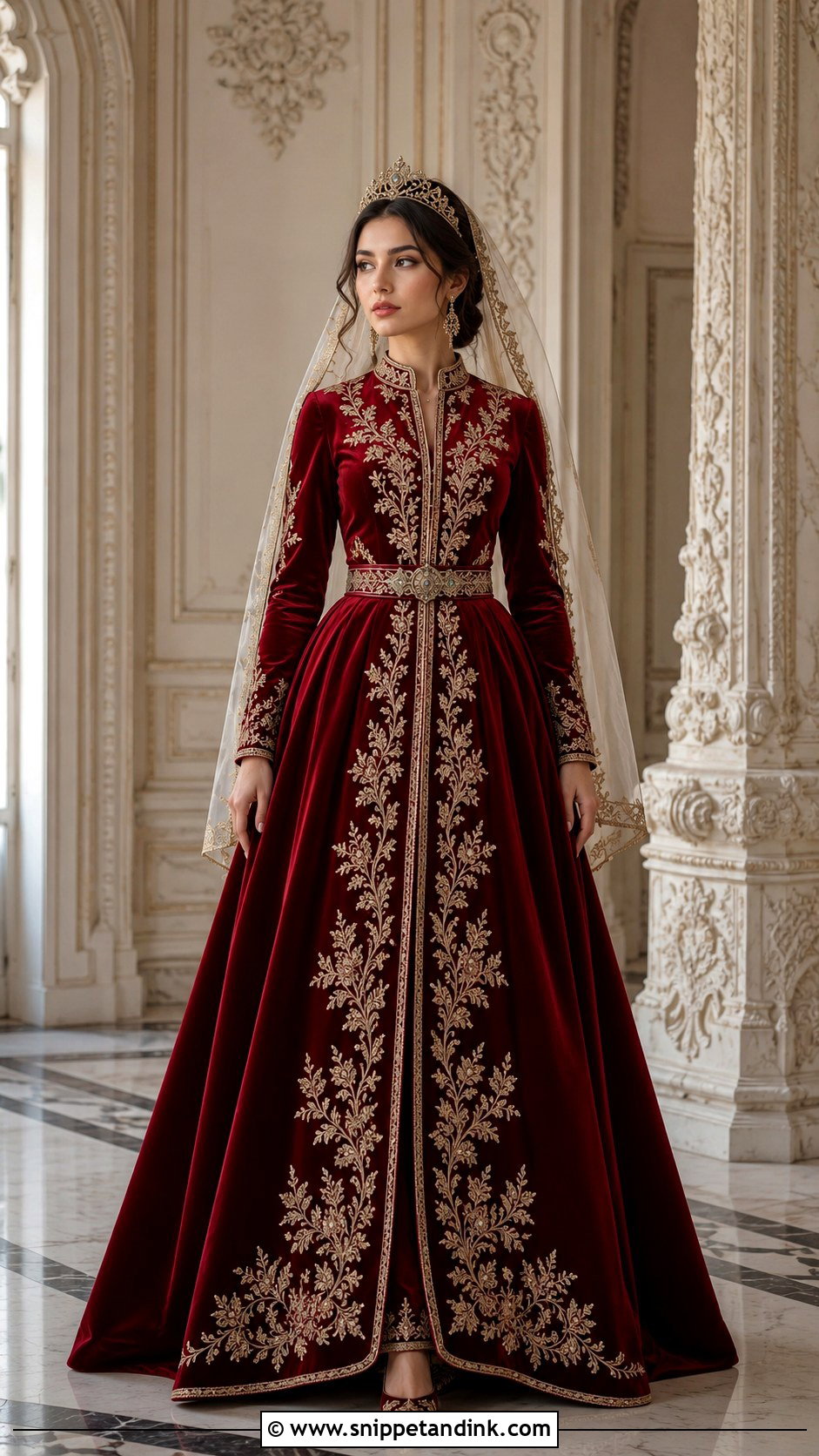
A Western Armenian reference invites rich decoration, luxurious cloth and a strong colour story. A deep red or ivory velvet gown with long sleeves, a fitted waist and a full skirt takes gold or silver embroidery at the bodice, cuffs and hem. Western Armenian clothing is generally remembered for its rich metallic embroidery, though each area had its own variations. So don’t mix details from unrelated regions. Pick one documented reference linked to your family and work with a designer who knows it. A decorated belt, closed shoes, statement earrings and a light veil under an ornamental headpiece complete it.


20. Modern Armenian Two Look Wedding Dress
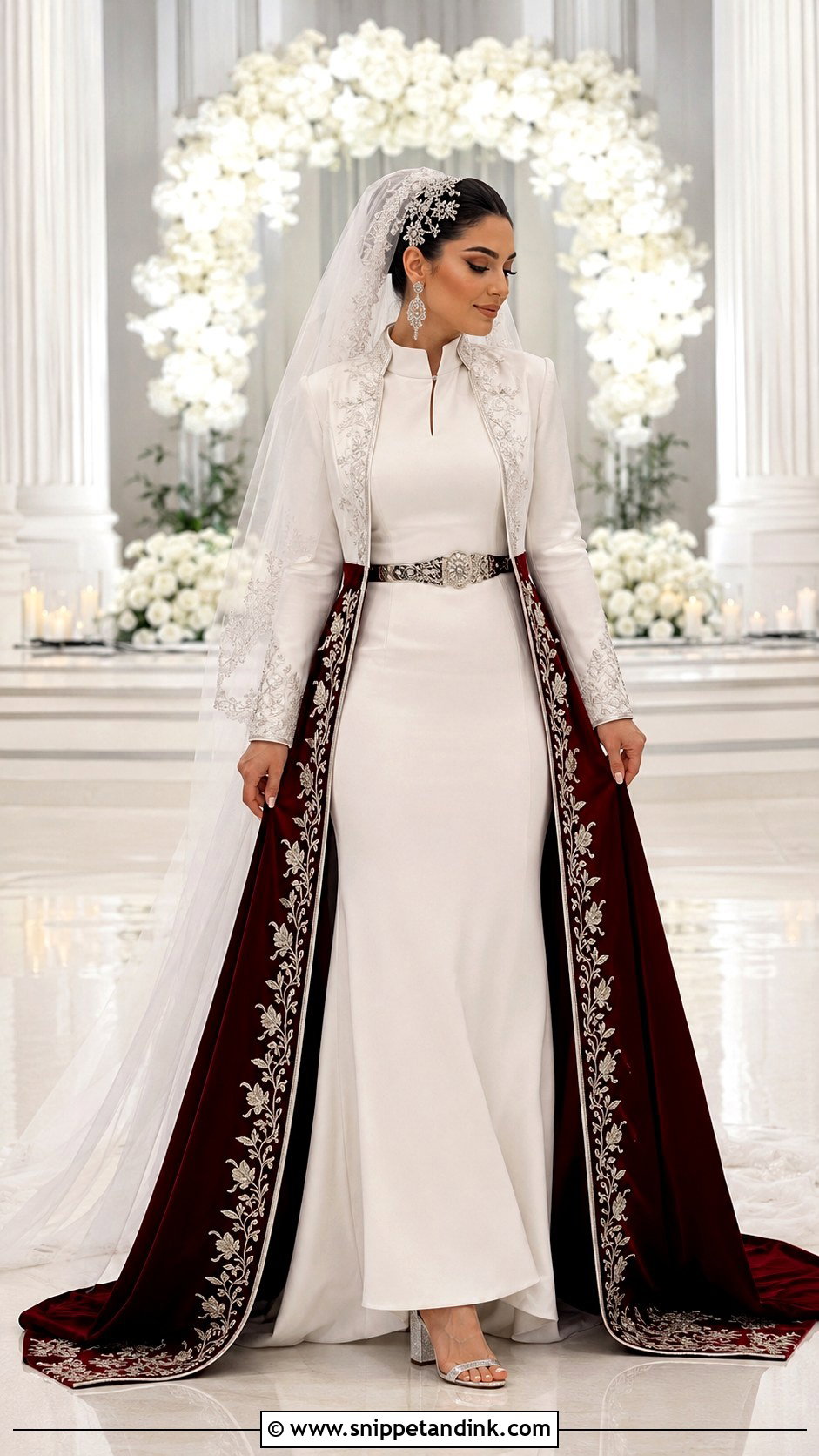
A two-look Armenian wedding dress gives you ceremony detail and reception comfort. Start with a streamlined ivory gown, then add a removable embroidered overskirt, a long taraz-inspired coat, a metal belt and a cathedral veil for church. Geometric or botanical patterns go on the removable layers. After portraits, the coat, overskirt and veil come off to reveal a dress you can dance in, with comfortable block heels, statement earrings and an embroidered comb. Keep the colours and motifs the same across both versions, and rehearse the change with your helper so it takes minutes, not half an hour.
In the Church: Coverage, Crowns and Standing Still
Many Armenian couples marry in an Armenian Apostolic church, and the service shapes the dress more than people expect. Ask your priest early what the parish expects, because practice differs.
- Coverage: many parishes prefer shoulders covered in the sanctuary. A bolero, a cape or detachable sleeves solves this without changing the reception look.
- Crowning: if your ceremony includes the crowning, keep the top of the head free of a tall headpiece, and anchor the veil low at the back.
- Standing: the service involves long stretches of standing. Wear-tested low or block heels matter more than height.
- Arrival at the new home: lavash laid over the shoulders and a plate broken at the door are cheerful moments. Embroidered shoulders and delicate fabrics should be able to take a little flour.
Commissioning Embroidery Months Ahead
Hand embroidery is slow, and metallic thread is slower still. I’d brief the maker at least six months out for a detailed panel, longer for a fully embroidered coat or gown, and ask for a stitched sample on your actual fabric before the full piece begins. Bring the sample to a fitting and look at it in daylight and under a camera flash. Agree on the thread colours in writing; antique gold and bright gold look nothing alike in photographs.
A Dress Your Grandmother Would Recognise
Heritage and comfort don’t have to compete. A traditional red taraz, a white embroidered ball gown, a velvet dress or a plain column with one meaningful belt can each honour where your family comes from. Plan the gown, shoes, veil, jewelry, headpiece and removable layers as one outfit. Where you use regional patterns, learn where they come from and bring in family members or an informed Armenian designer. A few well-made details mean more than many symbols without context. The finished dress should tell the bride’s own family story.
You'll Like These Ideas:






Leave a Reply