
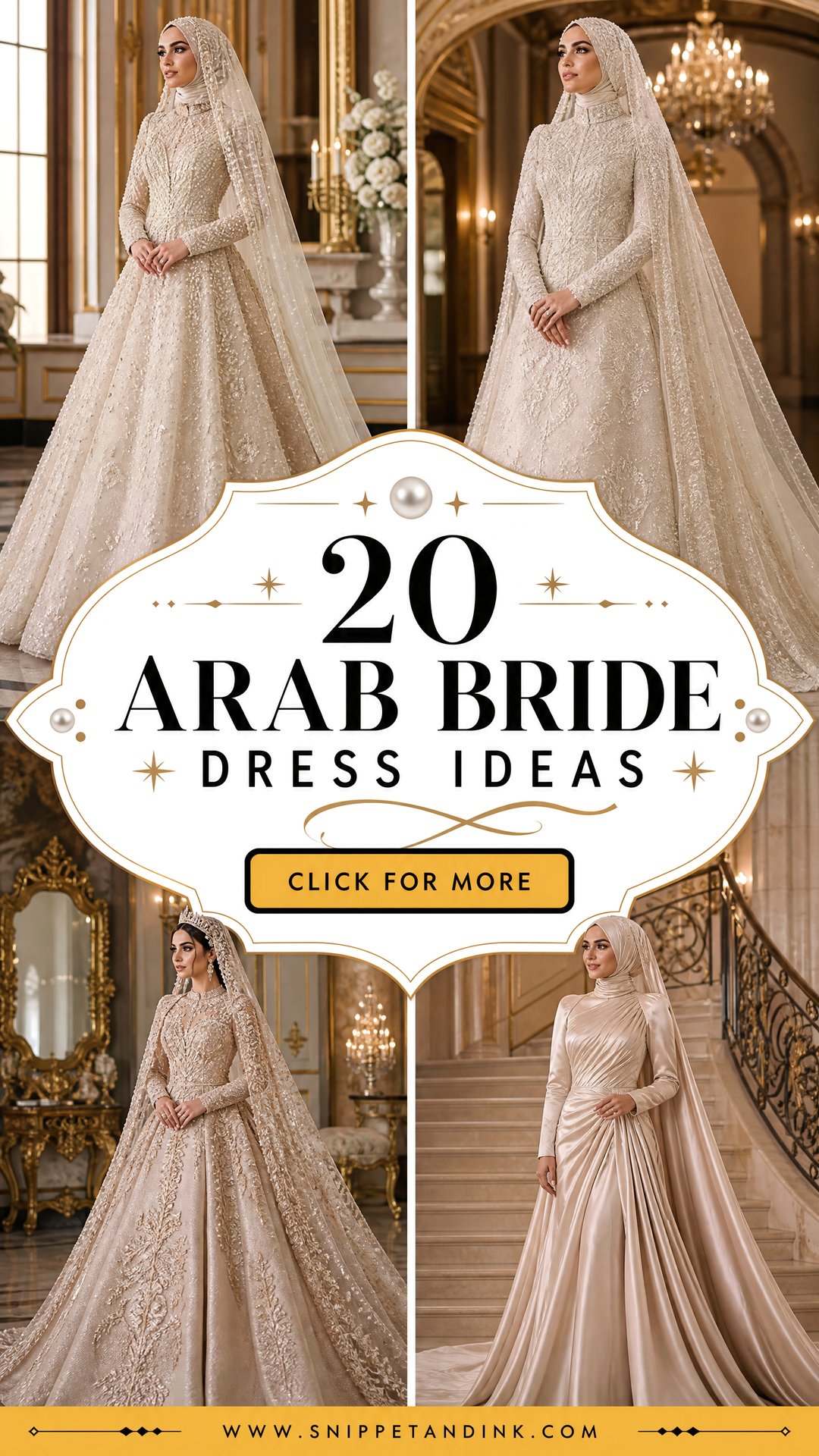
One Bride, Several Nights: Mapping the Outfits
Many Arab weddings are a sequence of events rather than a single day: a henna night, a religious ceremony, an entrance with music and drums, a reception that runs late. Families vary a great deal, so I start by listing which events you’ll attend and how long each one lasts. That list decides how many outfits you need and where the money should go.
- Henna night: colour, comfort and sleeves that push back. Pale fabric near fresh paste is a risk.
- Ceremony or nikah: the most covered and formal look, often the one families photograph most.
- Entrance: drama that reads from across the room, so trains, capes and crystals earn their place.
- Reception: something you can dance and eat in for hours, usually lighter than the ceremony gown.
If the budget only stretches to one statement piece, I’d put it into the outfit for the event with the most guests and photographs, and keep the others simpler. A detachable overskirt or a cape can also turn one gown into two looks.
1. Arab Bride Satin Ball Gown
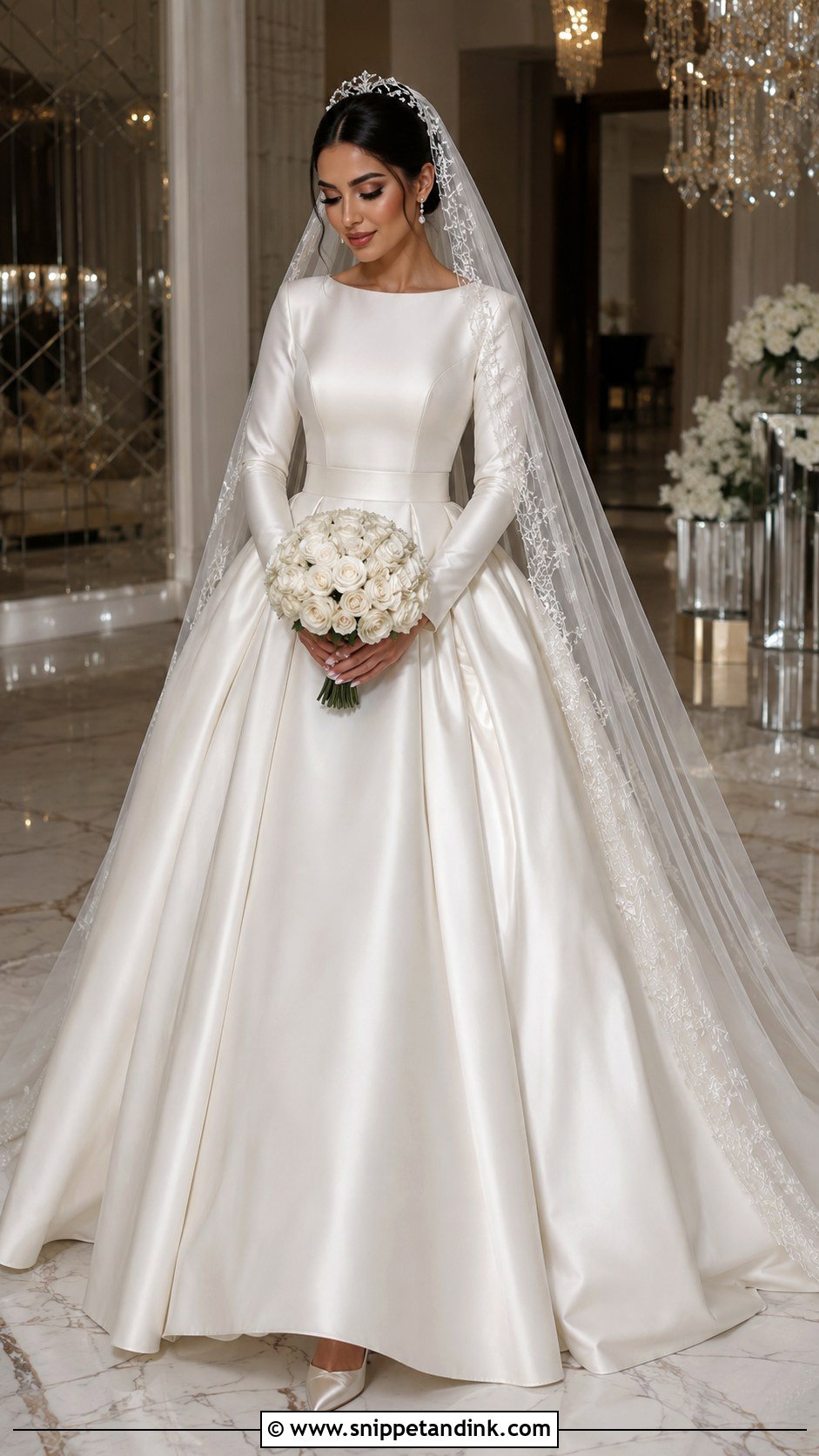
Satin earns its place through cut, not decoration. An ivory ball gown with a fitted bodice, long sleeves and a well-supported skirt looks regal under ballroom chandeliers because the fabric itself throws the light around. What I check first is the skirt’s petticoat: a big satin skirt without a proper layered underskirt collapses by the second hour and creases where you sit. Covered buttons at the cuffs and back give a quiet finish. Pointed satin pumps and a cathedral veil with a narrow ribbon edge suit it, and a smooth ivory hijab sits under the veil without breaking the neckline. Pearl drops, a fine bracelet and a compact bouquet of white roses are all it needs.
2. Arab Bride Long Sleeve Lace Gown
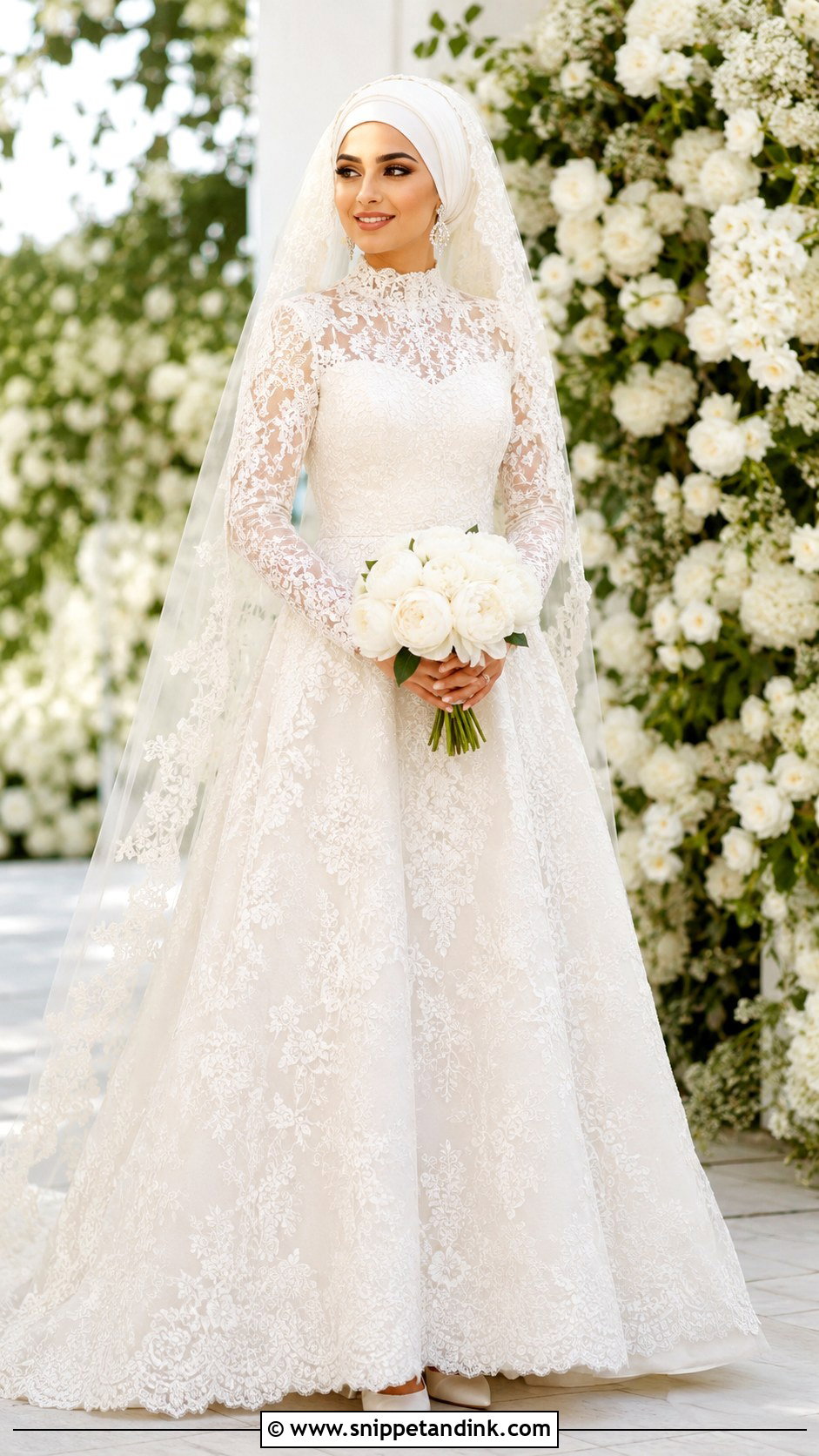
Lace gives a modest gown texture, and the lining decides how it looks. A fully lined A-line with long lace sleeves and a high illusion neck works best when the illusion mesh is matched closely to your skin, otherwise it reads as a grey band in photos. For the hijab, I match a matte chiffon wrap to the lining colour, not to the lace, because lace usually photographs a shade lighter. Ivory closed-toe heels, crystal earrings and a slim beaded belt add structure if the waist looks soft. A long tulle veil with a lace border and white peonies with greenery finish it. Keep everything in one ivory family so the pattern doesn’t look busy.
3. Arab Bride Pearl Embellished A-Line Gown
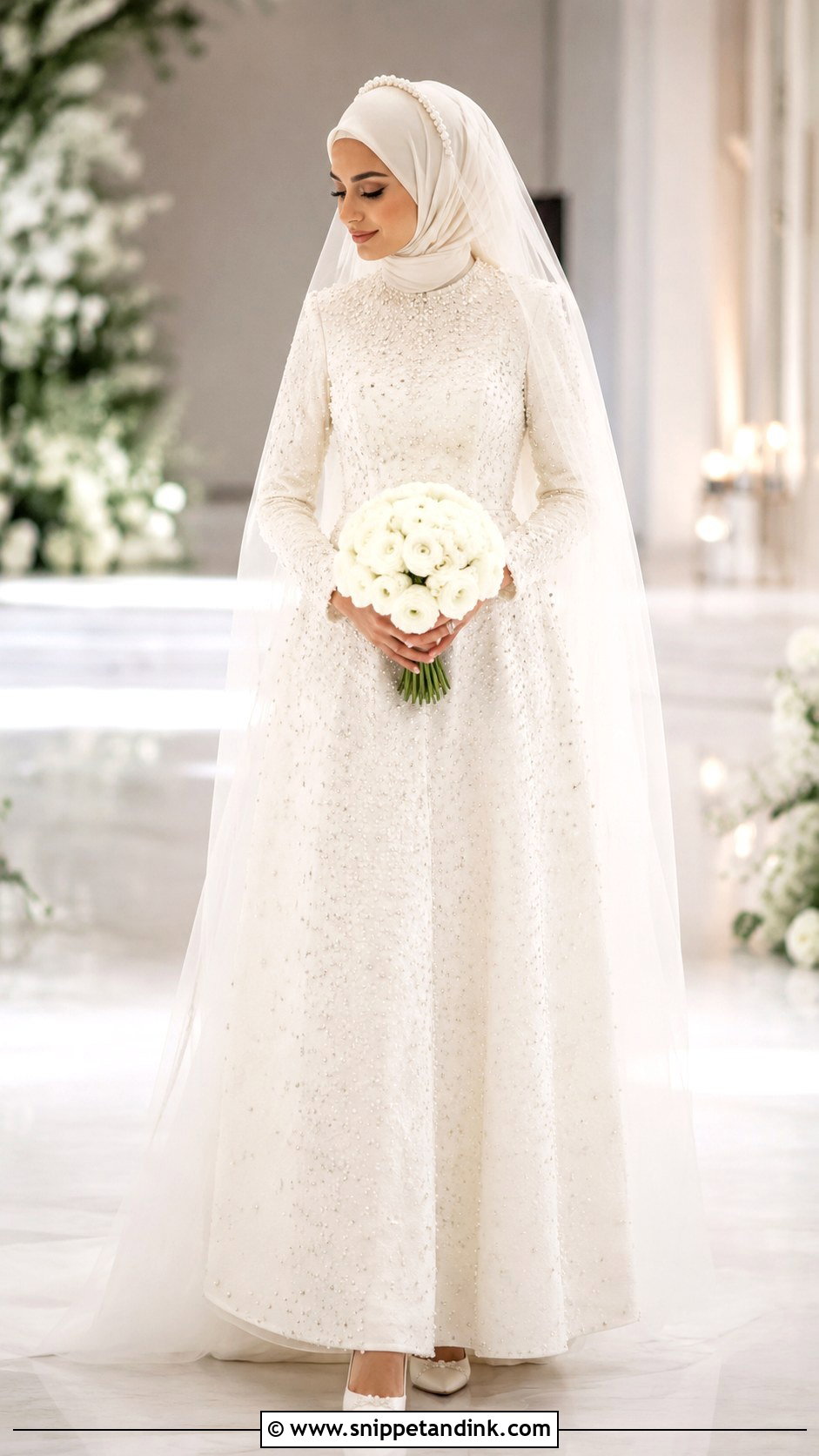
Pearls scattered over the bodice, shoulders and upper skirt give an A-line gown a soft glow without the hard sparkle of crystals. I like the scatter to thin out toward the hem, so the flowing skirt still moves and you’re not carrying weight at the knee. Pearl-trimmed slingbacks or closed pumps work underneath. A simple satin hijab, a pearl headband and a plain fingertip veil support the embellishment rather than fighting it. Small pearl earrings and a round bouquet of white ranunculus are enough. Skip a necklace if the neckline is already beaded. For a nikah or engagement in a bright room, the pearls catch light without glare.
4. Arab Bride Crystal Mermaid Gown
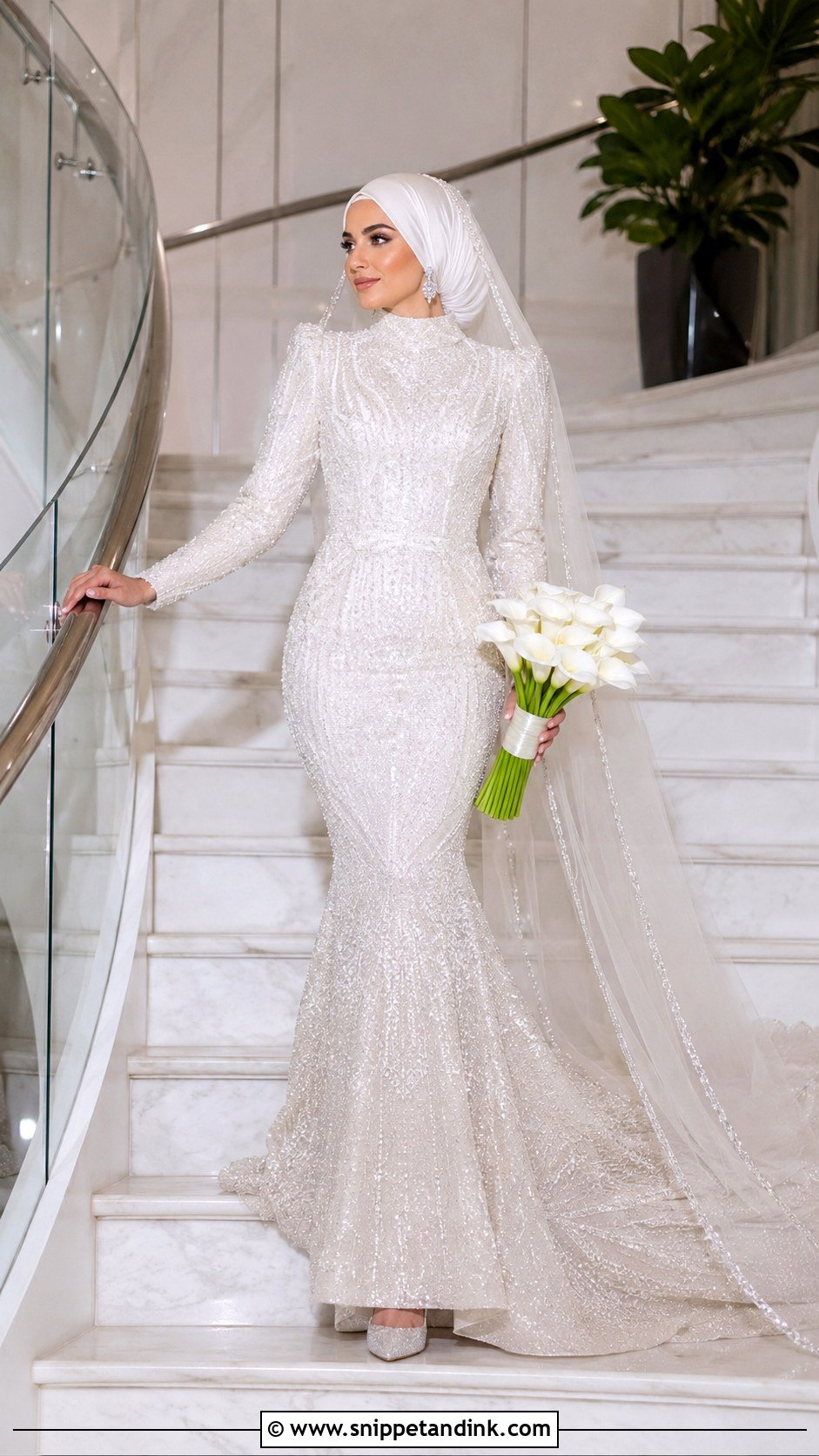
A crystal mermaid makes a dramatic entrance and asks a lot of the bride wearing it. The skirt flares at the knee, so steps get shorter and stairs need practice, which matters if your entrance involves a staircase. Crystal lines running vertically lengthen the body and draw the eye to the waist. Silver pointed heels, crystal drops and a small metallic clutch suit it, with a sleek veil set under a crystal comb. A fitted ivory hijab with a lightly jewelled edge around the face works well. I always ask brides to sit, walk and climb a step in it during alterations. Crystals are heavy, and the weight sits at the hips.
5. Arab Bride Detachable Overskirt Gown
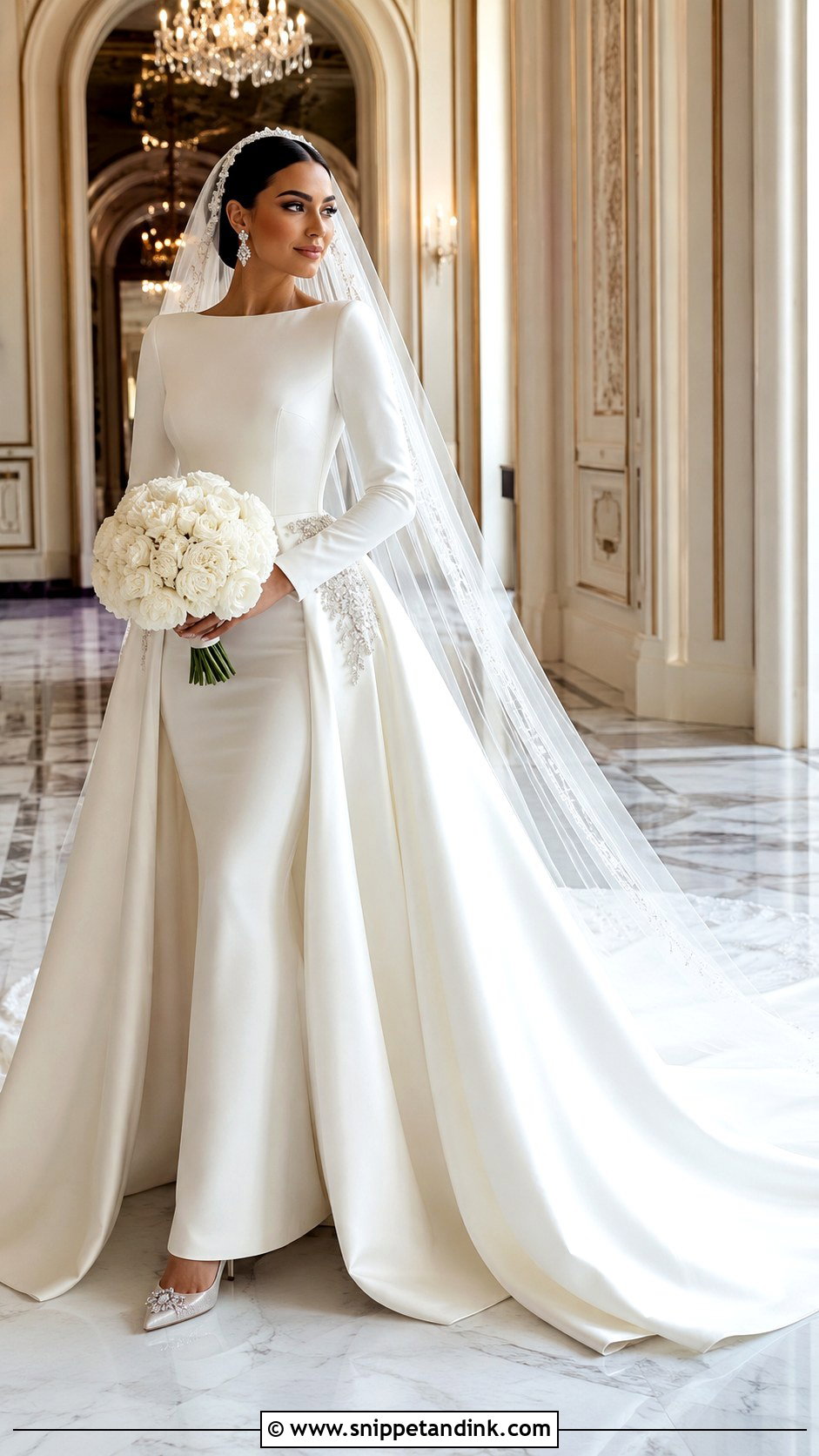
A detachable overskirt gives you two dresses in one. The base is a fitted crepe or satin column with long sleeves; the overskirt adds volume and a chapel train for the ceremony, the entrance and family portraits, then comes off for dancing. The join at the waist is the part to examine. A good overskirt fastens with hooks or snaps under a band so the base dress shows no marks when it’s removed. Embellished pumps, a structured bouquet and understated crystal earrings finish it. Swap the cathedral veil for a jewelled comb later, or a long veil for a pearl-edged shoulder veil if you wear hijab.
6. Arab Bride Cape Sleeve Gown
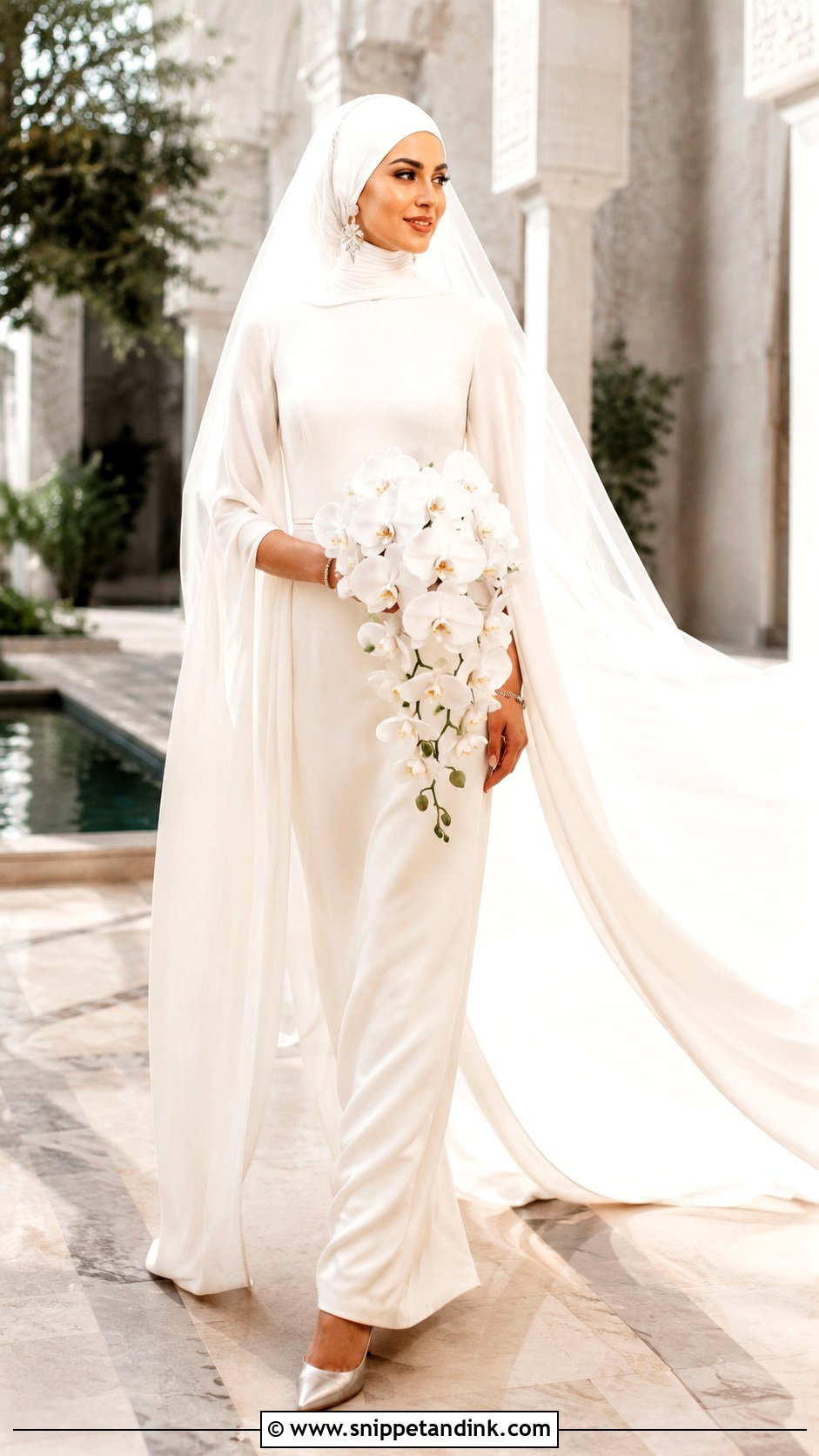
A cape attached at the shoulders adds movement from every angle, and it’s one of the kindest ways to add coverage to a column dress. Sheer chiffon floats; crepe or satin looks architectural. Keep the dress underneath simple. With a cape, the hairstyle or hijab needs to sit close to the head, because volume at the shoulders crowds the line. Pointed metallic pumps, sculptural earrings and a slim cuff work well. If you add a veil, end it above the cape’s longest point so the two layers don’t tangle. A cascading white orchid bouquet echoes the length, and a staircase shows the whole thing off.
7. Arab Bride High Neck Hijab Gown
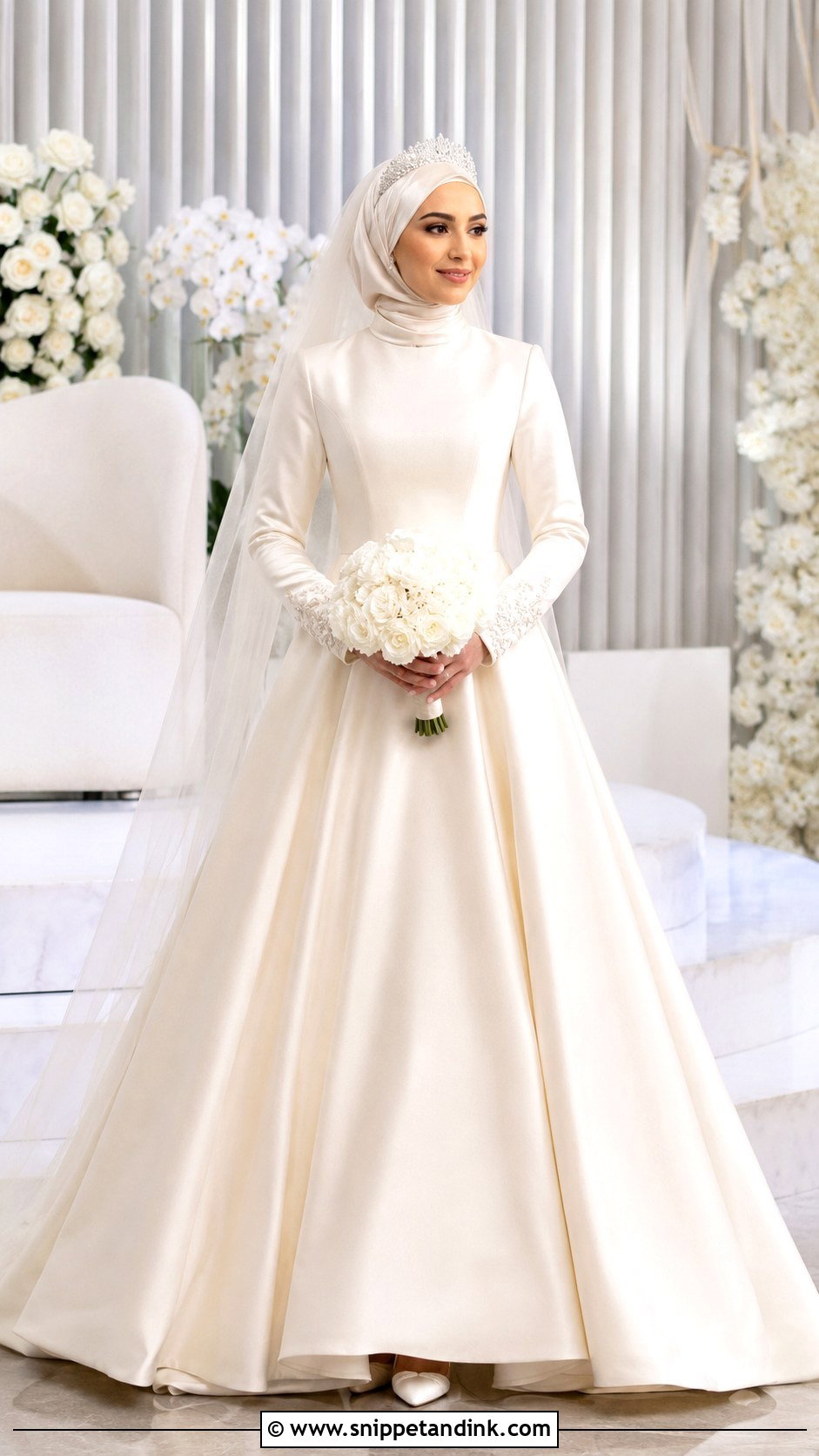
A high-neck gown with long fitted sleeves is the cleanest base for a bridal hijab, because nothing at the neckline competes with the wrap. Matte crepe, Mikado or satin keeps the line smooth, and embroidered cuffs add detail. The colour match between gown and hijab is where I see the most mistakes. Ivory, cream and bright white look nearly the same in a shop but noticeably different in photographs, so I take a fabric swatch from the dress to every hijab appointment. A light veil over the hijab, held with hidden pins or a fine crown, closed-toe satin shoes, pearl studs and a small bouquet complete it. Pick one focal accessory, not three.
8. Arab Bride White Bridal Abaya
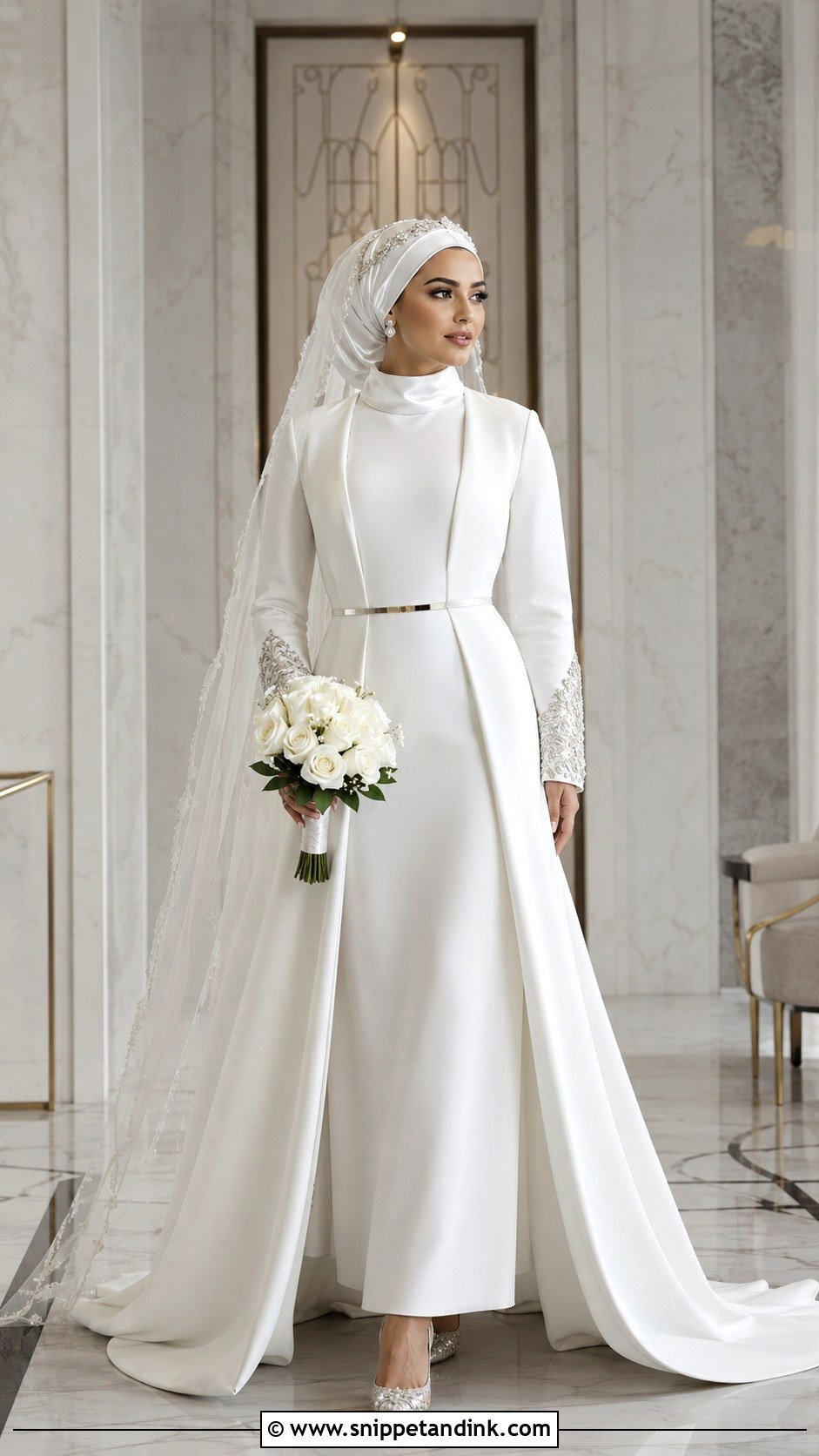
A white bridal abaya can be ceremonial and understated at once. Structured crepe holds a straight line; flowing satin moves. Embroidery along the front opening, cuffs and shoulders frames the body without needing jewelry. Wear it over a simple ivory slip or column dress so the coverage is complete and the abaya drapes cleanly. A narrow metallic belt defines the waist if you want shape. I’d fit the abaya with the belt on and off, as it changes the hem length at the front. Crystal pumps, a satin hijab, a light veil under a jewelled headpiece, pearl earrings and white roses with long ribbons finish it.
9. Arab Bride White Moroccan Kaftan
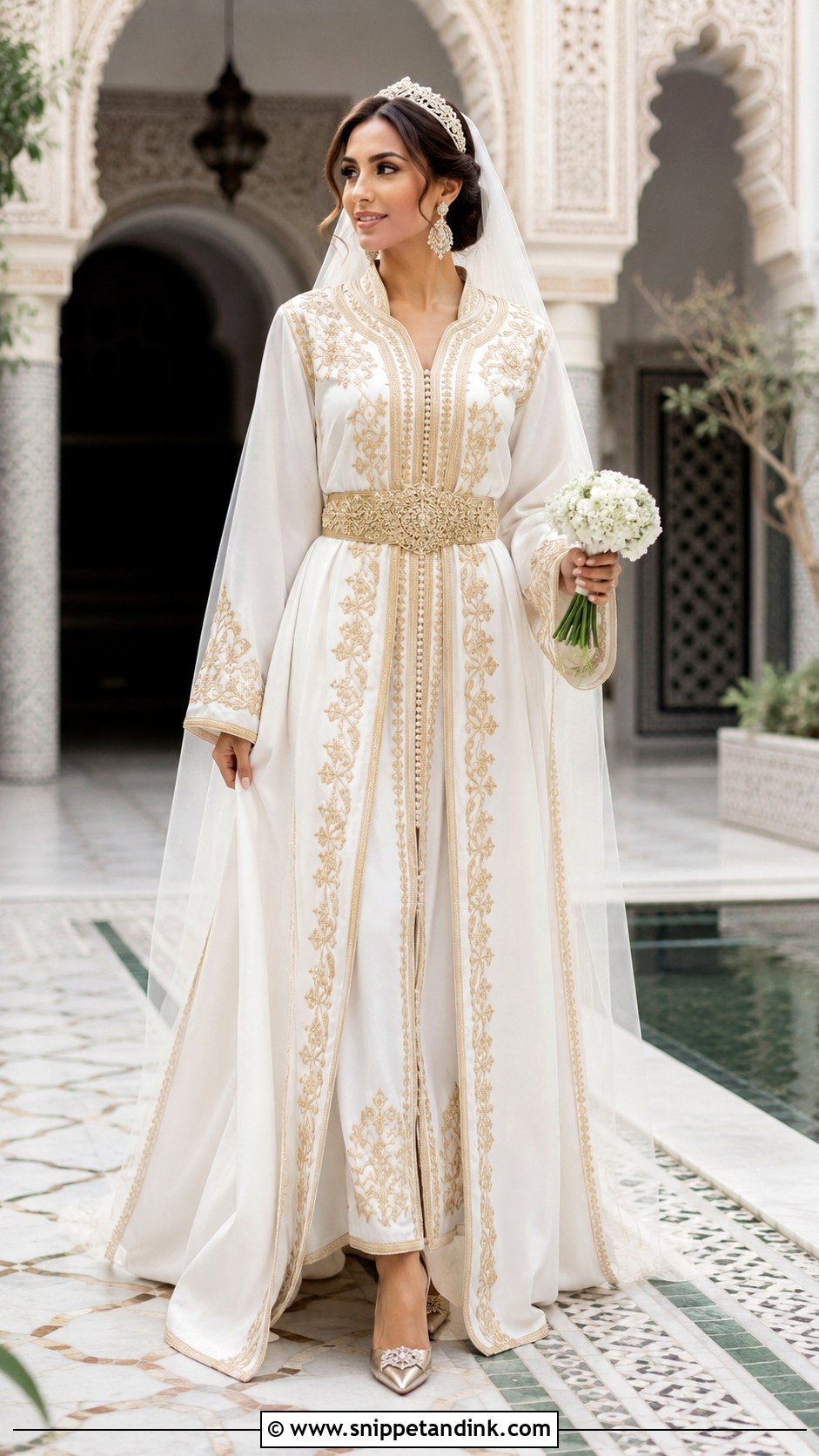
A white Moroccan-inspired kaftan gets its impact from trim, embroidery and the belt. White-on-white embroidery is soft; gold or silver thread looks more ceremonial. The belt does the work of shaping the body, so it should be fitted to you, not bought off the rail, or it slides down the waist as the evening goes on. Metallic mules or low block heels stay comfortable under a straight skirt. Add earrings and a headpiece in the same metal, a plain veil behind the shoulders and a small bouquet. Stick to two colours, ivory and gold or white and silver, and the whole look holds together.
10. Arab Bride Green Henna Kaftan
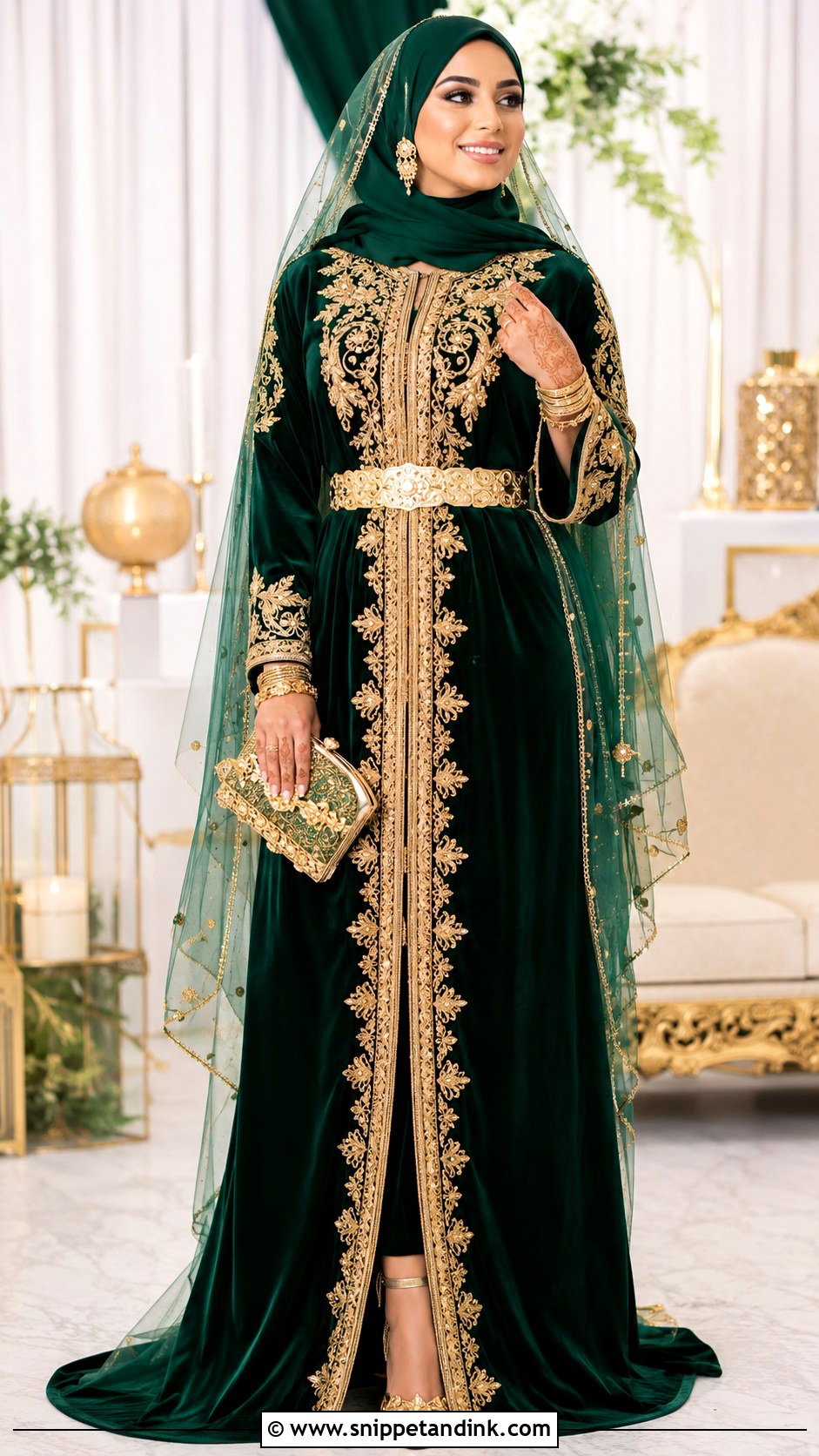
Emerald with antique gold makes a rich henna-night look. Velvet, silk or satin all work, with embroidery at the neckline, cuffs and front panel. Henna night has a practical wrinkle: fresh paste smudges and stains, so I keep sleeves able to push back above the wrist and avoid pale trim at the cuffs. A gold belt shapes the waist, with metallic heels, statement earrings, stacked bangles and a small embellished clutch. Uncovered hair can go in soft waves under a gold headpiece, or wear a deep green hijab with a sheer matching veil. Green, maroon and red are all traditional choices for this night.
11. Arab Bride Palestinian Embroidered Thobe
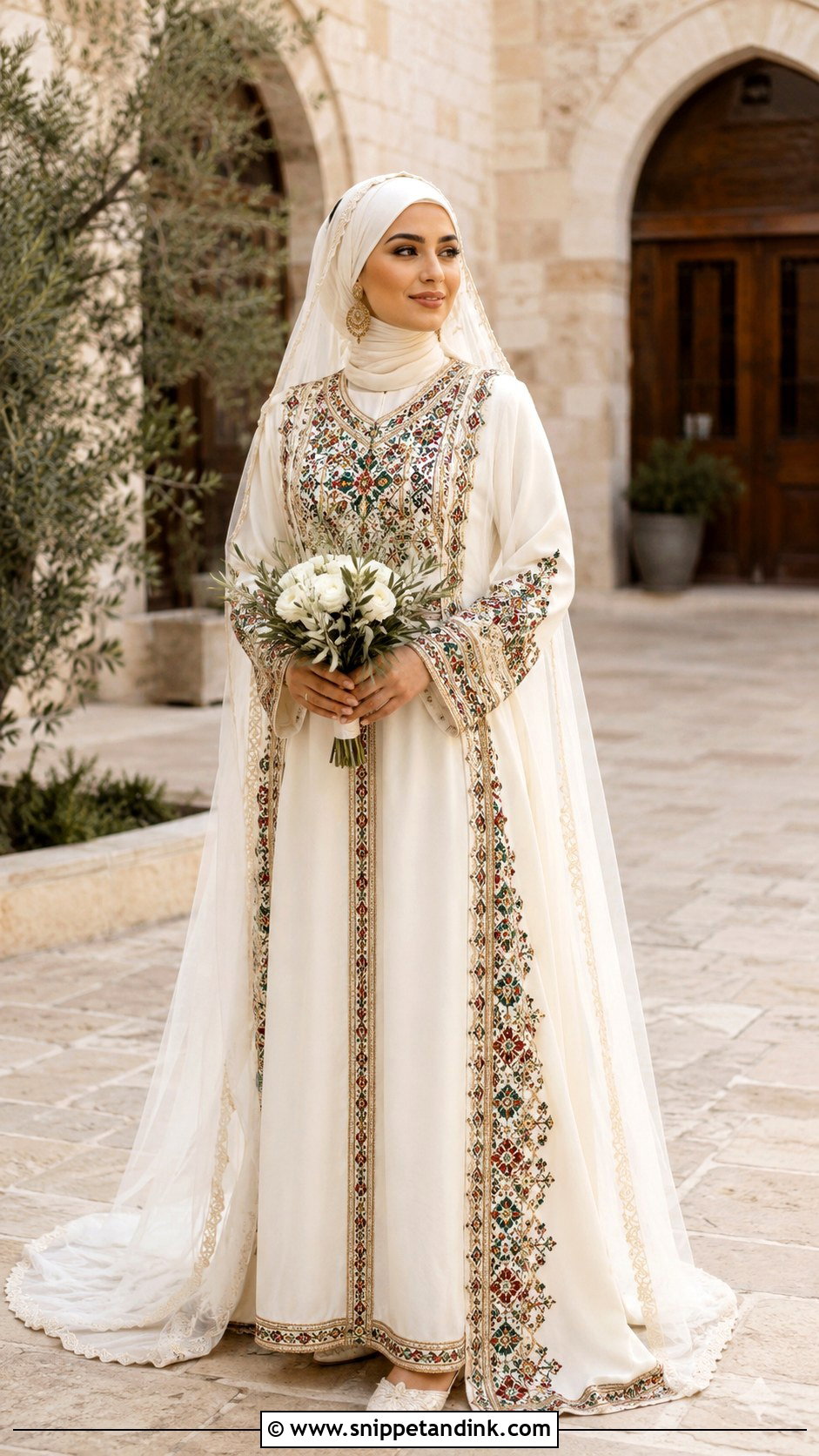
A Palestinian-inspired bridal thobe puts embroidery at the heart of the outfit. White, ivory or black grounds carry colourful cross-stitch across the chest panel, sleeves and skirt. Those motifs can carry family or regional meaning, so I’d work with a maker who knows them rather than picking a pattern for looks alone. Hand embroidery is slow, and a fully stitched panel can take months, so order early. Low embroidered shoes or closed pumps suit the formality, with gold earrings, a headpiece and a veil that leaves the chest panel visible. A plain hijab in one colour from the stitching pulls it together. It means most when it tells the bride’s own story.
12. Arab Bride Jordanian Embroidered Dress
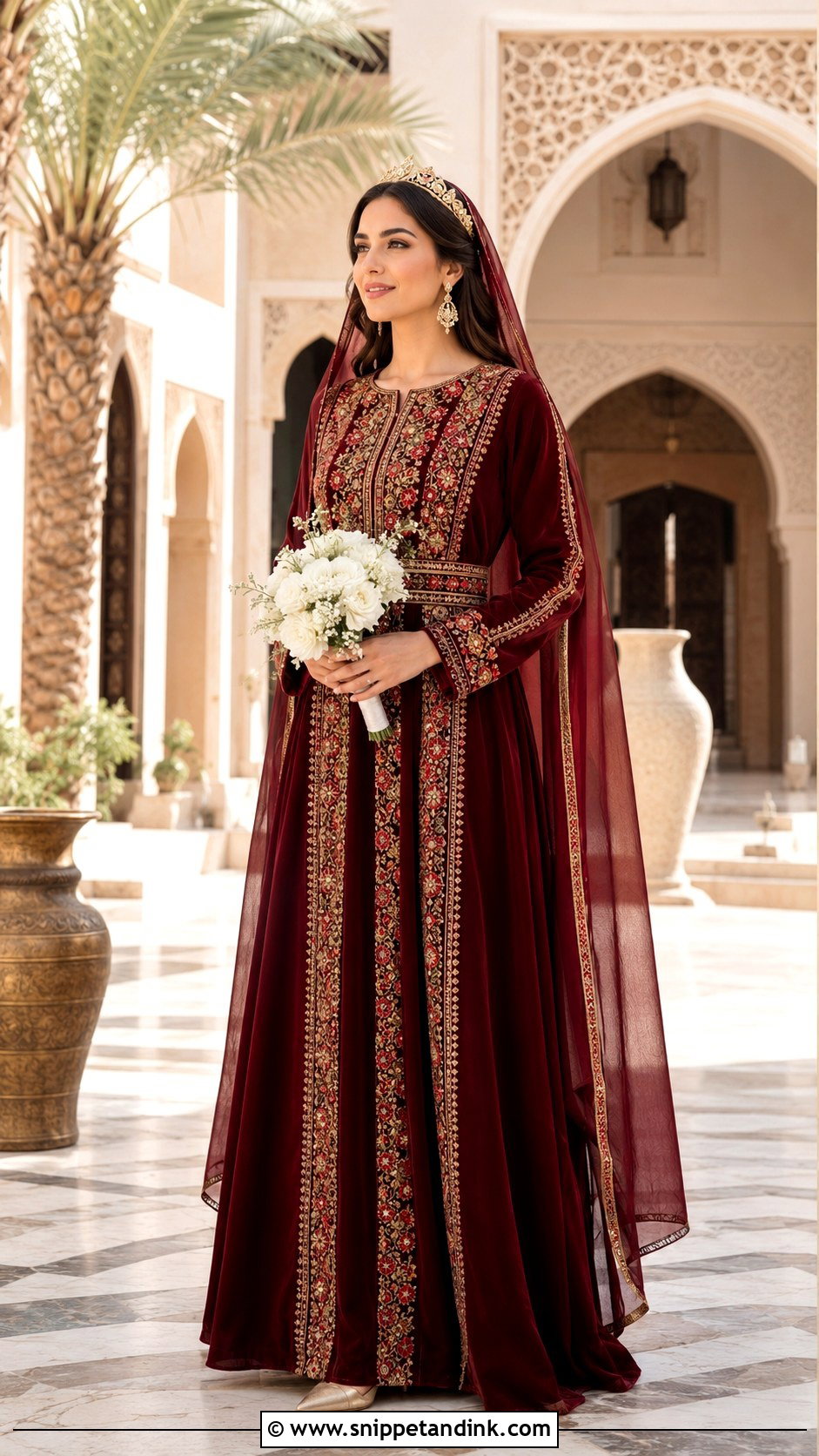
A Jordanian-inspired dress combines long length, deep colour and vertical embroidery down the front and sleeves. Black, red, burgundy and ivory are common grounds. A gently defined waist keeps a full shape from swallowing a petite frame; without it, the dress can look like a column of pattern. Gold pumps, a traditional-style headpiece and earrings in the embroidery’s metal suit it. If the dress is very colourful, a plain veil or hijab in black, ivory or burgundy reads far cleaner than another pattern. Skip the bouquet if it would hide the front. Ask relatives or an experienced maker about the references so the outfit honours where it comes from.
13. Arab Bride Lebanese Couture Gown
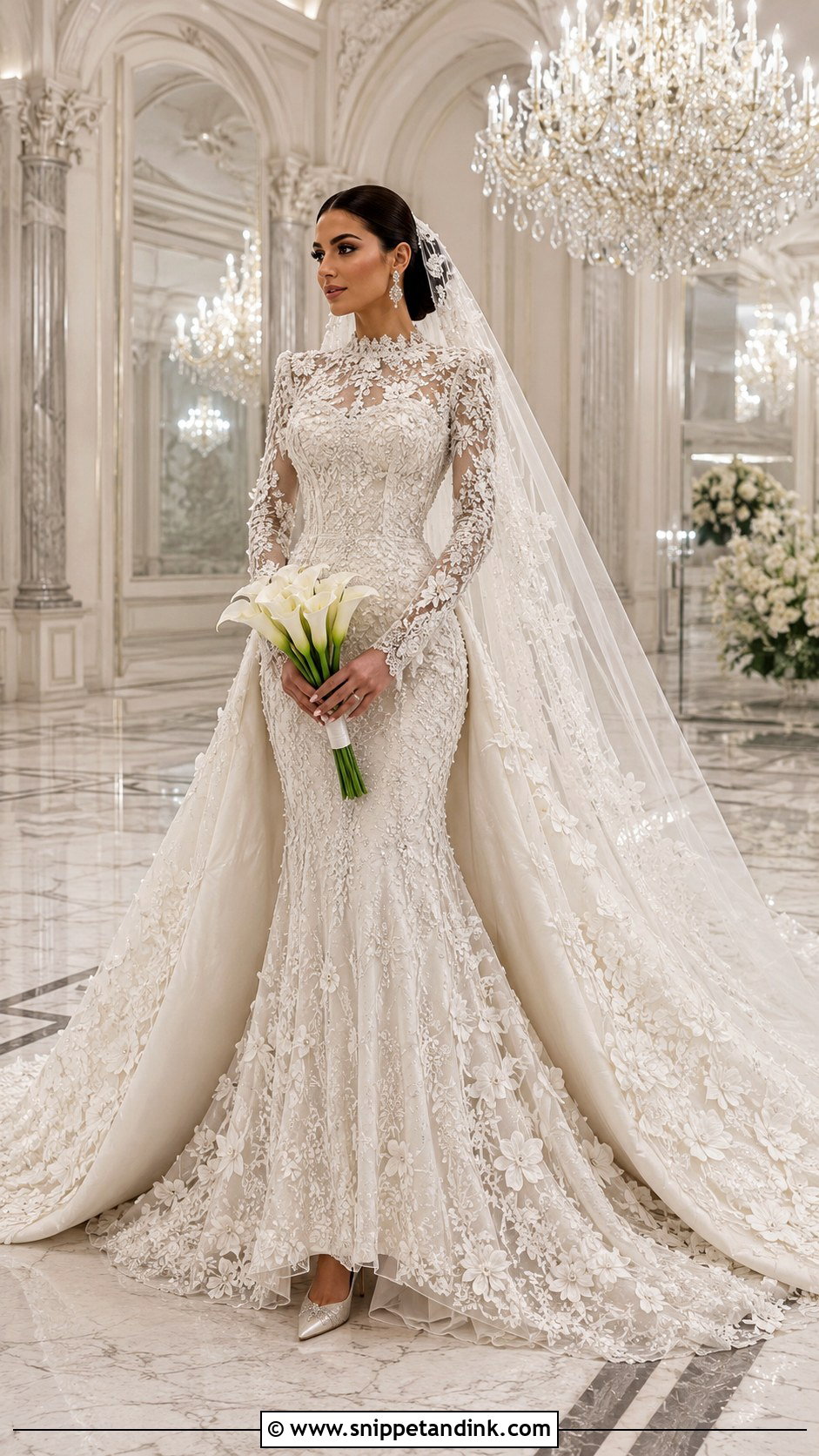
A Lebanese couture-inspired bridal gown is built for a dramatic entrance: a structured ball gown or trumpet shape with dimensional appliqués, crystal work and a long train. Coverage can be worked in from the start. Sheer panels can be lined, necklines raised and sleeves added without losing the drama, but raise it at the design stage, because altering a finished couture bodice is harder. Crystal pumps, chandelier earrings and a cathedral veil just longer than the train suit it, with a smooth hairstyle or neatly wrapped hijab. White roses or calla lilies keep the bouquet calm. Bring the exact shoes and underlayers to the final fitting.
14. Arab Bride Champagne Draped Gown
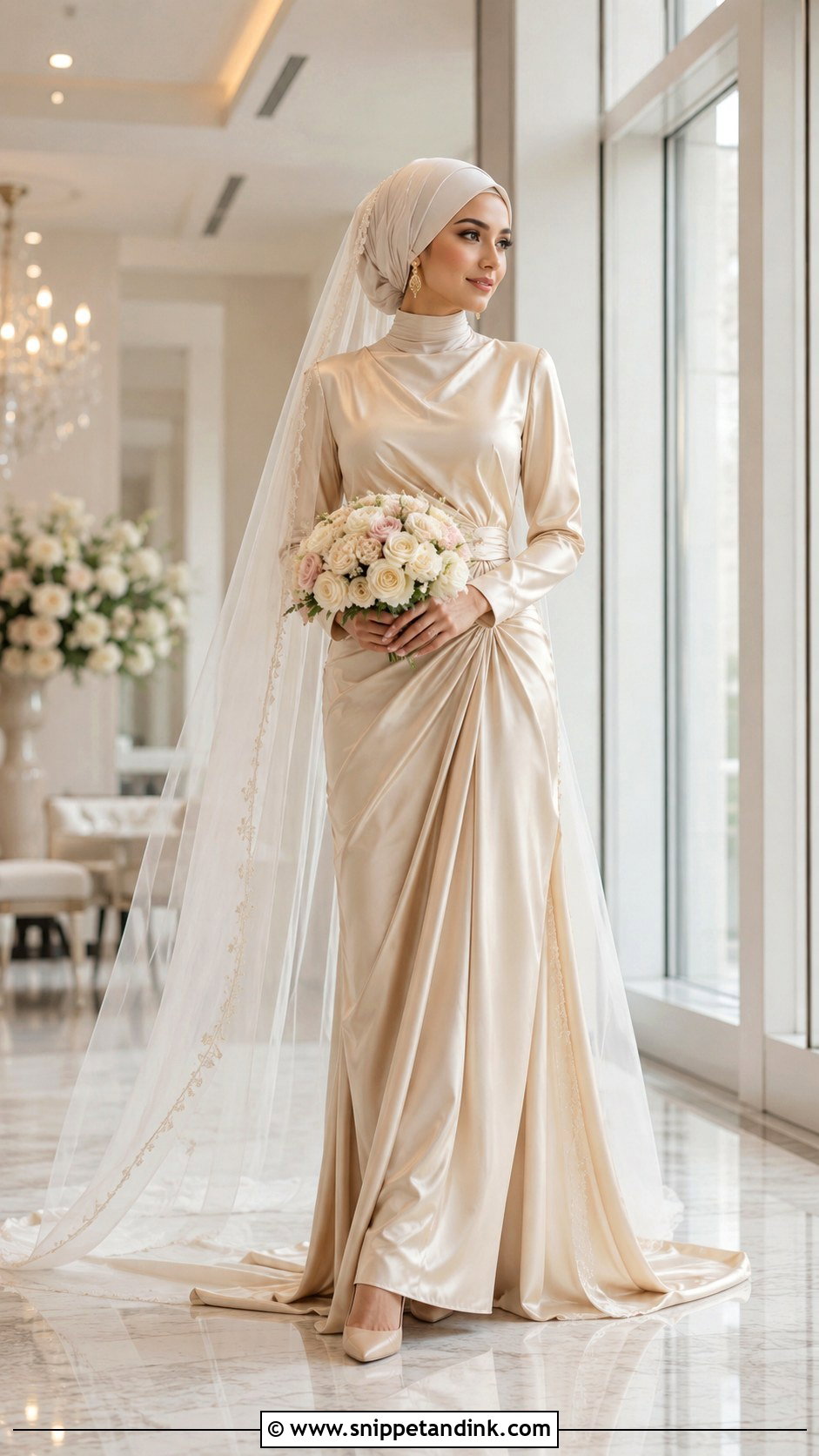
Champagne is a warm alternative to bright white, and it suits soft draping. A satin or silky gown with a gathered waist, long sleeves and a flowing skirt works best when the drape on the bodice is shallow; deep folds add bulk where you least want it. Champagne pumps, gold drops and a fine bracelet suit it. A tonal hijab makes it monochrome; a light ivory veil adds contrast. Cream roses and pale blush flowers with matching ribbon finish it. Ask your photographer to test the colour in the venue lighting, because champagne can read ivory, beige or gold depending on the bulbs. Draping is softer and more forgiving than heavy structure.
15. Arab Bride Blush Floral Gown
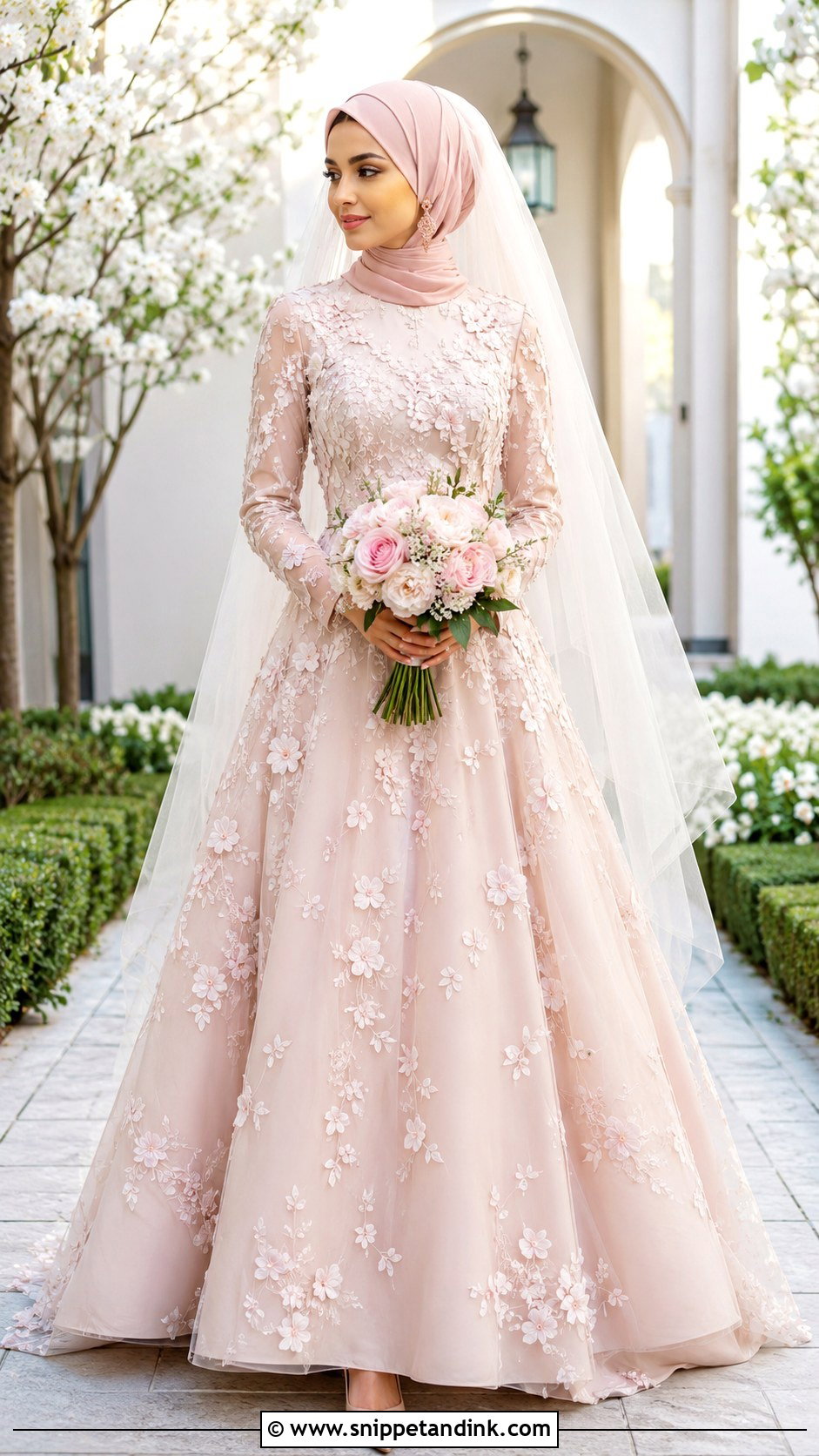
Blush adds warmth without leaving the bridal palette. A pale blush or ivory A-line with raised flowers on the bodice, sleeves and upper skirt looks lighter when the flowers thin out toward the hem. Dense appliqués all the way down add weight and can look like a costume. I check the blush against the bride’s skin in daylight; some shades wash out cool undertones. Nude or blush closed-toe heels and rose-gold earrings suit it. A plain ivory veil keeps the flowers visible, or a blush chiffon hijab picks up the undertone. Garden roses, pale ranunculus and little greenery are enough. Skip a coloured belt and big crown here.
16. Arab Bride Drop Waist Gown
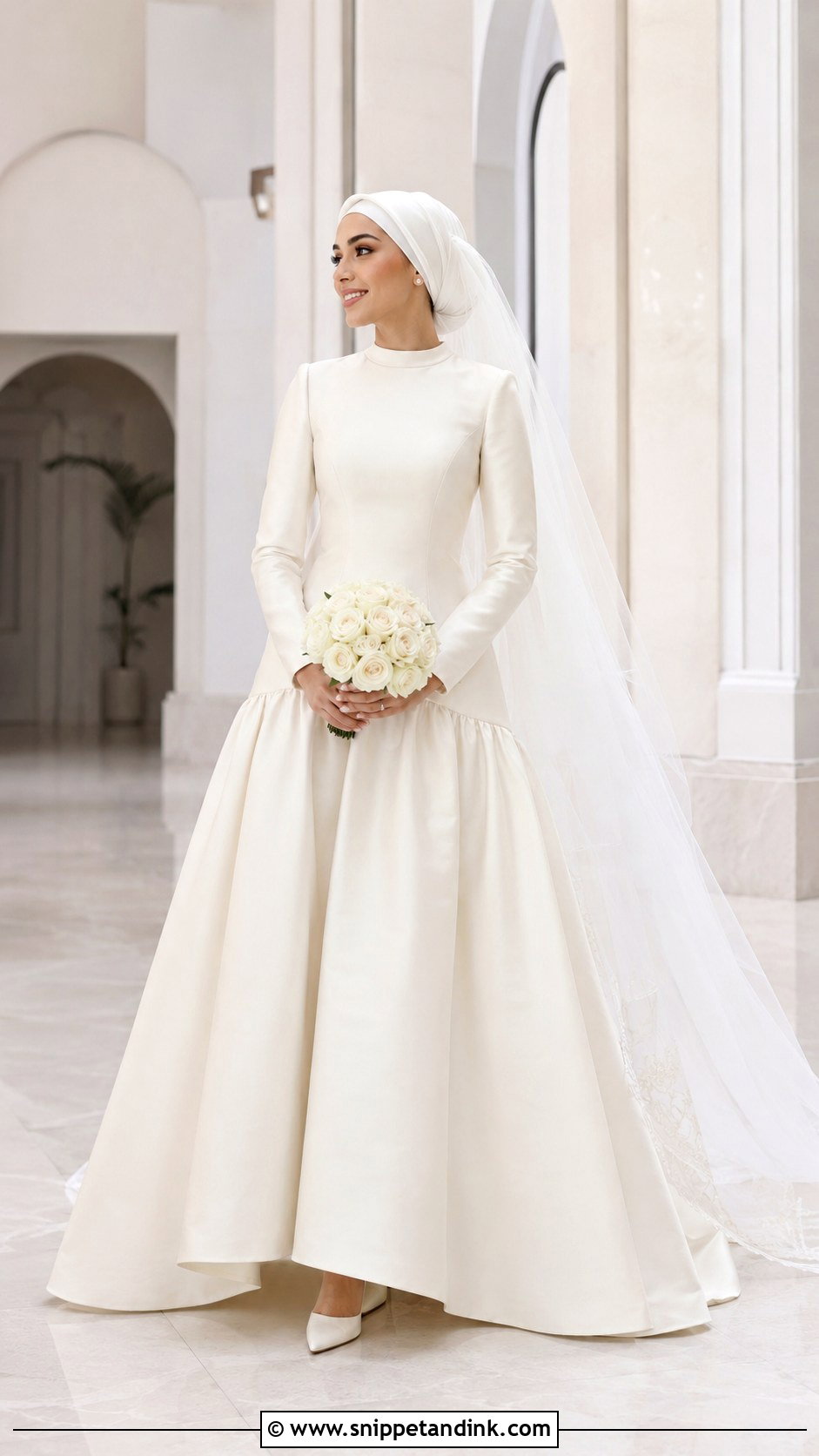
A drop waist runs the bodice below the natural waist before opening into a full skirt, which lengthens the torso and looks sculpted. Structured satin or Mikado with a high neck and long sleeves shows the construction best, so keep beading minimal. Pointed ivory pumps, diamond studs and a smooth cathedral veil suit it, with a sleek hijab or bun. A compact bouquet of tightly packed white roses echoes the clean lines. The thing I always test is sitting. A long rigid bodice can dig into the hips when you sit at the top table, so ask the seamstress to check flexibility at every fitting.
17. Arab Bride Minimalist Crepe Gown
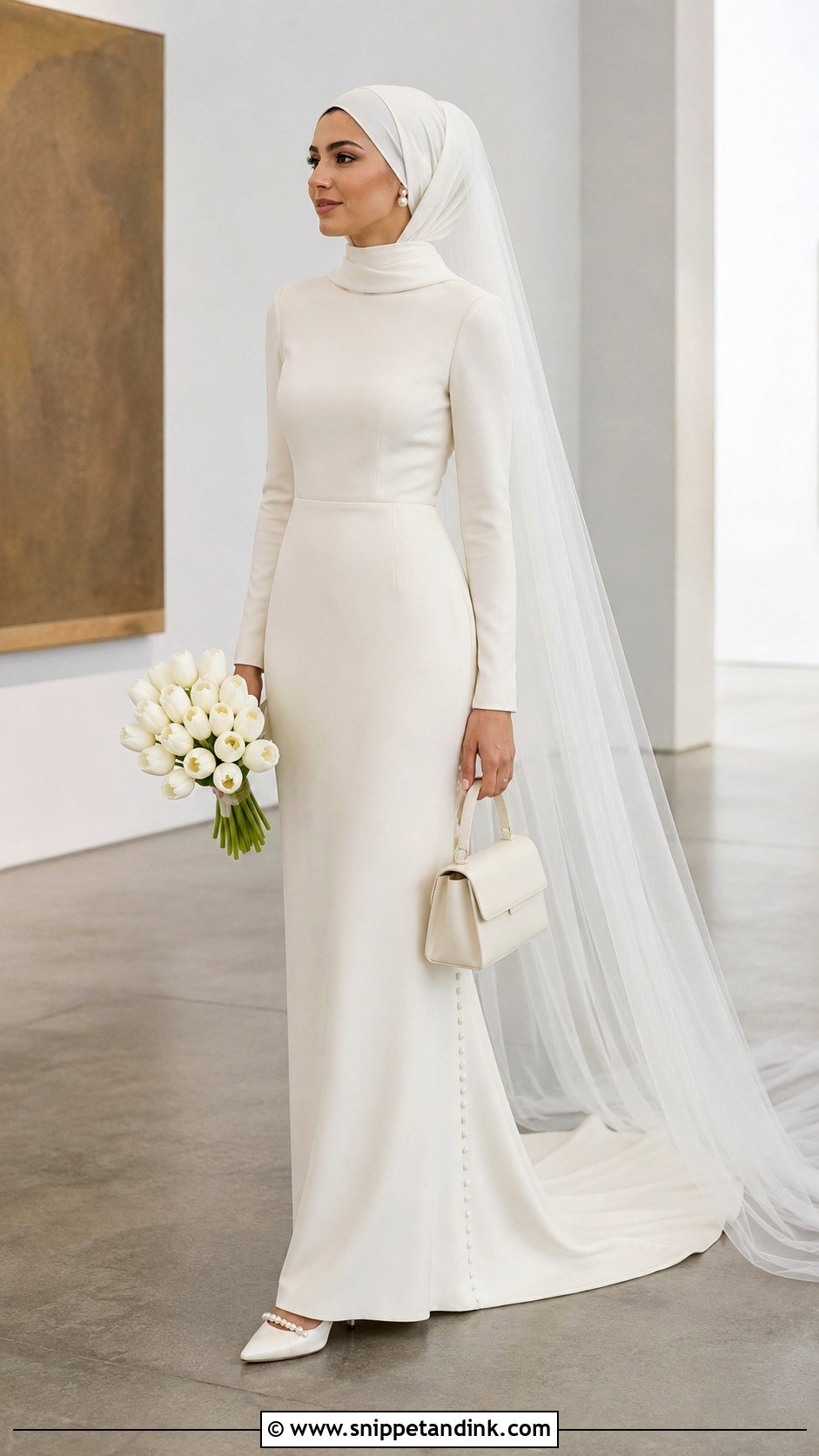
Crepe shows everything, so the tailoring makes the dress. A column or gently flared gown with long fitted sleeves, a bateau neckline and precise waist seams looks sharp only if the shoulders sit exactly right and the sleeves end at the wrist bone. One detail is enough: covered buttons, a short train or a detachable back bow. Pearl pumps, medium earrings and a structured top-handle bag suit it. A long plain veil for the ceremony comes off to show the clean shape. A smooth satin hijab looks good against crepe because the slight shine contrasts with the matte fabric. White tulips or calla lilies finish it.
18. Arab Bride Basque Waist Princess Gown
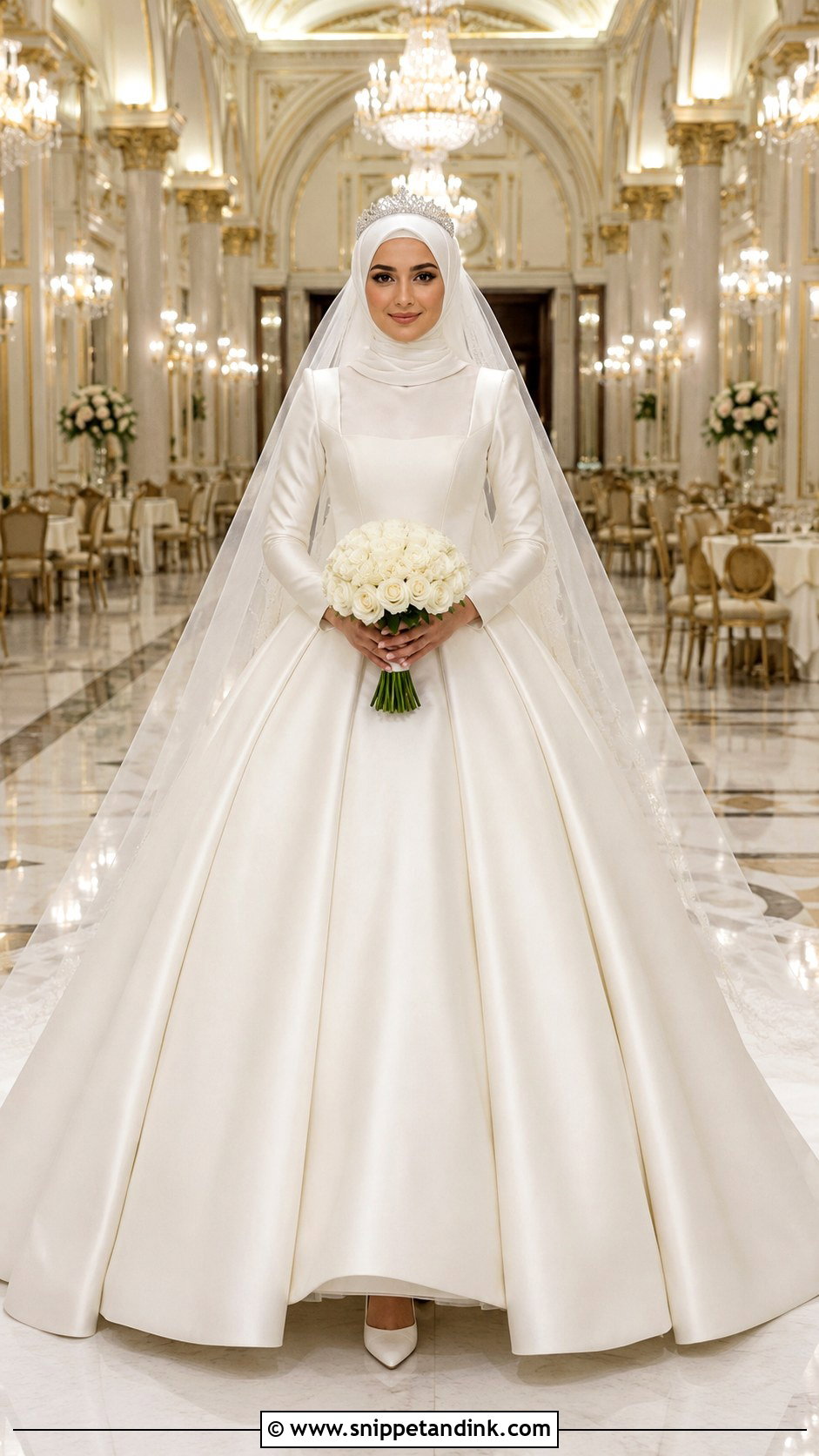
A basque waist dips into a V below the natural waist and lengthens the torso, which balances a big princess skirt. Satin or Mikado gives a clean finish; embroidered fabric is more decorative. Long sleeves and a soft square neckline give balanced coverage. Satin pumps, a crystal tiara and a cathedral veil attached behind the crown suit it. With hijab, a smooth ivory wrap goes under the tiara and veil. A tiara over hijab needs to be pinned through the underscarf, not just the outer layer, or it slips. Keep the earrings small and the bouquet white so the waistline stays the focus. Make sure you can breathe and sit in the bodice.
19. Arab Bride Two-Piece Gown
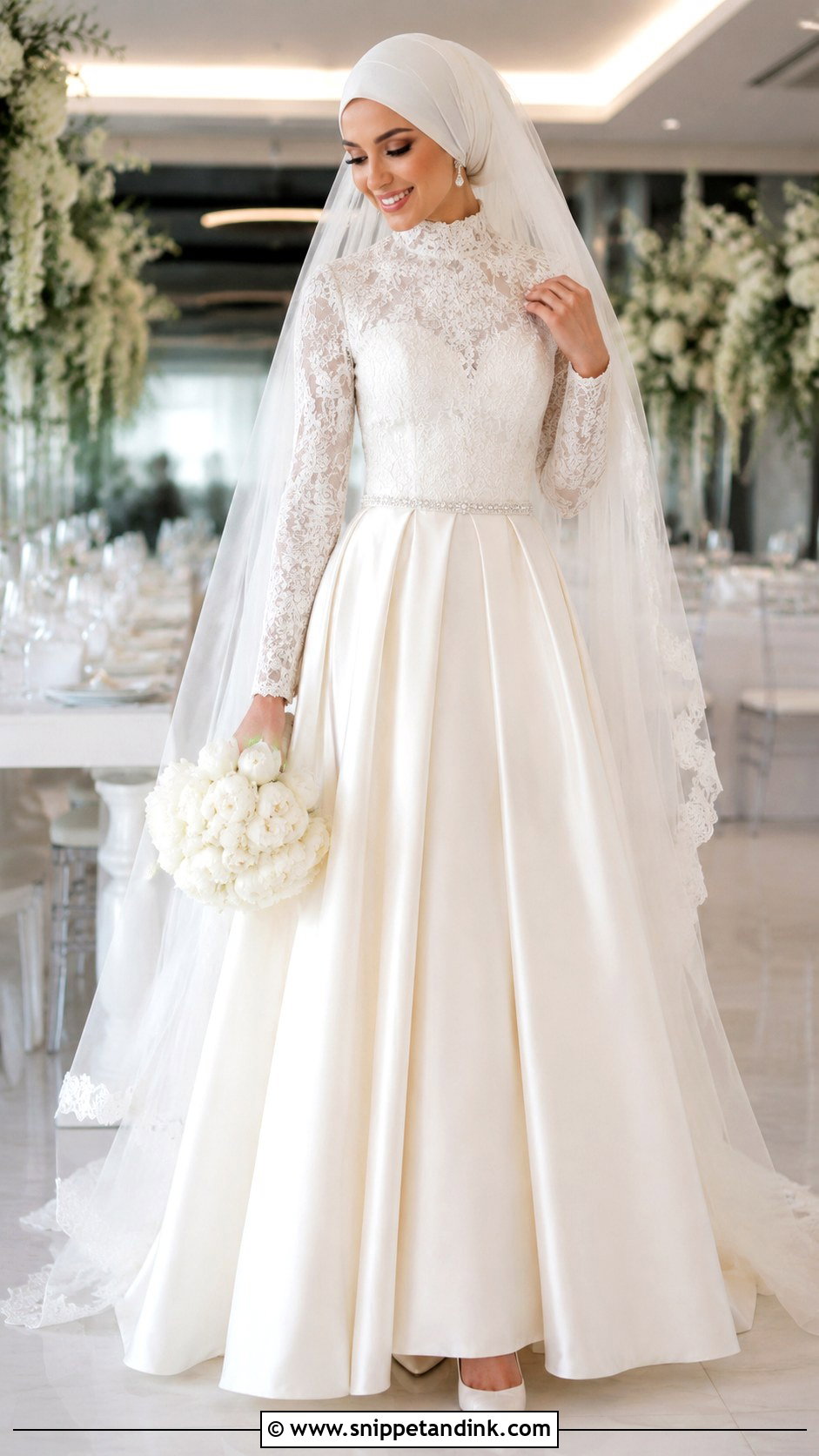
A two-piece gown helps when your top and bottom are different sizes, and each piece can be worn again. A long-sleeved fitted top with a high neck over a full matching skirt looks like a single gown if the top overlaps securely. I ask for an inner grip band at the skirt waist so the top doesn’t ride up when you lift your arms. Lace over satin is romantic; crepe or Mikado looks cleaner. A narrow embellished belt helps the pieces read as one. Pointed ivory heels, pearl earrings and a long veil suit it, with a matching hijab tucked under the neckline. White peonies or roses finish it.
20. Arab Bride Silver Reception Gown
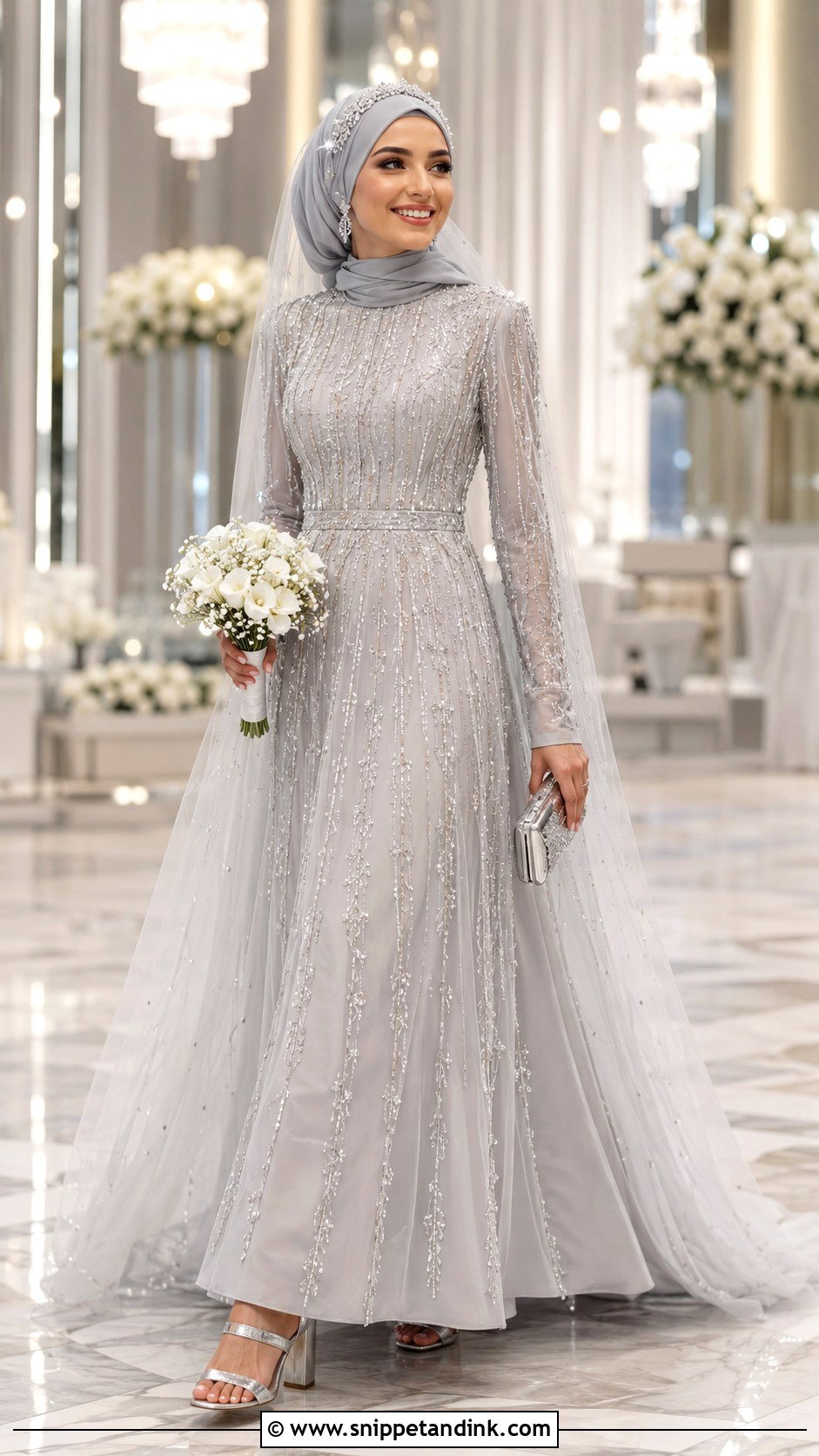
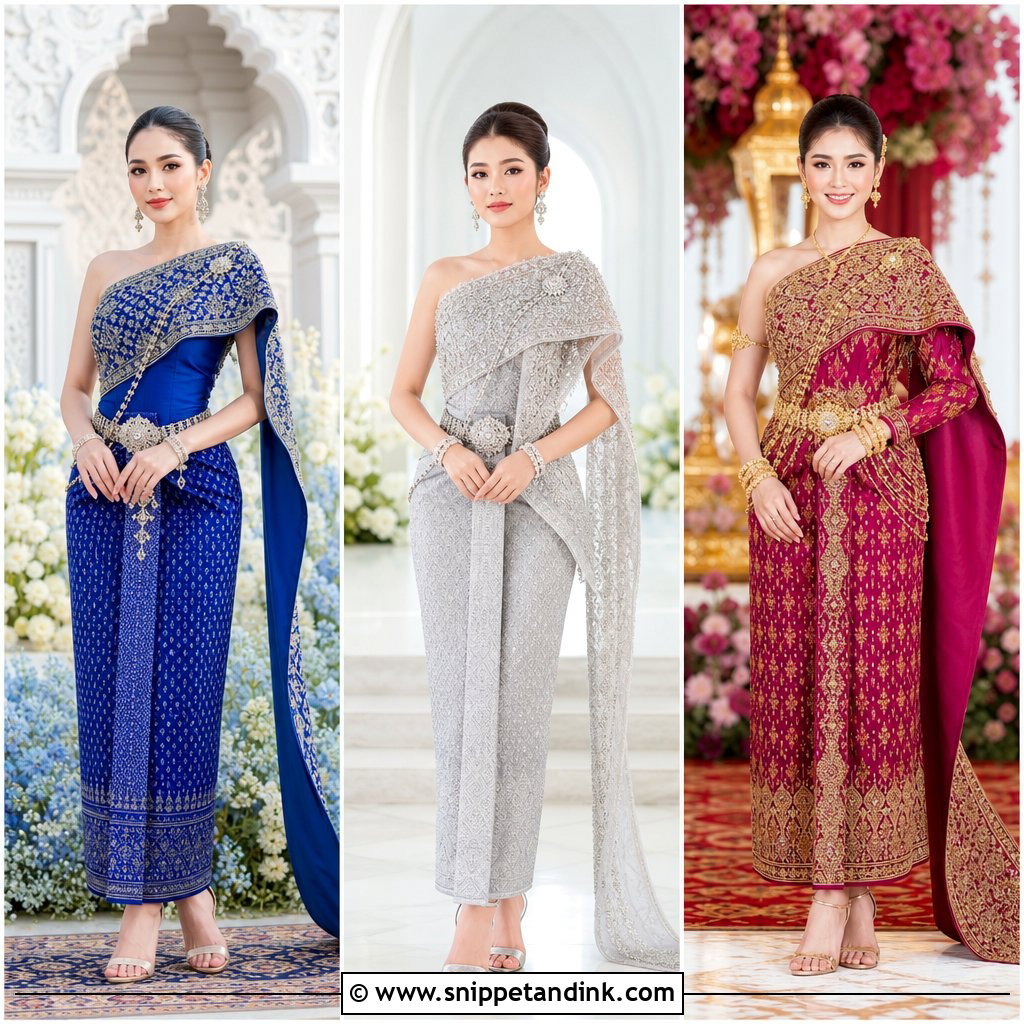
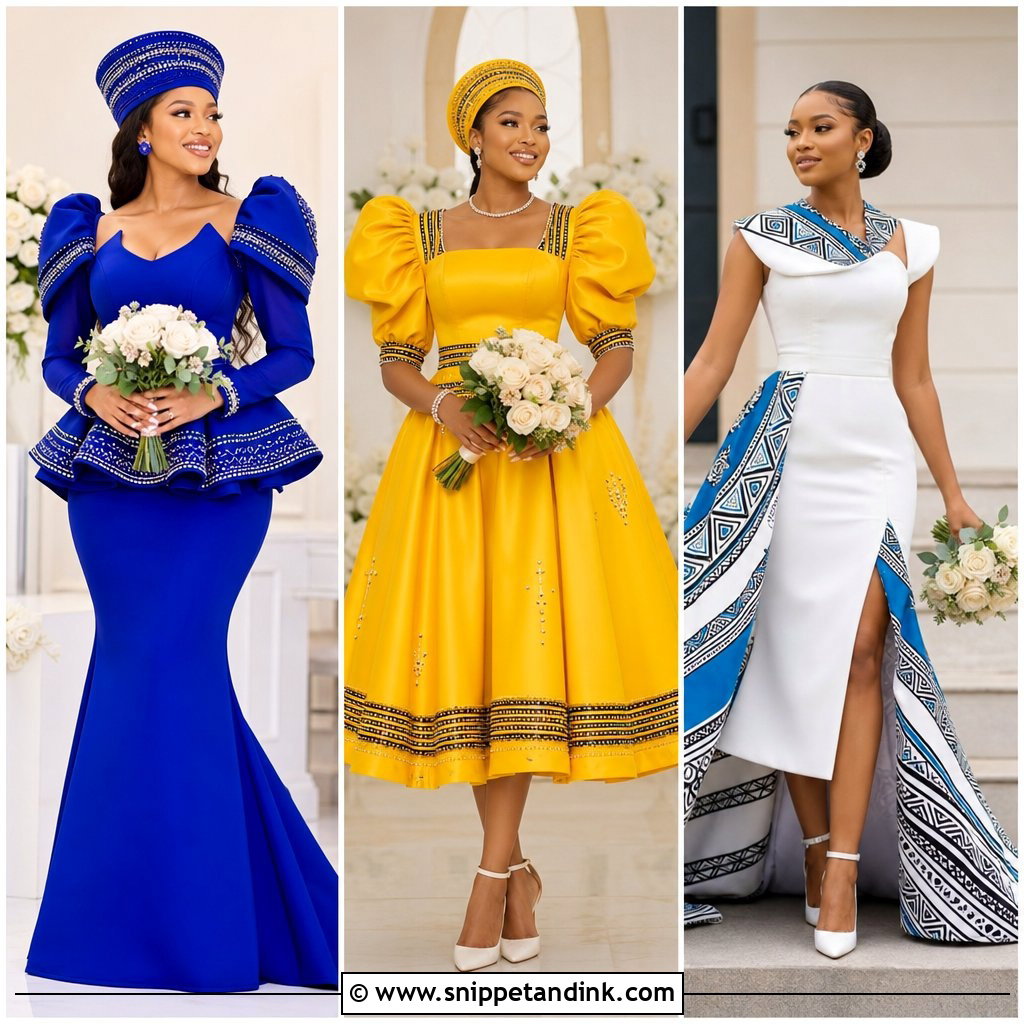
A silver gown makes a fresh second look for the reception, and it’s lighter to dance in. Pale silver, cool ivory or soft grey with long sleeves and vertical crystal lines looks formal but moves. Silver block heels, crystal earrings and a small metallic clutch suit it. Swap the long veil for a shoulder veil, a jewelled headband or a silver-grey hijab. Cool tones look best with fresh, luminous makeup. If the reception change is quick, I’d have the hijab pre-pinned on a second underscarf, which saves ten minutes of repinning. A small bouquet works for the entrance and can be set aside after.
Pinning a Hijab, Veil and Crown That Stay Put
Most of the looks above layer a veil or headpiece over a bridal hijab, and the layering is where things slide by midnight. I always do a full trial with the real veil and crown, because the weight of a cathedral veil pulls backward on everything beneath it.
Build from a firm base
An underscarf with grip, such as a cotton or jersey cap, gives the pins something to hold. Satin hijabs slip on satin; a matte underscarf stops that. Pin the outer wrap to the underscarf, not to itself.
Anchor the heavy pieces
Crowns and jewelled combs should be pinned through every layer down to the underscarf. A heavy veil sits better attached below the crown at the back of the head, where it pulls downward rather than tipping the crown forward.
Plan the outfit changes
For each change, decide in advance whether the hijab stays and only the veil comes off, or whether everything is rewrapped. A rewrap with a fresh underscarf takes time, so build that time into the schedule and keep spare pins, a mirror and safety pins in the bag your helper carries.
Heritage, Fit and the Hours on Your Feet
An Arab bride’s wardrobe often spans several events, and each look should suit its own night: a satin ball gown, a modest hijab gown, an embroidered thobe, a Moroccan-inspired kaftan or a sparkling reception dress. Plan the whole outfit together, so the proportions, shoes, veil or hijab, jewelry and bouquet feel connected. Comfort matters through long entrances, photographs, greetings and dancing. Treat these looks as a starting point, not a set of rules. Careful tailoring and meaningful details are what make an outfit feel respectful, personal and your own.
You'll Like These Ideas:




Leave a Reply