
A Lao bridal outfit is built from three pieces that have to agree with each other: the sinh, a wrapped tube skirt with a woven hem border; a fitted silk blouse; and the pha biang, the narrow shawl that crosses the body from one shoulder. When I style one, I start with the skirt, because the hem border is usually the most labor-intensive part of the textile and everything else should frame it. Red and gold are the classic ceremony colors, though ivory, emerald, blush, blue and silver all sit comfortably within the tradition. Weaving patterns and dressing customs differ between families and regions, so ask a relative or a Lao dressmaker to check your plan before anything is cut. Below are twenty combinations I’d happily dress a bride in, with notes on what each one asks of you.
Wrapping a Sinh So It Holds Through Kneeling and Bowing
A sinh is a tube of cloth, not a skirt sewn to size, so the fit happens on your body every time you put it on. Most brides practice the wrap once and then trust it on the morning. I’d practice it three times, in the shoes you’ll actually wear, because heel height changes where the hem border falls.
- Step in, pull the tube up to your natural waist and gather the excess to one side. Fold it flat across the front so the fold lies along your hip, not over the middle of your stomach.
- Turn the top edge down over itself, then fix it with the belt. The belt does the real holding; a safety pin hidden inside the fold is a sensible backup.
- Check the hem border. It should hang level all the way round and sit just above the shoe. A border that dips at the back usually means the front fold was pulled too tight.
- Kneel and stand once before you leave the room. If the skirt slides, the belt is too loose or sitting too high.
During the baci you’ll sit on the floor for a long stretch while elders tie white strings around your wrists. The polite way to sit is with legs folded to one side and feet pointed away from the people in front of you, and that position pulls hard on the sinh’s front fold. A slightly wider tube, or a wrap with more overlap, saves you from tugging at your skirt in the middle of a blessing.
1. Red And Gold Lao Wedding Dress
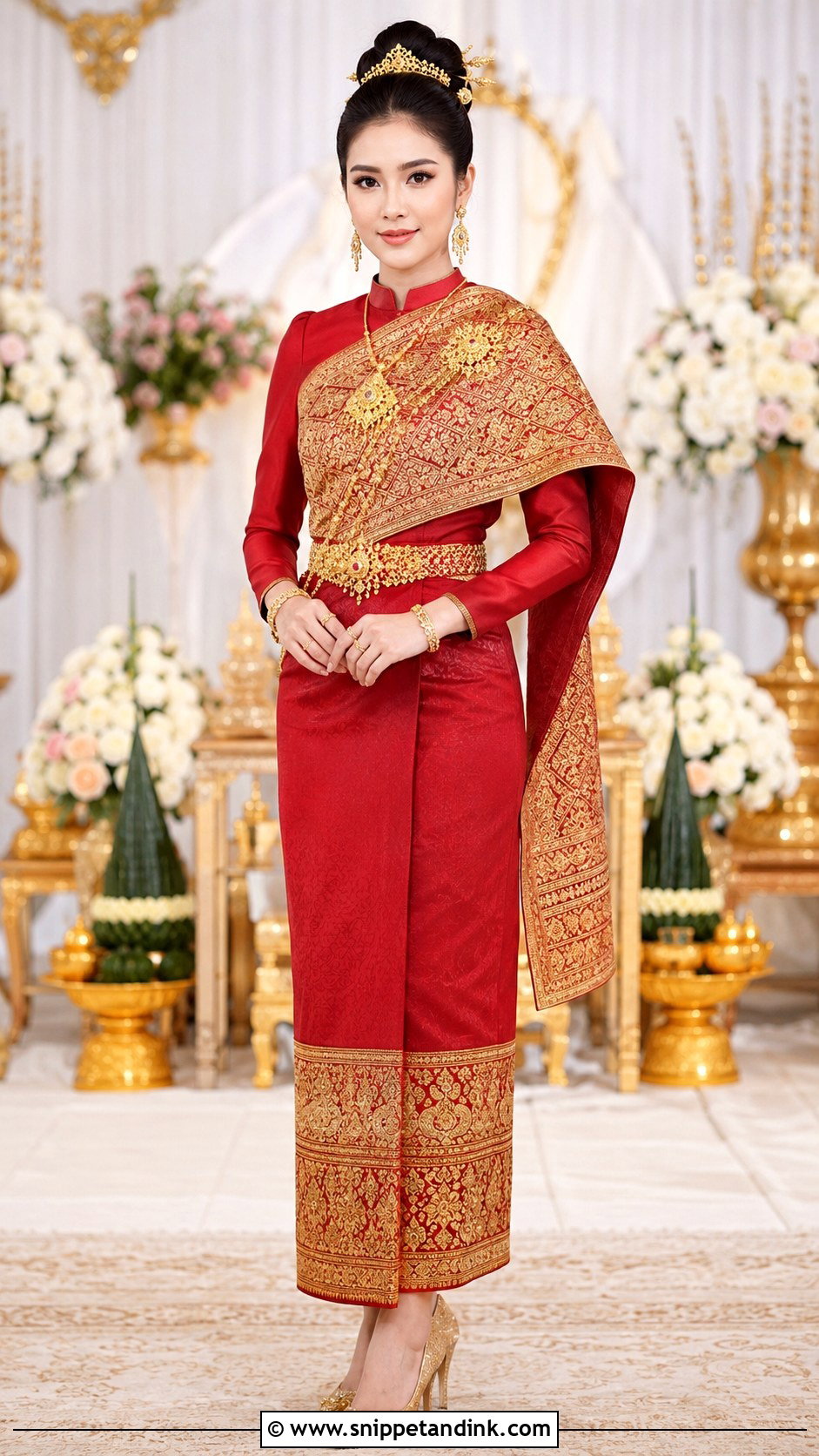
Red with gold is the combination most elders will expect to see, and it earns that place: deep red silk makes metallic weaving look brighter rather than brassy. Start with a red sinh carrying a wide gold hem border, a fitted red blouse trimmed in gold at the neckline, cuffs and front opening, and a gold pha biang across the shoulder. The detail I check first is pattern alignment where the sinh wraps closed. If the motifs jump at the front fold, it shows in every standing photo. Keep the hair in a smooth high bun with one gold ornament so the textile stays in charge, and pick embroidered flats over heels if you’ll be kneeling and rising for hours.
2. Ivory And Gold Lao Wedding Dress
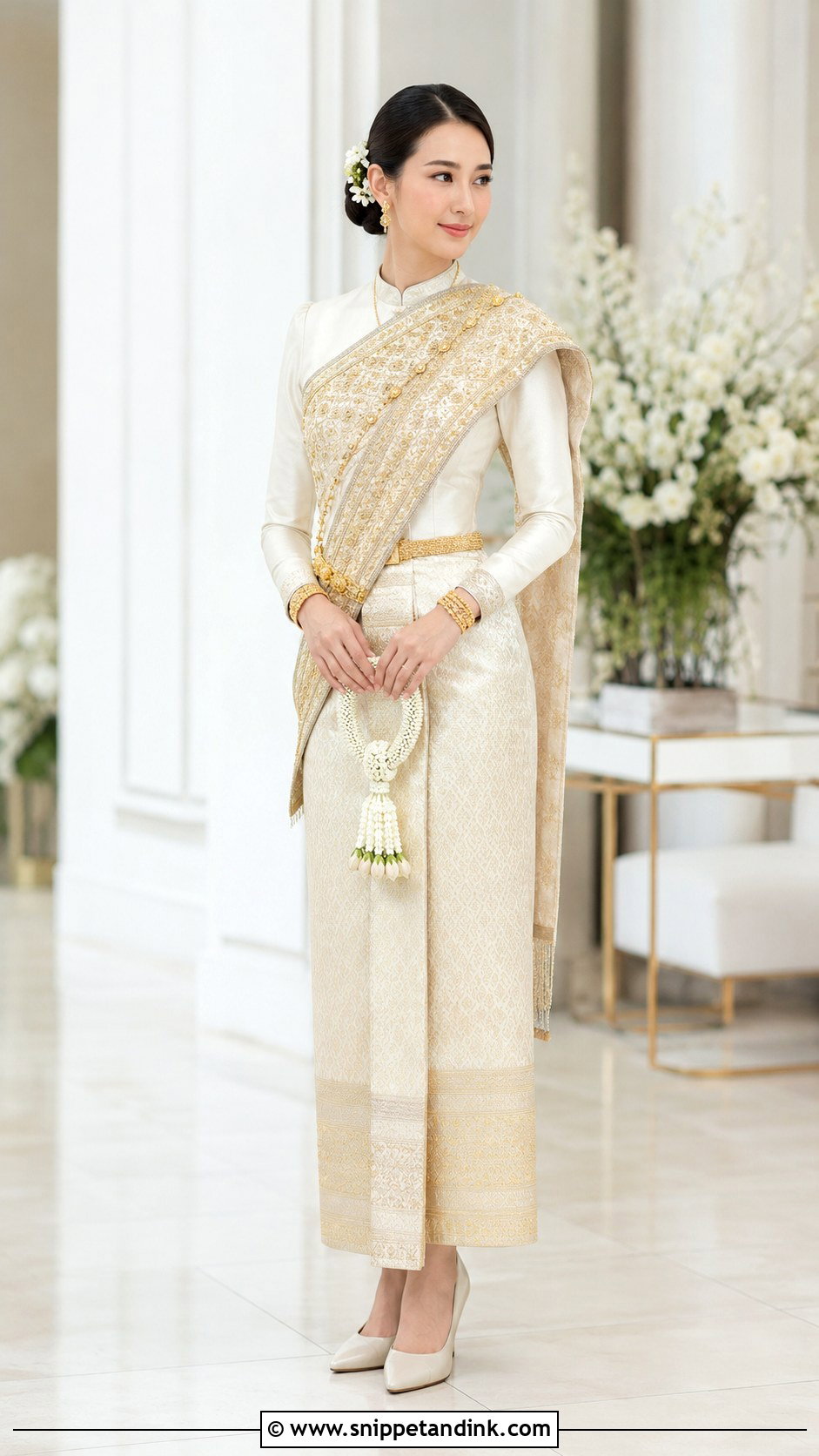
Ivory is the color I suggest to brides who love the traditional silhouette but find red too heavy against their skin. Pair an ivory silk sinh with fine gold weaving at the lower border and a long-sleeved blouse cut from the same bolt, so the two whites truly match. A curved or standing neckline gives earrings somewhere to sit. Drape the ivory-and-gold pha biang so it crosses below the blouse’s best detailing rather than over it. The catch is that ivory marks easily, and a blessing ceremony means sitting on a floor mat, so I keep a clean cloth under the bride whenever she sits.
3. Emerald Green Lao Wedding Dress
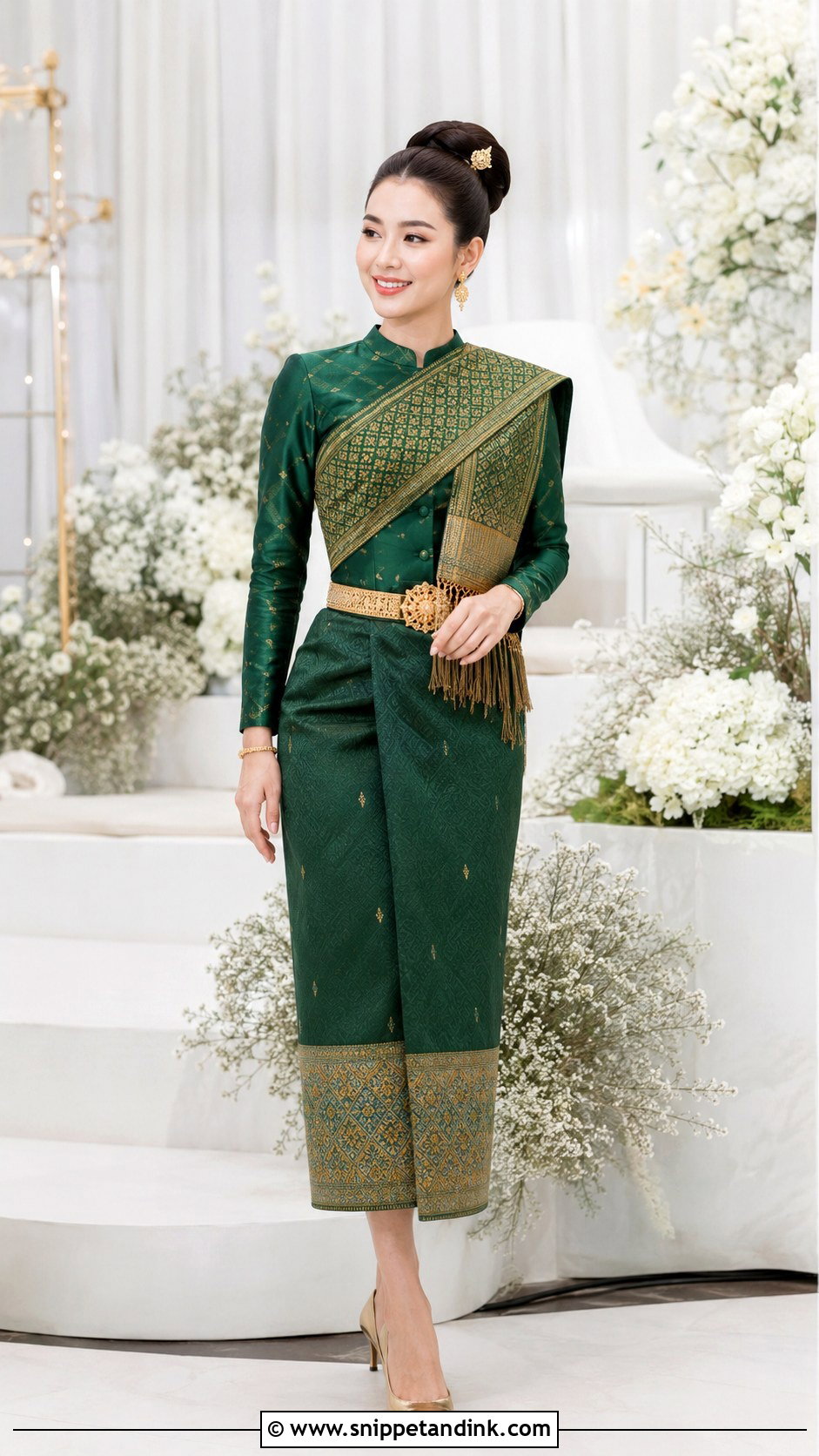
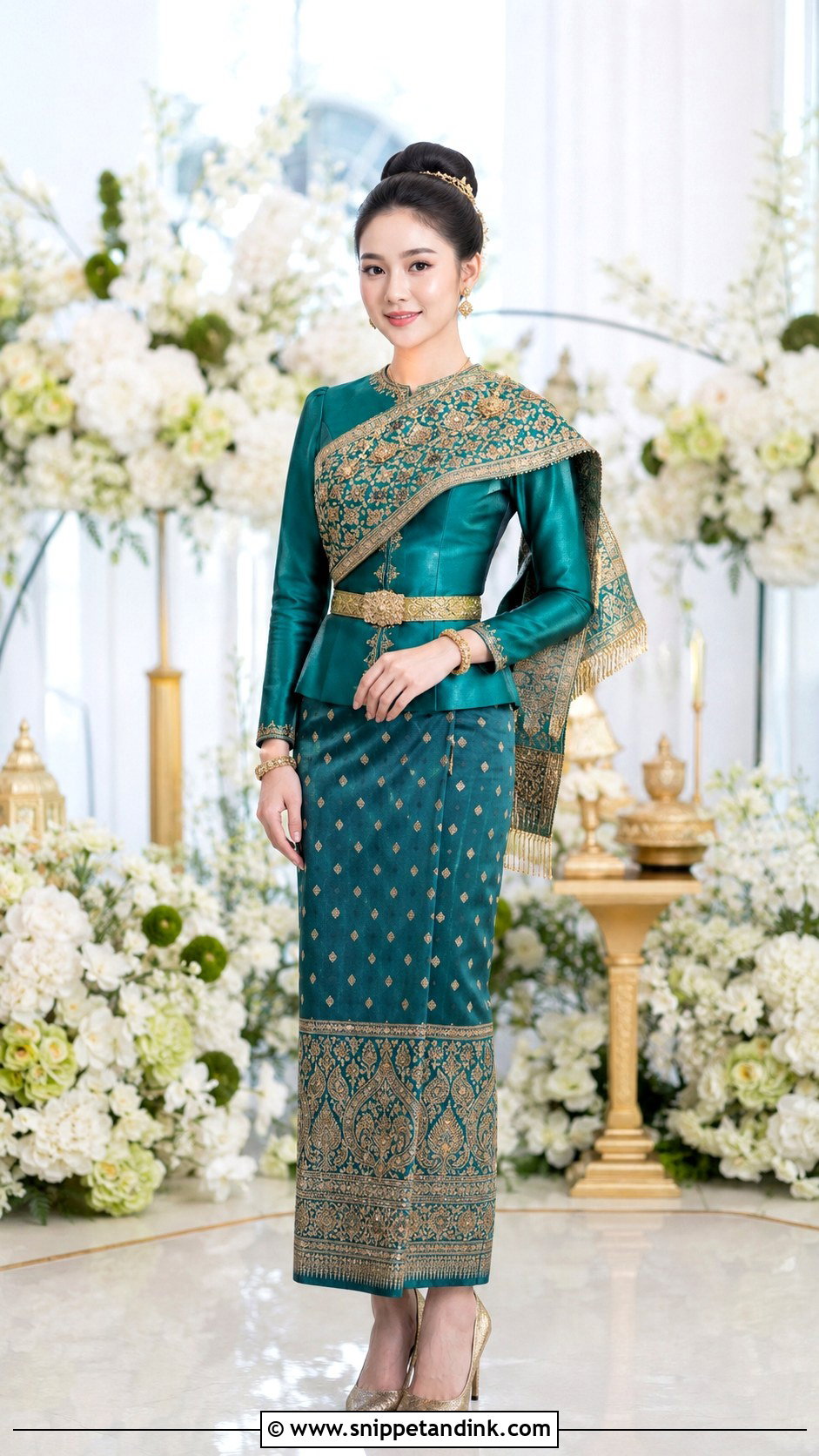
Emerald is where silk’s sheen does the most work. The green deepens in the folds and brightens on the high points, so even a plain blouse never looks flat. Pair it with an emerald sinh carrying gold borders and small repeating motifs. I’d add a third color to the pha biang, even a thin line of red or cream, otherwise emerald, gold and more emerald starts to read like a uniform. A structured gold belt hides the join between blouse and skirt, which is exactly where a tube skirt tends to gape. Low metallic heels and a coiled bun finish it. Warm evening light suits this green best.
4. Royal Blue Lao Wedding Dress
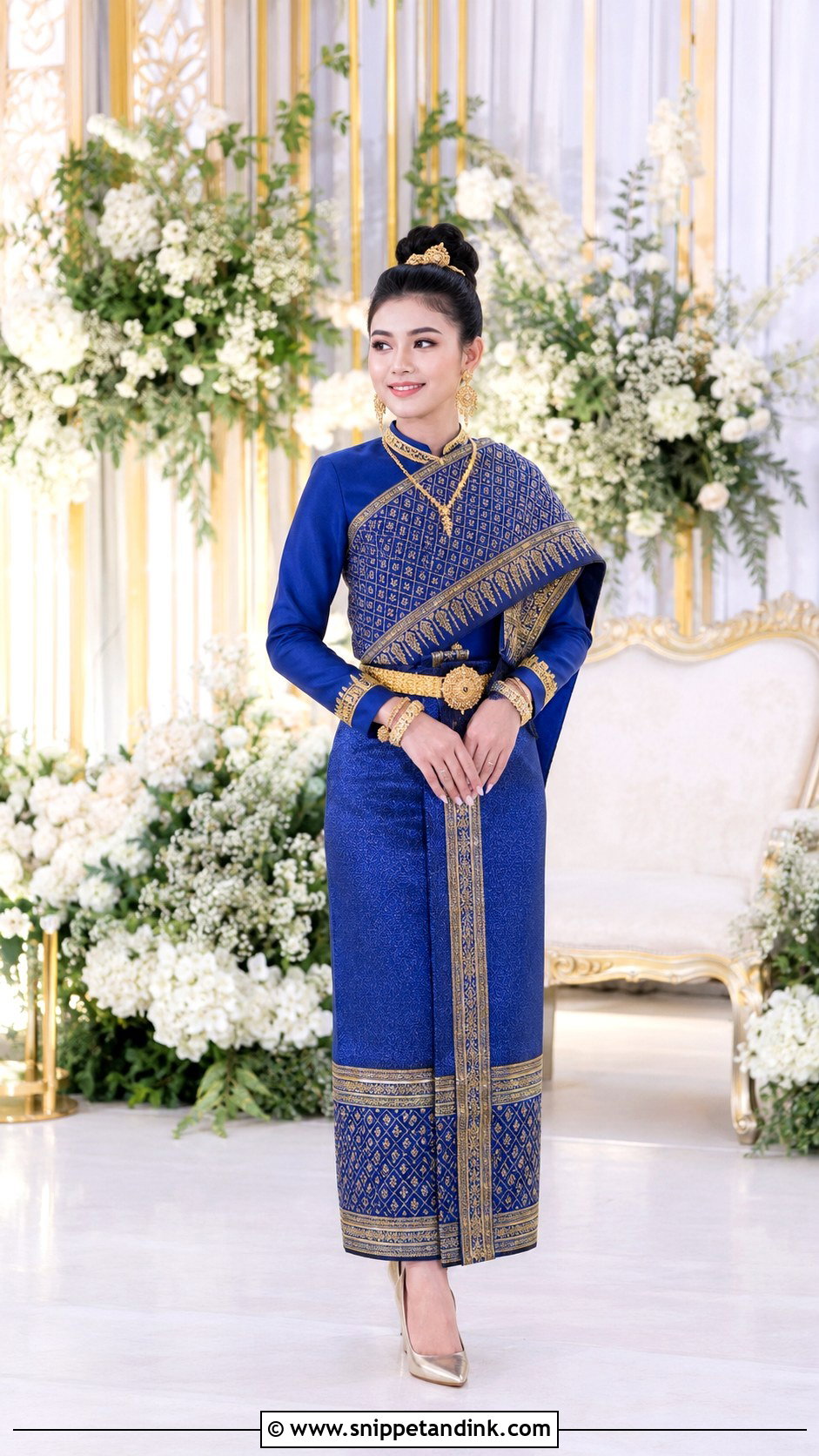
Saturated blue makes gold weaving stand out more than almost any other ground color, which is why I keep everything around it quiet. Use a royal blue sinh with a wide metallic hem border and a matching long-sleeved blouse with neat gold edging. Secure the blue-and-gold pha biang with a small hidden pin at the shoulder seam; silk shawls slide forward the moment you bow to elders. A gold belt, medium earrings and a few bracelets are plenty, and a high bun with a gold comb balances strong shoulders in portraits. If your bridesmaids wear blue too, have theirs in a lighter tone so you don’t disappear into the group.
5. Blush Pink Lao Wedding Dress
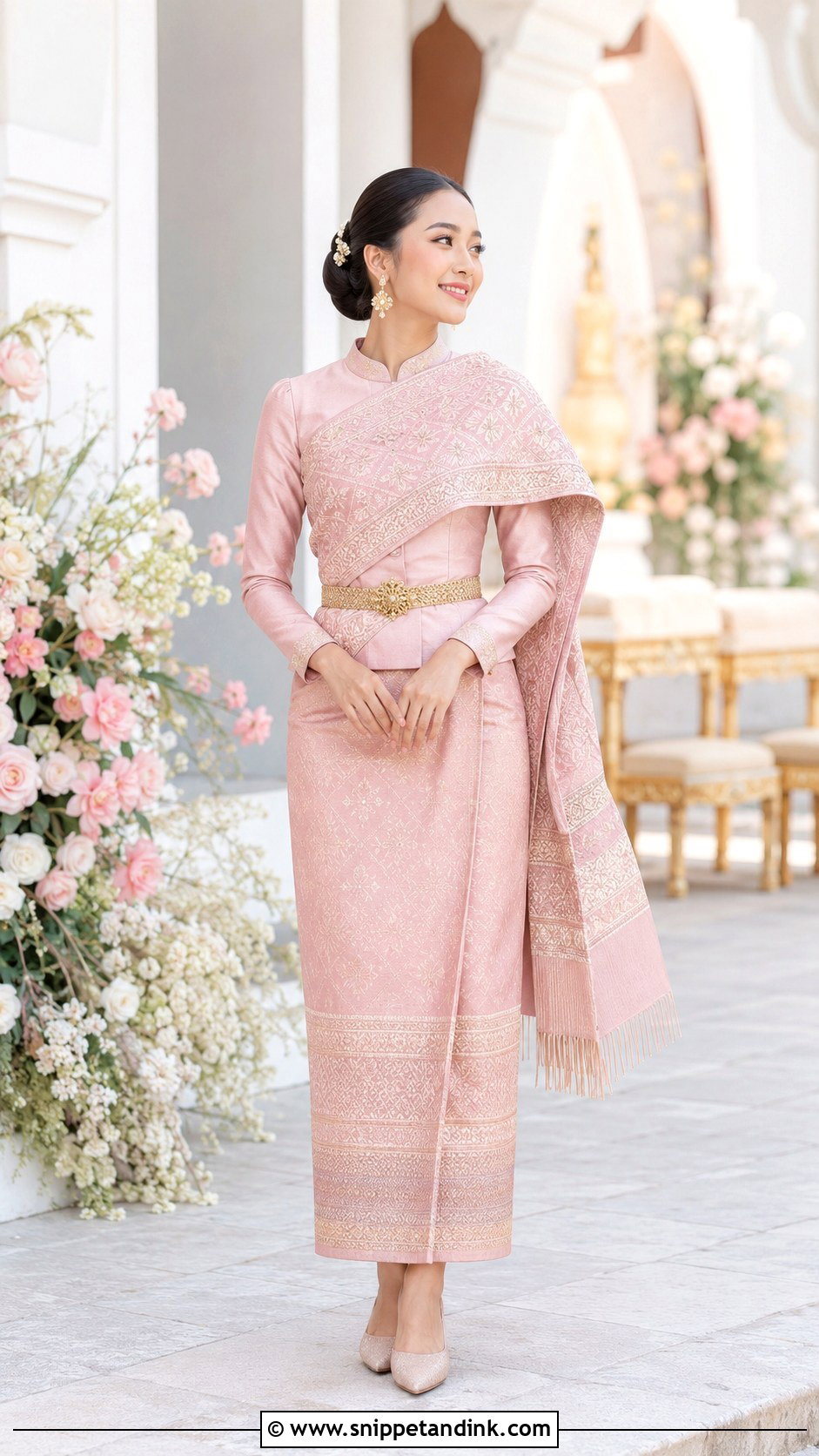
Blush keeps every traditional element and simply turns the volume down. I pair a pale pink silk sinh woven in champagne gold with a blouse a half shade lighter, never darker, because a darker top makes the skirt look washed out. Pale pink is unforgiving with makeup. If the cheek and lip go too warm, skin can look flushed next to the fabric, so I test both against the silk in daylight before the day. A narrow gold belt and a bun with small pearl pins are enough. Blush belongs at a morning or spring ceremony; under heavy evening light it drifts toward beige.
6. Burgundy Lao Wedding Dress
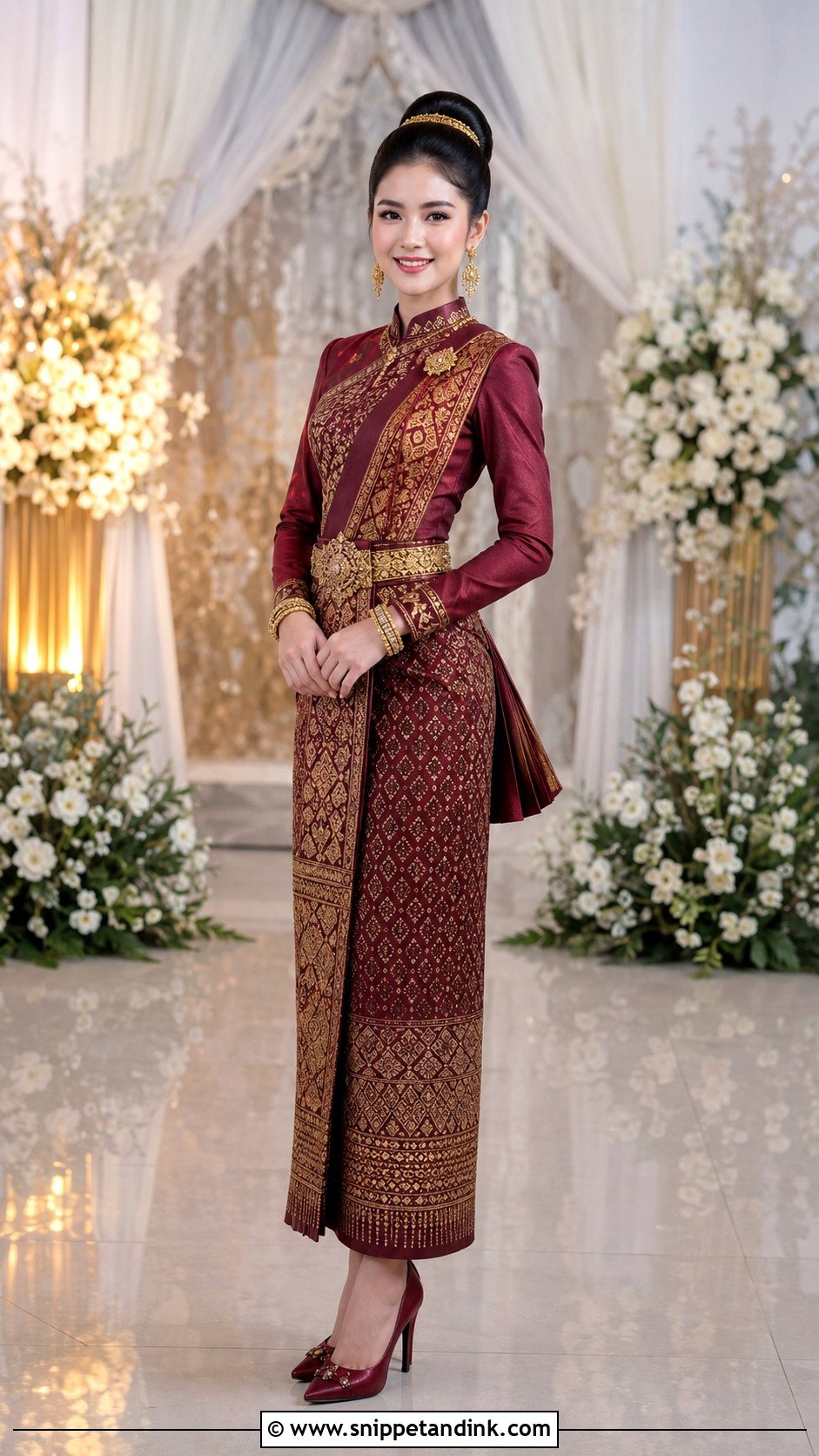
Burgundy reads older and grander than red, and antique gold weaving looks its richest on it. Choose a burgundy silk sinh with the craftsmanship concentrated on the lower border, plus a fitted long-sleeved blouse with a wrapped or structured front, and keep the pha biang burgundy with gold patterning. On lipstick, I usually talk brides out of an exact burgundy match. Dark lip plus dark silk closes the face in, while a soft rose-brown lets the weaving lead. An engraved gold belt, drop earrings and a sculpted updo that leaves the neckline clear stop the whole outfit feeling heavy.
7. Champagne Gold Lao Wedding Dress
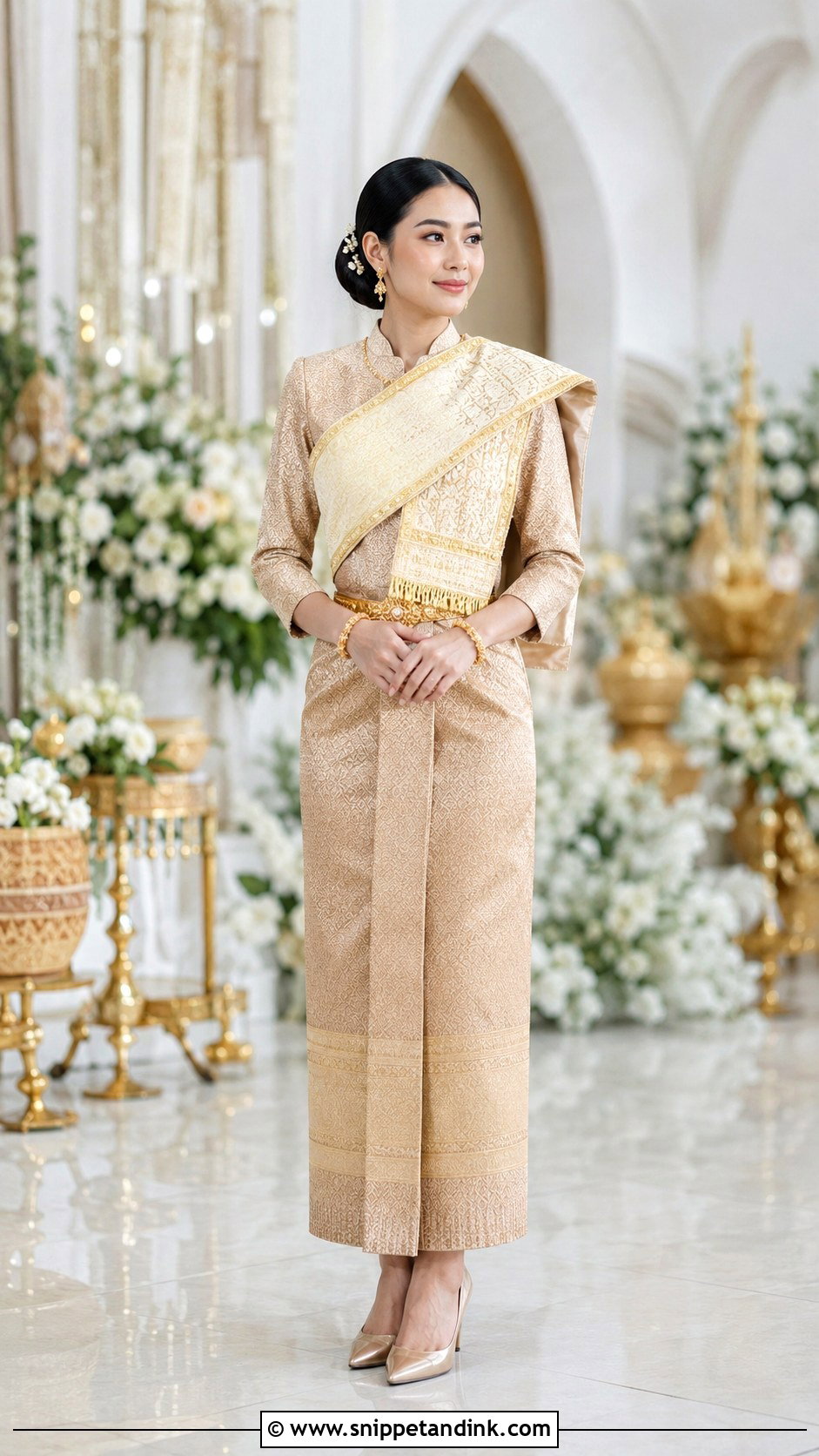
The risk with champagne gold is that every piece is a shade of the same metal and the outfit dissolves into one shimmer on camera. I fix that with texture: matte silk for the blouse, raised weaving on the sinh’s hem and waistband, and a pha biang with a few ivory threads to separate it from everything else. Three-quarter sleeves suit a hot afternoon; full sleeves suit a temple visit or an evening reception. Champagne shoes carry the tone down to the floor, and a glossy low bun with pearl-and-gold pins catches light without introducing another metal.
8. White Silk Lao Wedding Dress
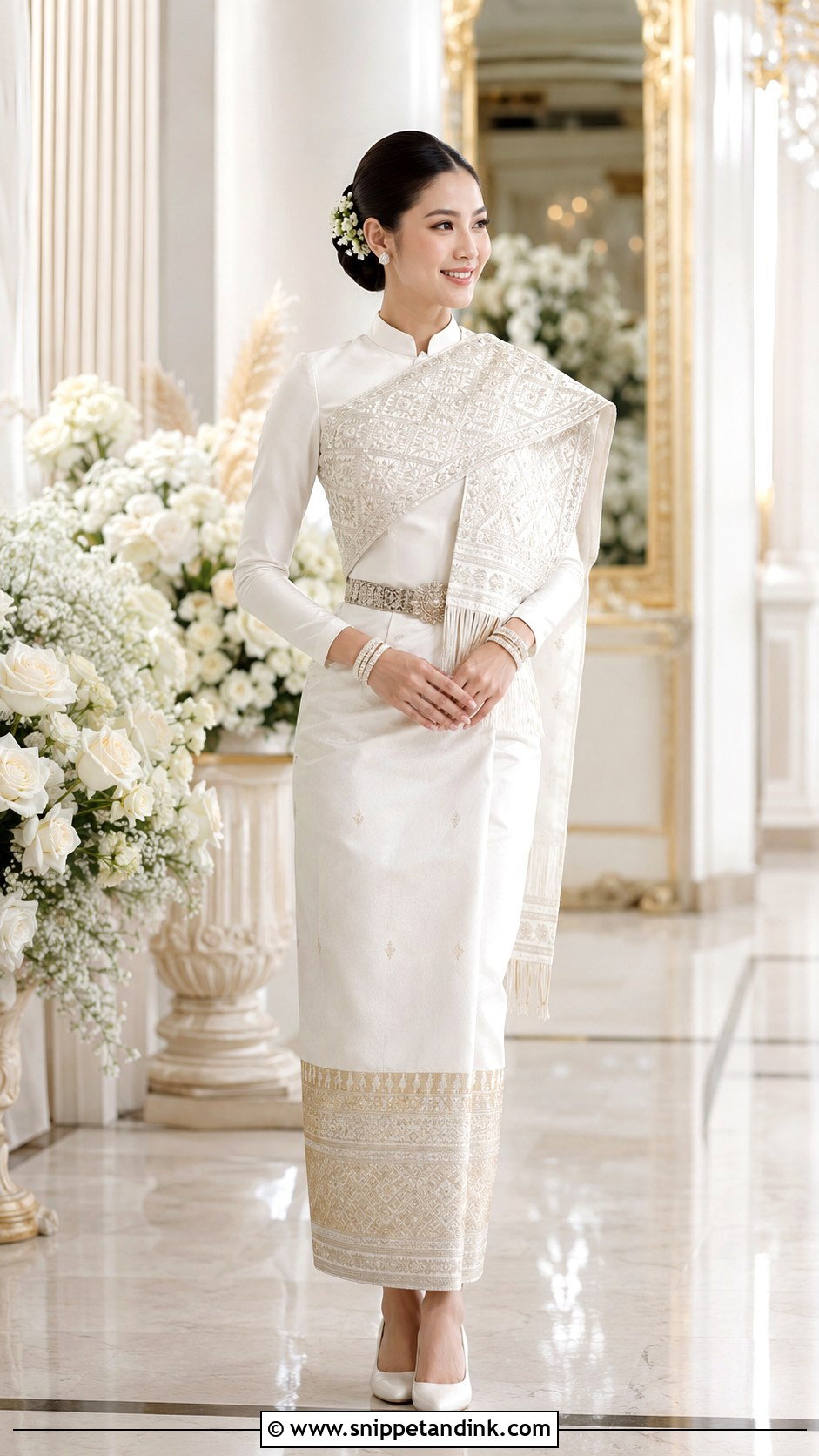
White silk with a silver or pale-gold tin sinh border is the version brides choose when they want Lao dress to meet the white-gown idea halfway. Pair the white sinh with a fitted white silk blouse and a white pha biang patterned in metallic gold, so the shawl still shows against the top. Whites are rarely the same white. One bolt is creamy, another is cold and bluish, and side by side they look like a mistake, so I lay every piece next to a window before anything is cut. Pearl earrings, a slim metal belt, closed-toe white heels and white flowers in a sleek bun finish it.
9. Purple And Gold Lao Wedding Dress
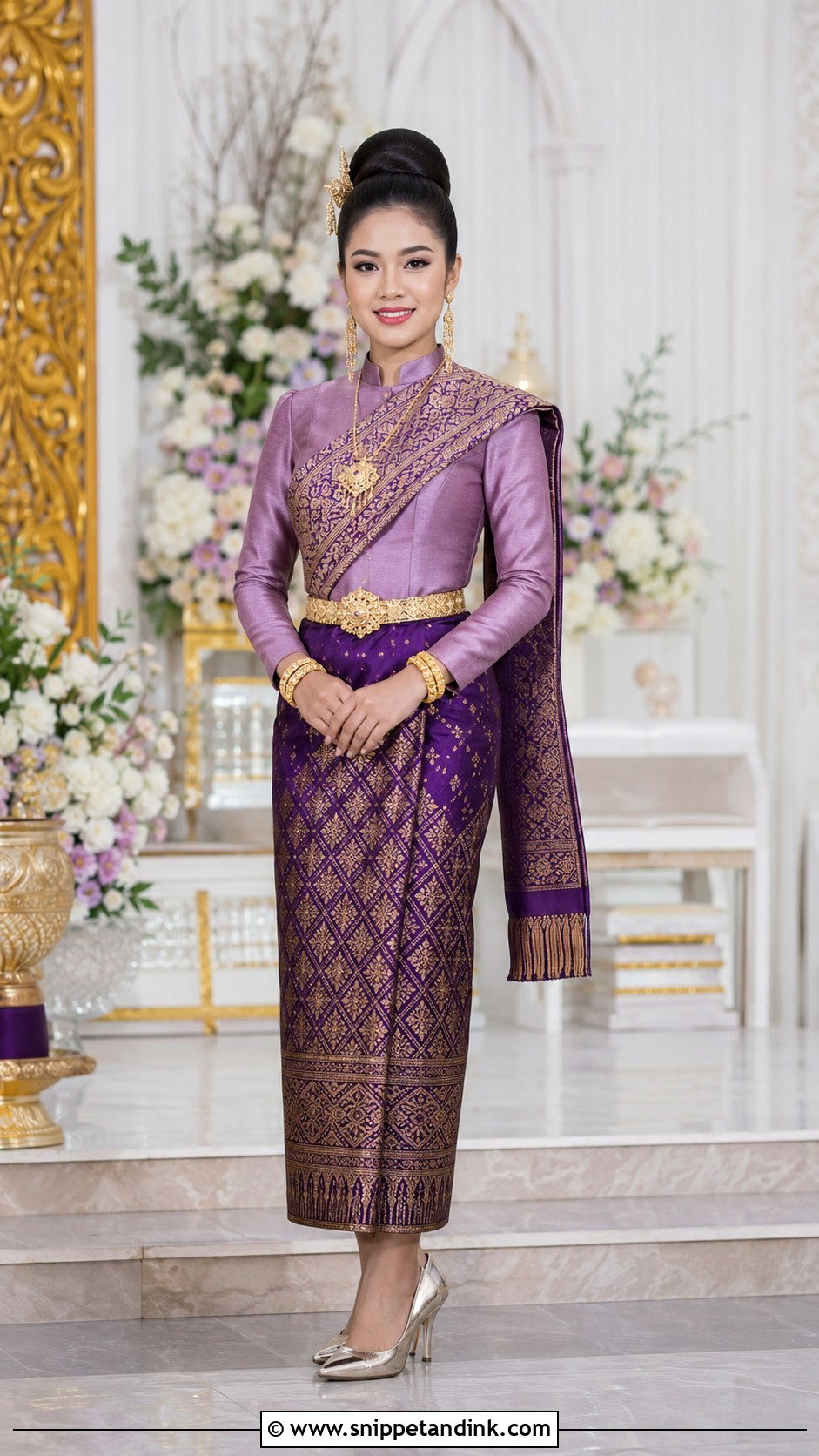
Purple silk shifts more under changing light than any other color here, so I always photograph the chosen fabric under the venue’s own lights before the tailor starts. A deep violet sinh with an ornate metallic border sets the base, and the blouse carries gold at the collar and cuffs. Let the pha biang mix two or three purples with gold for dimension. A gold waist belt, chandelier earrings and a high rounded bun keep the proportions graceful. Plum or neutral makeup sits well; bright fuchsia lipstick fights the violet.
10. Teal Lao Wedding Dress
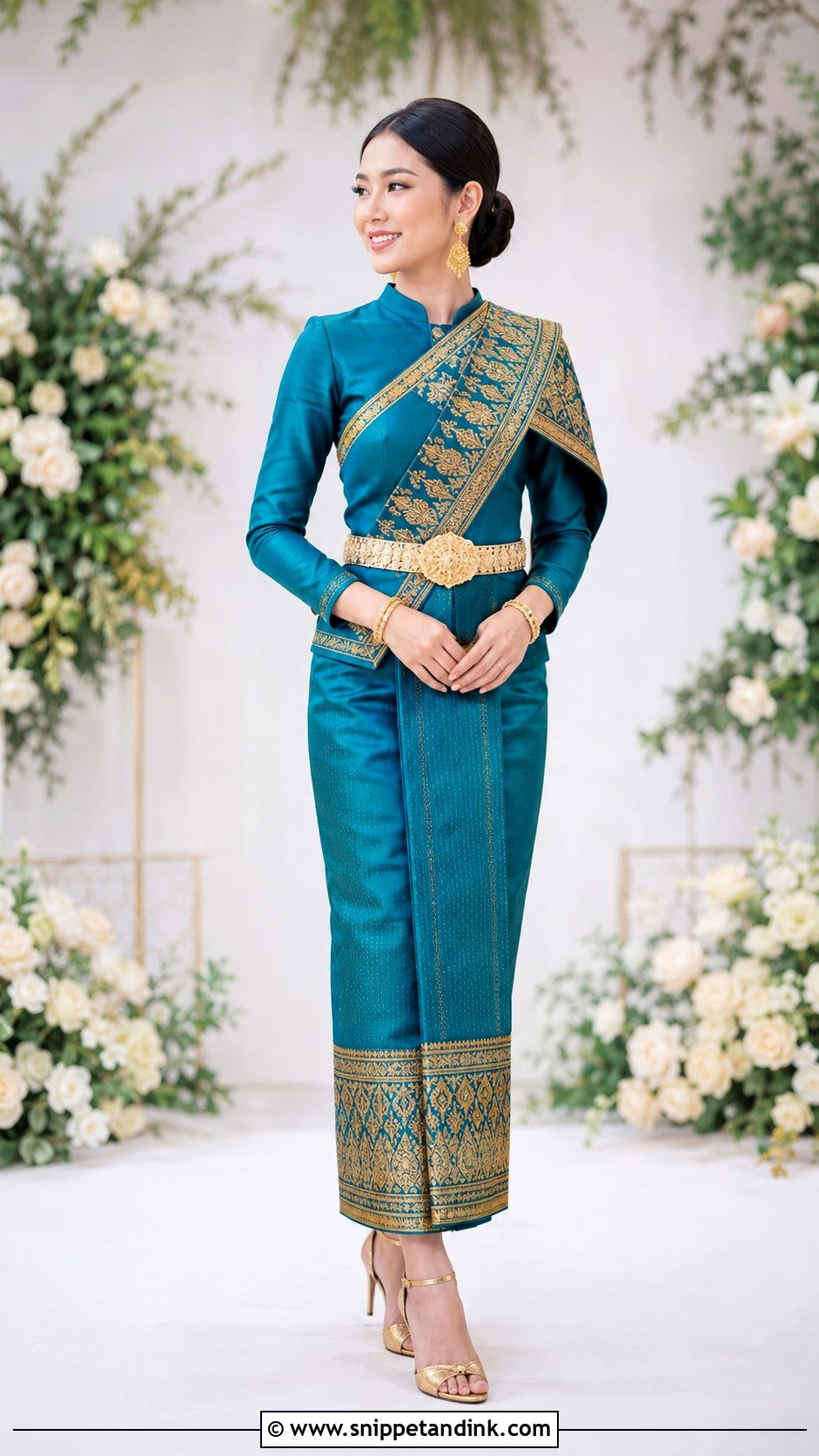
Teal suits the bride who likes blue and green equally and doesn’t want to commit to either. A jewel-toned teal sinh with gold woven borders, a silk blouse from the same color family and a teal-and-gold pha biang make the set. Because the shawl already pulls the eye upward, I prefer a clean low bun here to a tall one. Makeup should not chase the fabric: softly defined eyes and a rose-neutral lip look far better than teal liner. Water and pale walls make teal glow. A dense green garden can swallow it, so move portraits somewhere lighter.
11. Coral Lao Wedding Dress
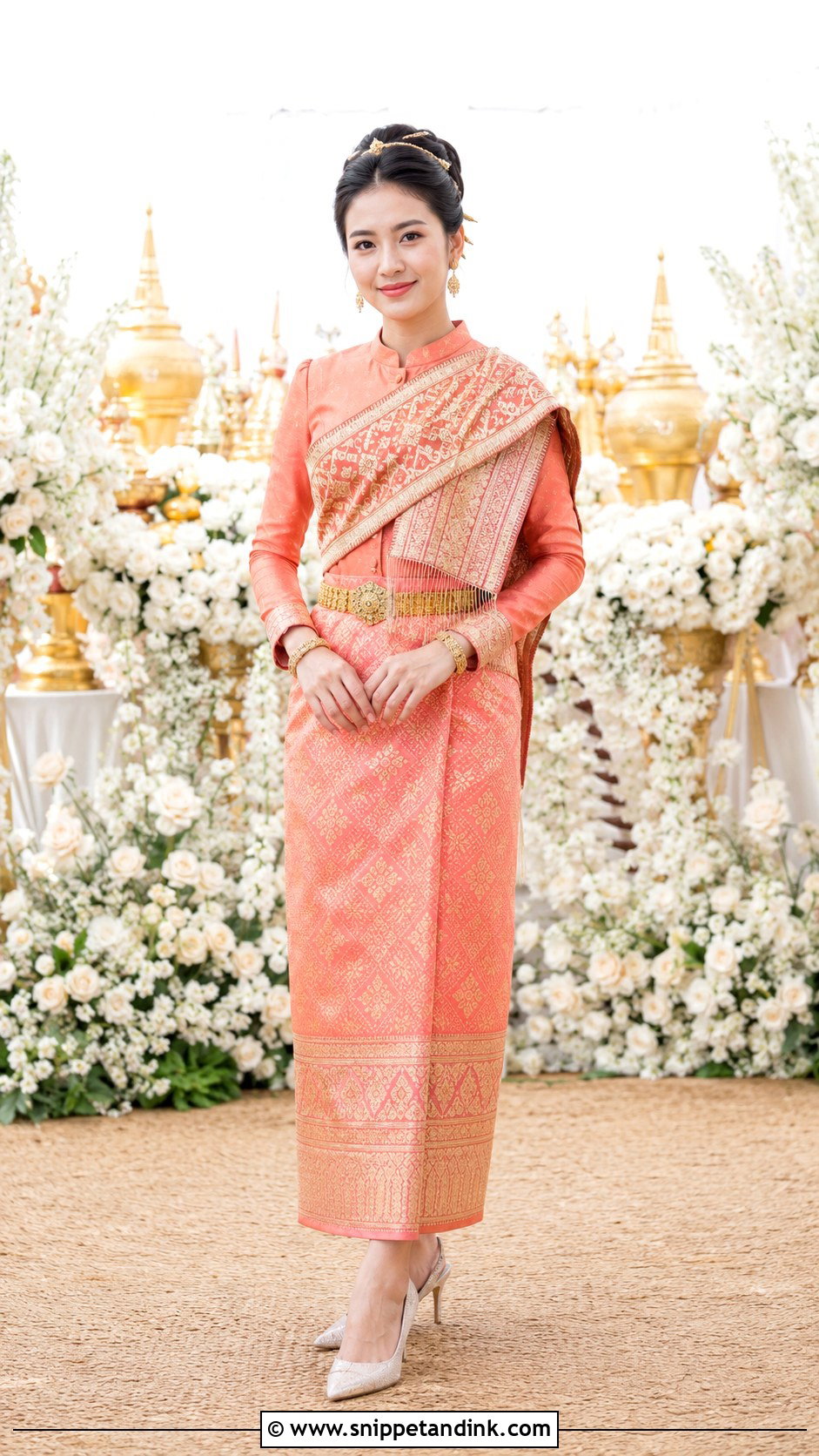
Coral gives the warmth of a red set with less weight, which helps at an outdoor daytime ceremony in the heat. Pair a coral silk sinh with light gold or champagne weaving and a blouse in the same direction; a pha biang mixing coral, cream and metallic thread adds layering without clutter. One rule I hold to with this color: coral goes on the lip or the cheek, not both. Used twice, it competes with the silk. Pale gold shoes keep the hem light, and a small cluster of gold ornaments in the updo works better than one oversized piece.
12. Lavender Lao Wedding Dress
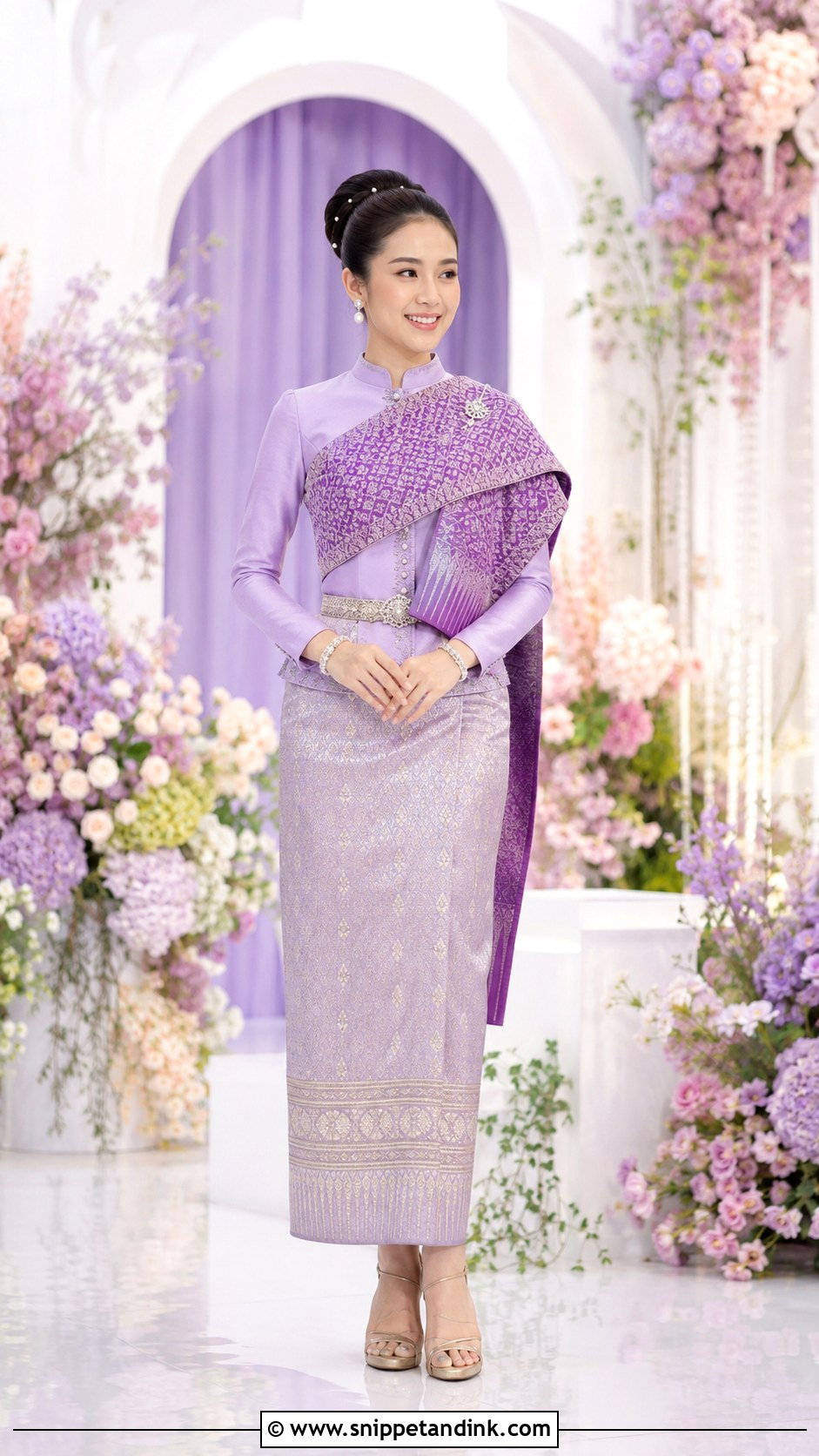
Lavender looks sweet in hand and washes out on camera, especially under strong sun or flat overcast light. I counter that with weaving that has real texture, silver-gold threads at the hem that catch light, and a pha biang carrying deeper purple for contrast. A lavender blouse, slim metallic belt and champagne flats keep the palette cool, and the hair goes into a polished bun with tiny pearl pins. For makeup, softly defined eyes and a mauve-pink lip stay in the same family. Ask your photographer for bright, even light and skip portraits in deep shade.
13. Silver And Blue Lao Wedding Dress
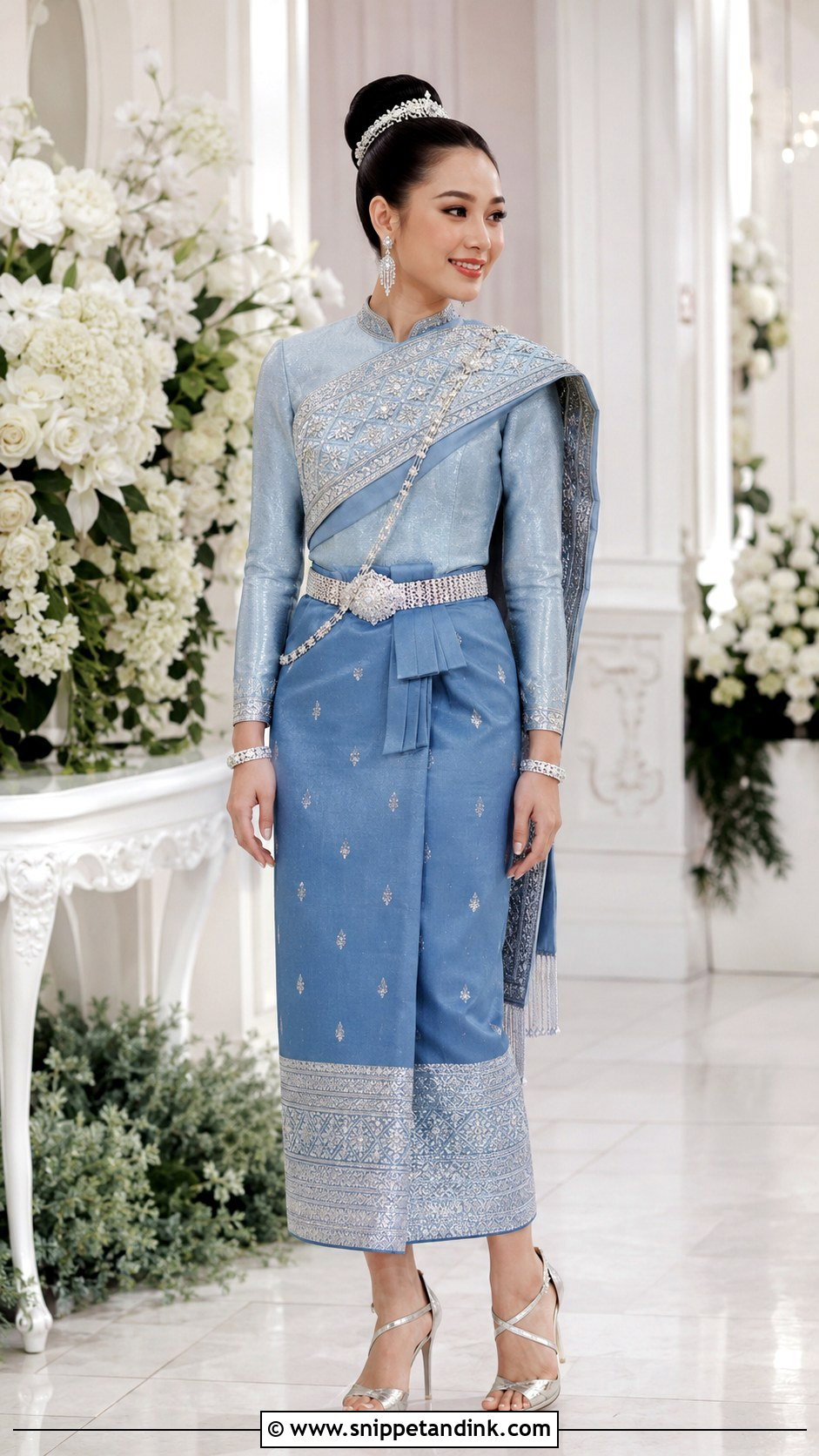
Cool tones need cool metals. A medium-blue sinh woven with silver, a fitted blue blouse and a pha biang that splits both colors evenly link the neckline to the hem. Then commit: silver belt, silver or crystal earrings, cool metallic shoes and a silver comb in a sleek high bun. The snag is family jewelry, which is very often gold and which you may be expected to wear. In that case, ask the dressmaker to add a restrained line of gold thread to the sash so the heirloom pieces look planned. White, gray or blue decor sits comfortably behind this one.
14. Pink And Gold Lao Wedding Dress
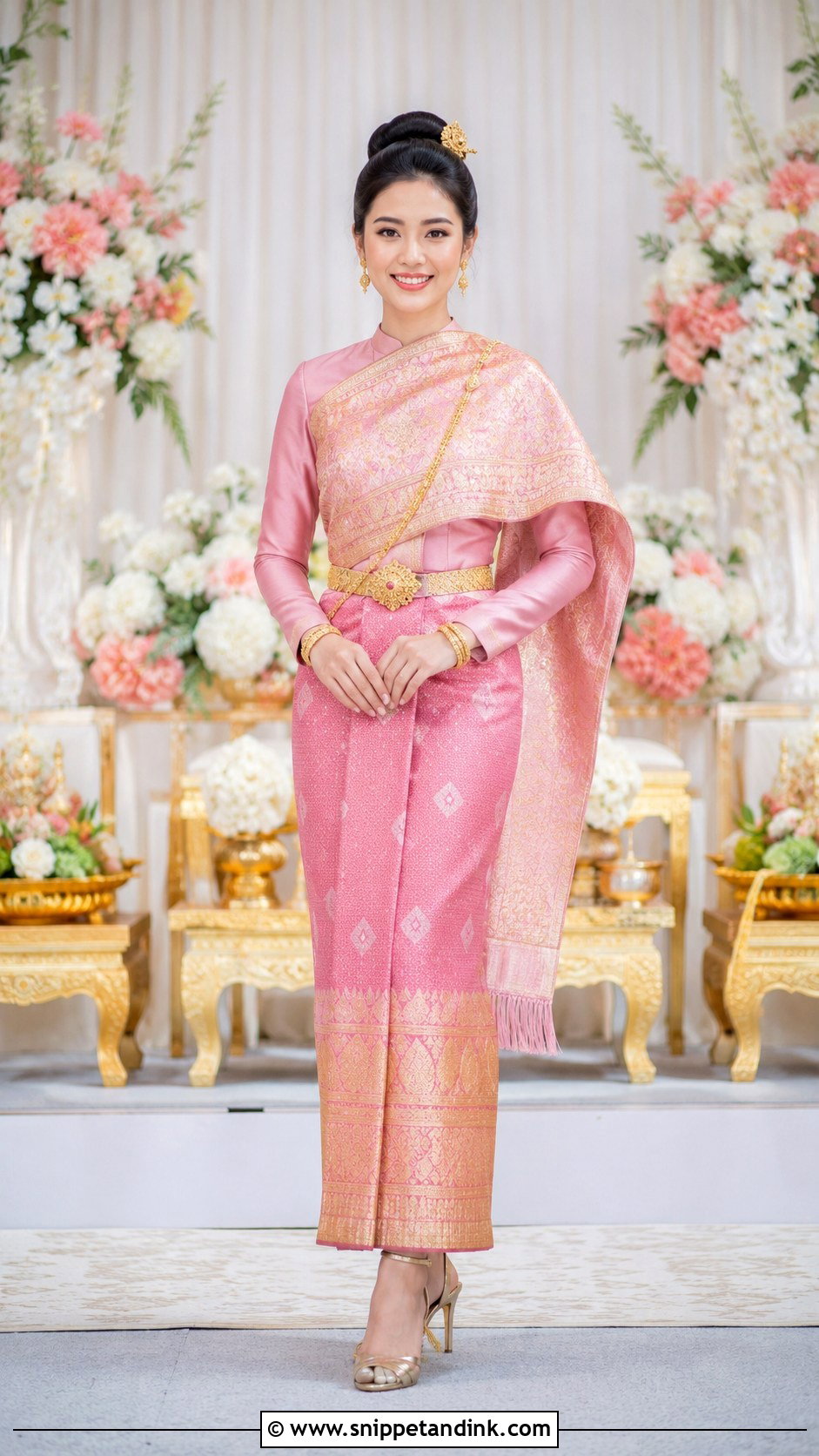
A vibrant pink-and-gold outfit is the cheerful end of Lao formalwear, and it needs discipline with accessories because the fabric is already doing a lot. Choose a rose or fuchsia sinh with a wide gold-patterned border, a matching fitted blouse and a gold-detailed pha biang laid neatly across one shoulder. After the belt, I allow one statement: big earrings or a heavy belt, never both. Strong pink also bounces color up onto the jaw in close-ups, so a little powder under the chin keeps skin looking like skin. Neutral eyes and a rose lip finish it.



15. Black And Gold Lao Wedding Dress
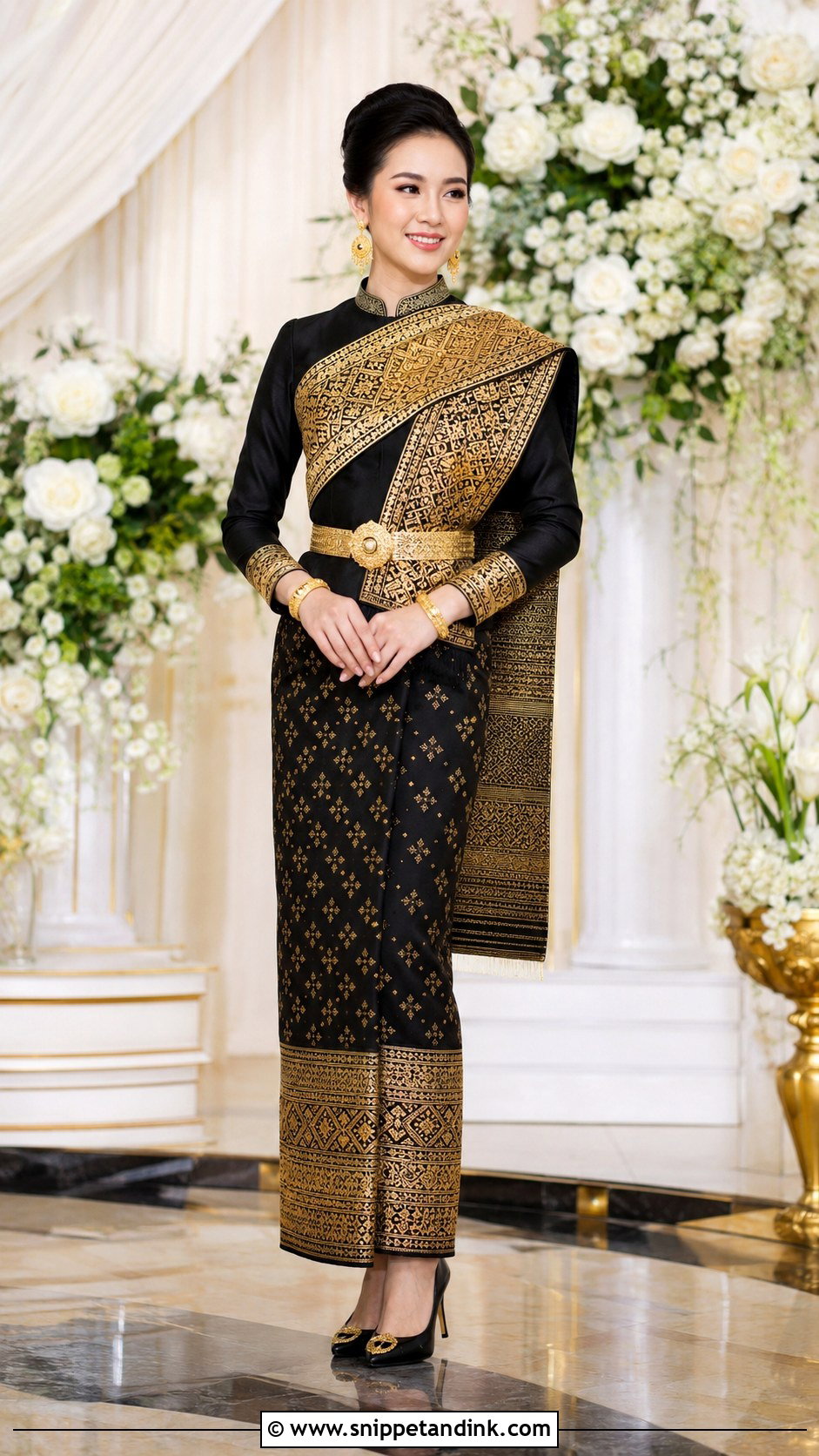
Black is the one color here I would not choose without asking the family first. In some households it feels wrong for a ceremony, gold or no gold. Where it’s welcome, usually at an evening reception, it’s dramatic. Pick a black silk sinh with heavy gold weaving so it reads as a celebration, a fitted black blouse with gold cuffs and trim, and a black-and-gold pha biang. A smooth updo keeps the dark mass away from the face, and a warm red lip with lit, glowing skin stops the outfit from looking severe.
16. Long Sleeve Lace Lao Wedding Dress
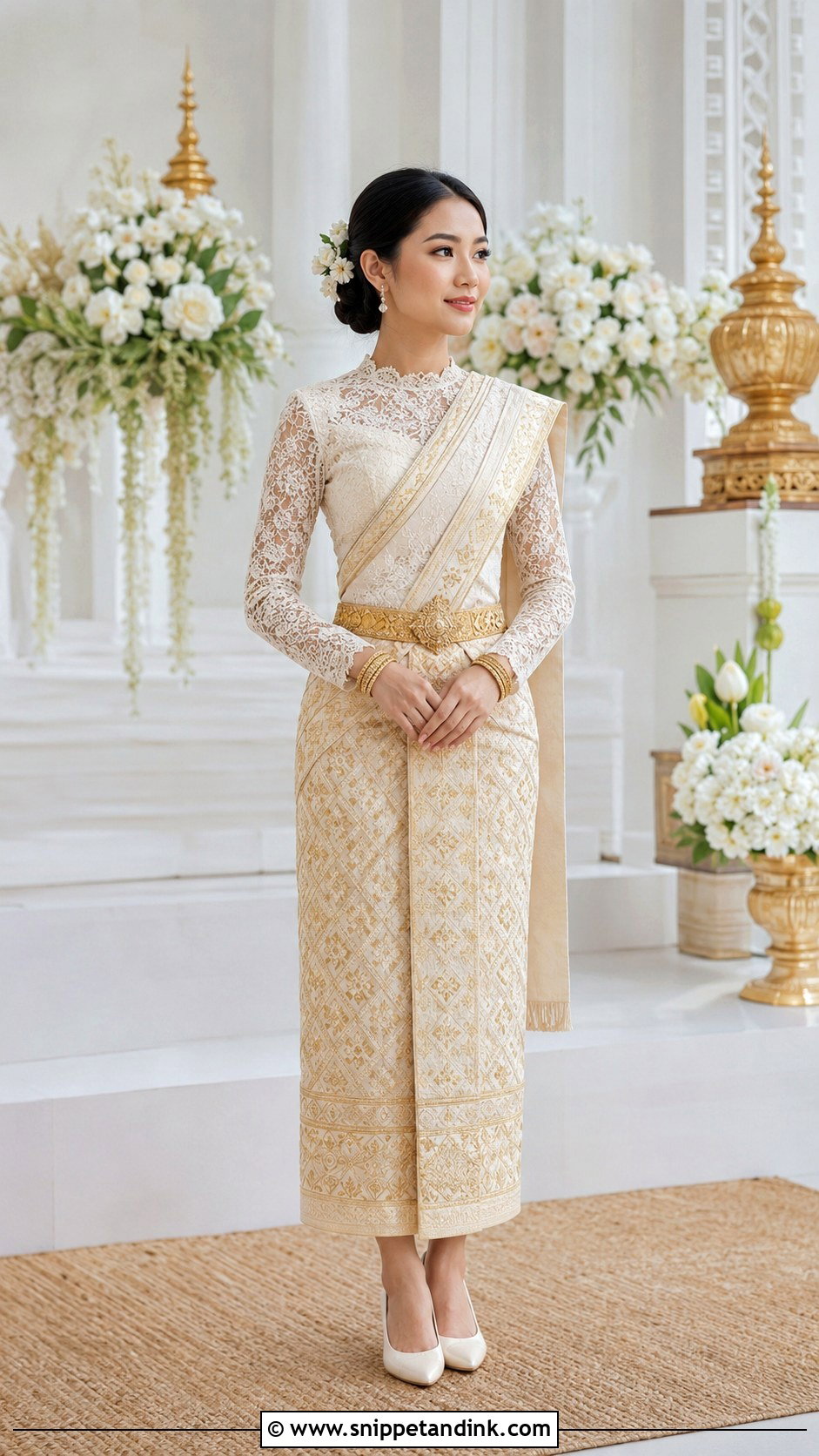
Lace and handwoven silk can clash fast. Lace has its own pattern, and if its scale fights the weave, the outfit splits in two at the waist. I take a swatch of the lace to the silk and hold them together before any blouse is made. Choose a fine, clear lace, line it properly, keep the neckline modest, and pair it with an ivory-and-gold handwoven sinh; the silk pha biang worn over the lace ties top and skirt together. Also check the underarm. Long sleeves in stiff lace get scratchy by the reception, and soft lace avoids that.
17. Peplum Blouse Lao Wedding Dress
A peplum blouse gives a defined waist, but it covers the spot where the belt and the top of the sinh normally show, so length matters. Keep the flare short, ending just above the belt, and smooth through the shoulders. Pair it with a straight sinh carrying an ornate border. I steer brides away from ruffled or tiered peplums: once the pha biang crosses over them, the shawl bunches and the skirt loses its clean line. A sleek high bun balances the extra volume at the waist.
18. Pastel Blue Lao Wedding Dress
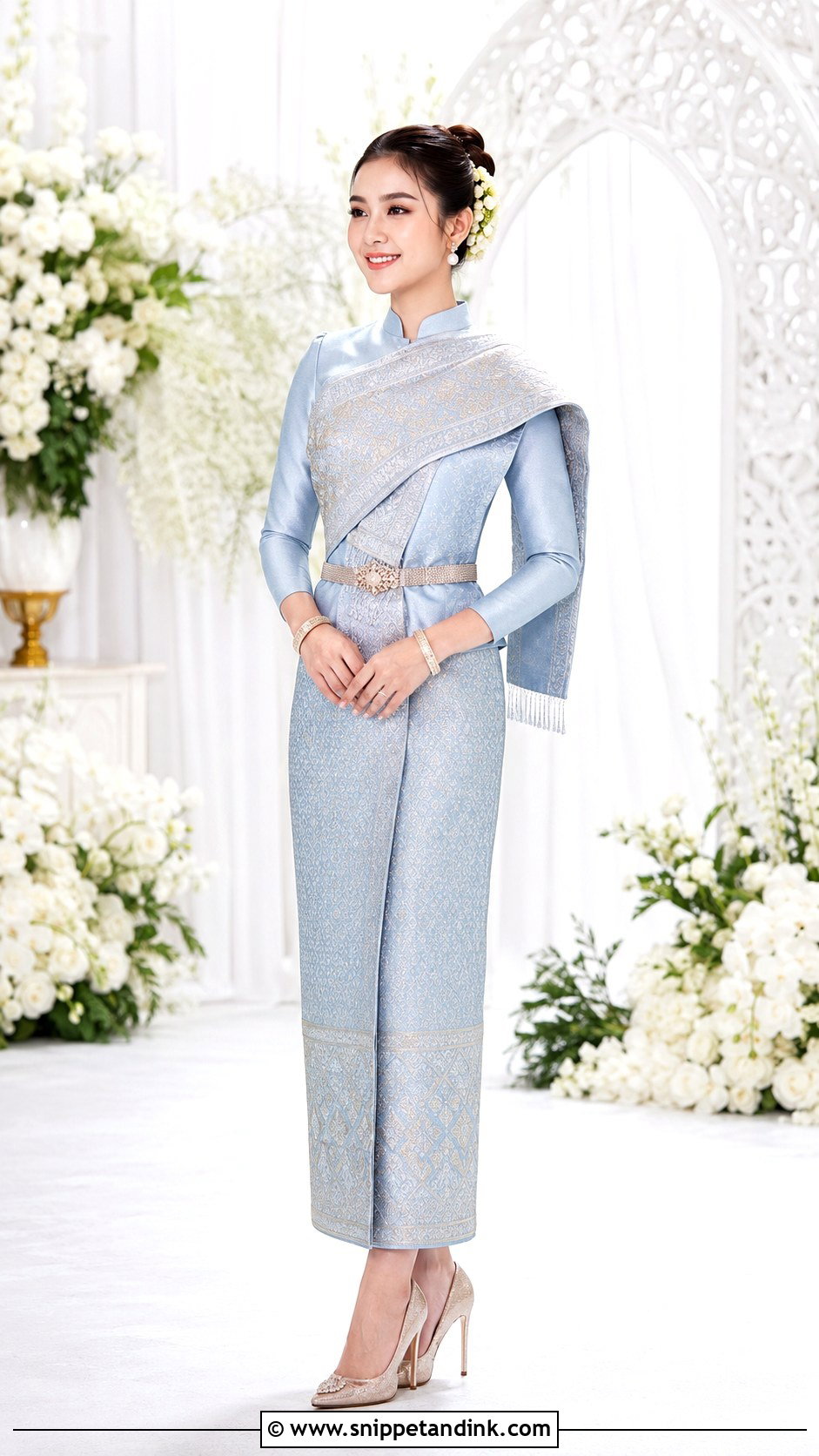
Pale blue has a serene quality that suits a morning blessing. Choose a pale blue sinh with silver or soft-gold woven detail and a fitted blouse whose neckline will hold the pha biang without slipping. Let the shawl carry a slightly darker blue pattern so its diagonal line actually shows in photographs. Stay inside one color story. Tonal blues plus texture give depth, while slipping in mint or lilac makes the outfit look unplanned. Pearl earrings, a slim belt and a low bun with small white flowers are all it needs.
19. Modern White Gown With Lao Silk Pha Biang
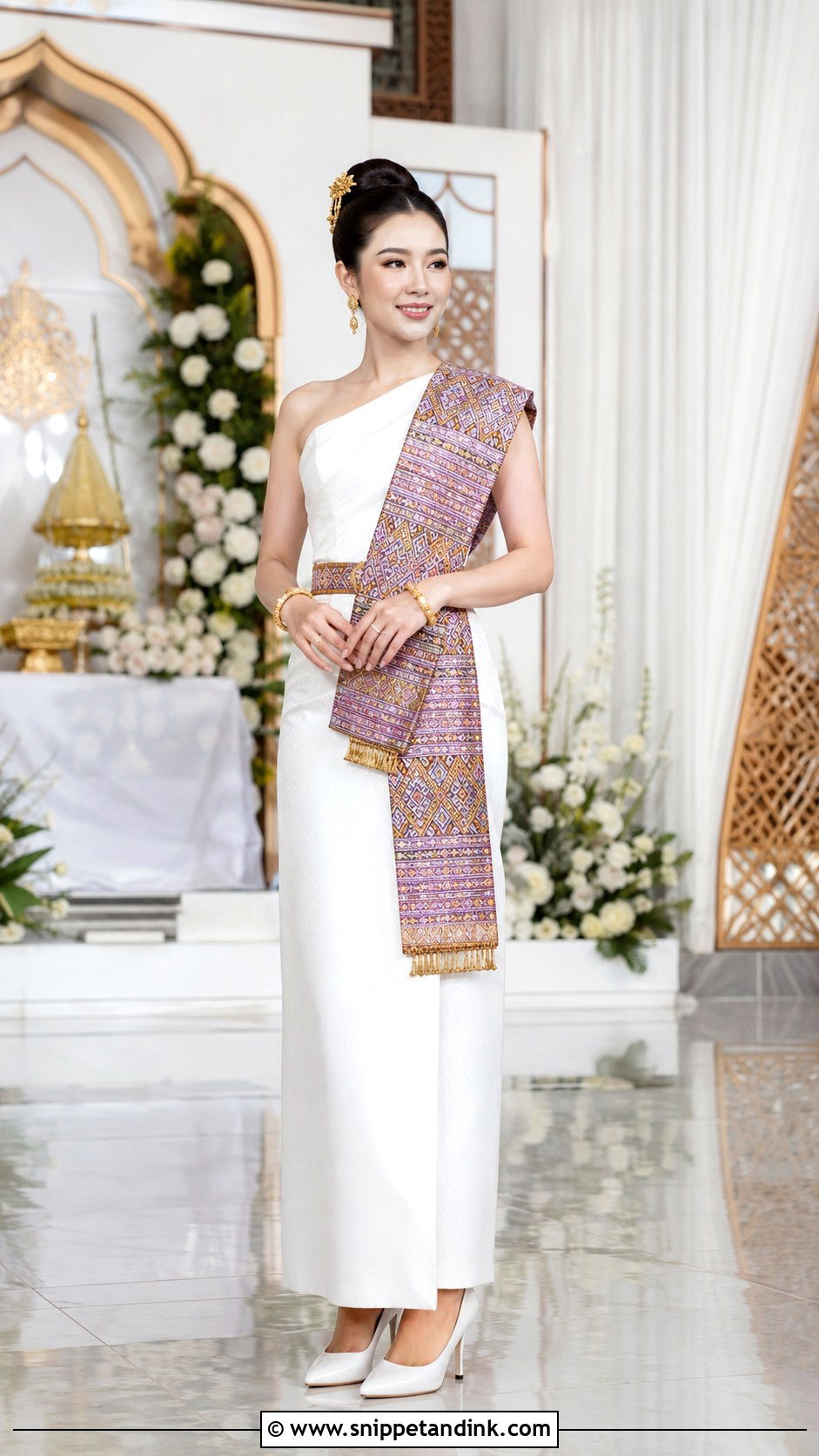
Draping a Lao silk pha biang over a simple white gown is a respectful way to carry heritage into a Western ceremony, and it works best on a gown with clean lines that leaves the textile alone. A structured bodice or fitted sleeves are fine. Heavy beading on the shoulder is not, because the shawl will snag on it and hide it. A narrow belt in the same weave links shawl and gown. Never let anyone pin through an heirloom pha biang; I have a small fabric tab stitched to the gown and pin into that instead. I also suggest this pairing for a second ceremony or a reception entrance.



20. Modern Lao Reception Dress
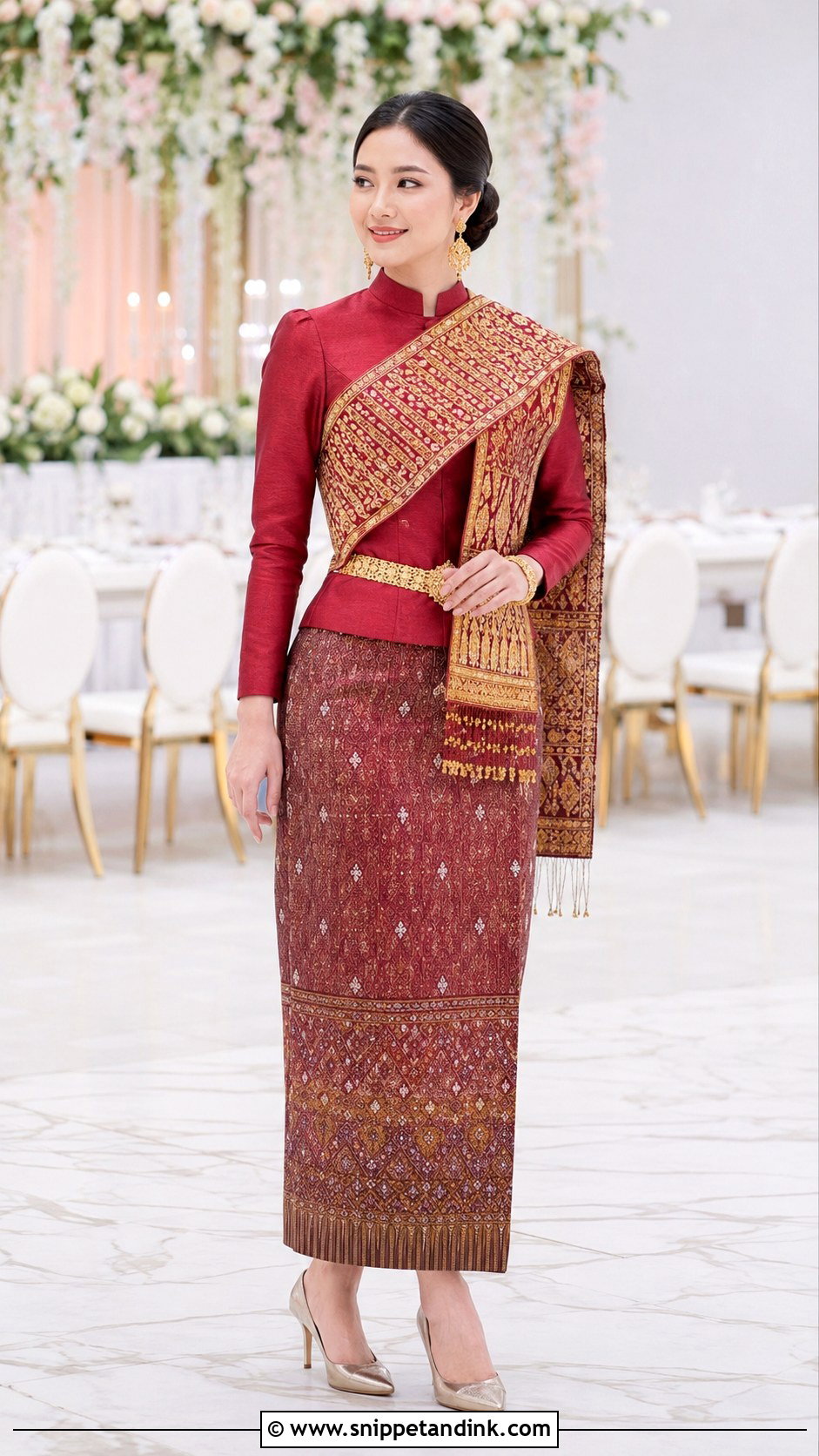
The ceremony sinh is cut for standing and kneeling; a reception version should be cut for walking between tables and sitting through speeches. Ask for a slimmer profile with enough ease at the knee for a normal stride, paired with a fitted silk blouse. Jewel tones such as ruby, sapphire or plum look festive under evening lights. A lighter pha biang that unpins in seconds lets you take it off for dancing. Change the color but echo the ceremony weave, so the switch looks planned and the sinh keeps its proper structure.
Handwoven Silk or Machine Weave? How I Check a Sinh
An elaborate handwoven border can take a weaver weeks, and the price reflects that. Machine-woven and printed versions cost far less and look fine from across a room. Neither is wrong; what matters is knowing which one you’re paying for.
- Turn the hem border over. Hand-woven supplementary patterning leaves loose floats of thread on the back where the color skipped across; a print shows a faded mirror image or nothing at all.
- Look along the motif. Hand weaving has small variations from repeat to repeat, while perfectly identical motifs over a full length usually point to a machine.
- Bend the metallic thread between your fingers. Good gold thread moves with the cloth. Stiff, scratchy thread will rub your wrists raw by evening.
- Ask how long the border took. A weaver or an honest seller answers that question easily.
If the budget is tight, spend it on the sinh and accept a simpler blouse. The skirt border is what guests look at, and it’s the piece that survives as an heirloom.
Putting Gold-Thread Silk Away So It Lasts
Metallic weaving is the part that fails first in a cupboard. Folding it along the same line year after year cracks the threads, so I roll the sinh around a tube padded with acid-free tissue, patterned side out. Store it in a cotton bag rather than plastic, which traps moisture and invites mildew in a humid climate. Have the blouse cleaned by someone used to silk before it goes away, because perspiration and foundation on the collar set over time. Once a year, unroll everything, let it air for an afternoon and roll it again in a slightly different place.
Which Sinh Will Your Family Recognize at the Blessing?
Start by deciding how traditional you want the outfit to be, then let the sinh settle the rest. A woven skirt, a fitted blouse and a coordinated pha biang are the foundation; jewelry, shoes, hair ornaments and tailoring pull them together. Red and gold is the classic ceremony palette, yet ivory, green, blue, pink and purple are just as memorable when the family is comfortable with them. Bring relatives, a good dressmaker or a textile artisan in early. They catch what a photo can’t show you, like a motif your family links to another occasion or a border hung upside down.
You'll Like These Ideas:






Leave a Reply