
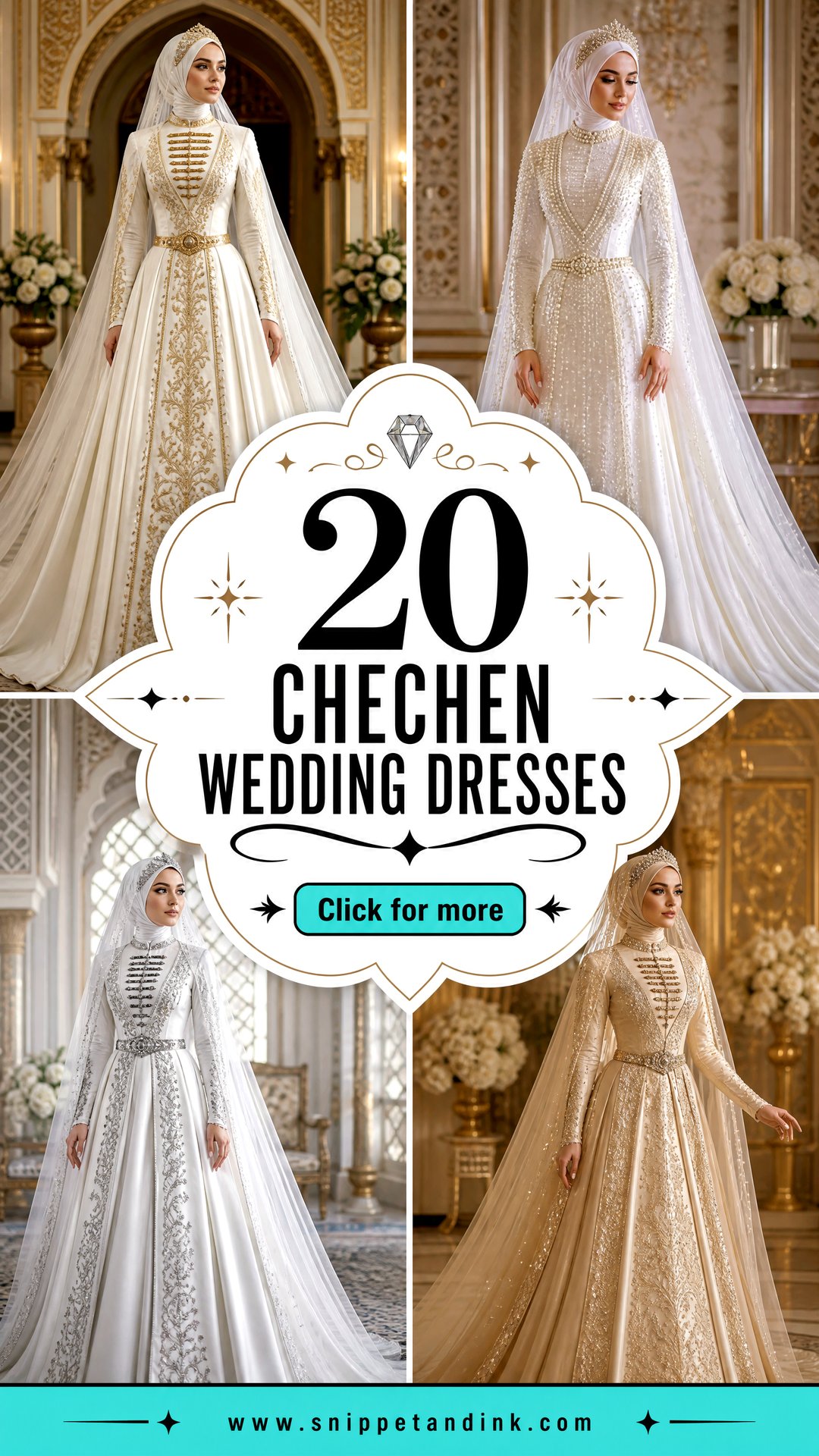
A Chechen bridal outfit is built around coverage: a long dress, sleeves to the wrist, a high neck, a defined waist, a worked chest panel, a metal belt and a white head covering. The historic garment, the ghabali, still shapes most of what I style today, even when a bride borrows a cut from modern couture. My job is mostly restraint. Once the neck, arms and hair are covered, the eye goes straight to the belt and the front edges of the overdress, so that is where the work should be, and the rest can stay calm. The twenty looks below run from strictly traditional to pared back, with notes on how each one behaves once you actually wear it.
Fitting Full Sleeves and a High Collar So You Can Greet Guests All Day
A Chechen bride spends long stretches on her feet, receiving relatives and returning greetings, and almost every complaint I hear afterward comes from three places: the armholes, the collar and the belt. A covered gown can look perfect on a dress form and still pin your arms to your sides. These are the checks I run at every fitting.
- Raise both arms to shoulder height and hug someone. If the bodice lifts at the waist, the armholes are cut too low and the sleeve needs more height in the cap or a small hidden gusset.
- Turn your head fully left and right, then look down at your shoes. A collar should allow a finger’s width at the front of the throat.
- Put the belt on at every fitting, not just the last one. A metal belt pulls the waist down slightly and changes where the skirt breaks over the shoe.
- Wear the actual shoes from the second fitting onward, so the hem is set to the height you will stand at.
- Pin the head covering in place for at least one fitting. Pins and fabric at the nape change how a high collar sits.
On timing, a custom or embroidered gown should be ordered six to nine months out, and hand embroidery can push that further, so ask the maker for the date the embroidery starts, not only the delivery date. Leave the final fitting for two to three weeks before the wedding, after any weight change has settled.
1. Traditional White Chechen Wedding Dress
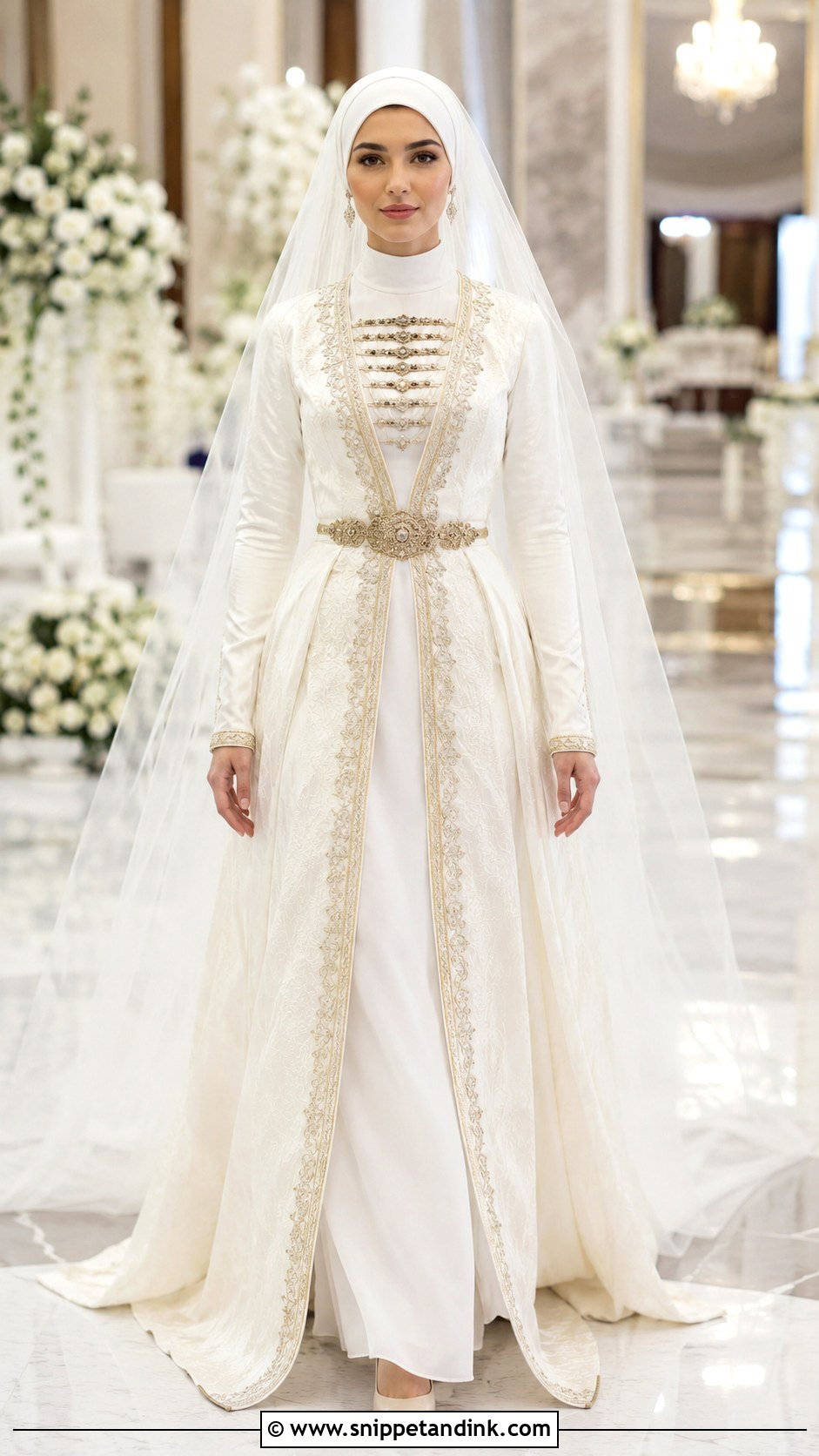
This is the shape most families picture: a fitted bodice, high neck, long sleeves and an open-front overdress parted over a smooth satin underdress. Gold embroidery runs around the cuffs, neckline and front edges, and a wide metallic belt sits at the natural waist. The fitting detail I fuss over is the overdress opening. If the two front edges are cut even slightly wide, they swing apart when you walk and the underdress reads as a separate garment. A long white headscarf or veil, closed-toe ivory pumps, small drop earrings and a structured clutch finish it without fighting the gold.
2. Ivory Chechen Wedding Dress With Gold Embroidery
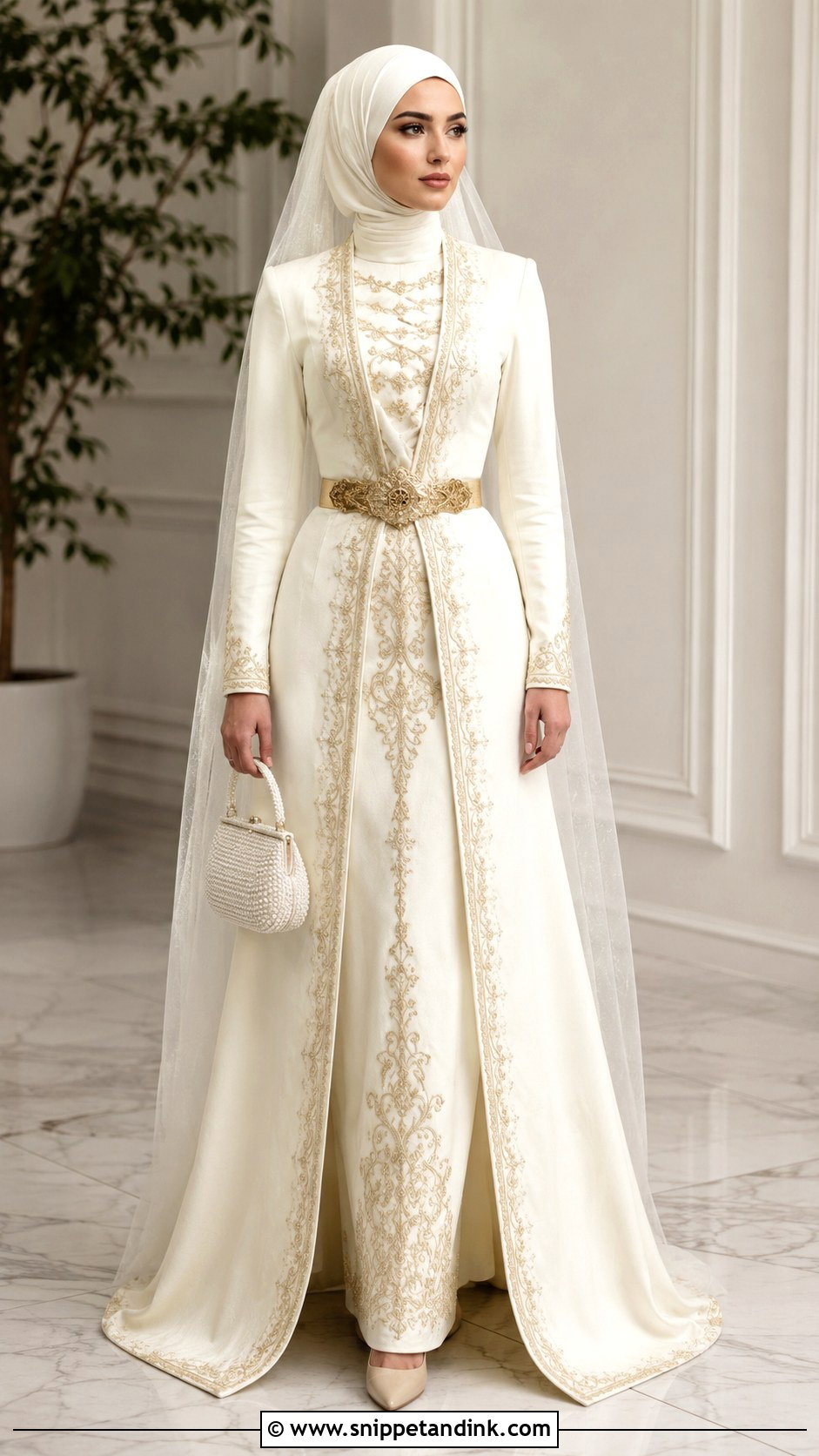
Ivory is kinder than bright white on most skin tones, and gold thread sits better on it, because white tends to make metallic embroidery look brassy. Layer an ivory open-front gown over a fitted underdress with a high collar and narrow sleeves, and keep the gold to the bodice seams, cuffs and hem. A sculpted gold belt carries the focus. Before ordering, hold the headscarf fabric against the dress fabric in daylight; two ivories from different mills can be a shade apart, and the veil will show it in every photo. Champagne shoes, a pearl-trimmed bag, small earrings and one bracelet are plenty.
3. Satin Chechen Wedding Dress With Silver Belt
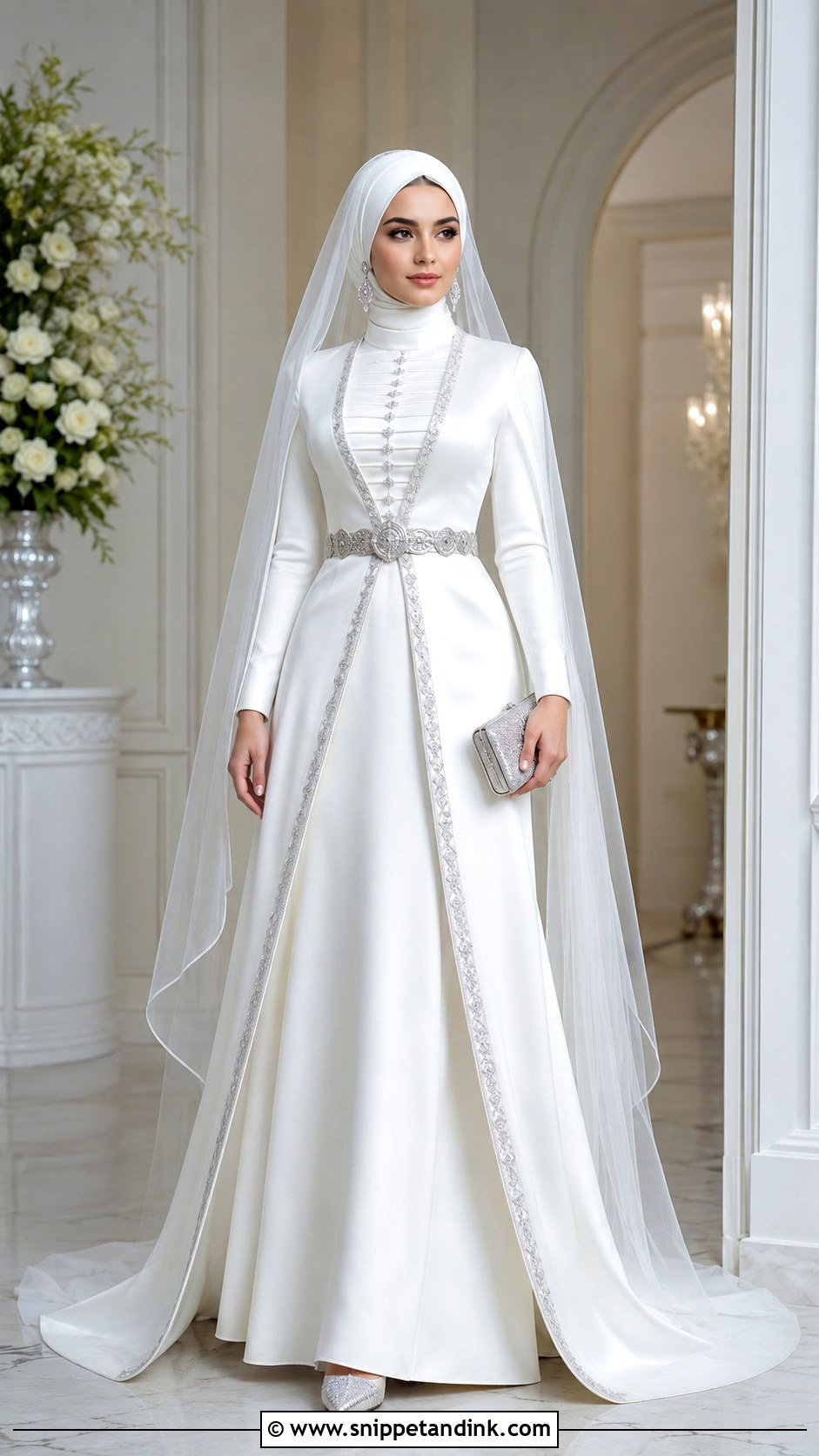
Satin is the fabric that shows every fitting mistake, so I only suggest it to brides who can make time for two or three proper fittings. A clean white satin undergown with a structured waist, high neck and fitted sleeves takes an open-front satin layer with shaped shoulders and a sweeping train. Narrow silver trim on the outer edges and cuffs replaces heavy embroidery, and a detailed silver belt defines the waist. Expect satin to crease across the lap the first time you sit, which is one more reason to keep the train detachable or the seating brief. A white headscarf, sheer fingertip veil, silver closed-toe heels, crystal drops and a small silver clutch complete it.
4. Velvet Chechen Wedding Dress With Pearl Details
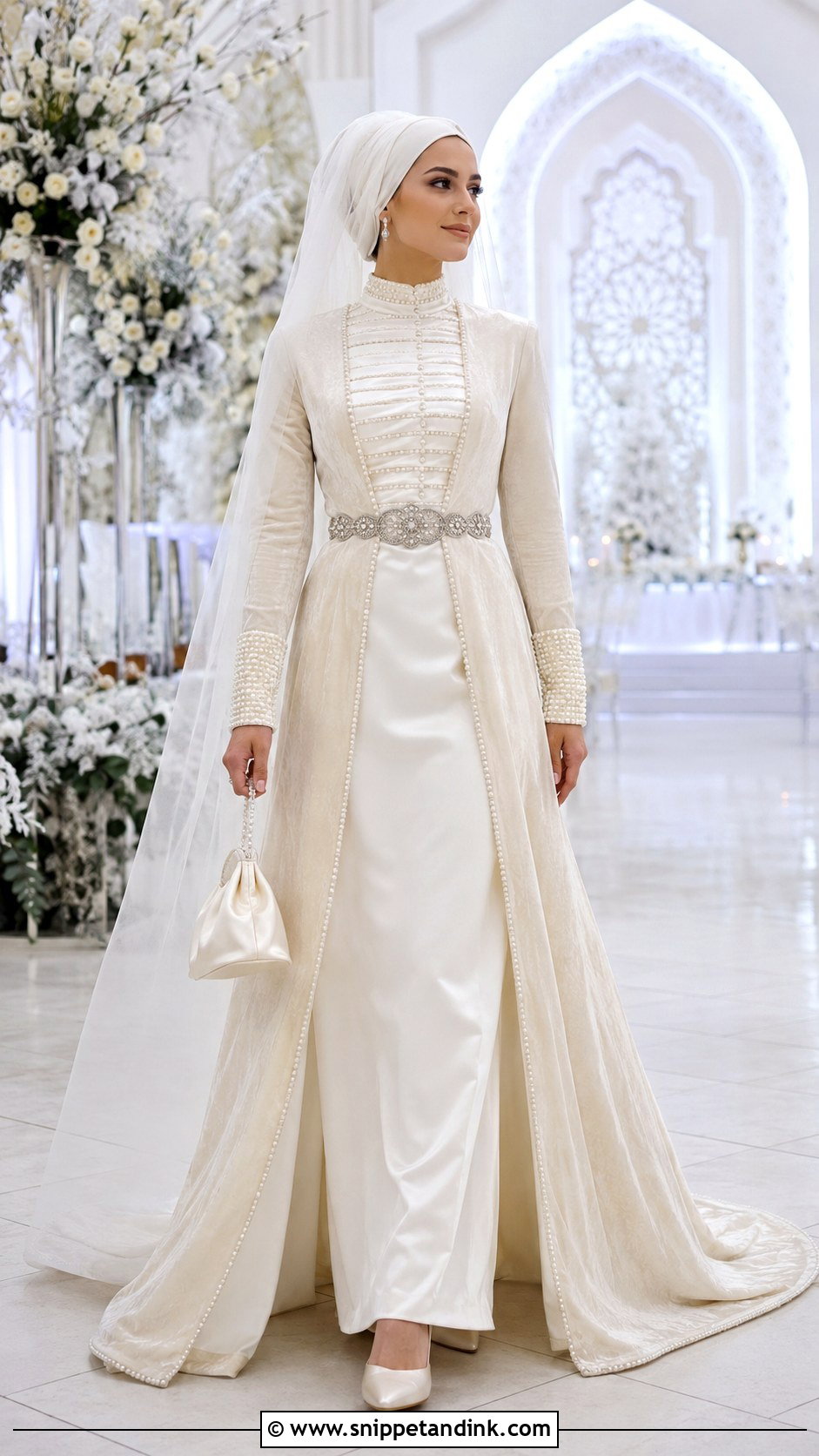
Velvet is a winter fabric, full stop. In a warm hall, under long sleeves and a head covering, it gets hot within the first hour. For a cold-season or evening wedding, though, a pale ivory velvet overdress over a cream satin underdress has a depth nothing else gives. Pearl beading at the neckline, bodice and cuffs lightens it, and a slightly flared skirt keeps it from looking bulky. One practical warning: velvet pile crushes where the belt sits, so ask for the belt to be lined with soft fabric. Pair it with a pearl-studded silver belt, a smooth white head covering, a long veil, ivory block heels and pearl earrings.
5. Chechen Wedding Dress With Decorative Chest Panel
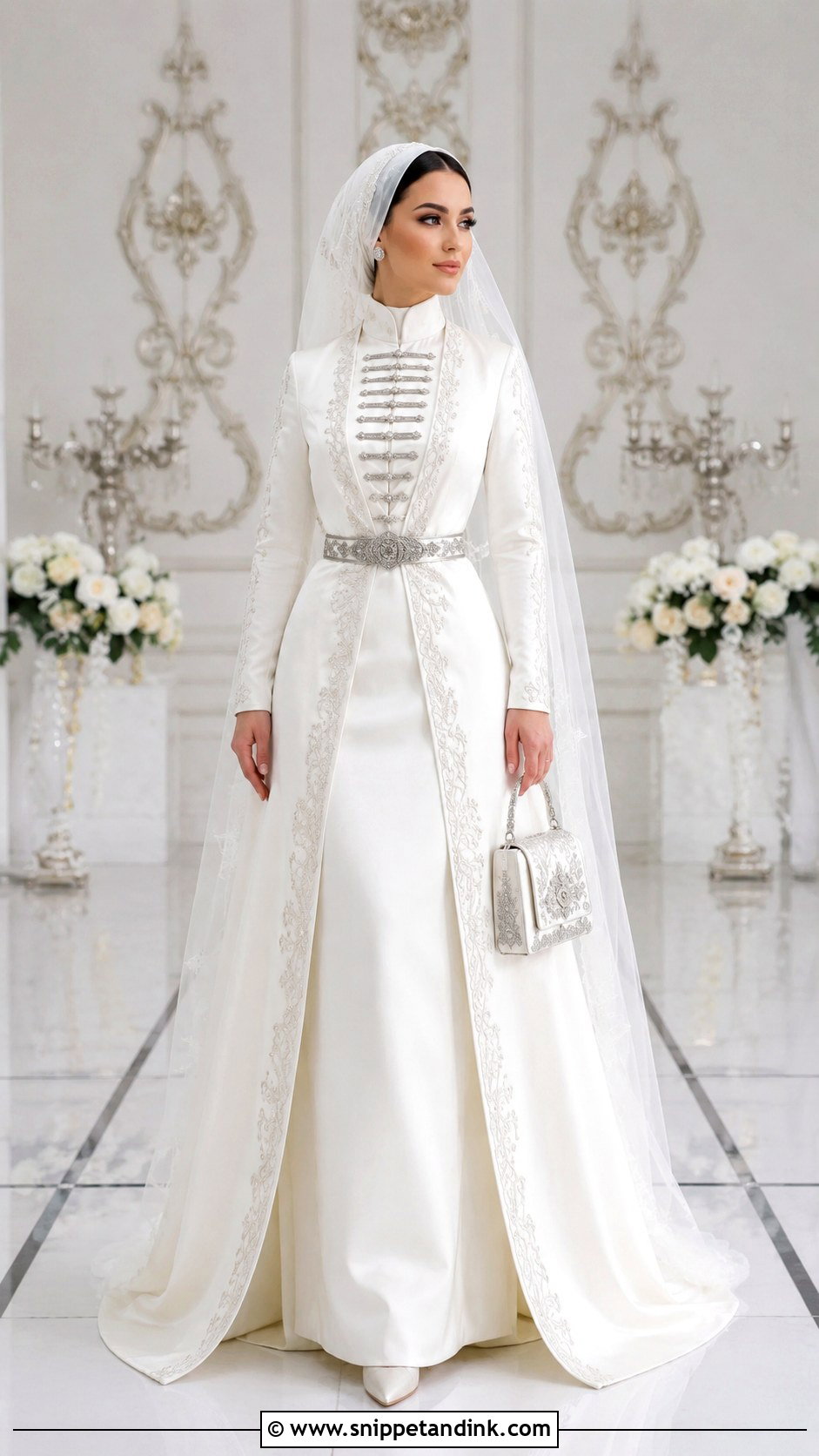
When the chest panel is the star, everything else has to go quiet. Start with a floor-length white gown, high collar, fitted torso and long sleeves, and let the central panel carry the metallic embroidery, pearls or rows of small buttons. The thing I check first is how the panel is attached. A panel stitched flat to a soft bodice wrinkles as soon as you breathe deeply; it needs interfacing or light boning behind it to stay smooth through the day. A matching open-front overskirt frames it, a silver or antique-gold belt sits below it, and the veil, head covering, pointed ivory shoes and small studs stay plain.
6. Chechen Wedding Dress With Open Front Overskirt
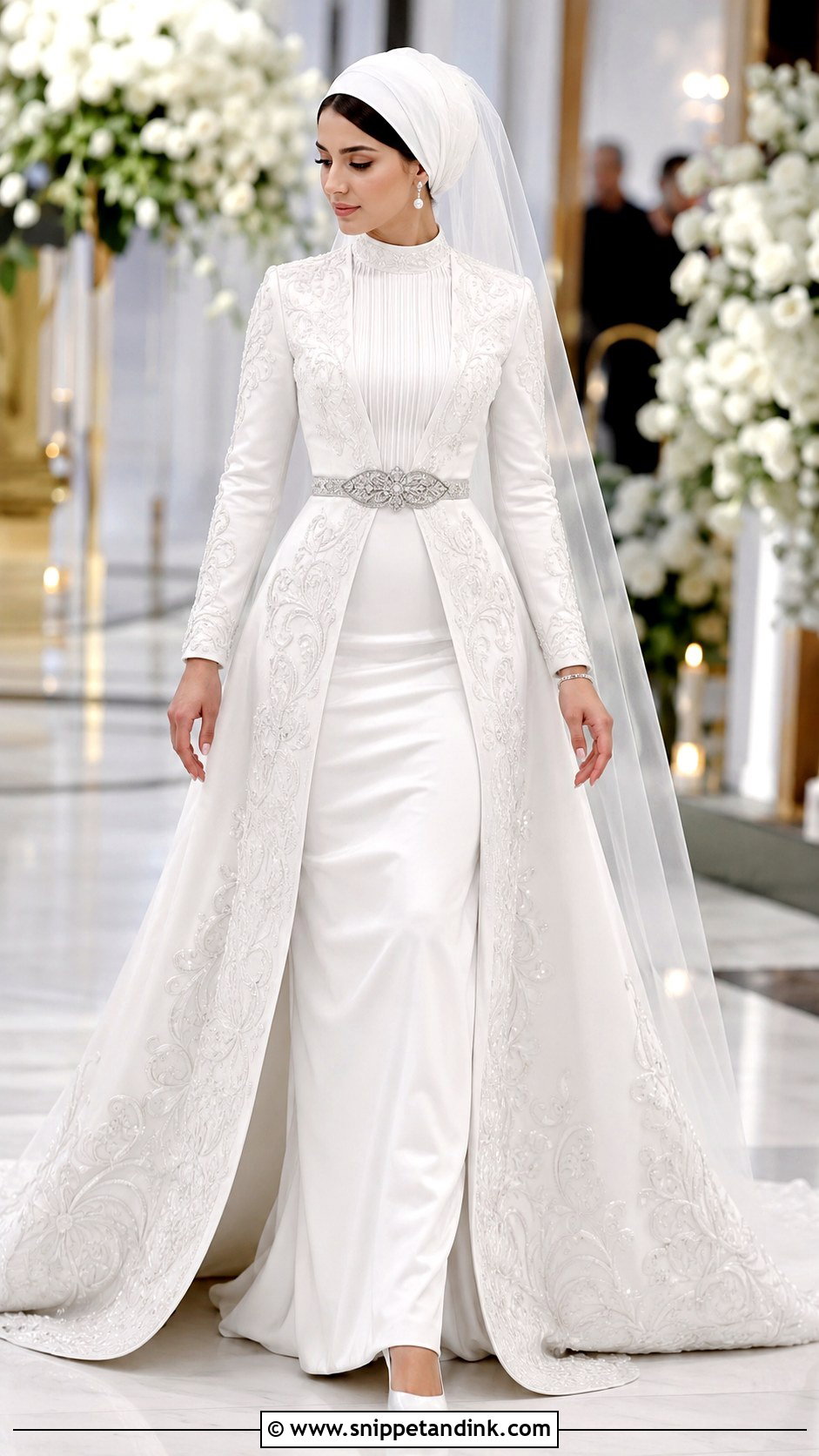
The open-front overskirt is the most traditional layering trick here, and the hardest to get right. It starts at the waist, parts down the center and shows the modest white underdress beneath, with embroidered borders tracing the opening and hem. The silver belt does real work, holding the two layers together at the waist. Ask your seamstress for a few weights sewn into the hem of the overskirt, otherwise the opening flaps when you turn. Keep the veil long but light so the construction stays visible, and finish with closed-toe pumps, a slim bracelet and pearl drops.
7. Lace Chechen Wedding Dress With Long Sleeves
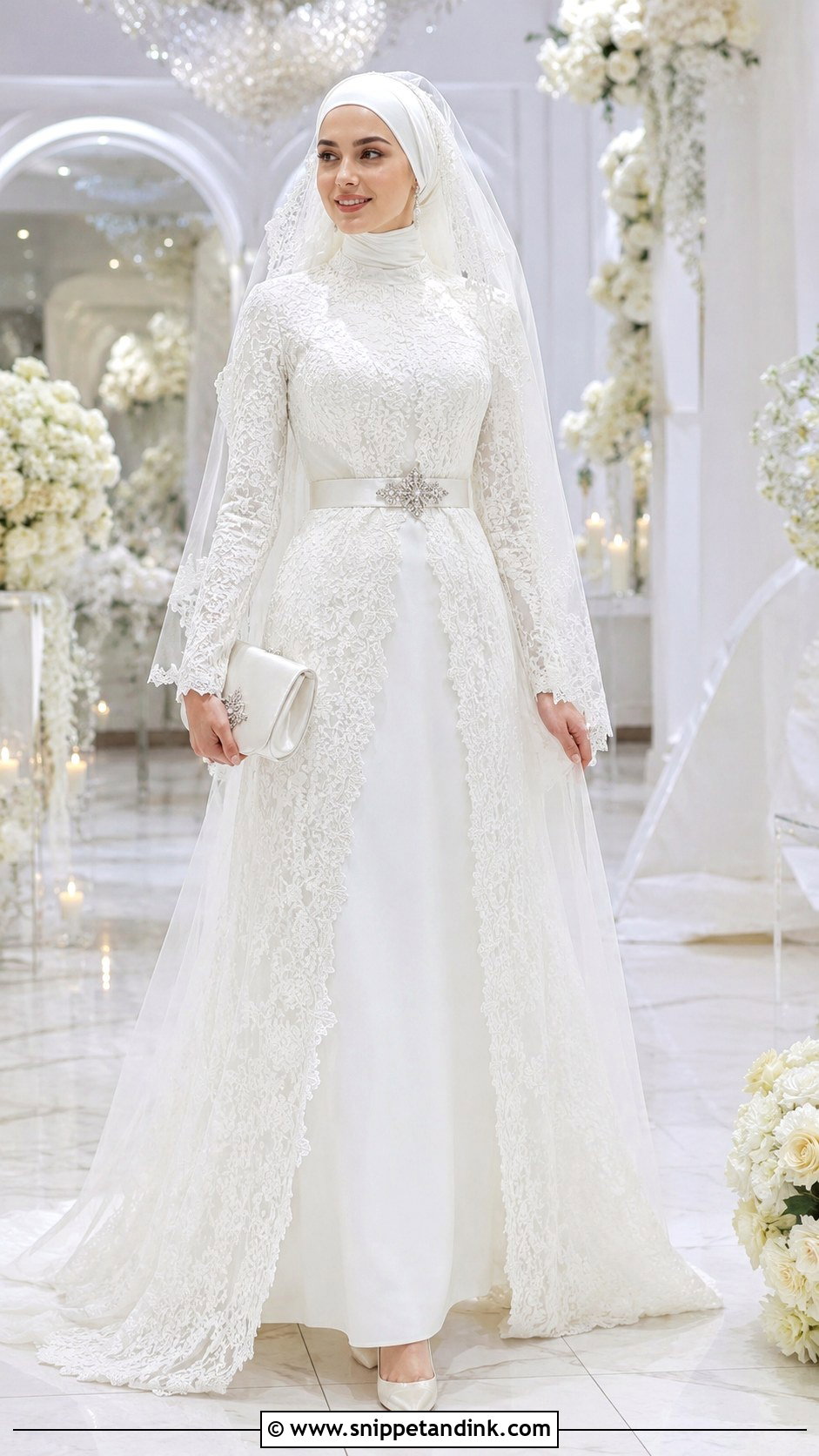
Can lace stay modest? Yes, if it sits over an opaque undergown and stays where you place it. I use it on the sleeves, the upper bodice and the open-front outer layer, never as an all-over fabric, because sheer lace sleeves need a full lining to give real coverage and that lining must be cut to the same shape or it bunches at the elbow. A satin belt with a silver centerpiece keeps the waist clean. Pair it with a smooth white headscarf rather than a lace one, a veil with only a lace edge, ivory pumps, pearl earrings and a satin clutch.
8. Pearl Beaded Chechen Wedding Dress
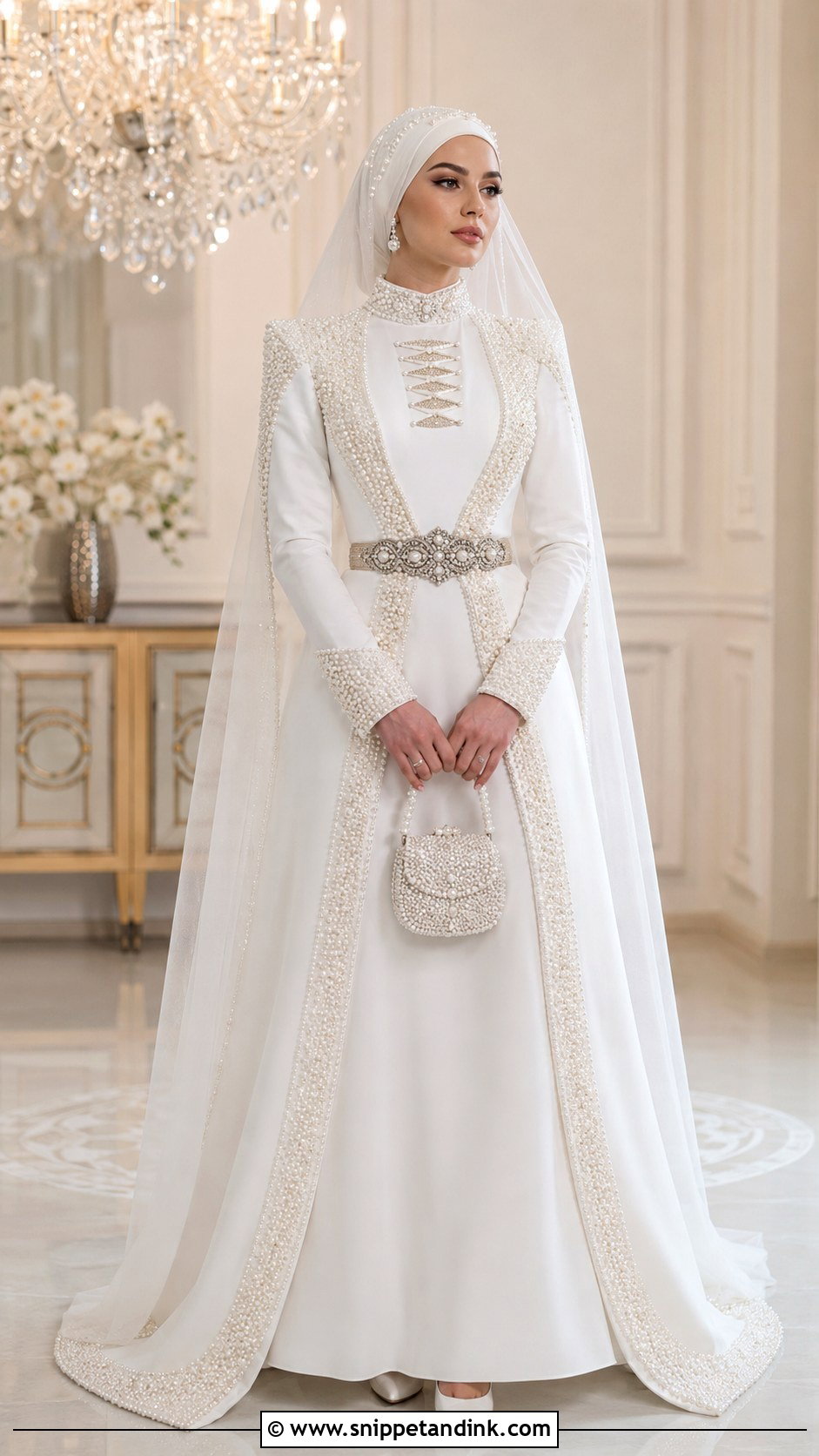
Pearls look best in clusters, not scattered across a whole gown. Concentrate them at the collar, chest panel, cuffs and belt, and keep the long underdress in matte crepe or satin so they stand out. A lightly structured overdress frames the beaded bodice and falls into a controlled train. Hand-sewn pearls are heavy in quantity, so a bodice loaded with them needs a sturdy foundation underneath or it drags the neckline forward. A pearl-decorated silver belt, white head covering, chapel-length veil, pearl earrings, ivory closed-toe heels and a small beaded bag complete it.
9. Minimalist Chechen Wedding Dress
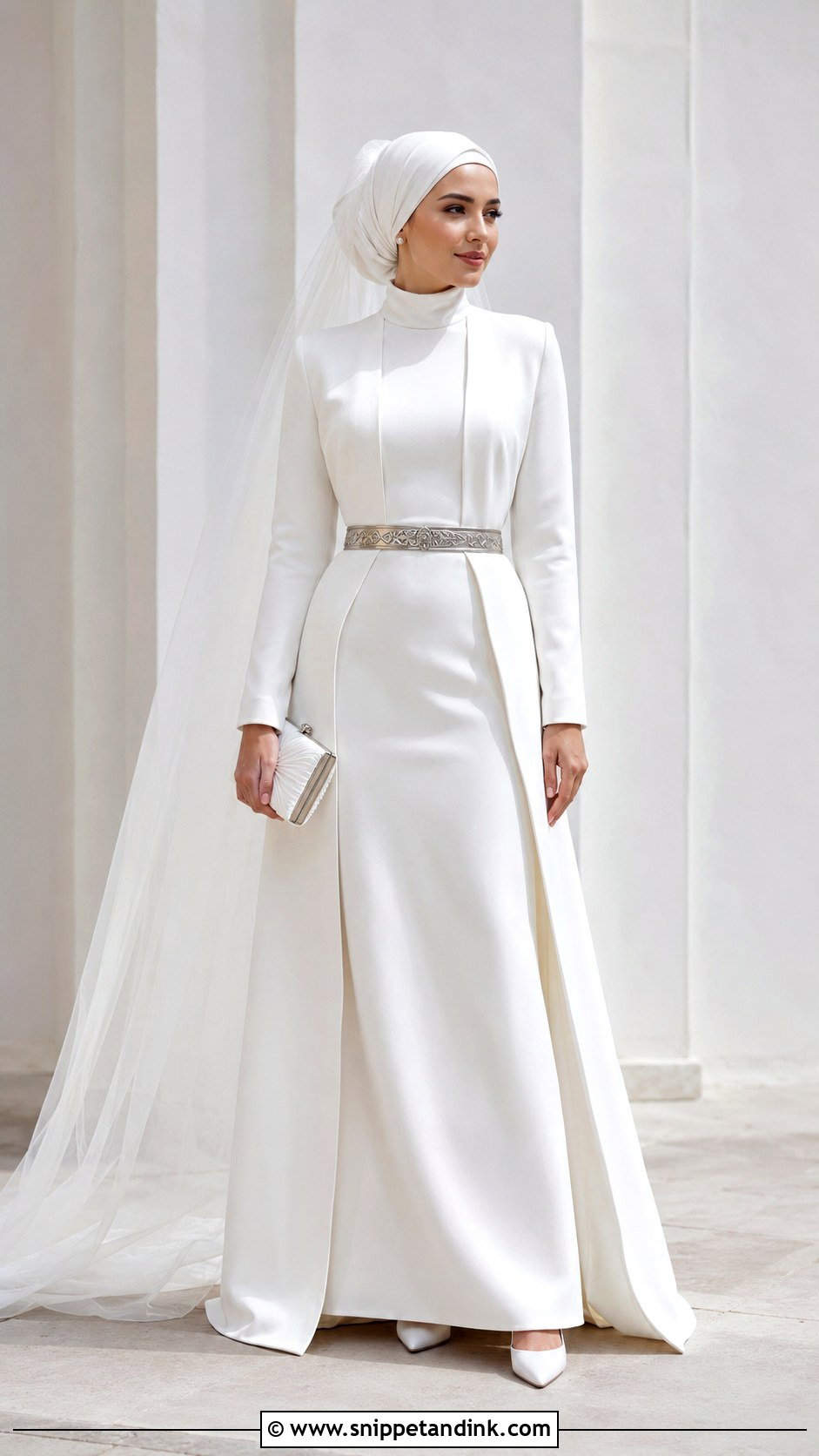
Minimal does not mean easy. With no embroidery to hide behind, every seam, dart and hem is on show, so I only send this design to a tailor I trust. The dress itself is simple: high neck, fitted long sleeves, defined waist and a smooth A-line skirt in matte white crepe, which drapes well and does not shine under flash. A plain open-front outer layer nods to the traditional shape. Choose one serious accessory, a polished silver belt with light engraving, and keep the headscarf, cathedral veil, pointed pumps, pearl studs and ivory clutch quiet.
10. Modern Chechen Wedding Dress With Cape
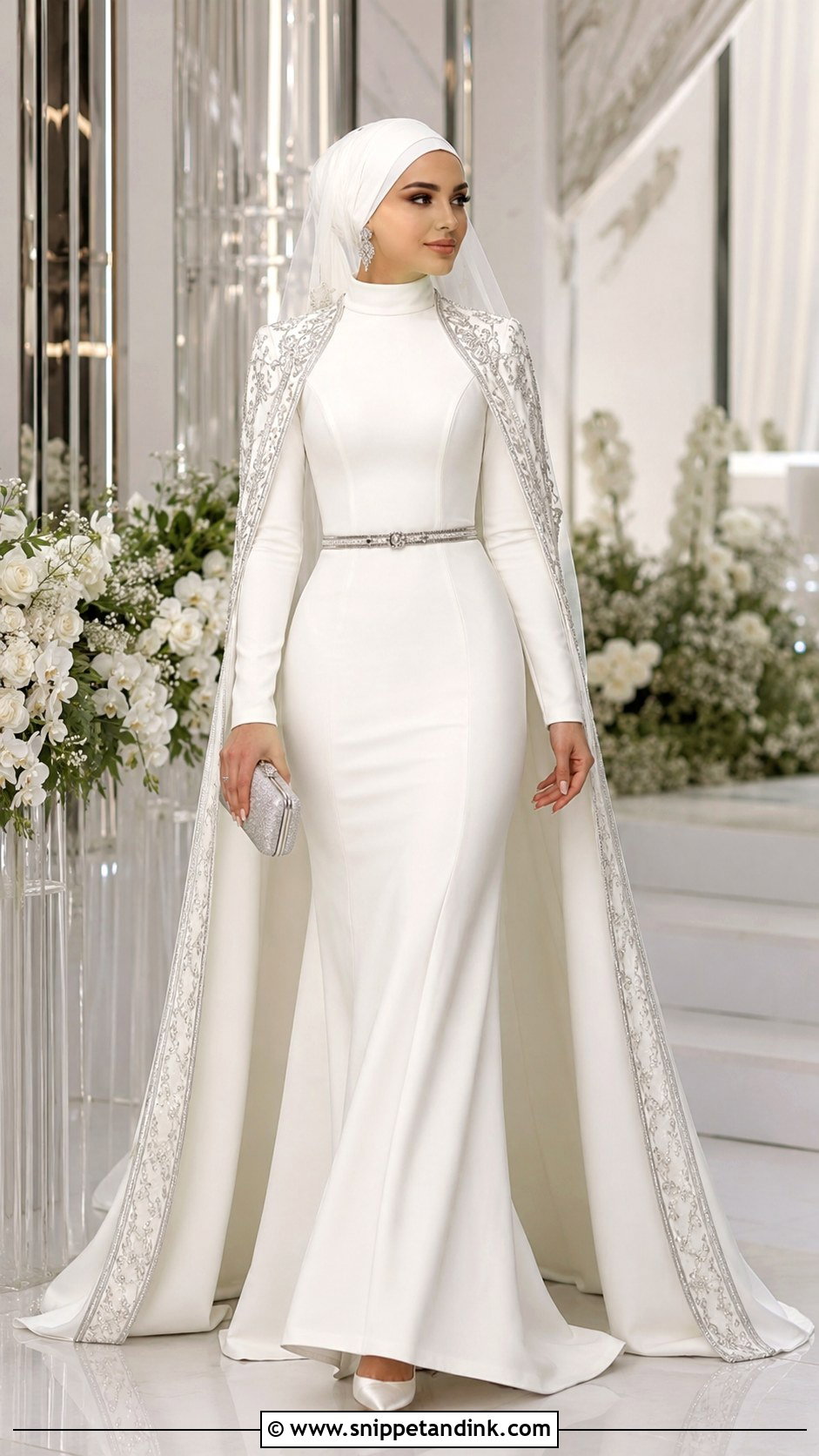
A cape gives the drama of a long overdress without the weight around the hips. It attaches at the shoulders over a fitted white gown with long sleeves, a raised neckline and a gently flared skirt, and it can trail into its own train. Silver embroidery along the cape edges echoes the borders of a traditional overdress. My caution: a cape attached at the shoulder seams pulls backward when it is long, so the neckline needs to be firmly anchored or it will ride up against the throat. A narrow metallic belt, a smooth head covering worn under the cape, satin heels, crystal earrings and a silver minaudiere finish it.
11. High Neck Chechen Wedding Dress With Train
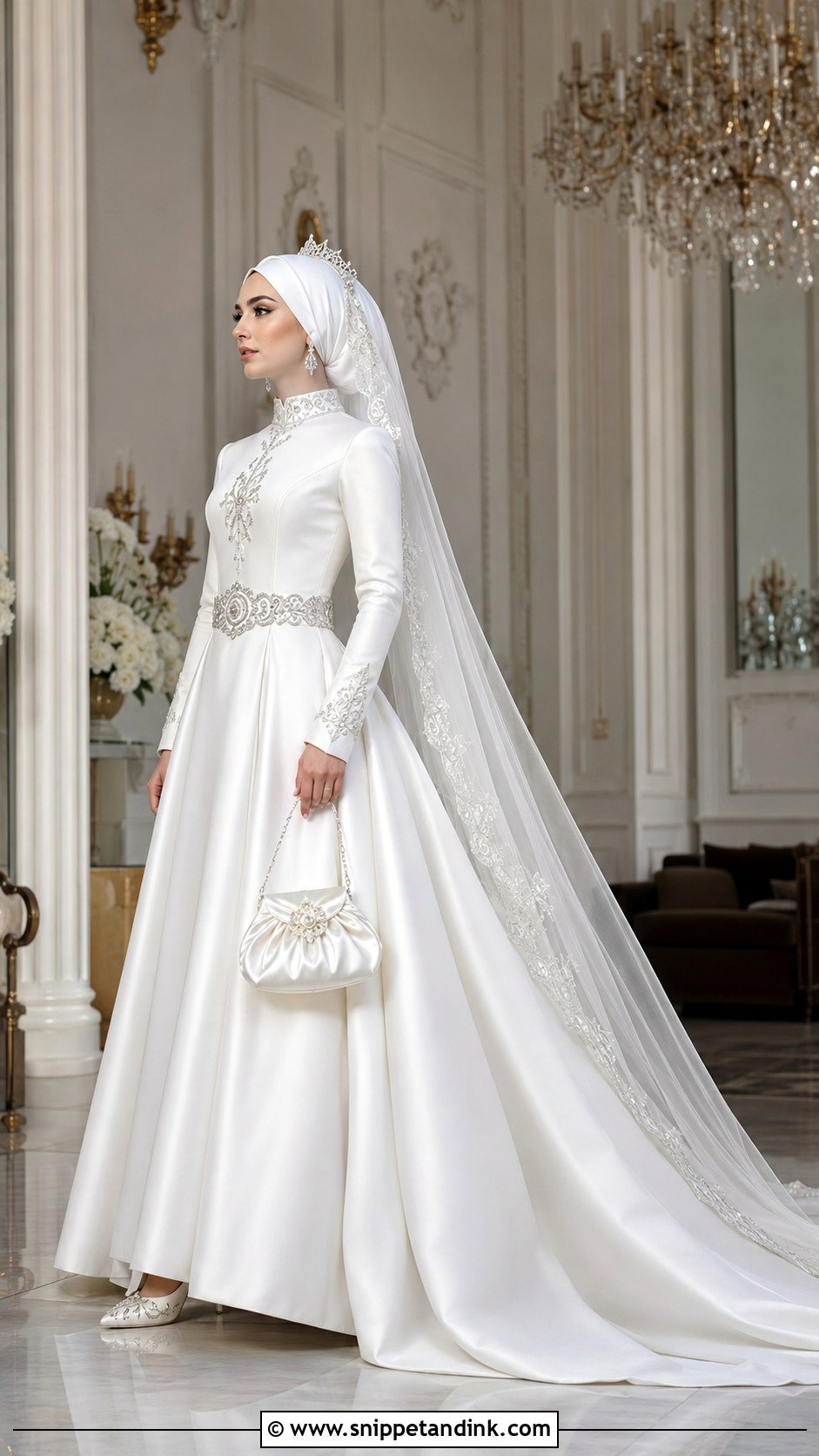
A high collar with a long train is the most formal combination on this list. Long fitted sleeves, a close-cut bodice and a full skirt lead into a chapel-length train. Matte satin or mikado holds that architectural line without much embellishment. Narrow embroidery at the collar and cuffs is enough. Fit the collar while sitting and turning your head, not only while standing still; a stiff collar that feels fine in the mirror can rub the jaw raw by evening. A sculpted silver belt, a head covering with the veil set smoothly at the crown, crystal-detailed heels, drop earrings and a small satin bag complete it.
12. A-Line Chechen Wedding Dress With Embroidered Sleeves
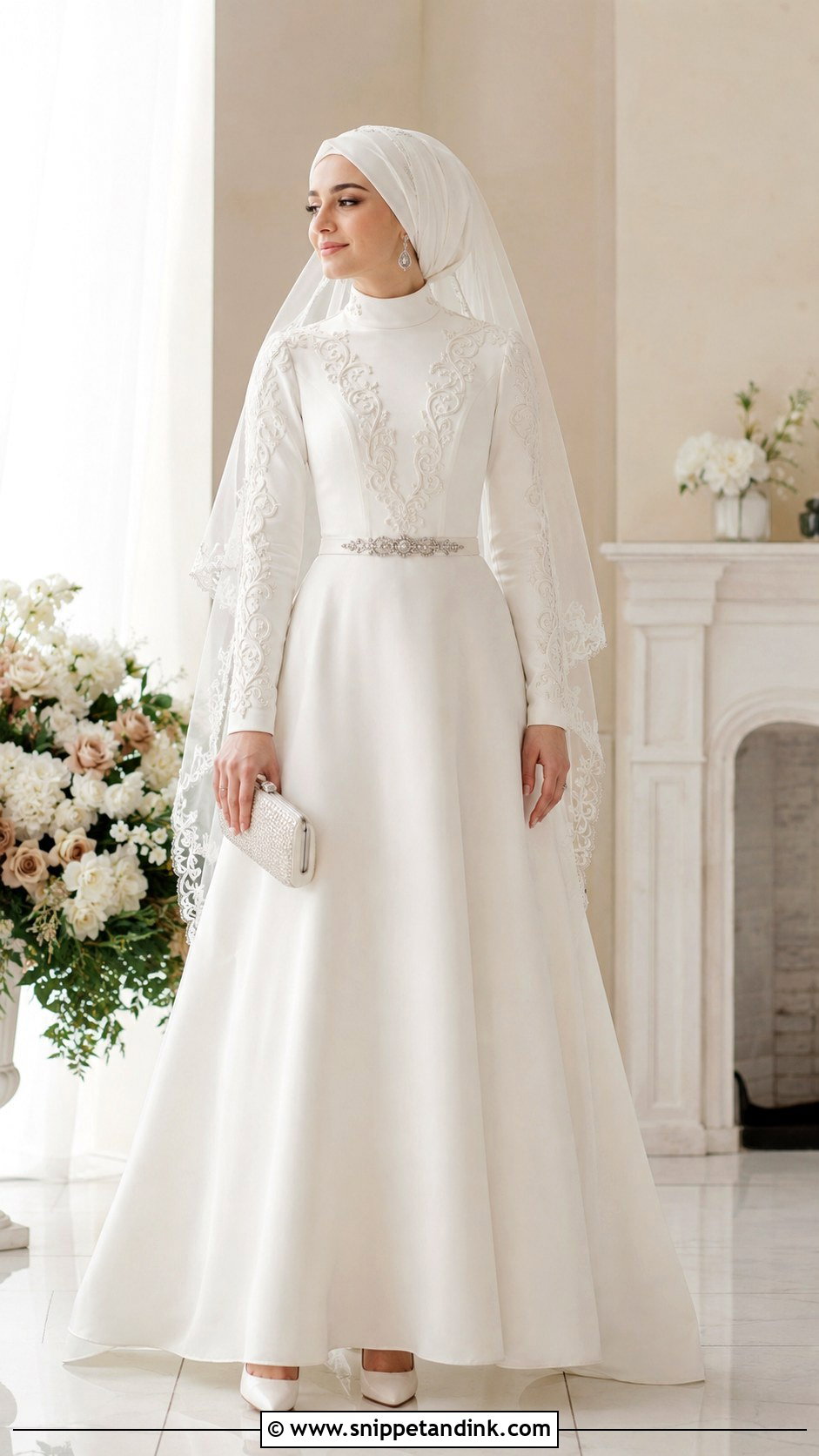
An A-line skirt is the shape I reach for when a bride expects to stand and walk for hours, because it moves freely without clinging. The bodice is fitted with a high neck, and the sleeves carry the decoration: white-on-white embroidery from shoulder to cuff. Tonal work like that reads as texture from across a room and as fine detail up close. Embroidery on a fitted sleeve does stiffen it, so allow a touch more ease at the elbow. A narrow silver belt, a smooth headscarf, a sheer veil with an embroidered edge, ivory pumps, silver earrings and a structured clutch complete it.
13. Princess Chechen Wedding Dress With Modest Bodice
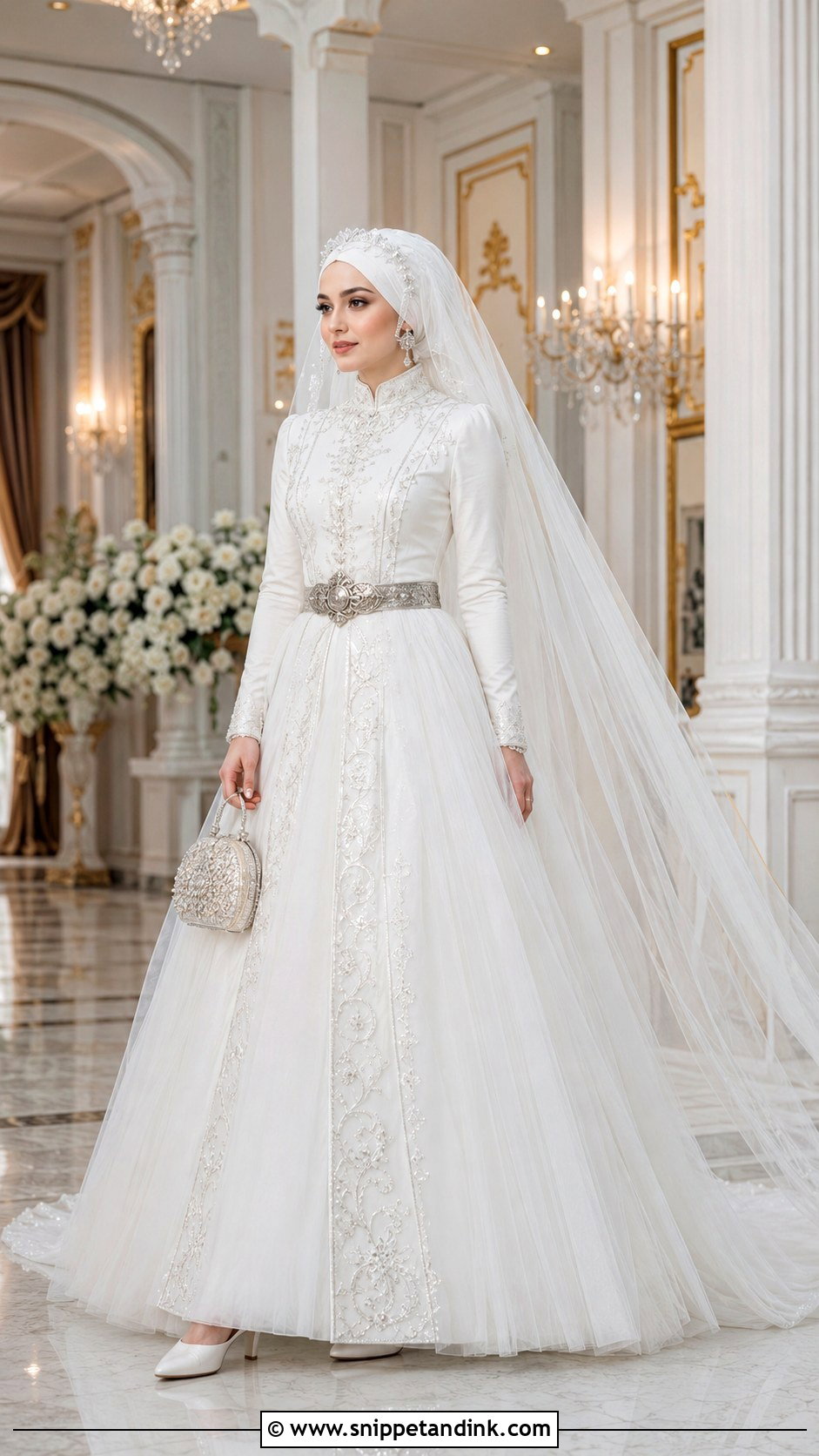
A full princess skirt is grand, and it is also wide. Check doorways, aisles and the space around wherever you will stand before committing. The bodice stays modest, with a high collar, long opaque sleeves and a carefully fitted waist. Layers of light tulle build the skirt so it does not feel stiff, and a slim embroidered panel above it brings in a traditional line. A wide silver belt separates the worked bodice from the soft skirt. Add a white head covering and a veil that runs just past the train, then closed-toe satin heels, crystal earrings and a small embellished bag.
14. Cream Chechen Wedding Dress With Antique Gold Belt
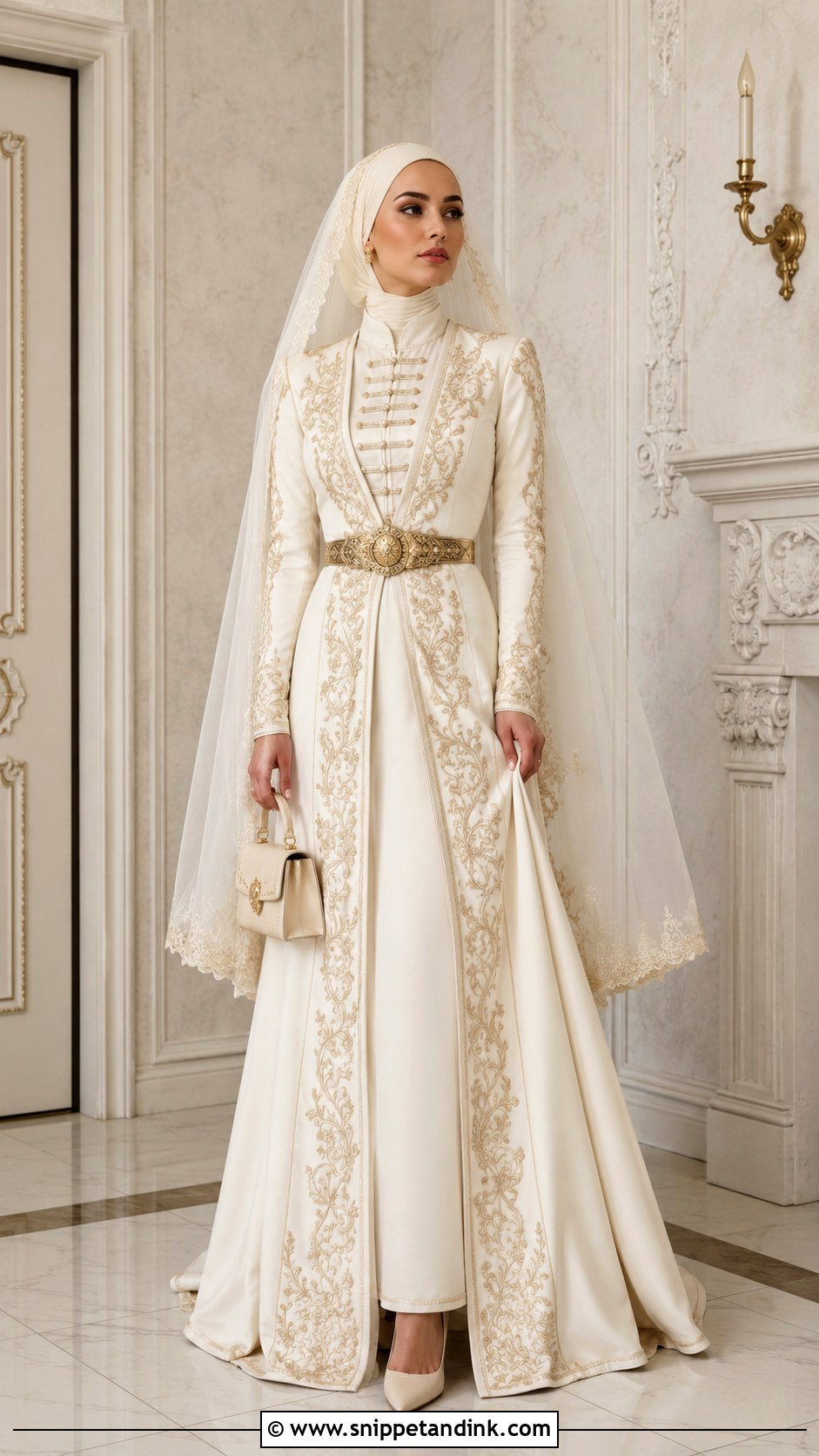
Cream with antique gold is the warmest palette here and the most forgiving in candlelight. A long crepe underdress gives full coverage with a high neck, fitted sleeves and a gently flared skirt, and an open-front cream gown goes over it with fine antique-gold embroidery around the borders and cuffs. The wide metal belt, with an aged finish and engraved pattern, is the centerpiece. Choose the headscarf and veil in cream or soft ivory, never stark white, which makes cream look dingy beside it. Champagne pumps, small gold drops and a structured cream bag finish it. In historic interiors with wood and stone, this palette looks settled rather than costumed.

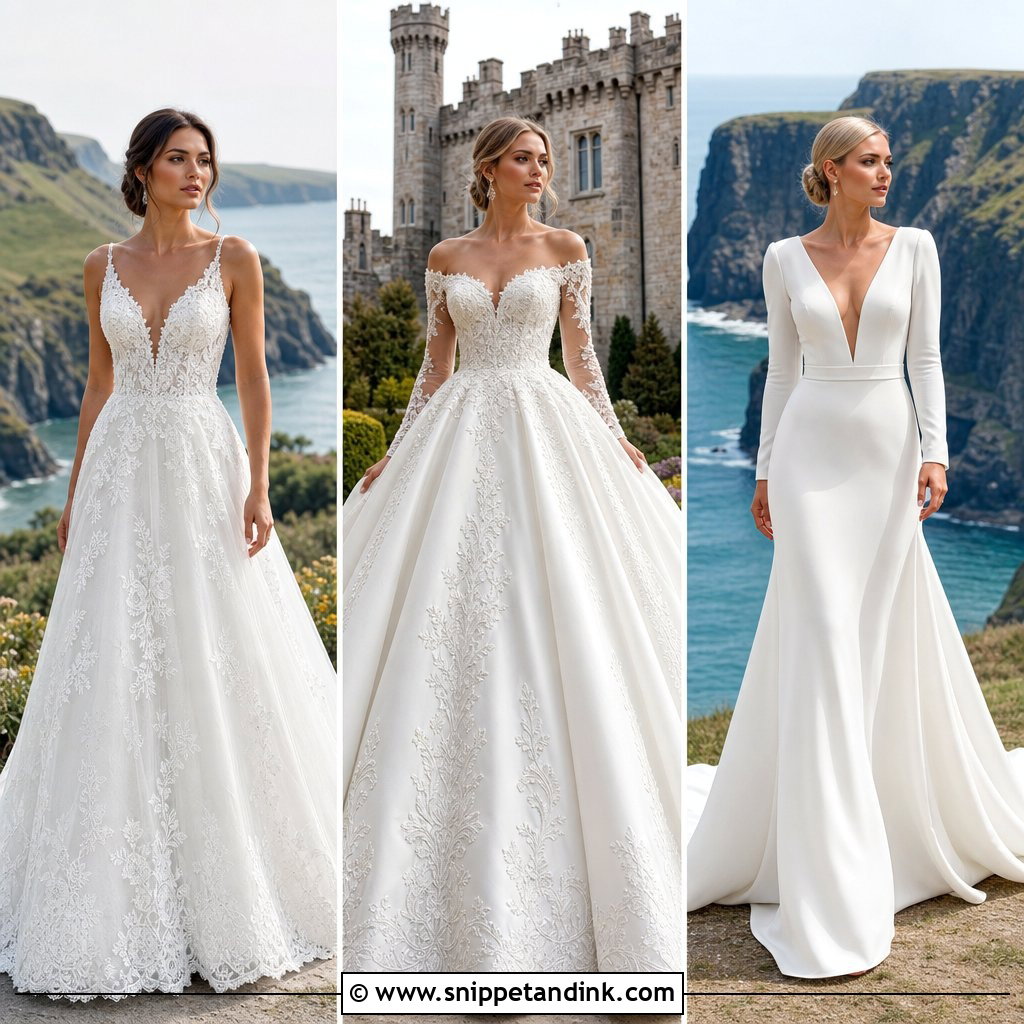

15. White And Silver Chechen Wedding Dress
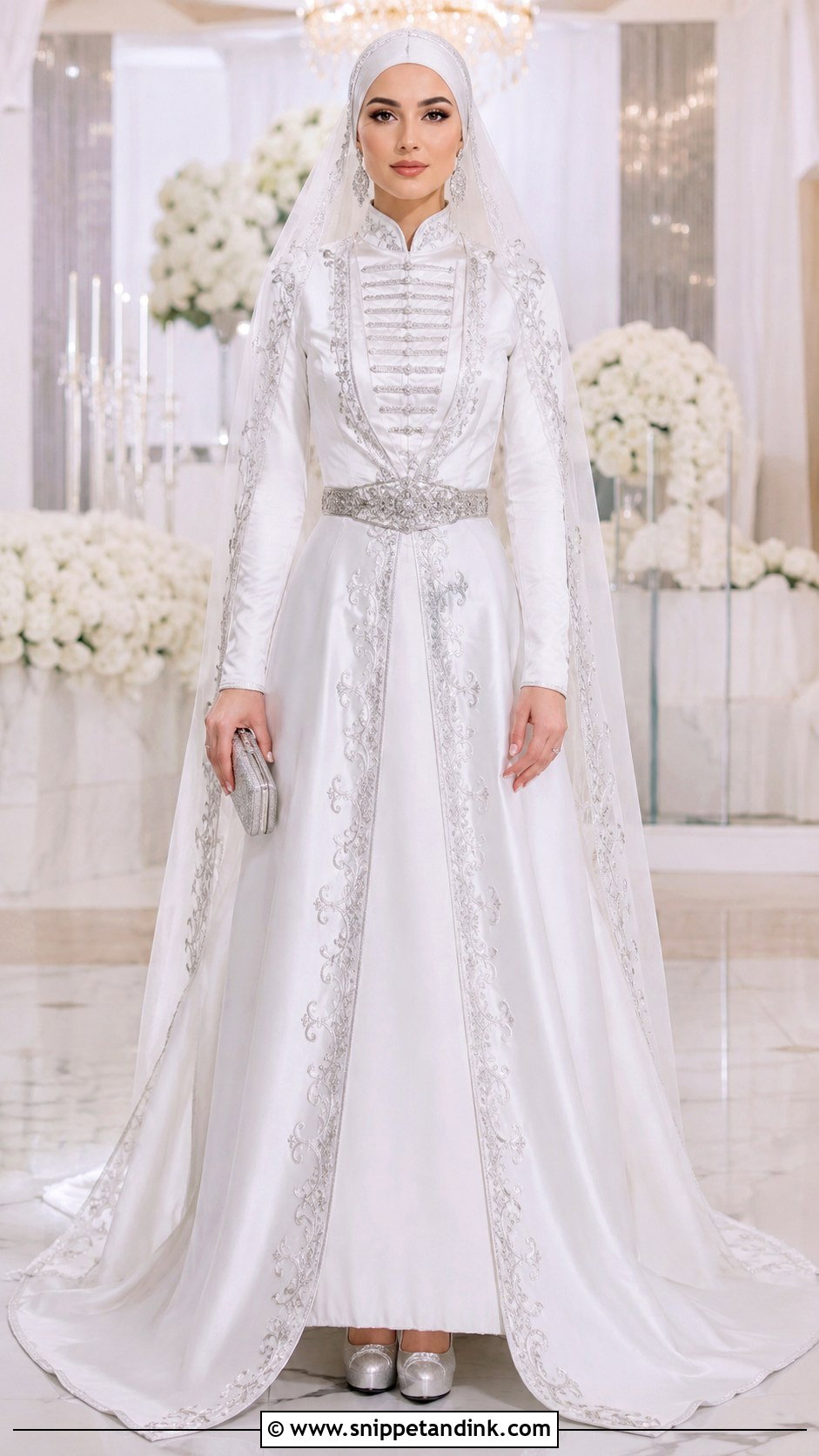
White and silver is the crispest pairing, and it rewards a strict color rule: no gold anywhere, including the earrings and the shoe buckles. A white satin gown with a raised collar, long sleeves and a floor-length skirt gets silver embroidery on the bodice, front opening, cuffs and hem. A silver chest panel and a matching metal belt anchor it. Silver thread tarnishes faster than people expect, so store the dress wrapped in acid-free tissue after the fittings rather than in a plastic bag. Finish with a long sheer veil, silver closed-toe shoes, crystal earrings and a small metallic clutch.
16. Blush Chechen Wedding Dress With White Veil
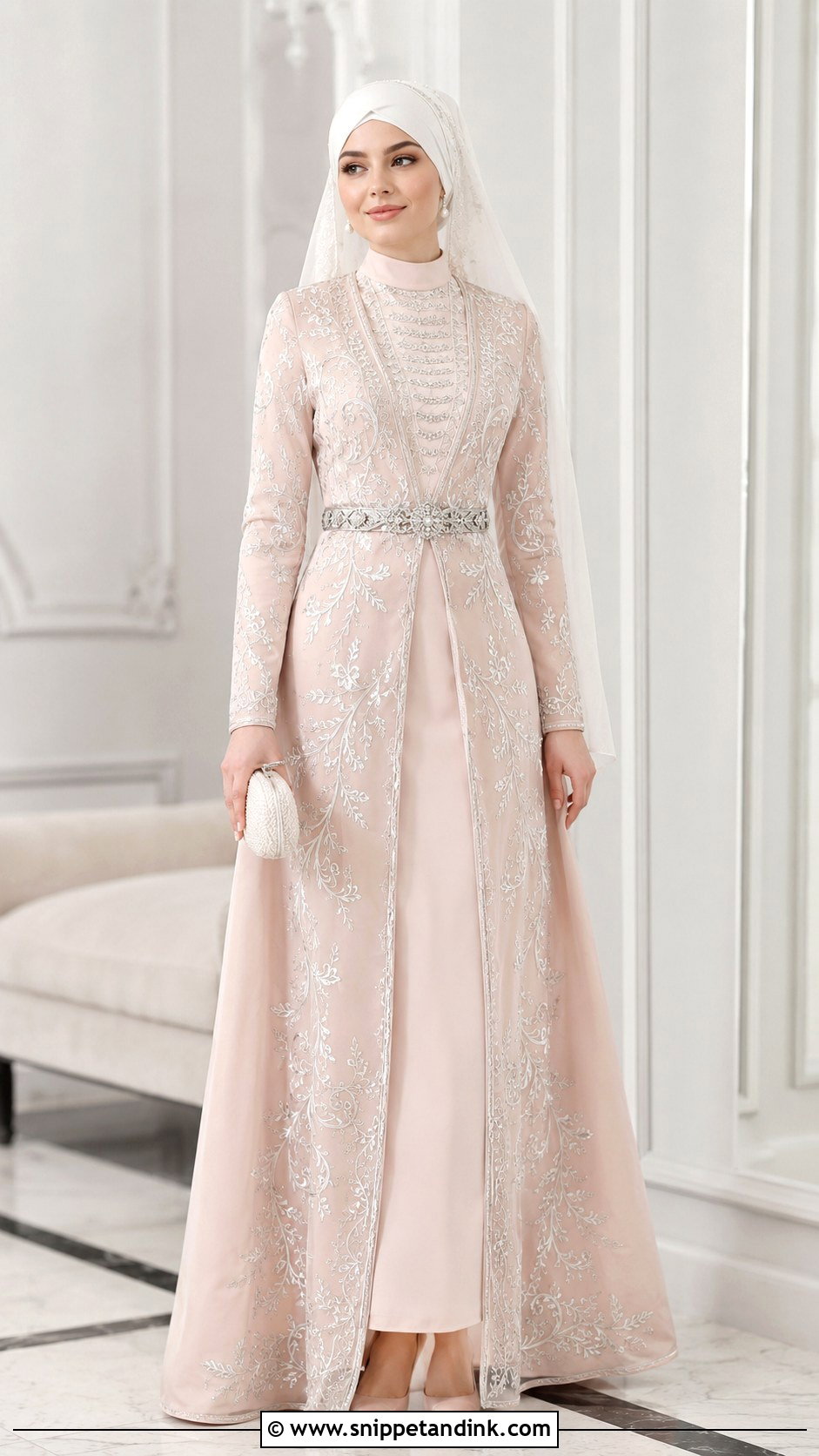
Blush works when it is pale enough to read almost neutral in daylight. Anything pinker can look casual next to a white head covering. Build it with a high neckline, fitted long sleeves and a floor-length A-line skirt, and let a blush open-front overdress part over a slightly lighter undergown so the layers show. White or silver embroidery at the collar, cuffs and edges sharpens it, and a silver belt keeps the waist defined. I always ask for a fabric swatch to be photographed with a phone flash before ordering, because some blush shades turn peach on camera. Pair with a white head covering, a long white veil, blush pumps and pearl earrings.
17. Champagne Chechen Wedding Dress With Crystal Details
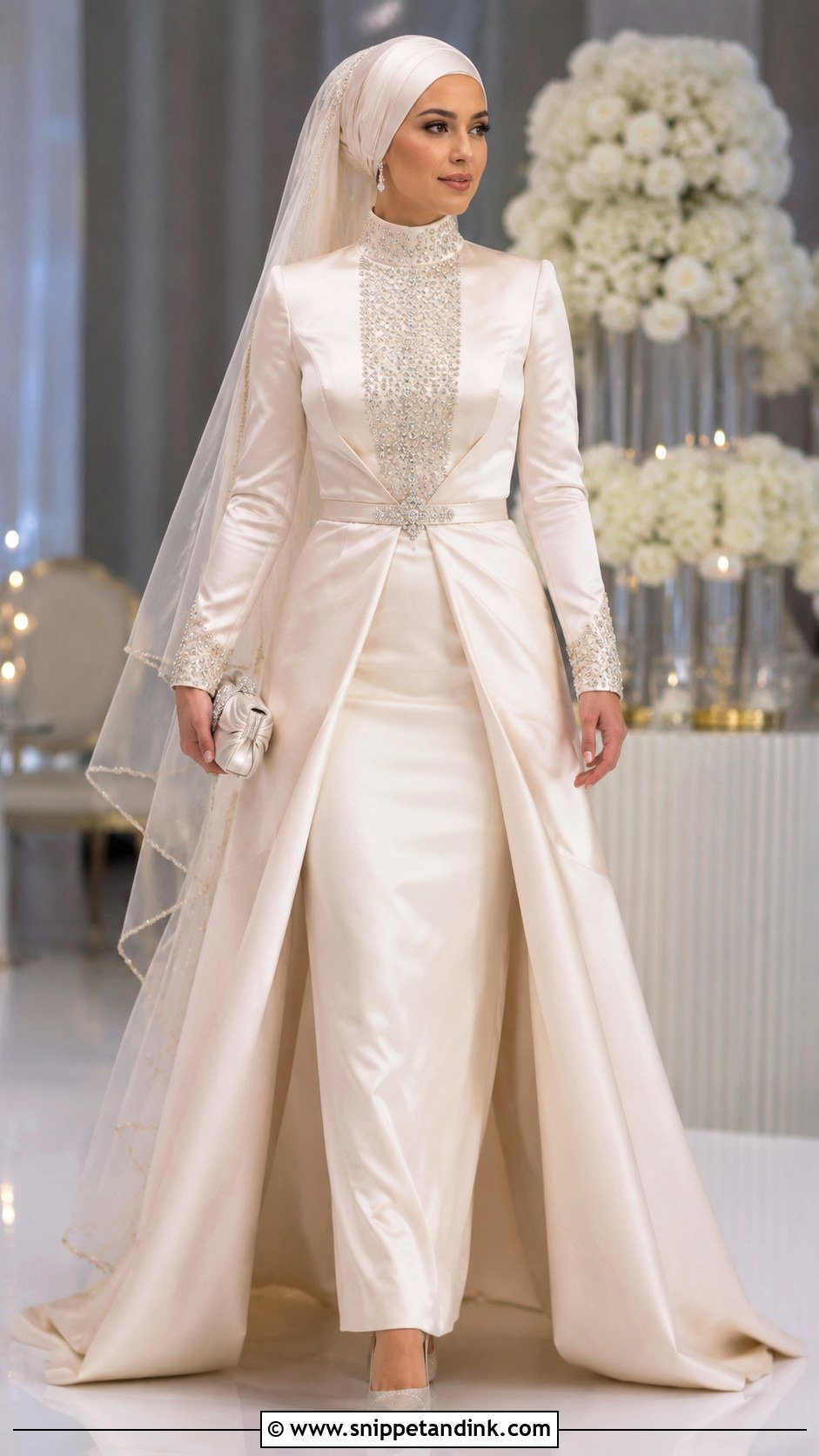
Champagne satin has a glow that suits crystal, but crystal is where a dress tips into too much. Keep the stones fine, evenly spaced and symmetrical along the chest panel, cuffs and open-front layer of a structured, high-neck gown with opaque sleeves and a gently flared skirt. A silver crystal belt ties the decorated areas together at the waist. Crystals catch on veil netting, so pick a veil with a finished, smooth edge. An ivory head covering, a champagne-toned sheer veil, metallic closed-toe heels, crystal drops and a satin clutch complete it. Under strong indoor lighting this is the dress that sparkles most.
18. Brocade Chechen Wedding Dress With Structured Skirt
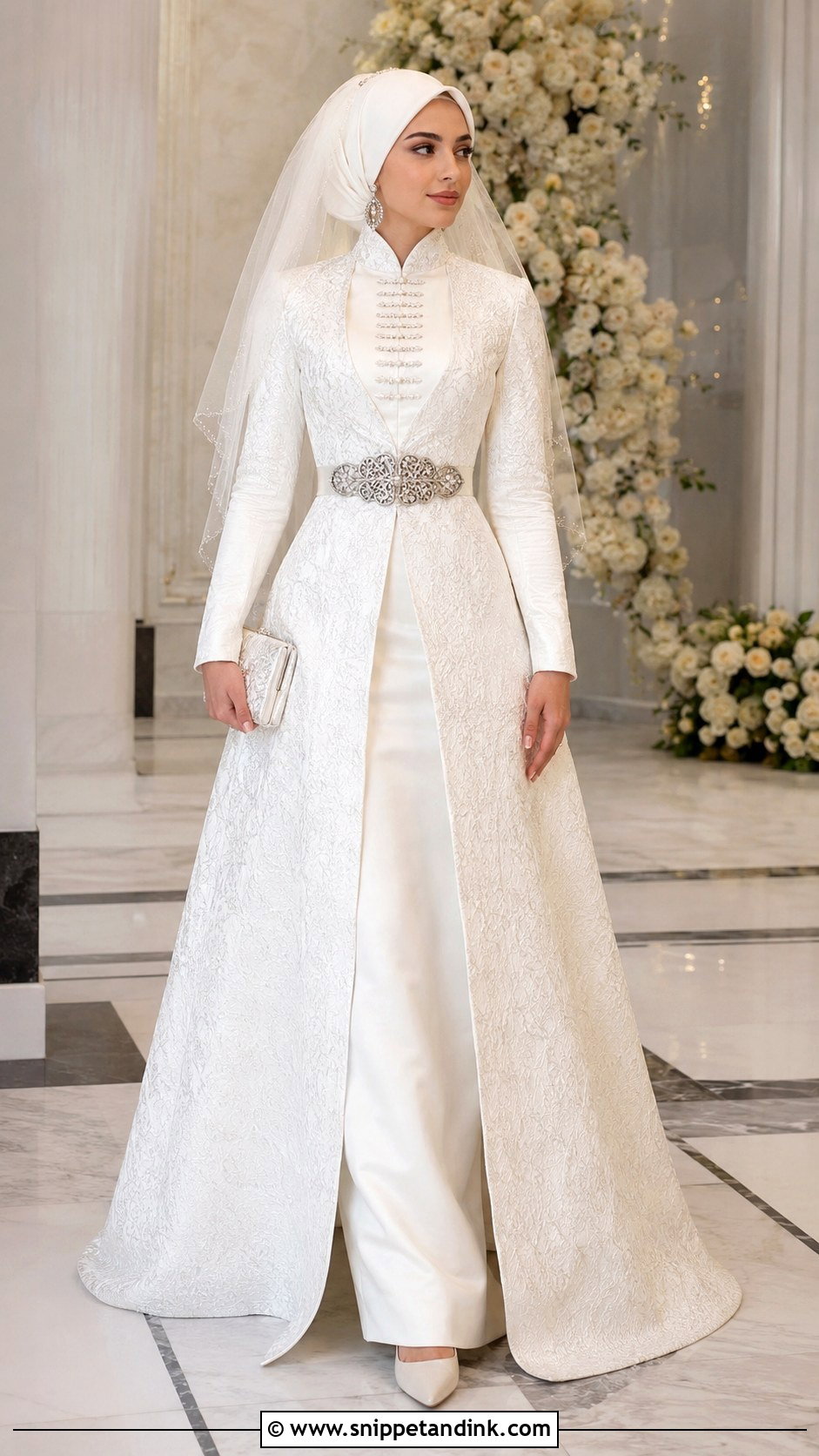
Brocade puts the richness in the weave instead of in added beadwork, so it suits a bride who wants weight and pattern without much handwork. Use white or pale ivory brocade for the outer layer over a plain satin undergown, with a fitted bodice, high collar and structured open-front skirt. Keep the sleeves smooth and narrow to balance the fuller skirt. Brocade frays fast at cut edges, so every seam should be bound or overlocked before the embroidery goes on. A polished silver belt, minimal cuff embroidery, a plain head covering, a sheer veil, ivory pumps, small silver earrings and a satin clutch finish it. It is a cold-weather, formal-hall dress.
19. White Crepe Chechen Wedding Dress With Detachable Train
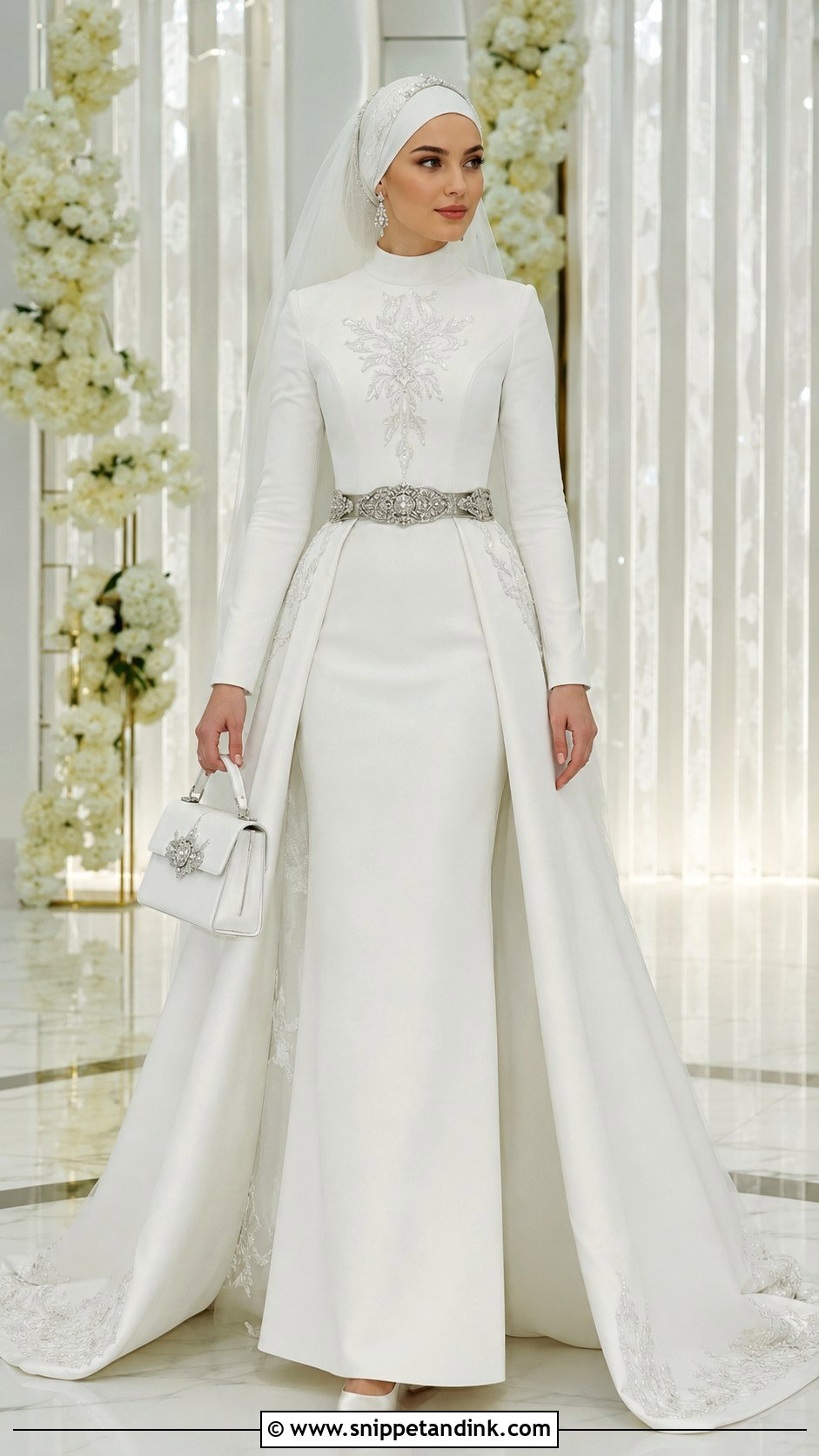
A detachable train solves the problem of a long ceremony followed by hours of standing and greeting. The base is a white crepe gown with long sleeves, a high neck, a fitted bodice and a modest A-line skirt; the removable overskirt attaches beneath a detailed silver belt, which conveniently hides the hooks. Practice taking it off with whoever will help you on the day, because hidden hooks under a belt are fiddly in a hurry. Light embroidery at the chest and cuffs, a smooth head covering, a light veil, pointed satin pumps, crystal earrings and a structured white bag work with both versions.
20. Luxury Chechen Wedding Dress With Hand Embroidery
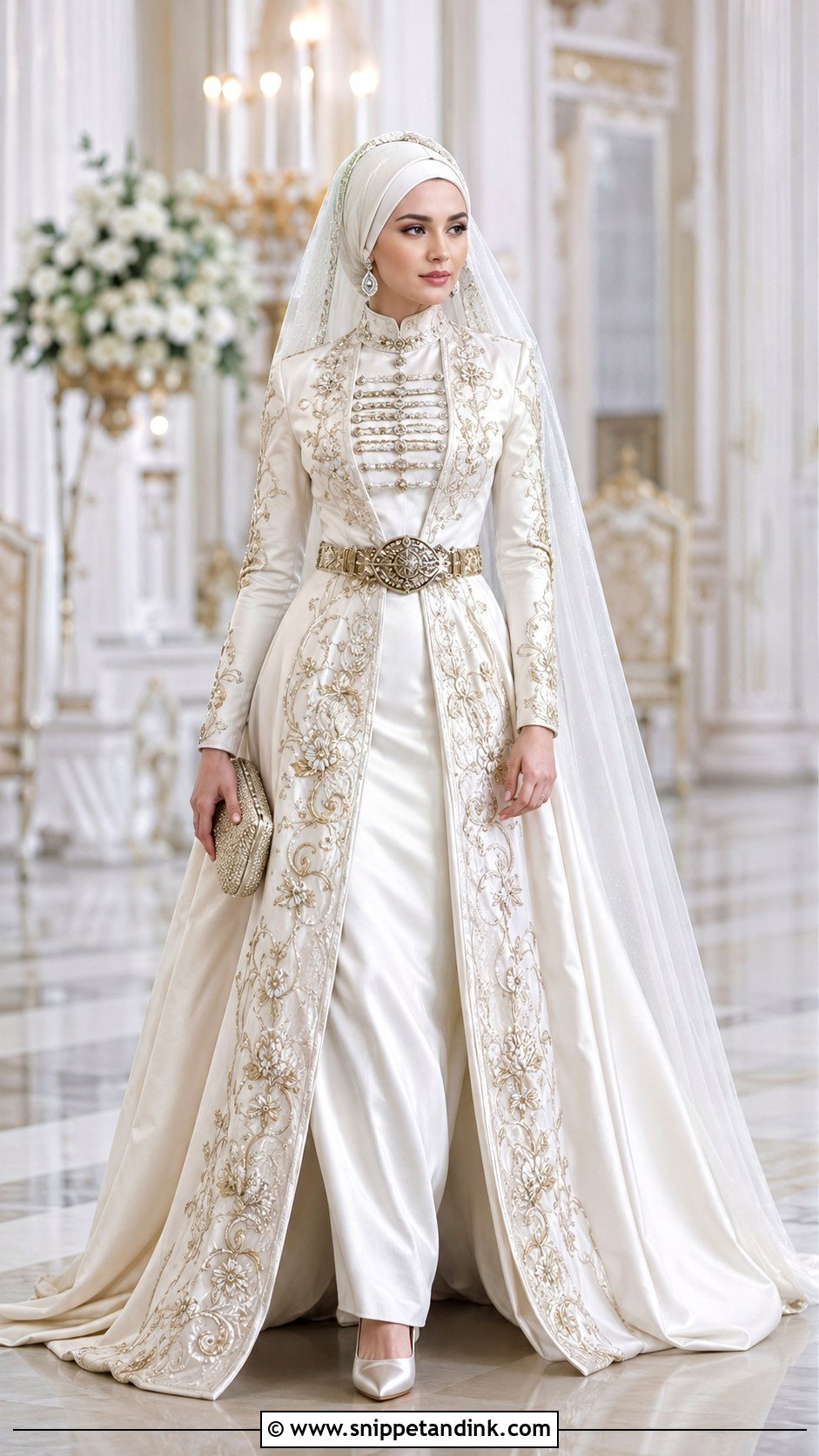
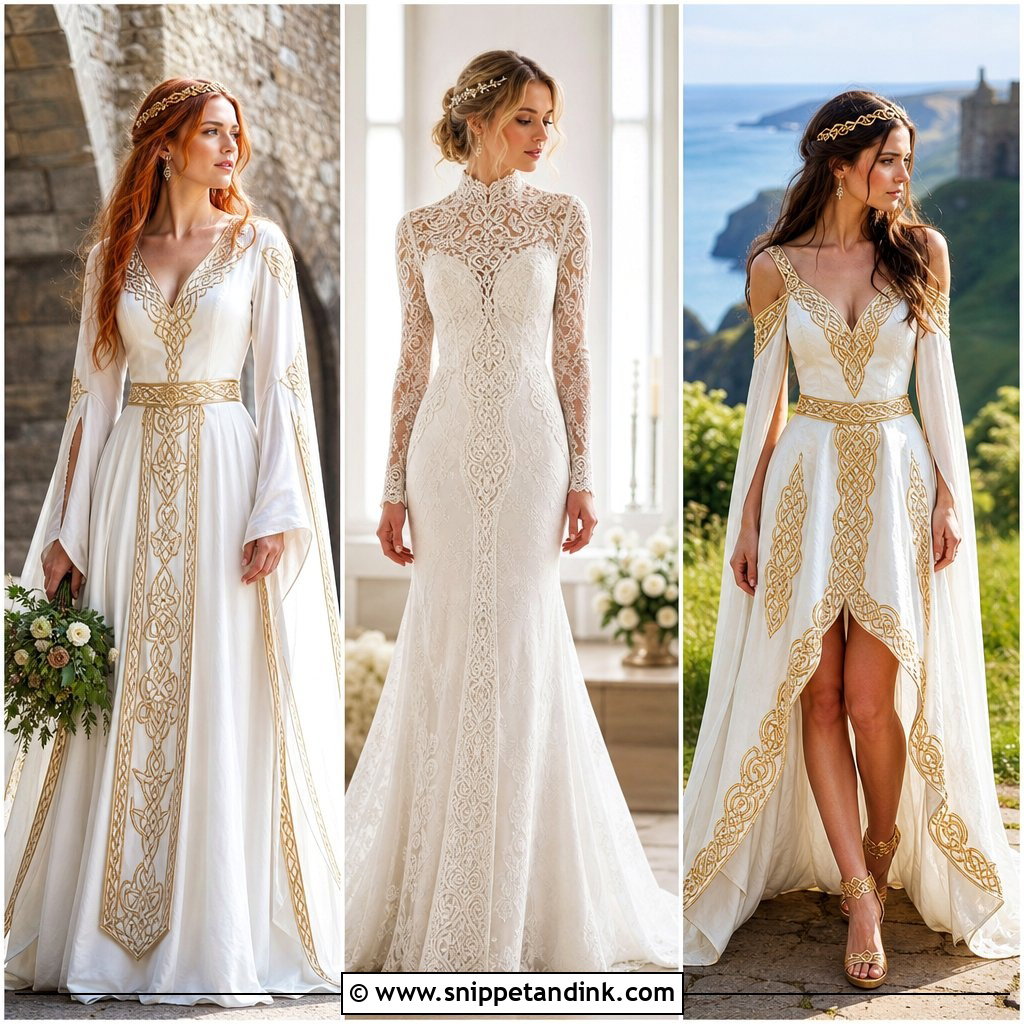
True luxury in a Chechen gown is the workmanship, not the amount of decoration. Ivory silk or matte satin is shaped into a high-neck bodice, fitted long sleeves and a sweeping floor-length skirt, and an open-front outer gown carries symmetrical hand embroidery in silver, pearl and soft gold. A detailed chest panel and sculpted metal belt are the two strongest traditional references. Hand embroidery takes months rather than weeks, so this is the design to start first. Keep the veil light so it does not hide the surface, and repeat one motif across the belt, clutch and earrings so the whole outfit belongs together.
The Metal Belt Deserves Its Own Fitting
Brides tend to treat the belt as jewelry, but on a long dress it behaves more like part of the construction. Heavy cast or filigree belts can weigh several hundred grams, and that weight rests on one line around the waist for the whole day.
- Ask for a fabric lining or soft felt on the back of each plate, so the metal does not polish a shiny stripe into satin or crush velvet pile.
- Check the clasp for sharp edges that can snag lace or a veil. A jeweler can smooth them in minutes.
- Have the dressmaker add two small thread loops at the side seams to hold the belt in position, so it does not slide down as you move.
- If the belt is a family piece, have it cleaned and its links checked well before the wedding, not the week of.
After the Wedding: Storing a Gown With Metallic Thread
Embroidered dresses are often kept for a sister or daughter, so storage matters. Have the gown professionally cleaned soon after the wedding, since sugar and perfume stains turn yellow over months even when you cannot see them yet. Store it flat or loosely folded in acid-free tissue inside a breathable cotton bag, never plastic, and keep it somewhere dark and dry. Pad the folds with more tissue so the embroidery does not crack along a crease. Store the metal belt separately in its own cloth pouch; left in contact with the fabric, it can mark it over time.
One Focal Point, Then Everything Else Supports It
The long sleeves, high neck, open-front layers, chest panel, head covering and metal belt are what make the outfit Chechen; capes, detachable trains, crepe and tonal beadwork are how a bride makes it her own. If you prefer plain white satin, embroidered ivory brocade or a soft color, the rule I hold to is the same: one focal point, and shoes, jewelry and veil that support it. Get the fit right through the shoulders and waist, and the dress will carry you through a long day of greeting family with your arms covered and your head held comfortably high.
You'll Like These Ideas:


Leave a Reply