
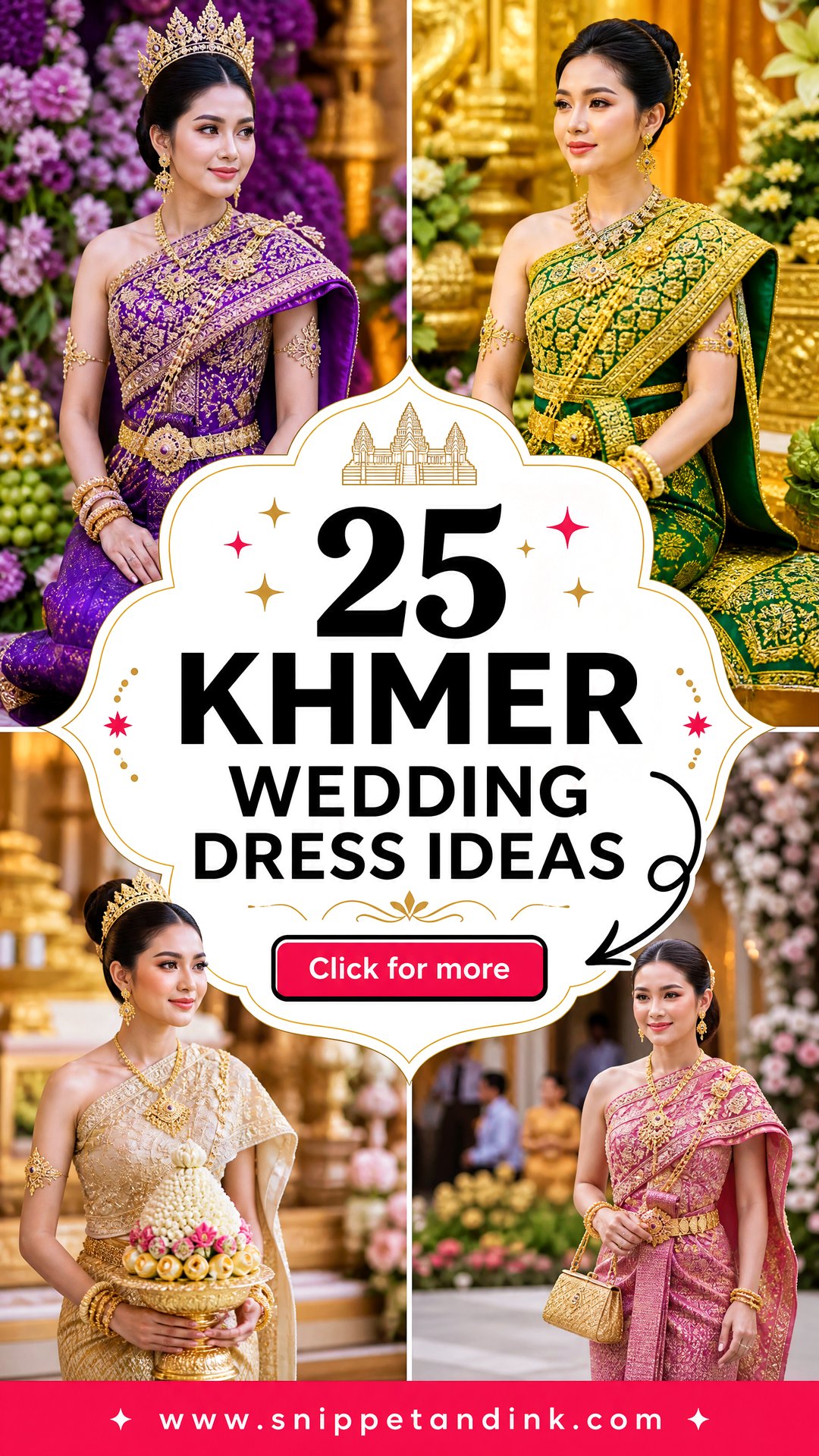
A Khmer wedding rarely means one dress. Across the ceremonies, a bride may change several times, moving through gold silk, red, green, blue and pink before a modern reception look, so I plan the wardrobe as a sequence rather than a single outfit. The core pieces stay consistent: a fitted top, a sampot or kompot skirt, the sbai draped over one shoulder, and gold jewellery and hair ornaments. For anyone gathering Khmer wedding dress ideas, the looks below run from the most ceremonial gold through to guest, bridesmaid and civil-ceremony outfits, with notes on fit, fabric and how each one holds up across a long day in the heat.
Planning the Outfit Changes Across a Khmer Wedding
Because a traditional Khmer wedding runs through several ceremonies, I map the outfits against the schedule before anyone chooses a colour. A bride who loves every look in the rental studio can end up with changes squeezed into ten minutes between rituals.
- List the ceremonies in order, with start times, and mark which ones involve kneeling, sitting on the floor or walking in a procession.
- Give the most ceremonial outfit, usually the gold, to the moment the family considers most important.
- Put lighter fabrics and simpler hair on the ceremonies held in the midday heat.
- Allow enough time for each change. A full sampot, sbai and jewellery change, with hair ornaments swapped, is not a quick job.
- Decide which changes keep the same hairstyle and only swap ornaments. Restyling hair between every outfit is tiring and rarely worth it.
Many families rent the full wardrobe from a wedding studio that also handles hair and makeup. If you go that route, ask to see each outfit on you, not just on a hanger, and confirm who will be dressing you between ceremonies. If you’re buying or having pieces made, allow plenty of time for tailoring; hand-woven silk and embroidered tops can’t be rushed.
1. Gold Khmer Wedding Dress
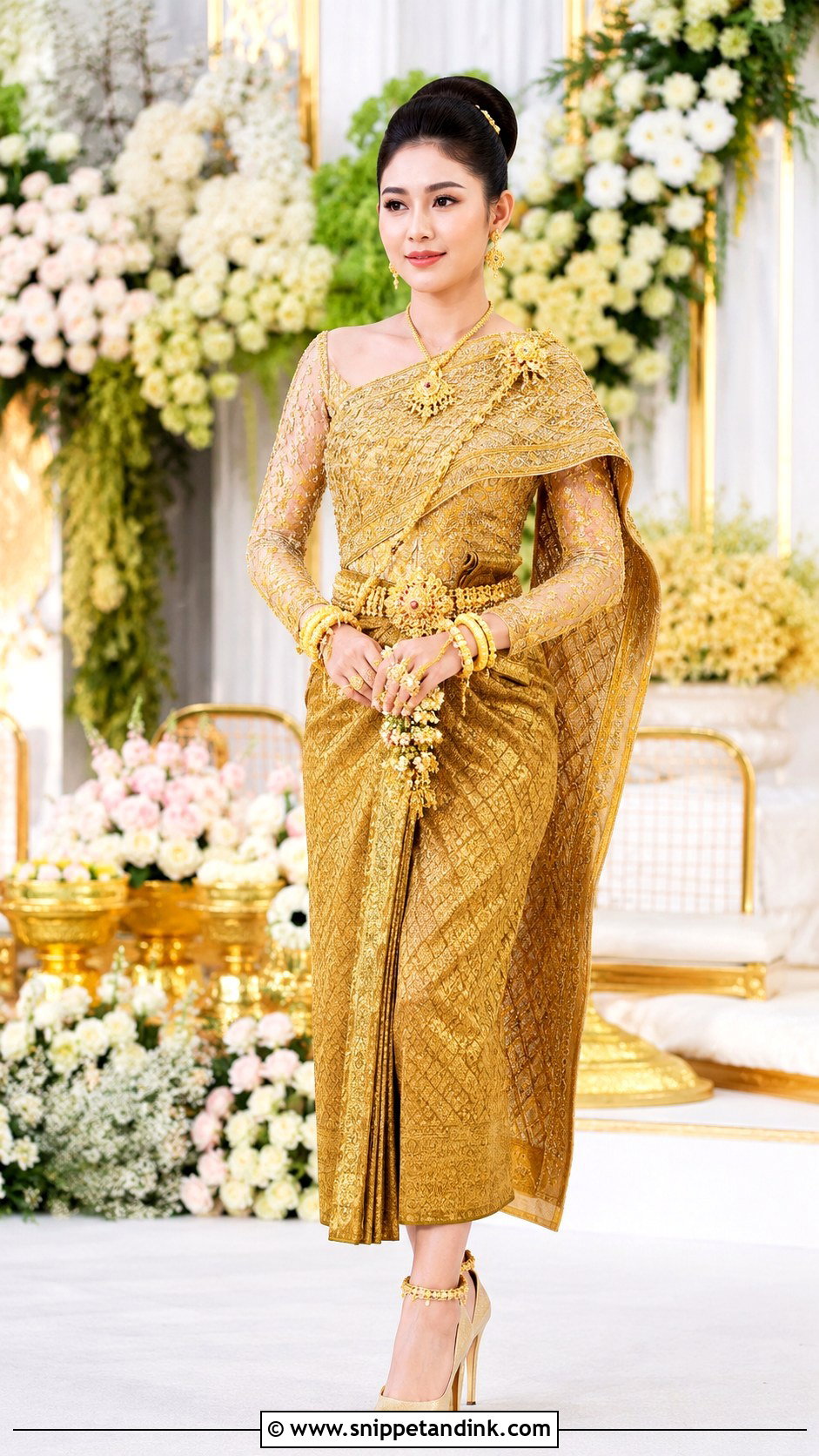
Gold is the outfit most families picture first for a traditional Cambodian bride: a structured silk top, a richly woven sampot and a matching sbai over one shoulder. Brocade with small floral or temple patterns reads refined; large motifs can swamp a petite frame. Gold silk reflects a lot of light, so I keep the makeup warm and slightly matte, or the face disappears in flash photos. Layered necklaces, statement earrings and bangles complete it, and a groom in matching gold balances the couple portraits.
2. Red Khmer Wedding Dress
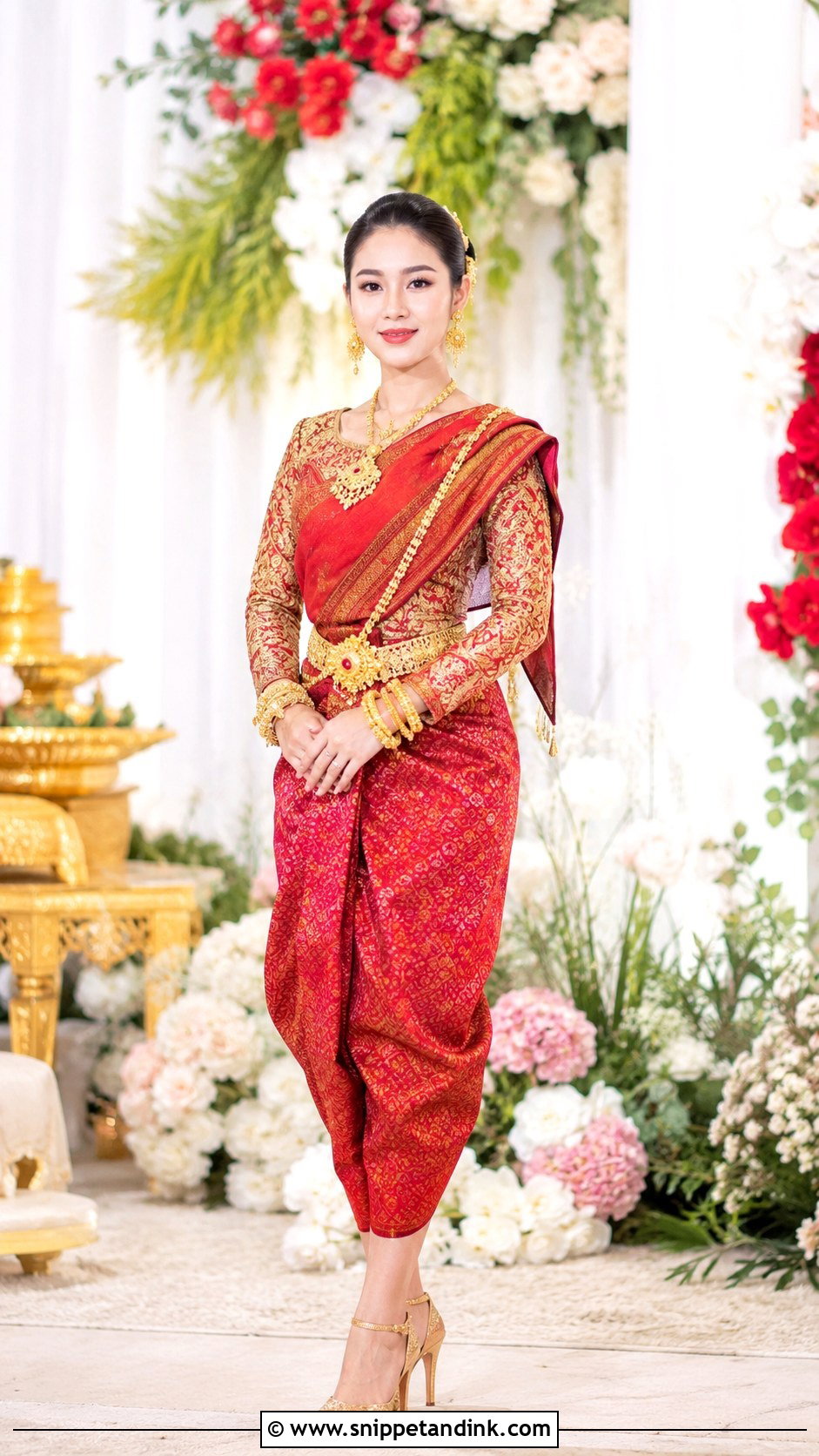
Red silk carries celebration, and it ranges from deep ruby to bright crimson. Gold embroidery or metallic trim gives it ceremony. A fitted red top with a traditional sampot and a gold-edged sbai stands out against floral backdrops. I’d match the red of the top and the skirt under daylight before the day; reds from different dye lots can sit slightly apart and the gap shows in photos. Blush makeup and fine hairpieces soften it for a bride who wants less drama.
3. Green Khmer Wedding Dress
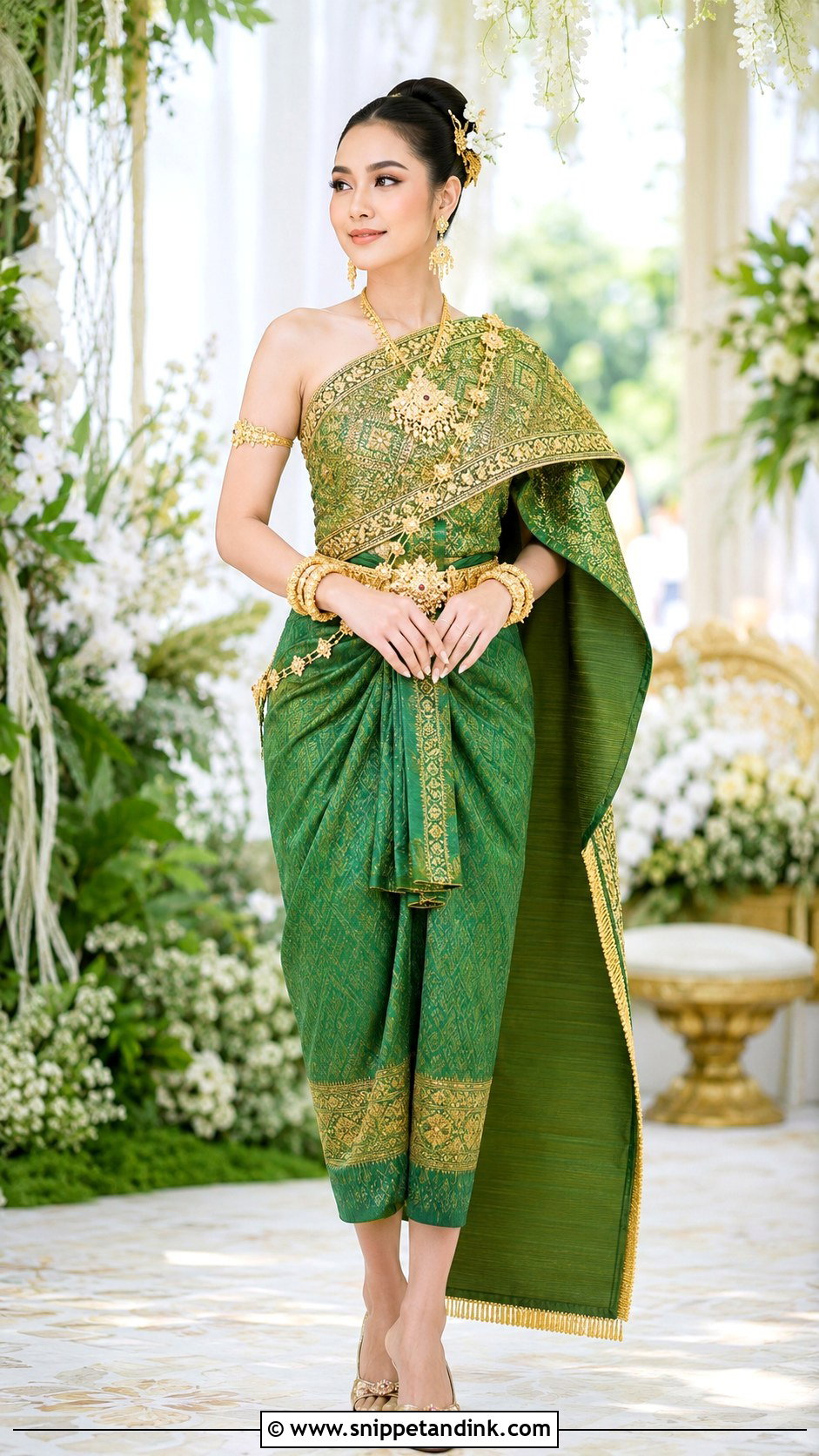
Emerald, jade and forest green all take gold thread well, and green looks especially fresh at a daytime ceremony. A fitted silk blouse with a wrapped sampot gives a clean outline, while the sbai adds movement. Pearls soften it if gold feels too heavy. Green silk can look darker indoors than in the fitting room, so I check it under the lighting you’ll actually have. A sleek bun with floral pins finishes it.
4. Blue Khmer Wedding Dress
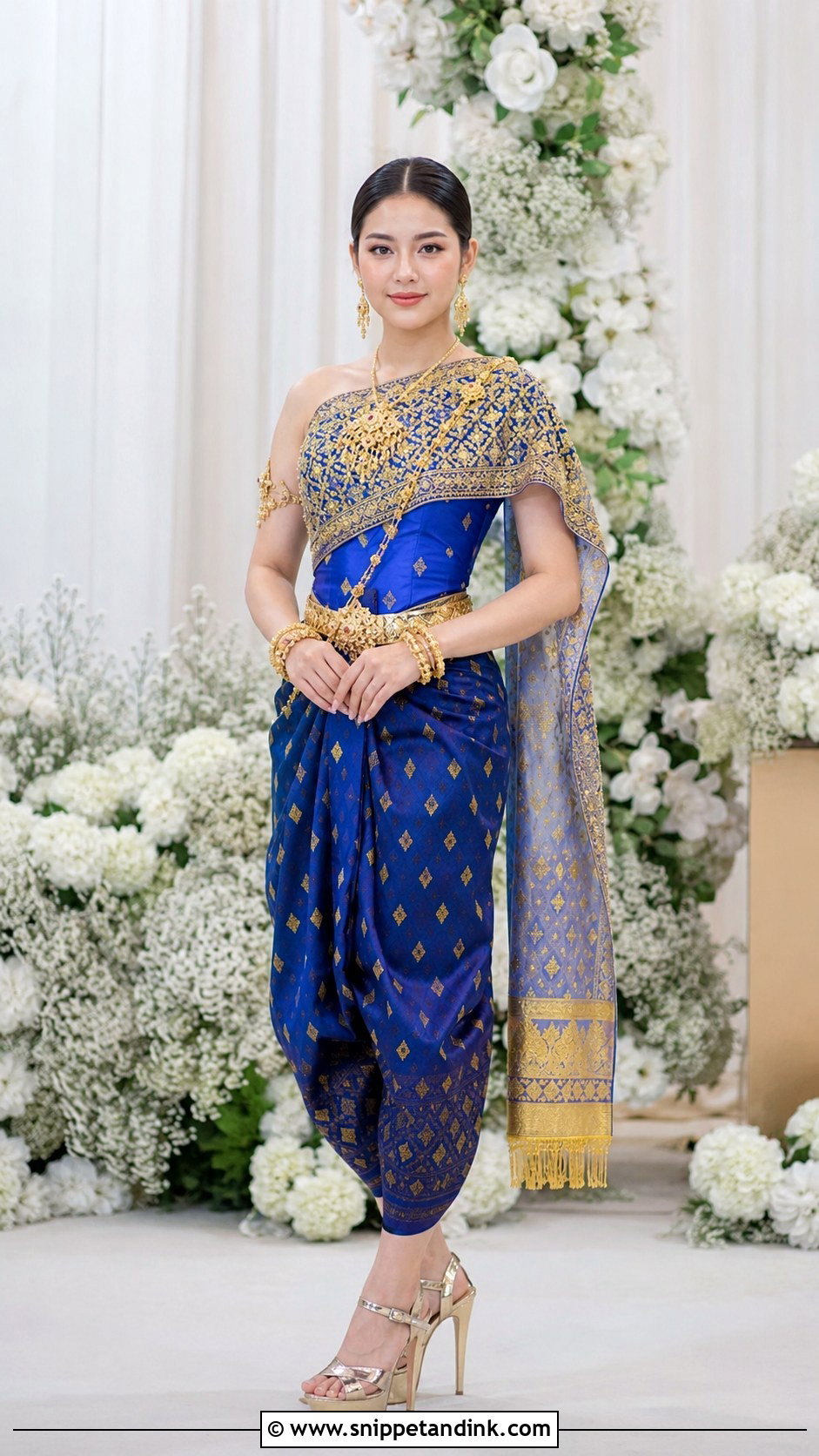
A blue Khmer wedding dress reads calm and composed. Royal blue and sapphire with gold patterns feel formal, while sky blue is airier. Blue is cool-toned, so I balance it with warm gold jewellery that frames the neckline and slightly warmer makeup. For a modern touch, simplify the blouse but keep the traditional drape and skirt, which is where the cultural identity sits.
5. Pink Khmer Wedding Dress
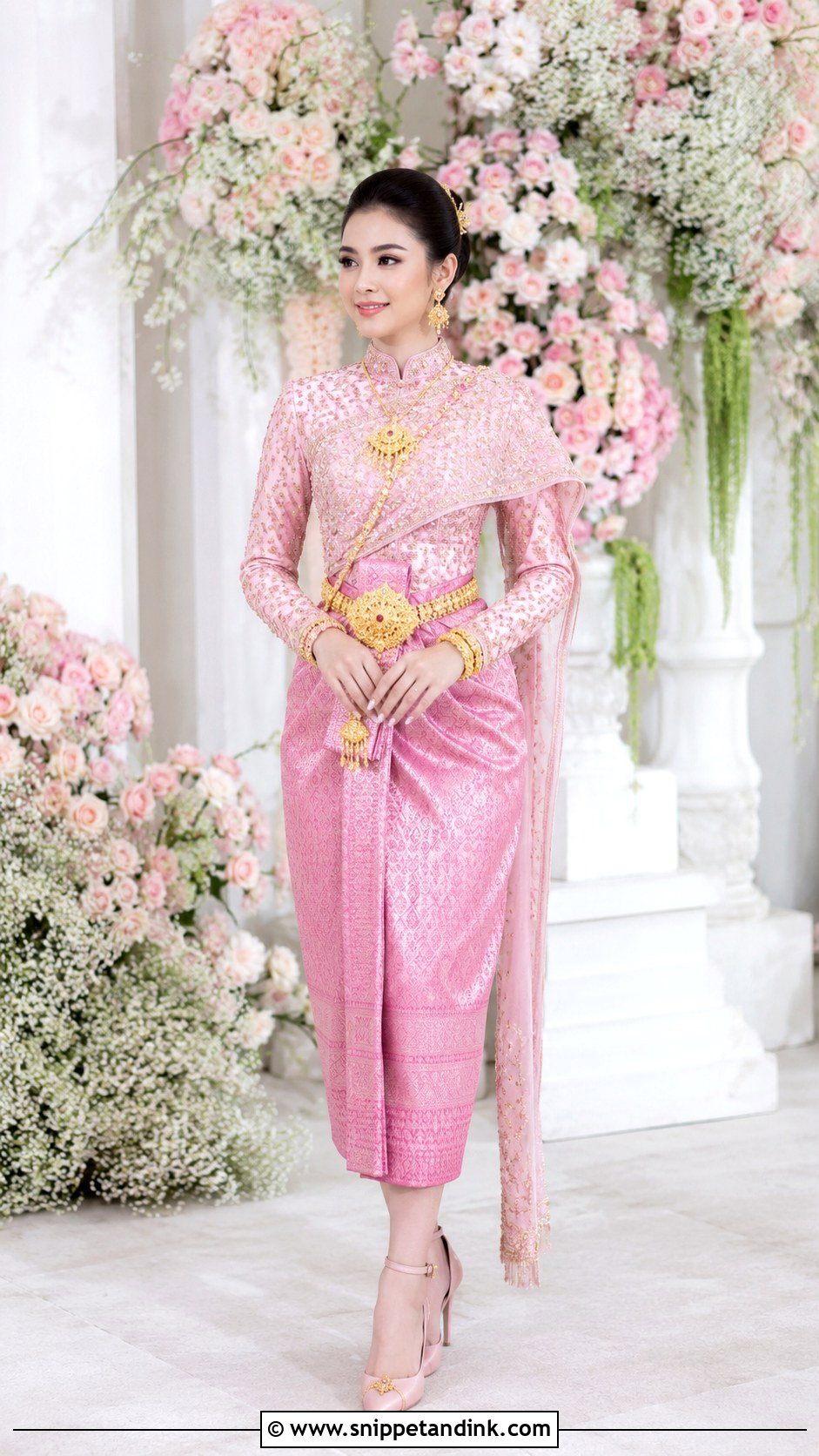
Blush, rose and lotus pink feel romantic without losing the traditional structure. A silk sampot with light gold embroidery, a fitted pink top and a sheer or structured sbai make a full outfit. Gold jewellery keeps it classic; pearls make it softer. I like pink for family blessings and portraits, because it flatters a wide range of skin tones. Rosy cheeks, a glossy lip and a smooth updo complete it.
6. Purple Khmer Wedding Dress
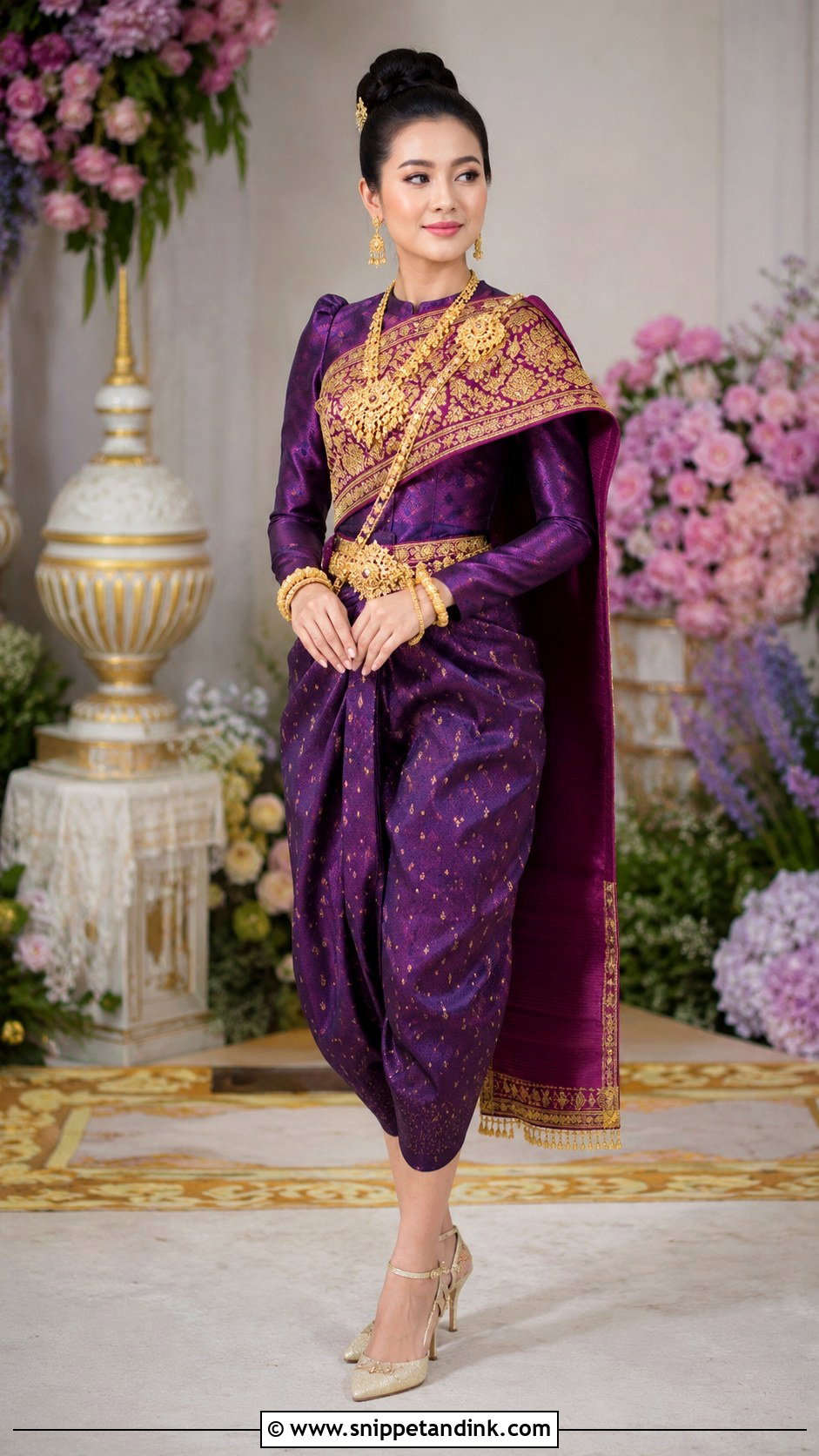
Purple sits between formal and unexpected. Plum is dramatic, royal purple dignified and lavender gentle. Intricate brocade looks especially deep on purple, as the shadows in the weave pick up the colour. A purple sampot with a fitted blouse, gold-trimmed sbai and layered gold jewellery makes the full outfit. A sleek hairstyle, defined eyes and a soft berry lip finish it without overpowering the silk.
7. White Khmer Wedding Dress
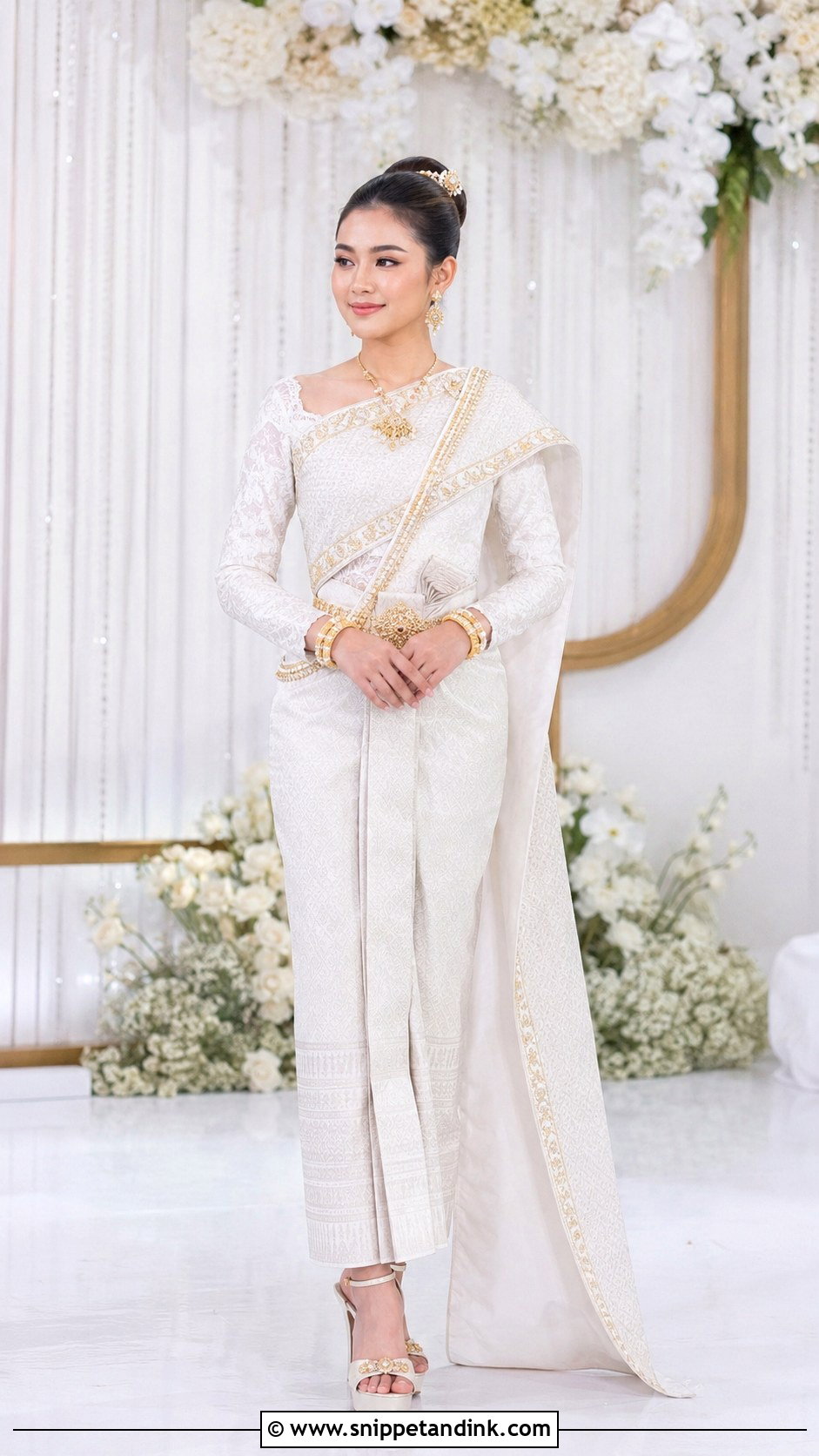
A white sampot with a fitted embroidered top and a white or gold-edged sbai gives a clean bridal look while keeping the traditional silhouette. This is often the choice for Cambodian-American brides who want white in the day without switching to a Western gown. Plain white silk can look flat, so I look for woven patterns, beadwork or metallic thread. Gold adds warmth; pearls add softness. A neat updo completes it.
8. Ivory Khmer Wedding Dress
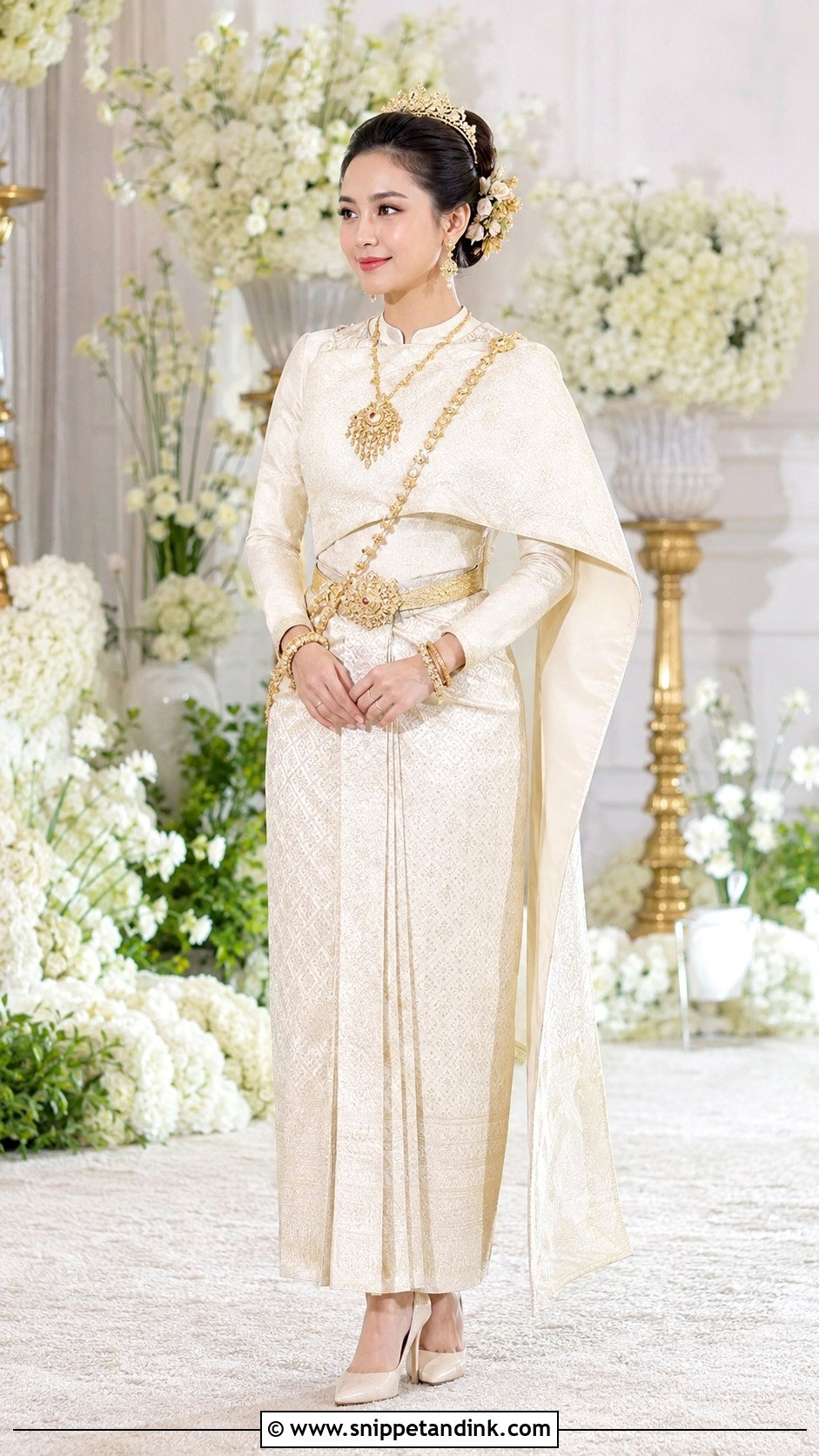
Ivory is softer than white and more forgiving under warm lighting. Gold embroidery on ivory silk, a fitted blouse, a wrapped sampot and matching sbai make a quiet but ceremonial outfit. Antique gold jewellery and cream flowers suit it. I’d put the emphasis on texture, a brocade sampot, rather than heavy embellishment. Satin heels and delicate hair ornaments finish it.
9. Gold And Red Khmer Wedding Dress
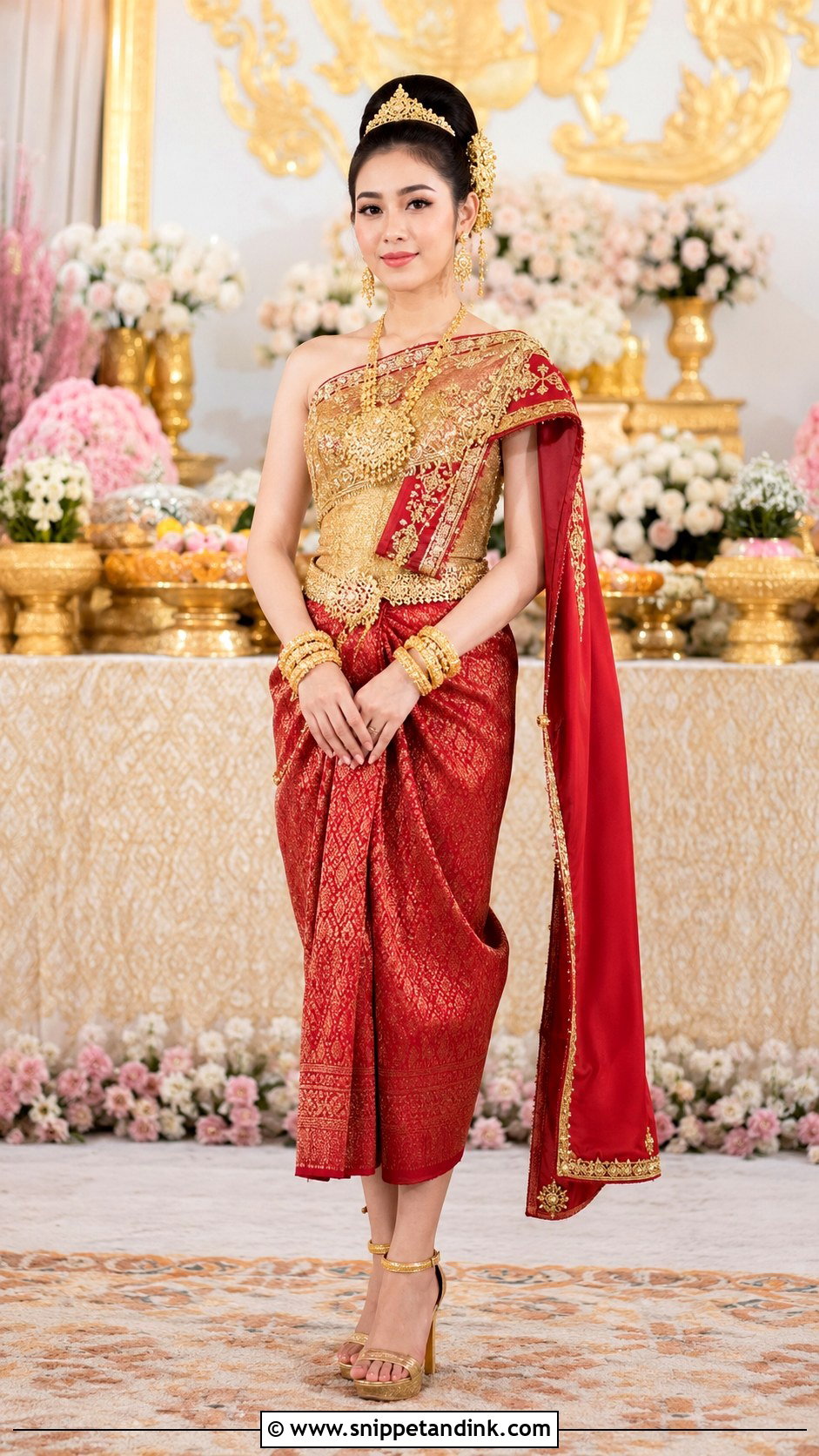
Gold and red is the strongest traditional pairing: gold for ceremony, red for celebration. A red sampot with a gold blouse, or a gold skirt with a red sbai, both work. With this much colour, I keep the hairstyle structured so the face has a clean frame. Red or neutral heels, gold jewellery and polished makeup complete the outfit, and a groom in gold or red silk balances it.
10. Gold And Green Khmer Wedding Dress
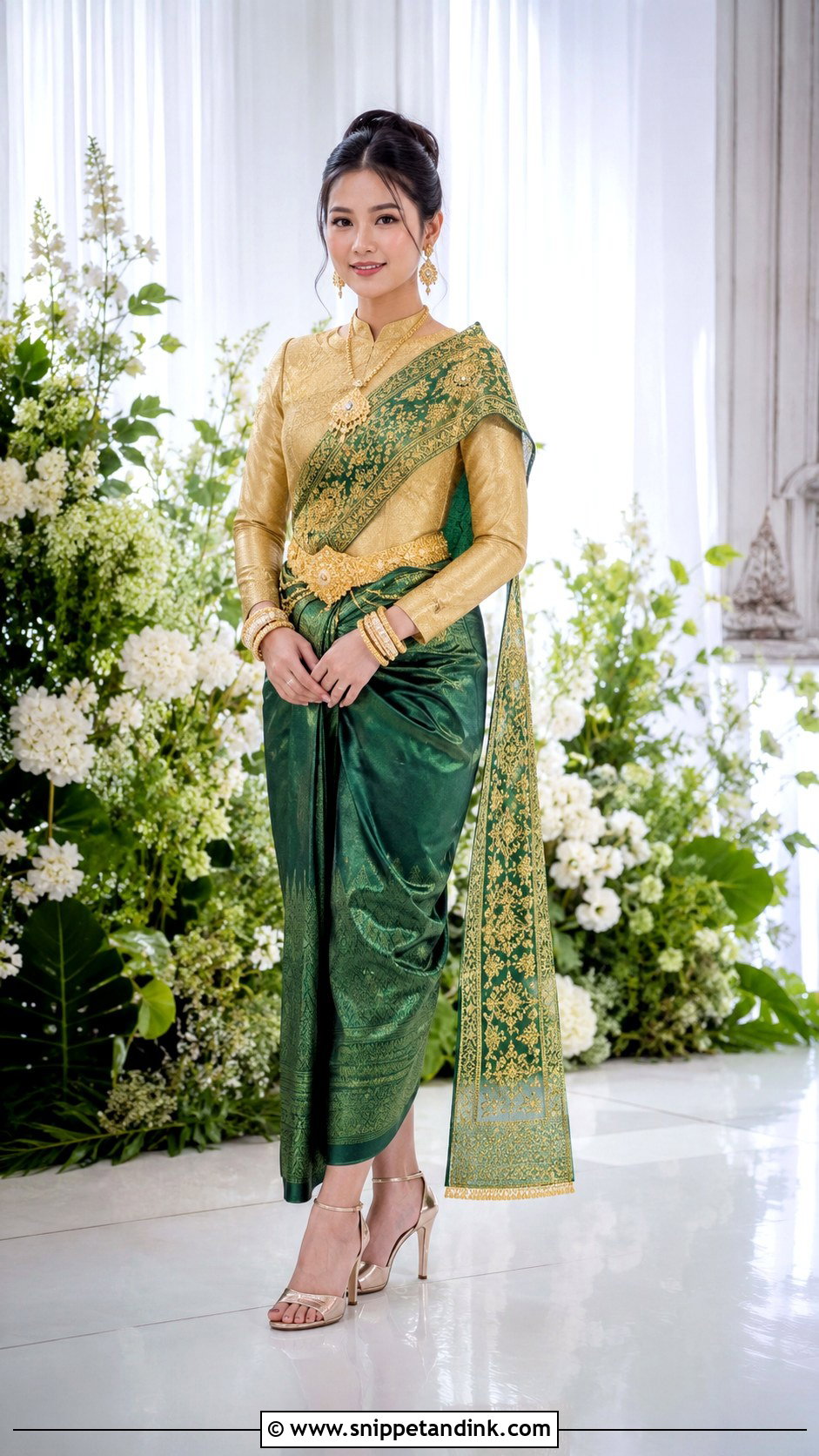
Green and gold feels rich but grounded. A deep green sampot with a gold top gives strong contrast; a gold skirt with a green sbai is gentler. Gold bangles, statement earrings and a necklace set complete it. Warm, natural makeup with bronze eyes and a soft lip suits the green. This pairing photographs well in daylight and at family portraits.
11. Gold And Blue Khmer Wedding Dress
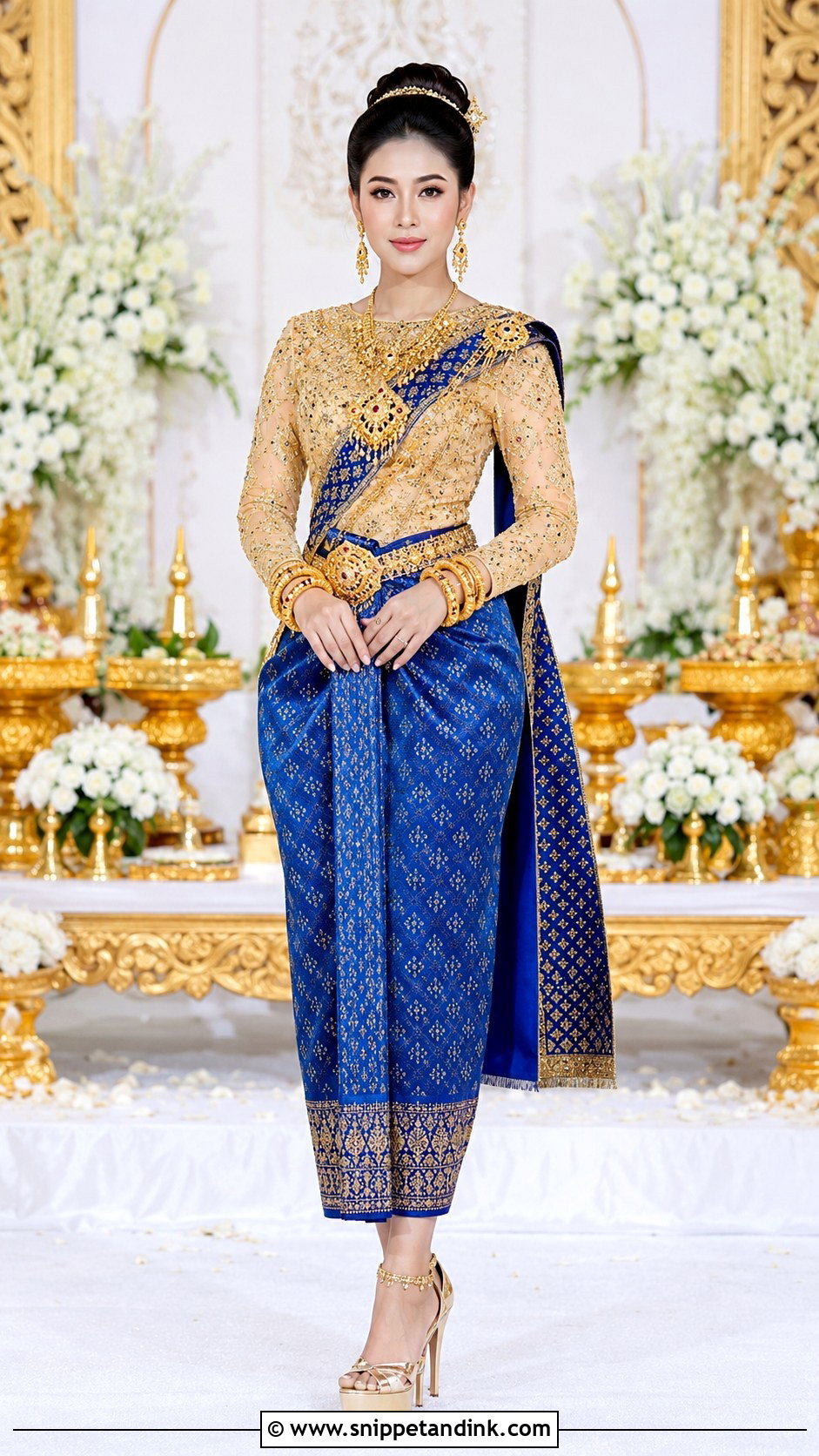
Sapphire with gold embroidery looks formal and classic; a pale blue sbai over a gold sampot is softer. Both work indoors and outside. I keep detailed jewellery at the neckline and wrists, where the blouse leaves skin showing. A sleek bun or sculpted waves keep it ceremonial. Coordinating the groom in matching silk makes the couple photos feel complete.
12. Gold And Pink Khmer Wedding Dress
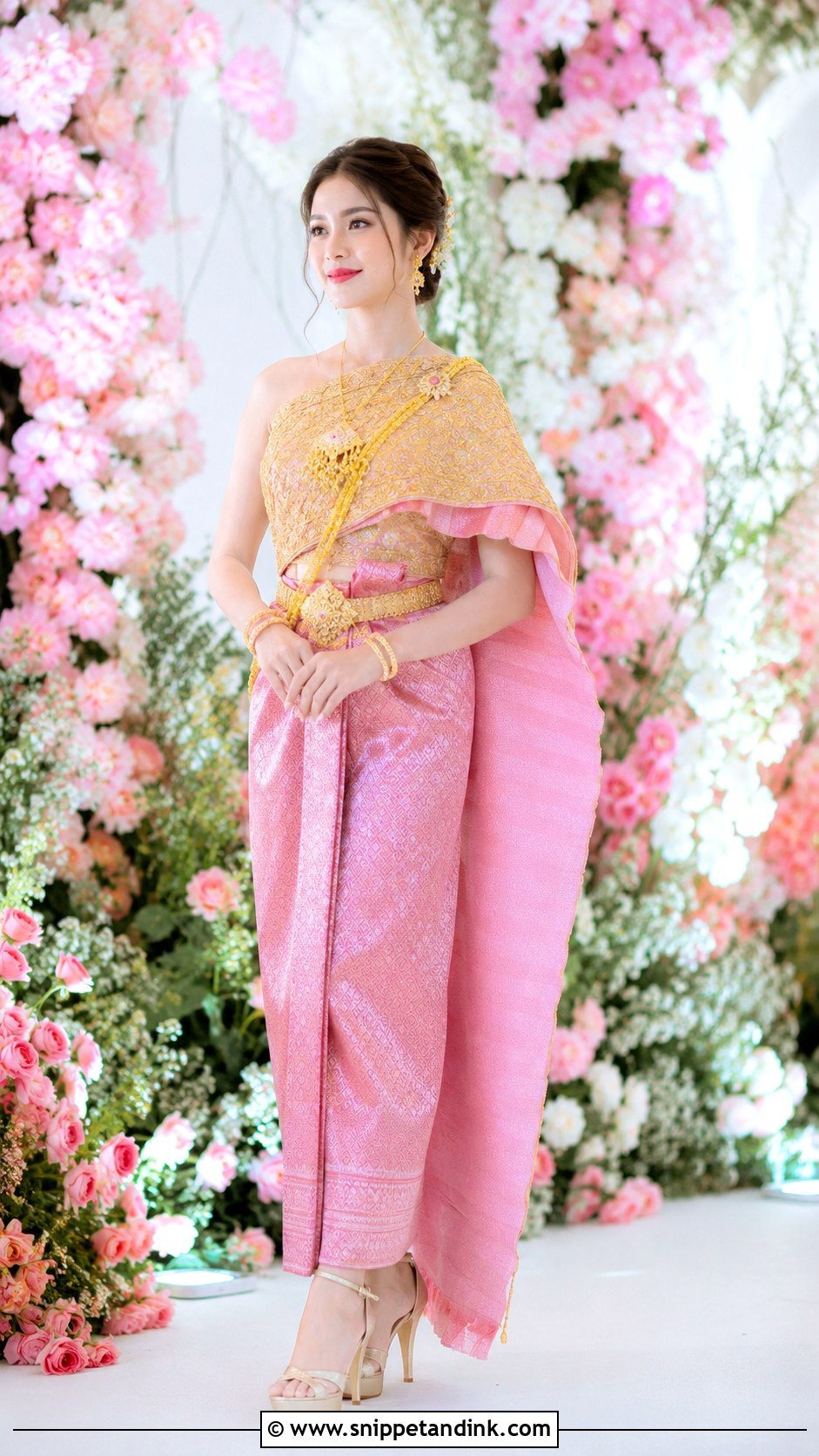
Pink softens gold, and gold gives pink formality. A lotus-pink sampot with a gold blouse and sbai, or a gold skirt with a pink drape, both work. It suits a family ceremony or portraits. Soft pink makeup and delicate hair accessories keep it cohesive. The same palette, slightly simplified, looks good on bridesmaids if you want them coordinated.
13. Khmer Wedding Dress With Sbai
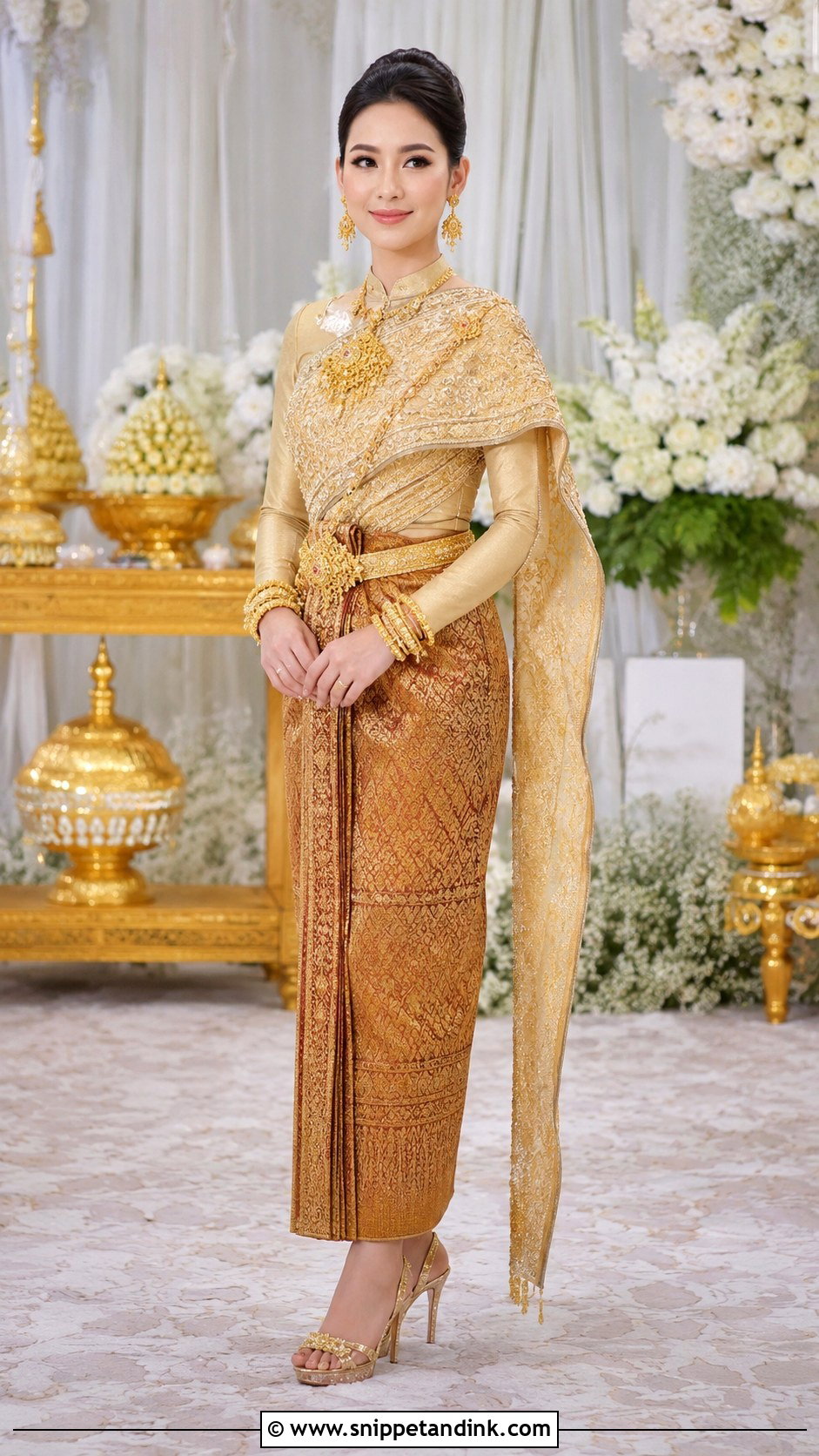
The sbai is draped across the chest and over one shoulder, and it shapes the whole upper body. Matching the skirt gives a smooth single line; a contrast in gold, red, green or blue adds depth. Draping is the step I’d never leave to chance: a sbai that slips pulls the blouse with it, so it needs pinning to the blouse at the shoulder and under the arm. A neat updo shows off the shoulder line, earrings and necklace.
14. Khmer Wedding Dress With Sampot
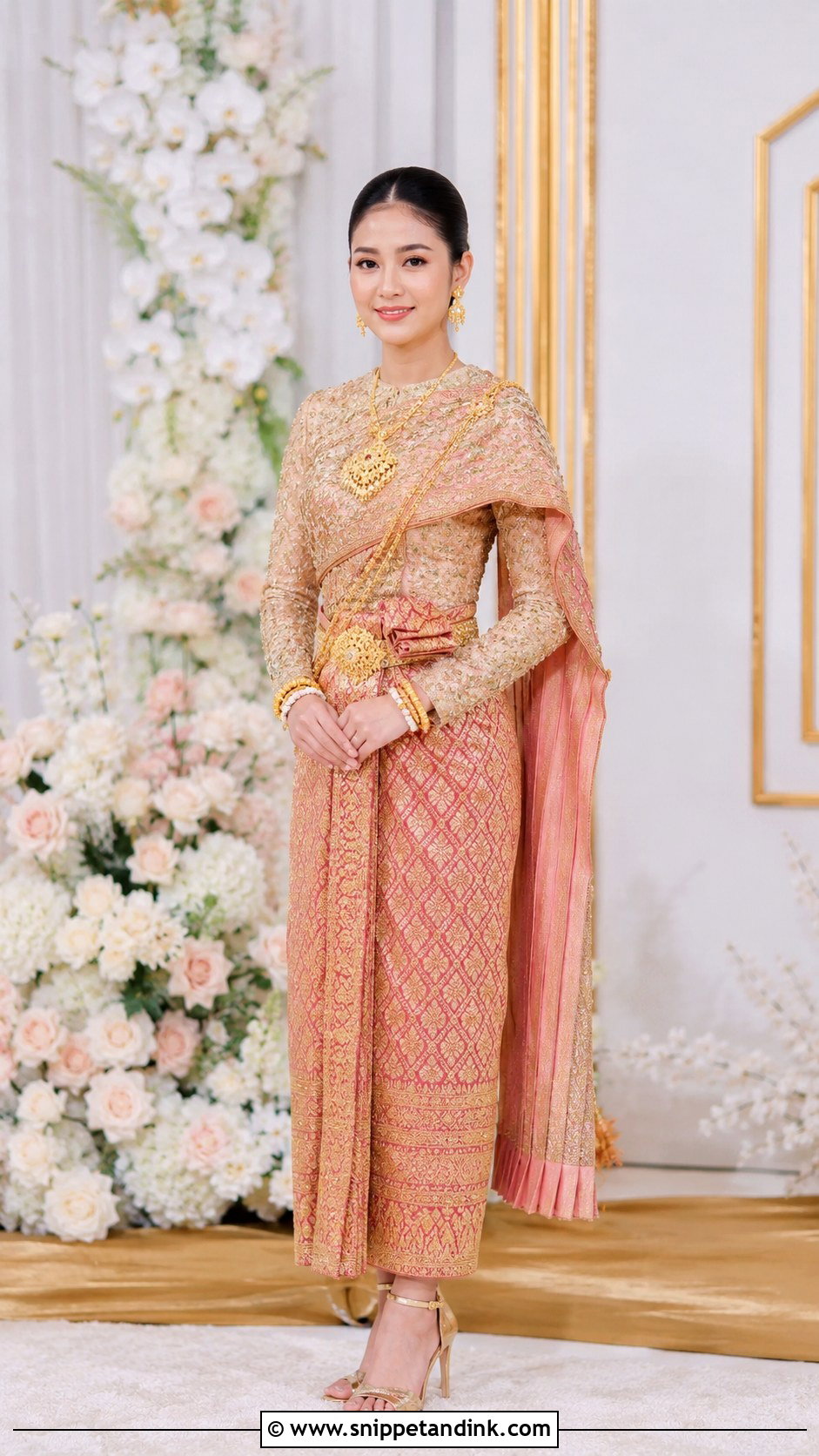
The sampot forms the lower half of the outfit and can be wrapped, pleated or tailored. Silk sampots carry woven patterns, metallic thread or brocade that give the outfit depth. Fit is everything: a well-tailored sampot sits smooth from waist to hem and stays put through kneeling and standing. Bold red or emerald, or ivory and blush, all work. Comfortable heels that let you take small steps help, since a wrapped skirt shortens your stride.



15. Khmer Wedding Dress With Av Pak
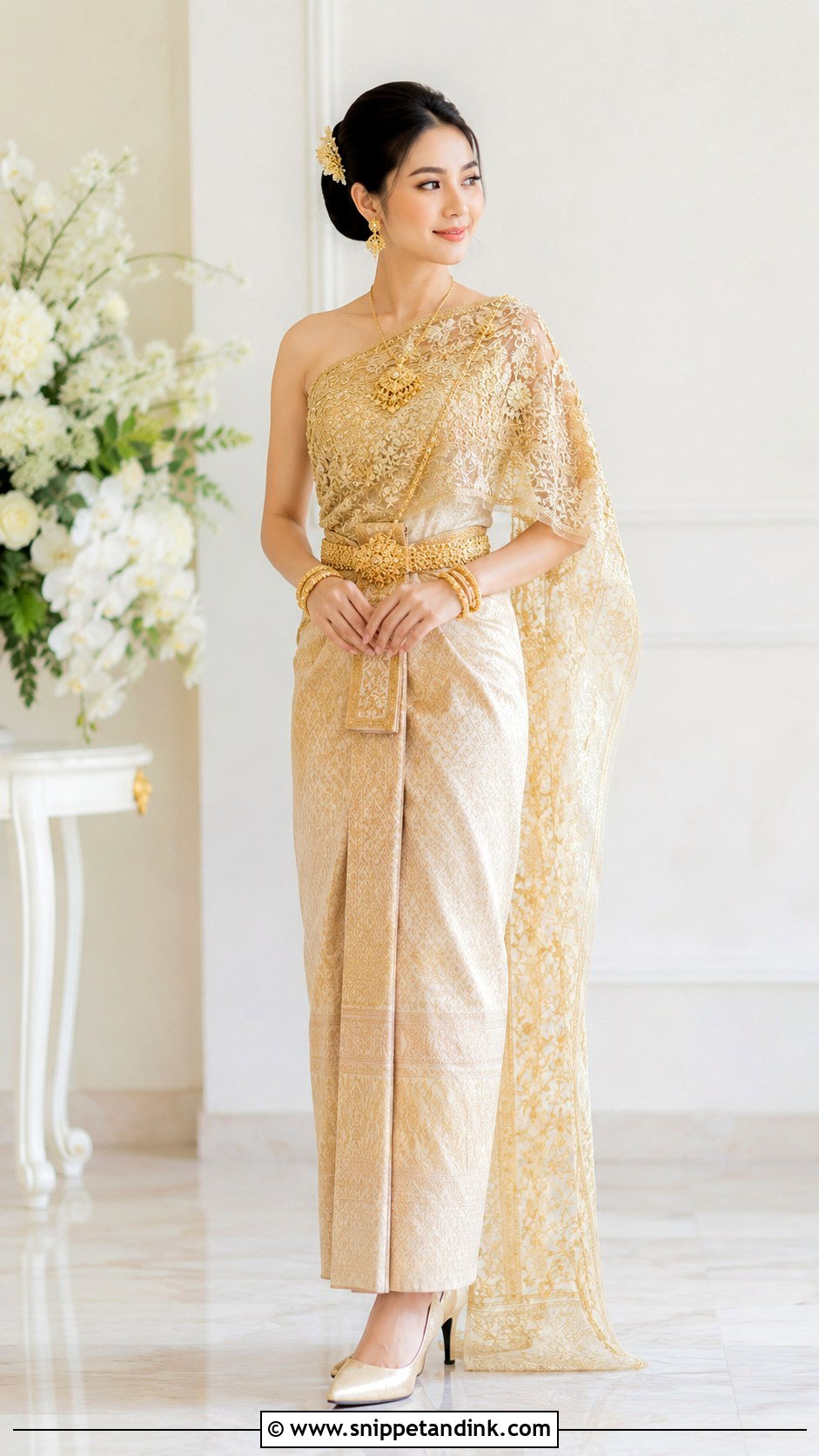
The av pak is a fitted blouse known for its detailed decorative work, often lace or embroidery. It pairs naturally with a silk sampot, in gold, ivory, pink or jewel tones, matching or contrasting. Add a sbai for a more formal ceremonial look. I suggest it to brides who prefer more coverage on the arms and shoulders. A sleek bun and gold jewellery finish it.
16. Khmer Wedding Dress With Gold Jewelry
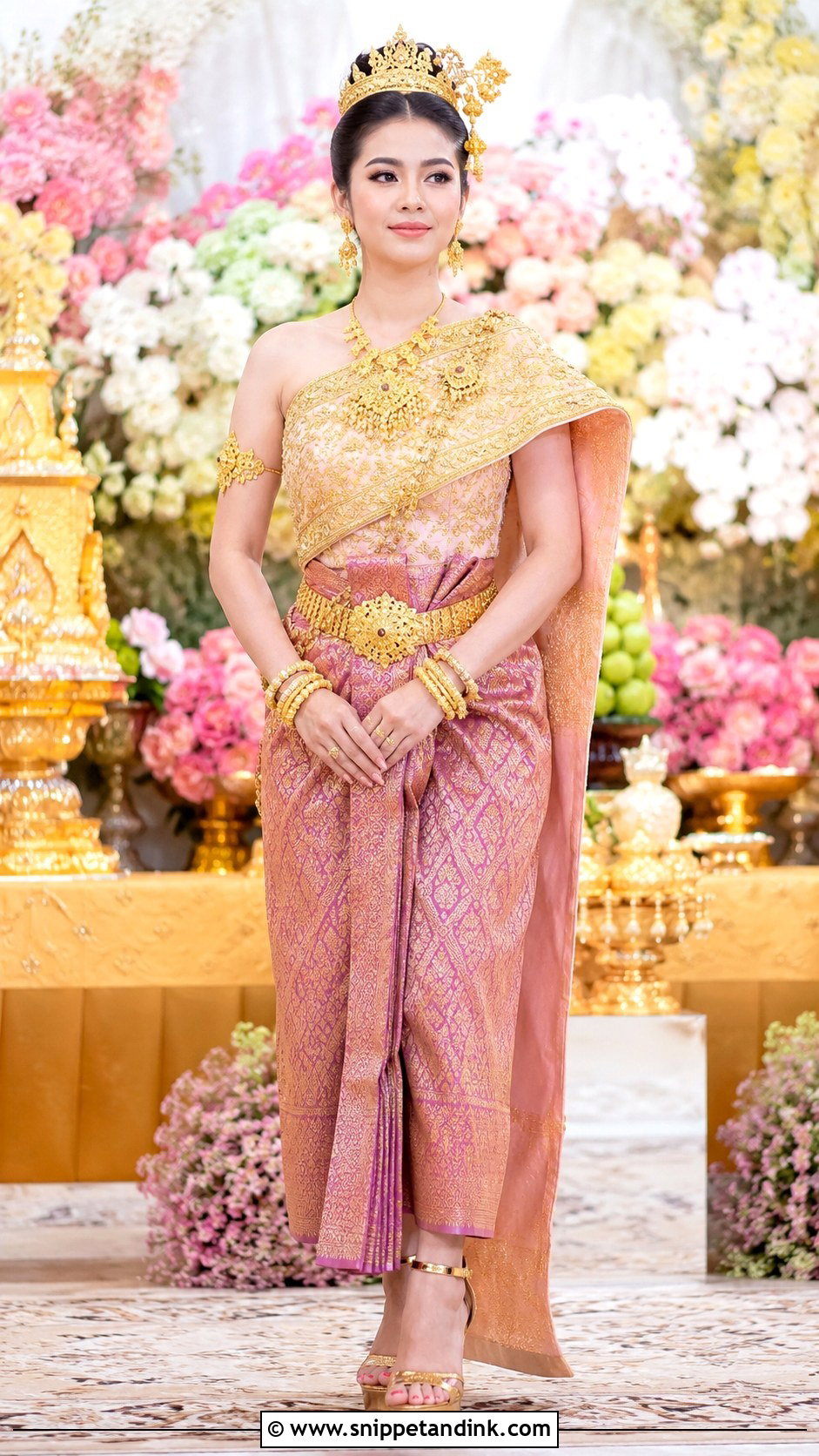
Gold jewellery turns even a simple silk outfit into a ceremonial one: necklaces, earrings, bangles, belts and hairpieces. Balance is the rule I follow. With heavy embroidery, frame the face and neckline and stop there; with plainer silk, layer more. Much bridal jewellery for these ceremonies is costume gold and is lighter than it looks, but a full set still adds weight across the shoulders, so wear it for an hour at home first. A smooth hairstyle keeps the hairpieces sitting neatly.
17. Modern Khmer Wedding Dress
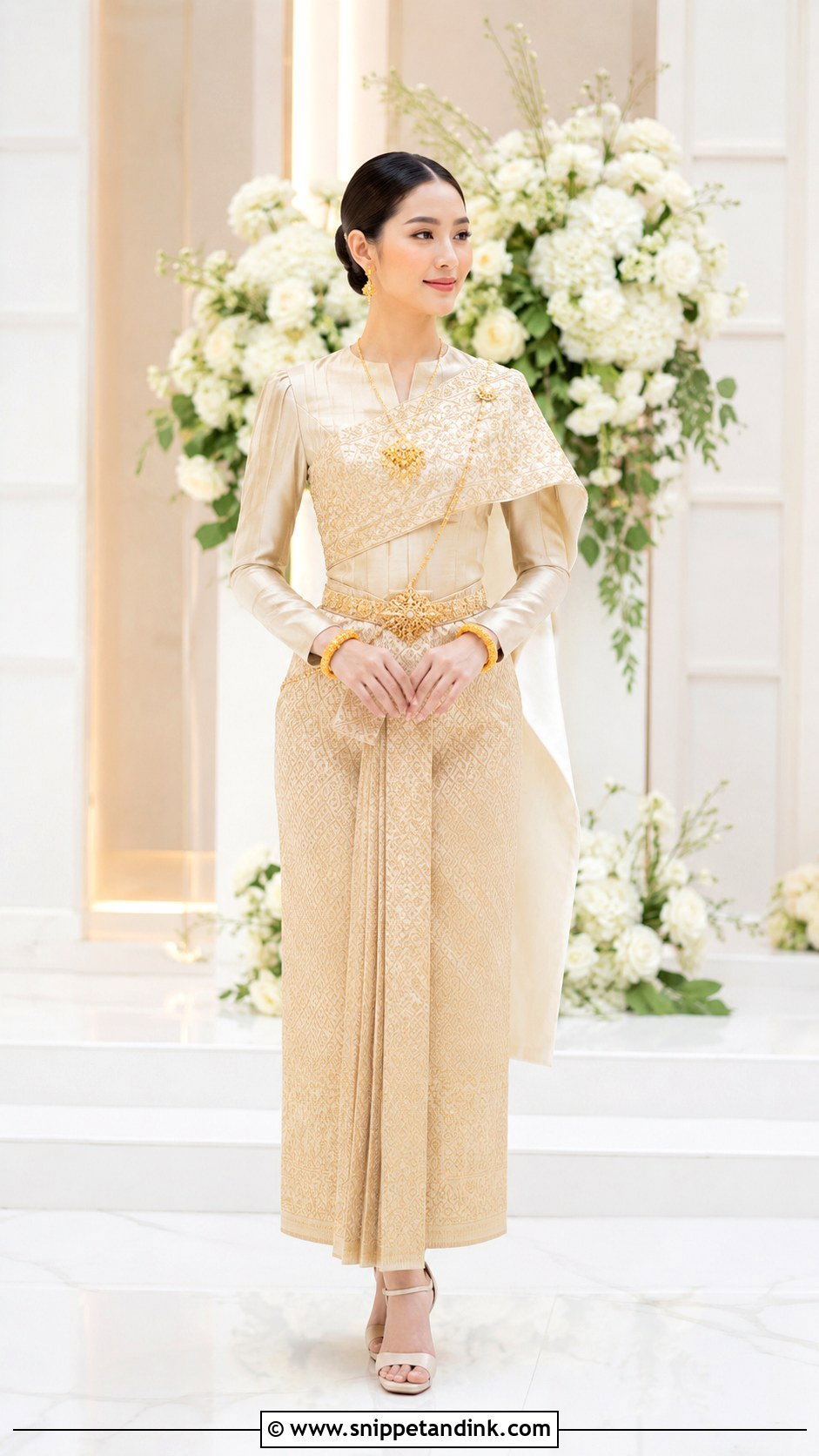
Modern versions keep the traditional pieces and refine them: a streamlined silk blouse, a tailored sampot, a minimal sbai and fewer, better pieces of gold. Ivory, champagne, blush and soft gold are common choices. Here the fit has to be precise, since there’s no heavy embellishment to distract from a pulling seam. It suits hotel receptions and brides who want tradition that’s comfortable to wear.
18. Traditional Khmer Bridal Dress
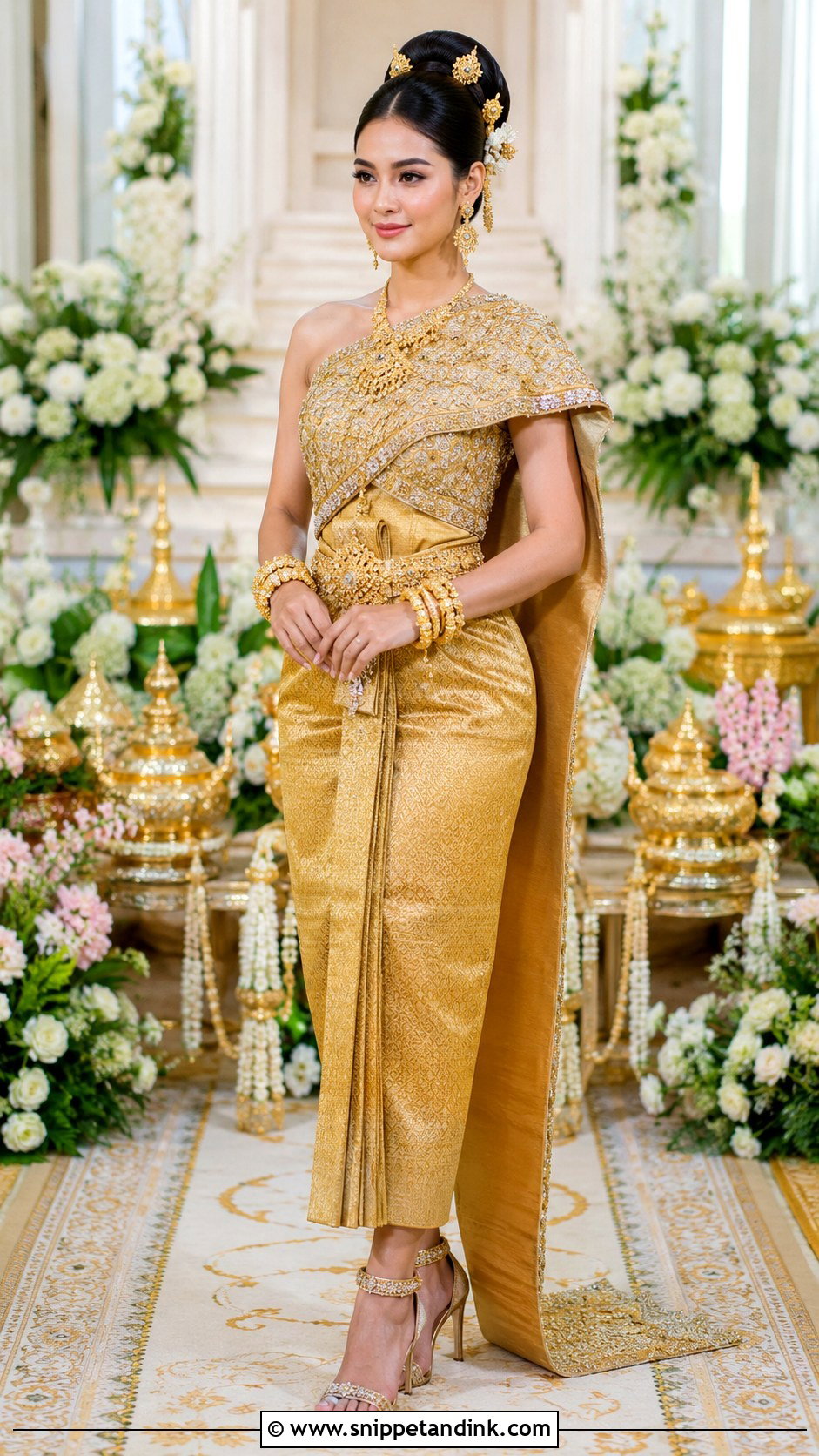
The fully traditional outfit combines richly woven silk, a structured top, a sampot or kompot, a carefully draped sbai and ornate gold jewellery, often in bold gold, red, green, blue or pink. It belongs at the ceremonies where family and symbolism matter most, and it is often coordinated with the groom. Comfort comes from tailoring: a blouse that lets you raise your arms and a skirt secure enough for kneeling. Check every clasp on the jewellery before you start.
19. Khmer Bridal Reception Dress
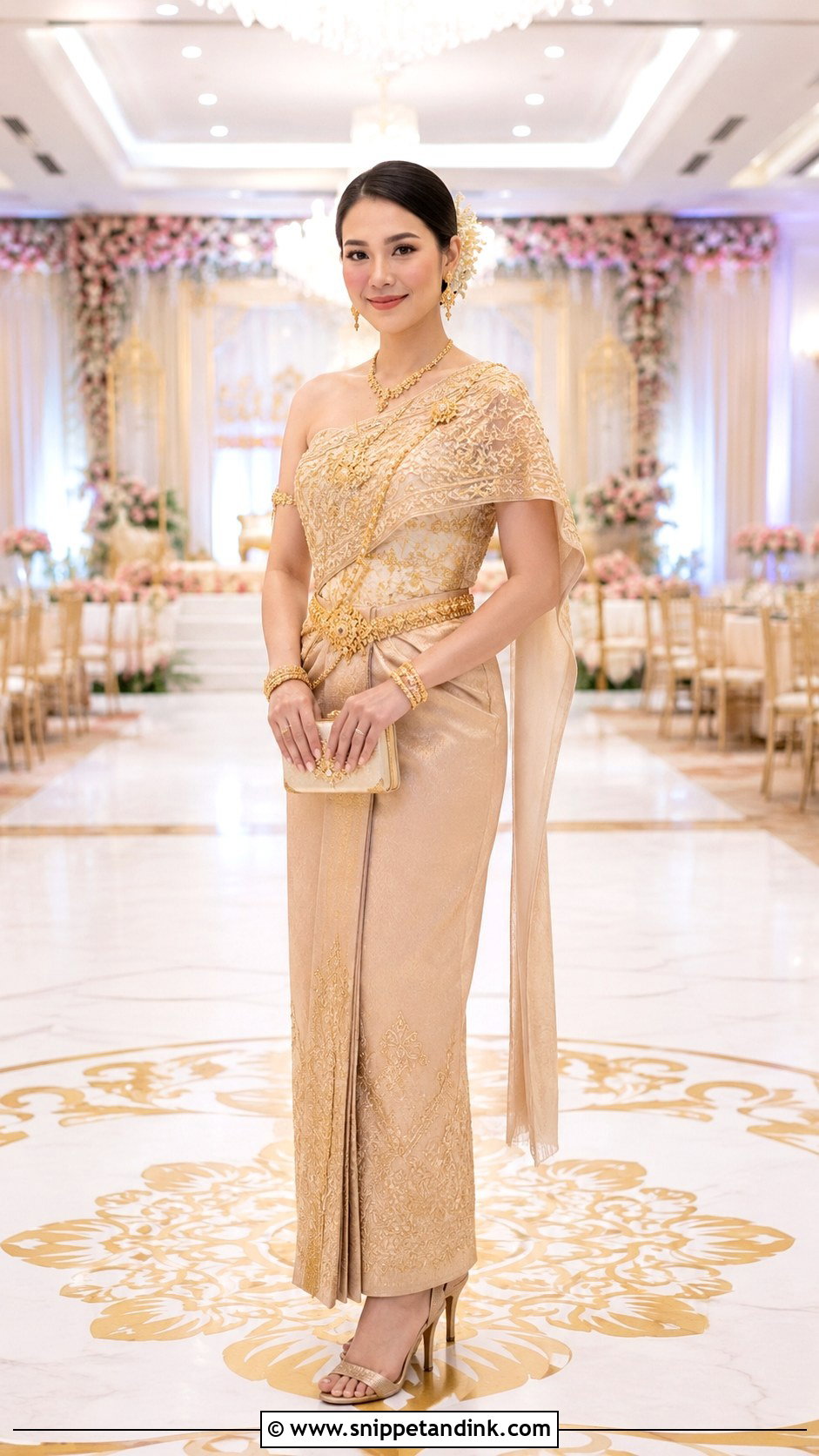
By the reception, most brides want something lighter. A fitted silk dress, a softer sampot outfit or a gown with Khmer details all suit, in champagne, blush, ivory, silver or pale gold. A delicate sbai, embroidered belt or gold set keeps a traditional touch. I’d choose heels you can dance in and a hairstyle that has been pinned for a long evening, not just for photos.


20. Khmer Wedding Guest Dress
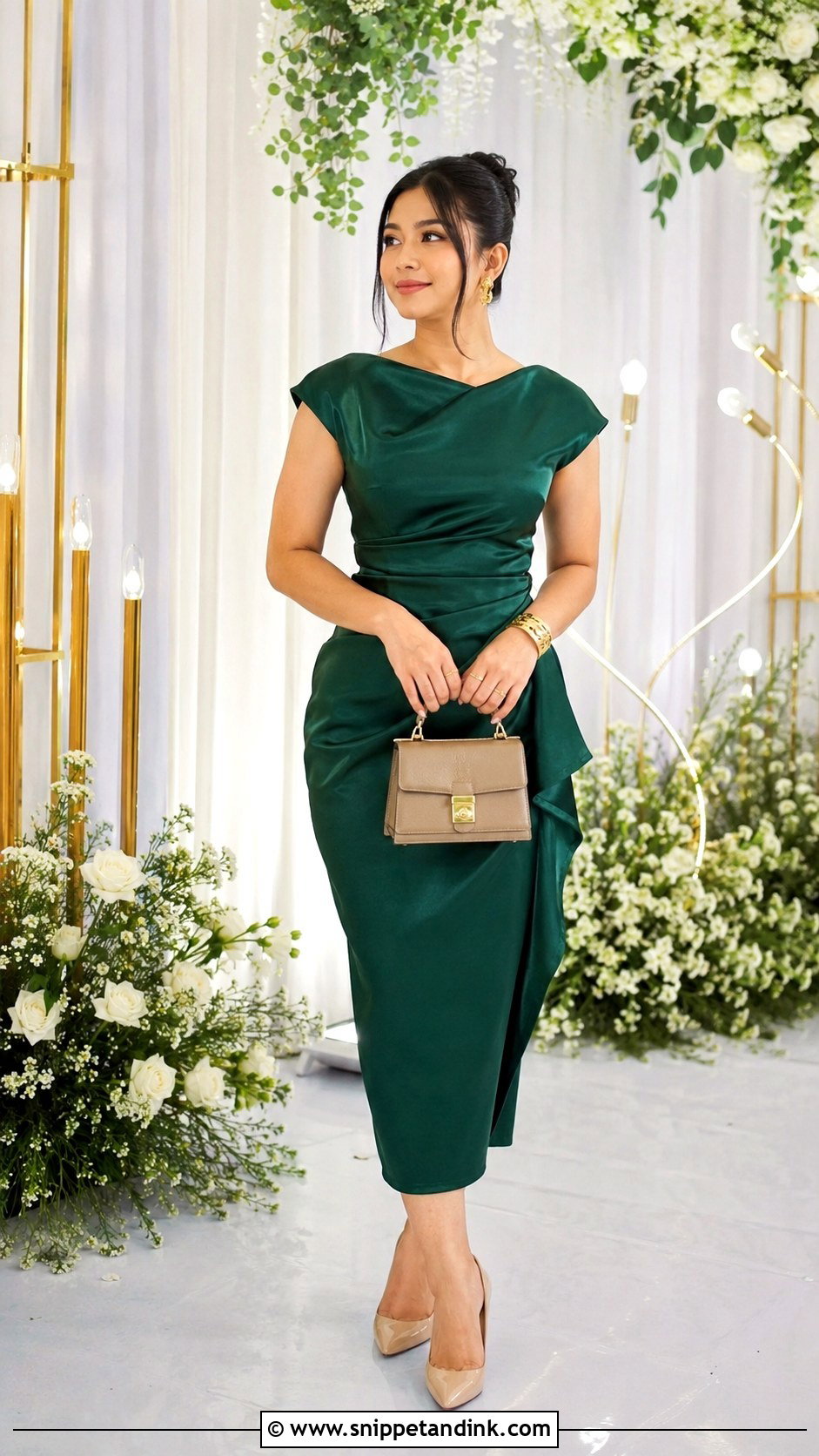
Guests should look dressed up without competing with the bride. A silk dress, tailored midi dress, elegant blouse with a long skirt or a Cambodian-inspired outfit can all work. Emerald, navy, rose, plum and touches of gold suit the occasion. For the traditional ceremonies, I’d pick covered shoulders and a modest neckline, as older relatives notice. Comfortable heels, a small bag and simple jewellery are enough for greetings, dinner and dancing.
21. Khmer Bridesmaid Dress
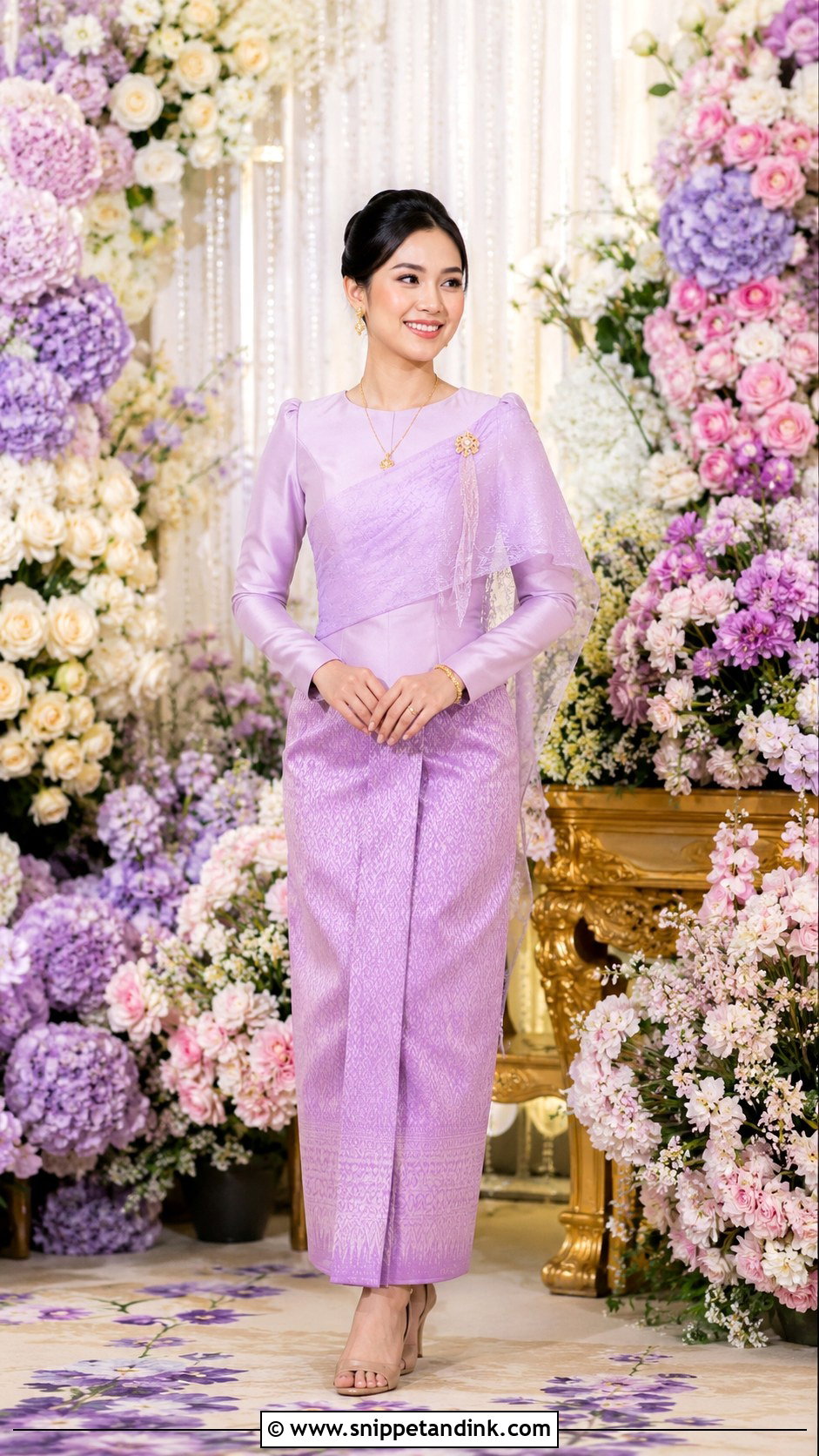
Bridesmaids usually coordinate with the bride’s palette, slightly simpler. Matching silk tops and sampots, or coordinated dresses in pink, green, blue, gold or lavender both work, and a soft sbai brings the group together. Keep their jewellery less ornate than the bride’s. Dressy flats are a sensible choice, since bridesmaids stand, walk and carry items through the ceremonies.
22. Khmer Mother Of The Bride Dress
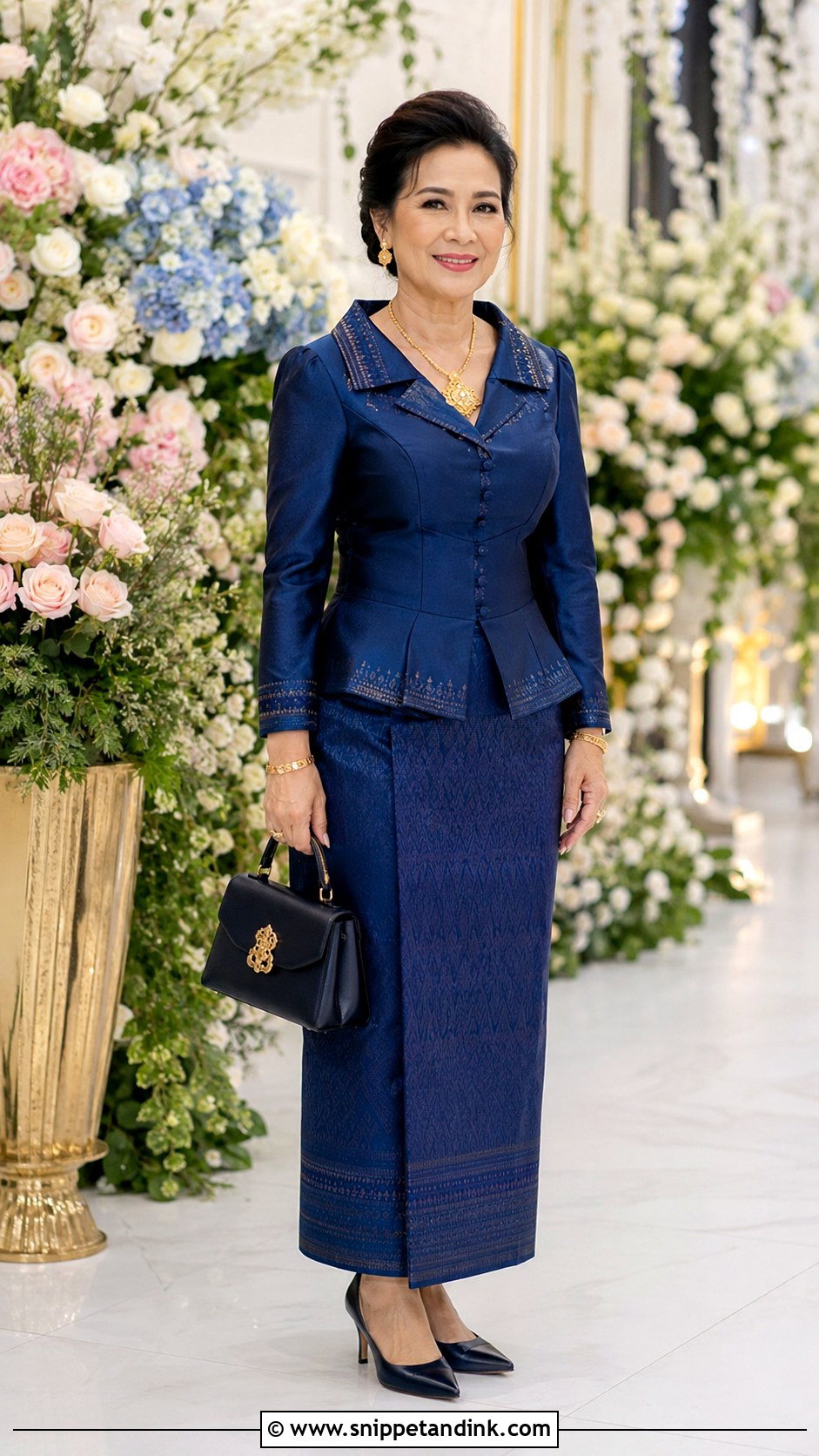
The mother of the bride needs elegance and comfort for a very long day. Silk in navy, plum, emerald, champagne or soft gold suits. A fitted blouse with a sampot gives a traditional look; a tailored dress with Cambodian-inspired embroidery is more modern. Refined gold jewellery, low heels and a structured bag complete it. Coordinate with the wedding colours, avoid matching the bride exactly, and keep the neckline modest.
23. Khmer Wedding Dress For Plus Size Bride
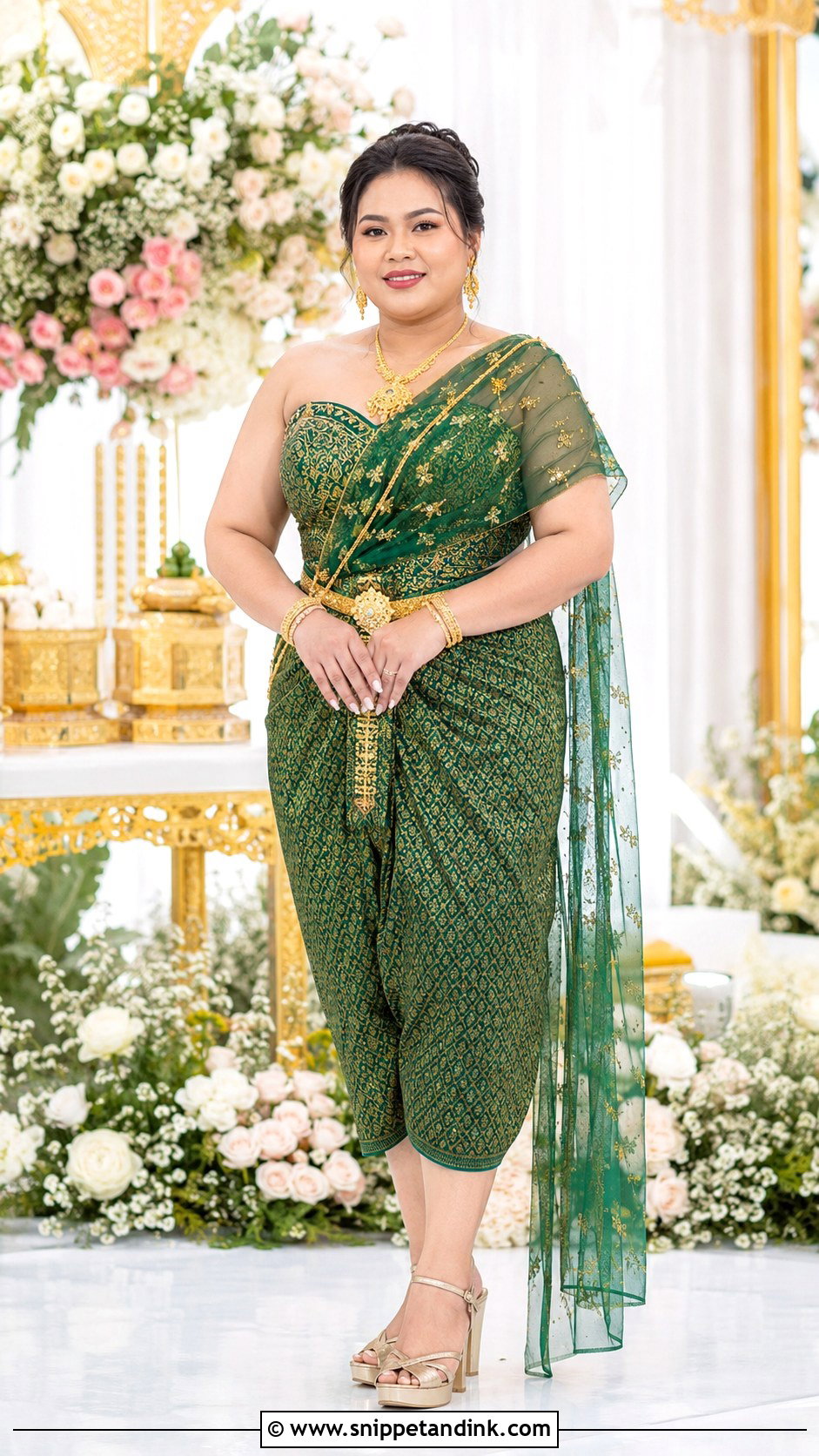
For a plus size bride, I’d start with the blouse: a well-tailored silk top with a supportive lining gives structure that a stretch fabric can’t. A smoothly wrapped sampot follows the body without restricting it. Emerald, sapphire, plum and ruby are rich; gold and ivory feel classic. The sbai can be draped to draw the eye toward the shoulder and neckline. Statement earrings and a necklace that sits comfortably frame the face. Good tailoring is about making you feel secure, not hiding anything.
24. Khmer Wedding Dress For Civil Ceremony
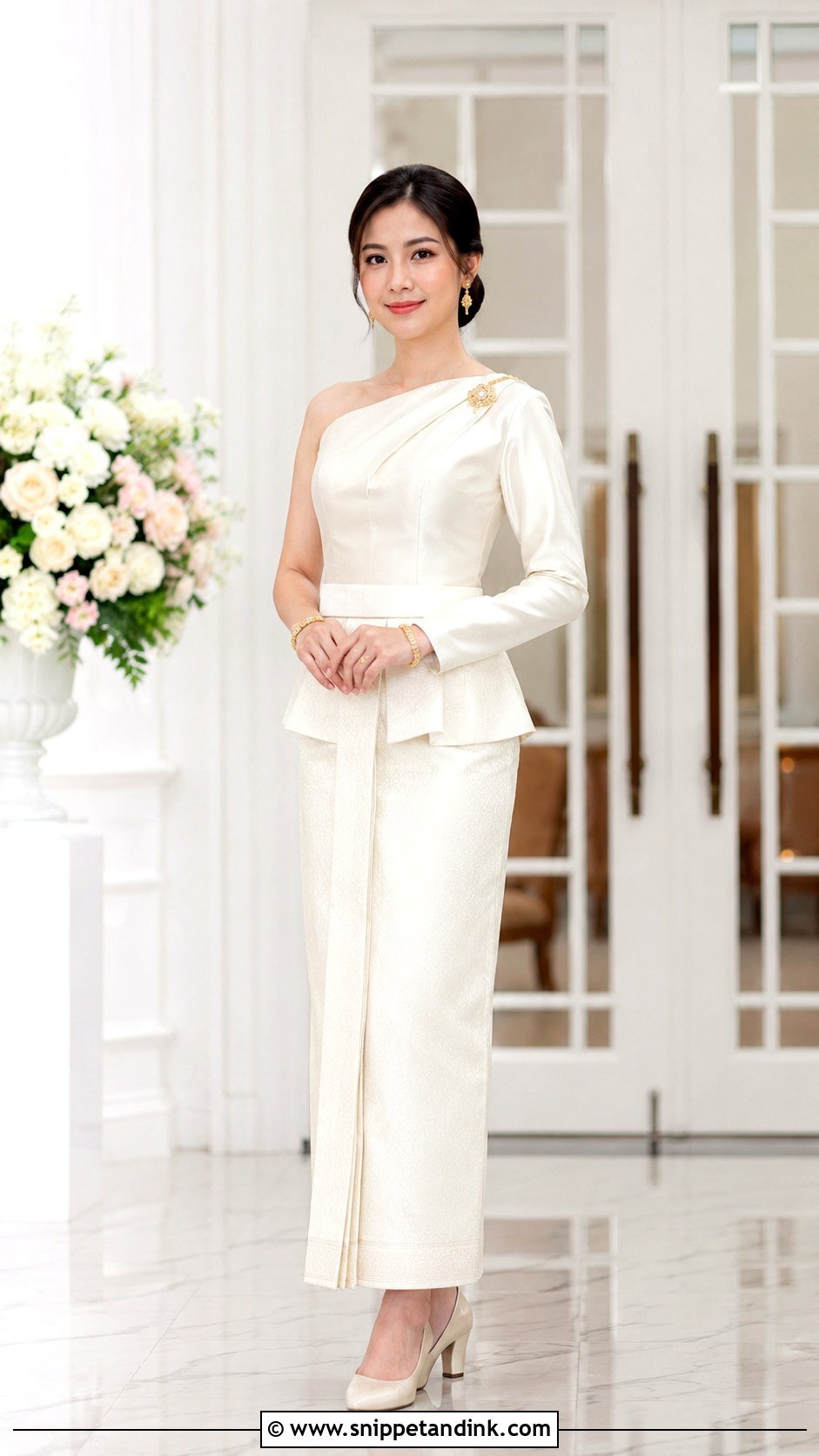
A civil ceremony calls for something simpler. A white, ivory, champagne or pale gold silk dress suits paperwork, courthouse photos or a small family gathering. For a cultural touch, an av pak top with a minimal sampot, or a modern dress with Khmer embroidery at the neckline or waist, works well. Small gold earrings, a bracelet and low heels keep it light. It marks the moment without the weight of the full ceremony wardrobe.

25. Khmer Wedding Dress For Photoshoot
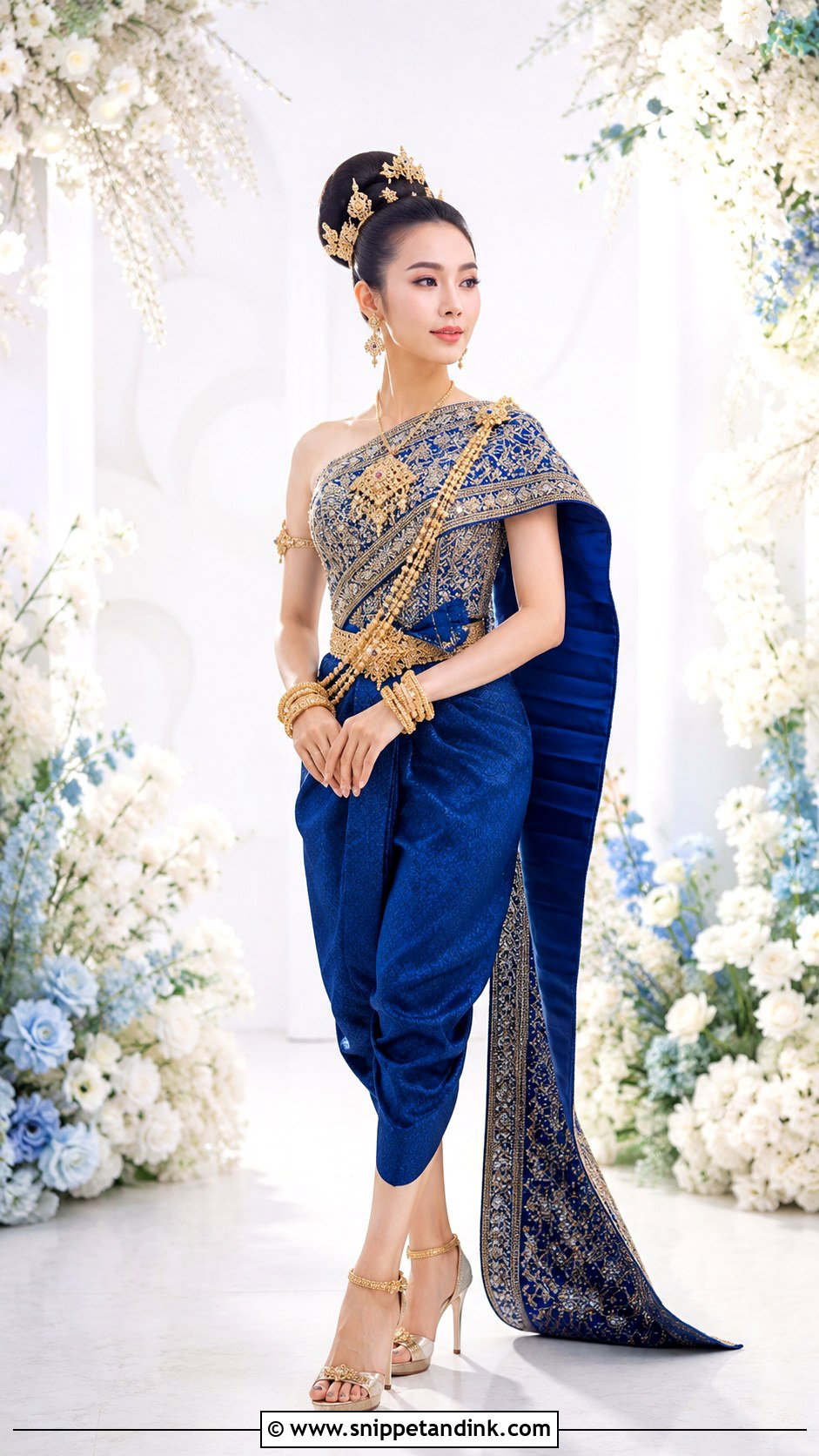
A Khmer wedding dress for photoshoot should be easy to pose in and strong on camera. Gold, red, emerald, royal blue and purple with textured silk and metallic embroidery read well. Outdoors, very shiny silk can glare in direct sun, so I aim shoots for softer light early or late in the day. In the studio, bold jewellery and a dramatic sbai add dimension. Bring pins, a touch-up kit and flat shoes for walking between locations.
Kneeling, Heat and a Wrapped Silk Skirt
Several Khmer ceremonies involve kneeling or sitting on the floor while elders give blessings, and they often take place in warm weather. That shapes how I dress a bride as much as colour does.
The skirt
A wrapped sampot needs to be secured at the waist with more than a single tuck. A hidden hook, a few safety pins on the inside layer, or a belt over the top keeps it in place when you lower yourself to the floor and stand again. Practise kneeling and getting up in the fitting, as you’ll do it many times.
The heat
Silk shows perspiration marks, especially in lighter shades. Underarm shields sewn into the blouse help, and a fan and blotting papers within reach of a bridesmaid help more. Set makeup with a long-wear setting spray before the first ceremony.
The jewellery and crown
Hair ornaments and crowns can be heavy by the afternoon. Ask the stylist to build them onto a secure base with pins anchored into a braid or a padded bun, rather than into loose hair. A spare set of pins and a small mirror should travel with someone close to you all day.
Silk, Fit and a Well-Pinned Sbai Do Most of the Work
Cambodian bridal dress gives a bride a wide range to work with: classic gold silk, bold red, soft pink, ivory or a modern reception look, all within the tradition. What makes any of them work is the same: good silk, careful tailoring, a sampot that sits smoothly, a sbai draped securely and jewellery that finishes the outfit rather than crowding it. Start from your family’s customs and the order of the ceremonies, then adjust colour, fit and accessories to the day and to your own comfort.
You'll Like These Ideas:






Leave a Reply