
There is no single bridal look any more. In one week of appointments I might pull a sleek satin column, a lace ball gown, a basque waist, a pearl-scattered slip and a dress with a detachable overskirt, all for brides with similar budgets. What decides it is rarely the photo they arrive with. It’s the venue, how the bride wants to move, the support she needs and the moment she sees herself and goes quiet. Shade matters too: crisp white reads modern, while soft and ivory-leaning whites look warmer in photos. Below are 25 gowns, with the fitting notes I’d share for each.
Who to Bring to the Bridal Salon, and What to Wear There
A bridal appointment is usually an hour or so, and the way you prepare changes what you get out of it. I’d go in with a little planning rather than a long list of photos.
- Bring two or three people whose taste you trust. A big group means a lot of opinions and not much time to listen to your own.
- Wear skin-tone underwear and bring a strapless bra if you have one. It changes how a bodice sits.
- Bring shoes close to the heel height you plan to wear, so the length and proportions look right.
- Say your budget at the start. A good consultant will only pull gowns inside it.
- Expect samples to be clipped. Most salons carry one or two sample sizes, so the consultant pins the dress to show how it would fit once made for you.
- Ask about photo rules before you film. Some salons don’t allow photos of certain designers’ gowns.
Try each gown long enough to sit down and lift your arms. A dress that only works standing still isn’t going to last a wedding day.
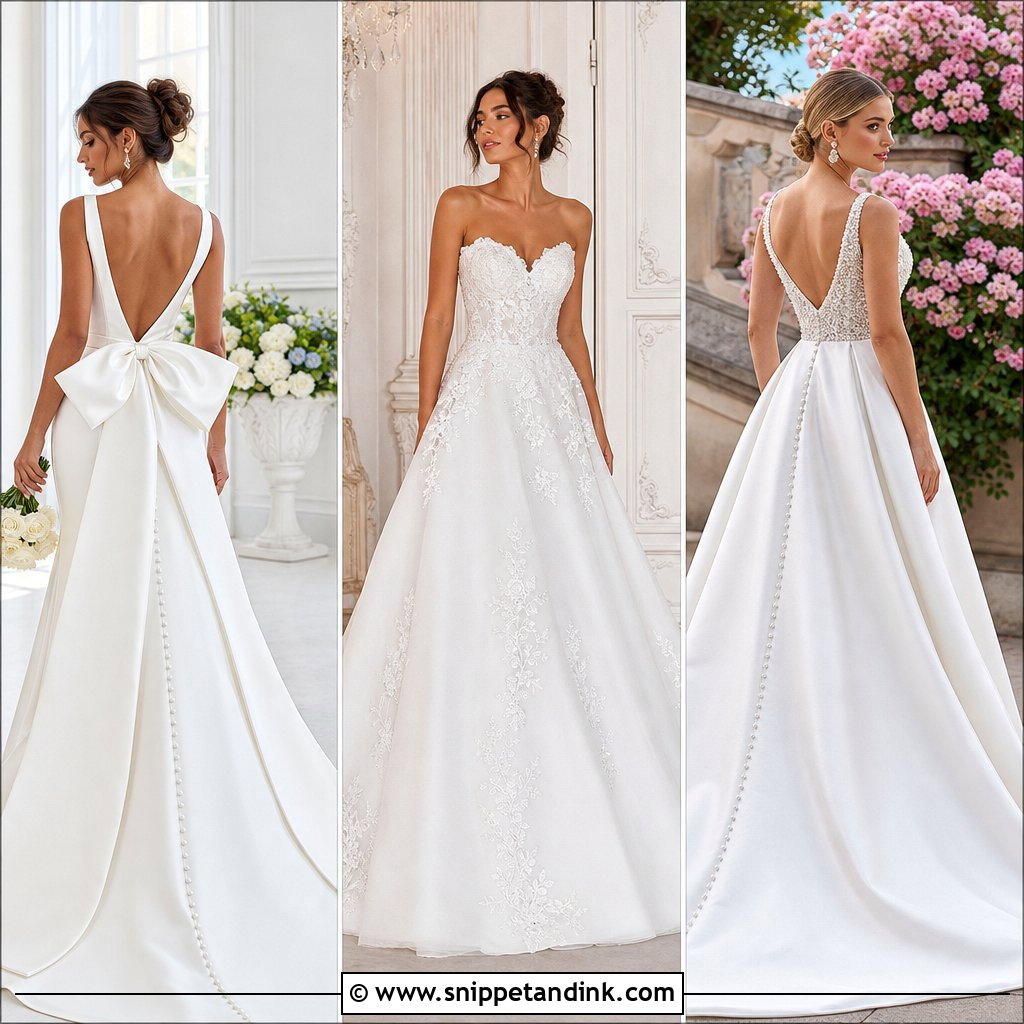
1. White Satin Ball Gown
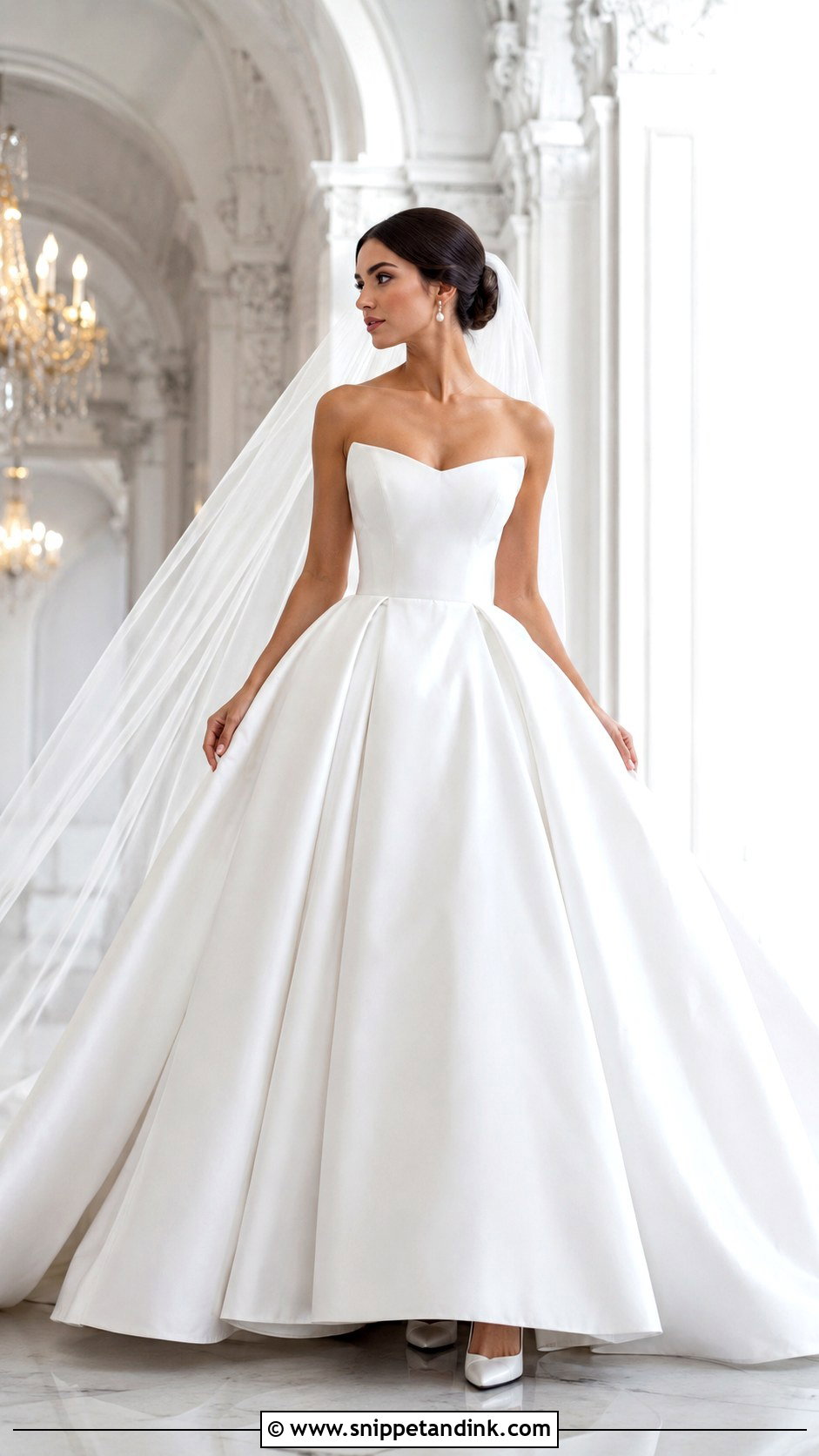
Satin and a full skirt is the most traditional bridal silhouette there is, and it still holds up because nothing distracts from the shape. A fitted bodice, natural waist and soft pleats let the skirt swing. The thing I check is the pleat placement: pleats that start too far forward add width at the tummy, while pleats pushed toward the sides and back keep the front flat. Pair it with a simple veil, pearl earrings and pointed heels. Ballrooms, estates and formal gardens suit it.
2. White Lace A Line Bridal Gown
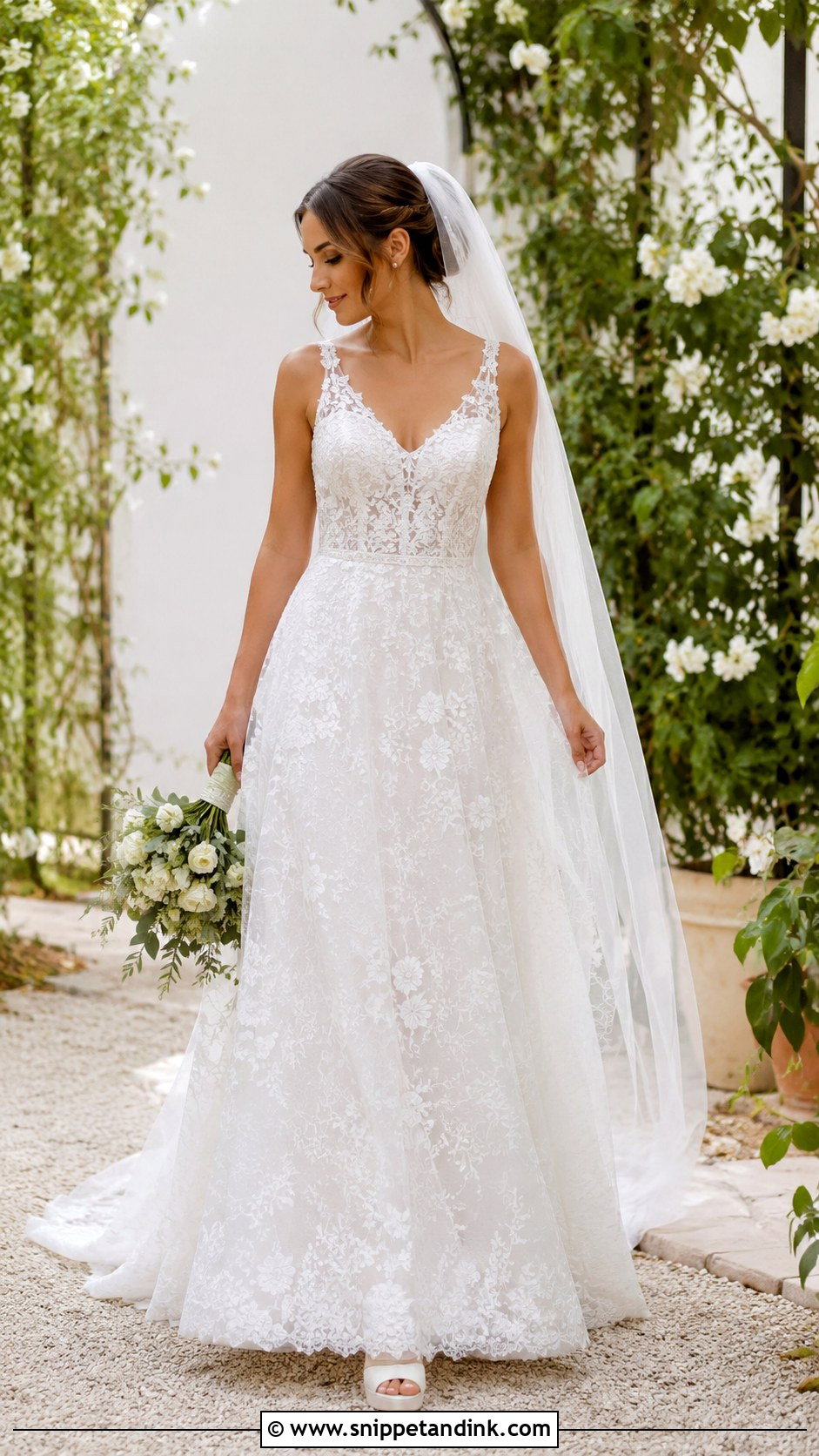
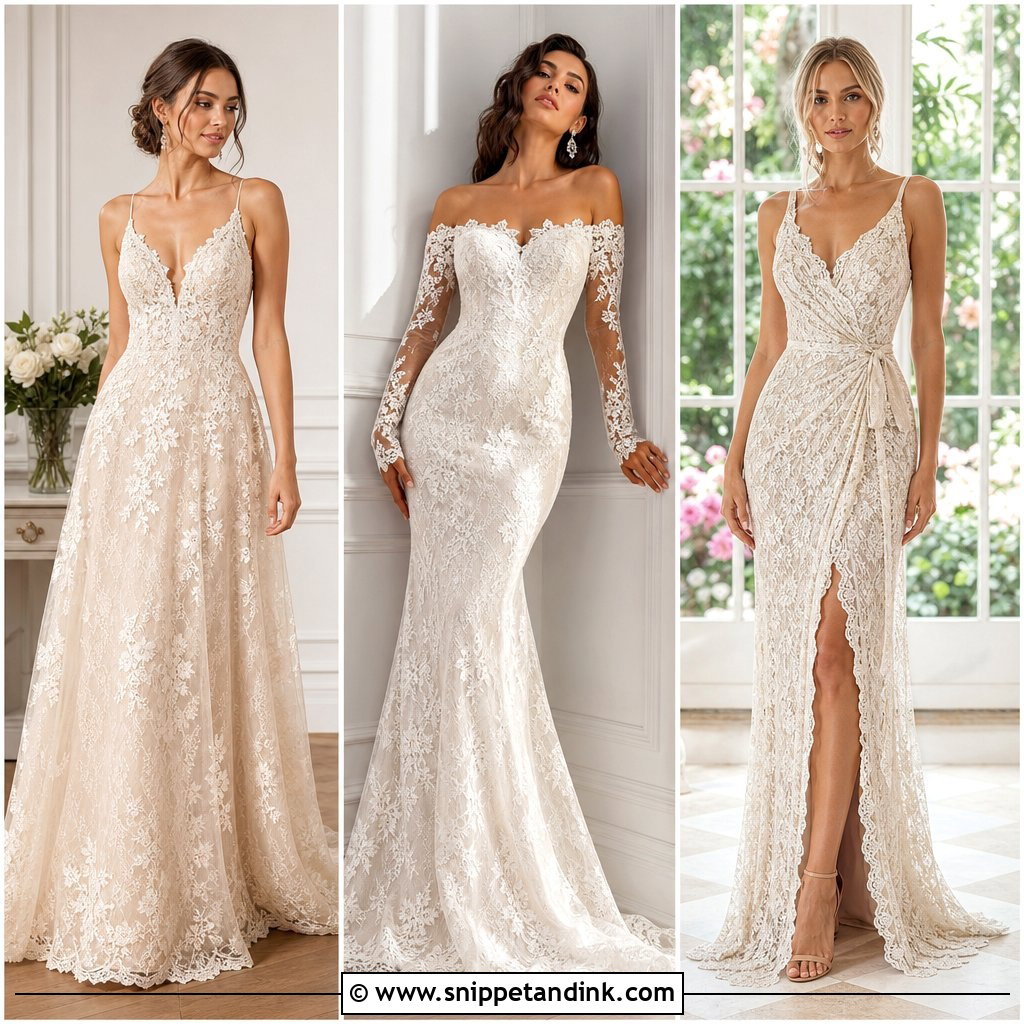
Lace A-lines are the easiest gowns on this list to live in for a whole day. The skirt falls away from the waist, so you can walk, sit and dance without thinking about it. Lace type changes the mood: floral lace feels like a garden, Chantilly reads delicate and vintage, bold appliqué adds drama. Chantilly is fine and can snag, so I keep bracelets off and choose smooth rings. A sheer veil, low bun, pearl studs and ivory or white heels are enough.
3. White Mermaid Bridal Gown
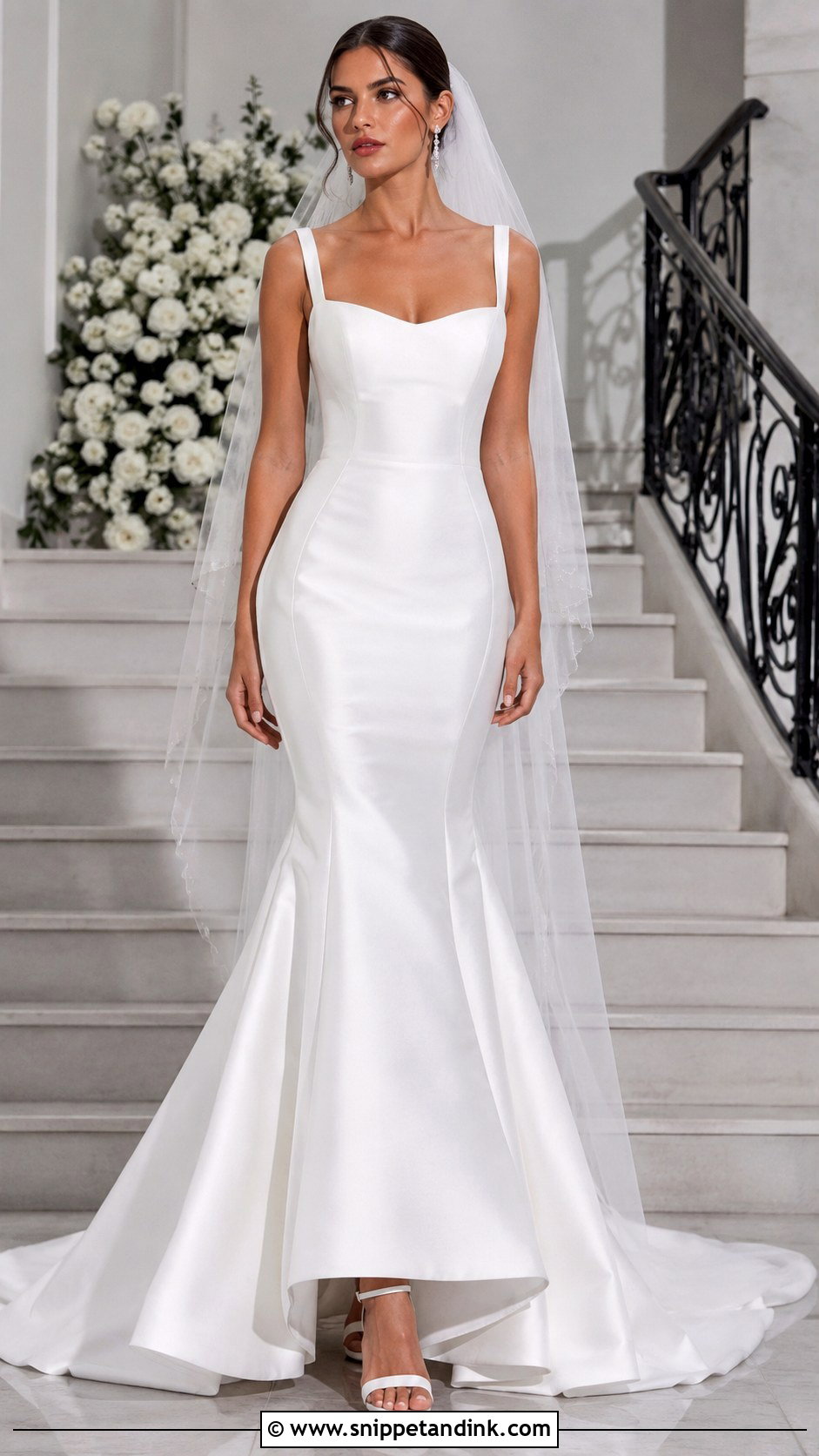
Fitted through the bodice, waist, hips and thighs, then flaring near the knee: the mermaid is the most sculpted shape a gown takes. Crepe reads modern, lace romantic, beading glamorous. Expect to walk differently. I teach brides to take smaller steps and to lift the flare slightly on stairs, which we practise at the final fitting. Clean accessories keep it from looking overdone: drop earrings, a sleek veil and strappy white heels. Formal evenings and rooftops suit it.
4. White Off Shoulder Bridal Gown
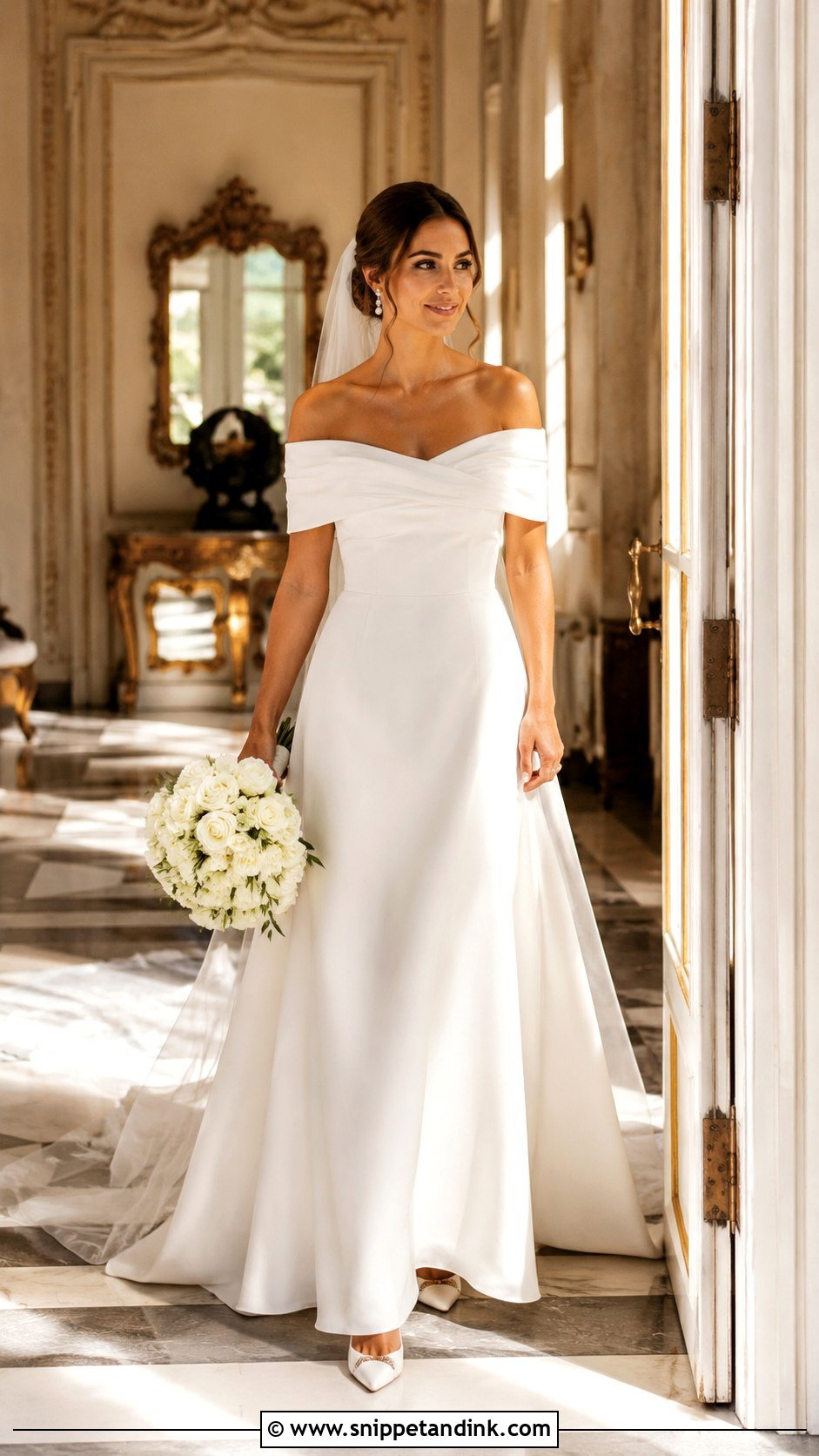
Off-shoulder necklines show off the collarbones and feel regal over a fitted bodice or flowing skirt. Satin makes it classic, lace romantic, crepe modern. The band has to grip without digging; if it slides up when you raise your arms, that’s a fitting fix, not something to put up with on the day. Skip the necklace or wear a fine pendant, and let earrings lead. A low chignon, soft waves or half-up hair keeps the shoulders clear.
5. White Strapless Bridal Gown
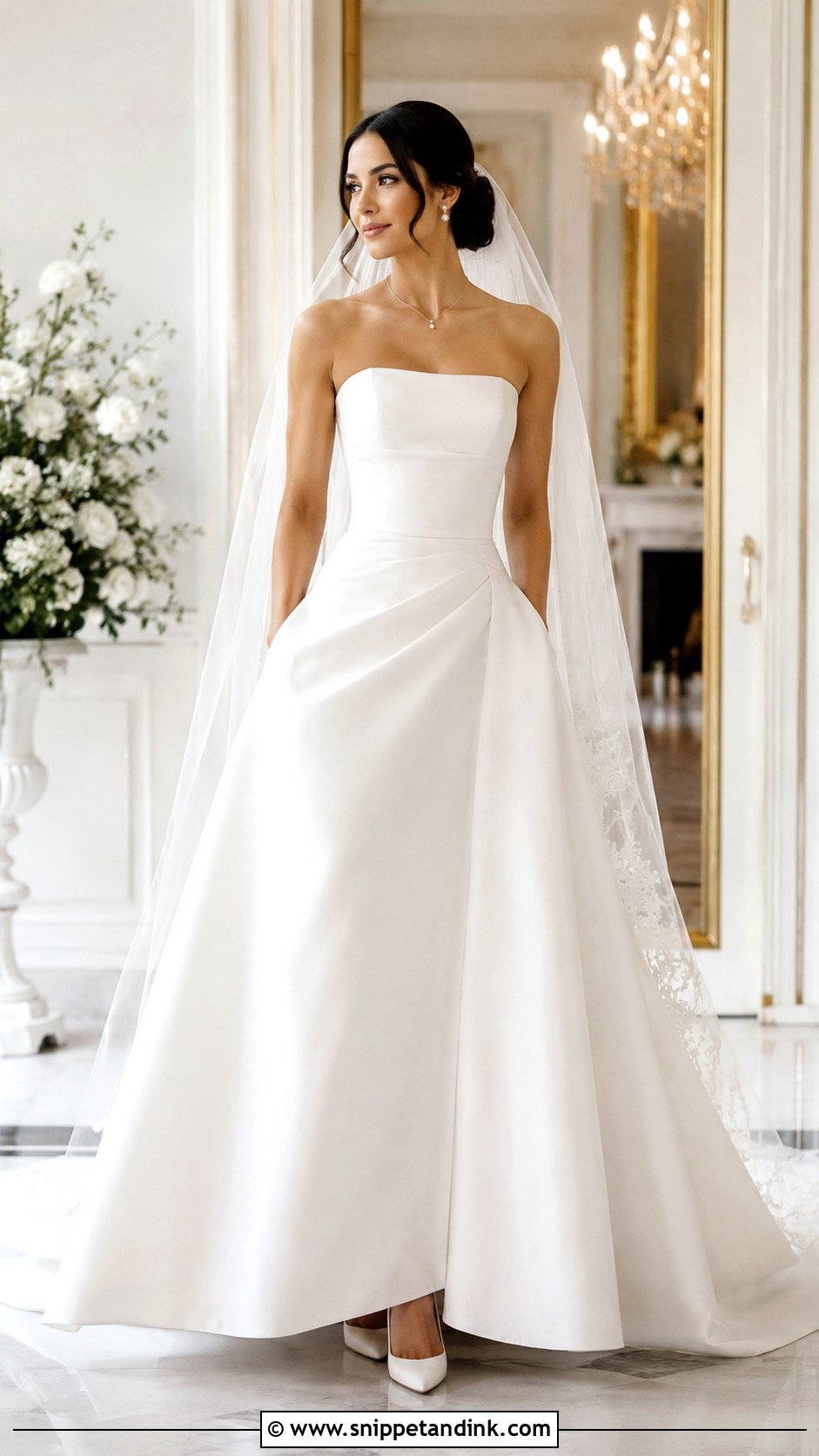
Strapless is the most adaptable bodice in bridal, appearing on ball gowns, A-lines, mermaids, columns and fit-and-flares. Everything depends on structure. The bodice should hold the bust and waist on its own so you never reach to pull it up. For a clean look, choose satin or mikado with few seams; for romance, lace, tulle or light beading. I’d add a long veil, soft gloves or a delicate tennis necklace. A dependable base for almost any style.
6. White Long Sleeve Bridal Gown
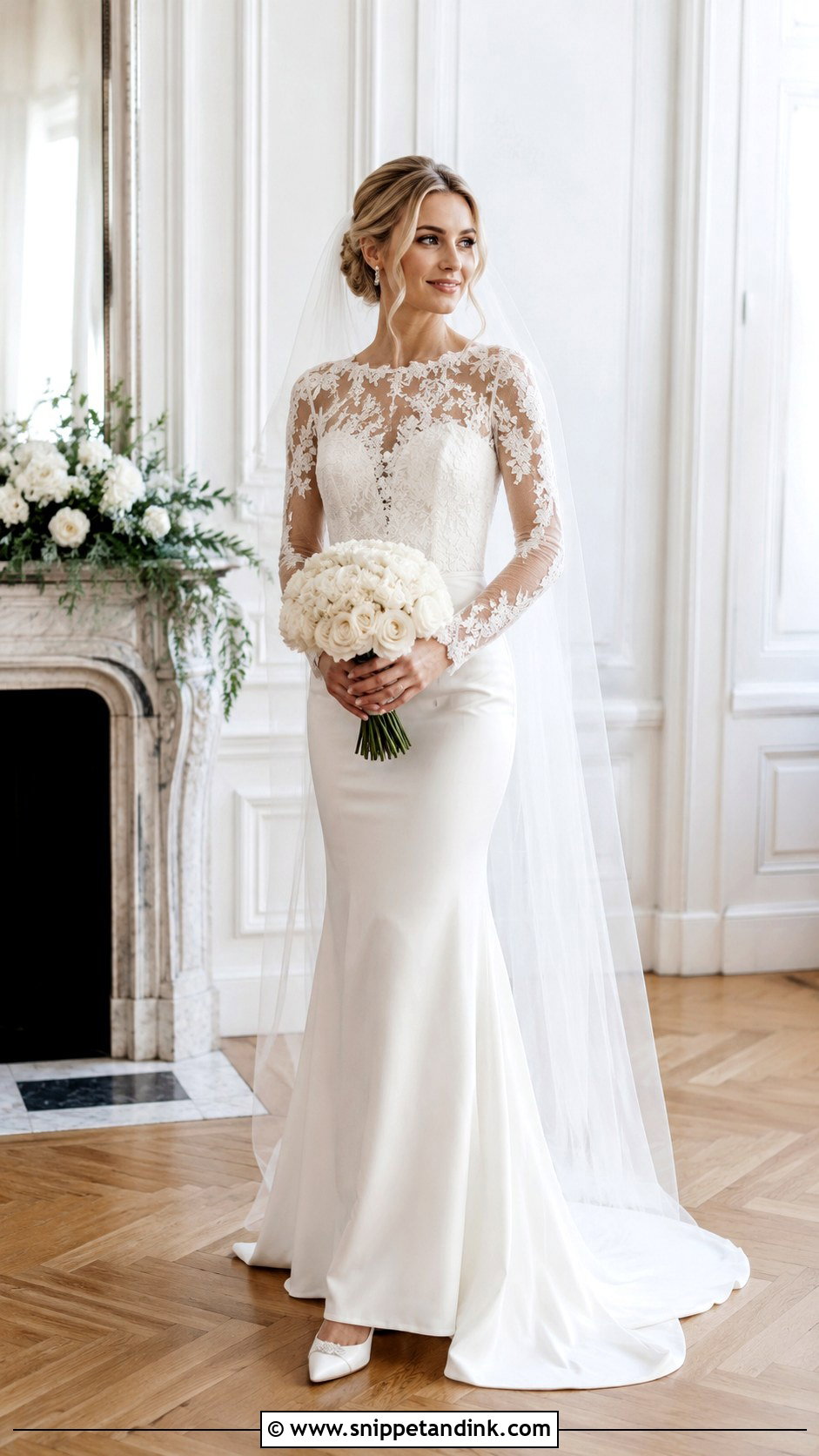
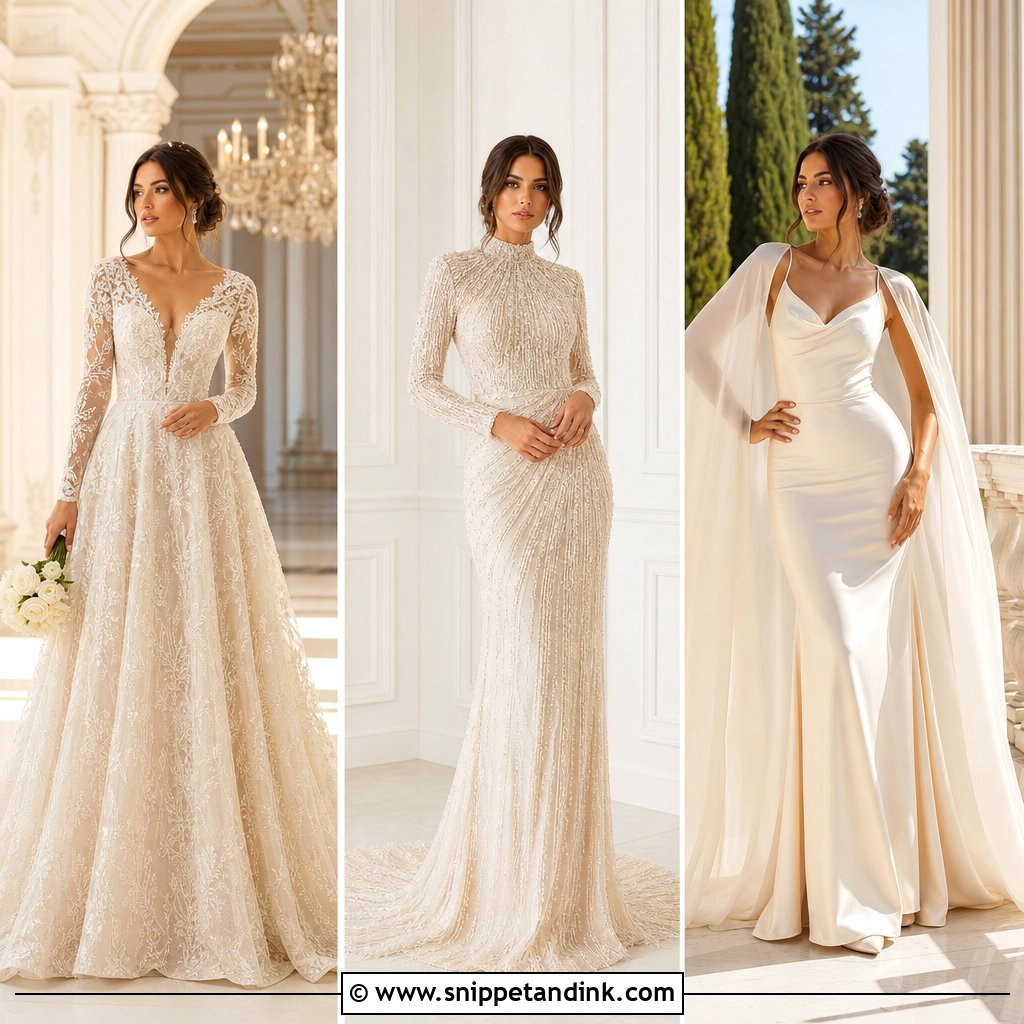
Long sleeves work in nearly any season if the fabric fits the weather. Sheer lace sleeves stay light enough for summer; fitted crepe sleeves feel sleek and warmer. Puff sleeves add a fashion edge, and detachable sleeves let you change the look between ceremony and reception. Fitted sleeves need room to bend, so I check reach at the fitting by having the bride lift her arms as if to hug. Closed-toe heels, a smooth updo and simple earrings keep it clean; skip bracelets over detailed cuffs.
7. White Square Neck Bridal Gown
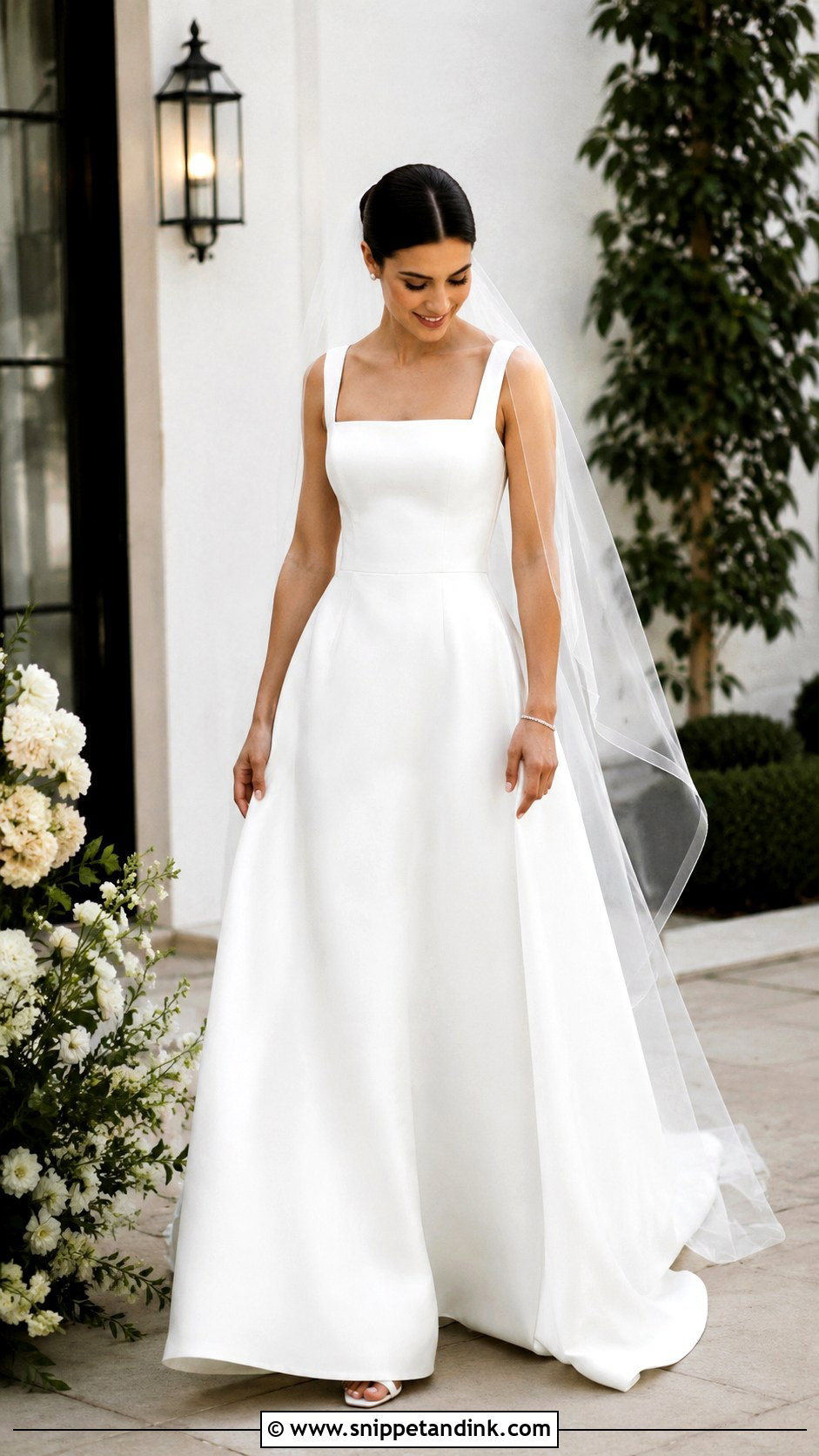
A square neckline frames the face with a straight, structured line. It works on A-lines, fitted crepe, satin ball gowns and columns. Brides who want support often like it because it pairs naturally with wider straps that carry real weight. I set the width to the bride’s shoulders so the straps sit securely and never slide outward. A simple veil, pearl studs and a sleek bracelet finish it; a soft bun and satin heels give it a vintage edge.
8. White Corset Bridal Gown
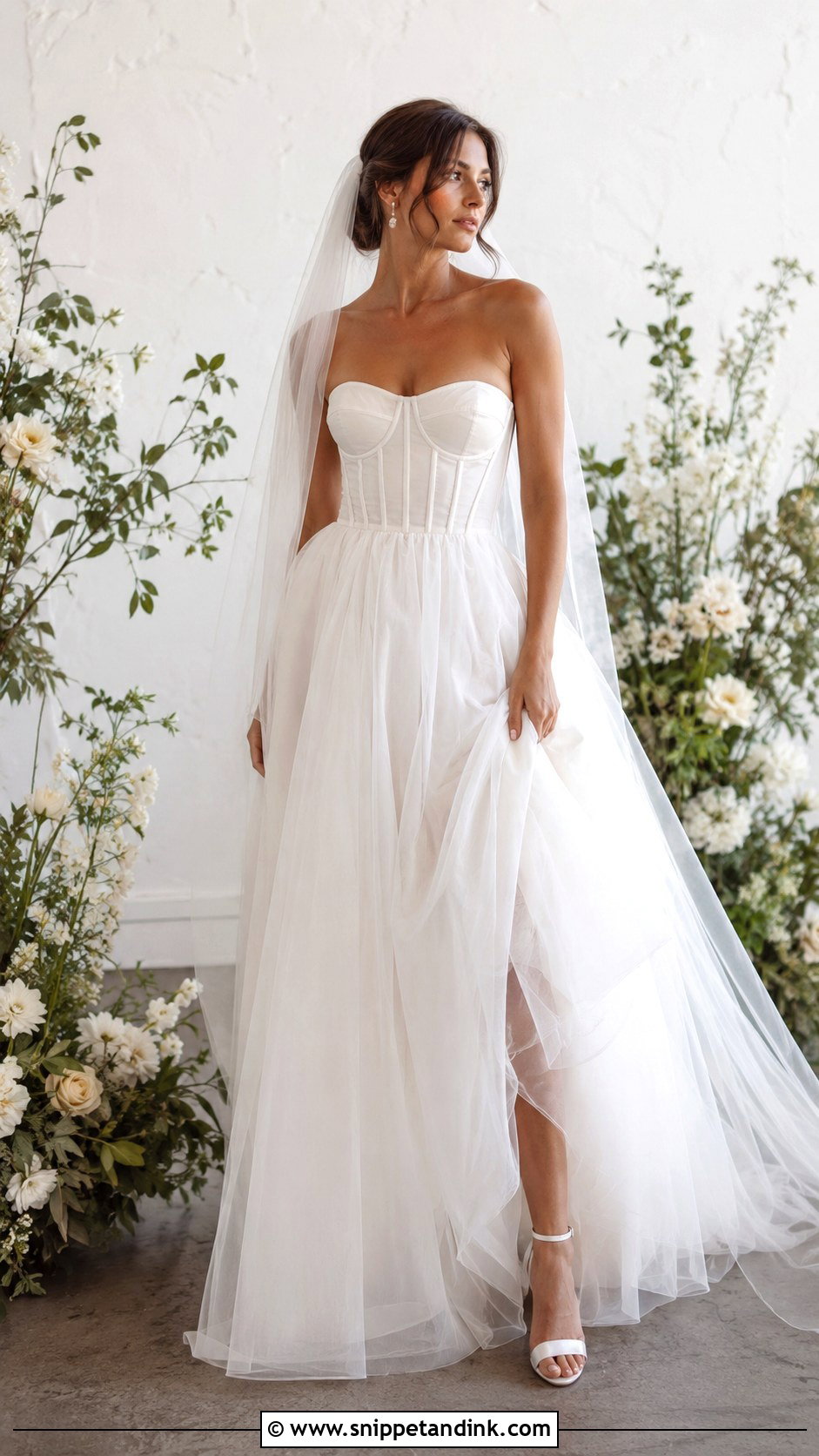
The corset defines the waist and supports the bust, and the skirt below decides the mood. Full tulle feels romantic; sleek satin feels modern. Exposed boning reads fashion-led, covered boning softer. A corset should be fitted on your body over the underwear you’ll wear on the day, laced snug but never tight enough to stop you eating. Pearl drop earrings, a thin veil and simple heels keep the focus on the shape.
9. White Basque Waist Bridal Gown
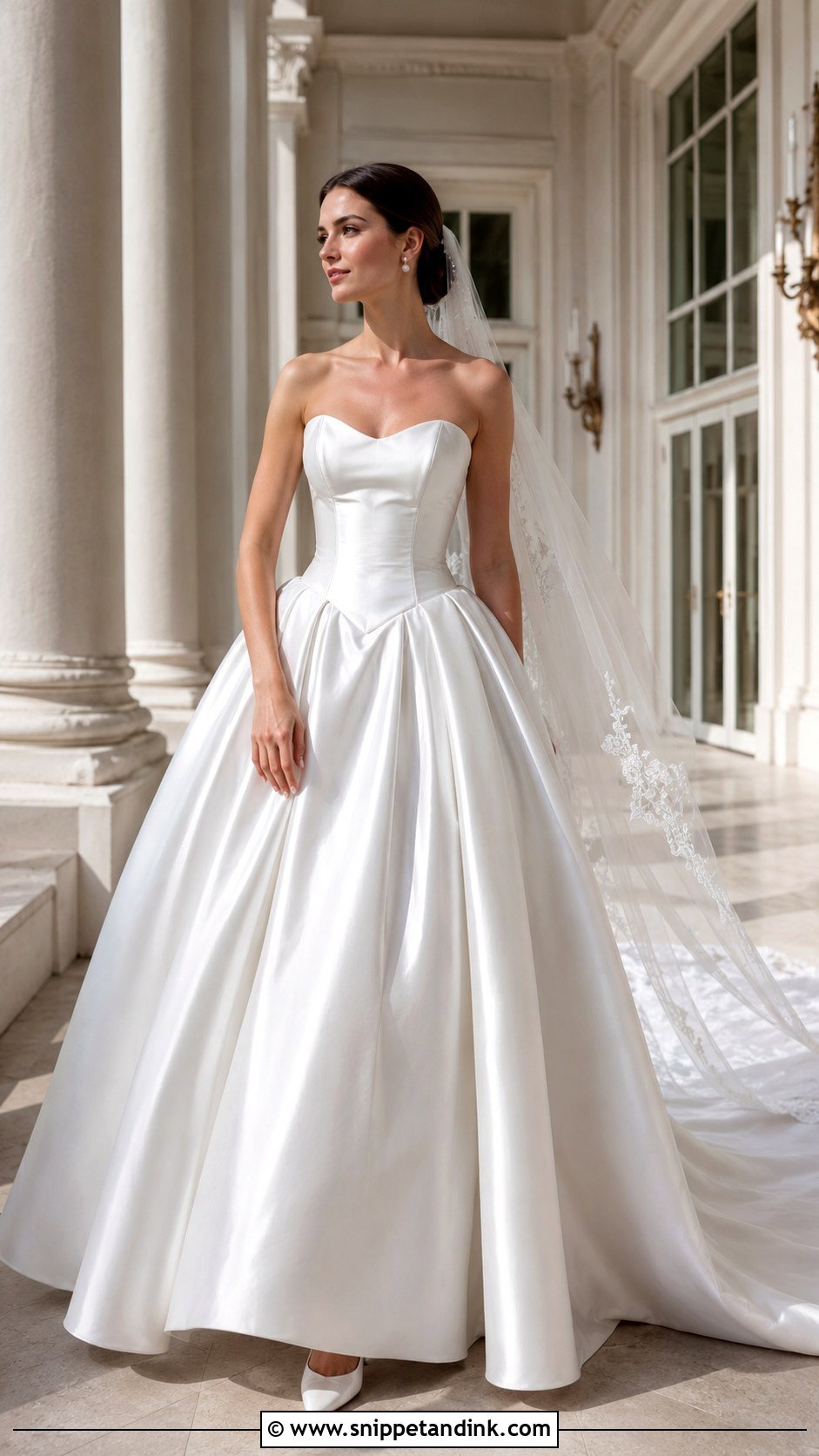
A white basque waist bridal gown dips into a V or U at the waist, which lengthens the torso and brings vintage structure without heavy embellishment. It usually pairs with a full skirt. Satin, taffeta and mikado hold the point crisply; softer fabrics let it wrinkle. On a short torso I’d choose a shallow U over a deep V so the legs don’t look shortened. A cathedral veil, pearl earrings and pointed heels suit its princess feel.
10. White Minimalist Bridal Gown
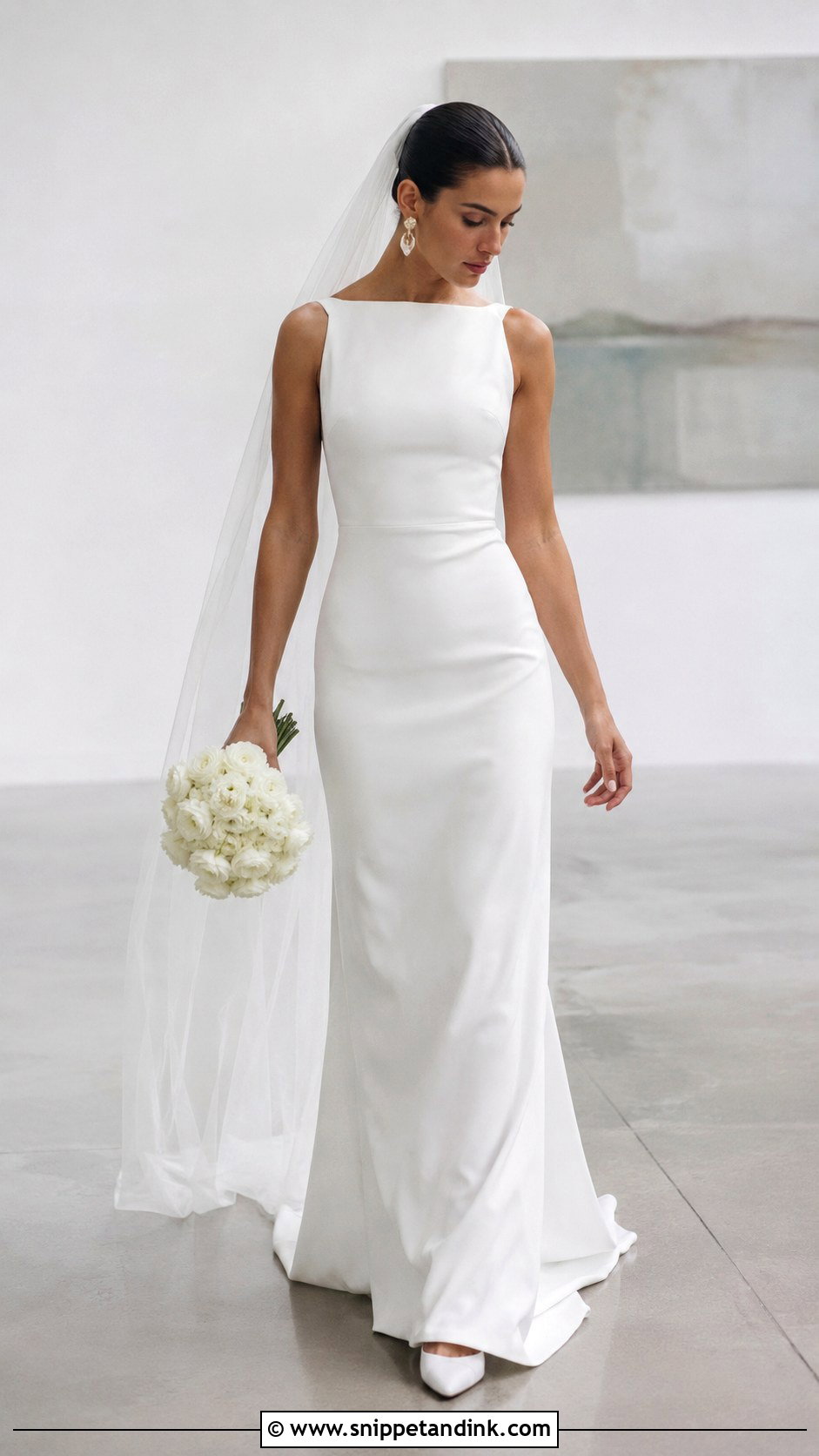
Minimalist gowns have nowhere to hide. No lace or beading means the tailoring, the neckline and the way the fabric moves carry everything. That’s why I tell brides that the cheapest-looking minimal gowns are the ones with thin fabric, not plain fabric: a heavy crepe or satin hangs cleanly while a light one shows every seam. Slips, columns, fitted crepe and satin A-lines all count. Sculptural earrings, a clean veil and sleek heels suit courthouses, galleries and beaches.
11. White Slip Bridal Gown
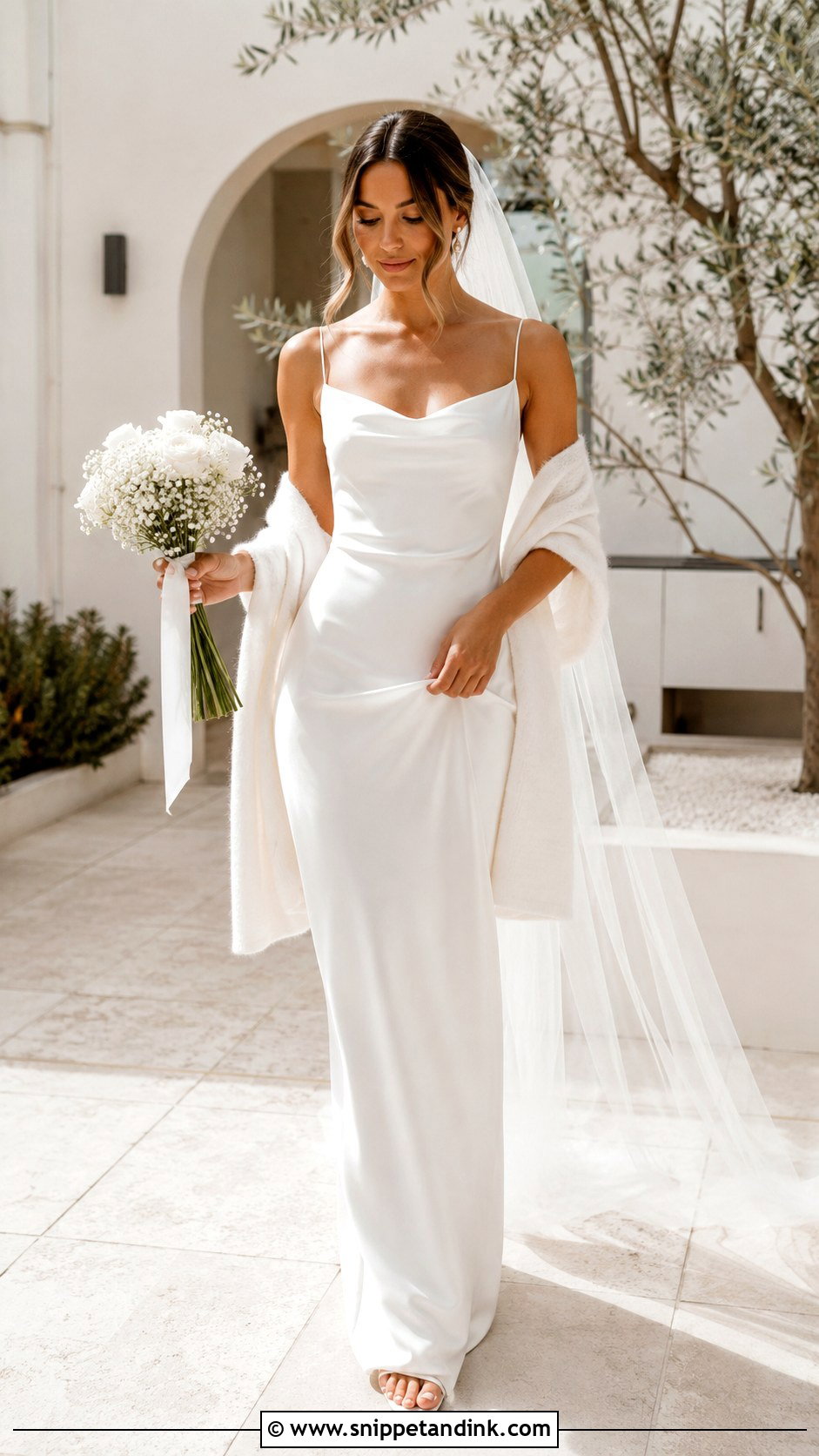
Slip gowns are light and easy to style, with a slim shape, delicate straps and fabric that skims rather than grips. Satin and silk-like finishes give movement and a soft shine. Bias-cut slips show everything underneath, so I plan foundation garments with the bride before the first fitting. A long veil, pearl earrings, a soft wrap or a slim cape makes it more bridal. White sandals or pointed heels finish it for small weddings and destination ceremonies.
12. White Column Bridal Gown
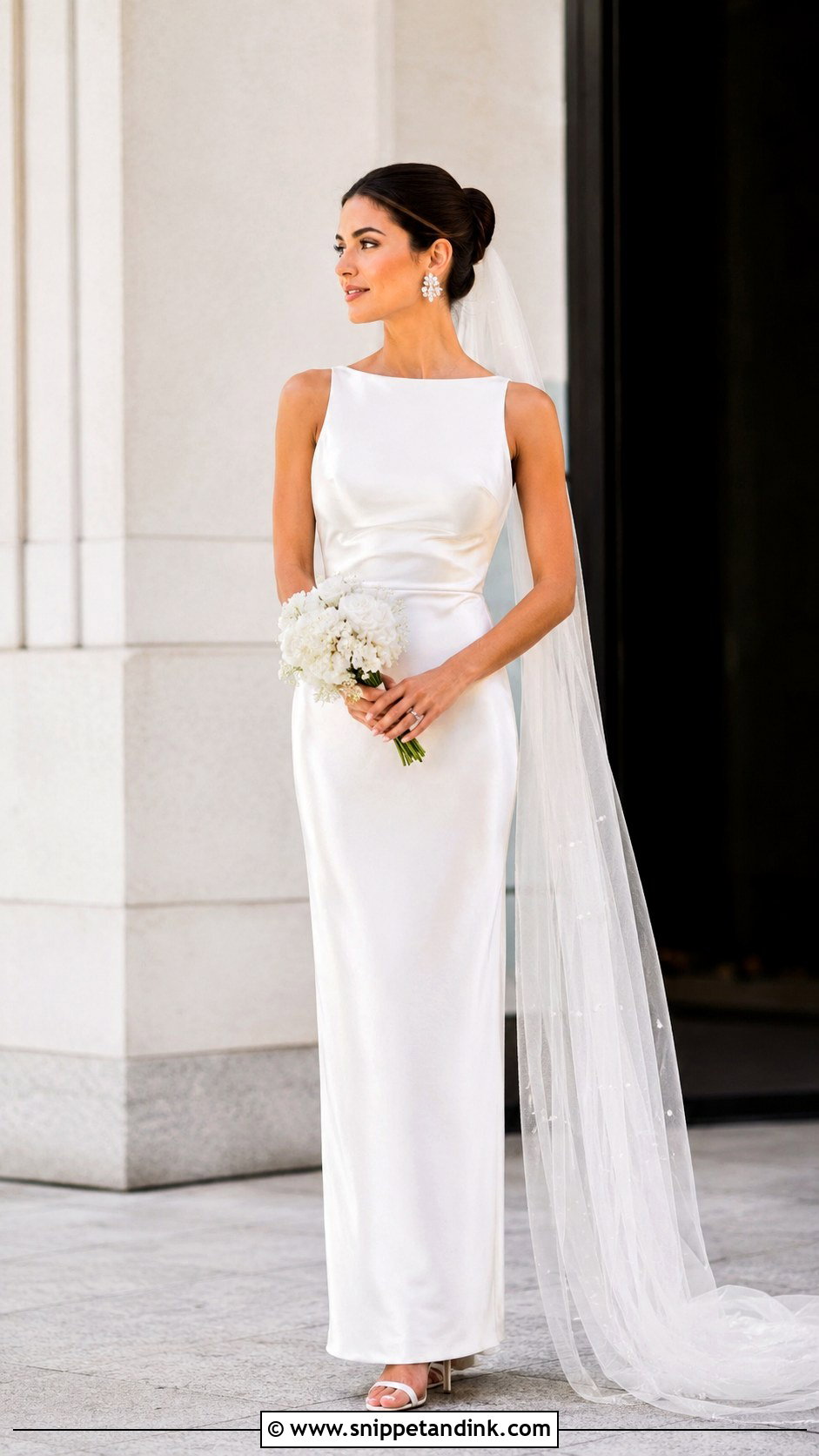
A column draws one long line from neckline to hem. It’s less fitted than a mermaid and slimmer than an A-line, so it gives elegance without volume. Crepe, satin and silk fall smoothly. A square neck makes it modern, lace sleeves romantic, a high slit bold. Columns need a little ease at the knee or you’ll be shuffling, so I check stride length during fittings. A fingertip veil, sculptural earrings and slim heels suit city weddings and museums.
13. White Tulle Bridal Gown
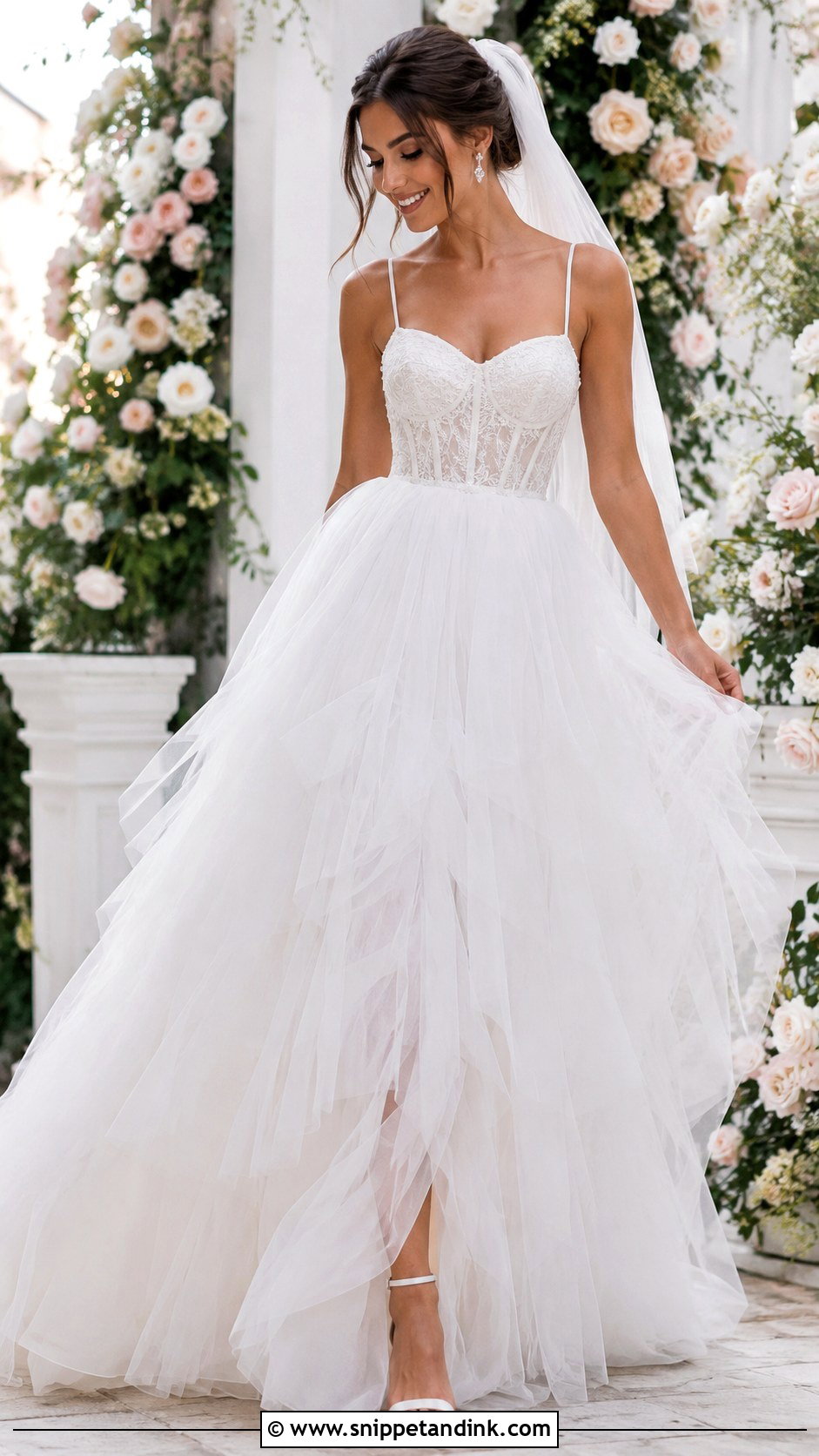
Tulle gives volume without the weight of structured fabrics, so even a big skirt feels light. Layered tulle is airy; a tulle ball gown adds drama. Plain tulle reads fairytale, floral appliqués add texture. Tulle’s weakness is crushing and snagging, so I always steam it at the venue and keep rough bouquet wraps away from the skirt. Delicate earrings, a soft veil and ballet-style heels or sandals suit gardens, estates and bright rooms.
14. White Pearl Bridal Gown
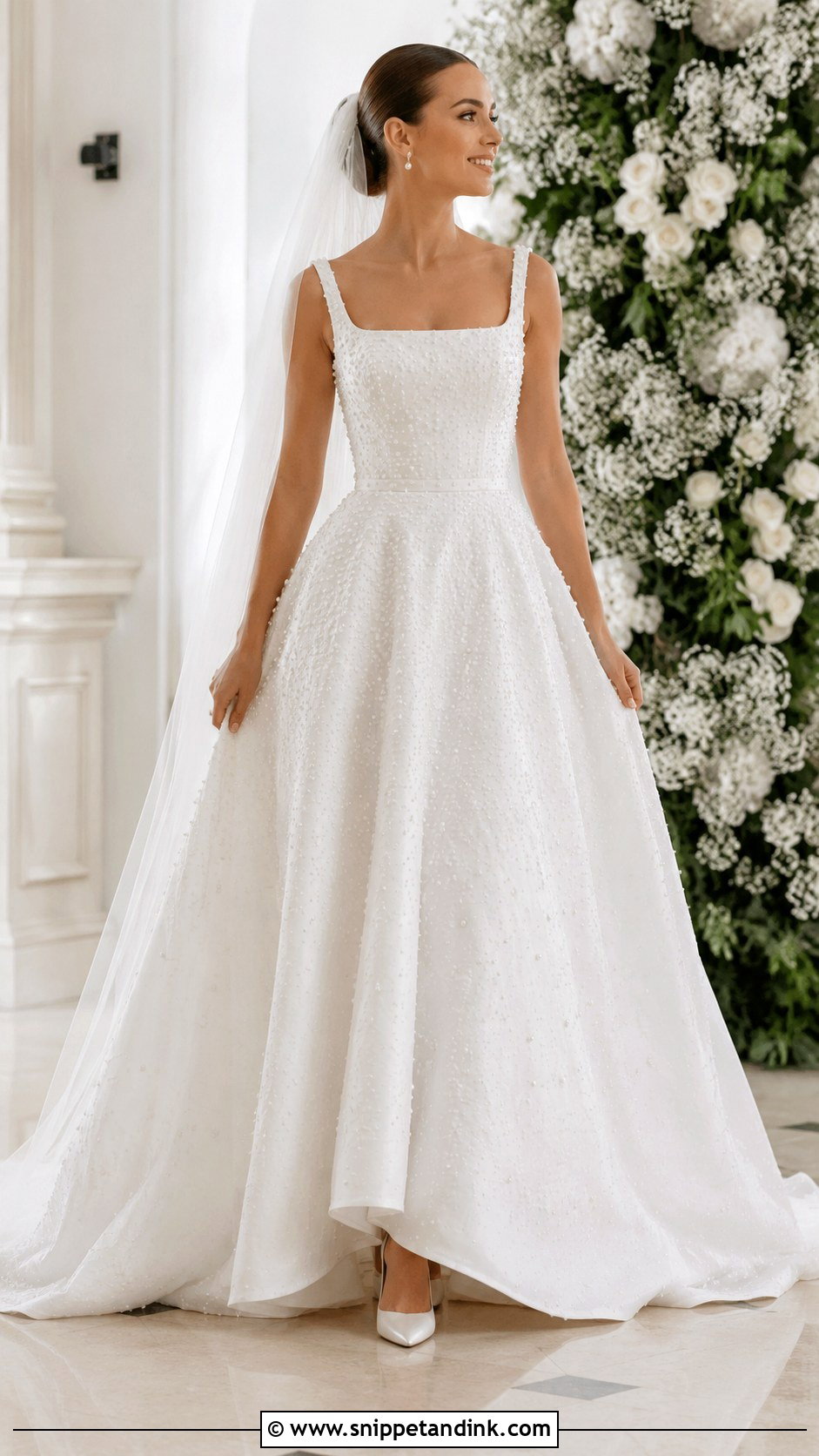
Pearl accents bring detail with less shine than crystal, on the bodice, straps, sleeves, veil or scattered over the skirt. They sit best on simple silhouettes, where the pearls become the main event. Pearl beading adds real weight, so I check that straps and shoulder seams are reinforced on heavily pearled gowns. Pearl earrings, a smooth bun and clean white heels are all you need. Classic, coastal and modern weddings suit it.
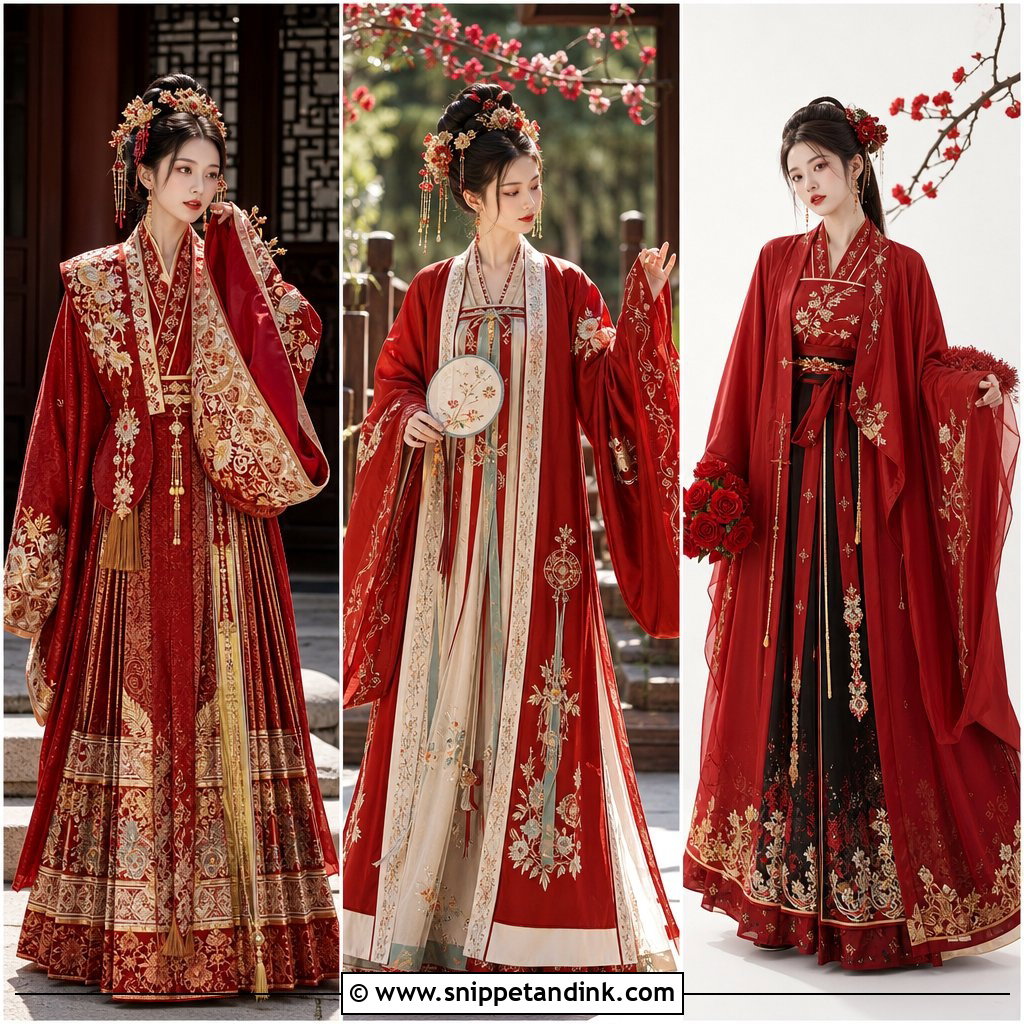
15. White Floral Applique Bridal Gown
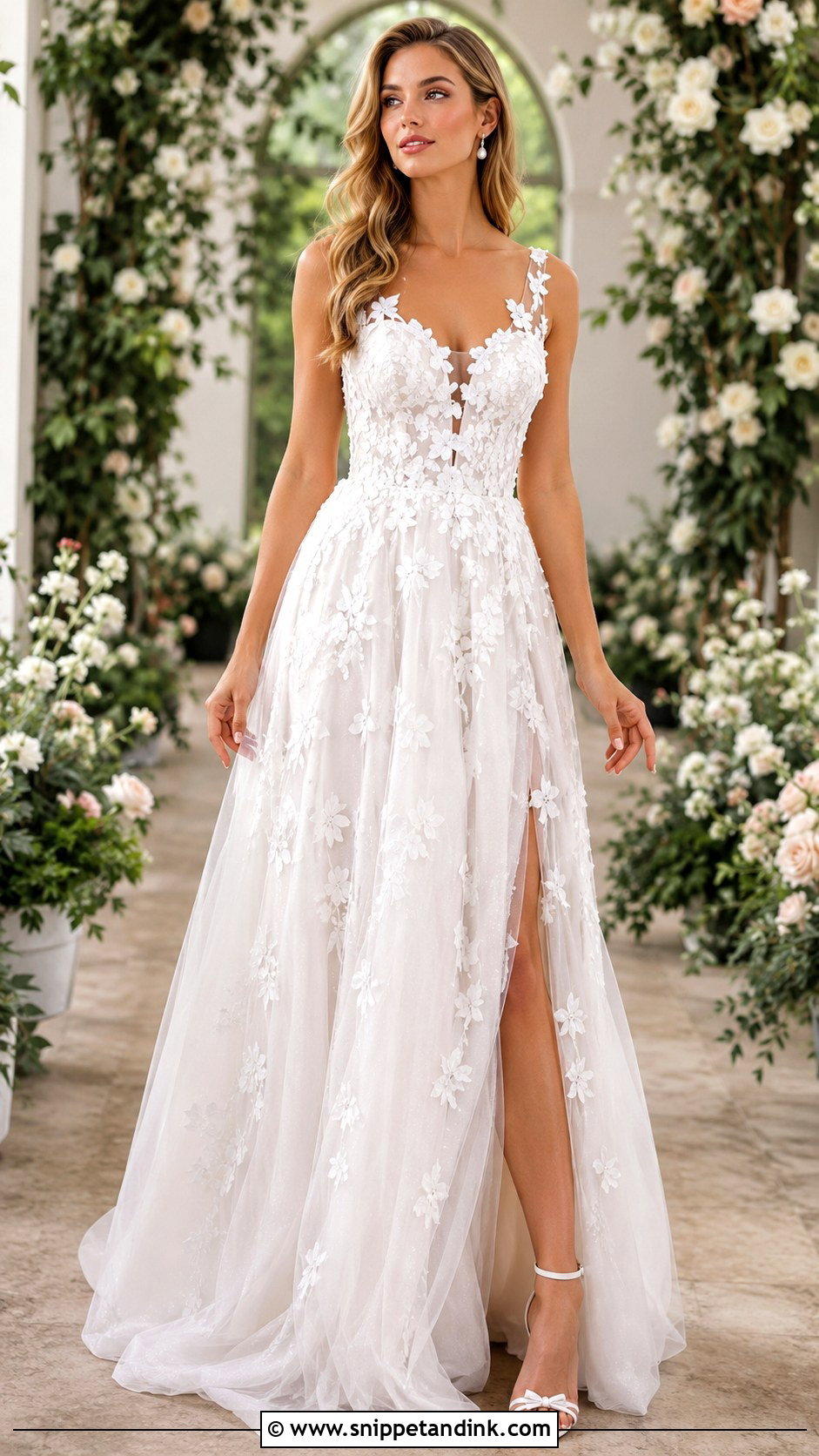
Raised floral appliqués add dimension, especially on sheer sleeves, bodices and layered skirts. Small flowers read delicate; large ones dramatic. Spring, summer and outdoor weddings suit it, though it brightens a formal room too. If the gown is heavy with flowers, I keep the bouquet simple and tight so the two don’t blur together in photos. Soft waves, pearl earrings and white or ivory heels finish it.
16. White Beaded Bridal Gown
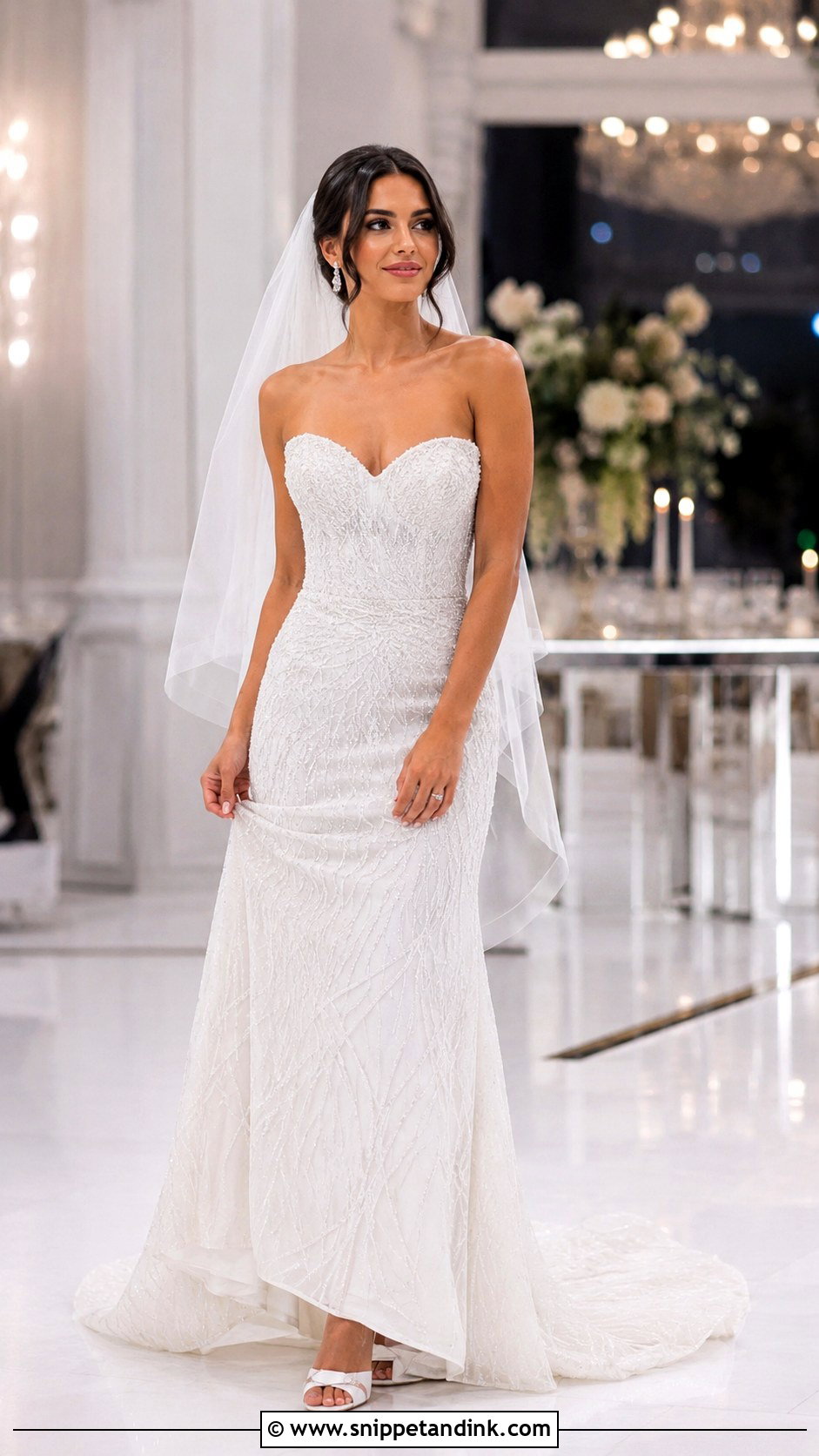
Beading catches light, from a subtle sprinkle to all-over glamour for an evening wedding. A beaded bodice over a plain skirt balances it. Look for patterns that follow the body, like vertical lines, floral vines or soft geometrics, because random placement can widen the figure. Heavy beading under the arms can scratch, so I check the inside of the arm and ask for a soft lining there if needed. Simple earrings, a clean veil and elegant heels let the gown lead in ballrooms and candlelit rooms.
17. White High Neck Bridal Gown
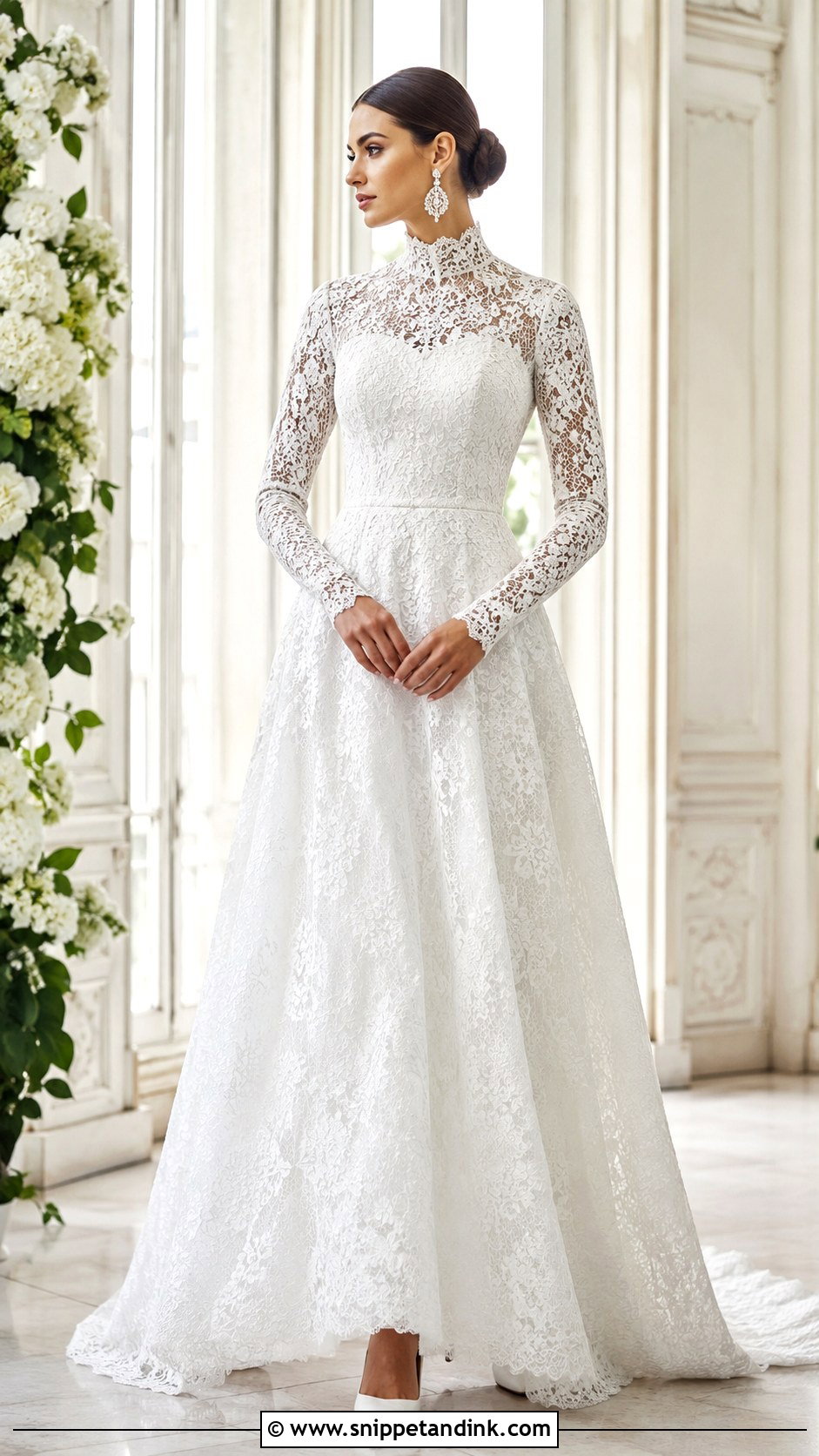
High necks feel refined and a little regal, with coverage that never reads plain. Lace versions lean vintage; crepe and satin look clean. The neckline pairs well with long sleeves, open backs, fitted skirts or A-lines. A high lace neck in summer can feel warm, so I’d look for an unlined or illusion version for an outdoor date. Skip the necklace, frame the face with earrings, and keep the hair up in a sleek bun or ponytail.
18. White V Neck Bridal Gown
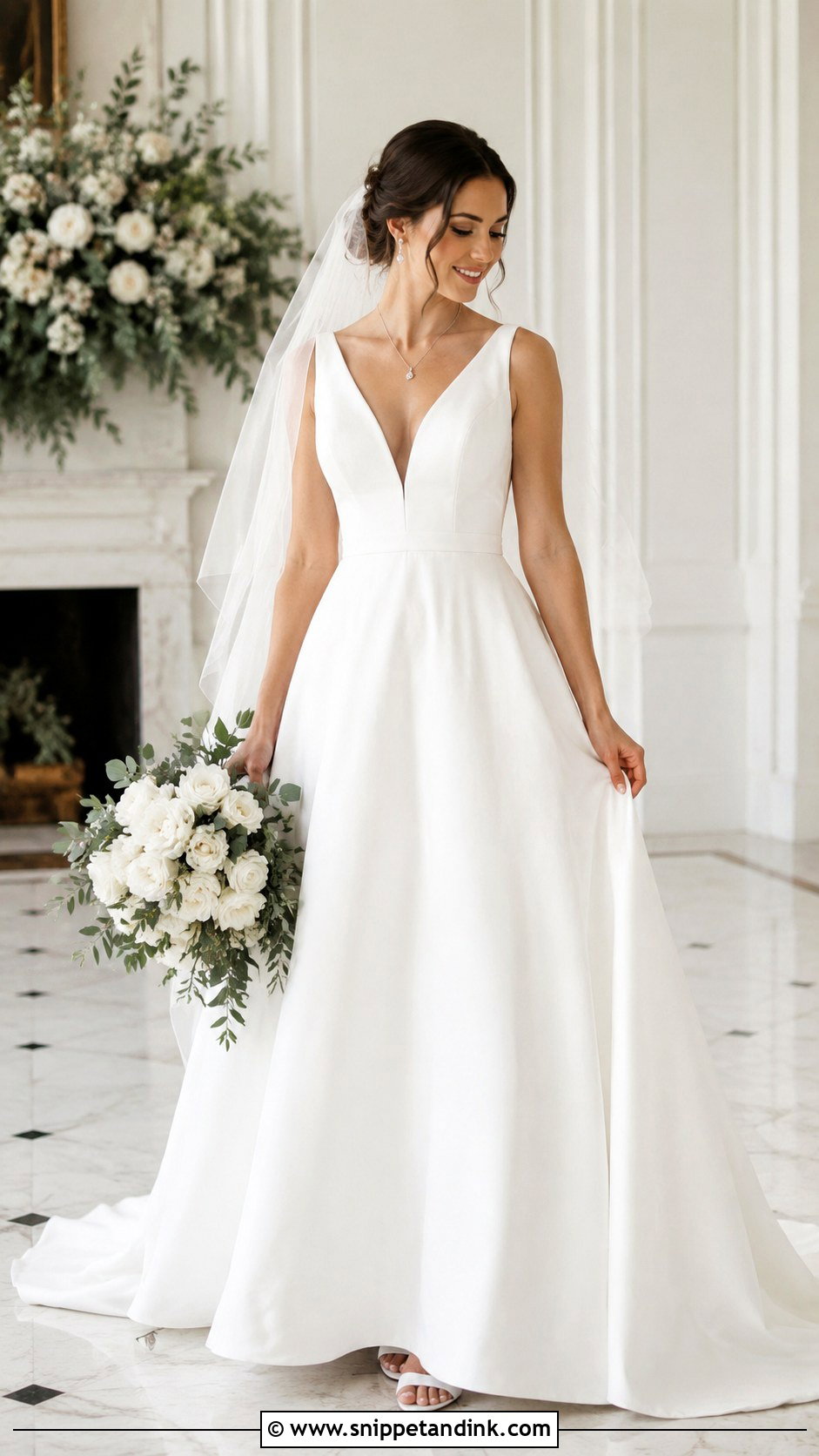
A V neck lengthens the torso and suits almost every bust shape when the depth is right. Soft Vs feel romantic; deep Vs feel bold. It works on lace A-lines, satin ball gowns, fitted crepe and flowing chiffon. Deep Vs need support, either wider straps, illusion mesh or fashion tape, and I always check the neckline when the bride leans forward. A delicate pendant, drop earrings and a soft veil finish it.
19. White Halter Bridal Gown
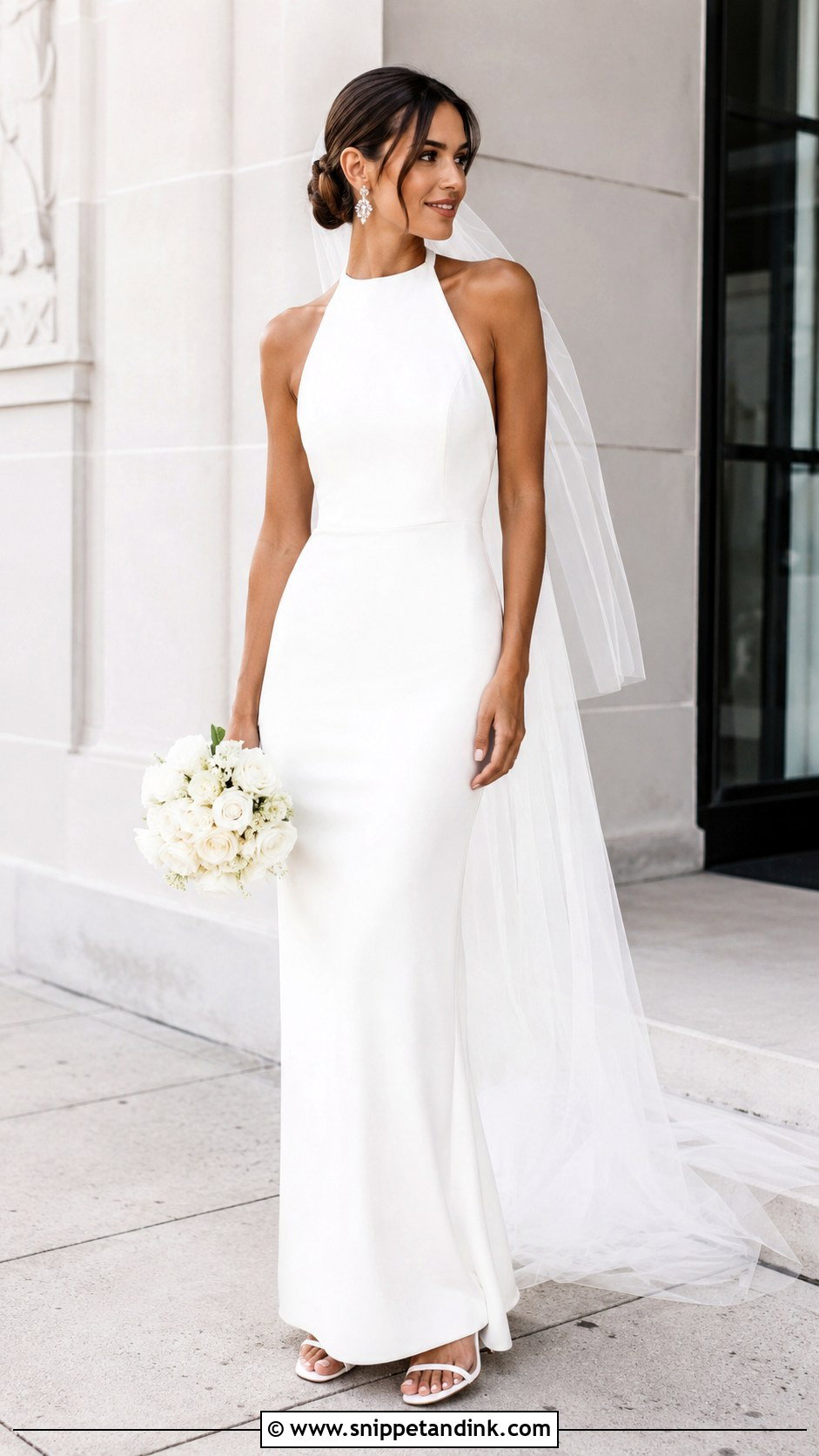
Halters frame the shoulders and make the upper body look strong. Clean fabrics like crepe, satin and silk let the neckline be the main design feature. A fitted column halter gown looks sharp at a city wedding; a halter A-line is softer. A good halter has structure inside the bodice so the strap around the neck isn’t carrying the weight; if your neck aches at the fitting, it’ll hurt by the speeches. Earrings instead of a necklace, a low bun, white heels and a simple veil.
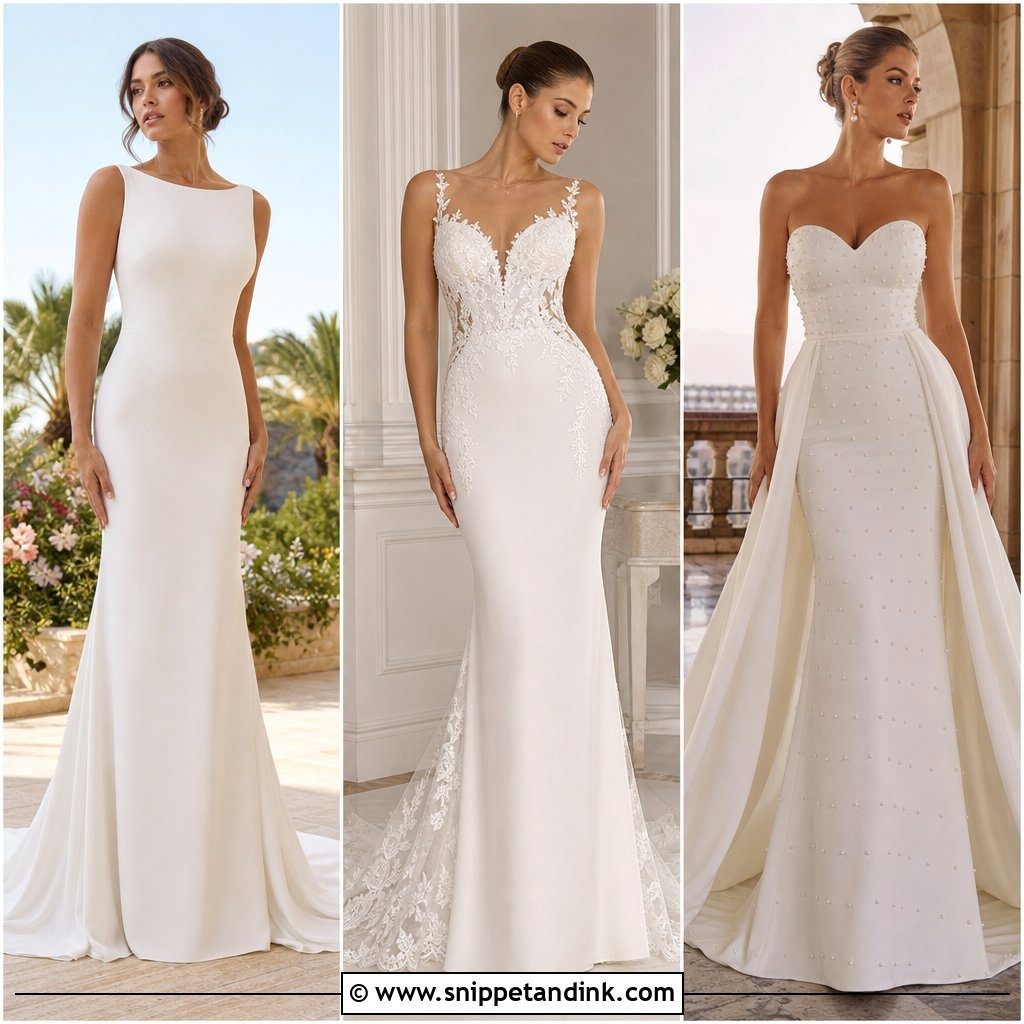


20. White Bridal Gown With Cape
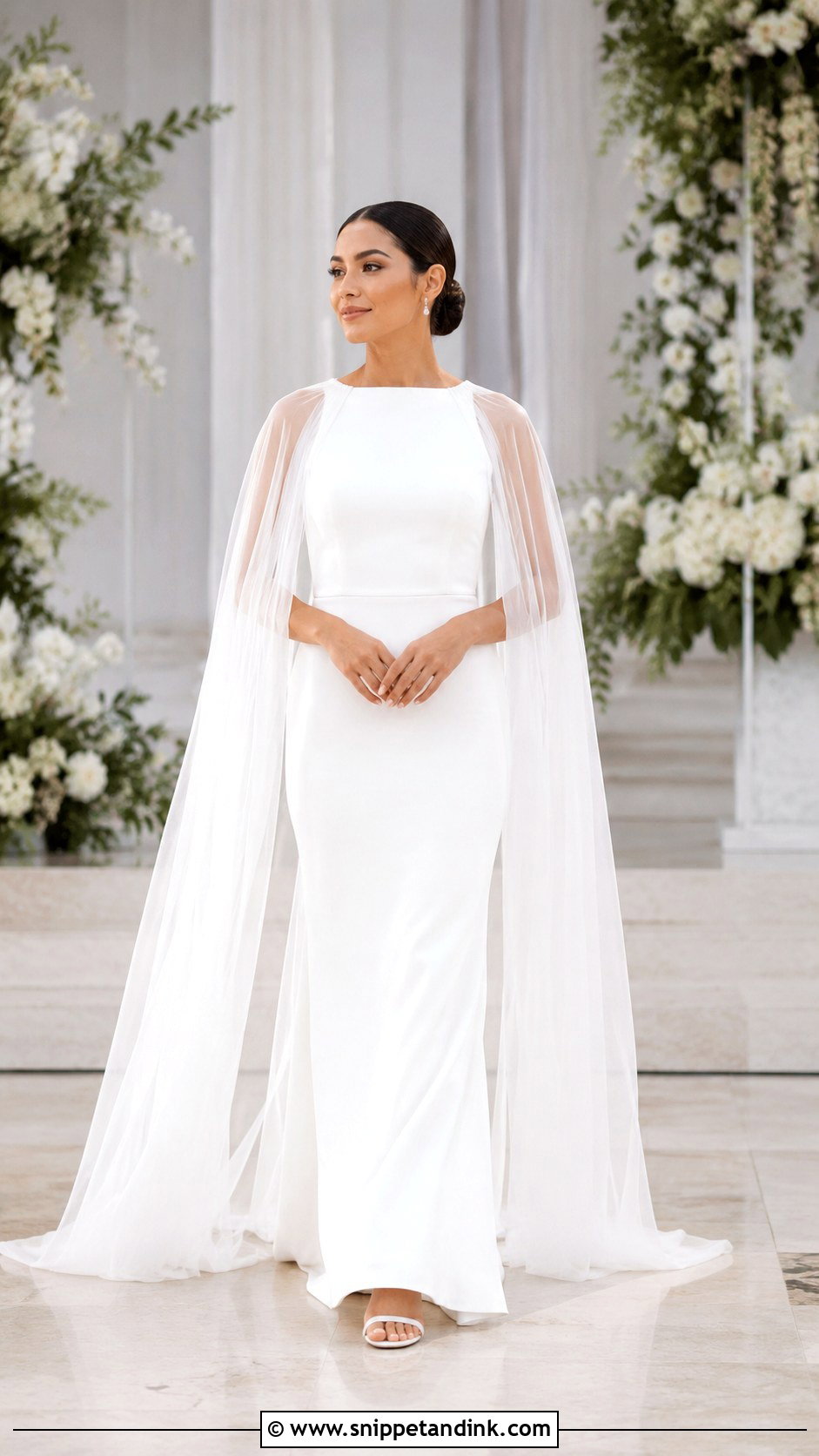
A cape replaces the veil and adds drama through movement as you walk. It can be sheer, lace, satin, pearl-detailed or softly embroidered, falling from the shoulders, the neckline or the back. Keep the gown underneath simple, like a column, fitted crepe or clean satin ball gown, so the whole look doesn’t get heavy. I’d ask how the cape attaches and test it during a hug. Minimal jewelry lets the cape lead the entrance.
21. White Bridal Gown With Detachable Overskirt
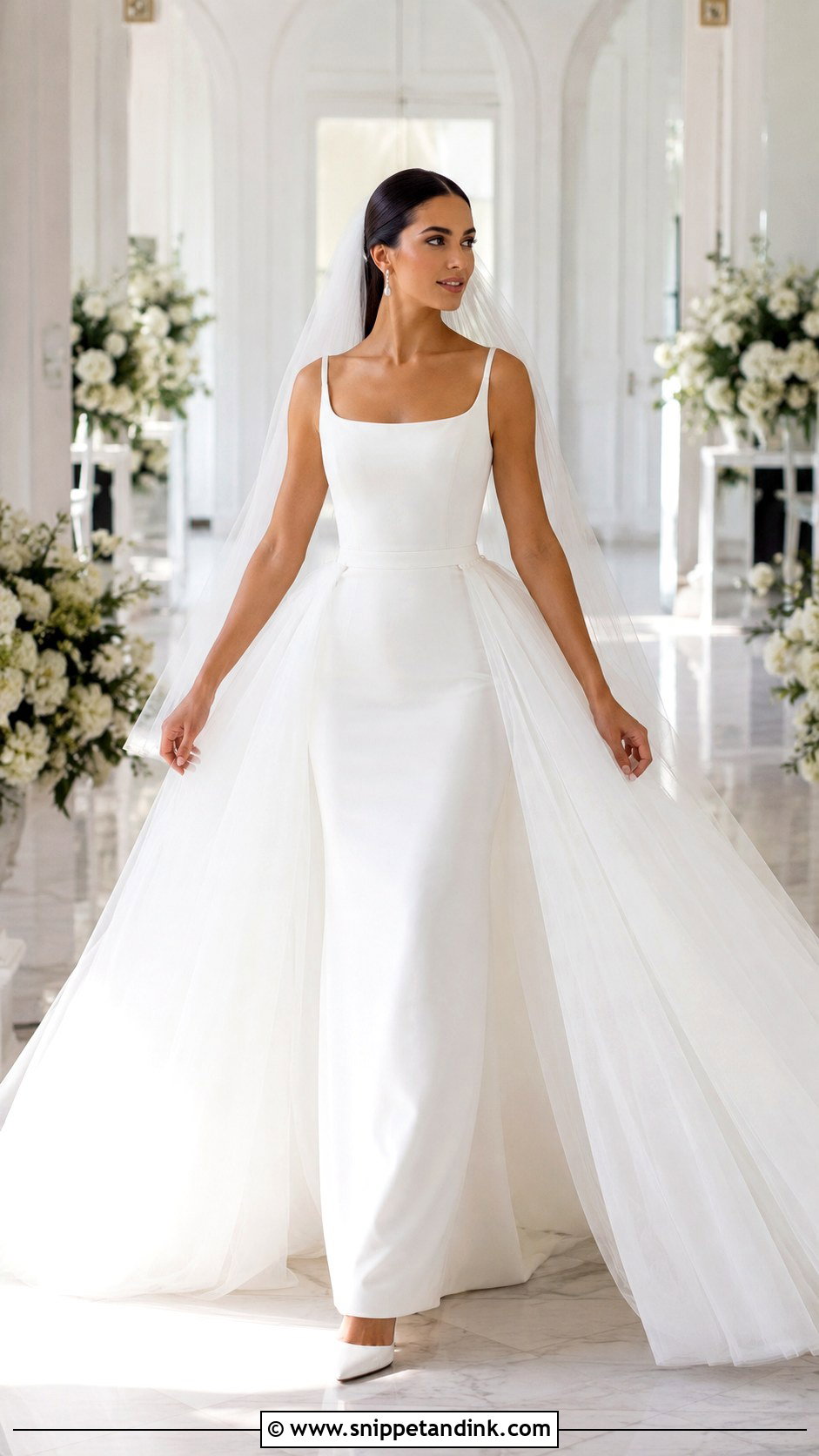
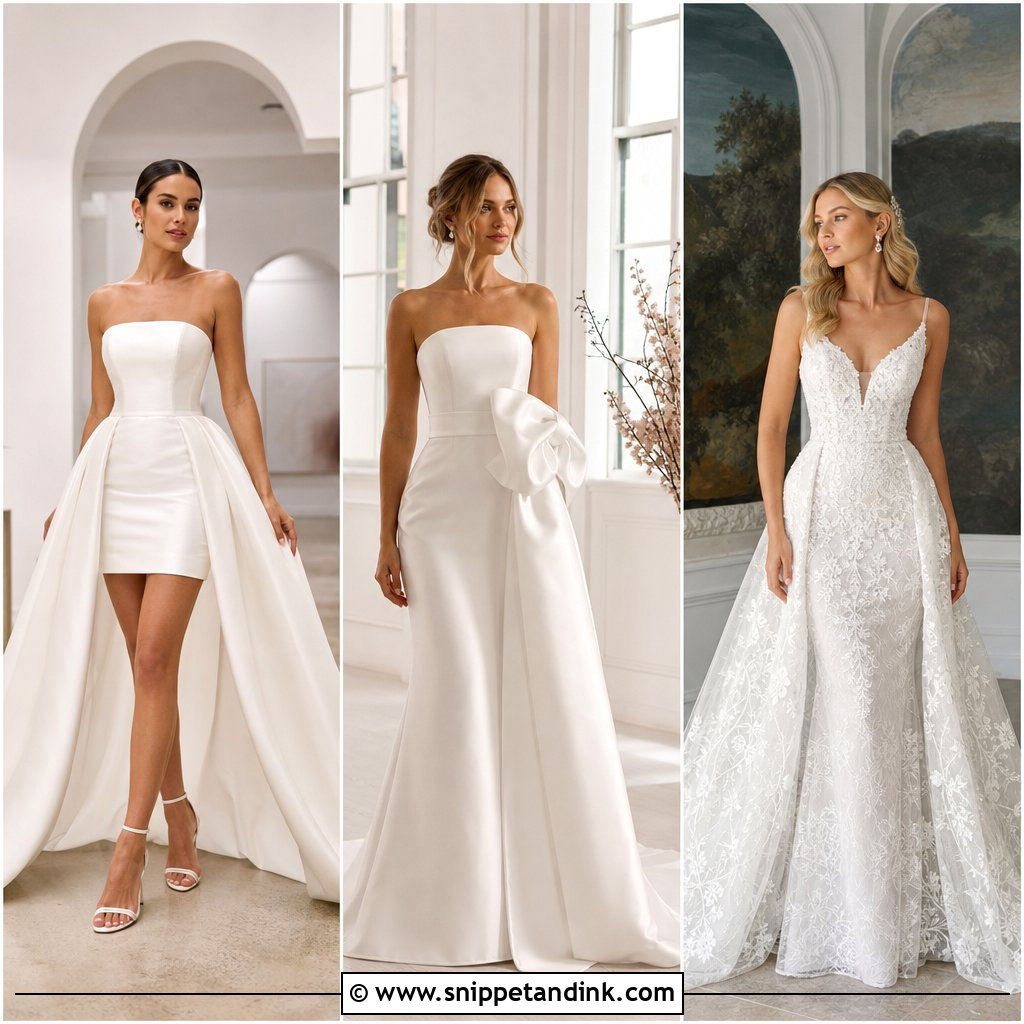
A detachable overskirt gives you two looks without a full change: volume for the aisle, then a slimmer silhouette for dancing. It works over fitted mermaids, columns and sleek strapless styles. Tulle, satin, organza or lace each change the mood of the ceremony half. Practise taking it off with whoever will help; hidden hooks under a full skirt can be fiddly in a hurry. A long veil and classic heels for the ceremony, statement earrings or a short veil for the reception.
22. White Bridal Gown With Bow
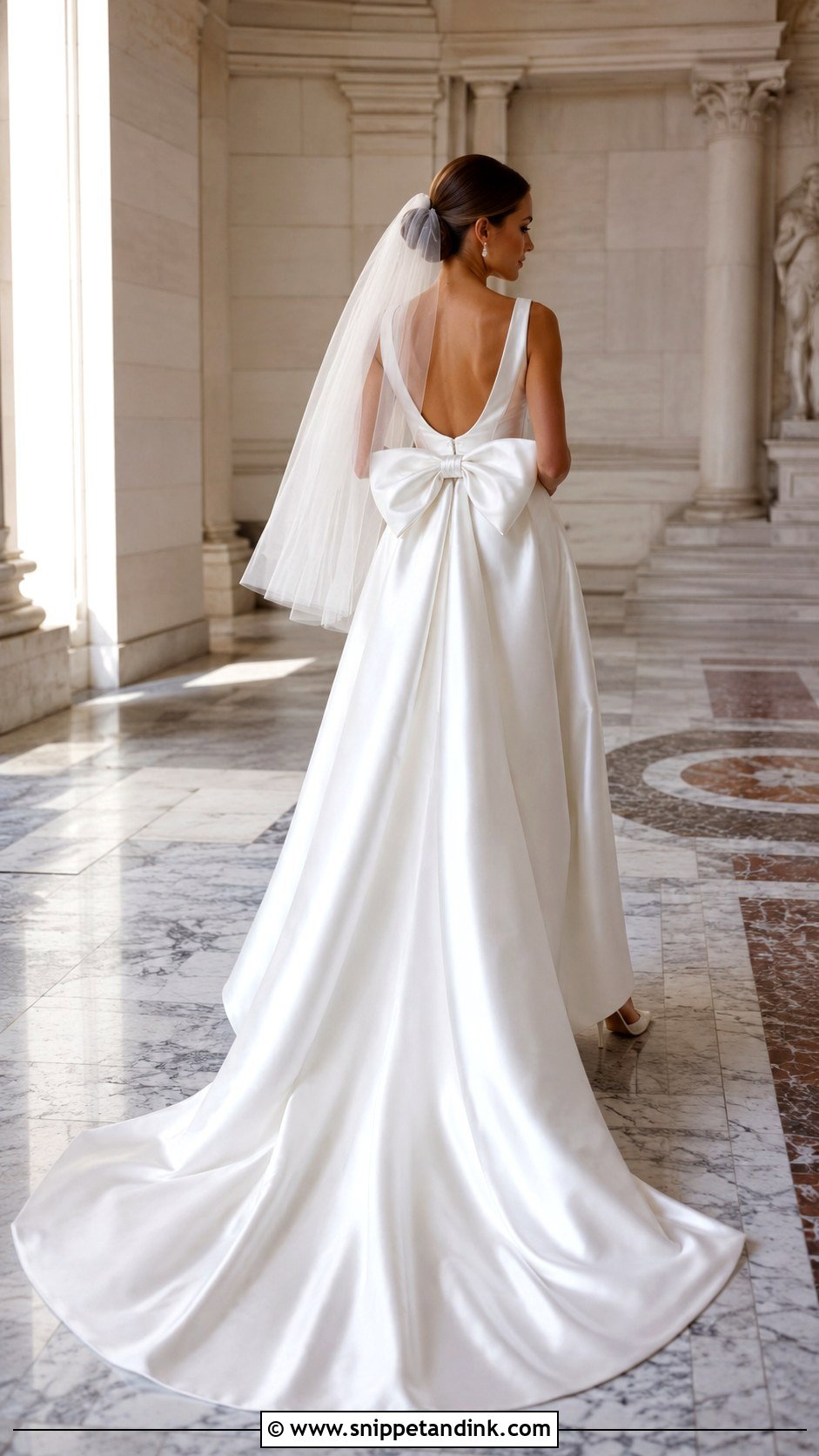
A bow adds a sweet but polished focal point at the back waist, shoulder, neckline or train. Large back bows look editorial; small waist bows feel delicate. Bows hold their shape only in structured fabrics like mikado, crepe or heavy satin, which is why I’d steer away from a big bow on a soft gown. If the bow sits at the back, choose an updo so it stays visible. Simple heels, pearl earrings and a smooth veil finish it.
23. White Bridal Gown With Slit
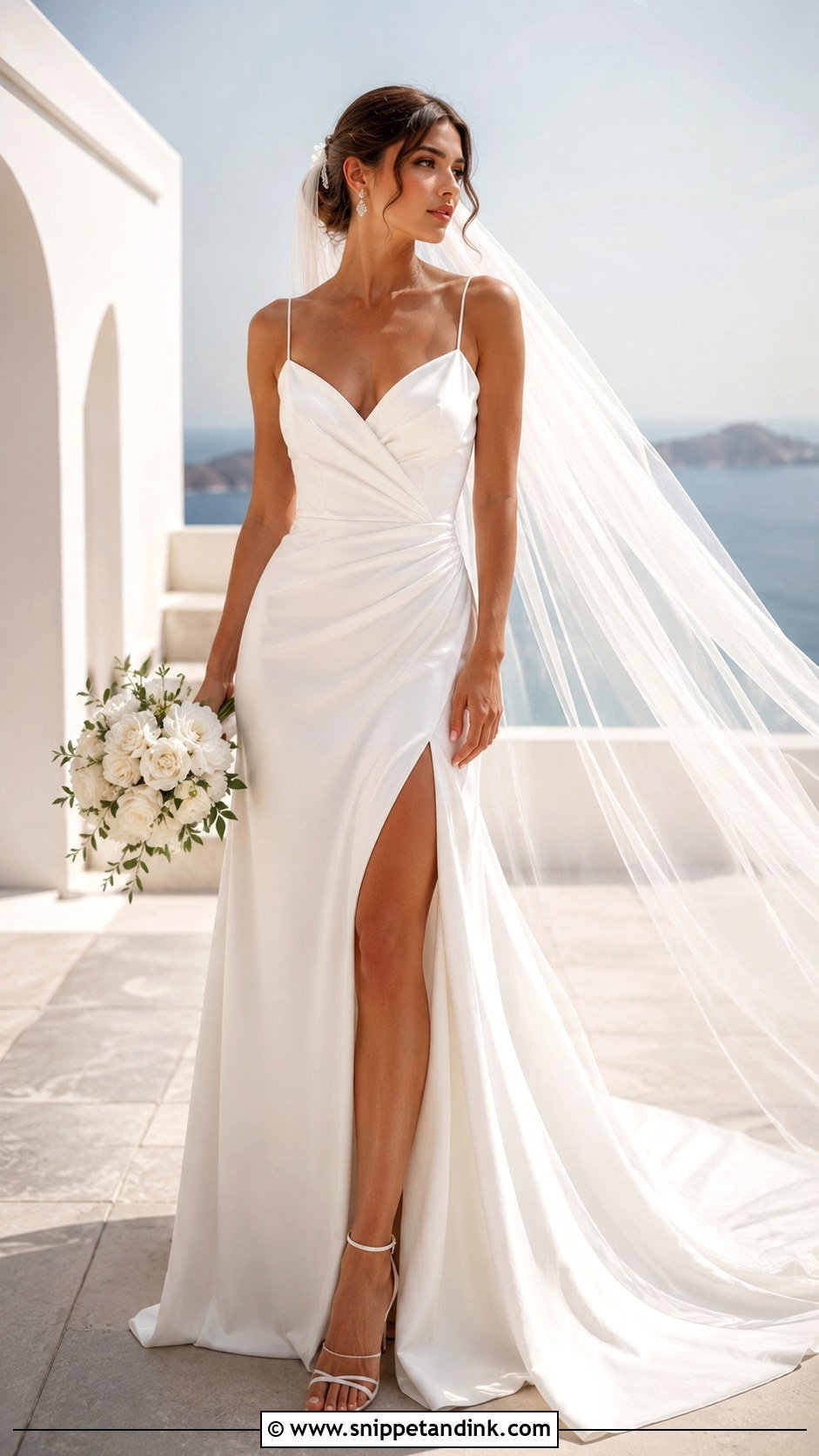
A slit adds movement and lets your shoes show. It can start subtly around the knee or rise higher for a bolder line, on A-lines, columns or flowing satin. Sit down in it at the fitting: a slit that sits demurely standing can open much higher when seated, and a few stitches fix that. Balance a high slit with a calmer neckline and accessories. A soft veil, clean earrings and a smooth hairstyle suit destination weddings and modern venues.
24. White Short Bridal Gown
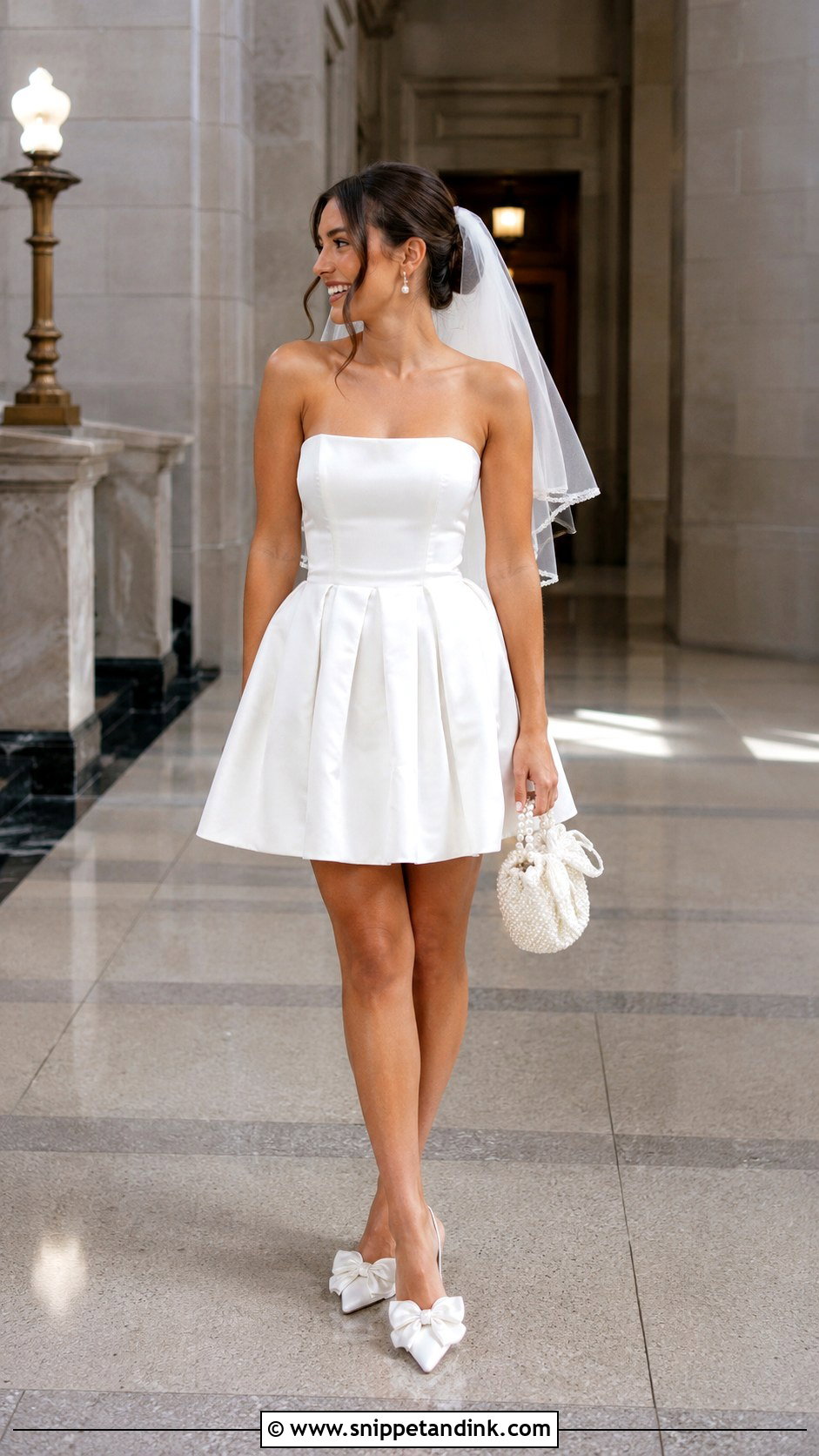
Short gowns are playful and practical for courthouse weddings, receptions, elopements and after-parties. They range from minis and tea lengths to structured satin, lace midis and tulle party dresses. With the shoes on show, this is the place for bow heels, pearl sandals or sleek pumps. I’d add one clearly bridal piece, such as a short veil, gloves or a small bridal bag, so the outfit reads as a wedding look rather than a party dress. Easy to dance in and easy to photograph on city streets.

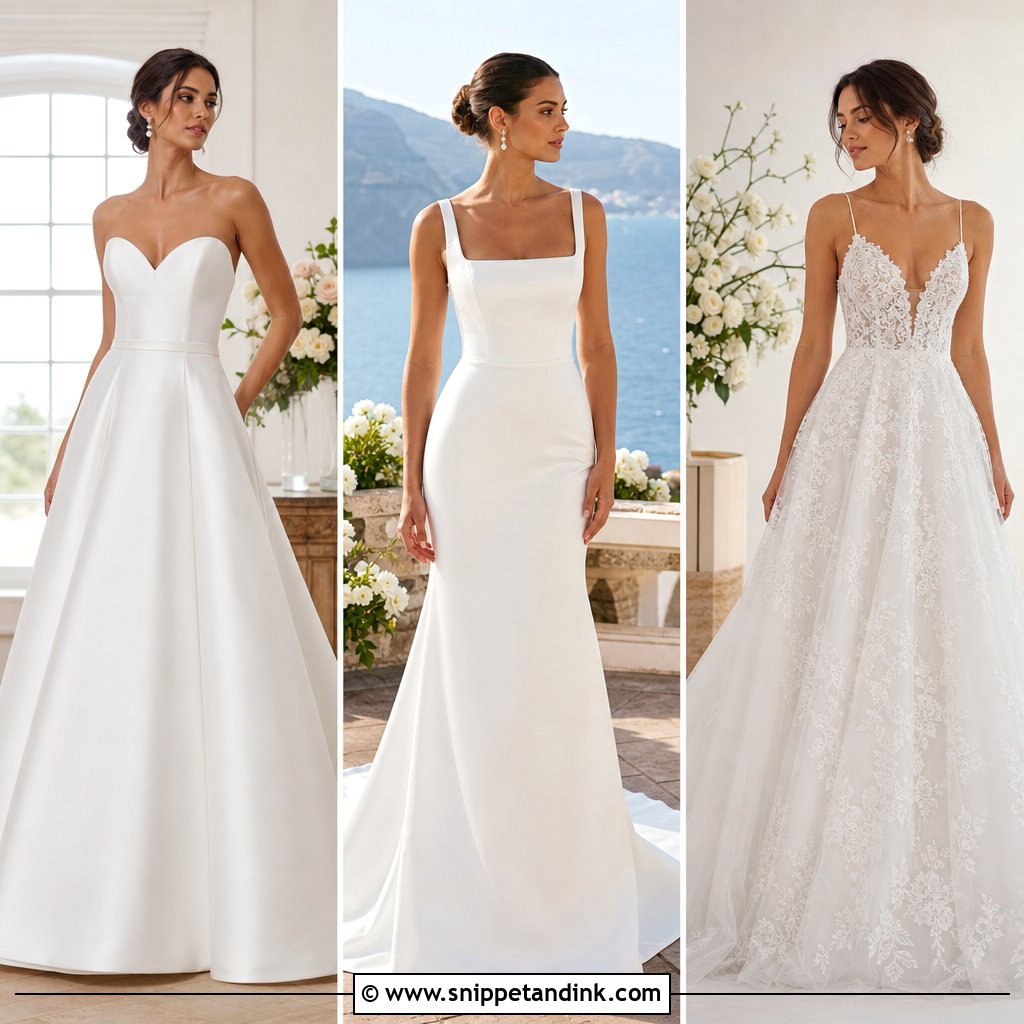
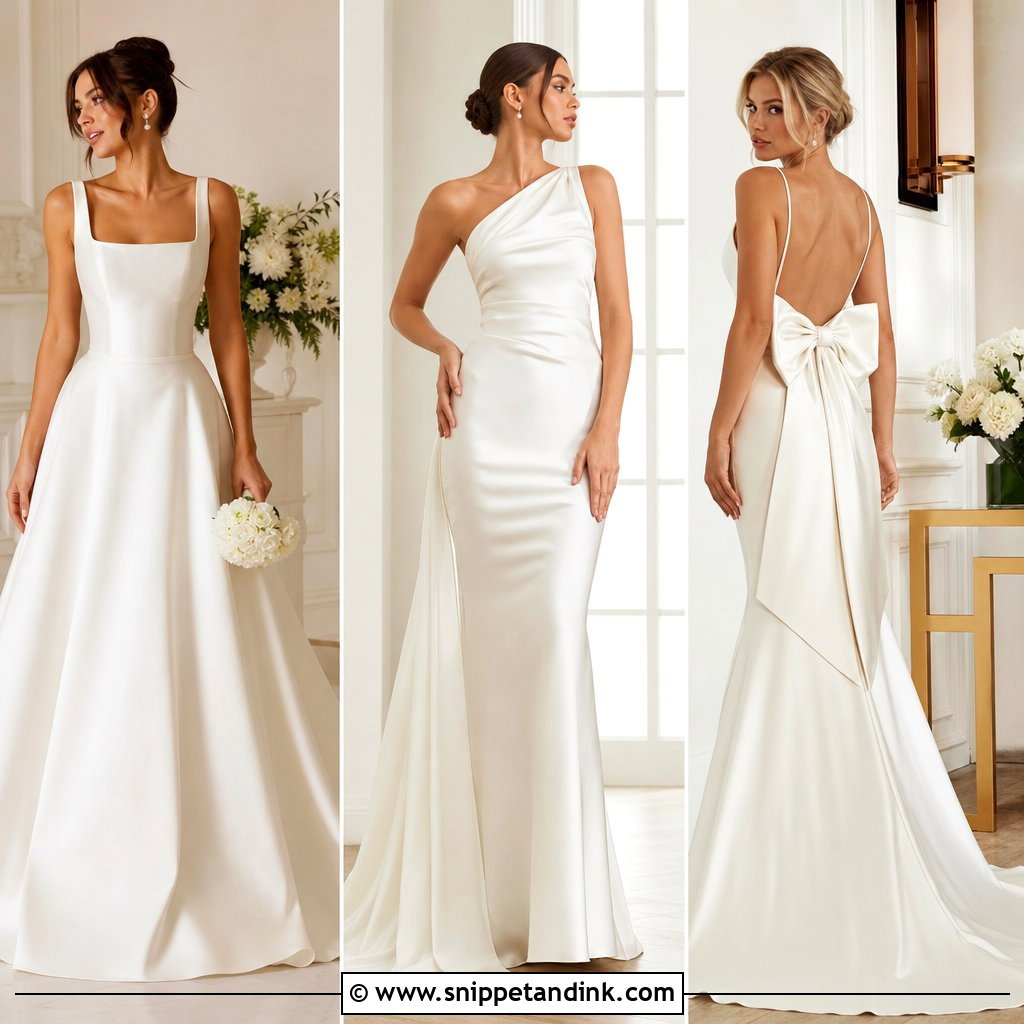


25. White Beach Bridal Gown
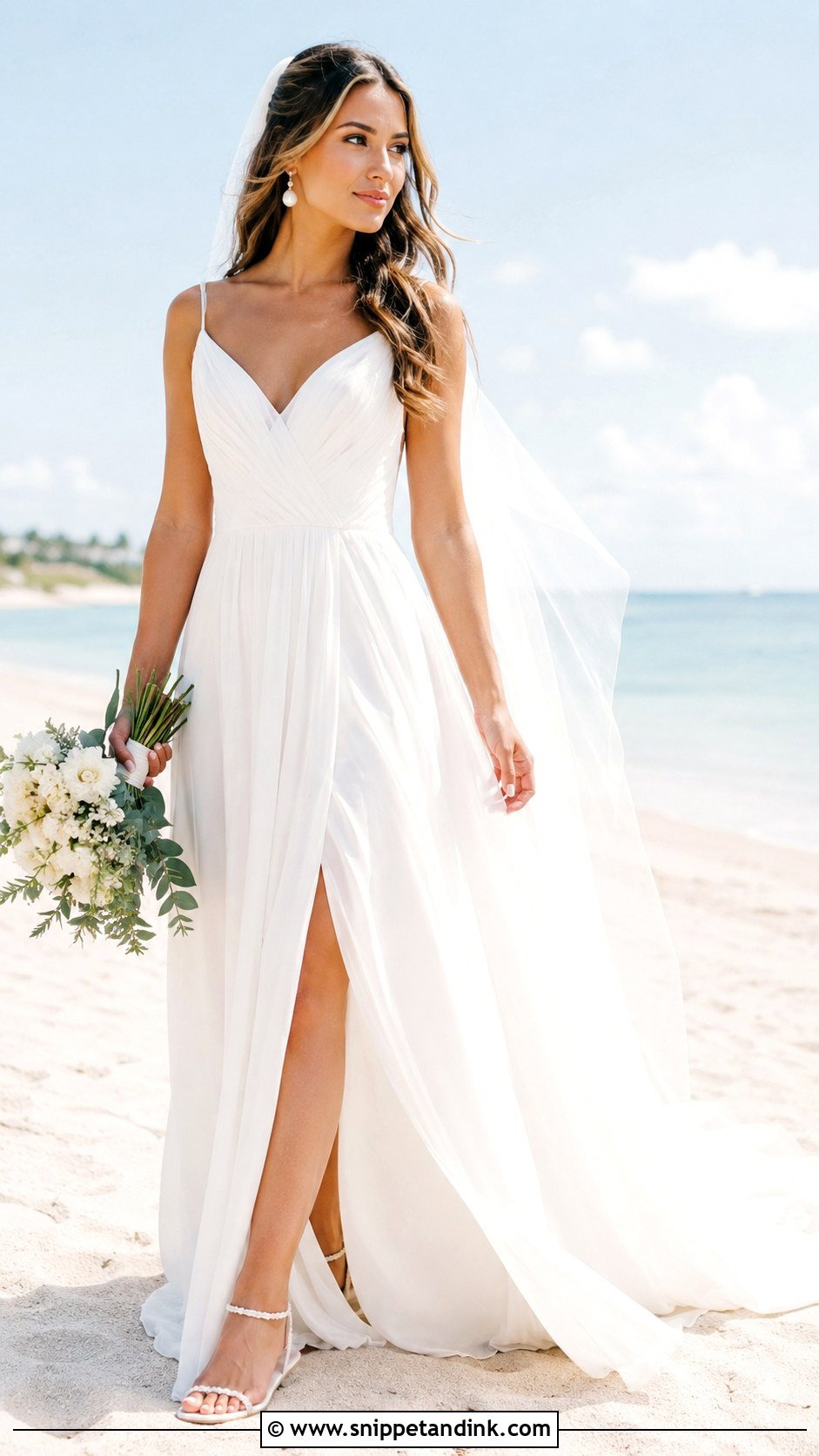
A white beach bridal gown should be light and breathable. Chiffon, soft tulle, light lace and flowing satin move well in sea air. Heavy skirts and long trains are hard work on sand, and they collect it, so I’d keep the train short or skip it. A simple A-line, slip, halter or lace sheath looks elegant without formality. Flat sandals or bare feet on the sand, soft waves, pearl earrings and a light veil that won’t fight the wind finish it.
What Happens to the Gown the Morning After
Most brides think about the gown up until the last dance and then it sits in a bag for months. That’s when the damage happens.
Champagne, sweat, sugar from cake and clear drinks can dry invisible and then turn yellow or brown over time, so get the gown to a cleaner who handles wedding dresses within a few weeks. Point out any spills you remember. Ask whether they hand-clean beading and appliqué rather than machine-processing it.
Storing it long term
- Fold it loosely with acid-free tissue in an acid-free box or a breathable cotton bag, never sealed plastic.
- Avoid hanging a heavy gown for years; its weight stretches the shoulders and straps.
- Keep it somewhere cool, dark and dry. Attics and basements swing too much in temperature and humidity.
- Open it once a year or so to check for spots and refold along different lines.
If you’d rather it had a second life, a good seamstress can turn part of the skirt into a christening gown, a pocket square or a lining for a keepsake bag.
Try the Shape You’d Never Pick
A wedding gown has to fit your body, your venue and the way you want to spend the day, not just look right in a photo. Some brides feel best in a satin ball gown; others in a slip, lace A-line, corset or breezy chiffon. Pay attention to fabric, neckline, movement and support, and look at the gown in daylight as well as under shop lights. Try at least one silhouette you’d have ruled out. It’s surprising how often that’s the dress.
You'll Like These Ideas:









Leave a Reply