
A sheath follows the line of your body from shoulder to hem with no skirt volume to hide behind, which is exactly why I love fitting them and why they ask more of the fabric and the tailoring than any other silhouette. Below are twenty complete looks, from plain satin and structured crepe to lace, beadwork, statement sleeves and convertible details like detachable trains and overskirts. Each one comes with the veil, shoes, jewelry and flowers I’d pair with it, plus the fitting check I’d run before you say yes. Accessories shift a sheath more than you’d expect: a cathedral veil makes it formal, while pearl studs and flat sandals make the same gown feel relaxed.
Reading Your Hips Before You Read the Label
When I pull sheaths for an appointment, I size from the hip measurement, not the bust and not the number you wear on the high street. Bridal sizing runs small, and a sheath has no skirt fullness to absorb a difference, so the hip is where it either skims or clings. A seamstress can take in a bust or waist easily. Letting out the hips of a sheath is often impossible, because most bridal seams carry very little spare fabric.
Fabric weight changes what you can get away with. Heavy crepe and thicker satin glide over the body and hide a lot; thin satin and jersey show every curve and every seam of your underwear. If you want a sheath but don’t want to feel watched, start with a weighty crepe.
What I look at in the first try-on
- Horizontal pull lines across the hips or stomach, which mean the gown is a size too small there.
- Where the waist seam lands against your actual waist, especially if you are short or long in the body.
- Whether you can take a normal stride. A sheath that hobbles you in the shop will hobble you on the aisle.
- How the back looks when you sit. Fitted fabric shows creases most at the lower back.
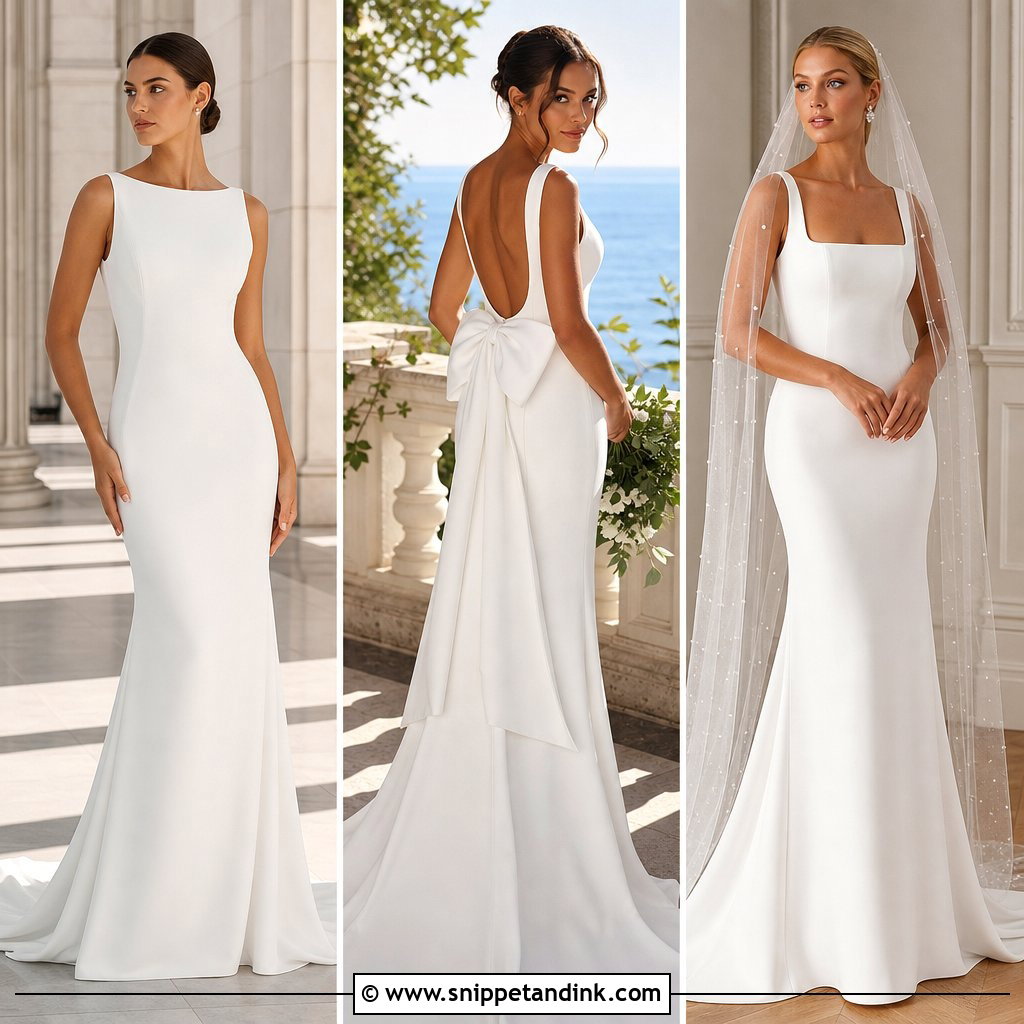
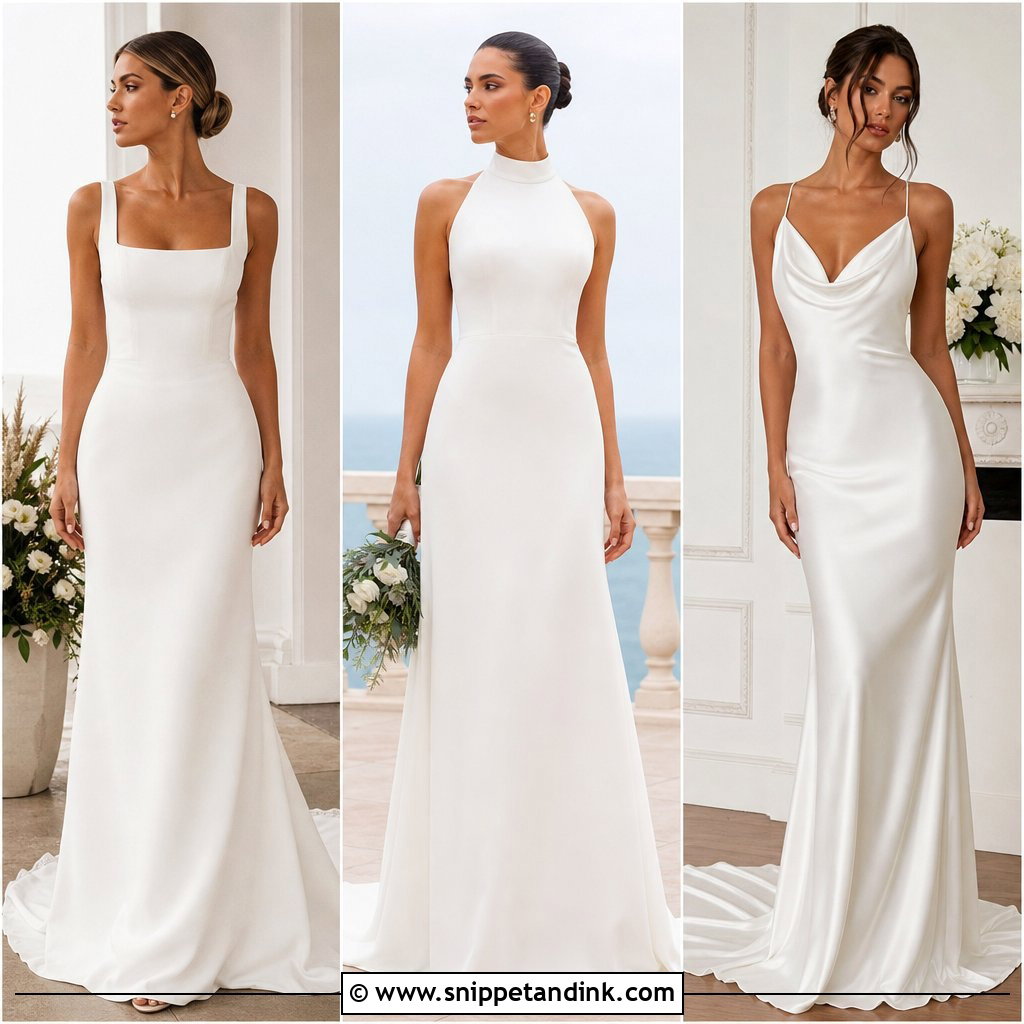
1. Satin Square Neck Sheath Wedding Gown
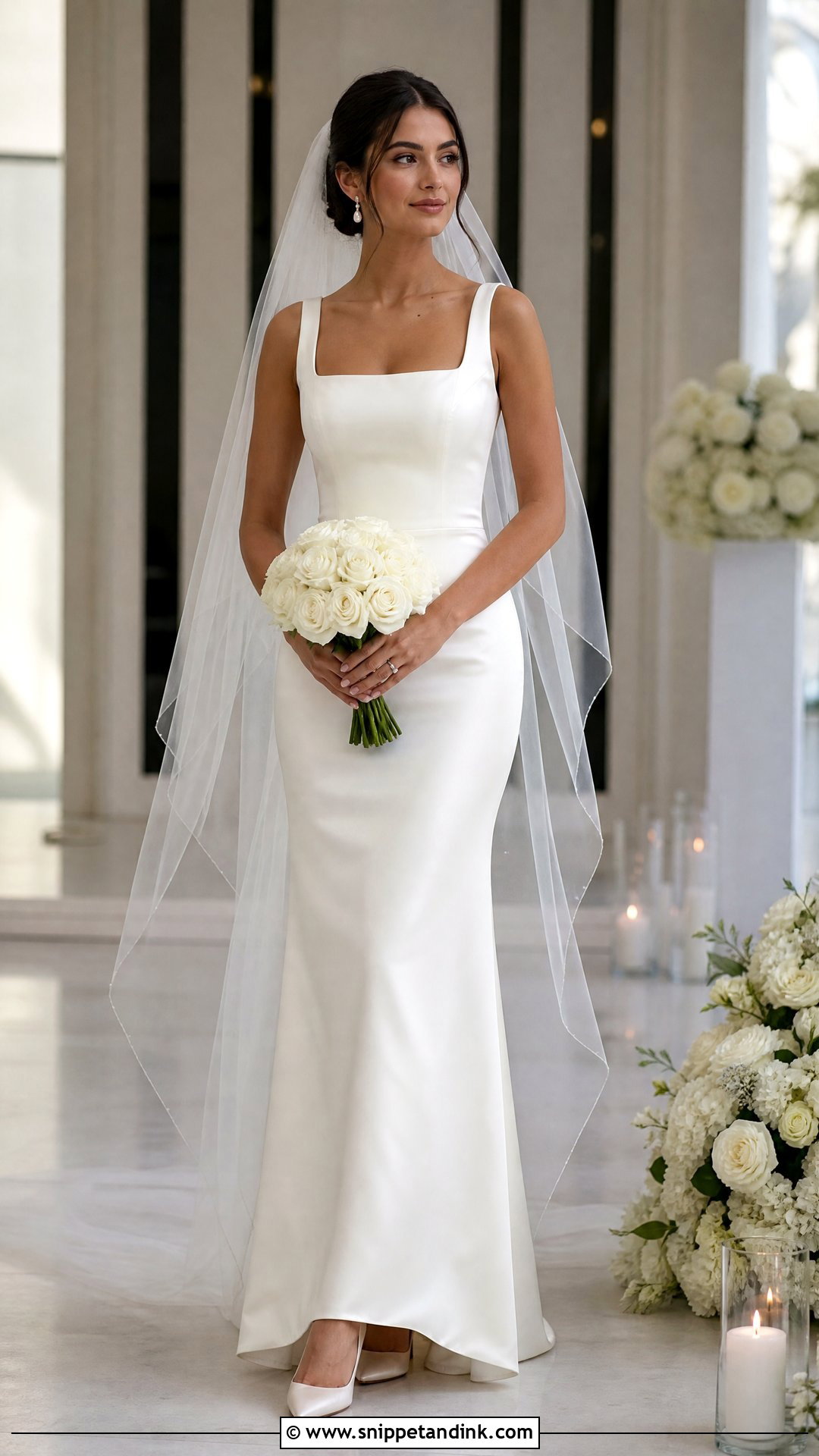
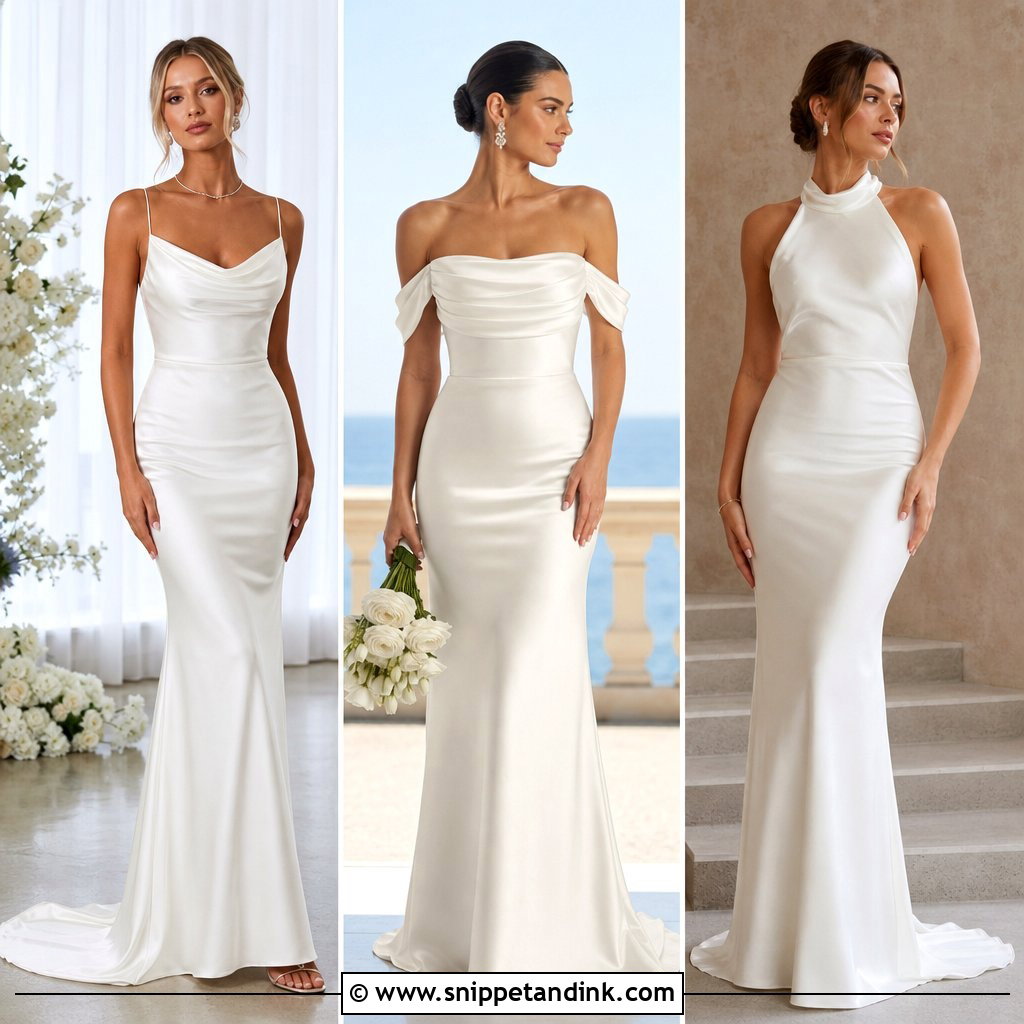
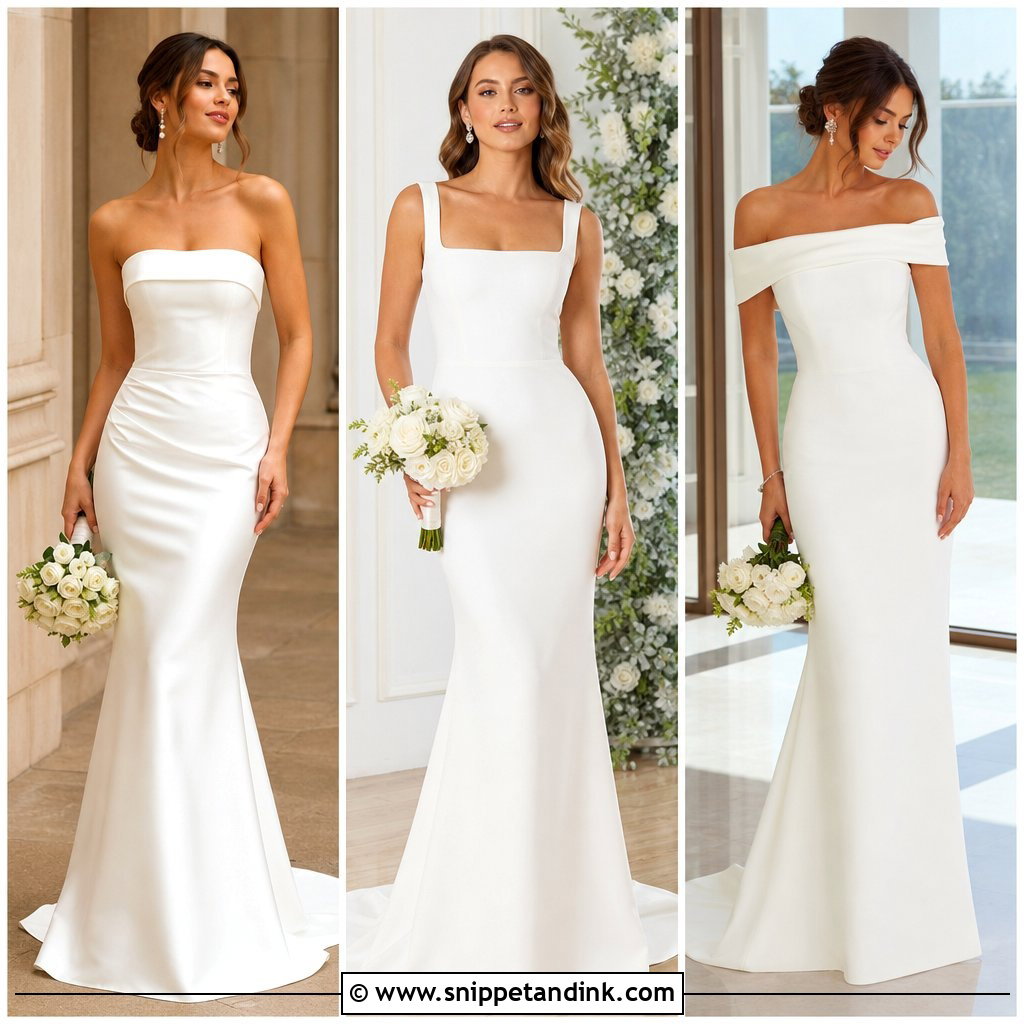
Satin is the least forgiving fabric a sheath can be cut in, and I mean that kindly. It shows every seam, every pucker at the zip and the edge of every undergarment, so the square neck has to sit dead flat across the chest before anything else matters. Wide straps and proper bodice seams help it stay put, and a low square back that echoes the front is worth asking about. I’d style it with pearl drops, a sleek low bun and a fingertip veil edged in narrow satin. Pointed ivory pumps suit an indoor ceremony; on grass, swap to block-heel sandals. A compact bunch of white roses or calla lilies keeps the lines clean. Bring your actual underwear to every fitting, not a stand-in pair.
2. Lace Long Sleeve Sheath Wedding Gown
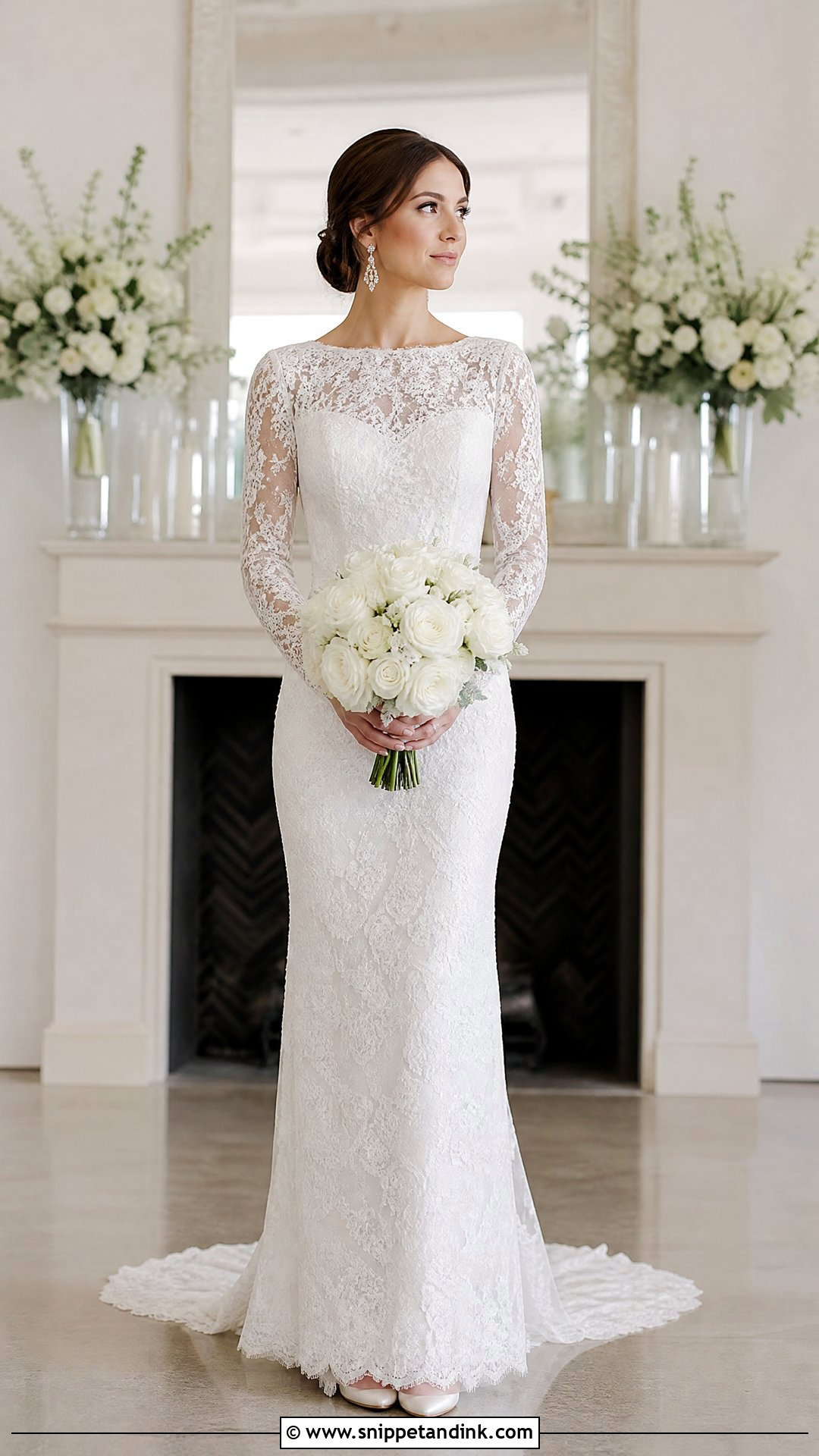
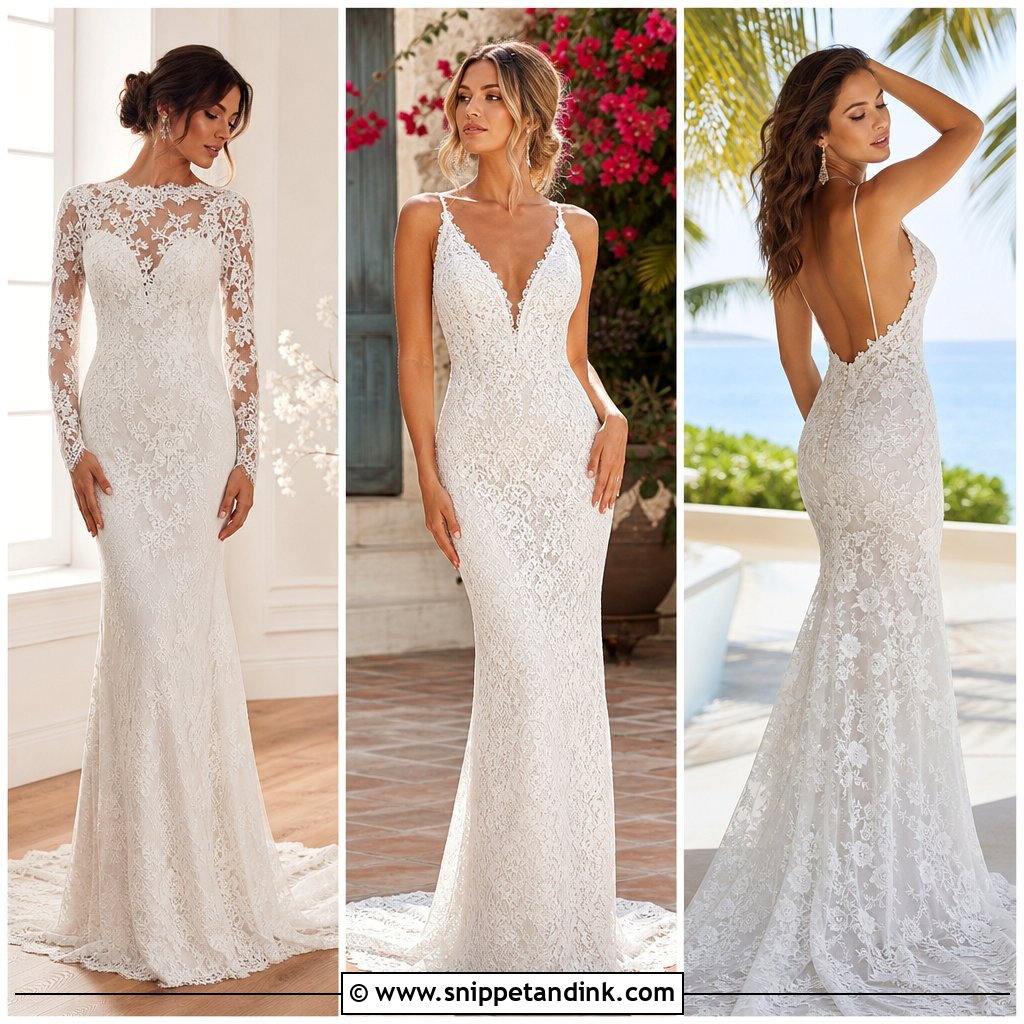
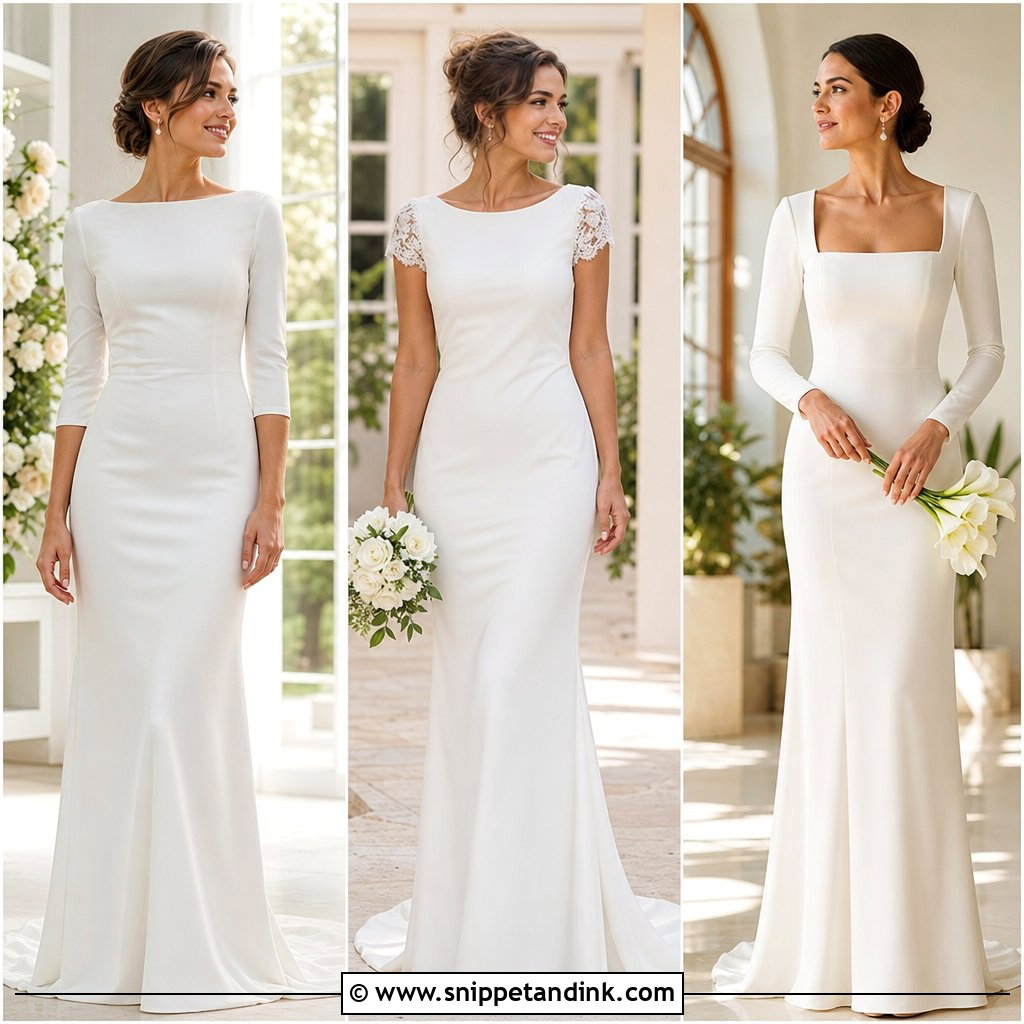
Lace sleeves are the part of this gown I test hardest. Lace has almost no give, so a sleeve fitted while your arms hang straight can drag the whole bodice upward the moment you hug someone. At the fitting I ask brides to reach forward and raise both arms over their head; if the waist seam lifts, the armhole needs recutting, not the sleeve taking in. Lighter lace on the arms, appliqués placed over a soft lining, and a bateau or gentle V neckline keep the dress balanced. A plain chapel veil, crystal studs, a smooth chignon and closed ivory heels let the lace do the talking, and garden roses with a little greenery are enough in your hands.
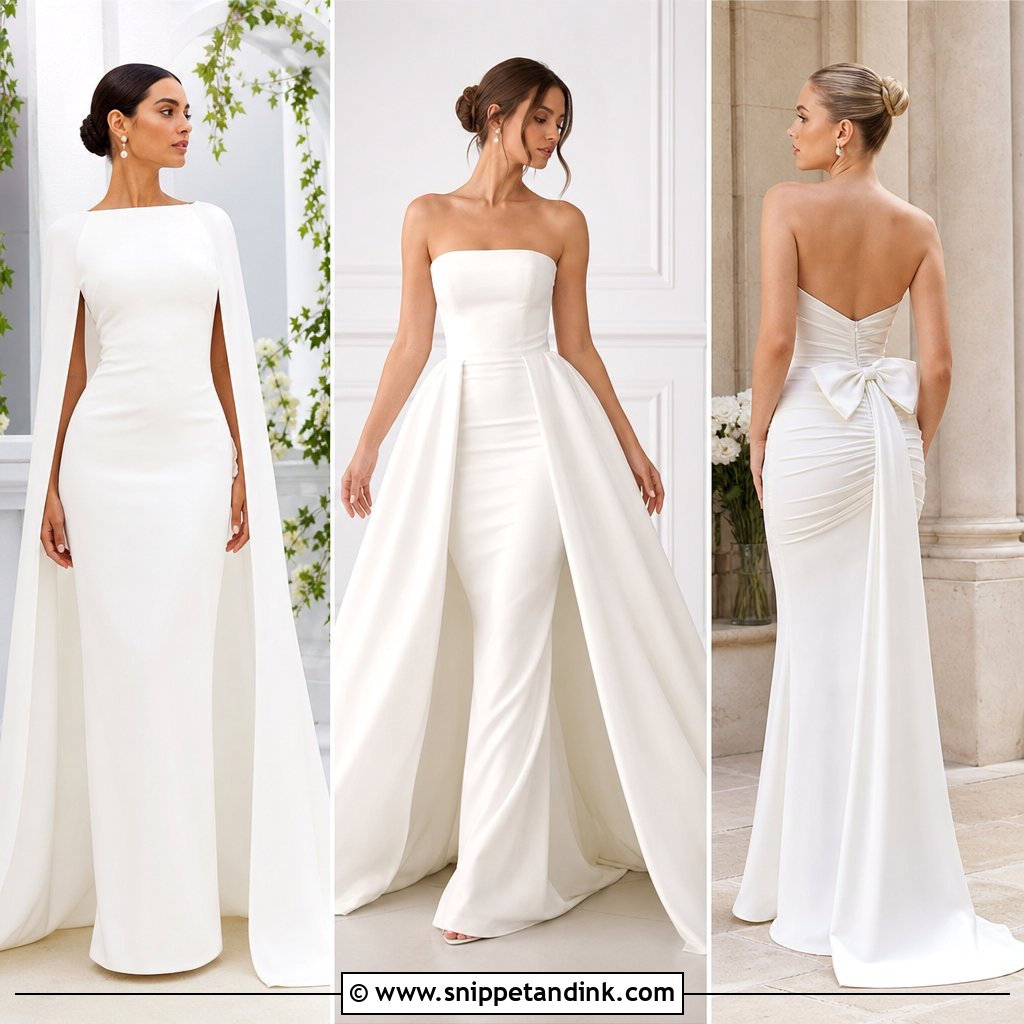
3. Strapless Crepe Sheath Wedding Gown
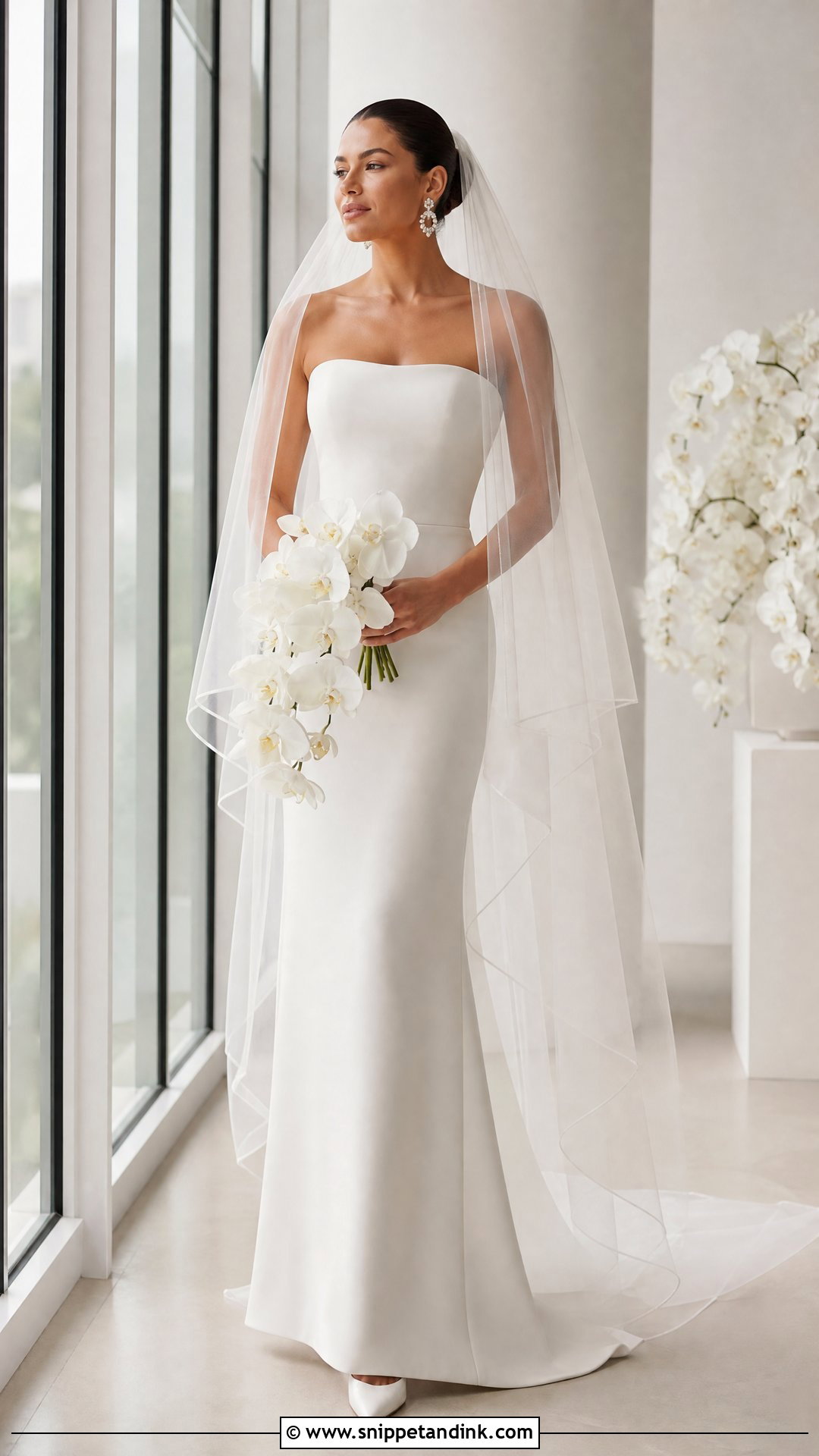
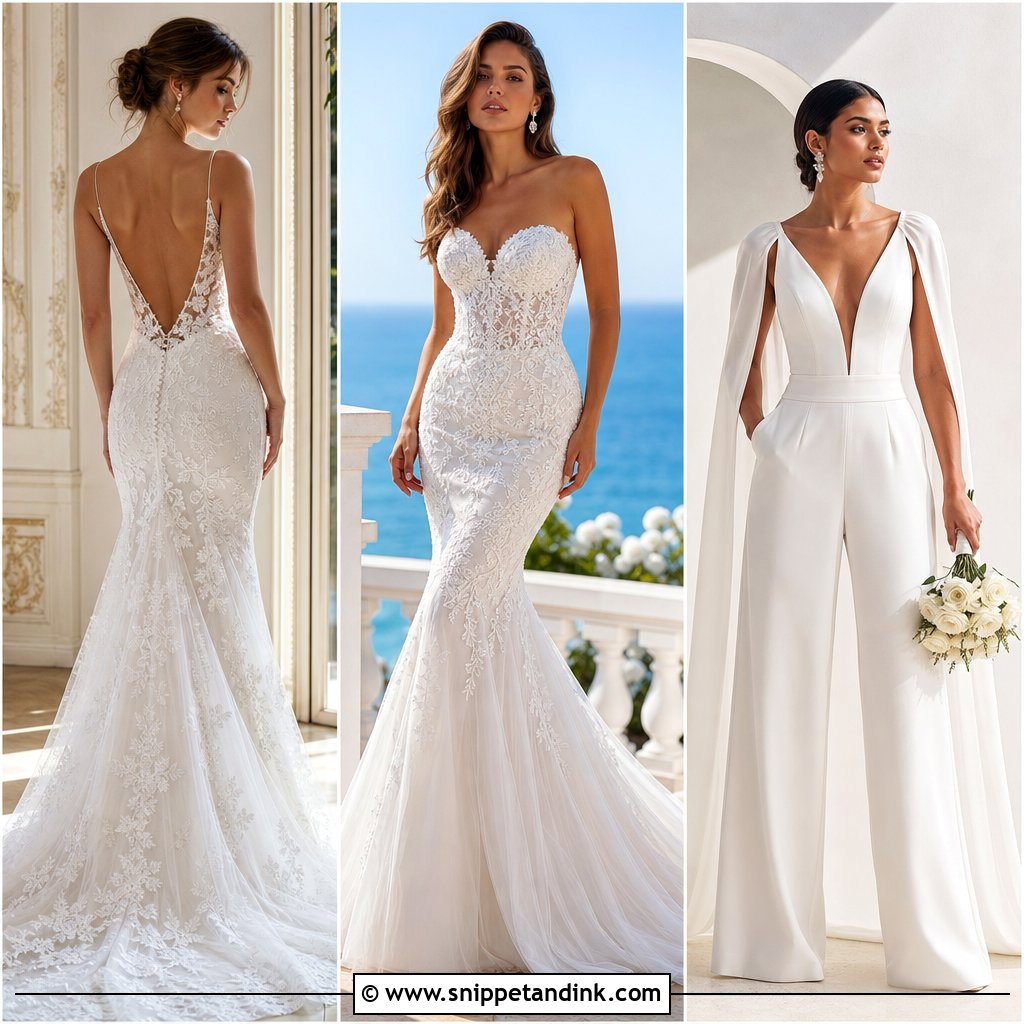
Strapless crepe looks simple and is engineered underneath. The bodice holds up because of boning and an inner waist stay that grips at your natural waist, so that stay is the first thing I check, before the neckline or the hem. A straight neckline reads architectural; a soft sweetheart reads gentler. Pick one focal point for jewelry, a collarbone necklace or bold earrings, and leave the other off. A smooth updo shows the shoulders, and a detachable blusher for the ceremony, pointed pumps and orchids or white tulips finish it. If you find yourself hitching the top up during a fitting, it is too loose, however comfortable it feels standing still.
4. Off The Shoulder Sheath Wedding Gown
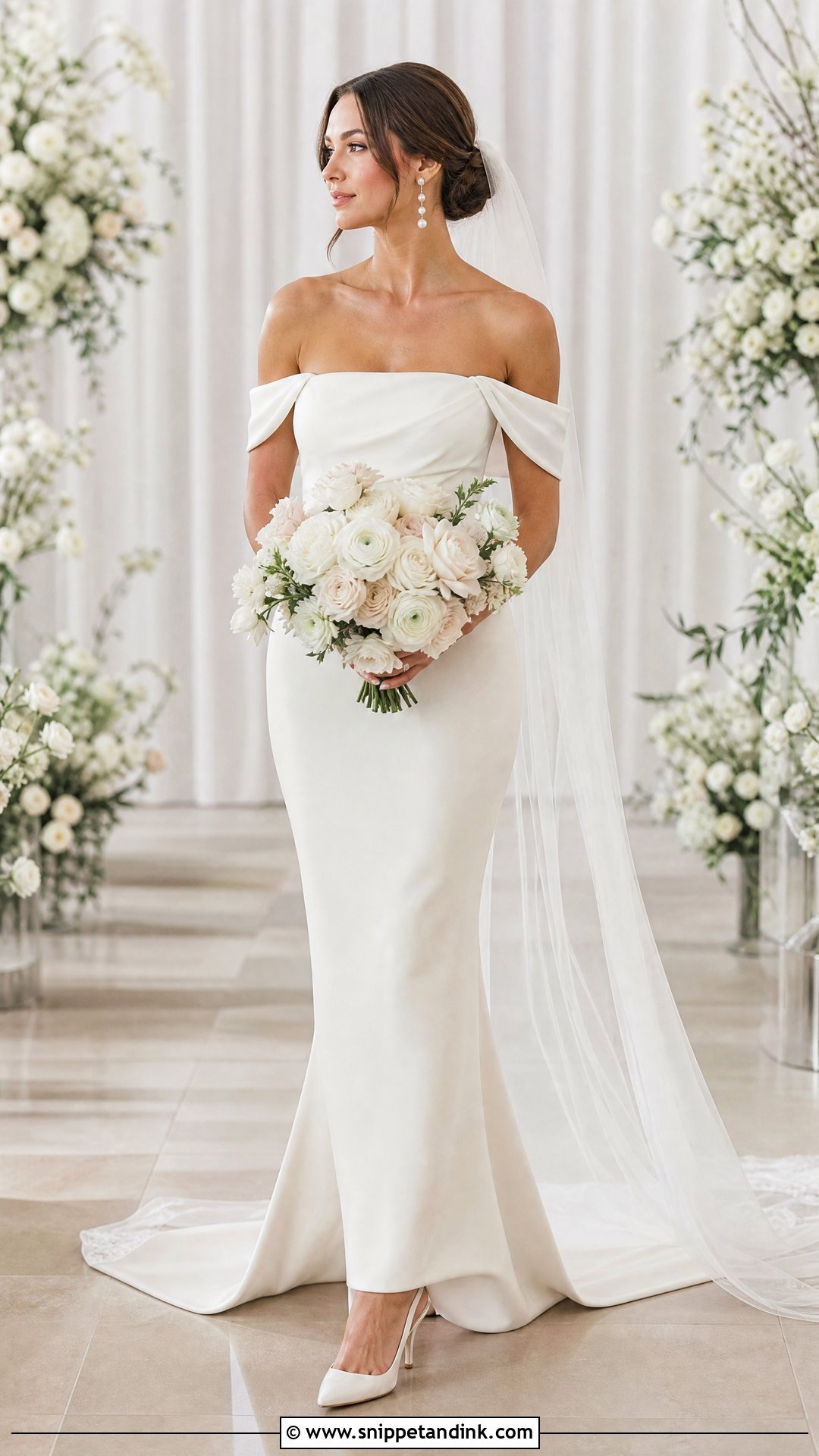
Off-the-shoulder drape frames the collarbone well, but the trade is arm movement. With the sleeve band sitting on your upper arm, you can’t lift much above chest height, so I always ask how much dancing you plan and whether you’ll want to throw your arms round people. Crepe or satin sleeves look cleaner; lace leans traditional. Hidden elastic, a silicone grip strip or a tiny button loop often fixes slipping. A centre-parted bun, small drop earrings and a fine bracelet keep the neckline open, with ivory slingbacks, a medium veil set below the bun and a loose bouquet of roses and ranunculus.
5. Beaded Art Deco Sheath Wedding Gown
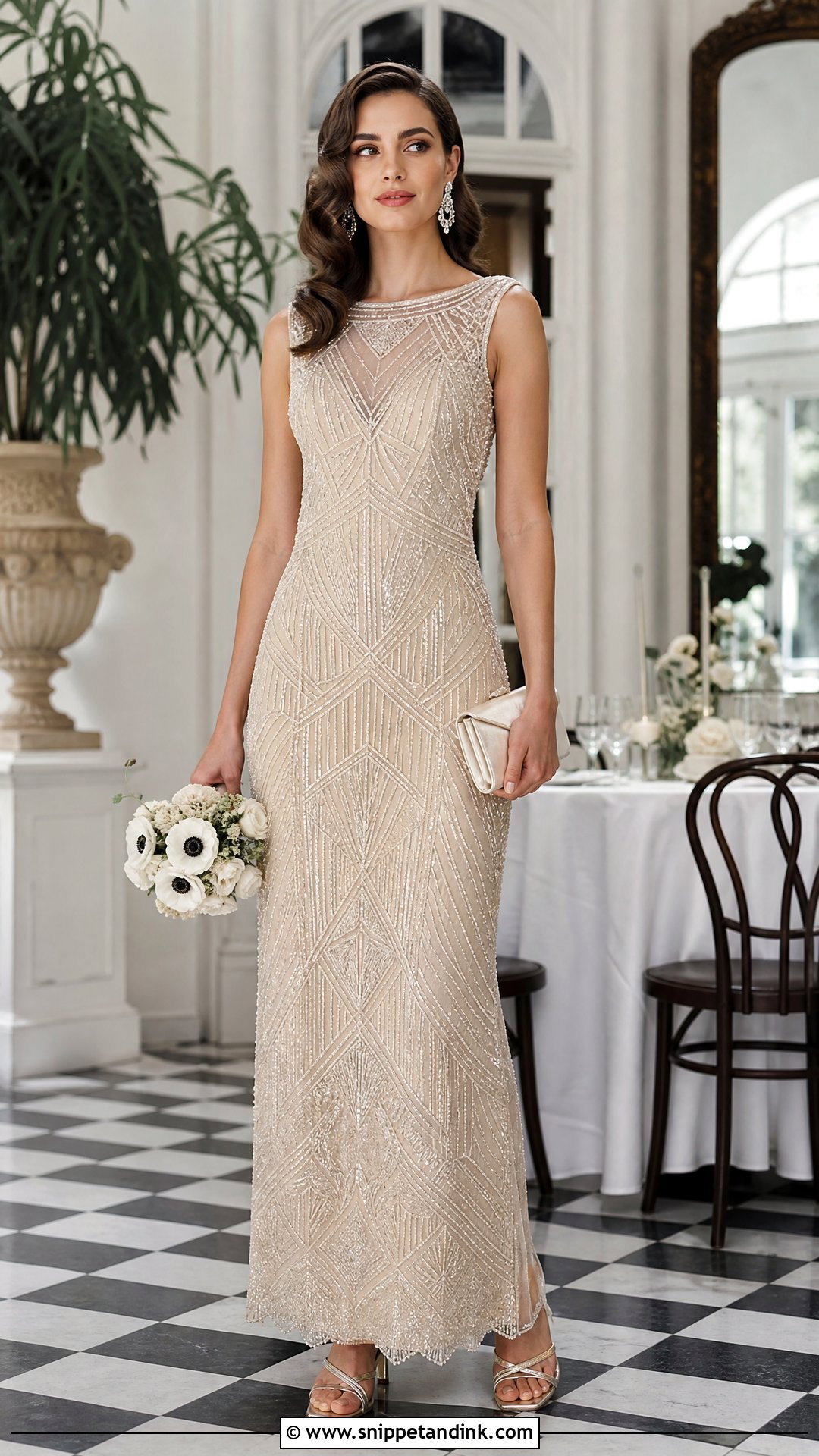
Beaded Art Deco gowns are heavy. A fully beaded sheath can weigh several times more than a plain crepe one, and all that weight hangs from your shoulders and pulls the skirt longer through the day, so I have hems on beaded gowns set slightly shorter than you’d guess. Vertical or geometric patterns elongate the body; a champagne lining under ivory beads makes the design visible in photos. Keep the rest quiet with crystal earrings, metallic low heels and a small satin clutch. Polished waves or a smooth low bun and a plain tulle veil without lace trim balance the sparkle, and white anemones or roses finish it.
6. Cowl Neck Satin Sheath Wedding Gown
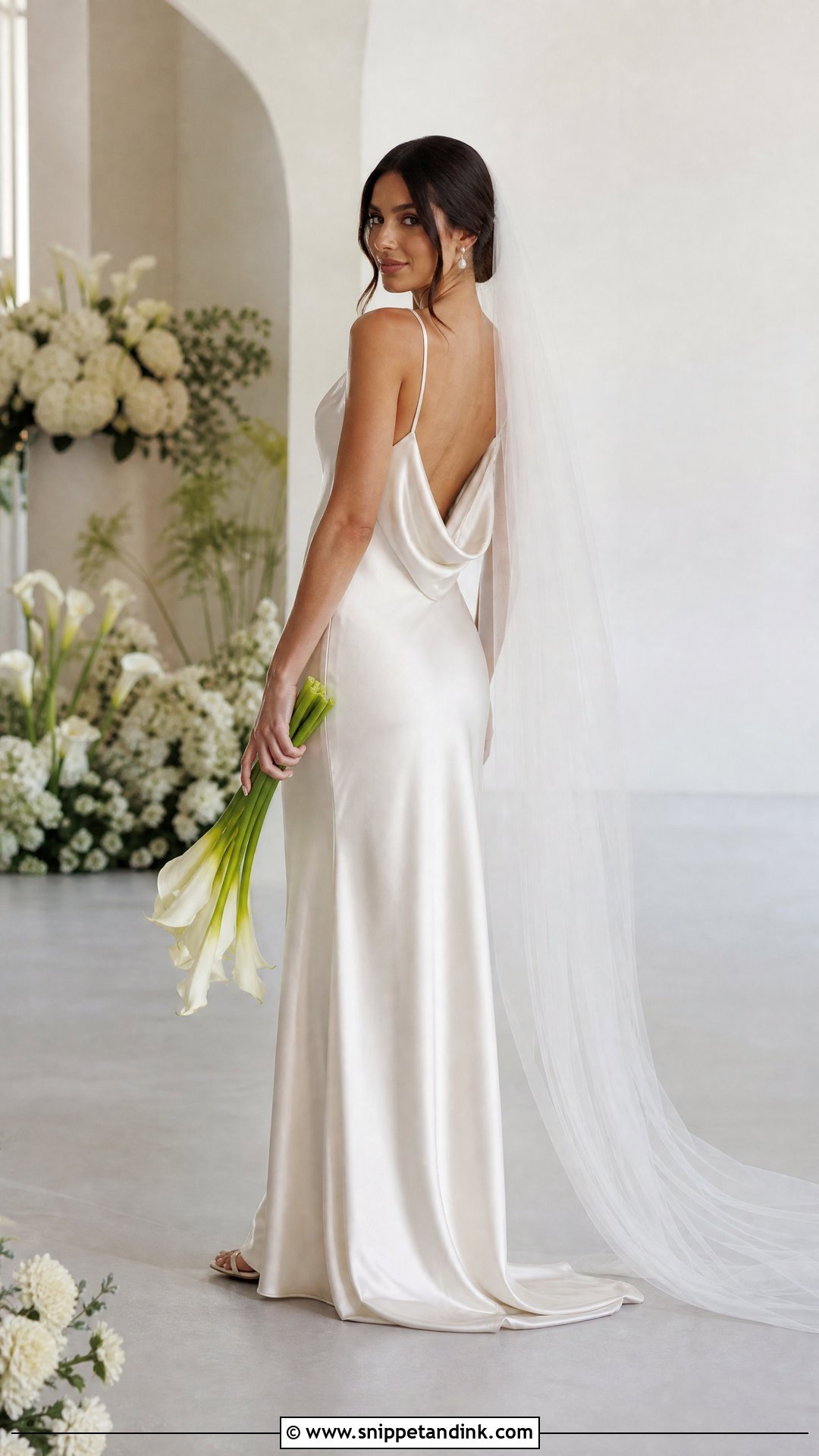
A cowl neck on a satin sheath gown is cut on the bias, and bias satin is fussy. Shortening a strap by even a small amount changes where the folds land, so I have the tailor adjust straps with you standing in the shoes you’ll wear. Thin straps feel light; wider ones give more support if you need it. A low cowl back or covered buttons gives guests something to look at during the walk. Pearl earrings, barely-there sandals, a lightweight chapel veil and a loose low bun suit the fluid fabric, with long-stemmed calla lilies or one white orchid spray in hand.
7. High Neck Illusion Sheath Wedding Gown
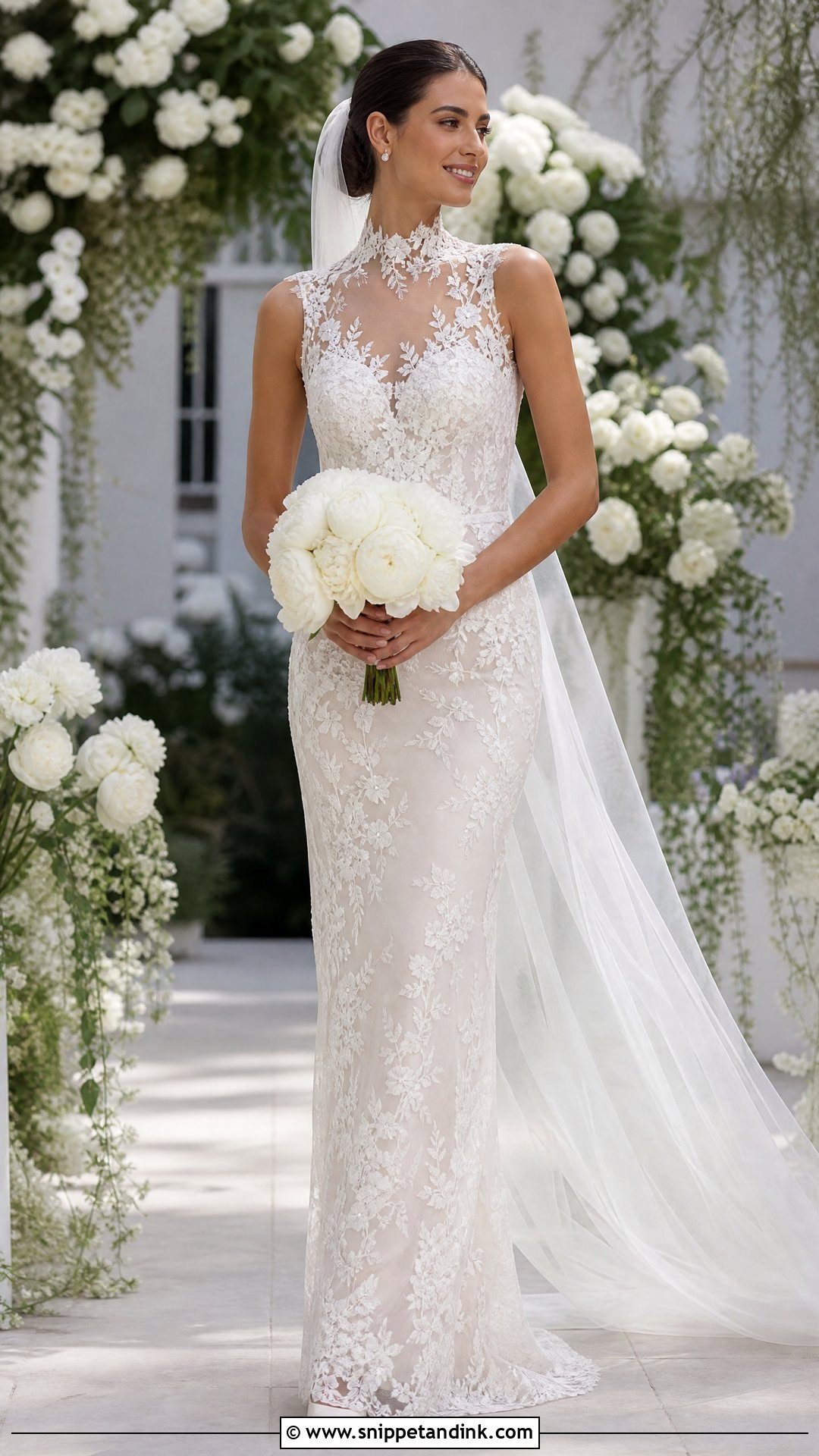
An illusion high neck gives coverage without heaviness, because the lace or beading floats on sheer tulle over your skin. The detail I check that most people miss is the tulle colour: if it is a shade off from your skin it shows as a visible band, so we test it in daylight before the order goes in. A sleeveless design keeps it fresh; fitted illusion sleeves add more cover. Skip the necklace entirely and wear small crystal studs, a neat bun, a comb veil and pointed ivory shoes. A rounded bouquet of peonies or roses with little foliage keeps attention near your face.
8. V Neck Spaghetti Strap Sheath Wedding Gown
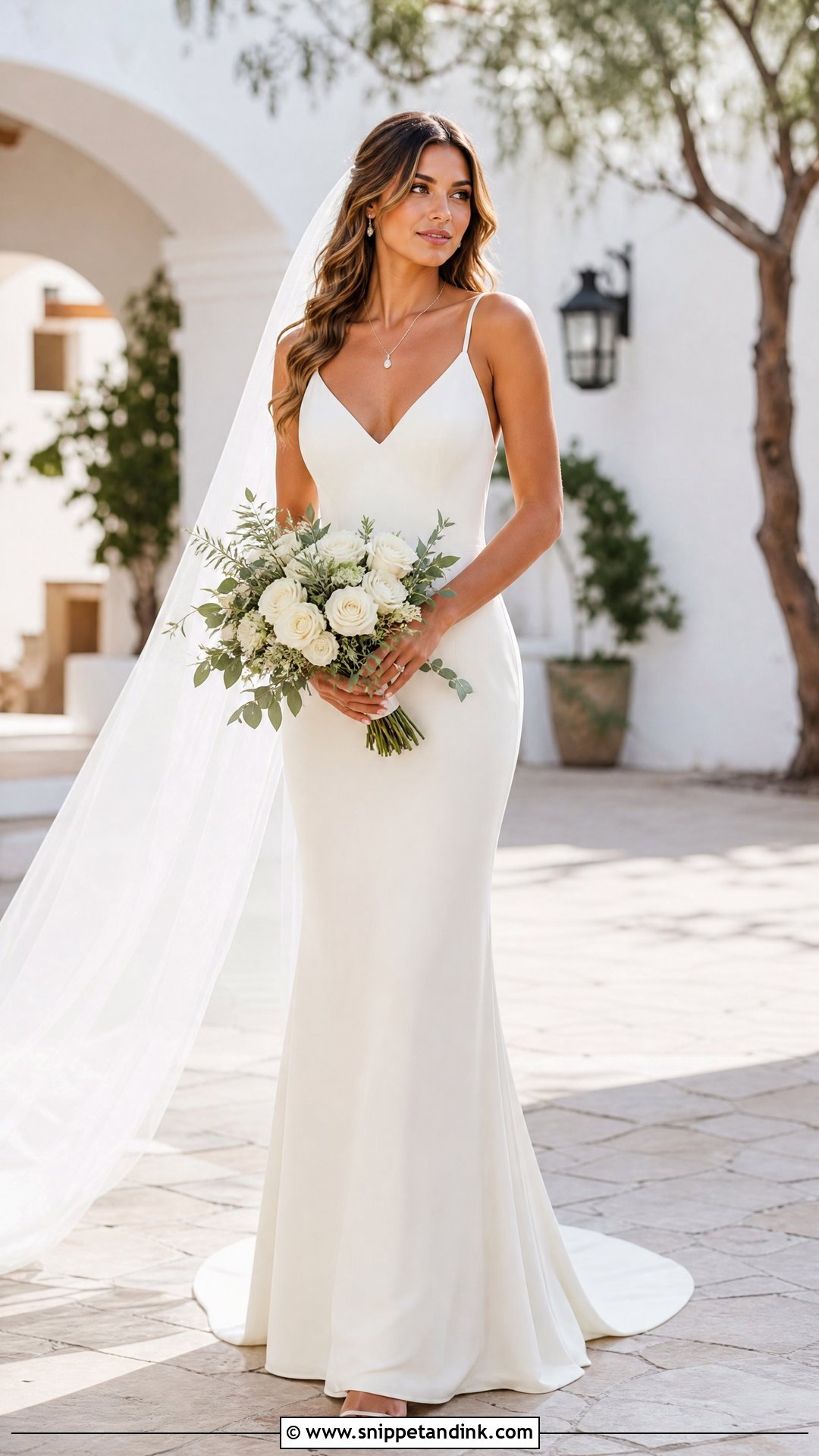
Spaghetti straps and a V neck are the lightest thing in this list to wear on a hot day. The depth of the V is personal, and I’d rather you choose it sitting down, since a neckline that feels modest standing opens up when you lean forward at the table. Fine mesh inside the V keeps it anchored. Crepe looks smooth and modern; lace or light beading adds texture. A thin pendant, small earrings, strappy sandals and loose waves or a low ponytail keep the mood relaxed, and a soft chapel veil with a plain edge and white roses with airy greenery complete it. Have the straps fitted to the quarter inch.
9. Boat Neck Crepe Sheath Wedding Gown
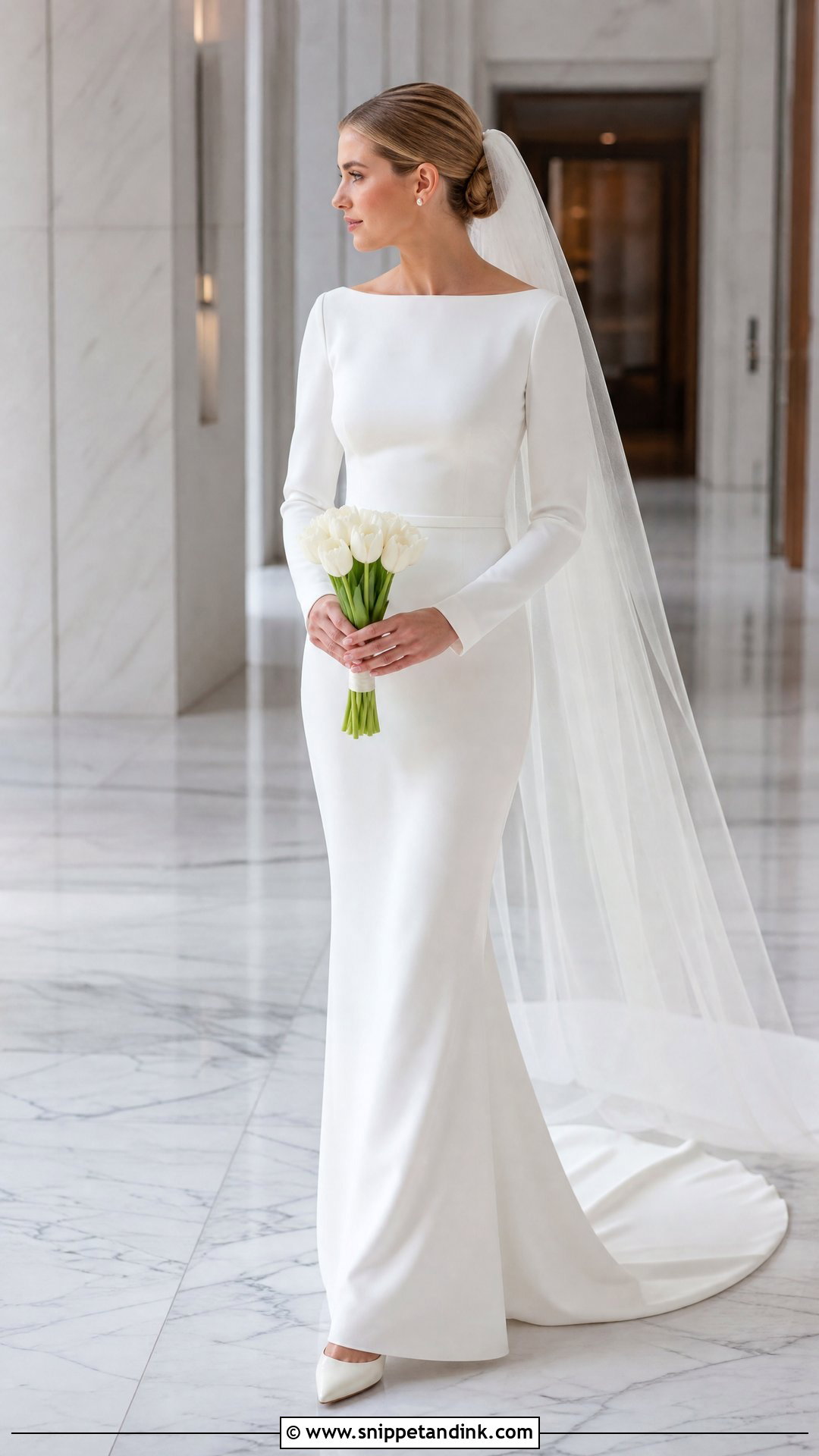
The boat neck sits across the collarbones from shoulder point to shoulder point, which looks quiet in the mirror and very strong in photographs. With long crepe sleeves, though, it is the one gown here I’d warn you about for movement, because a high, wide neckline and fitted sleeves fight each other when you lift your arms. A gusset or a slightly deeper armhole sorts that out. Keep the front bare and let the low back do the contrast. A smooth chignon, pearl studs, a long veil tucked under the bun, closed pointed pumps and a narrow bouquet of tulips or callas fit its formality.
10. Corset Bodice Lace Sheath Wedding Gown
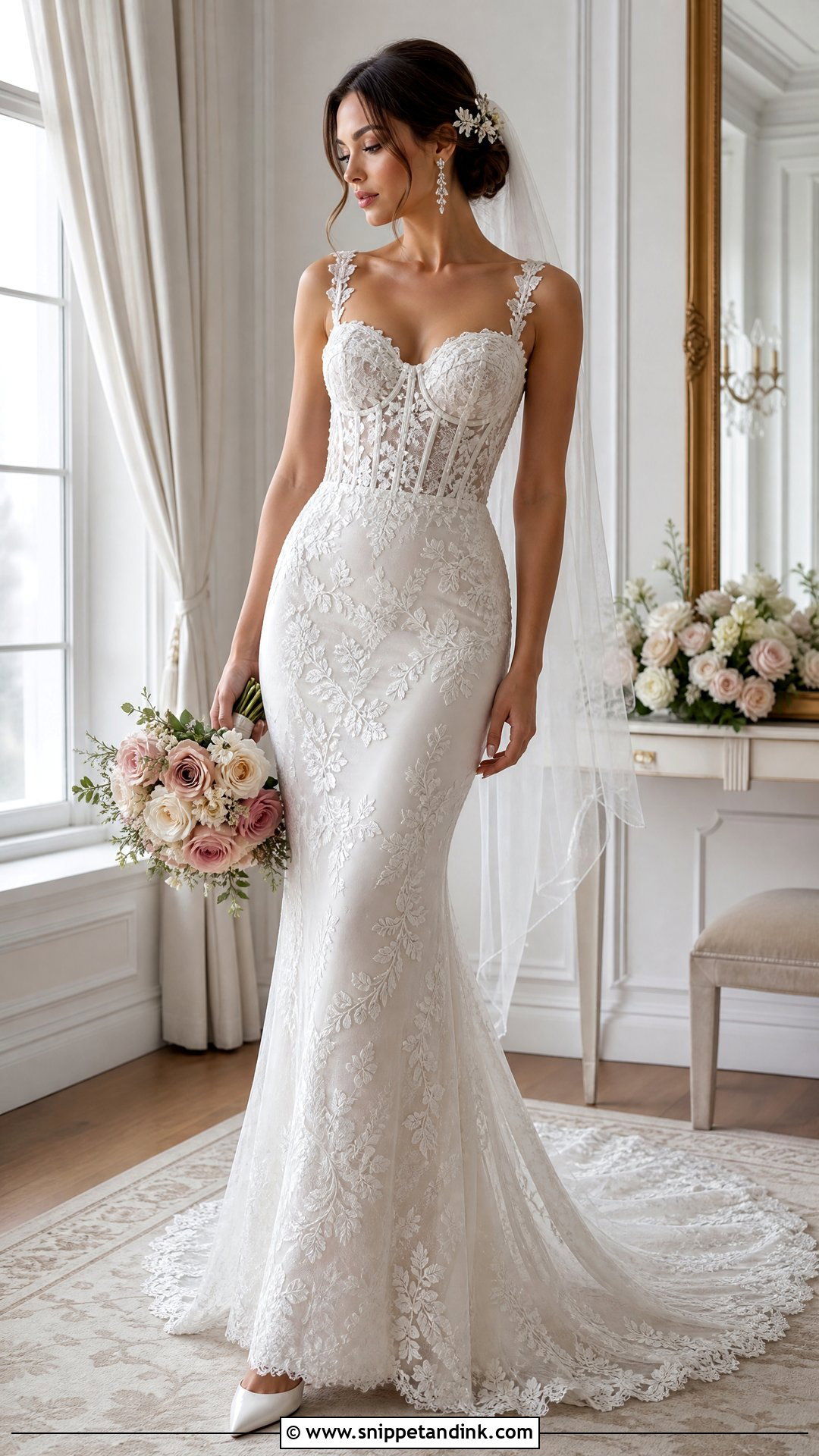
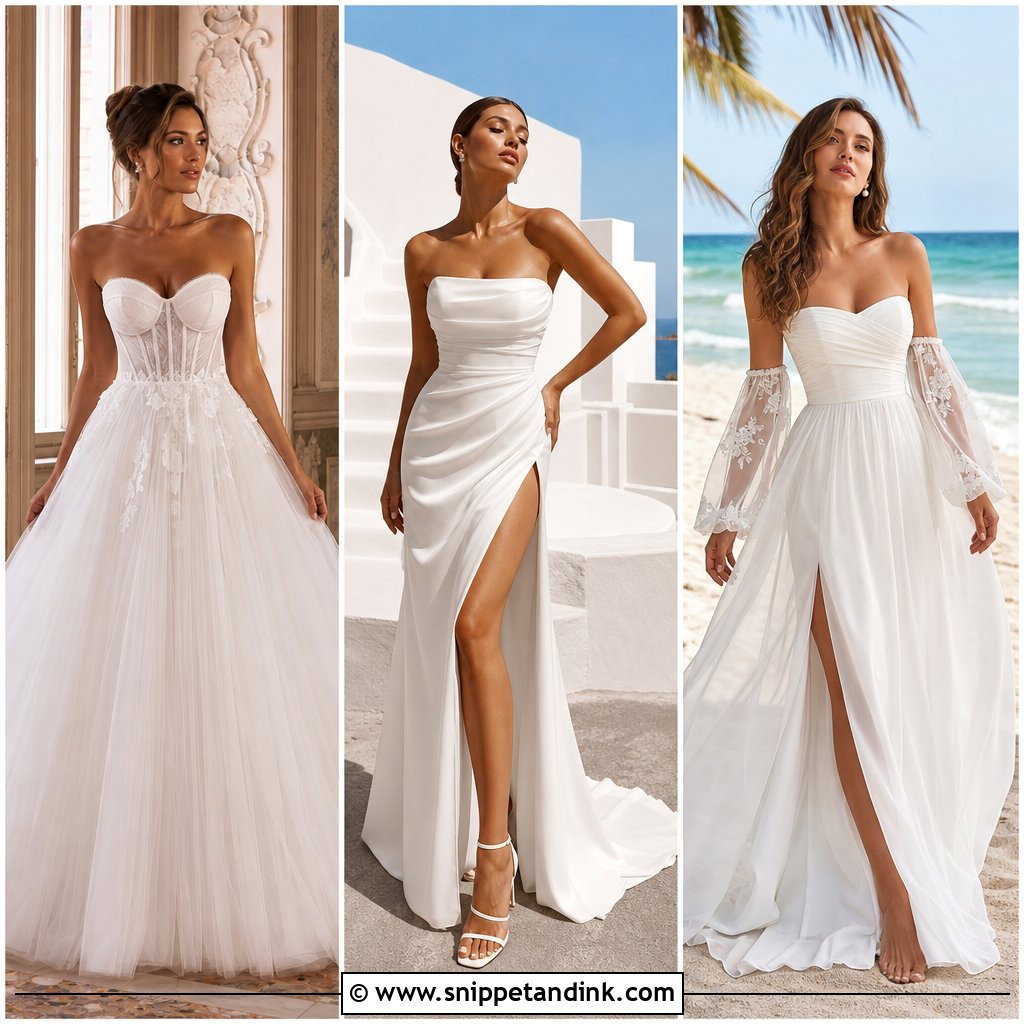
A corset bodice should support you, not squeeze you. I see brides ask for it tighter at every fitting because it looks smaller, and by the speeches they can’t eat. Fit it at a full exhale and make sure you can take a deep breath sitting down. Visible boning gives a fashion-led finish; lace-covered boning looks softer and suits this gown’s romance. Carrying the same appliqués down the skirt into a short train ties it together. A single-layer veil, floral hair pins, drop earrings, ivory pointed heels and garden roses suit it. Ask whether the lacing has a modesty panel behind it.
11. Open Back Sheath Wedding Gown
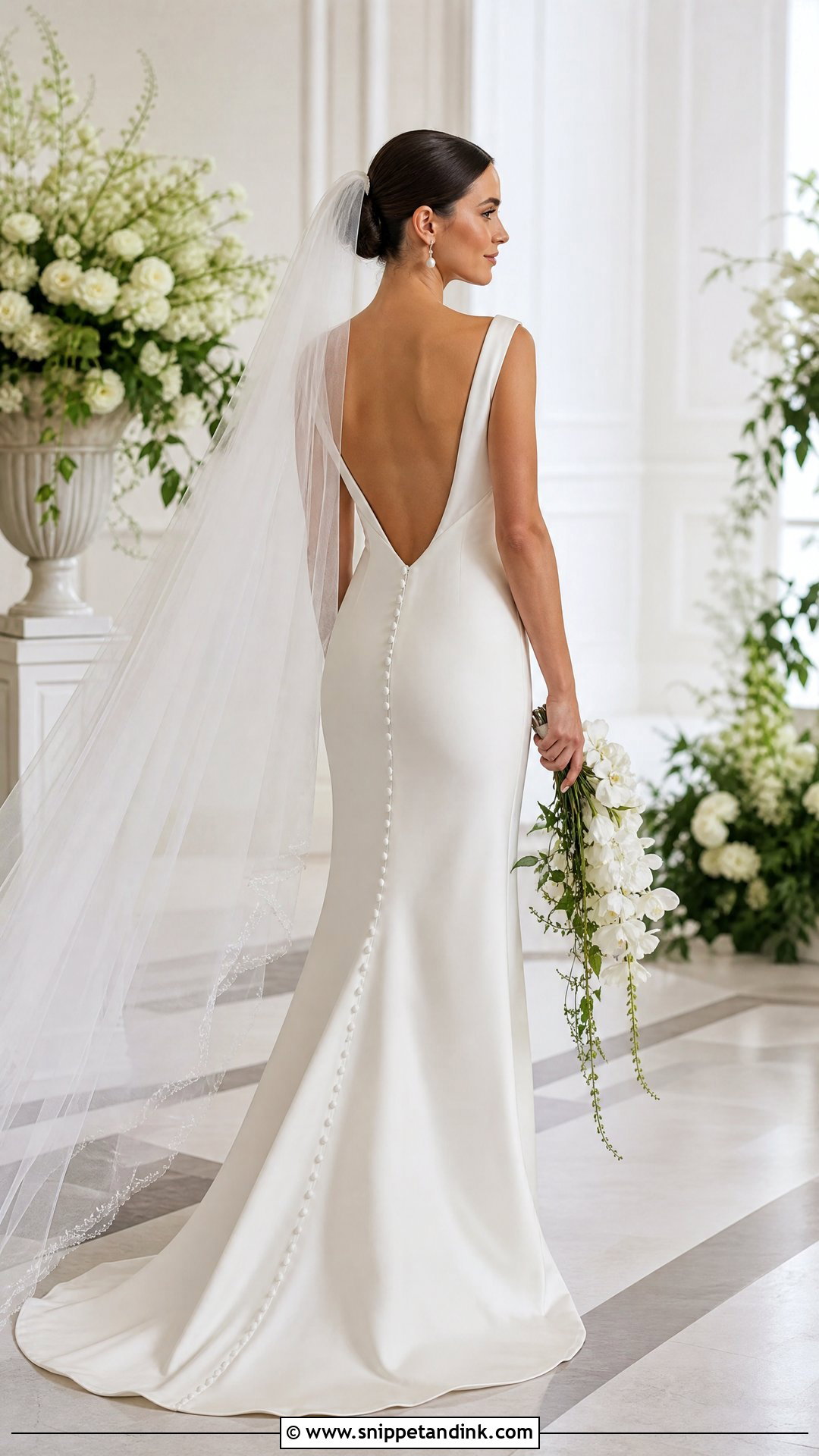
Every open-back sheath starts with one question I ask in the first appointment: what are you wearing underneath? A deep scoop or geometric back rules out most bras, so cups get sewn into the bodice, boning is added at the side seams, or a mesh panel carries the support. Sort this early, because it affects the alterations quote. A bateau, square or high front balances the drama behind you. Covered buttons or lace edging can outline the opening. Wear your hair up, choose a veil you can remove after the ceremony, and keep to pearl earrings, a fine bracelet, slingbacks and a small cascading bouquet.
12. Cape Sleeve Sheath Wedding Gown
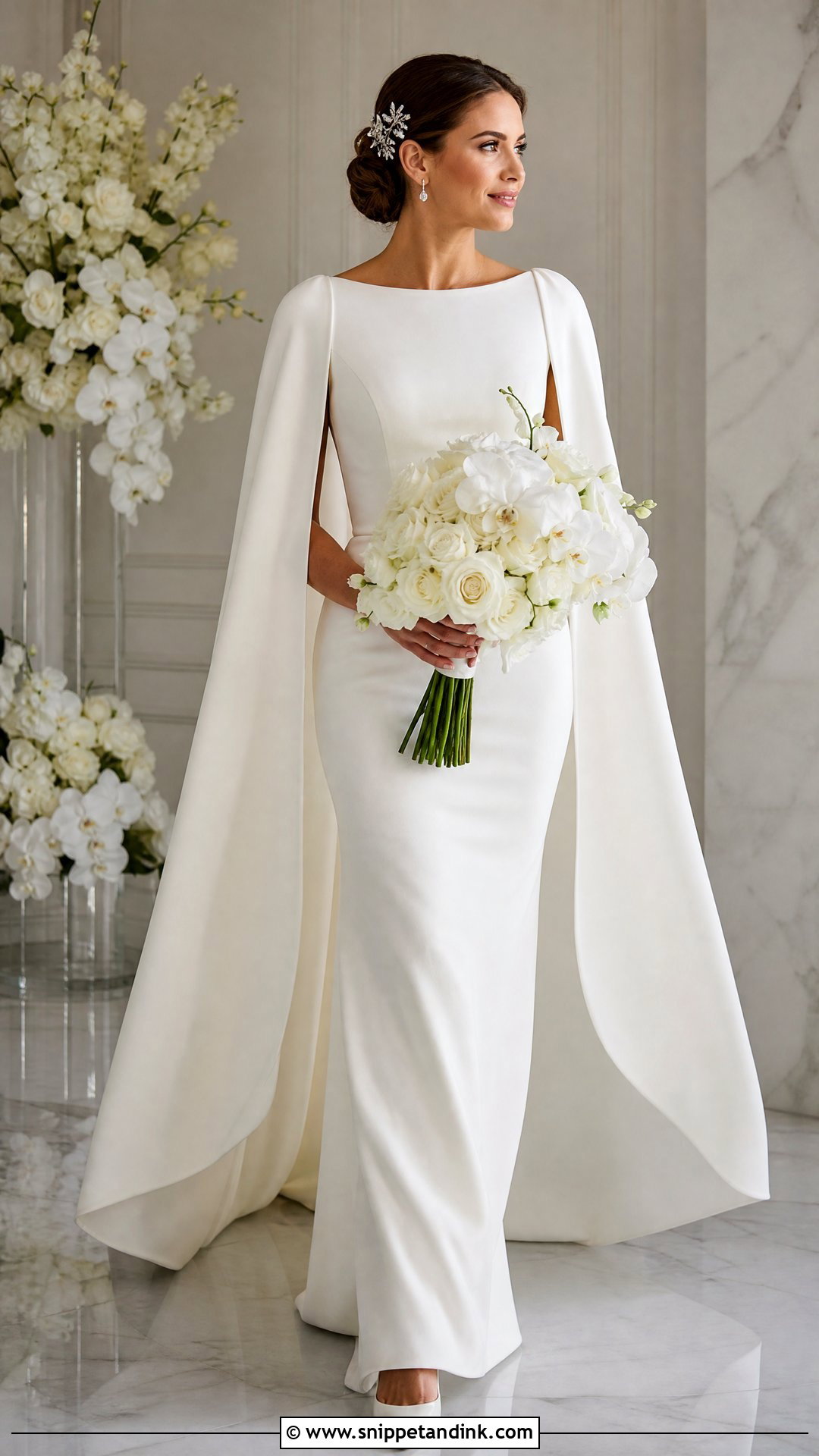
Cape sleeves move when you move, which is the point and also the risk. Chiffon capes catch on bouquet stems, chair backs and bracelets, so I get brides to walk briskly and turn in the fitting room. Crepe or satin panels hold their shape and feel more formal; chiffon floats. The cape should start cleanly at the shoulder seam and fall behind the arm so your waist still shows. Keep everything else small: studs, a smooth updo, ivory pumps, and a short veil or jeweled hair comb instead of layers of tulle. White roses and orchids in a structured shape suit it.
13. Pearl Embellished Sheath Wedding Gown
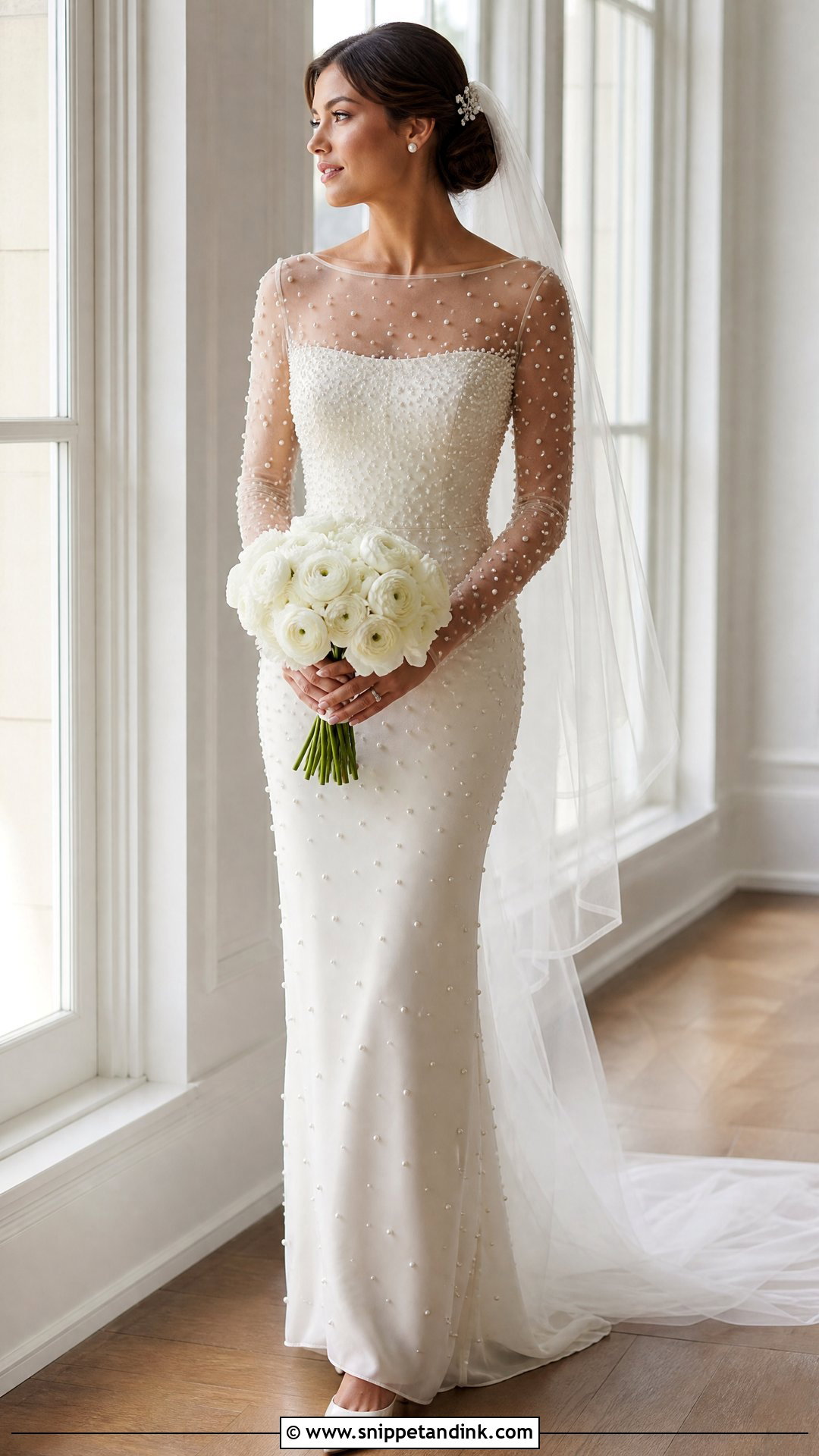
Pearls are sewn on one by one, and the ones at the waist and under the arms take the most friction all day. I turn the bodice inside out and check the backing: loose threads and knots there will scratch you by evening, and a lining should cover them. Pearls massed near the neckline lift attention to your face for close portraits; pearls fading down the skirt feel softer. Pick up the theme with plain studs and one fine hair pin rather than a full matching set. Satin pumps, a plain tulle veil and white ranunculus keep it calm.
14. Floral Applique Sheath Wedding Gown
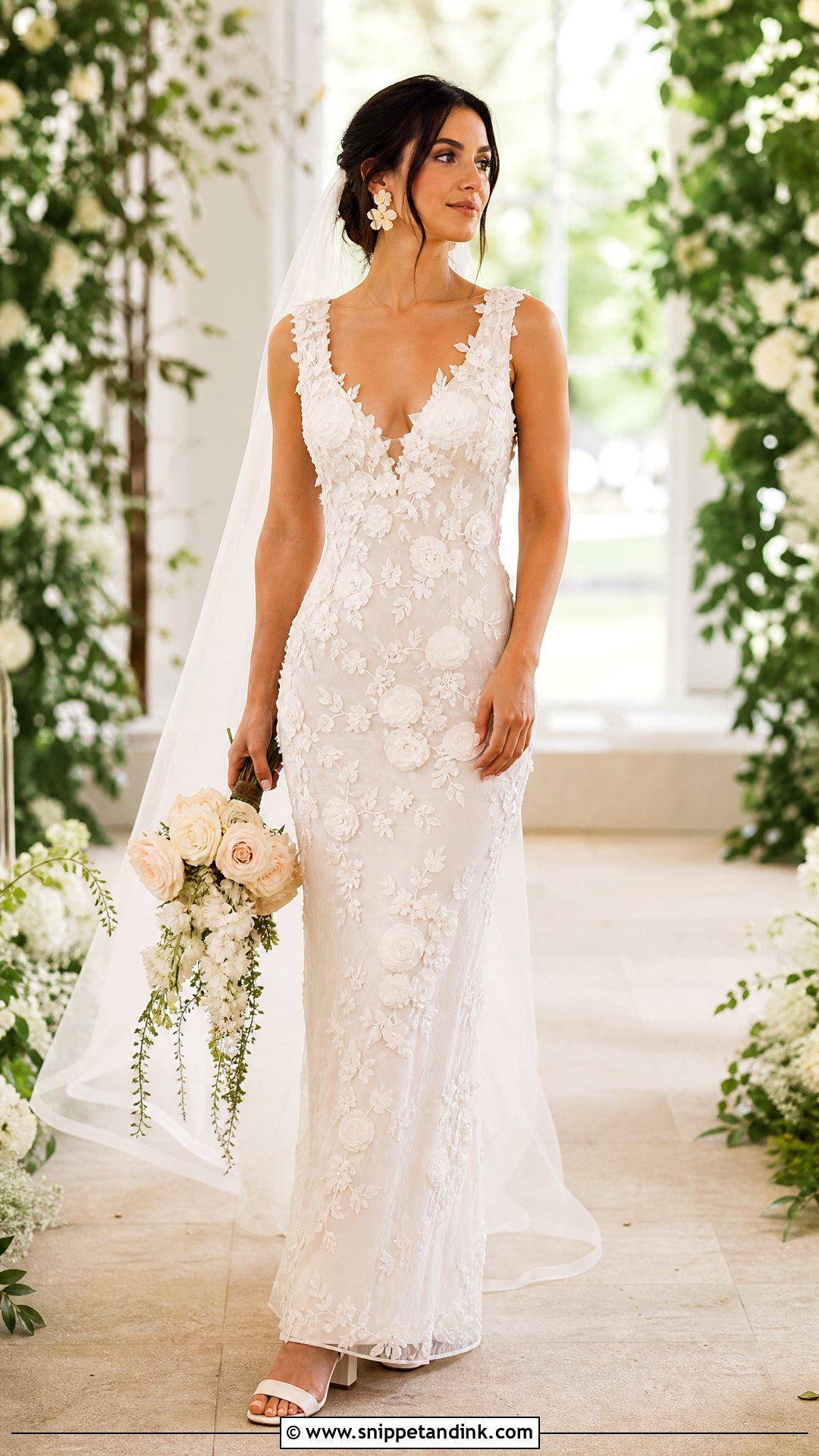
Floral appliqués are hand placed, which matters if the gown needs taking in. When a side seam moves, any flower crossing it has to be lifted off and stitched back on, and that is skilled, slower work your seamstress should price for. Small flowers scattered on tulle feel delicate; larger blooms massed at the bodice feel bolder. The best placement follows the seams and the curve of your body. A soft updo, floral earrings, a light veil with a clean edge and ivory block heels work here, and a loose bouquet that repeats one flower from the lace pulls it together.
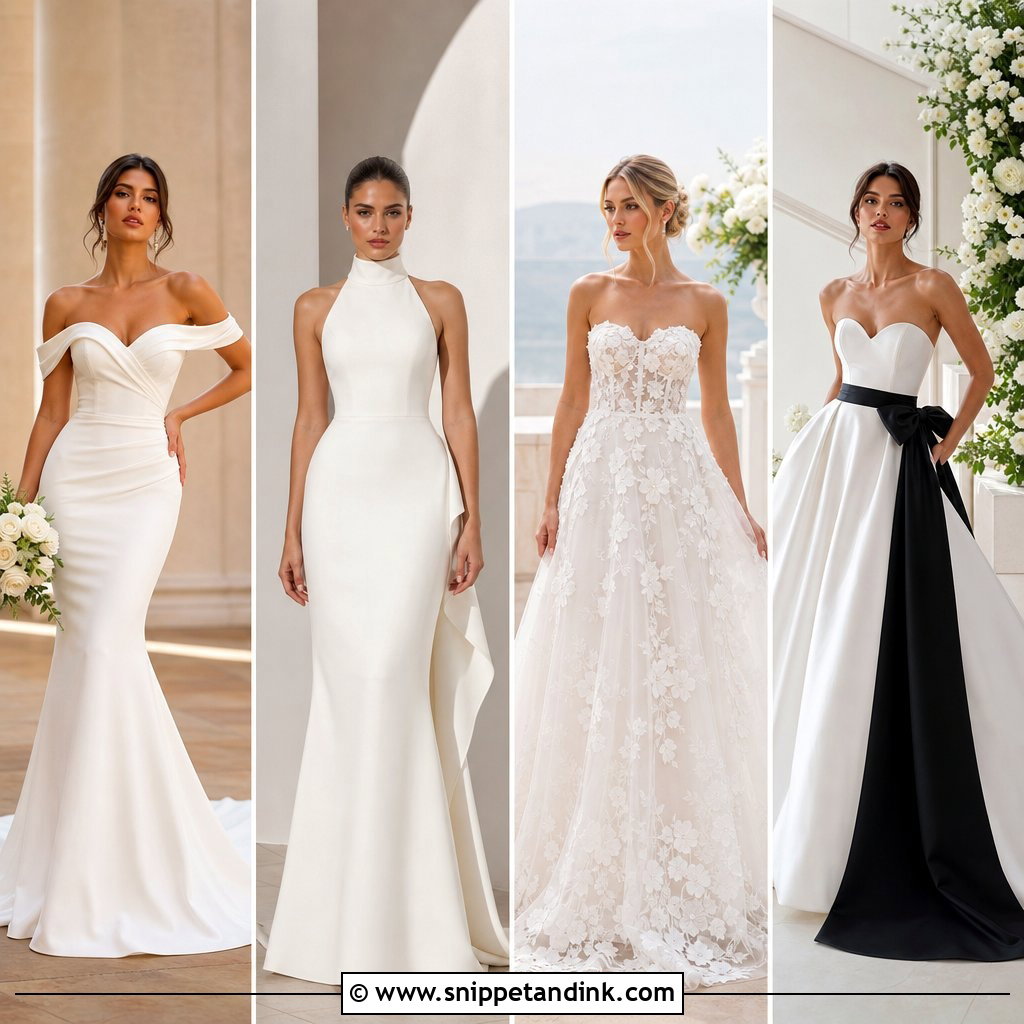
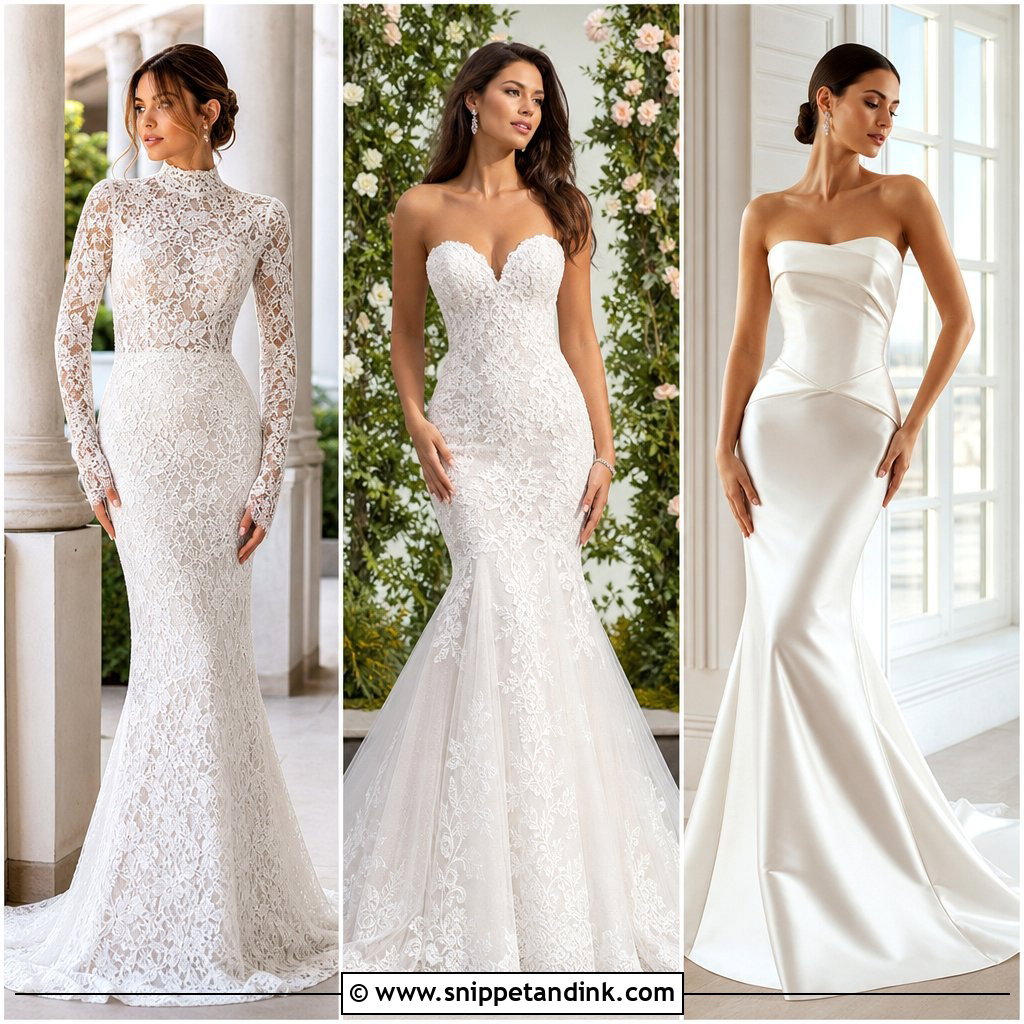
15. Side Slit Sheath Wedding Gown
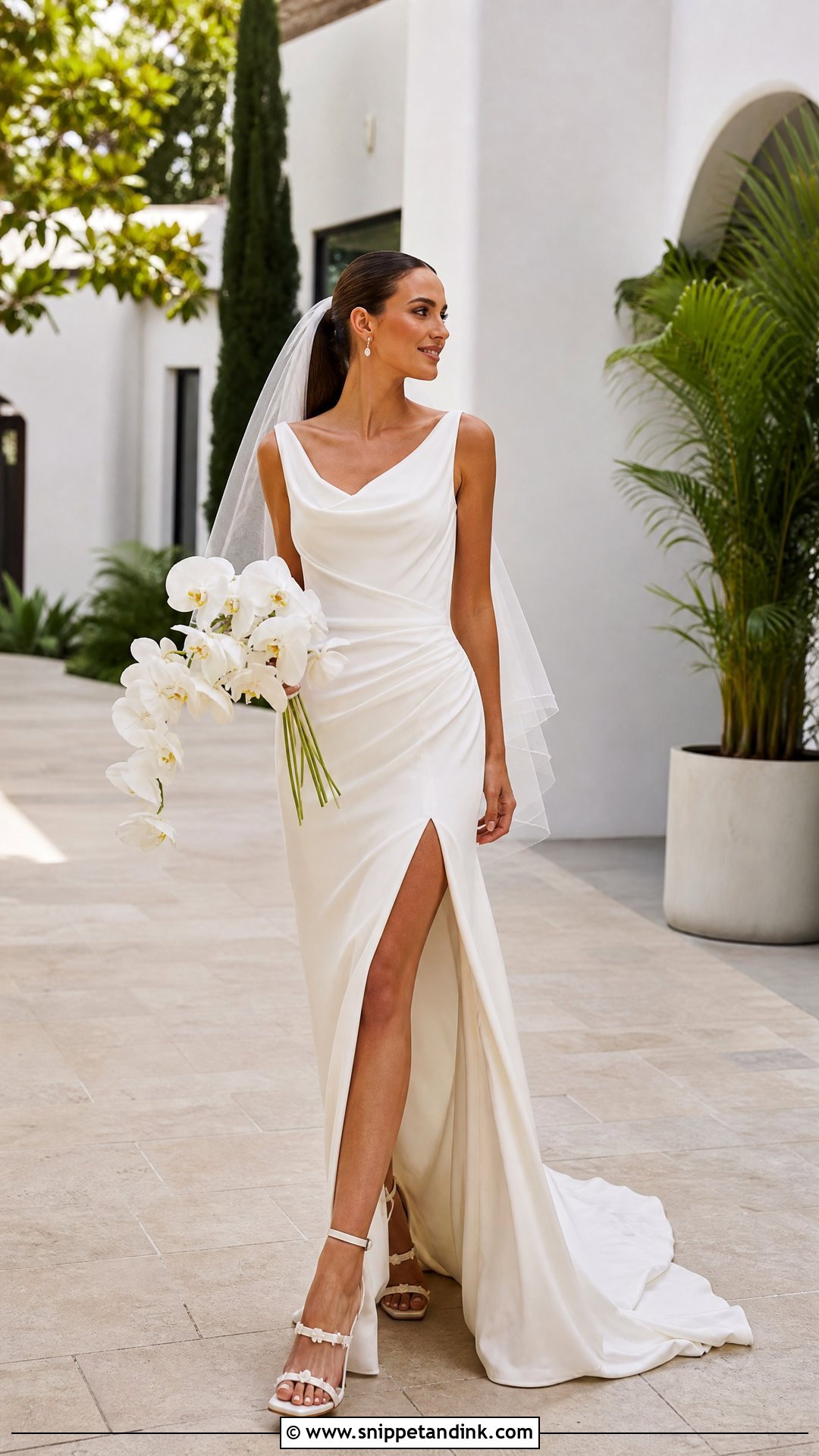
A side slit gives a narrow skirt the stride room it otherwise lacks, so I recommend it for practical reasons as much as for showing your shoes. Test the height on stairs and sitting down, where a slit opens far more than it does standing. Crepe, satin and drapey jersey fall cleanly around the opening. Ask the tailor to bar-tack the top of the slit so it can’t tear on the dance floor; a hidden snap or modesty panel is an easy add. Statement ivory sandals, small earrings, a sleek ponytail or low bun, a shoulder-length veil and white orchids keep it contemporary.
16. Detachable Overskirt Sheath Wedding Gown
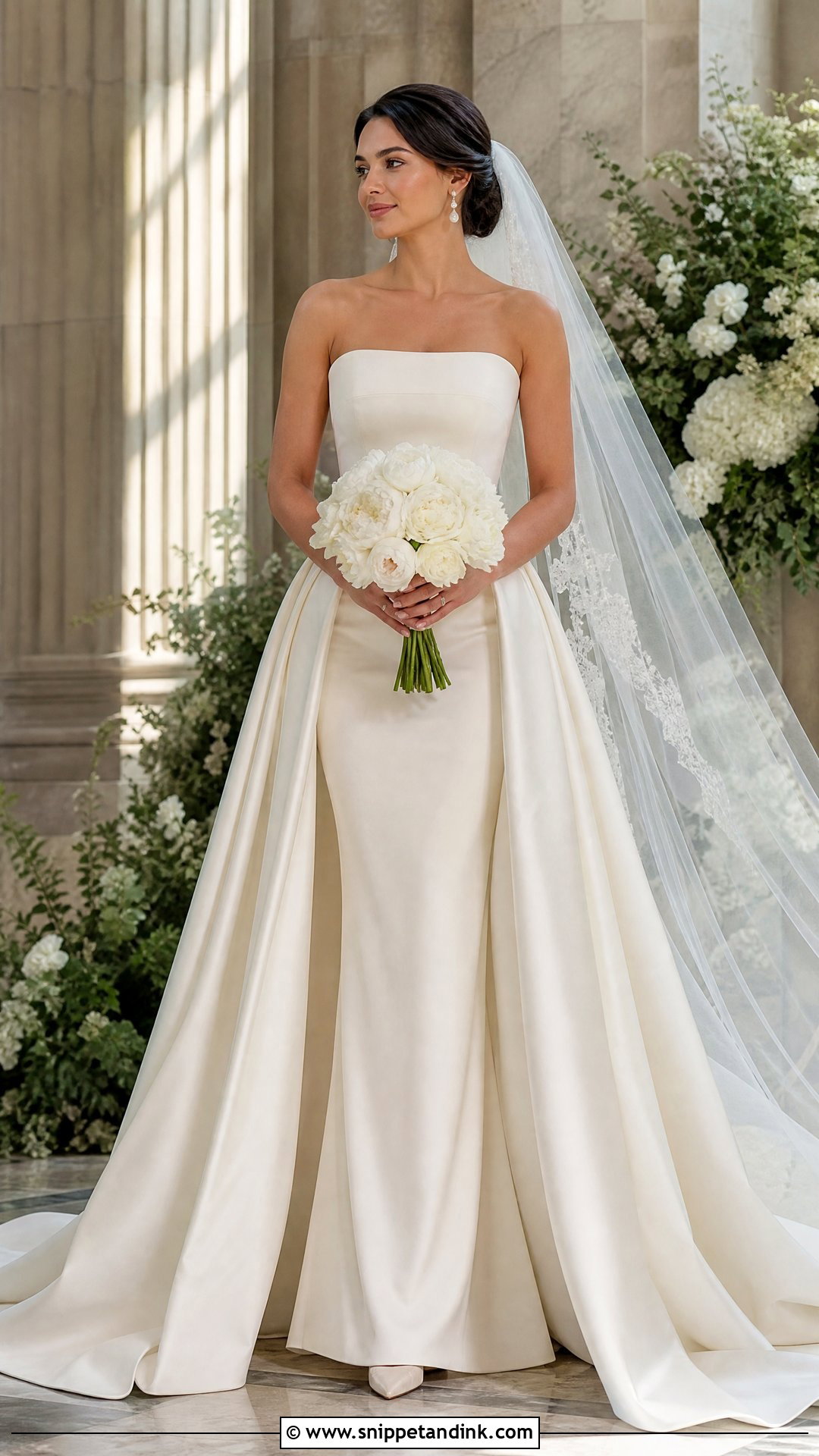
Two looks in one gown, but only if the change takes under five minutes. Tulle overskirts give air and volume for the aisle; satin or mikado ones add structure and weight. The fastening is what I scrutinise: a concealed waistband with hooks or snaps that disappears from every side, not just the front. Wear a cathedral veil, pearl earrings and classic pumps for the ceremony, then switch to bolder earrings and block heels once the skirt comes off. A structured white bouquet suits both versions. Teach one bridesmaid to do the fastening before the day.
17. Halter Neck Sheath Wedding Gown
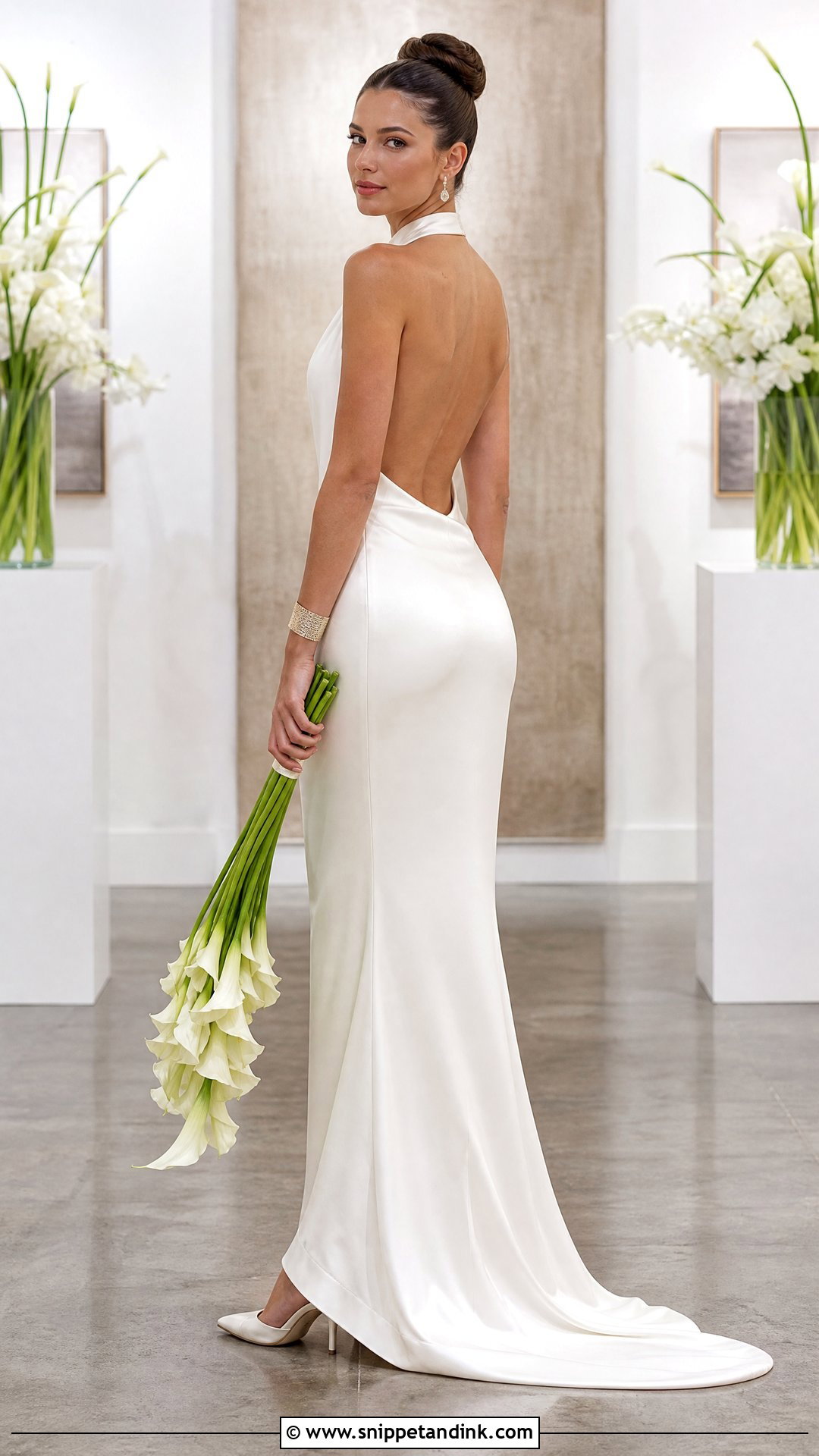
A halter neckline puts the shoulders on show and the weight of the gown on the back of your neck, and that is what I check first. If the bodice isn’t carrying most of the dress through boning and a waist stay, the halter strap will start to ache before dinner. Satin flows, crepe looks tailored, lace softens it, and a keyhole or open back changes the mood. Wear the hair in a high bun or sleek ponytail so the strap stays visible, add small drop earrings and a cuff instead of a necklace, and carry a long, narrow bunch of calla lilies.
18. Short Sleeve Lace Sheath Wedding Gown
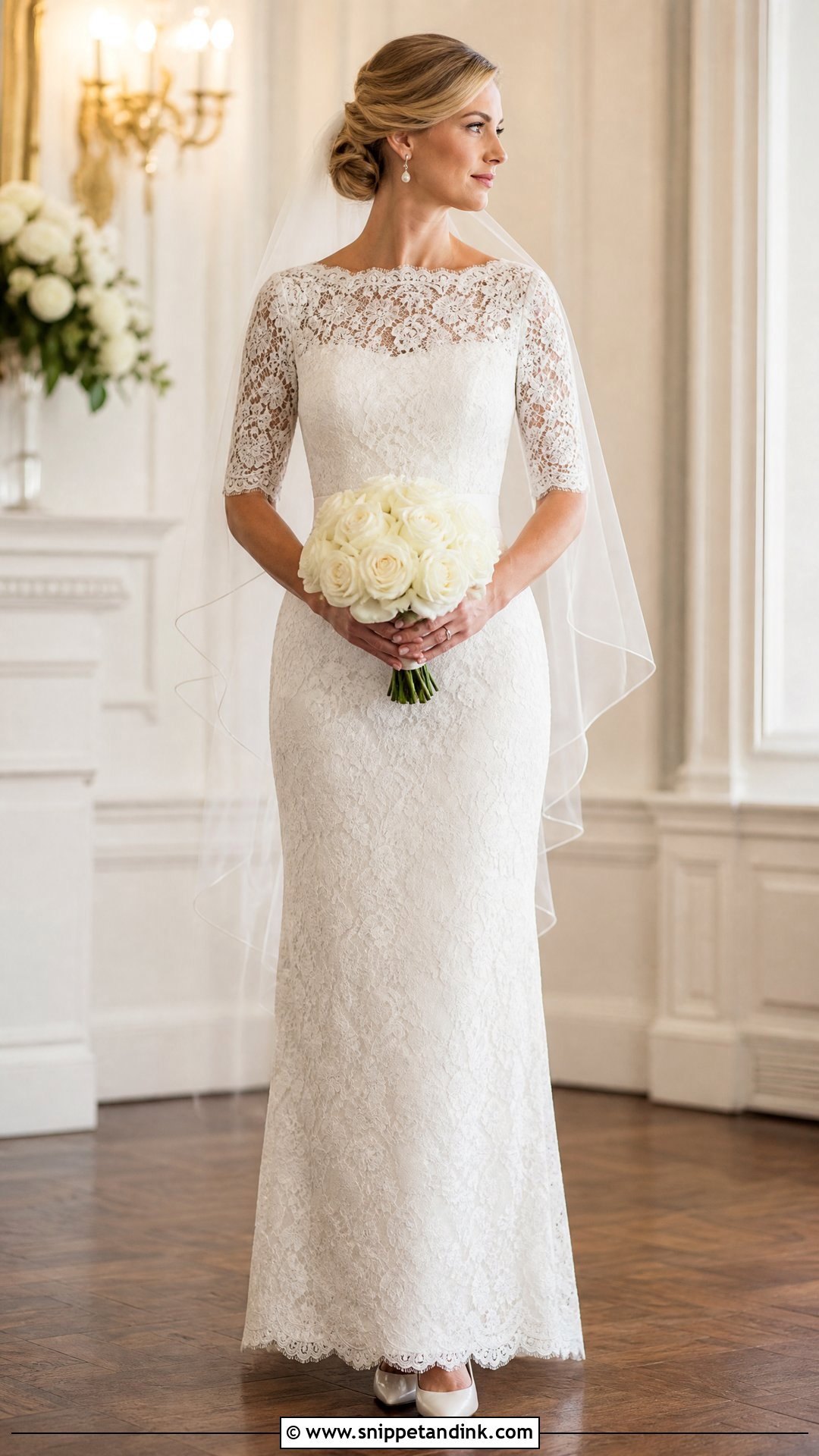
Short lace sleeves sit between strapless and full coverage. Cap sleeves feel delicate, elbow lengths lean vintage, and a fitted short sleeve looks the most structured. The edge of the sleeve is my focus during alterations: lace rolls upward at the opening if the arm is tight, so it should lie flat while you hold a bouquet at waist height. A V or bateau neckline and a softly lined skirt suit it. Pearl earrings, a low twisted bun, closed pumps, a fingertip veil with minimal lace edging and a rounded bouquet of white roses finish the look.
19. Ruched Plus Size Sheath Wedding Gown
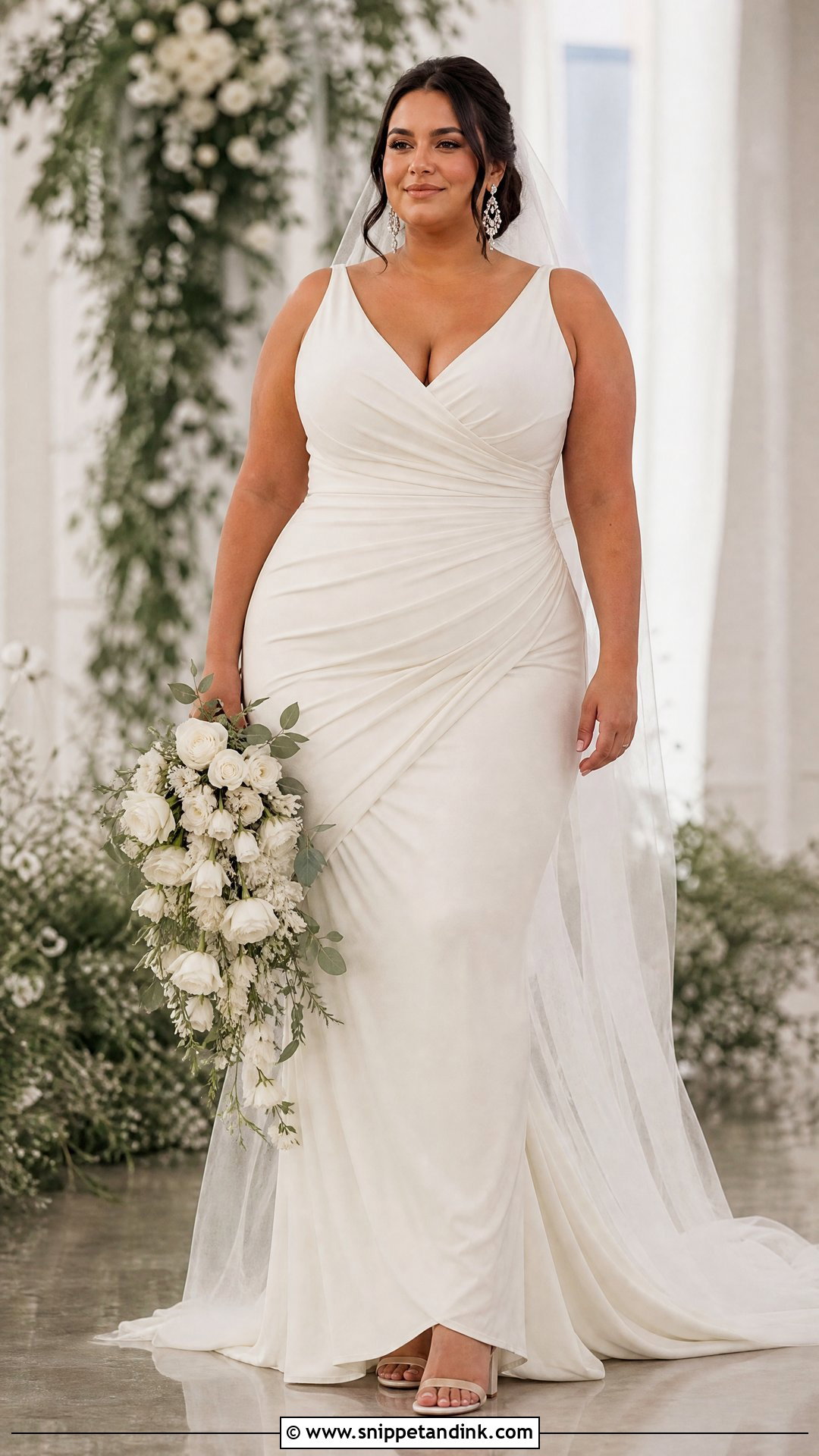
Ruching works hard on a plus-size sheath: diagonal gathers across the waist create shape and also hide the small creases any fitted fabric makes when you sit. I always order to the largest measurement and take the rest in, because letting a sheath out is rarely possible. Good choices are stretch crepe, lined jersey or soft satin with real inner support, and a V or off-the-shoulder neckline frames the upper body well. Chandelier earrings, supportive block heels, a chapel veil and a medium cascading bouquet keep the long line going.


20. Petite Minimalist Sheath Wedding Gown
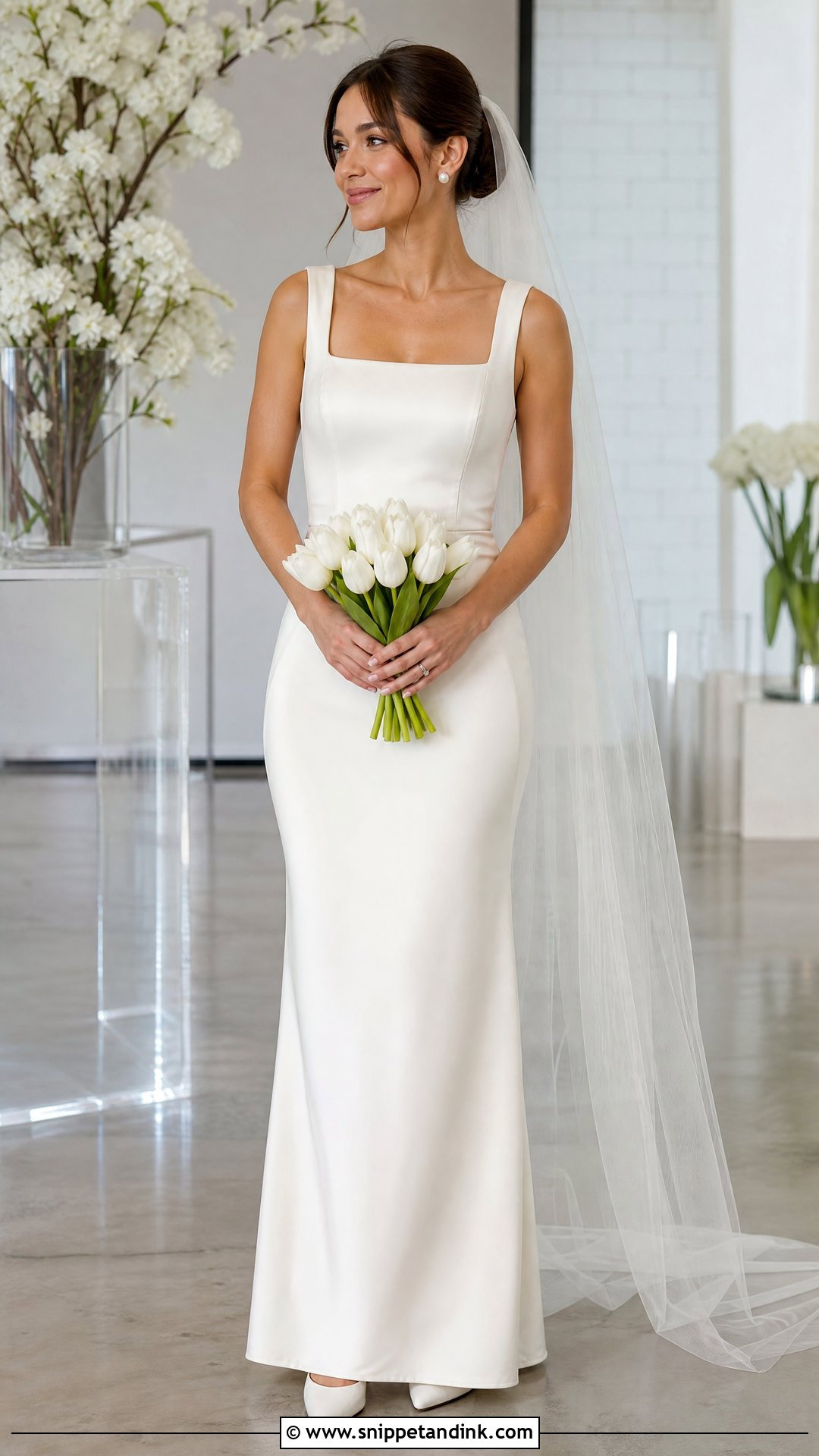
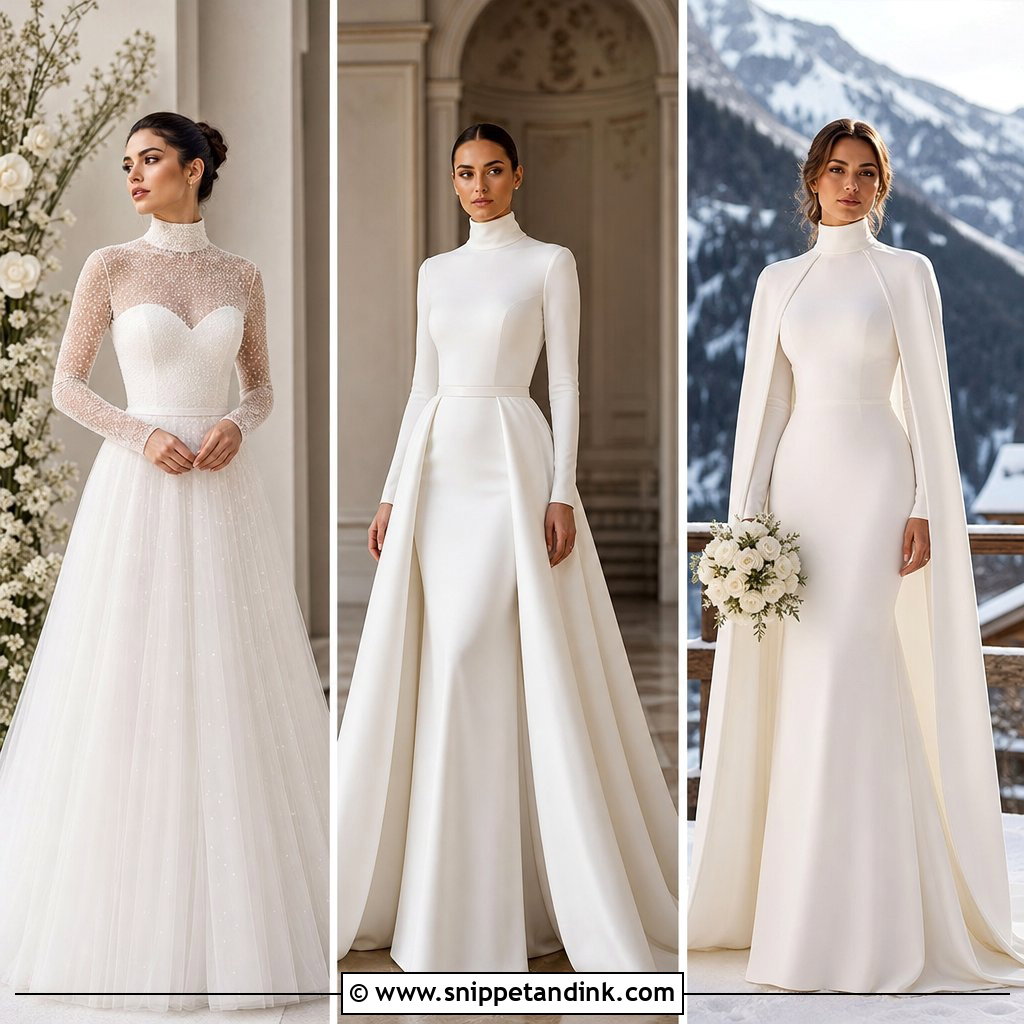
On a petite frame a minimalist sheath reads tall because there is nothing breaking the line. The risk is proportion: if the waist seam sits low on you, the whole gown looks borrowed. I check bodice length and hip placement before hem length, and look for a hem that can come up without cutting off detail. Petite sizing helps, but you’ll still need a fitting. Crepe or matte satin keeps it clean; a square neck or soft V gives definition. Pointed pumps, small pearl earrings, a single-layer veil and a compact bunch of white tulips keep the scale right.
Stairs, Bustles and a Narrow Hem on the Day
A sheath is easy to wear until it meets steps. Lift the front of the skirt a few inches with one hand when you climb, and come down sideways if the hem is long. Practise this in your wedding shoes at the last fitting, not in socks.
Trains on sheaths are usually light, so a simple bustle does the job. I like a French bustle with two or three tie points or a single overbustle hooked at the back of the waist; heavy ballroom bustles add bulk a narrow skirt can’t hide. Ask your seamstress to colour-code the ties and show the person who will do them.
Creases, travel and steaming
Satin creases where you sit, and those lines show from the back. Travel to the ceremony in the gown only if the car lets you lie the skirt flat, and ask the photographer to shoot standing portraits first. Crepe recovers faster. A handheld steamer on low, held a hand’s width from the fabric and never touching beads or pearls, fixes most travel creases; test it on the inside hem first, since satin can water-spot.
A Sheath Should Feel Like It Holds You Up
A good sheath feels like it is holding you up, not holding you in. Satin and crepe show off clean construction; lace, pearls, appliqués and beadwork add texture without adding skirt. Treat neckline, sleeves, veil, jewelry, shoes and flowers as one outfit rather than six separate decisions. Before you commit, walk, sit, climb a step, raise your arms and look at the back in a second mirror. Then let a good seamstress refine the bodice, waist, hem, straps and train so the gown fits you rather than the sample.
You'll Like These Ideas:




Leave a Reply