
A bespoke gown starts from your measurements and a long conversation, not from a sample on a rail, and that changes what you should be asking for. The twenty ideas below cover silhouettes, fabrics, sleeves, embellishment and convertible pieces, each with the construction detail that makes it work on a real body. Sculpted waists, dimensional lace and big bows are everywhere in bridal right now, but I still judge every design on one question: does the tailoring hold when you sit, dance and hug people for hours? Before you approve a final sketch, I’d want your venue, season, shoes, undergarments and train length settled, because each of those changes a pattern piece.
Calico Mock-Ups and the Months Between Sketch and Gown
A made-to-measure gown runs on a different clock from buying off the rack. I’d start talking to designers nine to twelve months out where you can, and treat six months as tight, especially if hand beading or embroidery is involved. Every workroom schedules differently, so ask for the timeline in writing at the first meeting.
- Consultation and sketch: you bring images, and a good designer asks about your venue, season and how you plan to move all day.
- Measurements and a toile: a mock-up sewn in calico or plain cotton to test the pattern on your body. Most changes should happen here, because cutting calico again costs very little.
- Fabric approval: swatches checked in daylight and indoor light, plus any beaded or embroidered samples.
- Fittings in the real fabric, usually two or three as the dress is finished.
- A final fitting a few weeks before the wedding, with your shoes, underwear and any hair accessory.
The toile is the stage I’d never let a bride skip. It looks plain and a little sad, and that’s the point: with no lace or shine to distract you, you see the line clearly. Sit in it, raise your arms, walk the length of the room, and say out loud anything that pinches.
1. Bespoke Silk Satin Ball Gown Wedding Dress
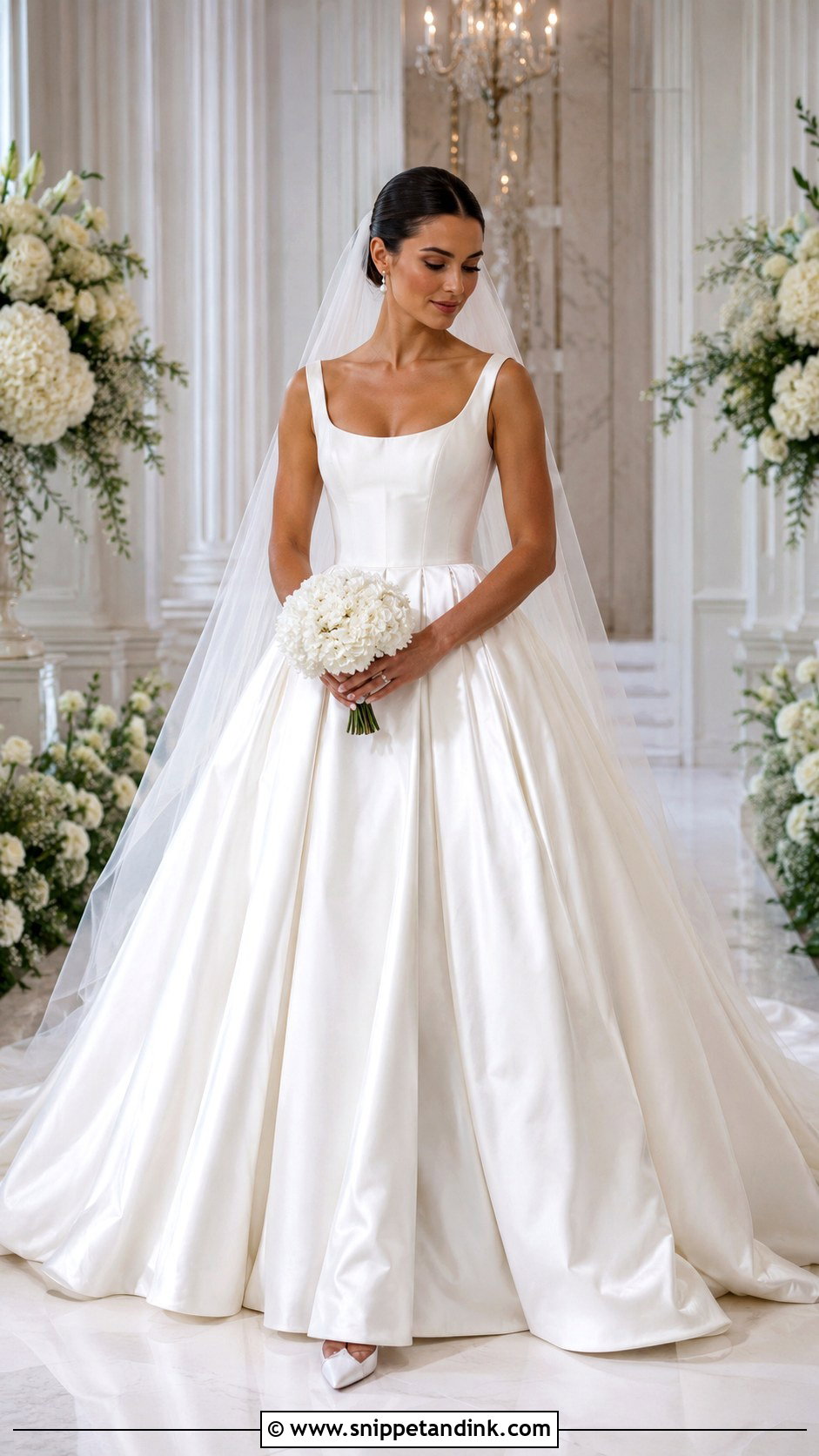
Silk satin is the least forgiving fabric I work with. A needle hole from an unpicked seam stays visible, so the mock-up has to be right before anyone cuts into the real cloth. That’s why I settle the internal corset, the curve of the neckline and the waist first, and only then build the full skirt onto it. Pleats set at the waist give volume without bulk, while hidden pockets and fabric-covered buttons keep the back clean. Pearl earrings, a fingertip veil, pointed satin pumps and a compact bouquet are all it needs. On a petite frame I’d hold the skirt volume back and raise the waist slightly; a taller bride can carry a longer bodice and a cathedral train.
2. Bespoke Long Sleeve Lace Wedding Dress
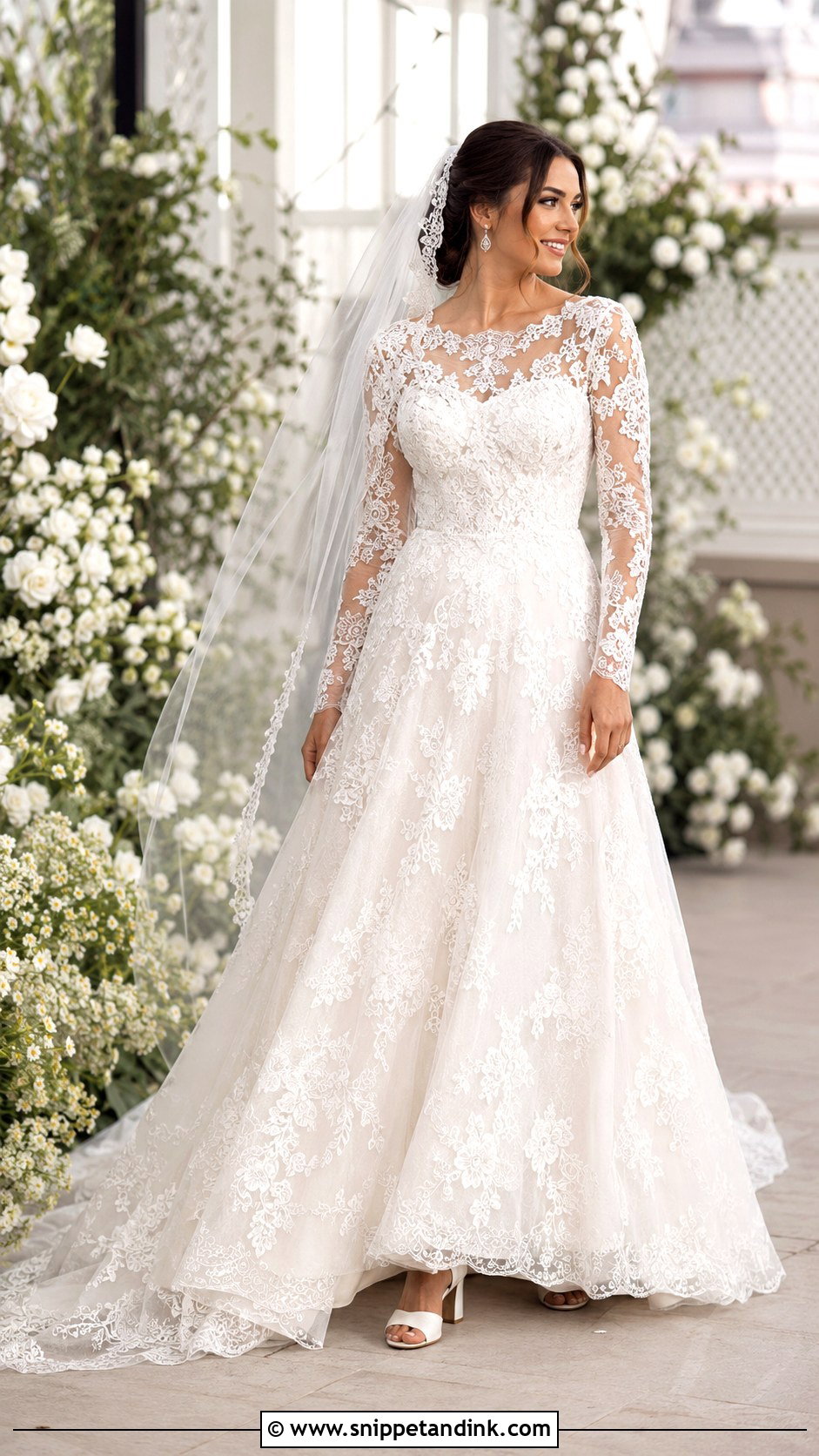
Lace sleeves cause more fitting trouble than anything else on this list. Corded lace has very little give, so a sleeve cut snug at the bicep can stop you lifting your arms for the first dance, and I always test it with the arms raised before it’s finished. Pick the lace scale for your frame: fine Chantilly reads as soft texture, while large botanical motifs carry to the back of a church. A good designer cuts individual motifs and places them around the neckline, waist and cuffs instead of running a factory repeat straight across. Add an illusion bateau neckline, a lightly boned bodice and covered back buttons. A fully lined bodice with sheer sleeves gives coverage without hiding the lace, and cuff width, skirt fullness and train length can all shift to suit your season.
3. Bespoke Basque Waist Ball Gown Wedding Dress
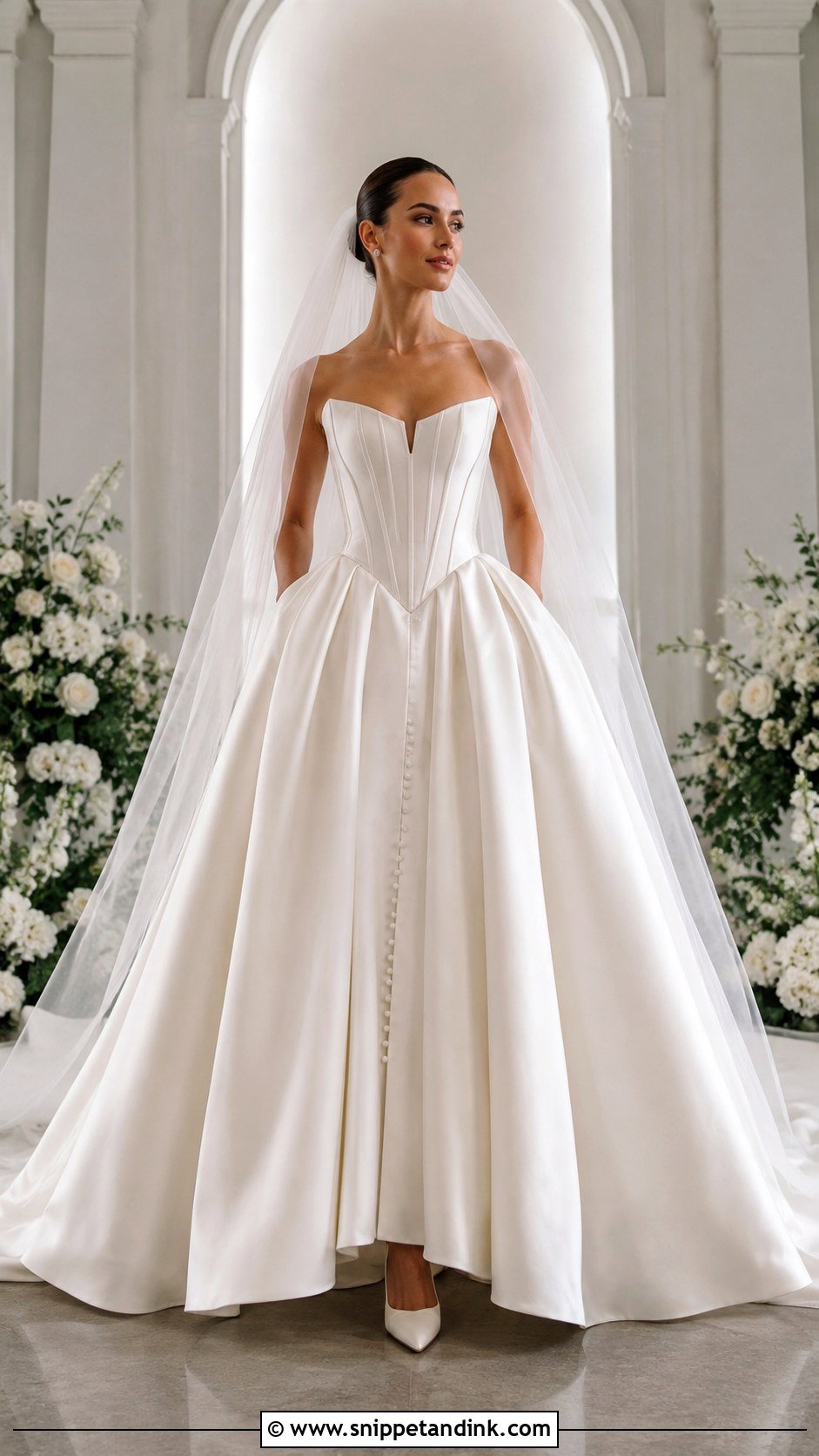
The point of a basque waist is easy to misplace by a couple of centimeters. Set too low, it digs into your lap when you sit; too high, it reads as an ordinary waist seam with a dent in it. I mark it on the toile while you’re seated as well as standing. Underneath, a structured corset carries the point, with a softly rounded neckline and a full skirt in matte satin or silk faille. Fine boning channels, subtle piping and a row of covered buttons finish it. Keep the accessories quiet (a sheer cathedral veil, crystal studs, pointed pumps) so the waistline stays the focus. If you’d rather have less volume, the same waist sits well over an A-line skirt.
4. Bespoke Square Neck Column Wedding Dress
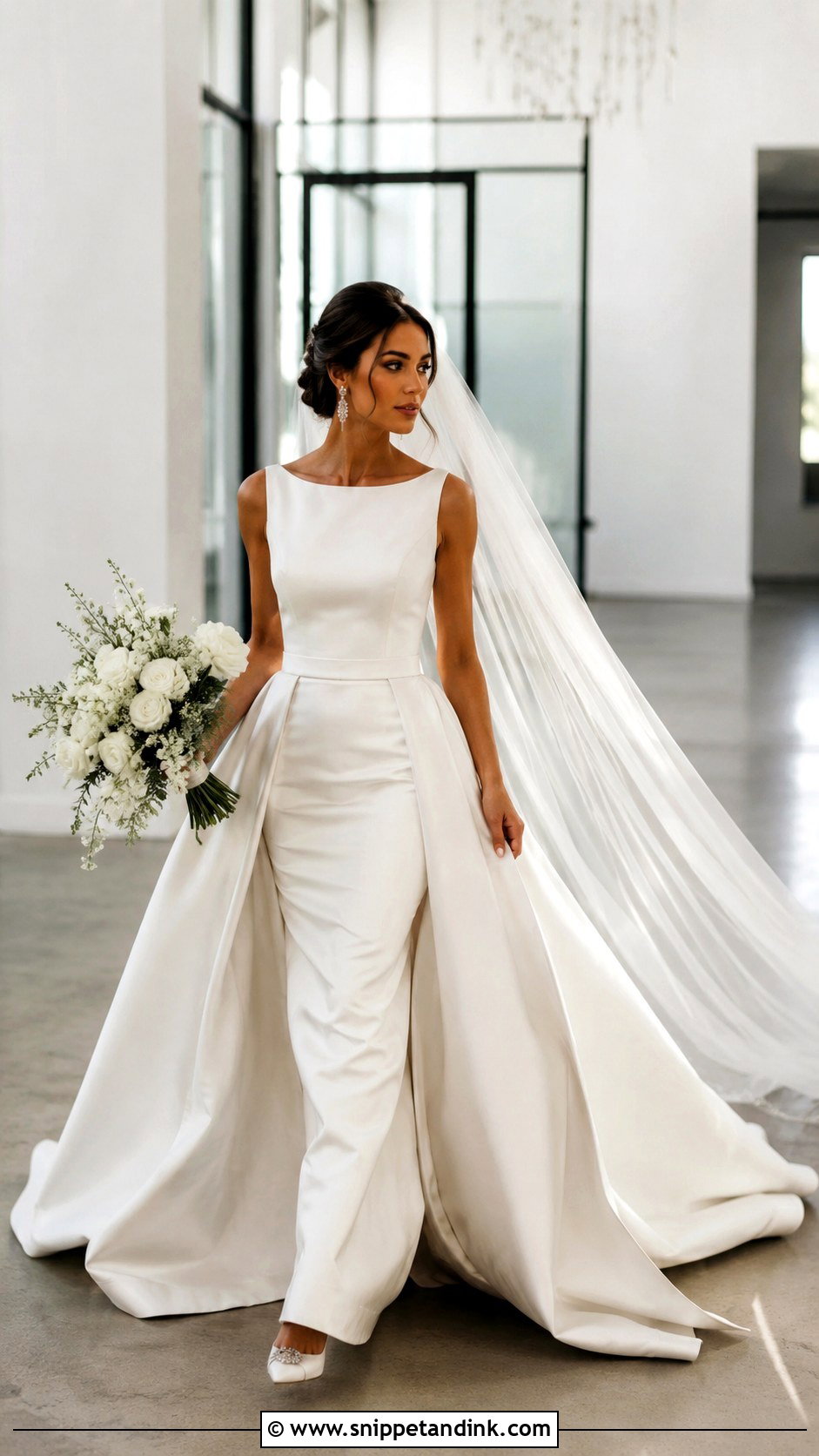
A column has nowhere to hide a puckered seam or a bra line, so I spend more fitting time on this plain dress than on many beaded ones. I’d choose heavyweight silk crepe or double-faced satin; lighter crepe clings and shows every undergarment edge. The neckline width and strap placement must be set so the square stays flat when you lean forward, which is exactly where most square necks gape. A smooth lining and a back slit make walking possible. Sculptural earrings, sleek pumps and a simple cathedral veil suit it, and removable fitted sleeves or a cropped silk jacket add coverage. Bring your actual underwear and shoes to every fitting, because the hem is cut to them.
5. Bespoke Off Shoulder Draped Wedding Dress
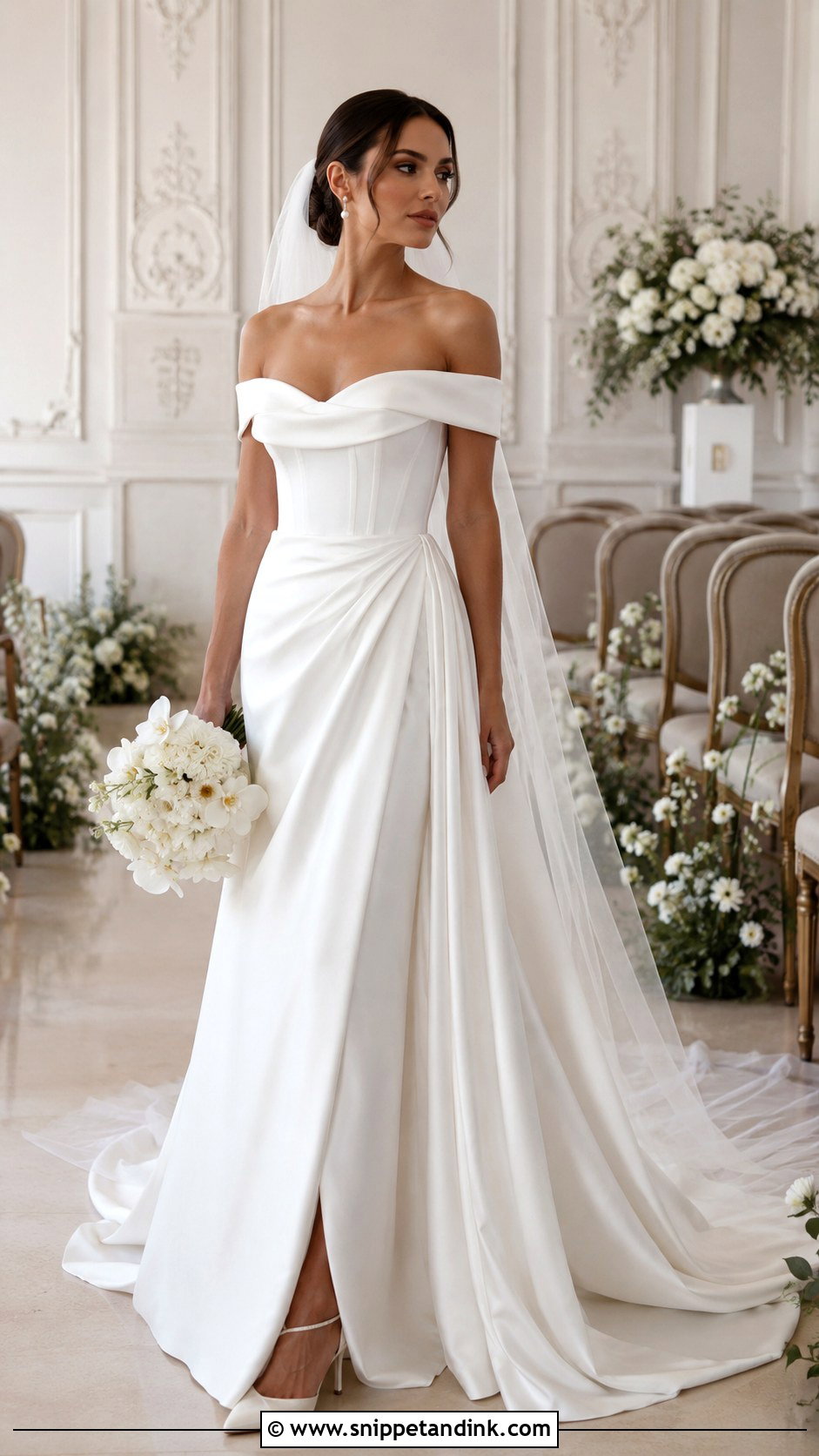
Off-shoulder draping fails in one predictable way: you lift your arms to hug someone and the whole neckline rides up. The fix is structural. The folds are stitched onto a corseted base so they never carry any weight, and I have the bride walk, sit, hug and reach during the fitting before anything is finalized. A gently gathered waist and an A-line skirt balance the width at the shoulders. A low bun keeps the drape visible, with pearl drops, ivory slingbacks and a sheer veil anchored under the hair. For winter, long sleeves can attach beneath the drape, and a side-gathered skirt or angled bodice folds can personalize it further. The folds should look loose while being firmly tacked in place.
6. Bespoke Floral Appliqué Tulle Wedding Dress
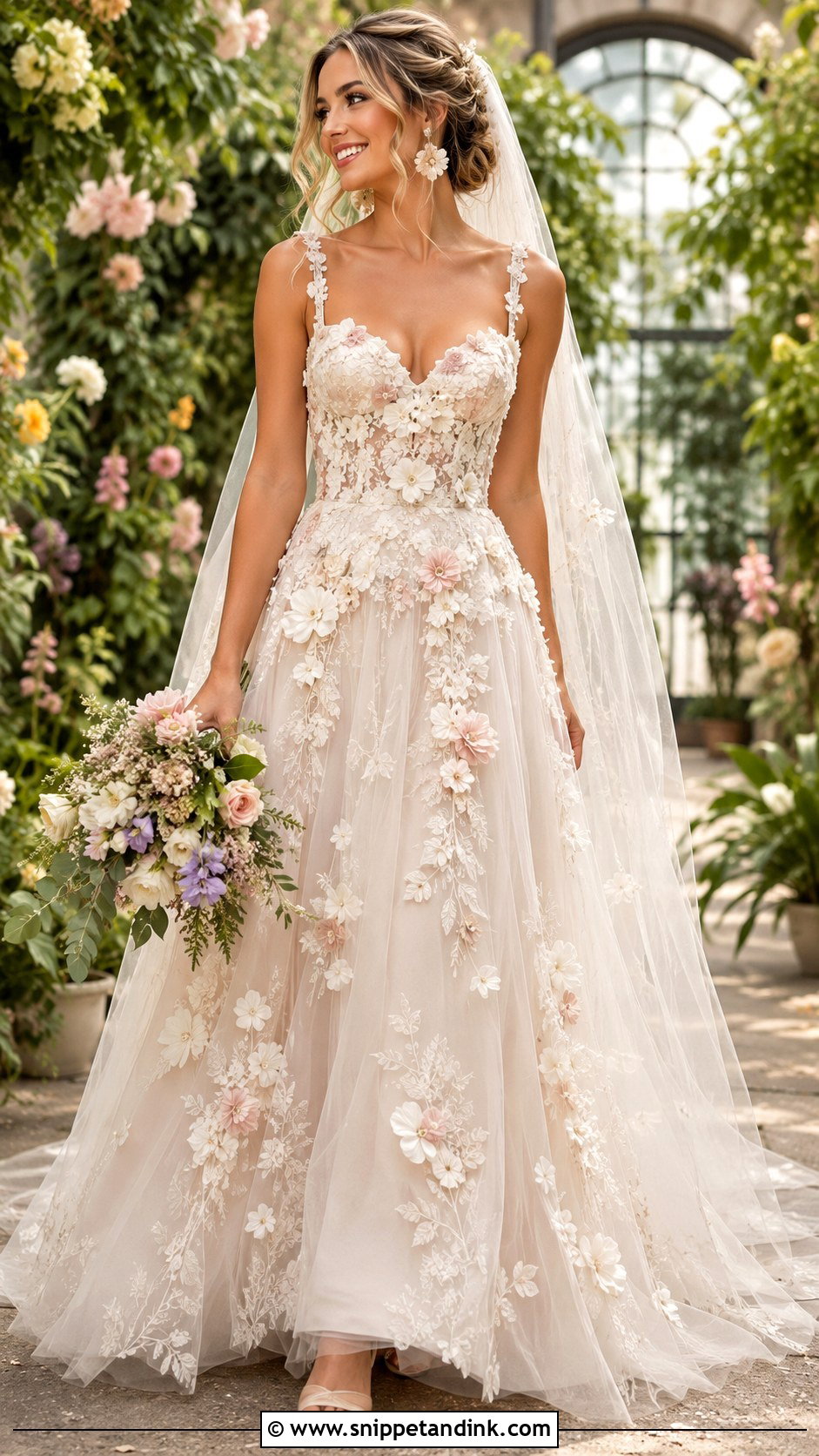
Placement is the whole craft here. I like appliqués clustered on the bodice and thinning out down the skirt and train, so the eye travels downward and the dress doesn’t look dotted with stickers. Keep the lower front skirt fairly clear: your knees hit that area with every step, and heavy flowers there catch and flatten by the evening. A lightly structured sweetheart bodice with narrow straps and a soft A-line skirt carries the flowers best. Pale ivory sandals, floral earrings and a loose bouquet in matching shapes tie it together. Color can creep in through blush petals, sage stitching or tiny pearl centers.
7. Bespoke Pearl Beaded Sheath Wedding Dress
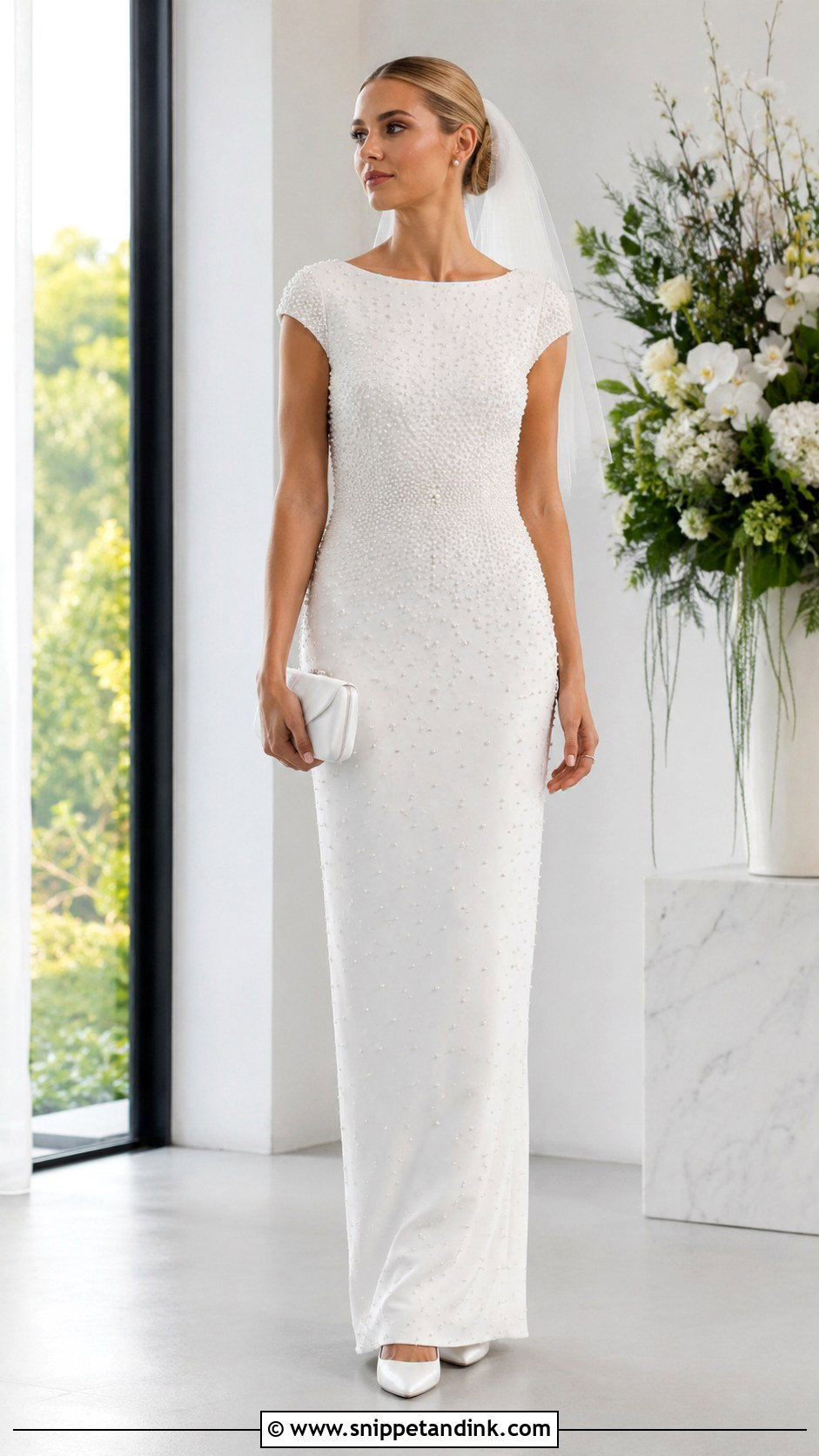
Pearls are heavier than they look. A fully beaded bodice on fine tulle can drag the neckline forward, so I grade the work, dense at the bodice and lighter toward the hem, which is how a streamlined sheath keeps its line. Smooth crepe or fine tulle makes a good base, with beading mapped around the neckline, waist and back. A bateau neckline, cap sleeves and a low V-back held with illusion mesh suit the shape. Ask for reinforcement behind the densest areas and a lining that keeps thread ends off your skin. And insist on a beaded sample first: ivory, white and champagne pearls each change the color of the whole dress. Pearl studs, a short veil and a satin clutch are enough.
8. Bespoke Wedding Dress With Detachable Overskirt
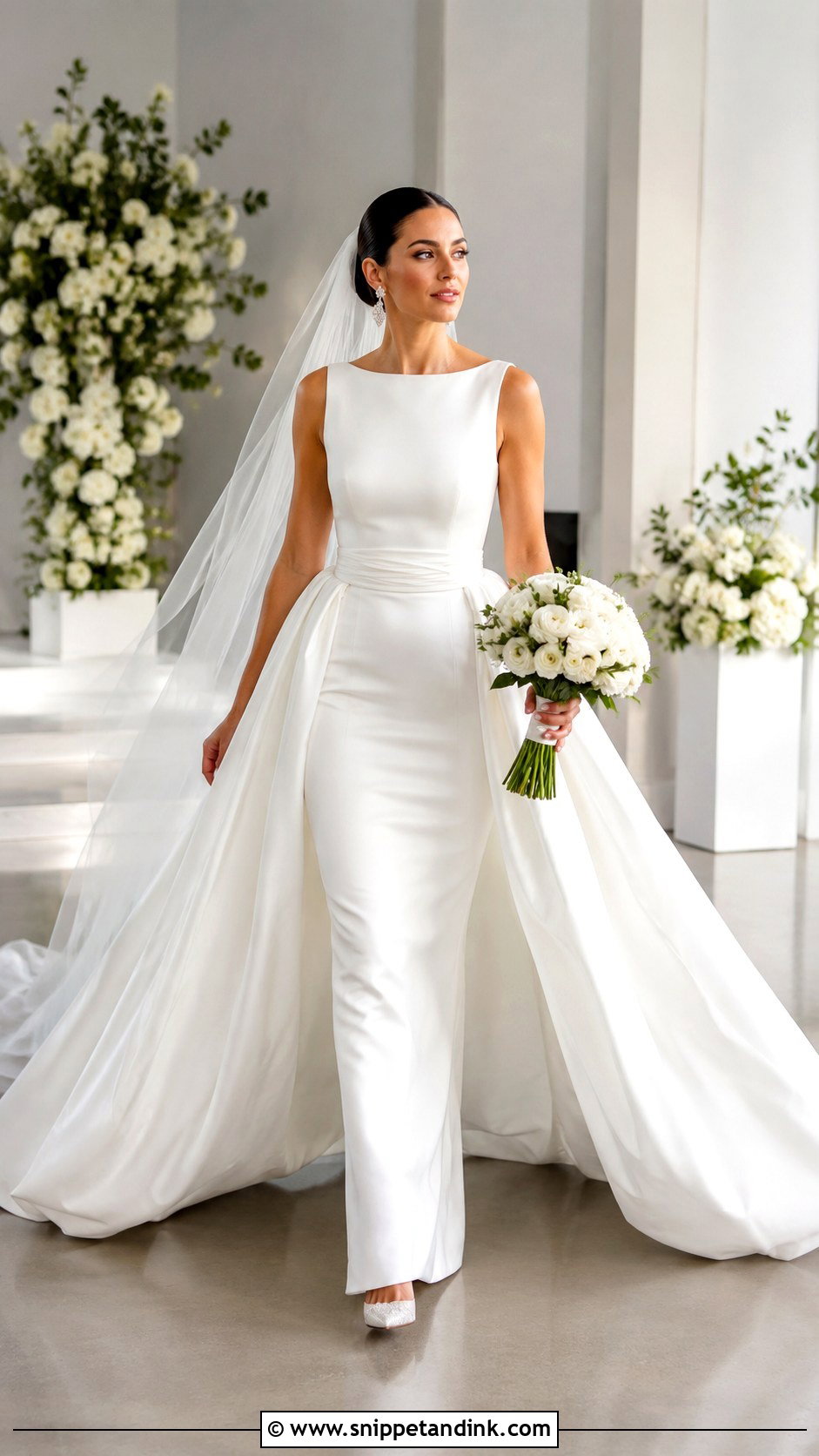
Two silhouettes from one gown only work if the base dress looks finished on its own. I start with a clean column or sheath with a secure bodice and a manageable train, then add a satin, organza or tulle overskirt that fastens invisibly at the waist for the ceremony. That attachment is where comfort goes wrong: a stack of fabric and hooks at the waist digs in when you sit, so I always check it in a chair. After the photographs the overskirt comes off and you’re free to dance. A long veil and pointed heels suit the formal version; a shorter veil or a hair bow suits the second. The overskirt fabric should match the base closely enough that it never looks like an afterthought.
9. Bespoke High Neck Lace Wedding Dress
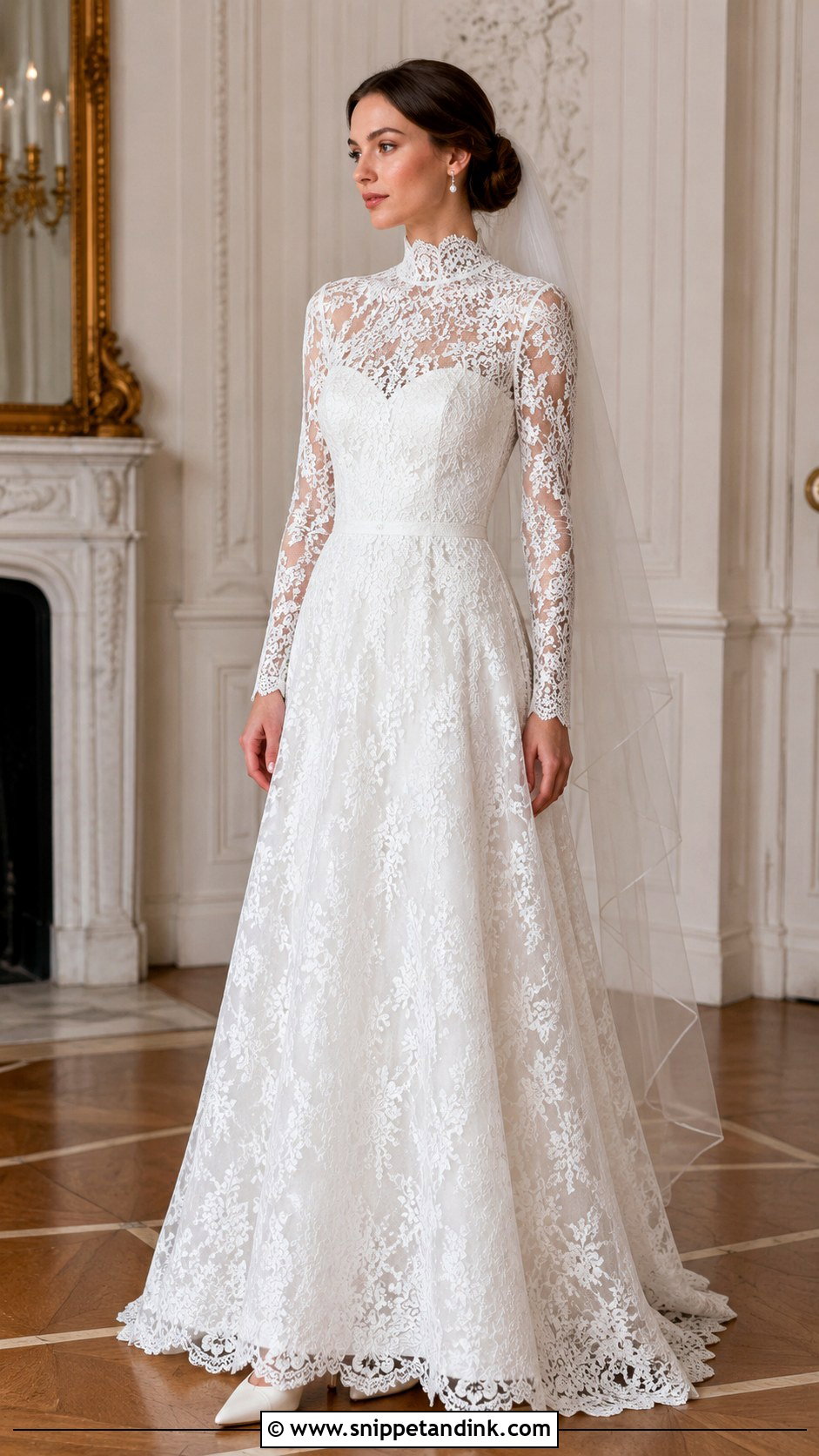
A high collar is the most claustrophobic thing to get wrong. I fit it while you turn your head and swallow, and I leave enough ease that a full day of talking doesn’t feel like a hand at your throat. A lined bodice with sheer sleeves, a softly defined waist and a fluid skirt keep the covered top from feeling heavy, and lace motifs can be placed to frame the face and mark the waist. Family lace, embroidered initials or small floral symbols fit nicely into the cuffs or train. Style it with pearl earrings, a low chignon, closed-toe pumps and a veil that starts below the collar so it doesn’t bunch at the nape.
10. Bespoke One Shoulder Wedding Dress
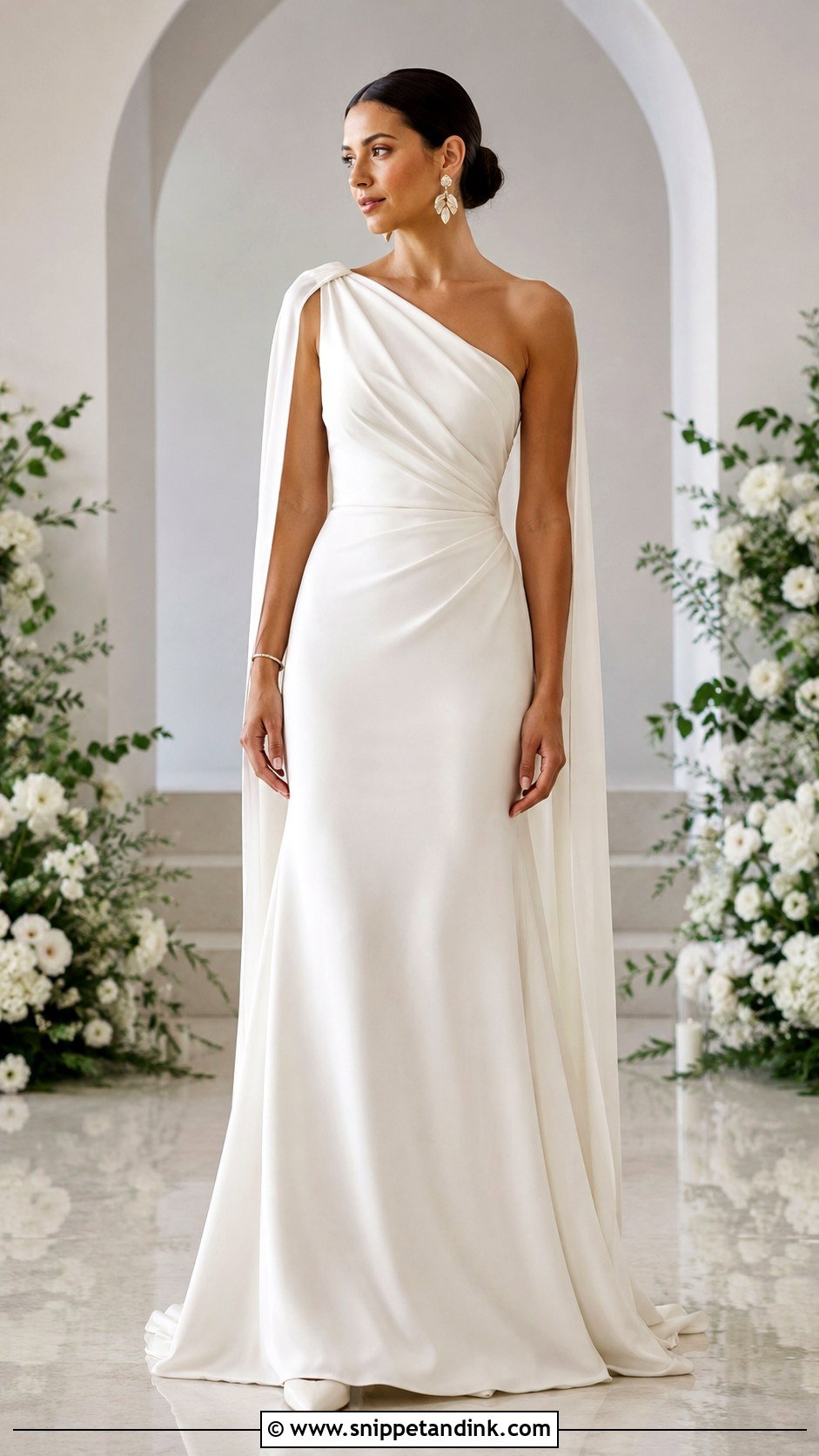
Asymmetry needs engineering on the bare side. Without boning or a silicone grip strip along the strapless edge, the bodice slowly twists toward the strap over the day. I build that support in from the start, in structured silk crepe, satin or soft mikado so the shoulder line stays crisp. A diagonal drape can run across the bodice into a fitted waist and a gently flared skirt. A sleek bun, one sculptural earring and pointed pumps are plenty; a polished hair accessory can replace the veil entirely. A cape panel fixed at the shoulder adds movement for the aisle and comes off later. Check it from behind in a mirror too, since the angle has to look deliberate from every side.
11. Bespoke Tea Length Wedding Dress
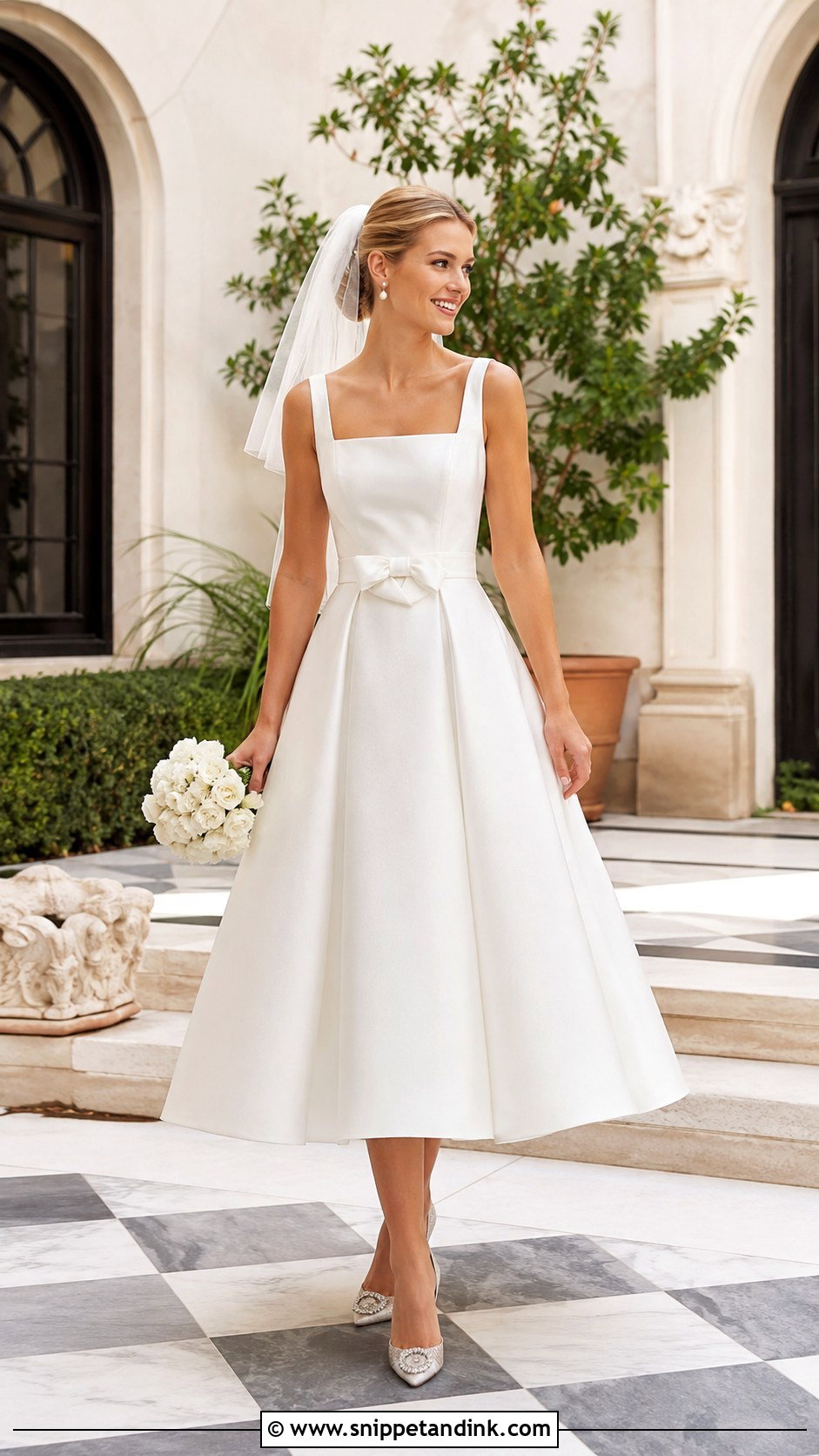
Tea length puts your shoes and ankles on display, so the hem decides everything. The most flattering point is usually just below the widest part of the calf, and it moves with heel height, which is why I won’t mark a hem without the actual shoes in the room. Silk faille, mikado and crisp organza hold a mid-calf skirt; soft fabrics simply collapse. Build the bodice with a scoop or folded neckline and a defined waist, then let pockets or a removable bow belt add character. Embellished pumps, a short veil and pearl earrings finish it. I’d suggest it for a courthouse ceremony or a daytime party where you’ll be on your feet and moving a lot.
12. Bespoke Blush Wedding Dress
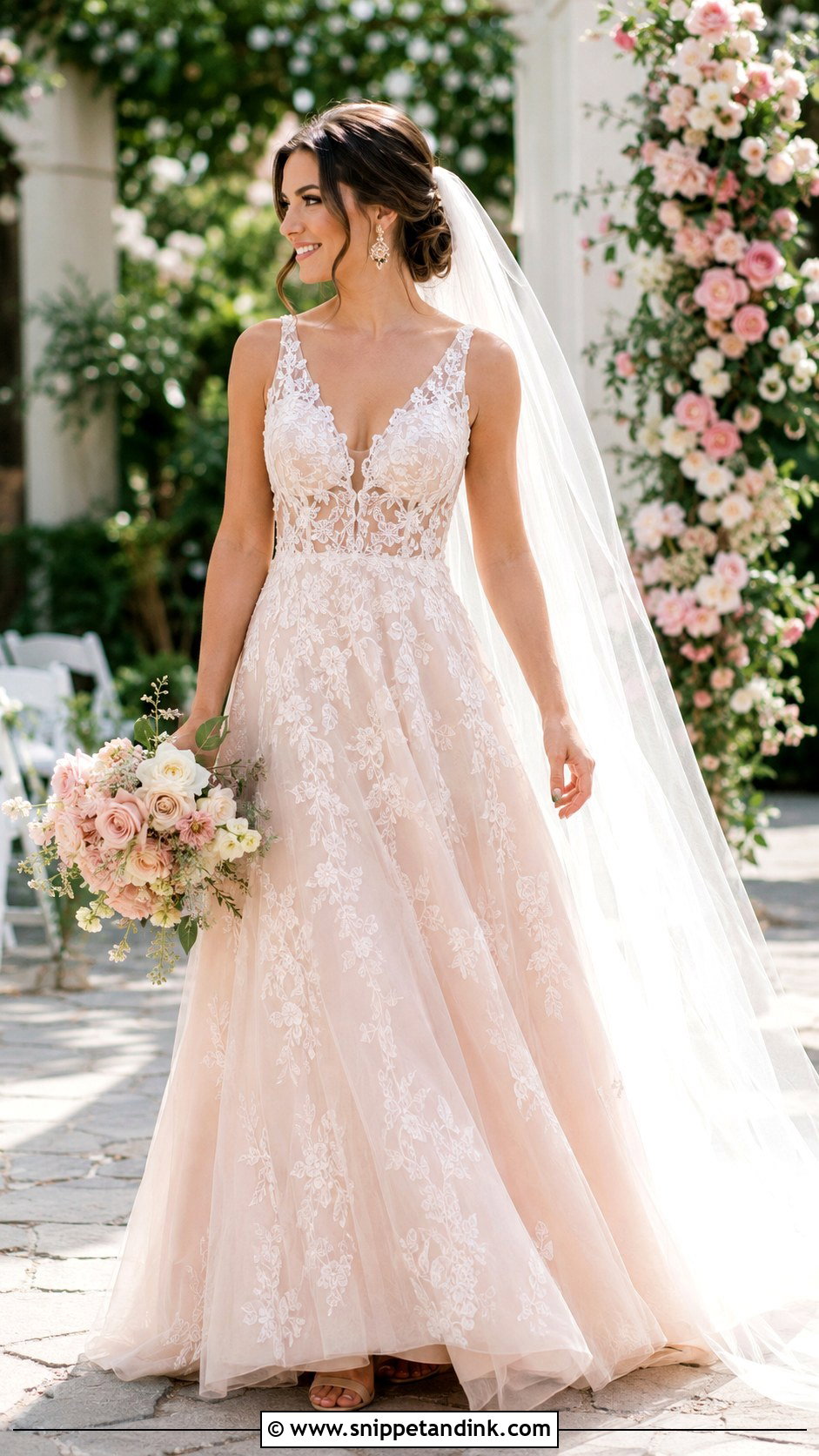
Flat blush satin can wash out fair skin and turn peachy on warmer tones. I get a better result by layering ivory lace or tulle over a blush, champagne or pale rose lining, which gives depth and still reads as bridal in photographs. Hold swatches against your face by a window and again under warm indoor light; the same fabric can look grey in one and pink in the other. A fitted bodice and flowing A-line skirt let the color do the work. Neutral heels, rose-gold earrings, a sheer ivory veil and flowers in cream and muted pink keep it soft. The deeper shade can sit only under the bodice or run through the whole skirt, so you end up with a tone that isn’t on any standard bridal color card.
13. Bespoke Cape Sleeve Wedding Dress
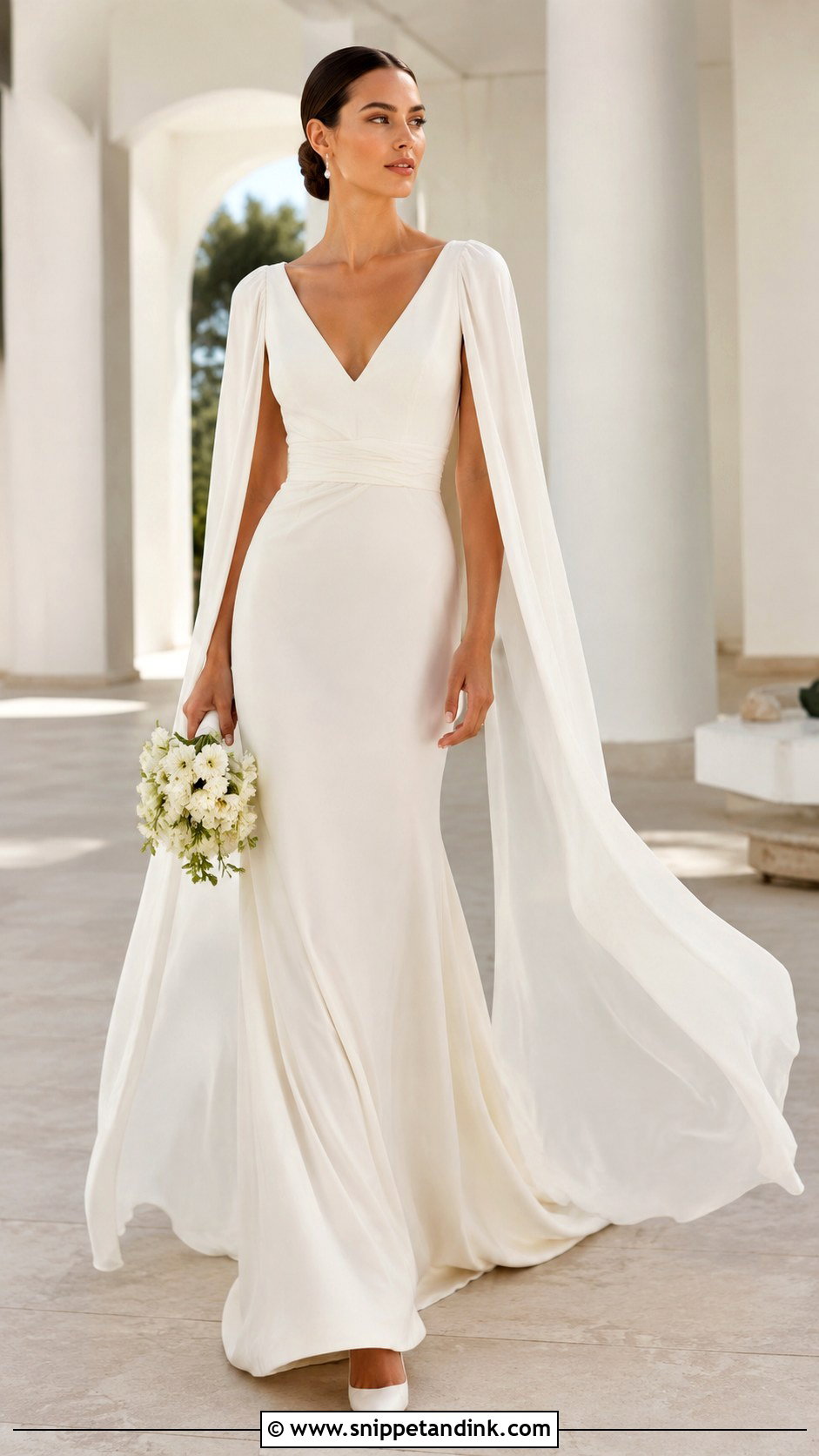
Long capes are lovely in motion and a nuisance at the buffet. For any panel that falls past the elbow I add discreet wrist loops or detachable fastenings, so you can hold the fabric out of the way. Chiffon, georgette or fine tulle panels attach at the shoulders of a structured column or A-line gown and can finish at the elbow, at the floor or as a train. Keep the dress underneath plain, with a V-neck, fitted waist and smooth skirt, and skip the necklace. If you’re wearing a veil, keep it featherweight. Two sheer layers at the back tangle the moment there’s wind.
14. Bespoke Drop Waist Wedding Dress
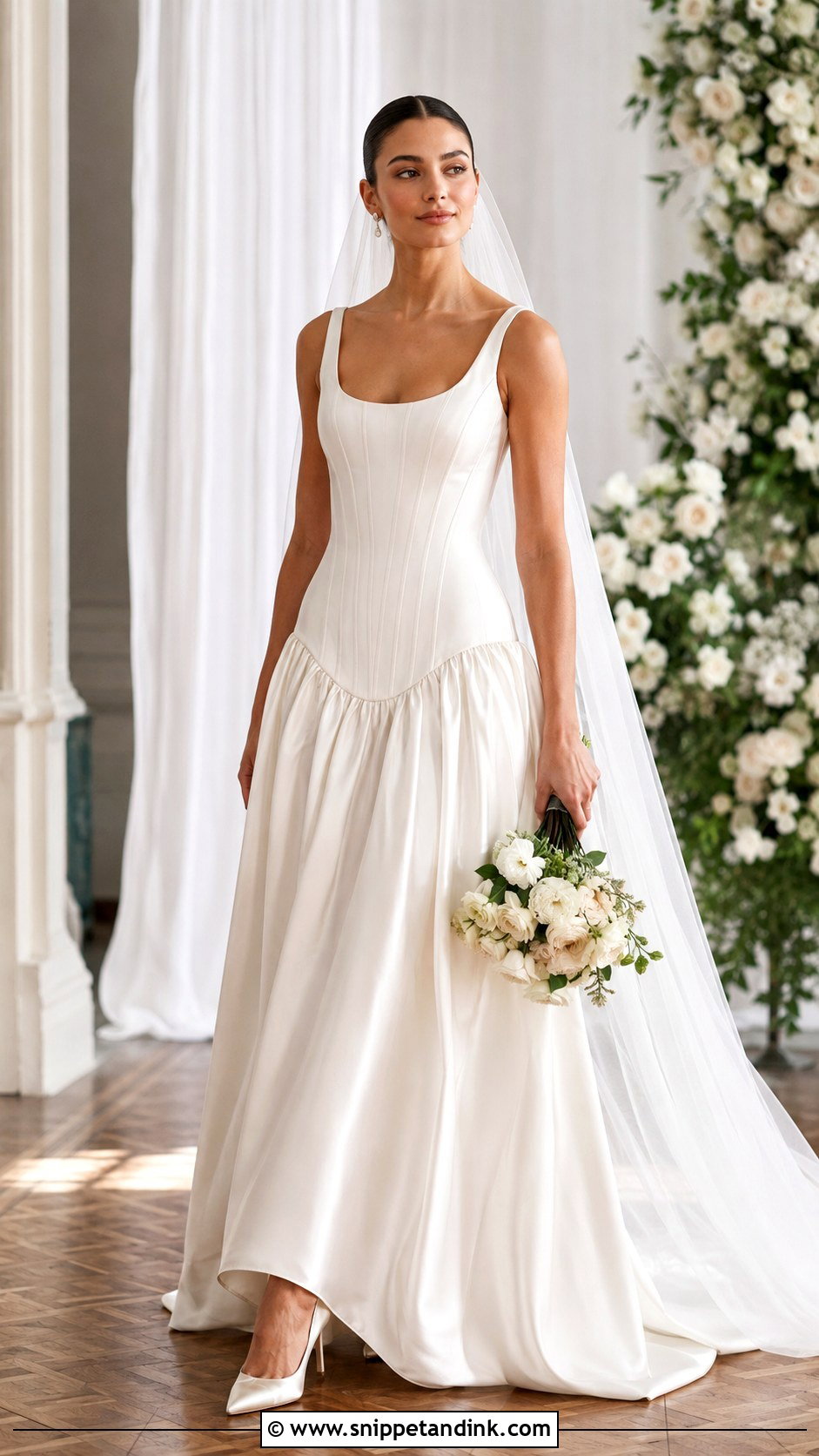
Drop waists come down to torso length. On a short torso, a seam set low on the hip can make the legs look short; on a long torso it’s flattering. I place the seam on the toile after finding where your hip bone actually sits, and a curved seam is gentler than a straight horizontal line. Pair the long bodice with a scoop neckline, internal corsetry and a gathered silk or tulle skirt. Sit down at every fitting: if the bodice bones press into your hips, they need shortening before the dress is finished. A long veil, understated earrings and satin heels complete it.

15. Bespoke Corset Mermaid Wedding Dress
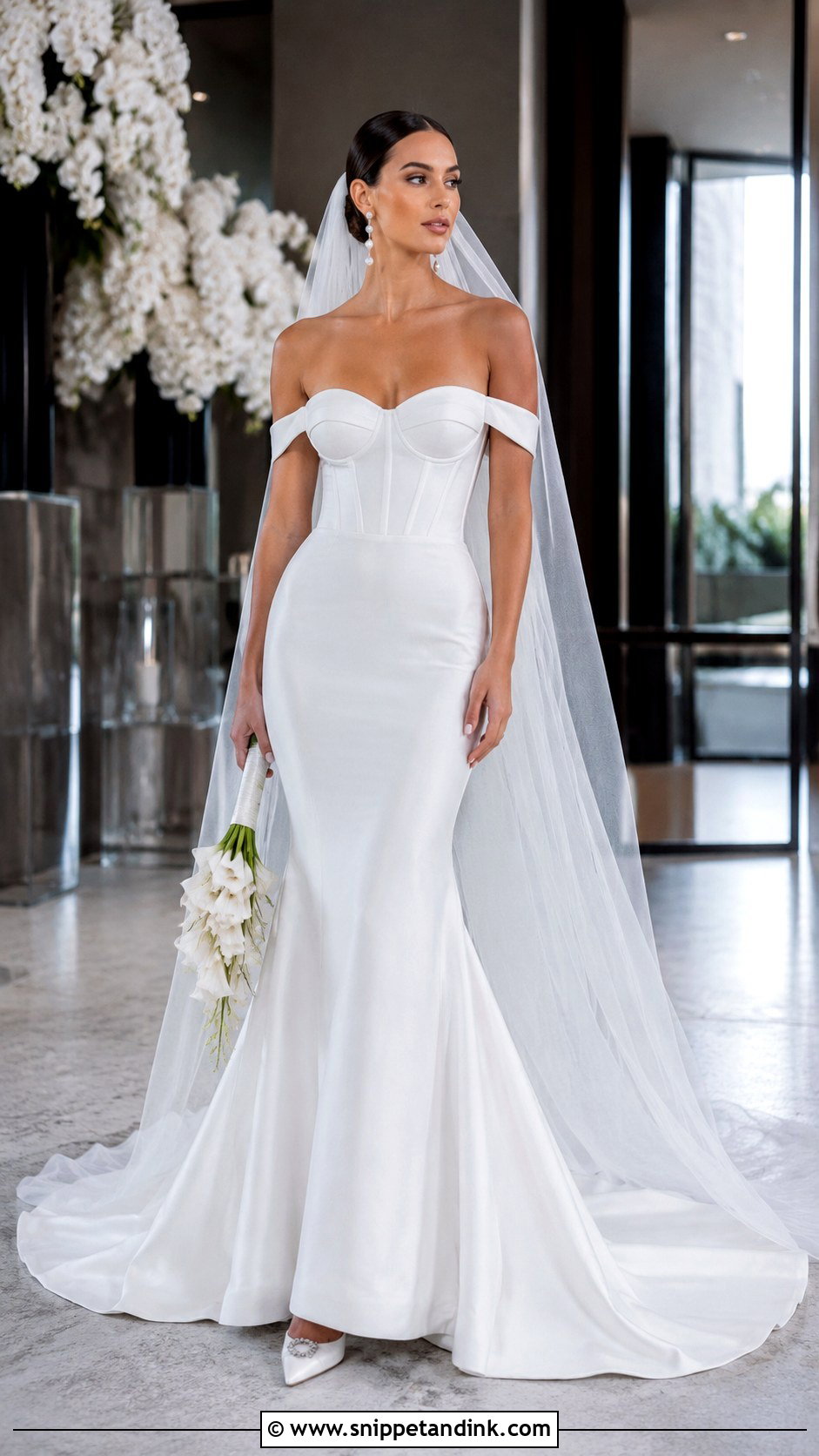
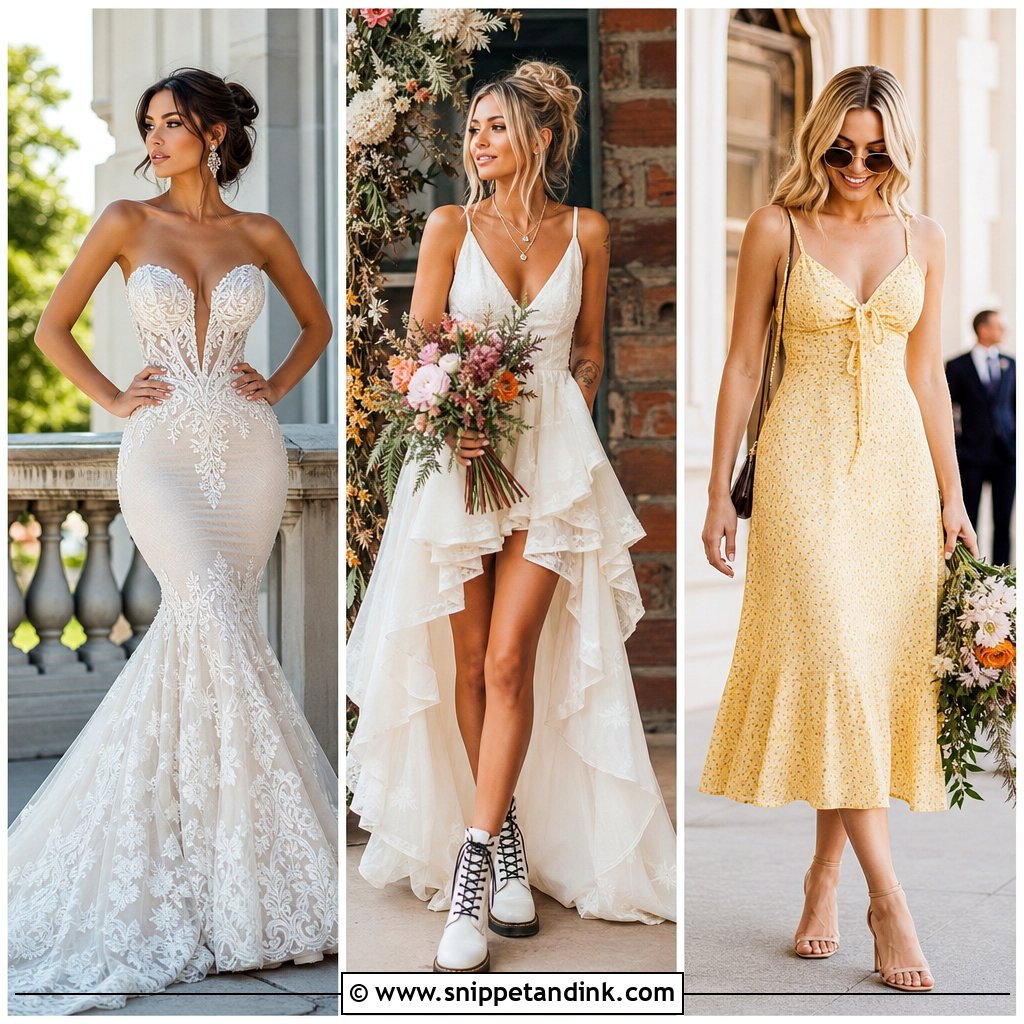
Most brides who regret a mermaid gown regret it for one reason: they couldn’t sit or climb steps in it. The flare point is the decision that matters. Set at the knee it’s dramatic and restrictive; a few inches higher, you can walk normally, and I test stairs at the fitting before committing. A structured bodice carries the shape in silk crepe, satin or embroidered lace, with cup shape, boning placement and hip ease adjusted to your body rather than to a standard size. Detachable off-shoulder straps or sheer sleeves give you two necklines. A hidden stretch panel helps if you plan to dance hard. Drop earrings, a clean veil, pointed heels and a narrow bouquet suit the line.
16. Bespoke Chiffon Empire Waist Wedding Dress
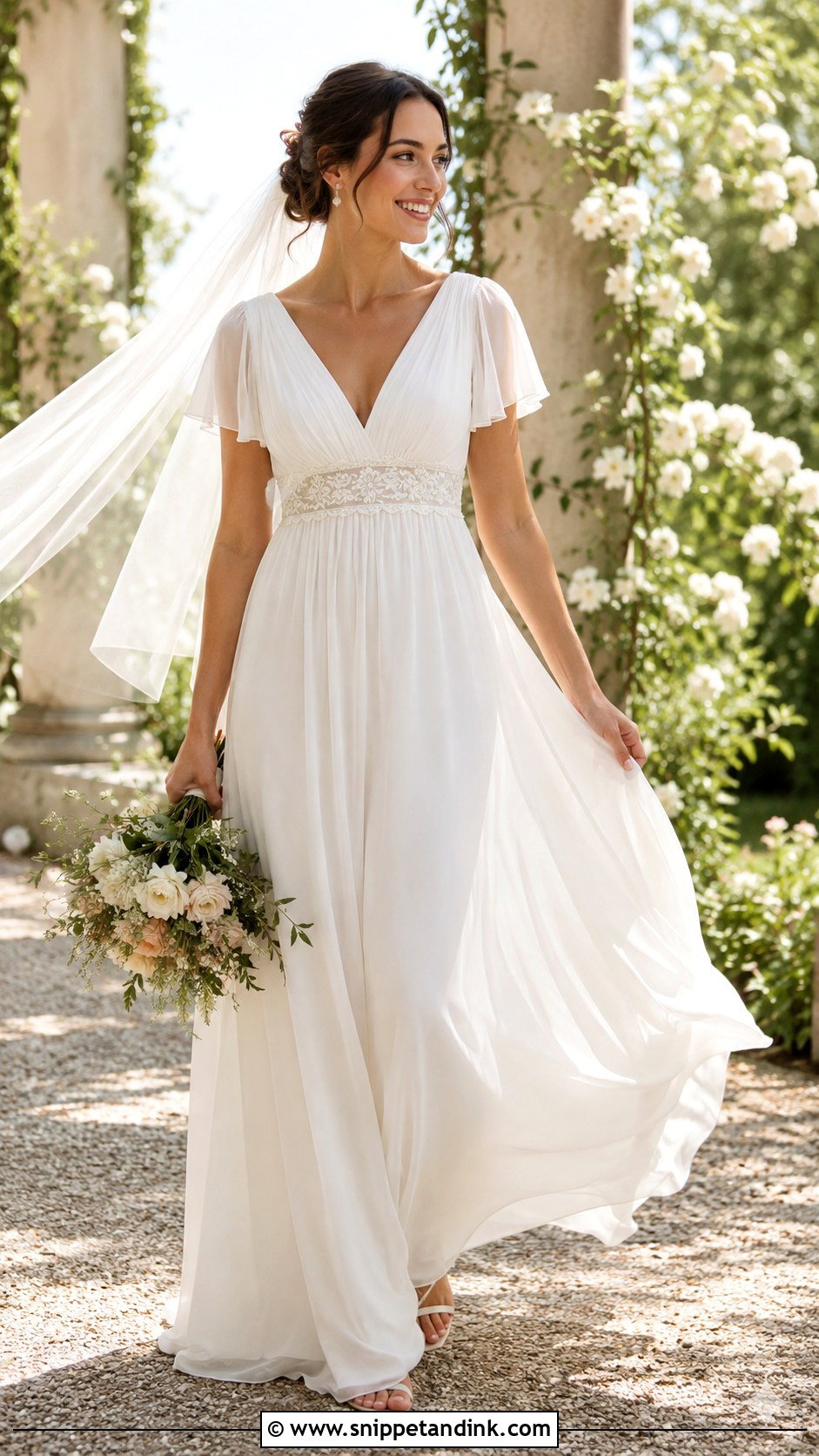
Chiffon moves in the slightest breeze, which is why I like it outdoors, but it’s sheer and needs an underlayer that won’t cling. I use a smooth satin lining for opacity. The waist seam just below the bust needs real support underneath, because chiffon offers none; a built-in foundation does the lifting. A softly gathered V-neck bodice and flutter sleeves suit the line, and fine embroidered trim under the bust adds definition. Delicate sandals, small drop earrings, a lightweight veil and a hand-tied bouquet keep it airy. Chiffon snags easily on rough paving, so I’d keep the front hem a touch shorter for an outdoor aisle.
17. Bespoke Embroidered Wedding Dress
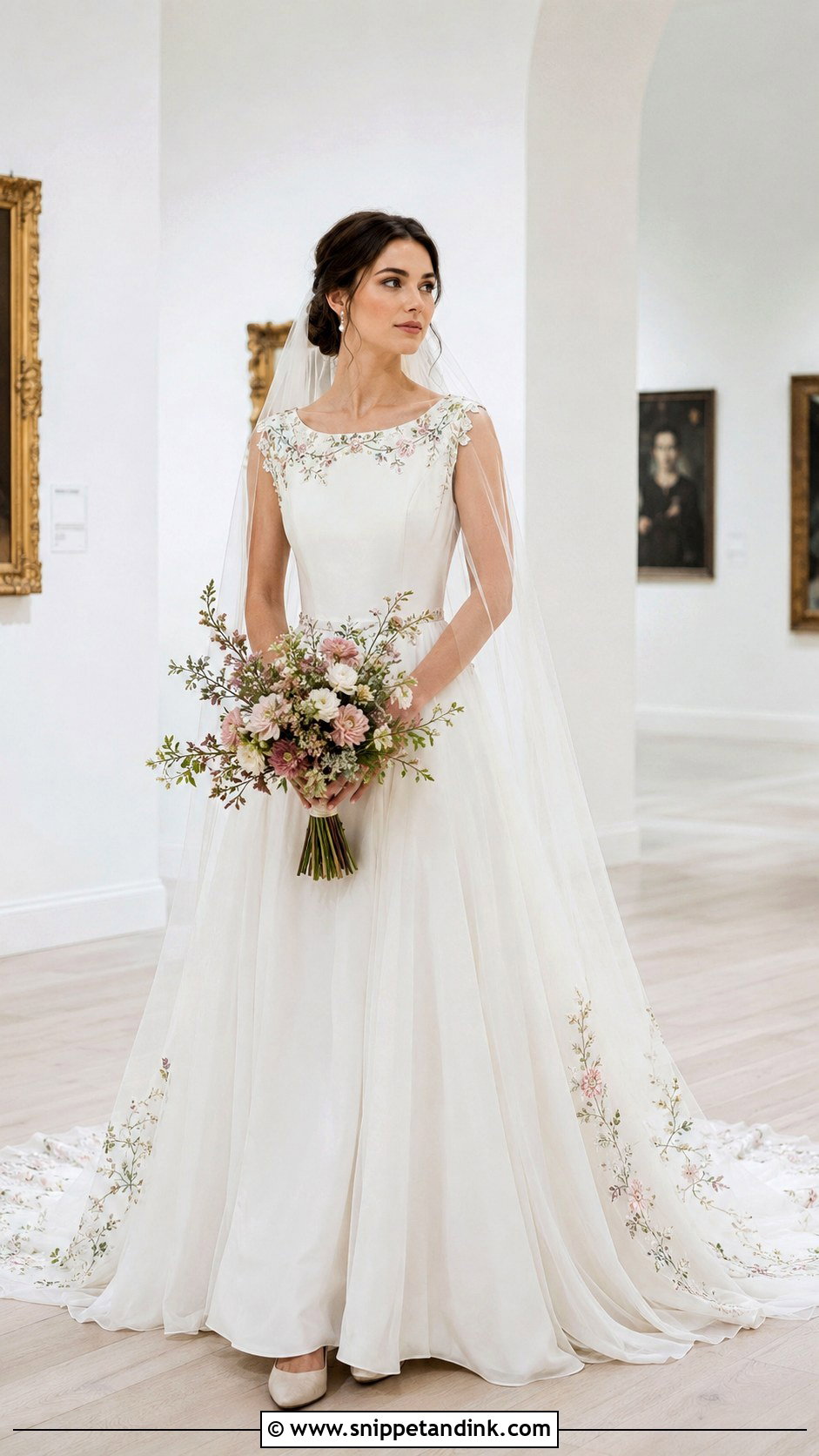
Embroidery takes longer than almost any other bespoke detail, and that matters for your timeline. Start with a simple silk or tulle silhouette, then develop motifs tied to your heritage, the wedding location, family or favorite flowers. I ask for placement sketches and a stitched sample before work begins on the final fabric, since thread color shifts once it sits on silk. Keep dense embroidery away from seams that may need letting out; you can’t alter cleanly through stitching. Initials or a date can hide inside the hem. Made this way, the dress becomes a meaningful personal heirloom. Add a plain veil, understated earrings and a bouquet that picks up the stitched colors.
18. Bespoke Bow Back Wedding Dress
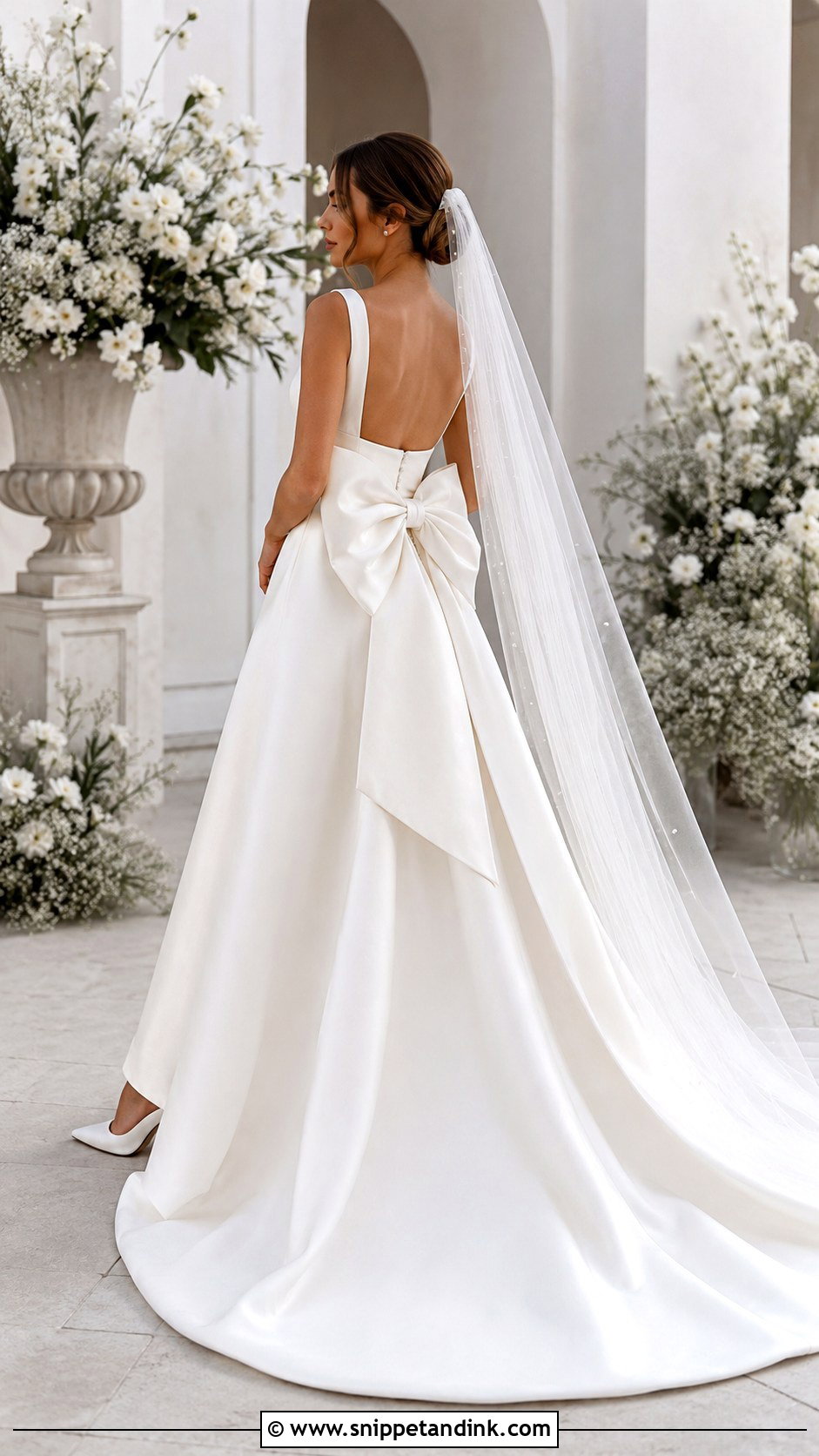
Scale is the risk with a back bow. Too small and it reads as a sash; too big and it swallows a petite bride. I pin calico mock bows on at the fitting to judge the size against your height and skirt. Mikado holds an architectural loop, while silk satin falls softer and creases when you lean back in a chair. Pair it with a square-neck or bateau bodice and a smooth A-line skirt, setting the bow at the natural waist or upper back, and choose a sheer veil so it shows through. I usually make the bow removable so you can sit comfortably at dinner. Pearl studs, pointed heels and a simple updo are all the dress needs.
19. Bespoke Convertible Wedding Dress
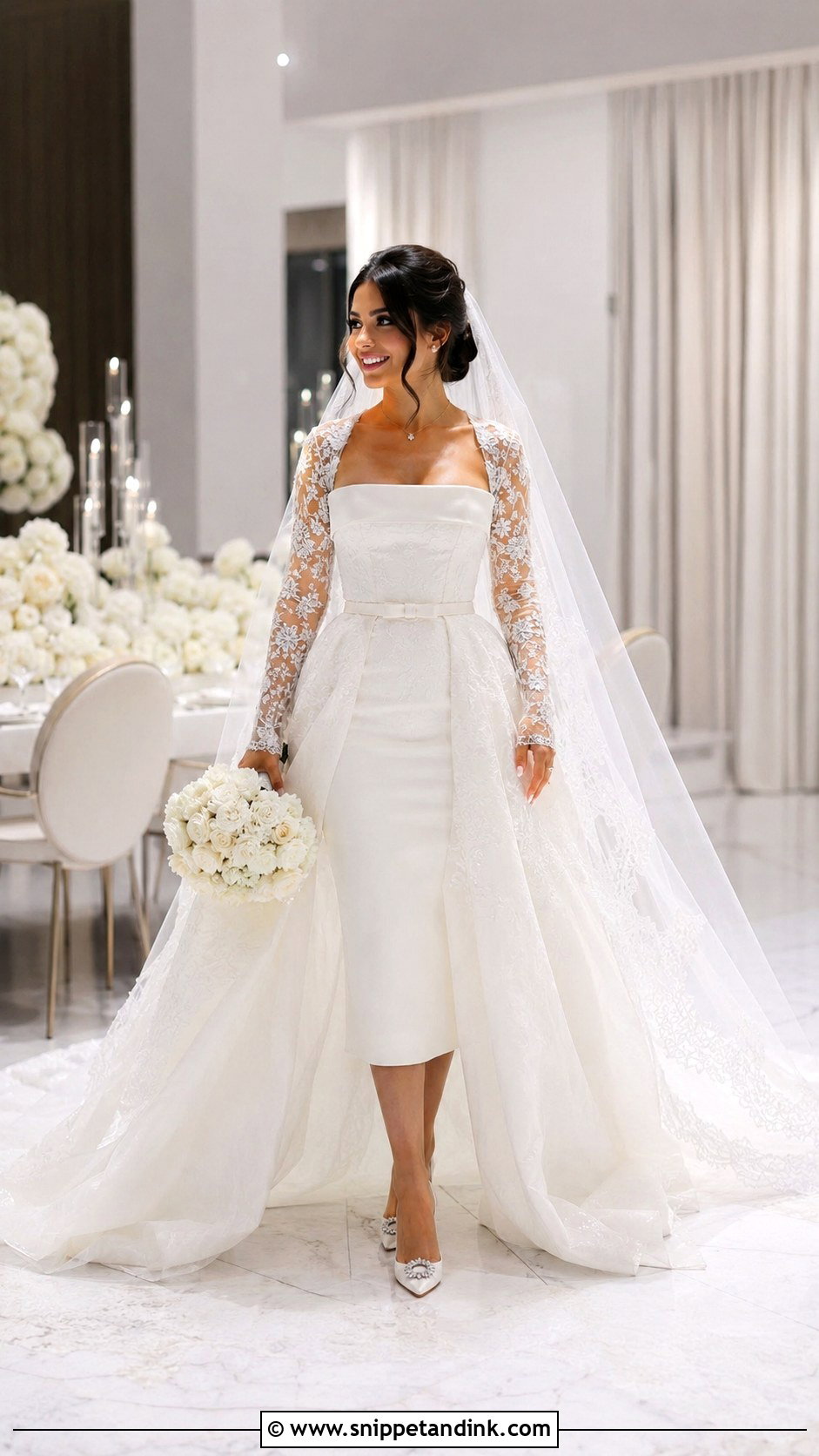
A convertible gown succeeds or fails on its fastenings. Every overskirt, sleeve and train needs hidden hooks, snaps or buttons that someone other than you can work quickly in a cramped bathroom. I have the bride and her helper practice the change at the final fitting, and each piece gets its own labeled storage bag. Start with a fitted midi or column dress that looks complete without its extras. For the ceremony, wear everything with a cathedral veil and pumps; later, drop the train and sleeves, switch to comfortable heels and add statement earrings. Because the fabrics and neckline stay consistent, both looks clearly belong to one dress.
20. Bespoke High Low Wedding Dress With Overskirt
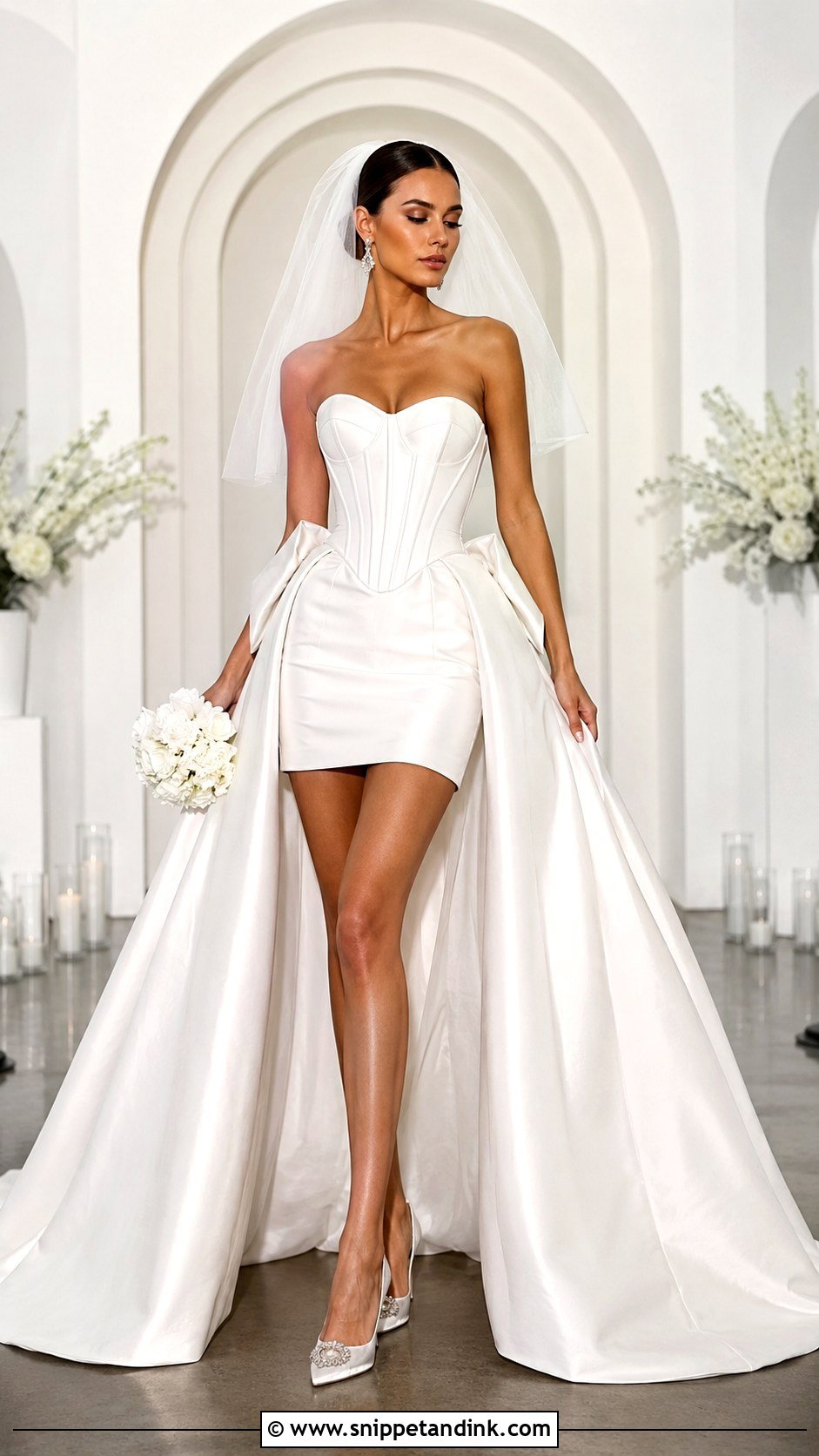
The front opening of a high-low overskirt is harder to cut than it looks. If the edge isn’t shaped and weighted properly, it splays open as you walk and flaps around your shoes. I refine the hem curve on the toile and sometimes add a narrow horsehair braid so it falls cleanly. Build the base as a structured mini or midi dress with a corseted bodice and clean neckline, then let the detachable skirt add volume at the sides and back before coming off for a second look. Your shoes will be on show all day, so embellished pumps earn their place. Drop earrings, a short veil and a compact bouquet finish it.
Briefing a Designer So the Sketch Matches the Dress in Your Head
Pictures alone mislead. A photo of a lace sleeve tells me nothing about whether you loved the lace, the sleeve length or the way the model’s shoulders looked. I get much further when a bride tells me what she’s reacting to in each image.
- Mark one thing you love and one thing you’d change on every reference photo.
- Say how much structure you can tolerate. Some brides want to feel held in; others hate boning by the second hour.
- Describe the day: hours on your feet, a long car ride, stairs, an outdoor aisle, a dance floor.
- Bring the undergarments you plan to wear, or ask the designer to build support into the bodice so you need none.
Sugar Stains, Tissue Paper and Where the Gown Lives Afterwards
Champagne and sweet cocktails dry almost invisibly on silk, then oxidize into brown marks over the following months. That’s why I tell brides to get the dress to a specialist wedding gown cleaner within a few weeks, even if it looks clean. Point out every spill you remember.
For storage, fold the gown loosely with acid-free tissue in the creases and keep it in an acid-free box or a breathable cotton bag, somewhere cool, dark and dry. Plastic traps moisture and can yellow the fabric. Heavily beaded dresses shouldn’t hang by the shoulders for years, because the weight slowly stretches the bodice. If you need to refresh satin later, steam it from the inside rather than ironing the face.
Fit First, Then the Details That Make It Yours
Start with how you want to feel moving in the dress, then work outward to silhouette, fabric, coverage and structure. The personal details (embroidery, removable sleeves, dimensional flowers, a hidden initial) come after the fit is right. Bring reference images to your consultation and let the designer push back where something won’t hold up. Ask for fabric samples, sketches and embellishment tests before you sign off. And wear your ceremony shoes and real undergarments to every fitting, because a bespoke gown is cut to the body that will actually wear it on the day.
You'll Like These Ideas:










Leave a Reply