
Once you know what a neckline, a fabric and a bodice seam do to your proportions, gown shopping with a smaller chest gets a lot easier. Nothing here is about hiding it. Some of the most striking bridal shapes, plunges, halters, soft cowls and clean high necks, sit best on a small bust. Sweetheart cuts, ruching, appliqué and corset seams go the other way and build gentle curves if you’d like more definition. Either way, fit matters more than the size on the label. In a fitting room, the first thing I check is whether the cups, boning and neckline sit flat against you, because a small bust in a sample cut for a larger one will gape.
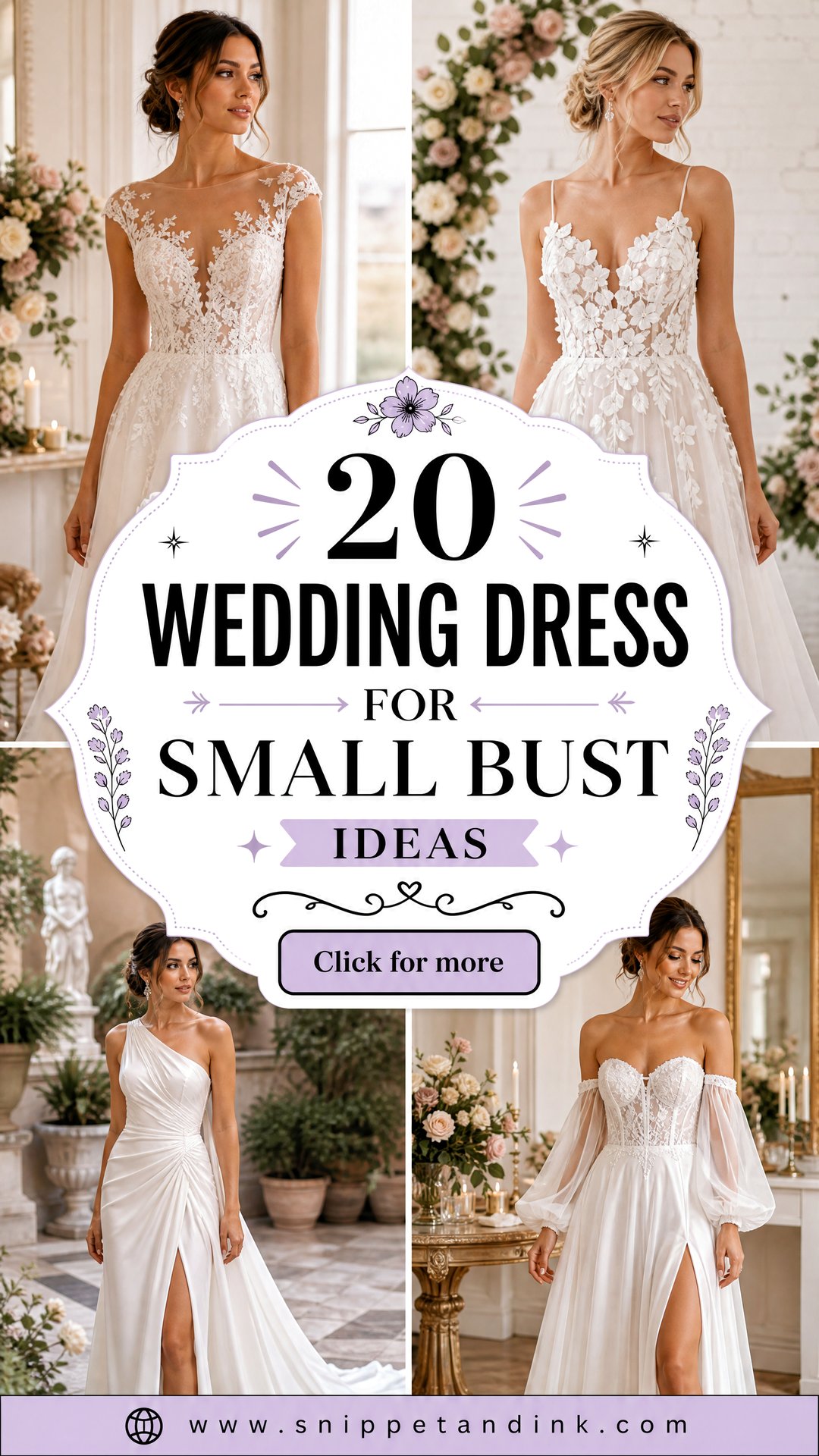
Add Shape, or Wear the Gown Flat?
Before a fitting, I ask small-busted brides one question: do you want the gown to add shape, or do you like your profile as it is? Neither answer is wrong, but it changes which gowns we pull and what goes inside them.
If you’d like more shape
Molded cups sewn into the bodice give a smooth, rounded line and stay put far better than loose push-up pads. Ruching, a sweetheart curve or a corseted bodice add curve through the cut itself, so you need less padding to begin with. Avoid stacking a padded bra under a gown that already has cups; the bodice will sit away from your ribs and gape at the top.
If you’d rather stay natural
Plunges, halters, cowls and high necks look deliberate on a small bust and often need nothing more than a thin lining or soft cups for modesty. Many brides here can skip a bra entirely once the bodice is taken in properly. Adhesive cups or nipple covers are a sensible backup under satin, which shows every outline in flash photography.
1. Sweetheart A-Line Wedding Dress
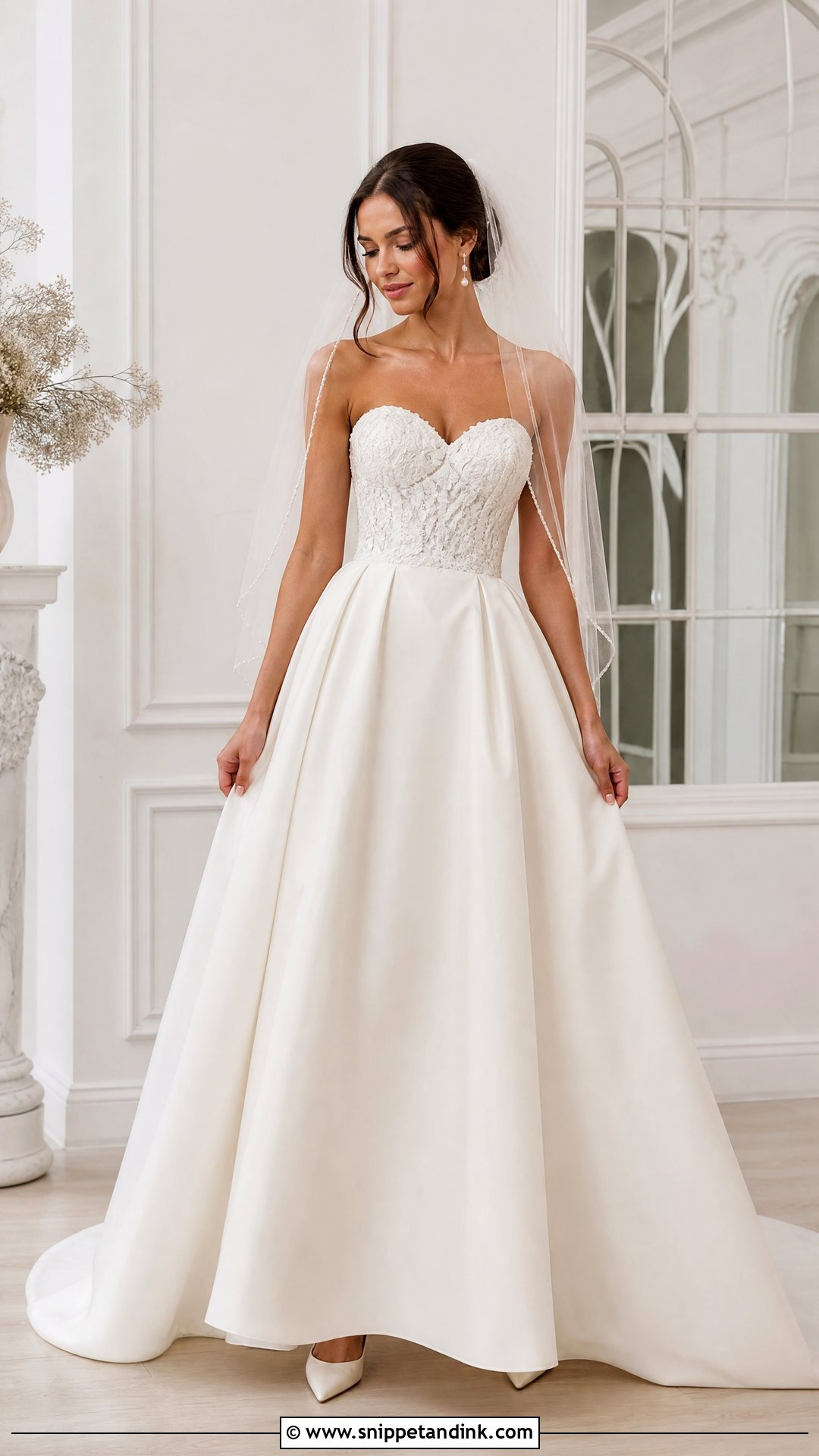
A sweetheart curve gives the chest a soft shape while the A-line keeps the gown classic. I’d look for a structured bodice with light padding, princess seams or a little ruching for definition, and a skirt that falls from the natural waist. Floral lace or small appliqués at the neckline add dimension and lift the eye. Pointed ivory heels, pearl drops and a fingertip veil with a narrow edge finish it. The sweetheart dip is where gaping starts on a smaller bust, so ask your seamstress to take the cups in and tack the neckline close to your body.
2. Plunging V-Neck Ball Gown Wedding Dress
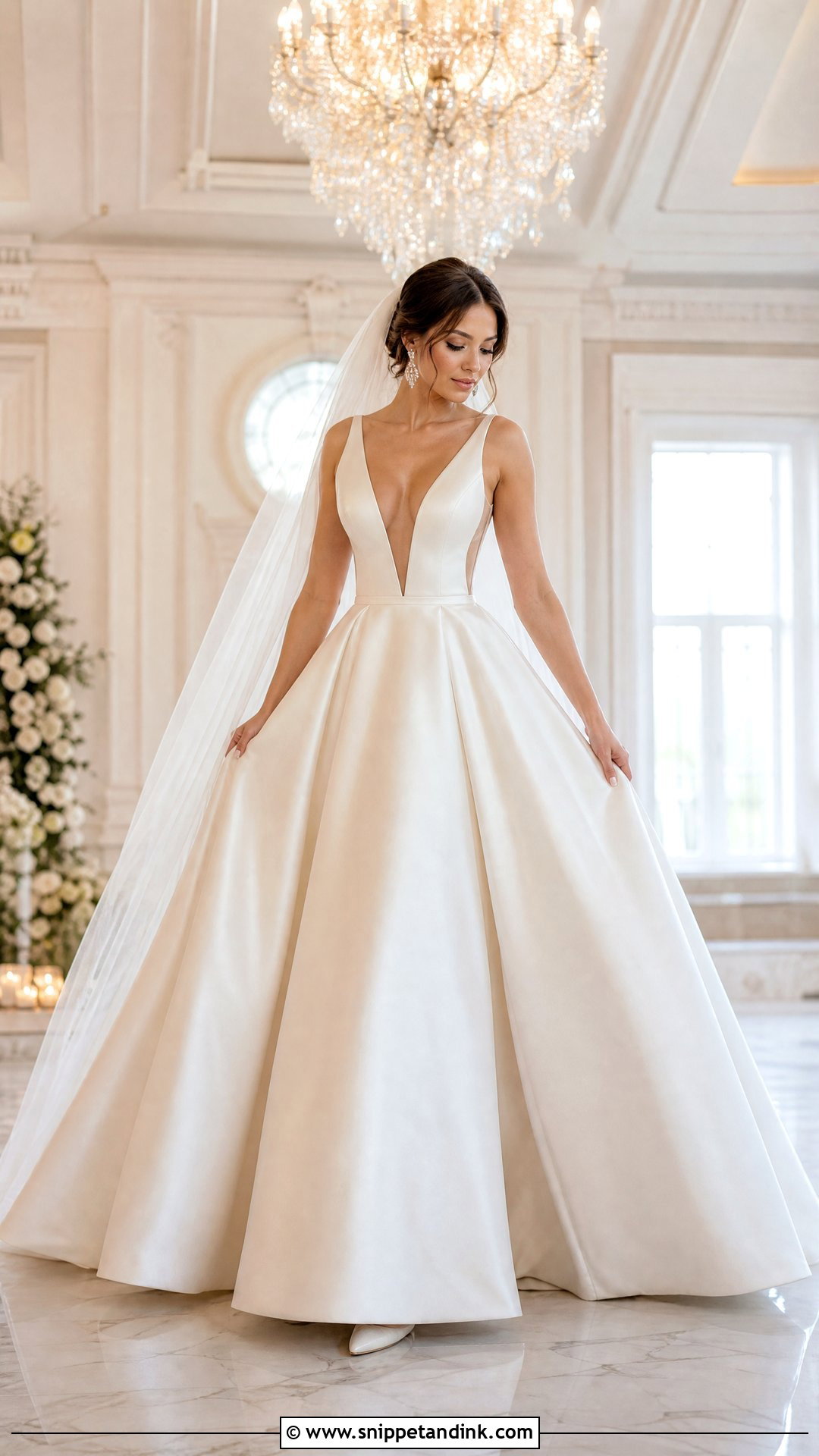
Plunges are often easier on a small bust, not harder, because there’s less to hold in place. A plunging V-neck ball gown pairs that deep line with a fitted waist and full skirt, and clean satin keeps it refined. Illusion mesh inside the V adds security if you want it. Simple crystal earrings, a smooth low bun and closed-toe pumps are enough; a big necklace would fight the neckline. Sit, walk and raise your arms at every fitting. The edges of the plunge should stay flat on your skin and the cup edges should never peek out.
3. Square-Neck Satin Wedding Dress
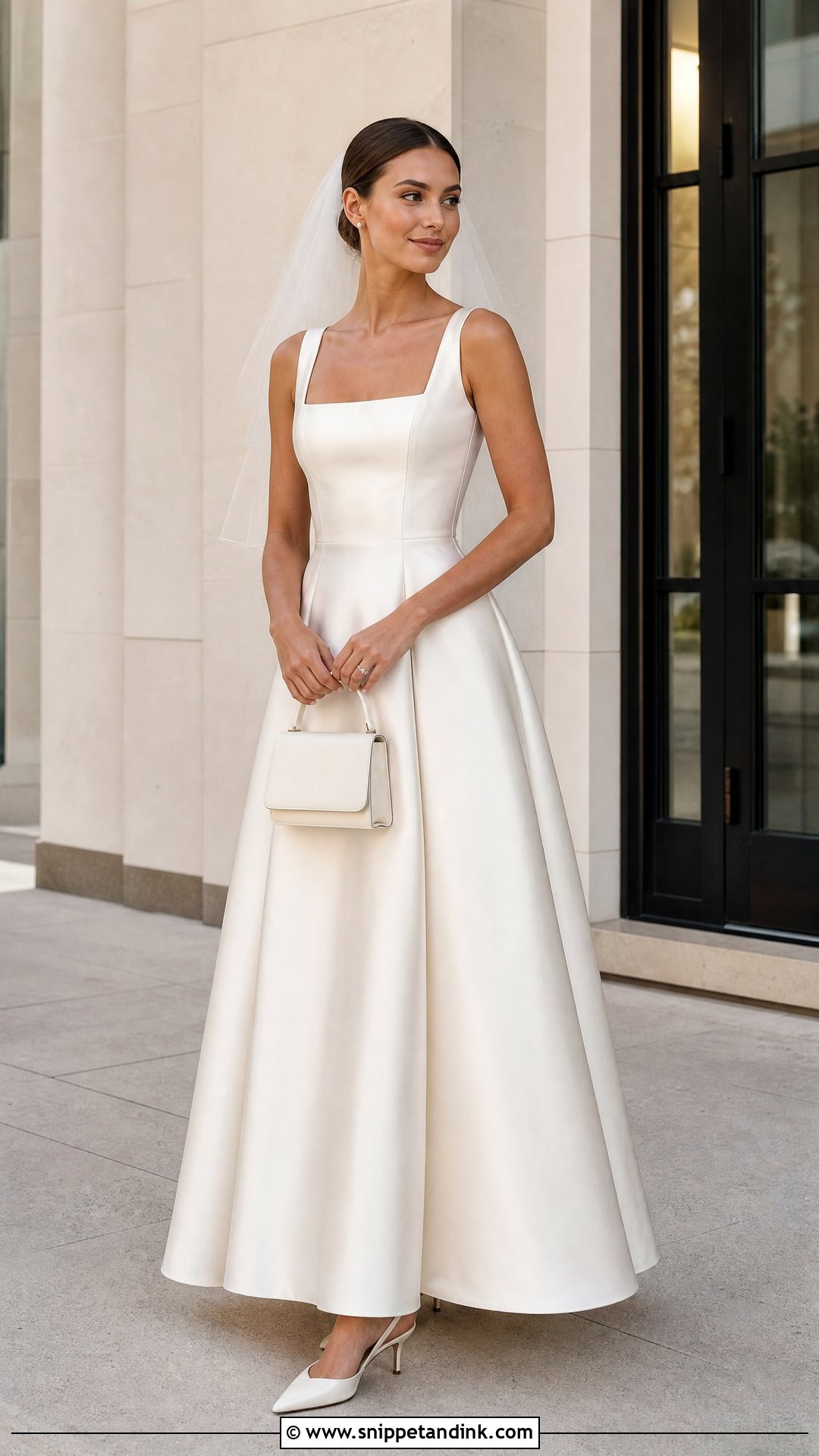
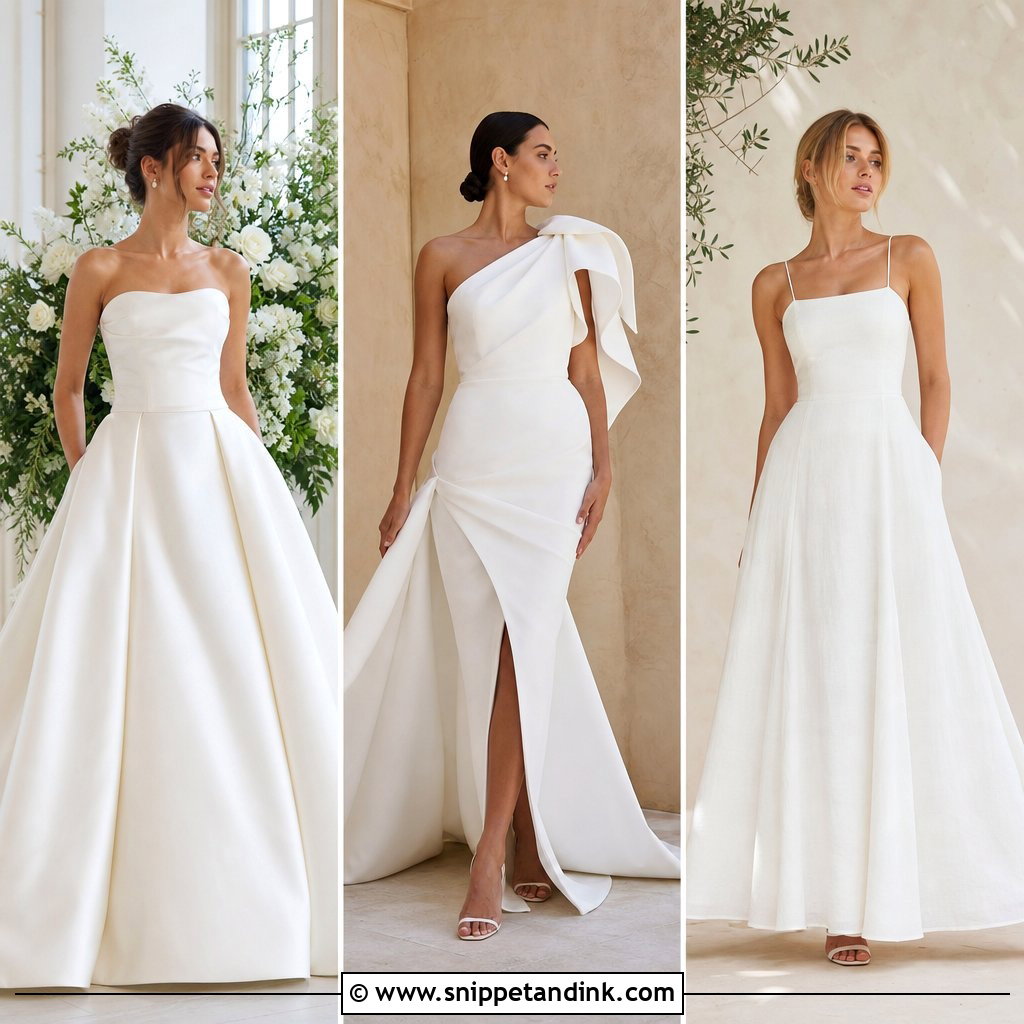
A straight square neckline runs horizontally across the chest, which visually broadens it, and wide straps frame the shoulders with dependable structure. Choose a fitted bodice with vertical seams and an A-line or gently flared skirt. Matte satin holds the crisp edge well. Style it with sleek slingbacks, a small structured bag and medium pearl studs, plus a short veil or neat updo. If the bust area looks empty at your fitting, I’d ask for thin custom cups rather than thick padding. Thick foam makes the corners of the square stand away from the body, which is the opposite of what this neckline needs.
4. Cowl-Neck Slip Wedding Dress
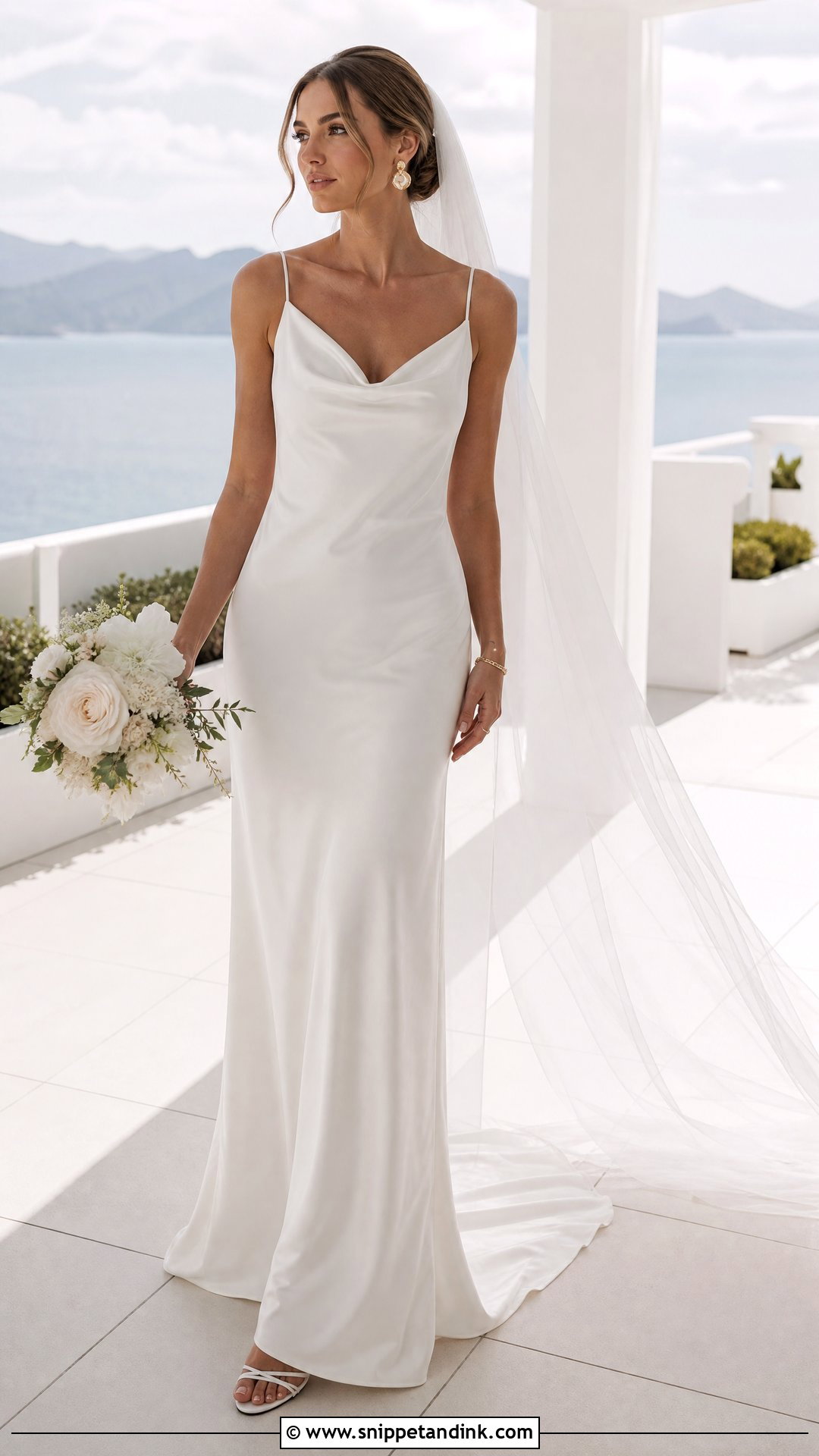
Folds of satin across the chest give a cowl slip natural volume without any padding at all. It’s at home at small venues, destination weddings and city ceremonies. Choose a bias-cut gown that skims the waist and hips without pulling, with narrow straps and a low back. Barely-there sandals, sculptural earrings and a sheer chapel veil suit it, with a loose bun or glossy waves. Cowls move. Have the straps shortened so the drape sits at the right height, and use fashion tape along the inner edge if it shifts when you bend. You want soft folds, not fabric collapsing toward the waist.
5. Halter Column Wedding Dress
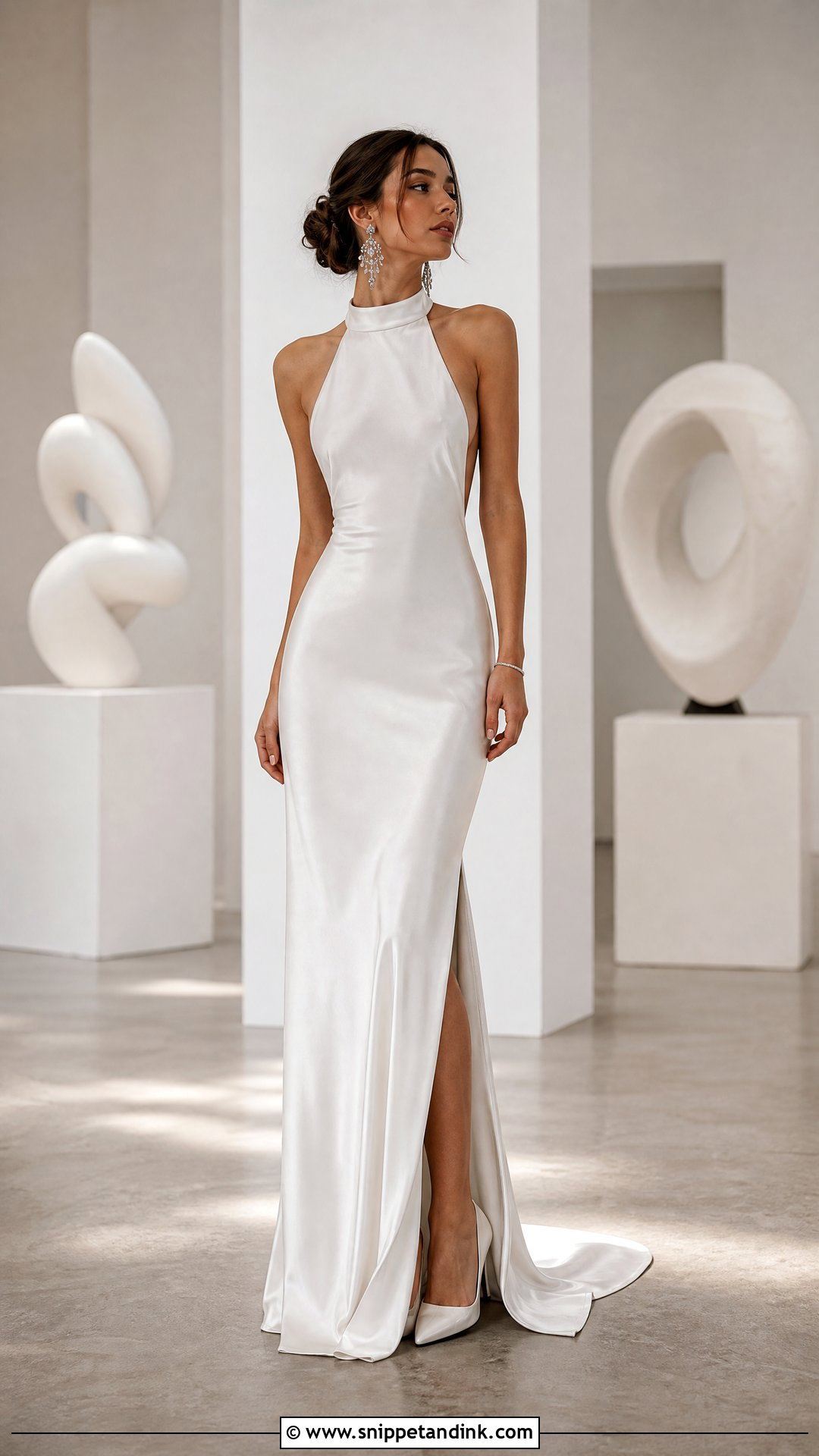
Halters show off the shoulders and run one long, unbroken line from neck to hem. I find it one of the most confident choices for a small bust, because it doesn’t try to add anything. Look for silk crepe or satin with a high halter front, a fitted waist and an open back; a modest side slit makes the narrow column easier to walk in. Crystal drops, pointed pumps and a slim bracelet suit it, with nothing at the neck and a smooth bun. Check the neck closure after an hour of wear. If it pulls on your neck, the halter strap needs lengthening and the support should come from the bodice instead.
6. Off-the-Shoulder Ball Gown Wedding Dress
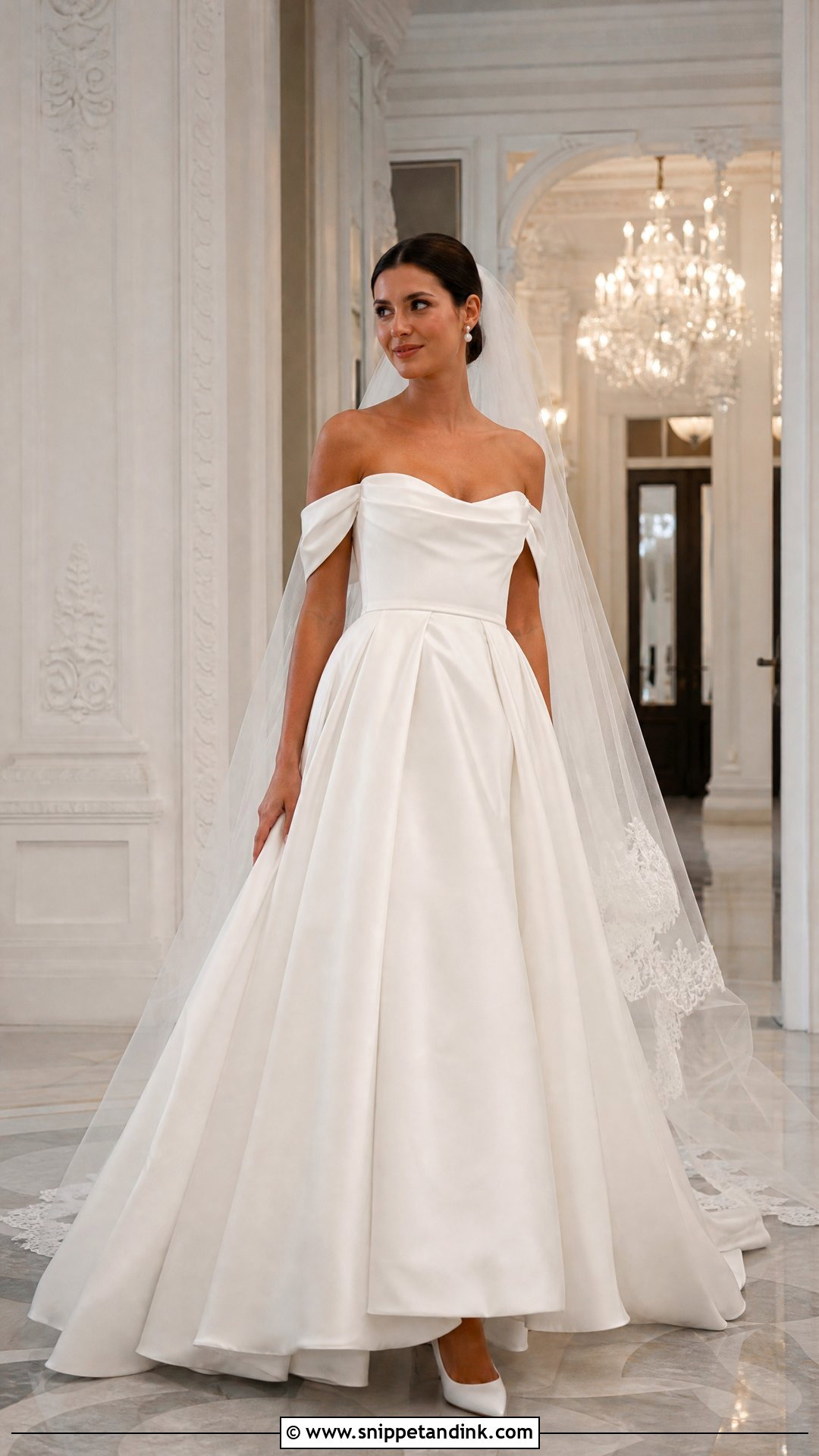
An off-the-shoulder neckline adds width across the upper body and puts the collarbones on show. A softly curved line in folded satin, floral appliqué or detachable draped sleeves works well over a structured bodice and defined waist, with the skirt opening below. Pearl earrings, ivory pumps and a cathedral veil make it formal; keep any necklace fine or skip it. The mistake I see most is relying on the sleeves to hold the gown up. They can’t. Boning, a waist stay and correctly sized cups have to do that, so the sleeves can sit loosely on the arm and you can still lift a glass.
7. Corset Bodice Wedding Dress
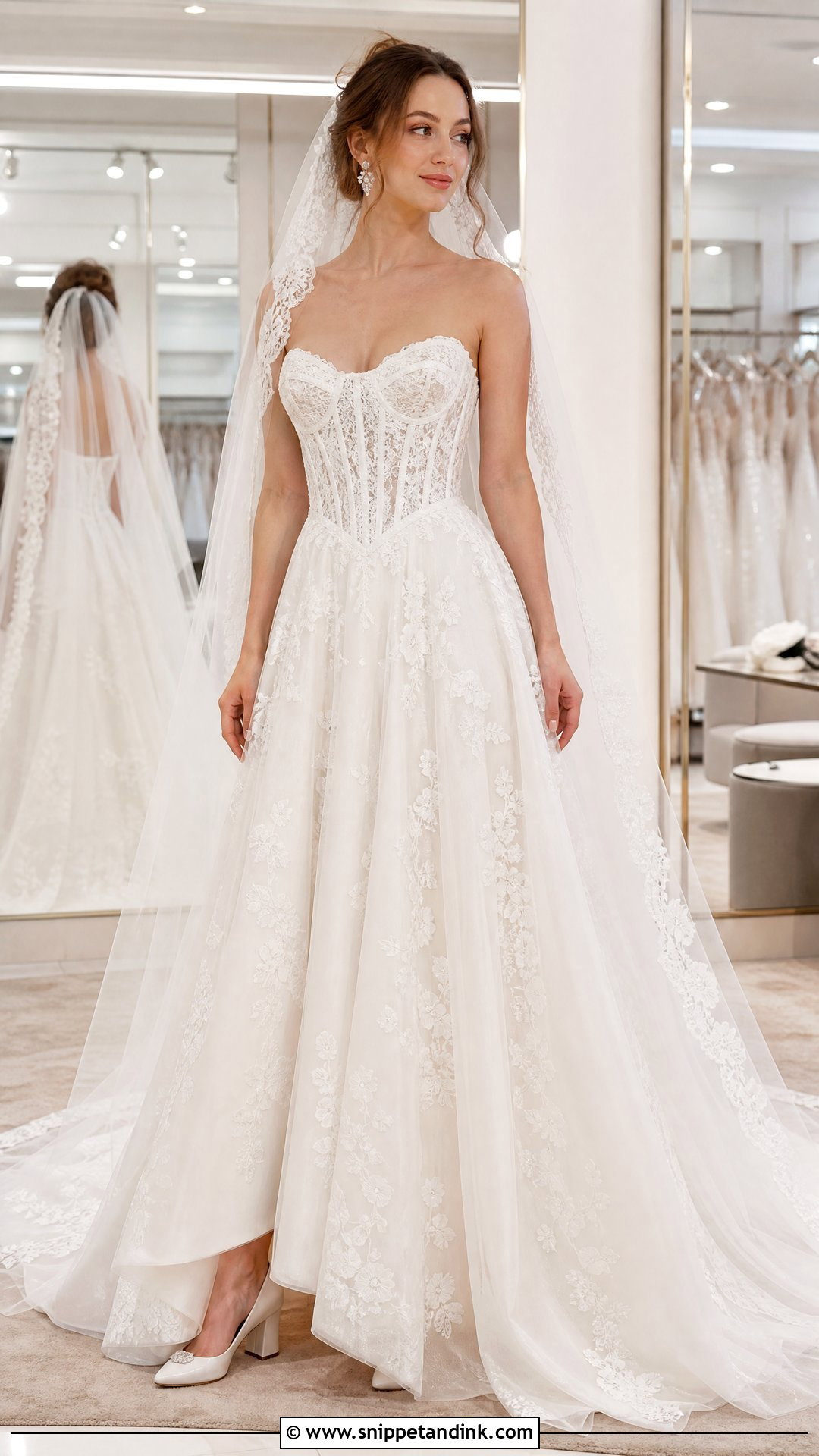
Visible boning and shaped seams make a corset bodice the strongest tool for building definition. The contrast between a close waist and a shaped neckline reads as curve without heavy padding. Try a basque or straight waist, a soft A-line skirt, a lace-up back and a lightly cupped bodice, with lace laid over the corset to keep it romantic. Block-heel pumps, a lace-edged veil and small gemstone earrings complete it. Firm should never mean breathless. And cups need to match your actual shape, because oversized cups in a corset collapse inward and leave a dent above the bodice edge.
8. Ruched One-Shoulder Wedding Dress
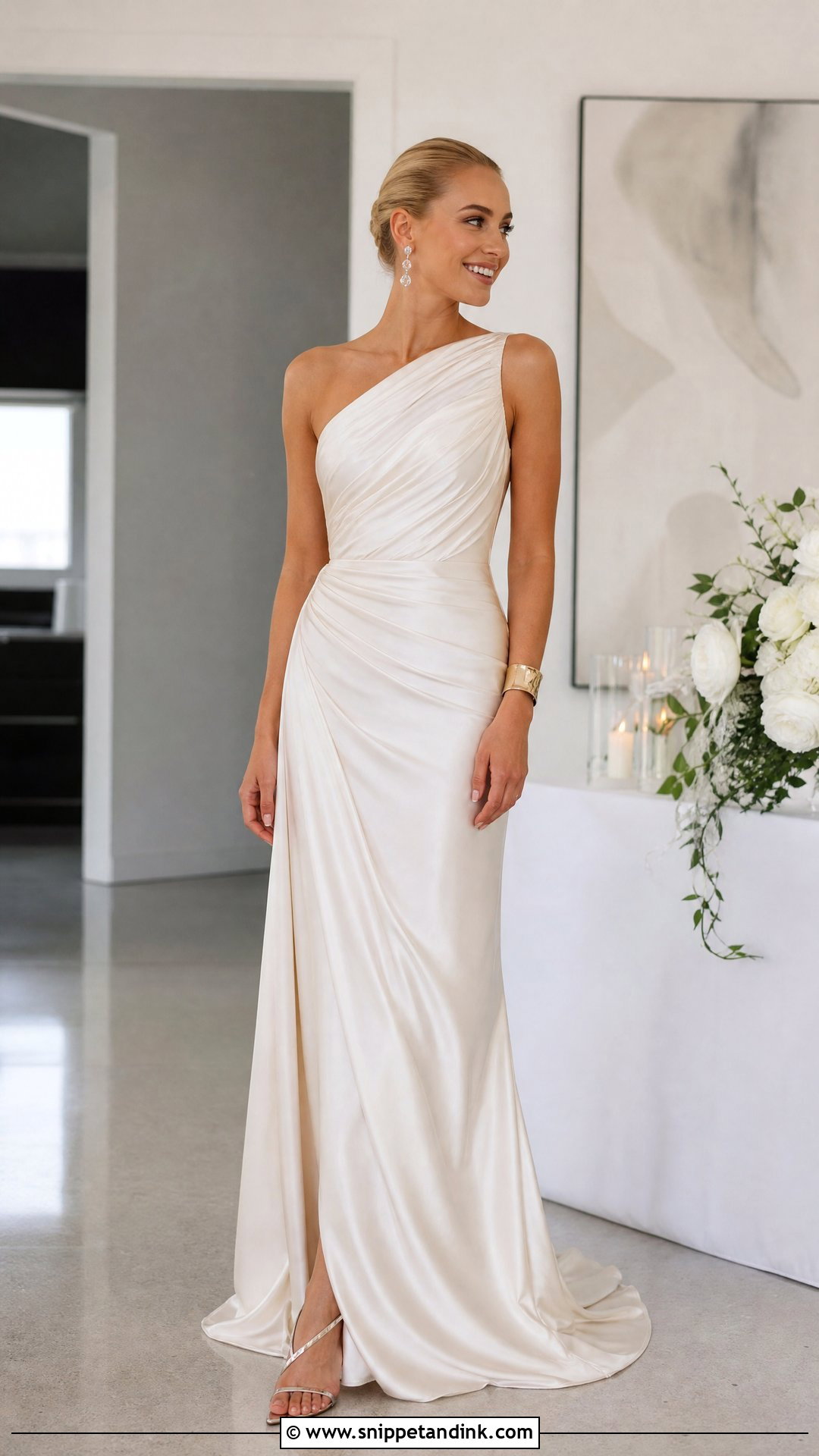
Diagonal ruching adds dimension to the chest and gives a one-shoulder gown a fresh angle. Look for soft crepe or satin gathered across the bodice, with a fitted waist and a flowing skirt. The asymmetric line pulls the eye up without needing beading. Metallic ivory sandals, a simple cuff and earrings on the bare side suit it, with hair swept back to show the shoulder. Asymmetric bodices need patient alterations. The strap should hold without dragging the neckline sideways, and every fold of ruching should be stitched to the lining underneath, or it flattens and slides after an hour of dancing.
9. Illusion Neckline Lace Wedding Dress
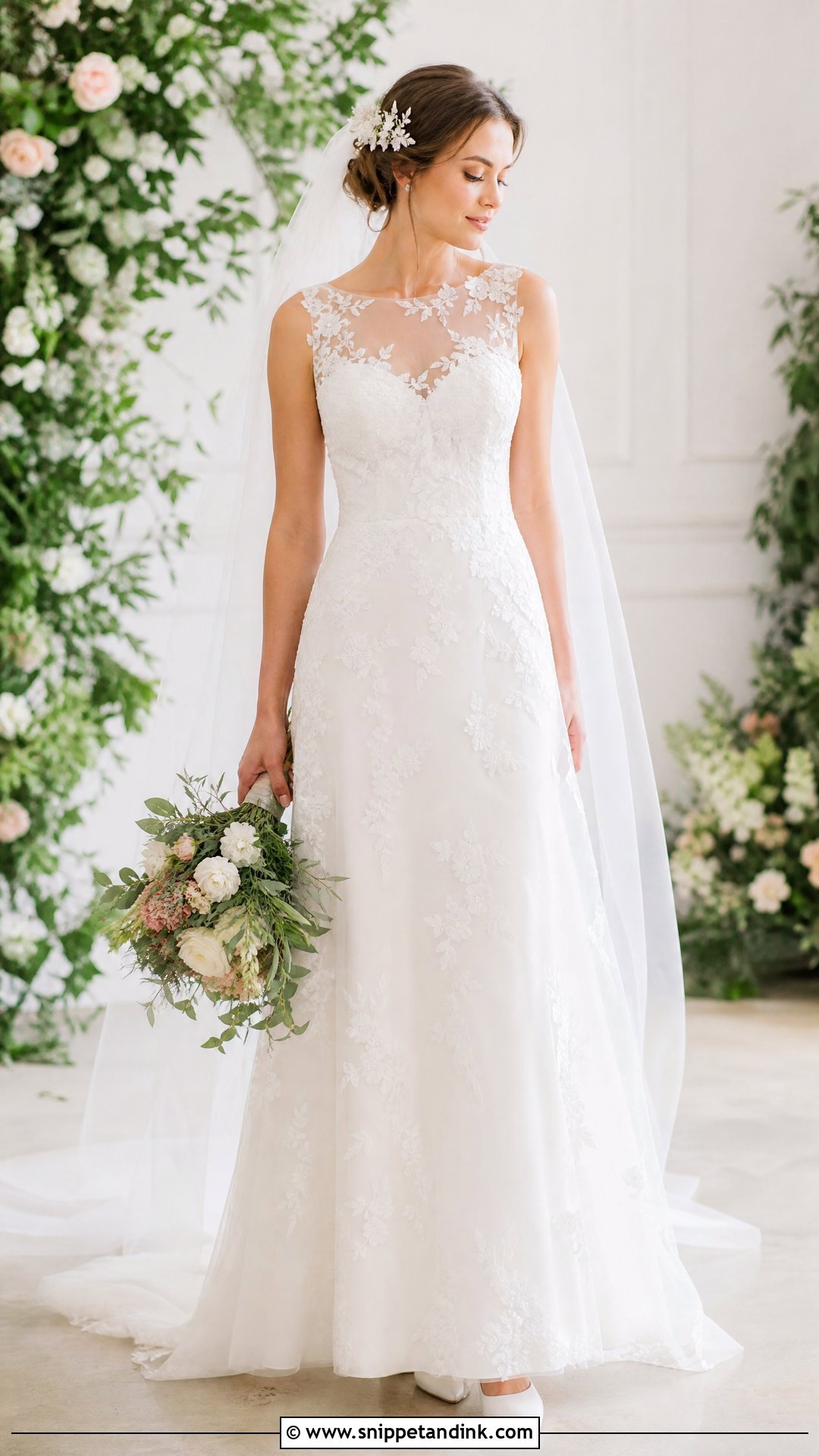
For coverage that still feels light, an illusion neckline lace wedding dress floats appliqués on sheer tulle above a sweetheart, scoop or plunging base, adding texture across the chest. Pick lightweight motifs with clean edges so it looks deliberate rather than busy. An A-line skirt keeps it easy to move in. Satin pumps, a floral comb and a plain veil suit it. I always hold illusion tulle against the bride’s chest in daylight, because a shade too pink or too grey shows up as a visible panel in photographs. Ask for soft finishing at the neckline and armholes too, where scratchy lace edges rub over a long day.
10. High-Neck Open-Back Wedding Dress
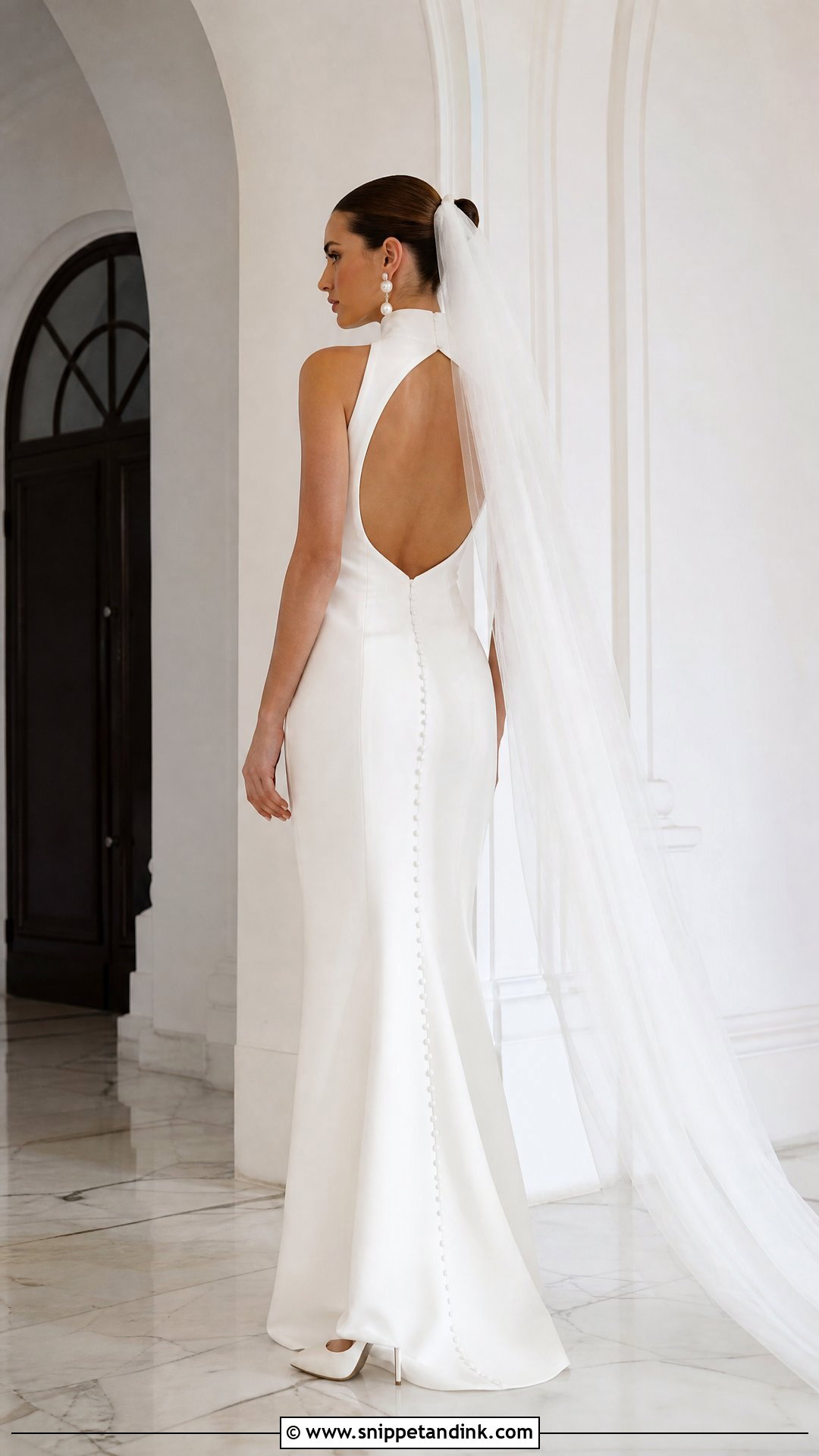
Covered at the front, open at the back: a high neck with a bare back gives you two very different views of one gown. Smooth satin, fitted crepe or fine lace all work, over a slim sheath or column skirt. An oval, keyhole or low back adds interest without changing the front. Statement earrings, pointed heels and a long veil set beneath a sleek bun complete it, and skip the necklace. A regular bra won’t work here, which is good news for a small bust. Light cups or a supportive lining sewn into the gown are usually all you need, and the neck fit should hold the bodice without tugging.
11. Scoop-Neck A-Line Wedding Dress
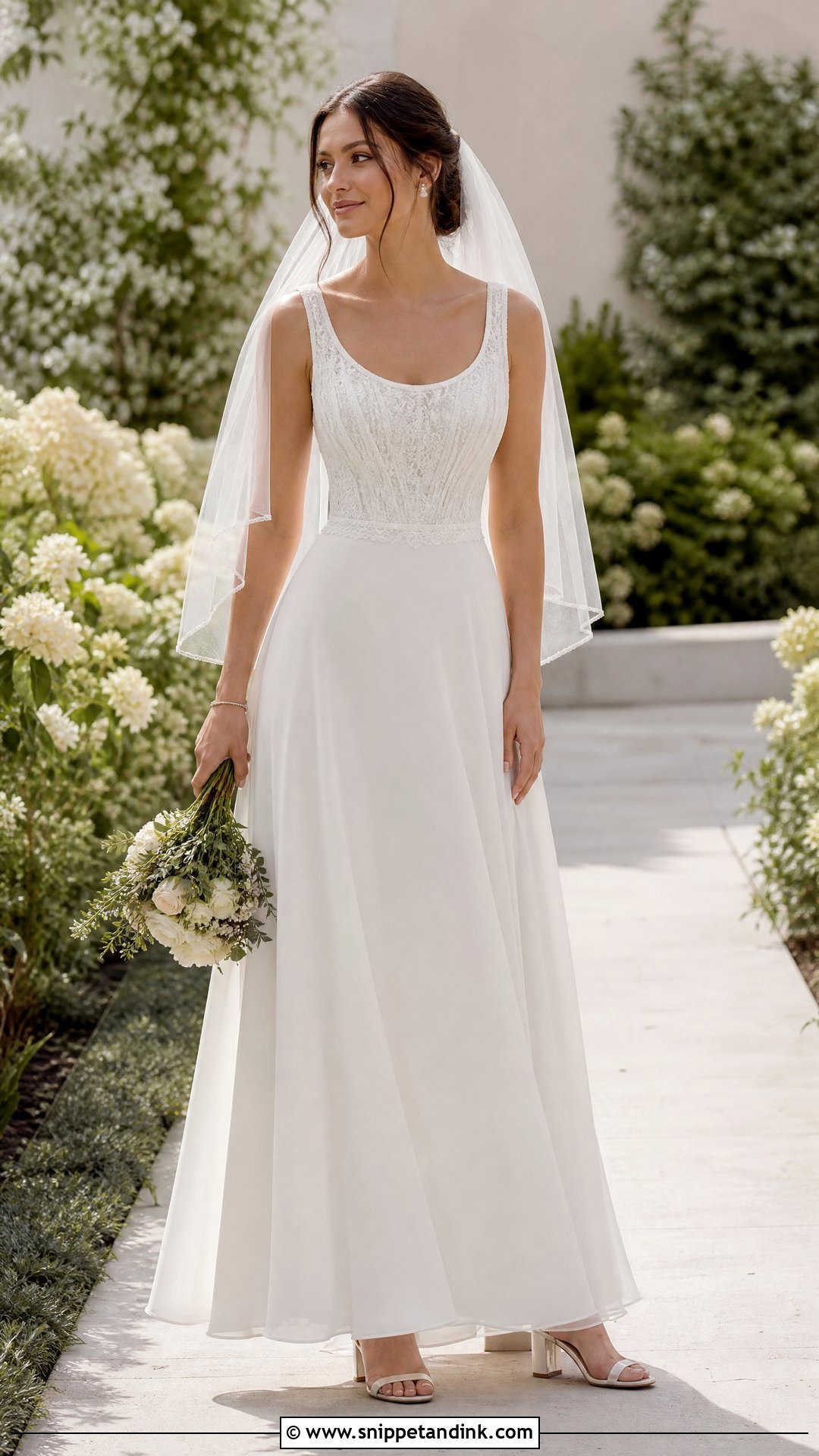
A scoop softens the upper body and suits a wide range of bridal styles. A moderately low curve shows the collarbones and rounds the shape around the chest. Soft pleating, embroidered lace or light gathering at the bodice adds dimension, and a chiffon, tulle or organza skirt keeps the whole gown easy to move in. Low block heels, pearl studs and a fingertip veil finish it. Lean forward in front of the mirror. If the scoop falls away from your chest, the straps and cups need adjusting together; a small change in one without the other just moves the gap somewhere else.
12. Strapless Bow Wedding Dress
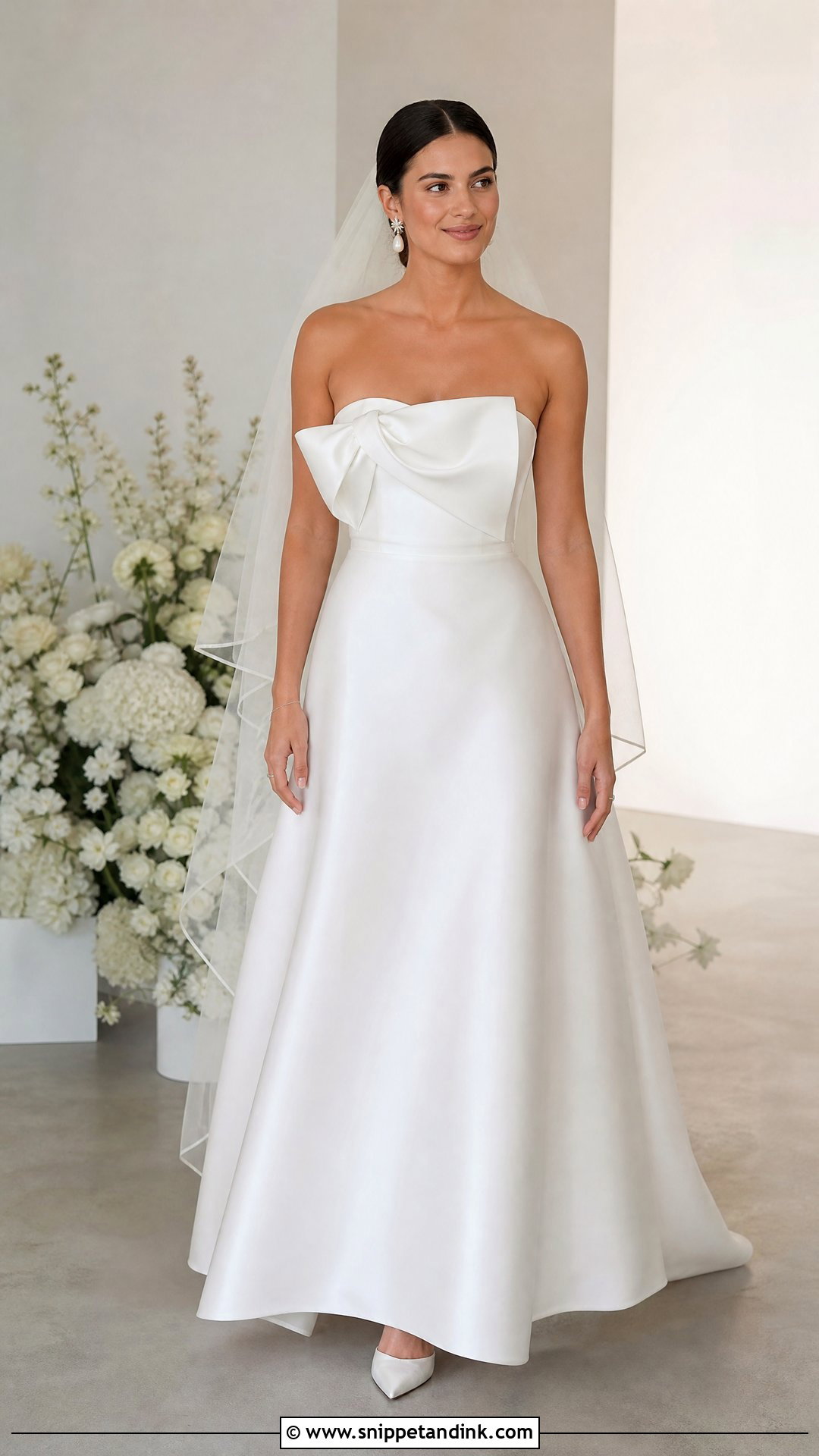
A sculptural bow brings personality to a plain strapless gown. Place it across the bodice for added volume at the chest, at one side of the waist, or along the back to keep the front clean. A straight or softly curved neckline, with either an A-line or column skirt depending on how formal you want it, lets the bow lead. Pointed satin heels, pearl-and-crystal earrings and a sheer veil are plenty. Strapless on a small bust lives or dies on construction. A waist stay, firm boning and correctly shaped cups should hold it so you never hitch the bodice up between photos. A heavy bow at the neckline adds weight there, so it needs extra boning behind it.
13. Floral Appliqué Wedding Dress
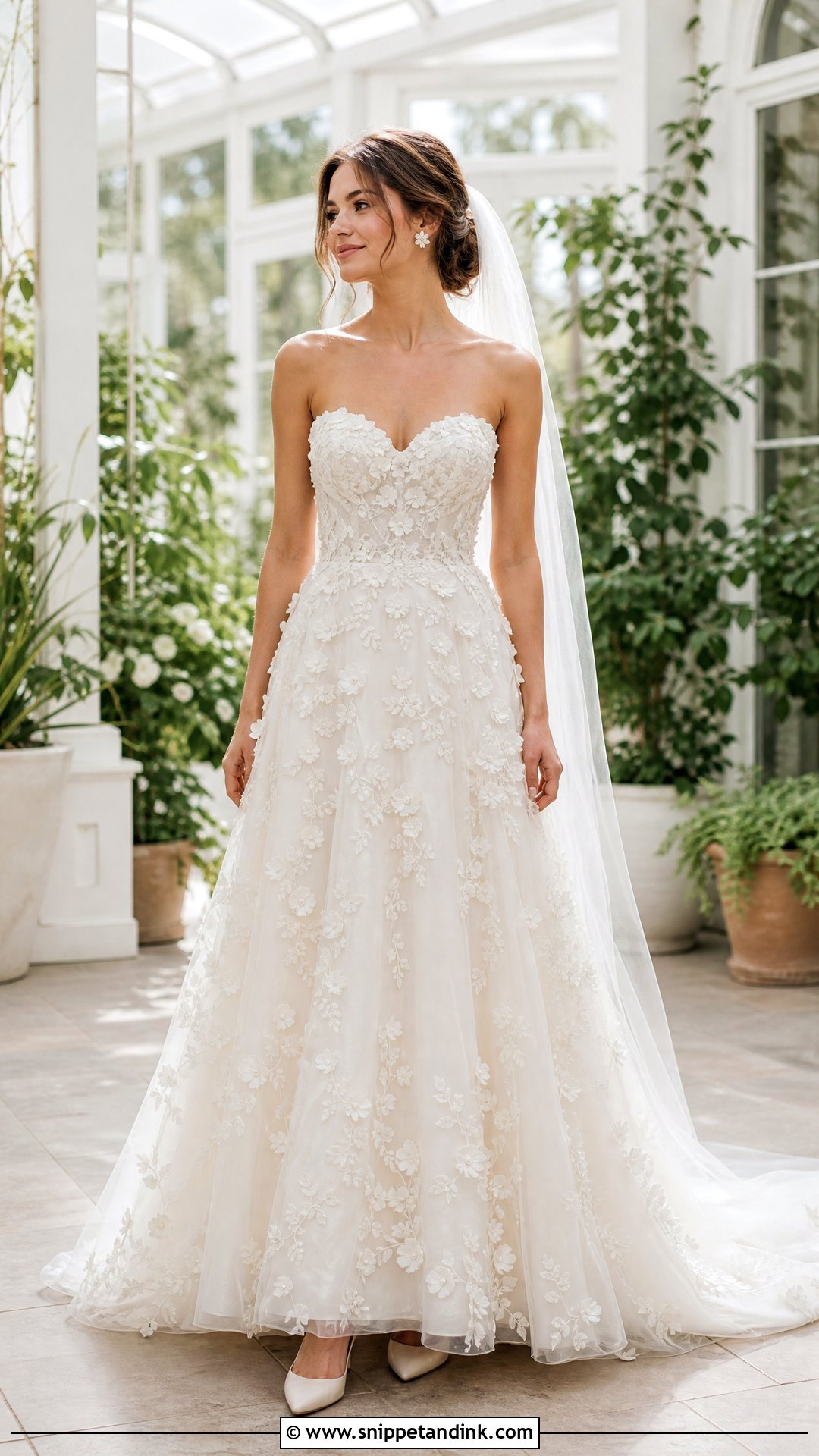
Three-dimensional flowers turn a simple gown into something richly textured. I’d choose appliqués concentrated around the bodice and scattered more sparsely down the skirt, which adds dimension near the chest and keeps the whole design balanced. A fitted sweetheart and soft A-line skirt suit it. Understated pumps, tiny floral earrings and a plain tulle veil let the flowers show; skip bold necklaces and detailed bags. Check the back of every petal at the fitting. Stiff appliqué edges scratch the inner arm all day, and a soft backing stitched behind them fixes it.
14. Draped Fit-and-Flare Wedding Dress
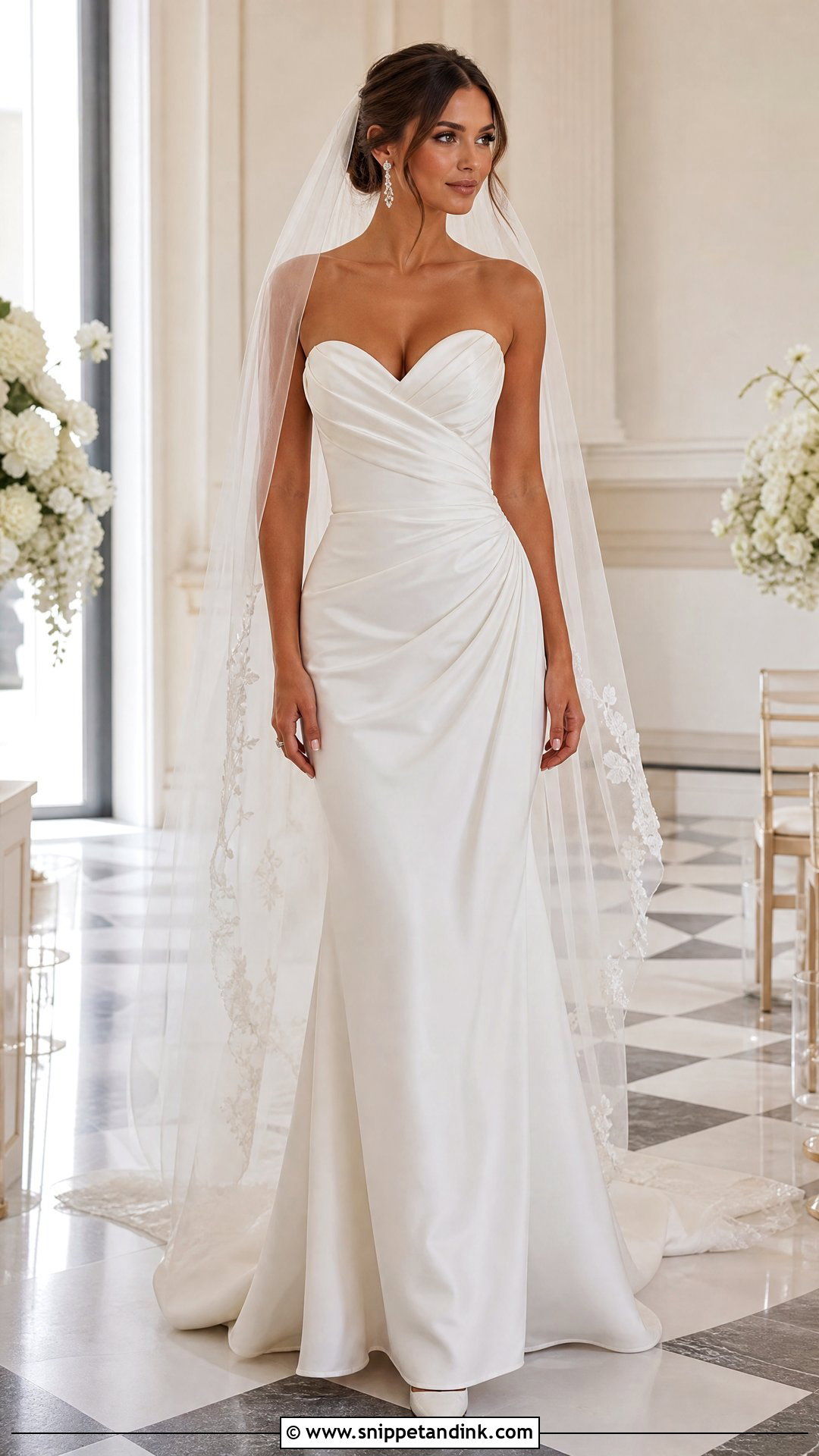
Draping shapes a bodice without making it look stiff or heavily padded. On a fit-and-flare, the gathering should cross the chest and waist before the skirt opens below the hips. Stretch crepe or satin follows the body comfortably, and a sweetheart or off-the-shoulder neckline suits the soft folds. Pointed heels, drop earrings and a chapel veil are enough, since the fabric is already the detail. Folds need placing one by one. Loose or uneven drape looks bulky rather than curvy, so I ask the seamstress to pin each fold on the bride, not on a mannequin.
15. Bateau Neck Sheath Wedding Dress
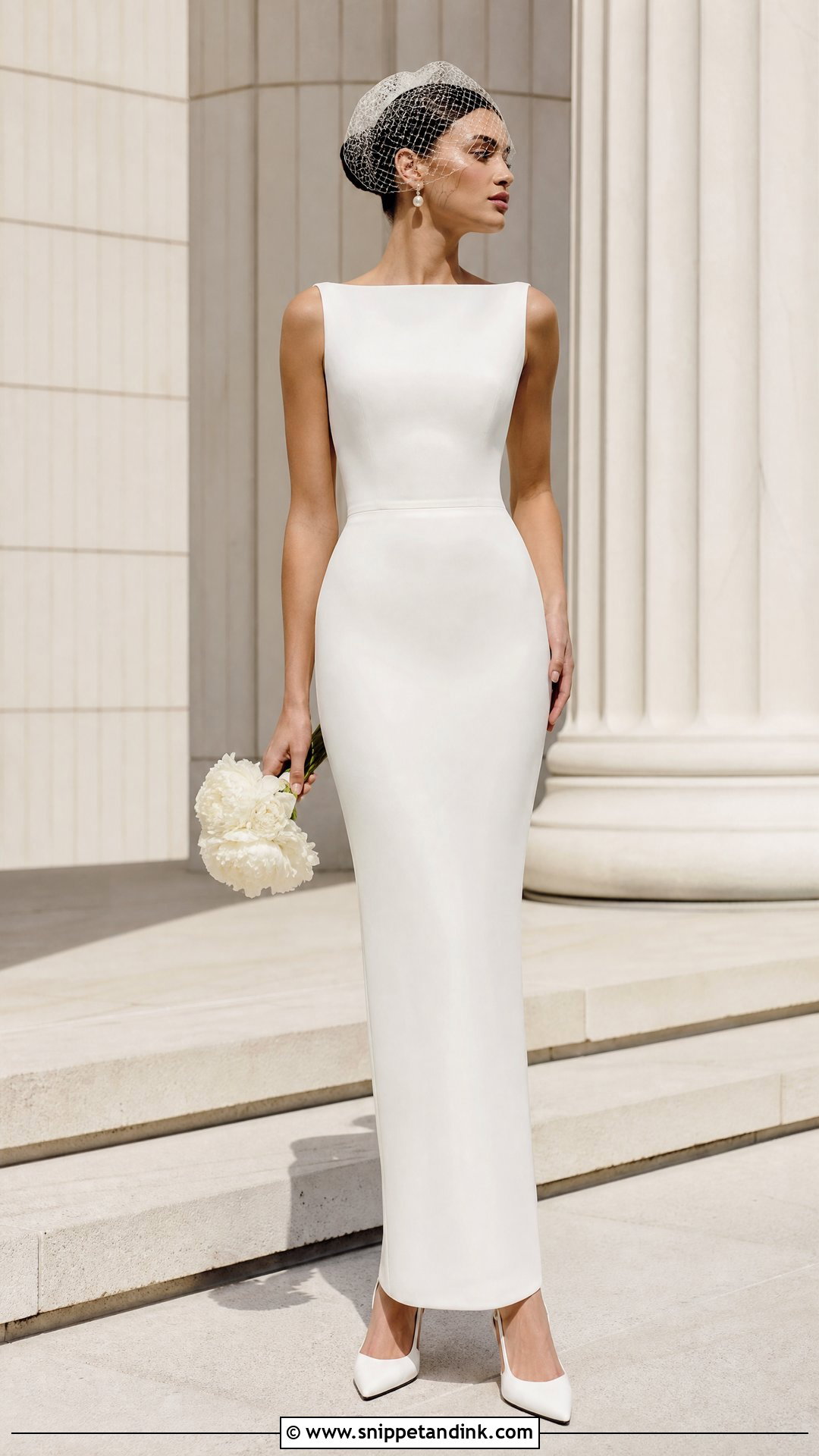
Sometimes the simplest shape is the strongest. A bateau neckline follows the collarbone in a wide, shallow line, giving the upper body a balanced horizontal. Structured crepe, mikado or satin holds the clean edge; long sleeves feel formal, sleeveless feels modern. Slingback pumps, pearl earrings, a birdcage or short veil and a low bun keep it neat. This is a gown where a natural profile looks deliberate. Ask for minimal cups and a smooth lining, and have the bodice tailored close without pulling across the chest. A sharp waist and unbroken skirt do the rest.
16. Empire Waist Chiffon Wedding Dress
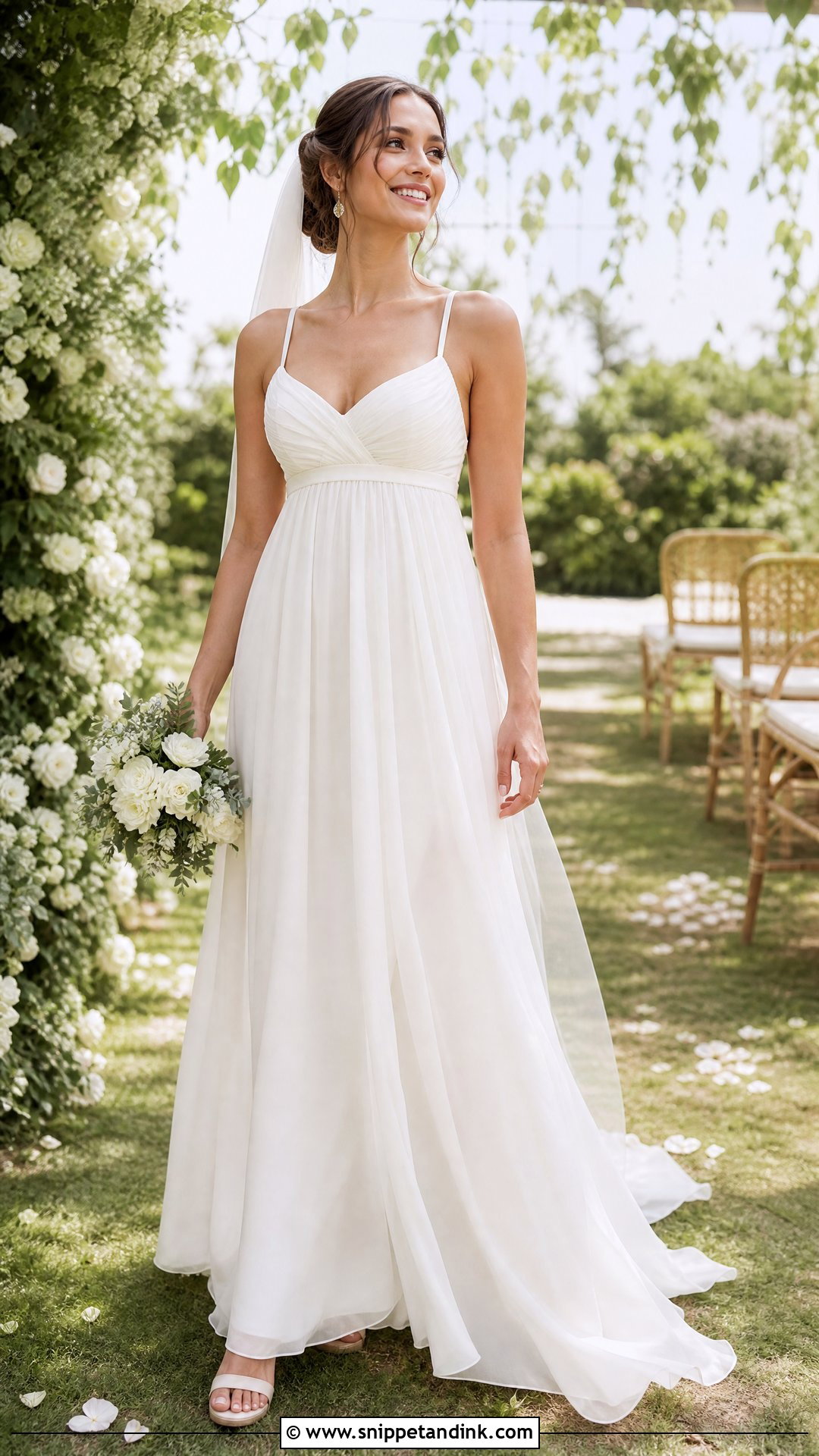
Chiffon floating from an empire waist feels airy and easy to wear all day. Look for a softly gathered bust, narrow straps and a waistband just under the chest; the gathers add gentle dimension while the skirt moves freely over the waist and hips. It suits gardens and destination weddings. Low block-heel sandals, fine drops and a light veil are right for the fabric. Heavy padding looks disconnected from such a fluid skirt, so I’d use thin cups and shortened straps instead. Check the empire seam from the side. It should sit level all the way round, not dip at the front.
17. Pleated Asymmetrical Wedding Dress
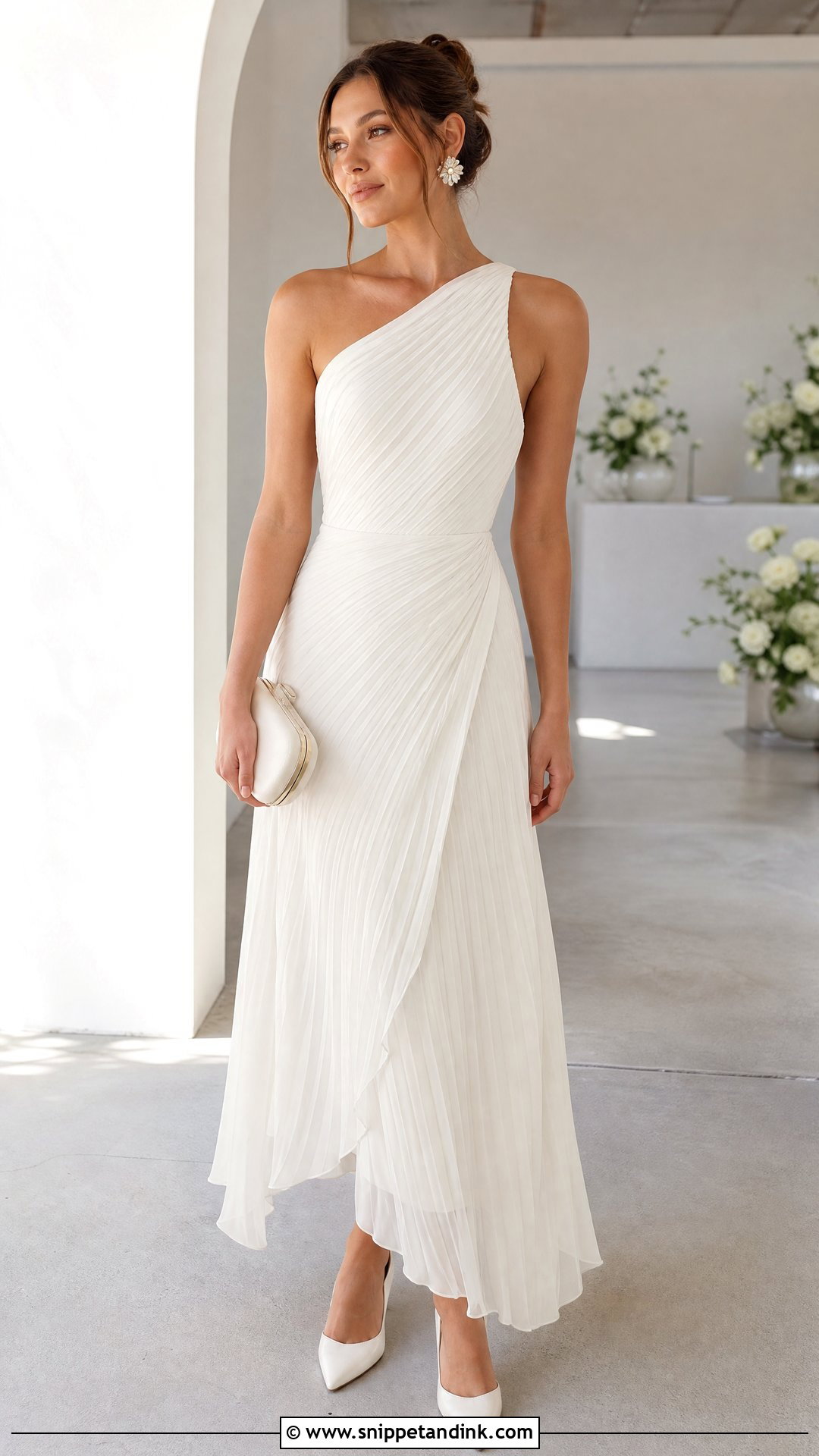
Fine pleats give an asymmetrical gown texture and movement. Diagonal pleating across a one-shoulder or angled neckline adds dimension at the chest and draws a long line toward the waist. A softly flared chiffon or light satin skirt balances it. Elegant pumps, a compact clutch and one statement earring on the open side suit it, with a smooth ponytail or side-parted bun. Pleats can collapse flat where the bust is smaller than the pattern expects. Ask for a light inner support layer behind the pleated panel so the outer fabric keeps its shape from the first look to the last dance.
18. Basque Waist Wedding Dress
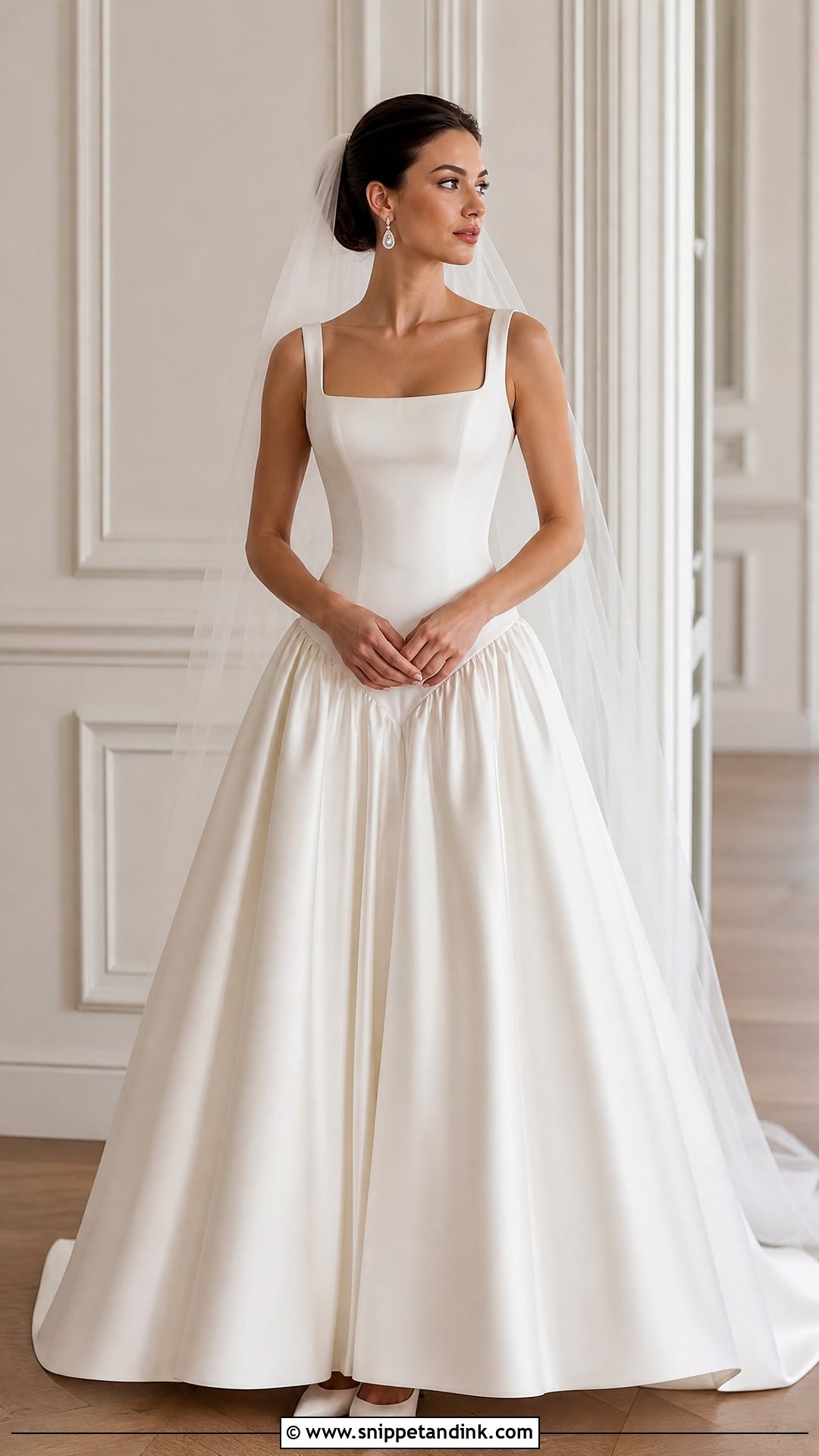
A basque waist wedding dress dips into a V below the natural waist, which builds a clear hourglass. With a structured sweetheart or square neckline, it defines the chest, narrows the waist visually and balances a full skirt. Smooth satin looks architectural, lace looks softer. Classic pumps, teardrop earrings and a long veil beneath an updo complete it; keep any necklace small. The point has to land correctly for your torso length. If it’s too low, it pushes into your stomach when you sit, so the boning and waist seam should be adjusted together.
19. Tea-Length Sweetheart Wedding Dress
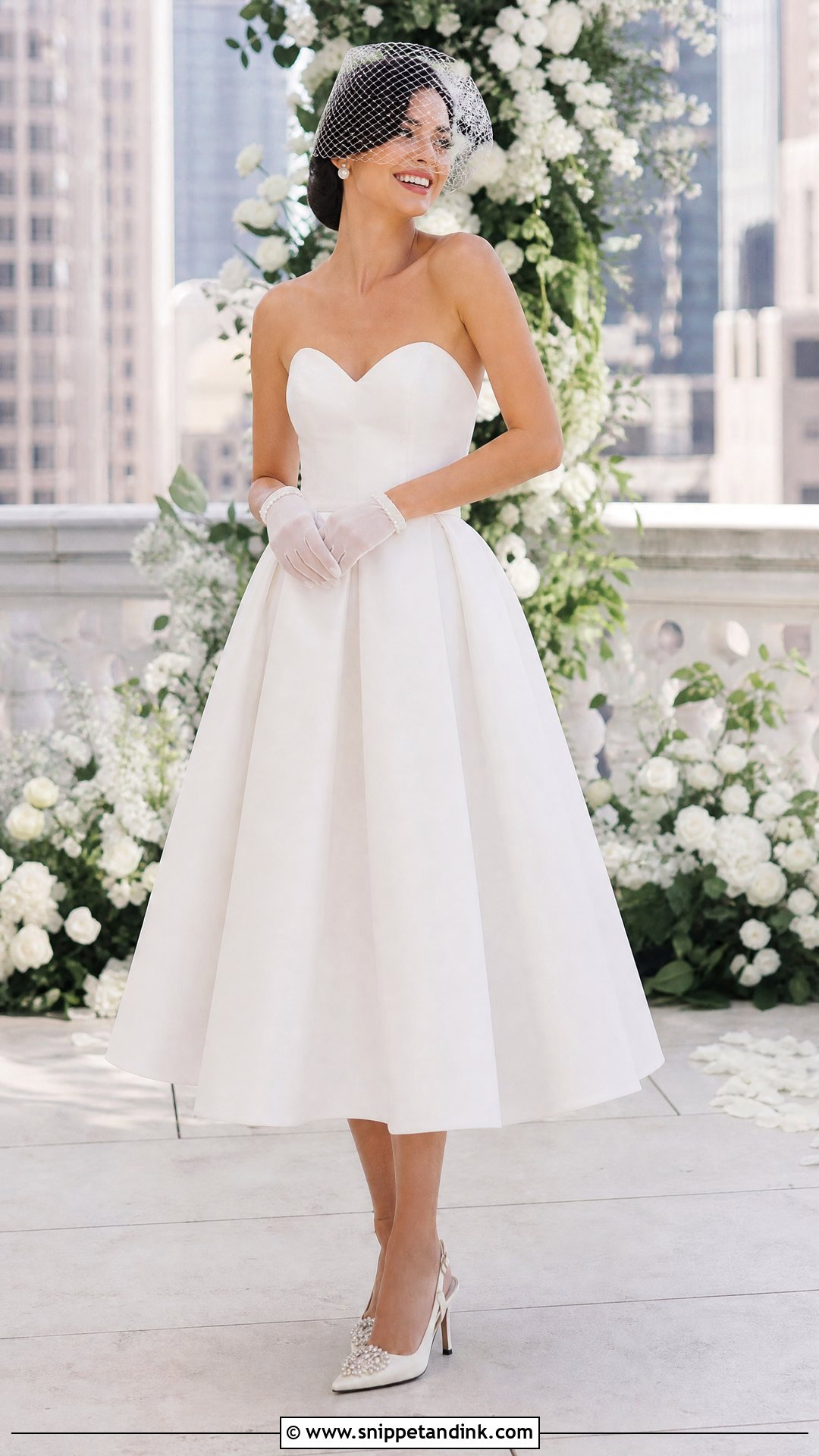
A tea-length sweetheart wedding dress is a playful step away from floor length. The curved neckline shapes the bust, and a fitted waist with a full midi skirt keeps the proportions even. Mikado, satin or layered tulle holds the skirt away from the legs without bulk. Your shoes are on show, so pointed pumps, embellished slingbacks or polished block heels become part of the outfit; add pearl studs, short gloves if you like, and a birdcage veil. The hem should land in the narrow area between lower calf and ankle. Light structure and well-fitted cups keep you from adjusting the neckline every time you dance.
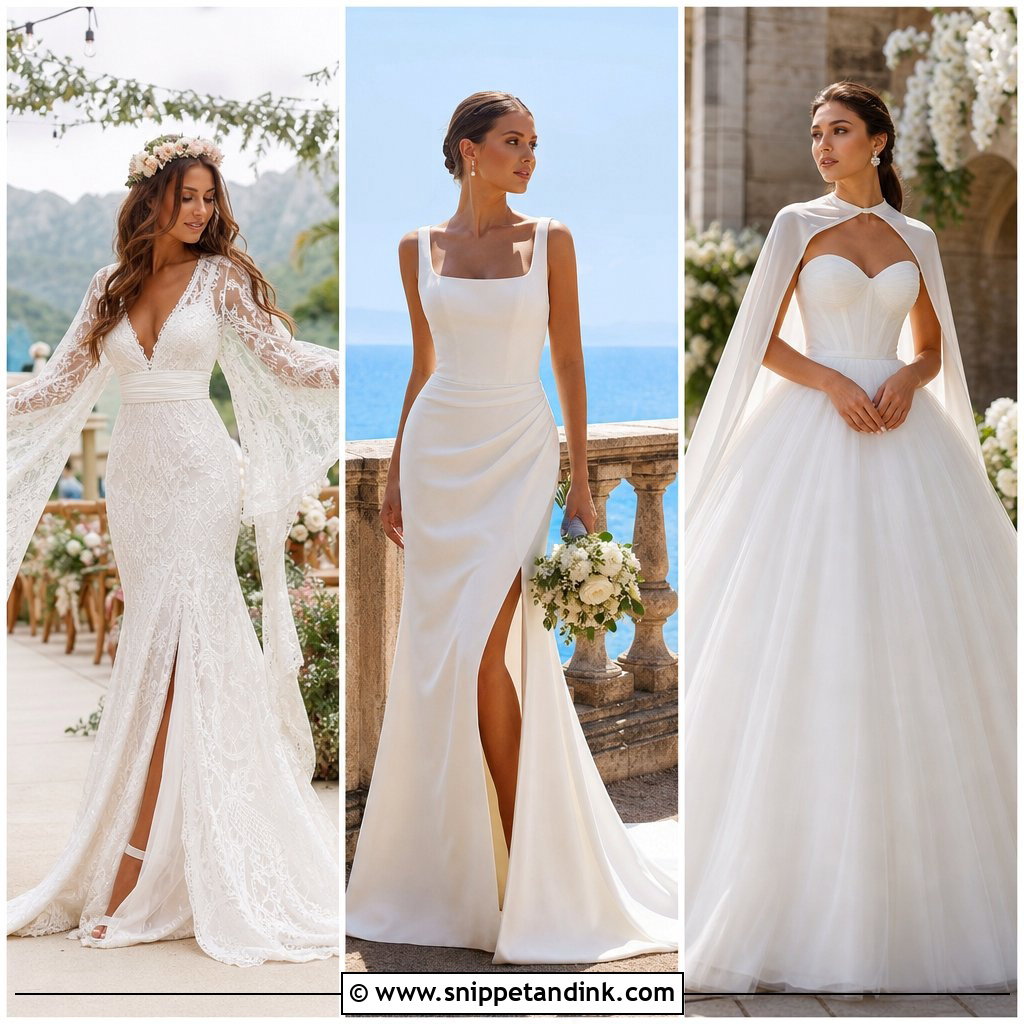
20. Detachable Sleeve Wedding Dress
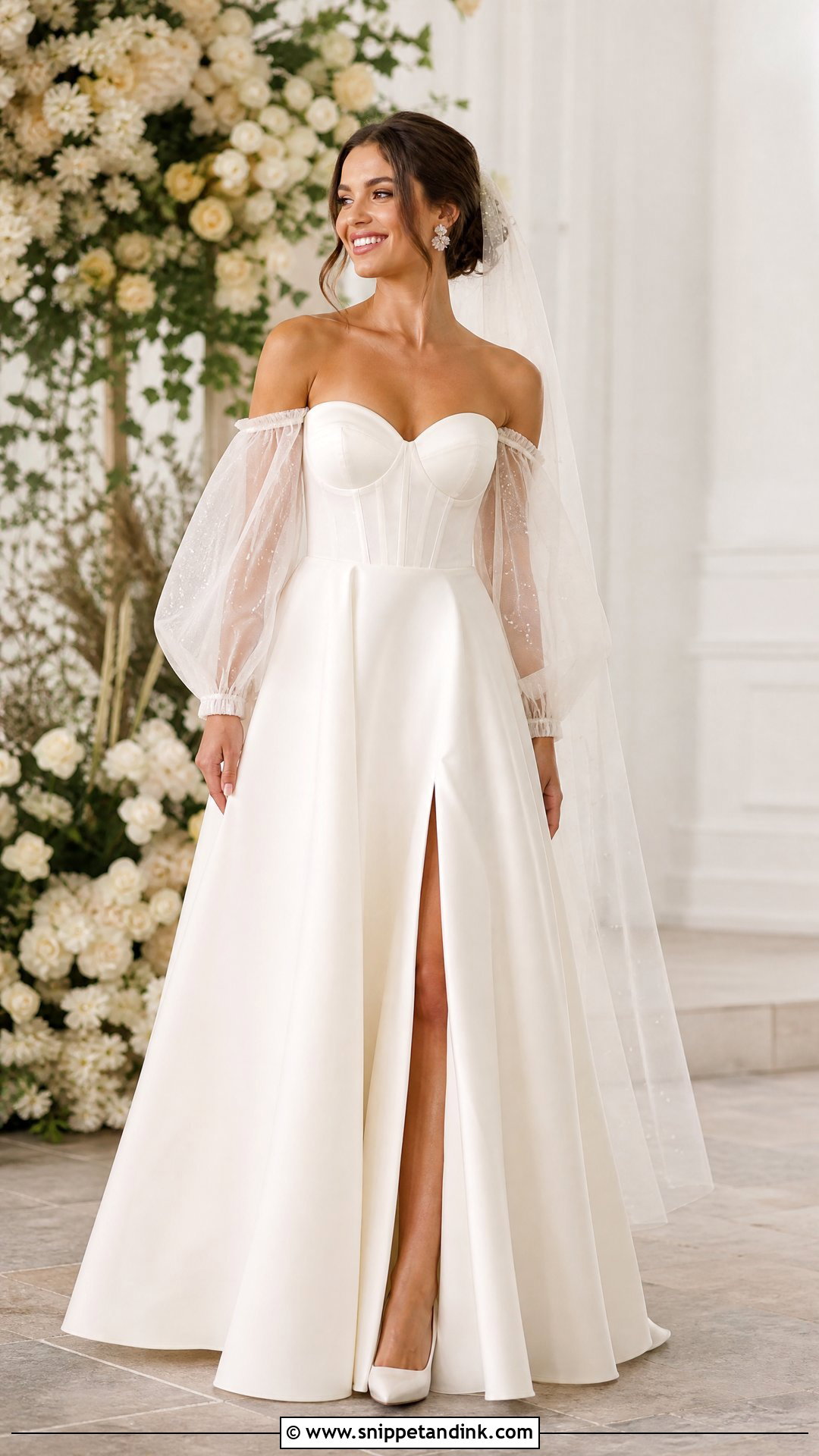
Detachable sleeves give you two looks from one gown. Start with a strapless or sweetheart bodice and an A-line skirt, then add draped off-the-shoulder sleeves, lace long sleeves or sheer puffs for the ceremony and take them off for the reception. Ivory pumps, earrings and a veil that doesn’t cover the sleeve detail work for both versions. Check that every attachment point stays hidden once the sleeves are off, because a stray hook on a bare shoulder shows in every reception photo. The bodice still needs its own boning, cups and waist support. Sleeves add width and texture up top; they shouldn’t hold anything up.
The Lean-Forward Test Most Samples Fail
Bridal samples are usually cut for an average cup, so on a smaller chest the bodice often looks fine standing straight and then opens up the moment you bend. You’ll lean forward to sign the register, hug relatives and pick up your bouquet, and every one of those moments is photographed.
At each fitting, do these in front of the mirror and ask someone to watch the neckline from above:
- Lean forward as if signing a document on a table.
- Bend to pick something up off the floor.
- Hug someone taller than you.
- Sit down and turn to the side.
If the neckline lifts away, the fix is rarely just more padding. A good seamstress takes the bodice in at the side seams and the centre front, reshapes the cups to your measurements, and may add a thin elastic or boning along the top edge so it hugs your chest. On a lace bodice that work takes longer, so raise it at your first alteration appointment rather than the last.
Cup Size Was Never the Deciding Factor
The best gown is the one that fits securely, gives you the shape you prefer and feels like you. Some of these looks add curve to the chest and some celebrate a naturally small profile, and both are valid choices. Try several necklines, fabrics and silhouettes before you decide, because a gown that looks flat on the hanger can come alive once it’s fitted to you. Bring your shoes to alterations, test every movement you’ll make on the day, and talk through built-in support with a seamstress who has done plenty of bridal work. Careful tailoring makes nearly any of these feel balanced and personal.
You'll Like These Ideas:



Leave a Reply