
A secure, flattering wedding dress for a fuller bust comes down to construction far more than to any list of necklines you’re told to avoid. Strapless, fitted and even low-cut gowns are all possible when the cups are placed correctly, the boning is firm and the waist does its share of the work. Square necks, V-necks, modified sweethearts and substantial straps are easy starting points, and a corset bodice opens up many more. At every appointment I ask the bride to sit, hug someone and raise both arms over her head, because a bodice that only behaves while you stand still isn’t finished. Each of the twenty gowns below comes with what I check at the fitting.
Ordering by Your Bust, Then Tailoring Everything Else
Bridal sizing usually runs smaller than everyday clothing sizes, and sample gowns are cut in standard proportions that assume a modest cup. That’s why I order to the largest measurement, which for most fuller-busted brides is the bust. Taking in a waist is routine. Letting out a bodice depends on how much seam allowance the maker left, and that is often very little.
A fitting calendar with room for bodice work
- Order roughly six to eight months ahead, since many made-to-order gowns take several months to arrive.
- Book the first fitting about two to three months before the wedding, and bring your shoes and undergarments.
- Expect a second fitting for the bodice. On a fuller bust this is where most of the work happens: cups moved or added, boning reinforced, straps shortened.
- Hold a final fitting two to three weeks out. Weight often shifts a little in the last months, and a fitted bodice is where you’ll feel it first.
Ask the salon early whether inserting cups and adding boning are covered by its alteration pricing or charged separately. Costs vary a lot from shop to shop, and rebuilding a bodice is skilled work.
1. Square Neck A-Line Wedding Dress
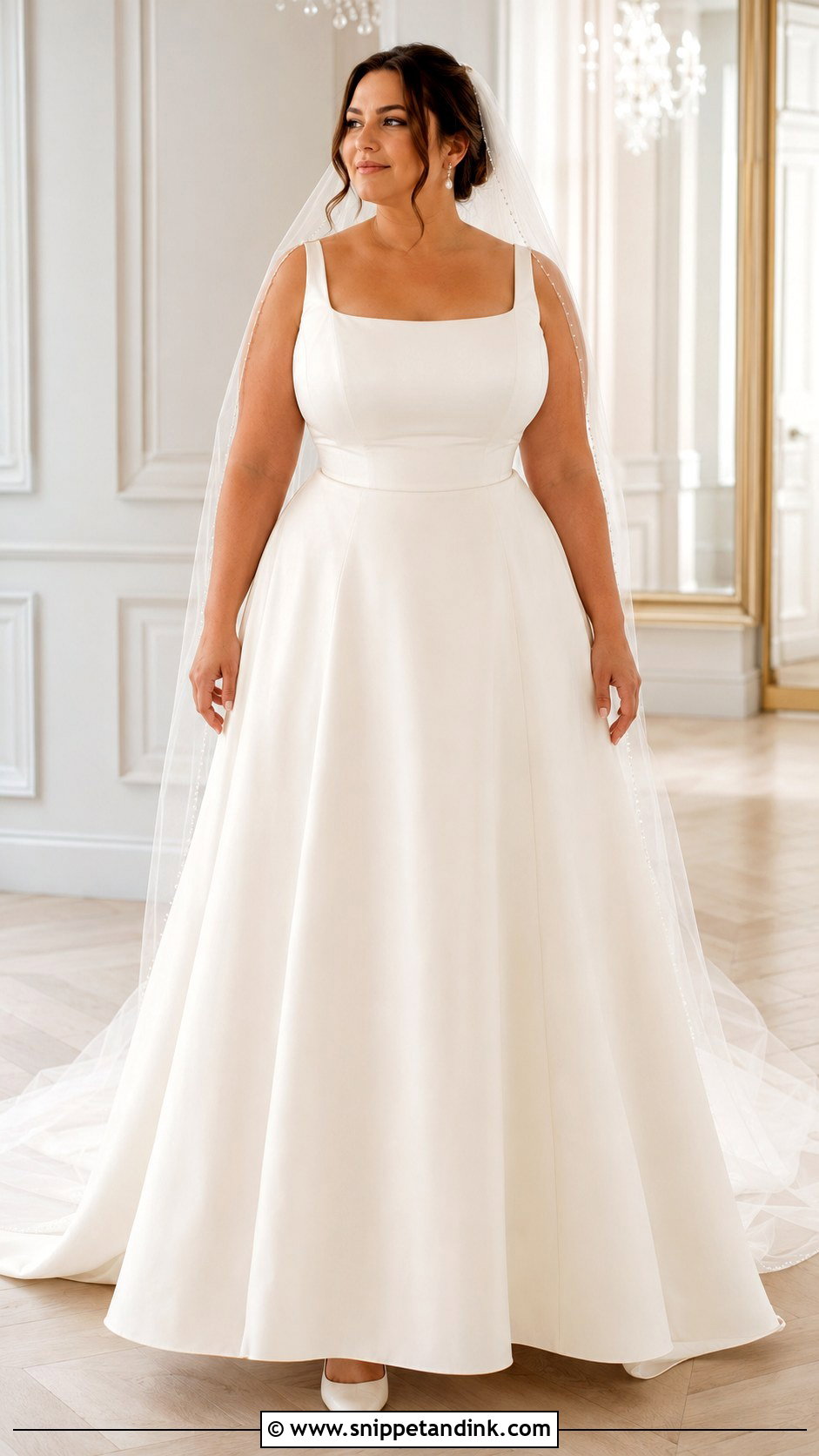
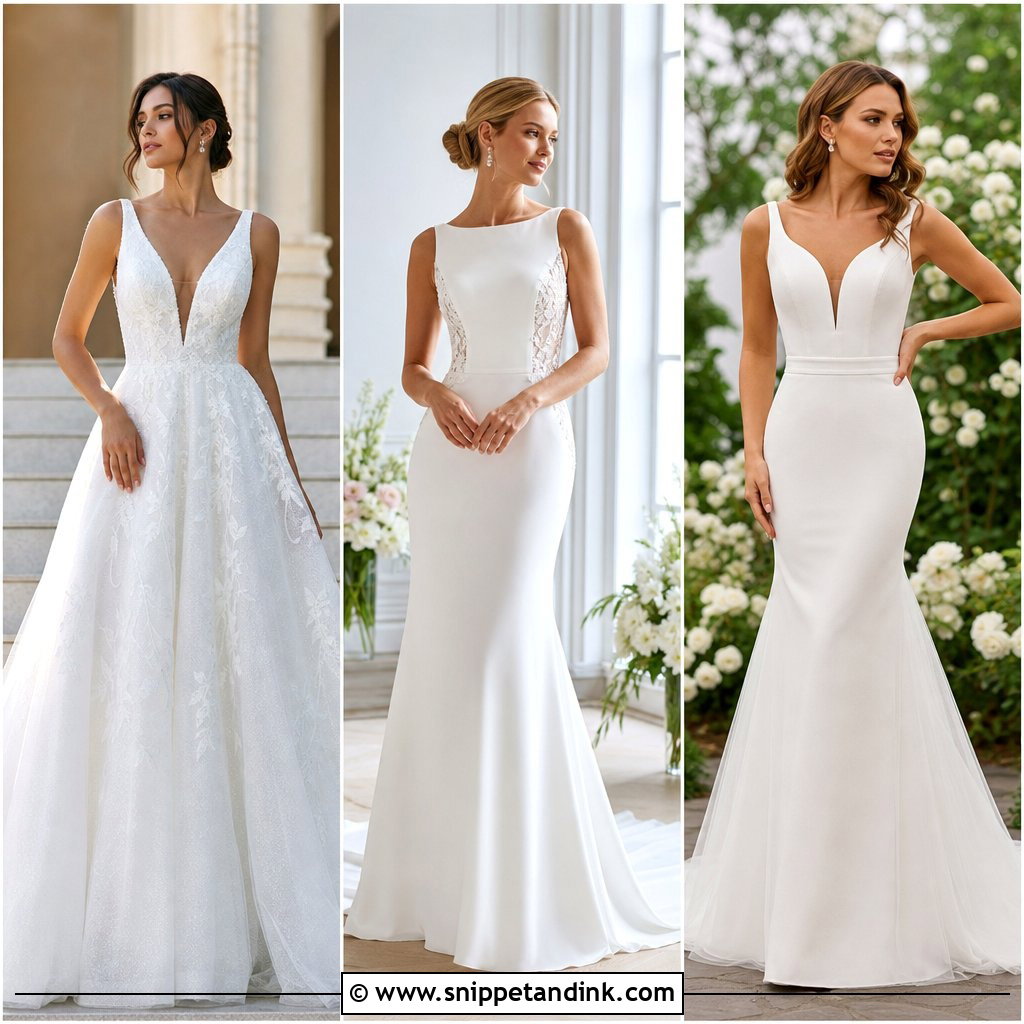
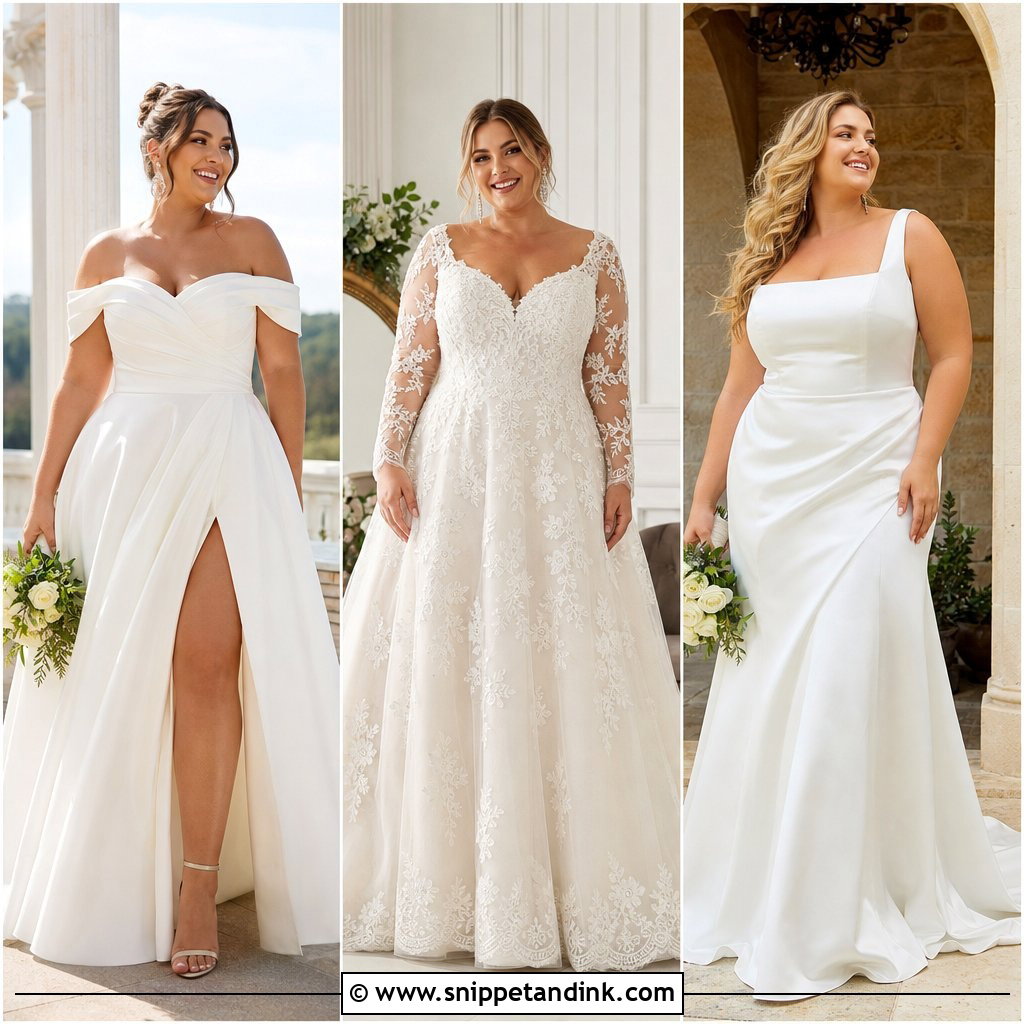
A square neck holds a fuller bust better than most people expect. The straight top edge sits above the fullest point, so nothing spills when you lean forward, and it shows the collarbone without plunging. Ask for wide straps, properly sized cups and firm side boning, then a defined waist opening into an A-line skirt. Matte crepe looks modern; lace appliqués soften it. Straps should steady the bodice, not carry it. If they leave grooves in your shoulders after twenty minutes, the support underneath is too weak.
2. V-Neck Ball Gown Wedding Dress
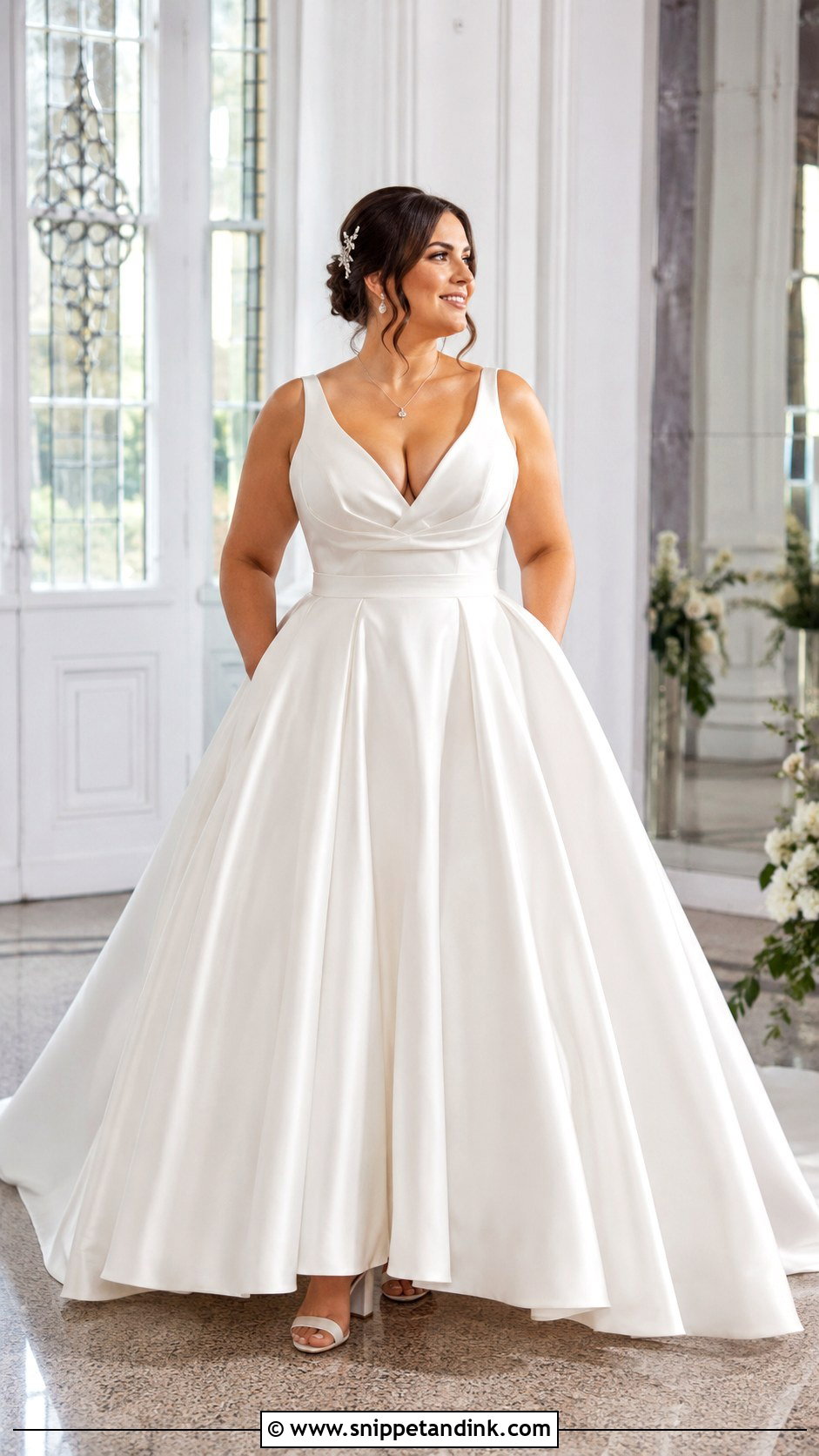
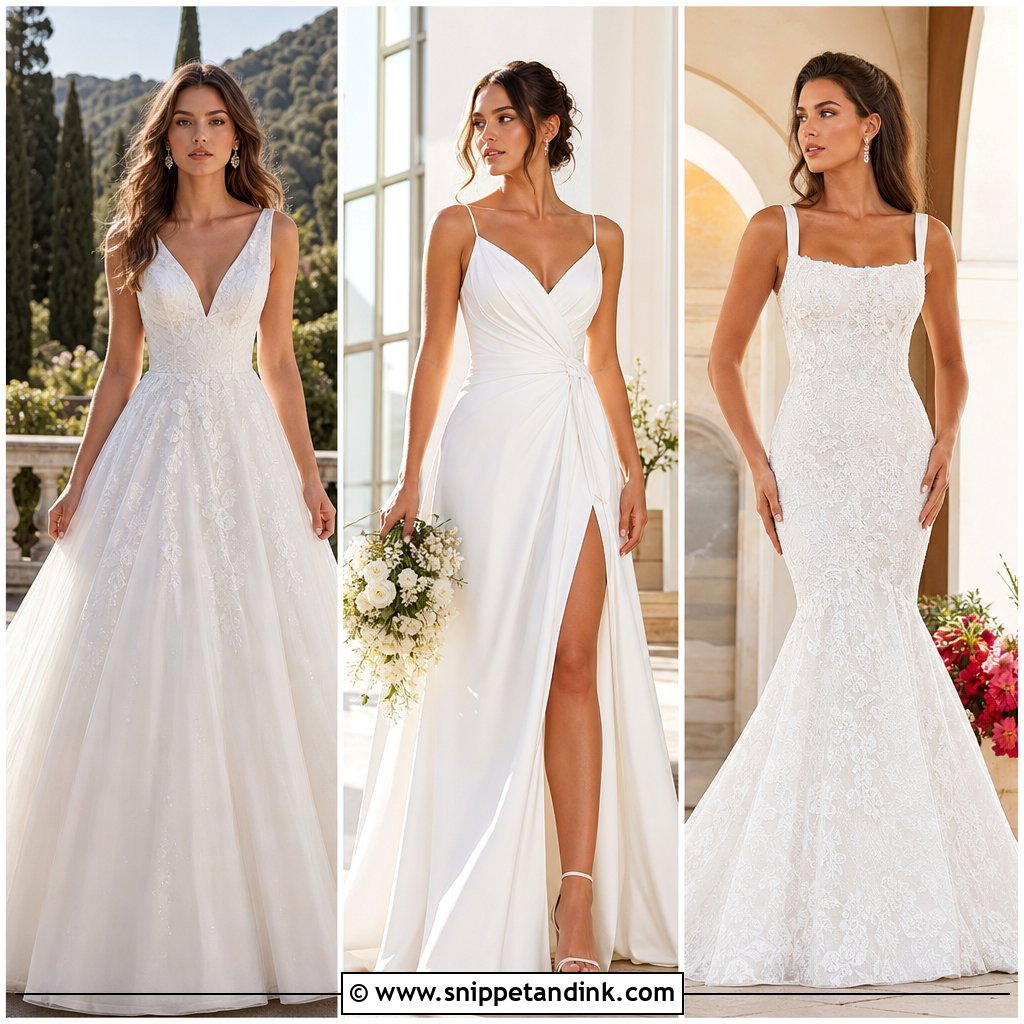
The V does two jobs at once: it breaks up the width across the chest and draws a long line toward the waist, while a full skirt balances everything below. I keep the V moderate for most brides with a larger cup, because a deep plunge on a heavy bust tends to spread open at the bottom point. Wide straps, molded cups and an internal waist stay stop the bodice shifting, and satin, mikado or layered tulle all hold the shape. If you love a deeper cut, ask the seamstress about a strip of skin-toned mesh at the base of the V. It disappears in photos and keeps you covered when you bend.
3. Sweetheart Corset Wedding Dress
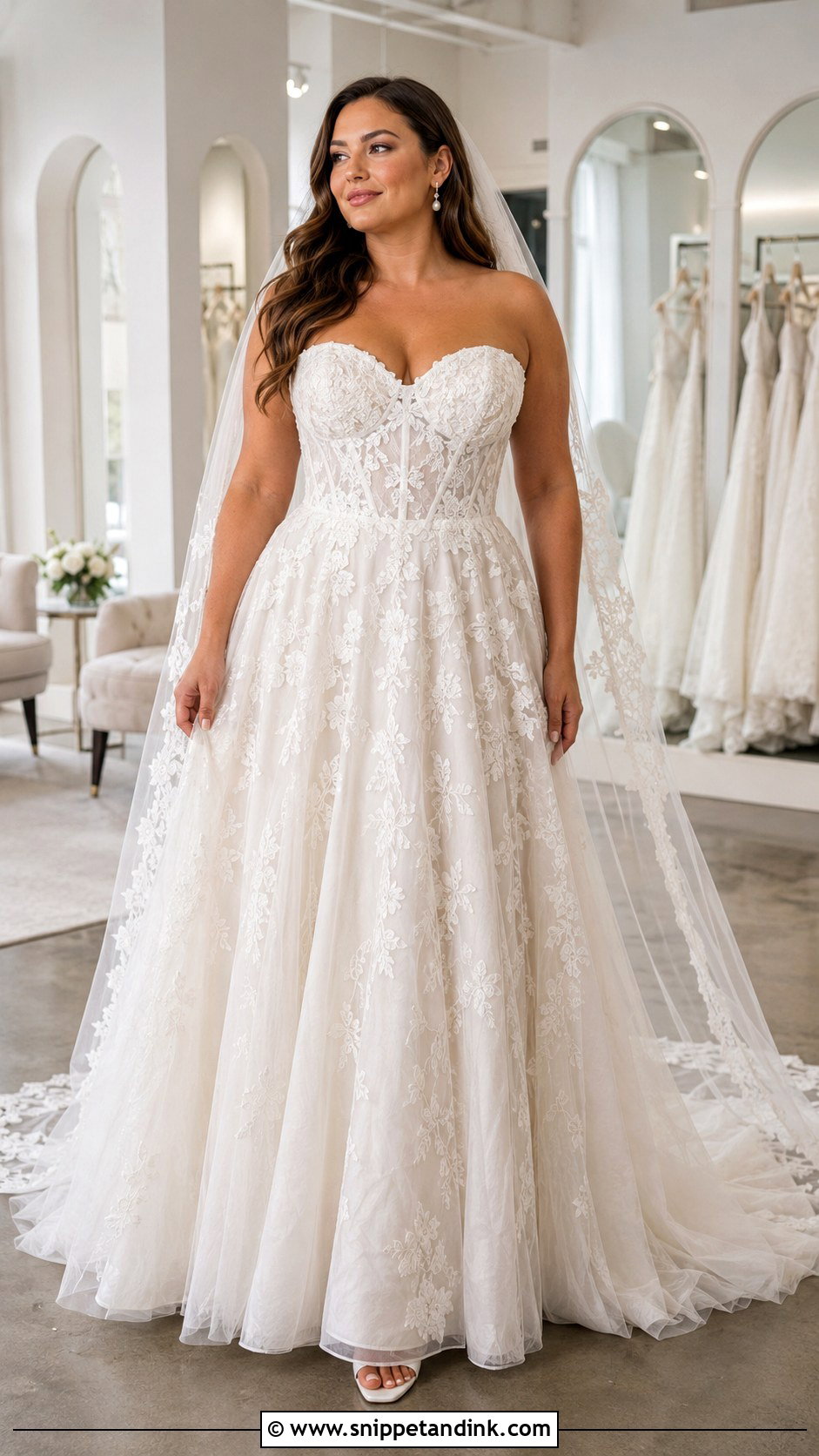
A sweetheart corset can be the most supportive gown in the salon, but only if the cups fully contain the bust and the sides come up high near the underarm. Low sides let the bust spill sideways, which is the complaint I fix most often. Look for substantial boning, a firm waist seam and ideally a lace-up back, which lets bust and waist be adjusted separately. Never judge a corset by how tight it can be pulled. It should lift and stabilize, not pinch the ribs or push the bust up out of the cups.
4. Off-the-Shoulder A-Line Wedding Dress
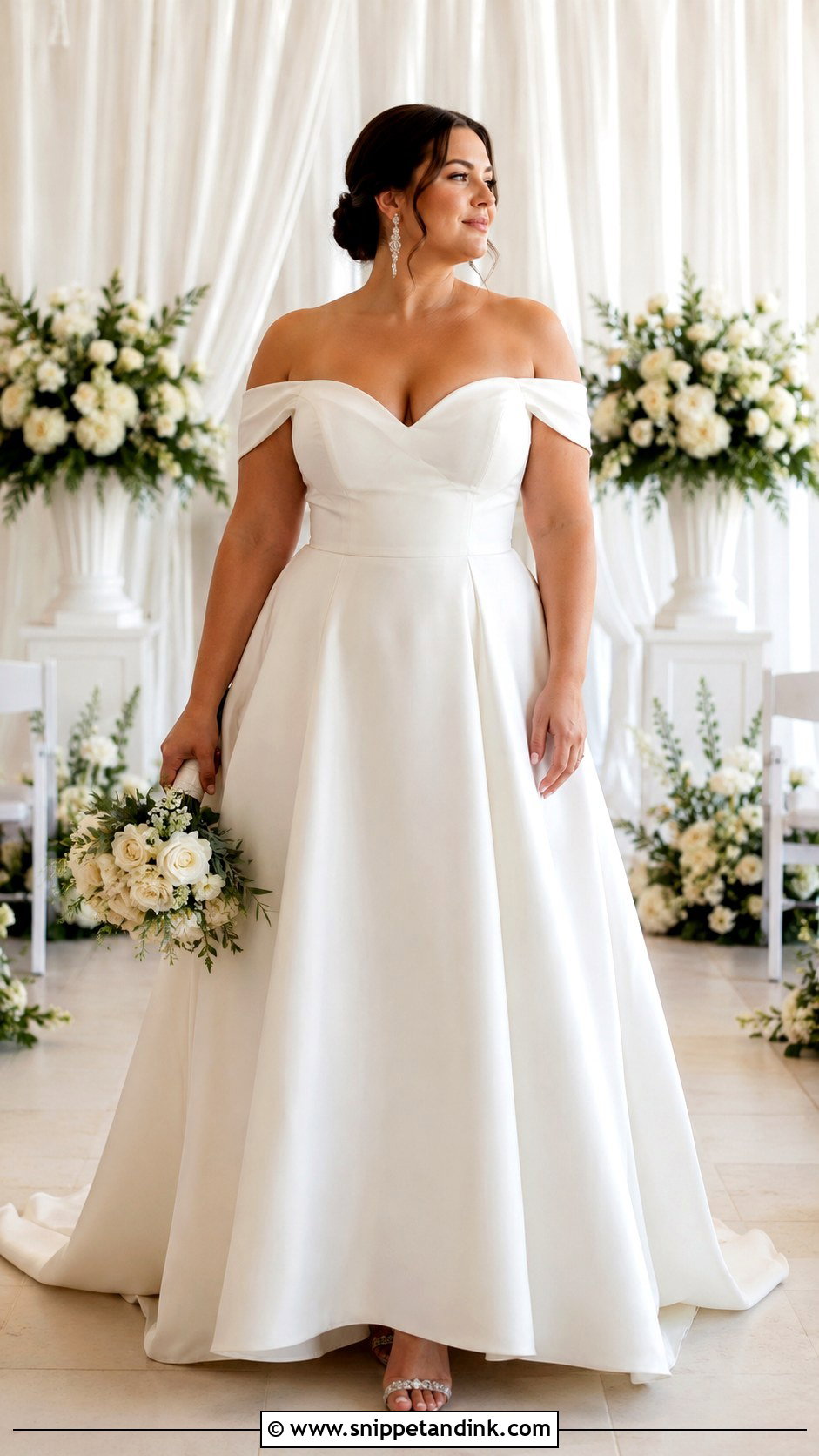
Off-the-shoulder sleeves look like they hold the dress up. They don’t. They’re decoration, and the real support has to come from a fully structured inner bodice with boning, secure cups and a snug waist. A modified sweetheart or gently curved neckline contains more than a deep scoop does. In the sample, lift your arms, hug someone and sit down. If the sleeves ride up or the neckline needs constant tugging, a good bridal tailor can move the sleeves lower or add a hidden elastic channel without losing the shape, and a low chignon keeps the shoulders clear.
5. Scoop Neck Satin Wedding Dress
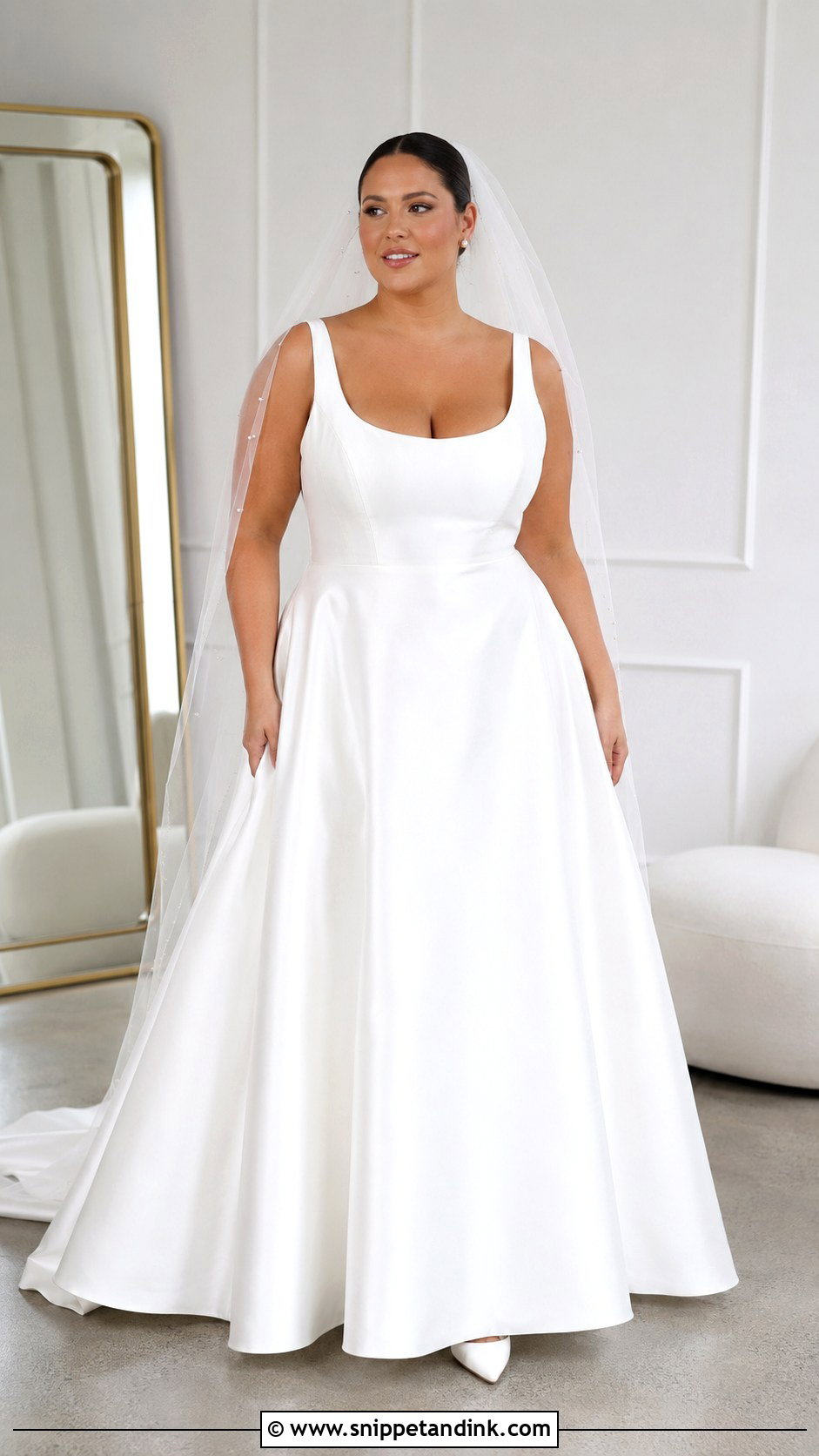
Satin is honest fabric; it shows every pull. A medium-depth scoop gives continuous coverage, and with wide straps and a high enough back you can still wear a proper bridal bra underneath. The alternative is built-in cups, side boning and a reinforced underbust seam. Stand by a window when you try it on and look for horizontal creases across the bodice. Those lines mean the bust needs more room or a different cup shape, not a tighter zip.
6. Illusion Neckline Lace Ball Gown
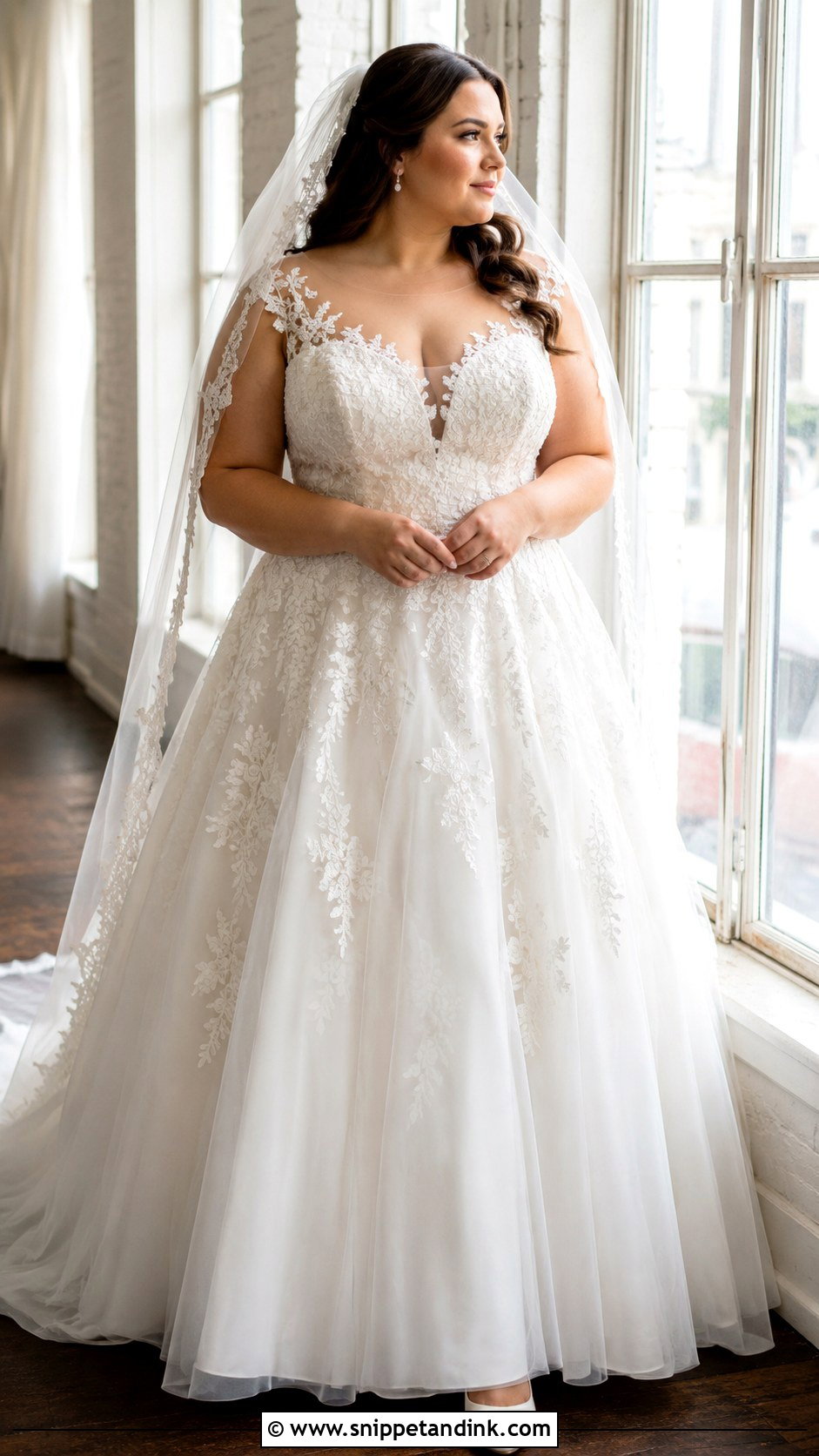
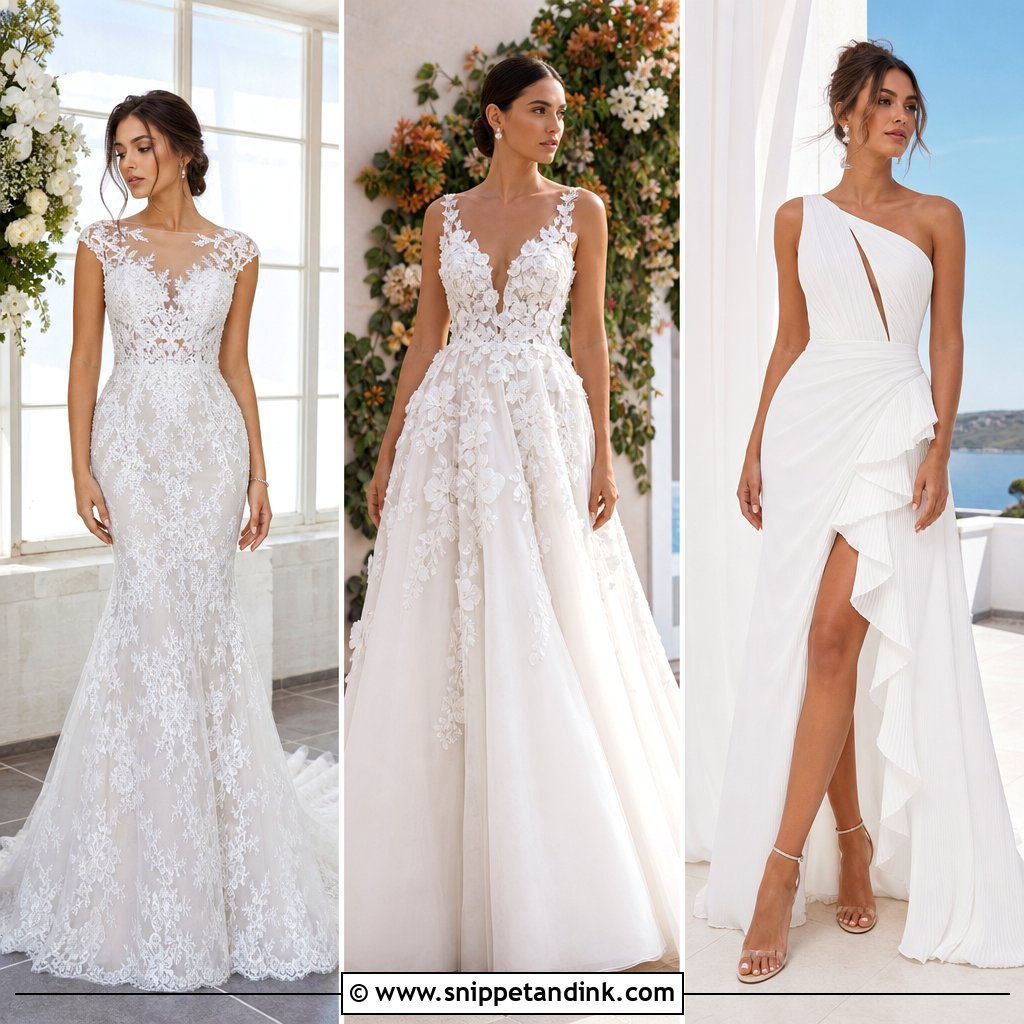
Illusion mesh gives the look of an open neckline with coverage over the upper chest, but mesh is not structure. On a fuller bust I want sturdy mesh fitted close to the body and joined to a properly lined, boned bodice underneath, with lace appliqués softening the cup edges. Get the mesh as close to your skin tone as you can, since a mismatched shade looks gray under flash. Turn and lift your arms. The mesh should stay smooth, and if it bags at the center, the bodice beneath is too loose.
7. One-Shoulder Mermaid Wedding Dress
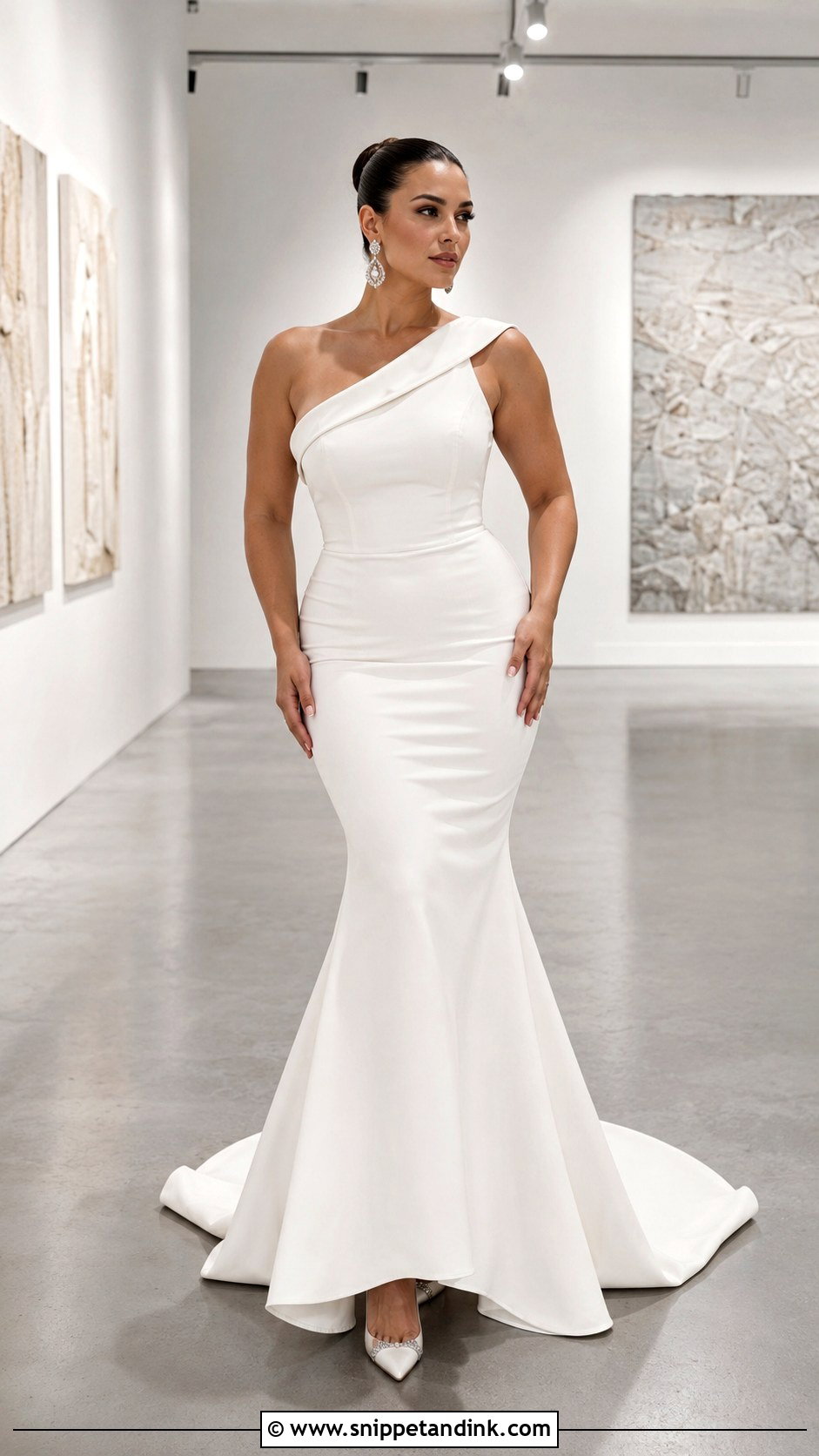
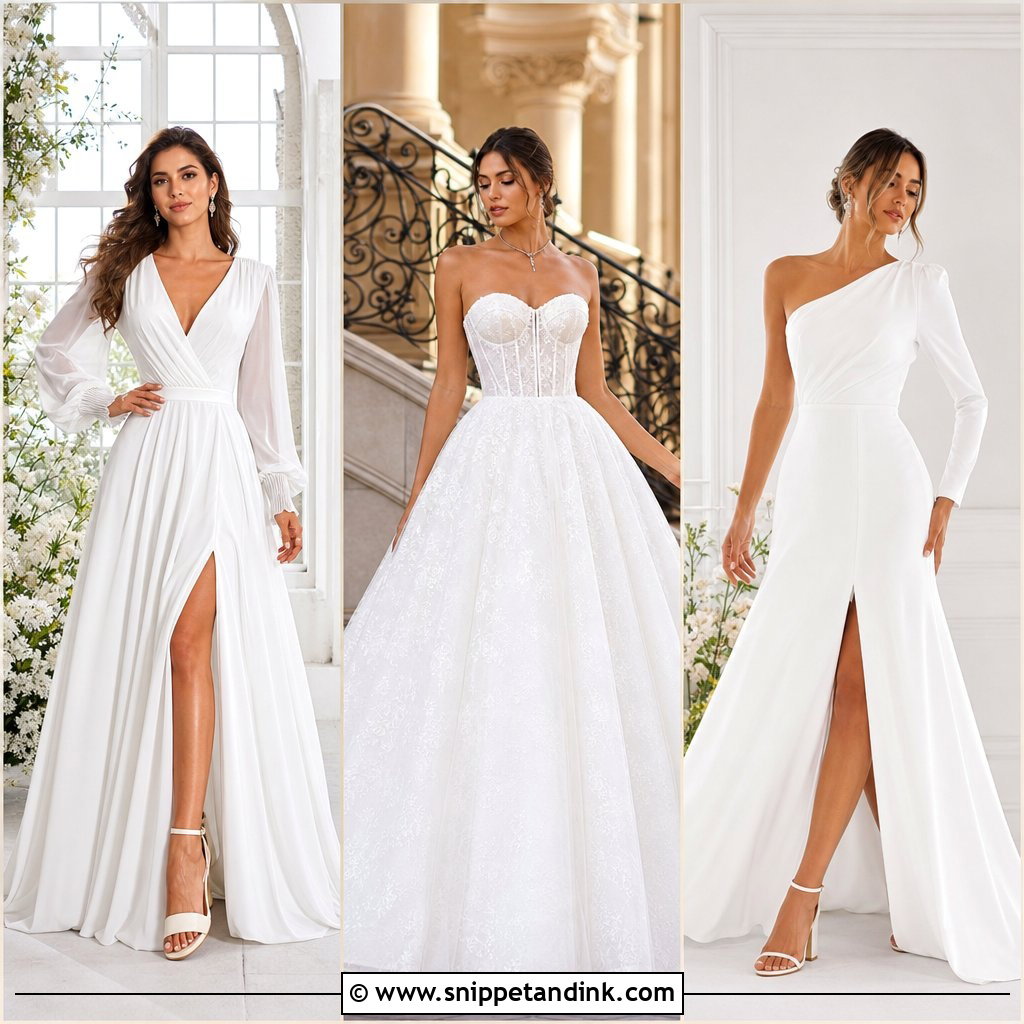
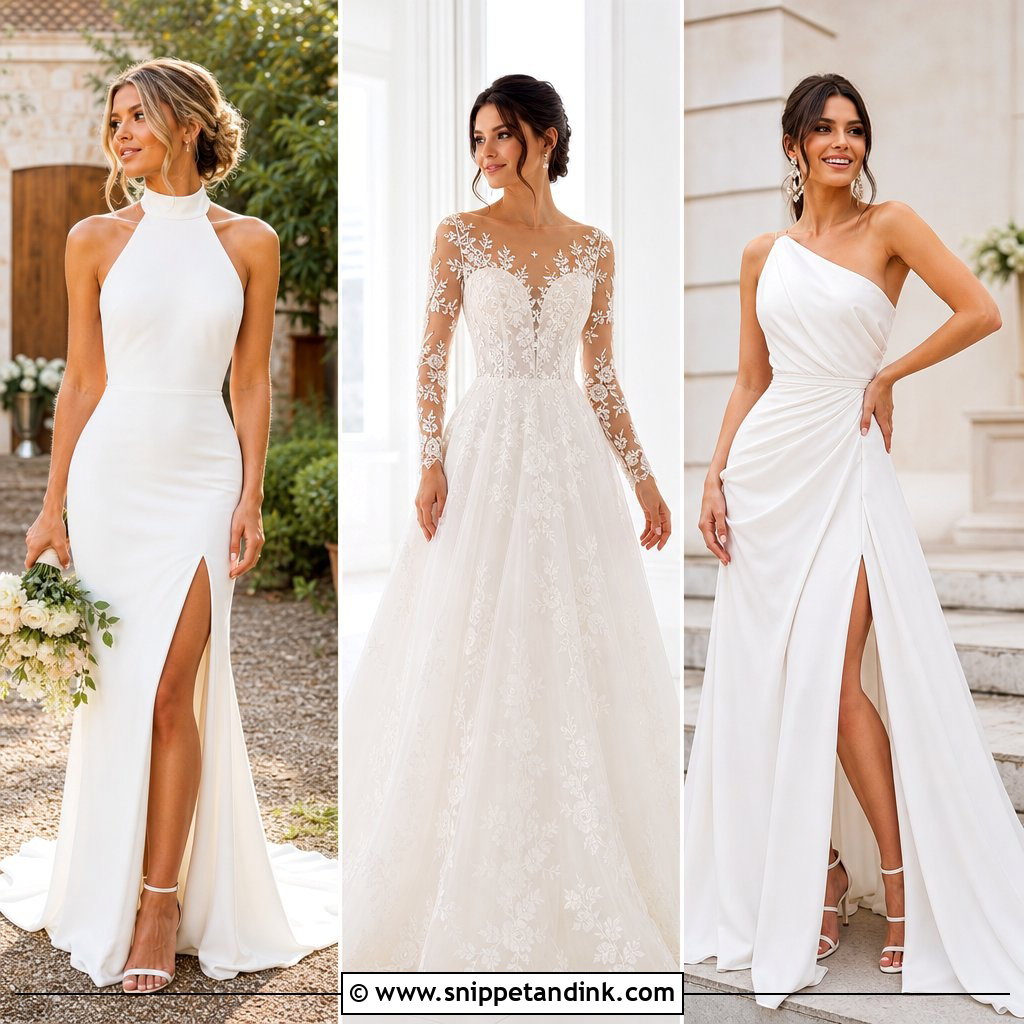
The side without a strap is where this gown succeeds or fails. Choose a substantial shoulder strap, never a thin cord, then check the structure on the open side: firm boning, correctly placed cups and a stable waist seam stop the bodice twisting toward the strap. The diagonal line pulls the eye upward and the mermaid skirt follows curves from waist to knee. Skip the necklace. At the fitting, watch both sides of the bust in a mirror as you walk; they should stay level, with the bodice centered.
8. Wide Strap Fit-and-Flare Wedding Dress
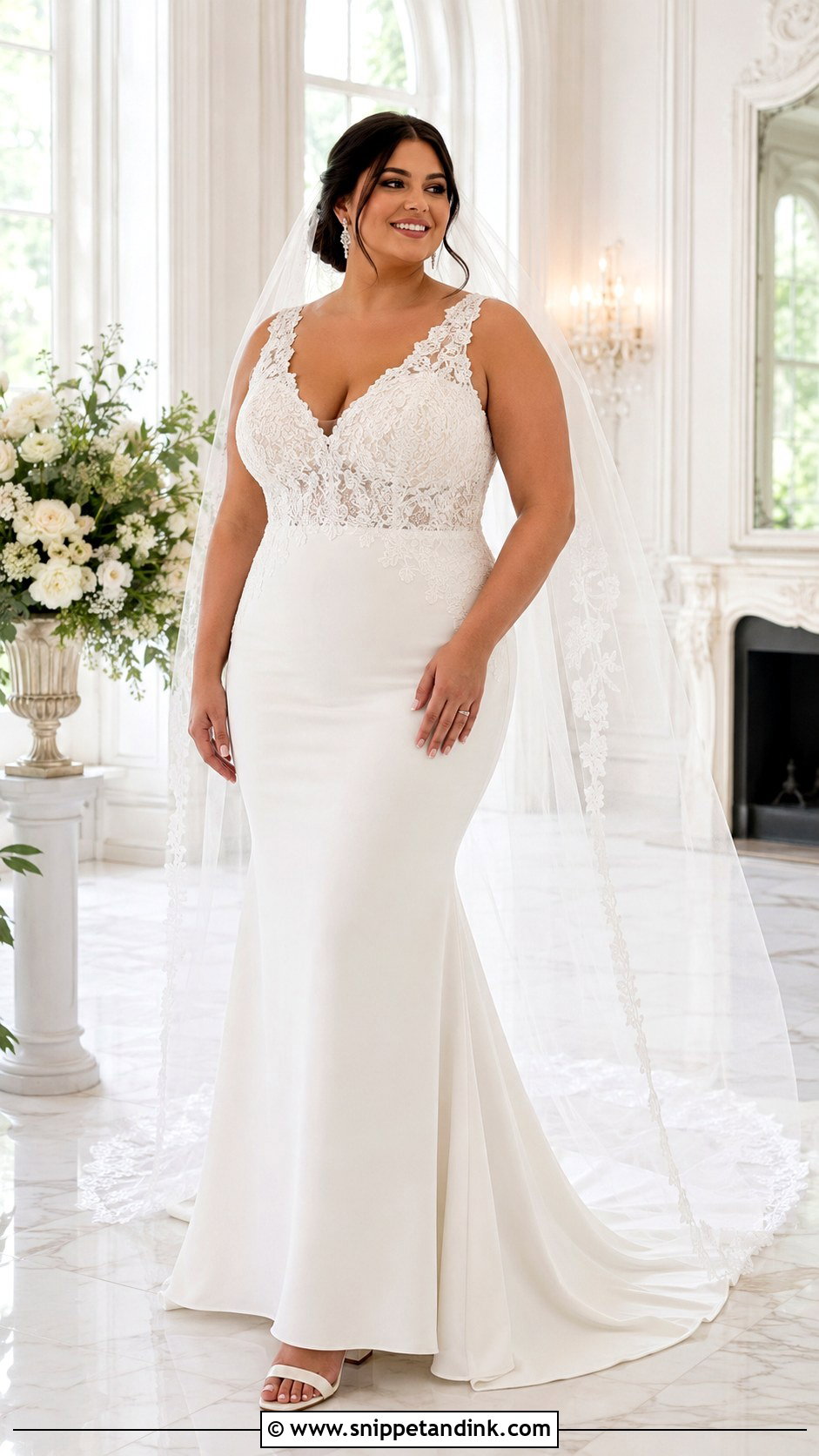
What if you want a fitted gown without relying on a strapless bodice? Wide straps give visible support, and a fit-and-flare skirt shows the curve of the hip. Look for straps that sit over your usual bra-strap line, a medium V or square neck and a firm bodice down to the waist. Here’s the detail most people miss: if the skirt is tight across the hips, it drags the whole gown down and the neckline feels less secure. I always assess bodice and skirt together, and the skirt should skim the thighs before it widens.
9. Cap Sleeve A-Line Wedding Dress
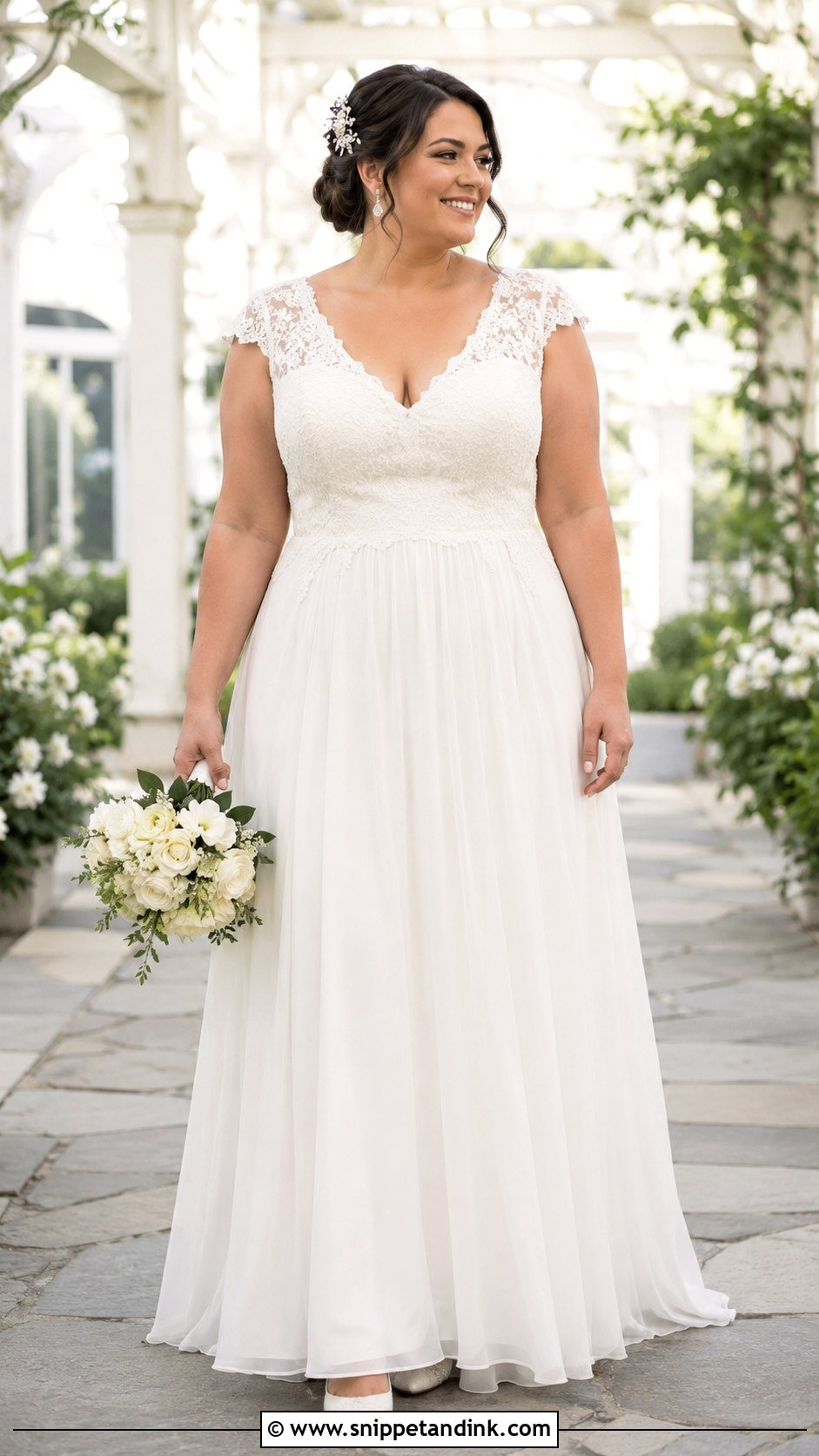
A cap-sleeve A-line gown covers the top of the shoulder without the weight of a full sleeve and pairs naturally with a modest V, scoop or soft square neck. The sleeve must be attached to a supportive bodice rather than floating lace pieces that bind when you reach. Underneath, I want shaped cups and real structure through the sides and waist. Pay close attention to the armholes during alterations. Too loose and they gape at the side of the bust; too tight and they cut into the front of the underarm, which you’ll feel by the second hour.
10. Long Sleeve V-Neck Lace Wedding Dress
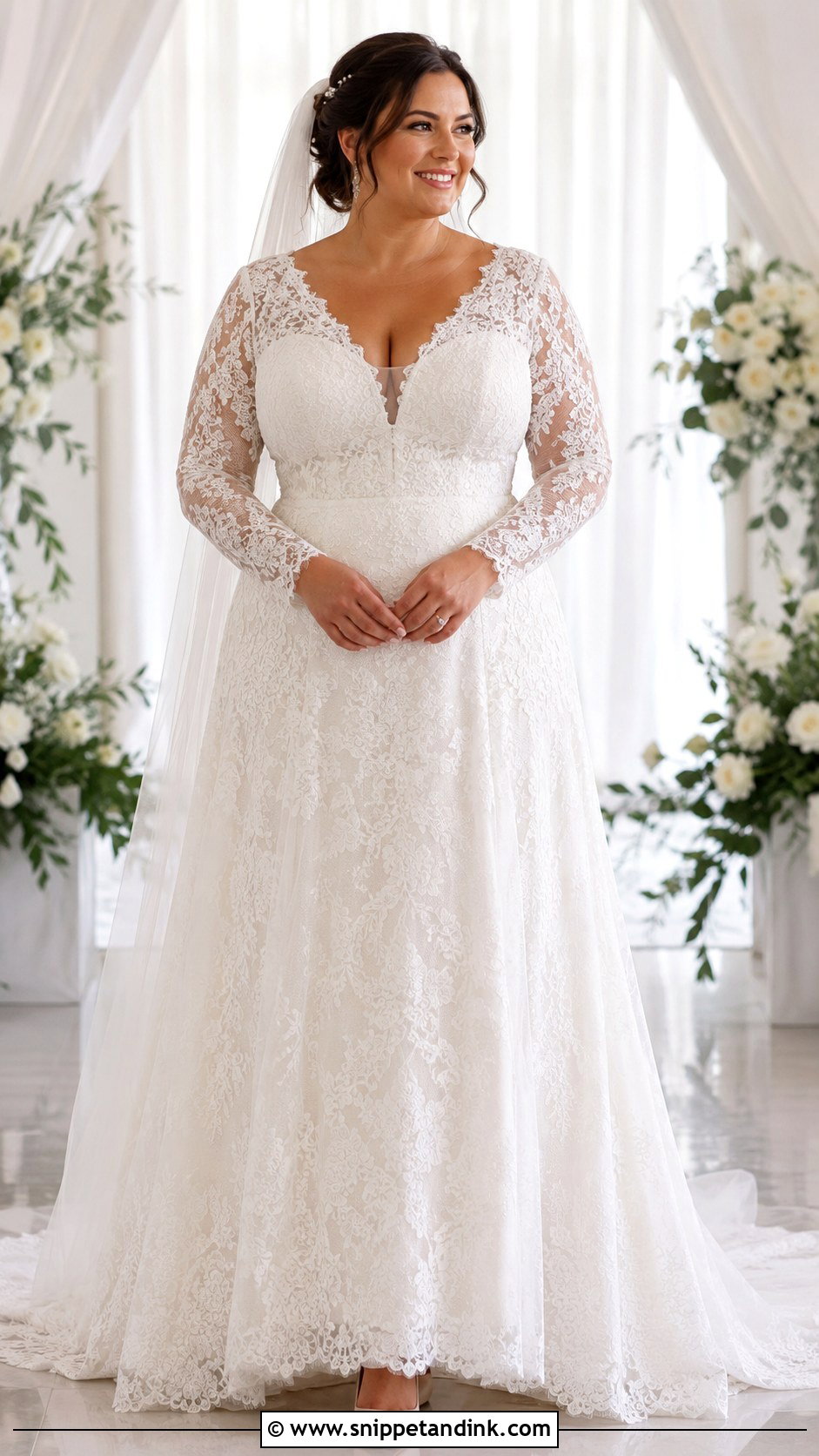
Lace sleeves add coverage without closing off the whole upper body, and a moderate V keeps the line long. Its depth can be controlled with a lined center panel or a discreet illusion insert. Decorative lace alone won’t lift anything, so there must be a structured lining beneath the overlay. Reach forward and bend in the sample. If the V pulls apart, ask for a slightly higher center or extra support sewn in; tape is a stopgap that gives up once you start to get warm.
11. Basque Waist Corset Ball Gown
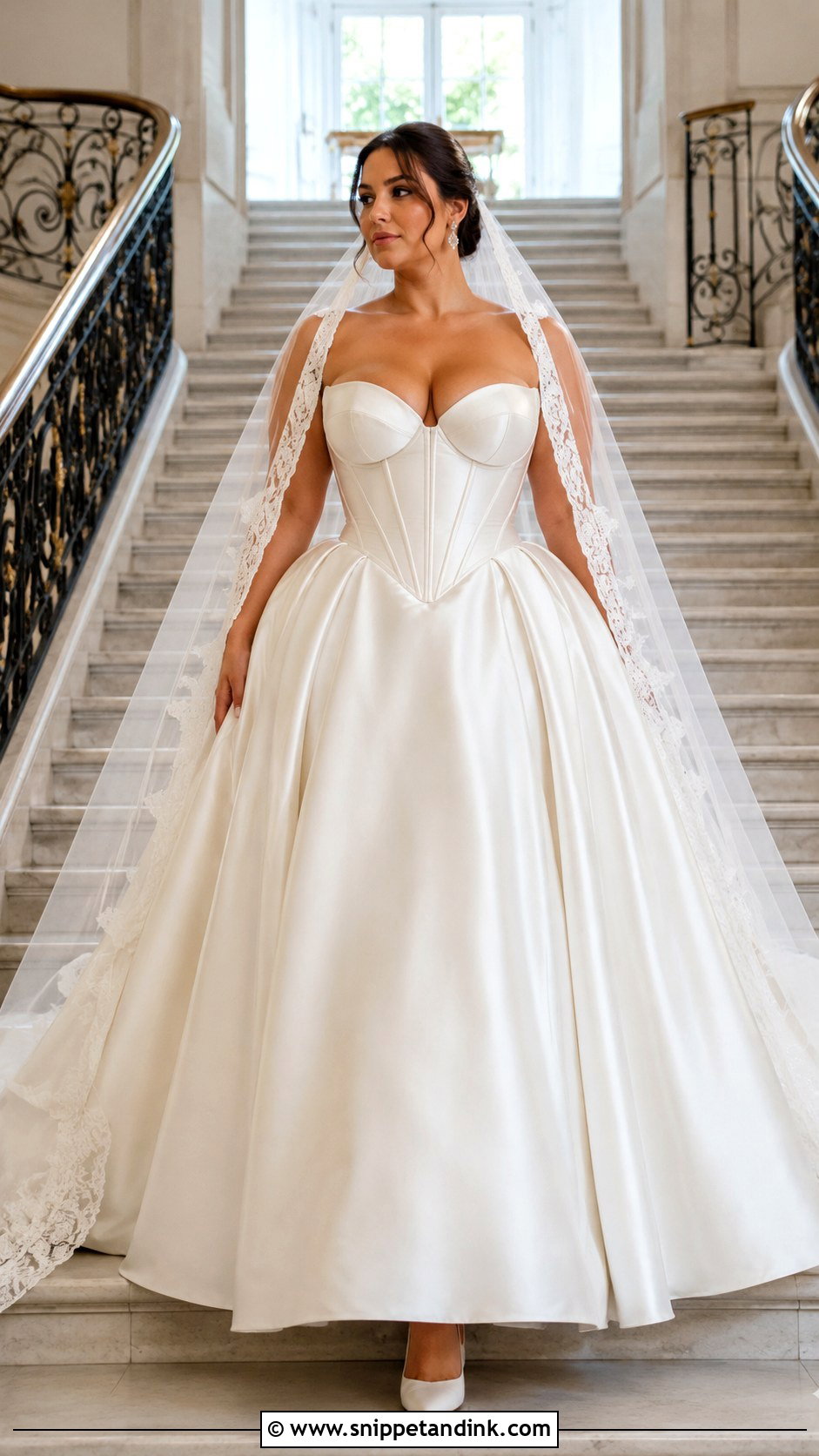
A Basque-waist ball gown drops the waistline into a V at the front, which lengthens the torso and gives a full bust a clear frame above a full skirt. This style lives or dies on alterations. The point of the V must sit exactly at center and at the right height for your torso, or the dress looks as if it has slipped. Look for an internal corset, substantial boning, supportive cups and a secure back closure; mikado or satin holds the shape best. Sit, walk and turn at every fitting and check that the dip stays put.
12. Empire Waist Chiffon Wedding Dress
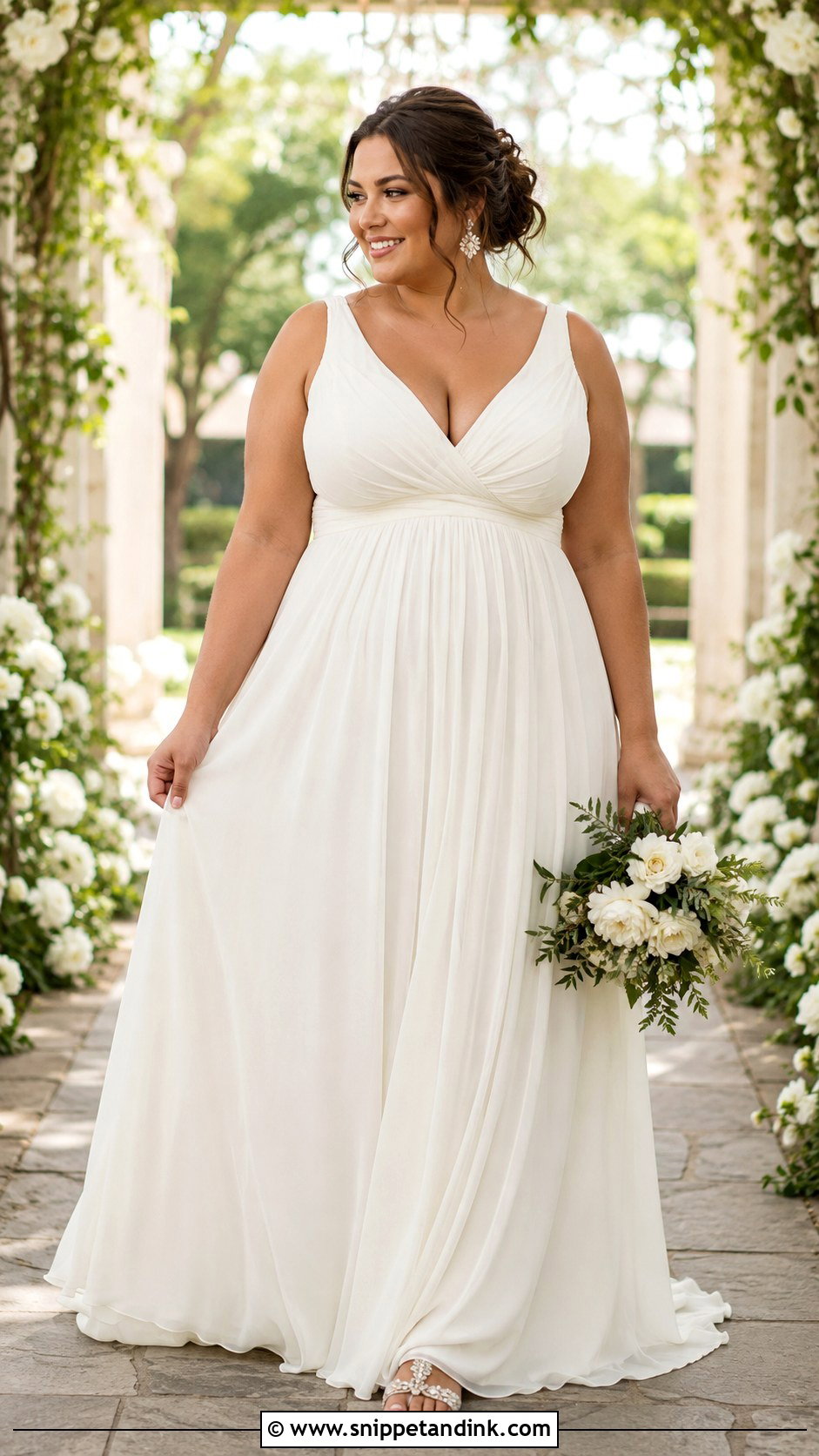
Empire waists are often recommended for a large bust and just as often go wrong. The seam has to sit underneath the bust, on the ribcage, not across the breast, and on a fuller figure that line falls lower than on the sample. Choose a V-neck or crossover bodice with wide straps and enough depth to cover the sides. Gathering piled directly over the bust adds volume you probably don’t want, so look for smooth panels or controlled pleats that follow your shape. A hidden bodice or supportive bra keeps the floaty skirt stable on a beach or in a garden.
13. High Back Square Neck Wedding Dress
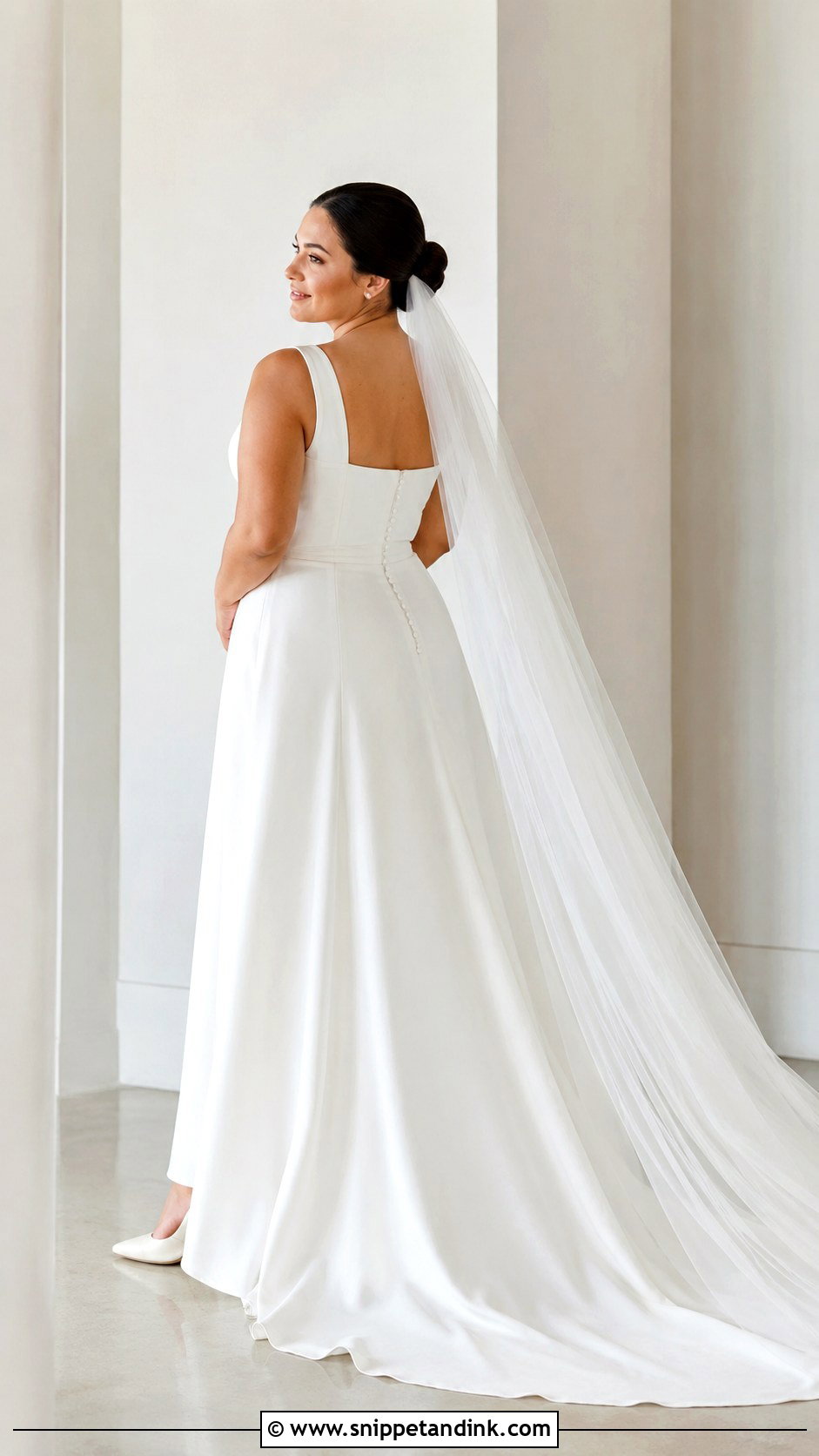
A high back is the most practical choice here because it lets you wear a real bra. Pair it with a square neck, wide straps, a fitted natural-waist bodice and an A-line skirt in crepe, mikado or embroidered fabric. Bring the exact bra you’ll wear to every fitting, starting with the first. Switching bras after alterations changes bust height, neckline position and even where the waist seam falls, and the whole bodice has to be pinned again. Check from behind that band and straps stay hidden when you lift your arms.
14. Portrait Neckline Satin Ball Gown
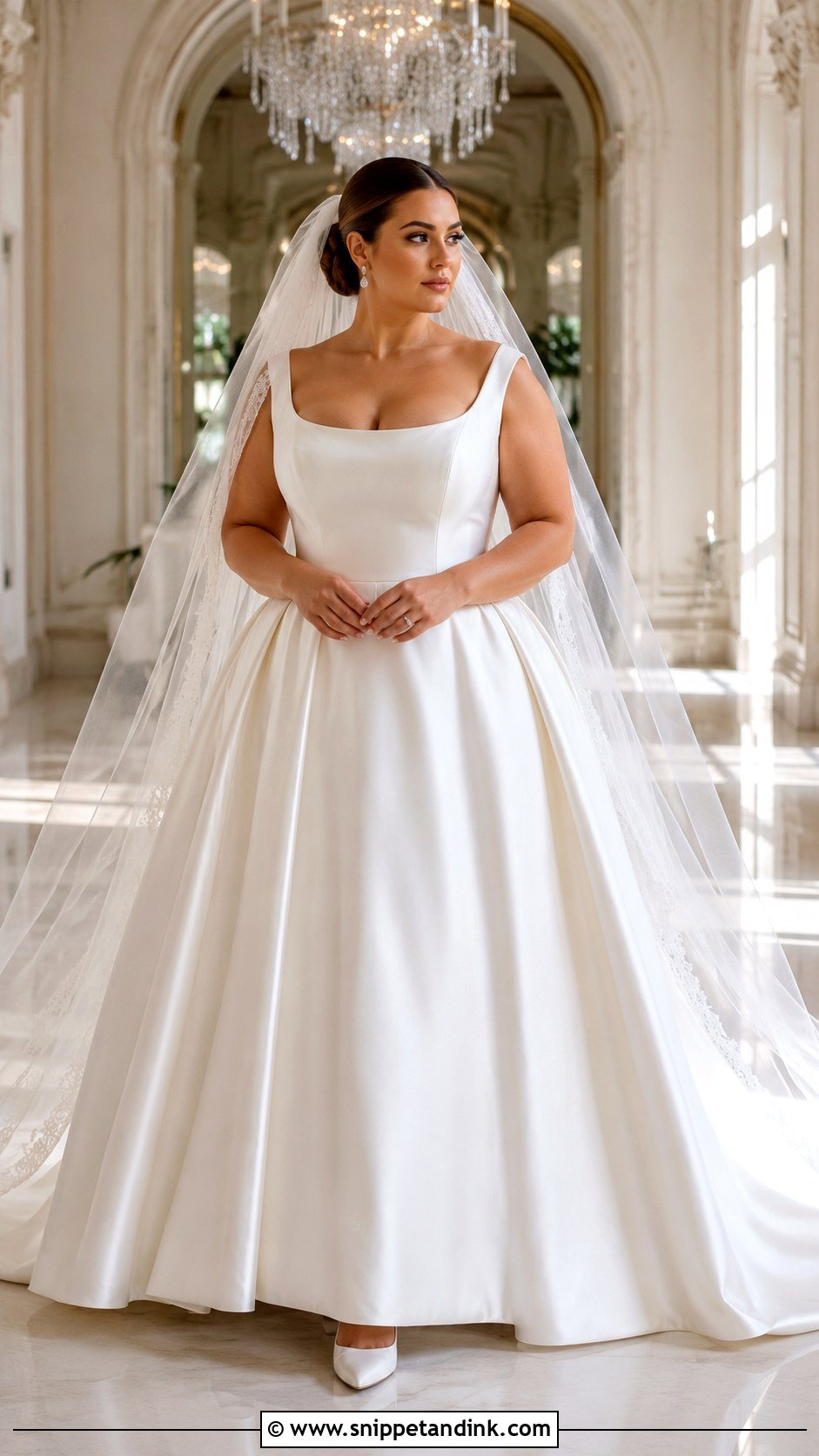
A portrait neckline sweeps wide across the shoulders and frames the face, collarbone and upper chest. On a fuller figure it should sit high enough around the sides of the bust and be backed by a built-in corset, because the outer fold is a frame, not a support. Soft pleating can shape the bodice if it lies flat without bulky folds. The neckline is strong on its own, so keep accessories small. At alterations I check that the shoulder line stays even and doesn’t roll outward when you lower your arms.
15. Notched Strapless A-Line Wedding Dress
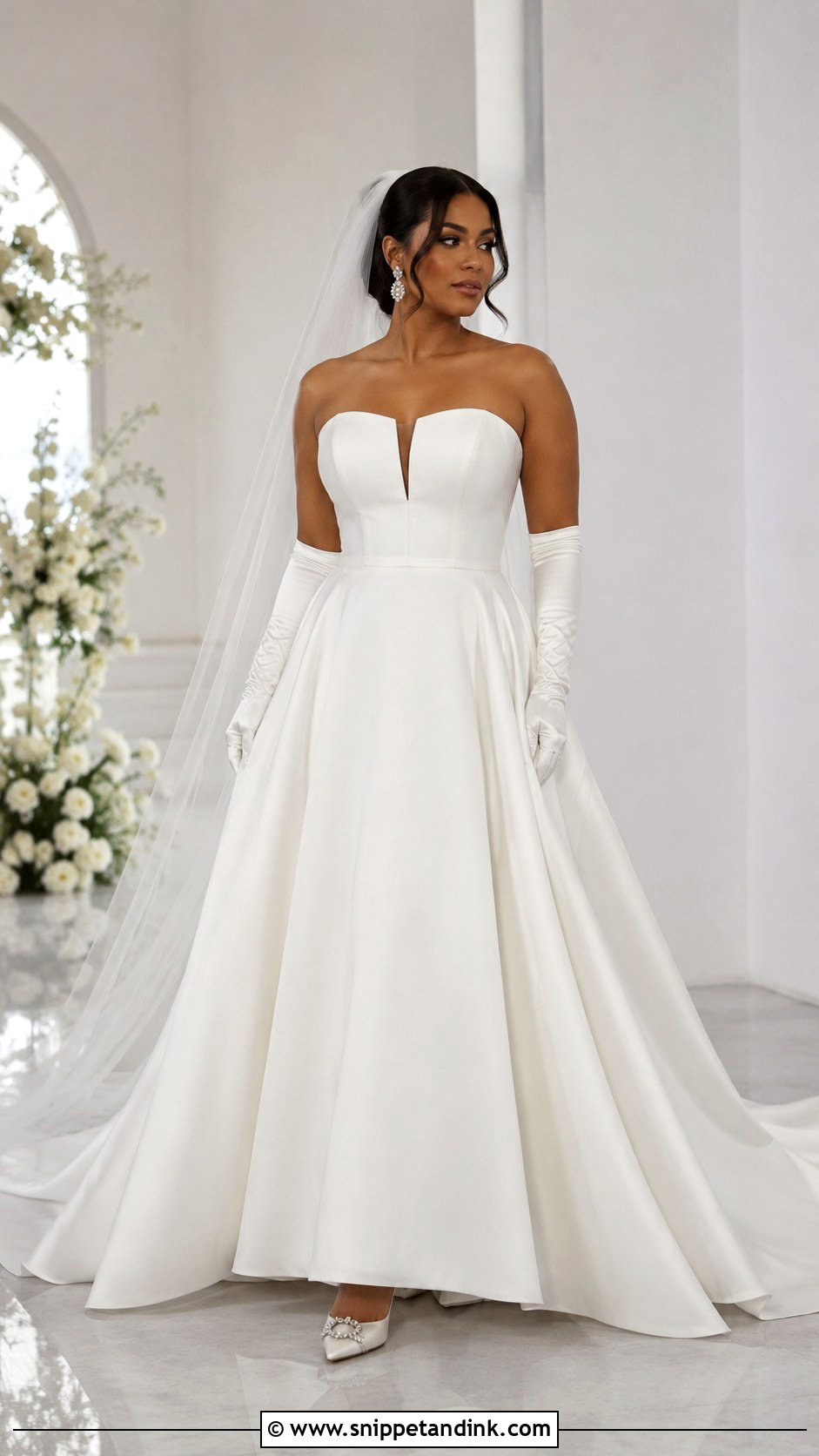
Strapless does work for a large bust, provided the support starts at the waist. A notched center adds definition and contains more than a deep plunge. Look for full cups, higher side edges, flexible but firm boning, a reinforced waist stay and a close-fitting back. When trying it on, stop yourself from hitching the neckline up. A well-fitted strapless gown stays put through normal movement. If it slips, the fix is usually reshaping the cups or firming the waist stay, not cinching the top edge, which only digs in.
16. Draped Crepe Column Wedding Dress
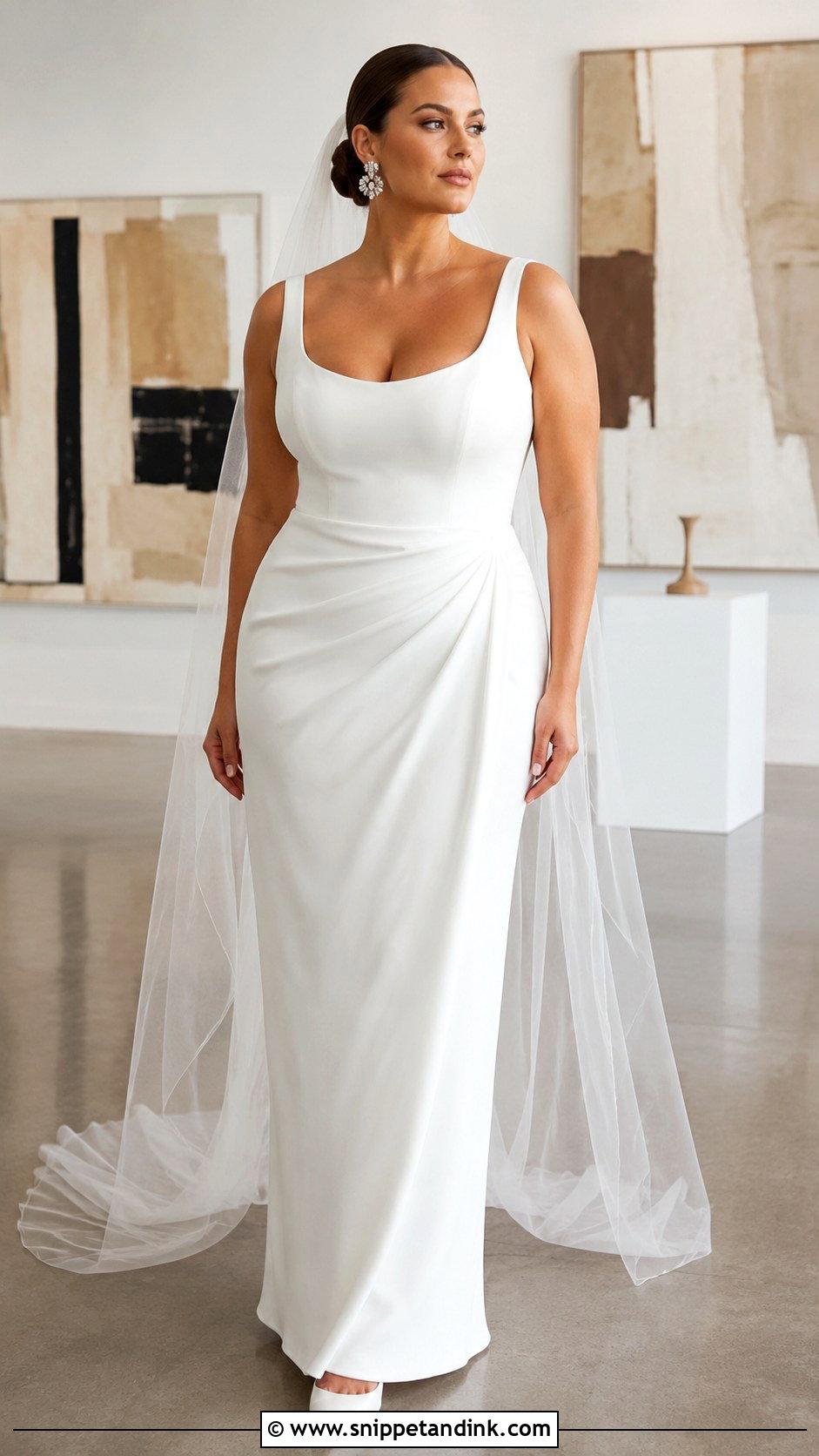
Crepe follows the body closely, so a crepe column shows every undergarment line and every fitting error. It still suits a fuller bust when there’s a supportive lining, wide straps and a curved V or scoop neck. Drape across the waist adds shape; drape over the bust should be minimal and symmetrical. Have your fitter watch you sit as well as stand. Diagonal pull lines running from the bust toward the hip usually mean the skirt is too narrow, and you should be able to take a full stride.
17. Boat Neck Mikado A-Line Wedding Dress
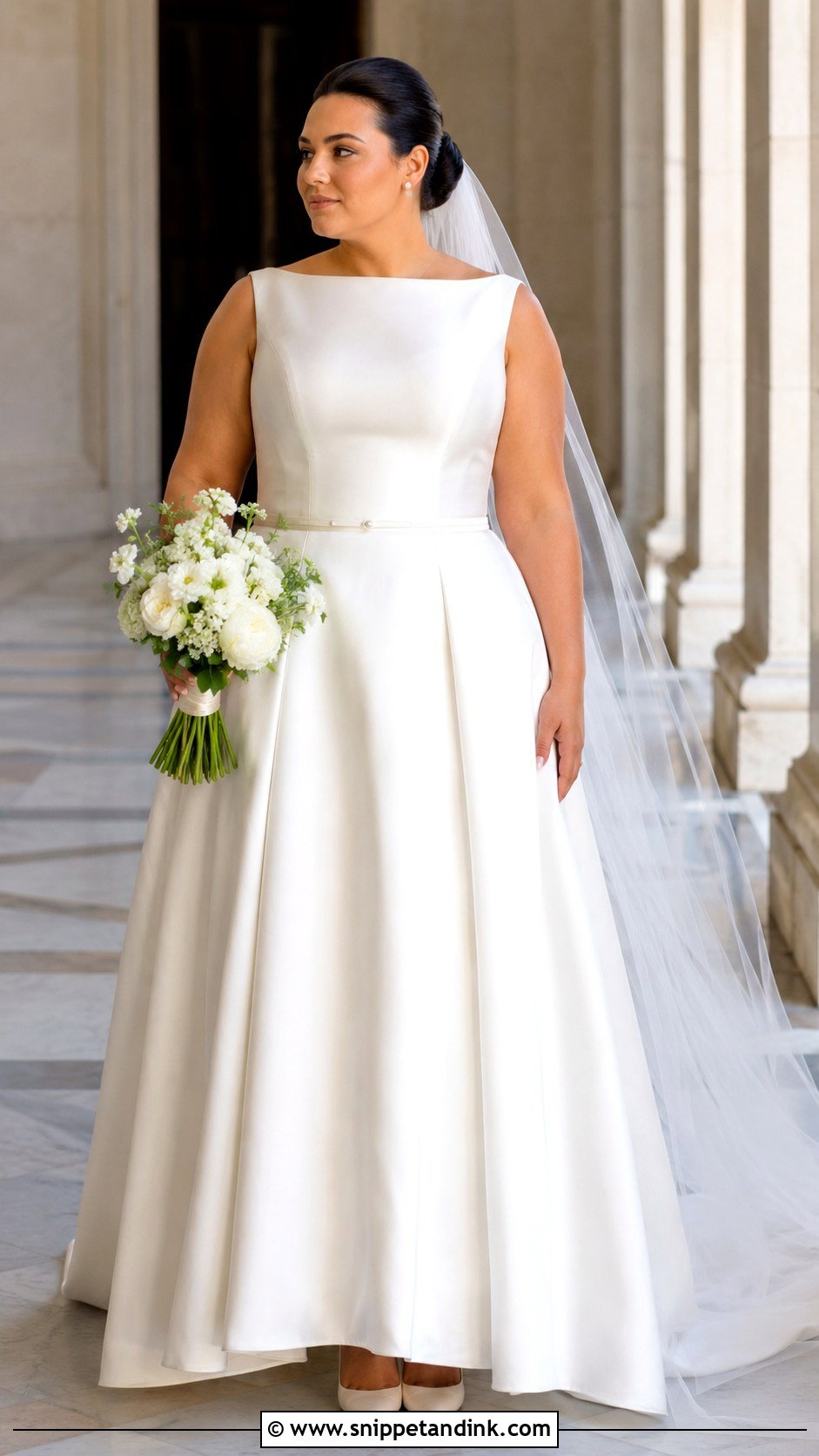
A boat neckline runs straight across near the collarbones, and I’ll be honest: on some fuller figures a high neckline turns the bust into one solid block. Clean princess seaming, a slightly wider shoulder line and an open back that still covers the bra band all help. Structured mikado holds the shape, while a supportive bra or hidden cups do the lifting underneath. At the fitting, look at the fabric between the breasts. It shouldn’t collapse there or pull in lines toward the armholes.
18. Asymmetrical Neckline A-Line Wedding Dress
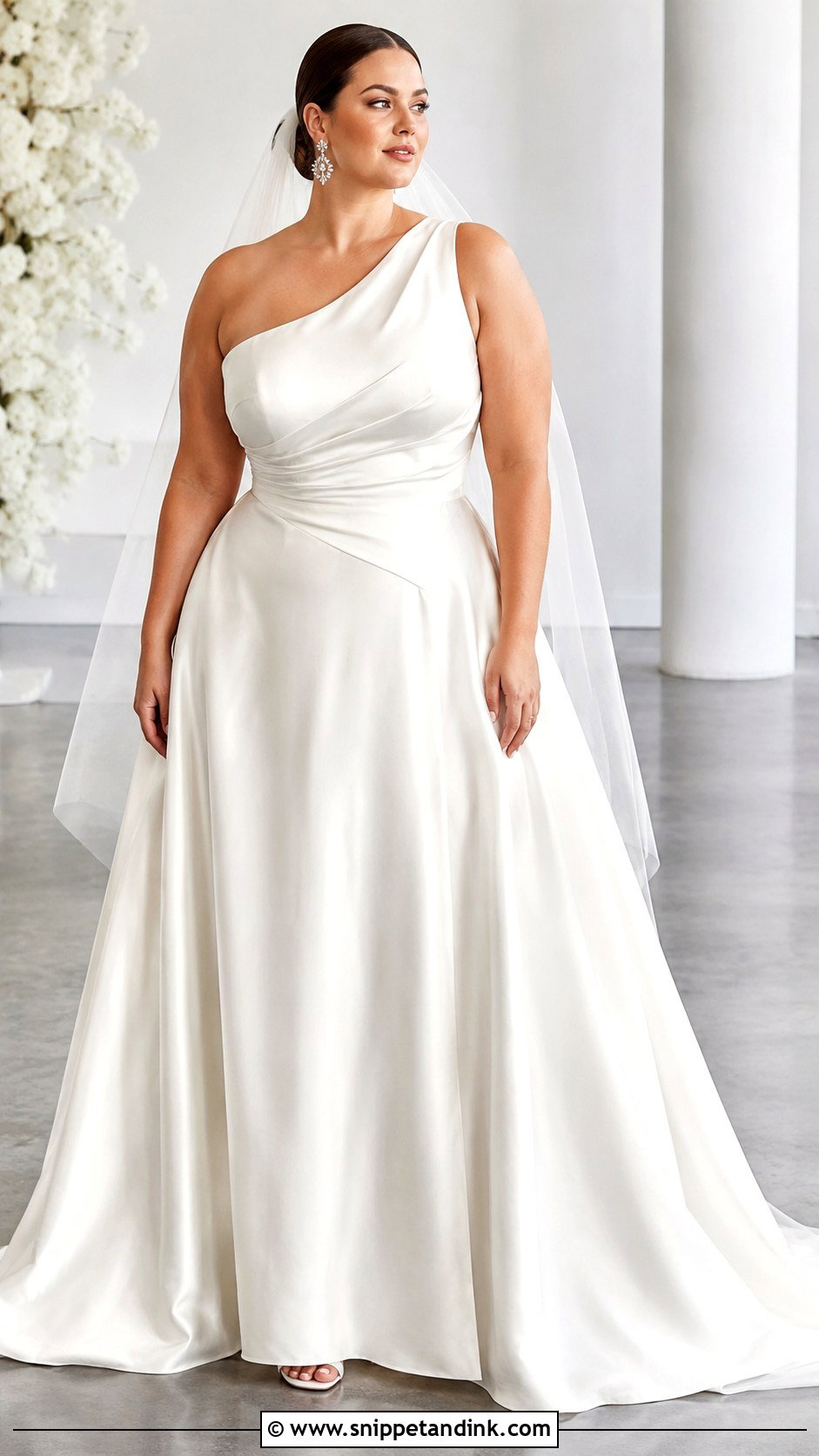
With an asymmetrical neckline, balance matters more than symmetry. The strapless side still has to cover and support fully, so the gown needs one substantial strap, internal cups and boning that holds both sides. Draped satin follows the diagonal softly; structured crepe gives a sharper result. Keep the skirt plain and wear one pair of statement earrings. During the fitting, walk, turn and raise both arms. If the bodice rotates toward the strap, the boning on the open side needs reinforcing.
19. Lace-Up Back A-Line Wedding Dress
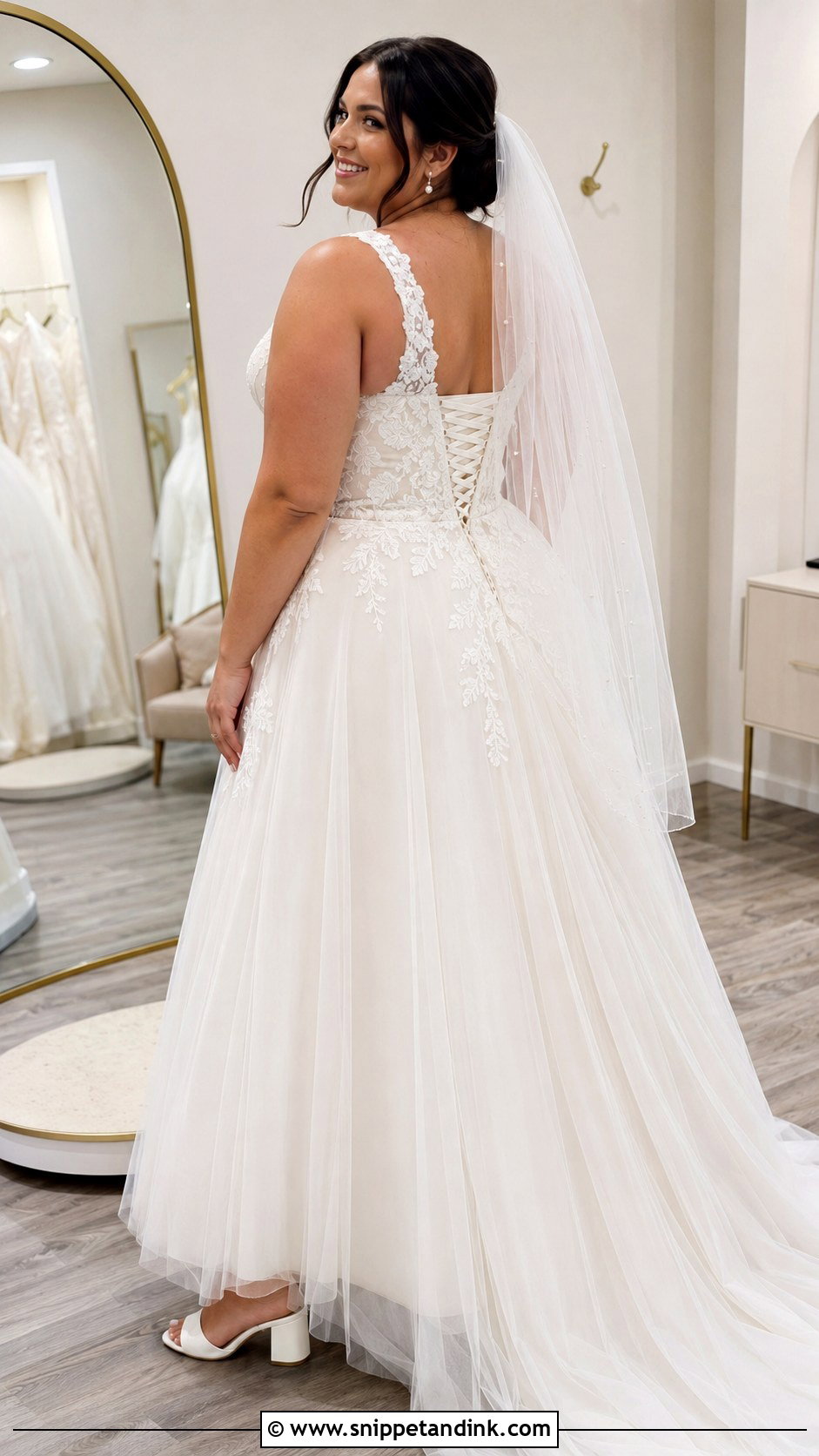
A lace-up back is the most forgiving closure for a fuller bust with a smaller waist, because each section of lacing can sit at a different tension. Choose an A-line gown with a square, scoop or modified sweetheart neckline and straps wide enough to hide any extra support. The lacing should spread pressure across the whole back rather than biting in one narrow band. Whoever dresses you must practice before the day. Lacing takes longer than people think, and doing it unevenly shifts the bust off center. Ask for a modesty panel under the opening.
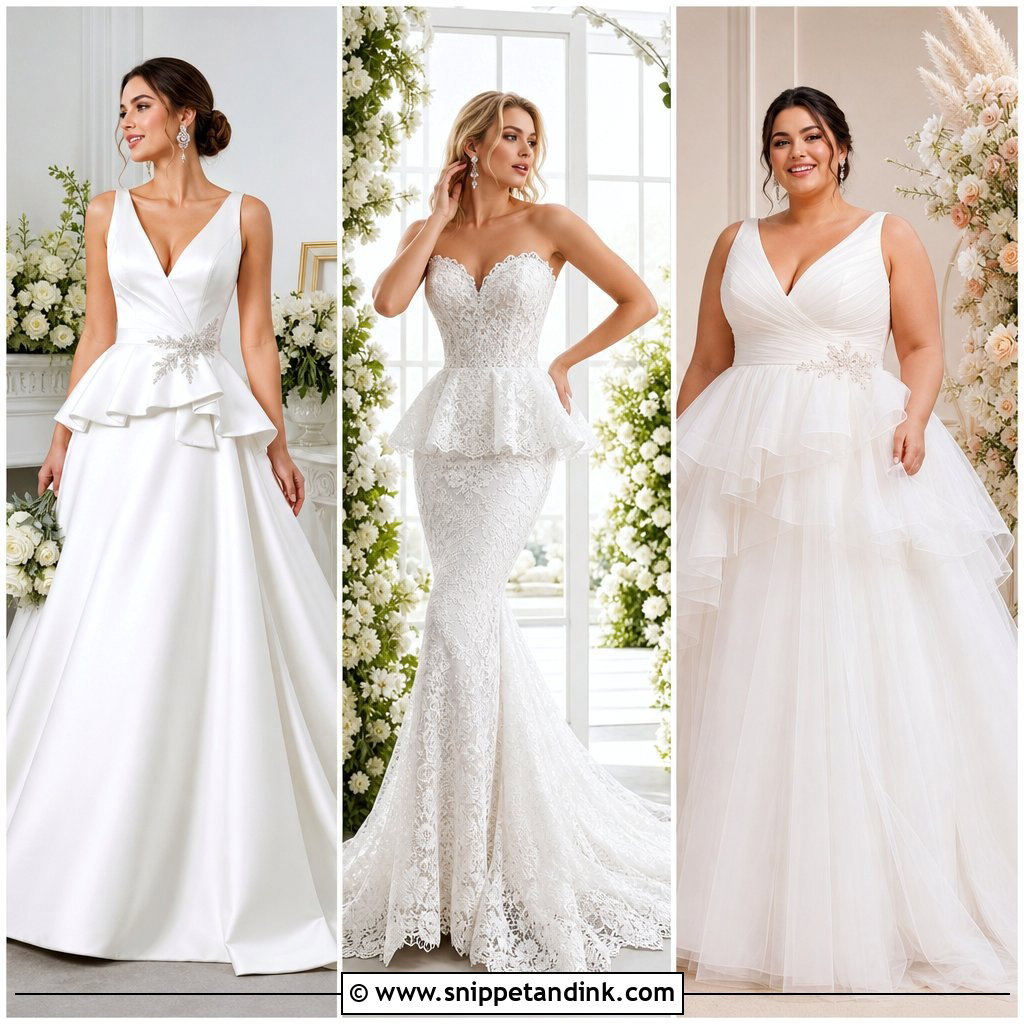


20. Minimalist V-Neck Crepe Wedding Dress
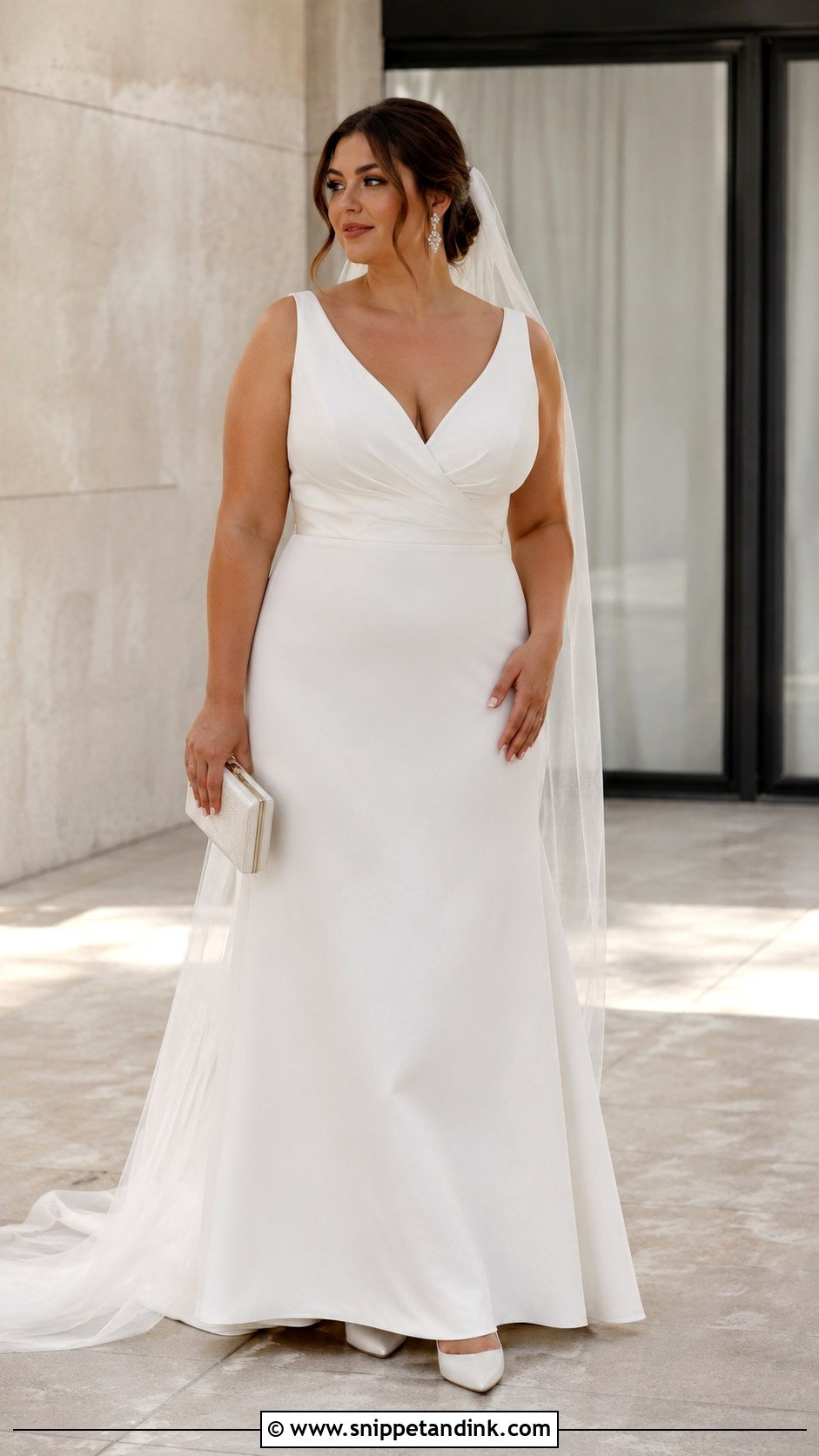
Plain crepe hides nothing, so a minimalist gown needs better tailoring than an embellished one, not less. A moderate V, wide straps and a high back give a fuller bust a clean base, while princess seams, built-in cups and hidden boning shape the bodice without showing through. I study the side view as carefully as the front. The bust should look lifted and contained, the waist seam level, the neckline flat. A long plain veil and pointed ivory heels keep it modern.
Sewn-In Cups, a Longline Bra or Nothing at All?
What goes under the gown decides how the bodice is fitted, so settle it before the first fitting rather than after.
- Sewn-in cups: the tailor stitches shaped cups into the lining, placed on your body during a fitting. This is my first choice for strapless, low-back and one-shoulder gowns.
- A longline or bustier bra spreads support down the ribcage and takes weight off the shoulders, but it needs a back that covers the band.
- An ordinary full-support bra is perfectly good under a high-back gown, as long as its straps sit directly beneath the dress straps.
- Stick-on cups I don’t rely on for a heavy bust. They lose grip once you warm up and start moving.
What Tends to Give Way by the Ninth Hour
A bodice that felt right at the fitting still has to survive heat, a long dinner and dancing. On a fuller bust the usual trouble spots are perspiration gathering under the band, a boning tip working through its channel until it digs in, and straps drifting outward after hours of hugging. Pack fashion tape, a few small safety pins, anti-chafe balm for the underarm and underbust, and a soft cloth for blotting. If a bone does poke through, a square of moleskin over the tip will get you to the end of the night.
The Seam, the Strap and the Sit-Down Test
The right gown supports your body, suits your taste and gets you through the day without hitching anything up. Treat the styles above as starting points rather than rules. Wide straps, corset bodices, stable waist seams and good cups all help, but accurate ordering and skilled alterations matter just as much. Bring your undergarments to every appointment, test each dress walking, sitting and with your arms raised, and photograph it from the front, side and back before you decide. Whatever the fabric, the dress with secure construction is the one you’ll forget you’re wearing.
You'll Like These Ideas:



Leave a Reply