
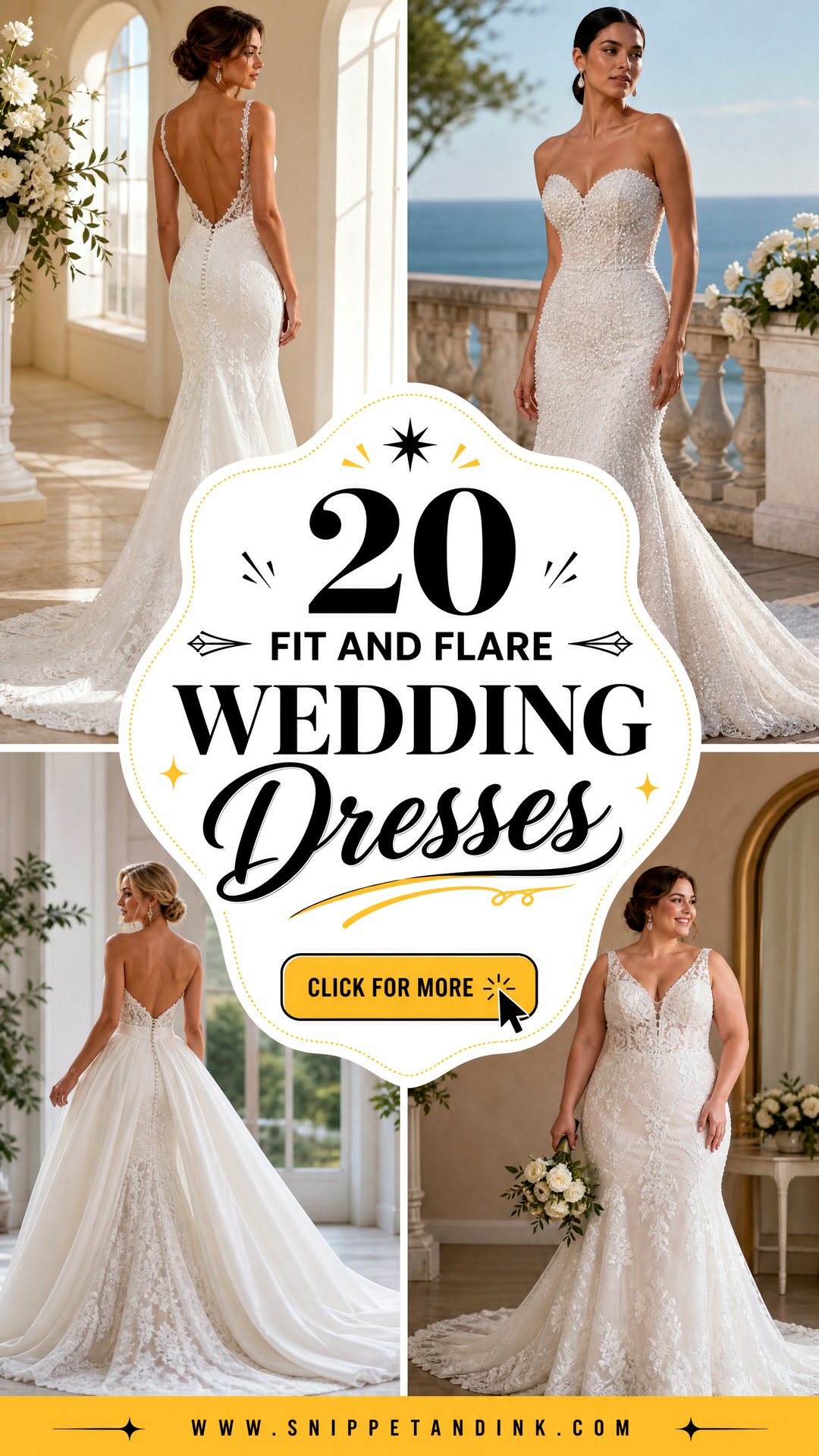
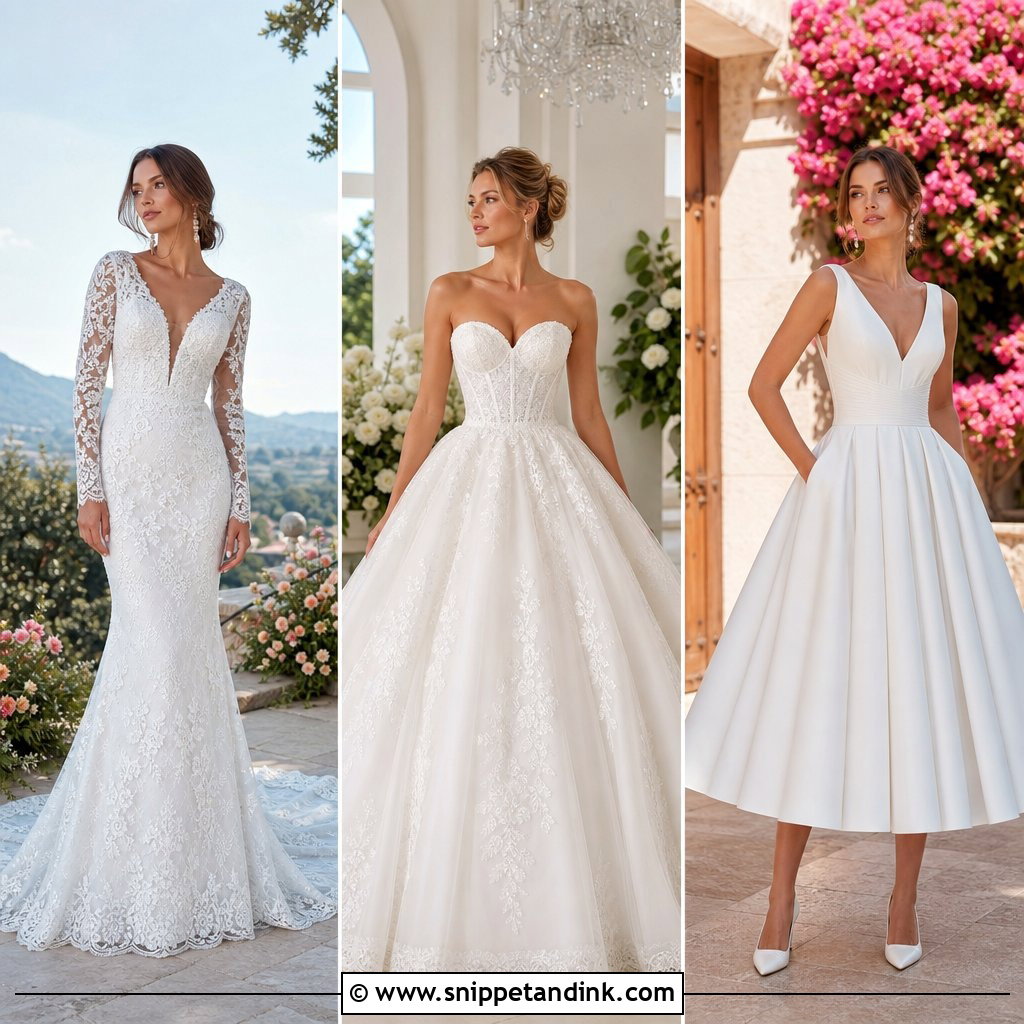
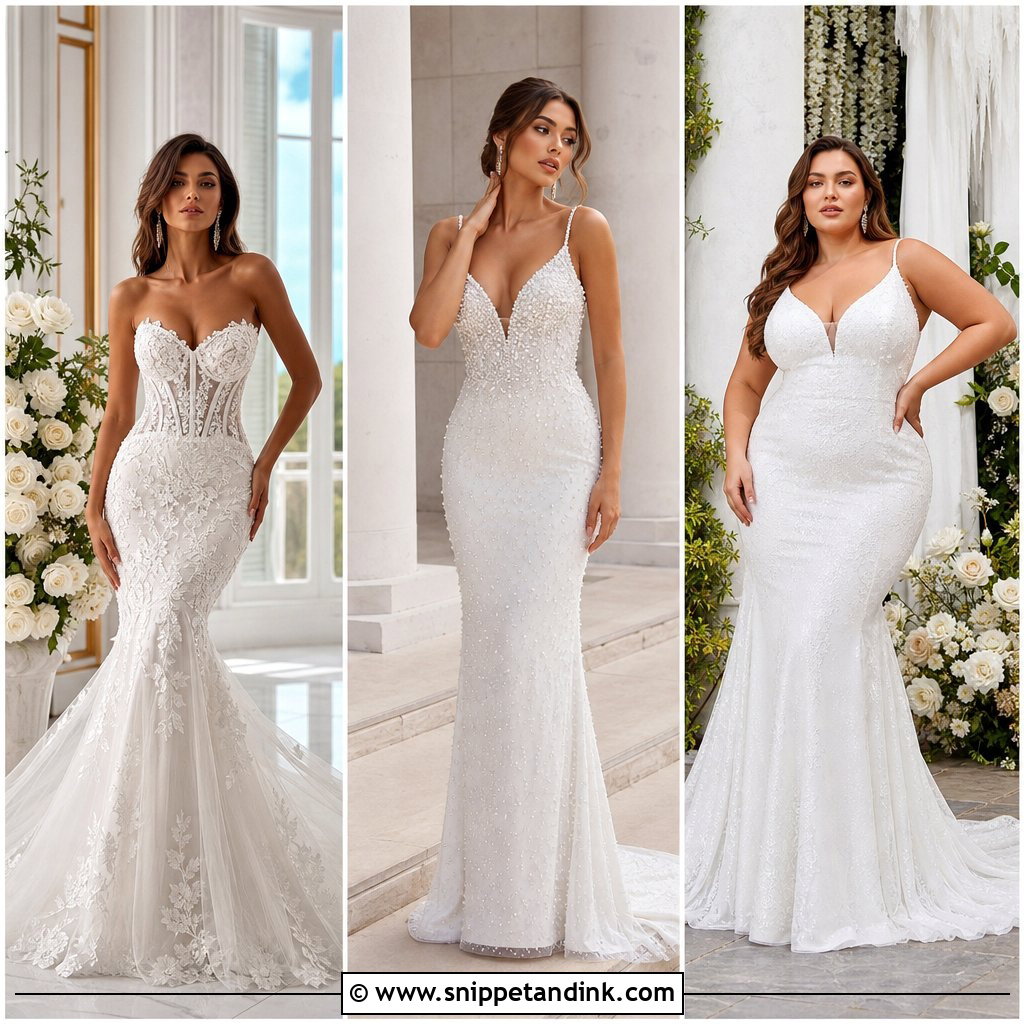
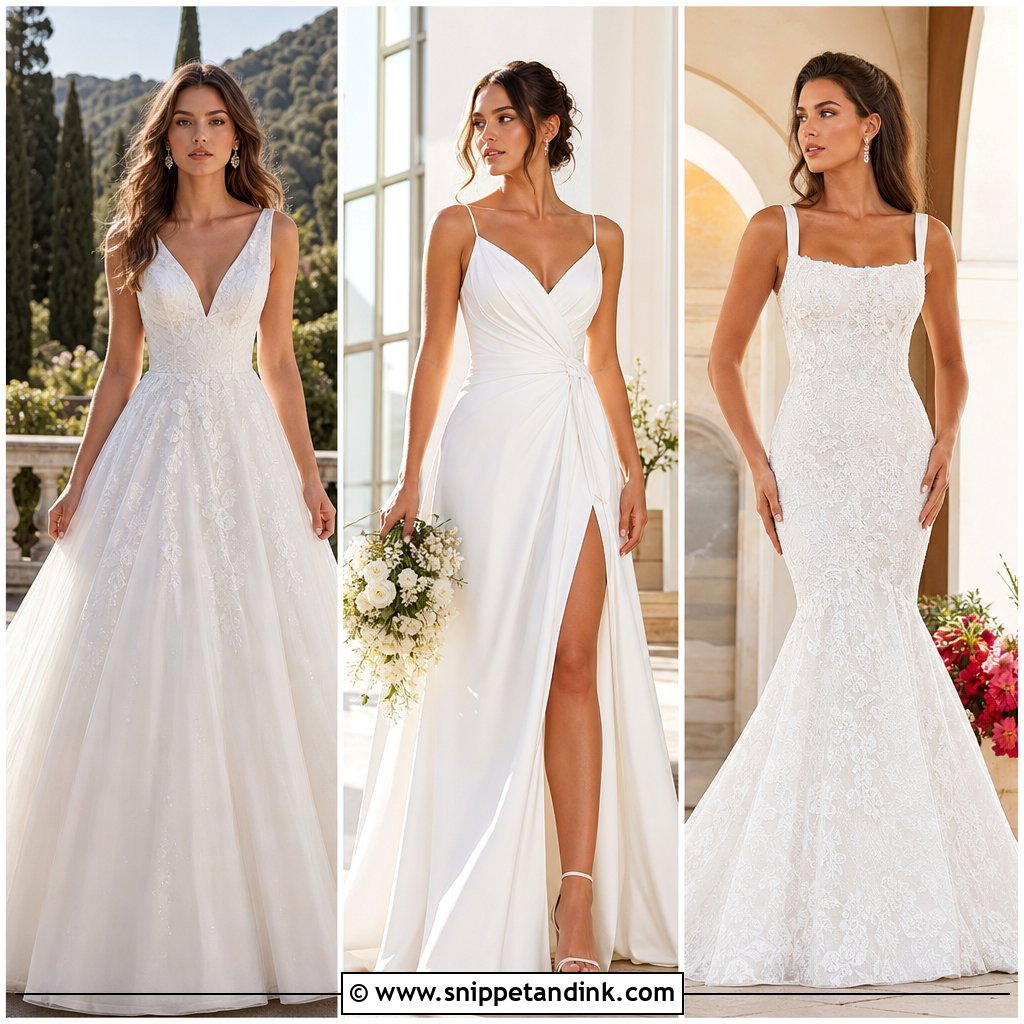
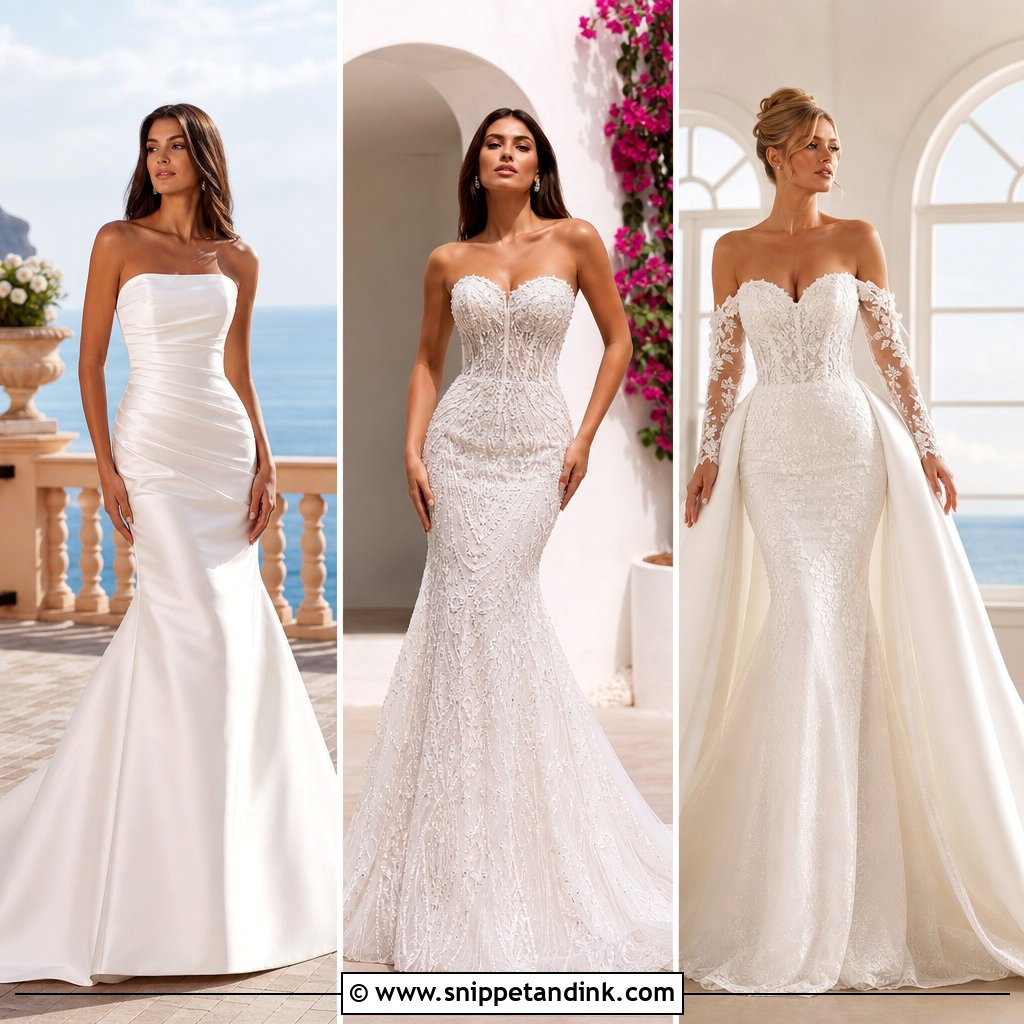
Fit and flare is the shape I pull most often when a bride wants to see her waist and hips but can’t picture herself in a full mermaid. The dress follows the bodice, waist and hips, then opens through the lower skirt, so you get definition without the knee-hugging restriction. Within that one silhouette there is a huge range: plain satin, matte crepe, lace, raised florals, corset bodices, and sleeves or overskirts that come off for the party. Lace, visible corsetry and removable pieces are everywhere in bridal shops right now. Neckline, fabric, train and accessories decide whether it suits a winter hall or a summer garden. Below are twenty versions, each styled head to toe, with the fit checks I make at the fitting.
Where the Flare Starts Matters More Than the Fabric
Fit and flare, trumpet and mermaid are really the same idea with the flare starting at different points. Fit and flare usually opens around the upper thigh, a trumpet a little lower, and a mermaid near the knee. The lower the flare, the more dramatic the shape and the harder it is to walk, sit and climb stairs.
When I’m helping a bride find her flare point, I look at three things:
- Where her hips are widest. A flare that starts just below that point looks intentional; one that starts above it can add width.
- How she moves. Brides who dance or will climb steps to an altar are usually happier with a higher flare.
- The ceremony seating. A low flare and a long church service on a narrow pew are an uncomfortable mix.
Try at least one of each in the shop, even if you are sure which you want. The difference of a few inches in where the skirt opens shows up immediately in the mirror.
1. Lace Fit and Flare Wedding Dress
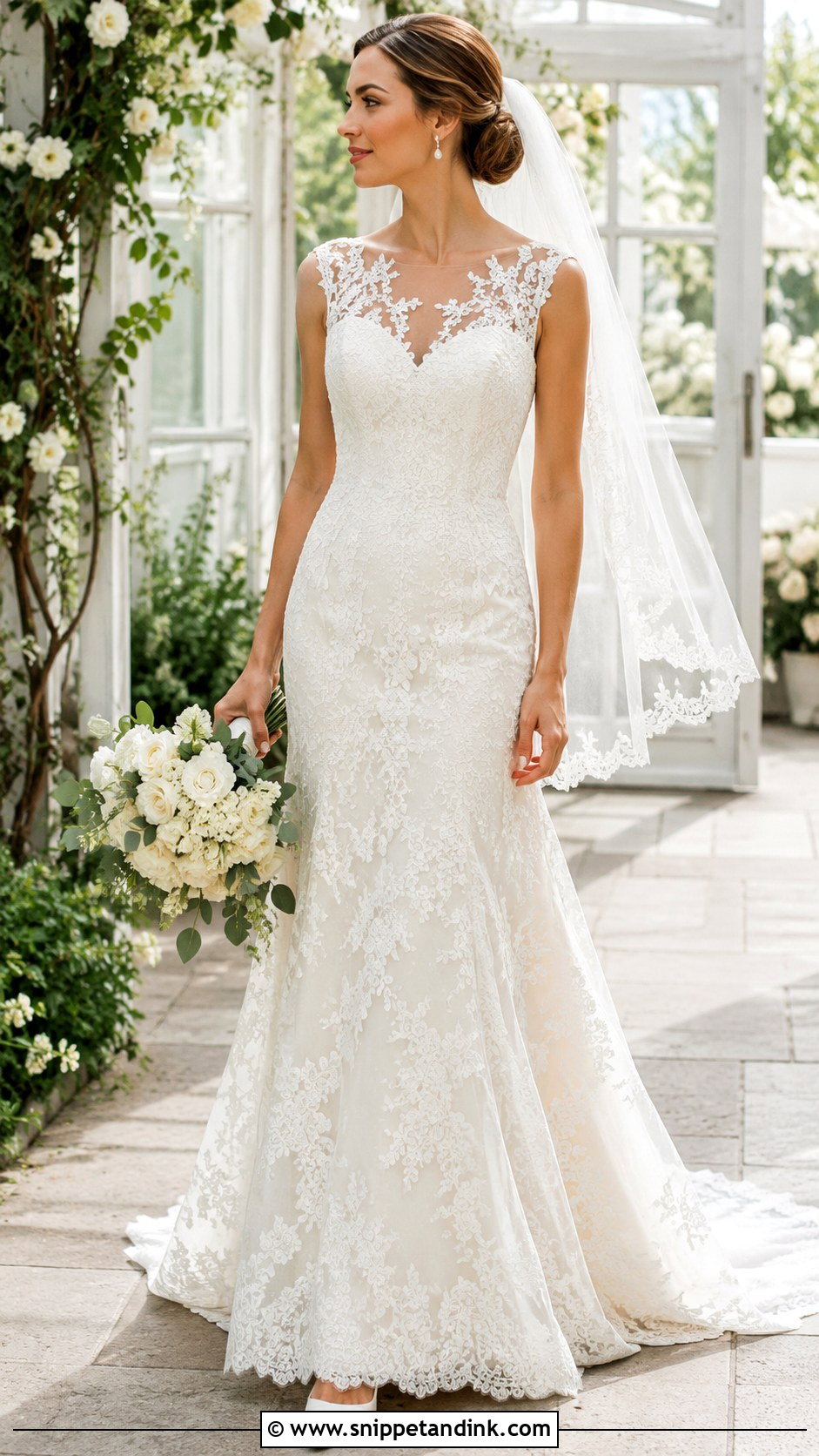
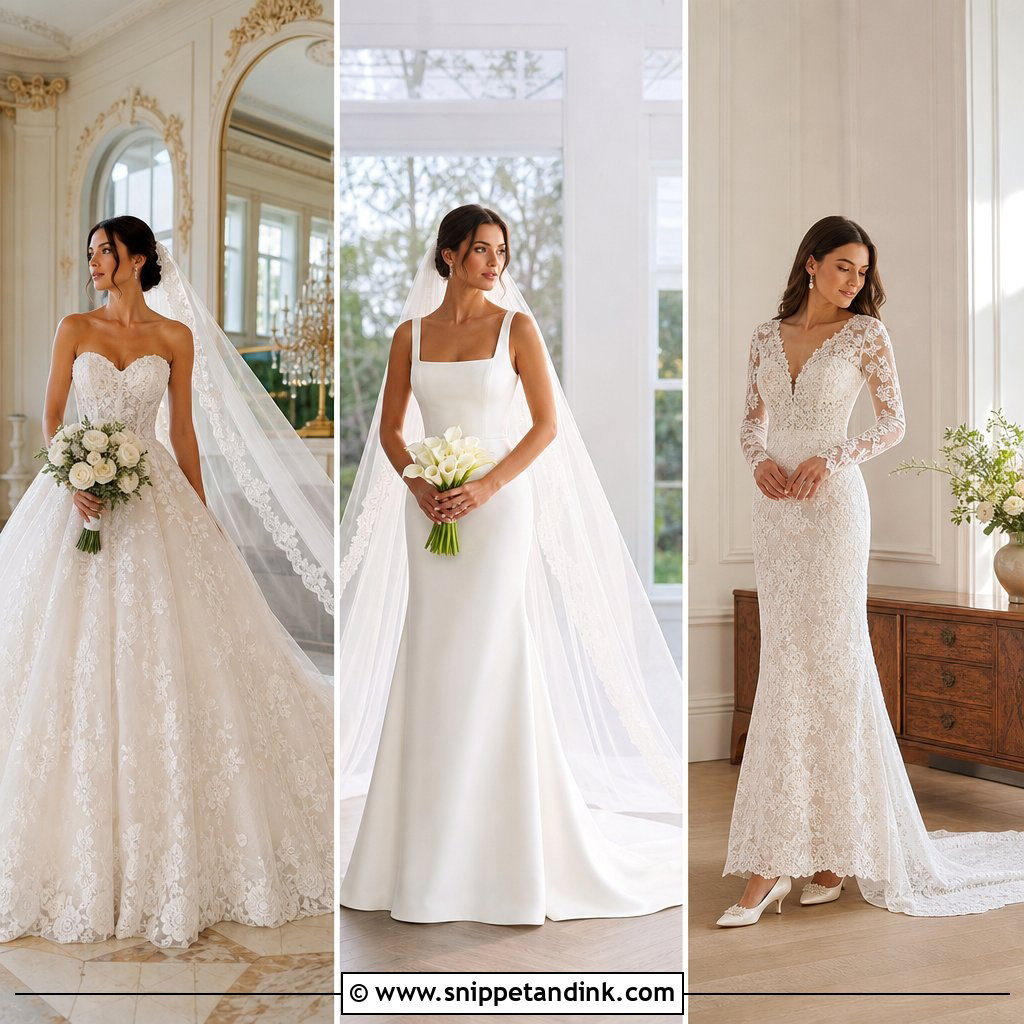
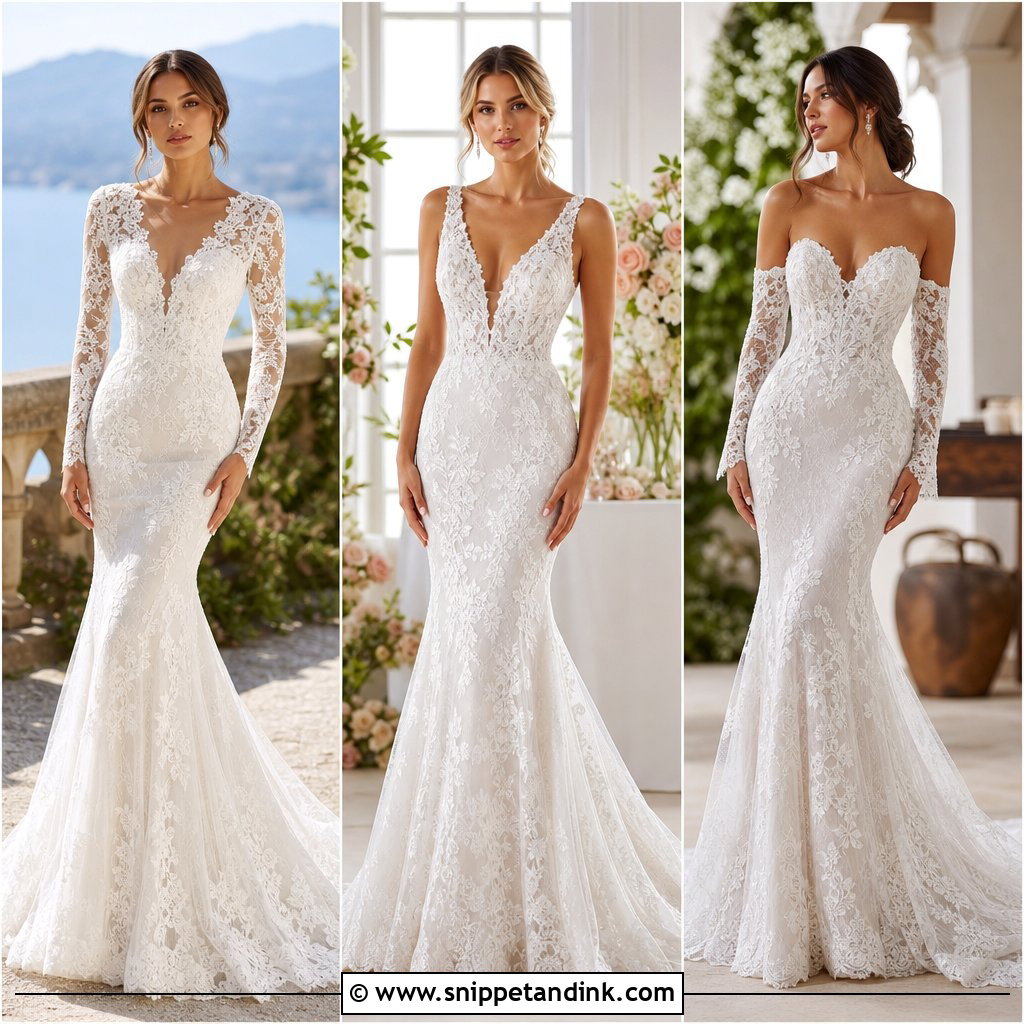
Lace is the version most brides picture first. Floral lace with bold, clearly outlined motifs reads classic from the back of a church, while fine Chantilly looks softer and almost disappears at a distance. A lightly lined bodice gives coverage and lets the pattern show. Pair it with a fingertip veil, pearl drops, ivory pointed pumps and a low chignon. The fit point I watch is the hips: lace stretched over a curve distorts the motifs, and a good seamstress will cut and re-lay the lace rather than just taking in the seam. If the hem is scalloped, keep the bouquet to white flowers and greenery.
2. Satin Fit and Flare Wedding Dress
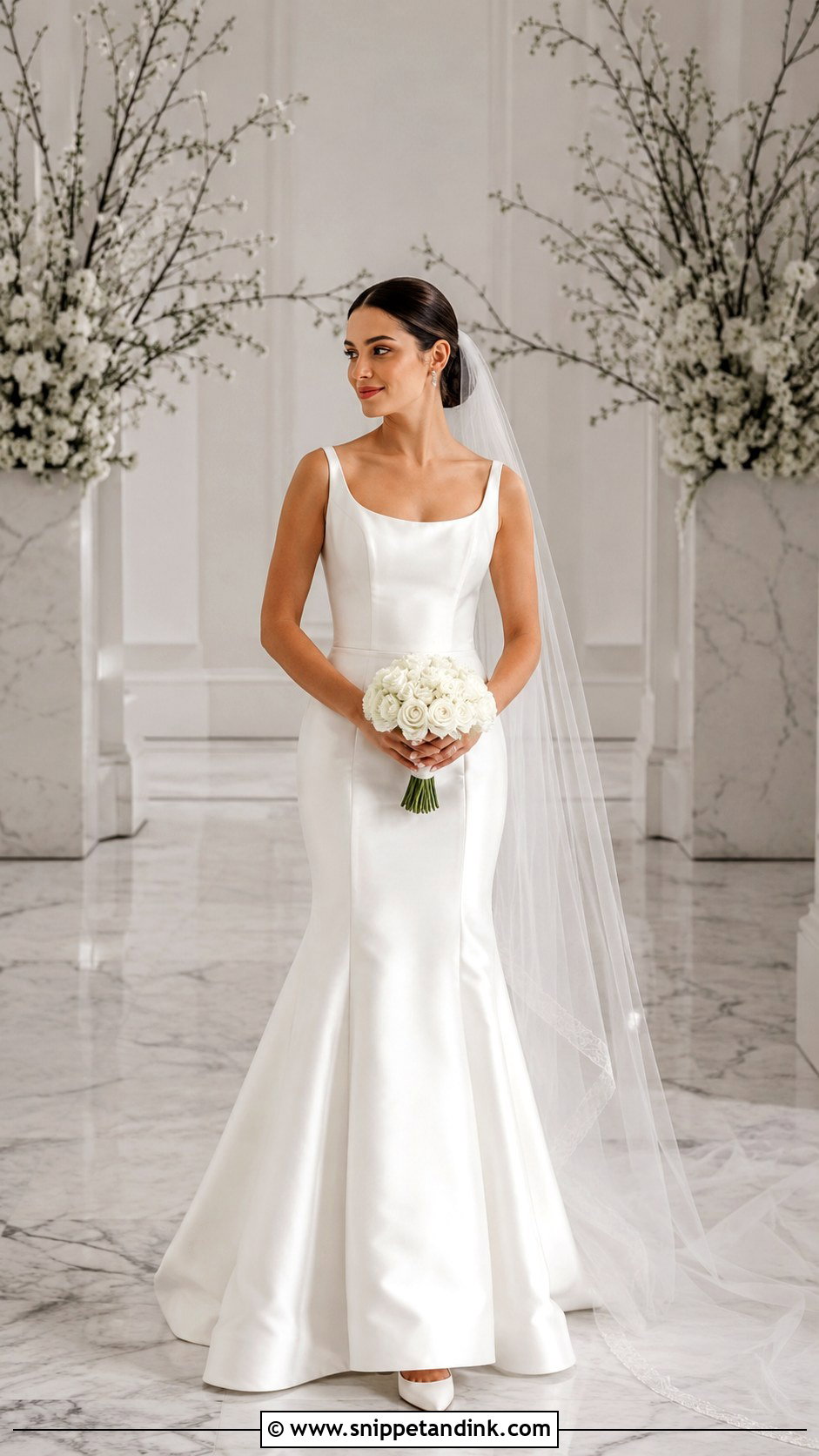
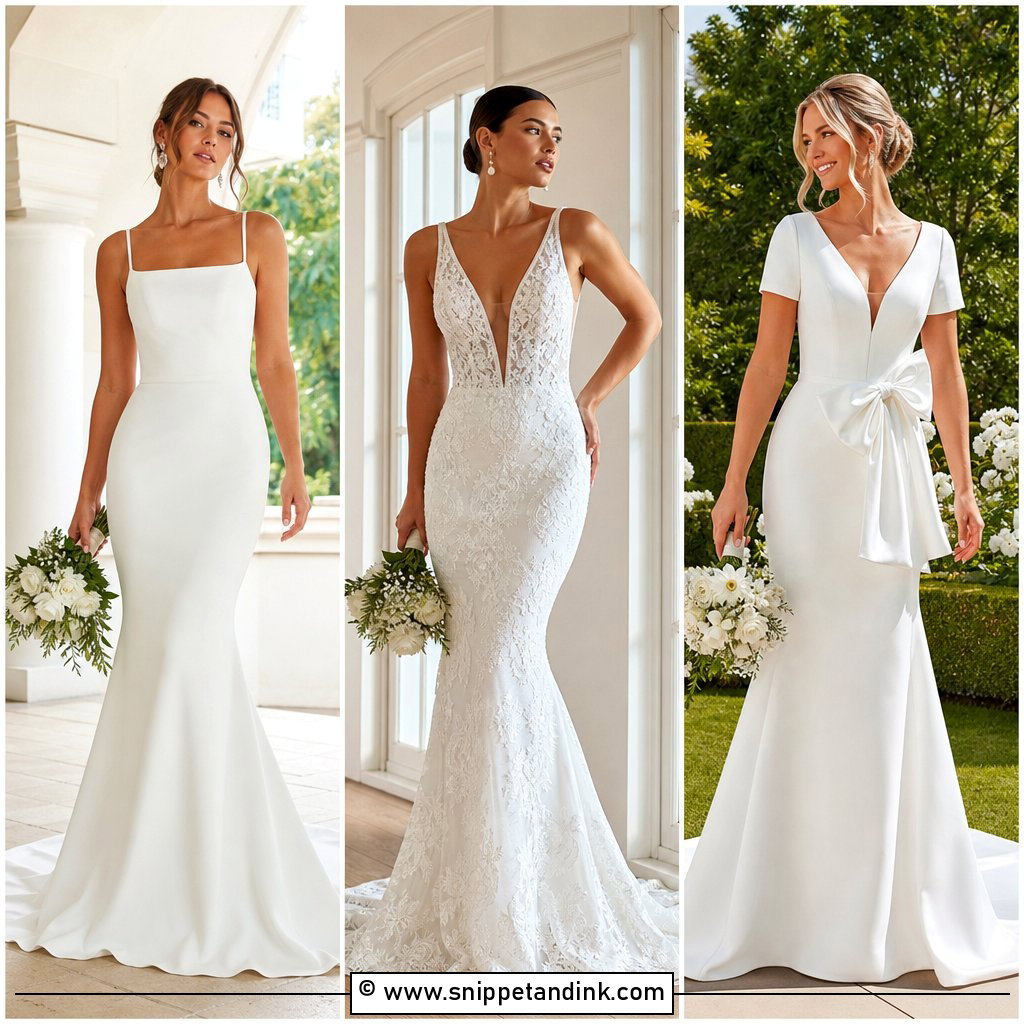
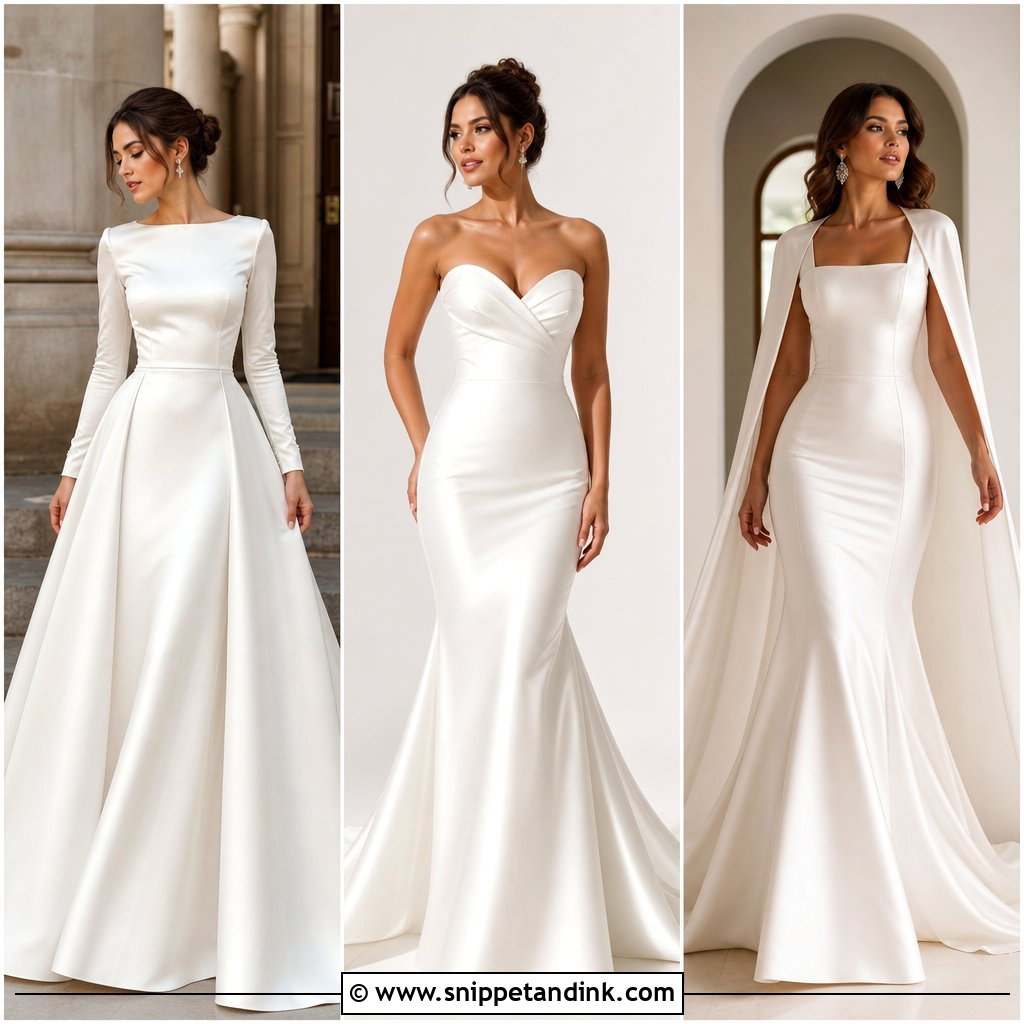
Satin is the least forgiving fabric on this list and the most rewarding when it fits. Princess seams and a structured bodice give clean lines, and a gently flared skirt without heavy gathering lets the sheen do the work. Satin shows every crease, every seam ripple and every line underneath. Smooth, skin-tone underwear and a professional steam on the morning are non-negotiable. A cathedral veil, crystal studs and sleek ivory heels suit it, with a refined bun or glossy waves. In flash photography, heavier duchess satin holds its shape, while thin polyester satin can look shiny and flat.
3. Crepe Fit and Flare Wedding Dress
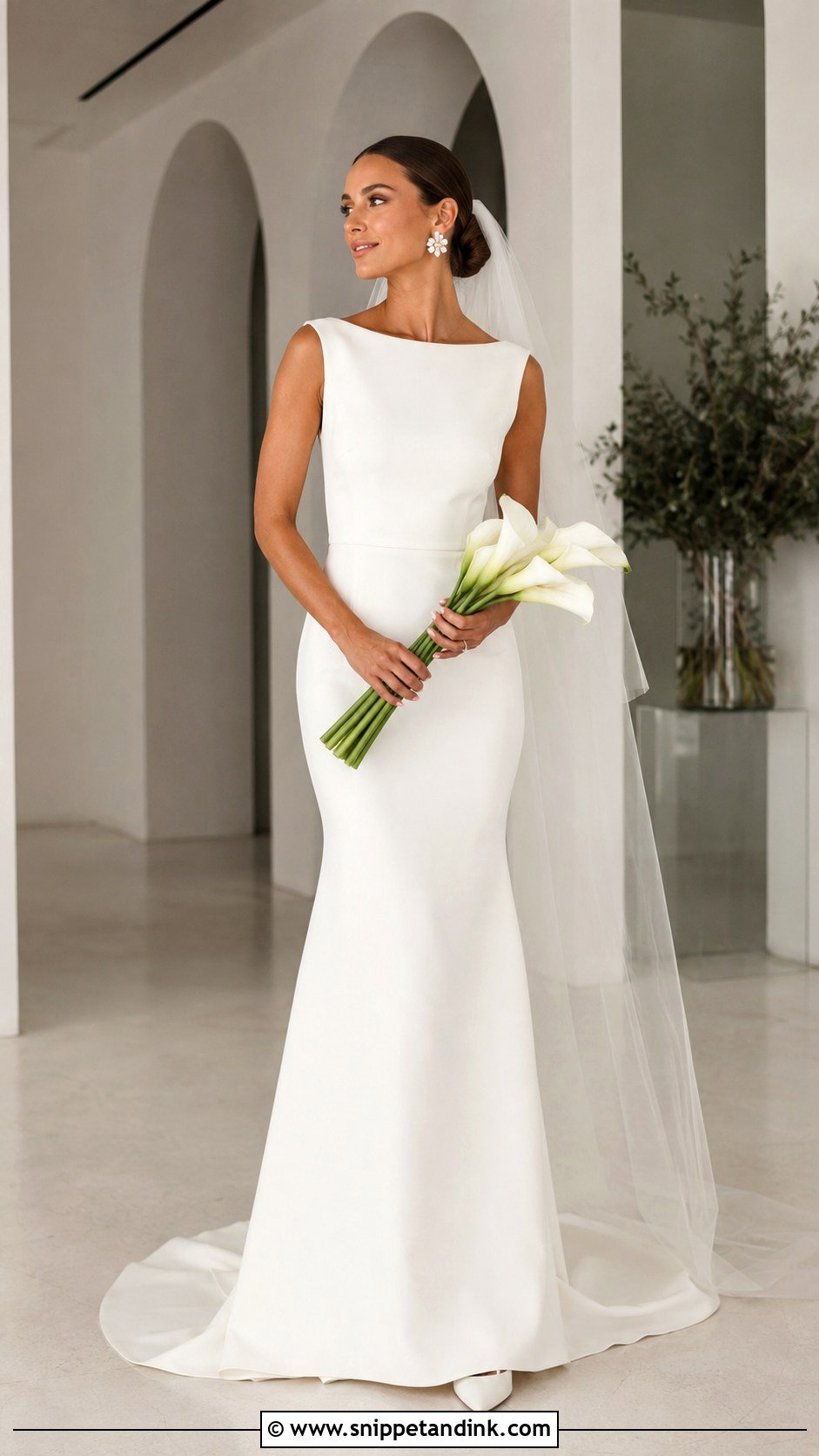
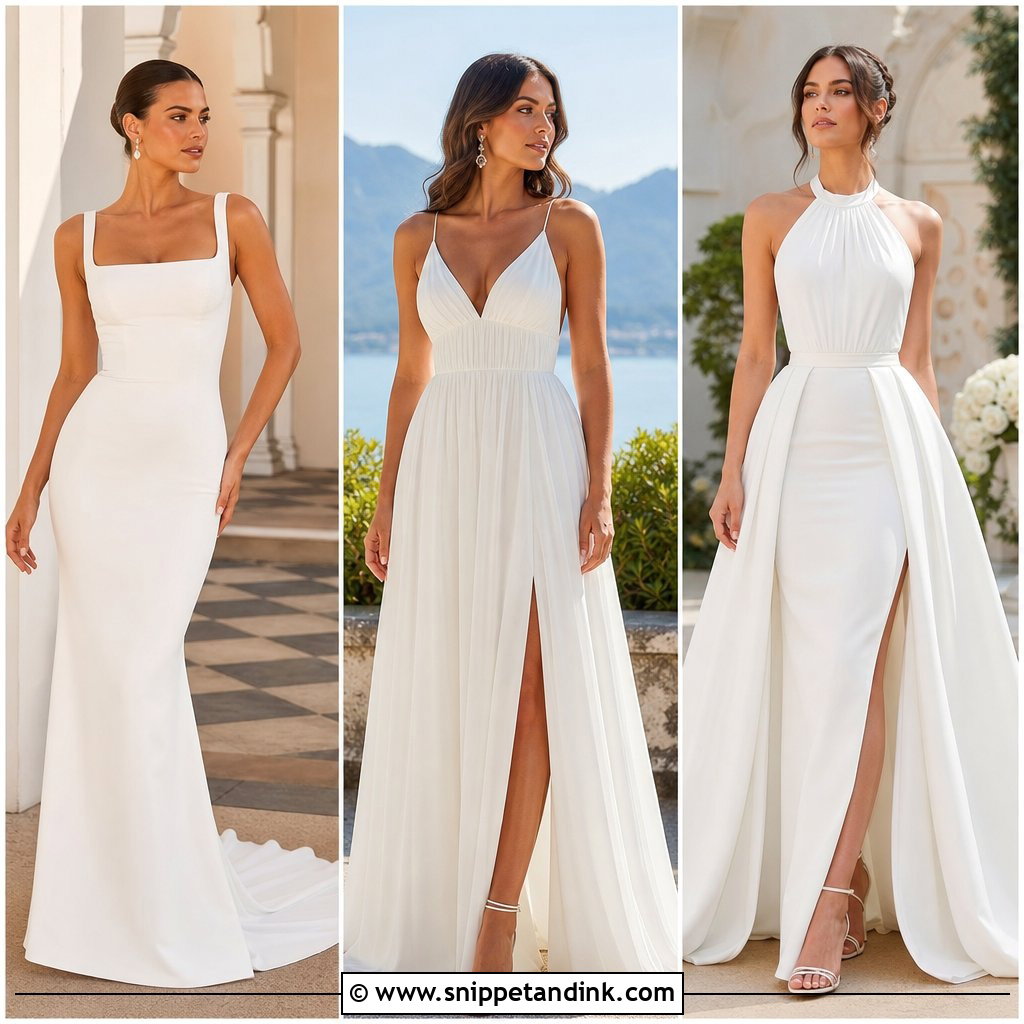
Crepe suits the bride who wants the shape to do the talking. Its matte surface and fluid weight let the skirt drop cleanly from the hips, and paired with a bateau neckline, covered buttons or quiet waist seaming, it looks quietly expensive. The trade-off is that crepe follows the body closely. It shows the edge of shapewear and sits close at the thigh, so I have brides walk the length of the salon and sit on a hard chair before anything is pinned. A simple tulle veil, sculptural earrings, comfortable pointed pumps and calla lilies keep the lines spare.
4. Long Sleeve Fit and Flare Wedding Dress
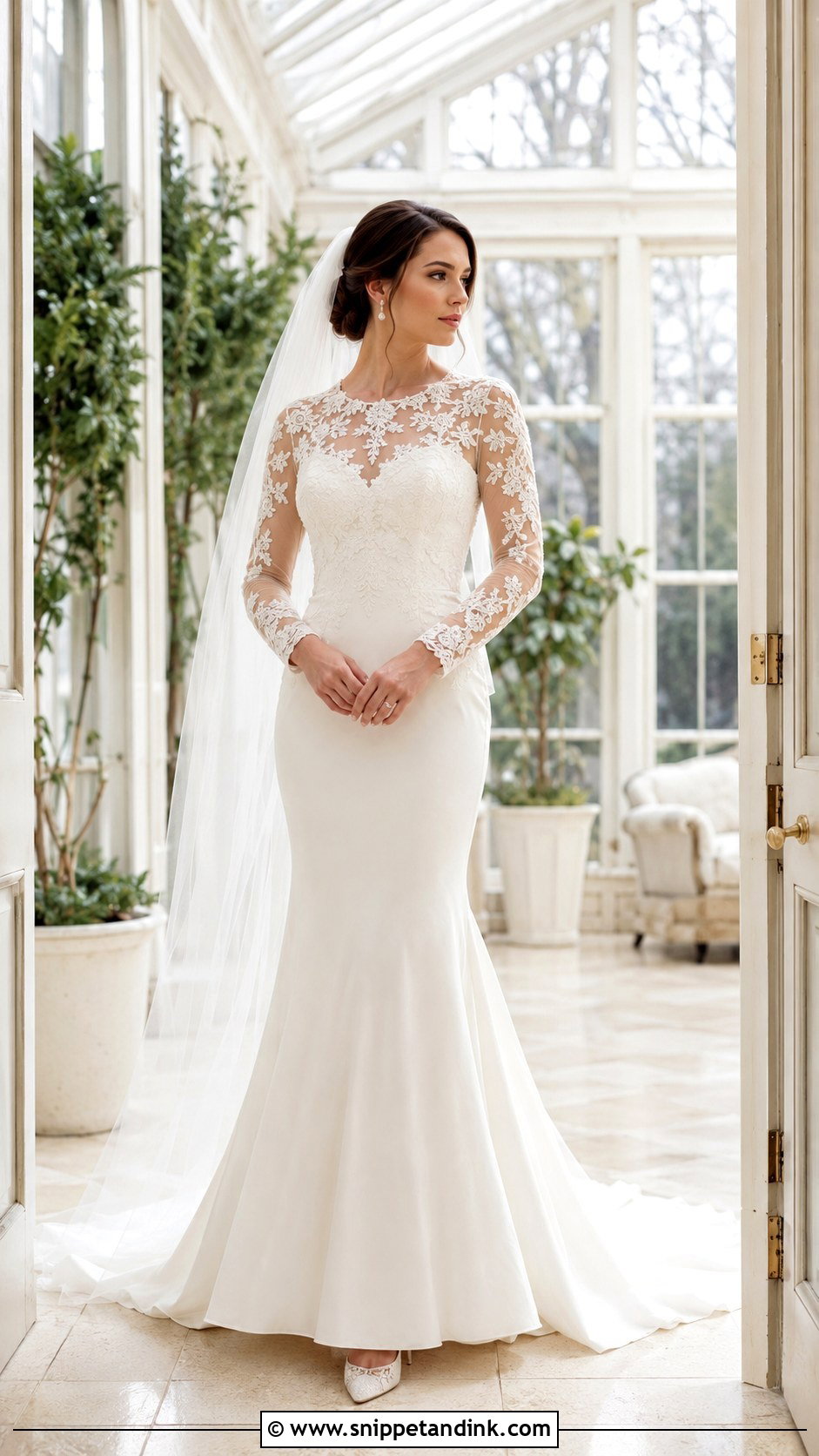
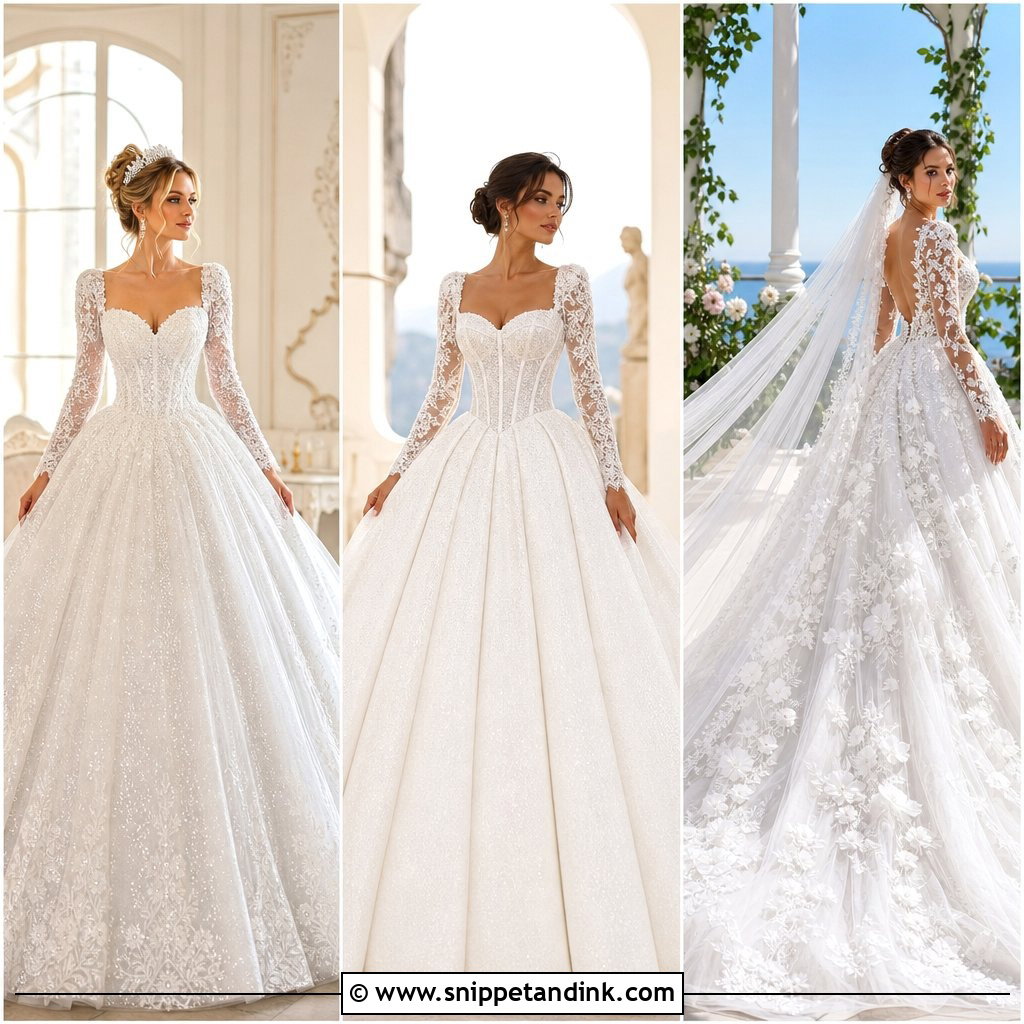
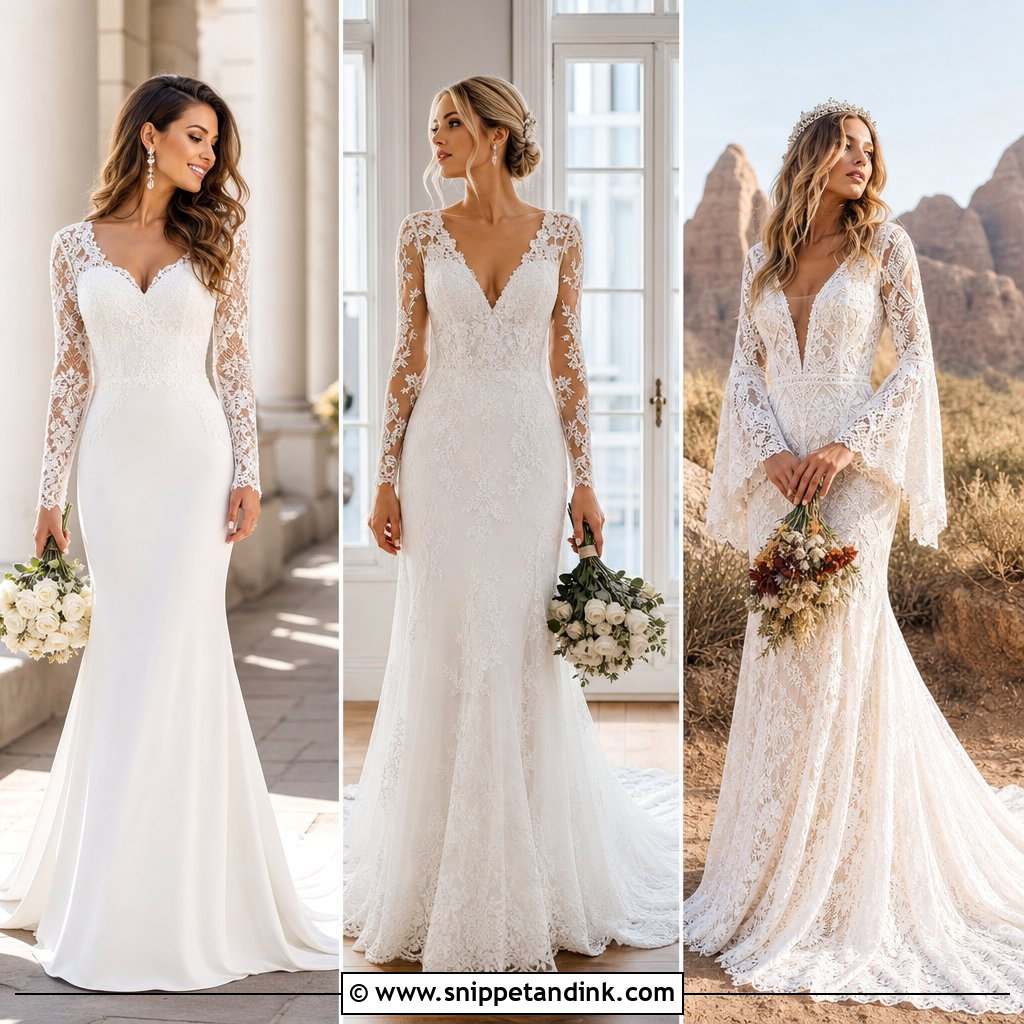
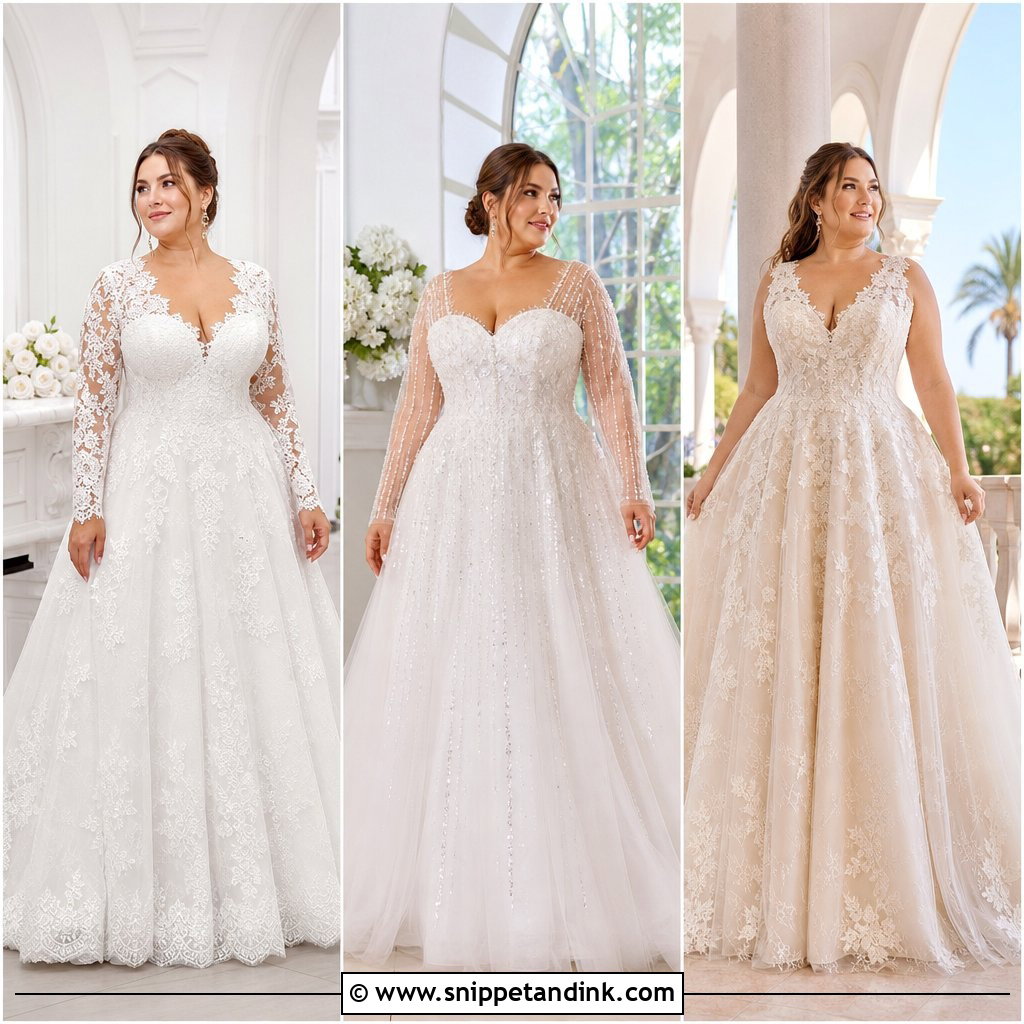
Sleeves change how a fitted dress moves more than any other detail. Sheer lace sleeves feel light, fitted crepe sleeves look modern, and either one pulls when the armhole is cut too low. At the fitting, bend your elbows and reach both arms forward as if hugging someone; if the bodice lifts, the armhole needs reshaping. A modest neckline with an open or buttoned back balances the coverage. Pearl earrings, a low bun and closed-toe heels suit it, and when the sleeves are heavily detailed, a plain veil stops the look tipping into busy. Lace sleeves breathe enough for spring; crepe is warmer and better kept for autumn and winter.
5. Off Shoulder Fit and Flare Wedding Dress
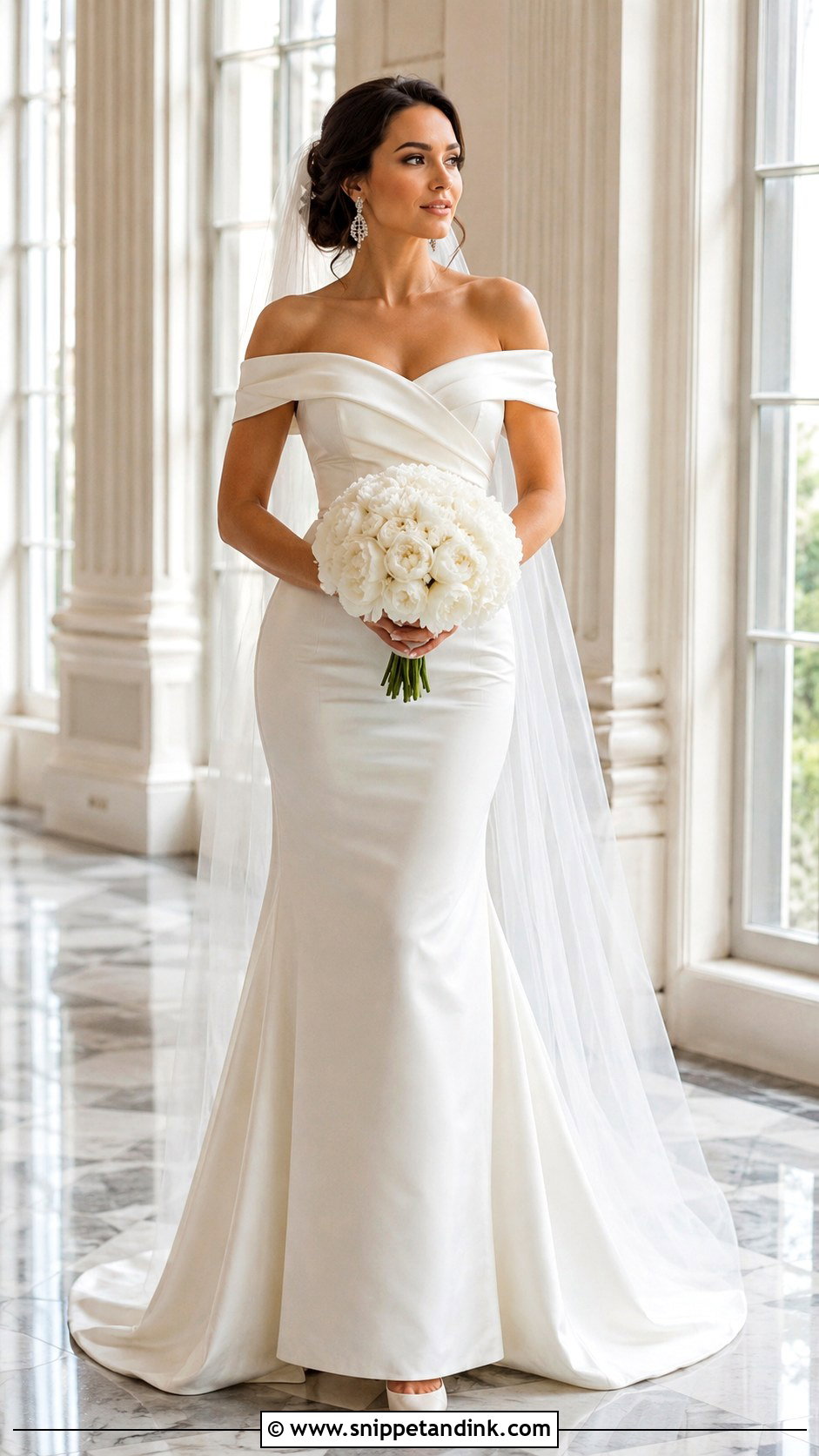
The mistake with off-the-shoulder gowns is expecting the sleeves to hold the dress up. They can’t. The internal bodice has to do it, with boning and a firm waist seam, while the draped satin bands or lace straps simply sit on the arm. Raise your arms, hug and sit during fittings: the sleeves should stay put without dragging the whole bodice upward. A fine pendant or bare collarbone keeps the neckline open. Drop earrings, a gathered veil, low pointed heels and soft waves or a loose updo complete it.
6. Strapless Fit and Flare Wedding Dress
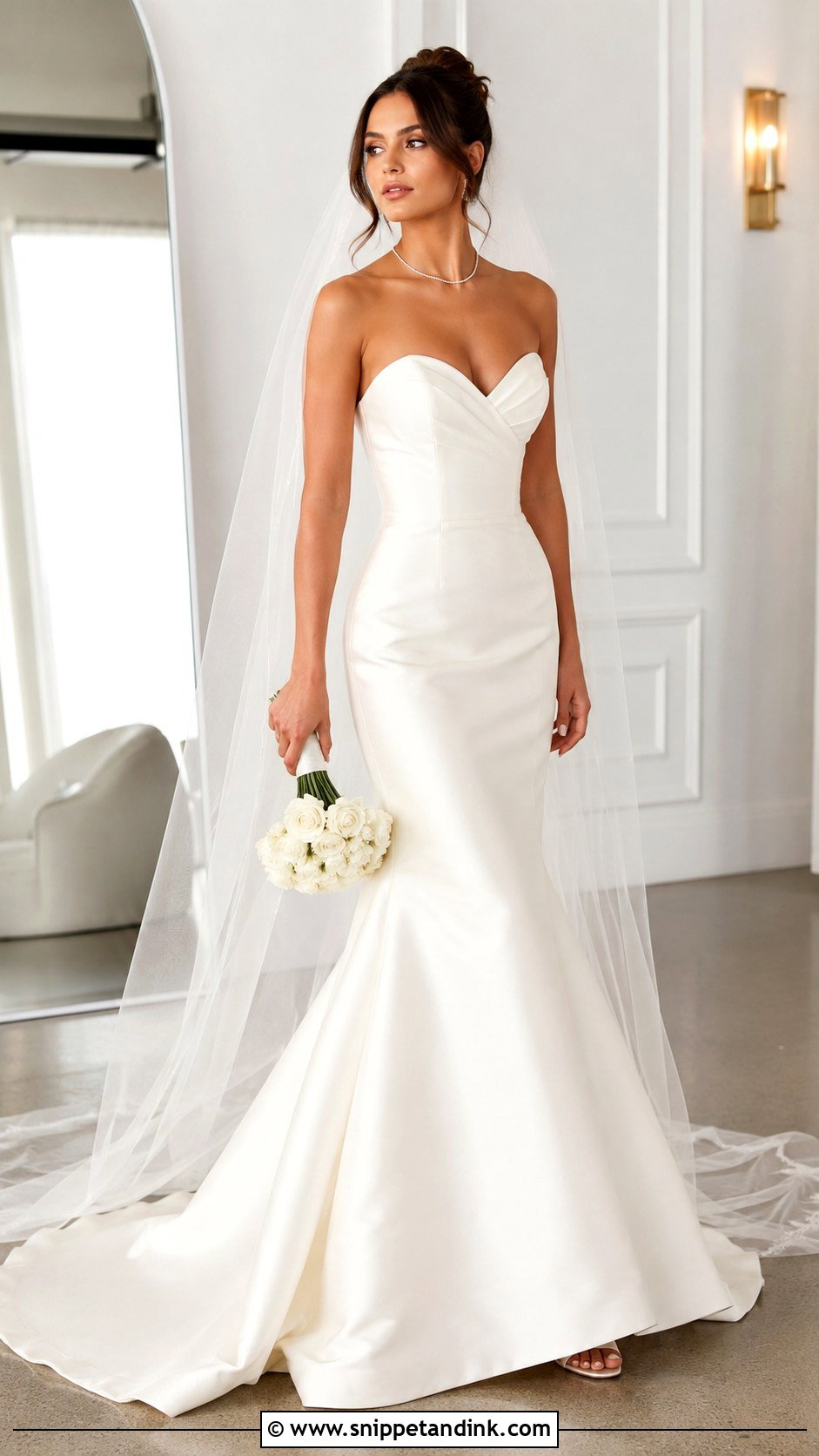
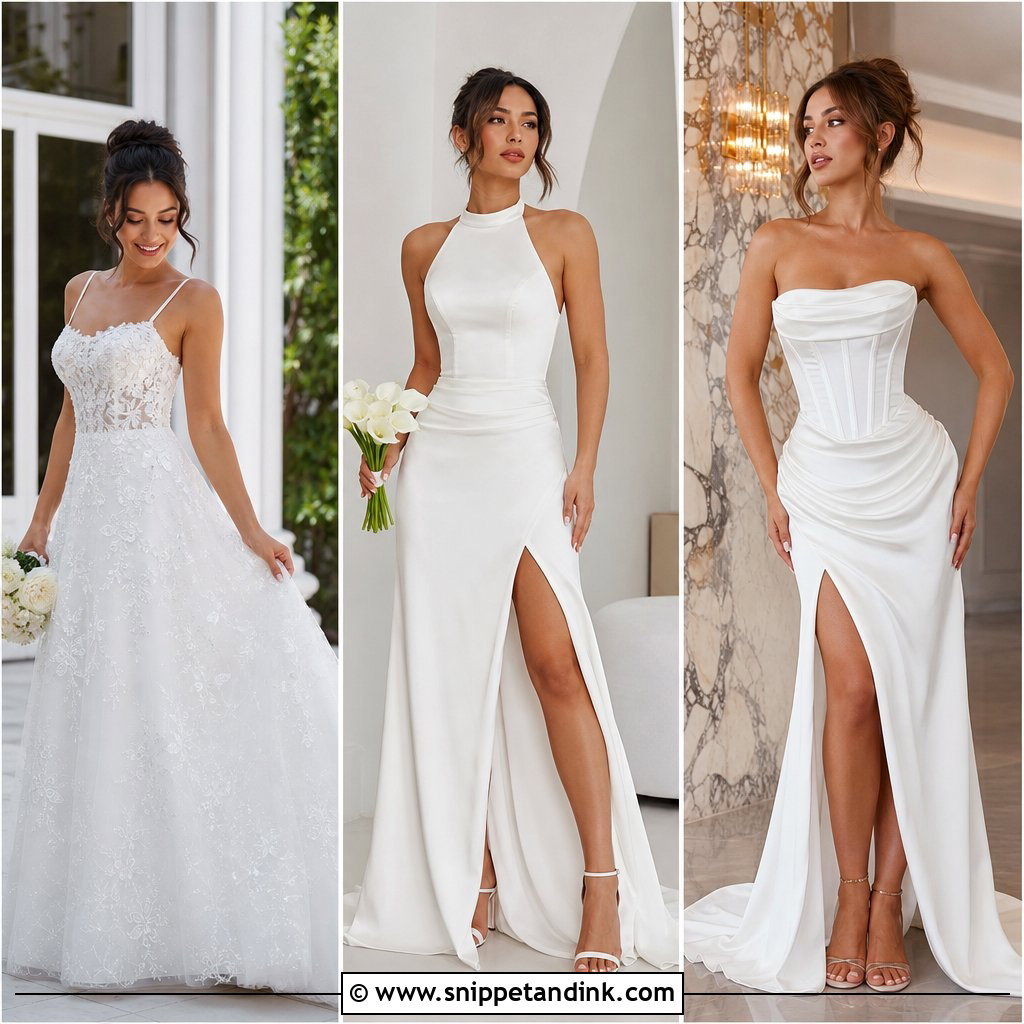
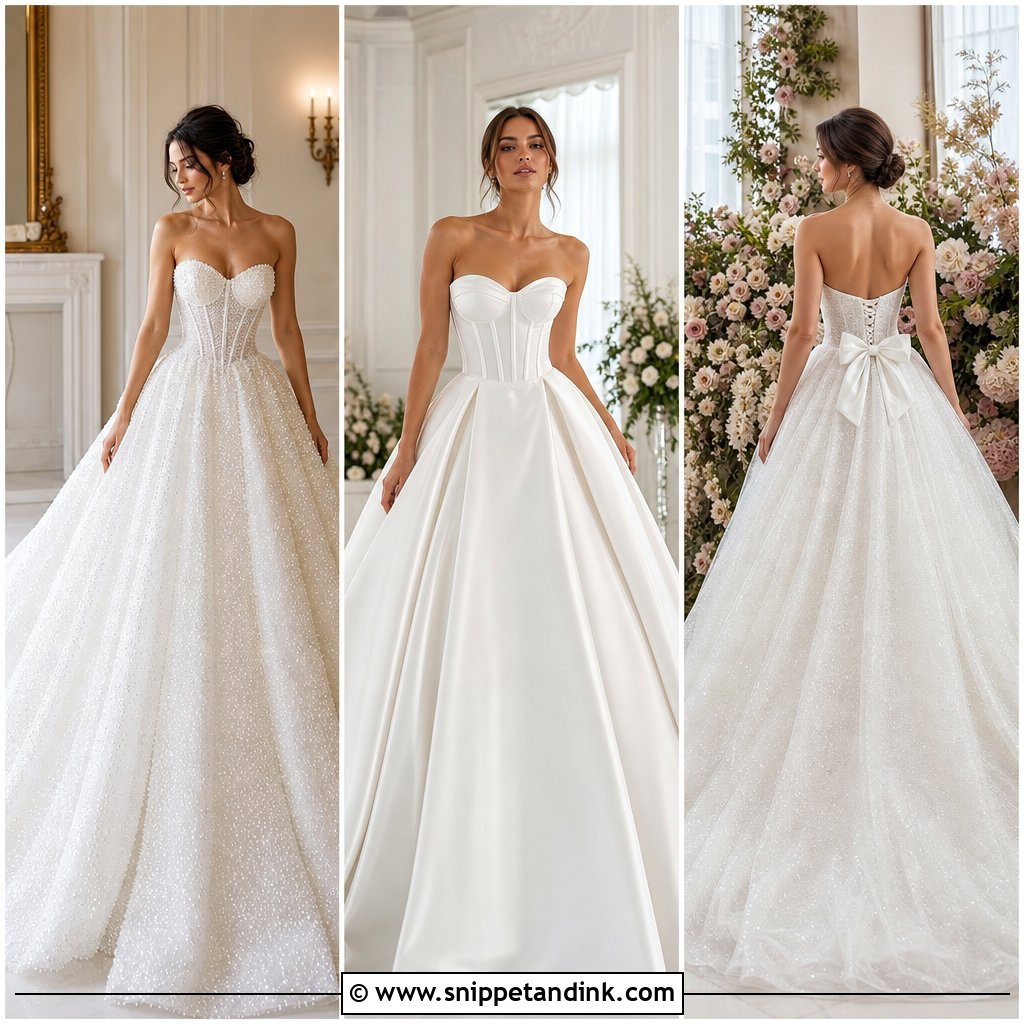
Strapless is the most flexible starting point. A sweetheart neckline reads romantic, and a straight one reads architectural. What matters is inside: internal boning, supportive cups and a secure waist seam, so the bodice grips at the waist and isn’t held up by pressure at the top edge. I always do the final bodice fit with the bride’s actual shoes and bra, because both change posture and how the top sits. A long veil and a fine tennis necklace work for the ceremony, with crystal earrings, ivory heels and a compact bouquet. A removable wrap or sheer topper gives optional coverage for a religious service.
7. Corset Fit and Flare Wedding Dress
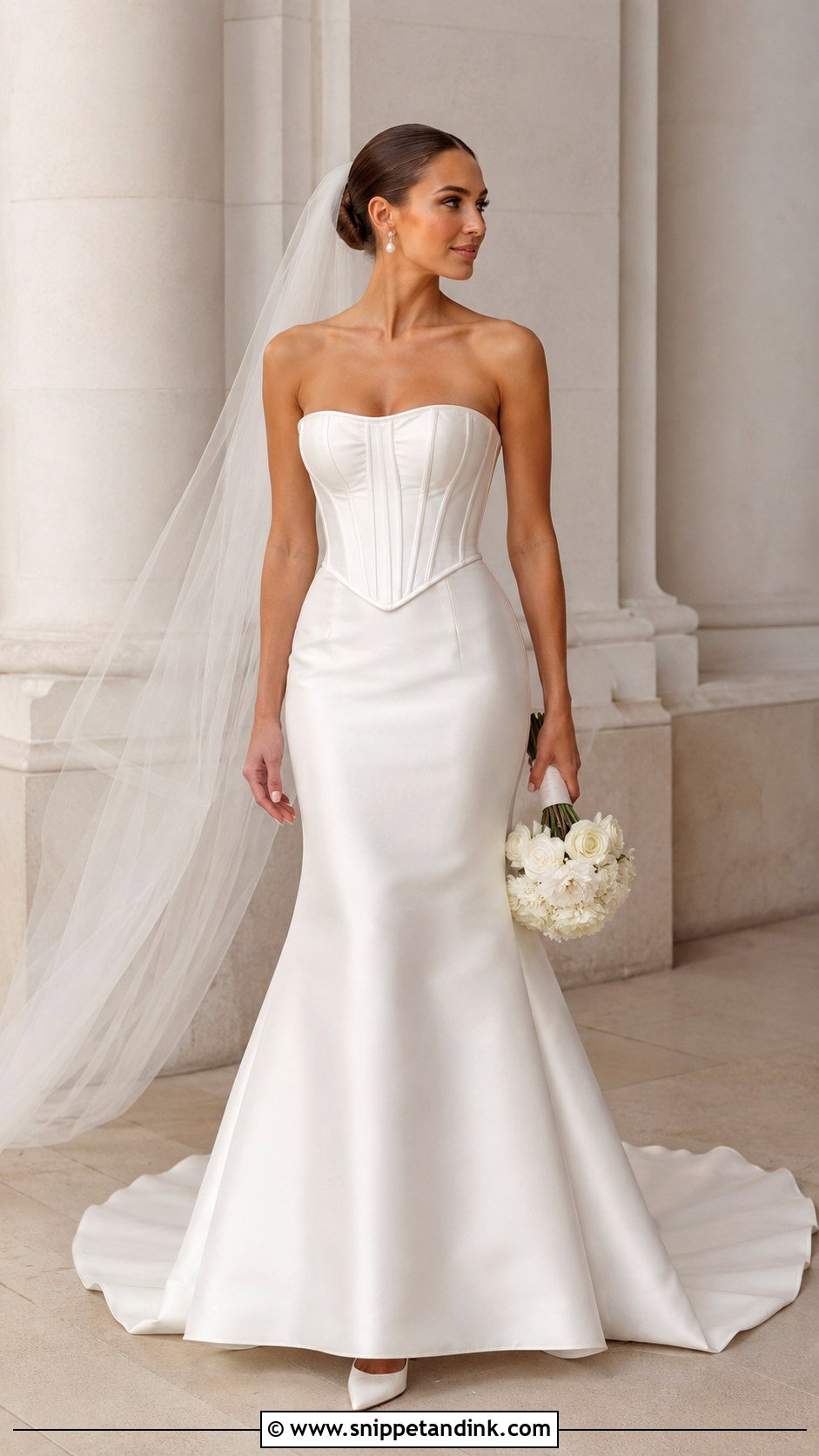
A visible corset gives the bodice definition and does real support work at the same time. A lined corset looks traditional; a lightly sheer one with placed appliqués looks more modern. A basque waist, dipping to a point below the natural waist, lengthens the torso and smooths the move into the skirt. Inspect the boning before you buy: spiral steel bends with you, while cheap plastic boning kinks and pokes after a few hours. The corset should press evenly, with no gaps at the side and no ridge across the ribs. Keep accessories small, a simple veil and pearl studs, with a sleek bun to show the structure.
8. Square Neck Fit and Flare Wedding Dress
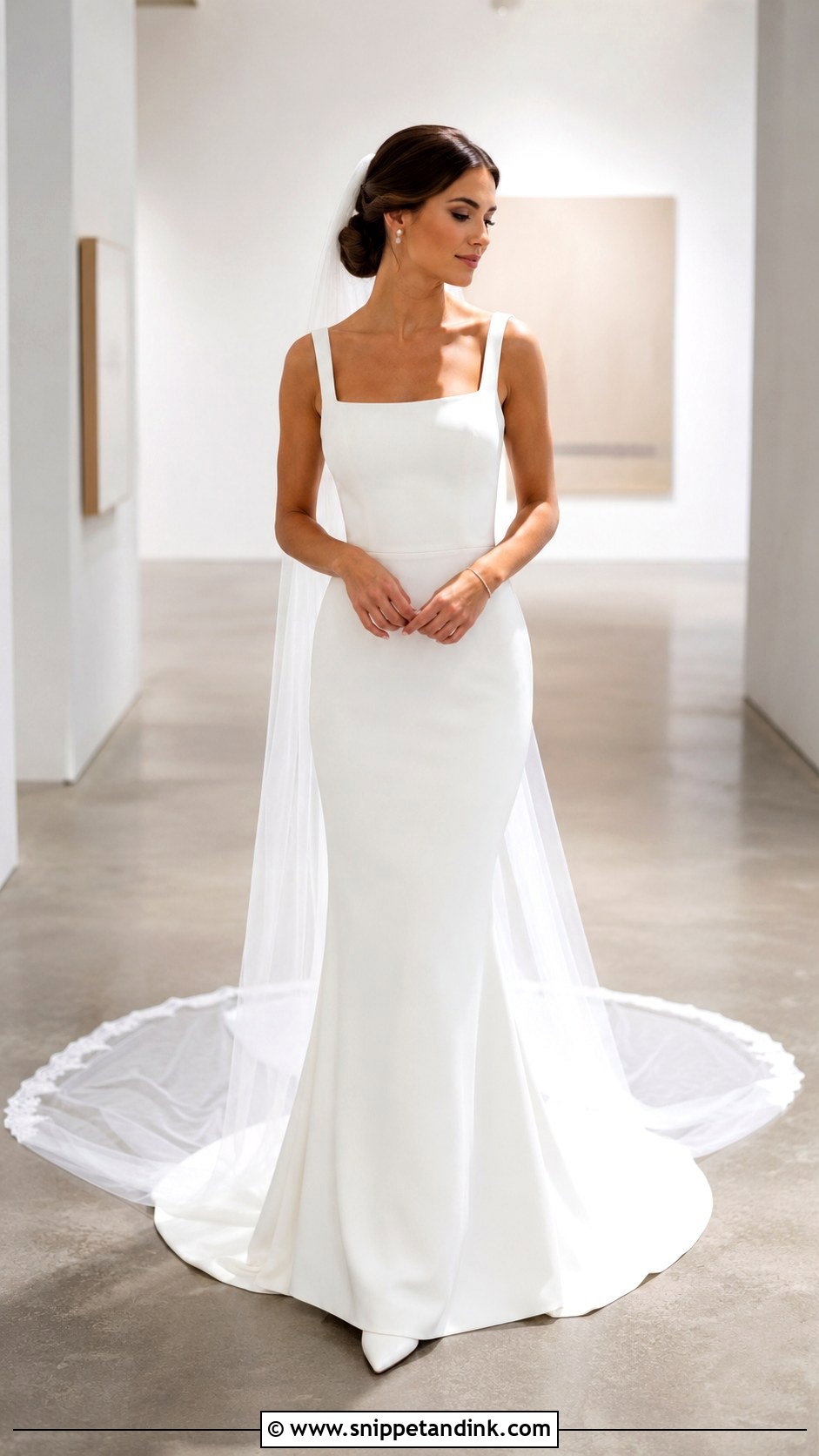
Square necklines frame the face crisply and pair naturally with a structured gown. Wide straps carry some of the bodice’s weight, which brides with a fuller bust often find more comfortable than strapless. Satin or crepe makes it minimal, subtle lace softens it. The common fault is a neckline that bows forward when you sit or lean, so check it seated and from the side. Straps should lie flat without sliding off or digging in. A chapel veil, pearl studs and pointed shoes complete it, with a low twisted bun and, if you want sparkle, a slim bracelet rather than a necklace.
9. V Neck Fit and Flare Wedding Dress
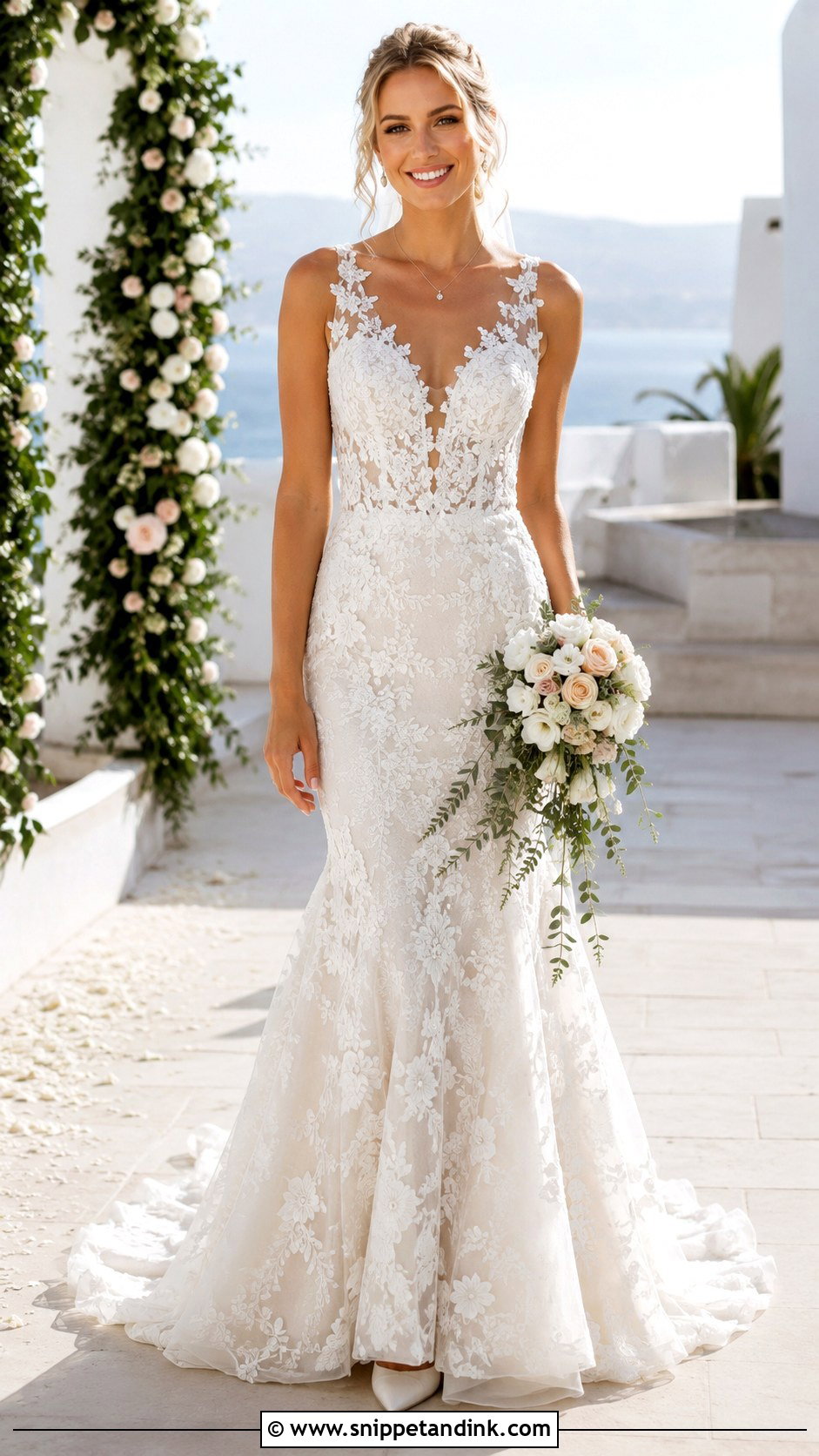
A V-neck draws the eye downward and makes the fitted line look longer, which helps shorter brides especially. A shallow V gives classic coverage, a deep one is dramatic, and an illusion tulle insert lets you have the depth with more security. I check deep Vs from the side and while the bride leans forward to sign the register. Lace appliqués should sit symmetrically on both sides; a slight mismatch shows up in front-on photos. A fine pendant, understated earrings, a veil placed below a relaxed updo and pointed shoes extend the line, with a small cascading bouquet echoing the V.
10. High Neck Fit and Flare Wedding Dress
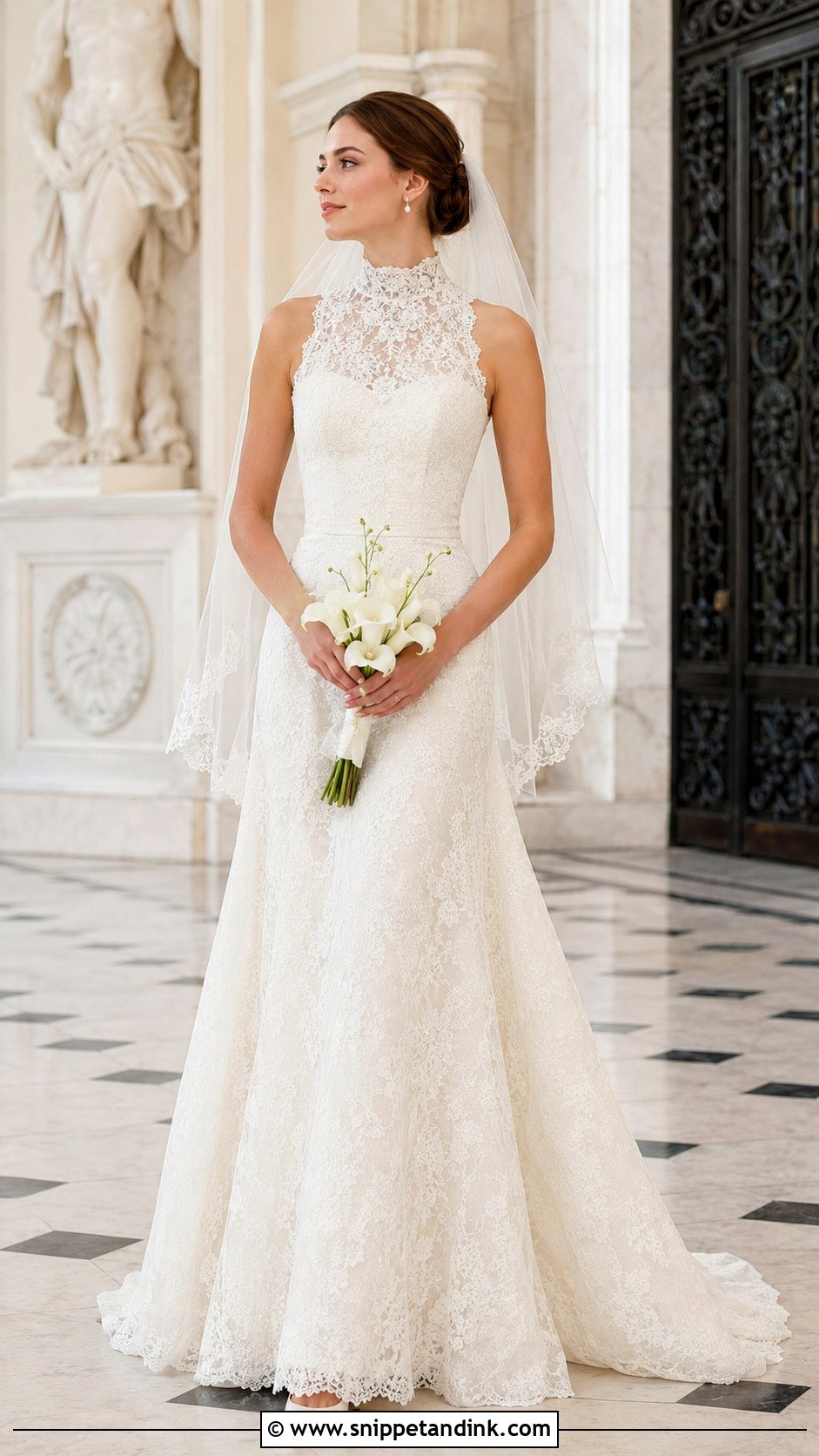
High necklines give a close-fitting gown a distinctive, slightly formal air. Lace looks romantic, and a smooth halter or mock-neck bodice reads sleek. Skip the necklace; small earrings, an updo, a fingertip veil and closed-toe pumps are plenty. A keyhole or open back balances the coverage at the front. The collar is the thing to test: sit for a few minutes and turn your head both ways. A collar that rubs at the fitting will be raw by the reception, and one that folds when you look down will crease in every candid photo.
11. Open Back Fit and Flare Wedding Dress
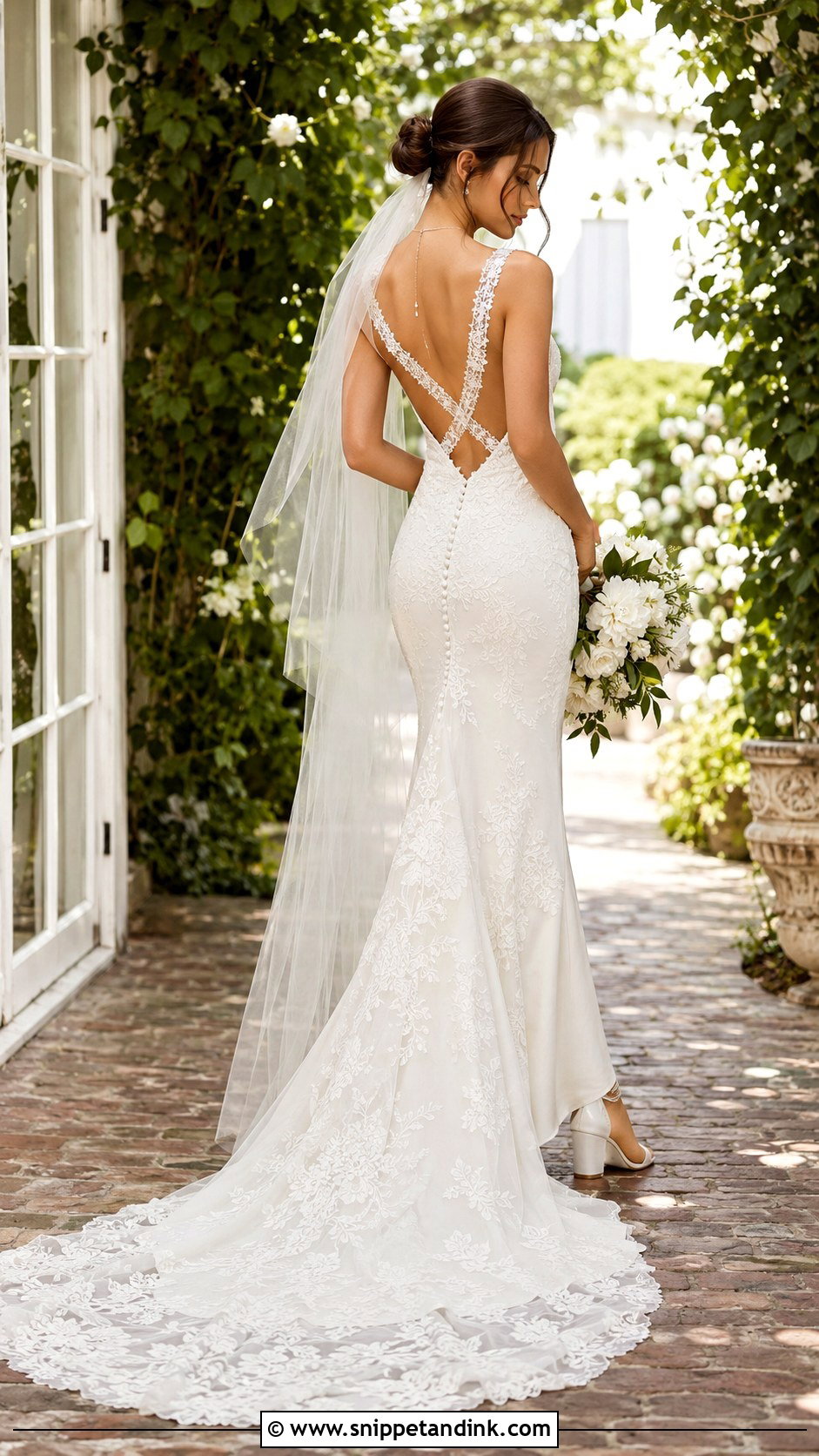
Open backs make the walk away from the altar as memorable as the walk toward it. The back can be a deep scoop, illusion lace, crossed straps or a soft cowl detail, and the right depth depends on how much support you need. A scoop past the bra line means sewn-in cups or a low-back bra, decided before alterations, not after. A low bun, a fine back necklace and a sheer veil keep the back visible, and ivory block heels keep you steady. The edges should lie flat while you walk and sit, with no gape at the shoulder blades.
12. Low Back Fit and Flare Wedding Dress
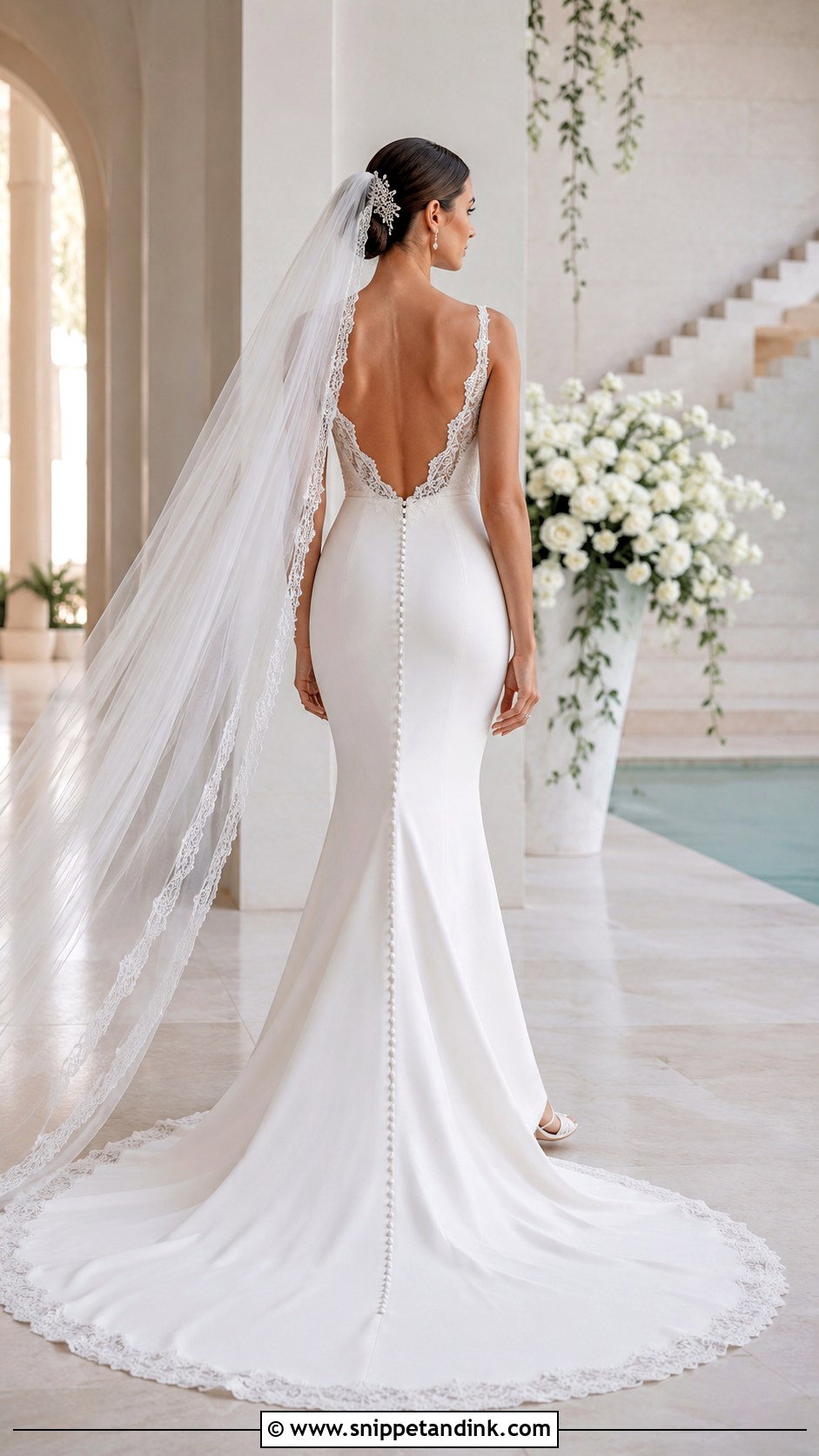
A low back pairs a classic front with a rear view people remember. Satin and crepe keep the cut clean; lace edging defines the opening. Covered buttons running below it lead the eye to the train. The tricky moment is the veil. A cathedral veil clipped into an updo pulls back and down on the hair, and with no fabric across the upper back, a poorly anchored comb drags visibly. I place the comb high and add a second pin underneath. Crystal hairpins, simple earrings and slingback heels suit it, and low-back shapewear or sewn-in cups give support.
13. Beaded Fit and Flare Wedding Dress
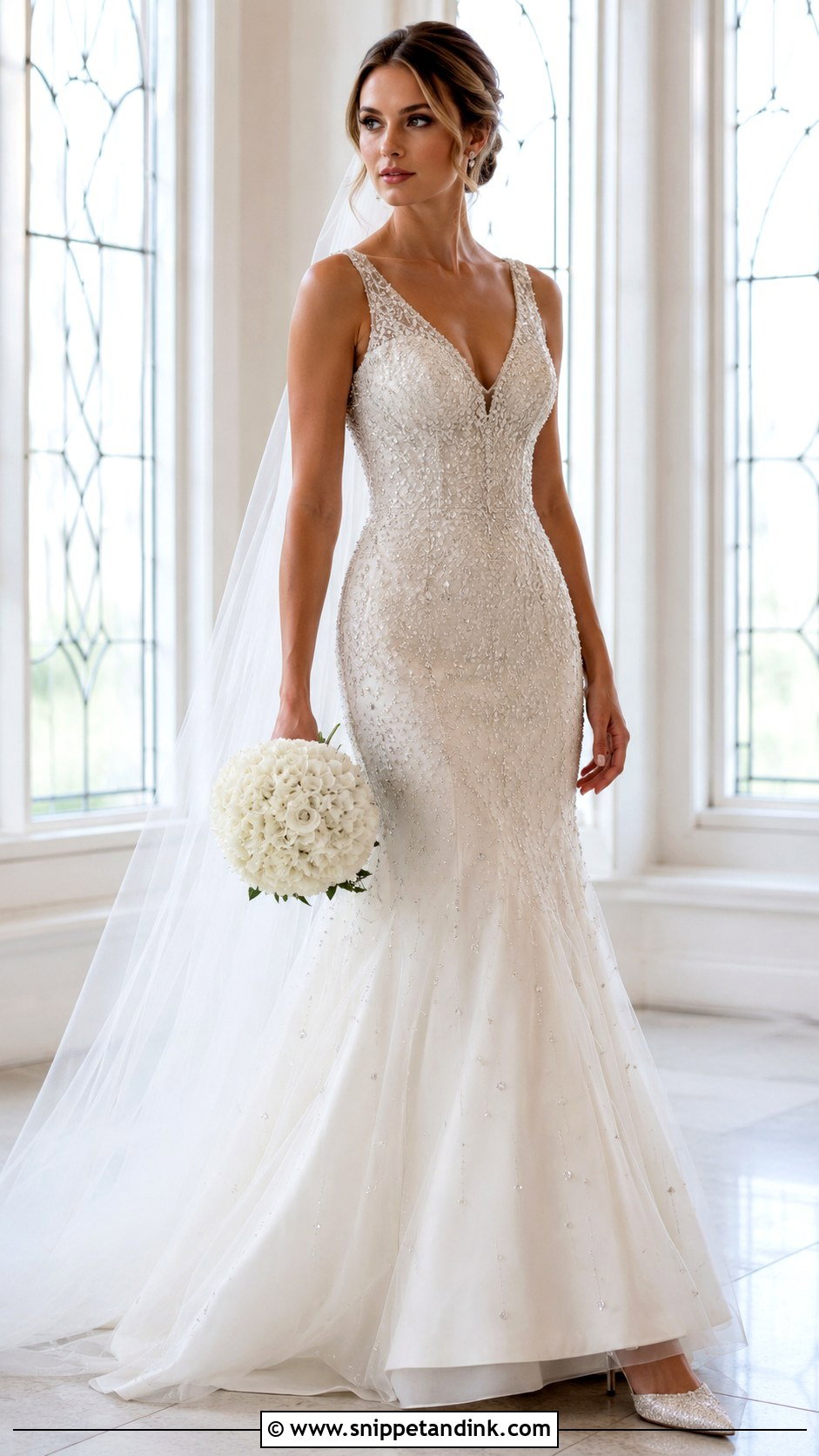
Beadwork adds light without needing a big skirt. Scattered crystals, tonal sequins or dense beadwork at the bodice fading into the skirt keeps the fit and flare shape clean. Weight is the issue: a heavily beaded bodice can weigh noticeably more than a plain one, and that weight pulls on straps and seams over a long day. Pick the dress up off the hanger and wear it for twenty minutes in the shop. Check the underarm too, because beads there scratch with every arm movement; a smooth lining or bead-free zone fixes it. A plain veil, small studs, metallic pumps and a compact bouquet that doesn’t cover the beading complete it.
14. Pearl Fit and Flare Wedding Dress
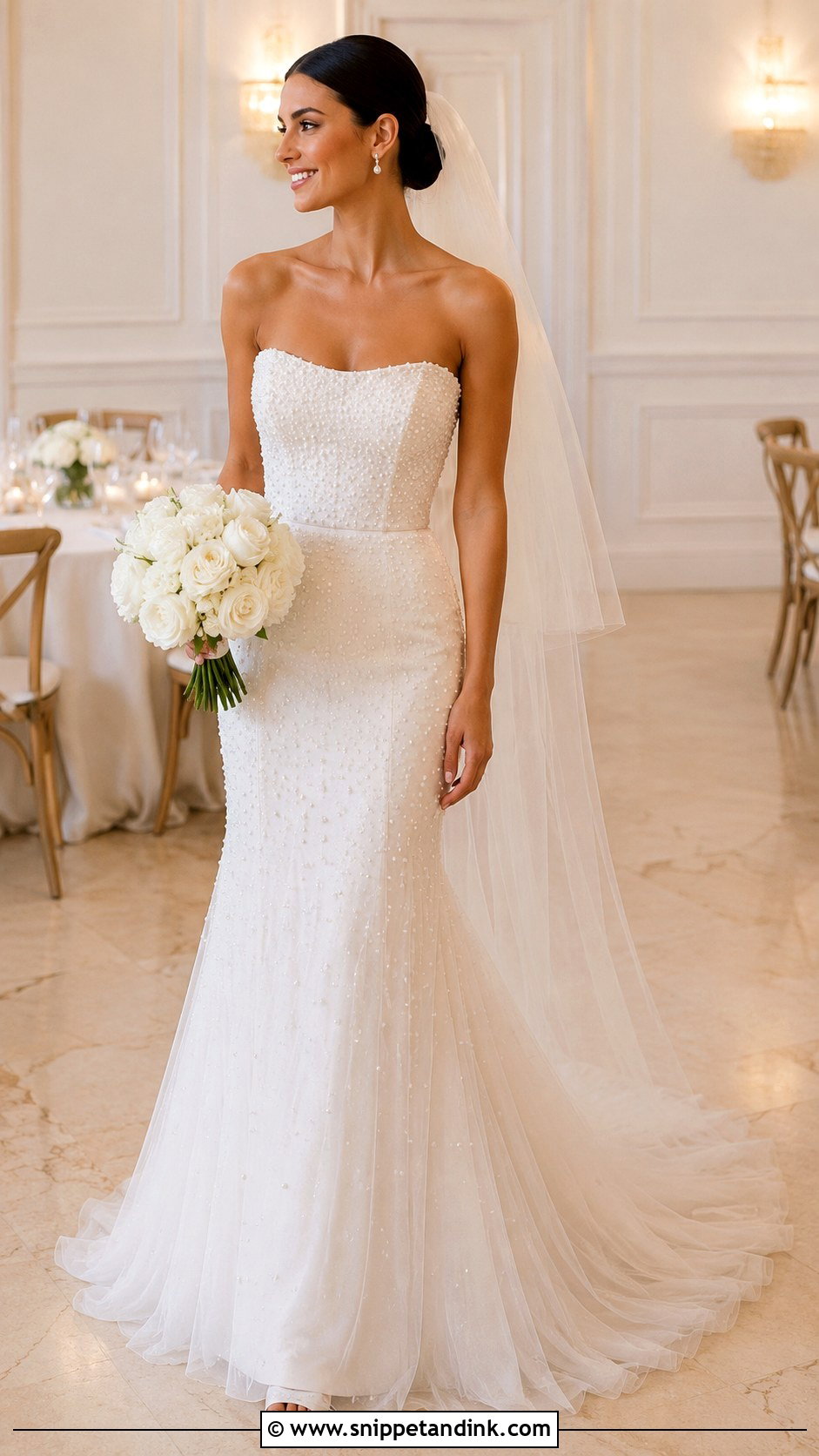
Pearls are softer than crystals and photograph with a gentle glow rather than sparkle. Tiny scattered pearls on tulle look delicate; larger ones can outline a neckline, waist or open back. I’d keep accessories to matching pearl earrings and not add a pearl necklace and pearl-edged veil on top, which turns texture into repetition. Satin heels, a lightweight plain-edged veil, a smooth chignon and a white bouquet finish it. Pearls at the arms, waist and seat take the most friction, so ask how they are sewn on; individually knotted pearls stay put, chain-stitched rows can unravel if one thread breaks. A bustle protects any pearls on the train.
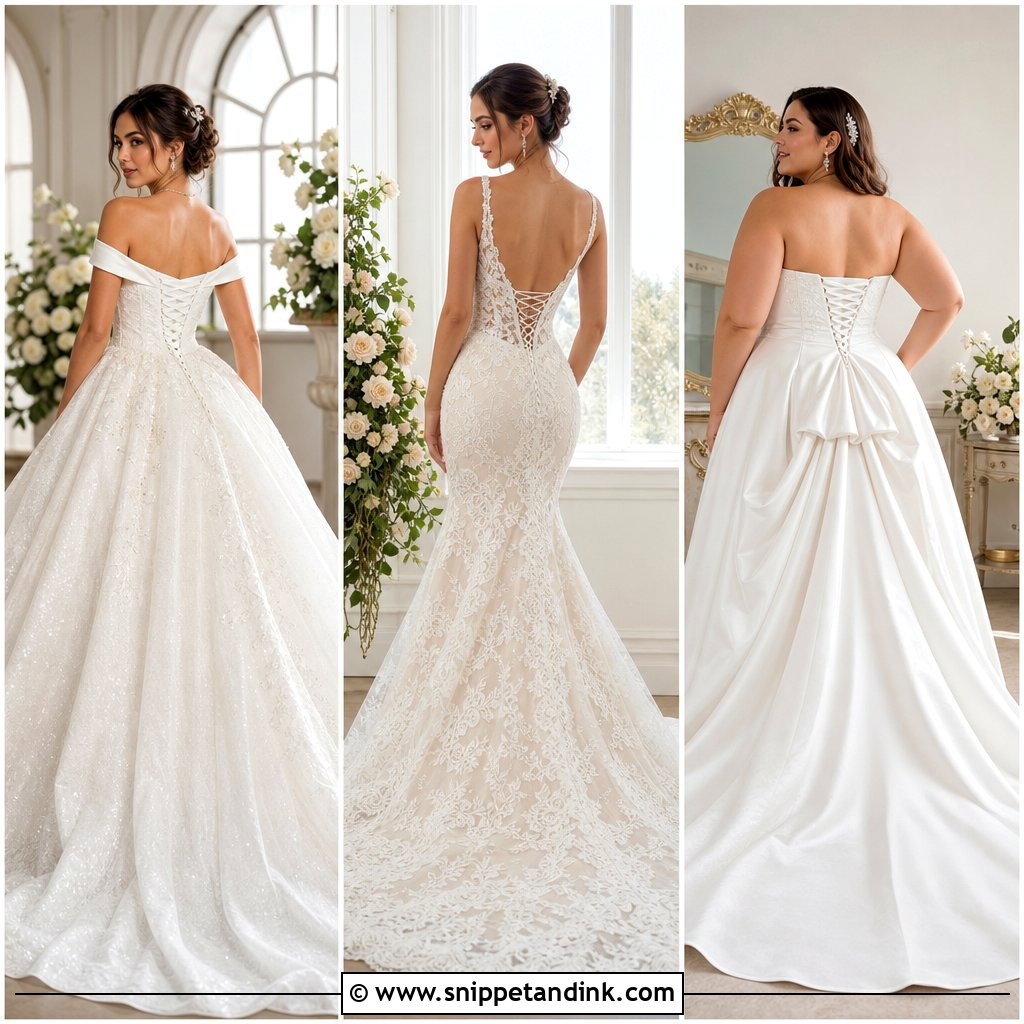
15. Floral Fit and Flare Wedding Dress
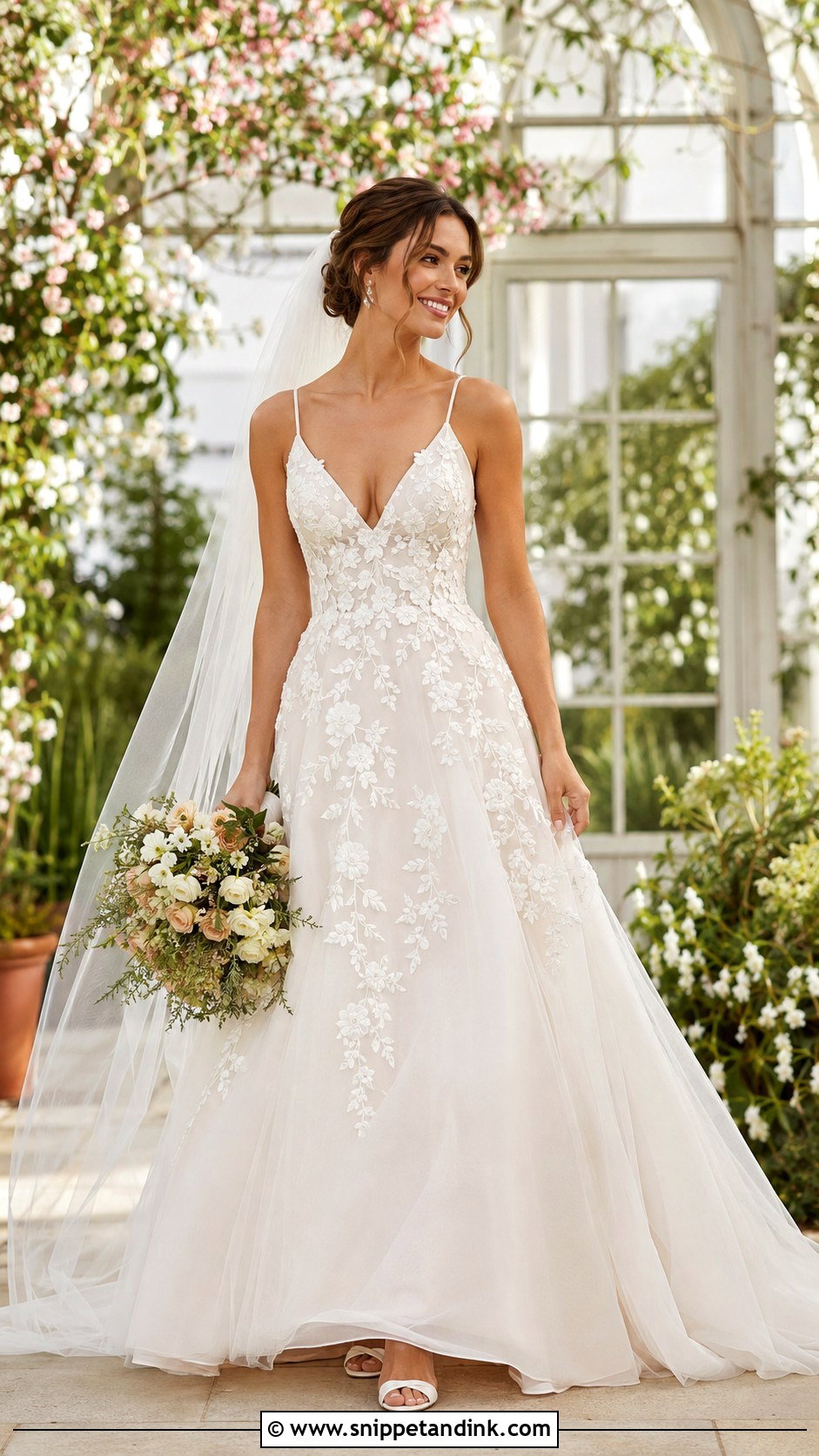
Raised florals look best when they start dense at the bodice and thin out down the skirt. Small motifs give depth, large blossoms are bolder, and the larger they are, the more they catch. Bracelets, veil edges and beaded clutches all snag on raised petals, so smooth accessories are safest: a plain tulle veil, delicate studs, simple ivory heels. A loose updo and a garden bouquet suit it without copying the appliqués. Watch the inner arm, where flowers rub every time you move. After alterations, check that every motif is still stitched down, since appliqués are often removed and replaced when seams are taken in.
16. Detachable Sleeve Fit and Flare Wedding Dress
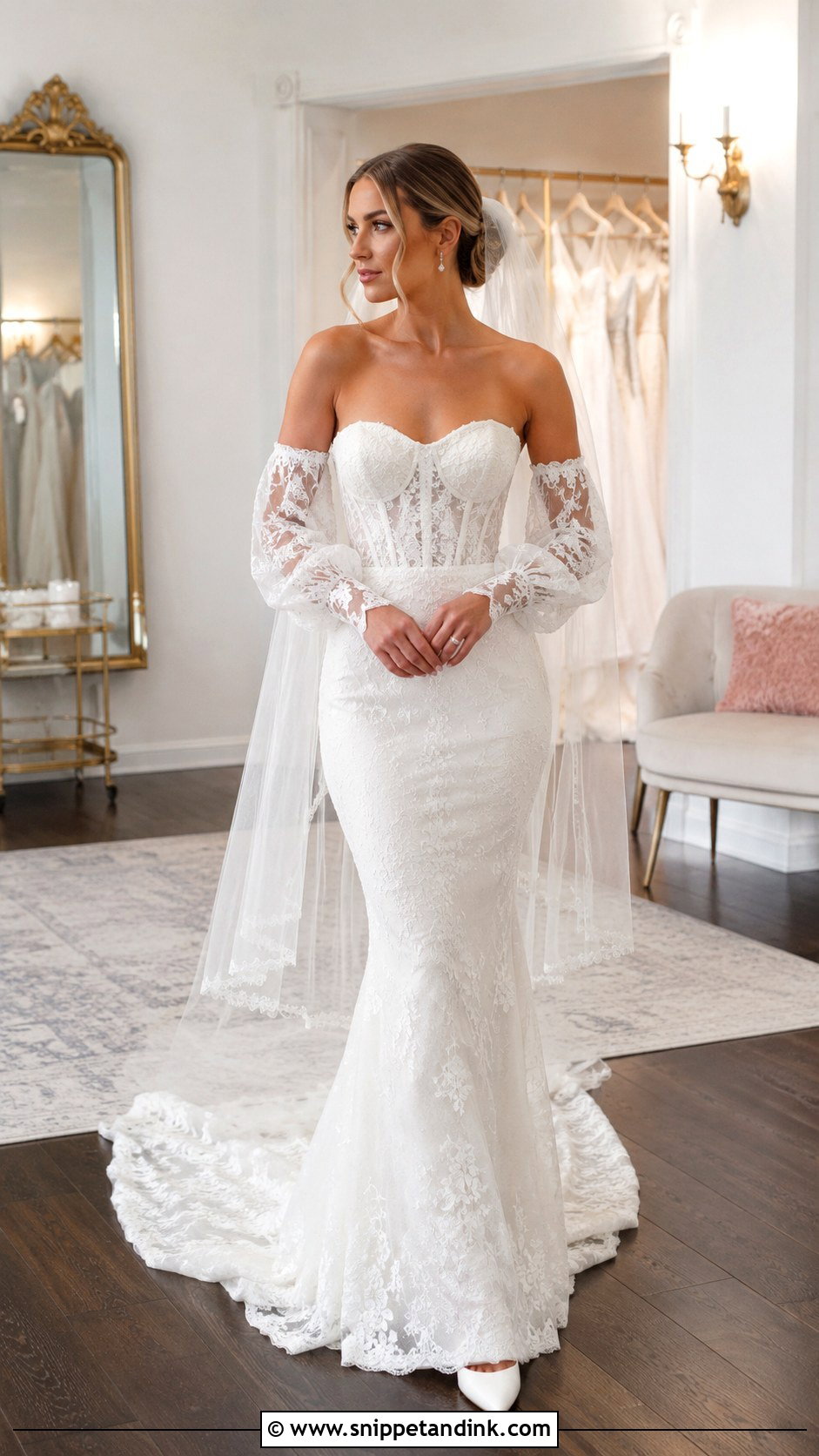
Detachable sleeves give you two looks from one gown: sheer lace for the ceremony, then a strapless or sleeveless reception outfit for dancing. Off-the-shoulder drapes, fitted gloves and bishop sleeves all change the effect. Ask how they attach before buying. Tiny snaps, buttons or elastic loops each behave differently, and snaps can pop open when you hug. Practice removing them with whoever will help you. A tidy updo keeps the attachment points reachable. Keep the earrings, veil and shoes the same for both looks, and put the sleeves in a labeled bag the moment they come off.
17. Detachable Overskirt Fit and Flare Wedding Dress
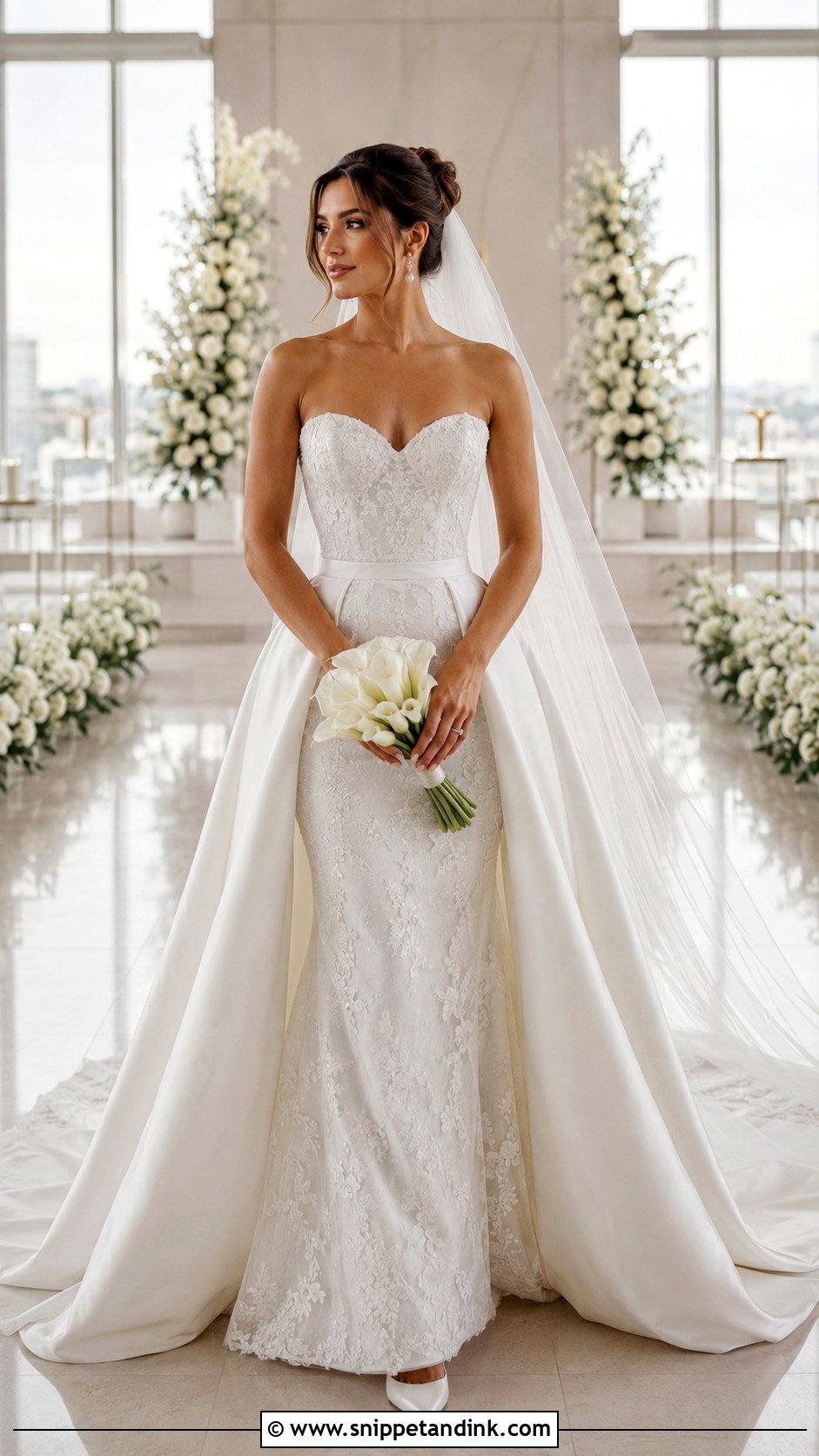
An overskirt adds ceremony drama and leaves the sleek gown underneath for the party. Plain satin gives architectural volume, tulle is softer, and lace can match the base dress. It should fasten at the natural waist with no bulky band; a thick waistband ruins the fitted line beneath. A long veil, pearl earrings and classic pumps suit the ceremony version. Afterward, a smaller hair accessory or bolder earrings refresh the look. Have one bridesmaid practice removing and folding it before the wedding, and check the gown underneath from every angle, since some base skirts are left unfinished where the overskirt was meant to hide them.
18. Simple Fit and Flare Wedding Dress
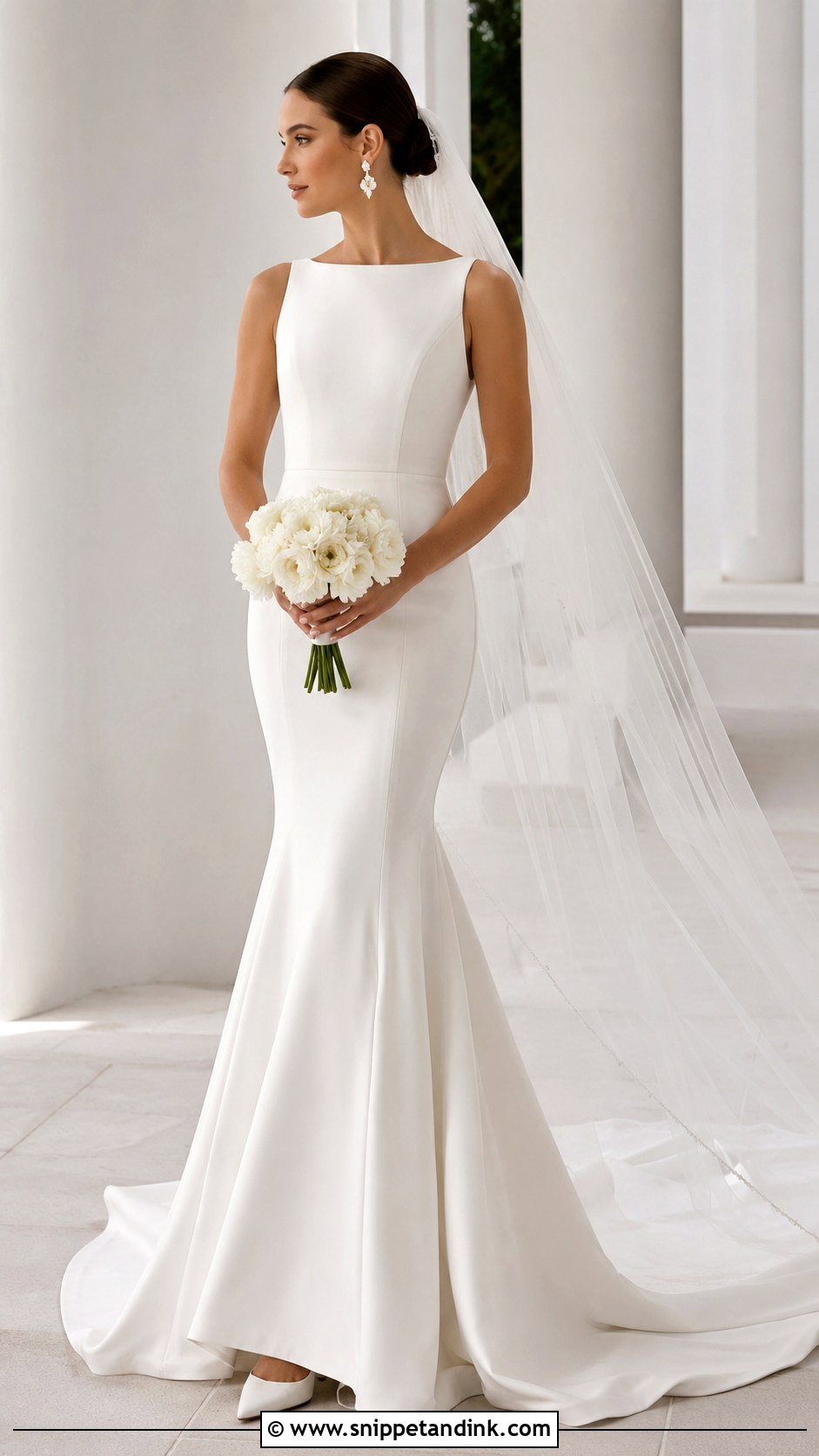
A plain gown has nowhere to hide. Every seam, hem and closure is on show, so construction matters more than on any embellished dress. Look for straight seams, a balanced neckline and fabric with enough weight to hold the shape; crepe, silk and satin each give a different finish. Add personality through one accessory, such as a cathedral veil, sculptural earrings or striking pointed heels, rather than all of them. I check simple gowns by a window in daylight, looking at the side seams, hem and back closure, because ripples that vanish under salon lighting show up outdoors.
19. Boho Fit and Flare Wedding Dress
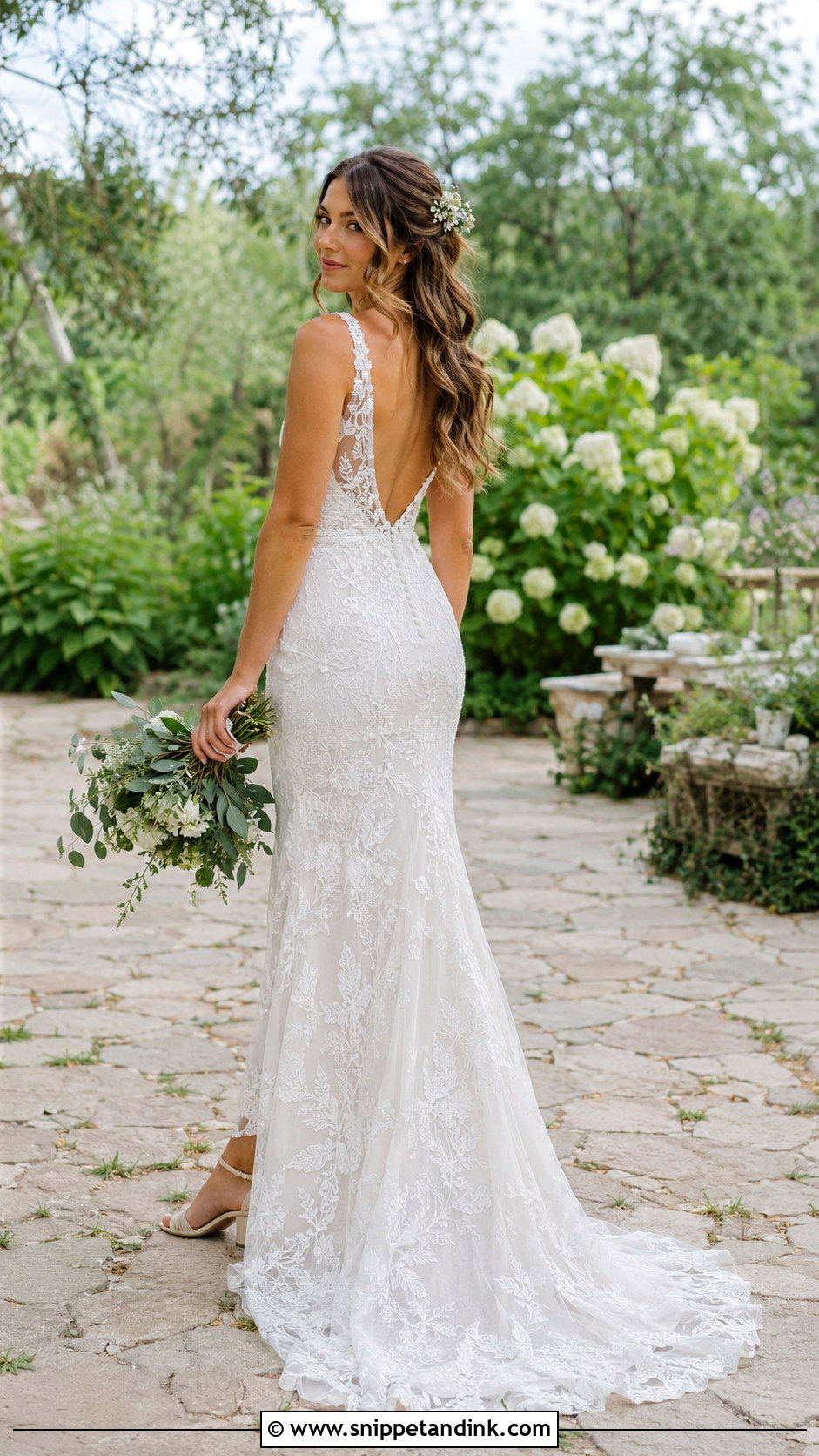
Boho and fit and flare are a good match when the construction is soft. Geometric lace, botanical motifs and lightweight lining keep it relaxed, and comfortable straps, an open back or flutter sleeves suit it better than rigid boning. Loose waves, a simple veil or floral comb and low block-heel sandals complete it, with a gathered bouquet of greenery. Outdoor ceremonies are where boho trains struggle. Lace drags up grass, seed heads and leaves. A wrist loop, a sturdy bustle and heel protectors make walking across a lawn far easier.
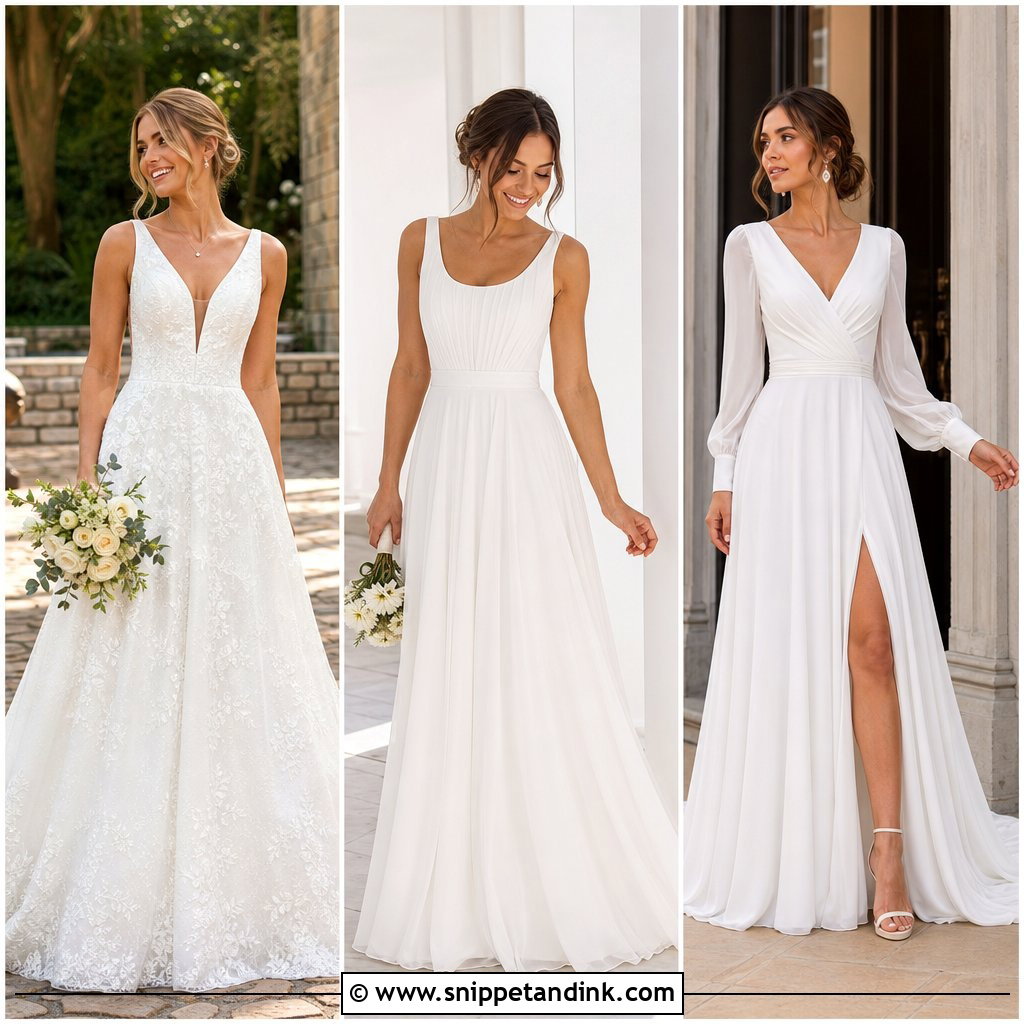
20. Plus Size Fit and Flare Wedding Dress
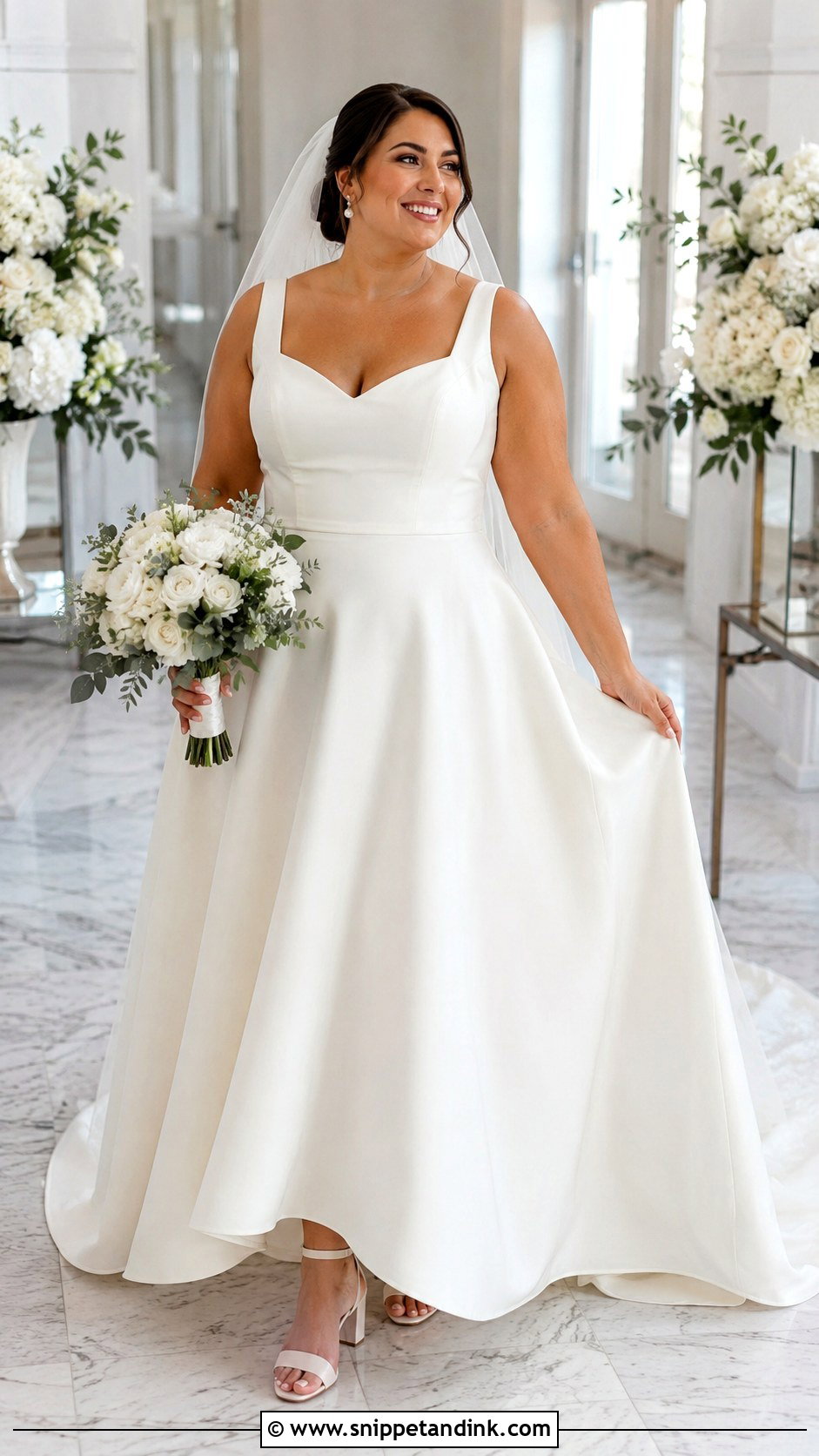
For a plus size bride, the flare point is the main decision. Some prefer it just below the hip, others nearer the knee, and neither is better; it depends on where you feel comfortable and how you like to move. Secure straps, structured lining and flexible boning carry the bodice. I always ask salons for a sample close to the bride’s size, because pinning a small sample shut gives a false picture of proportions. Supportive block heels, balanced earrings and a veil that suits the train finish it. Good alterations refine the shape without restricting sitting, breathing or dancing.
Three Fittings for a Dress That Follows Your Hips
Close-fitting gowns need more alteration time than ball gowns, because there is no extra fabric to hide small changes. I plan for three fittings, starting roughly two to three months before the wedding.
- First fitting: bring your shoes and underwear. The seamstress pins the side seams, bodice and hem, and you discuss the bustle.
- Second fitting: check the adjustments, sit, walk and practice the bustle with the person who will do it on the day.
- Final fitting, one to two weeks out: a last check of the fit, then the dress is pressed and bagged for pick-up.
Keep your weight as steady as you comfortably can between the first and final fittings. A fitted bodice can be let out a little only if there is seam allowance inside, and many gowns have very little.
Picking a Bustle for a Fitted Skirt
An over bustle hooks the train up onto the back of the skirt and shows off lace or buttons. An under bustle, sometimes called a French bustle, tucks the train beneath with ribbon ties and keeps the back smooth, which suits plain satin and crepe. On a fit and flare, the hooks need to sit below the hip line, or the lifted fabric adds bulk exactly where the dress is meant to be sleek.
Walk, Sit and Reach Before You Say Yes
The gown worth choosing is the one that feels secure and still looks like you after hours of wear, not the most detailed one on the rail. Fabric, neckline, sleeves, beading and removable layers can make the same silhouette look completely different, so try several, including ones far from your inspiration photos. At every appointment, walk, sit, turn and raise your arms. Bring shoes with a similar heel height and the underwear you plan to wear. Then trust a good seamstress with the rest; most of what makes a fit and flare look graceful happens in the alterations room.
You'll Like These Ideas:




Leave a Reply