
Petite brides often come to me apologising for their height, as if the dress has to compensate for something. It doesn’t. What it has to do is fit your proportions: where your waist sits, how long your torso is compared with your legs, how much fabric your frame can carry before it starts wearing you. Salon samples are cut for a taller model, so almost everything you try will pool at the feet and sit oddly at the waist. Look past that. Below are thirty gowns that work on shorter brides, with notes on where I’d adjust each one and which details quietly make you look taller.
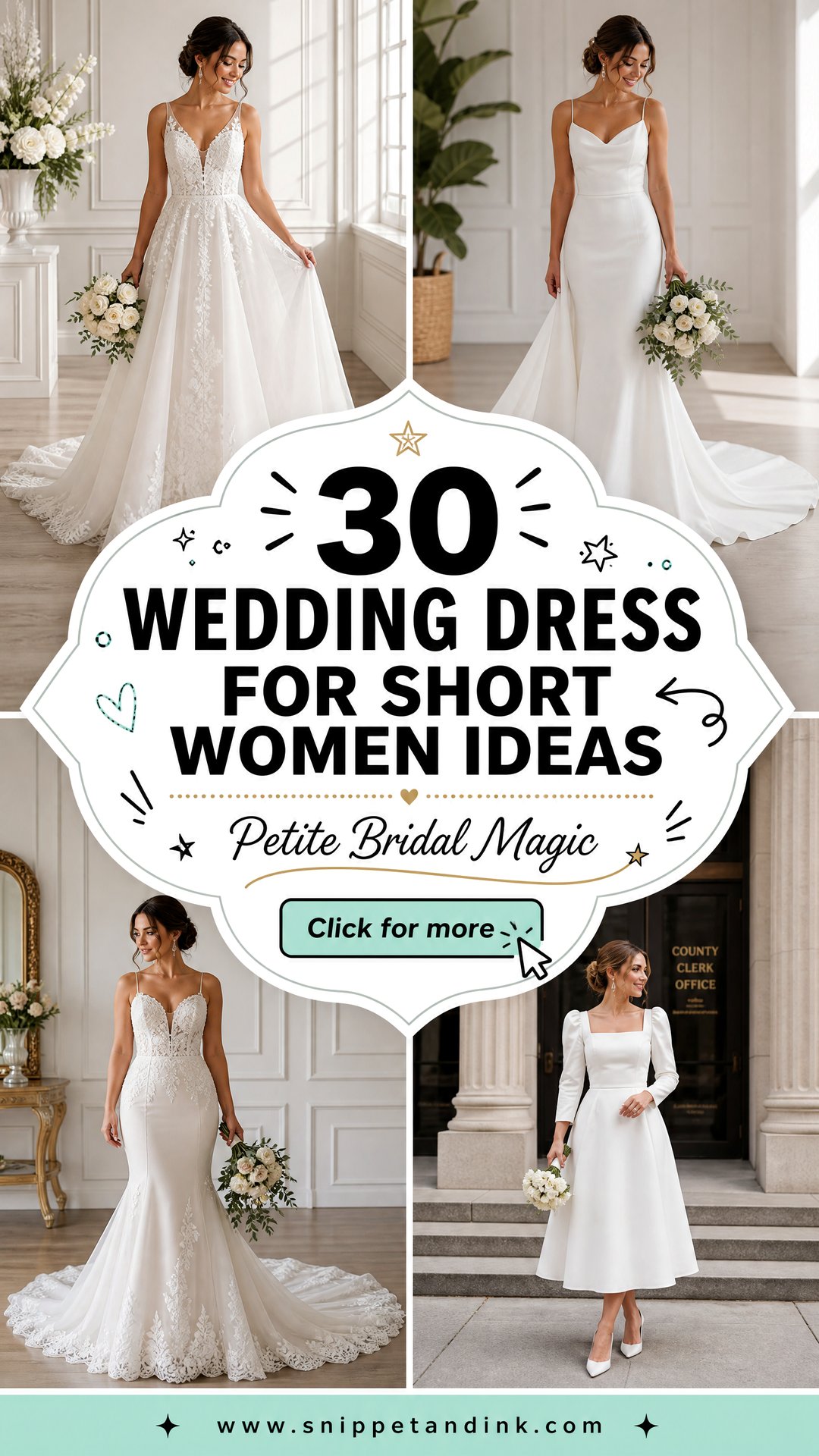
Alterations a Petite Gown Needs Above the Hem
Taking up the hem is the alteration everyone expects. On a petite bride it’s rarely the only one, and knowing what else might change helps you judge a sample before you fall for it.
Waist and bodice length
Bodices are cut for a longer torso, so the waist seam often sits low on you. Raising it is possible on many gowns but takes real work, especially if the skirt is heavily layered. Pinch the waist up to where yours actually is during the try-on and see how the dress changes.
Straps, sleeves and the neckline
Shortening straps lifts the whole bodice and is usually quick. Sleeves are more involved, especially lace sleeves with a finished edge. A neckline that sits too low can sometimes be raised with lining or mesh.
Hems that are harder than they look
Plain crepe and satin are simple to shorten. Multiple tulle layers each need cutting separately, and lace or beaded hems often have to be unpicked and re-applied higher up. Alteration costs vary widely by shop and region, so ask for a rough quote at the first fitting, and allow more time and budget for detailed gowns.
1. Petite A Line Wedding Dress
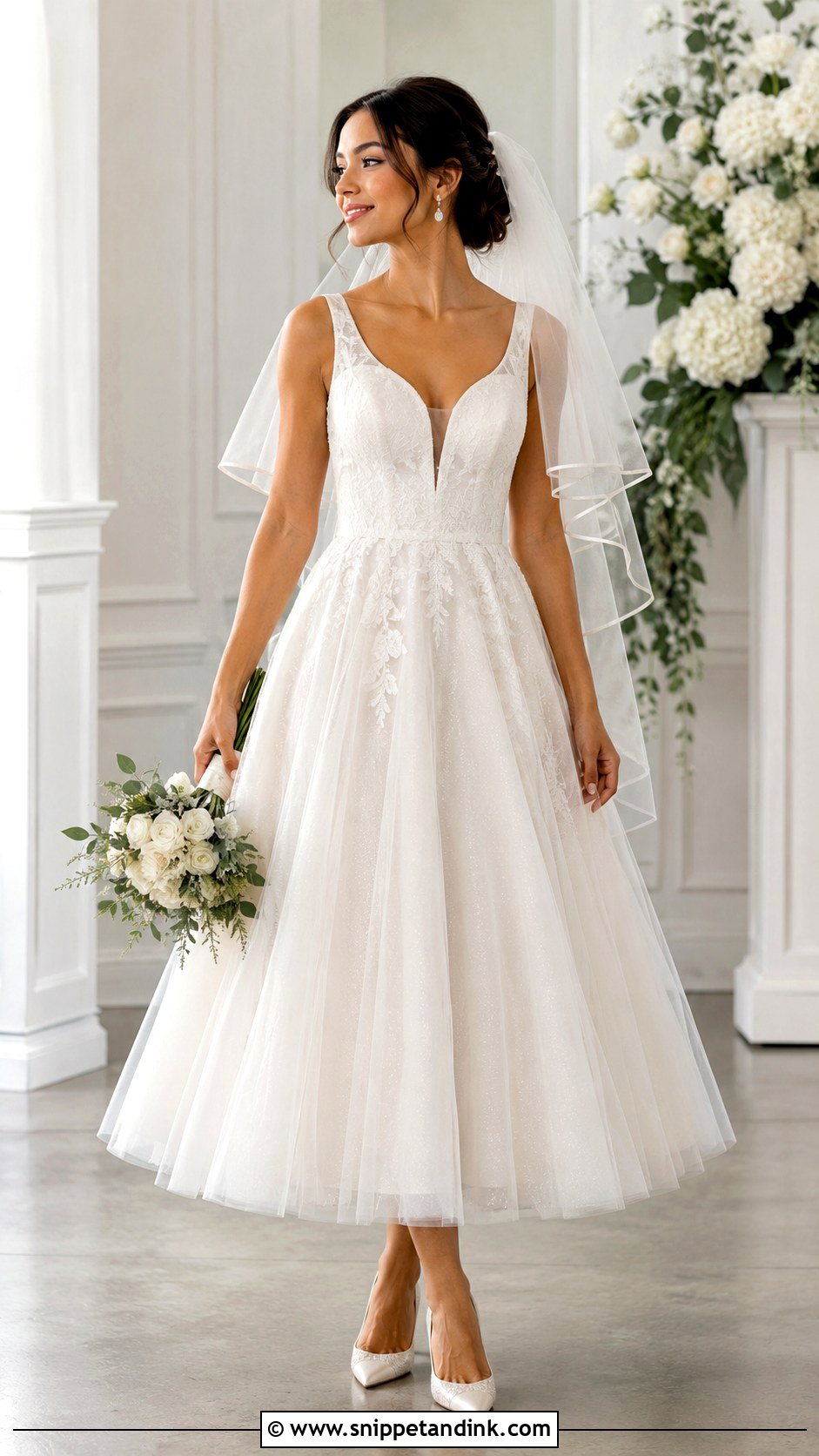
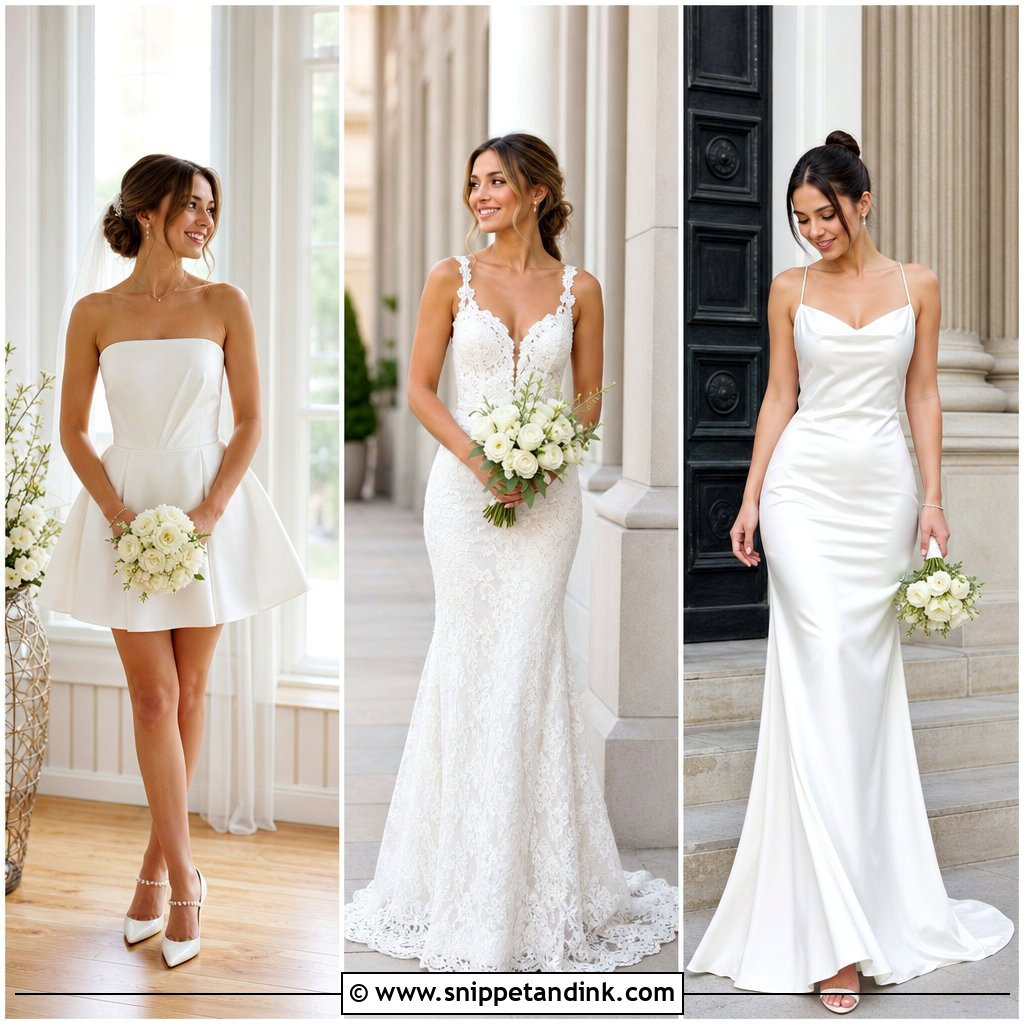
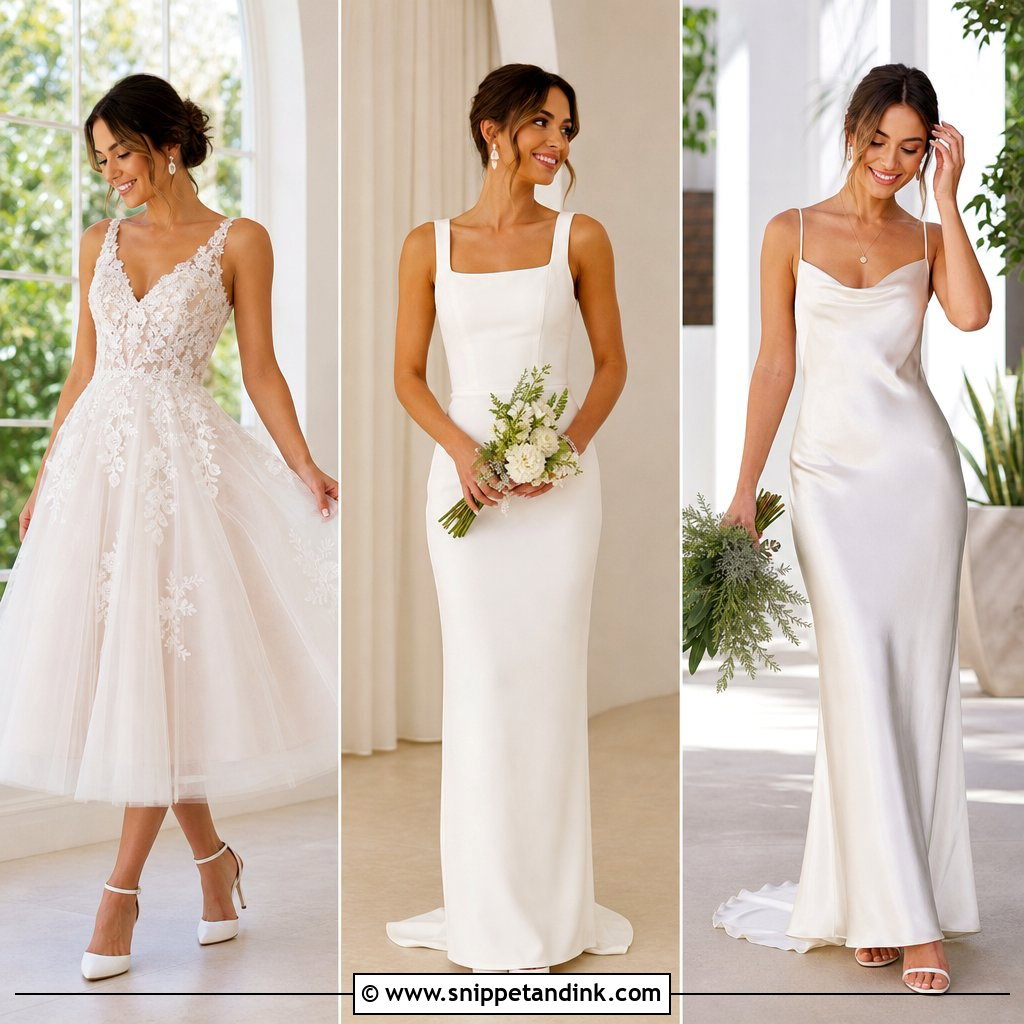
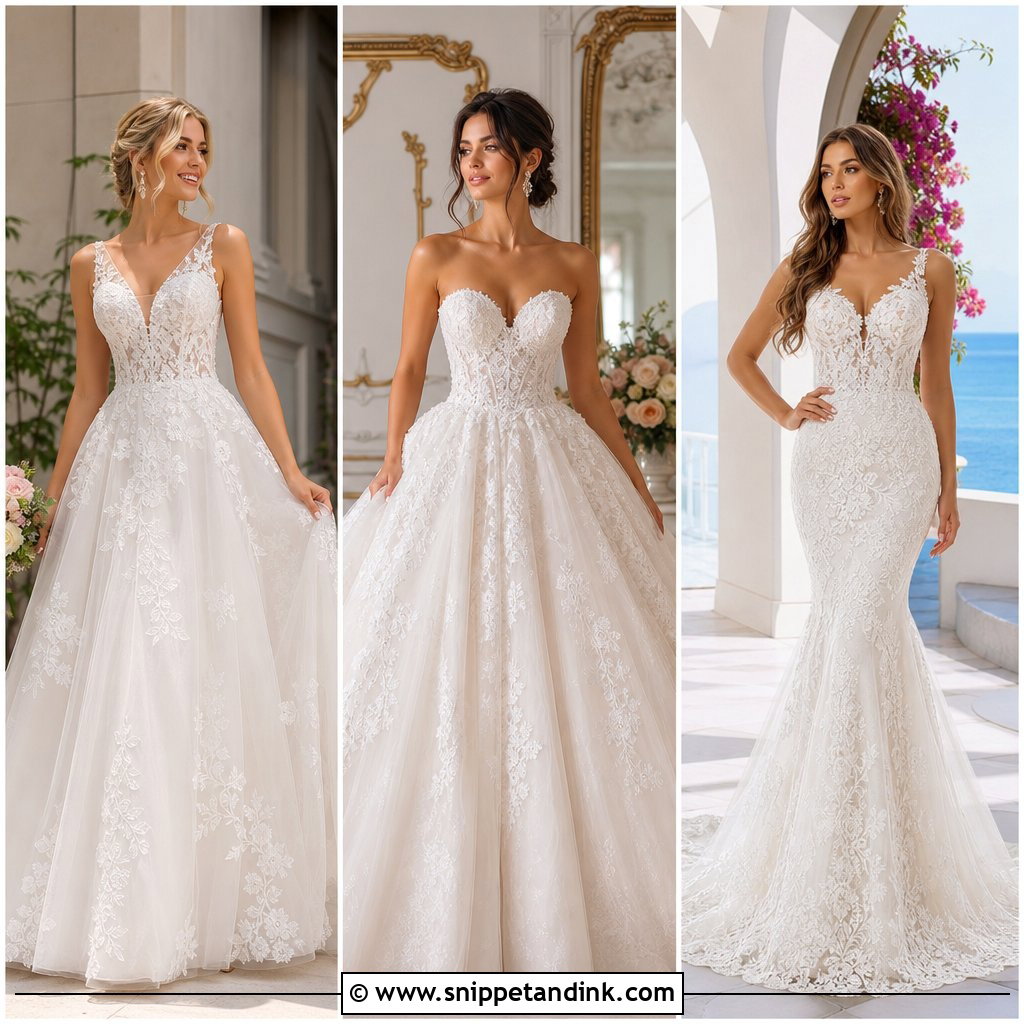
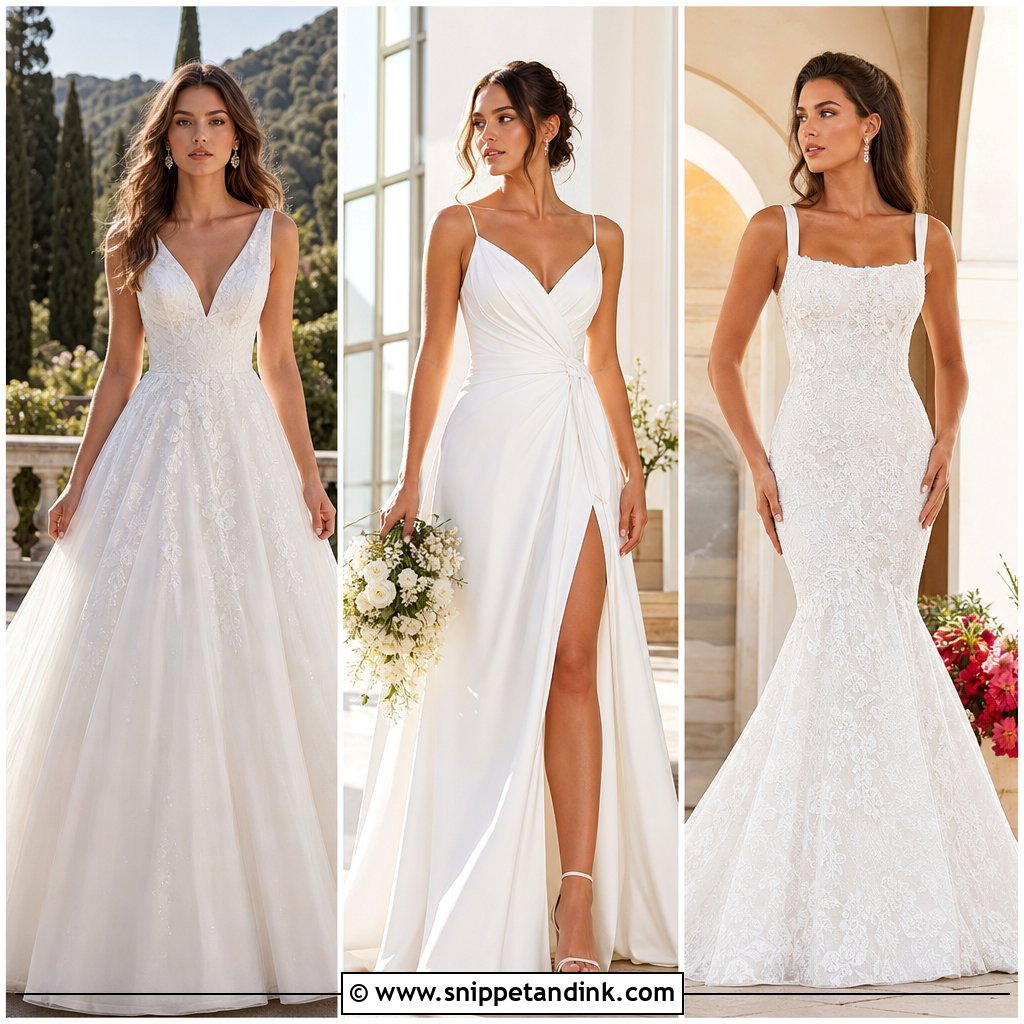
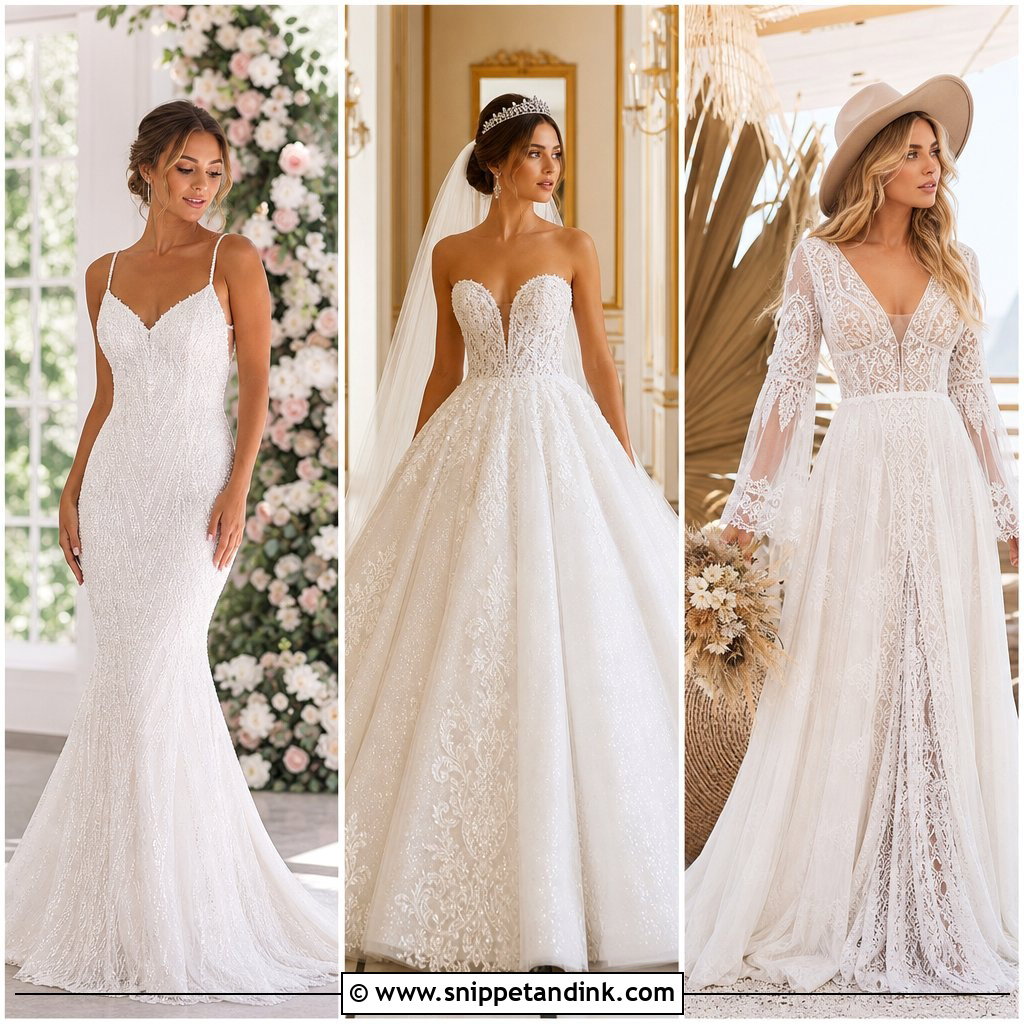
A petite A-line wedding dress gives shape without width, because the skirt leaves the hip in a clean slant instead of puffing out. Lightweight tulle, chiffon, organza or crepe keeps the skirt from overpowering you. The waist seam is the first thing I check: on most samples it lands below a petite waist and has to be raised so the bodice doesn’t look long. A V-neck, scoop or strapless top opens the upper body. Keep the train short or chapel length. Pointed heels, a slim veil and fine jewelry finish it.
2. Petite Sheath Wedding Dress
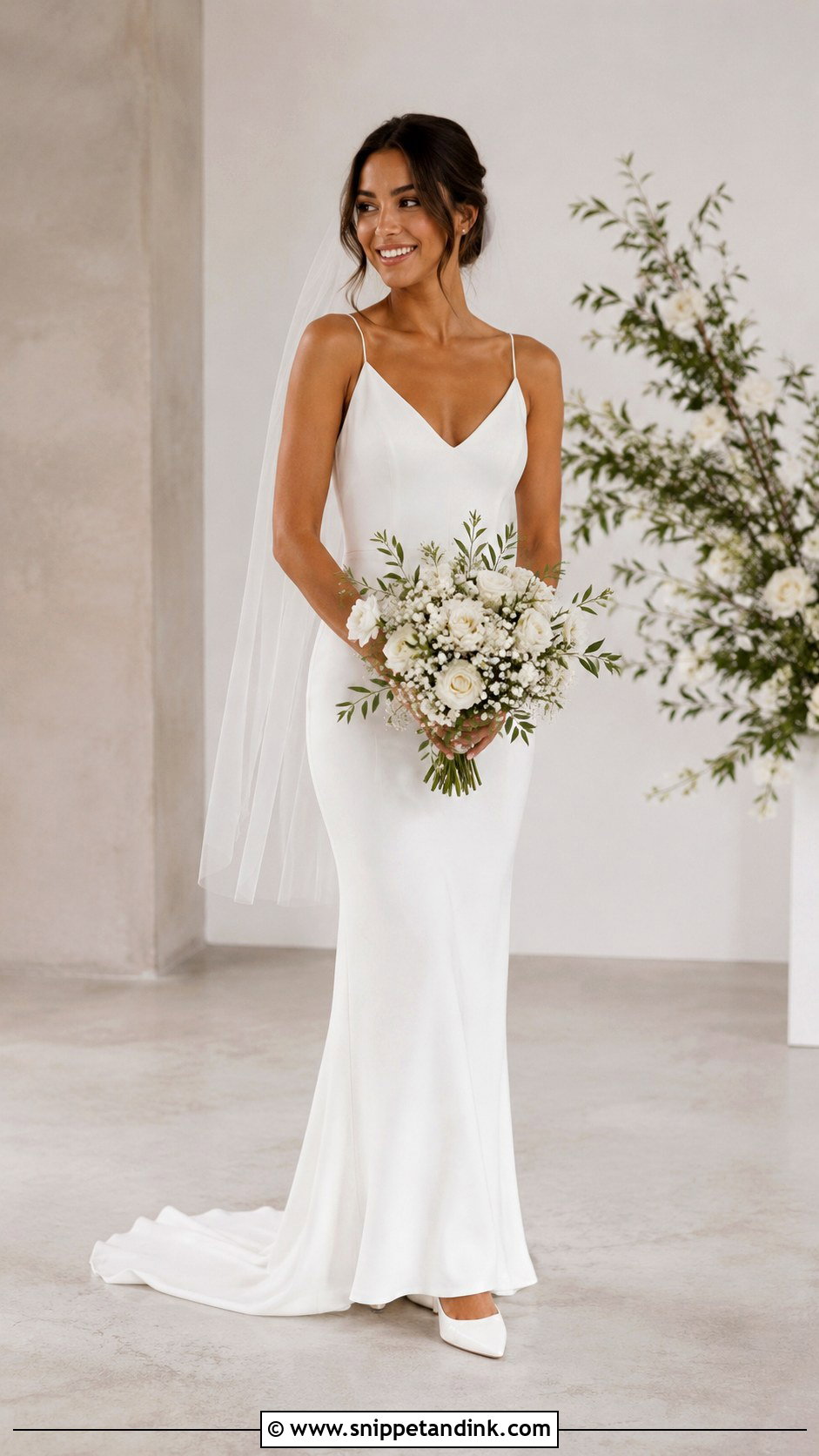
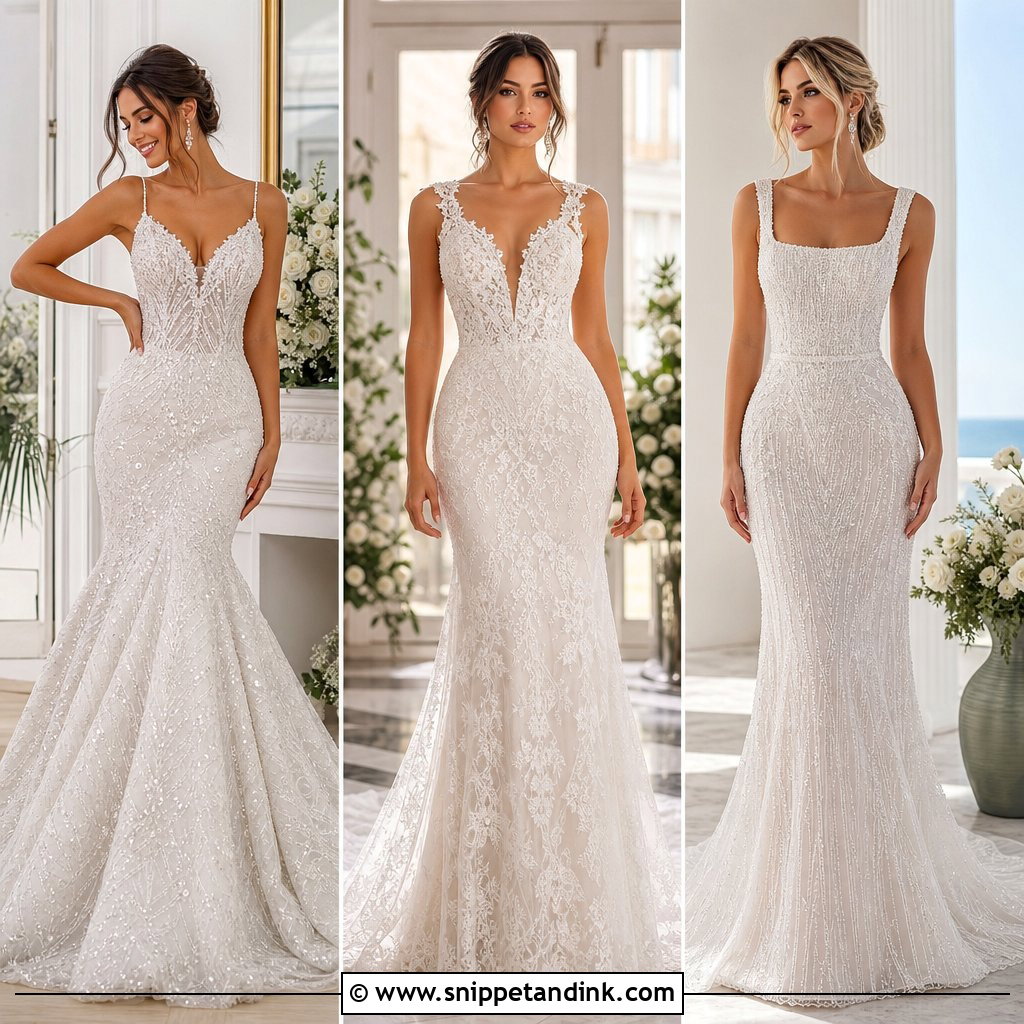
A sheath runs in one unbroken line from shoulder to hem, which is about the most lengthening thing a petite bride can wear. Lace over a slim lining looks softer; crepe or satin looks cleaner. Fewer seams help, so look for princess seams that run vertically rather than a horizontal waist seam. Sheaths are also among the easiest gowns to shorten, since there’s no layered skirt to re-hem. Narrow straps or a gentle V, sleek heels, a low bun and a fingertip veil keep it light.
3. Petite Empire Waist Wedding Dress
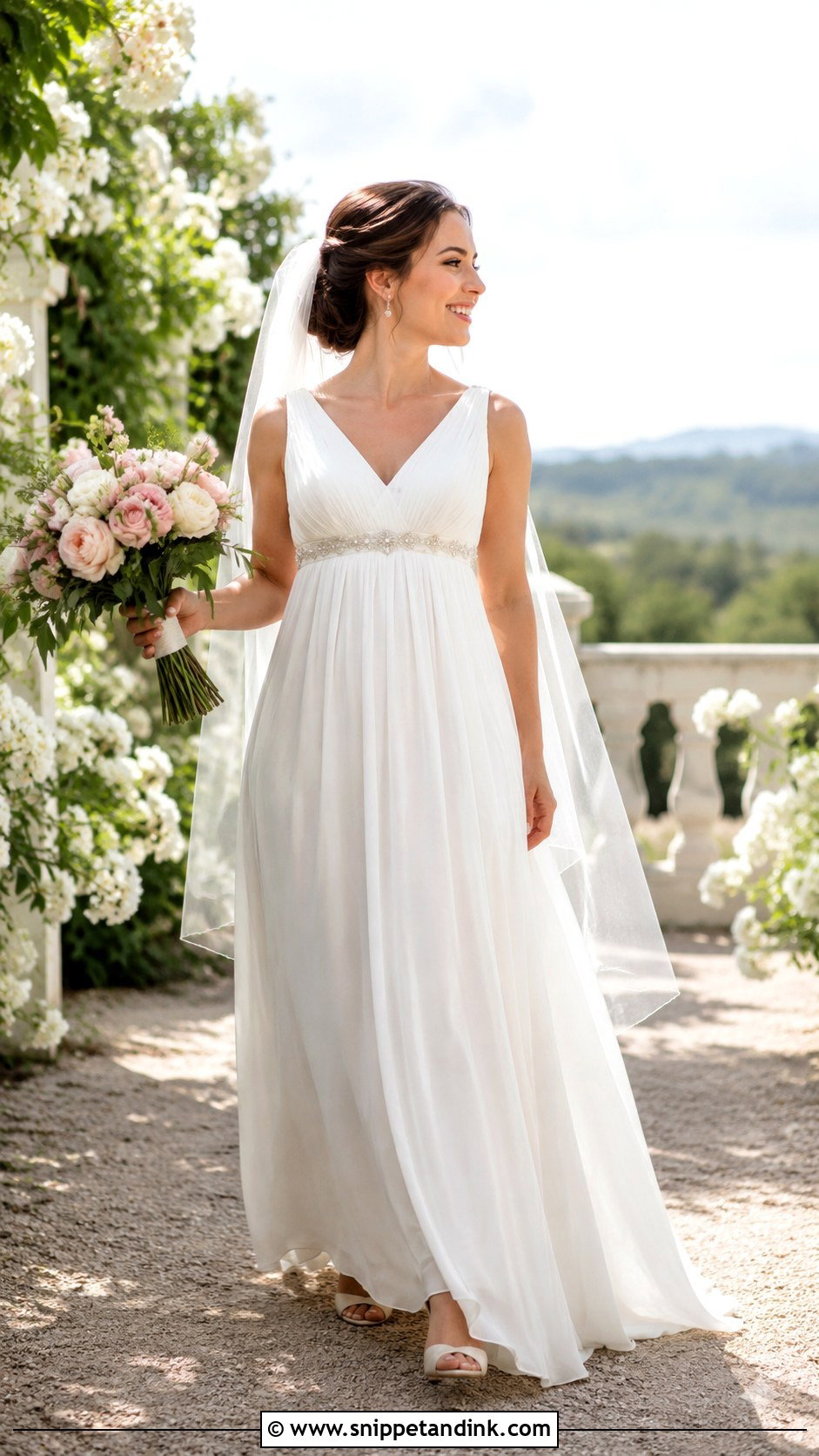
The empire waist sits just under the bust, so the skirt starts higher and your legs read longer. It’s comfortable and moves well. The fabric has to fall straight down: soft chiffon, airy tulle or fluid satin. Stiff fabric will flare from that high seam and make you look wider rather than taller. A narrow band or a little beading under the bust defines it without cutting the line. If you have a full bust, check the seam sits under it rather than across it. Drop earrings, comfortable heels and a soft veil suit it.
4. Petite Column Wedding Dress
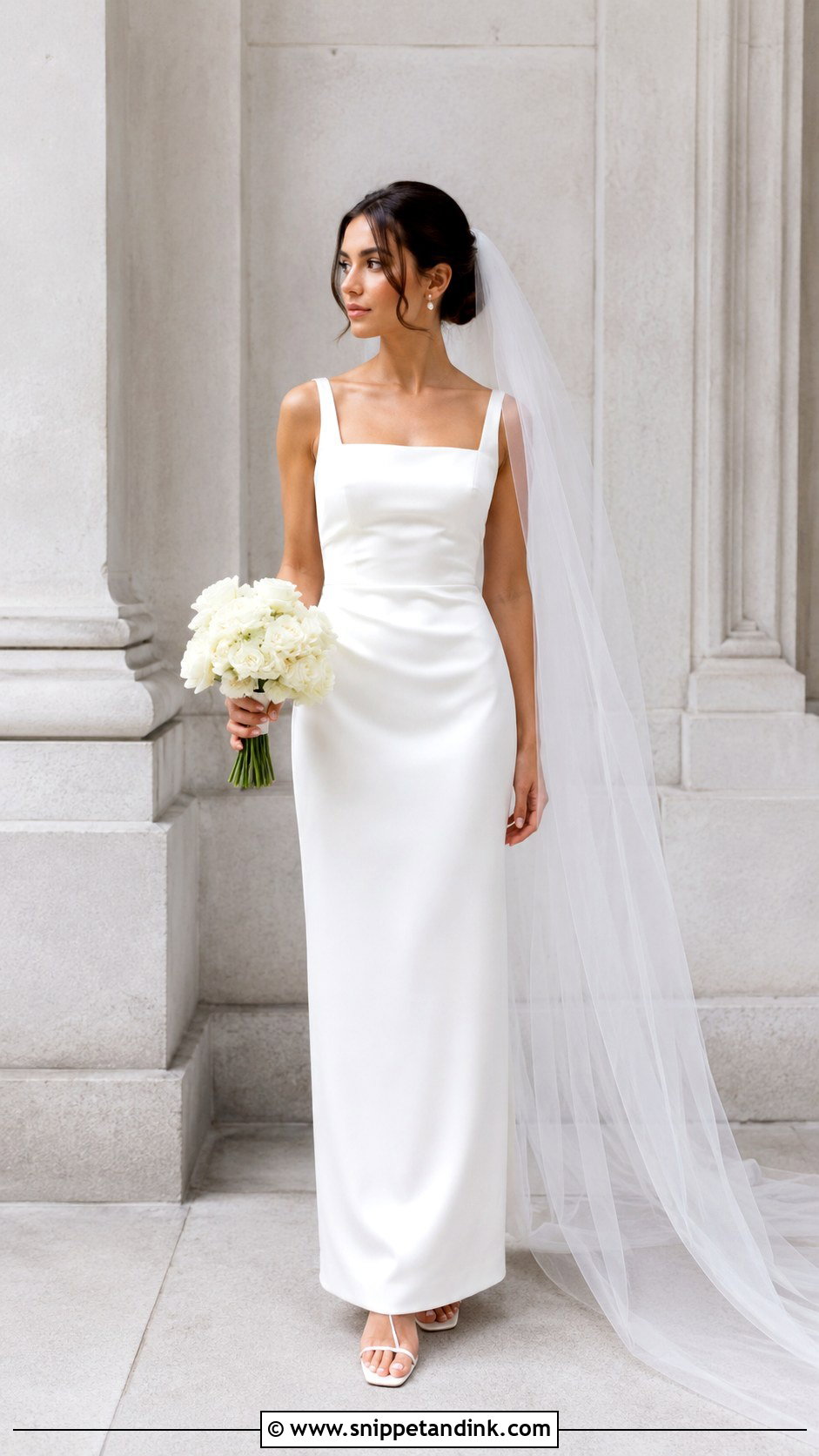
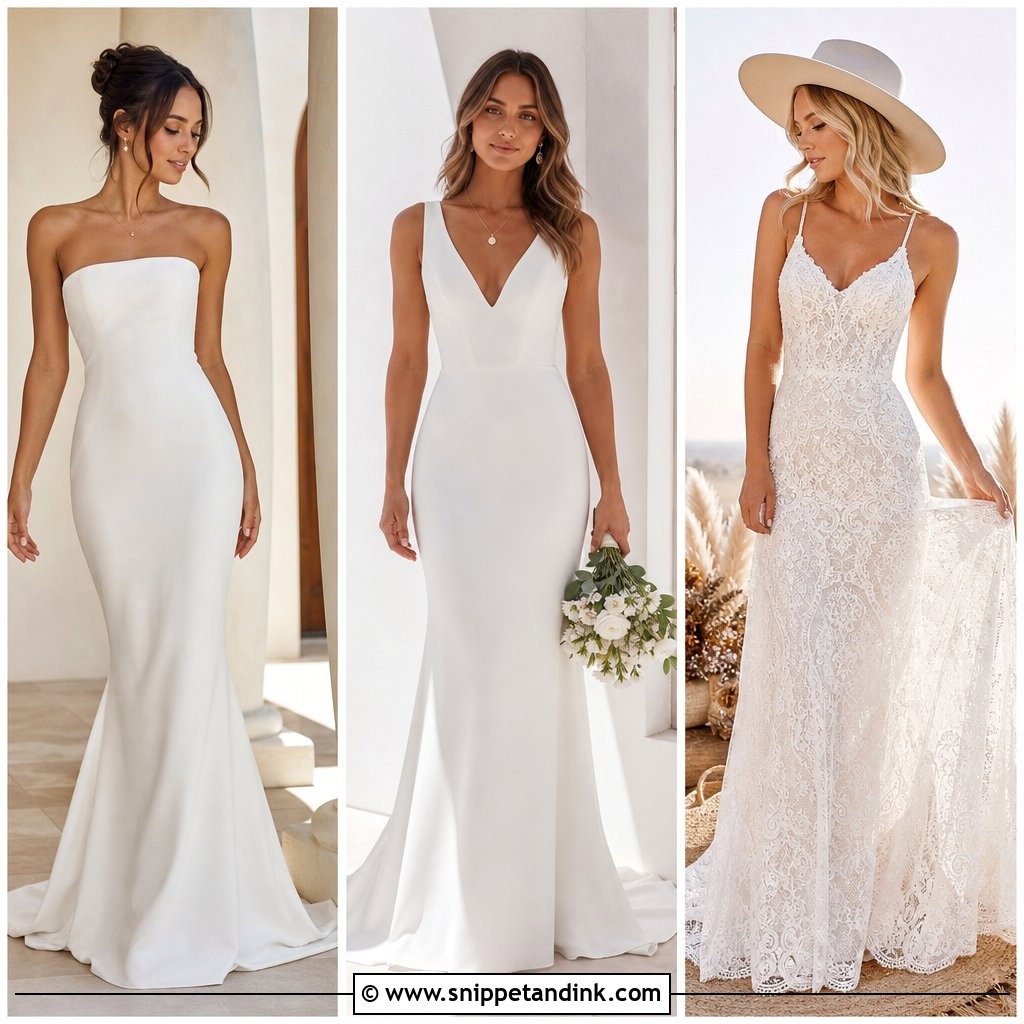
A column is straight from top to bottom, so all the visual movement is vertical. Crepe, satin, silk or a matte fabric look smoothest. Bulky embellishment breaks the line, so I’d keep any detail at the neckline. A square, off-shoulder or slim-strap top all work. Ask for the hem to just kiss the top of your shoe at the front; any extra length bunches and makes the column look shorter. Pointed shoes and a long veil that falls close to the body carry the line down.
5. Petite V Neck Wedding Dress
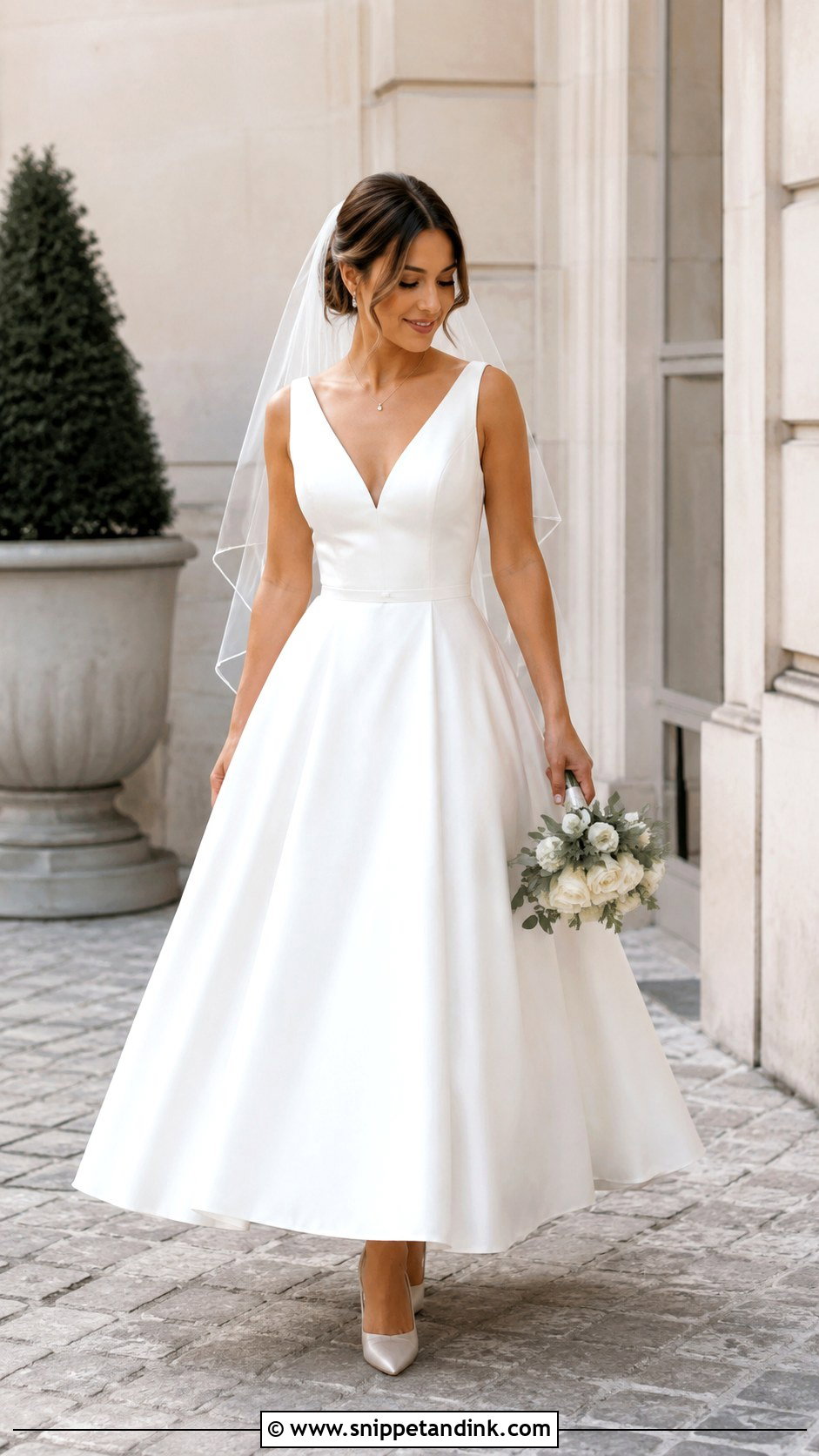
A V-neck opens the chest and draws the eye in a vertical line, so the upper body feels less crowded. It doesn’t need to plunge. Even a modest V makes a difference, and on a short torso a deep V can actually make the bodice look longer than you are. It works over an A-line, sheath or fit-and-flare. Slim lace or light cap sleeves are better than heavy fabric if you want coverage. A fine necklace, swept-back hair and simple heels finish it.
6. Petite Strapless Wedding Dress
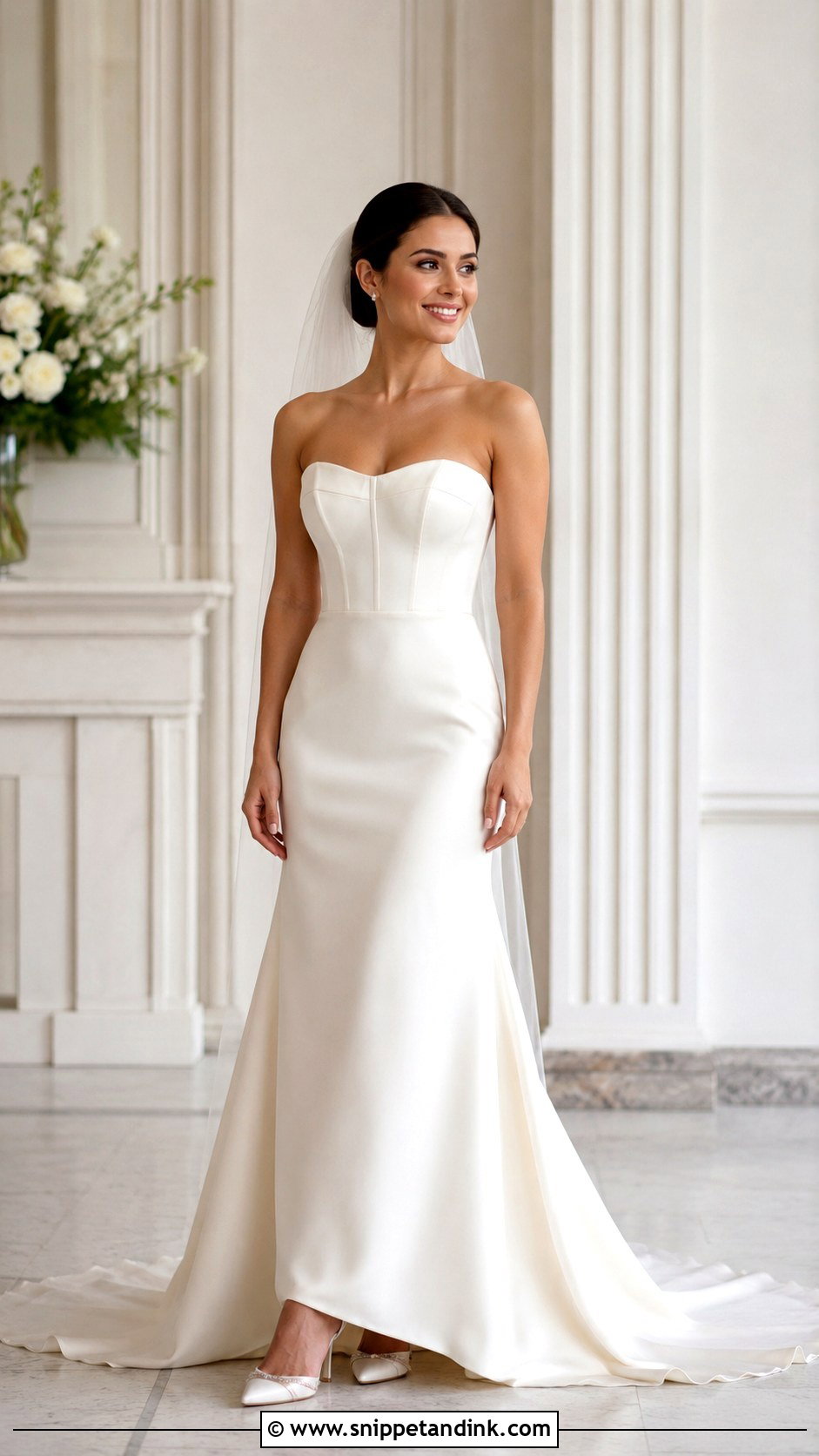
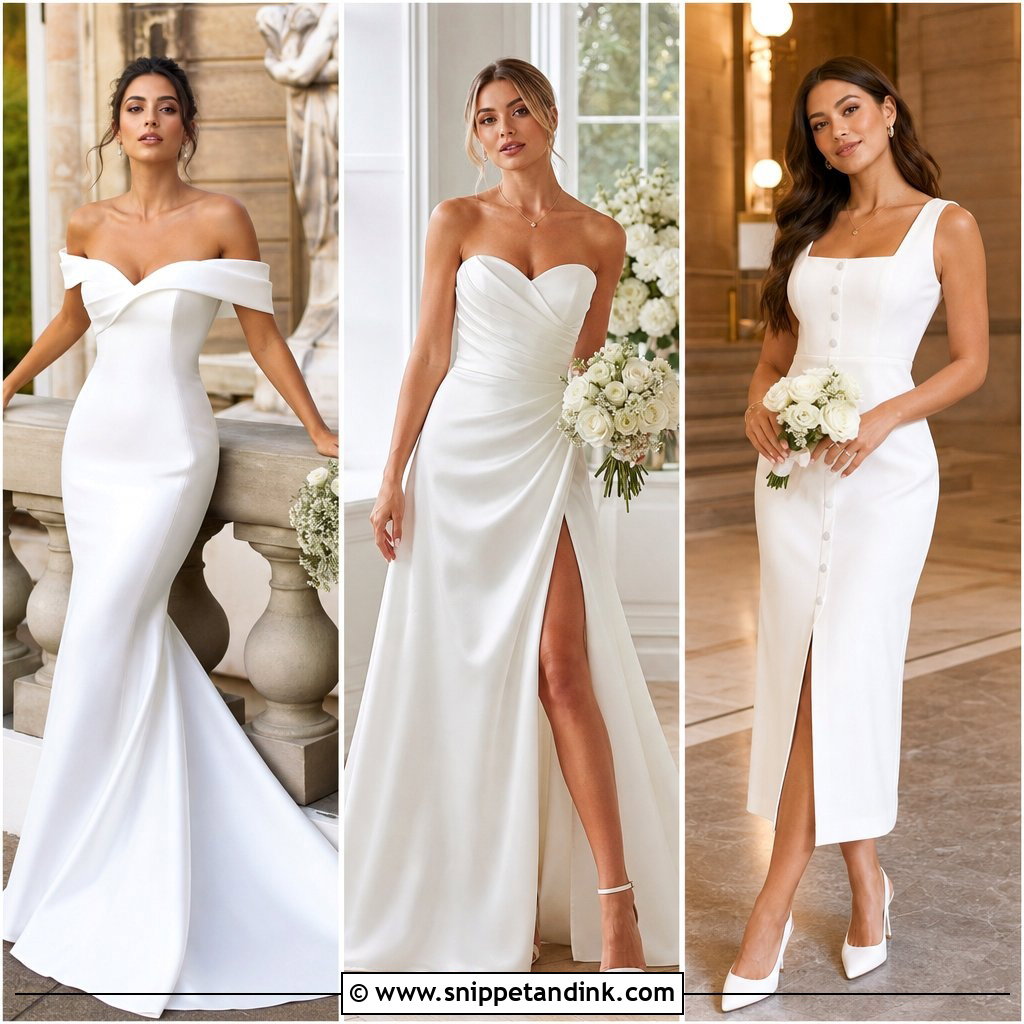
Strapless only works if the bodice fits exactly, because on a petite frame the top edge is easy to set too low. When it sits low it shortens the torso and makes the skirt look long, so I’d have the top edge lifted rather than accept the sample height. Look for a structured bodice and a skirt that isn’t too wide: a soft A-line, fitted crepe or subtle fit-and-flare. Only add a thin belt if it lands exactly at your natural waist. A neat updo, small earrings and elegant heels complete it.
7. Petite Off Shoulder Wedding Dress
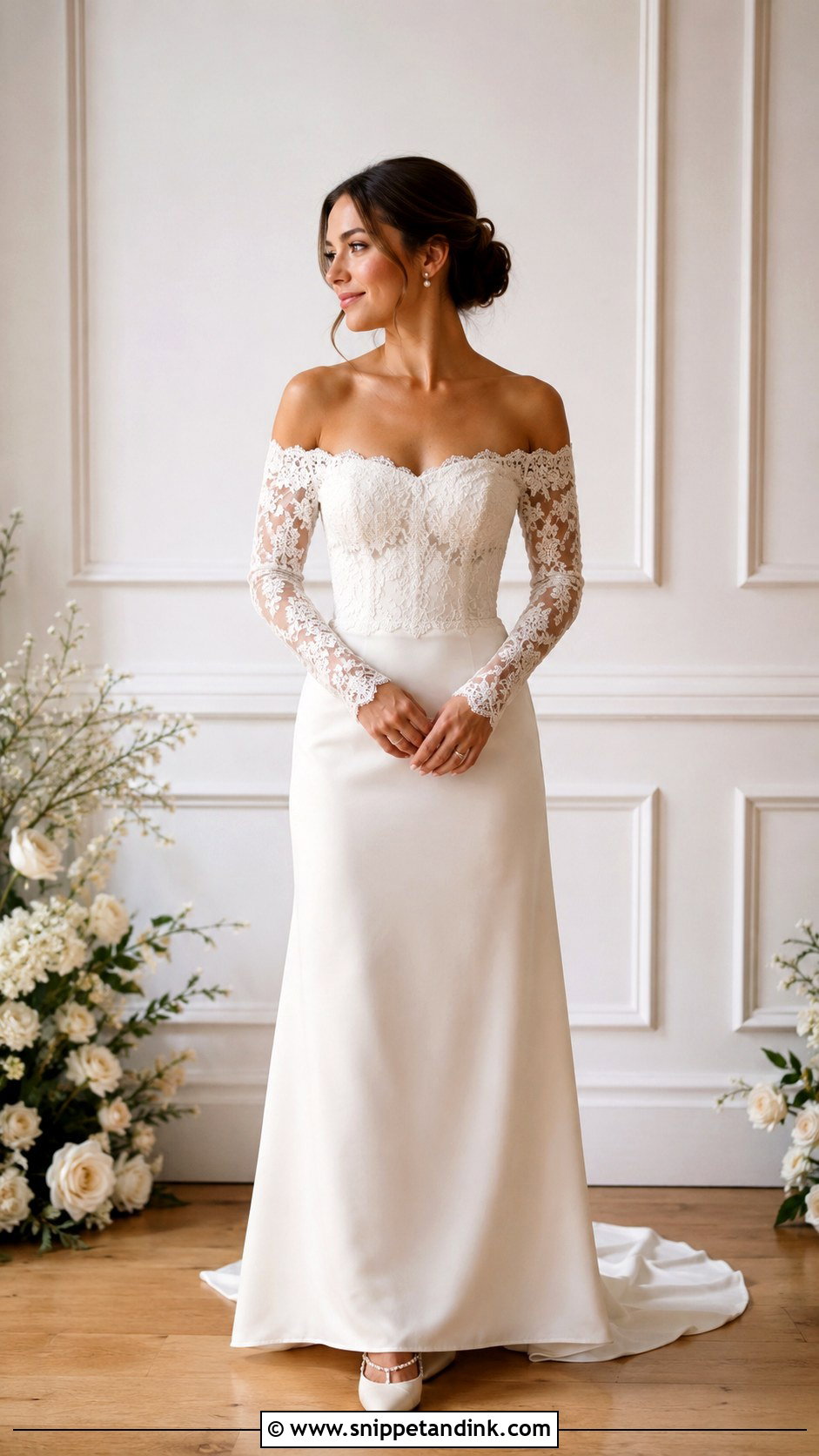
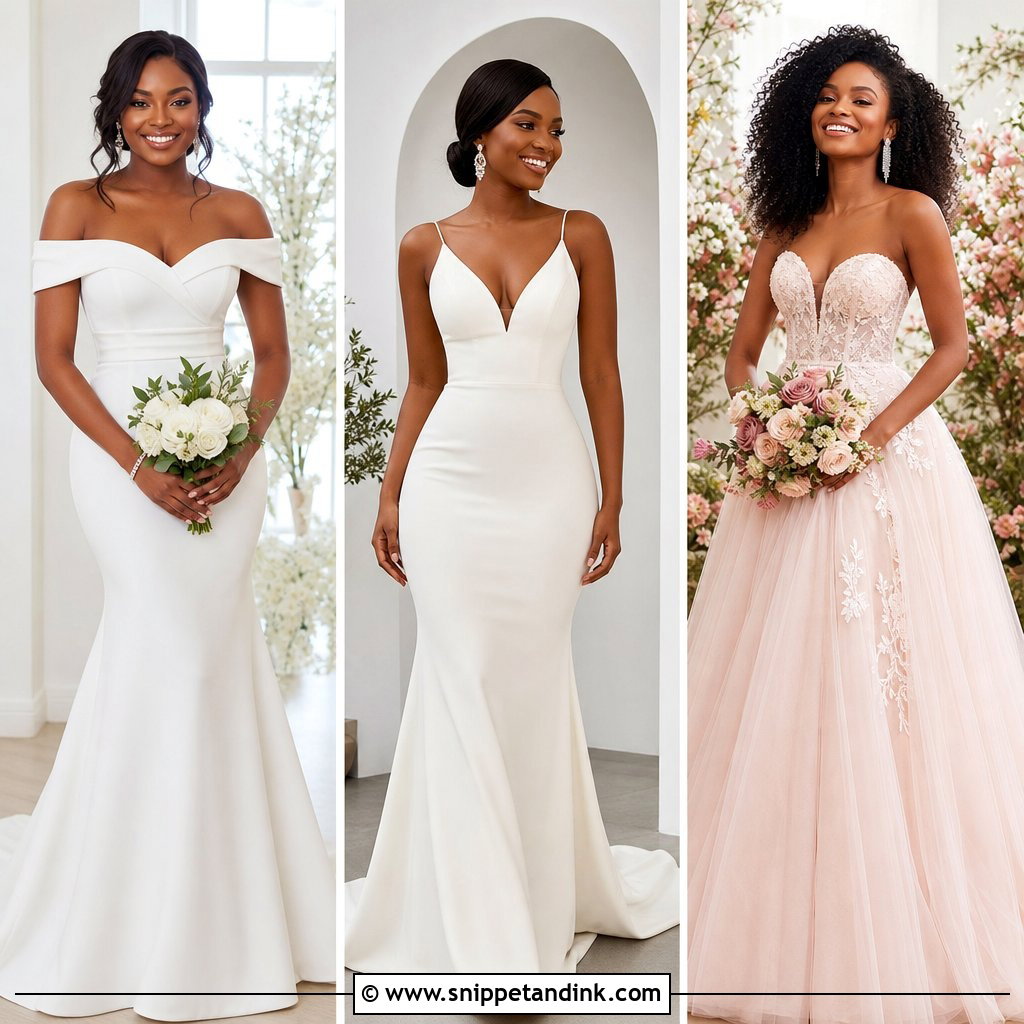
Off-the-shoulder necklines keep the collarbone open, which balances a smaller frame, especially with a simple skirt. The sleeves are where petite fittings go wrong. They’re cut for longer arms and often sit too low, pinning your arms down, so ask for them to be shortened and fitted close. A slim A-line, sheath or soft mermaid suits it. Soft lace, crepe or satin set the mood. A low bun, pearl studs and a medium-length veil keep the scale right.
8. Petite Square Neck Wedding Dress
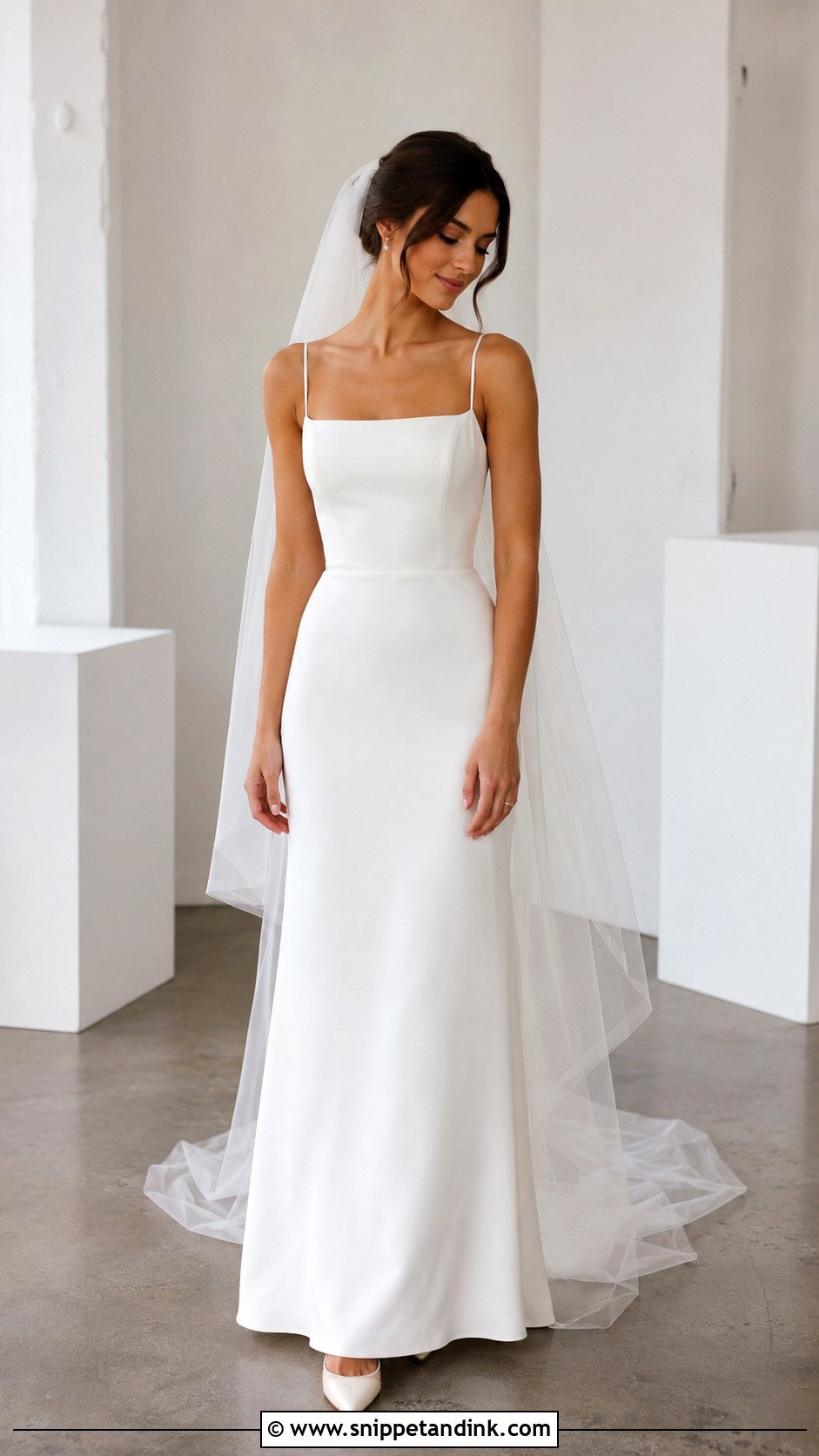
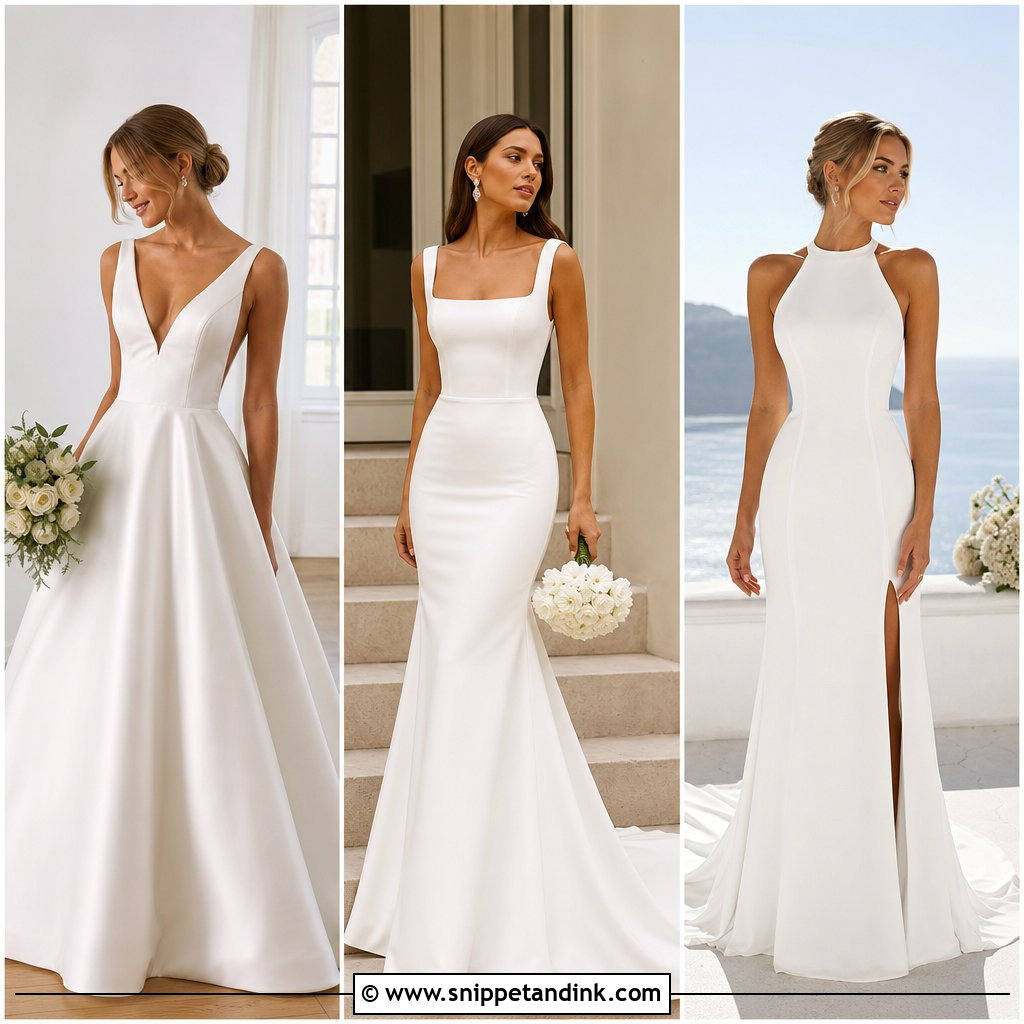
A square neckline frames the collarbone and gives structure, and it works on columns and A-lines alike. If your torso is short, a square neck paired with a slightly raised waist keeps the proportions balanced. Thin straps look delicate; wider straps support more. Make sure the corners sit flat and close to your body, because on a petite frame wide-set corners make the shoulders look broader. Crepe, satin or mikado keep it modern. Sleek heels and a simple veil complete it.
9. Petite Halter Wedding Dress
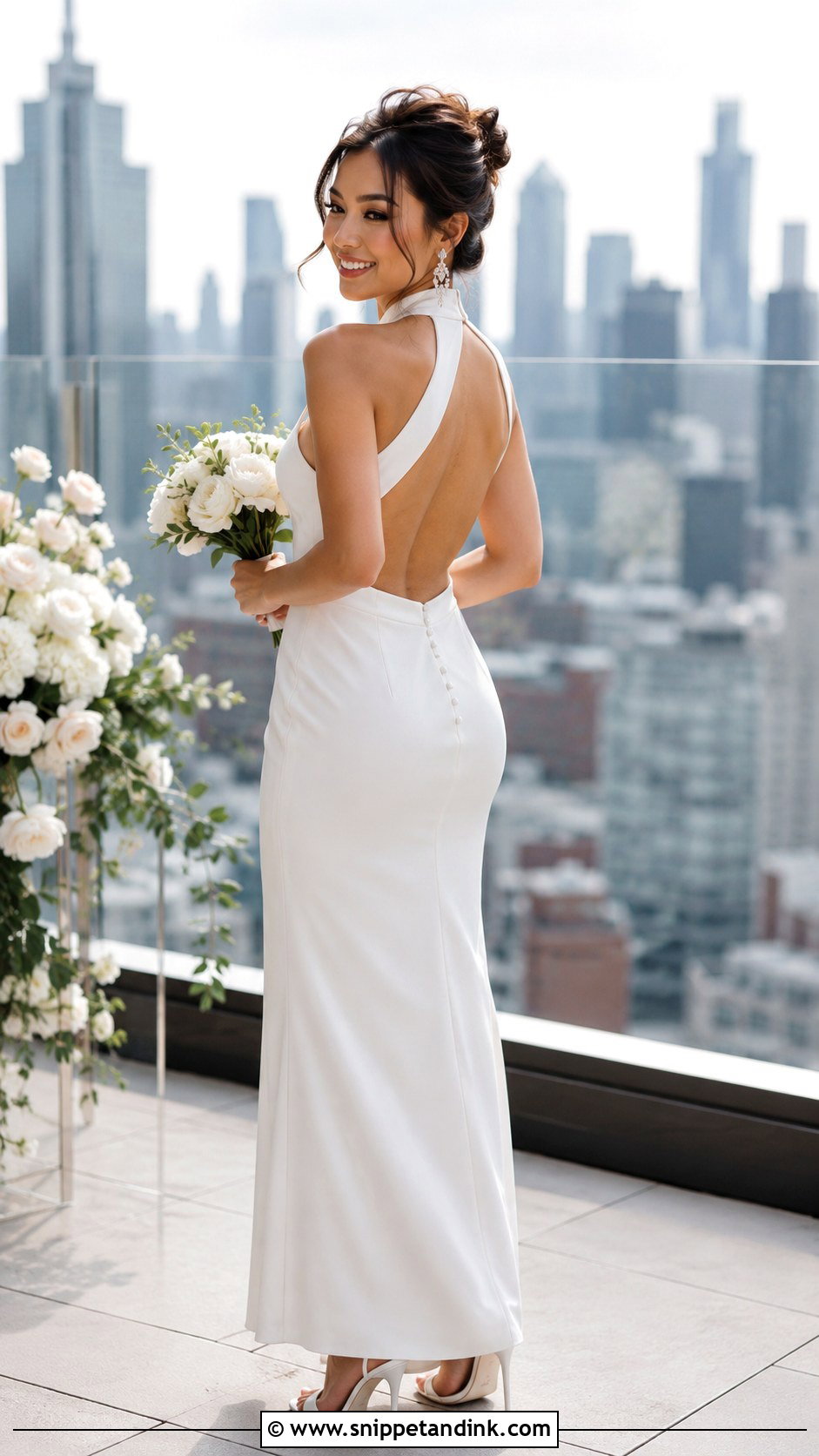
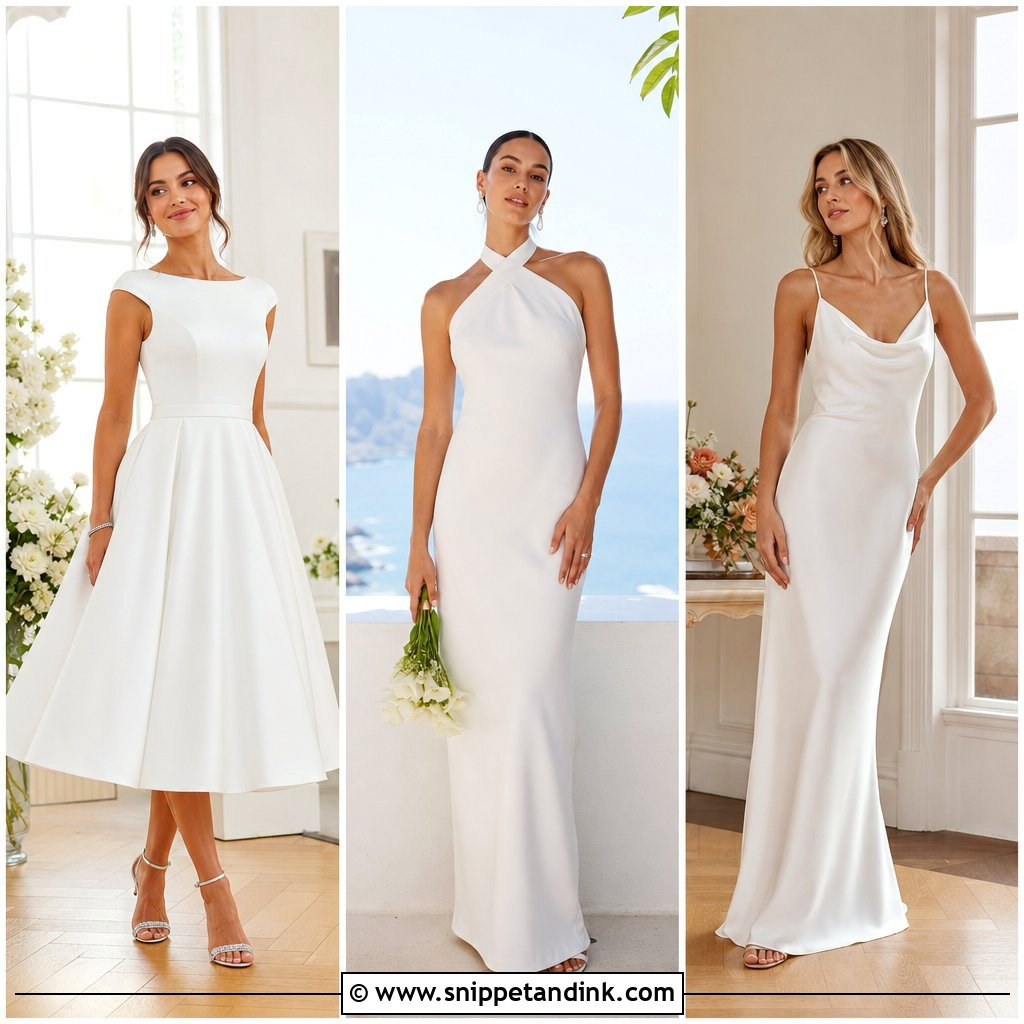
Halters pull attention up to the shoulders and face, which helps you read taller. They suit a narrow body shape: a halter sheath, column or soft fit-and-flare. Avoid high, heavy halters with lots of fabric at the throat, since they can make a short neck disappear. A clean halter with an open back or soft drape at the front gives balance. The neck strap should be adjustable, because if it’s too tight it pulls the front up and too loose it gapes. Lifted hair and statement earrings suit it.
10. Petite Spaghetti Strap Wedding Dress
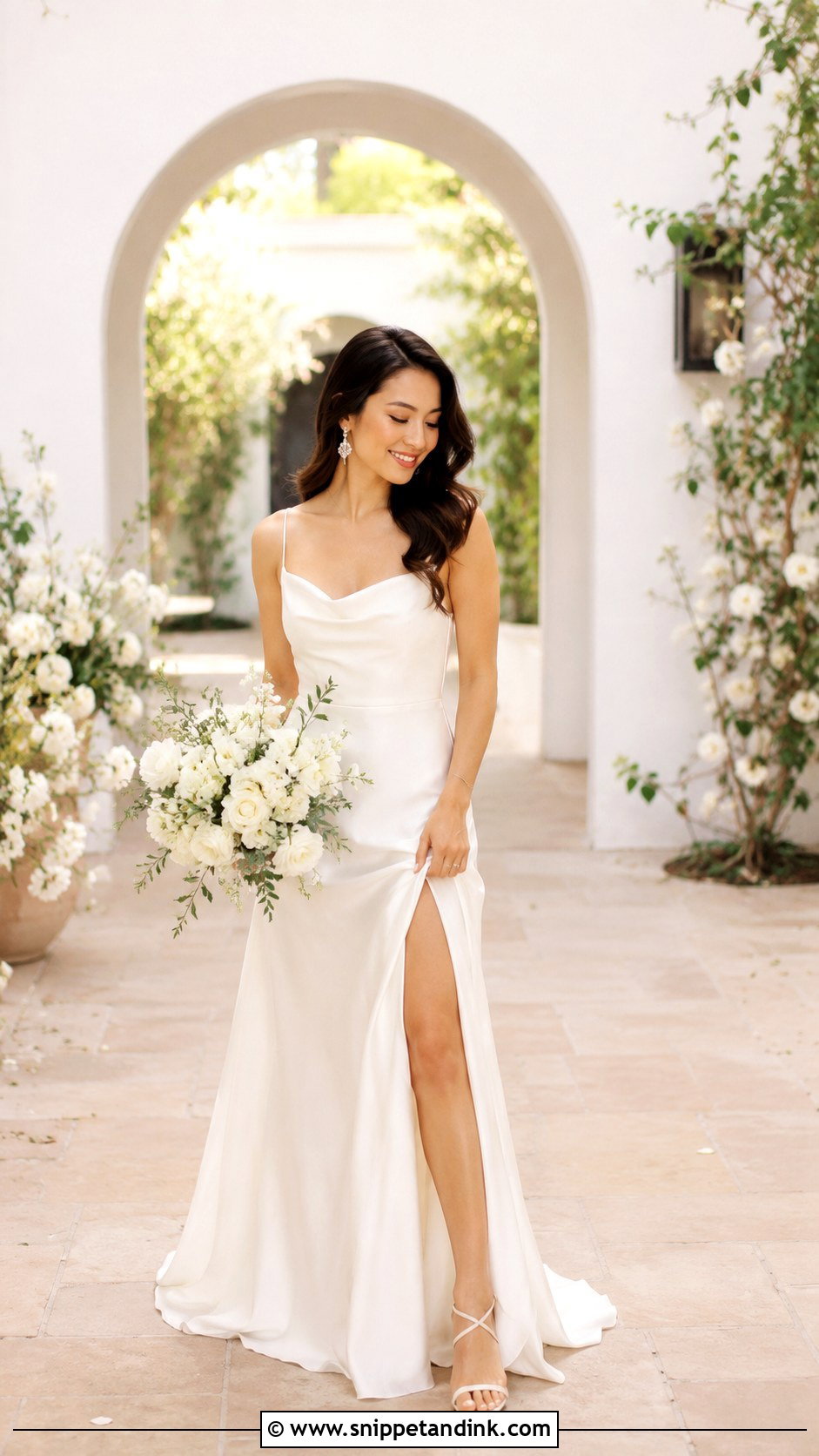
A spaghetti strap wedding dress keeps the upper body open and light, which suits a petite frame well. Satin slips, lace sheaths, soft A-lines and beach gowns all use them. Shortening straps is one of the easiest alterations, and it lifts the whole bodice, so I’d almost always do it on a petite bride. The bodice should sit close and the skirt fall smoothly. A sheer veil or removable lace topper gives coverage if you need it. Strappy heels and soft waves finish it.
11. Petite Slip Wedding Dress
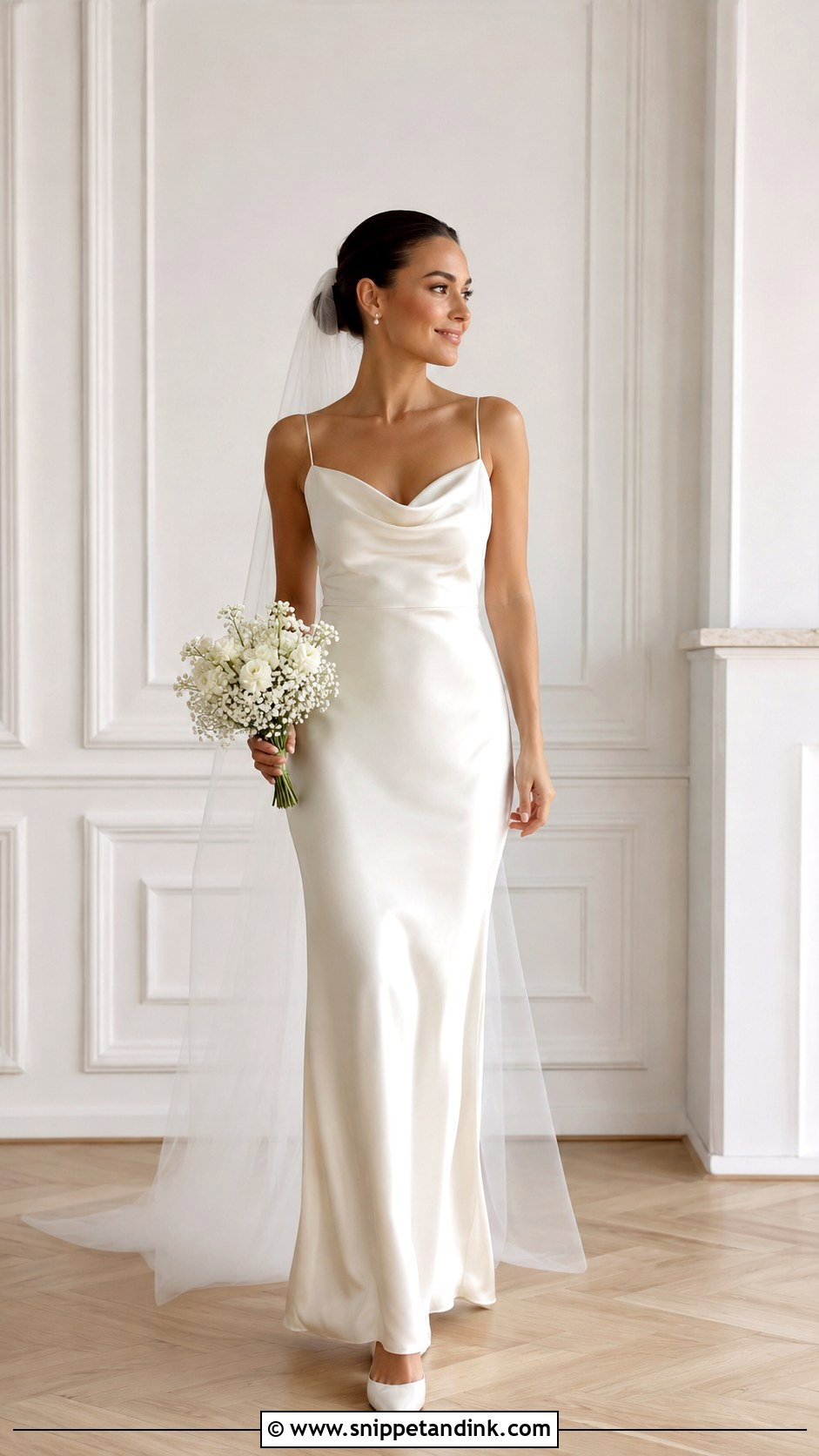
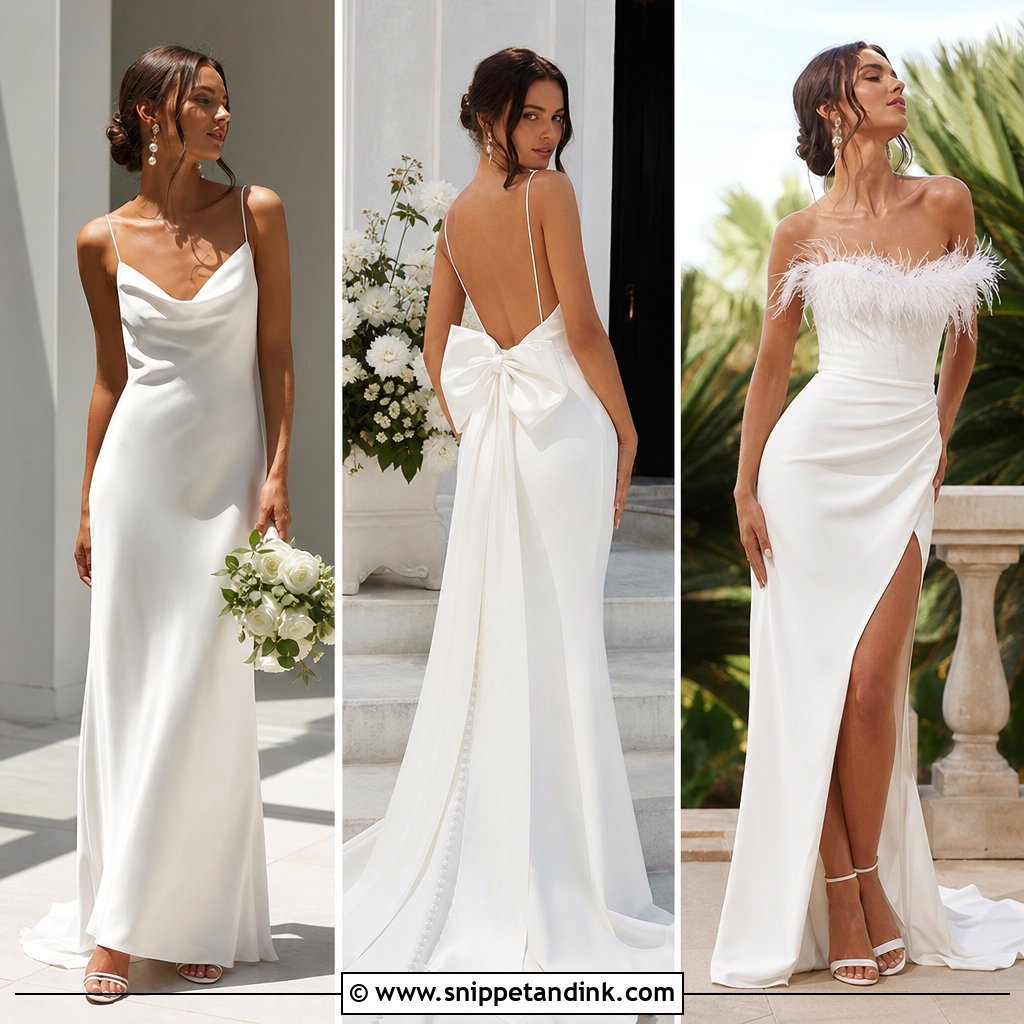
A slip dress skims the body in a smooth vertical line, which is why it lengthens a short frame. Satin and silk fall well without decoration. Because the design is so plain, the tailoring has to be exact: the hem, straps and bust all need fitting. Bias-cut slips hang from the shoulders, so shortening the straps changes how the whole dress drapes, and a good seamstress will do that before touching the hem. A cowl, V or straight neckline all work. Pointed heels, a sleek bun and a sheer long veil complete it.
12. Petite Satin Wedding Dress
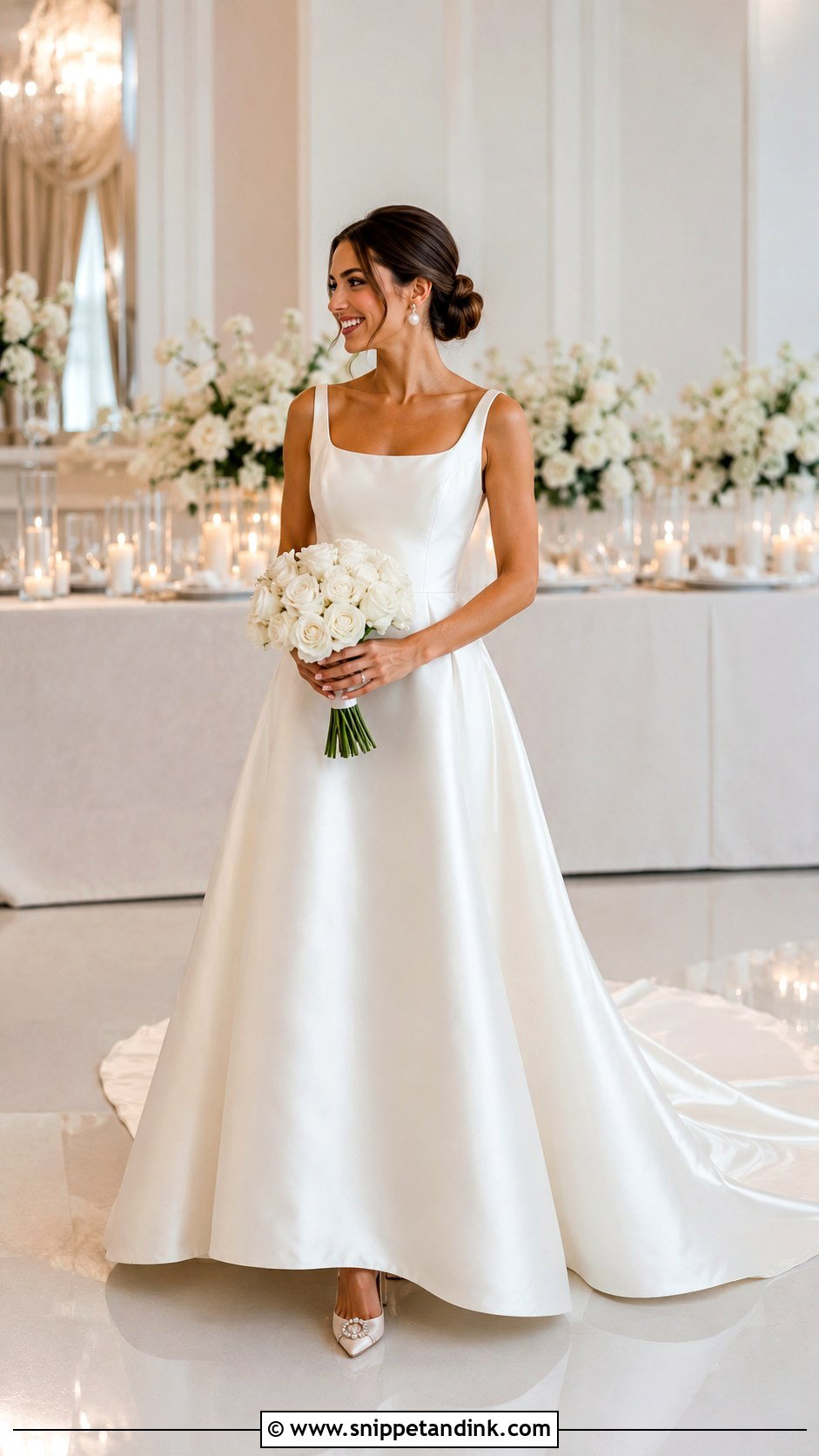
Satin carries a lot of light, so a simple cut is enough. Petite brides do best in softer satin on a sheath, slip, A-line or gentle fit-and-flare; stiff, heavy satin can stand away from the body and add bulk. Keep the neckline clean and the seams few. If you want a train, choose one that flows rather than drags, because a heavy train pulls the dress back and you’ll spend the day leaning forward. Pearl earrings, a low bun and classic heels suit indoor and city weddings.
13. Petite Crepe Wedding Dress
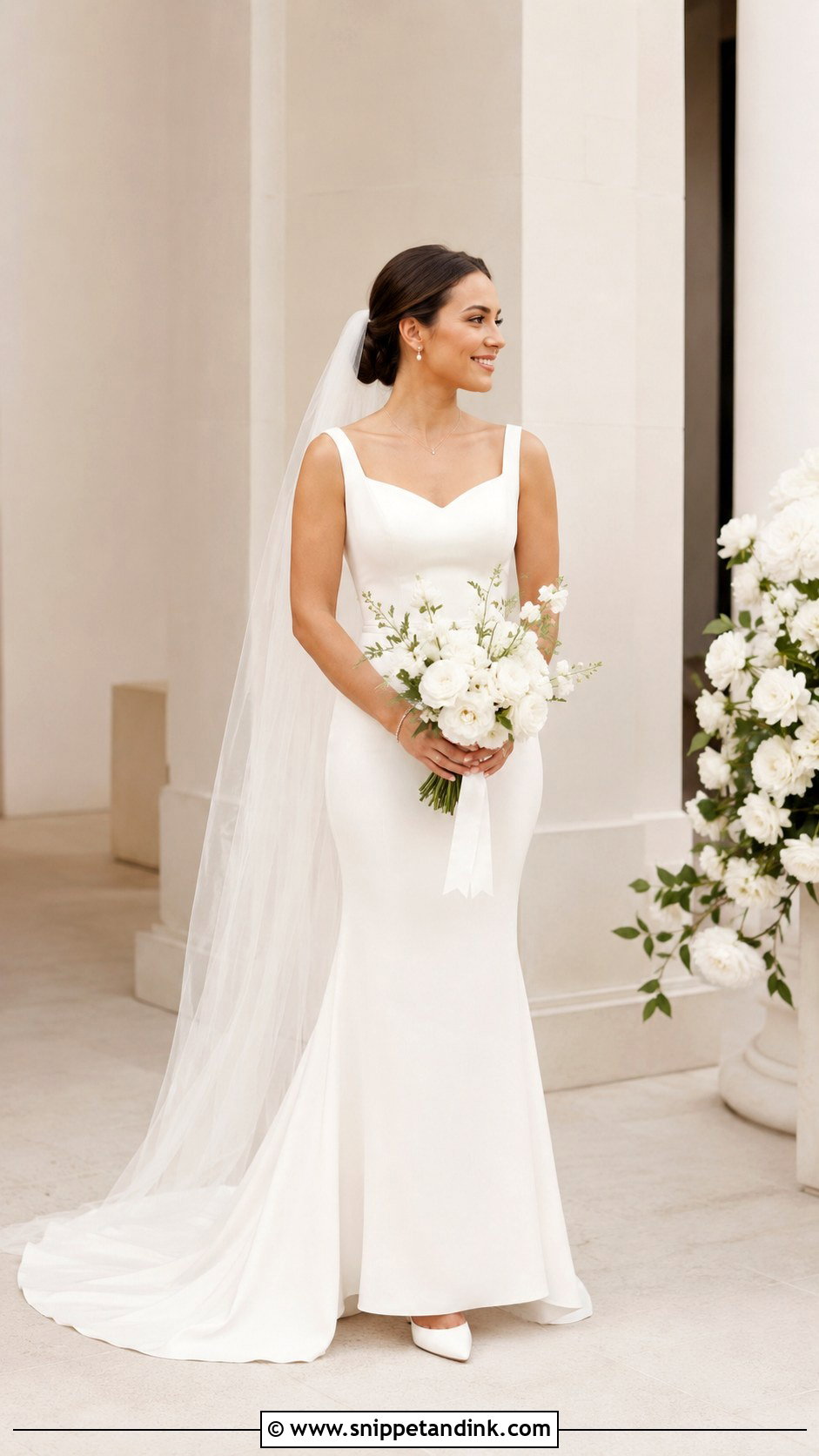
Crepe is light and structured without bulk, which makes it one of my first suggestions for shorter brides. A petite crepe wedding dress defines the body while keeping the outfit clean. It suits sheaths, columns, fit-and-flare and minimal A-lines. Swap heavy beading for a low back, buttons down the spine, a side slit or a shaped neckline. Crepe has a matte finish that photographs softly, but it shows alteration marks, so pick a careful seamstress. Simple heels and a sleek veil keep it uncluttered.
14. Petite Lace Wedding Dress
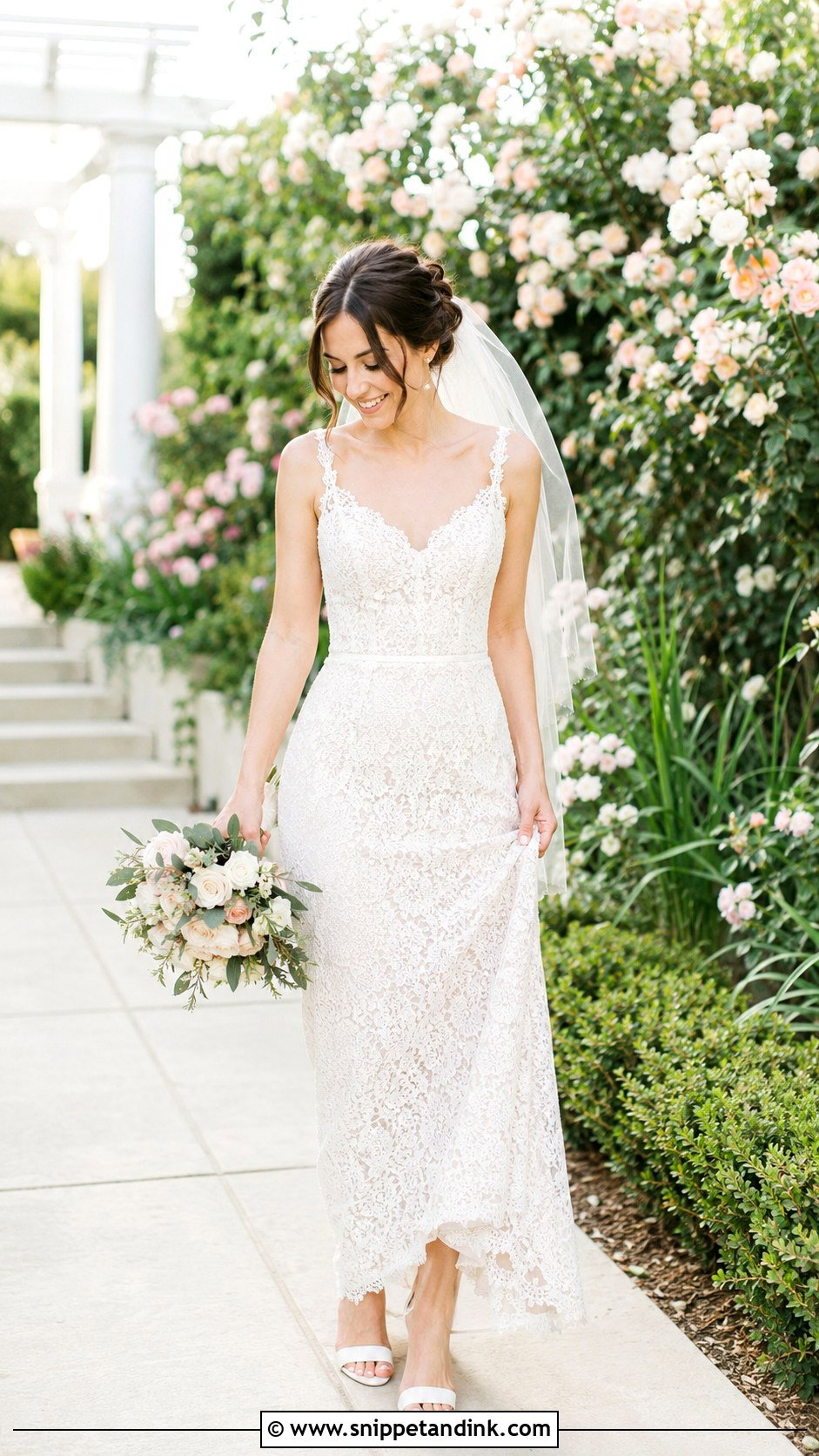
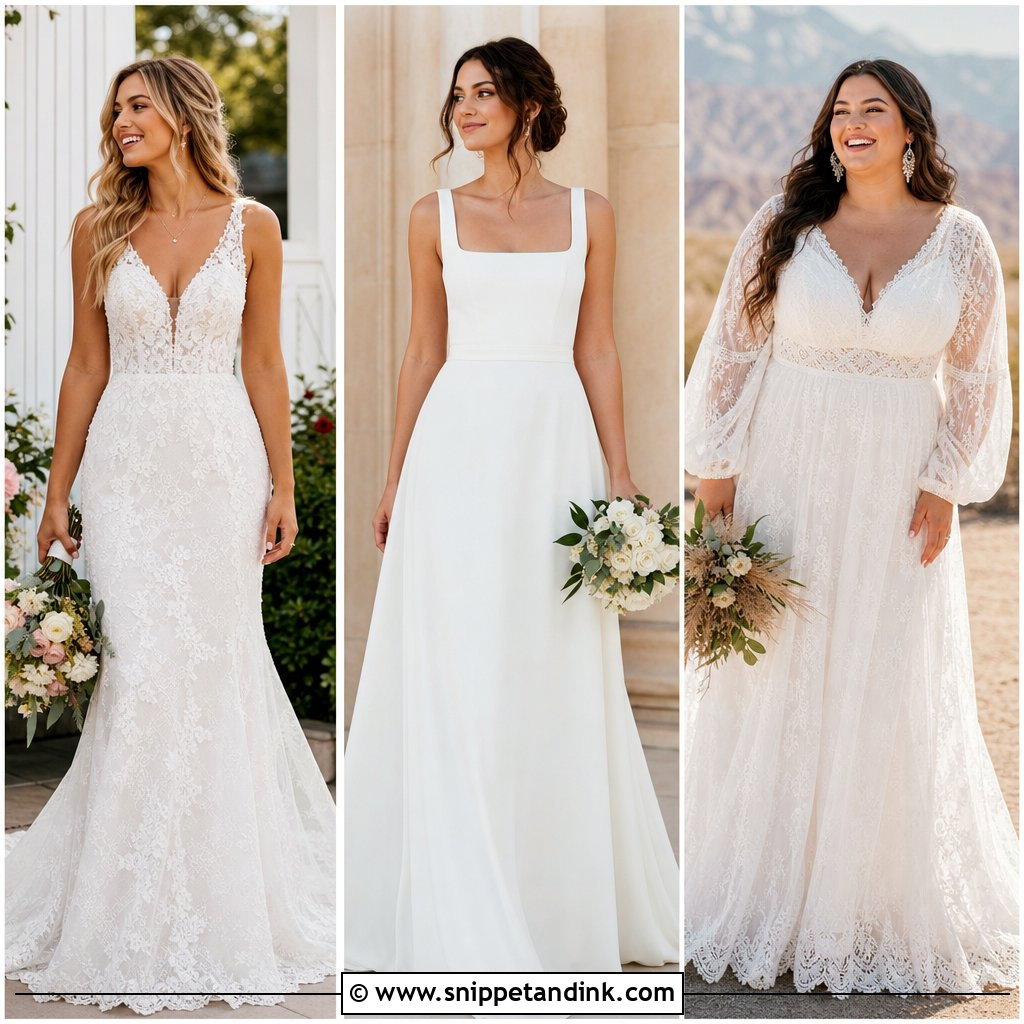
Lace scale is the whole decision. Small, delicate motifs suit a petite frame, while big, bold flowers can look like they belong to a larger dress. I hold a sample of the lace against your shoulder before anything else. Lace running vertically, along the bodice or trailing down the skirt, lengthens. When a lace hem is shortened, ask for the scalloped edge to be removed and re-applied, so you keep the finished border. Illusion sleeves or neckline add light coverage. Nude or ivory heels and pearl earrings finish it.


15. Petite Mermaid Wedding Dress
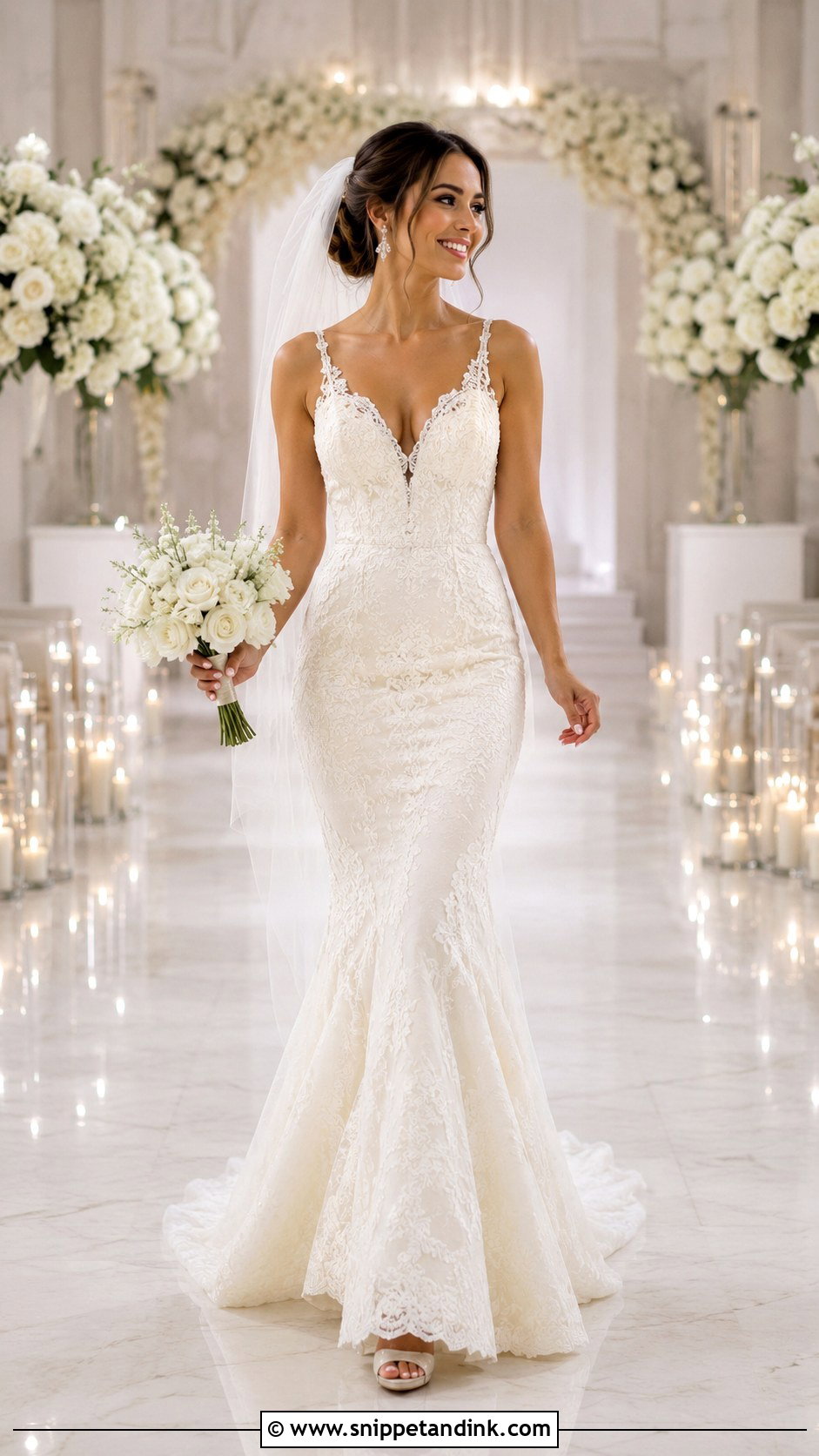
A mermaid can work on a petite bride when the flare starts higher than on the sample. A flare set at the knee on a taller model will land at your calf, and a low flare with heavy fabric around the knees makes your legs look short. A softer mermaid that releases gradually gives the long curve without the weight. Crepe, lace or satin with controlled structure hold it best. A V-neck, strapless or off-shoulder top keeps balance. Heels and precise alterations make it look intentional.
16. Petite Fit And Flare Wedding Dress
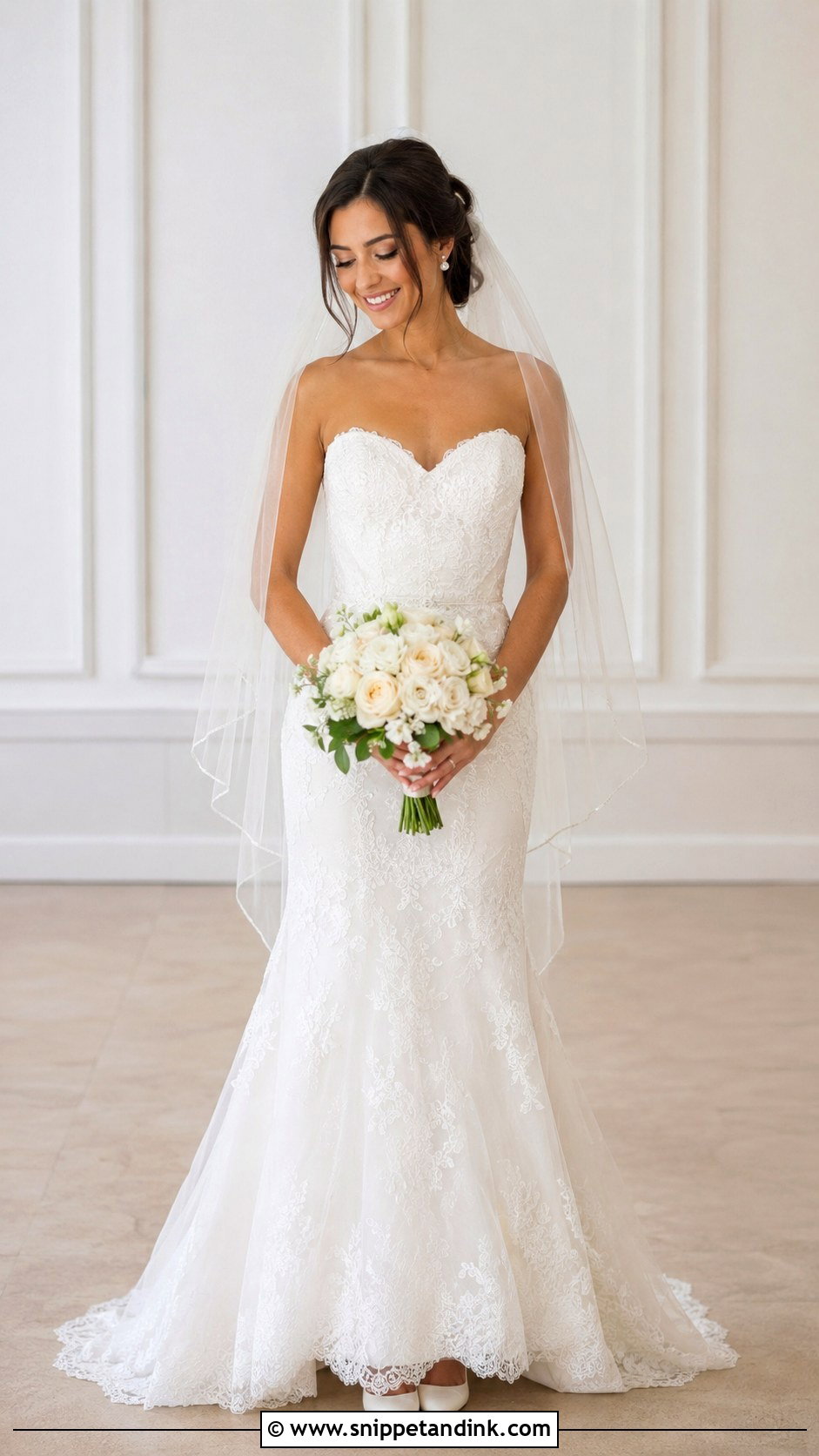
Fit and flare shapes through the bodice and hips, then opens more gradually than a mermaid, so it’s easier to walk in. For a petite bride, the flare should begin a little above the knee or at mid-thigh, which keeps the proportion and gives your stride room. Lightweight lace, crepe or satin all work. A sweetheart neckline, V-neck or square neck keeps the upper body open. Comfortable heels, a narrow veil and simple earrings finish it.
17. Petite Tea Length Wedding Dress
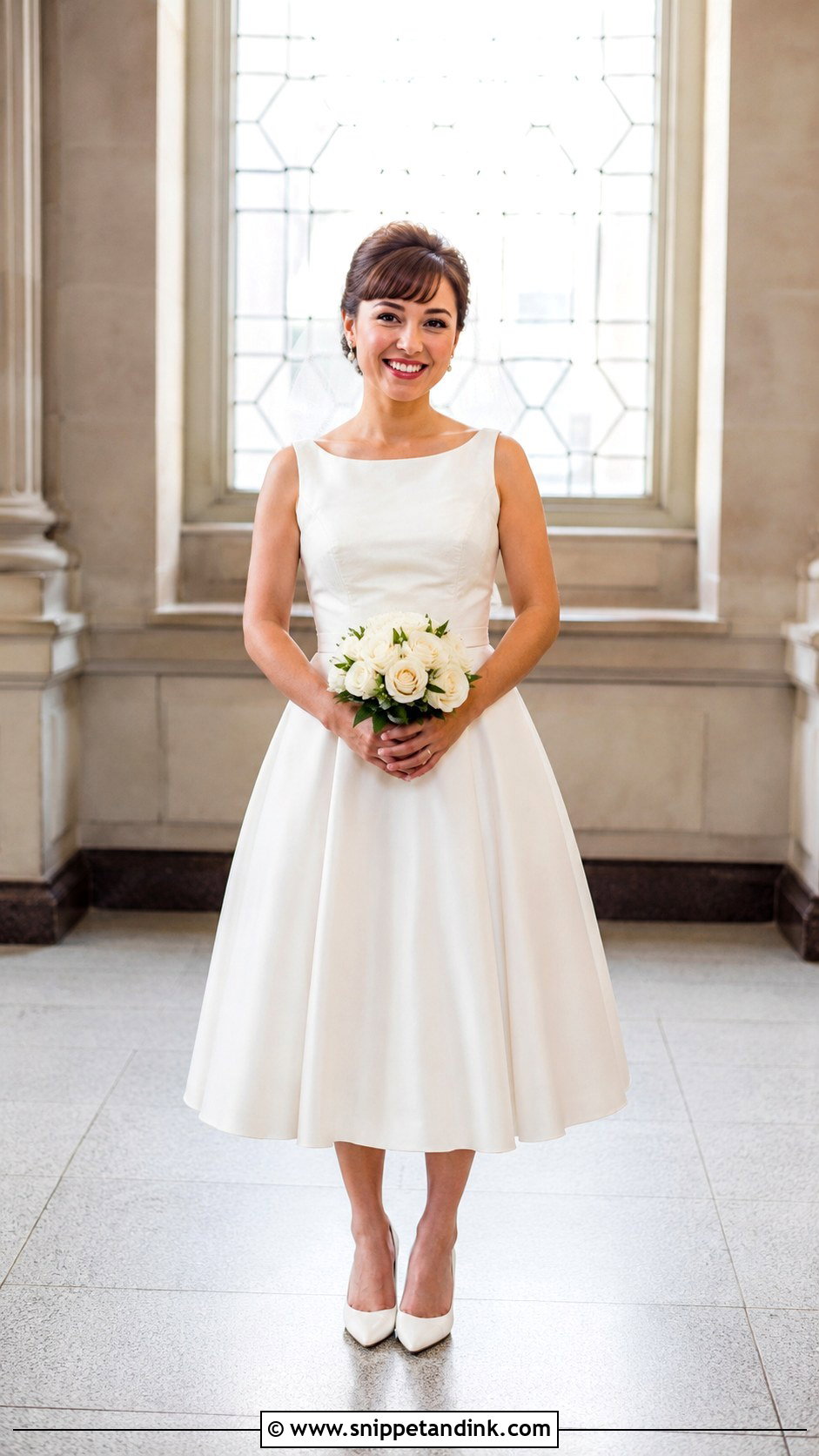
Tea length shows the ankles and shoes, which lightens the whole outfit. On a petite bride, the hem point is everything. Just below the knee or around mid-calf usually works; a hem that stops at the widest part of the calf cuts the leg and makes it look shorter. Try the length against your actual shoes. A fitted bodice with a soft A-line suits it; stiff, wide skirts shorten you. Pointed pumps, slingbacks or fine ankle straps, a short veil and pearl earrings finish the vintage feel.
18. Petite Mini Wedding Dress
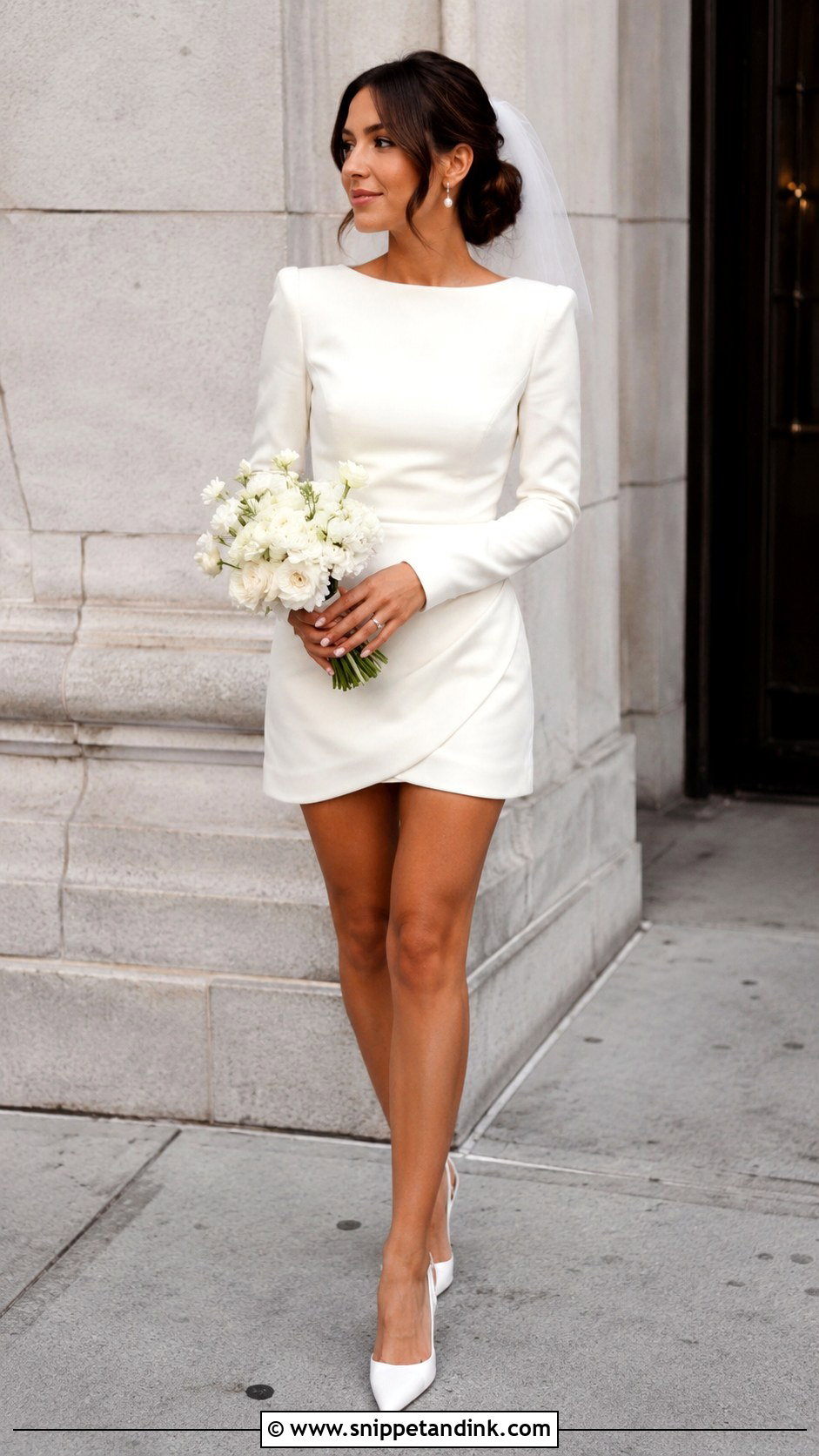
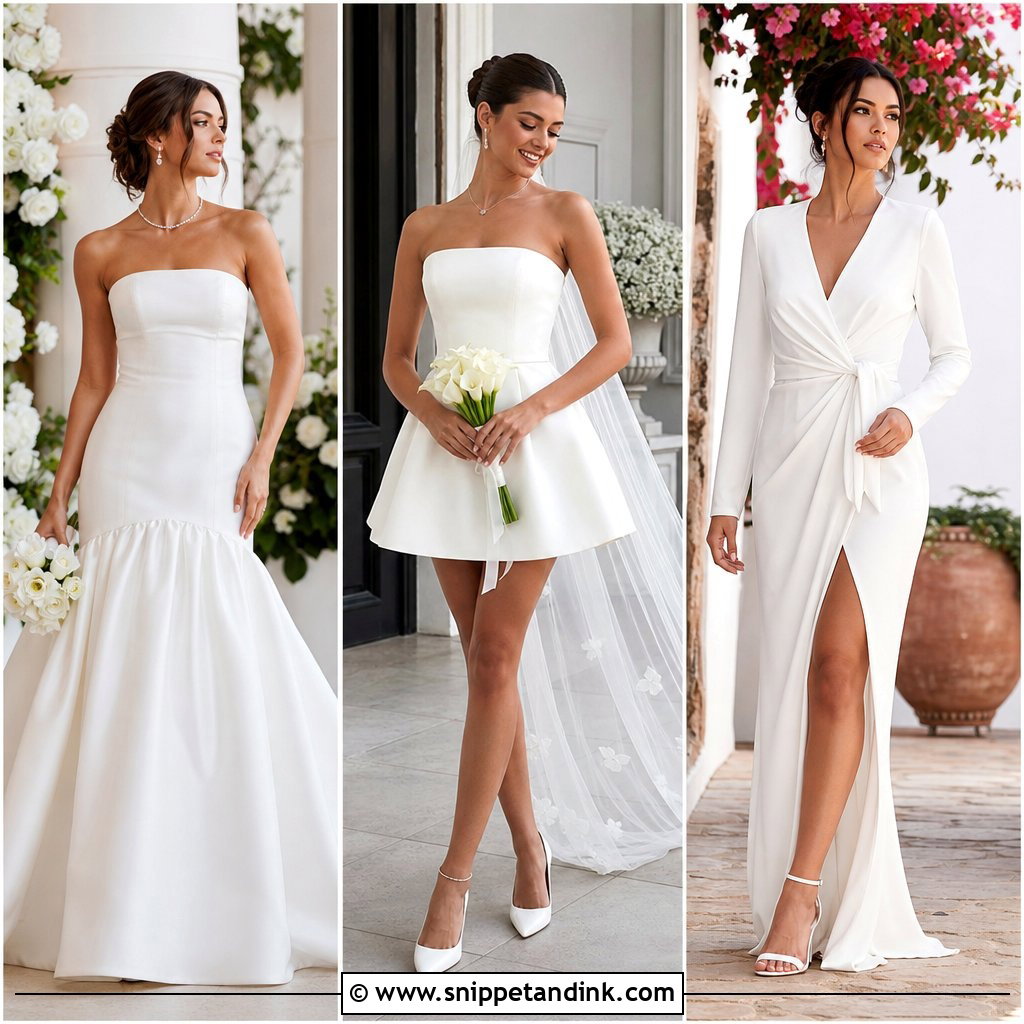
Showing leg is one of the quickest ways to look taller, which is why minis suit petite brides at civil ceremonies, elopements and receptions. A structured shift, blazer dress, satin mini or lace mini with clean proportions works. If the hem is very short, keep the neckline refined; long sleeves, a square neck or a high neckline balance it. Have the hem levelled while you wear your shoes, since minis can rise at the back. Pointed heels, a small bouquet and a birdcage or short veil finish it.
19. Petite High Low Wedding Dress
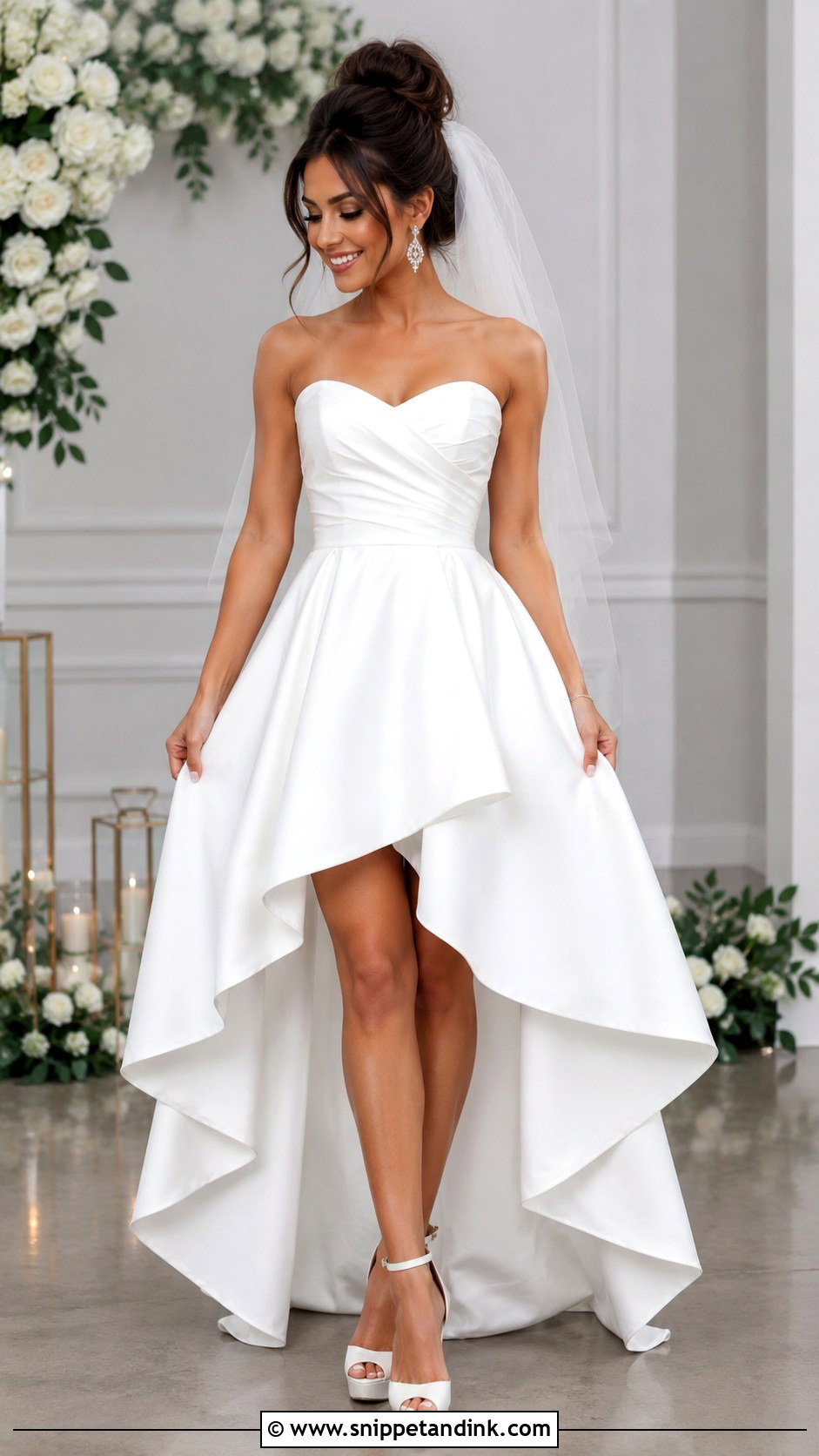
A high-low hem shows your legs in front and gives you a train behind, so you get height and drama together. Set the front hem at a flattering point, around the knee or above the ankle, then let the back fall into a soft train. Big volume works against you here, so keep the skirt light. The transition from short to long should be a gentle curve; a steep drop can look unbalanced on a short frame. A fitted bodice, standout heels and a light veil suit it, and it’s easy to dance in.


20. Petite Wedding Dress With Slit
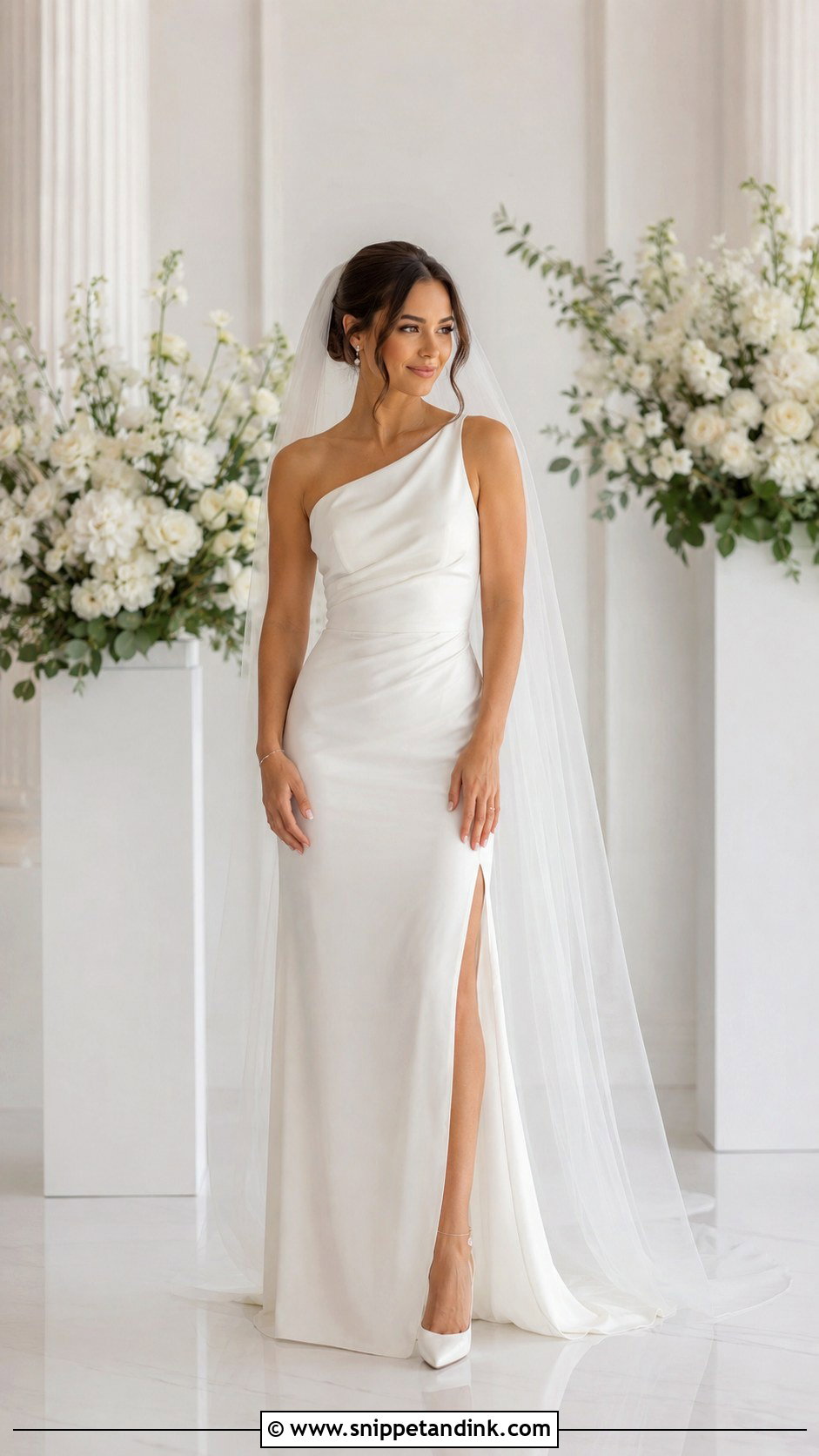
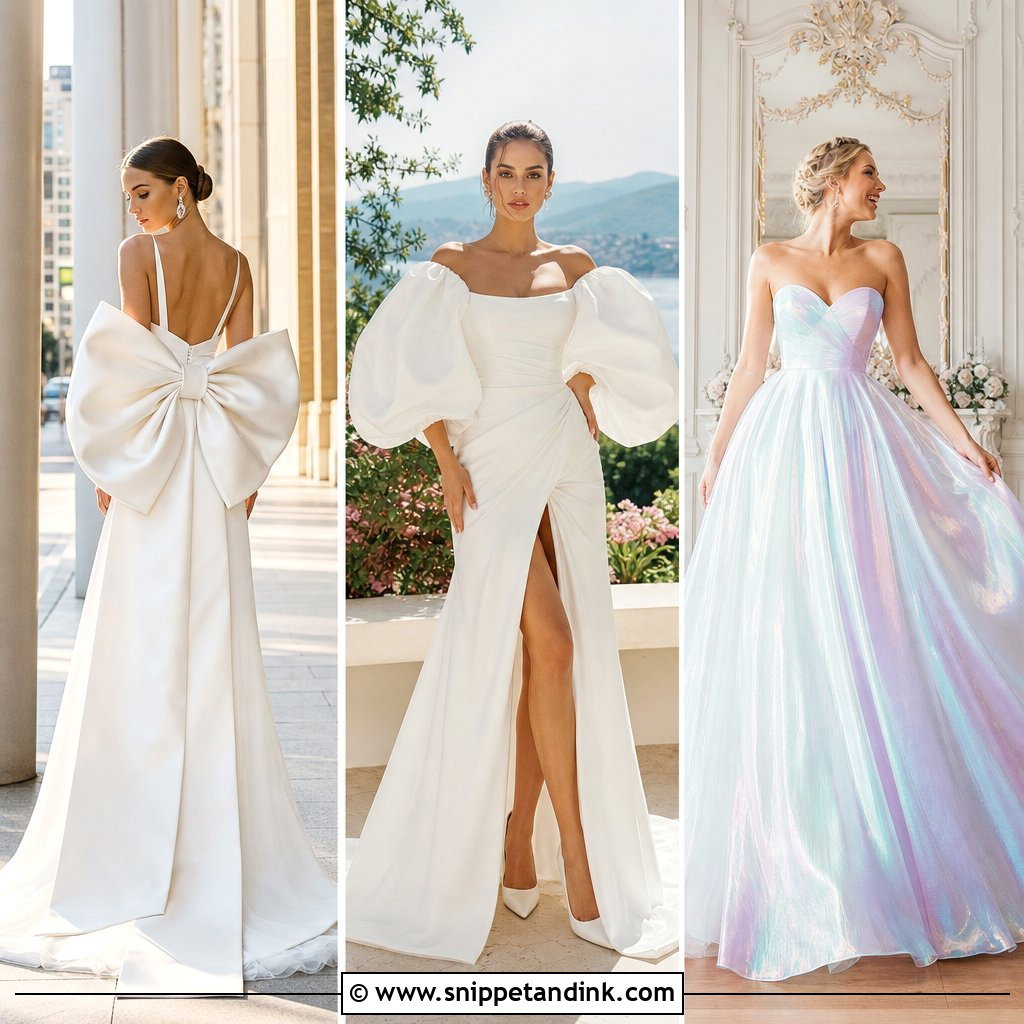
A slit creates a longer leg line as you walk, especially with heels. It doesn’t need to be high. A modest front or side slit adds movement and stops a long skirt looking heavy. Sheaths, A-lines, columns and satin gowns all take one. Walk toward a mirror at the fitting: the slit should open naturally and close again without pulling across the hips. On petite gowns, the slit sometimes needs moving up after the hem is shortened, or it ends up opening at the wrong spot. Pointed shoes or slim sandals suit it.
21. Petite Wedding Dress With Long Sleeves
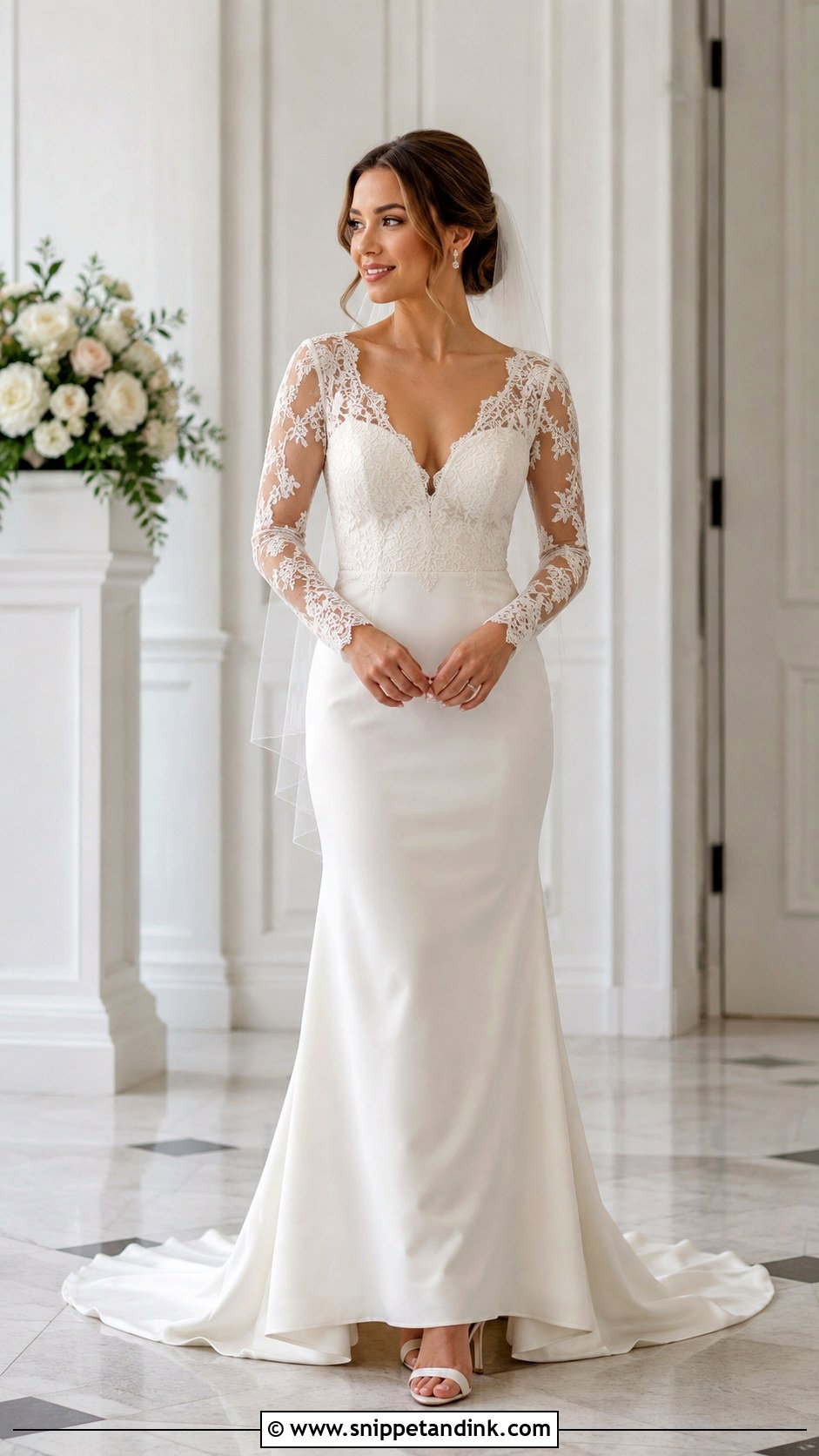
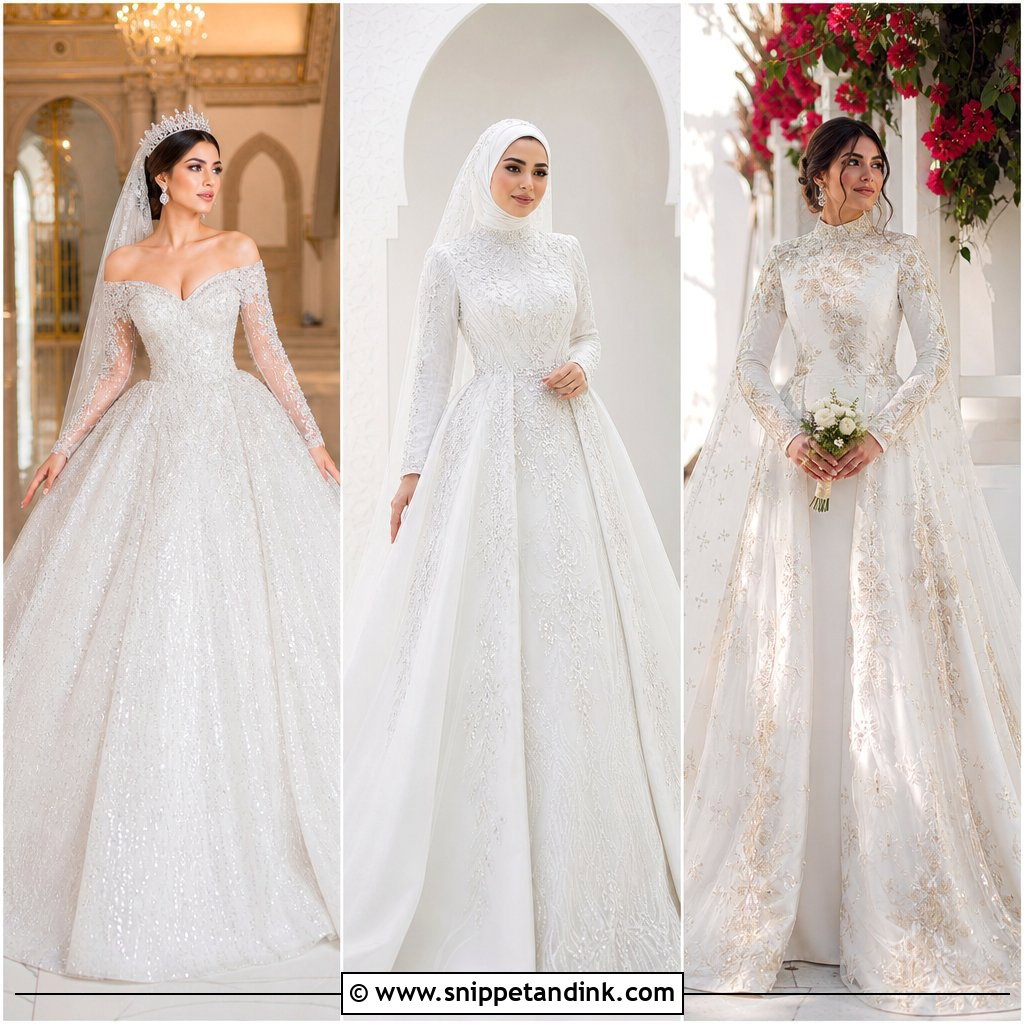
Long sleeves work on a short frame when they’re light and close to the arm. Sheer lace, illusion or fitted crepe sleeves are kinder than heavy puffs, which add width at shoulder level. Sleeves on most samples are too long for petite arms and bunch at the wrist; have them shortened from the shoulder or the cuff, depending on the lace. Pair them with a V-neck, square neck or open back so the dress isn’t closed off. A slim A-line, sheath or fit-and-flare suits them. Keep the skirt plain if the sleeves carry detail.
22. Petite Wedding Dress With Cap Sleeves
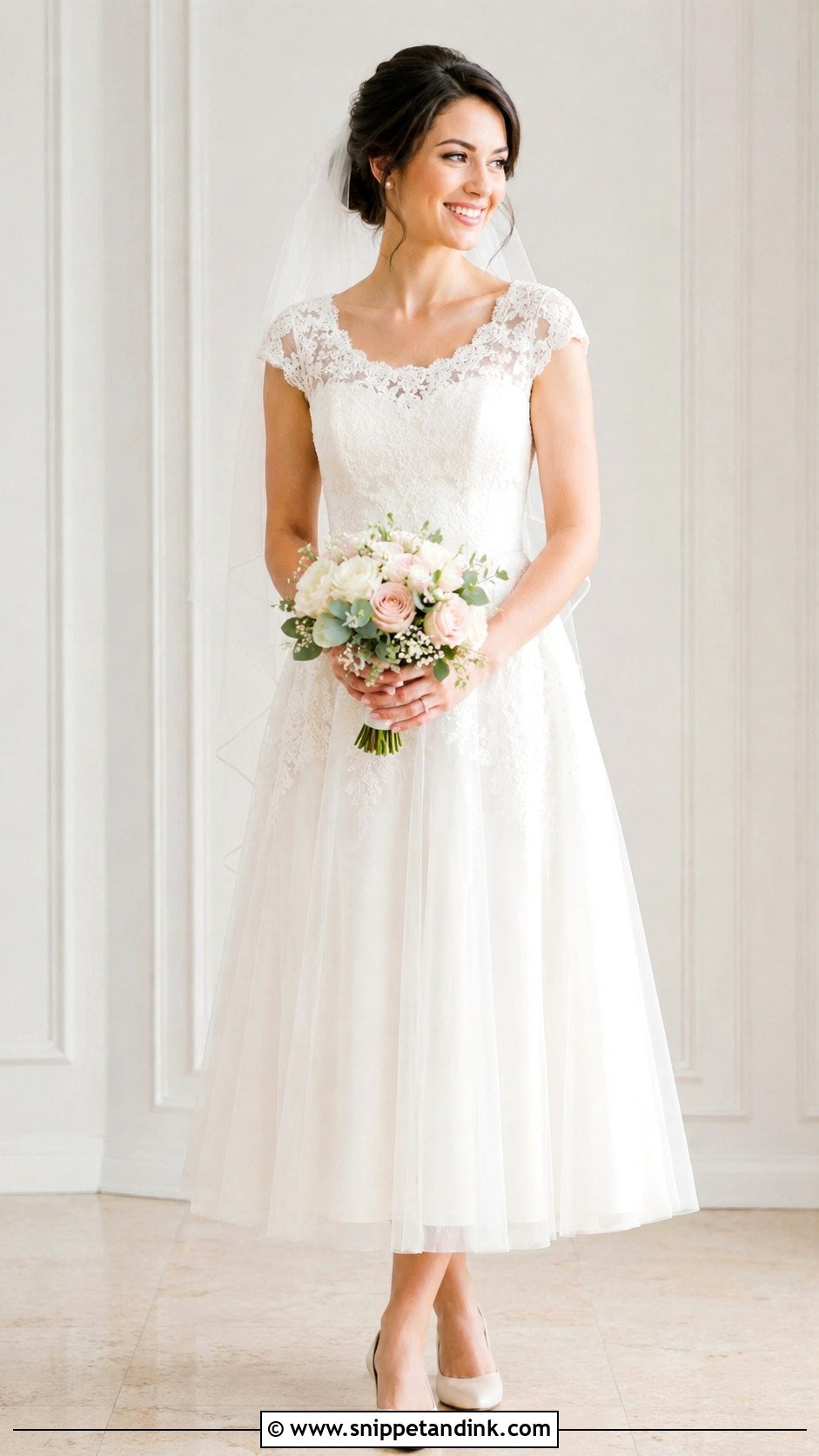
Cap sleeves give a little coverage at the shoulder without the weight of full sleeves. The ones that suit petite brides sit close to the shoulder and stop short; wide caps make the upper body look boxy. They work on lace, satin or crepe gowns. Pair them with an A-line, sheath or tea-length dress, and a V or scoop neck to open the front. Low heels, pearl studs and a fingertip veil give a classic finish.
23. Petite Wedding Dress With Illusion Neckline
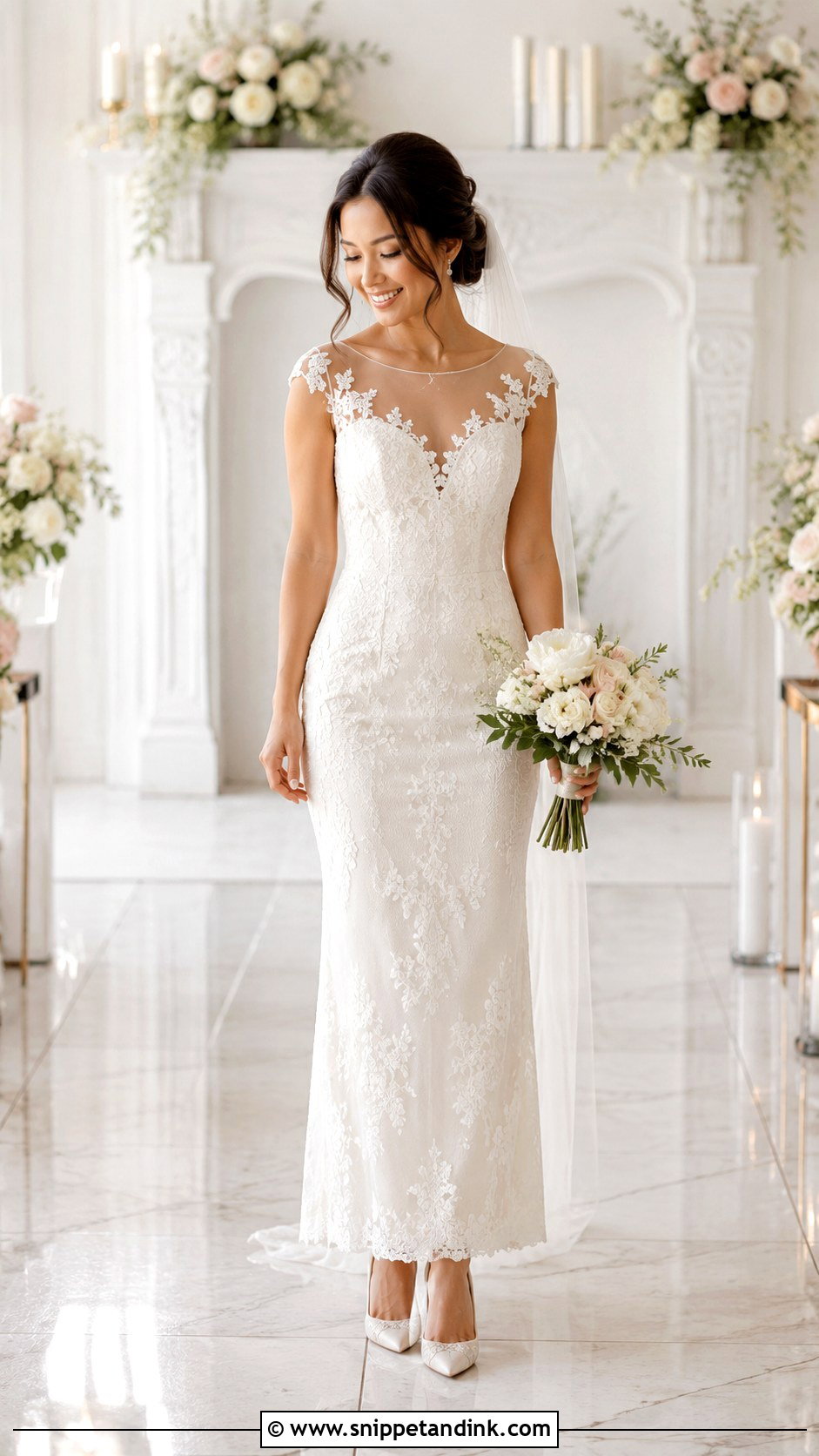
An illusion neckline gives coverage while keeping the upper body airy. Sheer mesh does the work, and lace or beading sits on it like it’s on your skin. Petite brides should choose fine embroidery or narrow lace rather than dense, heavy pieces, which drag the neckline down. Ask for the mesh in a shade close to your skin so the effect stays invisible in photos. It suits sheaths, A-lines and fit-and-flare. Keep the waist clean so the line isn’t broken. Simple heels and understated earrings finish it.
24. Petite Wedding Dress With Open Back
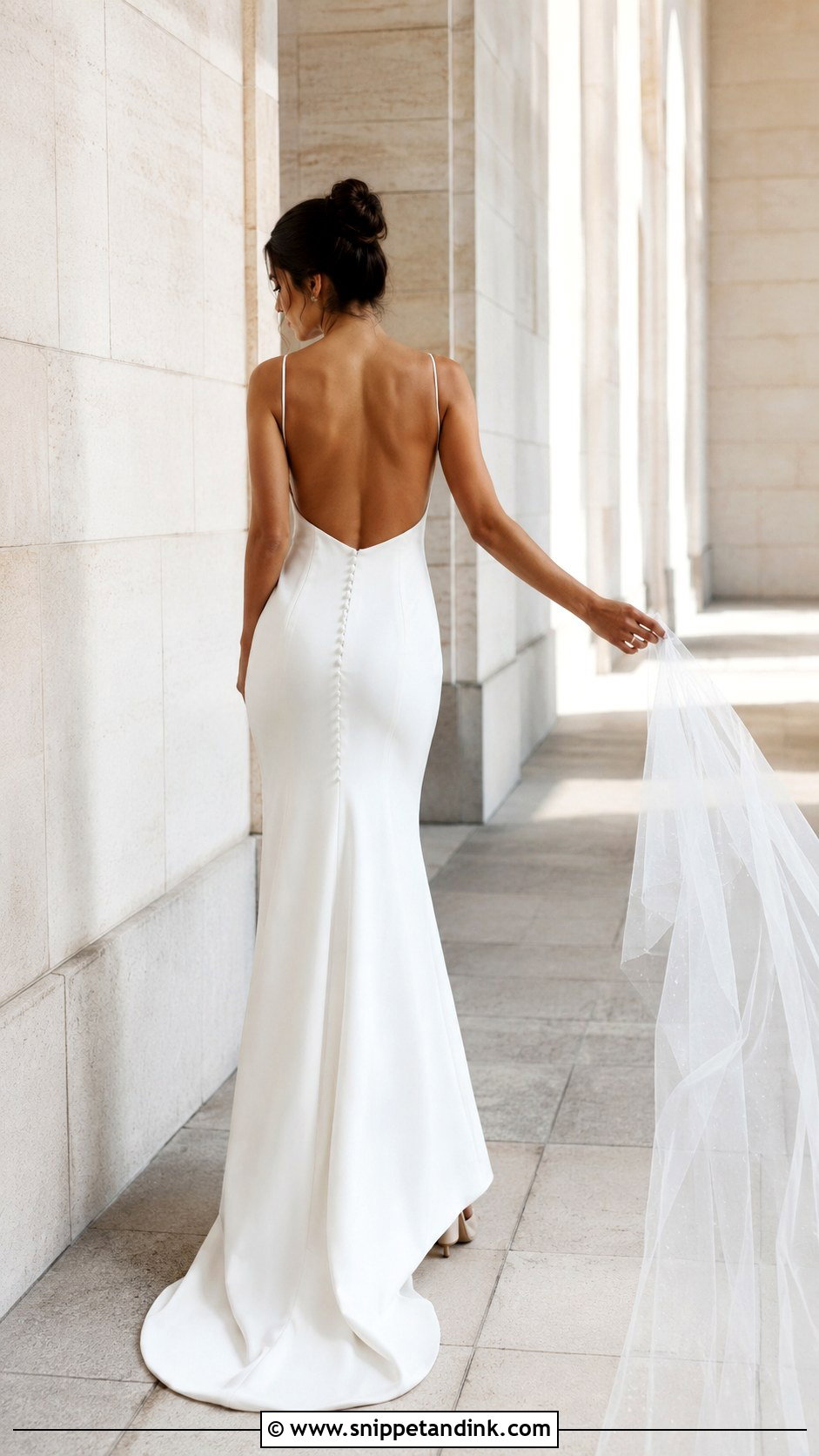
An open back adds drama without adding fabric, which is why it’s a smart detail for a smaller frame. The front stays clean and long while the back carries the interest. Low, keyhole or lace-trimmed backs all work on sheaths, slips, crepe gowns and fitted A-lines. On a short torso, a very low back can expose the top of your underwear, so check the depth with your own undergarments on. The bodice needs enough support to feel secure. An updo or half-up style shows the detail.
25. Petite Wedding Dress With Corset Bodice
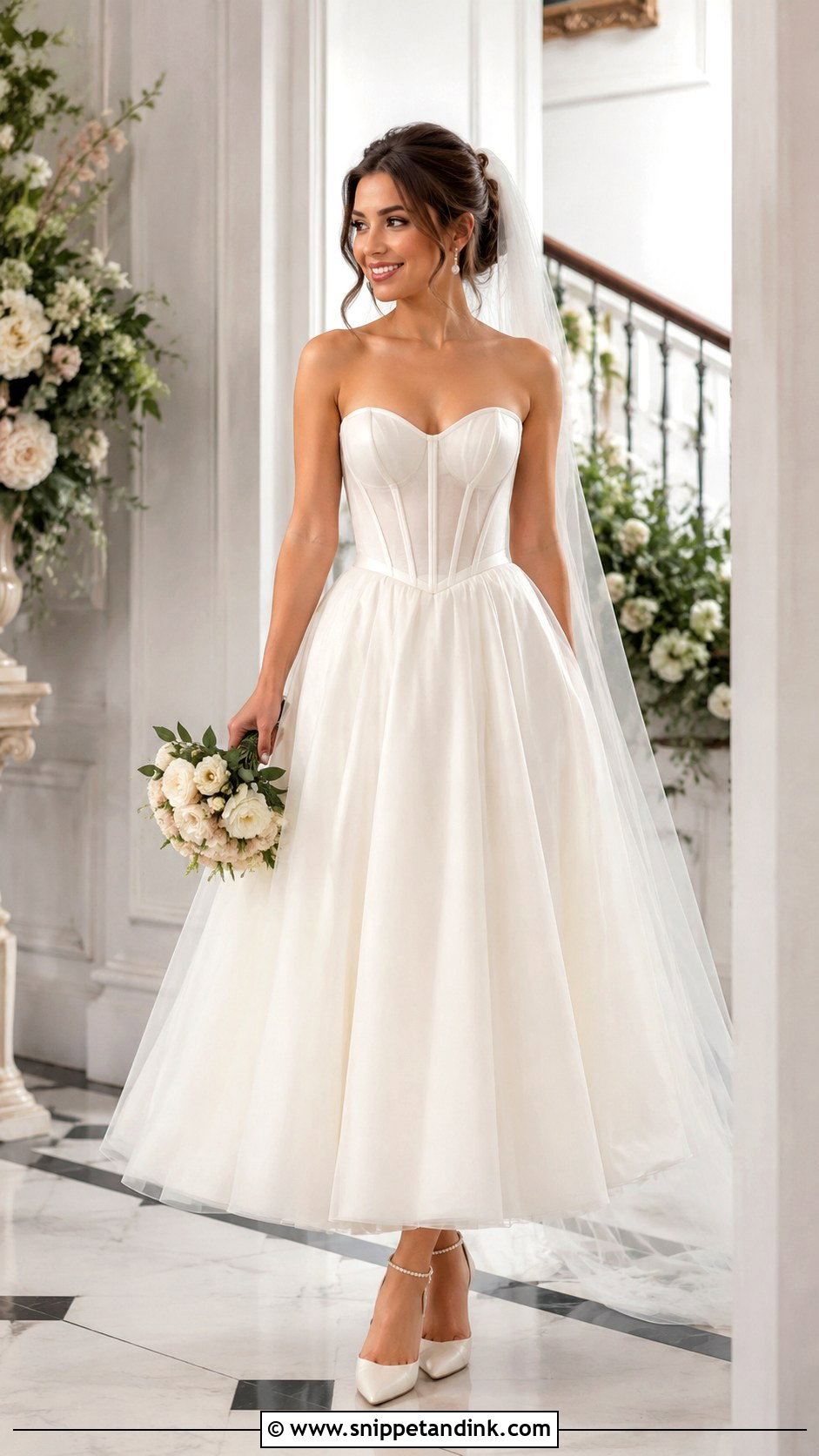
A corset bodice defines the waist and the vertical boning channels carry the eye up and down, which can make the torso look longer. Most corsets are made for a longer torso, though, so the bottom point often lands too low on a petite bride; the bodice needs shortening, not just tightening. Pair it with a soft A-line, slim satin skirt or gentle fit-and-flare rather than a bulky skirt. A sweetheart or straight neckline suits it. Elegant heels, a simple veil and minimal jewelry finish it.
26. Petite Wedding Dress With Detachable Train
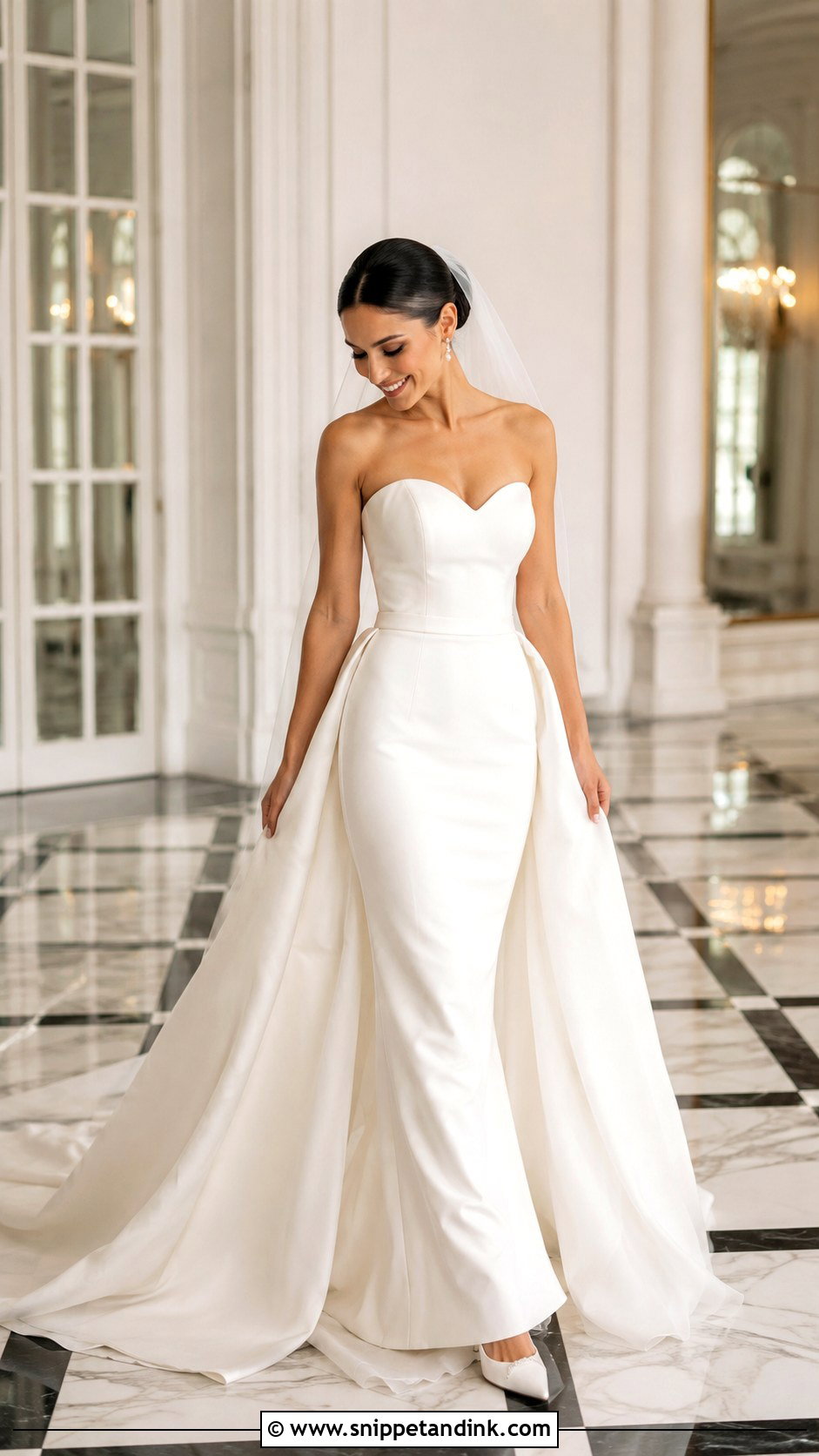
A detachable train lets you have a long aisle moment and then move freely at the reception without the weight. The base gown has to work on its own: a sheath, mermaid, fit-and-flare or column. Check where the train attaches, because hooks at the waist or back can add a bump under the fabric. Practise taking it off with your helper before the day. Afterwards, swap to a lighter veil or statement earrings.
27. Petite Simple Wedding Dress
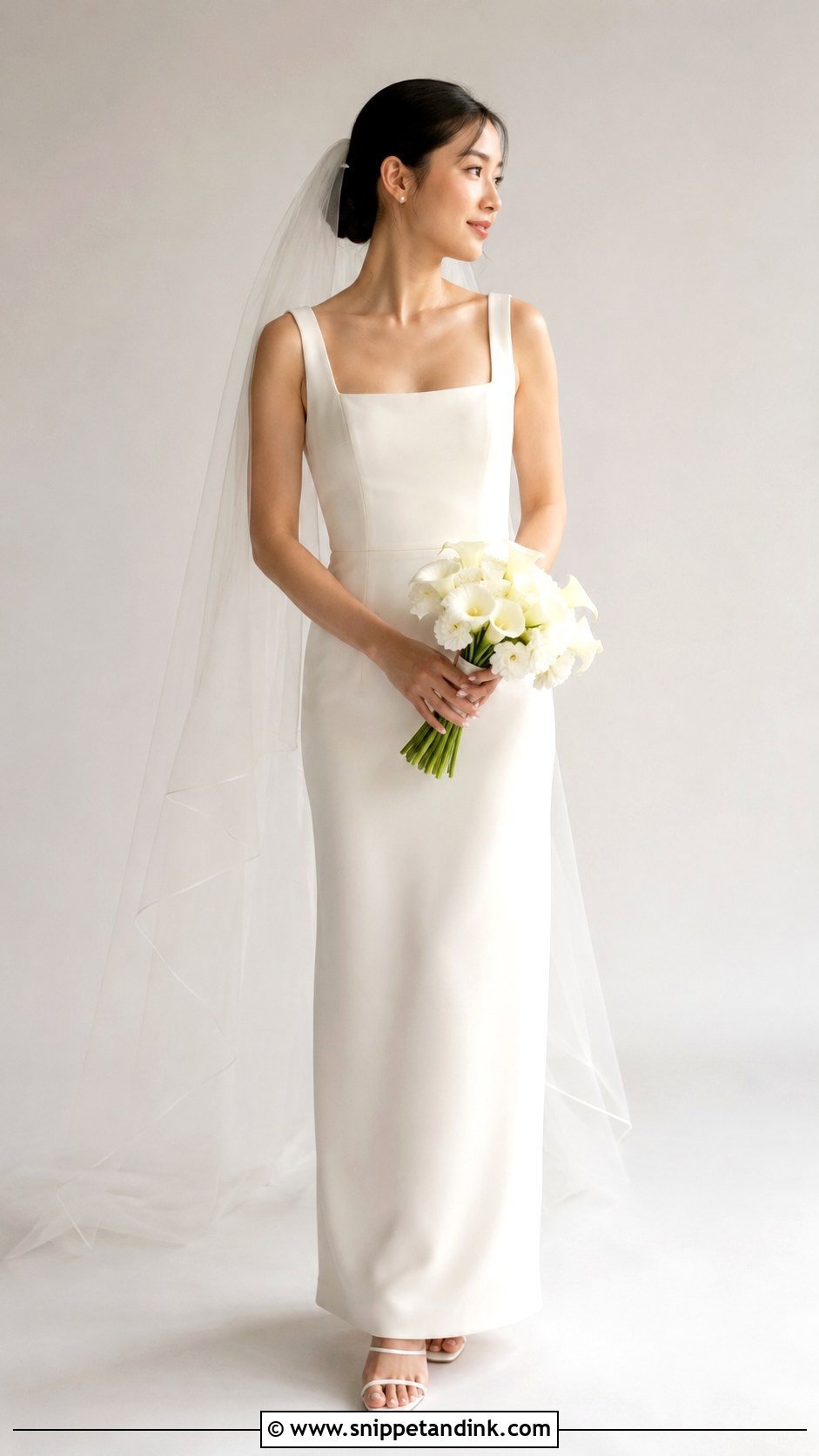
Simple dresses often suit petite brides best, partly because clean designs give a smoother line and partly because they’re so much easier to alter. A sheath, column, slip or soft A-line in crepe, satin or silk all work. Choose a square, V, strapless or scoop neckline. Instead of embellishment, spend on fit and fabric, and add one detail: covered buttons, a low back or a side slit. Classic heels and neat hair finish it.
28. Petite Boho Wedding Dress
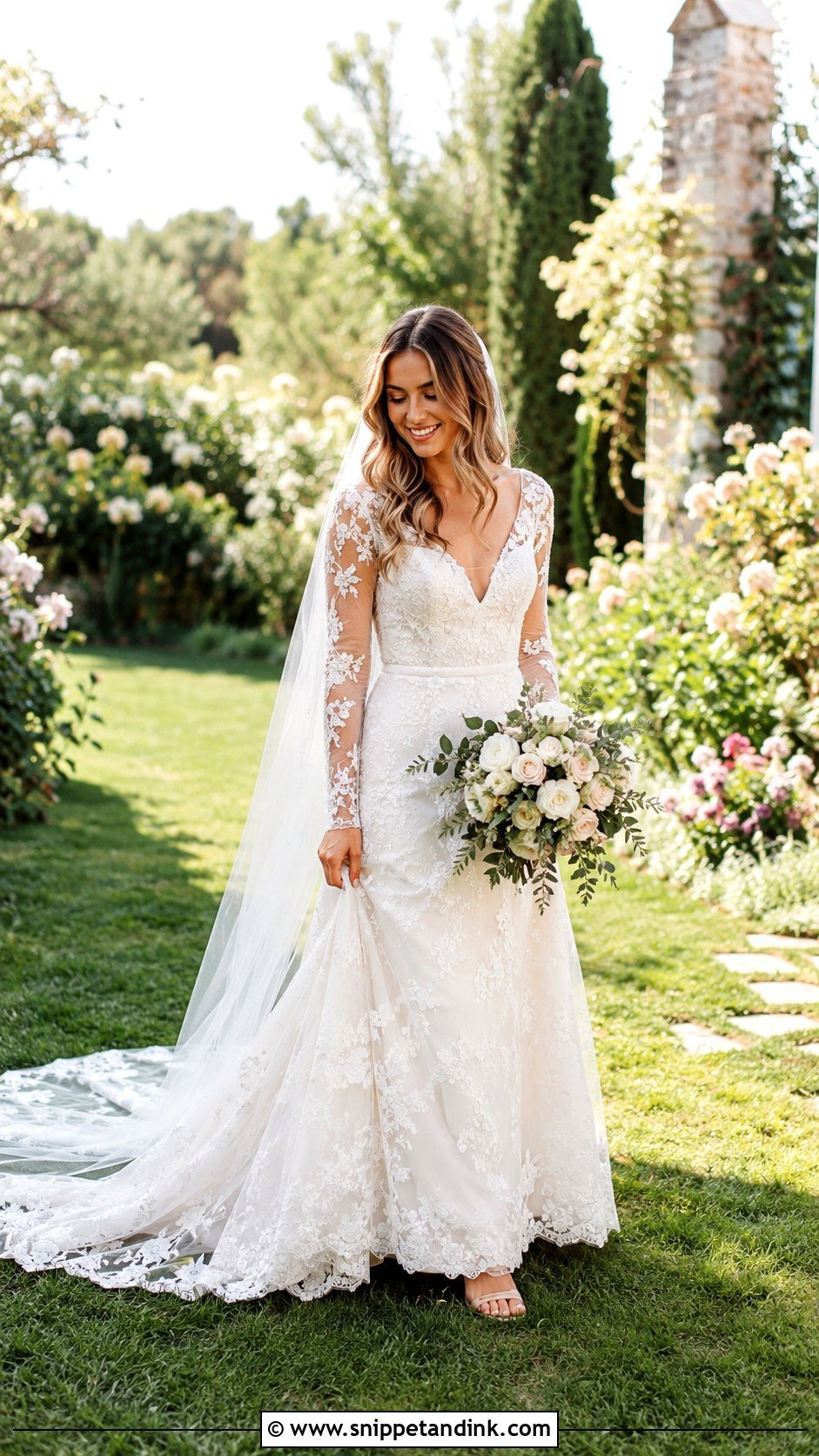
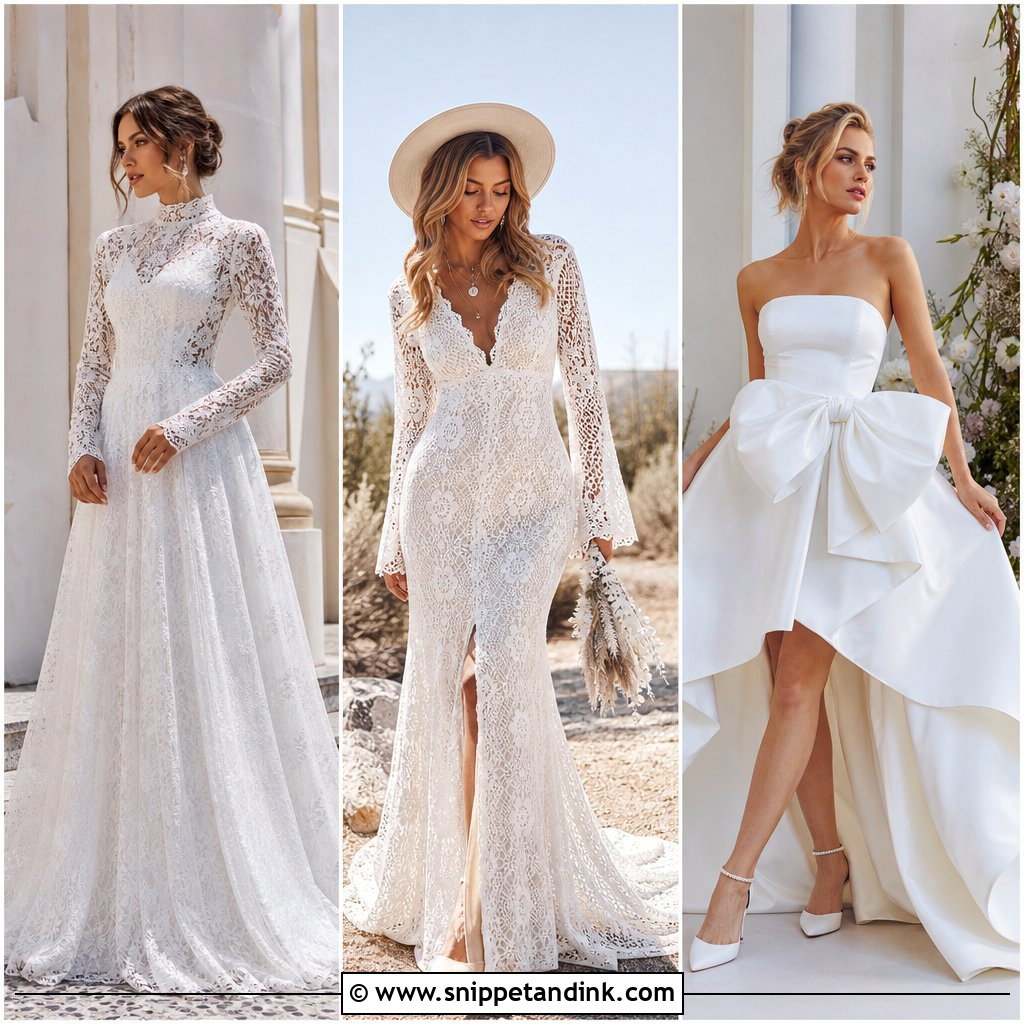
Boho dresses suit shorter brides when the shape stays light and vertical. Soft lace, chiffon or tulle with gentle movement work better than layered skirts. A V-neck, empire waist or slim A-line keeps it flattering. Oversized bell sleeves and big lace motifs are the two things I’d steer you away from; they can make the dress look a size too large for your frame. Fitted lace sleeves, fine straps or a soft open back give the same mood. Loose waves and a floral hairpiece suit outdoor and garden weddings.
29. Petite Beach Wedding Dress
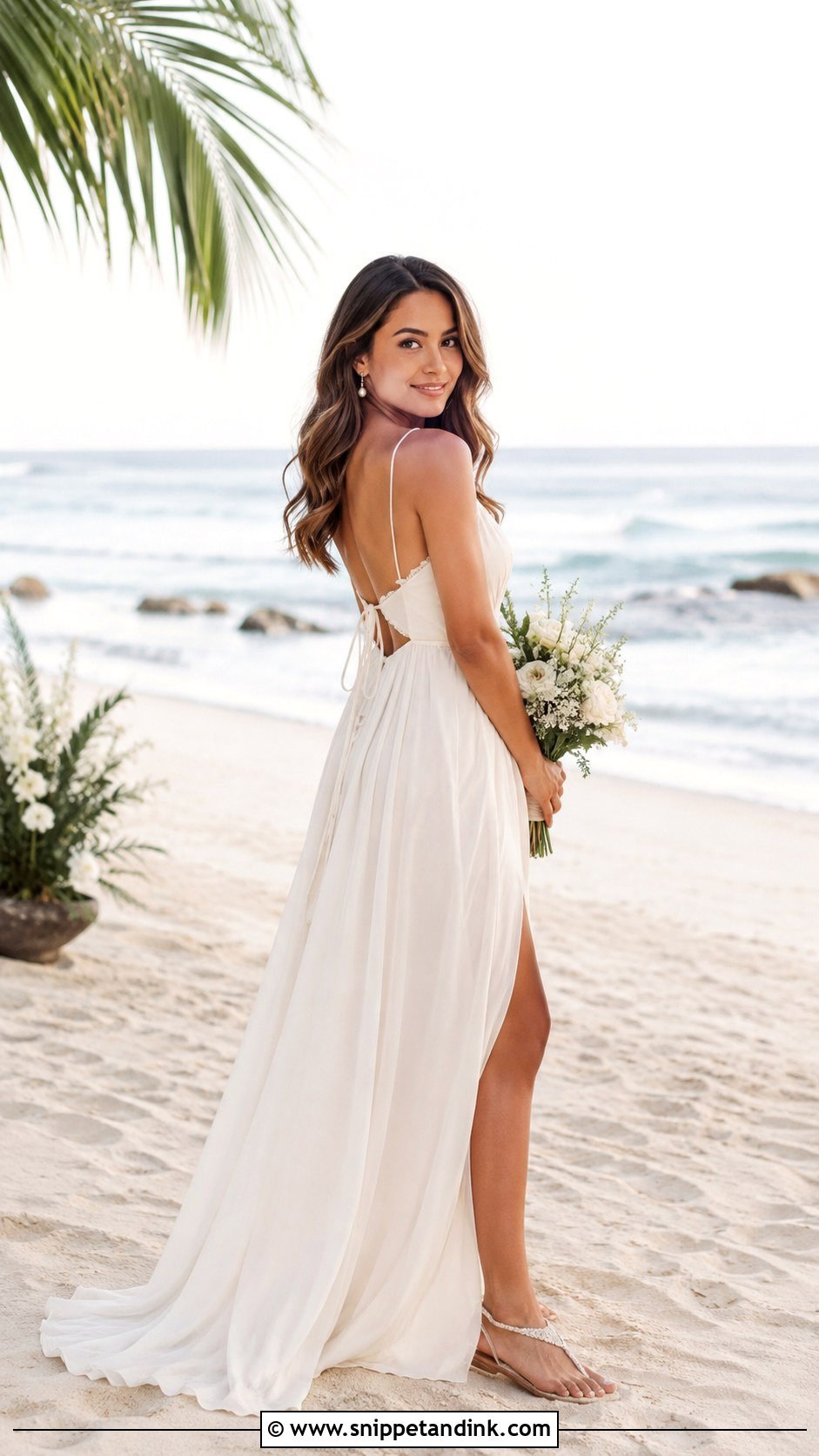
On sand, heavy trains and stiff skirts drag, so light chiffon, crepe, silk or soft lace make more sense. A sheath, slip, empire waist or simple A-line suits a petite frame and the setting. Spaghetti straps, a V-neck, an open back or a front slit keep it airy. If you’ll be barefoot, hem the dress for that, not for heels, or the front will drag through wet sand. Keep accessories minimal. Soft waves, pearl earrings and flat sandals suit a beach ceremony.
30. Petite Courthouse Wedding Dress
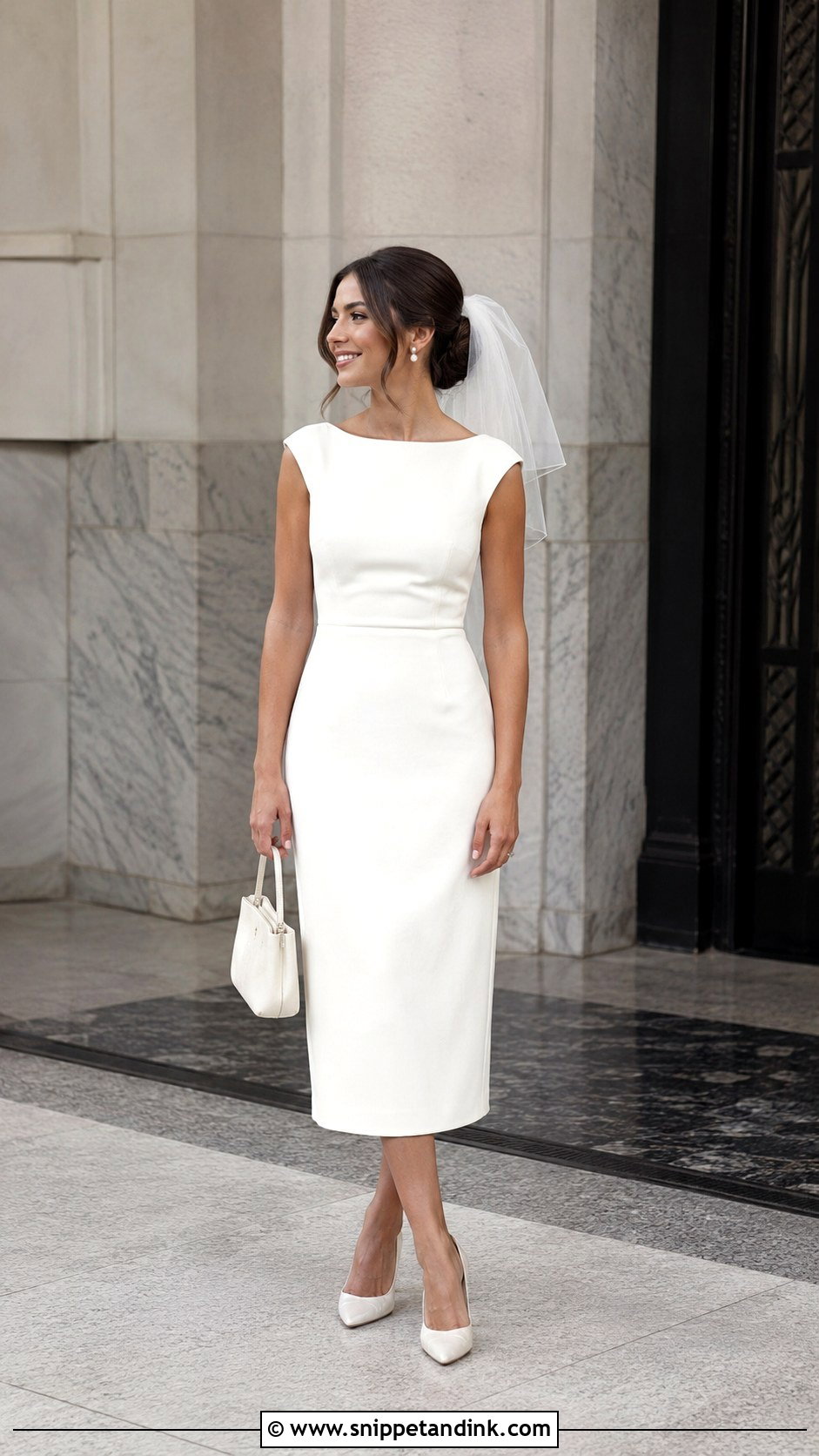
A courthouse wedding dress lets a petite bride wear something tailored and easy to move in. A white midi, mini, blazer dress, sheath or satin slip all work. Petite midis are tricky, because the hem often lands at the widest part of the calf; I’d shorten to just below the knee instead. Pointed heels, a small bag and simple jewelry look polished. A short veil, pearl headband or white bow adds the bridal note. Keep it refined rather than formal.
Scaling Your Veil, Bouquet and Shoes to a Shorter Frame
Accessories sold with a bridal gown are sized for the average sample model, and on a petite bride they can quietly overpower the dress. A few adjustments keep everything in proportion.
- Veils: lengths such as fingertip or chapel are named for where they fall on an average height, so they’ll land lower on you. Measure from where the comb will sit and order to that length, not the name.
- Width: a narrow veil that falls close to the body lengthens. Very wide or heavily layered tulle can make your shoulders look broader.
- Bouquets: hold the bouquet at your hip bone in front of the mirror. If it covers your waist and most of the bodice, it’s too big for your frame. A smaller, slightly cascading shape keeps the line long.
- Shoes: a pointed toe extends the leg line, and nude or ivory close to your skin tone does the same. You don’t need very high heels; a comfortable mid-height heel you can wear all day helps more than one you abandon by dinner.
Bring the veil, shoes and something close to the bouquet size to your final fitting. Seeing them all together is the only way to check proportion properly.
Height Is One Measurement; Proportion Is the Rest
No single silhouette suits every short bride. Your torso length, leg length and how much fabric your frame carries matter as much as your height. Fitted gowns, A-lines, minis, long sleeves, lace, satin and even long trains can all work once the scale is right. Watch the waist seam, the hem point and the size of any detail, and budget for alterations from the start. Try more than one shape before deciding, and pick the one that feels like you the moment you stop looking in the mirror.
You'll Like These Ideas:


Leave a Reply