
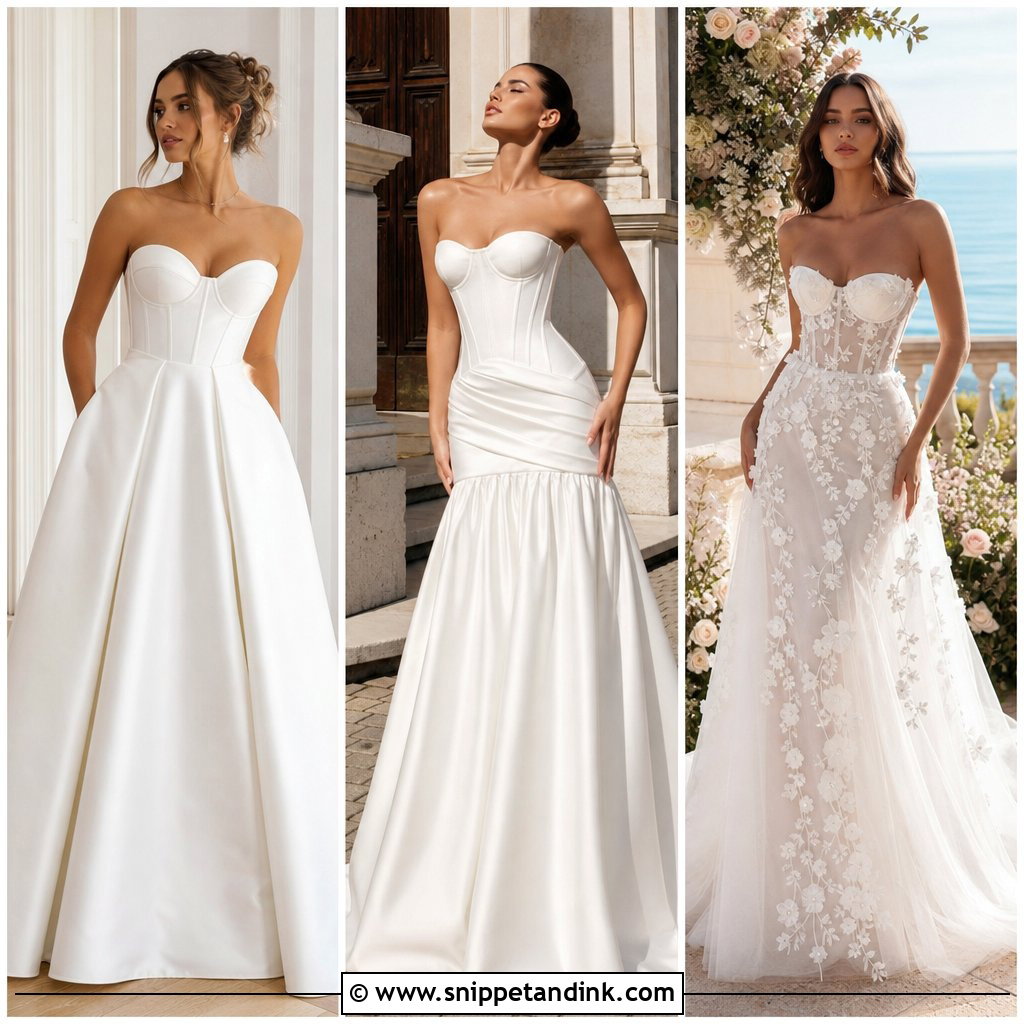
A corset top does two jobs at once. It shapes the waist, and it holds up a heavy skirt so the weight doesn’t drag on your shoulders all day. That’s why it pairs so naturally with a princess silhouette. Corset bodices now range from plain satin to exposed boning, floral lace, Basque waists, detachable sleeves and glitter tulle. Before thinking about accessories, I’d want to know how much support you need, what the venue and season are, and how the neckline sits on your body. Those answers decide the gown; the veil, jewelry, shoes and bouquet follow from it. The twenty looks below run from classic to modern, modest to glamorous, across a full range of sizes.
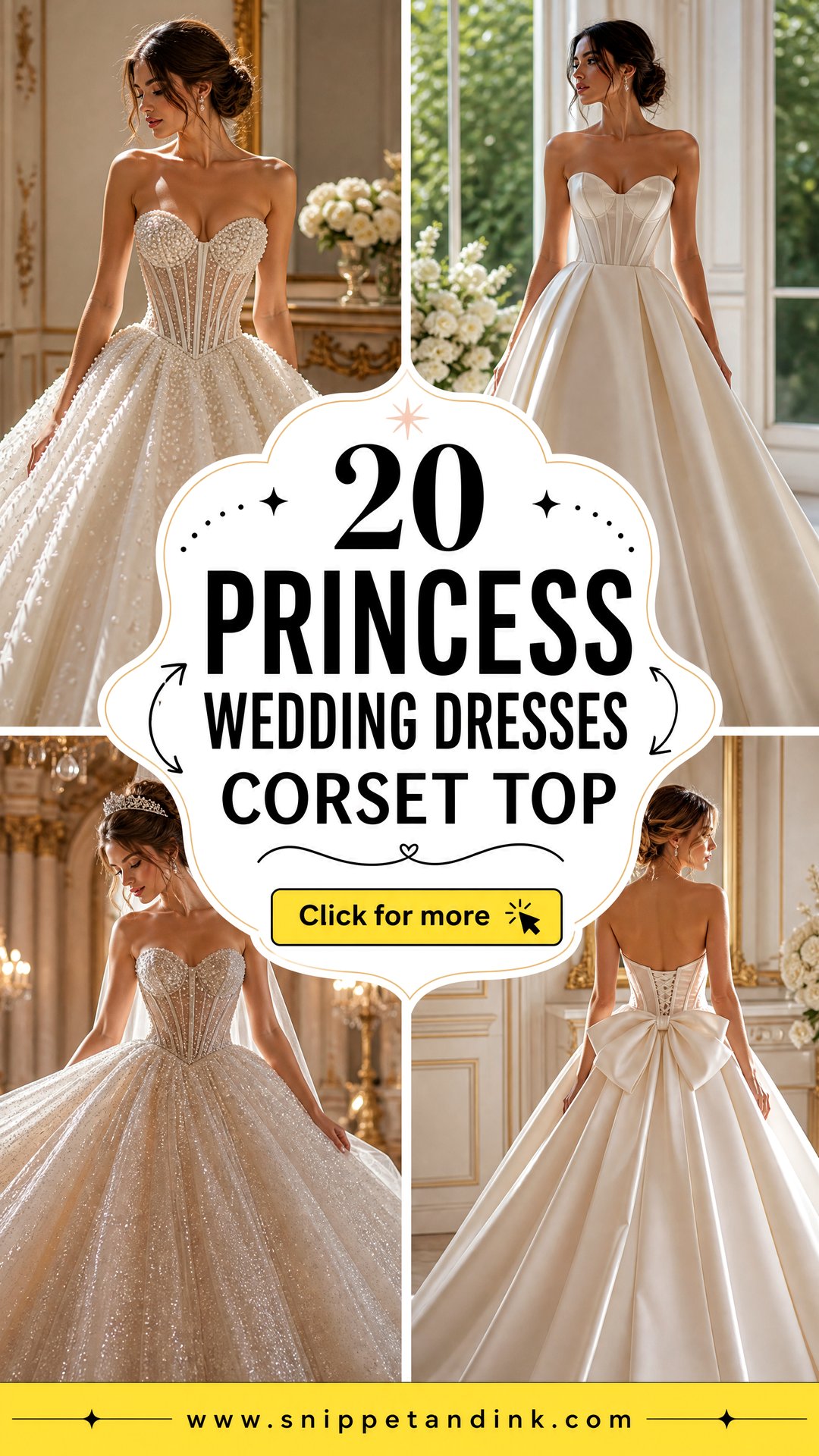
Steel or Plastic? What Holds a Corset Bodice Up
Not every bodice sold as a corset is built like one. A true corset bodice has bones in channels, a strong inner waist tape and often a lace-up back. A corset-style bodice may have the look of seams with only light plastic boning inside.
Spiral steel bones bend in two directions, so they follow curves at the bust and hip and recover their shape. Flat steel is stiffer and usually sits at the back or along a closure. Synthetic boning is lighter and cheaper, but body heat can make it warp, and after a long day it can kink and show as a dent under satin. Ask the consultant what’s inside; a good boutique will know or can find out.
A heavier skirt needs more structure above it. For a satin or Mikado ball gown, I’d want steel boning and an internal waist stay. For a tulle skirt, lighter construction is usually fine.
1. Sweetheart Corset Princess Wedding Dress
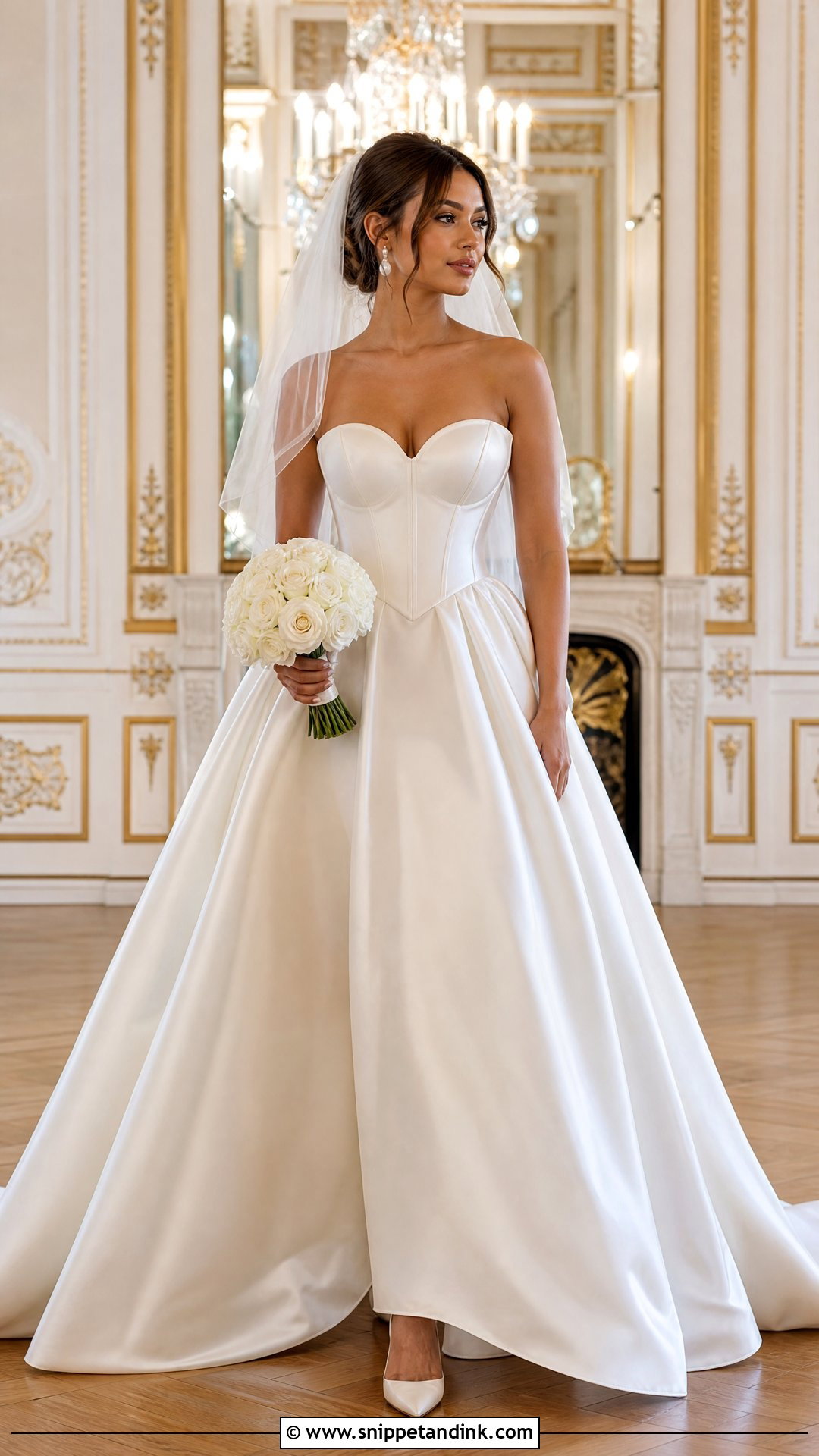
The sweetheart curve is the most forgiving neckline for a corset, because the dip at the centre follows the natural shape of the bust. In a sweetheart corset princess wedding dress, I’d look for ivory satin with internal boning and a gently dipped edge rather than a deep plunge. A lace-up back gives some adjustment if your size shifts before the wedding; the modesty panel behind the lacing should lie flat with no gap. Satin or layered tulle both suit the skirt. Pearl drops and a medium veil with a narrow satin edge are enough. Hair low or in polished waves keeps the neckline clear.
2. Off Shoulder Lace Corset Princess Wedding Dress
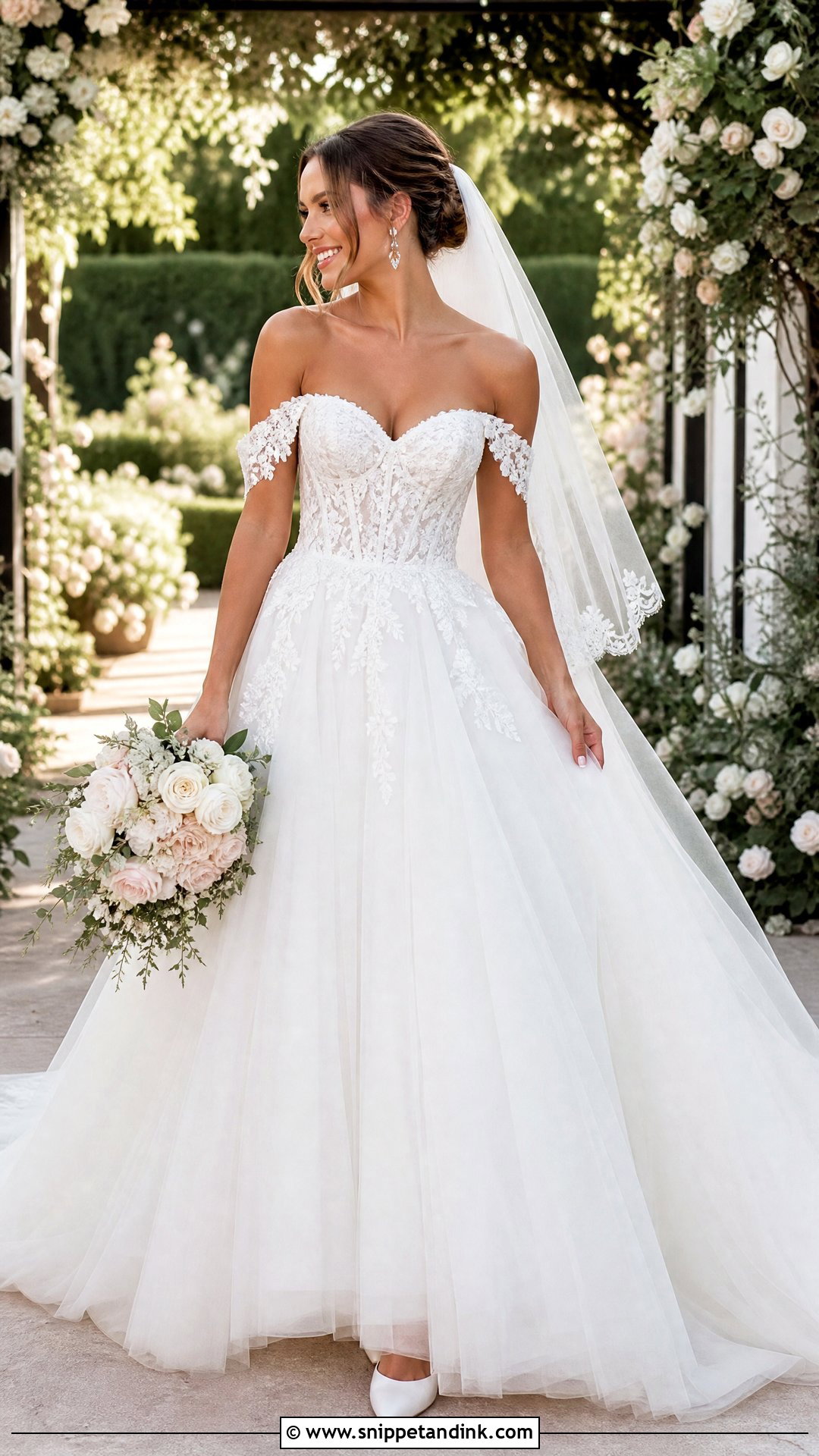
Off-shoulder lace needs a corset underneath more than most necklines do, since the sleeves hang below the shoulder line and have nothing to grip. Supported cups and light boning following the torso keep it all in place. A few lace motifs trailing onto the tulle skirt join top and bottom. The drapes limit how high you can lift your arms, so try a hug and a wave at the fitting. A loose updo with face-framing pieces suits it, and a bouquet in ivory, pale blush and muted green fits a spring or summer wedding.
3. Basque Waist Corset Princess Wedding Dress
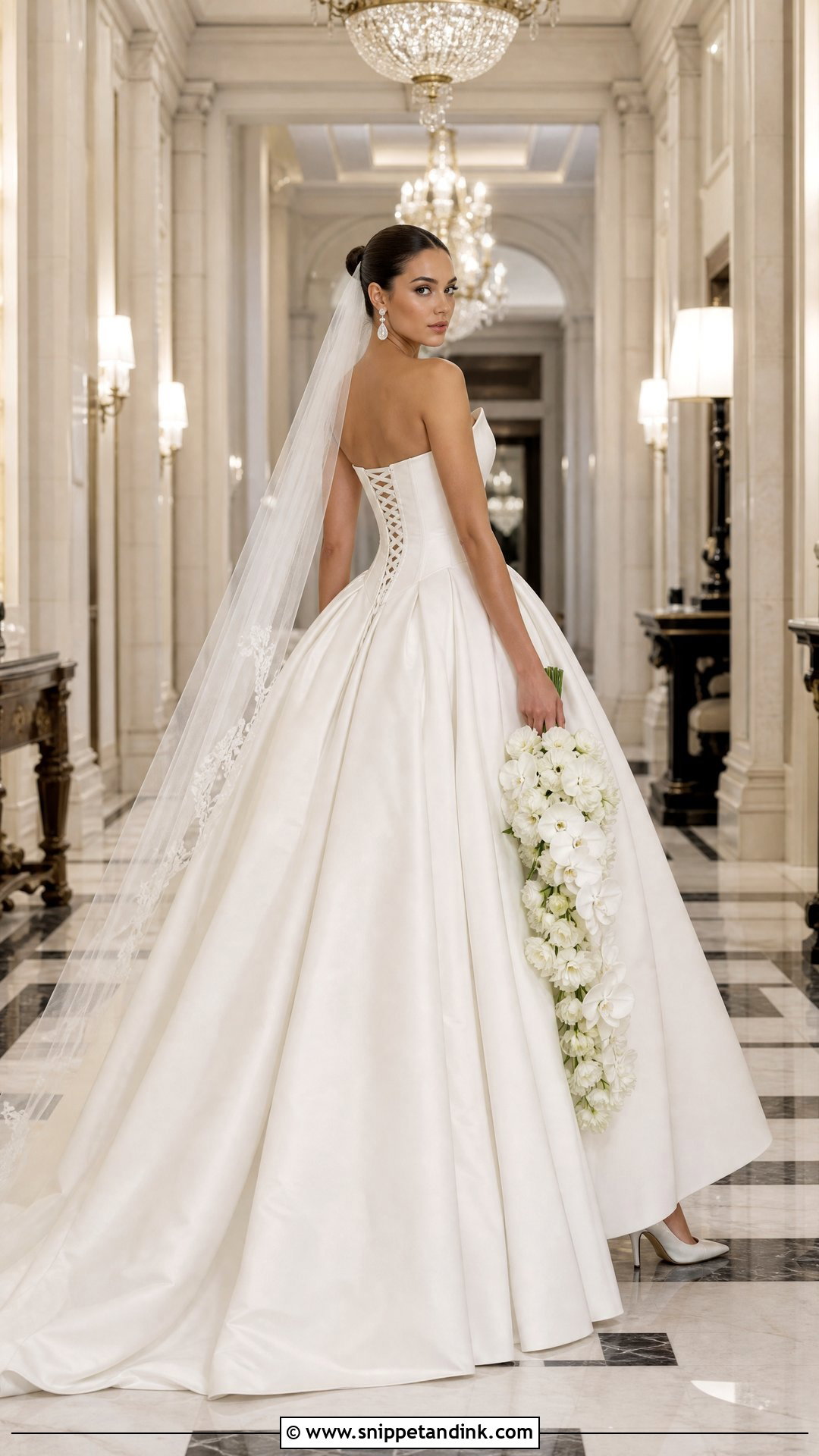
The point of a basque waist sits low at the centre, lengthening the torso and leading the eye down into the skirt. Matte satin, Mikado or structured taffeta hold that point crisply; softer fabrics let it wilt. A strapless neckline keeps it modern, while covered buttons or a lace-up back add a traditional finish. Skip the necklace. With a Basque corset, the boning at the point takes a lot of strain when you sit, so ask your seamstress whether a flexible bone has been used there. A rigid one can press into the stomach.
4. Long Sleeve Corset Princess Wedding Dress
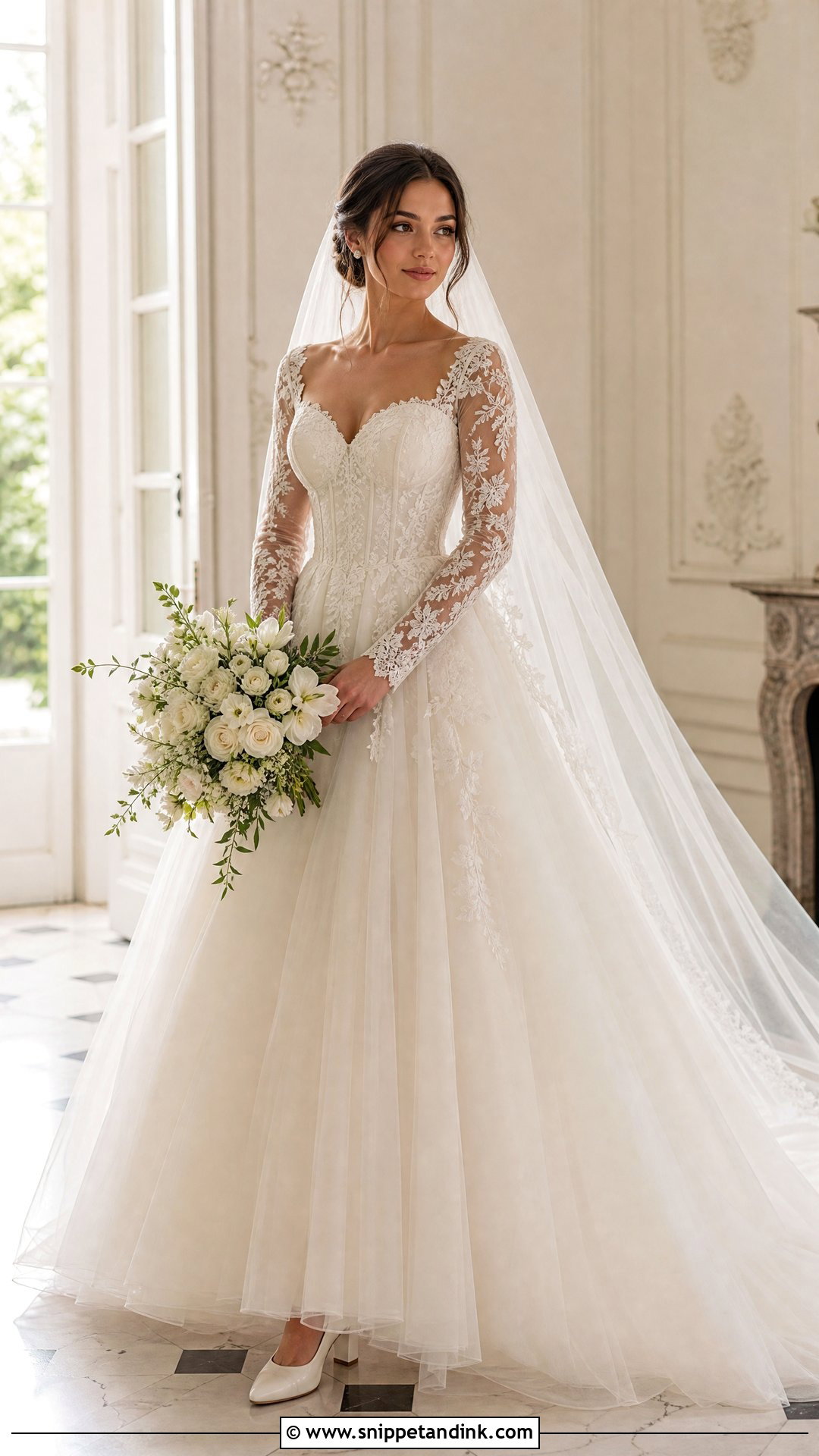
Sleeves and a corset together give the most support of any combination here. The structure underneath carries the dress, and the sheer lace sleeves are free to be purely decorative. A scoop, square or modest V-neck frames the face. Layered tulle or organza for the skirt keeps the weight manageable, with lace trailing lightly below the waist. Corsets restrict bending at the waist, and sleeves restrict the shoulders, so test reaching forward and picking something off a table. A soft wrap helps for outdoor portraits in cold weather.
5. 3D Floral Corset Princess Wedding Dress
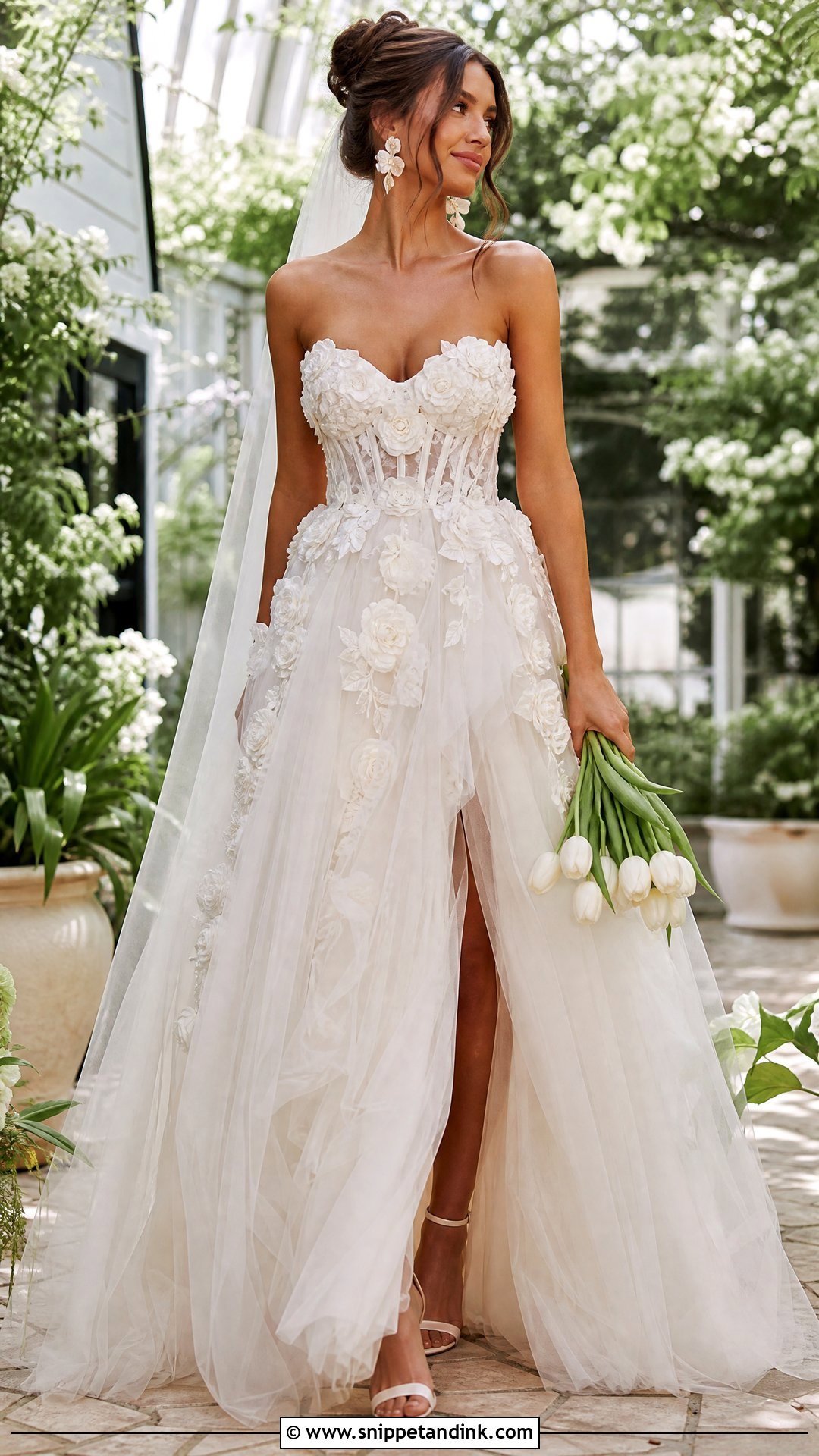
Raised flowers on a corset can hide the boning channels entirely, which is helpful when you love the structure but not the look of seams. Place them carefully rather than covering every panel; a few clusters on the bodice, then a lighter scatter over the waist and onto the tulle, gives a natural transition. Strapless or a fine illusion neckline suit it best. Make sure the appliqués on the bodice aren’t sitting right over a bone, as that’s where they flatten and lift first. A plain sheer veil keeps the flowers visible.
6. Sheer Boned Corset Princess Wedding Dress
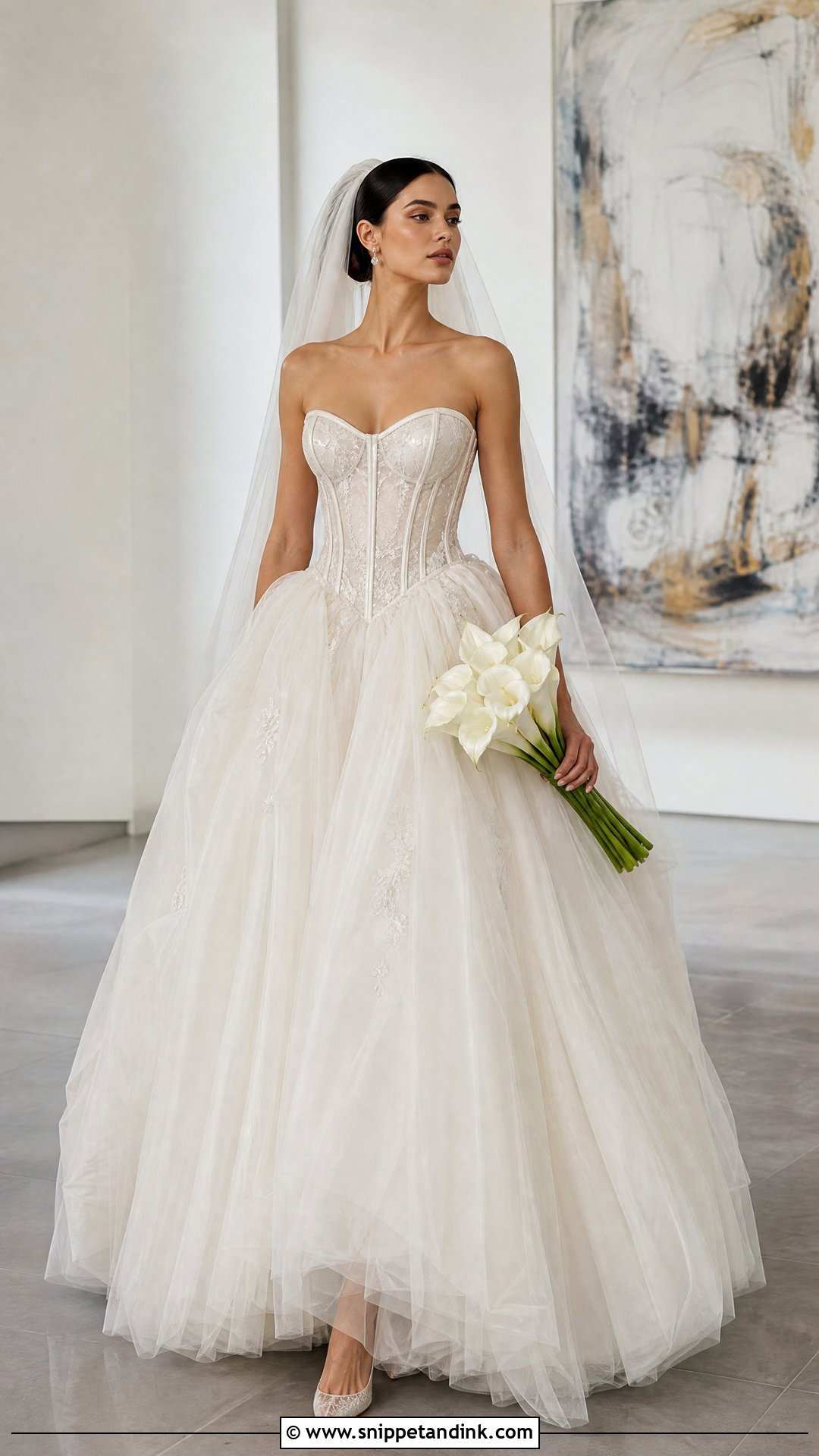
Visible boning under sheer mesh is the most fashion-forward corset on this list, and the most demanding to fit. In a sheer boned corset princess wedding dress, every bone shows, so they have to sit perfectly straight. Lined cups and embroidered panels give coverage where you need it. A lined tulle skirt stops the lower half from becoming see-through in strong light. If the contrast between the mesh and your skin looks too stark, ask about a nude underlining. Pinching and gaping are both very visible here, so precise tailoring isn’t optional.
7. Pearl Corset Princess Wedding Dress
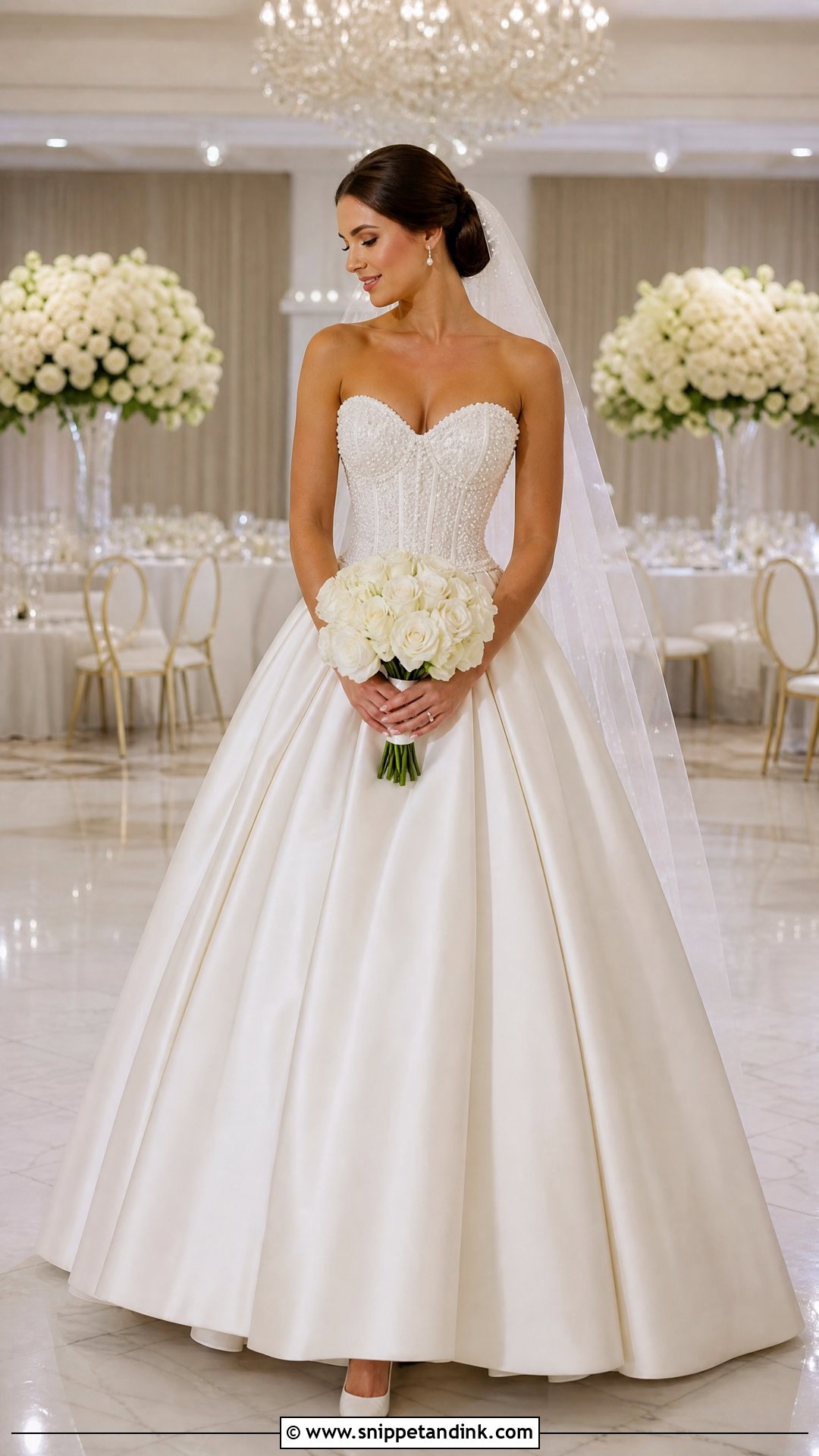
Pearls catch light softly rather than flashing like crystals, and on a corset they look best following the structure: along the neckline, down the boning channels, or picking out lace motifs. A clean satin skirt balances an embellished bodice; a pearl-dotted tulle skirt goes more decorative. A veil trimmed with a few scattered pearls ties it together. Pearls are sewn individually, so check the threads on the sample where arms brush the sides of the bodice, which is where they come loose. A large necklace would crowd the neckline.
8. Lace Up Corset Princess Wedding Dress
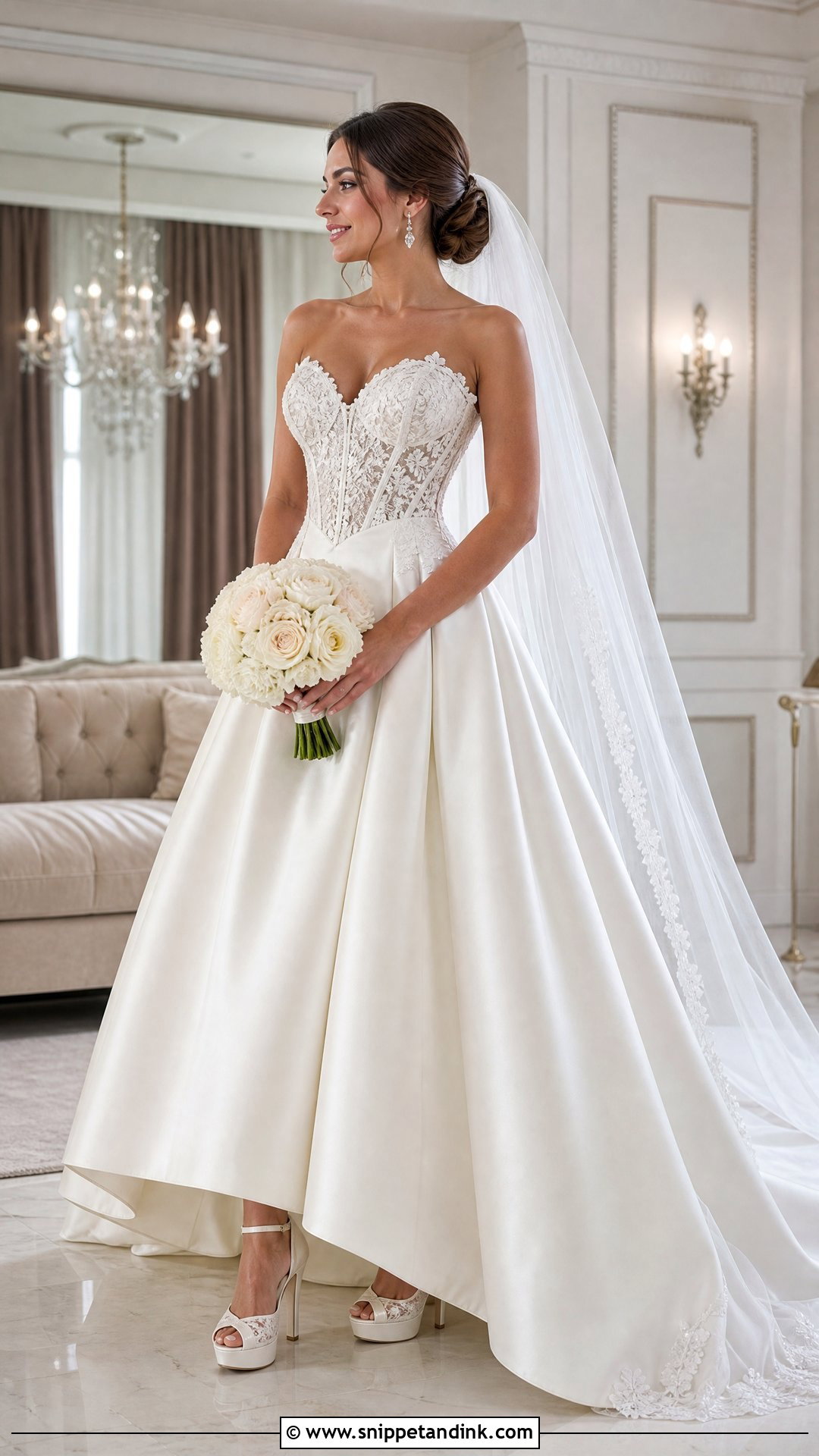
A lace-up back is the most adjustable corset closure there is, and it’s my preference for brides whose weight tends to change before the wedding. Wide, sturdy lacing and a matching modesty panel matter more than how pretty the ribbon looks. Satin, lace and Mikado all suit it. Watch for the skirt gathering directly under the lacing, which creates a bulge at the small of the back. A long veil attached below a low bun shows the lacing in photos. Practise sitting in it; lacing should support you without uneven pressure or restricting your breath.
9. Square Neck Corset Princess Wedding Dress
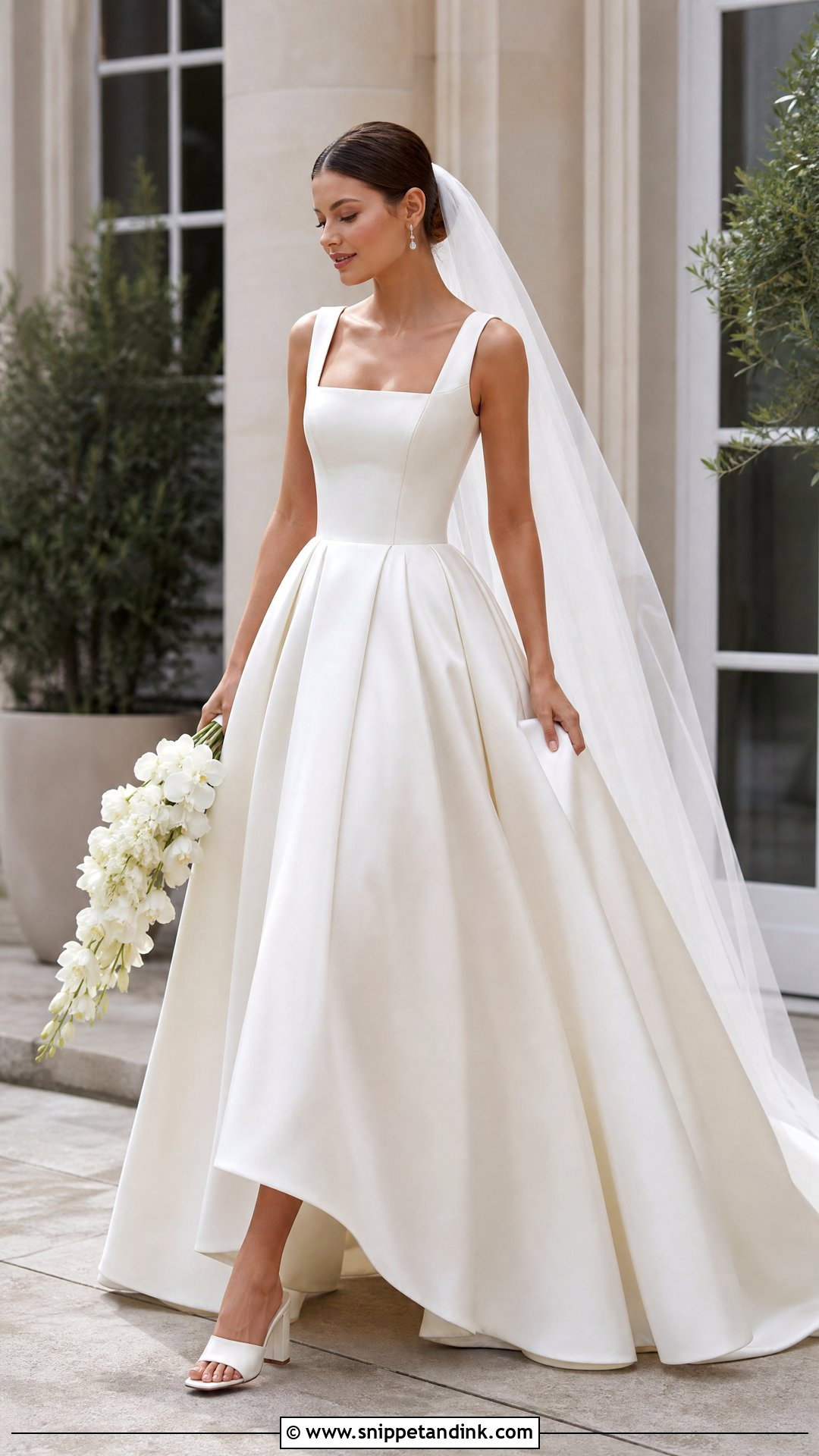
Straight lines across the chest suit a corset because the boning reinforces them. A square neck works with wide straps, cap sleeves or long fitted sleeves. I’d look for smooth princess seams and discreet internal boning. Mikado makes the skirt formal; tulle makes it softer. Square necklines vary a lot in width and depth, and the wrong proportion can make shoulders look narrow, so try two or three versions side by side. Block heels are steadier under a full skirt at an outdoor ceremony.
10. Drop Waist Corset Princess Wedding Dress
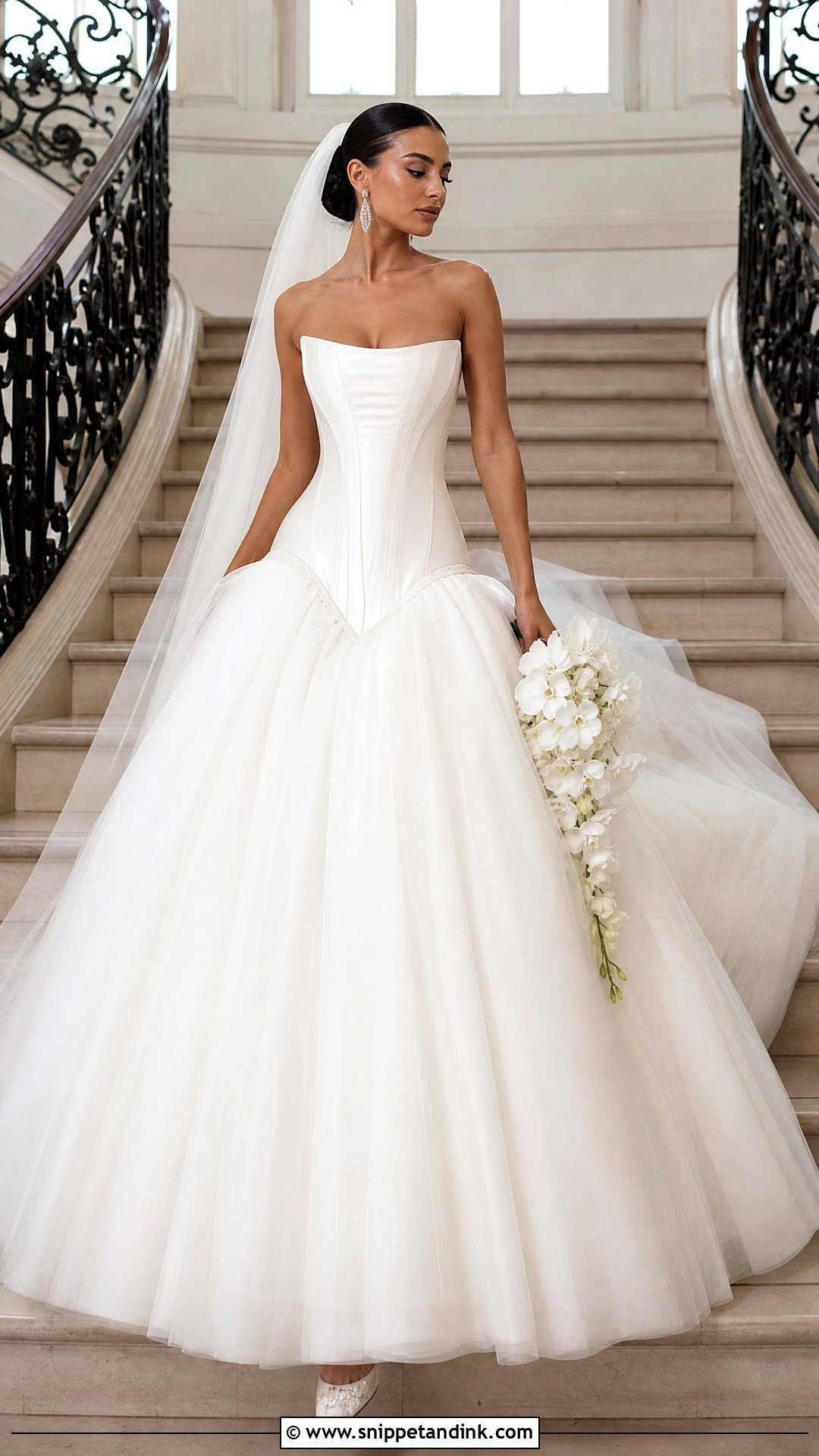
Extending the corset below the natural waist gives a longer, smoother line before the skirt opens. That means the boning now covers the high hip, so it needs to be flexible; curved seams and spiral bones follow the body when you sit. Satin or Mikado shows the construction clearly, while lace softens the join into the skirt. A plain cathedral veil and a sleek updo keep it modern. During alterations, sit down repeatedly. If the dropped waist creases or the bones dig into your thighs, the bodice is too long.
11. Detachable Sleeve Corset Princess Wedding Dress
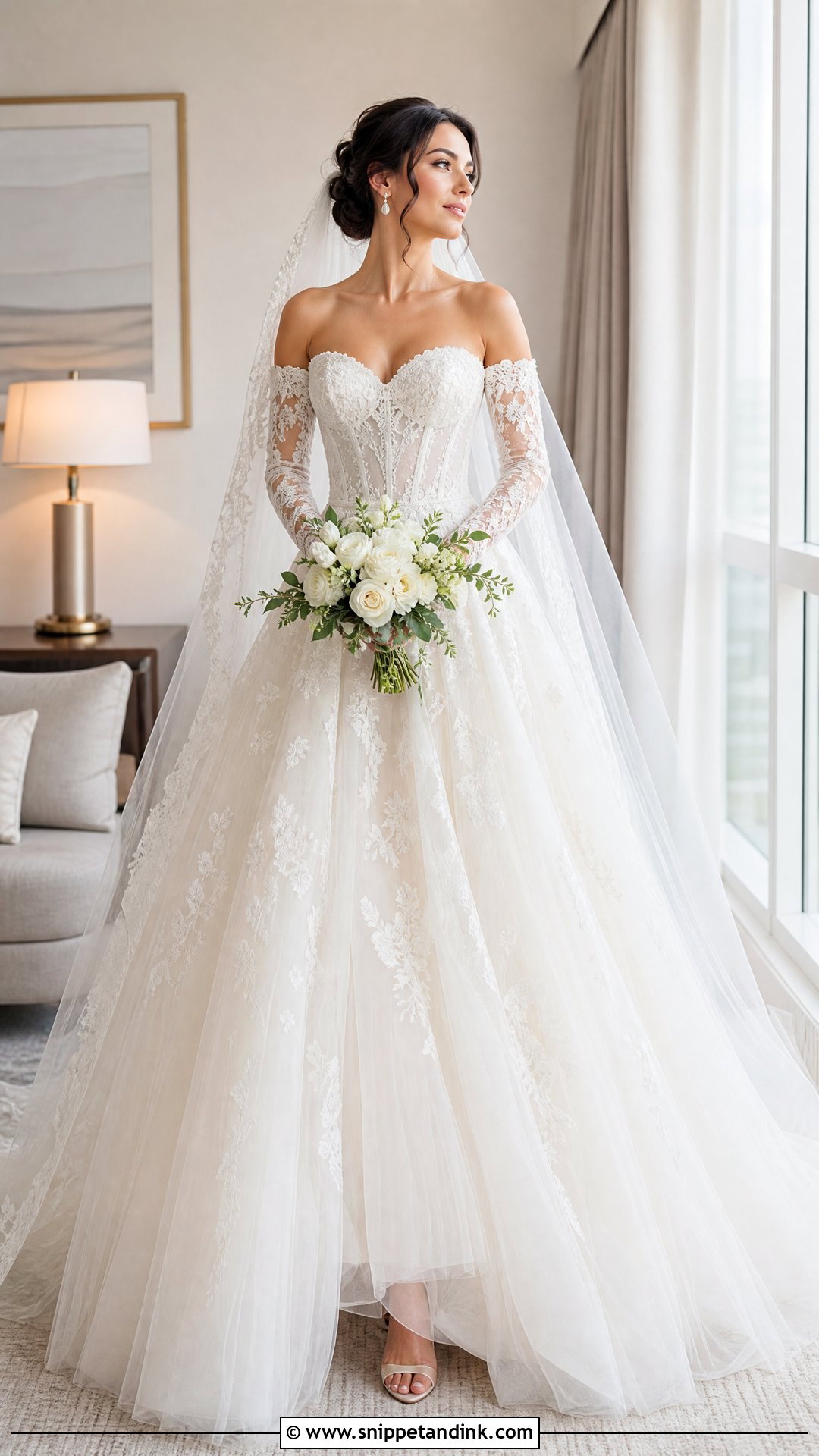
Sleeves on, sleeves off: this gives a ceremony look and a lighter reception outfit from one dress. Start with a strapless sweetheart or straight-neck corset over a full tulle or satin skirt, then attach fitted lace sleeves, off-shoulder drapes or puff sleeves. The corset is what makes this design work, because the bodice must stay up perfectly without the sleeves. A half-up hairstyle suits both versions. Have the person removing them practise at your final fitting, as small hooks can be fiddly in a busy room.
12. High Neck Corset Princess Wedding Dress
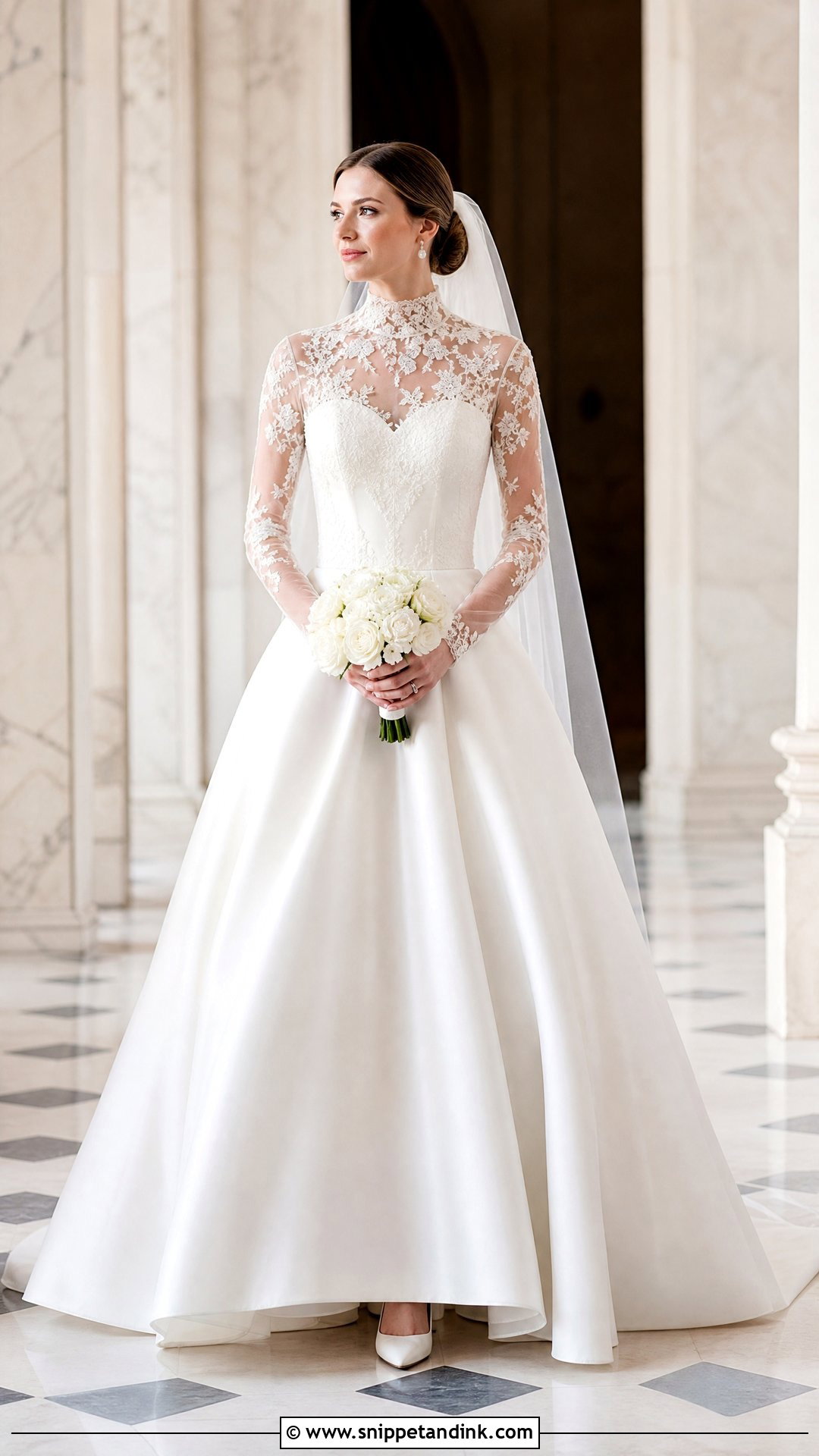
Lace to the throat over a boned sweetheart or scoop lining gives full coverage with a defined shape underneath. Long sheer sleeves can carry the lace pattern down the arms. Skip the necklace and keep earrings small. I check the gap between the top of the corset lining and the collar: if the illusion section is too tight, it pulls when you turn your head; too loose, and it wrinkles. Move your arms and look over each shoulder at the fitting.
13. Blush Corset Princess Wedding Dress
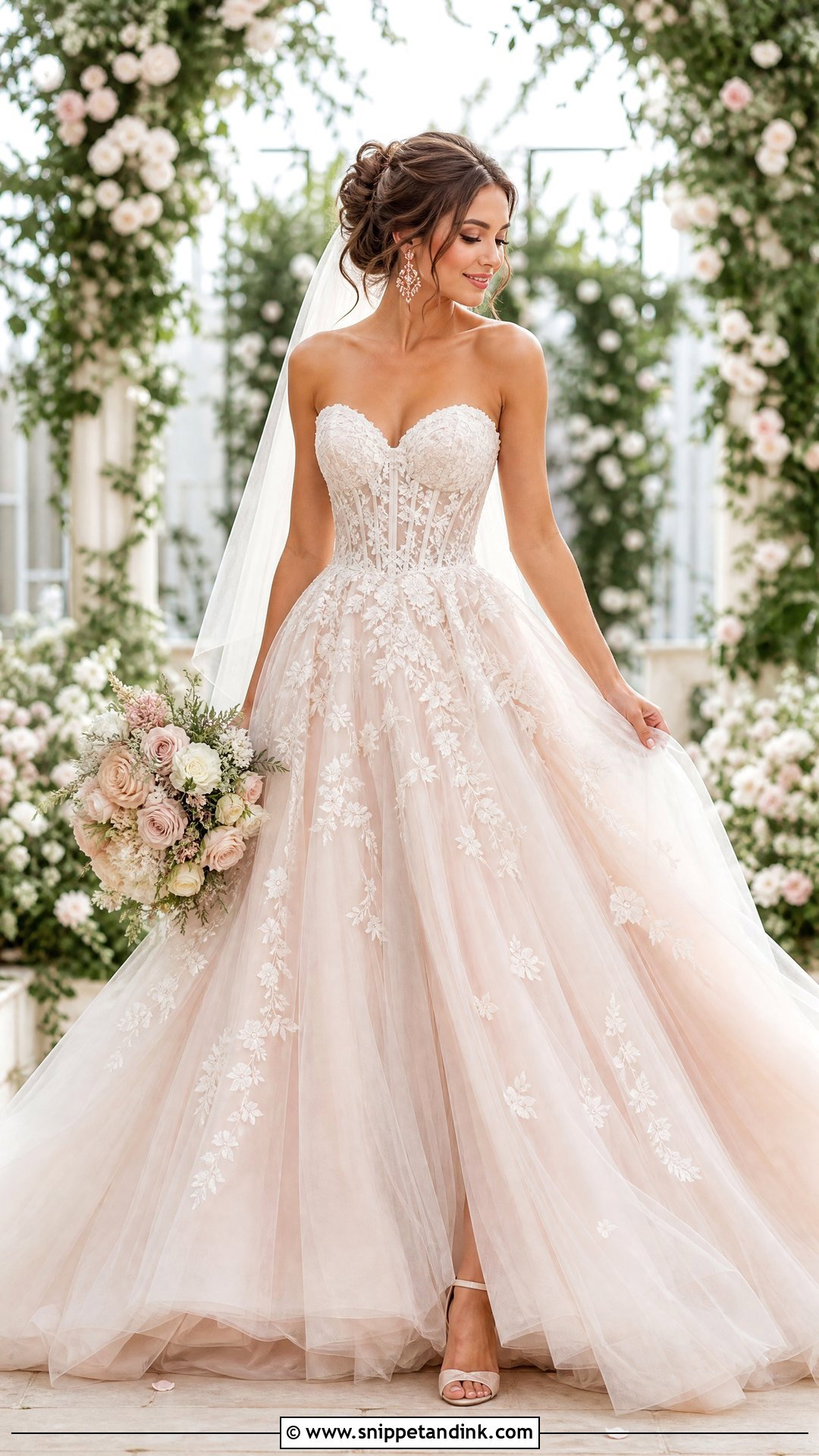
Blush on a corset works best as a lining beneath ivory lace or tulle, so the colour shows through softly rather than reading as pink. A supportive sweetheart corset with floral appliqués defines the waist. Rose-gold or pearl earrings suit the warmer tone. Keep the veil plain ivory, otherwise the blush disappears under it. Blush shifts noticeably between daylight and indoor light, and again in photos, so check the fabric in both before ordering.
14. Mikado Corset Princess Wedding Dress
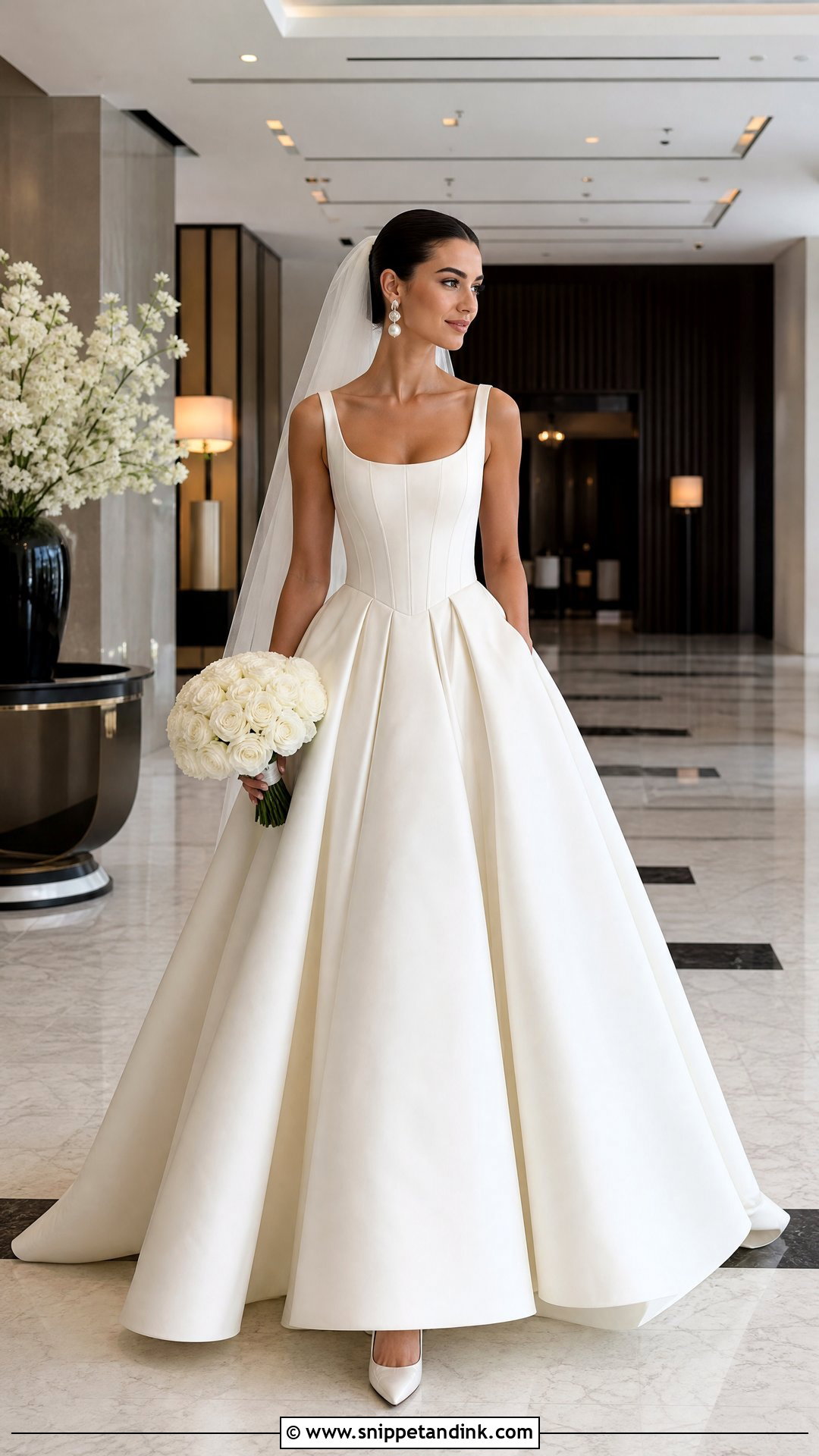
Mikado has enough stiffness to support a corset bodice almost by itself, so the boning can be lighter and the overall gown feels less rigid. A straight, scoop or sweetheart neckline all work. A full box-pleated skirt holds its volume with no embellishment. Covered buttons and hidden pockets add practical details. Because Mikado holds its shape so firmly, it also shows every fitting mistake, so the bust, waist and hem need accurate tailoring. A sleek bun or polished ponytail keeps the look current.

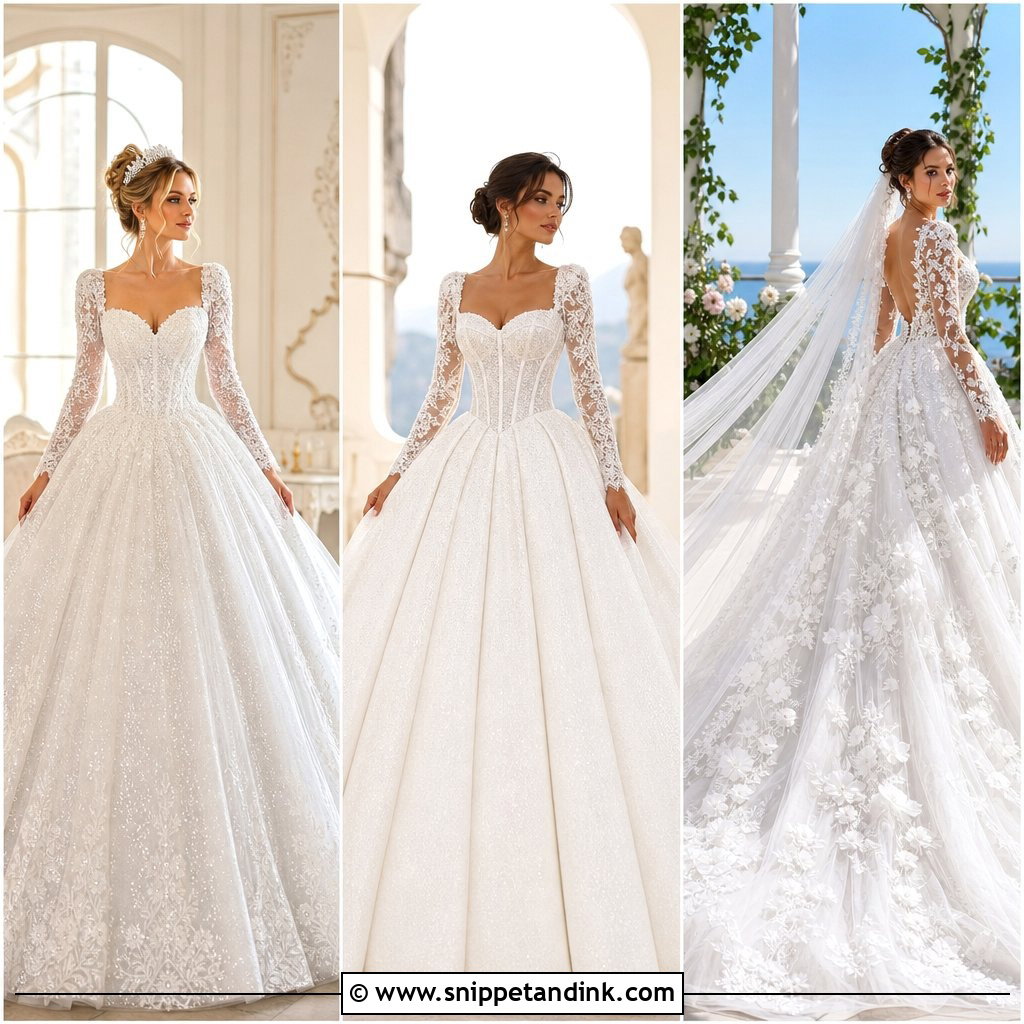

15. Glitter Tulle Corset Princess Wedding Dress
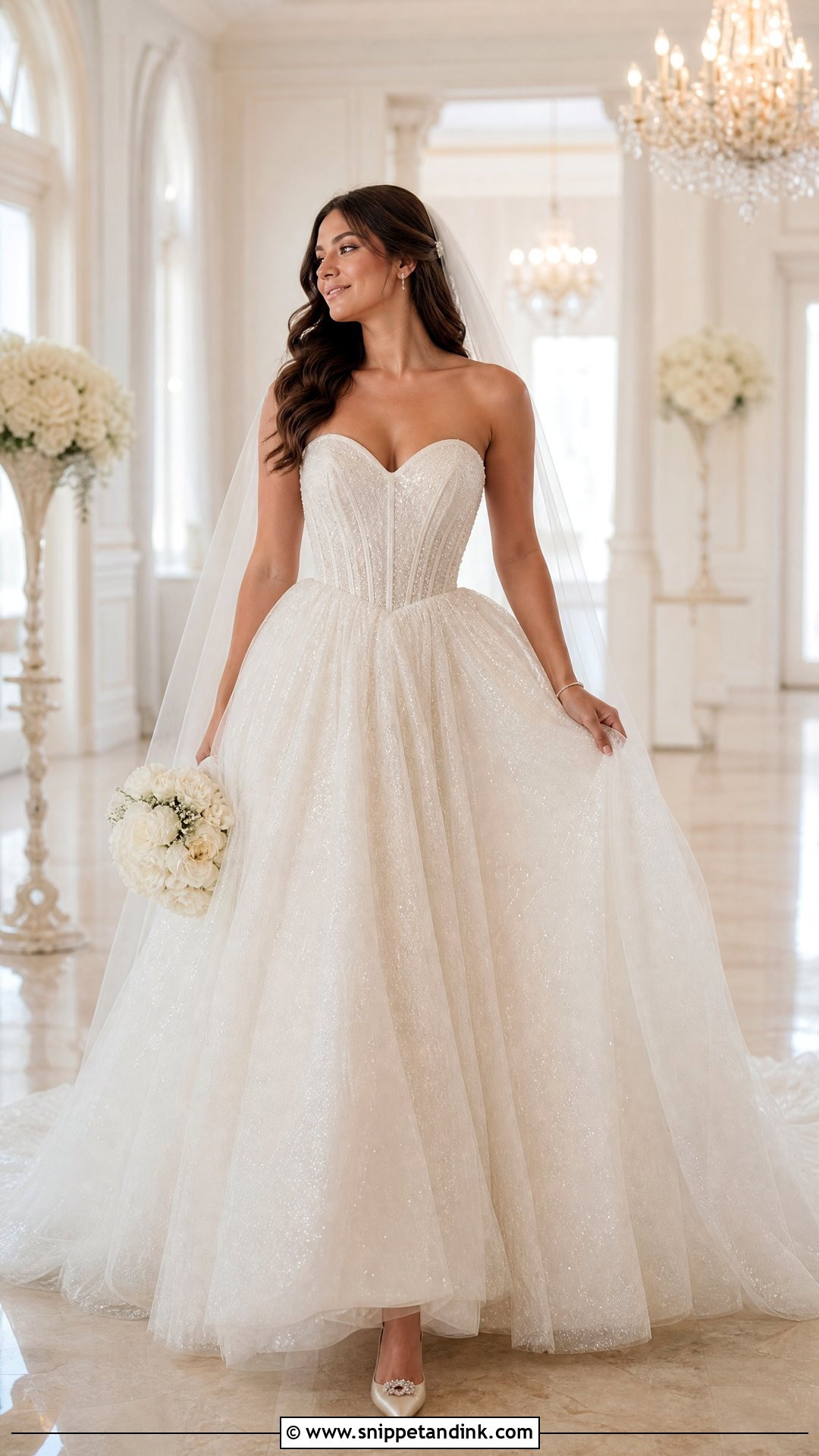
Glitter tulle over a corset adds shimmer without the weight of crystals. Fine, evenly spread glitter catches light softly; coarse glitter can look cheap under a flash. Lined cups and delicate boning give structure beneath the overlay. Keep jewelry small and the veil plain so the glitter shows. Ask to see the fabric under a camera flash before ordering, since it can go from subtle to very bright. Glitter also sheds, so expect a little on everyone you hug.
16. Plus Size Corset Princess Wedding Dress
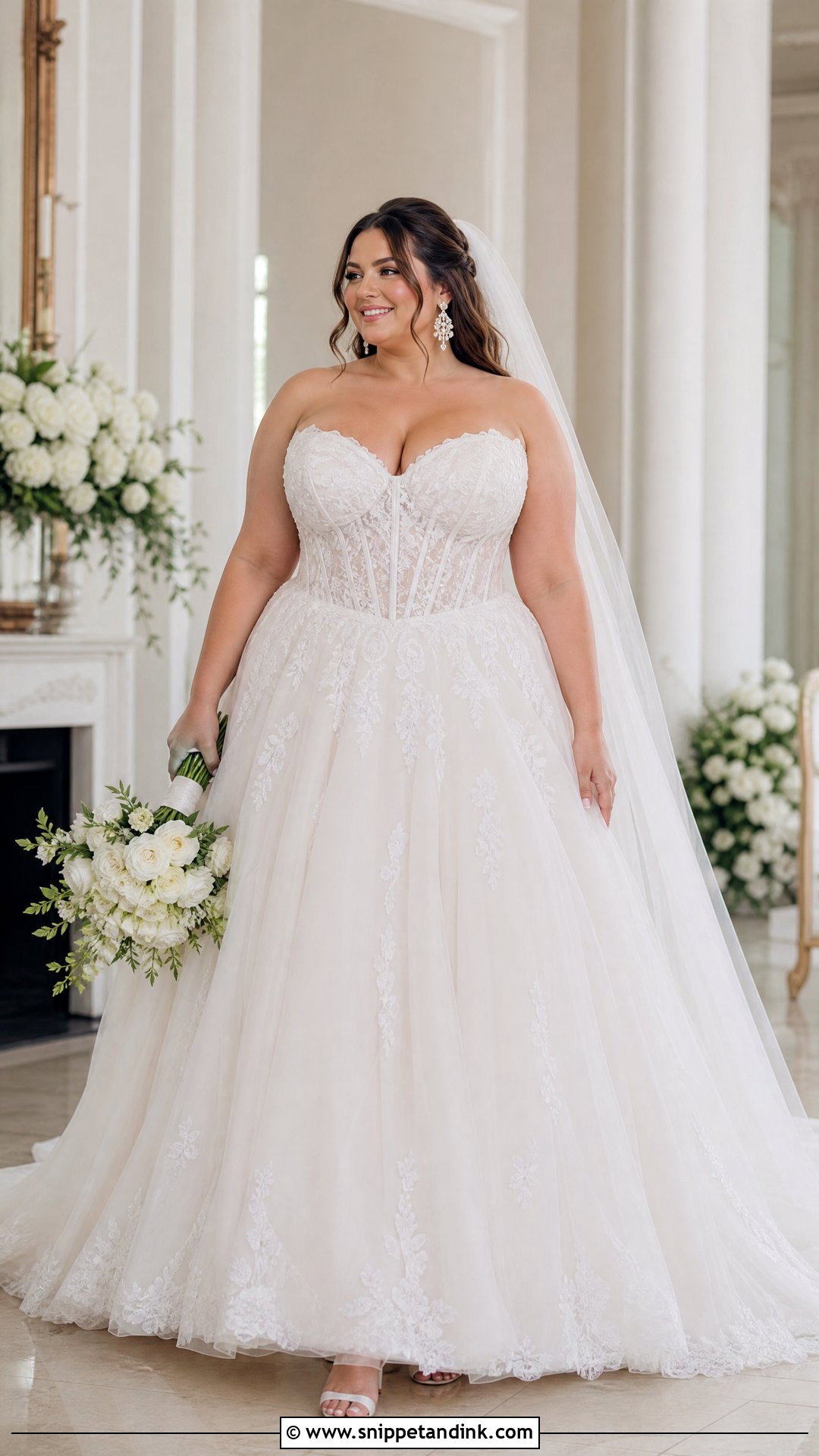
A well-built corset is one of the best things a curvier bride can wear, because it carries weight from the bust and spreads it evenly. Look for reinforced boning, secure cups, wider back panels and adjustable lacing. A softly dipped neckline frames the upper body, and a full A-line or ball gown skirt should fall smoothly from the waist. Don’t choose by the label; bridal sizing runs differently from high-street sizing. An experienced bridal tailor can adjust the support so it feels firm without turning rigid.
17. Minimalist Corset Princess Wedding Dress
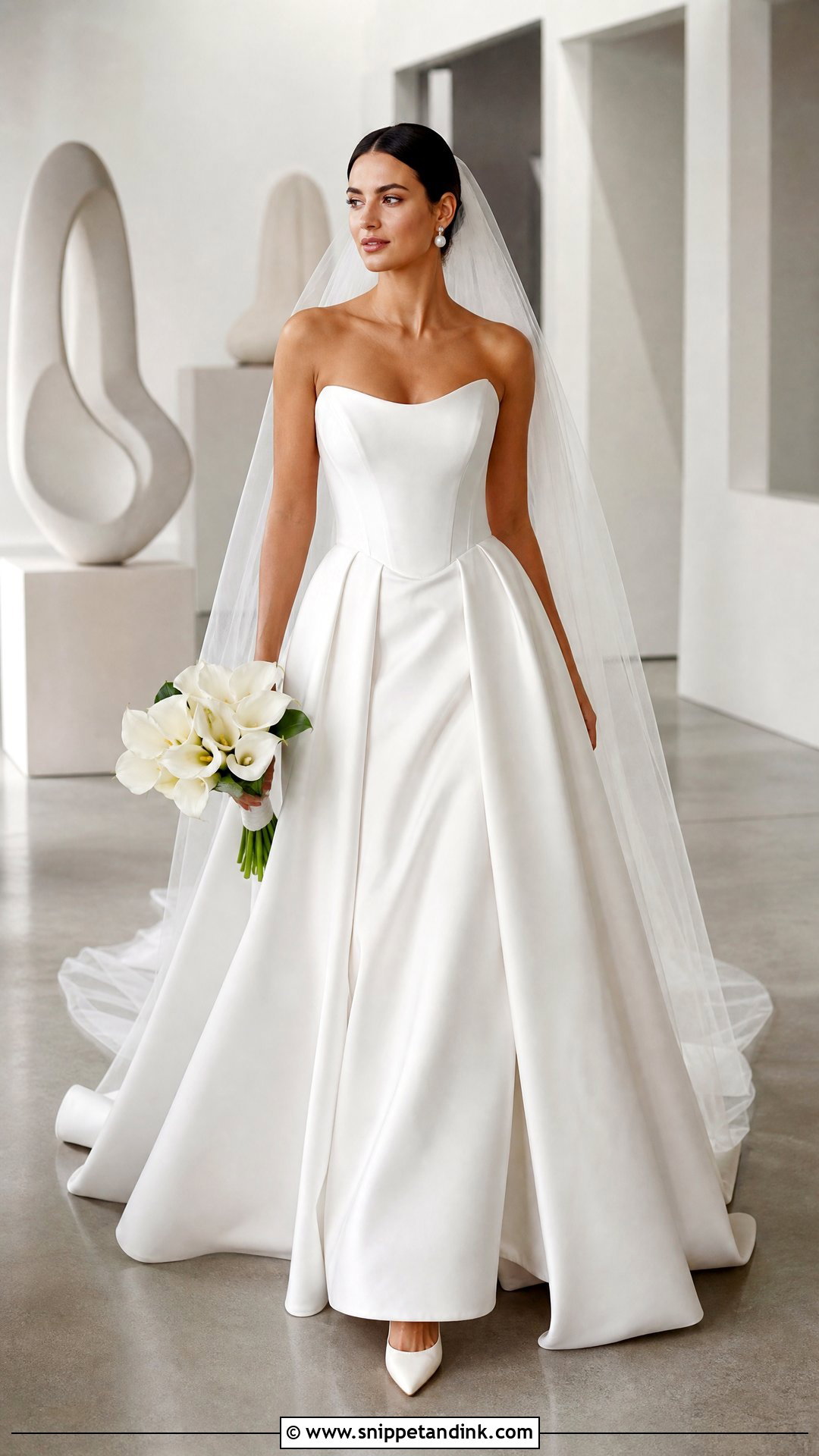
In a plain corset gown, all the structure is hidden inside and the outside is smooth satin or Mikado. That makes fabric quality and tailoring the whole story, as every seam and pucker is visible. A sculpted bodice, a softly curved neckline and a full skirt with controlled pleats are enough. A long untrimmed veil and a centre-parted bun suit its clean lines, and calla lilies keep the bouquet sculptural. I always check that no boning channel shows through the outside fabric as a ridge; on an unembellished gown, it’s the first thing a camera picks up.
18. Embroidered Corset Princess Wedding Dress
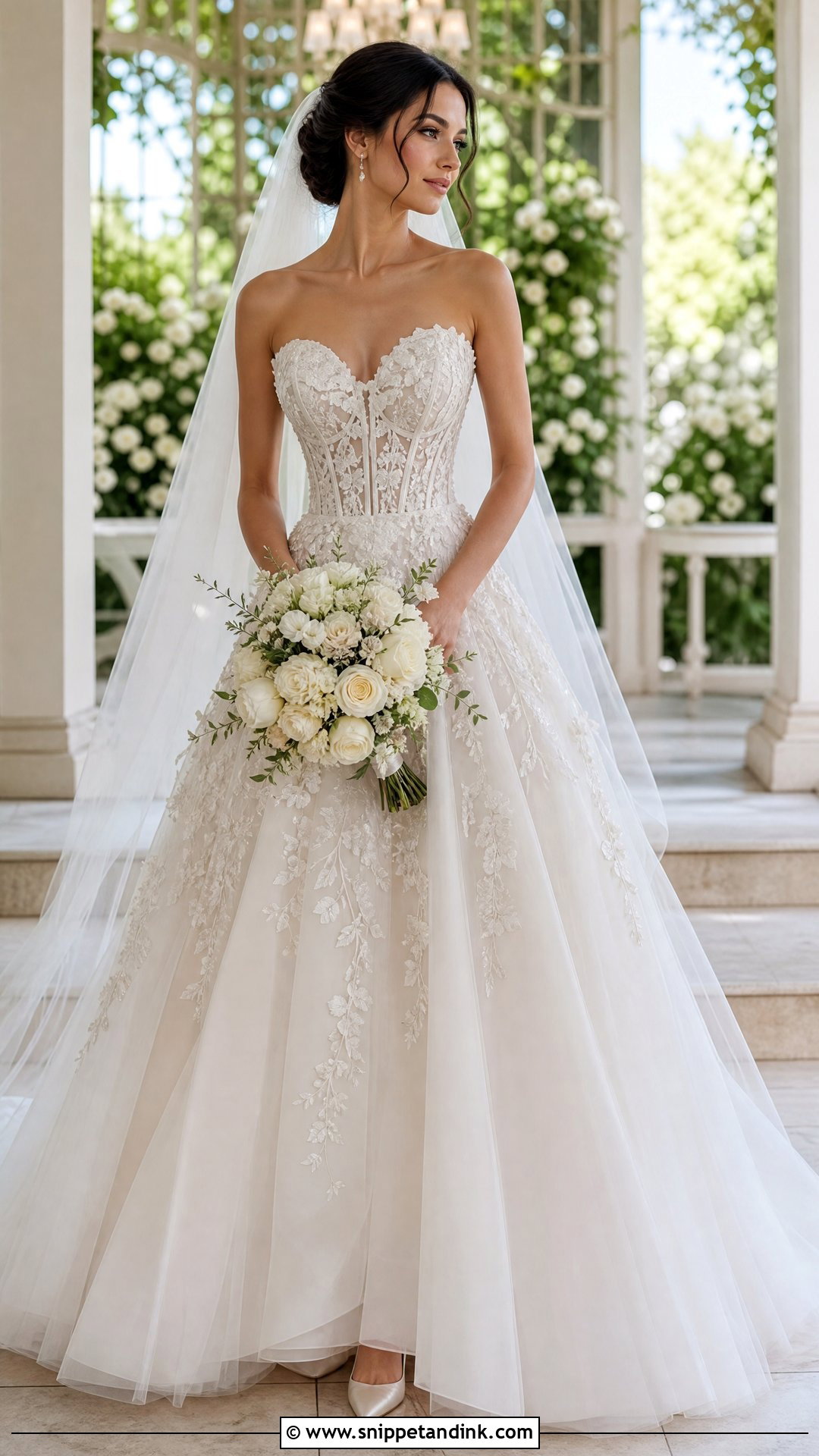
Embroidery that follows the bodice seams makes the corset structure part of the decoration. Botanical, vine or floral motifs work best when they run along the seams and then thin out onto the skirt. A neutral lining helps the pattern stand out. During alterations, look closely at where motifs meet seams and cups. When a bodice is taken in, a motif can get cut in half or end up off-centre, so ask your seamstress to adjust at the side seams where the pattern is lightest.
19. Bow Back Corset Princess Wedding Dress
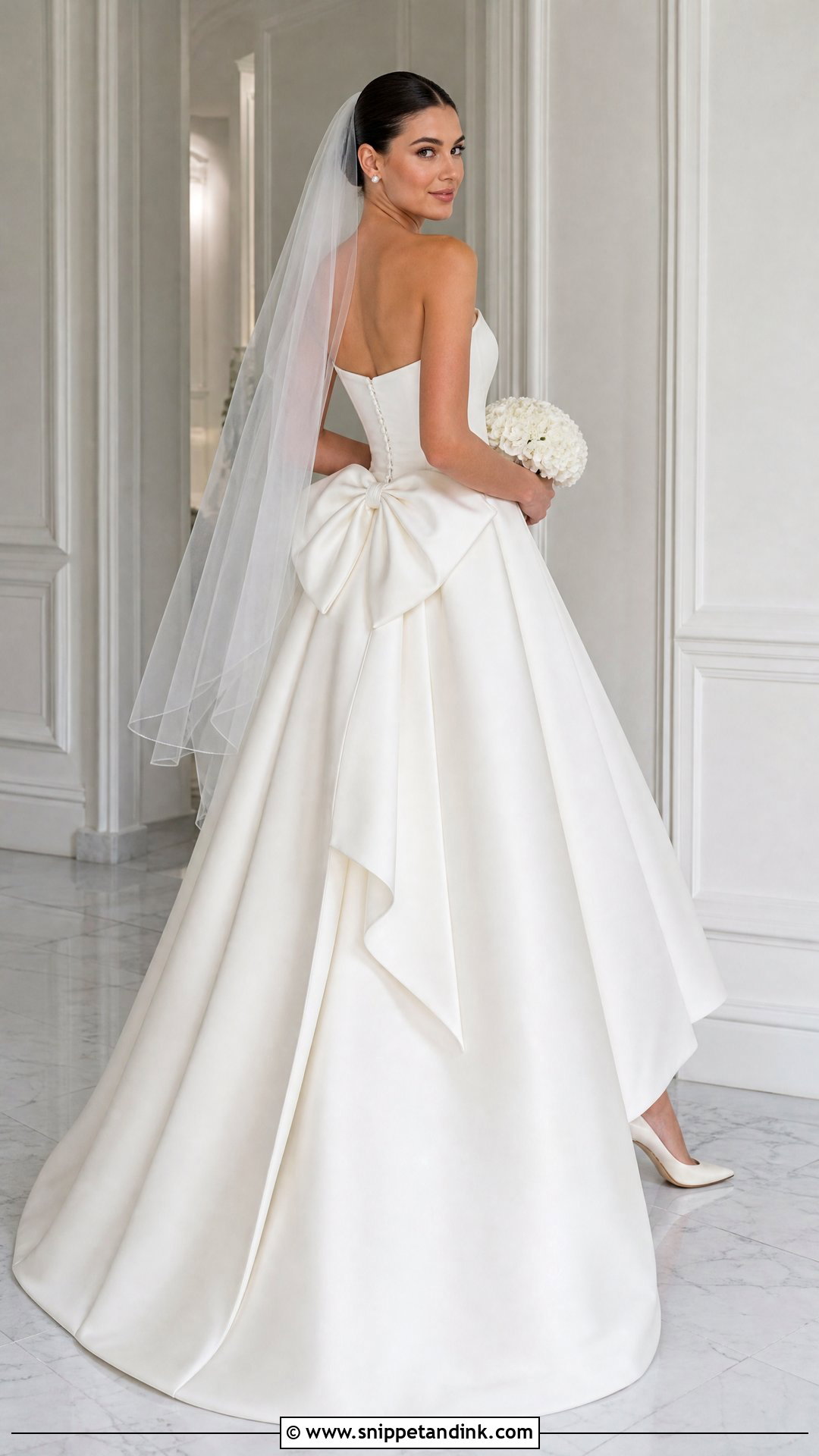
A bow at the back waist sits right over the strongest part of a corset, which is why it stays crisp all day. Start with a structured strapless bodice and a full satin or Mikado skirt, then add a detachable bow whose tails fall over the train. Keep the corset plain so the two features don’t compete. A compact bouquet with long ribbon tails echoes the bow. Check it’s fastened evenly before you walk; a bow that’s slightly off-centre is very obvious from the back of the church.



20. Royal Corset Princess Wedding Dress
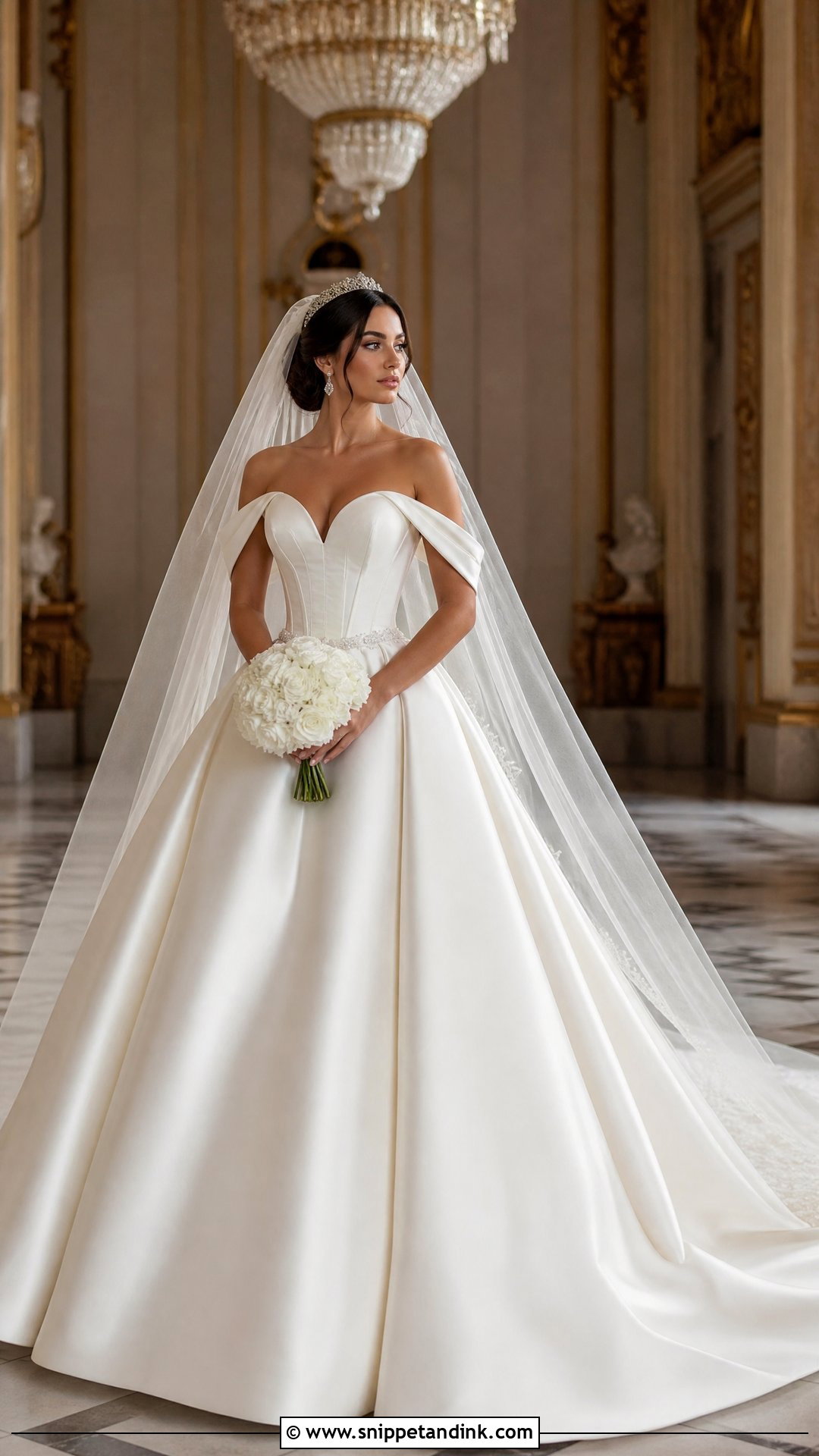
Maximum scale needs maximum support. A royal corset princess wedding dress pairs a satin or Mikado corset with a wide ball gown skirt and a long train, sometimes with full lace sleeves or detachable shoulder drapes. Subtle beading at the waist adds a little sparkle. Platform pumps hidden under the skirt help with height and balance. A big gown is heavy, and the corset is what stops the weight dragging on you, so confirm you can still walk, turn, sit and lift your arms comfortably.
Lacing Up on the Wedding Morning
A lace-up corset takes longer to put on than a zip, and it’s easy to do badly in a rush. Give whoever is lacing you a practice run at the final fitting, then follow the same order on the day:
- Step into the gown and have the modesty panel lying flat behind the loops before any lacing starts.
- Thread the ribbon from the top down, crossing it evenly and keeping it flat, not twisted.
- Tighten gradually from the top and bottom toward the waist, going over it two or three times rather than pulling hard in one go.
- Check that the gap between the two sides is even from top to bottom.
- Tie off at the base and tuck the ends under the bodice or behind the panel so nothing dangles.
You should be able to take a full breath and sit down. If you can’t, it’s too tight. Bodies swell slightly over a warm day, so leave a little room.
What to Wear Under a Built-In Corset
Most bridal corset bodices have cups built in, so a separate strapless bra is often unnecessary and can even add bulk under the boning. If you need more lift, a seamstress can sew pads or a bra directly into the lining. Heavy shapewear underneath can fight the corset rather than help it, so try the gown with and without it. Whatever you plan to wear, bring it to every fitting; changing underwear after the final adjustments changes the fit.
Support First, Then Everything Else
A corset princess gown succeeds on its construction. The bodice needs to hold you securely, and the skirt needs to sit balanced and suit the venue. Sweetheart necklines, Basque waists, lace sleeves, pearls and clean satin each give a different take on the same shape. Decide how much structure, coverage and volume you want, then build the veil, shoes, jewelry, hair and bouquet around the gown’s strongest detail. At fittings, sit, walk, turn and raise your arms instead of judging only while standing. Careful alterations are what make a corset feel supportive rather than tight.
You'll Like These Ideas:




Leave a Reply