
Slim wedding dresses cover far more ground than one shape. In this collection you’ll find fluid sheaths, dramatic mermaid cuts, gentler trumpets, lace, minimalist columns and fitted gowns with a skirt you can take off. The difference is where the flare begins: a sheath runs fairly straight, a trumpet opens at mid-thigh and a mermaid waits until the knee. I don’t pick these for clients by body type. I pick by how they want to move, where they’re marrying and what they like seeing in the mirror. Good tailoring, proper support underneath and shoes you can stand in do the rest.
Shapewear, Cups and the Visible Line Problem
A slim dress shows what’s underneath it in a way a ballgown never does. I ask every bride to bring her wedding-day underwear to the very first fitting, because changing it later changes the fit.
- Built-in cups are usually the most comfortable answer for strapless, backless and plunging styles. Most seamstresses can sew them in.
- Choose smooth, no-seam underwear in a shade close to your skin, not white. White shows through ivory satin and crepe.
- If you like shapewear, pick one with a smooth edge that ends well above or below where the dress flares; edges sitting right at the flare point show as a ridge.
- Thin silks and bias cuts often need nothing more than a smooth slip. Heavy shapewear under them can look bulkier than none.
Look at yourself from behind in a three-way mirror and under a bright light. Ridges at the bra line or seat that you can barely feel are often obvious in photos taken with flash.
Can You Dance, Sit and Use the Bathroom in It?
A fitted gown that looks right standing still can be miserable by the third hour. In the fitting room, I ask brides to do the dull things: sit on a hard chair for five minutes, climb a step, sway as if slow dancing and raise a glass. Mermaids and narrow columns are the hardest to sit in; a sheath with a back slit or a trumpet is far easier.
For the bathroom, ask one bridesmaid to learn how the skirt gathers up. Facing the toilet rather than sitting with your back to it is much easier in a narrow skirt, which sounds silly until you’re trying it alone under fitted tulle.
1. Satin Sheath Wedding Dress
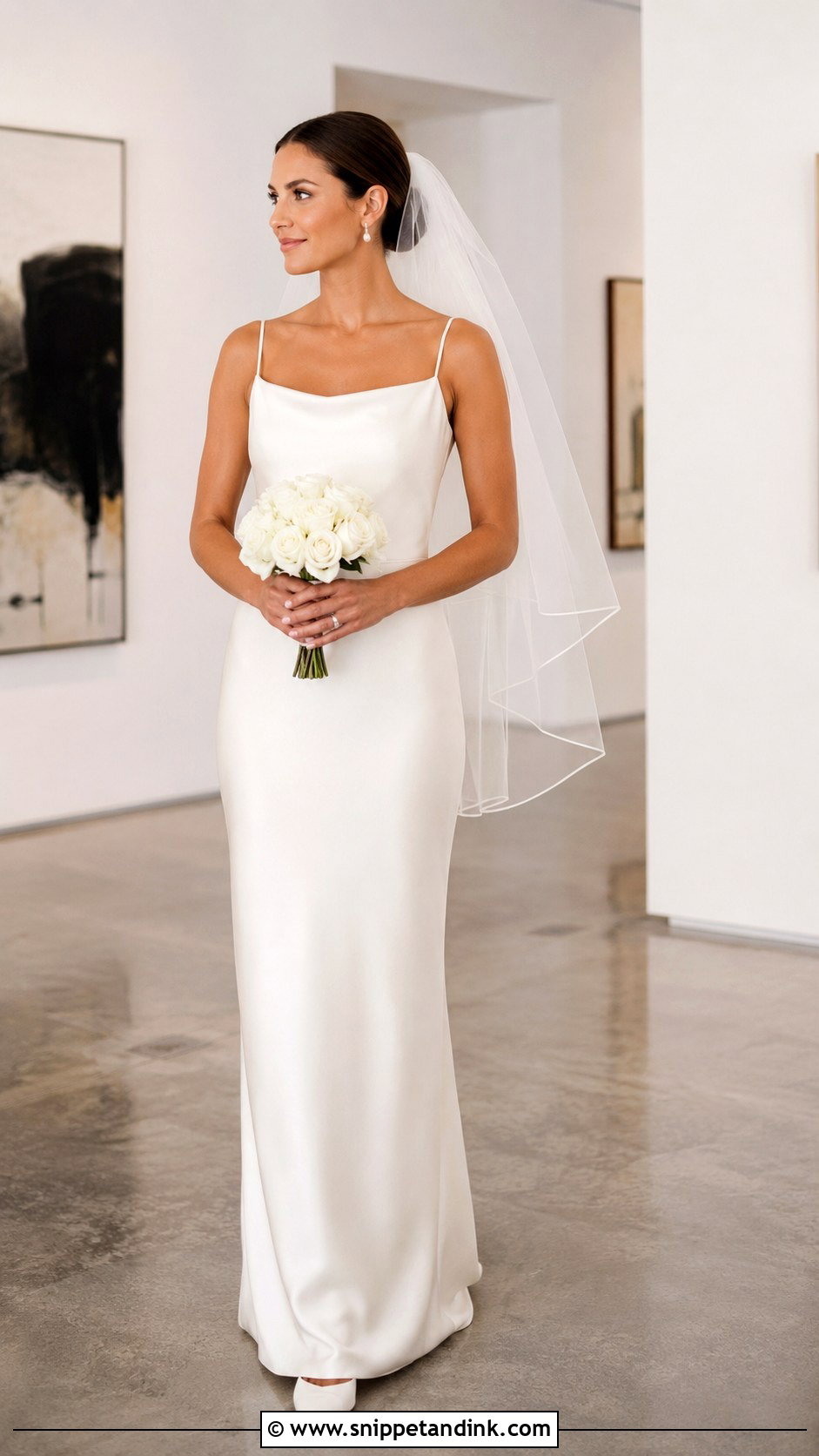
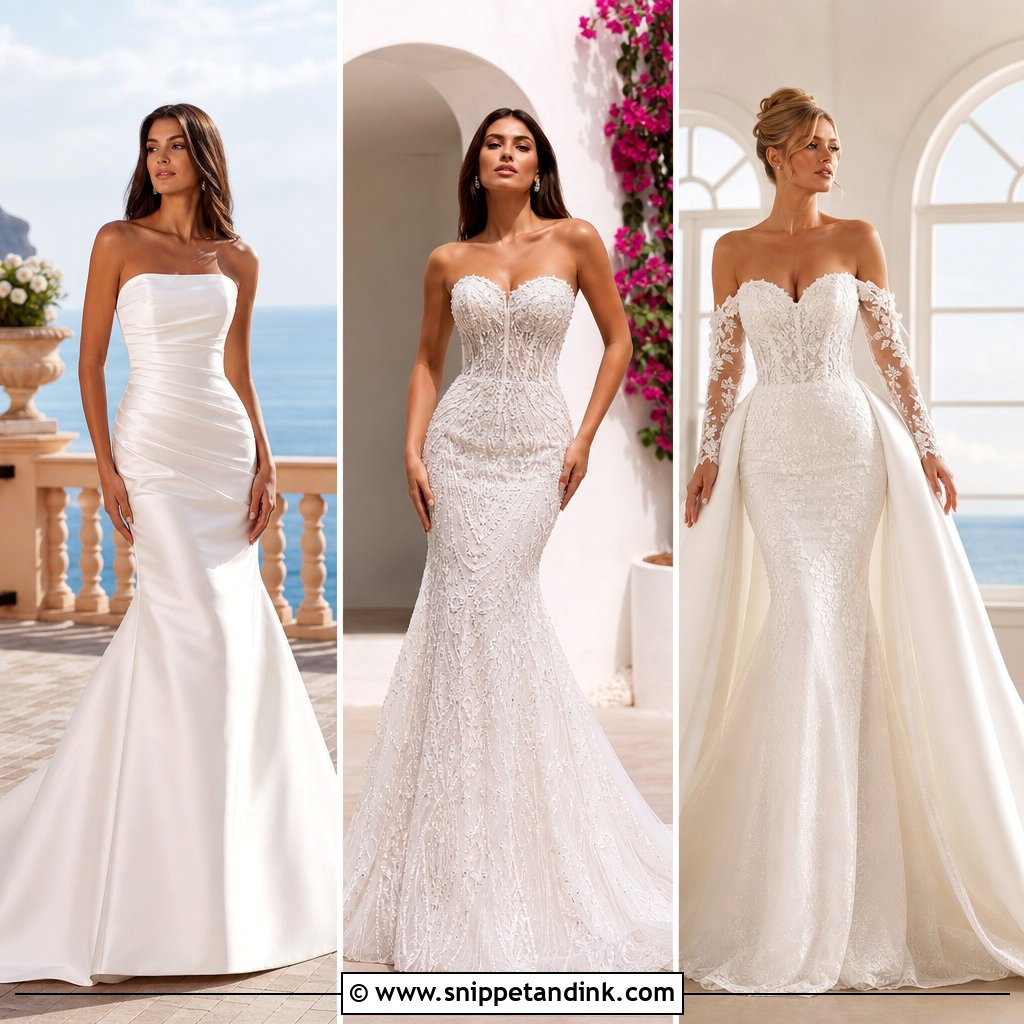
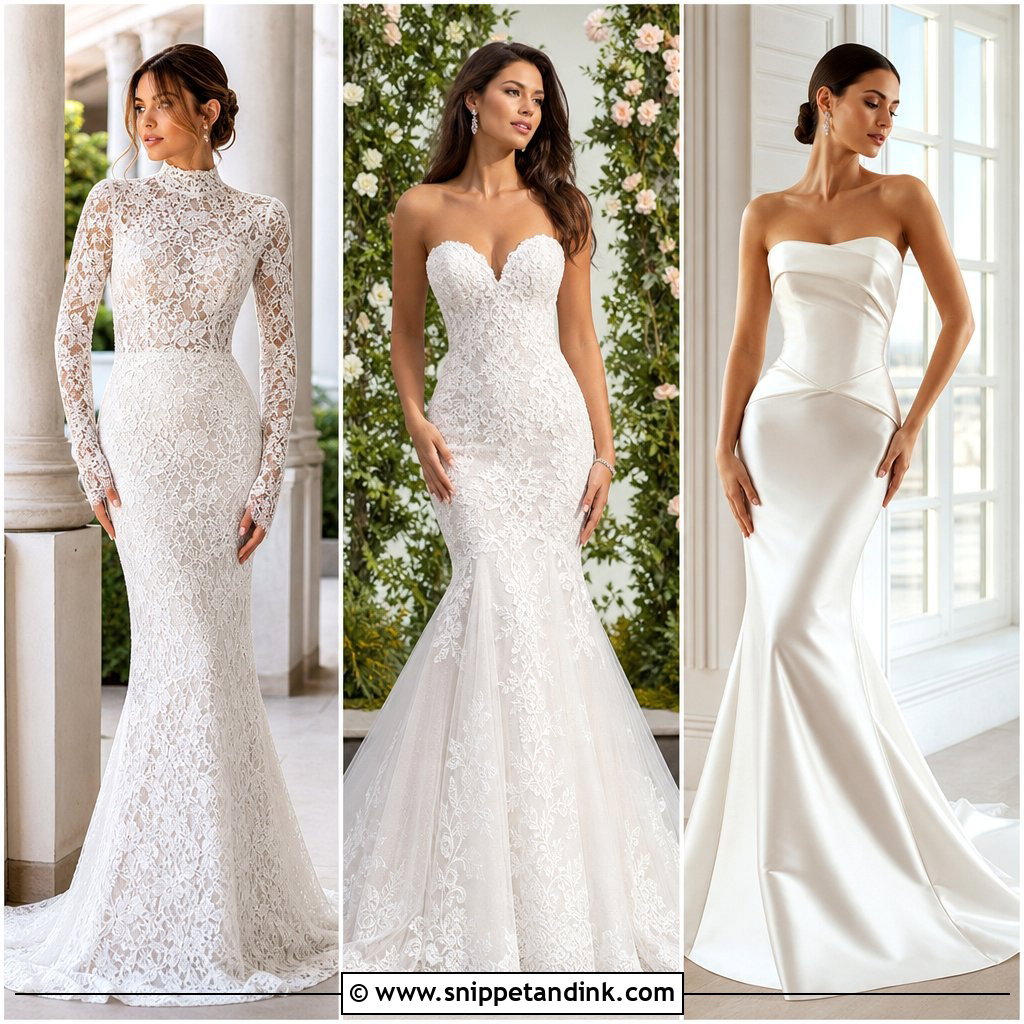
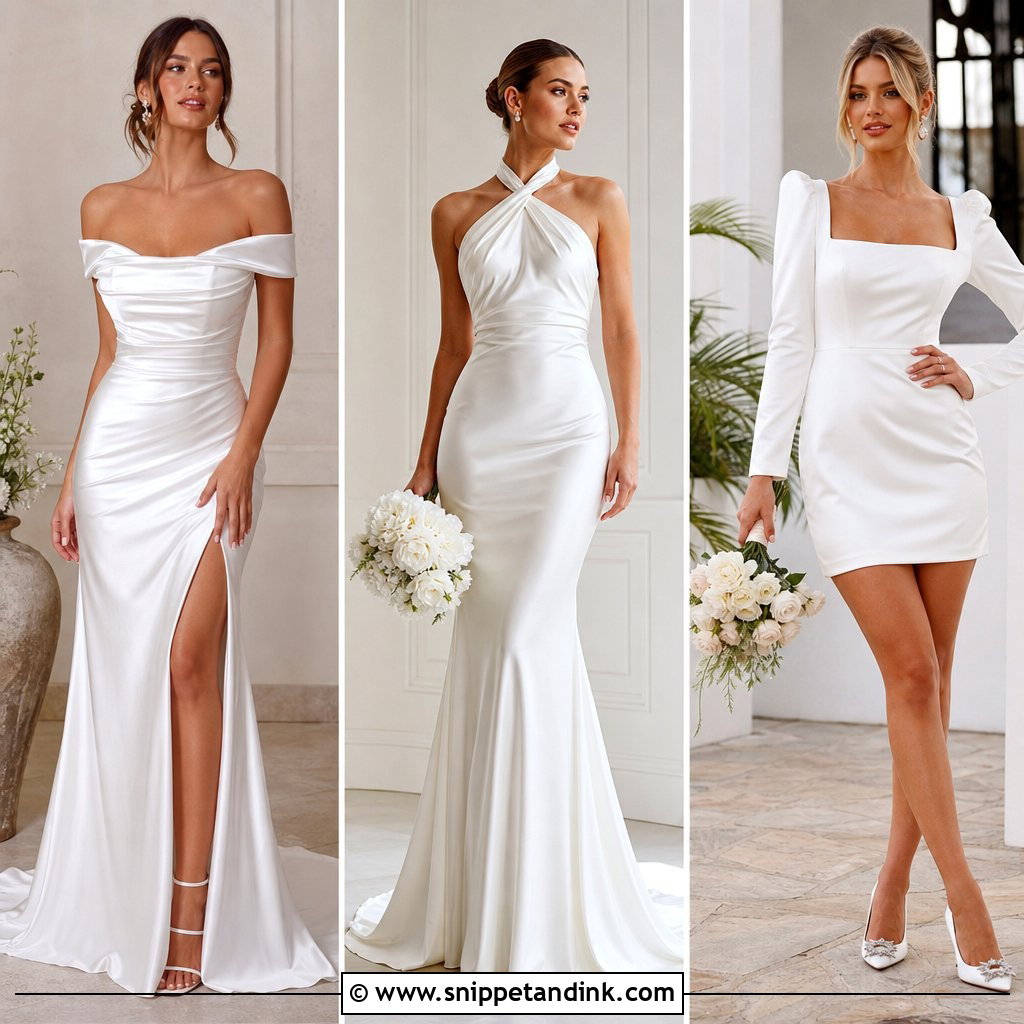
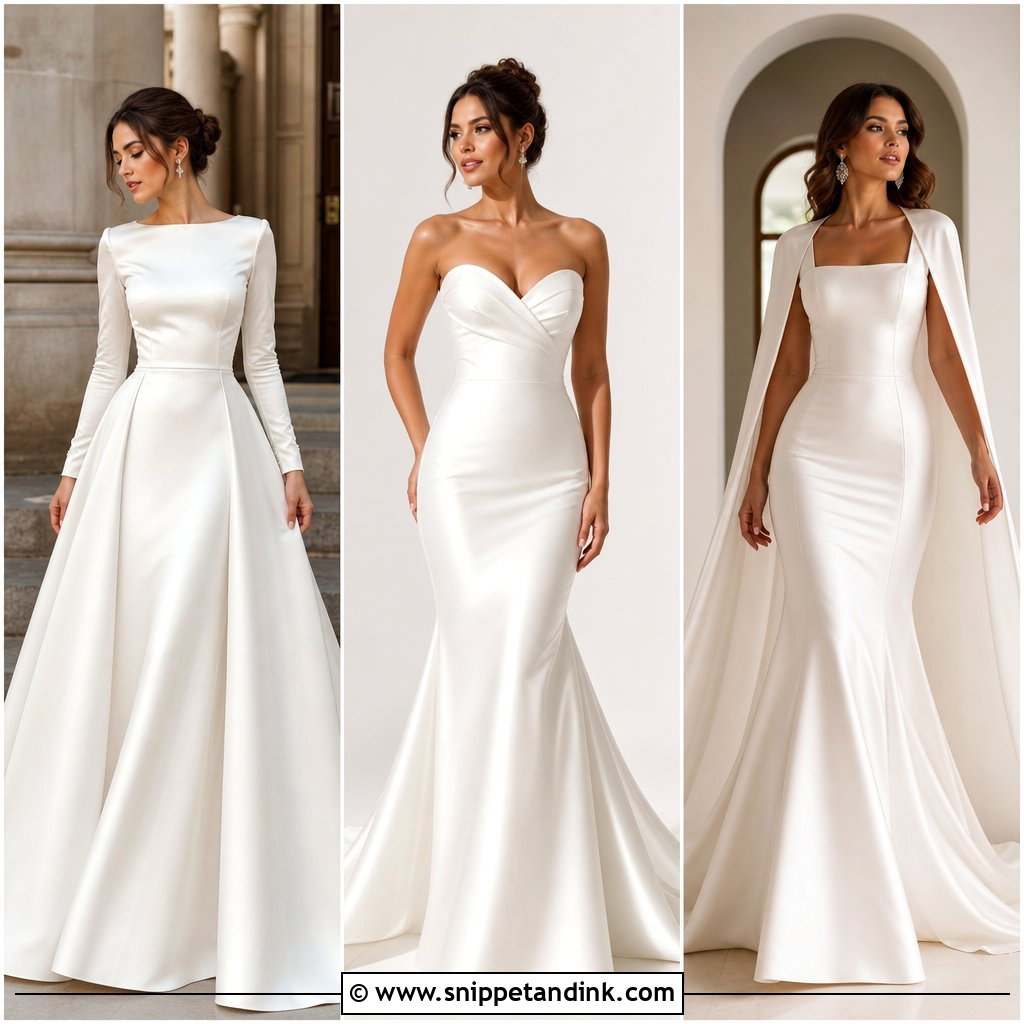
Satin is honest fabric. It shows every pull at the hip and every ridge of underwear, so the fitting on a satin sheath matters more than the dress itself. Look for a floor-length gown that skims rather than grips, with a gentle scoop or draped bodice and narrow straps. I’d style it with pointed ivory pumps, pearl drops and a fingertip veil edged in satin, plus a compact bouquet of white roses or callas. At alterations, sit down and stand up a few times while the seamstress watches the waist and hips; the lines that appear are the ones to fix. It suits ballrooms, galleries and courthouse ceremonies with clean backdrops.
2. Square Neck Crepe Wedding Dress
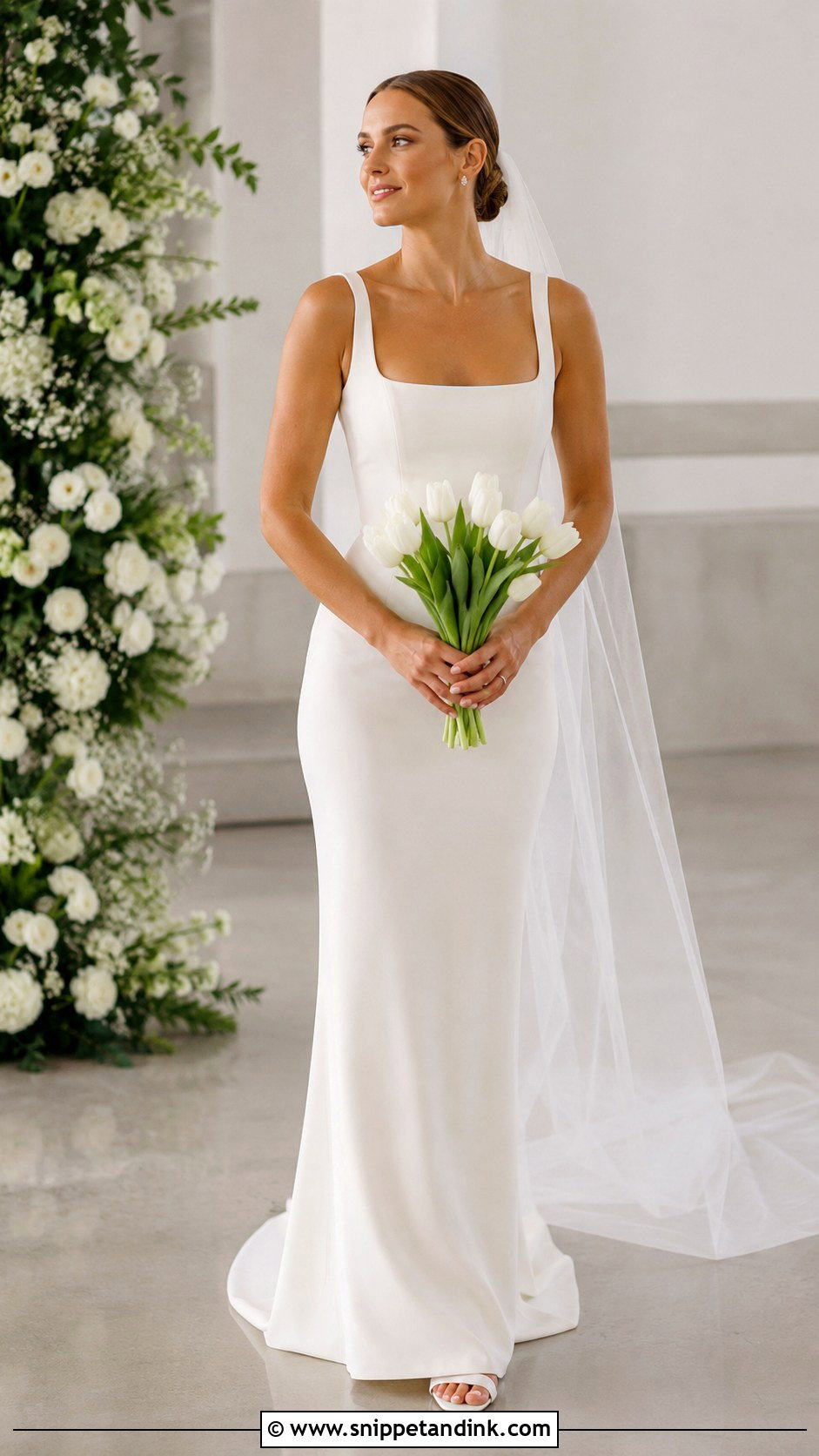
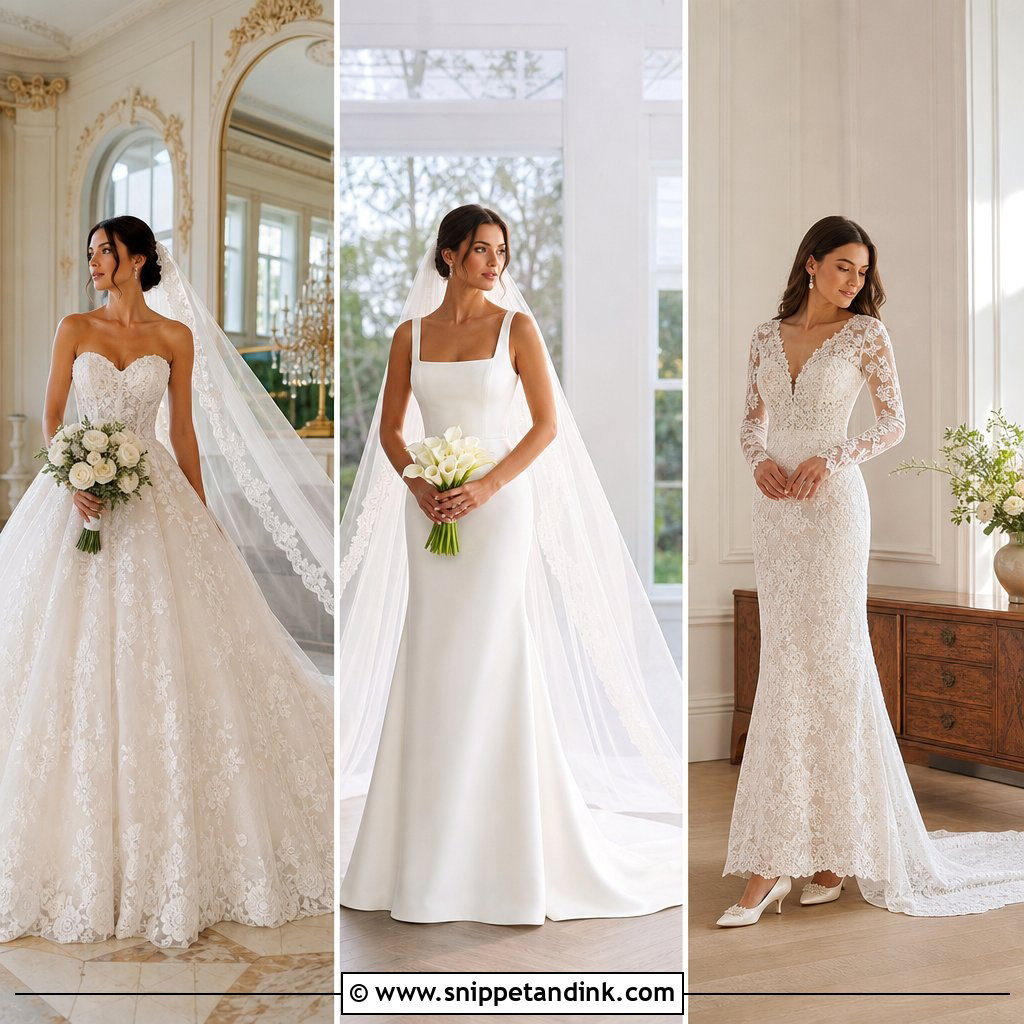
A square neckline gives a crepe dress its structure, so I don’t add much else. Wide straps hold the bodice firmly and frame the collarbones. Dense stretch crepe is what you want here; thin crepe clings at the hips and shows the lining seams. Block-heel sandals, small crystal studs and a low polished bun suit it, and a simple chapel veil softens the lines without covering the neck. White tulips and a little greenery in a structured bouquet keep the mood modern. Ask your seamstress to check the underarm and the back zip, because square necks gape there first.
3. Lace Mermaid Wedding Dress
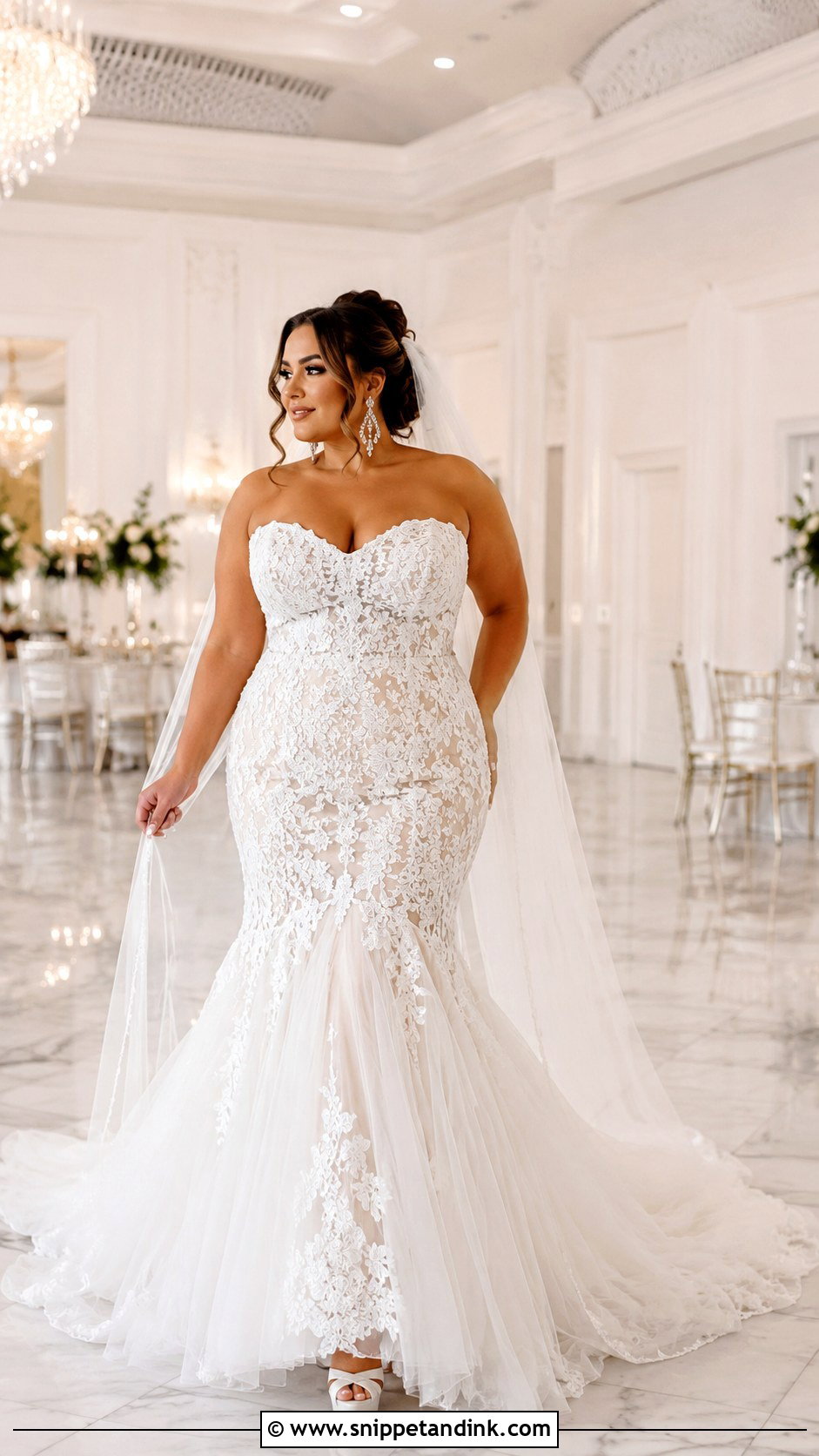
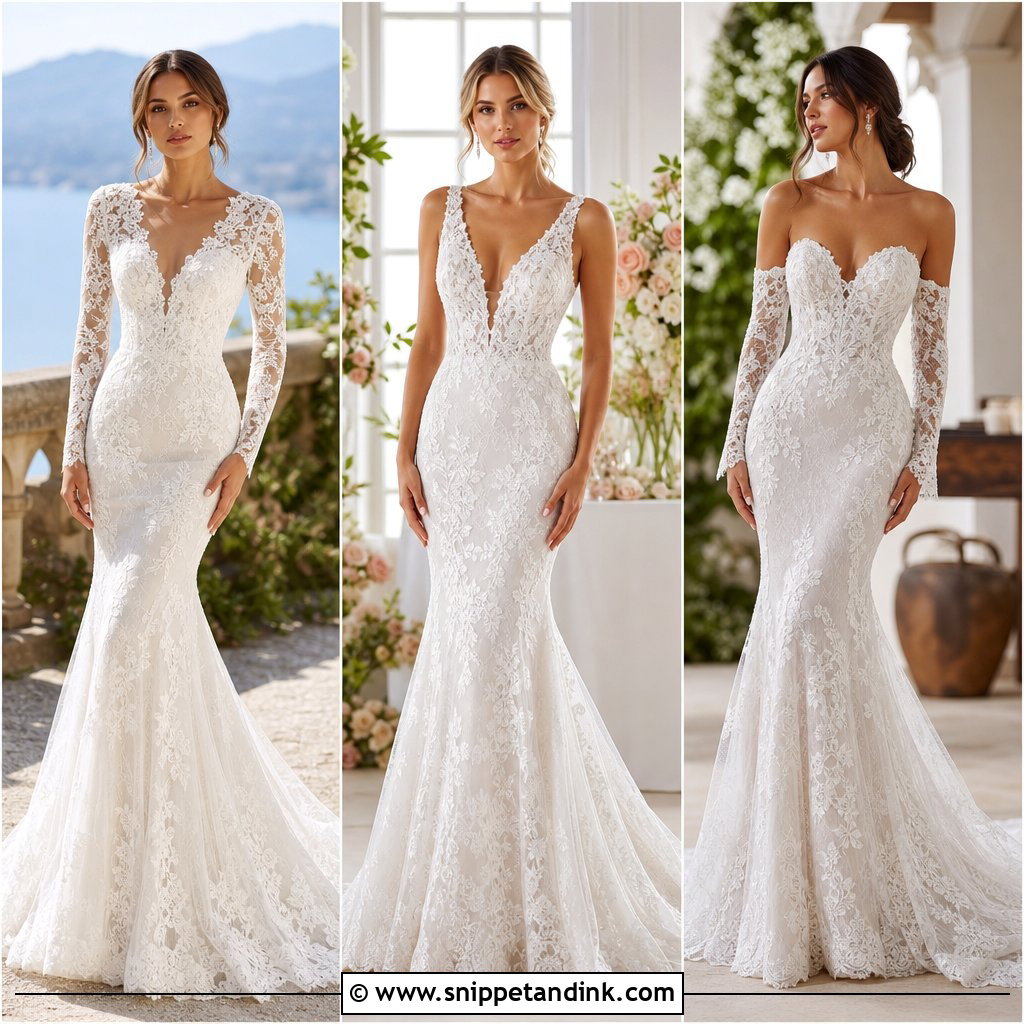
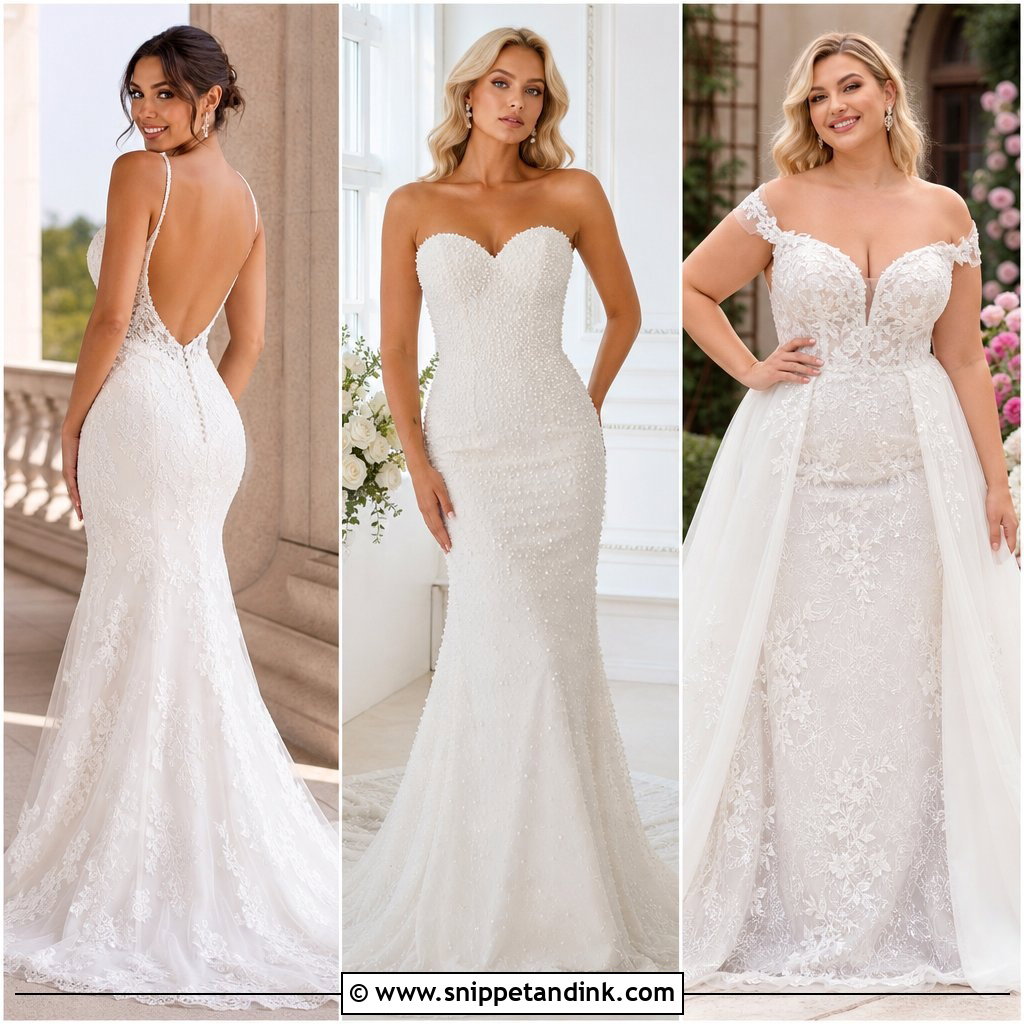
Lace and a mermaid shape together give the most drama on this list. The gown stays fitted through the torso and thighs and opens at the knee, so the skirt is much fuller than a sheath’s. Floral lace over a solid lining keeps the pattern crisp and covers you properly. A sweetheart neck, fitted bodice and soft tulle flare balance each other. Ivory platform heels, chandelier earrings and a long plain veil complete it, with a loose updo. My non-negotiable at a mermaid fitting: walk, turn and sit. If the knee is fitted too tightly, you’ll be taking tiny steps all day.
4. Strapless Trumpet Wedding Dress
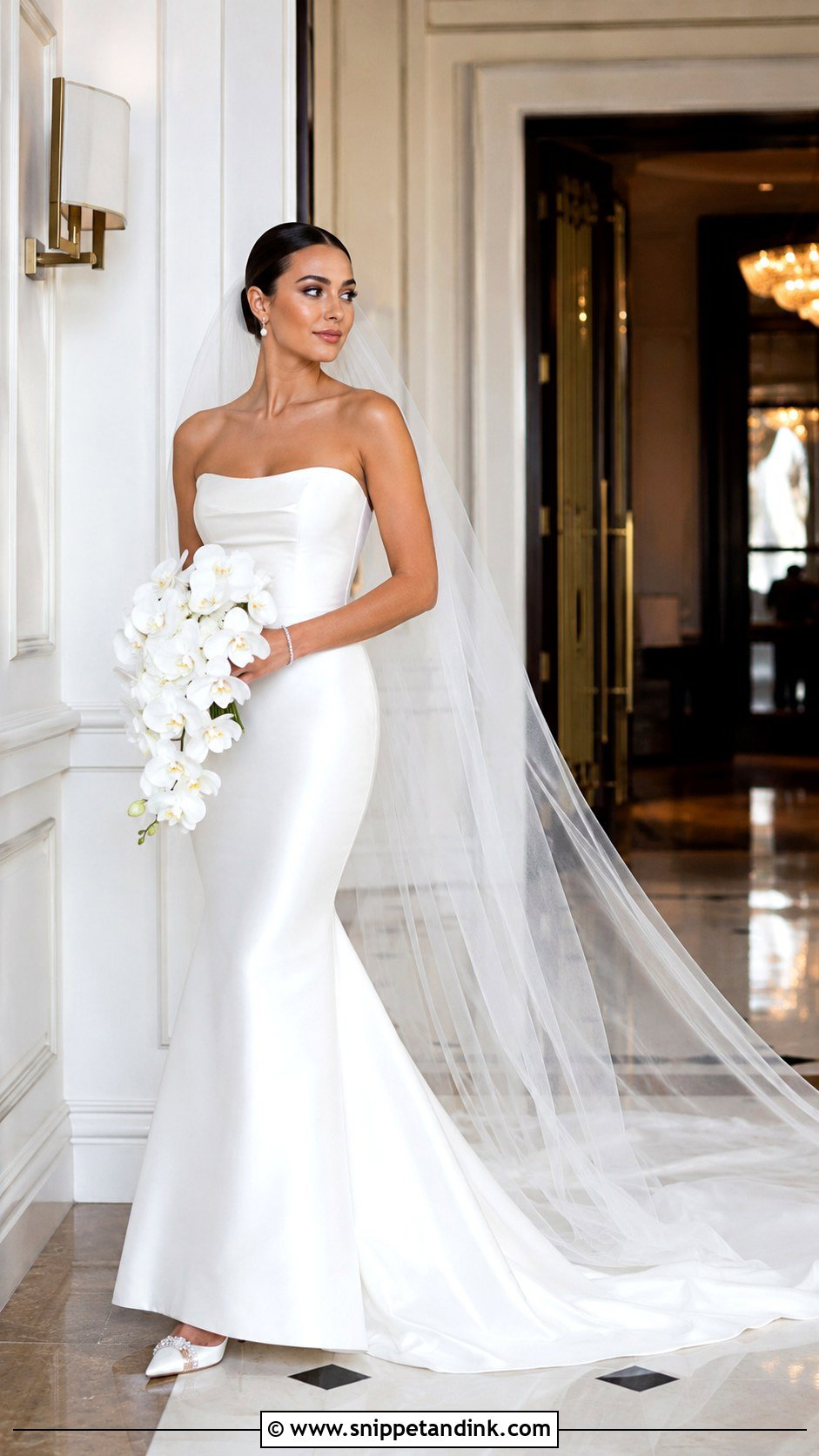
Trumpets open earlier than mermaids, around mid-thigh, which gives your legs more room while keeping the waist and hip defined. Strapless versions need real internal boning, and I always check whether it’s sewn into the bodice or just a loose stay. Pearl earrings, a tennis bracelet and pointed heels suit it. Wear a sheer cathedral veil for the ceremony and take it off for the party. A sleek bun or curled bob shows the shoulders. Here’s the test I use: raise your arms and dance in the fitting room. If you reach to pull the bodice up even once, it needs taking in or a silicone strip added.
5. Long Sleeve Lace Wedding Dress
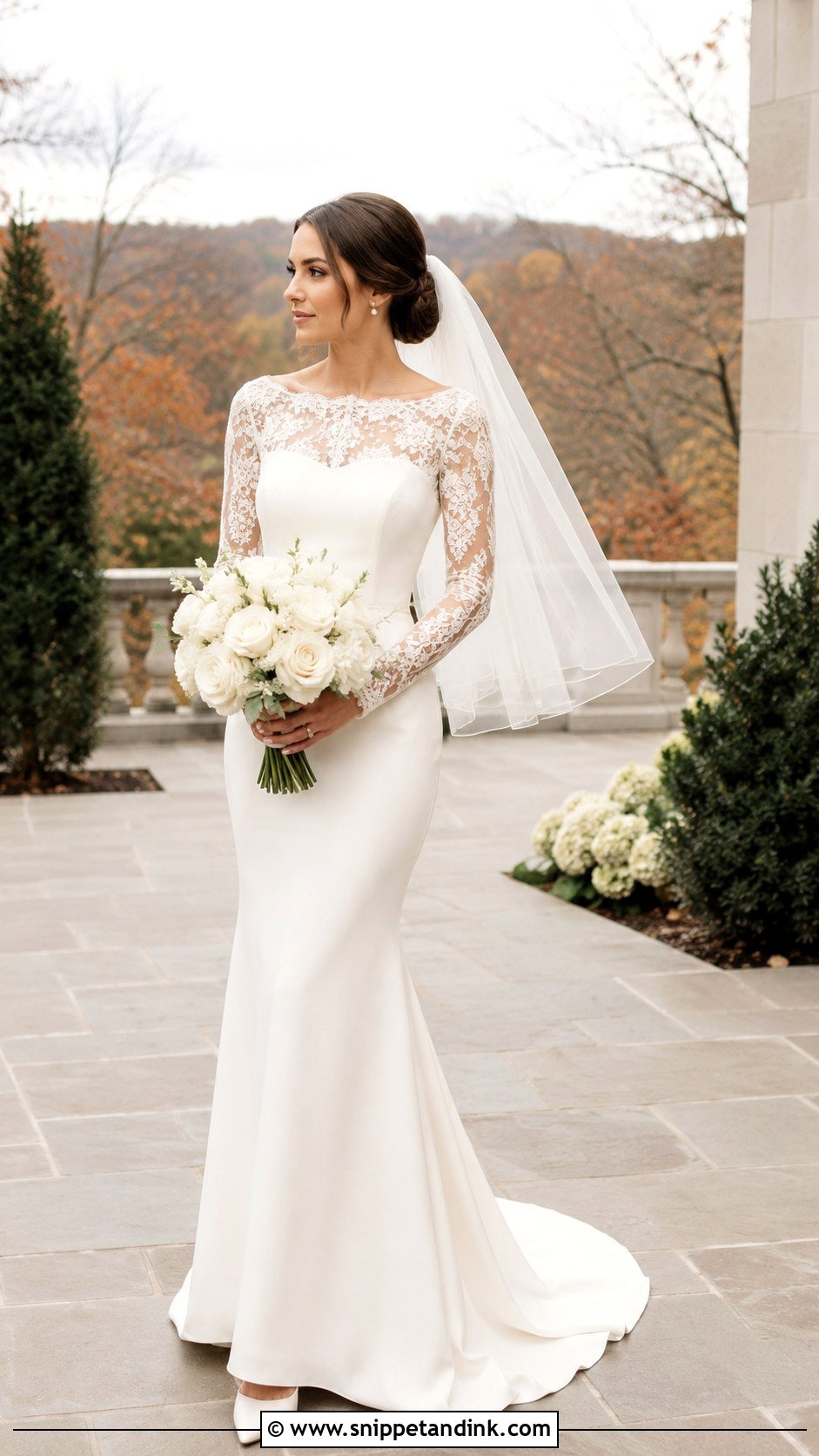
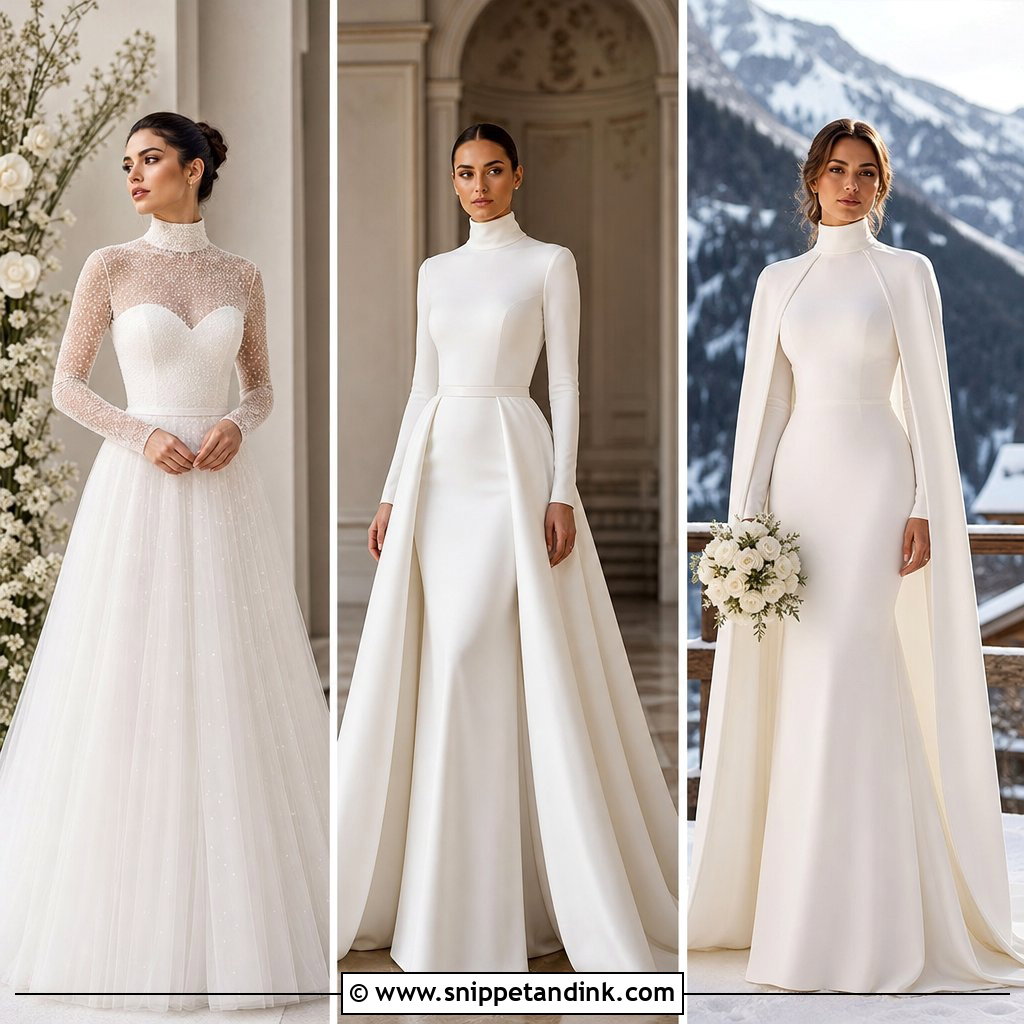
Long lace sleeves make a fitted gown feel romantic without making it heavy, provided the body is crepe or satin and the sleeves are sheer. Appliqués at the cuffs and neckline tie the two fabrics together. I’d add closed-toe ivory pumps, pearl studs and a medium veil with plain edges, and a low chignon so the sleeves and back are on show. For an autumn outdoor ceremony, a tailored white coat looks much better in arrival photos than a bulky wrap. Bend your elbows and lift your arms at every fitting. Non-stretch lace sleeves pull at the shoulder seam, and a good seamstress can add a little ease there.
6. Off Shoulder Fit And Flare Wedding Dress
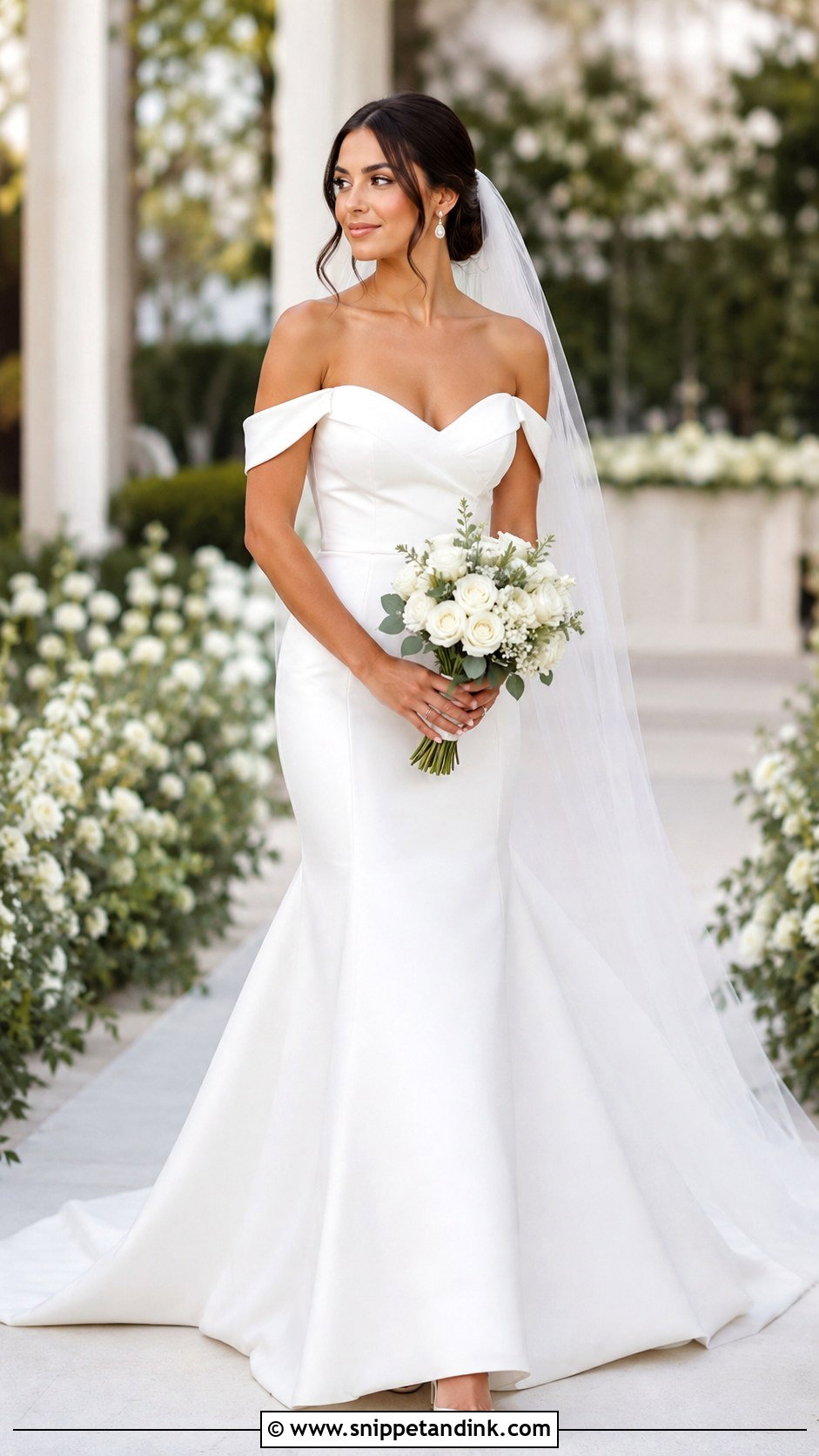
Off-the-shoulder sleeves should be decoration, never the thing holding the dress up. That’s why I look for an internal bodice that supports the gown independently. The fit-and-flare opens gradually from the hip, so steps feel easier than in a mermaid. Teardrop earrings, a fine bracelet and low satin sandals suit it, with a loose updo or side-swept waves. Choose a plain veil and anchor it below the hair so it falls behind the sleeves rather than catching on them. Hug a few people at the fitting. If your arms are pinned to your sides, the sleeves need loosening.
7. Halter Neck Column Wedding Dress
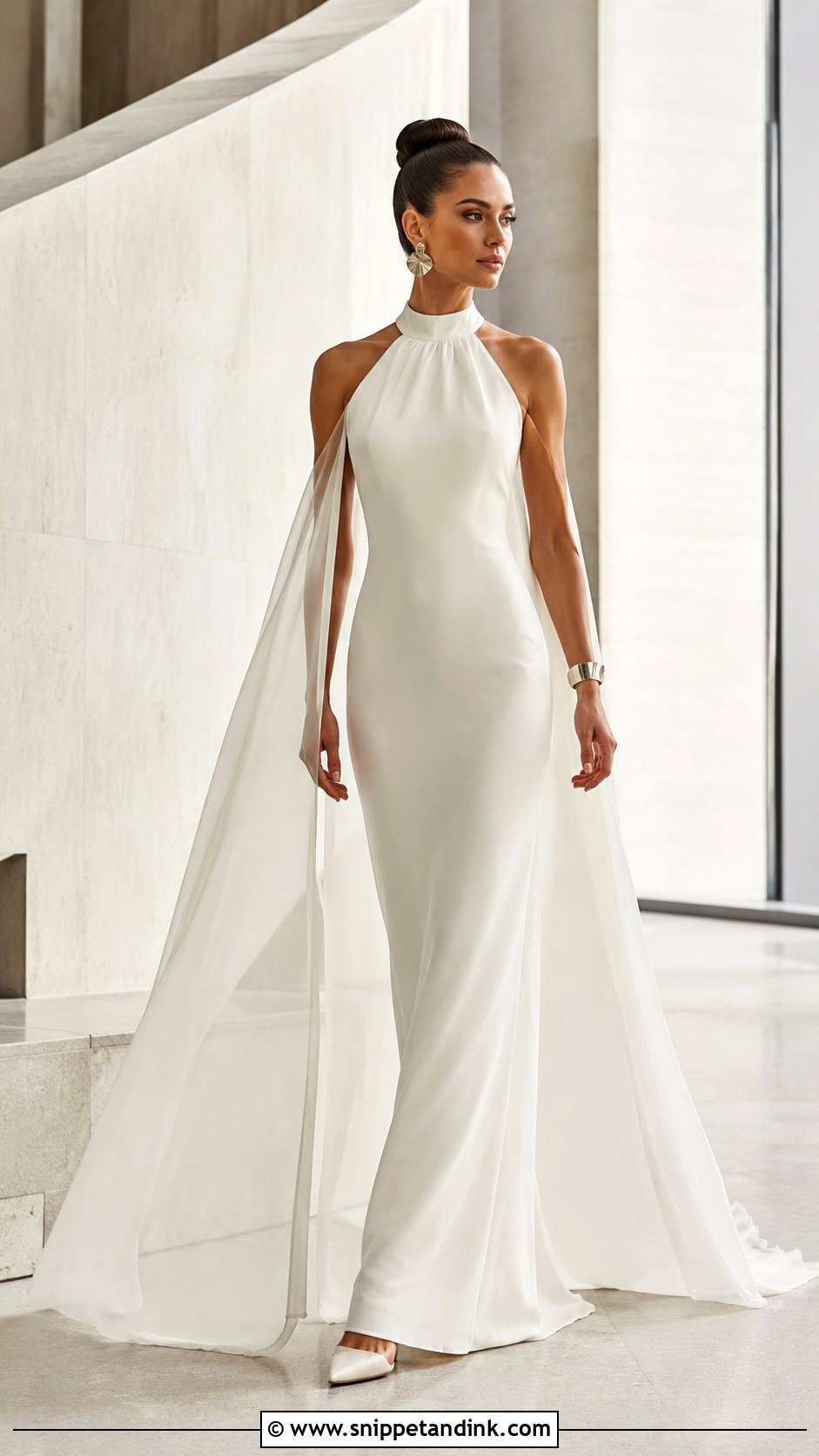
A halter column has strong vertical lines, and because the neckline pulls focus to the face and shoulders, you need very little jewelry. Matte crepe, silk or satin with enough body to fall cleanly from the waist works best. Small sculptural earrings, a smooth cuff and pointed slingbacks are my pairing. Wear your hair up in a bun, ponytail or short sleek cut so the halter shows. Instead of a veil, a lightweight floor-length cape attached discreetly at the shoulders looks modern, and it comes off after the ceremony. Check the neck strap after an hour of wear; a halter that pulls at the back of the neck gives many brides a headache by evening.
8. Cowl Neck Slip Wedding Dress
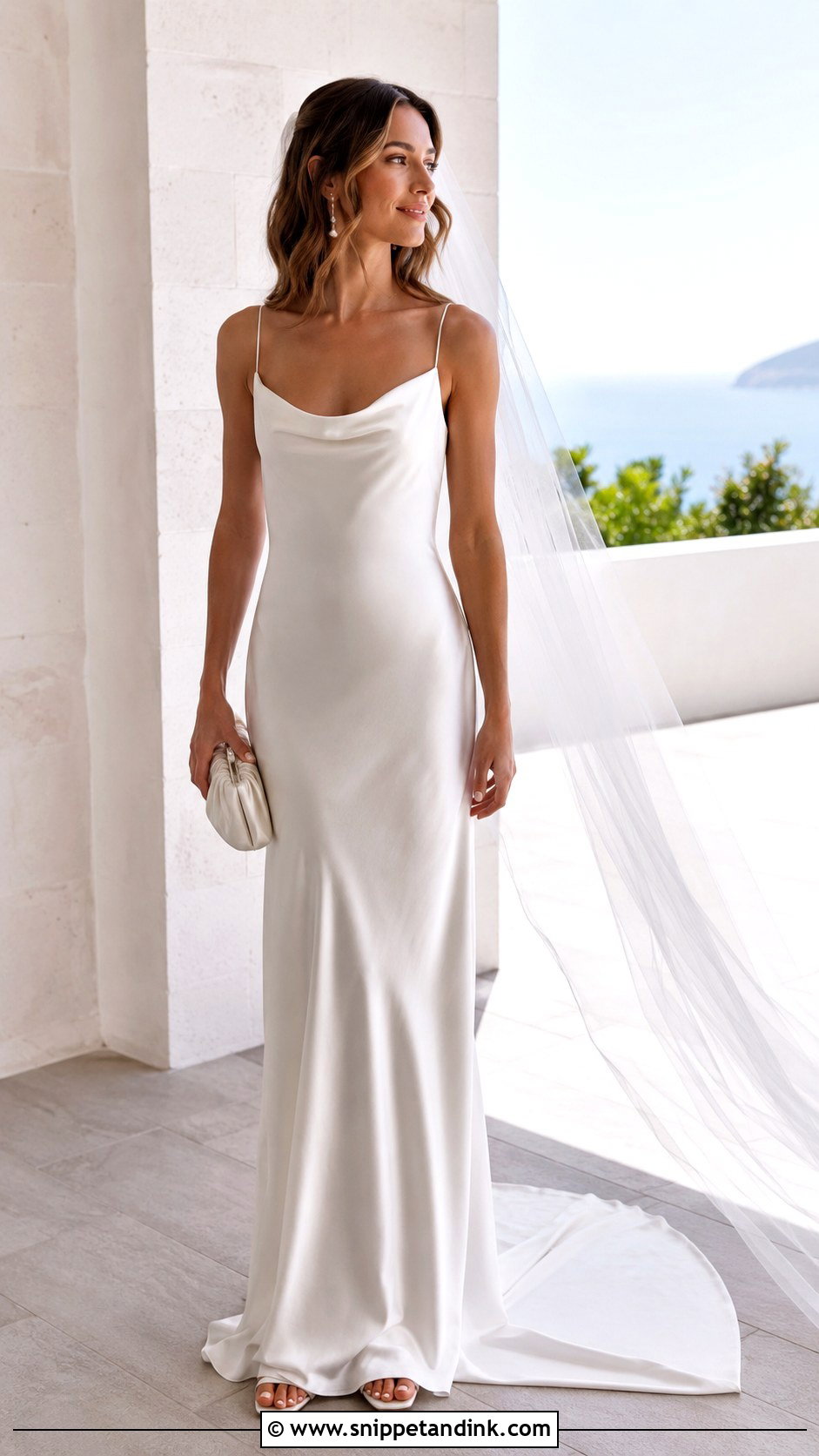
Bias-cut silk or satin follows the body without any corsetry, which is why the cowl slip feels so relaxed. It suits small ceremonies and warm weather. Adjustable narrow straps matter, as does a cowl that stays put when you lean forward to sign the register. Strappy sandals, pearl threaders and a small satin clutch are all I’d add, plus a sheer chapel veil and soft waves or a low knot. Bias cut is unforgiving underneath: test smooth, skin-tone underwear at the fitting, because ordinary elastic shows through instantly. Bias hems also drop over time, so let the gown hang for a day before it’s hemmed.
9. Corset Mermaid Wedding Dress
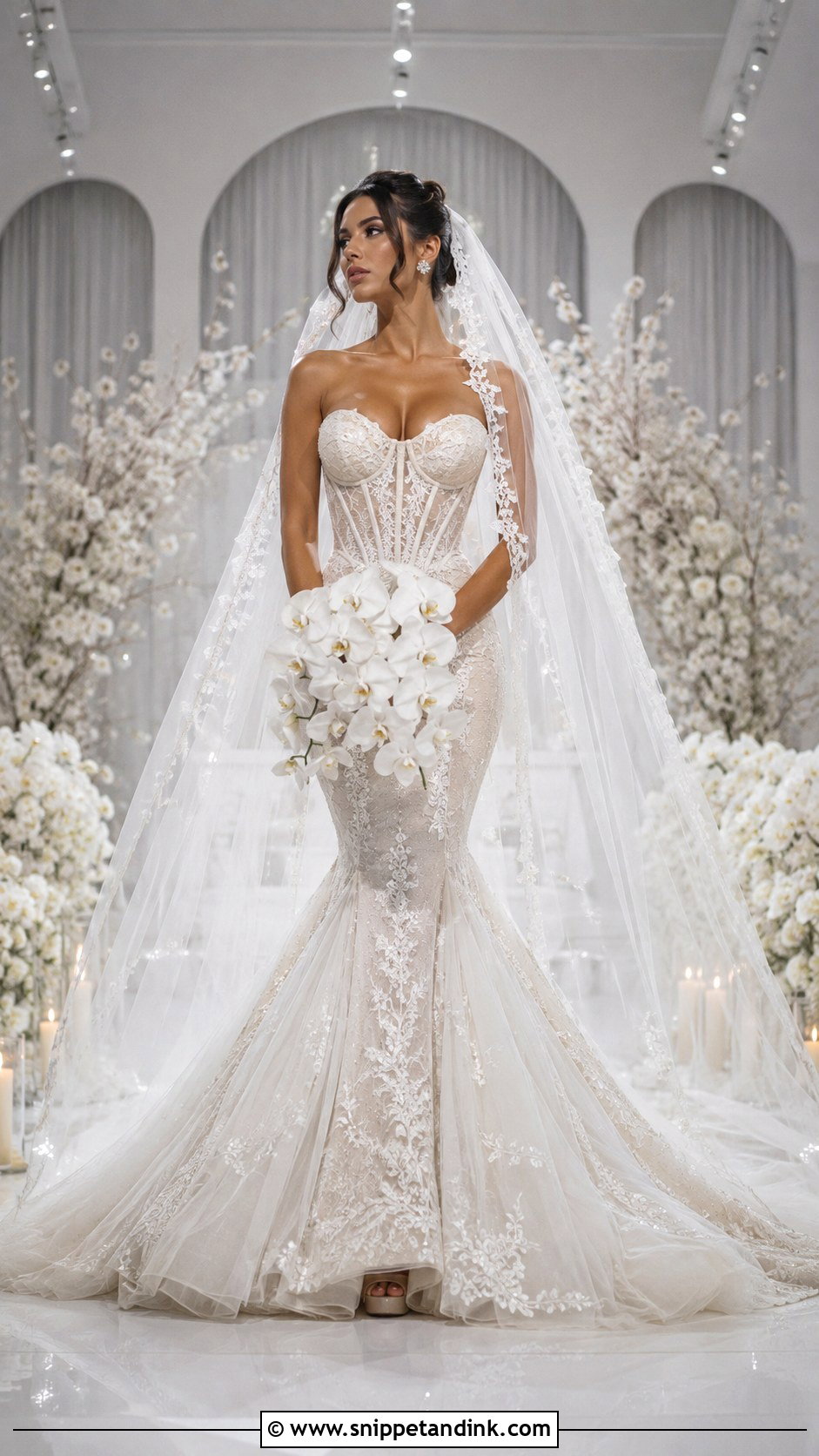
Structure is visible on a corset mermaid, so it has to be well made. Look for boning placed along the seams, built-in cups and a secure back closure, rather than a bodice that’s simply tight. Satin or crepe panels give a clean base, and lace appliqués add depth at the neckline and hips. Low platform heels finish it, along with crystal studs and a cathedral veil anchored beneath a polished bun, and I’d skip the necklace. White orchids suit the scale of the gown. Sit for several minutes during the fitting. You should breathe fully and walk with a normal stride.
10. High Neck Minimalist Wedding Dress
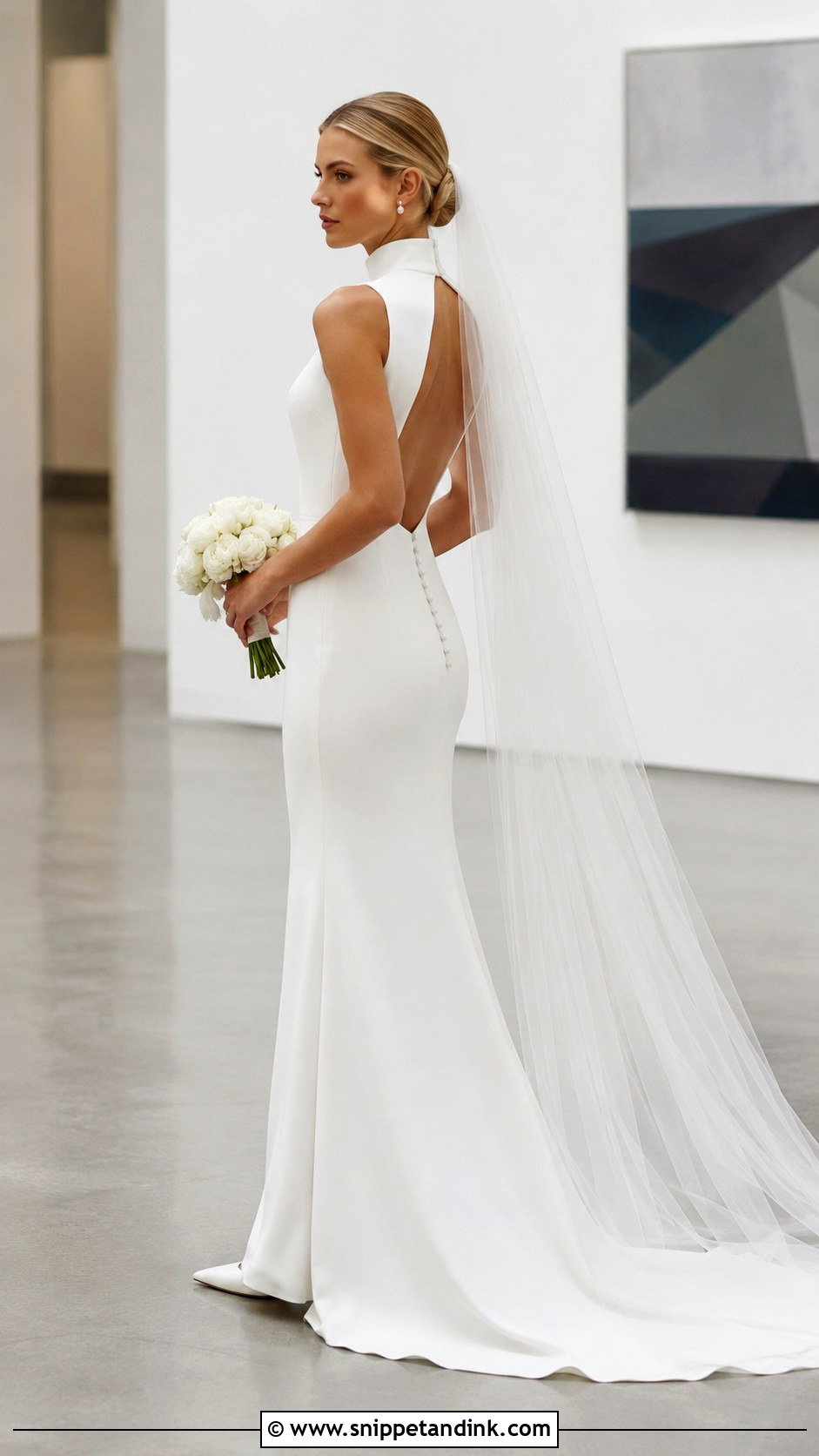
No lace, no sparkle: a high neck minimalist dress relies entirely on cut. Structured crepe with a fitted bodice, defined waist and a straight or slightly flared skirt is the formula. Going sleeveless keeps a covered neck from looking heavy, and a low back gives interest from behind. Small gold or pearl earrings, pointed pumps and a sleek low bun suit it, along with a long plain veil and a compact all-white bouquet. With plain fabric, every seam is on display. Wear your actual wedding shoes when the seamstress checks the shoulder line, neck height, side seams and hem.
11. Open Back Sheath Wedding Dress
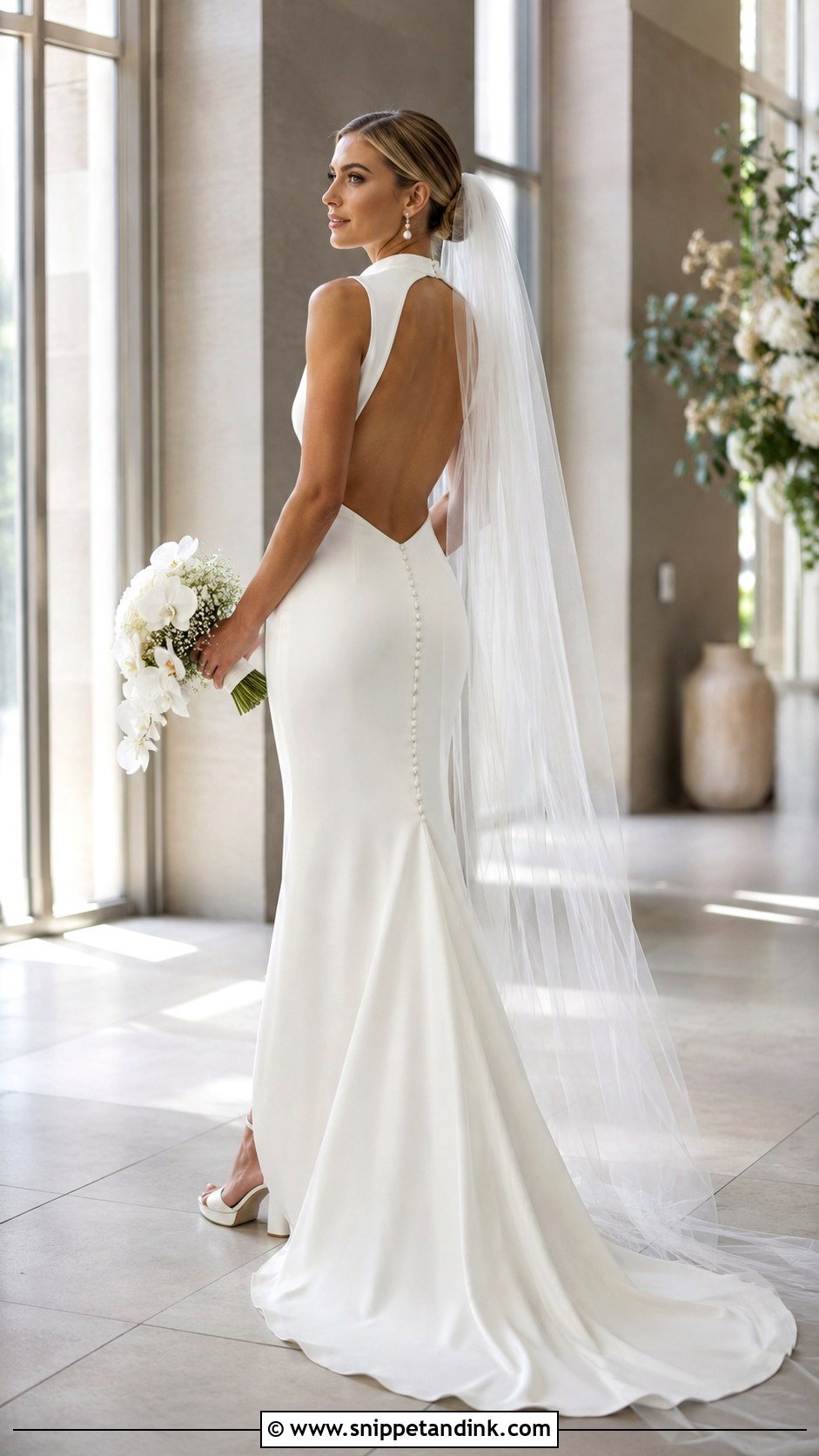
An open back turns a simple sheath into something people remember, and I’d balance it with a higher front and a slim floor-length skirt. Covered buttons, crossed straps or a soft curve give detail without clutter. Wear your hair up or to one side so the back is visible, with drop earrings, a fine bracelet and block heels. Anchor the veil below your hairstyle so it frames the opening. Sort out your underwear before alterations start, since a standard bra rarely works. Adhesive cups or cups sewn into the dress are the usual answer, and both change how the bodice fits.
12. Illusion Neckline Lace Wedding Dress
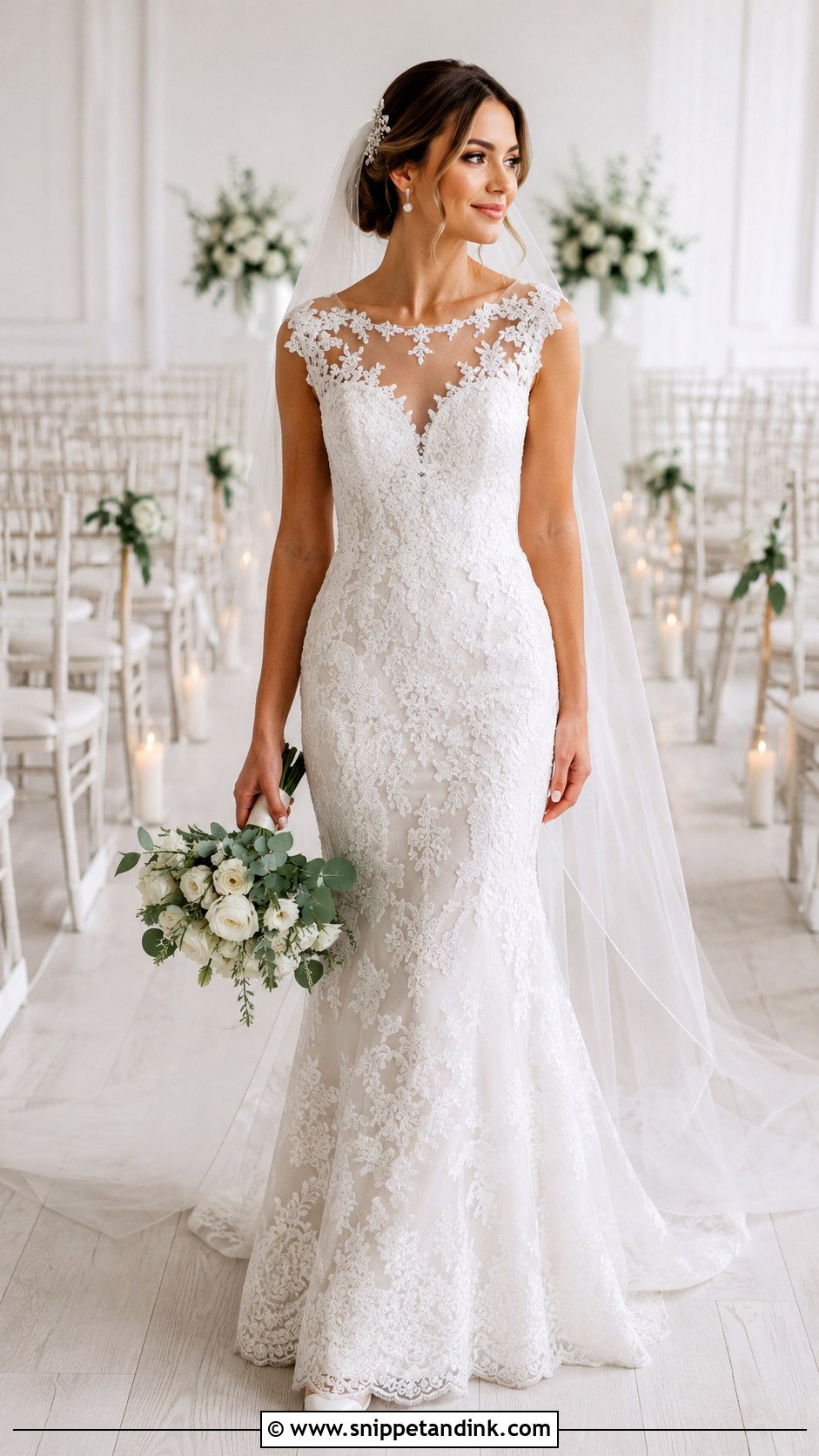
Illusion mesh lets lace appliqués float over the collarbones and shoulders while you stay covered. It usually rises from a sweetheart or V bodice, over a slim trumpet or sheath skirt. Pearl studs, a narrow crystal comb and closed-toe satin pumps suit it, and I’d keep the veil plain because a lace-edged one fights with the neckline. A low twist keeps the appliqués in view. The mesh must match your skin tone closely. Look at it by a window and from the side: mesh that looks invisible under shop lighting can show as a pale band in daylight photos.
13. Beaded Slim Fit Wedding Dress
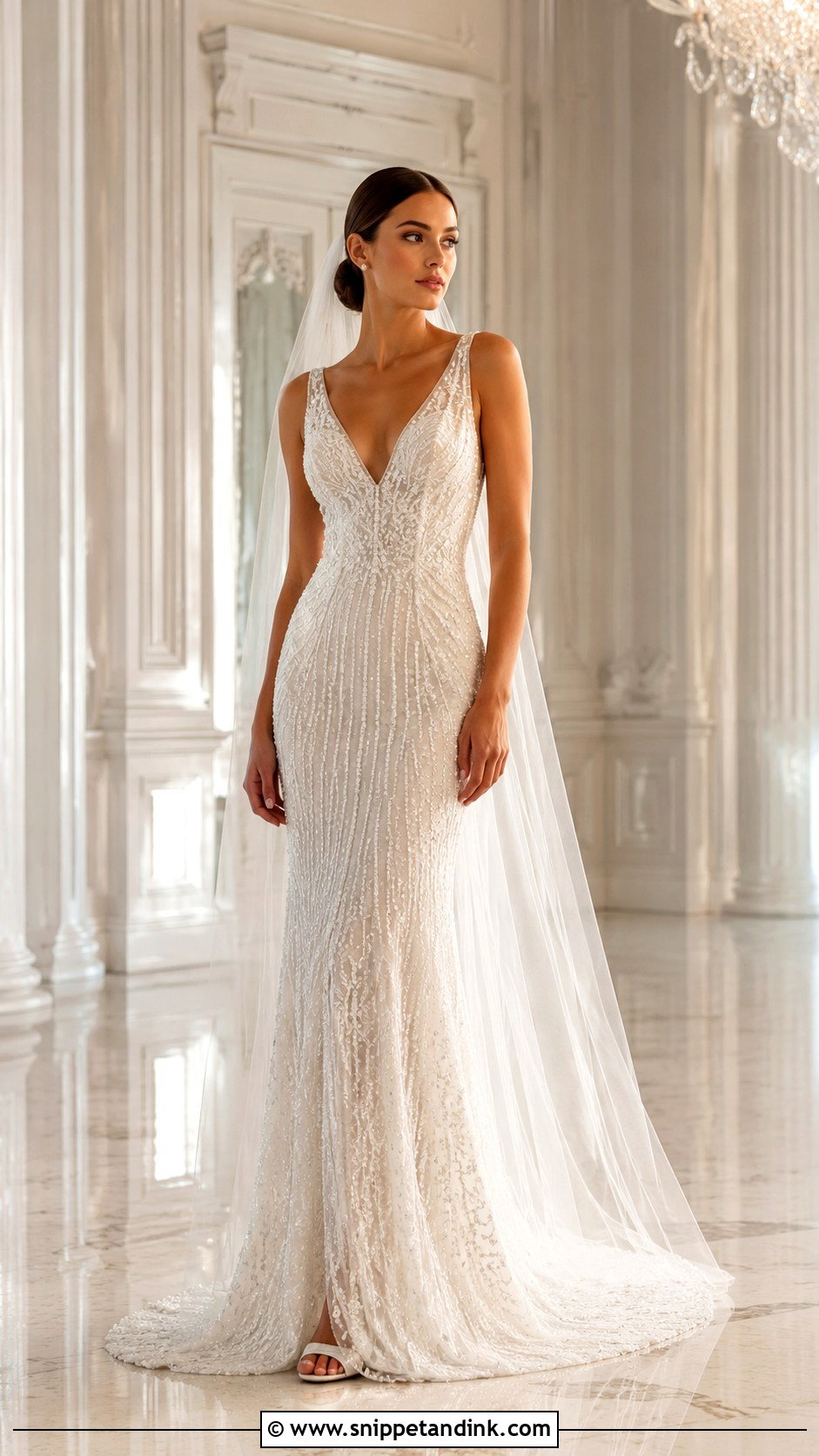
Beading brings evening glamour to a slim dress without changing its outline. The best versions follow the bodice seams and fade lightly into the skirt. A neutral lining keeps the beads crisp. Simple satin heels and small studs are plenty, with no necklace if the neckline is already worked. A plain tulle veil and smooth low bun balance it. Heavily beaded gowns can be surprisingly heavy, so check the shoulder support and pick the dress up before you buy. Then run your inner arm along the side seams. Rough beads scratch, and they snag sheer veils and bracelets.
14. Pearl Embellished Wedding Dress
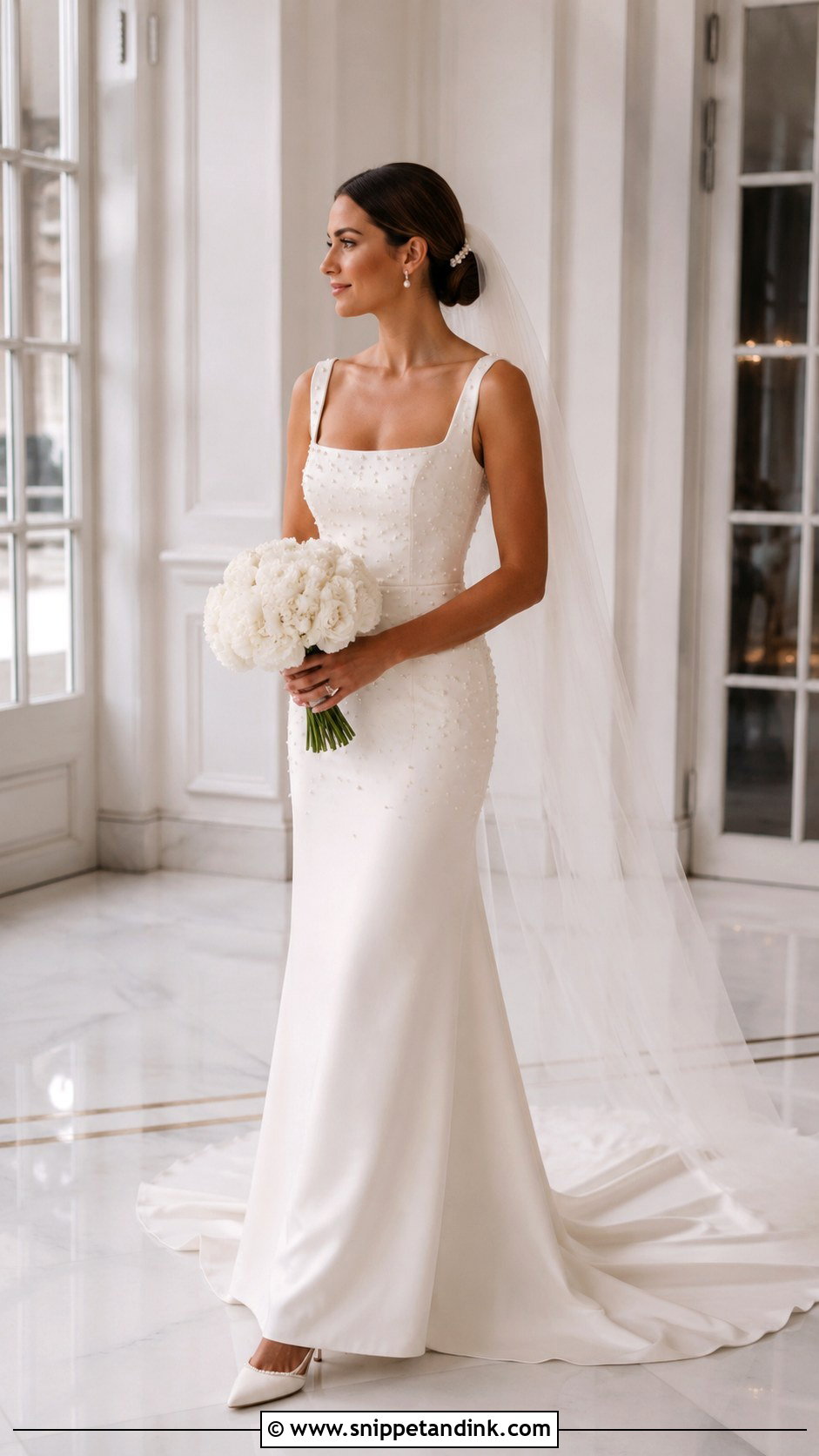
Pearls soften a fitted gown and keep it classic. I prefer them scattered over the bodice, sleeves or upper skirt rather than covering everything. A slim crepe or tulle column with a square or scoop neck makes a clean base. Pearl earrings, ivory slingbacks and a sheer chapel veil suit it, with a low bun and a single pearl pin. A structured white bouquet stops it all feeling too sweet. Before the day, check every pearl at the underarms and waist, where arms rub. Put a cloth over the bodice when trying on jewelry so clasps don’t catch the threads.

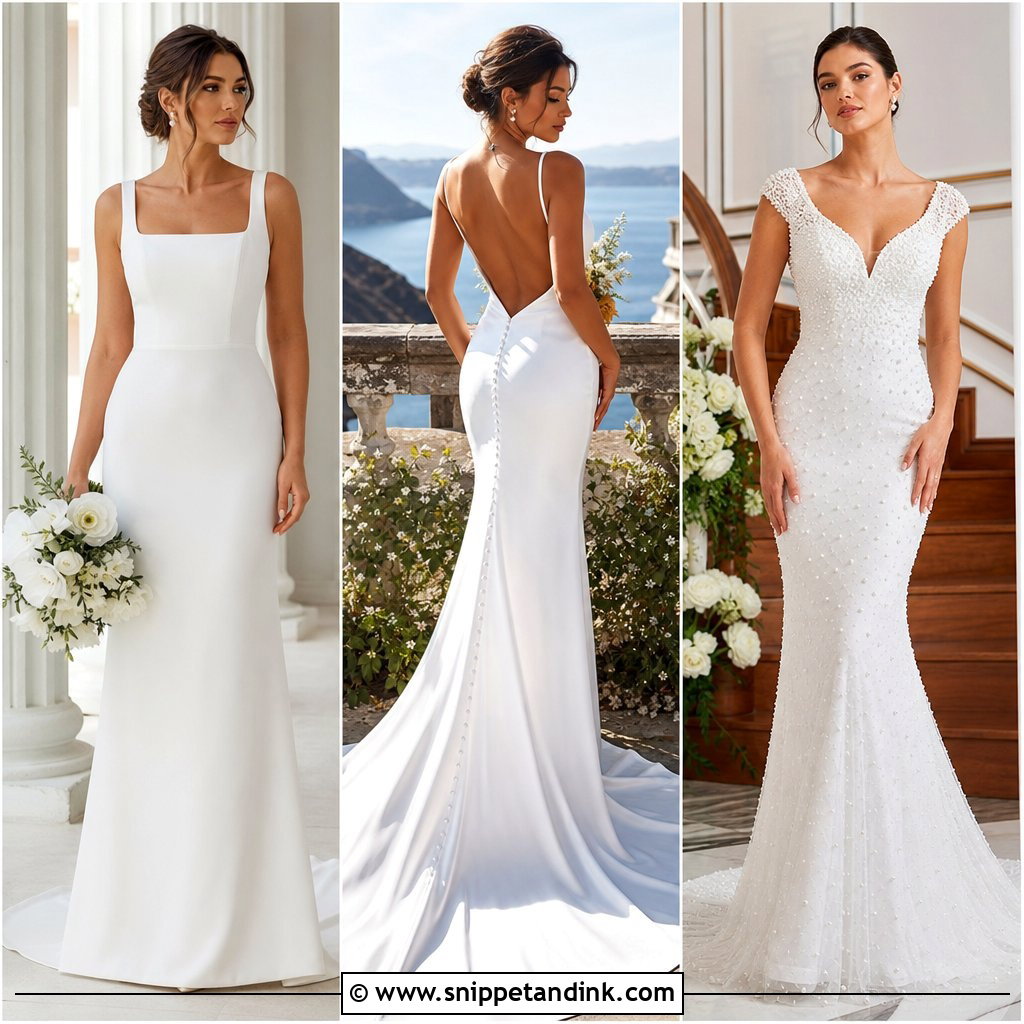

15. One Shoulder Wedding Dress
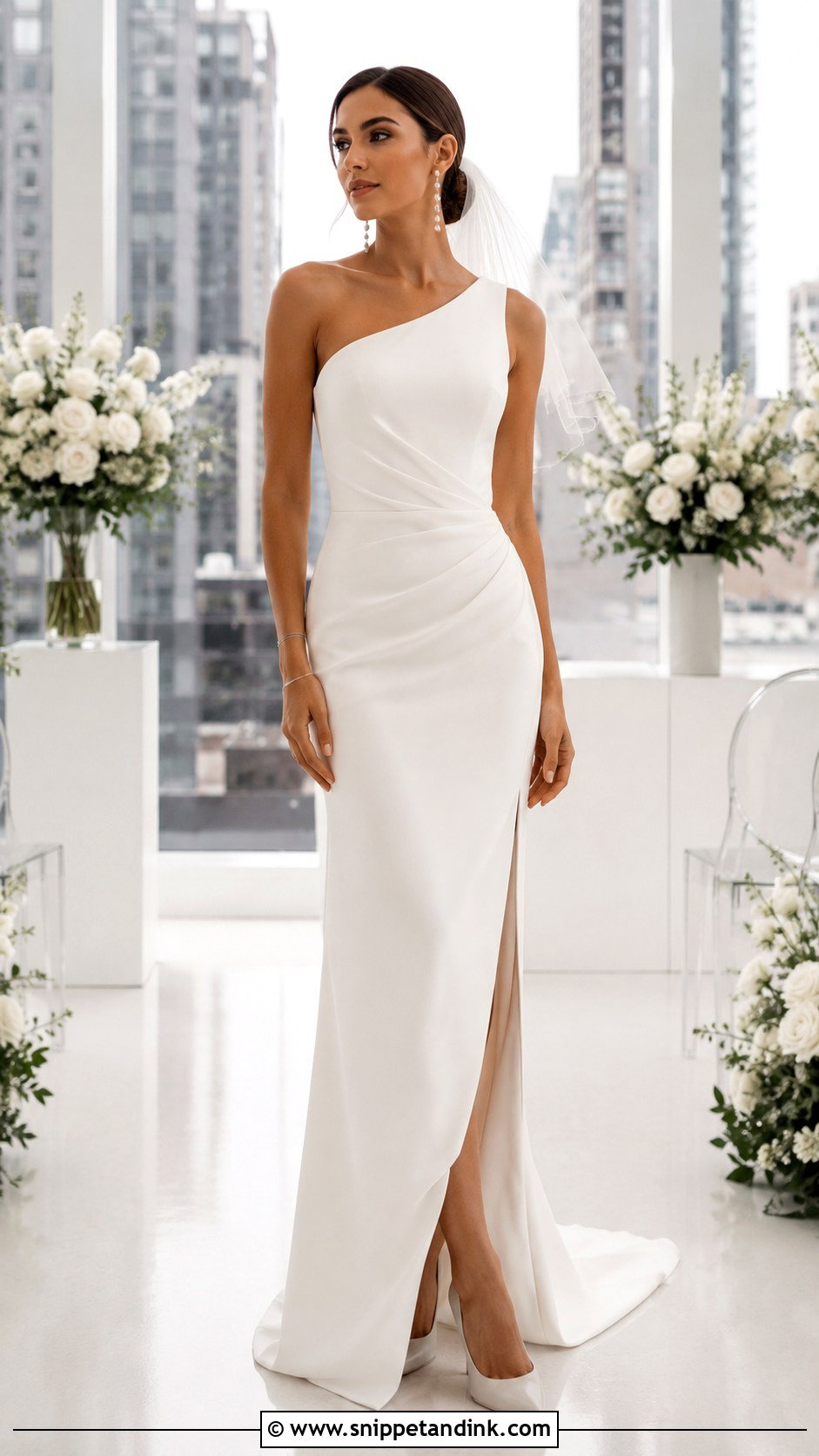
A one-shoulder wedding dress draws the eye up and across in a single line. Fitted crepe with gentle ruching at the waist adds texture, and a straight sheath skirt with a subtle side slit gives walking room. I like one statement earring on the bare side, or small matching drops. Pointed heels and a slim bracelet are enough; a necklace interrupts the line. A sleek ponytail or side-parted bun keeps it clean, with a short veil behind the strap. At fittings, I watch whether the strap lies flat or cuts into the neck as you turn your head.
16. Cap Sleeve Vintage Wedding Dress
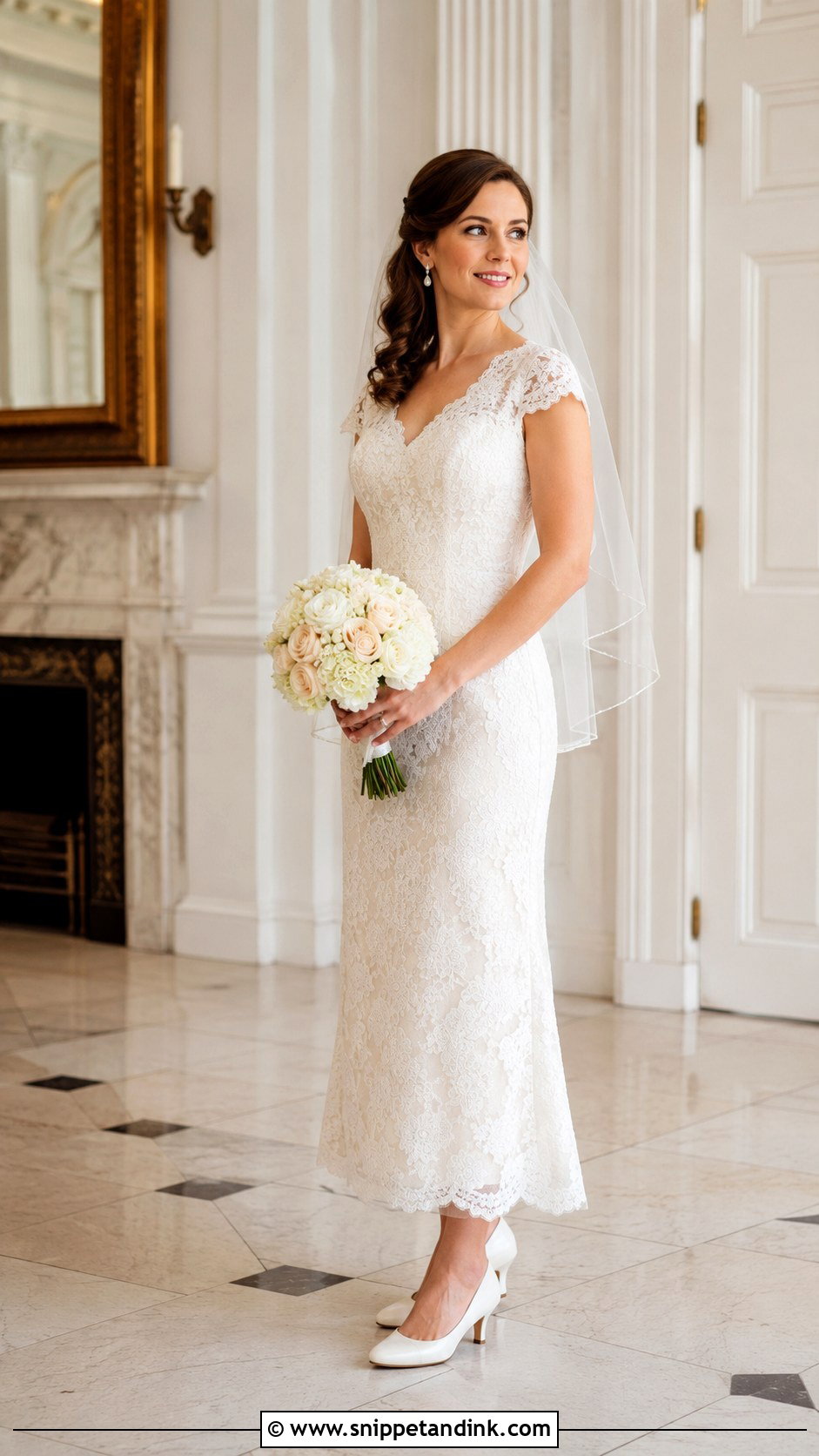
Cap sleeves give a fitted lace sheath a vintage feel without adding width at the shoulders. Look for a soft V-neck, a natural waist and covered buttons down the back, with scalloped edges on the sleeves. Low ivory pumps, pearl drops and an elbow-length veil suit it. Finger waves, a neat chignon or brushed-out curls lean into the vintage side while still looking current. A round bouquet in creamy whites finishes it. Reach forward as if you’re hugging someone. Non-stretch lace cap sleeves often bind at the front of the arm, and a seamstress can recut the armhole a little.
17. Wedding Dress With Detachable Overskirt
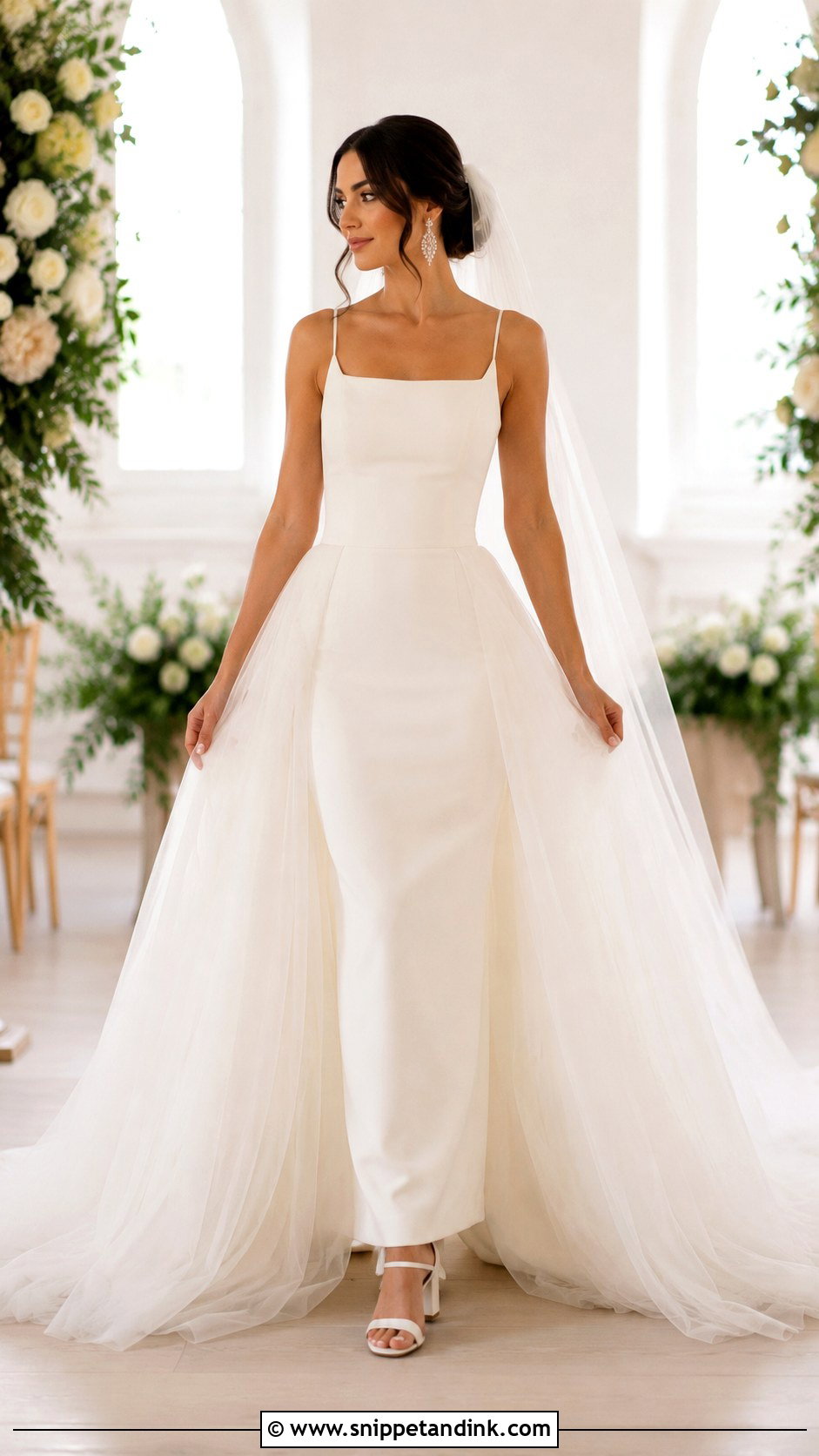
A detachable overskirt gives you two looks with no full change. Under it sits a supportive crepe, lace or satin sheath; over it, a light tulle or organza layer for the ceremony. Pair the ceremony version with a long veil, crystal earrings and block heels. Afterwards, the overskirt and veil come off and a sparkly hair piece or bolder earrings come out. The waistband should fasten securely and blend into the dress. Practice taking it off with whoever will help you on the day. It should come off in under a minute without touching the zip, buttons or train.
18. Slim Fit Wedding Dress With Train
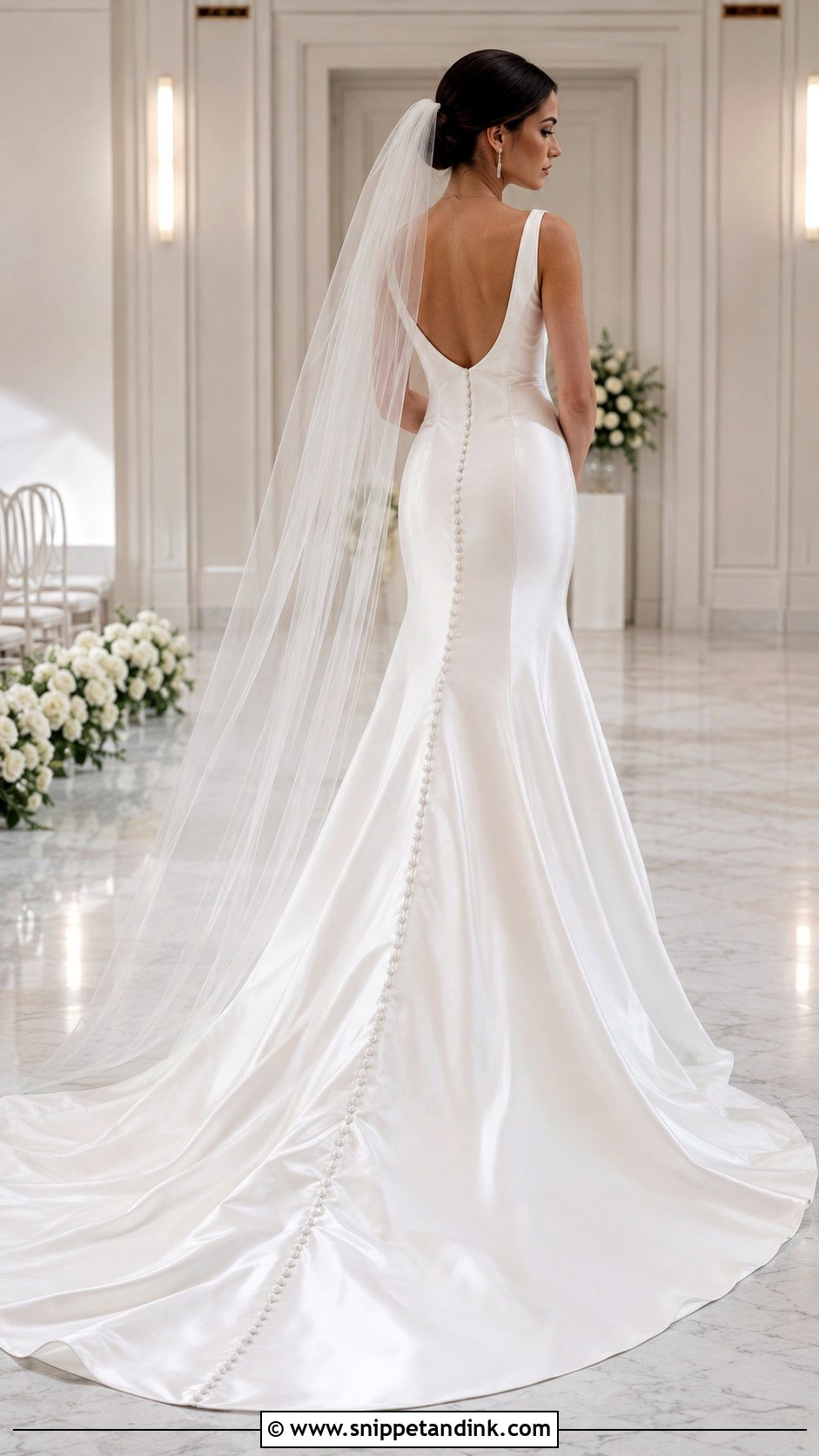
A long train adds ceremony presence while the front of the dress stays clean. Crepe or satin with a fitted bodice, a gently flared hem and a chapel or cathedral train works well, especially with covered buttons all the way down. Add a plain veil, drop earrings and heels that stay steady during the walk. Ask your seamstress for a secure bustle and practice it with your maid of honor before the day. I also check the train on the actual floor: grass, gravel and steps can call for a stronger bustle or a wrist loop.
19. Petite Slim Fit Wedding Dress
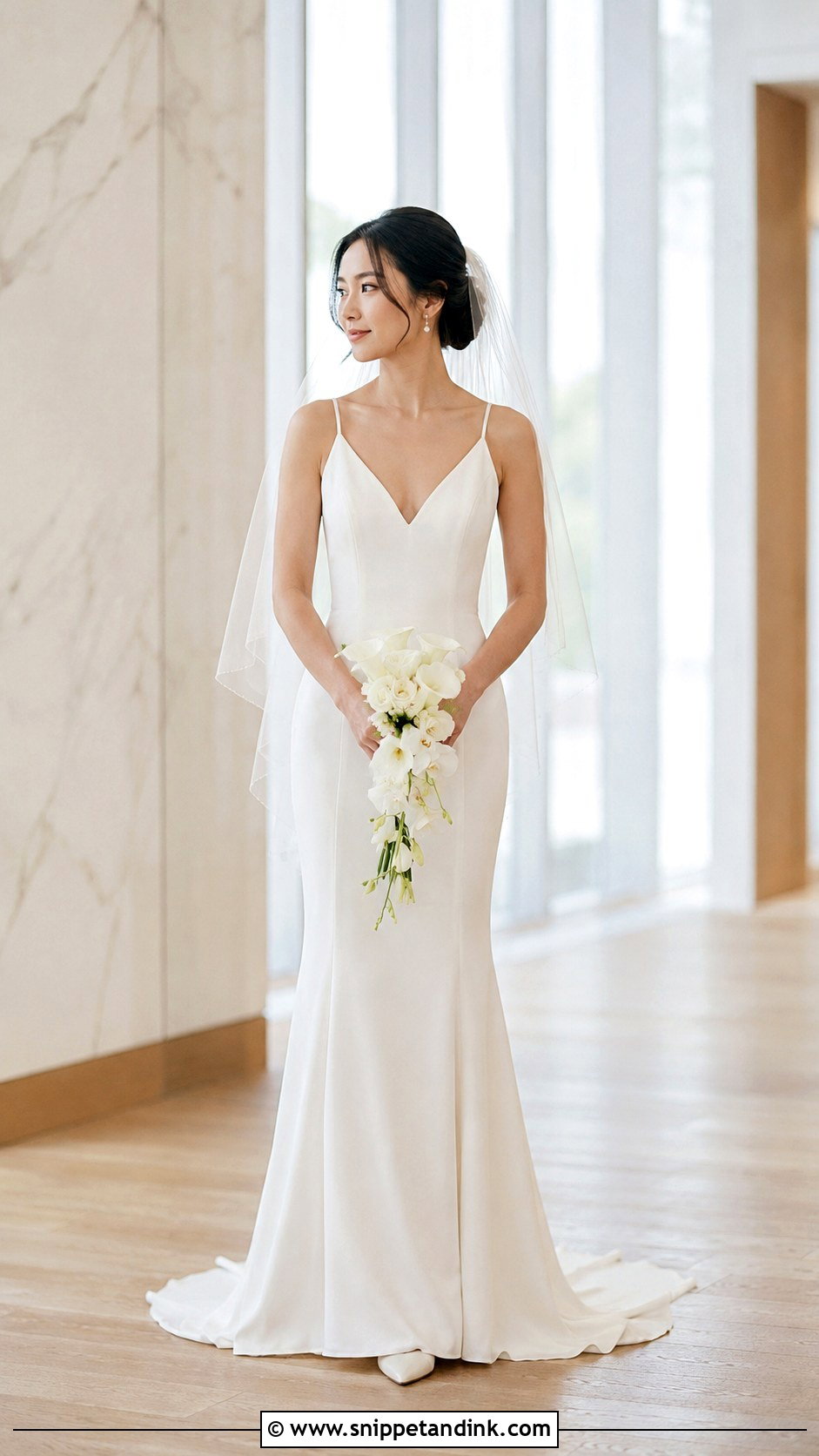
A petite slim fit wedding dress is about proportion, not about being small. I look for a sheath, column or soft trumpet with a slightly raised waist, narrow straps and details scaled down to the frame. Vertical seams, a clean V and a modest train keep the line long. Pointed heels, small drops, a narrow bouquet and a fingertip veil all stay in scale. Petite sizing rarely removes alterations; strap length, bodice depth and where the flare starts usually still need adjusting. Wear your wedding shoes to every fitting. And pick the shape you love, because good tailoring matters more than height.

20. Plus Size Slim Fit Wedding Dress
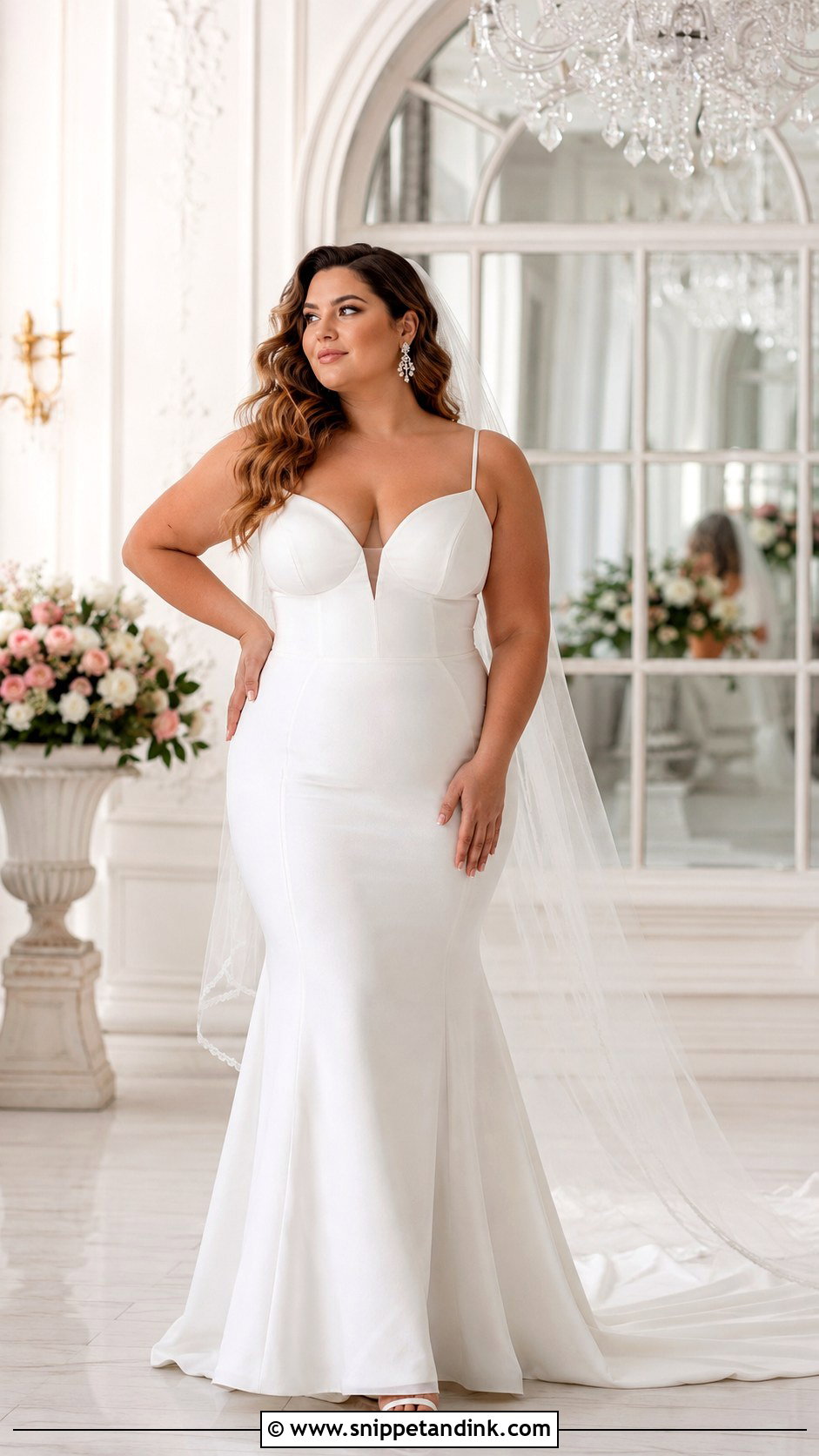
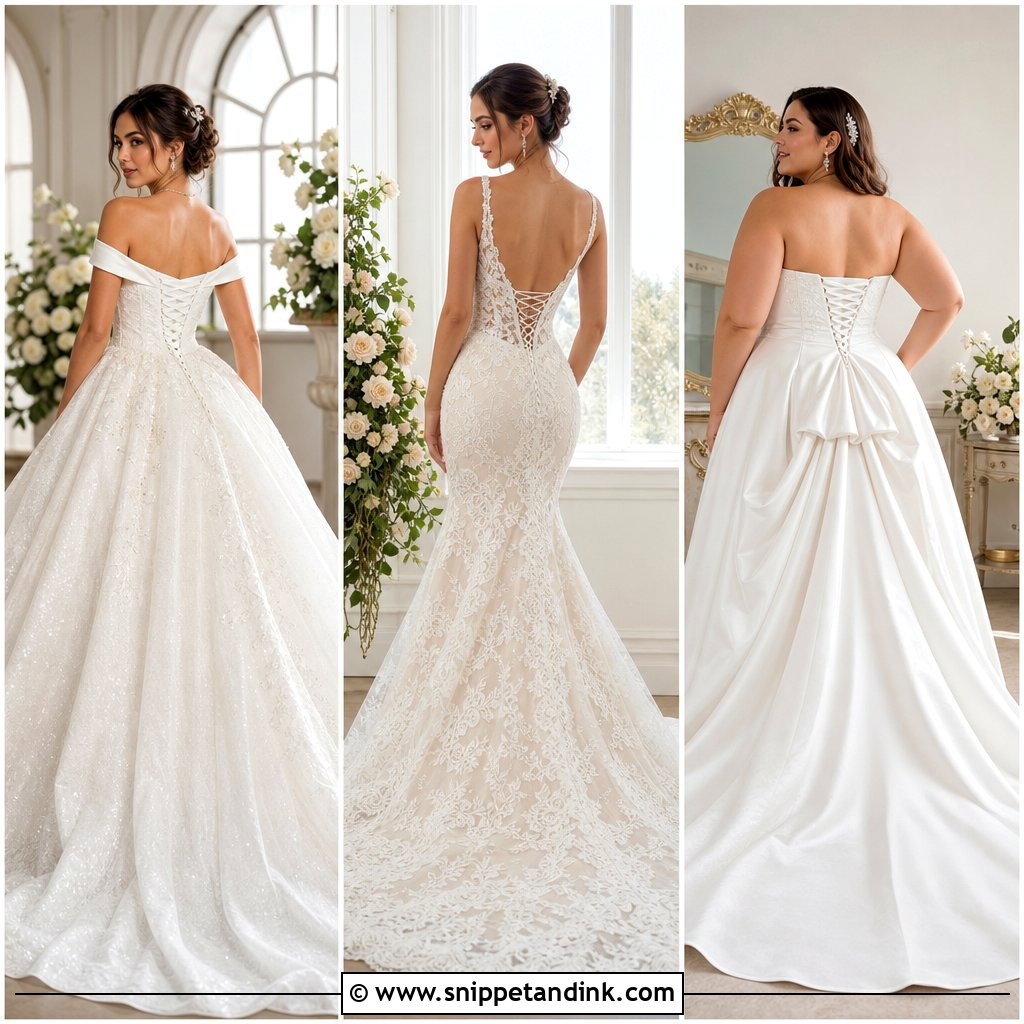
A plus size slim fit wedding dress works when it’s built properly, not just cut bigger. I look for a structured trumpet, mermaid or sheath with built-in cups, shaping seams and a firm back closure. Stretch crepe, lined lace and reinforced satin define the shape and still move. Block heels, statement earrings and a veil length that suits the venue complete it. A fitted gown should never leave deep pull lines or press on your ribs. Try a sample close to your own size whenever a shop can offer one, because judging proportions on a much smaller sample held together with clips tells you very little. Gowns drafted for each size range fit far better than ones simply scaled up.
Ordering a Fitted Gown With Enough Time for Tailoring
Slim gowns need more alteration than full skirts, because there’s no volume to hide a small fit problem. Many bridal designers make each gown to order, and production can take several months, so most shops suggest ordering somewhere around eight to ten months ahead. Ask your shop for its own estimate; it varies by designer.
- Order the gown with the delivery date written on your receipt.
- Book your first fitting for about two to three months before the wedding.
- Have a second fitting a few weeks later for the hem and bustle, wearing your shoes.
- Do a final try-on one to two weeks out, and bring the person who will dress you.
If your weight is likely to change before the wedding, tell your seamstress early. Taking in a fitted bodice is routine, but letting one out depends on how much seam allowance the maker left, and on some gowns there is very little.
Sit, Walk and Reach Before You Say Yes
A close-fitting wedding dress can be minimal, romantic, glamorous, traditional or modern. Compare the shapes first, from sheath and column to trumpet, mermaid and fit-and-flare. Then think about how the neckline is supported, how heavy the fabric is, how long the train is and how the sleeves move. Try each gown with your own underwear and shoes, and do everyday movements in it. Let your accessories support the dress’s best feature. Whichever fabric you land on, the tailoring will make the biggest difference, so leave time and budget for it.
You'll Like These Ideas:




Leave a Reply