
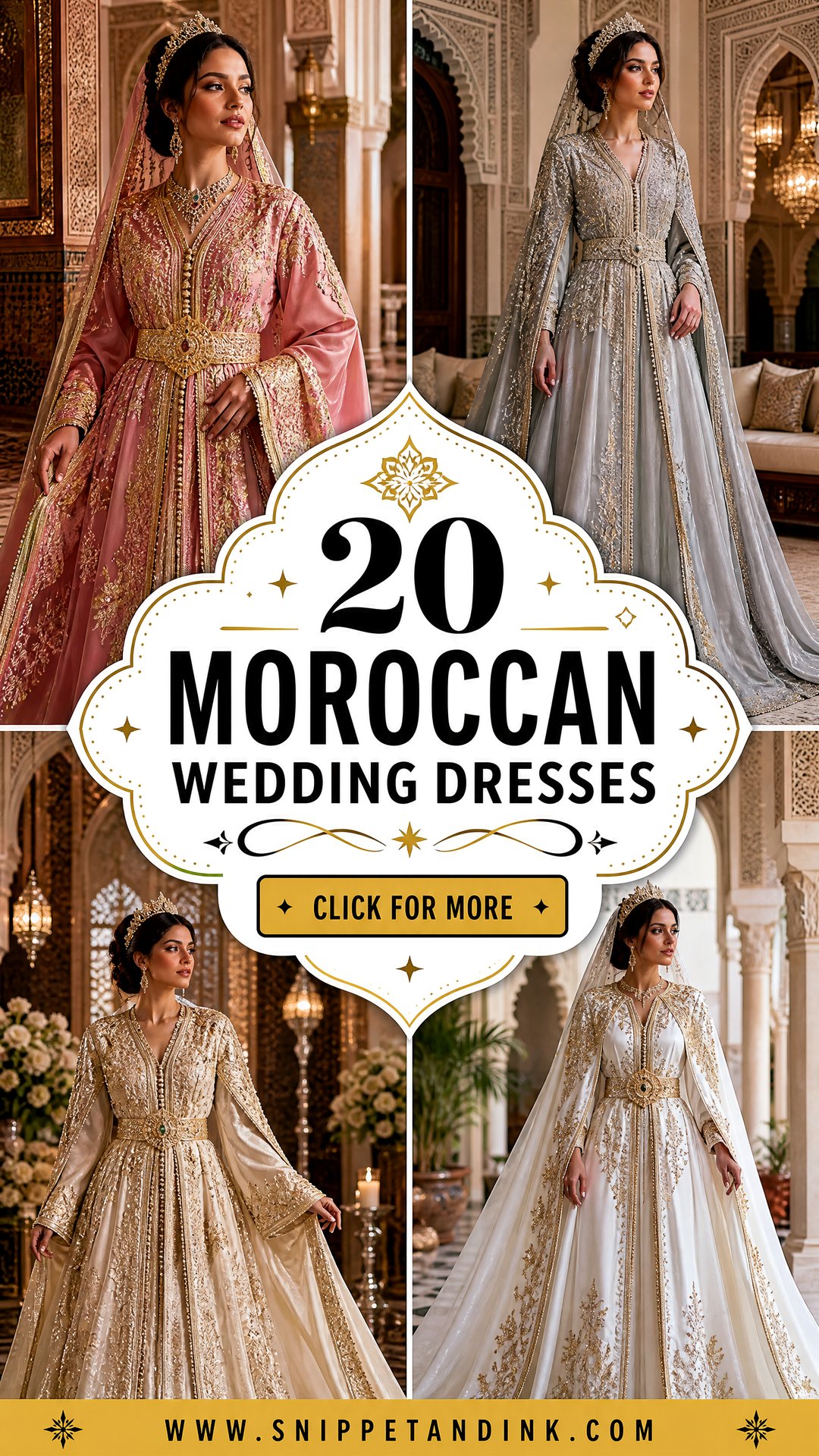
Takchita or Caftan, and the Words Your Dressmaker Uses
Moroccan bridal dressing has its own vocabulary, and knowing it makes fittings far easier. These are the terms I explain to every bride before we start.
- Caftan: a single-layer, full-length robe, usually fitted through the shoulders with long sleeves. Lighter and easier to move in.
- Takchita: two layers worn together, a fitted underdress (the tahtiya) and a more decorative outer robe (the dfina), often sheer or open at the front. More formal and more structured.
- Sfifa: the fine braided trim along openings, cuffs and seams. Handmade sfifa is slow work and costs more than machine trim.
- Aakad: the small knotted buttons that close the front, usually in the same thread as the sfifa.
- Mdamma: the belt, traditionally metal or heavily embroidered, worn at the natural waist.
- Negafa: the traditional bridal dresser, who often supplies outfits and jewelry, dresses the bride for each change and manages the entrances.
As you look through the twenty outfits below, notice whether each one is a single layer or two. It changes how the dress moves, how warm it feels and how long it takes to get in and out of.
1. White Moroccan Bridal Takchita
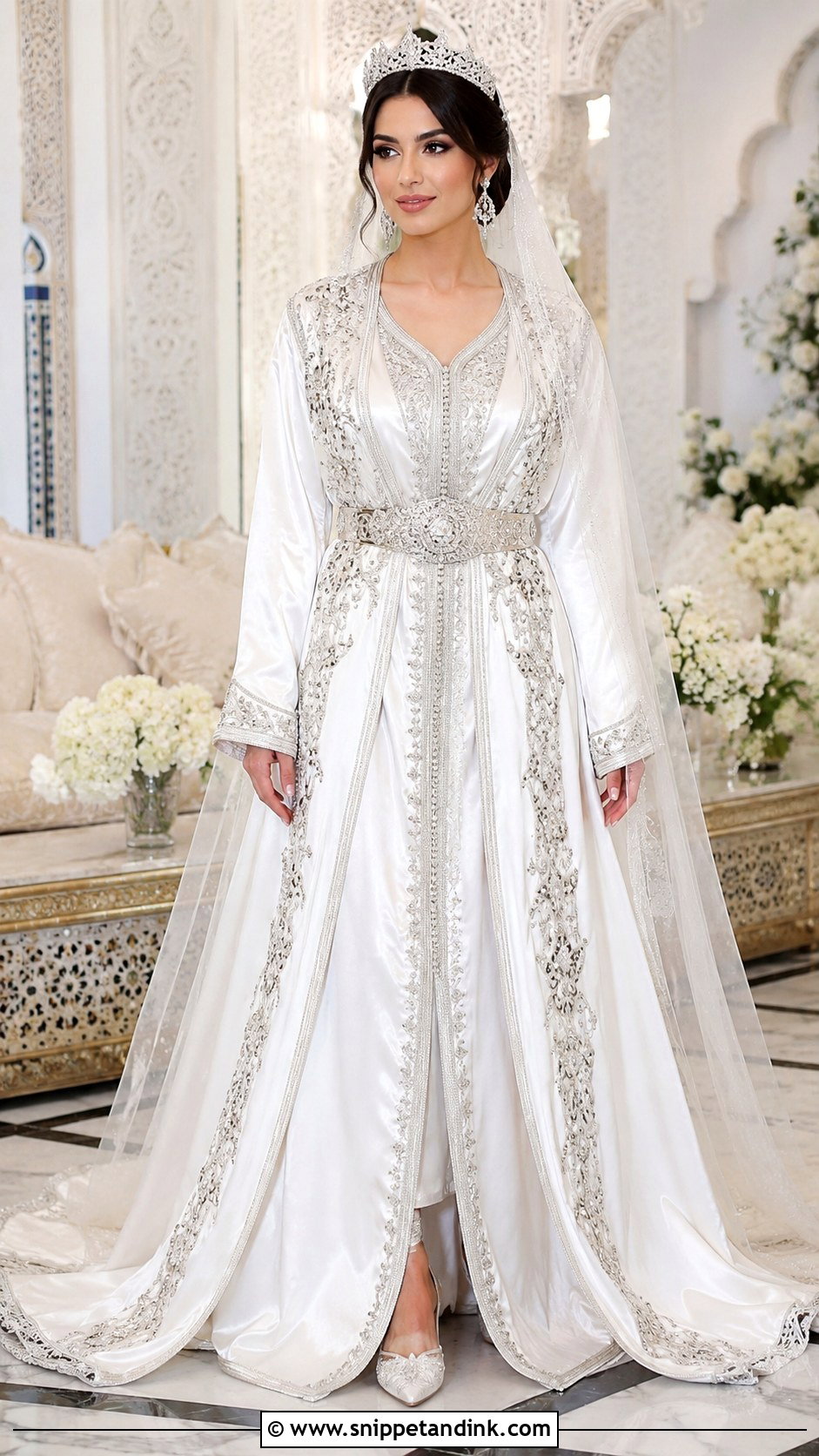
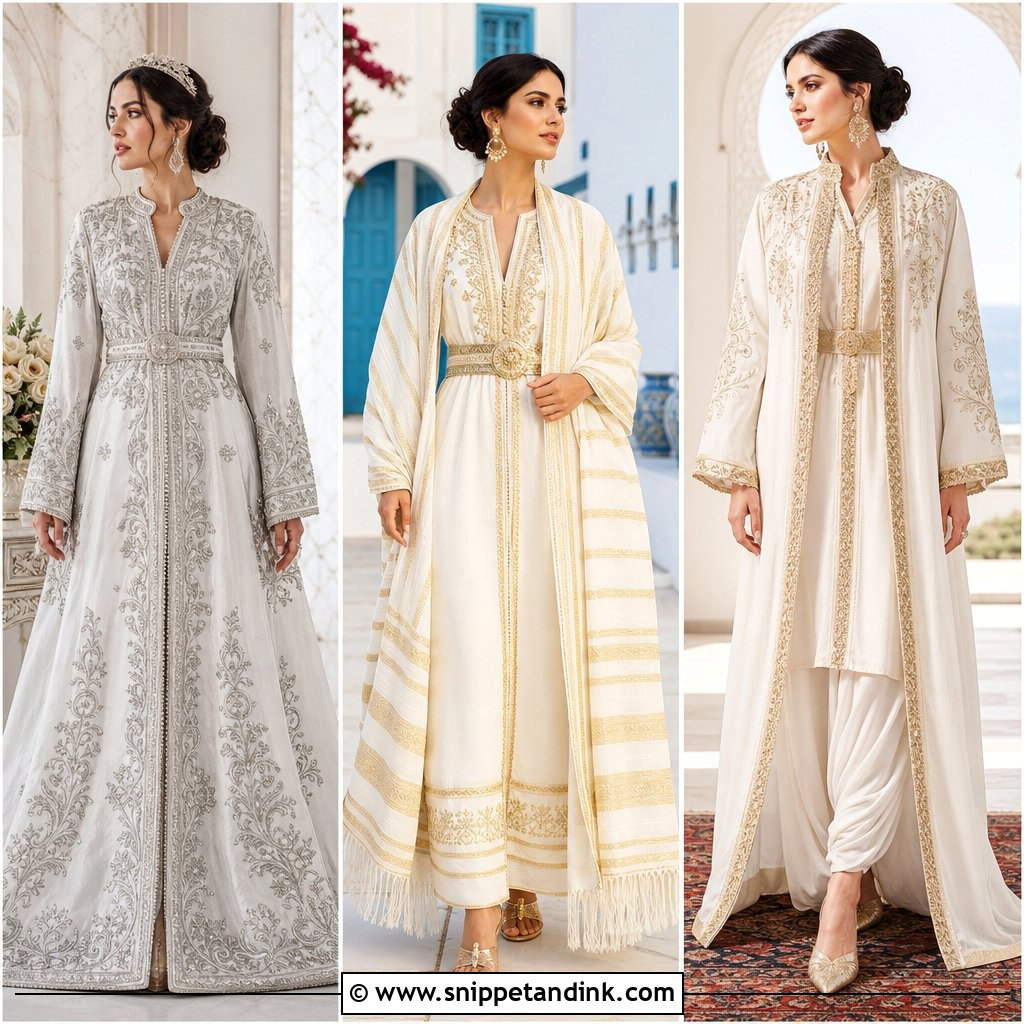
White is the takchita most brides save for the most ceremonial moment of the night, and it’s the one where I’m strictest about fabric. Under a lightly structured over-robe, the inner dress should be a smooth satin or silk that won’t show creases through a sheer dfina, because white shows every fold. Silver sfifa, crystal embroidery and pearls can run along the neckline, sleeves and front opening; keep them to those lines and the robe stays graceful instead of crowded. A wide silver mdamma shapes the waist and anchors all that volume. Pointed silver babouche or crystal pumps, a delicate tiara and drop earrings finish it, with a sheer white veil set behind the crown so the embroidery stays in view. Save it for the main entrance and formal portraits.
2. Green Moroccan Henna Caftan
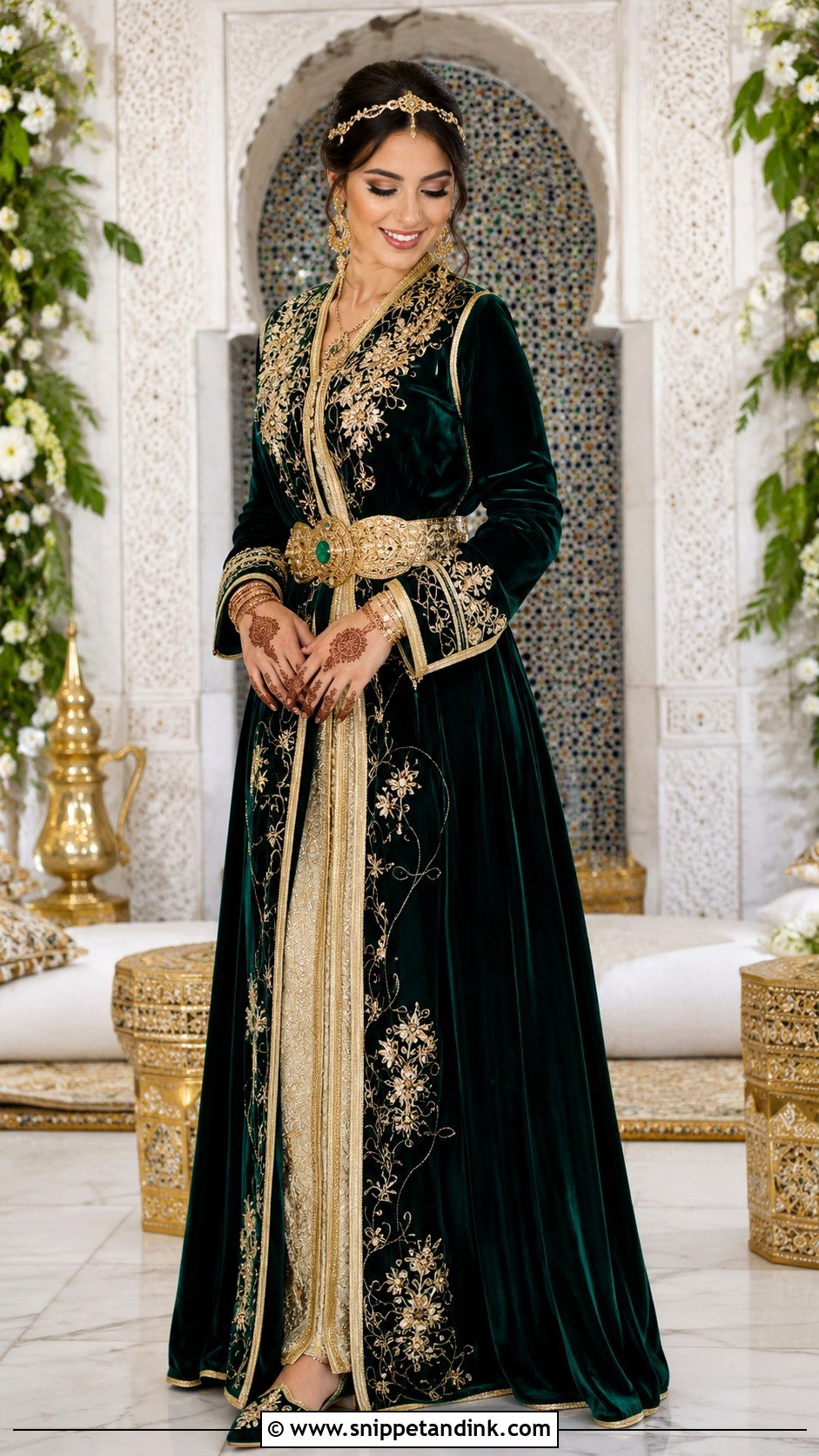
Green belongs to the henna night. It’s widely associated with blessing in Moroccan bridal dressing, and next to freshly hennaed hands it looks rich rather than loud. Start with a floor-length velvet or satin caftan decorated with gold embroidery at the neckline, cuffs and center front, with a structured gold belt for definition and green-and-gold babouche to keep it traditional. This is the one night I ask brides to think hard about sleeves. Wide cuffs fall straight onto wet paste, so choose a sleeve that can be pushed up or pinned back while the design dries. Emerald, forest green and jade all work. Keep the headpiece and gold drops coordinated, and wear a low bun or a covered style so the neckline stays clear.
3. Red Moroccan Fassi Wedding Dress
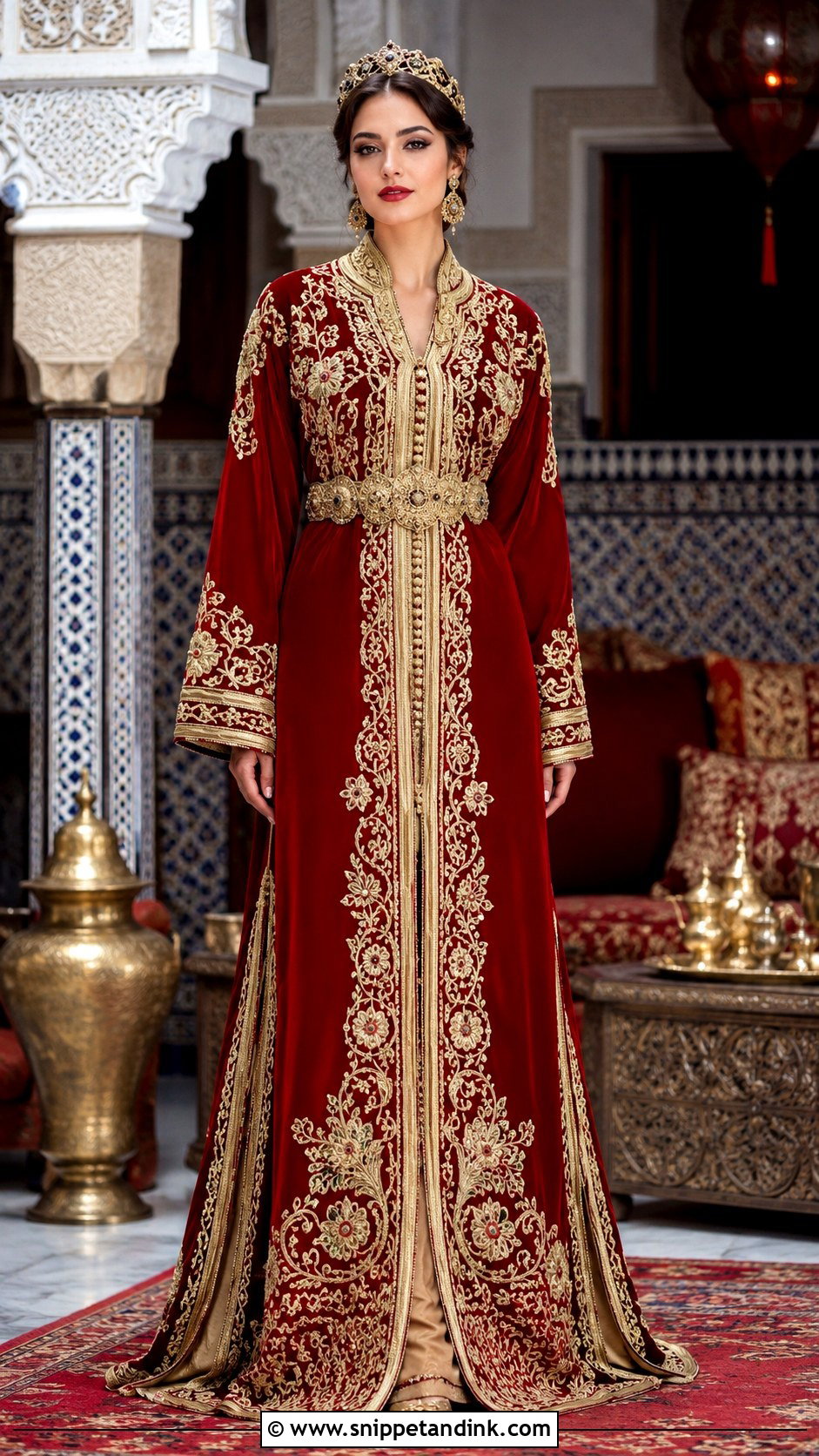
The Fassi look is about weight and authority. Rooted in the ceremonial dress of Fez, it starts with a deep red velvet caftan or layered takchita with dense gold threadwork, structured front trim and carefully finished sleeves. All that embroidery is heavy, so I have the bride sit in it during fittings; velvet with this much goldwork can drag at the shoulder seams when you’re seated on the amariya or a bridal throne for a long stretch. The ornate gold mdamma should echo the embroidery, not compete with it. Gold slippers, a traditional-style crown or jeweled headpiece and refined earrings complete it, with a firm updo pinned to carry the crown. Red and gold already say everything, so skip the bouquet for the entrance.
4. Gold Moroccan Wedding Caftan
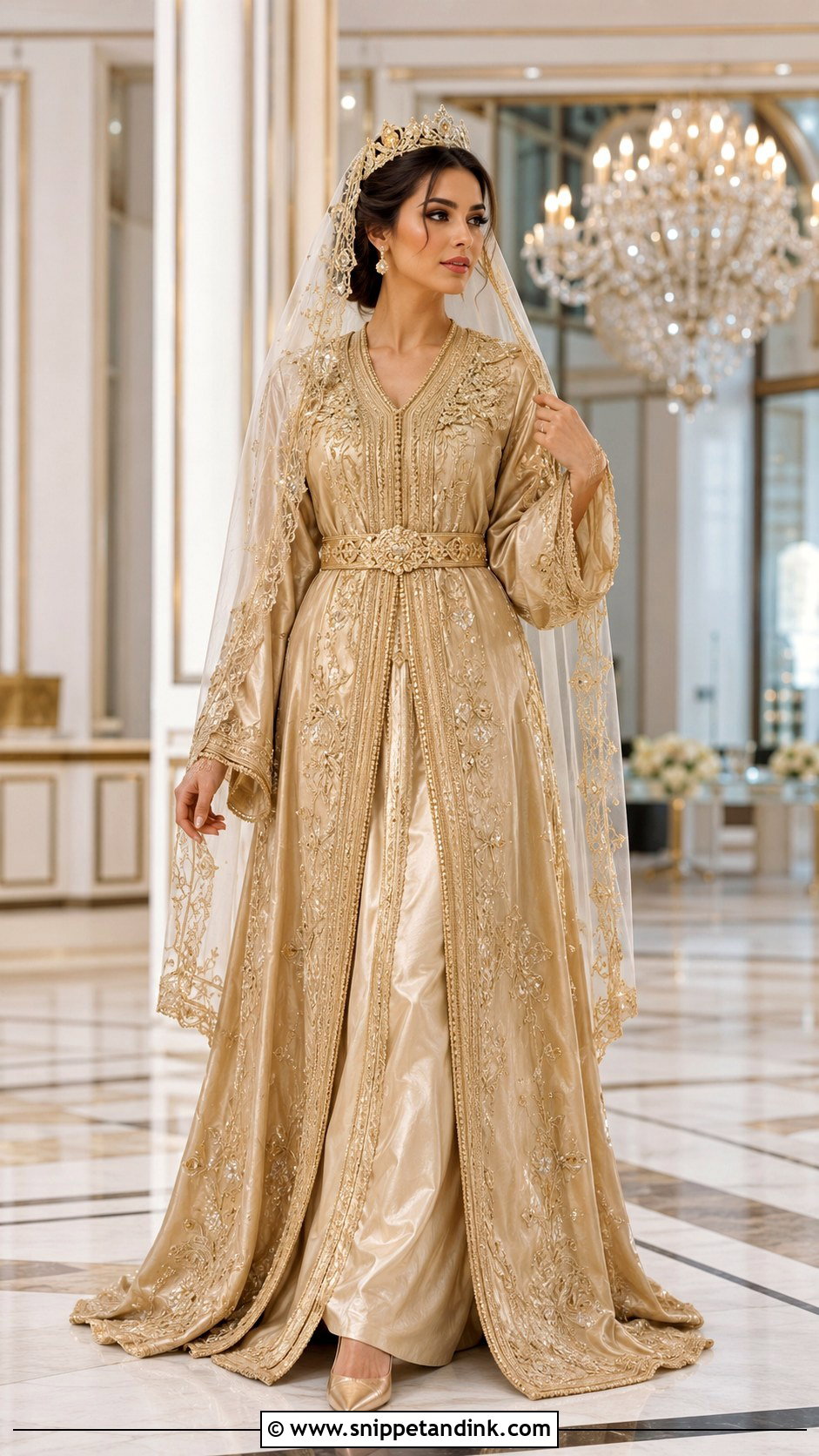
Gold is easy to overdo, and the fix is tone-on-tone. Choose a champagne-gold base with embroidery, beadwork and metallic trim in the same color family, so the shine reads as one surface instead of a busy pattern. A matching belt shapes the waist, and pointed gold heels add height under the floor-length hem. Pearl-and-gold earrings, a slim bracelet and a simple crown are enough. Ask your makeup artist to keep the face neutral and skip heavy shimmer, because a gold caftan already throws warm light upward onto the skin. It comes alive under bright ballroom lighting. For a little contrast, add an ivory veil with a narrow gold border.
5. Royal Blue Moroccan Bridal Takchita
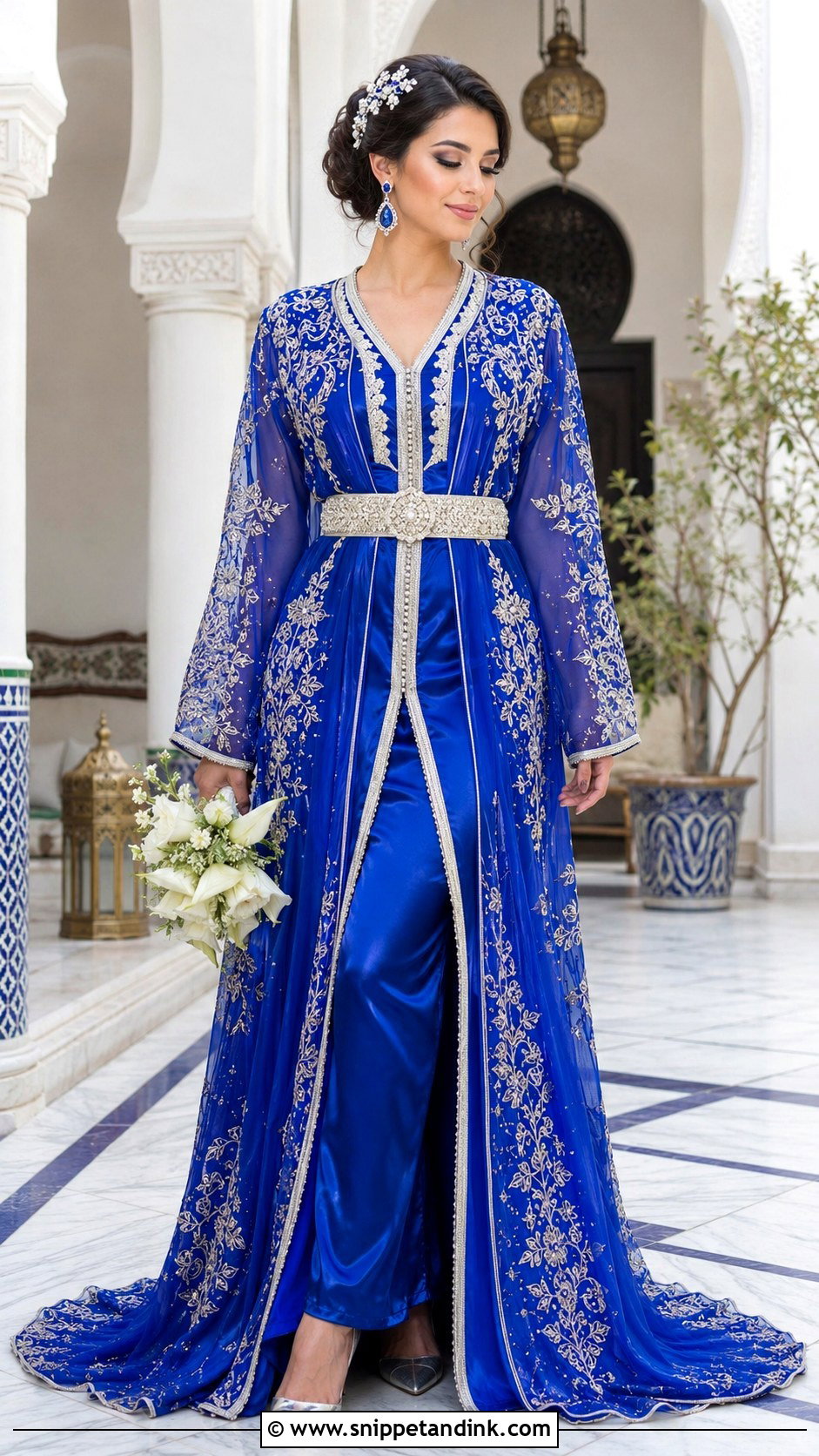
Royal blue holds its color in photographs better than almost any other shade, which is why I like it for an evening entrance. Build it on a silk or satin inner gown with a sheer or brocade outer layer worked in silver thread, crystals and fine braided trim. The silver mdamma ties the two layers together visually; without it, a blue takchita can look like two separate garments. Metallic silver pumps, sapphire earrings and a crystal hairpiece above a sleek bun suit it, and a small white bouquet softens the depth of the blue. Long, slightly flared sleeves let the outer robe move. Under evening lights this Moroccan bridal takchita stays saturated while the silver work adds brightness.
6. Pink Moroccan Wedding Caftan
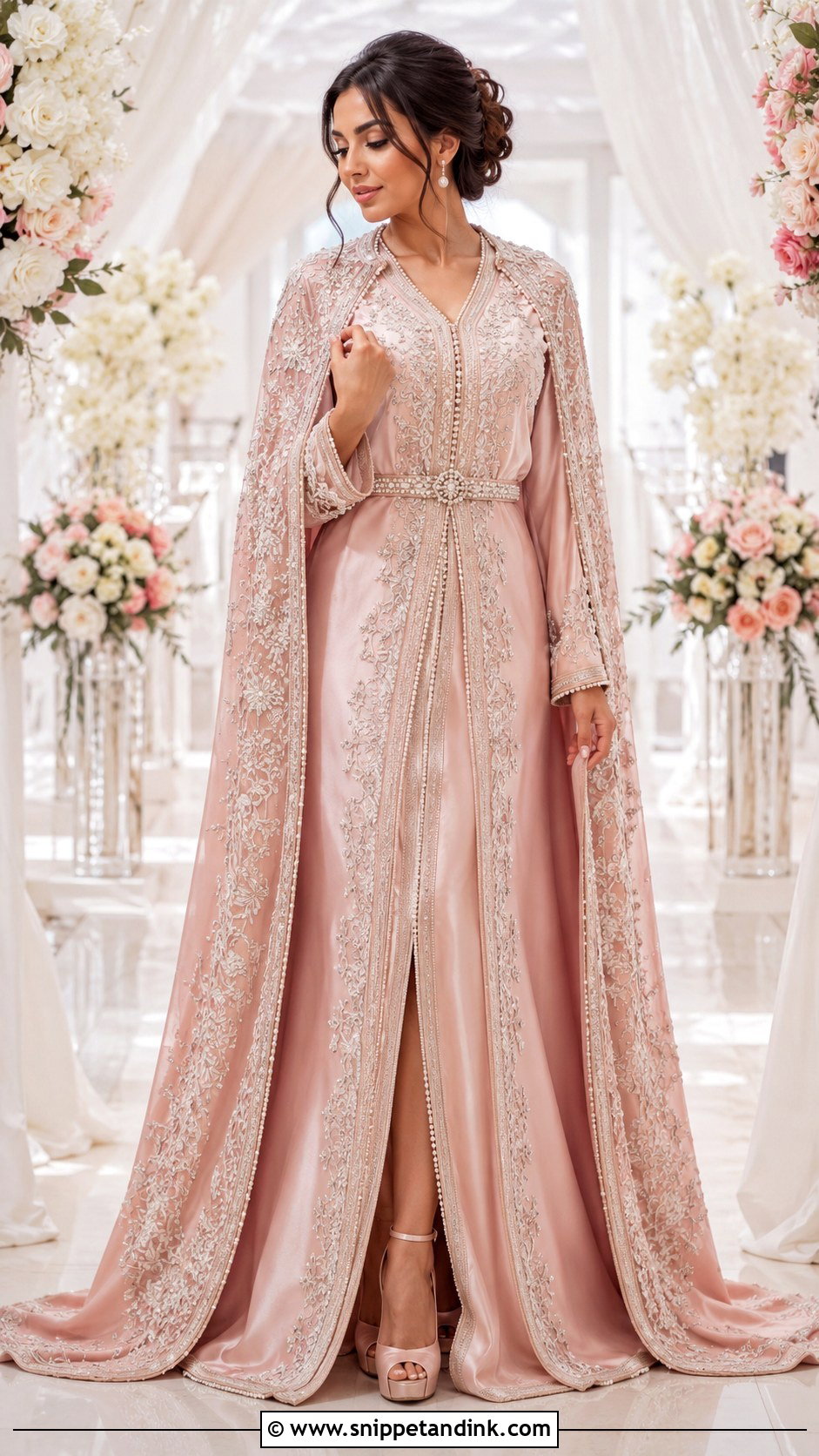
Blush is the softest outfit here and a good fit for an engagement party or an early entrance. Choose blush satin, dusty rose silk or pale pink crepe, with silver embroidery and small pearls along the neckline and cuffs. I’d pair it with a narrow crystal belt rather than a heavy traditional mdamma, since a wide metal belt overwhelms pale pink and makes the waist look shorter. Blush pointed heels, pearl earrings and a small silver clutch keep it light. A smooth low bun gives a delicate headband room to show. For more coverage, add a matching embroidered cape or a light pink veil.
7. Ivory And Gold Moroccan Takchita
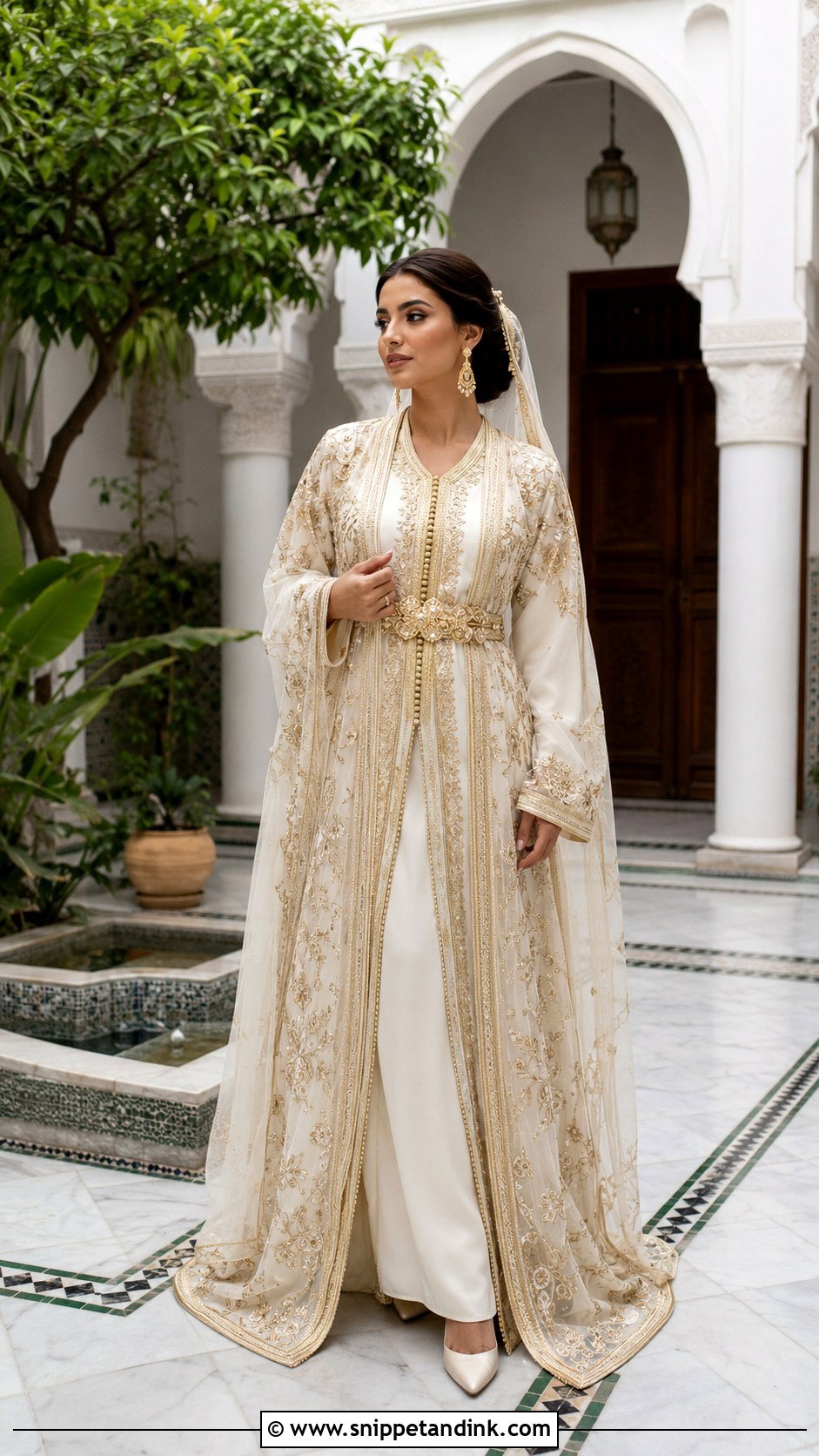
Ivory and gold is gentler than bright white with yellow gold. Begin with an ivory satin underdress that falls straight from the shoulders, then layer a translucent outer robe with gold sfifa and floral embroidery in the hand-worked style. A sculpted gold belt gives the flowing layers a firm center. Ivory heels, gold earrings and a fine-edged veil long enough to pass the train finish it, with a polished updo and luminous makeup. Before the final fitting, I compare the ivory of the underdress and the robe side by side in daylight; two ivories from different bolts can differ, and the mismatch shows the moment you step outside. This complete Moroccan takchita works day and night, bright outdoors and rich under indoor lights.
8. Burgundy Velvet Moroccan Wedding Dress
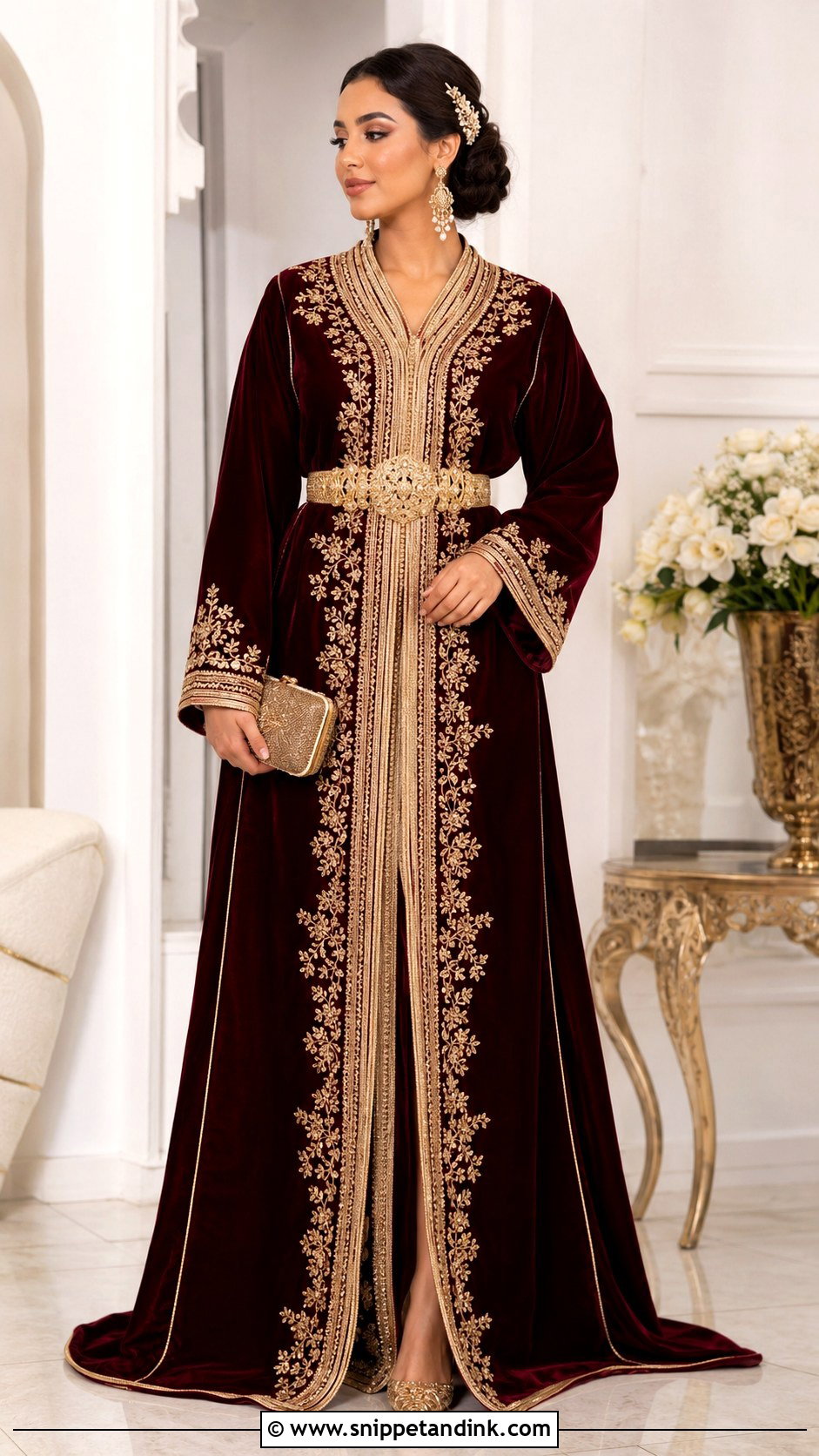
Velvet is the most formal fabric in the Moroccan bridal wardrobe, and burgundy is its most forgiving color for a cool-weather or evening wedding. Choose a floor-length caftan with gold embroidery running vertically down the center to lengthen the body, structured cuffs and a moderately wide mdamma. Velvet is also warm and heavy. In a packed hall in summer it can feel stifling within an hour, so I’d keep it for a winter wedding or a shorter appearance. Gold pointed heels, a velvet clutch, drop earrings and a jeweled comb are enough, with a soft updo that keeps the shoulders clear. The fabric already has depth, so go easy on extra crystals. It gives you deep color without the intensity of bright red.
9. Emerald Moroccan Bridal Caftan
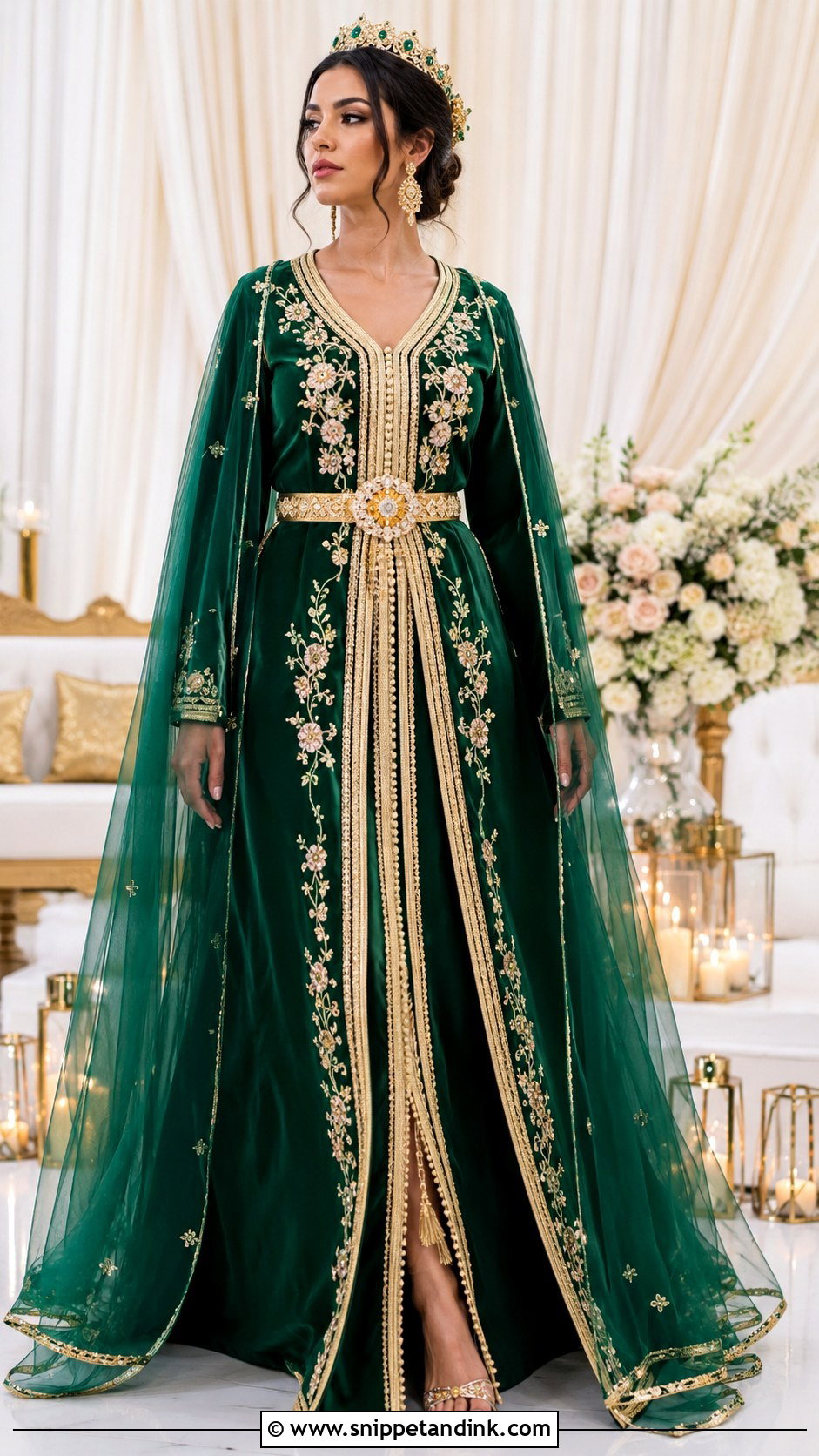
An emerald bridal caftan takes either gold or silver well, which makes it one of the easiest colors to personalize. For a traditional finish I’d use gold sfifa, aakad knotted buttons and fine embroidery around the neckline and sleeve edges, plus a matching gold belt, low metallic heels and a small embroidered bag. The fabric changes the whole effect. Emerald silk moves fluidly; emerald velvet is heavier and more structured, and it reads several shades darker in dim light, so look at it under lighting like your venue’s if you can. A jeweled crown or comb completes it without hiding the neckline, and a sheer green cape adds dimension. It suits the henna night, a second entrance or a formal family gathering.
10. Pearl Moroccan Wedding Takchita
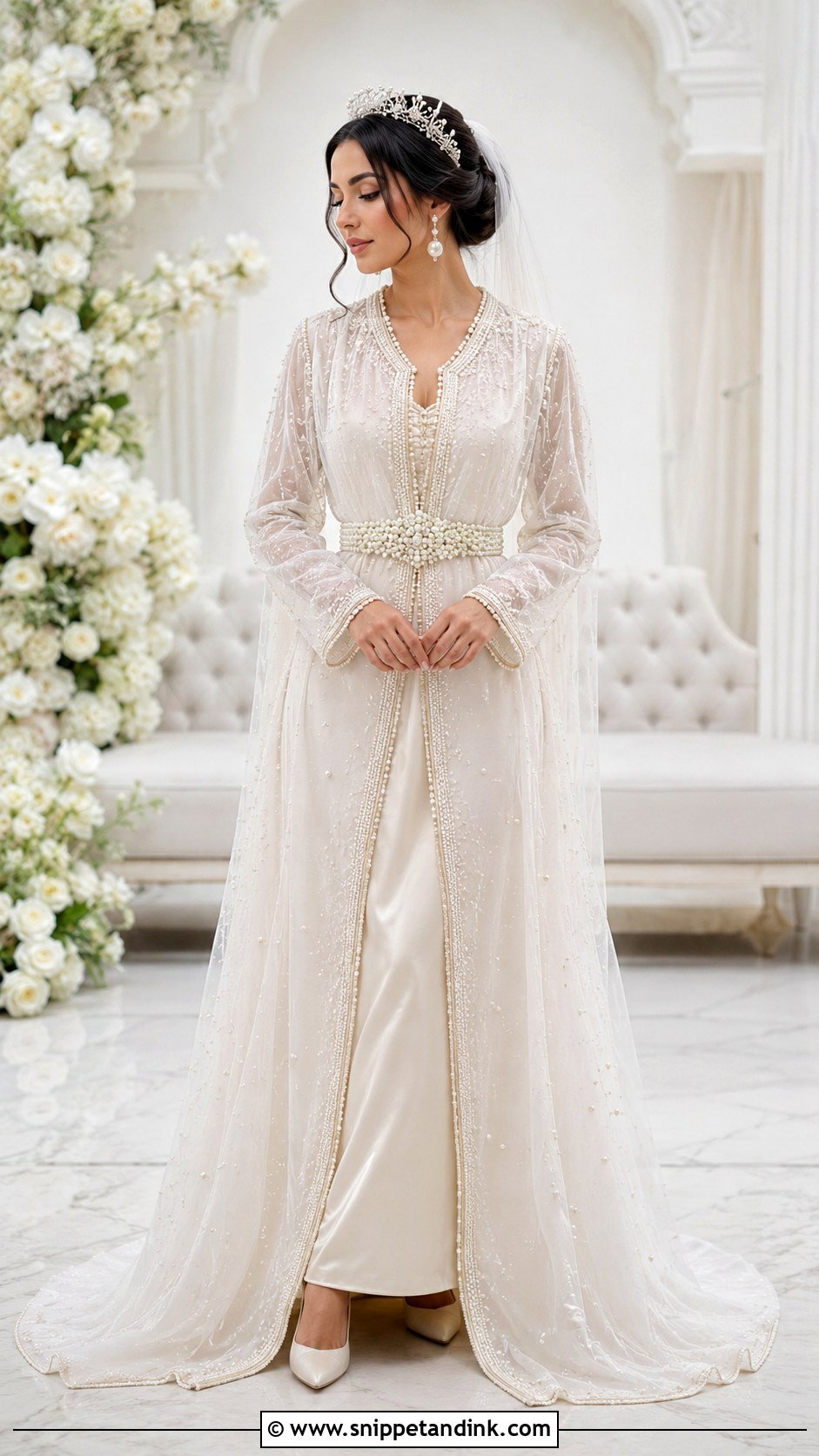
Pearls give a takchita texture without metallic flash, so this is the one I suggest to brides who find gold embroidery too much. Start with a white, cream or pale champagne inner dress and an outer layer with spaced pearl work concentrated at the neckline, front opening, cuffs and belt. A pearl-covered mdamma can be the centerpiece alongside plain satin pumps. Sewn pearls add up in weight and catch on tulle, so check how the veil sits over the shoulders before the day. Pearl drop earrings, a smooth bun and a sheer veil under a delicate tiara complete it. Skip the necklace, since the neckline is already worked. It holds up in close portraits and full-length shots alike.
11. Silver Moroccan Bridal Caftan
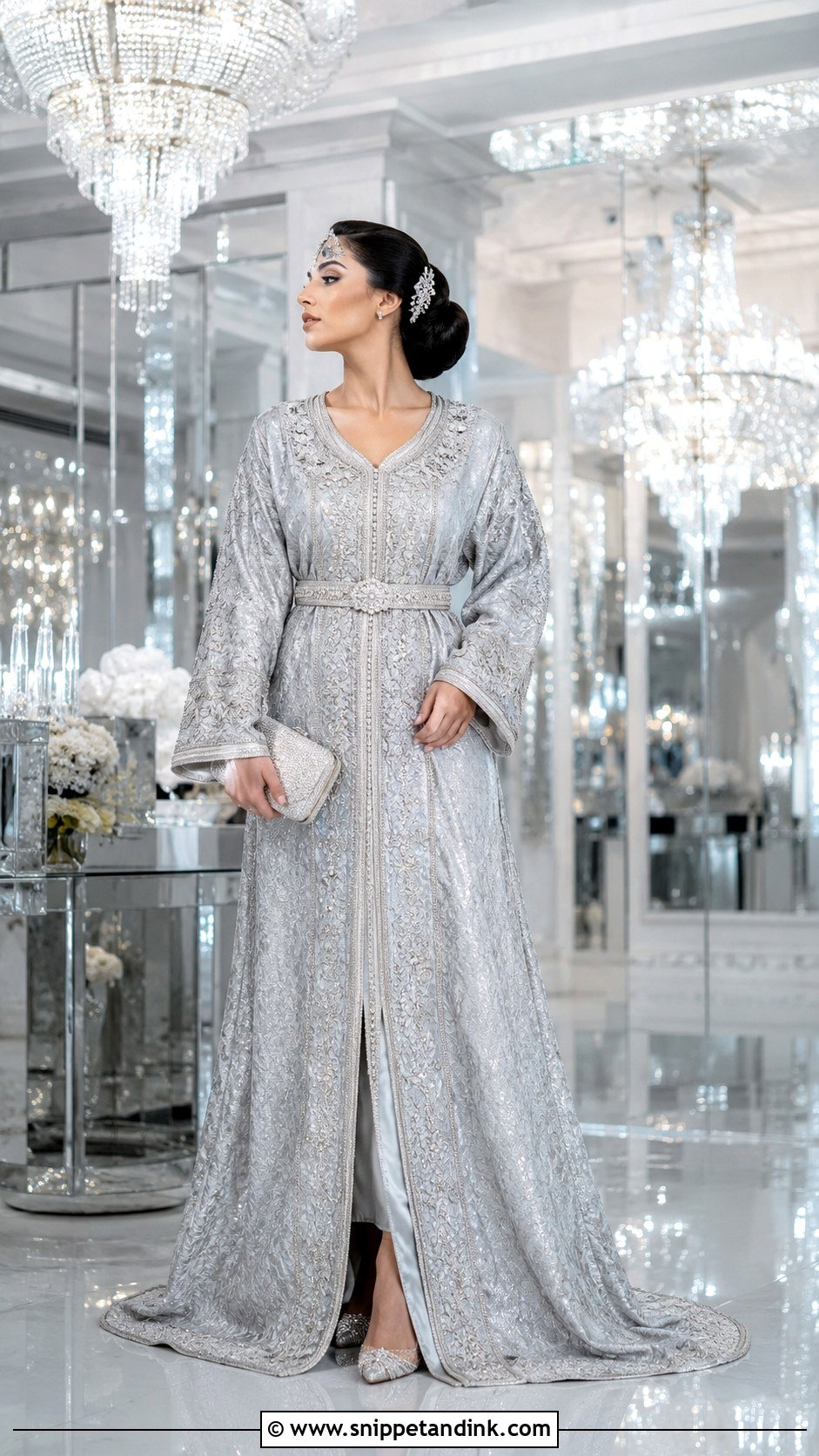
Silver is the cool-toned option, and it looks most current in a modern ballroom with white flowers or mirrored decor. Choose pale gray satin, silver brocade or icy blue silk with tonal embroidery and clear crystals. Look for a strong vertical line down the center. Without one, a full-length silver caftan can read as a single undivided sheet of shine. A polished silver belt, crystal pumps and small diamond-style earrings suit it. Carry a structured silver clutch for portraits if you like, but keep it secondary. A low bun with a slim crystal comb and an optional sheer gray or white veil finish the look.
12. Floral Moroccan Wedding Dress
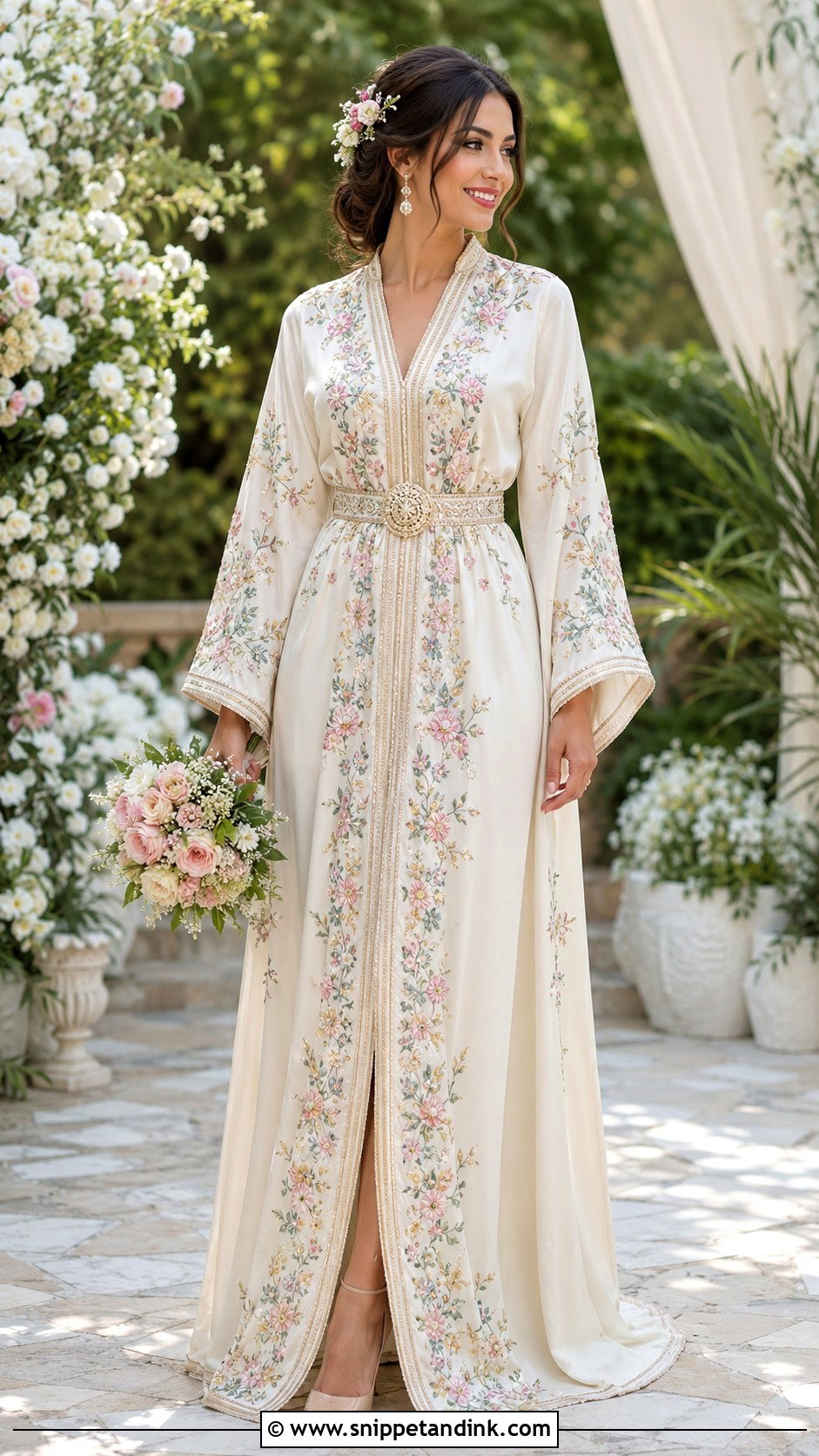
Floral embroidery brings color without losing formality, and it’s my pick for a daytime or garden wedding. Start with a cream, blush or pale blue caftan with flowers along the hem, sleeves and open neckline. Spacing is what I check. If the motifs crowd together, the base color disappears and the dress reads as patterned fabric rather than embroidery. A slim metallic or fabric-covered belt defines the waist without cutting through the design. Neutral pointed heels, simple pearl earrings and a small bouquet that repeats one or two of the embroidered colors suit it, with soft waves or a low bun with tiny floral pins. It’s a gentler alternative to heavy beading for spring events.
13. Lace Moroccan Bridal Takchita
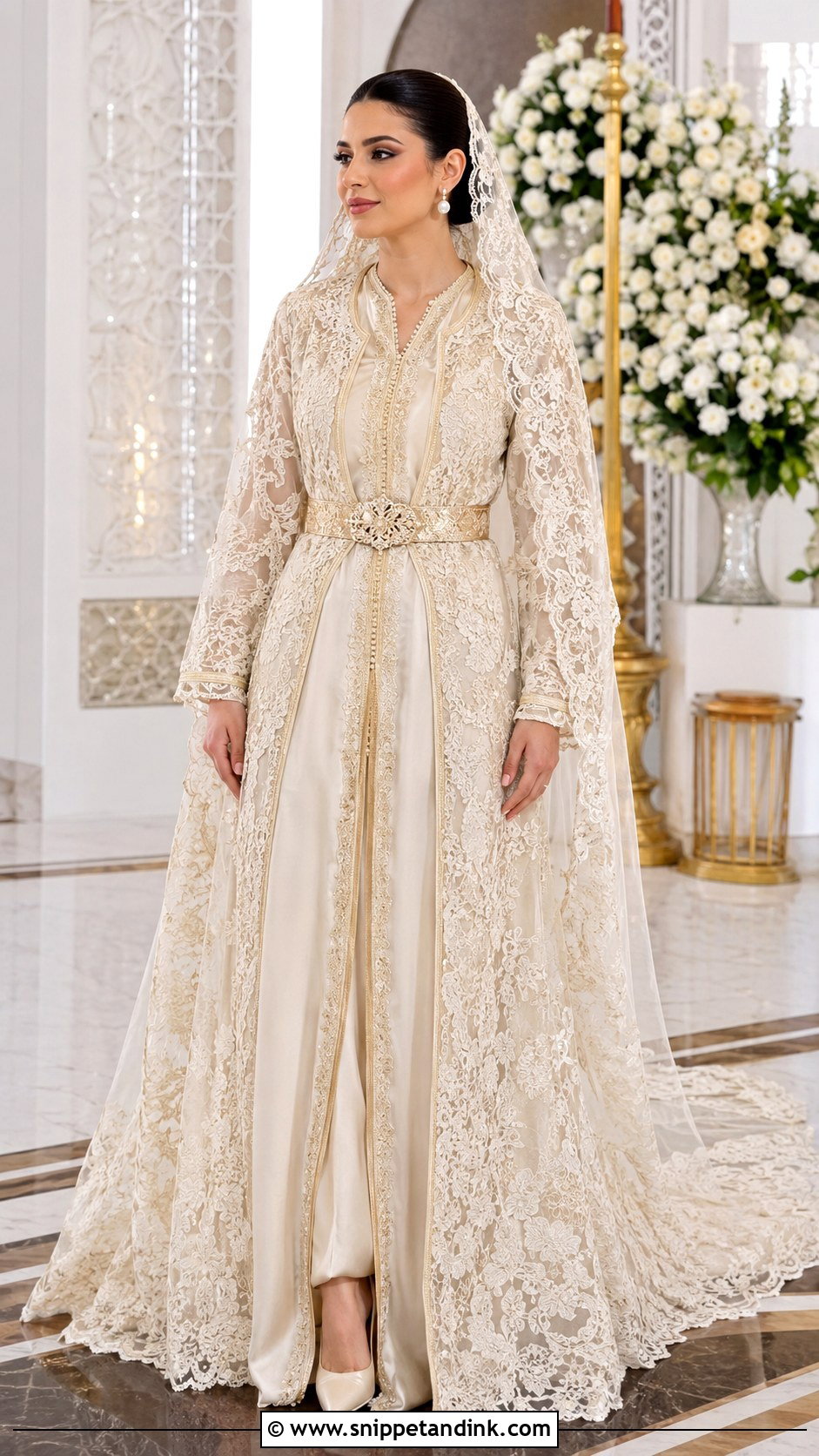
Lace softens the layered takchita, but only if the belt does its job. A smooth satin underdress gives coverage and body, and the lace outer robe adds texture through the sleeves, shoulders and skirt. Without a fitted metallic belt, lace layers tend to hang shapelessly, so I fit the mdamma before the hem is marked. Ivory lace with white embroidery is subtle; champagne lace with gold trim is warmer. Closed-toe satin pumps, pearl earrings and a veil with a narrow lace edge finish it, and a clean bun shows off the lace neckline. Leave out heavy necklaces and bracelets, which snag on detailed lace. It suits a large traditional celebration.
14. Champagne Moroccan Wedding Caftan
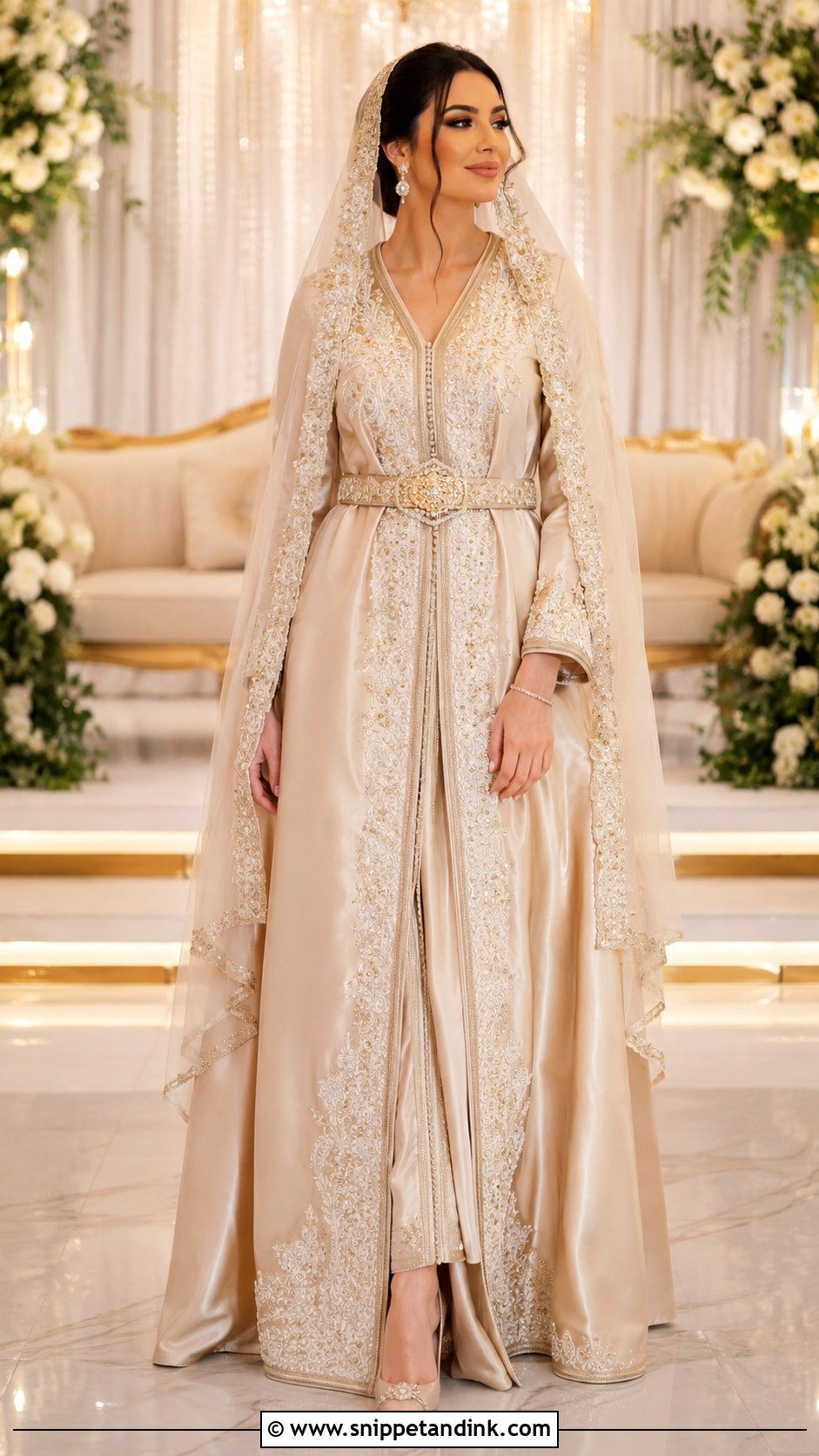
Champagne looks warmer than white and sits easily on olive and golden skin, so I often suggest it to brides who want a neutral that isn’t stark. A silk or satin caftan in this shade takes ivory thread, pale gold sfifa and small crystals well, and a structured neckline with long sleeves keeps it ceremonial. Match the belt and pumps to the fabric so the line runs unbroken from waist to floor. Pearl earrings, a slim bracelet and a light ivory veil finish it, with soft brown eye makeup and a muted rose lip. Champagne can turn flat under very yellow lighting, so it’s worth seeing a swatch under light similar to your venue’s. It works for an evening reception, a civil ceremony or a quieter entrance.

15. White Moroccan Caftan With Cape
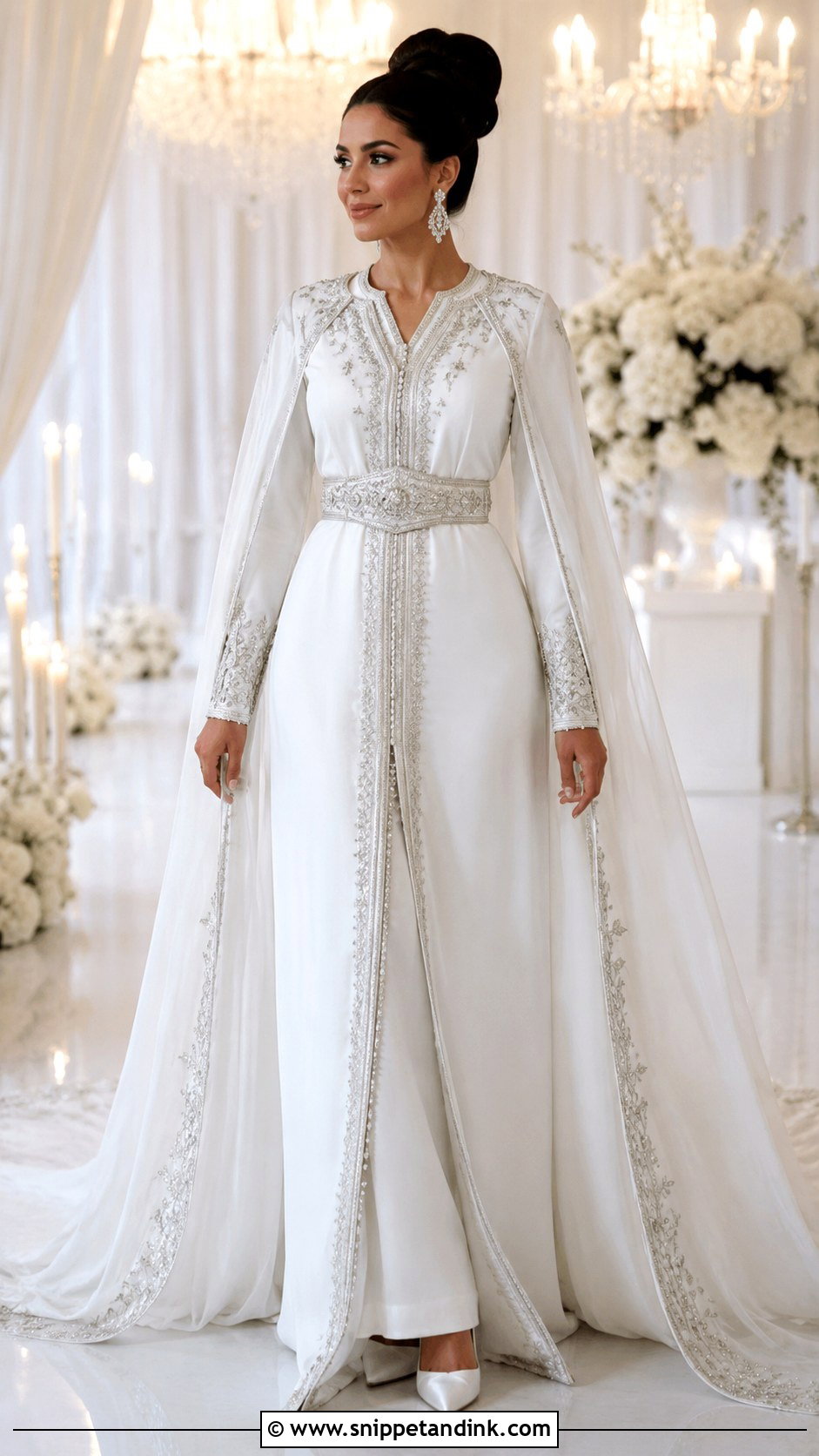
A cape is the simplest way to turn a plain white caftan into an entrance. Start with a clean floor-length caftan with silver trim, fitted cuffs and restrained embroidery, then add a sheer cape from the shoulders into a short train, tied to the dress with crystal edging or small motifs. Define the waist with a silver mdamma and finish with white pointed heels and crystal earrings. Wear your hair high so the cape lies smooth at the neck. The practical bonus is that the cape can replace the veil and come off later, so you get the drama at the entrance without carrying the weight all night. I’d ask for it to attach with hidden snaps or hooks rather than pins, which tear sheer fabric.
16. Black And Gold Moroccan Wedding Caftan
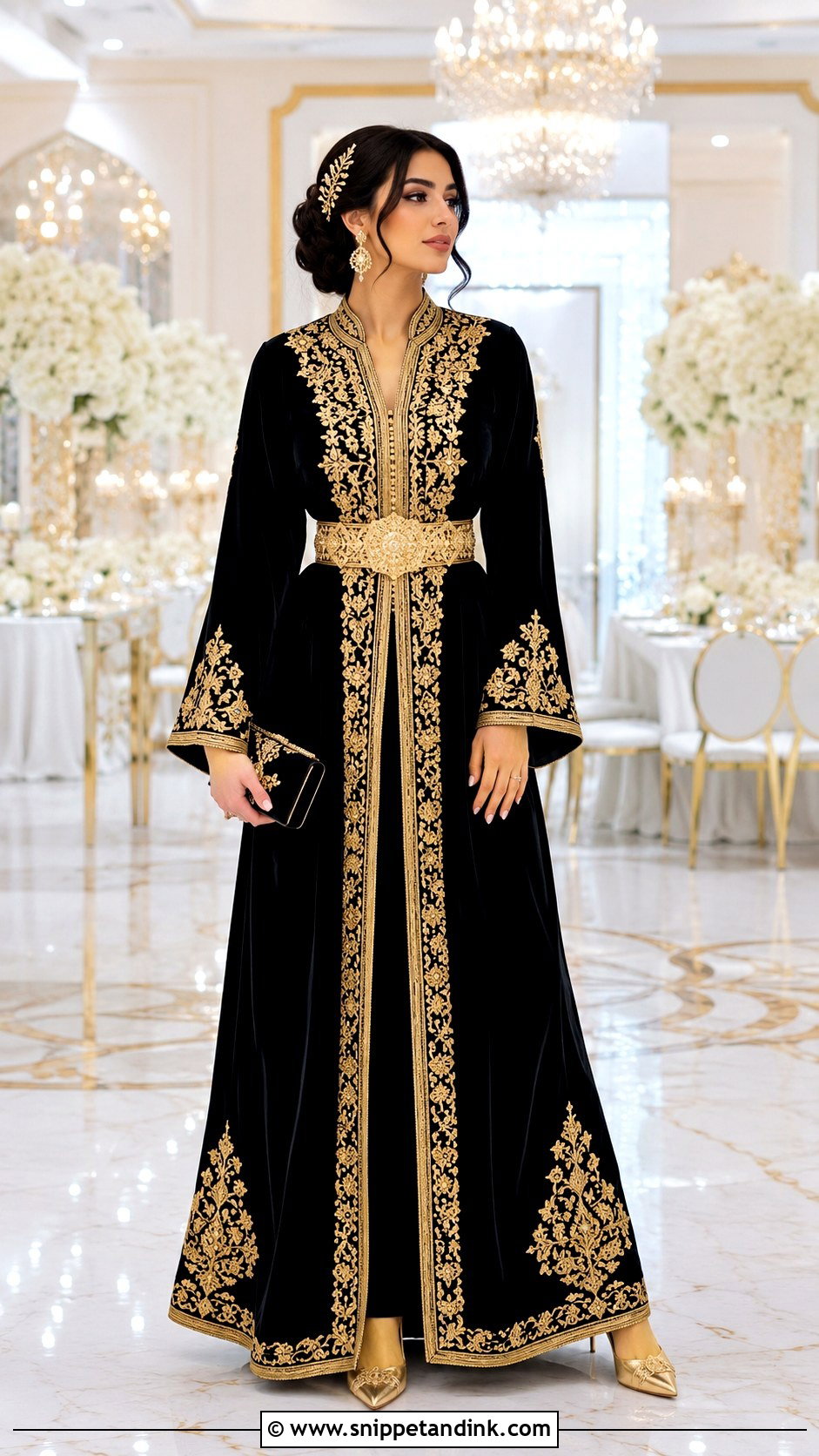
Black and gold is a confident choice for a later entrance or a reception appearance, and it’s the one where I’d talk with family first, since feelings about black at a wedding vary from one household to the next. Choose black velvet, satin or crepe with gold embroidery concentrated at the neckline, front closure, sleeves and hem, plus a broad gold belt that breaks up the dark base. Black swallows light in photographs, so the dress needs enough reflective goldwork to keep it bright. Gold pumps, drop earrings and a small black clutch with metallic trim suit it, with a sleek bun and a gold comb. Keep the makeup soft so the palette doesn’t look severe.
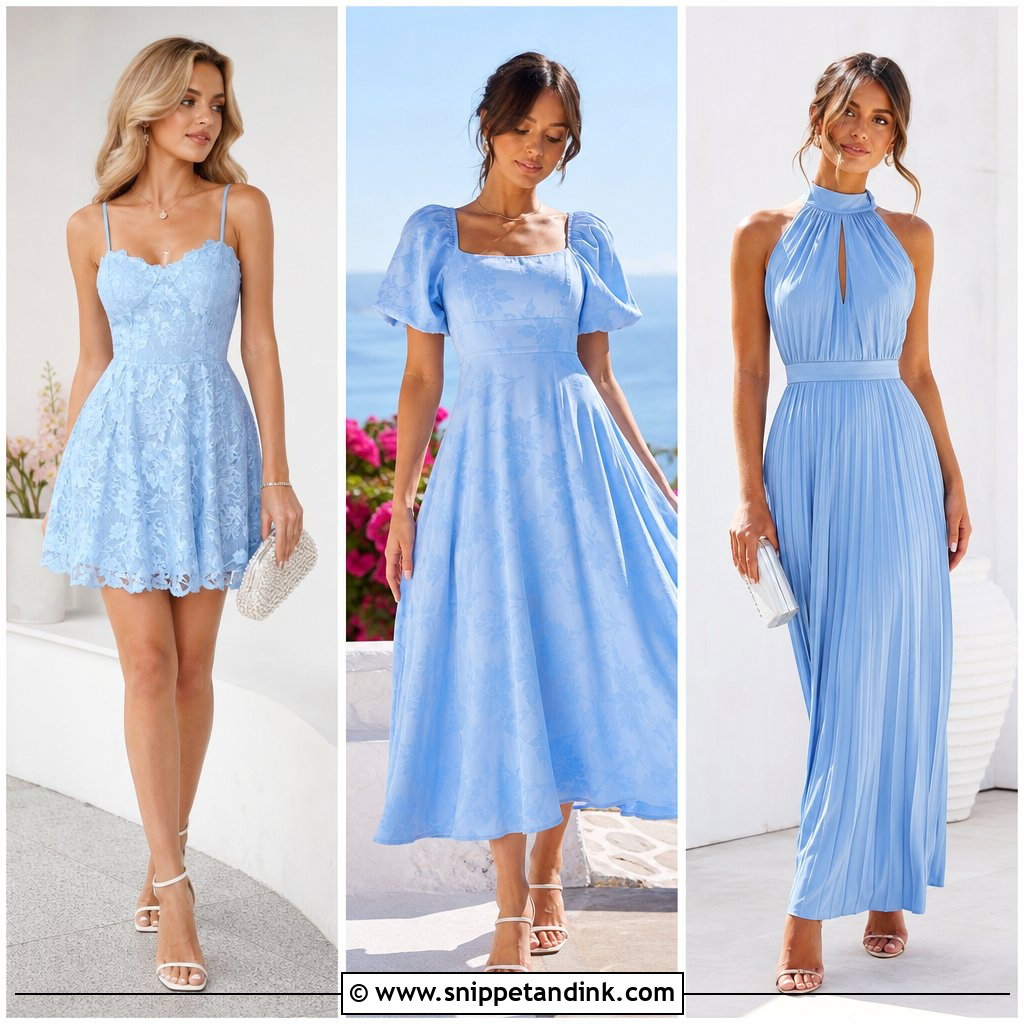
17. Pastel Blue Moroccan Bridal Dress
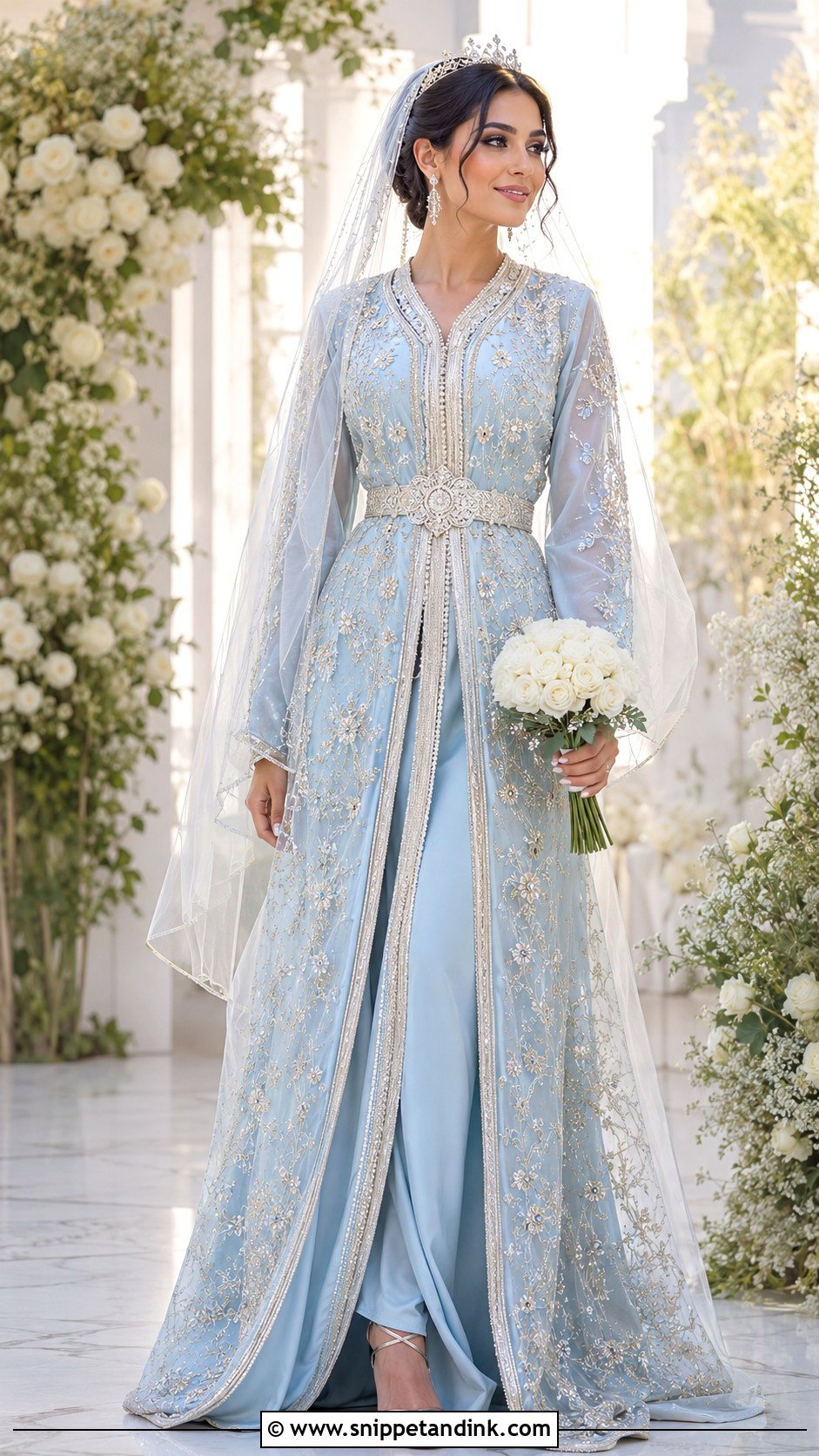
Pastel blue is the lightest-feeling color in the Moroccan bridal wardrobe and suits a daytime or spring wedding. Choose a pale blue satin caftan or two-layer takchita with silver embroidery and subtle crystals; a translucent outer layer adds movement while the smooth underdress shows through. Decide the belt by formality, silver for a formal finish and fabric-covered for something softer. Silver heels, crystal earrings and a small white bouquet suit it, and a delicate tiara with a sheer white veil keeps it bridal. Pale blue satin shows water and perspiration marks quickly, so I keep a dry cloth with the outfit and wouldn’t choose it for a very hot outdoor venue. It sits well with white, silver and pale gray decor.
18. Modern Moroccan Bridal Takchita
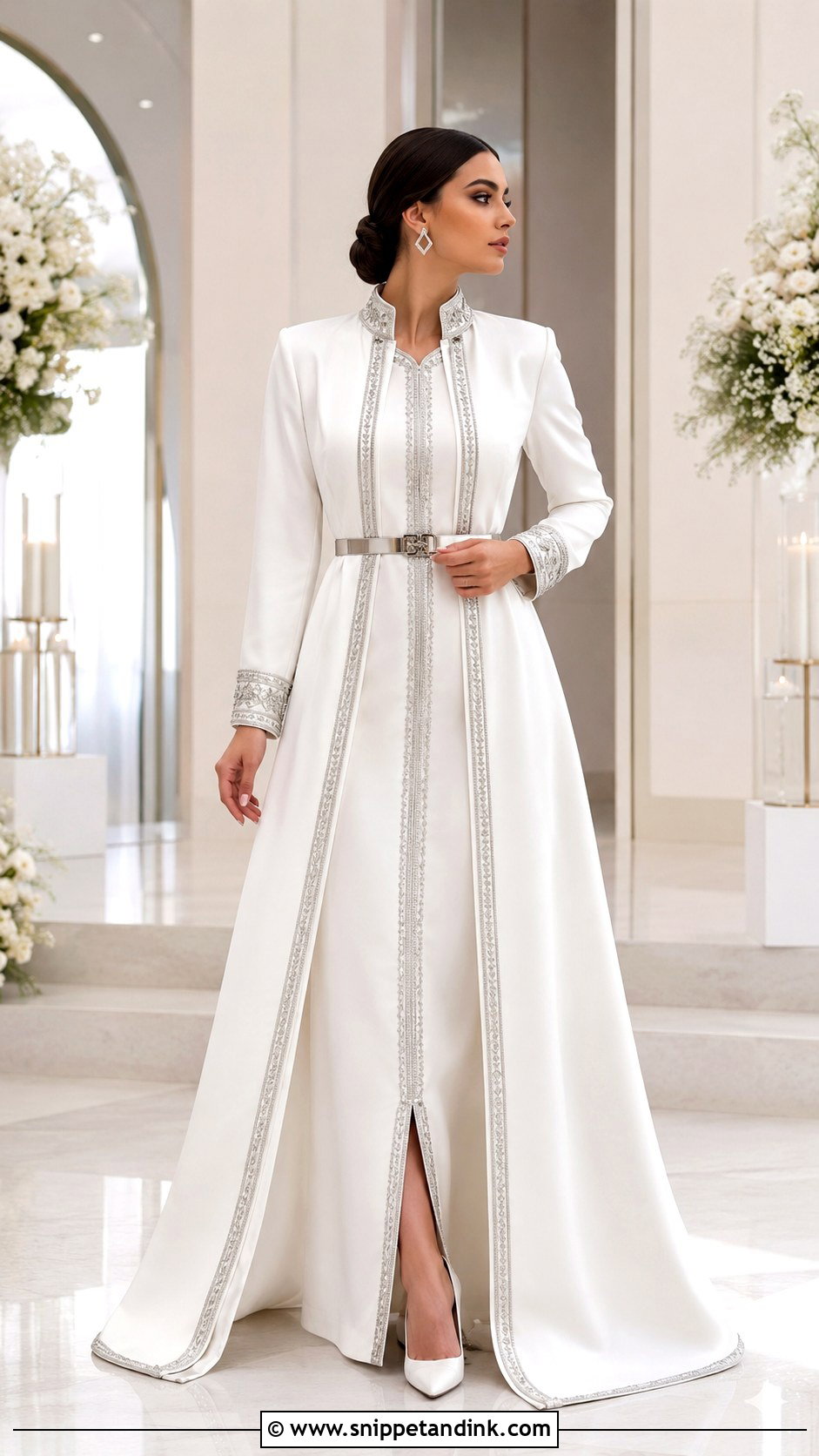
A modern takchita keeps the traditional two-layer construction and strips back the decoration. Use a fitted ivory underdress and a structured white outer robe with precise silver trim, and keep crystals to the neckline, cuffs and a narrow front opening. A smooth metal belt becomes the focal point. Pointed white pumps, geometric earrings and a minimal crystal comb suit it, with a sleek low bun or a covered style. A slightly extended back hem gives movement without a full train. Minimal designs expose construction, so I check the trim at the front opening closely; on a plain robe, a sfifa line that wanders even slightly is the first thing anyone notices.
19. Plus Size Moroccan Wedding Caftan
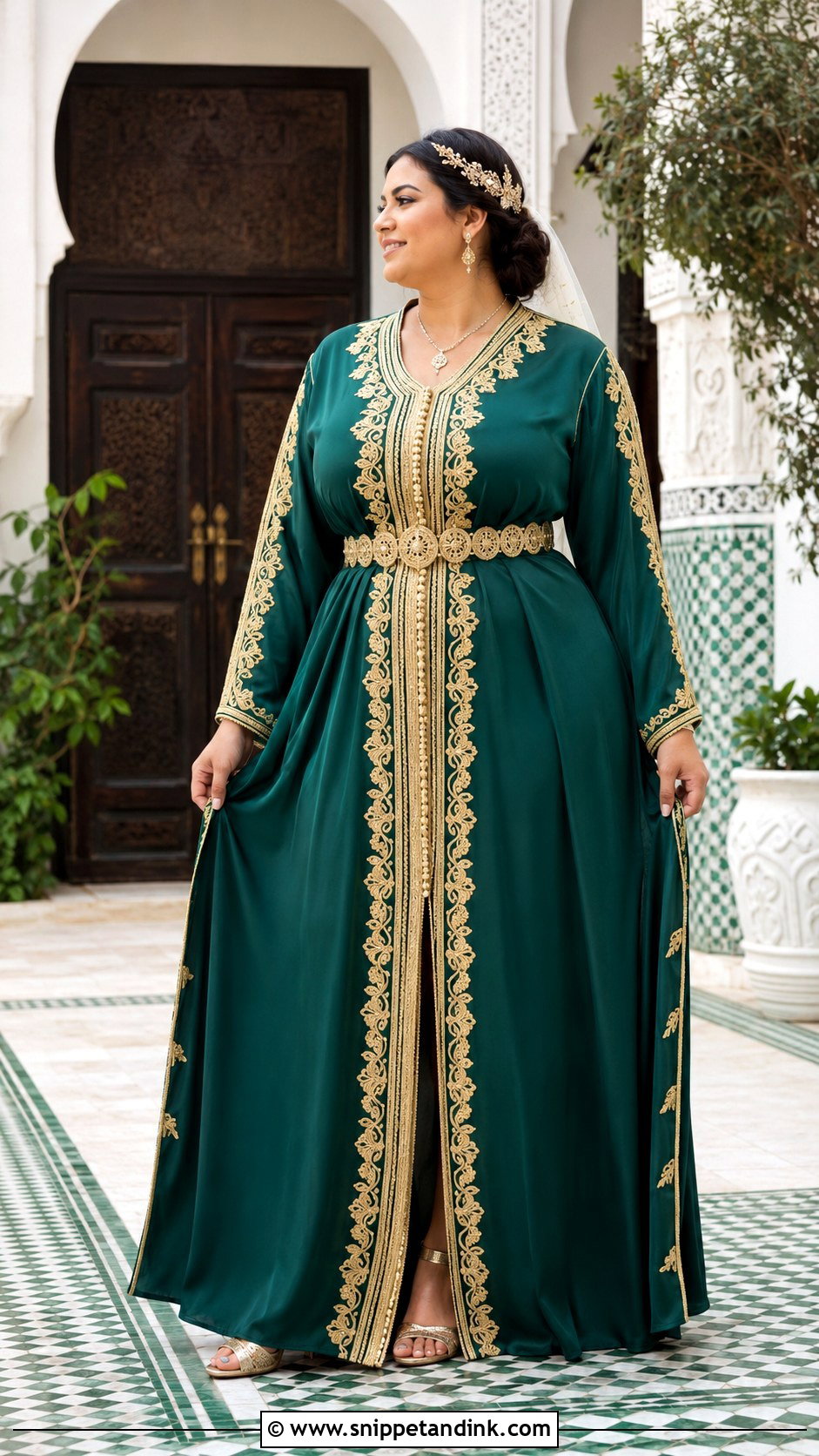
A plus-size Moroccan wedding caftan works best with structure in the right places and ease everywhere else. Choose fluid crepe, silk or satin that skims rather than clings. Vertical sfifa and embroidery lead the eye down the length of the dress, and the mdamma should sit at your natural waist without digging in when you sit, which I check seated at every fitting, not just standing. Long sleeves with gently shaped cuffs give a clean line. Block heels or embellished flats are kinder over a long night, with medium earrings and a light veil under a jeweled comb. Tailoring of the shoulders, sleeve length, belt placement and hem matters more here than color; emerald, royal blue, burgundy, ivory and champagne all work.


20. Moroccan Bridal Caftan With Veil
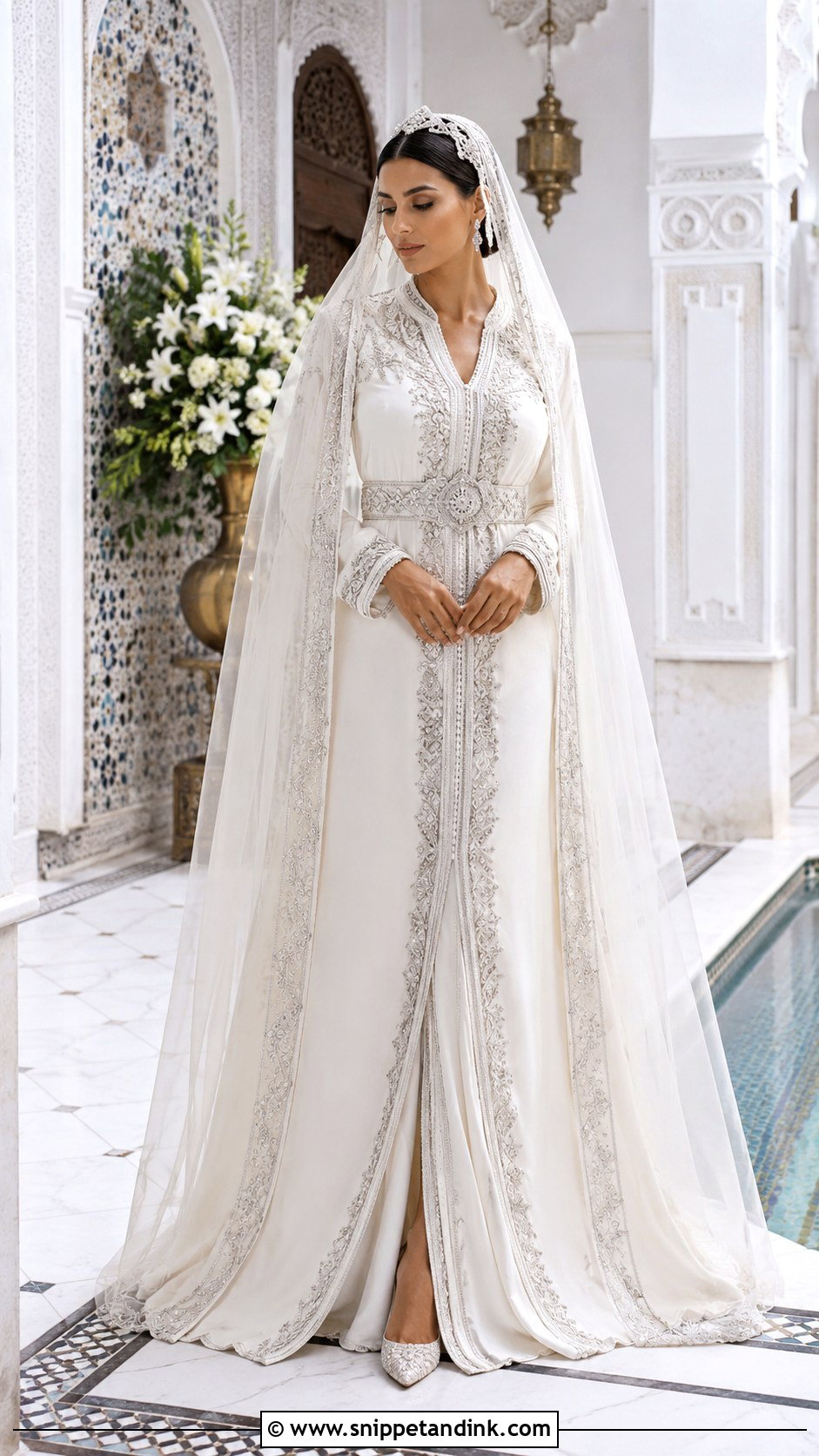
The veil should repeat one detail from the caftan, not introduce a new one. Begin with a white or ivory silk caftan with fine gold or silver embroidery, then pick a veil carrying a narrow sfifa-style border, scattered pearls or a few small motifs. Set it beneath the tiara or jeweled headpiece so it falls behind the shoulders and leaves the neckline visible. Lightweight tulle beats dense lace here, because heavy lace pulls on the headpiece and hides the embroidery. Add a matching mdamma, pointed bridal pumps and restrained earrings. Wear the veil for the entrance and portraits, then take it off for the rest of the night.
Planning Several Changes in One Night
Many Moroccan brides change several times over the evening, often into outfits from different regions and in different colors, and the negafa usually runs those changes. That affects how I’d choose each piece.
Wear the heaviest outfit early
Velvet, dense goldwork and large crowns are easiest to carry while you’re fresh and before the hall warms up. Save the lighter silk caftans for later appearances and the dancing.
Renting or commissioning
Renting from a negafa gives you several complete looks, with matching belts and jewelry, for far less than buying them all. Commissioning your own means it fits from the first fitting and stays in the family afterwards. Hand embroidery and sfifa take time, so if you’re having one made, start several months ahead and allow for at least two fittings.
Hair and makeup built for repeated changes
Each change usually brings a new crown or headpiece, so ask your hairstylist for a firm, well-pinned base that can take being pinned and unpinned several times. Keep a small kit backstage with bobby pins, blotting papers and your lipstick, and cover your face with a light scarf whenever anything has to pass over your head.
A Wardrobe for Every Entrance of the Night
A Moroccan wedding is rarely one dress. Takchitas bring structure and ceremony, while lighter caftans carry the henna night, family gatherings and later entrances. Color, fabric and embroidery set the mood of each one, from white and ivory to green, red and blue, and from velvet to lace and pearls. Let your heritage, your family’s traditions, the venue and your own comfort decide the order. Then put your budget into tailoring. The belt, shoulders, sleeves and hem shape every outfit, and a well-fitted modest caftan looks better than an ornate one that pulls.
You'll Like These Ideas:


Leave a Reply