
2016 was the year lace stopped sitting politely on top of a gown and started floating. Designers set it on illusion panels, cut it into dimensional appliqués, ran it down sheer backs and up high collars. Off-the-shoulder necklines were everywhere, and the braver brides tried crop-top sets, high collars and removable overskirts. I still pull these shapes for clients today, because most of them were built around fit and fabric rather than gimmicks. Below are twenty of the styles that defined that season, each with the way I’d dress it and the fitting issue I’d watch for.
A Decade-Old Gown on the Resale Rack: What I Inspect First
Plenty of brides now find these exact 2016 styles secondhand or at sample sales, and a ten-year-old gown can be a real find. It can also hide problems that photos won’t show. Before I let a client fall in love, I go over the dress in good daylight, inside and out.
- Tulle and illusion mesh. Nylon mesh yellows and turns brittle with age, especially near the neckline where skin oils and perfume sit. I stretch a small area gently; if it crackles or doesn’t spring back, it will need replacing.
- Underarm and waist seams. Faint rings here are old perspiration, and they often darken after cleaning rather than lift. Ask the seller directly whether the dress was professionally cleaned after it was worn.
- Beading and appliqués. Run your fingers lightly over them. Loose threads at the back of a 3D flower mean it can fall off on the dance floor.
- Zip and buttons. A replacement zip is a simple job; recreating a row of thirty covered buttons is not.
- Size labels. Bridal sizing runs small and has shifted over the years, so measure the bust, waist and hip of the actual dress against your own body.
A dress that passes these checks is usually worth the alteration cost. One that fails two of them rarely is, however good the price looks.
1. 2016 Off-The-Shoulder Wedding Dress
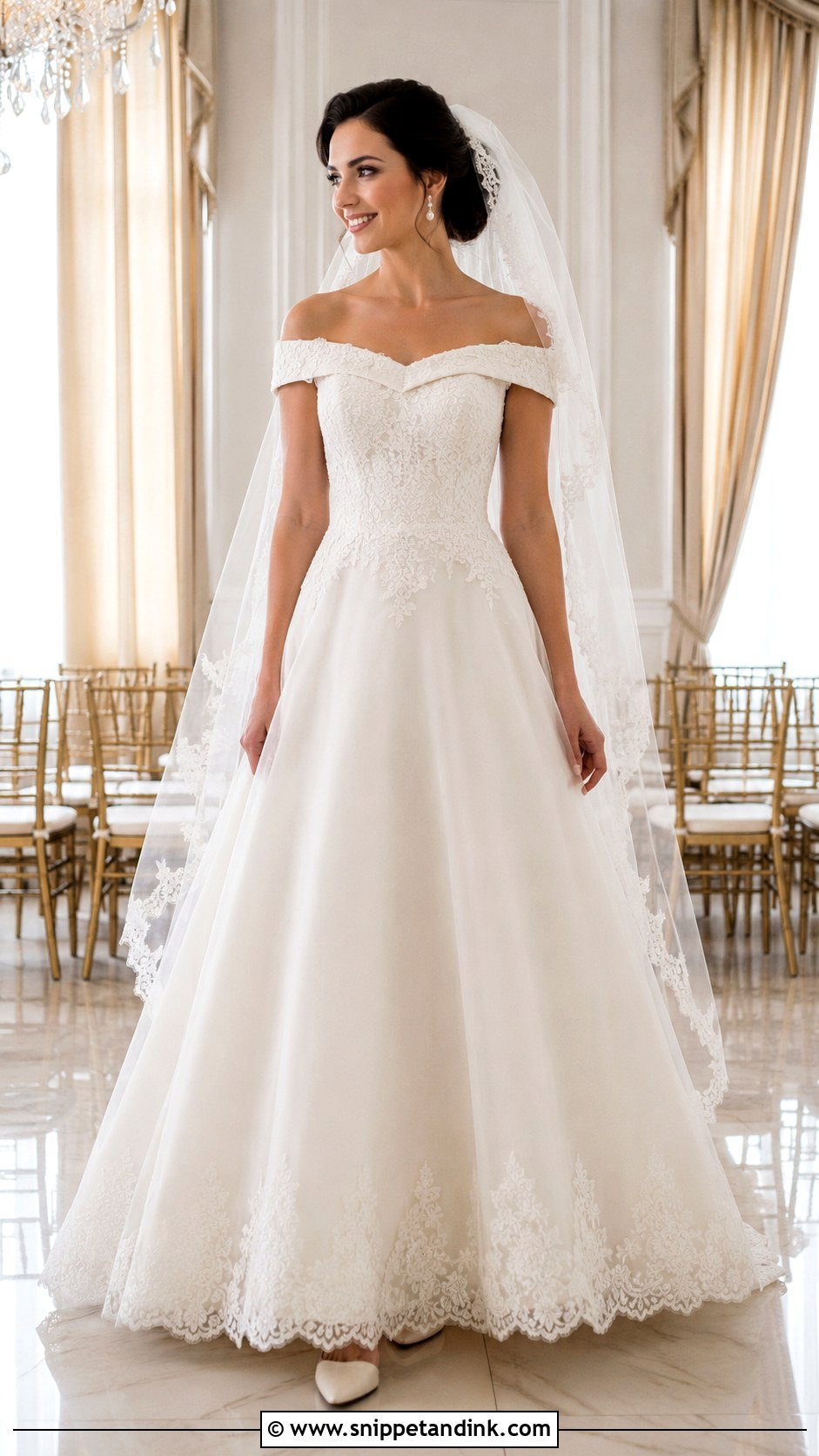
The off-the-shoulder band is the most recognisable 2016 neckline, and also the one I fit most carefully. The fold has to sit on the upper arm without sliding, which usually means a hidden silicone strip or a band taken in by a few millimetres once you’re standing in your real shoes. Over a fitted lace bodice and an A-line skirt, with covered buttons down the back, it needs very little else. I skip the necklace entirely here, add pearl drops and a low textured bun, and edge the fingertip veil in lace. Pointed ivory pumps suit an indoor ceremony; block-heel sandals are kinder on a lawn. Keep the bouquet small, white roses and greenery, so your arms stay free to lift.
2. 2016 Long-Sleeve Lace Wedding Dress
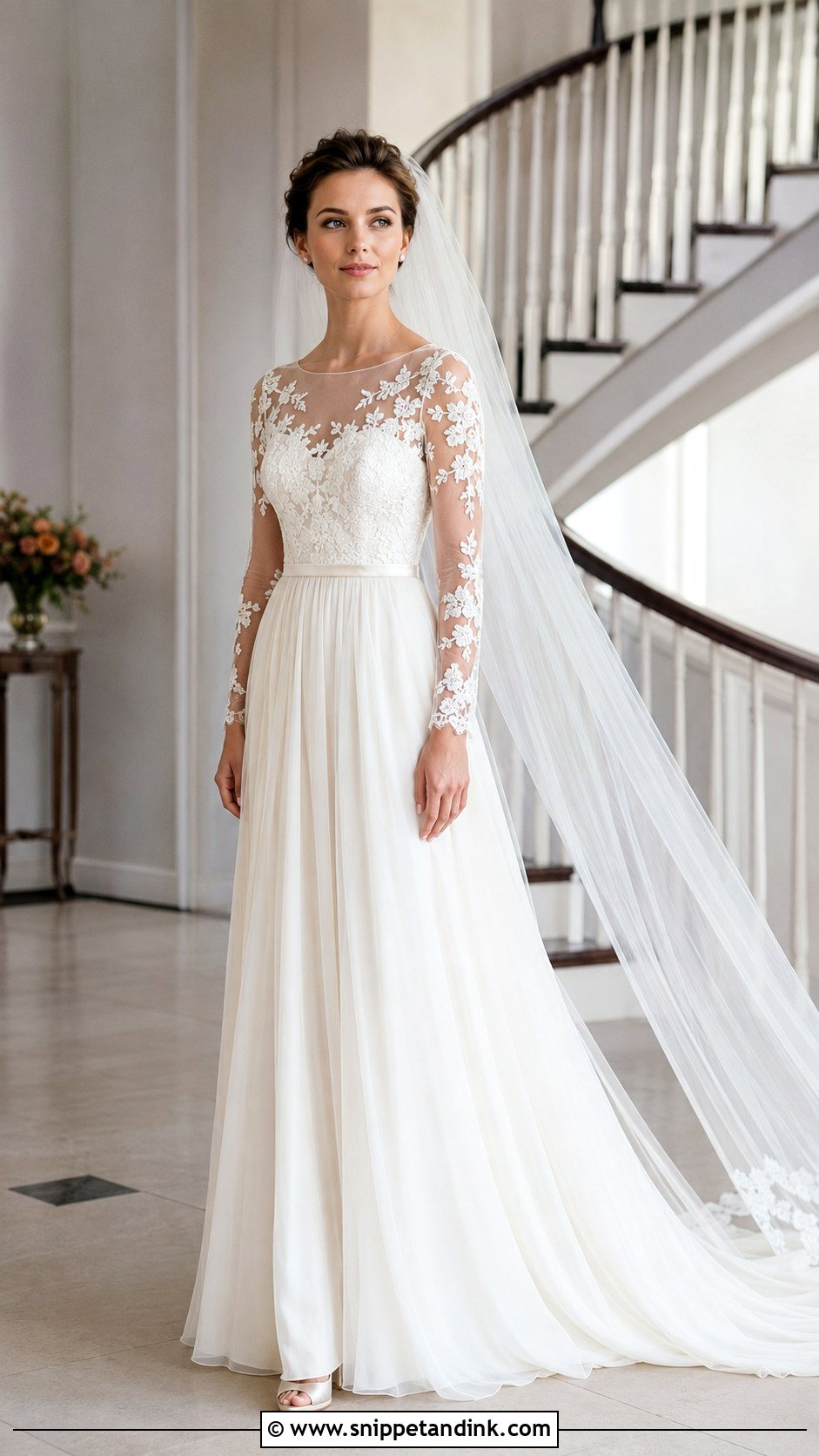
Long lace sleeves look delicate, but they decide how far you can raise your arms. At a fitting I ask brides to hug me and reach for an imaginary champagne glass; if the armhole cuts in, the sleeve needs a gusset or a looser underlay. The best versions put flesh-toned illusion under the lace so the motifs seem to sit on the skin, with a natural waist and a lightly gathered chiffon skirt that keeps the volume modest. Covered buttons at the cuffs repeat the ones down the back. I pair it with a cathedral veil, crystal studs and a smooth chignon so the neckline stays readable. It’s warmest in autumn and winter, though a light lace breathes well enough for spring. Give it a plain bouquet.
3. 2016 Illusion Neckline Wedding Dress
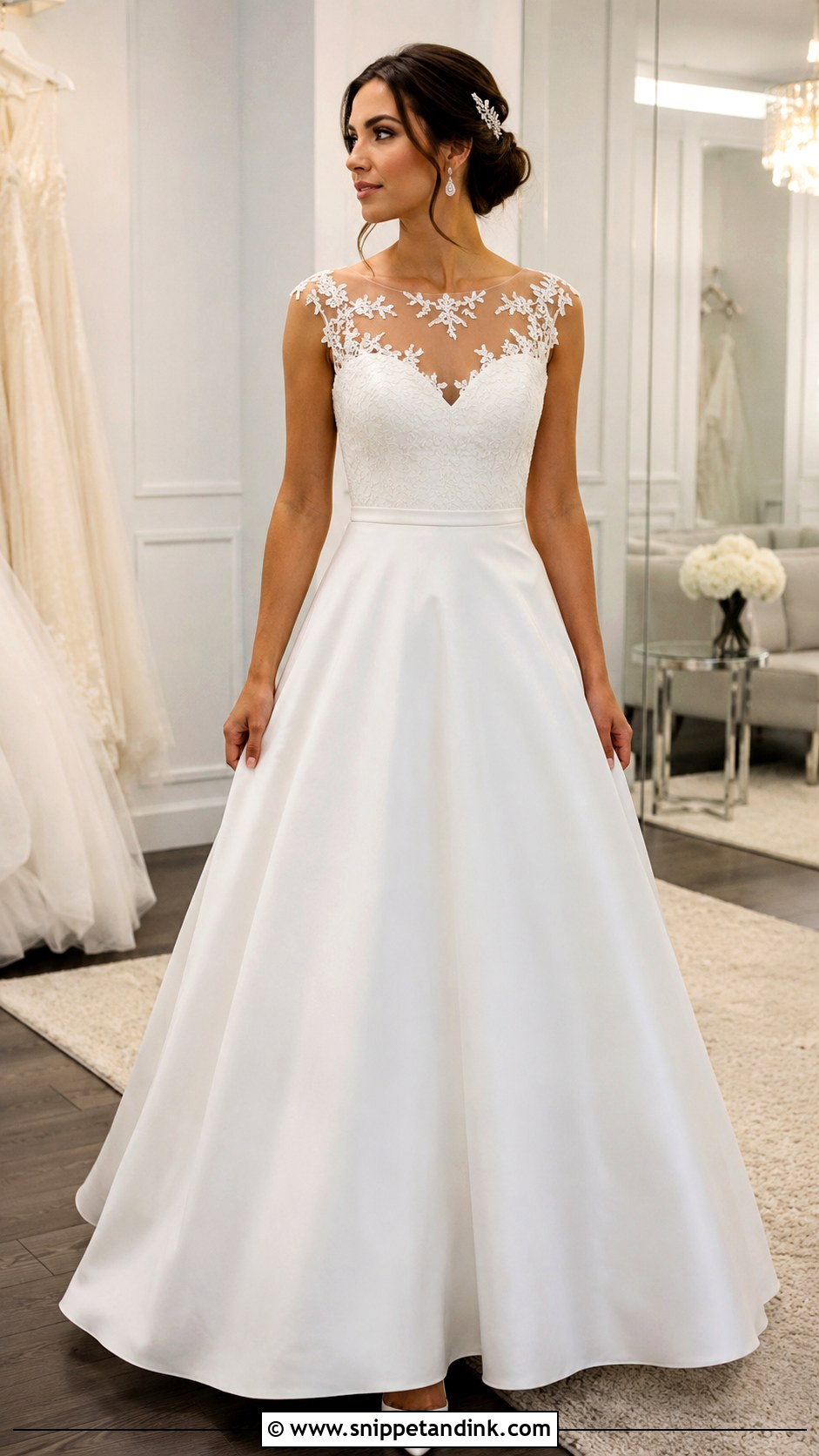
An illusion neckline lets you have the drama of a plunge with the security of a high line. Sheer tulle is laid over a sweetheart or V-shaped bodice, then lace motifs, pearls or tiny crystals are stitched across the mesh so they appear to float. 2016 collections used the trick on necklines, sleeves and backs. The thing I check first is the mesh colour against the bride’s skin in daylight: too pink and it reads as a panel, too grey and it looks like a bruise. Keep the skirt in clean satin so the upper half carries the detail, and add a sleek low bun with teardrop earrings and a narrow crystal comb. Underwear matched to your skin tone keeps the panel invisible.
4. 2016 Lace Mermaid Wedding Dress
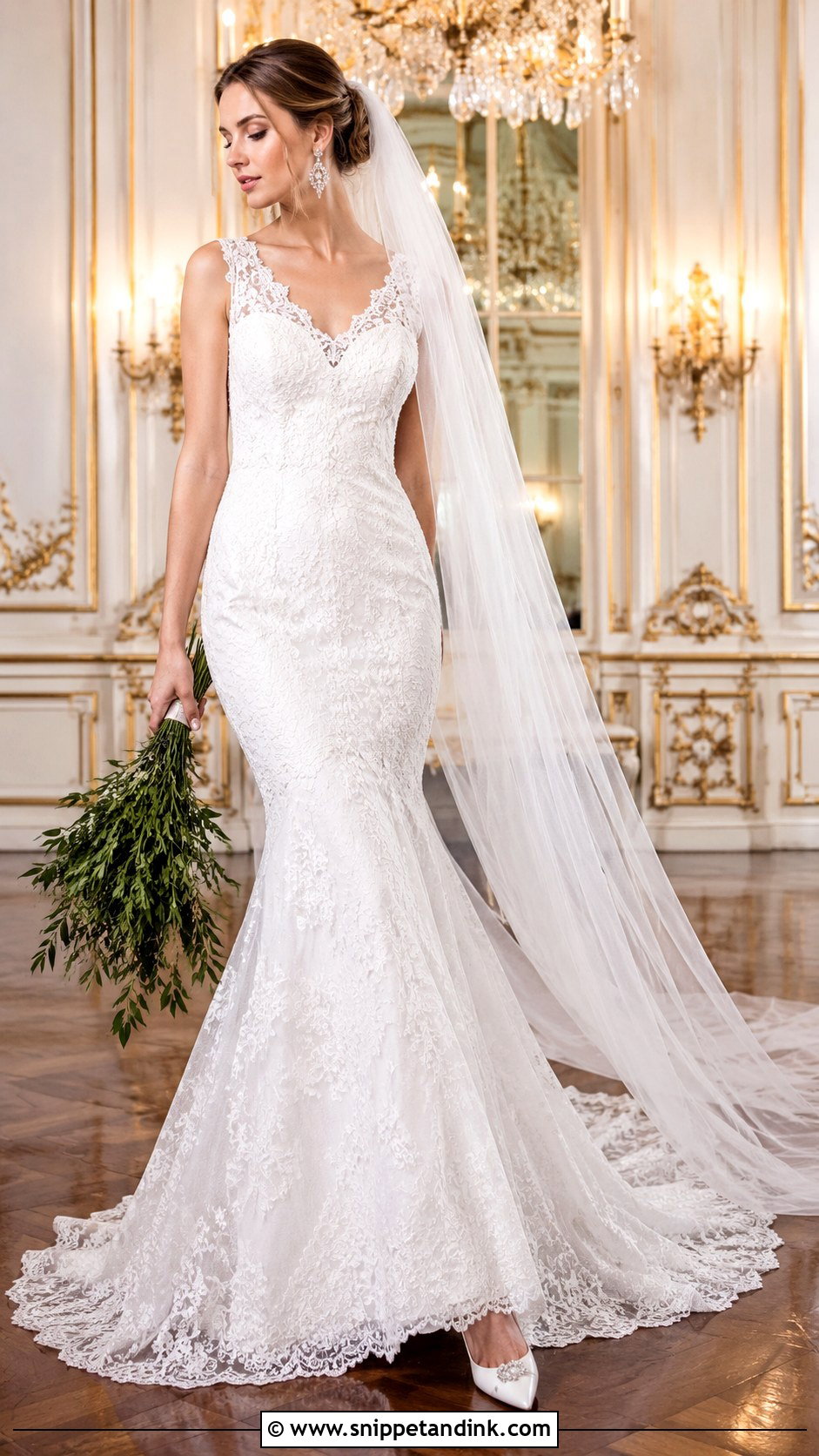
A lace mermaid hugs the body to the knee before it flares, and the height of that flare decides whether you can walk. I ask brides to climb two stairs in the sample. If the knee is trapped, the flare point needs raising, or the lining needs stretch. Floral lace over a neutral underlay gives the pattern definition without losing the bridal tone. I like a long plain veil, sparkling studs and a pointed pump with a heel you can stand in for photos. Side-swept waves follow the curve of the gown; a low bun formalises it. Avoid an oversized bouquet, which hides the very waist the dress was built to show. A narrow arrangement with trailing greenery suits ballrooms and hotel ceremonies better.
5. 2016 Strapless Ball Gown Wedding Dress
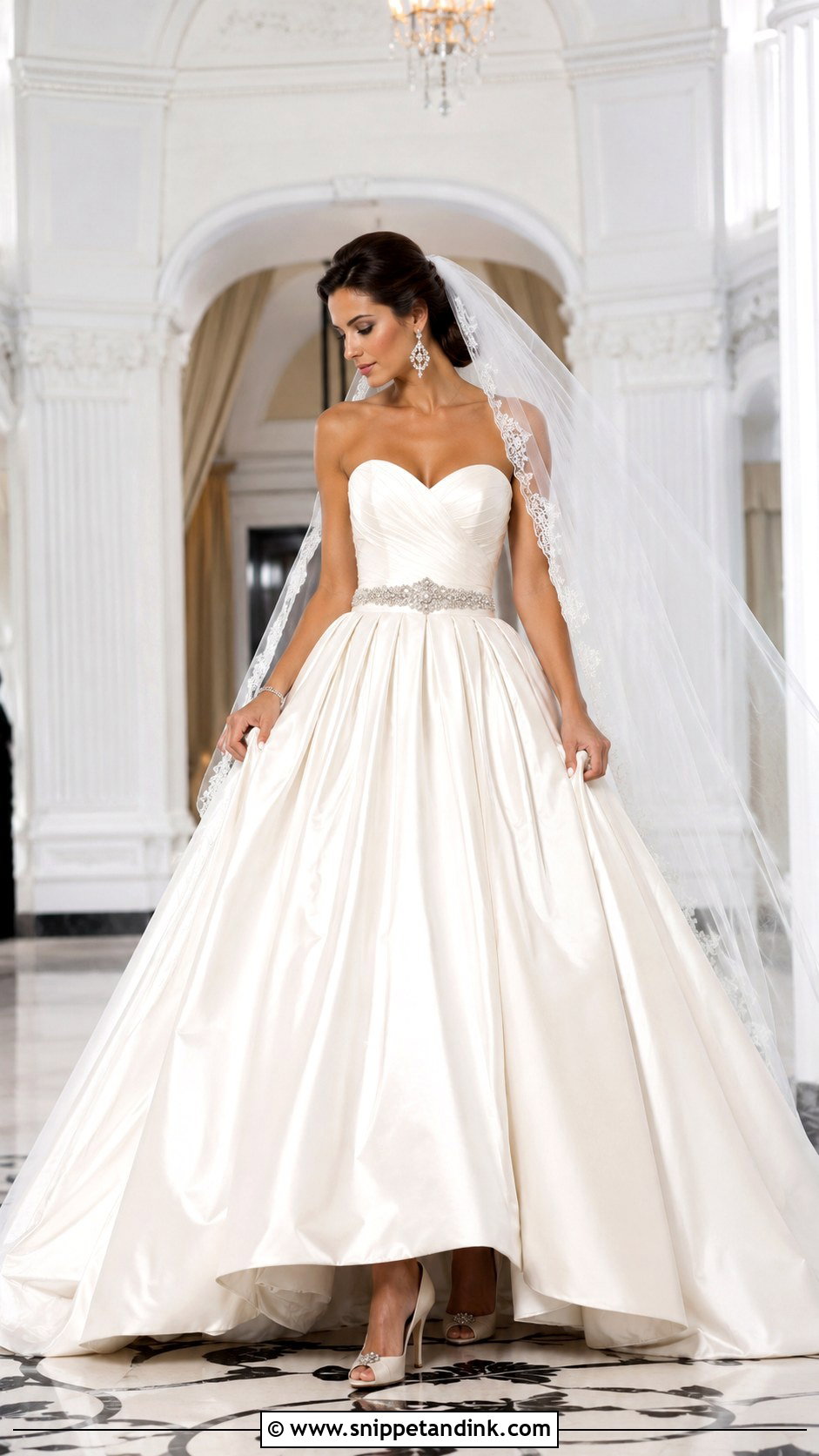
The strapless ball gown is all engineering under the satin. Boning, a waist stay and a bodice fitted to your ribcage, not your bust, are what stop you hitching it up all night. If I can slide two fingers in at the top edge while you’re breathing normally, it’s right; any more and it will slip when you dance. Satin gives the cleaner, regal finish; tulle softens it. A crystal belt defines the middle. I’d style it with a cathedral veil, pearl-and-crystal earrings and an elegant updo so the shoulders stay clear. For a church that asks for coverage, a lace bolero you can remove later works well. A rounded white bouquet keeps the proportions in balance with that skirt.
6. 2016 Two-Piece Wedding Dress
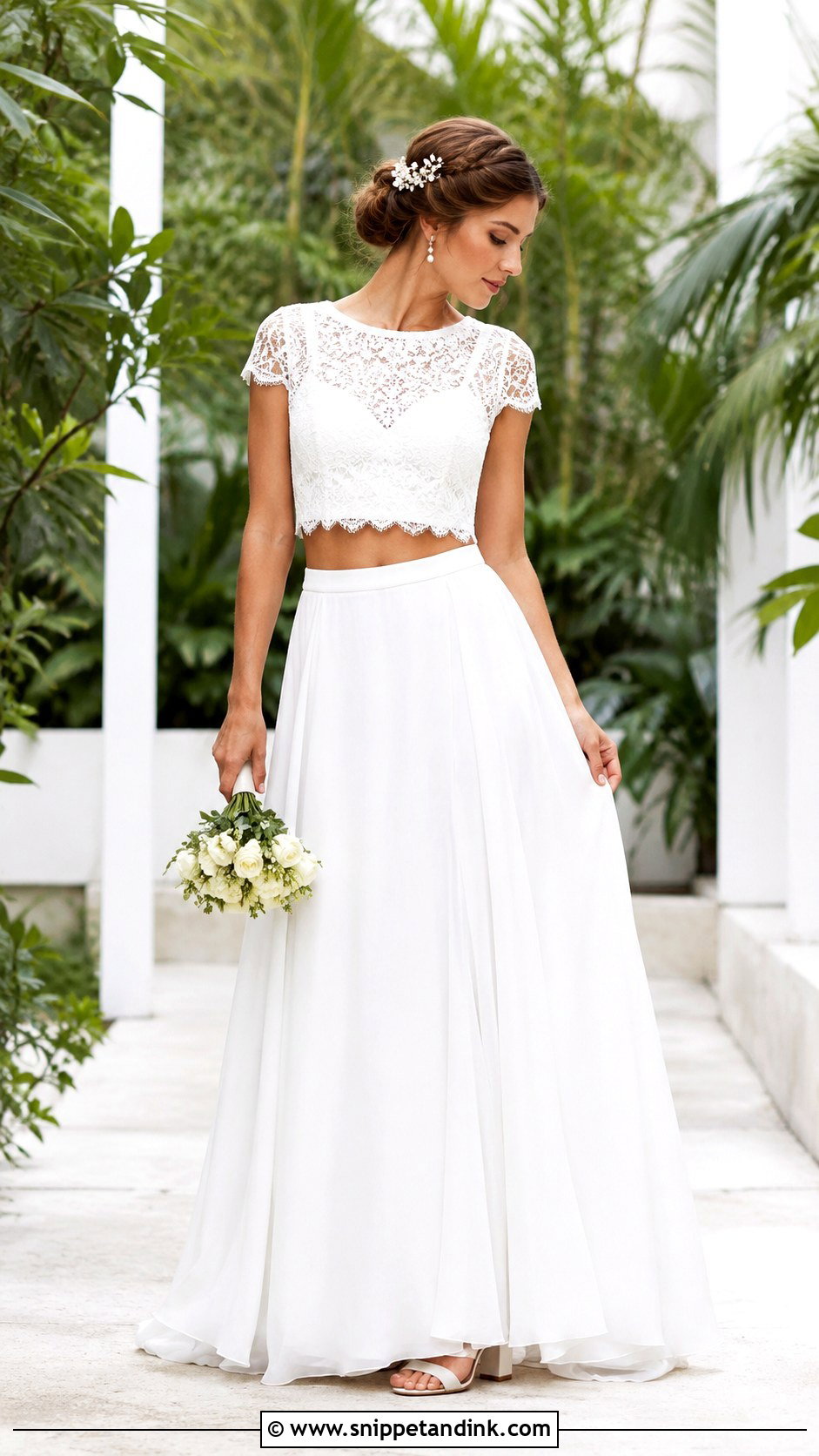
The two-piece was 2016’s most talked-about alternative, and it’s easier to wear than it looks. A fitted lace crop top with short sleeves meets a high-waisted chiffon or satin skirt, leaving just a sliver of skin. I always have brides sit and lift their arms at the fitting, because that sliver can double when you reach for someone. A hook-and-bar inside the skirt waistband keeps everything anchored. Block-heel sandals, small pearl earrings and a loose low bun suit the relaxed mood; a short veil or floral comb sits better than a cathedral length. Because the pieces move independently, dancing is easy. I reach for it with loft, garden and coastal weddings.
7. 2016 High-Neck Wedding Dress
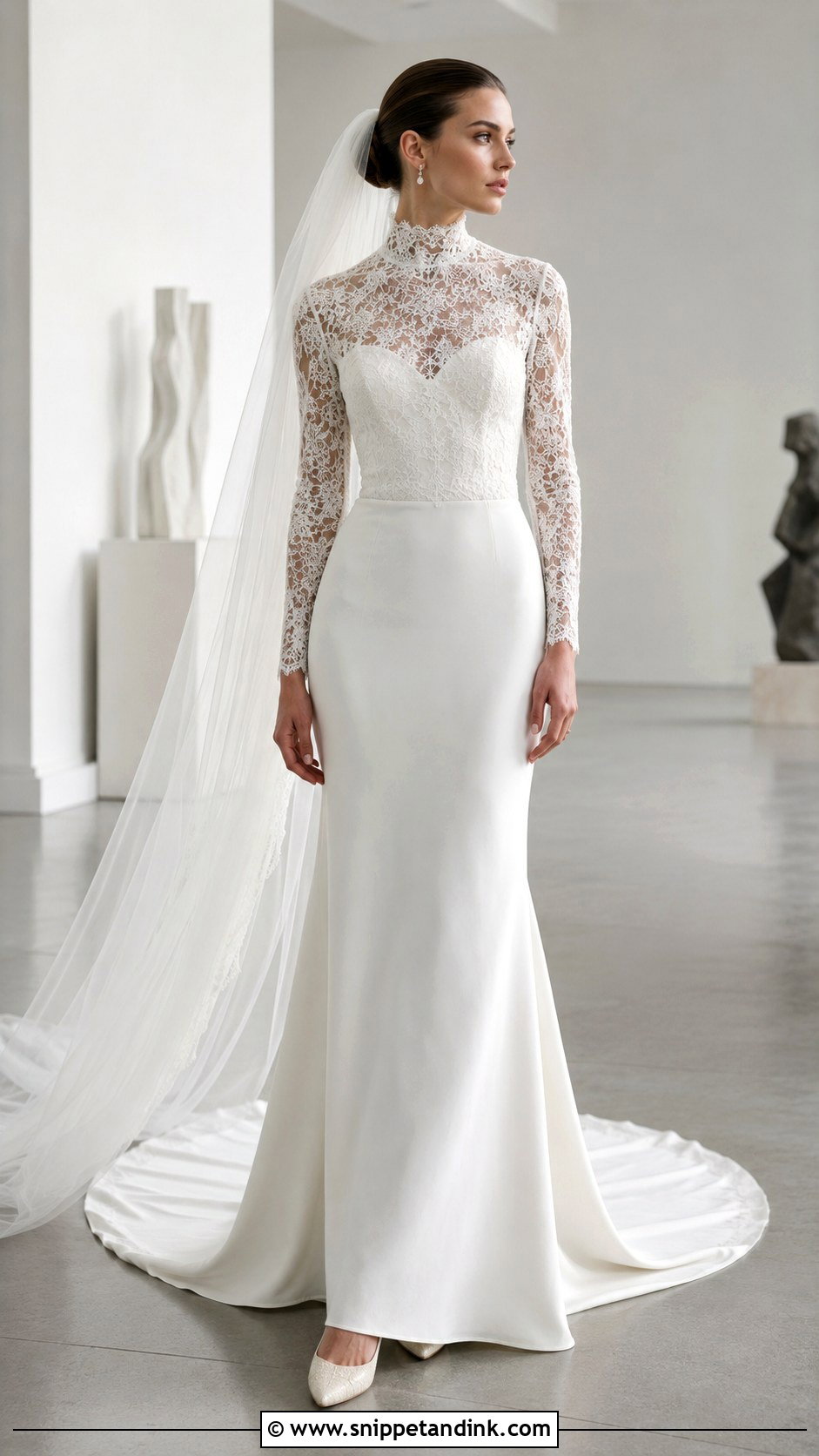
A high neck gives a clean profile, which is why the rest of the gown should provide the contrast. A lace mock-neck bodice with a fitted waist and a fluid crepe skirt elongates beautifully; a halter over full tulle shows the shoulders without relying on a strapless bodice. 2016 brought halters and stand-up collars back in a big way. The collar must close without pressing on the throat when you look down at your bouquet, so I check it with the bride’s chin lowered. Wear your hair up so the collar stays visible, skip the necklace, and let a low back stop the look feeling buttoned-up. A plain veil set under the bun and a slim bunch of calla lilies finish it.
8. 2016 Deep V-Neck Wedding Dress
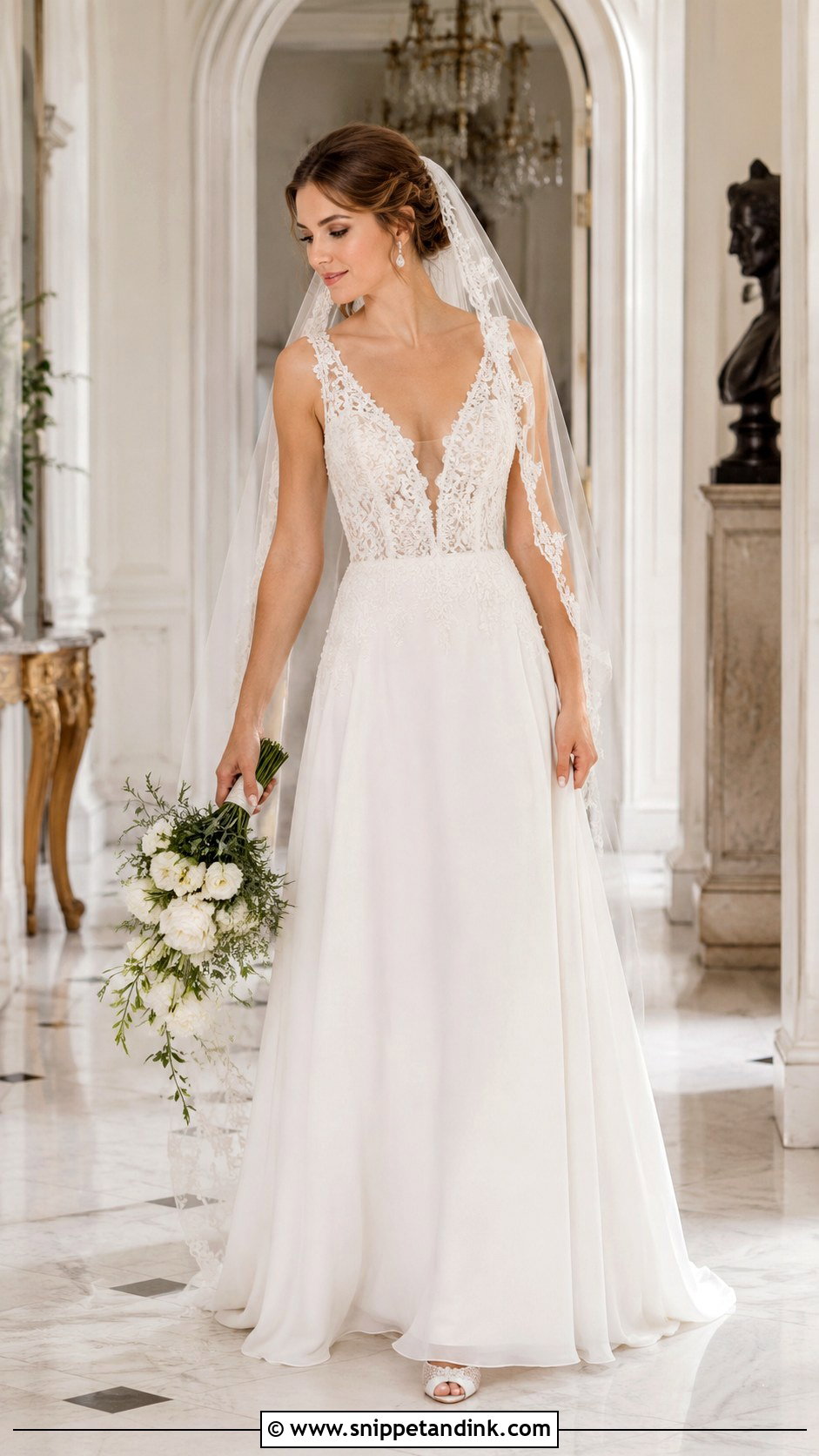
A deep V-neck gown creates length without any embellishment at all, but it only works when the neckline lies flat. I look for discreet illusion mesh joining the two sides and cups built into the bodice. Then I watch the bride sit: if the V gapes, it gets taken in before anything else. A fitted lace top running into a soft A-line skirt balances the drama. Jewellery stays minimal, small drops and a thin bracelet. Loose waves or a textured ponytail soften the sharp line, and a plain chapel veil keeps it bridal. For a traditional ceremony, a removable cape or sheer topper covers you until the party.
9. 2016 Wedding Dress With 3D Flowers
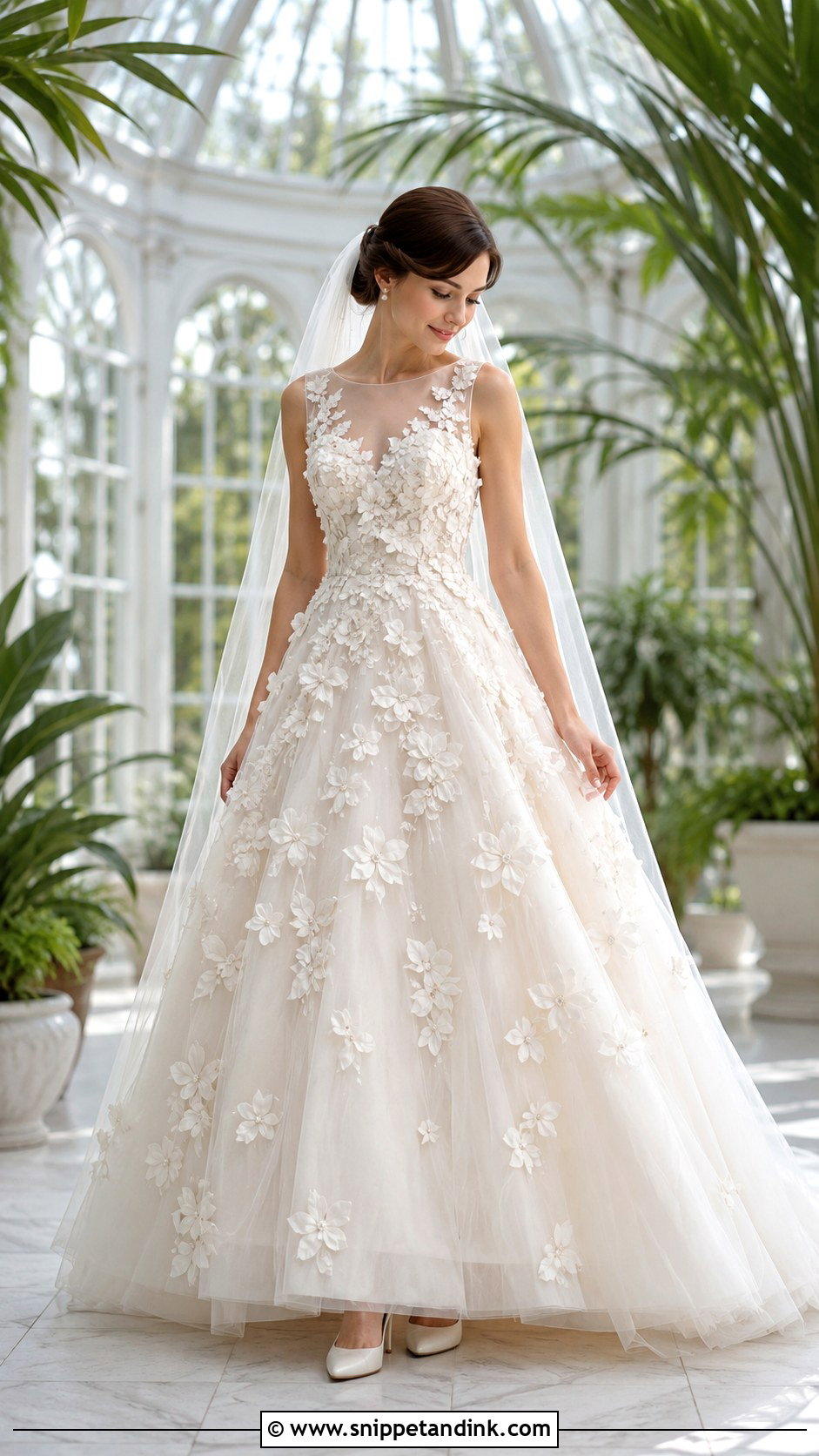
Dimensional flowers turn a plain gown into texture you can see from the back pew. The placement I prefer scatters hand-applied petals densely across the bodice and thins them out down the skirt, which pulls the eye to the waist. 3D appliqués were one of 2016’s signature details. They do have a weak point: petals crush when you sit, and they snag on veil tulle. I steam them back to shape on the morning and choose a plain tulle veil rather than lace-trimmed. Pearl studs, a soft updo and ivory pumps are enough. Carry a compact bouquet in one or two colours so real flowers don’t argue with fabric ones. Gardens and conservatories show it at its best.
10. 2016 Wedding Dress With Overskirt
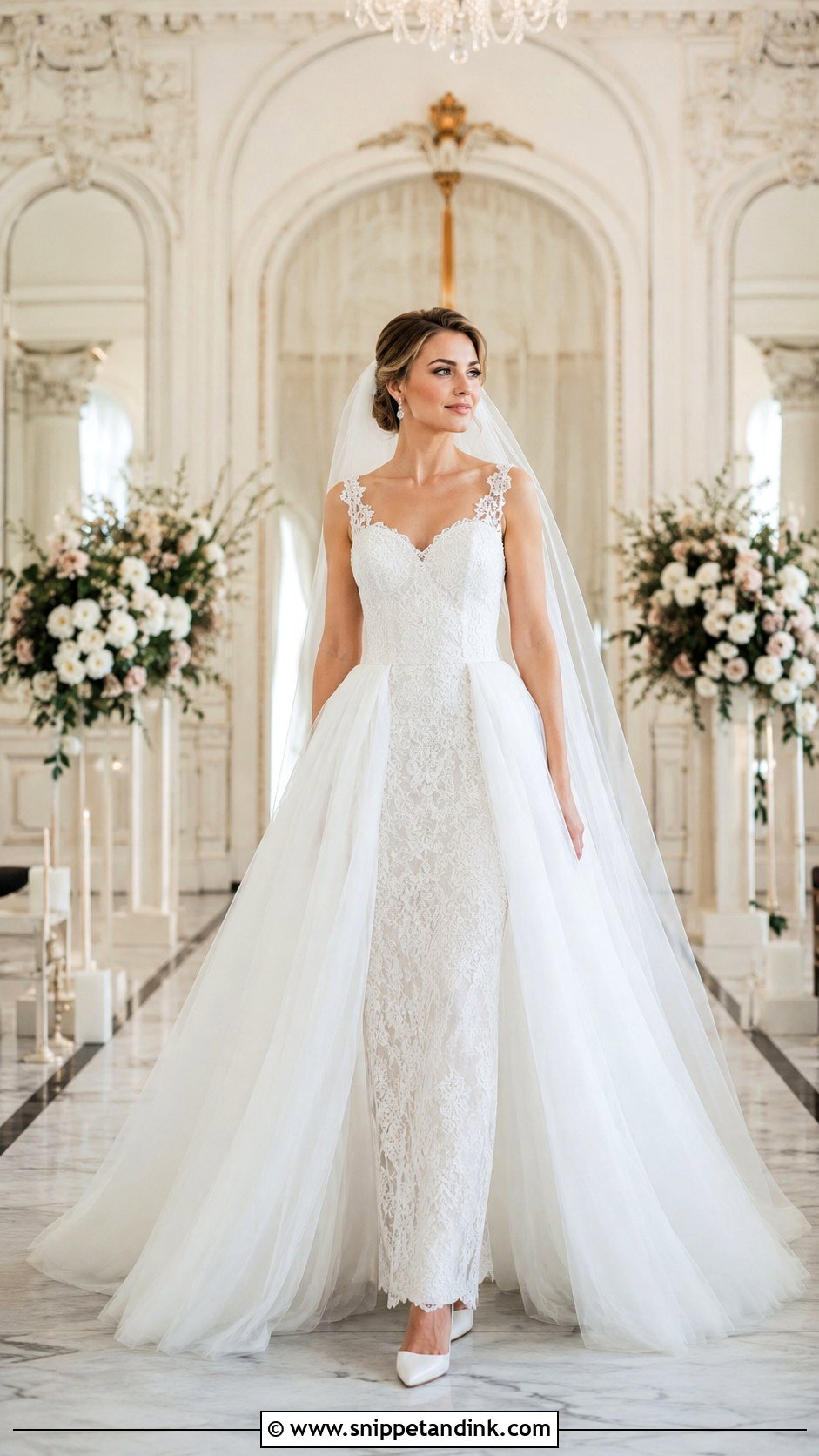
A removable overskirt gives you two silhouettes from one dress. Start with a fitted lace column or crepe sheath, then add a full tulle layer for the ceremony; take it off for the reception and you can actually dance. Layered and detachable skirts were 2016’s practical answer to wanting volume and freedom at once. What I test is the closure. Hooks and a hidden snap tape beat a single button, and I make whoever will help you remove it practise twice at the final fitting. The waistband of the overskirt should blend into the gown rather than read as a belt. Style with a long plain veil, crystal earrings and pointed pumps.
11. 2016 Backless Lace Wedding Dress
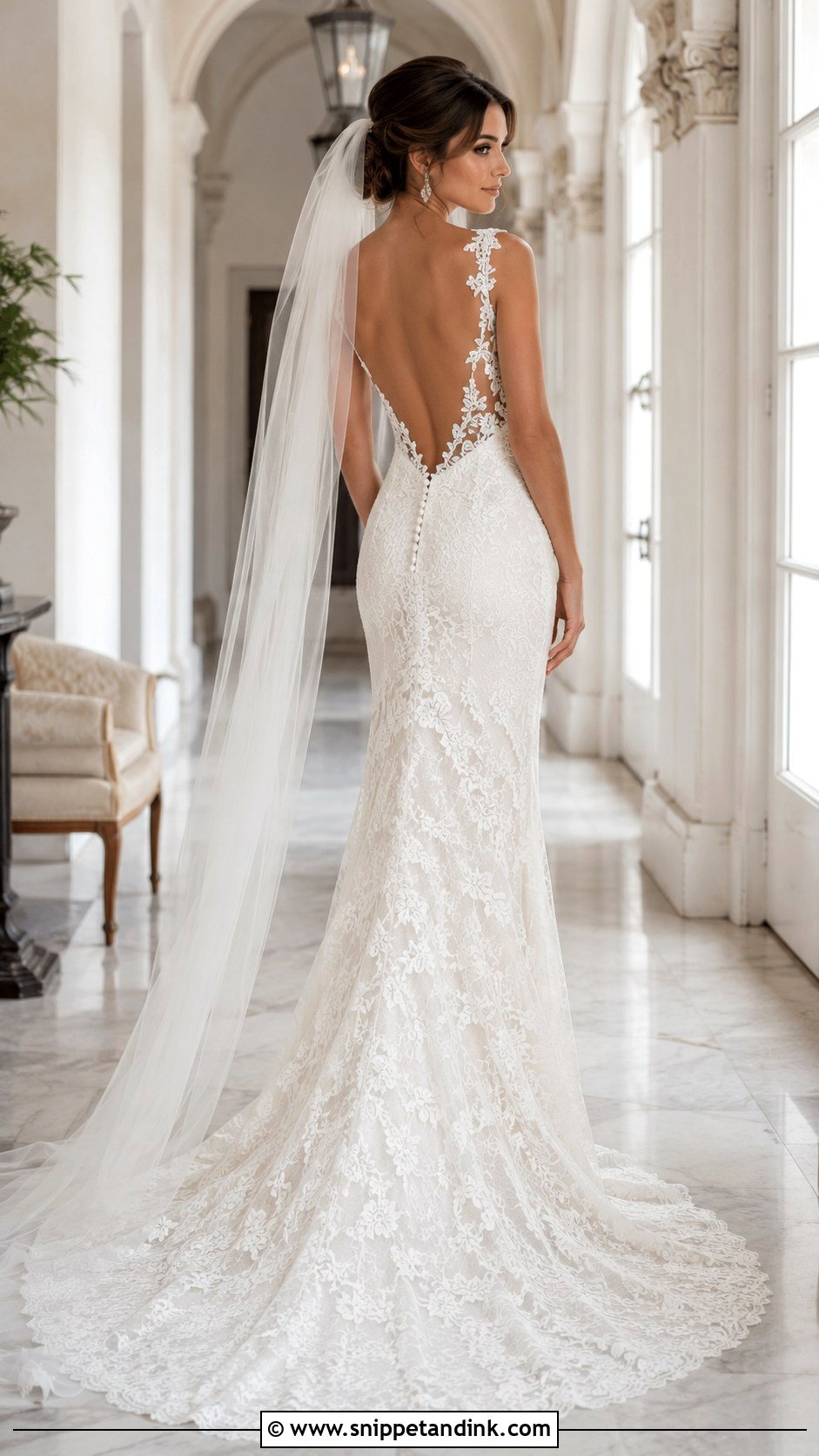
From the guests’ side of the aisle, a low-back lace gown is the view they remember. I prefer designs with illusion mesh across the opening; it holds the bodice in place so you aren’t relying on your shoulders to keep it up. Lace edging, covered buttons or fine beading frame the space. Low, sheer backs were a focal point of the fall 2016 collections. Wear your hair up or swept to one side, and anchor the veil below the bun so it doesn’t drape over the detail. Raise underwear early: a low back often needs sewn-in cups or extra mesh, and that’s a job for your second fitting, not your last.
12. 2016 Boho Chiffon Wedding Dress
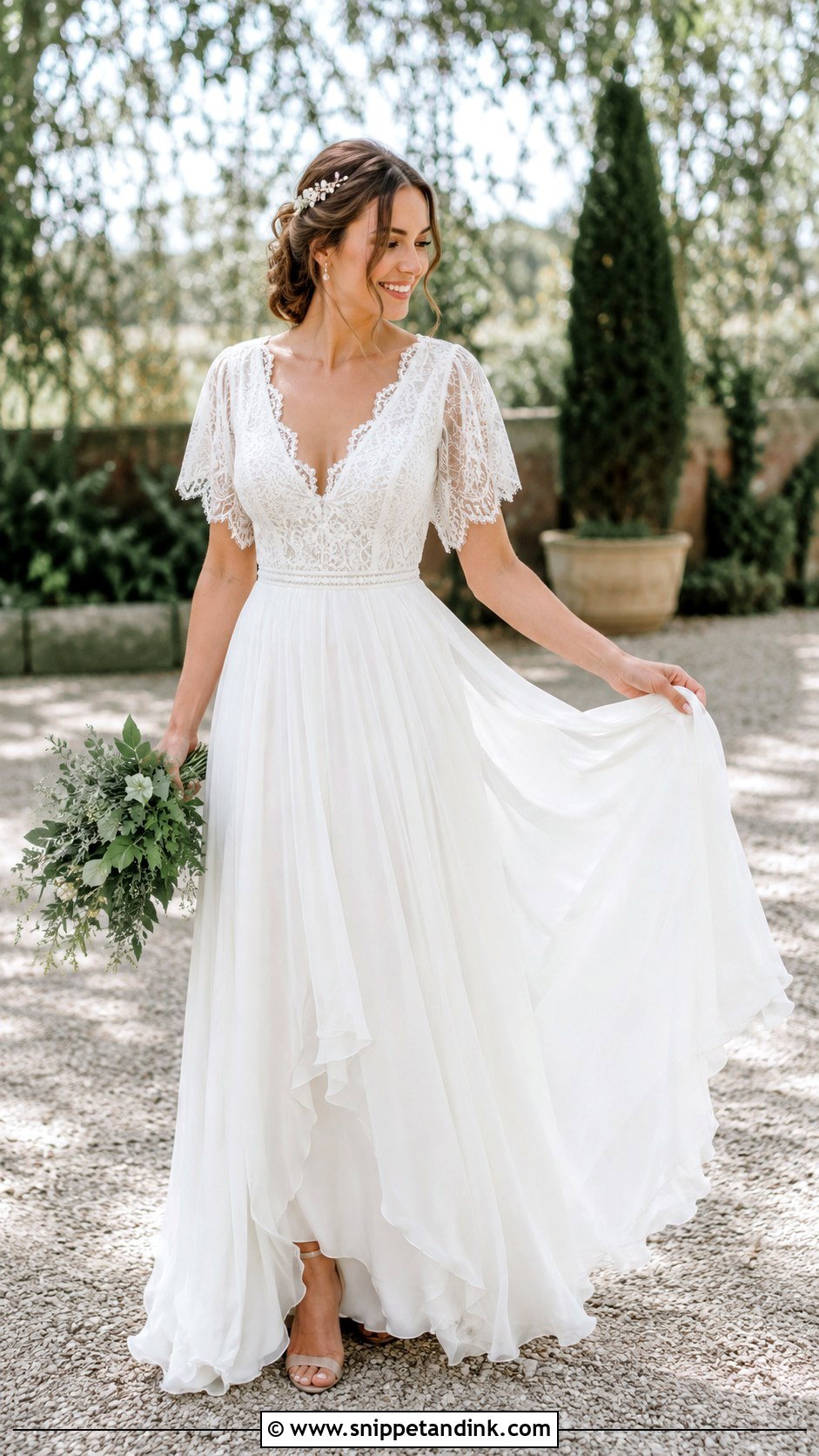
Chiffon behaves best outdoors. It catches the slightest breeze and doesn’t crease into hard lines when you sit on a hay bale or a sea wall. An empire or natural waist, a lace bodice, flutter sleeves and several fluid skirt layers give it shape without stiffness. The one thing I warn about is static and cling on dry days, which a slip of anti-static spray on the lining fixes. Loose waves, a small floral comb and gold or pearl earrings suit it. On grass or sand, choose low block heels or dressy flats over stilettos. A soft fingertip veil and a loose bouquet of white flowers with mixed greenery complete it for woodland, rustic and coastal venues.
13. 2016 Blush Wedding Dress
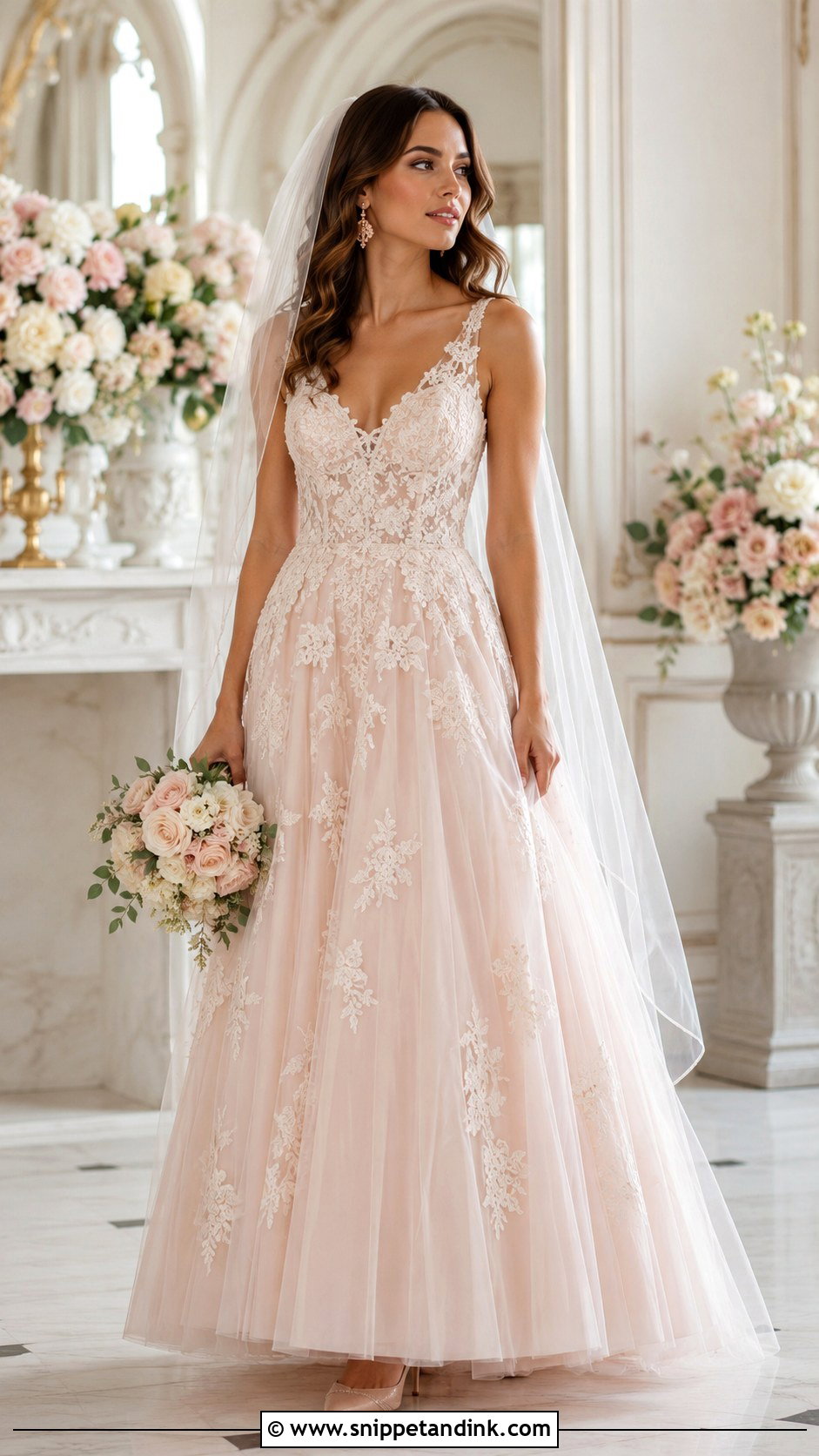
Blush works when the colour sits under the dress rather than in it. A pale pink or nude lining beneath ivory tulle keeps the tint gentle, and lace appliqués on the bodice suddenly stand out against it. I’d always view a blush sample in daylight and again under warm indoor bulbs, because some linings go peach under tungsten. Rose-gold earrings, neutral pumps and a sheer ivory veil carry the palette, with a loose chignon and soft makeup. Keep the bouquet mostly white with a few muted pink stems. Blush also rescues lace patterns that would otherwise vanish on a bright white base.
14. 2016 Champagne Wedding Dress
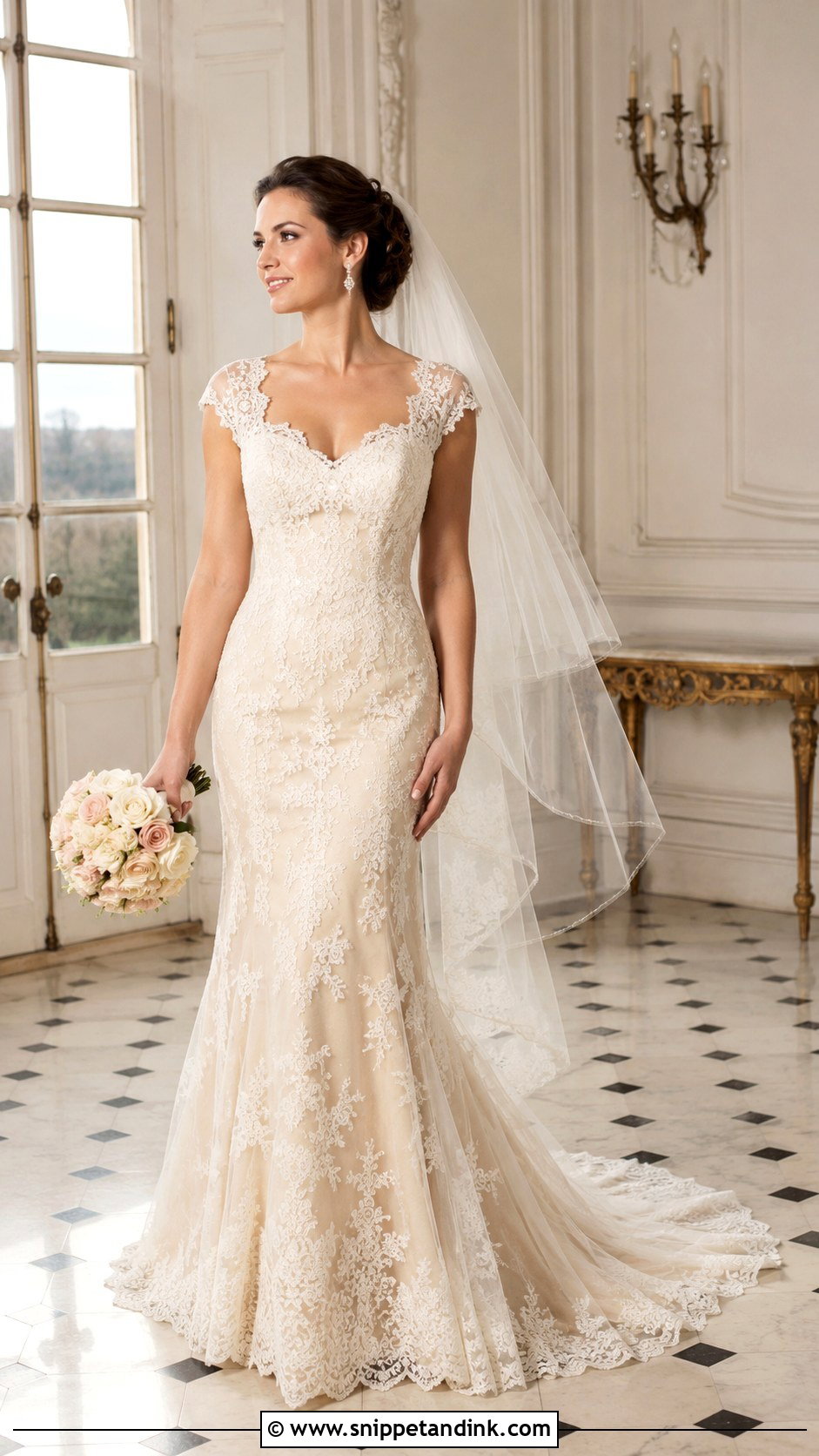
Champagne adds warmth and a slightly vintage depth. My favourite version puts champagne satin under ivory lace so the pattern pops. A fit-and-flare with cap sleeves, a defined waist and a modest train suits it. The tricky part is matching. Champagne ranges from almost-gold to pinkish beige, so I bring the veil, shoes and any topper to the same window and compare them together; an ivory veil usually gives enough contrast without clashing. Pick one metal for jewellery rather than mixing gold and silver. Antique-style crystal earrings, a simple comb and a bouquet of cream roses suit it, but check the gown against your complexion in daylight before you commit.

15. 2016 Wedding Dress With Pockets
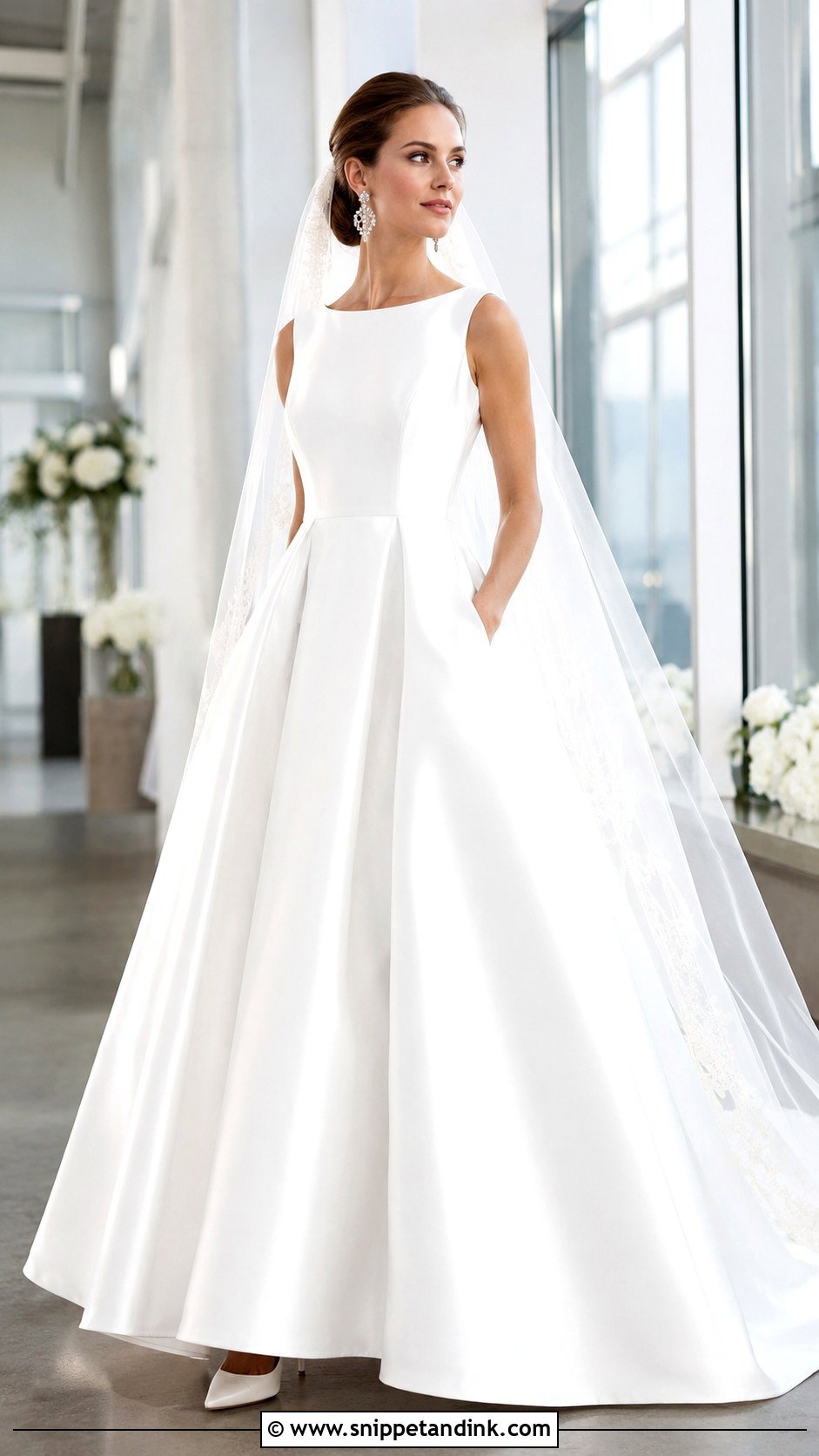
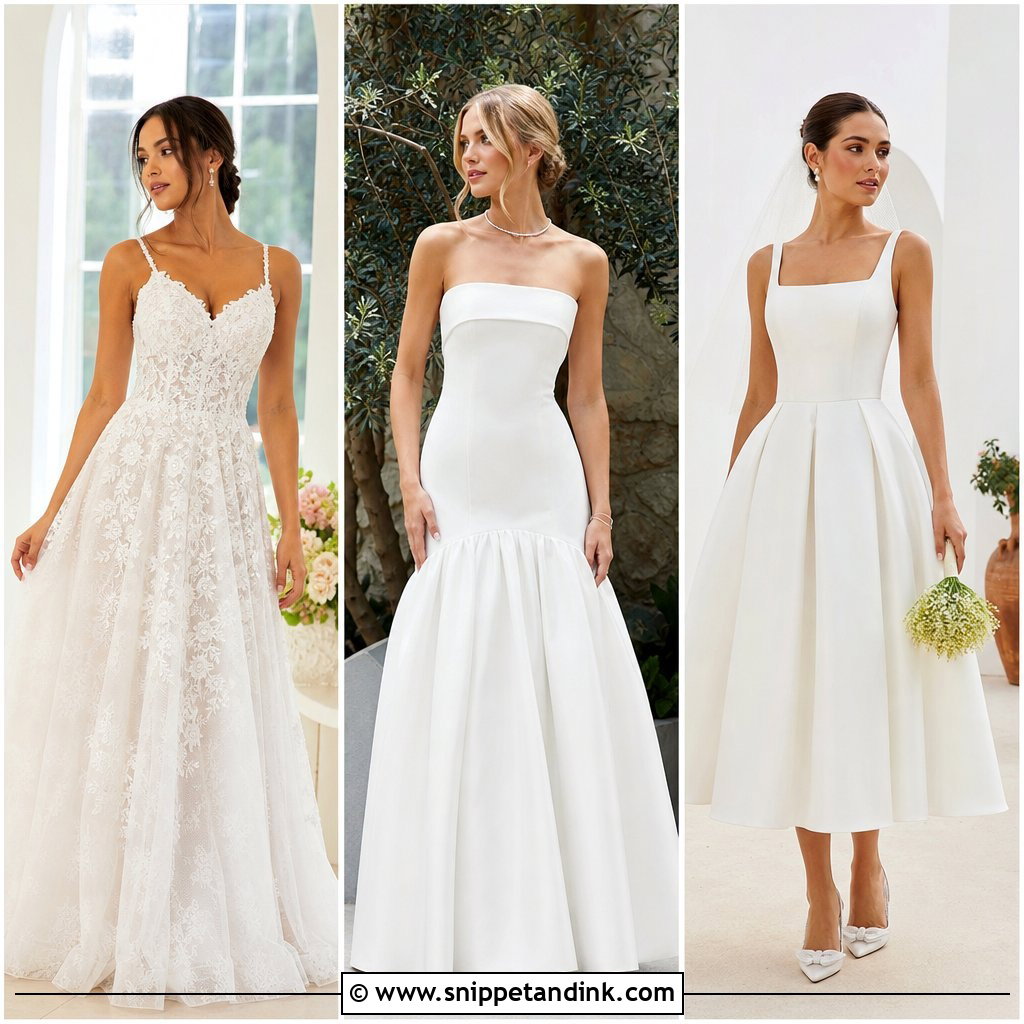
Pockets give a structured gown a little ease, and brides tend to stand differently once their hands have somewhere to go. They need a skirt that holds its shape, so I look for an A-line or ball-gown skirt in mikado, faille or crisp satin; in soft tulle the pocket bags open. A bateau-neck bodice and wide pleated skirt keep the silhouette polished. Pocketed gowns were one of 2016’s most practical details. I style them with a low bun, statement earrings, pointed satin pumps and a chapel veil to soften the architecture. In photos, one hand resting lightly in a pocket looks natural. Never load them with a phone; the weight drags the pleat.
16. 2016 Tea-Length Wedding Dress
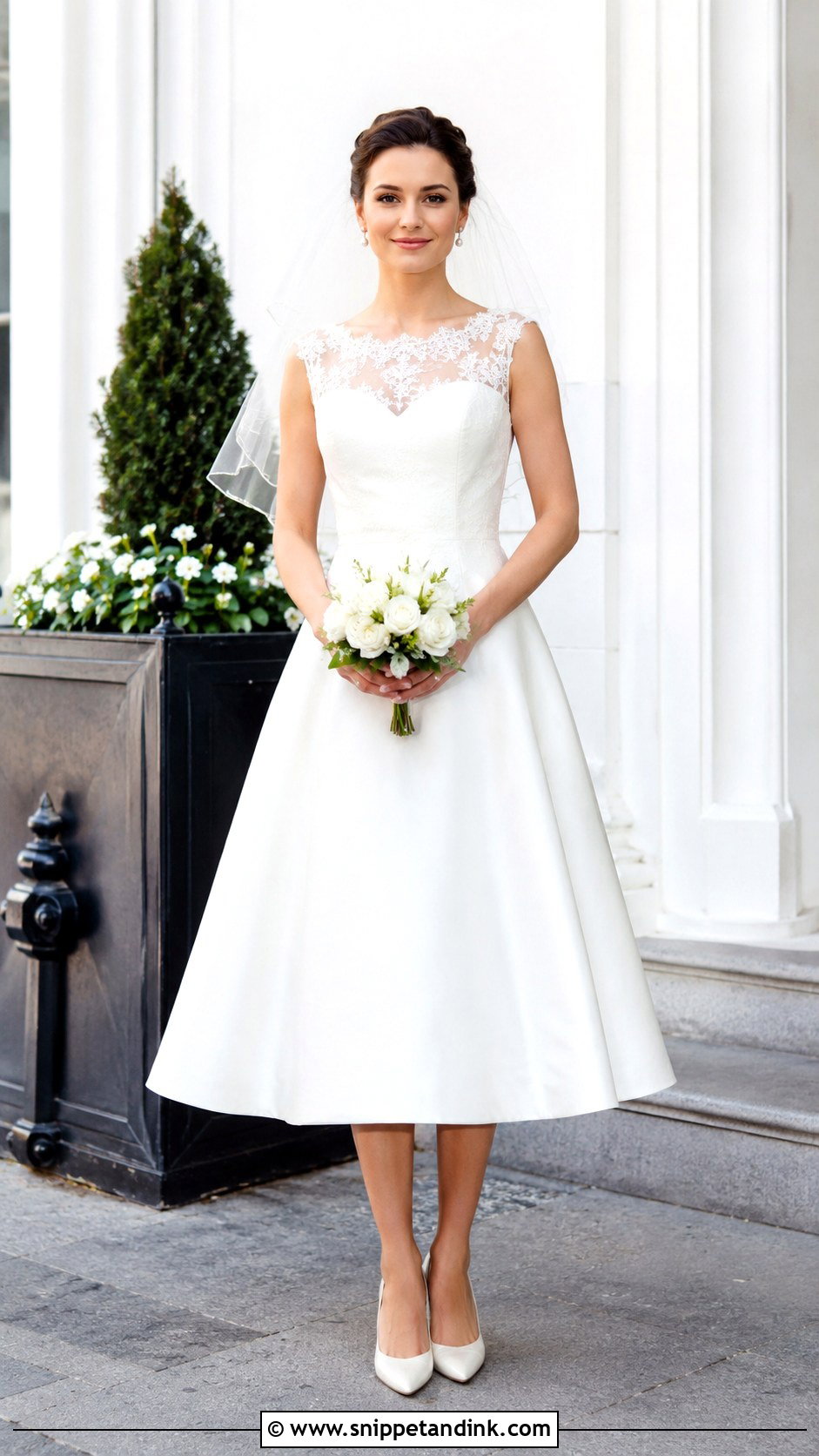
Tea length shows your shoes, so plan the shoes first. The skirt falls somewhere between knee and ankle over a fitted lace or satin bodice, with a defined waist and a gentle flare that’s very easy to move in. 2016 refreshed the shape with illusion necklines, embroidery, lace cutouts and deeper V bodices. Because the whole hem is on display, it must be perfectly even, which means altering with the shoes on and the bride standing still on a hard floor. Pointed pumps, slingbacks or ankle straps in ivory, silver or pale blue all suit it. Add pearl earrings, a short veil and a neat chignon. I reach for it for daytime, city hall and small receptions.
17. 2016 Short-Sleeve Lace Wedding Dress
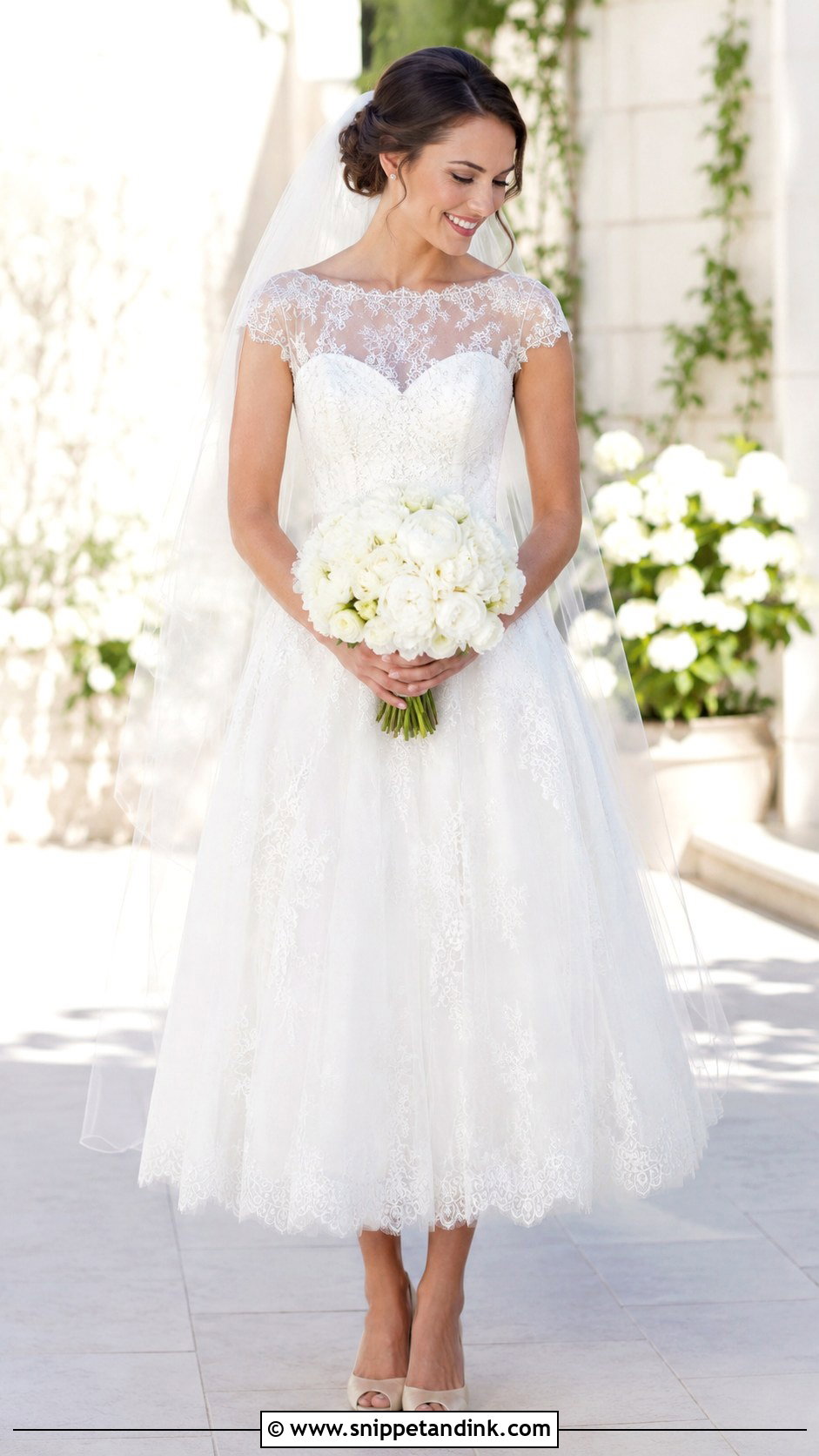
Short lace sleeves give coverage without the warmth of a full sleeve. 2016 designers played with all sorts of sleeve lengths, and this one is the most forgiving. On an A-line gown with illusion-backed sleeves, a sweetheart lining and a layered skirt, the key is where the sleeve ends. I mark it at the narrowest point of the upper arm, not the widest, then check the bride can raise her arm to shoulder height without the bodice lifting. Pearl studs, a fine bracelet, low-heeled ivory pumps and a loose bun or half-up style keep it approachable. A fingertip veil and a rounded bouquet finish it. With a light lace and breathable lining, it’s comfortable across seasons.
18. 2016 Minimalist Crepe Wedding Dress
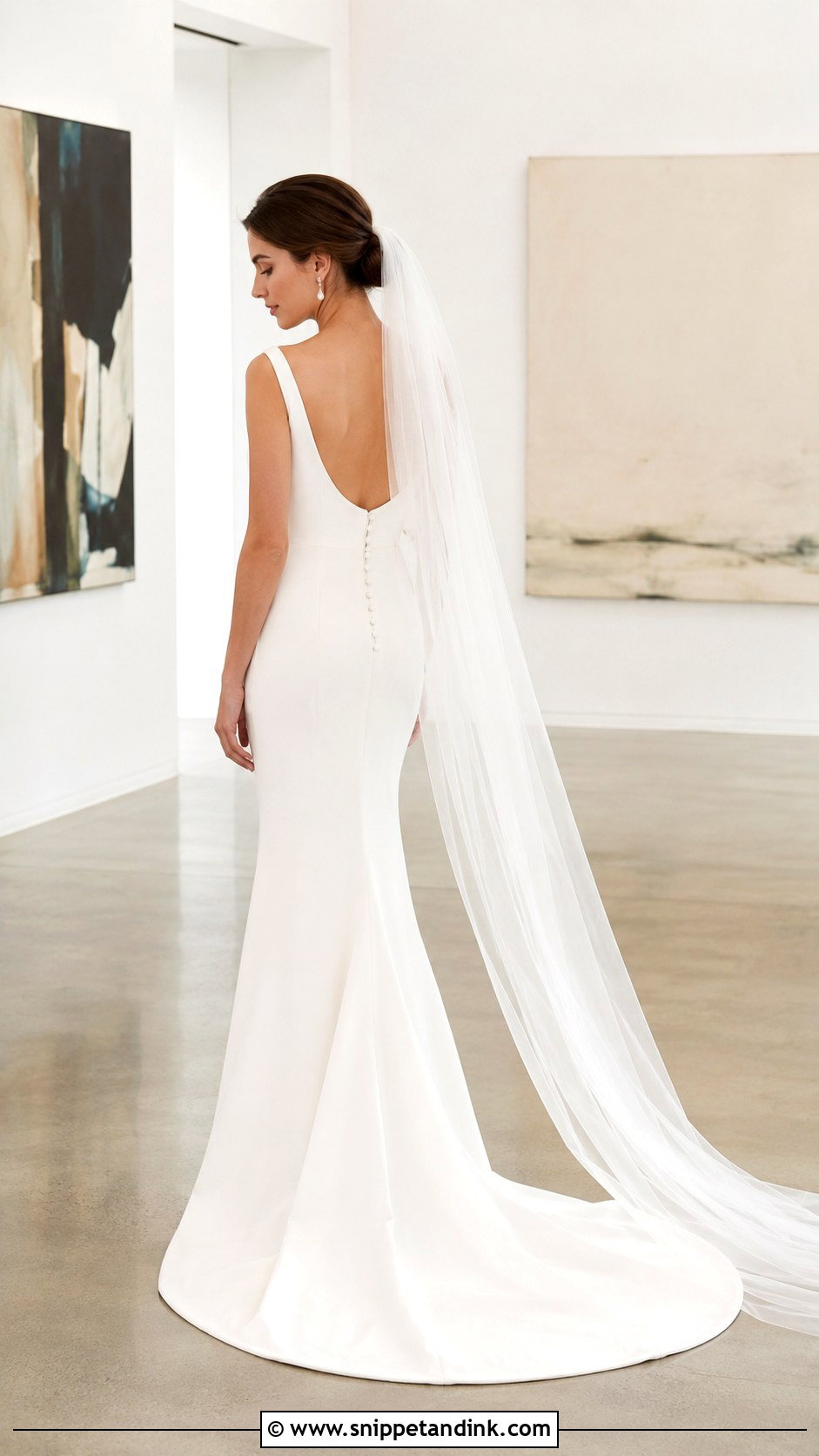
Crepe has nowhere to hide. With no lace or beading, the fit does all the work, and every seam or knicker line will show. That is why I fit crepe gowns over the exact underwear the bride will wear, and often add a lining with a touch of stretch. A sheath or gentle fit-and-flare with a bateau neck, narrow straps or plain long sleeves suits the fabric. A low back, covered buttons and a short train give enough interest. I keep the styling equally spare: polished drops, pointed pumps, a sleek low bun, a long plain veil and a structured bouquet of a single flower. It suits galleries, modern hotels and city venues.
19. 2016 Tiered Tulle Wedding Dress
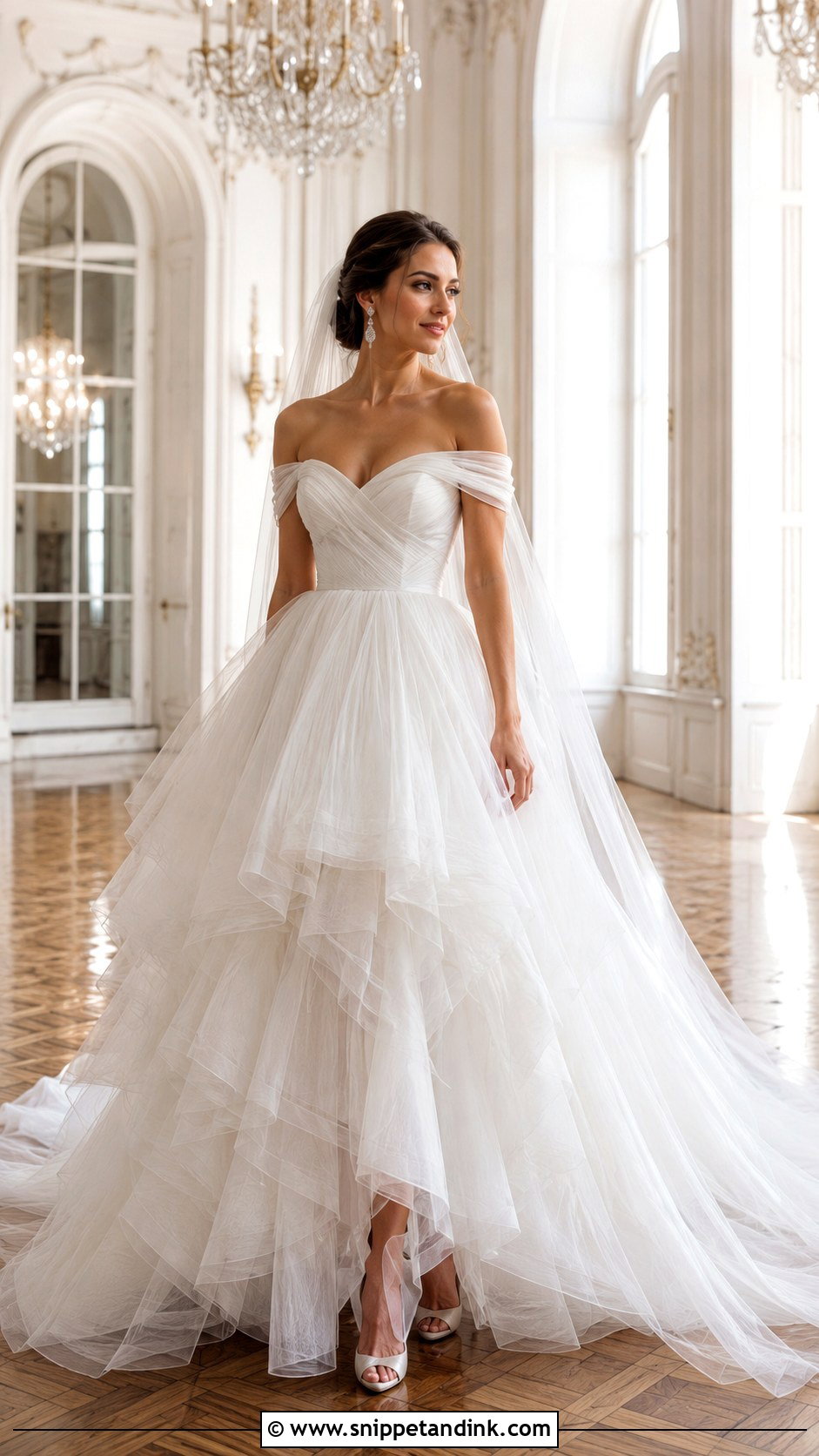
Tiered tulle should look airy, not like a stack of petticoats. The tiers need space between them to read as layers, and that depends on how the skirt is gathered at each seam. Above, a V-neck or off-the-shoulder bodice keeps things fitted. I always ask about the venue floor before recommending one: rough stone, gravel and old wooden boards catch tulle, and a bridesmaid who knows how to lift the train saves a lot of torn edges. A plain cathedral veil, small crystal earrings, simple satin heels and a high or low bun keep attention on the skirt. Carry a slim bouquet to balance the volume. It needs a room large enough to let it move.
20. 2016 Floral Lace A-Line Wedding Dress
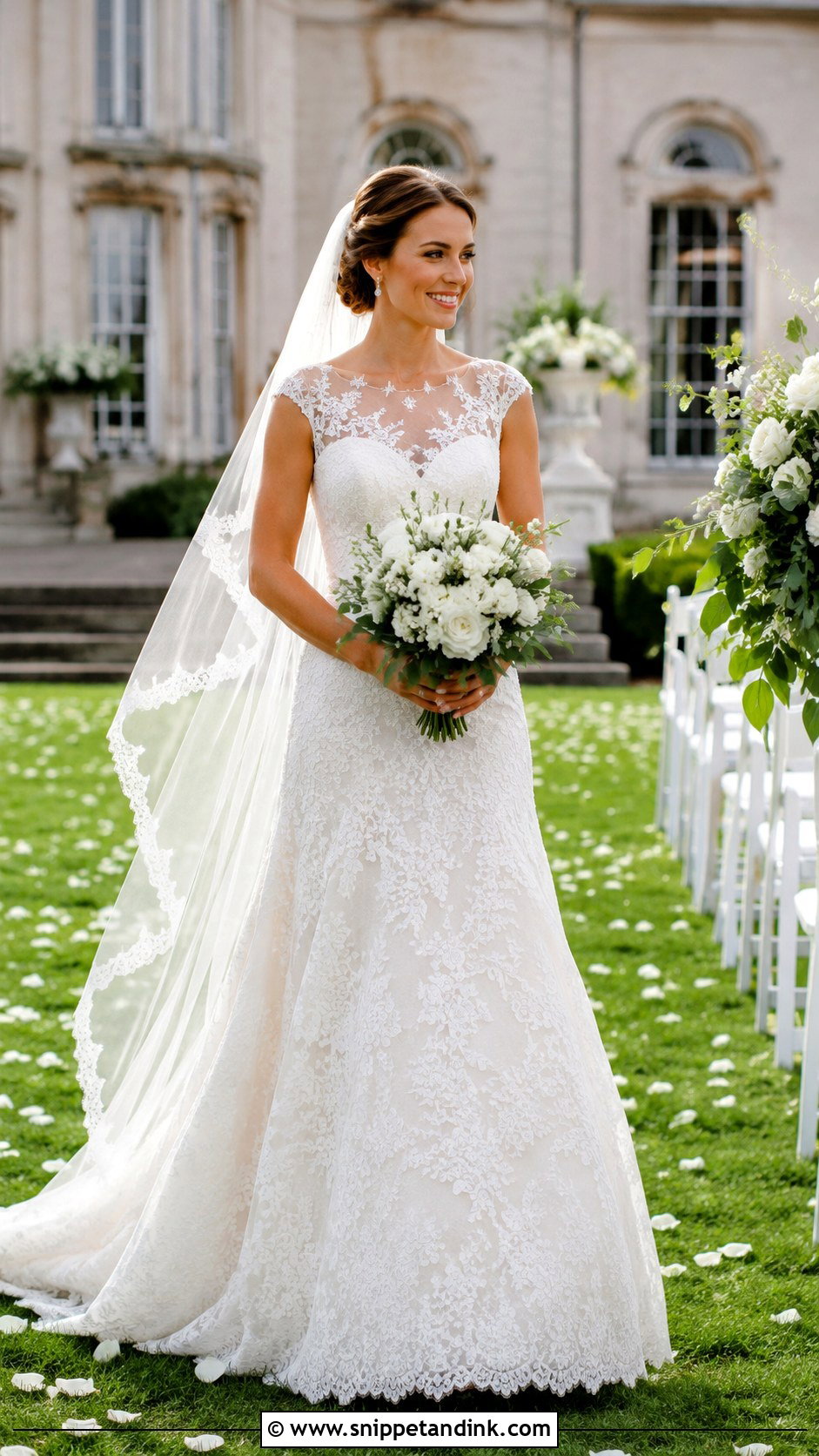
A floral lace A-line gathers most of what made 2016 bridalwear romantic into one dress. A fitted bodice, a natural waist and a skirt widening gradually to the floor flatter almost every figure I dress. The detail I look for is lace placement. Medium-scale motifs that continue unbroken from neckline to skirt, rather than stopping at a seam, are a sign of careful cutting. Cap sleeves or an illusion neckline add coverage while keeping the top light. Pearl drops, ivory pumps and a veil edged in matching lace, plus a soft chignon or loose half-up style, are all it needs. White garden flowers and greenery suit it.
Which 2016 Details a Seamstress Can Update, and Which Ones Fight Back
If you love a 2016 gown but one feature feels dated, ask what can change before you buy. Some updates are routine at an alteration fitting; others mean rebuilding the dress.
Usually straightforward
- Removing a crystal belt or swapping it for a plain satin sash.
- Adding or taking off detachable sleeves, straps or an off-the-shoulder band, provided the bodice has its own boning.
- Shortening a train or adding a bustle so you can dance.
- Converting a removable overskirt into a separate piece you can wear for the ceremony only.
Harder than it looks
- Lowering or raising an illusion neckline, because the lace motifs have to be lifted and re-stitched one by one.
- Taking in a lace mermaid by more than a size, since the lace pattern stops matching at the side seams.
- Changing the colour of a blush or champagne lining. A new lining often costs close to a new dress.
- Shortening a gown with a scalloped lace hem; the edge has to be cut off and sewn back on higher.
My rule is simple: buy the dress for its bodice and its fit, because the skirt and the extras are where a good seamstress has room to work. Allow at least two to three months for alterations on any secondhand gown, and longer if lace has to be moved.
Wearing the 2016 Mood Without Looking Like a Throwback
What made 2016 interesting was the way familiar shapes got new details: off-the-shoulder bands, illusion panels, floral appliqués, crop tops and backs designed to be seen. None of those need to look dated now. In my fittings the gowns that age well are the ones chosen for how they sit on the body rather than for the trend itself. Get the alterations done properly, sort your underwear before the second fitting, and buy shoes you can stand in. Lace, satin, chiffon, crepe or tulle, any of these twenty can still be the right dress if it fits you that well.
You'll Like These Ideas:








Leave a Reply