
A simple wedding dress depends on three things that a beaded gown can disguise: fit, fabric and how you style it. There’s no lace to hide a seam that pulls or a satin that creases cheaply, which is why I spend more time at fittings on plain dresses than on ornate ones. Get those three right and the plainest gown looks expensive. A satin slip with pearl drops, a crepe column with pointed heels and a sleek bun, a cotton mini for city hall: each works because nothing distracts from the cut. Below are 25 minimal dresses, with what makes each one succeed or fall flat.
Plain Fabric Hides Nothing, So Judge It Up Close
On a minimal dress the fabric is the decoration, so I teach brides to judge it with their hands before they look at the price tag. A few quick checks in the shop tell you how the dress will behave by evening.
- Crepe: pinch and rub it. Good crepe has weight and spring; thin crepe feels papery and clings to every line.
- Satin: crumple a corner in your fist for a few seconds. Cheaper satin keeps the crease, better satin relaxes.
- Lining: a plain dress with no lining, or a crinkly synthetic one, will cling and build up static.
- Seams: turn the dress inside out. Neat, finished seams and a properly set zip tell you how carefully it was made.
- Hem: look at the stitching along the bottom edge. A crepe hem that ripples or puckers will look worse in photos, not better.
Look at the dress near a window as well. Some whites turn bluish or grey in daylight, and that’s how they’ll appear in your outdoor photos.
1. Simple Satin Slip Wedding Dress
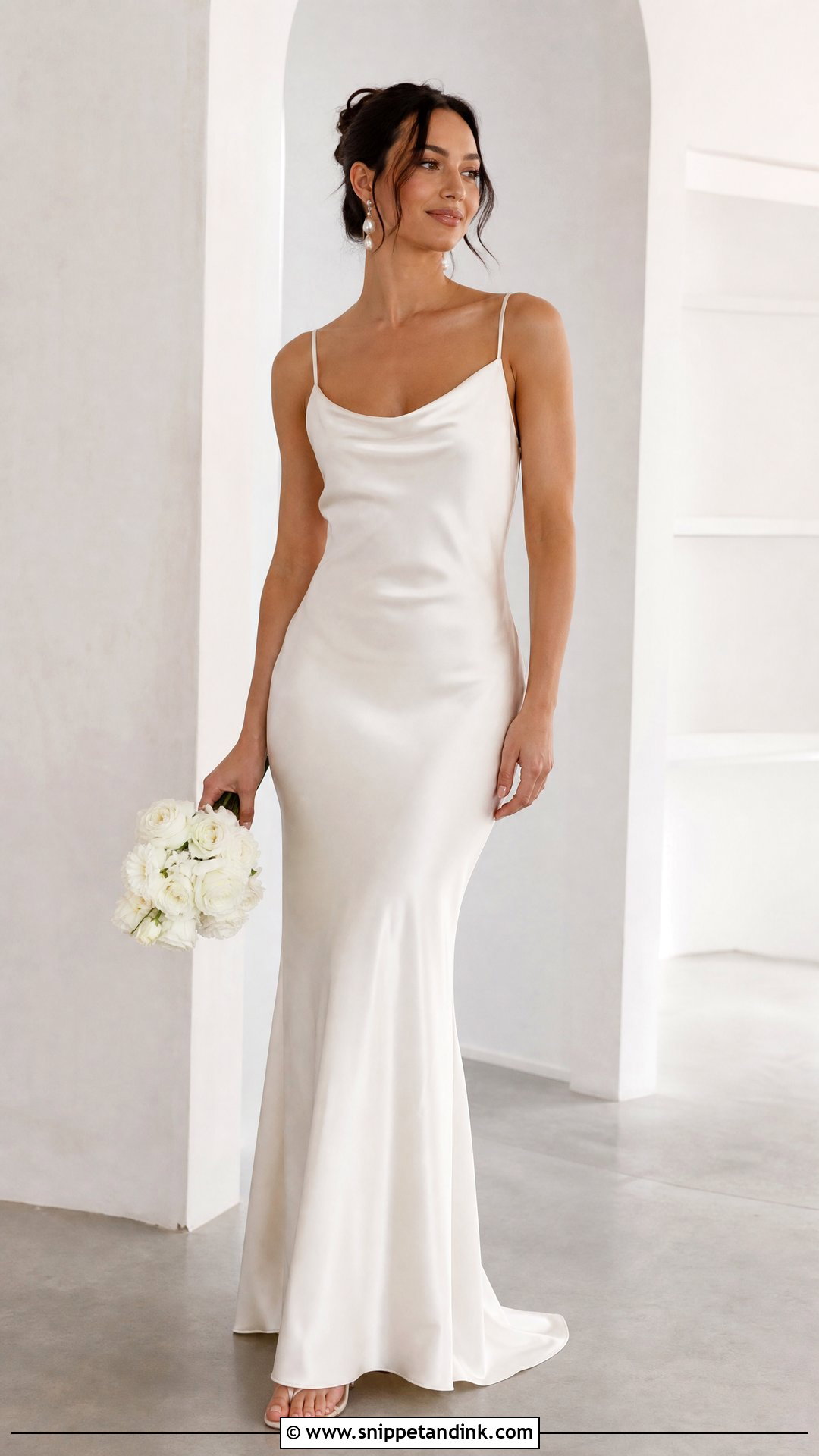
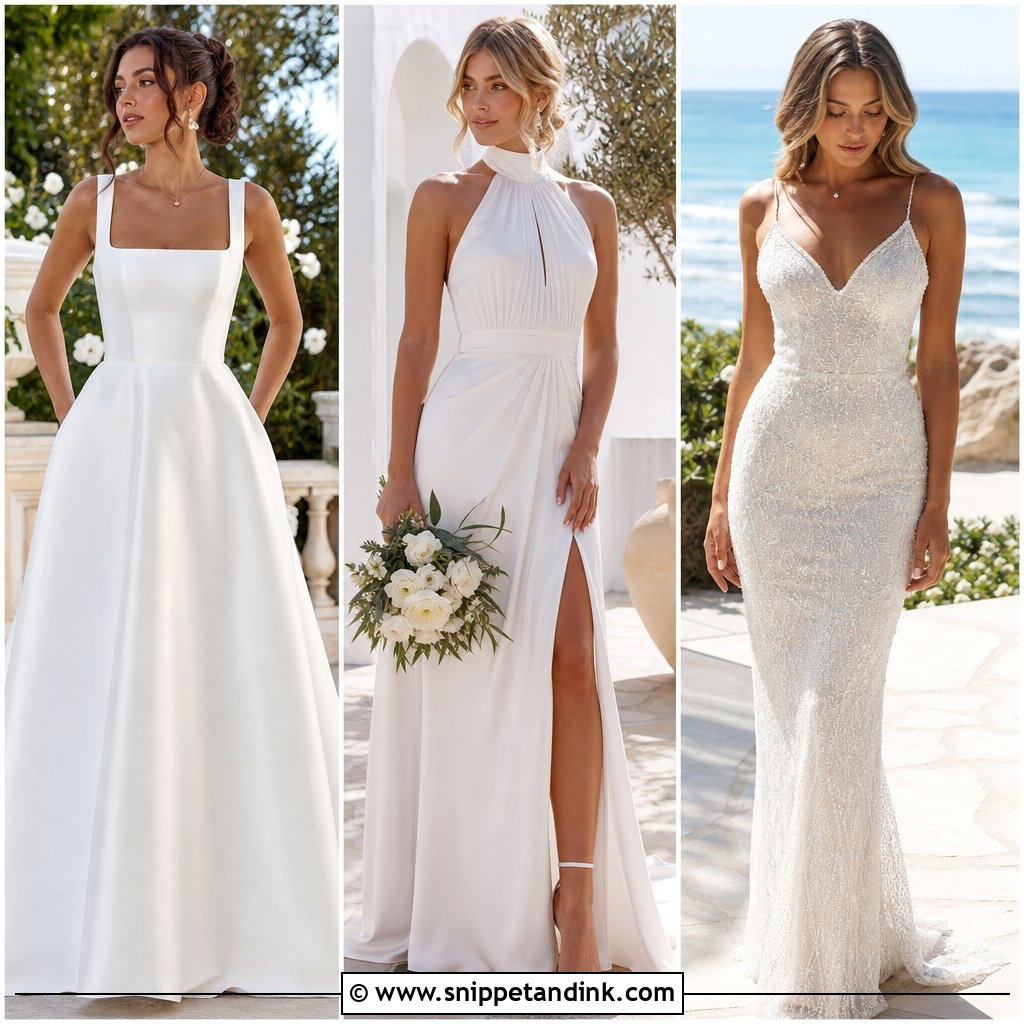
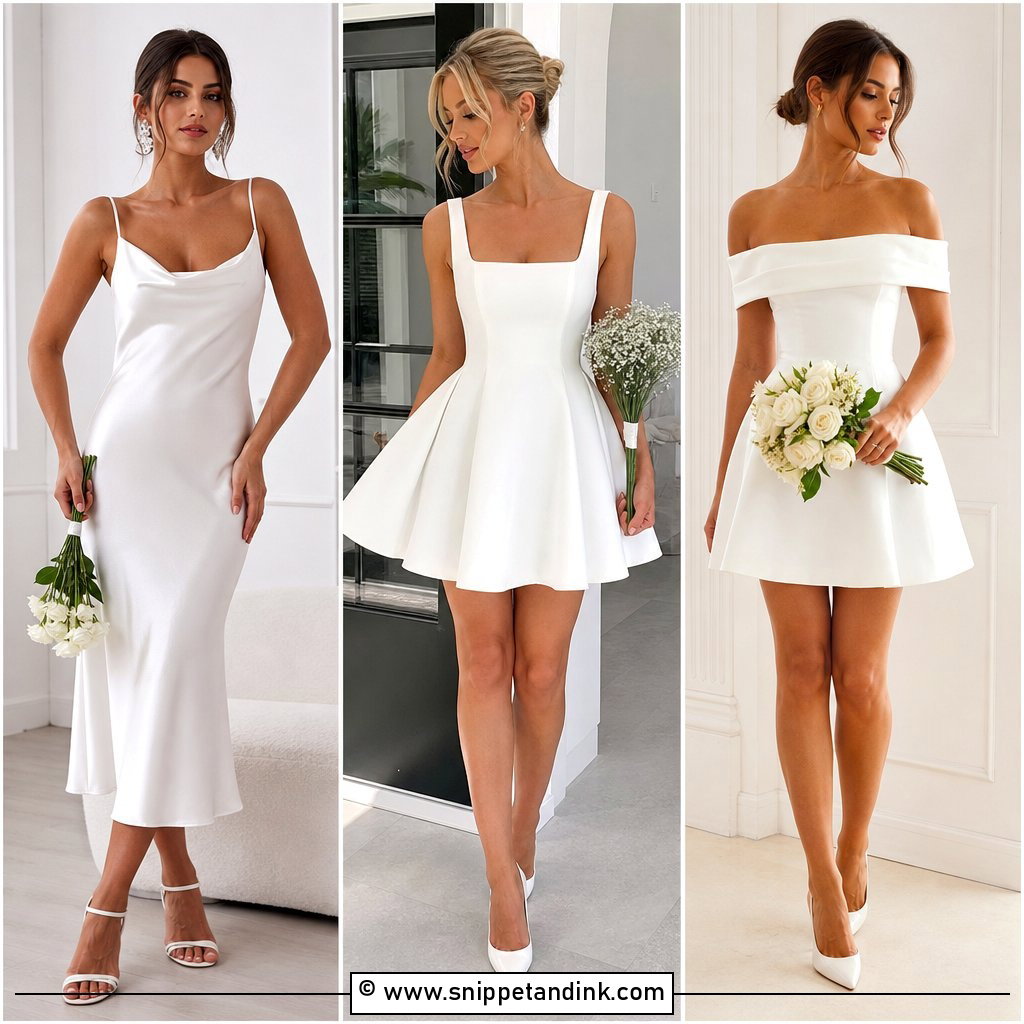
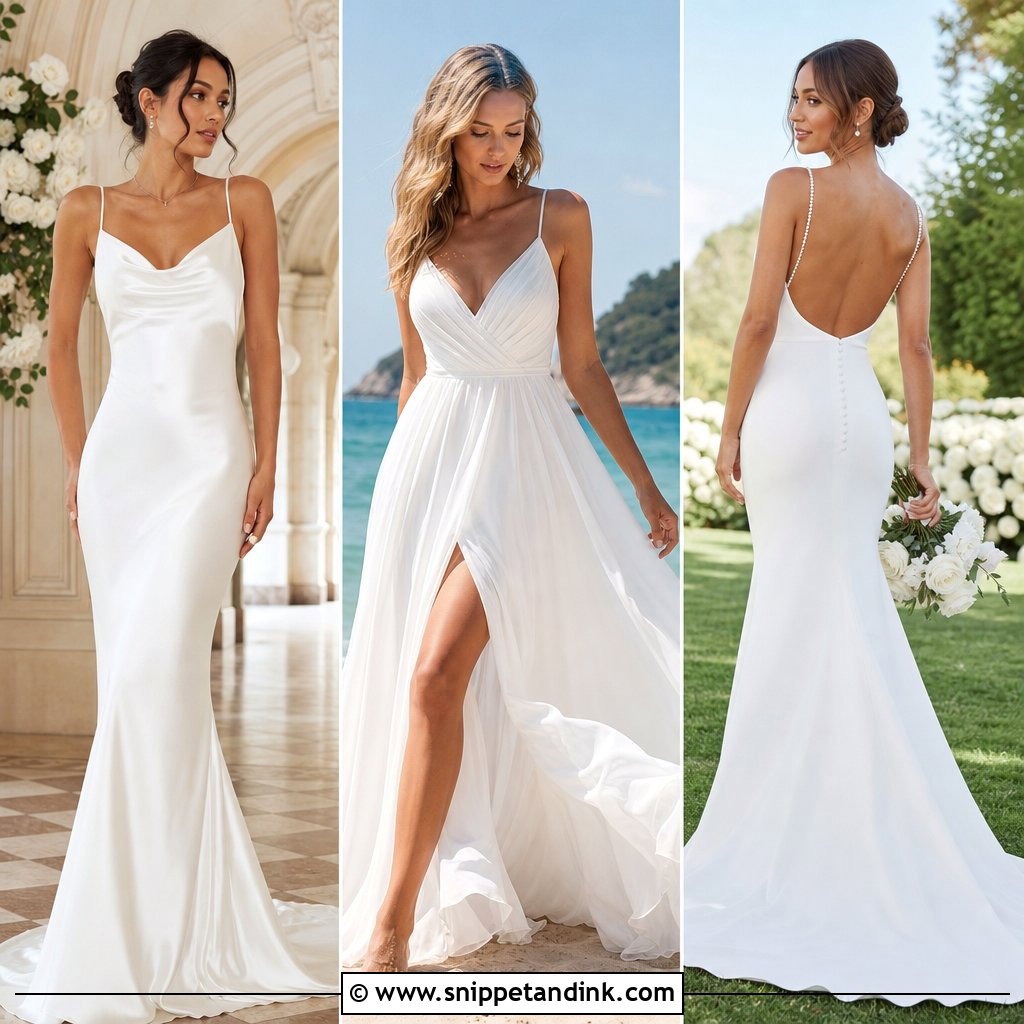
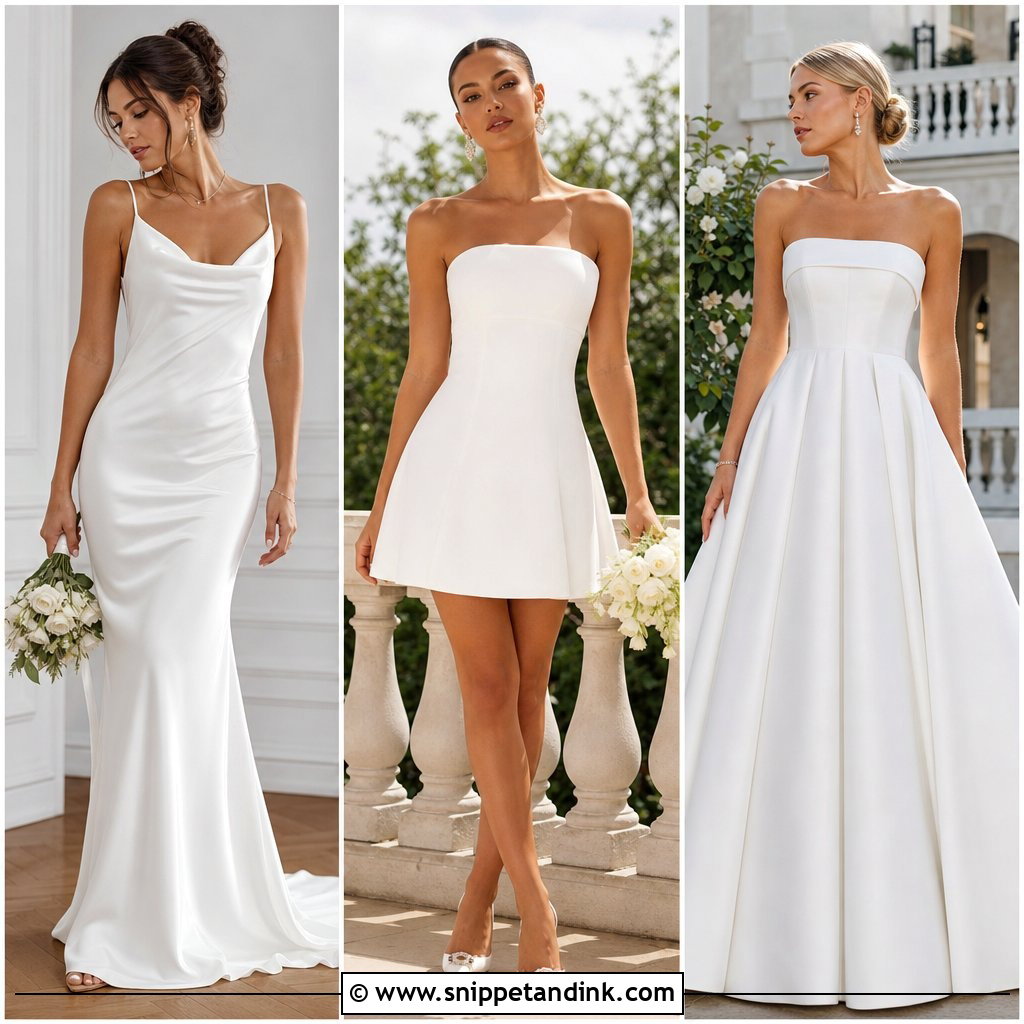
The slip is the most honest dress on this list. Cut on the bias, satin drapes close to the body, so every line underneath shows and every crease from sitting lingers. I ask brides to sit in the sample for a few minutes and then stand up before deciding; if it still looks smooth, it’s a good one. Strappy heels, pearl drops, a small bouquet and a low bun or soft waves suit it, and a sheer veil adds ceremony weight if it feels too plain. City weddings, rooftops and intimate dinners are its natural setting.
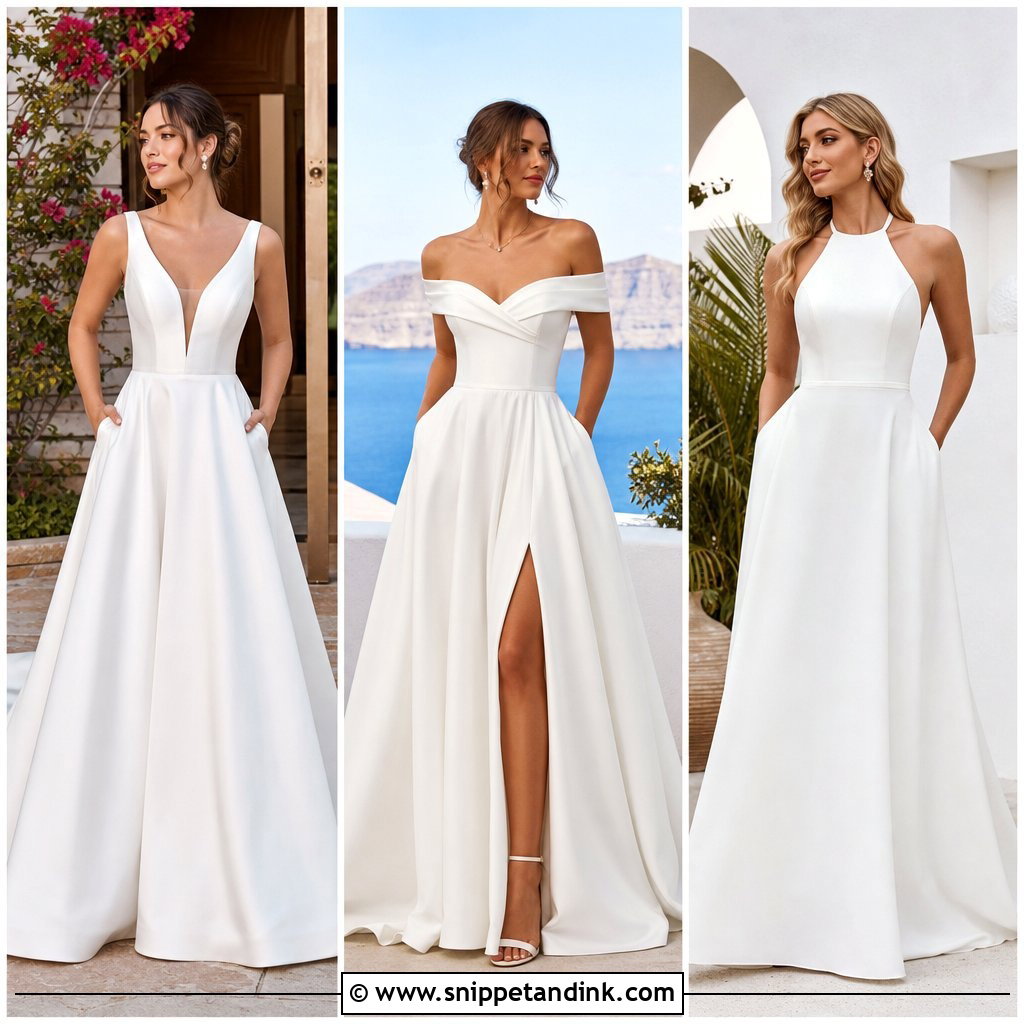
2. Plain A Line Wedding Dress
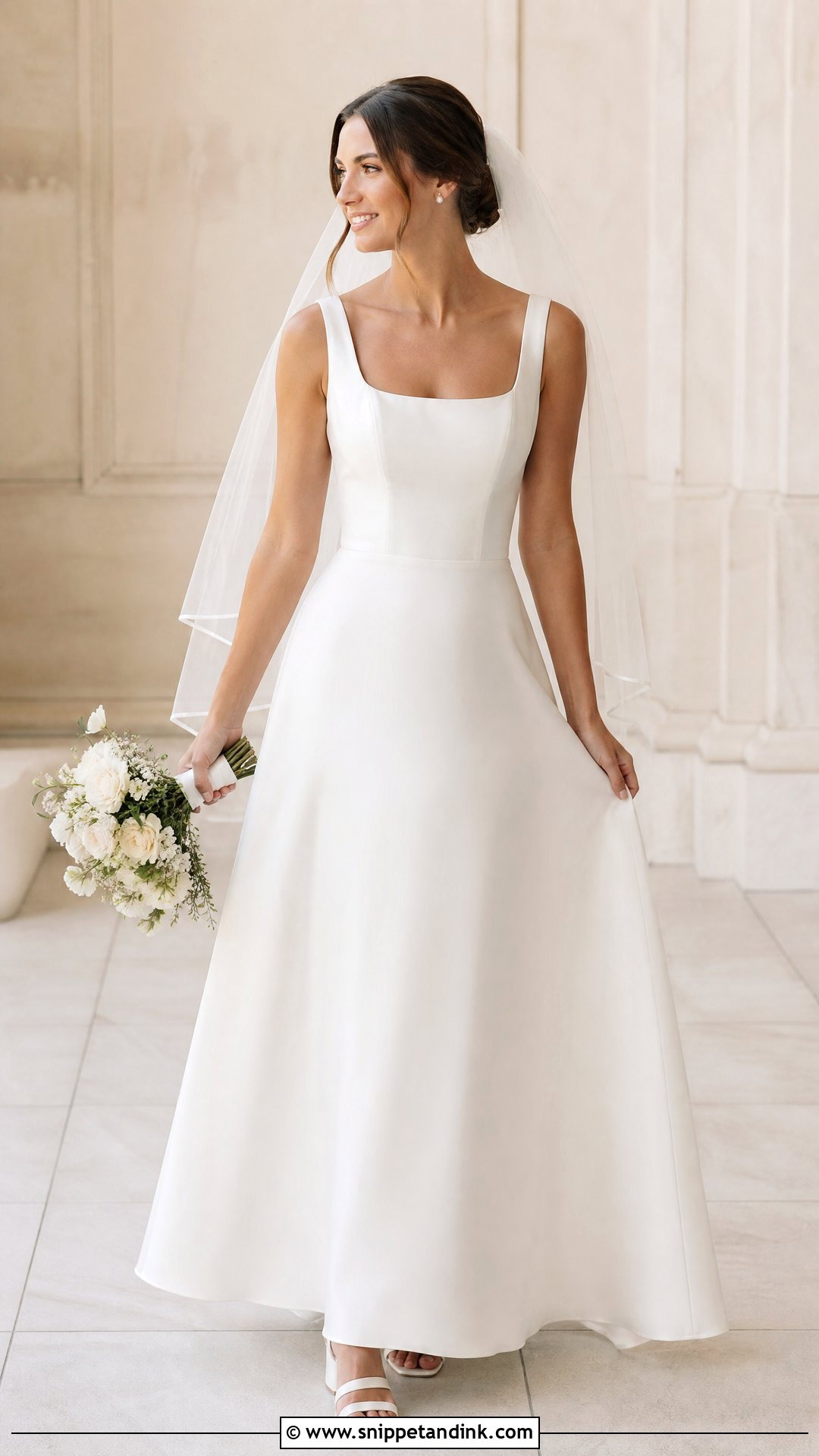
Nothing is easier to wear all day than a plain A-line. The fitted bodice gives shape and the skirt falls from the waist without clinging, so walking and dancing need no planning. Satin, crepe or mikado give the smoothest finish, and mikado has enough body to hold the skirt out without a petticoat. On a dress this plain, the waist seam has to sit exactly at your natural waist, so I mark it at the first fitting rather than trusting the sample. Block heels, small studs and a soft veil keep it traditional, and a belt, gloves or a hair bow personalise it.
3. Basic Crepe Column Wedding Dress
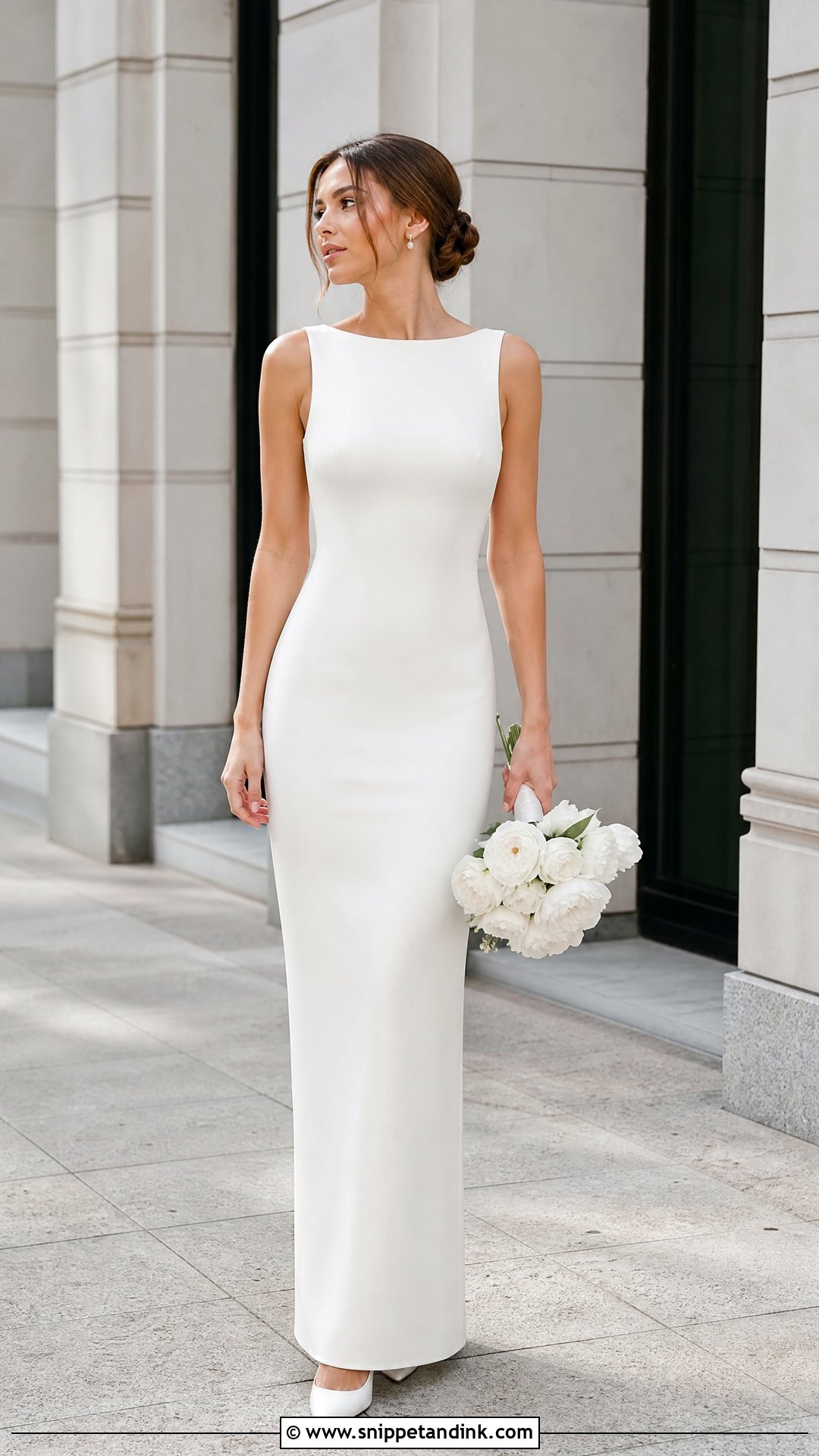
A basic crepe column wedding dress makes one long, unbroken line from shoulder to floor. Good crepe has enough weight to skim the body; thin crepe clings and shows everything, so feel the fabric before you fall for the photo. A square or bateau neckline sharpens it, and pointed white pumps, a low chignon and minimal jewelry keep it modern. Have the hem set to just touch the floor in your shoes, since a column that puddles loses its line. A long veil adds ceremony drama without breaking the simplicity.
4. Square Neck Wedding Dress
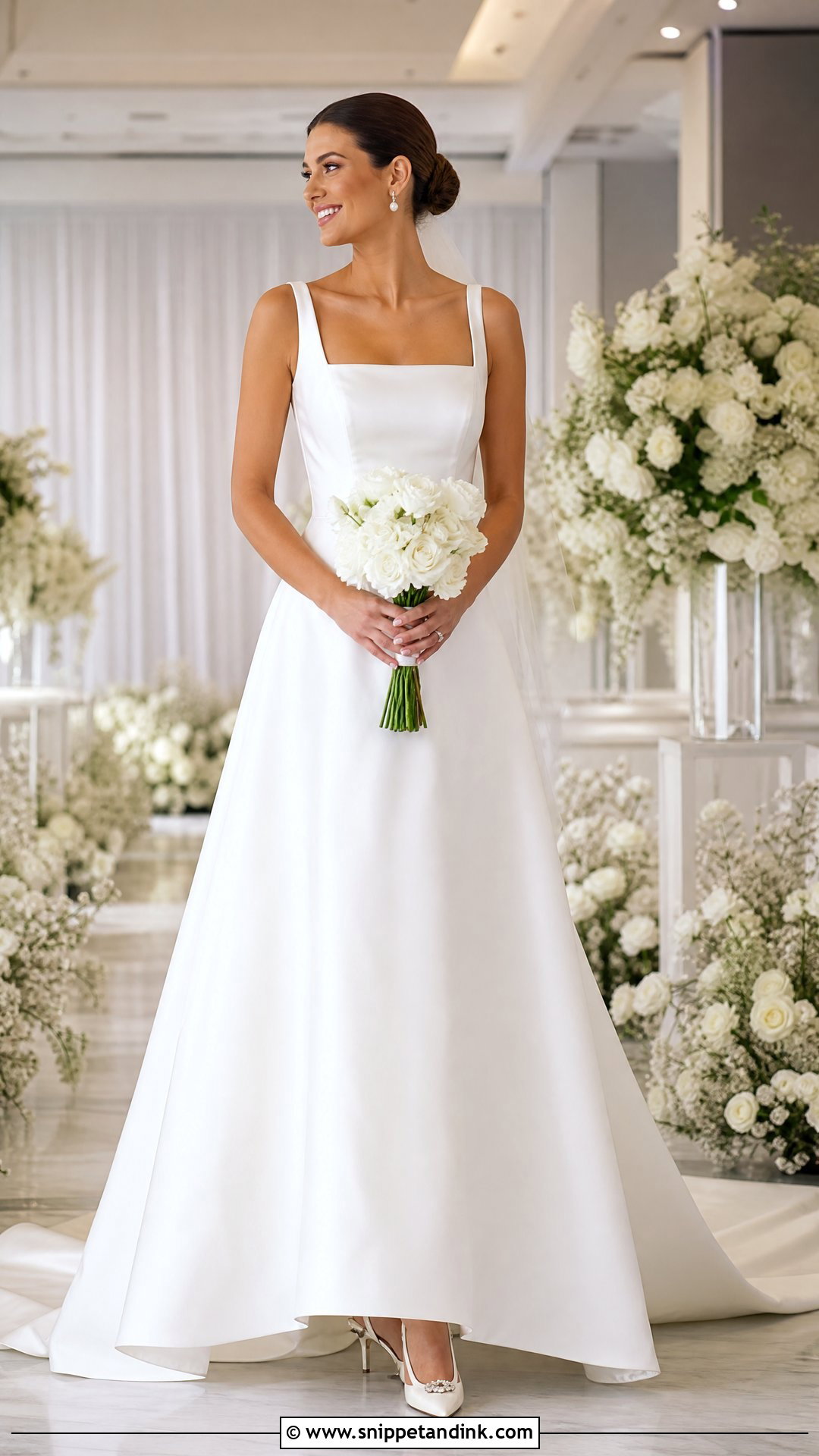
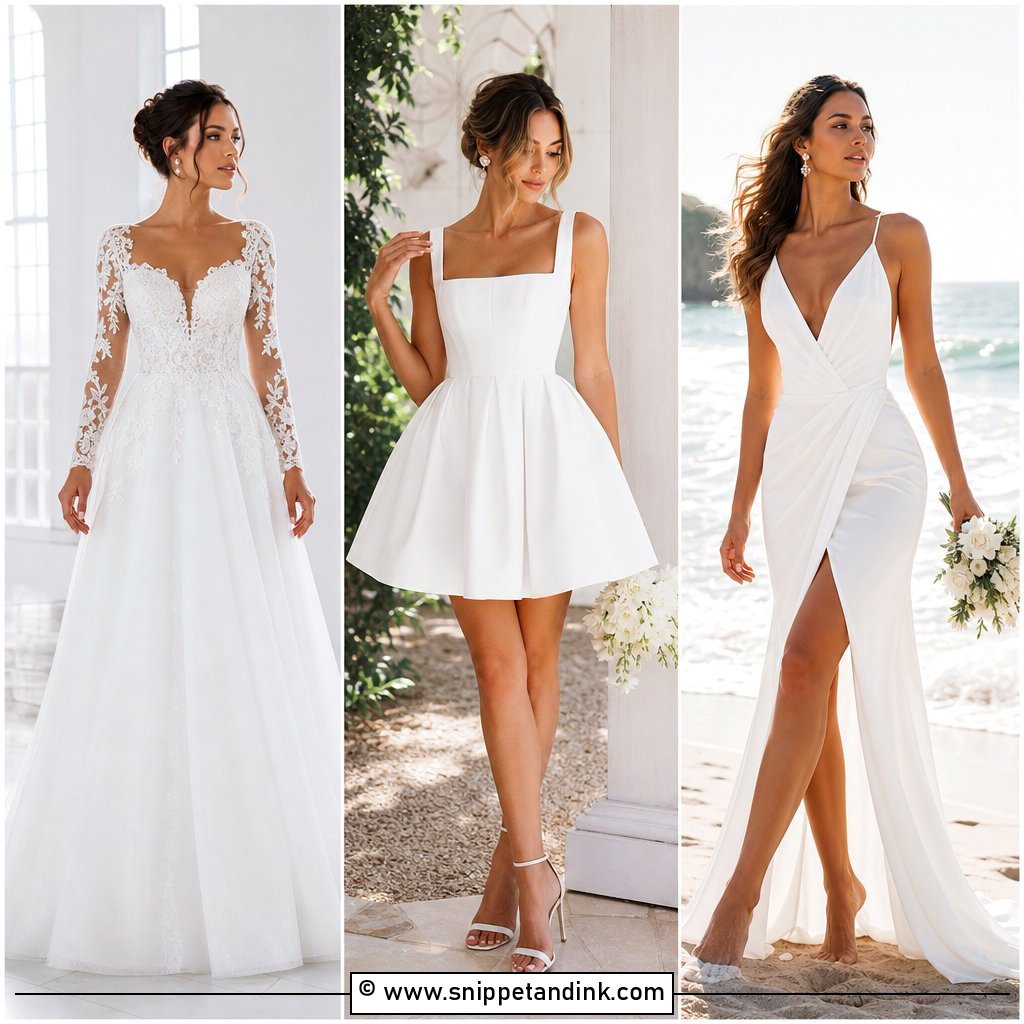
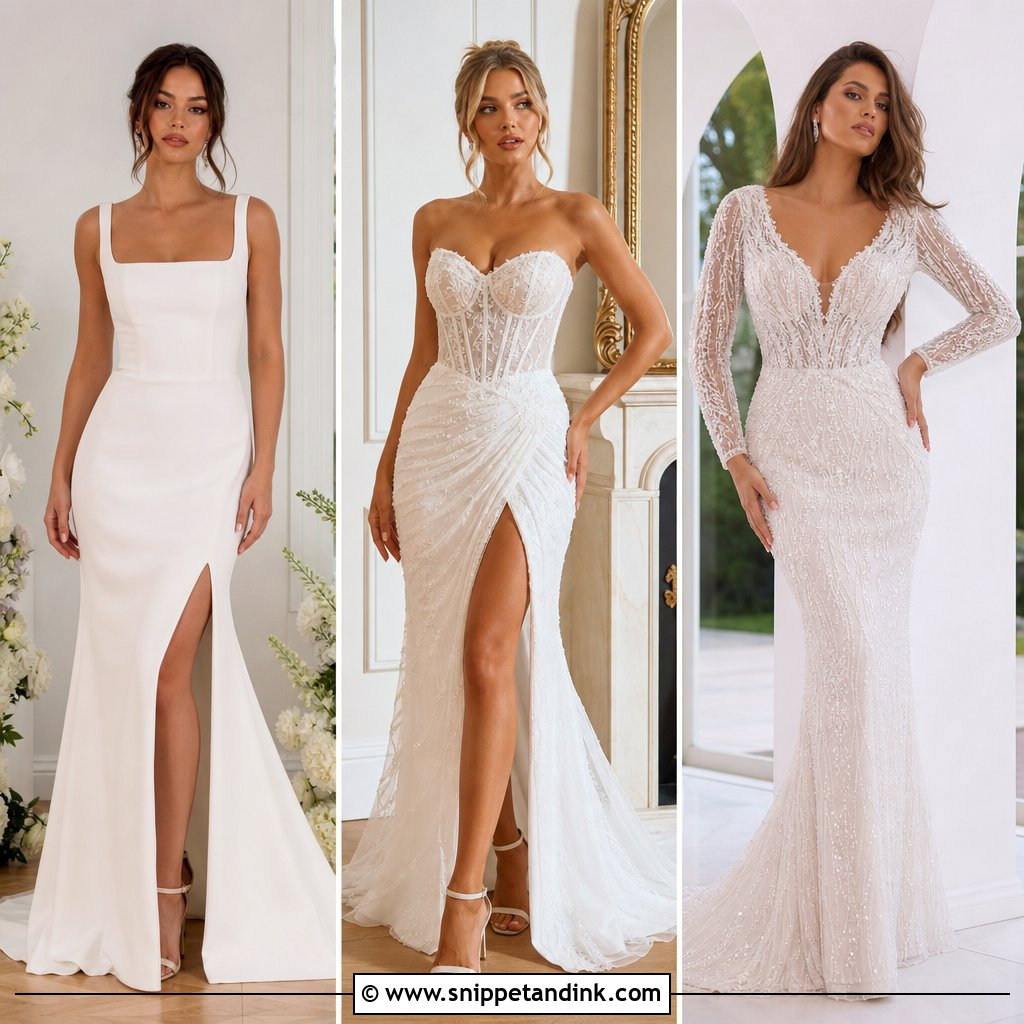
The square neckline gives a plain dress a little architecture. It frames the collarbones and suits thin straps, cap sleeves or long sleeves equally well. Keep the fabric smooth, like satin, crepe or matte mikado, so the neckline itself is the detail. The corners are where I look closest at fittings, because if they don’t sit flat the whole bodice looks off. Pearl studs, slingbacks and a neat bun finish it, or loose waves and a small floral bouquet soften it. It reads classic without looking old-fashioned.
5. Minimalist Long Sleeve Wedding Dress
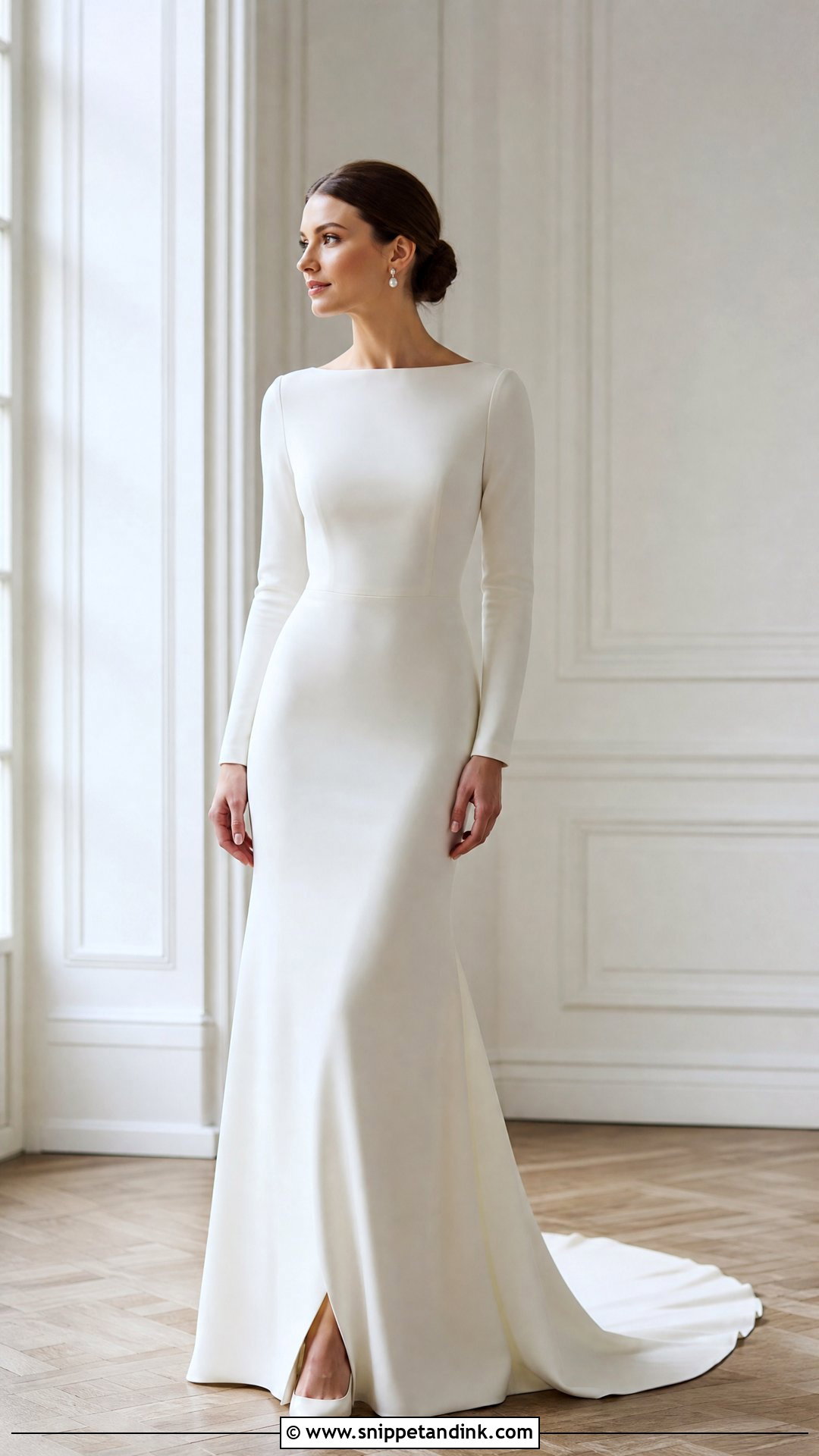
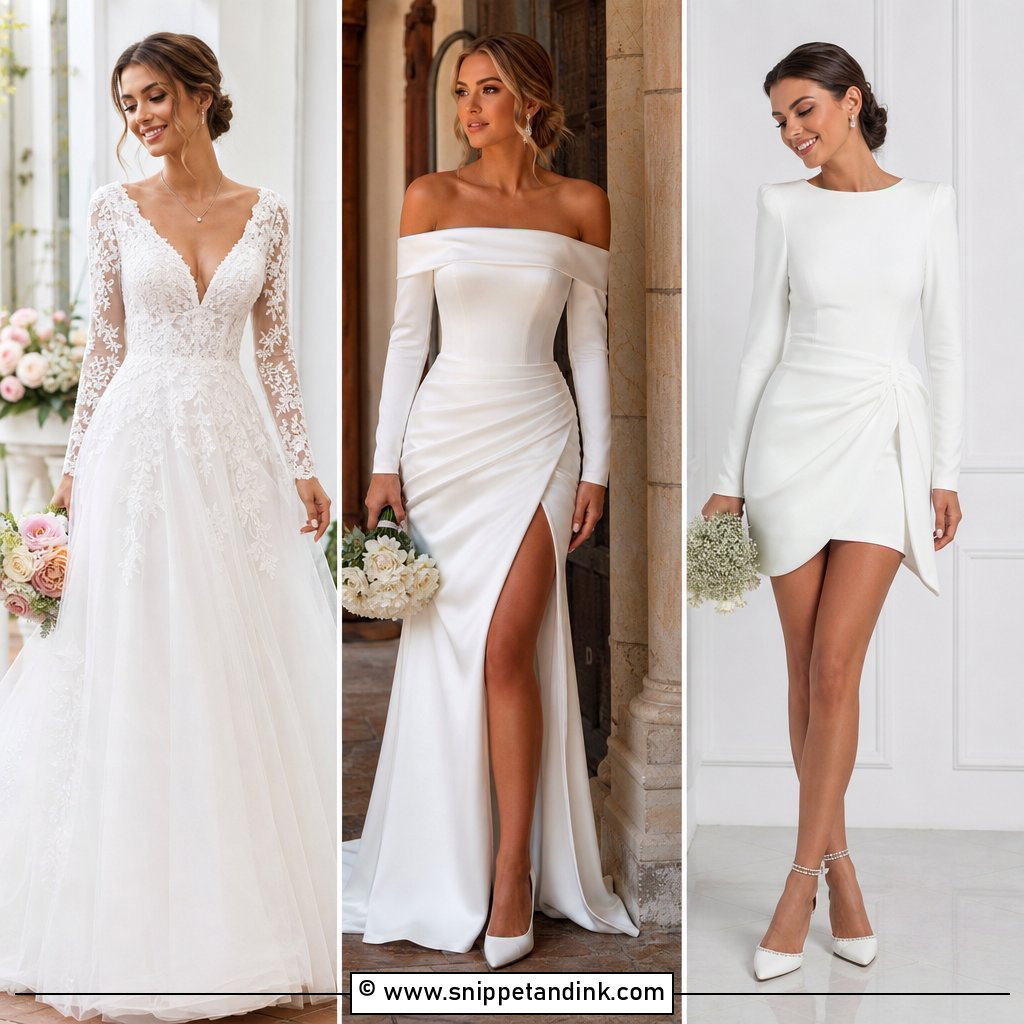
Long sleeves on a plain dress can look severe or graceful, and the difference is fabric. Smooth crepe, satin or a lightweight stretch crepe moves with your arms; a stiff fabric pulls at the shoulder every time you reach for a glass. High, square and simple V necklines all work. Sleek heels, a low bun and small pearl earrings are plenty. I’d point you here for a cool-season or formal ceremony, or if you want coverage without lace. Keep jewelry light so the sleeve line stays clean.
6. Basic Strapless Wedding Dress
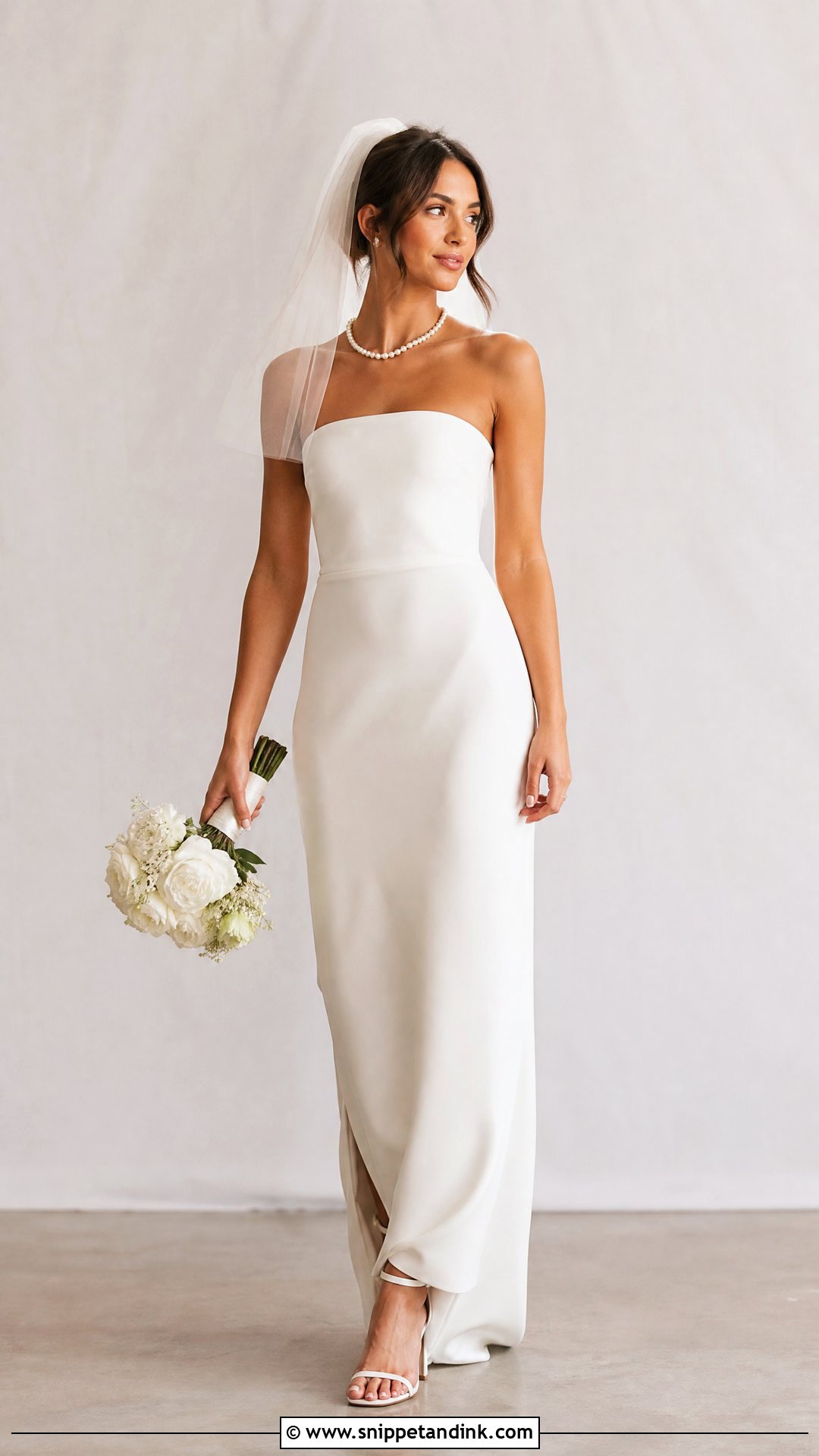
Strapless gowns stay up because of the bodice construction, not because the bride keeps tugging at them. A good one has boning and a grip band inside the top edge. If you’re hitching it up during a sample try-on, it will be worse after dinner. Smooth fabric and minimal seams keep it modern. Choose a short veil with either a pearl necklace or sculptural earrings, probably not both. Pointed pumps, ankle straps or bridal flats all work, and hair up looks formal while soft waves relax it.
7. Simple V Neck Wedding Dress
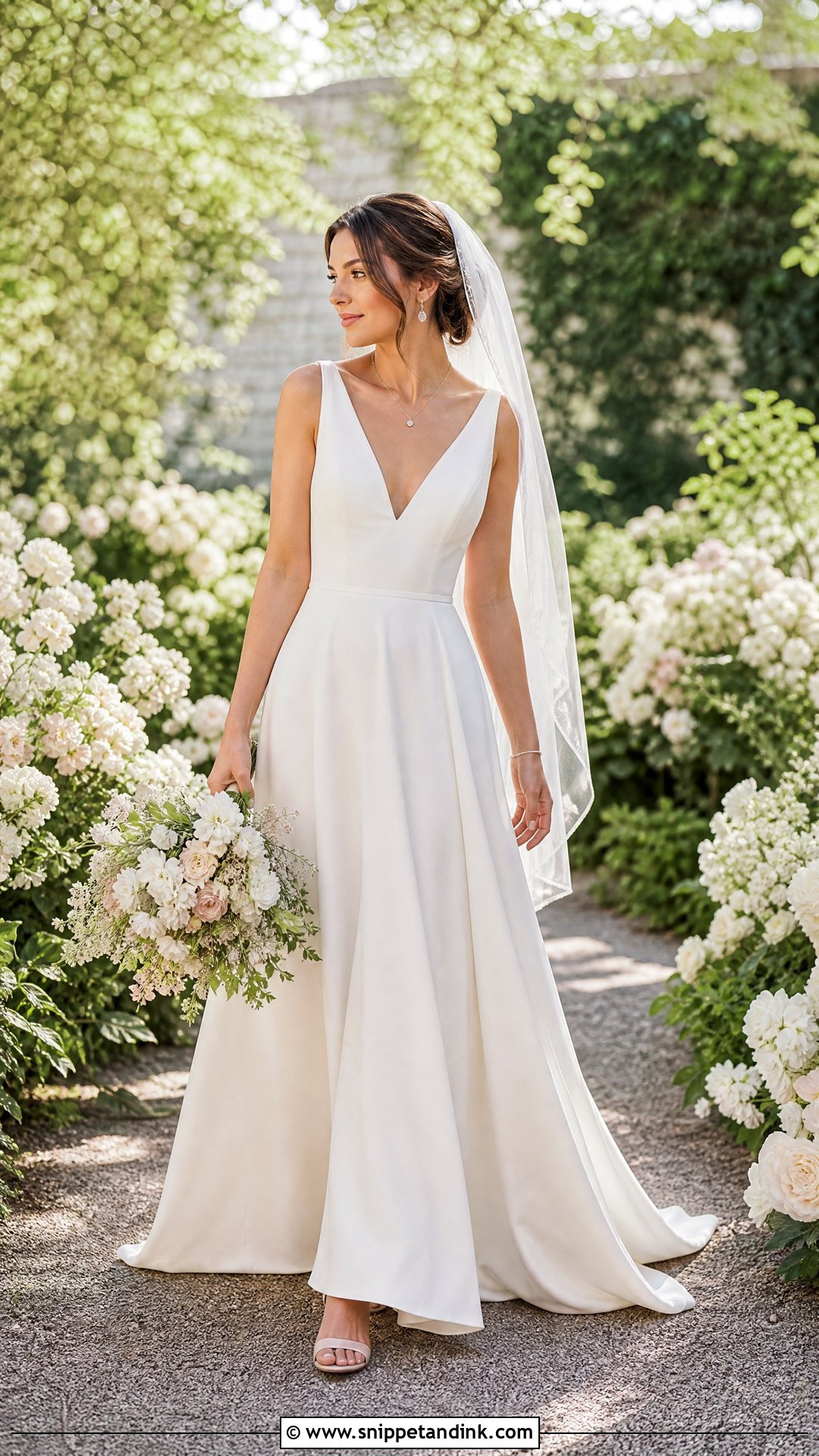
A V neckline lengthens the upper body and sits on almost every silhouette: slips, A-lines and fitted crepe. Depth decides the styling. A deep V wants a plain skirt, minimal jewelry and, honestly, a strip of fashion tape along each edge so it stays put during hugs. A modest V can take a statement earring or a textured bouquet. Delicate jewelry, low heels and a fingertip veil keep it soft for gardens, small receptions, courthouses and destination ceremonies.
8. Clean Halter Wedding Dress
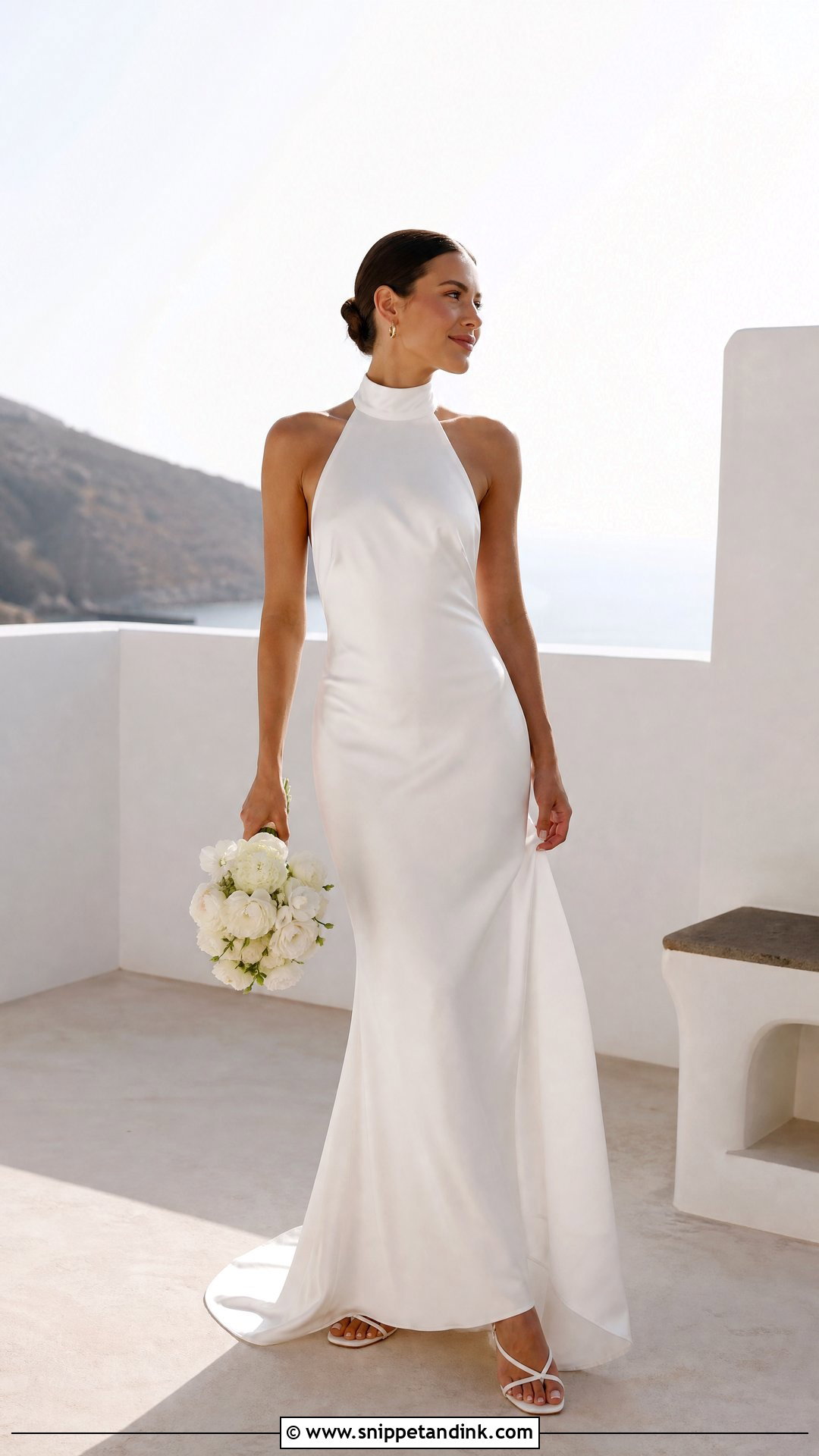
A halter puts the focus on the shoulders and gives a plain dress a sharper, fashion-led line in satin, crepe or soft jersey. The weight of the skirt hangs from the back of your neck, so I check the neck strap after the bride has worn the sample for a while. A heavy skirt on a thin halter gives some people a stiff neck by evening. A low bun, small hoops and heeled sandals keep the neckline clear. A slim skirt looks modern and an A-line softer, and both suit warm weather and beach ceremonies.
9. Plain Tea Length Wedding Dress
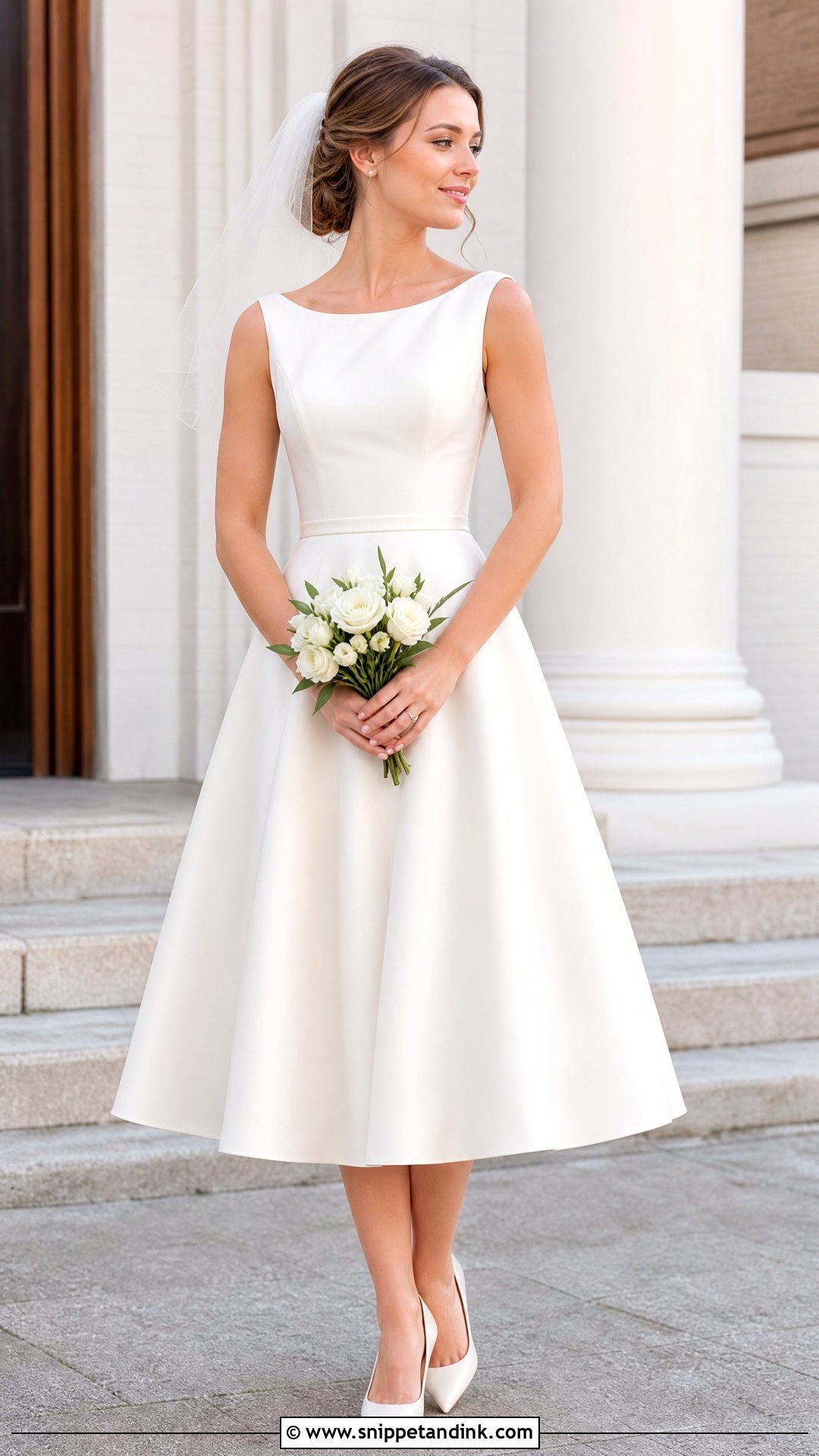
Tea length falls between knee and ankle, which turns your shoes into part of the outfit, so plan them together. Pointed pumps, slingbacks or block heels all work. The usual cut is a fitted bodice with a softly flared skirt, a bridal shape without a full gown. I’d add a thin petticoat so the skirt keeps its swing instead of collapsing against your legs. Pearl studs, a short veil or a simple ribbon in the hair finish it. Courthouse weddings, garden ceremonies, brunch receptions and vintage-leaning celebrations suit it best.
10. Basic Courthouse Wedding Dress
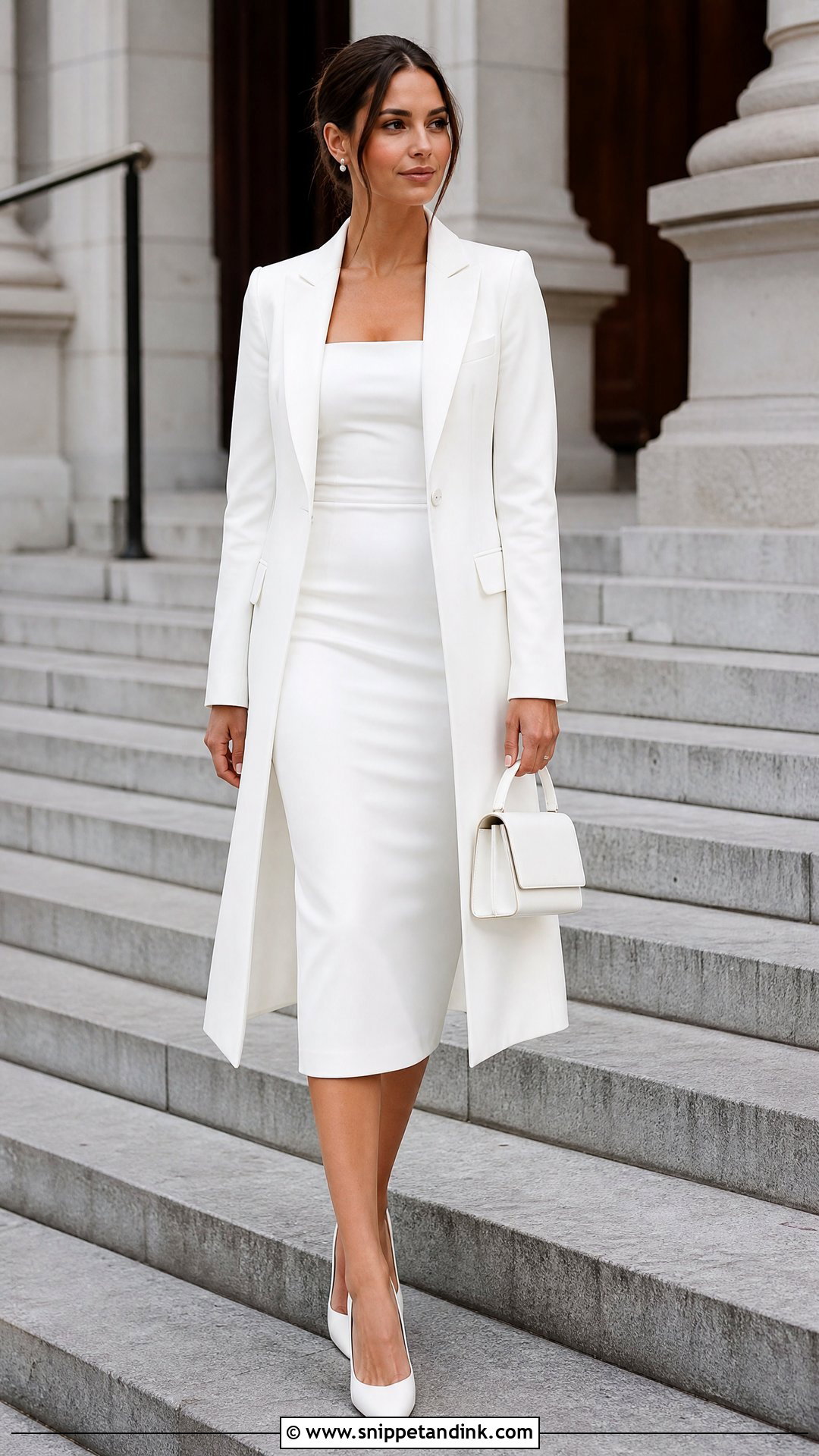
A courthouse wedding dress has a different job from a ceremony gown. You’ll wait in corridors, sit on hard benches, walk across town and pose on the steps outside, often in one afternoon. Fabric matters most: crepe or satin-backed crepe resists wrinkles far better than linen or thin silk. A knee-length sheath, midi, slip or tailored white dress all work with elegant heels, a structured bag and simple jewelry. A blazer or long coat looks sharp in photos outside city hall and keeps you warm in air-conditioned buildings.
11. Simple Midi Wedding Dress
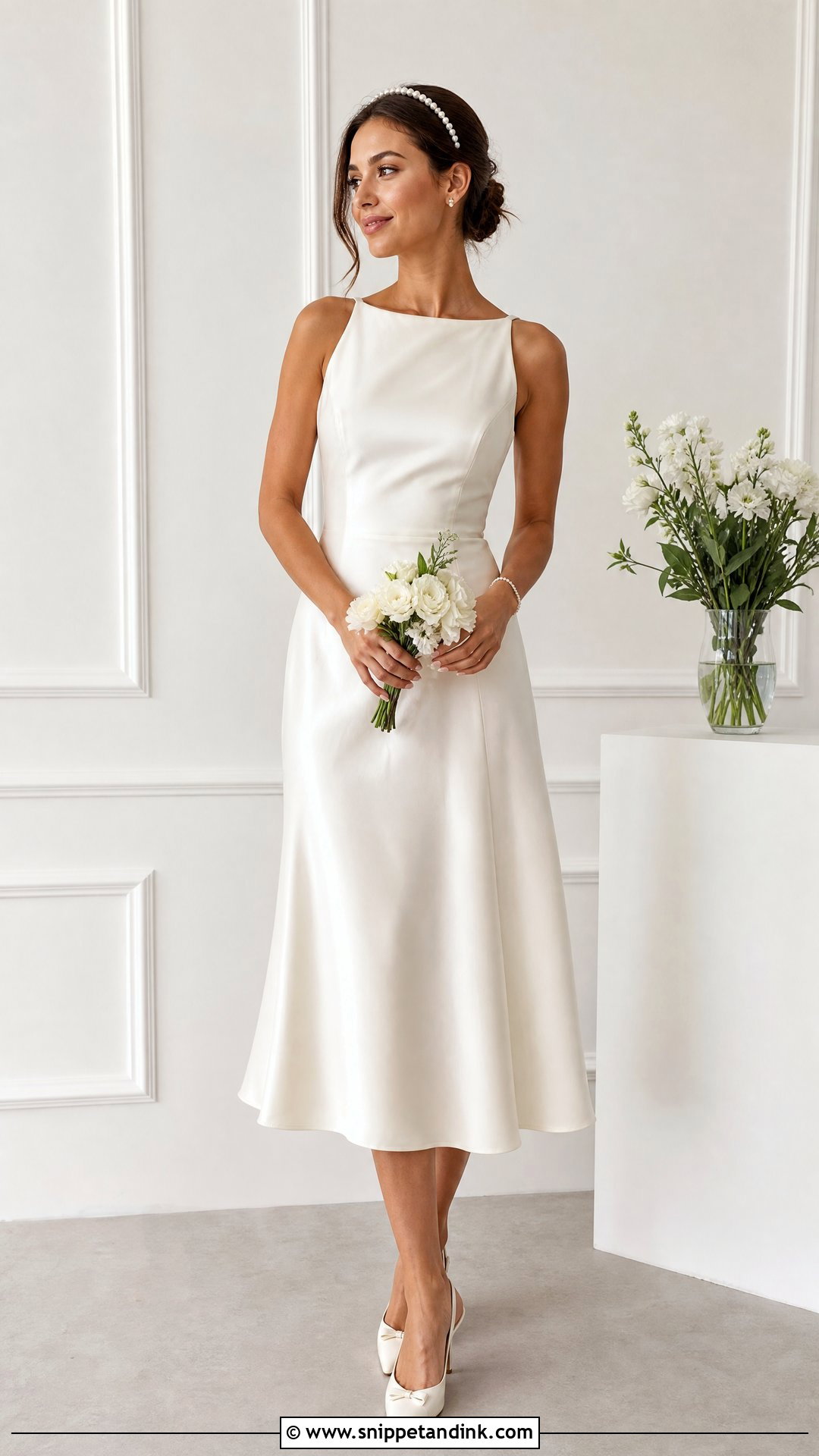
The midi reads bridal without the formality of a floor-length gown. A fitted bodice over a straight or softly flared skirt keeps the shape balanced, and plain satin or crepe keeps it minimal, while subtle texture or a gentle square neckline softens it. Slingback heels, a pearl headband and a small bouquet complete it. Check where the hem hits your calf in your wedding shoes, because a few centimetres higher or lower changes how long your legs look. It’s also one of the easiest wedding dresses to wear again.
12. Plain Off Shoulder Wedding Dress
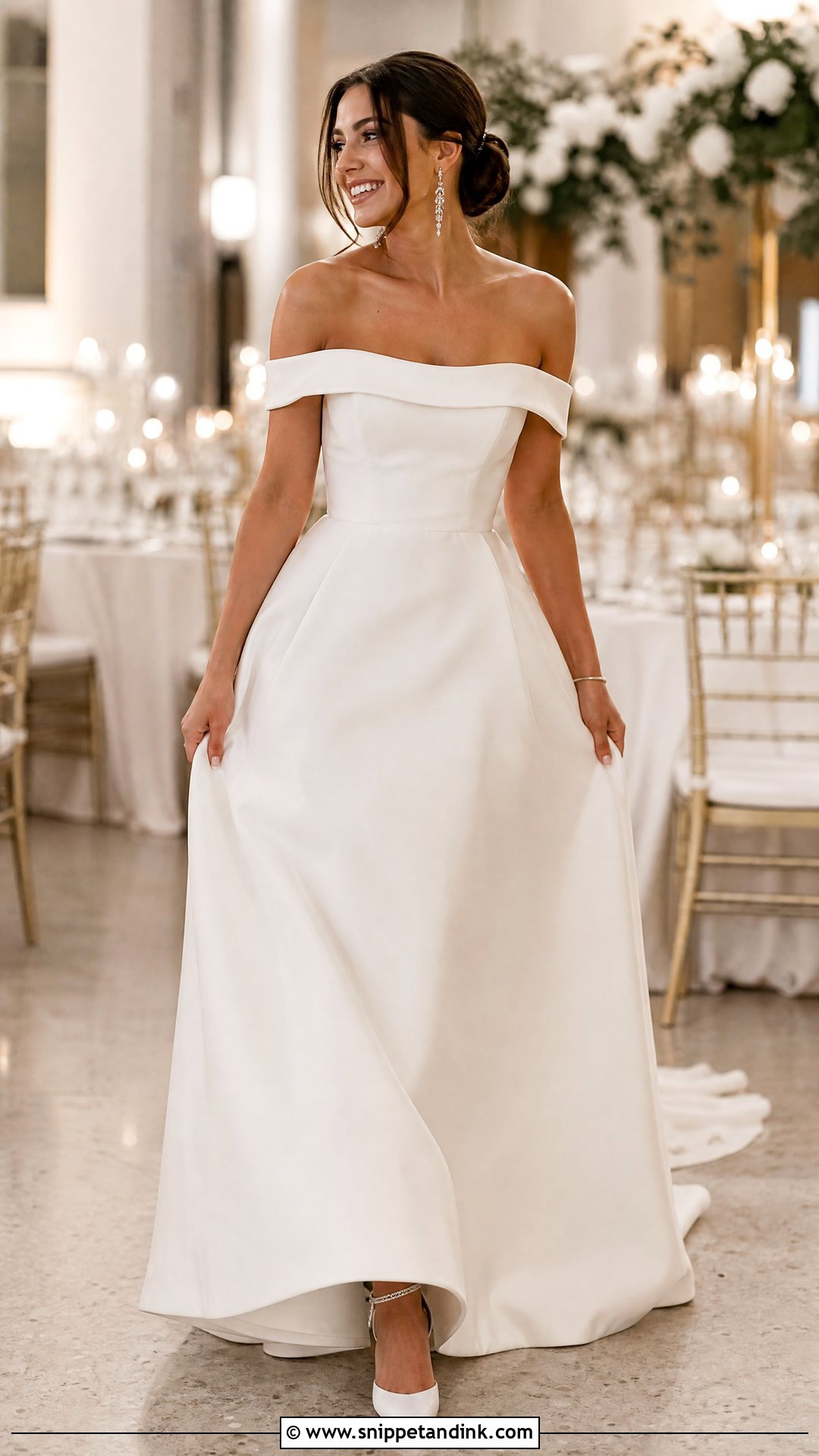
Without lace or beading, an off-shoulder neckline becomes the whole design. It frames the shoulders and collarbones, so keep necklaces minimal or skip them. Smooth satin, crepe or a structured fabric with a simple skirt keeps it clean, fitted or A-line. Like any off-shoulder band, it needs a snug fit and some grip inside, or it slides when you lift your arms. Drop earrings, a low bun and clean white heels finish it for a formal ceremony or an outdoor one.
13. Basic Sheath Wedding Dress
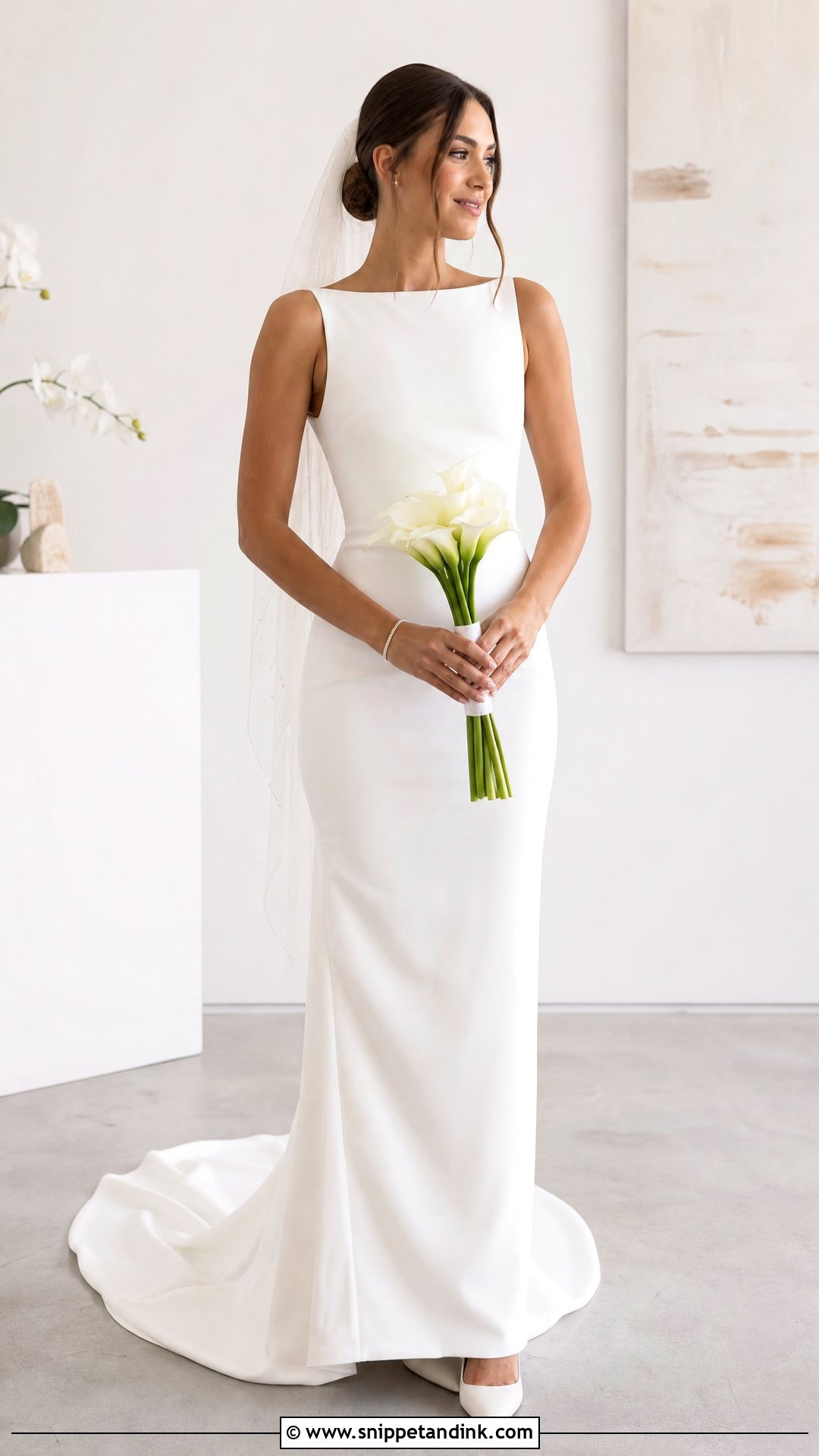
A sheath follows the body and falls fairly straight from the hips, without the flare of a mermaid, so you can walk and climb steps normally. Crepe, satin or a soft stretch fabric give the smoothest fit. Fit is everything here. The problem I see most is pulling across the hips when the bride sits, so test that before alterations are finalised. Subtle seaming at the waist adds structure. Pointed heels, a fine bracelet and a simple veil are all it needs for a modern venue or a small ceremony.
14. Simple Boat Neck Wedding Dress
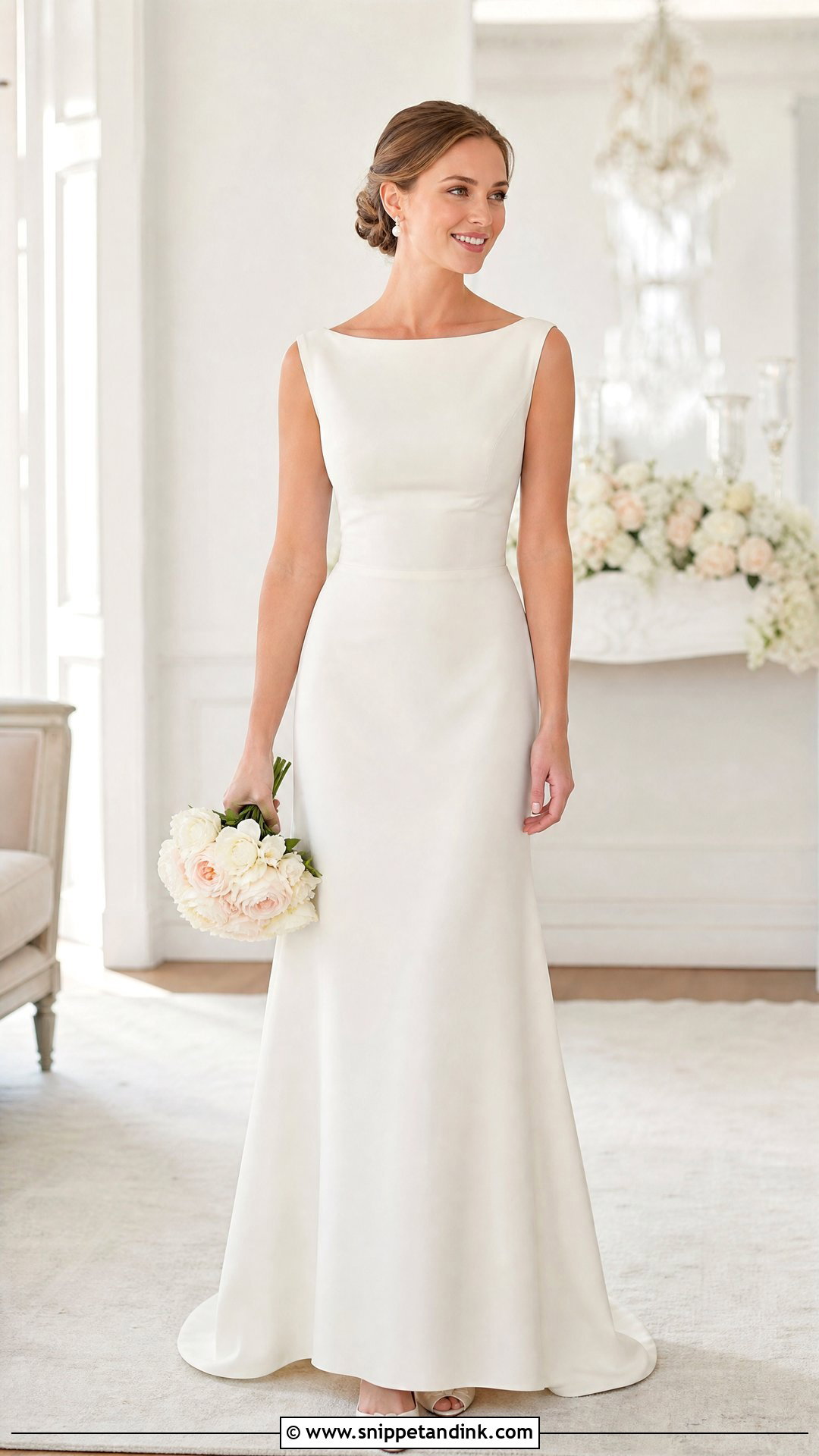
The boat neck runs almost straight across from shoulder to shoulder near the collarbone, framing the face without showing much skin. It pairs with long, short or no sleeves. One thing to know: it can make broad shoulders look broader, so if that worries you, a square or V neckline may suit you better. Pearl earrings, low heels and a smooth updo show off the neckline, which reads well in close-up ceremony photos. A slim skirt looks modern; a fuller A-line looks traditional.
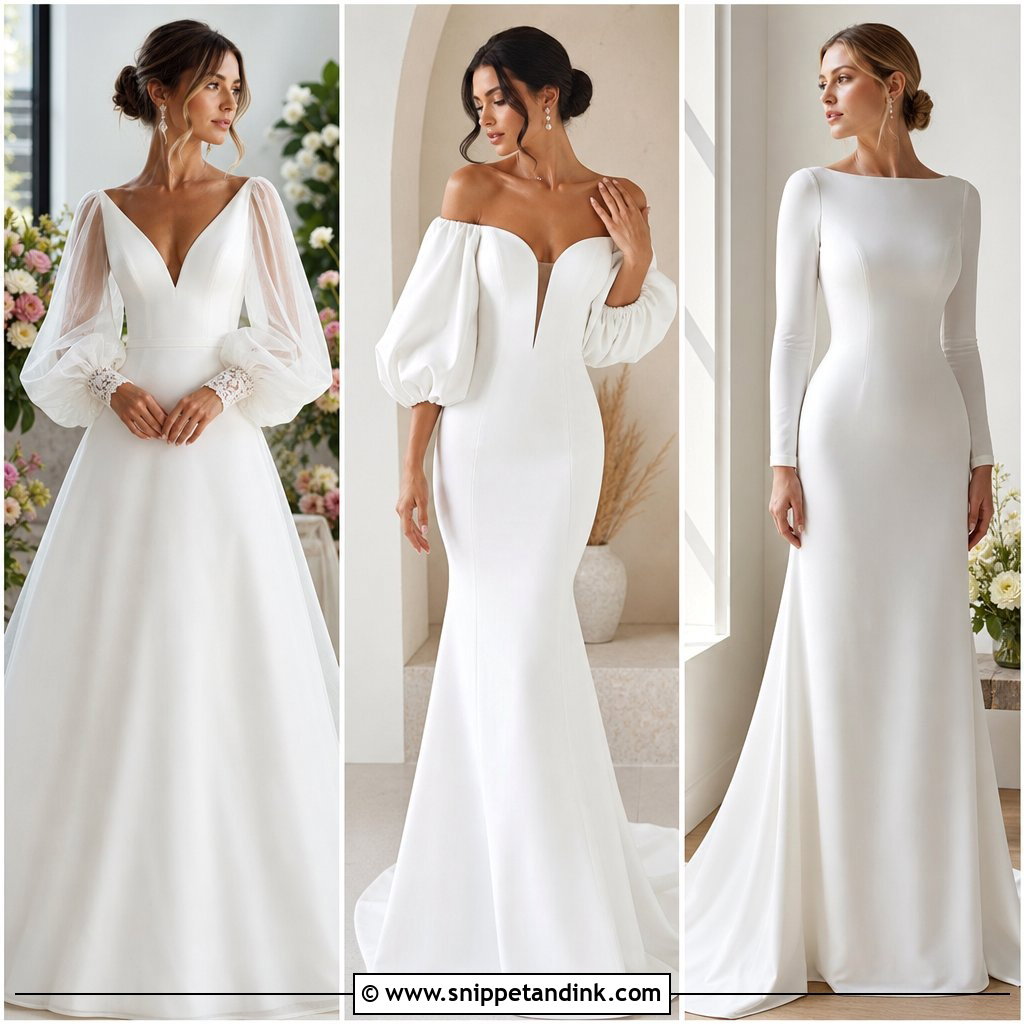
15. Basic High Neck Wedding Dress
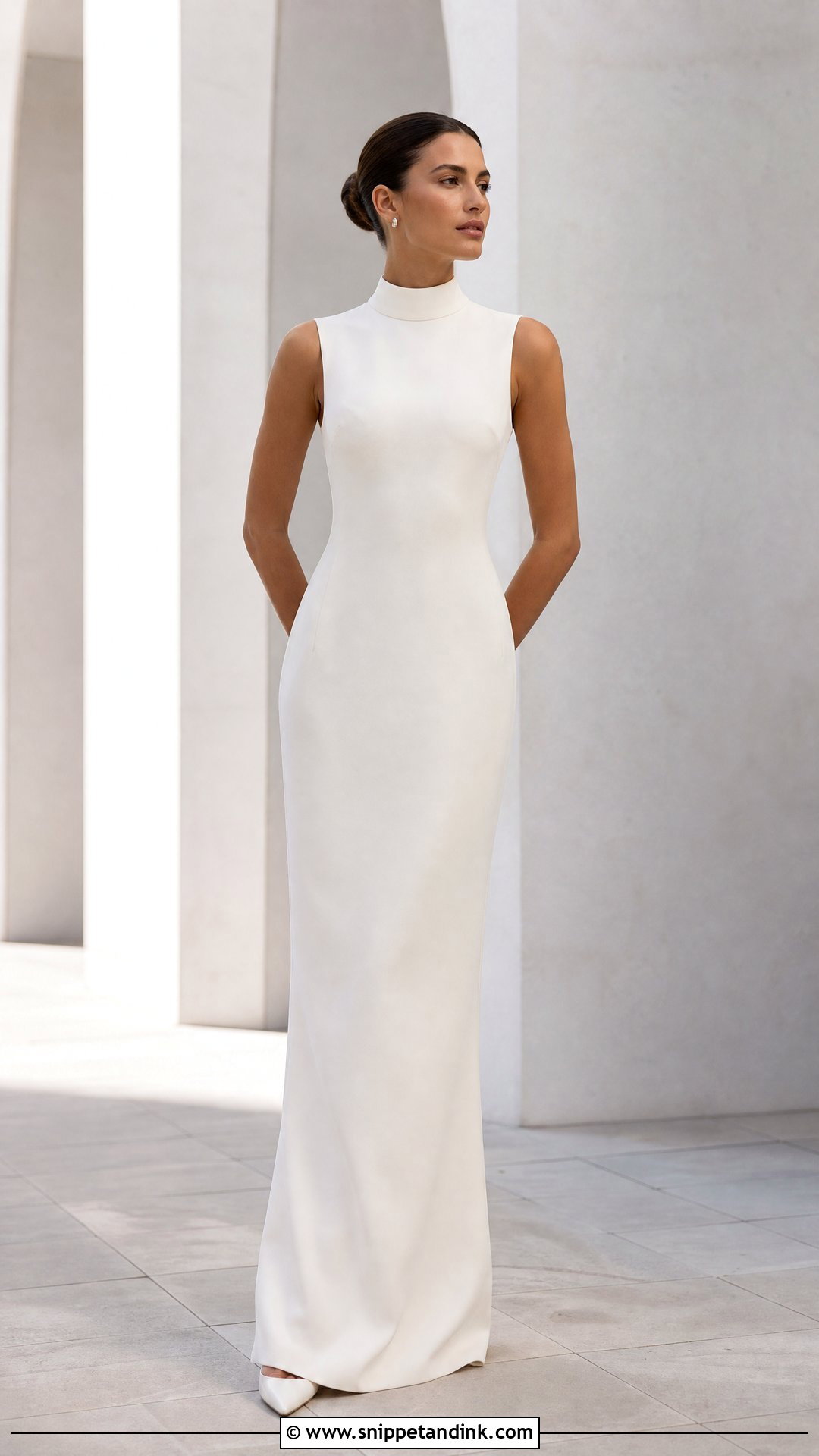
A high neck creates a long vertical line, especially over a column or A-line skirt. Sleeveless versions look modern and a little athletic, while long sleeves make it formal. Keep the fabric simple so it stays clean rather than heavy. With the chest covered, skip necklaces entirely and wear small earrings with a sleek bun and pointed heels. I put the hair up with this neckline almost every time, because loose hair hides the collar, which is the dress’s one real detail.
16. Simple Spaghetti Strap Wedding Dress
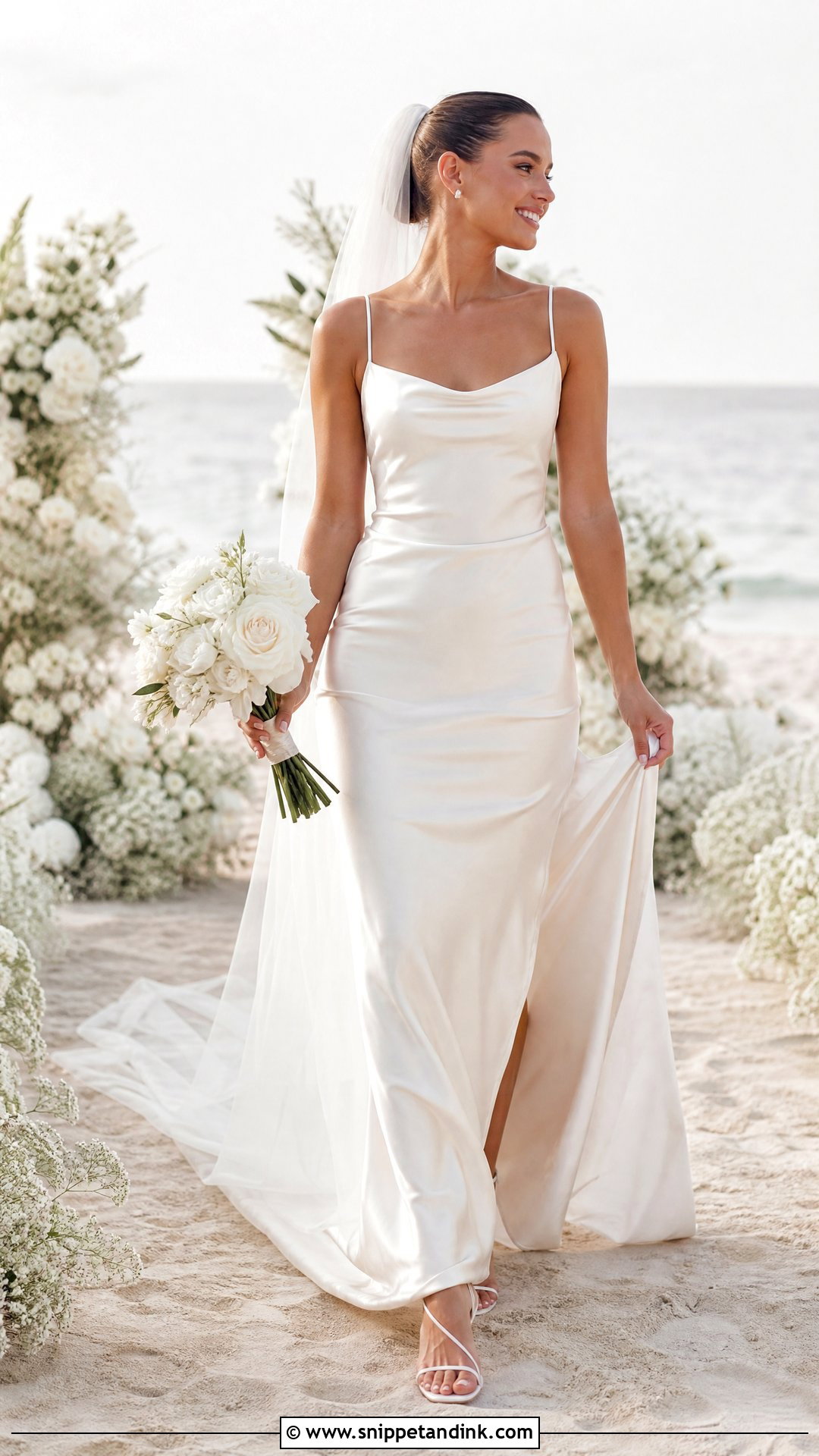
A simple spaghetti strap wedding dress is about as light as bridal wear gets, which makes it a sensible choice for heat. Satin, crepe or chiffon all work, as a slip or with an A-line skirt for more movement. Thin straps can’t carry much weight, so the bodice needs to be fitted closely enough to hold itself up; the straps should be decoration, not support. Strappy heels, tiny pearl earrings and a flowing veil finish it. Bring a sheer wrap, blazer or shawl for the evening breeze at a beach or garden venue.
17. Plain Chiffon Wedding Dress
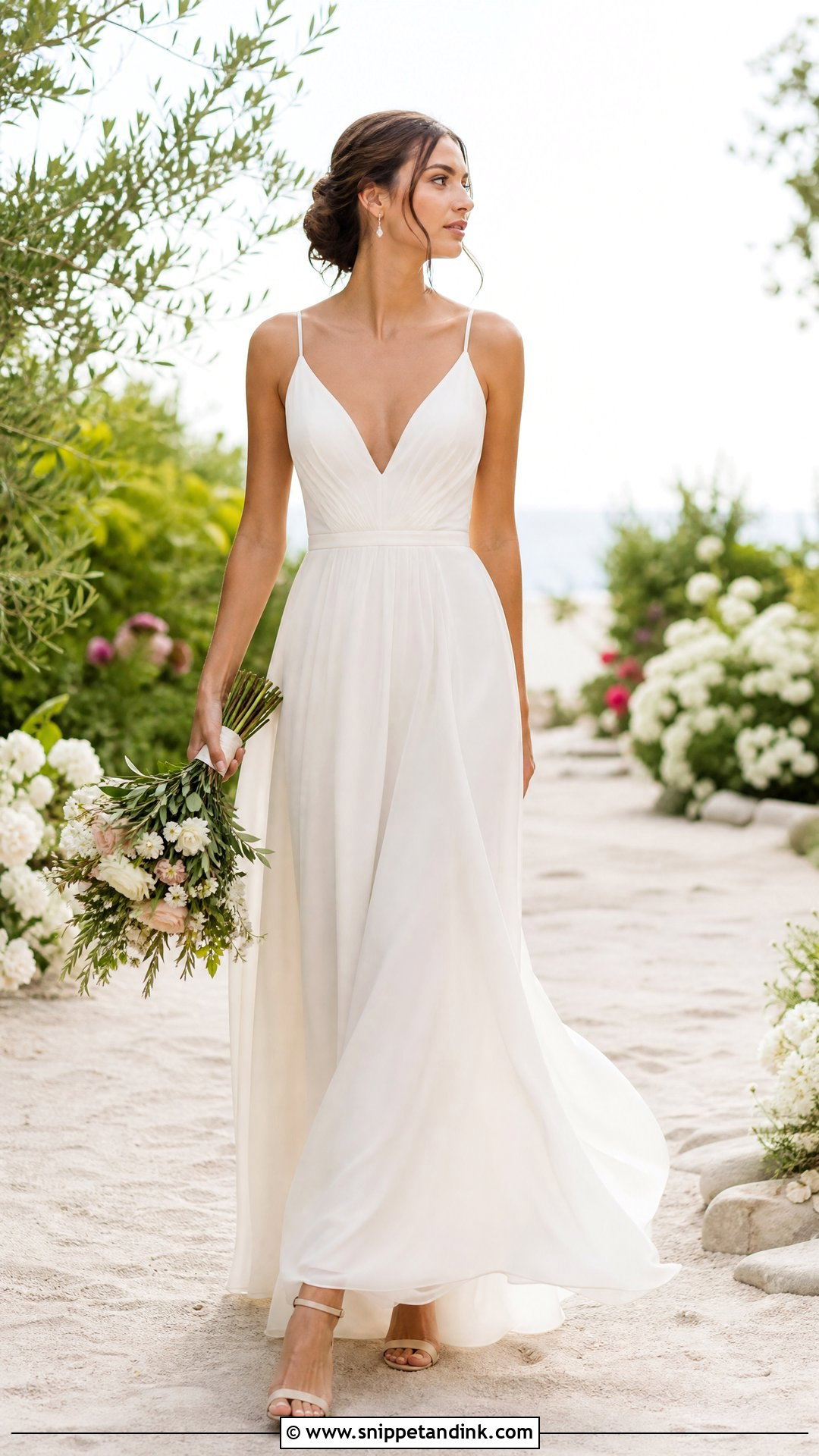
Chiffon gives movement without volume. A soft A-line skirt, flutter sleeves or delicate straps keep it simple, and the fabric lifts in any breeze, which suits outdoor weddings in warm weather. It’s also delicate. Chiffon snags on rough surfaces and frays easily, so the hem should be properly finished. Wear block heels or flat sandals depending on the ground, with a loose updo, small earrings and a natural bouquet. Beach, garden and destination ceremonies are where it belongs.
18. Basic Short Wedding Dress
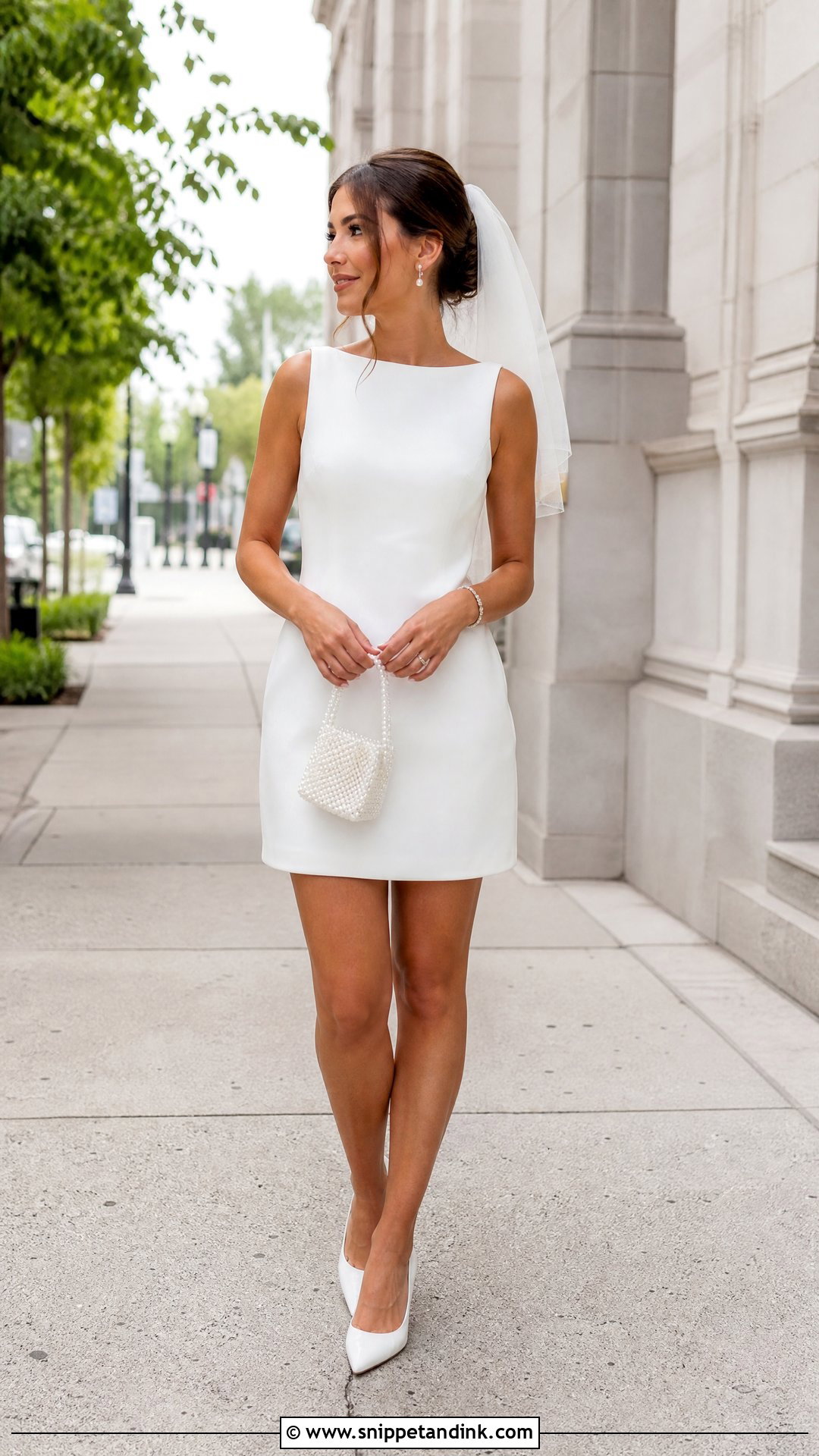
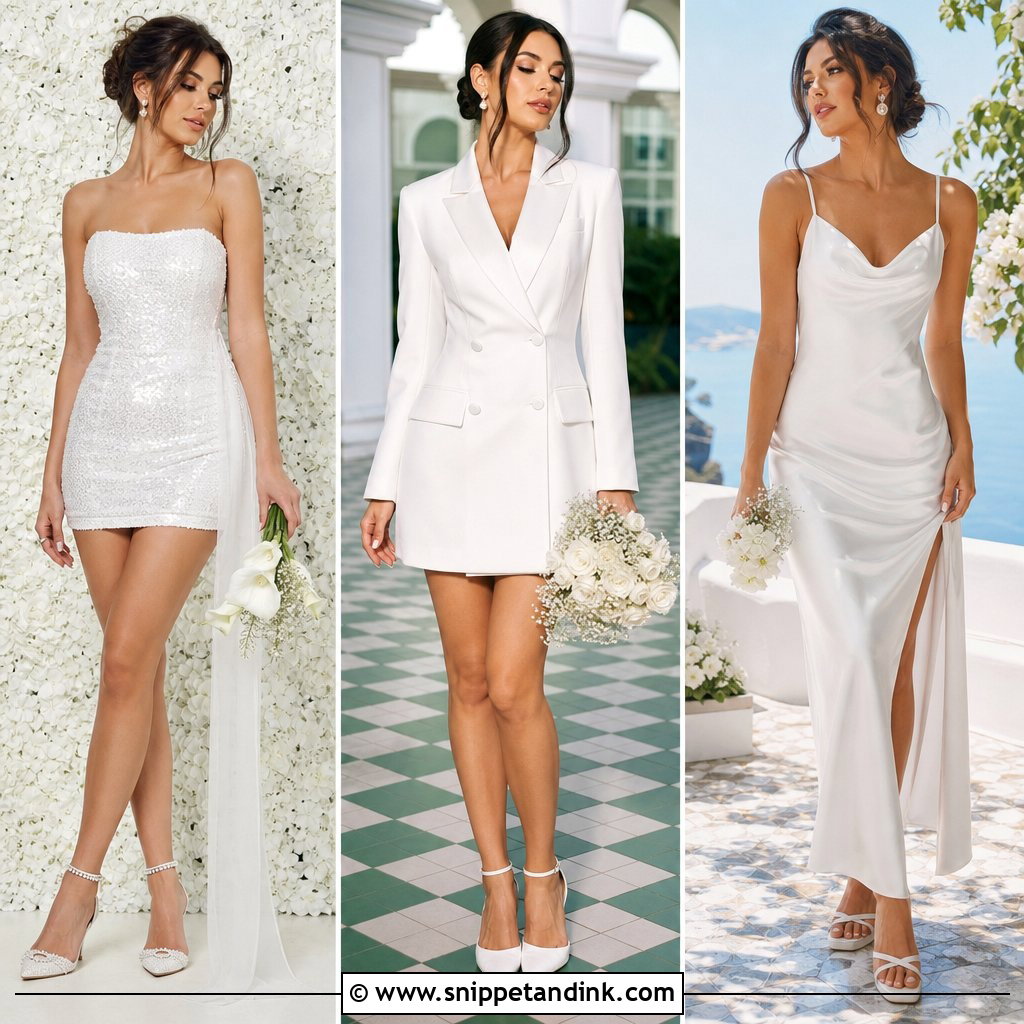
Short dresses suit brides who don’t want a gown at all. A simple mini or knee-length dress reads bridal when the white is clean, the neckline flatters and the tailoring is sharp. Pointed pumps, slingbacks or elegant flats all work, and a short veil, pearl bag or satin bow makes it look like a wedding outfit. Sit down in it in front of a mirror before buying, since a mini that’s fine standing can be too short at a dinner table. Courthouses, elopements and after-parties suit it.
19. Simple Wrap Wedding Dress
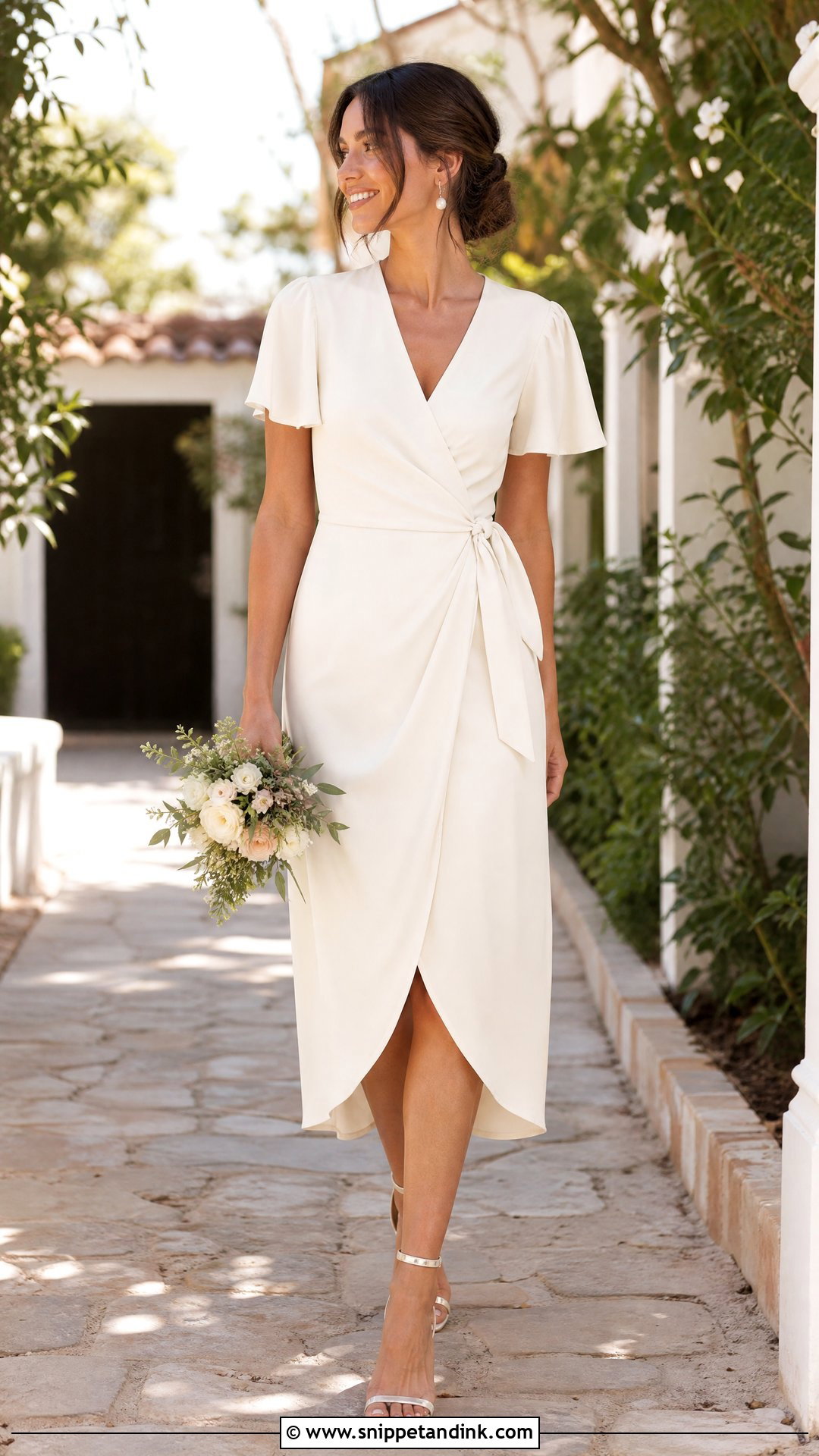
A wrap dress adjusts to your body because you tie it yourself, which makes it unusually forgiving if your size shifts before the wedding. It defines the waist and makes a soft V neckline in satin, crepe or lightweight chiffon. Wrap fronts can open when you walk or sit, so I add a hidden snap at the crossover point and sometimes a few stitches lower down. Heeled sandals, delicate earrings and a small bouquet finish it. A midi wrap feels relaxed; a full-length one looks formal.



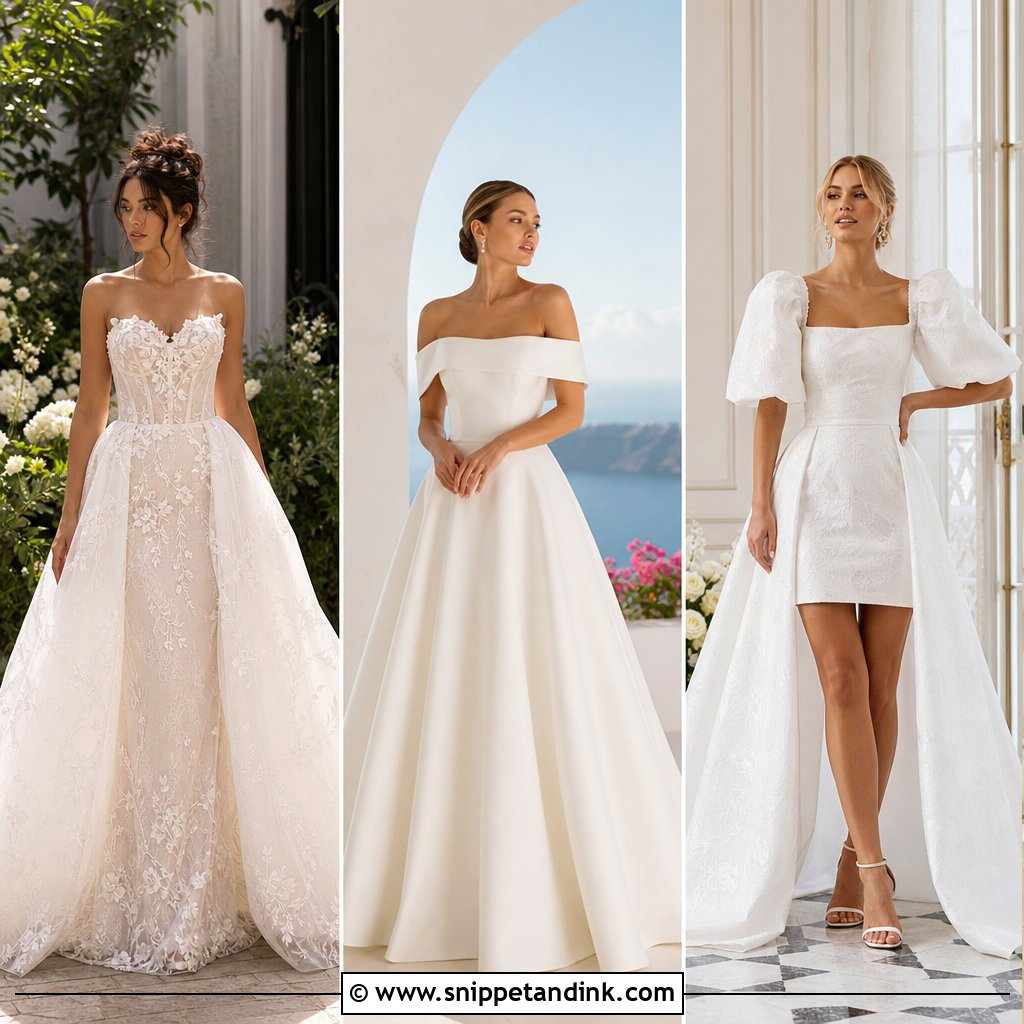
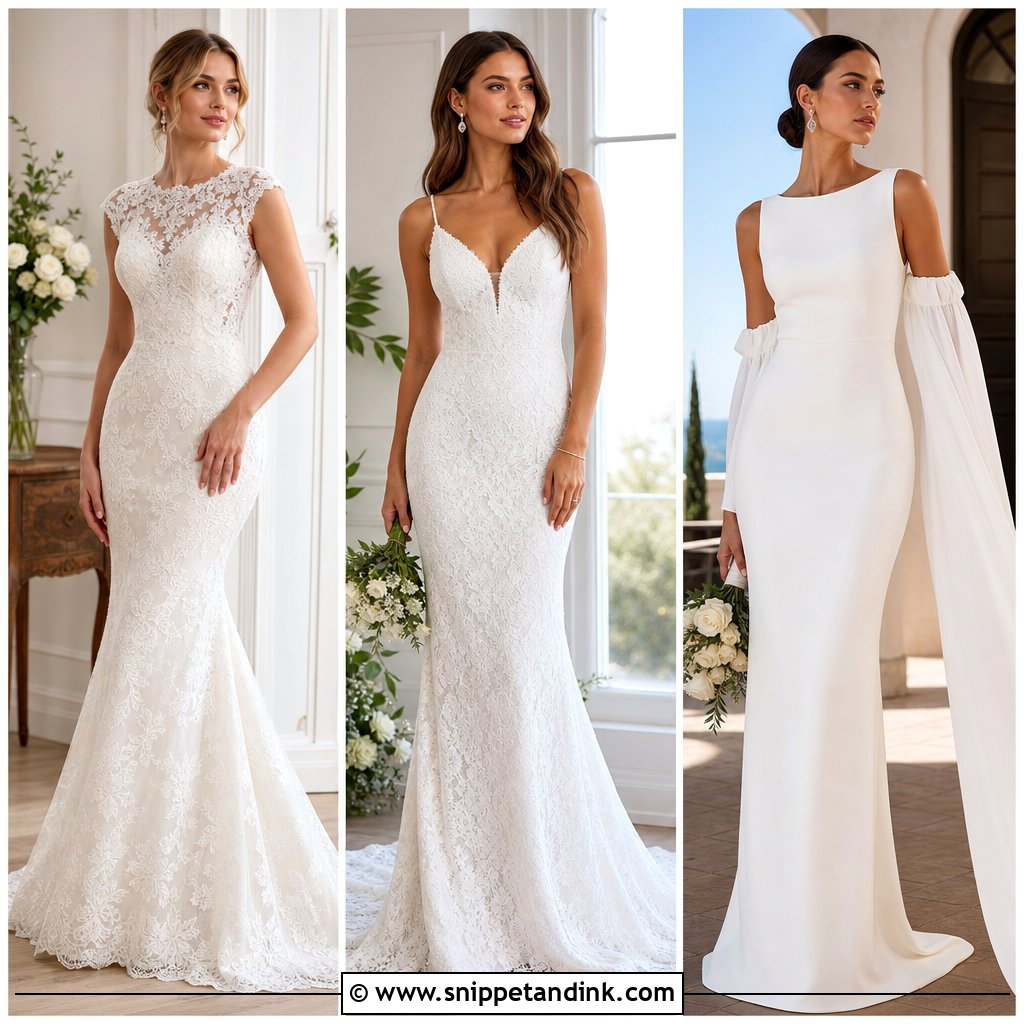
20. Basic Lace Wedding Dress
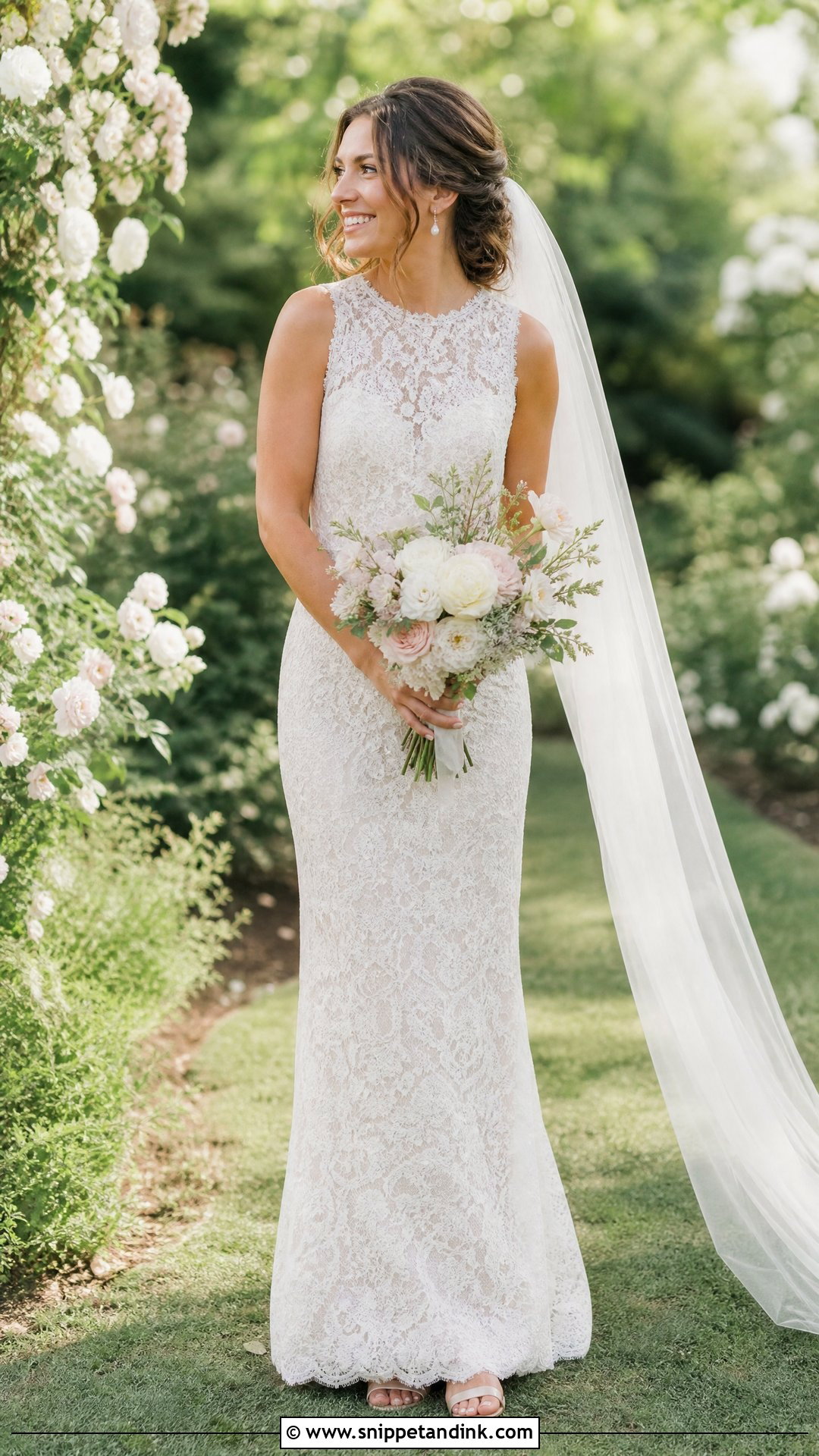
Lace can stay minimal if the pattern is soft and allover rather than heavily appliquéd. A delicate lace with no beading, on a fitted sheath, A-line or midi, keeps the shape clean. Nude or white heels, small pearl earrings and a simple veil are enough. Hold the lace against your skin in daylight before choosing the lining. A lining close to your skin tone makes lace look delicate, while a stark white one can flatten it.
21. Plain Empire Waist Wedding Dress
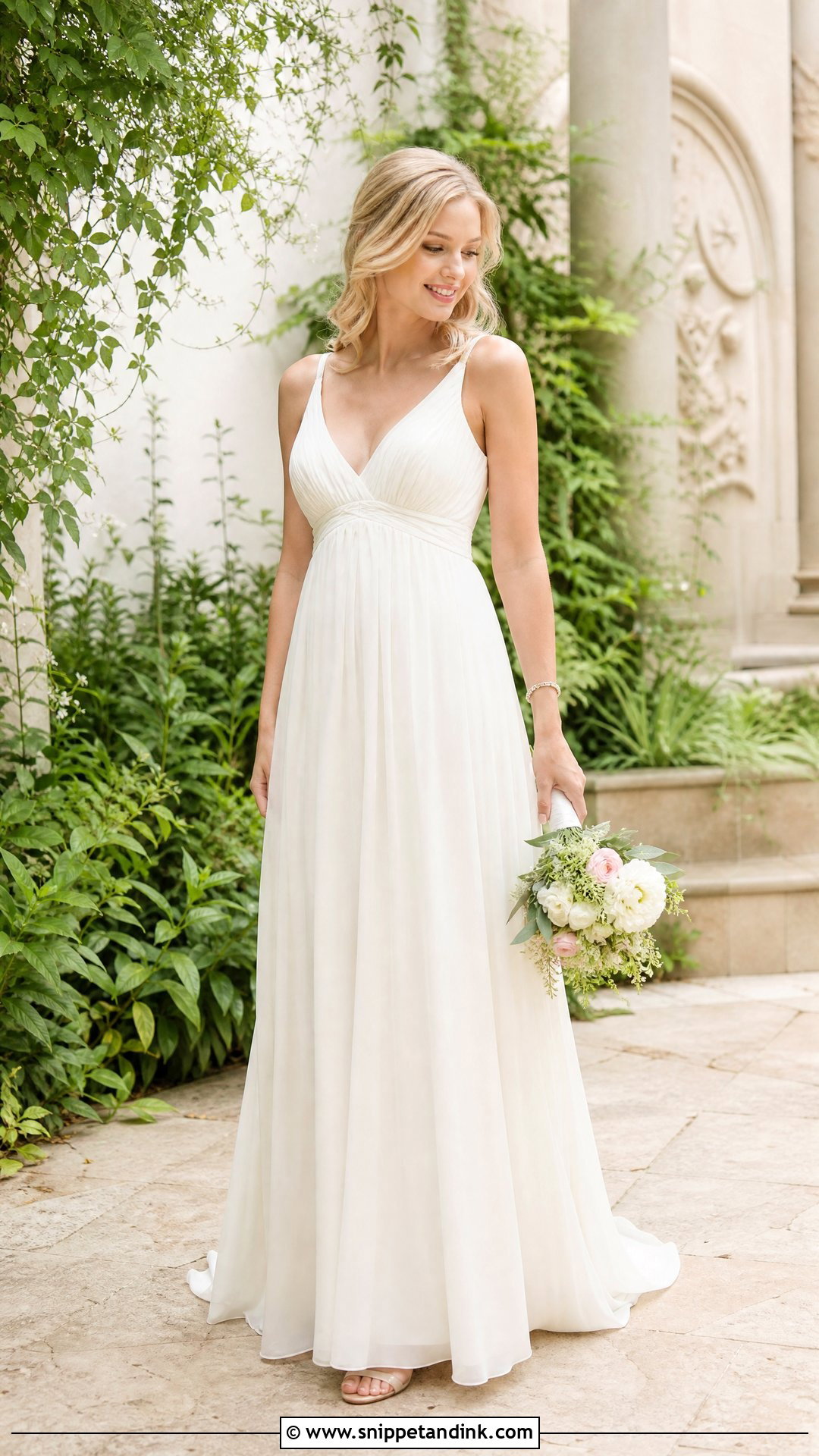
With the seam just under the bust, an empire waist lets the skirt fall loosely over the body. It’s the least fitted silhouette here, which is exactly why some brides love it, and why it handles heat and long days well. Chiffon, satin or lightweight crepe keep it smooth. The bust seam needs careful fitting; if it sits too low, the dress looks shapeless. Low heels, a delicate bracelet, soft waves and a simple veil or comb finish it for gardens, beaches and relaxed celebrations.
22. Simple Basque Waist Wedding Dress
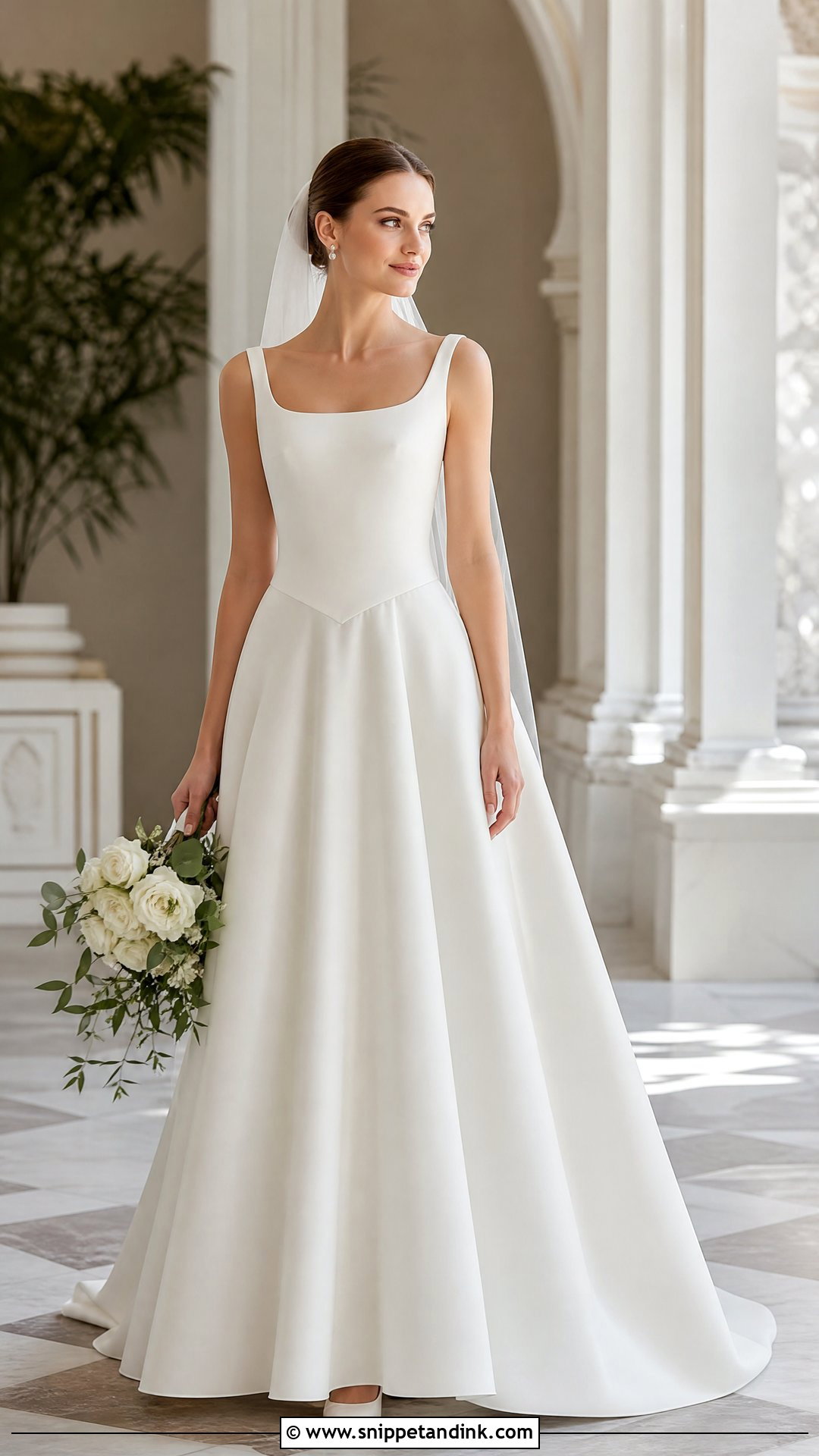
The basque waist dips slightly at the front, giving a plain dress more shape and a longer torso. To keep it simple, put a clean bodice over a plain satin, mikado or crepe skirt, ideally a soft A-line that makes the shape easy to wear. Classic pumps, pearl studs and a neat veil keep everything polished. Check the point when you sit, because a bodice that’s even slightly long pushes it upward. It nods to traditional bridal fashion without a single bead.
23. Basic T Shirt Wedding Dress
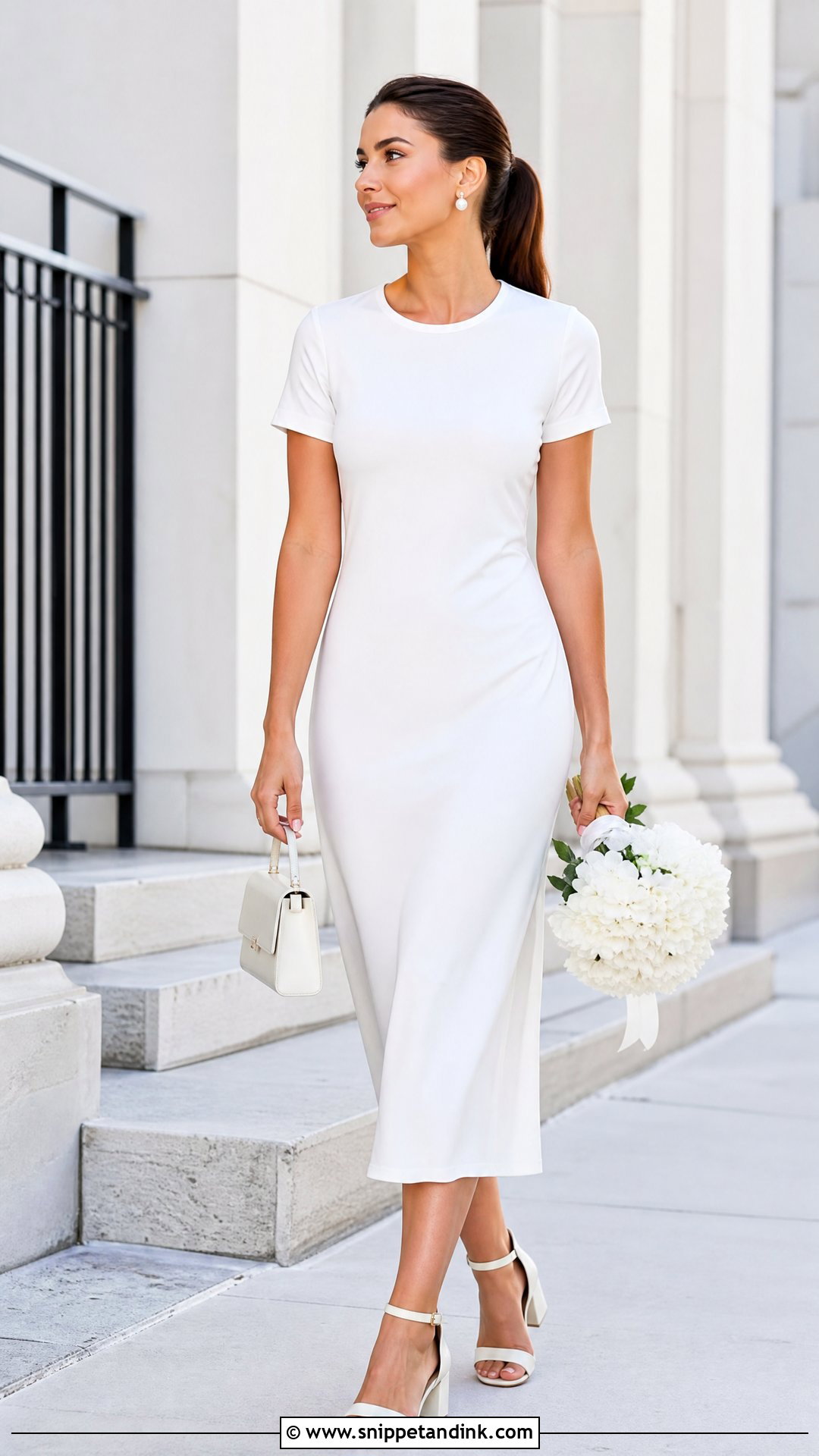
The T-shirt dress puts comfort first. Short sleeves and a simple neckline make it approachable, and white or ivory keeps it bridal. Look for a midi or full-length version in crepe, jersey or a structured cotton blend. Thin jersey shows every line underneath, so a heavier weight is worth paying for. Block heels, a clean ponytail and simple gold or pearl jewelry suit it, and a small bouquet with a polished bag stops it looking like a summer day dress. Courthouse ceremonies, backyard parties and casual elopements are its territory.
24. Simple Blazer Wedding Dress
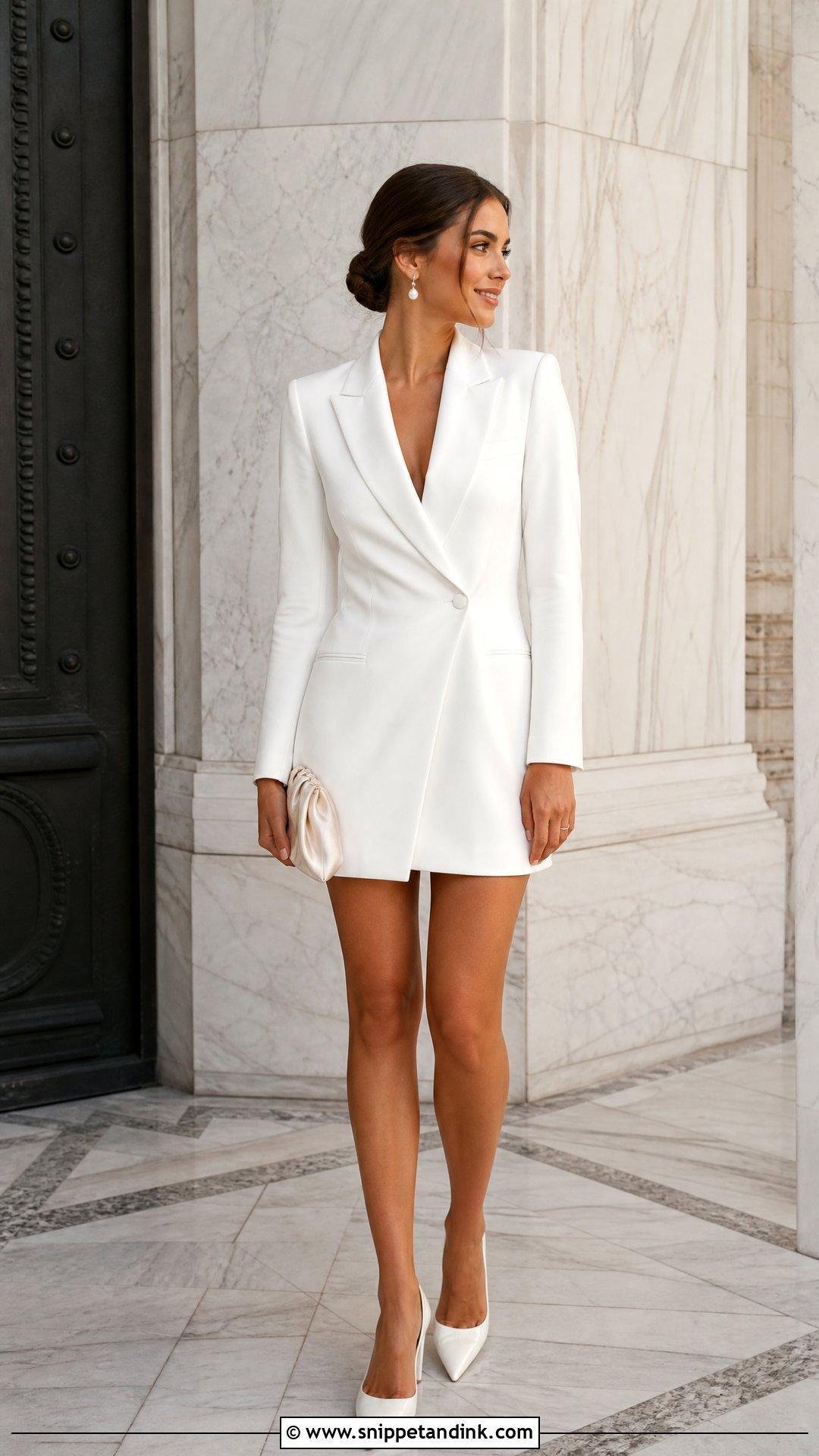
A blazer wedding dress suits brides who love tailoring. The structure feels modern and confident, and white keeps it clearly bridal. Mini, midi or long, it needs clean lapels and shoulders that end exactly at your shoulder bone, because badly fitted tailoring shows instantly. Pointed pumps, sheer tights if needed and sleek earrings work with a low bun or straight hair. A small veil, headband or satin clutch softens it for a city ceremony.

25. Basic Two Piece Wedding Dress
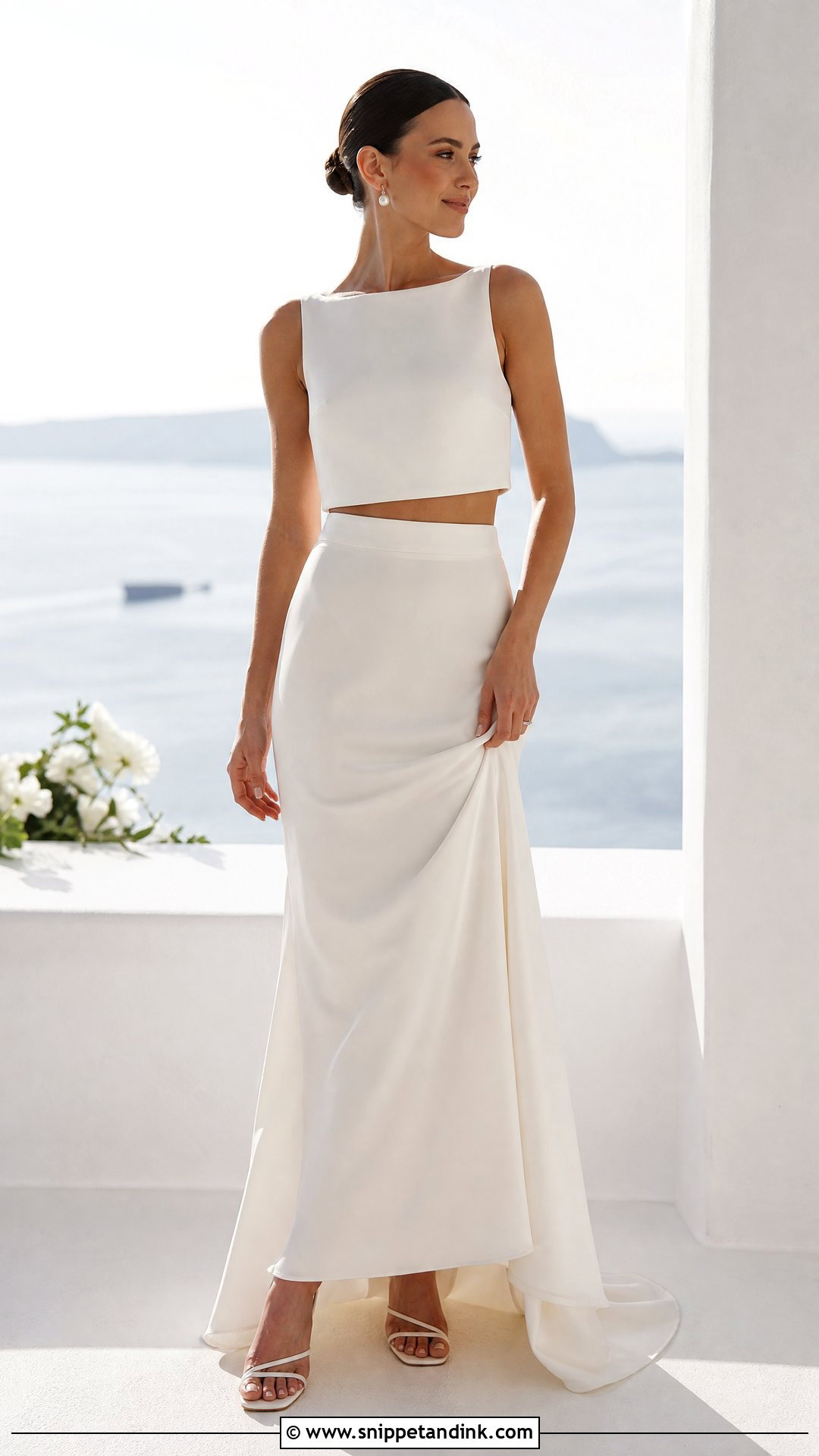
Separates give you flexibility: a crop top and skirt, a camisole with a satin skirt, or a tailored bridal set. Keep the fabrics cohesive and the whites closely matched, because two slightly different ivories look like a mistake in photos, so I compare the pieces side by side in daylight before buying. Heeled sandals, pearl earrings and a sleek hairstyle suit it. A full skirt reads romantic, a straight one minimal. You can wear the pieces separately afterwards, which makes sense for small weddings and destination trips.
Underwear, Steam and Static Make or Break a Minimal Dress
Buy your underwear before the first fitting and wear it to every one. On satin or thin crepe, the edge of a bra or briefs shows straight through, so look for laser-cut edges in a shade close to your skin rather than white. Many brides end up skipping the bra altogether; ask your seamstress to sew cups into the bodice instead.
The morning of the wedding
Plain fabrics show creases that lace would hide. Hang the dress the night before and steam it at the venue, keeping the steamer a little way off the fabric and never pressing it onto satin, which can water-mark. Pack a small anti-static spray for synthetic linings, and keep hand cream away from the bodice until it has soaked in.
Wearing it again
Short, midi and two-piece dresses are the easiest bridal pieces to wear again. Have it professionally cleaned first, then a tailor can shorten the hem or remove a bustle. Dyeing works on natural fibres like silk and cotton, but polyester barely takes dye, so read the label before you plan on a new colour.
Plain Doesn’t Mean Unfinished
A simple wedding dress doesn’t need sparkle or volume to feel like a wedding dress. Clean lines, good fabric and careful fitting do that work. A satin slip, a plain A-line, a courthouse midi and a tailored blazer dress all look right when they fit you precisely and suit the day you’re planning. Plain dresses also leave you free with shoes, hair and flowers, so add one detail you love or keep everything quiet. Either way, spend your effort and budget on the fit.
You'll Like These Ideas:





Leave a Reply