
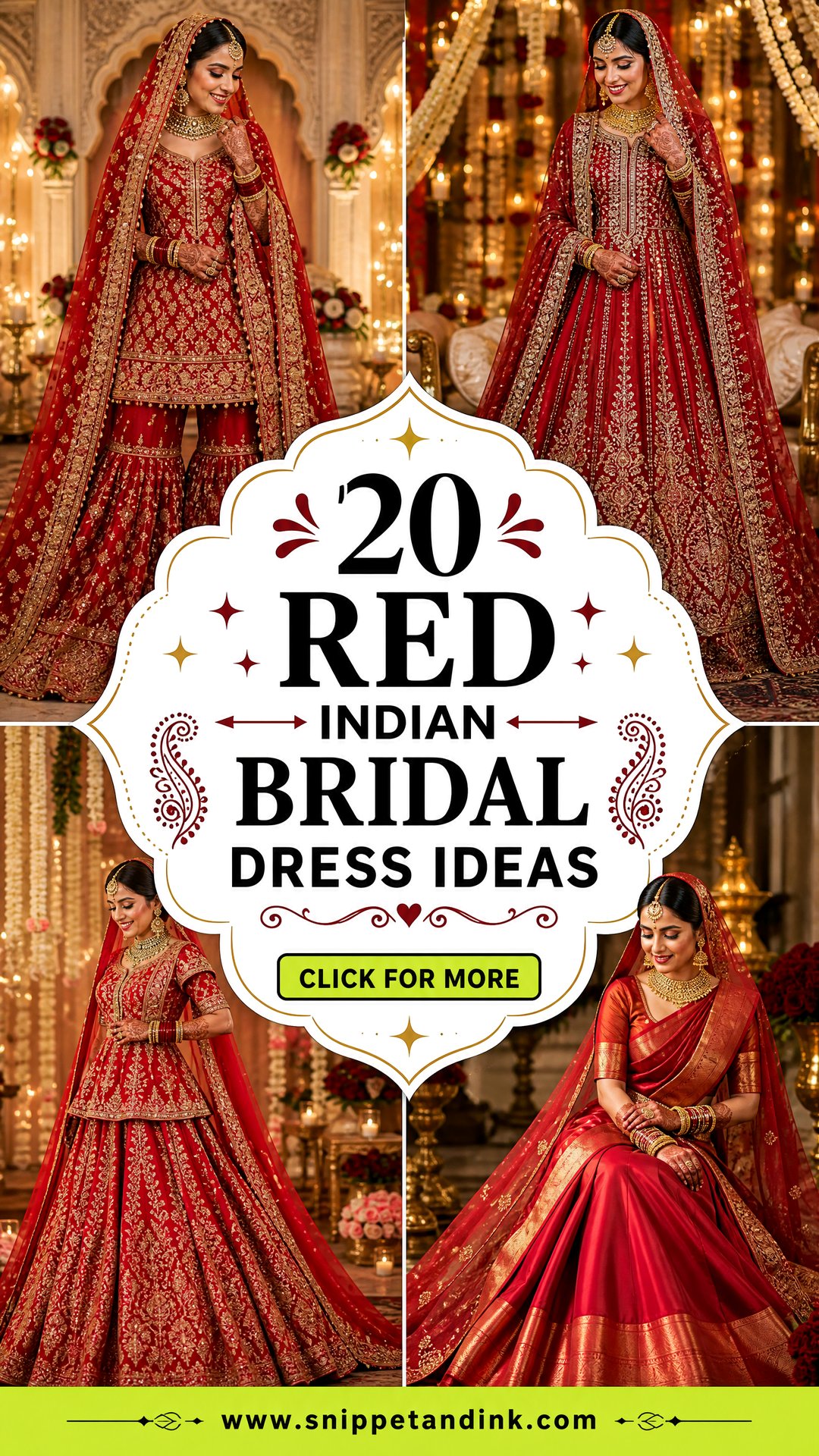
Red still leads Indian bridal wear, yet two red outfits can feel worlds apart: one heavy with heritage gold, another clean and modern. The looks below cover lehengas, sarees, shararas, gowns and regional dress like the Rajputi poshak. Cherry reds, tonal embroidery, ombre skirts, inventive blouses and contrasting dupattas are all showing up in current bridal collections next to the classic designs. When I style a bride, I start with her ceremony and family customs, then her comfort, and only then the trend. Jewellery, shoes, makeup and draping finish the job, and each of these twenty is built head to toe with that in mind.
Saree, Lehenga or Sharara for Hours at the Mandap?
I ask every bride the same question first: what will your body be doing during the ceremony? A Hindu wedding can mean sitting cross-legged for an hour or more, standing for the varmala, walking the pheras with a knot tied to your dupatta, and bending to touch elders’ feet. That schedule tells me more about the right outfit than any mood board.
- Long floor seating: a saree or sharara sits more comfortably than a heavy can-can lehenga, which bunches at the waist.
- Pheras with a tied dupatta: the dupatta needs a firm border and secure pinning, since it gets tugged with every step.
- Heavy lehenga: fully worked skirts can weigh several kilos. I ask brides to wear theirs for an hour at a fitting before deciding.
- Southern and Bengali rites: a saree is usually expected for the main ritual, with a lehenga saved for the reception.
If your heart is set on a heavy lehenga and the ceremony is long, ask for a lighter lining and fewer can-can layers. You lose a little volume but keep your hips and back much happier.
1. Red Zardozi Bridal Lehenga
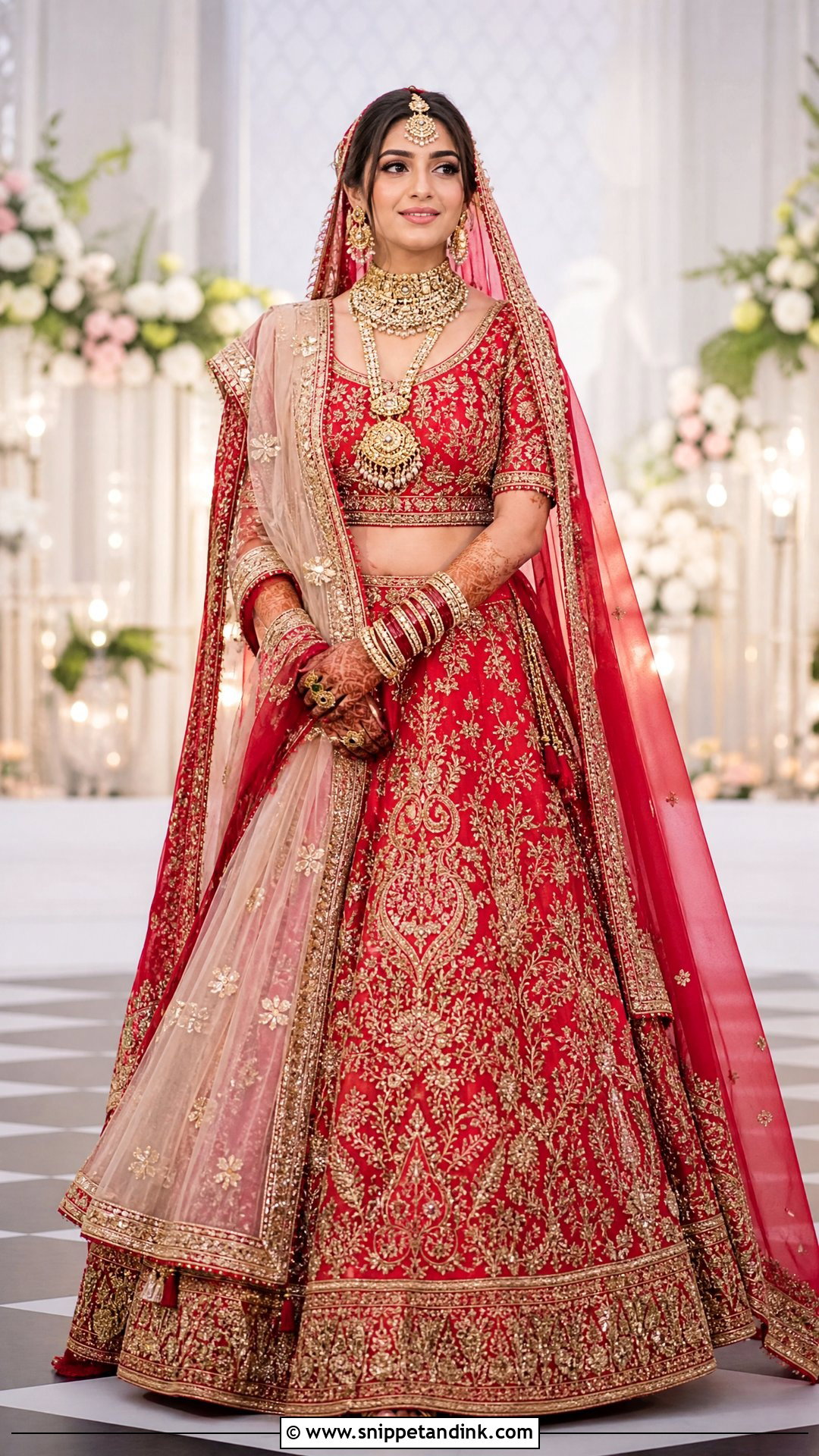
Zardozi is raised metal-thread embroidery, and it’s what gives a grand bridal lehenga its weight and glow. I look for work spread evenly around the skirt, because embroidery bunched at the hem makes the skirt swing awkwardly and pull at the waist. The blouse needs real support and elbow sleeves you can lift your arms in. One embroidered dupatta over the head, a lighter one across the shoulder. Add a gold choker, long necklace, earrings, bangles and maang tikka, plus gold platforms. A low bun keeps the work and the jewellery visible.
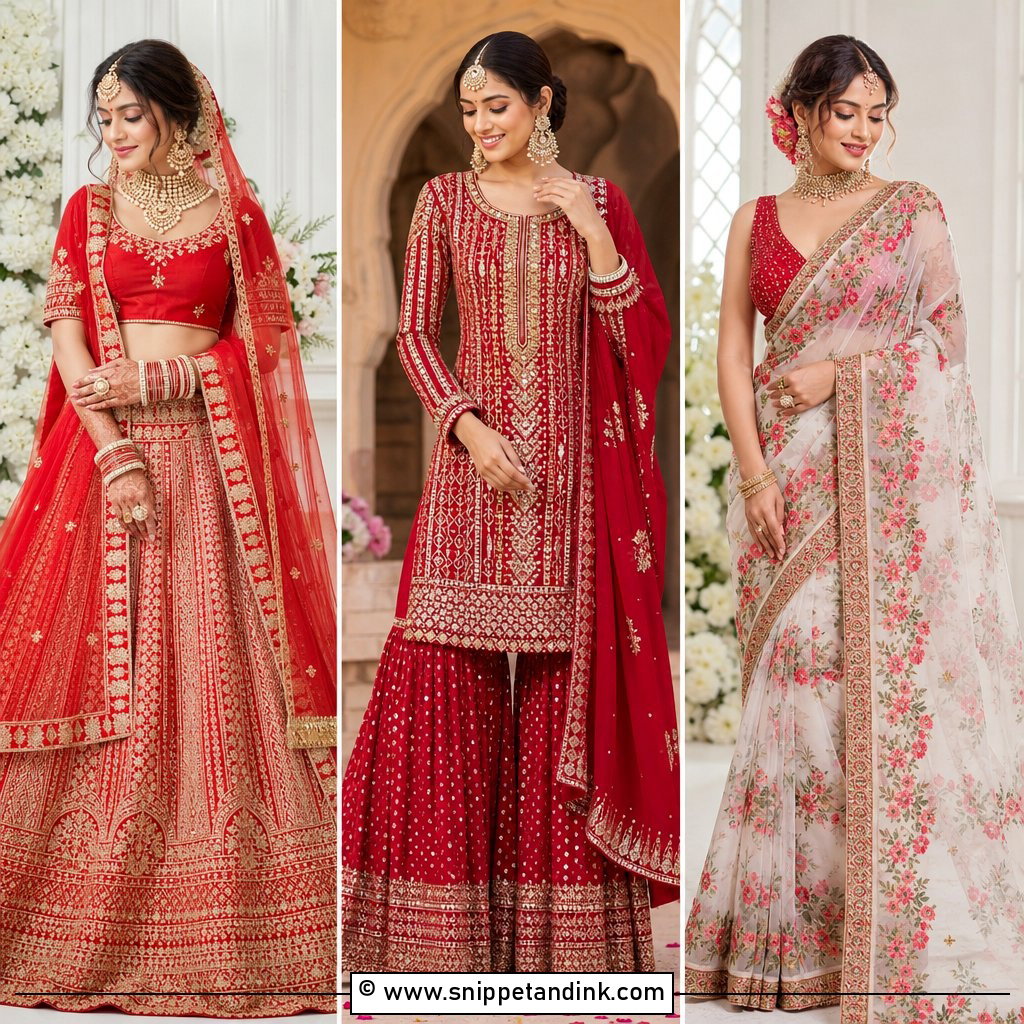
2. Red Banarasi Silk Bridal Saree
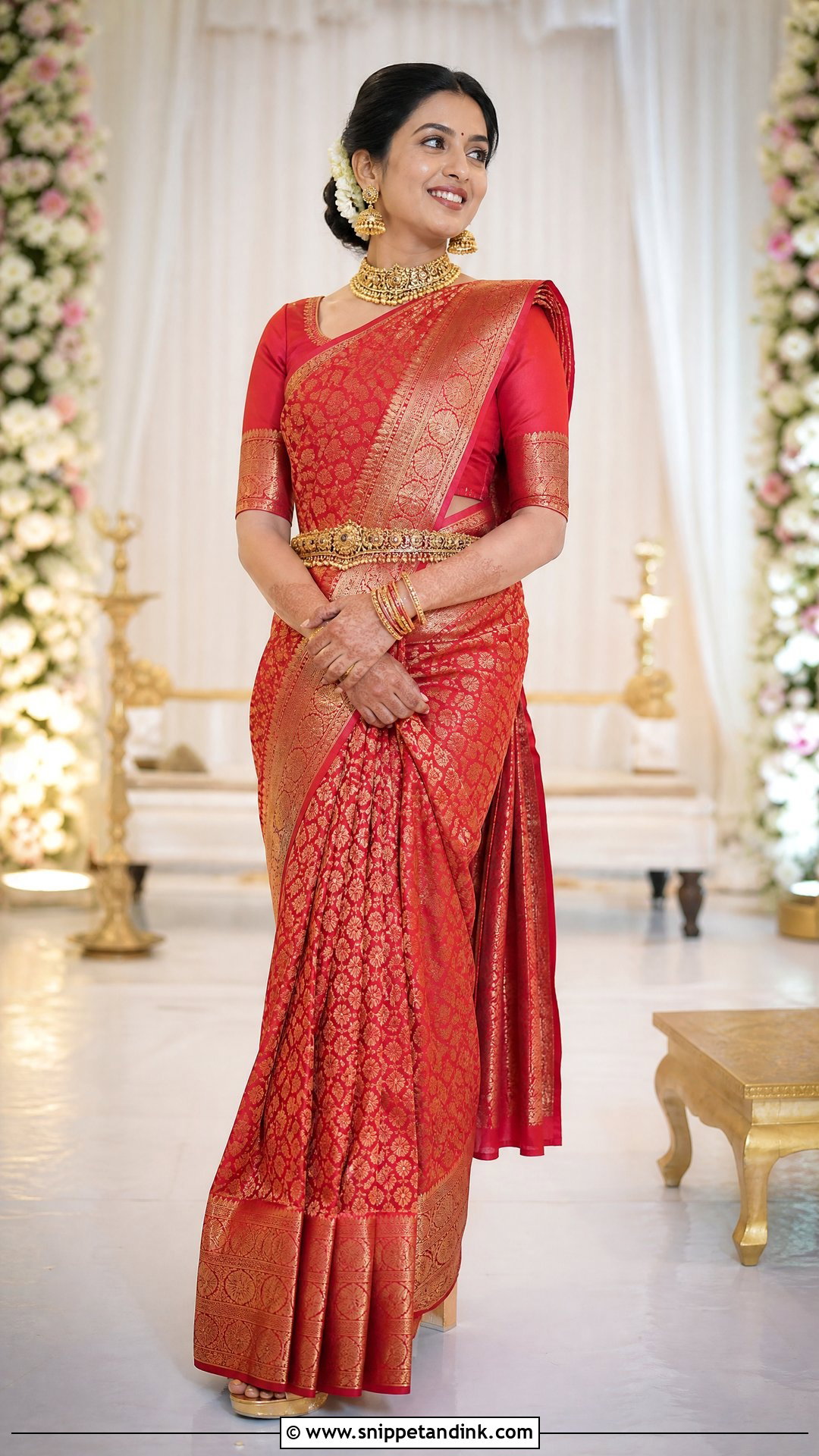
Woven gold on red silk gives a Banarasi saree its ceremonial glow, and because the zari is woven in, not stitched on, it drapes softer than you’d expect. Choose a broad border and small motifs spread over the body. The blouse should be lined and structured, with a rounded neck and sleeves you’re comfortable in. I pleat the front tightly and leave the pallu long for movement in photos. A gold necklace, jhumkas, bangles, waist belt, a small red bindi and a flower-trimmed bun finish it.
3. Maroon Velvet Bridal Lehenga
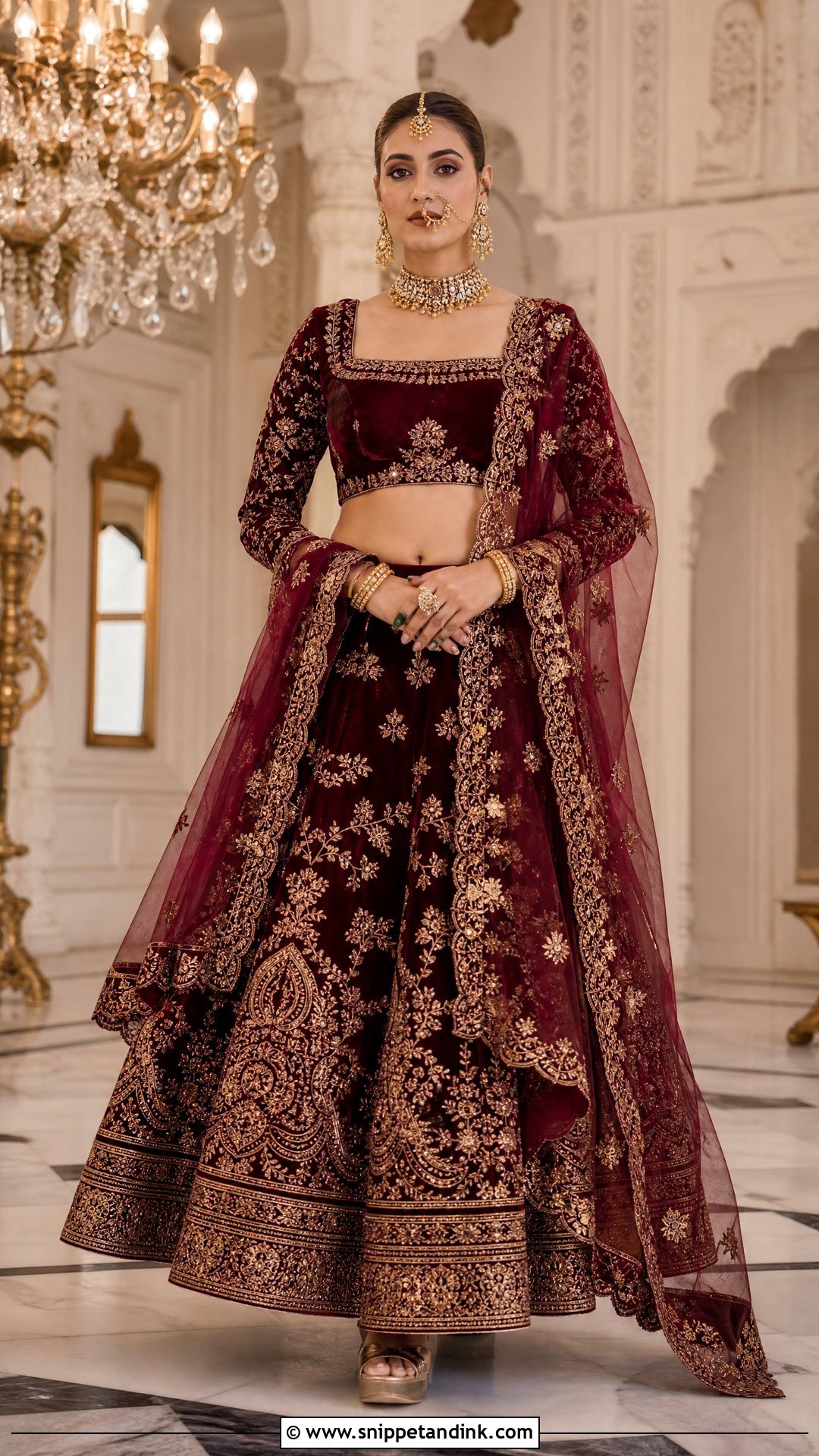
Maroon velvet belongs to winter and night ceremonies; in a warm hall it gets punishing fast. Antique-gold embroidery sits well on the pile, and a structured blouse with a modest square neck keeps the look tidy. I always pair velvet with a light net dupatta, and only add a second veil if you’ve carried both at your fitting without complaint. Antique-gold jewellery and a delicate nath suit the darker shade. Choose padded wedges, a sleek bun and a berry lip, and skip extra accessories, since velvet is already doing a lot.
4. Red Kanjeevaram Bridal Saree
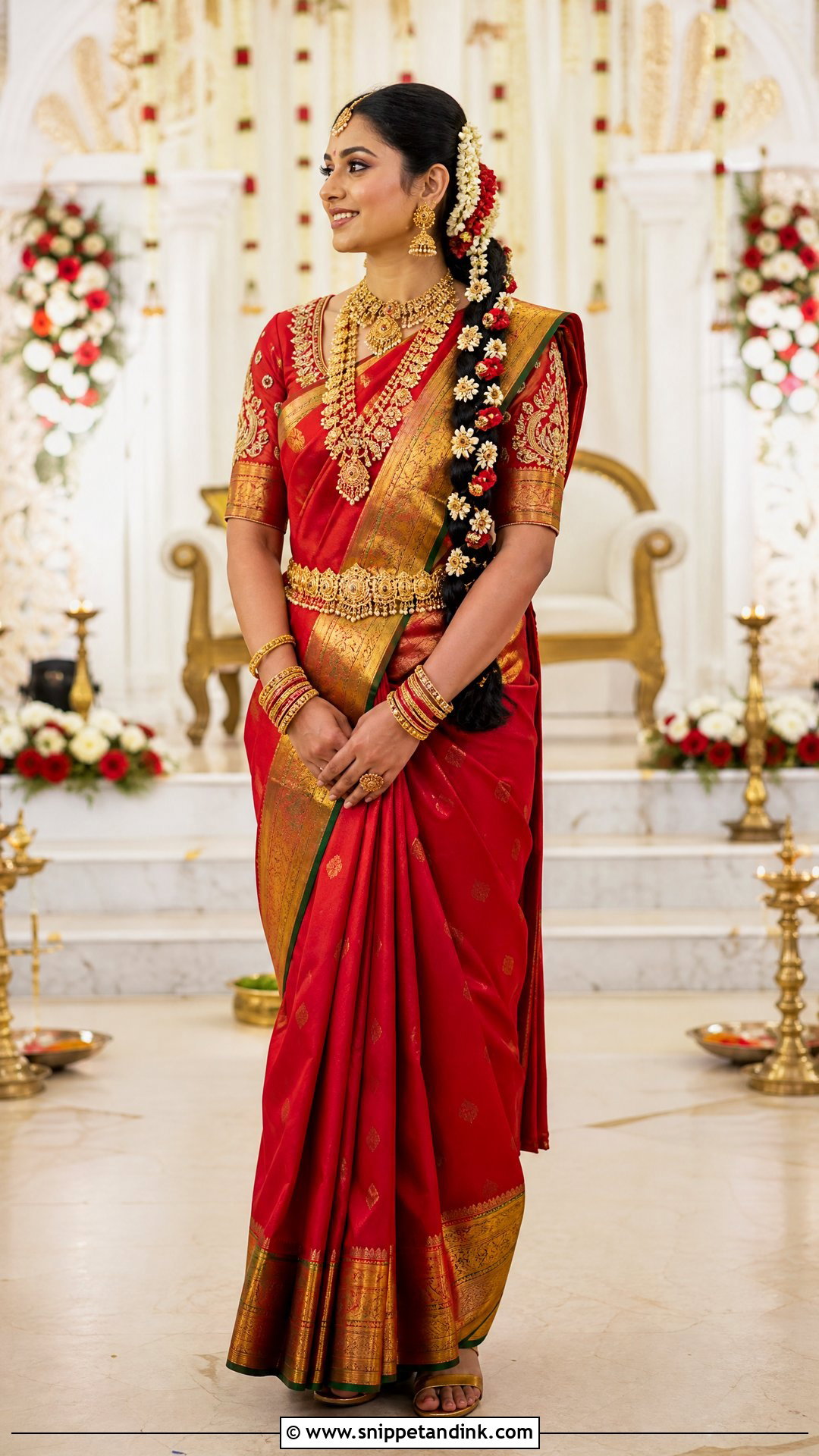
Kanjeevaram silk is woven tightly enough to hold a crisp, almost architectural drape. A contrasting gold, green or deep maroon border defines the pleats. The blouse has to fit securely at the shoulder, because South Indian rituals involve a lot of bending and reaching, and a tight armhole will pinch through every one of them. Temple jewellery, layered necklaces, earrings, bangles and a waist belt make it complete. A flower-wrapped braid is traditional; I’d suggest a low bun if you find a long braid heavy by the afternoon.
5. Red Bridal Sharara Set
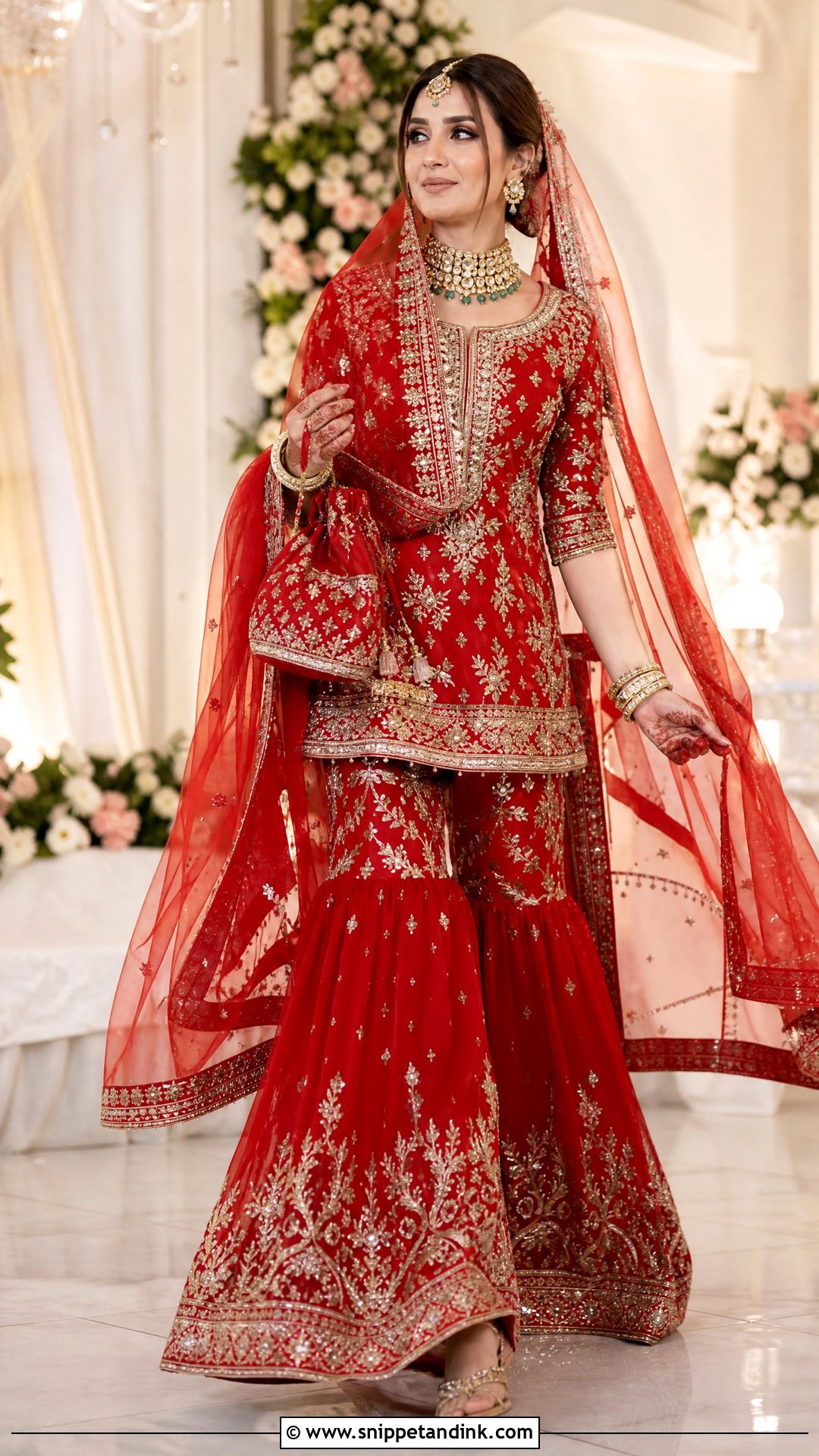
Want a lehenga’s drama with easier walking and sitting? A red bridal sharara set gives you that. Shararas flare from the hip or thigh, not the knee, so keep the heaviest embroidery at the hem where it adds swing. A fitted short kurta and a sheer dupatta over one shoulder keep the shape readable. Kundan choker, medium earrings, bangles and a small tikka are enough. Wedges or block heels sit well under wide legs, and I’d hem the pants to the exact shoe so you don’t step on the flare.
6. Red Bridal Anarkali Suit
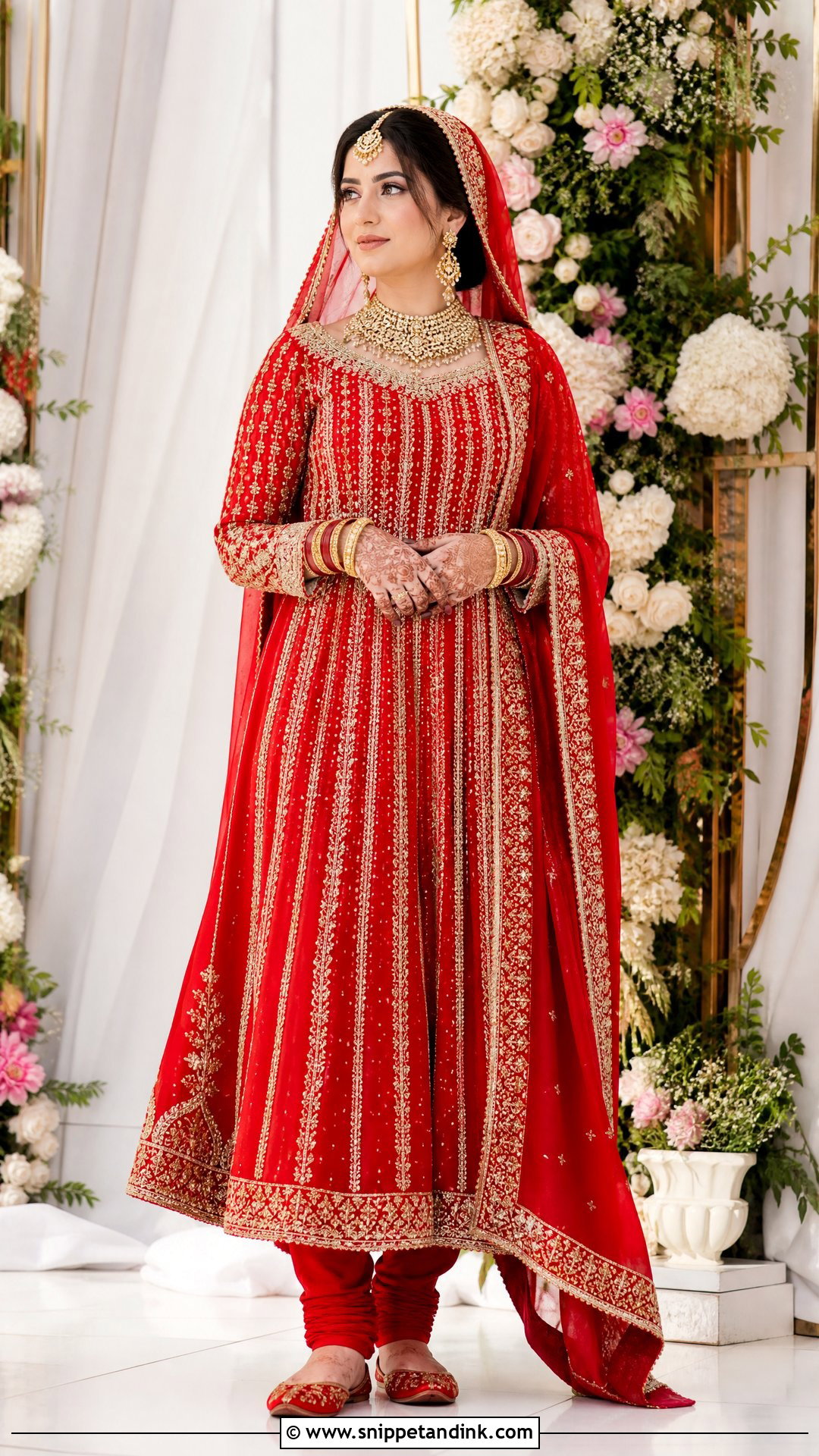
An Anarkali gives you one flowing piece instead of a separate skirt and blouse, which some brides find far easier to wear. It should be fitted through the bodice and flare gradually from the waist. Vertical embroidery lengthens the line; a worked border defines the hem. Churidar pants underneath, a dupatta over the head or across the body. I often suggest closed-toe juttis here, because the floor-length hem hides them and long ceremonies are hard on heels. A red-brown lip ties the face to the outfit.
7. Red Indian Embroidered Bridal Gown
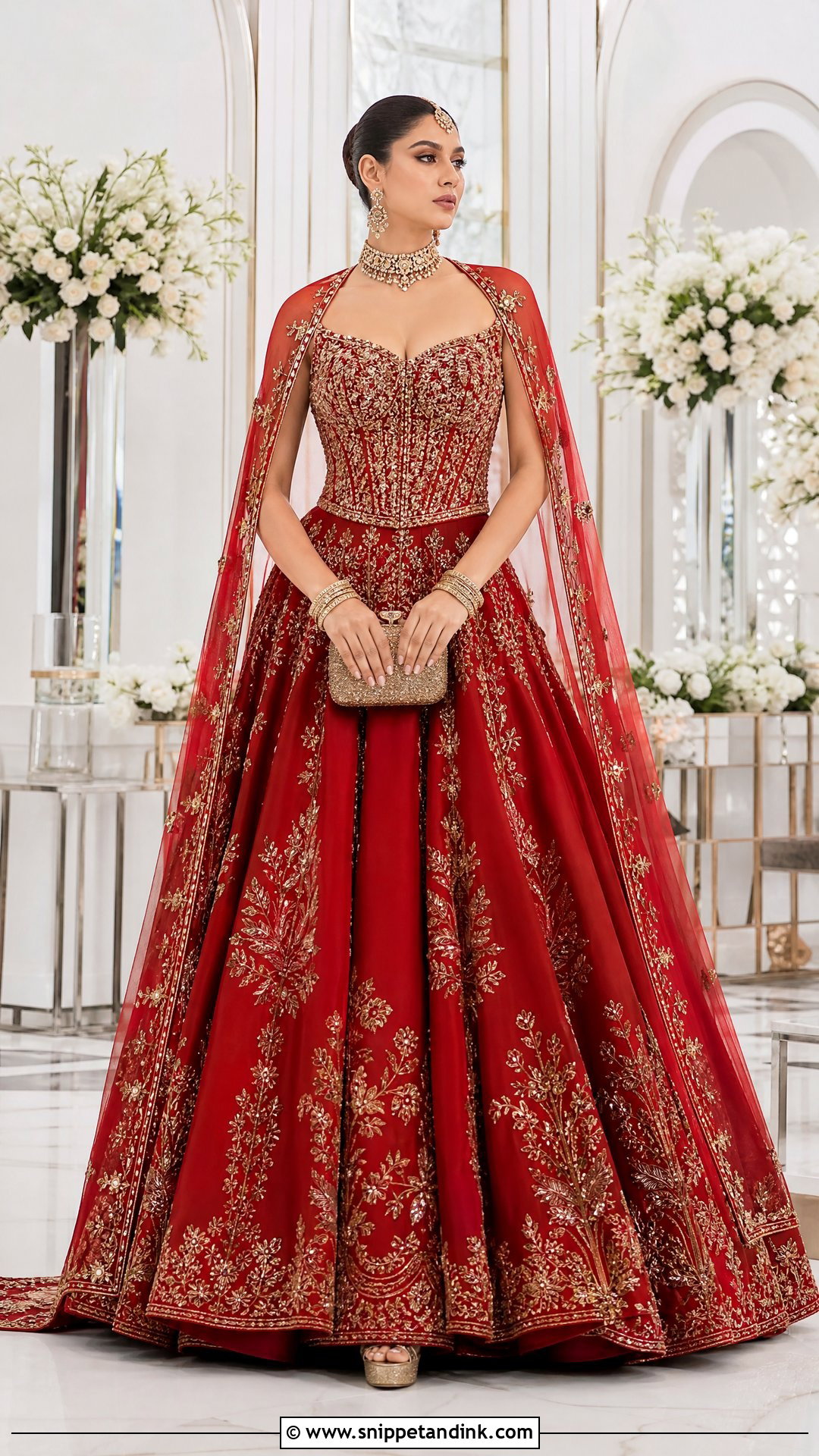
A gown gives you the ease of one piece with Indian-style embroidery, often heaviest toward the hem. A fitted bodice and defined waist are what make it read as bridal rather than evening wear. I’d swap the dupatta for a detachable cape or sheer shoulder veil, and keep jewellery to a choker, earrings and bangles. Closed platforms help carry a heavy skirt. Ask for a final fitting in your shoes: a gown hem that’s even one centimetre too long catches on every step of a mandap.
8. Red Bridal Lehenga With Double Dupatta
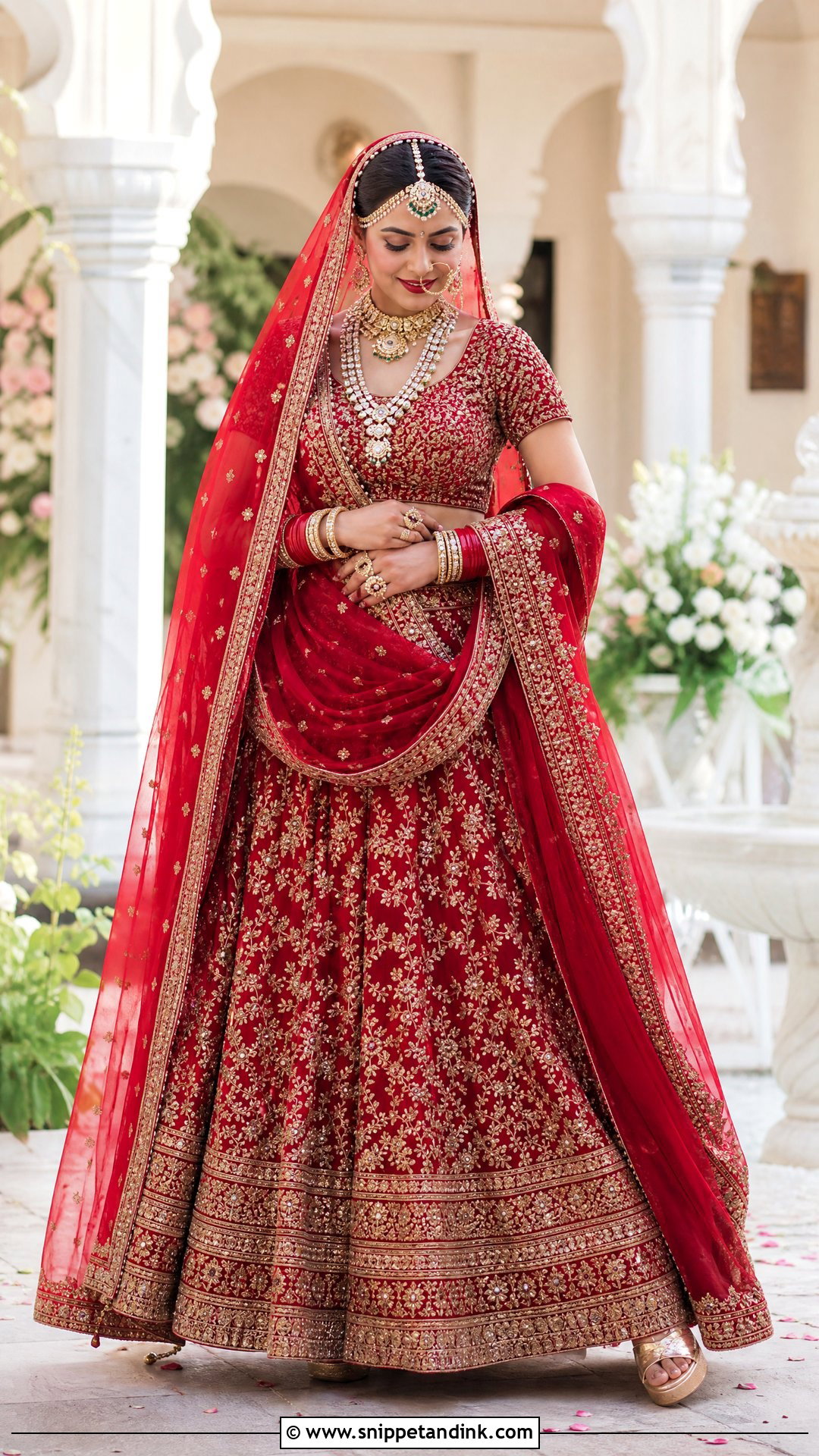
A red bridal lehenga with double dupattas layers beautifully while keeping the main outfit clear. Keep the skirt and blouse in closely related reds. The head veil should be light; the second crosses the torso and can carry a gold or green border. Mixing colours, textures and embroidery between the two is very current, and I like it because two identical dupattas just look like a lot of the same fabric. My non-negotiable: concealed pins at the head and both shoulders, placed by someone who’s done it before, so nothing shifts during greetings and rituals.
9. Red Bridal Lehenga With Pastel Dupatta
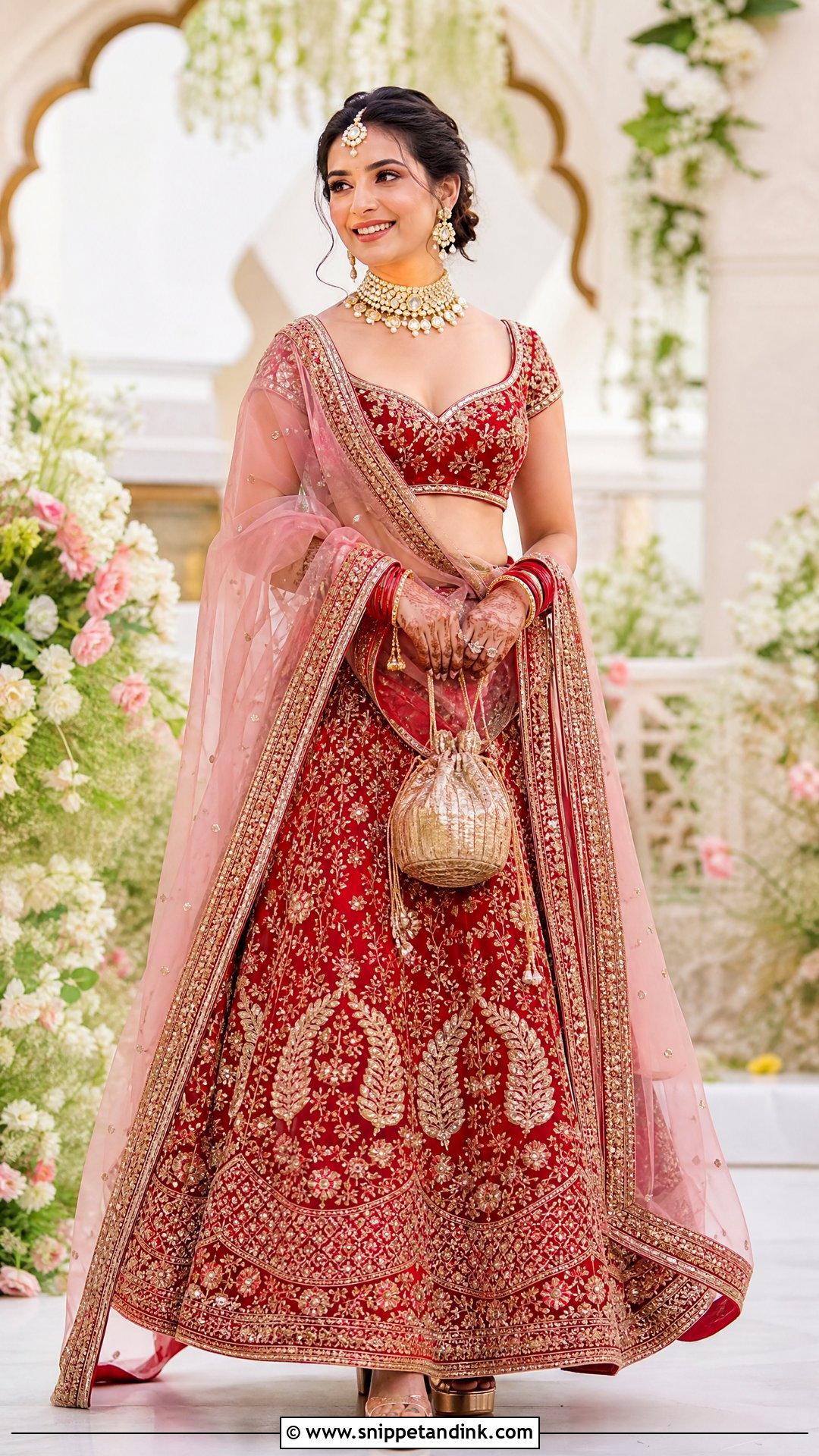
A pastel dupatta lightens a heavily worked red lehenga and makes it feel personal. Blush, peach, pale gold or soft mint all work, with a red embroidered border tying it back to the skirt. Wear the pastel over one shoulder and a lighter red veil on the head if your ceremony needs full coverage. Kundan with pearls or pale green stones connects the colours. Always check the pairing in daylight before you commit; some pastels that look soft in a shop turn chalky next to red outdoors.
10. Red And Gold Bridal Saree
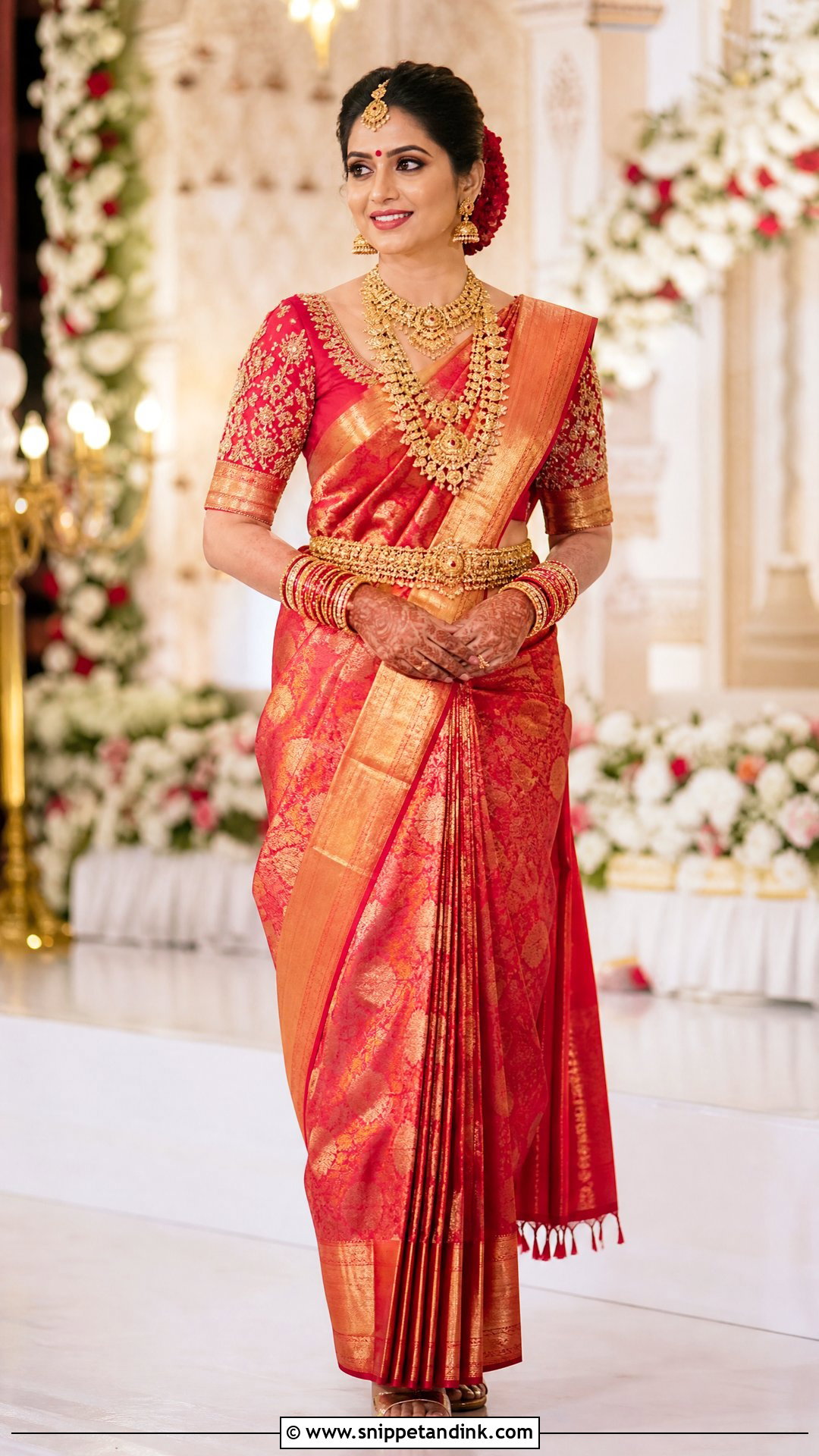
Red and gold photograph richly in almost any light, which is why so many families still prefer it. Silk, brocade or tissue each change the drape; tissue is stiffest and crunches when you sit. A red blouse with gold embroidery unifies the outfit, while a gold blouse brightens it. I pin the pallu firmly at the shoulder so it doesn’t drag the pleats sideways. Choker, longer necklace, jhumkas, bangles, waist belt and bindi complete it, and balanced eyeliner, warm blush and a satin red lip keep the face fresh.
11. Red Mirror Work Bridal Lehenga
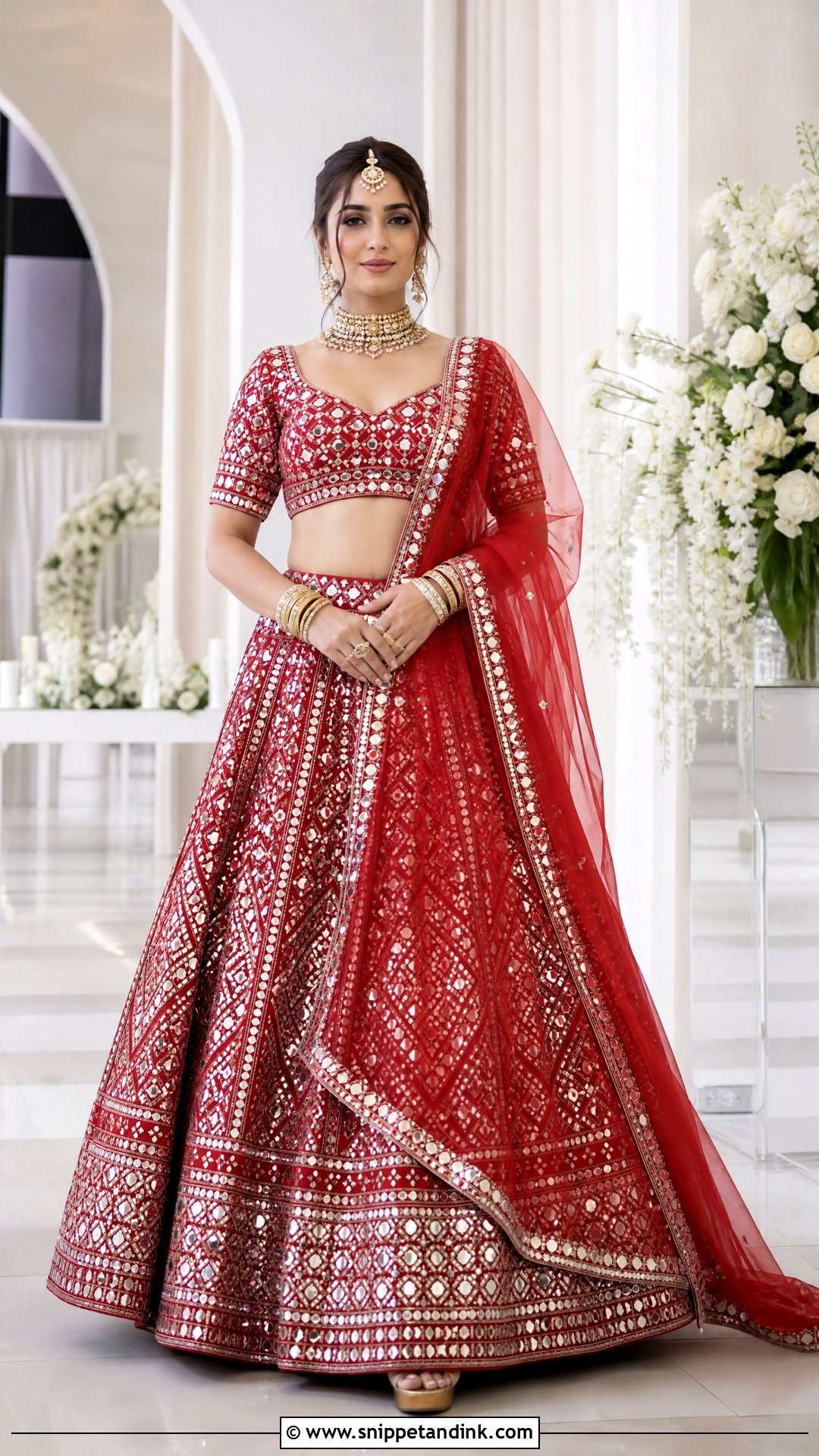
Mirror work throws small flashes of light every time you move, so it’s lively under ceremony lighting. I prefer organised mirror patterns framed in thread over an all-over reflective surface, which can bounce flash straight into the camera. Repeat the details on the blouse neckline and sleeves. A plain red dupatta stops the outfit tipping into too much. One statement set, like a kundan choker and matching earrings, with simple bangles and neutral metallic wedges, lets the sparkle lead.
12. Red Floral Embroidered Bridal Lehenga
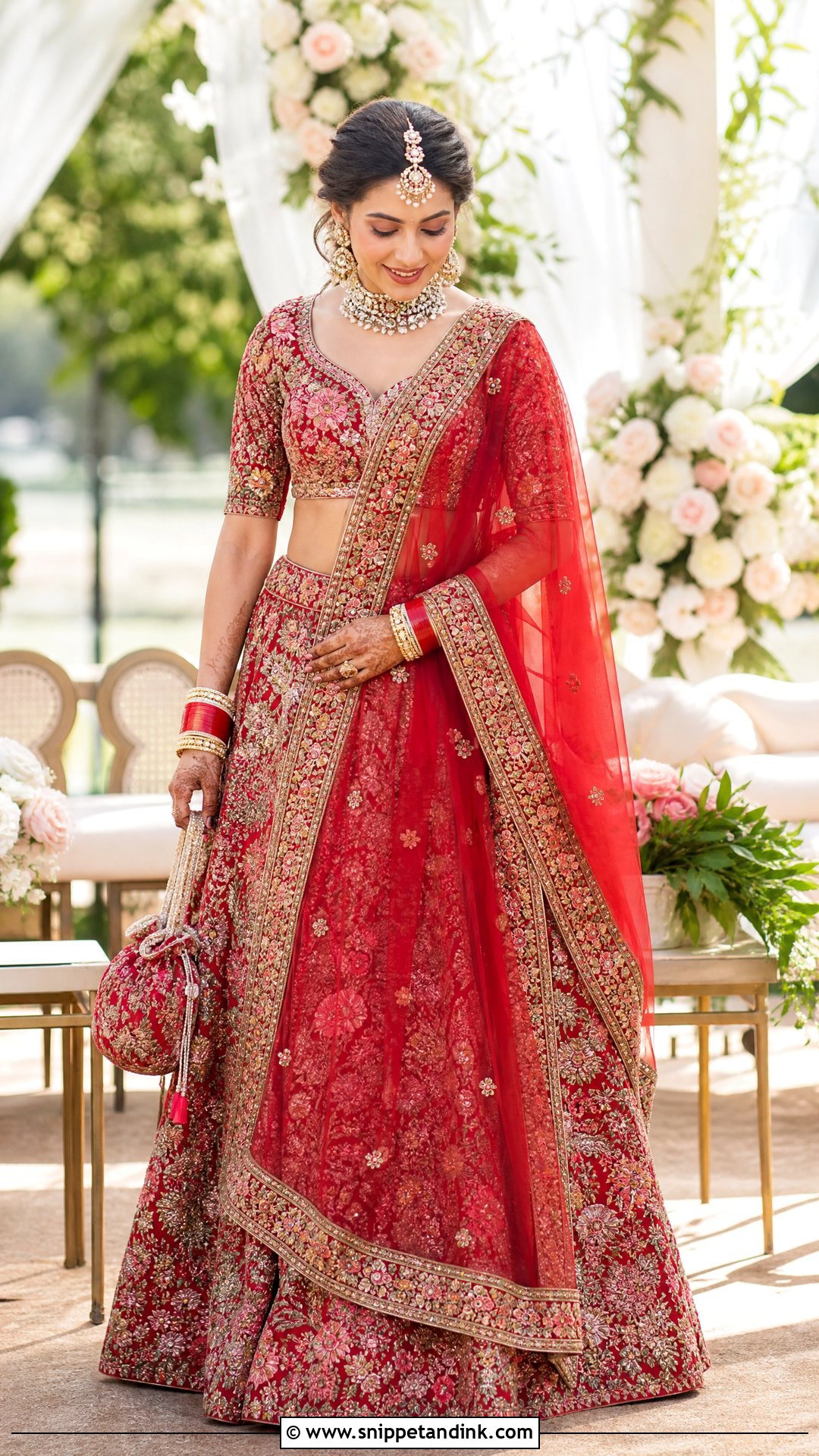
Floral vines soften a bold red lehenga. Antique gold, dusty pink, ivory or tonal red thread all work, as long as there’s open space between motifs so the pattern reads from a distance. A blouse with floral sleeves and a clean neck balances the top half. A sheer dupatta with a slim border avoids another dense layer. Pearl-accented kundan, embroidered juttis and a braided bun with small flowers finish it. This is the one I’d suggest for a daytime or garden ceremony.
13. Red Ombré Bridal Lehenga
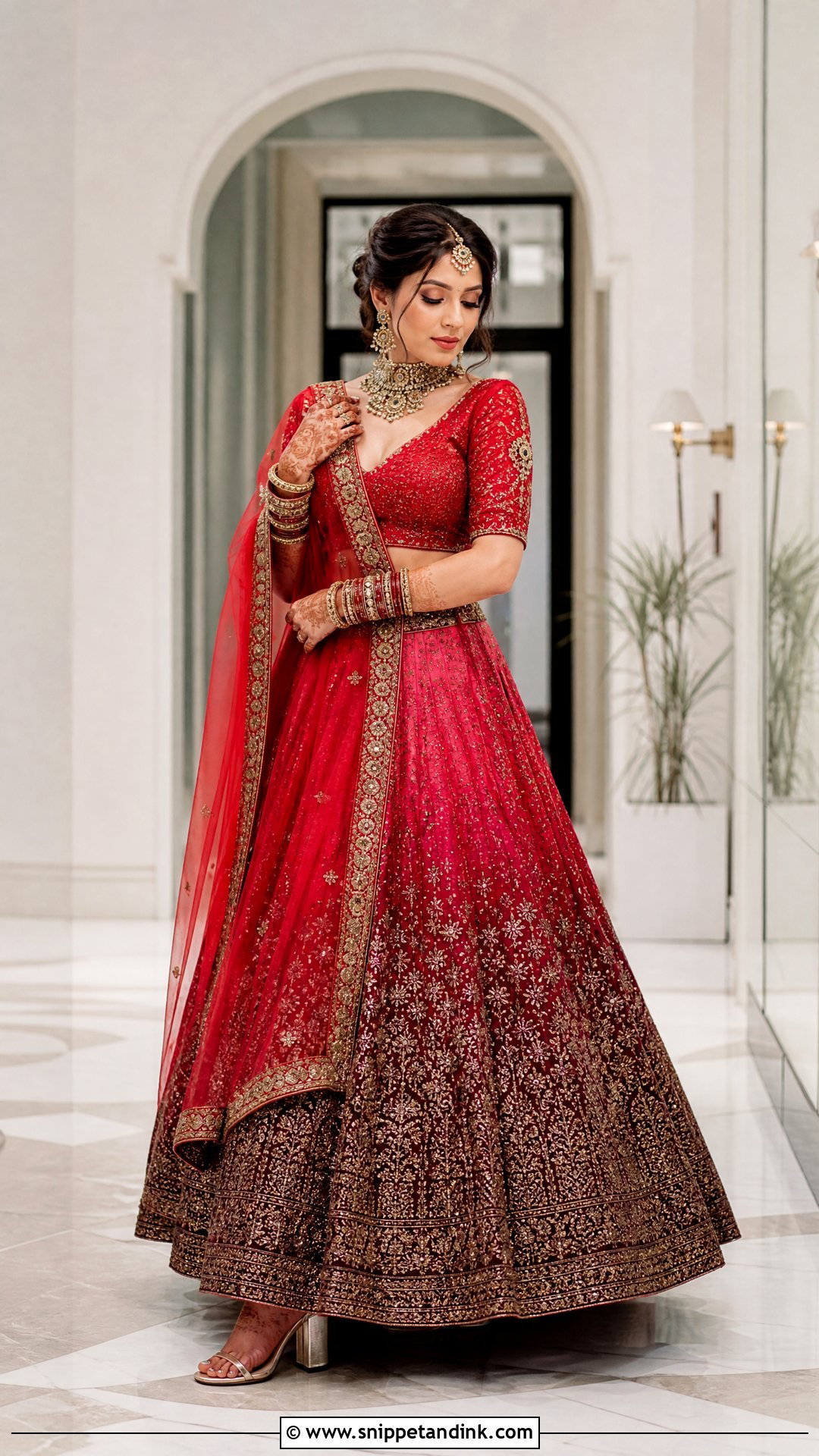
Ombre dye moves through several reds, bright at the waist and burgundy at the hem or the reverse, and gives depth without leaning on embroidery. It’s a good answer for brides who can’t settle on one shade. Keep the blouse in a single solid tone from the gradient, and choose a sheer dupatta so the colour shift stays visible. I’d avoid adding contrast colours. Antique gold, stacked bangles and metallic block heels are plenty, with a low bun and soft makeup.
14. Red Tonal Embroidery Bridal Lehenga
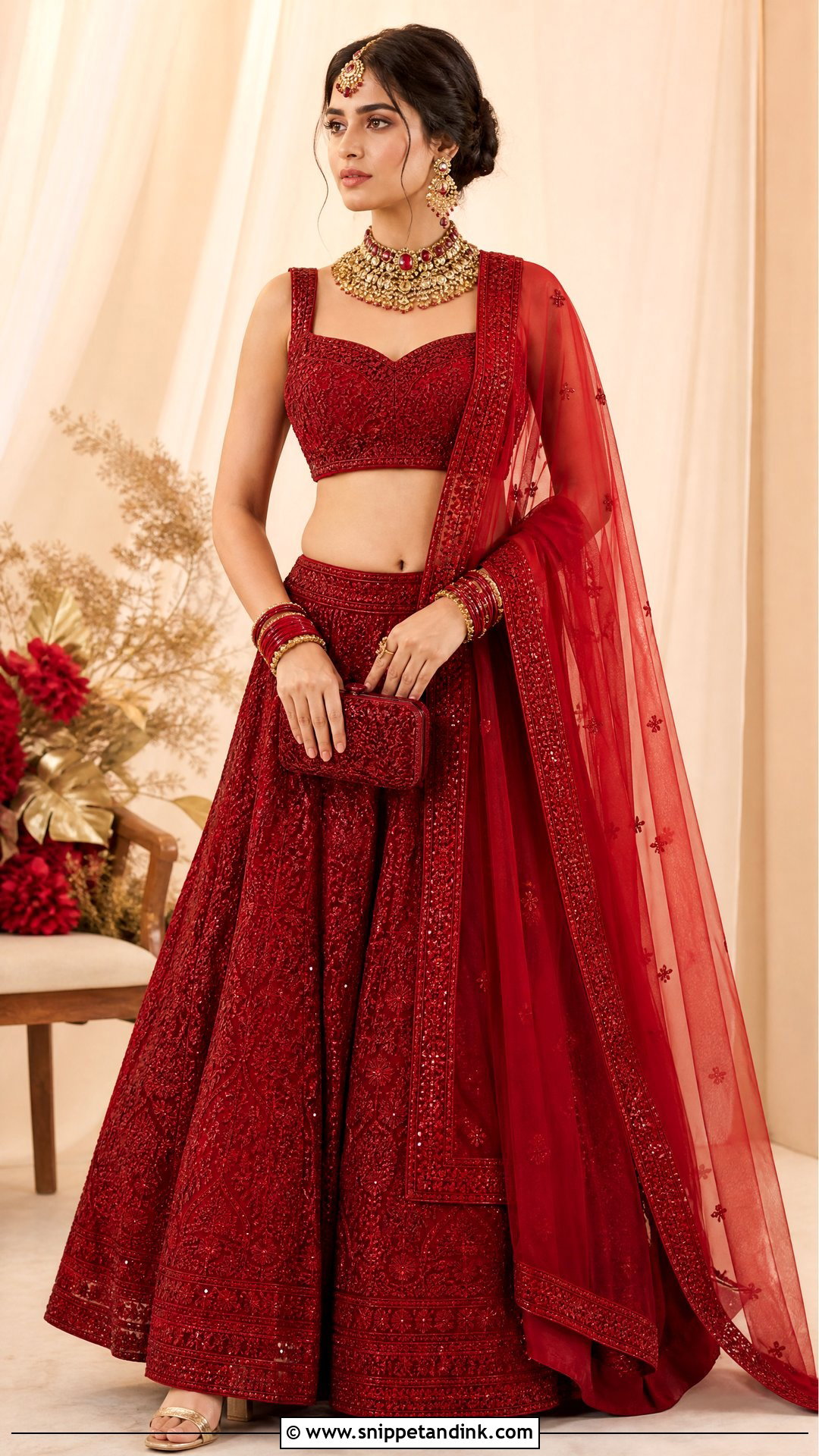
Red-on-red embroidery builds richness from texture instead of colour contrast, and it’s become a quiet favourite among brides who find heavy gold too much. Tonal threadwork, subtle sequins and raised motifs on silk, raw silk or velvet give it depth. Match the blouse exactly and edge a sheer dupatta in restrained metallic detail. Gold jewellery adds definition; ruby accents keep the tonal effect going. Monochrome red can look flat in photos under weak light, so I ask the makeup artist for slightly deeper contour and lip to bring dimension back.
15. Red Jacket Bridal Lehenga
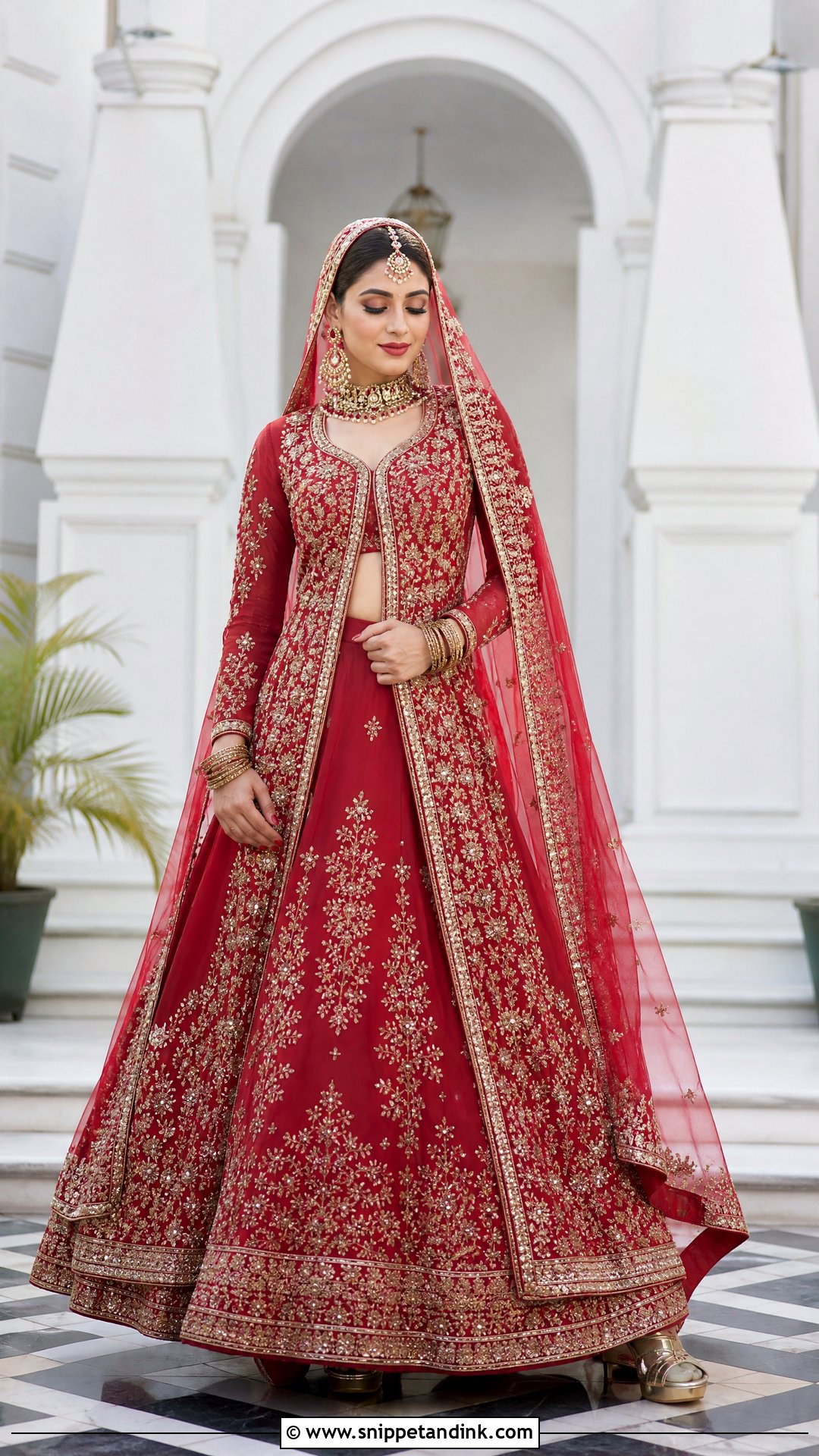
A long embroidered jacket turns a lehenga into a structured, almost tailored outfit. Keep the skirt moderately decorated so the jacket isn’t fighting it. The jacket, knee or ankle length, should frame the waist, not hide it. You can drop the shoulder dupatta entirely and keep only a sheer head veil. Medium necklace, statement earrings, bangles, a small tikka and metallic wedges suit it. I’d keep this for cool or air-conditioned venues; a jacket over a full lehenga traps heat quickly.
16. Red Peplum Bridal Lehenga
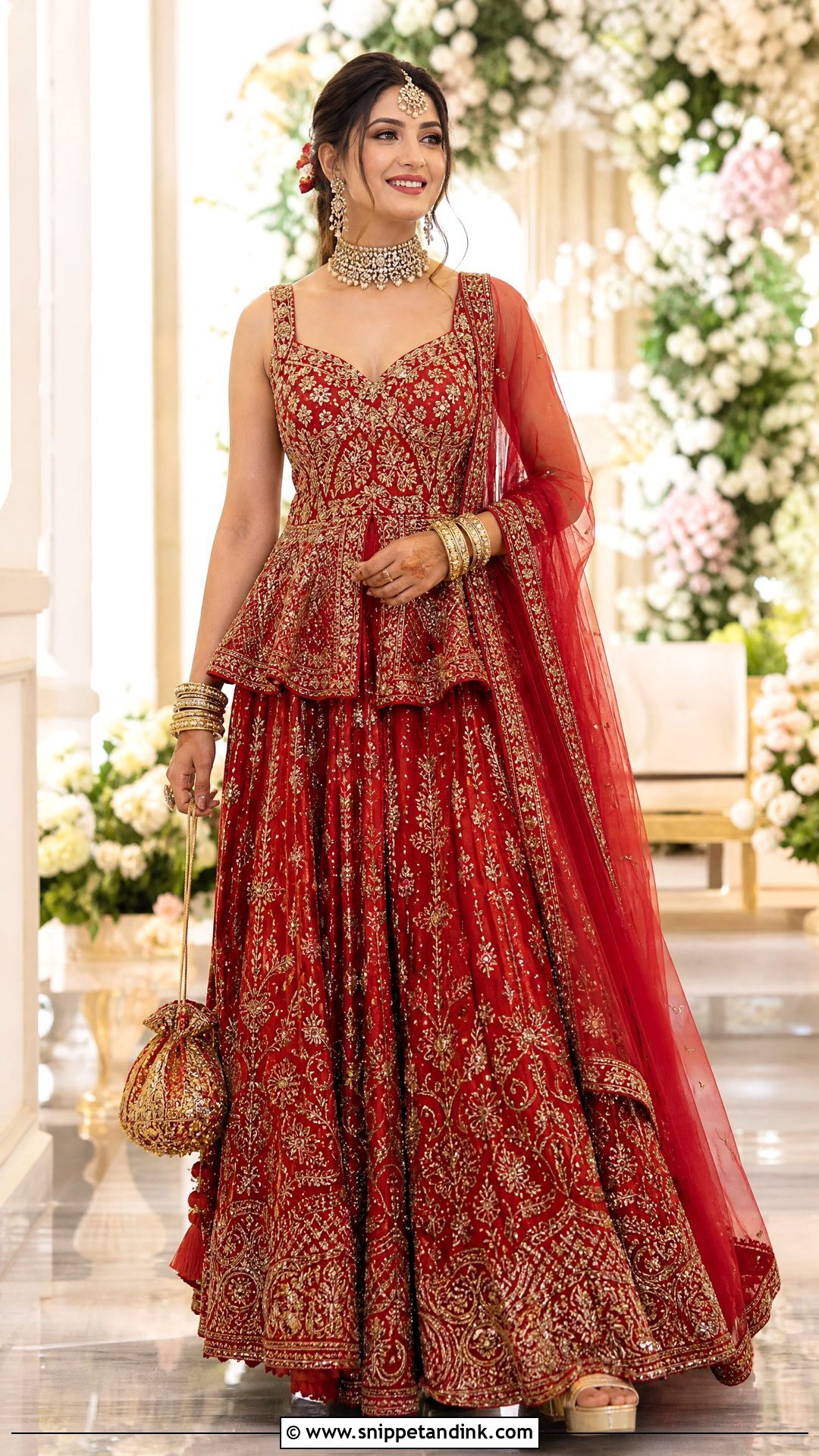
A peplum top defines the upper body and adds a small flare above the skirt. It should end at the upper hip, lined and structured, with sleeves you can move in. Keep the lehenga lighter so the middle doesn’t look heavy, and drape the dupatta on one shoulder or as a veil to keep the peplum shape visible. Platform sandals lift the hem off the floor. My caution: a peplum adds bulk where two flares meet, so it suits slimmer hips better than fuller ones.
17. Red Rajputi Bridal Poshak
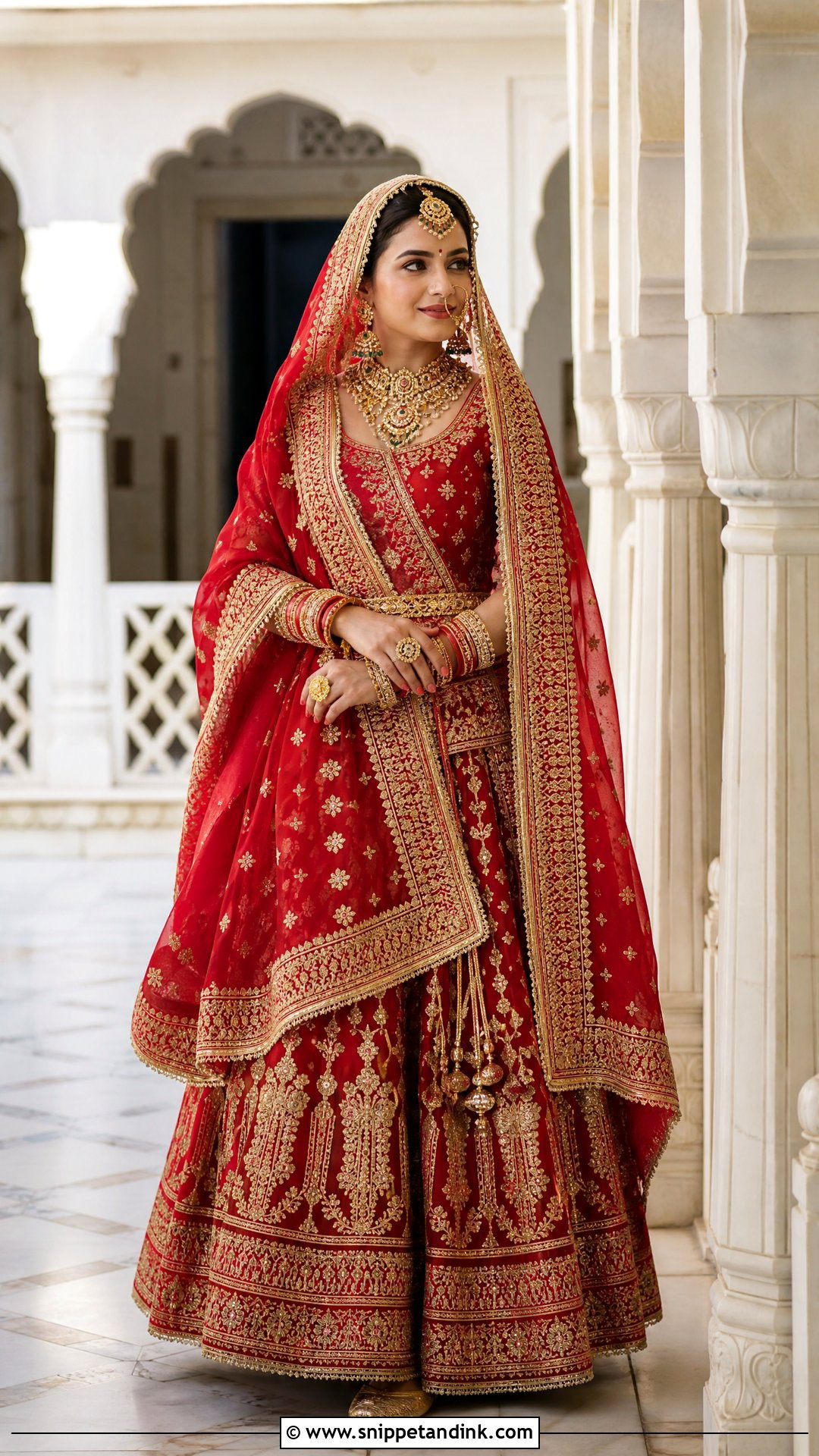
A red Rajputi bridal poshak has its own structure: kurti, kanchli, flared lower garment and a generous odhni that traditionally covers the head and upper body. Red has a long place in Rajputi wedding dress. Look for gota, zari or metallic borders placed so they stay visible once the odhni is draped. Choker, layered necklace, borla, earrings, bangles and a waist belt complete it. The borla only sits right with a center-parted bun beneath. Please work with someone who knows the drape, because an odhni pinned the wrong way can’t be fixed mid-ceremony.
18. Red Bandhani Bridal Lehenga
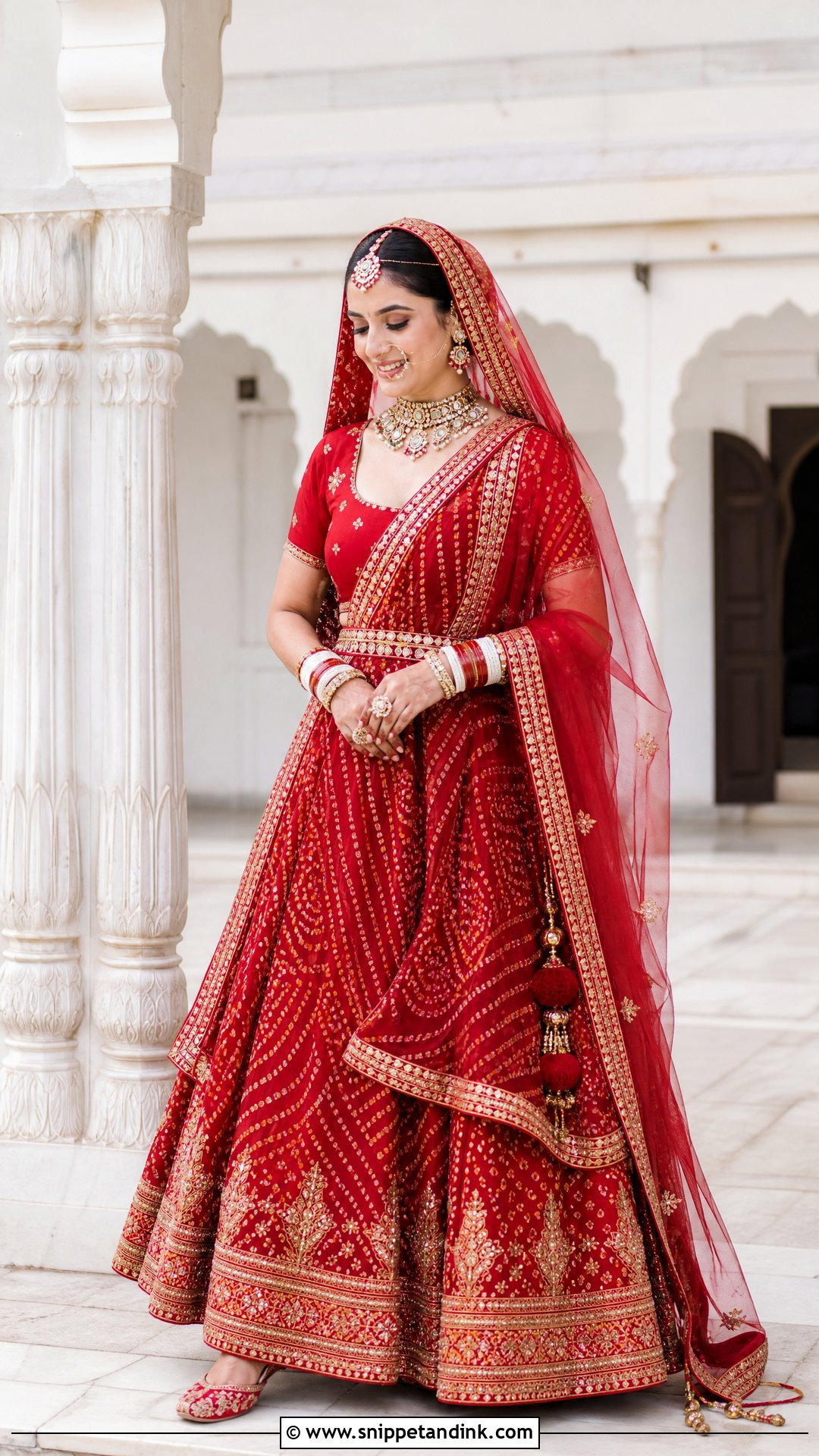
Bandhani is tie-dyed by hand, dot by tiny dot, so no two pieces are exactly alike. A wide skirt with bandhani panels framed by embroidered borders pairs well with a solid red blouse in gold work. A matching bandhani dupatta can cover the head, with a plain sheer one across the shoulder so the pattern doesn’t double up. Kundan, a tikka, traditional bangles and a gold waist belt suit it. At the final fitting, I check that the big border patterns line up at the side seams; misaligned borders are obvious in photos.
19. Red Bridal Lehenga With Green Jewelry
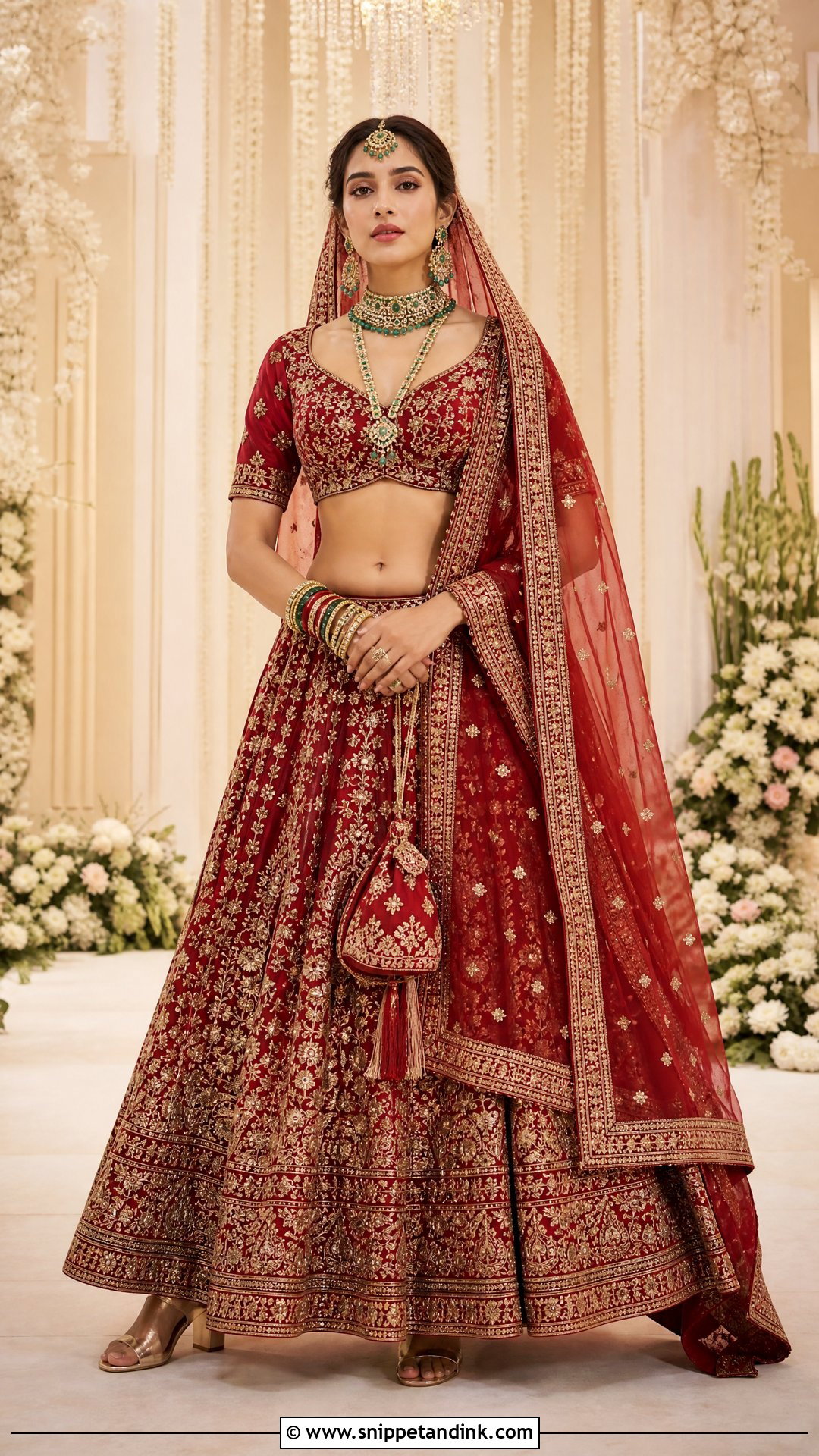
Green jewellery gives a red lehenga crisp contrast without changing its traditional character. Pair a red silk or velvet skirt with antique gold work, a matching blouse and a sheer veil. Bring in emerald tones through the choker, necklace, earrings, tikka or bangles, but not every piece at full intensity. Gold settings connect the green to the embroidery. Hold pieces up to your face before you buy, because deep, bright and muted greens change your skin tone more than you’d think.

20. Simple Red Silk Bridal Lehenga
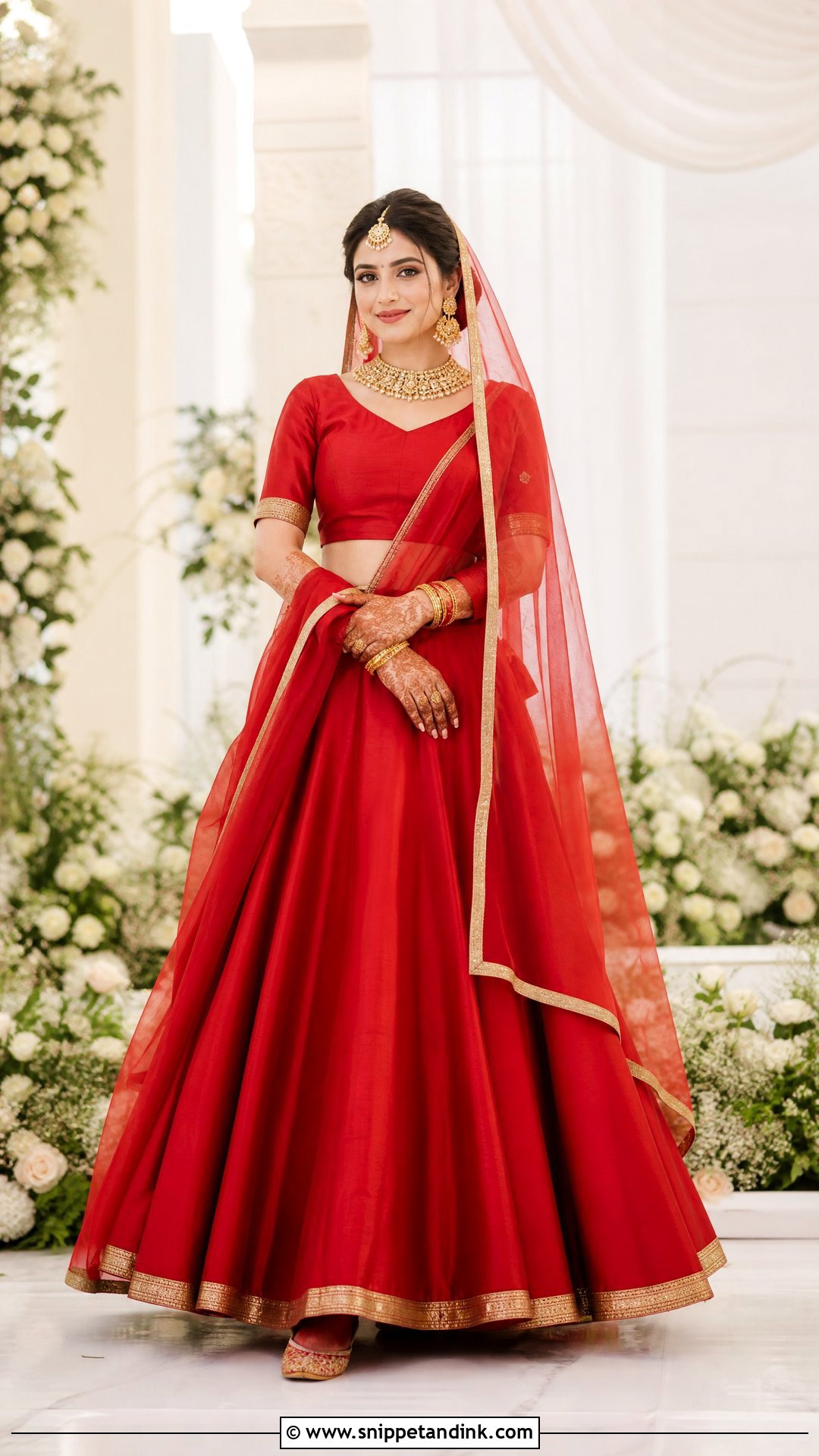
A plain red silk lehenga needs no dense embroidery; tailoring, fabric and accessories carry it. Choose a full skirt with a clean gold border and a well-fitted blouse with subtle sleeve detail. A light organza or net dupatta keeps the silk’s sheen visible. Then build the bridal effect with one strong necklace, earrings, bangles and a tikka. I like gold juttis here, since you’ll actually wear them again. On a simple lehenga, pleat precision and hem length are what everyone sees, so give them an extra fitting.
From First Swatch to Last Fitting
Handworked red bridal wear takes time, and rushed embroidery shows. Lead times vary a lot by designer and season, so treat these as rough guides and confirm with yours.
- Six to eight months out: shortlist silhouettes and colours, and take swatches outside to see the red in daylight.
- Five to six months: place the order. Custom zardozi or hand embroidery commonly needs three to four months to finish.
- Six weeks: first fitting with your actual shoes, blouse padding and jewellery weight in mind.
- Two weeks: final fitting. Sit, kneel, climb a step and lift your arms over your head.
- Wedding week: have the dupatta pre-pleated and the pin positions marked, and pack a small kit with safety pins, thread, fashion tape and blotting paper.
One more check most people skip: red dye can transfer when fabric gets damp. If your outfit will meet monsoon weather or a lot of sweat, ask whether the fabric has been colour-tested, and wear a light inner layer under any ivory or pale accessories.
Start From the Ritual, Then the Red
Start with your ceremony, the weather and how much comfort you need, and the choice gets much easier. A zardozi lehenga gives grandeur, a silk saree carries heritage, and shararas, Anarkalis, jackets and gowns give you different silhouettes. Once the main outfit is set, plan the dupatta, jewellery, shoes, hair and makeup as one look. Wear every layer together before the wedding and practise walking, sitting and bending. Most of all, respect the family and regional customs attached to particular garments. The right outfit is the one you can still move freely in at the end of the pheras.
You'll Like These Ideas:







Leave a Reply