
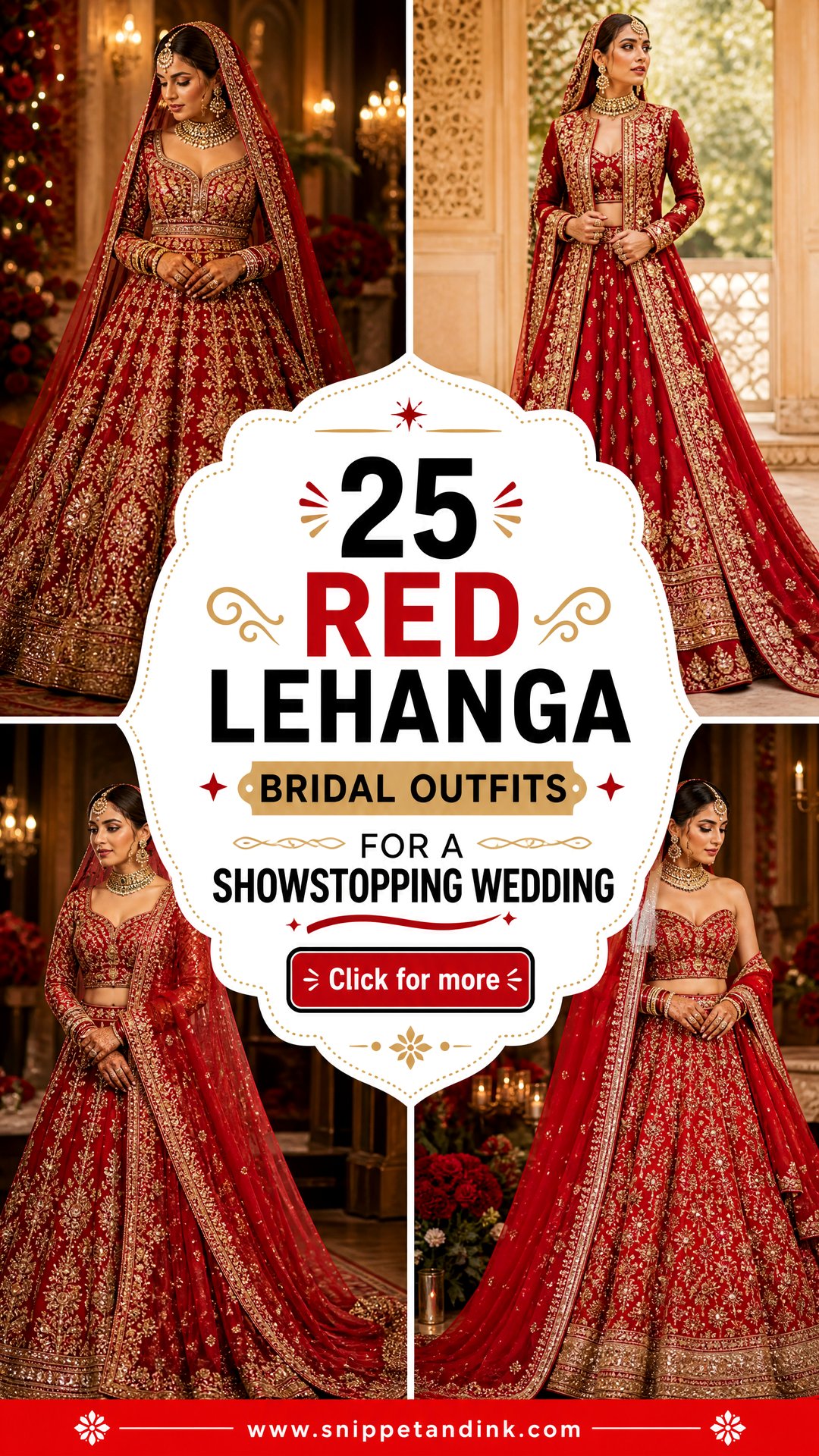
Brides keep coming back to red because it carries the weight of every wedding they grew up watching. From classic zardozi lehengas to sculpted velvet sets, there are more ways to wear it now than ever. In my fittings, though, the skirt is rarely what decides whether a bride feels right. It’s the cut of the blouse, how the dupatta is pinned, whether she can sit through the pheras, and how her jewelry, hair and makeup sit against all that red. The 25 red lehengas below are grouped loosely by embroidery, then shape, neckline, styling and color pairing, each with the fitting notes I’d share if you were standing in front of my mirror.
Turn the Lehenga Inside Out Before You Pay
Shops display lehengas from the front, under flattering light. I always ask to see the inside, because that’s where you learn how a lehenga will behave on a long day and whether it can be altered later.
- The back of the embroidery. Hand zardozi and zari work look slightly irregular on the reverse, with visible padding and knots. Uniform rows of bobbin thread over a mesh backing usually mean machine work, which is fine, but should be priced as such.
- Seam allowance. Ask how much fabric is left at the waist and side seams. Bodies change in the months before a wedding, and a skirt with no margin can only be taken in, never let out.
- The can-can. Is it stitched in or detachable? A detachable one lets you reduce volume for the reception or a car journey.
- Lining. Soft cotton or a smooth crepe against the skin; stiff synthetic lining under heavy work gets hot and itchy within an hour.
- Closure. A hook or zip at the waist, with tie strings as backup, holds weight far better than strings alone.
Then lift the skirt with one hand. If it already feels heavy on a hanger, it will feel heavier at the end of the evening, and that’s worth knowing before the deposit, not after.
1. Red Zardozi Bridal Lehenga
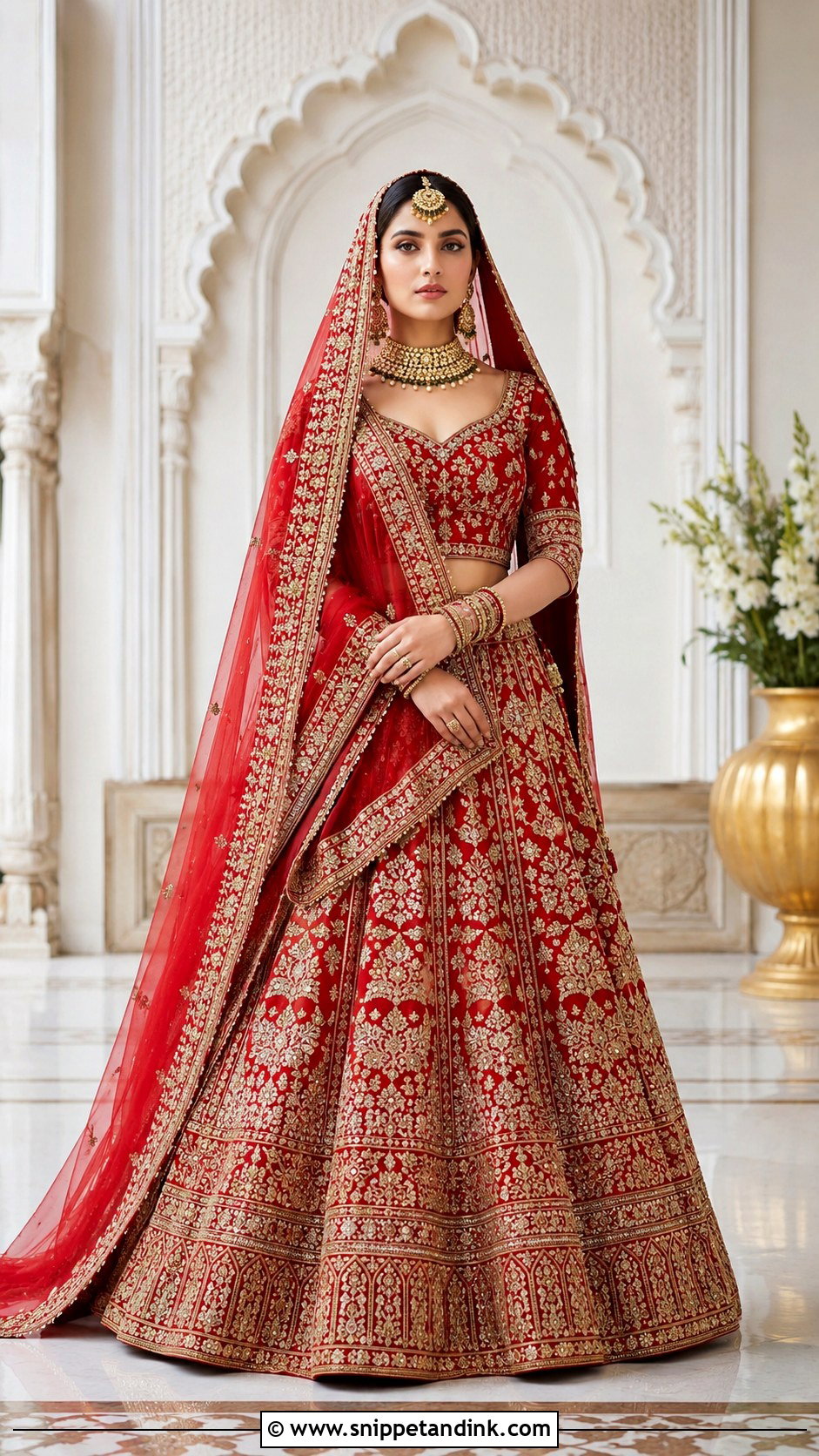
Zardozi is metal thread couched by hand, often over padding, so it gives a raised, almost sculpted surface that reads royal from across a hall. A red zardozi lehenga with a fitted blouse, a full flared skirt and a sheer dupatta with heavy borders is the version that still looks right in photos decades later. Finish it with antique gold jewelry, a matha patti, layered necklaces, bangles and embroidered juttis. Dense zardozi is heavy and scratchy on the inside, so I check that the blouse is lined in something soft before anything else. Balanced makeup, a red or rose lip and a low bun with flowers or jeweled pins let the handwork lead.
2. Red Velvet Bridal Lehenga
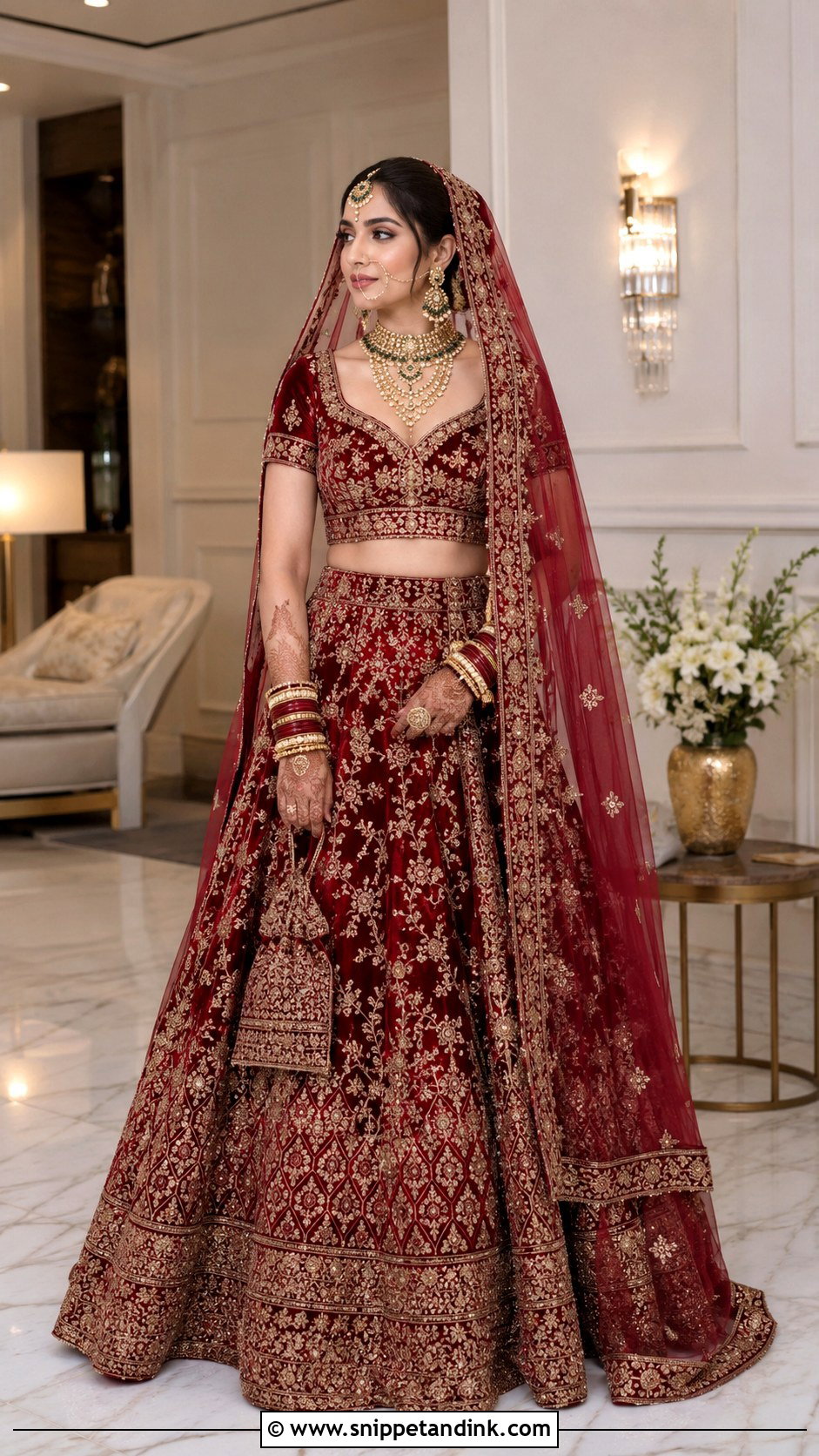
Velvet makes red look deeper and warmer, which suits autumn and winter weddings. A deep red velvet skirt with gold threadwork, a structured blouse and a net dupatta keeps the top half from feeling too heavy. Style it with kundan, a choker, statement earrings and embellished heels or juttis. I’d avoid a velvet dupatta on top of a velvet skirt; it’s warm and it won’t hold a drape. A center-parted bun, dewy skin and softly highlighted cheeks finish it without adding clutter.
3. Red Banarasi Bridal Lehenga
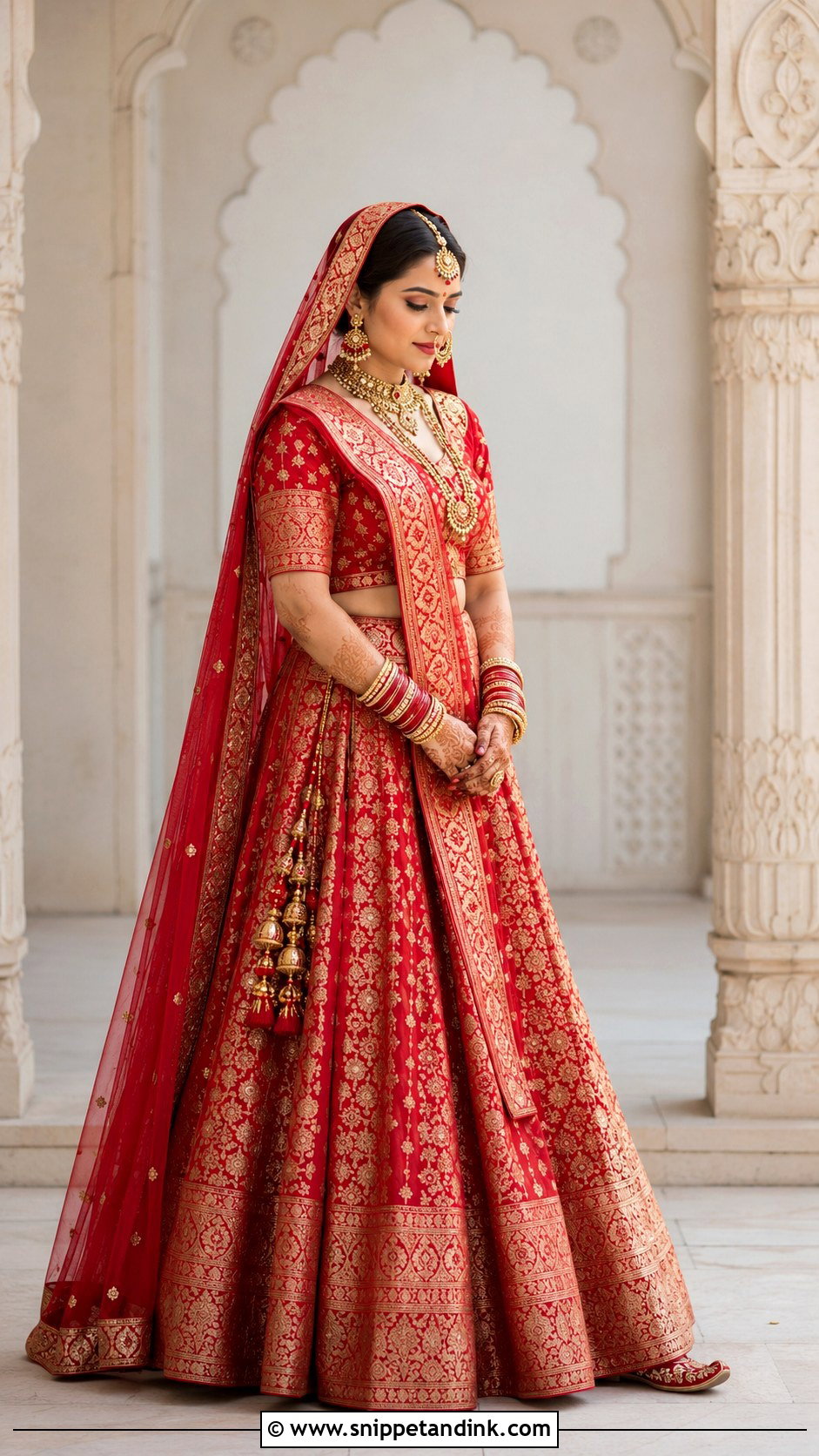
Banarasi silk carries its own woven motifs, so a red Banarasi lehenga needs very little extra decoration. A matching blouse and a contrasting gold or red dupatta keep it traditional, with temple jewelry, gold bangles, a nath and classic juttis. Because the fabric is the star, the drape has to be tidy: neat pleats and a refined dupatta drape. Woven silk is stiff and holds every fold, so I steam the skirt on the morning of the wedding rather than the night before, when it would just crush again in transport. Soft winged liner, a red bindi and a polished bun complete it.
4. Red Sequin Bridal Lehenga
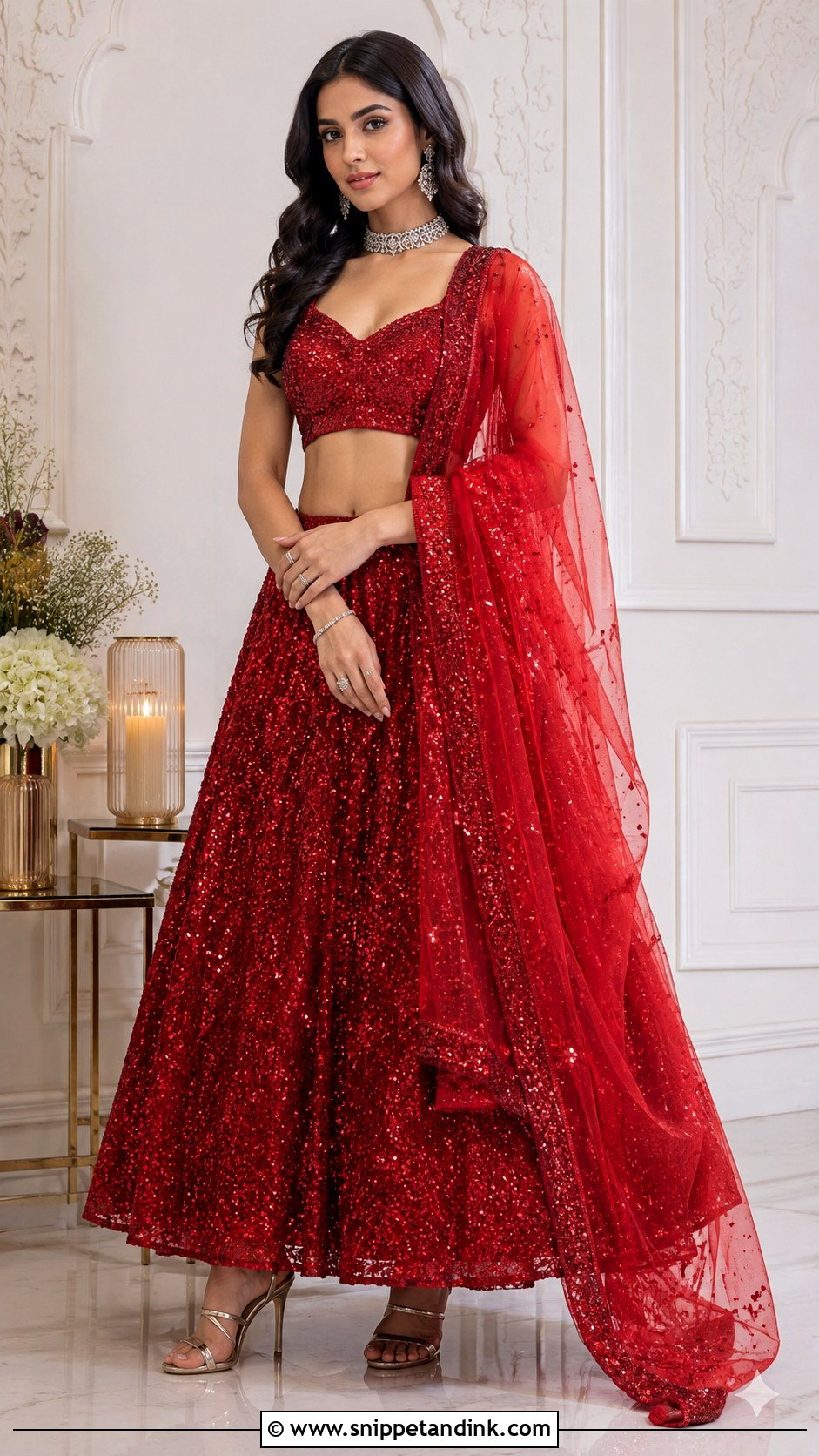
Sparkle without abandoning tradition: that’s what tonal sequins give a red bridal lehenga. They come alive under evening lights, at reception entries and in night portraits. Choose tonal sequins, a modern blouse and a lightweight dupatta so you can move. Diamond-style jewelry, crystal bangles, metallic heels and sleek hair complete it, but go light at the neckline, since sequins and a big necklace compete for the same light. My one caution is comfort. Sequins on the inner arm rub for hours, so I ask for those panels to be left plain. A soft smoky eye and a nude-red lip keep it modern.
5. Red Floral Bridal Lehenga
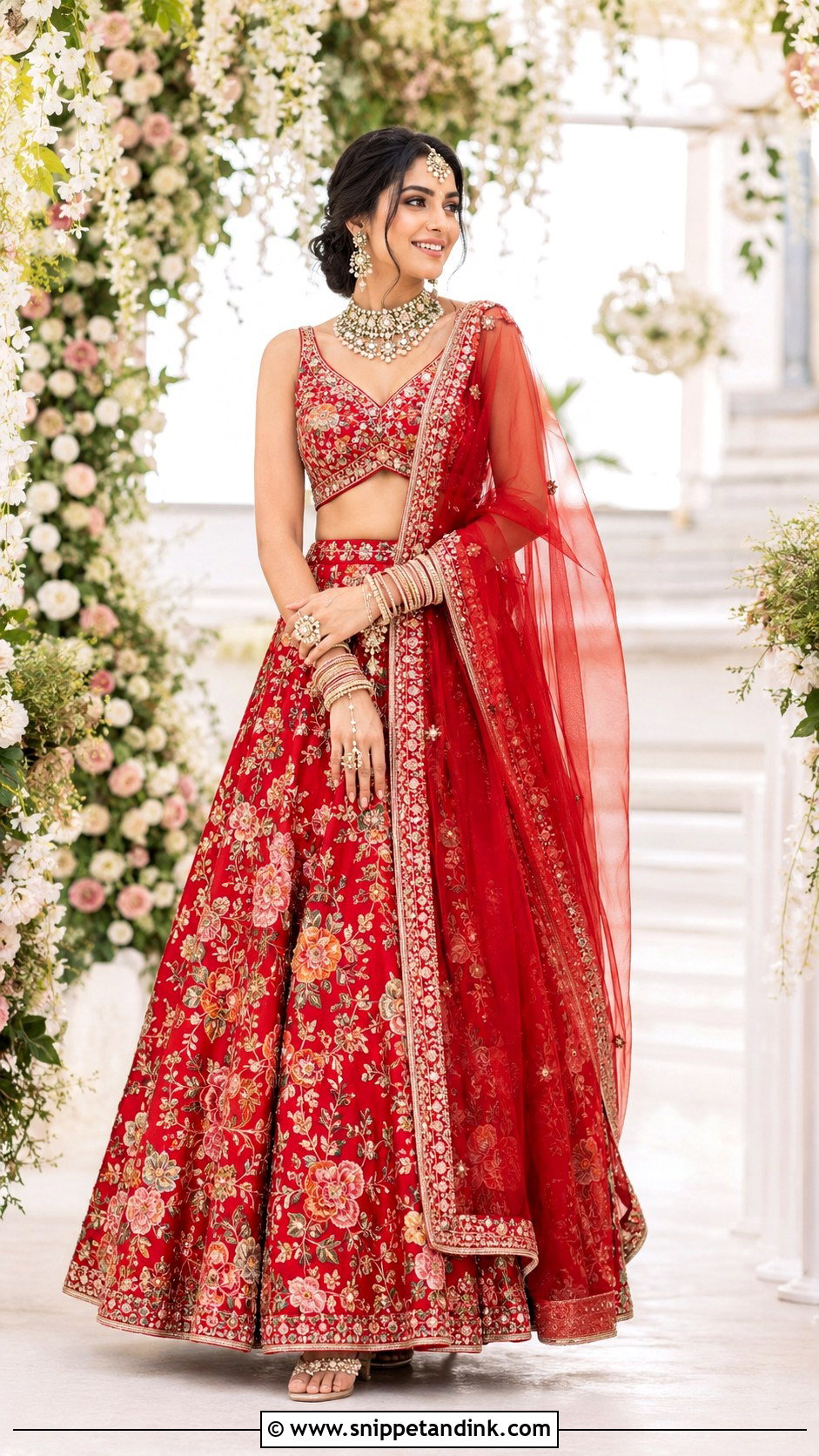
Florals take the edge off a bold red. Floral embroidery, threadwork or appliqué on a red base, picked out in gold, pink, ivory or green, adds dimension while staying festive enough for the ceremony. Style it with polki, a delicate maang tikka, stacked bangles and embroidered sandals or juttis, plus a sheer dupatta with floral borders. Daytime and outdoor weddings suit it best. When I match the hair and makeup, I pull from the smallest color in the embroidery, so a floral bun with a hint of blush links everything without repeating the red.
6. Red Gota Patti Bridal Lehenga
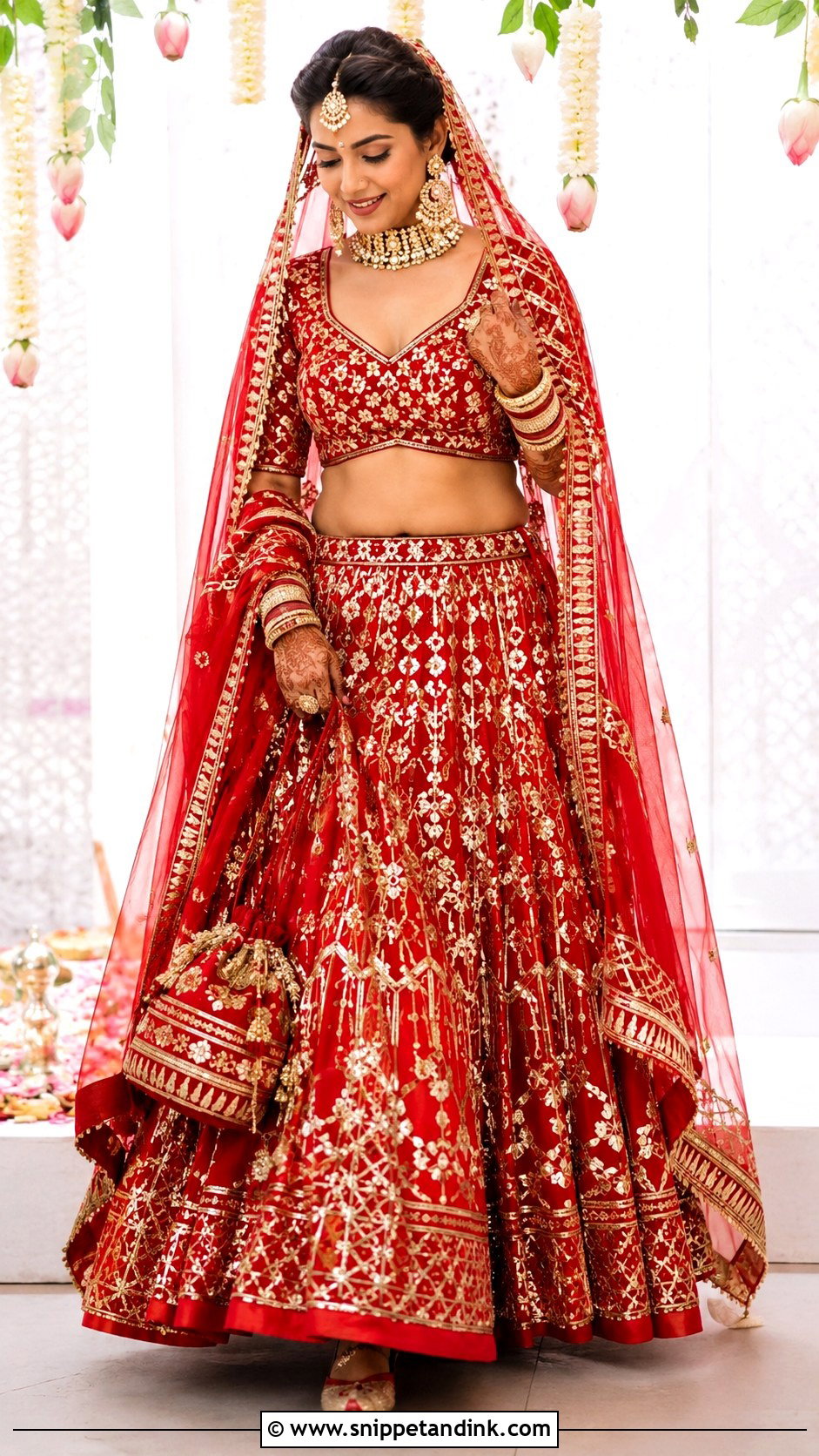
A red gota patti bridal lehenga is bright and joyful. Gota is flat metallic ribbon, folded and stitched into motifs, so it shines without the weight of dense embroidery. Pair gold gota motifs on red with a short blouse, a light dupatta, kundan jewelry, gold bangles, a potli bag and comfortable juttis. I recommend it to brides with long rituals ahead who want to sit and stand freely. One thing to know: gota can crease and dull if it’s crushed, so it travels on a hanger, not folded in a bag. Kohl-lined eyes, peachy cheeks and a soft red lip keep the face fresh.
7. Red Mirror Work Bridal Lehenga
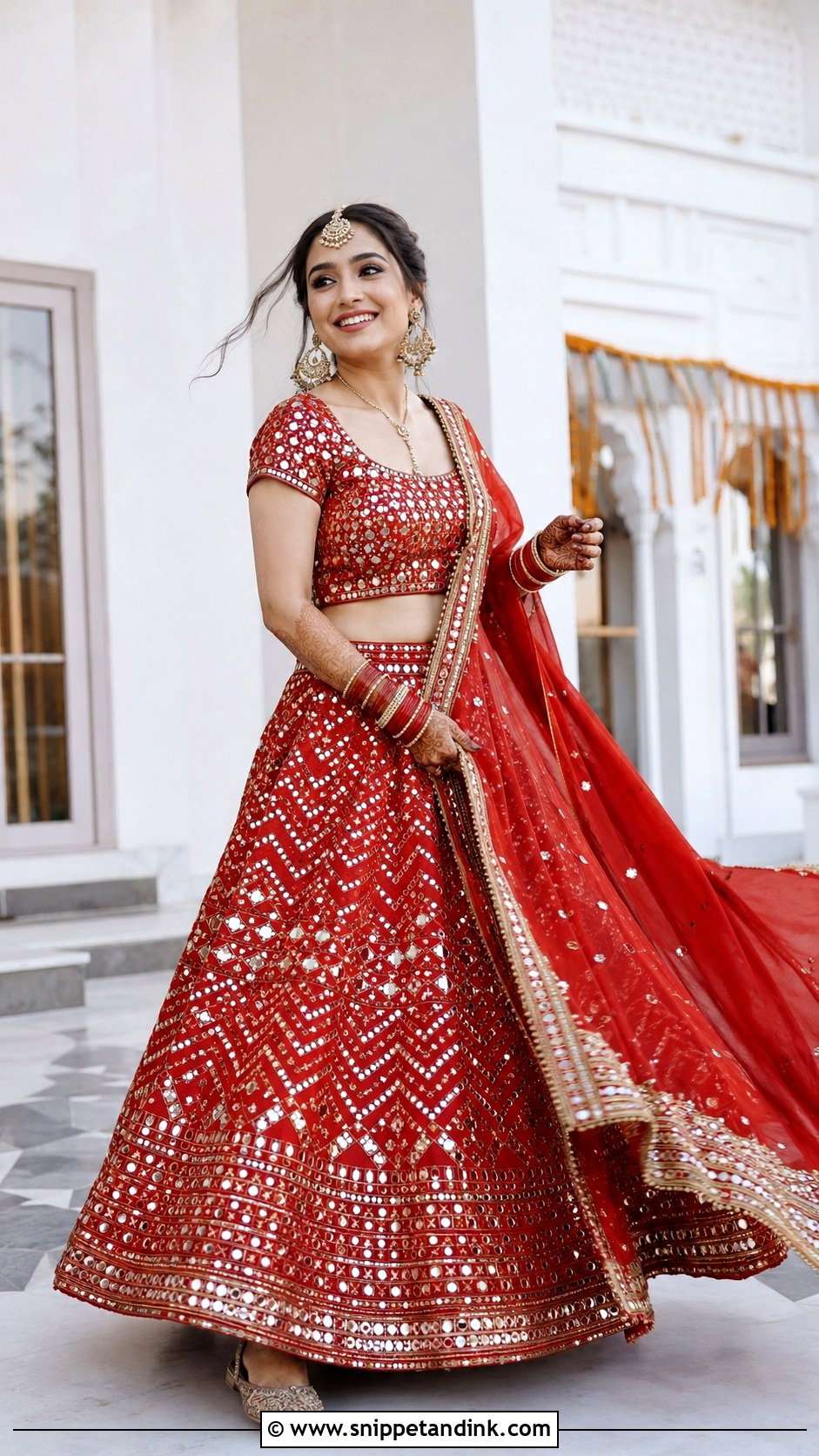
Mirror work moves the light around as you move, which is why this lehenga looks so alive in videos. The trick is restraint. I look for controlled mirror placement, borders and scattered motifs, so the outfit reads bridal rather than festival-casual. A matching blouse, a bordered dupatta, silver or gold jewelry and embellished juttis bring it together. Keep the hair polished, either a sleek bun or soft waves. Glowing skin and defined eyes balance all that reflection, and a matte base stops your face from flashing back at the camera like the mirrors do.
8. Red A-Line Bridal Lehenga
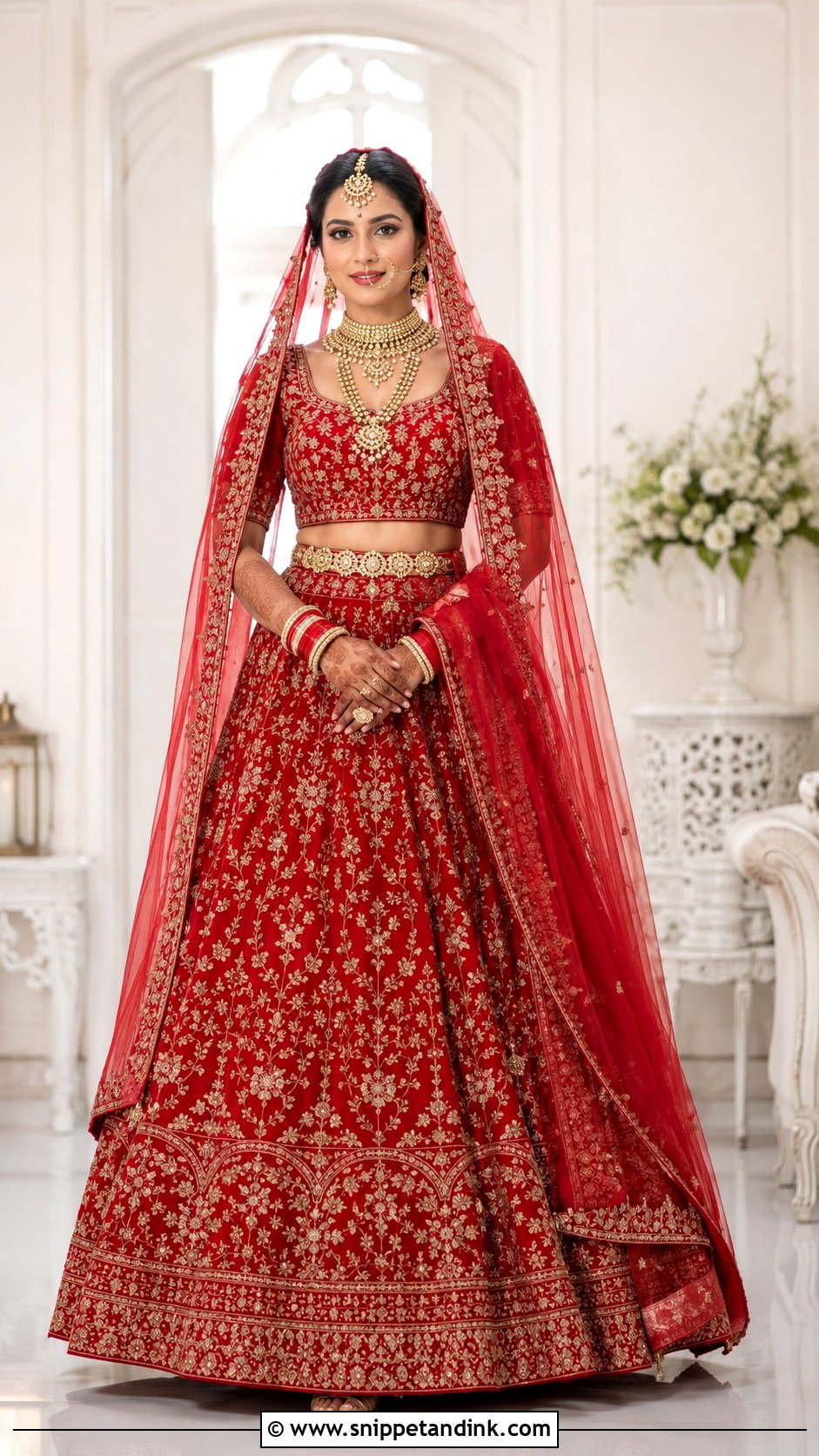
An A-line skirt skims the waist and opens gradually toward the hem, so it moves without the bulk of a full circle. It’s the silhouette I reach for most often because it suits so many body types and stays manageable on stairs. Pair it with a fitted blouse, a soft net dupatta, layered jewelry and heels or juttis; a waist belt can hold the dupatta and define the shape. If you want to look taller, choose embroidery that runs vertically in panels. Soft glam makeup and a neat bun finish it quietly.
9. Red Flared Bridal Lehenga
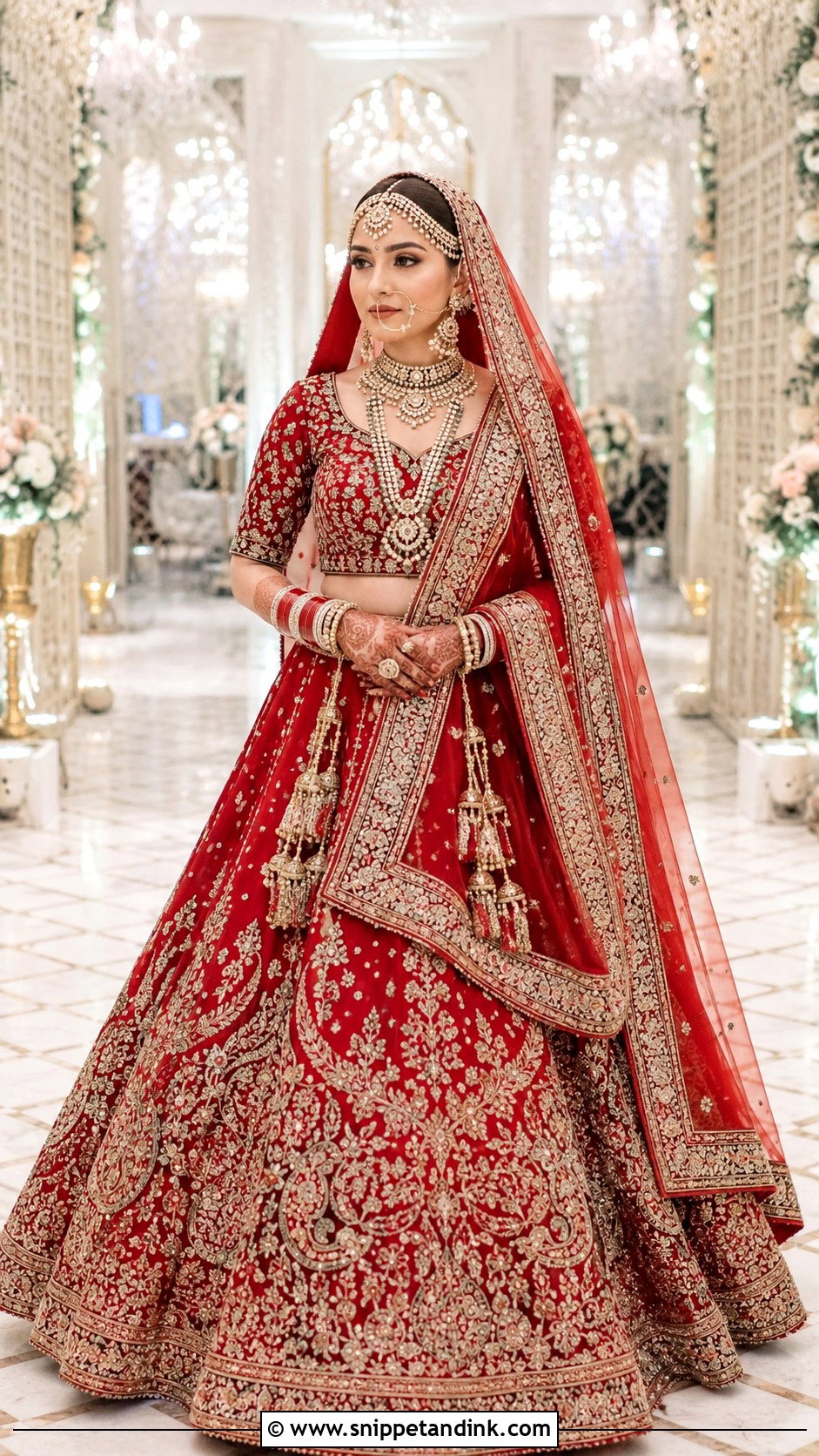
Nothing makes an entrance like a wide flared skirt. A red flared bridal lehenga with a heavily bordered dupatta and statement jewelry gives the princess silhouette many brides grew up imagining. The part I care about is the can-can: enough to hold the shape, not so much that you can’t get into a car or sit on a low mandap seat. Ask whether the can-can is detachable so you can adjust it after the ceremony. Add a supportive blouse, a matha patti, layered necklaces, bangles and comfortable footwear, pin the dupatta neatly, and go classic with a bun, bold liner and a deep red lip.
10. Red Mermaid Bridal Lehenga
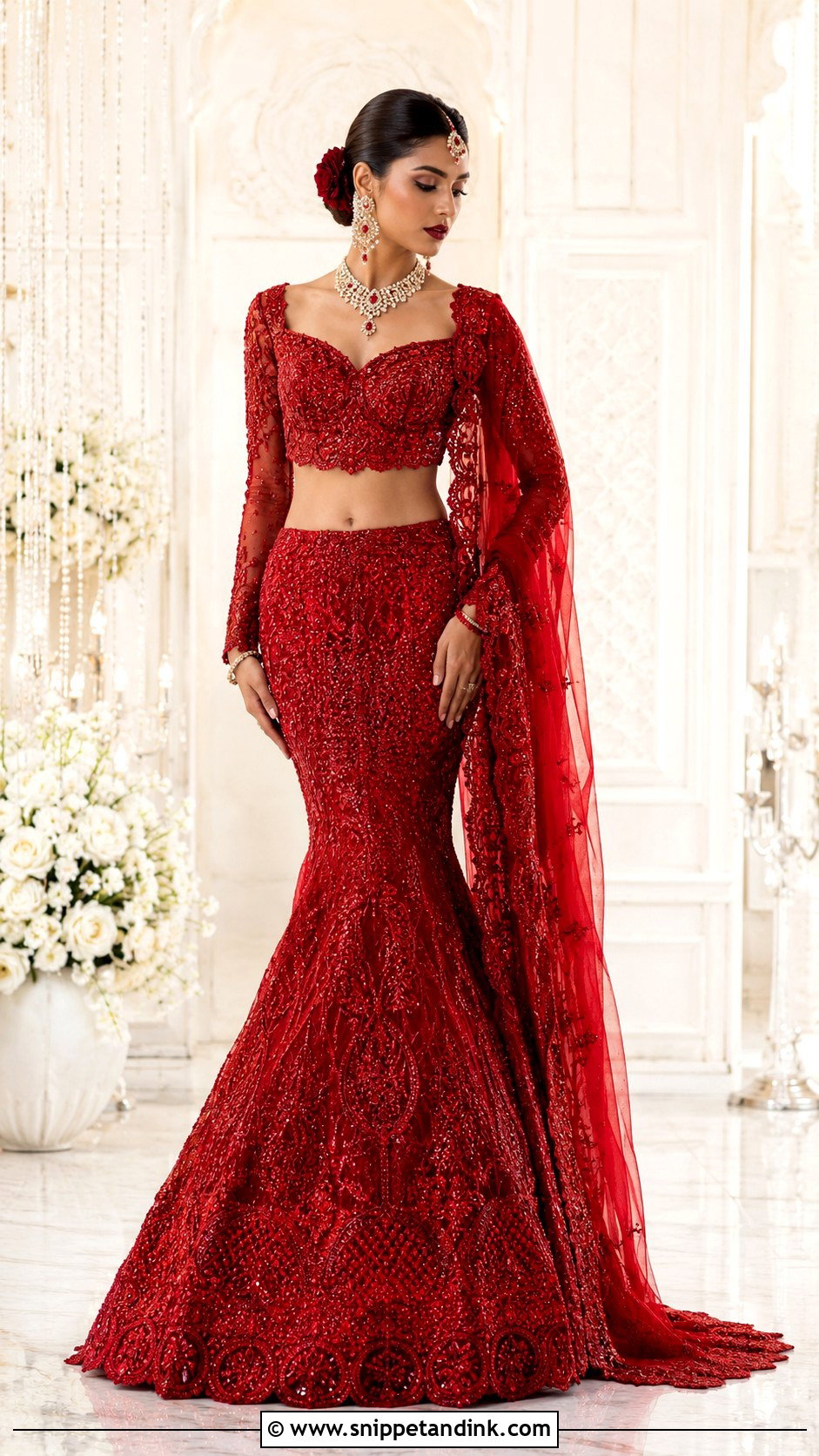
A mermaid lehenga is fitted through the waist and hips and flares low on the skirt, which feels modern and confident. I’ll be honest about the trade-off: it limits your stride and it’s hard to sit cross-legged, so it suits a reception or a ceremony where you’ll be seated on chairs better than a floor-seated ritual. Rich embroidery and a traditional dupatta keep it bridal. Choose a structured blouse, statement earrings, a sleek necklace and heels, and drape the dupatta to one side so it doesn’t hide the shape. Sleek hair, soft contour and a balanced lip suit its clean lines.
11. Red Jacket Bridal Lehenga
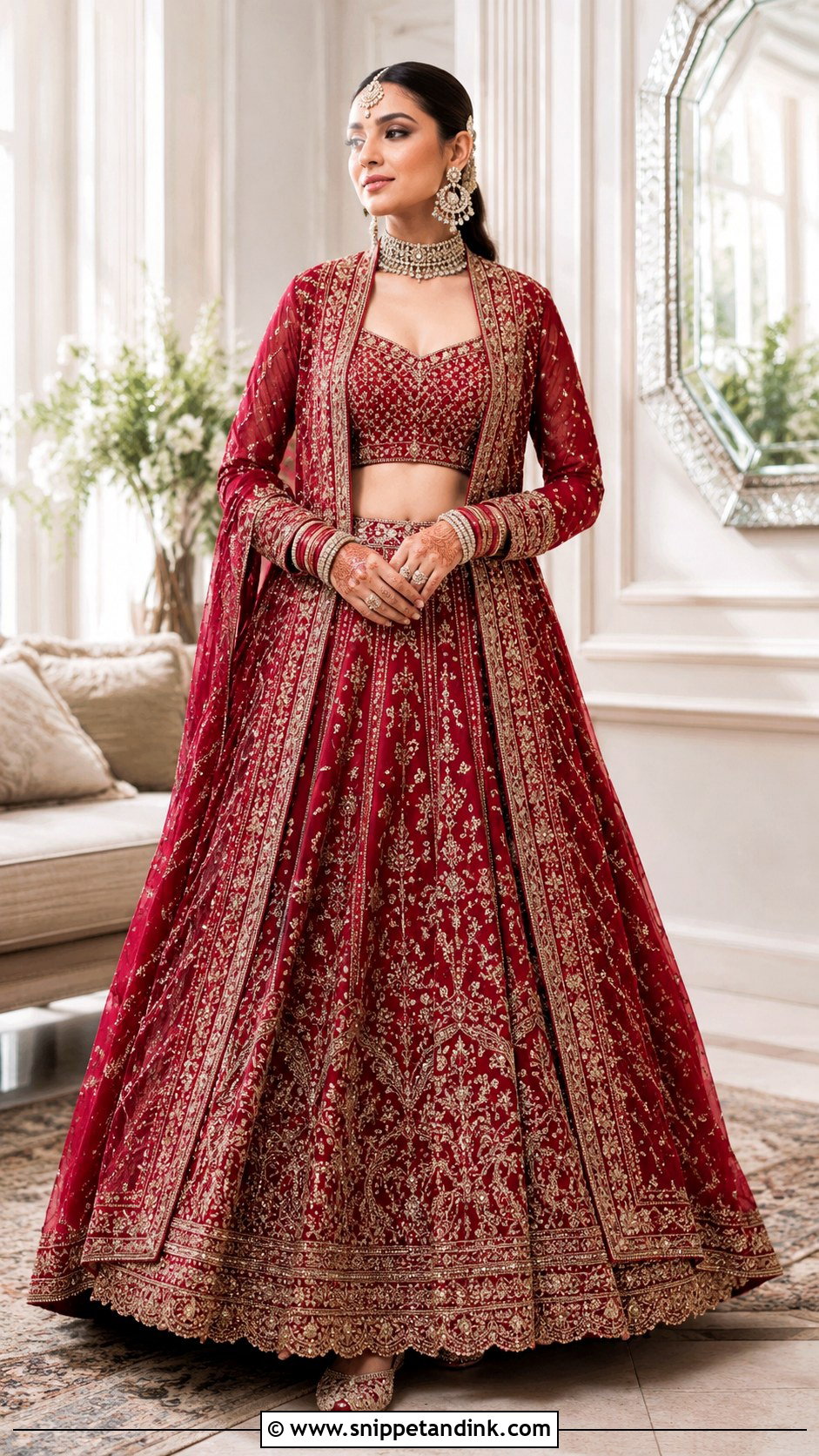
The jacket replaces much of what a dupatta normally does, so a red jacket lehenga gives a layered, modern royal look with less to pin. Jackets can be long, short, sheer or heavily embroidered depending on the ceremony. Pair a matching blouse and embellished jacket with statement earrings, a choker, bangles and sleek heels or juttis. It’s at its best in cooler weather or air-conditioned indoor venues, because a lined, embroidered jacket gets warm. Keep the hair up so the neckline and jacket edges show, and keep makeup fresh with defined eyes.
12. Red Peplum Bridal Lehenga
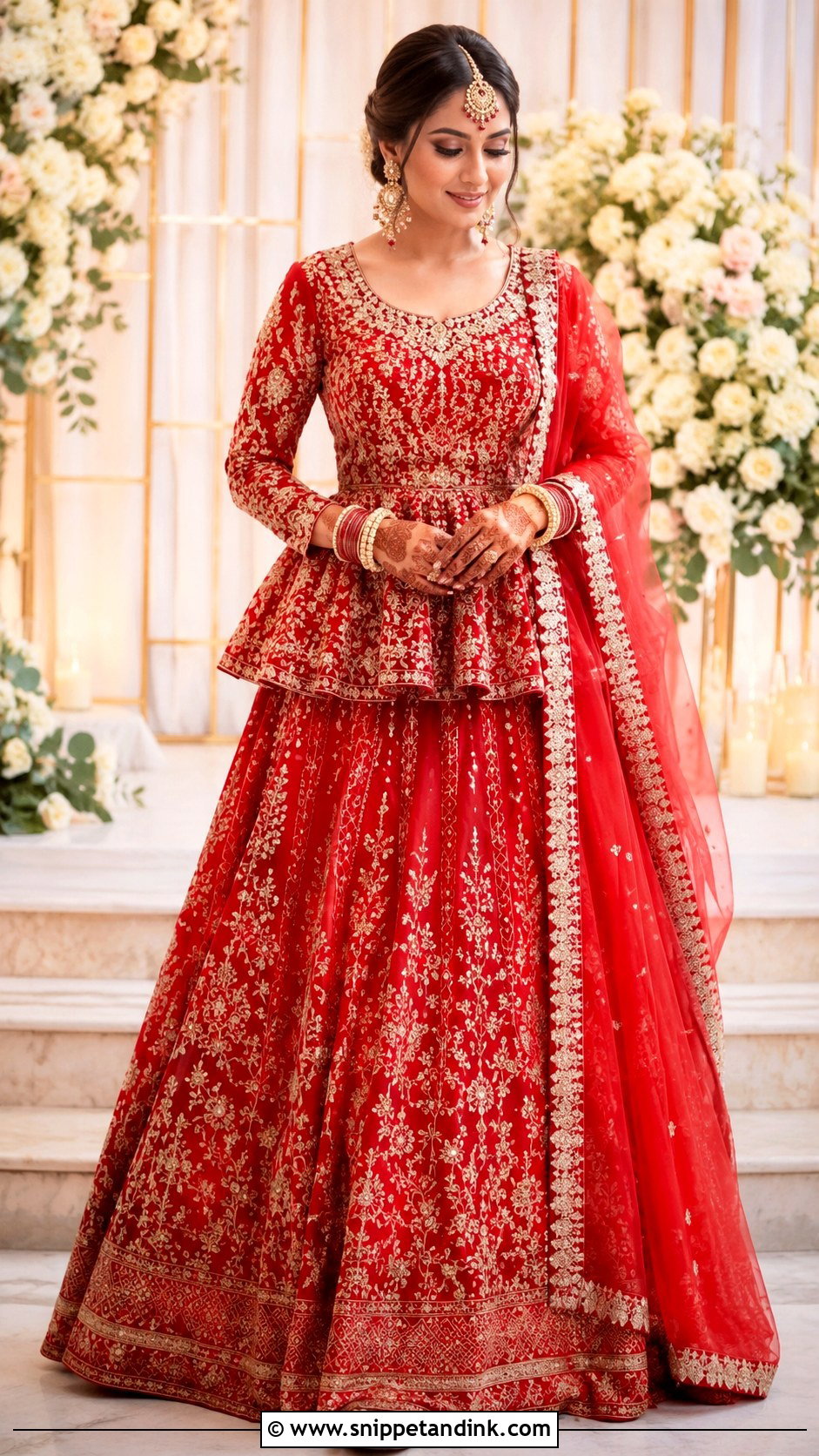
Brides who don’t want a very short, tight blouse often love a peplum. The flared hem gives waist definition and extra coverage over the skirt, and it works with simple or heavily embroidered lehengas alike. Choose a red peplum top with gold embroidery, a flowing skirt and a sheer dupatta, with chandbalis, a maang tikka, bangles and embellished footwear. Where I see peplums fail is length: too long and they cut your legs short, so I pin the hem at the fitting until it hits just past the waist. A soft bun, glowing makeup and a small bindi finish it.
13. Red Off Shoulder Bridal Lehenga
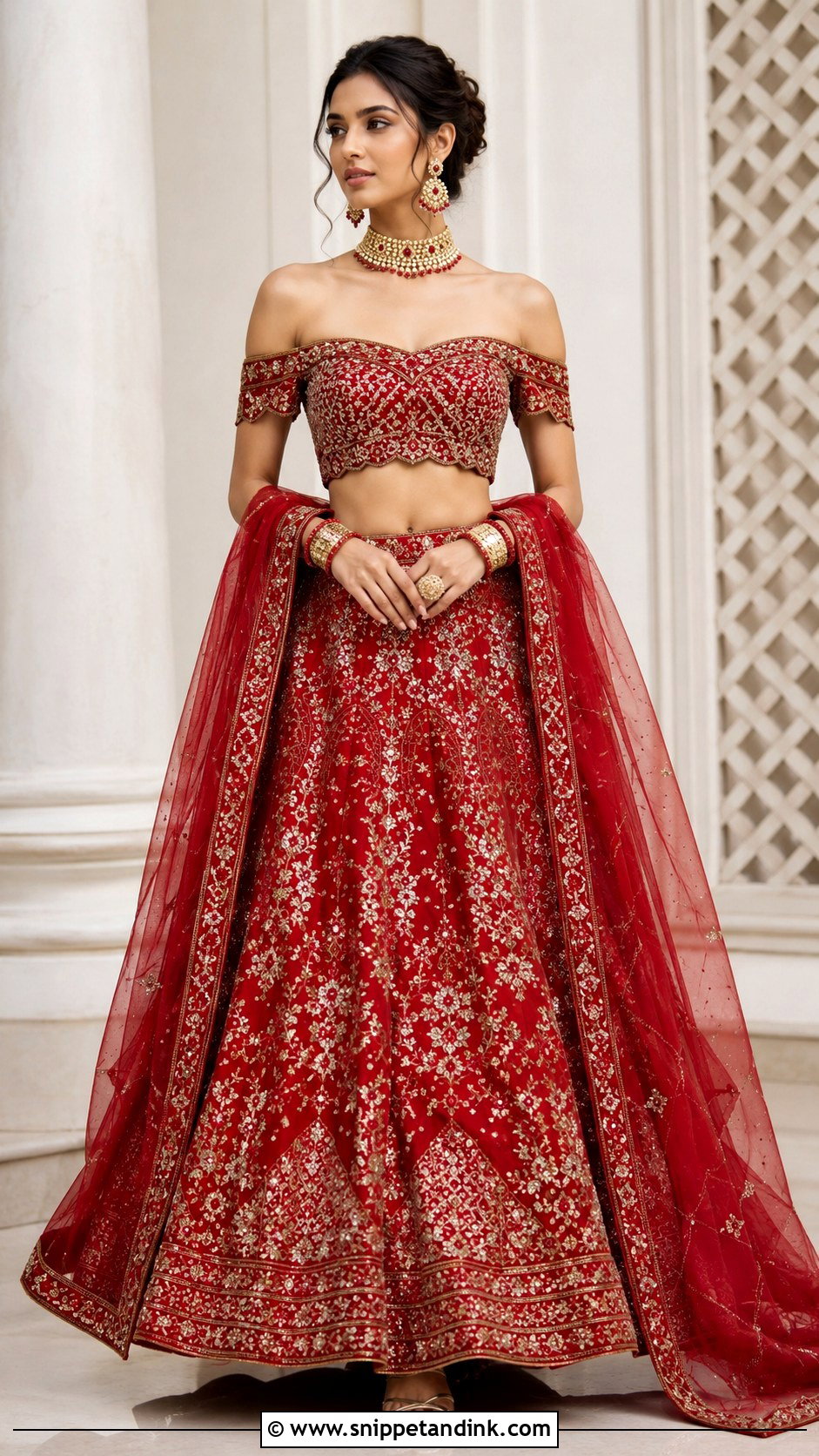
An off-shoulder blouse gives classic red a modern twist, and it stays elegant if the embroidery, dupatta and jewelry are kept in balance. Choose a structured off-shoulder blouse with a full red skirt and a sheer dupatta draped lightly over the arms or one shoulder. Add a choker, statement earrings, bangles and heels. Off-shoulder necklines need internal boning or silicone grip at the edge, or they creep up every time you raise your arms; I test this with a few hugs at the fitting. Keep the hair away from the neckline with a bun or side-parted waves.
14. Red Long Sleeve Bridal Lehenga
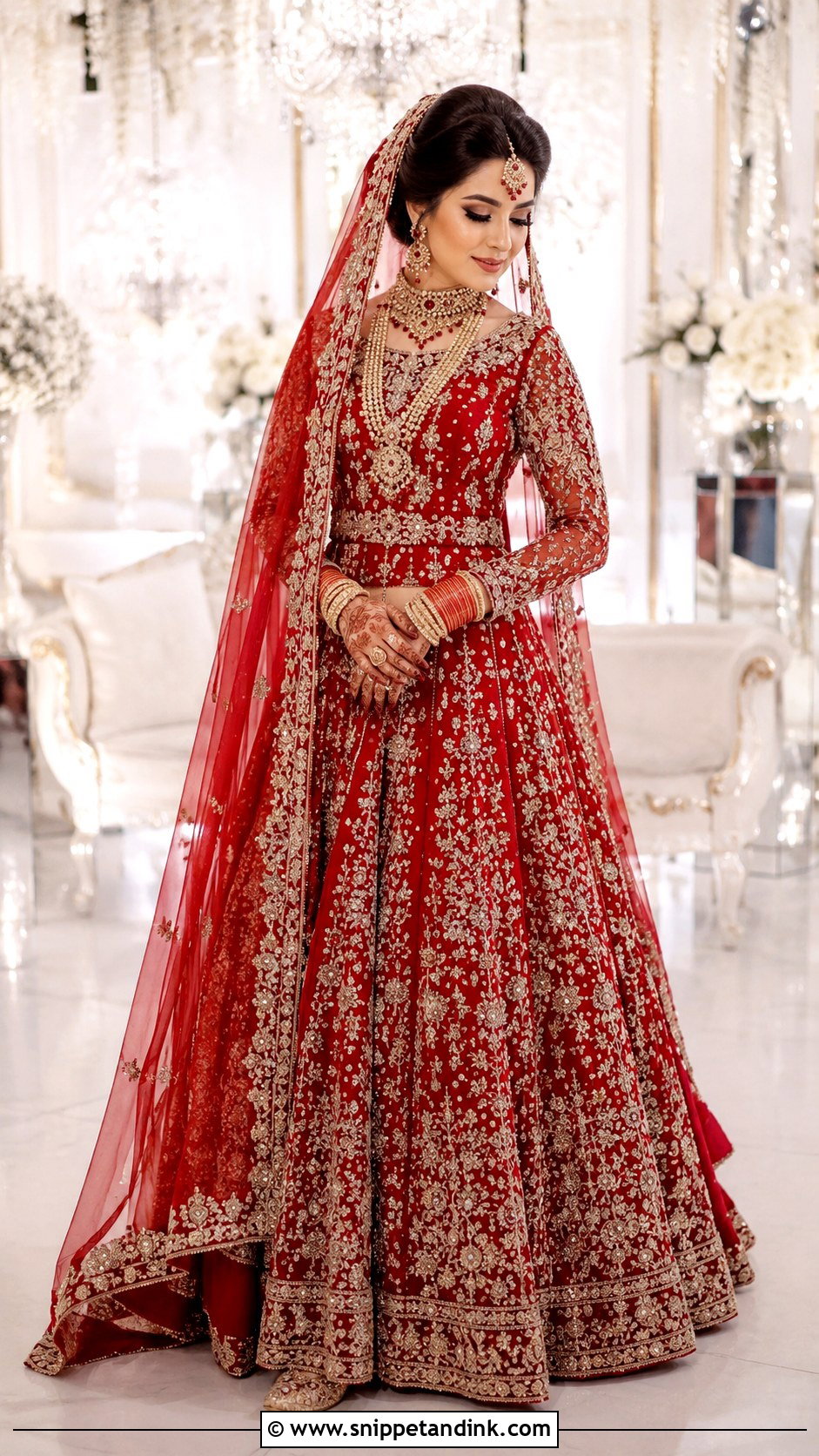
Long sleeves add coverage and give the embroiderer more surface for lace, beads or threadwork. A red long sleeve lehenga is modest and regal, and it suits winter weddings, formal ceremonies or brides who prefer a covered blouse. Pair it with a flared skirt, a sheer dupatta and layered jewelry, choosing bangles that sit with the sleeve cuff rather than over it. I always check the armhole on long-sleeved blouses: if it’s cut too low, you won’t be able to lift your arms to tie a garland or hug anyone. A center-parted bun, defined brows, kohl and a soft red lip complete it.

15. Red High Neck Bridal Lehenga
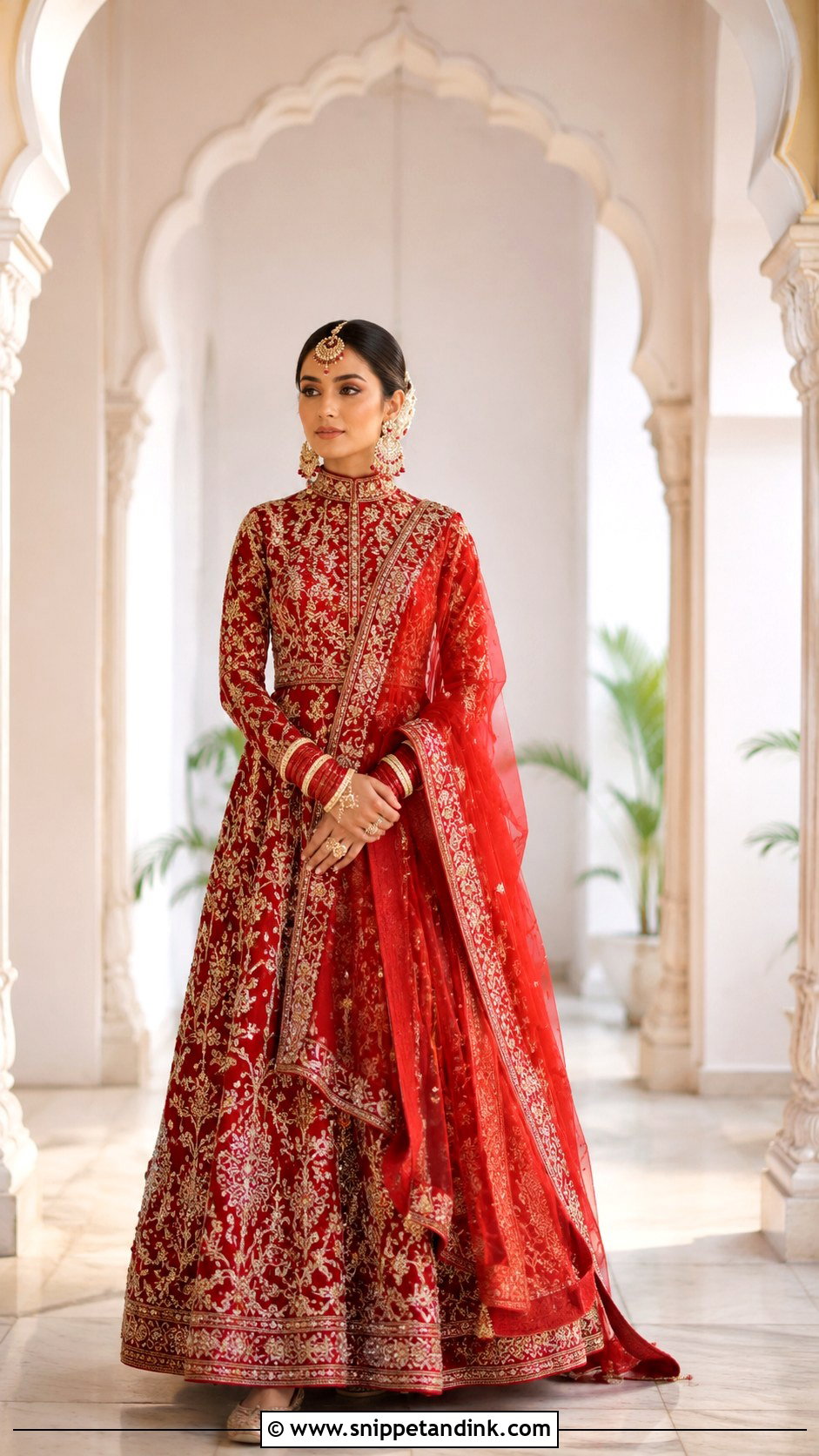
A high neck can be embroidered like a built-in necklace, so you can skip a heavy choker and let earrings, bangles and a maang tikka do the rest. Keep the heaviest work on the blouse and balance it with a lighter skirt so the outfit doesn’t crowd your face, then pin a sheer dupatta over one shoulder to keep the neckline visible. High necks suit longer necks best; on a shorter neck, I’d lower the collar slightly or open it with a keyhole at the back. A sleek bun and clean makeup suit its structure.
16. Red Sweetheart Neck Bridal Lehenga
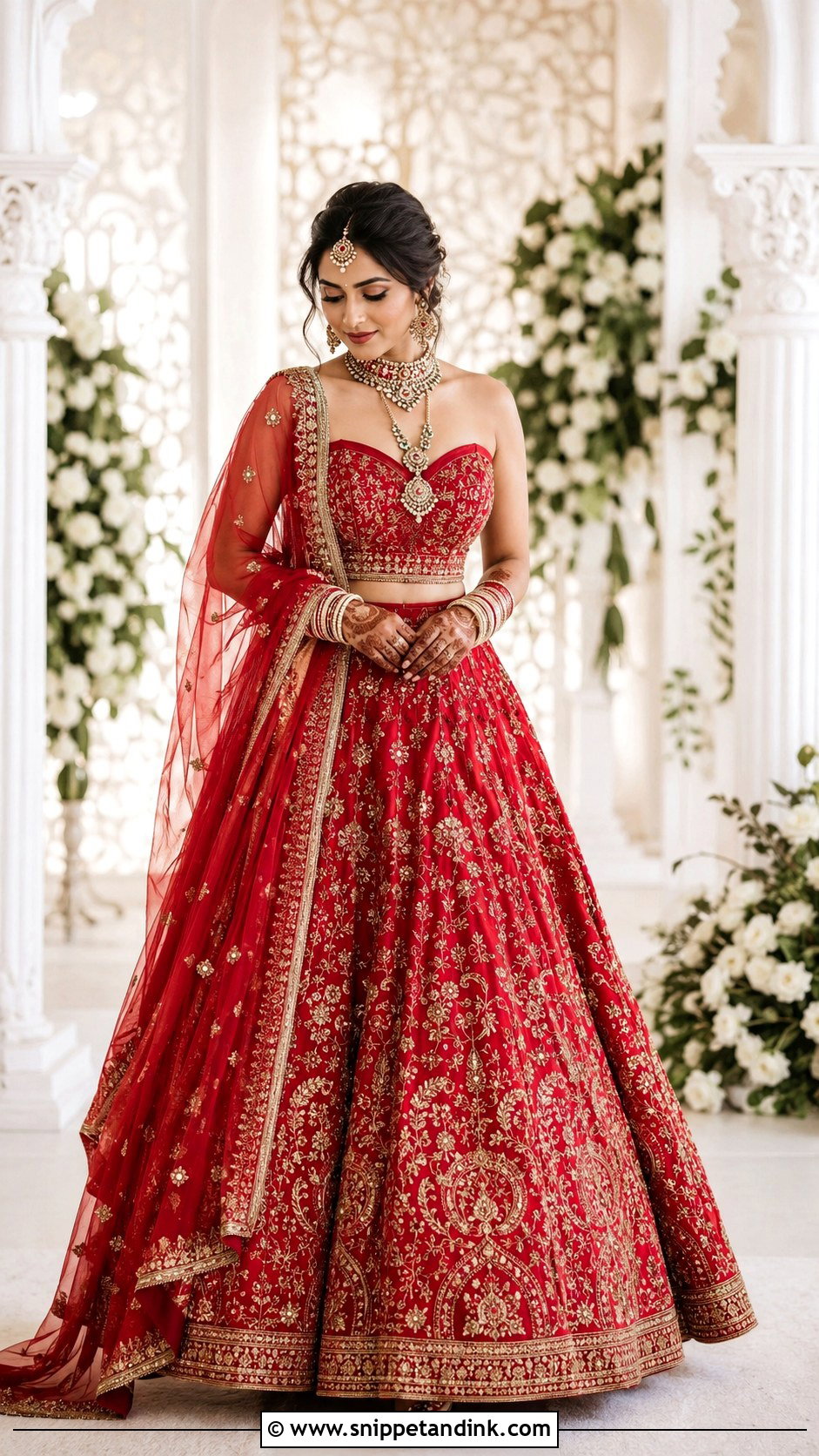
A sweetheart neckline frames the collarbone and gives a soft, feminine shape, and it carries chokers and layered necklaces easily. Choose a structured blouse so it stays secure through long rituals; sweetheart cuts with no support tend to gape when you lean forward. A red embroidered skirt, sheer dupatta, kundan jewelry, bangles and juttis complete the outfit. Soft waves or a low bun both work, depending on how much necklace you’re wearing. I keep the makeup to glowing skin, defined lashes and a rose-red lip.
17. Red Double Dupatta Bridal Lehenga
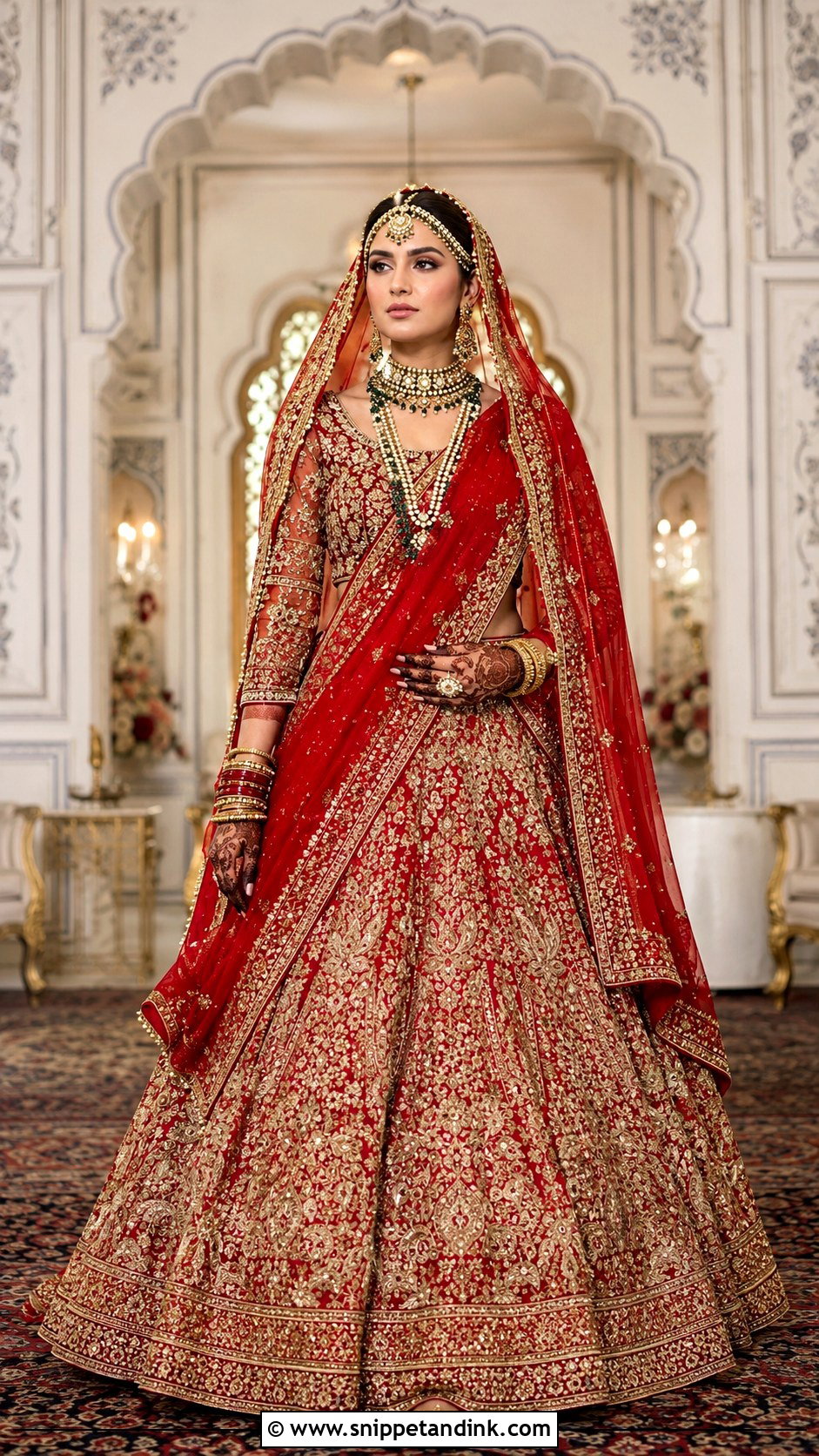
A red double dupatta bridal lehenga is the most ceremonial way to wear red: one dupatta over the head, the second across the shoulder or around the waist. I always pair one heavier dupatta with a detailed border and one lighter net one, because two heavy ones pull your head back by the end of the rituals. Add a matha patti, choker, long necklace, bangles and comfortable juttis. Pinning is everything here. A neat bun gives the head dupatta something solid to anchor to, and defined makeup holds up under the extra frame of fabric.
18. Red Belted Bridal Lehenga
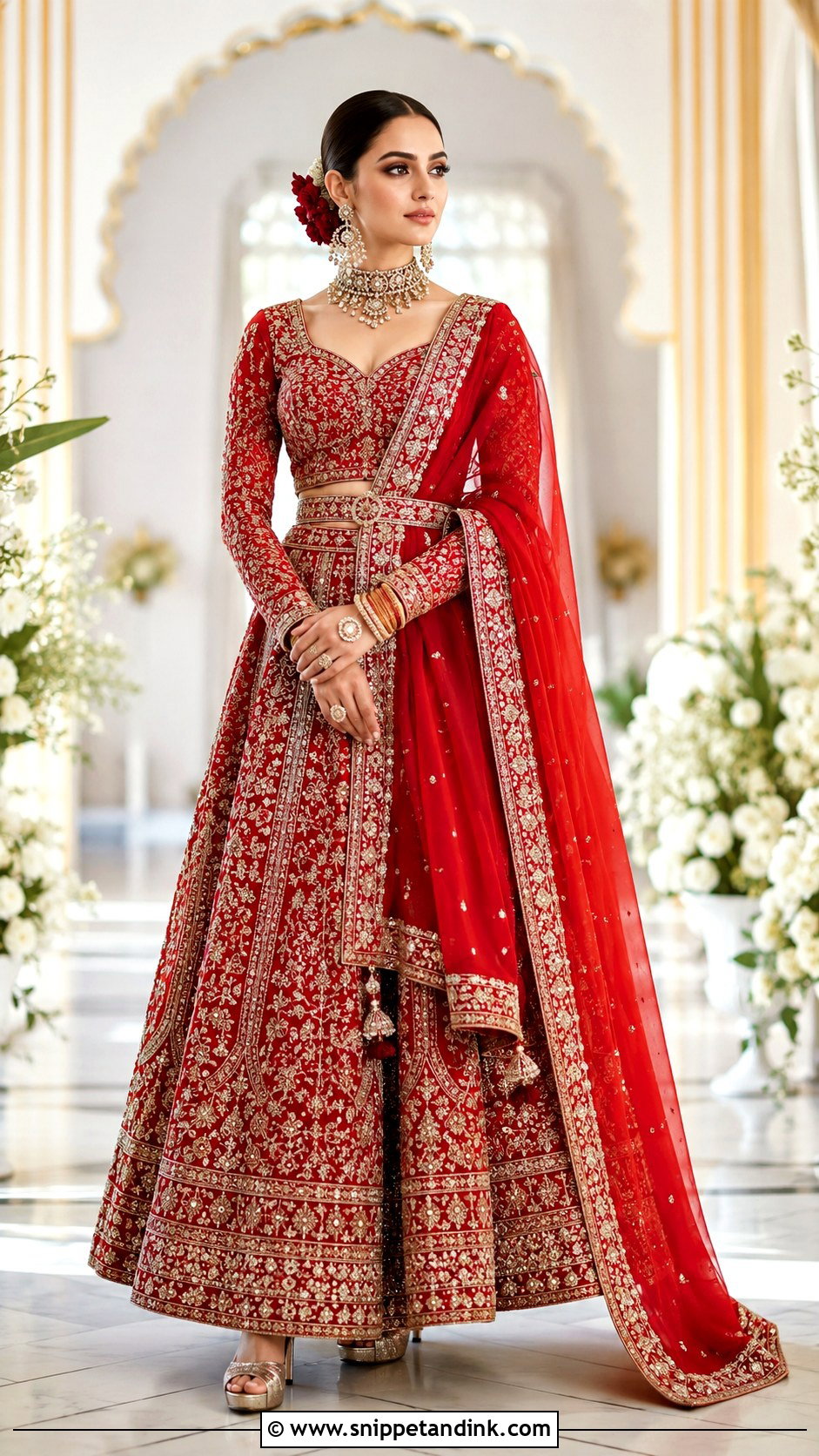
Practical and flattering, a belted lehenga holds the dupatta in place while defining the waist, which saves endless adjusting during long ceremonies and photo sessions. Choose a matching embroidered belt in fabric, metal or embellishment, a fitted blouse and a lightweight dupatta. Statement earrings, a choker, bangles and heels or juttis complete it. Metal belts look sharp but press into the waist when you sit, so I usually suggest a fabric or flexible belt for the ceremony. A sleek bun or soft waves and a subtle bindi keep it contemporary.
19. Red Ombre Bridal Lehenga
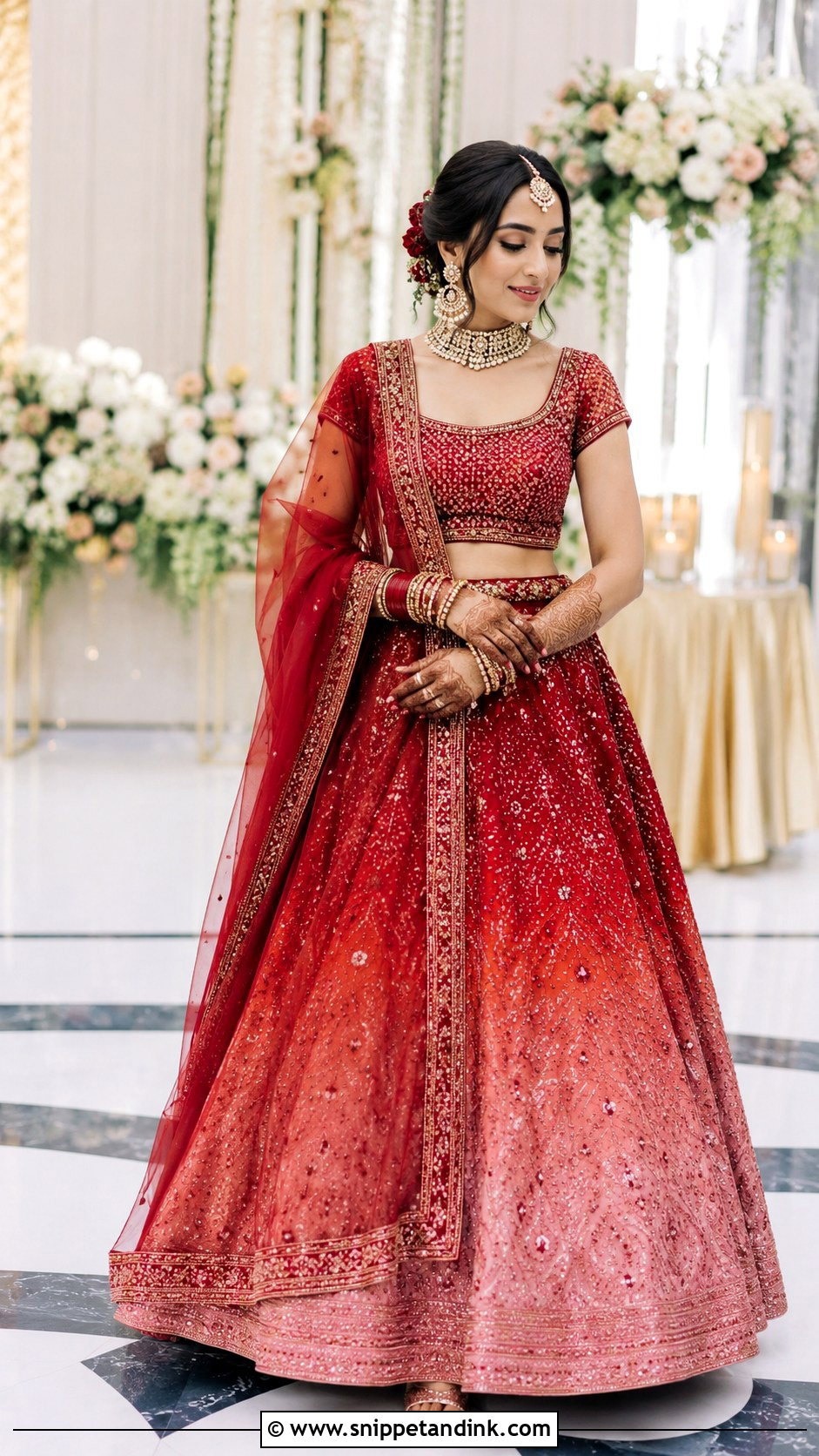
Ombre gives red a softer color story, moving from deep crimson to cherry, coral or even blush at the hem. The embroidery should follow the gradient, getting lighter or changing tone as the fabric does, otherwise the outfit looks unfinished. Pair it with a matching blouse, a sheer dupatta, delicate jewelry and embellished sandals. Daytime ceremonies and modern venues suit it. I match the makeup to the darkest red at the waist, not the lightest at the hem, so the face connects with the blouse. A loose bun or soft waves finish it.
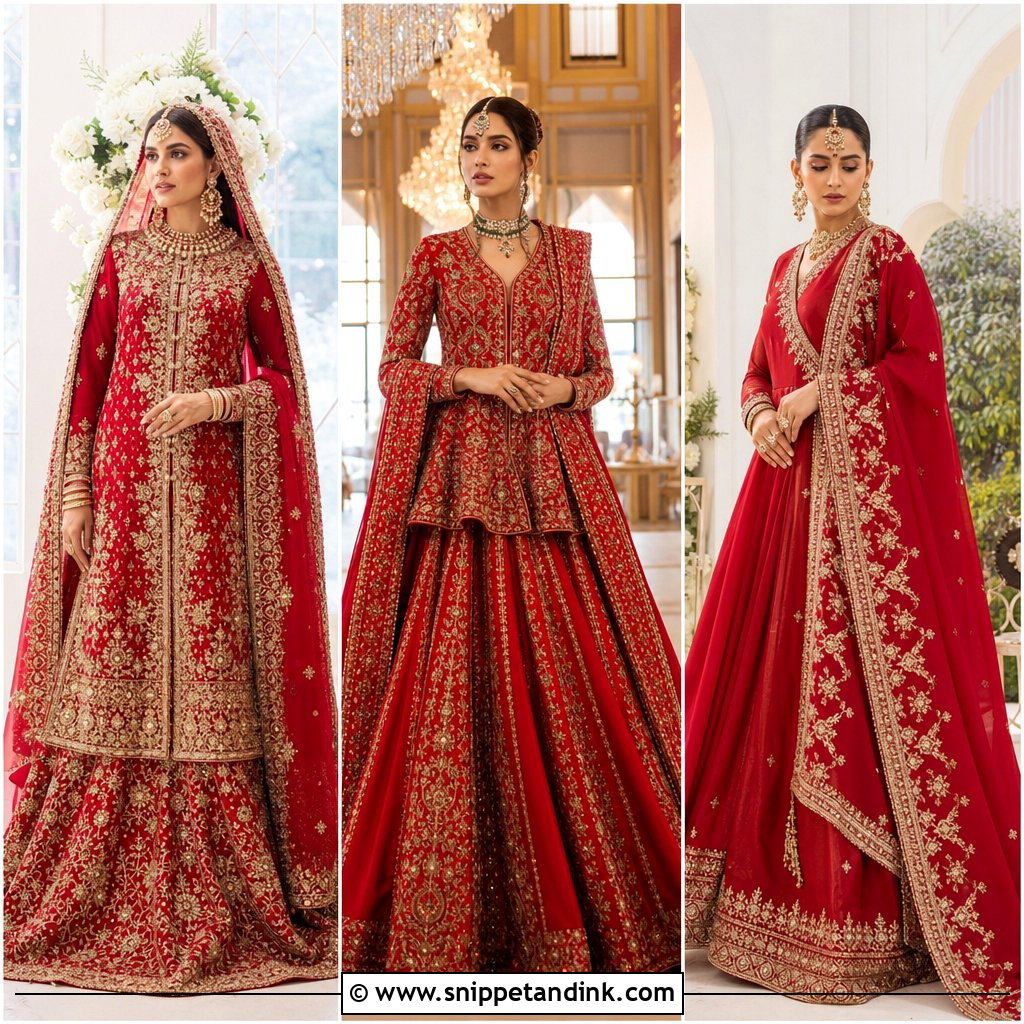
20. Red Monochrome Bridal Lehenga
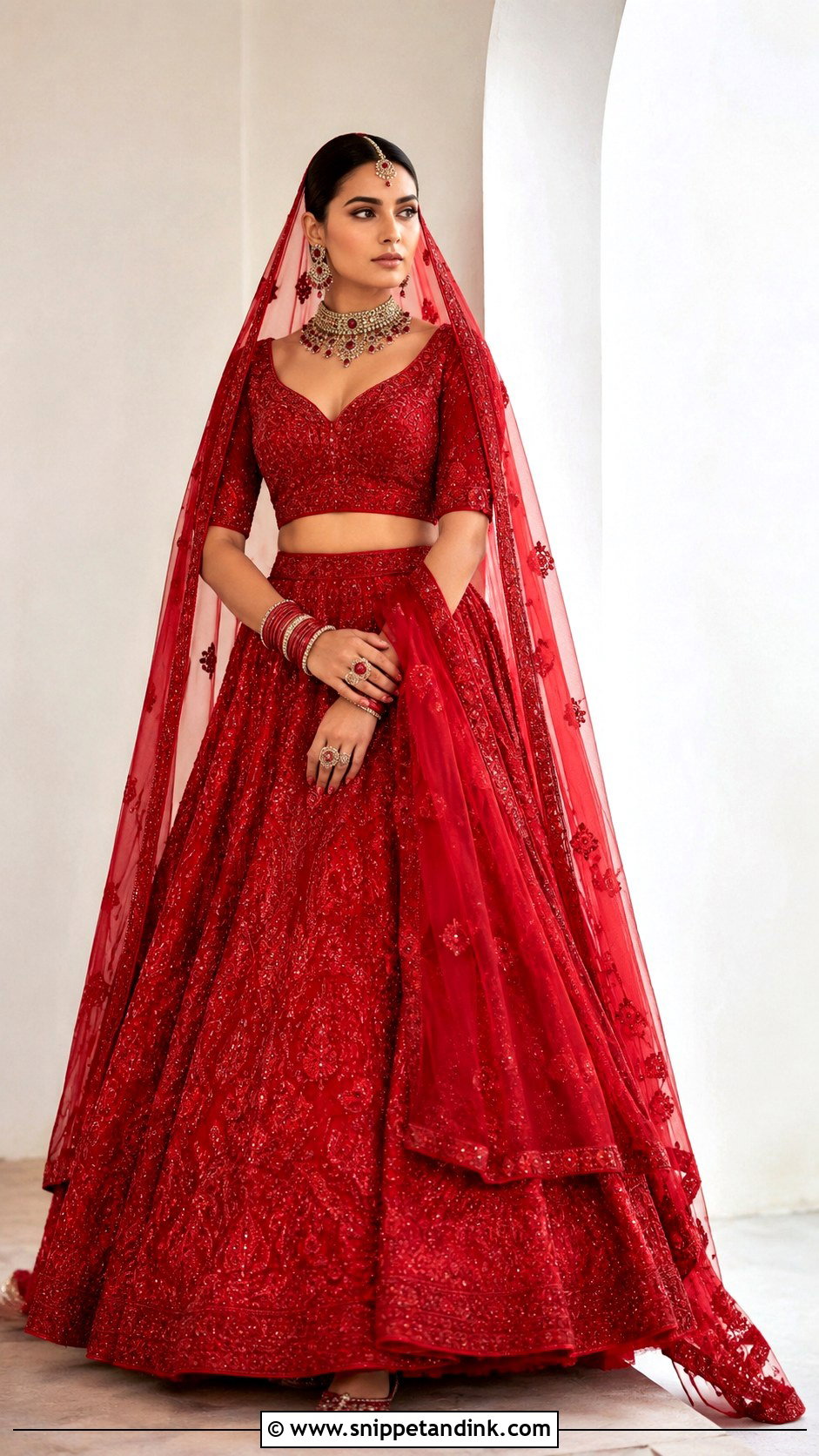
A red monochrome bridal lehenga swaps contrast embroidery for red-on-red threadwork, beads, sequins or tonal appliqué. It’s rich without shouting. Pair it with a matching blouse, a red dupatta, ruby-toned jewelry and sleek footwear, adding gold or diamond accents lightly. The difficulty with tonal work is that it can photograph flat, since there’s no contrast for the camera to pick up. I look for textured stitches, beads or a slight sheen in the thread so the detail still shows. Polished hair, fresh skin and a matching red lip balanced by soft blush suit it.
21. Red And Gold Bridal Lehenga
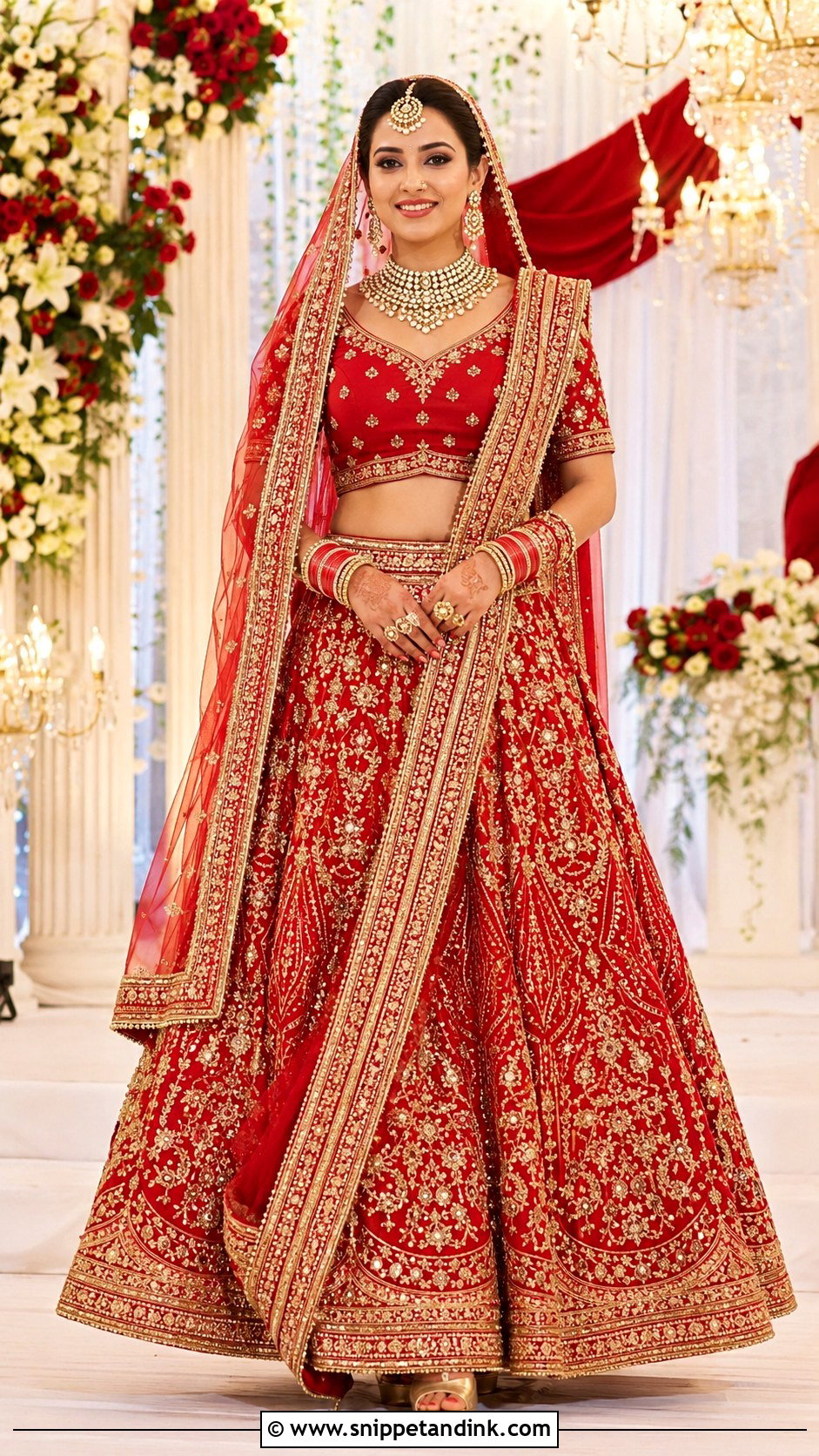
Red and gold is the pairing most families recognize instantly as bridal. Choose a red skirt with gold zardozi, zari or gota, a matching blouse and a gold-bordered dupatta. Kundan or gold jewelry sits naturally with it, layered with bangles and a maang tikka. It suits palace venues and family ceremonies equally. With so much gold already on the fabric, I match the metal tones of the jewelry to the thread, antique to antique, bright to bright, so nothing looks mismatched in close-ups. A neat bun, a red bindi and glowing makeup finish it.
22. Red And Pink Bridal Lehenga
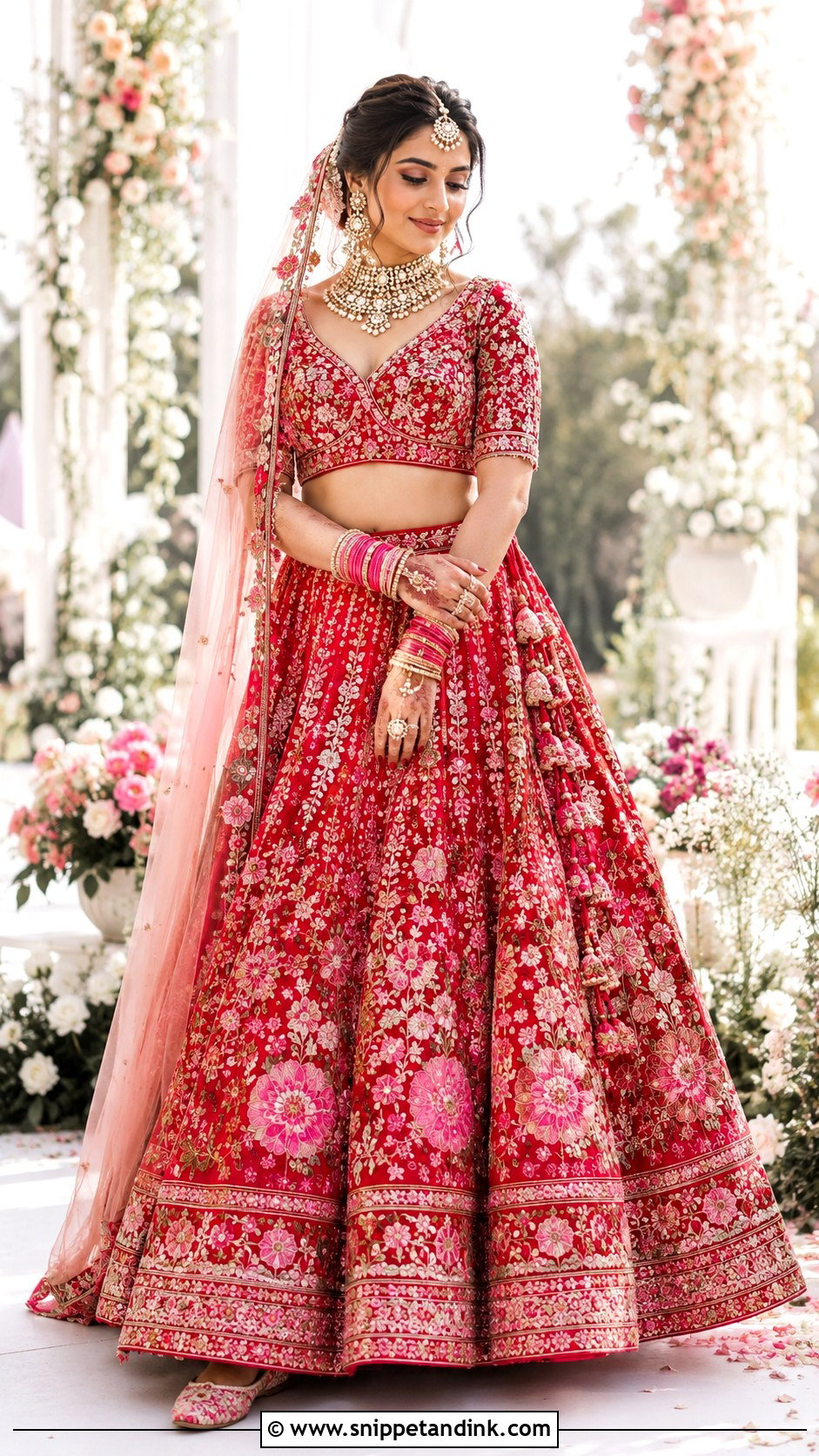
Pink softens red without stripping it of its bridal meaning. Rose, rani or blush accents in the embroidery, borders or dupatta keep the outfit fresh, paired with polki, pink bangles and embroidered footwear. Daytime weddings and garden venues suit this mix. I’m careful with the exact pinks, because a cool rani next to a warm orange-red can clash; the pink should share the red’s undertone. Rosy, radiant makeup with a pink-red lip and a floral bun or soft curls finish it.
23. Red And Green Bridal Lehenga
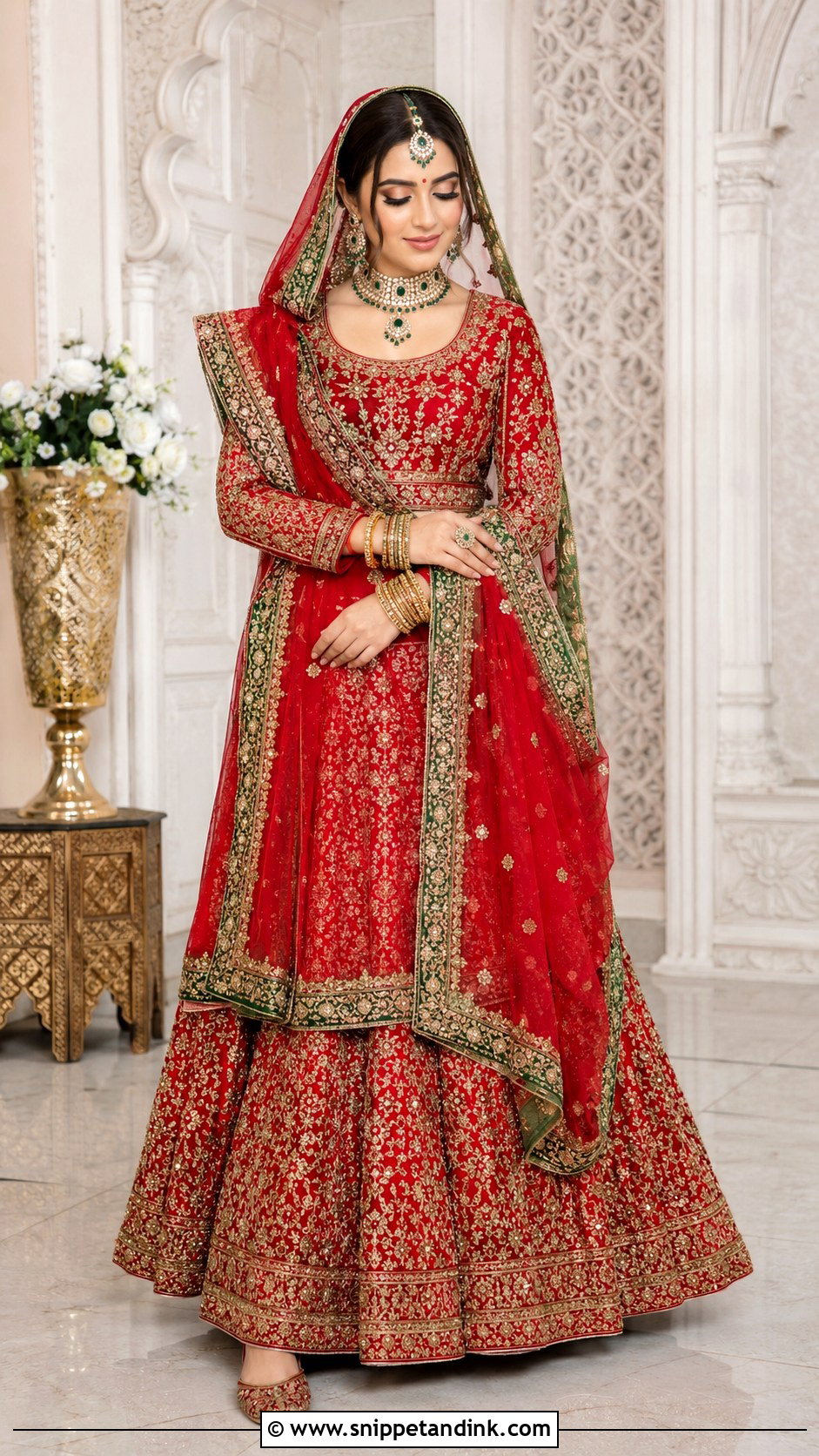
Green against red has a rich, traditional feel, and it can appear in the dupatta border, blouse, embroidery, jewelry stones or bangles. It pairs naturally with kundan, emerald-style stones and gold. Keep the green controlled so the outfit stays cohesive; a full green dupatta is striking but splits the look in two in full-length photos. I like the green to appear in at least two places, say the border and the earrings, so it looks planned. Embroidered juttis, a classic bun, defined eyes and a red or berry lip tie it together.
24. Red Minimal Bridal Lehenga
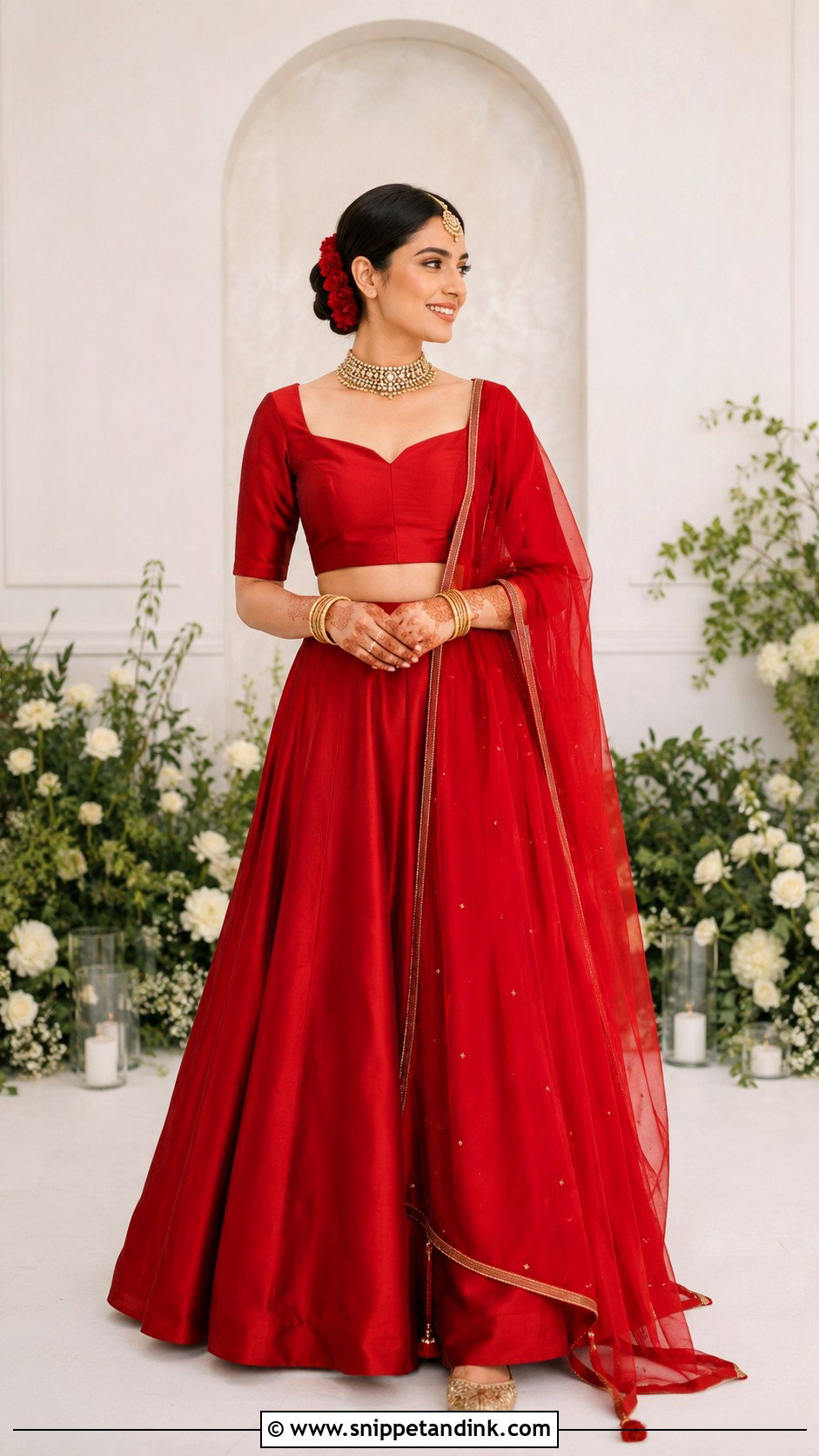
Not every bride wants heavy ornamentation. A minimal red lehenga relies on fine borders, light embroidery, good silk or tonal details, and with a structured blouse and a sheer dupatta it still reads bridal. I’d choose one strong jewelry moment, a choker or statement earrings, then add bangles and juttis. Minimal outfits show every fit flaw because there’s no embroidery to hide behind, so the tailoring has to be precise. Intimate weddings, civil ceremonies with cultural attire and brides who prioritize comfort suit it best, with fresh makeup, sleek hair and a neat drape.
25. Red Heavy Bridal Lehenga
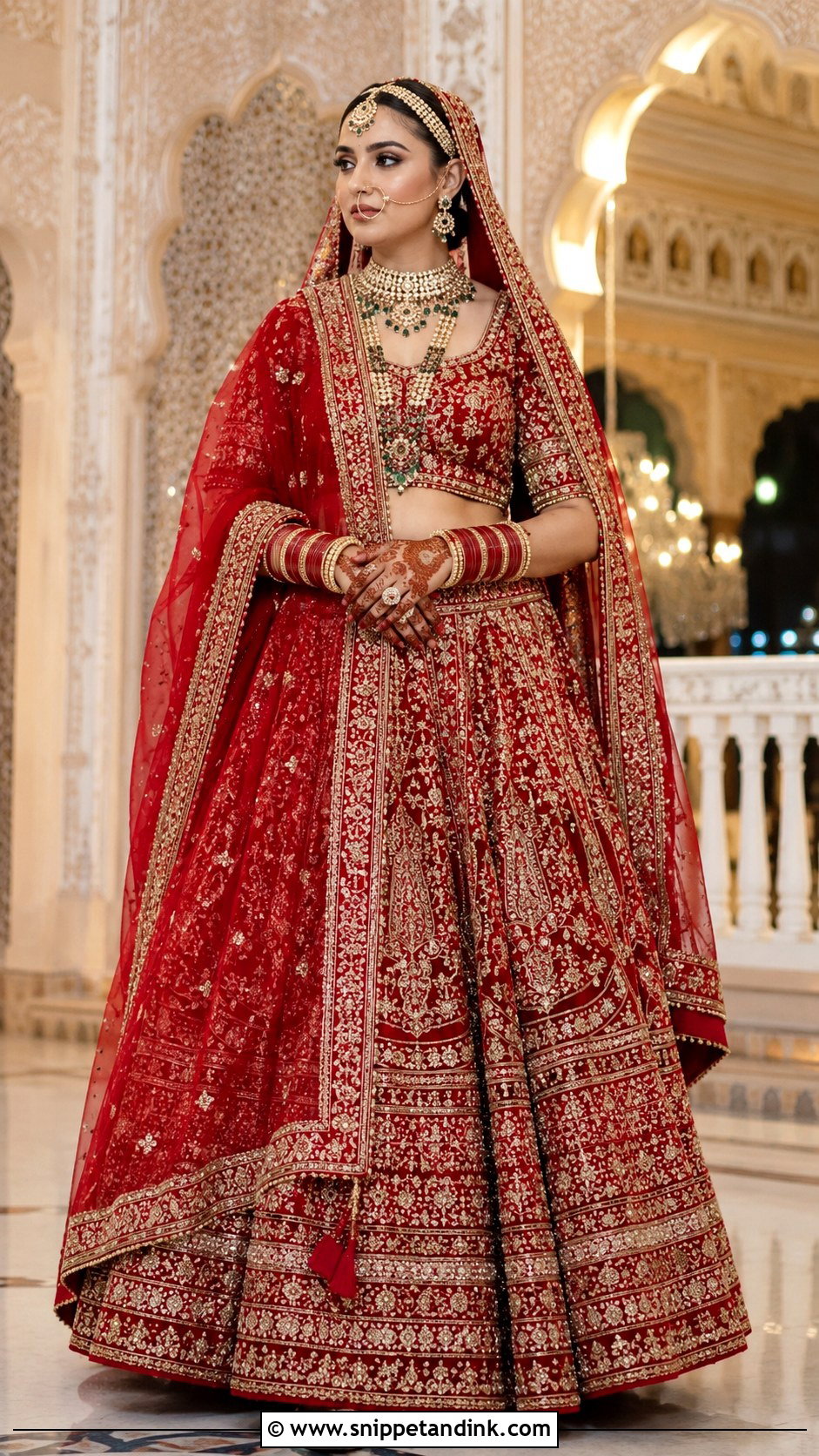
Maximal detail is what some brides have dreamed of, and a heavy red lehenga delivers it: dense embroidery, rich borders, layered dupattas and statement jewelry. It needs serious structure. I check that the skirt has a broad, reinforced waistband and that the blouse has proper support, because the weight has to sit on the hips and shoulders, not drag from the waist seam. A double dupatta, matha patti, choker, long necklace, bangles and juttis complete it. A polished bun, bold eyes, glowing skin and a confident red lip hold their own against all that work.
Who Pins the Dupatta, and Where the Pins Go
Most of the wardrobe trouble I see at weddings isn’t the lehenga. It’s the dupatta slipping, dragging or pulling the hair. Decide at your last fitting who will dress you on the day, and have that person practice the drape on you at least once.
For a dupatta over the head, I anchor it to the bun first with U-pins, then secure it at each shoulder to the blouse strap, never to the fabric alone. A dupatta draped across the body gets a pin at the shoulder, one at the waist under the belt or kamarbandh, and sometimes one at the hip so it doesn’t swing into the fire or the food. Ask your tailor to stitch two small fabric loops inside the blouse at the shoulders; pins go through the loops and the blouse stays unmarked.
Plan the changes too. The drape that works for the pheras rarely suits the first dance, so agree beforehand which pins come out and who takes them, and keep a small pouch of spare safety pins with that person all night.
Red, Stitched for the Way You’ll Move That Day
Red lehengas keep their place in Indian weddings because they hold so much emotion and tradition in one outfit. The right one depends on your ceremony, how much you’ll sit or dance, and how much detail you can carry comfortably. Some brides feel most like themselves in velvet, zardozi and double dupattas; others in minimal silk, florals or tonal red. Before you buy, picture the full look at once: jewelry, shoes, drape, hair and makeup. Then try it on and live in it for twenty minutes. The lehenga you forget you’re wearing is usually the one you’ll love in the photos.
You'll Like These Ideas:




Leave a Reply