
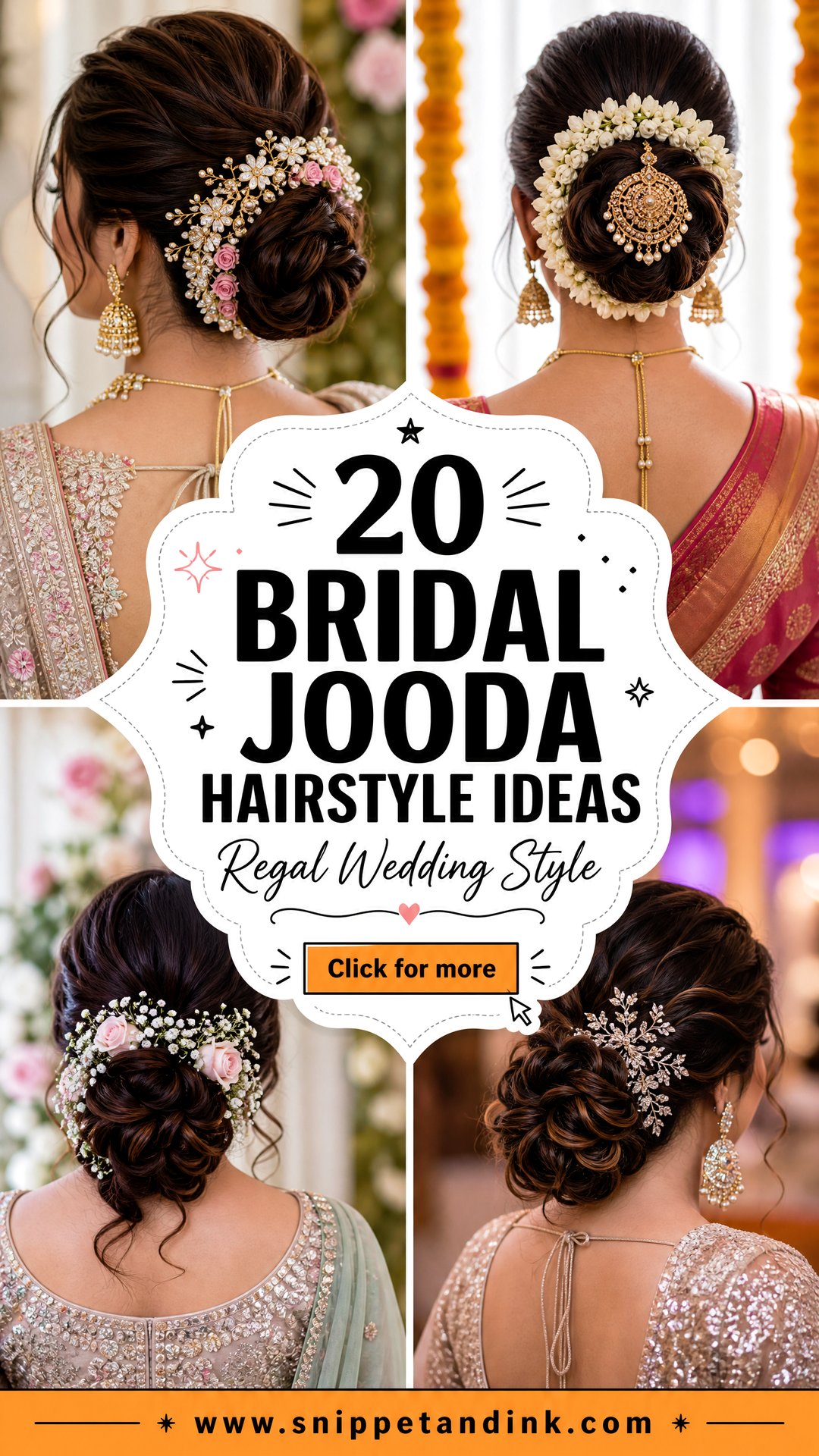
A bridal jooda does more work than any other hairstyle I build. It anchors the dupatta, carries the weight of a matha patti and gajra, keeps the hair off a heavy necklace, and has to stay put through hours of rituals with people hugging you from every side. Get the base right and the decoration can be anything you like: jasmine, roses, pearls, gold pins or nothing at all. Pair it with a lehenga, saree, sharara, or anarkali and the bun is what holds the whole silhouette together from behind. Below are twenty joodas I’m asked for most, with what each one needs from your hair and your stylist.
What Holds a Jooda Up Under a Heavy Dupatta
The bun you see is decoration. What actually carries the dupatta, matha patti and gajra is the base underneath: a tight elastic or ponytail at the height you want the bun, with sections wound around it and pinned into that base. When a bride tells me her jooda slid at a cousin’s wedding, the base was almost always too loose or the pins went only into the outer hair.
- Secure the base first and pin into it, not around it.
- Use U-pins for shaping and crossed bobby pins for anchoring; they do different jobs.
- Fix the jewelry next, so the hooks sit against the scalp under the hair.
- Pin the dupatta last, through the fabric and into the base, at the back and both sides.
Flowers go on after the dupatta is placed, so they sit where they’ll actually be seen. Order matters more than product.
1. Bridal Jooda With Gajra
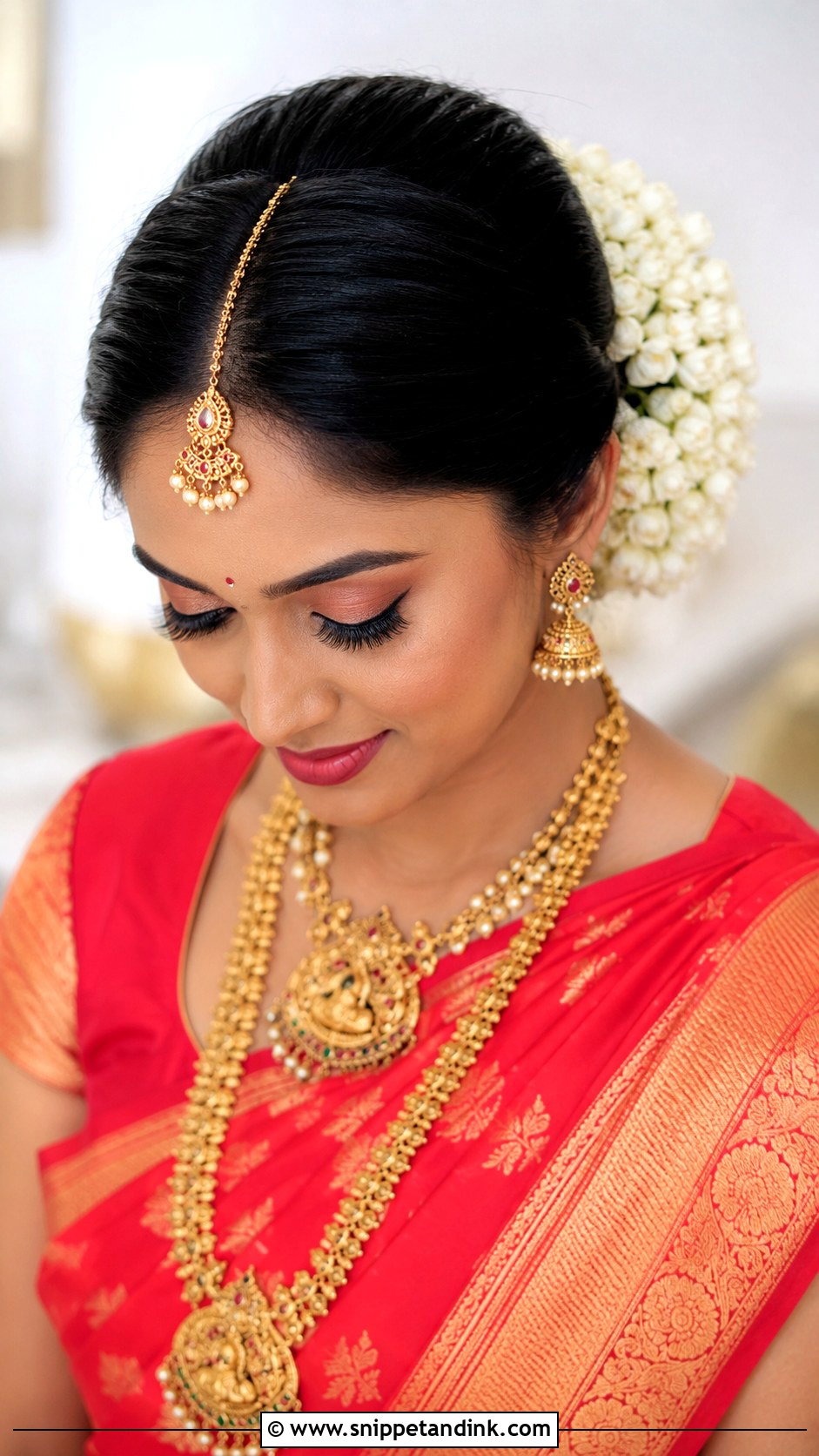
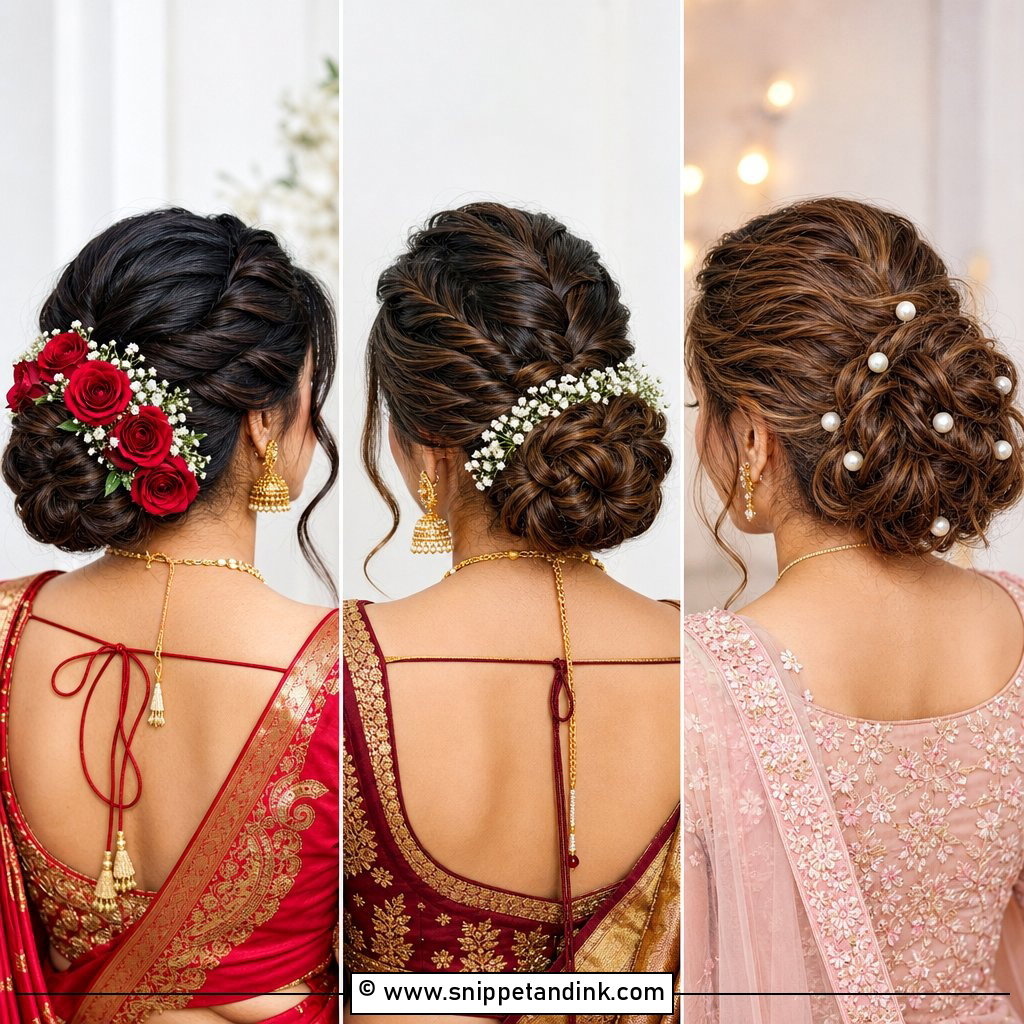
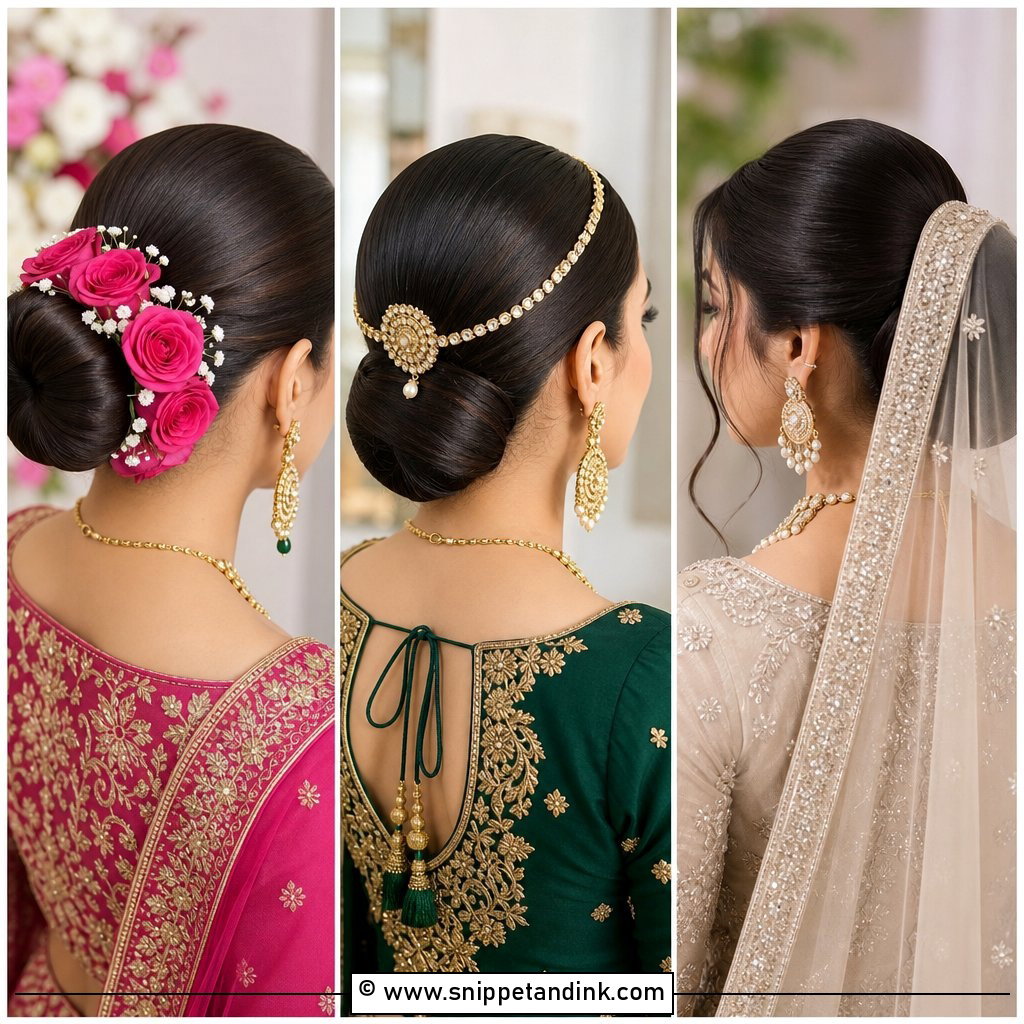
Jasmine around a low bun is the look most families picture first. I place the jooda low or slightly back, then wrap fresh gajra strands around it to make a soft white border. Real jasmine is heavier than it looks, so I pin each strand into the base of the bun rather than the outer surface, which would sag by the pheras. A smooth front with a center part leaves a clear line for the maang tikka. This is the classic bridal jooda with gajra, and it suits red, silk and ivory outfits equally well.
2. Bridal Jooda With Red Roses
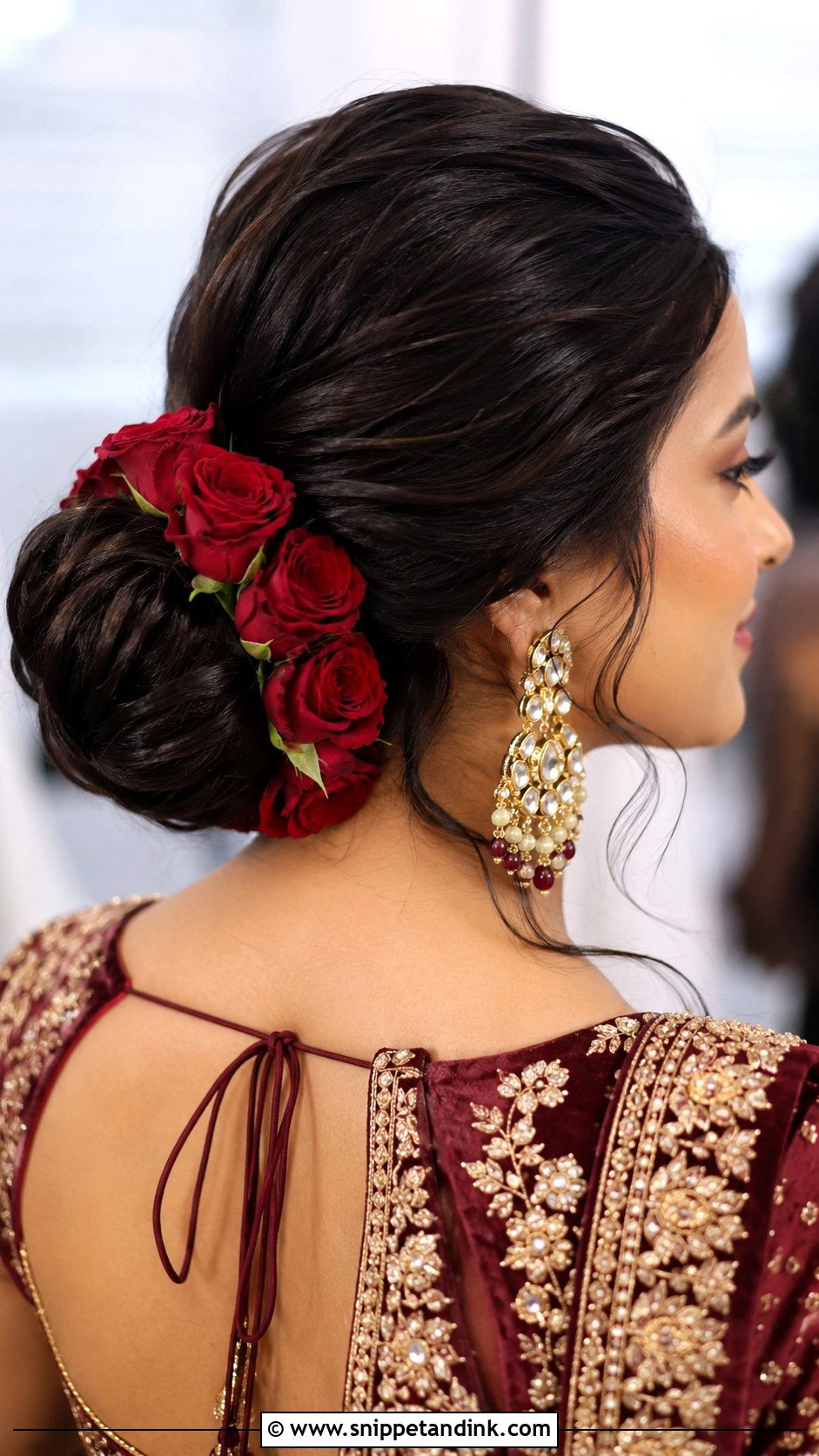
Red roses make a bolder, warmer statement than jasmine. They sit best around a low bun or in a crescent off to one side, where they frame the head without pushing toward the face. Ask your florist for roses that are half open, not full blooms, because petals bruise under a dupatta and fully open roses shed by evening. The bun underneath must be smooth and firm so the flowers have something solid to pin into. Red, maroon, gold and deep pink lehengas all pick up the color.
3. Bridal Jooda With Maang Tikka
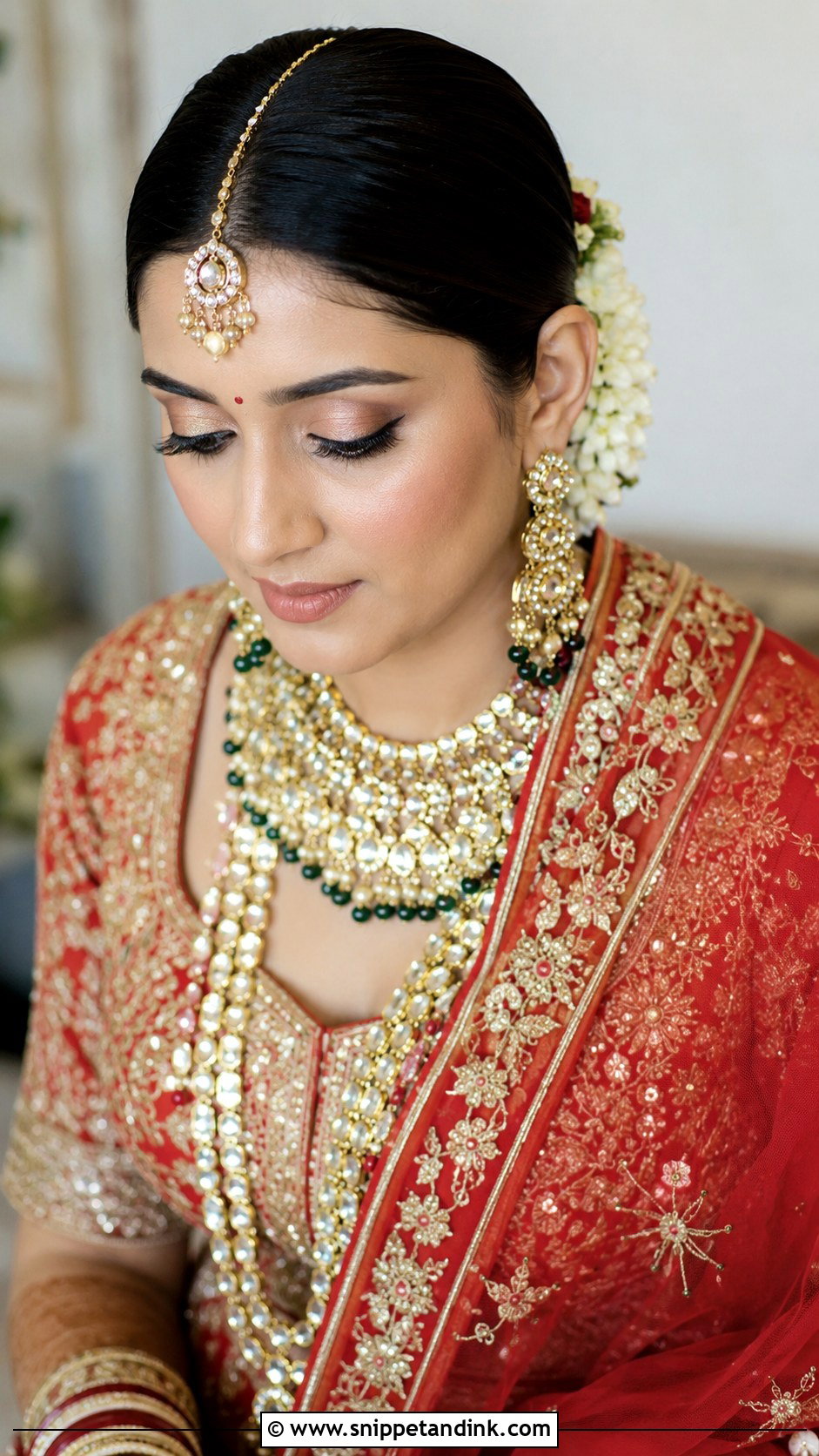
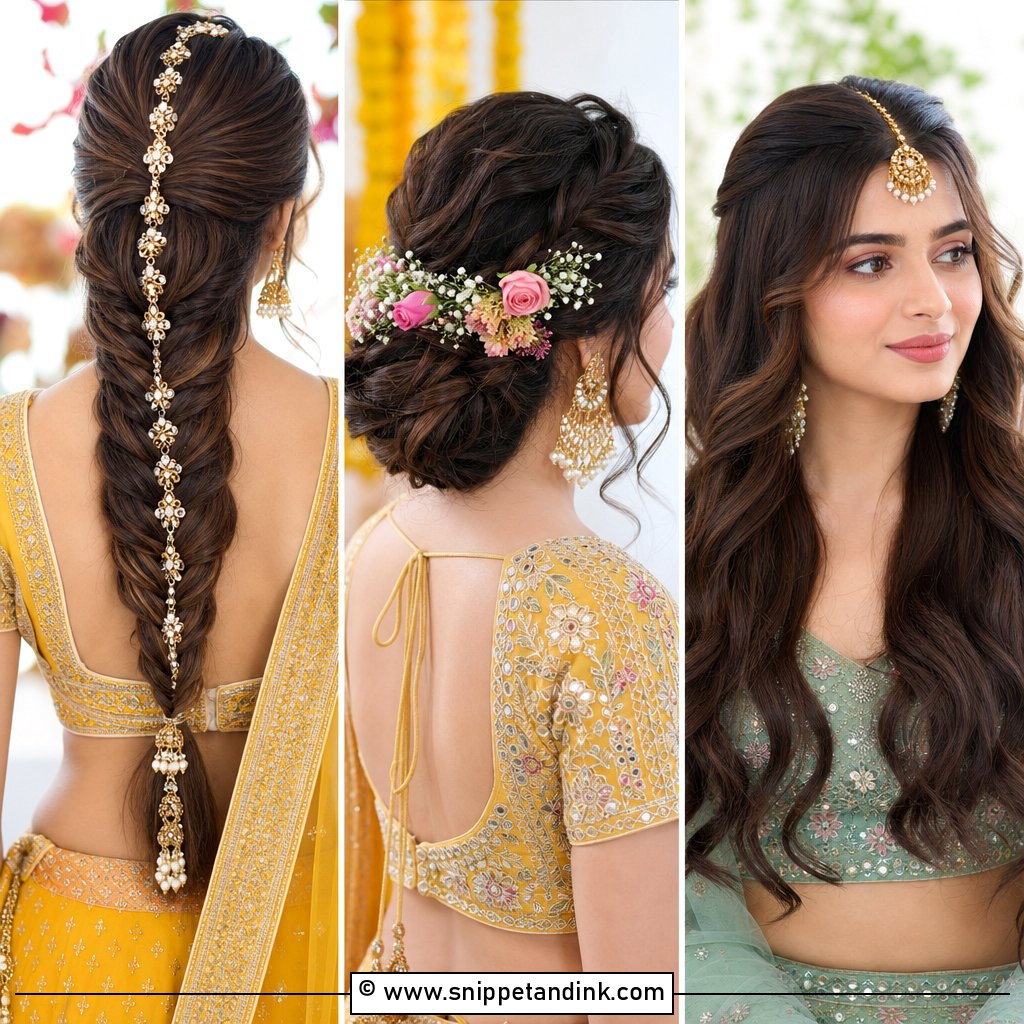
When the maang tikka is the star, the hair’s job is to clear a path for it. A center part lets the chain fall straight, and the bun behind can be sleek, braided or softly full. The thing I check first is where the tikka’s hook lands. I pin it into a small section of hair just behind the part, not into the part itself, so it doesn’t drag the parting crooked. Then the dupatta goes on last, over a secured tikka.
4. Bridal Jooda With Matha Patti
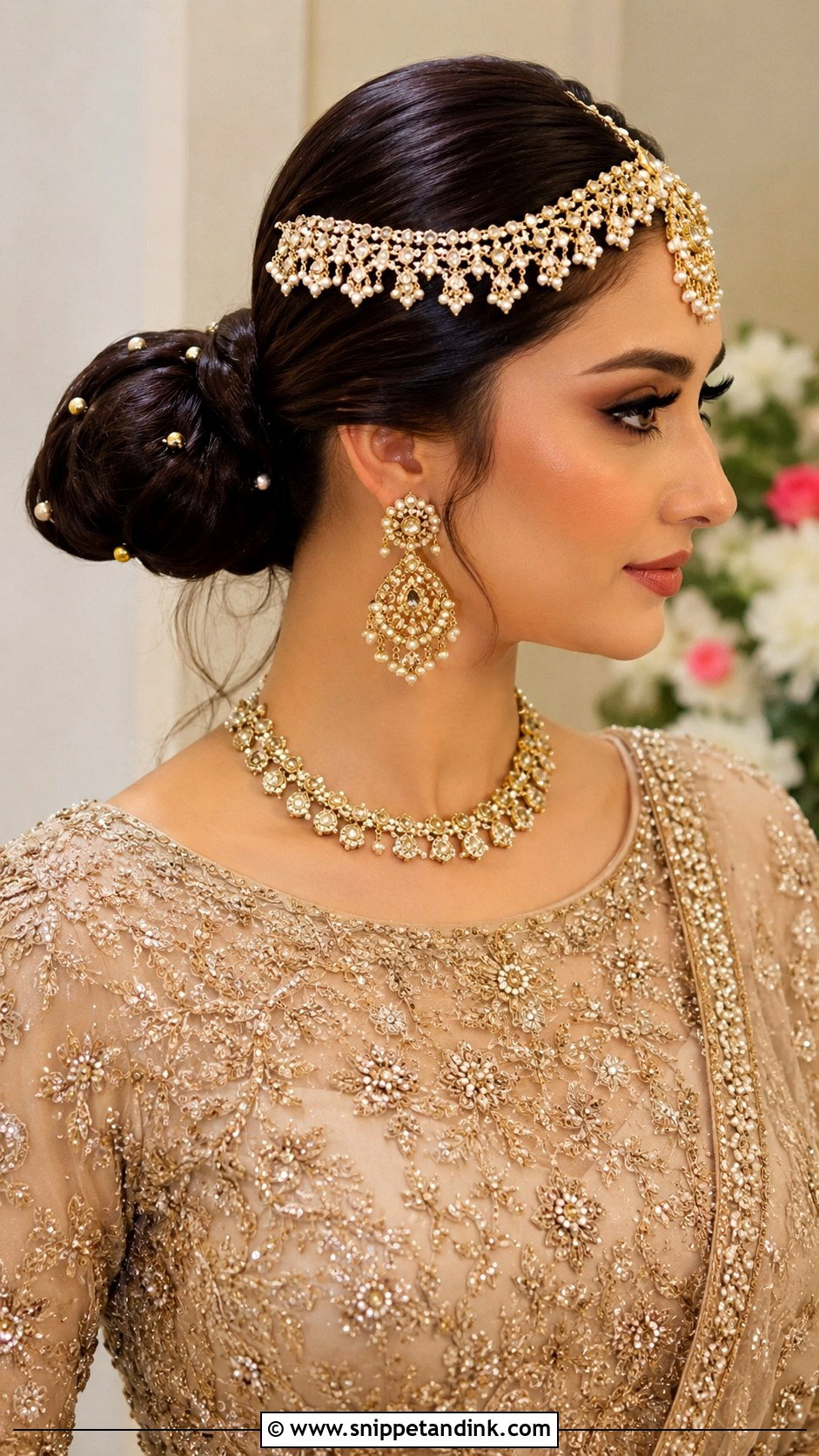
A matha patti covers much more of the hairline, so the front needs to be sleek and evenly pinned before any jewelry goes on. It’s a staple with North Indian and Pakistani wedding outfits. I keep the jooda low or mid, because a high bun pulls the side chains upward and they stop sitting flat on the forehead. Decorate the bun lightly with small flowers, pearls or gold pins. If the bun competes with the matha patti, the face loses its frame.
5. Bridal Jooda With Dupatta
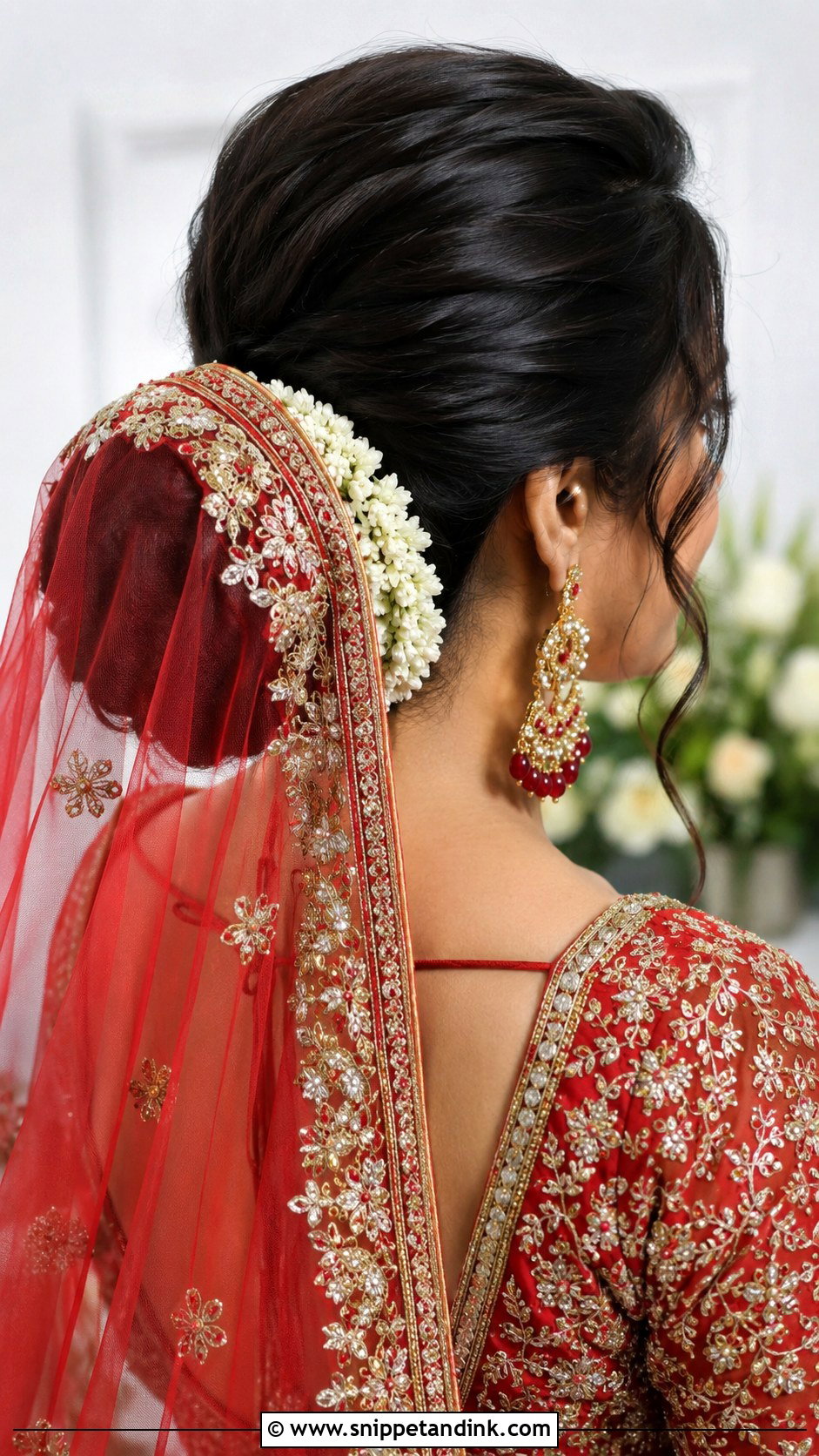
A heavy dupatta can weigh as much as the rest of the outfit’s upper half, and the jooda is what it hangs from. I build a mid or low bun on a tight elastic base and pin the dupatta through the fabric into that base, never just into the outer hair, which slides. A little lift at the crown stops the fabric flattening the head shape. If you want decoration, keep it around the lower edge of the bun where it still shows below the dupatta.
6. Bridal Jooda With Fresh Flowers
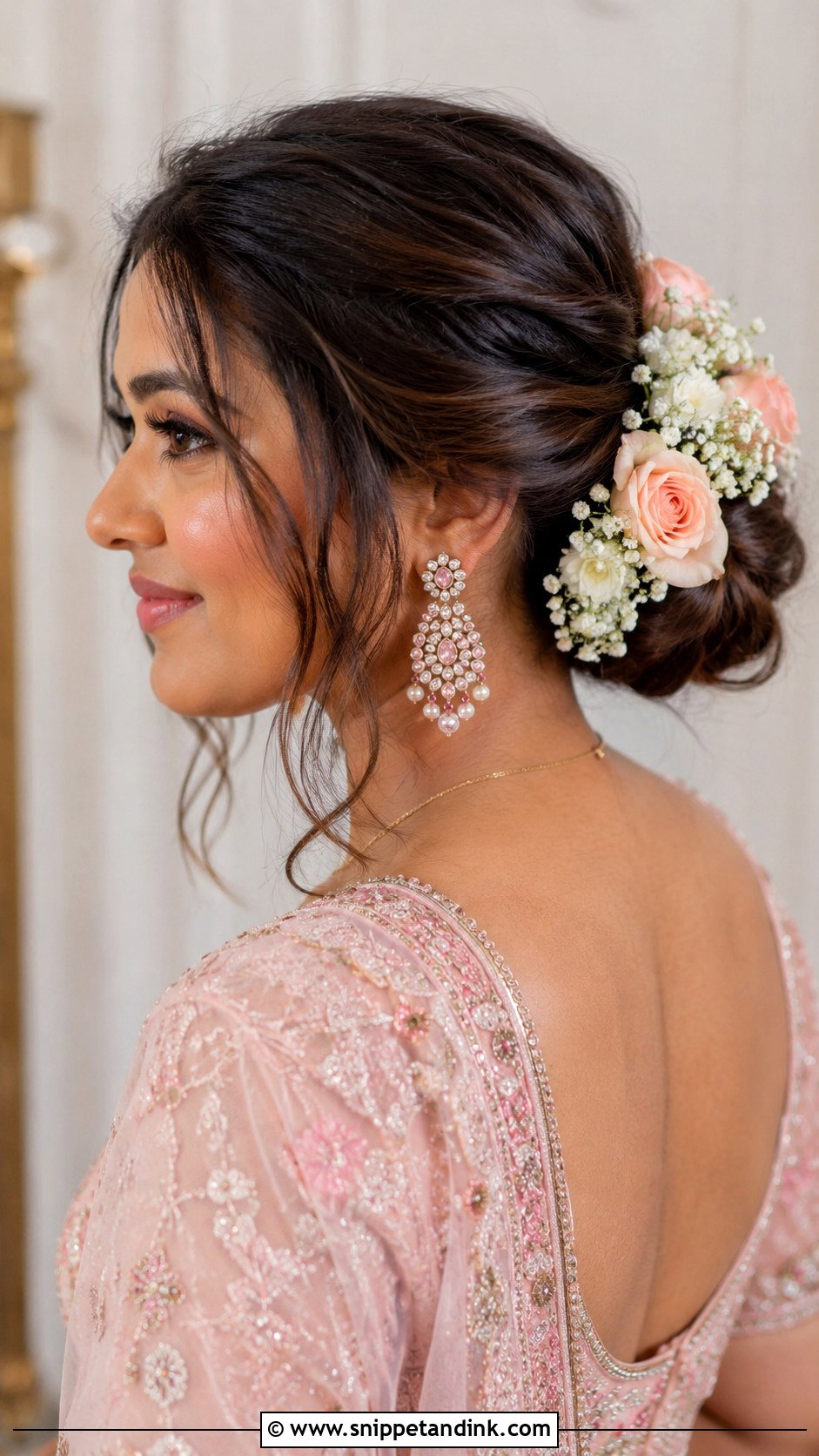
Fresh flowers smell like a wedding, and that’s half their appeal. Jasmine, mogra, roses, baby’s breath and orchids can circle the bun, cluster on one side or cover it completely. Season matters: in heat, jasmine browns within hours unless it’s kept chilled until the last moment, while orchids hold up much longer. A smooth low bun gives the cleanest base, and a textured one looks softer. Every stem gets its own pin, so nothing drops during photos.
7. Bridal Jooda With Pearls
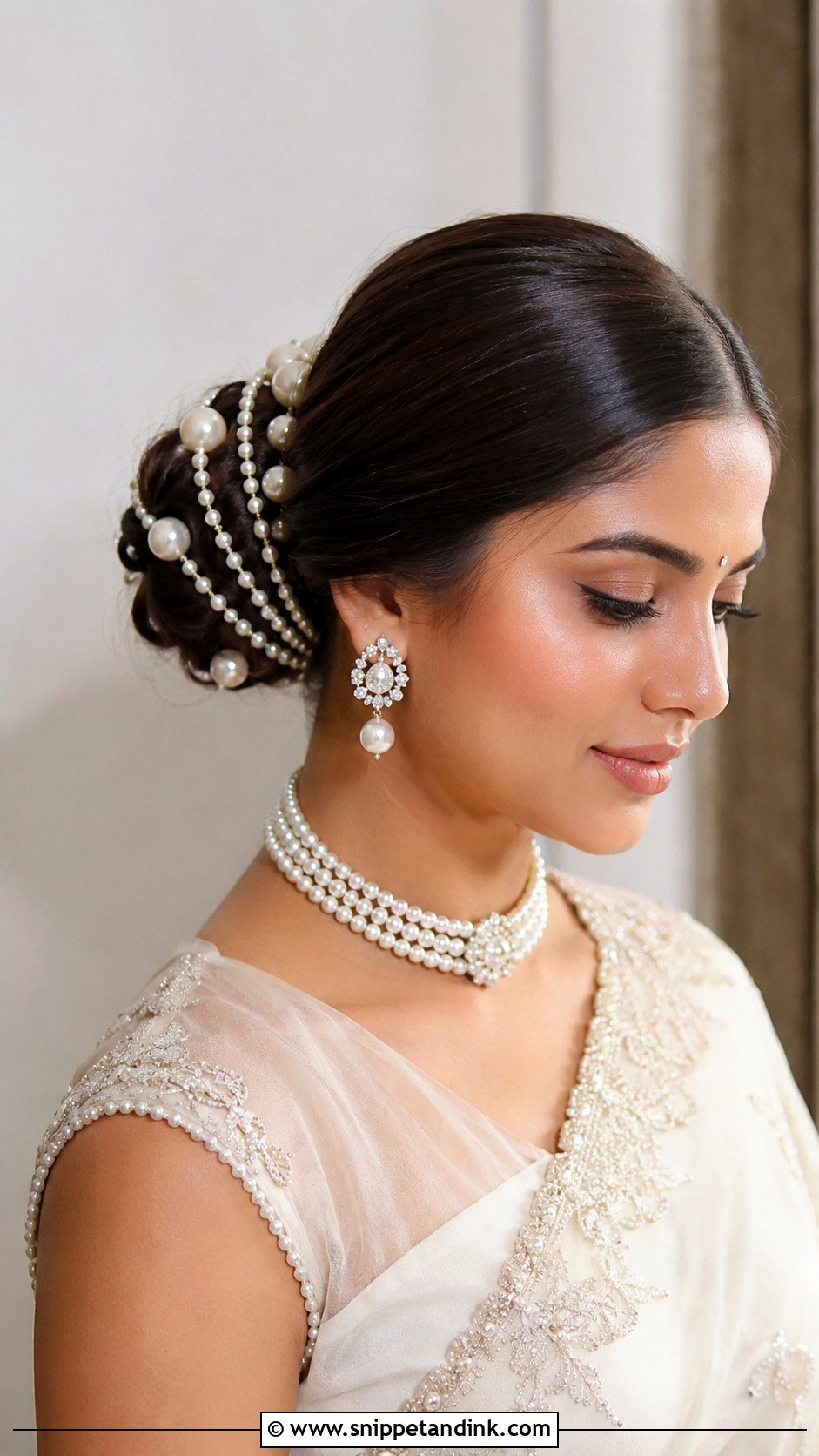
Pearls give a bun a quiet shine without the bulk of flowers. They suit ivory, gold, pastel, blush and champagne outfits. The jooda can be round, twisted or braided, finished with pearl pins, strands or a fine pearl net. I use them a lot for receptions, since they don’t wilt and they catch evening light. Keep the front smooth with either a center or soft side part.
8. Bridal Jooda With Hair Accessories
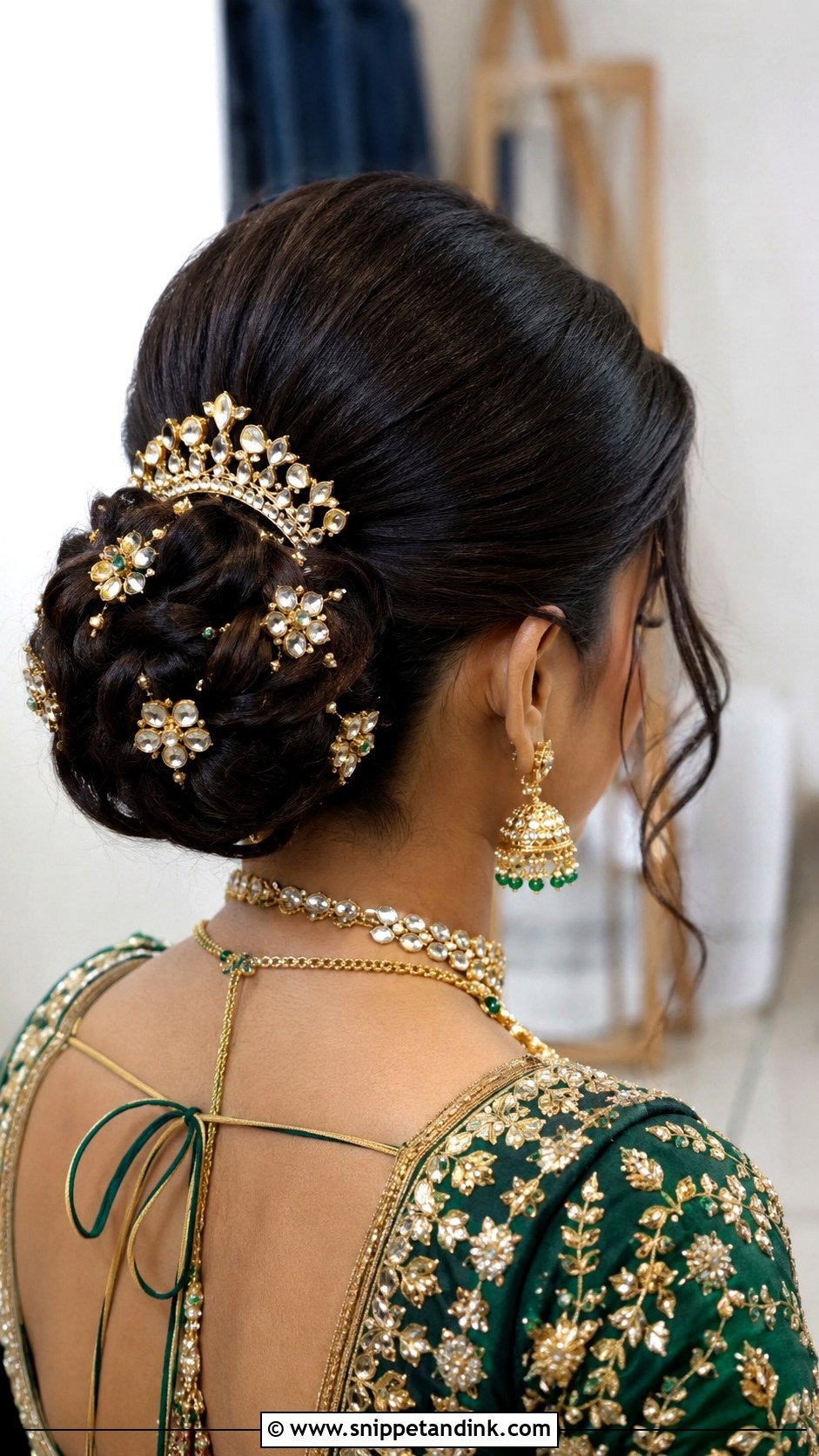
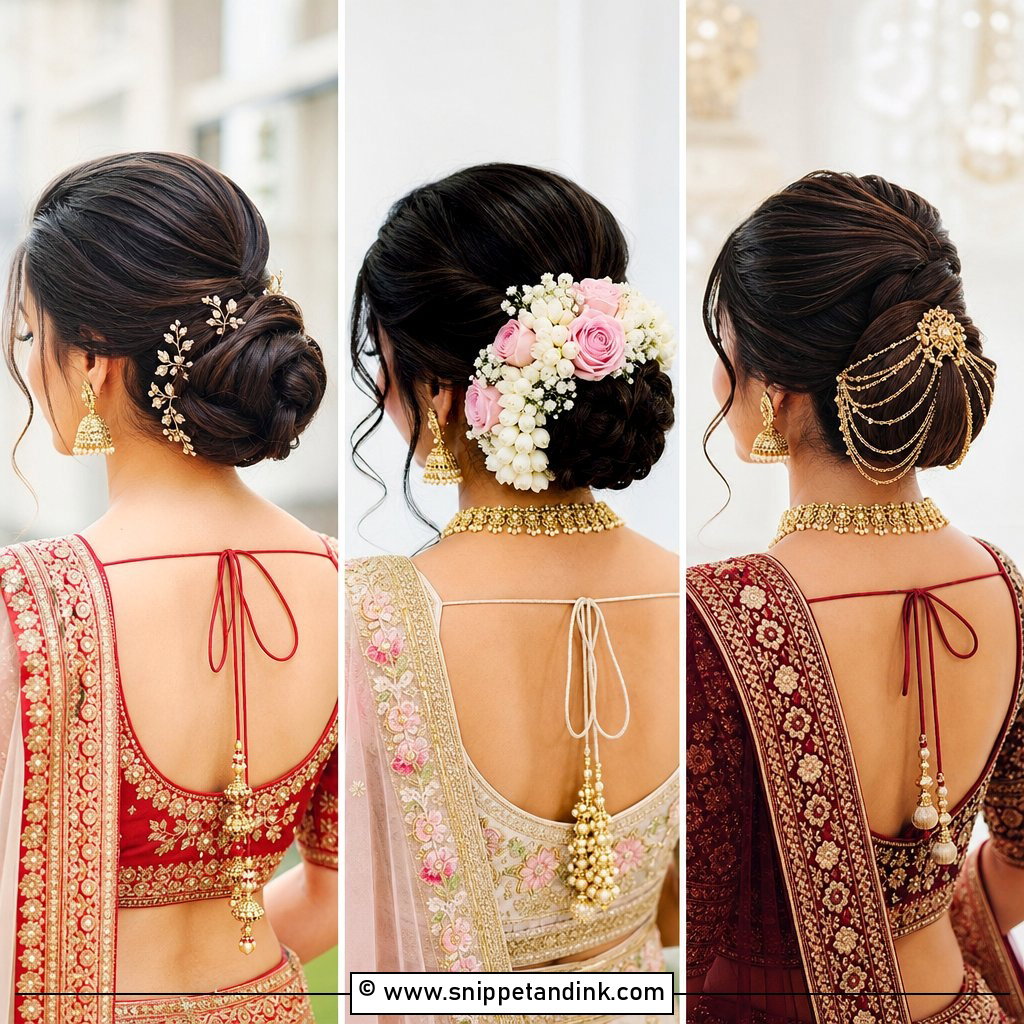
Gold pins, kundan clips, crystal combs and pearl chains can all turn a plain bun into something bridal. The trick is restraint. Pick one direction that matches your jewelry, then keep the bun shape clean underneath. A single decorative comb on a low jooda reads well from the back, while scattered small pins add sparkle without weight. Combs need a flat, smooth surface to grip, so I tell brides before the trial which accessories they’re bringing.
9. Bridal Jooda With Braids
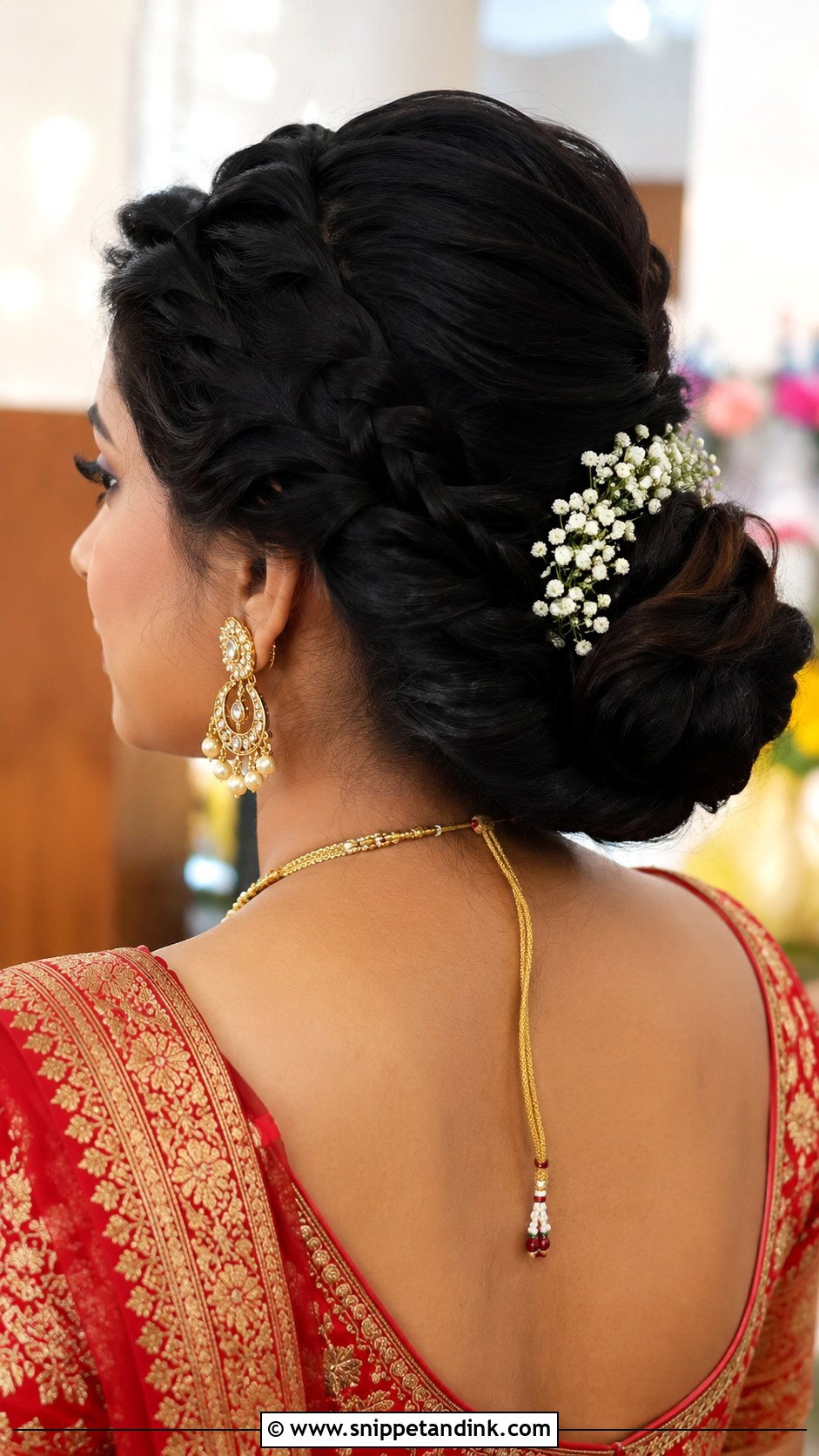
Braids add texture and real holding power. A braid can start at the crown, wrap the bun or be woven through it, and every braided section gives me another anchor point for pins. On long or thick hair this turns all that weight into a neat design rather than a heavy lump. I keep the braid visible from the side or back, since that’s the angle most ceremony photos catch. Flowers, pearl pins or gold accessories sit comfortably on braided texture.
10. Bridal Jooda With Center Part
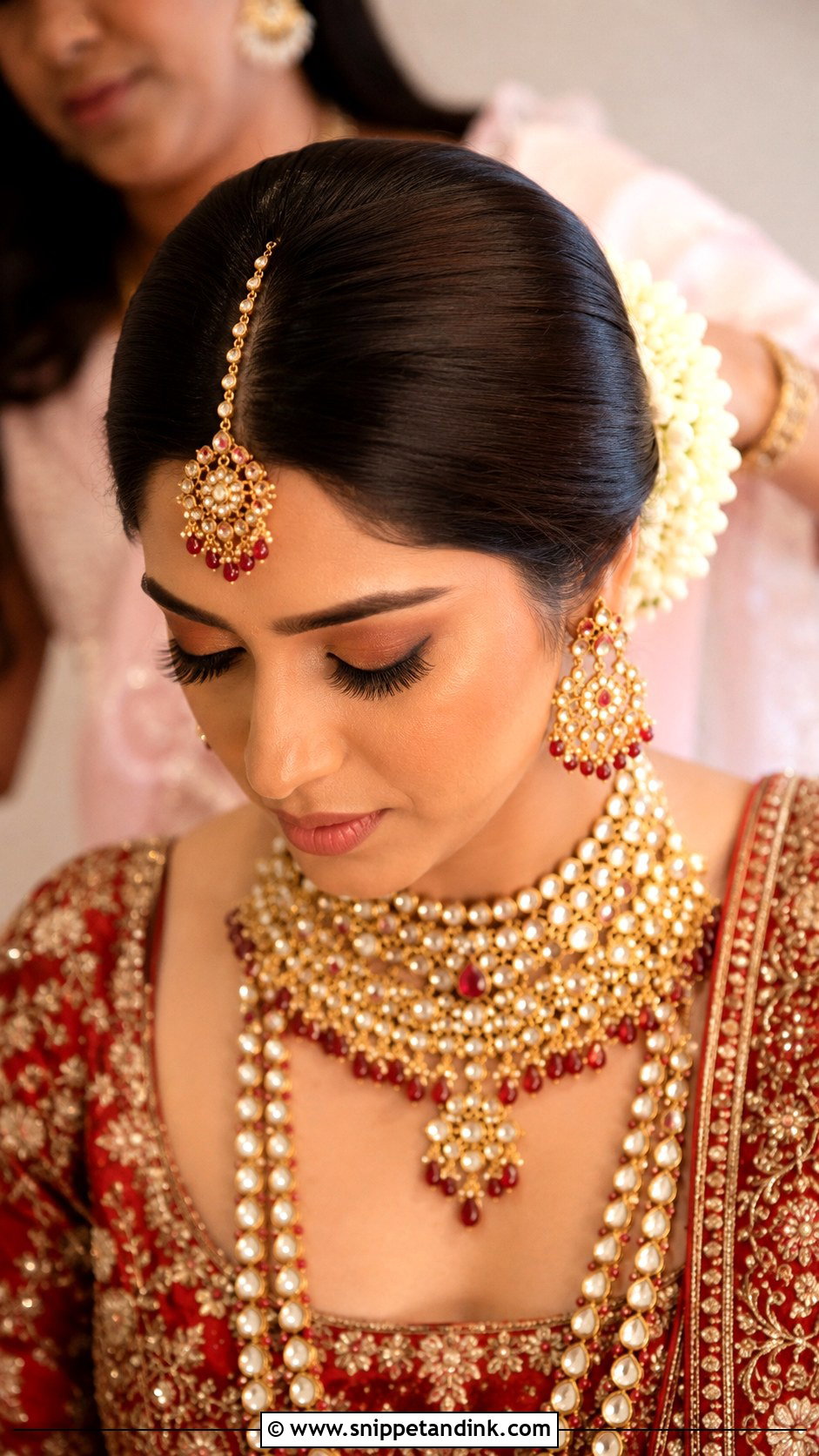
A center part creates the symmetry a maang tikka, matha patti or passa needs to sit straight. The finish can be tight and sleek for a royal look or lifted slightly at the crown for fullness. Most face shapes manage it with small adjustments. Where it can go wrong is a natural cowlick at the front, which pulls a center part off line, so I set the part with a little gel and pin before any spray. Gajra, roses, pearls or plain pins can finish the bun without disturbing the front.
11. Bridal Jooda With Side Part
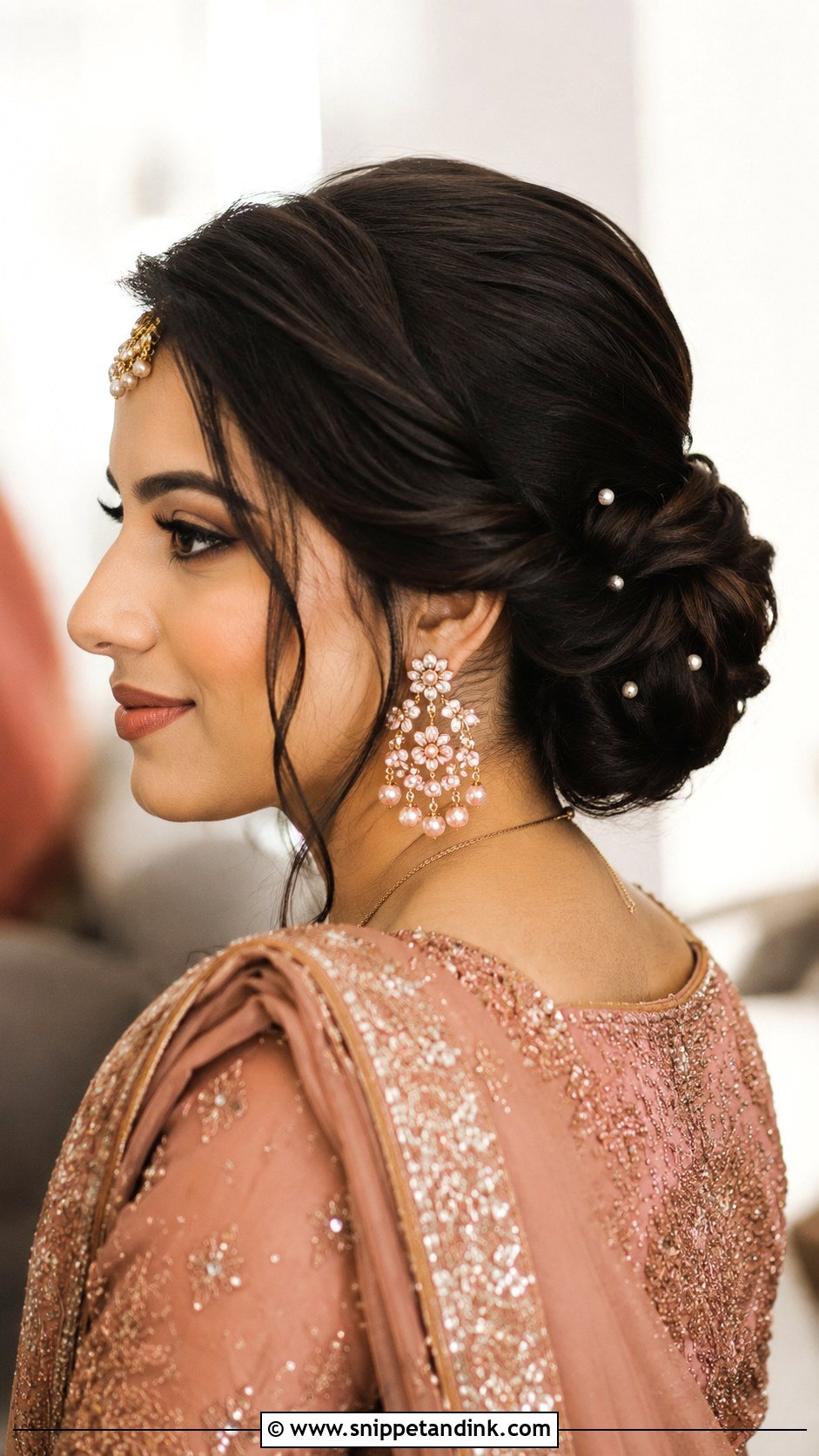
A side part softens the face and makes the whole look less formal than a center part. It pairs naturally with statement earrings, side-placed jewelry or a dupatta set slightly back. The bun can be low and smooth, twisted or lightly textured, and a couple of face-framing strands suit a modern look. I’d skip it with a matha patti, since the jewelry is built to sit centered. A light hold spray keeps the part from drifting through rituals.
12. Bridal Jooda With Puff
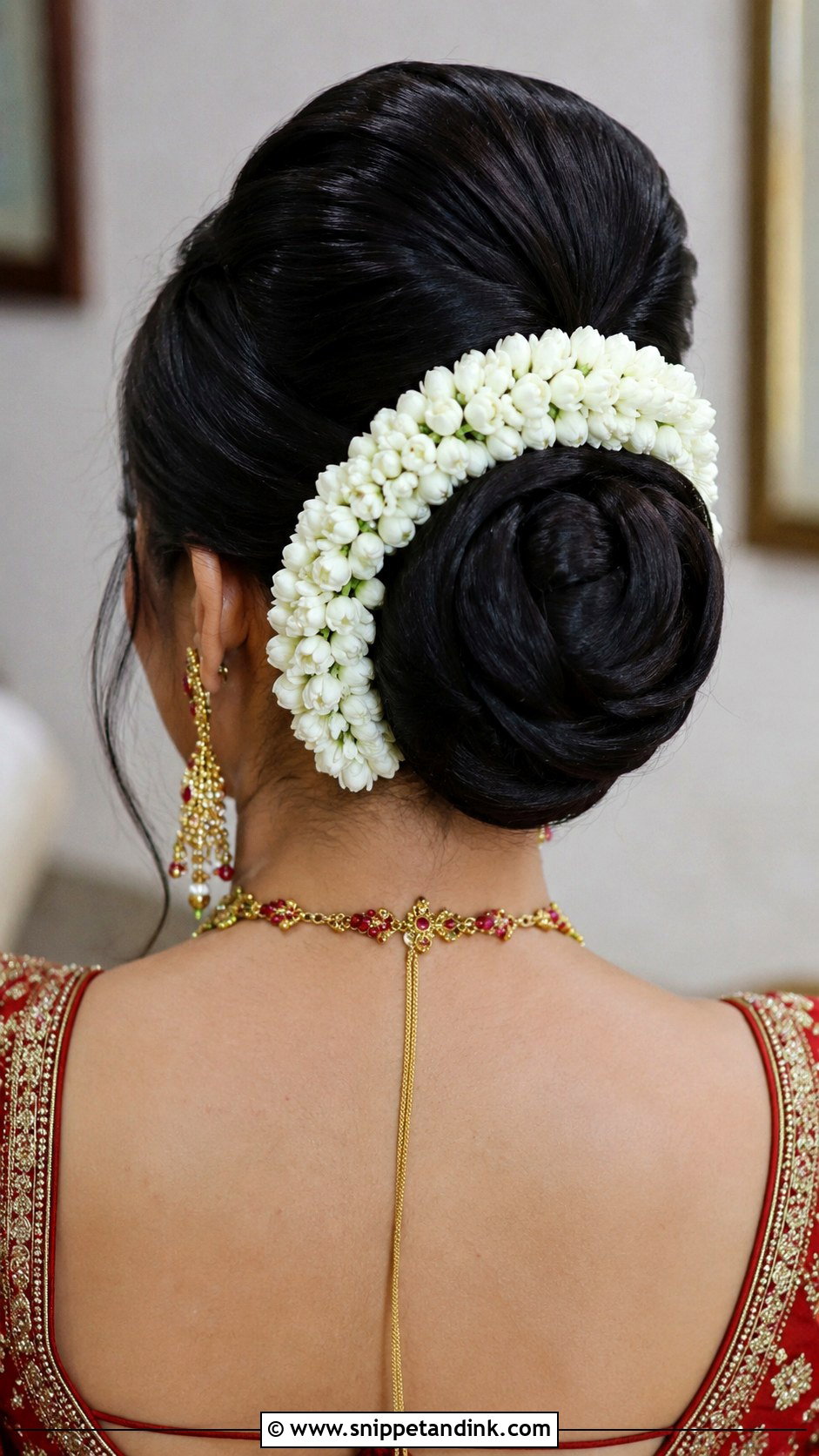
A puff adds height at the crown and sculpts the profile. It’s especially useful under a dupatta worn over the head, because the volume stops the fabric pressing everything flat. The puff should be smooth, built from a small amount of backcombing hidden under a clean top layer, not visibly teased. Round faces often like the length it adds. Finish the low or mid jooda with a gajra, pearl pins or light flowers.
13. Bridal Jooda With Veil
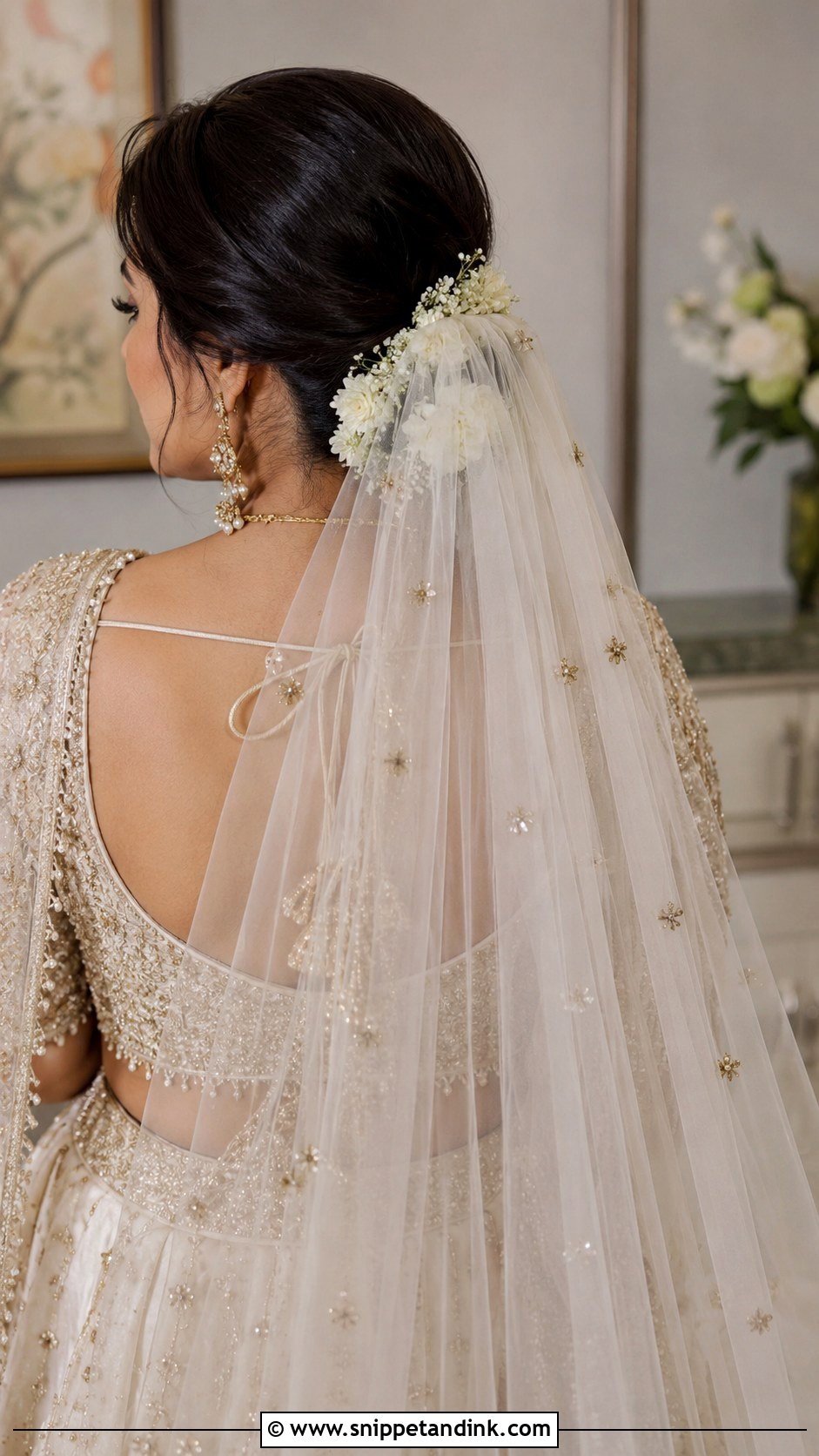
Under a veil, the bun is the anchor point. I pin the comb of the veil into the base of a smooth low jooda so it can’t slide or tug at the scalp. A slightly fuller bun gives more for the veil to grip and adds shape in photos. Keep the front clean and add a little lift at the crown. Small flowers placed at the lower edge of the bun will peek through sheer fabric.
14. Bridal Jooda For Lehenga
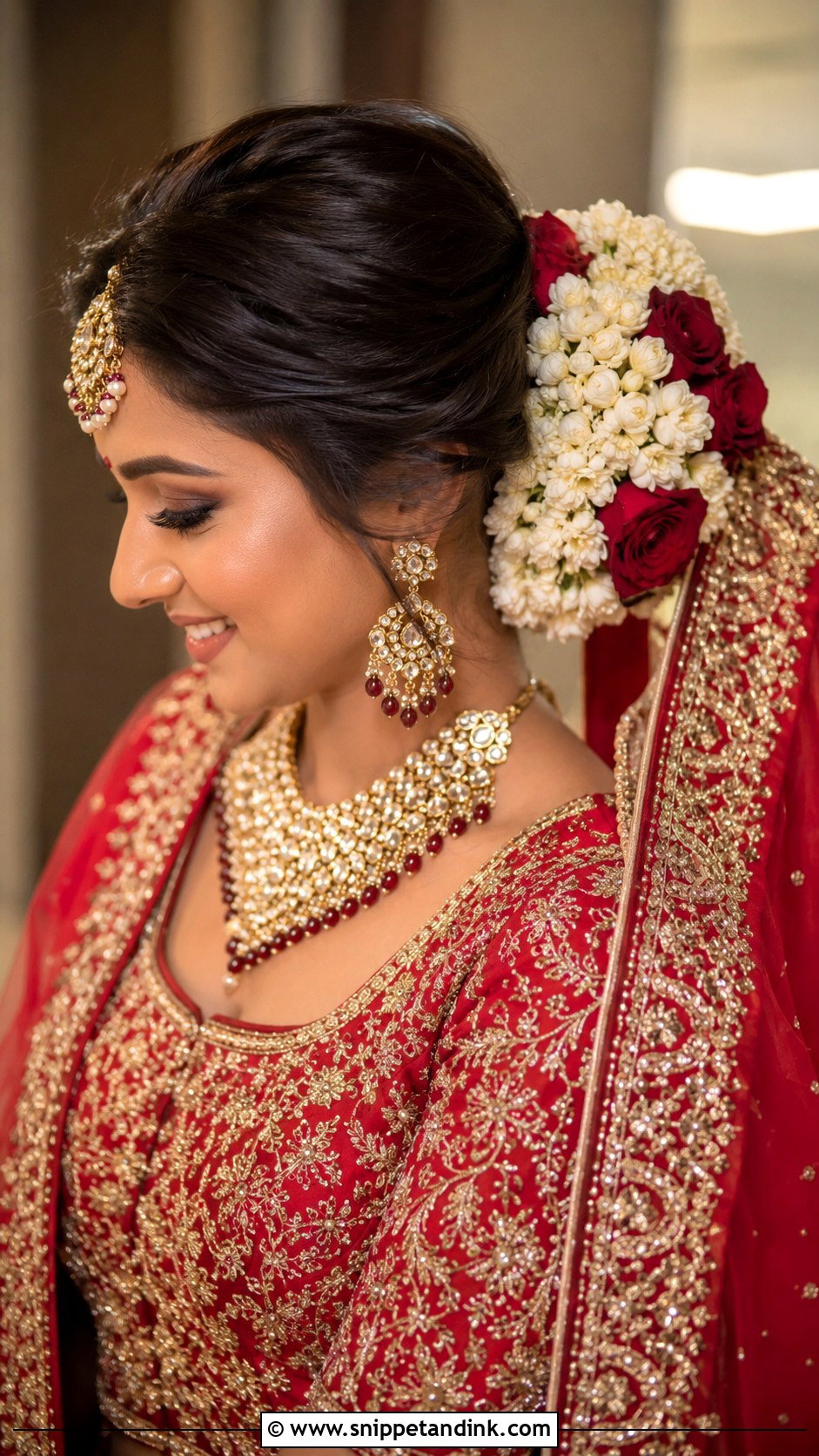
Lehengas often come with heavy embroidery, jewelry, and dupatta styling, so the jooda should calm things down rather than add more. A classic low bun is always safe, and floral, pearl or braided versions personalize it. Look at your blouse before choosing height. With a high neckline I lift the bun so the neck doesn’t look crowded; with an open back, a lower decorated bun shows off the blouse in back-view photos. Either way your earrings, necklace and dupatta border stay visible.
15. Bridal Jooda For Saree
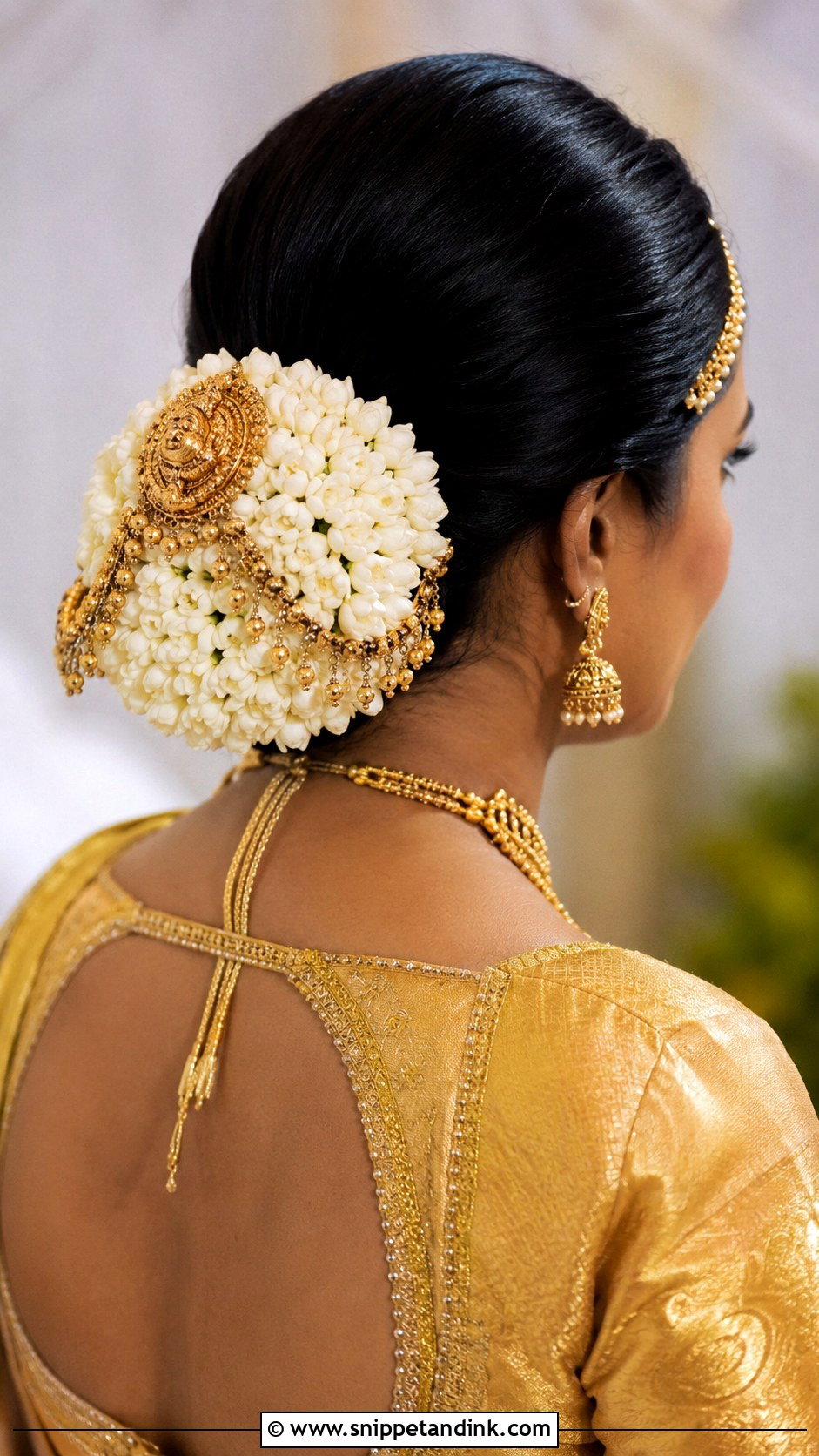
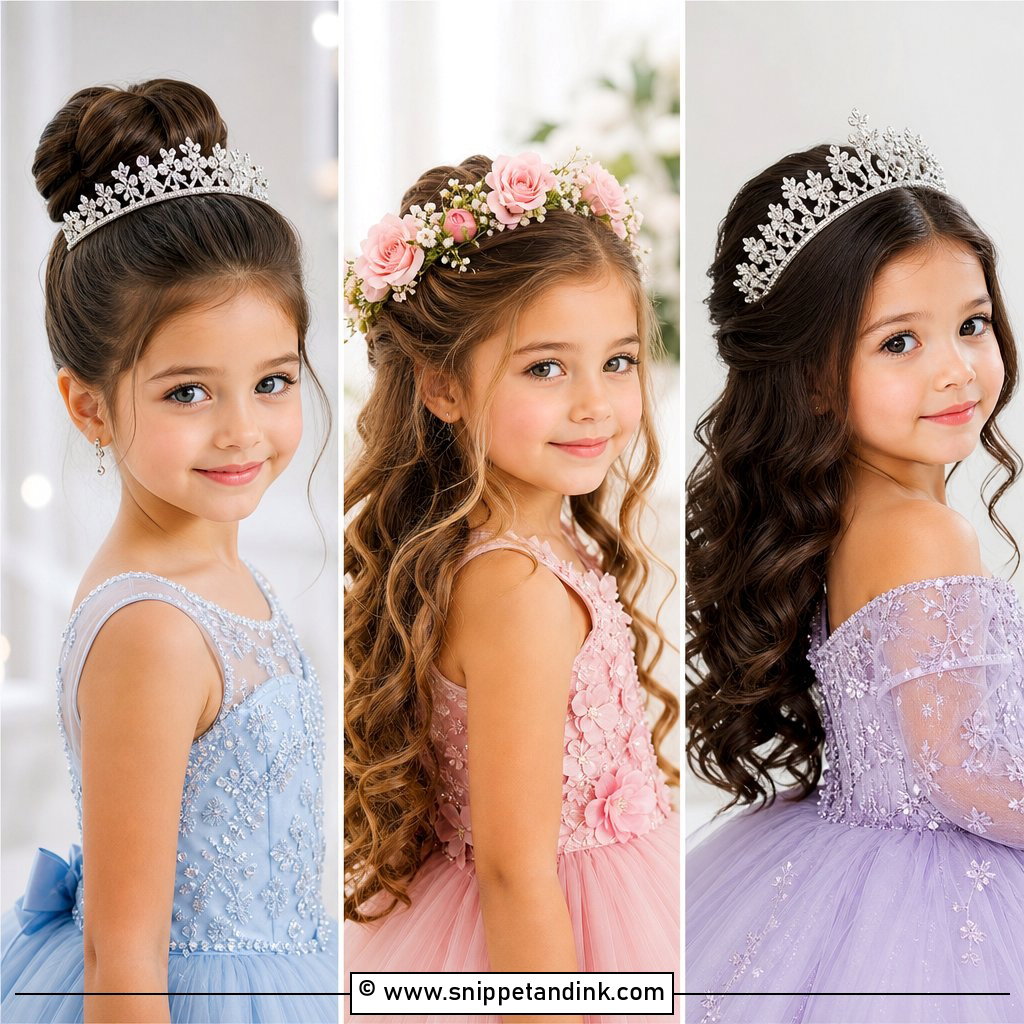
Silk, Banarasi sarees, Kanjeevaram sarees and other traditional drapes pair naturally with a low or mid bun and a sleek front. Fresh jasmine, gold hair jewelry or a simple flower ring is often all it needs. The pallu matters here: if it’ll be drawn over the head, I keep the bun a little lower so the fabric falls cleanly. South Indian brides often add temple jewelry and layered flowers, while a modern saree bride might want only pearls or a few pins.
16. Bridal Jooda For Round Face
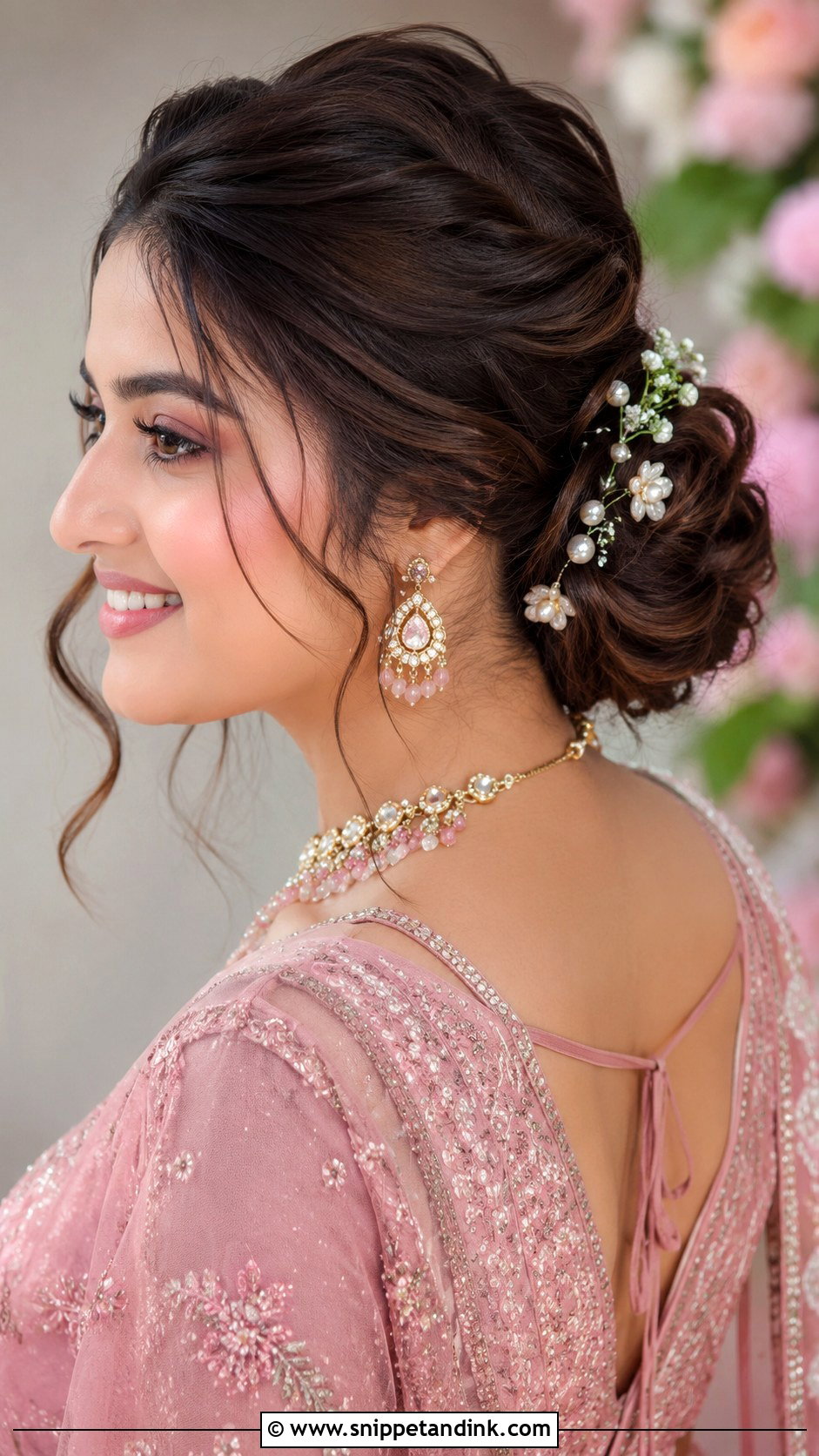
On a round face, I avoid pulling the sides tight and flat, which widens the face. A slight lift at the crown, a soft center part and a couple of loose face-framing pieces add length instead. The bun shouldn’t sit flat against the head either; I keep it slightly full at the back. Watch jewelry placement too, because a large tikka low on the forehead shortens the face again. Gajra, pearls or small flowers keep the detail at the back where it belongs.
17. Bridal Jooda For Long Hair
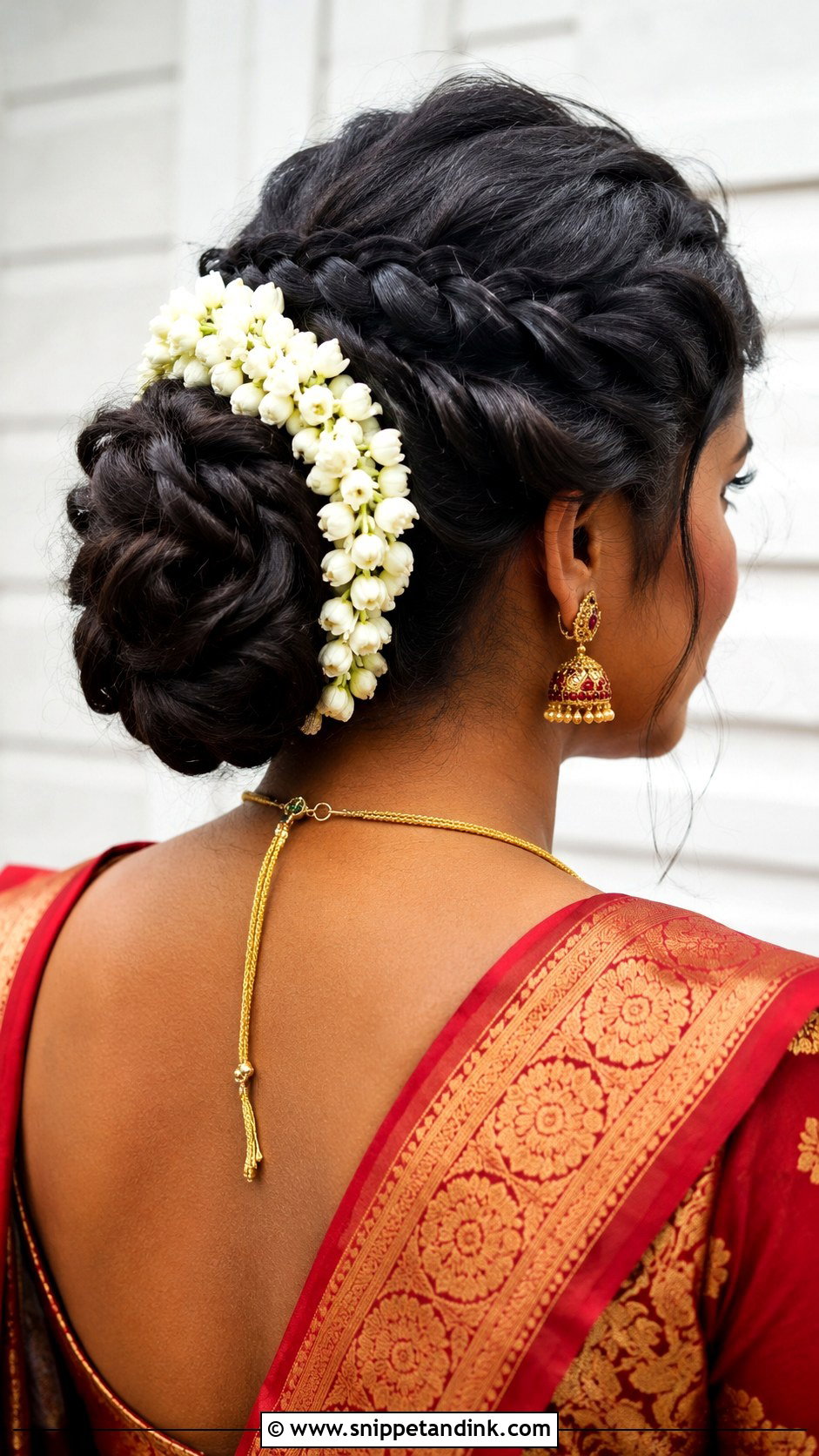
Long hair gives me room for twisted sections, braided wraps or a large rounded bun, but it also brings weight. Very long hair pulls downward all day, so I split it into two or three sections and anchor each one separately instead of winding it all into one coil. A low bun with braided detail stays most stable. Do a trial before the wedding, because a bun that’s too big for your frame can overpower even heavy jewelry.
18. Bridal Jooda For Short Hair
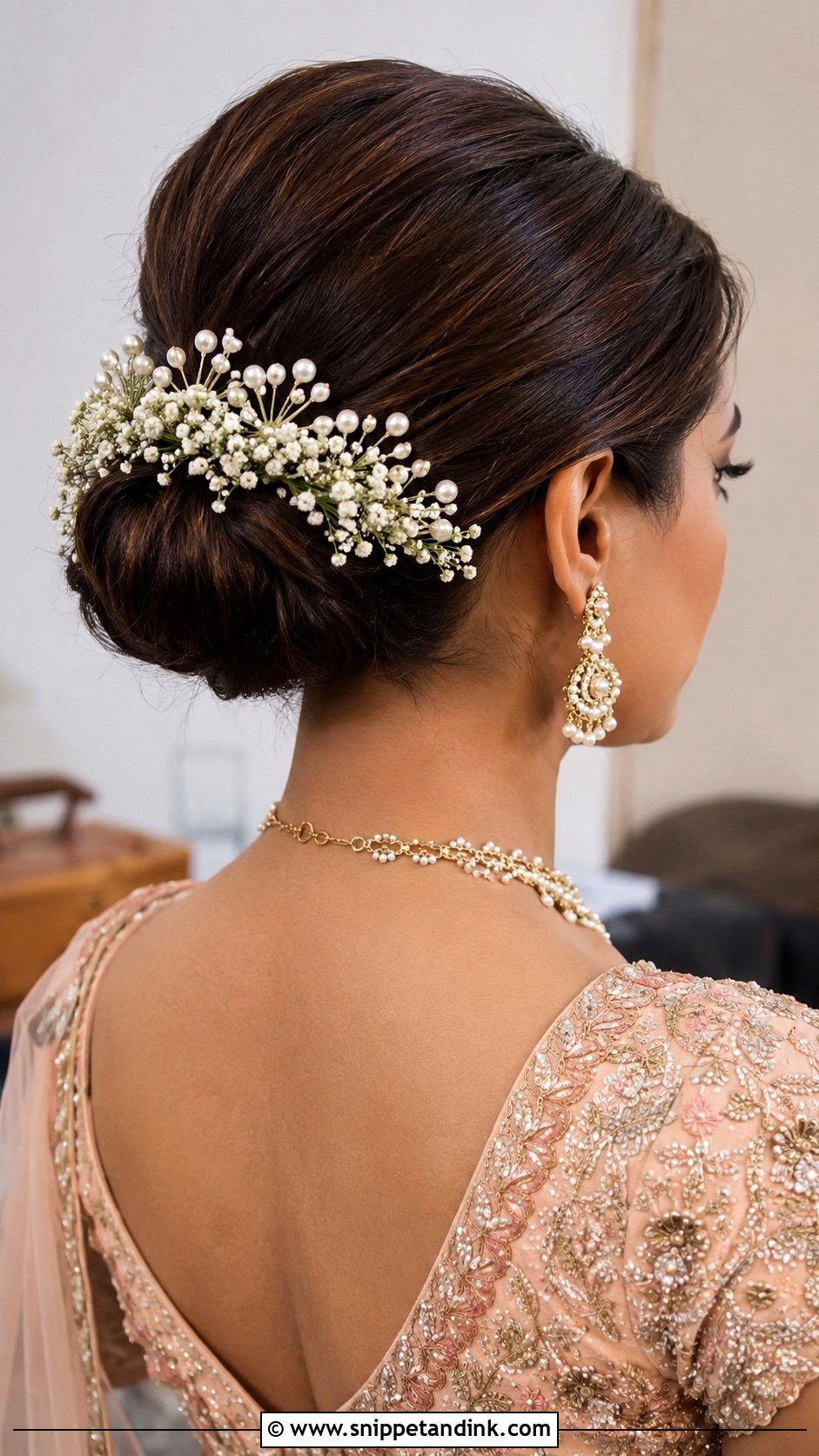
A jooda on short hair is completely possible. Shoulder-length or fine hair can be wrapped around a small bun pad, with clip-in extensions added if you want more volume. The bun doesn’t have to be huge to look bridal. Gajra, roses, pearl pins or a decorative comb cover the base and make it look full. I’d ask your stylist for a lightweight finish, since fine hair feels every extra pin by evening.
19. Bridal Jooda For Engagement
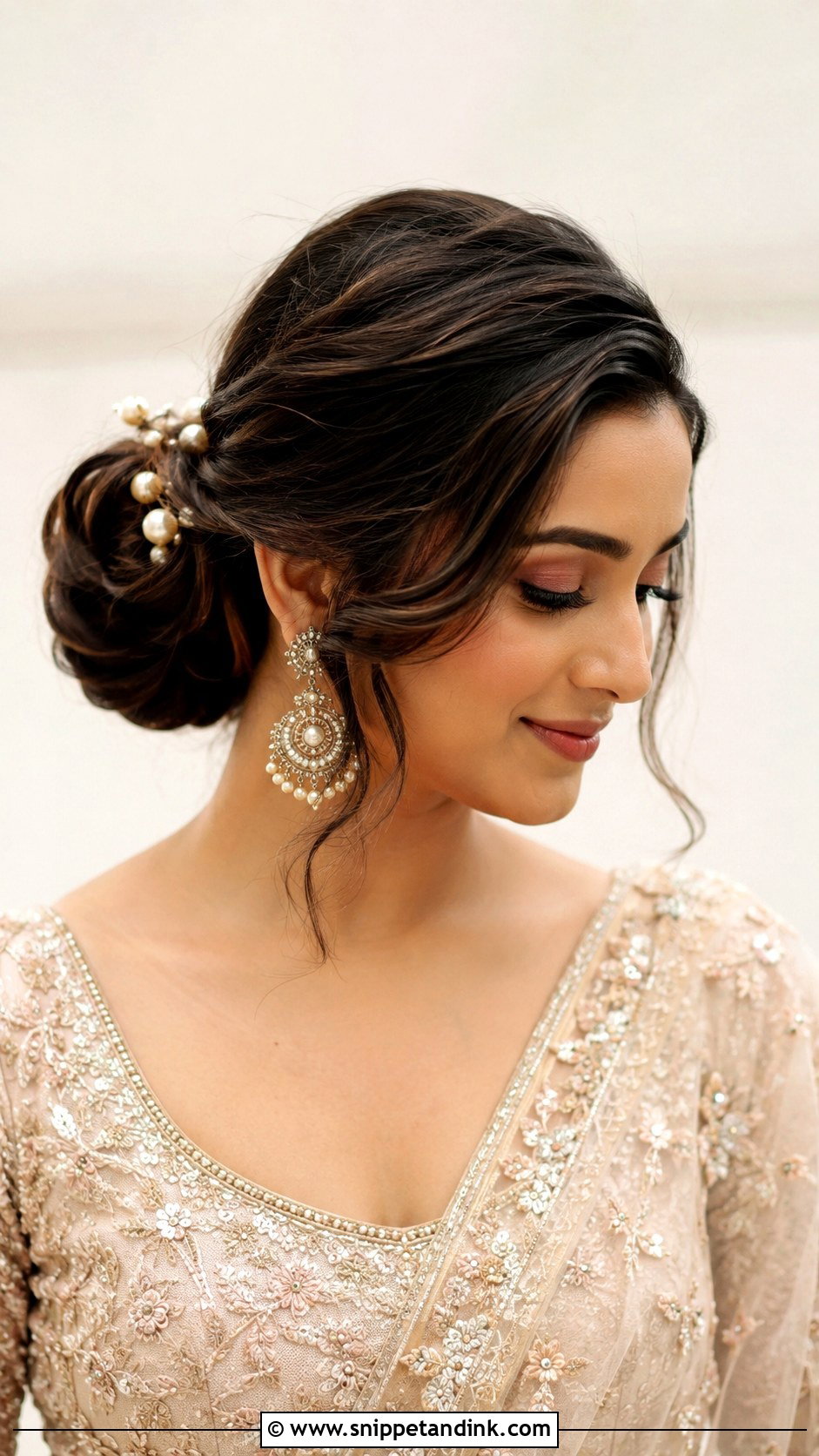
An engagement jooda can be softer and lighter than the wedding one, since there’s usually no heavy dupatta or full set of jewelry. A low textured bun, a pearl bun or a fresh flower bun suits gowns, sarees, lehengas and anarkalis alike. The front can be a side part, soft waves or a clean center part. Engagements tend to mean close-up photos, so face-framing detail matters more than the back. Keep the bun polished but loose enough to move.
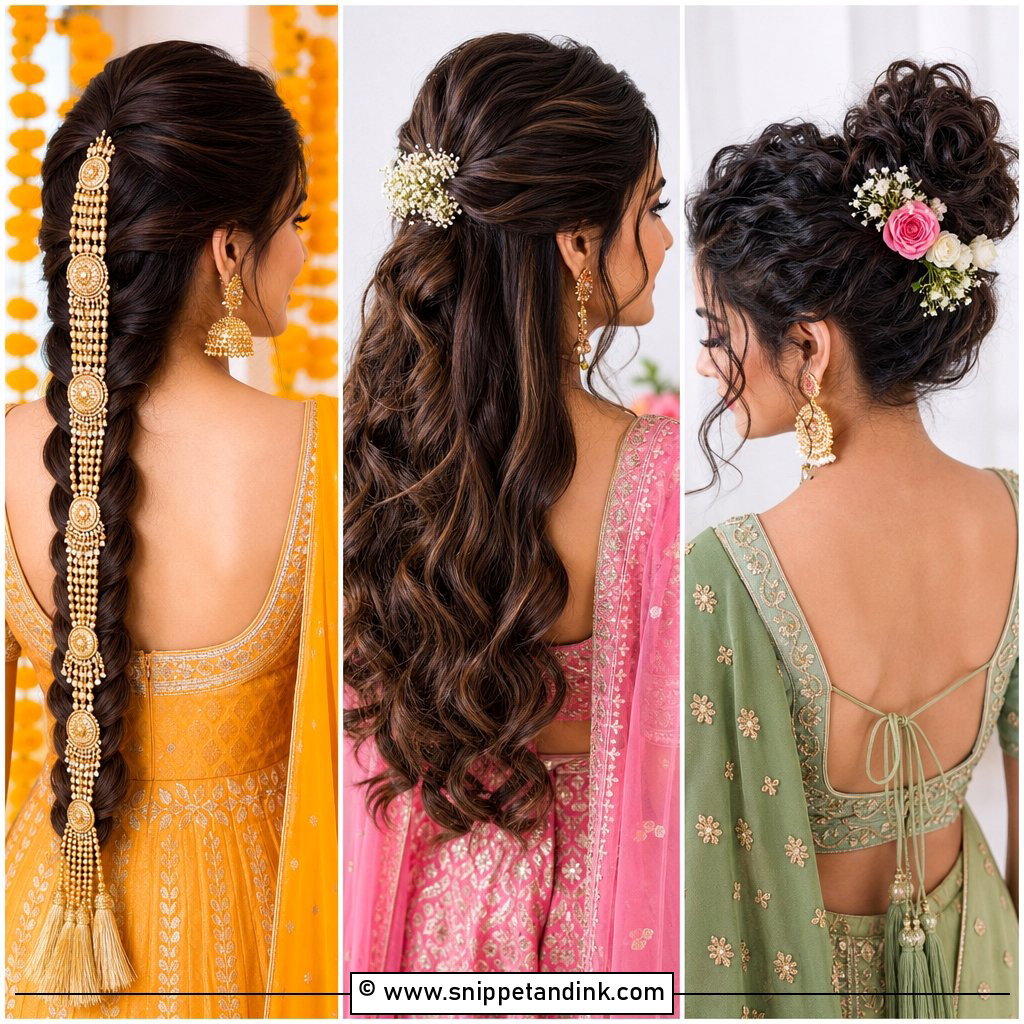
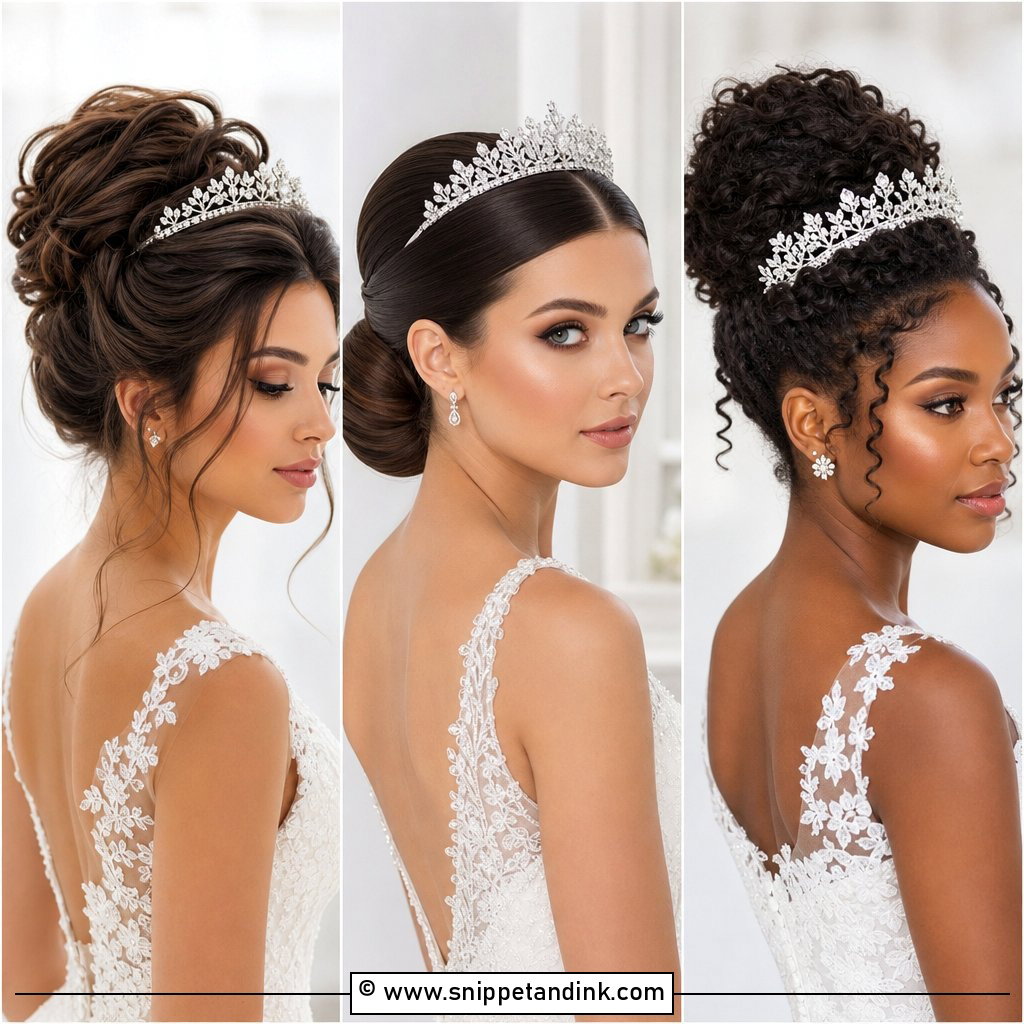
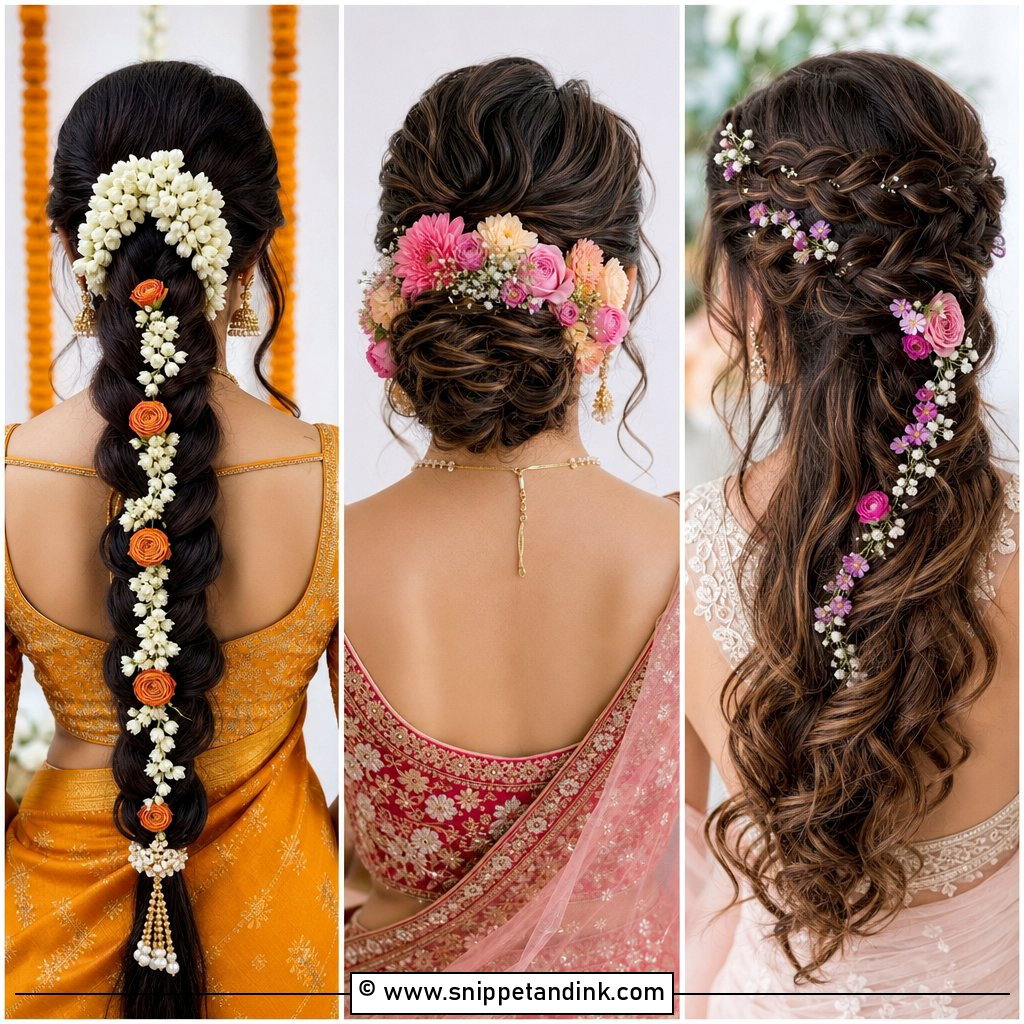
20. Bridal Jooda For Reception
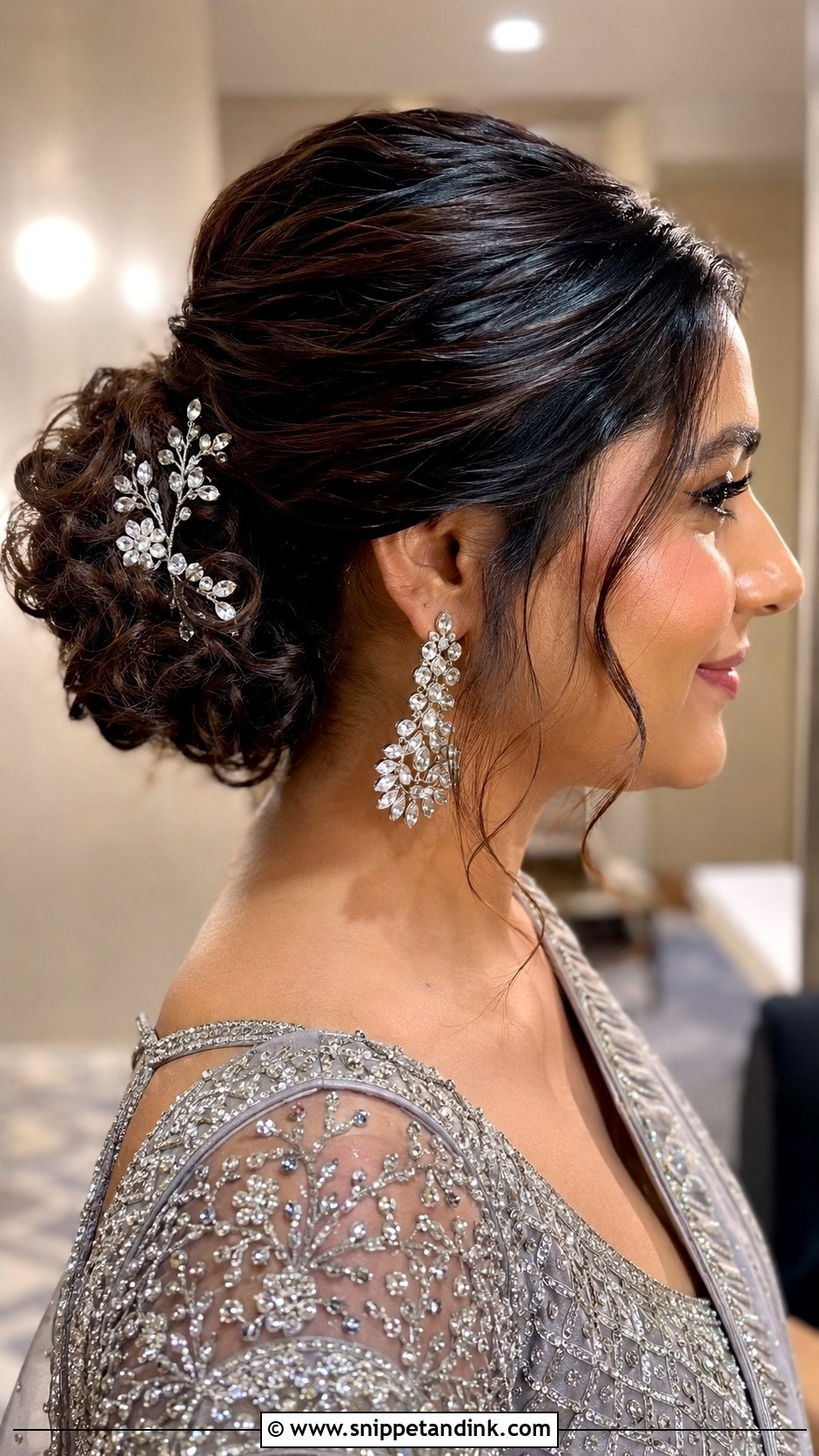
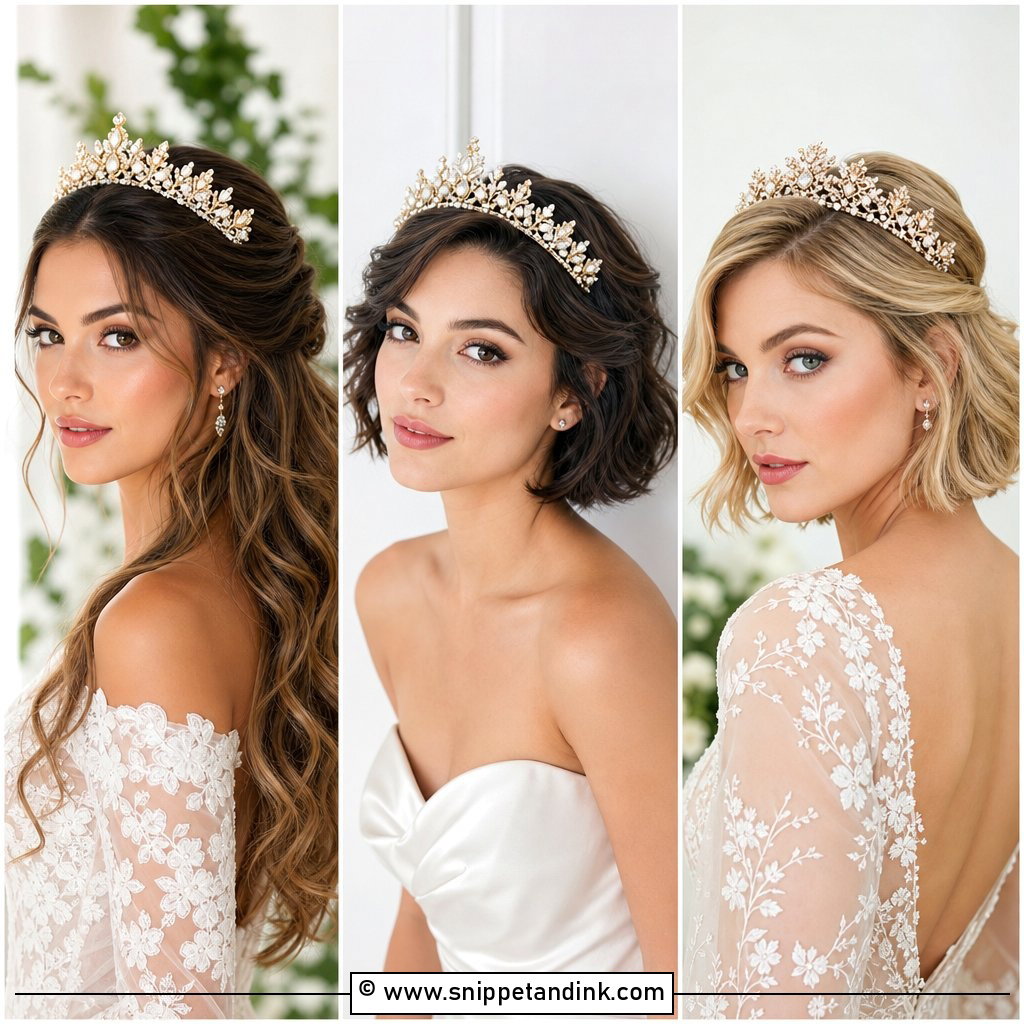
The reception jooda can be more glamorous, because the bun is often on show without a dupatta. Gowns, lehengas, sarees and lighter dupattas all work. A textured low bun with pearls, crystal pins or soft flowers suits evening light, while a sleek one balances a heavily embellished outfit. Many brides change from the wedding look to this one, so ask your stylist to time it; a full re-style takes much longer than a refresh. A little softness around the face keeps it from looking stiff for greetings and dancing.
Oiled Hair Is the Fastest Way to Lose a Bun
Many brides get a head massage with oil during the mehndi or haldi days, and it’s lovely, but oil and pins don’t mix. Slippery hair won’t grip, and the bun slowly slides down through the day. Wash the oil out thoroughly the day before the wedding, or the morning of if your hair is fine. Use conditioner only on the lengths, not the roots.
Dry your hair completely before the appointment. Slightly damp hair at the base of a bun stays damp for hours, which loosens the hold and can leave the scalp itchy under a dupatta. Very silky or freshly washed hair sometimes needs a dry shampoo or texture spray at the roots, just so the pins have something to bite into.
Unpinning After the Vidaai Without Breakage
A bridal jooda can carry dozens of pins, and pulling it apart in a hurry snaps hair. Take the dupatta off first, then the flowers and jewelry, and only then start on the bun. Find each pin with your fingers and slide it out along the direction it went in. Brush from the ends upward once everything is out, and save a shower for when you can work a little conditioner through the spray.
Test the Jooda With the Real Jewelry On
A jooda holds up to jewelry, dupattas, sarees, lehengas and long ceremonies better than almost any other bridal style. Which one suits you depends on your outfit, face shape, hair length, texture and the function. Gajra reads as traditional, pearls as refined, braids add detail and flowers bring softness. Before the day, save the looks you love, book a trial and test every piece of jewelry in place. A well-built jooda photographs well and still feels secure at the end of the night.
You'll Like These Ideas:






Leave a Reply