
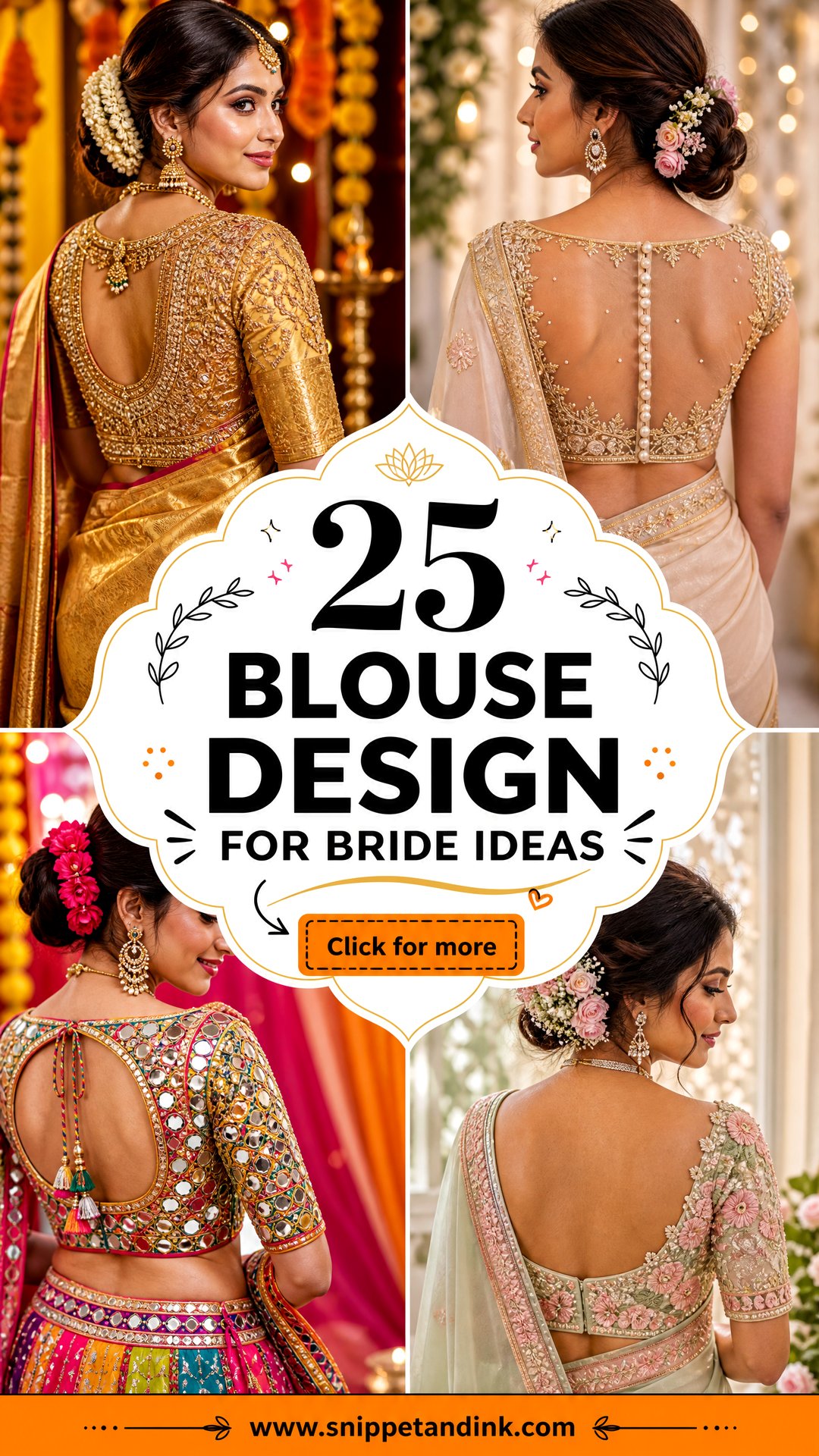
The blouse is the part of a bridal saree or lehenga that sits closest to your face, carries the weight of your jewelry and shows up in nearly every close portrait. It also has to let you sit through rituals, fold your hands, touch elders’ feet and dance at the sangeet. So when I design one with a bride, the neckline is only the starting point. We talk through sleeve length, how heavy the embroidery will be, the fabric, the back, the lining and how it closes. Below are 25 blouse designs I’d put in front of a bride, each with the fitting and tailoring detail that decides whether it actually works on the day.
How a Hand-Embroidered Bridal Blouse Gets Made, Step by Step
Brides are often surprised by how long a heavily worked blouse takes. Hand zardosi, maggam and aari work are slow, and the order in which things happen matters as much as the design.
- Finalize the neckline, sleeve length and back early, ideally a few months before the wedding for dense hand embroidery. Busy wedding seasons stretch every workshop’s queue.
- Get measured in the bra you’ll wear on the day. A different bra changes the bust point, and the embroidery is placed from that point.
- Ask for a plain trial fit before the embroidery starts. Fit is easy to fix on bare fabric and very hard once it’s covered in thread and stones.
- Request extra seam allowance at the sides and under the arms. A wider margin lets the blouse be let out if your weight shifts before the wedding.
- Have the final fitting two to three weeks ahead with the full outfit, jewelry and shoes, so there is still time for adjustments.
If you’ll wear more than one blouse across the functions, stagger the orders. The main ceremony blouse goes first; lighter mehndi or reception blouses can follow.
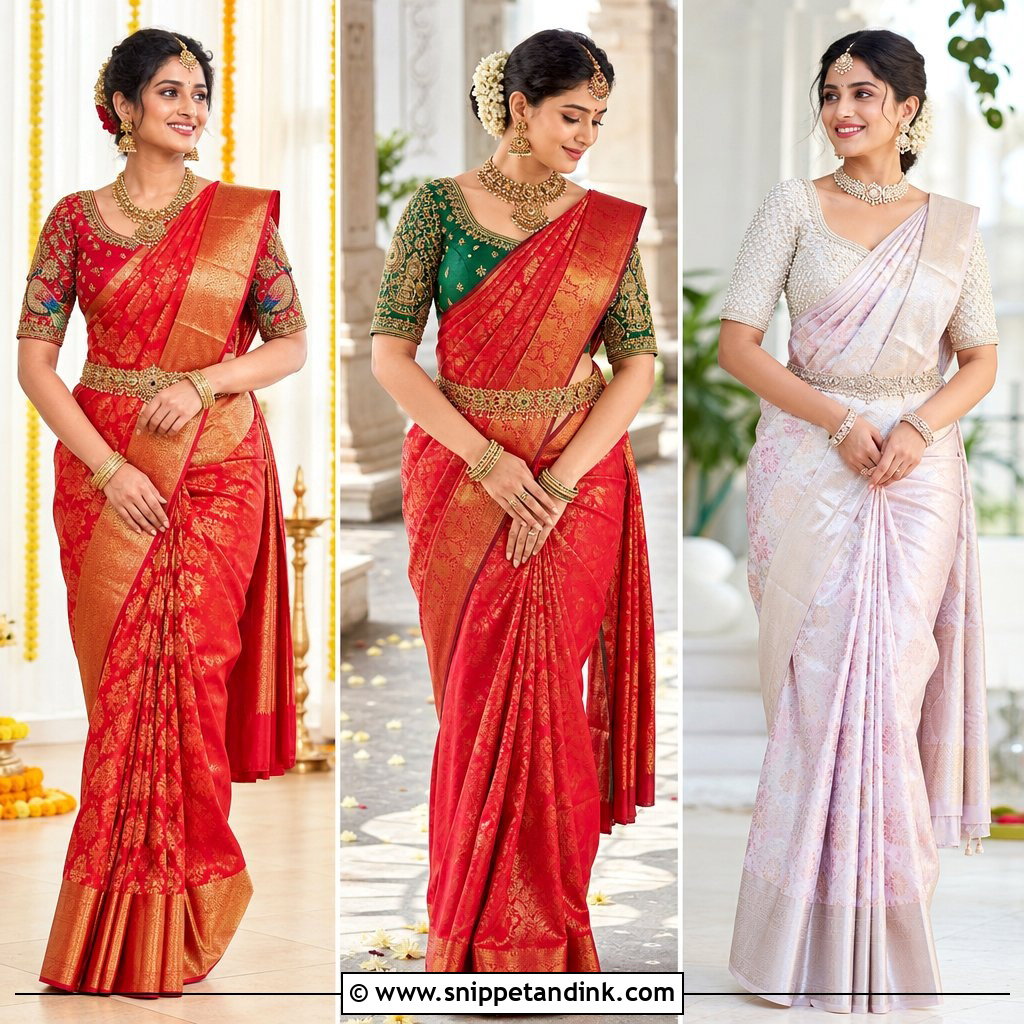
1. Red Zardosi Bridal Blouse With Silk Lehenga
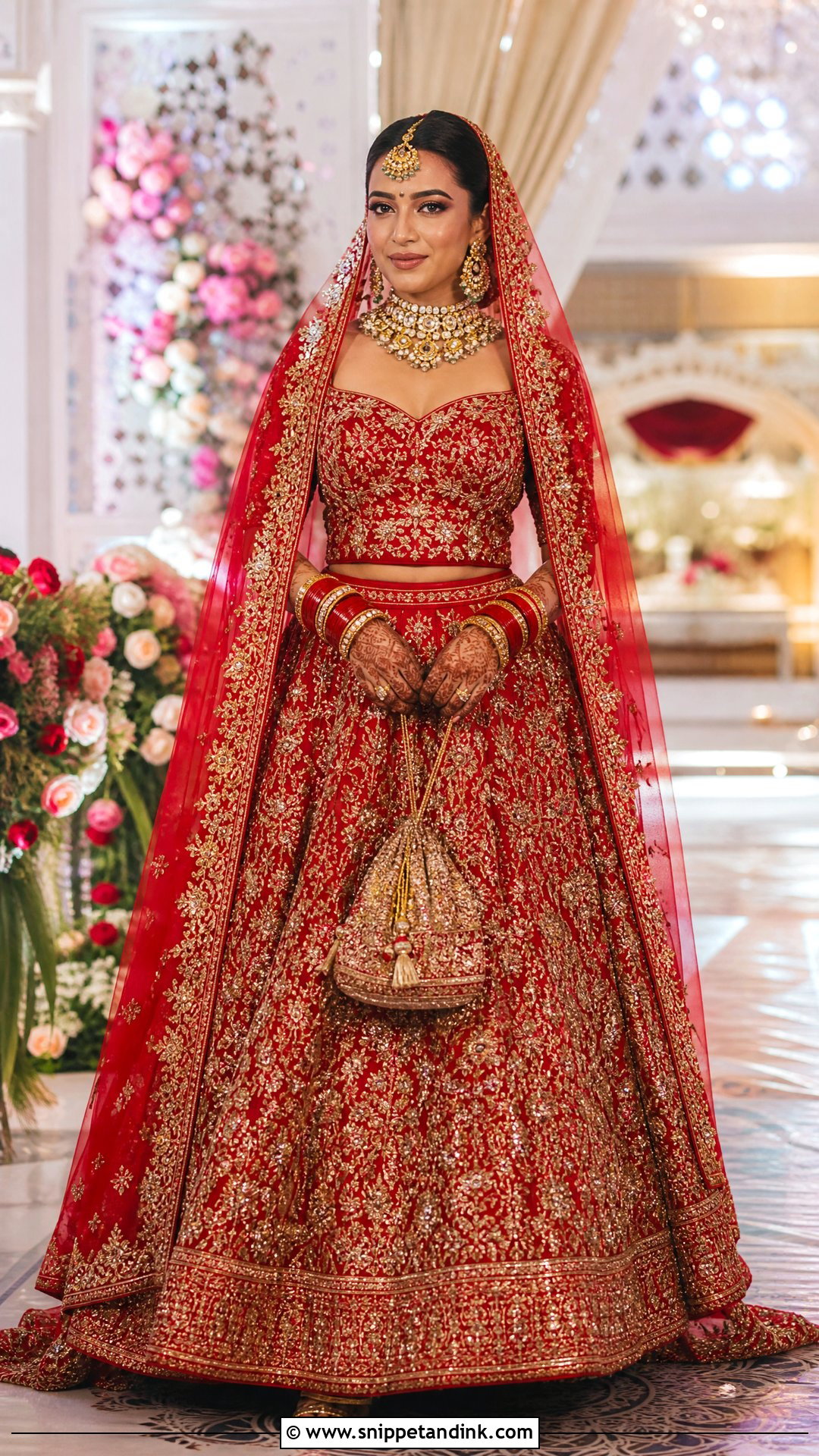
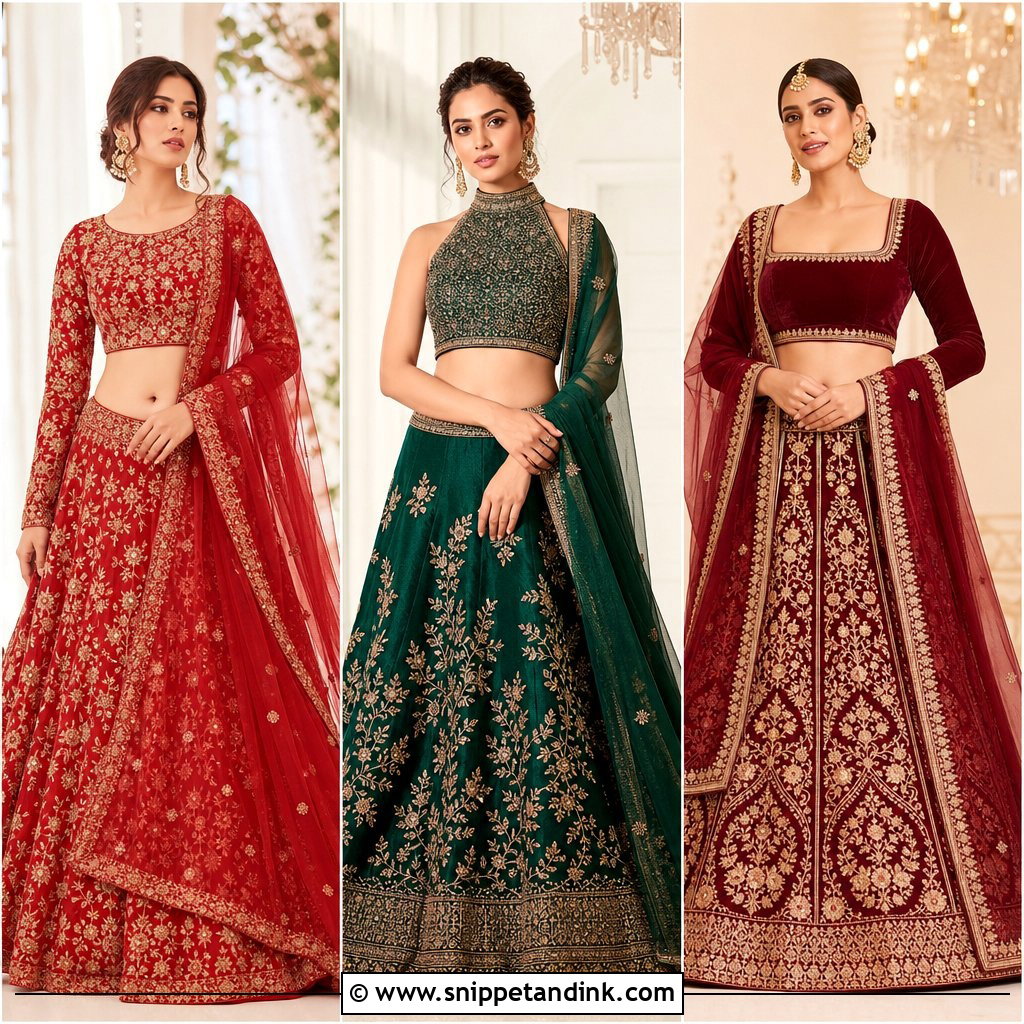
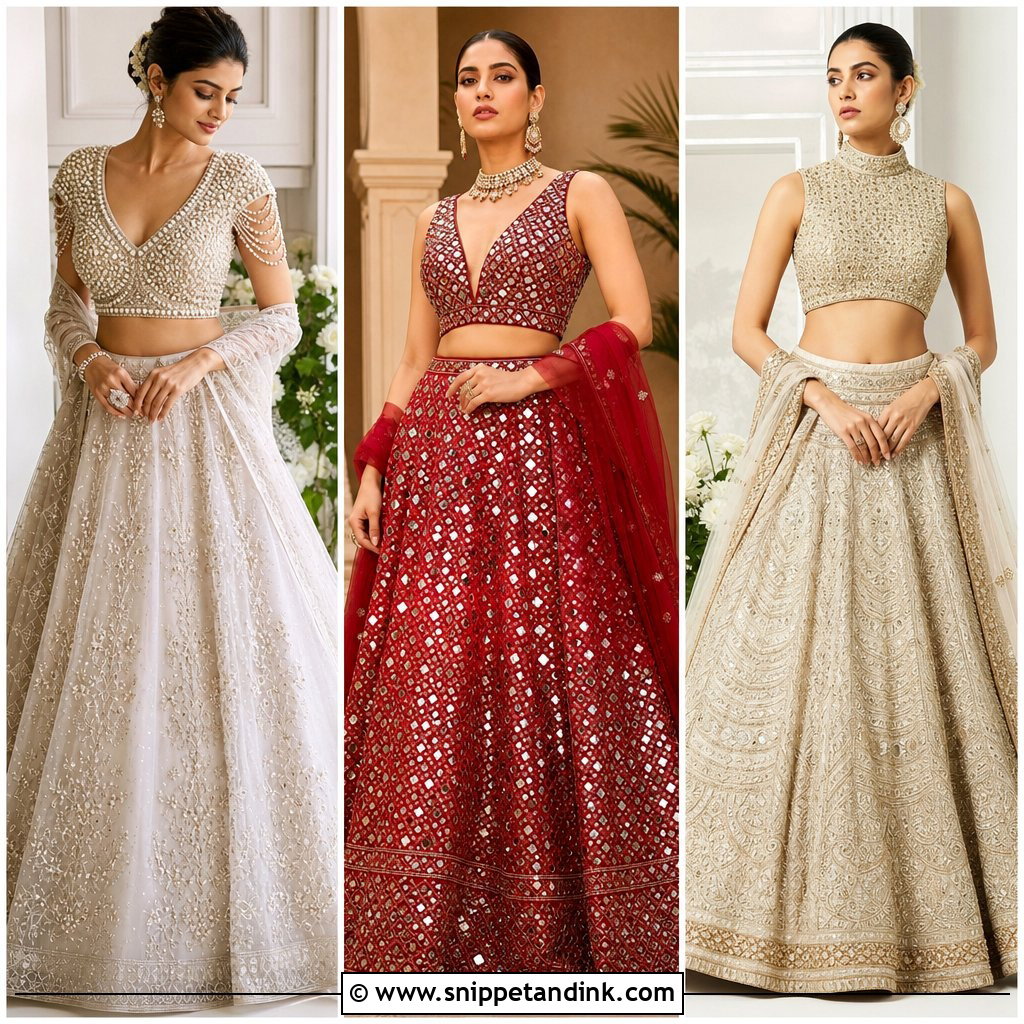
Zardosi on red is the classic, and it stays fresh when the motifs repeat across blouse, skirt border and dupatta instead of mixing three unrelated patterns. Raw silk or a firm bridal silk holds the shape under metal threadwork; a soft silk puckers. A sweetheart or medium V leaves room for a layered kundan set. Elbow sleeves balance a heavy skirt and keep you covered through a long ceremony. Insist on a soft cotton lining and bound edges inside the embroidery. Zardosi backs are scratchy, and after six hours the underarms will tell you if the lining was skipped.
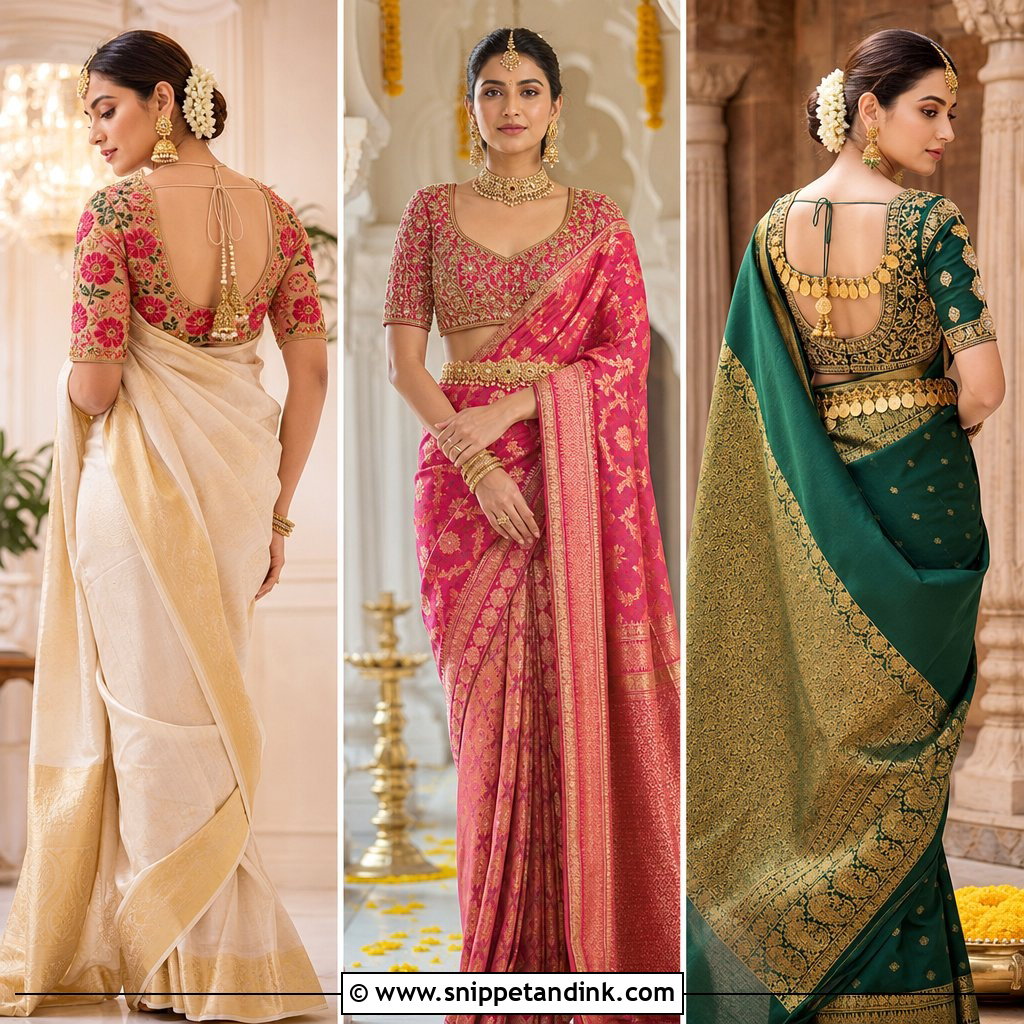
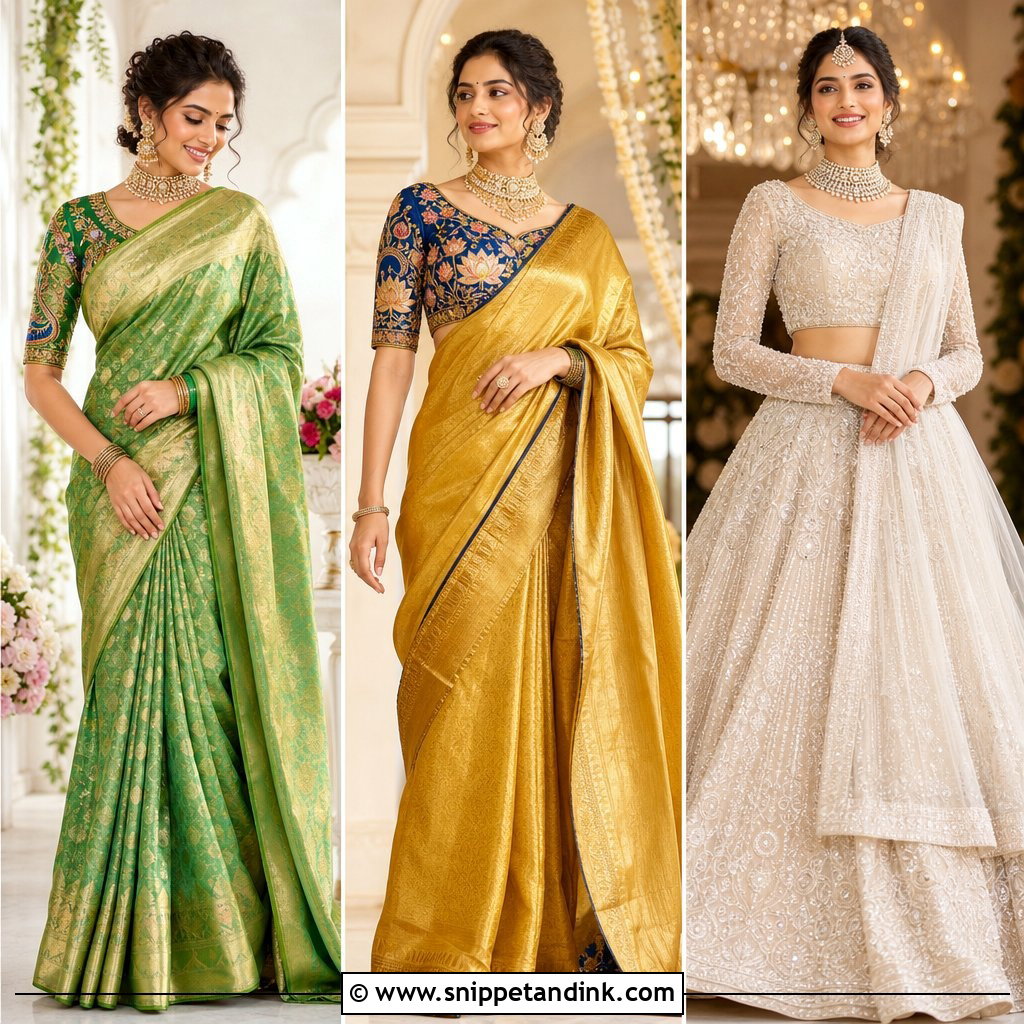
2. Gold Maggam Work Blouse With Kanjeevaram Saree
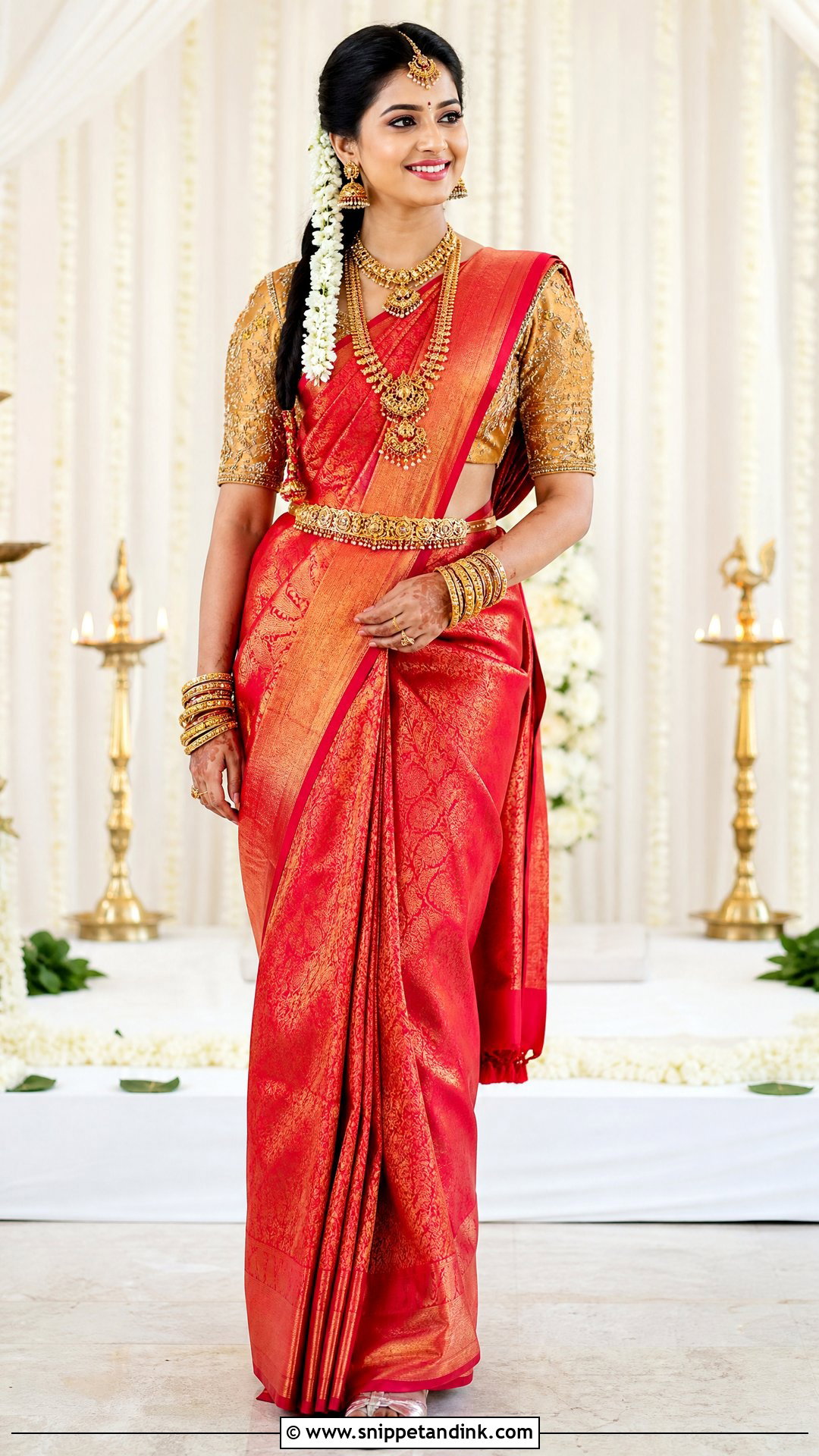
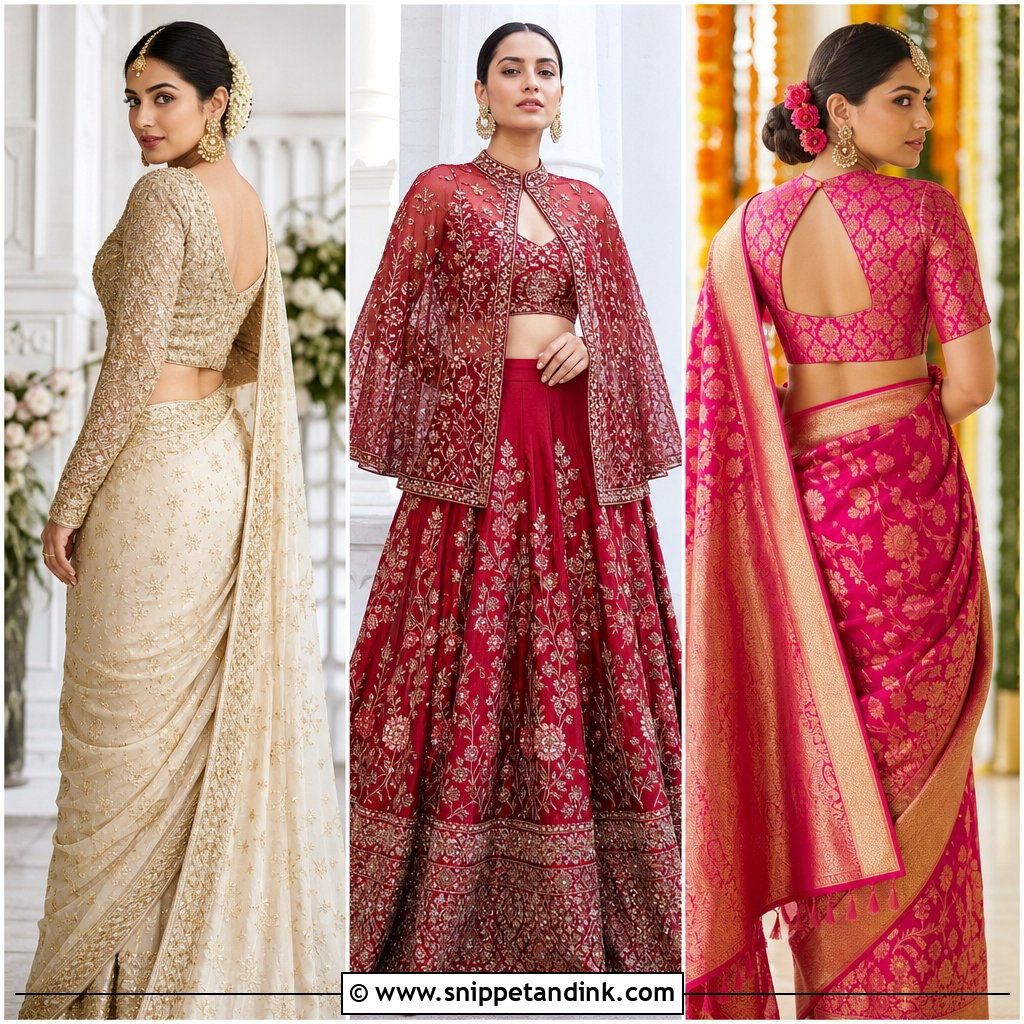
Gold maggam work sits naturally with a Kanjeevaram, since both are dense and structured. I keep the front a little calmer, because temple necklaces and a long haram will cover it anyway, and put the peacock, lotus or paisley motifs on the sleeves and back where they’re seen. Match the thread and stones to the saree border, not the body color. Maggam is heavy, so the sleeve seams need reinforcing. Do the final fitting in your wedding-day bra, since the weight of the embroidery changes how the bodice sits.
3. Sweetheart Neck Bridal Blouse With Velvet Lehenga
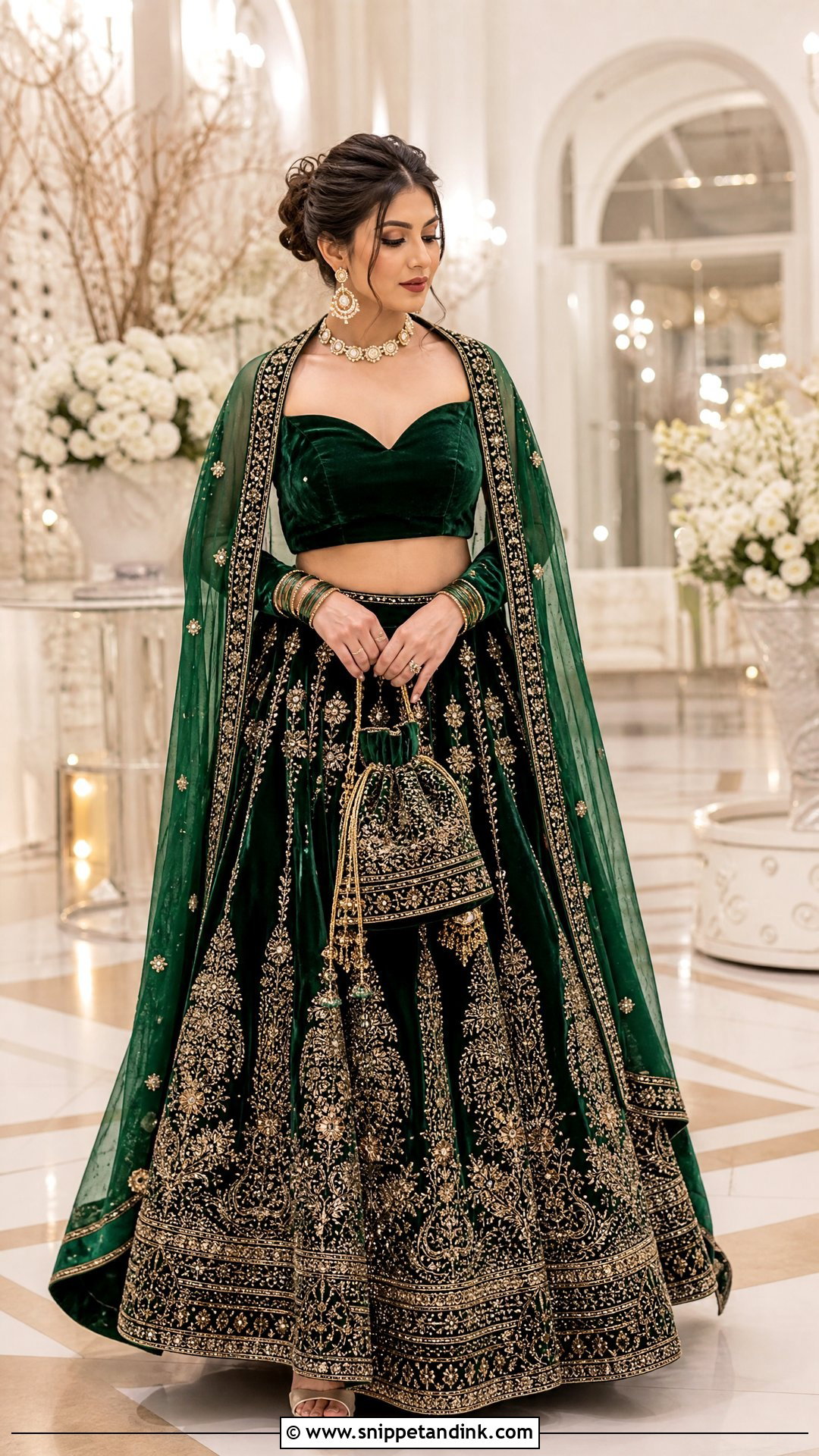
A sweetheart neck softens a velvet blouse, which can look very solid otherwise. Velvet is heavy, so the curve needs concealed boning or it flattens and gapes by evening. Let the embroidery trace the neckline and thin out over the bodice. Emerald, maroon, navy and deep plum all suit velvet in cooler months. A choker or short necklace fits the open curve better than a long one. Skip padding; velvet already adds bulk.
4. Deep V-Neck Bridal Blouse With Embroidered Lehenga
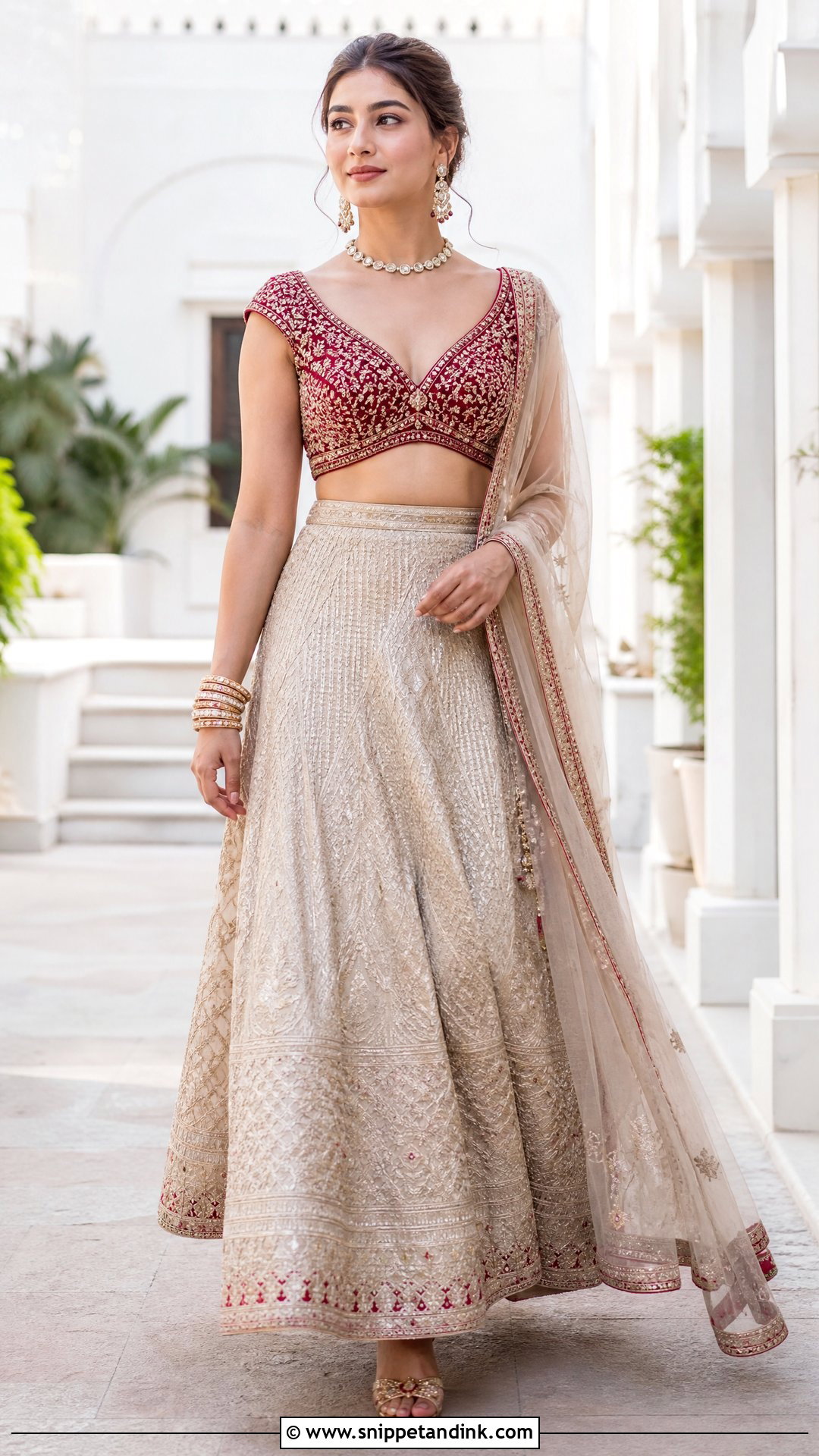
With a deep V, the neckline itself is the design, and it gives a heavily worked lehenga a clean line through the middle. Traditional threadwork or zari on the bodice keeps it bridal. The V has to lie flat against the chest when you bend forward to garland or greet; a mesh insert inside the V fixes most gaping. For a fuller bust, I’d raise the V slightly and widen the straps. A light dupatta over one shoulder, a slim necklace and statement earrings.
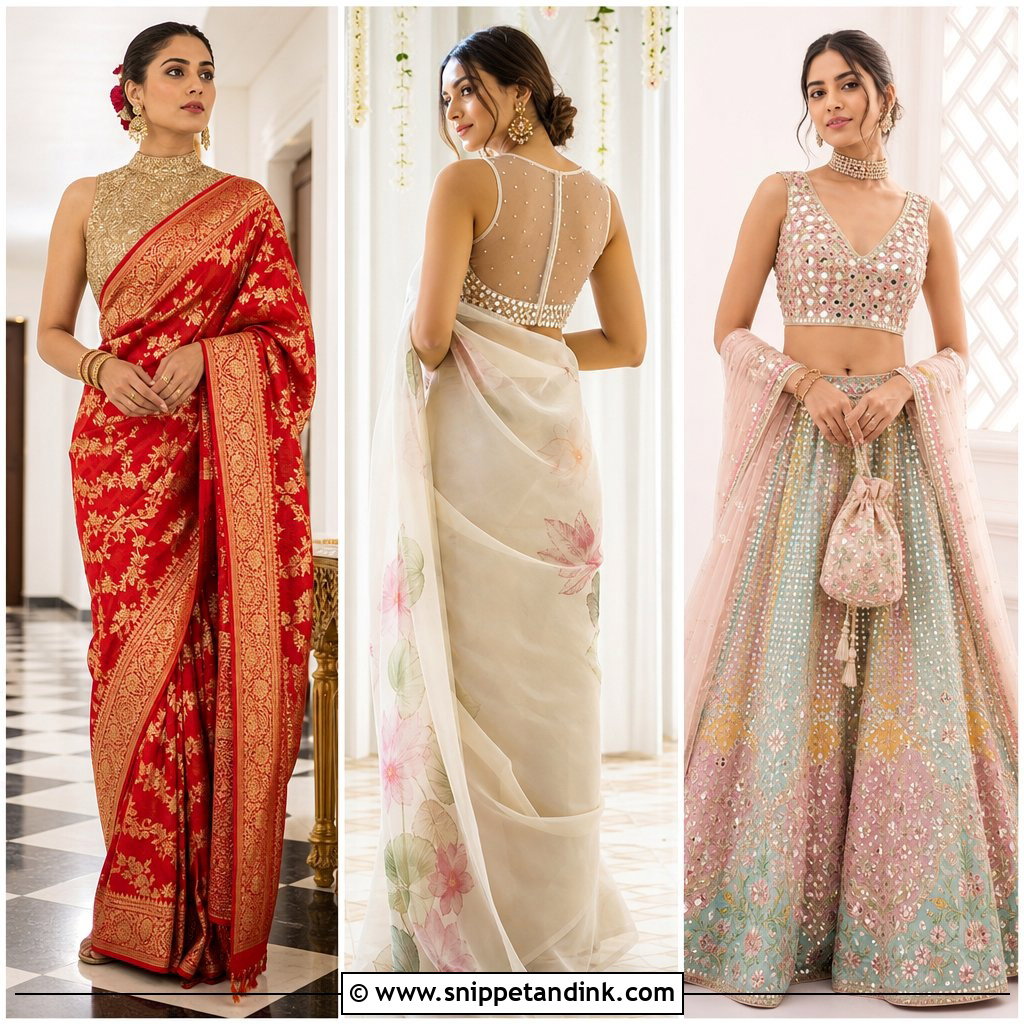
5. High Neck Bridal Blouse With Banarasi Saree
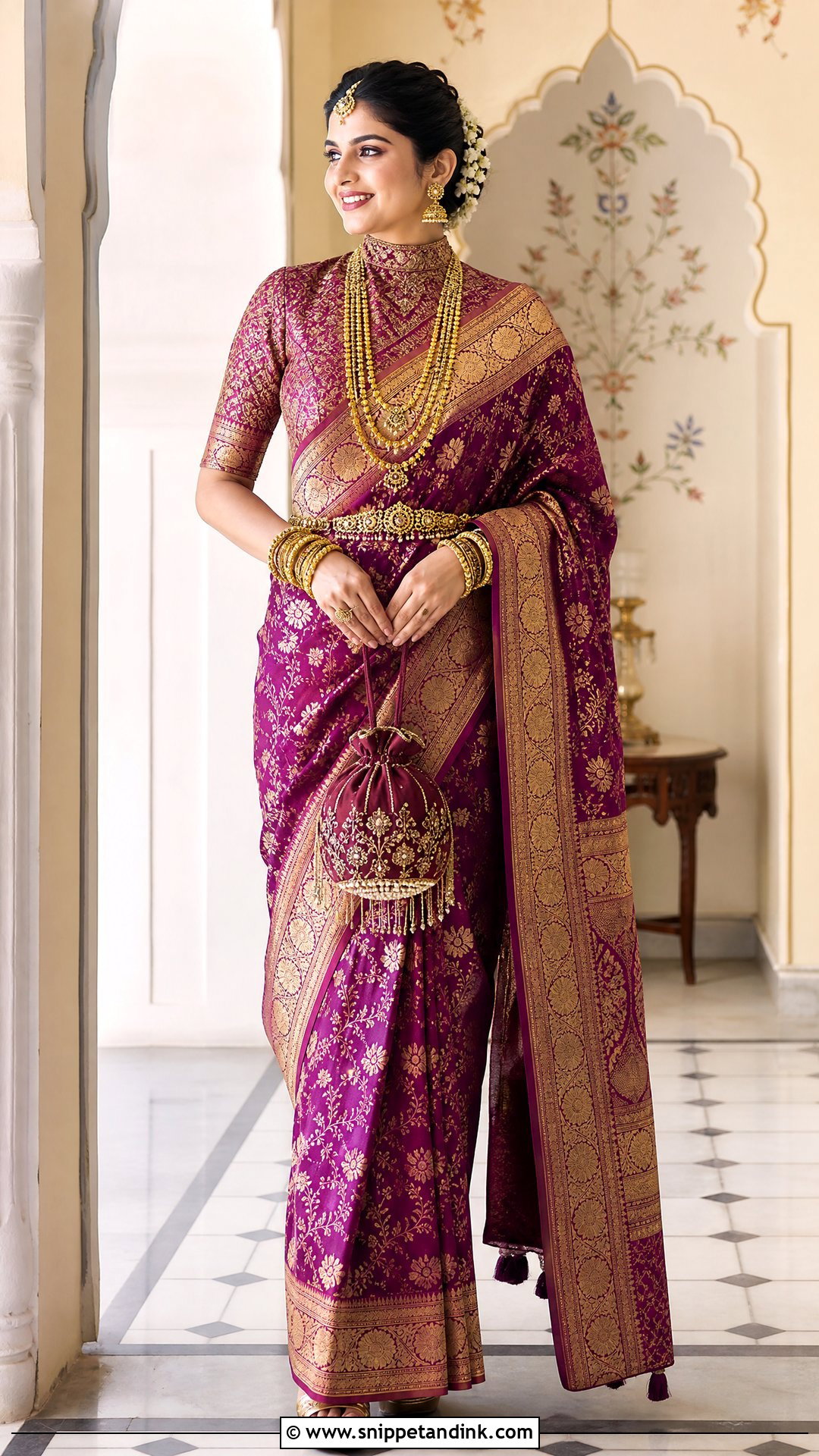
A high neck with a Banarasi saree looks regal, and it changes how you plan your jewelry. Chokers fight a collar, so choose long necklaces or a single pendant strand. Put the embellishment on the sleeves, shoulders and back rather than crowding the front. A hidden back or side opening keeps the front smooth. The collar needs a soft lining and a finger’s width of room; a tight brocade collar is unbearable by the time photos start.
6. Boat Neck Bridal Blouse With Embellished Saree
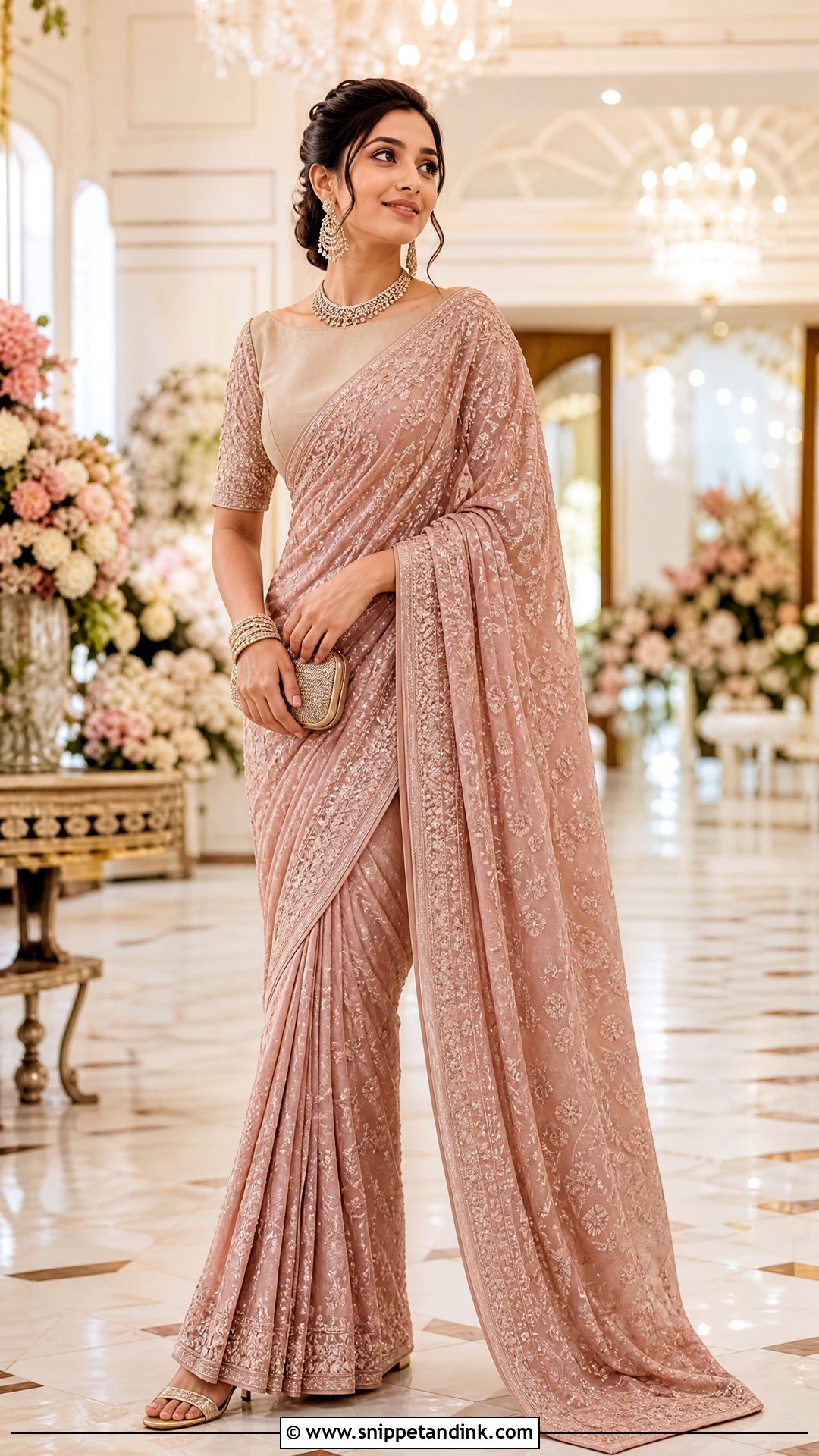
A boat neck runs across the collarbones and leaves the saree border to be the main feature. Raw silk, satin silk or brocade hold the wide line; soft fabrics sag at the shoulder. If your shoulders are narrow, go slightly wider; broad shoulders look better with a gentle curve. Small beadwork on the neck and sleeve edges is enough. Sew discreet shoulder loops to anchor bra straps, since boat necks show them instantly.
7. Square Neck Bridal Blouse With Pastel Lehenga
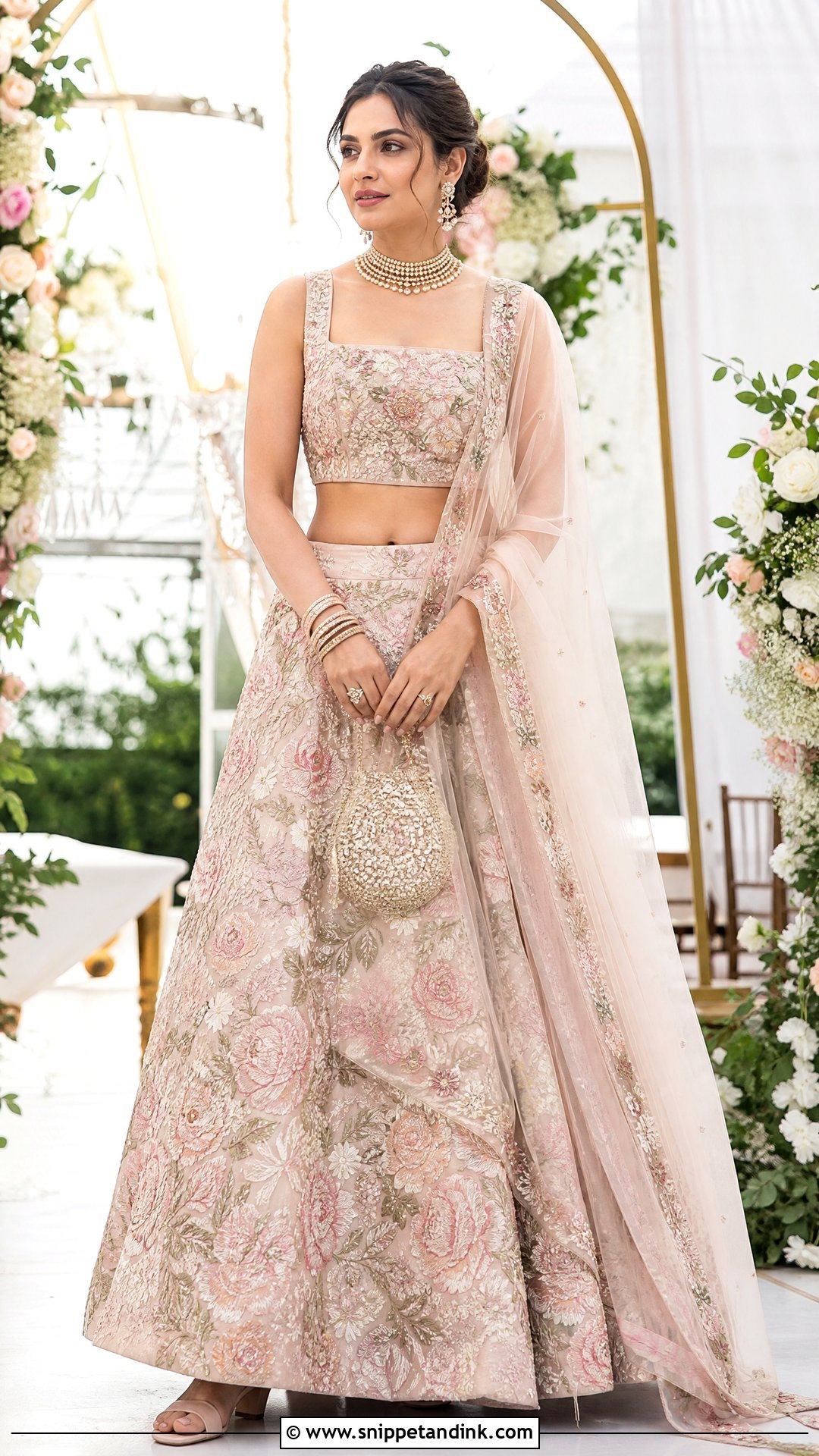
A square neck gives a pastel lehenga a crisp frame and room for pearl, diamond or polki jewelry. Soften the corners slightly; razor-sharp square corners tend to buckle when you sit. Wider straps let the embroidery continue over the shoulder and hold everything up. A slightly higher back adds stability. Blush, powder blue, mint and lavender all suit floral threadwork with a few sequins. Check that the front doesn’t gap when you lean forward.
8. Full Sleeve Bridal Blouse With Red Saree
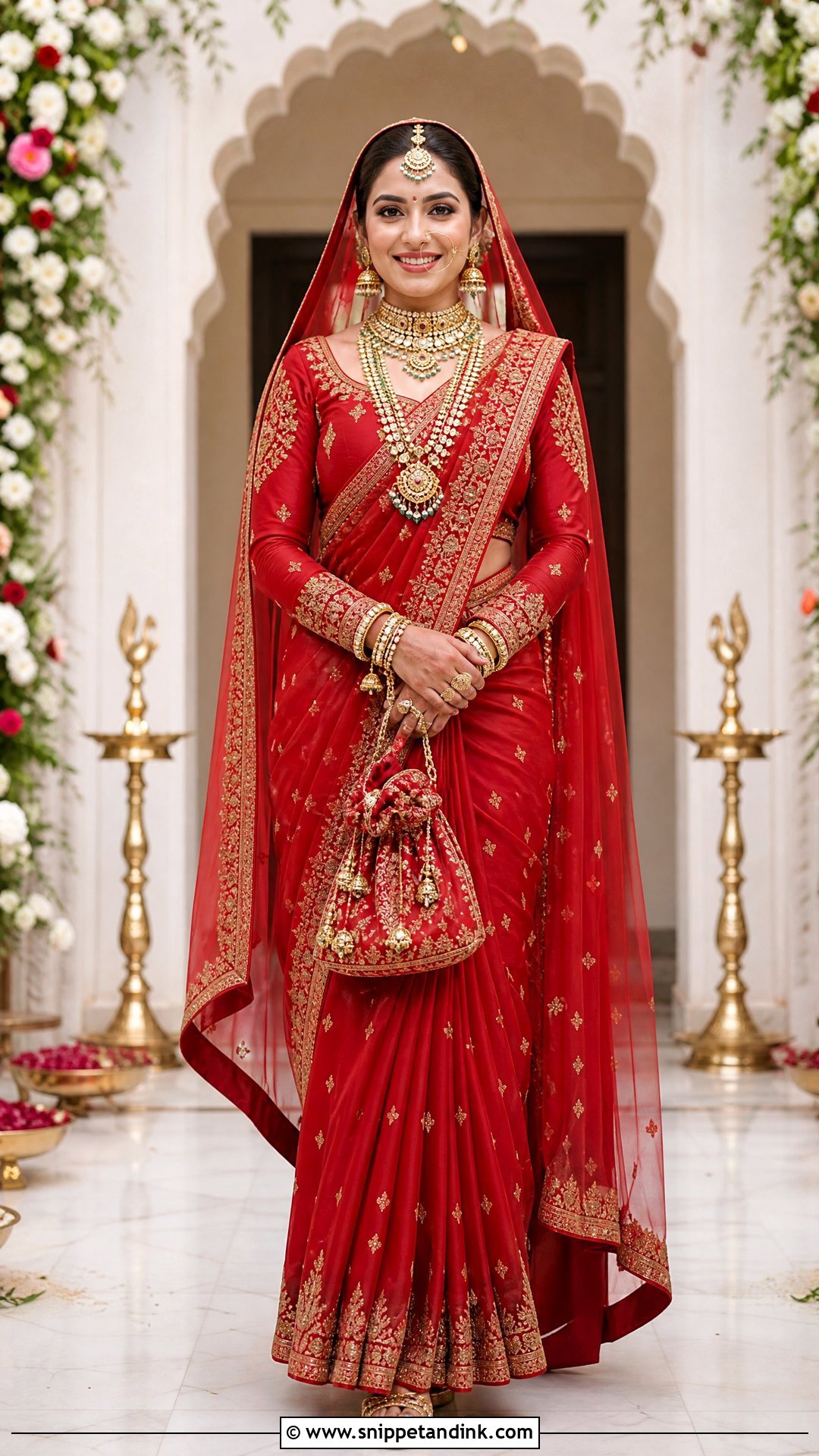
Full sleeves with a red saree make a formal, finished look, but they need thought about where the work goes. I put the dense embroidery at the cuffs and shoulders and keep the forearm lighter so you can bend your arms. Sheer sleeves feel lighter; silk ones are more structured. A medium round, sweetheart or V-neck stops the coverage from feeling heavy. Ask for ease at the elbow. During rituals you’ll hold a plate, fold your hands and tie threads, and a tight sleeve pulls at the shoulder seam every time.
9. Elbow Sleeve Bridal Blouse With Temple Jewelry
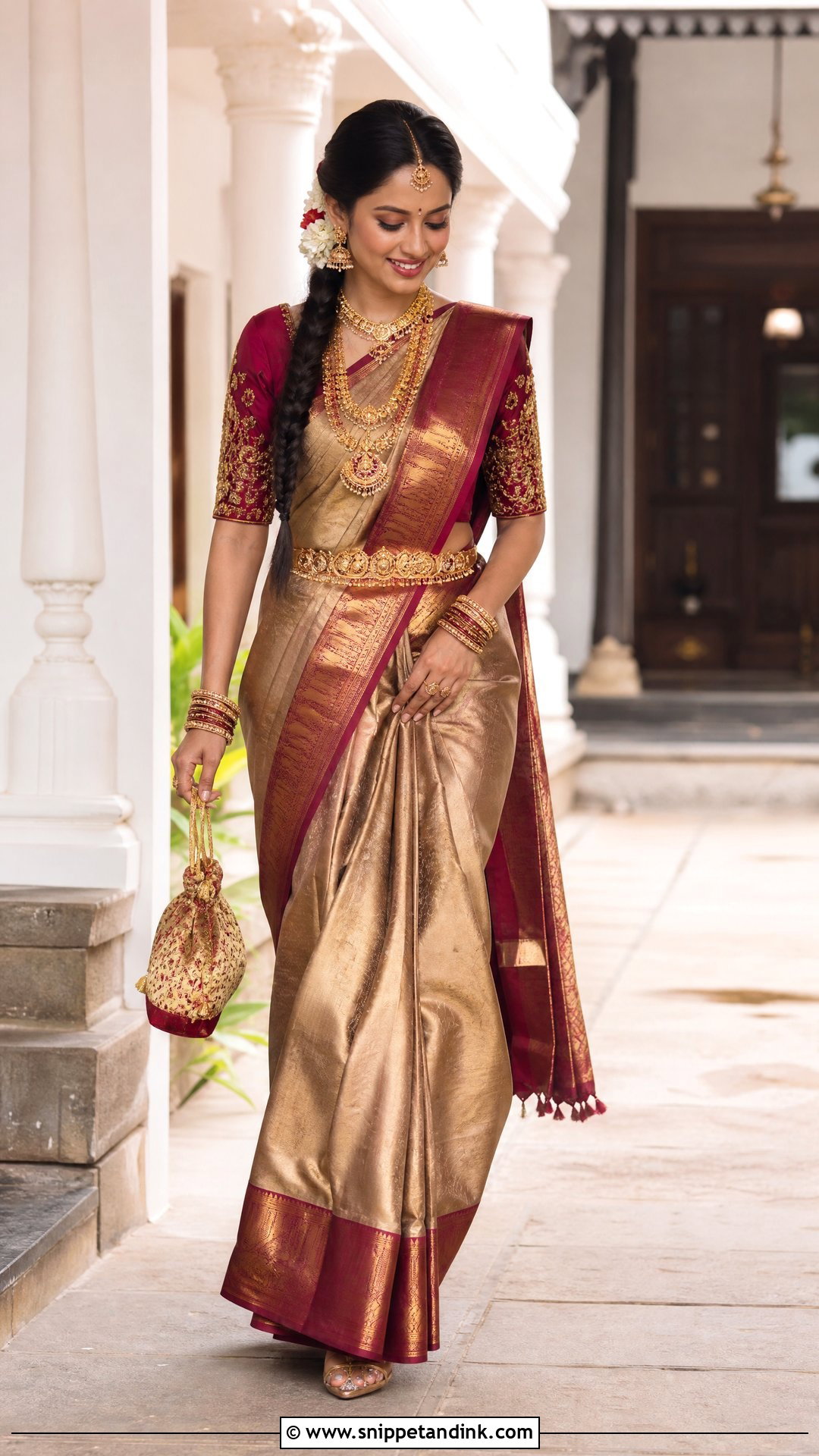
Elbow sleeves are the best canvas for embroidery, and they leave the wrists free for bangles. That’s the fit point: the sleeve should end cleanly above the bangle stack, not drape over it. Maroon, green, mustard or red silk suits temple jewelry. Put the detailed motifs on sleeve borders and upper back, smaller accents at the neck, since the necklaces will cover it. If there are raised stones, ask for smooth backing inside the sleeves.
10. Puff Sleeve Bridal Blouse With Organza Saree
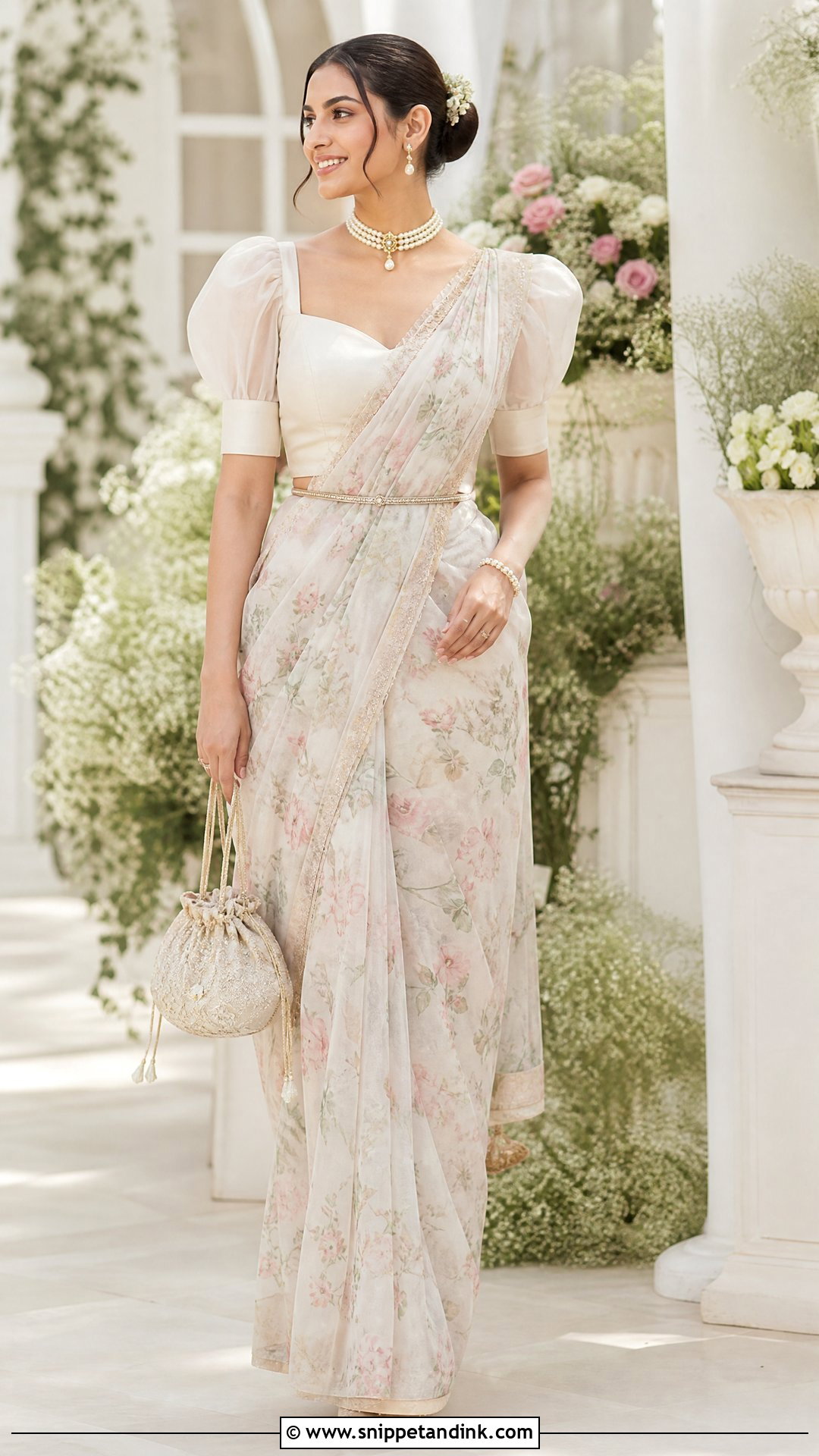
Puff sleeves suit a light organza saree, and the trick is restraint. Gentle volume at the shoulder, gathered into a fitted band above the elbow, looks graceful; big puffs look like a costume next to a fine saree. Broad-shouldered brides do better with soft gathers. Line sheer sleeves lightly so they keep their shape. Make sure the band doesn’t leave a red mark on the arm, which shows in photos when you take the blouse off for the reception change.
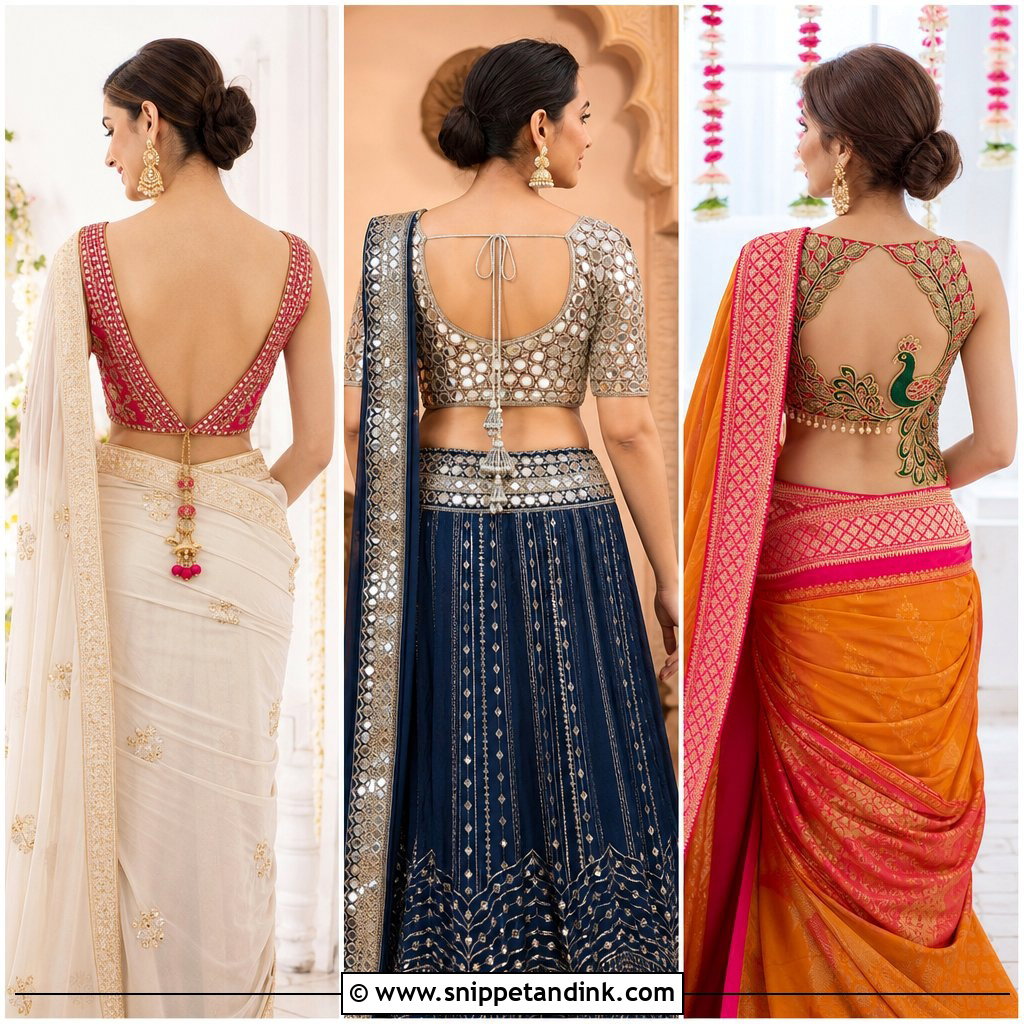
11. Backless Bridal Blouse With Dori And Tassels
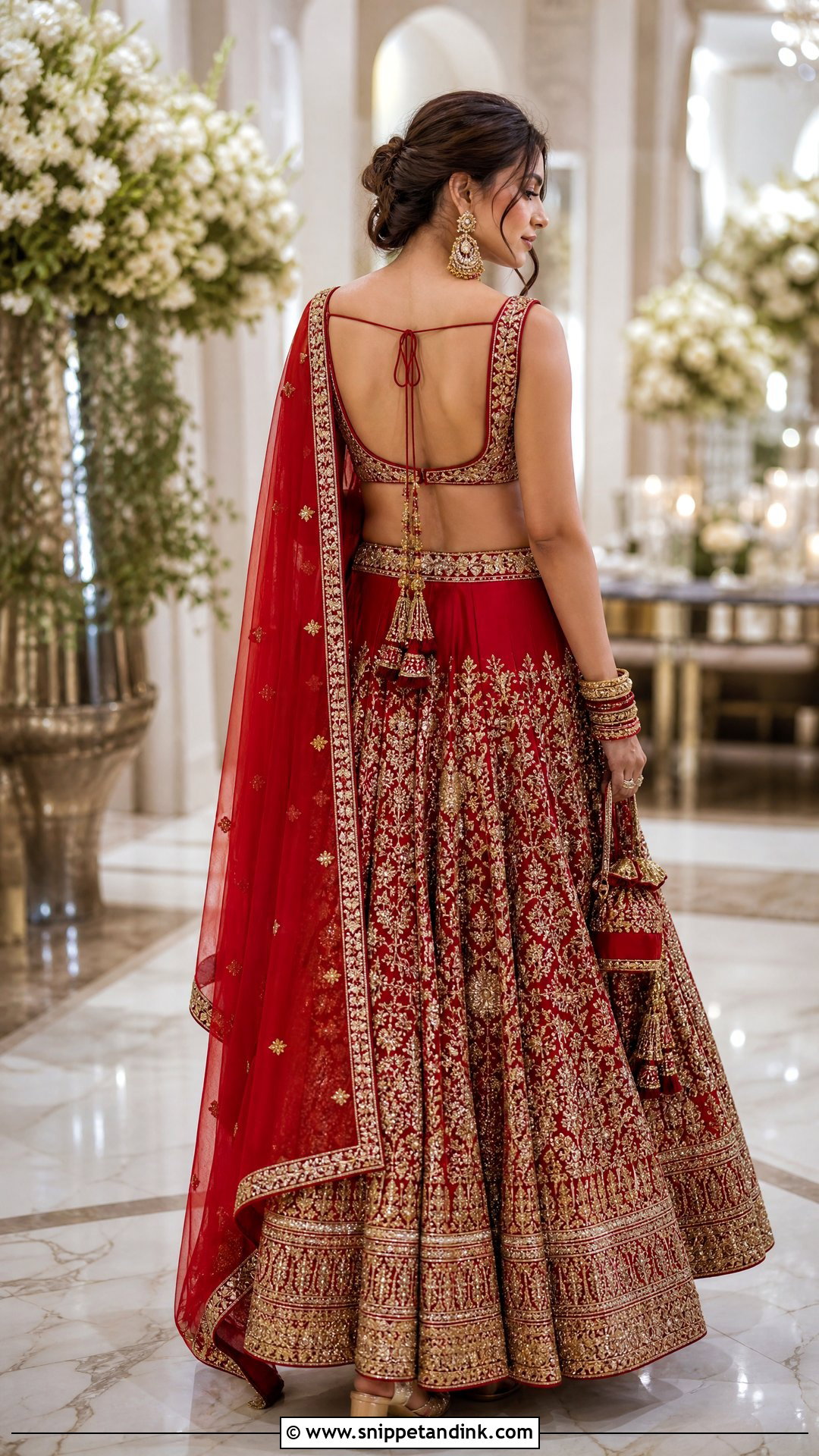
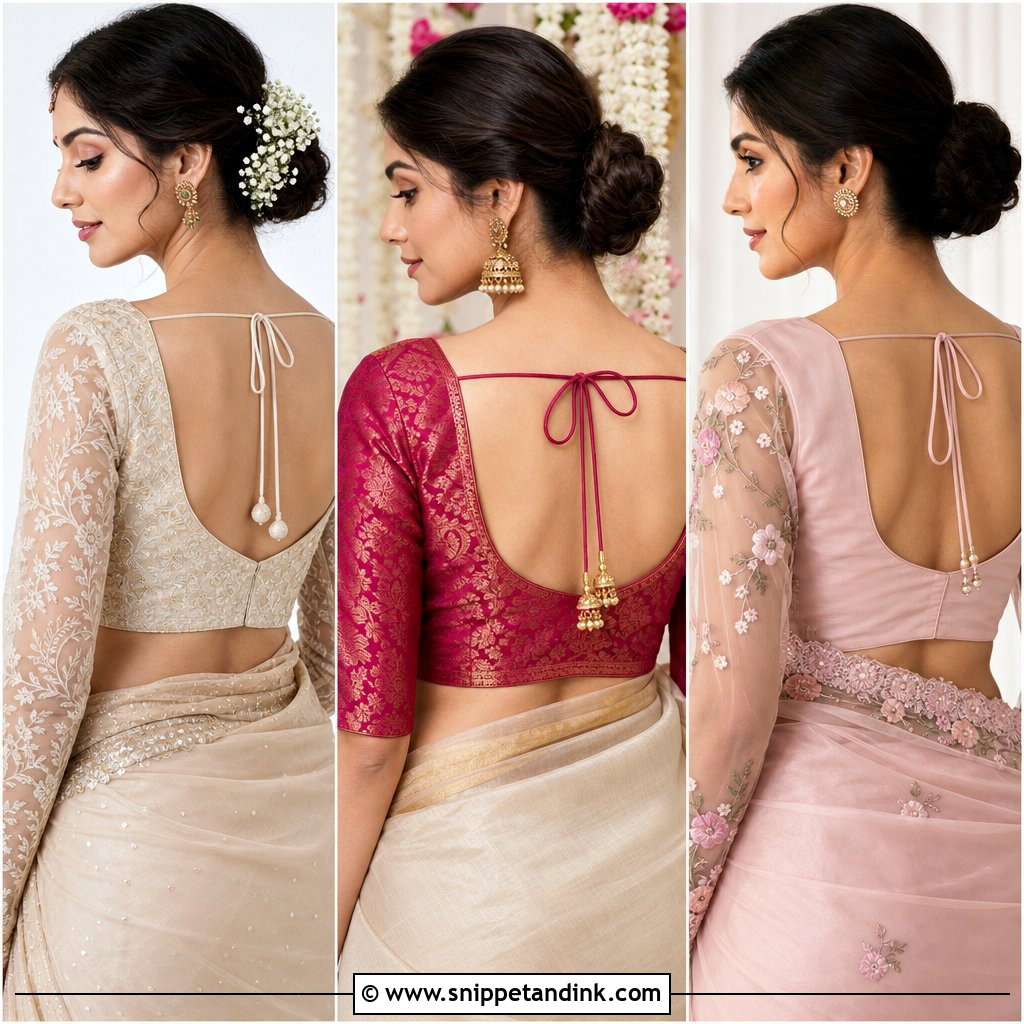
A backless blouse with a dori only works if the front is properly built. Broad shoulder straps, a firm underbust band and strong ties do the supporting, because the back no longer can. Keep the tassels in proportion; heavy ones swing and drag the neckline back. A skin-tone mesh panel adds stability without spoiling the view. An updo or side braid shows off the dori. Walk, sit, turn and raise your arms at the fitting.
12. Sheer Back Bridal Blouse With Pearl Buttons
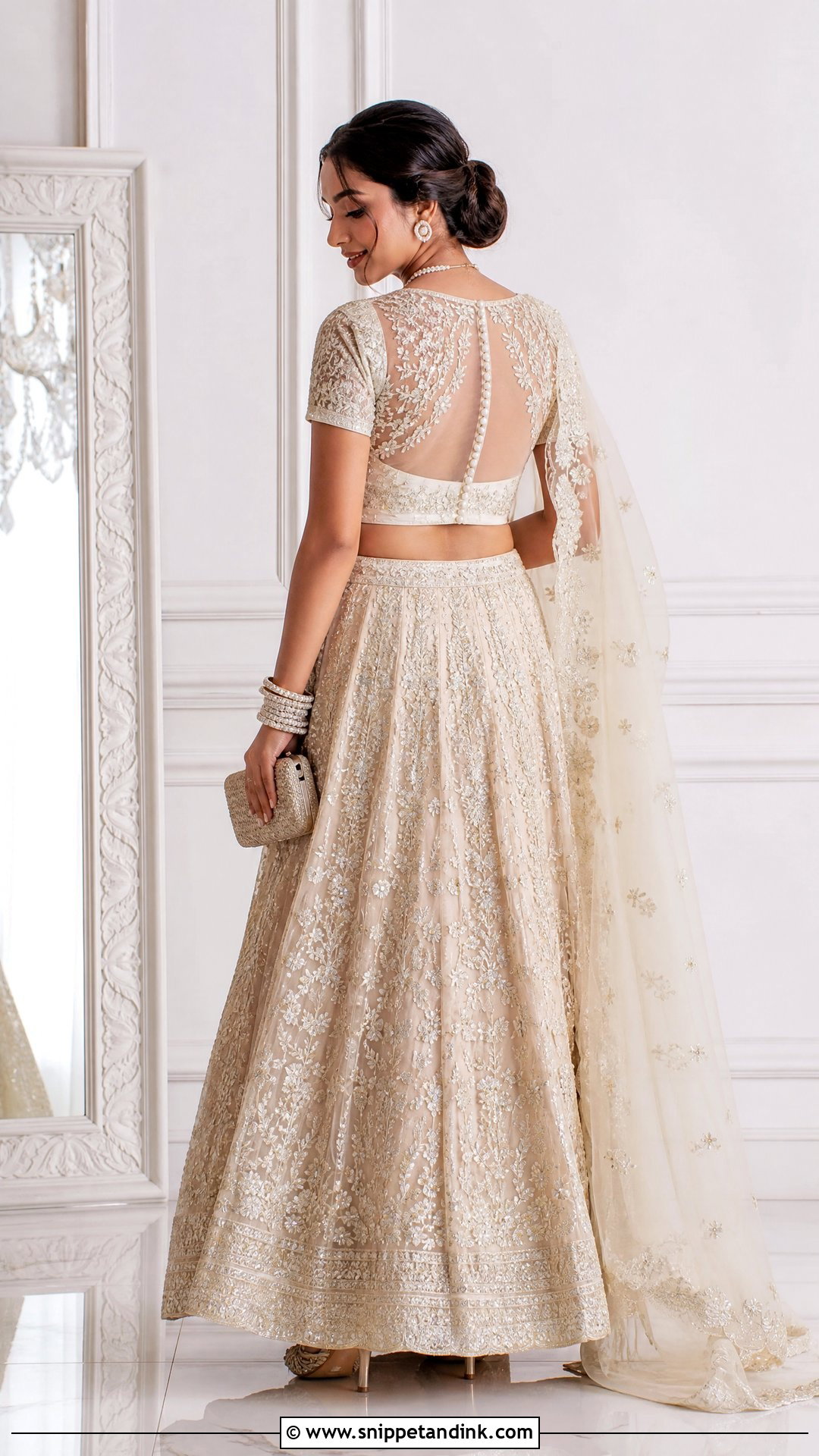
A sheer-back blouse gives the look of an open back with much more security. The net has to match your skin tone closely; in flash photos a mismatched net shows as a grey or orange patch. Keep embroidery around the closures and edges so the middle stays light, and ask for the net to be reinforced where the weight sits. Covered pearl buttons look lovely but are slow to fasten; build that time into the getting-ready schedule.
13. Bridal Corset Blouse With Floral Lehenga
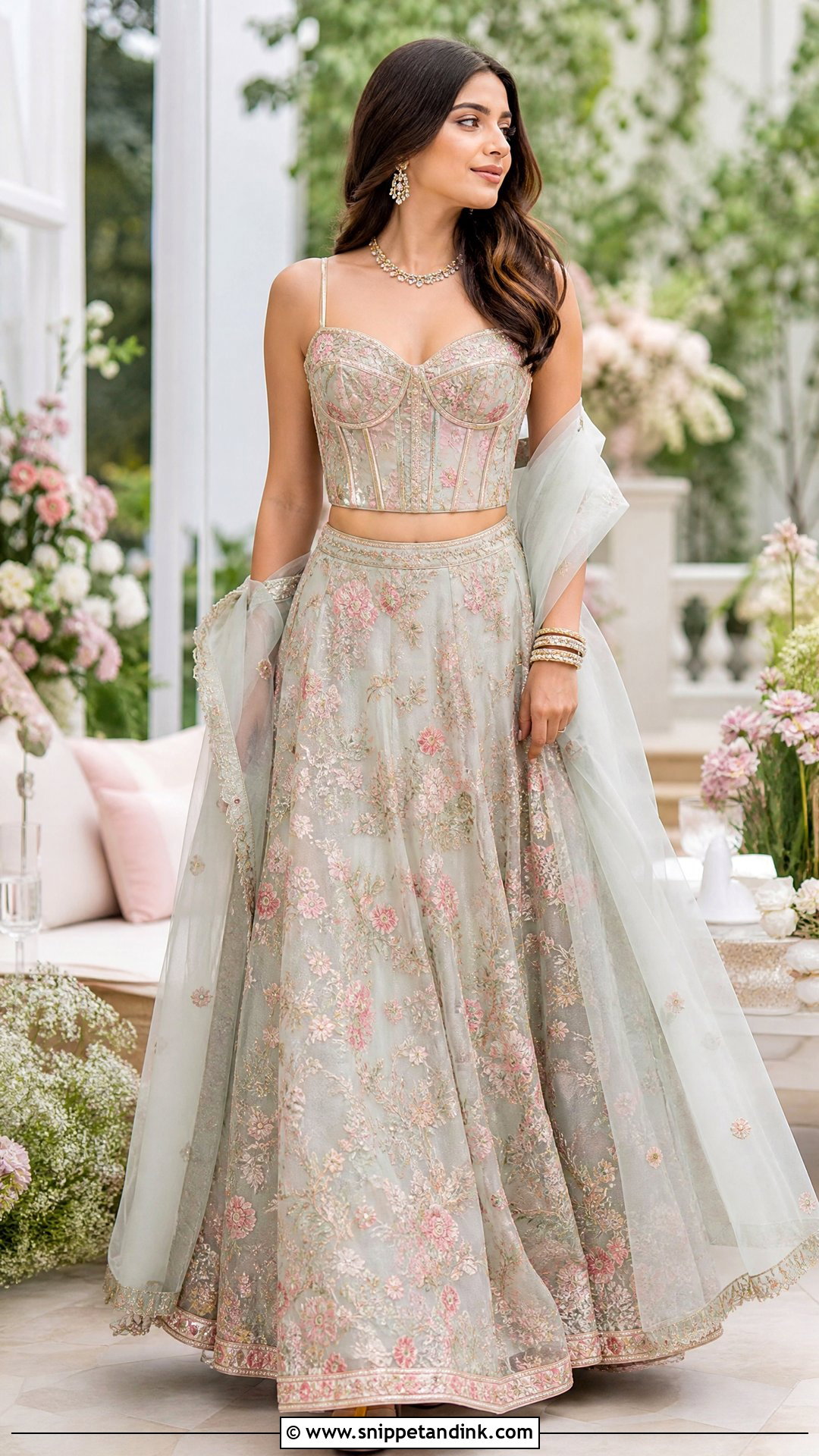
A corset blouse gives shape to a romantic floral lehenga without losing the Indian embroidery. Vertical seams and internal boning do the shaping. Flexible boning is important. Rigid steel boning looks sharp but makes sitting cross-legged at the mandap genuinely painful. Pastel threadwork feels daytime; jewel tones suit evening. Fit it with the exact skirt waistband and undergarments you’ll wear.
14. Off Shoulder Bridal Blouse With Sequin Lehenga
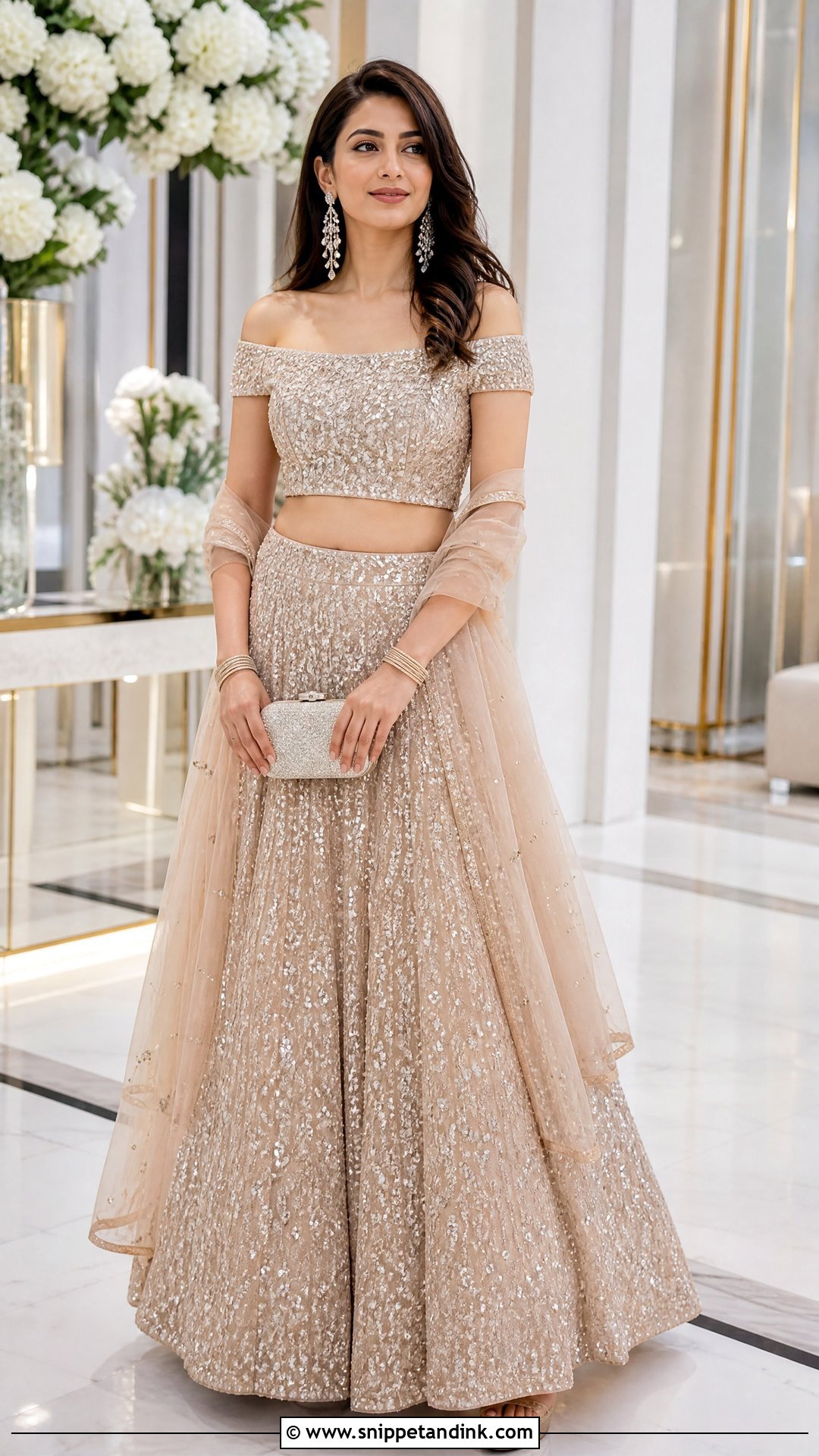
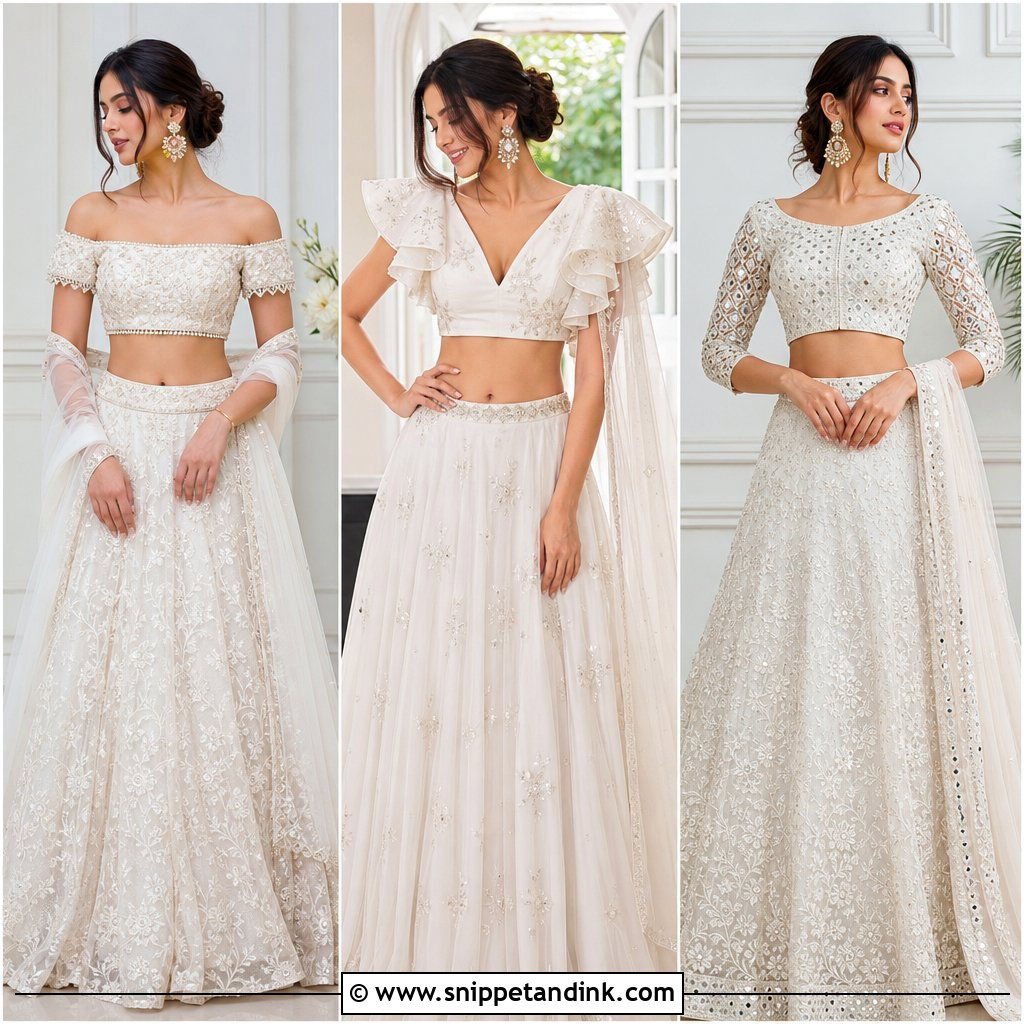
Off the shoulder with a sequin lehenga is a reception or cocktail look, not one for a long religious ceremony. The neckline has to follow the shoulders without slipping or cutting into the upper arms. Short draped sleeves or a fitted band add stability; if you plan to dance hard, add discreet clear straps or illusion mesh. The dupatta should sit low on the arms. A necklace is optional, and a bun or ponytail keeps the shoulder line clean.
15. One Shoulder Bridal Blouse With Draped Lehenga
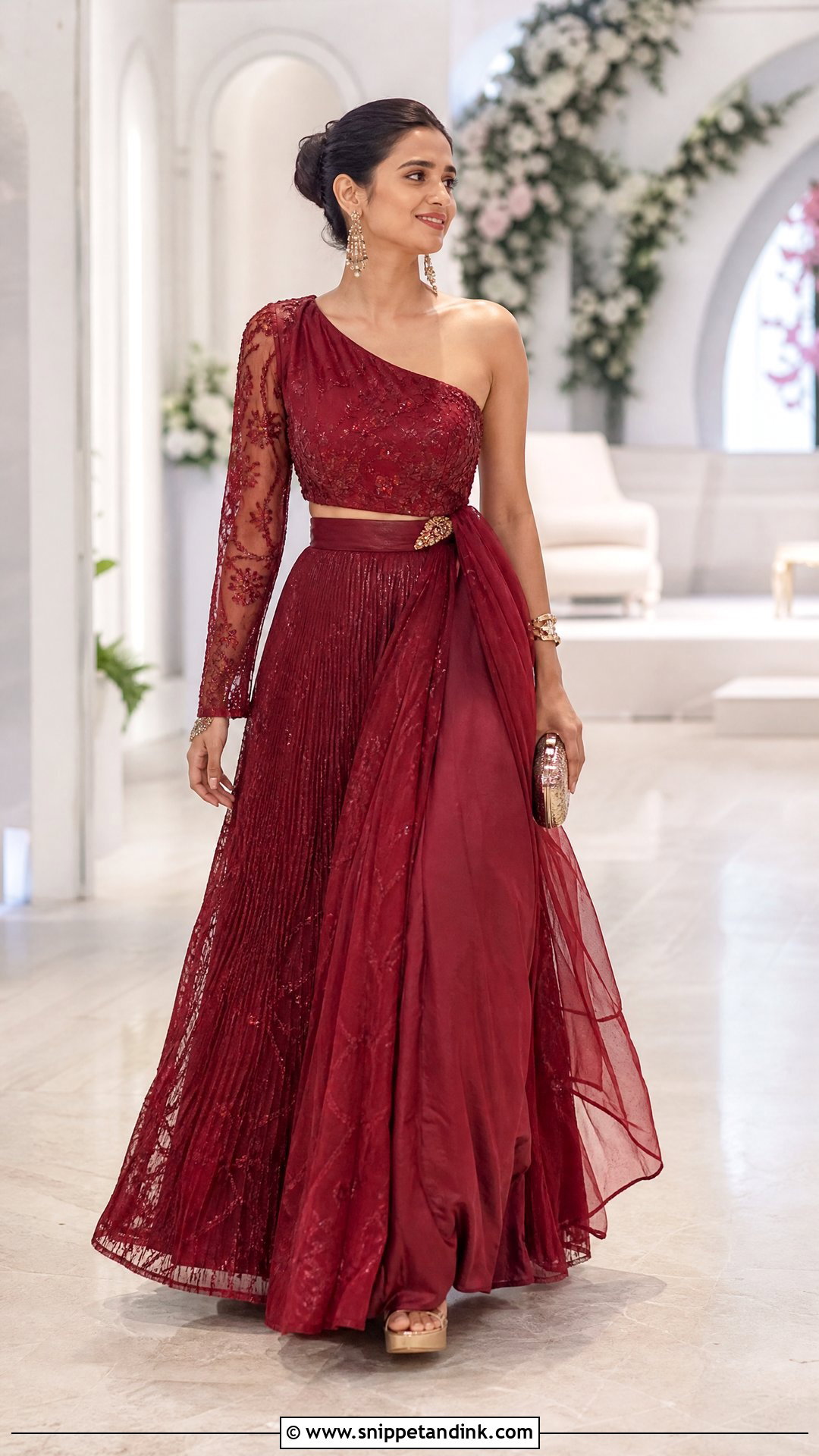
One shoulder suits a sangeet or reception, where the diagonal line looks modern. Keep the strap embroidered and the bodice fitted. Never drape a heavy dupatta over the decorated shoulder; tuck it at the waist or hang it from the other arm. A non-slip finish inside the neckline is essential. Repeat a motif from the skirt on the strap so the outfit looks designed as one piece.
16. Halter Neck Bridal Blouse With Silk Skirt
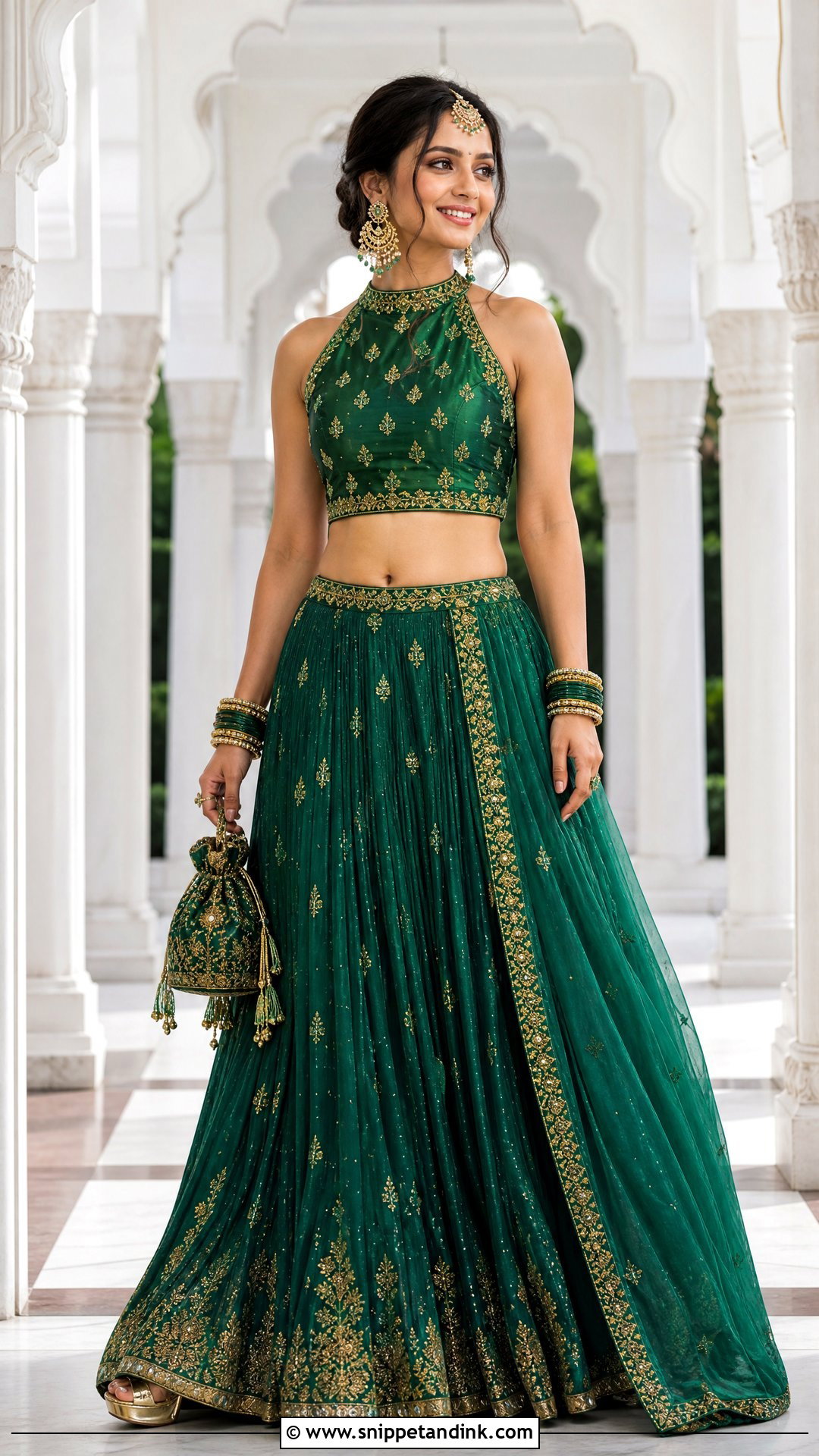
A halter puts all the weight of the bodice on the back of your neck, so the shape matters more than with any other neckline here. A wider halter band supports far better than thin ties, which dig in after a couple of hours. Rich red, fuchsia, emerald or antique gold silk with zari or fine threadwork. Since the neck is already decorated, choose one delicate chain or none. Soft lining and balanced closures make it wearable for a full evening.
17. Peplum Bridal Blouse With Lehenga Skirt
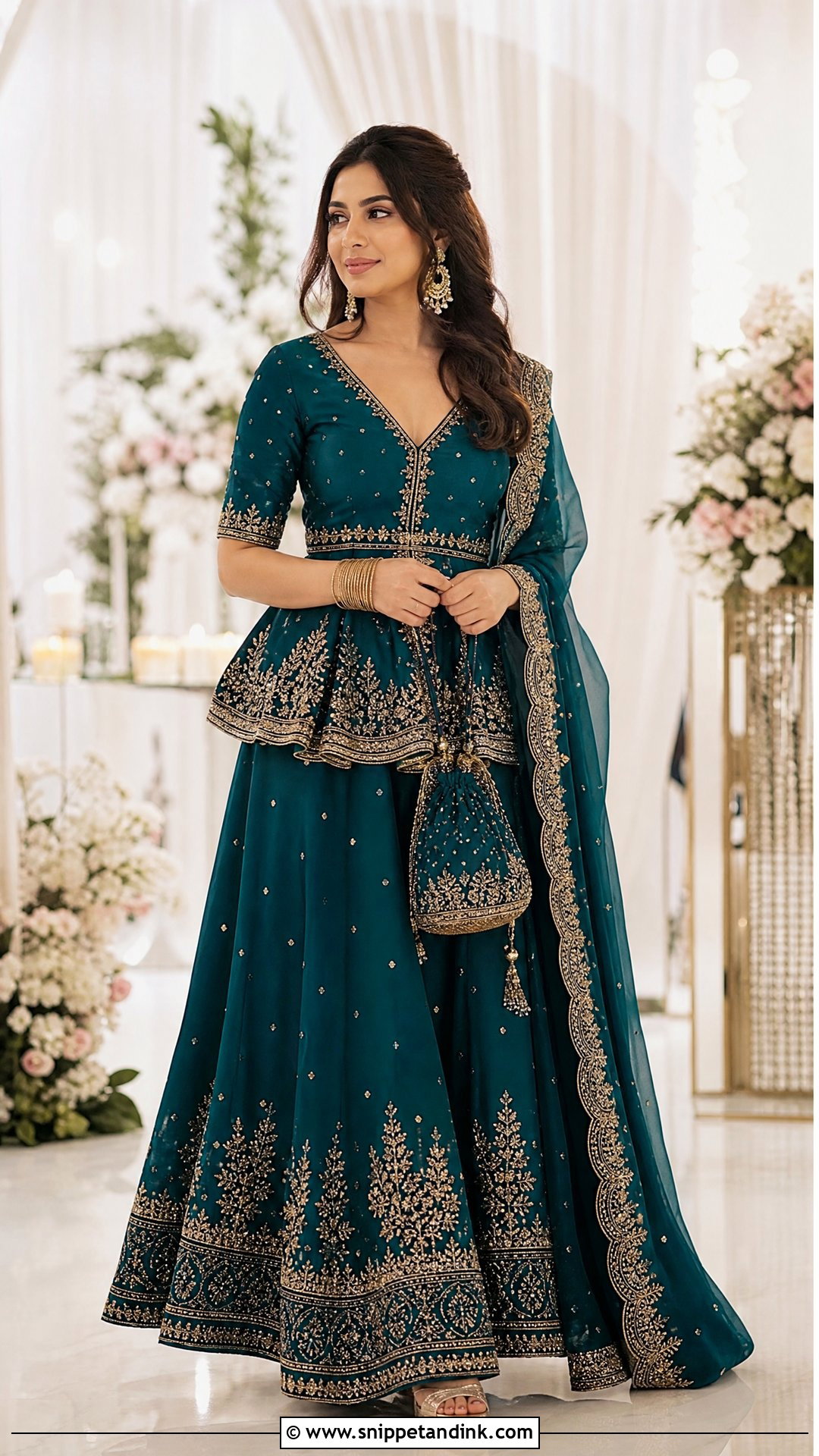
A short peplum softens the line between bodice and skirt and gives a little midsection coverage. Keep it controlled: a peplum that reaches the fullest part of the lehenga fights with the flare. Heavy embroidery above the waist, lighter on the peplum itself. V or scoop neck with elbow sleeves. Sit down at the fitting, because a peplum that bunches when seated looks crumpled in every candid shot.
18. Cape Bridal Blouse With Minimal Lehenga
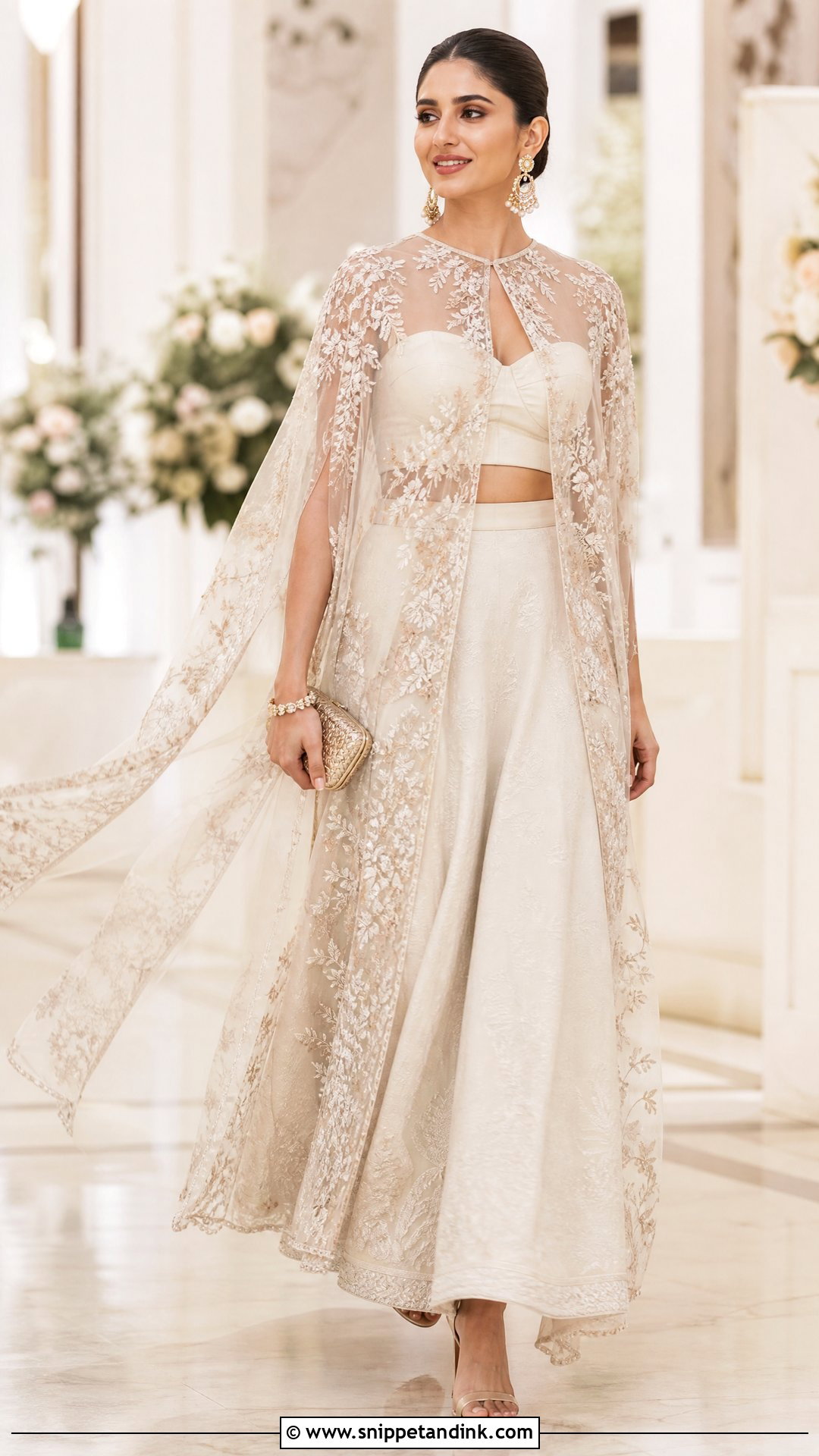
A sheer cape gives movement to a minimal lehenga that would otherwise look plain. Waist length is neat and practical; longer capes are for a formal entrance. Skip the full dupatta, which hides the construction and doubles the bulk. Embroider the cape border and shoulders and leave the middle transparent. Check the attachment points carefully, since capes catch on long earrings and necklaces when you turn your head.
19. Mirror Work Bridal Blouse With Colorful Lehenga
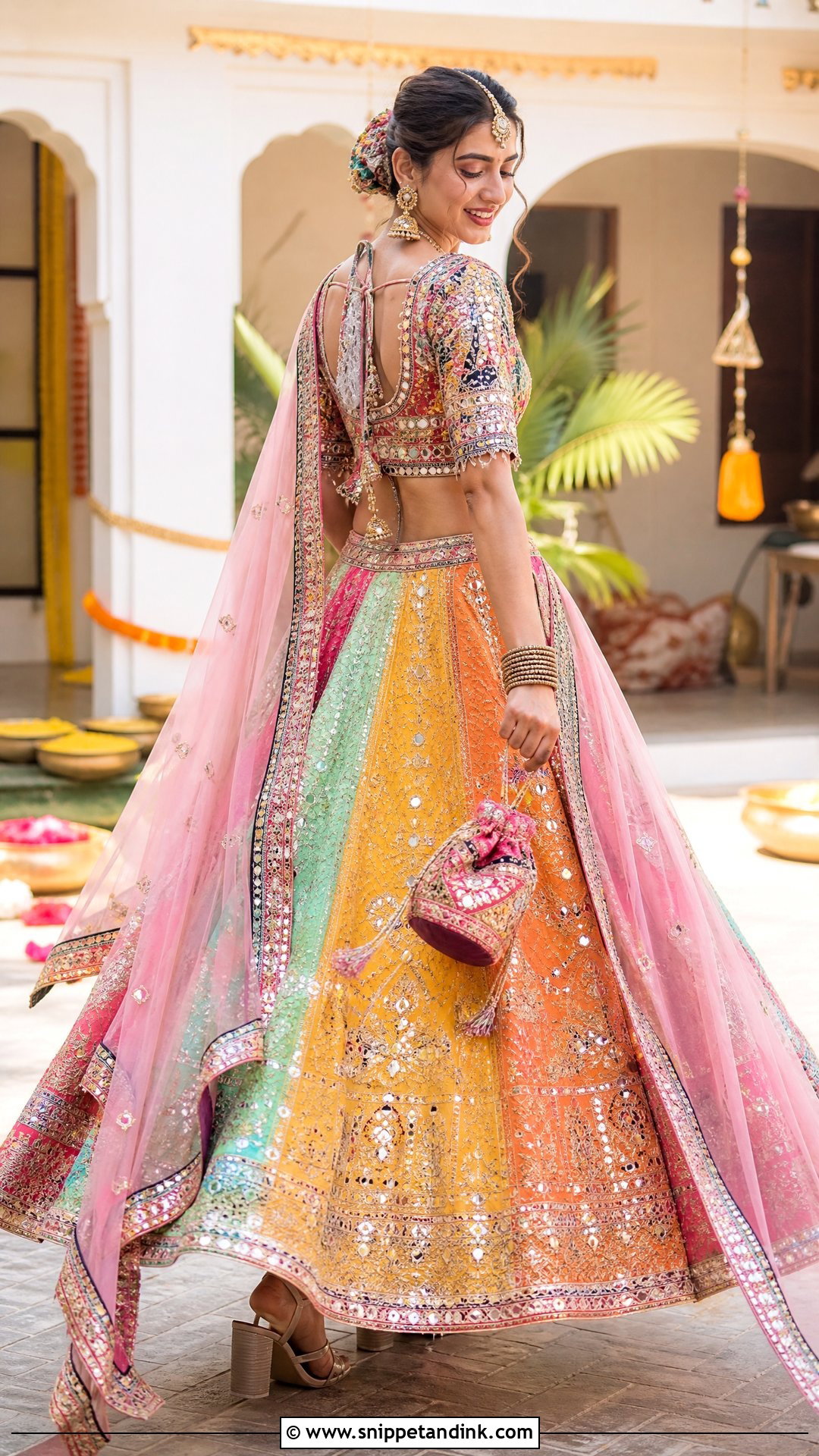
Mirror work suits a mehndi or haldi, where bright colors and movement belong. Mixed mirror sizes framed in thread that repeats the skirt colors look rich. Each mirror must be securely stitched; loose mirror edges snag dupattas and scratch skin. Keep the necklace simple so it doesn’t catch. Ask for substantial lining, as the backs of mirror work are rough.
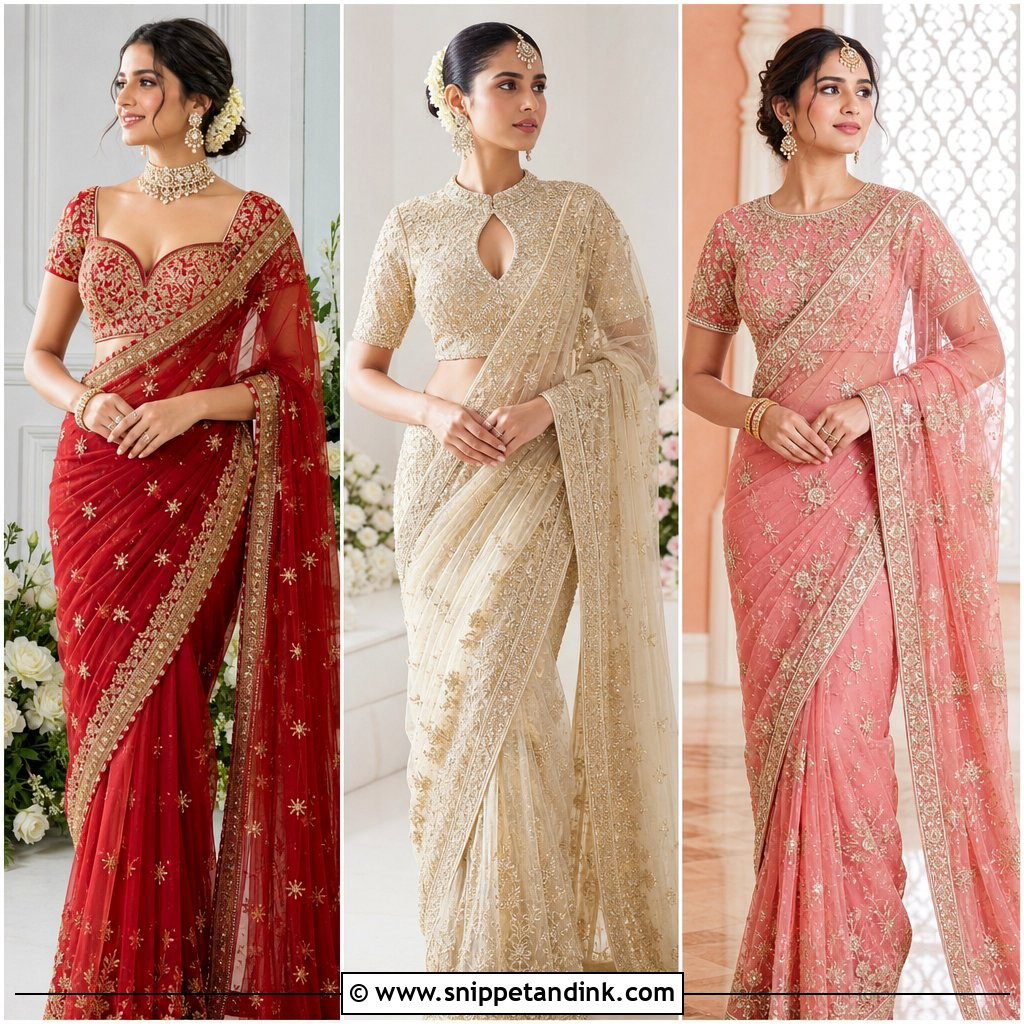
20. Pearl Bridal Blouse With Ivory Saree
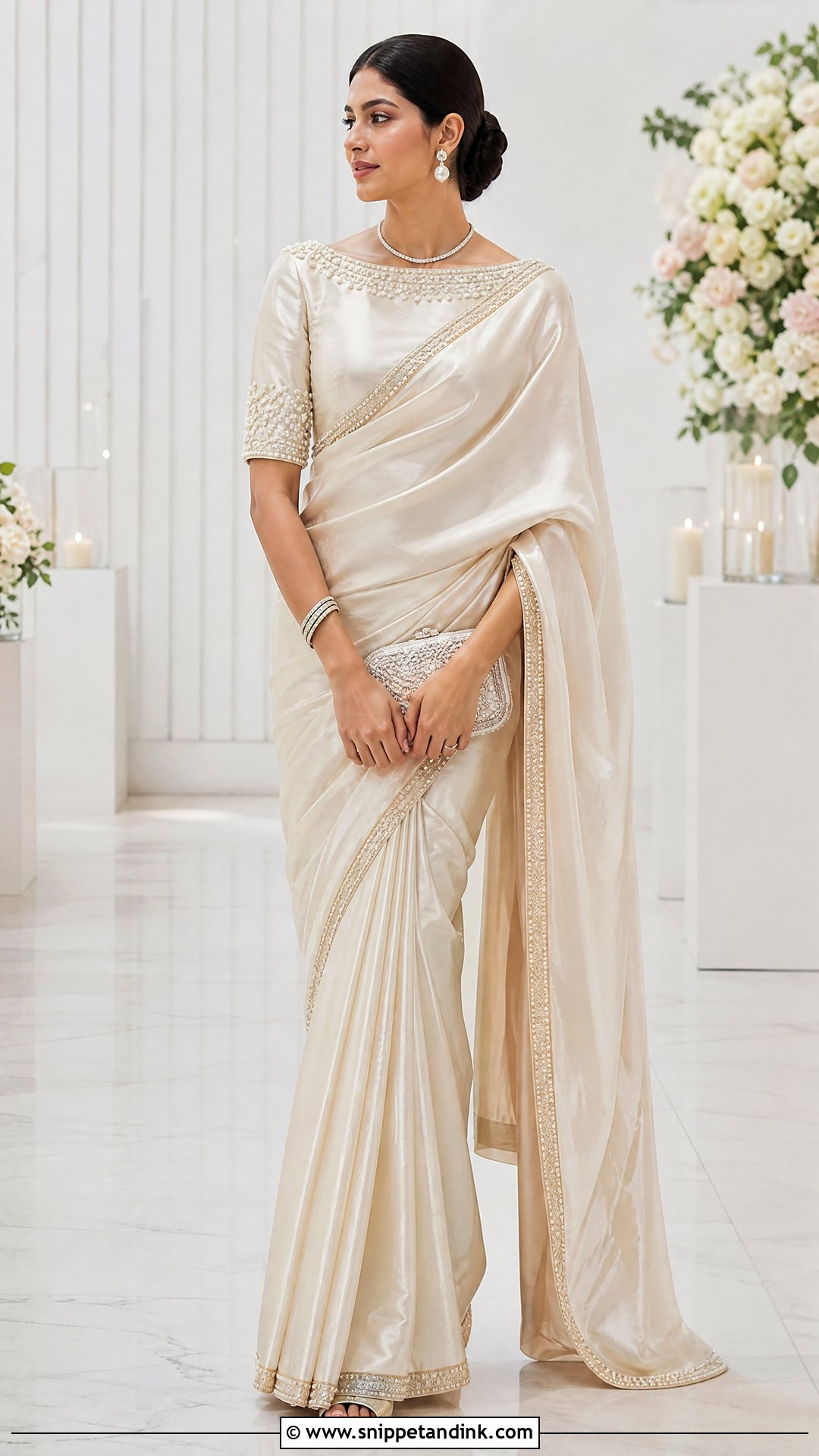
Pearls on an ivory saree look refined and soft. Concentrate them around the neckline, sleeve edges and back closure, and mix sizes for depth. Don’t cover the whole blouse: pearl beading adds real weight and stiffens the fabric. A boat, square or gentle scoop neck keeps the feel quiet. A neat bun with fresh white flowers suits it, but keep the flowers off the shoulder seams where they’ll rub.
21. Floral Embroidered Bridal Blouse With Pastel Saree
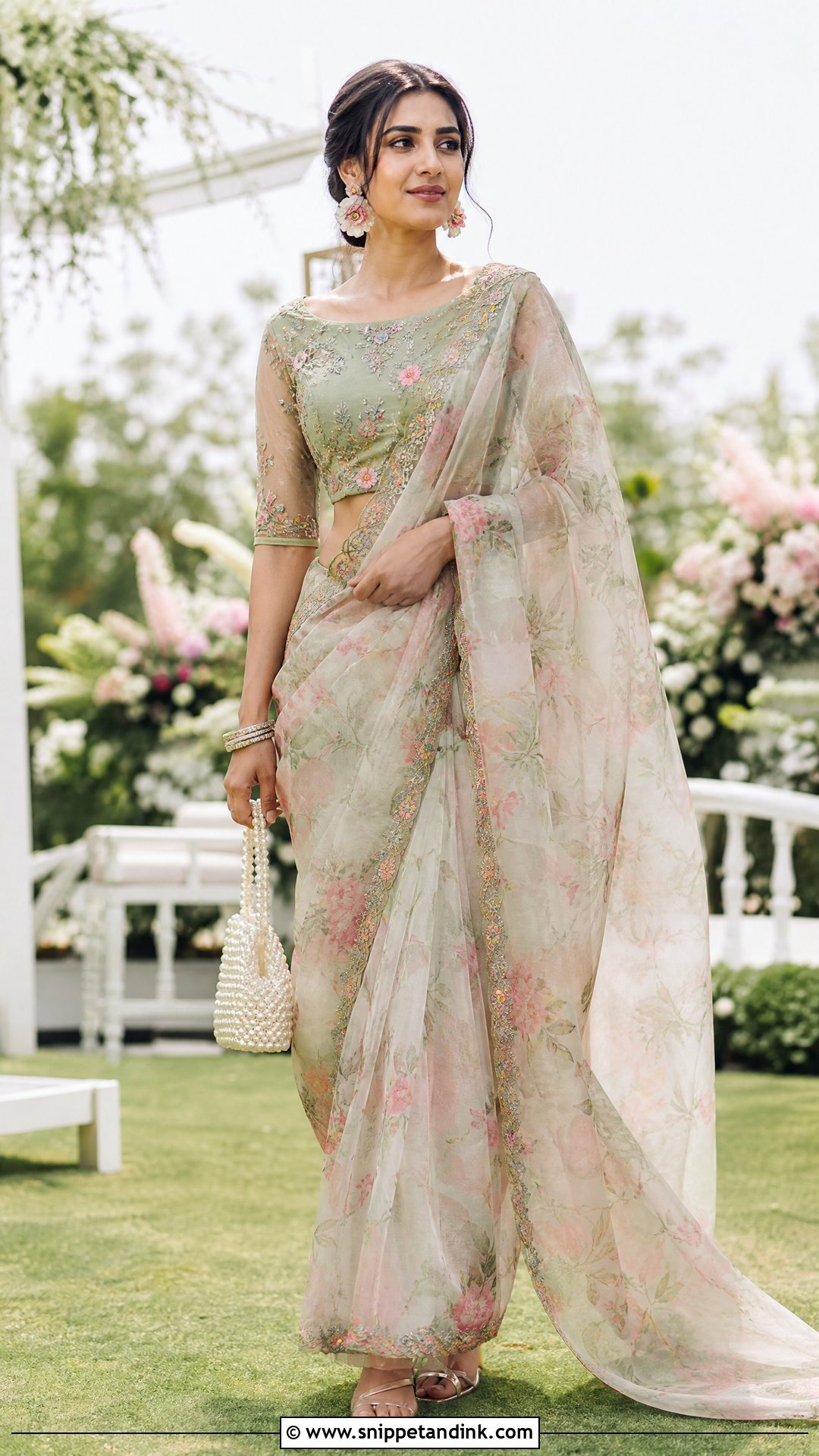
Floral threadwork on a pastel blouse suits a daytime ceremony. Blush, peach, sage or powder blue, with embroidery that echoes the saree border. Sheer elbow sleeves give room for scattered blossoms. Three-dimensional flowers look pretty, but keep them to the shoulders and sleeve edges, or they catch on the saree pallu. Use a tonal lining so seams don’t show through pale fabric.
22. Velvet Bridal Blouse With Winter Saree
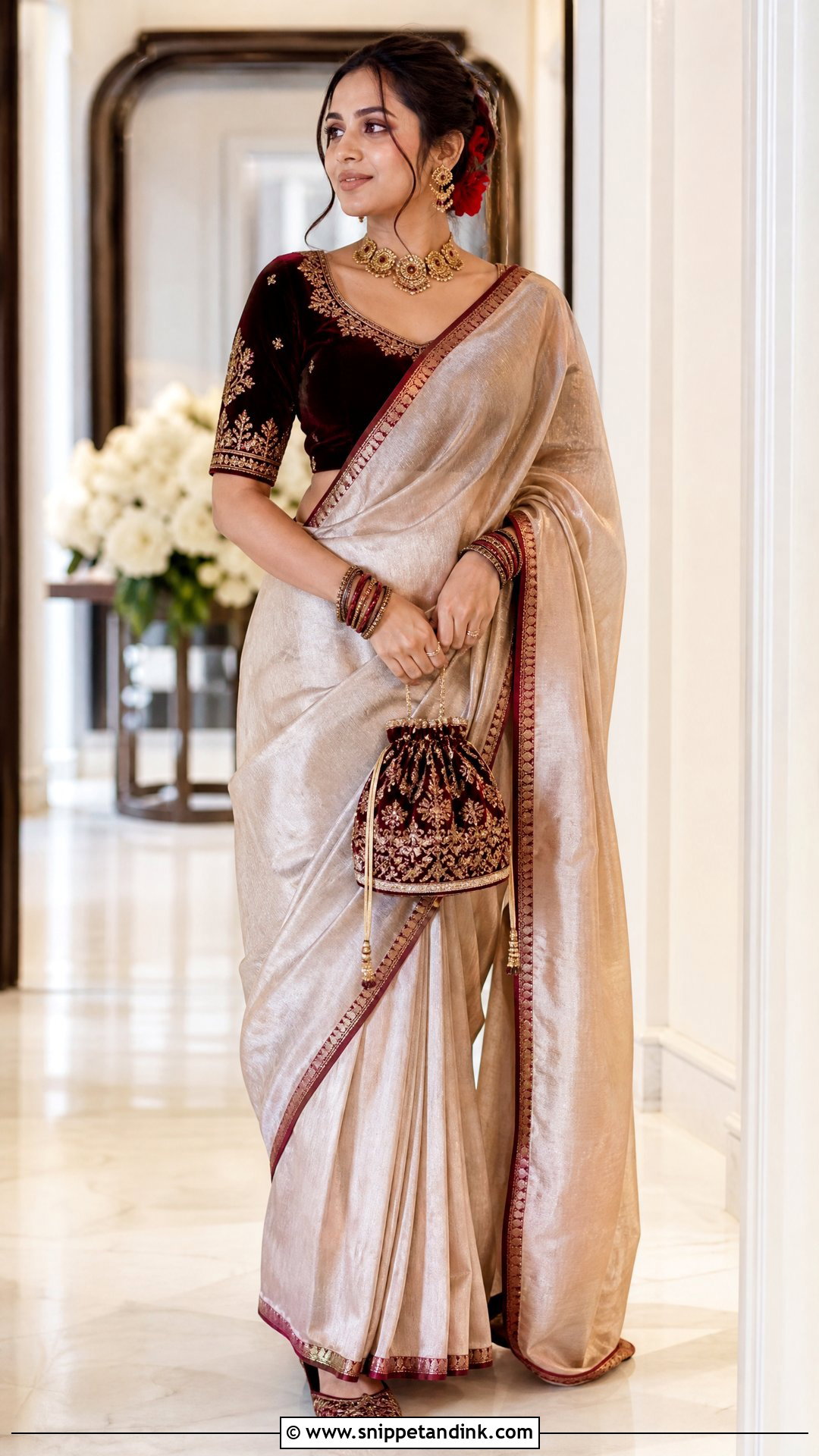
A fitted velvet blouse in maroon, burgundy, emerald or navy is my winter answer, and it pairs well with silk, brocade or tissue sarees. Gold embroidery at the cuffs, neckline and back border is enough. Velvet has a nap, so every piece must be cut in the same direction or panels look like two different colors under light. It’s warm, so a breathable cotton lining is worth asking for.
23. Personalized Bridal Blouse With Wedding Motifs
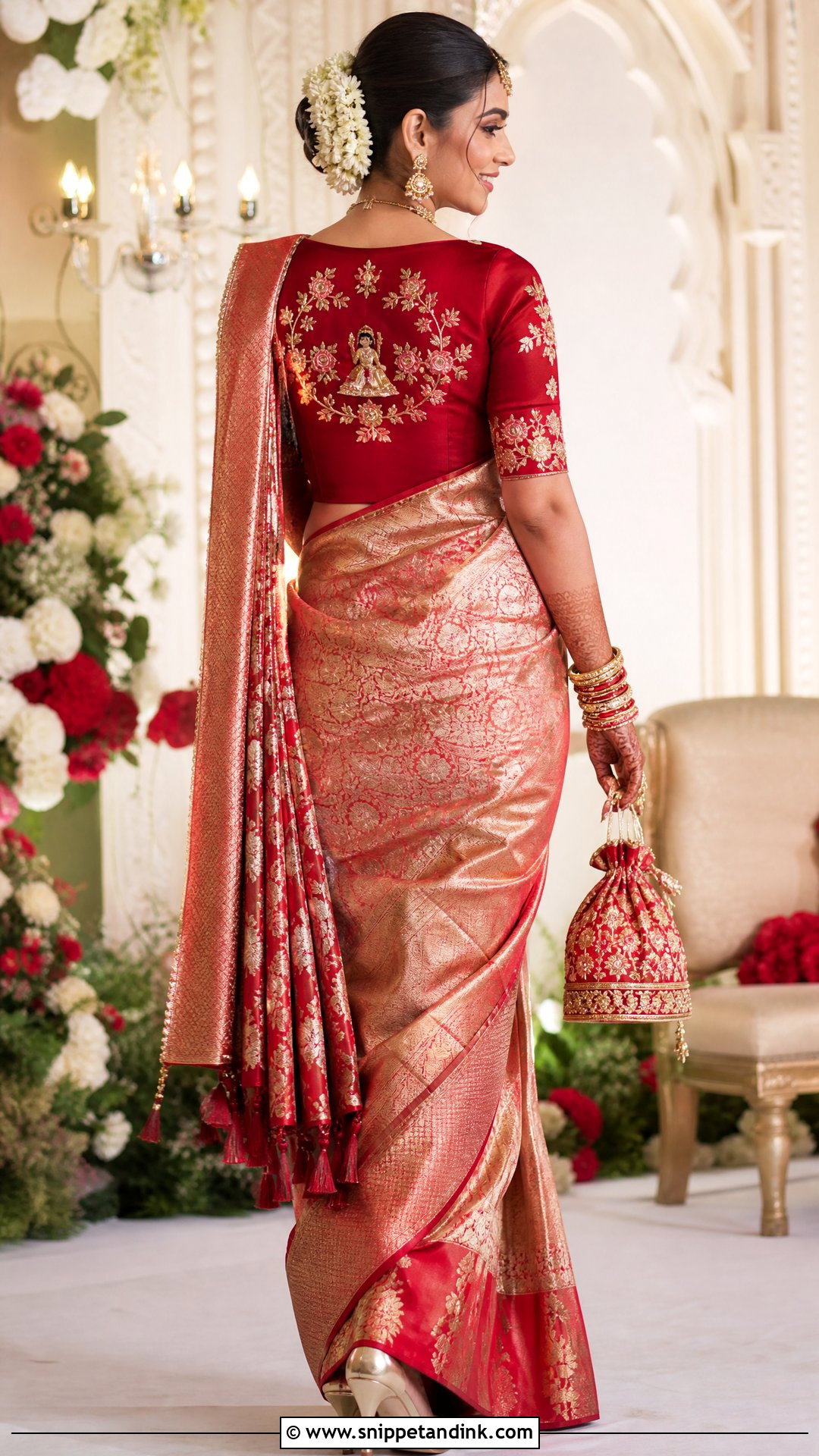
Personal embroidery turns a blouse into something you’ll keep: initials, a wedding date, a family motif, or a small ceremonial scene on the back. Keep it readable and give it space. A classic silk blouse with elbow sleeves is the best surface. Ask for a full-size sketch on paper and hold it against yourself before any stitching starts, because placement is almost impossible to change once the hand embroidery is done. Leave clear space where necklaces and closures will sit.
24. Cutwork Bridal Blouse With Plain Silk Saree
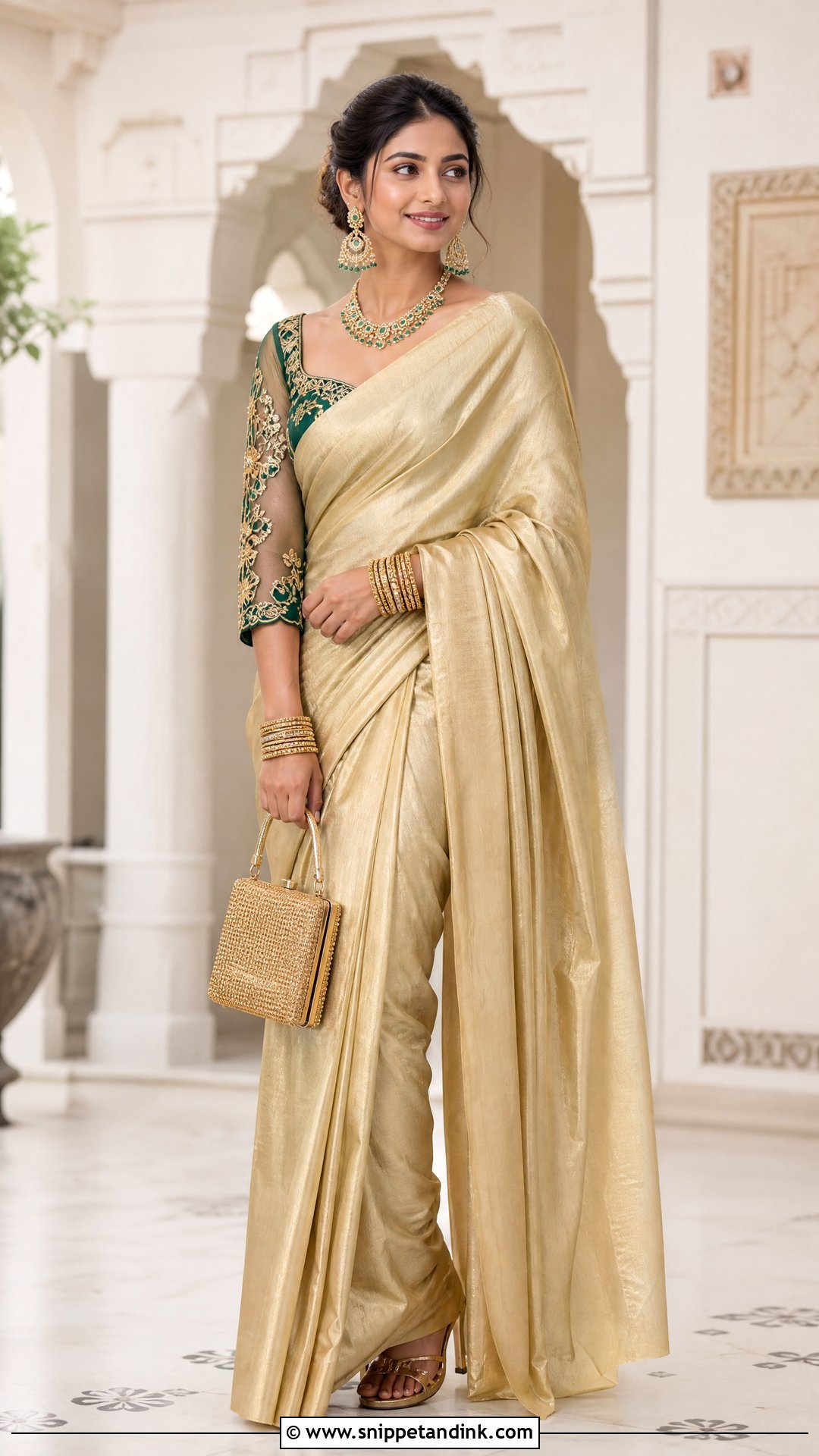
Intricate cutwork lifts a plain silk saree, but only in the right places: sleeves, neckline and upper back. Avoid cutwork at side seams and the underbust, where the blouse is under tension and the cut edges will fray. Back it with illusion net or a contrasting silk. Every edge must be finished cleanly. A small cutwork motif on the saree border ties them together.
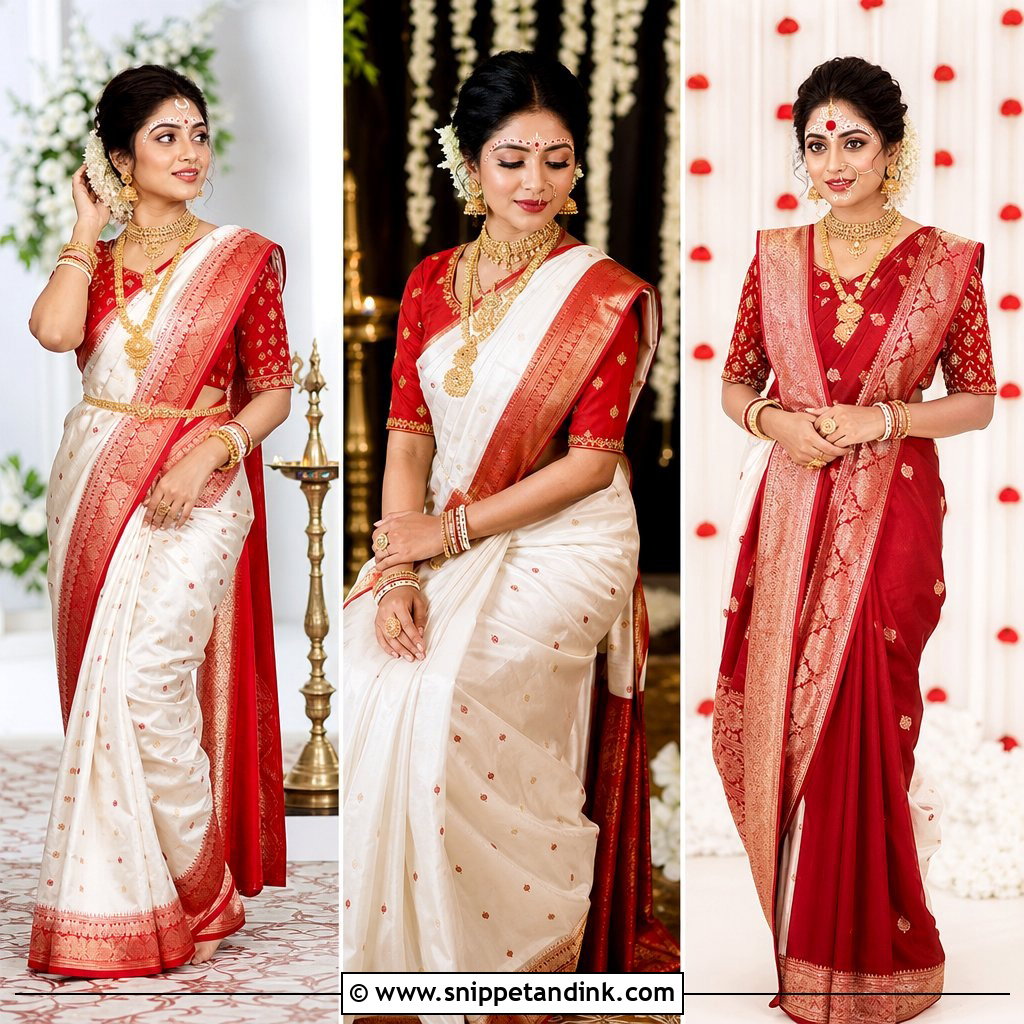
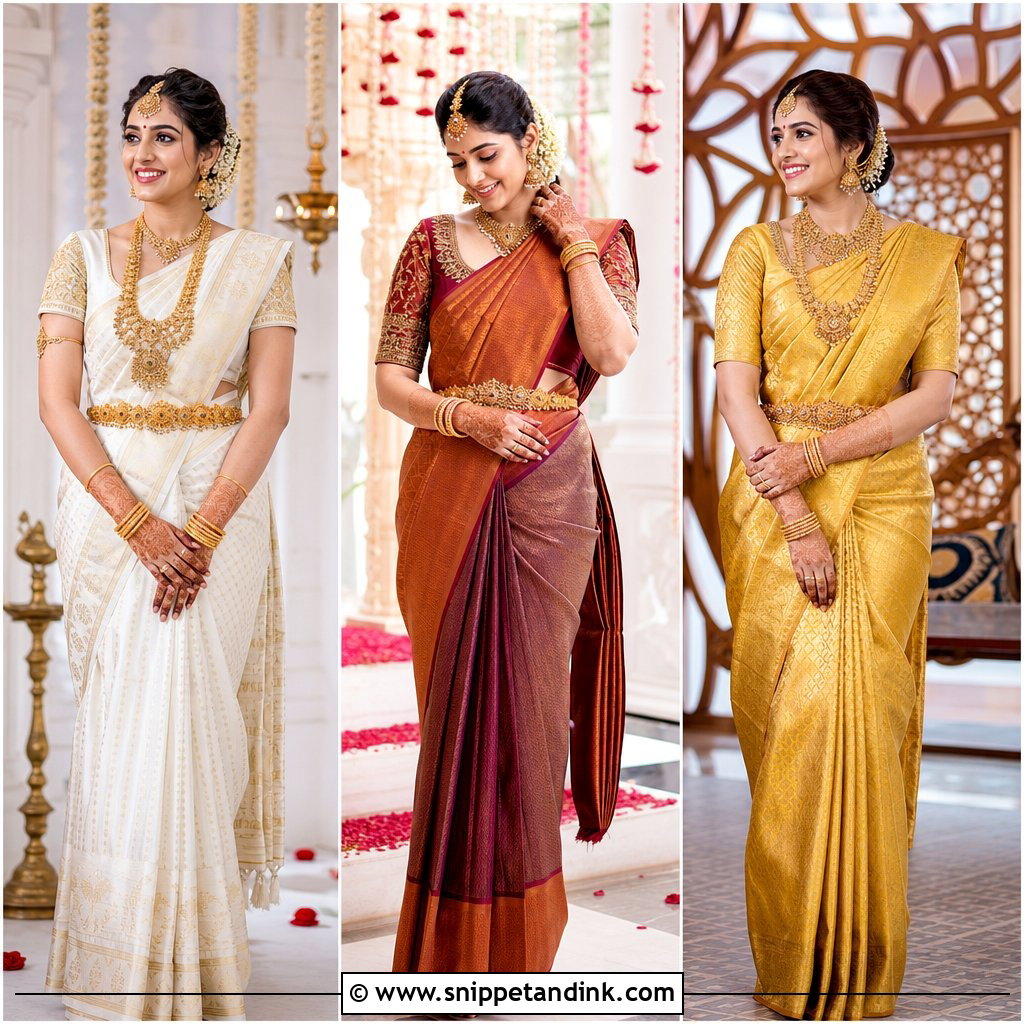
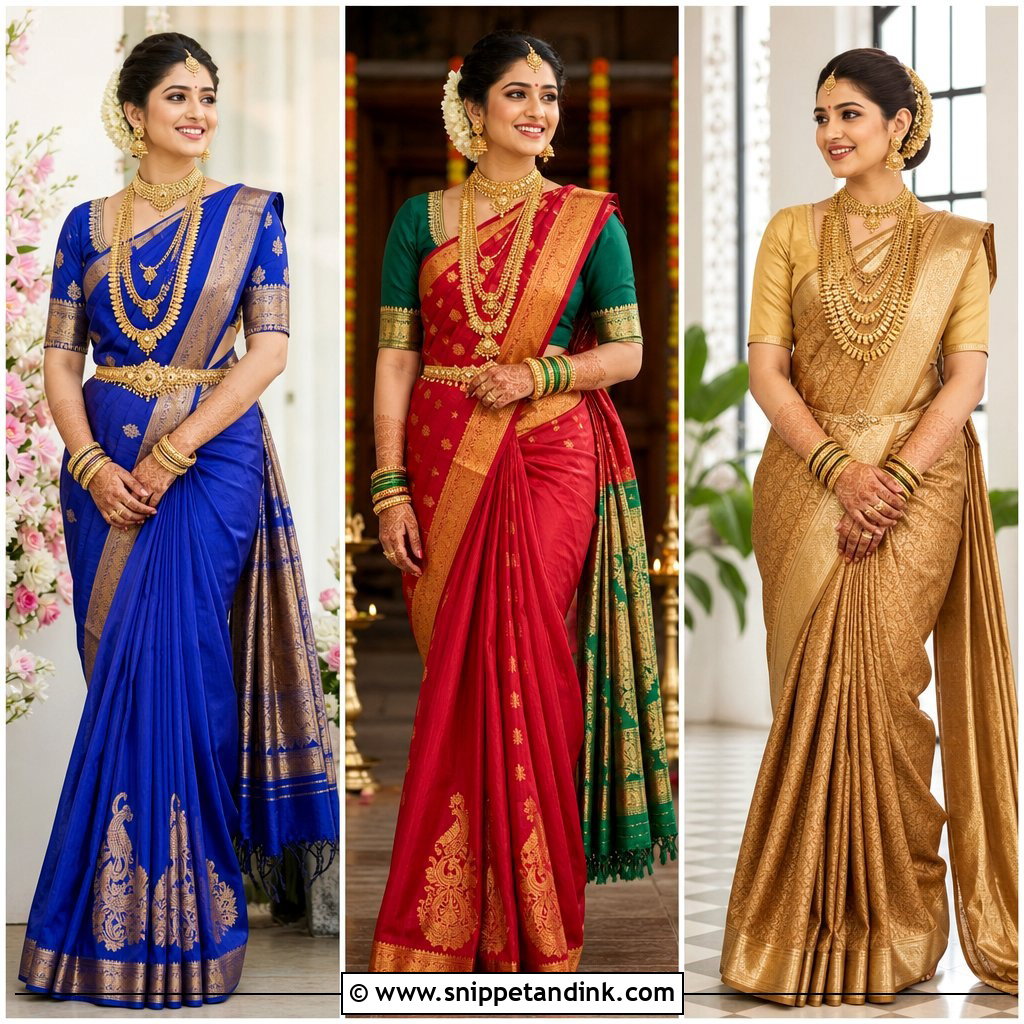
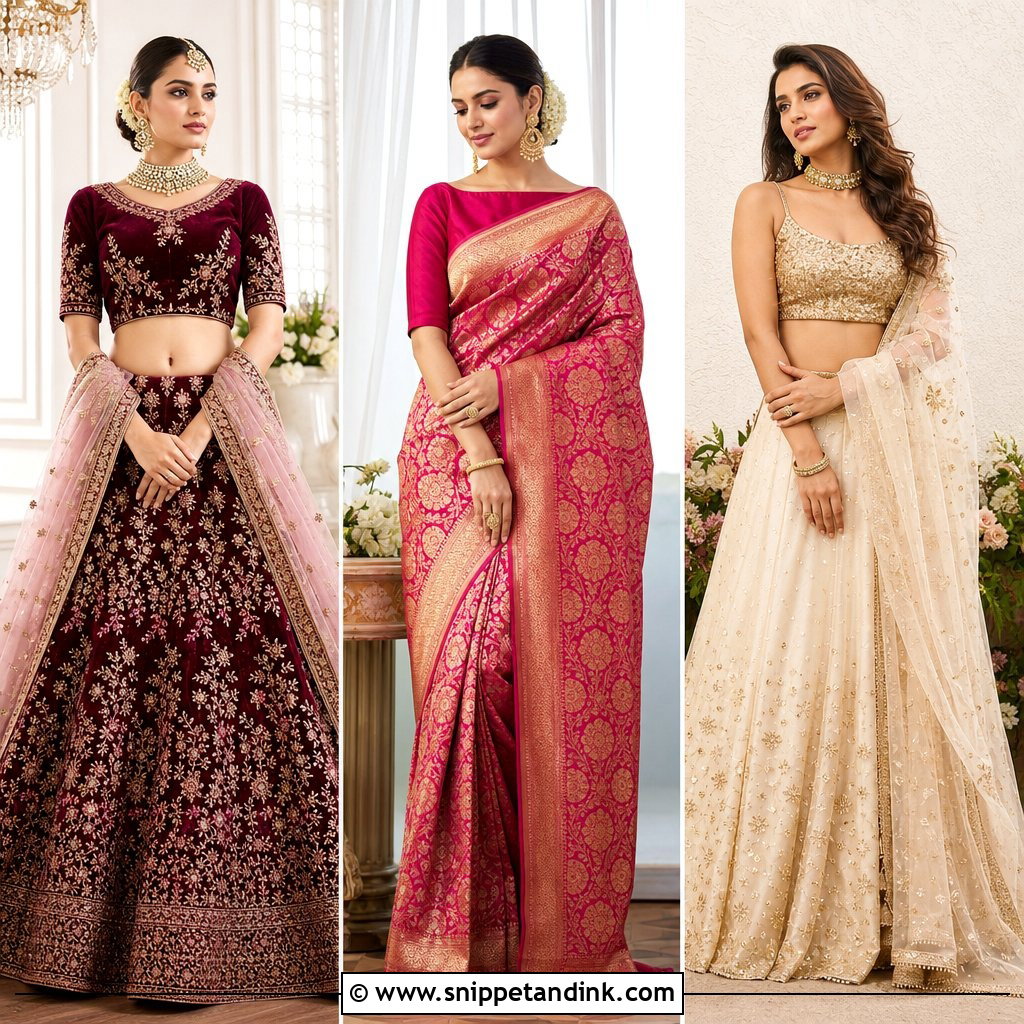
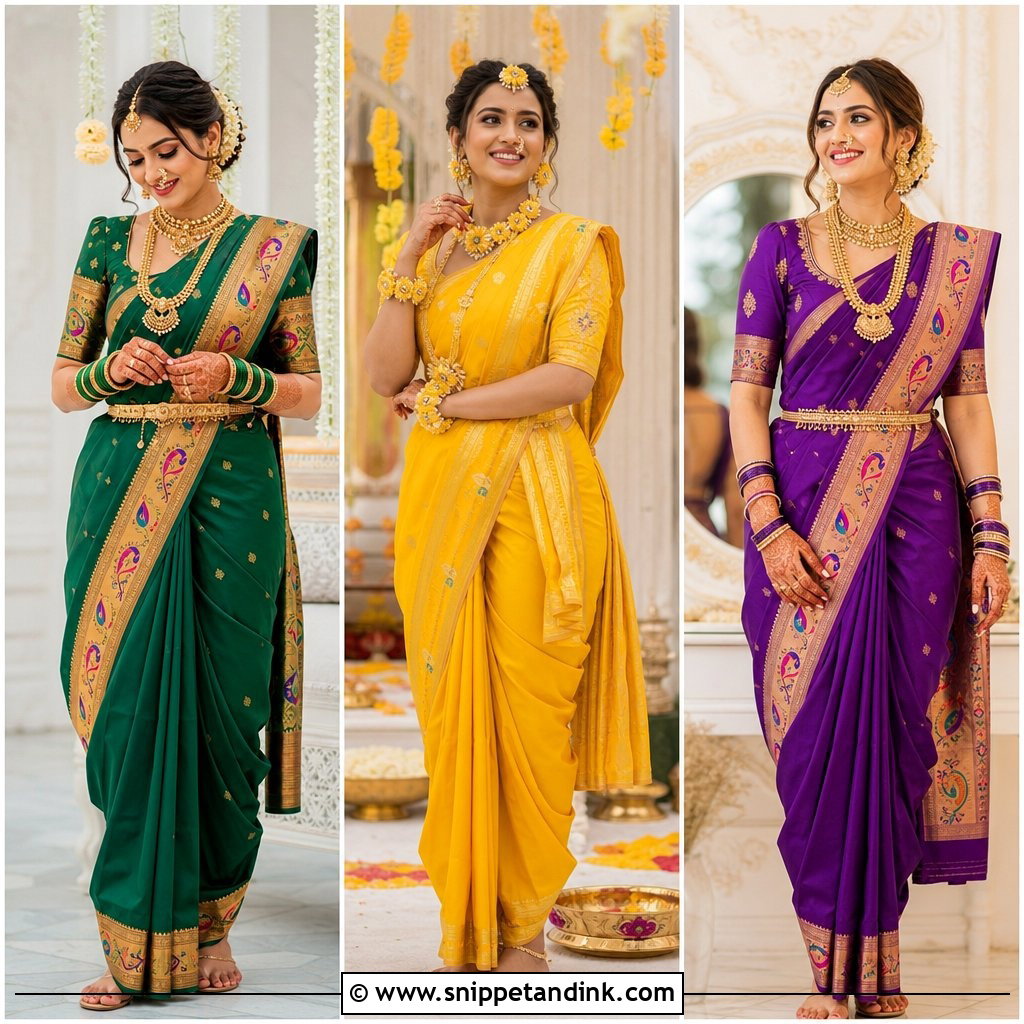
25. Minimal Bridal Blouse With Statement Saree
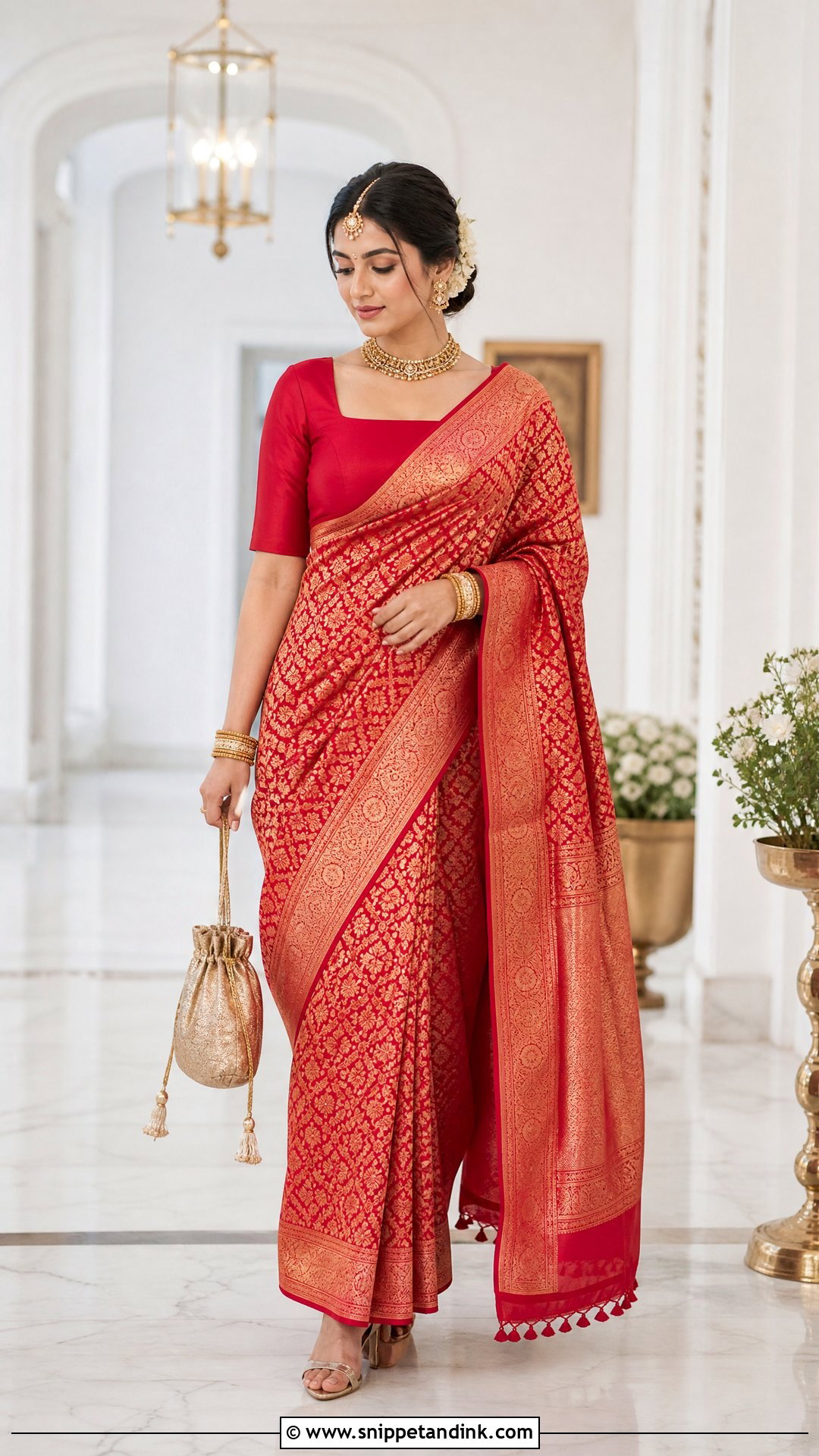
When the saree is the star, with heavy weaving or a broad border, a minimal blouse is the right call. That makes the tailoring everything: darts, sleeve movement, a neckline that stays put, good lining. Smooth silk or raw silk in a solid coordinating color. A covered button or a line of piping is enough detail. It’s also the blouse most likely to be worn again with simpler sarees afterward.
Turmeric, Sweat and Tarnish: Looking After the Blouse Afterwards
A bridal blouse goes through a lot over a few days of functions: haldi paste, wet mehndi, perfume, heat and hours of sweat. Metallic thread and silk both react to that, so a little care right after the wedding keeps it wearable for years.
- Air it inside out on a padded hanger for a day before putting it away. Trapped sweat is what usually ruins a lining.
- Spray perfume on skin, never on the blouse. Alcohol and oils tarnish zari and leave rings on silk.
- Haldi stains set fast. Take the blouse to a specialist cleaner who handles embroidered silk, rather than scrubbing it yourself.
- Wrap it in soft muslin, not plastic, and keep it away from damp walls. Metal thread tarnishes faster in humidity.
Refold heavily embroidered pieces every few months along different lines. Sharp, permanent folds can crack metallic thread right through the motif.
The Blouse Is Built Around the Whole Outfit
A bridal blouse works when it’s designed with the saree or lehenga, the jewelry, the drape and the ceremonies in mind, not just the neckline you saw in a photo. Agree on fabric and embroidery weight first, then plan the jewelry around the neckline. Test every design sitting, walking and with your arms raised, in the undergarments you’ll wear. And talk to your tailor early about lining, closures and seam allowance. Traditional or modern, heavy or minimal, a good blouse is one you forget you’re wearing until you see the photos.
You'll Like These Ideas:






Leave a Reply