
A Maggam blouse is the one piece of a South Indian bridal outfit that gets made entirely around you: your measurements, your saree border, the necklace you plan to wear on top of it. The designs below run from traditional peacocks and temple borders to pastel florals, initials, cutwork backs and portrait scenes, worked in gold zari, pearls, Kundan, beads and detailed Aari embroidery. For each one I’ve added what I’d pair it with and where I’d keep the work lighter, because a blouse planned in isolation usually ends up fighting the saree.
The Adda Frame Sets Your Timeline
Maggam work happens before the blouse is stitched. The tailor takes your measurements and marks the panels, the design is pricked onto tracing paper and transferred onto the silk with a chalk paste, and then the fabric is stretched tight on a wooden frame called an adda. The karigar works the chain stitch from above with a hooked aari needle, feeding thread from below, and then sews zardosi, stones and pearls on by hand.
That sequence is why I tell brides to order early. A light floral border can be done in a week or two, but a full back with portrait work or dense zardosi takes several weeks, and in peak wedding months good workshops are booked out. Ask your tailor for their current turnaround and leave room for a final fitting after the work is attached.
What I bring to the first appointment
- The saree itself, or a cutting of its border and pallu, so the zari tone can be matched in daylight.
- Photos of the jewelry you’ll wear, especially the necklace length, so the neckline work doesn’t end up hidden under it.
- A blouse that already fits you well, as a measurement reference.
- A clear drawing for any portrait, initials or custom motif.
- A decision on back hooks or a side zip, since heavy embroidery sits differently with each.
Ask to see the traced layout on your cut panels before it goes onto the frame. Changing a motif at that stage costs nothing. Changing it after stitching means unpicking.
1. Peacock Bridal Blouse Maggam Work Design
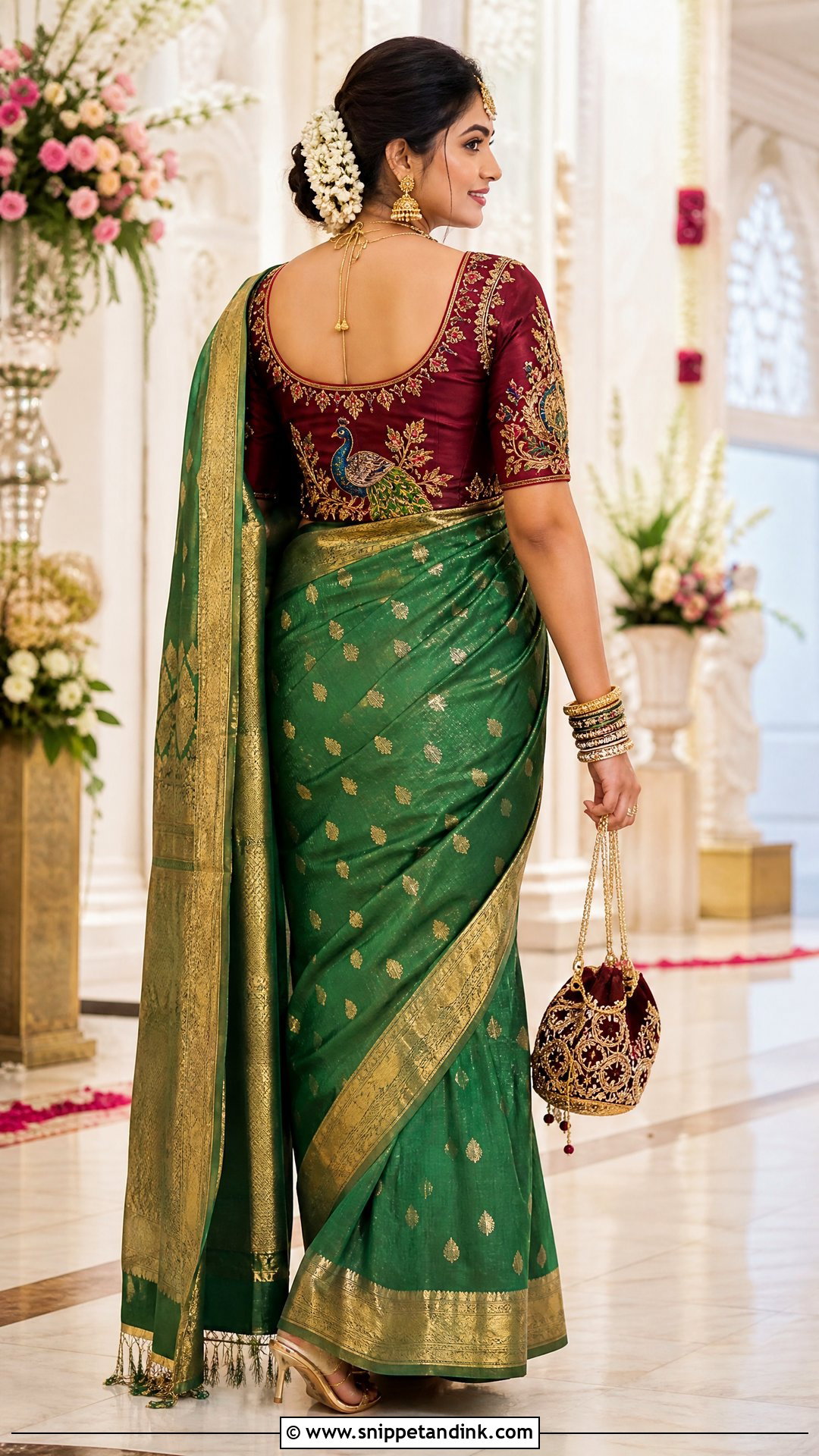
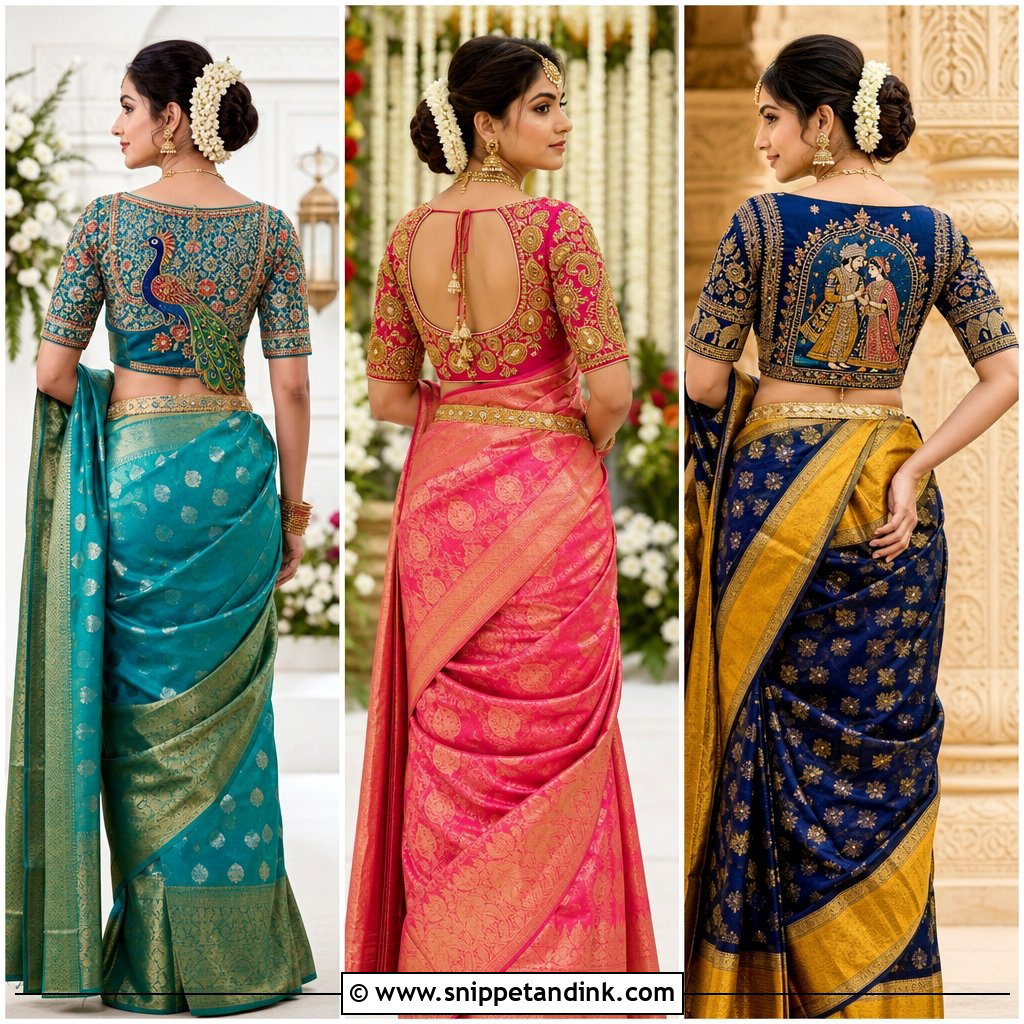
Peacocks are the motif I get asked for most for the main ceremony blouse, and they earn it. I place the pair across the back so the tails sweep up toward the shoulder blades; drawn too low, the feathers vanish under the pallu once it’s pinned. Gold zari with green stones and blue beads gives plenty of colour without a heavy hand, and on maroon or emerald raw silk it reads clearly from across the mandapam. Pair it with a contrasting Kanjeevaram, antique gold and stacked bangles. Keep the front neckline modest so the back stays the story, and repeat one small feather on each sleeve border.
2. Temple Border Bridal Blouse Maggam Work Design
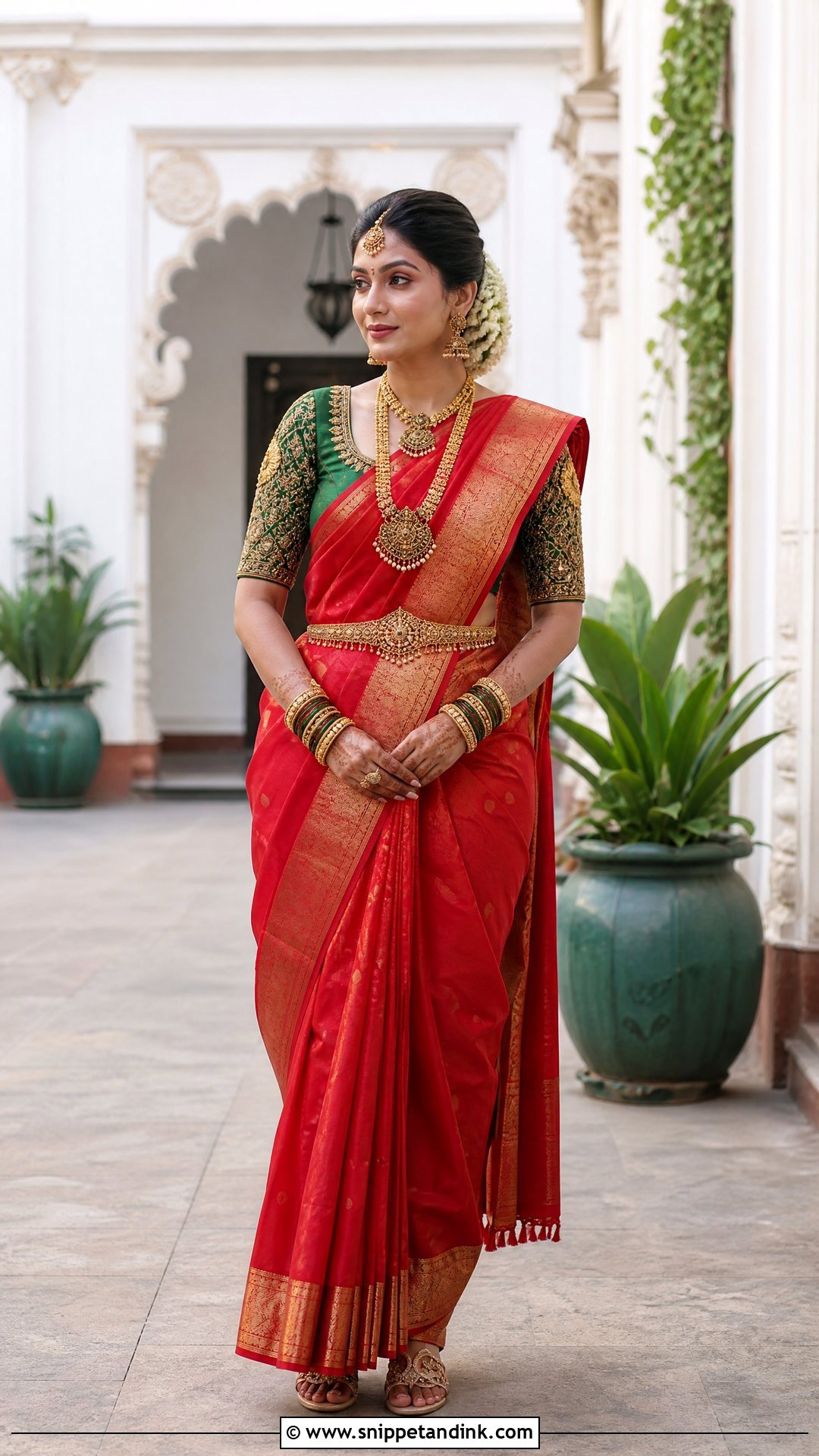
Temple borders are architecture, so they need breathing room. Arches, triangles, little pillars and coin details look best framing the neckline, sleeve hems and back opening with plain silk in between; fill every gap and the pattern turns into texture nobody can read in photos. The first thing I check is the saree’s zari. If it’s antique or muted, I ask for antique gold on the blouse as well, because bright yellow zari beside an old-gold border looks like two different outfits. A few ruby and emerald stones can pick out key points. Finish with a rounded back neck and tie-up tassels, a red or bottle-green Kanjeevaram, temple jewelry, a waist belt and jasmine.
3. Floral Bridal Blouse Maggam Work Design
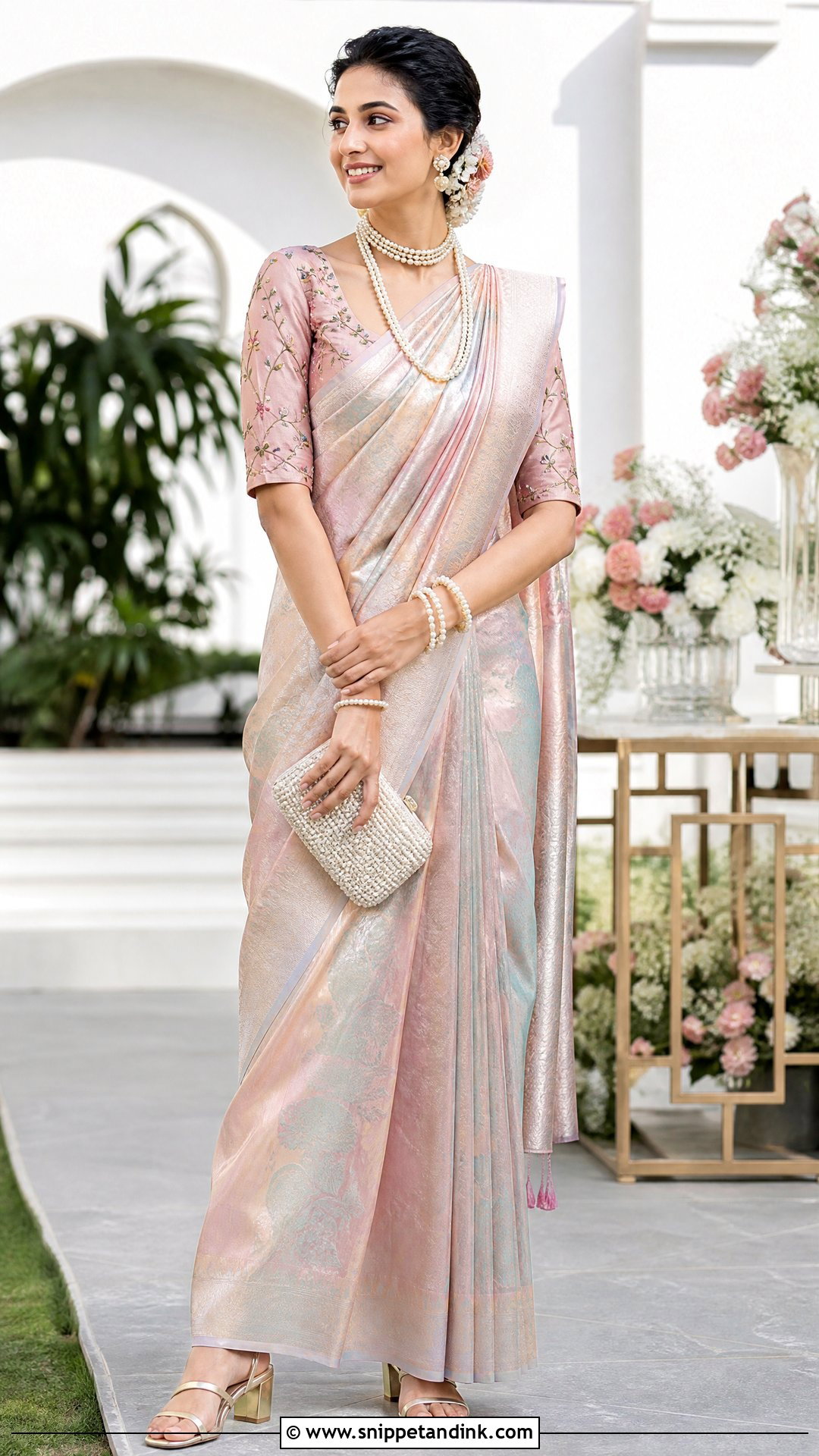
Floral vines are where I send brides who want detail without the full temple look. Silk thread, pearls, small stones and a fine zari outline can trail across the neckline, shoulders and sleeves. The giveaway of a cheap floral blouse is that every flower is the same size, so I ask the karigar to mix full blooms, half-open flowers and buds. Pale grounds like blush or powder blue suit a morning ceremony with a pastel silk saree and pearls. Keep the front light so a necklace lies flat, and put the densest cluster on the back.
4. Kundan Bridal Blouse Maggam Work Design
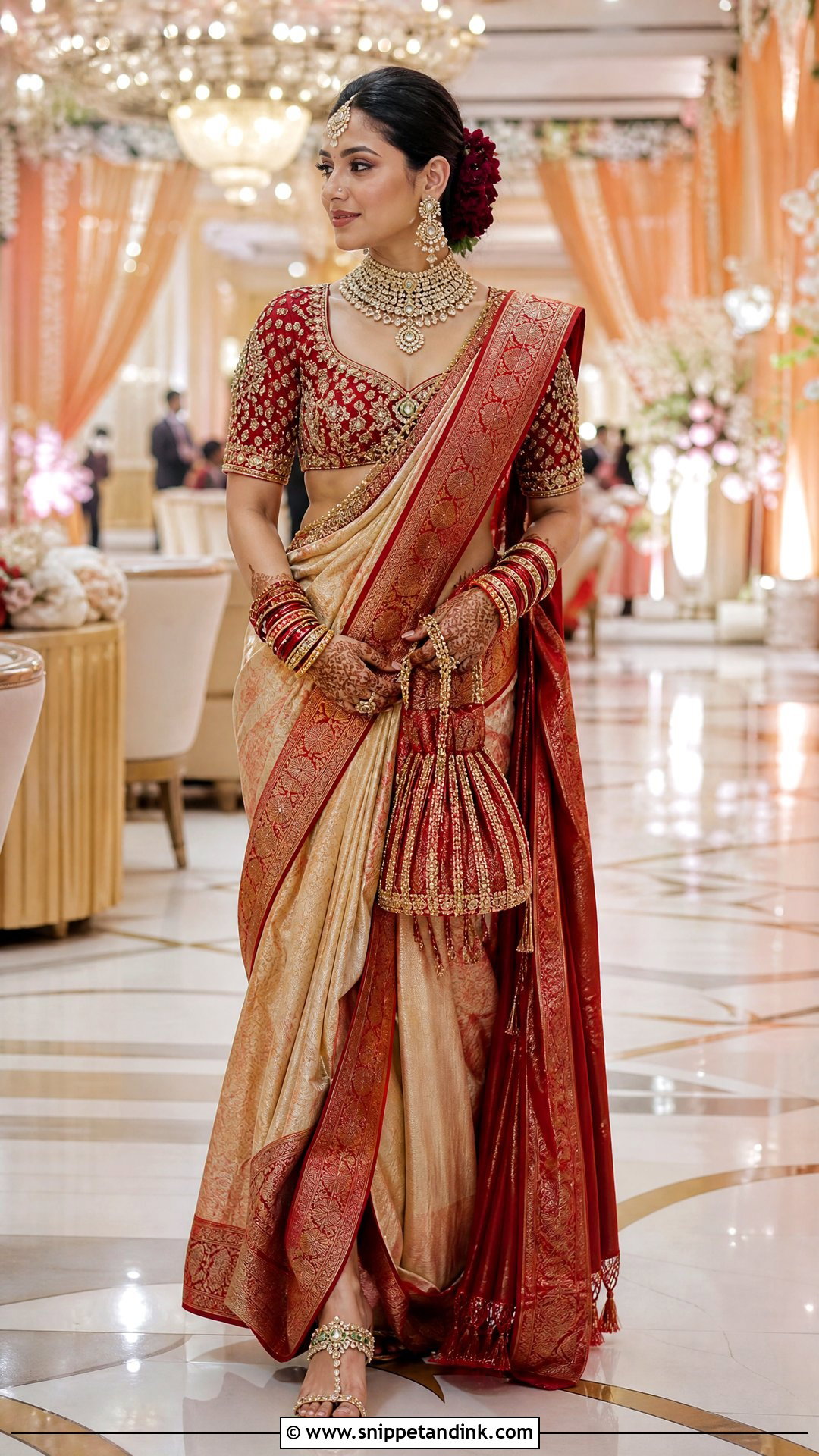
Kundan stones catch light in a way thread never will, which is exactly why I’m careful where they go. Medium stones around the neckline and back border, with gold thread, beads and tiny pearls filling the spaces around them, give richness without turning the blouse into armour. A stone sitting near the underarm will rub the skin raw an hour into the rituals, so I keep that zone completely clear. Wine or deep green silk sets the stones off well. If you’re wearing a large Kundan necklace, simplify the front panel and let the back and sleeves carry the sparkle.
5. Zardosi Bridal Blouse Maggam Work Design
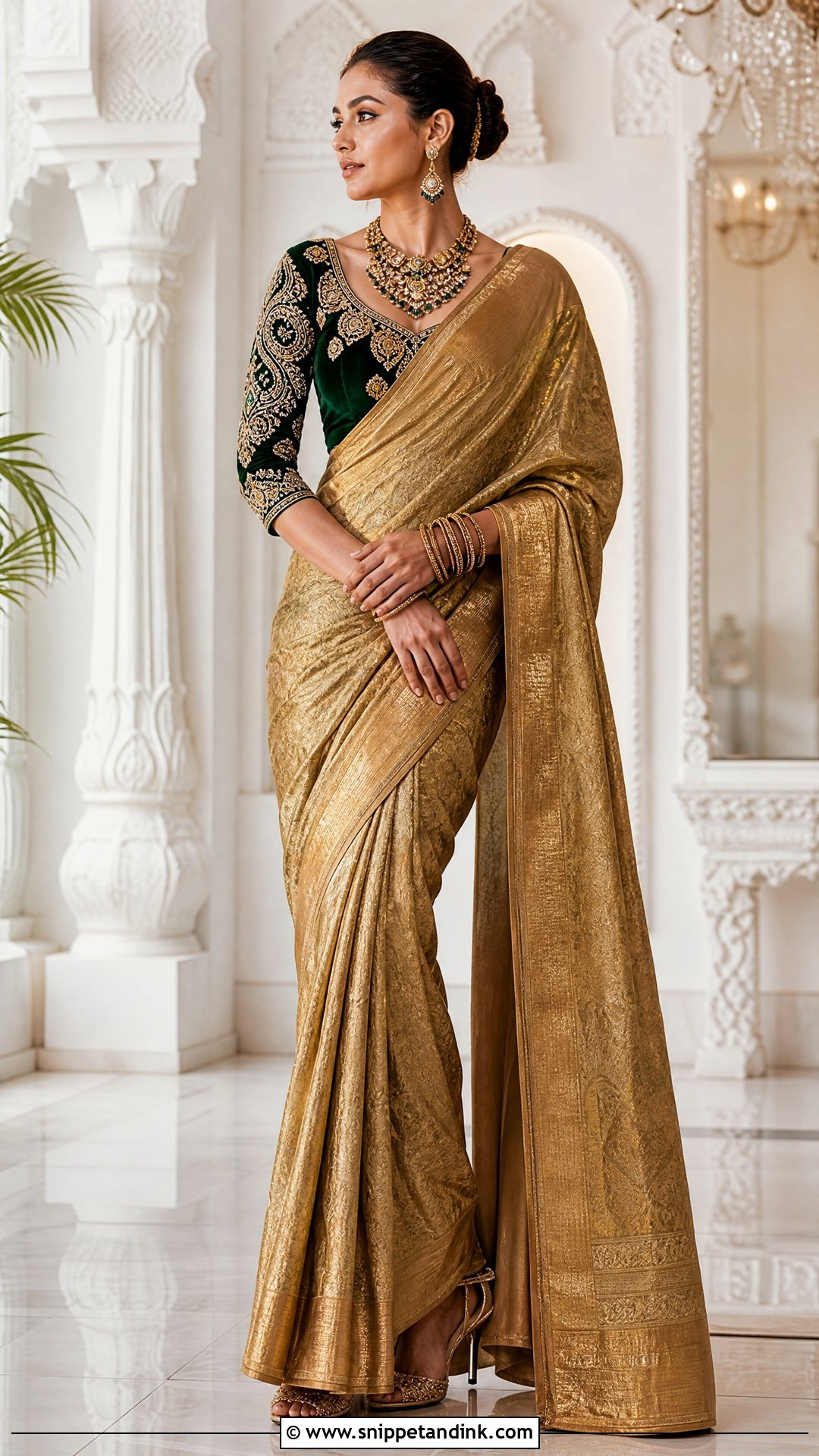
Zardosi is the heaviest work in this list, literally. Coiled metal wire, zari, beads and sequins add real weight, so I only put dense paisleys or scrolling florals on velvet or raw silk that can hold its shape. The reverse side of zardosi is rough, and a soft cotton lining with an extra protective layer behind the thickest panels is what keeps your back comfortable. Three-quarter sleeves give the pattern room. If your saree already has a broad border, borrow one recognizable motif from it rather than inventing four new ones.
6. Lotus Bridal Blouse Maggam Work Design
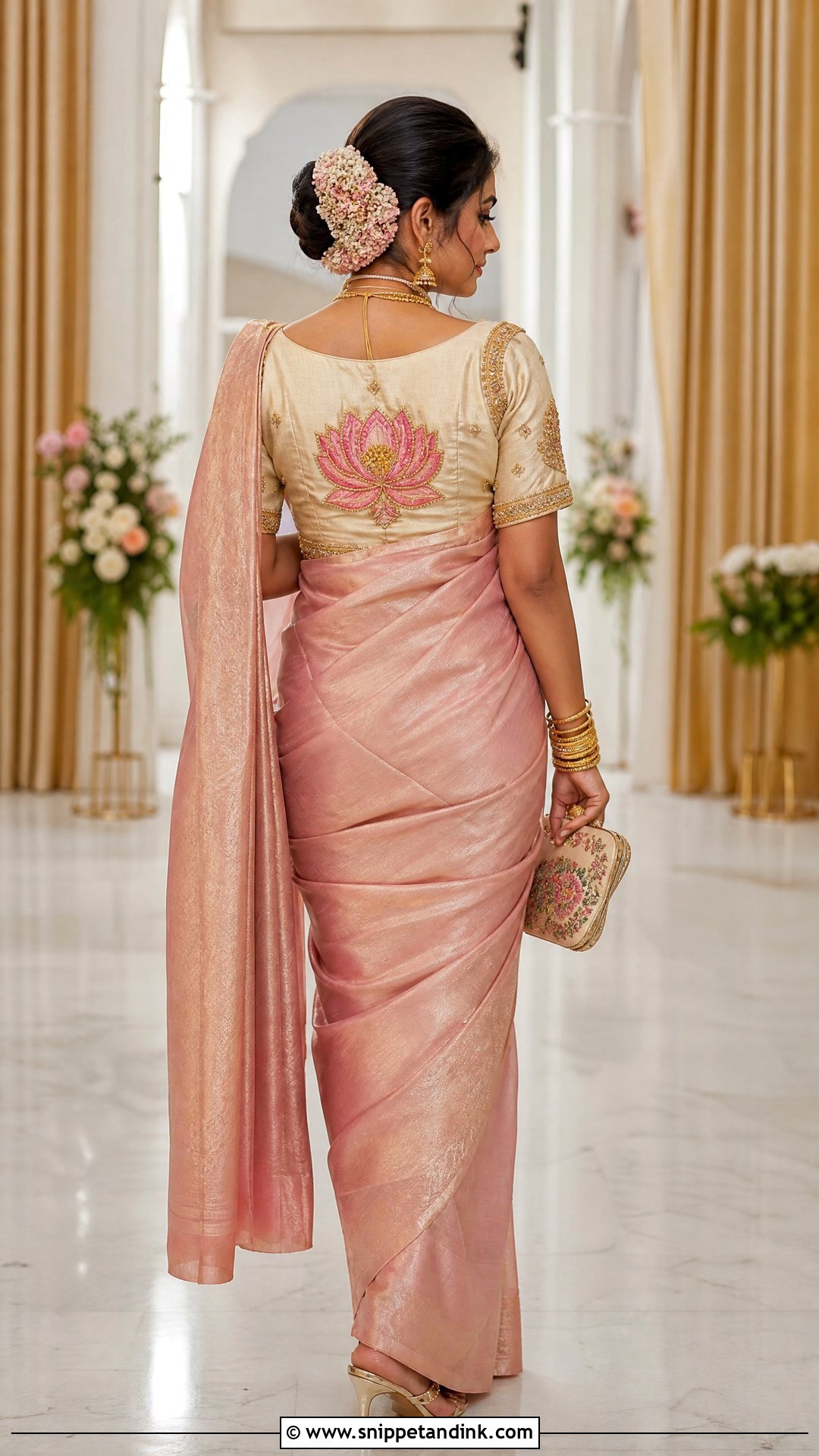
One large lotus centred on the back, with buds and curving stems around it, is a clean way to bring in symbolism without crowding the blouse. Pink silk thread for the petals, zari for the veins and a few ruby-toned stones give the flower depth. I’d cut the back as a wide U so the motif has space; on a narrow opening the outer petals get chopped by the seam. It sits well on ivory, mustard or green raw silk. For lighter work, embroider only the back and sleeve borders and run a thin lotus vine along the waist hem to connect the blouse to the saree.
7. Personalized Initial Bridal Blouse Maggam Work Design
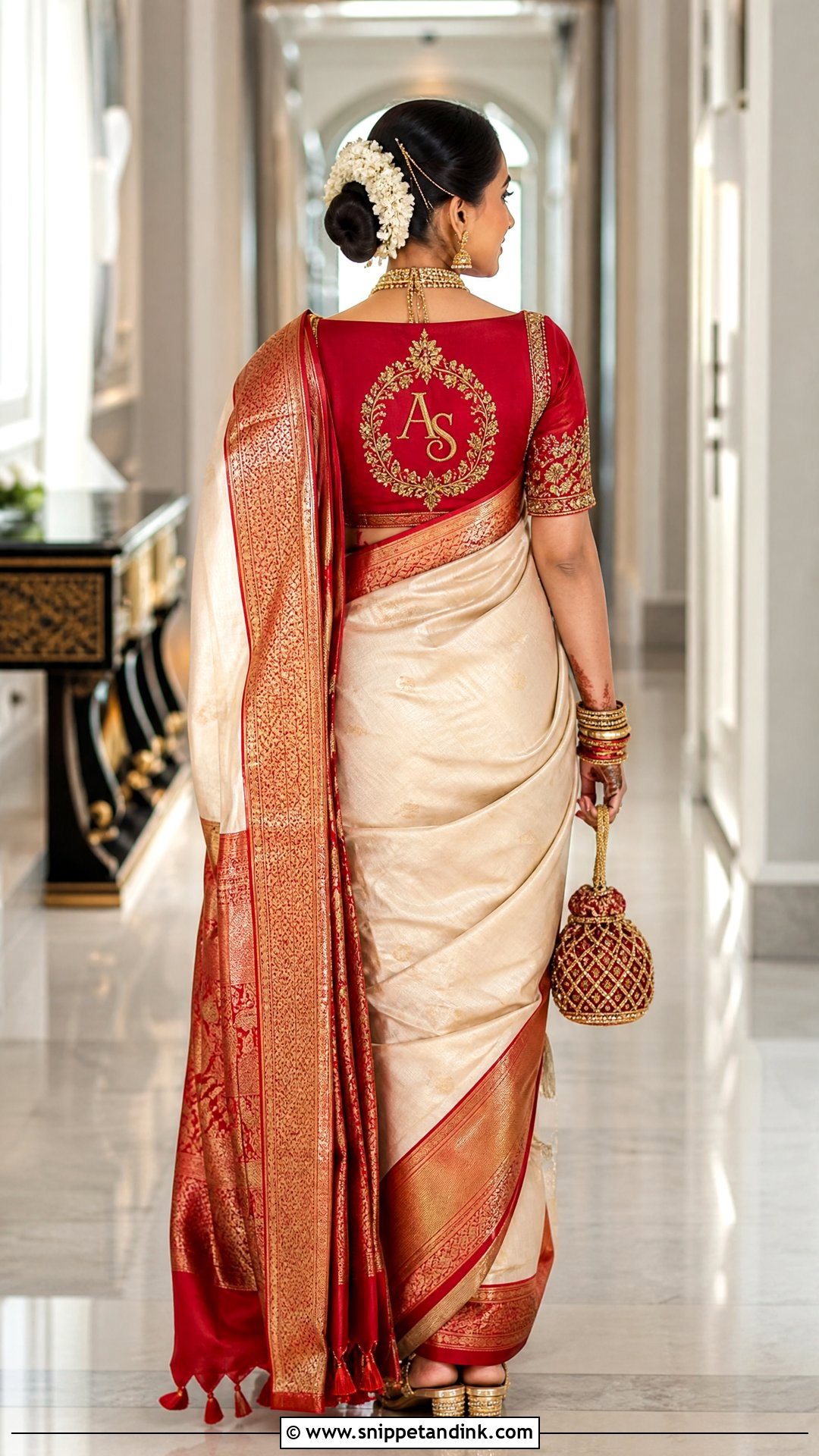
Initials are the motif I tell brides to keep smaller than they think. On tracing paper a big monogram looks right; over the curve of a back it starts to read like a team logo. I’d set the couple’s initials inside a floral wreath or small medallion, work the letters in gold thread and pearls, and make sure they’re legible from a few steps away. Flowers or paisleys around the frame help the lettering sit inside the Maggam style instead of on top of it. A tiny matching bud or initial on each sleeve finishes the idea.
8. Bride And Groom Bridal Blouse Maggam Work Design
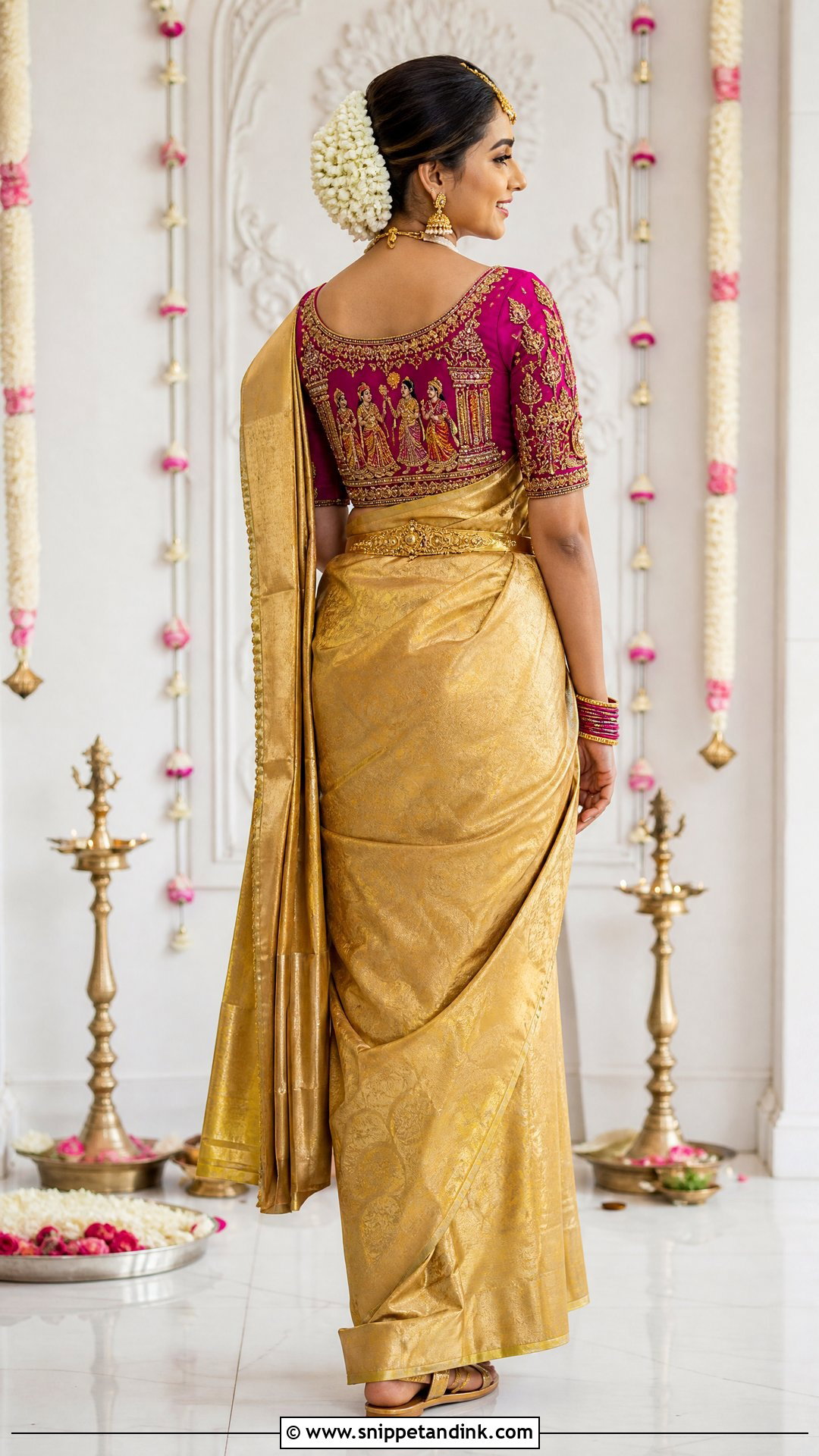
Portrait work is the hardest thing a karigar does, and faces are where it fails. I never let a scene go onto the frame without a clear reference drawing and my sign-off on the traced layout, because a nose drifted by a few millimetres changes the whole expression. A procession, garland exchange or seated couple reads best on plain raw silk in maroon, rust or navy. Keep the sleeves and front neckline simple. The back is doing all the talking.
9. Cutwork Back Bridal Blouse Maggam Work Design
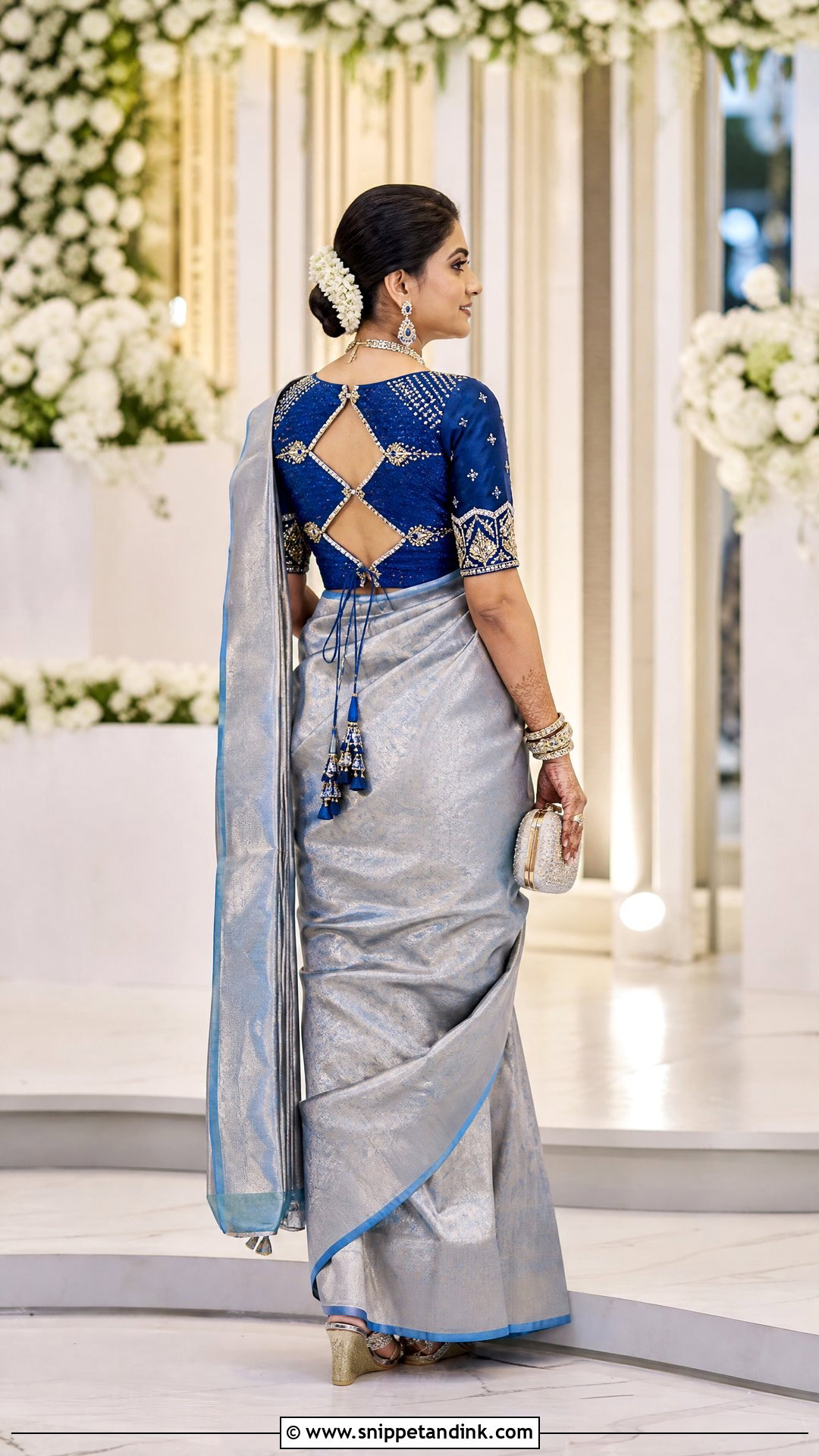
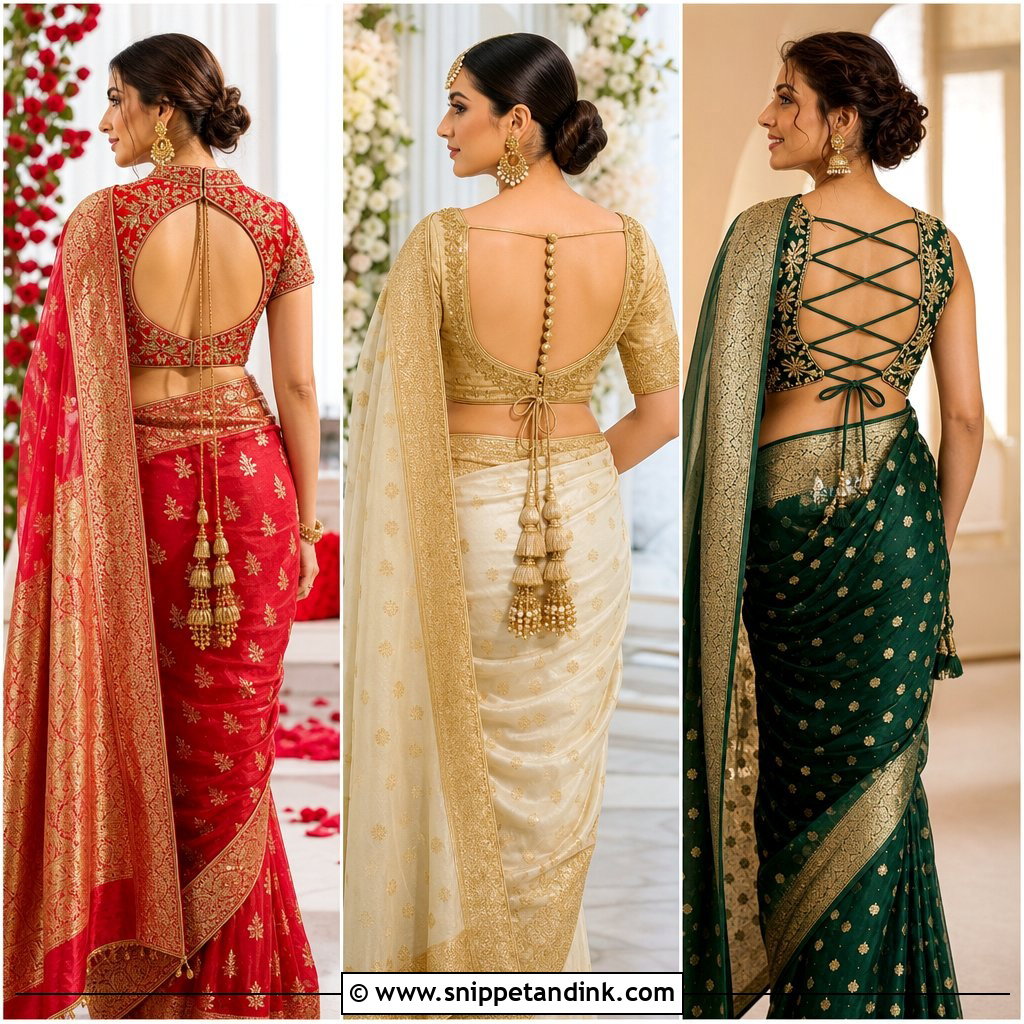
Cutwork backs look modern, but structurally they’re the weak point of a blouse, so placement matters more than the shape you pick. Diamond, leaf or scalloped openings framed in zari, pearls and fine beads must leave enough solid fabric across the shoulder blades to carry the weight of the embroidery. I prefer several moderate openings to one big cutout, and raw silk, velvet or firm brocade over anything soft. Tie-up tassels secure the upper back, and a skin-toned mesh behind the openings gives coverage if you want it. Repeat the cutwork shape around the sleeve border so the back doesn’t look like a separate idea.
10. Pearl Bridal Blouse Maggam Work Design
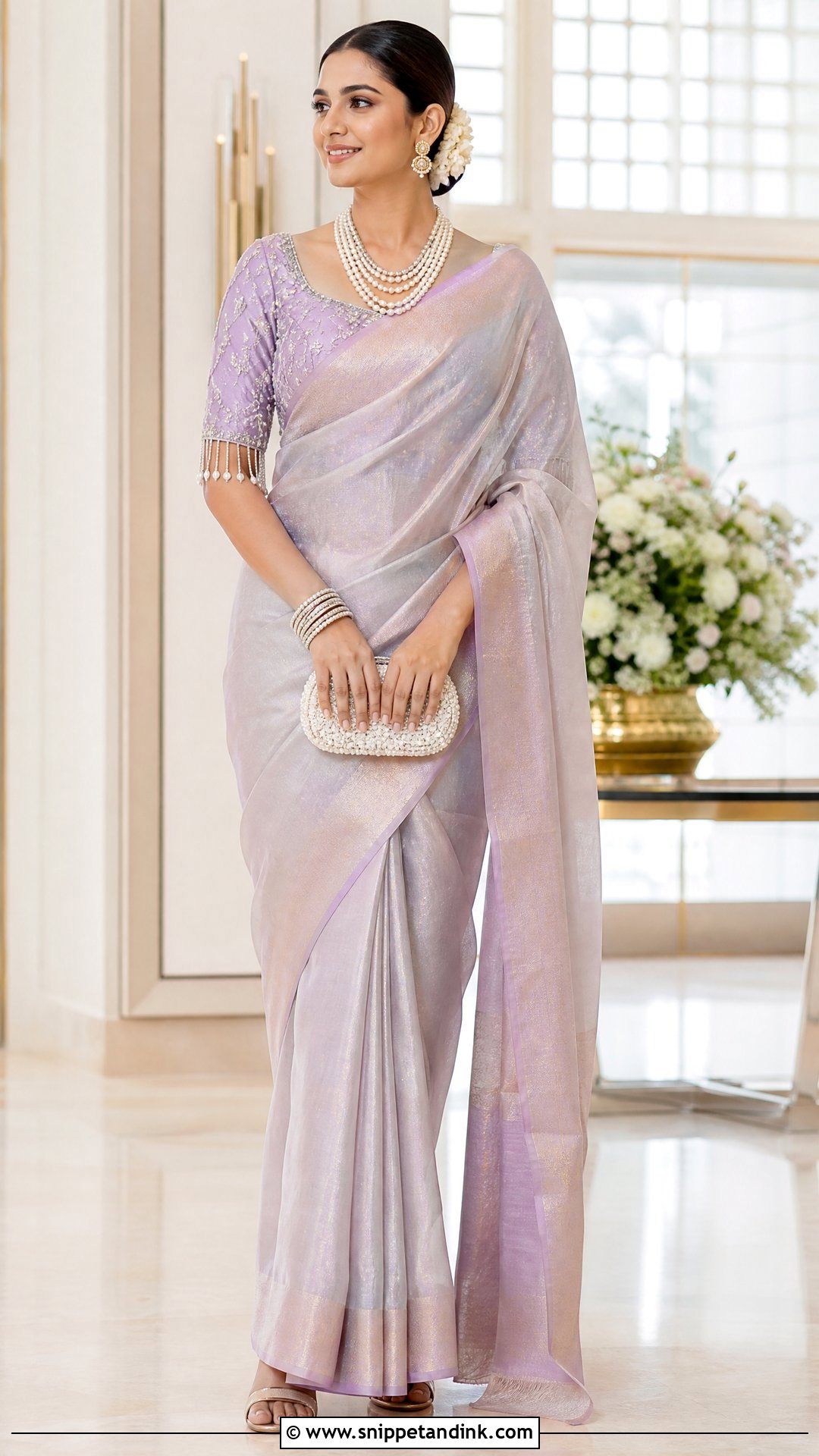
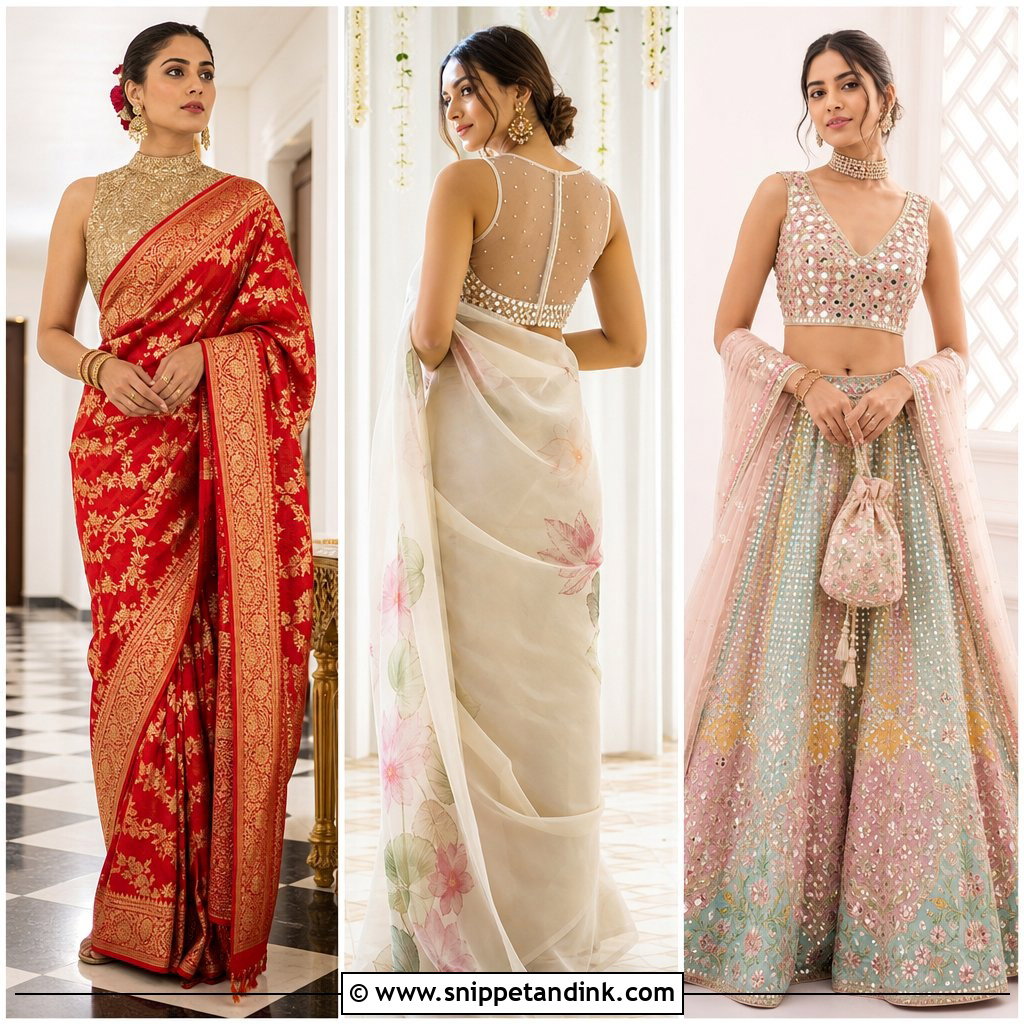
Pearl work glows rather than shines, which is why it suits pastels so well. Seed pearls go along the neckline, sleeve edges and back border, with larger ones at flower centres, all linked by ivory thread and muted gold zari. What I watch is the waistline. The saree pleats rub there all day, and loosely strung pearls are the first thing to pop off, so ask for each one to be couched down individually. Blush or cream pairs with organza or a light silk saree, pearl jewelry and champagne sandals. Skip heavy clusters near the underarm.
11. Mirror Bridal Blouse Maggam Work Design
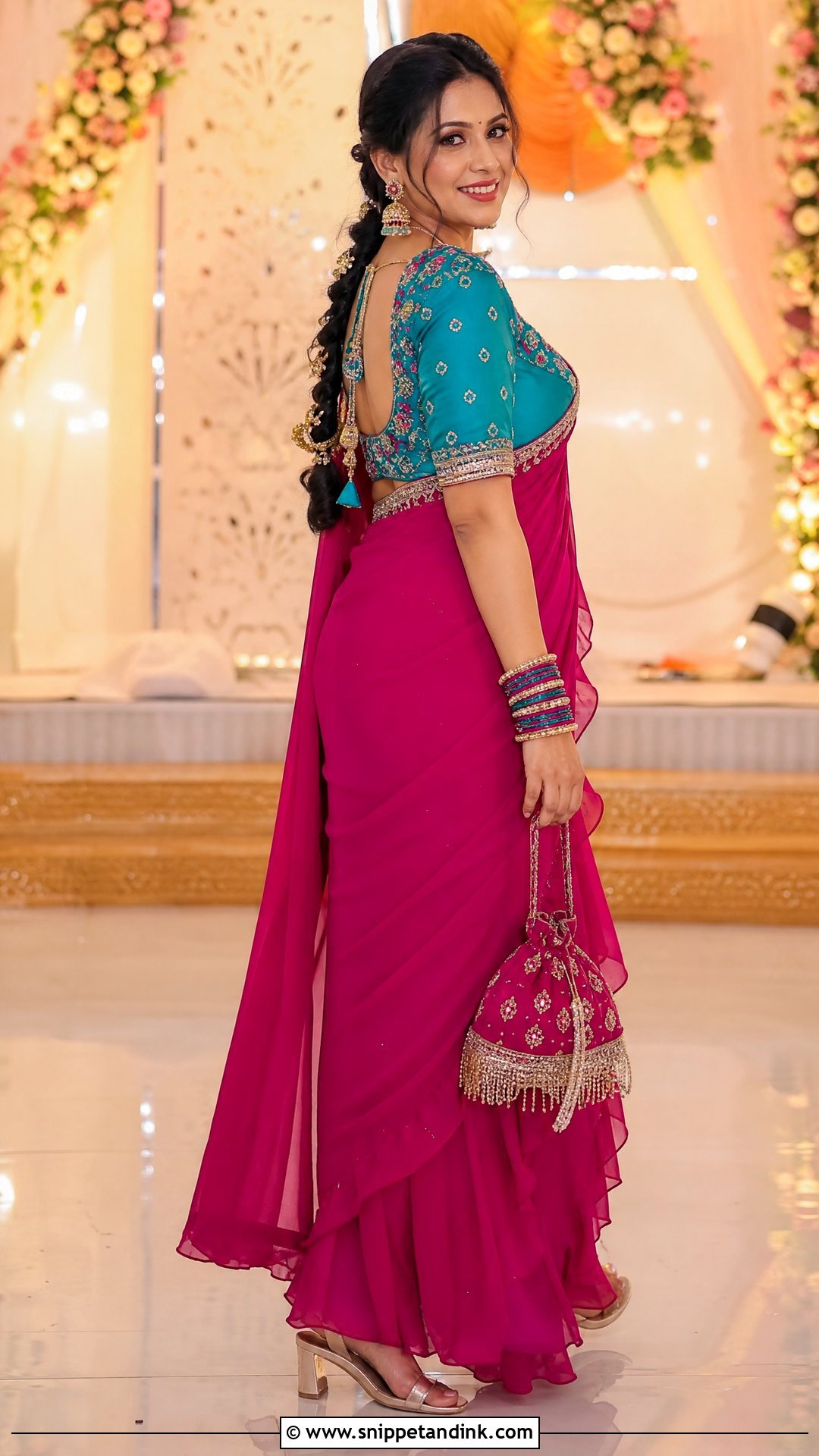
Mirrors are my reception and sangeet pick, not usually the one for the main ritual. Small round or diamond mirrors outlined in gold thread and bright silk floss look festive under evening lights on hot pink, teal or royal blue. Glass adds weight quickly and a bare edge can scratch, so I ask for lightweight mirrors with the rim fully covered by the stitch ring. Mix them with open threadwork rather than solid rows. A simple neckline leaves room for a necklace while the back carries the sparkle.
12. Temple Coin Bridal Blouse Maggam Work Design
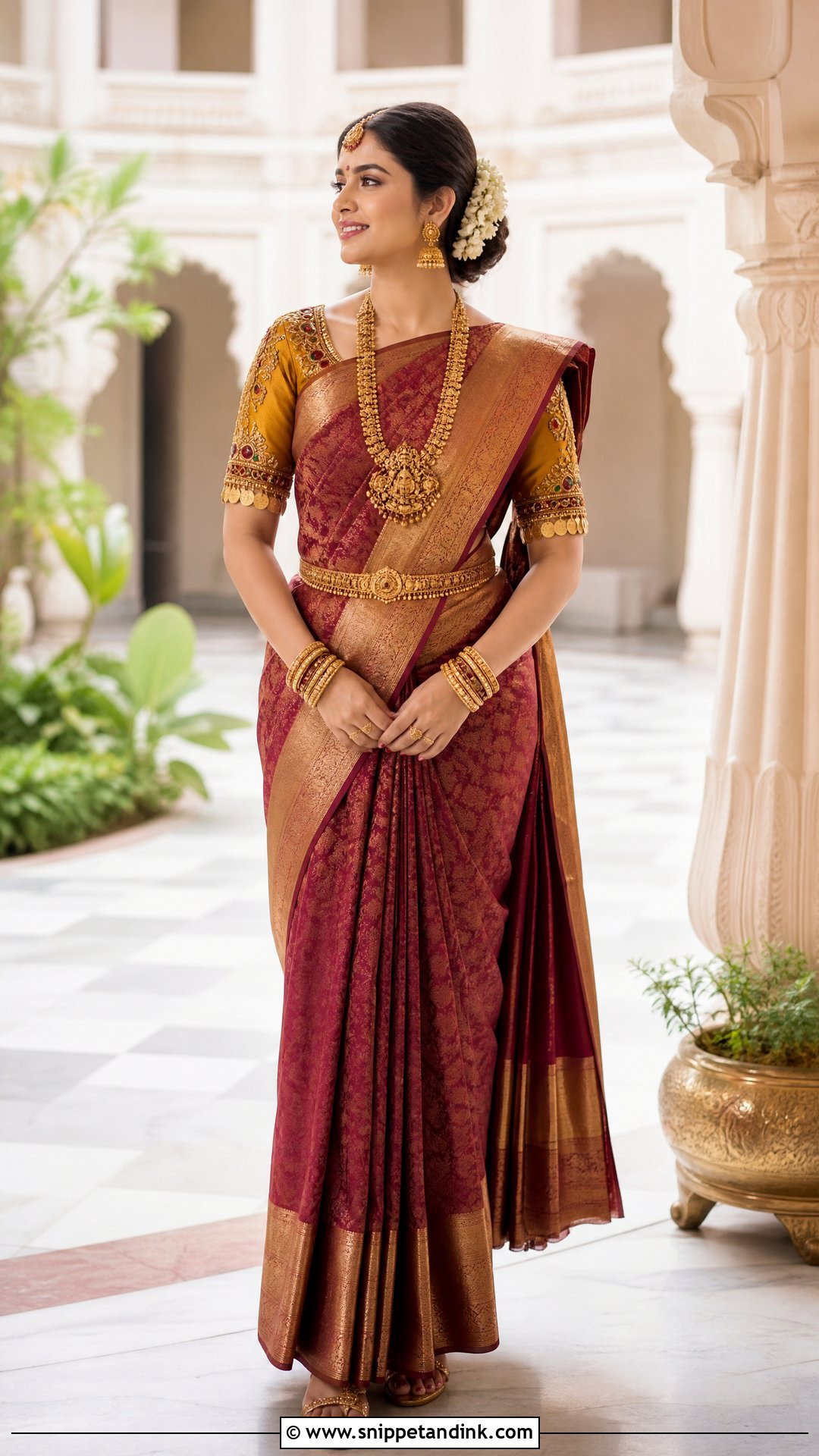
Coin detailing makes the blouse look as if it’s wearing temple jewelry. Flat gold-toned discs run along the neckline, sleeve hems and waist border, held in place by Maggam threadwork, with ruby and green stones between them. On a finished piece I check that every coin sits flat and evenly spaced, because a tilted edge snags the saree silk and catches on necklace chains. Bottle green or maroon with a Kanjeevaram, a long temple necklace, jhumkas and a jasmine bun is the classic pairing. If the front is heavily worked, lighten the back, and keep any coin tassels small.
13. Elephant Bridal Blouse Maggam Work Design
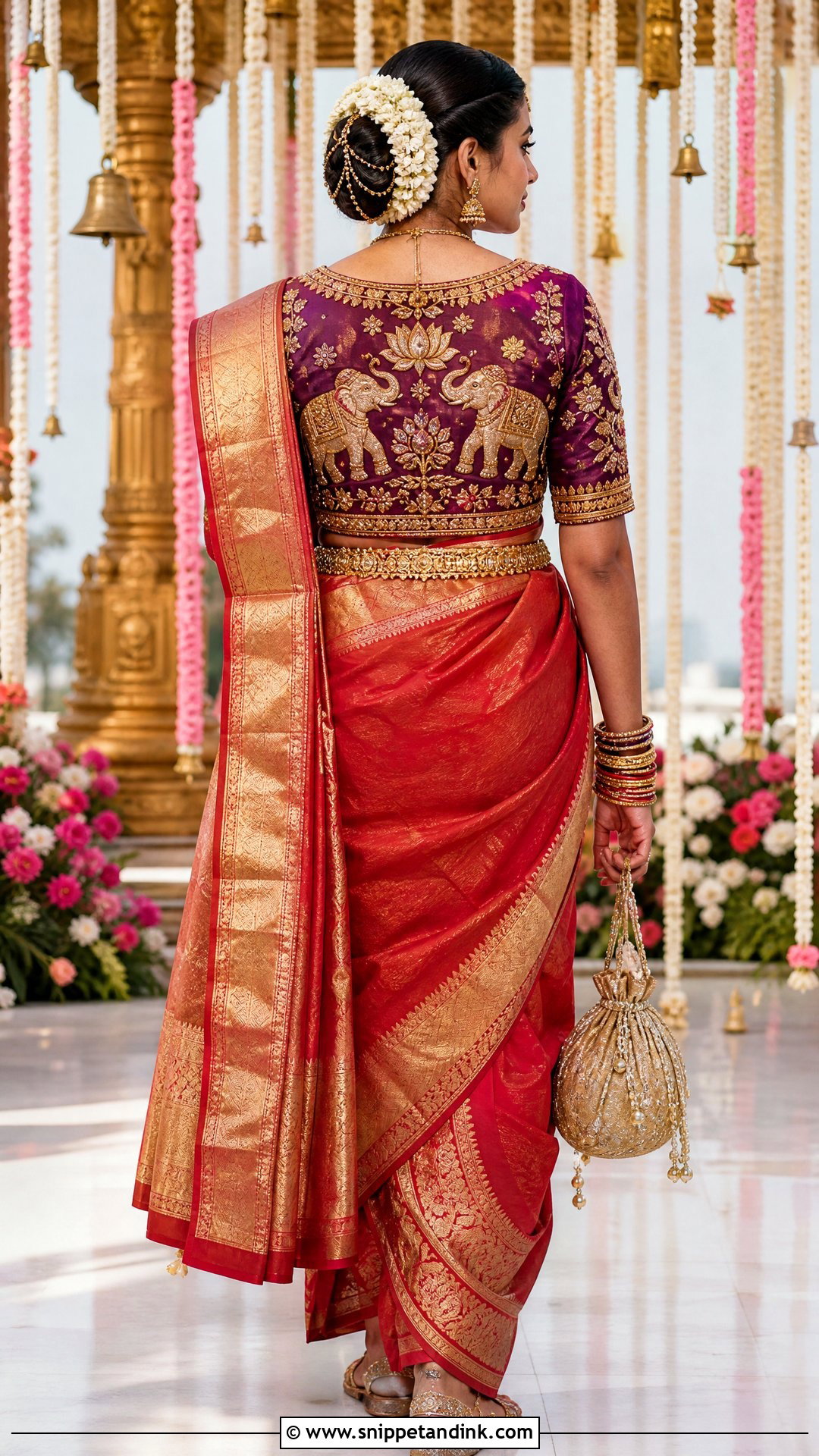
Elephants usually come in pairs facing a central lotus, temple arch or decorative pot on the back, with zari outlines and coloured silk picking out the headpieces and blankets. Symmetry matters more here than almost anywhere: if one elephant sits a little higher, the eye finds it at once, unless you’ve chosen a procession on purpose. Before the embroidery starts, I check the traced placement against the final measurements so a dart or the back closure doesn’t slice through a trunk. Smaller elephants can walk along the sleeve edges. Rust or navy raw silk gives a rich base under a gold-bordered saree.
14. Full Sleeve Bridal Blouse Maggam Work Design
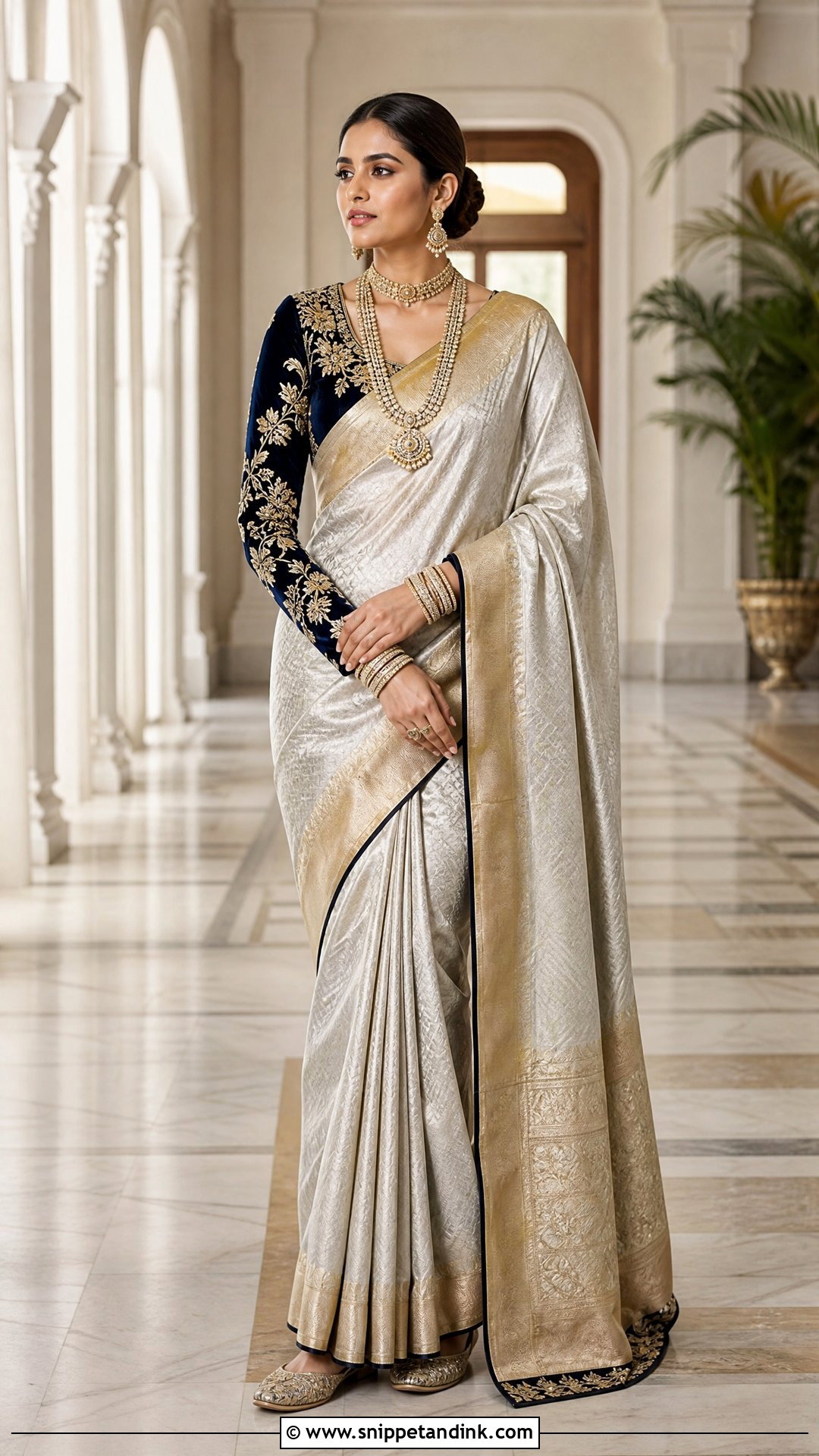
Full sleeves give the karigar a huge canvas, and the common mistake is filling it evenly. I ask for vines or paisleys that are dense at the shoulder and taper toward the wrist, so the sleeve connects to the embroidered back and the hand end stays light. The elbow is where heavy sleeves fail: stiff work there makes it hard to bend your arm for rituals or a meal, so keep that band flexible. Velvet, raw silk and firm satin all work over a soft lining, with bangles worn over the cuffs. With an elaborate necklace, choose a higher neckline so the two don’t compete.
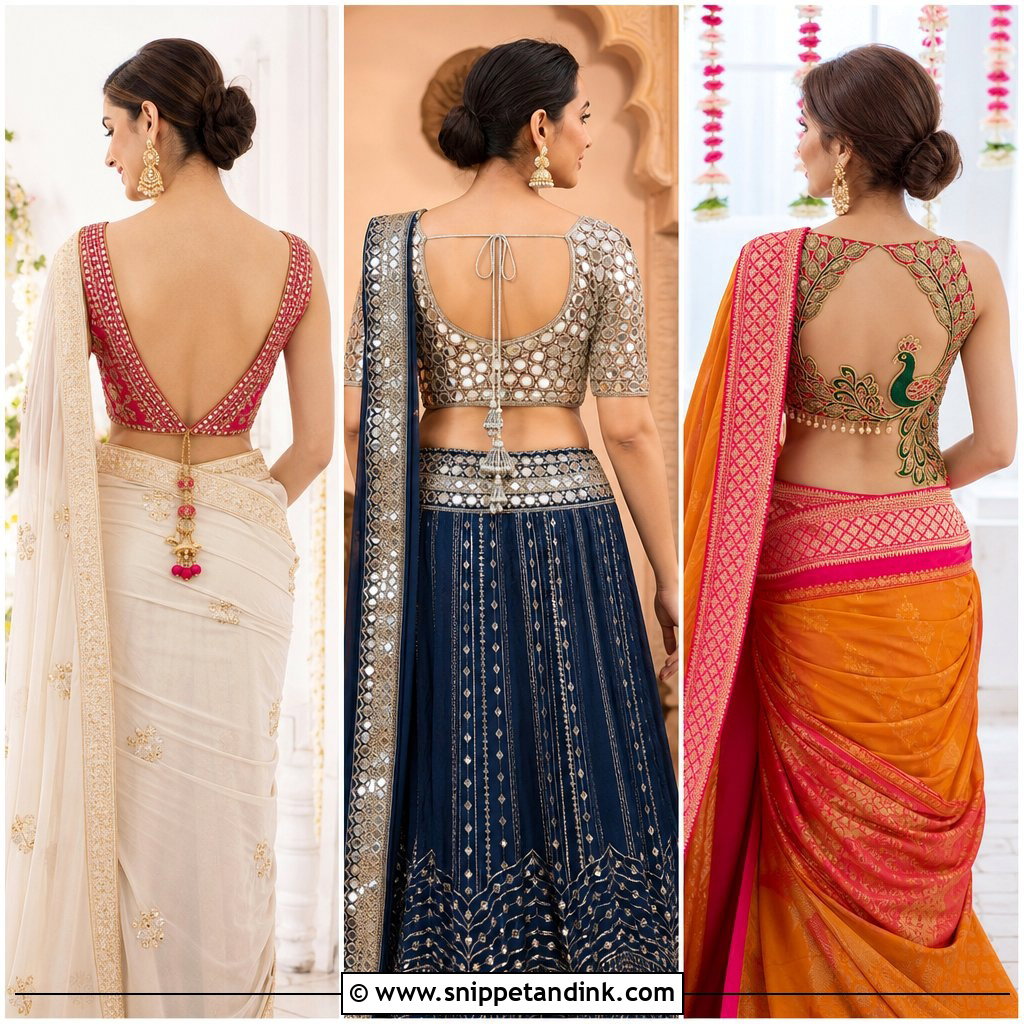
15. Puff Sleeve Bridal Blouse Maggam Work Design
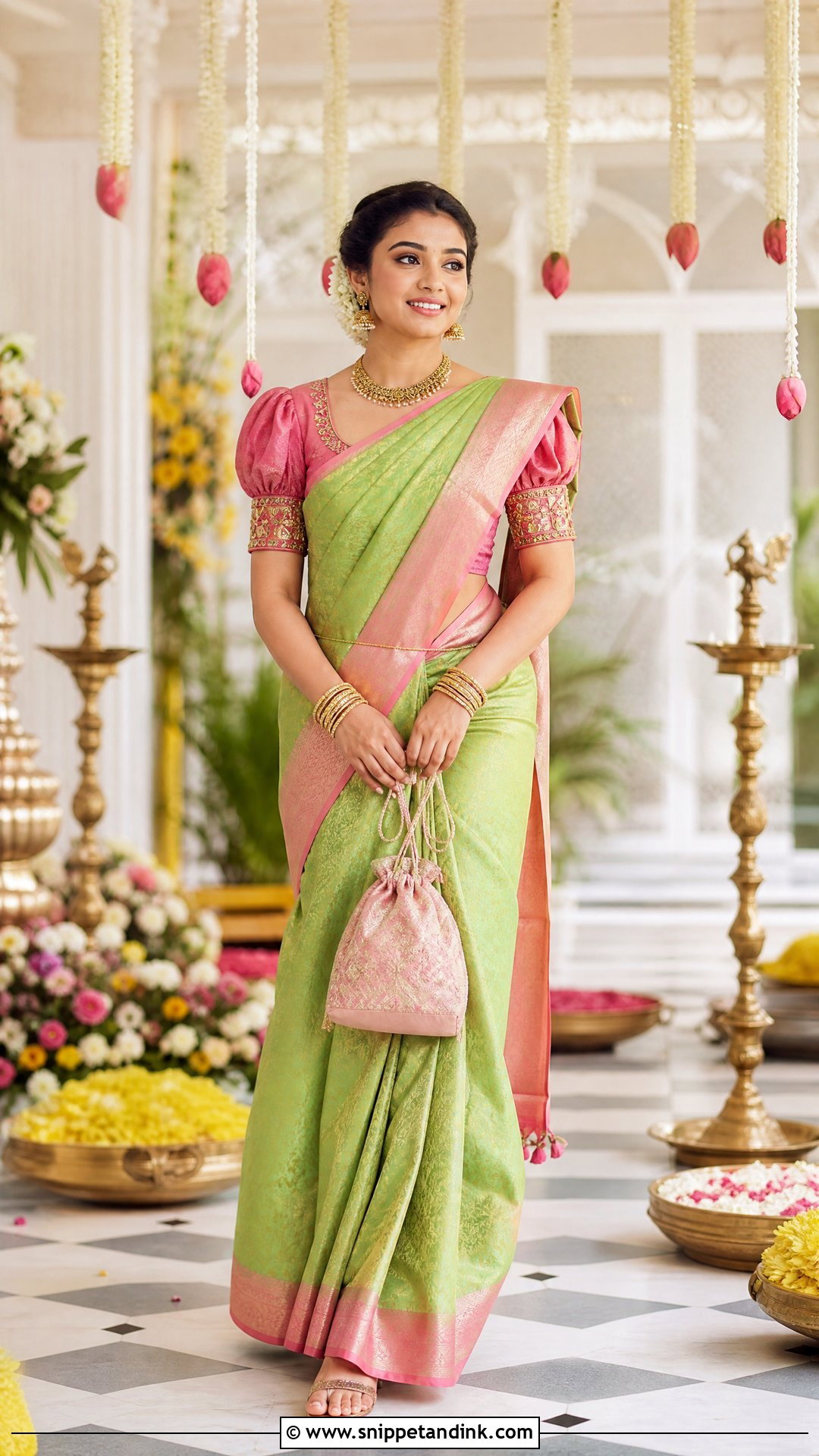
Puff sleeves are about proportion before embroidery. On narrow shoulders a big puff swamps you, and on broad shoulders it adds width you may not want, so I pin a sample puff at the fitting and look in the mirror with the saree draped before anyone commits. Keep the puffed fabric clean and structured and put the Maggam work on the fitted band below it, in florals, pearls or small peacock feathers. A smaller puff with a longer cuff reads more modern. Repeating the cuff motif at the back neckline pulls the whole blouse together.
16. High Neck Bridal Blouse Maggam Work Design
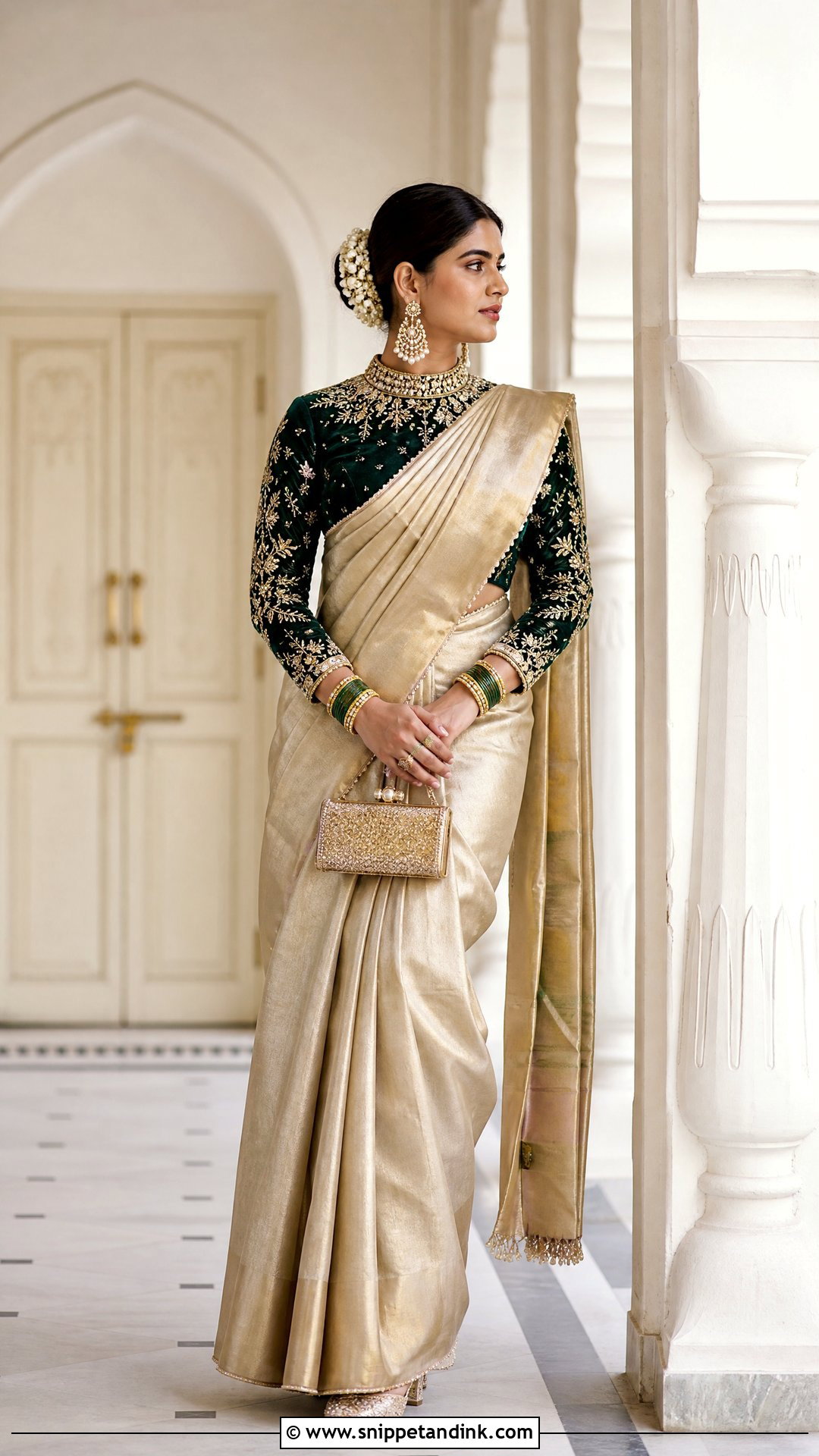
A high neck can replace a necklace entirely, and that’s how I’d style it. Fine zari vines, pearls and stones cover the collar and upper chest, while the centre front stays smooth and well lined so it doesn’t press into your throat when you look down at the rituals. Skip the choker; it only hides the work. Big earrings and a hair accessory do the rest, and a keyhole back adds contrast. Dense neck embroidery stiffens the fabric and can pull it in slightly, so I always book a fitting after the work is attached, not only before.
17. Deep U Back Bridal Blouse Maggam Work Design
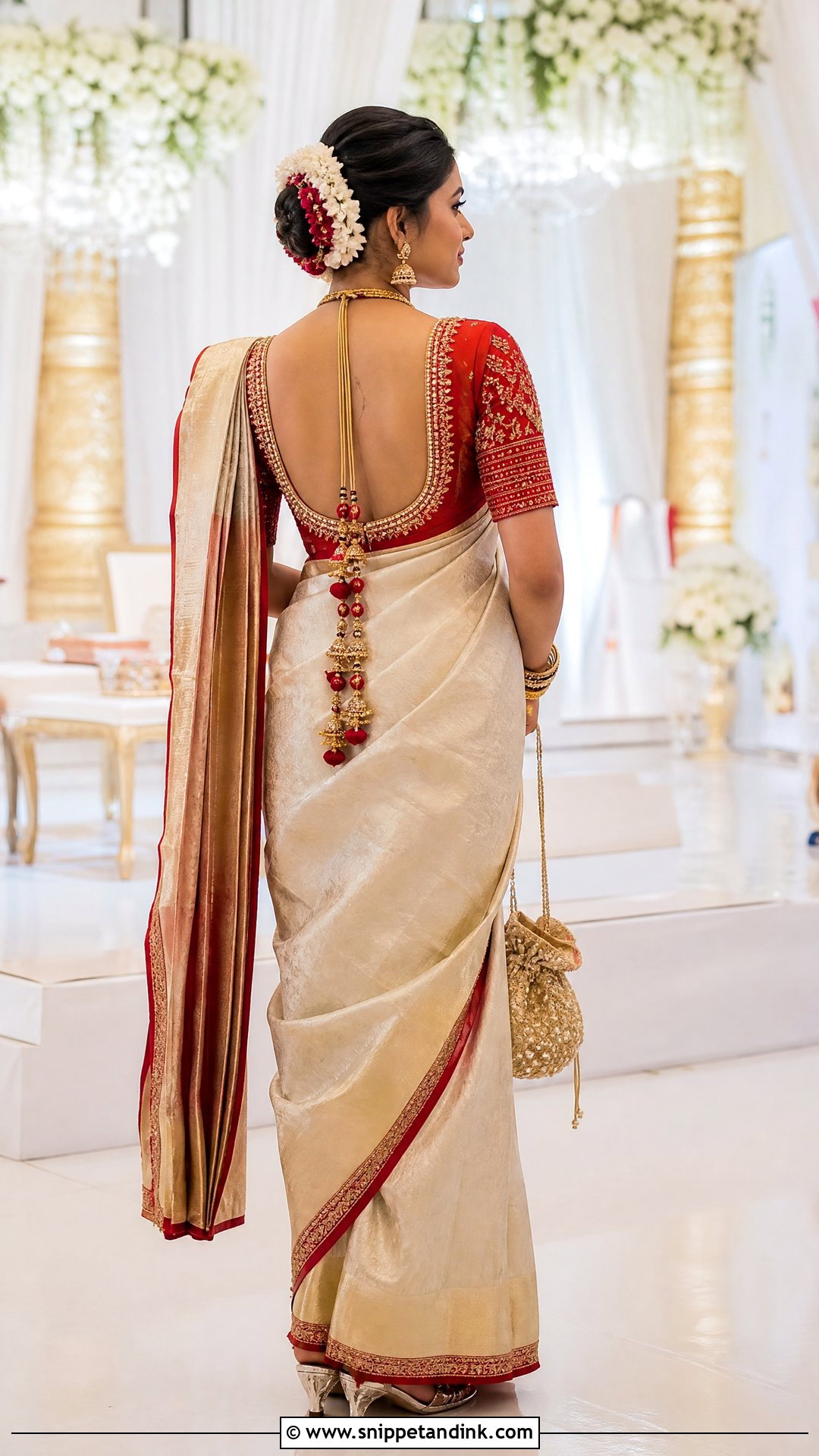
The deep U back stays popular because it’s such a clean frame for borders and tassels. I outline the curve in floral zari, Kundan or repeating paisleys, keeping the work a little in from the edge so the tailor can finish the seam neatly. An upper tie is non-negotiable: without it the shoulders slide toward the arms as the day goes on. Tassels with pearl clusters move nicely, but heavy ones drag the neckline down. Sheer matching mesh inside the U gives more coverage, and the same curved border repeated on the sleeves keeps things coordinated.
18. Checkered Sleeve Bridal Blouse Maggam Work Design
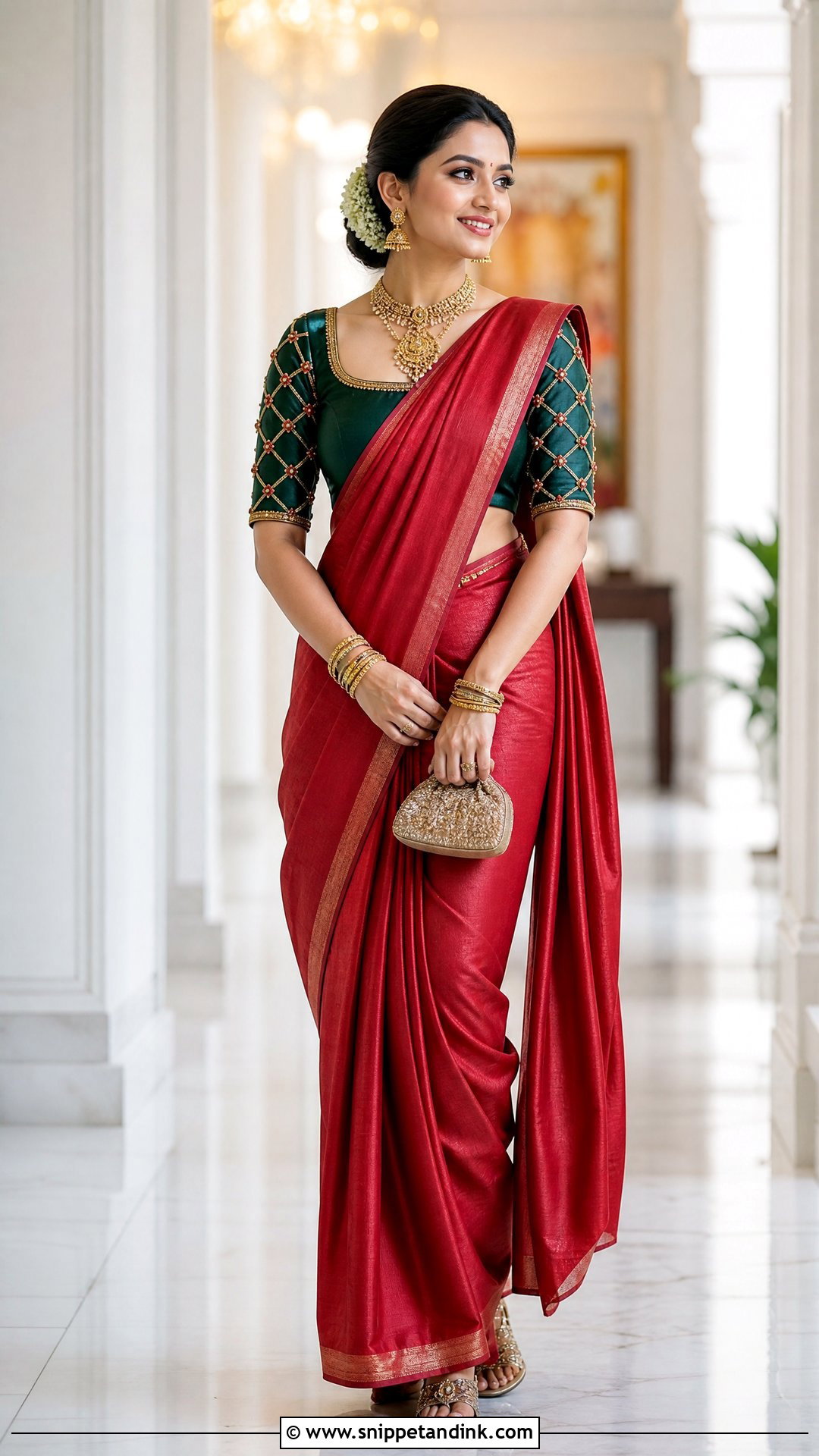
Grids are unforgiving. Gold cord, zari or pearl lines with a stone or tiny flower at each crossing look crisp only if the checks align across both sleeves and meet properly at the seam, and that’s the first thing I look at on a finished blouse. Short or elbow-length sleeves both work. Deep green or navy gives the metallic lines definition. Pair it with a less patterned silk saree and keep the front and back panels quiet; a narrow matching grid at the neckline ties the sleeves in.
19. Pastel Bridal Blouse Maggam Work Design
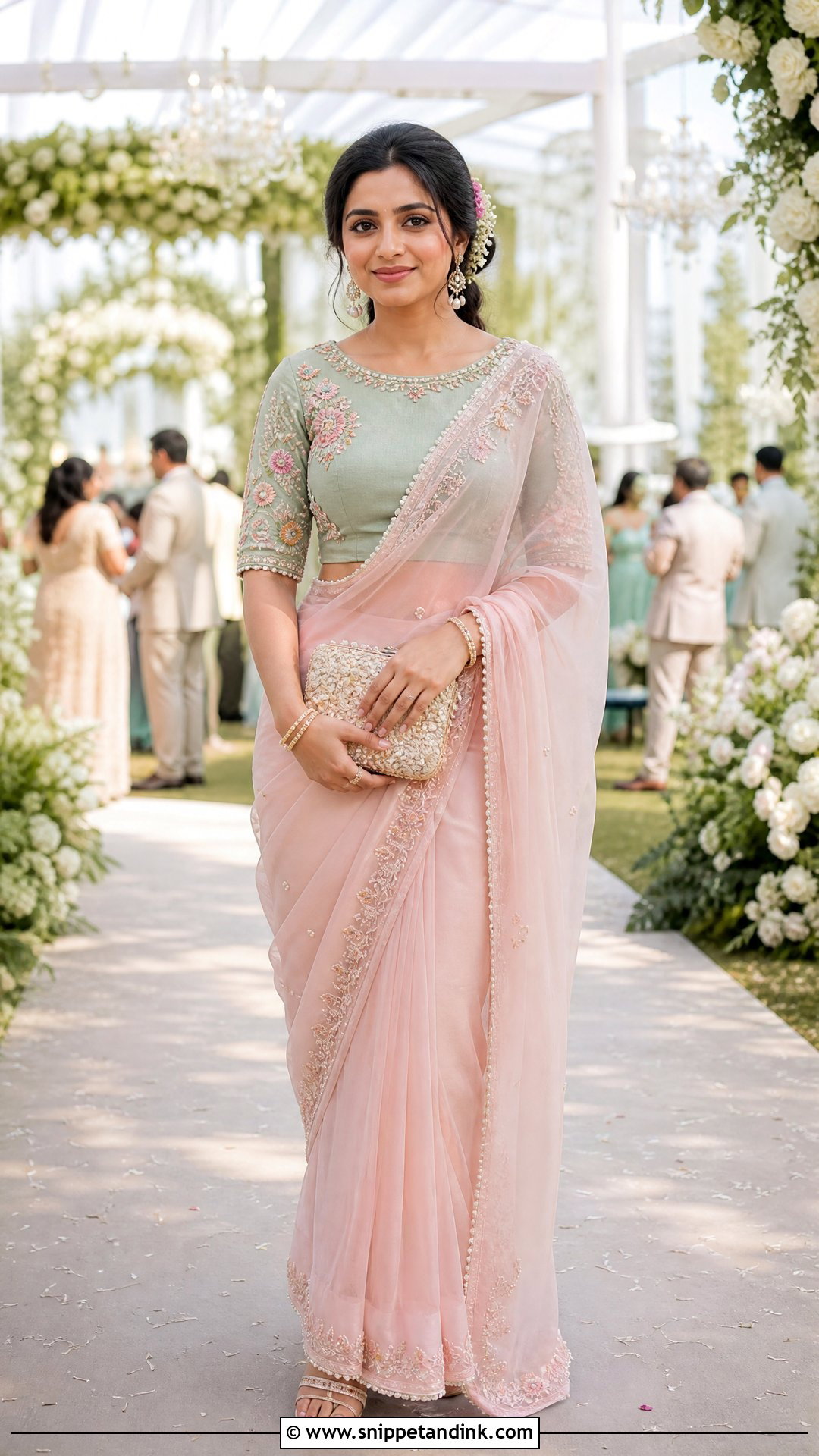
Pastels suit daytime ceremonies and soft bridal color palettes, but they forgive heavy work less than jewel tones do. Mint, pistachio or peach raw silk with thread flowers, pearl outlines and silver-gold zari stays airy if you limit the thread colours to three or four pulled straight from the saree border. Pair it with a tonal organza or tissue saree and pearl earrings. Pale silk also shows every smudge from weeks on the embroidery frame, so I ask the artisan to keep the finished areas covered while they work.
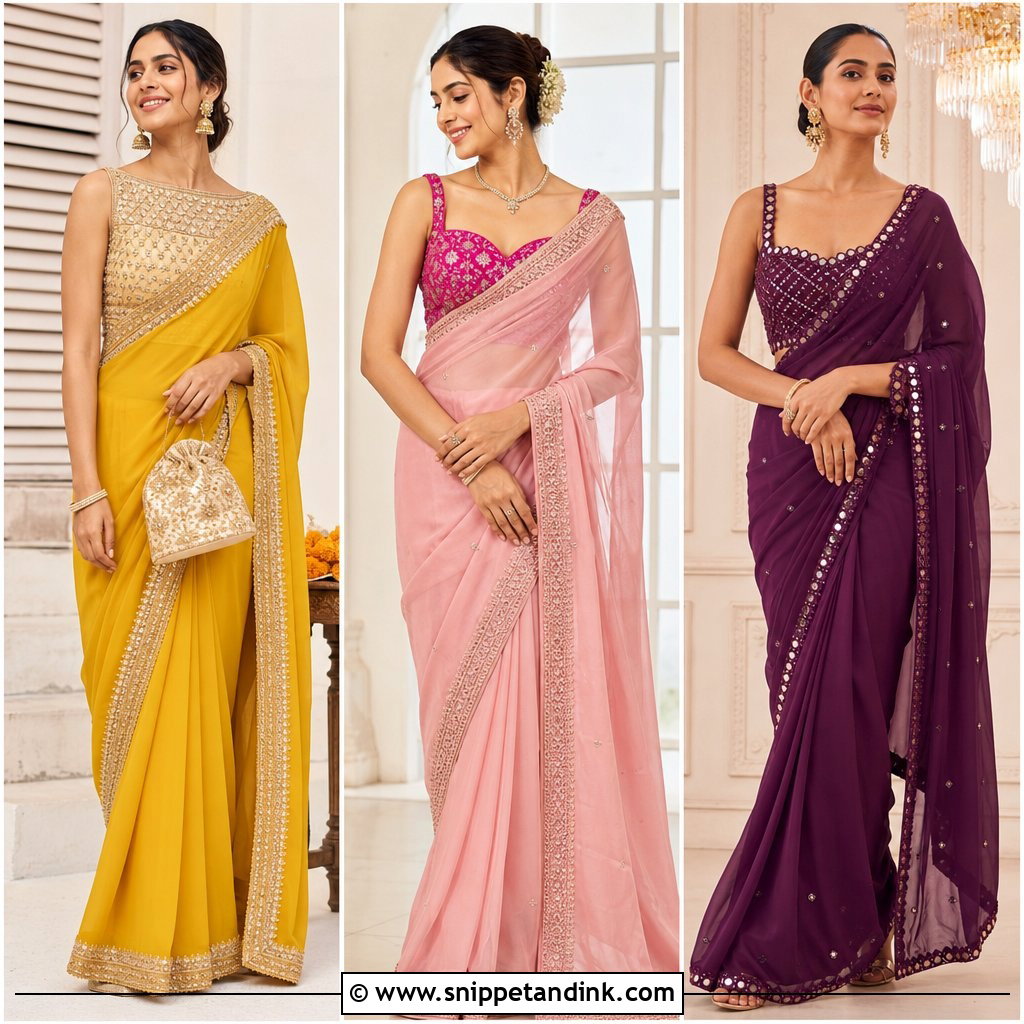


20. Velvet Bridal Blouse Maggam Work Design
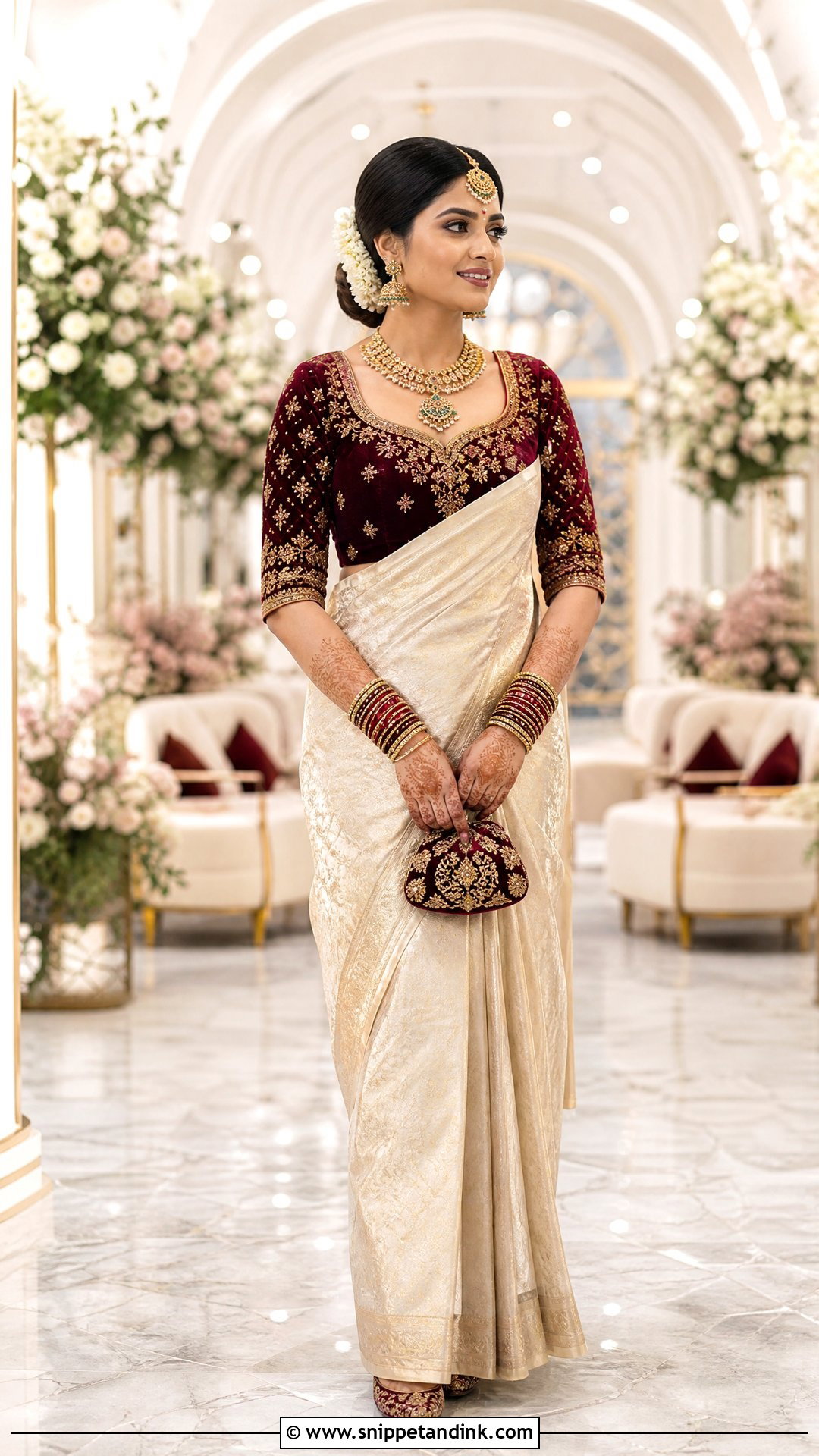
Velvet makes Zardosi, pearls and Kundan look deeper than any other ground, which is why I save it for evening weddings and receptions in burgundy, navy or plum. The catch is heat. Velvet under dense embroidery is warm and less forgiving in fit, so I ask for a breathable cotton lining and a little extra seam allowance for last adjustments. Concentrate the work at the neckline, sleeves and back opening rather than covering every panel. A fitted elbow sleeve, a structured neckline and a lightly worked silk or tissue saree keep the whole outfit rich without feeling heavy.
How Heavy Embroidery Feels Six Hours Into the Rituals
A blouse that looks perfect on a hanger can still be miserable to wear. At the trial I have the bride raise both arms as if for the garland exchange, sit cross-legged on the floor and turn to look over her shoulder. If stones press into the underarm, if the back hooks strain when she sits, or if the sleeve cuts into the elbow, it gets fixed then, not on the morning.
Watch where the pallu is pinned, too. Safety pins pushed through dense zari can catch threads and pull a stone loose, so I ask the tailor to stitch a small plain fabric tab at the shoulder for pinning. Spray perfume before you dress and let it dry; the alcohol can dull metallic thread.
My Maggam Blouses Go Into Muslin, Never Plastic
After the wedding, air the blouse inside out for a day so sweat dries off the lining, then send it to a dry cleaner who handles zari and stonework. Never machine wash it and never iron directly on the embroidery; press from the reverse over a thick towel if you must.
Fold it flat with acid-free tissue between the embroidered layers, wrap it in soft muslin and keep it in a dry cupboard with a sachet of silica gel. Plastic traps moisture, and humidity is what tarnishes metal thread and loosens glued stones. Refold it along different lines every few months so the zari doesn’t crack at the creases.
Start With the Saree Border, Then Draw the Blouse
Start with the saree border, then the jewelry, then the embroidery. That order settles most of the choices in this list: peacock, temple, lotus and coin designs belong with traditional silk, while pearls, pastels, mirrors and cutwork lean lighter and more contemporary. Personalized initials and wedding scenes add a story of their own. Whatever you pick, insist on secure stitching, a soft lining and sleeves you can lift your arms in. You’ll sit, bend and stand in that blouse for hours, and it should still look right from the back at the end of the night.
You'll Like These Ideas:





Leave a Reply