
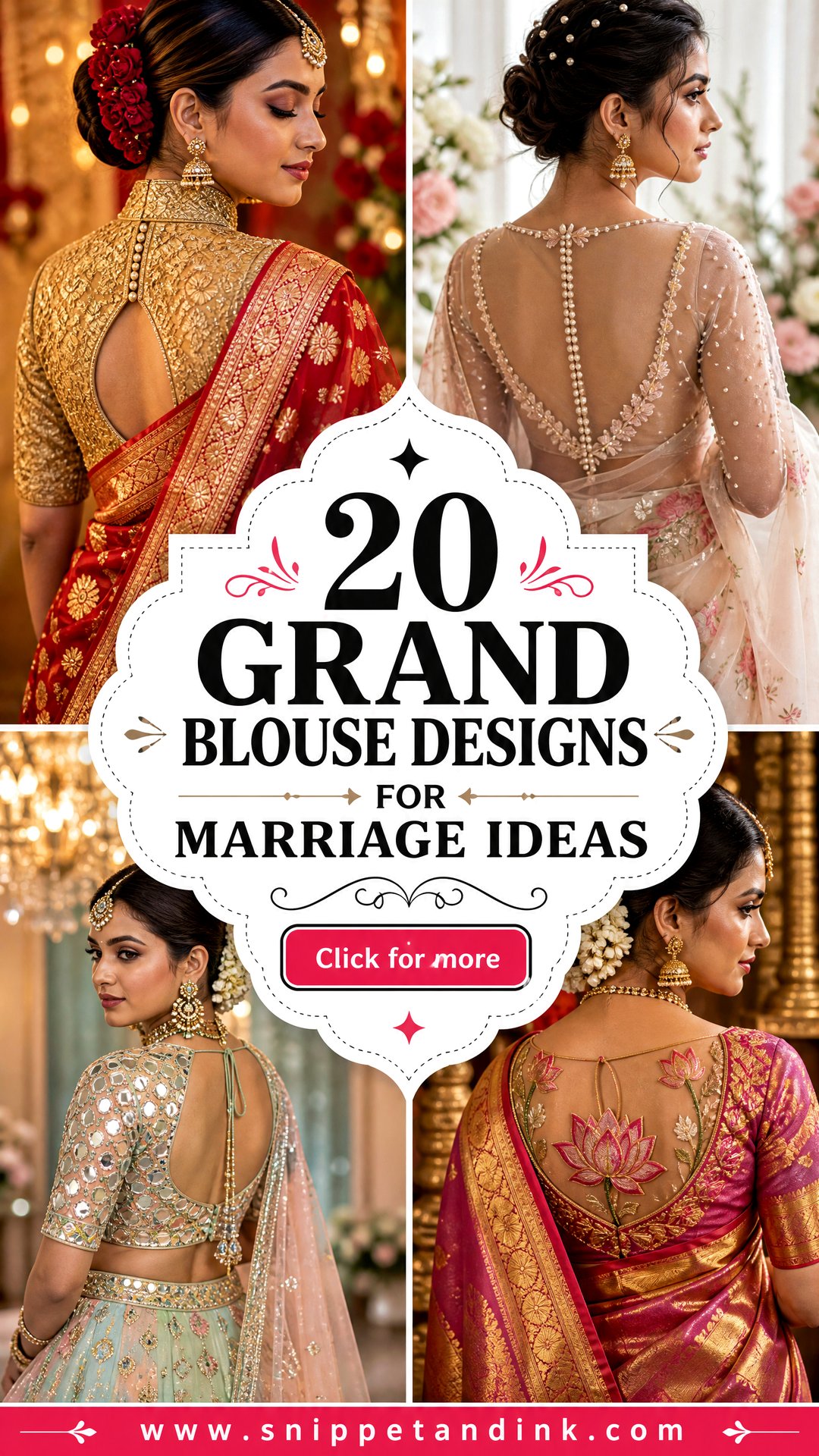
A bridal saree or lehenga is mostly fabric you’ve chosen off a shelf; the blouse is the one piece made entirely around your body, and it’s what people see when you turn, sit and raise your hands in the ceremony. A grand blouse for a wedding needs rich fabric, a neckline that suits your jewellery, real support and careful handwork. Zardozi, Aari embroidery, pearls, sequins, temple motifs and metallic thread can make a familiar silk saree feel new, but I never let decoration win over fit. Think about the ceremony, the jewellery, the drape and the weather before you lock in a design. Book fittings early, wear the undergarments you’ll marry in, and lift your arms in every trial. The twenty looks below show how each design is built and where it tends to go wrong.
Ordering Hand Embroidery Early Enough to Fit It Twice
Heavy handwork changes the timeline. Zardozi and Aari are worked on the cut panels before the blouse is stitched, so the measurements are locked in long before you try anything on. That’s why I plan these blouses backwards from the wedding date.
- Order as early as you can. A heavily hand-embroidered bridal blouse can take several weeks of work alone, and workshops fill up quickly in wedding season. Ask your tailor for a realistic date rather than assuming.
- Have measurements taken in the bra you’ll wear on the day, or decide early on built-in cups so the pattern is drafted around them.
- Ask for generous seam allowance, often called margin, at the sides and sleeves. It lets the blouse be let out later without cutting into embroidery.
- Plan two fittings at minimum: one for shape, one with the saree draped and the bridal jewellery on.
- Keep the last fitting at least two weeks before the wedding, so there is still time for a final alteration.
At each fitting I ask the bride to sit, lift both arms, turn her head and bend forward. A blouse that only works standing still isn’t finished.
1. Red Zardozi Blouse With Kanjeevaram Saree
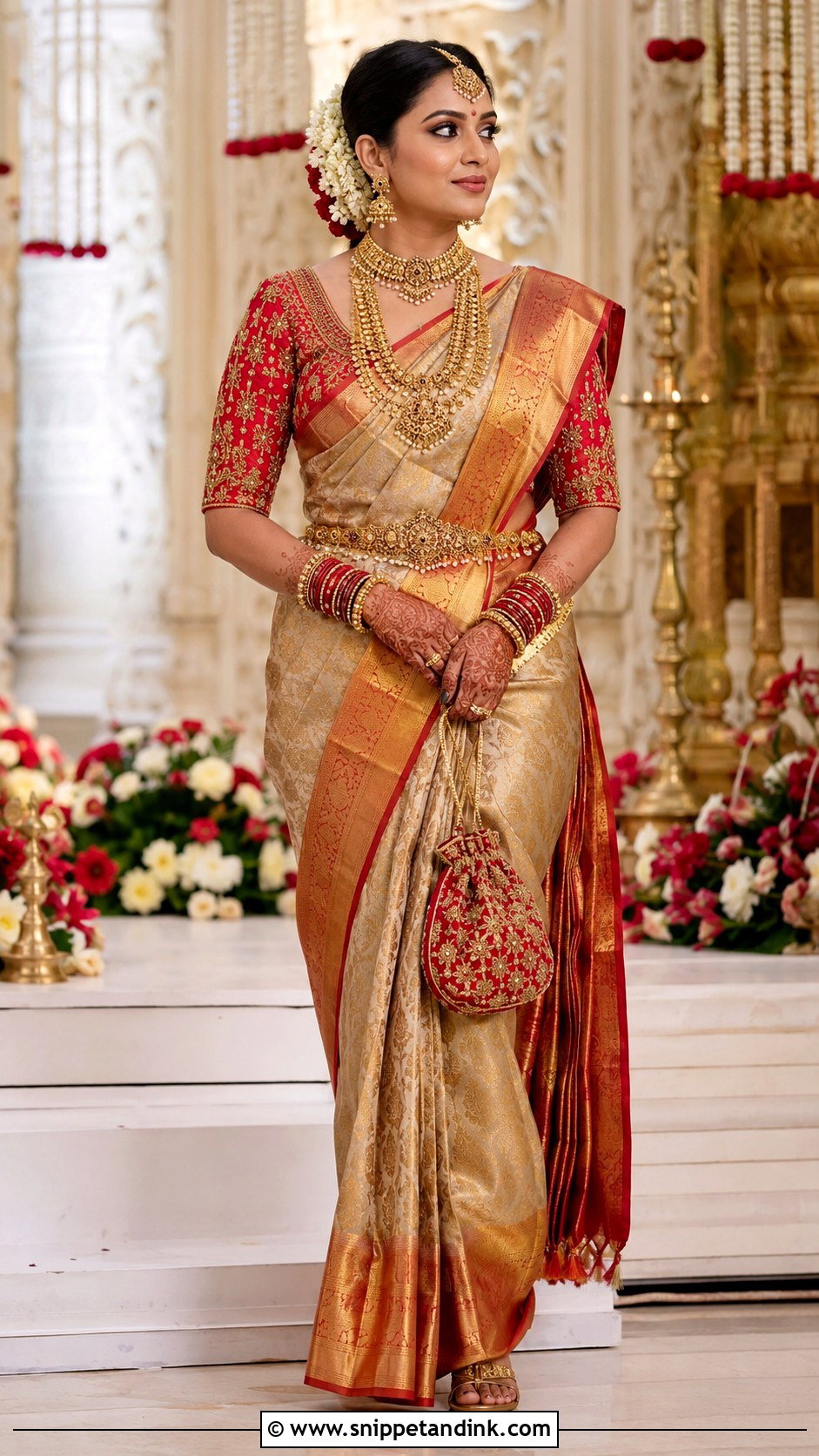
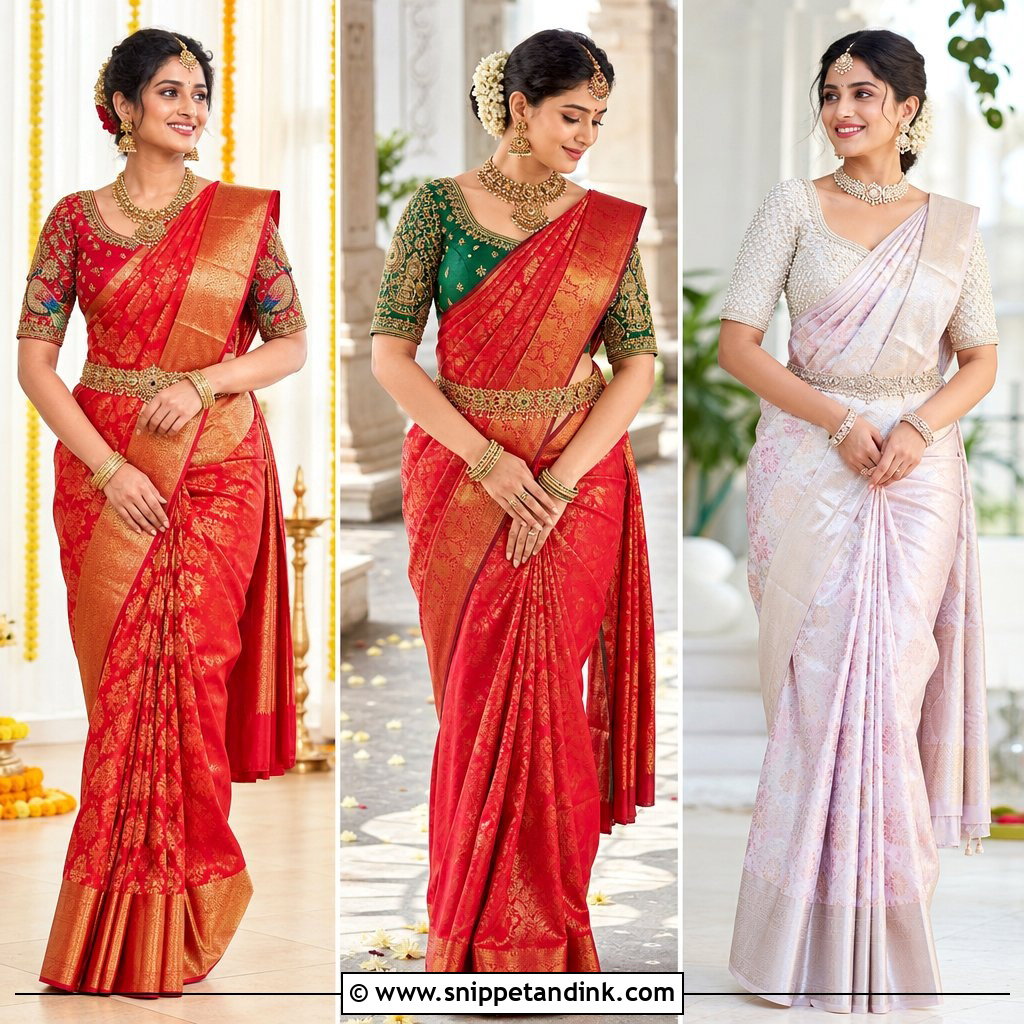
Red zardozi against a gold Kanjeevaram is the classic South Indian pairing, and the blouse is where it gets its weight. I like a structured cut with a medium-deep round neck, an ornate back and elbow sleeves, with zardozi, beads and fine floral vines framing the neckline rather than filling the whole front. Kanjeevaram is a heavy silk, so the drape pulls on the blouse at the left shoulder all day; ask for a soft lining and firm shoulder support there. Pleat the saree traditionally and add an antique gold waist belt. A layered necklace, jhumkas, red bangles, a low flower bun and embroidered gold sandals.
2. Magenta Aari Work Blouse With Silk Saree
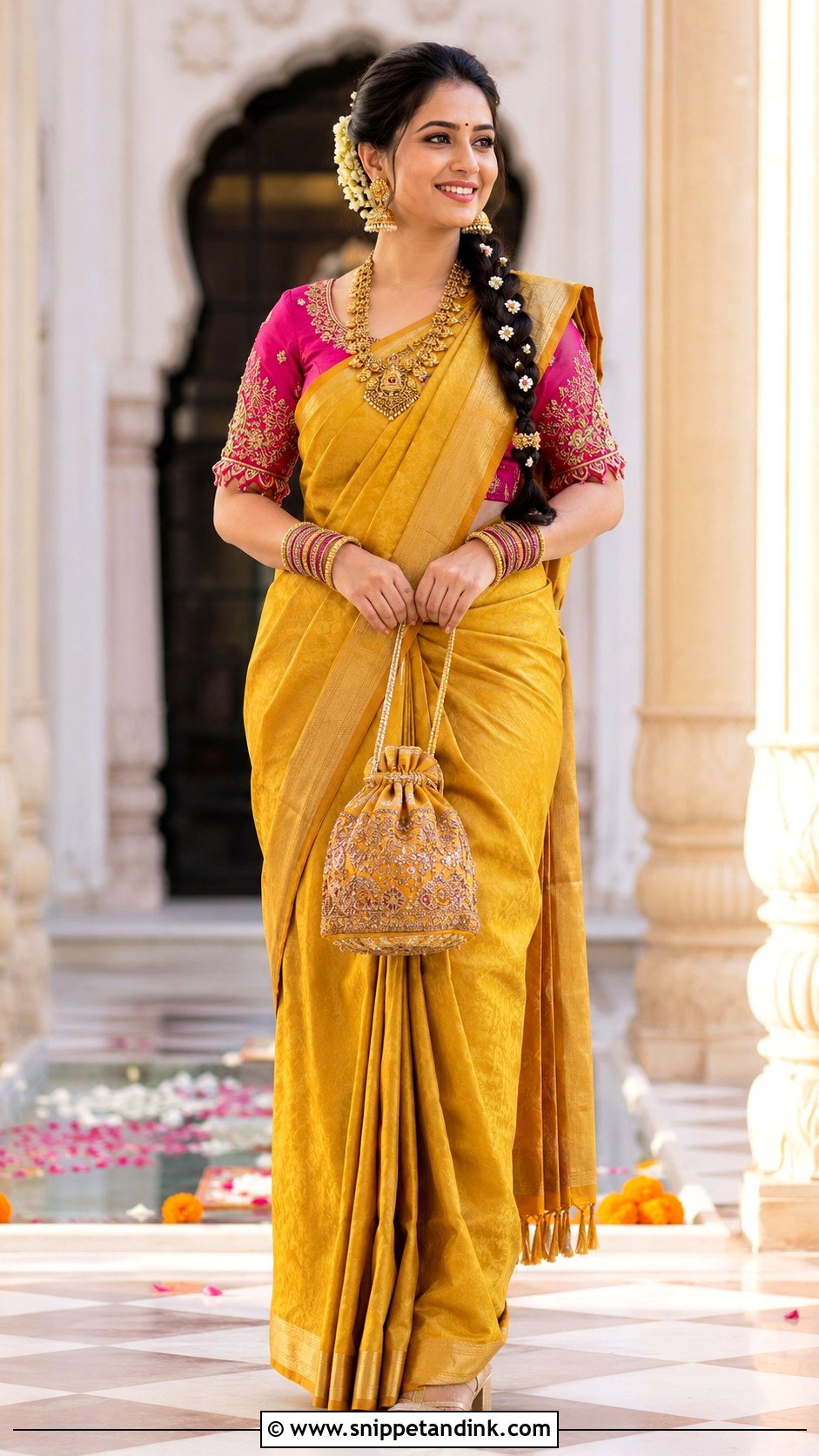
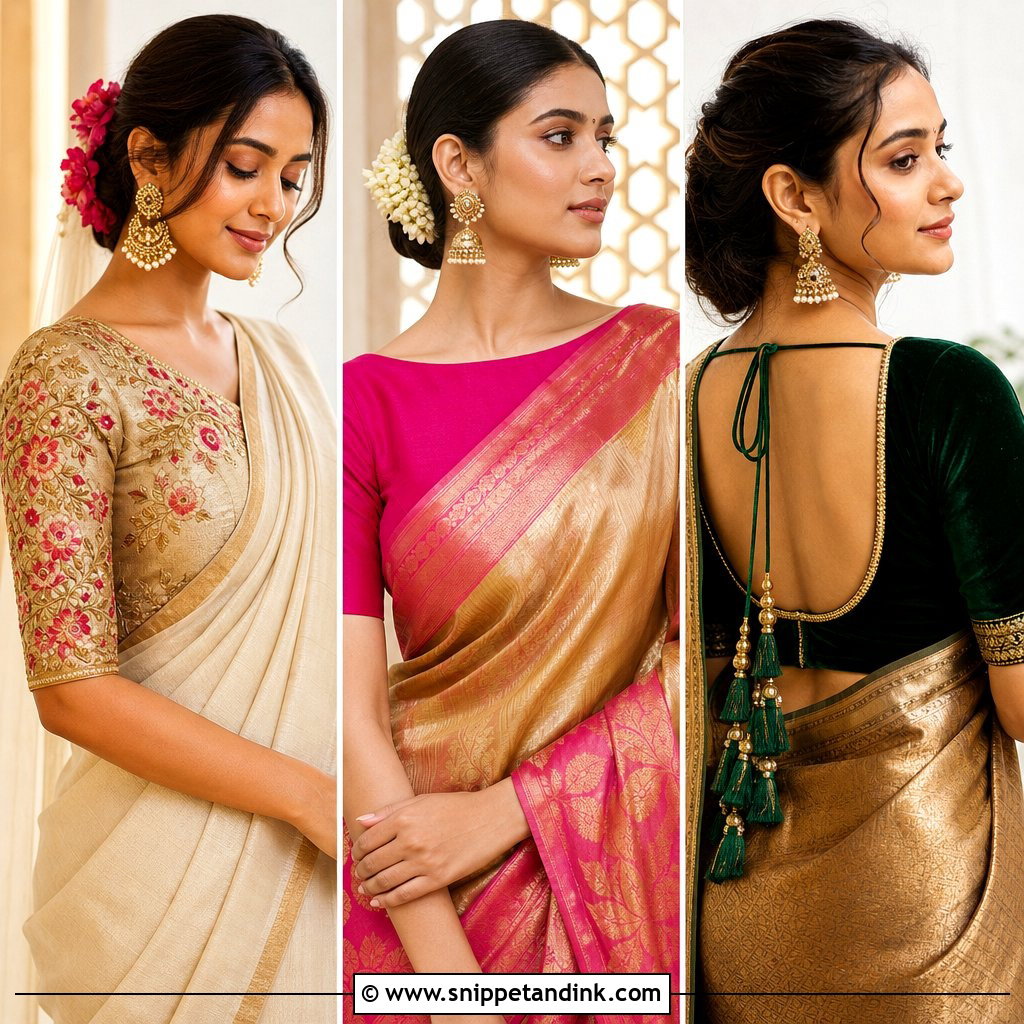
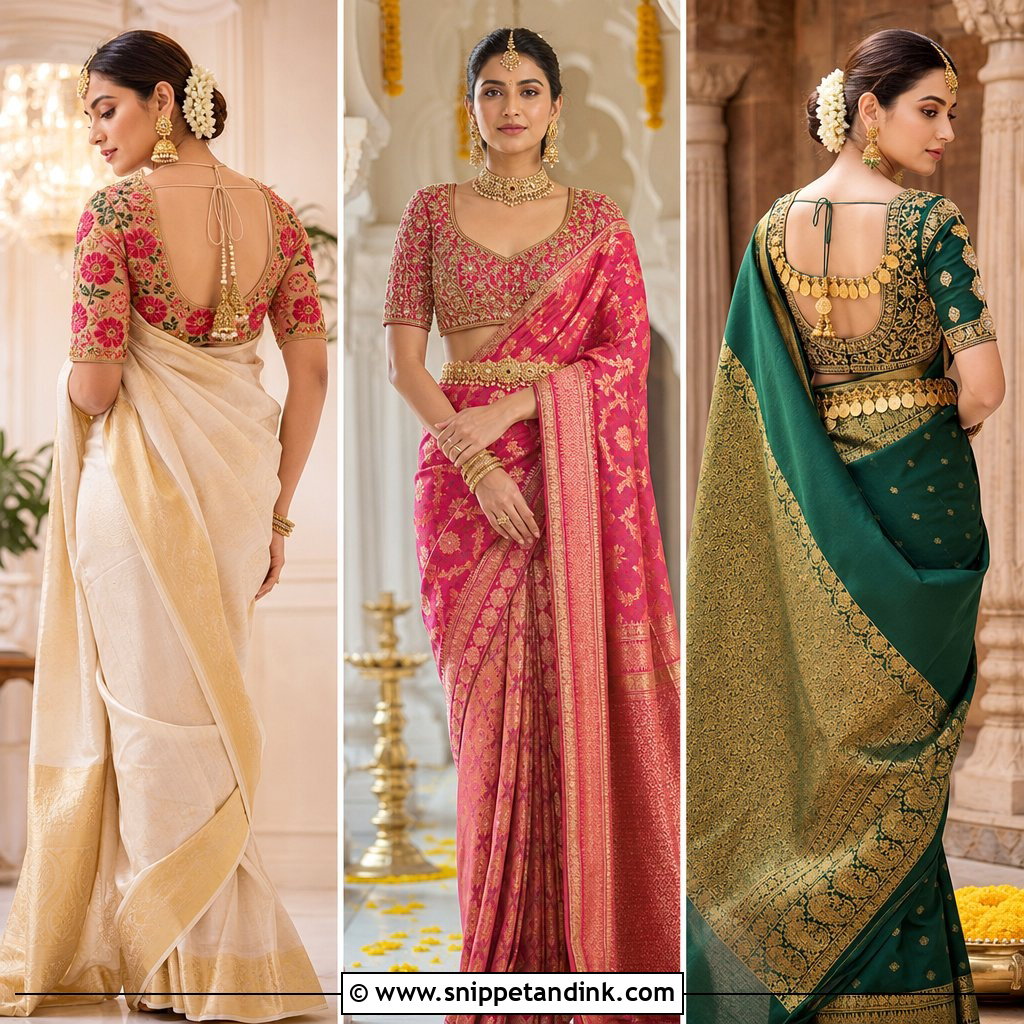
Magenta brings real energy to a silk saree. An Aari blouse with a broad U-neck, elbow sleeves and a closed embroidered back carries gold thread, tiny beads and paisleys well against that colour. Aari is worked with a hooked needle on a frame, so it produces fine, even chain stitches that lie flatter than zardozi, which makes it comfortable for a long day. Pair it with a mustard, green or antique gold saree for contrast. Temple jewellery, stacked bangles and a small bindi. A long braid with flowers or a smooth bun, and gold block heels. Keep the saree border visible so the two sets of detail balance.
3. Gold High Neck Blouse With Red Banarasi Saree
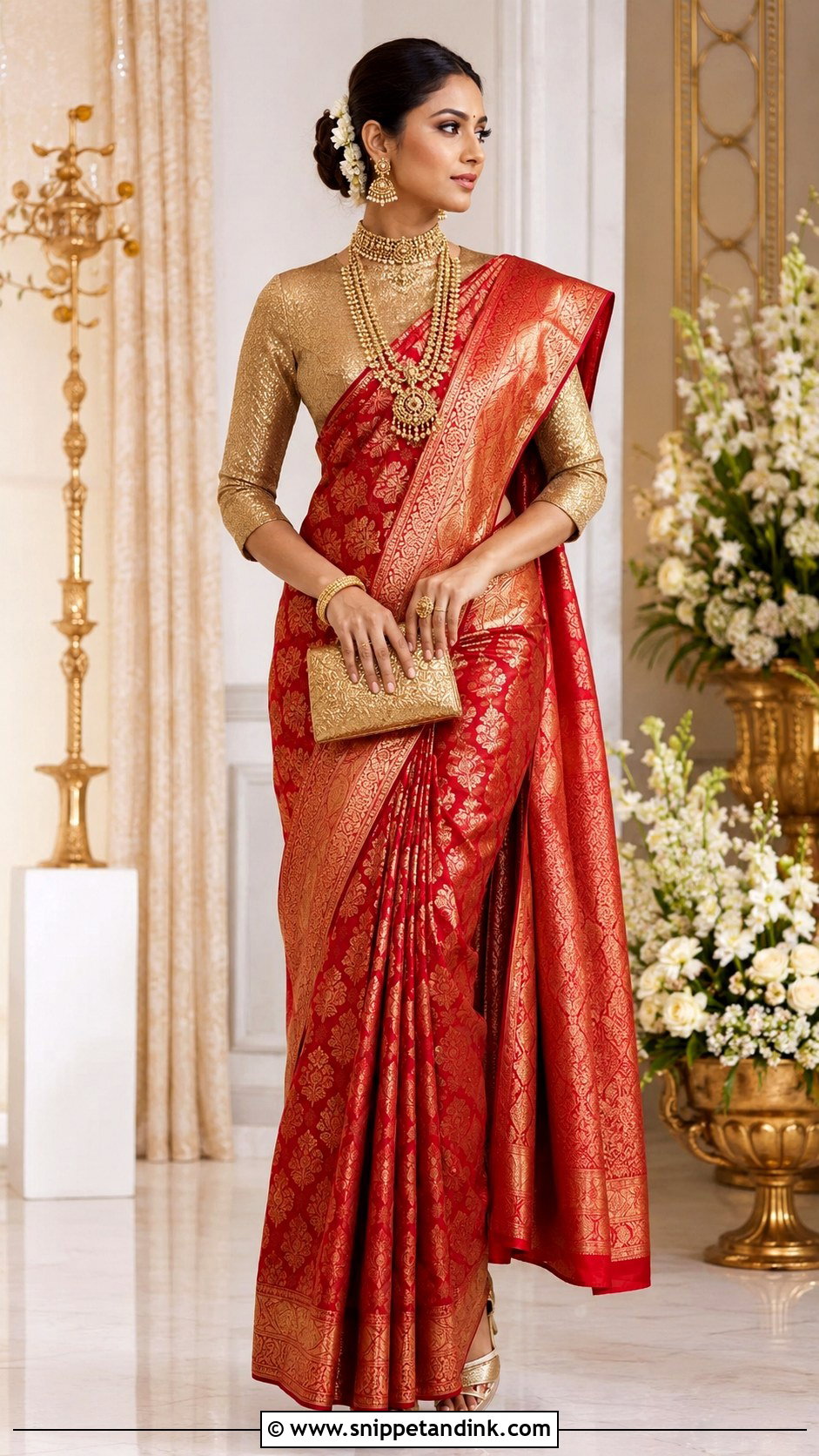
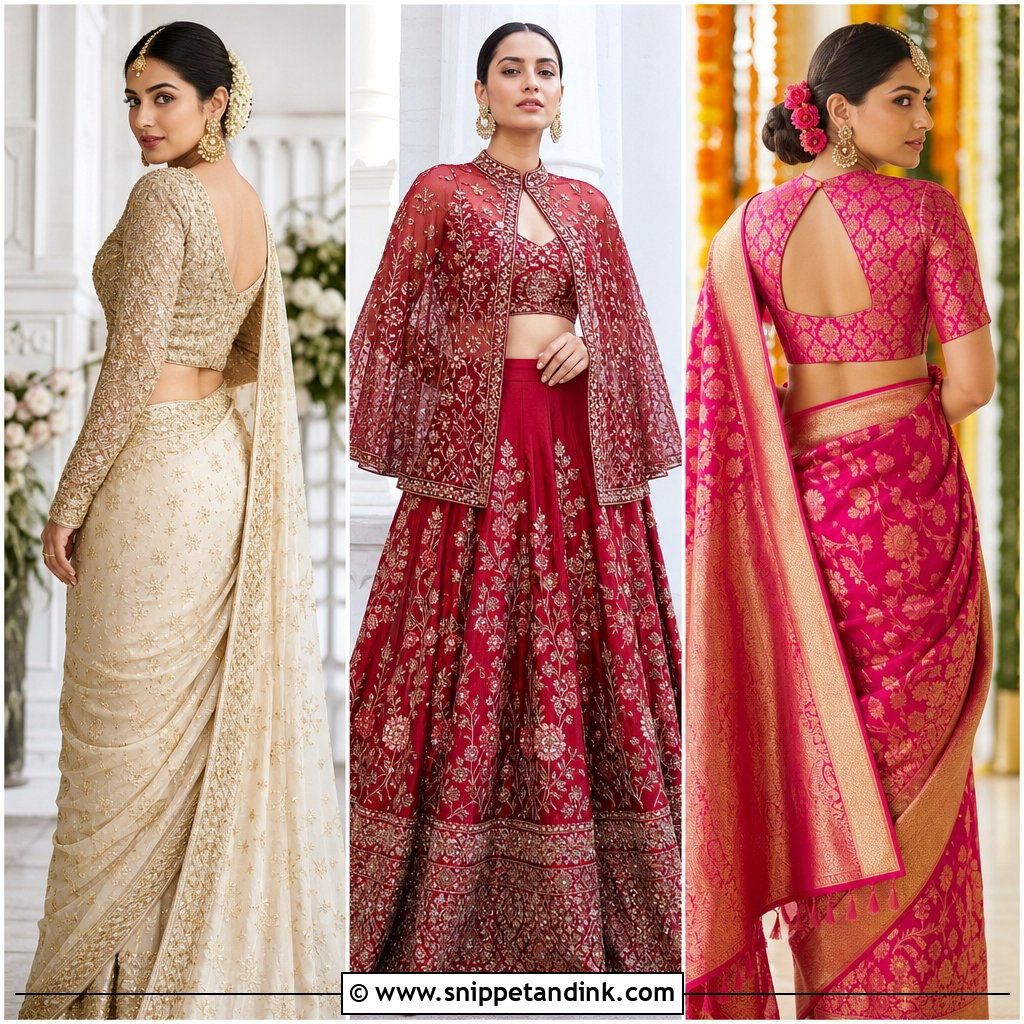
A gold high neck turns a red Banarasi formal and very regal. Metallic embroidery, small stones and a keyhole opening at the back make it easy to fasten, and three-quarter sleeves give coverage. Both pieces are rich, so I keep the blouse motifs tidy rather than layered. A high collar changes how jewellery sits: a choker plus one longer necklace gives depth without the two pressing into each other. Ask your tailor to leave a little ease at the collar so it doesn’t press against your throat when you look down at the rituals. A centre-parted bun with fresh flowers, a gold potli and cushioned metallic heels.
4. Green Peacock Blouse With Gold Silk Saree
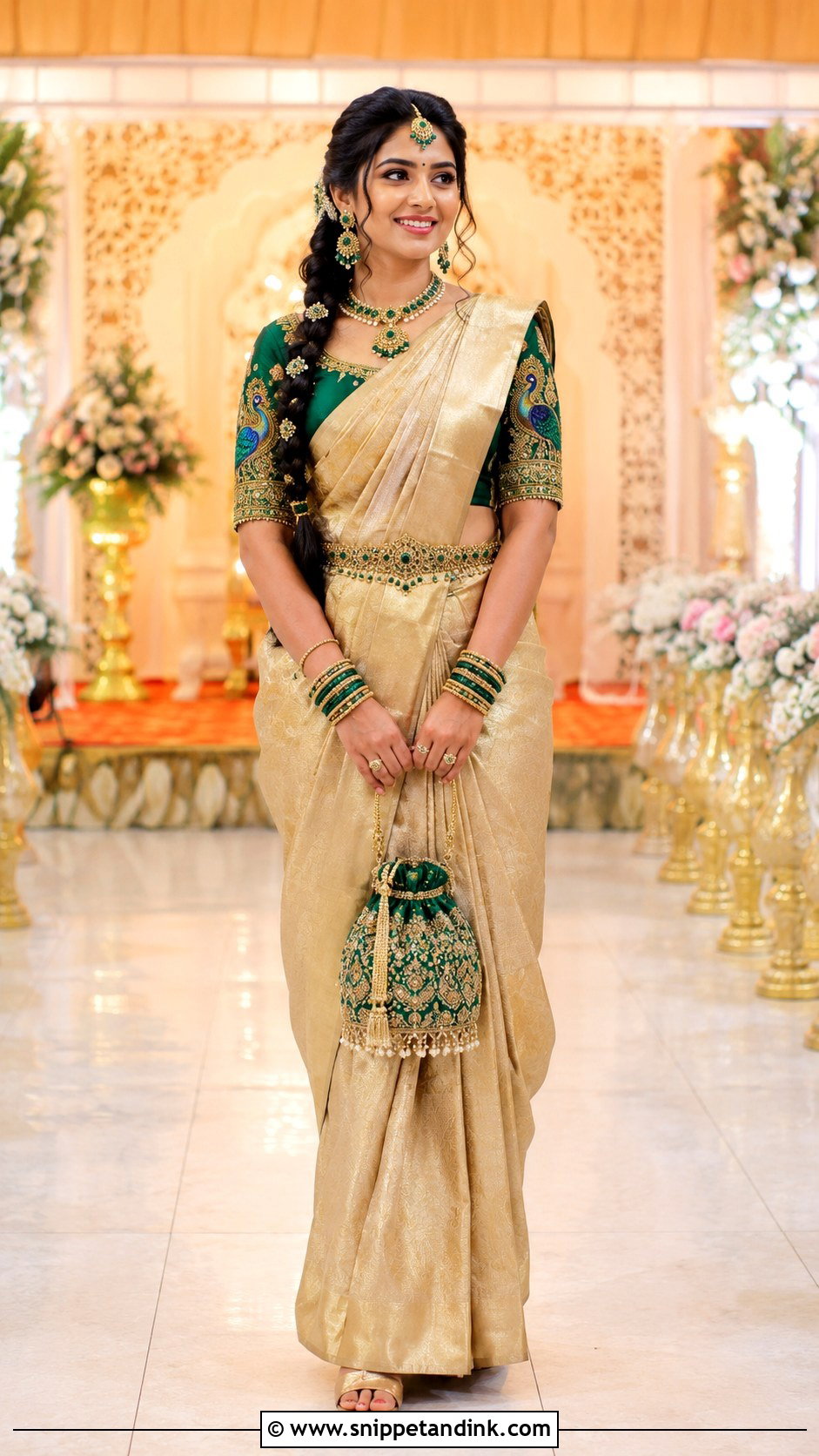
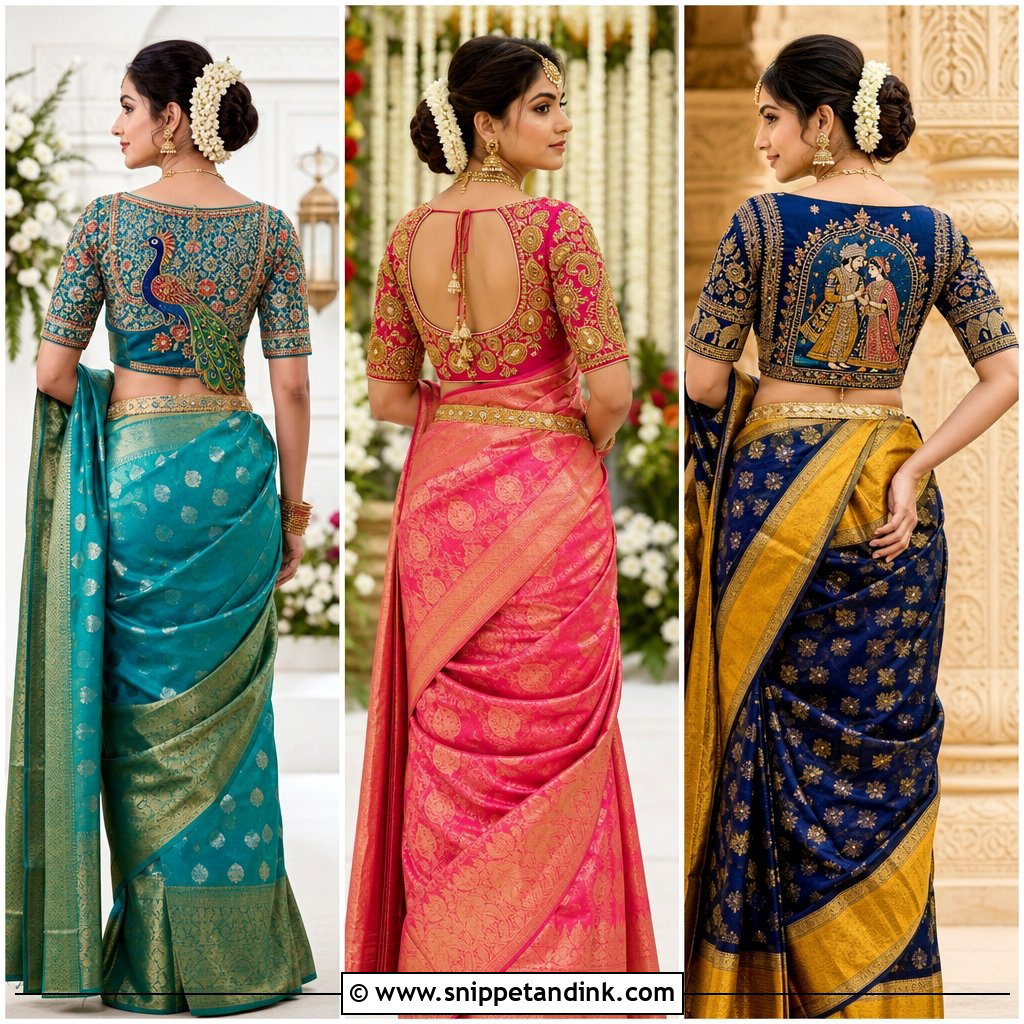
Peacock embroidery makes the blouse the focal point. Emerald or bottle-green silk with peacocks across the sleeves and back, worked in blue, turquoise, antique gold and a touch of purple thread, has depth without clashing. Pair it with a gold silk saree with a green border and a traditional waist belt. Emerald jewellery, gold jhumkas and coordinated bangles continue the colours. A braid shows an embroidered back far better than loose hair. Large motifs are the risk here: if they’re embroidered before the final fit, the peacocks can end up lopsided after alterations, so I ask for the back panel to be marked on the body first.
5. Maroon Velvet Blouse With Bridal Lehenga
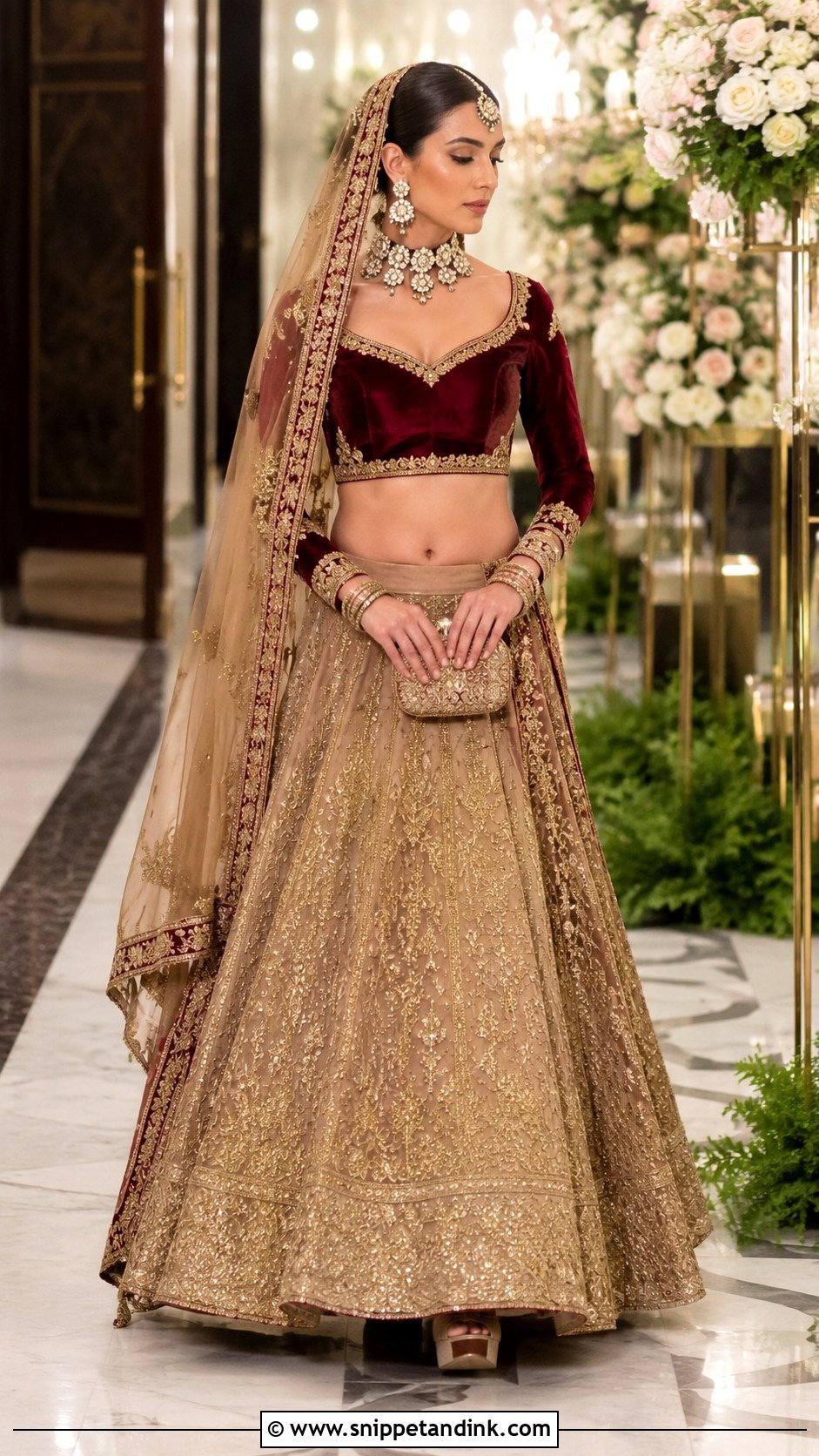
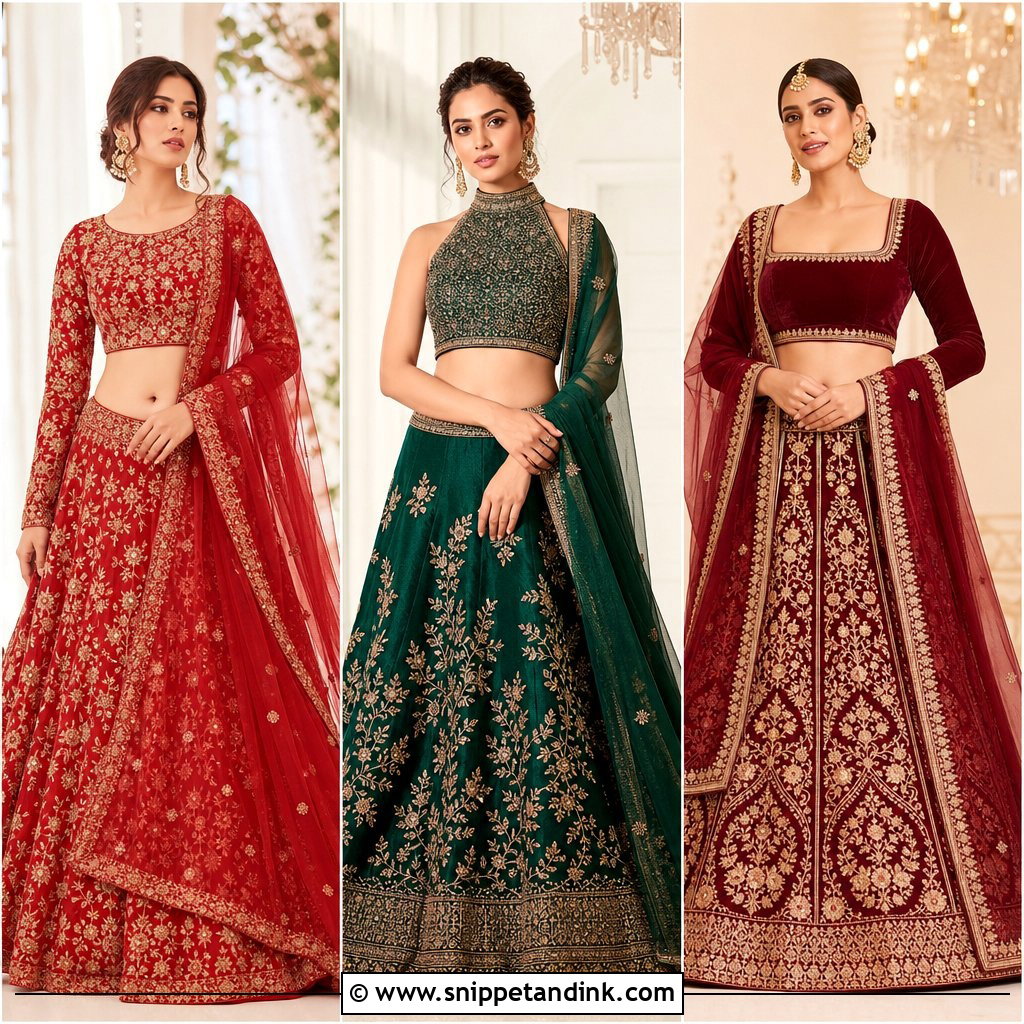
Maroon velvet is made for an evening wedding. A fitted blouse with a sweetheart neckline, full sleeves and gold zardozi borders looks luxurious without embroidery everywhere. Wear it with a matching or muted gold lehenga and a light net dupatta, or two dupattas, one over the head and one across the shoulder. A kundan choker, drop earrings, bangles and a forehead piece, with platform heels. Velvet is warm and thick at the seams, so I ask for a breathable cotton lining and darts pressed open; otherwise it bunches at the waist under the lehenga.
6. Pearl Sheer Back Blouse With Organza Saree
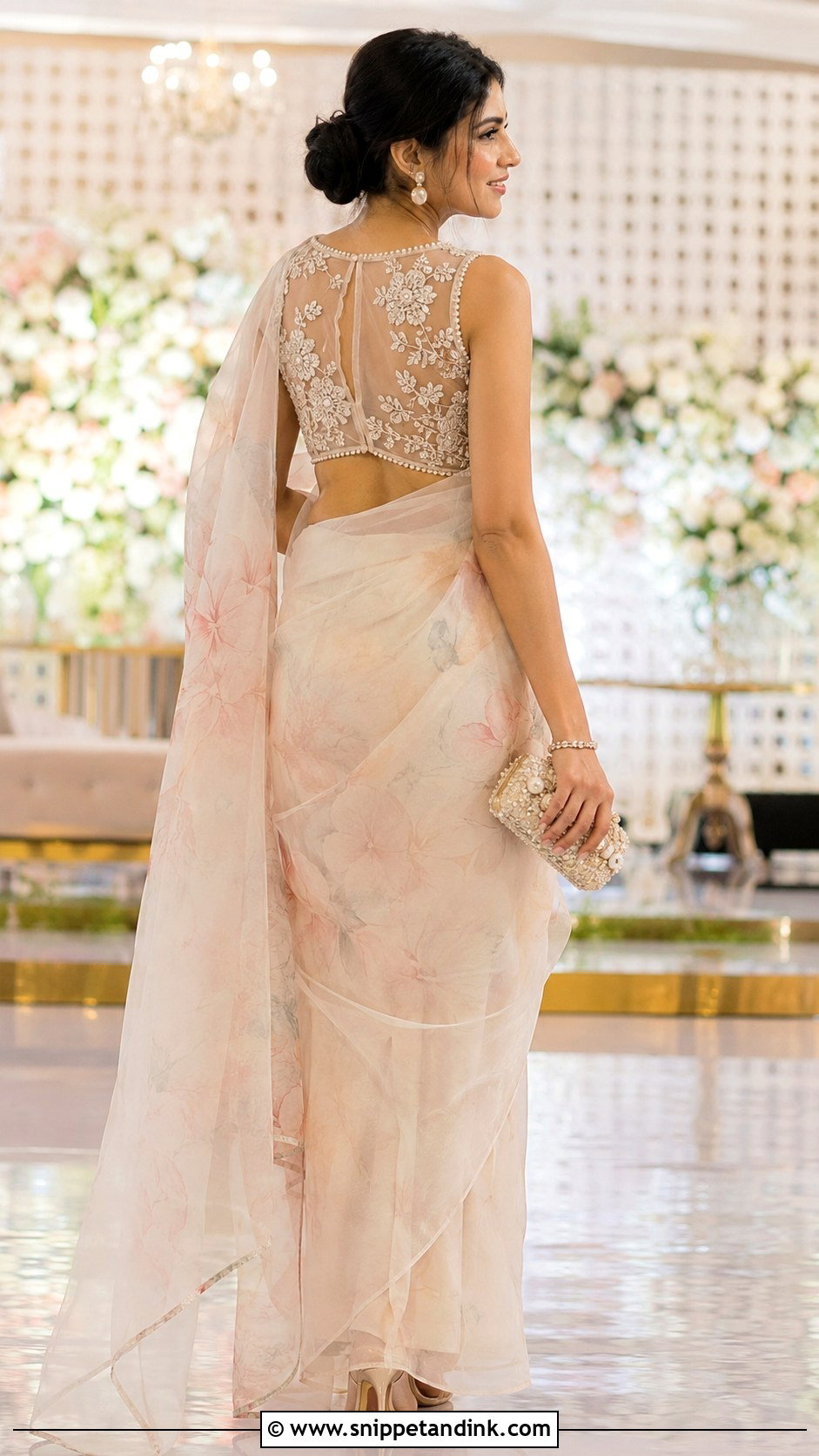
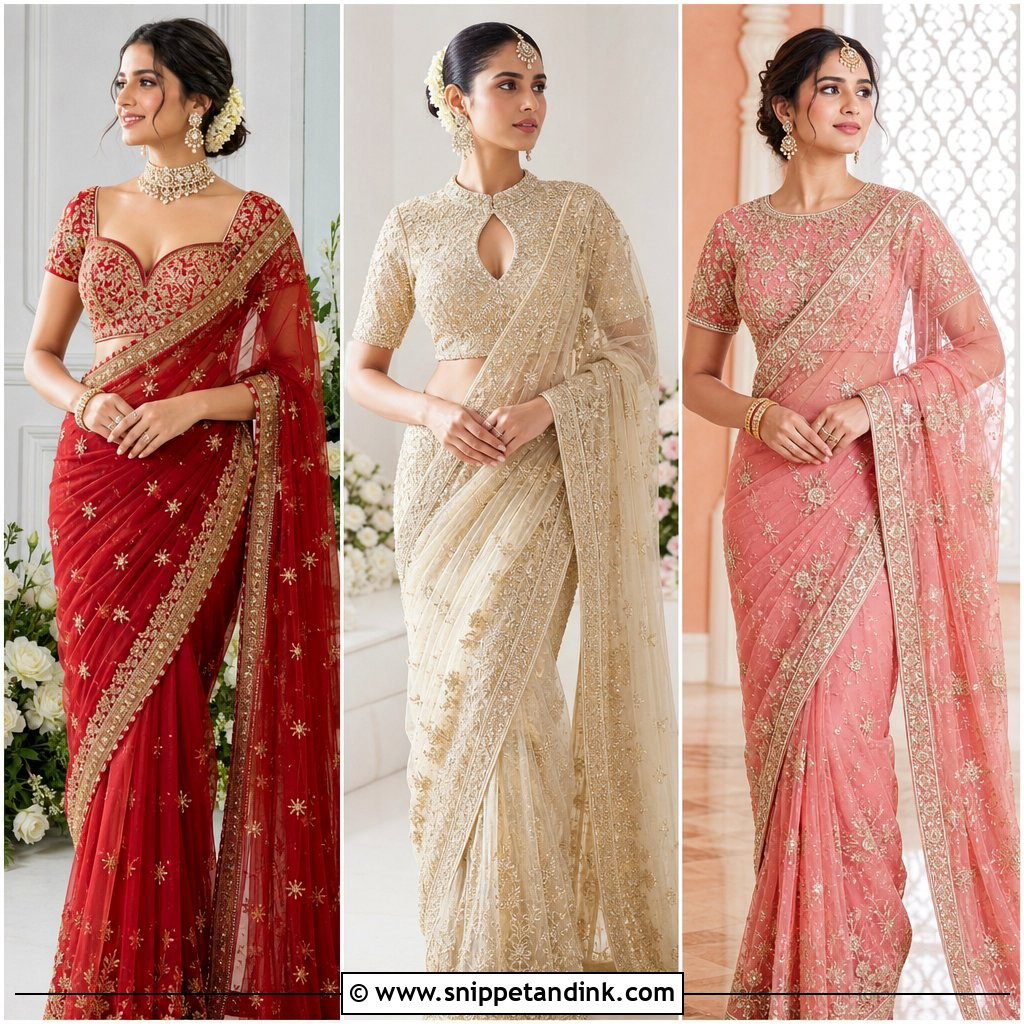
Pearls on a sheer back suit a reception or a daytime celebration. Choose an ivory blouse with an opaque, supportive bodice, an illusion neckline and a net back with spaced pearl vines, worn with a pastel organza saree that has a pearl or scalloped border. A neat drape keeps the back visible. Pearl earrings, a slim bracelet and a small clutch, pointed metallic heels and a soft low bun. Cheap net scratches, so I check the net is soft against the skin and that each pearl is stitched flat. The back edges need reinforcing and secure hooks, or the net stretches and sags within an hour.
7. Mirror Work Blouse With Pastel Lehenga
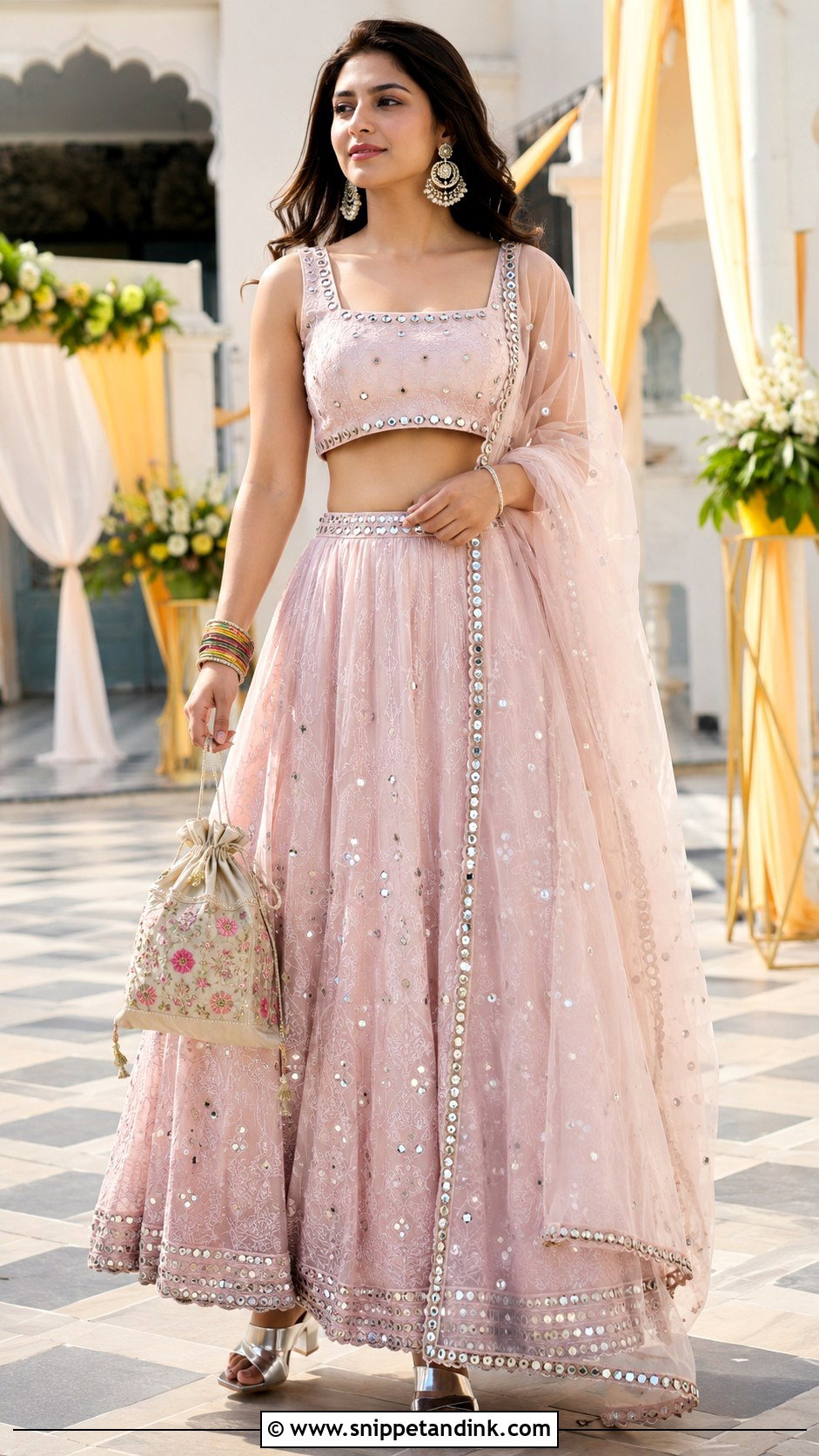
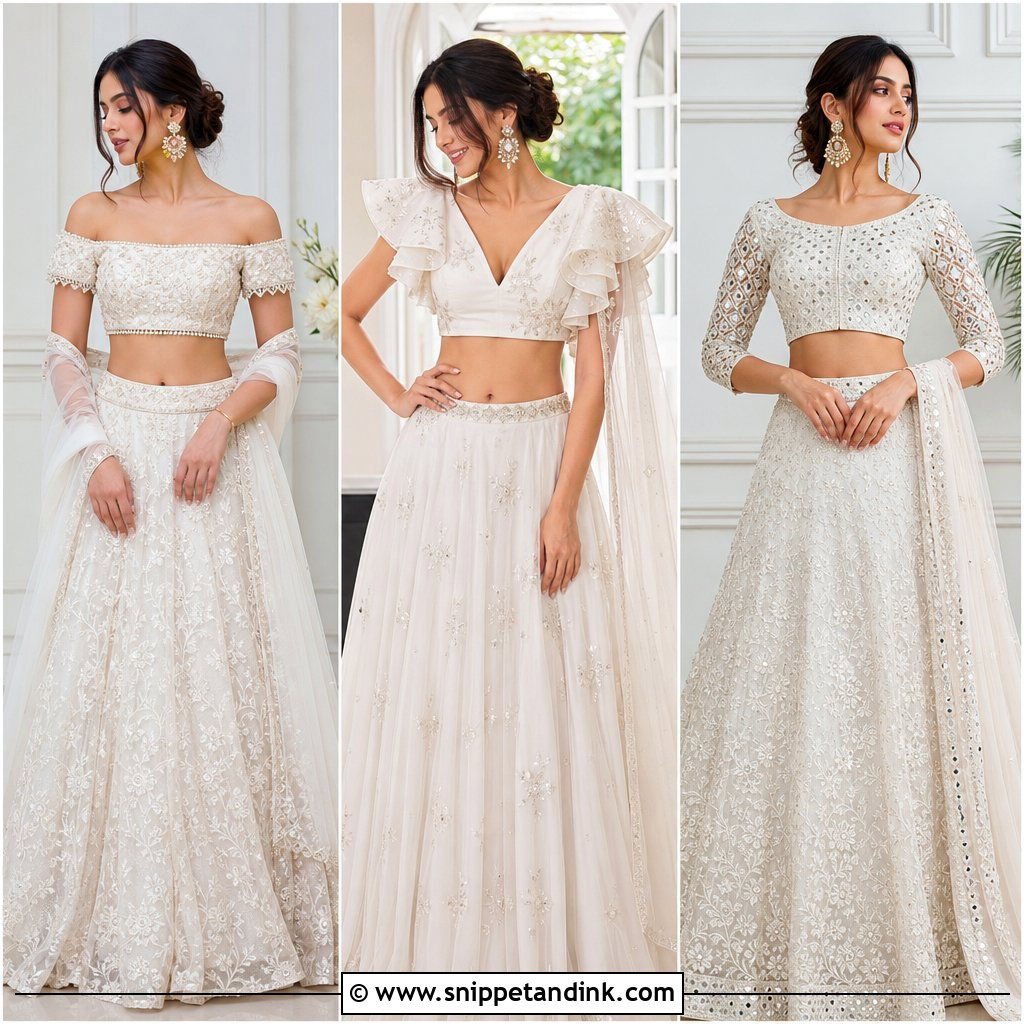
Mirror work comes alive in sunlight, which makes it a daytime blouse. Blush, mint, lavender or powder blue with a square neck and short sleeves, and small mirrors outlined in thread so the surface stays balanced. A coordinated flared lehenga and a sheer dupatta with a narrow mirror border complete it. Chandbalis, coloured bangles, a compact bag and silver or champagne block heels. A braided ponytail or loose bun. What I check every time: the mirrors near the armholes and at the waist. If their edges aren’t fully covered in stitching, they rub raw patches by the end of the function.
8. Lotus Embroidery Blouse With Kanjeevaram Saree
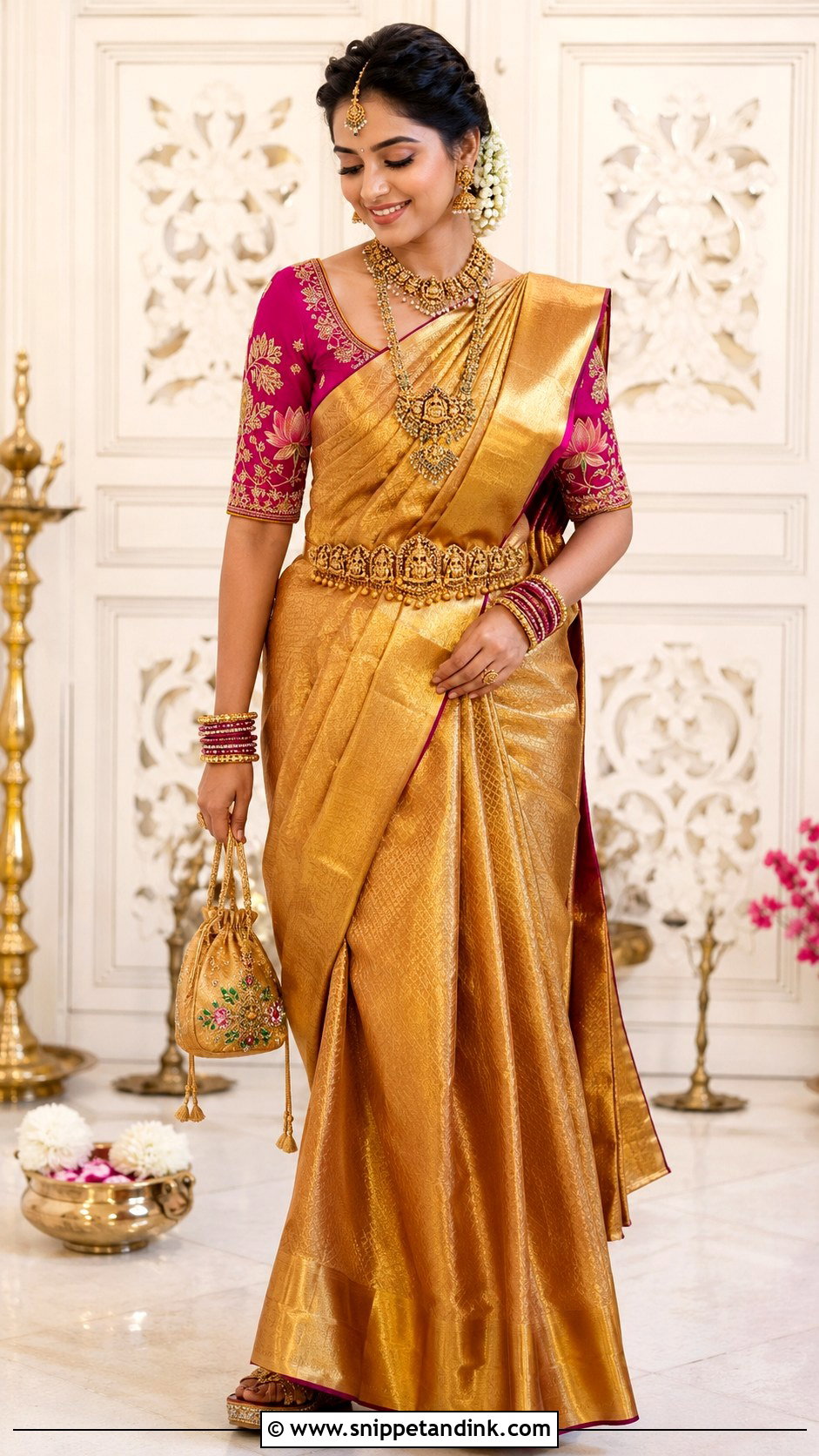
A lotus embroidery blouse carries real meaning against a Kanjeevaram. Deep pink, red or rust silk with lotus motifs across the back and elbow sleeves, in antique gold thread with small green accents that link to the saree border. A gold or jewel-toned Kanjeevaram, a temple necklace, earrings, a waist belt and classic bangles. A long floral braid keeps the upper back on show. Embroidered wedges under the saree are kinder than heels. Ask for the lotuses to be placed clear of the seams and hooks; a motif cut in half by a fastening looks like a mistake.
9. Temple Border Blouse With Pattu Saree
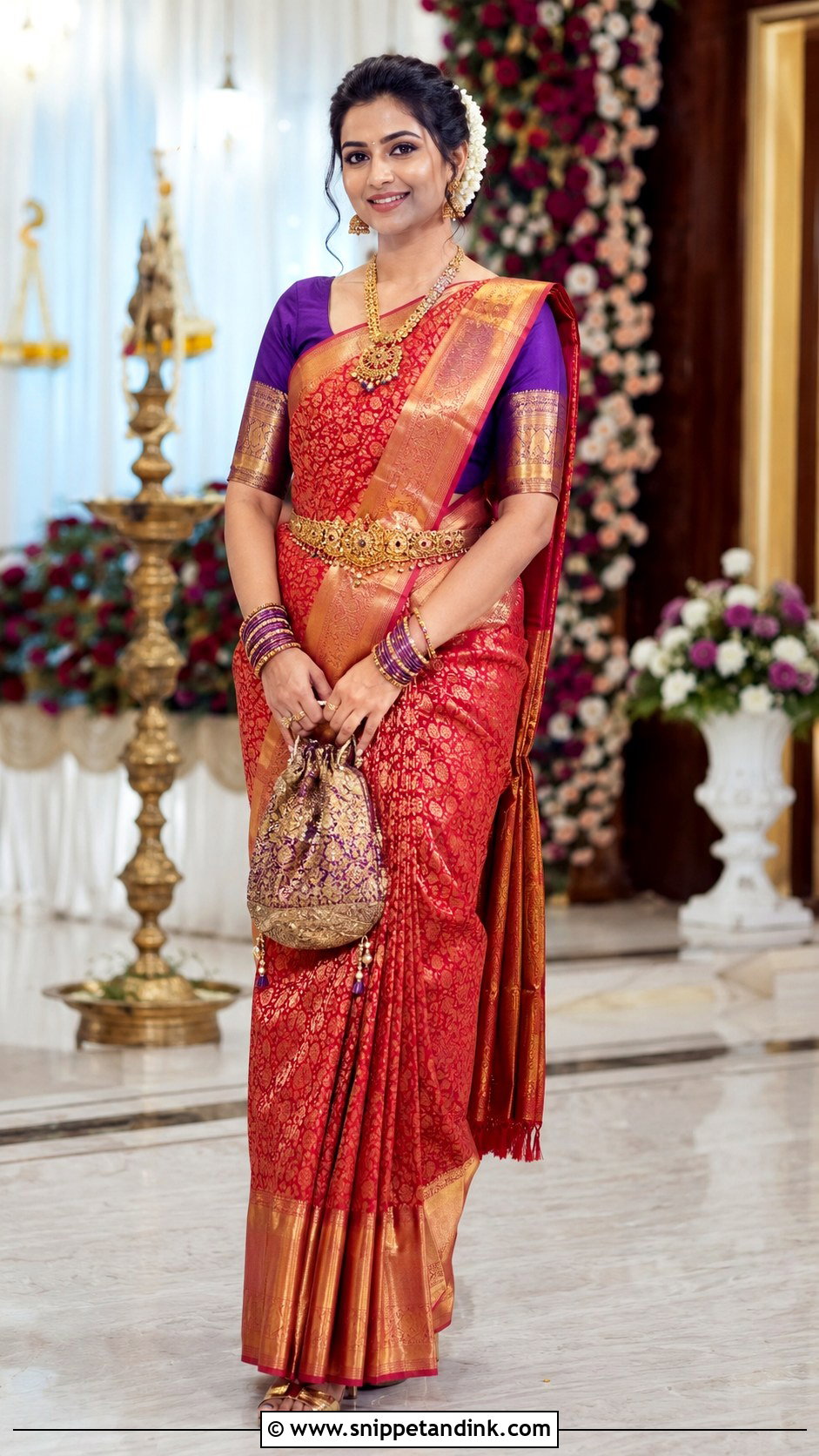
Temple borders are the neatest way to tie a blouse to a pattu saree. A silk blouse with a modest round neck, elbow sleeves and woven temple borders along the sleeve hems and back neckline, with small leaf, flower or jewellery-shaped motifs filling the rest. Pair it with a rich pattu in red, orange, green or purple, antique gold jewellery, glass bangles, a waist belt and a flower bun. A matching potli and low gold heels. My rule is to repeat only one or two colours from the saree border in the blouse; match every colour and the outfit looks like a uniform.
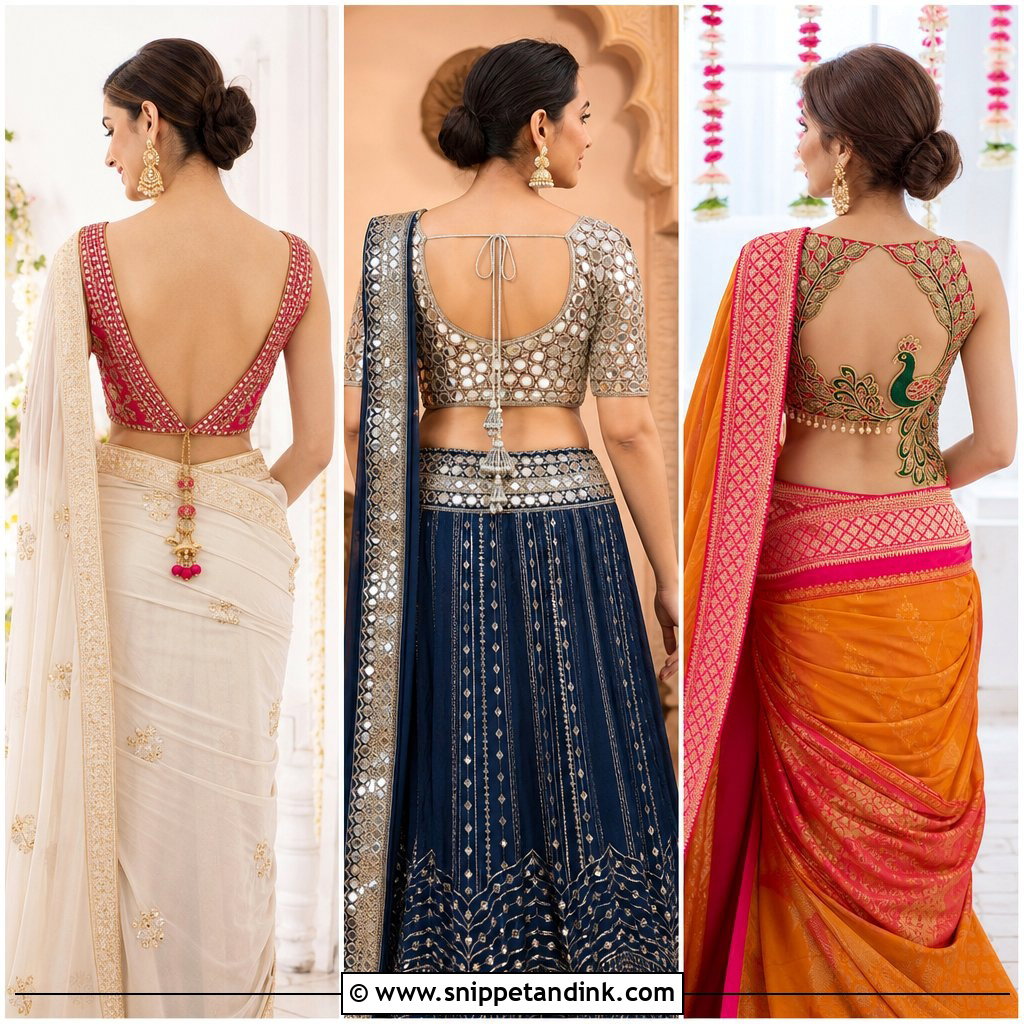
10. Deep V Back Blouse With Silk Saree
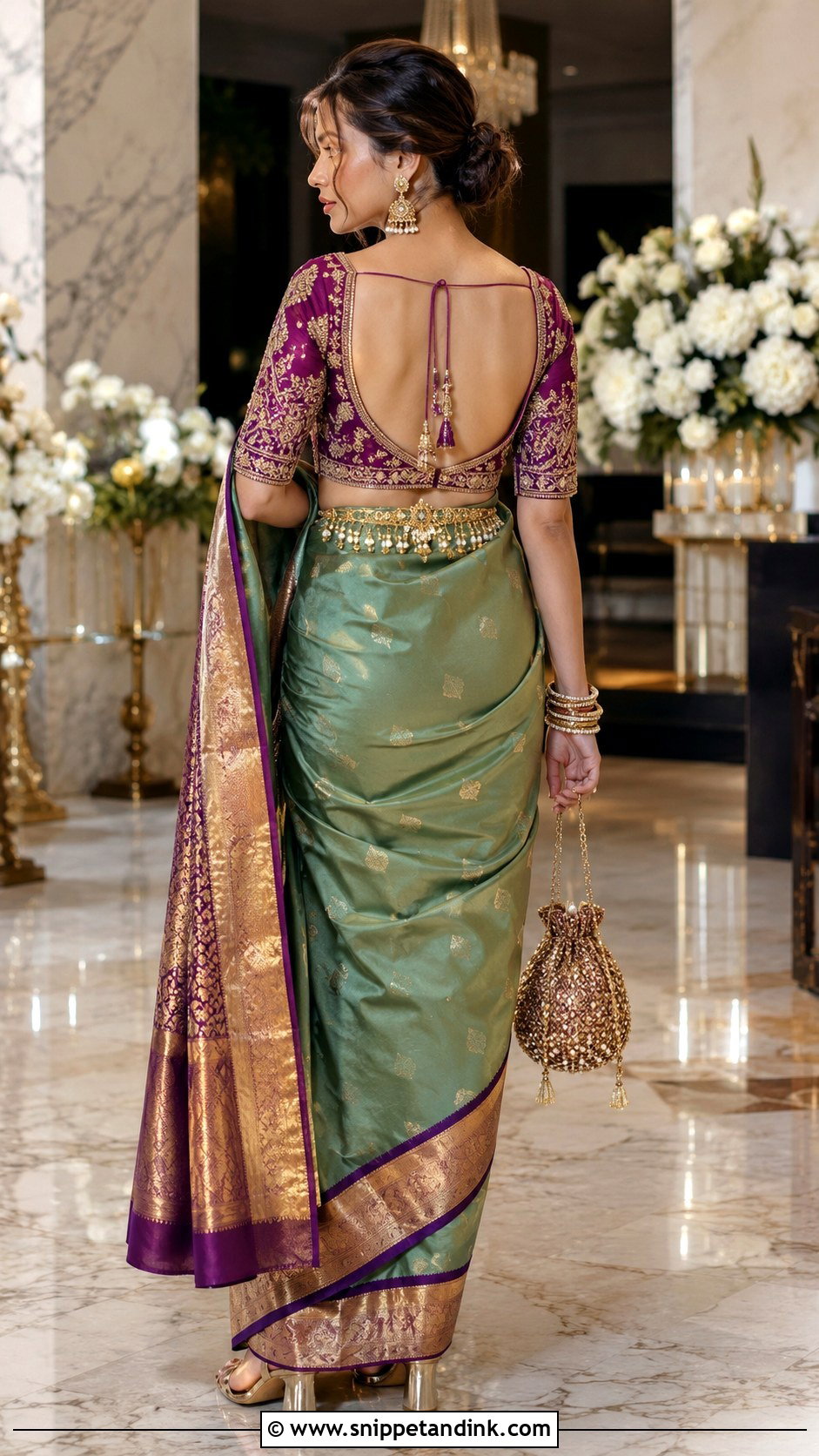
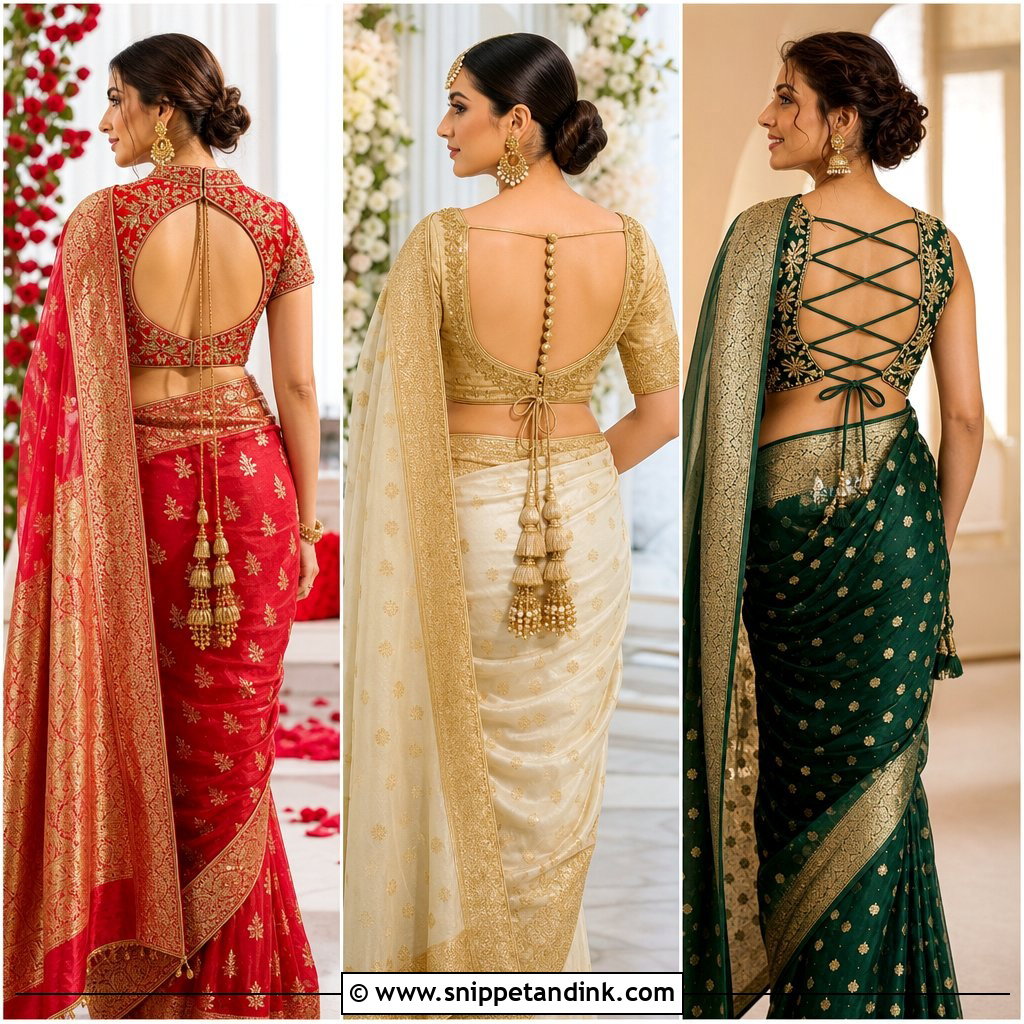
A deep V-back is graceful and modern, but it lives or dies on its support. A fitted jewel-toned blouse with embroidered borders tracing the V, a secure tie at the upper back and medium tassels that sway without swinging. Pair it with a contrasting silk saree and keep the pallu narrow so the back shows. Statement earrings, a waist belt, bangles, a low bun, block heels and a small potli. How deep is a personal choice; what holds it in place is not. I ask for hidden cups, reinforced side seams and a firm lower band, because without them a deep back gapes the first time you sit.
11. Elbow Sleeve Zari Blouse With Banarasi Saree
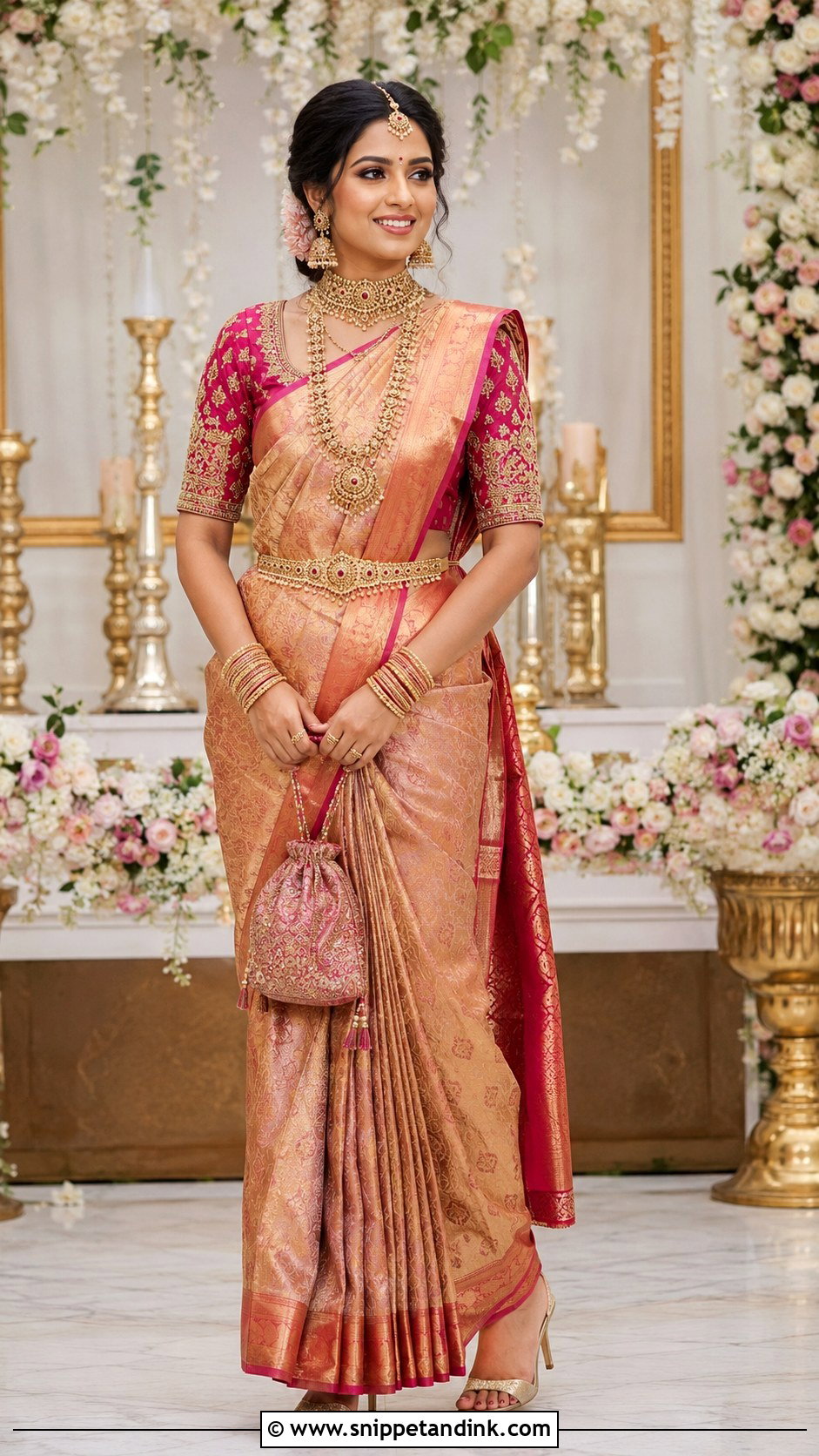
Elbow sleeves give the embroiderer a lot of space to work with. A contrasting silk blouse with dense zari at the sleeve hems and lighter motifs across the bodice, a wide round neck and a medium U-back. Choose a Banarasi that shares one metallic tone with the zari: yellow gold with yellow gold, antique with antique. A choker, long necklace, earrings, bangles and a subtle waist belt. A smooth bun or side braid. Gold peep-toes and a brocade potli. If the saree is heavily woven, leave some of the blouse bare. The plain areas are what make the embroidered ones read.
12. Puff Sleeve Brocade Blouse With Silk Saree
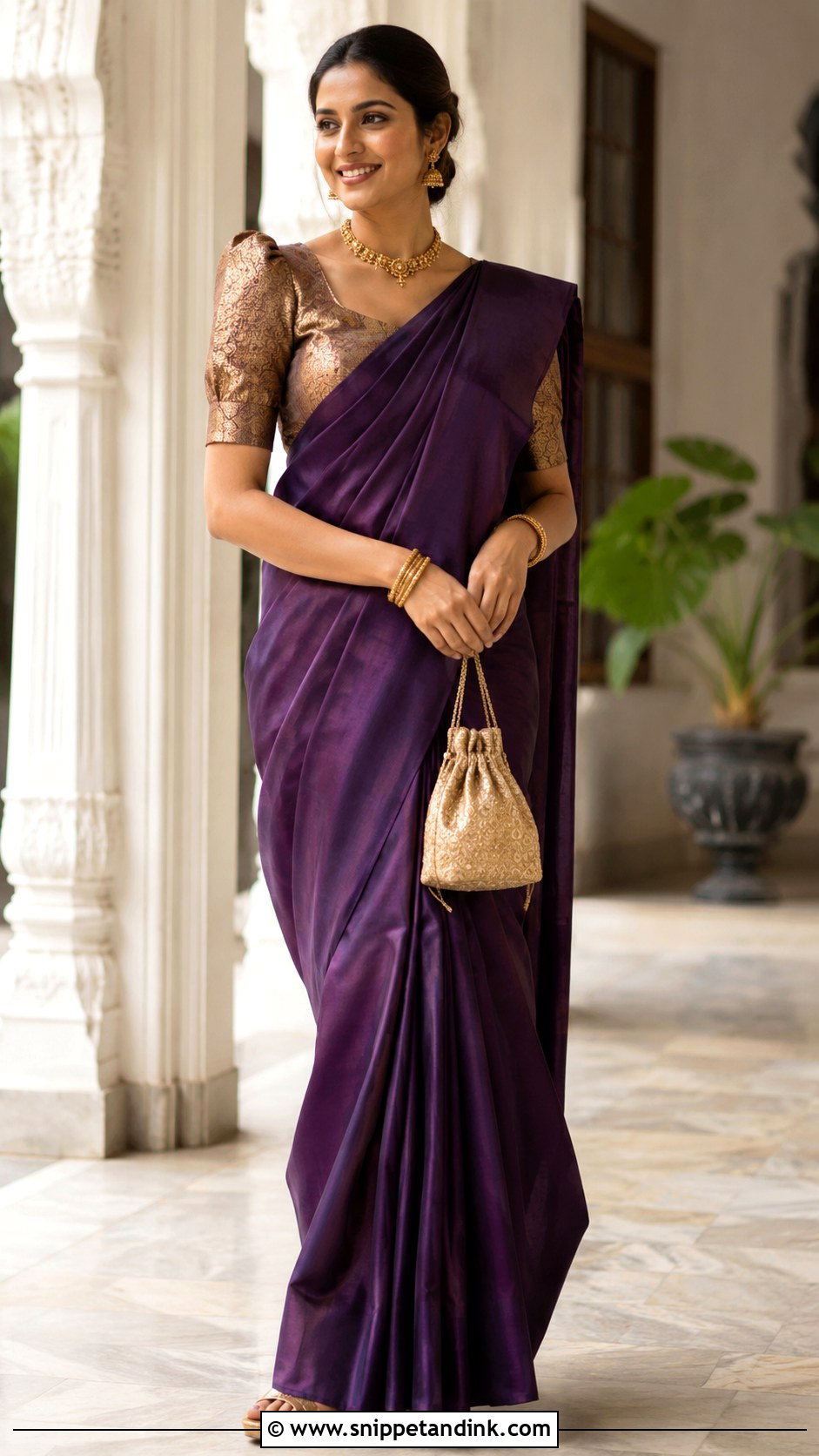
Brocade with structured puff sleeves gives a silk saree a vintage feel. Keep the puff controlled, short or elbow length, never oversized. A fitted waist, square neck and neat back opening keep it flattering. Pair it with a plain silk saree or one with a restrained border so the brocade pattern leads. A short gold necklace, jhumkas, stacked bangles, a small potli, a centre-parted bun and gold wedges. Brocade doesn’t give at all, so the sleeves need a light lining and enough room at the armhole; I have brides raise both hands over their heads at the fitting, as they would for the garland exchange.
13. Scalloped Stone Blouse With Tissue Saree
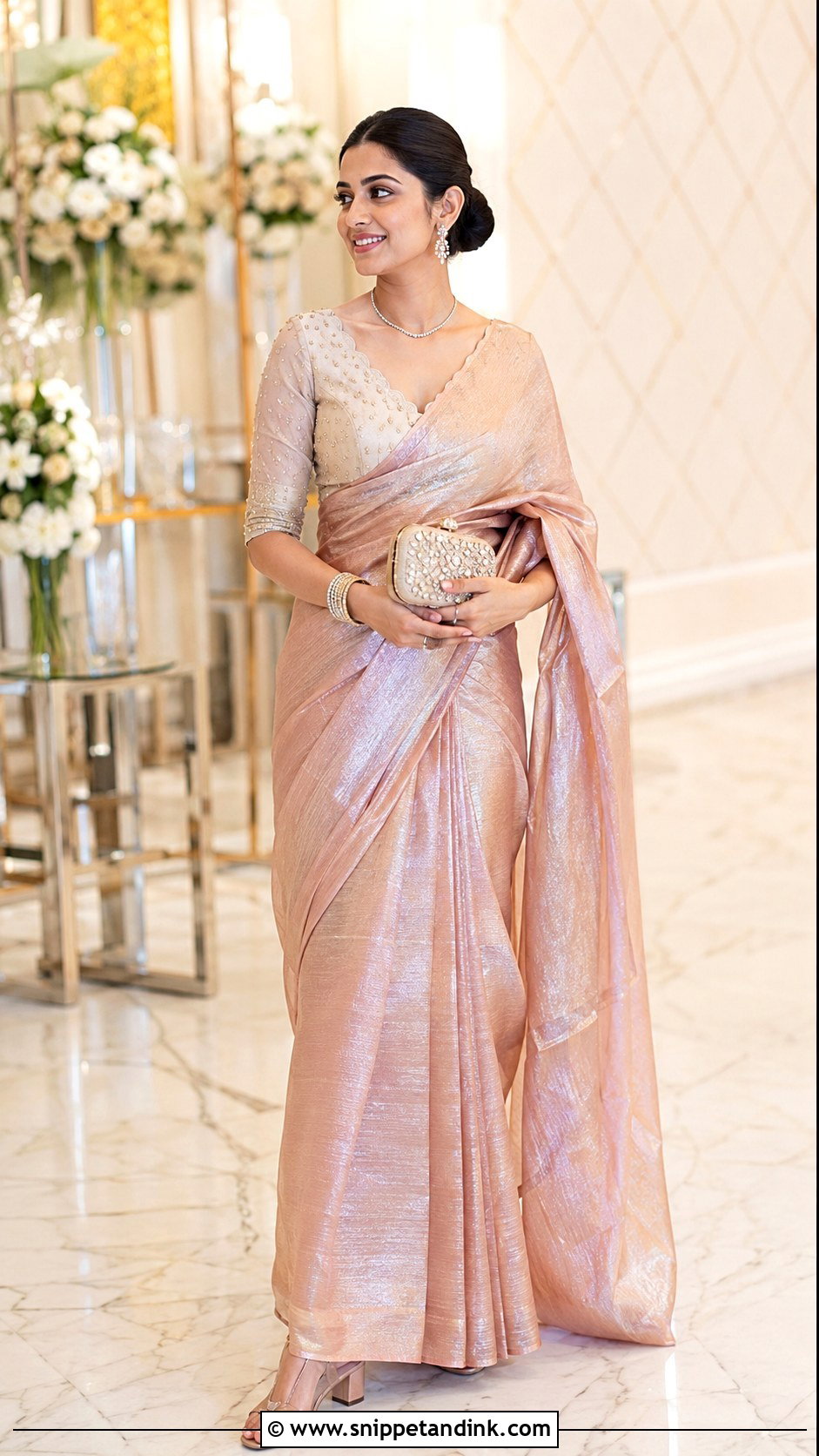
Tissue saree fabric shimmers because metallic yarn is woven through it, and a scalloped neckline suits that softness. Choose a champagne, rose gold or muted bronze blouse with small stones along the neckline, sleeve hems and back edges, and fitted three-quarter sleeves for structure. Drape a coordinated tissue saree with clean pleats and pin it discreetly; tissue is slippery and creases sharply. Crystal earrings, a slim necklace, metallic bangles, a jewelled clutch, neutral block heels and a sleek low bun. Keep heavy stone clusters off the shoulders, and have the scallops backed with firm interfacing so they don’t curl.
14. Square Neck Sequin Blouse With Lehenga
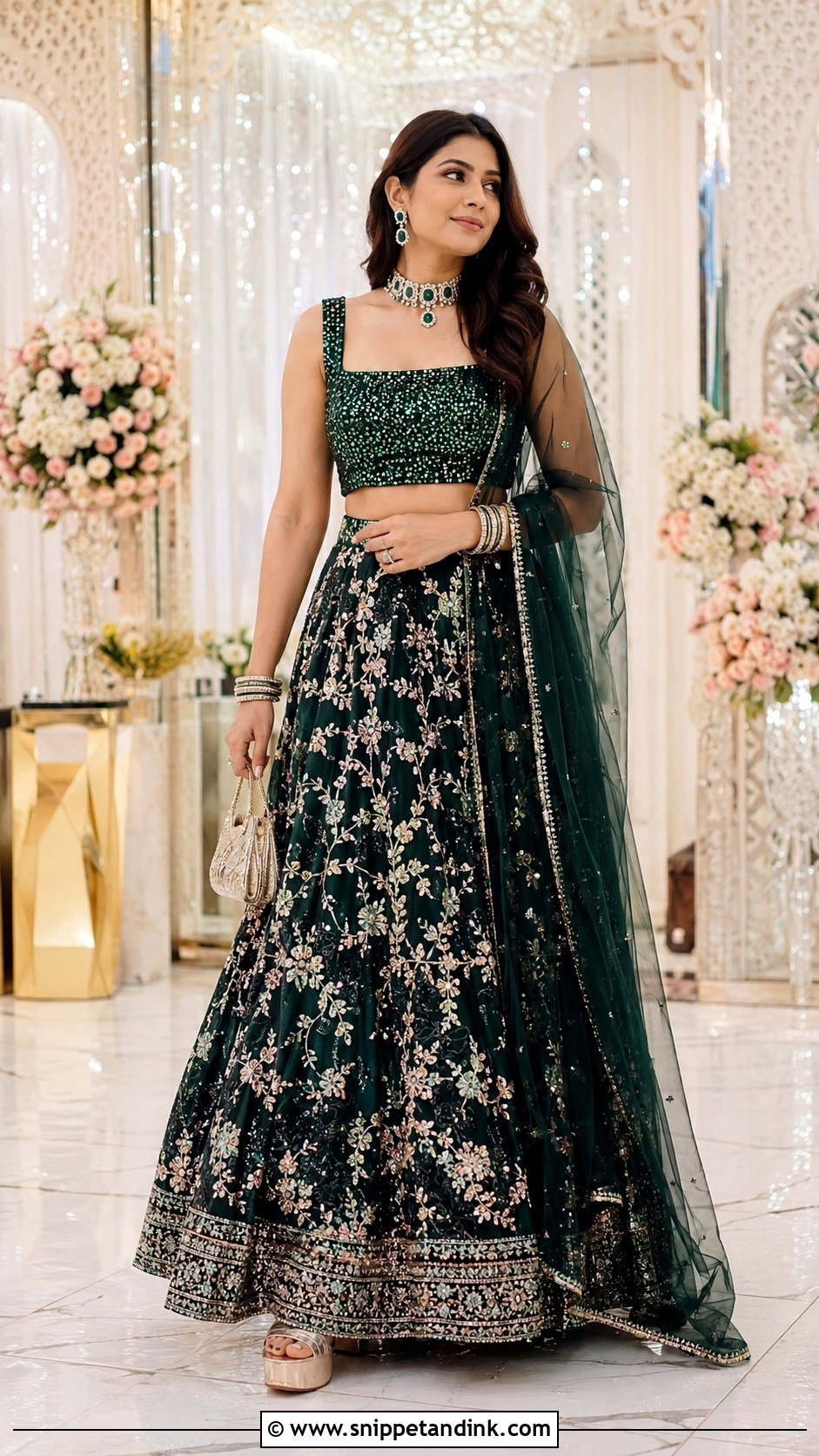
A square neck with sequins gives a lehenga a clean, glamorous line. A fitted blouse in ruby, navy, emerald or champagne with evenly spaced sequins and broad straps, a lehenga with lighter embroidery, and a sheer dupatta over one shoulder. The open neck suits a choker or short gemstone necklace. Statement earrings, bangles, a small metallic bag and platform sandals, with a wavy ponytail or polished bun. Sequins are sewn through a backing that can be scratchy, so ask for a soft lining underneath and smooth binding at the armholes. The hem has to grip the waist or it rides up when you dance.
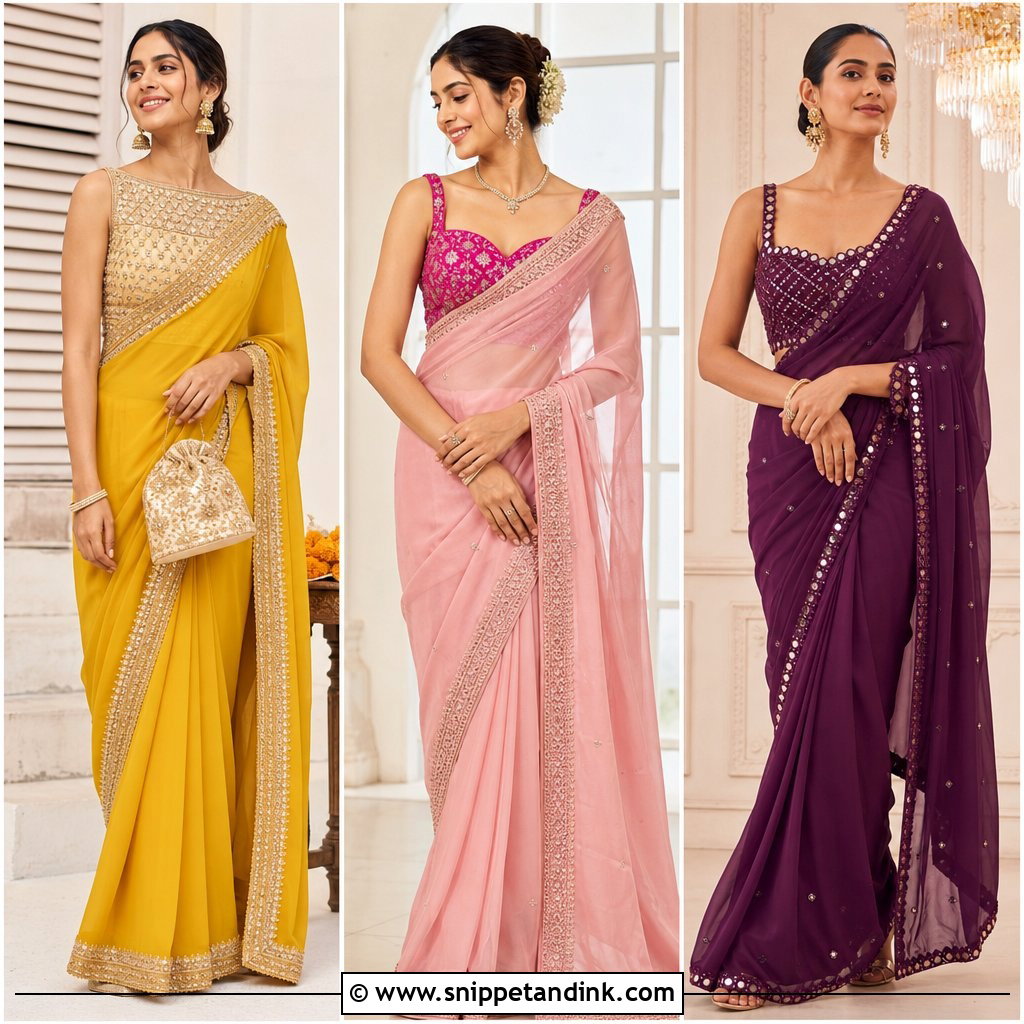
15. Boat Neck Embroidered Blouse With Contrast Saree
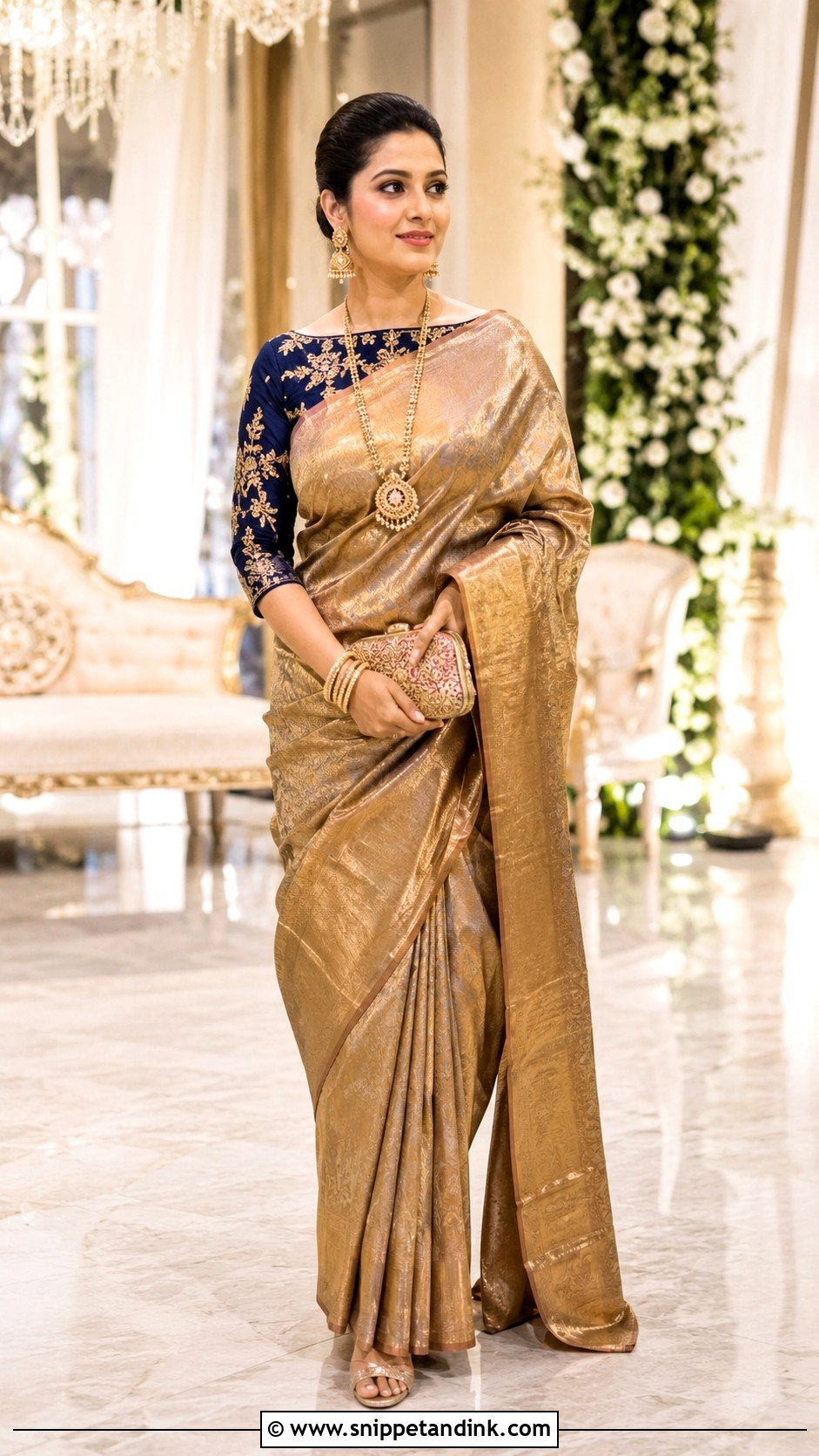
A boat neck covers more of the front and shoulders and still looks graceful. Deep blue, maroon, purple or green with fine embroidery at the neckline and three-quarter sleeves, plus an embroidered back panel or a small central motif. Pair it with a contrasting saree in gold, pink, orange or ivory. A high neckline crowds a choker, so I suggest long earrings and one medium necklace. A neat bun, bangles, a brocade clutch and gold heels. The neckline must be wide enough to move in but fitted enough to lie flat, and a side opening keeps the embroidered front unbroken.
16. Keyhole Back Blouse With Georgette Saree
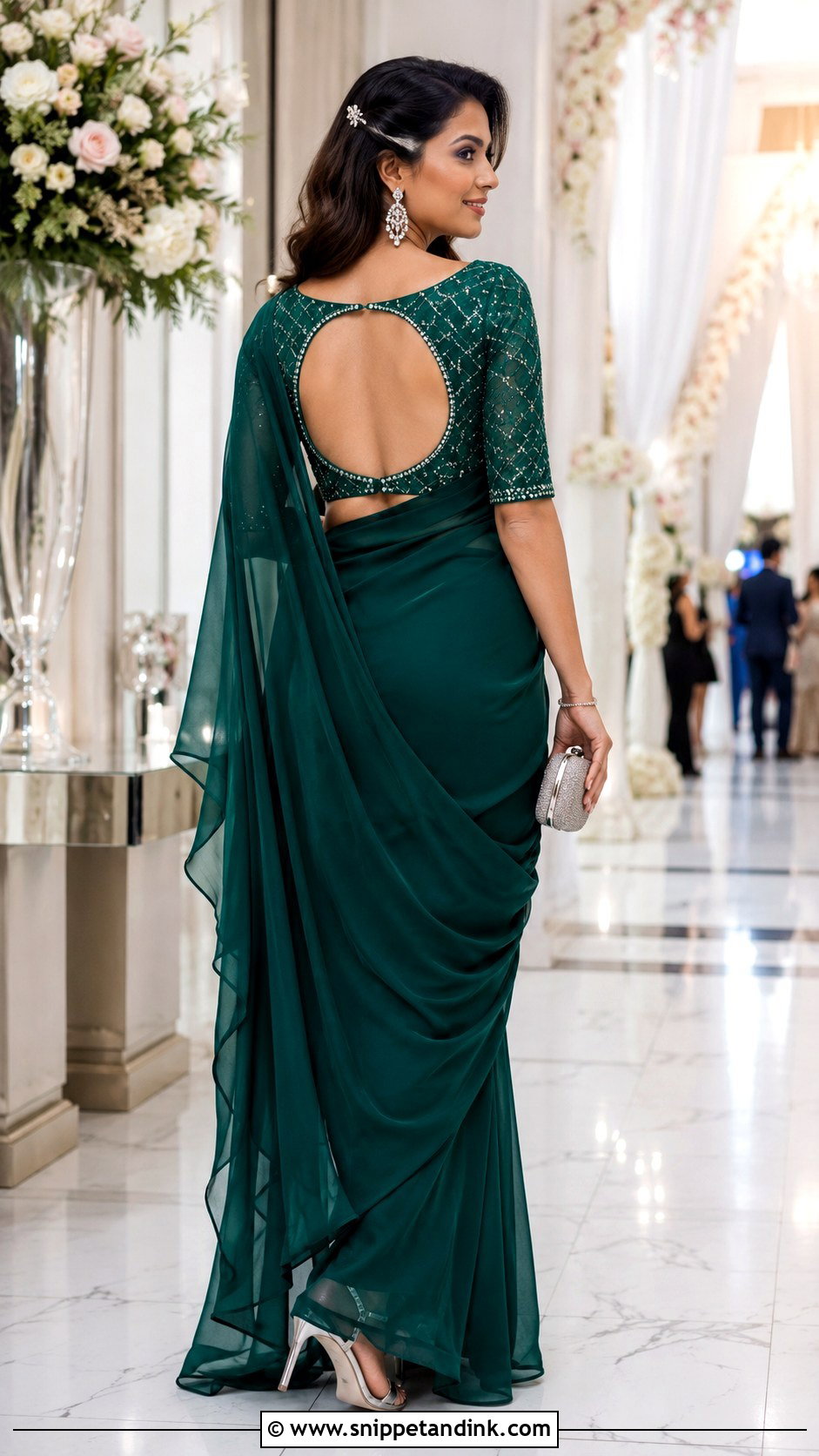
A keyhole back is my usual suggestion for a bride who wants interest behind but not a deep open back. A structured blouse with a high round neck, fitted elbow sleeves and an oval or teardrop-shaped back opening outlined with fine crystals, beads or metallic work. A flowing georgette saree with a light border, drop earrings, a slim bracelet and a sparkly clutch. Soft waves pinned to one side keep the back visible, with metallic heels. The opening must sit above your bra band, its edges need reinforcing, and a hook at the top stops it stretching into a different shape.
17. Corset Blouse With Draped Saree
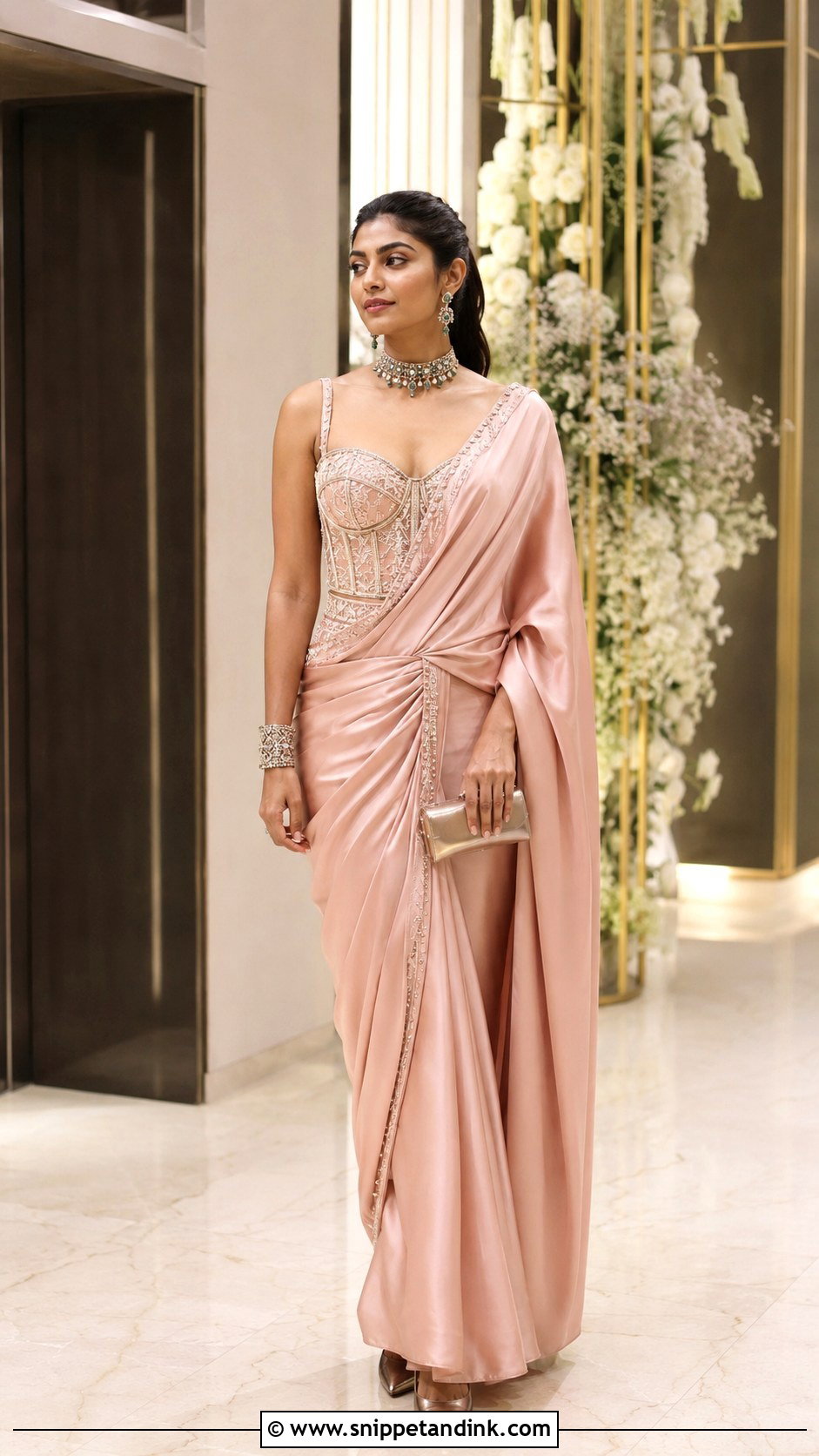
Corset-style blouses bring structure to a modern draped saree. A gently curved neckline, broad straps, internal boning and embroidery that follows the seams, with a satin, crepe or pre-draped saree in a coordinating colour. A narrow pallu shows the construction. A gemstone choker, matching earrings, a cuff and a compact clutch, with sleek hair and pointed heels. The fit has to be supportive, not tight, so plan more than one fitting. Flexible boning and a soft lining matter, and so does room to sit: I have brides sit through a full meal’s worth of time in the trial before I sign it off.
18. Cape Sleeve Blouse With Bridal Lehenga
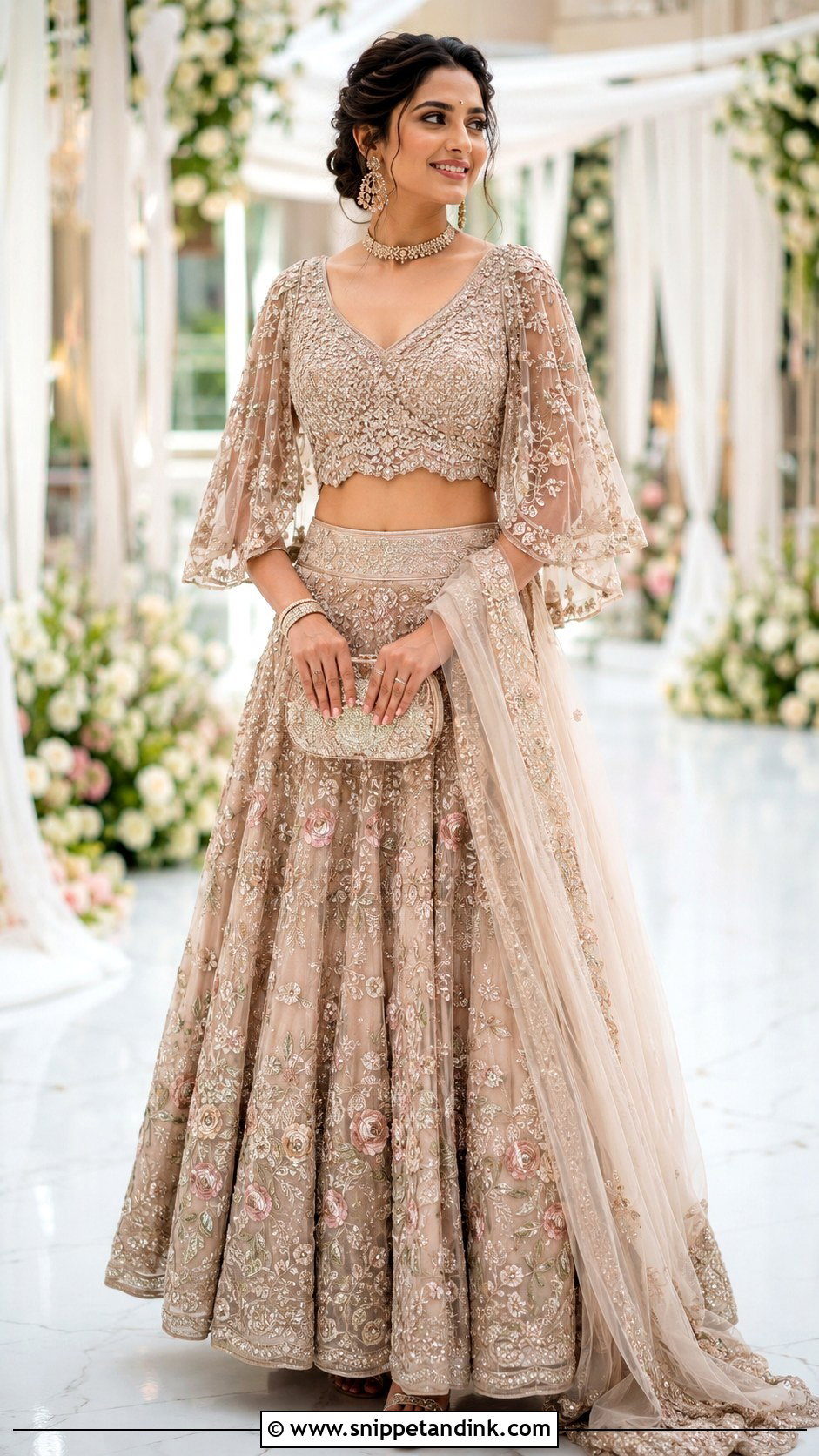
Cape sleeves add movement and coverage without a heavy extra layer. A fitted embroidered bodice with light net or chiffon capes from the shoulders, a lehenga with matching motifs, and a simple dupatta over one arm so the cape stays visible. A short necklace, chandelier earrings, bangles, an embroidered clutch, a soft updo and platform heels. I keep the cape between elbow and wrist; any longer and it drags through food and catches on chair backs. Firm shoulder fastenings stop it pulling sideways when you hug relatives.
19. Multicolor Threadwork Blouse With Bridal Lehenga
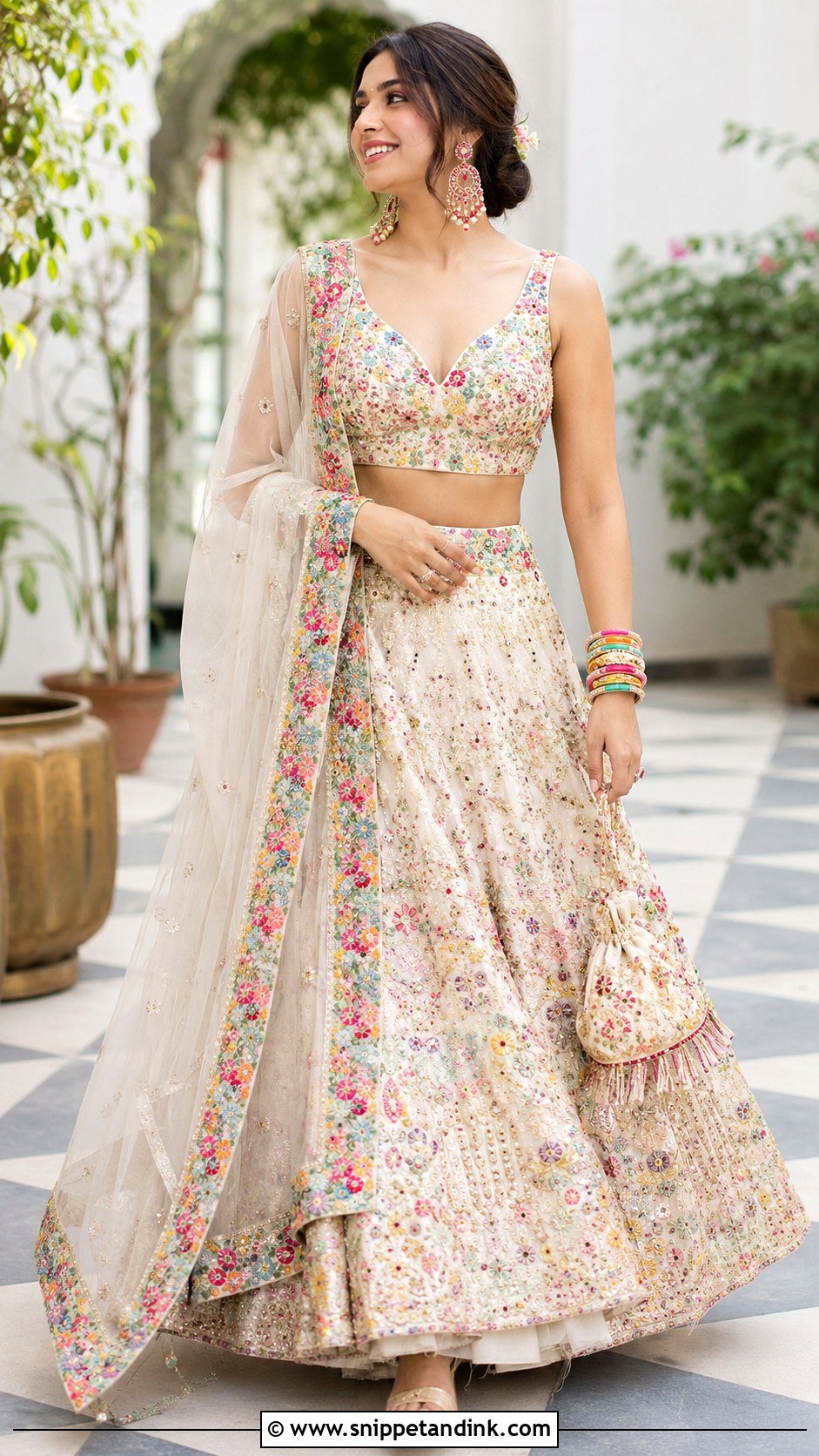
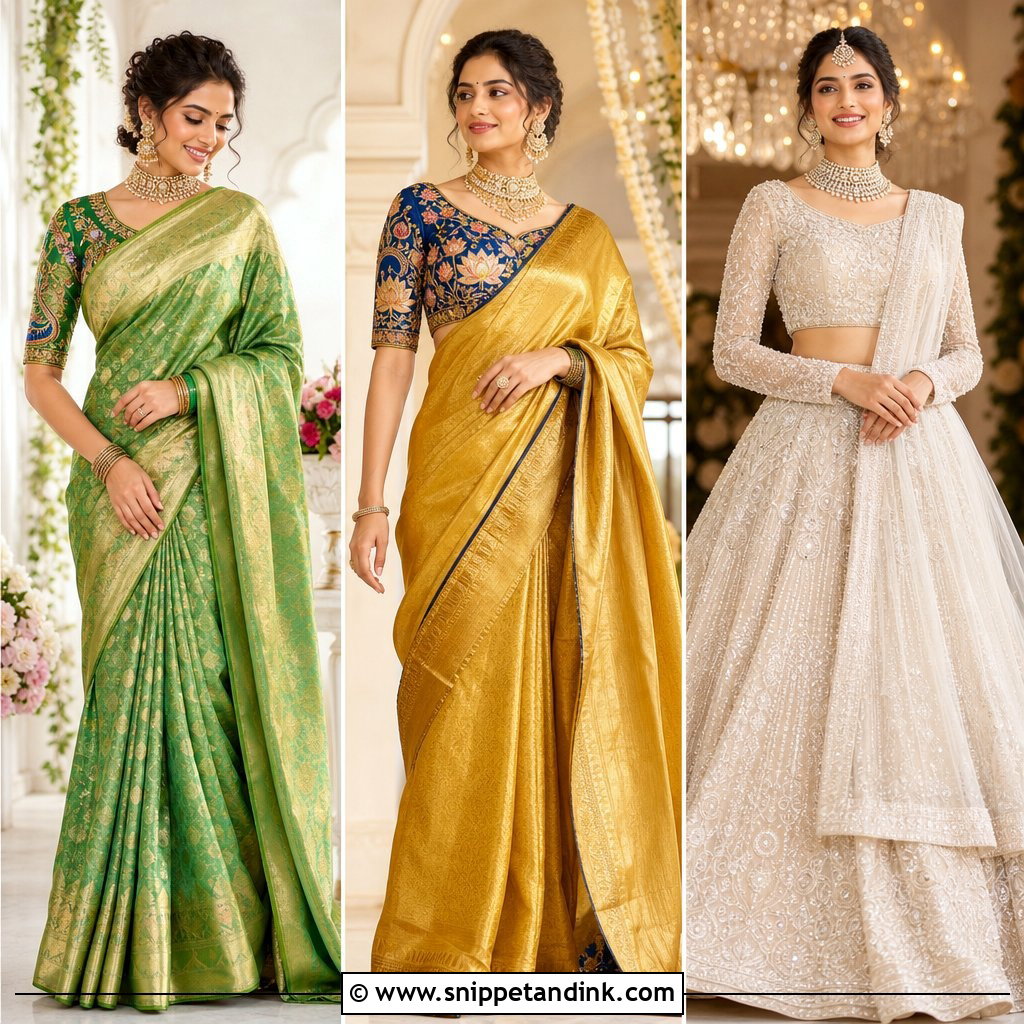
Coloured threadwork brings a neutral lehenga to life. An ivory, beige or pale gold blouse embroidered with jewel-toned flowers, vines and geometric borders, a sweetheart or round neck, and elbow sleeves. Wear it with a matching neutral lehenga and a dupatta edged in colours lifted from the blouse. Gemstone earrings, colourful bangles, a floral potli and champagne heels. Keep the necklace simple so it doesn’t sit on top of the embroidery. Dense threadwork is rough on the reverse, so a smooth lining isn’t optional, and I check that the motifs are balanced across both sides of the bust.

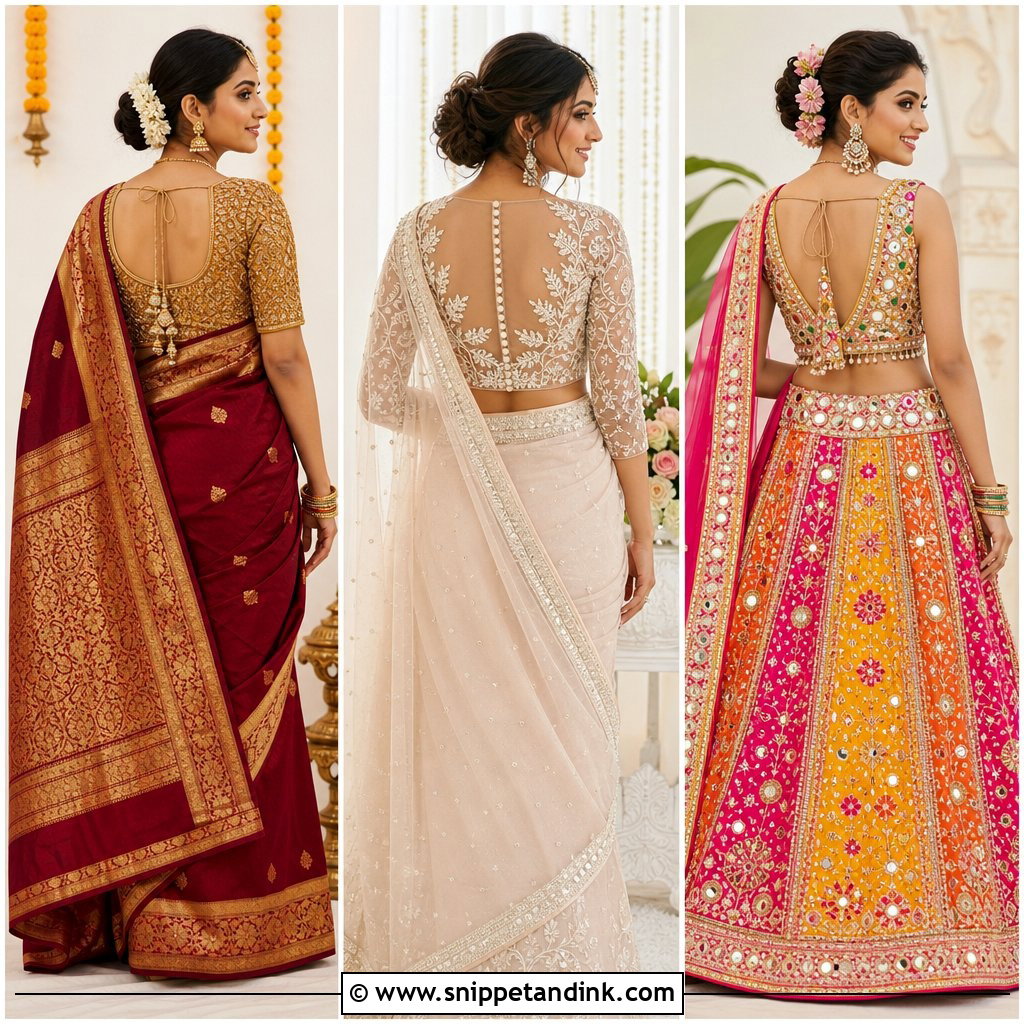

20. Personalized Wedding Motif Blouse With Silk Saree
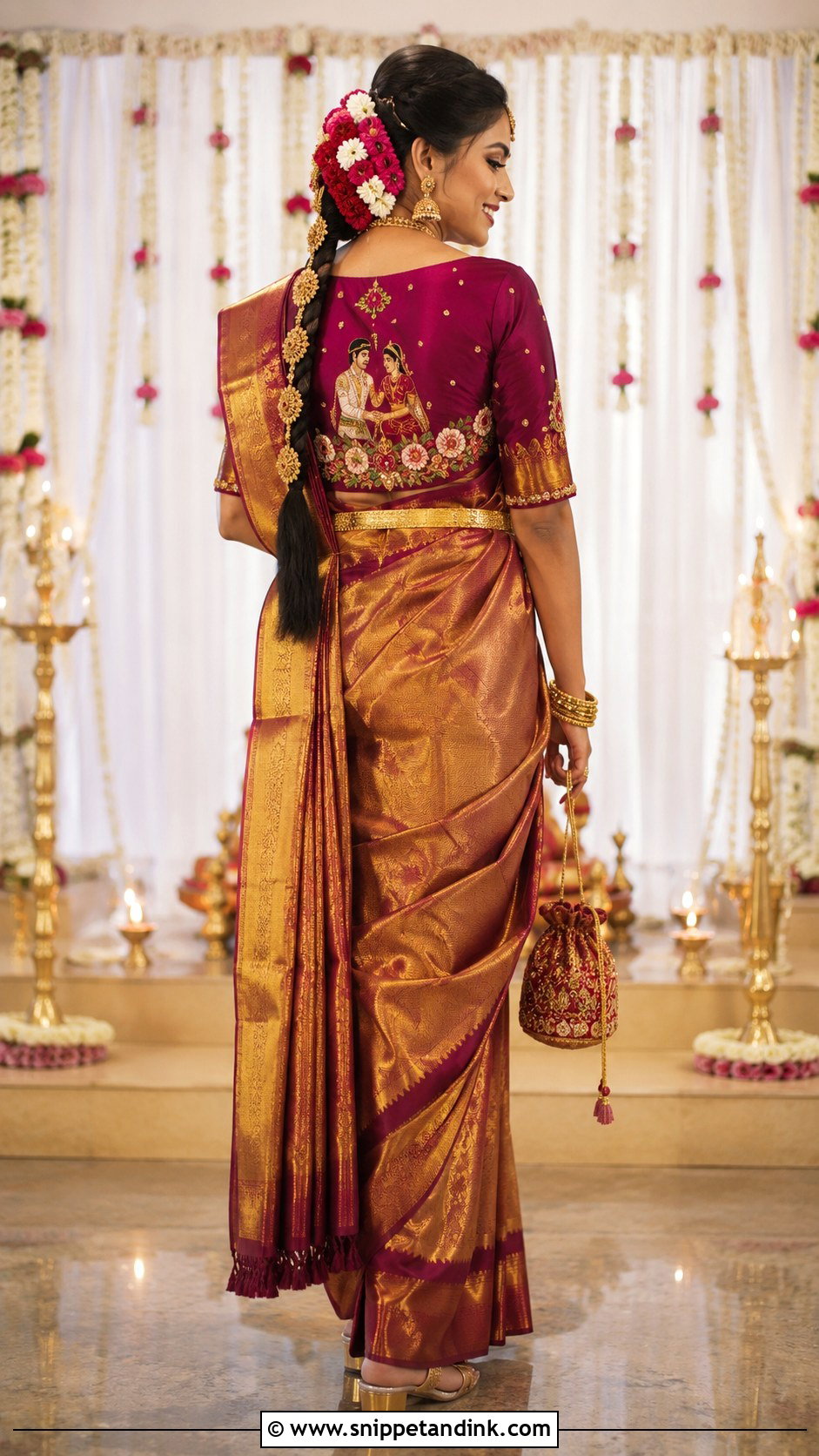
Personal embroidery is the one detail on this list nobody else will have. A silk blouse with your initials, wedding symbols, flowers that mean something, or a small ceremony scene across the back, and a quieter front with a classic neckline and embroidered elbow sleeves. A rich silk saree, traditional jewellery, a waist belt, bangles, a flower braid and gold sandals. Drape the pallu to show the back in photos. Give the embroiderer clear reference images and approve the motif size on paper before work starts. Leave space around hooks and seams so an alteration never cuts through the design.
Lining, Hooks and Underarm Pads Inside a Heavy Blouse
The construction nobody sees is what decides whether a grand blouse is bearable for a long ceremony. When I check a finished piece, I turn it inside out first.
Lining
Soft cotton lining sits against the skin far better than a synthetic one, especially under velvet, sequins or dense zari. It also absorbs some sweat before it reaches the outer fabric.
Fastenings
Hooks are traditional and easy to adjust; a concealed zip is quicker to get into but can’t be loosened if you’re bloated by evening. On heavy blouses I prefer hooks with a strip of fabric behind them so they don’t press into the spine.
Underarm protection
Ask the tailor to stitch in removable dress shields. Silk and velvet mark easily under the arms, and those marks rarely come out of heirloom fabric completely. Deodorant should go on well before you dress, and must be fully dry.
Plan the Blouse With the Saree on the Table
A grand wedding blouse is easiest to get right when you plan it with the whole outfit. Match its fabric, colour, embroidery and neckline to the weight of the saree or lehenga, and let the jewellery, hair, shoes and drape support it. Above all, insist on a secure fit, soft lining, reliable fastenings and sleeves you can lift your arms in. Book fittings well before the wedding and try everything on together at least once. Traditional zari, artistic motifs, pearls, corsetry or bright threadwork: any of them can look personal and finished when the tailoring underneath is sound.
You'll Like These Ideas:




Leave a Reply