
Charlotte weddings cover a lot of ground: garden ceremonies in spring, uptown hotel ballrooms, rooftops, country clubs, lake venues an hour out of the city, and small courthouse vows. When a bride sits down with me, I ask about the venue and the month before I pull a single dress, because a Carolina August and a December ballroom call for completely different fabrics. The twenty looks below each come with the gown and the pieces I would put with it, veil, shoes, jewelry and flowers, plus the fitting checks I’d make before saying yes. Use them as a starting shortlist, then try the shapes on your own body.
How Long a Gown Takes From First Appointment to Final Fitting
The most common shock at a first appointment is the timeline. Most made-to-order bridal gowns take several months to arrive after you order, often four to six and sometimes longer for heavily beaded designs. Then alterations need their own window. So I suggest brides start trying on about nine to twelve months before the wedding, which leaves a comfortable buffer.
- Nine to twelve months out: first appointments, two or three salons, narrow to a silhouette.
- Eight to ten months out: order the gown and confirm the delivery date in writing.
- Two to three months out: first fitting with your seamstress, wearing your actual shoes and undergarments.
- Four to six weeks out: second fitting for fine adjustments and bustle.
- Final one to two weeks: last check and pickup, ideally with the person who will dress you on the day.
Shorter timelines are possible. Off-the-rack sample gowns, ready-to-wear bridal and rush orders all exist, though rush fees vary widely and your choice narrows. If your wedding is less than six months away, tell the salon up front so they only show you what can arrive in time.
1. Charlotte Wedding Dress With Floral Lace
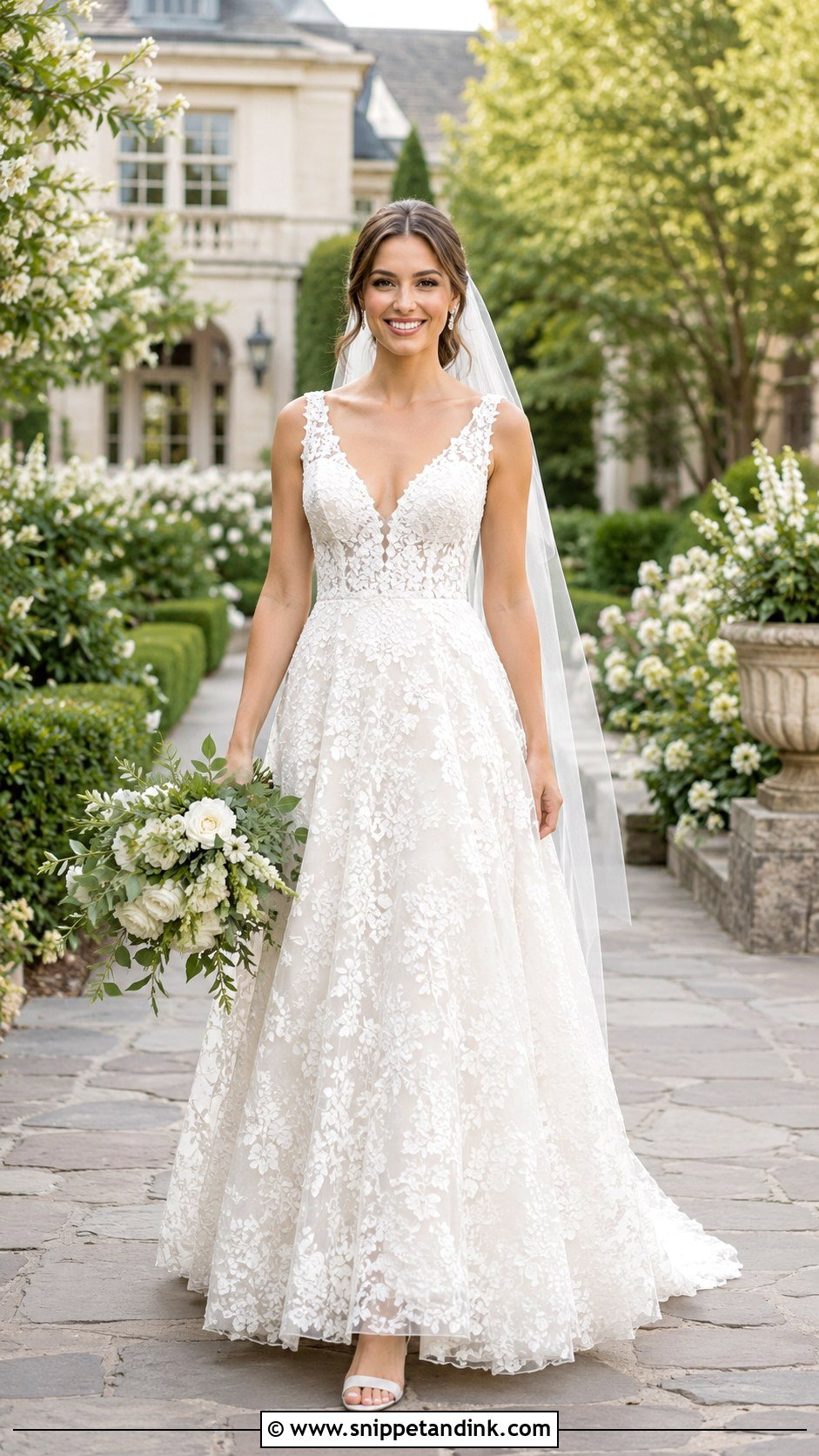
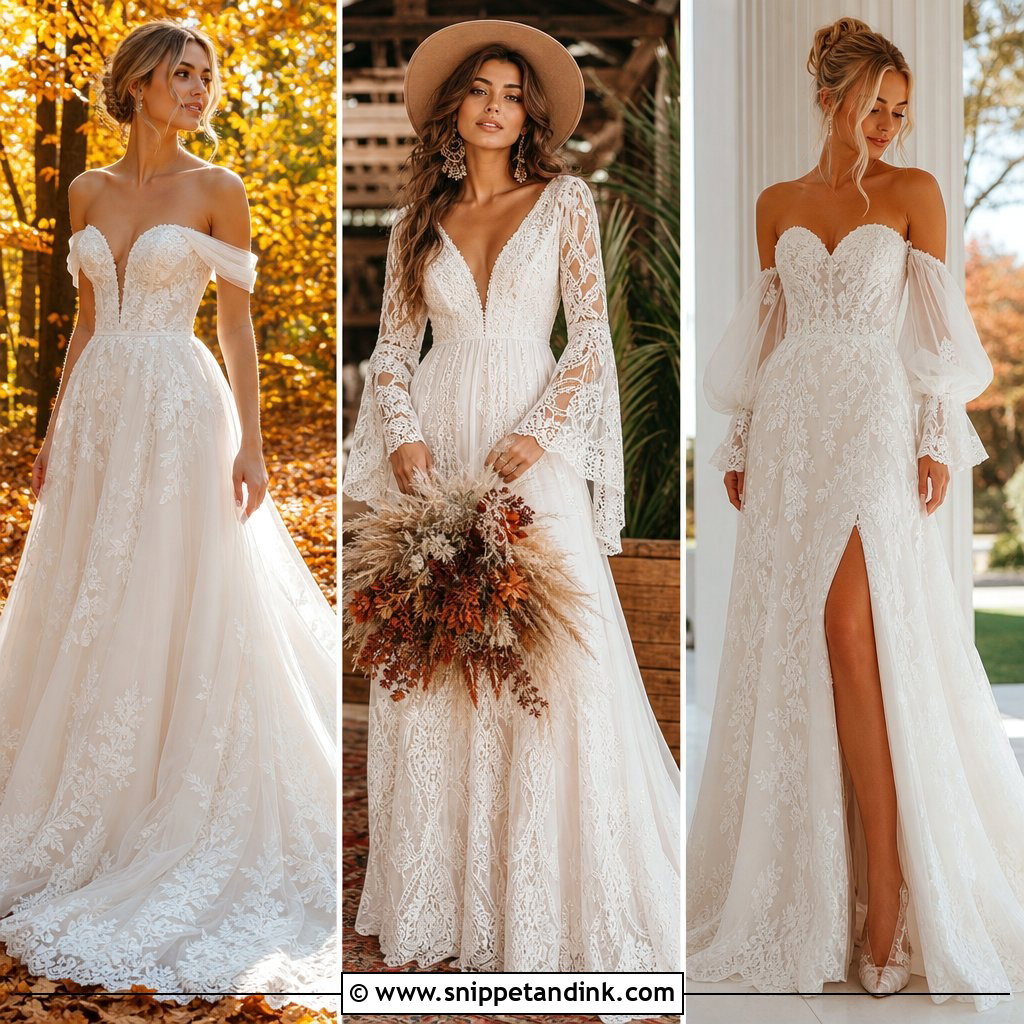
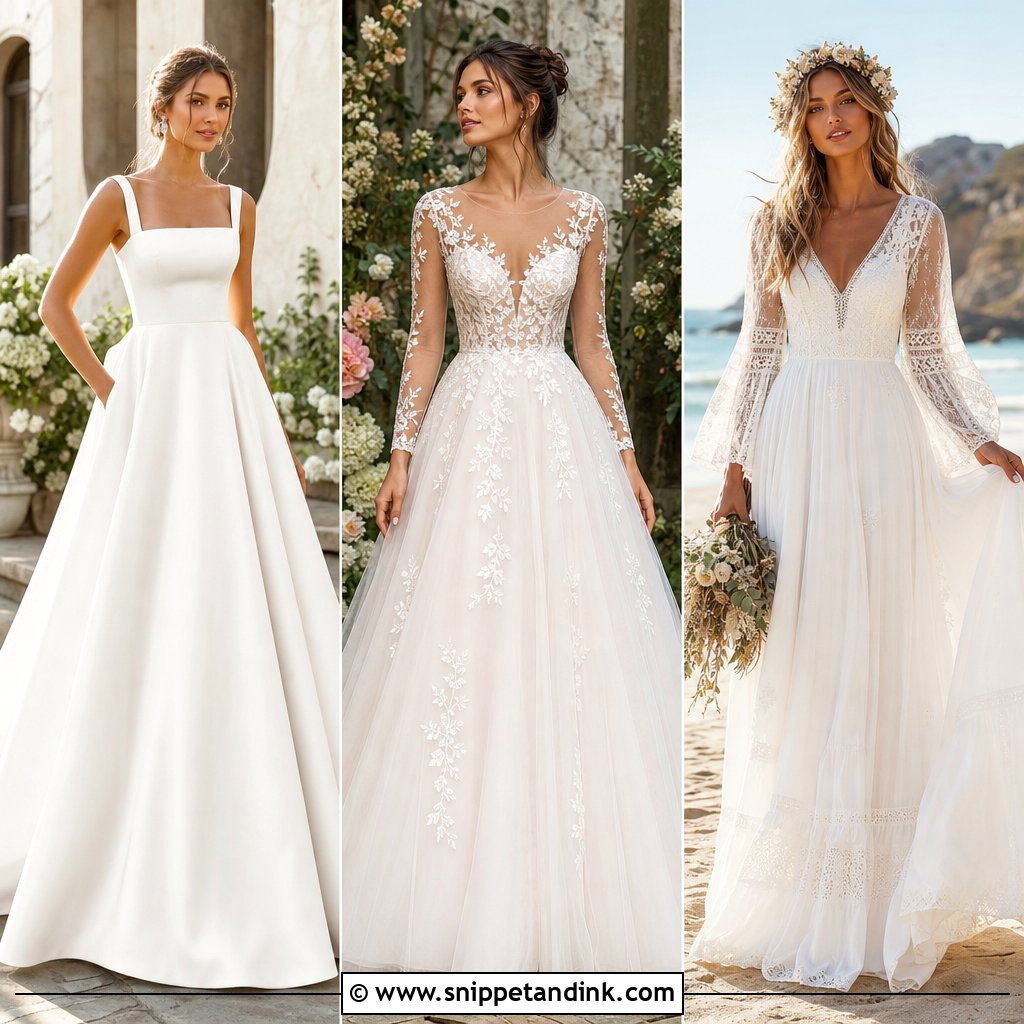
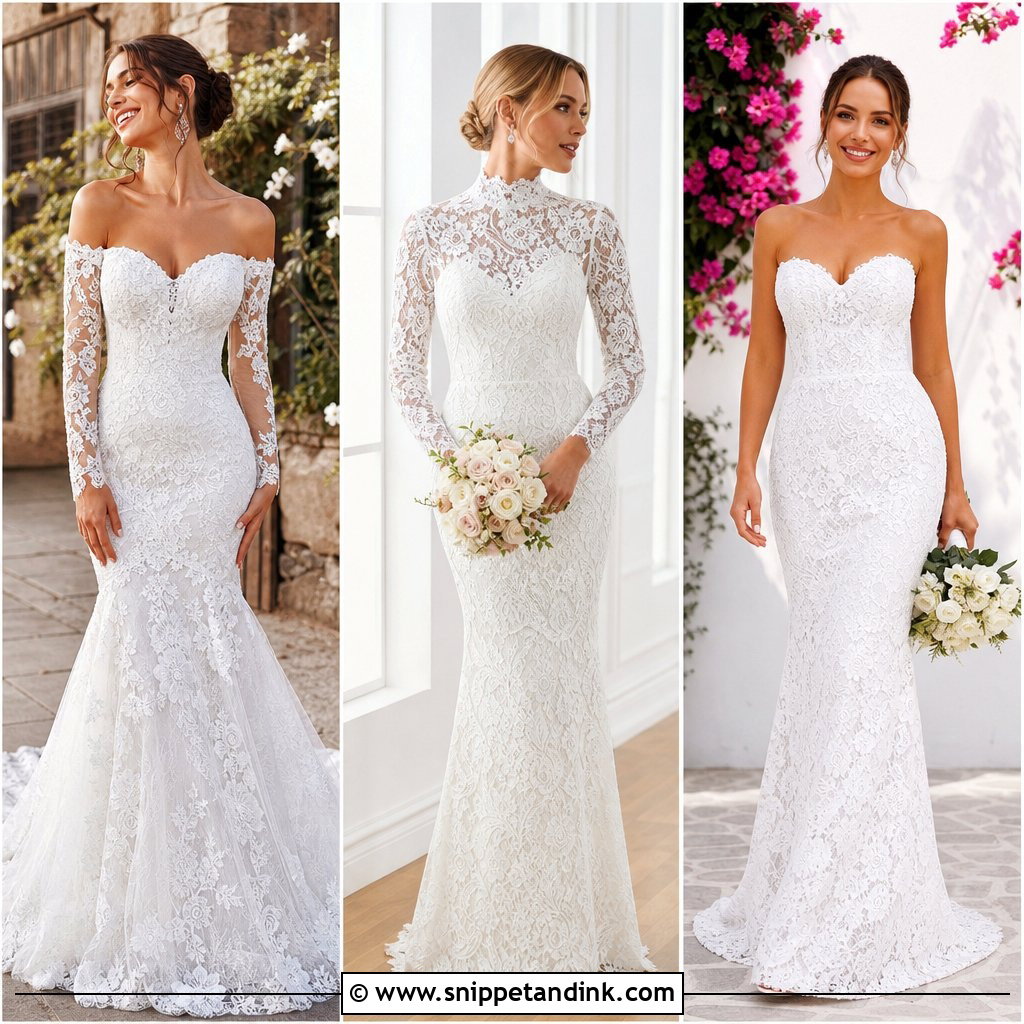
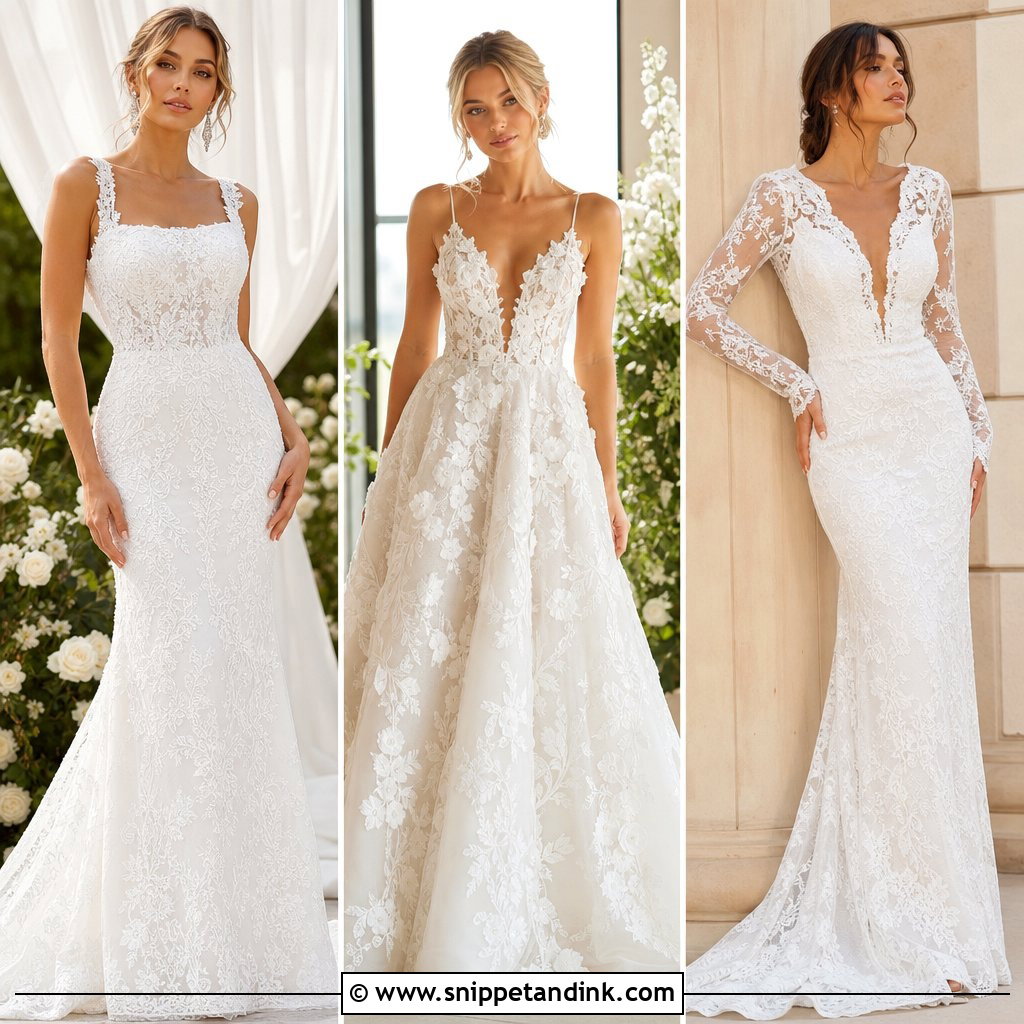
Botanical lace on an A-line skirt is the gown I reach for most often for spring garden ceremonies. Lightweight tulle under the lace keeps it moving outdoors, and a sweetheart or subtle V-neckline opens up the face without feeling exposed. The thing I check first is the lace hem: on grass it picks up dew and pollen, so ask your seamstress about a horsehair or slightly raised front hem. Ivory block-heel sandals keep you upright on a lawn. Add pearl drops, a fingertip veil and a loose bouquet of white roses and greenery, with hair in a low bun or soft waves.
2. Charlotte Wedding Dress With Long Sleeves
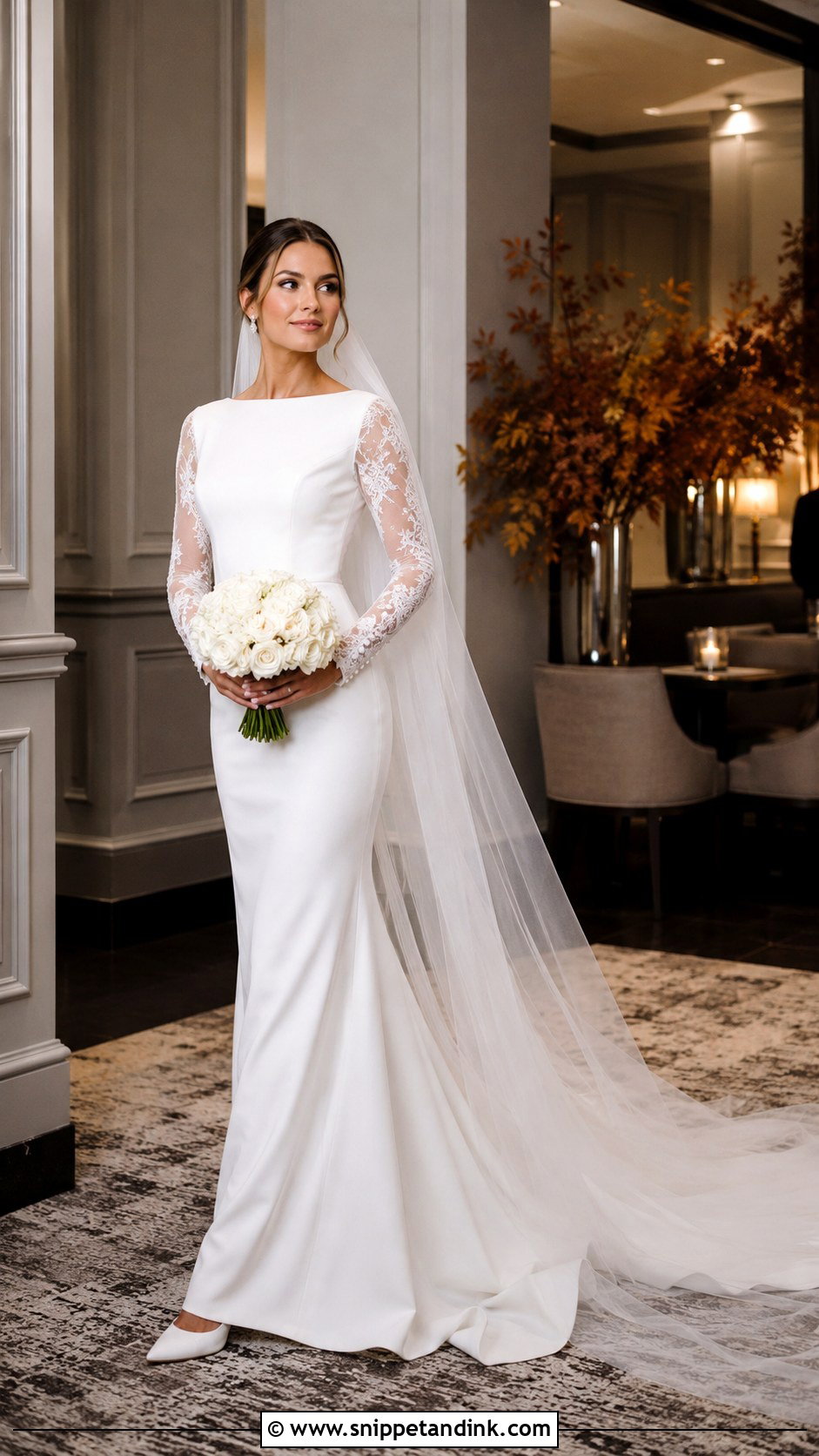
Sheer lace sleeves on a fitted crepe gown are my fall and winter favorite. Covered buttons and a gently flared skirt keep the shape refined. Fitting sleeves takes patience: raise your arms and hug someone in the salon, because lace sleeves cut too slim tear at the underarm seam on the dance floor. Pointed ivory pumps, small crystal earrings and a chapel veil let the sleeves stay the detail. A structured satin wrap or removable cape handles the walk between buildings in colder months, and a low chignon shows off the neckline. A compact bouquet of white roses with deep green foliage suits hotels, historic venues and formal clubs.
3. Charlotte Wedding Dress With A-Line Skirt
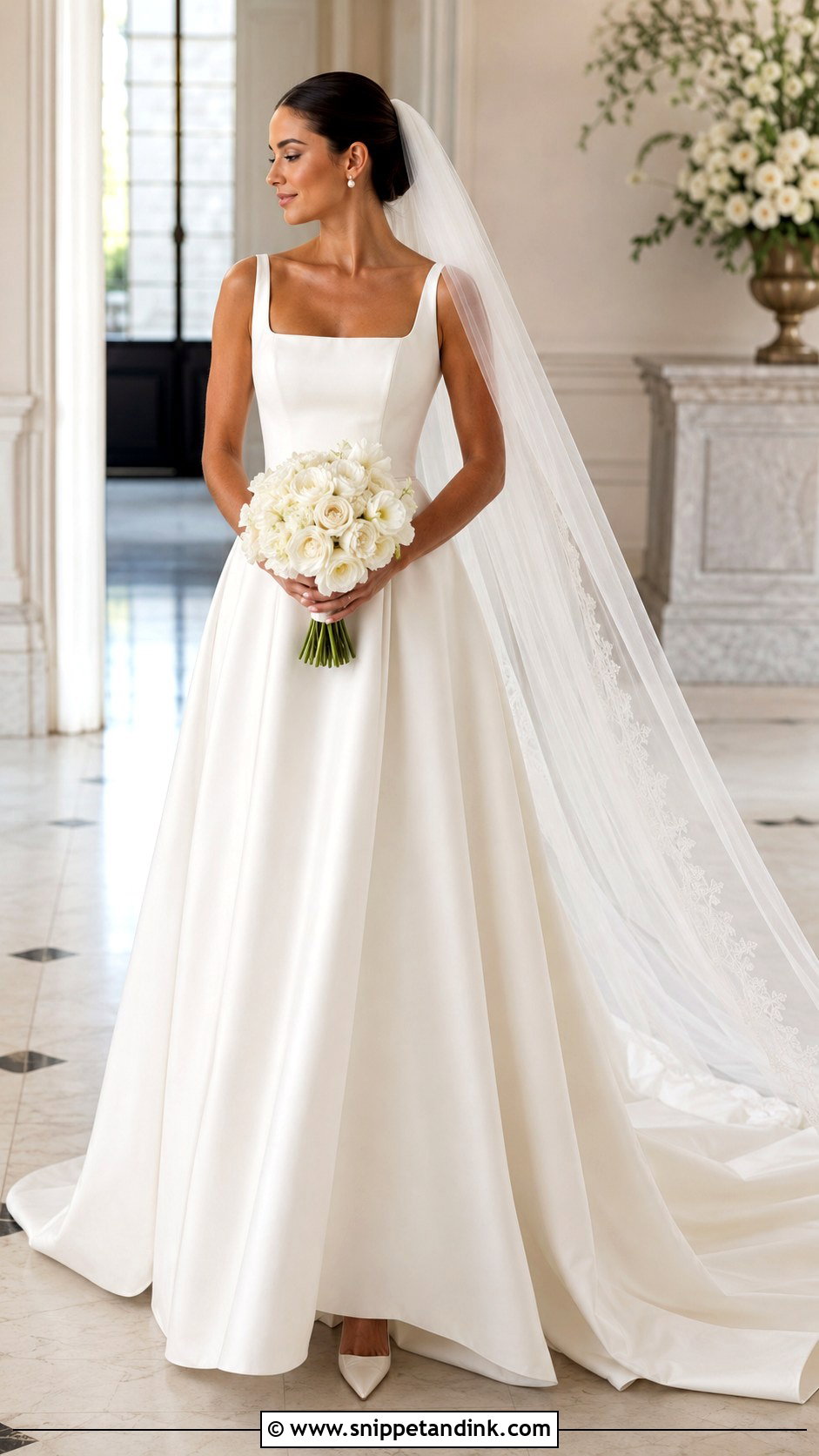
If a bride is unsure where to start, I put her in an A-line first. A supportive fitted bodice, a natural waist and a satin or chiffon skirt suit most bodies and most venues, and it gives us a baseline to compare everything else against. A square neckline makes the classic shape feel current. Pair it with a cathedral veil, pearl studs and pointed-toe shoes, or block heels if you’ll be outside. It moves well from ceremony to dancing, and it’s the shape I suggest when someone wants waist definition but hates the restriction of a narrow skirt or the weight of a full ball gown.
4. Charlotte Wedding Dress With Satin Ball Gown
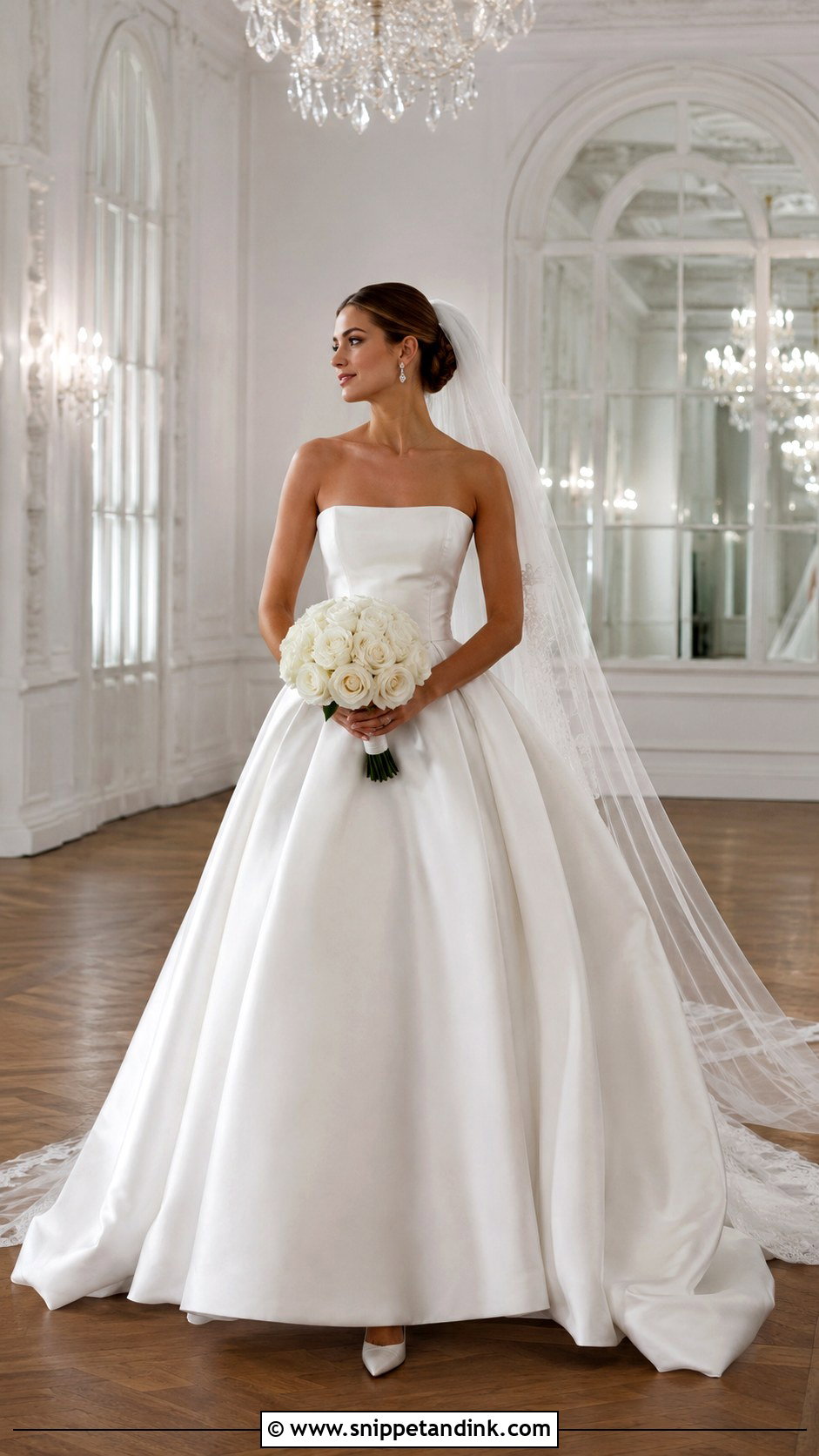
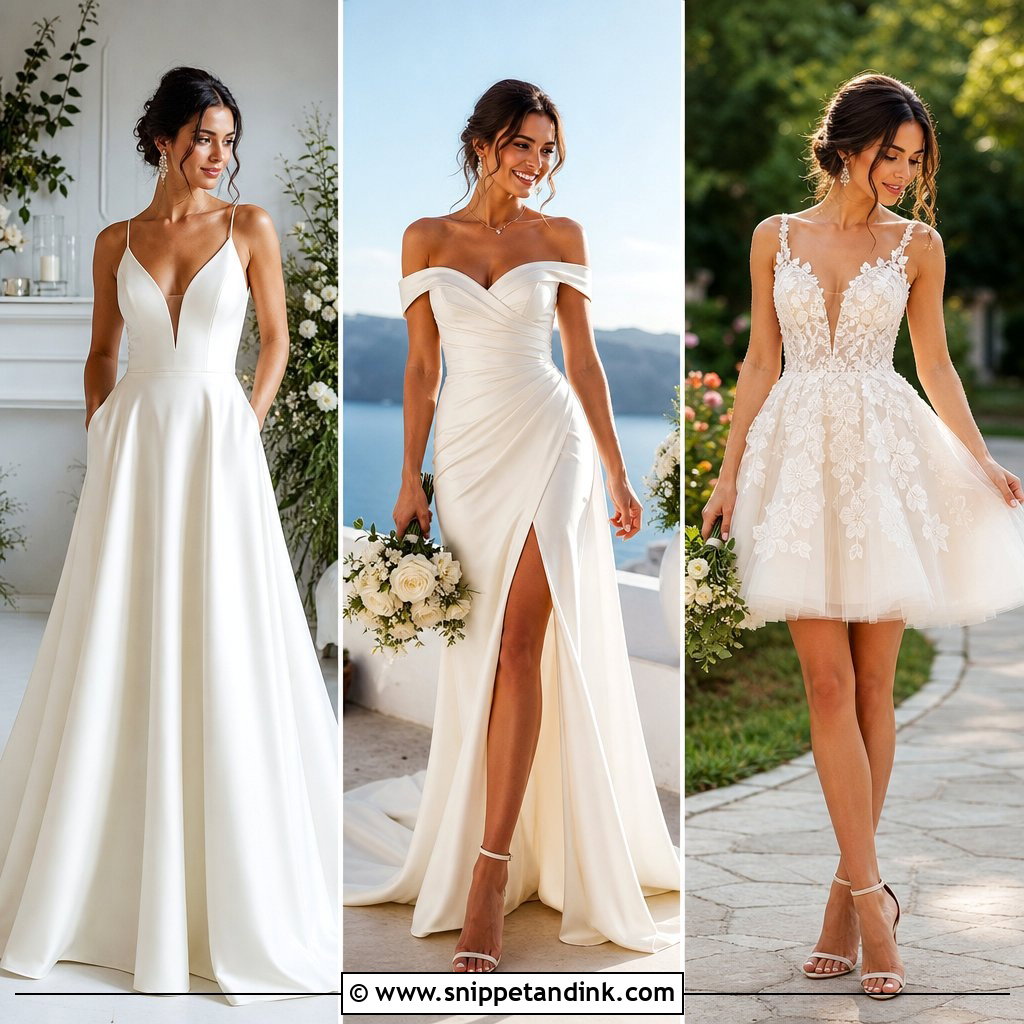
A ballroom deserves a satin ball gown. A structured bodice, a defined waist and a full skirt, ideally with hidden pockets, give it real presence. Strapless or off-the-shoulder necklines let the fabric do the work. Satin is heavy, though, and that’s the trade-off I flag at every appointment: a full skirt can weigh several pounds, and you’ll feel it after hours of standing, so try the sample on for at least twenty minutes. Keep accessories quiet, a cathedral veil, crystal studs and satin pumps, and consider gloves for portraits only. A smooth bun and white roses finish it for hotels and large ballrooms.
5. Charlotte Wedding Dress With Square Neckline
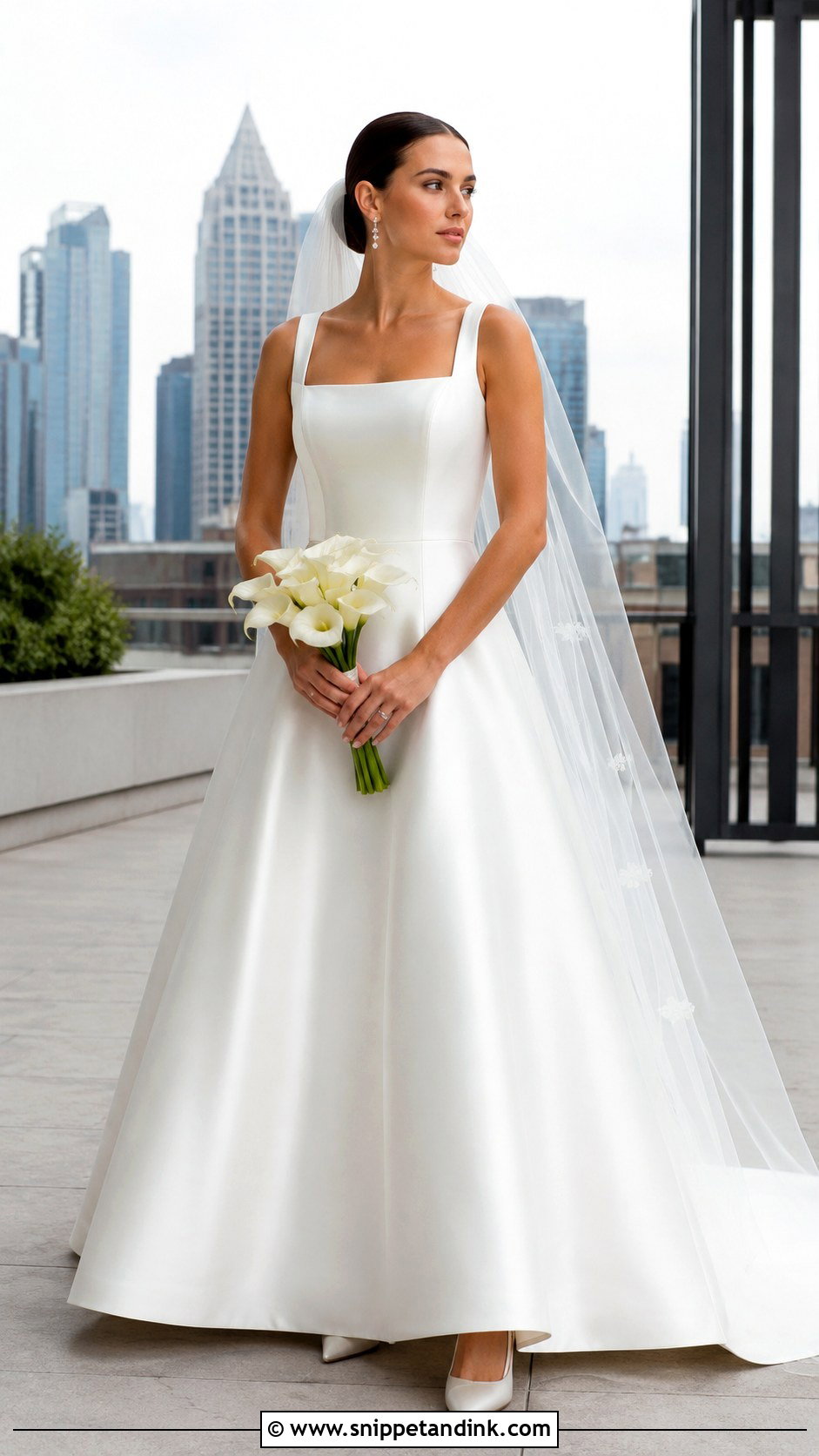
A square neckline frames the collarbone with clean, architectural lines. I like it on a fitted mikado or crepe gown with wide straps and a column or softly flared skirt. Skip the necklace; drop earrings are enough. The fitting issue with this neckline is gaping at the corners when you lean forward, so I always have brides bend as if signing the license. A low bun, a sheer fingertip veil, pointed slingbacks and calla lilies keep the look modern. Detachable straps or a removable overskirt add flexibility for uptown hotels, galleries and rooftop ceremonies.
6. Charlotte Wedding Dress With Off-Shoulder Sleeves
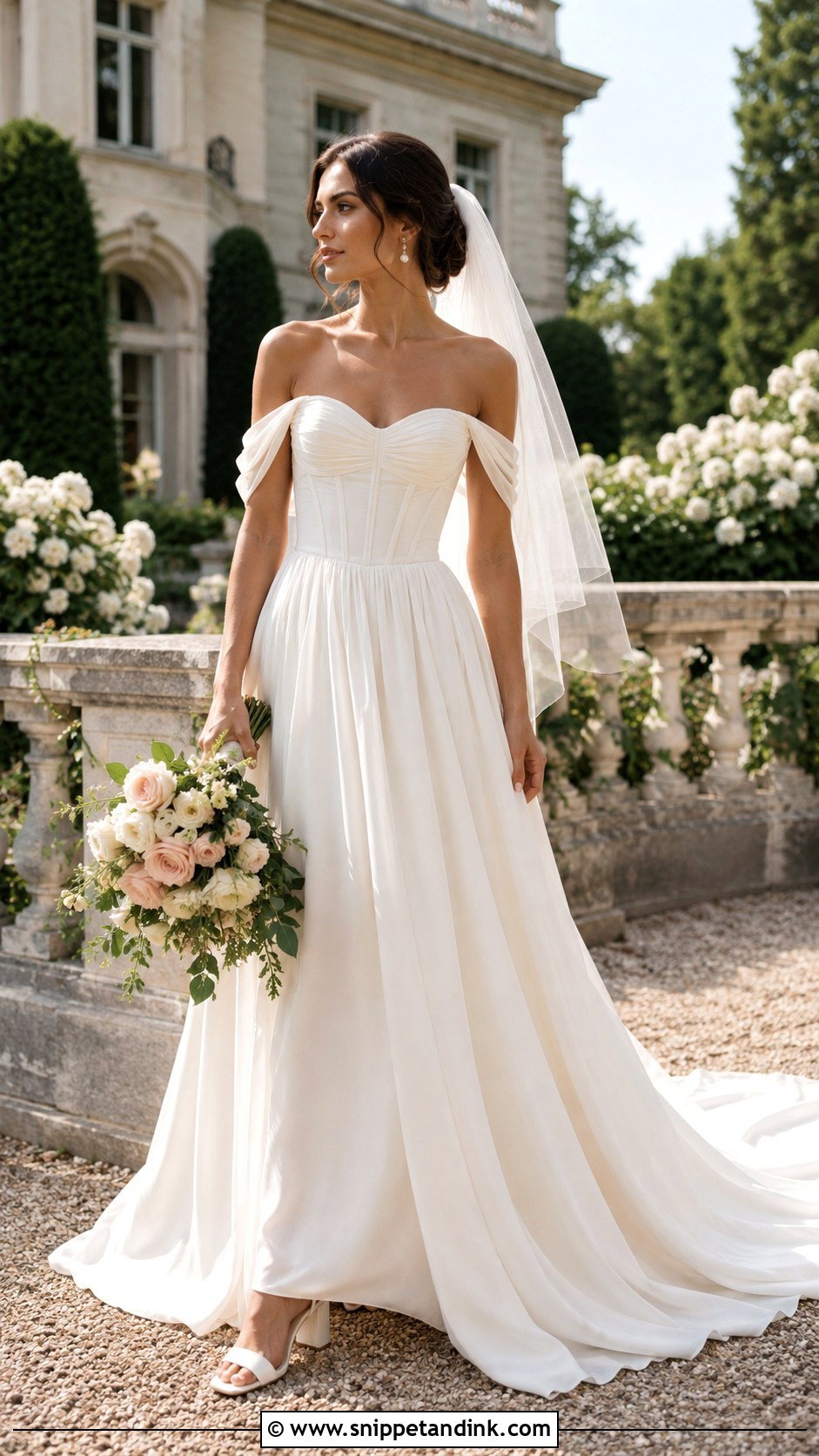
Off-the-shoulder sleeves are pretty, but they limit arm movement more than brides expect. At fittings I have you sit, hug and lift your arms to shoulder height; if the sleeves cut in, ask for a touch more stretch or a slightly lower placement. A supportive corset-style bodice keeps everything in place without relying on the sleeves. Pair the ivory gown with a fine pendant, pearl earrings and a low textured bun so the eye goes to the neckline. A medium-length veil, block-heel sandals and a loose white, blush and green bouquet suit estates, formal gardens and country clubs.
7. Charlotte Wedding Dress With Crepe Mermaid Skirt
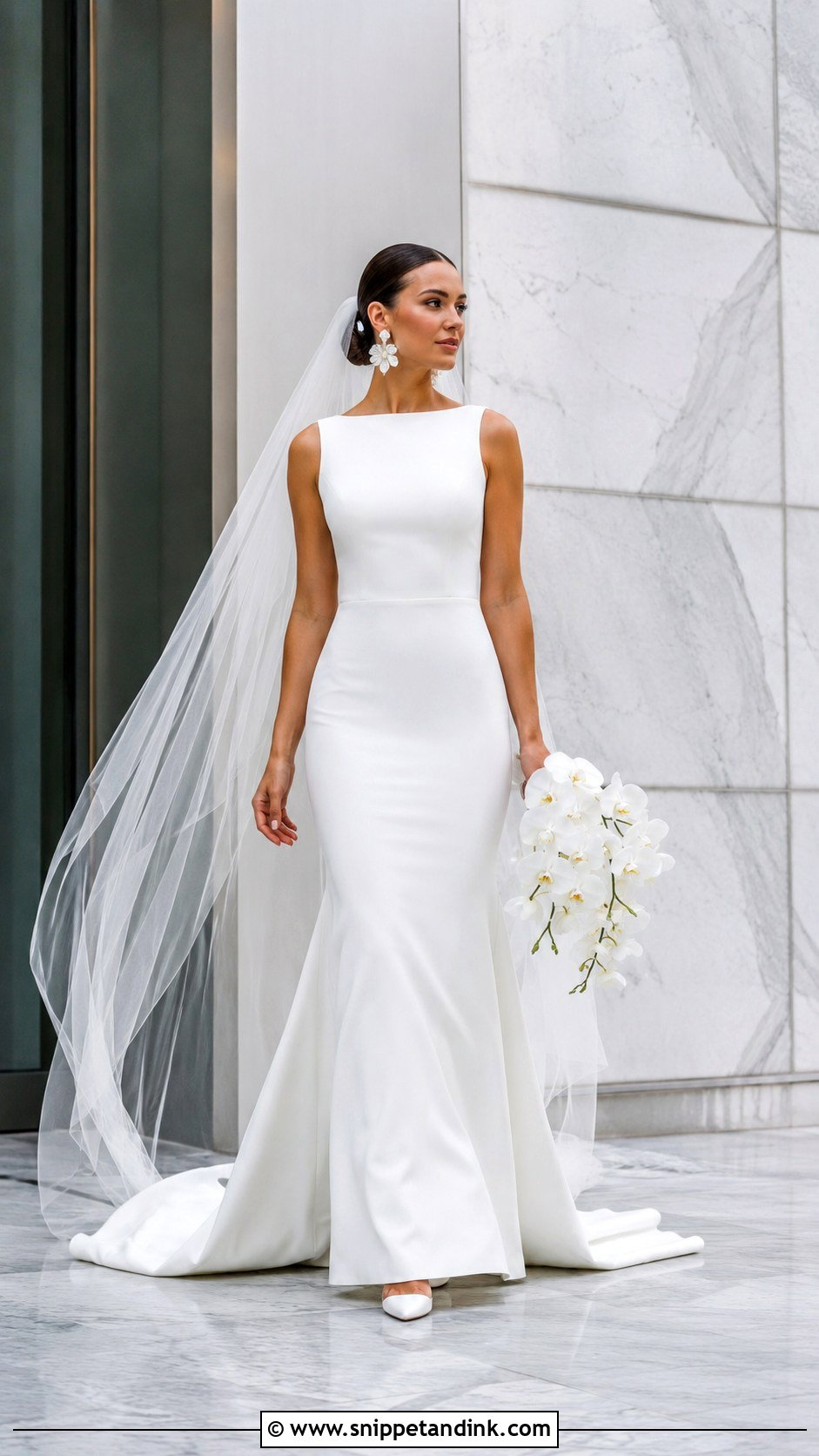
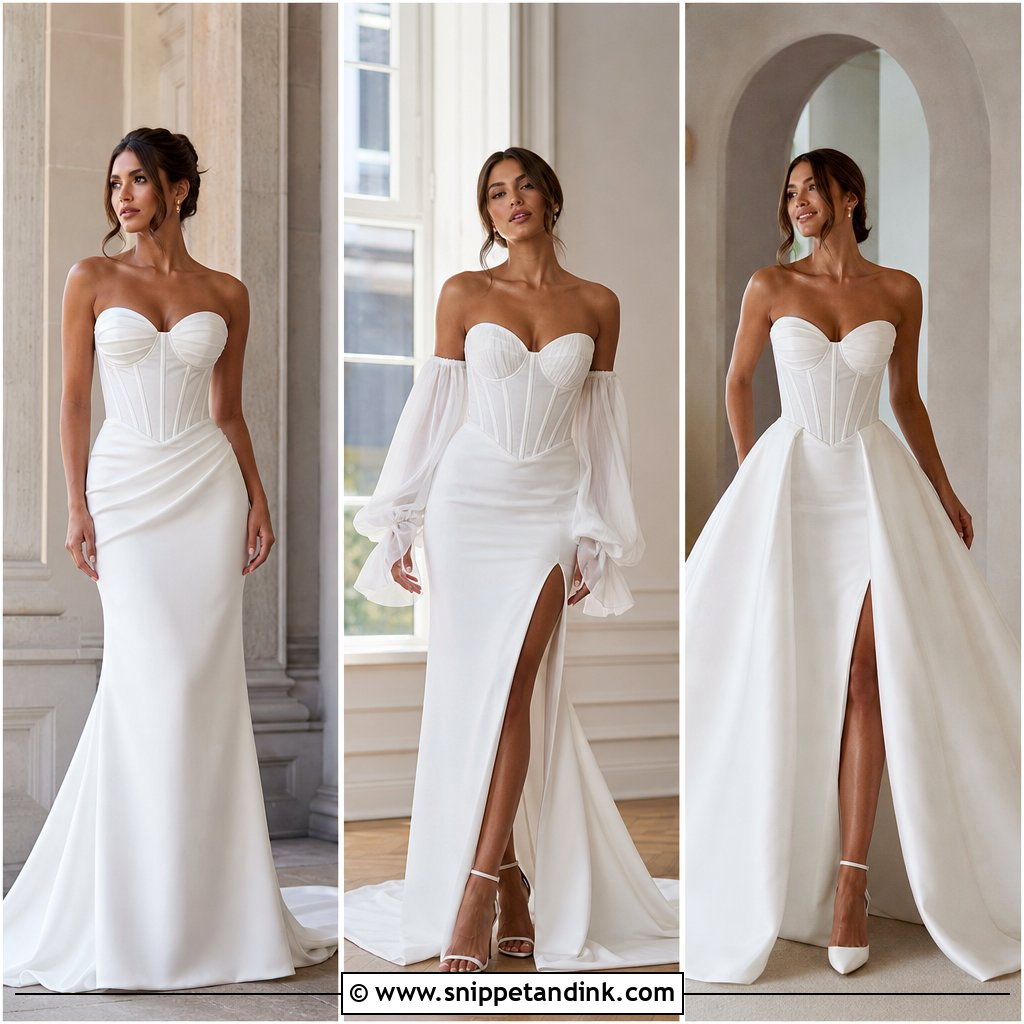
A crepe mermaid suits a bride who wants shape with almost no embellishment. The fitted bodice and the flare near the knee create the line, so construction matters: stretch crepe, solid internal support and a flare placed low enough to walk but high enough to sit. I always ask a bride to climb a step in the sample, since a flare set too low makes stairs a problem. Style it with a long sheer veil, sculptural earrings and pointed heels, and hair in a sleek ponytail or side-parted waves. A single white orchid bouquet softens it for rooftops and city ballrooms.
8. Charlotte Wedding Dress With Pearl Details
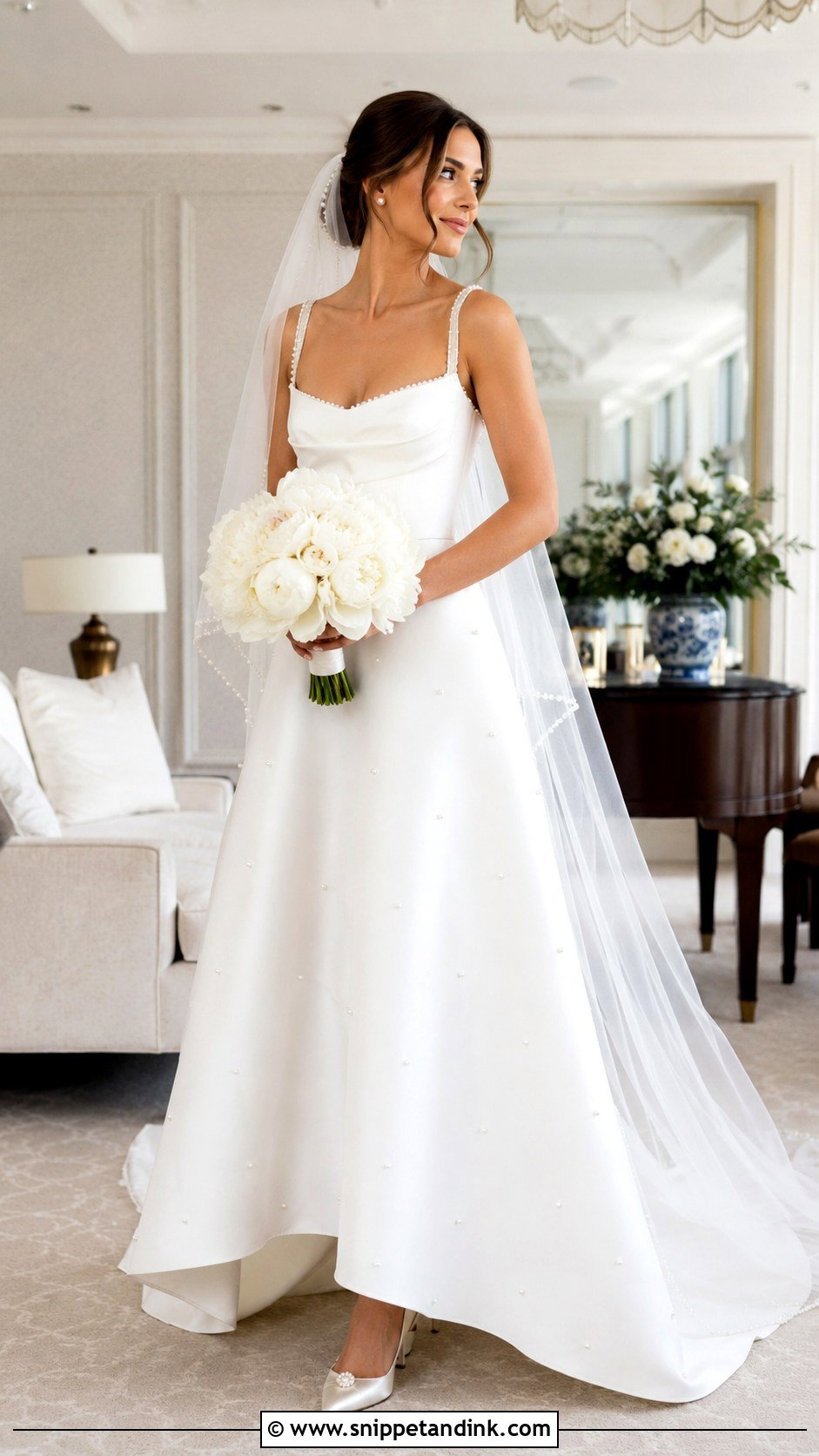
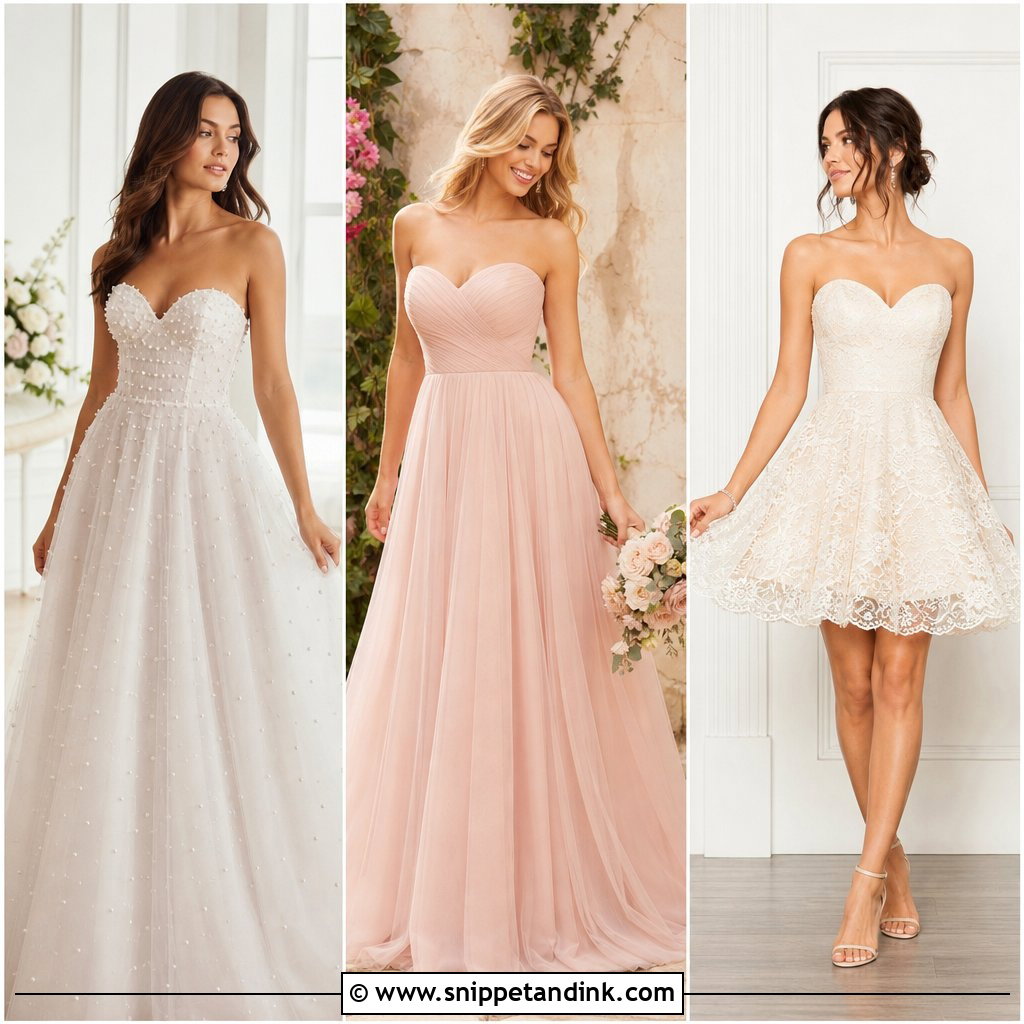
Small pearls turn a plain gown into something luminous, provided the silhouette stays simple. I like them along straps, lightly scattered over a bodice or sprinkled across sheer sleeves on a soft A-line or column. Before you commit, run your hand along the inner arm of the sample; pearls sewn near the side seams rub when your arms move. Pearl studs, a veil with a narrow pearl edge and ivory satin heels keep it cohesive. A polished bun or soft half-up style and a bouquet of peonies or hydrangeas suit indoor ceremonies, classic hotels and formal estates, and pearls read softer in photos than crystal.
9. Charlotte Wedding Dress With Detachable Overskirt
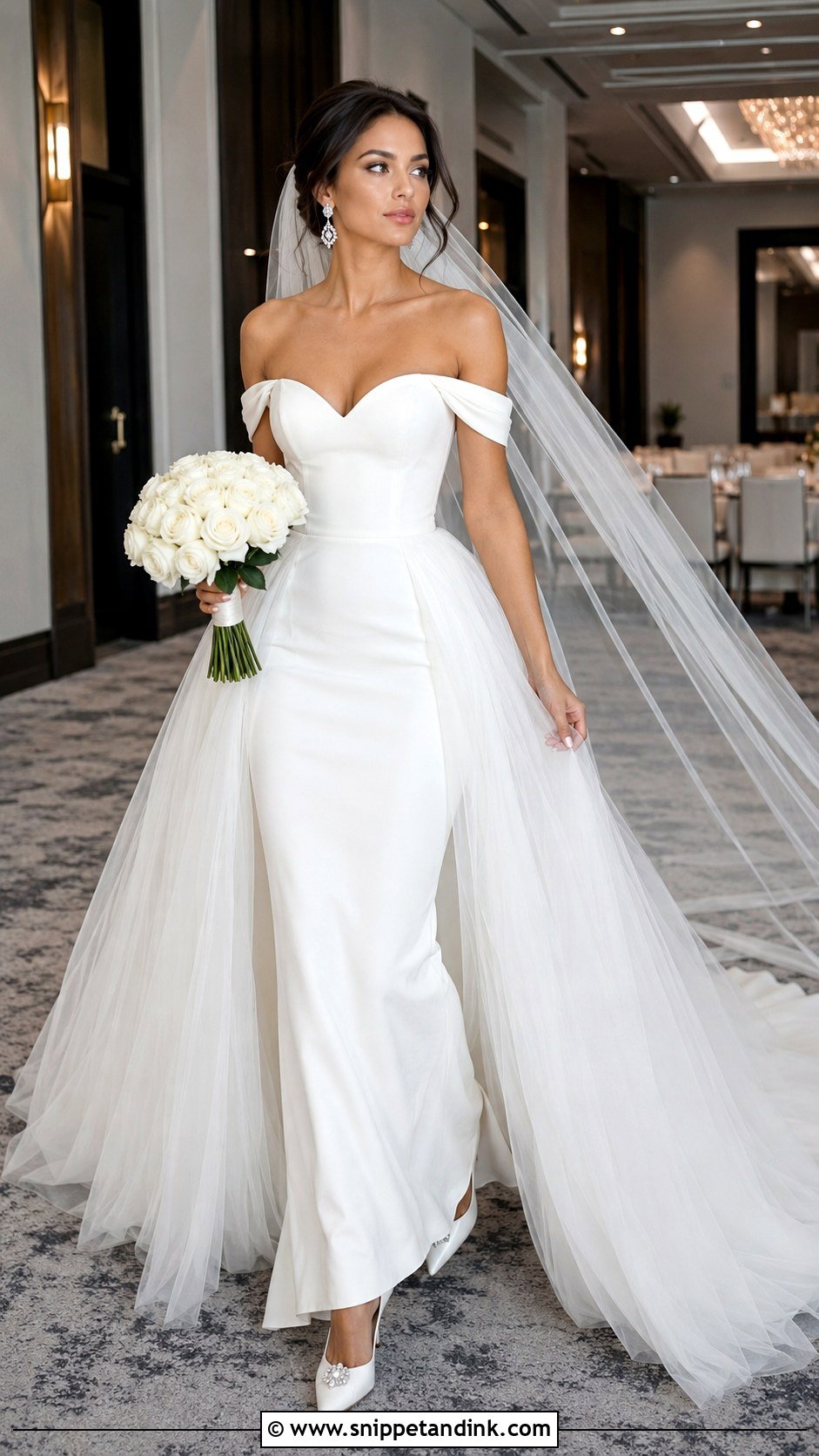
An overskirt gives you two looks without a full change. Start with a fitted crepe, lace or satin column, add a sweeping tulle or mikado overskirt for the ceremony with a cathedral veil and crystal earrings, then remove it after portraits and swap the veil for a bow or comb. The bride I’d steer away is one who won’t rehearse. Fastenings vary from hooks to snaps to hidden zips, and I insist the person helping you on the day practices removing it at your final fitting. A lighter base dress makes dinner and dancing far easier in hotels and ballrooms.
10. Charlotte Wedding Dress With High Neckline
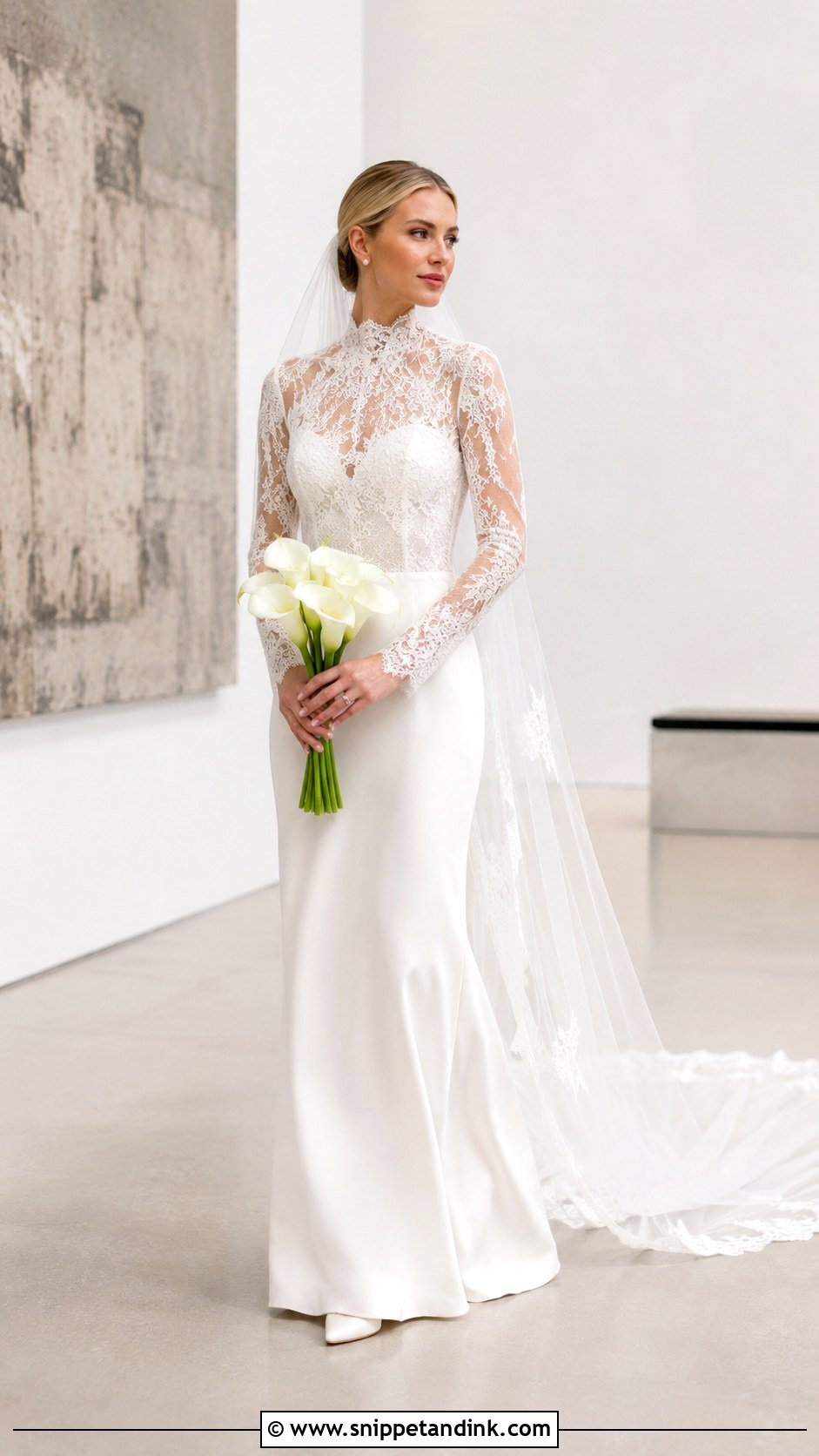
High necklines bring coverage with a fashion edge. A sheer lace neck over a fitted long bodice with a chiffon or crepe skirt is one route; a clean halter with a low back is the other. Skip the necklace and keep to small earrings. My one caution is heat: a high lace collar on an outdoor summer ceremony gets warm fast, so I save it for fall weddings and air-conditioned venues. A sleek bun, a chapel veil, closed-toe ivory heels and a narrow bouquet of calla lilies follow the long lines for galleries, upscale hotels and formal indoor ceremonies.
11. Charlotte Wedding Dress With Boho Lace
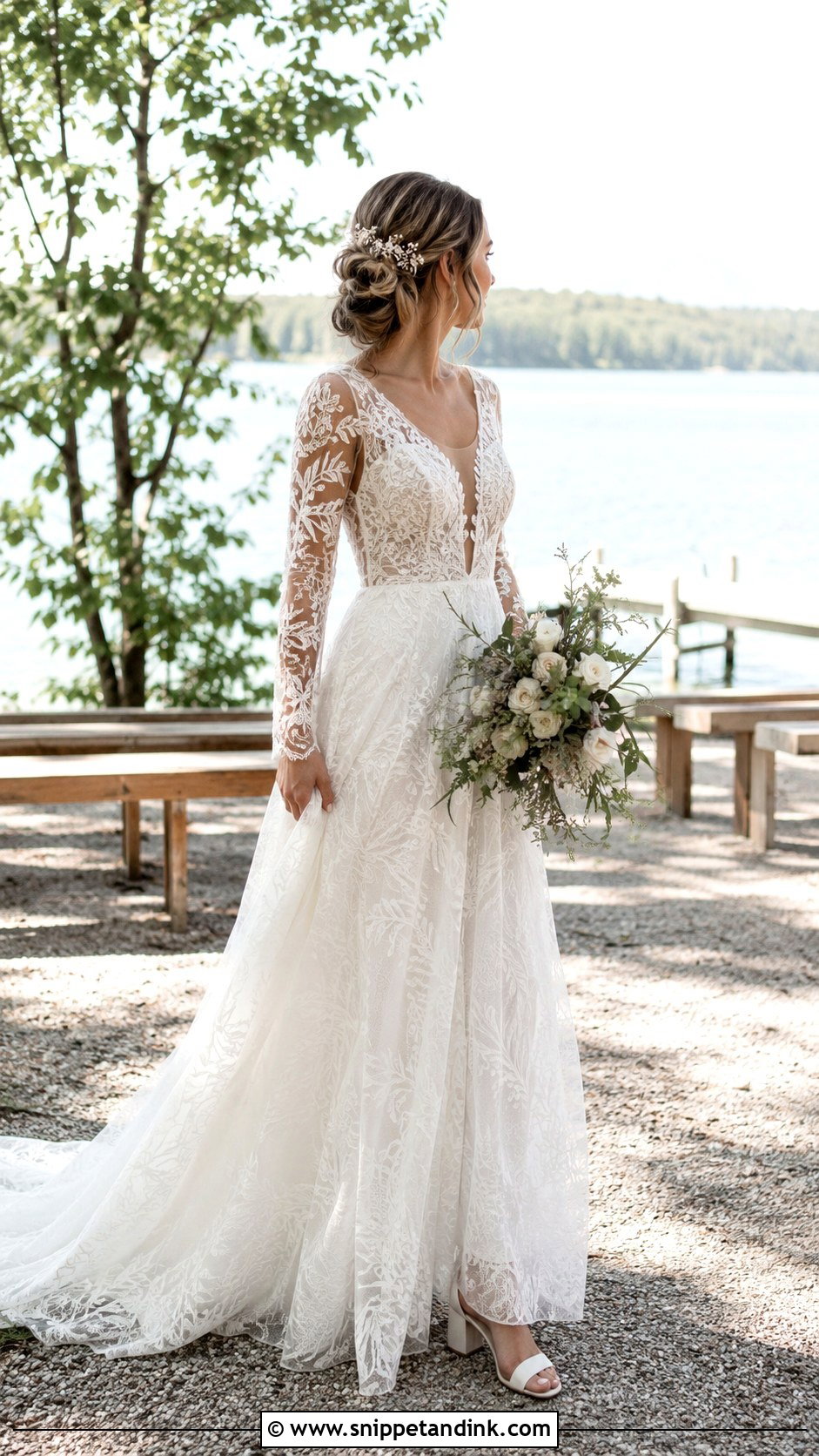
For a lake ceremony or a woodland estate, I’d put a bride in boho lace before anything structured. A lightweight sheath or A-line gown with leaf-pattern lace, a breathable lining and a softly defined waist keeps you cool through a long outdoor day. Flutter sleeves, wide straps or long sheer sleeves all suit it. A simple tulle veil or floral pins, low block heels for gravel and decking, and a loose bouquet with textured greenery and dried accents keep the mood easy. Natural waves or a loose braided updo hold up better outdoors than a sleek style that frizzes.
12. Charlotte Wedding Dress With Minimalist Slip Shape
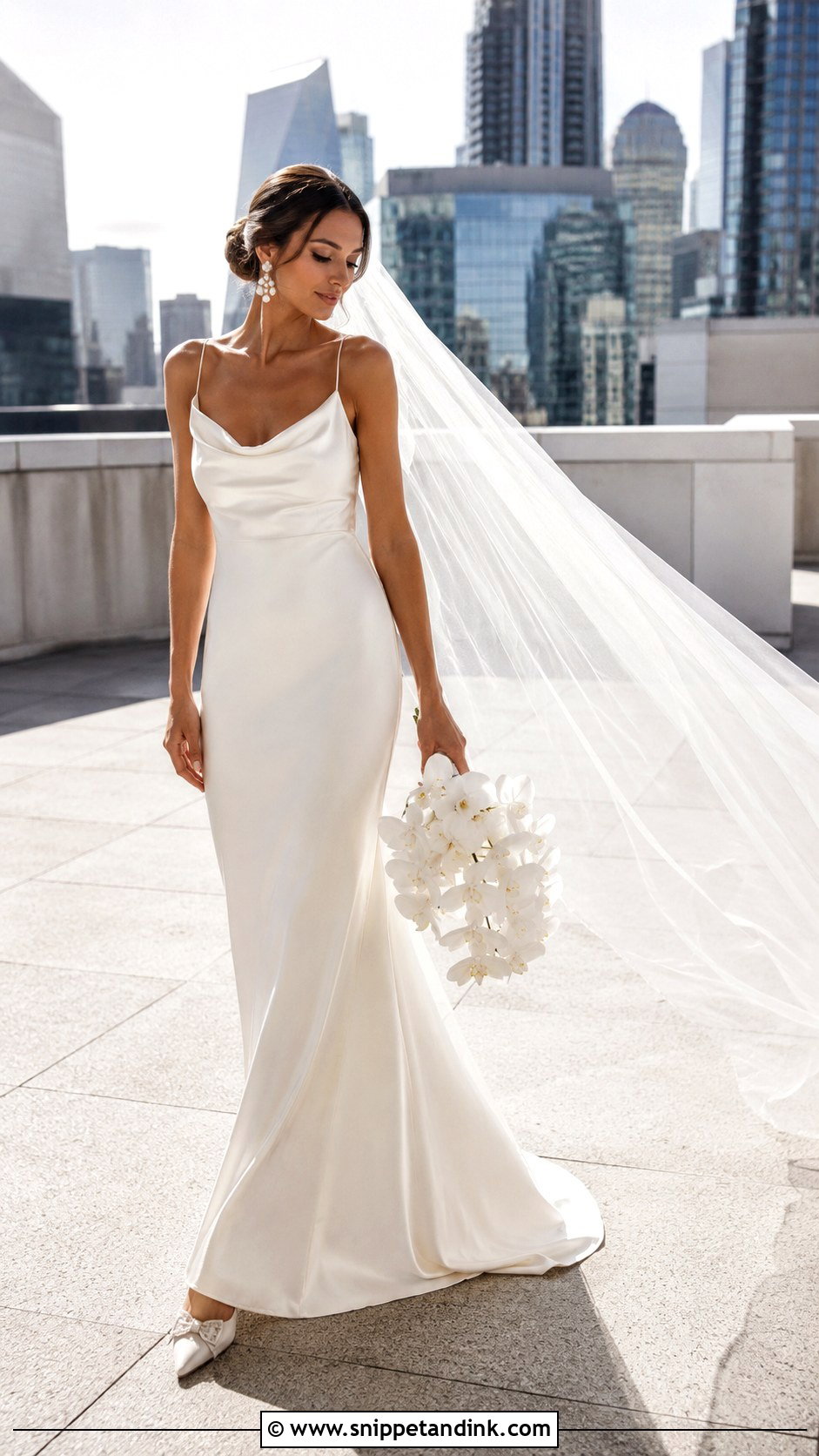
A slip dress looks simple, and that’s exactly why it’s hard to get right. Thin satin reveals every seam, undergarment line and fitting error, so I only recommend it in substantial silk, heavy satin or crepe, properly lined, and with a tailor who is comfortable working on bias cuts. A draped neckline, slim straps and a skirt that skims rather than clings are the details to look for. Sculptural earrings, a sleek bun and low pointed heels or refined sandals suit it, with a long sheer veil for the ceremony. White orchids or callas fit rooftops, intimate hotels and courthouse weddings, and a tailored blazer layers over it later.
13. Charlotte Wedding Dress With Cape Veil
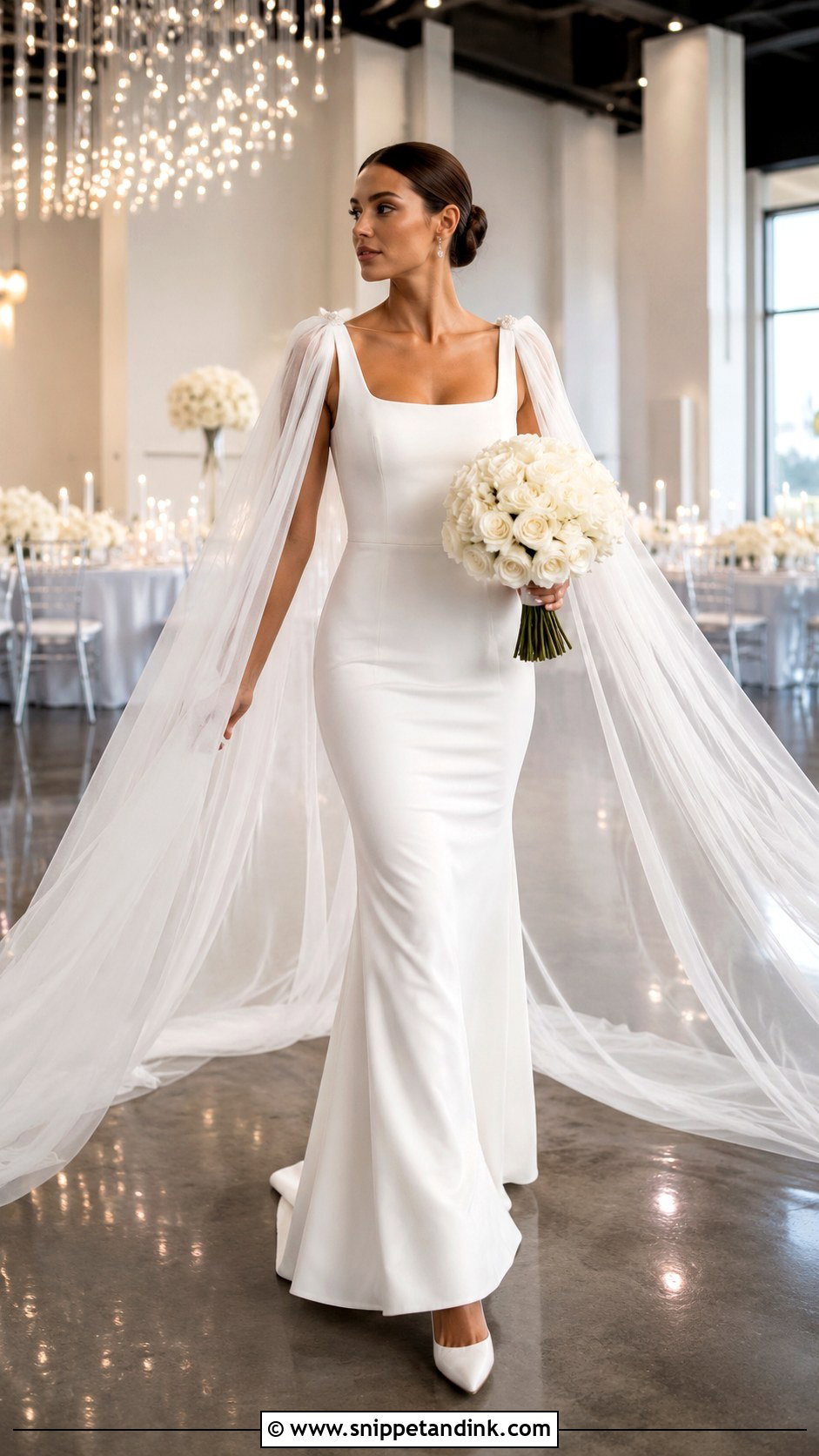
A cape veil floats behind you as you walk without anything sitting in your hair. Pair it with a fitted crepe gown with a clean neckline and a gentle train. The cape fastens at the shoulders, and that attachment is what I check carefully: on delicate straps it can pull the neckline backward, so we often stitch in small loops or use a firmer strap. Chapel or cathedral length both work. Keep the rest minimal, small crystal earrings, pointed pumps and a sleek low bun, with a structured white rose bouquet. It suits ballrooms and rooftops where there’s room for the fabric to move.
14. Charlotte Wedding Dress With Short Hemline
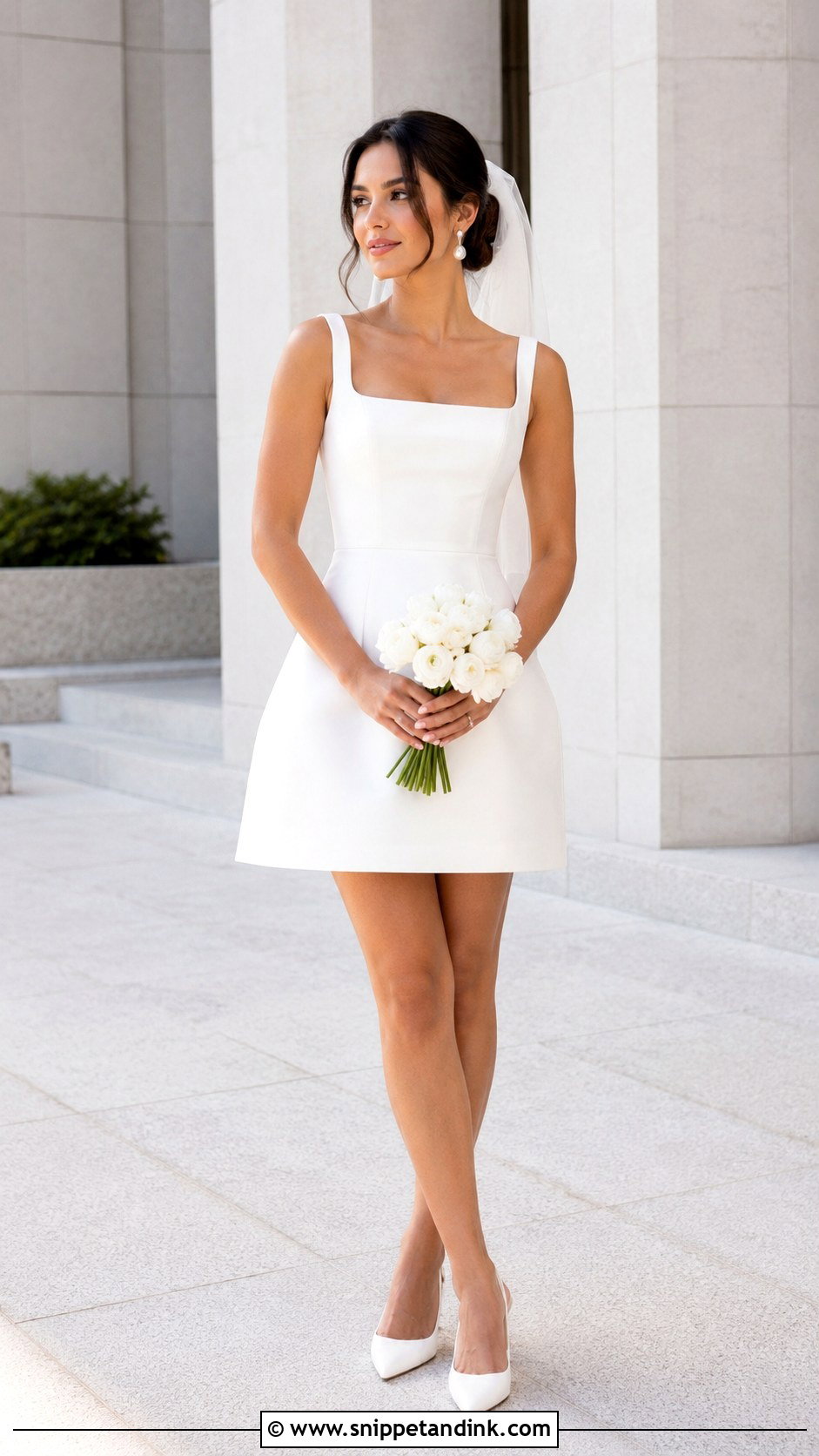
Short wedding dresses look fully bridal when the proportions are right. A structured mini or tea-length dress with a square neckline, fitted waist and a full or tailored skirt carries a short veil, pearl earrings and pointed slingbacks well. Keep the bouquet small, since a big arrangement swamps a short dress. I check hem length seated before anything else, because it rises more than you think. A cropped bridal jacket or a tailored coat covers cooler months. Courthouse ceremonies, restaurant receptions and rehearsal dinners all suit it, and your shoes become part of the look, so choose a pair you love.
15. Charlotte Wedding Dress With Bridal Pantsuit
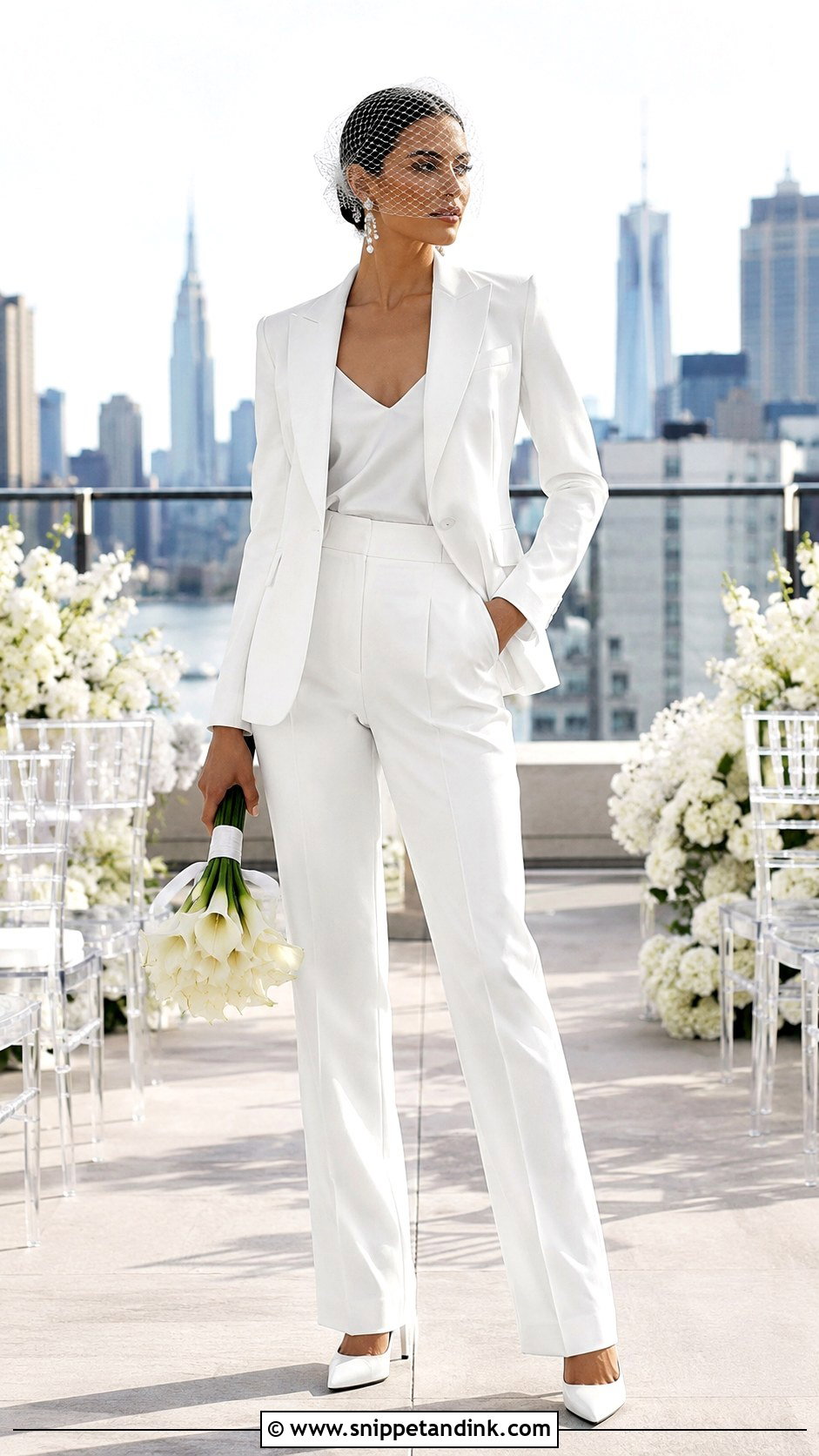
Not every bride wants a gown, and a white bridal pantsuit is a sharp, comfortable answer. High-waisted tailored trousers with a single-breasted blazer, a structured bustier or a silk camisole work best when every piece is the same white or ivory; mismatched whites look yellow next to each other in photos. Tailoring is everything here. Shoulders, waist, trouser break and sleeve length all need attention, and I’d budget for it. Pointed pumps, statement earrings and a birdcage veil or hair bow, with a compact bouquet of callas, suit courthouse vows, rooftops and contemporary hotels.
16. Charlotte Wedding Dress With Plus-Size Ball Gown
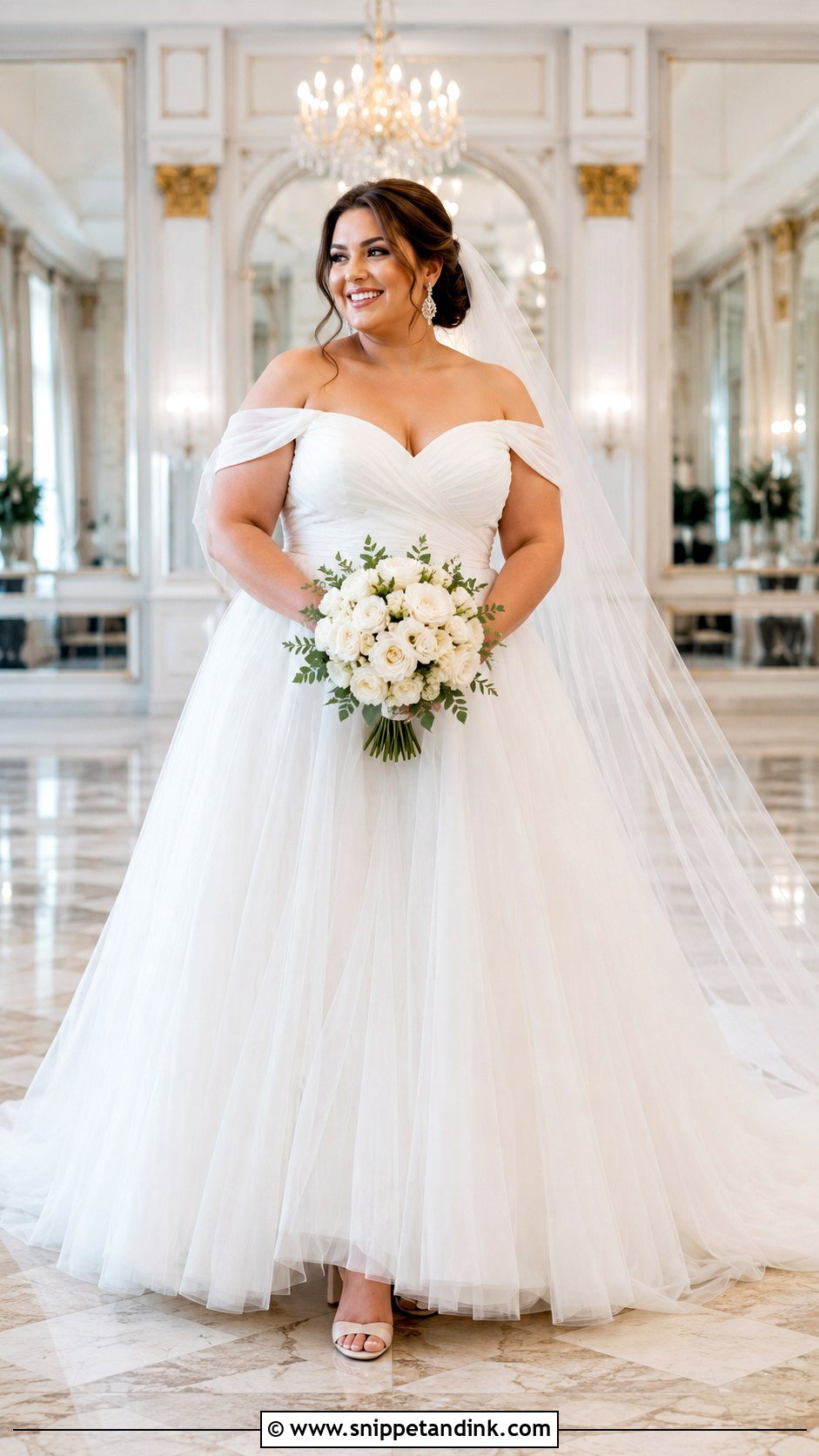
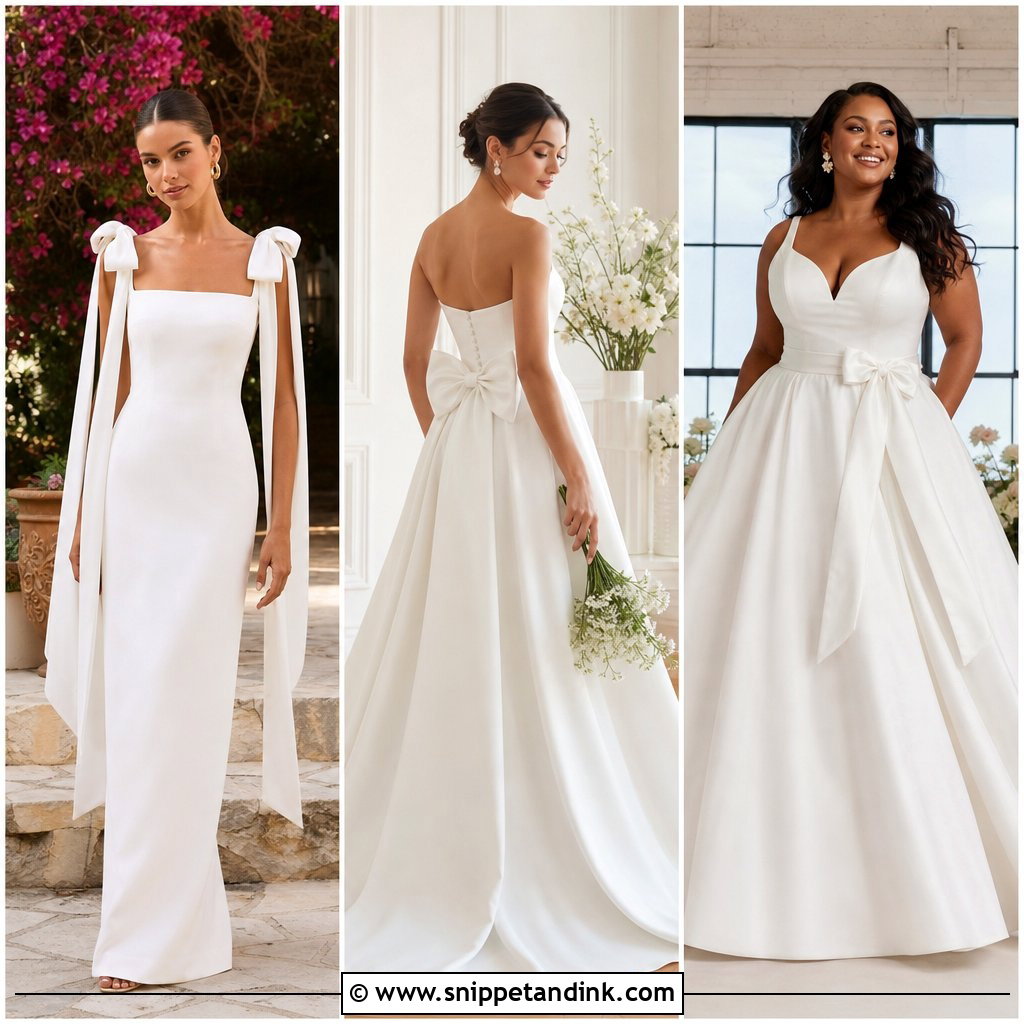
A plus-size ball gown should do the supporting so you don’t have to. I look for structured internal boning, wider straps or stable off-the-shoulder sleeves, and a waist placed at your natural waist rather than a fixed sample position. Lightweight tulle layers give fullness without making the gown heavy. Ask salons for samples close to your actual size; judging a bodice that’s pinned or unzipped tells you very little. Cushioned block heels, a cathedral veil and balanced drop earrings, with a smooth updo and a medium bouquet, suit hotel ballrooms and country clubs. The dress should celebrate your body, not bury it in fabric.
17. Charlotte Wedding Dress With Colorful Embroidery
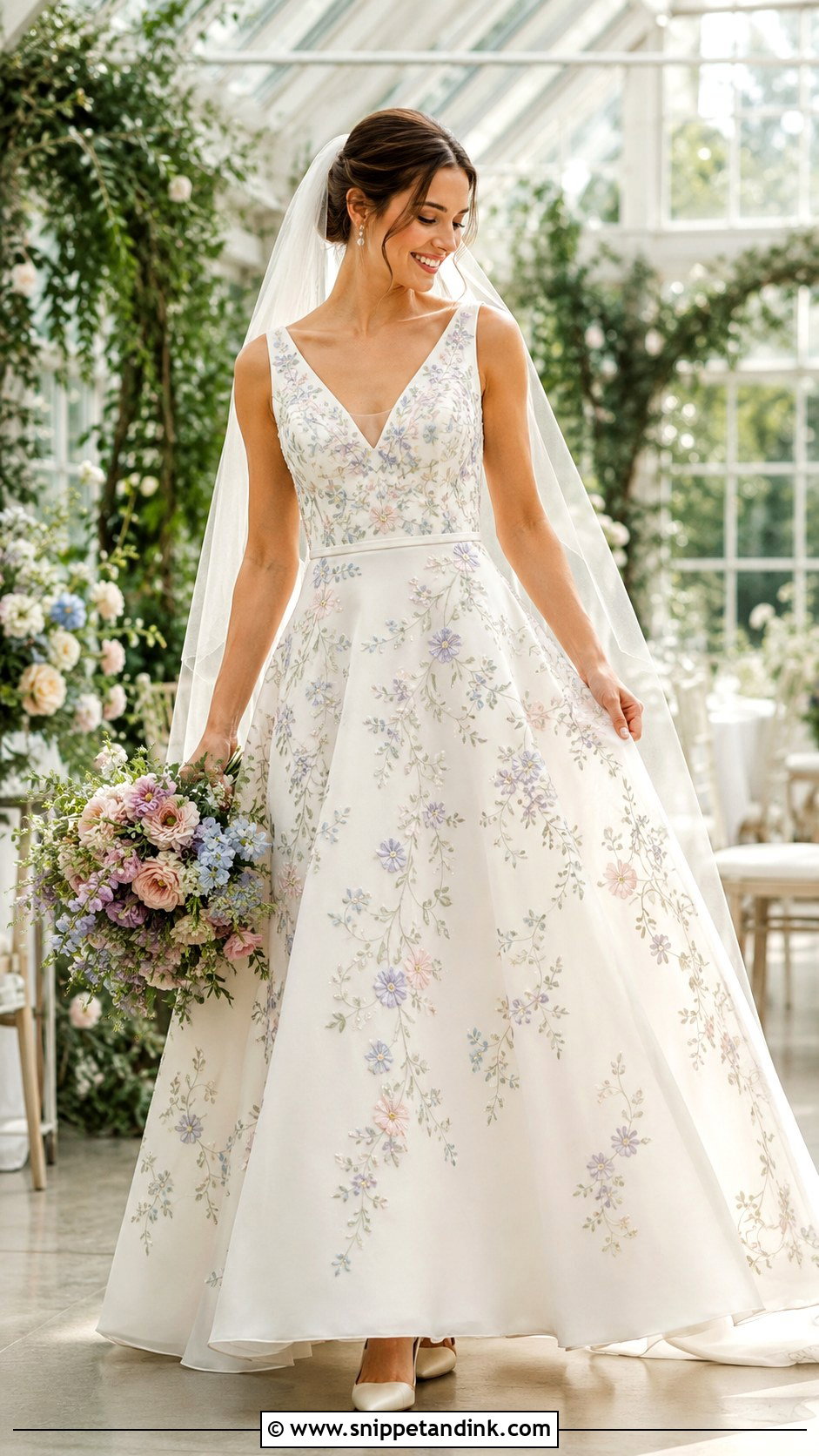
Colored embroidery adds personality while keeping the gown clearly bridal. Blue, blush, lavender or green florals on soft ivory look best when they’re concentrated on the bodice, sleeves or lower skirt rather than spread everywhere. I always look at the reverse side of the stitching at a fitting; thick embroidery can scratch on the inside of a bodice. Keep the veil plain, the earrings simple and the shoes ivory. Pull one or two thread colors into the bouquet. Soft waves or a loose low bun suit garden ceremonies, spring weddings and greenhouse venues.
18. Charlotte Wedding Dress With Tea-Length Skirt
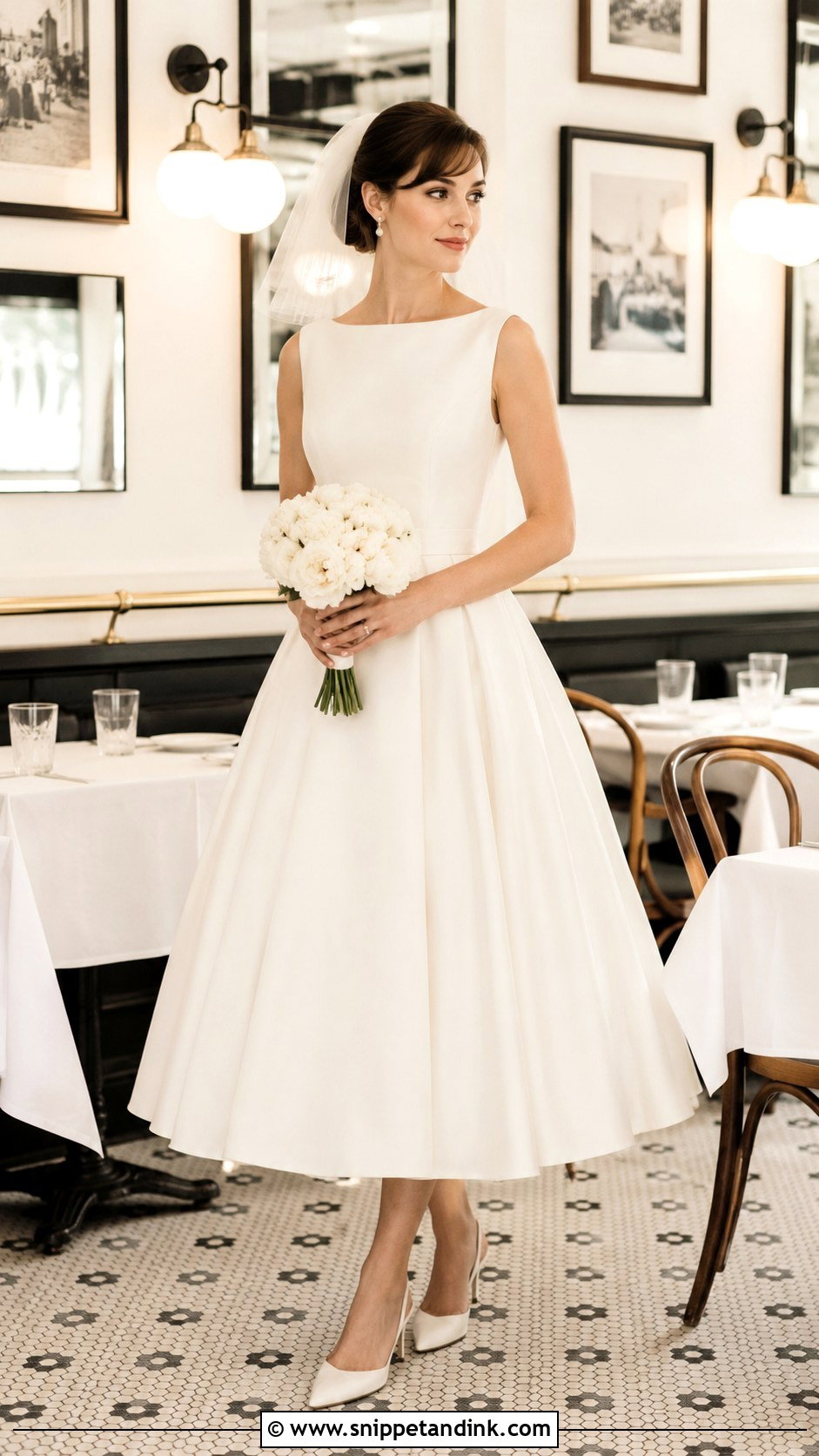
Tea length gives vintage character and lots of freedom to move. A fitted bodice with a bateau, square or sweetheart neckline and a full skirt ending between knee and ankle shows off your shoes, so slingbacks, embellished flats or classic pumps are part of the plan. A short veil, pearl earrings and a compact bouquet keep the proportions right. A smooth bun or curled bob adds polished retro influence without tipping into costume. Practice sitting in the final hem; petticoats can push the skirt up more than you expect. Courthouses, daytime receptions and small garden gatherings suit it.
19. Charlotte Wedding Dress With Dramatic Bow
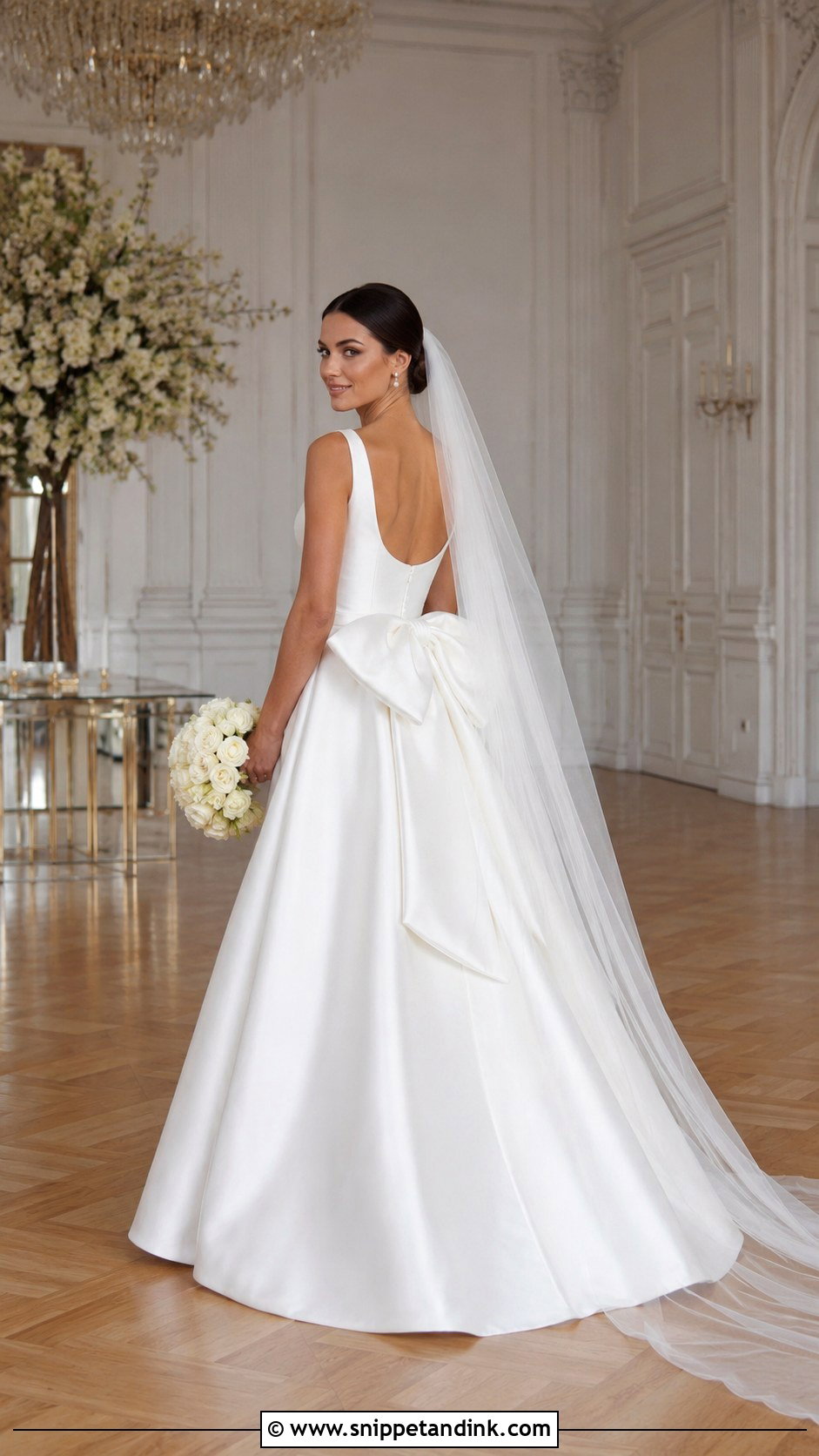
A large bow is the detail people remember from the back of the room. Start with a plain mikado or satin gown, column, A-line or ball skirt, and decide where you want attention: back waist, shoulder or neckline. Mikado holds a bow’s shape far better than soft satin, which tends to droop after a few hours. Choose a veil that ends above or below the bow, never over it. Small earrings, sleek hair and understated pumps keep it balanced, with white roses in hand. A detachable bow can come off before dancing for formal hotels and ballrooms.

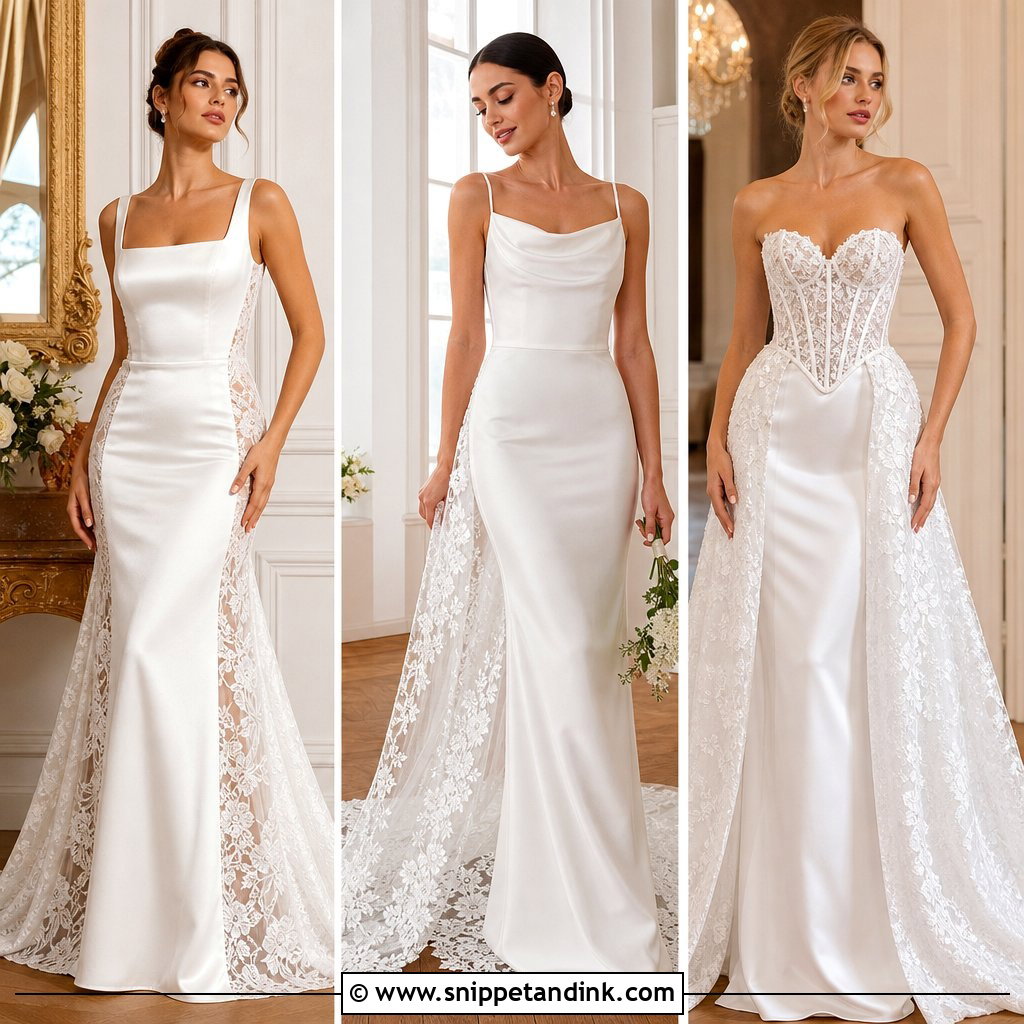
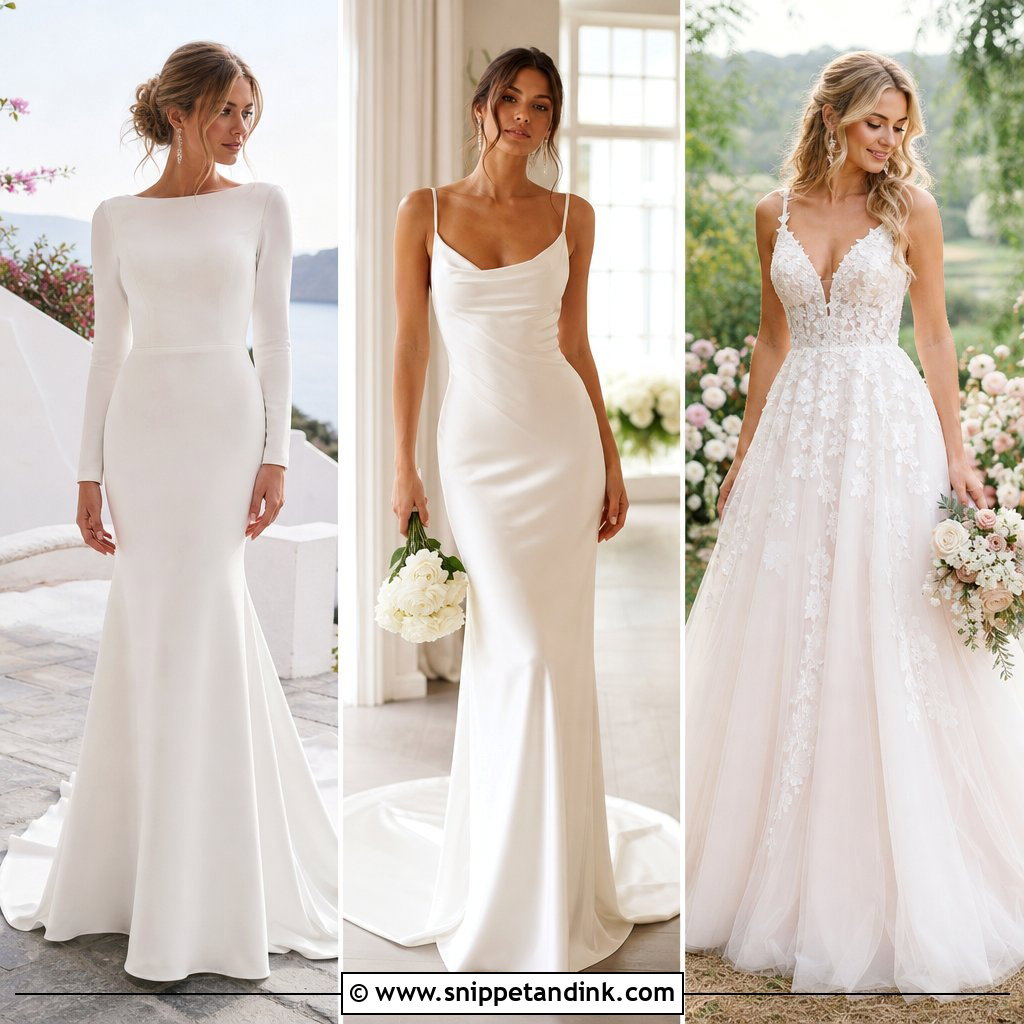
20. Charlotte Wedding Dress With Reception Mini
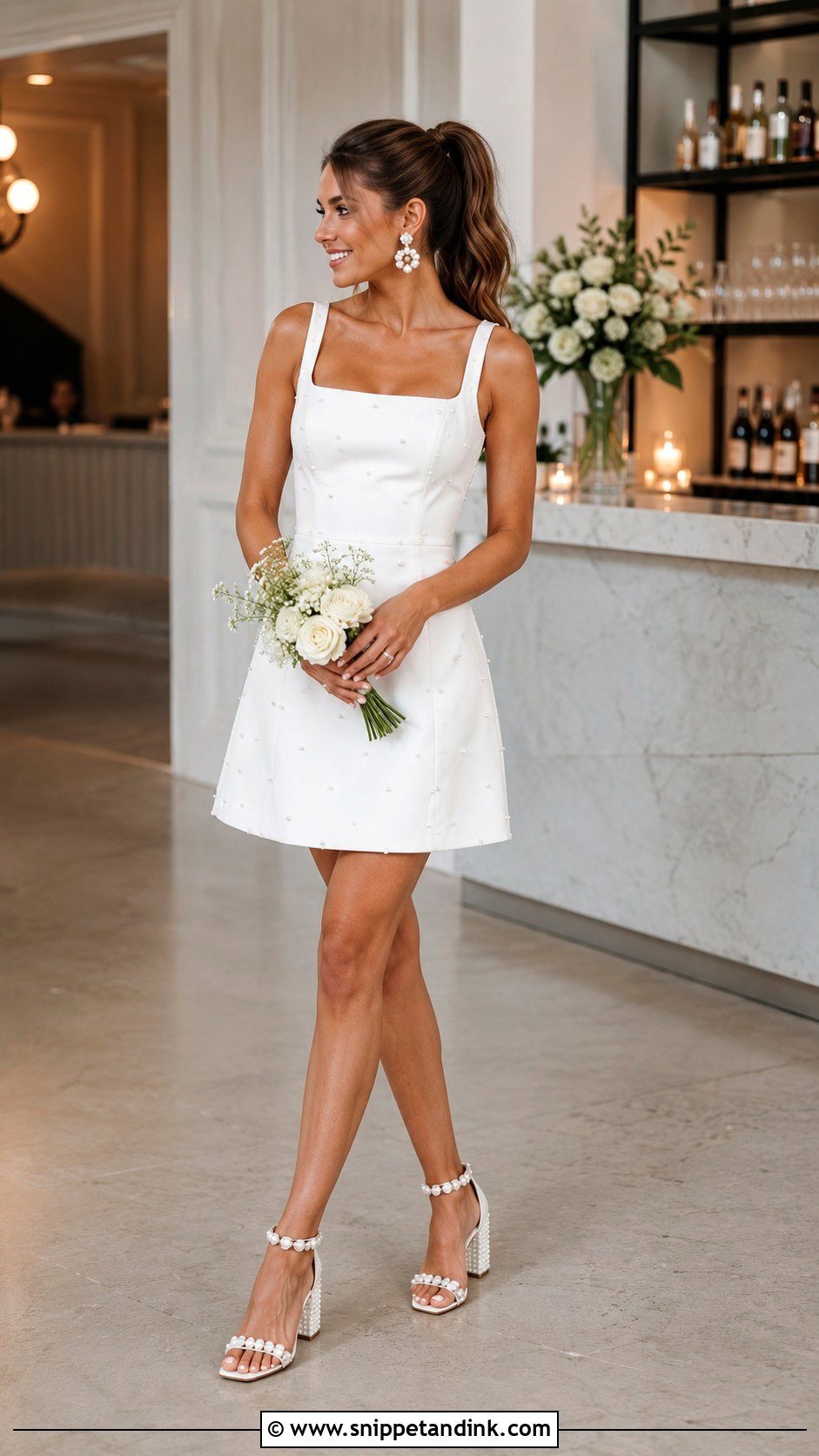
Changing into a reception mini is something I suggest when a bride loves a long formal gown but wants to dance freely. Wear the satin, lace or crepe gown with a veil for the ceremony, then switch into a structured white mini with supportive straps, a lining and room to move. Plan the change: it takes longer than you think, so build fifteen or twenty minutes into the timeline and have someone ready to help. The two outfits don’t need matching fabric, but one shared detail, pearls, lace or a bow, ties them together. Embellished flats or block heels, statement earrings and a polished ponytail keep you comfortable until the last song.
Bustles, Humidity and a Carolina Summer
Any gown with a train needs a bustle for the reception, and the style depends on the fabric. An American bustle lifts the train up and hooks it over the skirt, which suits lace and beaded trains. A French bustle tucks it under, giving a gathered, layered look that suits satin and full skirts. A ballroom bustle hides the train almost completely so the skirt looks floor-length all round. I ask brides to see their bustle done and undone at the second fitting, and to film it on a phone for whoever helps on the day.
Charlotte summers are hot and humid, and that changes the fabric conversation. Heavy satin and multiple tulle layers trap heat outdoors; chiffon, organza and lightweight crepe breathe better. Lining matters as much as the outer fabric. If your ceremony is outside between June and September, keep the walk from car to aisle short, have a fan and blotting papers nearby, and consider a shorter veil that won’t tangle in a hot breeze.
Getting the Gown Cleaned and Stored Once the Party Ends
Have the dress professionally cleaned within a few weeks. Spilled champagne and sugary drinks can be invisible at first, then oxidize and turn yellow-brown months later, and that is much harder to remove. Point out every mark you know about when you drop it off.
- Store it in acid-free tissue and an acid-free box, not the plastic bag it came in, which traps moisture.
- Keep it somewhere cool, dark and dry, so avoid an attic or garage.
- Don’t hang a heavy gown long-term; the shoulders stretch under the weight.
- Check on it once a year and refold along different lines to prevent permanent creases.
Sit, Lift Your Arms, Then Decide
The right gown for a Charlotte wedding fits your venue, your season and the way you actually move. Start with the silhouettes and fabrics that suit your plans, a ballroom, a garden, a rooftop or a courthouse, then build the shoes, jewelry, veil and flowers around that. At every fitting, sit, walk, lift your arms and dance a few steps before you sign off. Lace, satin, embroidery, a tailored suit or a reception mini can all be right; what makes any of them work is honest fitting and a seamstress who has time to get it right.
You'll Like These Ideas:




Leave a Reply