
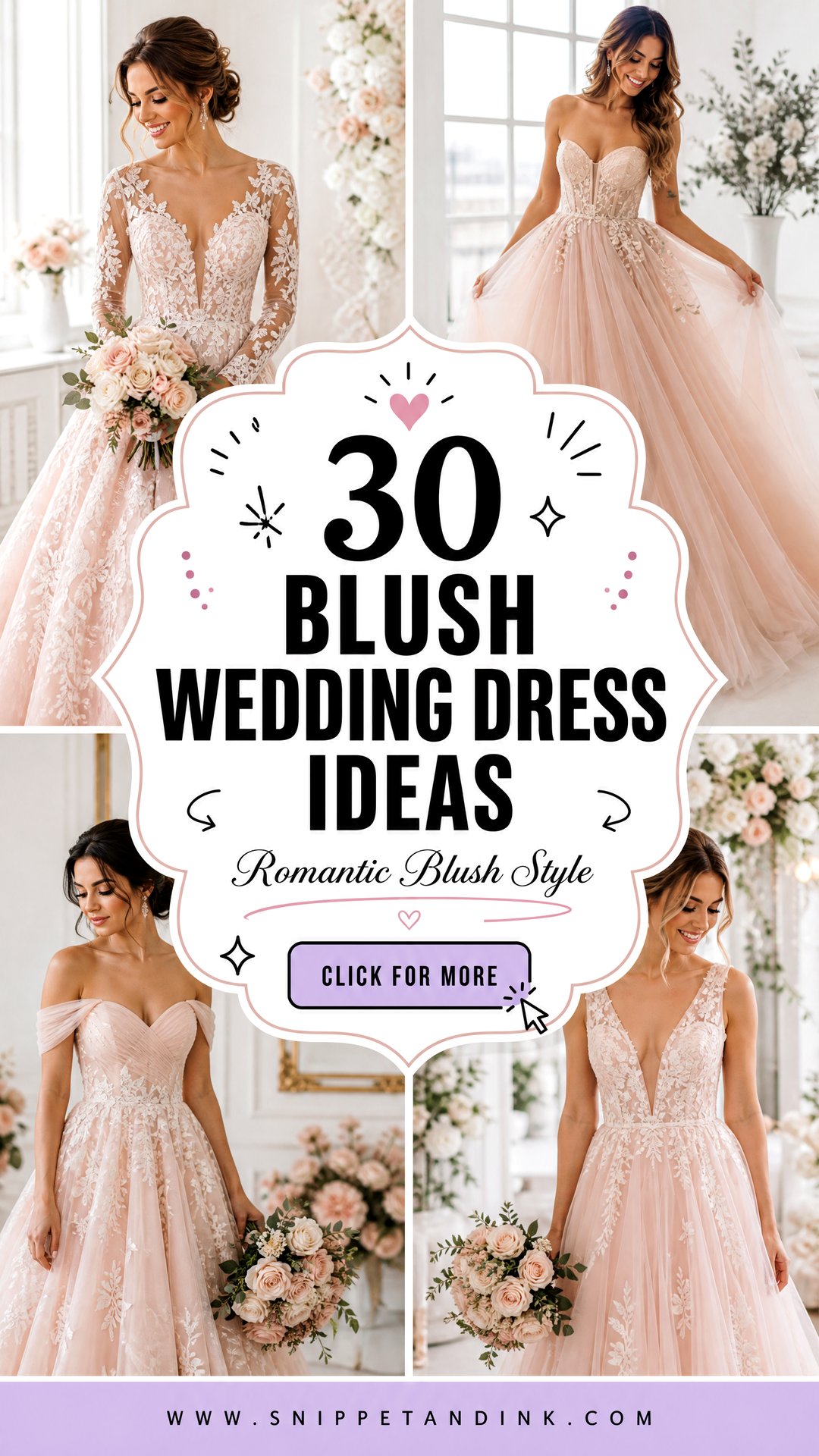
Blush gives a bride the softness of a traditional gown with more warmth near the face, and in my fittings it’s often the colour that makes someone stop hesitating in front of the mirror. It runs from a barely-there pink that photographs almost ivory to a deeper dusty rose that reads clearly as colour. The shade matters as much as the cut. Below are thirty blush gowns, from full ball gowns to minis, with what I look for at the fitting and where each one tends to struggle.
Too Pink or Barely There? Testing the Shade on Your Skin
Blush isn’t one colour. Designers use the name for everything from a pale nude to a peachy pink to a cool rose, and the wrong one can make you look flushed or washed out. I test it the same way every time: a swatch held under the chin, in natural light, with no makeup or with the foundation you plan to wear.
- If your skin has pink or cool undertones, a cooler rose blush tends to blend in nicely.
- Warm or golden skin often looks best in peachy or champagne blush.
- Very fair skin can disappear into a pale blush. A slightly deeper shade gives contrast.
- Deep skin tones can carry a stronger dusty rose well, while very pale blush can look grey against them.
Ask too how the colour is built. Some gowns are dyed pink throughout; others are ivory fabric over a pink lining. The second kind changes with the light more, so judge it in daylight and indoors before you commit.
1. Blush Ball Gown Wedding Dress
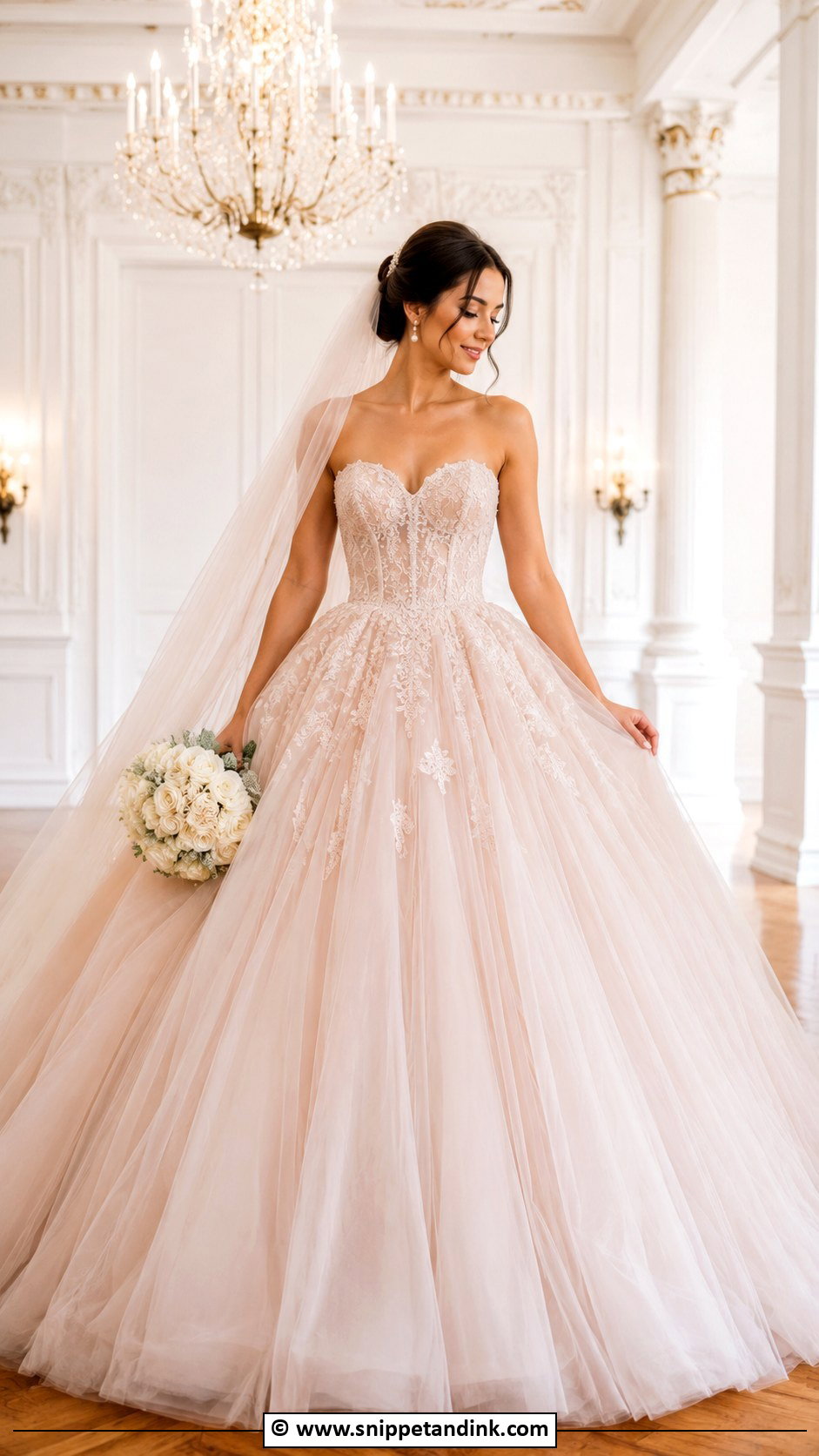
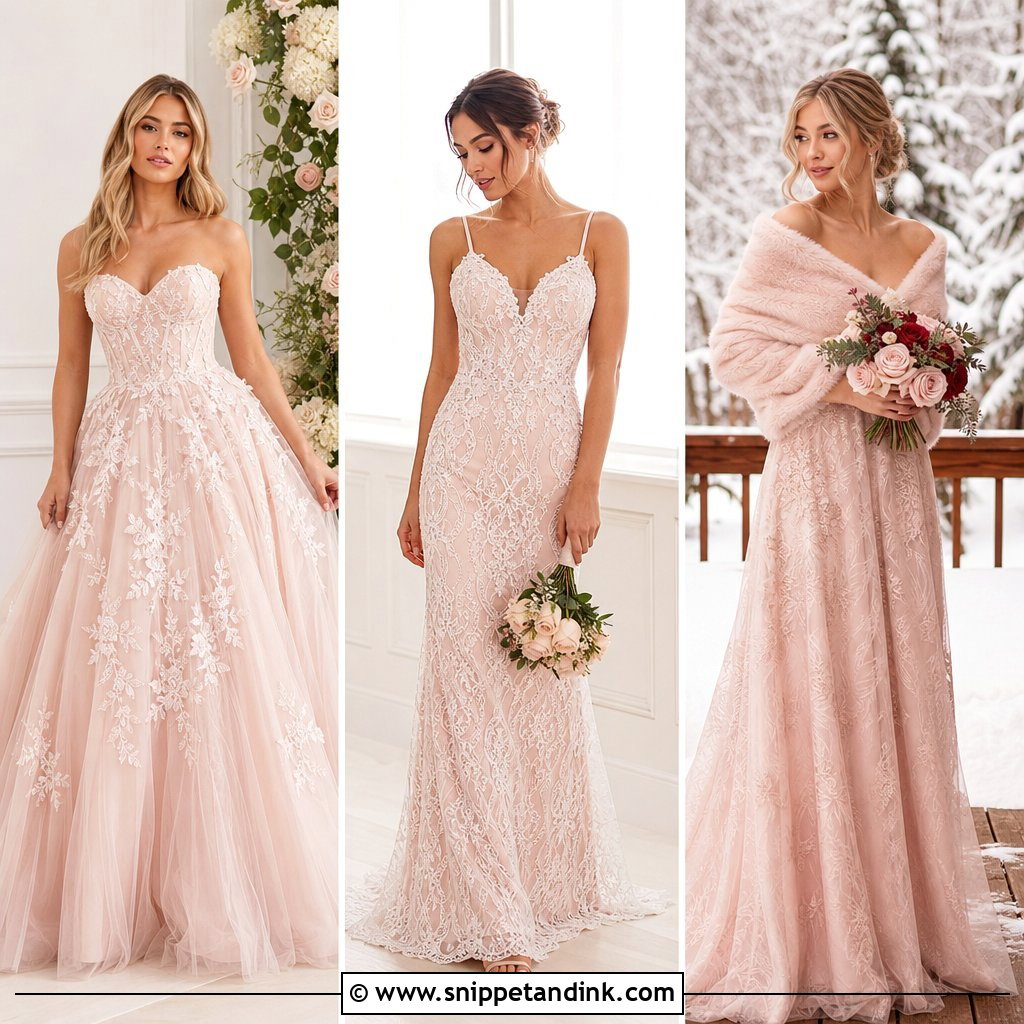
A blush ball gown wedding dress gets its colour depth from layers. A single layer of pink tulle can look flat and a bit sugary; several layers, sometimes with an ivory or nude layer underneath, give that soft graduated glow. I always check the skirt with the petticoat or hoop in, because it changes the hem. A fitted bodice anchors all that volume. Keep the bouquet compact, or the silhouette turns into a wall of pink and flowers.
2. Blush A Line Wedding Dress
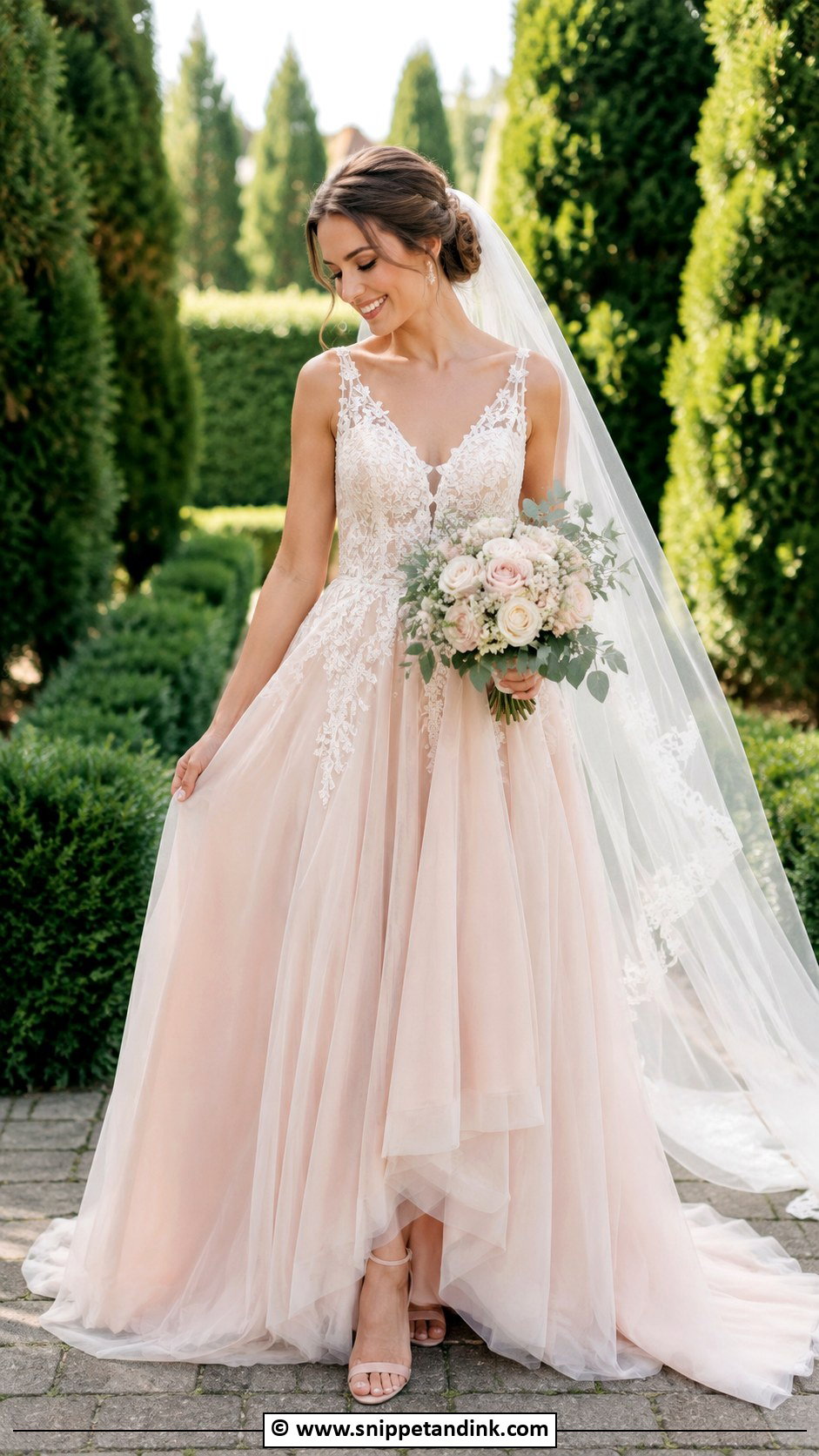
The A-line is the shape I’d suggest to a bride who’s unsure about both the colour and the cut. It skims the waist and falls away from the hips, so it’s forgiving and easy to sit, walk and dance in. Lace makes it classic, chiffon boho, satin modern. The detail I check is where the waist seam lands: a few centimetres too low and the whole dress looks long-waisted. A fingertip veil and nude heels keep it light.
3. Blush Lace Wedding Dress
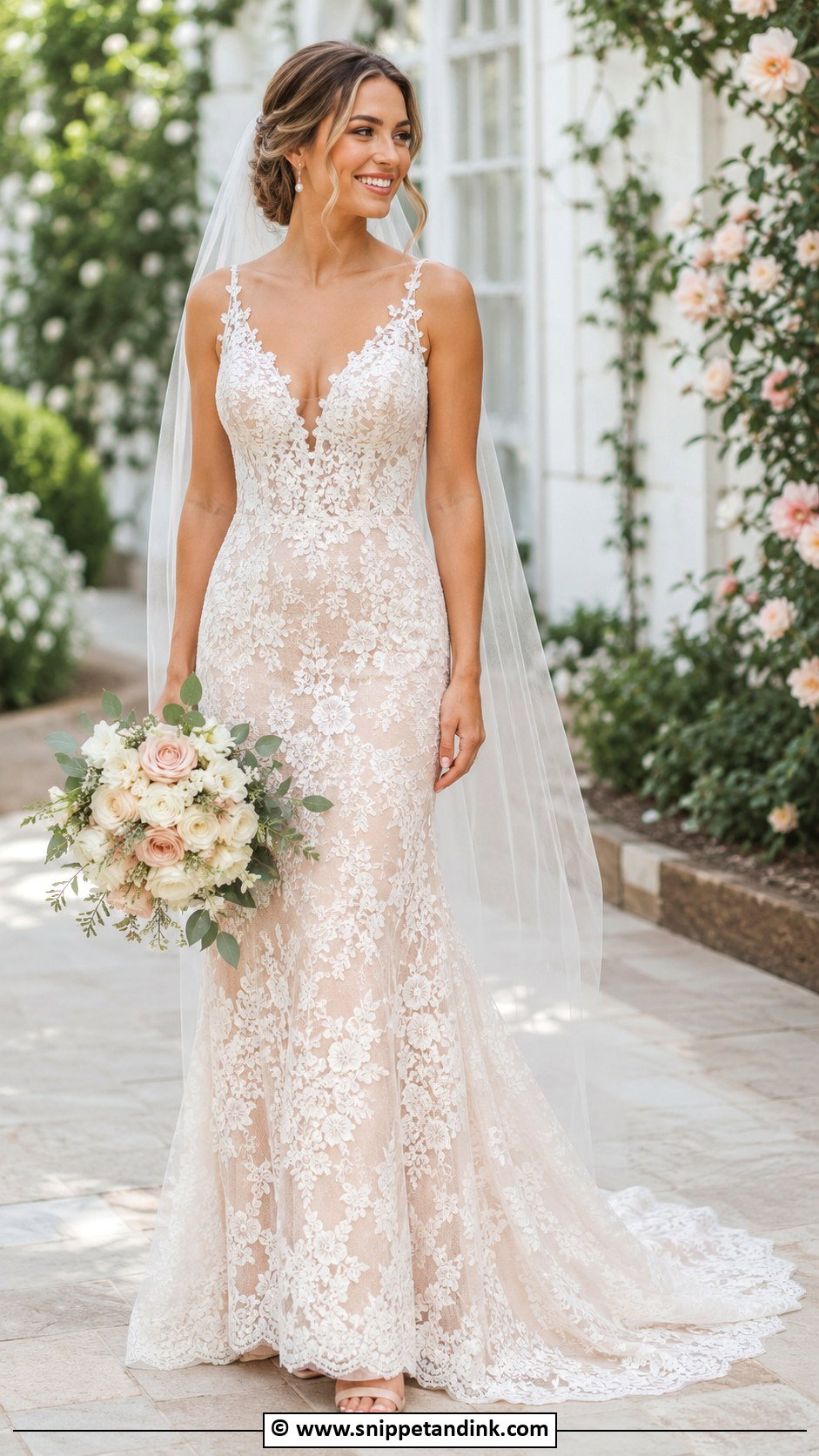
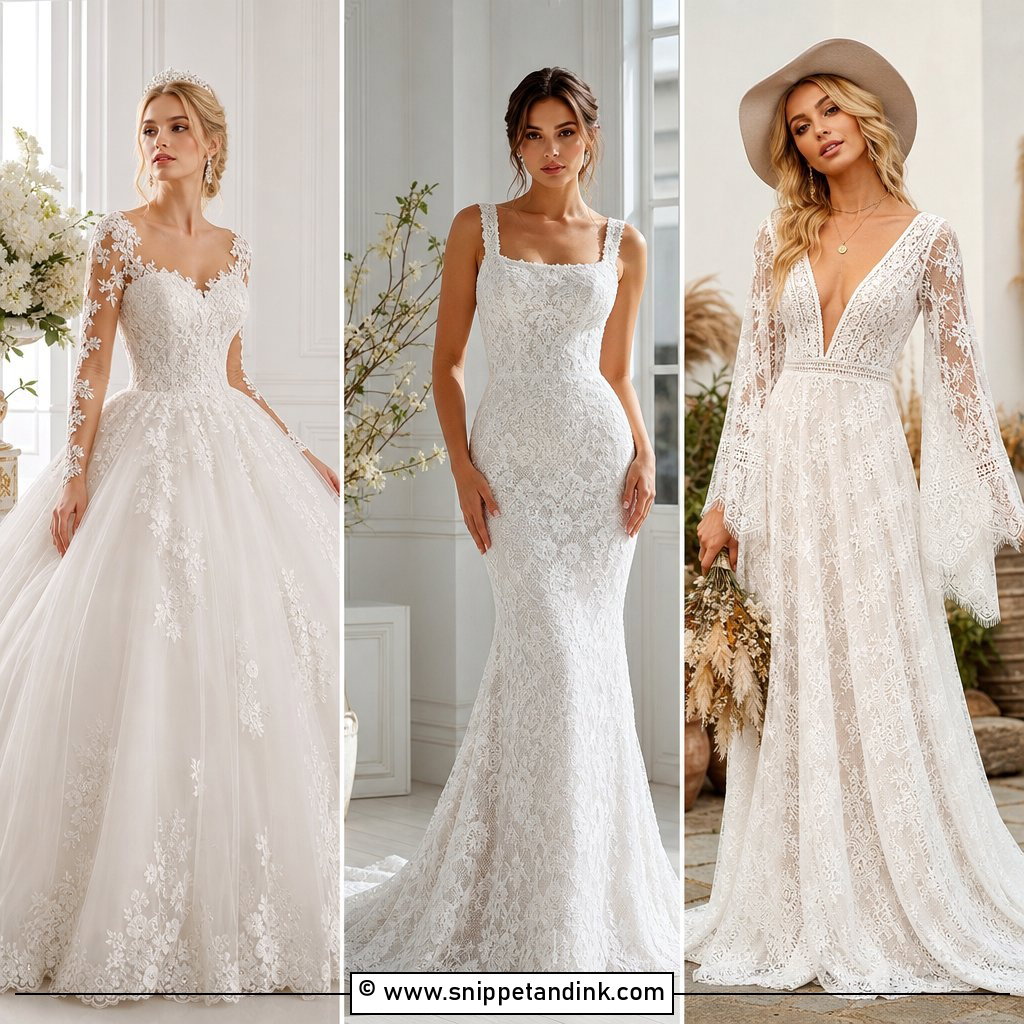
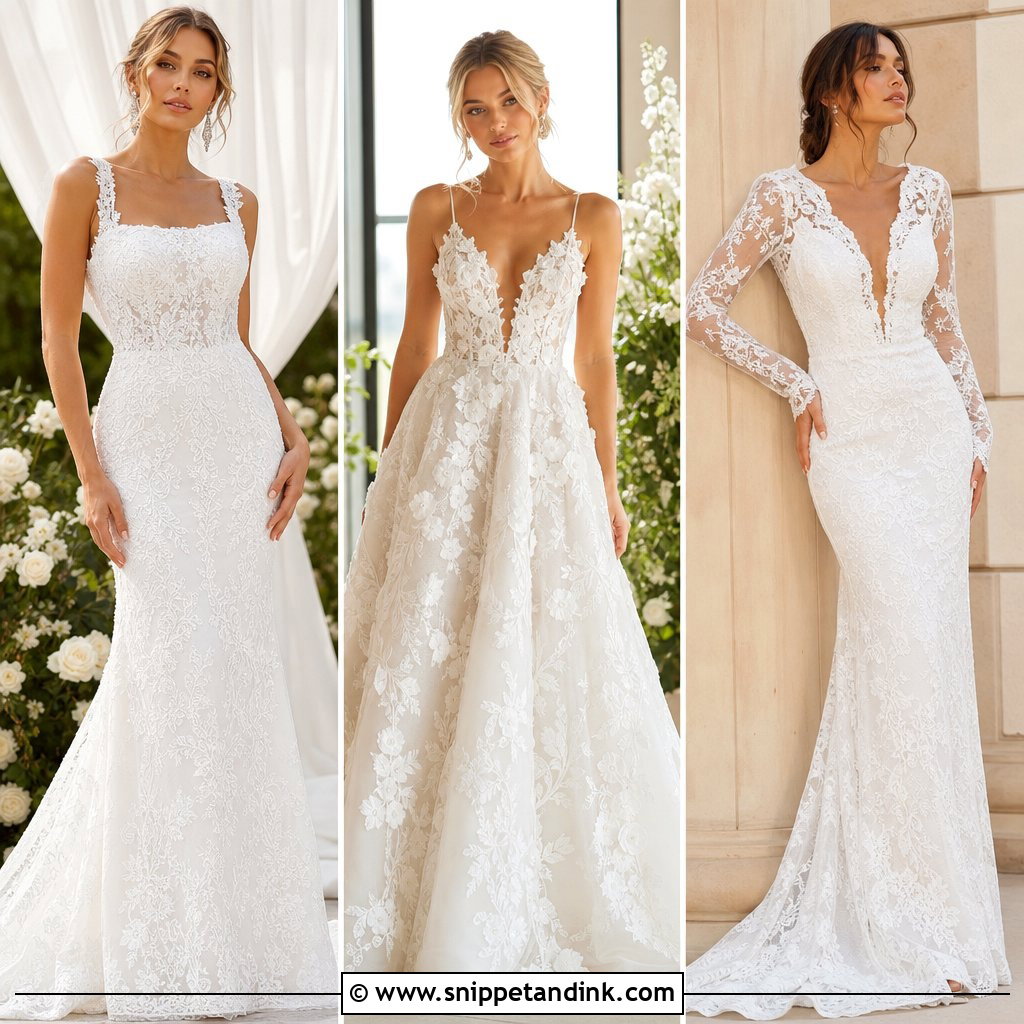
Lace over blush is where this colour does its best work. Ivory lace laid on a blush lining makes the pattern stand out as if outlined, without the hard contrast of white on a dark base. Floral lace suits spring and summer; heavier corded or guipure lace holds up for autumn. I’d always look at a blush lace gown in daylight before ordering, since the lining can shift from rose to peach under shop bulbs. Small drop earrings and a bouquet with cream, mauve and greenery finish it.
4. Blush Tulle Wedding Dress
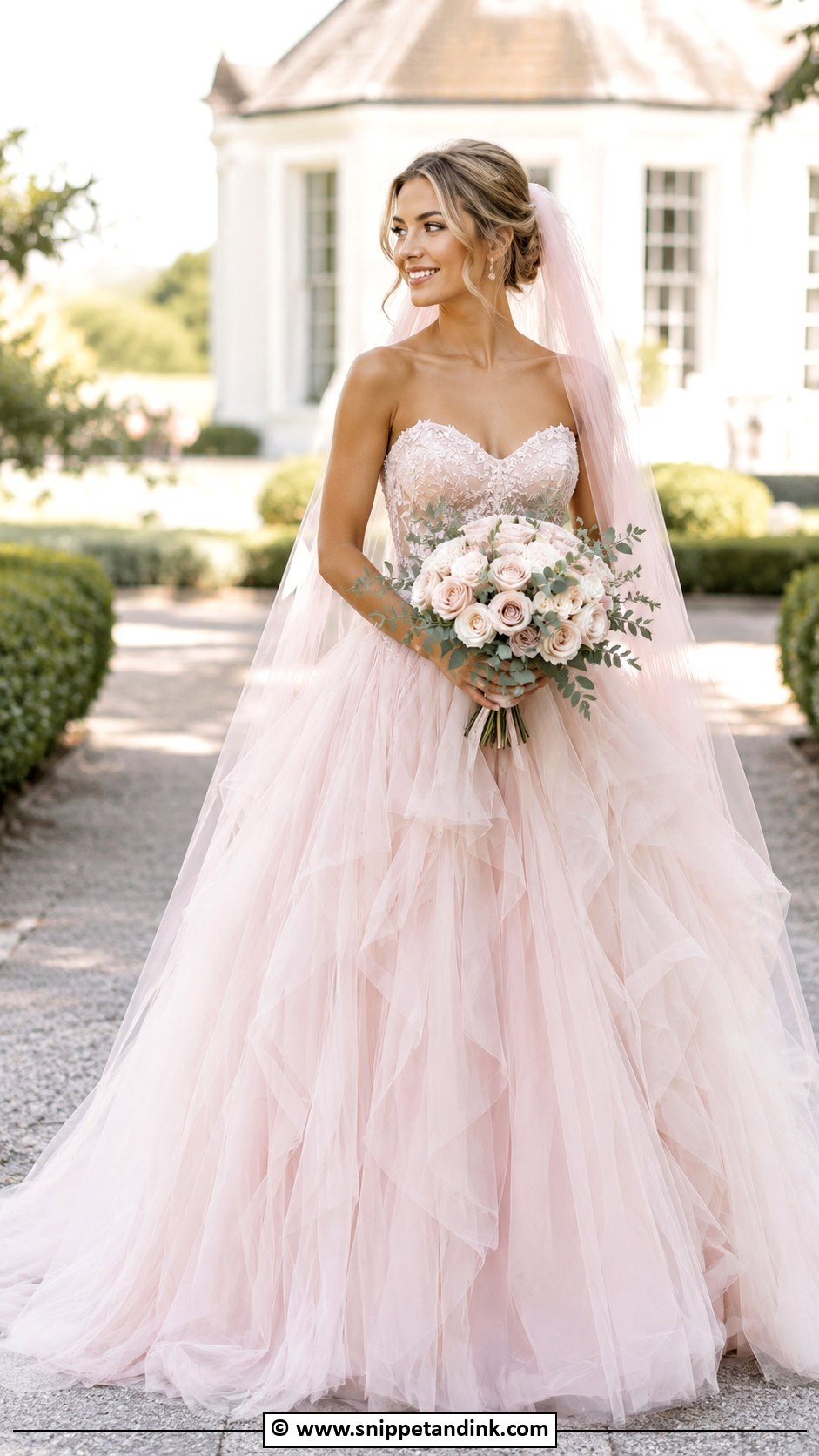
Tulle holds colour in a way solid fabrics can’t. Every layer filters the one beneath it, so the pink looks soft and watercolour-like rather than painted on. A barely-pink shade reads almost neutral at a distance, while a stronger blush stays visibly pink in photos. Outdoors it catches light well, but it also snags on rough stone, bark and bouquet wire. Balance the volume with plain shoes and a loose updo.
5. Blush Satin Wedding Dress
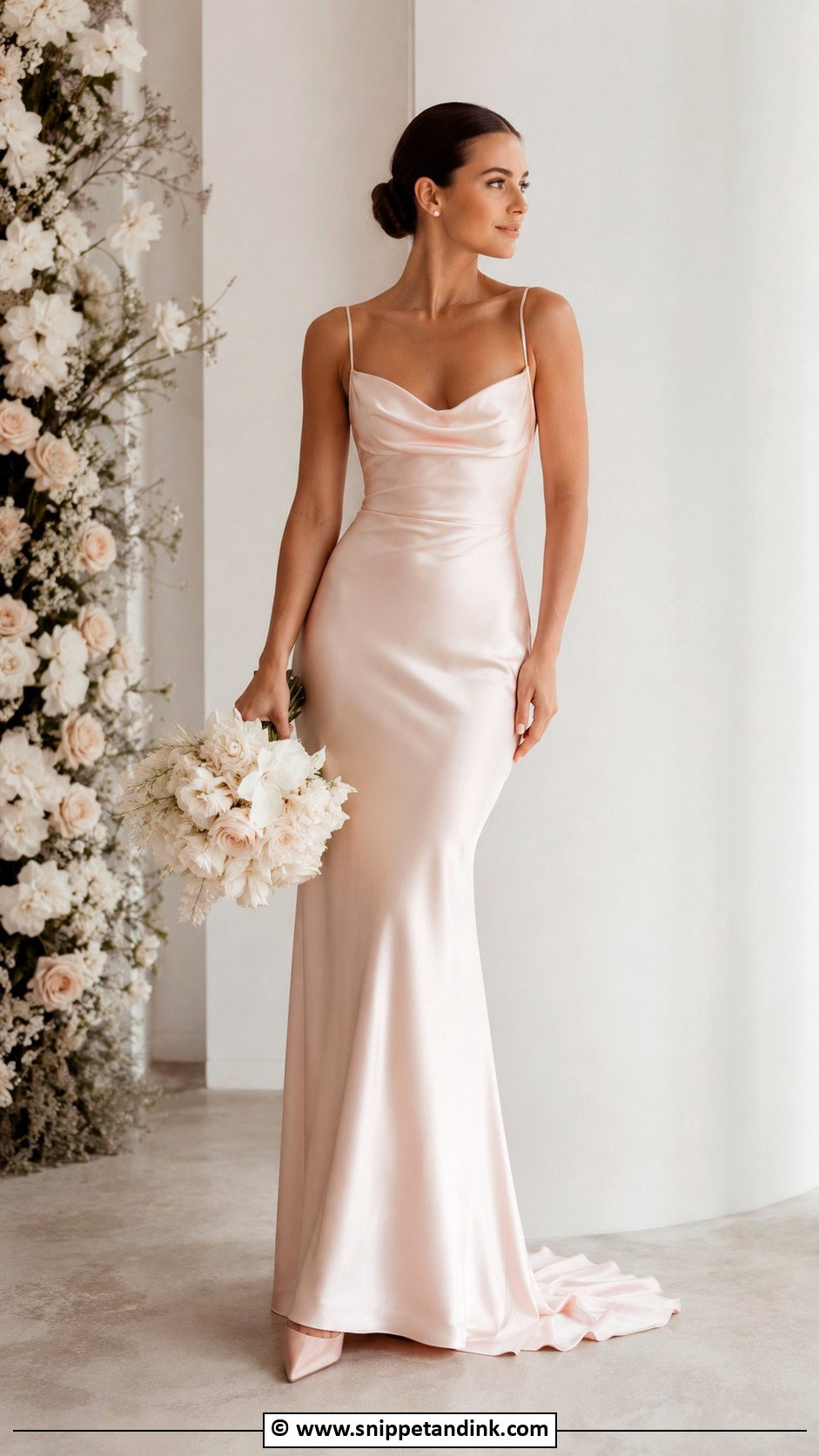
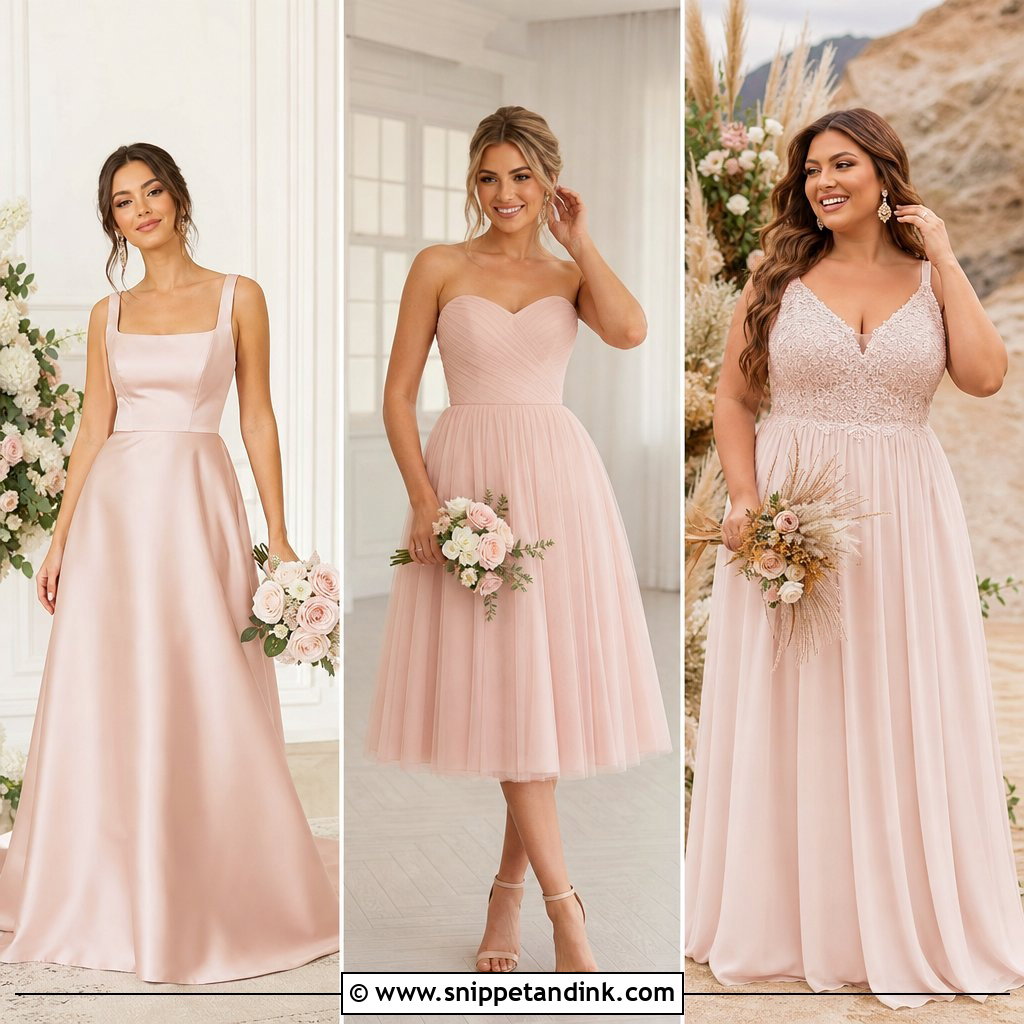
Satin reflects light, so blush satin looks warmer and richer than blush tulle of the same dye. It also hides nothing. Seams, a bodice that pulls when you breathe, or knickers lines all show on a smooth surface. With a slip, a structured A-line or a fitted mermaid, I spend most of the fitting on the bodice and the hem length in the actual shoes. Pearl studs, a low bun and a structured bouquet keep the styling as clean as the fabric.
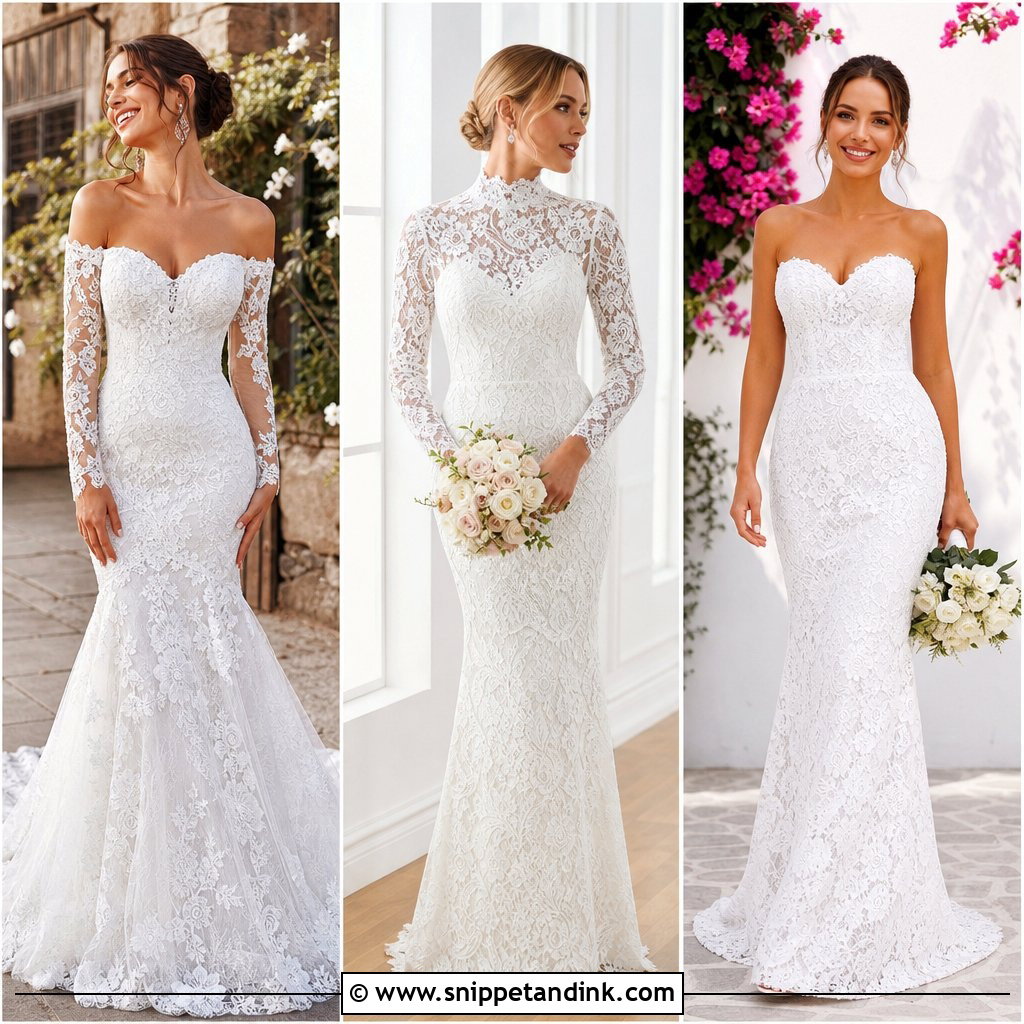
6. Blush Mermaid Wedding Dress
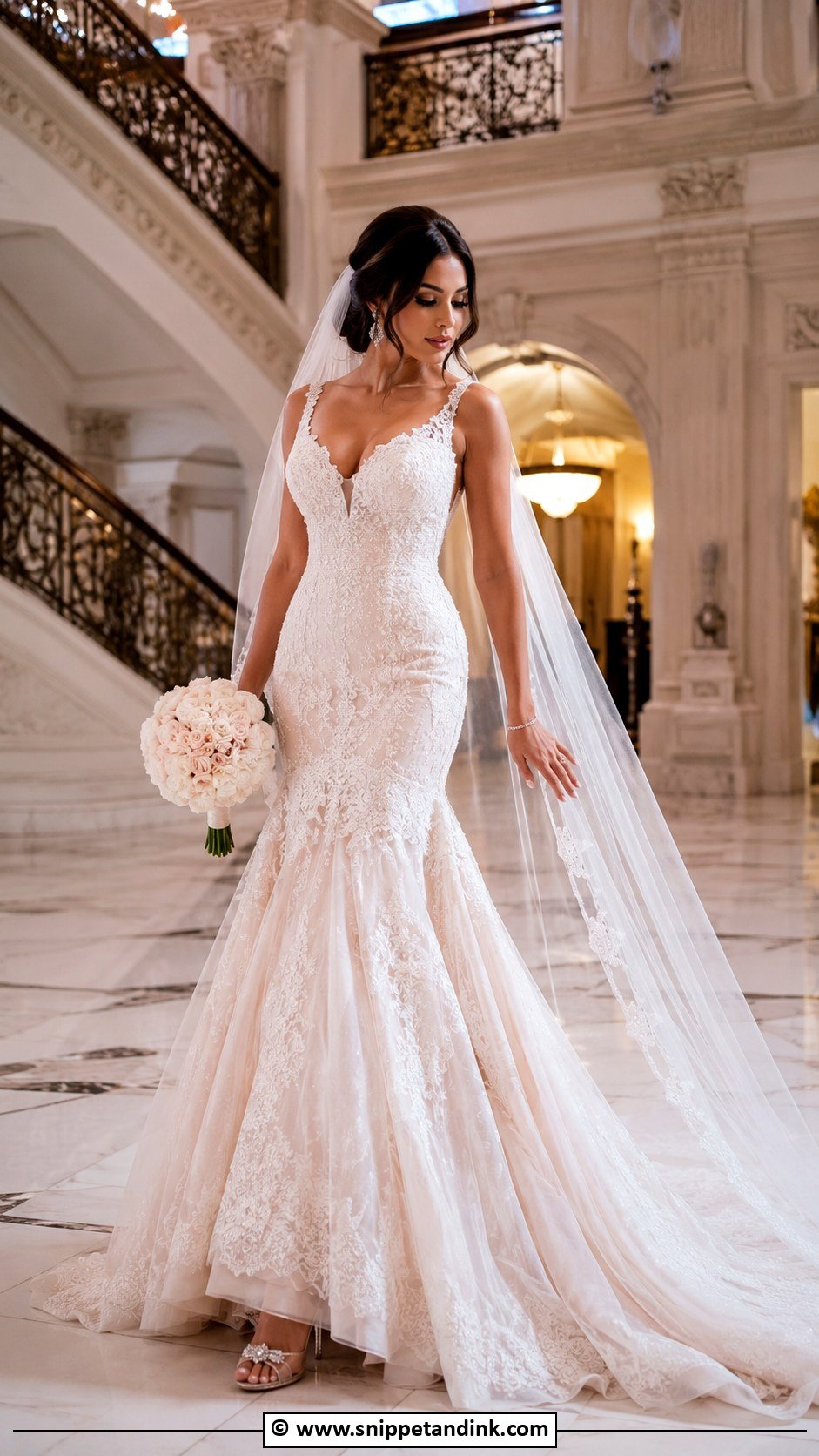
Mermaid gowns hug through the hips and flare near the knee, and the blush colour takes some of the severity out of that sculpted shape. Lace appliqué or light beading adds dimension. My practical test: sit down in it, then walk up three steps. If the flare is set too high or too tight you’ll shuffle, and on the day that shows. A sleek veil, simple earrings and pointed heels keep the line long.
7. Blush Off Shoulder Wedding Dress
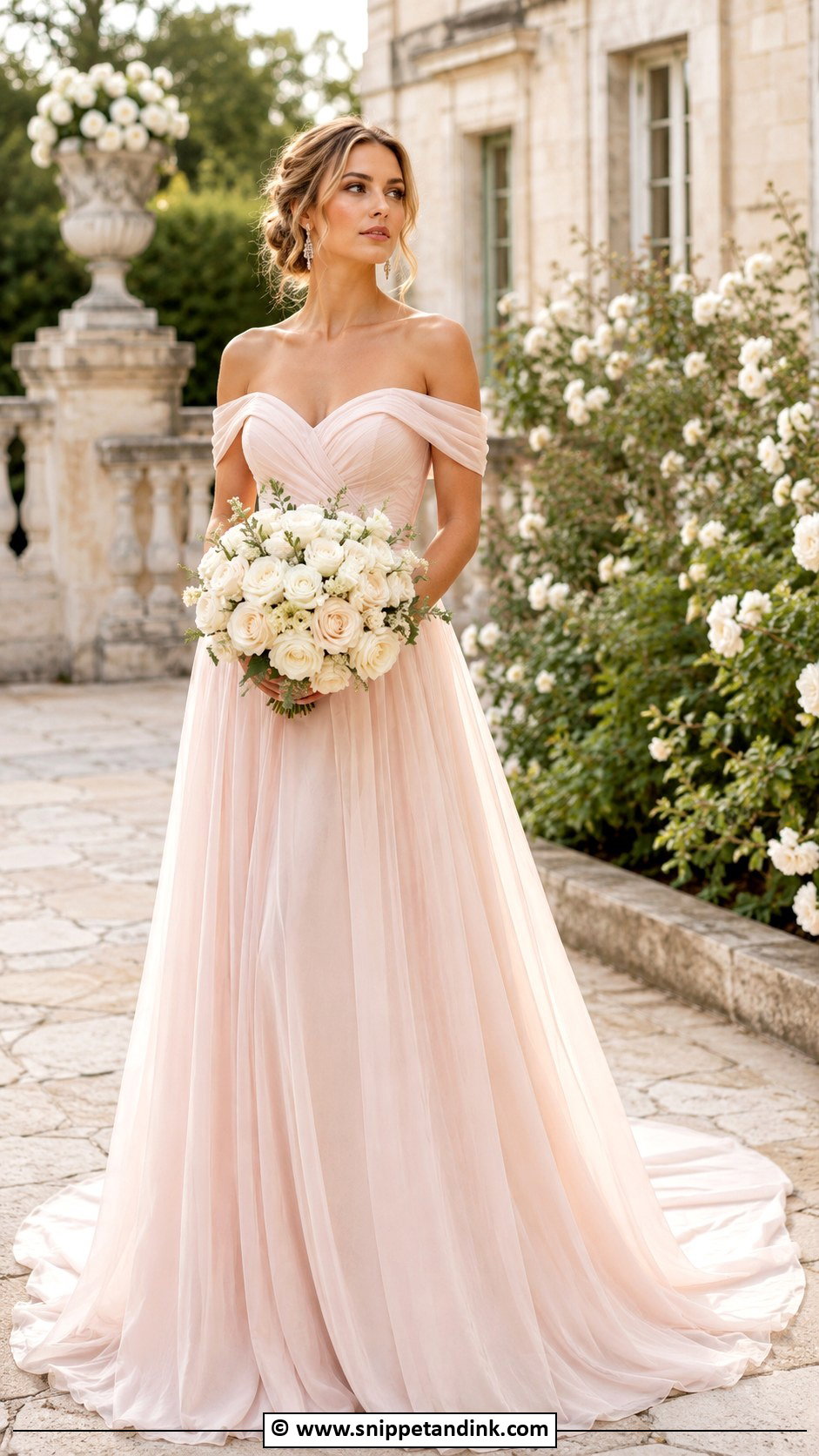
An off-the-shoulder neckline puts blush right next to the collarbones, which warms the complexion beautifully in portraits. The band needs to fit firmly, or it creeps upward every time you lift your arms. Lace sleeves, satin folds or soft tulle drapes all suit it. Skip the necklace. If you wear a veil, I’d anchor it lower on the head, at the back of a low bun, so it doesn’t cut across the shoulder line.
8. Blush Long Sleeve Wedding Dress
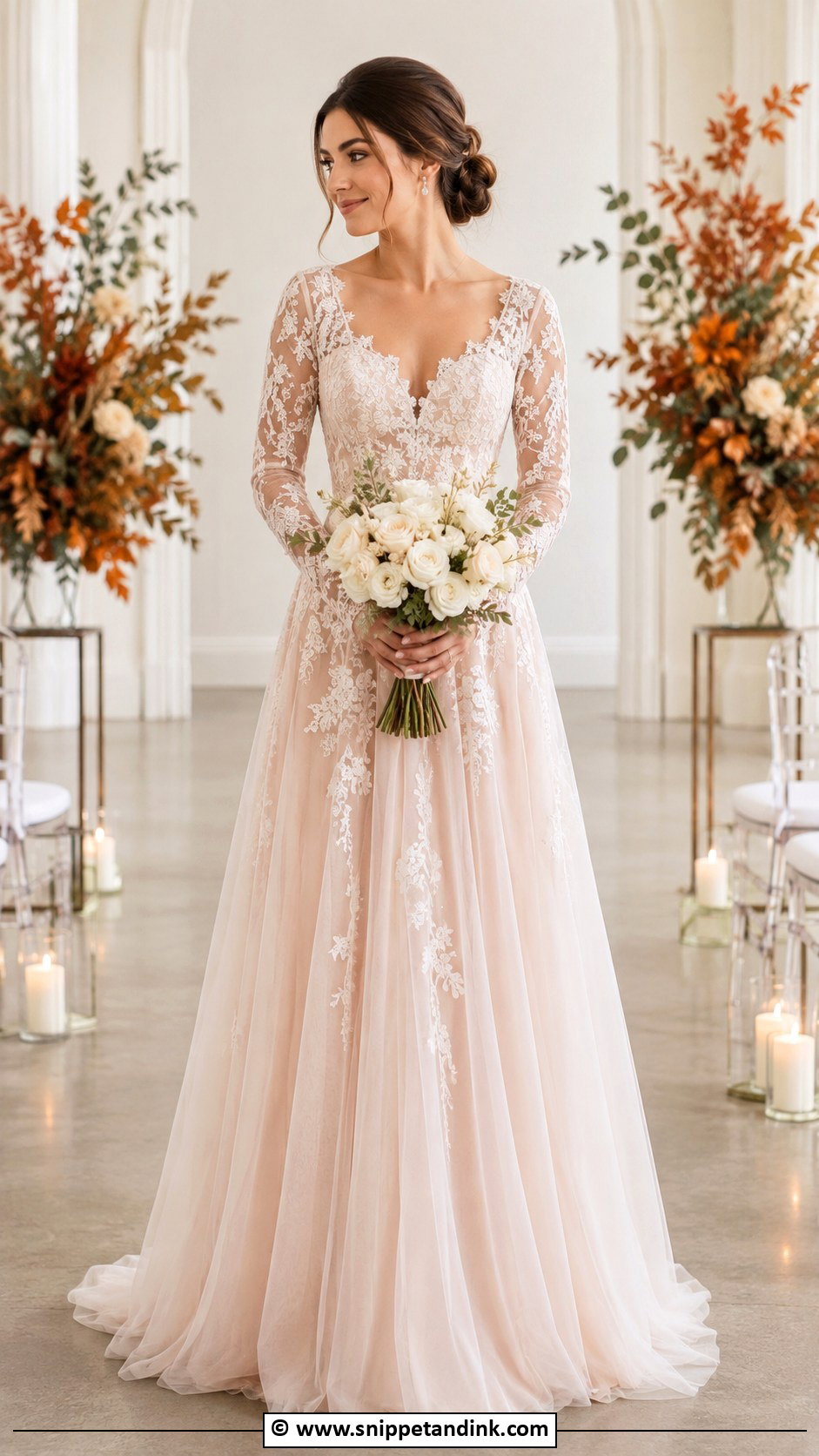
Long sleeves give coverage and change the character of the dress depending on fabric: sheer lace is soft, satin or crepe looks tailored. Blush stops a long-sleeved gown feeling heavy or severe. It’s practical for autumn and winter, and for air-conditioned venues. Balance the sleeves with an open neckline, a defined waist or a fuller skirt. With this much detail at the arms, I’d skip bracelets.
9. Blush Strapless Wedding Dress
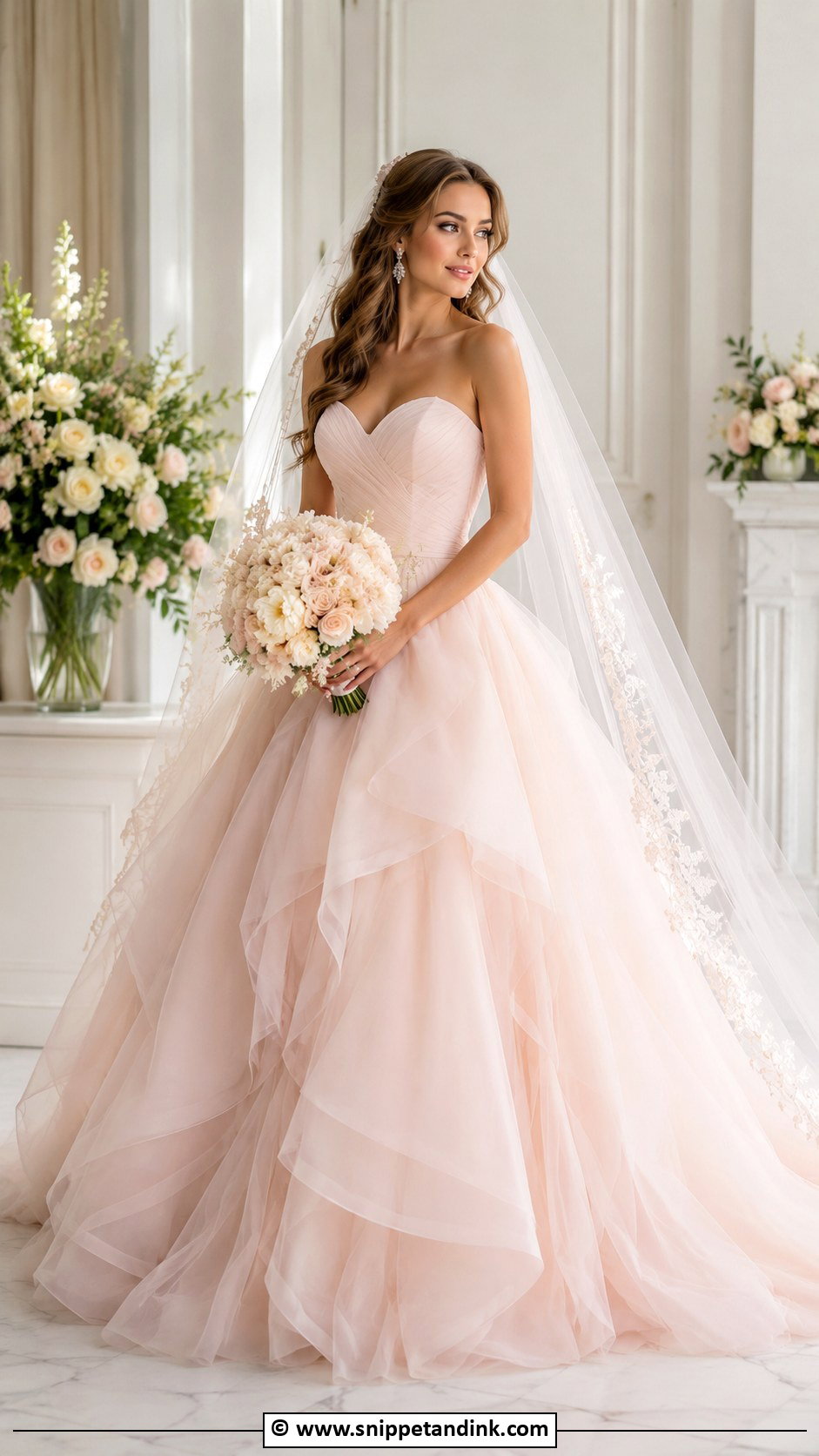
Strapless gowns live on their structure. Before anything else, I check for internal boning and a waist stay, the inner band that hooks around your waist and stops the bodice sliding down as the day goes on. Fit it in the bra or shapewear you’ll actually wear. Blush suits a bare neckline because it warms the skin across the shoulders. A necklace only if the bodice is simple; a cathedral veil for formal, a shorter one for something sweeter.
10. Blush Sweetheart Wedding Dress
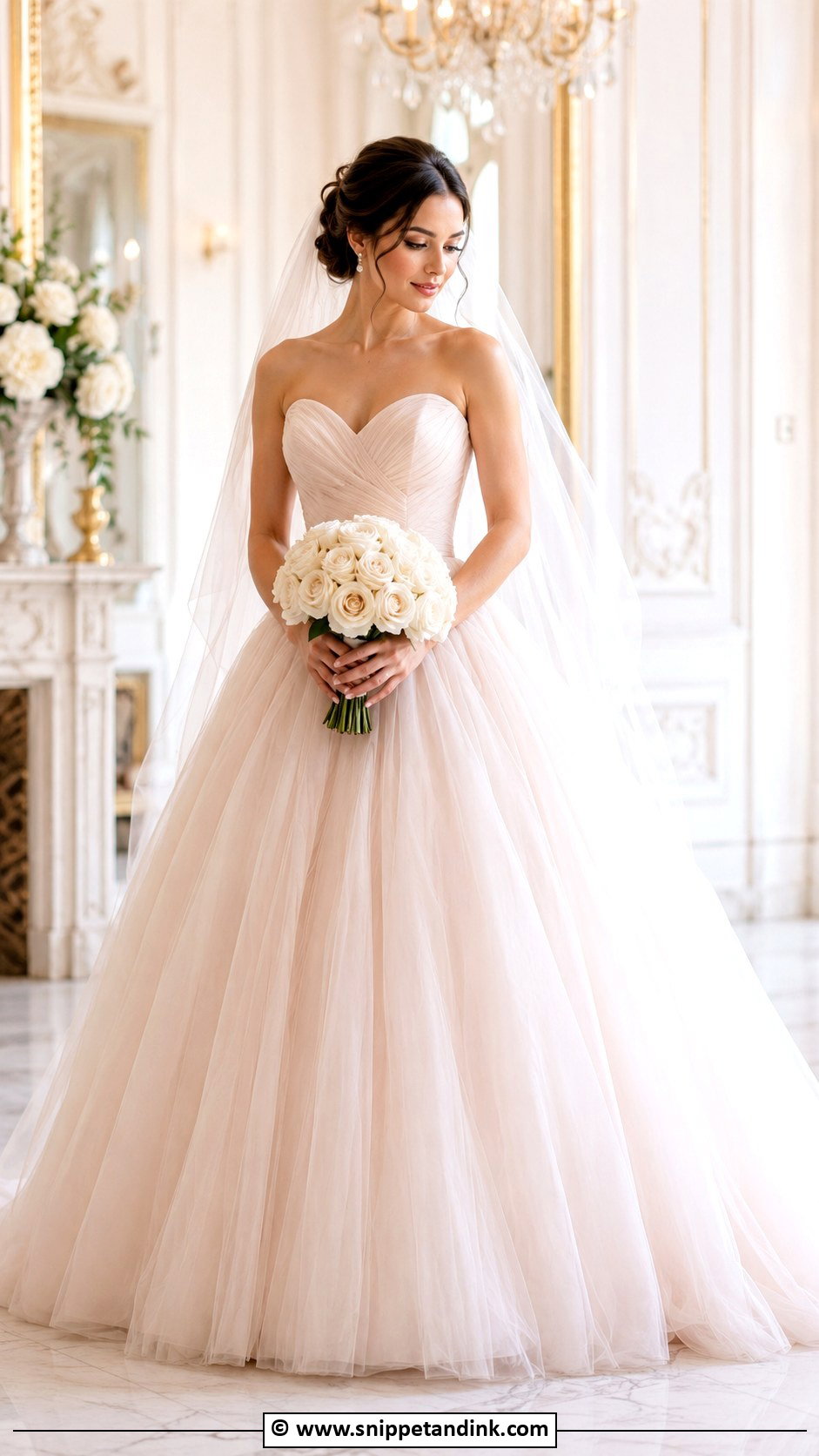
The sweetheart neckline is curved like the top of a heart, and it flatters the bust without needing much else. In blush it leans very feminine, so I’d keep the styling a touch cleaner than you think: soft curls rather than heavy waves, and either gloves or statement earrings, not both. If you want more support, ask whether the gown can take optional straps; many can. Ivory flowers with pale pink accents suit it.
11. Blush V Neck Wedding Dress
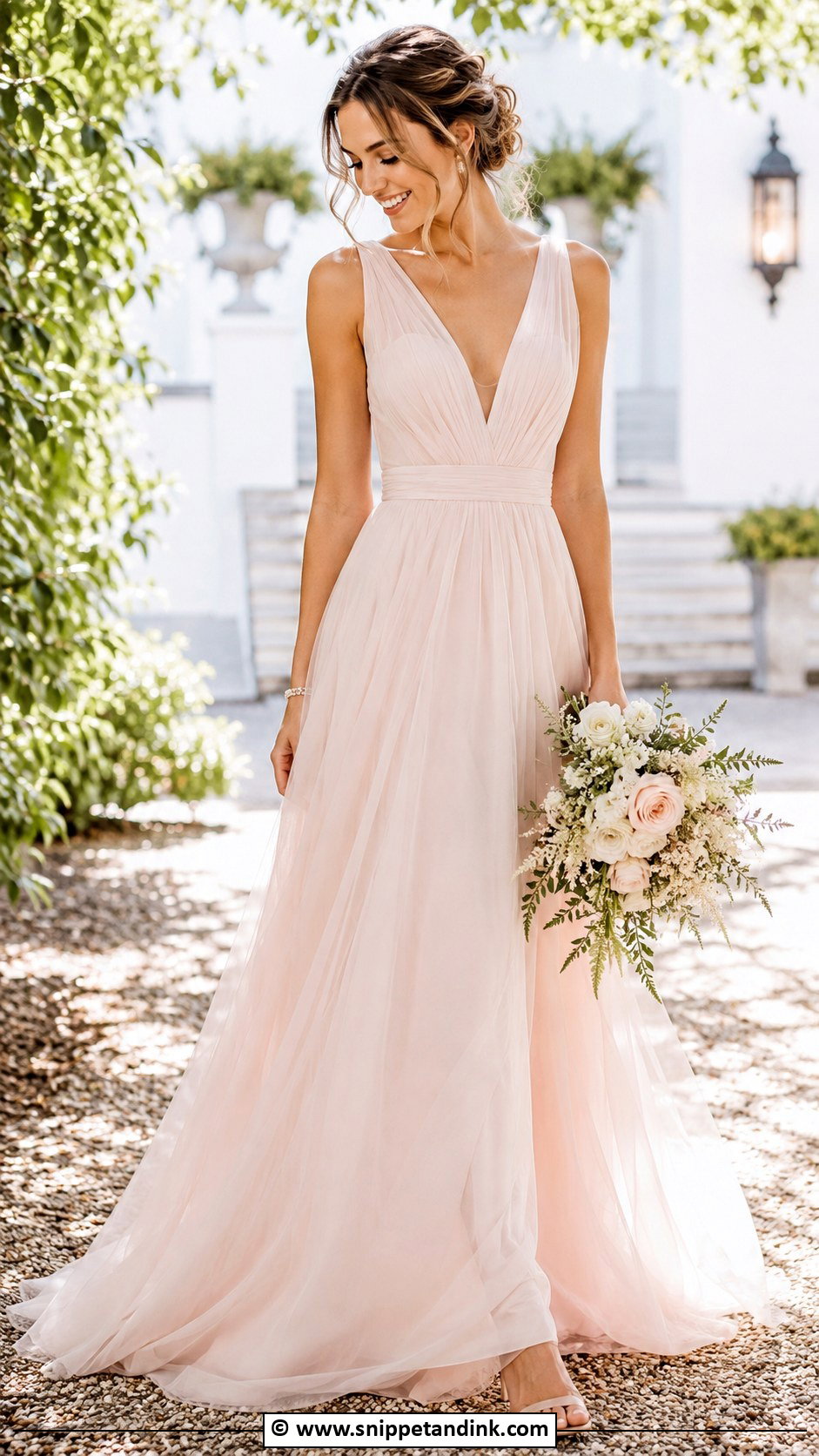
A V-neck lengthens the upper body and balances a full skirt, which is why I often suggest it to petite brides. A softer V reads classic; a deep plunge reads modern and dramatic. On a deeper V, illusion mesh or fashion tape keeps the neckline in place when you bend and hug. Lace, chiffon, satin and crepe all handle it. Delicate earrings and heels close to your skin tone keep the line clean.
12. Blush High Neck Wedding Dress
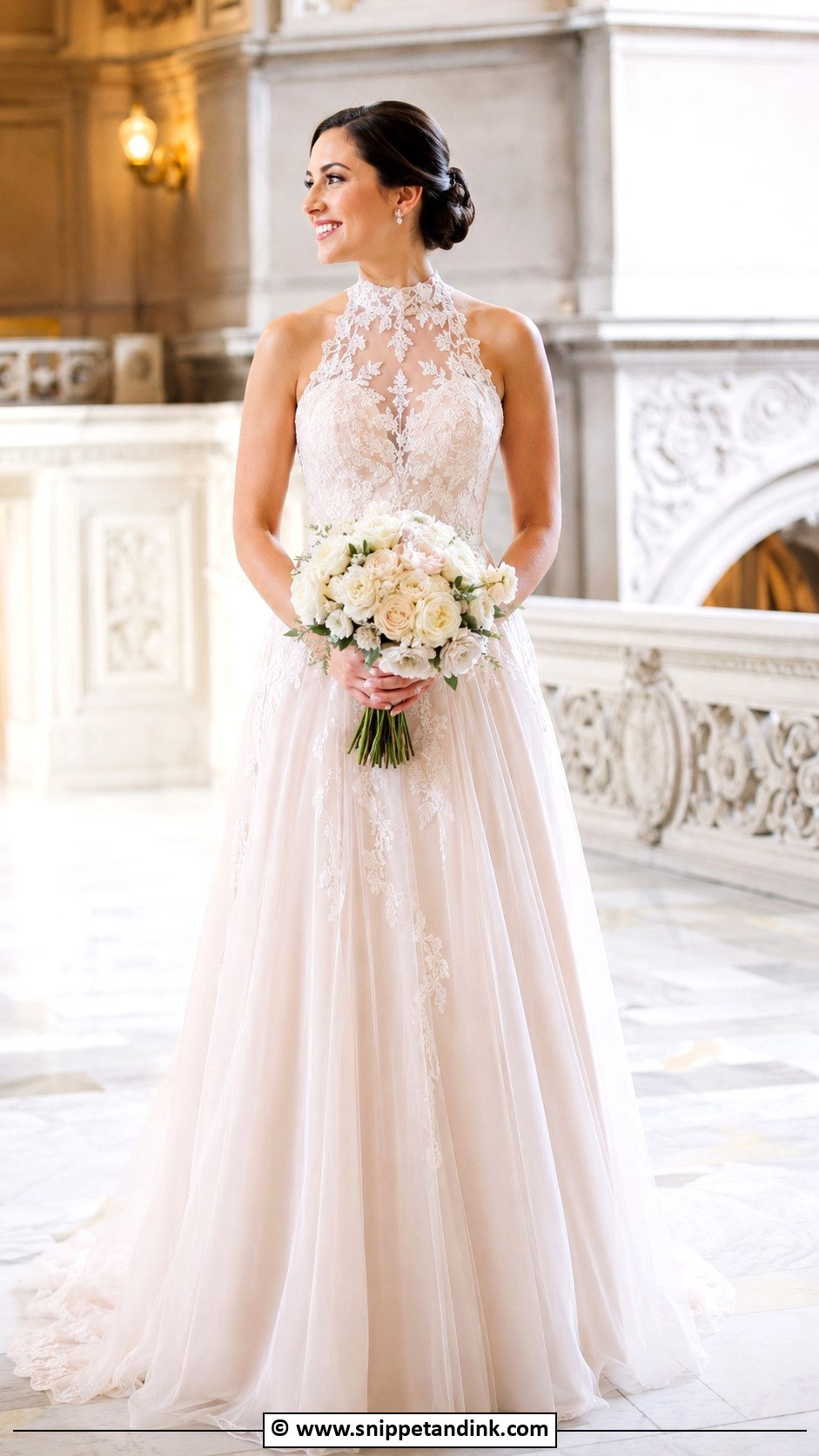
In blush, a high neck looks less austere than in stark white and leans gently vintage. Lace, sheer tulle and fine embroidery suit it best. Skip a necklace and use earrings or a hair accessory instead. The fit point I watch is the neckline itself: it should sit close without pressing when you turn your head or look down at your vows. An A-line skirt makes it romantic; a fitted one makes it sharper.
13. Blush Floral Wedding Dress
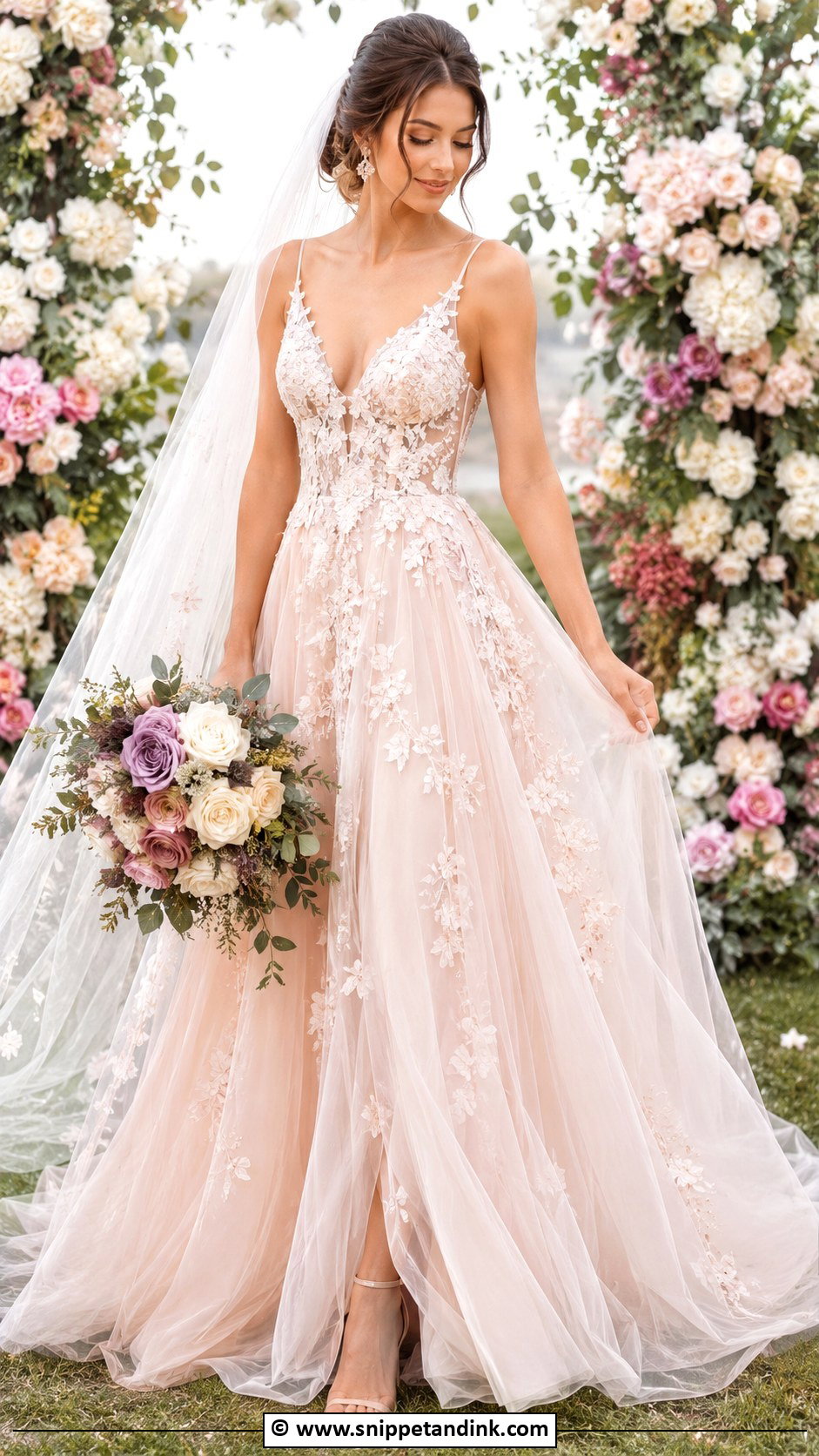
Floral appliqué, embroidery or print gives a blush gown both colour and texture. The pink base works as a soft background for ivory, champagne, mauve or pale green flowers. Three-dimensional appliqués look lovely up close but can snag on veils and lace, so I check where they sit along the arms and waist. Echo one flower colour in the bouquet, and keep hair and makeup natural.
14. Blush Beaded Wedding Dress
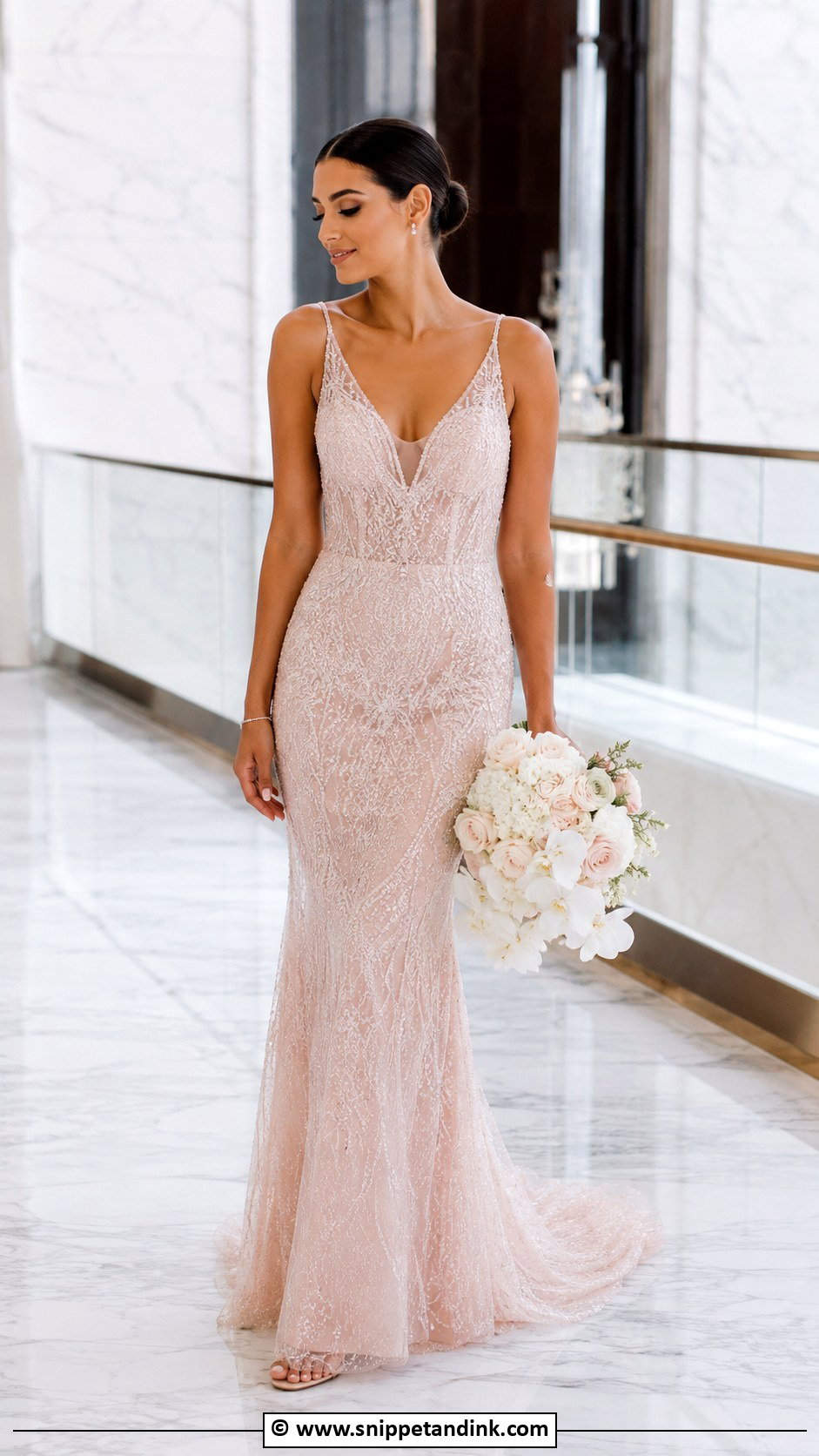
Beading on blush looks warmer than on white, where crystals can feel cold. Under evening lights it glows rather than glitters. I look for beadwork that follows the shape: concentrated at the waist, scattered down the skirt. Heavy beading adds real weight, so it needs good straps or a firm bodice. Champagne or soft gold shoes pair well, and the veil and jewellery should stay plain.
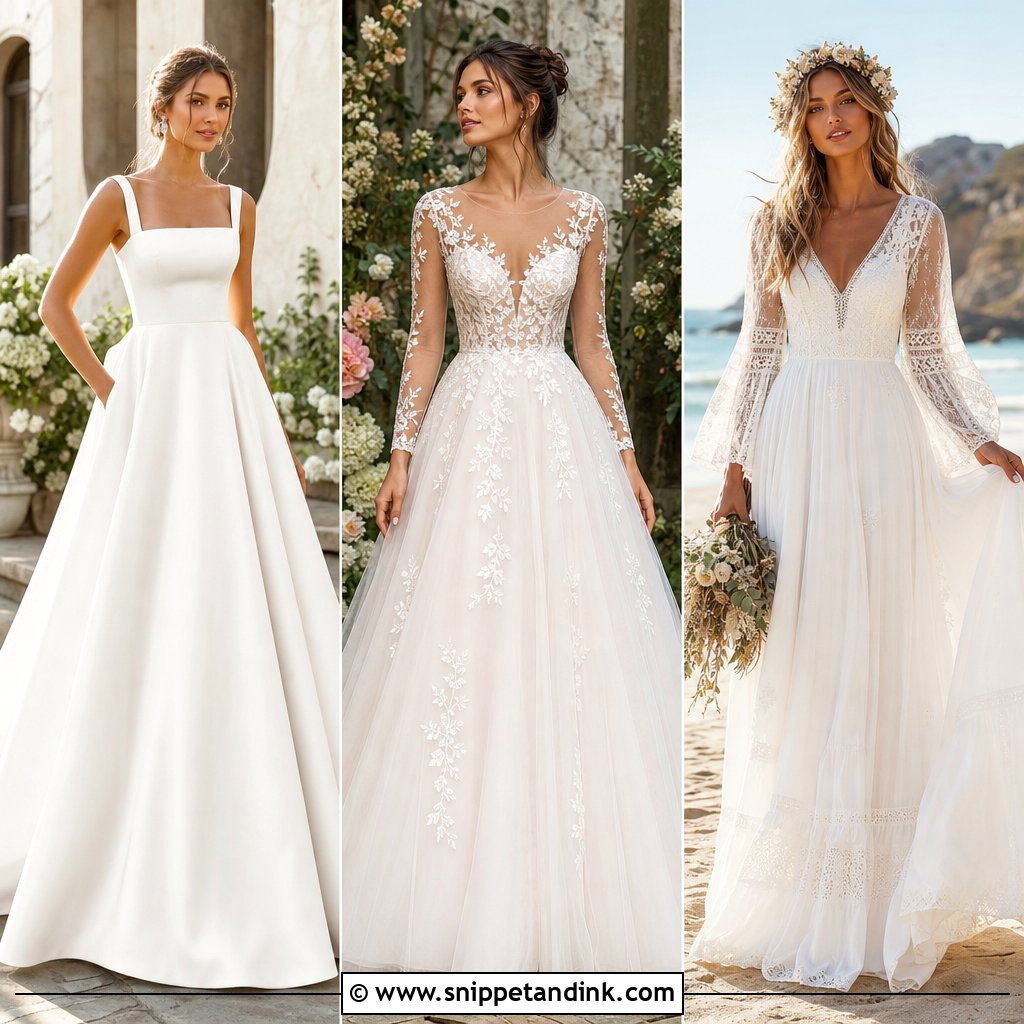
15. Blush Sequined Wedding Dress
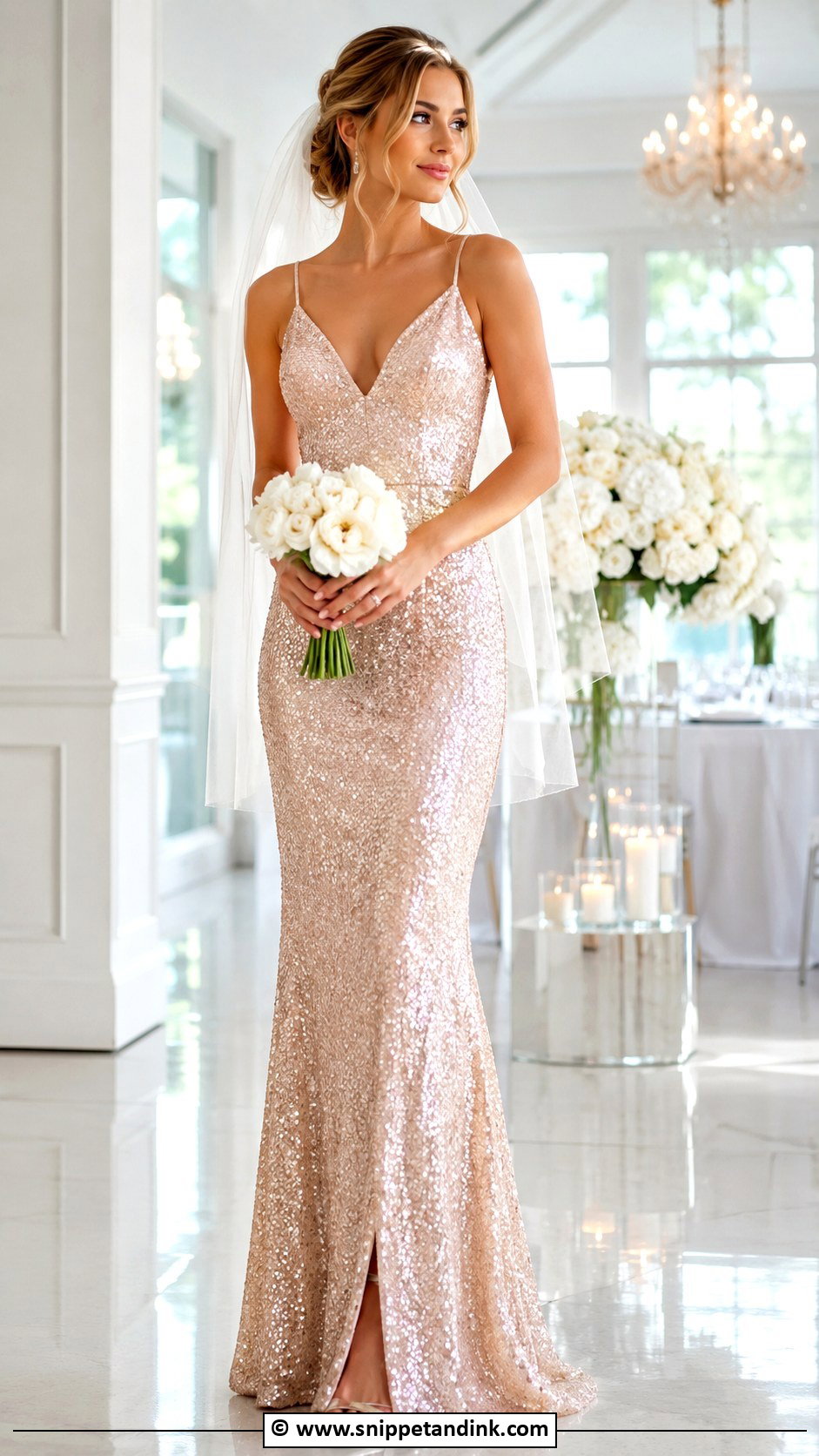
Sequins catch every movement, which makes them made for a dance floor and tricky in a long ceremony, because unlined sequin seams scratch the inner arms. Ask whether the bodice is lined before buying. Blush keeps the shine soft rather than flashy. A fitted cut is sleek; a sequinned A-line is more classic. Smooth hair, small earrings and a sheer veil with no trim are all it needs. Never steam sequins directly; hang the gown and steam the lining from inside.
16. Blush Boho Wedding Dress
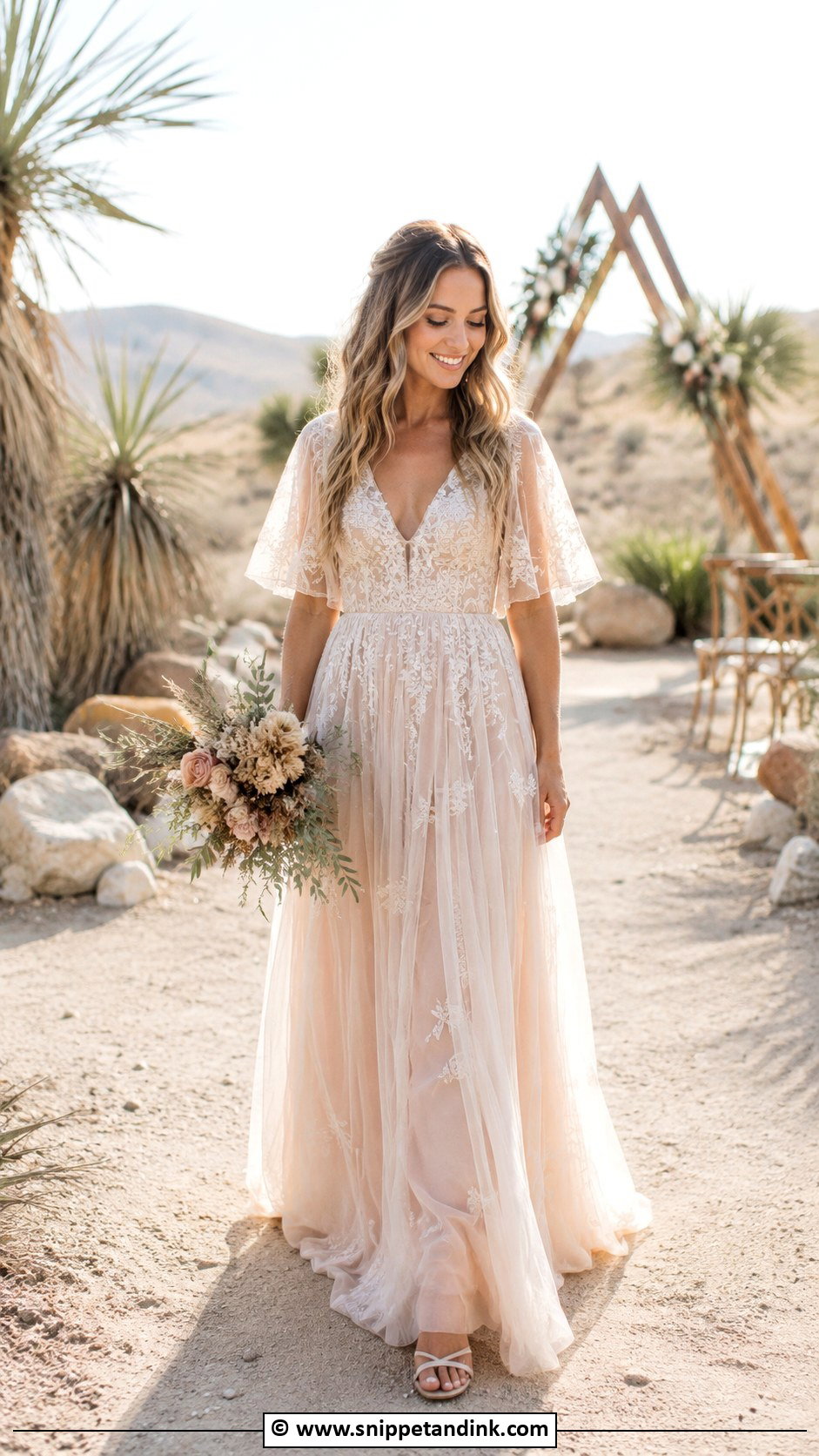
Blush boho is about ease of movement: soft lace, flutter or bell sleeves, open backs, tiered skirts. The colour sits naturally beside dried flowers and woven textures. Light, loose fabrics pick up dust and grass seed outdoors, so have the hem set just above the ground in the shoes you’ll wear. Loose waves, natural makeup and sandals or block heels finish it.
17. Blush Beach Wedding Dress
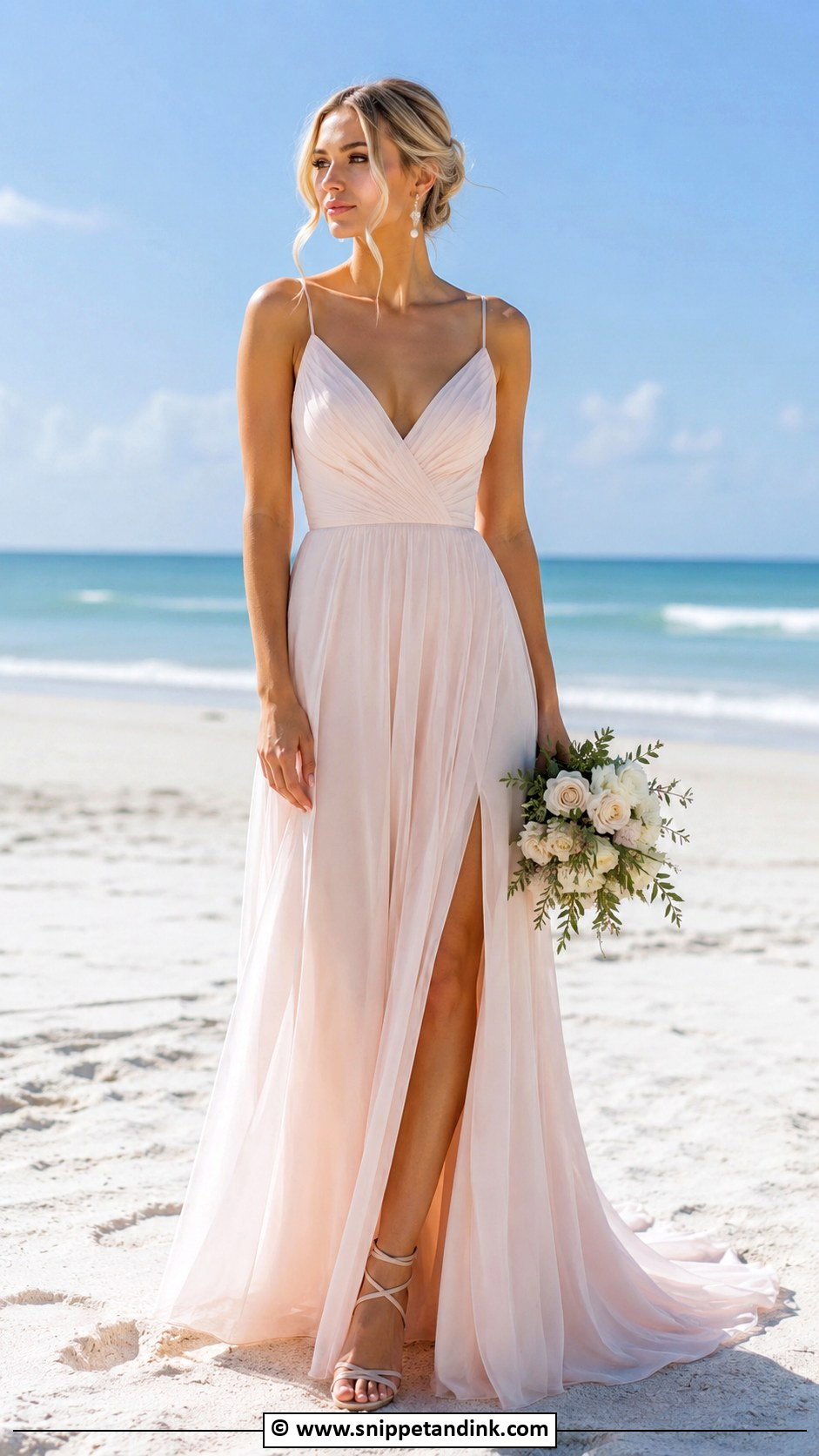
Beach dresses should be light in weight before anything else. Chiffon, light tulle or soft crepe moves in sea breeze; heavy satin and stiff layers just get hot and wet at the hem. Blush suits sand and water because it adds warmth to a cool, bright setting. Keep the train short or skip it; long trains drag sand everywhere. Strappy sandals, pearl earrings and a short veil that won’t sail away in the wind.
18. Blush Courthouse Wedding Dress
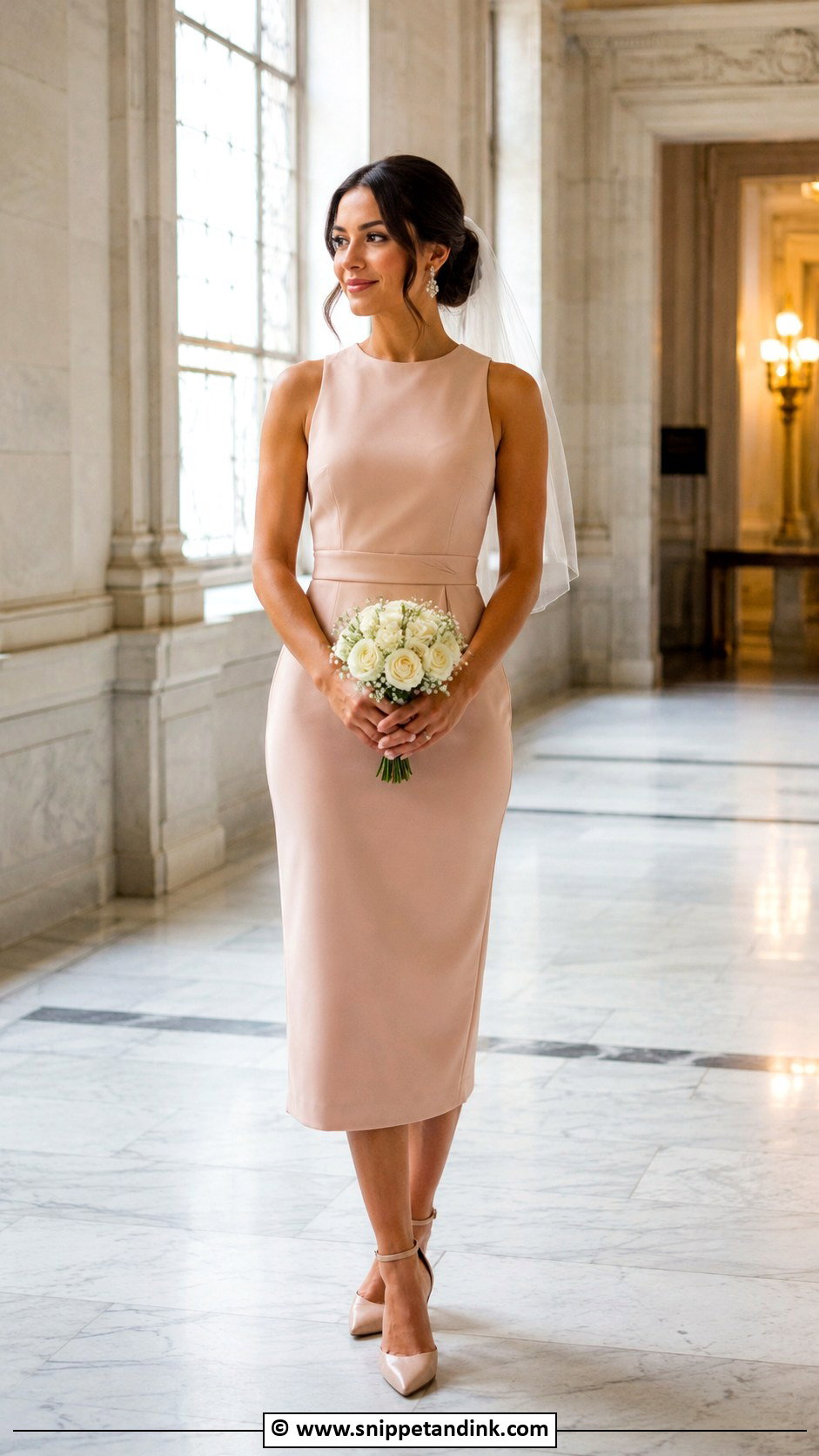
A blush dress makes a small courthouse ceremony feel like a wedding without needing a big silhouette. A midi, a sheath, a tailored mini or a plain satin gown all work. Because the setting is often fluorescent-lit and plain, I’d pick a medium blush rather than a very pale one, which can disappear into beige walls. Pointed heels, a small bouquet and a short veil or hair bow add the bridal note.
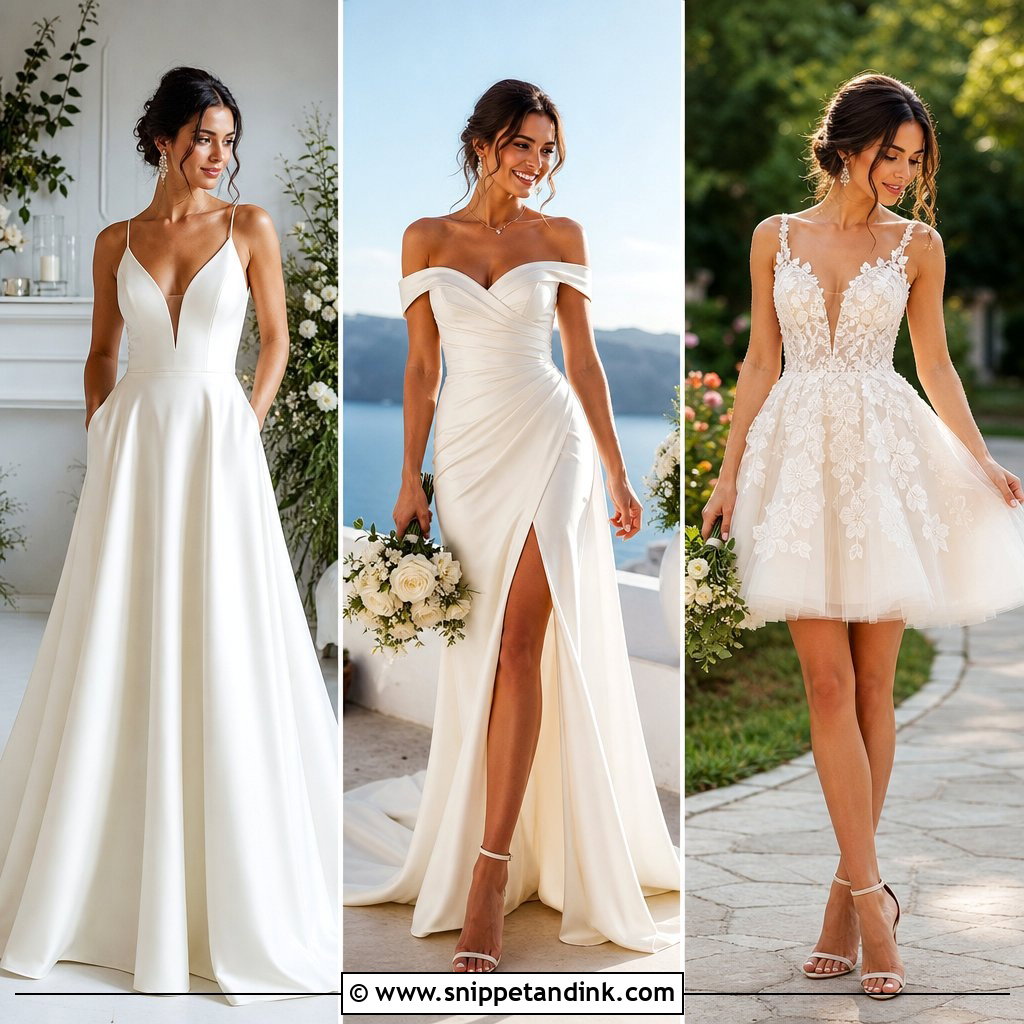
19. Blush Mini Wedding Dress
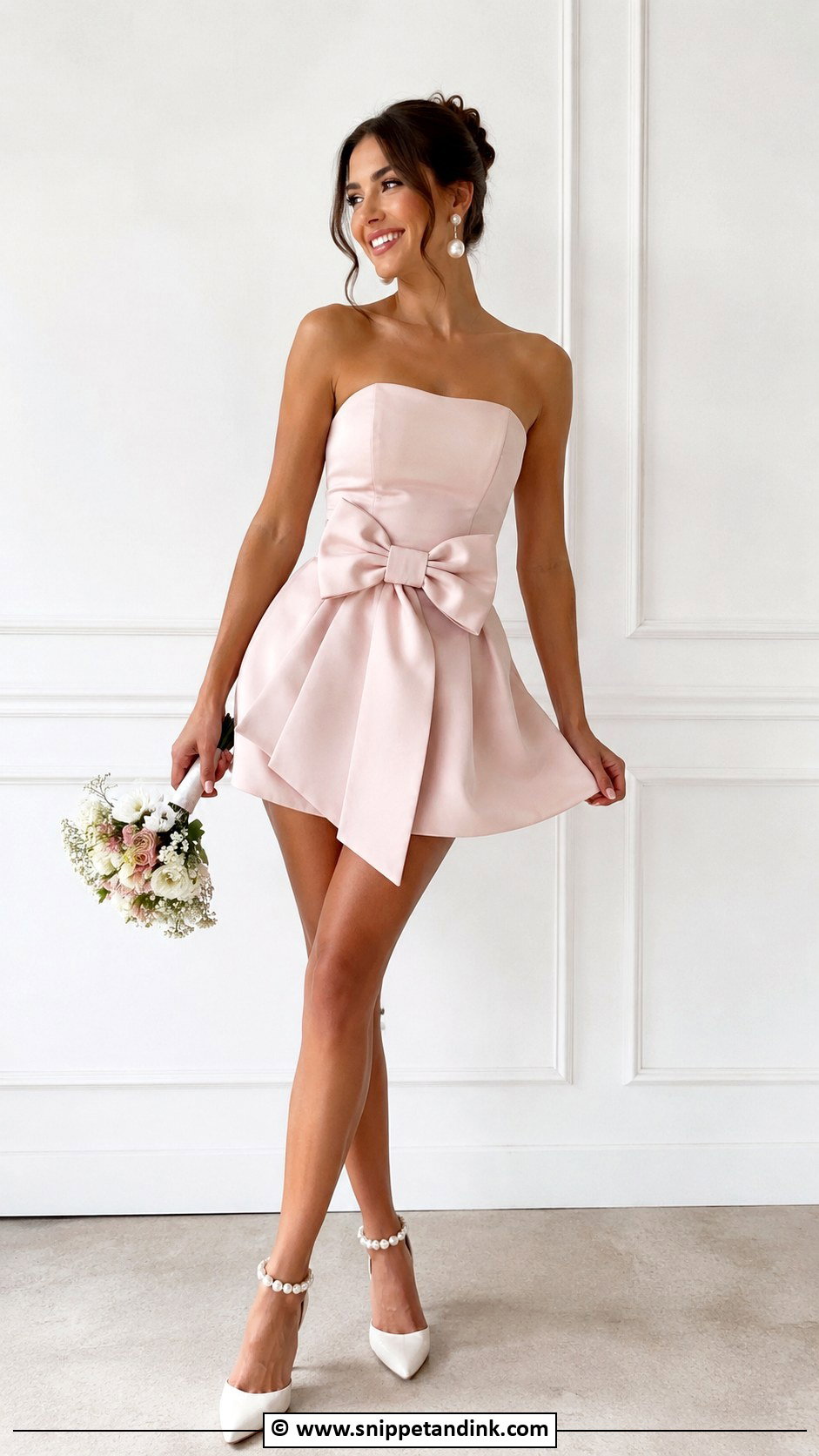
A blush mini wedding dress suits a courthouse ceremony, a second look or a warm-weather party. With the hem up, shoes become part of the outfit, so choose something special. Bows, feathers, lace or satin make the mini read bridal rather than cocktail. If you want coverage, balance the short skirt with long sleeves or a structured bodice. A mini veil and a small bouquet are enough.
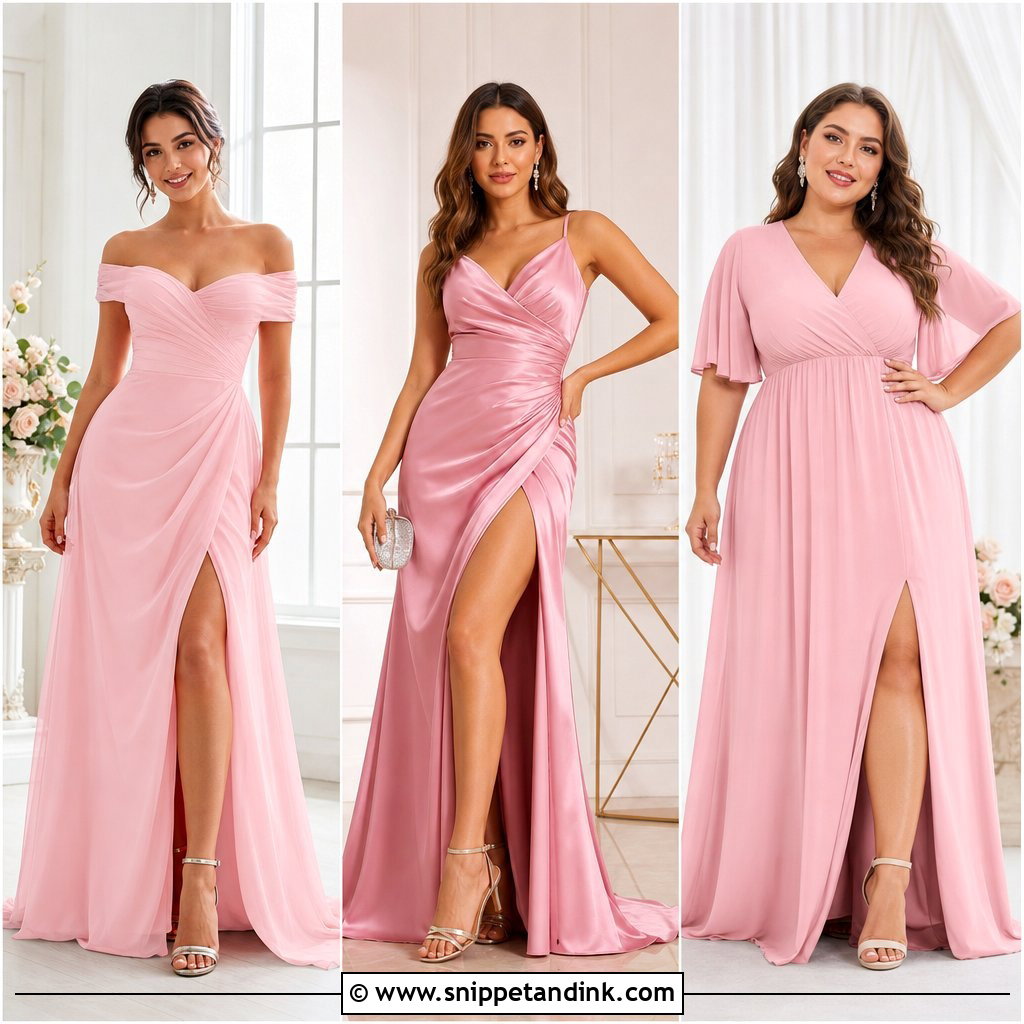
20. Blush Tea Length Wedding Dress
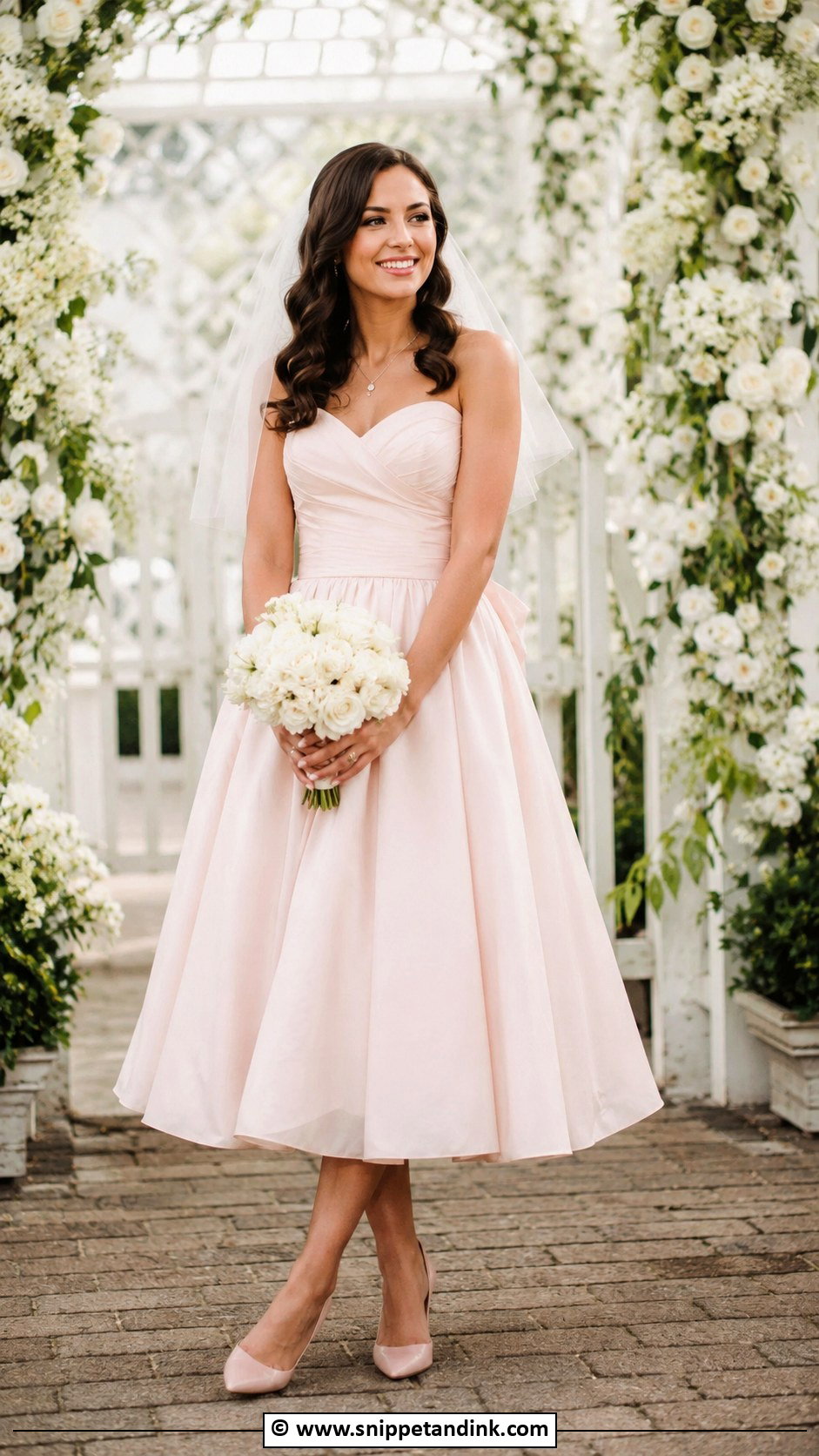
Tea length falls between the knee and ankle, and proportion decides whether it looks charming or awkward. The waist placement and shoe height have to work together; I usually try two heel heights at the fitting before setting the hem. A full skirt reads 1950s, a slimmer one modern. In blush, this length feels sweet rather than costume-like. Block heels or pointed pumps, a short veil and soft curls.
21. Blush Two Piece Wedding Dress
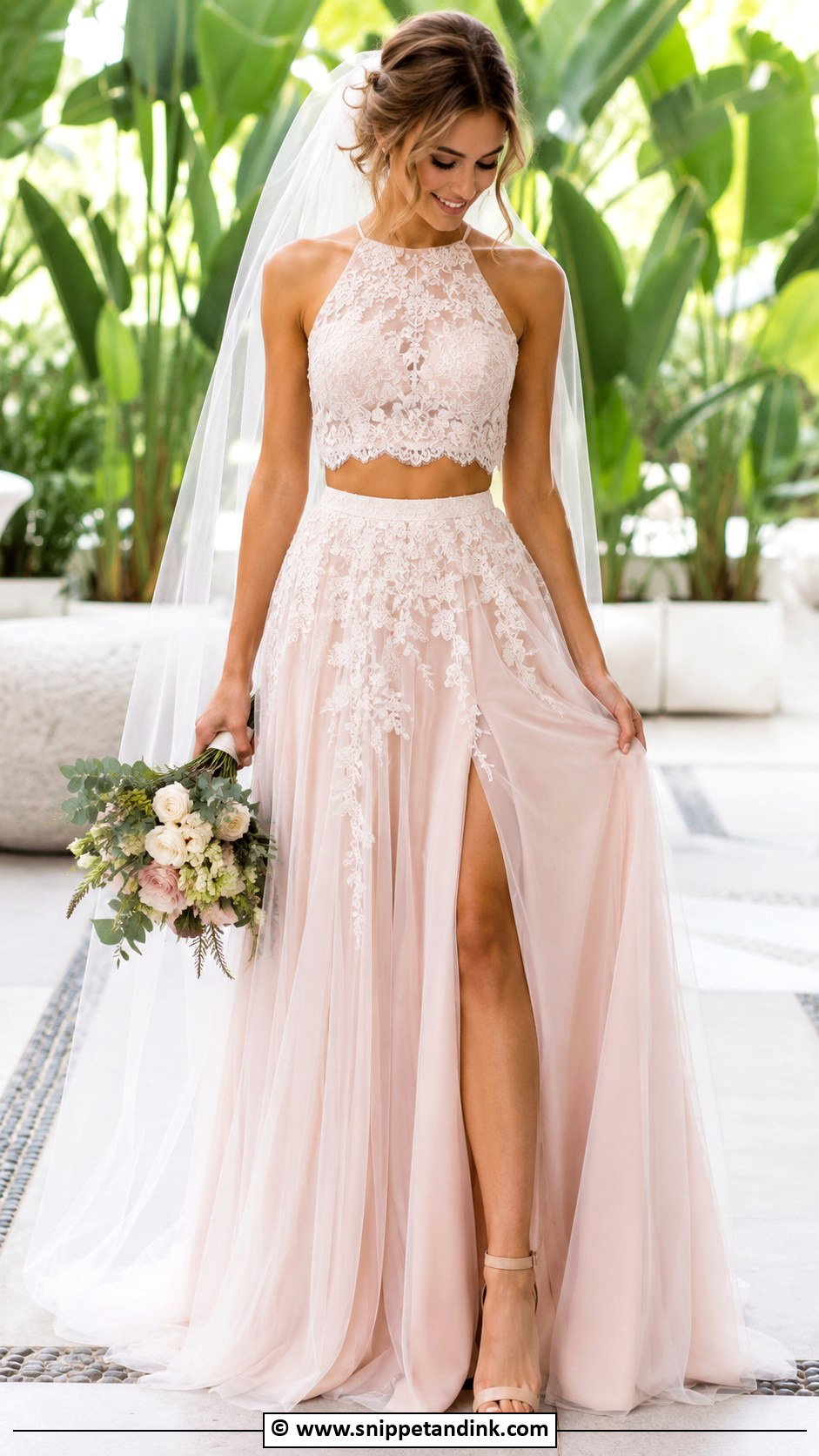
Two-piece outfits are easier to fit than a one-piece gown because top and skirt can be sized separately. A crop top with a full skirt is playful; a lace top with a flowing skirt is romantic; a structured bodice with satin is clean. Check the gap between pieces when you sit and raise your arms, because that’s when skin shows. You may also wear the top again later, which a full gown rarely allows.
22. Blush Wedding Dress With Cape
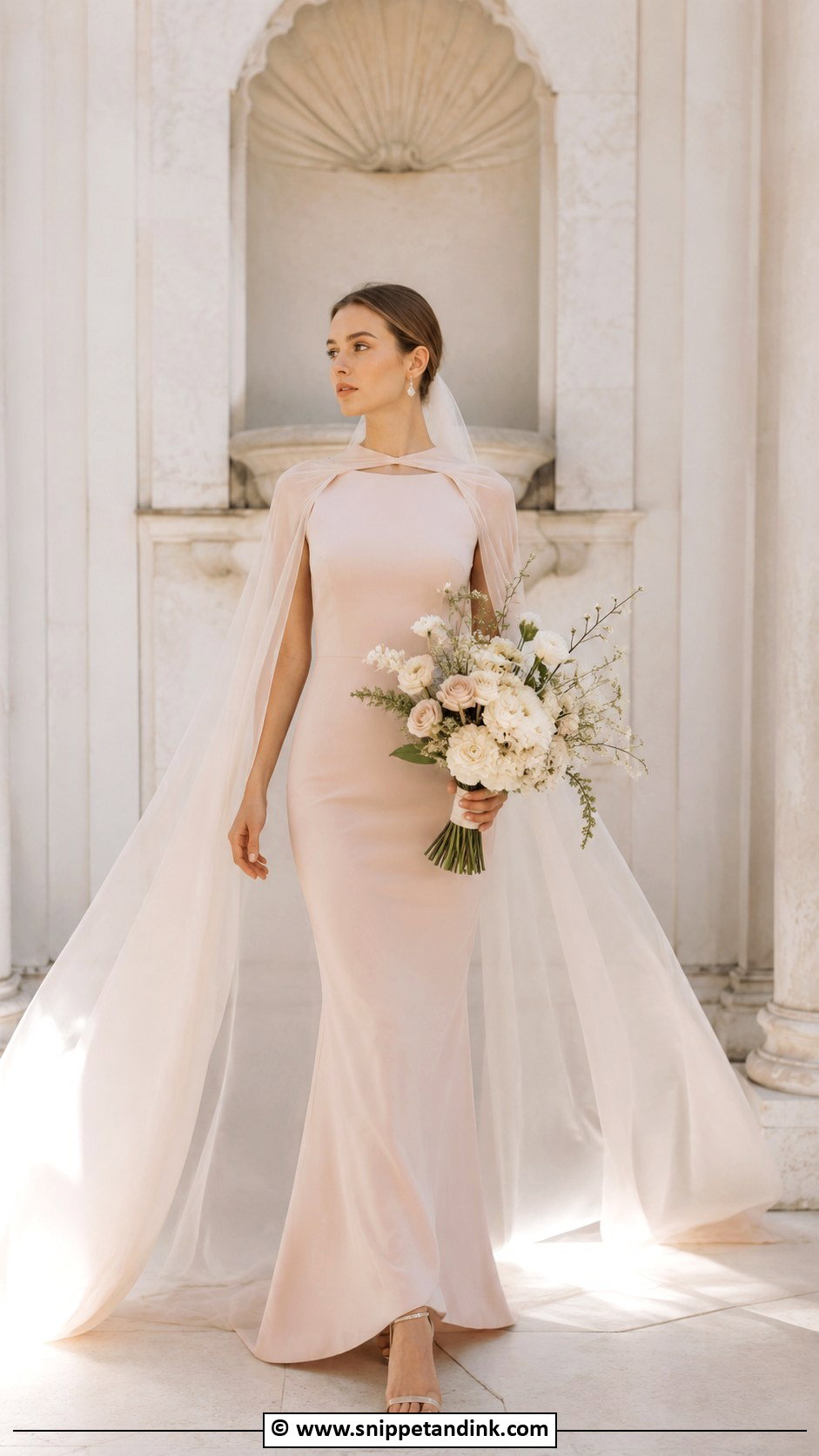
A cape can replace a veil and give the shoulders coverage. Sheer capes float behind a fitted gown; structured ones look more like fashion. The attachment is what I test: it should clip securely at the shoulder or neckline and not drag the bodice backward when you walk. If the cape carries lace or beading, keep the dress under it simple. Sleek hair and minimal jewellery let it lead.
23. Blush Wedding Dress With Sleeves
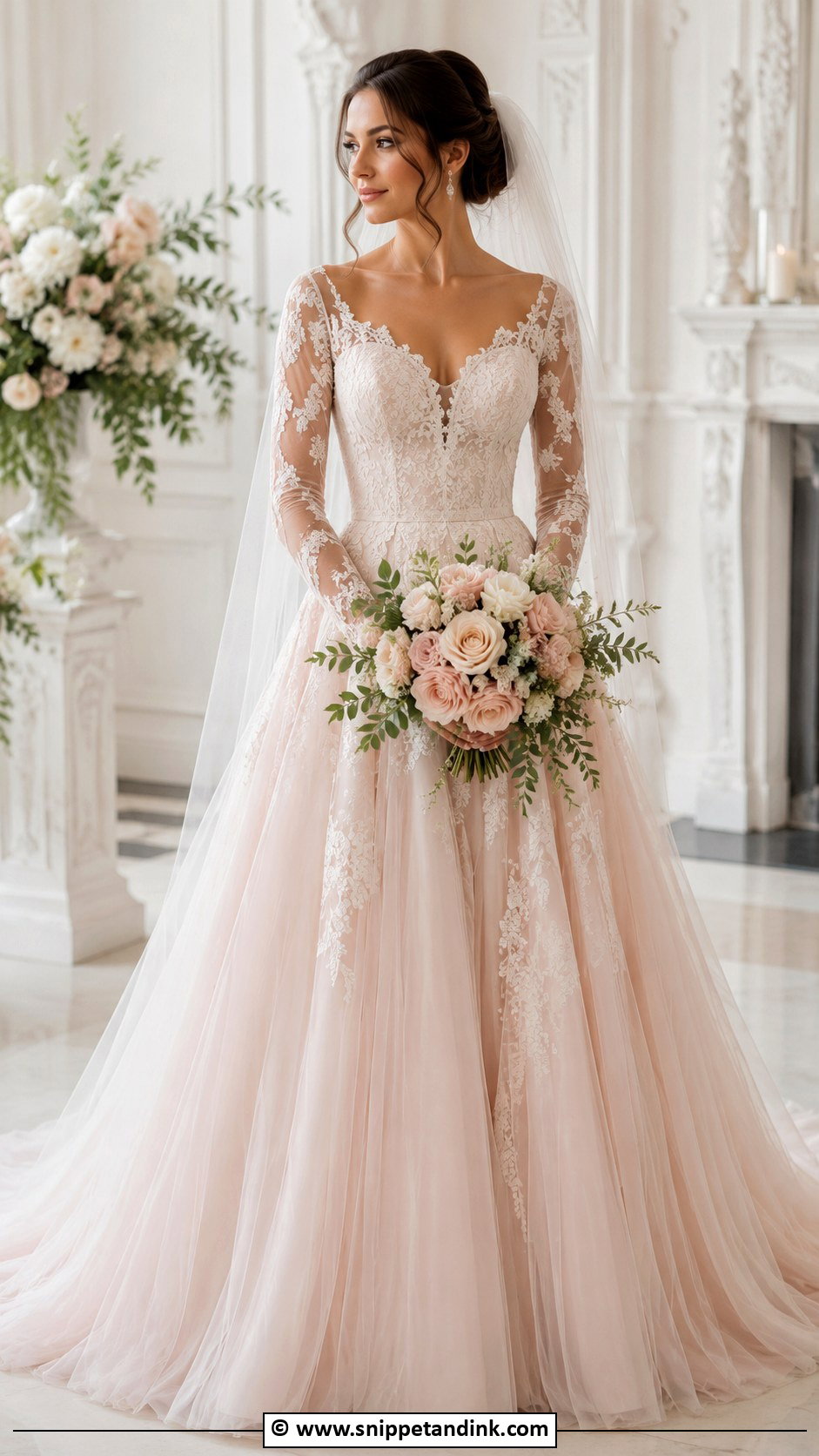
Sleeves can suit almost any season depending on fabric: sheer lace for spring, flutter for summer, fitted long sleeves for autumn and winter. The blush keeps sleeve detail soft. I make every bride lift her arms, hug and dance a few steps at the fitting, because a tight sleeve set into a fitted bodice will lift the waist with every gesture. Simple hair, light jewellery, and a bouquet that complements the blush rather than matching it exactly.
24. Blush Wedding Dress With Train
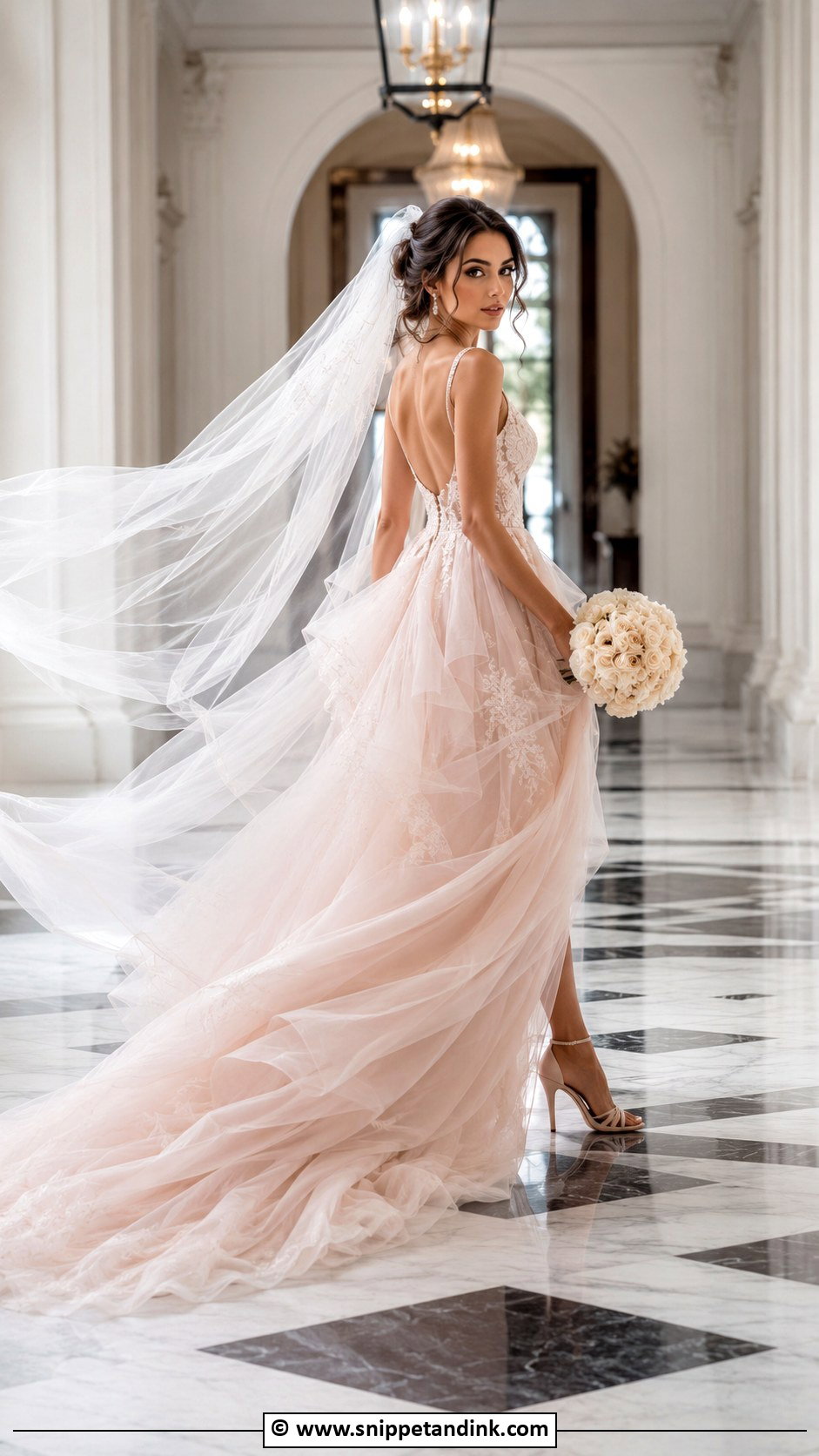
A train gives you the aisle moment. Tulle trains float, satin trains look dramatic, lace adds texture. Before choosing a length, look at the floor (gravel and grass snag tulle), think about weather, and ask about the bustle, which tucks the train up for the reception. There are several bustle styles and some take a few tries to get right, so learn yours with whoever will do it on the day. A simple veil extends the line.


25. Blush Wedding Dress With Bow
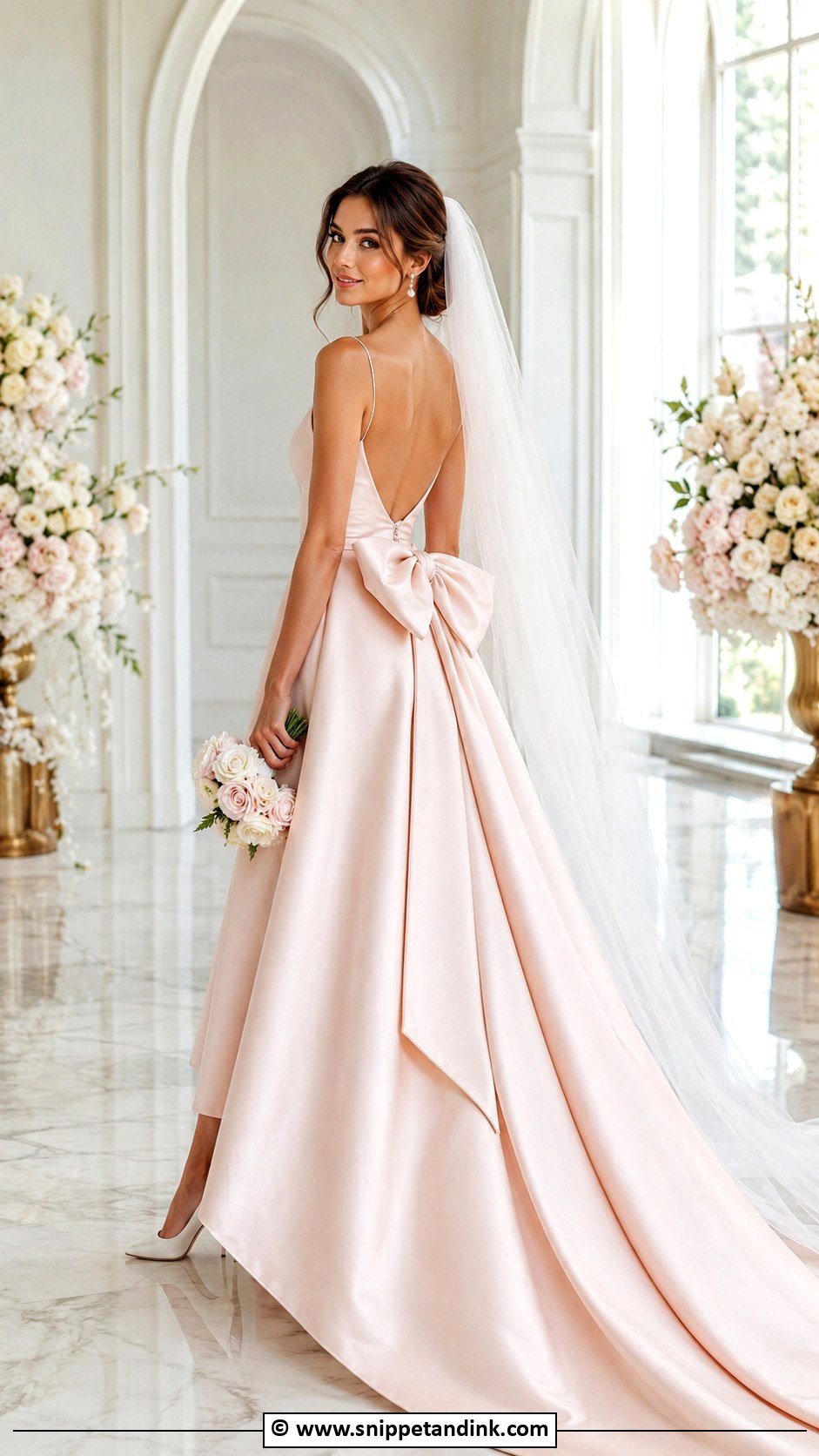
Bows are all about proportion. A large back bow brings drama and pairs best with a clean satin or crepe dress; a small waist bow feels sweet and can sit on lace or light beading. On blush the bow reads romantic rather than childish, as long as there’s only one big statement. A large bow also crushes in a car seat, so plan how you’ll sit on the way to the ceremony. Pearl earrings and smooth hair keep it grown-up.
26. Blush Wedding Dress With Corset
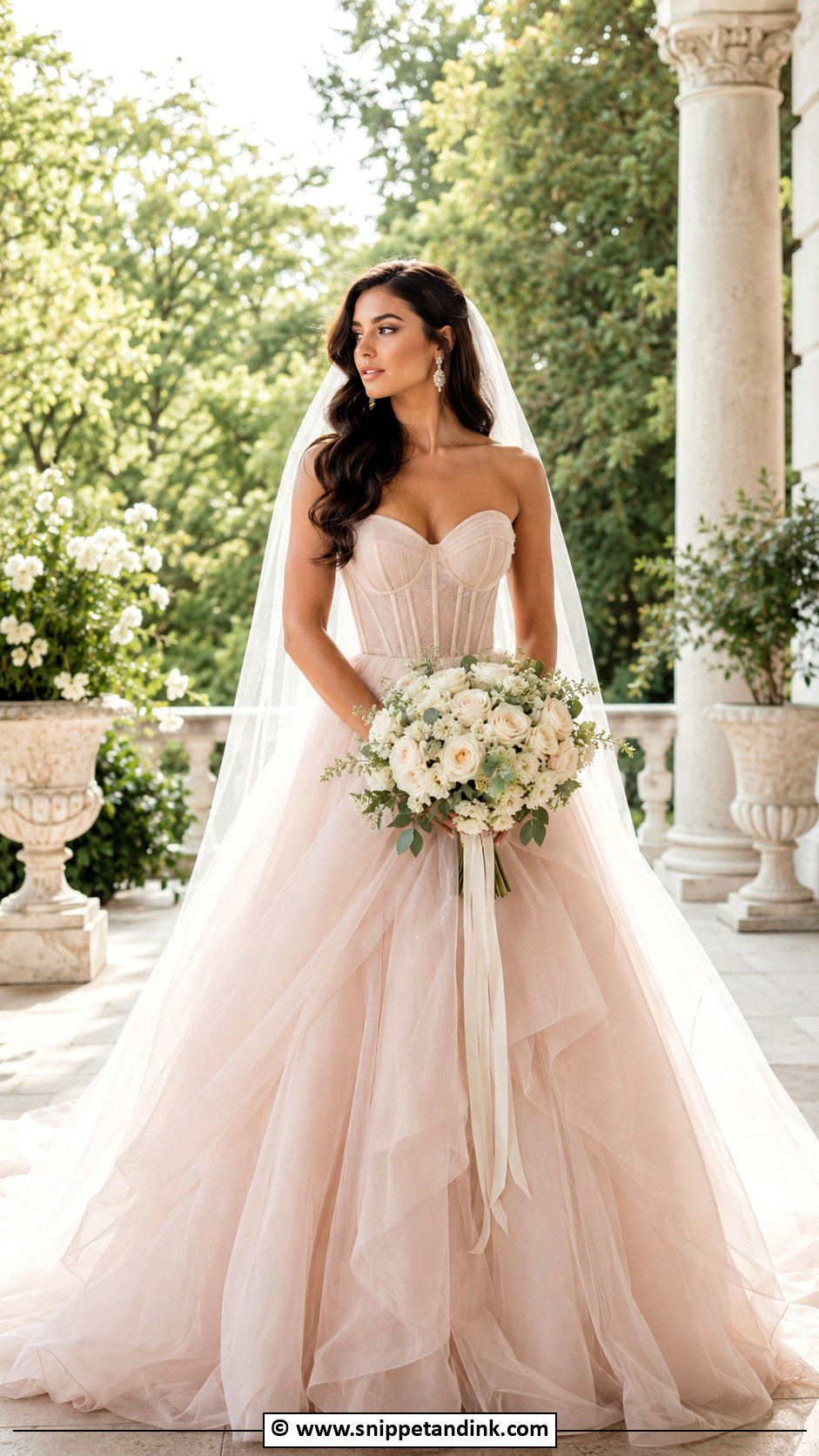
A blush wedding dress with corset gives structure and shapes the waist, and the colour softens what can look rigid. Exposed boning feels modern; a lace-up back gives you adjustment on the day, which is useful if your body changes slightly in the final weeks. Make sure it fits snugly without restricting breathing; I always ask brides to sit and take a deep breath at the final fitting. Delicate earrings, soft waves and a veil in a matching fabric.
27. Blush Wedding Dress With Detachable Skirt
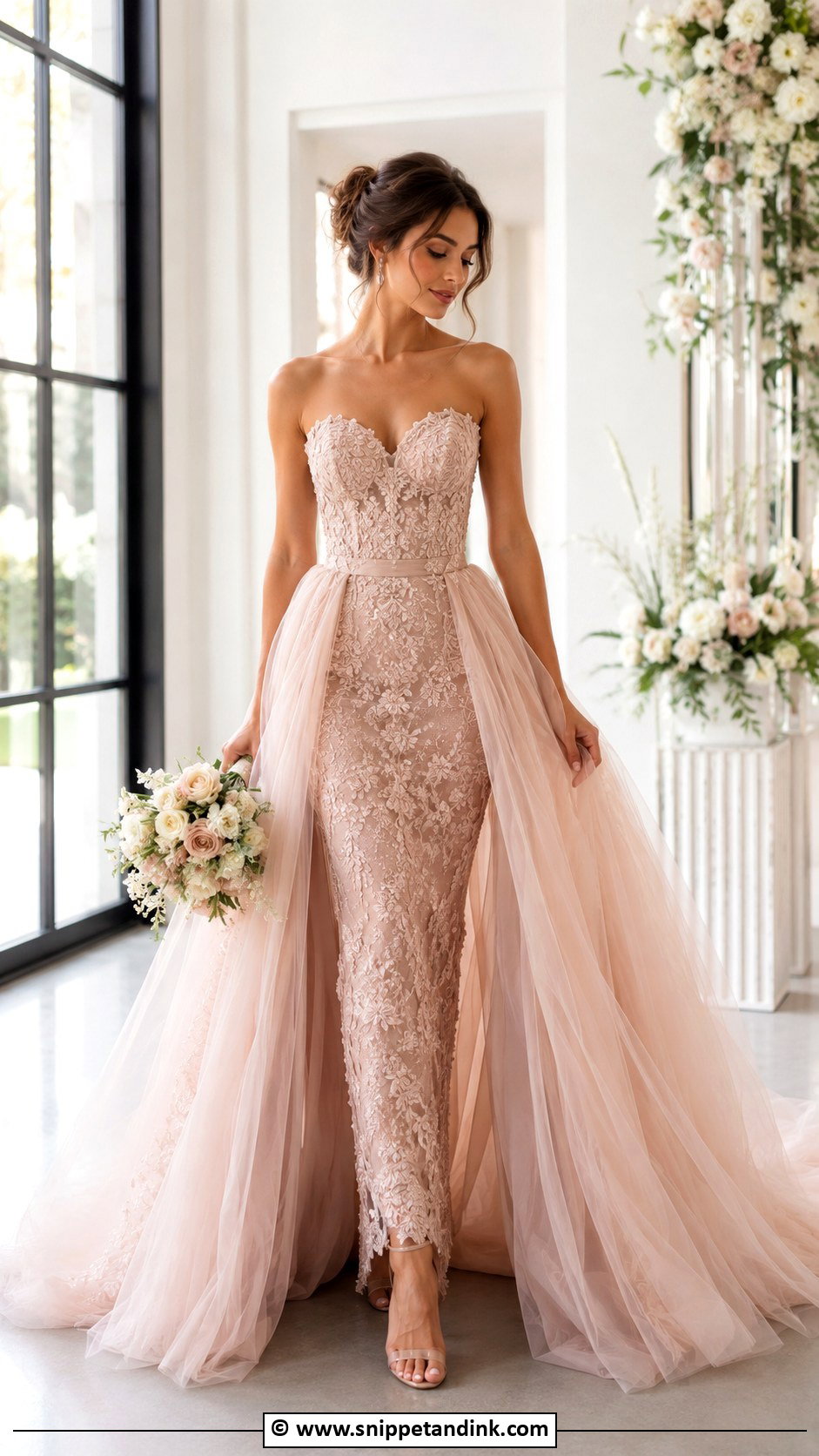
A blush wedding dress with detachable skirt gives you two looks without buying two gowns. Tulle overskirts look dreamy for the aisle; organza or satin looks more formal. The join must be smooth, with no ridge at the waist, and secure enough not to slip as you walk. Practise taking it off with whoever will help you change. Choose shoes and jewellery that suit both versions.
28. Blush Plus Size Wedding Dress
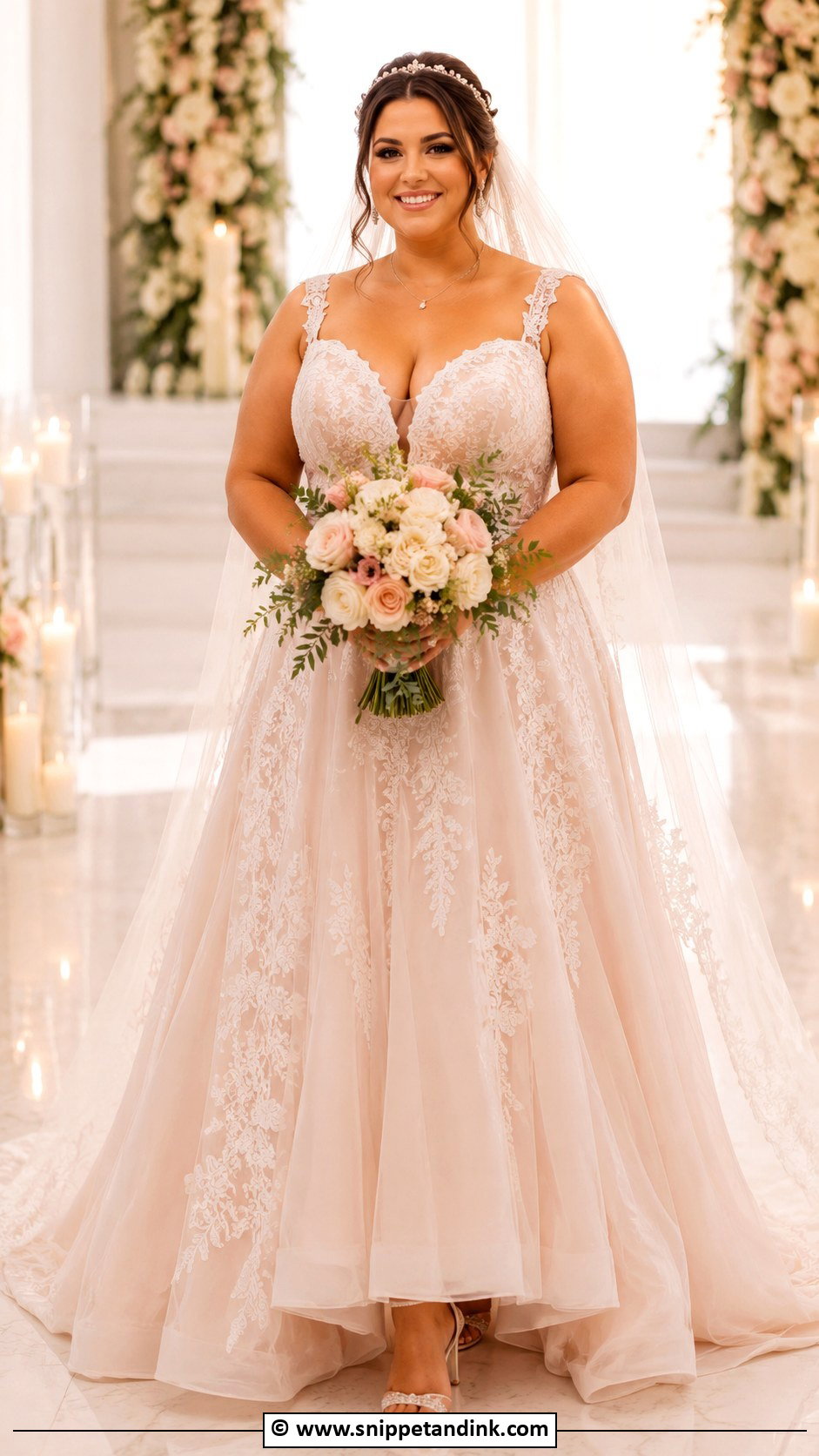
Support is where I start with any plus size gown, before colour or decoration. That means supportive cups, comfortable straps, boning where you need it and seams that sit where your body actually curves. A-lines, structured ball gowns, wrap bodices and corset styles all work. Don’t feel limited to plain designs either: lace, sparkle, sleeves and long trains all suit plus size brides. Blush is flattering on many skin tones once the undertone is right.
29. Blush Maternity Wedding Dress
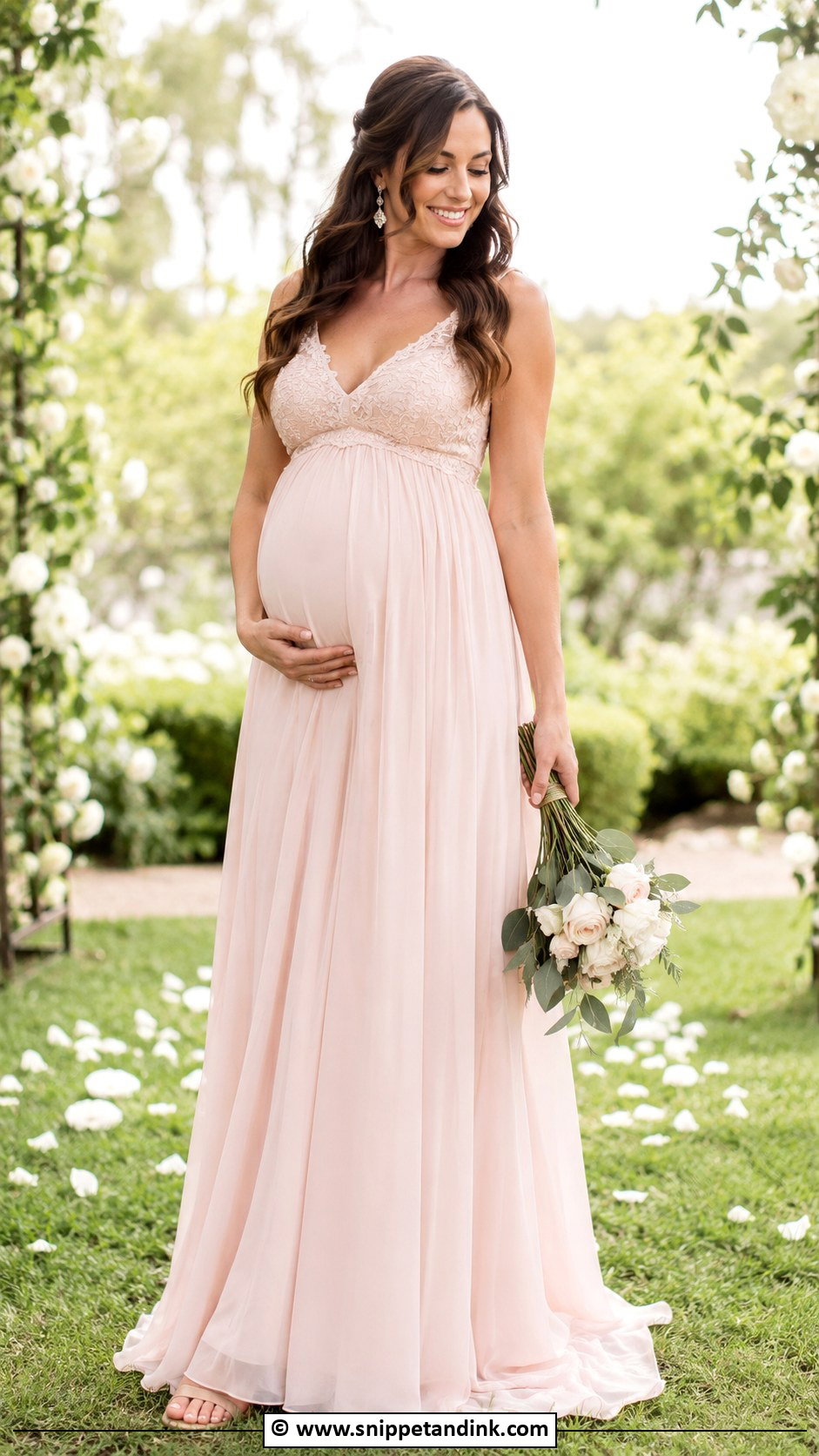
A blush maternity wedding dress needs to account for change. A bump can grow noticeably between the final fitting and the wedding, so I schedule that fitting as late as possible and choose stretchy or adjustable designs: empire waists, flowing chiffon, stretch lace. A soft sash above the bump adds shape without pressure. Comfortable shoes are a must for standing and photos, and a light bouquet helps.
30. Blush Reception Wedding Dress
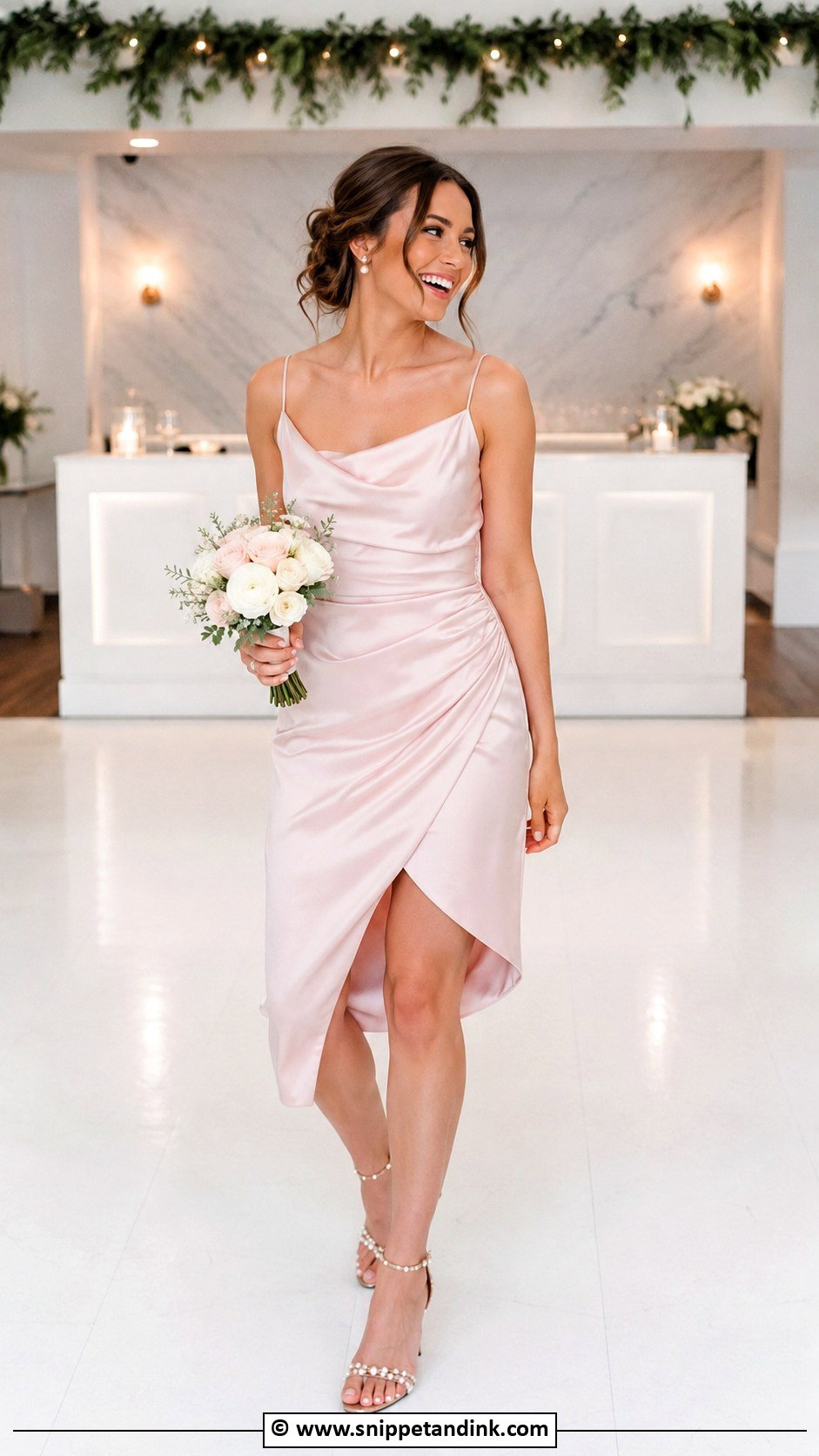
A blush reception dress gives you a fresh second look that is easier to move in than the ceremony gown. Minis, slips, midis or a light long dress all work. Satin, sequins, feathers or simple lace keep it festive. Plan the change: who unbuttons you, where you’ll do it and roughly ten to twenty minutes away from guests. Swap to dancing shoes or flats and refresh your hair.
Where Blush Goes in Photographs and How to Keep It
Pale pinks are fragile on camera. Bright midday sun can bleach a light blush close to white, while warm evening bulbs push it toward peach or beige. Neither is a disaster, but if you chose the colour for a reason, tell your photographer and send a daylight picture of the gown so they can keep it true when editing.
The other thing that makes blush disappear is everything around it. A bouquet of blush roses held against a blush bodice merges into one patch. I’d suggest flowers with contrast, such as ivory, deeper burgundy or plenty of green, and bridesmaids in a colour that is clearly different from the dress rather than a near match.
Small things that save a pale pink gown
- Water marks show on blush satin. Blot spills with a dry cloth rather than wetting them.
- Spray tan and self-tanner transfer onto pale fabric. Apply it a few days early and rinse off any residue.
- Keep foundation off the neckline by dressing before your final powder.
- Store the gown away from daylight afterward, because pale dyes fade with long sun exposure.
Pink Enough to Notice, Soft Enough to Still Feel Bridal
Blush lets you step slightly away from ivory without giving up anything bridal. The same colour can lean classic, glamorous or understated depending on cut and fabric: drama in a ball gown, polish in a satin slip, warmth in a lace A-line. Check your shade in daylight, choose the shape for your venue and season, and let accessories support the dress instead of competing with it.
You'll Like These Ideas:





Leave a Reply