
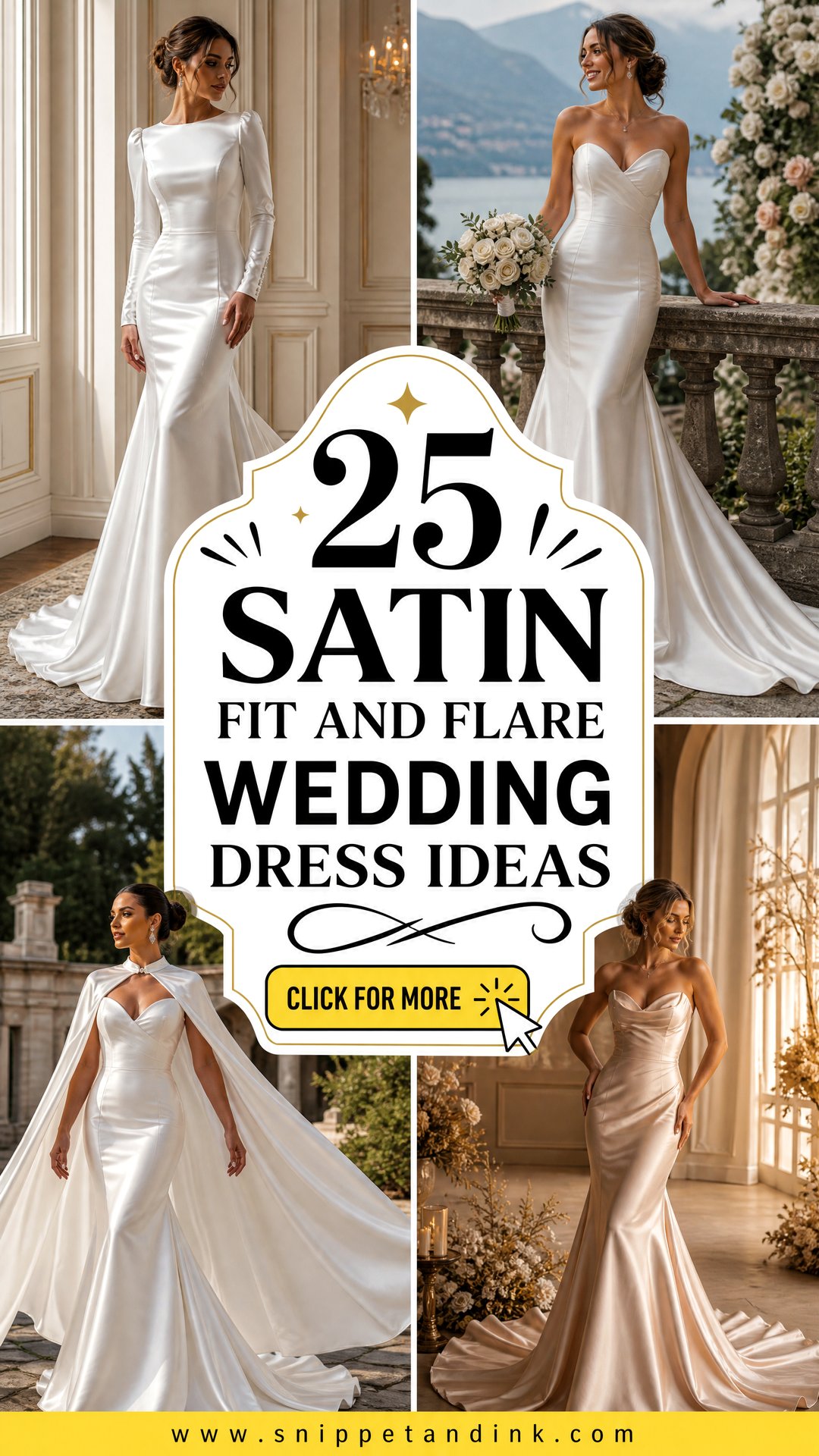
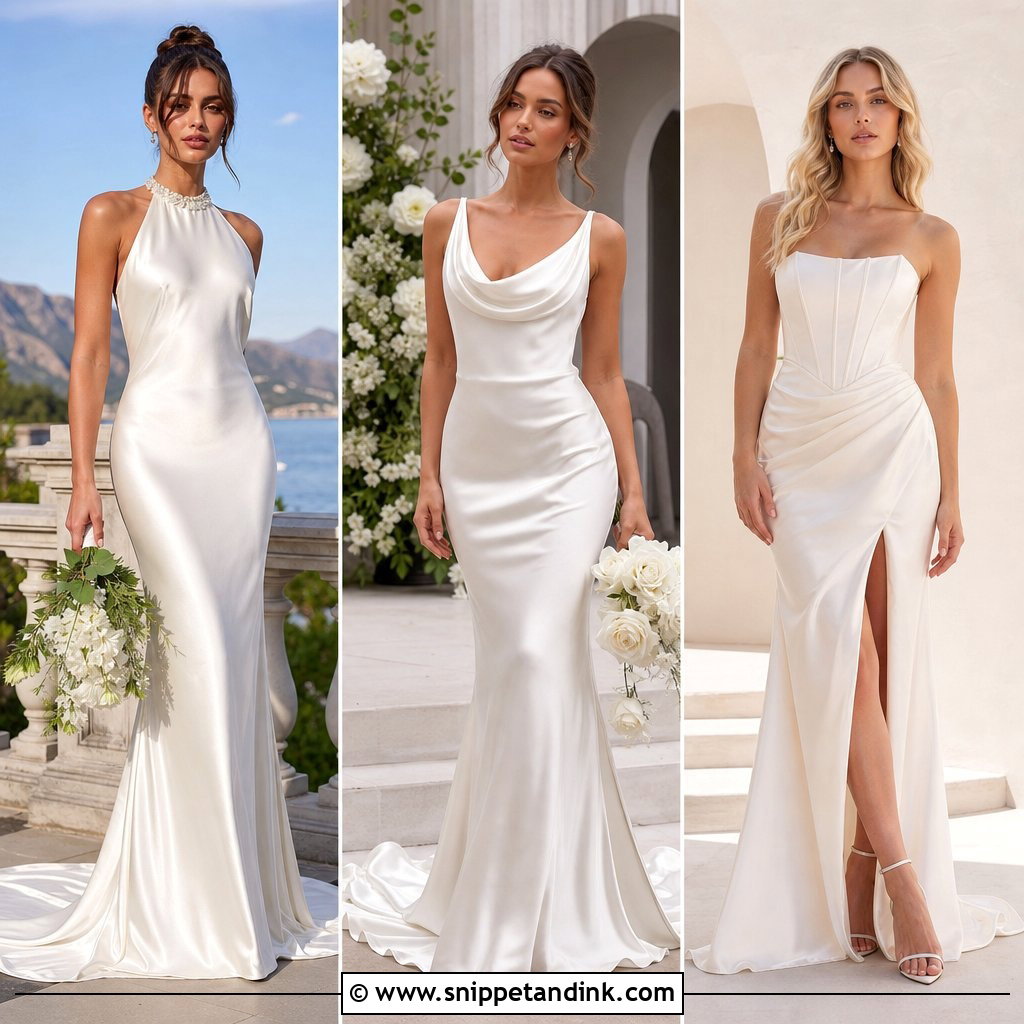
A fit and flare is the silhouette I reach for most often when a bride says she wants shape but also wants to sit down at dinner. The dress follows the bodice and hips, then opens below the hip line, usually somewhere between mid-thigh and knee, which gives you the curve of a mermaid without locking your legs together. Satin makes the cut read very clean, because a smooth fabric shows the seams and the line of the skirt instead of covering them with texture. Necklines, sleeves and trains shift the mood a lot, and the 25 versions below run from strict minimal to quite romantic, each with a note on what it asks of the person wearing it.
Where the Flare Should Open on Your Body
The detail that decides how a fit and flare looks on you is the flare point, the line where the fitted part ends and the skirt opens. Designers place it anywhere from just below the hip to the knee, and a few centimetres change both the silhouette and how freely you move.
- Just below the hip: the most forgiving placement and the easiest to walk in. Good if you want shape without cling down the thigh.
- Mid-thigh: the classic position, and where most dresses sold under this name open. You get a clear curve and can still sit and climb stairs.
- At or near the knee: really a mermaid. It looks dramatic in photos but shortens your stride, so expect smaller steps all day.
On a shorter frame, a higher flare usually lengthens the leg line because more of your height reads as skirt. A tall bride can carry a lower one. Wear your actual wedding shoes to every fitting, since even a small change in heel height moves where the flare lands against your body.
The satin itself changes the flare too. Heavy satin holds a wide, sculpted skirt and often has a stiffened hem or a layer of tulle underneath, while a softer satin falls closer to the legs and swings when you walk.
1. Strapless Satin Fit And Flare Wedding Dress
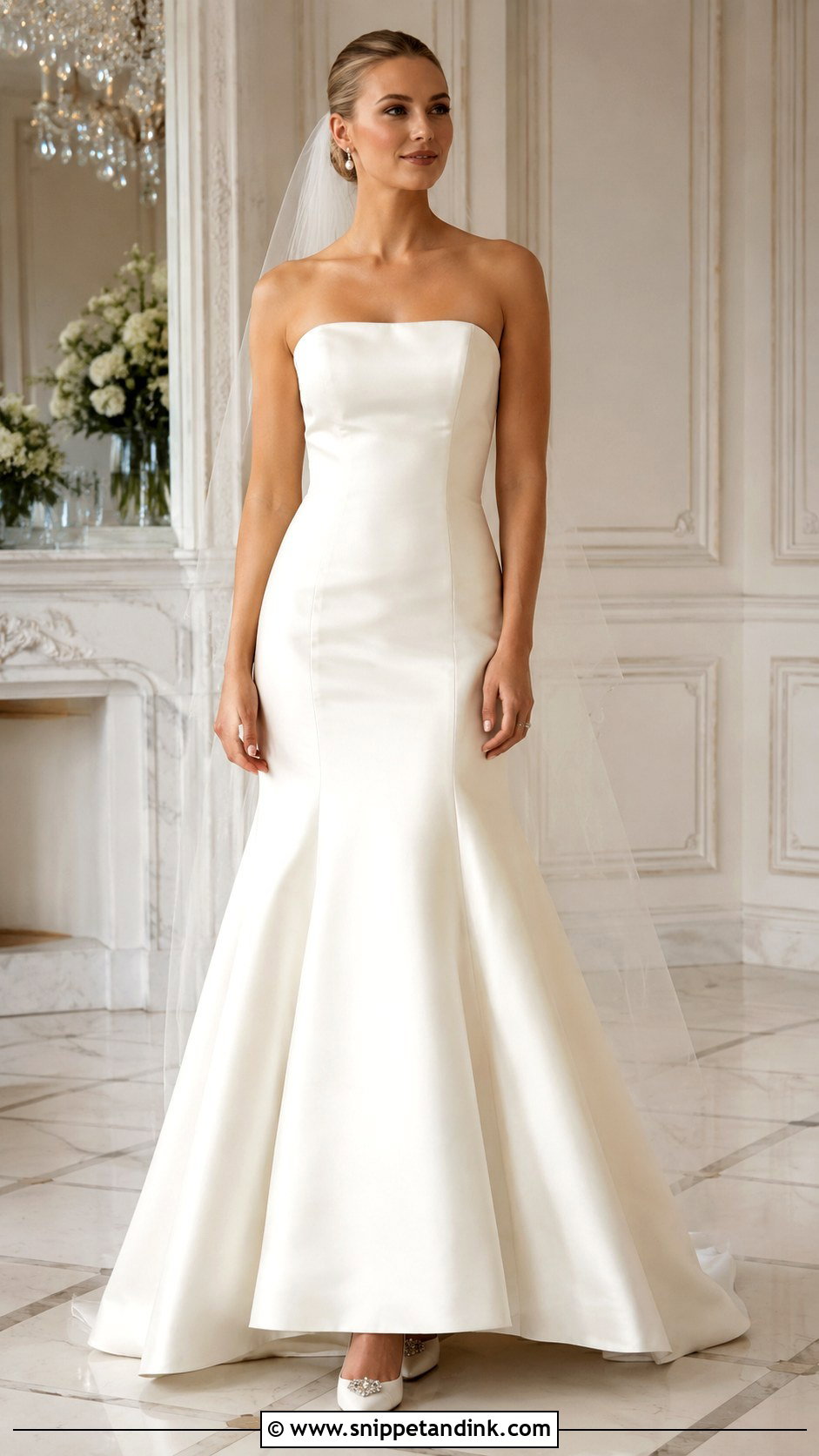
Strapless is the purest version of this cut, and the neckline you pick moves it a long way. A straight-across edge looks modern and slightly severe, while a soft sweetheart is warmer. Because a fit and flare is snug through the hips, any slipping of the bodice drags the whole dress with it, so I make sure the top grips without the bride tugging at it. Pointed satin pumps, pearl drops and a plain veil are all it needs. Ballrooms and hotel venues show the satin well under indoor light.
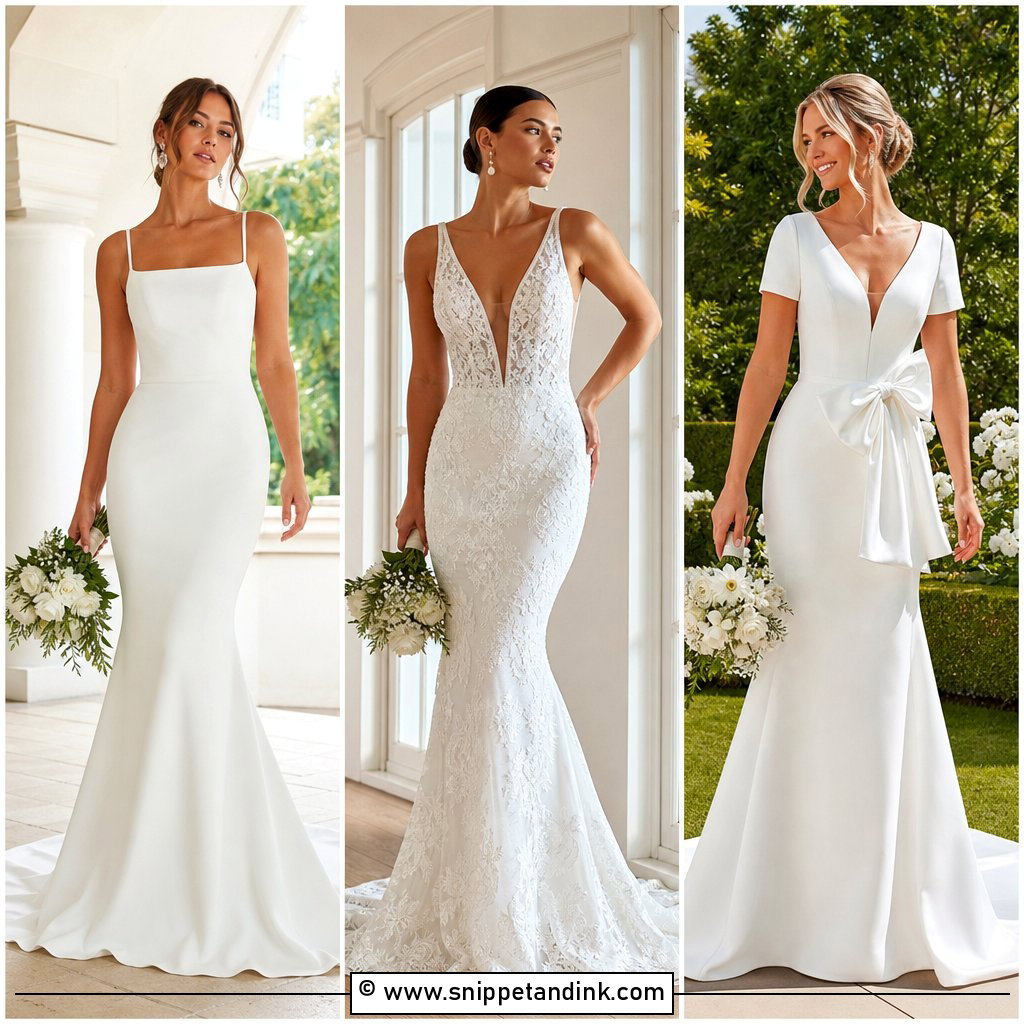
2. Square Neck Satin Fit And Flare Wedding Dress
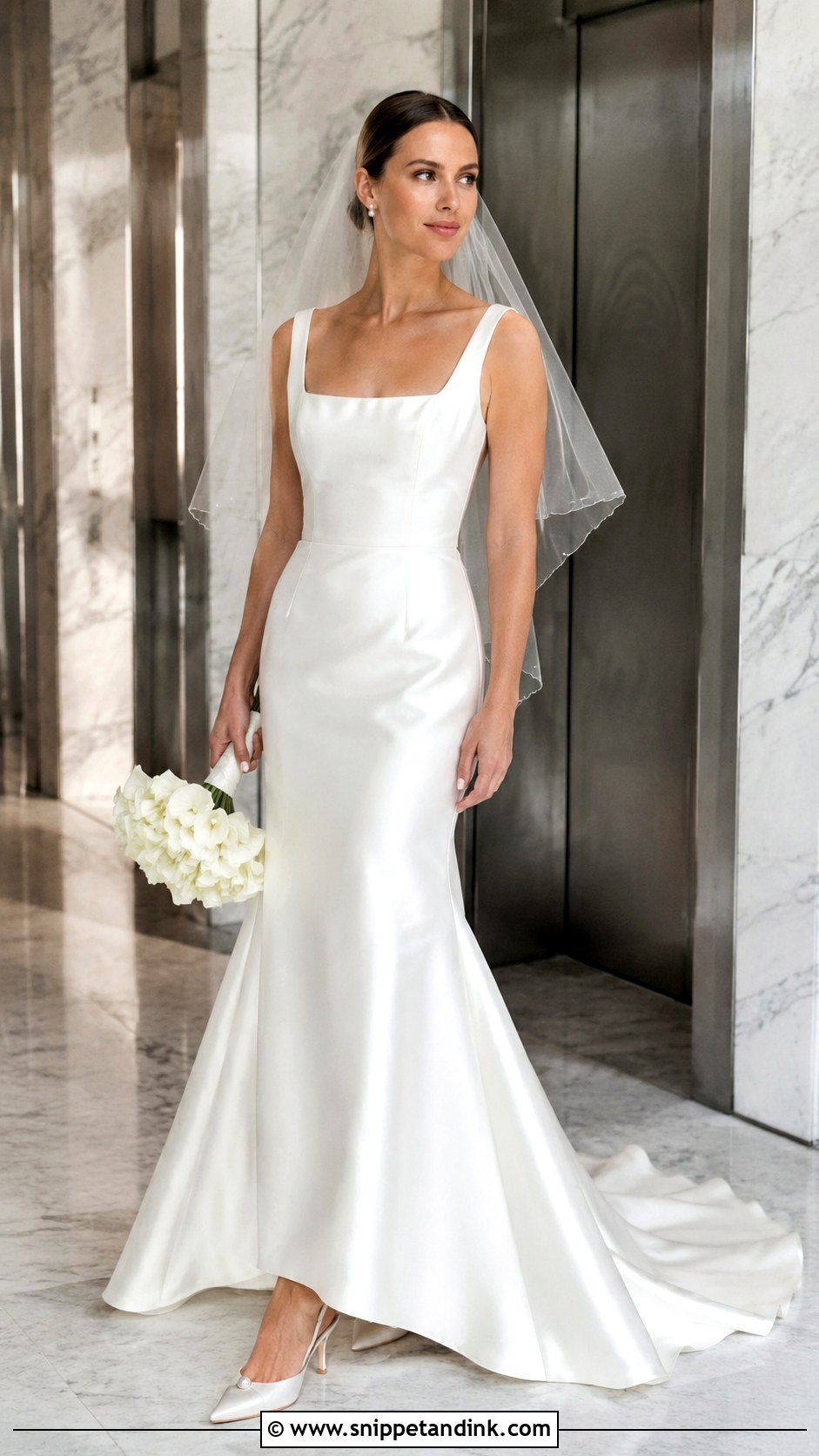
A square neck gives support without coming up high, and its straight lines echo the long seams of the skirt. Satin keeps the geometry from looking hard. Slingbacks, a fingertip veil and small pearl studs suit it. A narrow satin belt can work if your natural waist sits exactly where the seam does; if it doesn’t, a belt only points out the mismatch, so test one before you buy it. City venues are its natural home.
3. Off Shoulder Satin Fit And Flare Wedding Dress
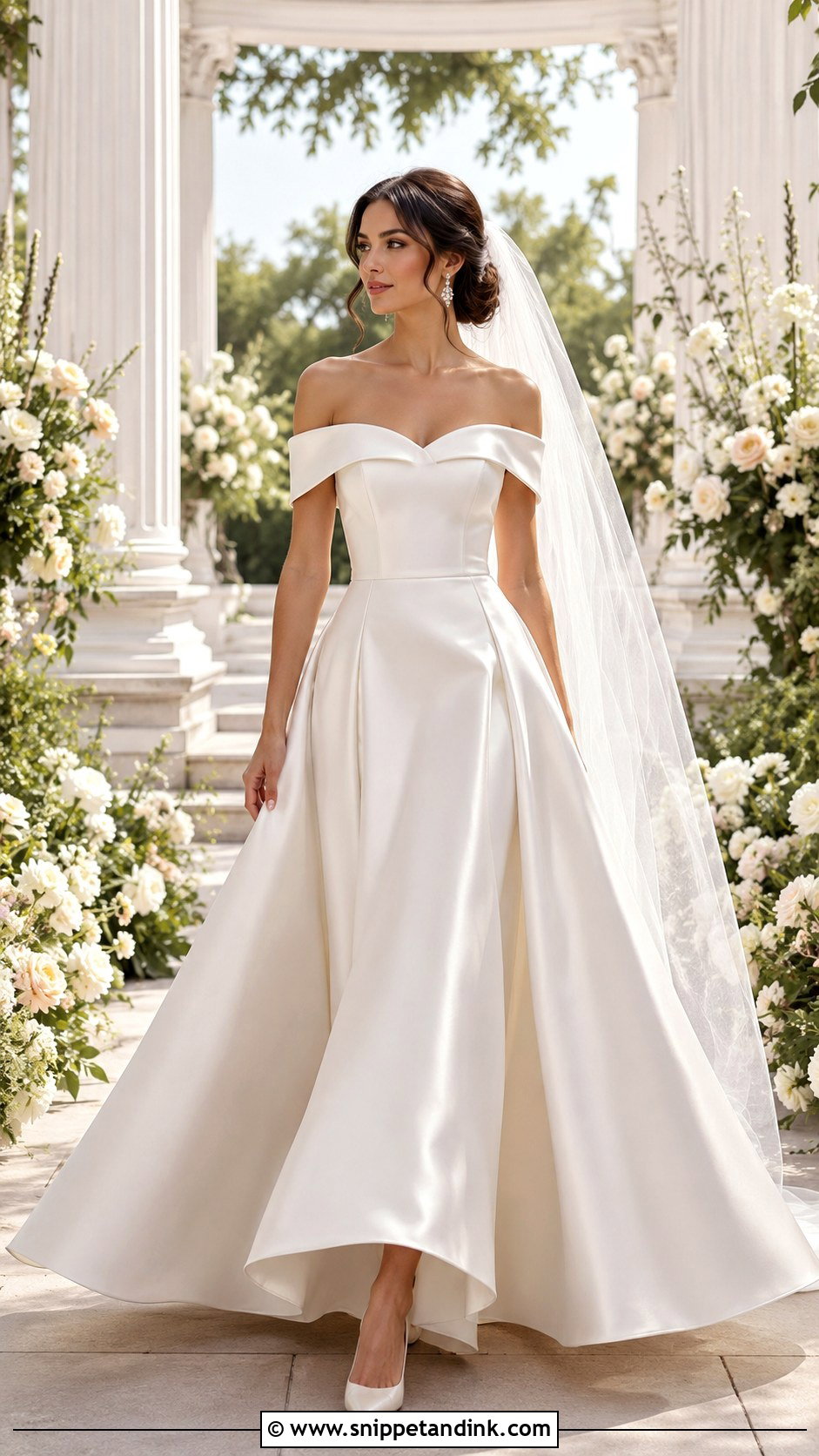
The off-shoulder fold covers the top of the arm and leaves the collarbone bare, which many brides find easier to wear than full strapless. In satin, that fold holds a crisp shape, though it does limit how high you can lift your arms. A low chignon keeps the neckline clear, and crystal studs with ivory block heels keep everything else quiet. A long veil carries the shoulder line down the back. Garden and estate venues suit its softer mood.
4. Long Sleeve Satin Fit And Flare Wedding Dress
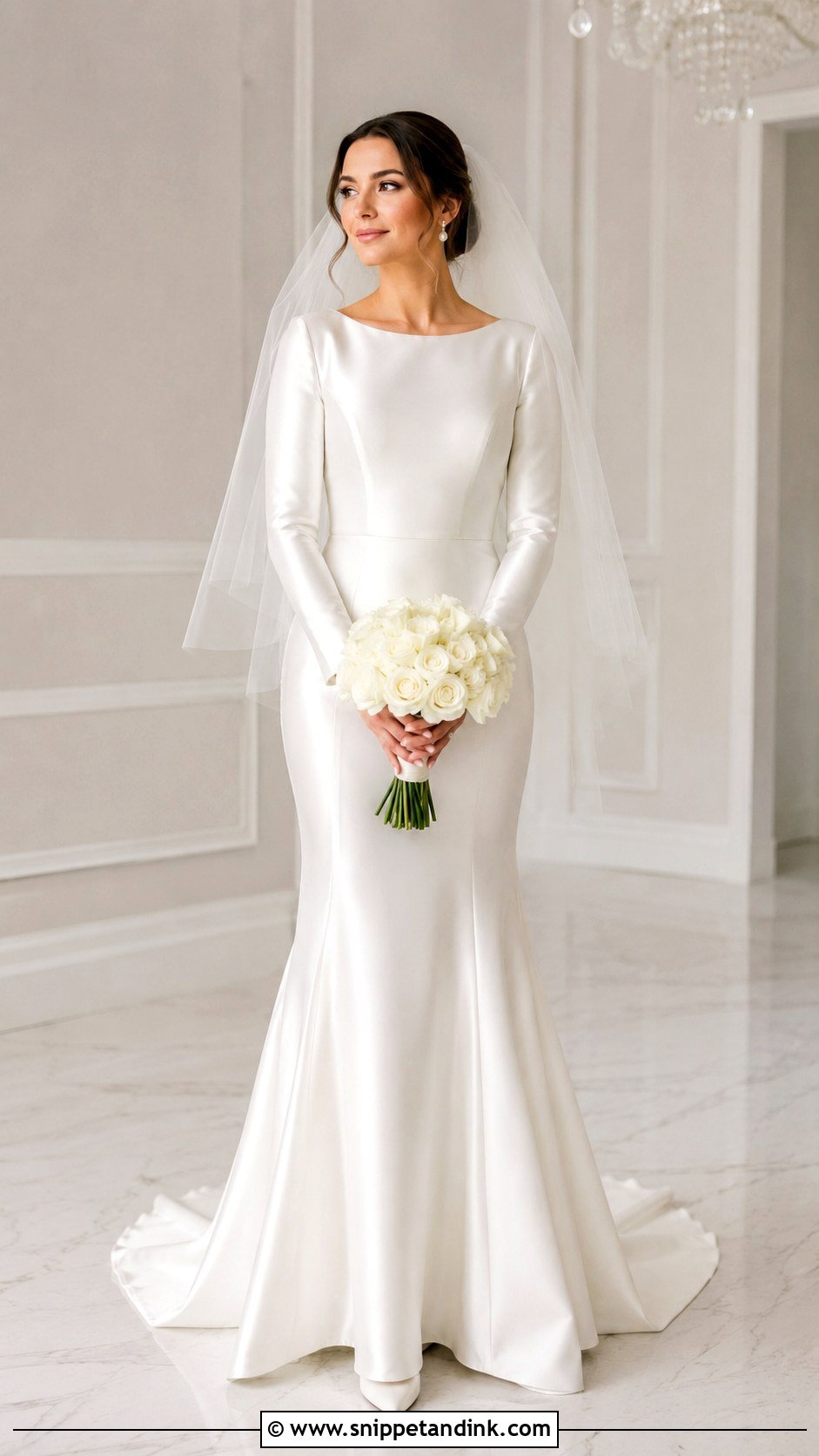
Solid satin sleeves give full coverage, which makes this a good option for winter weddings and religious ceremonies with modest dress codes. Satin has almost no stretch, so sleeves cut too close pull across the back when you hug. I always ask brides to cross their arms in front of them at the fitting to check. A bateau, scoop or shallow V balances all that coverage. Pearl earrings, closed-toe heels and a smooth updo suit it, with a chapel veil or satin bow adding interest at the back.
5. Satin Fit And Flare Wedding Dress With Detachable Sleeves
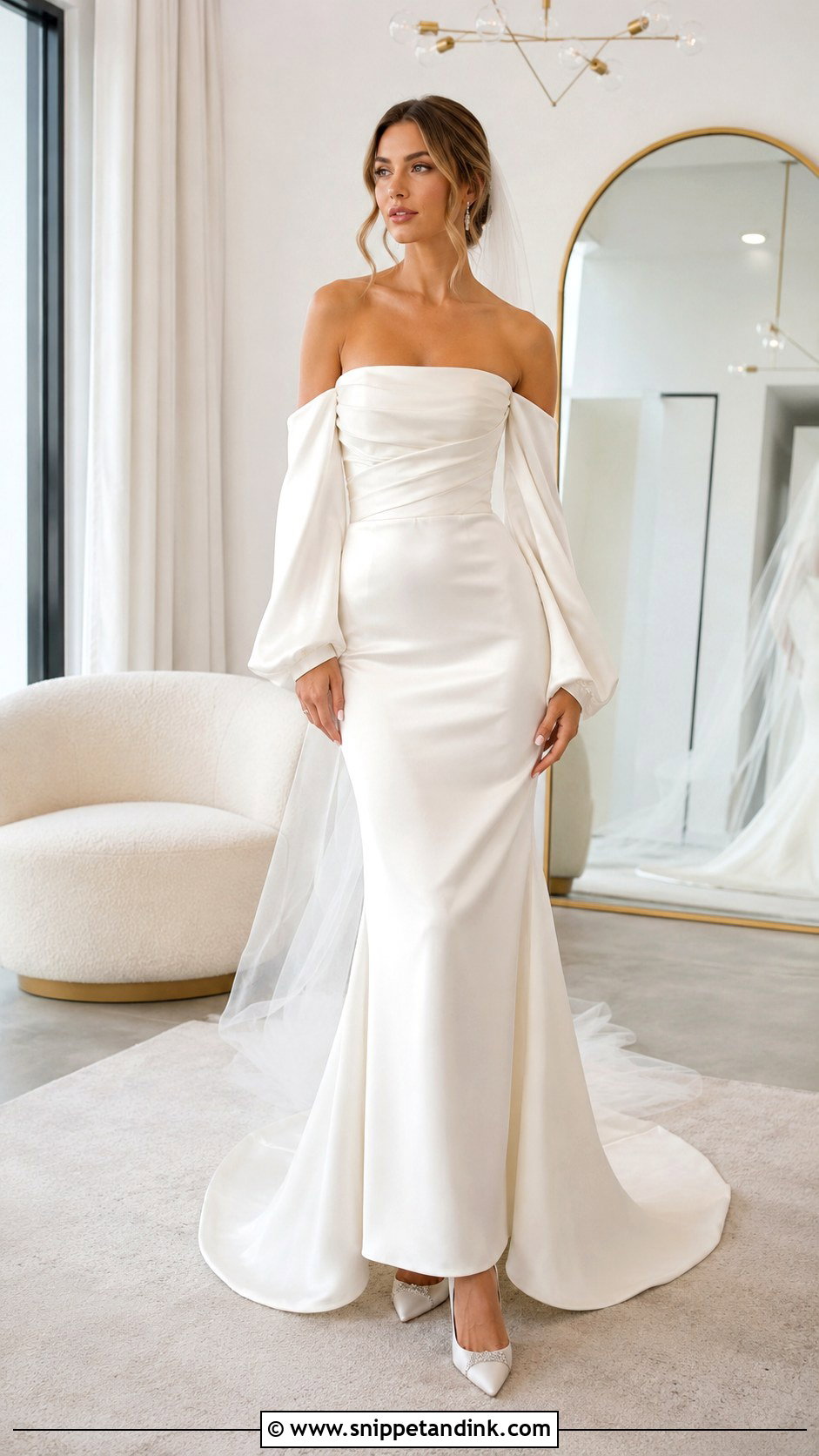
Detachable sleeves let one dress do two jobs: the covered version walks down the aisle and the bare version dances. Satin puff sleeves, draped off-shoulder sleeves and fitted illusion sleeves each change the mood. Keep the base gown plain so the sleeves look planned. Practise taking them off before the day; most tie or snap on at the armhole, and you want that done in a minute in a side room. At the change, a pearl headband or hair clip can replace the veil.
6. Satin Fit And Flare Wedding Dress With Bow Back
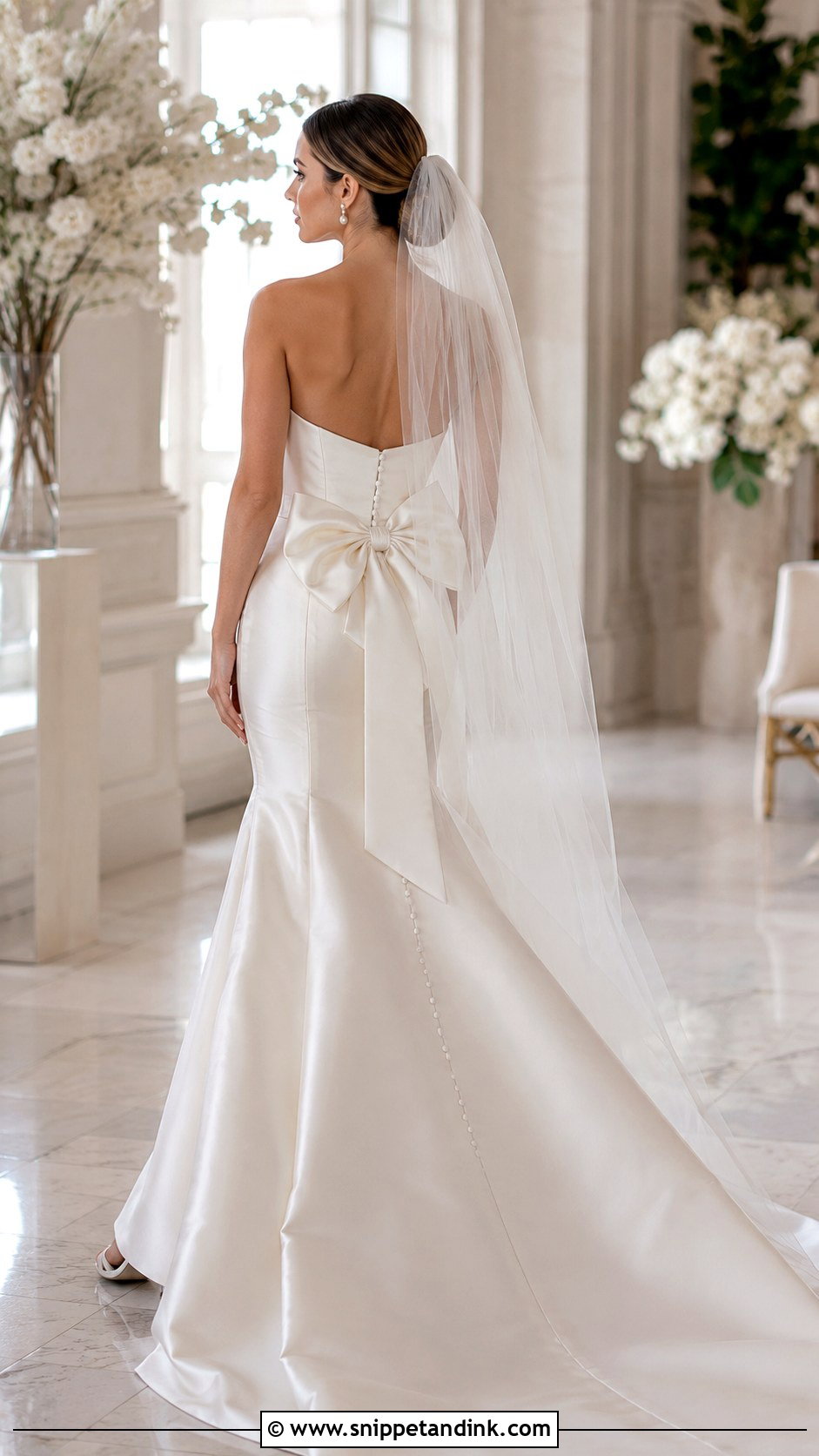
The bow back works because the surprise comes as you walk away. It can sit at the waist, the lower back or the top of the train. Satin bows need interfacing inside or they droop by evening, and they get crushed against chair backs, so ask how firm yours will be. Attach the veil above the bow and let it fall slightly to one side, and the detail stays visible during the exit. Small pearl earrings and matching satin heels are enough.
7. High Neck Satin Fit And Flare Wedding Dress
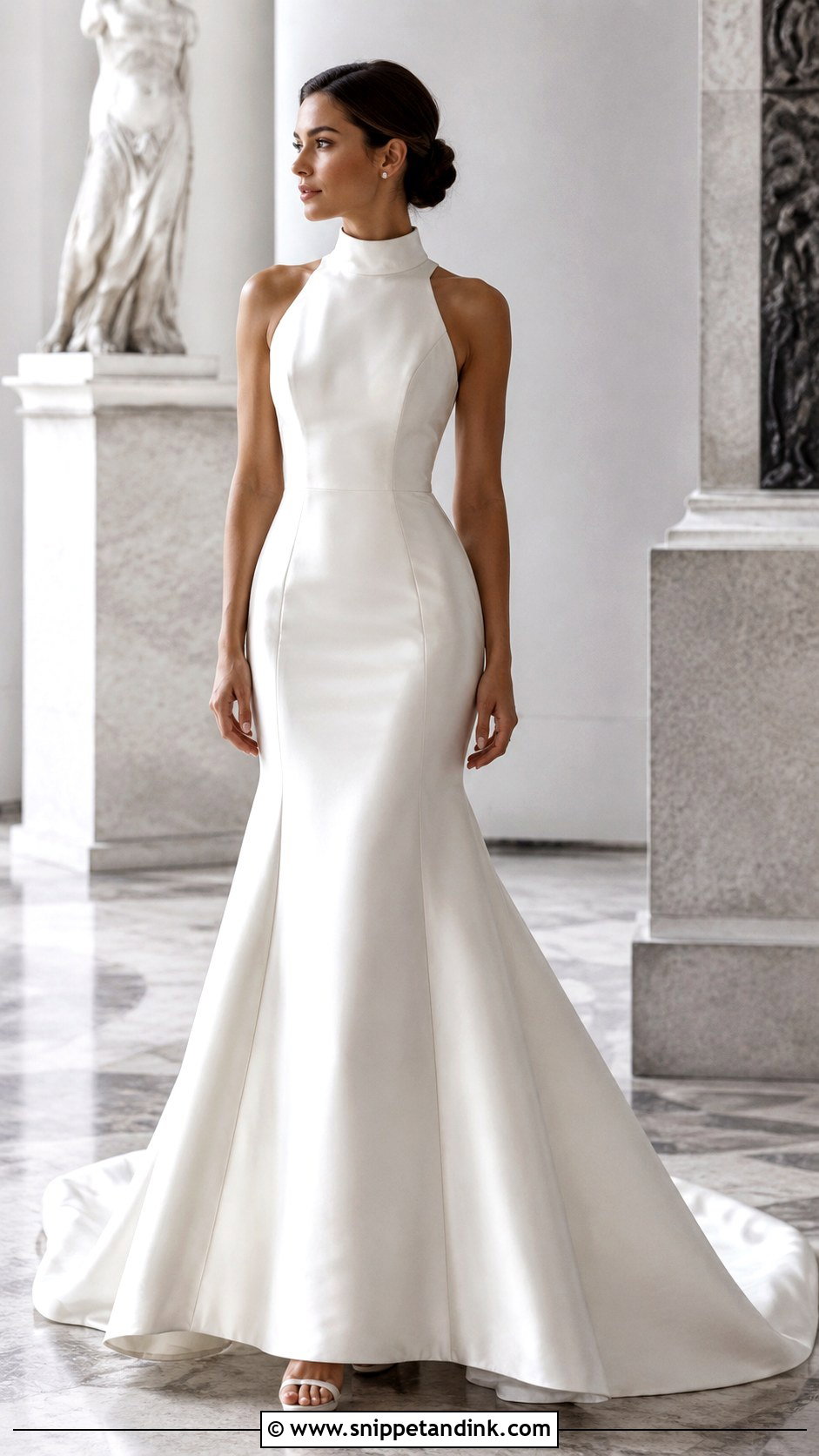
Be honest about your posture before choosing this one. A high neck pulls all the focus to the face and shoulders, and if you tend to round forward, it will show. On a bride who stands tall, it looks sculpted. A smooth bodice, long seams and a clean flare suit it best. With a neckline this strong I’d wear small studs or no earrings at all, a low bun to keep the collar clear, a narrow veil and satin heels. Museums and formal city venues fit its mood.
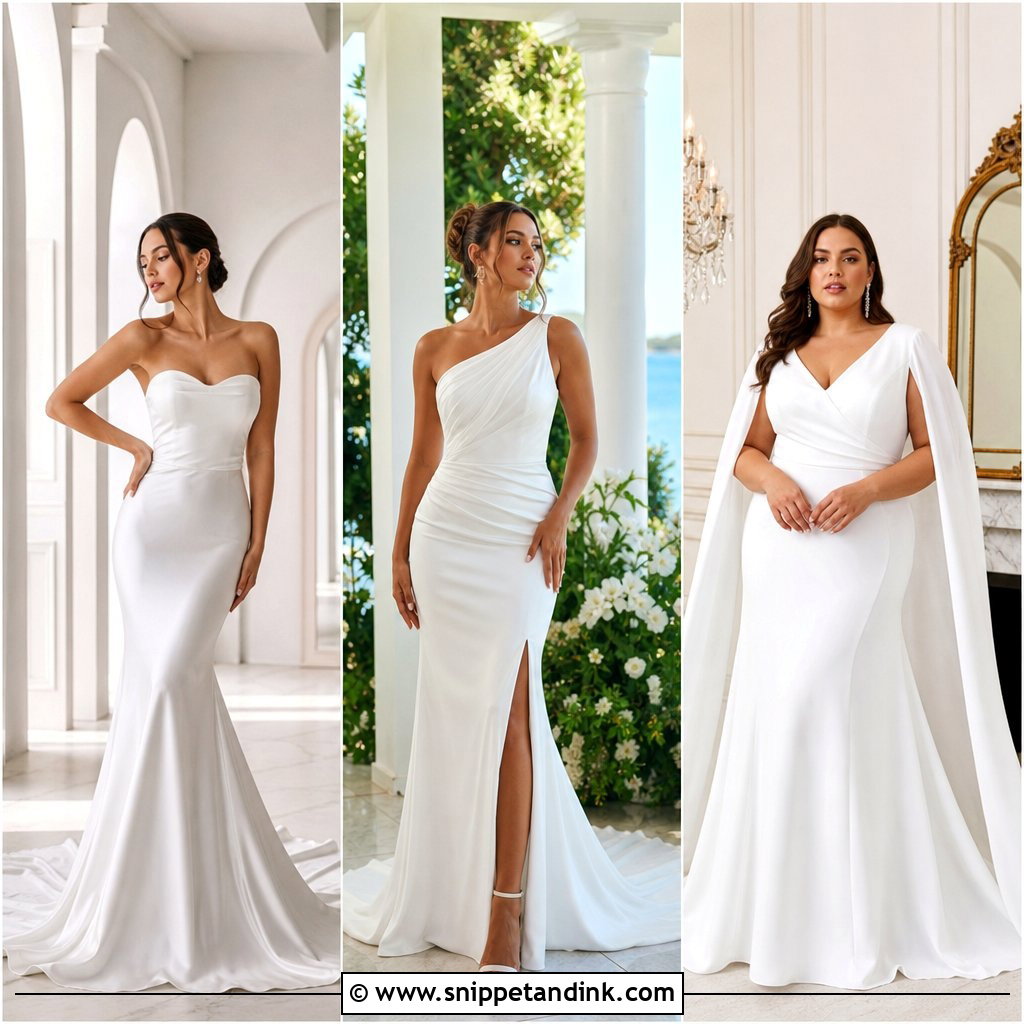
8. Sweetheart Satin Fit And Flare Wedding Dress
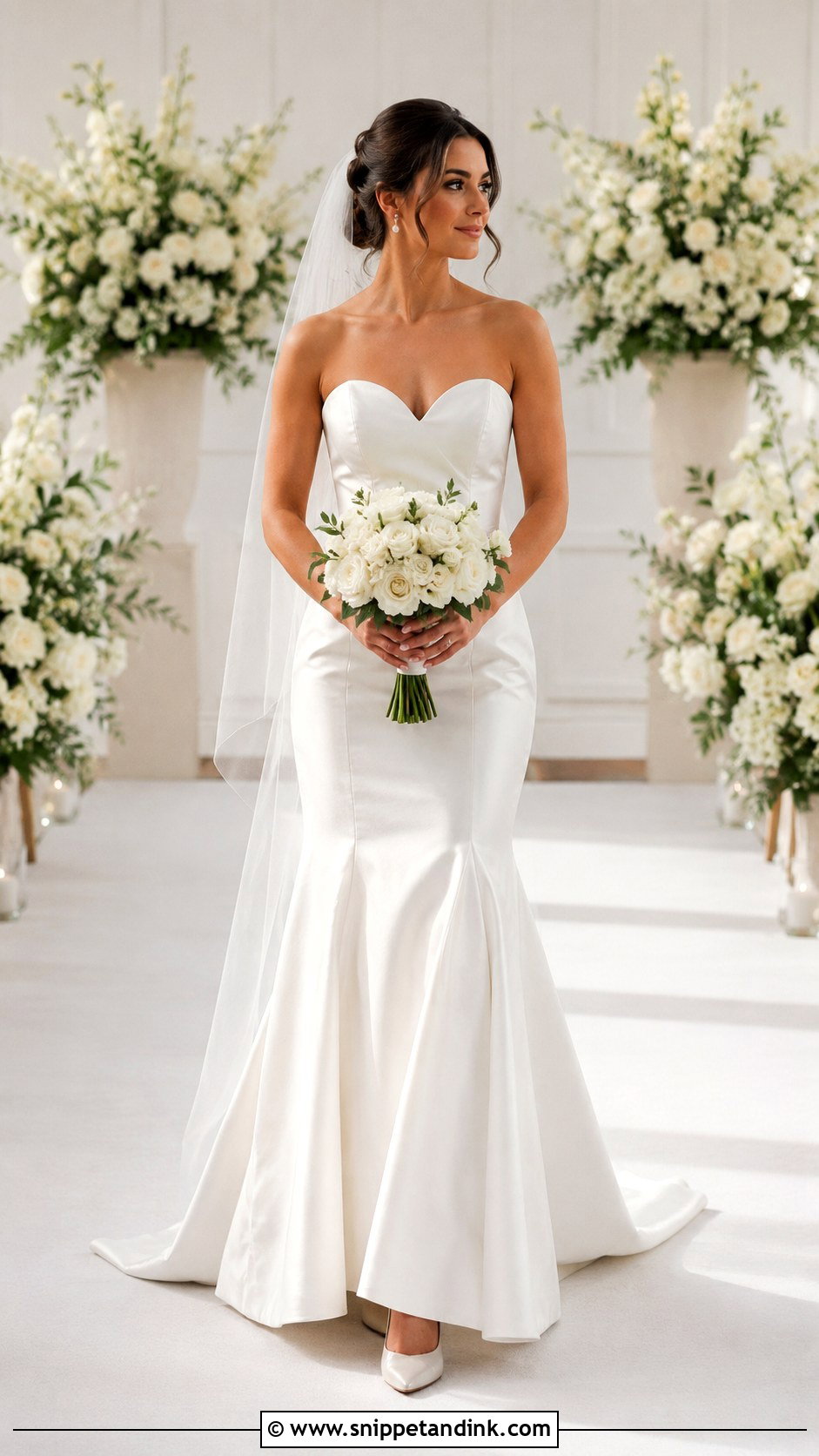
The curved neckline softens structured satin, and it suits many bust shapes because the centre dip breaks up the chest. On a smaller bust, watch for the points of the sweetheart standing away from the body; your seamstress can take the cups in to fix it. A fine necklace works if the neckline sits low, though a bare chest looks cleaner. Pearl earrings and a soft tulle veil pair well, and the dress moves comfortably between a garden and a ballroom.
9. V Neck Satin Fit And Flare Wedding Dress
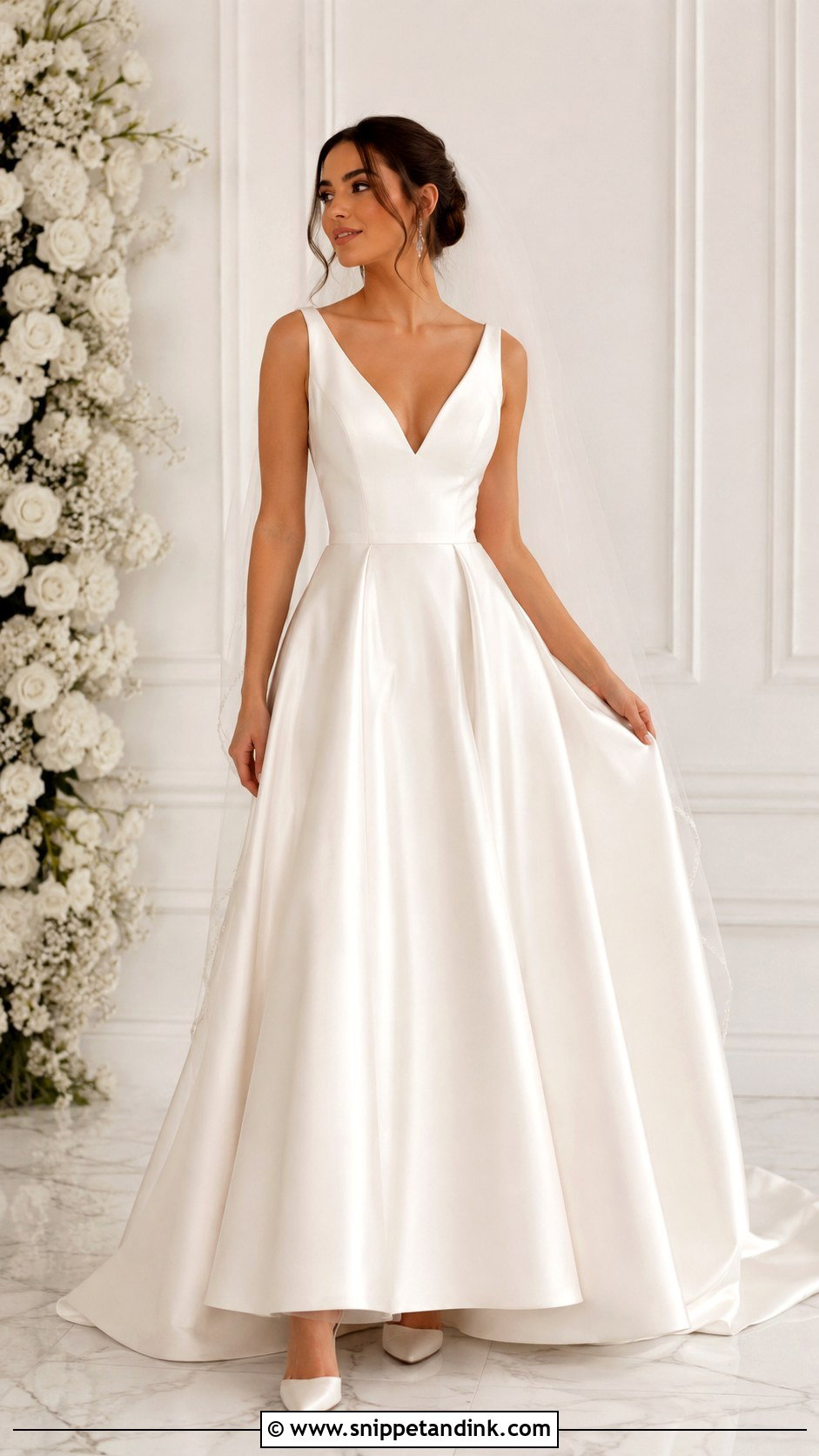
A V neckline lengthens the torso, which pairs naturally with the long line of this silhouette. A shallow V is easy to wear. A deeper one needs internal support, usually a mesh panel or fashion tape, so ask what is holding it in place before you commit. Drop earrings and pointed heels carry the vertical line through. If the back also dips into a V, set the veil higher on the head so the back stays visible.
10. Cowl Neck Satin Fit And Flare Wedding Dress
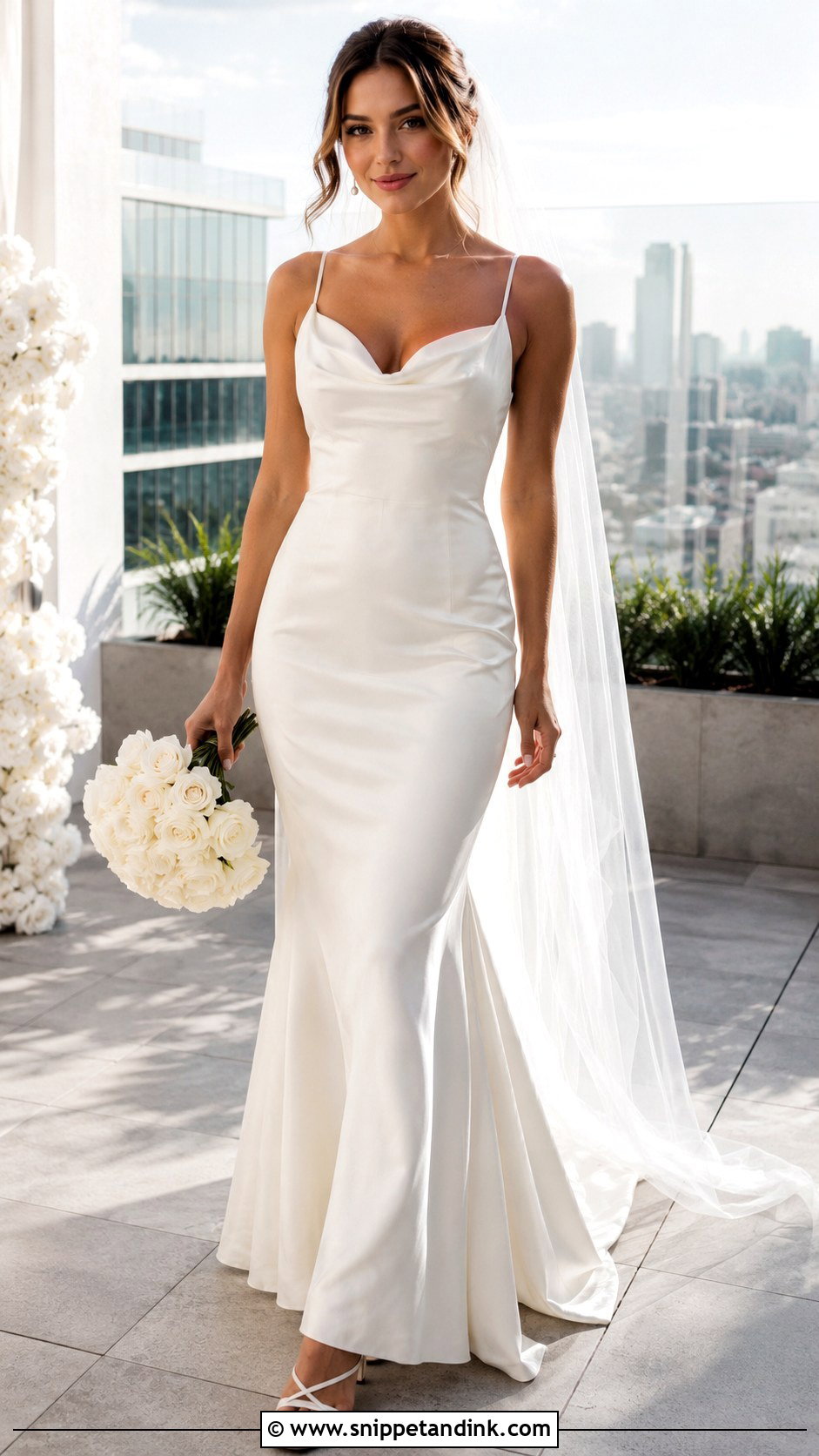
A cowl falls in soft folds at the neckline, and satin drapes there far more fluidly than stiffer fabrics. The downside is that a cowl shifts when you lean forward, so bend over a table in the fitting room and see what happens. Strappy ivory heels and a clean low bun suit it, and a heavy necklace would flatten the folds. A light, sheer veil keeps the mood soft. Rooftops, coastal venues and smaller celebrations suit it best.
11. Satin Fit And Flare Wedding Dress With Corset Bodice
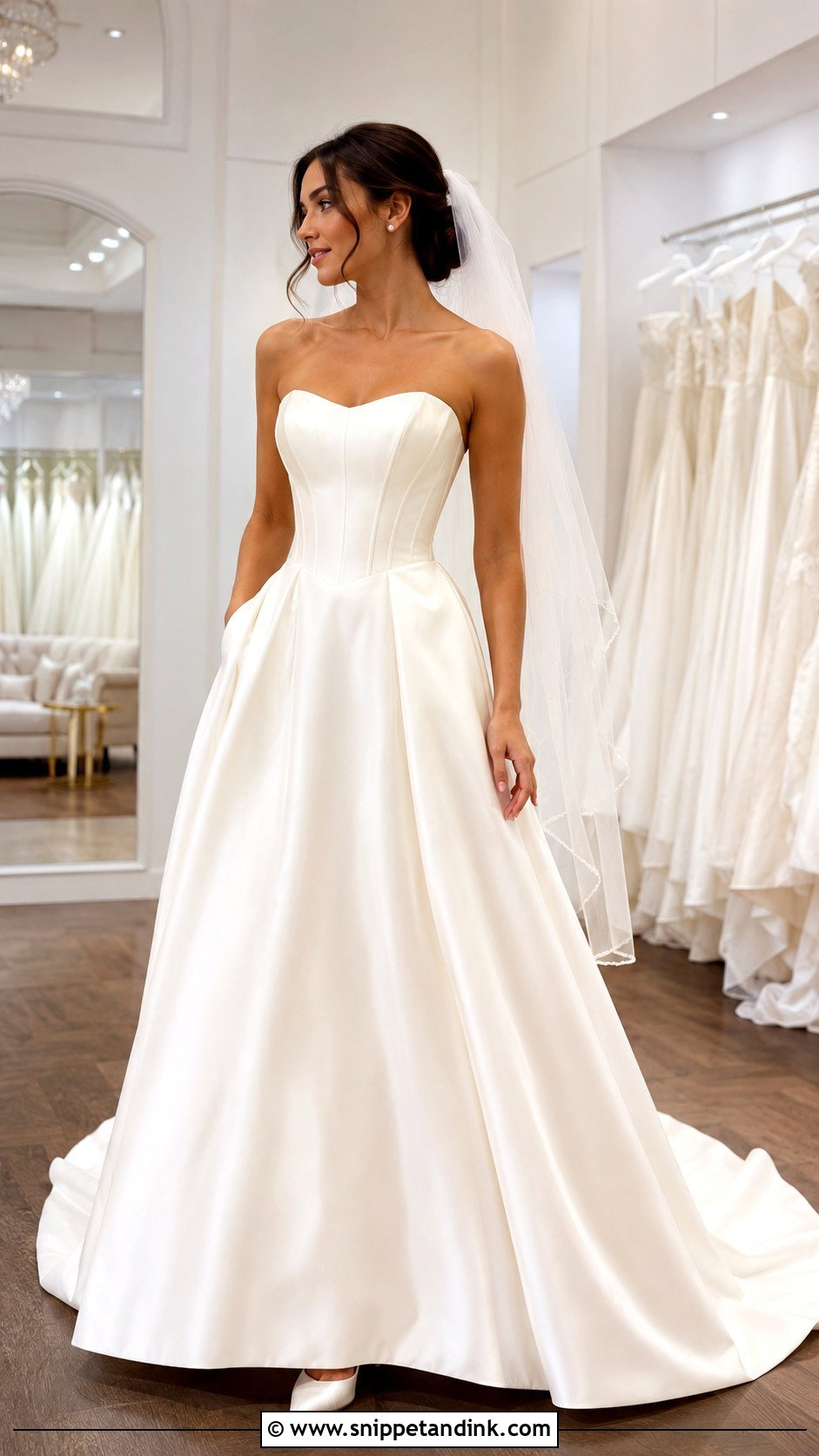
A corset bodice adds internal structure to the fitted top. You can have it on show, with visible seams, or hidden under plain satin with the boning working unseen. Either way, check that the boning doesn’t press into your hips when you sit, since a fit and flare is already close there. A chapel train balances the structured top. If the back laces up, keep accessories small so the tailoring stays the feature.
12. Satin Fit And Flare Wedding Dress With Draped Bodice
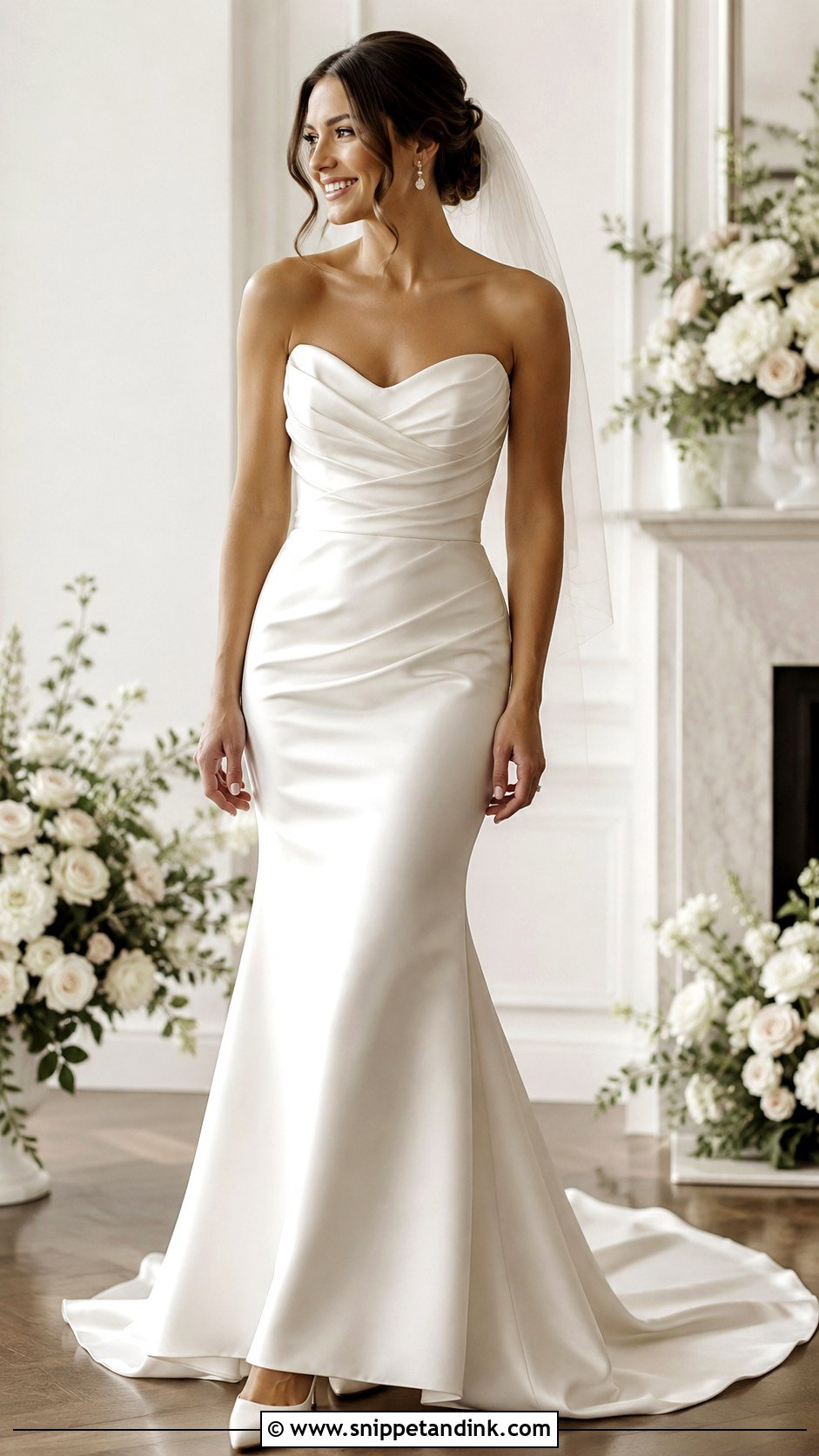
Draping across the waist, bust or hips gives satin movement and forgives a little if your size shifts before the wedding. It also hides the pull lines smooth satin shows when a fit is a fraction off. Because the dress already moves, I’d pair it with loose waves or a deep side part rather than a tight bun. Delicate earrings and simple ivory heels keep the front clean.
13. Satin Fit And Flare Wedding Dress With Slit
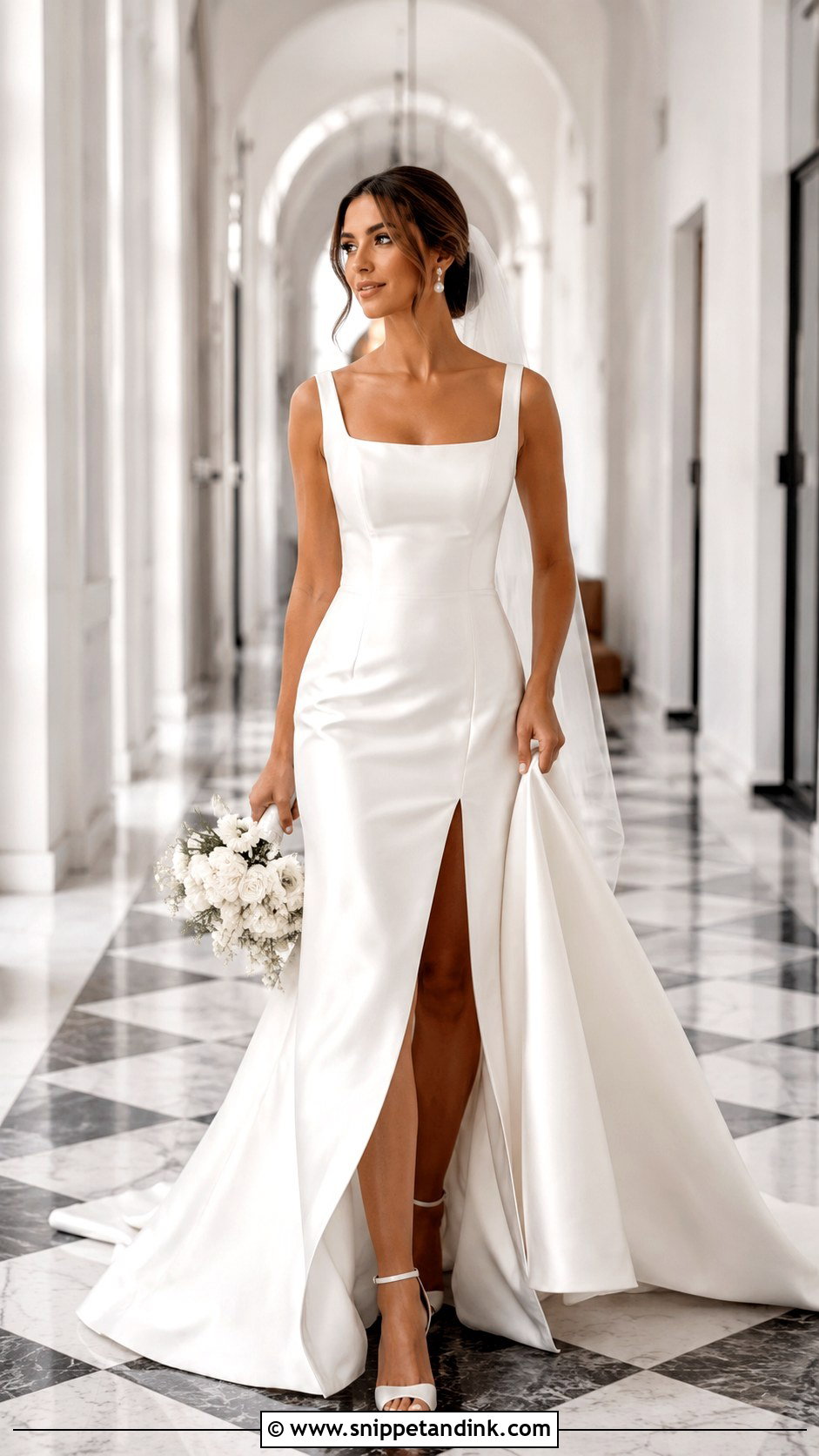
A slit fixes the one complaint brides have about this silhouette: stride length. Even a modest slit lets you take a full step and climb stairs without hitching up the skirt. A subtle one opens only when you walk, while a higher one reads more fashion. Your shoes will be on show with every step, so choose them as carefully as the dress, from ivory stilettos to embellished sandals. Keep the bodice and jewelry restrained.
14. Satin Fit And Flare Wedding Dress With Chapel Train
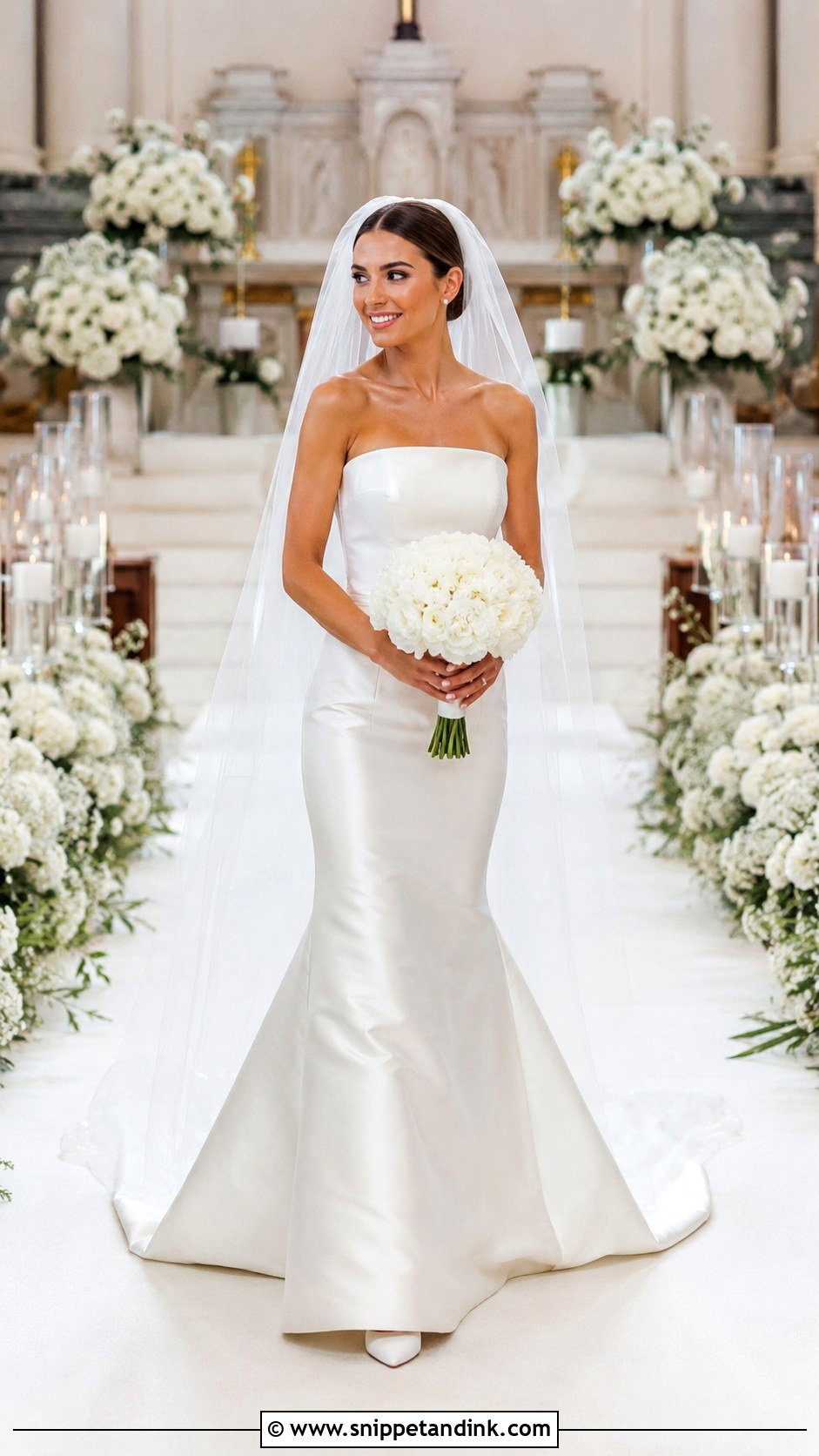
A chapel train adds length from the back while the front stays sleek. Satin carries a train well because the fabric lies in smooth folds rather than bunching. A chapel or cathedral veil both work, depending on how formal you want it. Keep the heels and earrings understated. You will need a bustle for the reception, and the options are explained further down.
15. Satin Fit And Flare Wedding Dress With Cathedral Train
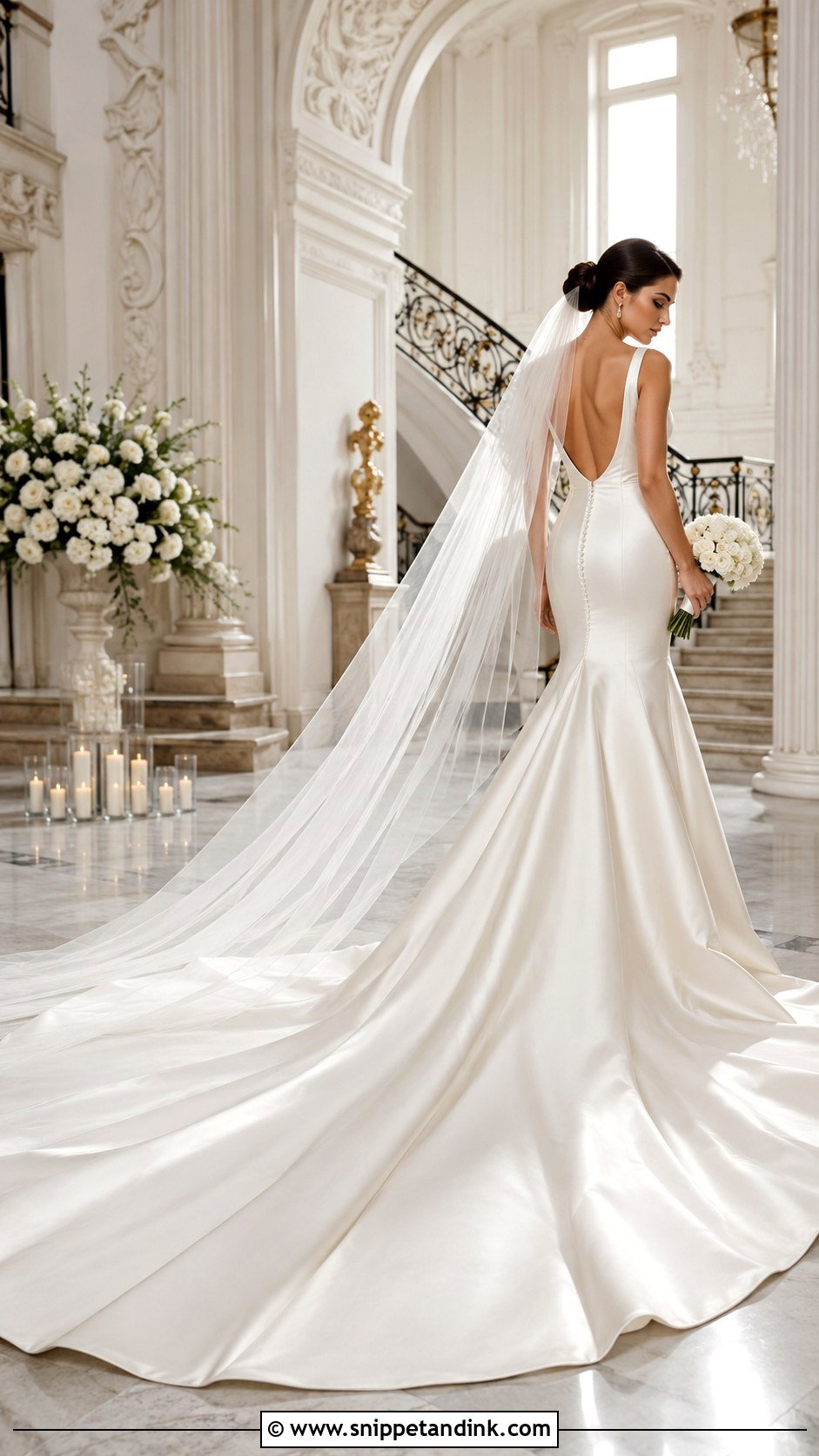
A cathedral train belongs in long aisles and large rooms. In a small venue it pools awkwardly and the photographer can’t fit the whole thing in frame. It also needs a helper, someone who lays it out when you stop at the front and again before you walk back. Smooth satin and clean seams are enough here, because the train is the impact. Classic pumps, a long veil and a polished updo keep the look formal.
16. Minimal Satin Fit And Flare Wedding Dress
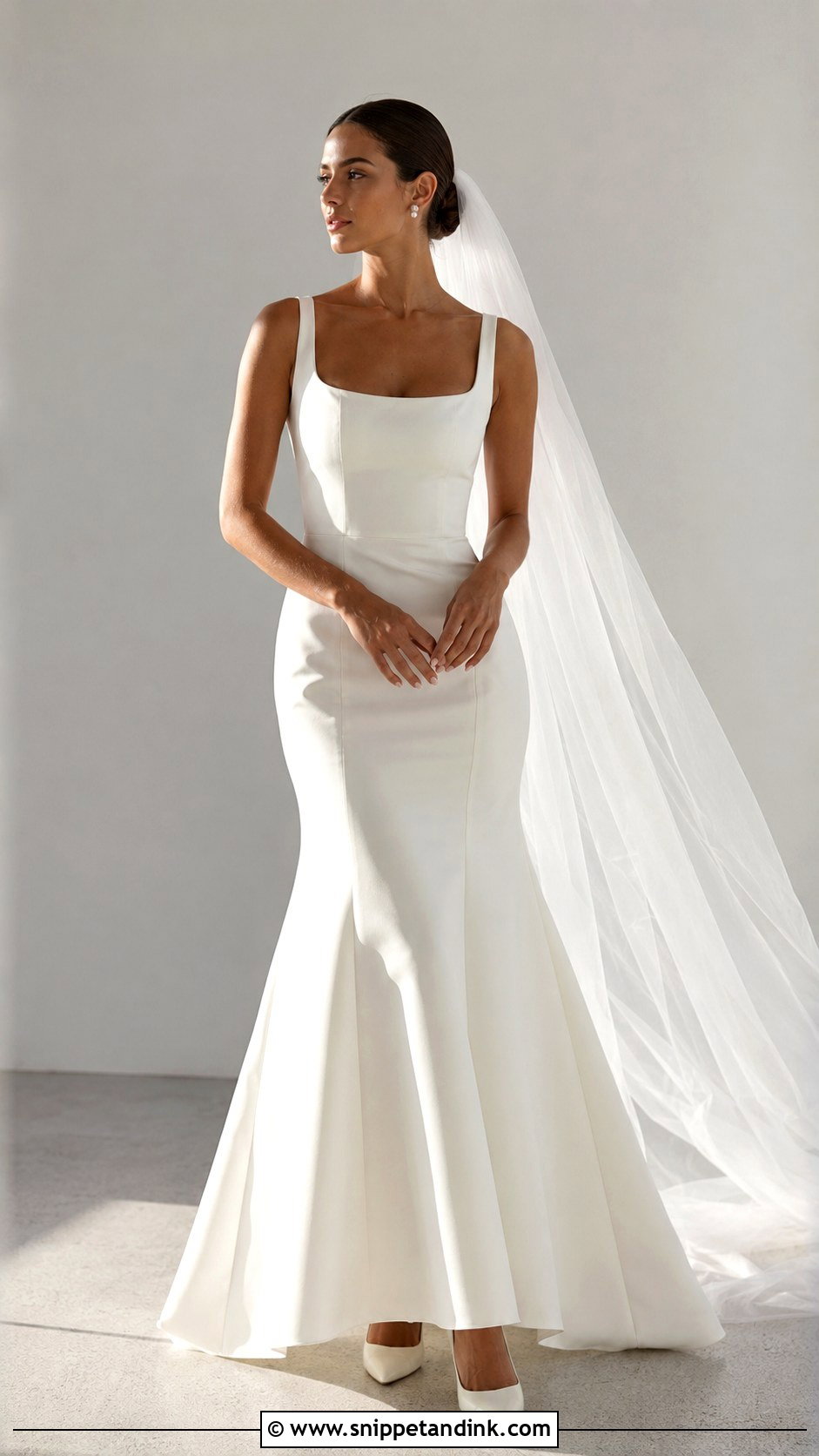
Everything rests on the fit with a minimal dress, because there is no lace or beading to distract from a seam that pulls. Look for a smooth bodice, precise seams and a flare that swings when you walk. Pearl studs, sleek heels and a plain veil are all it needs. If you want one statement, make it a sculptural earring or a bow in the hair. Flowers and accessories will carry more of your personality with this one.
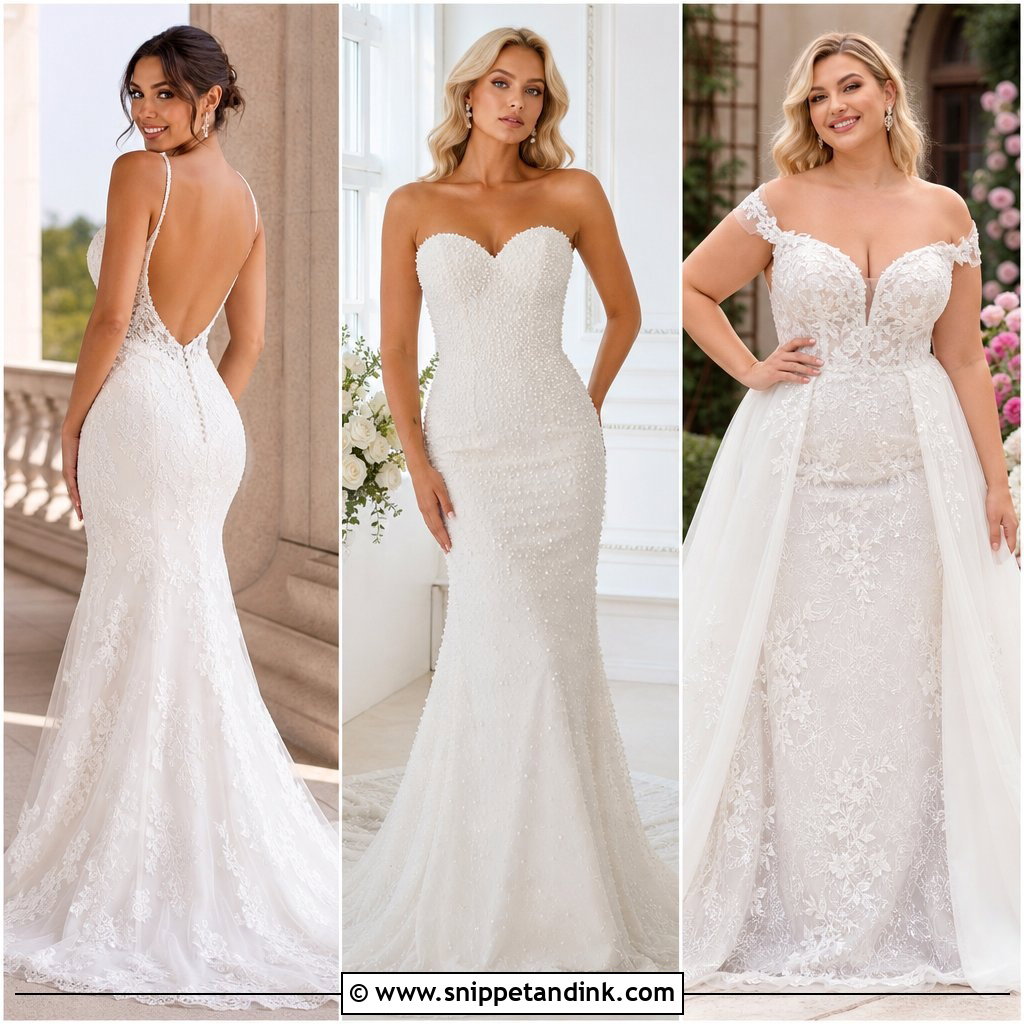
17. Pearl Satin Fit And Flare Wedding Dress
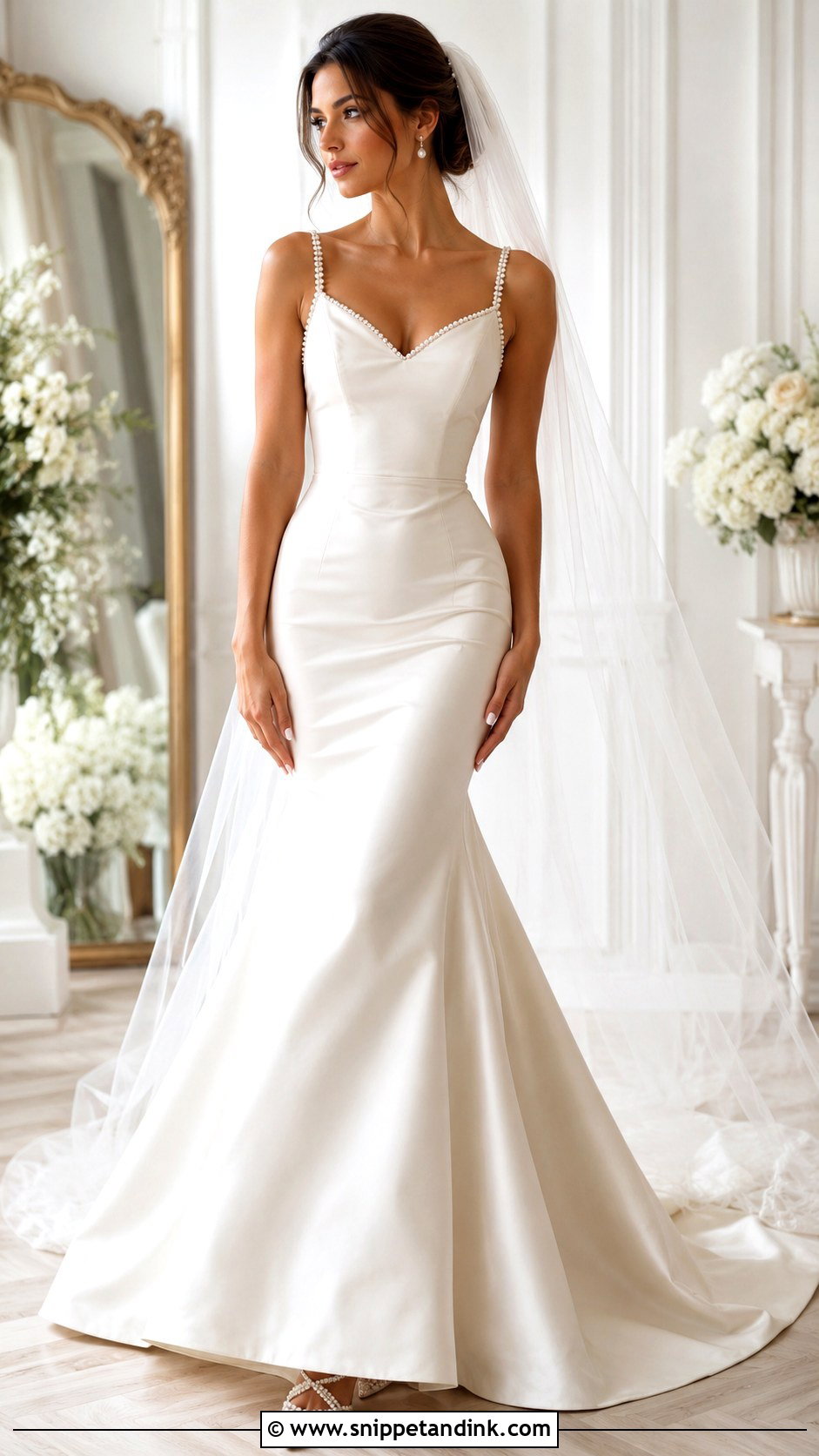
Satin already has sheen, so I keep pearl work controlled. A single line along the neckline or straps reads cleaner than pearls scattered everywhere. Hand-sewn pearls also add weight, which matters on a train you’ll be pulling behind you for hours. Pearl earrings, a soft veil and satin or pearl-accented heels suit it, and other jewelry is usually unnecessary. Bright indoor venues bring out the pearls’ soft glow.
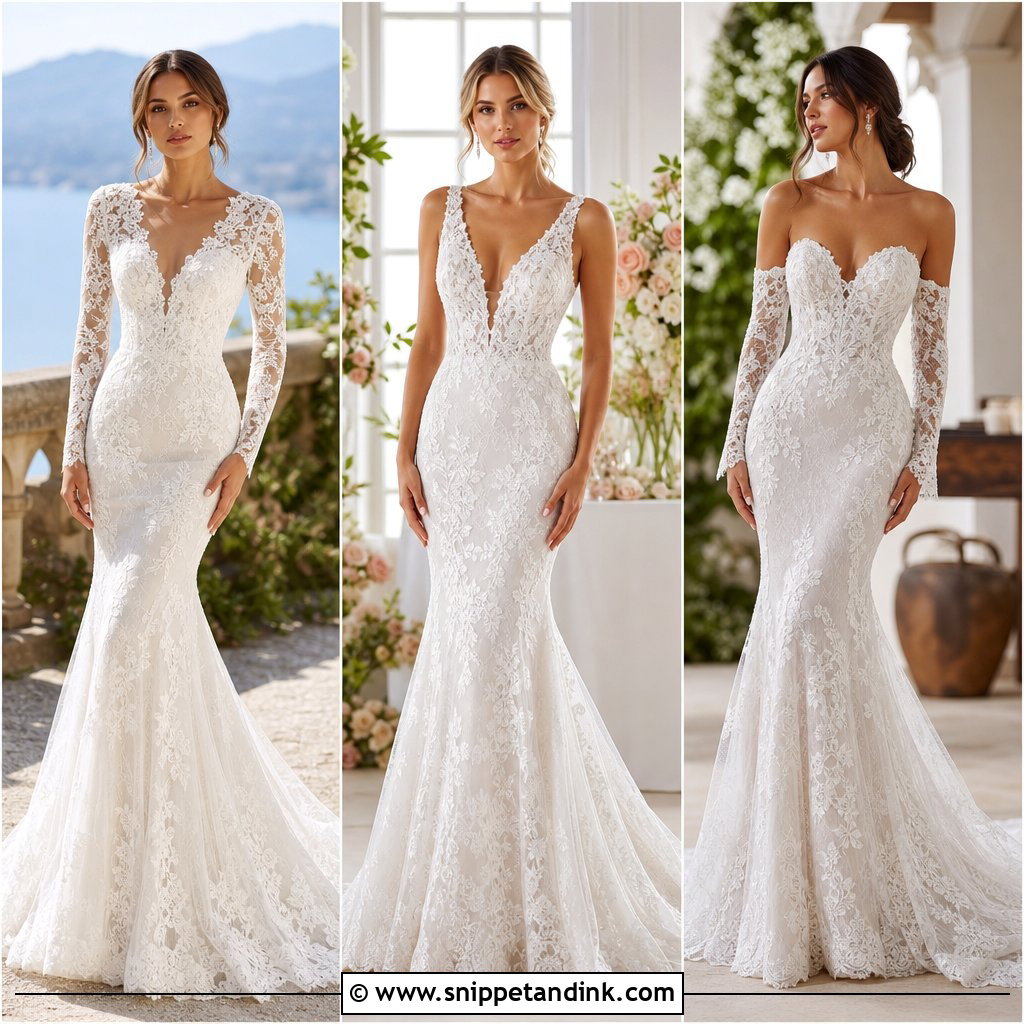
18. Lace And Satin Fit And Flare Wedding Dress
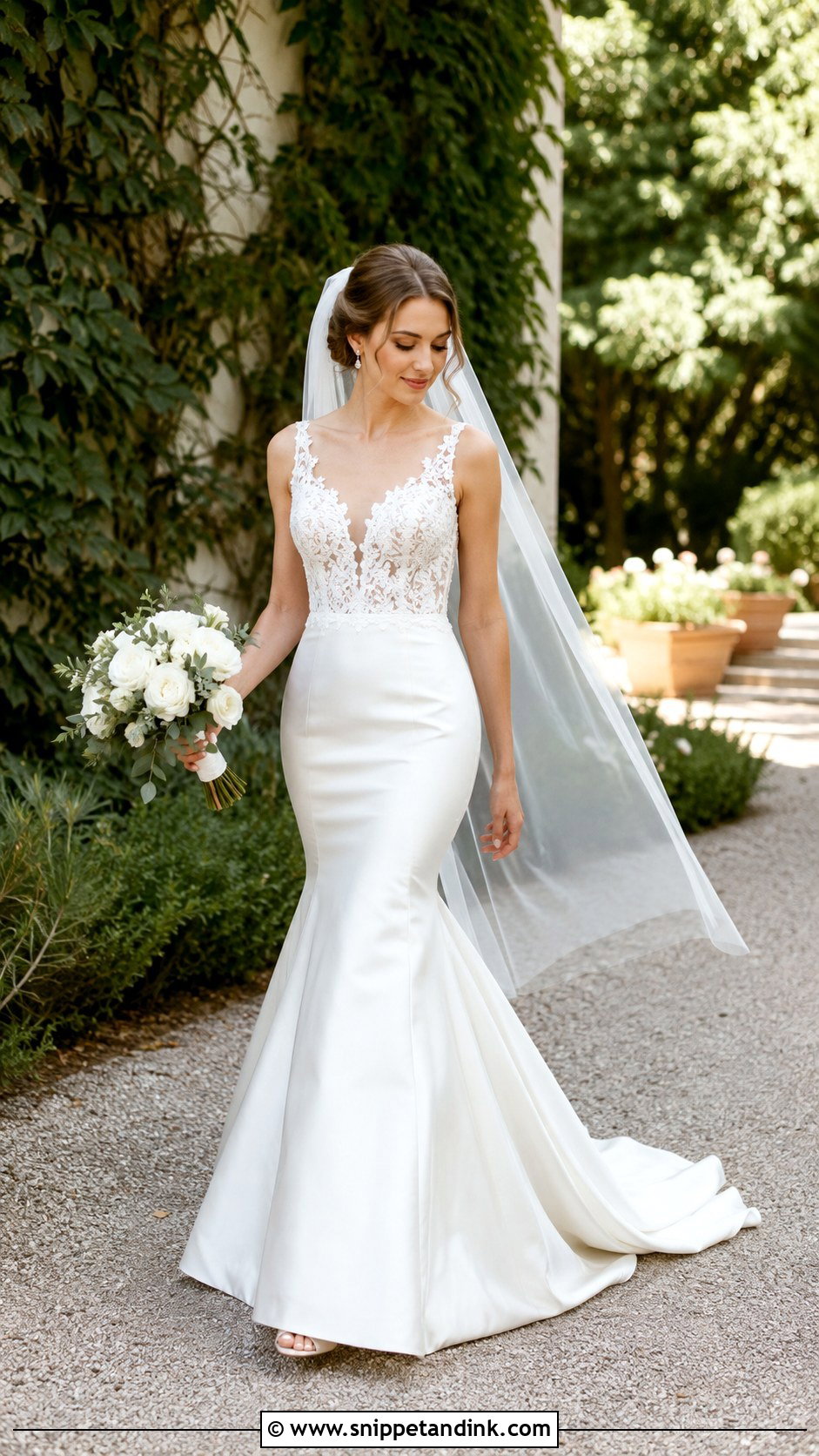
Mixing lace with satin gives texture without a fully covered gown. Lace on the bodice, sleeves, back or train works best when the satin stays the main fabric. One practical check: lace and satin stretch differently, so the join can pucker if the lace was pulled tight when it was sewn. Run a hand along the seam at your fitting. Simple earrings, soft heels and a veil with a plain edge keep it balanced, and busy lace means no necklace.
19. Satin Fit And Flare Wedding Dress With Lace Back
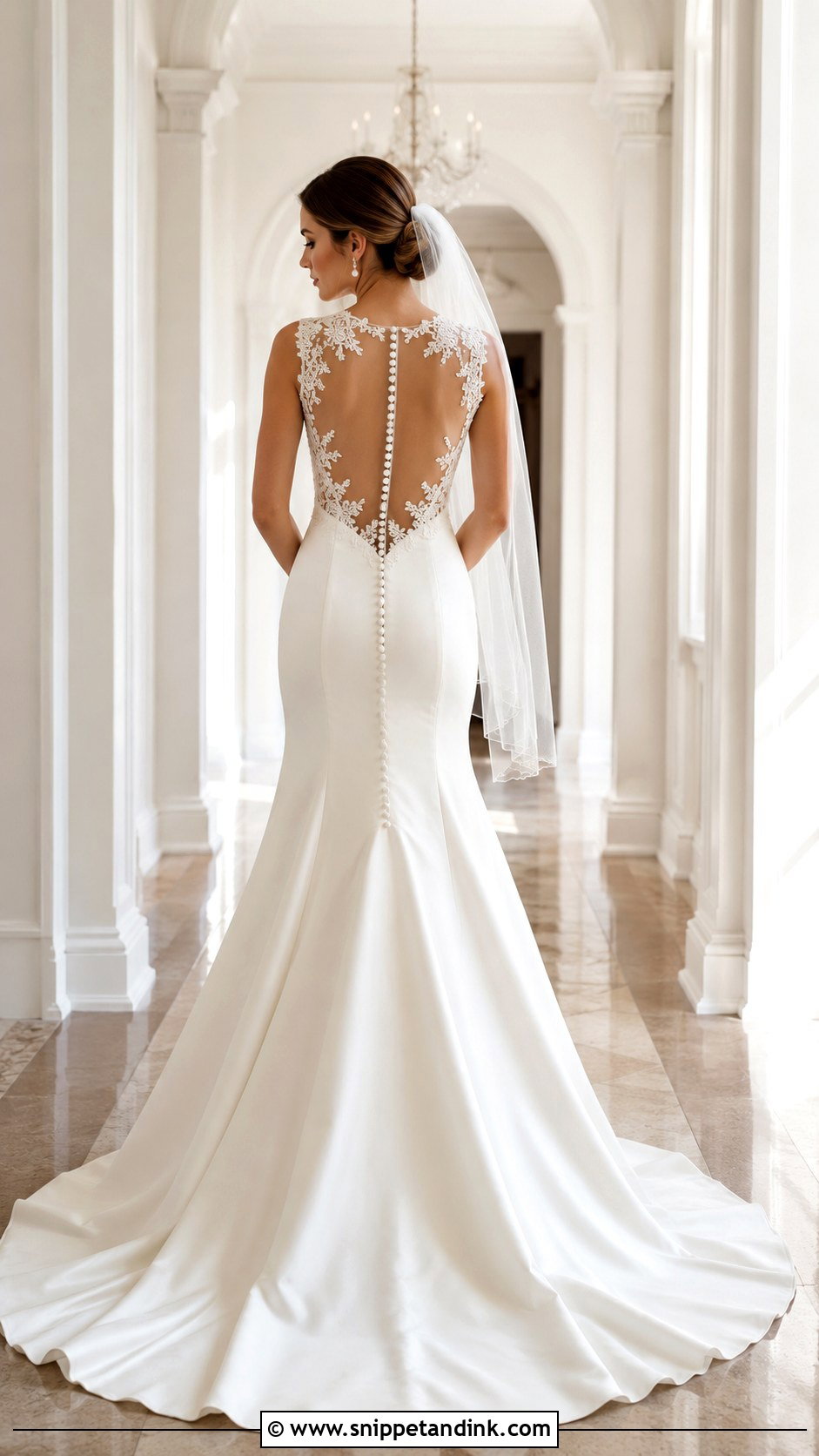
A lace back keeps the front sleek and saves the detail for the aisle and the vows, when guests see you from behind for longest. Lace backs often pair with covered buttons, illusion panels, or a soft keyhole shape. Wear your hair up so it doesn’t cover the lace. A sheer veil lets the pattern show through, and small earrings with simple heels keep the look balanced.
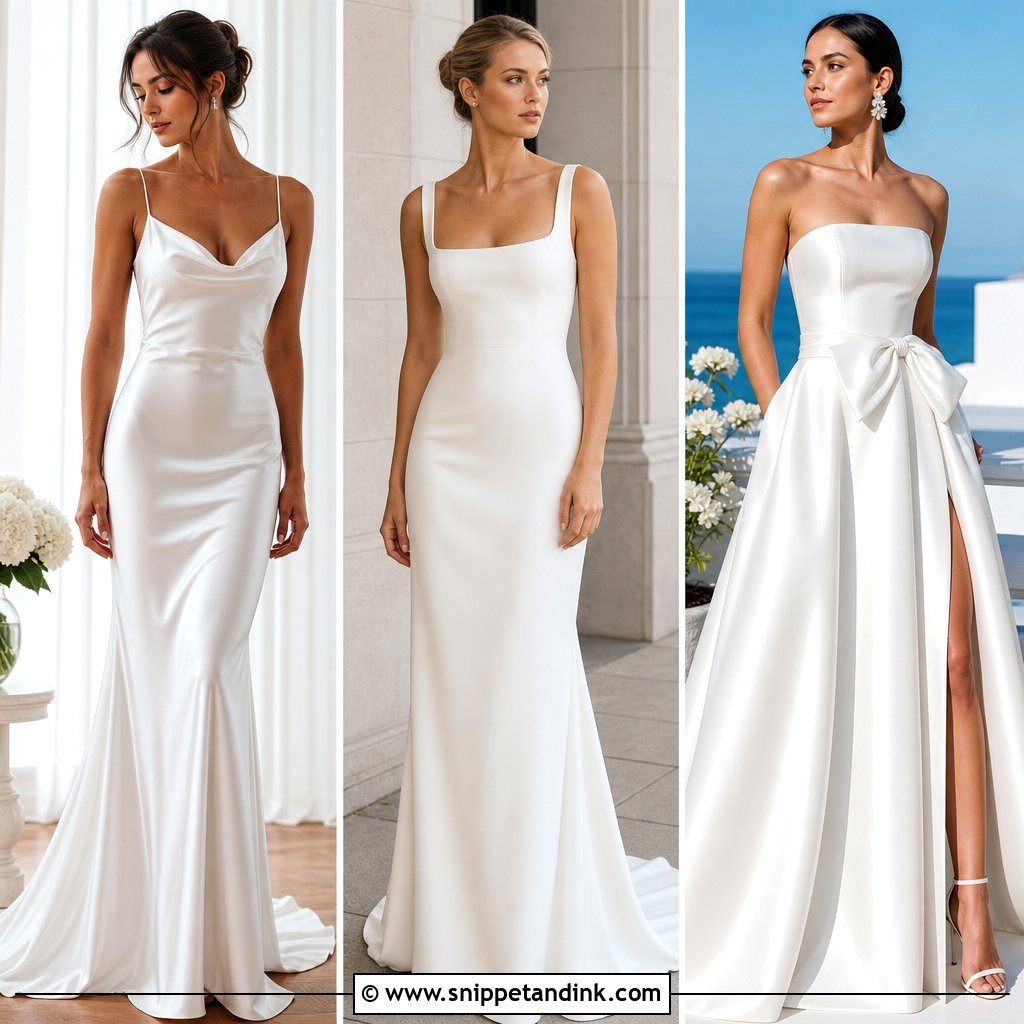
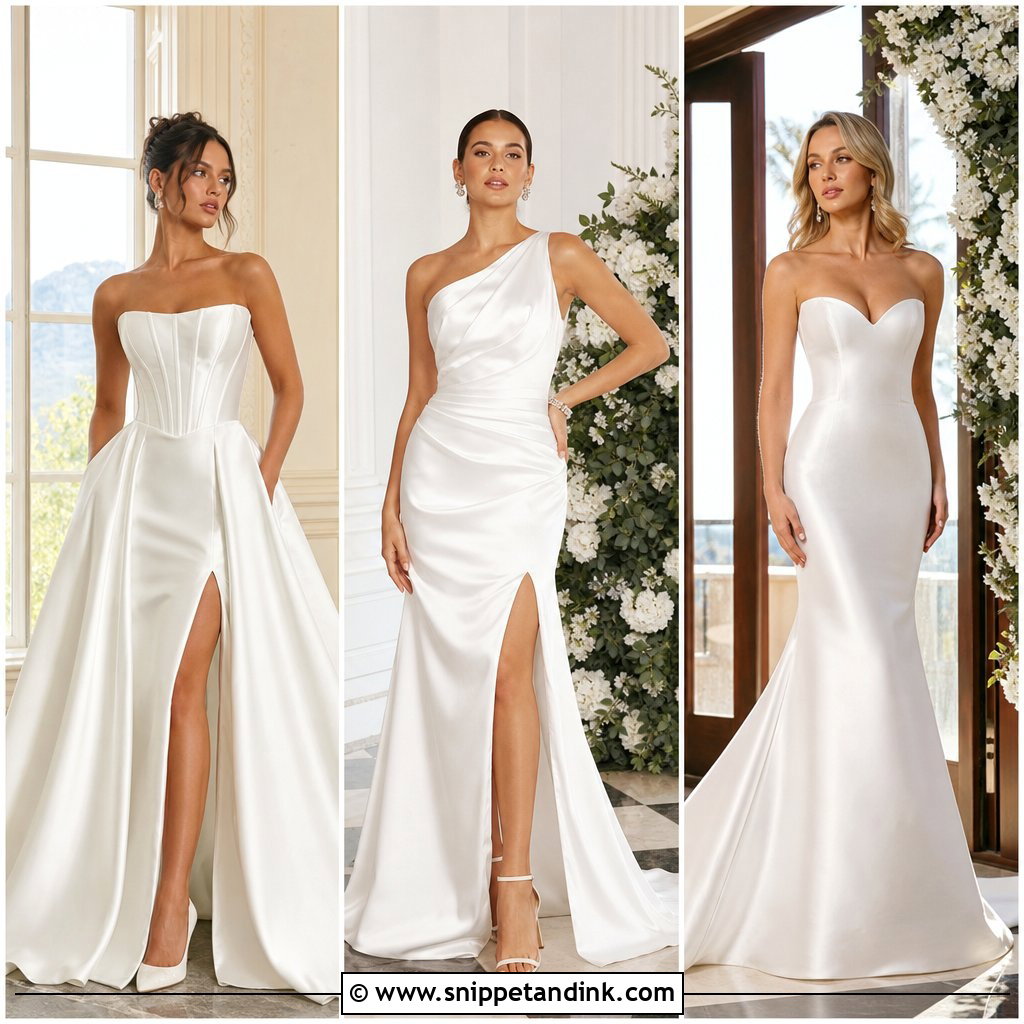



20. Satin Fit And Flare Wedding Dress With Button Back
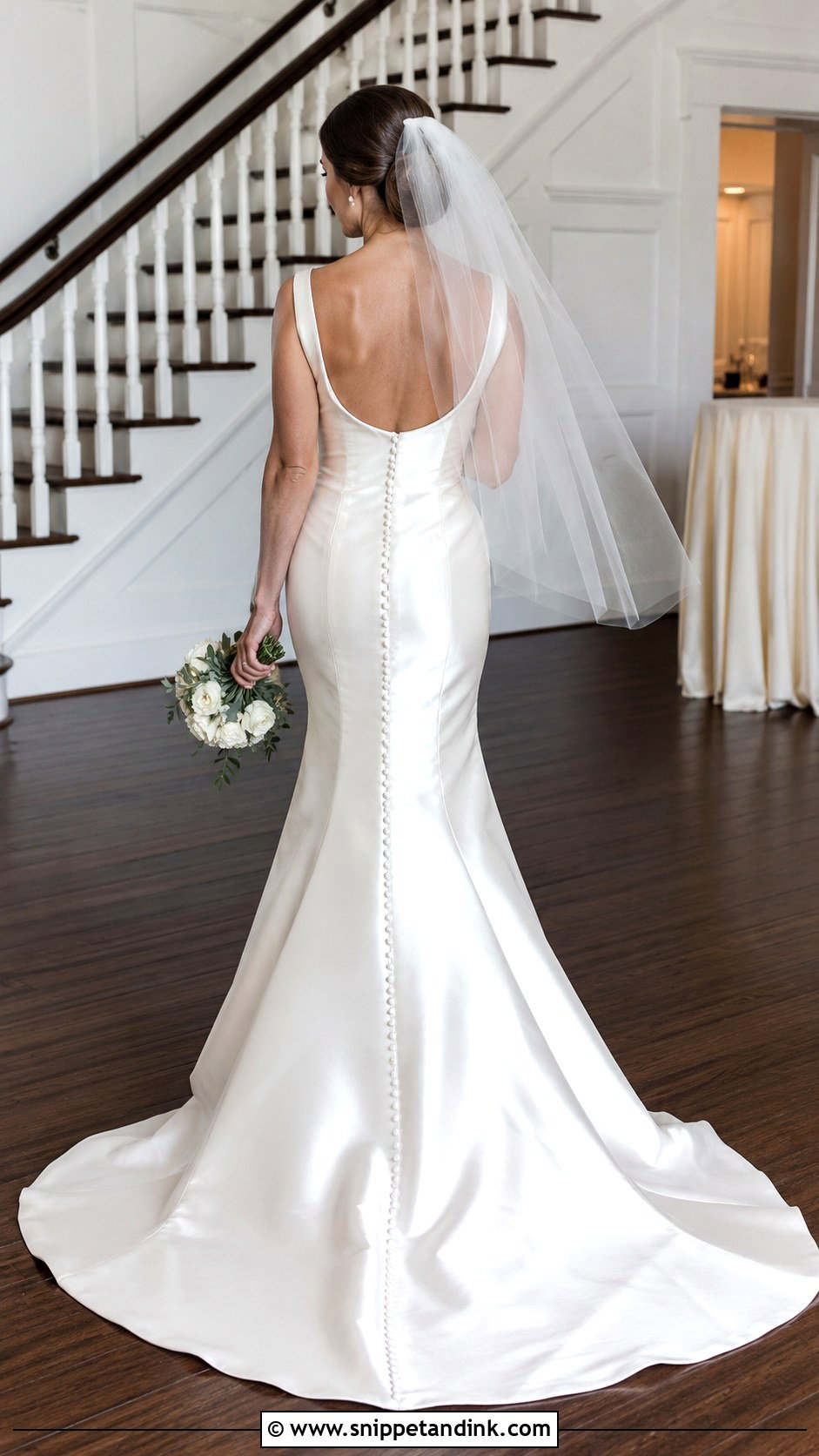
Covered buttons running down the spine or through the train add detail without breaking up the satin. A long row of loops takes time to fasten, so build ten minutes into your dressing schedule and give the job to someone with steady hands. Many button backs hide a zip underneath that does the real work, which is worth asking about. Request a bustle that keeps the button line straight, and keep the rest simple with pearl studs, pointed heels and a plain veil.
21. Satin Fit And Flare Wedding Dress With Overskirt
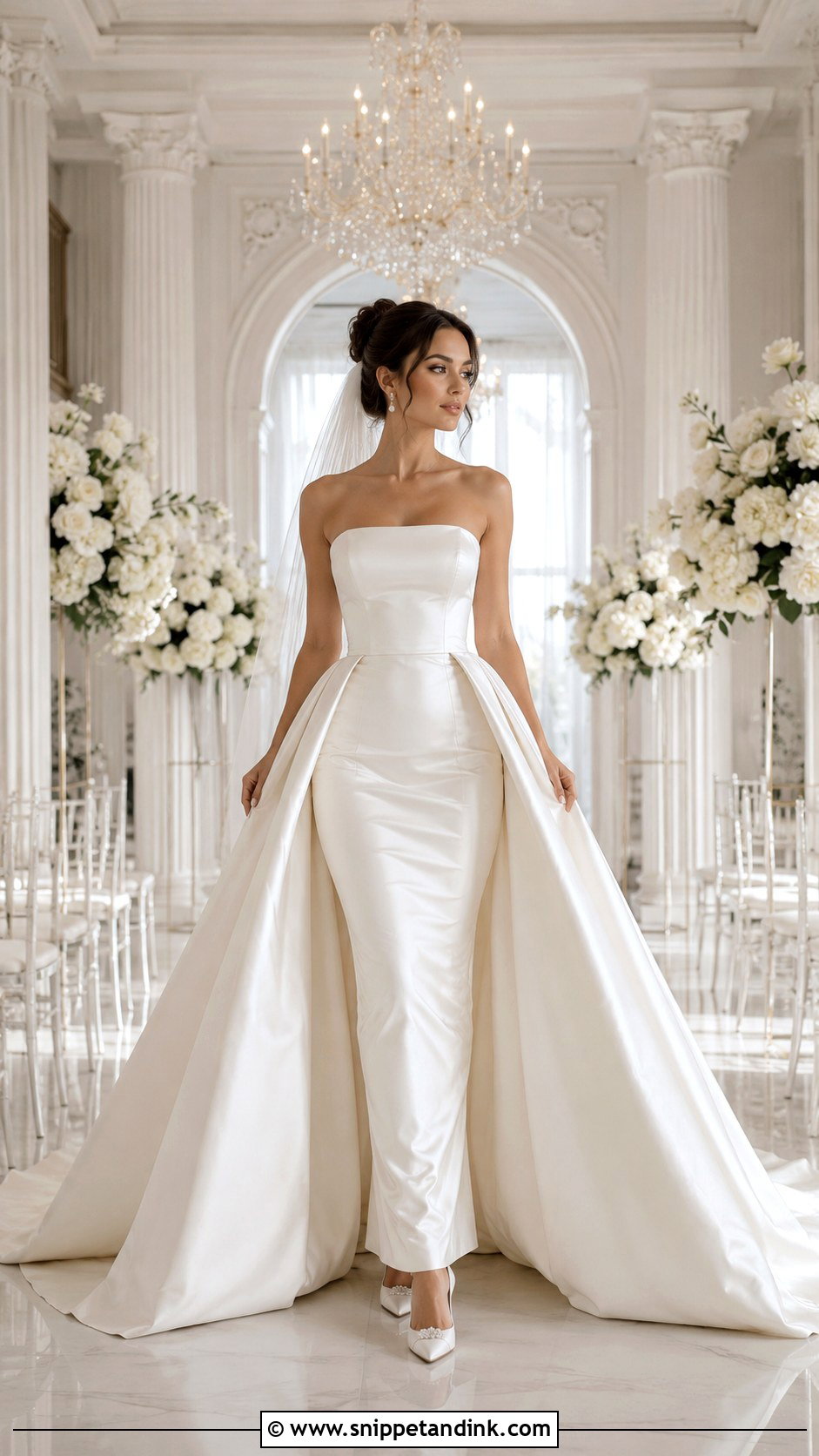
An overskirt gives this silhouette a fuller shape for the aisle, then comes off for the ceremony-to-reception transformation. Have both pieces cut from the same satin, ideally the same bolt, because ivory satin can vary slightly in tone between batches and the difference shows when they sit side by side. Pair the full look with a long veil and classic heels. For the reception, switch to a shorter veil or a pearl clip.
22. Satin Fit And Flare Wedding Dress With Cape
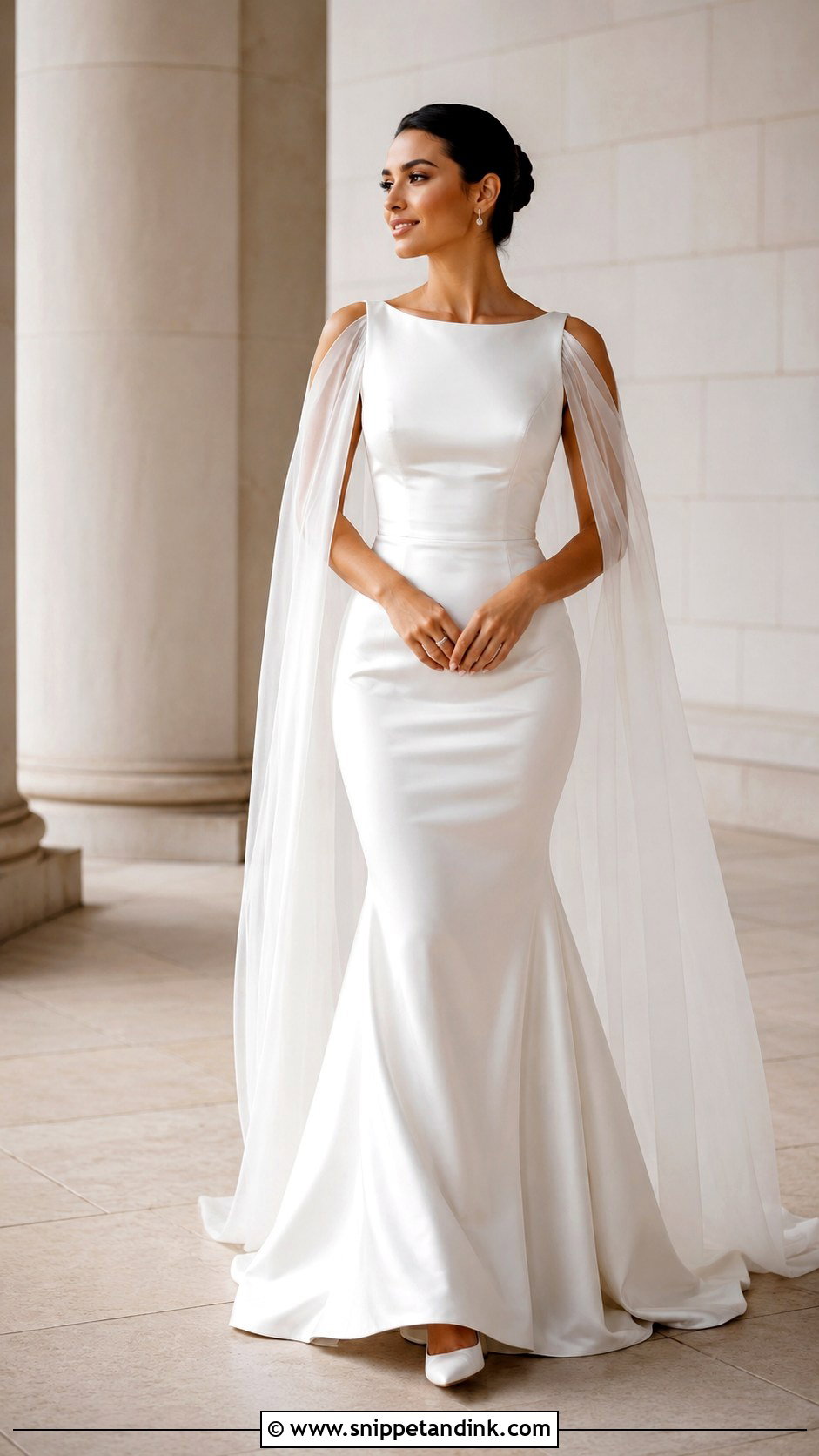
A cape stands in for the veil and adds movement as you walk. It can attach at the shoulders, neckline or back. Sheer capes look soft, while satin capes are more sculptural and noticeably heavier, so check that the attachment points can take that weight without pulling the neckline backward. Sleek hair keeps the attachment tidy. Simple heels and minimal jewelry are enough.
23. Halter Satin Fit And Flare Wedding Dress
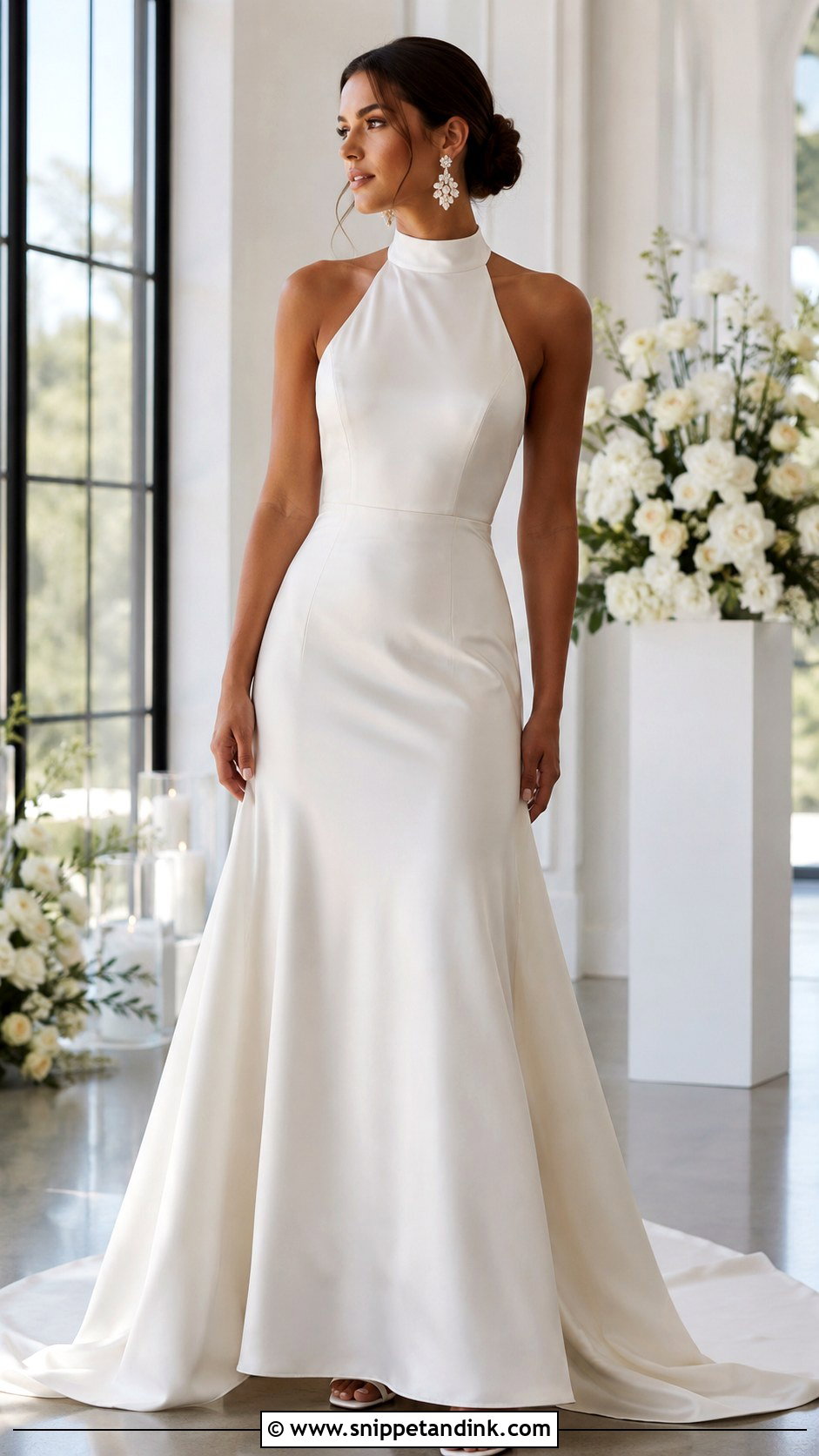
A halter shows off the shoulders and draws a long line up the neck. A high halter is polished, and a plunging halter is more dramatic but needs good internal support. Wear statement earrings with a smooth bun, and skip the necklace. Set any veil low at the back of the head so it doesn’t hide the halter line. In summer heat, a halter is cooler than sleeves and more secure than strapless.
24. Bateau Neck Satin Fit And Flare Wedding Dress
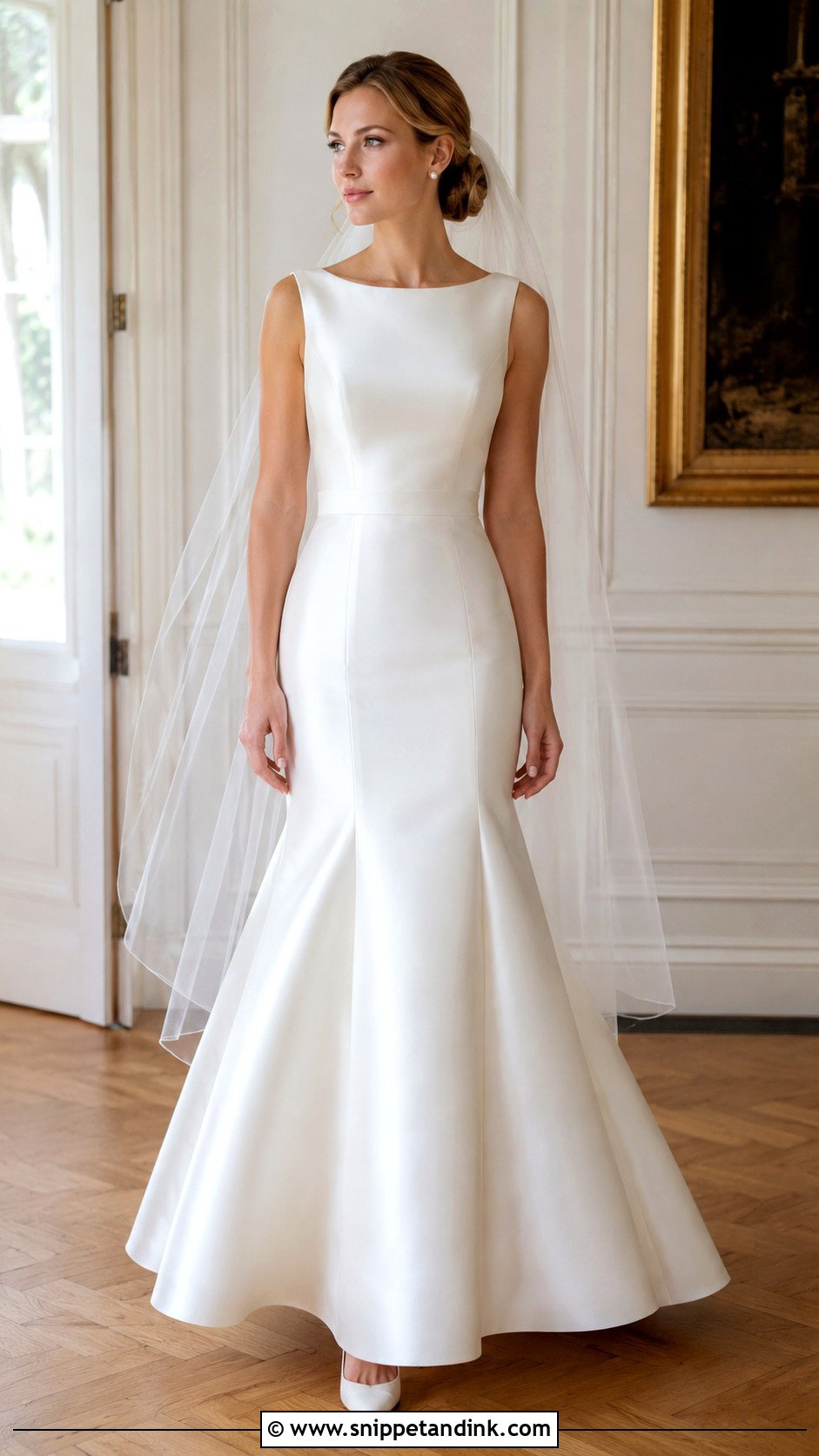
A bateau runs almost straight across from shoulder to shoulder, sitting just above the collarbone. It covers without feeling heavy, and it suits narrow shoulders particularly well because it widens the line. Pearl studs, a low bun and closed-toe ivory heels give it a classic finish. A fingertip or plain tulle veil leaves the neckline uncrowded.

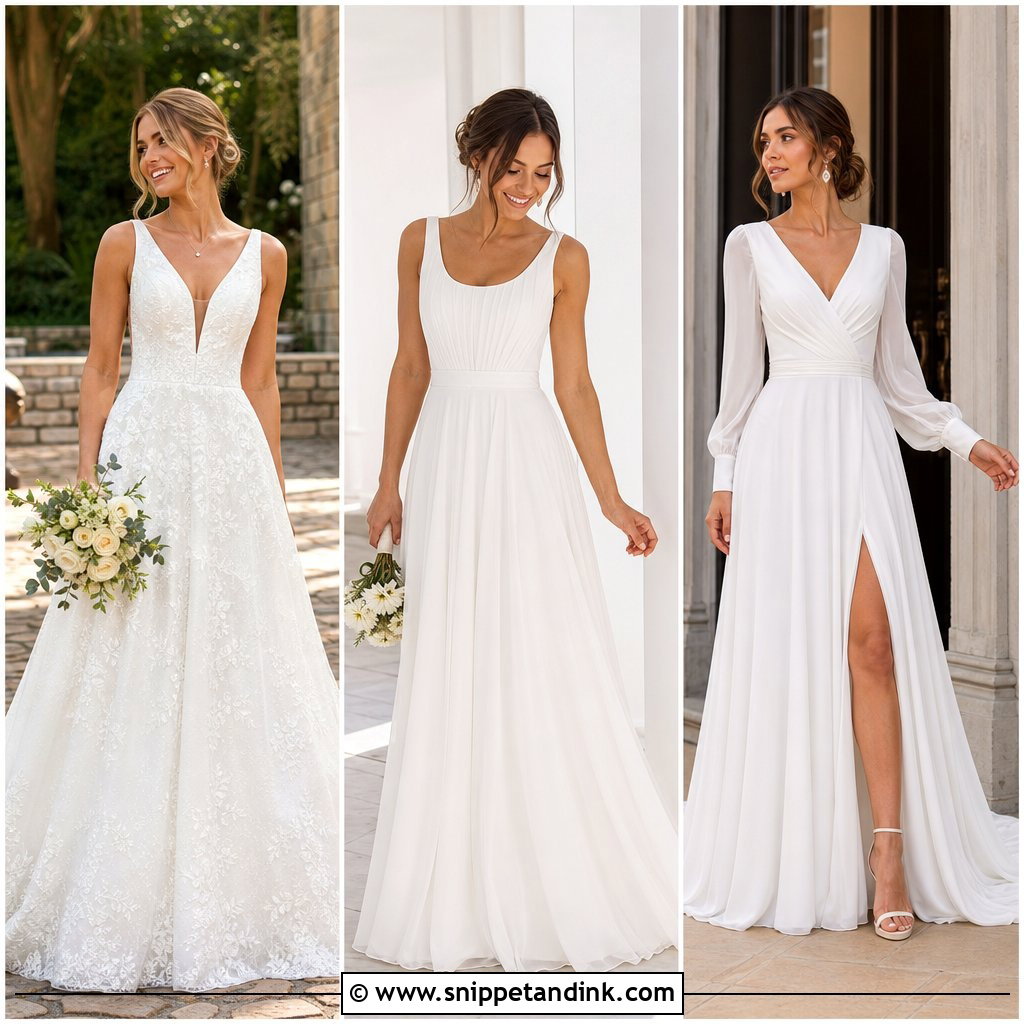

25. Champagne Satin Fit And Flare Wedding Dress
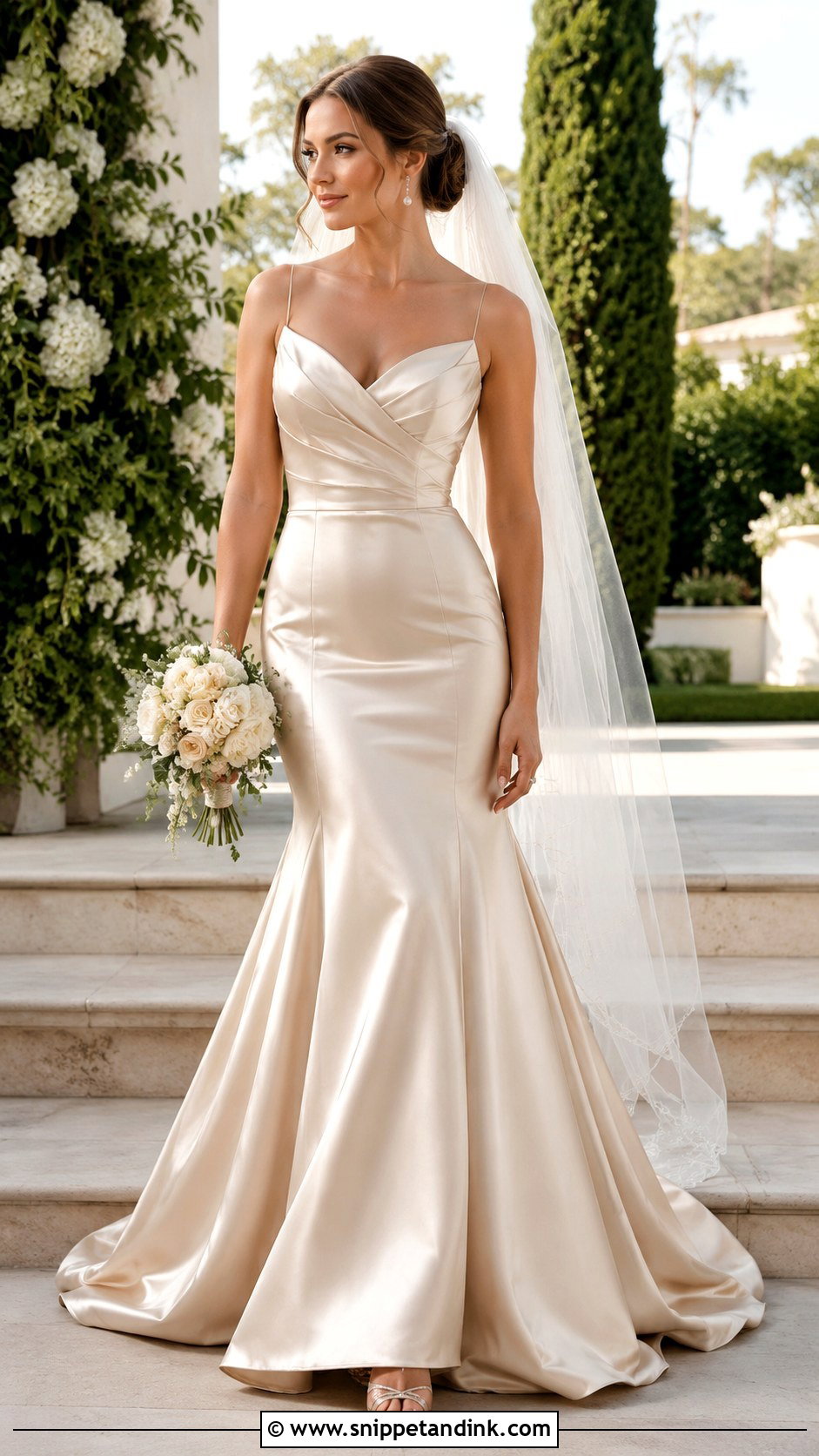
Champagne satin is warmer than white and can look kinder against olive or warm skin tones. The thing to check is how it reads in your light. Under warm evening lighting it can look a shade deeper than it did in the shop, so ask to see it next to a window as well as under store lights. Keep accessories in ivory, nude or soft gold so nothing clashes. A clean neckline makes it modern, and draping or a bow back makes it romantic.
Bustling the Train Before the First Dance
Almost every dress here with a train will need bustling after the ceremony, and satin narrows down which bustle works well. There are three main types.
- Over bustle: the train is lifted and hooked to buttons on the outside of the skirt. It suits satin because the gathered folds show off the sheen.
- Under bustle, sometimes called French: the train is folded under and tied with ribbons inside the skirt. The back stays clean and the ties stay hidden.
- Ballroom bustle: the train is lifted all around so the skirt hangs at floor length. It looks tidy but needs many attachment points, which adds strain on heavy satin.
Satin is heavy, and a bustle with too few points will sag or tear a loop long before midnight. More points spread the load. Ask your seamstress to number or colour-code the ribbons, and bring the person who will do it on the day to your final fitting so they can practise. Allow about ten minutes between the ceremony and the reception entrance.
Which Version Moves the Way You Do?
The appeal of a satin fit and flare is its balance: fitted without being restrictive, dramatic without a huge skirt. Satin lets one detail carry the dress, whether that’s a square neck, detachable sleeves, pearls, a bow or a long train. Pick the version you can walk, sit and hug in comfortably, then let the veil, shoes, jewelry and hair support it rather than compete with it.
You'll Like These Ideas:




Leave a Reply